Monthly
Pacific Islands
Special: P-Ng Report
(Vember, 1964
3/- 60 US cents 50 French Pac. frcs,
he Neu/s lagazine Of The South Pacific
Established 1930
d at G.P.0., Sydney, and at P. 0., or transmission by post as a
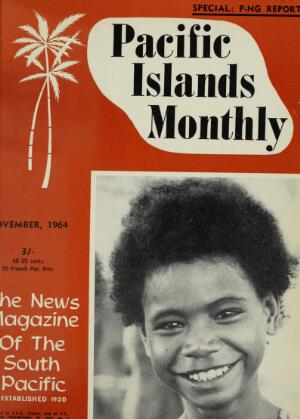
THE COVER; We don't know who she i but she's Papuan—and obviously sweety. Future developments in Papu New Guinea are going to affect her ar her friends quite a lot —as readers w see who take the trouble to absorb tl message of PIAA's economic survey ( New Guinea, complete in this issue.
Advertisements & other items, pp. 2-8 (7 items)
November, 1 9 6 4 -Pacific Islands Monthi
Taa -F
WHEN IN AUSTRALIA FLY TAA
Trans-Australia Airlines operates the largest single domestic airline network in the British Commonwealth, serving 140 cities and centres throughout Australia and Papua/New Guinea.
TAA’s modern aircraft connect with all incoming and outgoing international flights. TAA provides the speed and comfort of pure jet travel within Australia with the introduction of Boeing 727 T-Jets.
TAA Fly-away Holidays. TAA offers a huge range of packaged Holidays to the most popular holiday resorts throughout Australia and Papua/New Guinea.
And TAA takes care of everything travel bookings by air, road, rail or sea, accommodation, sight-seeing tours even theatre tickets!
Contact your nearest Travel Agent or Trans- Australia Airlines Office.
TAA -f
THE FRHNDLY WAY
Trans-Australia Airlines
F AA6674
t m mas X ' * W- > 1 m m %■ i -■ Egad! Qantas makes for a merrie England! s part of Its superb round-world service in five continents Qantas brings all the enjoyment of England and Europe as close as tomorrow. Qantas offers you more flights a week to London from Australia than any other airline, all of them Qantas V-Jets, astest in round-world service. And wherever in the world you fly with Qantas, to any of the 25 countries the fleet of mighty Qantas V-Jets flies, you’ll enjoy Qantas’ understanding of the pure pleasure of travel. (Based on 44 years’ experience.) Start discussing travel today with Qantas or your Qantas Travel Agent.
UANTAS
44 years of dependable service mantas TmvATs uwreD. ~o Tolur. teal. oT^TnT
Enjoy VEGEMITE
nature’s richest source of
VITALITY
Spreads so smoothly on toast tor a delicious breakfast.
Here’s the wonderful way to get the fresh supply of Vitamin B you and your family need every day for happy vitality. Delicious Vegemite is a pure concentrated yeast extract, and yeast is nature’s richest source of precious “B” group vitamins. Vegemite gives you Vitamin B 1 for healthy nerves, B 2 for firm body tissue, and Niacin for good digestion. Keep up your good health and vitality . . . be sure to enjoy your Vegemite daily . . . on toast, in sandwiches and as a soup or gravy flavouring.
KR374
GET MORE FUN FROM YOUR PHOTOGRAPHY
WITH A
NEW KODAK CAMERA
KODAK Bmm MOVIE CAMERA AT
AMAZING LOW PRICE.
it’s the easy-to-use Brownie “Fun Saver’’ with built-in exposure guide marked in such a way that you simply adjust the lens to suit the light conditions, aim and shoot you get brilliant colour movies at snapshot cost.
STEP INTO A WORLD OF 3-D COLOUR See the world in brilliant three-dimensional colour with a View-Master Viewer and Reels. You sit at home and ‘visit’ foreign lands, enjoy fairy stories, cartoons and cowboy reels, all in pictures so real that you want to step into them! Seven individual scenes per reel. i * *
BROWNIE 8 MOVIE PROJECTOR
THREADS FILM BY ITSELF.
That’s the Brownie 8 AISG Projector amazingly low priced. Has fully automatic threading, clearly marked controls, efficient cooling fan. Projects a brilliant image up to 4 ft. wide and accepts 200 ft. film reels.
Neat table-top preview screen built into the case lid.
FOR BRILLIANT COLOUR PRINTS
AND SLIDES KODAK “X” COLOUR
FILMS.
Kodacolor-X, Kodachrome-X or Kodak Ektachrome-X all have a matched speed rating of ASA 64. You have only one film speed to remember; you can take colour pictures earlier in the morning, later in the afternoon, and also stop fast action shots.
Make your next film a Kodak “X” Film.
FROM KODAK DEALERS THROUGHOUT THE ISLANDS
KODAK (Australasia) PTY. LTD.
KM9299/A 379-381 George St., SYDNEY.
Kodacolor-X Kodachrome-X
Kodak
m % '-[jiff ml
a quick
does the trick
rnr
VICTORIA BITTER
BREWED BY CARLTON & UNITED BREWERIES LTD.
BURNS PHILP (SOUTH SEA) CO. LTD.
GENERAL MERCHANTS AND SHIPOWNERS
SHIPPING, CUSTOMS AND FORWARDING AGENTS
Fiji:
SUVA.
LEVUKA.
LAUTOKA.
LABASA.
SAVU SAVU.
BA.
SIGATOKA.
TAVUA.
ROTUMA ISLAND.
TAVEUNI.
AGENTS FOR:
QUEENSLAND INSURANCE CO. LTD.
BURNS PHILF TRUST CO. LTD.
SHELL COMPANY (P. 1.) LTD.
OVERSEAS AGENTS
BURNS, PHILP & CO. LTD., Sydney.
BURNS, PHILP Gr CO. LTD,, London.
BURNS PHILP CO. OF SAN FRANCISCO
SHIPPING AGENCIES
• The New Zealand Shipping Co. Ltd. • Shaw Savill & Albion Co. Ltd. • Port Line Ltd. • Bank Line Ltd. • General Steamship Corporation Ltd. • Blue Star Line • Cunard line • Compagnie des Messageries Maritimes • British India Steam Navigation Co. Ltd. • Royal Interocean lines • Nederland line Royal Dutch Mail/Royal Rotterdam Lloyd.
EXCLUSIVE DISTRIBUTORSHIPS INCLUDE
• AKAI TAPERECORDERS
• DUNLOP PRODUCTS
• EPIGLASS PRODUCTS
• FERGUSON TRACTORS
• HELENA RUBENSTEIN
• HITACHI ELECTRONICS
• HOLDEN VEHICLES
• JOHNSON'S WAXES
• ROLEX WATCHES
• REVLON COSMETICS
• PENTAX CAMERAS
• SUNBEAM APPLIANCES
INTERNATIONAL AIR TRANSPORT ASSOCIATION REPRESENTATIVES for
QANTAS EMPIRE AIRWAYS LTD. TASMAN EMPIRE AIRWAYS LTD.
UNION DE TRANSPORTS AERIENS ALITALIA PAN AMERICAN AIRWAYS
ASSOCIATED COMPANIES
BURNS PHILP (NEW HEBRIDES) LTD.
AUTOMOTIVE SUPPLIES CO. LTD.
CORRIE & CO. LTD. • NARAIN FURNITURE CO. LTD.
SPECIALISED SERVICES
EXPERT ADVICE ON WORLD AND LOCAL TOURS
TRAVEL SHIPPING FORWARDING CUSTOMS
FORMALITIES INSURANCE.
REGISTERED OFFICE; SUVA, FIJI
Code Address: "BURNSOUTH" ll I 11l III! ■HI II 11l I 11111111111111111 l I II
HAVE YOU
NOTICED
HOW MUCH
BETTER
GILBEY’S
r gin IS!
GILBEY’S
GINA
So why mix with others?
1
:IFIC MONTHLT-NOVEMBER. 1964
2
NOVEMBER. 196 4 PAC I FI C I S L AN D S M O N TH L
3
31F I C ISLANDS MONTHLY -NOVEM BE R , 19 6 4
November, 19 6 4 -Pacific Islands Monthi
5
CIFIC ISLANDS MONTHLY—N O V E M B E R . 1964
Pacific Islands
Monthly
Publisher; R. W. ROBSON.
Editors:
Judy Tudor Stuart Ind
Manager: SELWYN HUGHES.
Pacific Publications Pty., Ltd., 29 Alberta St. (Box 3408, G.P.0.), Sydnei
Telephones: Ma9197, Aaa 7101, Ma 436
Telegraphic Address: PACPUB, Sydney.
Branch Office In Papua-Ng
Pacific Publications (NG) Ltd., Theatre Buildii Fourth St., LAE. Tel.: 2577. Miss I Robertson, Manager.
Branch Offices In Fiji:
Suva: Fiji Times Building, 20 Gordon St Tel.: 5601.
Lautoka: Fiji Times Office, Vidilo St. Tel.s 4
Representative In N.Z.:
J. D. Whitcombe, C.P.O. Box 2229, Qui Street, Auckland. Tel.: 70409.
Representative In Hawaii:
C. C. Spencer, 203 Yap Bldg., 3465 Waia Ave., Honolulu. Tel.: 775538.
Representative In U.S.A.:
R. G. Craib, 153 Laidley St., San Franci 31, California. Tel.: Mission 8-1075.
Representatives In U.K.:
S. R. Warman, 73 Cheapside, London, E.i fel.: City 2355.
H. A. Mackenzie, 4A Bloomsbury Squi London, W.C.I. Tel.: Holborn 3779.
MELBOURNE OFFICE: Newspaper House, Collins St. Tel.: 63.7053.
AGENTS: AM main trading firms and sti in the Pacific Islands.
Pacific Publications Pty. Ltd. is the Austra agent for THE FIJI TIMES.
Subscription Rates:
Australia, New Zealand, all British Comn wealth South Pacific Territories, Tonga, I Hebrides and Western Samoa: 3/- V currency (36/- local currency for 12 monl Elsewhere in the South Pacific: 50 Fre Pacific francs or 60 US cents (600 Fre Pacific francs or $7.00 US posted for months). Posted to the UK, US and all o countries: £Stg.2 or $7.00 US.
"Pacific Islands Monthly" is air-freighted all subscribers and agents in the South Pac copies to other areas go by surface mai
Advertisements & other items, p. 8 (1 item)
6
NOVEMBER. 19 6 4 -PAC.FIC ISLANDS MONTH
In This Issue
Neral
uth Pacific Commission 10 liday Cruises Increasing 65 cimal Currency 131
\Erican Samoa
ycational TV Programmes Begin 61 st Boy Scouts 127
•Ok Islands
tana Industry 9 nstitution Bill Passed in NZ 21 w Deal Sought for Northern Group 101 lana Industry Threatened 9 jworks Expected on Tax Proposal 11 pical Fish Exports 19 icial Political Moves 45 /elopments at Levuka 47 dence on First European Residents 85 jeriments With Solar Stills 123 -Sealing Suva-Nadi Road 124 :airn Records for Archives 127 Af Hotel for Nausori 127 idogical College Plan 127 hogany to be Planted 127 /v Companies 132
;Nch Polynesia
n Governor 13 nb Tests 49 Radio Plans 63 Consulate in Tahiti to Reopen ... 75 ia Damaged by Tornado 123
Bert And Ellice Islands Colony
Hebrides Planters to Seek Labour 21 t Local Aircraft Crashes 69 gin of Name, Ellice 83
Lord Howe Island
First Flight of New Flying Boat ... 123 Mercy Plane Scheme 124
Nauru
Death of Raymond Gadabu 13 Views on Nauruan Problems 73
New Caledonia
1966 Noumea Games 22 TV, Radio Plans 63 Noumea Port Conditions Criticised .. 105 Plan for Casino 124 Venomous Cone Shells 125 Dry September 127 Big Fires at Tontouta Airport 127
New Hebrides
Protocol May Be Reviewed 20 New Move to Solve Labour Problem 21 Air Services 49
Niue
Water Drillers Strike Marble 64 Novel Circulars 81 Kumeras for New Zealand 123
Norfolk Island
New Administrator 17 Omelettes from Philip Island 81 Study of Language 95
Papua-New Guinea
New Police Uniforms 12 Aviation in the Sepik 17 New Guinea Council 18 French Passport for Papuan Women 19 "PIM" Economic Survey 25-40
DEPARTMENTS: Topicalities, 17; Letters to the Editor, 49; From the Islands Press, 71; Magazine Section, 81; New Books, 91; Shipping, 99; Cruising Yachts, 111; Territories Talk-Talk, 117; In A Nutshell, 123; People, 128; Commerce, 131 - Deaths of Islands People, 137; Travel Talk, 139; Shipping and Airways Schedules, 142.
Naming of Mortlocks 51 Aviation Pioneers 92 World War II Shipping Casualties ... 109 Japanese Wreck at Lae 109 Lack of Tourist Facilities in Rabaul .. 109 Big Business Contracts 21,124 Tea-Growing Tests 124 Western Highlands Road 125 Mt. Hagen Aerodrome 125 Caravan for Agriculture Patrols 125 Teak Plantings 125 Assembly to Sit in January 127 Cattle Industry Subsidy Scheme ... 132 Oil Palms Produce First Nuts 132
Pitcairn Island
Study of Language 95 Records Go to Fiji Archives 127
Solomon Islands
Constitutional Changes 12 Delay on Honiara Wharf 105 Legislation on Liquor 123 Vanikoro Port of Entry Closed 123 Rice Crop Harvested 132
Tonga
Banana Industry Threatened 9 Pair of Triplets n Unique Postage Stamps Issued 17 Prizewinning Photo 19 Carpenters Train in Melbourne 87 NZ Freight Rates Up 109
United States Trust Territory
Constitutional Changes 13 Boatyard Opened at Koror 107
Western Samoa
Banana Industry Threatened 9, 57 In South Pacific Commission 10 United Nations Advisers 13 Agricultural Problems 55, 57 Trade Unions Predicted 57 College of Tropical Agriculture 57 TV Picked Up In Apia 63
Advertisements & other items, p. 10 (2 items)
8
NOVEMBER, 1964 PACIFIC ISLANDS MONTHL
Hardies
Attractive variety of texture for this home is gained by using ‘Fibrolite’ Flat Sheets and ‘Fibrolite’ Coverline on exterior walls.
this is what’s happening
with Fibrolite
Now, more than ever before, you can have individuality in home feature planning. The new range of ‘Fibrolite’ panel designs gives a scope for styling that no other material can match.
Builders are finding this the logical material to provide homes for smart owners . . . they're also giving them more home for their money.
The ‘Fibrolite’ range of panel designs gives a rich variety of profiles—moulded panels like Weatherboard, Coverline, Shadowline, to name but a few.
Autoclaved ‘Fibrolite’ is today's best functional material. It is easy to erect and virtually everlasting.
Painting for preservation is unnecessary, but paint stays on and lasts longer. It is weatherproof and termite proof for all time.
There's a big eye-opener for you and for all home planners in the new range of styles. See them: Weatherboard • Log Cabin • Shadowline • Coverline • Fluted • Striated • Flat and Corrugated • • Asbestolux.
Hardies
FIBROLITE’ WALL AND CEILING PANELS
Territory Distributors
BURNS PHILP (NEW GUINEA) LTD.
Please send, free and post free, illustrated brochure, “Better Homes with Hardie’s.”
NAME:
ADDRESS:
8M531X
Seen As Threat To
Diseases And Australians
Slands Banana Markets
A Special PIM Review
The South Seas were in an uproar in October over their traditional banana market with New Zealand.
AUSTRALIAN banana growers had broken into the New ialand market for the first time, id South Seas growers were con rned that this was the thin edge the wedge. They feared that ueensland and Northern New South ales growers would attempt to idercut their prices and establish emselves firmly in New Zealand, mana exports were vital to Islands onomy.
The Australian growers were able ship to New Zealand because Dwers in Fiji and Western Samoa :re unable to meet their New aland quota for November and ;w Zealand had to turn elsewhere.
Fiji’s growers have been hard hit a result of the severe floods of arch and April, and by an out ;ak of a fungus disease known as ick leaf streak. Western Samoa’s lana plantations have been ravaged a virus called bunchy top.
Meanwhile, no large supplies are iilable from Tonga (which has commitments in Japan) nor in Cook Islands (which are not ired to large scale banana pro ton at present).
Fruit Distributors Ltd., the
main buyer of bananas for NZ, found the Australian growers only £r^nS P tL t 0 Q S t I i PP - ly the - marke J gathermg of I )i an d Western Samoan growers ! * a w li me when there was an over-supply of bananas in Australia.
The initial order was for 15,000 bushel cases from NSW and 5,000 cartons from Queensland, to be loaded in the Indian Reefer in Snsbane eaHy in November.
Lhe NSW bananas are packed in fingers, and each bushel case weighs about 53 lb, while the Queensland 36 r T S each PaCked ha " dS ° f ab ° Ut Mr v Hnoi' oonoroi f the M NSW Banana Growers’ plderation, at Murwillumbah on the far north coast of NSW, told PIM that the November shipment was a trial shipment and that he did not know about future prospects.
But he said a regular trade with New Zealand would be of great advantage to the Australian industry as Australia had been “heavily supplied in bananas in the last few vears ” y ' Price A Secret He forecast that the growers would get “pretty close”—within 1,000 cases—of meeting New Zealand’s orc * er ii Glt^er r ’ nor C. R.
Walker, general manager of NZ Fruit Distributors, would reveal the price of the Australian fruit. But the fact that bananas which would be rejected for export in Fiji were selling from Sydney barrows at 3d each may be some sort of clue.
There doesn’t seem much doubt that
the Australian bananas were more expensive to NZ than Islands fruit.
Mr - Walker told the NZ Press in m id-October that no great improve ment j n t he supp iy G f bananas from Fiji or Samoa was expected in November or December.
He added: “If the shortage of supplies from the Islands continues, it may be necessary to arrange another shipment of bananas from Australia to provide our Christmas requirements.” He considered the Australian supply a temporary ar rsngement Meanwhile, there is a feeling of gloom in some of the Islands about ~be, ,be fu . ture of ( . ,he ba " ana in f d “ str V there irrespective of this new threat I , n Fl ?’ S en eraHy growers are still t!, r ,°S p blow delivered las "’“‘h b y, Mr ; Robert Leach, a plant pathologist from the Cambridge Sch ° ol . ° K f Agriculture, . was
fnve^ffg^ lea^diseas^n 6 the
* t dl J® ase th C a? y ? b £ plantations. t u Mr .- Leach said m ®. re P or , t $ f at the disease was spreading steadily through the Colony and that measures to combat it were so ex pensive that in scattered, unorganised plantations, it might make banana growing uneconomic, In Tonga, black leaf streak does n °t Yet appear to be a threat but there is growing concern over bunchy top, particularly as many growers have no idea what it looks like.
At a meeting of Tonga’s Agri cultural Council in October, the European trading community’s re presentative, Mr. Bill Wight, success fully moved a motion seeking forth
Black leaf disease in bananas kills the leaves leaving the bunch immature.
Photo: Rob Wright.
right Government action on the disease.
A few days before this discussion took place, the New Zealand Ship ping Company vessel Turakina, under charter to the Crusader Shipping Line, left Nukualofa for Japan with 6,975 cases of Tongan bananas—the first of a series of shipments to be made over five months. The shipment was 1,025 cases short of the prescribed quota.
Mr. Adolf Johansson, manager of the Tonga Produce Board, said that the shortage was mainly due to the fact that some growers did not carry out the recommendations of the Agri culture Department on spraying their fruit with DDT.
In mid-November, Tonga has to ship 8,000 cases to Japan in the Port Montreal, and a further 15,000 cases are due to go in the Turakina in December.
Samoan Situation In Western Samoa, where bunchy top is now reported to be so serious that the banana export industry may be wiped out within a decade unless something drastic is done (see p. 57), there was some relief for growers in October when Fruit Distributors Ltd. finally agreed to a long sought after price increase, following personal representations by Prime Minister Mataafa, who made an official visit to NZ early in the month.
The increase, which averages about 2/- a case, brings the FOB price up to 24/- a case from January to July and 28/- a case from August to December.
Of the 2/- only 1/- is being passed on to the grower. The balance is being taken up in increased freight rates, to recoup losses being made by Western Samoa’s Marketing Board, and to pay for the bunchy top campaign estimated to cost about £20,000 a year. The increase takes effect from October 31.
Western Samoa’s export ship ment’s showed a steady decline through September and October, with the Tofua sailing in mid-October with 9,995 cases. The allocation was 15,000 cases.
The price may be a bigger factor in the recent fall off in exports than bunchy-top although the latter could be lethal in its long-term results.
Bunchy-top has been known to exist in certain districts of Upolu for at least five years, where it was sup posed to have been introduced through experimental imporations of manila-hemp, which is of the same family as bananas.
Before then no one in Samoa
(Continued on page 134)
knew what bunchy-top looked like, either, but when they did know they did nothing about it, with the result that it has now spread from what was an isolated area and is causing the present panic.
Fiji, for one reason or another, has not been able to meet its NZ quotas for some years, although about 1958, when they could meet them, they were shocked to have them cut by NZ. The opinion amongst many people there at present is that the days of the erratic Fijian planting along the Wainibuka River and related river systems, in traditional village enterprise using shiftingcultivation methods, are coming to an end.
Many who have studied the Fiji situation are convinced that only properly planted banana estates, with regular systems of cultivation, manuring and, above all, systematic spraying for diseases, will put the Fiji industry back on its feet.
In other words, it looks as though the banana industry has come full circle—back to the so-called bad old days when the industry was in
the hands of large-scale European planters. It is interesting to note that in 1914, long before it became a wholly Fijian industry and at a time when Australia was still in the market for Fiji bananas, the Colony exported no less than 800,000 cases in that one year.
Cook Islands The subject of bananas was a lively topic in the Cook Islands Legislative Assembly in October, particularly in view of the Australian contract to supply the New Zealand market.
The bananas produced in Raro tonga and elsewhere in the Cooks are probably the best in the South Pacific and so far have managed to escape any of the currently fashion able diseases. But here again the price paid for the product—about 22/6 NZ FOB Rarotonga per case in comparison with about 32/6 NZ for the same quantity of oranges— is the main factor in the poor export figures. Cook Islands Maoris don’t think they are getting enough and a large slice of the time in the recent
long-drawn out meeting of tl Assembly was spent in discussing t subject.
New Zealand is providing finand assistance for plantings in the Coo and there has been a large increa in the number of banana plants p in but there has been no increase exports.
The increased production is simp being fed to the local pigs, co sumed locally or sent by relativ to the several thousand Cook Islan Maoris now living permanently the Dominion. A very small amou of local bananas is used by way an ingredient in the fruit-sal; canned by the NZ fruit-processii firm in Rarotonga.
The banana industry was a natur one for the islands of the Pacil that have ready access to the Ne Zealand market. It is particular ironic that part of that market nc seems likely to be taken away 1 Australia, the country where £ of the islands concerned have tri< for years to get a token market f< their own bananas.
Part of this situation can 1 attributed to bad luck; a lot of can be attributed to the Islande themselves who generally learned new styled politics very wt but have not yet grasped the fact th to compete in the tough world ( international commerce it is nece sary to toil, have organising kno\ how and the ability to sprir smartly off the collective bottom.
BSIP Copra
Changes
The BSIP has been worried aboi a reduction in first grade copi production, and in an effort 1 counteract the trend, the pric differentials of grades will be change on January 1, 1965.
The Copra Board has now decide that whatever the fixed price fc first grade copra may be, the pric of second grade will be £l/107ton lower (the present differential' but the third grade price will fc £6 lower than the first grade pric* At present the third grade pric is £4 a ton lower than first grade.
If, after a trial period, th differentials have little effect i decreasing the amount of third grad copra offered for sale, the boar will consider introducing a pric differential of even more than £6.
In giving ample notice the boar considers growers have been give sufficient time to buy Kukum drier and spares, or build Ceylon driers By getting rid of smoke driers the will do much to reduce the per centage of third grade copra.
New Guinea
Survey
An exhaustive review of i apua-N ew Guinea’s economic otential begins on p. 25 of this [sue. PIM specially commis ioned Sydney economic expert lay Melrose to make the urvey at a time when there is ital interest in the Territory’s uture.
Mr. Melrose is a former nancial editor of the Sydney Sun” and manager of the Sydney Morning Herald’s”
Jew York office. He is now nth a Sydney stockbroking firm.
Advertisements & other items, p. 11 (1 item)
9
C I F I C ISLANDS MONTHLY NOVEMBER, 1964
A New Member And A Neu
Direction For The SPC
By Stuart Inder
A big meeting of South Pacific peoples to be held in New Guinea next July could be a vital turning point in the fortunes of the South Pacific Commission.
THE meeting the Sixth South Pacific Conference, to be held at Lae on July 6—will for the first time since the Commission’s incep tion in 1947 be invited to propose a programme of work for the SPC to follow in the next two years.
This will be done by forming a new committee from conference delegates each Territory being en titled to elect one delegate.
The committee’s proposals will go to the full Commission meeting in Noumea next October, and may, as a result, constitute the Commission’s 1966-7 programme.
Influence Begins
If the experiment is successful it means that Islanders themselves will begin to influence the activities of the SPC, which is a regional organisation responsible to the five metropolitan South Seas powers— Australia, Britain, France, New Zealand, and US—and the indepen dent State of Western Samoa. The SPC’s jurisdiction covers 20 per cent, of the earth’s surface.
If the Lae experiment is success ful it means the regular three-yearly South Pacific conferences could develop into a kind of regional council and meet more frequently.
One proposal already discussed unofficially is that the works com mittee would meet each two years and that every alternate conference would be a full-scale one attended by a greater cross-section of Islanders and able to discuss a wider agenda, as the present three-yearly con ferences do.
Future action will depend on the success or otherwise of the Lae meeting. The SPC’s Research Council will not meet next year, so as to “clear the decks” for the Lae experiment.
The decision to make the ex periment was taken in Noumea in October at the 26th session of the SPC, probably one of the most significant sessions held.
It was also the session in which Western Samoa was admitted to full membership—the first independent
Pacific State to join the metropolita powers on the Commission. The wa was cleared for her admission by series of amendments to the SP< Agreement, signed in London o October 6, Charter Alterations The new charter alters the SP' financial arrangements and establish a new system of voting, giving An: tralia five votes, France, Ne Zealand, the UK and the US foi each, and Western Samoa one.
A two-thirds majority is require to decide any question, and a ui animous vote is needed to deck financial matters involving coi tributions by the member goven ments.
To solve the problem of futui admissions to the SPC, membi governments are required to transfi one of their votes to the governmen of each Territory it ceases 1 administer and which shall be a< mitted to the SPC.
Any future territory may I admitted on the same basis i Western Samoa—that is, by ii vitation, if it is an independei State and all its territory is, in mediately prior to its independenc within the territorial scope of tl
Spc.
There has been a significa alteration in the territorial scop which now includes Pacific territory “east from and including the Au tralian territory of Papua and tl Trust Territory of New Guinea”.
Indonesian Situation The original agreement includ( Netherlands New Guinea, no Indonesian-controlled, and son governments were concerned th this could allow Indonesia to se< entry to the SPC.
The new agreement now mak this impossible.
Western Samoa, as a memb which is not a metropolitan power, in the position of benefiting fro decisions she herself helps to mak She will still be able to sei
legates to the South Pacific con rences, but in this case the legates will not be allowed a vote.
One of the interesting points about * Lae plan and what may follow is that the changes have been made thin the framework of the agree mt, without having to throw it en for wide revision.
Some governments were frankly tred of a major revision in case left loopholes for an expansion the SPC on political lines. All vernments are agreed that the C must remain a regional body ering technical and social assist ce and not serve as the frame irk for what could develop into political federation of the South as.
Whether they can guarantee to jp it under control and still make it *ful in future years, when the ands people really begin to mipulate strings, is another matter. 1 personally am not one of the lies who say that South Seas litical maturity is a long way off. ere is every sign of it coming at •attling pace.
And there is, as Australia’s Senior mmissioner, Mr. R. S. Swift, nmented at the end of the >umea session, “quite clearly a at quickening of interest through t the South Seas in the role of Commission”.
TRIO OF TRIPLETS: There has been al ost an epidemic of triplets in the South [?]cific in recent weeks. The first—all girls were born to Anitilose Tu'itupou, a 34ar-old Tongan woman, in Nukualofa, on [?]gust 29. The next—two girls and a [?]y —were born to another Tongan [?]man, Vai Mikilolo, at Pea village, on ptember 6. The trio that made it a o —all boys—were born in Port Moresby September 24. Their mother, Eliza [?]e, 26. comes from a village near koda. Our picture shows the first trio, [?]o weighed 6 lb 4 oz, 7 lb, and 8 lb 14 oz, with their mother.
Photo: Tulua Bros.
Advertisements & other items, p. 12 (1 item)
10
NOVEMBER, 1964 PACIFIC ISLANDS MONTHL
A Sixpenny Pocket Fop
Some Fun And Games
From a Suva Correspondent
Although it will be jour days after Great Britain and sundry members of her brood celebrate Guy Fawkes Night with the usual spectacular displays of fireworks, Fiji’s Legislative Council, which meets on November 9, is likely to have a grand display of political pyrotechnics all on its own—with a sixpenny rocket as the main attraction.
THE sixpenny rocket is the six penny basic tax which the Government proposes should be levied, as well as the ordinary in come tax, to bring in those people who, because of their low incomes, never pay tax.
Not everyone will pay it, and nothing will come out of the empty pockets of the near-destitute.
The whole scheme, thought out by the Fiscal Review Committee, is incorporated in a new bill to amend the Income Tax Ordinance which will be the main bone of contention for chewing by the Legislative Council.
The fireworks are likely to come from the Indian members, who have been opposed to the sixpenny tax from the beginning, but the 64 dollar question is “Who will light the sixpenny rocket? Will it be the Member for Social Services, Mr.
A. D. Patel?”
If he does, then Fiji’s new, much-
vaunted Member System will hit the rocks, for, if Mr. Patel decides to rebel against the Government, he would have to resign.
So bitter was his opposition against the sixpence that Mr. Patel, as a member of the Fiscal Review Com mittee, wrote his own minority report opposing it tooth and nail.
He proposed instead that such things as kerosene and certain foods should be taxed—a move which would have penalised the poorer classes much more than the new basic tax.
Mr. Patel’s lieutenant, Mr. S. M.
Koya, has been stumping the country side among the cane farmers of the North-West, inveighing against the sixpence. His propaganda has even brought a reaction from the Govern ment.
A Revolt?
They have composed a reply and an explanation of the new measure and are following in Mr. Koya’s footsteps with their propaganda.
Doubtless, Mr. Patel and his other lieutenant, Mr. James Madhavan, who is a Member of the Executive Council without a portfolio, put up a wordy struggle against the bill behind the closed doors of the executive council meeting.
The Government has given in on one or two points in an attempt to meet some of Mr. Patel’s objections, but the tanner tax remains.
If Mr. Patel does not oppose it in the Legislative Council meeting, as a member of the Government he supports it and swallows the six pence, a fact which will be seized on eagerly by his political op ponents.
There have been rumours among the Indian community that Mr. Patel is going to stage a grandstand revolt against the Government, and a spectacular resignation in the council chamber. The truth of this will be known no doubt by the time this is in print.
But, the constitutional conference will be taking place in London some
Mr. A. D. Patel.
time early next year and Mr. Patel will certainly want to be there. He’ll rate higher at the conference table as the Member for Social Services than as Mr. Patel, elected member for the Western Constituency.
The concessions made by the Government may give Mr. Patel the ladder he might want to climb off the twin horns of the dilemma that he’s on.
However, if he manages to have his cake and eat it, his opponents will certainly take the icing off the top.
New Taxes Another new impost proposed is a dividend tax of 5 per cent., whether paid to a person or a company.
Company tax under the new law will be cut from 6/3 in the £ to 5/9.
There are several other concessions for wage and salary earners.
It is proposed to increase tax free allowances to £320 each for man and wife (previously £2OO for tax payer and £250 for wife), and the child allowance from £5O to £65.
The surtax rates on taxable in comes over £l,OOO will be on a new basis, and represent a reduction.
The previous rates were 1/3 in the £, rising in stages by 1/3 to 10/in the £ on incomes over £30.000.
The new law envisages a surtax of 1/- in the £ starting at £2,000 of the chargeable income, and rising by 1/- stages to a maximum of 6/at £20,000.
At the time of writing, the Govern ment had not made up its mind whether to place the new Police Bill on the order paper for the meeting. As it proposes giving near dictatorial powers to the Commis sioner of Police, it is likely to be an extremely controversial subject.
It will certainly light a few extra fireworks, but will it cause any resignations from the Government?
That’s hardly likely, though The Fiji Times, in a leader vehemently attacking the bill, challenged the six Unofficials who are in the Govern ment.
The job of opposing the bill “rests squarely on the shoulders of the remaining unofficial members of the Legislative Council,” it said.
Maybe one of the unofficials on the Government side of the chamber might think his shoulders should also take the weight, in which case he also would have to resign.
The smoke of battle will have hardly cleared away at the end of the council meeting before the members will be back again.
The Budget meeting will open on November 27. If the Government is sticking to the recommendations of the Fiscal Review Committee it is
likely there will be proposals to lighten the burden of those who pay the largest share of the taxes.
That will bring more opposition from those who purport to speak for the people in the lowest income brackets.
November promises to be an in teresting month on Fiji’s political front.
NEW LOOK: European and New Guinean police throughout Papua- New Guinea began wearing their new uniforms (top picture) on October 1. For the New Guineans, the new uniform of royal blue shorts, light blue shirt and cap, long socks and boots replaces the
royal blue serge lap-lap style of
uniform, which they had worn since the Papuan Police Force was formed under Sir William Mac- Gregor at the end of the last century.
Photo: P-NG Dept, of Infromation.
Advertisements & other items, p. 13 (1 item)
11
ACIFIC ISLANDS MONTHLY NOVEMBER, 1964
Partially-Elected
Legislative Council For Solomons
The people of the Britis Solomon Islands Protectorai will elect part of their Legislate Council under anew constitutic for the Protectorate approved b the Queen at a meeting of tb Privy Council in London on Sej tember 25.
THE new constitution replaces th of 1960 which set up the fir Legislative and Executive Counci in the Protectorate, and puts in effect the recommendations of special select committee of tl Legislative Council published la October.
Under that constitution, there we 11 official and 10 unofficial membe of the Legislative Council—all u official members being nominated 1 the High Commissioner.
There will still be 11 offici members, but the new constitutic provides for the election of eight < the 10 unofficial members—the oth two being nominated by the Hij Commissioner as before.
Direct Ballot One elected member will be electi by a direct ballot to represe Honiara. The other seven will ea< be elected by an electoral college.
There will be one electoral colle; for the Eastern District, one for tl Western District, three for tl Malaita District, and two for tl Central District, excluding Honiar Each college will elect one membe The members of the elector colleges will be chosen by the mer bers of all the local councils in the areas.
The new set-up will be broug into operation in several stages, whi< the Government hopes will be cor plete before mid-1965.
The first stage will be the registr tion of electors in Honiara. Tt is expected to take place December.
Local councils will then meet choose members of the elector colleges and the present Legislati Council will be dissolved.
The elections themselves w follow, and, finally, the first meetii of the new Legislative Council w be held.
The new constitution also provid for anew Executive Council to 1 appointed after the elections.
In a statement on the new set-u
be BSIP’s Chief Secretary, Mr. M. ). I. Gass, said: “The changes a further stage in the con ditional development of the fotectorate towards its longer-term im of a wholly-elected Legislature”.
Micronesia To
Go To Polls
HHE people of the United States L Trust Territory of the Pacific lands (Micronesia) will go to the >lls for the first time in mid-January elect representatives to a new two )use body to be known as the Con ess of Micronesia.
The Congress will give Micro ;sians a large share in the wernment of their 2,100 islands, hich are scattered over three illion square miles of the Pacific, be islands have a total area of ily 700 square miles, and their tal population is 88,200.
The Congress’ two houses will be town as the House of Delegates, ade up of two representatives from ch of the six administrative stricts, and the General Assembly th representatives apportioned on a ipulation basis. The first General isembly of the Territory will have ur members each from the arshall Islands and Ponape Dis cts, three members each from the ariana Islands District and Palau strict, five members from Truk strict, and two members from Yap strict.
The new Congress will have power levy taxes and to refer legislative ms twice vetoed by the US High immissioner to the Secretary of ; Interior for further action. It 1 also participate in the prepara n of the annual budget of the Jst Territory before it is submitted the United States Congress. A I-time legislative counsel will be de available to assist the Con ss, which will meet annually for days at the provisional capital in pan.
Jy special provision, during the t four formative years of the ngress, membership will be fully ;n to persons employed in the scutive branch of the Trust Ter >ry Government.
New Tahiti Governor
Mr. Jean Sicurani, formerly “chef cabinet” of the French Army nister, Mr. Messmer, will take :r from Mr. Aime Grimald as vernor of French Polynesia from beginning of next year. Mr. imald has been Governor since cember, 1961.
Death Of Kay
Gadabu
Raymond Gadabu Official Secretary of Nauru died on Nauru in late October following an illness.
Mr. Gadabu was a leading Nauruan personality, well known throughout the South Seas and in Australia, who had been closely involved in the Nauruan resettlement proposals.
He was the first Nauruan to be appointed Official Secretary, and for a term was Head Chief of Nauru. He was the first Nauruan to represent his ter ritory at the United Nations.
Advisers For Old Schemes
The UN In West Samoa: New Advisers For Old Schemes
From Judy Tudor, in Apia
On Saturday, October 24, I stumbled by accident into the grounds of the old Casino Hotel in Apia, Western Samoa, and found the United Nations celebrating its 19th birthday with morning tea. There were more European faces gathered together there in one place than I have seen in Western Samoa for many a year.
THIS fact is causing the usual varied comment in the indepen dent State of Western Samoa, now right on the threshold of its own third birthday. A lot of the com ment is uninformed.
Few Samoan residents seem to know how many UN personnel are now working there. One told me that “there must be 50”; another that “it probably is at least 30”. As far as I could gather, the real figure is about 20. Some of these have wives and this makes the “UN crowd” look bigger than it officially is, although it might be said, of course, that even UN wives have influence.
The big build-up of UN personnel has occurred in the last two years— there were only five there when I was last in Apia in December, 1962.
A sober assessment of the situation is that Western Samoa would un doubtedly have been a great deal worse off without these people and that they have probably done better than the New Zealand officials whom
they replaced, if for no other reason than that they are not bogged down by history.
There is a fundamental, child parent antagonism between Western Samoa and New Zealand which even after three years of independence seems as strong as ever.
The UN pays the salaries of its personnel and to this extent Western Samoa is saving money although it has had to provide homes for some officials expensive on Samoan standards—while others seem to live (like the NZ public servants before them), at the ancient German-built Casino Hotel.
Valid Criticisms One of the more valid criticisms of the UN team is that it brings to the task a set rule of procedures, taking no account of the Samoan temperament, customs or traditional way of doing things.
As international public servants they have an impersonal, uninvolved, some say selfish approach, and a belief that all people can be pushed into the same mould whether they be Kashmiris, Tanganyikans or West New Guineans. Samoans, naturally enough, feel that they are Samoans and therefore different.
Another criticism is that they are all producing the very same plans for development that experts employed by the New Zealand Government pro duced years ago and put in pigeon holes.
What Samoa needs, say the local financial experts, are plans plus the money to carry them out. So far New Zealand is the only outside source of development cash, and that only along specified lines.
The casual observer in Apia today, hearing the beachside gossip and the often scurrilous, usually hilarious and always unprintable stories of people in high Samoan places, might wonder who rules Western Samoa in its third
ear of freedom—the UN inter ational public servants in key ositions, or the Legislative Assembly.
The Assembly, however, pursues s way in true Samoan fashion that [timately is likely to outlast any of le theoretical ideas of even the UN, id sometimes by masterly inactivity actually achieves advantages.
For example, Western Samoa has it yet made up its mind whether wants to belong to the British ommonwealth; it still sits on the nee while enjoying all the trade id diplomatic advantages of being ritish.
A local correspondent is currently iving his knuckles rapped over legedly quoting the Prime Minister it of context as having a preference r joining the UN (which Western imoa couldn’t afford to do, any >w), rather than the Common jalth on the ground that Western moa gets more help from UN. lis probably is what Western moans, if not the PM, think but is not good local form to say so.
The fact is, of course, that hough the UN provides technical dstance, NZ is the country that sighs in with cash and NZ is very ich of the Commonwealth.
Liquor Laws
Again, new liquor laws were held er years ago “until independence” t nothing yet has been done, hough the old points-and-permit dem seems now more honoured in j breach.
The fact is that the Government ikes about £Stg. 100,000 a year out grog sales and this is hard to •ego. Nonetheless, it is believed it although many members of the lislature are heavy drinkers them ves they believe that liquor is horrible, European-introduced nptation and that they would like bring themselves around—some- Y —to banning it altogether.
Western Samoa must soon have own reckoning of its three years freedom. It faces, for one thing, deficit of £600,000 in the current ancial year which is a lot for a all country of 110,000 people. :antime, superficially, the country ms prosperous enough and retail de buoyant—facts that are hard to oncile with falling export income.
Some Samoan residents point to the ney brought in by way of UN sonnel salaries to account for this; ers to the money that is sent to atives by Samoans working in < (Under Samoa’s treaty of friend p with NZ, Samoans have virtual •estricted entry to the Dominion. >ome calculations are that between )0,000-£250,000 NZ currency per mm comes into Samoa this way.
usually in the form of £5 or £lO notes slipped into letters.
In view of NZ’s restrictive currency regulations that make it virtually impossible for its own nationals to get money out of the Dominion, it is a real laugh that currency should be drained out to Samoa (and also to the Cook Islands), in this way.
In the material sense, Apia has changed little in three years and its waterfront, apart from the New Zealand High Commissioner’s office
and additions to Aggie’s Hotel, is still not all that different from the way the Germans left it.
The greatest monument to progress is the reclamation on the harbour side of Matautu Point that will ac commodate the new deep-sea wharf.
The wharf, when it is built, will facilitate loading and unloading, which has always been done with lighters; and the project is financed by a £1 million loan from NZ and £500,000 raised locally.
Advertisements & other items, pp. 15-18 (5 items)
13
kCIFIC ISLANDS MONTHLY NOVEMBER, 1964
14
NOVEMBER, 1964 PACIFIC ISLANDS MONTHL
Hedstrom
MORRIS
LIMITED
HEAD OFFICE: SUVA, FIJI
LONDON OFFICE
Morris Hedstrom Limited Barclay's Bank Buildings, 73 Cheapside,
LONDON, E.C.2.
AUSTRALIAN REPRESENTATIVE
Morris Hedstrom (Aust.) Pty. Limited Wales House, 27 O'Connell Street,
SYDNEY
REGISTERED CABLE ADDRESS;
DEUMBA—SUVA, MORRISHED—LEVUKA, MORSTROM
SYDNEY, SUVAAAARK—LONDON, MORRISCO
NUKUALOFA, DEUBA—APIA, CODES: ALL
For Friendly Service and complete satisfaction it's Morris Hedstrom Ltd. in
General Merchants
Produce Buyers
Importers and Exporters
Ship Owners
Plantation Owners Commission and Insurance Agents
AGENTS & DISTRIBUTORS FOR:
Adhesive Tapes, Ltd.
Bush Radios, Ltd.
Bowater—Scott Corporation, Ltd China Navigation Co.
John Dewar Gr Sons, Ltd.
Electrolux Limited.
Evinrude Outboard Motors.
Ford Motor Co.
General Electric Co. Ltd.
Goodyear Tyre Gr Rubber Co.
Guinness Exports, Ltd.
Medley, Thomas Gr Co. Ltd.
Imperial Chemical Industries, Ltd.
Matson Navigation Company.
Mobil Oil Australia Pty. Ltd.
Max Factor Gr Co. Inc.
Napier Bros. Ltd.
Parker Pen Company Ransomes, Simms Gr Jefferies, Ltd.
Rootes, Ltd.
Smiths English Clocks, Ltd.
Tanqueray Gordon Gr Co. Ltd Taubmans, Ltd.
Yorkshire Imperial Metals Ltd.
Morris Hedstrom Limited are
LLOYD'S AGENTS
in Fiji and Samoa
FIJI - SAMOA - TONGA
f
HOUR
2 4 ti ar s
SUPER
GLOSS
WHITE
USE U/C NO 32
NEW VALSPAR SUPER GLOSS
Gives you (aster, easier painting-for o tougher, brighter finish How smart everything looks when you paint with Valspar Super Gloss!
And this famous paint not only goes on easier and stays brighter, but it protects your woodwork, walls, and metal pieces as well. Use Valspar Super Gloss around your home, your boat, everywhere. Try also: Valspar High Gloss Wood Stain, Valspar Clear Varnish, Valspar 0 Yacht Varnish.
Pacific Agents: Morris Hedstrom Ltd., Fiji—Tonga—West Samoa British Solomons Trading Co. Ltd., Solomon Islands Gilbert & Ellice Islands Colony Wholesale Society, Gilbert & Ellice Islands.
Perma-Sharp
stainless steel shaving is here!
p
Perma
arp
pi m
3 times more good shaves
guaranteed from every Perma-Sharp blade
How many good shaves do you get from an ordinary blade? 2- men get at least 6 good shaves with Perma-Sharp 3- men get at least 9 good shaves with Perma-Sharp 5-shave men get at least 15 good shaves with Perma-Sharp Only Perma-Sharp guarantees you 3 times more shaves because Perma-Sharp stainless steel has already proved its triple-life performance in Britain and U.S.A.
Everywhere men are talking numbers. “I get 9 shaves with one Perma-Sharp blade.” ”13 for me.” “17 all close, all comfortablel”
Why Perma-Sharp STAYS sharp It’s friction that causes the painful drag with ordinary steel blades.
Perma-Sharp stainless steel edge slides through bristles —with no more friction than wet ice sliding on wet ice. It’s a new experience in shaving comfort and ease! arp
15
% C I F I c ISLANDS MONTHLY NOVEMBER, 1964
16
NOVEMBER, 1964 PACIFIC ISLANDS MONTHL
Tropicalities
The phenomenal rise in value of the circular gold stamps which Tonga issued last year (" PIM ”, 1963, p. 39) caused stamp collectors to rush the even more unusual gold stamps which Tonga issued in October to commemorate the recent conference in Nukualofa of the Pan-Pacific and South-East Asia Womens Association. Full sets were soon sold out.
HE news stamps, in two series, were produced by the same firm ch produced the circular series— Walsall Lithographic Co. Ltd., England. One series is heart ped; the other is in the shape a map of Tongatapu, the main nd of the Tonga group, he heart-shaped stamps, for ace mail, are in denominations Id, 9d, 2/-, and 5/- in baby pink, y blue, moss green and lavender ectively. he map stamps are for airmail, ir values are lOd, 1/2, 3/6 and , and their colours are emerald n, jet black, ruby and royal )le respectively. The total value he two series is £1 Tongan. he gold foil used to produce the ips was what was left over from production of the circular stamps, undreds of orders which arrived after the day of issue, October by airmail and cable had to be ned by the Post Office to their ers, and, thousands of others en route met the same fate, tnong those who were disap ted—but necessarily because orders arrived too late—were y New Zealanders, who found the Reserve Bank of New and would not allow them to NZ currency to buy the stamps, ter the bank learned that the 'an Post Office had issued an al notice stating that payment the stamps could be made in
NZ currency to the Bank of New Zealand in Auckland, the Auckland manager of the Reserve Bank, Mr.
H. N. Avery, made it quite clear it was “quite contrary to the law to send NZ funds overseas to buy stamps.
Faced with what it called “these restrictive regulations”, the Tongan Post Office then had to turn round and print a pile of circulars sincerely apologising” to all New Zealanders who had ordered the stamps.
It seems that one way or another Tonga’s new stamp issues always start a brou-ha.
Unique Stamps
But at least they are usually unique and in short supply and this makes them worth collecting. The explanation is certainly not as Tonga’s official Chronicle claims:— “The enormous success of the uniquely produced Tongan com memoratives is undoubtedly due to the appreciation of collectors and dealers everywhere of their highly aesthetic and cultural nature.”
The Chronicle adds: “The Tongan Government respects the intelligence of its philatelic patrons and believes no artistic effort or financial ex penditure is too great to gratify their collections.”
Collectors we know are unanimous that aesthetically the latest issue is one of the ugliest ever.
A Practical Farmer
Goes To Norfolk
lsland these days is pinning its future prosperity on the tourist industry, with the result that the agricultural potenial is being neglected. If, in fact, any thing can be done to greatly im prove this side of Norfolk’s re sources, then we suspect the man to do it will be Mr. Roger Nott, who took over as Administrator on October 30.
Mr. Nott, a former NSW Minister for Lands, and until re cently Administrator of the Northern Territory, is a practical farmer.
Both he and his wife have a love of the land. They are the kind of people who would probably itch to buy their own property on Norfolk and put their experience to a practical test in a new environment.
Or perhaps they might even find the room in Government House grounds.
Buf The Landings
Are Hard Work
ffTHIS story of why the natives of Dreikikir, in the Sepik district of New Guinea, don’t like to fly is told by Arthur Affleck, in a less para phrased version, in his book The Wandering Years (reviewed this issue).
In March 1951, an Auster air craft owned by Gibbes Sepik Airways, departed Maprik for Dreikikir, 20 miles away, with one New Guinean passenger and 395 lbs of freight. The New Guinean, Yohongi, worked for a recruiter but had been visiting Wewak where he had bought a bright red suitcase or bokis, and a steel tomahawk, or hk-hk akis, In the plane he held onto both like grim death.
Unfortunately, just short of the
Tonga's new stamps.
Photo courtesy Govt. Printer, Tonga.
airstrip the single engine of the plane coughed its last and headed for a jungle-clad hill 700 yards from the strip.
When it became obvious that the aircraft must crash, and badly, the pilot decided that his passenger should be given some chance of living. He turned to Yohongi and instructed him to open the doorway and jump as soon as the plane hit the 100 ft tree that they were headi ng f or .
Yohongi unfastened the door and stood on the seat, still clutching his bokis and lik-lik akis, but was, naturally, reluctant to jump. The
pilot, therefore, took his foot off the rudder and gave Yohongi a push on the behind just as the tree came along and hit them. Yohongi, bokis and lik-lik akis, all disappeared from view and the pilot lost consciousness, A small party of Europeans rushed to the scene of the crash and dragged the pilot out. When he had partly recovered his senses he told them he had had a passenger, They rushed back to the tree and for hours every available person scoured the area for hundreds of yards around the wreckage, but not a sign of the New Guinean could they see. When it was dark they
concluded that the pilot had bee: hit on the head in the crash an wasn’t responsible for what he saic But when the recruiter who ha been one of the searchers went int his house he found Yohongi settin the table for dinner and as soon £ the boy saw him he burst int Pidgin in the longest speech he ha ever made, confirming everythin the pilot had said.
“Master,” he said, in effect, ‘ don’t like these aeroplanes. When was time to come down the pih kicked me in the backside. I had 1 climb down a tree to reach tl ground! I managed to hang on 1 my box. I want you to get me a ne tomahawk from the pilot. I lost mil when he pushed me out of tl aeroplane.”
Several months passed and othe of the tribe avoided air travel. B eventually a young woman becan very ill and had to be sent hospital in Wewak. When she w; convalescent she was sent back Dreikikir in another single-engin< plane. Over the kunai plains tl engine cut out and the pilot, known that the landing on a patch of rouj kunai was going to demolish tl undercarriage, turned to two polic boys who were passengers, and sa in Pidgin: “Jettison the door ai when the plane lands throw t girl out and jump yourselves.”
Adds Arthur Affleck: “It w several years before all the Dreikil people could be persuaded that tl was not the normal way of d embarking from an aeroplane. Th considered flying as purely ‘for t birds’.”
Another Moresby
Burns philp’s new 4,000 t cargo vessel for the N Guinea service, at present bei built in Newcastle, NSW, is to h£ a famous name — Moresby. Mores was the name of BP’s first vess and the name keeps up the < practice of having seven letters the names of BP ships. It had be planned to call the new ship E There is already an HMAS Mores —a new survey vessel.
New Guinea Counci
Gets Weaving
A SEMINAR on education in N Guinea, to be held in Sydi in November, will launch activities of the recently forn Council on New Guinea Affa Main speaker will be Professor O.
K. Spate, a member of the N Guinea education commission, v can be expected to have a few poin
liings to say about the delay in stablishing a university in the Terri- Dry—and the professor has proved imself no mean hand at saying what e means.
Meanwhile energetic Peter fastings, executive officer for the Council, is preparing to get under ay a widely circulated monthly ewsletter on New Guinea matters, id a half yearly magazine (eventu ly to be a quarterly) to be called he New Guinea Journal. Contri vers will be invited to discuss mtroversial New Guinea problems— id, goodness knows, there are enty of these about.
Vith The Castaways
|YDNEY-based author Olaf Ruhen (he’s really a New Zealander) id his wife Madeleine returned to 'dney in October after 102 days Tonga gathering material for a :w book on Tongan whaling. He also writing an article on it for the ational Geographic Magazine. lere is special significance in those >2 days. The crew of the Tongan cht Tuaikaepau were cast away 102 iys on Minerva Reef—the story of lich was so dramatically told by ihen in one of his books. Mr. and rs. Ruhen were special guests of me of the famous castaways in mga (See also p. 129).
Performing
Dolphins Next?
ONE of Jthese days, Suva might vie with Miami, Florida, as a place to see performing dolphins—and all because Suva identity Harold Storck used to keep a tankful of (orna mental) tropical fish at home for his own entertainment.
Mr. Storck, who with his brother Vince, operates tourist cruises out of Suva in the launches 00100100, Oooloolootoo, 00-la-la and Bimbo, has developed his hobby of keeping tropical fish to the stage where he now has a 36-tank aquarium open to the public, and he is exporting fish all over the world at the rate of 10,000 a year.
If this business continues to grow as Mr. Storck hopes, he foresees the day when dolphin and shark tanks might be installed at the aquarium site at Walu Bay, on land that could be reclaimed from the area.
Mr. Storck is one of only about eight people in the world who supply tropical fish to aquariums and hobby suppliers.
He got into this business after an American from a Matson liner saw his tank of fish on display in Suva, and offered to buy some.
When the American got back home, he told a dealer about his purchase, and the dealer came to
Suva to arrange for Mr. Storck to supply him with fish on request.
“We have now been shipping fish for y ears > and have been running ° Ur a S!^ lum for . two ’” Mr * Storck ? ays ‘ . a 9H arium was originally u l 8 in the heart of Suva, y u been bou B ht b V the CML. 11 has bee ” at Walu Ba y> ab °ut three quarters of a mile out of town, since 13e “ mber - Uur J usiness ha s now reached the stage . ere . the aquarium is self su PP or tmg in that even if no one COl ? es to look at the aquarium, we enough money from the export ot hsh to kee P 2t going, “The export business would probably have developed quicker if the airlines ha d been able to keep the fish warm, and so save the heavy losses in transit, which cost hundreds of dollars.
“However Oantas Havp •
sastsasss
he able tr. I “ footfng ” P * th 8 a be,ter When Mr. Storck dispatches an antibiotics, blows up the bag with
tss- k "=/• •• 1 /•?
sealed hch ,S com P ,etel y
senTt STS# *5 *
ZEWINNER: tl looks a bit as if this man is carrying a pile of laundry, she is, in fact, a Tongan bride, with groom, in typical Tongan wedding [?]ume. The photo won Mr. August tig first prize in a Nukualofa Camera b contest. The club has about 40 [?]embers, Tongans and Europeans.
70 hours with few losses, provide< they are kept warm.
Most of the fish that go oversea are caught for Mr. Storck by Fijians who know all the answers on ho\ and where to catch the differen varieties required.
Mr. Storck uses the Walu Ba aquarium as a holding station for hi overseas orders, as these must b filled quickly when received. Abor 400 varieties of fish have passe through the aquarium from time t time, and about 50 varieties are e? ported regularly.
Mr. Storck has also exporte almost every kind of cone shell t be found in Fiji waters, beside processed coral for use in aquarium; The Storcks, by the way, belon to one of the oldest Europea families in Fiji. The original Store arrived 104 years ago.
Britain's New
Men
BRITAIN’S new men in oversee affairs should help speed n independence around the world, an Fiji will get its share of the pre sures from within. Even Sir Hug Foot, as new Minister and permanei representative to the UN, will his influence.
But the colonies could have g< much worse than Mr. Anthor Greenwood as Secretary of State f< Colonial Affairs. Greenwood, 5 is a socialist, but he is certainly n way out —and those in the kno say he will bring some liberal vie\ to his new job.
Good-looking, Greenwood is i Oxford MA and a former Intelligence officer, who has travell widely. His wife is a prominent d; play designer.
Whither The
New Hebrides?
WHICH reminds us, Britain c be expected to want to take closer look at the protocol of t New Hebrides—the instrument whi allows France and Britain to joini govern the Condominium. It’s bac in need of an overhaul —as is t New Hebrides itself—and the ni Government will get things movii Some moves would have been ma earlier, but Princess Margaret £ noyed the French by cancelling I: Paris visit, and there was all tl trouble over the Common Mark so it was decided the time wasn’t c porfune for the entente cordiale.
\Z. Parliament
esses Cook Is.
Destitution Bill
The Cook Islands Constitution U, setting out the constitution r the Cook Islands when they
come self-governing early next
ar, was passed by the New
;aland Parliament in October.
HE Labour Opposition generally supported the bill, although the position’s spokesman on Islands lirs, Mr. J. Mathison, and several er Labour members had some •givings. -abour speakers said there was no dence that the Cook Islanders nted self-government or that, if y did, they were ready for it. fhey suggested a plebiscite be held find out what the Cook Islanders’ ws really were. They also main led that the residential requirement political office in the Cooks uld be less than the three years scribed in the bill.
Wishes Of The Cooks rhe Minister of Island Territories, J. R. Hanan, said he was sfied the bill represented the hes of most Cook Islanders, and Government thought the three r residential provision should re in because the present Cook nds Assembly wanted it that way. 4r. Hanan said the three-year vision had been part of the law :e 1958 and was aimed then at luding some “political oppor ists” who were willing to stay and k in the group only if their bid election were successful, t seemed to be for similar reasons ; the present Assembly wanted this
provision retained, even though it could be a hardship in some cases.
Mr. Hanan said there had been some discussion about the possibility of holding a referendum to get the Cook Islanders’ views on self government, but a delegation visiting NZ from the Cooks felt the concept would be fairly tested by the forth coming elections.
He added that the Constitution would not take effect until after the election had been held and after the new Cook Islands Assembly had met to consider it again.
The Under-Secretary for Finance, Mr. Muldoon said not too much notice should be taken of the sub missions of expatriate Cook Islanders.
One who hoped to be Prime Minister under certain circumstances next year, Mr. Albert Henry, had given evidence on the deprivation of the right of succession to family lands for those absent for three years and on the system of land tenure.
Under cross-examination, Mr.
Henry admitted there was nothing wrong with the law on land tenure, but only that it was not understood. • Port Moresby reports in late October indicated that the P-NG Administration might not go ahead with several large works contracts— including erection of a new teachers’ college at Goroka (see p. 124).
Four members of the Cook Islands Legis lative Assembly visited Wellington re cently for discussions with the New Zealand Government on the future con stitution and form of government of their islands. They are seen here with the NZ Prime Minister, Mr. Holyoake, Mrs. Holy oake, and the Minister of Island Terri tories, Mr. J. R. Hanan. The picture shows (from left) Mr. Hanan, Mr. Vainee Reve (Member for Atiu), Mrs. Holyoake, Mr.
Holyoake, Makea Nui Teremoana Ariki, Mr. David Hosking (Member for Raro tonga), and Mr. D. C. Brown (Leader of Government Business).
Photo: NZ Dept, of Island Territories.
Advertisements & other items, pp. 19-20 (3 items)
17
DIFIC ISLANDS MONTHLY NOVEMBER, 1964
18
NOVEMBER, 1964 —-PACIFIC ISLANDS MONTH!
Blackheath Colleges
TURNERS & GROWERS LTD.
AUCTIONEERS FRUIT & PRODUCE MERCHANTS
AUCKLAND, NEW ZEALAND
WE SPECIALISE IN THE EXPORT TO THE TROPICS
OF NEW ZEALAND PRODUCE, POTATOES, ONIONS,
APPLES AND FRUITS IN SEASON
All Inquiries to our Export Organisation;
Turners Supply Company Limited
Box 1370 Auckland, N.Z.
Cables: “Tusco”, Auckland
PRESBYTERIAN AND METHODIST SCHOOLS' ASSOCIATION
THORNBURGH
AND
BLACKHEATH COLLEGES
CHARTERS TOWERS, NORTH QUEENSLAND
For BOYS AND GIRLS from GRADE 3-UNIVERSITY-MATRICULATIOH
Courses mailable.-ACADEMIC, COMMERCIAL INDUSTRIAL, HOME SCIENCE.
MUSIC and ART OF SPEECH taught.
Excellent sporting facilities, swimming pool, good climate.
First term commences on Tuesday, 26th January, 1965.
BURSARIES ARE AVAILABLE.
Prospectus from the Principal, G. E. Thomson, 8.C0m., or Secretary, T. & G. Building, 137 Queen Street, Brisbane, Queensland.
Call Me Madame
The French Consul-General in Sydney recently sent a passport to a New Guinea woman who is possibly the first New Guinean to receive French nationality.
The woman ( pictured) is Mrs. John H. Huon de Navrancourt, of Wau, whose husband (also pictured) claims to be a distant relative of Captain Huon de Kermadec, the French explorer after whom Huon Gulf (on which Lae is situated) was named.
Mr. and Mrs. Huon were married early this year.
Mrs. Huon, a nursing assistant, was formerly Miss Aroro Sakail, of the Sekal tribe, New Britain.
Through her marriage, she automatically gained French nationality.
Mr. Huon has lived in New Guinea since 1952.
He worked as a lay missionary until joining the Public Health Department in 1956.
In a note to PIM, Mr. Huon says he “enjoys the privilege of double nationality, French and British”.
He adds that the arrival of his wife’s French passport should be a lesson for the Australian Administra tion which imposes so much red tape to the naturalisation of even mixed-blood persons from the Territory.”
Advertisements & other items, pp. 21-22 (3 items)
19
ICmC ISLANDS M O N T H L Y N O V E M B E R . 1964
20
NOVEMBER, 1964 PACIFIC ISLANDS MONTHL
Coleman
BURNS PHILP (New Hebrides) LTD.
REGISTERED Office: VILA, NEW HEBRIDES
Branch office at SANTO
Exporters, Importers and General Merchants
Commission, Shipping and Customs Agents
Representatives for BURNS PHILP TRUST CO. LTD., QUEENS- LAND INSURANCE CO. LTD., and LLOYD’S OF LONDON, Agents for SOCIETE DES PETROLES SHELL DES ILES FRANCAISES DU PACIFIQUE, and numerous overseas manufacturers of all classes of merchandise.
Sydney Agents: BURNS, PHILP & CO., LTD., 7 Bridge St.
San Francisco Agents: BURNS-PHILP CO. OF SAN FRANCISCO INC., 311 California St.
London Agents: BURNS, PHILP & CO., LTD., 35 Crutched Friars, E.C.3.
PLAIN AND
SELF RAISING
FLOUR.
CUk i#/
ESTABLISHED 1868
Agents for Fiji, Tonga and Samoa: C. SULLIVAN (PACIFIC ISLANDS) LTD., Suva, Fiji
KEEP FOOD and DRINKS COLD and FRESH WITH A . . .
Coleman
n
Snowlite Coolers
Coleman's range of plastic-lined coolers are now available through Robert Gillespie's. Solid Therma Lock styrene insulation all round keeps food colder . . . longer. The exclusive "Royalite" plastic-base covering prevents rust, scuffing, leaks or stain . . . adds strength and resists dents. Wipes clean instantly. The plastic "Royalite" interior is strong and smooth and has no joins. All coolers are constructed from heavy gauge steel, welded and riveted for extra strength and longlife. Deep tray for dry food storage. Choose from three attractive baked enamel colours: green, patio pink, or aqua. Coolers are available with the Mag- Lock latch or Bail handle. The Mag-Lock latch is a magnetic device which is popular on many modern refrigerators. The Bail handle locks upright in an easy-to-carry position.
Representatives for the Pacific Islands: Robert Gillespie Pty. Ltd. Robert Gillespie Pty. Ltd 22 Young St., Sydney 334 Queen St., Brisbane Cable: "Robergill" uo Rabaui, Port Moresby, Lae, Madang
Pearce & Co., Ltd.
Suva
New Move To Solve
New Hebrides
Labour Problem
Mr. Emile Retard, of Santo, New Hebrides, will visit Tarawa soon to look into the possibilities of recruit ing copra cutters in the Gilbert and Ellice Islands Colony for plantations in the New Hebrides, according to a recent GEIC newsletter.
Mr. Ratard, who is a cousin of Mr. George Brechterfeldt, of Betio, GEIC, will represent a consortium of New Hebrides planters.
European planters in the New Hebrides have long been hampered by lack of labour, as the New Hebrideans, who generally have their own plantations, seldom care to work for extended periods on the plantations of others unless amenities such as free liquor and picture shows are provided.
Over the years, various attempts have been made to solve the labour problem—by importing labourers from French Indo-China (now Viet nam), Italy, Tahiti and Wallis Island.
Only the importation of labourers from Indo-China ever amounted to anything—thousands of these people being brought in between 1921 and the outbreak of World War II on five-year contracts.
In the last few years, a few dozen Gilbertese have been employed in the tuna fishing industry at Palekula, Espiritu Santo. But the present move is believed to be the first to obtain Gilbertese for New Hebrides copra plantations.
Provided the New Hebrides planters can meet the strict con ditions that the GEIC Government is likely to insist on, the Gilbert Islands could prove a fruitful source of labour, as those islands are poorly endowed with resources for their ex panding population to develop.
Advertisements & other items, p. 23 (1 item)
21
CIFIC ISLANDS MONTHLY NOVEMBER, 1964
New Caledonians
Urged To Better Suva's Games Effort
From Fred Dunn, in Noumea New Caledonia’s Governo Mr. Marc Biros, threw somethir of a challenge into the ring whe he presided over the inaugur; meeting in Noumea in Octob( of the organising committee ( the 1966 South Pacific Games 1 be held in Noumea.
AFTER extolling the splendid woi done by the Suva organisatic in making a complete success of tl first South Pacific Games last yea Mr. Biros said: “Our aim must not only be equal the work of the Suva o ganisers, we must better their effort Both Mr. Biros and Mr. Rog Kaddour, president of the Sou Pacific Games Council and preside of the New Caledonian Sportii Association, said that little tin remained to prepare for the Nounu Games—both being aware that Ne Caledonians “never do today wh can be put off till tomorrow”.
During the meeting, the committj elected Mr. Yves Attalli as i president. Mr. Attalli is the dynam president of New Caledonian Cred The committee members are: M
IN TOKYO: Mr. and Mrs. August Cha[?] of Rabaul, were among a number of Ne[?] Guinea people who were in Tokyo [?] October to see the Olympic Game Others included Messrs. Owen Not Adrian Partridge, Dick Doyle, John Cros Alan Quinn, Mr. and Mrs. Michael Seeto (Lorengau), Mr. and Mrs. Gabriel Achu[?] and Mr. and Mrs. Seeto Kim How.
Photo: C. H. Mee[?]
kttalli (Protocol), Mr. Numa Daly Finances), Colonel Orsini (Medical Services), and Messrs. Jean Leques Reception head), Louis Eschem renner (Housing of Officials), Robert 'orche (Housing of Athletes), Roger ; Leizour (Radio), Gerard Derenty Internal Telephone Communica ons), H. Coursin (Press), J. M. esse (Transportation), H. Chevelu Works programme), J. Laplagne Chief Interpreter), Daniel Lehy Folklore), and A. Ohlen (Territorial ssembly representative).
It was confirmed at the meeting lat the French Government in Paris ill provide considerable aid, both nancial and otherwise, to stage the ames.
An engineer-architect is due in oumea soon to inspect all plans •awn up for the new stadium implex at Magenta. As soon as * has given his OK, credits in
France will be released and work will start immediately on the big building programme which will give New Caledonia probably the best sports arena in the South Pacific.
The municipality of Noumea will start work on the Olympic pool project at Anse Vata early in the New Year, and the pools should be ready some months before the start of the Games.
Mr. Maurice Herzog, High Com
missioner of Youth and Sports in the French Government, is due in Noumea before the end of the year to look into Games problems.
Footnote : A profit of nearly £3,000 (Fijian) is expected from the first South Pacific Games held in Suva last year. This sum will be distributed to the 13 participating territories. Over 59,000 people paid to see the Games, and total revenue was £F56,000.
For the South Pacific Games in 1966, Noumea is not expected to do things on quite the same scale as the Japanese did in Tokyo for the Olympic Games. But everything points to an outstanding effort by South Seas standards. Our photo, taken by C. H. Meen, of Rabaul, shows one of the venues in Tokyo.
Advertisements & other items, pp. 24-26 (4 items)
22
NOVEMBER, 1964 PACIFIC ISLANDS MONTHL
Smiths
DIRECT FROM ENGLAND
the most modem
clocks in the world
: ' 1 V -
Smiths Gay Gordon
A 30-hour alarm clock in smartly shaped white case. The dial is blue, pink, yellow, white or black, and there is a calendar model which shows the date as well as the time. The Gay Gordon never forgets to call you in the morning because it automatically re-sets itself each time you wind the alarm.
Smiths Reveille
Another punctual bedside companion. Available with black figures on white dial or luminous figures on black dial. The metal case is blue, ivory or pink with gleaming polished bezel.
Smiths SECTRONic-time without wires or winding.
Transistorised Sectronic clocks run for a year from
an ordinary torch battery.
4 Smiths Dexter Sectronic Black, blue or red moulded case with matching dial centre. Gilt coloured figures and chaplets.
Smiths Minwood Sectronic^ Brass and woodgrained metal case, embossed figures and chaplets and diamond polished rim.
Factory Representatives: S. Smith & Sons (Australia) Pty. Ltd., Sydney.
Morris Hedstrom Ltd., Suva • Global Agencies (New Guinea) Ltd., Port Moresby.
SMITHS
CLOCK & WATCH DIVISION
Sectric House London N.W.2 England
23
VCIFIC ISLANDS MONTHLY NOVEMBER, 1964
niitrax
First NON-IRRITANT Aerosol!
Kills flies, mosquitoes, fleas, carpet beetles, silverfish, ants, etc., and resistant cockroaches.
INSECT
KILLER
Flick Niitrax is a new, more effective insecticide with a fast fumigating vapour action. There’s more power in Niitrax because the vapour spreads throughout the room, even killing insects not exposed to the direct spray.
Flick Niitrax is non-irritating—it will not affect even the most sensitive nose or throat. Use it in the bedroom, nursery, living room, kitchen, etc., without fear of residues or irritating odours.
Inspections are free, treatments guaranteed. For vour nearest RESIDENT Flick Man enquire through: NEW Guinea—Steamships Trading Co.: P. L. James <fe Co Rabaul; A. Woodward. Wewak; New Guinea Co.. Lae and Madang. FIJI—w. A. Flick fz Co.. Bank of N.S.W.
Building. Phone 3425. NEW CALEDONIA—SocIete Havralse Caledonlenne, Noumea. And BURNS PHTLP BRANCHES everyhewere.
NUVAN(R)—trade mark of CIBA Ltd., Basle, Switzerland.
"Remember—one Flick and they're gone!"
Contact Flick Pest Control for expert personal atttentlon. / m
Hit
what’s the dIfNM
WALD A MUD
and other
% m m 'Jm i.
WP 293
GLOSS
liii The fact that it’s MADE in the Territory makes all the difference. Walpamur has developed its paints in the Territory especially for Territory conditions with a powerful mould-resisting fungicide additive which ensures troublefree finish and outstanding durability.
WALPAMUR QUALITY PAINTS INCLUDE
Walpamur Coloramic Gloss Enamel Walpamur Coloramic Satin Enamel Walpamur Latex Flat Wall Finish Quick-drying Treadwell Floor and Paving Paint Nevarust Roof and Structural Paint Exterior and Interior Undercoats Sealers Primers for Wood and Metal —Anti Fouling Paint. i Made in New Guinea by
THE WALPAMUR CO. (N.G.) LTD.
LAWES ROAD, KONEDOBU, PORT MORESBY Phone 4420. P.O. Box 106, Port Moresby
Papua-New Guinea
Business Is Booming In Papua-New Guinea
In this and following pages is an exhaustive survey of Papua-New Guinea's lomic potential by leading Sydney economic expert Ray Melrose, who was specially missioned by PIM to make it. The survey is the result of an extensive tour Ylr. Melrose of major Territory centres and of discussions with leading political business personalities both in the Territory and in Australia. PIM presents survey at a time when there is vital interest in the emerging Territory and when investors, and in fact all interested in the Territory's future, must have authoritative rmation at their fingertips.
By Ray Melrose
An unprecedented era of prosperity and dynamic economic development has begun in the tralian-administered Territories of Papua and New Guinea.
This is the clearest revelation emerging from an intensive survey of activity in the major centres he Territory, and an examination of the factors likely to promote or inhibit development in the *s ahead.
Everywhere, spending is rising and business is booming. The big Islands ing companies, established in the area for up to 80 years, are increasing investments in old and new projects. At the same time, big Australian panics like BHP and Appleton Industries are starting new industrial ures.
SOUT to enter the Territory in a big way is the Australia New lea Corporation, a merchant :ing operation that is backed by t of the biggest financial interests Australia, as well as substantial seas capital. rst project of this group is the ling of a substantial headquarters ling in Port Moresby; this will : ollowed by a number of spon i projects aimed at developing resources of the islands, illions of pounds are being ed into development of the rian activities that form the istay of the economy and appear tin to continue to do so for many s to come.
Dpra, cocoa, tea, pyrethrum, palm peanuts and a range of other modities head the list of these ly important products. Some are idy bringing in the bulk of the dry’s export income; all are duled to earn many millions more ie years ahead. jcondary industry, too, is the sub of an intensive development j. Lae is pin-pointed as the site a meat canning industry to lie the produce of a substantially mded cattle industry. A nail
factory and a plant to make steel drums will also be sited there. A drum plant is likely for Rabaul, and a window louvre plant for Port Moresby. These are merely a few of the facilities planned for the Territories.
Recognising that no economic ad vance is possible without adequate means of communication, the Ad ministration is almost trebling its expenditure on road and bridge building. In particular, engineers are tackling the task of providing roads into the Highlands of New Guinea. Here in valleys 5,000 ft above sea level live three-quarters of a million people whose lands are rapidly becoming a rich agrarian province.
Building Activity
Through rugged jungle terrain and rocky mountain passes, an all-weather road is being pushed from Lae deep into the highlands, while another is opening up the valley of the Ramu and still another is being considered to connect remote Highlands areas with the port of Madang.
Other communications are also be ing developed at a fast rate. Lae air
port is being enlarged to take jets, and a new enlarged strip will be in seivice soon at Mt. Hagen, deep in the Highlands. Wharf facilities are being enlarged at Lae and Madang, and a direct cable from the Aus tralian mainland to Madang is now a reality.
Accompanying this widespread de velopment is a rush of new building activity. Commercial and domestic premises are going up at a record rate, and timber yards, cement brick plants, and even sheet metal plants have been established to service the boom.
All this impressive evidence of surging growth and long-term plan ning has emerged against a back ground of uncertainty and doubt that is never very far from the minds of Territory businessmen and residents when they talk of the future.
Their chief concern is for the security of their jobs, their busi nesses, their families and their homes at that still incalculable time in the future when New Guinea becomes a politically independent State.
Everybody agrees that indepen dence is coming, but very few even dare to think seriously of how soon it may come.
Another basic concern is the sus pected though yet unvoiced interest that Indonesia may have in adding the rest of New Guinea to the western half so recently wrested from the Dutch.
The uncertainty caused by these
considerations has deprived the Terri tories of much new private capital and many personnel who have re turned to Australia rather than risk their future. The difficulty of obtain ing first-class staff is a continuing major handicap to the development of the country.
Yet development is proceeding at a pace never before known in the country, primed mainly by the big increase in the amount of funds pumped into the economy by Aus tralia in the past three years.
The assurance that it will continue is to be found in two external factors that are already combining to out weigh practically all other considera tions that have until now guided the progress of the Territories. These factors are: • New Guinea is now virtually the only major responsibility of the Trusteeship Council of the United Nations and thus has become the major target for the Soviet bloc’s propaganda on anti-colonialism. It is inevitable that this must result in continuing pressure on Australia to hasten the day of independence for New Guinea.
• The World Bank survey of the Territory, the report on which was completed some time ago but has still not been published, is expected to recommend a decisive acceleration in the pace of economic development which can only come from a major increase in the amount of money provided for that purpose.
Australia is, of course, not bound to accept the recommendations of the World Bank report and, indeed, may not do so in some of its sections.
But any failure on our part to hasten the pace of development and the im plicit march of independence would be an open invitation to censure and further intervention by the United Nations, which recommended the World Bank survey.
Independence Coming
Thus, this combination of pressures is clearly leading to two sure end results unprecedented economic activity, and independence for the indigenous people. Where it leads beyond that, nobody is quite sure.
But what is sure is that, for many decades to come, the people of New Guinea will need the friendly support and guidance of an economic “Big Brother”.
As in virtually every other na that has achieved independence c the past decade or so, “outsi capital and technological aid will needed for a long time to eni the country to achieve and main a satisfactory standard of living its people. Even Australia is stil that position.
Where that “Big Brother” aid come from is the chief concern Australia. Big Business, having s the position up, appears to Y made an almost unanimous decii that New Guinea’s loyalty will with Australia.
Businessmen and Administra officials alike see no sentiment em ing that represents any real dai to the continuing security of j tralian investment in the country.
They believe, and at this stag seems a valid conclusion, that t] is no reason why businesses that 1 served the people for many deci should not continue to do so a independence is achieved.
In only a few of the ne l independent nations has Congo chaos developed or outside im ment been widely expropria Most have welcomed the contim support of foreign capital—Nig is one outstanding example,
tern Samoa is a further example le Pacific. would seem that only incredible and ineptitude could cost us position in New Guinea. We are inched in the country; are de ping it fast; and, at least, have incurred the ill-will of the people. 3 quote a great American Presi , Franklin D. Roosevelt, “We nothing to fear but fear itself” ar that may cause us to falter in efforts, fear that may keep ite capital out of the country, that may denude the country of petent men, fear that may pro administrative decisions that us the regard of the people.
Faith Needed
iese fears, and their conse ces, are the intangible elements will make all the difference to future of New Guinea and our ionship with it as an independent •n. is the conclusion of this survey there is neither room nor any reason for them in contemplat our future in New Guinea. If develop the country soundly, rely, and in concert with the ing abilities of the New Guinean le, we have at least as much ce as any other nation standing close relationship with those le. we do not have faith in this simple precept, then we might as well get out now and turn Ferritory back to the Trusteeship icil. ic survey that led to these con 3ns began with an examination le criticisms levelled at the Aus m Administration, generally by Soviet delegate, in the United 3ns. Reproduced below are ex s that illustrate the general line iese criticisms:
What The Un Says
2 Political Advancement: The y-constituted House of Assembly to real power and is, in effect, “a vithout a kernel”, i Economic Advancement: “Eco c activities are carried out, not he interests of the indigenous le, but rather in the interests Australia and of Australian and gn companies which exploit the al and human resources of the tory.” istead of diversifying the amy, Australia is strengthening nbalanced character by develop only those agricultural crops h do not compete with Australian JCtS.” (Over)
“American, British and Australian companies hold a dominant position in the economy. Foremost among these is the Burns Philp Company, which is an empire controlling 50 large subsidiaries and which, in turn, is part of a group of Sydney monopo lies headed by the Bank of New South Wales, the Colonial Sugar Re fining Co., and John Fairfax and Sons Ltd. Its chief competitor is W.
R. Carpenter, which is financially inter-related with Burns Philp,”
On Social Advancement: “Discrimi nation still exists in the matter of wages, and only 7,000 out of a work ing population of 56,000 are mem bers of trade unions. There is no legislation regulating relations be tween employers and employees.
There is no system of social security.”
On Education: “After almost 50 years of virtual Australian domina tion of the Territory, the people are still illiterate. Reforms just carried out cannot conceal the true state of affairs—that 80 per cent, of the population is illiterate and that 66 per cent, of school-age children are not attending school.”
These extracts are the very latest expressions of opinion on these matters and come from the Report of the United Nations Trusteeship Council for the year ended June 29, 1964, which was published several weeks ago in New York.
Un Will Attack
Supplemented by criticisms that will undoubtedly emerge from the report of the World Bank, they will form the basis of the attacks on Australian administration that will undoubtedly be heard in the United Nations again this year.
The sort of answer that Australia will be able to give to the more im portant (and accurate) of these charges is contained in the detailed sectional survey of conditions in the Territories to be found in the follow ing pages of PIM.
But first it is necessary to look at the probable form of the World Bank report, which is unofficially stated to have expressed severe criticism of some aspects of our administration and to have called for some sweeping changes.
Points Of Bank Report
According to informed sources, some of the main provisions of the report will be: • The urgent necessity for greater emphasis on economic development. • The establishment of some financing organism such as a Rural and Industries Bank to provide
finance for development. • The provision of substantii increased funds from Australia. • Specific industry recommen tions, including proposals for lai scale cattle development in the Ma ham, Ramu and Highlands valleys • The necessity to provide quickly as possible modern, effici roads, particularly linking the Hi lands regions with the north cc of the main island. • A procedure for breaking stranglehold on development that been imposed by the Administrate scrupulous regard for the land ten custom of the New Guineans. It understood that the Bank regards as vital, and recommends a sysl of direct leasing of land from native owners who would be offe the option of buying the capital provements after say 30 years, v the aid of bank-provided finance. • Establishment of an Econoi Advisory Council to advise and ordinate in respect of all matters fecting the economic development the country.
Another proposal suggested some quarters is the establishm of a New Guinea Development Cc mission to handle all matters aff< ing the relationship between the A tralian Government and the devel ment of New Guinea.
It appears likely that the Admii tration will accept most of th recommendations, and many, inde represent merely an amplification i acceleration of projects already un way.
Land Reform Needed
On the crucial matter of land form, however, there appears to some doubt about which way Administration will move. On one hand are the urgent requireme of a development programme tl must be implemented; on the oth the fear of offending the N Guineans on the basic matter of th land rights.
It is a conclusion of this sun that the broad overriding requi ments of the long-term situation c for reform of the land tenure systi and that the procedure outlir above is a fair and equitable one 1 all parties.
It appears that there is no shorts of indigenous owners who would prepared to lease their land on appi priate terms and that this would h< both the individual owners and 1 long-term prosperity of both the selves and their country.
Advertisements & other items, pp. 28-30 (4 items)
26
NOVEMBER, 1964 PACIFIC ISLANDS MONTH
P-iVC SURVEY
Burns, Philp & Co. Ltd.
EASY WAY TO KILL
COCKROACHES, ANTS,
FLEAS, BEDBUGS, TICKS
»11
kiUS
MmM
JOHNSTON'S
NO-ROACH
Scientists recommend that you control cockroaches, ants, and other insects the modern way . . . with Johnston's No-Roach.
Brushed just where you want it, the colourless, odourless coating kills these pests. In just a few days your home is cleared of crawling insects, and the coating remains effective for months to kill any strays. Easy to use.
Sanitary. Available in 8 oz. and 16 oz. bottles.
Distributed by:
BURNS, PHILP & CO. LTD.
IT'S NEW I SAFE TO
BREATHE MOSQUITO
AEROSOL
JOHNSTON'S
HADABUG
Press a button and clear the room of all mosquitoes and flies.
Hadabug is safe to breathe, it's non-toxic and quick acting. And Hadabug is pleasantly scented as well. It's safe to use around children and pets, and wonderful to keep handy in the bedroom for a good night's sleep.
PAPUA-NEW GUINEA
NEW HEBRIDES-AM. SAMOA
; 4 H
Uf* WOSOOM if
filiS MOSQUITO * »uss *** nrmo mt wE to use near • CHUBgld
• SOOB
• PtA MTS
• SITS
TONGALA
REDUCED CREAM
THE
PURE
DAIRY
CREAM
Keeps in the can without
refrigeration ready to serve
whenever you want it.
TONGALA
deduced cream
THE JERSEY COW
SWEETENED CONDENSED MILK
THE JERSEY CO*
, cream sweetened
CONDENSED MILK
f. from Australia’s richest pastures
DISTRIBUTING AGENTS:
W. ANGLISS & CO. (AUST.) PTY. LTD. 6585 A
■Advertisement - / M YOUR hair will glow with deep rich beauty the delightful translucence you see when looking into the depths of amber or a precious stone. The hair looks more youthful, clearer, cleaner and the highlights are revealed in their fullest glory when you use the “Peekin’’ Glow shampoo by Delph.
The Delph “Peek-In” Glow shampoo that enables you to look into the hair- and see its loveliness at depth is available from chemists and cosmetic counters. There are three types: “Clear”, “Creamed” and “Medicated”.
YOUR NEXT
LEAVE
Modern up to the minute homes between Dee Why and Palm Beach available to Island Residents for Holidays. Write for information to: —
J. T. STAPLETON
PTY. LTD.,
ESTATE AGENTS,
133 PITT STREET, SYDNEY.
BL 5305, BL 1737
or any of the Branch Offices located at Dee Why, Narrabeen, Mona Vale, Avalon or Palm Beaeh.
27
DIFIC ISLANDS MONTHLY NOVEMBER, 1964
28
P-NG SURVEY
NOVEMBER, 1964 PACIFIC ISLANDS MONTHI
The Territory
Of Papua And New Guinea
This comprises the Austra lian Territory of Papua, and the Trust Territory of New Guinea, which includes New Britain, New Ireland, Manus, Buka and Bougainville in the Solomons, and about 600 lesser islands. Together they occupy an area of about 183,000 square miles, and they are administered jointly from Port Moresby in Papua.
They are governed by a House of Assembly of 64 members, of whom 54 were elected this year in the first common-roll election in the Territory’s history. There are also 10 appointed members who are departmental heads.
Ordinances passed by the House of Assembly do not be come law until assented to by the Administrator or, in some cases, the Governor-General of Australia.
There is some criticism, from both European and New Guinean sources, about the system whereby departmental heads are required to sit in legislative judgment on criticism affecting their own standards of administration.
It is felt that these posts should be abolished, or at least filled by people whose views could be expected to be more objective when departmental matters are under discussion.
This is not a criticism of the individuals concerned but of the general principle involved.
In the House of Assembly itself, very little has yet appeared in the way of cohesive national thinking, either among the white mem bers or the New Guineans, who still reflect the extreme fragmentation of the country, which has more than 500 dif ferent languages— not dialects.
Several very able and dedicated New Guinean members are making their mark but there is no sign as yet of the emergence of a national leader.
The People
Population of the Territory totals a little more than two million people, of whom about
H million live in the Trust Territory, and about 28,000 are European. Racial types vary greatly from district to district, as do customs and languages.
Their relationship with Euro pean settlers is generally first class, although some resent ment based on colour-con sciousness and economic dif ferences is evident in some of the major centres, notably Port Moresby and Rabaul.
Between 40 and 50 per cent, of the people of. the Trust Territory live in the Highlands and it is here that the major plans for economic develop ment of the country are being concentrated. The Administra tion envisages a population “explosion” in the Highlands within the next 10 years, and other sources foresee popula tion centres of up to one million people in the area within 20 years.
The people, particularly in the Highlands, are capable when instructed, industrious, and intelligent. They are re sponding well to education and there is every indication that their modern culture will be one based on their pleasing personality, Australian standards of health and hygiene, and a universal English language.
There may, however, be another six or seven years be fore this culture starts to take form and it will be important in the intervening period to retain the goodwill of the people.
Rural Activities Will
Continue As Mainstay
Rural pursuits and production, which so far have been the mainstay of the economy, will remain the basis of economic development in Papua-New Guinea in the foreseeable future. At present they provide more than 80 per cent, of the country’s exports.
The great majority of inhabitants live off their own land and paid rural employment is provided for about 50,000 indigenous people. Copra, cocoa and coffee make up the greater part of the total, with cocoa and coffee rising strongly each year, and copra slowly starting to recover ground after a standstill in plantings in recent years.
THE increasing importance of cocoa is well illustrated by the rise in exports from £1.6 million in 1960/61 to £3.4 million in 1963/64.
This is a rise based mainly on in creasing production rather than rising world prices. Present plans envisage very substantial increases in produc tion over the next five years.
Coffee production has also in creased enormously in the current decade and for 1963/64 brought in about £2.7 million in export income compared with £l.l million in 1960/61. Plantings on European owned plantations are being developed under rigid control but indigenous planters, who currently produce about half of the country’s coffee crop, are under no such con trol. Forecasts suggest that the present overall production rate will be doubled within the next seven years.
Tea Planting
Indigenous owners also produce about 25 per cent, of the country’s copra and about the same proportion of its cocoa. In Highlands areas they are now being encouraged to plant tea following the success of ex perimental plantings at the Govern ment station at Garaina and the announcement that W. R. Carpenter has taken up three areas in the Wahgi Valley between Banz and Mt. Hagen and will spend more than £1 million on growing tea there.
Three further areas are to be released soon, and it is understood that other substantial Australian and overseas interests are likely to tender for them. The tea project is expected to be fully productive in 6-7 years and will provide sub-
stantial employment for the people of the valley.
The tea project includes the building of factories which will handle both the production of the European-owned crop and that grown by New Guineans in their own plots. If developing production warrants it, the Administration is likely to provide tea factories for New Guinea growers where European facilities are inadequate.
Departmental estimates are that tea plantings will grow from the present 1,500 acres to a total of 33,000 acres by 1972. This will provide jobs for about 40,000 people and provide a big export crop from the projected production of 17,000 tons a year.
It will also mean a demand for £lOO,OOO worth of local plywood a year to make tea chests.
While tea is the largest new development currently taking place in the Highlands it is by no means the only one. Pyrethrum, the daisy like flower which is used to make insecticides, is currently planted over about 1,200 acres and is estimated to yield 400 tons of dried flowers this year.
Pyrethrum Plans
This is forecast to rise to 11,000 acres with a yield of 3,700 tons by 1972. This is seen as mainly an indigenous crop with minor European participation. An extraction plant to handle the flowers is planned for Mt. Hagen. At present Kenya is the world’s biggest exporter of pyrethrum and Australia alone uses pyrethrum extracts to the value of about £200,000 a year.
Peanuts, passionfruit and rice are other crops that are being developed
with some success, and the oil palm is regarded in some quarters as likely to supplant the coconut palm as a source of oil. This is because it is a faster grower and, according to estimates, can be grown twice as densely as the copra producer. (See p. 132).
Still another project under con sideration is the development of sugar on a substantial basis. An expert pointed out that this was a natural crop for New Guinea—it had always been grown there by the native people, and the plantings for some of the best Hawaiian and Pacific Islands plantations had been secured from New Guinea.
Development of the cattle industry, still in its infancy, offers one of the
brightest hopes for a fully integrated industrial complex. There are now perhaps 27,000 head of cattle in the country, mostly in the Markham and Wahgi Valleys and around Madang. Killings have been running at a rate exceeding 2,000 head a year, and an abattoir has been established at Lae, with substantial capacity for expanding its production.
It is stated Administration policy to build up herds quickly and a level of 50,000 head is likely to be reached within the next year or two. An Agriculture Department estimate for the Western Highlands shows a six-fold lift in herd numbers by 1972 and a similar rise in the number slaughtered each year.
It is envisaged that about half of total annual production would be going to the export market by 1970.
Stress On Cattle
The World Bank is known to have recommended, in the strongest terms, quick development of cattle-raising in the rich lowland and Highlands valleys out from Lae. It is under stood that Australian interests with large capital resources are investigat ing the prospect of establishing cattle properties in the area and an early announcement is likely on this.
Similarly, indigenous interests are being encouraged to go into the business of cattle-raising, along with pigs and poultry. Breeding stock has been imported from Australia, and
Tea growing, first undertaken commercially by the Administration at Garaina, where New Guineans are seen plucking the leaves for the local factory, is on the threshhold of vast commercial development.
Coffee production, mainstay of the Highlands in recent years, cannot expand greatly now because of international controls. But there are assured returns for many who got in early. This young coffee, covered for protection, is on the plantation of Territory identity Tom Cole, at Banz. In the picture is Janette Beirne, wife of planta tion manager Tony Beirne.
the level of quality of existing stock is continually being improved.
It has been found that Australian cattle do very well in the Highlands, but special heat-resistant stock has frequently been more successful in the lower, hotter altitudes. In the Rabaul area, there has been con siderable success with Jersey cattle.
The vast forests of New Guinea are also among its prime productive assets, and exports of all forms of timber in 1963/64 exceeded £l.B million, compared with £1.3 million in the previous year and £l.l million in 1960/61. Huge new projects in timber development are now under way or in prospect. By 1966 one million super feet a week is scheduled to come out of the Gogol area, near Madang. Still another prospect is the great pine stands in the isolated Jimmi Valley between Madang and Mount Hagen.
Where production is now under way, such as in the area near the plywood factory at Bulolo, extensive replanting programmes are constantly in progress to ensure indefinitely the future of the industry.
Of the other natural resources of the Territory, rubber remains an important export earner and there is some movement by indigenous people into growing new and im proved strains that have become available.
Investigation is going on into the prospect of growing tobacco as part of the cigarette and tobacco plant operation by W.D. & H.O. Wills at Madang.
Fish Resources
The vast fish resources in the waters around the islands are also being critically examined as the possible basis for a fish-canning industry.
The sum total of all these activities and plans is an impressive picture of an agrarian province with un rivalled potential for growth. But it is also evident, and admitted in many quarters, that the income from these operations alone will not start to flow quickly enough, or in sufficient quantity, to support any aspirations by the population of the area to a standard of living any where near what would be regarded as satisfactory by modern standards.
Not only a “crash” programme of development but new concepts, too, are needed if we are to equate the pace of progress with the demands that will come ever more swiftly and insistently from a growingly sophisticated indigenous population.
Advertisements & other items, p. 32 (1 item)
International Rjd-20
THE MOST ECONOMICAL CRAWLER IN ITS CLASS u ' n
low initial cost
' low operating cost with big profits time and cost saved in easy transport
between jobs
maximum width (blade angled) only
IV 6%"
most efficient tractor for the logging
industry (135 h.p. Rolls-Royce diesel)
INTERNATIONAL RJD-20
Photos show BTD-20 operating under extreme conditions in the South Pacific area. HU mm * % * ...
SOLOMON ISLANDS: Solomon Motors Ltd., Honiara.
NEW GUINEA: Colyer Watson (New Guinea) Ltd., Rabaul.
New Guinea Goldfields Ltd., Wau.
N.G.G. Trading Company, Lae.
PAPUA: Steamships Trading Company Ltd., Port Moresby and Samarai.
NEW CALEDONIA:
Noumea.
Ltd, Automobile, lumea.
FIJI: Niranjan's Service Station, Suva.
TAHITI: Hintze and Company, Papeete.
Pty.
NEW HEBRIDES:
Sydney.
Kerr Bros.
INTERNATIONAL HARVESTER COMPANY OF AUST. PTY. LTD., SOUTH MELBOURNE. WORKS: DANDENONG, GEELONG. PORT MELBOURNE
FFXII6/H1024/FP/PIM
For Roads, Wharves
Needed Ur6Bntly: Money
Roads and efficient means of communication are the greatest need of the Territories. Without them all the great ex pansion plans will be strangled by high costs and the impossi bility of arranging dependable transport at all times of all seasons.
SO vital is this necessity, so urgent is the requirement, that there seems every reason for an approach to the World Bank to provide funds for the construction of trunk roads in the area bounded by Lae, Madang and Highland points such as Goroka and Mt. Hagen.
It is known that the World Bank has been bitterly critical of the slow ness of economic development and has called for more and better roads as an integral part of the desired speed-up.
It is surely appropriate to ask the Bank to back up its judgment by doing the job it was constituted to do and has done in so many other parts of the world—providing money to carry out tasks of which it approves as likely to develop a country.
The blueprint for the needed roads is already there—there is, in fact, a road through from Lae to Mt. Hagen and beyond but it needs improve ment; another needs to go from Lae along the Ramu River to Madang; and others should go from the Ramu Road through gaps in the mountains to places such as Mt. Hagen.
This would join up all the impor tant points of what will unquestion ably be the richest province in the country, give them all access to two great seaports, and cut present crippling freight costs in half.
Hagen Moving Fast
It would also encourage the development of new timber stands, open up new country for develop ment, and result in a big trucking industry, probably run largely by the indigenous people.
Much work has already been done.
It is possible to drive from Lae to Mt. Hagen if you are hardy and all the crude bridges are intact. The road in many places is incredibly rough and narrow, is unsealed, but is termed an all-weather road.
Construction costs are enormous— -60 miles cost £H million and the next 40 miles will cost £li million.
Costs of maintenance also are high —other local experience suggests as much as £l,OOO a year for each mile of road.
A road is also being pushed along the Ramu towards Madang, while much of a road that could connect Madang with Mt. Hagen has also been formed. However, this has not been part of an overall plan for such a road and there still remains the difficult and costly problems of surveying a pass road through the mountains, and building a high level bridge over the Ramu River.
Some such road access from Madang to connect the Western and Southern Highlands is, however, an obvious necessity to cope with the big production expected to come from the tea plantations, and the other producing facilities of this vast district.
Mt. Hagen is the fastest-expand ing town in the Highlands and it needs this road to Madang to achieve a freight advantage that will not be possible if its produce has to take the long way through Goroka to Lae. The desirable form of develop ment appears to be that Madang should serve as the seaport for the
Active Western District Commissioner Tom Ellis, seen here in his office at Mt, Hagen, is a leading advocate for a road to
Madang.
Western and Southern Highlands, while Lae serves the Eastern High lands and the big industrial complex that is destined to grow up around the Markham Valley area.
These developments will involve construction of new berthing facilities at both Lae and Madang and the installation of modern cargo handling equipment at both centres. Airports, too, will need to be developed to take jet-age aircraft; some work along these lines is now occurring at Lae and Mt. Hagen.
The proposition advanced by this survey is that the World Bank should make available sufficient funds, under normal government guarantees, to ensure that the necessary roadwork is carried out and to a standard that will eliminate the huge annual main tenance bill that is inevitable with present construction standards.
Research suggests that the economics of the roads are soundly based in the light of the new development they will generate.
Timber royalties, alone, are likely to pay for the Madang-Mt. Hagen Road in less than 10 years. Other big projects, such as sugar-growing, are planned for the Jimmi Valley, which the road would open up.
Mount Hagen, whose main business centre is seen from the air at right, is the fastest expanding town in the Highlands.
It's the centre of a district of 287,000, including 1,350 Euro peans. Kagamuga airstrip, now nearing completion, on the floor of the Wahgi Valley eight miles out of Hagen, will allow the area to expand even faster. The strip is 5,600 ft long and can be extended to 12,000 ft.
Secondary Industry Still
In Early Stages
The development of secondary industry in Papua-New Guinea is still in a very early stage, and there is little prospect in the immediate future of any large-scale growth based on local resources and local economic production.
LATEST statistics available show that there were 331 factories operating as at June 30, 1963, employing a total of 6,953 people who received salaries and wages amounting to £2.5 million during the year. More than 80 per cent, of those employed were indigenous people.
Almost half of the factories were in the class represented by industrial metals, machines and conveyances.
The next biggest class included saw mills and joineries at 23 per cent., while food, drink, tobacco and other industries such as paint manufacture, printing, and coconut oil processing made up the rest.
Clearly the development of new secondary industries depends upon the establishment of a large home
market that will make economic pro duction a possibility. There are two million people in the country but probably only 20 per cent, of this number use money to buy their daily needs; the rest are still outside the conventions of modern living.
If the remaining 1,600,000 people could be turned into customers for the products of secondary industry, then the potential would exist to produce peanut butter from the peanut crops; to make soap from the oil products; to save £500,000 a year in imports by canning the fish that is so plentiful. This latter project is, in fact, one of the in dustries currently being planned for the country.
A meat canning industry, based on the big expansion scheduled for the
cattle industry, is also planned for establishment at Lae. A pyrethrum extraction plant outside Mount Hagen, costing an estimated £250,000, a nail factory at Lae, and a steel drum factory at Rabaul or Lae, or both, are all in the planning stage, too. The giant Australian steel monopoly, BHP, is interested in the nail and drum ventures through some of its many subsidiaries, and it is expected that production will be extended to include such items as fence posts.
All of these will provide much needed employment for the New Guineans; will reduce the country’s import bill; and provide new sources of export income. The extent to which this is needed is to be seen in the terms of trade for 1963-64 when imports totalled £35 million and exports £2O million.
Plans also exist for the develop ment of industries in the Highlands where, as previously pointed out, almost half the indigenous people of New Guinea are to be found. Tea factories are envisaged that will pro vide employment for 40,000 people.
Coffee factories are already operat ing in many parts of the Highlands and there is one recently-formed indigenous company that is taking
the coffee right through to the stage of roasting and packaging. It has a capital of £lOO,OOO.
But much more is needed to pro vide employment for the estimated population of two million people who will live in the region in 20 years time. Research into the problem has taken two lines: (1) The possibility of further pro cessing local products. (2) The introduction of new in dustries to produce the require ments of the population.
In connection with the first proposition, investigations are being made into converting the waste part of the coffee berry into such products as alcohol, cattle fodder, fertiliser, wallboard, and soft drink.
In the matter of new products, one plan aims to overcome one of the major problems of the area—the lack of containers in which to store locally-grown produce. Research has indicated that a low-capital industry could be established to make polythene-lined cardboard containers which would overcome the problem.
It is also suggested that the con
tamers would have a valuable role in ensuring relatively long-term storage of milk produced in the district.
Replacement of imported wheat flour with locally grown corn flour, or processed kau kau (sweet potato) is also regarded as another means of developing Territory self-sufficiency m an essential item.
Cement Industry
But the most important, ambitious, and essential proposal is for the establishment of a cement industry.
A Highlands proposal is that a plant be established on the Highlands ridges on the southern side of the ranges and that the big gas deposits found at Puri some years ago be piped to the site to provide the necessary power for the operation.
Other interests see such a project based more naturally on the southern shore where there are extensive coral deposits to be ground up instead of limestone and where the cost of powering the plant would be lower.
Whatever the merits of the respective arguments, there is no doubt that a local source of cement would be an immense boost to local construction development and would help in reducing many costs. The cost of a ton of cement at Mt. Hagen, in the Highlands, is £5B whereas the cost at Madang, on the coast, is only £l6.
With such a cement plant, High lands planners envisage a building programme of 2,000 native houses a year, costing £l,OOO each. These would be financed by banks on £5O deposit, with the balance repayable over, say, 40 years, at £1 a week.
This, say the planners, would inject £2 million a year into the economy and stimulate the development of many other supply industries.
Meanwhile the call for cement products is being successfully cared for by the Australian Monier group which has several very busy plants in the Territory, and by a number of smaller cement brick manu facturers.
The net effect of this development —actual and planned—and with so much of it centring around the Morobe and Highlands districts, is to make it plain that the town of Lae is headed for a period of growth that will undoubtedly make it the commercial capital of the country.
With the increased pace of develop ment that is bound to follow the World Bank report, its facilities for handling the boom will be inadequate unless still more wharf space is pro vided (in addition to the present expansion) and other communica tions facilities are enlarged.
Advertisements & other items, p. 36 (1 item)
'Braybon" Portable Petrol
ELECTRIC SETS
240 VOLT A.C. SO CYCLE j^y
/ V
BRIGGS AND STRATTON
ENGINE POWERED
///' £ll5 ( 74 lbs) £175 (140 lbs) £235 (226 lbs) 1.000 Watts 2.000 Watts 3,750 Watts Write for Pamphlet PRICES F. 0.8. SYDNEY
BRAYBON BROS. PTY. LTD.
27-33 Washington Street, Sydney.
Distributed by; Steamships Trading Co. Ltd.; Colyer Watson (N.G.) Ltd.; Tutt Bryant (Pacific) Ltd.
Positive Incentives Still
Needed For Commerce
How do we finance the development now being under taken in the Territory?
THE whole basis of the Territory’s solvency lies in the annual grant made by Australia. In recent years this amount has climbed substantially and it is evident that further steep advances in monetary grants will occur in the years immediately ahead.
In addition, or as part of a general scheme, there will probably be the necessity to establish and finance some sort of development organisa tion, such as a Rural and Industries Bank.
Figures since 1948 illustrate the way New Guinea has made increas ing demand on Australia. In that year, total expenditure was £2.7 million of which £l.B million came from Australia and the balance was raised internally.
By 1960, annual expediture was in excess of £l9 million, of which Australia contributed more than £l2 million.
Massive Help
Last year’s contribution by Aus tralia was £25 million of a total expenditure of £3B million, while this year the country is budgeting to spend almost £44 million, of which £2B million is in grants from Aus tralia.
While these figures demonstrate the massive support given to New Guinea development by Australia, they also show the increasing ability of the country to raise its own revenues—in total, if not in pro portion to the whole budget.
In addition to the grant from Australia, large sums, estimated as high as £l5 million a year, are being spent on such matters as defence establishments, civil aviation and other areas which were not included in the Territory’s public accounting system. Recent activity in these spheres suggests that this infusion of funds is likely to show a healthy increase in the near future.
Apart from the Commonwealth grant for 1963/64, the main items of revenue were £3.5 million from Customs duties, £3.3 million from direct taxation, and £2.2 million in miscellaneous receipts. These col lections are all estimated to rise by relatively small amounts in the current year.
The explanation for the smallness
of the increase at a time when major development effort is clearly called for is to be found in the Budget speech, made in the House of Assembly on September 1.
The Treasurer and Director of Finance, Mr. A. P. Newman, then disclosed the intention to bring down revised measures on direct taxation “as soon as possible”.
The reason for the delay in pre senting these measures, according to Mr. Newman, is the delay in an nouncement of the recommendations contained in the report of the World Bank.
It is certain that more money will have to be collected in taxes from the Territory, and it is expected that this will be done initially by attempting to impose taxation on a wider section of wage earners than at present. Here, however, there are two big problems: • The difficulty that will exist in collecting taxes from much of the indigenous population, when they become liable for tax. • Low taxation in New Guinea is one of the few real incentives
offering to attract people and capital to the country. A tax rise would take even that lure away.
Loan raisings, too, play a part in financing the operations of the Territory. In 1962 these amounted to £898,000, and in 1963 almost £1.7 million. Projected loan raising for the current financial year exceeds £3 million.
Of the projected expenditure for the current year, just on £27 million, or almost 63 per cent, of the total funds available, will go in depart mental spending. Half of that amount will go for salaries in the departments. In the previous year, departmental spending amounted to £24 million with £11.6 million going for salaries.
Spending on new works is scheduled to rise by more than 25 per cent, to £10.6 million. The main increase is a near trebling of the amounts to be spent on roads and bridges—from £841,000 in 1963/64 to £l.B million in tthe current year; and in sanitation, water supply and sewerage—up from £299,000 to almost £900,000.
Reflecting the shifting emphasis from social to economic develop ment, projected expenditure on re sidences, hospitals and schools is all (Over)
lower this year than last, but pro vision for offices and other buildings is up sharply.
External trading was at a new record level with exports totalling £20.5 million. However, imports soared by £7i million to a new record of £35.7 million, the increase being mainly in food, tobacco, clothing, metals and machinery.
Business Is Buoyant
Internally, business was buoyant, and remains so. Savings bank deposits reached a record level of £9.4 million compared with £8 million a year previously; trading bank deposits increased from £8.2 million to a record figure of £9.8 million. During the year, the number of local companies registered in creased by 121 to 752, with a nominal capital of more than £ll3 million.
Motor vehicle registrations, build ing statistics, postal revenues and shipping and airline movements are all rising, providing further evidence of the overall buoyancy of the economy.
As previously pointed out, however, without the Australian, or some equivalent, contribution, the economy of the country would be impossibly unbalanced, providing unarguable evidence of the urgent necessity to stimulate the productive capacities of the country and put it on the road to self sufficiency.
To do this, much more private capital needs to be attracted to the Territory. This can only be done by providing positive financial in centives, and tangible guarantees of security against political risks. The Administration has done much in this direction but more is still to be done.
Special Aid Needed For Minerals
Mineral resources of Papua- New Guinea are still largely an unknown factor.
GOLD has been discovered in substantial quantities in some areas, and more than £3O million has been spent in a fruitless search for payable oil—although one large well was brought in late in the 1950 s at Puri in Papua. This was accom panied by a big flow of gas for which uses are now being sought.
The search for oil also is continuing but on a much reduced scale.
Minor quantities of platinum, iron, lead, zinc nickel, chrome, sulphur, low-grade coal and bauxite have been reported in various places, while a Canadian group is now actively investigating the possibility of mining a copper deposit near Port Moresby. There has been renewed interest in gold on Misima
(Papua) and in part of the Western Highlands of New Guinea.
Exports of gold have been declin ing in recent years and it is evident that a much more intensive approach to mineral exploration is needed before minerals can be expected to make a more significant contribution to the country’s wealth. In this con nection it would seem that special incentives might be offered to big exploration groups already operating in Australia to transfer at least some of their attention and activities to New Guinea.
In the past few years these com panies have transformed the face of the Australian mineral industry with huge finds of minerals such as bauxite and iron ore. So far New Guinea is virtually untouched by modern mineral exploration methods, and this is one field of endeavour which could be richly rewarding to both the successful explorer and the New Guinean people.
More Needs To Be Done
On P-Ng Education
Probably the severest criticism levelled against the Admin istration from all sources has been on the score of education.
At the same time the World Bank has complained that too much emphasis has been placed on social development, including edu cation, and not enough on economic development.
IT appears that of the estimated 450,000 children of school age in the Territory only about 150,000 are at school. Millions of pounds have been spent by both the Administration and by Missions on educational facilities and training students, yet the output in terms of scholars capable of taking their place in a sophisticated environment has been negligible.
At its last meeting the United Nations Trusteeship Council in vestigated progress in education and resolved that more intensive efforts were needed to expand education and to ensure that a sufficient number of students acquires the professional, administrative, and technical qualifications essential to the Territory at its present stage of advancement.
As a result of these criticisms, the emphasis on educational development is being swung to secondary educational facilities which will absorb the wave of children now going through primary school.
For the time being, it seems, the requirements of thousands of primary school-age children in remote areas are to be neglected, although existing facilities will continue to be developed.
At the same time, this change in policy emphasises the need to speed up economic development so that jobs of a satisfying character will be available to the children who flow out of the secondary school system.
Beyond this still is the urgent need for education at tertiary level. New Guinea is already a State of 2 million people without a university. Firm proposals have been advanced for establishing a university in the Territory but so far the Govern ment has not acted, nor does it seem likely that it will act in the immediate future.
The need is small at this moment, but it is there. At March 31, 1964, there were only 3,504 pupils at secondary schools. On the same date, there were 12 New Guineans studying at higher education institu tions in Australia—four at univer sities, and eight at technical colleges.
Technical training is, perhaps, in a more satisfactory state in the Territory. It starts in the villages where community technical training is given aimed at making some specific improvement in living con ditions by co-operative effort using local materials and resources, as much as is possible.
There are seven junior technical schools which give training in such skills as brickmaking and laying, carpentry, plumbing, and car servic ing. Classes of this type are also held at the two main technical schools in Lae and Rabaul. At these higher-level schools, students take two years of general education after which they are eligible for ap prenticeship in a first class trade.
They then receive a further two years of training in those trades.
Training in business principles, typing, book-keeping, etc. is given at Port Moresby, and training is given in manual arts annexes at 10 other centres throughout the Territory.
Latest figures available show that there are over 700 students attend ing Administration and Mission technical schools.
Rabaul, pre-war capital of the Trust Territory of New Guinea, is booming today. Photo shows the wharf area.
Overall, the figures on achieye its in education are not impressive m our long tenure in the Territory aken into account, rom a hard economic point of v, however, it is probably just as I that we have done no better in v of the similar failure to murage economic development would have provided jobs for iuating students.
Health
he Administration’s achievements the field of public health have led high praise from virtually juarters. Perhaps the only adverse ; is the opinion that we have dded facilities in health, as in :ation, that it would be impossible the State to maintain without itantial outside assistance, he UN Mission in 1962 said, no sphere of government activity there been a greater effort made more success achieved than in of public health”. Millions of tids have been spent on fine lern hospitals in every main area, infant and maternal welfare cs established total well in excess \OO.
B, malaria, yaws and other ases have been the subject of ly successful eradication cam ns, and the better health of the ve communities is already being cted in a decreasing mortality which is forecast to result in population being doubled within nprovement of the nutritional dards of native foods is also the ect of an intensive campaign, involves the introduction of new Is, new storage techniques, and supply of high-protein foods at present economically available.
Advertisements & other items, pp. 39-40 (3 items)
37
CIFIC ISLANDS MONTHLY NOVEMBER, 1964
P-iVC SURVEY
No Order Too Big!
No matter how large the order no matter how small the detail ACM's sure-fire, reliable attention to all factors
ensures a correctly specified speedy delivery.
ACM have developed through their vast wealth of production knowledge, economical and first quality materials that will guarantee finer functional finish to your products and further, you'll find the quality of ACM Products is equally matched by their ability to always deliver orders on time.
Remember, when you think of cotton, think of ACM. • All new materials • Products cut to your specifications • Cotton waste and cleaning • Plasto felt cloth • Stockingette • Fibre • Fibre Pads • Insulating carpet and • Glazed and garnetted wadding • Border wadding underfelt • Flock • Floorflex (vinyl floor covering) Consult the leaders in the field
AUSTRALIAN COTTON MANUFACTURING
CO. LTD.
90-92 O'Riordan Street, Alexandria, N.S.W.
Tel. 67 1301-2-3, 67 2505-6-7
SURVEYORS
ANGEL & WEATHERLEY
Registered and Authorised Surveyors
N.S.W., QLD., PACIFIC ISLANDS
md, mining and engineering surveys lox 376, P. 0., 'Phones:
IVERELL, N.S.W. 786 and 1774.
lables: ANGSURVEY, Inverell, N.S.W.
NEW GUINEA;
P.O. Box 93, Mt. Hagen.
The Ronson Varaflame Premier lights 3,000 times on one filling.
Don't open till Christmas.
Don't refuel till Easter.
Ronson Varaflame lighters are special. They run on clean, safe, tastefree butane gas. They never smell. Or smoke. Or leak. They light for months before you need to refuel. So if you get one for Christmas you shouldn’t need to refill it until Easter. At least.
Refuelling takes seconds with a Ronson Multi- Fill. And in normal use you get a full year of lights from one Multi-Fill.
The flame height is adjustable. Just twirl the Varaflame wheel and the flame rises or falls obediently. Up for pipes and cigars. Down for cigarettes.
Before Christmas gets any closer, look at the full Varaflame range (four of them are shown below). Pick up each lighter. Handle it.
Admire. Compare. Then choose. Carefully— whoever gets it will own it a long time!
II Queen Anne
WORLD’S GREATEST LIGHTERS
November, 1964 Pacific Islands Month
Development Hamstrung
By Land Problems
There is a vital necessity in Papua-New Guinea to achieve rompt reforms in the system of land-holding. This has been mentioned previously in this report.
[E 1962 UN mission expressed the opinion that “by far the most irtant and at the same by far the t difficult, of the problems to be led in order to achieve economic ince are the problems of land and land tenure”, iter in the same report, it said, see no hope or prospect of ng the agriculture of the Terri- Con which its whole future must nd) on a sound basis until a system of individual land hold is created”. is understood that the World c concurs most vigorously with attitude and has suggested the :ms referred to earlier in this rt. mds are classified as native -d, freehold, Administration land luding that leased to indigenous other people), and ownerless jsiness interests and settlers I apparently the World Bank) n that the Administration’s policy and is hamstringing development denying justice and progress to indigenous owners, and may be bought from New lean owners only by the Admini ion and may then be leased out the Administration. In many mces the terms of the lease are to be well in excess of the e paid to the original owner, i many town areas there is plenty lative-owned land which is being to no use, yet land for business residential development purposes irtually impossible to obtain.
Leasing Plan
he proposal expected to be made he World Bank that direct leasing indigenous people be permitted generally regarded as likely to k this land bottleneck on ;ress. is obvious that supervision of ng arrangements would be led to ensure that native owners ived fair terms, but it is claimed this would give them a better s than they now receive when sell to the Administration. Even e important, they would have
the chance to acquire the capital assets created, at the end of the lease period.
It is impossible to overstress the importance of this question to the future of development. The sanctity of land-holdings is all important and full justice must be done to the New Guinean in any action that is taken. But such action must be taken if we are to discharge the obligation we have to develop the country in the best interests of its people.
Advertisements & other items, pp. 41-42 (2 items)
39
CIFIC ISLANDS MONTHLY NOVEMBER, 1964
Philips
Advertisement ✓
'f'f % *C\
HERE is a successful make-up trick that will make those freckles almost unnoticeable.
Use a slightly darker shade of make-up, one that tones with your freckles. Then to lessen your freckle trouble, take sensible precautions when spending time out-of-doors by smoothing a film of oil of ulan over your skin before applying makeup. Ulan serves as a perfect powder base, as well as being a protection against the weather, preventing the harmful actinic rays of the sun reaching the skin.
. . . Margaret Merril.
Packed with the Latest Facts and Figures
HANDBOOK OF PAPUA AND
NEW GUINEA
(4th Edition) Price 18/6, plus 1/9 postage, packing, etc., in the British Commonwealth (3/- foreign) or $2.50 U.S. posted.
PACIFIC PUBLICATIONS PTY. LTD.,
G.P.O. Box 3408, Sydney, N.S.W.
r-" ■
PHILIPS
your country, your ho
quality products
for
esi
il u
ill
m Representatives in the South Pacific area; ■ 5 W B.N.G. Trading Co. Ltd., Part Moresby. Rabaol. Lae. H?
British Solomons Trading Company.Gizo, Honiara, British Solomon iaU Burns Philp (New Guinea) ltd., branches in Papua and New M P s Burns Philp (New Hebrides) Ltd,, Vila and Luganvitie. *|i ! v . * Burns Philp (South Sea) Co. Ltd., Nuku Afofa, Vavao and ifelpai, Tonga islands.
Burns Philp (South Sea) Co. Ltd., Pago Pago, Eastern Ssr Max Haleck, Pago Pago, Eastern Samoa.
Burns Philp (South Sea) Co. Ltd., Apia, Western Samoa. , Burns Philp (South Sea) Co. Ltd., Norfolk Island. ■ If 11 Comptoirs Fransais des Nouvelles Hebrides, Vila and L«gr ?i * Etablissements Ballande Noumea, New Caledonia.
Fiji Trading Co. Ltd., Suva. Fiji Islands! ... * Thaw & Weaver Ltd., Duty Free Shop, NS'ndi - Airport. |ife|| Gilbert & Ellice islands Colony Wholesale Society,, Betid^ilbettcJslaiwls.
R. J. A. Ingram, Rarotonga, Cook 151and5.,... v .
Society Franco OcSanienne, Papeete. TatutL British Phosphate Commissioners, Christm*y i%iß«dsf Naufu Wake Island Imports,l stand 1 The Kirby Company of Guam, Guam, !
I r 0 £• * .
PHILIPS FOR: LAMPS • RADIO • TELEVISION • RADIOGRAMS • RECORD CHANGERS • ELECTRONIC VALVES • MEASURING APPARATUS • ELECTRIC DRY SHAVERS • HOUSE- HOLD APPLIANCES • X-RAY APPARATUS • H.F. GENERATORS • WELDING MACHINES • FLUORESCENT LAMPS* AMPLIFIERS • CINEMA EQUIPMENT • TELECOMMUNICATION EQUIPMENT • AUTOMATIC AND LINE TELEPHONY INSTALLATIONS • TAPE RECORDERS (See advertisement on page 94)
From all Islands t
AMERICAN
DOLLARS FOR
BUTTERFLIES
in the Pacific
BUTTERFLY WORLD MUSEUM
ANY BOY, OR GIRL SCOUT, STUDENT, TEACHER OR HOBBIEST, IN FACT ANY ONE IN THE ISLANDS CAN EARN MONEY IN SPARE TIME TO PAY FOR BIBLES, BOOKS, ETC., SOME PEOPLE EARN AS MUCH AS $lOO.OO per month or more in spare time, in season. We buy all species of perfect butterflies, colourful dayflying moths, and large MOTHS, from any Island, in New Guinea-Borneo-Indonesia-Malayasia-India- Philippines Islands, etc. We would like to hear from anyone anywhere in the World, who can supply us with perfect butterflies.
Write for Free Instructions, Concerning Collecting, Packing, Etc. 291 East 98th Street, BROOKLYN, 12,
N.Y., U.S.A.
BOOKS
Large range, all subjects . .
ART . . PHOTOGRAPHY . . FARMING
. . HUNTING . . ANTHROPOMETRY
to ZOOLOGY
Lists free, state subject
OCEANIA & AUSTRALIA. Art of the
World series. 242 pages, 10 in. x 8 in., 60 colour plates, 73 black and white photos. Religious, social, anthropological aspects, styles, etc. New Guinea, New Zealand, and Australian aborigines. 74/- posted PARIS BY NIGHT. 128 glossy pages, 10 in. x 8 in., over 100 photos of night clubs, shows, etc. Leathercloth binding. 46/- posted PLUMES & ARROWS, by Colin Simpson. 415 pages text, 24 pages colour photos, 40 pages other photos, clothbound. 47/- posted NEW GUINEA: The Last Unknown, by Gavin Souter. 288 pages, x 6, History, exploration to date. Clothbound. 44/- posted
NEWNES COMPLETE AMATEUR PHOTO-
GRAPHY. Clothbound. 387 pages, of text, plus 64 pages black and white, and 8 pages of colour. Covers all aspects taking, printing, developing, colour, stereo, flashlight, etc. 51/- posted
HOW TO MAKE MONEY IN INVESTMENTS.
Australian, 130 pages. 20/6 posted
JACK KERNOHAN, The Bookman
World Wide Mail Order Service Mt. Dandenong Road, Montrose, Victoria, Australia.
Some Time To Come'
Political Security 'For Some Time To Come'
The election earlier in 1964 of a House of Assembly basei on a common roll is generally admitted by most people to be th first step on the road to independence, and this matter has bee} discussed previously in this survey. The question of how lon, before independence is achieved is fairly widely debated, as ar the likely political effects on the European residents of th country.
THERE is, however, an apparent absence of any deep worry on this subject, and most private residents and businessmen appear to have adopted an attitude of “let tomorrow look after itself”.
Among native leaders, probably the most significant recent develop ment is the proposed formation of a 7,000-strong federation of workers’ associations under the presidency of Maneto Kuradal. The opening of the conference where this was launched was addressed by the Assistant Administrator, Dr, John Gunther. Other New Guinean leaders, Mr. John Guise and Sinake Gire gire have also achieved considerable prominence in the affairs of the new Parliament.
Perhaps the most interesting development as a pointer to the future is the suggestion made some time ago by Dr. Reuben Taureka that a Federation of the New Guinea Islands should be established. This suggestion envisages three separate
States of the Federation—Papua, present Trust Territory, and a S of West New Guinea.
It is understood that this prc sition has been discussed with na people from West New Guinea (] Indonesian) and that it has recei general support.
The suggestion regarding western part of the island is obvioi incompatible with the prei political situation but the gen proposition should not be dismi; too lightly.
For quite some foreseeable t however, the political security the country, as far as Europ residents and their investments concerned, appears safe. And, w independence comes, the gen feeling is that coexistence will be possible.
Progress Must Re Swif
It is the conclusion of this survey that: Australia’s role in the Territory is neither a happy nor c simple one. In effect, the conduct of New Guinea affairs hai been largely taken out of our hands but we still have to foo a bill which is starting to look like an open cheque.
In a shorter period of time than many fudge to be eithei wise, or realistically possible, we have to transform a subsistence economy into a cash economy that can stand, more or less, or its own feet.
Unlike the Congo or Rhodesia, or many other emergem States, New Guinea starts with no rich, fully-developed re sources. Many of the riches of the Territory have been put there by Australians, and it will be Australians who will bring New Guineans to the full realisation of the ultimate aim of Statehood.
If we act expeditiously to bring swift progress to the people of New Guinea, and join them in the great experience of found ing a new nation, there is no reason why we should not enjoy enduring friendship and association with them.
Advertisements & other items, pp. 42-46 (2 items)
40
M*-JVG SVHVEI
NOVEMBER, 1964 PACIFIC ISLANDS MONTHL
Craven
*9 IM /n> m Wt % the perfect balance between filter and fine Virginia tq&acco for that Smoother cleaner taste
A M
NOLAND
Wk rm * m
m * is
iTlotheM CK&i£p:
FLOUR
Here’s why Mother’s Choice
Self Raising Flour should
be your choice
* contains a special raising ingredient perfected for the tropics. lt has been famous for its quality for over 60 years in Australia. * There is a delicious pictured recipe on every pack, which is changed regularly, as well as basic baking recipes.
Buy Mother’s Choice Self Raising Flour in 2 lb. packs and tins and 4. lb. polythene jars.
RAlsiu LV255
m i
ITlotheW Clurice,
FLOUR
p UIN
P *-OOH
Mother’s Choice Plain Flour ... vitamin enriched, and entoleted for purity. Makes smoother, creamier sauces, batters and gravies. Mother’s Choice Plain Flour is marvellous for pancakes, too! In 2 lb. & 4 lb. packs.
Mother’s Choice Pure Semolina Suji... best for making Halua!
Available in 2 lb. packs and 7 lb. plastic bags.
V ' mgmm** > ■ - : MM m * Q 5 a ** i 8S ftS C U 32 OZ
■Quid
% 28 v 2* 20 16
All over the world..
SO MUCH
MORE
FILTER
TO ENJOY
Ik J m .
Crucial, Sensitive Moves
On Fiji Political Scene
From a Suva Correspondent
The 90th anniversary of Fiji’s Cession Day —the day on which the Fijian people ceded Fiji to the Queen —has come and gone in an atmosphere of undercover political activity which might make it, in retrospect, the most significant anniversary ever. Things are certainly happening behind scenes in the Colony.
BY this time next year the political situation might be quite different, or in the interval there is likely to •e a constitutional conference in London to decide just where, and iow fast, the Crown Colony is going.
Although he had nothing specific o say about the London conference, he Member for Communications nd Works, Mr. John Falvey, ob iously had it in mind when he lade one of the major Cession Day peeches, delivered at the historic ild capital of Levuka, where the Session Deed was signed in 1874.
I believe his speech was framed /ith a great deal of care and not without advice from others.
Mr. Falvey is one of the accepted waders of the Colony and certainly he main body of Fijians would agree vith his views.
“Whether we look back on this lay with satisfaction, or with regret, rill depend on the shape of events a the months which lie immediately head,” he said.
He added: “The shaping of these
events must be, and will be, largely determined by the principles and the terms of the Deed of Cession.”
Referring to the Deed of Cession as a link between the Crown and Fiji, Mr. Falvey said it was “totally unthinkable to the Fijian people and to a huge majority of the Colony’s British inhabitants that this link should be weakened or severed by any constitutional experimenting”.
He stressed the insistence of the Fijian people that the initiative for any constitutional change should come from them.
“If there is to be any fundamental change in the Colony’s constitution, that will involve the negotiation of a new contract,” he said.
A new contract could only be drawn up if all three main races were represented at the conference table with the British Government.
He was optimistic, however, about the cause of unity. He thought it was well-favoured because “all the peoples of these islands share an abiding loyalty to the Throne”.
The principal speech at the Suva celebrations—to which 5,000 school children marched instead of the ex pected 8,000 —was the recorded voice of the Governor, Sir Derek Jake way, who was away in Noumea for a session of the South Pacific Commis sion. He told his listeners that he agreed entirely with the view that the country should hasten slowly over the business of constitutional change.
“Our progress should be step by step, each one carefully considered before it is taken,” said Sir Derek.
“We shall go on. I hope, moving forward, and expanding and develop ing existing institutions rather than replacing them by something new and untried,” he added.
Mr. Deoki's View Some might have been thinking, of course, that, as Britain has given independence to millions, indepen dence was hardly something untried.
One of the Indian representatives in the Legislative Council, the sensible and moderate Mr. Andrew Deoki, did not make a lengthy speech but what he said was prob ably more significant than anything said by anyone else that day. He said he believed that Britain had ful filled the promises laid down in the Deed of Cession. Fiji was now pass
March Marks Fiji's
Big Day
Cession Day in Suva this year was celebrated by a March of Youth through the city streets to Albert Park Where, after speeches were given, the young people en eyed themselves at entertainments given by various schools. Cession Day is October 10.
Photo: Rob Wright.
ing through a phase in preparatioi for the second stage of progress, Fiji had grown up, and the pro gress which had been envisaged 9( years ago had been achieved, h( added.
Behind all this facade, the proces; of change is being worked out. Th< Member system is in operation am all three Members, Mr. Falvey Ratu Mara and Mr. A. D. Patel are peregrinating around the Colony All their journeyings—which lik< St. Paul’s are often—are faithfulh recorded by the Fiji Public Relation; Office in much more detail than an those of the Governor.
PRO Is "Selling"
Thousands of words pour out eacl week on who they meet, and why am where, until it has become obviou; that the Public Relations Office ha; been charged with the job of “sell ing” the Members to the public.
There are more straws in the wine than that.
There are more indications tha every endeavour is being made b} Government House to condition the people to the idea of coming change and the idea seems to embrace inde pendence.
Also, from out of the Public Re lations Office in recent months have poured articles on the variou: countries which have been given in dependence—all of them careful tc stress the rosier side of the picture not the difficulties.
Meanwhile, although we are ap preaching the end of 1964, nobod} officially has yet handed out an} more information about the com position or the timing of the con stitutional conference (which some people think may be next June).
Certainly it had been stated thai the outcome of the British elections (just concluded, with Labour taking over from the Conservatives) would affect these matters, but withoul doubt the Fiji Government has in its possession more information than il has released.
Fiji Has Plans There is evidence that the Govern ment is working on a plan of its own to be put before the conference, and at least one senior Government officer would no doubt like this plan to be the only plan considered.
The Governor himself might do well to say something at this stage and calm the apprehension abroad that the Government is doing some thing behind the scenes that might not be in everybody’s best interests.
This is a time that justice must
)t only be done but must appear be done. It is certainly not the Tie for any ham-fisted public ser mt to assume an attitude of ave-it-to-father, apparently in the isguided belief that he knows all e answers.
There should be no suggestion of conspiracy of official silence.
Adviser Needed The fact is that developments so r—or at least the painful lack of velopments—have sent some think g Fijians and Indians in search of champion of their own, who can ve them some sound constitutional [vice and make them independent ham-fisted official gentlemen.
It is quite possible there will be me announcement on this soon, rhaps by the Fijian Affairs Board.
The Fijians have not overlooked e lessons of Western Samoa and e Cook Islands, both of which we been greatly helped by con tutional advisers brought in from itside.
There is no reason why one ad >er cannot represent both Fijian d Indian—there is no reason why te single man cannot give sound vice applicable to Fijians, Indians, iropeans and the Fiji Government.
But the point is he must be a man 10 has the confidence of all parties, d no senior public servant—by his ry position in the Government mp—has much chance of being success at this job in the present ite of Fiji politics.
Destiny
In a community of mixed feelings d races, Fiji thus moves on to her stiny.
There are two Legislative Council eetings in November, but it is :ely that both will be concerned □re with finance—the second meet g will be the Budget one—and with e Council’s own domestic arrange snts as regulated in new Standing -ders which have yet to be ap oved.
One of the changes in Standing rders will give the Speaker, for the st time, powers to expel a mem r—the surest way of dealing with calcitrants in a Parliament.
Contrary to accepted belief, the >eaker has no power at present to pel any member. He can “name” m and presumably the Executive luncil would do the rest when it et.
Maybe that’s another straw in the nd. Who knows? Who knows any ing for sure any more?
Levuka, 90 Years Later : Ninety years after fiJi's Deed of Cession was signed there, and after a long period in the doldrums, Levuka, the former capital of Fiji, on the island of Ovalau, is perking up with new life.
The shot-in-the-arm has come from the building of Japanese fish storage plants there and activities associated with this enterprise. Hand in hand with this de velopment has been the building of an airstrip at Bureta to serve Levuka, enabling land planes to land on Ovalau for the first time. The first plane to use the strip, one of the "air taxis" of Korolevu Air Transport, is seen in the top picture. The centre picture shows Levuka from the air; and below is the new fish storage plant, with five Japanese catchers and a storage ship alongside the wharf. This was on the second day of operations, when large catches of tuna, marlin, sailfish and other varieties of fish were unloaded from the ships and trucked into the storage sheds. — Photos; Rob Wright.
Advertisements & other items, pp. 48-50 (2 items)
t&c/u&a kP€^
LOCK UP WITH
B 1 F
SCK
for top security
• • Don’t take risks when your valuable and often irreplaceable possessions are at stake. Invest in a first class padlock—
a Lockwood—for “top security”.
Up to 78,000 different key combinations
ensures that only your key will open your padlock. The shackles are of casehardened steel or all brass, and are available in various lengths. Most
Lockwood pin-tumbler padlocks can be
“master-keyed”.
No 100 night latches.
Sturdy, reliable mechanism Available with or without snib. Nos. too. 201 and 206 illustrated.
STREAM LATCHES.
Many popular durable fintsh*J : No. 211 illustrated. No. 200 Nar rostile” also available.
PNEUMATIC CLOSER NO
401. For all doors up to 40 lbs. weight. s "f eri " binder morti<
'■'* n LOCKS.
Precision, depen abjJity, securit Moving parts soJ brass Over 30 a.
Plications in Available as
‘master-key* system
°oor roue
LATCH.
lust push door i open, pujj , t to clos< Easy to install an features strong snit s?u?d S 300, 300/101 *-atch Sturdy. Attractlv .e. Can be stubbed from m- ra * ,de - 300/101 Eas exterior fT « lever handles W **
NO’s 403, 404 HYDRAULIC
CLOSERS.
For all doors. Bracket* and arms for every instal ion.
OGDEN INDUSTRIES PTY. LIMITED
Edward Street, Huntingdale, Victoria.
Largest manufacturers of cylinder locks in the Southern Hemisphere.
EXPORTERS . . . Catering to the South Pacific
C. SULLIVAN (EXPORT) PTY. LTD.
66 PITT STREET, SYDNEY
(Corner of O'Connell and Pitt Streets) Telephone: BL 5071 (6 lines). Telegrams and Cables: CHASULL, Sydney.
C SULLIVAN (Q'LAND) PTY. LTD.
318 Adelaide Street, Brisbane Telephone tf 4958. Telegrams and Cables: CHASULL, Brisbane.
C. SULLIVAN (N.Z.) LTD.
Windsor House, Queen Street, Auckland Telephone: 43-307. Telegrams and Cables: CHASULL, Auckland.
Offices at: LONDON, SAN FRANCISCO, HONG KONG,
AND AT SUVA AND LAUTOKA, FIJI;
RABAUL AND LAE, NEW GUINEA.
fresh ...
sparkling.
cooling
RESCH’S
SPECIAL EXPORT
PILSENER
Specially brewed for tropical climates . . . never affected by even the hottest temperatures . . . refreshing , . , cooling . . . invigorating.
RESCHS
SPECIAL EXPORT
PILSENER
8P.4389.HPA
47
ACIFIC ISLANDS MONTHLY NOVEMBER, 1964
The Editors' Maillag
French Bomb Tests
lir, —At the annual meeting of Auckland Campaign for Nuclear armament the attention of inbers was drawn to the article September PIM, “Tahitians Un py at Bomb Tests”. So are we. r ou report the French Prime lister, Mr. Pompidou, as saying t if inconvenience was likely re would be no tests. I was ructed to write to assure you that the view of our organisation lear tests carried out in the ific by France or any other nation dd be grossly inconvenient. lr. Pompidou’s assurance that of the duties of French ntists in Tahiti will be to deter e what effects atomic tests would e on the flora and fauna of the itory provides little consolation our fellow-citizens with friends relations in, for example, the >k Islands. In their territory wind weather are difficult to predict there is very grave danger of r suffering accidental damage n the tests, similar to the harm e to the Marshall Islanders at Bikini test in 1954. it the 1963 Hiroshima Day ch, held here to commemorate past and present victims of the atomic bomb, one of the ikers was a Cook Islander, Mr. ert Henry, a well-known leader mg his people. [e said: “The breakers that roar loudly round our little islands r stop you from hearing the 11 voice of our people raised in est. But if we can’t make that e heard, our lives won’t be th a damn.”—Yours, etc.
Margot Roth.
etary, kland Campaign for lear Disarmament, borough, Auckland.
Mew Hebrides Air Services
ir, —l read with interest your :le (Sept., p. 14) on the New rides air services. We still have got over the change that New Tides Airways and Hebridair, ig with our magnificent Condo ium airstrip, has made to our of life here. Previously one of more isolated islands of the / Hebrides, in spite of its relative Amity to Vila, Tongoa now has
an air service at least four days a week to Vila and back—that is, when accidents such as those of August don’t interrupt and this for approximately the same fare as we paid by sea before! May these air companies continue to prosper.
However, I feel I must write to you concerning the one most entitled and suitable to handle the available inter-island traffic. On this issue you have remained admirably neutral.
In particular I want to comment on the Hebridair-Transpac claim to have bigger and better resources.
This is 100 per cent, true—but, so what? I have never forgotten the day when, still in primary school, I arrived late back from lunch in tears, and with skinned knees, to complain to the teacher that my then substantially smaller brother had pushed me off the footpath into the gutter. I could never under • stand for a long while why the teacher had laughed at me and done nothing to my small brother!
Mr. Bob Paul was probably still not out of the kite-flying stage when Transpac became established, but I haven’t heard of these bigger and better resources getting to work in the New Hebrides even yet.
New Hebrides Airways have been instrumental in gaining control of private airstrips—but what has prevented Hebridair from doing the same? Again, why have not Hebridair bothered to include native shareholders in their company?
"Our Aeroplane"
Even if we credit NHAL with no other motive than enlightened self-interest, the company has in corporated a large number of Tongoan natives into its midst, and, just as significantly far-sightedly, has a capable Tongoan native as its local agent.
The result is that the NHAL Drover is referred to as “our aero plane” by every native on Tongoa, and for that reason alone Hebridair has not been able to capture even a fraction of the quite vast native traffic to and from Tongoa—in spite of having completely equal rights to our Condominium airstrip.
Or, again, when the NHAL plane was smashed on Aniwa recently, the company got off its tail very smartly
1 had the second plane back m its Fiji refit in record time— sks before it was due to be back, t when the Hebridair plane was naged on Erromanga about the le time no effort was made to lace it from the “bigger and ter resources” of Transpac. And Her in the year, when the same ig happened, Hebridair had no :raft to replace the damaged rnier. again, I know of an airstrip Aoba nearly completed, one on shortly to be commenced, and lird on south-west Malekula being itemplated. To my knowledge it NHAL which is actively encour ng all three ventures, in spite of fact that the most influential n connected with the Epi strip is prominent, French businessman, h in the New Hebrides and New edonia. ’erhaps I am being unfair to bridair, but as far as I know t is a fact. could go on to give other mples, such as Mr. Paul Burton h a pick and shovel working der than aynone else to shape the t Tongoan airstrip before the tidominium became actively aged.
Ay point is that “bigger and ter resouces” mean nothing if : is not prepared to use them. In t, the best and biggest resources d so far in the New Hebrides 'e been those of pioneering iative and the willingness to take :s that have been the character cs of NHAL all along the line far. 3 robably economic and political ssure will force NHAL into a ner, and perhaps out of the ring Dgether in its present form, but will be a fate which will be a el one indeed after what it has sady done for the New Hebrides, have the unpleasant feeling that *r NHAL has done a little more its pioneering spadework and ed things up a little more, others 1 step in and take over. But lough it may be an inevitable 'elopment it won’t be justice.— urs, etc.,
J. R. Hyslop.
ngoa, w Hebrides.
Naming Of The Mortlocks
Without wishing to detract from Colin Jack Hinton’s very fine er in July PIM (p. 59) on the ning of the Mortlocks, the correct [ynesian name of the islands is hi (pronounced Tar-koo) and not
Tau’u as shown on the Admiralty charts.
In Mortlock legends, Taku has the honour of being the discoverer and first man to visit this group. He is also credited with the planting of the first coconuts, and the giant swamp taro.
The Mortlock Group consists of 12 or 13 islands and sand cays, and the largest island on the south eastern side bears the discoverer’s name.—Yours, etc.
Gordon Bladen.
Rabaul, New Guinea.
No Reflection On Samoan
Departmental Heads
Sir, I enclose copies of cor respondence relating to an article in Pacific Islands Monthly, September, 1964, under the name of R. F.
Rankin in Apia. The article states that the Harbourmaster ordered an air conditioner for his office and “. . . he resorted to a subterfuge not uncommon among departmental heads. He requisitioned for some chain to the same value, he certified he had received it when in fact he had not, and the Treasury payment for the chain was used to pay for the air conditioner”.
Under the constitutional functions
of the Controller and Chief Auditor, I made a reasonable request to Mr.
Rankin to give information regard ing the allegation published under his name about misuse of public funds by departmental heads, which would have entailed their making false declarations under the Public Revenues Ordinance 1959 and on conviction imprisonment not ex ceeding six months or a fine of £5O or both.
Mr. Rankin wrote to me [see letter published below] that he had no proof, and even if he had he would not divulge the informa tion, and that the article was ultimately the responsibility of the publishers of Pacific Islands Monthly.
He intimated that what he referred to as his constitutional rights to freedom of expression enabled him to make the allegation.
He also wrote that he was most willing to oblige in giving informa tion on the misuse of government funds.
Mr. Rankin’s statement of his alleged willingness to give informa tion on the misuse of government funds is somewhat in question when at the same time he declines to divulge the information. It becomes in greater question when he states that he has no proof of the serious
egation published in Pacific Islands inthly. [n view of the wide circulation of cific Islands Monthly, I would ;gest that the journal should now e full publicity to the fact that the hor of the September article ild not sustain his serious allega n about departmental heads of ;stern Samoa and his consequent lection on them and officers of Audit Office and the Treasury, incurs, etc.
R. I. Campagnolo,
Controller and Chief Auditor. ia.
Copy of letter from Mr. R. F.
Gankin to the Chief Auditor, Vestern Samoa, October 5. >ir, —The article appearing in :ific Islands Monthly of September printed under my by-line by :ue of the fact that it is not light news but rather opinion and imentary on the news. n my opinion, based on 10 years /ice in the Western Samoa Public vice, what Captain Moors resorted was, in the words of Mr. Justice cGregor, “merely a subterfuge” [ is not uncommon among those horised to sign requisitions. further believe that on occasion departmental head may be :ed to perpetrate similar sub uges for the good of his depart nt, e.g. if the Education Depart [it runs out of chalk and has no ney left in the particular vote ering that item but some left in ther vote, it is mere commonsense utilise by any means that money available. If a departmental head not be trusted to use depart ital moneys for the good of his artment he should not hold )onsibility. have no proof that this is the j any more than anyone has proof t this has not occurred, and even f had would not divulge the in nation under duress. iy suggestion is that if you Hire further information or wish refute the article you approach ;ctly the publishers of the Pacific nds Monthly, for the article is mately their responsibility, a view of the above, and of the that I believe your precept to in direct contravention of my stitutional rights to freedom of ression, I regret that I shall be ble to appear as requested at .m. on October 8. assure you that in any reason ; request from your department
seeking my co-operation in giving information on the misuse of government funds I am most willing to oblige.—Yours, etc.
R. F. Rankin,
Managing Director.
Samoa Newspapers, Ltd.
Apia.
Mountain With A Hole
Sir, —In the July issue of PIM, a correspondent stated in connexion with the article Moorea’s Pierced Mountain, that the name of this high peak is Moua Puta. He added that the name was not Te-Puta-a-Pai, as I wrote in an article in the Cook Islands News of September 27, 1963.
Without wishing to be contentious, I must insist that I gave the peak its correct name. According to the extant legend, it was the warrior named Pai who pierced the mountain.
Puta-a-Pai might be interpreted to mean “The hole made by Pai” (with his spear).
The suggested alternative name Moua Puta only means “a mountain with a hole”. Throughout Tahiti the peak is always referred to as Te-Puta-a-Pai, and it was known in earlier times in the Cook Islands by that same name.—Yours, etc.
C. T. Cowan.
Rarotonga, Cook Islands.
Advertisements & other items, pp. 51-56 (7 items)
49
CIFIC ISLANDS MONTHLY NOVEMBER, 1964
Filmo Depot
Prices are cheapest
in Hong Kong
NEW!! BELL & HOWELL
"ELECTRIC EYE" Camaras availabla in 8 m.m, and 16 m.m. Cine AND Photo Models!
BELL & HOWELL 8 m , m , and , 6 m . m .
Silent and Sound Projectors and latest models.
Slide-projectors, etc.
GAMI 16 m.m. Subminiature Cameras.
RADIANT PROJECTION SCREENS
CASTLE— Home Movie Films, Please write for catalogue and prices.
Sole Agents
FILMO DEPOT
313 Marina House, Hong Kong.
QUEENSLAND
INSURANCE
CO. LTD.
(Incorporated 1886 in Australia)
Assets Exceed £20,000,000.
Head Office:
QUEENSLAND INSURANCE
BUILDING, 80-82 PITT STREET,
SYDNEY.
Specialists in South Sea Fire,
Marine & Accident Insurance
Apply to:— FlJl—Branch Office, Suva; R.
Quartermaine, Manager and at
LAUTOKA BA LEVUKA
LABASA
Burns Philp (South Seas) Co.
Limited.
NOUMEA—W. Johnston.
VILA —Burns Philp (New Hebrides) Limited.
SANTO—Burns Philp (New Hebrides) Limited.
PAPUA & NEW GUINEA
PORT MORESBY—R. D. Kennedy,
Manager for Papua & New Guinea.
PORT MORESBY—SAMARAI—LAE
—MADANG—RABAUL—
KAVIENG.
Burns Philp (New Guinea) Limited.
Resident Officer at Rabaul: R. P. Hiley.
Resident Officer at Lae: K. J. Clark.
HONIARA (8.5.1. P.):
Wm. Breckwoldt & Company.
PAGO PAGO:
Burns Philp (South Sea) Co. Ltd.
OTHER SOUTH SEA ISLANDS:
Burns Philp (South Sea) Co. Ltd.
Also at any of the Company’s Offices in Australia or N.Z.
FEEL LIKE 'LIVING' AGAIN?
This year have more fun for less money. Enjoy an exciting
a AIMM
GOLDEN JET HOLIDAY
Don’t you just long to jet away from it all? Far away? To toss work and worry to the winds and feel alive again? Let us plan you an exciting Ansett-ANA Golden Jet Holiday. You get anywhere in Australia the same day by swift Ansett-ANA jet flight. And, it's the holiday you prefer. Like to be alone under a sparkling sky of the desert at night or, listening to the birds before sunrise in a rain forest?
Or do you like crowds? Go-ac-you-please or complete packaged holidays, fixing all the details is our business travel, accommodation, sightseeing, even laundry and luggage. Two simple ways to pay. Lay-by or, Fly Now Pay Later.
Ask Ansett-ANA or your Travel Agent for your free “Golden Jet Holiday" guide.
ANSETT-ANA HOLIDAY SERVICE
0219
MUNGO SCOTT PTY. LTD.
Established 1894
AUSTRALIAN
CC U 4
msm
SYDNEY
AUSTRALIA
FLOUR MILLERS
SUMMER HILL, NEW SOUTH WALES
Cables & Telegraphic Address: SUPERB, Sydney
NEDERLAND LINE ROYAL DUTCH MAIL
AMSTERDAM, HOLLAND
ROYAL ROTTERDAM LLOYD
ROTTERDAM, HOLLAND
Regular sailings by Fast, Modern, Cargo Vessels
EUROPEAN PORTS and UK. via PANAMA
PAPEETE, NOUMEA, HONIARA, PORT MORESBY, RABAUL
LAE and MADANG
Vessels are equipped with refrigerated and (deep) freezing cargo space Also equipped with facilities for self-loading and discharge of heavy cargo of up to 240 tons.
Most vessels are equipped with comfortable, air-conditioned, passenger accommodation. from to other Ports called at subject to sufficient inducement.
For further particulars apply to Agents —
ETS. DONALD TAHITI,
Papeete.
AGENCE MARITIME PENTECOST,
Noumea.
BURNS PHILP (NEW GUINEA) LTD.,
Port Moresby and Lae.
WM. BRECKWOLDT & CO.,
NEW GUINEA COMPANY LTD.,
Rabaul and Madang.
Honiara.
BRITISH SOLOMONS TRADING CO. LTD.
P.O. BOX 94, HONIARA.
GUADALCANAL.
GIZO.
WESTERN SOLOMONS.
AUKI.
MALAITA.
Wholesale and Retail Merchants , Shipowners , Airline , Shipping , Customs and Insurance Agents . Importers and Exporters of all Island Commodities and Produce .
CABLES: 'TRADE"
AUSTRALIA:
D. A. Gubbay Pty. Ltd., 149 Castlereagh Street,
SYDNEY.
OVERSEAS AGENTS:
JAPAN:
Mitsui & Co., P.O. Box 822,
TOKYO.
U.S.A.:
Mitsui & Co., 465 California Street,
SAN FRANCISCO 4.
UNITED KINGDOM:
Morris Hedstrom, 73 Cheapside,
LONDON, E.C.2.
INTERNATIONAL AIR TRANSPORT ASSOCIATION REPRESENTATIVES FOR:
Q anTas T.A.A. Ansett-A.N.A. Fiji Airways
T.A.I.
Austin Motor Export Corp. Ltd, Shell Oil Co.
British Solomons Forestry Co. Ltd.
Kauri Timber Co. Ltd.
British Phosphate Commission.
Messageries Maritime.
Honda Scooters and Motorcycles.
General Steamships Co.
Shaw Savill & Albion Co. Ltd.
Philips Electrical Co.
AGENTS FOR THE FOLLOWING;
Royal Interocean Lines.
Canon Cameras.
Johnson Outboard Motors. 8.5.1. P. Copra Board.
China Navigation Co. Ltd.
Burns Philp & Co. Ltd.
Bank Line Ltd.
Australia West Pacific Line.
Time and Life International.
Karlander Line (Gizo).
P.O, Orient Line.
Daiwa Line.
Holland Australia Line C.S.R. Building Materials.
Lloyds (Sub-Agents).
Mikimoto Pearls.
Toshiba Radios, etc.
Tarax Soft Drinks.
B.M.C. (Aust.).
Noritake China.
Coseley Prefab. Buildings Megapode Airways (Auki).
Alfred Grant (Real Estate).
HELLABY’S
CANNED MEATS
CROWN ”
"PACIFIC”
0
ARROW
fr, 111
HELLAS
m mm
You enjoy all the goodness of a gallon of whole milk in every pound of
KRAFT CHEESE
AUSTRALIA’S FINEST PROCESSED CHEESE
■V.W si SS i ftV ■I •:-y *5 * mm m Available in Boz. and 11b. blue cartons Kraft Cheese is made under the most hygienic conditions from creamy, dairy-fresh milk. It takes one gallon of whole milk to make every pound of Kraft Cheese that is why it is the ideal food for health, strength and energy. Kraft Cheese can be used in so many different and exciting ways sandwiches, salads, grilling and cooking. You can 4 delicious flavoursl always rely on Kraft quality, so insist on Kraft Cheese obtainaole everywhere in the familiar blue carton. Kraft Cheese is also available in blue cans and for quickspreading sandwiches and savouries look for Kraft Spreads in the re-usable glasses **373
50
NOVEMBER, 1964 PACIFIC ISLANDS MONTHLI
51
iCIFIC ISLANDS MONTHLY NOVEMBER, 1964
52
NOVEMBER, 1964 PACIFIC ISLANDS MONTHLI
53
CIFIC ISLANDS MONTHLY NOVEMBER, 1964
54
NOVEMBER, 1964 PACIFIC ISLANDS MONTHL
Agricultural Problems
The Month In Western Samoa
U.N. Expert Sounds On Agricultural Problems
From R. F. Rankin, in Apia
FAO processing and marketing expert, Mr. J. J. van der Goes, one of the most effective UN technical advisers to have worked in Western Samoa, left early in October, at the end of his two-year term with the Department of Agriculture—with somewhat mixed feelings.
FE was confident about the L potential of the country, but t so confident about the country’s lity to plan and organise itself to )duce more. ‘With improved planning and ;anisation production could be »re than doubled within less than years,” he said. ‘I could sell hundreds of msands of pounds worth of •{cultural products that could iily be cropped in Samoa. The üble is that it is just not being )duced or processed. I can’t sell x)k off the tree.”
Mr. van der Goes said improve nts could be achieved only through : efforts of Samoa’s people.
He had found small planters enable to instruction and keen to prove their finances by increased )duction. But they were not getting p and guidance from the Govern nt. ‘Until a policy for agriculture is iwn up, and until the Department
of Agriculture is given the authority and finance to implement such policy, very little progress towards improved agriculture will be pos sible,” he said.
Mr. van der Goes claimed that too much attention had been paid to long-term planning rather than to the immediate needs of the country.
He said emphasis shoud be on crops such as castor beans and arnatto which had a ready overseas market; and on crops such as sugar cane, tobacco and rice for home consumption.
Incentives Incentive schemes subsidising new plantings would have to be intro duced if production was to be adequately accelerated.
Mr. van der Goes said that with departmental apathy and top level opposition, his time during his first year in Samoa was largely wasted.
However, the situation had im
Tennis Cham
PIONS: Apia became the new holders of the Angus Macdonald Shield in Western Samoa recently when they won the men's A grade interclub
tennis championships
from Pesega Hospital and Apia Protestant.
The team is (front) left to right: J. Loi On, M. Young, Tovio; (back) M. Wester lund, R. Rankin, L.
Purcell.
Photo: "Samoana".
roved over the last six months and e hoped his efforts might result in oncrete plans for increased pro uction and diversification of crops.
Mr. van der Goes will probably eturn for a follow-up visit to amoa in about a year.
L|R. VAN DE GOES has recom fl mended to the South Pacific 'ommission and to FAO head uarters in Rome that a $lOO,OOO recessing centre for agricultural rops be set up at Nafanua the griculture research station about vo miles out of Apia. The centre rould have facilities for the train ig of agriculturists from the whole f the South Pacific.
It would serve as a training centre Dr small planters in the many crops lat could be grown and are often eglected in Samoa and other lands in the South Pacific.
“One of the great hold-ups in reduction is that planters do not now how to process their crops roperly, if at all,” Mr. van der roes said.
He added that he had received iquiries about small scale process ig from Fiji, Tonga, Cook Islands, apua-New Guinea and as far away 5 Zanzibar. ☆ ☆ ☆
)R. Charles Magee, A
scientist from the New South teles Department of Agriculture, mfirmed in September what Ross telker, of Fruit Distributors Ltd., id local agriculturists have been lying for the past five years— nless something drastic is done uickly, Samoa’s banana export in iistry will be wiped out by bunchy >p disease in the next five to 10 jars.
A world authority on bunchy top, t. Magee made a two-week invest ;ation of Western Samoa’s banana iantations at the request of the amoan Government. His trip was >onsored by the South Pacific Com tission and his services were made /affable free by the New South teles Government.
He said the banana industry could 5 saved by immediately: • Instituting a major replanting ogramme, using uninfected stock. • Eradicating diseased plants in lantations and adjacent areas. • Developing a Samoan strain I banana tolerant to the disease.
Agriculture Department officials ere not entirely downhearted by t. Magee’s report.
“With an intensive campagin on a national scale, resulting in a new appreciation of scientific agriculture this could revitalise the industry,” one official said. “This may be a blessing in disguise.”
Meanwhile, there is growing des pondency among planters that they are fighting a losing battle. ☆ ☆ ☆ MANY Samoan businessmen still cling to the old colonial view that the quickest way to profit is through cheap labour.
They were disturbed in September
when a visiting New Zealander predicted the emergence of Samoan trade unions and a Samoan Labour party in the not too distant future.
The New Zealander, Mrs. Connie Barton, an Auckland trade union and Labour Party official, who was spending a week’s holiday in Apia, said that with increased consumer demand, and economic development, trade unions and political parties were certain to emerge in Samoa.
She emphasised that these move ments would appear only when wanted by the people and could not be forced on them from outside.
“It would be quite wrong if the Labour Party in New Zealand was
to promote the formation of a party here,” she said. “No doubt once a party is formed New Zealand will hold out a helping hand.
“There is no need to tell you of the traditional friendship that the Labour Party and Labour movement in New Zealand has for the people af Samoa.” ☆ ☆ ☆
Behind-the-scenes diplomat
and trouble shooter as private secretary to the Prime Minister since before independence, and later secretary to the Head of State, Mr, Eddie Stehlin has moved to a new post. At the end of Septmber, le became Assistant Director in the Economical Development Secretariat under the Director, UN, economist Mr. A. Gerakas.
Mr. Gerakas, himself, has been making a favourable impression with his ideas on the community generally. With the first five-year economic development plan due out soon—at a time when the economy loes not look too good because of mlling export production and prices —the whole future of the country might well depend on how efficiently ;he Development Secretariat func ions over the next couple of years. ☆ ☆ ☆ Extravagant expressions of official approval successfully drowned the murmurings of dis content in Apia over the establish ment of a university-diploma standard College of Tropical Agri culture at Alafua about three miles Torn town.
Dependant upon UN and NZ Freedom from Hunger Campaign issistance for its construction and much of its maintenance over the irst five years, the college was given m official seal of approval by the Campaign secretary, Rev. H. C.
Dixon, who said the site was ‘magnificent” and that he was ‘completely happy” with the whole scheme. He handed over the first E 20,000 of the £BO,OOO NZ Campaign lonation towards building costs.
There was immediate controversy when the Public Works Department promptly ordered prefabricated ouilding sections, not from New Zealand, but from the United States, “It is our policy to spend as much Campaign money as possible in New Zealand,” Mr. Dixon said, “but in his case I am quite satisfied the oest buy has been made.”
Mr. Dixon confidently brushed
aside other local minority objections to the college, present plans for which call for the Samoan Govern ment to bear the annual £20,000 operating costs after the first five years.
It is held by some that this £20,000 could be better spent in other avenues of development, and that the few graduate agriculturists Samoa needs could more economic ally be educated at the new college going up in Papua-New Guinea or the East-West Center at the Univer sity of Hawaii.
Replying to this view, Mr. Dixon said, “It is possible that further aid will be forthcoming after the five
year period. Also, it is generally acknowledged that higher education is better gained within a developing country and that many complications ensue in sending top students over seas for study.”
Mr. Dixon went on: “In Samoa, all experts agree that within the next 10 years or so there will be serious agricultural problems. These can be lessened only by upgrading agriculture through turning out more trained agriculturists and teachers.
“This is the purpose of the college, which will benefit not only Samoa but the whole of the South Pacific area from where the students will come.”
Advertisements & other items, pp. 57-62 (5 items)
55
CIFIC ISLANDS MONTHLY NOVEMBER, 19
A Milk
REWA
STERILISED
STERILISED to retain that farmfreshness months after it's bottled . . . keeps indefinitely (unopened) without refrigeration, because it's germ-free.
Homogenised for the same constant purity, quality and flavour from first drop to last!
EXPORT INQUIRIES to
P.O. Box 237, Suva, Fiji
1 Specialising in Pacific
Islands Insurances
FIRE—MOTOR VEHICLE-
MARINE—HULLS AND CARGO-
EMPLOYER’S LIABILITY.
BONDS—in accordance with Administration Ordinance—COPßA insured from drier to buyer—and all other classes arranged at lowest current rates.
Established Agencies throughout the Territory of Papua and New Guinea.
RABAUL, T.N.G.
Managing Agents; New Guinea Co., Ltd.
Island Representative; G. D. A. Kent, Rabaul Branch.
SUVA, FIJI
Colony of Fiji Branch Office; McGowan’s Building, Margaret St., Suva.
Branch Manager: L. M. Rolls.
Southern Pacific Insurance
Co., Ltd.
Head Office: The Wales House, 60 Pitt St., Sydney.
NOW
you can fly
AIR-INDIA
from NADI
across
the world
4m
w NADI
Ports of Call: Nadi Sydney Perth Singapore Madras Bombay Delhi £T ' Frankfurt London New York Paris Geneva
Prague
Moscow Beirut Kuwait Bahrein Aden Nairobi Karach Calcutta Bangkok Hong Kong Tokyo Jakarta
Now you can enjoy the luxury of Air India’s Maharajah service across the Pacific to Sydney. It’s a new era of sophisticated international air travel.
Air India flights leave Nadi every Wednesday at 7.30 a.m. with immediate connections from Suva. Enjoy flight by daylight to Sydney, with arrival time 9.50 a.m.
Then on across the world to Europe, London and over the Atlantic to New York.
Fly like a Maharajah in the world’s finest Boeings, with their multi-million mile pilots, subtle Indian decor, softy beguiling music, the thoughtful cabin service of attentive stewards, the gracious hospitality of charming
sari-clad hostesses, international cuisine to satisfy th connoisseur. These are the unique and delightful ingredi ents of AIR-INDIA service.
Ask your Travel Agent about this fascinating new Pacifk service to Sydney and onwards.
AIR-INDIA
The airline that treats you like a Maharajah Suva Office; Victoria Arcade, Suva (Tel. 5561).
Lautoka Office: Motibhai Building, Lautoka.
In association with 8.0.A.C. and Qantas Al3oaB6.looSc
SINCE 1974
S. E. Tatham & Co. Pty. Ltd.
414 COLLINS STREET, MELBOURNE, AUSTRALIA
Cables: “SET” Telephone: 60-1125 Australian Buying & Shipping Agents for Gilbert & Ellice Islands Colony Wholesale Society
Pacific Islands Agents
For many leading Australian manufacturers of
• CONFECTIONERY • BISCUITS
• CANNED MEATS • FLOUR & RICE
• MILK PRODUCTS • SOAP PRODUCTS
etc., etc.
Resident Representatives in
PAPUA and NEW GUINEA
FIJI, TONGA and SAMOA
BRITISH SOLOMON ISLANDS
GILBERT & ELLICE ISLANDS
FRENCH TERRITORIES
Associate Company
S. E. TATHAM (Fiji) LTD.
Suva G.P.O. Box 671 Lautoka P.0. Box 366 Our watchword is SERVICE!
Post this
coupon now
for
miniature
portfolio
of
LYSAGHT
HOME PLANS
m
STEEL
1 mt Each one ot these architect created Lysaght plans offers interesting variations on the vorld-wide trend towards lower-pitched rooflines . . and is ideally suited to the streamlined ‘new look’ of steel sheet.
Whichever plan you choose, there is no substitute for Lysaght Steel Sheet. No other •oofing material is as strong a Lysaght roof s fireproof and weatherproof, with durability insured by a protective heavy zinc coating of it least 1.75 ozs. per sq. ft. Costs less than nost other roofing materials . , . needs little naintenance John Lysaght (Aust.) Limited, Port Line Building, 50 Young St., Sydney, N.S.W.
Please send me, without cost obligation, the new Lysaght Pc folio of Low Cost Home Plans.
Address Authorised Steel Sheet distributors: Burns Philp (New Guinea) Ltd., Port Moresby, Rabaul, Samarai, Madang, Goroka, Wt Kavieng, Lae. New Guinea Co. Ltd., Rabaul, Madang, Kavieng, Lae. Colyer Watson (New Guinea) Ltd., Rabaul, Ma> Goroka, Lae, Mount Hagen. Steamships Trading Co. Ltd., Port Moresby, Samarai. Rabaul Metal Industries Ltd., Raba
MORRIS HEDSTROM
(AUST.) PTY. LTD.
We are Australian Agents for:
MORRIS HEDSTROM LTD., Fiji, Tonga,
West Samoa.
W. R. CARPENTER & CO. (FIJI) LTD., Suva.
MILLERS LTD., Fiji.
NEW GUINEA CO. LTD., Rabaul, Kavieng, Madang, Lae.
ISLAND PRODUCTS LTD., Port Moresby.
G.&E.I.C. WHOLESALE SOCIETY, Tarawa.
MORRIS HEDSTROM
(AUST.) PTY. LTD.
ISLAND MERCHANTS
Wales House, 27 O'Connell St., Sydney Box No. 2512, G.P.0., Sydney. Phone: 8L5421.
Cable Address: "Morstrom", Sydney.
Bank of New Zealand, Sydney; Bank of New South Wales, Sydney
POWER
THAT
BUILDS
PROFITS
SOUTHERN CROSS
world standard air-
cooled power units
save you money to
buy and operate
• All Australian manufacture with every advantage of local manufacturer's service from Cairns to Perth. o More power for less weight—gives faster handling, reduces freight costs.
Savings in lower fuel needs.
A choice of five models to meet a wide range of application.
H.P. Mark EF-D 6 H.P. Mark EF-E 12 H.P. Mark EF-H 24 H.P. Mark ED-E 50 H.P. Mark ED-G £l7l £237 £352 £4BO £897
ENGINES ON EASY TERMS
€) When you buy SOUTHERN CROSS you can enjoy the manufacturer's own generous finance terms. In addition, all SOUTHERN CROSS engines are backed by Warranty. Replacement parts are readily available from any SOUTHERN CROSS Sales office.
And the SOUTHERN CROSS Free Advisory Service is readily available to help you choose the correct power unit for your future needs.
SOUTHERN
CROSS
Southern Cross Machinery (Brisbane)
Pty. Ltd.,
Cnr. Ipswich and Ashover Roads, ROCKLEA, Brisbane
Southern Cross Machinery Pty. Ltd.
1 Grand Avenue, GRANVILLE, N.S.W.
FOR POWER • FOR WATER
SOUTHERN CROSS MACHINERY
(BRISBANE) PTY. LTD
CNR. IPSWICH S ASHOVER RDS.,
ROCKLEA, BRISBANE. Phone 471324
New Guinea Distributors; T. F. LEONARD, Lawes Road, Port Moresby.
J. L. CHIPPER & CO., Rabaul.
V. BRYANT, Cnr. 15th and 17th Avenues, Lae.
K. D. PRYDE, Banz, Western Highlands Division.
J. DUNCAN, Madang.
TERRITORY TRANSPORT, Goroka.
56
NOVEMBER, 1964 PACIFIC ISLANDS MONTHLI
57
ACIFIC ISLANDS MONTHLY NOVEMBER, 1964
58
NOVEMBER, 1964 PACIFIC ISLANDS MONTHLI
Educational TV Comes
To American Samoa
From Ralph Craib, in Pago Pago.
American Samoa’s Governor, Mr. H. Rex Lee, pressed a button in Pago Pago on the morning of October 5 to put the first television station in the South Pacific Islands on the air.
The station, KVZK-TV, provides educational programmes for Samoan children in 31 new classrooms at five schools in the territory.
the end of the school year, every village in American moa will have a new school and new television set, and some )00 youngsters will be taught by /.
The television screen will virtually pplant teachers in American moa’s classrooms, as all instruc >n will come from the television idio. Teachers, in fact, will merely present to explain, to maintain tentiveness and to give tests.
Television—condemned by many 5 educators for its harmful effects i children—has made its South as debut because Governor Lee lieves it will be the saving of the w generation of American Samoans ■and because the US Secretary of e Interior, Mr. Stewart Udall, and ingress agreed.
Governor Lee arrived in Pago igo in May, 1961, and took an imediate dislike to much of what ; found. Fewer than a third of the aduates of American Samoa’s ammar schools were being admit
ted to high schools. Lower grade teachers were, generally, poorly prepared for their jobs.
“Teachers supposedly teaching in English were incapable of making themselves understood to me,” the Governor says, “so I could not help but wonder what the youngsters were learning.”
Governor Lee became convinced that educational television would be the cheapest and most efficient way to bring American Samoan schools up to mainland standards and to bring Samoans fully into the 20th century.
Congress, which authorised $1.6 million for the project, agreed and the influential National Association of Educational Broadcasters gave both endorsement and assistance.
The association designed the Samoan TV system and recruited outstanding technicians from educational tele vision stations throughout the United States.
One of Governor Lee’s concerns was to bring the school system up
to mainland standards as rapidly as possible without dismissing 300 Samoan village teachers, some with 35 to 40 years of service—and without incurring the costs of transportation, housing, medical care and big salaries that “importing” 300 mainland teachers would entail.
Complexities
With educational television, a comparatively small staff of main land-trained teachers would meet faculty needs—and there would be continued need for the Samoan instructors.
The idea had its complexities, however. It involved bringing elec trical power to all of American Samoa’s villages, a major under taking itself. A top-flight staff of
Watched by his wife, Governor Lee (left picture) pushes the button to launch American Samoa's first programme of all television instruction on October 5 for the benefit of excited youngsters such as those seen in the classroom above.
The spelling of "Amerika" is the correct Samoan version.
ucators and technicians had to be :ruited and houses had to be ilt for them.
The ideal location for the trans tter and its 220-foot-high antenna Dved to be on 1,539 ft Mount ava overlooking Pago Pago irbour, and a mile-long aerial mway was built to the top.
The cableway is expected to be major tourist attraction in the :ure.
KVZK-TV began operations with o channels. These will soon be panded to three and eventually six. Television antennas are tdually sprouting on the thatched Dfs of new school buildings, all ;cted by villagers anxious to joy the prestige a village television will give them.
The station won’t be used only teach the young. Adult literacy isses will be put on and other will educate older moans in modern agricultural ;thods, public health precautions, lage sanitation and local self vernment.
“Television,” says Governor Lee, [tables us to reach even the most note village with ideas and with □cation of quality which we could t hope to attain otherwise. The vestment, I am certain, will be of jat value to the United States and its leadership in this remote part the world.”
Advertisements & other items, pp. 63-64 (2 items)
61
ACIFIC ISLANDS MONTHLY— NOVEMBER, 1964
"A Family In Fiji"
A delightful description of life on a small isolated coconut plantation on a beautiful island in the South Seas.
Price: 18/9, plus 1/3 posted (2/3 to foreign countries) or $2.50 U.S. (including postage).
PACIFIC PUBLICATIONS
PTY. LTD.
29 Alberta St. (G.P.0., Box 3498), Sydney, Australia.
Your easiest way to
BRITAIN
m ... w * < m
BOM ROLLS-ROYCE H JETS
ROYCE
ALL OVER THE WORLD
ton
DAILY FROM AUSTRALIA
Whether you join BOAC at Sydney, Melbourne, Brisbane or Darwin, when you fly to Britain by BOAC Rolls-Royce jets 707 or Comet you enjoy a wide choice of departure days and stopover points.
For full details of frequent BOAC services and the facilities offered by BOAC’s world-wide network, see your Travel Agent.
TAKES GOOD CARE OF YOU
BRITISH OVERSEAS AIRWAYS CORPORATION with Air India, Qantas and Teal.
A3B.AU. 86. IOOSc.
TV Brings Trade
To A Standstill
A television set installed in the Pago Pago store of merchant Sam Scanlan for the inaugura tion of American Samoa’s educational TV programmes brought trade to a standstill on October 5.
Samoans were so interested in seeing TV for the first time that they crowded into the store and prevented service at the Scanlan counters. Eventually and reluctantly, Mr. Scanlan had to turn the set off.
Meanwhile, in Western Samoa’s Radio Department in Apia 90 miles away, the Pago transmissions were received perfectly on a 23 in. television set on loan from Burns Philp, with the aid of a makeshift aerial at Moataa.
After two days, the Director of Western Samoa’s Post Office and Radio, Mr. Ernest Betham, said: “It looks as though Apia will get perfect reception."
New Caledonia,
Tahiti To Have
Tv, Too
The inauguration of American Samoa’s television station on October 5 corresponded more or less with announcements by the French Minister for Information, Mr. Alain Peyrefitte, that TV stations would be built in Tahiti and New Caledonia in the next two years.
Mr. Peyrefitte, Who, At 39,
is the youngest member of the French Cabinet, visited French terri tories in the Pacific in September and October.
He also announced that Radio Tahiti and Radio Noumea would increase transmissions from six to 16 hours a day, and that the power of each station would be increased.
In a speech on his arrival in Tahiti, Mr. Peyrefitte said: “I know that the means of information need to be improved. I intend especially to see how Radio Tahiti can increase its strength and its audience so that the voice of France can make itself better understood in the distant Pacific.
“I also wish to go ahead as rapidly as possible with the installation of television in Tahiti—that miracle of sound and sight, which enables the echoes and spectacles of the whole world to go into each home.
“Television, coming after the aeroplane, which puts you within 24 hours of the mother country, will enable you, not only to know, but to see what is going on in the world, and notably in France.”
Fears Over Moorea After a visit to Moorea, Tahiti’s sister island 10 miles away, to study the possibility of installing a tele vision transmitter there, Mr.
Peyrefitte announced that Tahiti and part of Moorea would probably have television by the end of 1965 and certainly by 1966.
Later, Mr. Peyrefitte said more cautiously that work on TV installa tions would begin in 1966. He added that transmissions would be made from Moorea, and that a relay system, to overcome the difficulties of Tahiti’s high mountains, would
enable people in most parts of Tahiti to pick the programmes up.
Mr. Peyrefitte’s statement that Moorea would be the base for Tahiti’s TV transmissions roused fears among the locals that that island’s unique beauty would be marred by aerials and other paraphernalia.
At a meeting of the Territorial Assembly’s permanent commission before Mr. Peyrefitte left for Noumea, three proposals, voicing these fears, were put forward.
One proposal suggested that the Government Council should study means of protecting Moorea’s natural
charms as a matter of urgency, and that this could be done by formally prohibiting all commercial, industrial and scientific buildings on the island, both public and private.
The other proposals, less radical, urged that Moorea’s beauty should be “safeguarded at all costs”, and that “steps should be taken not to spoil Moorea’s countryside”.
Mr. Peyrefitte visited New Cale donia between September 28 and October 5, during which he made a quick trip to the New Hebrides.
At a press conference in Noumea before he returned to France, he said that Radio Noumea’s trans
mission time was much too shoi and that as a result programm lacked richness and variety. T1 station’s power was much too low three transmitters of four kilowatl Mr. Peyrefitte said that if h proposals were adopted by tl French Government, Radio Noumi would transmit from 6 a.m. to ] p.m. Programmes would be most musical and cultural, interspers( with “messages”.
Some broadcasts would be relaye from Paris by means of repeat stations to be built soon in Guine and Djibouti (Somaliland).
Radio Noumea’s power would I gradually raised to 150 kilowatts, an eventually, perhaps, to 300 kilowatt Referring to television, M Peyrefitte said every effort would I made to have the proposed static for Noumea operating for the Soul Pacific Games in 1966.
The station would only be able 1 serve Noumea because of tl mountainous nature of the country.
Initially, the station would transm programmes for three hours dailh About 2i hours would be given ove to programmes from France; the re! to local programmes.
Shortly after Mr. Peyrefitte n turned to France, it was announce that Radio Noumea would becom the Voice of France in the Pacifi< with a powerful station broadcastin in English, Chinese, Indonesian an Japanese.
Footnote : Earlier this year, th Fiji Government decided that th time was not ripe for the introductioi of television into the Colony. Ii an official statement, it said the firs necessity was to achieve 100 per cent radio coverage of the Colony an improve reception in outlying areas
Advertisements & other items, pp. 65-66 (2 items)
63
ACIFIC ISLANDS MONTHLY NOVEMBER, 1964
Quickly Curbed
Rid Kidneys of
PDisonsiAdds
If you suffer from Rheumatism.
Sleepless Nights, Leg Pains, Backache, Lumbago, Nervousness, Headaches and Colds, Dizziness, Circles Under Eyes, Swollen Ankles, Loss of Appetite or Energy, you should know that your system Is being poisoned because germs are Impairing the vital process of your kidneys.
Ordinary medicines can’t help much, because you must kill the germs which cause these troubles, and blood can’t be pure till kidneys function normally.
Stop troubles by attacking cause with Cystex—the new scientific discovery which starts benefit In 2 hours. Cystex must prove entirely satisfactory and be exactly the medicine you need or money back Is guaranteed. Get Cystex from your chemist or store today.
Mm
MEltt
If you cough, wheeze, can’t breathe or sleep well due to Asthma, Catarrh or Bronchitis attacks, get MENDACO from your chemist or store today.
MENDACO works through the blood and bronchial tubes to dissolve and remove offending phlegm congestion. Then your cougn Is curbed, you can breathe freely, sleep like a baby, and regain natural energy.
Satisfaction or money back is guaranteed. Save this notice.
f iery Eczema
Quickly Curbed
Don’t let ugly, disfiguring Pimples, Eczema, Aone, Rtofworm, Psoriasis, Blackheads or Itching, Cracking. Peeling Burning Skin Troubles make Uf# miserable and spoil your fun.
Don’t be embarrassed and feel Inferior because of a bad skin.
Now every chemist bas a new American Hospital Dtaoorery called Nixoderm that stops the Itch in 7 minutes, kills farms and fungus and in 34 hoars begins to heal the skin clear, sen and smooth. No matter how long you have suffered or what you have tried, get Nixederm from your chemist to-day under positive guarantee to return your money If not entirely satisfied
Turn grass into lawn easier with a ’64 Obtainable from: SUVA MOTORS LTD., Suva, Lautoka.
ISLANDS PRODUCTS LTD., Port Moresby.
NEW GUINEA CO. LTD., Rabaul, Madang, Lae, Kavieng, Kokopo
Niue's Water Drillers
Reach Marble Bar
In Australia, the name Marble Bar (a place in the interior of the continent) is synonymous with ap palling heat and big thirsts. On Niue, a marble bar is what drillers encountered when they were drill ing for water at Avatele village.
For almost 200 ft., the drillers had to use diamond drills to cut through the marble. Mr. Gilberd, who was in charge of the work, said he had never struck such extensive deposits.
It would seem, therefore, that if there is a market for marble it would be worthwhile mining it. It would make an intriguing export from a remote Pacific island.
Growing Role For Holiday
Cruise Ships In South Seas Tourist Trade
By a Staff Writer
The Pacific Islands are becoming more and more important to world shipping lines as passengers demand something “off the beaten track”, both for holiday cruises and for Europe-to-Australia voyages.
And the new South Seas tour pattern is paying dividends in hard cash to the shipowners and the Islanders.
1 STANDS and Islands ports that the shipping lines scorned a decade ago now receive regular calls from ships of the P and O-Orient, Matson, Ellinis, Cogedar and Sitmar Lines.
Vavau, Bora Bora, Niuafoou (Tin Can Island), Savusavu, Lautoka and Honiara, virtually ignored until three or four years ago, now see frequent cruise ships.
Two other ports, Pago Pago and Rarotonga, which were once the preserve of the Matson liners, now see the ships of other companies, too.
Pago Pago was visited by the Arcadia (P and O-Orient) in Septem ber on a northbound voyage and the Oronsay, of the same company, will call there in September, 1965.
Non-Matson liners which have called at Rarotonga recently include the Flavia (Cogedar) and Bergens fjord (Swedish-American).
Next October, the 45,000 ton P and O-Orient liner Canberra will call there on a voyage from Sydney to the west coast of the US and return.
First Visit This will be the first Pacific Islands port, apart from Honolulu, to be visited by this ship.
The Pacific cruises give a tremen dous boost to the economy of many of the islands.
They also provide cargo and mail services supplementary to regular ser vices, which may not run very often.
For example, Savusavu or Vavau merchants save double - handling charges when a liner calls because cargo arriving on the liner does not have to be handled at Suva or Nukualofa.
Only a few of the Pacific Islands have harbours and wharves capable of handling the big liners.
At Savusavu, Vavau, Rarotonga, Niuafoou and Honiara, cruise pas
sengers either have to go ashore in the liners’ boats or they have to con tent themselves with what they can see from the liners’ decks.
Most visits to Rarotonga, Niuafoou and Vavau are merely off shore, and are included to give the passengers a glimpse of something additional.
The development of post-war holi day cruises in the South Pacific began in 1954 when the Orient Line diverted some of its ships from the traditional Suez route to Britain and sent them to North America.
The enterprise paid off, and now the P and O-Orient Line has a re markable network of sailings, not only criss-crossing the Pacific in all directions, and linking Australia with the American west coast, Hawaii, Fiji, New Zealand and the Far East, but also reaching into Pacific Islands groups on two to three-week holiday cruises.
Converted The P and O-Orient liner Hima laya has been converted to one-class because young people, the biggest group of passengers, want the “run of the ship”. Other liners of the company may be converted to one class, too.
The Matson Line, when it resumed Pacific cruises late in 1956 with the Mariposa and the Monterey, also helped to stimulate the demand for holiday travel in the Pacific.
These liners, each with a maximum capacity of about 350 passengers, are patronised largely by wealthy, retired Americans. They are not strictly holiday cruise ships as they run on regular round-the-Pacific schedules.
Matson has kept its liners pretty well filled by varying itineraries and providing special courses for the passengers.
Courses are given in floral arrange
ment, photography, golf, bridge, navi gation, seamanship and art.
The atendances at some of these lectures have amazed Matson officials.
Sometimes there have been as many as 150 “students”—slightly less than half the passenger complement.
Matson has little doubt that induce ments are all money spinners.
Added Ports The early Matson cruises took in Wellington and Melbourne, and when Wellington was eliminated Auckland was visited on both the inward and outward voyages.
Now Auckland is visited on the outward journey only and Noumea replaces it on the northbound voyage.
In recent years, calls at Bora Bora, Rarotonga and Niuafoou have been added to the Matson cruises.
In recent months increasing num bers of Australians have been joining the Matson liners mainly to visit Noumea and Suva. From there, they fly back to Australia.
The number of passengers for Suva, for example, to September was about equal to the number who travelled by Matson to that port in 1962 and 1963 combined.
Matson and other lines have found that duty-free shopping lures the tourists to Suva, while French cook ing is the attraction in Noumea.
The success of P and O-Orient and Matson has induced other shipping lines to send ships on Pacific holi day cruises.
Besides the Italian lines, Cogedar and Sitmar, which have operated profitable cruises into the Pacific, the China Steam Navigation Co. runs cruises to the islands near Australia at every opportunity, with the Kuala Lumpur and the Toyo Yusan Co. has regular holiday cruises for New Zealanders and Australians in the Oriental Queen.
There is rarely a ship that is not booked to capacity and with a wait list.
15-Day Cruise
As most of the Italian liners are heavily committed for some months ahead for their normal schedules, very few are likely to appear in the Pacific on holiday cruises in the next year.
The Sitmar Line plans a 15-day cruise from Sydney and Brisbane in January, and also expect to operate an Easter cruise from Sydney.
The China Steam Navigation Co. sent the Kuala Lumpur to the Pacific in August-September for a short cruise, and will send another one in November-December.
Early in September there were
heavy bookings for the next cruise.
The Kuala Lumpur carries 200 first class passengers and the cost of a cruise ranges from £322 down to £2OO.
The Pacific ports of call are gener ally Auckland, Nukualofa, Haapai, Vavau, Apia and Suva—three Tongan ports against one for Fiji.
"Oriental Queen"
The Oriental Queen, formerly the Australian coastal passenger ship, Kanimbla, is now playing an impor tant role in the tourist industry of Fiji and New Caledonia.
The Oriental Queen is also in the trans-Tasman trade, with her cross ings between Auckland or Wellington and Sydney timed to link in with a Pacific cruise.
A spokesman for F. H. Stephens Pty. Ltd., Australian agents for the Oriental Queen, said there was an emphasis on Noumea and Suva for Pacific cruises.
The demand for the Pacific cruises was mainly from middle-aged Aus tralians and young to middle-aged New Zealanders.
400 Passengers
A one-class ship, the Oriental Queen carries up to 400 passengers.
Suva and Noumea see most of the Oriental Queen, but she has also been to Nukualofa, Vavau, Apia, Pago Pago, Papeete, Bora Bora and Raro tonga.
Future possibilities include Lau
toka, Savusavu, Honiara and the New Hebrides.
The Oriental Queen will make a voyage to Japan in May, 1965, and on the voyage will call at Rabaul and Guam.
She carries a cosmopolitan crew of Japanese, Chinese and Australians.
The Cogedar Line ships, Flavia the Aurelia, travelling to Australia from Bremerhaven and England, via Panama, will make eight scheduled
calls at Papeete between now and the end of 1965.
The Royal Interocean Line’s Tjilu wah, 8,600 tons, which operates be tween Melbourne and the Far East, will call at Port Moresby on its north bound voyage in November.
Royal Interocean may operate a similar holiday call at Port Moresby in November, 1965, when the Tjiwangi, sister ship of the Tjiluwah, sails for the Far East.
Advertisements & other items, pp. 67-70 (1 item)
of cleansing
•HI hi “* i «* #* AutrUAllAH s°°o| House keep'
concentrated
quality pays off
in each capful
of cleansing
W. H. GROVE & SONS LTD.
Established 1896
Island Merchants
16-18 FANSHAWE STREET, AUCKLAND
Telegraphic and Cable Address: “Grove”, Auckland. P.O. Box 490, Auckland, New Zealand Entrust your requirements to the firm with more than 60 years' practical experience in the Island trade.
REPRESENTING MANUFACTURERS
THROUGHOUT FIJI, SAMOA, TONGA, NEW HEBRIDES, NEW CALEDONIA, SOLOMON ISLANDS, SOCIETY ISLANDS, COOK ISLANDS, NIUE, PAPUA,
NEW GUINEA, ETC.
SHIPPERS OF ALL CLASSES OF NEW ZEALAND MANUFACTURES AND PRODUCE SPECIALLY PREPARED FOR THE ISLAND TRADE WE HANDLE ALL KINDS OF ISLAND PRODUCE IN FIJI as: W. H. GROVE & SONS (FIJI) LIMITED
pilill 1
viiUiLii
... Is)li3\nsiii.g
Save fr)of7ey...JhG/mBe pmfite /
@ Low initial cost, running costs, labour cost and fuel consumption. • Strong construction, excellent design, for dependable running in any tropical weather. • Easy to erect, operate and maintain. • Runs on oil or solid fuel, with either natural or power driven draught.
There’s a CHULA COPRA DRYER TO SUIT YOUR PLANTATION Please write for full details and the name of your nearest agent.
TYNESIDE FOUNDRY & ENGINEERING CO. LTD.
ST. PETER’S FOUNDRY. WALKER ROAD. NEWCASTLE UPON TYNE
Nothing else has got
that Cadbury taste
12 ■» because there’s a glass and a half of pure, fresh, full-cream milk in every half pound of Cadbury’s Dairy Milk Chocolate
MD3/2FC/4
"Saturday morning at Suva Branch’
Everybody likes banking with the
BANK
BNZ)
iiliik I
People in Fiji like the friendly informal atmosphere of this New Zealand bank and know that the BNZ is operated in their interests.
An excellent, full banking service for savings and cheque accounts with comprehensive facilities for business and private finance is backed by a thorough knowledge of local conditions.
Full Branches at: Suva. Lautoka, Labasa, Nadi.
Agencies in Fiji at: Marks Street (Suva), Nausori, Nadi Airport and Ba.
Represented at Apia (Bank of Western Samoa).
Established in the Pacific since 1876
New Zealand’s Largest Bank
PIMJ
GILLESPIE'S
Gillespie’s Anchor Flour is milled from selected high quality Australian wheats and is entoleted for purity. Its consistent high quality has made it the best-known, most asked-for brand of flour in the Islands. (Entoletlon is a speci a 1 purifying process which reduces the risk of insect infection.)
NCHOR
FLOUR
GILLESPIE BROS. PTY. LTD., ANCHOR FLOUR MILLS, SYDNEY. Cable Address: Gillespie, Sydney.
GILLESPIE BROS. (Q'LD.) PTY. LTD., Albion, Brisbane.
Geic's First Local
Aircraft In
Test Flight Crash
A Super Ralley 885, a light aircraft shipped from France for the Roman Catholic mission in the GEIC, crashed at an improvised airstrip at Teaorae reke, Tarawa, on September 26 when it came in to land at the end of a test flight. The undercarriage was torn off, and one wing and the propeller were buckled.
The aircraft, which Bishop Guichet intended to use as a means of get ting around his far-flung flock, was the first civil aircraft to be based in the GEIC, and there had been great interest in its arrival. The Gilberts have only recently begun their era of civil aviation with a regular Fiji Airways service connecting Tarawa, Funafuti, Nausori and Nadi (Fiji).
The accident was a severe blow to the mission, which has no plans to get another aircraft.
Advertisements & other items, pp. 71-72 (1 item)
\ \ Wwwxw \\ W,\ V,\\V
r s * m A HEALTHY CHILD . . .
THANKS TO GLAXO BABY FOOD
Glaxo milk-food gave me the right start to a healthy, happy childhood.
It’s pure, nourishing and easily digested. There’s no check to baby’s steady progress with Glaxo.
PERFECT MILK-FOOD FOR BABY
(m GLAXO LABORATORIES (N.Z.) LTD., PALMERSTON NORTH, N.Z.
\ \ WWWxW \\ W,\ V,\\v
YOU KNOW THEY
ALWAYS LIGHT
BUY THE QUALITY YOU TRUST!
Bryant & May's Crown matches are a quality known and trusted for years throughout the Pacific Islands. Every strike is a certain light because the match heads and waterproof striker are specially made for tropical conditions. Don't accept substitutes.
ALWAYS INSIST ON
BRYANT & MAY’S/a
QUALITY SAFETY MATCHES VfiF
From the Islands Press
DURING my six-mile drive to Avarua (Rarotonga) each morning, I see time and again children of school age playing the wag. 1 see the same ones so often that their absence can hardly be attributed to an odd day’s picking tomatoes, or weed ing the taro patch.
One little girl in particular, a charming lass of 11 years, spends several days each week walking the Avarua streets when she should be attending Ngatangiia school. She is obviously clever beyond the average, her English diction is faultless, yet she is wasting most of her school days, really through no fault of her own, as she is not under parental control, and the school does not seem to care twopence.
With the ever-increasing vote for education aimed at fitting the Cook Islanders for modern life, surely somebody should see that full advantage is being taken of this most important phase of their lives. If attendance at school is to be purely optional we will be the laughing stock of the Pacific.— Letter from C. Russell in the “Cook Islands News”.
WOULD the Alofi basketball girls please come to the green at 4.30 p.m. today? Please bring your bushknives with you. —Bloodthirsty notice in “Niue Daily News”.
THE weighty utterances of the last Parliament have still not been forced between the covers of Western Samoa’s cyclostyled “Hansard”. The English version for the period July, 1963, to January, 1964, fills 994 pages.
And the Samoan will fill about 1,200. It’s a lot of paper con sidering how rarely it’s consulted. —From “Random Remarks?’ in the “Samoa Bulletin”, Apia.
GEORGES Pompidou, Louis Jacquinot, Alain Peyrefitte. . . . Hardly has a Cabinet minister [from France] finished his visit to us than another is announced on the horizon. After the Minister of Information [Mr. Peyrefitte], Tahiti is to have the honour and pleasure of greeting Mr.
Maurice Herzog, Minister of Youth and Sports.
This honour, this pleasure will be unmixed, we believe, if the welcoming formalities could be rejuvenated. . . . The formalities date from a period when the arrival of a member of the Gov ernment in Polynesia had the same effect as the arrival of a comet.
You rubbed your eyes and didn’t believe it.— Columnist Maurice Ciantar in “Le Journal de Tahiti”.
AS UN economist A. Gerakas has stated a number of times, Western Samoa has only three eggs in its economic basket—if one is cracked we can get by, but if two are cracked we are in a bad way.
This is exactly the position in which the country now finds itself. Of the three export crops of cocoa, bananas and copra, the returns from cocoa and bananas are well below expectations.
While export earnings are falling, consumer demand within the country is rising. In other words, the country is spending more than it is earning.
This situation cannot be pro longed in a country such as Samoa with limited reserves and unless rectified must result in a falling standard of living.— Editorial in “Sarnoana”, Apia.
SUFFICIENT protection is not provided by any existing regulations for the most beautiful of our [Lord Howe Island] fish.
I refer particularly to the coral or butterfly fish (chactodons), three sub-species of which (one is known locally as “honeymoon fish”) are found nowhere else in the world; and to parrot fish, anemone fish, demoiselles, and many others.
None of these could be classed as edible fish, yet I have often seen spear gunners kill them at Ned’s Beach, after I had fed them for months and made them quite tame. Could not the Ned’s Beach area be at least closed to spear fishermen, as is the case with the Lagoon?— Letter from E. Rhoades in the Lord Howe Island “Signal”.
A LETTER received by the [Gilbert and Ellice Islands Colony] Philatelic Bureau suggests that our first day air mail covers may be responsible for the visit of our first airways tourist.
Mrs. Gertrude Baker, of Cali fornia, USA, after receiving her first day cover and philatelic bulletin, felt she just had to visit Tarawa. She said: “I have post marks from Funafuti, and, of course, Tarawa, but I never thought I would be able to go there. Now is my chance and I must take it. 1 will be in Tarawa on October 13”.— News item in the GEIC “Colony Information Notes”.
THIS weekend [October 10-11] hundreds of holiday-makers will swell the usual number of bus and car passengers travelling daily on the main roads of Viti Levu. They will be bumped about and enveloped in clouds of dust.
They will arrive at their destina tions hot and tired and dirty, and they will say, as thousands before them have said, week after week, year after year, “Why can’t some thing be done about those roads?”
Well, why can’t something be done?
If the Public Works Depart ment, with its army of employees and masses of costly equipment and transport, cannot give a satis factory answer, let the help of commercial contractors be sought, even if the cost of decent roads must be met by tolls.— Editorial in “The Fiji Times”, Suva.
NOW that we have seen our constabulary turned into little boy blues, we can ruminate again on that seemingly less and less important question—preserving a national identity in Papua-New Guinea. . . .
The monstrous combination of Air Force blue, Army beret, Boy Scout socks and farmers’ boots is equalled in appearance only by the obvious discomfort with which they are worn.
This, of course, puts the cap on the likelihood of Papuans and New Guineans ever adopting a distinctive dress for themselves.
We are stamping these people into our own likeness; and the main towns will soon become copies of Cairns, Bondi in summer or any other town which models itself on Beethoven or American pop songs.— Editorial in the “South Pacific Post”, Port Moresby.
Advertisements & other items, p. 74 (1 item)
Gloss
1 T
m
SE PAINT
WHITE
EXTERIOR
CONTENTS-ONE SiUON
* Can it last 5 years in the tropics ?
In more temperate climates people have come to accept the fact that dulux Hi-Gloss can be expected to give 5 years’ protection to a home.
Can you expect the same kind of life from it in the tropics?
It depends on many things the surface you paint, the way the wall faces.
And although we could claim our paint would last longer than we do, we wouldn’t guarantee it.
So we only guarantee what we know from tests is true. Such as the staying power in Hi-Gloss that isn’t equalled in similar paints, and the brilliant gloss colours.
Hi-Gloss lasts longer than any similar paint in the tropics.
But to tell you Hi-Gloss protection looks fresh, crisp and beautiful for the whole life of the paint, you don’t need tests.
Just your eyes.
©asp
Australia "Seeks To Destroy
Both Sides Of The Nauru Debate
Australia "Seeks To Destroy Nauruans As A People"
By a Staff Writer
Australia gave a solemn pledge to develop the Nauruans and now after years of neglect it shamelessly seeks to destroy them as a people. This is the view of an Australian, Mr. H. E.
Hurst, a long-time friend of the Nauruans.
sf a letter to PIM commenting on the article on Nauruan resettle ;nt published in September (which, says, was “founded on fact”) Mr. irst says that absolutely no iuruan would jump at the chance resettlement in Australia, even if proached individually.
He continues: “I know this because for 30 years lave, in an honorary capacity, been ?aged in helping the education of my young Nauruans from my me in Geelong, and have some ;h me now. The three who carried t the recent negotiations with the nister lived with me as students e and even the VIP treatment of nberra failed to sway them away m their duty to safeguard the in ests of their people. ‘Many young Nauruans have met h moderate educational success in elong, and three have completed srenticeships here. Some have done illy well and one recently obtained Diploma of Civil Engineering and
a job on the Snowy River electrical project.
“Despite this, none has shown the slightest desire for a life in Australia and all have returned to Nauru by the very first opportunity.
“They like to take all the progress and convenience that Australia has to offer, but, like the Maori, they are not prepared to give up the many desirable things of their own culture, and I hope they never will.
“This, of course, is in accordance with Australia’s pledged word, the very mention of which we ruthlessly avoid. As a proud and loyal Aus tralian I became painfully aware of this because of my friendship for the hereditary Nauruan chiefs of long ago, and of our first Administrator, the late General Tom Griffiths.
“The Griffiths administration was a wise and successful one. It produced an administrative plan which went astray because of the inefficient political appointments which were to follow him, and the complete lack
of administrative continuity which persists today.
“I did what little I could to get the Griffiths’ plan back on the rails and in doing so became branded as the trouble maker which I still am sup posed to be. (As regards that, I would say that I received a decora tion personally from Her Majesty the Queen for doing what little I have for my country.) “I feel shame, however, when I re call how Australia gave a solemn pledge to develop the Nauruans and now after all these neglected years we shamelessly seek to destroy them as a people.”
Mr. Hurst wrote his letter from Geelong, Victoria.
Details Of The Talks The talks between the Nauruans and the Australian Government took place in Canberra in August.
The Nauruans were led by the Head Chief, Hammer Deßoburt and the talks covered five subjects—resettle ment on Curtis Island, a Legislative Council and self-government for Nauru, rock phosphate royalties, ownership of the phosphate deposits and the rate of extraction of the phosphates ( PIM, September, p. 9).
The negotiations broke down without a settlement being reached
Nauruans may buy a wide variety of goods, often at prices much cheaper than on the mainland, at the well-stocked BPC store (pictured) and Nauru Co-operative Society store on Nauru. Motor scooters are a popular purchase and are put to good use on picturesque roads like this one leading to Anibare Bay.
Photos: AINB
Dn the future of the Nauruans, but lecisions were made on several of the jther matters.
The Australian Government has iince announced that it will continue ts negotiations for acquisition of Curtis Island, Queensland, as a new lome for the Nauruans.
At the end of the talks the Aus xalian Government issued a long nammary of the points made by Doth sides. Mr. Deßoburt also re eased a long Press statement on Dehalf of the Nauruans, and at the jame time he made available a report on all the points and arguments which the Nauruans took nto the conference room with them.
The following report is distilled Torn the three statements, which vere made available to PIM by Mr.
Oeßoburt.
Sovereignty
The Nauruan delegation refused :o accept Australia’s proposals for he resettlement of their people on Curtis Island mainly because they vould not be given sovereignty over he island and would probably lose ;heir national identity.
The Nauruans were prepared to :oncede that Australia should have control over defence and civil aviation, and that it should represent he Nauruans in international affairs when necessary.
They also agreed that Australian quarantine laws should apply on ‘New Naur u”, and that the quarantine officers should be Aus tralians.
But they felt that the degree of autonomy proposed by the Aus tralian Government on Curtis Island would be smaller than what they now enjoy on Nauru.
The Nauruans also maintained that the degree of control over right of entry into Curtis Island was not clear.
They pointed out that rutile rights on the island had been sold to a private firm, and that the Aus tralian Government had said it would not be convenient to revoke this arrangement.
However, the Nauruans could join the rutile firm in partnership, and if the firm did any mining, it would restore the surfaces mined.
“This is a situation with which we are already familiar,” the Nauruans said.
The Nauruans said the Govern ment was avoiding the real issue in saying it was sympathetic to their desire to retain their distinctive identity, as they could not see their future as Nauruans if they accepted
the Government’s offer to make them Australian citizens.
If they accepted Australian citizen ship, it would then be their duty and that of their children to give undivided loyalty to Australia, just as European immigrants ceased to be nationals of another country once they accepted Australian citizenship.
“We wish to be bound by a per manent treaty of friendship to Aus tralia, but we are Nauruans and we want to remain Nauruans,” the Nauruans said.
The Nauruans also claimed that there was hostility to their settle ment on Curtis Island on racial grounds, that the Australian Govern ment had “pushed” them to accept Curtis, and that it had never made a “proper and formal reply” to their request to settle on uninhabited Fraser Island.
They added that although most Australians believed that the need for resettlement elsewhere was due to over-population and “would-be sophistication of the younger Nauruan generation,” the real reason was the physical destruction of Nauru and its attendant problems.
“Four-fifths of our island is phosphate-bearing, and therefore in the end that much will be destroyed,” they said.
Despite this, and because the Australian Government’s resettlement proposals for Curtis Island were unacceptable, the Nauruans said that they had “no option” but to look to their own island for a permanent future and they would not now proceed with resettlement pro posals.
They therefore proposed that the three Governments concerned in the
exploitation of Nauruan phosphate (Australia, New Zealand and Great Britain) should make an immediate start on the rehabilitation of the lands that had been denuded of their natural soil.
Rock phosphate ships which now go to Nauru in ballast could be used to carry soil, they said.
The Australian Government made no decision on this.
On the question of self-govern ment, the Nauruans said they had been seeking the establishment of a legislative council since 1959, and they felt this should no longer be delayed.
After two years of Australian guidance in a legislative council, they felt they would be capable of running their own island, and there fore they asked for independence by January, 1967.
Royalties
In asking for higher rock phos phate royalties, the Nauruans said that the price of Nauruan phosphate was somewhere between a third and a half of the price at which it could be sold on the open market, that the United Nations Missions to Nauru had commented on its cheapness, and that they were receiving “a very small proportion of this cheap price as royalties.”
They added: “We believe that we have been subsidising the cost of rock phosphate in the past, and we do not feel that we should be asked to do so in the future for such wealthy countries as Australia and New Zealand.”
The Nauruans complained that the British Phosphate Commissioners had refused to negotiate with them “on a proper basis,” had refused to allow economic experts to advise them, had refused to discuss opera tional figures, and had refused to provide the United Nations with cost figures.
The Nauruans said the Australian and other Governments which had benefited for years from the phos phate taken from Nauru should be “very ready” to recognise the Nauruans’ right to full ownership of the phosphate deposits. They asked that the deposits be handed to them.
“We are sure it will not be denied,” they said, “that the land on which the phosphate deposits occur is owned by Nauruans, but we are, of course, aware that the Australian, New Zealand and United Kingdom Governments claim the legal right to work those deposits.
“This Tight’ is said to have been acquired from the Pacific Island Phosphate Company in the time of the German administration prior to the First World War.
“We suggest that the right to woi the only natural resource on th Island could only be effectivel granted by the Nauruan people. W believe that the German administrs tion granted the right to the Pacif Islands Phosphate Company to woi the deposits, but our people wei not a party to the original agre< ment, which is said to be the has of the Phosphate Commissioner present claim to be entitled to ow the deposits, a claim which illustrated by the Commissioner insistence that there is no obligatio on them to pay any royalties.”
The Nauruans said that the Au; tralian Government’s intention t increase the rate of extraction c phosphate on Nauru had “wide an serious implications” for their peoph They said they had requested the the rate of extraction should b reduced so that they would hav longer to prepare themselves fc the time when the natural resource of their island were exhausted.
“The Government surprised us b proposing instead that they wis to increase the rate of extraction t 2.5 million tons a year,” th Nauruans said. “This would reduc the life of the phosphate deposit to 25 years.
Agreement
“By contrast the British Phosphat Commissioners have made an agree ment with the Gilbert and Ellic Islands Administration to restric output on Ocean Island to 310,00' tons a year, and we understand tha this is to ensure that the phosphat deposits of Ocean Island will con tinue for as long as possible to con tribute to Gilbert and Ellice Island revenue.”
On the question of the Legislate Council, the Australian Governmen said it would examine “the possibili ties of greater participation by th( Nauruans in the Administration”, bu it considered the question of politica advancement was closely bound uj with the resettlement problem.
It would not agree that the phos phate industry should be transferret to the Naurans.
The three administering govern ments would consult together abou their future position in view of tht Nauruans’ decision not to perseven with resettlement.
The Government said it would in crease royalty payments into the long-term investment fund from 1/ to 3/- a ton and the general royalty rate from 2/8 to 4/- a ton, but woulc not agree to the Nauruan proposa for an increase to 14/8 a ton.
Advertisements & other items, pp. 75-76 (3 items)
73
ACIFIC ISLANDS MONTHLY NOVEMBER. 1964
74
NOVEMBER, 1964 PACIFIC ISLANDS MONTHI
‘Palm’
I Corned Beef Corned Mutton Meatreat Sheep and Lamb Tongues Braised Steak Pat Dripping Pat Lard Sandwich Pastes Lamb and Green Peas Steak and Kidney Pudding Kegged Meats Frozen Meats Smallgoods Bulk Dripping and Lard
THE CHOICE
OF THE ISLANDS
‘PALM’
AND
Salisbury
CANNED MEATS
SPECIALLY PACKED FOR THE PACIFIC ISLANDS
WESTFIELD FREEZING CO. LTD.
Postal Address : Private Bag, C.P.0., Auckland, N.Z. Cables "FILALORA", Auckland.
PRICE LISTS FORWARDED ON APPLICATION W 962
U.S. Consulate In
Tahiti To Reopen
It was announced in Papeete in October that the United States would reopen its consulate in that town.
Consulate staff will be composed of three American diplomats. Mr.
George Gray, US Consul in Suva, went to Papeete in October to make arrangements for the reopening.
The consulate was closed in 1948 for economic reasons. Since then Tahiti has taken on greater impor tance in American eyes. America's first consul in Tahiti, J. A. Moeren hout, a Belgian, was appointed in 1835. He was followed by 27 con suls, vice-consuls or consular agents before the consulate was closed down.
Advertisements & other items, pp. 77-82 (1 item)
OiandsMadeYbund
THE
YORKSHIRE
INSURANCE
CO. LTD.
(Incorporated in England)
ALL CLASSES OF
INSURANCE
Including
Fire Accident Guarantee —Motor Workers Marine
PAPUA AND NEW GUINEA BRANCH
James Arcade, Cuthbertson St., Port Moresby.
Manager, K. S. Ewing.
CHIEF ISLAND REPRESENTATIVES
Port Moresby . , , E. A. James & Co.
Rabaul A.S.P. (N.G.) Ltd.
Lae Paul Hyman Madang . . . Rabaul Trading Co. Ltd.
Manus ... Edgell & Whiteley Ltd.
Honiara, 8.5.1. P. . . E. V. Lawson, Ltd.
Suva ... Williams & Gosling Ltd.
Noumea R. Laubreaux Norfolk Island . . . Martin's Agencies Apia E. A. Coxon & Co.
OiandsMadeYbund
Vigour Renewed
WITHOUT OPERATION
If you feel old before your time or suffer from nerves, brain and physical weakness, you will find new happiness and health In an American medical discovery which restores youthful vim and vigour quicker than gland operation. li is a simple home treatment in tablet form, discovered by an American doctor. Absolutely harmless and easy to take, but the newest and most powerful invigorator known to science. It acts directly on your glands, nerves and vital organs, builds new, pure blood, and works so fast that you can see and feel new body power and vigour in 24 to 48 hours. Because of its natural action on glands and nerves, your power and memory often improve amazingly.
And this amazing new gland and vigour restorer, called VI- Stim. has been tested and proved by thousands in America and is now available at all chemists here. Get Vi-Stlm from your chemist to-day. Put it to the test. See the big improvement in 24 hours. Take the full bottle under the guarantee that it must make you full of vim, vigour and energy, and feel 10 to 20 years younger, or money back. « Y • m • To restore
Vi-Stim^
The new look for an old friend
MORESBY PAPUA «NEW
EXPORT SPECIAL
viism
SOUTH
PACIFIC
LAGER
PACIFIC BREWERY U*\
SOUTH
PACIFIC
The Territories’ finest
LAGER
Brewed just right for your taste
THE CHINA NAVIGATION COMPANY*PROVIDES A
COMPREHENSIVE PACIFIC ISLANDS SERVICE
'•.L.Jl’Wf •? ihu ' "v
**■$ ■ ... a. . -
Pfi ■ tiiill iiS£
I n * ... T jfixr T ,rp-*~- ■ * ■ Jfu'hall 5 ,
yjSBfeuW®: I SMI
-i. f '*fr. r* • . .
4iii$
v- - Ji y i« Hf * f, • Sydney to Brisbane, Port Moresby, Samara! & return to Sydney. • Melbourne to Sydney, Brisbane, Port Moresby, Manila, Hong Kong, Taiwan & Japan. • Melbourne to Sydney, Brisbane, Rabaul, Manila & Hong Kong. • Japan to Hong Kong, Wewak, Madang, Lae, Kavieng, Rabaul, Samarai, Port Moresby, Santo, Vila, Suva, Noumea, Honiara & Japan.
There are three sailings a month from Australia to Port Moresby with the passenger liners M.S. “Changsha”. M.S.
“Taiyuan”, M.S. “Nanchang”, M.S. “Soochow” & M.S.
“Shansi”, and monthly sailings from Japan with the cargo vessels M.S. “Chengtu”, M.S. “Chungking” & M.S.
“Chekiang”, serving seven territory ports.
There is also a new express service from Australia to Rabaul with the passenger liners M.S. “Anking” & M.S. “Anshun”.
All seven ships serving the Australia-New Guinea-Papua trade are equipped with refrigerated and cooler cargo space.
For more details, please apply to our agents: General Agents in Australia: SWIRE & YUILL PTY. LTD • 8 Spring Street, Sydney.
PAPUA Steamships Trading Co. Ltd., Port Moresby and Samarai. Cables: ‘Steamships'.
NEW GUINEA Colyer Watson (N.G.) Ltd., Lae, Madang and Rabaul. Cables: ‘Colyeram’
NEW CALEDONIA Etablissements Ballande. Rue de L’Alma, Boite Postale 18, Noumea. Cables: 'Ballande' B.S.I.P. British Solomons Trading Co. Ltd., Honiara.
Cables; ‘Trade’
NEW HEBRIDES Les Comptoirs Francais des Nouvelles-Hebrides, Vila and Santo. Cables: ‘Comptoirs Francais’
JAPAN Butterfield & Swire (Japan) Ltd., Tokyo, Yokohama, Osaka, and Kobe. Cables ‘Swire’
FIJI Morris Hedstrom Ltd., Suva, Lautoka, etc. Cables: ‘Deuba’
WESTERN SAMOA Morris Hedstrom Ltd., Apia.
Cables ‘Deuba’
TONGA Morris Hedstrom Ltd., Nukualofa & Vava’u.
Cables; ‘Morrisco’
TAHITI Establissements Donald, Papeete. Cables: ‘Donald’
EASTERN MANAGERS Butterfield & Swire Ltd., 9 Connaught Road Central, Hong Kong. Cables : ‘Swire’ 27 4701. Cables: ‘Swireship’
“A British Company incorporated within the United Kingdom
JAPA
HONIARA
SANTO
KAV
MADANJ
RABAUL
SAMAR
ILA
LAE
WEWAK
PORT MORESBY
BRISBANE
SYDNEY^^^
MELBOURNE
HONG
KONG
Choose your
size from
the
Electrolux
new economy line
\ 0 \ Full range of models Low priced Economical to run Luxuriously equipped Efficient Renowned for reliability
NEW COMPRESSOR REFRIGERATORS
For homes with electricity. These elegant models are fitted with extremely economical cooling units which compress electricity costs to the minimum.
KEROSENE REFRIGERATORS
For perfect cooling in non-electrified areas. Electrolux kerosene refrigerators are completely silent and have no moving parts to wear out O L_ C The new Electrolux economy line offers you a full range of refrigerators which caters for everybody—with both compressor models that really economises on eelctricity and kerosene models.
There s a wide range of sizes, all beautifully equipped, with plenty of space for food and large bottles. You'll find exactly whal you need—in the size that you want—in the Electrolux new economy line.
Distributed by:
W. R. CARPENTER & CO. LTD.
and their agents.
NEW GUINEA CO. LTD.
RABAUL, MADANG, LAE, KAVIENG, KOKOPO.
BURNS PHILP (N.H.) LTD., Vila, Santo
ISLAND PRODUCTS LTD.
PORT MORESBY.
E. V. LAWSON, Honiara
Electrolux
Kerosene
Deep Freezer
Electrolux kerosene-operated deep freezer conserves up to 100 lb. dry weight of pre-frozen packaged foods for many weeks in tropical ambient temperatures as high as 100 deg. Fahr. (38 deg. Cent.) or even higher, provided there is a drop at night. Even fresh foods (meat, game, fish, vegetables, butter, etc.) may be kept for several weeks or many times longer in C 80 than in an ordinary refrigerator.
Uses no ice or electricity. The Electrolux C 80 operates anywhere by kerosene, economically and with high efficiency. 9
Anywhere
in the Tropics . . 9 i yt \v. mM. k 4 m %
NEW GUINEA CO. LTD.
Rabaul, Madang, Lae, Kavieng, Kokopo 5.C.1.E., Noumea
BURNS PHILP (N.H.) LTD.
Vila, Santo
ISLAND PRODUCTS LTD.
Port Moresby
E. V. LAWSON LTD.
Honiara
STEAMSHIPS TRADING COMPANY LTD
General Merchants, Wholesalers and Retailers, Shipowners, Shipping, Customs, Insurance Agents, Stevedores, Sawmillers Sh.pwr.ghts and Eng.neers, Aerated Water Manufacturers, Cold Stores, Rubber, Coconut and Cocoa Planters.
HEAD OFFICE : PORT MORESBY, PAPUA
BRANCHES IN :
MADANG POPONDETTA LAE RABAUL
SAMARAI GOROKA MOUNT HAGEN
COLYER WATSON (NEW GUINEA) LIMITED
a whollyowned. subsidiary
REPRESENTING:
SHIPPING:
The China Navigation Co.
The Karlander Line Ltd.
AIRWAYS:
Ansett-A.N.A.
Trans-Australia Airlines Ansett-AA.A.L.
INSURANCE:
National Mutual Life Association of Australasia Harvey Trinder (N.G.) Ltd. (Insurances at Lloyd's of London)
AUTOMOTIVE & MACHINERY DIVISION:
Armstrong-Holland Pty. Ltd.
British Seagull Co. Ltd.
Carrier Air Conditioning Pty. Ltd.
Crossley Brothers Ltd.
Deutz Plant & Equipment (Aust.) Pty. Ltd.
International Harvester Co. of (Aust.) Pty. Ltd.
Mono Pumps (Aust.) Pty. Ltd.
Outboard Marine International Prince Motors Ltd.
Rootes Ltd. (Export Division) Villiers Engineering Co. Ltd.
Willys-Overland Export Corp.
SHIPYARD & ENGINEERING DIVISION:
Beaufort (Air-Sea) Equipment Ltd.
Hong Kong Steel Ropes Ltd.
Matthews Fire Alarm Pty, Ltd.
Orange Steel Tank Co. Pty. Ltd.
Rolls-Royce of Australia Ltd.
Sidney Williams & Co. (Pty.) Ltd.
FREEZER & COLD STORE:
Farbwerke Hoeghst A.G.
J. C. Hutton Pty. Ltd.
International Canners Pty.
Peters-Arctic Sales Division Ltd.
MERCHANDISE DIVISION;
A.R.C. Engineering (N.S.W.) Pty. Ltd.
Braemar Engineering Co. (Old.) Pty. Ltd.
Burnie Board & Timbers Pty. Ltd.
Butterick Patterns Cottees Ltd.
C.S.R. Building Materials Cyclax (Australia) Pty. Ltd.
Cyclone Co. of Aust. Ltd.
Dorf Taps Pty. Ltd.
Dylon International Ltd.
Email Ltd.
E. Sachs & Co. Ltd.
Eterna (S.A.) Fesq & Co. Ltd. (Red Mill Rum) G. Gramp & Sons Ltd.
Gillespie Bros. Pty. Ltd.
Glenloth Wines Ltd.
Hanimex Pty, Ltd.
Harrison Crosfield (A.N.Z.) Ltd.
Henry H. York & Co. Pty. Ltd.
James Buchanan & Co. Ltd.
J. J. Cash & Sons Pty. Ltd.
John Lysaght (Aust.) Ltd.
Julius Marlow Pty. Ltd.
Lightburn & Co. Ltd.
Mildara Winery Ltd.
Minnesota Mining & Manufacturing (Aust.) Pty. Ltd Mobil Oil Australia Ltd.
N.V. Appleton Pty. Ltd.
Oliver Sports Goods Ltd.
Phoenix Biscuit Co. Pty. Ltd.
Pope Products Ltd.
Swift & Co. Ltd. (Heatane Gas) Taubmans Exports Pty. Ltd.
Turnbull Distributors Pty. Ltd.
Vogue Patterns W. D. & H. O. Wills (Aust.) Ltd.
William Green & Sons (Grenson) Ltd.
William Rhodes Ltd.
Wunderlich Ltd.
AERATED WATER FACTORY:
Jusfrute Ltd.
COFFEE & COCOA MACHINERY:
E. H. Bentall & Co. Ltd.
SYDNEY BRISBANE LONDON
BUYING ENQUIRIES: Nelson & Robertson Pty. Ltd., Nelson & Robertson Pty. Ltd., Whiteaway, Bickley & Bell Ltd., 197 Clarence Street. Sydney. Stanley Street, South Brisbane. 4-7 Chiswell St., London, E.C.I.
Whale Bird Egg Omelettes
That's What Philip Is.
Means On Norfolk
From Merval Hoare, on Norfolk Island
Four miles south of Norfolk Island, rising to a height of 920 ft, is uninhabited, volcanic Philip Island, a nesting place for thousands of seabirds and a home for dozens of rabbits.
IN October and November, it is a popular picnicking spot with Norfolk Islanders, for during those months the gathering of whale bird eggs is permitted, and parties go over from Norfolk for that purpose.
The traffic, in fact, is quite heavy because the whale bird eggs make much appreciated omelettes.
Philip Island was named in 1788 by Lieutenant Philip Gidley King, not for himself but in honour of Governor Arthur Phillip, the first Governor of New South Wales. But over the years the island has lost one if its “l’s” as well as much of the vegetation that covered it in King’s time.
Basalt Rocks Rugged and precipitous, Philip Island is about a mile and a quarter long from east to west, and a mile wide from north to south. The journey across from Kingston by motor boat takes about half an hour, but may be undertaken only in good weather.
There are several places where landings may be made. One of these is in a little bay on the east side.
Once ashore, you clamber over great basalt rocks plentifully em bellished with bird droppings. A few plants grow at sea level and a
few feet above it—wandering willy, ferns, thistles, and a tobacco-like plant with pink flowers.
In the summer months, baby whale birds —grey handfuls of fluff—may be seen tottering about and hiding their heads under lumps of rock and plants. Others, fully-fledged, spread their immature wings, vainly trying to fly. They are easily caught, and, once captured, lie surprisingly still in your hands.
Steep Ascent
After clambering over rocks for about a quarter of a mile eastwards, you round a point and begin climb ing. For about 100 ft the ascent is steep, slow and difficult, with gravel breaking away at each handhold and underfoot. In the worst places, a rope is needed.
Above this slope is a small plateau, from where you can look over into a big valley with purple and mustard-coloured sides. In the centre of the valley are some great, round boulders.
Birds are everywhere—in the air and underfoot and it is difficult to avoid trampling on the young. Eight species of sea-birds have been listed as inhabiting the island—the Wedge tailed Petrel, Allied Petrel, Whale Bird, Grey Noddy, Noddy, White-
capped Noddy or Titerack, Masked Gannet and the Roseate Red-tailed Tropic Bird.
At the head of the valley, a ridge leads into another which is so deep that at first you can’t see the bot tom. As you cross the second valley, your shoes sink into the dehydrated surface of the land which, cracked by the sun, crumbles at a touch.
After climbing over a yellow ridge, you get to another valley whose surface, again, is a fine, powdery deposit with striking colours mauve, fawn, and sulphur yellow, with touches of green.
Never Seen The view ahead, looking south, is of the side of the island that is never seen from Norfolk—like the dark side of the moon. This is the un sheltered side, completely at the mercy of the sea and therefore more sharply cut away. At the bottom of a sheer wall of stark rock 900 ft high, the sea rushes and whirls into a small inlet. Up the middle of this valley, where there is moisture for their nourishment, are trees, mainly white oaks, and in these are countless nests made by white-capped noddies.
In the upper parts of the valley, the grey, powdery soil provides food for a few hardy plants— miniature clover; a small, spinachy plant with yellow flowers; and tall milkweeds on which live the cater pillars of the orange and black Monarch butterfly. Here, also, are a few bees, ants, small flies and large
Philip Island from the air. Part of Nor folk Island can be seen in the back ground.—Photo: De partment of Terri tories.
lady-birds. Other creatures are charcoal-coloured lizards with grey green undersides which grow to a length of about five inches; brown centipedes about seven inches long; and quite a few black and grey rabbits.
The ground, in fact, is honey combed with rabbit burrows, and you have to step carefully to avoid them. An interesting thing about the rabbits is that no one knows who put them on Philip Island and when, although it seems probable that it was some time between 1835 and 1838. Missionary James Backhouse, who had a liking for nature study, and who visited Norfolk Island in 1835, made no mention of the rabbits in his detailed description of the island’s flora and fauna.
But A. D. W. Best, an officer of the 80th Regiment, who later spent two years on Norfolk, wrote in his journal for October, 1838, that he and three brother-officers had shot “at least fifty couple of rabbits” between them in a day’s sport on Philip Island. (One of the officers also saw 10 wild goats; but these animals have long been exter minated.) As you climb to the upper parts of Philip Island’s third valley, you get a good view of Norfolk—a long, tree-covered island whose highest point of just over 1,000 ft seems reduced to a mere bump. By com parison with Philip’s arid brilliance, Norfolk seems wonderfully green, fertile and cool.
Convict Legend
Philip’s highest point is known as Jacky-Jacky, and local legend has is that a convict of that name was pursued to this pinnacle, where, choosing death rather than capture, he jumped to his doom. The descent to sea-level from Jacky-Jacky does not take long, and is best made by following the same tracks that took you up there. The only time that you may find a bit of traffic on these tracks is during the open season for whale bird eggs.
The first European to set foot on Philip was Lieutenant Philip Gidley King, commandant of Norfolk Island’s first convict settlement, who spent 2i hours there on December 2, 1788 (nine months after his arrival at Norfolk).
Describing his visit in his journal, King wrote: “I landed on a rock in Collin’s Bay at i past 7, and climbed up the hills, which I found a fine rich red clay. A valley, in the form of a half-moon, runs round the hills over Collin’s Bay, and is, as well as the hills, wooded, but not
thick. I do not suppose that there is above 150 pine trees on the whole island. Most of the hills are covered with a thick entangled kind of reed which only wants burning to clear away 100 acres of ground, which would make a fine wheat land, if not too dry. As I saw a number of pigeons and parrots &c., I imagine there must be some fresh water on some part of the island. . . .”
Pigs Released
A year later, Lieutenant Cresswell made an unsuccessful search for water on Philip Island at King’s request, with the resut that King’s hopes of developing the island came to nothing. However, he did have a number of pigs released on the island where they waxed fat and eventually became wild. In October, 1796, three men were living on the island, looking after the pigs; and it seems that during the next few years it was popularly known as Pig Island.
Philip Island figured in a dramatic incident in September, 1826, follow ing a revolt on Norfolk where the second convict settlement had been established 15 months earlier. During the revolt, the convicts killed a corporal and wounded two or three soldiers, bound the civil officers, robbed the stores, seized the boats and sought sanctuary on Philip Island. Their freedom, however, was short-lived, for the commandant and a few soldiers followed them next day and captured them.
In 1835, two young officers, at tended by several convicts, are re ported to have shot 13 goats on Philip Island, which they sent back in their boat to Norfolk. Before they, themselves, could return, the
weather turned stormy and it was several days before two boats could be sent over to bring them back.
Meanwhile, one of the convicts was attacked by a wild boar; but as he happened to have a long stick in his hand, he parried it and advanced on it until it was on the' edge of a lofty cliff. He then made a sudden rush and the boar fell backwards over the precipice to its death.
This same convict had once spent three monthes among the peaks of Philip Island after escaping from Norfolk.
Re-afforestation Philip’s sterile appearance has through the years turned the thoughts of tree-lovers to soil-replacement and the planting of suitable trees.
“The reclothing of this barren island is a task for the forester,” wrote C. E. Lane-Poole, Common wealth Forestry Adviser, in 1926, “It should not prove difficult to destroy the rabbits that remain there, and the island could then be planted with pines. In this work the black Corsican pine should be tried, the climate would suit it and rabbits won’t eat it.”
Shortly after he was appointed Administrator in 1937, Sir Charles Rosenthal made a thorough inspec tion of the island with a view to planting trees there, but passed the opinion that any attempt to grow pines or other trees would involve enormous expenditure with no certainty of success.
Since then, Philip Island has remained strictly for the birds and, of course, its few scraggy rabbits and other creatures.
This is not a reproduction of a painting called "Desolation", but a photograph of windswept trees on Philip Island, taken by Raymond Hoare of Norfolk.
Bear Stamp
Nine Circulars Bear Stamp Of Ingenuity
Millions of unsolicited circulars are posted in various parts of the world these days, and most of them find their way into wastepaper baskets, unwanted and unread.
But an American firm operat ing from Puerto Rico has found a novel way of ensuring its circulars get a second look.
The circulars, destined for addresses in the United States, are shipped in bulk to Niue Island (between Tonga and Samoa) and posted there with Niue stamps on them.
Members of the Niue Weavers Association, who do the job of stamping the envelopes, receive a commission for their work.
Long-Forgotten
What's In A Name?
Ellice Islands Commemorate Long-Forgotten Politician
By Robert Langdon
In a recent issue of Colony
Information Notes, the weekly
newsletter of the Gilbert and Ellice Islands Colony, a school master in New Zealand asked if anyone could tell him why the Ellice Islands were so named.
THE schoolmaster, Mr. K. P. Olsen, headmaster of Maunu School, Whangarei, said that despite inquiries over several years, he had never been able to track the information down.
As Mr. Olsen’s letter produced no enlightening replies in Colony Infor mation Notes, and as his letter made me curious about the name, too, I decided to try to find the answer myself.
I did. But it was not easy, as all the most likely reference books were silent on the subject of who or what the name Ellice stands for.
Eventually, however, I got on the trail in Edouard A. Stackpole’s The Sea-Hunters, a book on whaling and sealing, published in Philadelphia in 1953.
In this, Mr. Stackpole tells how a sea-captain called De Peyster passed through what is now known as the Ellice Group in 1819 in the ship Rebecca, and bestowed the name Ellice on the large atoll of Funafuti, which he was the first European to see.
Friend And Benefactor In the Nantucket Inquirer for October 22, 1822—according to Mr.
Stackpole—De Peyster is quoted as saying that the name Ellice was given “in honour of my friend and bene factor, E. Ellice, MP for Coventry”.
This statement gives substance to Mr. Stackpole’s assertion that De Peyster’s ship was a British armed brigantine, and not, as is stated in A. G. Findlay’s A Directory for the Navigation of the South Pacific Ocean, an American ship. The direc tory was published in London in 1851.
However, Findlay gives several other items of interest on the subject
which are apparently correct.
“Funafute or Ellice’s Group,” he says, “is an extensive ring of small islets ... so far separated as to give the idea of distinct islands, which has led to the name of group being applied to them ...
“They were discovered by Captain Peyster, in the American ship Rebecca on March 18, 1819. He named one on which he was nearly wrecked Escape Island; the south ernmost, Rebecca Island, from his vessel; and the west, Brown Island.”
Findlay adds that Captain Peyster was on his way from Nukuhiva (Marquesas Islands) to the East Indies when he discovered Funafuti, and that he also discovered neigh bouring Nukufetau, which was also known as Peyster’s Group or Island.
Findlay’s remarks on Funafuti, Nukufetau and neighbouring atolls appear in his book under the col lective name, Ellice’s Group. “This,” he says, “is the name of one of the islands, or rather subordinate groups of a range of islands, which extends in a NW and SE direction for 300 miles.
Exploring Expedition
“The name has been applied to the whole range in the chart drawn up by the American Exploring Ex pedition [which visited the area in 1840 under Commodore Wilkes] and as it may be serviceable, it is here repeated without any reference to the appropriateness of the general term.”
Like Findlay, cartographers, naval
officers and government officials have repeated the name ever since— almost certainly without knowing what it stands for—and it seems that so long as the Gilbert and Ellice Islands remain a colony of Great Britain, it will remain on the map.
The term Gilbert Islands, by the way, got on the map in an equally arbitrary manner. It was put there by the Russian hydrographer, A. J.
Krusenstern, author of Atlas de I’Ocean Pacifique and the accompany ing Recueil de Memoires Hydro graphiques pour servir d’Analyse et d’Explication a I’Atlas, which were published at St. Petersburg, in Russian and French, between 1824 and 1834.
In these, works, Krusenstern em bodied everything that had previously been observed in the Pacific of value to a navigator; and in doing this, he tried to sort out all the islands — which had been discovered piecemeal over three centuries —into groups.
Thus, the Gilbert Islands were so named in honour of Captain Thomas Gilbert, who discovered several of them while sailing from Sydney to Canton in the ship Charlotte in 1788.
Similarly, the name Marshall Islands went on the map to honour Captain John Marshall of the ship Scarborough which sailed in com pany with the Charlotte and passed through the Marshall Islands after sighting the Gilberts.
A third name that Krusenstern was responsible for was Cook Islands, given for the obvious reason that Captain Cook was the discoverer of most of them.
Never Translated Although Krusenstern’s work was never translated into English, British hydrographers of the 19th century had the profoundest respect and admiration for it, and incorporated many of his ideas in their own works.
As a result, names chosen by Krusenstern have “stuck” down the years, whereas some chosen earlier by other, equally authoritative people have been discarded.
An example of this is the dis appearance of the name Hervey Islands as the collective name for the Cook Islands.
This name—originally given by Captain Cook to the twin islands of Manuae and Te Auotu—was applied by the pioneer LMS missionary John Williams to all the islands in the Rarotonga area, and for several decades it was the accepted name in those parts and in the world of cartography. But Krusenstern’s name, having the backing of the hydro graphers, gradually ousted it.
The Rev. John Williams, pioneer LMS missionary. His name for the Cook Islands didn't stick.
Advertisements & other items, p. 86 (1 item)
wuEfi uses
THE PERFECT FLOUR
From the Finest Wheat...
Comes the Finest Flour
• WHITE ROSE BAKERS EXTRA
• SNOWSTREAM STARCH REDUCED
• WHEATMEALS OF ALL GRADES
• SHARPS
:n3< H / , V : , £ K I 3. ft I V. ; v . ii f I V > f M
ENTOIETED
WHITE ROSE FLOUR MILLING CO. PTY. LTD.
HAMILTON STREET, HOMEBUSH POSTAL ADDRESS, BOX 57, P.O. HOMEBUSH CABLES: 'WHITEROSE' HOMEBUSH SYDNEY PHONE 760-155 (10 LINES)
New Evidence On Fiji’s
First European Residents
From Captain Stan Brown, in Suva
A recently-discovered manuscript, which gives the first detailed information on the voyage of a schooner from Samoa to Java in 1791, also proves conclusively that the occupants of the schooner were NOT the first Europeans to live in close contact with the Fijians.
HIS is my view after making a detailed study of the contents of manuscript, the existence of ich I first learned of from an icle by Robert Langdon in PIM August, 1961. rhe manuscript, which is now in : Mitchell Library, Sydney, was itten by Midshipman David omas Renouard, a crew member HMS Pandora when she sailed to ! Pacific under Captain Edward wards in 1790 to find and arrest Bounty mutineers.
Fhe Pandora reached Tahiti on irch 23, 1791, where Captain wards found and arrested 14 of mutineers and confiscated a ft schooner that they had built Jer the guidance of James irrison, the Bounty’s boatswain’s te.
Fhis schooner, which was origin -1 called Resolution, was renamed itavai and was refitted to ac npany the Pandora on her voyage oss the Pacific in search of tcher Christian and eight other tineers who had left Tahiti in the unty. sfine of the Pandora’s crew were igned to man the schooner —Mr. ver, the master’s mate, who was v e n command, Midshipman nouard and seven others.
Ships Separated
Fhe Pandora and Matavai left hiti on May 19, 1791, and sailed stward, visiting various islands in rch of the missing mutineers. On night of June 21, they became arated in a storm, off Tutuila, stern Samoa, where the natives 1 proved hostile. \s the Matavai had scarcely any ter on board, Oliver had to decide ckly whether to turn about in rch of the Pandora or whether to ke for Nomuka, some 700 miles ay in the Tonga Group, which s the appointed rendezvous in e of separation.
Oliver’s decision was to make for Nomuka, but since the Matavai had no charts and no means of ascertain ing longitude, the course set for that island was largely guesswork.
Renouard said that the Matavai had a favourable wind from the morning of June 22 to the morning of June 25, when a small lofty island was discovered and a party went ashore in search of water.
Some water was found at the bottom of a deep hollow, but after a man was lowered down to it, it was found to be salty.
Renouard said “the island bore evident marks of volcanic eruptions, the soil was parched up and mixed with ashes; and the hollow in its centre much resembled the crater of an extinguished volcano”.
He added that “scarce any verdure” was to be seen; that the island was uninhabited; but that the remains of recent fires in different parts made him presume that it was occasionally visited by natives of the neighbouring islands on fishing excursions.
When the Matavai continued her voyage, several islands were “clearly
descried” under her lee, some six or seven leagues away, but as they were not exactly in the schooner’s route no effort was made to visit them.
Suffered From Thirst During the next three days, Oliver and his men suffered greatly from thirst, and by the evening of the 27th they had run between 600 and 700 miles by the ship’s log, and were, according to their dead reckoning, within a few leagues of the Nomuka rendezvous.
Oliver therefore thought it wise to lie to for fear of passing it in the night.
Next morning at dawn, the Matavai made sail again, and about noon Renouard sighted land ahead from the masthead in the form of two sugar loaves some six or seven leagues away. About 4 p.m. Oliver altered course and ‘‘hauled up along the shore of the easternmost, bounded by a heavy surf, in search of an opening or bay to run into”.
The canoes of some natives who tried to come out to the schooner were upset or driven back by the heavy surf, but some finally got out of a bay “a considerable distance ahead”.
Next morning, Oliver and his men looked in vain for the Pandora.
“This”, said Renouard, “occasioned uneasiness, yet having our orders to remain three weeks at our rendezvous, we were not much alarmed, as we expected she would shortly heave in sight; for we had not the least notion (at that time) that we had mistaken the island of Toofoa [Tofua] for that of Anamooka [Nomuka].
“We had many strong reasons for supposing these islands to have been our proper rendezvous. There were three principal ones which corres ponded in many respects with the description given by Capt. Cook of
This postage stamp, issued by the King dom of Tonga several years ago, shows the approximate spot, near the islands of Tofua and Kao, where the mutiny on the "Bounty" occurred in 1789. Tofua, ac cording to the author of this article, was also the island where the crew of the schooner "Matavai", which was built by some of the "Bounty" mutineers, spent four weeks in 1791.
Vnamooka, Tongataboo and Etooa. fhe natives were amicable and the slands abounded in hogs, yams, ireadfruit and sugar cane- ‘n fact, vq were among the Friendly Islands, foofoa being one of that group and knamooka was not a great many eagues to the westward of us.”
For the next three weeks, (Oliver ind his men cruised about the island n search of the Pandora. Finally, hey gave up, and, after taking in vater from a small island about ive leagues away, they made for he East Indies.
There, at Samarang, they met Captain Edwards and the crew of he Pandora who had been ship wrecked on the Great Barrier Reef md who had managed to reach the Bast Indies in the ship’s boats.
The stories which Oliver & Co. old of their adventures eventually
mind their way—briefly—into a
eport written by Captain Edwards md a book by George Hamilton, he Pandora’s surgeon, and until tlenouard’s narrative came to light hey were the only sources of m iormation on the Matavai s voyage.
However, from the scanty details :ontained in these accounts, Fiji listorians such as Sir Basil Thomson, Professor G. C. Henderson and R. \. Derrick decided that the island where the Matavai cruised for three weeks was probably Matuku m eastern Fiji, and that Oliver and his -nen were thus the first Europeans live in close contact with the My view, as I have already said, is that Renouard’s narrative now proves conclusively that the Matavai did not call at Fiji, and that the island which Oliver and his men thought was Nomuka was, in fact, the Tongan island of Tofua.
Islands Identifiable
Renouard’s narrative describes the two islands where the schooner stopped in sufficient detail for them to be identified. .
The first island is clearly Fonualei, an uninhabited island in the Tonga Group, 40 miles north-west of Vavau; and the one off which the schooner cruised for three weeks not only fits the description of Tofua but is named in the narrative as such.
Although Renouard’s journal is sketchy as regards such important points as wind direction and strength, courses steered, etc., I think he would have noted the large change of course necessary for the ship to reach a Fiji island from Fonualei.
Keeping on his course from Samoa, he could well have sighted both Fonualei and Tofua on the same
course, allowing for bad steering, some westerly set in the more northerly latitudes, and the loss of that set as the schooner sailed to the southward.
The weakness of my theory is that it all depends on reaching Fonualei first. But the island so fits the description, and is the only one I know that does so that I am con vinced that it is the one.
If it is conceded that the first island of call was Fonualei, then the Matavai schooner could hardly have reached Fiji in the sailing time avail able to her after calling there.
Renouard says the schooner sailed from her position off Tutuila to the first island in four days, i.e., the 22nd, 23rd, 24th and 25th, so she could hardly have covered the longer distance to Fiji between the evening of the 25th and the morning of the 28th, particularly as she had been stopped for some time after the log recorded 700 miles.
More Jagged
As to the appearance of Tofua, I have noticed that in a sketch made early in the 19th century, the peaks appear much more jagged than they do today.
I doubt if there has been time for them to have been worn by erosion to a new shape, and I suppose the more impressive shape was in the mind of the artist.
However, from some angles the
peaks do not appear at all flat, and if the higher island of Kao is in transit, then her peak adds to the jagged appearance.
Tofua is certainly more westerly than Kao, on its western extremity.
But forget the true compass rose and look at it only from the point of view of the magnetic rose, as it would appear when checked by a boat’s compass.
The eastern or weather side of Tofua now appears to be to the eastward of Kao, and it is reason able to assume that the schooner approached the east coast because of the description of the breakers that would appear on the weather coast.
Captain Edwards 7 Idea I rather think that Captain Edwards put the idea of Fiji rather than Tofua in the minds of the schooner’s crew.
However, if Renouard kept his journal during the voyage, he would only have heard the name of Tofua from the Tofuans.
The islands of Kao and Kotu fit in well with the general description of relative positions of the islands.
The island where water was taken was “five leagues” from Tofua—and Kotu is, m fact, 15 miles.
It thus appears now that the most authentic evidence of Fiji’s first Europeans is of those who were saved from the wreck of the Argo, early in the 19th century.
Gaining Ex
PERIENCE; Two car penters from Tonga, Lingi Prescott (left) and Loteni Kava, have been working in Melbourne recently to learn some of the finer points of their trade, which they will pass on to others when they return home. The two men were brought to Aus tralia by the Metho dist Church to gain experience in build ing work. They are seen at work with a power saw and power drill given them by Black and Decker (A/asia.) Pty.
Ltd., of Melbourne.
Ship Lost On Reef
The crew of a Japanese fishing vessel, "Fuji AAaru No. 11", was rescued from Conway Reef, about 250 miles south of Suva, on Sep tember 21 by a sister ship, "Fuji AAaru No. 6". After the "Fuji AAaru No. 11" went aground on the reef, the Italian lined "Fairsky" and an RNZAF Sunderland answered an SOS call, but their services were not needed. The wrecked crew lived on a sandy islet until being rescued,
while their ship was pounded by
rough seas.
Advertisements & other items, pp. 87-90 (2 items)
85
CIFIC ISLANDS MONTHLY NOVEMBER, 1964
With Australian
GAIN GOOD HEALTH
ENERGY AND VIGOUR
DAIRY FOODS
The Finest Dairy Foods Have This Symbol Or the Word "Australia" on the Label From Australia’s lush pastures, ample rainfall and year-round sunshine come choice dairy foods—rich in energy, body-building protein and calcium for strong teeth and bones. Everyone who eats for health and energy, as well as for enjoyment, will welcome the news that these fine foods are now arriving regularly from Australia. The latest methods of packaging, refrigeration and transport ensure that they reach you in perfect condition.
Foods Available: Look for top-quality Australian Butter, and Full Cream Milk Powder.
Trade Enquiries:
AUSTRALIAN DAIRY PRODUCE
BOARD
406 Lonsdale Street, Melbourne, Victoria, Australia.
DUN LITE
Irrespective of plant size you pay no more for these EXTRA features . . .
Dun I ite have pioneered the production of generating sets in Australia, and have the specialised knowledge of years of service and research in this field. The features included in a Dunlite Plant are those that have proved themselves by long testing and use in the field.
plants feature EVERYTHING
needed in a power plant
1. ENGINE HOUR METER
Fitted to the Dunlite remote and automatic control plants. With your generating set you know exactly when to carry out maintenance and oil changes.
2. SINGLE UNIT DESIGN
The Dunlite Single Unit Design mounts the alternator rotor directly to the engine shaft—there is no coupling wear or unsightly or dangerous belts.
3. OIL PRESSURE SAFETY SHUT-DOWN
Dunlite plants are fitted with an oil pressure switch that shuts down the engine in event of low oil pressure. Should a failure occur in the lubricating system or the oil level be too low, costly breakdowns are prevented.
4. AUTOMOTIVE TYPE STARTER
The automotive type of starter motor starts the engine with a ring gear on the flywheel. This is more positive and eliminates decompressor solenoids, linkages, etc.
5. SIMPLIFIED CONTROL PANELS
The Dunlite automatic control panel has only three moving parts. Installation is extremely simple.
6. NO D.C. WINDINGS
Eliminates commutator and DC brush gear problems, radio and television interference.
7. STATIC VOLTAGE CONTROL
No adjustment is necessary to the voltage control unit and voltage is maintained within close limits under all load conditions. m i
18 KVA
3-Phase
DUNLITE BELT DRIVEN ALTERNATORS
The easiest and least expensive way to convert existing plant to 240 AC. Can be coupled to existing stationary engine to operate all AC appliances, motors, etc.
Simplicity to install—no intricate wiring—easy to maintain. Available 1-30 KVA single phase . . . 12 to 50 KVA three phase.
Also Available:
8. 0.8 POWER FACTOR ALTERNATOR
This eliminates fitting expensive power factor correction condensers to maintain correct voltage when using motor loading.
9. HEAVY CAST BASE PLATE
All Dunlite Plants are mounted on a heavy cast base plate to ensure even weight distribution. Provision is also made for fitting low cost, resilient mounting blocks, enabling the plant to be installed on 3 in. concrete floor.
DC GENERATORS ★ DC MOTORS ★ AC POWER
PACKS AND TRANSFORMERS ★ BATTERY
CHARGERS ★ RECTIFIERS, ETC.
Distributed by:
RURAL SERVICES PTY. LTD., 65 Ipswich Road, Wolloongabba, Brisbane.
STEAMSHIPS TRADING CO. LTD., Port Moresby.
N.G.G. TRADING COMPANY LTD., Lae.
NEW BRITAIN ELECTRICAL CO., Rabaul.
COLYER WATSON (N.G.) LTD., Goroka.
DUNLITE ELECTRICAL CO. PTY. LTD.
Frome Street, Adelaide, South Australia.
Telegrams/Cables: "DUNLITECO" Adelaide.
yesterday
Huge American forces had landed on Leyte in the Philippines, the Red Army had broken East Prussian defences, the German High Command had ordered the evacuation of northern Norway, the Russians were attacking Budapest, and the Allies had practically won the battle for Holland . . .
rpHESE were the main items of -■- war news recorded in PlM’s “Pacific News-Review” for No vember, 1944, an invaluable day by-day account of World War II that was published in PIM each month throughout the war. Other news items in the November, 1944, issue were: Pan American Airways were planning to fly to Australia after the war, by-passing Auckland, formerly a PA A Pacific terminal.
It was understood that if PAA were allowed to fly that route a feeder service would be run be tween Sydney and Auckland, either by PAA or TEAL. * * * In a crime wave in Western Samoa, three Samoans were killed at Leulumoega, on the west coast of Upolu, after a fist fight began, stimulated by “bush gin”. * * ♦ Sir Owen Corrie, Chief Justice of Fiji, was soon to retire. He was to be replaced by Sir Claude Seton (Mr. S. R. W. Seton at the time of the announcement) who was then Chief Justice of Nyassaland. * * * Tahiti’s honky-tonks had been closed following outbreaks of in fluenza and dengue fever on the island. The dengue outbreak was Tahiti’s first since 1910 or 1911. * * * At stamp auctions in Melbourne early in November, four mint German New Guinea stamps, part of a set issued in 1900, were sold for £lO6. ♦ * * Western Samoa’s wet season had started exceptionally early after a long dry spell. The heavy rains greatly benefited cocoa and banana plantations, and there was hope of relief from the severe shortage of native foodstuffs. * * ♦ After many months of illness, following an attack of pleurisy,
Ratu Dovi Komaisavai, RAF, died in England. He was the only rep resentative of the Fijian race in the RAF. * * * For valuable work in the Allied cause, while isolated by the Jap anese occupation of the Solomon Islands in 1942-43, Mrs. Ruby Olive Boye, of Vanikoro, was awarded the British Empire Medal.
Though in constant danger of capture by the Japs, Mrs. Boye transmitted meteorological and other information by radio to Allied headquarters. This proved of value to Allied aircraft operat ing over the area. * * * After a survey, Mr. F. B.
Stephens, a New Zealand educa tion officer, recommended sweep ing changes in Fiji’s educational system. One recommendation was that the Government should take over all Fijian district schools, all Indian committee schools, the CSR Co. Ltd. schools and the
Vatukoula European Sch o o 1— and ultimately all schools in the Colony. * * * Because of a big American de mand, some 50,000 hula skirts had been shipped from Rarotonga in the previous two years. ♦ ♦ * An examination was held in Western Samoa to choose three Europeans for free higher educa tion in New Zealand. The winners were W. Williams, Fred Williams (Government School, Ifilfi) and Michael Meredith (Marist Brothers School). * ♦ * Dr. V. W. T. McGusty, Fiji’s Director of Medical Services, Secretary for Indian Affairs, and Central Medical Authority for the Western Pacific High Commission, announced his retirement. But be cause the war was still on, he offered to carry on temporarily.
His offer was accepted.
This photograph, which appeared in PIM for August, 1932, shows the grave of Count Bulominski, the energetic German adminis trator, who was in charge of New Ireland when that part of New Guinea was under German control before World War I.
Among Bulominski's achievements was the construction of a 100mile road on New Ireland. When this photograph was taken his grave was described as being "five minutes' walk from the steamer wharf at Kavieng". PIM has no information on how the grave has fared since then. Per haps a Kavieng reader could tell us.
Advertisements & other items, pp. 91-92 (3 items)
89
CIFIC ISLANDS MONTHLY NOVEMBER, 1964
90
NOVEMBER, 1964 PACIFIC ISLANDS MONTHL
Crammond
BABY NEEDS THIS HELP
TO KEEP HAPPY & WEIL!
Unhappy babies can’t tell you what makes them cry with pain and discomfort. Even the most attentive mother sometimes is at a loss to knowhow to comfort her little one. So frequently it’s teething trouble that causes crankiness, feverishness and other distressing symptoms. You can relieve these troublesome upsets by giving your baby Fisher’s Teething Powders. Since 1876 mothers all over Australia have found Fisher’s Teething Powders the most effective and soothing aid to baby’s sore gums, digestive disturbances and intestinal upsets due to teething. The original Formula is further improved in accordance with the latest medical knowledge.
Another great virtue of Fisher’s Teething Powders is their safety. They do not contain Calomel.
Opiates, Bromides or any harmful substances. Even if the babe by mischance should eat several, they could do no harm.
By giving your baby a Fisher’s Teething Powder as needed, you not only keep the little one happy and well, but save yourself all those upsets and nervous tensions that beset a mother when her baby suffers distress. Be sure to get a supply of Fisher’s Teething Powders from your chemist or store. Only 2/6 for 20. If you have any difficulty buying Fisher’s Teething Powders, write direct to Fisher & Co., Manufacturing and Pharmaceutical, Chemists, 554 George Street, Sydney., Australia.
You can Depend
CTR2S
TRANSISTOR POWERED
TRANSCEIVER
P.M.G. approved throughout Australia Papua and New Guinea Width: 17 in.
Height: 10 in.
Depth: 11 in.
Weight: 30 lbs.
Designed and Engineered by
CRAMMOND RADIO
MNFG. CO. PTY. LTD.,
463 Vulture Street,
BRISBANE, QUEENSLAND.
on
CRAMMOND
Territory Distributors
AMALGAMATED ELECTRONICS LTD.
PORT MORESBY
When The Pilot Made
The Month's New Reading
The Tea And Toast
In 1963, Arthur H. Affleck, then Regional Director of Civil Aviation for Papua-New Guinea, retired after 40 years in aviation. He had a story to tell and The Wandering Years is the story.
1 a general way, airmen are not particularly articulate and, with few notable exceptions, don’t ally write books. So it comes a pleasant surprise to find that man who presided for four years r P-NG’s DCA—a Department t is frequently misunderstood in Territory—has a gift for story ing and a very nice wit.
Arthur Affleck’s first dozen years flying were on the outback routes ti pioneer Qantas, with the Flying fior service in the early years of existence, and with West Aus ian Airways and Macßobertson ler. This must have coloured style of writing because he under -5s it with Australian bushman’s to for the anecdote, most of ch, in this case, are hilarious, e Tropicalities, this issue.)
Personality
'his ability to describe people and dents and make them live gives »onality to the book—to such an ;nt that the reader is inclined forget its more serious aspect of irding the history of civil aviation Australia from shortly after rid War I until the present, iffleck started his working jer on the lowest rung of the king ladder, in Melbourne, but 1923 decided that this could not tinue to be. By a process of unation it appeared that com cial aviation appealed more and i paid more.
Tie only body giving the necessary ruction, in those days, was the AF. Within its own organisation irovided a 12 months’ course for the new Civil Aviation Branch those lucky enough to be chosen Civil Aviation cadets. q 1924 Affleck was issued with “Wings” badge, was granted a i discharge from the RAAF, was sented with licence No. 96 and ame a commercial pilot employed
by Australian Aerial Services Ltd. on the Melbourne-Hay service. He was airborne.
Those whose aerial memories don’t stretch back as far as the author’s will find his experiences with the fabric and wire planes that remained in the air at speeds as low as 60 mph, considerably harder to believe than today’s science-fiction.
He joined Qantas in 1927 when the airline really was the Queensland and Northern Territory Aerial Service and when its entire fleet con sisted of two World War I open cockpit jobs and two DHso’s, which were considered comparatively modern.
Open Cockpit
Affleck’s section of Qantas’ route was Longreach to Cloncurry, a distance of 311 miles, and in the first year he carried only 11 pas sengers in the open-cockpit war disposals models but 118 passengers in the DHSO. The passengers paid for their own accommodation and meals en route—when they could get them—but even in 1927 they were looking for a certain degree of comfort, usually provided by the pilot.
“At not one of the hotels where we stayed,” reports Affleck, “did the publican consider it worthwhile to supply early breakfast to passengers and crew. The pilot, in addition to flying the aircraft and, in many instances refuelling and servicing it, was required to wake his passengers, rush down to the hotel kitchen and make a cup of tea and toast for
them, help handle their baggage, collect mail from the local post office and freight from the agent’s office, pick up any other passengers from their homes or other hotels and then get out to the aerodrome on time to open up the hangar, push the aircraft out with the assistance of any of the passengers who felt strong enough to help at that hour of the day, start up, load up and take off at the first crack of dawn.”
Most of his juiciest adventures came after he became the first pilot for the Flying Doctor service which commenced in 1928, from a base in Cloncurry, with a DHSO chartered from Qantas. In the next four years, with a succession of flying doctors, he helped run a practice that stretched from Katherine to Charleville and from Julia Creek to Bulia, which according to Australian lore is supposed to be as hot as hell. It was in Bulia that they found, behind the door of the bath room of the hotel, the following notice: “Gents are asked please not to
pee in the bath as it causes fever.
By order of the Proprietress In 1931, a year after he was married in Cloncurry, Affleck said goodbye to the town, to Qantas and, as he thought, aviation. Attracted by glowing reports of the fortunes to be made out of growing tobacco he and his wife took up 25 acres of land at Mareeba, about 25 miles inland from Cairns, and became farmers.
In the following year they lived in a shed on the property, had a son, worked harder than they had ever done in their lives and ended making just enough money to satisfy their creditors.
In the four years he had worked for Qantas, he had frequently been asked by Ray Parer, who was then running Pacific Aerial Transport Ltd., in New Guinea, to work for him.
He had refused, but after the tobacco fiasco a return to the air was clearly indicated and New Guinea seemed as good a place to start as any.
Companies Proliferated
Air freighting in Morobe district was in its hey-day and airline com panies proliferated. Besides big Guinea Airways, Holden Air Trans port, Les Trist and Frank Drayton, Ray Parer with PAT and later Stephens and Carpenter, all came in for their share of the lucrative trade. These were the days of such New Guinea pilots as Tommy O’Dea, lan Grabowsky, Orm Denny and Orm Koch, the Parers, Kevin and Ray, and many others who became a legend in the Territory.
At the time that Affleck joined PAT, the company was burdened by “two old crocks —a wartime DH9 and a great lumbering, under-powered beast of a Fokker FVII”. It was his fate to grapple with these, while the profitable units of the outfit, a single-engined Junker and a Gipsy
Moth, were flown by someone else— presumably by Ray.
The author says very little about the company or his involvement with it, but in view of Ray’s character and his somewhat unorthodox way of running aeroplanes it wouldn’t be strange if the future Regional Director of Civil Aviation in P-NG failed to see eye-to-eye with his boss in everything. At all events, Affleck did not remain overlong in the Terri tory at this time, returning to Mareeba for a second attempt at tobacco-growing and, when that failed, going to West Australian Airways and later Macßobertson- Miller.
In 1936 he joined the Civil Aviation Board (forerunner of DCA) as a flying inspector. A new phase of his career thus began and ended only last year when, at the age of 60, he retired from the post of Regional-Director, P-NG.
Apart from its entertainment value, this book has considerable interest
for its behind-the-scenes view of Australian civil aviation and its occasional skulduggery. It, naturally, enough, takes a DCA view of most proceedings and says little of the storms that have been raised in the breasts of some who have, at times, felt they were victims of Departmental autocracy.
It is an excellent history of flying in Australia and P-NG since World War I but it might have been made even more valuable if someone had thought to include an index.—lT.
(The Wandering Years.
Longmans, Green & Co. Ltd. 35/-.)
Ray Parer's Boeing transport plane about to leave for New Guinea from Essendon Airfield, Melbourne, in July, 1939.
Pilot Orm Denny, photo graphed in New Guinea in 1933.
The Arts Of
The Maori
The Decorative Arts of the New Zealand Maori, by Dr. T.
Barrow, is a companion-piece to Birds of New Zealand (reviewed September). It comes from the same publisher, the colour printing is very good indeed, and it, too, was printed in Japan.
It is obvious that the Japanese can show others a few wrinkles when it comes to productions of this sort.
Dr. Barrow is responsible for Maori and Pacific collections in the Dominion Museum, Wellington, and has travelled widely in the Pacific; the 140 photographs in the book come from many sources, including the author himself.
The six decorative arts of classic Maori culture are tattoo ing, rafter-painting, weaving of cloak borders, plaiting of coloured elements in baskets and mats; lattice-work house-panels; and carving of wood, bone and stone. Carving is the best known of these arts and has widest application.
(The Decorative Arts Of The
NZ MAORI. Published by A. H. & A. W. Reed Pty. Ltd. 30/-.)
Advertisements & other items, p. 93 (1 item)
91
CIFIC ISLANDS MONTHLY NOVEMBER, 1964
"Territory "
Another Lockwood Opus On The "Territory "
Douglas Lockwood, pri
winning corespondent in Dar
of the Melbourne Herald for past 23 years, has been turn books out regularly since Crocodiles and Other People peared in 1959.
ALL of them have been Australia’s Northern Terrih the vast, thirsty, lonely, un< populated and largely trackless panse, whose chief industry cattle-raising and whose second probably tourism.
It is for the benefit of the m tourists who now pour into the 1 ritory that Lockwood has written latest book Up The Track.
Lockwood, himself, describes as “a travel-book-with-a-differe about it,” but he doesn’t specify w it is different from. To this revie\ it bears a striking resemblance some of the more garrulous eff< of Frank Clune.
Ayers Rock
Some of the more outrage examples of Lockwoodian garru should never have been allowed appear in print. Here are two s examples from his pages on Aj Rock, the enormous monolith v a circumference of miles am height of 1,143 ft, which rears of the desert south-west of A Springs: • Estimates of its age vary fr five hundred million to a thousi million years. That was before time, so I can’t say. • (I was) spellbound by 1 pyramid of God’s which dwar the Pharaohs’ at Cheops ... so that it flattered middle-aged won —they looked young beside it— huge that fat women seemed slim As with dune’s books (wh contain plenty of “meat” despite garrulities), Up The Track will i doubtedly sell well to the mt Australians who have been, going, or would like to go to Northern Territory.
It is a mine of information £ stories about the Territory’s peo and places, if you can only put with the Lockwood style.—RL (UP THE TRACK. Rigby Limii 30/-.)
Advertisements & other items, p. 94 (1 item)
92
NOVEMBER, 1964 PACIFIC ISLANDS MONTH
All About Cats
A catamaran (according to Webster’s) is “any vessel with twin hulls side by side”. The word itself is derived from Tamil, the language of the Malabar coast of India. The original catamaran was made of two logs tied together and thus, in Tamil, kattu, to tie, and maram, a tree.
But the year of the modern catamaran was 1961, says Edward F. Cotter in Sailing and Racing Catamarans. In that year the craft came into their own —with the first International Challenge Series in which an English team beat an American in Long Island Sound.
Cotter’s book, which is packed with pictures and diagrams, will tell any would-be or existing owners everything they need to know about these twin-hulled craft—everything from how to sail and race them to living on the luxury type which appears to be as roomy as a suburban cottage.
Commander Cotter is a career officer in the US Coast Guard; during the war he was captain of a subchaser in the Atlantic. Off duty he has been a yachtsman all his life and first became in terested in catamarans in 1959.
(Sailing And Racing Catamar
ANS. Published by Hodder & Stoughton. 53/-).
Trimarans, such as the "Trinui" photo graphed in Nukualofa last year, are an extension of the original catamarans de scribed below.
Chaplin Memoirs Roll
Back The Years
What’s in a name? When it’s Charlie Chaplin, plenty.
Old scandals, the magic of the early movies, even what has come to be regarded as Art in the motion picture business, all raise their heads.
CHAPLIN spanned an era of entertainment, from vaudeville through the Silents to the Talkies, but unlike most of the stars of his period, who are either dead or forgotten, he has managed to keep a public. This is remarkable because although he made something like 75 silent films he made only five talkies.
His long-expected memoirs, My Autobiography, spans a longer period than his film career and has had flattering attention from reviewers who must have been in diapers at the time Charlie made his last Silent; and ecstatic nostalgia from older members of the craft who, through this book, have recaptured some of their own youth.
Accident Prone As an in-between. Charlie for me merely conjures up memories of cold nights in a galvanised-iron community hall in a New Zealand village where there were “pictures on Saturday nights”, and where we stamped and clapped in order to keep the circulation going as much as to show our appreciation of the entertainment. Even as a child I never went far-out for the repetitive antics of the accident-prone, funny sad little man in the baggy pants and bowler hat. Which proves nothing other than that, even at an early age, I had no culture.
Chaplin’s autobiography is all of 528 pages long and is occasionally wearisome but, even for a non believer, most of it is vitally interest ing. In the 1920’s and 1930’s Chaplin went everywhere and met everyone who was of any import ance, but beyond this his story is a chunk out of the world’s theatrical history of the last 75 years.
He philosophises about his art and method of making films; des cribes his successes in the Lotus land of Hollywood, as it was in its hey-day, and his personal triumphs that clogged the streets of London, Paris and New York as only the Beatles can today. But best of all is his account of his early life in London towards the close of last century.
Charlie was the son of a soubrette mother and a vaudevillian father who earned £4O a week even in 1889 but drank himself to death not many years later at the age of 37, Mother and father separated a year after Charlie was born and his early family consisted of his mother and his half-brother, Sydney, who was the result of an earlier adventure when Mother had run away to Africa at 17, with someone who was alleged to be a Lord.
When Charlie was five Mrs.
Chaplin lost her voice following an illness and also her job on the stage, and for the next decade the three of them lived in utter poverty, the boys in and out of orphanages and their mother rotating between back rooms in the slums, the workhouse and mental institutions. Due to the stress and strain of their lives, for the rest of her life she was subject to periods of mental illness.
Probably one of the most touching aspects of this story is how the brothers stuck together until both were wealthy and how both were devoted to their mother, whose welfare was their first consideration right up to the time of her death.
Married Four Times Those people who remember Chaplin as a man who was married four times, was the central figure on the notorious Barry paternity suit, and who obviously took an interest in the opposite sex, will probably be disappointed that in his memoirs, as he puts it himself, “sex will be mentioned but not stressed.”
He was, he said, vulnerable only between pictures; during working periods women never interested him at all and he subscribed whole heartedly to H. G. Wells’ theories on the subject.
“There comes a moment in the day,” said Wells, “when you have
written your pages in the morning, attended to your correspondence in the afternoon, and have nothing further to do. Then comes that hour when you are bored; that’s the time for sex.”
There were many occasions when Charlie substituted sex for the :ocktail hour but while he acknow edges the fact frankly, he has a Victorian reluctance to go into further details. These episodes he jsually refers to as “the inevitable lappening” and although the in evitable occurs frequently through Rost of the book, he doesn’t dwell in the subject.
Neither is there any more than is accessary about his wives, even about his last, lasting marriage with Dona O’Neill; and he does not nention the name of his second wife at all, as this apparently is still too distasteful a subject to liscuss. Nor is the reader left, in he end, with any really clear picture of Charlie’s politics although t was his deviation from what Americans then regarded as the icceptable that forced him out of he US during that country’s acute McCarthy period.—JT (MY AUTOBIOGRAPHY. Published by Bodley Head. 55/-.
Advertisements & other items, p. 96 (1 item)
Philips
RADIOS
TELEVISION SETS
GRAMOPHONES
TAPERECORDERS
PHILIPS
bring the world at your fingertips
Just sw tch your Philips set on and take your pick of the world’s top entertainment. Philips put all they know - and that’s more than anyone else -■ into these outstanding apparatus. Invest in years of first-class entertainment - get a Philips. 8S
84X36T (L^
'■a. 5,5 r oe m m $ * <***
mrm
i
PHILIPS for lasting value
Philips 4-track 2 speed Stereo Recorder, EL 3547 Top quality professional performance at a price the amateur can afford.
This 4-speed Philips Record Player, AG 4126, runs on inexpensive batteries. It gives superb reproduction of all records anywhere, any time.
Fully transistorized and tropic proof.
PHILIPS
For Philip's Agents/Distributors, see page 39.
Children
Two For The
TWO new books for children, Turi, by Lesley Cameron Powell, and A Day at the Zoo, by Carol Odell, are two departures from usual in that they are illustrated by real photo graphs.
Turi is a Maori boy. When he was born his mother, in true Poly nesian fashion, said: “Poor Granny has no children to laugh and play at her feet now she is old. I will let her have this little one to make her happy in her old age”.
So this is really the story of Turi and his Granny and all the things that go to make up the life of the modern New Zealand Maori. The photographs are by Pius Blank.
The zoo in A Day at the Zoo is Sydney’s Taronga Park. There is a foreword from Sir Edward Hallstrom, the zoo’s honorary director, and some excellent black and white photo graphy. (TURI and A DAY AT THE ZOO.
Published by Angus and Robertson Ltd.
L 6- and 19/6 respertively.)
Pitcairn And
The Languages Of
Norfolk Island
One day in April, 1950, Pro
fessor A. S. C. Ross, Professor
of Linguistics at Birmingham
University, noticed a report in The Times of London which said that the people of Pitcairn Island had developed a form of spoken shorthand.
“T KAWA,” meaning “I cannot tell 1 you anything about that” was quoted as an example.
To Professor Ross, the idea of spoken shorthand was so interesting and deserving of study that he im mediately took steps to get in touch with someone who could tell him more about it.
The result was that two years later, Mr. A. W. Moverley, who had just completed a term as Education Officer on Pitcairn and who had made a study of the Pitcairnese language, went to Birmingham on a scholarship to work under Profes sor Ross’s direction and write a Ph.
D. thesis on Pitcairnese.
Other Features A year later, Mr. Moverley died without having completed his thesis, but Professor Ross continued work ing on his material, and now, at last, he has published a fascinating book called The Pitcairnese Language.
The title of the book, however, does not do full justice to the con tents for it is not only a study of the hybrid language spoken by the Pitcairn descendants of the Bounty mutineers and their Polynesian wives.
Other features of the book include a study of the language of Norfolk Island (the other Bounty island) by E. H. Flint, Lecturer in English at the University of Queensland; a chapter entitled “Pitcairn Island Today” by E. Schubert, a former Education Officer on Pitcairn; a chapter on “Norfolk Island Today” by Alaric Maude, Reader in Geography at the University of Tasmania; an admirable history of Pictairn Island in 50 pages by Alaric’s father, Mr. H. E. Maude, of the School of Pacific Studies at the National University, Canberra; and a 12-page history of Norfolk Island by Alaric Maude.
All in all, The Pitcairnese Language is easily the most valuable book on Pitcairn and Norfolk Island to be published since the Rev. C. C. Elcum revised the Rev. T. B, Murray’s classic book on Pitcairn more than half a century ago.—RL.
(The Pitcairnese Language.
Andre Deutsch Ltd., 105 Great Russell Street, London, WCI. 45/- Stg.).
Bounty Bay, Pitcairn Island, where HMS "Bounty" was burnt in 1790, giving rise to the Pitcairnese and Norfolkese "lan guages" which have recently been the subjects of study.
Caribbean
Hotel Life In The Caribbean
A FASCINATING study on the people behind the promotion of a big hotel makes material for a first-class first novel by Terence Kelly, The Carib Sands. The book is set in the Caribbean, on the coast of Jamaica, but the descriptions of island life and business skullduggery, could equally well apply to some parts of the South Seas. Author Kelly, London born, runs a West Indies travel agency, and readers might suspect that a lot of his charac ters are as large as real life. (THE CARIB SANDS. Macmillan and Co. 37/3.)
To Be Young
It Was Fun To Be Young In Australia
Although it may not neces sarily be fun to be poor in Aus tralia, it’s obvious that being poor doesn’t necessarily stop you from having fun. Both Patsy Adam Smith (in Hear the Train
Blow) and Arthur Staples (in
Paddo), prove it conclusively.
TN essence, says Staples, Paddo is true - He was born in Paddington, an inner Sydney suburb, 39 years ago, and it’s likely that many of the things that happened to Mick Ryan the boy that the book is about, happened to Arthur (“Mick”) Staples also.
Mick grew up in the 1930’5, when a large proportion of Paddington adults were on the dole. Mick’s father was among them and until Mick went to school, he was his father’s mate.
Together they collected the weekly government handout of rations and on other days enjoyed the benefits of those with unlimited leisure— including strolling on the lawns of Centennial Park and enjoying the sunshine and flowers.
Bath-Heaters The Ryans lived in one of a long double-storeyed terrace of houses.
They seemed to exist precariously on the proceeds of Frank, the upstairs boarder, Jack the downstairs boarder, and Uncle Charlie, who boarded in the front room, in an environment of exploding bath-heaters, the pictures on Saturday night, the local pub and school feuds between the junior Ryans and Campbells. Mick eventually became apprenticed to the printing trade but was just old enough to graduate into the 2nd AIF when the Pacific War came.
Staples mixes a wide streak of satire with his humour and the episodes in Mick’s life have a shaggy dog quality that is peculiarly Aus tralian. But perhaps you have to be a Sydneysider, with a memory that goes back to 1942 and the barbed-wire entanglements and machine-gun posts on our suburban surfing beaches (while most of the rest of Australia’s 12,000 mile coast line was unguarded) to appreciate some of it fully.
They fortified Bondi, and Bronte and Tamarama, then decided that
Mackenzie Beach should have the treatment as well.
“We tried to tell him that Mackenzie was a seasonal beach,” said Mick. “Some seasons it was there and some seasons it wasn’t. It was liable to be washed away in a storm and washed back in another.
It was only about 30 or 40 feet long.”
But the brasshats would have none of it, and Mackenzie was fortified for a month. Then came a southerly, followed by a nor’-easter and Mackenzie was gone, barbed wire and all. Tamarama had gone at one end, also.
The Army, bulldozers and rolls of barbed wire refortified Tamarama and put new entanglements around the base of the rocks where Mackenzie had been. But, by this time, winter had come and brought Mackenzie back with such vengeance that the sand was level with the top of the tank-trap.
The Army brought more bulldozers and dug it out and restrung the barbed wire and then the sand started to go out by itself and eventually the tank-trap stood 30 feet above the sand without any help from the Army at all.
“But this time we knew the unit doing the fortifications well,” says Mick, “and had adopted them into the surf club.
“ ‘We’re going north next week,’ the officer said. ‘God, I’ll be glad.
They’re winning the war up there but we’re doing no bloody good here!’ ” ☆ ☆ ☆ PATSY Adam Smith lived with her dad, mum and sister Mickle beside the railway-line in a succession of Victorian whistle-stops until it was time for her to enlist as a VAD attached to the 2nd AIF. Hear the Train Blow is a story of that Aus tralian childhood.
At first the book seems to be little more than a naive account of a country child’s life in the late 1920’s and 1930’s but, in fact, it has an insidious charm that soon has the reader pretty firmly hooked.
One reason for this is that anyone w'hose memory extends beyond the present state of over-affluence will find that Patricia, called Jeanie, had
a background not unsimilar to their’s or someone close to them.
Jeanie’s dad was a railway fettler and her mum was station-mistress in the little Victorian towns that warranted nothing more pretentious.
Mum and dad both had itchy feet and their favourite reading was the Railway Gazette which advertised the vacancies that suited their dual role. In this way the family shifted all over the State, from the lushness of wet Gippsland to the semi-desert of the Mallee, The girls grew up sleeping in bedrooms not 12 feet from the rails, attended one-teacher school-houses and because they were usually the only “Pats” in the area, were dragged many miles to Mass each Sunday to satisfy the strict religious principles of mum. (Dad was a non-Pat).
Although the combined wages of the breadwinners was no more than £4 per week, the family was rich in its security in comparison with others in these Depression years.
Still On “Historians,” remarks the author, “say that the Depression ended before the war broke out but for the men who needed work the Depression was still on, even if it had ended for the financiers. ... It is said that Australia’s Sixth Division was made up of men who had been on the dole. That’s the way Bob [her brother-in-law] and the boys like him got their first really permanent job.”
However much effort and denial it involved from mum and dad, the family was always the best fed in the district, the girls the best kept and neatest dressed at school. There was always enough for a handout of food for the swaggie and the in creasing number of men of all stations of life who, in the 1930’5, were forced to wander all over the countryside seeking work, frequently by the device of jumping the rattler if not with the connivance of the railway people, usually with their acquiescence.
The thing that shines out of this story is simple goodness, the kind brought about by the discipline of having too little money.
But this isn’t a snivelling book, a Depression book or a regretful one.
Jeanie had a secret in her life, something that the psychiatrists of this generation would have blown up into something big. There was no room for psychiatrists beside the railway track, so Jeanie’s secret added temperament and determination to the character that mum moulded, sometimes with a stick.
Patsy Adam Smith has had an interesting career. At the time she
ote her book she worked for ; Adult Education Board in Hobart, e’s written children’s radio plays the ABC, made documentaries d written hundreds of articles for istralian and overseas magazines, tween 1953 and 1959 she signed on a 300 tonner working around ; islands of Bass Strait.
No doubt we’ll be hearing more her adventures. The present book published with the assistance of 5 Commonwealth Literary Fund.—
Paddo And Hear The Train Blow
th published by Ure Smith. 19/6 and respectively.)
Old Days
Hawaii In The Old Days
LTHOUGH a good deal of pre- European history of Polynesia ay be gleaned from the works of 2 early European explorers and issionaries, few old-time Polynesians er put much about their own ople down on paper.
One of the few who did was muel Kamakau, of Hawaii, who ntributed a series of articles on iwaiian history and culture to the :ekly newspapers Ku’oko’a and ? Au ’Oko’a from October 20, 66, to February 2, 1871.
In 1931, the Bishop Museum of anolulu sponsored the translation ;o English of these articles, and 1961 the historical material was blished under the title of Ruling liefs of Hawaii.
Now the Bishop Museum has blished Kamakau’s acount of iwaiian culture, which covers the riod both before and after the ming of the Europeans. Its title Ka Po’e Kahiko (The People of d).
Dorthy B. Barrere, who edited d arranged the material, says in a •eword to the book: “David Malo, the classic work Hawaiian inquiries, gave a broad outline of ; ancient culture; John li’s personal periences, recounted in Fragments Hawaiian History, revealed the ictioning of that culture. Ka Po’e \hiko now adds those details which r e new depth and meaning to these o works. The three are a corn site picture of Hawaiian beliefs d customs as they were in the cient days and in the transitional riod of acculturation to introduced nights and concepts.”—R.L.
KA PO’E KAHIKO. Bishop Museum iss. $5.00 US.)
Advertisements & other items, pp. 99-100 (2 items)
97
ACIFIC ISLANDS MONTHLY NOVEMBER, 1964
Pacific Publications Pty. Ltd.
NEW AND REVISED
P NG HANDBOOK
PACKED WITH
INFORMATION
THE HANDBOOK
PAPUA and NEW GUINEA
The 4th Edition of The Handbook of Papua and New Guinea is completely revised and contains many new features not included in the 1961 edition, in over 400 pages of text.
It is an essential reference book for officials, businessmen, commercial enterprises, libraries, tourists and residents.
The latest edition, like the previous ones, contains full details of the structure of the administration and, of particular importance, a summary of the major political changes in the Territory.
Each of the Districts of Papua and New Guinea are treated separately and in detail. 15/000 Names An important addition to the latest Handbook of Papua and New Guinea are the names, addresses and occupations of more than 15,000 non-native residents of the Territory.
Tourist Section A tourist guide, introduced in the 3rd Edition, has been revised and enlarged. There is a full range of maps and an attractive full colour cover.
PRICE; 18/6, plus 1/9 postage, packing, etc., in the British Commonwealth (3/- foreign) or $2.50 U.S. posted.
TECHNIPRESS HOUSE, 29 ALBERTA STREET (G.P.O. BOX 3408),
SYDNEY, AUSTRALIA.
Or from Islands Stores and Booksellers.
Available from the Publishers:
Pacific Publications Pty. Ltd.
ROLLS-ROYCE
marine diesels
now assembled in Australia...
m m. : m W ■ I ill ili m s * To those who use marine diesels, the name ROLLS-ROYCE stands for quality. But, for complete service and uninterrupted production, quality must go hand-in-hand with availability.
In their modern factory at Revesby, N.S.W., ROLLS-ROYCE are assembling and dynamometer testing their marine diesel engines.
Complete service facilities are also available, spare parts, maintenance and advanced technical service.
ROLLS-ROYCE have the experts and the equipment to provide the most exact and efficient answer to every marine diesel problem.
ROLLS
1
ROYCE
ROLLS-ROYCE OF AUSTRALIA PTY. LTD
NEW SOUTH WALES:
Smith Markwell Pty. Ltd. 22 King Street, Sydney.
VICTORIA:
Smith Markwell Pty. Ltd. 58 Tope Street, South Melbourne.
QUEENSLAND:
Evans Deakin & Co. Pty. Ltd.
Ryan House, Charlotte Street, Brisbane.
PAPUA-NEW GUINEA:
68-70 Marigold St., Revesby, N.S.W.
SOUTH AUSTRALIA:
Taylor’s Marine & Sports Centre Pty. Ltd. 153 Grenfell Street, Adelaide.
WEST AUSTRALIA:
David Bell Pty. Ltd. 136-138 Eastern Highway, South Guildford.
TASMANIA:
C. H. Smith & Co. Pty. Ltd. 16-22 Charles Street, Launceston.
Steamships Trading Co. Ltd., Port Moresby.
-ROYCE PERFORMANCE PROVED DIESELS PAY DIVIDENDS
Cruising Yachts
Pacific Shipping And
Grounded Ship's Officer Of Watch Had No Certificate
At a preliminary inquiry in October into the grounding of the inter-island trader Ratanui at Savusavu on September 6, the Fiji Marine Board found that an uncertificated ship’s clerk had been acting as officer of the watch while the ship was pro ceeding at an unknown “full speed” in poor visibility and in a main shipping route.
rHE RATANUI is the biggest in the Fiji inter-island trade and 5 owned by Burns Philp (SS) Co.
Ad.
She went aground at Lesiceva *oint, Savusavu, about 4.50 a.m. n September 6.
Captain Charles Flood, the master, aid at the inquiry that he had set le course, and had told the second late when he came on duty to tell ic third mate to alter course at .30 a.m. The ship was running at all speed.
He had left instructions that he to be called at 5 a.m. when
he estimated the Ratanui would be two miles from the reef. Visibility was poor.
The third officer had been with him for six months and did not have a certificate.
Captain Flood said he was satisfied that the course was changed at the time he directed because the second mate told him.
Usaia Biu, third mate, on duty at the time of the grounding, said the second mate had told him the course, and that he was to change.
He had also been told to call the master at 5 a.m., but the instructions were not written down.
He said he did not know the laws of preventing a collision at sea. The captain was standing beside him when the ship hit the reef.
Usaia said he had decided to awaken the captain at 4.40 a.m. because he could not see anything.
The ship was going full speed at the time.
The Marine Board decided that a formal inquiry was necessary. This means an inquiry by a marine court, presided over by a magistrate, as sisted by assessors.
Overloading
A few days earlier, the Marine Board drew attention to the absence of regulations relating to overload ing of ships in Fiji.
They embodied this comment in their finding after an inquiry into the foundering of the auxiliary cutter Fijian Princess in Nasoata Passage on August 13.
The board praised the master, Captain Sunia Vosaki, for the way he had handled the ship in most dangerous conditions, and for en suring the safety of everybody on board.
“His actions were an example of superb seamanship,” the board said.
The board considered the ship foundered because of a structural failure not previously evident, together with the heavy weather experienced on the voyage.
As there were no regulations on loading in Fiji, there were in sufficient grounds for finding that the ship was overloaded, and there fore a formal inquiry was neither expedient nor necessary.
Witnesses said in evidence they considered the Fijian Princess was overloaded when she left Suva.
Cargo was stowed on top of the deck and on the ship’s housing after the hold was filled.
One of these witnesses was William Granger Johnson, chair man and managing director of W. R.
Carpenter and Co. (Fiji) Ltd., who said he had expressed the same opinion to Arthur Evans, owner of the ship.
After the ship left, Evans told him that the Fijian Princess had carried heavier loads.
He told Evans that if the ship
Captain Sunia Vosaki, who was praised.
Photo: Rob Wright.
went against rough seas timber on board would move and smash the deckhouse.
George Houng Lee, Tukana Palato and Benjamin Thomas also said they thought the ship was overloaded.
Captain Sunia, after describing how he took the ship into calmer waters inside the reef, said that if he thought there was too much cargo he would tell Evans, who would take some out.
He did not have anything to do with the loading of the ship. He left that to Evans and the mate.
Hoodoo On P-Ng
Salvage Job
A hoodoo seems to be hanging over attempts to salvage the cargo, valued at £lO,OOO, of the British trader Dorothie which ran aground on a reef in Jomard Passage, off the eastern end of New Guinea, on July 12 ( PIM, Aug., p. 103).
In mid-October, when the freighter Fijian Trader began a salvage at tempt, she, too, became stuck fast on the reef, almost alongside the Dorothie.
Earlier, a vessel sent to prevent natives pilfering the Dorothie’s cargo, ran aground on the reef, but was not seriously damaged; and sub sequently another salvage ship from Port Moresby also hit the reef.
First Filipino Ship
In Eastern Pacific
The Trans-Ocean Shipper, the first Philippines ship to visit the Eastern Pacific, called at Tahiti and Raro tonga in October en route from North America to New Zealand with a cargo of timber. A small part of the cargo was unloaded in Tahiti.
The Trans-Ocean Shipper is of 9,345 tons and is owned by the Magsaysay Line. She was built in Japan in 1961, has a speed of 14 knots, and carries a crew of 55 Filipinos.
Ship Sinks Near Suez
With P-Ng Cargo
The 6,000-ton Bank Line vessel Trent bank sank near Port Said in late September after colliding with another ship. The Trentbank was carrying a cargo of Papua-New Guinea produce, including 3,200 tons of copra. Her last port of call in P-NG was Madang.
The deputy chairman of the P-NG Copra Marketing Board, Mr. K. G.
Oliver, said in his monthly report after the collision that the board would sustain no loss as a result of
the sinking, as the copra was fully insured and proceeds were already in hand.
Mr. Oliver said the loss might in volve insurers in a loss of about £2 million sterling.
However, the possibility of salvage was being investigated as the Trent bank sank in only nine fathoms of water.
"Braeside" Transferred
To New Guinea Run
Burns Philp’s 5,867-ton freighter Braeside has been transferred from the Australia-Singapore run to the Australia-Papua-New Guinea run.
Her first voyage began in Mel bourne on October 10.
The Braeside, which is one of the biggest freighters serving New Guinea, will call regularly at Sydney, Brisbane, Port Moresby, Rabaul, Madang, and Lae, returning to Sydney and Melbourne.
The freighter has passenger ac commodation for 12 in single-berth cabins, each with toilet and bath room. Her speed is 13 knots.
Better Deal Wanted
For Northern Cooks
The Cook Islands Legislative Assembly passed a resolution in October to ask the New Zealand Government for an assurance that the Government vessel Moana Roa would be made available two or three times a year “to uplift copra, coconuts and other products” from the northern islands of the Group.
The resolution was passed, despite a statement by the Assembly
FIRST VISIT: The Austasia Line motor vessel "Makati" (3,000 tons), which has re placed the "Matupi" on the line's Australia-New Guinea run, paid her first visit to Rabaul in late September. She was previously the "Jonna Dan".
This is all that could be seen of the "Fijian Princess" after she sprang a leak and sank near Nasoata Island on August 13. In the next few days, salvage work was carried out from the "Viani Princess" (seen approaching the stricken vessel) and the "Fijian Princess" was refloated. She was towed to Suva on August 30.
The two ships belong to Charles Whippy and Co, — Photos: Rob Wright.
president, Mr. Hegan, that the Moana Roa already made a loss of £lOO,OOO a year, and that this loss would be increased if the ship called at the Northern Group.
T. Temu, who moved the re solution, told the Assembly that the Moana Roa was built for the whole of the Cook Group, but was only carrying cargoes from the southern islands. The ship had made only one visit to the northern islands.
He added that the people of Manihiki, Rakahanga and Pukapuka could prepare up to 100 tons of copra each for each visit of the Moana Roa.
Replying, Mr. Hegan, said: “Last year a similar motion was passed by the Assembly asking the Minister of Island Territories to approve two annual trips by the Moana Roa to the northern islands to uplift copra and pearl shell.
“While I sympathise with the Northern Group people, the Moana Roa appears to be fully committed on its present run from New Zealand to the lower group islands.
“Even though the ship carries a full cargo on nearly all trips at present, it has been impossible to run the ship at a profit. When you take into account insurance and depreciation costs, the annual loss on the Moana Roa is over £lOO,OOO a year.
“The New Zealand taxpayer is not very happy about this. It costs about £BOO a day to run this vessel,
and if we run it up to the Northern Group on one or two trips a year, there are going to be extra days when there is no actual earning power.”
Refloated Japanese
Ship Sold
Fiji businessman Barry Philp has sold the former Japanese fishing ship, Asahi Maru No. 8. to Captain Athol Rusden, of the New Hebrides, for a reported £13,000.
Mr. Philp headed a syndicate which bought the ship for £1,600 after it grounded on a reef near Sigatoka, Fiji, in February, 1962.
A year later, after several unsuccess ful attempts, the ship was refloated.
Captain Rusden will retain the present name of the ship, which he will use to carry general cargo and copra between Santo, Vila and Tanna.
He will alter one of the four refrigerated holds to carry cargo.
The addition to the Asahi Maru will bring to four the number of ships under Captain Rusden’s con trol.
The others are the Nikau, formerly owned by Burns Philp (SS) Co.
Ltd. at Suva, the Darnley, and the former French naval ship, Tiare. (Over)
"Asahi Maru No. 8", which has been bought by Captain Athol Rusden, of the New Hebrides.
Another ship belonging to Captain Rusden, the Sorana del Mar, was destroyed by fire near Espiritu Santo on July 14 (PIM, August, P- 5).
Delay On Honiara
Wharf
The Hornibrook Construction •Company will not be able to start work on the deep-water wharf at Point Cruz for several months, according to a recent BSIP Govern ment news bulletin. This is because •of unexpected delays in the delivery of piles and other steel-work from the United Kingdom.
The Honiara agent for Hornibrook, Mr. E. V. Lawson, has been informed that the steel is not now expected to arrive in Honiara until December.
Port Of Noumea Conditions
Strongly Criticised
Conditions in the port of Noumea were strongly criticised recently in an article in a Noumea newspaper.
The paper said the maximum depth of water in the harbour was only 27 ft, that there had been no serious dredging of the port for 25 years, that there was no tug service to aid vessels when strong westerly winds were blowing, and that the present Customs sheds were far too small.
A most serious aspect was that only two large ships could berth at the wharf at once, so that one frequently had to wait.
This was often the case when ships arrived to load ore on the coast.
Some of these ships had to wait 24 to 48 hours.
The article suggested that the huge dredge now working in Papeete could be brought to Noumea follow ing completion of the work in Tahiti.
It added that port charges could easily pay for a huge programme of essential work on Noumea’s port.
Master "Acted Wisely"
The acting master of the Fiji ketch Maroro, Captain S. F. Smith, acted wisely in seeking a tow back to Suva when she was wallowing helplessly in heavy seas off Nasilai Point on September 6, according to the Fiji Marine Board which inquired into the incident in October.
The board found that the need for the tow was the result of a fracture of the reduction gear shaft because of metal fatigue, followed by a series of mishaps due, in the first place, to the rudder being largely
ineffective when the ship was under sail alone.
The board decided that a formal inquiry was unnecessary.
The Maroro had 34 Boy Scouts on board, bound from Suva to Matuku in the Lau Group, when she got into difficulties (P/M, Oct., p. 97).
Four-Day Ordeal
In Small Punt
A 65-year-old Fijian struggled ashore at the small island of Wakaya on October 12 after drifting help lessly in a small punt for four days.
The man, Inoke Dakunivosa, of ;he village of Draubuta in the south ;ast of the main island of Viti Levu vent fishing in the punt on October S. His anchor rope broke and he Irifted out to sea, having on board only one oar, but no rowlock, and i teapot full of fresh water.
He drifted almost to the island of 3eqa, then almost to Kadavu, back oast the south-eastern tip of Viti and finally to Wakaya—nearly >OO miles.
At one time wind and waves sprang up and capsized the punt, hie managed to right it, but lost lis teapot of water.
On October 12, currents carried lim towards Wakaya where he nanaged to paddle the punt to shore.
Weak, hungry and thirsty he daggered to the home of Mr. Julian Jeddoes where he was put to bed ind fed on baby food. He was ater taken to hospital at Levuka for reatment for exposure and exhaustion.
Facht Marina
Proposed For Suva
Suva may have Fiji’s first yachting narina by the end of next year. The British Petroleum Company has ipplied for a foreshore lease on the •Valu Bay inlet, near the Suva Wharf, and could have the marina :ompleted six months after obtain ng the lease.
Wrecked Mission Ship
Refloated
Mr, C. G. Francis, of Rere Point Plantation, Guadalcanal, refloated he Melanesian Mission ship Fauabu Fwomey on September 23 and towed t to the peaceful waters opposite his lome. The Fauabu Twomey went iground on a reef in Sealark Channel ast December, and was written off ly all concerned.
Mr. Francis, who bought the wreck ‘or a small sum, found that the salvage job was reasonably simple, md he was amazed to find that the lull was 90 per cent, intact. The
only real damage he found was a jagged hole about 6 ft by 4 ft which is easily repairable.
“Only a ship built of kauri could have stood up to the buffeting it had on the reef for about nine months,” he says.
Mr. Francis has not yet decided what to do with his “prize”. He may sell the hull as it is, after repairs, or he may buy the engine, masts, etc. from the Melanesian Mission and put it up for sale as a complete unit, ready for work.
The ship is 50 ft long and has a capacity of about 25 tons.
Trust Territory
Boatyard Opened
A boatyard on the island of Koror in the Palau District of the United States Trust Territory of the Pacific Islands (Micronesia) was officially opened in September.
The boatyard, a Trust Territory economic venture, will produce wooden vessels of up to 125 ft both to tap ocean products and to
rovide needed sea transportation iroughout the territory.
The keel for a 75 ft fishing ;ssel, the first tuna boat to be jilt in Palau since the war, is ready being put together.
The boatyard will be able to •ovide service to the Van Camp na fishing operation in Palau.
The Trust Territory Government ans to train Micronesians as ship lilders.
5'S World War Ii
Upping Casualties
Mr. L. S. Dexter, of Ukuna Estate, jbuna, Papua, takes issue with a dement on New Guinea wartime ipping casualties by Australia’s inister for the Navy, Mr. F. C. laney, which we quoted in our ptember issue (p. 101).
Mr, Dexter says: “Mr. Chaney otes the Mamutu as having been ok off Port Moresby with the loss seven lives, when in fact, the amutu was owned by Burns Philp d. and was sunk by shellfire from Japanese submarine off Bramble ly, en route to Daru.
“The Mamutu carried 101 personnel her last trip, including Rev. atthews, Port Moresby’s C. of E. dre of fond memory, who was on trip to visit his son Adrian, at
Dam. On board were nearly 90 mixed blood people, including a large number of women and children, families of most of the Papuan mixed blood families. Only one survivor, Billy Griffin, was rescued.
I did the interrogation of Billy Griffin after rescue.
“A RAAF flying-boat went to land at the scene of the sinking vessel and crashed. The co-pilot was killed and Billy Griffin was saved in the rubber dinghy belonging to the crashed aircraft.
“Mr. Chaney in his list made no mention of the Matafele, lost between Queensland ports and Moresby, the Lakatoi, lost off the Solomons, the Ahchun (I think that was her name) sunk at Milne Bay and used in the wartime GiliGili wharf construction.”
That Japanese Wreck
At Lae
A correspondent in Madang, who signs himself “Ex-NGVR”, has written to us about the Tanya Maru wreck still to be seen off the airstrip at Lae that Mrs. Stephenson asked about ( PIM, July, p. 62).
He says: “I always understood that the Tanya Maru was hit by an Australian Hudson twin-engine bomber when the first Japs landed at Lae, and that it was so badly damaged that it went ashore there.
“I was not there myself, being up the Sepik River. But later, after joirting up with my unit, the NGVR at Madang, what was left of us walked through to Wau.
“Passing through Aiyura on October 14, 1942, on that trip, I saw a Hudson wreck and was told that it had taken part, on the occasion mentioned and that hit, and out of petrol, it had crash-landed there. I understand the crew escaped.
“Later, I and another member of the Madang NGVR served for 13 weeks on the Lae observation post from Christmas, 1942, to April 1, 1943, and daily gazed on the said wreck. Interestingly, some of Air Force pilots attached to Lae during that period reported that the Japs had an ackack gun on that wreck.
But this was not so.”
LITTLE FOR TOURISTS: Shipping lines with cruise ships are thinking of deleting Rabaul from their schedules because of the town's lack of facilities for tourists, according to a Rabaul correspondent. The waterfront stall, seen here, was the only one to welcome tourists from the liner "Fairsky" recently. The only other attractions were day tours by car and a flower show.
In The News This Month
hchun sahi Maru No. 8 uau-Kai raeside Dsa Nostra arnley orothie iirope luabu Twomey elix 111 ijian Princess ijian Trader iord 111 ler issica uni idy A 1 la Lua ihara ikatoi lurabada inkentuss akati amutu aris aroro
Matafele Matupi Maylis Moana Roa Moresby, HMAS Neophyte Nikau Railleuse Ratanui Sorana del Mar Southwind Tanya Maru Tiare Tiare Taporo Tory Trans-Ocean Shipper Trekka Trentbank Tropic Seas Valrosa Viani Princess Wairangi Wakanui Wakatoru Windsong IV
Advertisements & other items, pp. 101-110 (4 items)
99
ACIFIC ISLANDS MONTHLY— NOVEMBER, 1964
100
NOVEMBER, 1964 PACIFIC ISLANDS MONTHLI
S. G. White Pty. Limited
H mj.
'A.
Baltina, Richmond River, N.S.W.
WOOD AND STEEL SHIP BUILDING
SHIP REPAIRS
AND ALL FORMS OF MARINE
AND GENERAL ENGINEERING
Cargo Copra, island vessels, fishing boats and yachts, cargo winches and windlasses, etc.
QUOTATIONS INVITED
Ships slipped up to 300 tons Owned by:
S. G. WHITE PTY. LIMITED
Diesel and General Lngineers
WORKS:
10 Lookes Ave., Balmain, N.S.W.
Phones: W 82170, W 82171, W 82119.
SYDNEY
CITY OFFICE:
30 Grosvenor St., Sydney Phone: BU 5062
TAIKOO DOCKYARD
HONG KONG
SHIP AND ENGINE BUILDERS AND REPAIRERS
Hiißi
mm
LEFT:—
AA.T. "PANGKOR"
BUILT FOR THE
KRIS SHIPPING CO.
OF MALAYSIA,
UNDERGOING TRIALS
PRIOR TO BEING
HANDED OVER TO
OWNERS.
RIGHT:—
AA.S. "KAREPO"
ONE OF TWO CARGO
SHIPS BUILT FOR
UNION STEAM SHIP
COMPANY OF NEW
ZEALAND LTD.
m m JM
AUSTRALIA:
SWIRE & YUILL PTY. LTD.
"Swire House", 8 Spring St.,
SYDNEY
General Representatives:
NEW ZEALAND:
C. W. F. HAMILTON & CO. LTD.
Lunns Road, Middleton,
CHRISTCHURCH
—Advertisement
Lemons
For Beauty
TO keep your skin clear and fair you need the natural cleansing and bleaching tonic of lemons. Ask your chemist for a bottle of lemon delph, the latest type skin freshener used by beautiful women throughout the world. Lemon delph makes the complexion, neck and shoulders fair and lovely as it melts out plugged pores, closes them to a beautifully fine texture. Lemon delph freshener is excellent for a quick cleanse or to quell a greasy nose. A little brushed on the hair after your shampoo will give it the glamour of sparkling diamonds.
This is a luxury skin freshener, cleanser and tonic.
For All Island Boats
Halvorsen and Kessler Pty. Ltd.
(Successors to Bjarne Halvorsen Ltd.) Bradley Avenue, North Sydney, N.S.W., Australia • Please write for details and prices of the faster, more capacious "L" type cargo vessels in lengths from 50 ft. to 70 ft.
POSTAL ADDRESS: CABLE ADDRESS:
Box 508, North Sydney. Berrysboat, Sydney.
HONGKONG AND WHAMPOA DOCK
COMPANY LIMITED
Cable Address: Kowloondocks, Hong Kong.
(Founded 1863)
KOWLOON DOCKS, HONG KONG
SHIPBUILDERS
SHIP REPAIRERS
FIVE BUILDING
BERTHS
FOUR DRY DOCKS
NEW HARBOUR TUG
A new Korl Rudder tug, "WHAMPOA", built by the Hongkong & Whampoa Dock Company Limited for their own use and constructed under Lloyd's Special Survey for Classification + 100 A 1 "For Service in Hong Kong Colony waters, was taken into service on May 19, 1964.
This vessel had been designed at the yard to serve the purpose of a relatively powerful, yet highly manoeuvrable tug to handle ships during berthing, drydocking and harbour towages. She is 96 ft. 6 in. in length overall, 25 ft. in breadth and 12 ft. moulded depth: her mean draft is 9 ft. 3 in. The tug, of all welded construction (except for rivetted main frame connections), has been specially designed to have a bollard pull of 18 tons. The free running speed is 11 knots. Ample stability in all conditions was considered of primary importance and a G.M, in excess of 2 ft. in the worst condition has been achieved.
Main propelling machinery is a Crossley HGP6/60 turbo-charged marine oil engine, developing 1,150 B.H.P. continuously under tropical conditions running at 600 r.p.m. The engine is coupled by means of a flexible coupling to a Hindmarch/MWD oil operated reverse-reduction gearbox, type M2WR size SA, incorporating a reduction ratio to give a propeller speed of 200 r.p.m.
The engine has been arranged for bridge control by means of Chadburns system of mechanically operated remote engine control system combined with mechanical telegraph, all complete with
FOR HONG KONG
suitable linkages between bridge, engine and gearbox and haying disconnecting clutch so that orders can be signalled from bridge to engineroom telegraph as a straight forward non-reply telegraph system.
Electrical power at 220 volts D.C. is provided by a Gardner oil engine driving 20 K.W. auxiliary generator, which also drives an air compressor of 18 cu. ft. per minute at 350 lbs. per square inch. A second identical Gardner set also drives a self priming G.S. pump of 45 tons/hour against a head of 75 ft.
The electrically operated anchor and mooring windlass with two independent cable lifters is fitted with warping drums on each end: The windlass operates singly and the warping ends operate independently of the cable lifters. It is capable of breaking out and bringing home two anchors at an average speed of 30 ft. per minute. The after electric warping capstan is capable of a pull from the barrel of 1 ton at 50 ft. per minute. Suppliers: Thos. Reid & Sons (Paisley) Ltd.
Electro-Hydraulic Steering Gear, supplied by Frydenbo is of the "Hydrapilot Super" rotary vane type: this gear incorporates automatic and immediate change over arrangement at the helm for emergency transfer to hand-hydraulic operation.
A patent Towing Hook manufactured at the yard is installed on the aftermost portion of the engine casing and has remote controlled pneumatic releasing mechanism.
Representatives in
AUSTRALIA: GOLLIN & CO., LTD., 40-50 Clarence NEW ZEALAND: PLUNKET & FALCONER LTD., 64 Fort
Street, Sydney, N.S.W. Street, Auckland, C.l.
ENQUIRIES WELCOME—either direct or through our Representatives.
I#. *~l»» i. r t s
GLOS
tropi
MARIN
super
FOULiN®
ANTI
* * / r
WORLD-FAMOUS A^\ INTERNATIONAL
BRANDS
SINGAPORE SUPER TROPICAL
Craft which lay in heavy fouling waters need this special formulation for complete protection. Thoroughly tested in tropical waters and specially recommended in the new formula red. Also in grey.
INTERNATIONAL TROPEX
The world’s strongest, longest-lasting anti-fouling—doubles the time between slipping. Saves you real money—gives your craft greater protection, greater performance in tropical waters.
INTERNATIONAL YACHT RACING
The choice of yachting enthusiasts throughout the world for good protection with minimum drag. Available in black, green or red.
INTERLUX MARINE GLOSS
Proved by actual sea conditions to have a more durable gloss and life than all others, Interlux Marine Gloss therefore gives longer protection. Choose Interlux Marine Gloss and your boat will be a winner!
wmiimi
X
MARINE
PAINTS
62 IP
INTERNATIONAL MAJORA
PAINTS PTY. LTD.
Phillip Street, Concord, Sydney Australian Unit of INTERNATIONAL PAINTS LTD.
Available from; Burns Philp (New Guinea) Ltd., Papua and New Guinea. Burns Philp (New Hebrides) Ltd., Vila, Santo. Burns Philp (South Seas) Ltd., Fiji, and all leading merchants in these areas.
r\ hi n
MAR
ROPULSIOr'
MARINE
AUXILIAR
fBHR
MV. NAYAKA
Operating: in the New Hebnde Fotvered by
GARDNER v
l diesel ENGINE The GARDNER BL3B Marine Diesel Engine, 200 b.h.p. at 1,000 r.p.m. *
FOR IMMEDIATE DELIVERY
GARDNER 6LX Series 110 b.h.p. at 1,300 r.p.m. n GARDNER LW Series j 28 to 94 b.h.p. 2 to 6 cylinders.
GARDNER 6L38 Series 150 b.h.p. at 1,000 r.p.m. 1 V COMPLETE STOCKS OF SPARE PARTS AND REPLACEMENTS FOR ALL GARDNER MARINE
DIESEL ENGINES—IMMEDIATELY AVAILABLE.
Sole Agents for N.S.W., Papua, New Guinea and South West Pacific Islands
FERRIER & DICKINSON
Telegrams: "FERREOUS", Sydney. • Telephone: 43-1215.
SALES SERVICE SPARE PARTS: POSTAL ADDRESS:
Herbert Street, Artarmon, N.S.W., Australia P.O. Box 21, Artarmon, N.S.W., Australia
if it s a
BETTER
you're wanting. tf**
friortc
STZrTZ'Z. g
F. 4.6 hj jooocP
CAPTAIN VAN GELDER & CO.
Ship Brokers • Marine Charters
Neutral Bay Yacht Basin, Neutral Bay, Sydney.
PHONE: 92-4387
65 ft. x 15 ft. x 8 ft. 9 in. Diesel Schooner in A 1 condition, John Alden design, teak finish, owners stateroom, three cabins, large galley, doghouse and full size chartroom. £14,500. 52 ft. Diesel Ketch: Fully equipped, numerous sails. £9,250. 50 ft. Charter Boat: Twin Gardiner diesels. Ideal for inter-island tourist trade and big game fishing excursions. Vessel in survey. £15,000 28 ft. Fishing or Workboat: Launched 1964. Bukh diesel. £2,650. 121 ft. Self-Propelled Lighter: Five ton derrick. Survey expired. £5,000 or offer. 63 ft. Ex-Naval Landing Barge: Hull sound, engines require attention. £4,500 — offers invited.
W 1 KOPSEN
& CO. KY. LTD,
AUSTRALIA'S LEADING MARINE SPECIALISTS
SINCE 1878
* PRESENT THE AMAZING NEW MARINE ENGINE FROM FINLAND
“VIRE”
For a long time now the boating fraternity have been waiting for a quality 6 h.p. 2 stroke petrol marine engine ideal to power small yachts, pleasure craft, runabouts or fishing boats.
Here it is now from FINLAND the “VIRE” (pronounced “VEEREE”) • COMPACT • LIGHT WEIGHT • POWER PACKED • RELIABLE • QUALITY m
"VIRE" MODEL "BV"
• Direct Drive Model. • Weight 86 lbs. • Price £92/-/-
"VIRE" MODEL "BVR"
• Clutch Model. • Weight 97 lbs.
O Price £97/10/- EVERYMAN'S BOAT MOTOR: An ideal yacht's auxiliary engina for boats up to 35 ft. long including bluebirds, YW. Keelboat, Thunderbirds, Folkboats, etc. Also fishing craft, runabouts with speeds up to 20 knots in fast planing hulls. Write for details (coupon below).
"VIRE" MODEL "BVK"
Red and Rev. Gear Model.
Weight 117 lbs.
Price £136/-/-.
SIZES
NEW PACIFIC ISLANDS AGENT FOR
BRITISH 'SEAGULL' OUTBOARDS
W. Kopsen & Co. Pty. Ltd., Sydney.
“The best outboard motor for the world” 1 TO 5 H.P.—SPECIAL EXPORT PRICE, WRITE FOR DETAILS, COUPON BELOW.
BRITISH
SEAGULL
U I n
KOPSEN
WORKBOATS
20 22 24 FT The New Look "Kopsen" Workboat • A rugged workboat superbly built especially for Island conditions. • Only the best materials used. • Diesel or petrol engine installed.
Practically any size to order 2 ton storage space.
Plus 10 passengers.
Beam approximately 8 ft., draft 2 ft.
New Marine Catalogue Available
BIGGEST RANGE OF MARINE GEAR
COUPON
Please post further details on:
"VIRE" [ ]
'KOPSEN'
"SEAGULL" [
Work Boats ]
NAME ...
ADDRESS
P.I.AA. 11
Available in the Southern Hemisphere at & CO.
W. KOPSEN PTY. LTD.
376-382 KENT STREET, SYDNEY.
PHONE: 29-6331.
s Cables: "Kopsen" Sydney.
Pacific Shipping
Shipping News In Brief
• Freight Rates Up: The
ion Steam Ship Company in ased its freight rates between □ga and New Zealand from ;ober 1 because of “rising dating costs brought about by recent general wage increase in iv Zealand.” Inter-island rates in nga have not been affected.
I Famous Schooner Re
ED: The 50-year-old Islands ding schooner Tiare Taporo, ich was bought last year by Mr.
B. Christophers, of Rotorua, w Zealand, after many years of rice in the Cook Islands, has n resold to Mr. Tom Lowe, a Downer of Vila, New Hebrides. . Lowe used to own the trader Fleche.
» For Bulky Cargoes:
ly in September, a new craft k to the waters of Alofi Bay, le. This was a pontoon made of
two steel cylinders, which look rather like midget submarines, with a platform across the top of them.
It will be used to bring ashore bulky cargo from ships in the bay.
On one of its first test trips out into the bay it carried a load of children for a free ride.
• Moresby In Moresby:
The Australian Navy’s new survey ship, HMAS Moresby made a three day visit to Port Moresby in October.
• Renamed: The P-Ng Ad
ministration trawler Laurabada 11, was recently renamed the Lahara following the recent re-commissioning of the original Laurabada. Laurabada I is under the command of her original master Captain Ivan Cham pion, following extensive repairs and restoration. TTie ship made an epic voyage to New Britain during the war to rescue retreating Australian forces.
Advertisements & other items, pp. 111-112 (2 items)
109
PACIFIC SHIPPING
CIFIC ISLANDS MONTHLY NOVEMBER, 1964
Qrnotts
Triple-wrapped packets
FAMOUS
Biscuits
■ v-;«"UttStTa 'mm S s * \ <9 X, & *9 9 <0 o o <e << V
... for extra energy
There is no Substitute for Quality
[?]ruising Yachts
• AUAU-KAI, 37 ft yacht, left akualofa for California on October after four months in Tonga. On >ard were skipper-owner Roger ith, his wife Elizabeth, and their o sons Roy and Philip.
The Baths had planned to make a tour of the world, but ter two years they decided the ys should return to school.
While in Tonga, Roger Bath took rt in Tongan-style whaling, photo aphing his experiences for the itional Geographic Magazine. • COS A NOSTRA, 30 ft tri iran, arrived in Rabaul from Japan the end of September with a crew three—Doug Bartlett and Tom hulz, of Southern California, and ter Wetzel, of West Germany. The ree men left Japan on May 27, iling via the Carolines.
From Rabaul, they planned to visit j Trobriand Islands and Cairns, ley hope to circumnavigate the )rld by the usual east-to-west route. • EUROPE, 75 ft schooner, skip red by Rene Corpel, was due to ive Vila for Honiara at the end September. The schooner arrived Vila from Futuna and Apia on igust 10. • FELIX 111, an American yacht, •ived in Pago Pago on September • FJORD 111, 49 ft cutter, sailed >m Suva on October 15 for Long ach, California. On board were r new owners, brothers George d John Knowlton, who bought the cht from the estate of the late Dr. jorge Lapin for $20,000 ( PIM, pt., p. 105).
Fjord 111 went aground on a reef the Lomaiviti Group, Fiji, on scember 5, 1963, but was refloated d towed to Suva.
Dr. Lapin was drowned while imming near Sigatoka earlier this ar.
On board for the voyage to Long ach were George Knowlton, jorge de Giorgio (captain), Jerry linn and Bruce Wheeler. They pected to visit Futuna, Samoa, ihiti, the Marquesas and Honolulu.
Fjord 111 was built in Argentina d took part in last year’s Los igeles-Honolulu yacht race.
• IDLER, 24 ft Tahiti-type ketch from San Diego, California, left Honolulu in August for Tahiti, Cook Islands, Tonga, New Zealand and Australia. On board were Sherman Price, Allen Wooley and Mike Pelto. • JUDY AL, 37 ft catamaran, skippered by Mr. R. Lewedon, a former merchant seaman, left Van couver for New Zealand on October 4. Mr. Lewedon has been a cripple for 25 years. • LUNKENTUSS, 26 ft. Swedish ketch with Gunnar Dahlgren, 32, and
Dag Ekholm, 26, left Direction Island in the Cocos-Keeling Group (Indian Ocean) for Mauritius and Durban on September 15 after a week’s stay at the tiny atoll.
The ketch is on a voyage round the world, having left Sundsvall, Sweden, two years ago. In the Pacific, she visited the Galapagos, Tuamotus, Tahiti, Cook Islands, American Samoa, Fiji, New Hebrides, Port Moresby and Thursday Island, She was in Port Moresby in July.
Ken Mullen, who worked at the cable station at Norfolk Island a couple of years ago and is now doing
the same thing on Cocos, says in a note to PIM that “most of the staff of the Cocos cable station gathered at the jetty to farewell the Lunken tuss, which provided a pleasant break in the otherwise placid routine”. • MARIS, 36 ft yawl, with Jack Earl and his son Mick, of Sydney, were reported in October to be pre paring to leave Sausalito, California, for San Diego and Acapulco, Mexico.
The Earls will then head back into the South Pacific, their aim being to be in Tahiti for next Bastille Day. • MAY LIS, Papeete-based yacht, which was hired by the Beatles during their visit to Tahiti earlier this year, left Papeete in September on a six week cruise with a party of American scientists interested in studying the shells of Polynesia. Maylis was to visit Anaa, Mangareva and Pitcairn. • RAILLEUSE, yacht belonging to Francis Mazieres, left Tahiti in September for Easter Island. She is due back in Tahiti by Christmas. • VALROSA, elegant 35-metre yacht, was tied up in Noumea early in October after a visit to the Loyalty Islands. Valrosa, which is skippered by Marc Darnois, was in Suva in August, She was carrying a party of tourists as far as New Guinea, from where she will return to her home port of Papeete to pick up more tourists for another South Seas cruise.
Among Valrosa’s passengers on reaching Noumea was a Uruguayan artist, Carlos Vilaros, who executed a mural fresco for the French authorities at Faaa airport terminal in Tahiti. He left Valrosa in Noumea to fly to Cairo on another artistic assignment—at the invitation of President Nasser. • JINNI, 40 ft American cutter, with a crew of three, reached Gis borne, New Zealand, on September 28 from Tonga. The cutter was adrift for the last eight days of her voyage in swells up to 25 ft and 70knot winds, short of food and water, with no radio or engine, and with only a jib sail left.
Exhausted, the crew feared they were drifting past New Zealand and knelt down on the deck to pray.
Then suddenly the clouds parted and
the crew were amazed to see the top of a mountain—Hikurangi, near East Cape.
The crew comprised Rheems Mitchell (skipper), James Harrold and David Guttenbual.
Mitchell and Harrold left Maui, Hawaii, in the Jinni on June 3.
Guttenbual joined the cutter in Tonga. • JESSICA, 55 ft Alden ketch owned by Honolulu architect Ted Jacobsen, returned to Honolulu as a sloop recently after losing her mizzen mast about four degrees south of the Equator. Skippered by Sparky Putzker, the ketch had a crew of three—Louis MacFarland, Steve Jackson and Dick Holden.
Jessica left Honolulu last March for a cruise in the Society, Cook and Samoan islands, and was on her way home when she lost her mizzen. • NEOPHYTE, 45 ft ketch, ar rived in Apia on October 13 from Pago Pago. She had on board owner skipper Lee Quinn, his wife, and a crew of three girls.
Our man in Pago Pago says Neo phyte was there from October 3 to October 12.
From Apia, Neophyte went on to Tonga and Suva, arriving at the latter port on October 22. • SOUTHWIND, 30 ft trimaran with Joe Hudson (skipper), John Gunneles and Kerry Kennelly, all of Big Sur, California, was heading for Tahiti from Honolulu in August.
• TROPIC SEAS, an Austral ketch from Port Macquarie, is rid an anchor at Russell, Bay of Islai New Zealand, until March, when crew plan to begin a cruise to Society Islands, Hawaii and United States.
The ketch called at Lord He Island in July on her trans-Tasc crossing. Her crew then compri Lew Carter, John and Bi Landrigan, Joe Birt and Art Elliott, who own the ketch betw them. They have since been joi by another Australian Marty M who is to be the ketch’s cook, men have found employment.
Lew Carter says in a note PIM : “None of the crew has previous experience, and we have to learn the hard way.
“We had big following seas our trip from Port Macquarie Lg>rd Howe Island but no seasicki was experienced.
“We had a most wonderful t at Lord Howe Island and our tha are due to everyone there.” • TORY, American triamai reached Apia on October 6 \ skipper Peter Ibbold, his wife J; and a crew of two Britons, a C man, and an American Samoan, next port after Apia was to Levuka, Fiji. • TREKKA, 20 ft yawl, \ Clifford and Marian Cain, left Ho lulu on September 13 for Fanr Island and New Zealand. They rived in Honolulu on August 1 fi Monterey, • WAIRANGI, an Ameri yacht, arrived at Pago Pago on 5 tember 9. Our last report on M rangi was from Funafuti, Ellice lands, in February. • WAKANUI, 28 ft yacht, wl was in Nukualofa in August, arri in Pago Pago on September Wakanui is a New Zealand c skippered by Phil Sharp, of Ai land. • WAKATORU, an American maran, which was in Rarotonga August, arrived in Pago Pago September 25, sailing again October 5.
• Windsong Iv, 48 Ft Ke
which left Melbourne last Janu for a Pacific cruise, was reported October to have reached San Fr cisco from Honolulu after a 23h passage. The ketch is skippered i owned by Philip Weate, of N bourne.
Cliff and Marian Cain adjust a steering sail on their yawl "Trekka" in Honolulu.
They are now on their way to New Zealand.—Photo: Warren R. Roll.
Advertisements & other items, pp. 113-118 (3 items)
111
ACIFIC ISLANDS MONTHLY NOVEMBER, 1964
A. B. Donald Ltd.
THE STEEL TUBE AGE
wm Steel tube is, almost without exception, the best way to convey things. Oil, gas, chemicals, wires, voices and water —all can be carried equally well.
Steel tube is, also, a most versatile structural medium, especially suited to humid climates with its resistance to corrosion when ends are properly sealed.
Stewarts and Lloyds are also distributors for galvanised iron, electrodes and welding equipment—John Valves and Saunders Diaphragm Valves.
STEWARTS AND LLOYDS
(DISTRIBUTORS) PTV. LIMITED
For enquiries and supplies, contact any of the following merchants: New Guinea: Burns Philp, Steamships Trading, Colyer Watson, New Guinea Co., Rabaul Metal Industries.
Fiji Agent: Burns Philp (S.S.) Co. Ltd., Suva.
A. B. DONALD LTD.
AUCKLAND, NEW ZEALAND
Cables & Telegrams: "KINGDOM", Auckland. P.O. Box 1509 Fruit, Grain and Produce Merchants, General Merchants and Island Traders Pacific Islands Branches
ETABLISSEMENTS DONALD TAHITI
General Merchants, Shipowners, Importers and Exporters.
QUAI DU COMMERCE PAPEETE B.P. 131
LLOYD'S AGENT. SHIPPING & AIRLINE AGENTS
Branches Society & Marquesas Islands
A. B. DONALD (C. 1.) LTD.
General Merchants, Shipowners Importers and Exporters.
RAROTONGA, COOK ISLANDS, P.O. 94.
Branches Throughout Cook Islands
TOYOTA 700
V m O I & -
Lots of fun... little expense!
Driving’s part of the party too. But not when it takes all your spare change just to get there. That’s what makes the Toyota 700 a delight. The fantastic economy —up to 55 mpg wrings every last bit of mileage out of the money you spend. And handling is as close as you’ll get to a sports car.
The Toyota 700 will skim over superhighways . . . glide through fields . . . ooze over washboard roads shaking parts loose. Rugged design and precise construction are your insurance.
You can take lots with you too. The 700 carries a surprising amount of luggage for long trips or big picnics. There’s plenty of room for long-legged types . . . driving or coming along for the fun.
And speaking of fun, there’s some in store for you.
Stop by your nearest Toyota dealer for a demonsration. You’ll see what we mean . . . and find what you want in economy cars.
"BUILT TOUGH FOR YOU"
'ST.TOYOTA MOTOR ■ JAPAN
MQI Q B J
BERKEL'S SCALES • HUSQVARNA SEWING MACHINES • BAUKNECHT DEEP FREEZERS • INDEX BUTANE GASCOOKERS * BERKEL'S MEATSLICERS • HUSQVARNA LIGHTWEIGHT IRONS • BAUKNECHT REFRIGERATORS ® ALLAM'S VIBROBLOCK MACHINERY • OBERG'S FILES • WARSOP'S POWER TOOLS BUSHMAN BOWSAWS • BANKO AXES • TYPHOON CHAINSAWS • BUSHMAN HANDSAWS • MIROX LOUVREBLADES • GLASTRON FIBREGLASS BATHWARE • FREEZINHOT THERMOSFLASKS • CORINITE READYMADE FLUSH DOORS • NORDEX HARDBOARD • ROCKHAMMER SOFTBOARD • HOLMSUND VINYL TILES • ANKARBOARD HARDBOARD • ESCACRYSS ACOUSTIC TILES • WEYROC CHIPBOARD • DECOTEX ACOUSTIC TILES • FEDTRO AUTO ACCESSORIES • READYMADE BED SHEETS AND PILLOW CASES FOAMRUBBER MATTRESSES • MILLARS CONCRETE MIXERS • MILLARS CENTRIFUGAL PUMPS BAXTER'S STONE CRUSHERS • PHOENIX TARSEALING EQUIPMENT • PERSTOP LAMINATED SHEETS JAPANESE TEXTILES • BELGIAN SAFETY MATCHES e FRENCH WINES • CALYPSO CIGARETTES BALMORAL CIGARS • KING ERIK CIGARILLOS • WHITE ASH CIGARS • FRENCH WINES • STANDARD
DEALING mth
DEMKA
p TY. LIMIT*®
Means Dealing with Manufacturers DIRECT
RADIOS • STANDARD TAPE RECORDERS • TABLECLOTHS AND SERVIETTES • ARMSTRONG CROWNSEALS • DE KUYPER LIQUEURS • BUSH ESSENCES • ZEV BRUSHWARE • BEREC BATTERIES CAMPBELL'S BISCUITS • D.A.K. CANNED HAMS * PROBA CANNED VEGETABLES • MAZWATTEE CONFECTIONERY • BLACK CEYLON TEA • TOORALAC FULLCREAM MILKPOWDER • AMSTEL BEER WALLACE'S SCOTCH WHISKY • EUROPROST DEEPFREEZE VEGETABLES • SUNCHARM CANNED SOFT DRINKS • JAMIN CONFECTIONERY • OLYMPIC TYRES • DANISH FURNITURE • DANNY CLOTHESPEGS SWANTEX TEXTILES • MILLARS' WEIGHBATCHERS • BELGIAN GLASSWARE • JAPANESE MACKEREL PIKE • ELGA WELDING ELECTRODES • FIDES BUTANE GASSTOVES ® HONGKONG ENAMELWARE CAMELIA SANITARY NAPKINS • PAPER NAPKINS • HONGKONG MADE SHIRTS • SWEDISH PANELBOARD e BERKEL'S MEAT SAWS • HUSQVARNA MEAT MINCERS • BELGIAN WINDOWGLASS ORBITAIRE ROOM CONDITIONERS • COW BRAND GHEE • ROYAL CASTLE SAUSAGES • MIREILLE BRAND CORNED BEEF • PERMACEM CEMENT PAINTS • TEMPO HANDKERCHIEFS • DAIHATSU MOTOR CARS • DAIHATSU UTILITIES • DAIHATSU TRUCKS • MIROX LOUVERGLASS
' sC Wm 3
The
answer
is more
than a
lemon
1 i What is the secret of true, sparkling, lasting lemonac flavour? The answer is more than a lemon. Beautif tree-fresh lemons are just the beginning of the stor The House of Bush, drawing upon its 110 yea of experience and its world-wide resource has perfected Australia’s finest and largest ranj of soluble essences, including the famoi Lemon Essence 55, to suit every requiremen Bush Technical Service is available to Bottle throughout Australia for the selection < particular flavours to suit individu requirements and with help in ar technical problem you may encounte Ask us for samples and literatur
Mmonap*
/ \ ■ m
N. J. BUSH & CO. (AUSTRALIA
Head Office: 3-23 Nepean Highway, Mentone, Victoria.
State Branches: Sydney, Adelaide, Brisbane, Perth.
112
PACIFIC SHIPPING
NO/dMBER, 1964 PACIFIC ISLANDS MONTH
Territories TALK-TALK
With Tolala
“Better late than never” is the usual excuse from the procrastinator; and it seems a pity that the phrase has to be used by Australian museums in describing their belated action in making an organised effort to assemble New Guinea artifacts for future presentation, as described in a Sydney journal.
P.I.M. has repeatedly pointed out the laissez faire attitude in our own museums towards New Guinea “curios” compared with the diligence shown by museums from other countries—principally Germany and America. (It was recently stated that a native drum costing a quid in NG was selling in San Francisco for 375 dollars!).
Pioneer German anthropologists cum-ethnologists made a good job of taking back artifacts to their museums and in the one in Hamburg there are some real collector’s pieces.
Perhaps the best collection in Europe of New Guinea arts and crafts is in the Vatican at Rome.
Roman Catholic missionaries, wherever they may be, always make a point of sending back local arts from each new point penetrated for mission work.
Britain has been almost as casual
as Australia about New Guinea.
Certainly, in the 1920 s Eichorn was up the Sepik collecting entomolo gical specimens for the Rothschild museum in Buckinghamshire and J. H. L. Waterhouse (later school teacher at Nodup) was down in the Buin area sending back botanical specimens to Kew Gardens.
During the early days of Aus tralia’s occupation of New Guinea the item most sought after and souvenired by the Aussies was the bird-of-paradise plume, which later adorned the headgear of both the colonel’s lady and Judy O’Grady, particularly in Sydney Town. So much so in fact that it became a prohibited export.
Wholesale export of artifacts, — mostly to America—in the early 1930 s brought about a government regulation requiring export permits for all ethnological objects, the idea being to prevent the export of any artifacts of which the Administration did not have a specimen in its museum in Rabaul.
Too Late There was a good collection of native arts and crafts there . . . . and then the Japs came in ... . and, who worries about Sepik carvings (even if they are obscene) or Mount Hagen axes at such a time?
Good luck to the searchers for artifacts for the Sydney Museum.
Good hunting for them. At the same time I greatly fear they have missed the bus insofar as obtaining the best of native craftmanship.
Progress has arrived in New Guinea and progress these days means mass-production, assembly line and automation, and it applies to artifacts just as much as anything else. They might also be on the alert to see that somewhere in an un obtrusive spot, the “genuine Sepik statue” does not bear the tag “Made in Japan.”
But then, on second thoughts, perhaps by the time these artifacts are collected, housed and viewed
AT SHOW: Samuel Piniau, a P-NG broad casting officer visiting Australia, was the guest of the Australian Broadcasting Com mission at the Royal Melbourne Show in September. Here Ray Brown, Rural Officer of Radio Australia, the ABC's Overseas Service, shows Samuel some points about the show's champion Aberdeen Angus.
by the Sydney public, the place of origin—whether Angoram or Osaka —won’t make a particle of difference if the public’s taste for artifacts is as discriminating as it is for Art (capital A, please) as exemplified in the winner of the recent Blake Prize: (A few bolts and screws and pieces of metal and it is called “The Last Supper.”)
Historic Links
I would like to make some comment on an appeal, made some months ago by the New Britain District Commissioner, for informa tion concerning “any old significant or historical building in Rabaul.”
The New Guinea Times-Courier has made some suggestions, including “an old house in Malaguna Road, Malaguna, which is believed to be the only private house to have survived War II.”
This was Mrs. Cassel’s house on a little knoll on the right-hand side of the road as you left Rabaul.
There need be no provisional “believed to be” in the description.
It was the only building that sur vived the intense bombing of those 1943-44 years by Allied aircraft.
Reference is also made to “con crete steps atop Namanula which once led to the German Governor’s residence prior to 1914.”
Why specifically the “German Governor’s residence”? He occupied it for about four years. Australian Administrators occupied it from 1914 to 1941. Before the Japs came in it was known as Government House. And what’s wrong with that?
Another suggestion refers to “. . . concrete house foundations near Sulphur Creek . . . originally the manager’s residence for Herns heim & Co. . . .”
Correction Needed There’s a correction needed here.
The house in question was the N.D.L. bungalow—the residence of the manager of the Norddeutscher Lloyd Steamship line in the German days; the company which owned the Rabaul town site, excepting blocks reserved for the government; the company which had a monopoly of shipping within German New Guinea waters.
It was in this residence (which was not a bungalow actually, because it was two-storied) were housed members of the Wattle expedition— the first Australian civvy, government undertaking to make a scientific survey of the old colony; it was in 1920 that the vessel and members arrived under the leadership of Campbell-Brown, but the Big Wheel
was really Evan R. Stanley, at that time Papua’s government geologist.
The late Jimmy Duncan (harbour master for many years in Rabaul) was also a member, looking after the hydrographic section, I believe it was.
In later years the residence was used as a mess for Expropriation Board employees and at one time the Board’s business manager (F. R.
Jolley) lived there and it was in the grounds there that his wife, Mabel, had a fatal car accident.
And speaking of Fred Jolley, a dinkum Aussie from Victoria: If any more street names are being handed out in Rabaul it would be most ap propriate to give him one. In the early 1900’s he came to New Britain as an accountant for Queen Emma’s company.
He was British Consul in the German colony and, so far as I am aware, was the only one ever ap pointed; he served with the first AIF in France where be gained his commission and was wounded; in 1920 he was military secretary to the Administrator in Rabaul.
He was later appointed business manager and subsequently deputy chairman of the Expropriation Board.
It was due to his experienced hand on the tiller of that concern which kept it on a straight course through some difficult shoals; his knowledge of the German language and business procedures was invaluable. Fred Jolley was the first president of Rabaul’s Returned Soldiers’ Associa tion formed in 1920. His greatest
trouble was that he was not a Yes-man.
In the 1930’s Burns Philp’s ter ritorial manager, Phil Coote, lived in the Lloyd bungalow with his charming wife.
The residence of the manager of Hernsheim & Co. was situated some 150 yards below the Lloyd bungalow, in Matupi Farm. It was known as House Bambe—a pidgin contraction of Spangenberg—the name of the
The historic steps at Namanula, Rabaul, which once led to the German Governor's and, later, the Australian Administrator's residence.
Photo: Margaret Cockburn.
lager. I lived there for several rs in the twenties, t is good to see this official in st in Things Historic; it seems indicate a change in Konedobu’s tude towards the days before the . Becoming more mature, per s?
10 Was Fead?
atest quiz to hand: After whom the Fead Island Group named? it could be spelt FAED, as it ears on a tombstone in the :opo area. Would anyone with loritative information get in touch i me, please?
Ey Pass On
usually keep a wary eye out notices about old pals passing and whose demise is usually •rded on the back page of the ney Morning Herald. However, issed one, that of Keith Trangmar in, familiarly known as “K.T.” his old cobbers of the days when was on the east coast of New md some 40 years ago. is late, but never too late, to a tribute to an old pioneer and is exactly what “K.T.” was. He on February 24 last, remember his arrival in Rabaul 1921 when he joined the Ex )oard as a plantation overseer; ng got a taste of island life i his term as assistant purser on old B.P. Morinda. t first he was on Lamussong tation (on the east coast of New md) and formed one of the ;nt Six” crowd who were well d for their joyful peregrinations g the old Bulominski Road, nted on their Red Indian motor ;s. hey were a happy crowd—those ;ers only recently returned from Id War I—all searching about the surest road that led to Civvy
Street, after so many years of Army life. There was Bill Watson, Herk Braddon, Tom Prince, “Bluey”
Allan (K.T.’s brother) and (I think) Tony Edgell, or perhaps it was Ben Mocatta who, with “K.T.” made up the half-dozen. And, of course, sitting up there in Kavieng, keeping a critical eye on the “mob”, yet bowed down with the authoritative atmosphere of the District Superintendent’s office, was Frank Veal Saunders.
It was during this period that “K.T.” endeared himself to all those with whom he came in contact.
Later he made one of the East Coast Trading Syndicate; then he
spent some time on the Morobe goldfields with Bill Watson and Tom Prince; came a period of managing Muschau plantation for Dad Forsyth, then he purchased Patiawai plantation on New Hanover, but bad health sent him to Australia and he bought the “Sterling” property near Inverell
(Nsw).
In World War I he served with the 20th Bn. AIF and was invalided home after being badly shell shocked. In World War II he joined ANGAU, obtained his commission and after Finschhafen was invalided out and classed TPI.
He leaves a widow, a son and a daughter.
Advertisements & other items, pp. 119-122 (1 item)
Hennessy
Advertisement t KEEP your skin smooth and pliant by using vitalizing cream every night. Smoth over the skin in a gentle upward and outward movement to feed vitalizing elements to skin cells ad replenish a dwindling natural supply. Dry wrinkles will be eased away as the Ulan vitalizing. Night Cream brings youthful softness to the skin.
Unequalled quality for seven generations
[tttNNESSYI
HENNESSY
the name that means most
in brandy
m m m ■ m mm Log Cabin' asbestos-cement sheeting highlights the exterior walls of this attractive home.
Wunderlich is doing
wonderful things with
ASBESTOS-CEMENT
Building or renovating today offers a great challenge—brought about by the ever-changing tempo in which we live.
To meet this challenge—Wunderlich Limited —through years of research —has enabled he prospective home builder to achieve wonderful things with asbestos-cement products—by the skilful adaption of internal sheeting—external profile walling—screens, gable ends and carports. All of which harmonise with today’s latest design concepts.
Write for free literature showing imaginative uses of Asbestos-Cement.
LTD
Head Office and Showroom: 393 Cleveland Street, Redfern. 69-0364
Advertisement
Easy
Cockroach
Proofing
THE discovery of an everlasting system of cockroach proofing has put an end to the old nuisance of continually battling with these loathsome pests. The treatment is odourless and it can be used with safety throughout the home. In addition to long-lasting cockroach proofing of shelves, cupboards, radio and range, the latest method is to sprinkle Pea Beu Powder on sheets of newspaper, which can be laid on the floor each evening and re-used over and over again. This wipes out the night intruders and cockroach problems are gone forever.
Best seller
Canon This is the Canonet, a 1,400,000 best seller in camera stores around the world. It is the first single model of which so many cameras have been produced, and more are being added to the record every month.
CANON CAMERA CO., INC.; 3-Ginza, 5-chome, Chuo-ku, Tokyo CANON U.S. BRANCH: 554. sth Ave., New York, N.Y. 10036, U.S Popularity of the Canonet is easily explained—it’s like two cameras in one.
In AUTO setting it becomes an automatic EE camera, for photography at its easiest. When the EE system is inadequate (flash or special-effects photography, for example), change the setting and you have the other half of the Canonet—a standard 35 mm camera with aperture openings from 1.9 to 16 and eleven speeds, from 1 to l/500th of a second. .A.
Canon
CANON S.A. GENEVE: 1 Rue de Hesse, Geneva, Switzerland CANON LATIN AMERICA: Apartado 7022, Via Espana 120, Panama, R.P.
Agents: British Solomons Trading Co., British Solomon Islands Protectorate - Buck M. Huff, American Samoa - Burns Philp (N.H.), New Hebrides - Burns Philp (N.G.), Papua & New Guinea • Burns Philp Co., Ltd. (South Sea), Tonga • K.A. Prentice & Co., Ltd., Norfolk Island • Manila Trading & Supply Co., Guam Inc., Guam, M.l. • Photographic Wholesalers Ltd., New Zealand • Photo Tahiti, Tahiti • Stinsons Ltd., Fiji Island • S.V. Mackenzie & Co., Ltd., Western Samoa • Swift and Bleakley Pty., Ltd., Australia • Wake Island Imports Ltd., Wake Island
Swedish Radio Man
On Pacific Tour
Mr. Finn Rideland, a journalist with adio Sweden, will visit Fiji, Western nd American Samoa, Tonga, NZ and Australia in the next few months to ather material for 16 radio pro rammes. He will arrive at Nadi n December 9.
Mr. Rideland, who was a member f the Papua-New Guinea Health epartment from 1959 to 1963, serv ig at remote stations, has been in ited to Australia by the Common eath Government. He has written iree books on his New Guinea ex eriences.
Advertisements & other items, pp. 123-124 (3 items)
121
CIFIC ISLANDS MONTHLY NOVEMBER, 1964
Burns Philp Trust
Make Room For
B.P.T.
In Your Will
a ' rH ' AT V The Your Will is unquestionably the most important document that you can ever sign. The most important name it mentions is that of your Executor. When you appoint Burns Philp Trust to this position, you are making certain that your family’s interests will come first at all times.
Burns Philp Trust, a professional Executor, has the experience and knowledge that ensure success in this highly specialised field. B.P.T. ability and efficiency cannot be impaired by one man’s inability to act through accident, illness, old age or absence.
You are invited to send for a free, 20-page brochure giving full information about all B.P.T. services. Ask at any branch of Burns Philp (South Sea) Company, Burns Philp (New Guinea) Limited, Burns Philp (New Hebrides) Limited, or contact the Trust Company’s nearest office.
BURNS PHILP TRUST
COMPANY LIMITED
Executor • Administrator • Trustee Attorney • Agent DIRECTORS: James Burns Joseph Mitchell P. T. W. Black Eric Priestley Lee MANAGER: L. S. Parker.
SECRETARY: J. P. Neilly, A.A.S.A.
HEAD OFFICE: 7 Bridge Street, Box 543, G.P.O.
Sydney.
TELEGRAMS; “BURNSTRUST”, Sydney.
CANBERRA AGENT; Burns Philp Trustee Company (Canberra) Ltd.
Landtrust Building, East Row, Canberra City, A.C.T.
Also Registered Offices at Melbourne, Brisbane Port Moresby (Papua), and Vila (New Hebrides).
• To Islands Cordial-makers . . . Pastrycooks . . . Confectioners . . . Canners .
FOLLOW THE EXAMPLE OF
AUSTRALIA'S LEADING FOOD PROCESSORS
WHO FOR 30 YEARS HAVE CONSISTENTLY USED
GOLD BADGE
FINE QUALITY
ESSENCES and EDIBLE COLOURS
\ COLD
BRAND
AND
CO, LTD.
Samples are available for manufacturers We are Flavouring Specialists producing highly concentrated soluble essences for the f industries and invite your enquiries, either direct or through your usual buying channel
KEITH HARRIS & CO. LTD.
Sefton Road, Thornleigh, N.S.W. 1015 Ann Street, Volley N. 1., 1 Cables: Kehar, Sydney Cobles: Keharbris, Brisbane
He'd do better with a
HAND)
KERO-PET
Stormproof
LANTERN ■
Twice as bright as electric light!
Don't put up with dim, eye-straining light get a HANOI Pressure Lantern for brilliant 300 candle-power lighting in your home, caravan, for fishing, boating ANYWHERE! gives you approximately 12 hours of brilliant lighting.
The HANOI is completely stormproof, easy, safe to use and one filling Beautifully finished, rustproofed. You can pay a lot more for a lantern, but you can't buy better.
AVAILABLE IN KEROSENE AND PETROL MODELS
Other HANOI quality products include: The HANOI Portable Twin- Burner Stovette and the HANOI Pumpless Petrol Iron. Ask for HANOI! * m / \ / I I / \ / ✓ \ ✓ S
HANOI WORKSv
Compo Road, Rocklea,\ Phone 47 2
BRISBANE QUEENSLAND \AUSTRALI
122
NOVEMBER, 1 9 6 4 -PACIFIC ISLANDS MONTE
Nutshell
In A Nutshell
iE BSIP Government will introduce a bill in the Legislative mcil in December to abolish rictions on the drinking of spirits Solomon Islanders.
Tiis follows a motion moved at June Legislative Council meeting Mariano Kelesi, that the Govern it should abolish the restriction osed on Solomon Islanders by ion 41 of the Liquor Ordinance, ch precludes natives from drink spirits except by permit. Re gions on drinking beer were oved in 1961. lelesi said this section of the [nance was discriminatory, and the time had come for its repeal, [is motion was supported by all fficial members present—Bishop red Hill and Bishop Leonard furai being absent in New land.
Tie unofficial members said that )mon Islanders had proved their ity to drink beer in a reasonable iner, and were now sufficiently srienced and mature to drink its if they so wished, ut the Chamber of Commerce, onsortium of heads of the five irches, and some other people, s since expressed concern at, or osition to, the possibility of oving the restrictions on spirit king. • The first flight to Lord Howe tid of the recently-converted ig-boat of Airlines of New South es was made on October 9. > The appointment of Peu at ikoro, BSIP, as a port, boarding ion, and place of loading and >ading for Customs purposes, has i cancelled, and Honiara is porarily the port of entry for the tern District. ; is hoped to establish a new : of entry in the Eastern Solomons lin the next few months, eu’s loss of status follows the idrawal from Vanikoro in August the Kauri Timber Company, of ibourne, after exploiting the id’s kauri for about 40 years.
I The French Naval vessel iral Charner, which was on the i seas near Tahiti, made a mercy
voyage to Rapa in mid-September to take food and medical supplies to the 150 people of that island, following a tornado which did wide spread damage. Rapa, the southern most island of French Polynesia, is 700 miles south-south-east of Tahiti. • During the past 18 months the incidence of black rot in kumeras exported from Niue, which has been very troublesome, has been reduced, mainly through the efforts of the local Agriculture Department and the New Zealand Department of Agriculture.
Kumeras are being dipped in a bordeaux mixture and shipped in the cooler. This means extra expense for the Agriculture Department so a charge of sixpence a bag is now being made to all growers. But it is worthwhile because it means that virtually no part of a shipment is lost because of this disease. • The South Pacific Commission, in association with the University of California, is experimenting in French Polynesia (Tuamotu Islands) and in Fiji (Lau Group) with solar
stills to try to convert sea water to potable “fresh” water. At last, plans are being made for the construction of a new tar sealed highway linking Suva and Nadi within the next six to 10 years.
Mr. J. N. Falvey, Member for Com munications and Works, said recently it would cost several million pounds and that the big problem was one of finance.
Only a few stretches of the road between Suva and Nadi are tar sealed. The rest is loose metal.
• After years of talk, a company has been formed in New Caledonia to build a casino in Noumea to at tract visitors from the Pacific area and further afield. The casino will be the first in the Pacific area. • A contract for the erection of a new teachers’ college at Goroka in the Eastern Highlands of P-NG has been let to Morobe Constructions Limited of Port Moresby for £759,200.
The project includes buildings with a total floor area approximating
100,000 sq. ft. and the walls be mainly local clay brick v will give a boost to the loca dustry.
The main teaching block wi of two storeys and will co 15 classrooms, an associated mon room, a laboratory anc office. Seven separate dorm buildings will accommodate males and 100 females.
A contract has also been lei £218,000 to Morobe Construe for extensions to the high scho Keravat, near Rabaul.
Another big contract has let to a Port Moresby coffin C.D.R. Building Company, £237,119 for the erection residential accommodation for new Administrative College t( erected at Port Moresby. • The Papua-New Guinea De ment of Agriculture is testin see if tea can be grown success in the Sepik District.
The District Agricultural O for Sepik, Mr. D. Macaulay, recently that the department sent tea seedlings to Lumi, Pas Maprik and Amanab Agricul
ions and the Corrective Institu i at Boram, near Wewak. ome 200 tea seedlings would be ited at Telefomin Agricultural ension Centre. > Tenders were called in October the construction of a 14-mile I linking Minj, Kudjip and Banz he Western Highlands of Papua v Guinea. The contract, worth ut £140,000, will include con ation of six bridges. > A technical paper in French on venomous cone shells of New ;donia has recently been pub ;d by the South Pacific Com mon. The author is Rene ;amegna, of Noumea’s Pasteur itute. An English translation of paper is expected to appear later, he paper should be of interest II Islands people who poke about reefs picking up shells, as the pmous cone shells of New Cale ia are found throughout the th Pacific, and some of them are ible of killing humans within rs. he title of the SPC paper is Gasteropodes Venimeux de la idle des Conides Rencontres en ivelle-Caledonie. It sells for Australian or 40 French Pacific cs. 1 Work on a new aerodrome for Hagen in the Western Highlands 5 -NG was nearing completion in sber. The aerodrome is at
Kagamuga near Korn Farm, eight miles from Mount Hagen.
The new airstrip is being put down because the present strip is substandard for Category A operations and is restricting township development because it is in the middle of the town.
The new airstrip will take DC3’s, Fokker Friendships and Bristol Freighters. For picture, see p. 33. • P-NG Department of Agriculture officers will soon use a caravan for patrols in the Gazelle
Peninsula of the New Britain Dis trict. This will make it easier for them to stay long periods in villages, A four-wheel drive vehicle will be used to tow the caravan from village to village, • P-NG Forestry Department is to burn off some 300 acres of felled low-quality forest at the 45,000 acre Brown River Forest Reserve near Port Moresby at the end of October.
The 300 acres of cleared land will be planted with teak next January, The January plantings will in
[?]CHOLOGIST: An American shell col [?]r, Mr. Willard Mohorter, of Cincinnati, [?], recently spent a few days in Rabaul [?]art of a six-month Pacific Islands trip. is no stranger to the Pacific, although vas the first time he had been to aul. His tour included Fiji, BSIP, P-NG Queensland, where he collected [?]ecimens for the Cincinnati Museum.
se the total area of teak forest the Brown River Reserve to 0 acres—the oldest trees having 1 established 10 years. • The Speaker of Papua-New nea’s House of Assembly, Mr.
R. Niall, announced in October the House would start its next ion on January 18. i A new hotel is to be built on banks of the Rewa River at sori, about 14 miles from Suva, cost of £F25,000. It is expected be completed by May or June : year. 1 Representatives from the lican, Congregational, Methodist, byterian and Reformed Churches king in the Pacific area decided meeting in Fiji in September to ahead with a plan to build a logical college in Suva as a joint ure of the participating Churches, he Fiji Government has agreed ease 10 acres of Crown Land at ito, at the southernmost point Suva Peninsula, for the college, :h will be open for the 1966 lemic year. filially, the college will provide immodation for 16 single students
and six married students. Capital is being provided by the Theological Education Fund of the World Council of Churches ($100,000), local churches, mission boards, and other interested bodies ($65,000). • New Caledonia had its driest September for 38 years this year, when water in the catchment area of the Yate hydro-electric scheme was at its lowest level since operations began. Almost no current could be generated, and unless rain falls soon, the turbines will have to be closed down completely. • More than 20,000 acres of mahogany have been planted in Fiji this year. This is nearly twice as much as the total plantings in the 20 years between 1940 and 1960.
In 30 to 40 years’ time, experts believe Fiji’s mahogany could be worth £8 million a year. Mahogany, was introduced to Fiji in 1911. It grows rapidly, is relatively free from pests and diseases, and has shown it will stand up to hurricanes. • Fires caused damage estimated at 25 million Pacific francs (£A 125.000) at Noumea’s Tontouta Airport on September 25. One fire partly destroyed the hangar and workshops of the French airline UTA, and destroyed two light monoplanes belonging to the Noumea Aero Club. The second fire destroyed the radio communications centre of the Civil Aviation Depart ment. • A new law providing for a minimum wage, overtime payments and holidays for employees in the building and civil engineering trades on Fiji’s main island of Viti Levu, will come into force on November 1. • Yin Tobaining, of Vunamami, New Britain, was elected president of the Gazelle Peninsula Local Government Council in October, He replaces Nason Tokiala. He obtained 27 votes out of a total of 47. • Seven young British scientists set sail from England in September in a 60 ft converted trawler on a 2i year trip around the world to in vestigate ways of increasing world food supplies, particularly from the extra protein foods found in the sea by people who live on islands.
After passing through the Panama Canal, the scientists will head for New Zealand, via Pitcairn, the Cook Islands, and Tonga. Later they will sail through other Pacific areas, in cluding the New Hebrides.
The leader of the expedition is Mr. G. T. Vine-Lott, of London.
• The General Archives in Suva, Fiji, recently received a consignment of valuable Pitcairn Island records from the Pitcairn Island Advisory Council. The records include the Council’s minute books, evidence books of the Magistrate’s Court, shipping lists, a register of births and deaths, and minutes of the Internal Committee, which was set up in 1904 to administer works, cultivation and the control of live stock.
Most of the records date from 1904. but some go back to 1864.
IN NEW POST: Air Commodore W. E.
Townsend, OBE, who is well known in New Guinea, took over as commander of the RAAF base at Butterworth, Malaya, in October. His connection with New Guinea dates back to 1943 when he was com mander of No. 22 (Attack) Squadron in that area. In November, 1943, while leading the squadron in a low level attack on a Japanese post in New Britain, he was shot down. He successfully ditched his burning aircraft and, with his gunner, escaped into the jungle. Despite hard ship and lack of food, the two men eluded capture and remained at large in the inhospitable hinterland until evacuated by submarine in February, 1944. Later Air Commodore Townsend commanded the RAAF base at Port Moresby. He last visited New Britain several months ago when the former American airman Fred Hargesheimer, who was also shot down over New Britain during the war, handed over a school to the villagers of Evase to repay them for saving him from the Japanese. Townsend had helped his friend organise this from the Australian end (PIM, Aug., p. 31).
Advertisements & other items, pp. 125-126 (2 items)
123
CIFIC ISLANDS MONTHLY NOVEMBER, 1964
R-E-L-A-X
in Big City Comfort
(Wherever you are in the Pacific)
IN INVITING FOAM-RUBBER UPHOLSTERED
LOUNGE CHAIRS FROM
MILLERS LIMITED
From their headquarters in Suva Millers are constantly shipping to islands in the Pacific, items of furniture ranging from expertly - sewn cushions to luxurious lounge suites. Convertible divans, cupboard units . . . whatever you require can be made to order by Millers' experienced craftsmen. And don't forget MILLERS stock a delightful range of Fijian raintree in tables, trays, bowls and novelties i i
SUVA C LAUTOKA
G.P.O. Box 296, Suva.
Established Cable Address:
1870 “WEYSEAS, SYDNEY ”
Place yourselves in the hands of Specialists for your requirements in
FRESH FRUIT & VEGETABLES
POTATOES & ONIONS
★ We invite your inquiries WEYMARK & SON (Overseas) Pty. ltd.
14-18 STEAMMILL STREET, SYDNEY, N.S.W.
Drambuie
PRINCE CHARLES EDWARD'S LIQUEUR
More and more people are asking for the historic liqueur from Scotland.
The ancient recipe for Drambuie includes old Scotch whisky, heather honey and delicate
DRAMBUIE
Pays Off For Lord
Mercy Plane Scheme
Howe Island Woman
On October 4, for the second ti in 10 years, a special plane had be called to Lord Howe Island to a critically ill person to Sydney.
The first time was in Februc 1955, when an Island resident, A P. Tagg, had to be flown out special flight, which cost her and family more than £750.
Following this incident a sche was started whereby all tour were covered gratuitously in s an emergency, and all "Islande or residents could cover themsel by paying a shilling a week into emergency flight scheme.
AArs. J. Thompson, wife of L Howe's Postmaster, was the to have to take advantage of scheme.
She was flown out on Octobe for an urgent operation in Vincents Hospital, Sydney, after had been ill in the local hospi with her condition deteriorating, about 10 days.
Several days after the operali AArs. Thompson's condition was ported to be satisfactory.
Advertisements & other items, pp. 126-128 (4 items)
124
NOVEMBER, 1964 PACIFIC ISLANDS MONTI
125
CIFIC ISLANDS MONTHLY NOVEMBER, 1964
The New, Improved I
See and Try Them for Yourself! I
ANCHOR
MILK POWDERS
li 111 if II 3 I'll
NEW
EAtANj
UCT
NEW
OF
*" 'NFANT FOOD ONLY WHEN MEOICAIIT
i * gift
iAH*>
OF NEW Z £A
These new Anchor milk powders in the attractive, NEW containers are now available. Try them and you will agree they are easier, quicker, better!
NEW ANCHOR FULL CREAM MILK POWDER
and NEW ANCHOR SKIM MILK POWDER
SOLE DISTRIBUTORS AMALGAMATED DAIRIES LTD., AUCKLAND, N.Z.
BREWO BUSH KNIVES No. 625
SUPERIOR
Q UAL IT7/
J INSUPERABLE
TWO LION BRAND
exclusively sold by:
Wm. Breckwoldt &
RABAUL
P.O. Box 222.
Tel: 2143
SUVA
P.O. Box 369.
Tel: 3254
HONIARA
P.O. Box 136.
Tel: 84
APIA
P.O. Box 47.
Tel: 76-3 R
PORT MORESBY, P.O. Box 409.
For New Caledonia and New Hebrides please contact: H. M. S.
WRIGHT, B.P. 352.
Tel: 3506, Noumea, New Caledonia.
low cost
easy to erect
C
FRAMELESS ALUMINIUM BUILDINGS
KINGSTRAND buildings offer many advantages, chief among them being economy, transportability and STRENGTH . . . the stressed skin construction derives its strength from the deeply troughed sheets, used for walls, roof and beams, which serve as both structural members and cladding at the same time . . . NO SEPARATE FRAME IS
REQUIRED.
AGENCY ENQUIRIES WELCOMED
econo products company
Simple Construction
Pre-fabrication and standardisati parts means speedy erection by un labour with simple tools supplied.
COOLER. More Hygienic Aluminium sheets reflect sun’s ray building 10% cooler . . . smoot face finish wipes clean with damp
Structural Strength
Standard sheet has compression str to 3 tons . . . tested to withstanc exacting tropical conditions.
Maintenance Free Corrosion and fire resistant; imm white ants, rot, vermin . . . elim maintenance. division of Tlllloch LIHI 11 C d
Maximum Transportability
Up to 5 complete buildings c carried on a 5-ton truck . . . c transported by air to remote sH emergency housing.
Plan Flexibility
Flexible modular system makes tions and additions simple ... bu readily dismantled and re-erecte
CONCORD ROAD. RHODES,
N.S.W., AUSTRALIA. 7-3047
126
NOVEMBER, 1964 PACIFIC ISLANDS MONTI
American Samoa
Gets Its First
Boy Scouts
The boundaries of Kamehameha strict of the Boy Scouts of America Honolulu have been expanded by 276 nautical miles to the south — id, now, scouting is beginning in nerican Samoa.
Troop 251 of Kamehameha District is received its charter and 100 new moan Tenderfeet —agile at climb g coconut trees and adept at reef ear fishing—will soon be learning iw to tie bowlines and hitches.
They've got other strange lessons ead, too. For "trustworthy, loyal, ilpful" comes out something like a'alagolagoina, fa'amaoni, loto soasoani" in Samoan.
The new Polynesian troop was rmed after two community leaders Pago Pago, Aifili Lauvao-Lolo and atulua Tu'ufuli, asked the Govern snt Secretary, Mr. Owen S. Aspi 11, for help because of their con rn over juvenile delinquency.
Troop 251 is actually the second American Samoa. A smaller troop as formed recently under sponsor ip of the Mapusaga Church of sus Christ of the Latter-Day Saints.
Advertisements & other items, p. 129 (1 item)
127
CIFIC ISLANDS MONTHLY NOVEMBER, 1964
People
• Captain G. Douglas, forr Marine Superintendent in the Gi and Ellice Islands Colony, companied by Mrs. Douglas, ar in Honiara in September to as: duty as Superintendent of M in the Protectorate. • Prince Albert, of Liege, an wife Princess Paola arrived in Pa on October 19 for a short hoi Prince Albert is heir to the tl of Belgium and will succeed Baudouin if the king decide abdicate, as has been strc rumoured in Europe recently. • Teehu Makimare, one of three men who drifted in an boat for 64 days last year Rakahanga (Cook Islands) Erromanga (New Hebrides) has awarded the Royal Humane Sc Gold Medal for Leadership.
O An expedition, led by Dr.
Harre, lecturer in social an pology at the University of O will leave Dunedin at the begii of December for Pitcairn Islam • Mr. David Donaldson has appointed Registrar of the P: New Guinea Administrative Co
Taking a four-year course in refrige[?] and air-conditioning engineering Sydney technical college is this Suv[?] Sidney Gibson, who paid a visit t[?] Polynesian Association recently[?] —Telep[?]
Mr. Donaldson, who was formerly with the University of New England, will take up his new position in January. • John Bird, formerly from the village of Fagatogo in American Samoa, became the North American and Hawaiian middleweight boxing champion on September 22. Fighting under the name of Hurricane Kid, he defeated Stan Harrington, the de fending champion, by a TKO in the 7th round of a 10-round bout in Honolulu.
Harrington, veteran of 70 fights, with 13 losses, faced The Kid with five losses or draws in his past 30 bouts. In the first six rounds, Har rington was ahead on points, but The Kid fought on gamely and in the 7th, reopened an old wound above Har rington’s left eye. Blood gushed so freely that the referee stopped the fight, awarding the match to The Kid on a TKO. • The Fiji Broadcasting Commis sion has appointed Mr. G. Matheson Cullen, from Southern Rhodesia, to be its new manager from next February. He will succeed Mr. John Stannage who is retiring in February after eight years as manager of the Commisison.
Mr. Matheson Cullen has had wide broadcasting experience in Palestine, Malaya and Rhodesia. He is at pre sent manager of the television service in Bulawayo. • Captain Tevita Fifita, the Tongan hero of the Minerva Reef epic of a couple of years ago, sailed from Nukualofa for Auckland on October 20 in the yacht Taufale belonging to Mr. Tofa Ramsay, of Nukualofa.
On the way, he planned to call at Minerva Reef where his ship Tuaikaepau was wrecked in July,
1962, thus starting a terrible, three month ordeal for himself and crew.
Captain Fifita intended to visit the graves of two men who died on the reef.
The Taufale will be in Auckland for six months for an overhaul, and will then go on to Sydney, returning to Tonga via Noumea, Suva and Kadavu. At Kadavu, Captain Fifita will thank the people for their as sistance after he and Tevita Nasele, of the Tuaikaepau, reached there on a makeshift outrigger to seek help for the castaways on Minerva Reef.
• Mr. Marcel Duvernois has ar rived in Noumea with his wife to replace Mr. Jean Durand as UTA representative in New Caledonia.
Mr. Duvernois has been chief of the commercial development service of UTA in Paris for the past three years.
During the war, Mr. Duvernois was a lieutenant with the Free French. In 1943 he was captured by the Germans during a mission and imprisoned in the sinister Buchenwald, Dora and Bergen- Belsen concentration camps.
SYDNEY VISITORS: These three girls from Suva paid a visit to the Polynesian Asso ciation during a visit to Sydney recently.
They are, from left. Misses Shirley Hazel man, Beverley Curtiss and Regina Grey. —Telephotos.
Advertisements & other items, pp. 130-132 (3 items)
128
NOVEMBER, 1964 PACIFIC ISLANDS MONTH
Music...
LOOK
WHAT'
NEW
MUSIC...
RING OUT THE BELLS 3/6
LET’S TRY AGAIN 3/6
ALWAYS ON MY MIND 3/6
GIRL NAMED SUE 3/6
GIRL FROM IPANEMA 3/6
HELLO DOLLY guitar 3/6
YOU’RE NO GOOD 3/-
MASHED POTATOES
WHEN YOU’RE NOT NEAR
ONLY YOU
SWEET WILLIAM
DO WAH DIDDY DIDDY
I JUST DON’T KNOW WHAT TO DO
I SHOULD HAVE KNOWN BETTER
ROCK MY SOUL
rp r ppr t
KISSIN’ COUSINS
DANG ME
EVERYBODY LOVES
SOMEBODY 3/-
FIVE HUNDRED MILES 3/-
SUCH A NIGHT 3/-
FERRIS WHEEL 3/-
BELIEVE
imonu
416 GEORGE STREET, SYDNEY. 25-1641
YOU GET THE BEST AT IMCHOLSOIS’S
Tfauneplcctes Starts
ANOTHER FIRST FOR LANGBECKERS
First in Australia First in the World
A startling horticultural development.
"LEDAR" CLIMBING MANDARIN TREE
Now for the first time, a Mandarin tree that climbs. Fantastic but true. First discovered in the fabulous Gayndah Citrus area six years ago. Various tests carried out since, have proven its climbing tendencies. Here is a Mandarin so exciting, everyone will want a tree or two in their back yard.
FRUIT DESCRIPTION: —Its bigger and better Ellendale Beauty. Large fruit, highly coloured, exceptionally sweet, in fact the best Mandarin we have ever tested AND produced on a climbing tree.
THERE'S NO DOUBT ABOUT IT, ''LEDAR” IS A BEAUTY We have the exclusive World Rights (excluding U.S.A.) Strong, well grown grafted trees available from March, 1965.
BOOK YOUR ORDER NOW—DON'T MISS OUT
PRICE: Bare root grafted trees £2/2/- each. (Packing and Freight extra).
Specialising in despatch to New Guinea and Pacific Islands by Air Freight.
Contact: AUSTRALIA'S LEADING MAIL ORDER NURSERIES
LANGBECKER NURSERIES PTY. LTD. BOX
Make your name stick
No matter what you make, we can put your name on it. We make nameplates for everything, from heavy machinery to household appliances, in anodised aluminium, stainless steel, brass, copper or plastic, etched or printed. Our brightly coloured self-adhesive “Aligrip” aluminium foil nameplates identify hundreds of well known products in everyday use. “Aligrip” makes your name stick to any surface, permanently, economically.
You make
we'll name it!
Tfauneplcctes Starts
(N.Z.) LIMITED
13 McKelvie Street, Auckland, New Zealand.
C.P.O. Box 5971. Telephone 16-573
w m r s : c % m n 'X •liJ • •JilNI
FOR FURNITURE AND BUILT-INS
PROOFED AGAINST WHITE ANTS & BORERS
Pyneboard gives you extra space . . . saves money, too, because it does not need timber framing. Panels simply glue and screw together to form strong, rigid units . . . and no board is wasted, because Pyneboard off-cuts can be easily butt-glued together and used.
You can apply paint or laminates to Pyneboard yourself, or buy Pyneboard already veneered with actual timber. Large range of panel sizes up to 12' x 6'.
PYNEBOARD IS AUSTRALIA’S FINEST PARTICLE BOARD
AVAILABLE AT LEADING
ISLAND MERCHANTS
Made in Australia: Marketed by C.S.R. Building Materials v Division of The Colonial Sugar Refining Co. Ltd. m
Pacific Commerce and Produce
Headaches Ahead In South Seas Over Decimal Currency
By a Staff Writer
Except for American Samoa, all English-speaking South Paci fic territories will face a major problem in 1966 and 1967 when Australia and New Zealand change over to decimal currency.
Australia’s change will be made in February, 1966, and New Zealand’s in July, 1967.
IF the South Pacific territories change over to decimal currency themselves, they will have to educate their people to accept it and bear the tremendous expense and incon venience of converting ledger systems, cash registers, etc., etc.
And if they don’t change over, they will have to put up with the difficulty of handling pound?, shillings and pence side by side v/ith the decimal currency of either Australia and New Zealand.
At present, all English-speaking South Pacific territories, except American Samoa, use Australian or New Zealand currency either offici ally or as a matter of convenience.
Eight of these territories—Norfolk Island, Nauru, Papua-New Guinea, the Cook Islands, Tokelaus, Niue, and Western Samoa—will definitely change to decimal currency.
In the remaining five—Tonga, Fiji, New Hebrides, the British Solomon Islands Protectorate and the Gilbert and Ellice Islands Colony—no de finite decisions have been made, al though it looks very much as if they will change over to decimals.
The Australian dollar will be equal
to the present 10/-. A 50 cent piece will be equal to 5/-, a 20 cent piece equal to 2/-, 10 cents will be equal to 1/- and there will be 5 cent (6d), 2 cent and 1 cent pieces.
New Zealand has not yet made a decision on its coins.
In anticipation of the changeover, half-crowns will gradually be with drawn from circulation in New Zealand. Australia does not have them. For a time both decimal and regular currencies will be circulated side by side.
Australia has released designs of its coins, which have animal motifs, and has also announced that decimal currency notes will be initially issued in denominations of 1 dollar, 2 dollars, 10 dollars and 20 dollars, in the colours of brown, green, blue and red, respectively (as used for the present notes of equivalent value).
The notes will be slightly smaller than the present ones.
Norfolk Island, which comes under Australia’s Currency Act, will auto matically change currency at the same time as Australia. So will Nauru, a UN trust territory ad ministered by Australia, which comes under the same act.
Papua-New Guinea has its own Currency Ordinance, which was amended in June to enable it to go over to decimal currency at the same time as Australia.
The Cook Islands, Niue and Toke laus, which now use New Zealand currency, will change to decimal cur rency with New Zealand in 1967, Western Samoa, which uses New Zealand coins but its own banknotes, has committed itself to decimal cur rency, but has not decided on a date for the changeover. However, a re cent NZ report said the change would be made in July, 1967.
A committee, chaired by the Minister of Finance, Mr. G. F. D.
Betham, was set up last year to con sider the changeover in Samoa.
Western Samoa’s Government has asked New Zealand for the temporary loan of an expert to advise on matters relating to the change.
The committee is preparing a paper on the problems for considera tion by Cabinet, and presumably by Parliament.
Tala (dollar) and sene (cent) have been suggested as the names for Western Samoa’s decimal units.
Tonga, which uses its own notes in denominations of 4/-, 10/-, £1 and £5, plus Australian coins, has legislation allowing for a Mille system. But indications point to a decimal system being instituted, as in New Zealand and Australia, However, no definite announce ment has been made, although one could be made soon.
Fiji Would Benefit In Fiji, a committee was set up last year to go into the pros and cons of decimal currency, and it has already reported that Fiji would benefit from a switch to the decimal system.
However, the committee has not yet reported on the value of the monetary unit, nor the date on which the system should be introduced.
The committee believed it would not be practicable to make the switch before January 1, 1967.
The position in the BSIP and GEIC is complicated by the fact that although they are British territories, Australian currency is more generally used than Sterling. The same applies in the New Hebrides, which is ad ministered jointly by Britain and France.
All indications are that the BSIP.
GEIC and New Hebrides will change over to decimal currency at the same time as Australia, as the only bank ing facilities in those territories are those provided by Australia’s Com monwealth Bank—apart from the French Bank of Indo-China in the New Hebrides. There has been talk on the problem in these territories but no decisions.
The problem of educating Is landers to the changeover is the big gest problem that Administrations will have to face, and PNG particu larly is already working on it.
Designs for Australia's 50-cent, 20-cent and 10-cent coins, depicting the kangaroo and emu, platypus, and lyre-bird.
New Companies
Registered In Fiji
THREE new companies were registered at Suva recently, one of them with share capital of £1 million.
The £1 million company is the Akhil Gold Mining Company, promoted by Mr. Hari Charan Akhil, of Lautoka, main exploiter of Fiji’s manganese deposits, and a successful owner of race horses which have from time to time carried many an Australian shirt.
Mr. Akhil, who had a quarter of a million pound court tussle in Fiji with Banno Oceania, the Japanese company which bought some of his manganese mines, is apparently liquidating the company which manages his manganese, and he is turning to the search for gold.
The other companies registered recently are two by Mr. and Mrs.
Wesley Barrett of Cathay Hotel (Fiji) Ltd.
The companies are Barrett Invest ments, Ltd., with share capital of £lO,OOO, and South Pacific Cinemas Ltd., with a share capital of £5,000.
The former, state the articles of association, will carry on the busi ness of capitalists, financiers, con cessionaires and merchants, and the latter’s business is as the title suggests.
Scheme To Aid
P-NG Cottle Industry
THE introduction of a restricted freight subsidy scheme for the importation of stallions and brood mares into Papua-New Guinea has been approved by Australia’s Minister for Territories, Mr. C. E. Barnes.
The scheme is to assist the de velopment of the cattle industry by
improving the quality of station horses.
A maximum subsidy of £lOO will be paid for stallions and £6O for brood mares.
The subsidy is primarily intended to help meet the cost of freighting animals between Australia and the Territory. It can also be applied to veterinary fees and handling charges and to certain other costs incurred in moving the animals in Australia.
The concession will be granted for thoroughbred, quarter-horse or Arab stallions, provided that registration certificates can be produced.
Registered thoroughbred, quarter horse or Arab mares, and above average, unregistered mares of the same type will also qualify.
Only owners of cattle properties will be eligible for the subsidy.
The subsidy will be paid on a maximum of one brood mare for every 100 head of cattle carried, and on one stallion for every 20 brood mares on the applicant’s property.
Oil Palms Produce
First Nuts
A TYPE of oil palm which pro duces more than twice as much oil an acre as coconuts is being grown in a 20-acre experimental plot and seed garden at Bereina in the Central District of Papua-New Guinea.
The Chief of the P-NG Division of Plant Industry, Mr. A. W. Charles, said recently the palms were now producing their first crop of nuts.
The young palms were grown from seed imported from the Chemara Plantations in Malaya three years ago.
The production of palm oil could become an important industry for the Territory if sufficient acreage was planted to warrant the capital investment in establishing oil extrac tion factories.
Each factory would cost around £500,000, and one would be neces sary in every oil palm area, as the nuts had to be processed within a day or so of picking. These might be built by commercial companies which could then also handle the out put from village oil palm groves.
Mr. Charles said oil from the nuts was of a very high quality and was used commercially in the manufac ture of vegetable oil products and soap—the same as coconut oil.
He said that Bereina had been chosen for the first seed producing plot as the climate was dry and this made it easier to cross-pollinate by
Solomons Rice Crop Harvested
The Commonwealth Development Corporation recently completed the harvesting of about four acres of wet rice at Ilu on the Guadalcanal Plains of the British Solomon Islands Protectorate. The variety planted was SML 242 Surinam, recommended by the BSIP Department of Agriculture, after trials, as being suitable for the Guadalcanal Plains.
The Commonwealth Development Corporation’s representative in the Solomons, Mr. R. H. W. Johnson, is reported as saying that the weight of cleaned dried padi harvested was in the region of 3,000 lbs. to the acre, which was most encouraging.
Thirty -two acres of wet rice have been planted recently, for harvesting in December and January, and growth so far has been satisfactory.
Our picture, taken several months ago by Fiji PRO photographer Rob Wright, shows experimental crops of rice at Ilu.
and —this being essential to pro iice seed of the best genetic con itution.
However, Bereina was too dry for igh yields in commercial produc on.
Best results were obtained in sgions with an annual rainfall of ound 100 inches, and on soils hich were not too alkaline.
It seems likely that oil palms ould do well in the Naganai area i the north coast of New Britain, id in Bougainville.
Sood Year For
lackshalls
lACKSHALLS LTD., Sydney based bread manufacturer, flour-miller id investor, had a net profit of : 128,745 for the year ended June 30, )64. Hackshalls own three companies Fiji—the Pacific Biscuit Co. Ltd., acific Soaps Ltd., and Union Soaps ty. Ltd.
The directors say their Pacific lands interests have benefited from iproved economic conditions in Fiji.
Important additions had been made i the plant at Suva with the recent stallation of a new soap manufactur g unit, which enabled the highest anufacturing standards to be :hieved.
The directors say the overall finan al position of the company is rong, and they expect earnings to ; maintained during the current year.
The company paid a final dividend : 7i per cent., making it 15 per cent. >r the full year.
Advertisements & other items, p. 134 (1 item)
132
NOVEMBER, 1964 PACIFIC ISLANDS MONTHL
Trading Notes
DIVIDEND: Loloma (Fiji) Gold Mines L has declared a final dividend of 5d i each 2/- share, bringing the full year’s lyout to lOd a share, of which 6d is m-taxable.
MONEY ORDERS: The Condominium >st Office at Vila has begun issuing oney orders payable beyond the New ebrides. This is the first time that ich a service has been available in the roup. A message from Vila at the ;ginning of October said the service ight be available from the post offices ; Santo, Tanna and Porari “within a w weeks”.
FIRST DIVIDEND: Fiji Industries Ltd., :ment manufacturers at Lami, Suva, jubled consolidated net profit for the ;ar ended June 30, 1964. The earnings ere £40,518, against £20,310 the revious year.
A final dividend of 5 per cent, will ake a total of 9 per cent, for the year, he dividend is the first paid by the )mpany since it was formed in April, )60.
The Stock Market
Sydney
Oil And Mining Shares
Sydney Stock Exchange share price in dex for “Ordinaries” on October 30 was 355.65, on September 23, it was 361.96.
Ball Plantations .
Sept. 23 Seller 5/6 Oct. 30 Seller 6/3 Burns Phllp . . . 114/6 119/- Burns Phllp (SS) 65/- 61/6 Choiseul Plntn. . 108/- 103/6
C.S.R. Co. . . .
73/9 76/- Dylup Plantations 8/1 7/11 FIJI Industries . . 19/6 19/3 Hackshall’s . . . 19/- 18/3 Kerema Rubber . 3/9 4/- Koitaki Rubber 16/9 15/- Lolorua Rubber 5/10 6/6 Makurapau Plntn. 5/- 4/8 Maribol Rubber . 5/11 5/- Pacific Is. Timbers 4/3 4/6 Palgrave 2/3 2/6 Plantation Holdings 3/6 3/3 Queensland Insurance 81/- 89/- Rubberlands . . . 3/6 b2/6 Sogerl Rubber . . 7/3 8/- Sthn. Pac. Insurance 26/- 29/- Steamships Trading 14/6 14/3 W. R. Carpenter . 38/- 38/- Watkins Consolidated 2/11 2/6
Dec, 4, Sept. 23, Oct. 30, 1958 1964 1964 Emperor . . b9/s5/b4/7 Loloma . . b30/bl7/9 bl8/- Bulolo O.D. b32/b51/b51/- N.G.G. Ltd. b2/3 b3/2 b3/6 Oil Search . b9/9 b2/ey 2 bl/liy 2 Ent. of N.G. slid blV 2 d bl»/ 2 d Pac.I. Mines — b4/5 b4/4 Papuan Apln. b4/6 b3/9 b3/4 Placer Dev. b91/b350/b440/-
Exchange Rates
FlJl.—Through BANK OF NSW, ANZ BANK and BANK OF NZ. Australia on Fiji, basis £lOO FIJI; Buying, £Alll/2/6; Selling, £ All 3. Fiji-London, basis £lOO London: B, £llO/15/-; S. £ll2. NZ-FIJI, basis £lOO NZ: B, £lll/11/9; S. £llO/4/3.
SAMOA.—Through BANK OF NZ. Aus tralia on Samoa, basis £lOO Samoa; T.
T. B. £AI23/12/6; S. £AI24/10/9. Samoa- London, basis £lOO London; B. £99/7/6; S. £lOl/10/-. Samoa-NZ, basis £lOO NZ; B. £100; S. £lOO/10/-. Samoa-Fljl basis £lOO Samoa: B. £111; S. £llO.
NORFOLK IS.—Commonwealth Bank quotes exchange rate Australla-Norfolk Island: 5/- per £AIOO.
Papua-Ng. Commonwealth Bank
(Pt. Moresby, Lae, Rabaul, Goroka, Bulolo, Kavieng, Madang, Wewak), BANK OF NSW (branches: Port Moresby, Lae, Bulolo, Rabaul, Madang, Samarai, Goroka, agencies: Wau, Bofoko, Kokopo), ANZ BANK (Port Moresby, Lae, Rabaul) and
National Bank Of A/Asia. Port
Moresby, Lae) quote exchange rate Australia-Papua-NG: 10/- per £AIOO.
French Pacific Colonies.—Pacific
francs (CPF) are used in New Cale donia, New Hebrides, and Fr. Polynesia.
FRENCH BANK (Comptoir National D’Escompte de Paris, Sydney), in Oct., 1964, quoted: Selling, Noumea, 196 Pac. francs to £ Aust.; Papeete 196 (nom.) Pac. francs to £ Aust.; 247 Pac. francs to £ Stg., 96.5 Pac. francs to US $; Noumea 18 Pac. francs to 1 French franc (conversion rate: 1 Pac. franc equals 0.055 French franc), Parls-London: Selling 13.660 francs to £Stg.
Advertisements & other items, pp. 135-136 (3 items)
133
ACIFIC ISLANDS MONTHLY NOVEMBER, 1964
© Credit
CAMBRIDGE
CORPORATION LIMITED
Incorporated under the Companies Act of N.S.W. on March 8, 1950.
DEBENTURE I UNSECURED
STOCK I NOTES
8 %
6, 8 or 10 YEARS
CURRENCIES & INTEREST RATES
"""Currency""
3 Months 6 Months 12 Months 2 Years 3 Years 4 Years 5 Years 6, 8 oi 10 Years Debenture Stock 6|% P.A. 7% P.A. 7i% P.A. 7}% P.A. 7*% P.A. 8% P.A.
Unsecured Notes 5% P.A. 6% P.A. 7|% P.A. 8% P.A.
Bi% P.A.
Applications can only be accepted on the form attached to, and referred to in the prospectus.
HOW TO INVEST
Application forms and prospectus may be obtained from: • Any Branch of the BANK OF NEW
SOUTH WALES.
• Any Member of the Stock Exchange.
• THE COMPANY’S OFFICES: Cambridge
House, 249 George Street, Sydney.
REGISTERS: Sydney, Melbourne, Brisbane, Adelaide, Canberra, Newcastle.
CAMBRIDGE CREDIT CORPORATION LIMITED
Cambridge House, 249 George Street, Sydney, J Please send me, without obligation, a copy of your Prospectus.
NAME
ADDRESS
8/SC '
PETER HAINS & COMPANY
MEMBER OF THE SYDNEY STOCK EXCHANGE
KINDERSLEY HOUSE
20 O'CONNELL STREET, 33 BLIGH STREET, SYDNEY PHONE 28-4385 TELEGRAMS & CABLES HAINSCO SYDNEY
All SOULS' SCHOOL North Queensland.
Church of England Boarding School for Boys Headmaster: Bro. M. A. P. Mattingley, M.A. (Tas.), Dip.lnst.Ed. (Lond,), JUNIOR SCHOOL: boys accepted from Grade 3 and upwards.
SENIOR SCHOOL; boys prepared for Public Examinations and the University.
Sound religious and moral training under the care of the Brotherhood of S. Barnabas.
Excellent scholastic results under the guidance of a staff of university graduates and trained teachers.
Individual attention; no class exceeds 30 boys.
Modern brick classrooms opened in March, 1964.
Ample provision for games: 6 ovals, 4 tennis courts, gymnasium and swimming pool.
Warm but healthy climate: 1,000 feet above sea-level.
Fees and other particulars may be had on application to the Headmaster.
First Term begins 2nd February, 1965. Boarders return Ist February- (Telephone 43 Charters Towers)
Threat To Banana Industry
134
NOVEMBER, 1964 PACIFIC ISLANDS MONTHLY
Threat To Banana Industry (Continued from page 10)
Produce Prices
(Unless otherwise stated, quotations are . Australian currency. Aust. £ equals iproximately 16/- Stg., NZ, or W. imoa; 18/- Fiji; 20/- Tonga, Solomons WPHC areas; 196 Pac. Frs.; $U52.25.)
Copra
PAPUA-NEW GUINEA:—AII production delivered to Copra Marketing Board, mtrolled by six members, including three anters’ representatives; and the Board rects distribution and sales, and makes lyments to the producers. Production les mainly to (a) Unilever, in UK, (b) istralia for local consumption, (c) ushing-mill in Rabaul, and (d) Japan urplus as available). Prices generally lly with ruling rate in Philippines, with •emiums for hot-air dried.
P-NG Board’s Tentative Purchase rices for Copra delivered main ports are: ot-Air Dried, £6l/10/- per ton; FMS, 60/-/- per ton; Smoke-Dried, 59/-/- per ton.
FIJI:—No Government control —proicers sell where they wish. Bulk of ipra goes to crushing-mills in Suva, ct. 26 prices were: HAD £FS7/10/-,
£Fss/-/-.
WESTERN SAMOA: —Official Copra aard takes all production, sells same id makes payments to producers. It >es mainly to Abels Ltd., NZ crushers, id the open market. Local price re cently was £56/12/6 Samoan, first •ade.
TONGA: Sales are under Government mtrol. Part of production goes to arope, under arrangement with Unilever mtrolled by Philippines prices, and part i to open market.
SOLOMON IS.: All production marketed trough official BSI Copra Board, at rices based on Philippines rate. Output >es to Unilever, UK; to Australian ■ushers; and the balance on to the open .arket. Local price in October was; it grade, £6O/-/-; 2nd grade. £5B/10/-: •d grade, £56/-/- per ton, f.0.b., BSIP arts (Honiara, Yandina and Gizo).
GILBERT AND ELLlCE:—Production larketed in Europe through official Copra oard, at prices based on Philippines ites less freight, etc. The Copra Board ibsidises the price at: First Grade ‘6/4/2 per ton, Second Grade £2/2/1 sr ton.
NEW HEBRIDES:—Price on Oct. 12 as approximately £A4O/-/- (8,000 Pac. •ancs), French price on Oct. 23 was 40 francs per metric ton, c.i.f., [arseilles.
COOK IS:—Copra goes to Abels, Ltd., f Auckland, who operate the only NZ apra crushing mill. Price paid is average ondon price for previous three months, iss handling charges. Prices for fourth uarter, Oct.-Dec., 1964, is £NZ63/10/3 st grade, £NZ62/5/3 standard grade— oth f.0.b., Rarotonga.
Other Produce
COCOA: —Islands prices are usually ased on the rates for Ghana cocoa.
Fov.-Dec. shipment is £ Stg. 184/-/- per an, c.i.f., Sydney.
P.-N.G.: Sydney buyers on Oct. 29 re orted: Quote No. 1: In store, Rabaul, xport quality £lB6 per ton, ex-wharf lydney, according to quality; £215; uote No. 2; Best quality, on wharf Syd., E2OO, in store, N.G. ports, £lBO-£lB3 for UK, continent and USA shipments).
W. SAMOA:—Nominal prices quoted in lydney, October 29, were; Grade 1, EStg.lBo; grade 2, £Stg.l6s, f.0.b., Apia.
COFFEE:—P.-N.G.; October 29, good
quality A grade, per lb, 4/4; B grade 4/2; C grade, 3/6 to 3/9, c.i.f., Sydney.
Overseas c.i.f. coffee prices were re ported on October 16 as Uganda Robusta ( standard) £ 5tg.255, prompt shipment.
Other prices unavailable.
PEANUTS. P.-N.G.: Sydney agents reported Oct. 29 —f.0.b., Lae; Kernels— white Spanish 1/5 lb.; Virginia bunch 1/7 lb.
RUBBER. —P.-N.G. price is based on Singapore rate, which on Oct. 28 was: No. 1 RSS, Spot, 73 Vi Straits cents per lb (25.54 d Aust.).
VANILLA BEANS.—Victor Karp Tulk & Co., Sydney, reported Oct. 20; White and yellow label processed, standard packs, 31/6, green label 30/9, c.i.f., Sydney.
RICE (Aust.); Prices until May 1, 1965—P.-N.G.: Dry brown and dressed, 112 lb bags, £59/10/- per ton, f.o.w.
Vitamised and enriched white, 112 lb bags, £65/15/- f.o.w. Other Pac. Islands: Dry, white or brown, etc., £6B/-/- (any quantity), f.0.w., Sydney or Melbourne.
PEARL SHELL.—Quotations for Aus tralian M.O.P. Shell on October 29 by Sydney independent shell agents were; Sound £B5O, D £625, E £335, EE £235 (in store Sydney). Cook Islands: Penrhyn £NZ42S (approx.), f.0.b., Raro tonga.
TROCHUS.—Sydney buyers on Oct. 29 indicated the following quotations to Islands producers: No. 1 Papua nominally £9O per ton, f.0.b., Papuan ports; N.G. and 8.5.1.—£85-£9O, f.0.b., Islands ports. No. 2—Papua—£Bo- £9O per ton; N.G., 8.5.1. £75-£B5 per ton.
GREEN SNAIL SHELL.—Sydney buyers quoted on Oct. 29; No. 1: Ist grade only, £285 on wharf, Sydney. No. 2: £285-£295 (best quality), on wharf, Sydney: or £285-£295, f.0.b., Islands ports.
CROCODILE SKINS. —On October 29 Sydney buyers quoted for 12 in. and over, first grade quality as follows: P.-N.G.— 26/- per in., f.o.b. P-NG ports, small scale (salt water); large Scale (fresh water) 14/6 per in. 8.5.1. 26/- (small scale) del. Sydney.
PAPUAN GUM: £B2/15/- f.o.b. Islands port, £95 del. Sydney or Melbourne.
BECHE-DE-MER; Chang Sing Loong Co., Suva, quote F 2- (4 in. to 7 in:) to F3/- (9 in. to 11 in.) lb for well processed commercial varieties.
ICEP Pty. Ltd., Sydney, are interested in offers of well prepared edible varieties.
SHARK FINS: Chang Sing Loong Co., Suva, offer F4/6 per lb for well-dried fins of commercial quality. ICEP Pty. Ltd., Sydney, quote 6/6 to 8/6 lb., ex-store Sydney, according to quality.
London and US Quotations
COPRA: LONDON, Oct. 27, Philippines, in bulk, $196.50 US (equal to £Stg.7o/10/11) per long ton, c.i.f., UK/Nth. European ports, Malayan, FMS, NQ, UK/Nth. European ports.
NEW YORK: October 27, Philippines. $177.50 US per short ton, c.i.f., Pacific Coast ports. CEYLON: 990 Rupees per ton, c.i.f.
Coconut Oil: LONDON, Oct. 27, Ceylon, 1% in bulk, £Stg.ll3/10/- per ton, c.i.f., UK/North European ports. Straits, 3Vz%, NQ c.i.f.
Rubber: LONDON, Oct. 28, Malayan, Nov. shipment, c.i.f. UK, 21 5 / 8 d Stg. lb: Spot 21%d Stg. lb, February shipment 21V2d Stg. lb. (£1 Australian is equal to about 2,2 US Dollars or IOVa Rupees.)
Advertisements & other items, pp. 137-138 (2 items)
135
’ ACIFIC ISLANDS MONTHLY NOVEMBER, 1964
Ventura Trading Co. Pty. Ltd.
Trading Notes
PROFIT DOWN; Koitaki Para Rubber Estates, New Guinea, rubber planters, will pay a- 25 per cent, dividend for the year ended June 30, although profit does not cover the dividend. The net profit of £33,997 was down £7,232 on the profit in the previous year.
The directors said they maintained the dividend because of the company’s liquid resources and the expected earning capacity of the newly-acquired Kimel coffee plantation, which will supplement rubber income soon.
NG GOLDFIELDS PROFIT: New Guinea
Goldfields had a net profit of £121,864, up £23,996, for the year ended June 30. The dividend is again 4d a 3/6 share. The profit of £128,664 (up £22,796) before tax comprised profits on goldmining £51,776 (up £5,963), and on trading £73,428 (up £14,145) and dividends and interest received £3,460 (up £2,688).
VENTURA TRADING CO. PTY. LTD.
247 GEORGE STREET, SYDNEY
have pleasure in announcing their association with the British Merchant House Established 1841
GILMAN & CO. LTD.
Importers, Exporters, Merchants ALEXANDRA HOUSE, P.O. BOX 56, HONG KONG Additional to our services from Australia we can now offer to customers in the Pacific Islands the benefit of Gilman & Co. Ltd., 123 years of worldwide experience in merchandising and commodity trading.
Your enquiries either to Sydney or Hong Kong will receive immediate attention.
CABLES: VENTURA, SYDNEY, or GILMAN, HONG KONG
Hastin
LAE : PORT MORESBY
REGD. TRADE MARK
SALES • PARTS • SERVICE
n i m
SERIES E TRACTOR
HASTINGS PEERING (NEW GUINEA) PTY. LTD.
HD.D7
Are You a Regular Subscriber?
PACIFIC ISLANDS MONTHLY
. . . keeps you abreast of news and developments in all the Islands Territories. Recognised as THE News-Magazine of the South Seas, PIM provides a complete coverage of affairs and events, and presents their significance against the wider background of the entire Pacific scene.
Place your order with:
SUBSCRIPTION RATES:
Australia, New Zealand, all British Commonwealth South Pacific Territories, Tonga, New Hebrides and Western Samoa: 3/- local currency (36/- local currency for 12 months). Elsewhere in the South Pacific: 50 French Pacific francs or 60 US cents (600 French Pacific francs or $7.00 US posted for 12 months). Posted to the UK, US and all other countries: £Stg.2 or $7.00 US.
"Pacific Islands Monthly" is air-freighted to all subscribers and agents in the South Pacific; copies to other areas by surface mail.
PACIFIC PUBLICATIONS PTY LTD.
Technipress House, 29 Alberta St., Sydney, Australia, G.P.O. Box 3408, Sydney
Deaths Of Islands People
Sir Philip Mitchell The death occurred at Gibraltar re ntly of Sir Philip Euen Mitchell, overnor of Fiji and High Commis >ner for the Western Pacific from '42 to 1944.
Sir Philip, who was Governor and immander in Chief of Kenya for ?ht years after leaving Fiji, had a stinguished career in the British flonial Service, but his two years in ji were the only part of it spent itside Africa.
His first appointment was as Assis nt Resident in Nyasaland in 1912.
Rev. R. R. Deoki At an important point in its story—during its first year as an itonomous church—the Methodist burch in Fiji has lost one of its ;st-known ministers, the Rev. amsey Ramnarayan Deoki.
He collapsed on the night of riday, October 2, and died next orning, aged 59.
As a Christian Indian, he was jrhaps the Methodist Church’s ost important link with the Fiji idian people, of whom only about 000 are Methodists. For a number : years he was the only Indian [ethodist minister in the Colony.
Born at Navua, he was educated ; Suva’s Methodist Boys’ School, Melbourne High School, the lissionary Training College, Kew, ictoria and Auckland University.
Ordained to the ministry in 1939, 2 served at Lautoka before being ipointed superintendent minister 1 the Suva, Lautoka and Nausori idian circuits.
When the Fiji Church became idependent this year, he became, nder the new constitution, Indian divisional Superintendent.
Despite his many duties, Mr. deoki found time to work as an onorary probation officer, a district :out commissioner and to write lany articles for religious and other mrnals.
He leaves a widow, formely Miss irace .Magdalene Herman, two sons nd five daughters. One of his two rothers, Mr. Andrew Deoki, is a lember of the Fiji Legislative Council. The other, Mr. Samson >eoki, is a retired Assistant Medical ’ractitioner.
Mrs. Hugh Kerr PIM has just learned of the death of Mrs. Hugh Kerr, widow of a New Hebrides pioneer, who died on an island in the Hawkesbury River, New South Wales, in April.
Mrs. Kerr’s husband was a planter and trader at Hog Harbour and then Turtle Bay, Santo, in the years follow ing the establishment of the Condo minium Government in 1906, when the Kerr family ran a large fleet of inter-island ships.
Her husband was a nephew of Donald MacLeod, one of the founders of Vila.
Mr, J. S. M. Park Mr. James Stobie Mclntyre Park, of Nadi, who practised as a solicitor in Fiji for more than half a century, died at Lautoka on October 27.
He practised at Levuka before going to Suva in the 1930’s to join the firm of Cromptons. After a few years he went into private practice in Suva.
Later he transferred his office to Nadi and practised there till his re tirement late in September.
He volunteered in Fiji to serve in World War I and went overseas.
Mr, Park is survived by Mrs. Park, a son and a daughter.
Mr. R. T. Dalziel Mr. R. T. Dalziel, who was Suva manager of the USS Co. Ltd. in the early 1920’5, died recently in England.
Admiral Thierry d'Argenlieu
The death occurred in France in September of Admiral Georges Thierry d’Argenlieu, Free French High Commissioner in the Pacific in 1941-42.
The admiral, who was 75, began his career in the French Navy, but became a Carmelite monk after fighting gallantly in World War I. He adopted the name of Louis de la Trinite, rose to be head of his order, and became an authority on the celebrated mystic St. John of the Cross.
Recalled to the colours in 1940, d’Argenlieu was soon afterwards captured by the Germans, but he escaped to England where he placed himself under General de Gaulle.
In August, 1941, de Gaulle sent him to the Pacific as Free French High Commissioner with head quarters in Noumea. Here he clashed with the Governor, Henri Sautot, whom he deported along with several other leading citizens. The result was that he, himself, was arrested by the New Caledonians and not released until General Patch, of the United States, intervened.
Recalled to London, d’Argenlieu remained in high favour with de Gaulle, and occupied several other important posts until the end of the War. From October, 1945, to February 1947, he was French High Commissioner in Indo-China (now Vietnam).
On July 16, 1947, d’Argenlieu rejoined the Carmelite order and returned to monastic life. From then until his death, he was virtually a forgotten figure.
Advertisements & other items, pp. 139-140 (3 items)
137
ACIFIC ISLANDS MONTHLY NOVEMBER, 1964
Haig
don't be vague .
• • ask for
the oldest name
in SCOTCH WHISKY
haig:? famous since 1627
PAA64
Mission in Micronesia
The Albatross in our picture isn’t very imposing in a world full of Jets —unless you live in Micronesia.
Micronesia is another name for The Trust Territory of the Pacific Islands two thousand places all but forgotten by most people, even those who once served in Saipan and Tinian, Truk and the Marshalls.
Those Islands are still there. So are more than seventy thousand people. And every one of them depends on two Albatross amphibs and a DC-4 to bring them mail, supplies, medicine everything an island needs to live on. The planes are marked Trust Territory but the crews are Pan Am’s.
One island-hopping flight often takes a week to complete. It’s not an easy job.
Why is an airline like Pan Am in Micronesia ? Because Micronesia needs an airline like Pan Am.
Pan Am is a big airline, serving more than eighty countries ’round the world. It is a successful airline, capable of taking on expensive operations. And it is a responsible airline. As a result, it has certain obligations to the many countries it serves. Obligations that go deeper that any other airline’s. Micronesia is just one of these.
World’s Most Experienced Airline First on the Pacific First on the Atlantic First in Latin America First ’Round the World PA447
138
NOVEMBER, 1964 PACIFIC ISLANDS MONTH!
Everything
London Via The South Seas, Mexico And Bahamas
The Air Route With Everything
One of the most attractive routes from Australasia across the Pacific to the Old World is undoubtedly going to be Qantas’ new service from Sydney to London via Tahiti, Mexico and the West Indies.
rHE inaugural service is to be flown towards the end of vfovember but when this issue went o press the exact date had not been lecided on.
Initially the service will be once veekly northbound and once-weekly outhbound. It will provide for eturn by the same route; return via 4ew York, San Francisco, Honolulu ind Nadi, Fiji; or on a round-the vorld basis through the Middle East >r Africa back to Sydney.
The new service will give Aus ralasians the closest link yet with ill the Latin American countries iouth of the U.S. border. Mexico City, which has been chosen the itaging point, is an aerial junction ; or all the countries of Central, south and North America.
One of the difficulties Mexico City poses, from the air-operat onal angle, however, is its high dtitude. Because of this jets cannot ake off with a sea-level load.
Lhis is to be overcome by the air :raft taking on only sufficient fuel for the 200 miles to the coastal resort of Acapulco and refuelling ;here for the Bahamas.
Stop-Over Rights
Lack of final details about the airport and facilities at Acapulco was one of the reasons that Qantas was unable to set an exact date for the start of service up to late October.
The service will carry full stop over rights so that passengers may break their journey in Papeete, Mexico City and Nassau, capital of the Bahamas, before flying on to London.
Qantas ran several services from Sydney to Faaa, the airport for Papeete, at the end of last year but then ceased to operate when difficulties arose between Australia and France over Pacific landing rights. Now the Australian airline
seems to have pulled the real plum out of the air-rights pie as no other company is operating this route — not, at any rate, for the moment.
Papeete, capital of French Oceania, has some excellent tourist hotels and is already a Mecca for Pacific travellers. Tahiti, neighbour ing Moorea and Bora Bora all are beautiful islands and have set them selves up to win the hearts of tourists —and have proved very successful at doing it.
Mexico City, next stop on the route, is in complete contrast. It is a city of over five million people situated at an elevation of 7,400 feet and is the oldest city in North America, built on an even older site.
Beneath the present city are the remains of the Aztec capital of Tenochtitlan.
Cool Nights
Although it is in the sub-tropics, climate is influenced by altitude. The coldest months are December and January and the wettest July and August. Even in the wettest season, however, rain is usually light and almost always falls only in the after noon. Nights can be cool at any season and visitors should go pre pared, with a top coat, light wool suits and warm sleeping wear as Mexico has not caught the North American passion for central heating.
There are first class hotels, at rates somewhat below those prevail ing in the United States.
Some of the best are the Reforma Intercontinental, the Continental Hilton and Plaza Vista Hermosa whose rates are about SUSI 2 single and SUSI 4 double per night; others are slightly higher but there are numerous good hotels with rates much lower, averaging rates of SUS 5-6 single and SUS 8-9 double.
The currency unit is the peso which is denoted by the $ sign but is worth only about 8 US cents.
The next hop to Nassau, in the
Bahamas, takes the traveller back to the tropics. Hottest months are June to October which are also the wettest.
Nassau is on New Providence Island, one of the 700 islands and cays that make up the Bahamas, and is the most sophisticated and modern resort in the group. It is the centre for tourism with famous hotels, night clubs, restaurants and bathing beaches.
Notwithstanding all this and the fact that its tourists are predomin antly American, it is said to have remained “quaintly British”.
The population of the Bahamas is
"Pacific Islands Monthly" is a member of the Australian National Travel Association and the Pacific Area Travel Association.
bout 87,000, half of it on New rovidence.
The five most famous and most xpensive hotels in Nassau are the Iritish Colonial, Montagu Beach, jnerald Beach, The Nassau Beach nd The Royal Victoria. Rates vary ccording to season but generally lake those in Mexico City look like le bargain-basement.
The high-season daily rates northern winter), at the above otels are from an average SUS3O ngle and up. These rates are iduced greatly for the off-season 'hich fortunately is long—from lid-April to mid-December.
Currency is the Bahaman £ which is tied to Stg., but US and Canadian dollars are used almost as readily as loca, money.
Qantas will use Boeing 707 jets on the new service which will be an additional service to the seven already operated across the Pacific via Fiji and Honolulu.
Fares will be the same as the current fare Sydney-London via the United States.
In Queensland The
Traveller Gets Variety
Queenslanders insist that the Sunshine State has everything the Pacific Islands have, only more of it. But it is true that part of Aus tralia attracts many visitors from the Islands as well as thousands from the southern States during the winter months. This is a round-up of news supplied us by the Queensland Gov ernment Tourist Bureau.
Festivals Two festivals coming up are Heron Island’s Barrier Reef Skin divers’ Festival which takes up three weeks of the month of November (7th to 27th). This is an annual event and skindivers from all over Austra lia converge on Heron for the occa sion.
The festival is not only for the ex perienced; tuition is available for would-be skindivers who generally become proficient shallow water divers after only two lessons.
This festival will be followed by the Great Barrier Reef Islands Festi val from December 5 to Dec. 12.
The resorts of Happy Bay and Palm Bay on Long Island, Brampton Is., South Molle, Lindeman and Hayman, plus the township of Proserpine, which is the jumping-off place for all of them, will be involved in the week of festivities.
There will be turtle races, oyster eating competitions, water-skiing and boomerang-throwing events, feasts a la Hawaii, “ihula” girls from the same area, sports, barbecues and dancing. Each resort has one festi val day to which guests from the other resorts are invited. The festival culminates in the final judging of the Coral Queen Contest at Hayman Is. on Dec. 11.
Go Sapphire Digging
The Anakie gemfields in Central Queensland are offering a new type of holiday.
The fields, source of Australia’s best sapphires, are situated in cattle
country 200 miles west of Rock hampton, with access through Emerald, the nearest town.
Queensland Airlines and Avis Rent-a-Car have combined services to offer a holiday to aspiring gem mologists.
A tri-weekly service operates from Brisbane and Rockhampton to Emerald. At the Emerald Airport, Volkswagen Kombi Caravanettes may be hired, to overcome transport and accommodation worries. These new vehicles each contain a lounge-dining area by day, which converts to a bedroom at night; they are fully equipped.
As sapphires valued at £.50 and more are frequently won from the Anakie fields, this new, “get away from it all” holiday offers the peace and beauty of Queensland bushland, as well as the opportunity of fossick ing out a stone which could cover expenses.
Advertisements & other items, pp. 141-142 (1 item)
England - U.S.A. - Europe
CANADA - SOUTH AMERICA -
SOUTH AFRICA - JAPAN
Bramair will arrange steamer and air reservations on all principal services for travel anywhere.
BOOK NOW FOR 1964 AND 1965.
No service fees charged.
STEAMER AIR RAIL
GREYHOUND RESERVATIONS
COMPLETED.
Individual itineraries—a specialty— prepared FREE.
Tour Planning, Maps and Brochures Supplied.
Book Now With
BRAMAIR INTERNATIONAL
PTY. LTD.
Incorporating James Burness (Travel) Pty. Ltd. 188 Goulburn Street, Sydney, N.S.W.
Phone: 26-1601.
OFFICIAL PASSENGER BOOKING AGENTS
The "Pacific's Most Modem Cargo F/eet .., Consign refrigerated and general cargo by Crusader, for fast, efficient delivery to leading Pacific Ports.
Regular services connect
NEW ZEALAND, PACIFIC ISLANDS, NEW GUINEA,
JAPAN. SINGAPORE, MALAYA, INDONESIA,
HONG KONG. MANILA.
Apply to Managing Agents—
SHAW SAVILL & ALBION CO. LTD.
Branches and Agents throughout the Pacific. * 9 *
SHIPPING
CO
LTD
o □ ■ , 1 r~ ■»»
Linking the
PACIFIC
ISLANDS
with
AUSTRALIA
and
One Class liners, Southern Cross (20,000 Tons) and Northern Star (24,000 Tons) air-conditioned with the latest in amenities.
HAW
, NEW ZEALAND,
SOUTH AFRICA
For full particulars apply: — Fiji—Any branch or agency of Bom* Philp (South Sea Co. Ltd.) Cable Address: Burphil.
Tahiti Messageries Maritimes Papeete.
Cable Address: Messagerie Papeete Regular sailings approximately every six weeks via Panama Canal and South Africa, calling at a selection of the following ports: Rarotonga, Fiji, Tahiti, Acapulco, Balboa, Curacao, Trinidad, Barbados, Miami (Pt. Everglades), Bermuda, Lisbon, Southampton, Las Palmas, Cape Town, Durban, Fremantle, Melbourne, Sydney, New Zealand.
SAVILL LINE
Pacific Islands
Cruises P and O-Orient
“Arcadia”, Dec., 1964: Sydney Dec. 18, Auckland Dec. 21, Nukualofa Dec. 24, Vavau (cruise in harbour) Dec. 25, Suva Dec. 26-27, Sydney Dec. 31.
“Oriana”, Jan., 1965: Sydney Jan. 16, Suva Jan. 19-21, Rarotonga (no landing) Jan. 22, Auckland Jan. 26, Picton Jan. 28-29, Sydney Jan. 31.
“Chusan”, May-June, 1965: Sydney May 25, Auckland May 28, Rarotonga (no landing) May 31, Bora Bora June 2, Papeete June 3-5, Suva June 10, Lautoka June 11, Sydney June 15.
“Orcades”, July-Aug., 1965: July 23, Lord Howe (no landing) July 24, Norfolk (no landing) July 25, Nukualofa July 28, Pago Pago July 29, Suva Aug. 1-2, Sydney Aug. 6.
“Oronsay”, Aug.-Sept., 1965: Sydney Aug. 26, Lord Howe (no landing) Aug. 27, Norfolk Aug. 28, Savusavu Aug. 31, Suva Sept. 1, Noumea Sept. 3-4, Sydney Sept. 6.
Cogedar Line
“Flavia”; Leave Sydney Mar 18, 1965, returning via Rabaul May 1 and Auckland.
China Steam Navigation
“Kuala Lumpur”, Nov. 11-Dec. 10, 1965: Sydney, Nukualofa, Haapai, Vavau, Apia, Suva, Sydney.
Sitmar Line
“Fairstar”, Jan. 6-21: Sydney, Brisbane, Noumea, Nukualofa, Suva, Sydney.
Toyo Yusan Co.
“Oriential Queen”, Dec. 20, 1964- Jan. 11, 1965: Sydney Dec. 20, Auckland Dec. 24, Vavau Dec. 28, Pago Pago Dec. 28-29, Apia Dec. 29-30, Suva Jan. 2-3, Auckland Jan. 7, Sydney Jan. 11. Jan. 13-27, Sydney Jan. 13, Norfolk Jan. 17, Suva Jan. 20-21, Noumea Jan. 23-24, Sydney Jan. 27. Mar. 7-24, Sydney Mar. 7, Noumea Mar. 10-12, Suva Mar. 14-15, Auckland Mar. 19-20, Sydney, Mar. 24.
Mar. 25-Apr. 16, Sydney Mar. 25, Auckland Mar. 29-30, circle Norfolk Island Apr. 1, Noumea Apr. 2-4, Suva Apr. 6-8, Auckland Apr. 12, Sydney Apr. 16. Apr. 28-May 12, Sydney Apr. 28, Rabaul May 4, Guam May 8, Toyko May 12.
Advertisements & other items, p. 143 (2 items)
141
ACIFIC ISLANDS MONTHLY NOVEMBER, 1964
What’S
UNUSUAL ABOUT
THE TOWN HOUSE
IN SYDNEY?
All guests’ suites are spacious; some very large. All have views.
All have TV and refrigerated cocktail unit with plenty of ice and glasses, electric hot-water jug, coffee, tea, fresh milk and biscuits, too. There are terrytowel robes in your bathroom, morning newspapers and 24-hour room service.
The food in the delightful licensed restaurant is not too fancy. Or expensive. There’s free car-parking and we take your car at the door.
The atmosphere is quiet. No noisy bars. No conventions.
And you’re treated like an honoured guest —not a “room number.”
Unusual? Why not write for more details? ovm m 0 Elizabeth Bay Road, Sydney Managing Director, General Manager, Harry Sebel Henry Rose Cables: 'Welcomeguest, Sydney" v ■■ y & \ ftind/mu/ I I * ''-M TH52.52
Shipping and Airways
Information
Shipping Timetables
All sailings are approximate and may vary by as much as two weeks.
Sydney - Fiji
MV Rona (4,500 tons) leaves Sydney approximately every three weeks for Suva and Lautoka with cargo and passengers.
Next Sydney sailing: Dec. 7 (approx.).
Details from Colonial Sugar Refining Co.
Ltd., 9 Bent St., Sydney (B 0151).
SYDNEY - FIJI - TONGA - SAMOA Union Steam Ship Co. maintains monthly services from Melbourne and Sydney (periodically from Adelaide) to Lautoka, Suva (including transhipments for Vavau and Niue), Apia and Nuku alofa.
Next sailing: Waiana Nov. 19 (approx.).
Details from Union Steam Ship Co. of NZ Ltd., 247 George Street, Sydney (B 0528); or other branches and agents.
Sydney - Fiji - Vancouver
Pacific Shipowners Ltd., of Suva, normally operate a service three times yearly with the Lakemba along the above route.
Next sailing from Sydney; Early Decem ber (approx.).
Details from American Trading and Shipping Co. Pty., Ltd., 19 Bridge St..
Sydney (8U4147).
Sydney - Geic
Karlander-New Guinea Line vessels sail regularly from Sydney to Tarawa, Gilbert & Ellice Islands Colony.
Next voyage: Taranui from Sydney Nov. 27, arr. Tarawa Dec. 12.
Details from Karlander NG Line (F. H.
Stephens Pty. Ltd., agents), 13 Bridge Street, Sydney (27-8311).
Sydney - New Caledonia -
New Hebrides - Fr. Polynesia
Vessels of Messageries Maritimes Line, from Marseilles, via West Indies and Panama, call about every six weeks at Papeete (with occasional calls at Talohoe, Marquesas Group), Vila, Noumea and Sydney, and return by same route.
Next inwards voyages, ex-Marseilles: Caledonien: Taiohae Nov. 9, Papeete Nov. 11-14, Vila Nov. 21-22, Noumea Nov. 23-26, Sydney Nov. 29.
Oceanien; Papeete Dec. 22-25, Vila Jan. 1-2, Noumea Jan. 3-6, Sydney Jan. 9.
Next outwards voyages, ex-Sydney: Caledonien; Dep. Sydney Dec. 2, Noumea
AUSTRALIA - NZ - FIJI - CANADA - USA
USA - EASTERN PACIFIC - NZ - SYDNEY - CENTRAL PACIFIC - HAWAII
Dec. 5-8, New Hebrides Dec. 9-17, Noumi Dec. 18, Papeete Dec. 24-28.
Oceanien; Dep. Sydney Jan. 12, Noum( Jan. 15-18, New Hebrides Jan. 19-2 Noumea Jan. 28, Papeete Feb. 3- Taiohae Feb. 10.
Polynesie maintains monthly passeng sailings between Sydney, 'Noumea, Vil Pt. Sandwich (occasionally), and Sant Next Sydney sailings; Nov. 27, Dec. 1 Details from Messageries Maritimes, : Grosvenor St., Sydney (8U2654).
SYDNEY - NZ - FIJI - TAHITI -
Panama - Uk
Southern Cross and Northern Star ea< make four round-the-world voyages p year, two west-bound, then two eas bound, calling at Fiji and Tahiti eve: trip.
Northern Star: From Southamptc (UK) via South Africa at Sydney De 3-5, Wellington Dec. 8-10, Auckland De 12, Fiji Dec. 15, Tahiti Dec. 19-20, them via Panama to Southampton, arr. Ja 14.
Southern Cross; From Southamptc (UK) via Panama, at Tahiti Dec. 27-2 Fiji Jan. 2, Wellington Jan. 6-8, ar Sydney Jan. 11.
Details from Shaw Savill Line, J Castlereagh St., Sydney (BW 1828).
Sydney - Norfolk Is.
New Caledonia
Colorado del Mar and Milos del Mi (owned by Societe Maritime CaL donienne, Noumea) carrying cargo onl make a regular three weekly voya( from Sydney or Melbourne to Lord Hov Is., Norfolk Is., New Caledonia (Noumea Next sailing: Colorado del Mar fro: Sydney Nov. 6 (approx.).
Details from F. H. Stephens Pty. Ltc 13 Bridge St., Sydney (27-8311).
Sydney - Norfolk Is. - New
Hebrides - Bsi - Bougainville
MV Tulagi leaves Sydney about evei six weeks for Norfolk Is., Vila, Sant Honiara and BSI ports.
Next Sydney sailings; Nov. 10, Dec. li Details from Burns, Philp and Co. Ltd 7 Bridge Street, Sydney (B 0547).
Sydney - Papua - New Guinea
Malekula sails from Sydney fc JJfisbane, Pt. Moresby, Samarai, Rabau Alexishafen, Madang, Lae, Samarai, P Moresby, Brisbane, Sydney. Next Sydne sailing: Dec. 18 (approx.).
Malaita sails from Sydney for Brisbam Pt. Moresby, Lae, Madang, Alexishafei Lombrum, Lorengau, Rabaul, Bougainvill ports. Next Sydney sailing: Dec. (approx.).
Bulolo sails about every six weeks
PIM's shipping and airways schedules are up to the minute. They are revised each month just before publication from information supplied by the shipping and airways com panies.
Orsova
Arcadia
Iberia
Oronsay
Sydney
depart Nov. 16 Jan. 2 Feb. 10 Mar. 11
Auckland
arr/dep Nov. 19 Jan. 5 Feb. 13 Mar. 14
Suva
arr/dep Nov. 22 Jan. 8 Feb. 16 Mar. 17
Honolulu
arr/dep Nov. 27 Jan. 13 Feb. 21 Mar. 22-23
Vancouver
arr/dep Dec. 2-3 Jan. 18-19 Feb. 26-27 Mar. 28
San Francisco
arr/dep Dec. 5-7 Jan. 21-22 Mar. 1-2 Mar. 30-31
Los Angeles
arr/dep Dec. 8 Jan. 23 Mar. 3 Apr. 1
Honolulu
arr/dep Dec. 13 Jan. 28 Mar. 8 Apr. 6
Suva
arr/dep Dec. 20 Feb. 4 thence via thence via Japan & Eastern &
Auckland
arr/dep Dec. 23 Feb. 7 Hong Kong European
Sydney
arrive Dec. 26 Feb. 10 Apr. 2 ports to UK Details from P. and O.-Orient Lines of Aust.
Pty.. Ltd.. 55 Hunter St..
Sydney (2-0317)
Mariposa
Monterey
Mariposa
Monterey
San Francisco
depart Oct. 15 Nov. 5 Nov. 29 Dec. 20
Los Angeles
arr/dep Oct. 16 Nov. 6 Nov. 30 Dec. 21
Bora Bora
arr/dep Oct. 24 Nov. 14 Dec. 8 Dec. 29
Papeete
arr/dep Oct. 25-27 Nov. 15-17 Dec. 9-11 Dec. 30-Jan. 1
Rarotonga
arr/dep Oct. 28 Nov. 18 Dec. 12 Jan. 2
Auckland
arr/dep Nov. 2-3 Nov. 23-24 Dec. 17-18 Jan. 7-8
Sydney
arr/dep Nov. 6-9 Nov. 27-30 Dec. 21-24 Jan. 11-14
Noumea
arr/dep Nov. 12 Dec. 3 Dec. 27 Jan. 17
Suva
arr/dep Nov. 14 Dec. 5 Dec. 29 Jan. 19
Ntuafoou
arr/dep Nov. 15 Dec. 6 Dec. 30 Jan. 20
Pago Pago
arr/dep Nov. 15 Dec. 6 Dec. 30 Jan. 20
Honolulu
arr/dep Nov. 20-21 Dec. 11-12 Jan. 4-5 Jan. 25-26
San Francisco
arrive Nov. 26 Dec. 17 Jan. 10 Jan. 31 Details from Matson Lines, 50 Young St., Sydney. (BU 4272)
dney, Brisbane, Pt. Moresby, Samaral, e, Madang, Rabaul, Samaral, Pt iresby, Brisbane, Sydney. Next Sydney ling: Dec. 4 (approx.).
Vlontoro sails from Melbourne for dney, Brisbane, Pt. Moresby, Samarai, haul, Kavieng, Wewak, Madang, Lae, , Moresby, Sydney. Next Sydney sail- Nov. 28 (approx.).
Braeside sails about every six weeks: Ibourne, Sydney, Brisbane, Pt. Moresby, haul, Madang, Lae, Pt. Moresby, dney. Next Sydney sailing: Dec. 11 pprox.).
Details from Burns, Philp and Co. Ltd., Bridge Street. Sydney (80547).
Boochow and Shansi leave Sydney about ;ry four weeks for Brisbane, Pt. iresby, Samarai, Sydney.
Next Sydney sailing: Soochow Nov. 9.
Details from New Guinea Australia Line wire and Yuill Pty., Ltd., agents), 8 ring Street, Sydney (BU 4701).
Blitan: Leaves Sydney approximately ;ry five weeks for Brisbane, Lae, idang, Wewak, Brisbane and Sydney, xt Sydney sailing: Nov. 10 (approx.).
Bletholm: Leaves Sydney approximately ;ry five weeks for Brisbane, Pt. iresby, Lae, Madang, Wewak, Sydney, xt Sydney sailing: Nov. 22 (approx.).
Bletta: Leaves Sydney approximately jry five weeks for Brisbane, Rabaul, ;wak, Madang, Lae, Sydney. Next dney sailing: Dec. 4 (approx.).
Details from Karlander NG Line (F.
Stephens Pty., Ltd., agents), 13 Bridge reet, Sydney (BU8311).
Austasia Line’s vessel Makati runs be een Australian ports (turn round at ‘lbourne) and Papua-New Guinea.
Makati; Dep. Melbourne Oct. 23, Sydney t. 31, Brisbane Nov. 3, Pt. Moresby iv. 8. Rabaul Nov. 12, Madang Nov. , Lae Nov. 18.
Details from Blue Star Line (Aust.) Pty., d., 17-19 Bridge St., Sydney (BU 1271).
Sydney - P-Ng - Far East
Australia-West Pacific Line’s Motor ssels maintain services between Aus ilia and Hong Kong via Islands ports.
Southbound vessels call at: NG, BSI uarterly), New Hebrides (irregularly), d Australian ports. Northbound vessels im Sydney call regularly at NG ports.
Milos; From Sydney, at Rabaul Nov. 3, Lae Nov. 9-11, Madang Nov. 12-14, ence Hong Kong and Manila.
Tenos; From Adelaide and Melbourne, p. Sydney Nov. 27, due Brisbane Nov. -Dec. 1, Rabaul Dec. 5-6, Lae Dec. 7-9, idang Dec. 10-12, thence Hong Kong d Manila.
Arcs: From Hong Kong and Manila, e Rabaul Nov. 23-24, Madang Nov. -26. Lae Nov. 27-29, Brisbane Dec. 3-5, dney Dec. 7-10, thence to Adelaide and jlbourne.
Details from Wilh. Wllhelmsen Agency, Bridge St., Sydney (BU 6301).
China Navigation Co. Ltd. vessels iking, Ashun and Kweilin call at Rabaul, their way north from Sydney to Hong mg. Next vessel; Kweilin; Leaves Melbourne Nov 4, for dney, Brisbane, Rabaul Nov. 21, thence anila.
Details from Swire and Yuill Pty. Ltd., ents, 8 Spring St., Sydney (BU4701).
Dominion Navigation Co. Ltd. (UK) ssels maintain monthly service between dney and Japan (via Manila, Hong mg and Keelung), return via Guam id Rabaul.
Francis Drake; Dep. Japan Nov. 16 for
Guam, Nov. 20-21, Rabaul Nov. 25-26 arr. Sydney Dec. 2.
George Anson; Dep. Sydney Nov. 14 arr. Brisbane Nov. 16-17, Manila Nov 28-29, Hong Kong Dec. 1-11, Japan Dec. 13-24, Guam Dec. 28-29, Rabaul Jan. 2-3, Sydney Jan. 9.
Details from H. C. Sleigh Ltd.. 115 York Street, Sydney. Tel. (2-0253).
Sydney - Tahiti - Uk
Chandris Line vessel Ellinis maintains regular service from Sydney via Tahiti to Southampton, and return via Tahiti to Sydney.
Ellinis: Leaves Sydney Nov. 1, arr.
Tahiti Nov. 9 and Southampton Dec. 2.
Details from Chandris Line, 10 Martin Place, Sydney. Tel. BL 3383.
Europe - Tahiti - New Caledonia
Bsip - Png - West Ng
A regular service from the Continent and UK, via Panama, to Tahiti New Caledonia, BSI, P-NG and West NG is operated Jointly by Nederland Line Royal Dutch Mail and Royal Rotterdam Lloyd.
Neder Weser: Prom Continent and London, arr. Papeete Nov. 9, Noumea Nov. 18, Honiara Nov. 23, Pt. Moresby Nov. 26, Rabaul Nov. 29, Lae Dec. 1 Madang Dec. 3, Alexishafen Dec.
Wewak Dec. 5, Sukarnopura Dec. 6* Biak, Manokwari, Sorong.
Details from Royal Interocean Lines, 261 George St., Sydney (2-0573).
EUROPE - TAHITI - NEW HEBRIDES -
New Caledonia - Australia
Messageries Maritimes cargo vessels run monthly between France and Noumea via East Africa and Australia. From Sydney,
vessels go to Brisbane and Noumea; re turn to Prance via Australian coastal ports.
Next sailings from Sydney: Vanoise Nov. 16 (Noumea Nov. 22); Velay Dec 14 (Noumea Dec. 20).
Other MM vessels run between Prance and Sydney, via Panama Canal and Pacific ports.
Next vessel: Godavery (Papeete Oct. 31.
Vila Nov. 12, Santo Nov. 14, Noumea Nov. 16, Sydney Nov. 23).
Details from Messageries Maritimes 36 Grosvenor St., Sydney (8U2645).
FAR EAST - FIJI - NZ - SYDNEY Royal Interocean Lines operate a service from Singapore to Fiji, NZ. and Aus tralia, with three vessels (Van Cloon, Van Noort and Van Neck) calling periodically at Suva and/or Lautoka.
Van Noort at Suva/Lautoka Nov. 10-12; Van Neck at Suva-Lautoka Dec. 13-15; Van Cloon at Suva/Lautoka Feb. 12-15.
Details from Royal Interocean Lines 261 George St., Sydney (2-0573).
FAR EAST - P-NG - BSI - NEW
Hebrides - Fiji - New Caledonia
China Navigation Co., Ltd., vessels maintain monthly service from Japan southwards through P-NG, BSI New Hebrides, Fiji and N. Caledonia, usually return to Japan direct.
Chekiang: From Japan and Hong Kong due Rabaul Nov. 11, Wewak Nov. 15 Madang Nov. 18, Lae Nov. 22, Pt. Moresby Dec. 2, Suva/Lautoka Dec. 7, Noumea Dec. 13, thence to Japan, arr. Jan. 4.
Chungking: FYom Japan and Hong Kong, due Rabaul Dec. 10, Kavieng Dec 14, Madang Dec. 18, Lae Dec. 23, Pt.
Moresby Jan. 5, Santo Jan. 9, Suva/
Lautoka Jan. 13, Noumea Jan. 19, the] to Japan, arr. Feb. 10.
Details from China Navigation Co.. I (Swire and Yuill Pty.. Ltd., agents).
Spring St., Sydney (BU4701).
JAPAN - SAMOA - TONGA - FIJ N. CAL. ■ N. HEB. - BSI The Daiwa Navigation Co. Ltd. runs regular service from Japan, calling Guam, Sukarnopura (opt.), Apia, Pi Pago, Nukualofa (opt.). Suva, Lauto Noumea, Vila, Santo, Honiara, the] returning to Japan.
Next voyages; Daisen Maru dep. Jar Nov. 11; Tahiti Maru late Nov. (appro:
New Zealand - Cook Is.
NZGS Moana Roa (40 passengers) ma' approximately monthly voyages fr Auckland (NZ) to Rarotonga (C< Islands), with calls at Niue and so other Cook Islands when cargo warrai Details from NZ Department of Isis Territories, Wellington (Tel. 45-117) any office of Union SS Co. of NZ. Lt
Nz - Fiji - Honolulu -
Nth America
Crusader Shipping Co. has vess running between NZ and North Ameri via Pacific ports.
Next vessel: Saracen, dep. Auckla Nov. 7, due Levuka Nov. 10-11, Honoli Nov. 18, thence North American poi returning to Auckland Dec. 24.
NZ - FIJI - TONGA - SAMOA Tofua maintains a service from Au< land to Suva, Nukualofa, Vavau, Nil Pago Pago, Apia, Suva and return
ickland. Next Auckland sailings: Nov. , Dec. 22.
Matua maintains a service from ickland to Lautoka, Suva, Nukualofa, jia, Suva, and return to Auckland, sxt Auckland sailings: Nov. 10, Dec. 8.
Details from Union Steam Ship Co.
NZ, Quay and Commerce Sts., Auck od. (Tel.: 49-430).
NZ - NEW CALEDONIA - P-NG -
Far East
Crusader Shipping Co.’s cargo vessels, nning between NZ and the Far East, 11 at New Caledonia and Papua, and, in me instances, Guam. Next voyages: Crusader: Dep. NZ Dec. 30, for Noumea n. 2, Pt. Moresby Jan. 6, thence ngapore, Pt. Swettenham, Manila and mg Kong.
Port Montreal: Dep. NZ Nov. 7 for lam, arr. Nov. 20, thence to Japan.
Details from Shaw, Savill Line, agents. 1 Queen St., Auckland. (Tel.: 30-310).
New Zealand - Tahiti
New Zealand Shipping Co. Ltd. vessels, erating between NZ and UK, via nama, make a call every two months Tahiti, northbound and southbound.
Next northbound voyage: Ruahine, p. Wellington Nov. 14, due Papeete iv. 19.
Next southbound voyage; Rangitoto >m London, due Papeete Nov. 17.
Details from NZ Shipping Co. Ltd., istomhouse Quay, Wellington, NZ.
Tonga - Fiji - Samoa
Tonga Shipping Agency operates a rgo and passenger service between ikualofa and Fiji (Suva, Lautoka, lington, Rotuma) with MV Aoniu. Calls e also made as required at Apia (W. moa) and Pago Pago (Am. Samoa), irn-round in Suva is usually two days, d the agents there are Morris Hedstrom, a.
UK - PANAMA - SAMOA - FIJI The Direct Service is maintained Conference vessels, sailing at regular mthly intervals out of London, via nama, for Apia, Suva and Lautoka, thell, Gwyn and Co., Ltd., act as Load l Brokers in London.
Next sailings: ex-London: Nov. 5, Dec.
Uk-Panama-Tahiti-Australia
Cogedar Line operates regularly from uthampton, via Panama and Tahiti to dney. Next vessels: Flavia: Leaves Southampton Nov. 11, r. Tahiti Dec. 21, and Sydney Jan. 1965.
Aurelia; Leaves Southampton Dec. 11, r. Tahiti Jan. 5, and Sydney Jan. 17, 65.
Details from agents: H. C. Sleigh, 115 irk St., Sydney. Tel. B 0253.
UK - PAPUA - NG - BSI Bank Line operates a direct service from trope to P-NG and BSI, vessels going to Australia for cargo-loading and turning to UK via Suez. Next vessels; Olivebank; From Continent and London, r. Pt. Moresby Dec. 5, Samarai Dec.
Lae Dec. 9, Madang Dec. 12, Wewak sc. 15, Kavieng Dec. 17, Rabaul Dec. , Honiara Dec. 21.
Avonbank; From Continent and London, r. Pt. Moresby Dec. 23, Samarai Dec.
26, Lae Dec. 28, Madang Dec. 31, Wewak Jan. 2, Rabaul Jan. 4, Honiara Jan. 7.
Details from Bank Line (A/asla.) Pty.
Ltd., 269 George St., Sydney (BU 2041).
USA - TAHITI - AM. SAMOA - FIJI -
Australia
Matson-Oceanic Line operates a five weeks passenger-cargo service from Los Angeles with the Sonoma, Sierra and Ventura. Terminal ports, in Australia, vary with cargoes offering. Vessels call at Papeete, Pago Pago, Suva, Sydney, Brisbane, etc.
Next trans-Pacific sailings: From Bris bane, Ventura Nov. 28 (approx.); Sonoma Jan. 20 (approx.); Sierra Feb. 5 (approx.).
Details from Matson Lines, 82 Elizabeth St., Sydney (8U4272).
Usa - Tahiti - Australia
American Pioneer Line ships on US Atlantic Coast-Panama-Sydney service make periodical calls at Tahiti on south bound voyage. Next Papeete calls: Pioneer Glen Nov. 18; Pioneer Surf Jan. 5.
Details from Wilh. Wilhelmsen Agency. 13 Bridge St., Sydney (BU6301).
USA - TAHITI - SAMOA - FIJI -
New Caledonia
Pacific Islands Transport Line’s vessels Thorsisle and Thor I maintain approx mately six weeks service from West Coast Nth. American ports to Pacific Islands.
Thorsisle: From US at Papeete Nov. 15-17, Pago Pago Nov. 21-24, Apia Nov. 25-26, Suva Nov. 29-30, Noumea Dec. 2-3, Pago Pago Dec. 7-8, Los Angeles Dec. 22-24, San F'rancisco, arr. Dec. 25.
Thor I: Dep. San Francisco Dec. 18, Los Angeles Dec. 22, at Papeete Jan. 1-3, Pago Pago Jan. 7-8, Apia Jan. 9-10, Suva Jan. 13-14, Noumea Jan. 16-18, Vila Jan. 19-20, Santo Jan. 21-22, Pago Pago Jan. 25-26, Los Angeles Feb. 8-9, arr. San Francisco Feb. 10.
Details from General Steamship Cor poration Ltd., 1 Bush St., San Francisco, USA and Islands Agents.
Advertisements & other items, pp. 144-147 (4 items)
142
NOVEMBER, 1964 PACIFIC ISLANDS MONTHL
143
ACIFIC ISLANDS MONTHLY— NOVEMBER, 1964
Japan/South Pacific
If!
DIRECT SERVICE
M.V. "DAISEN MARU" Voy. No. 4
(D/W 7,474 Tons)
Dep. YOKOHAMA, JAPAN,
Nov. n.
GUAM Nov. 18.
APIA Dec. 2.
PAGO PAGO Dec. 3.
NUKUALOFA Dec. 6.
SUVA Dec. 9-10
LAUTOKA Dec. 12-13.
NOUMEA Dec. 17.
VILA Dec. 20.
SANTO Dec. 21.
HONIARA Dec. 25.
SUBJECT TO ALTERATION WITH OR WITHOUT NOTICE.
Next sailing M.V. “Tahiti Maru”.
The Daiwa Navigation Co., Ltd.
OSAKA: "DAILINE'
TOKYO: "FUNEDAILINE'
AGENTS:
GUAM: Atkins and Kroll (Guam) Ltd.
APIA; Burns Philp (South Sea) Company, Ltd.
PAGO PAGO: B. F. Kneubuhl.
NUKUALOFA: Tonga Shipping Agency.
SUVA: Banno Oceania Ltd.
LAUTOKA: Banno Oceania Ltd.
NOUMEA; Agence Maritime Pentecost.
SANTO: South Pacific Fishing Co. (N.H.) Pty. Ltd.
VILA: Burns Philp (New Hebrides) Ltd, HONIARA; British Solomons Trading Company Ltd.
PAPEETE: Etablissements Baldwin.
AUSTRALIA-WEST
PACIFIC LINE
Linking
PACIFIC
M.V. “ SAMOS ‘
with the FAR EAST and AUSTRALIA
Further particulars may he obtained from: MANAGING AGENTS IN AUSTRALIA: WILH. WILHELMSEN AGENCY PTY. LTD., 13-15 Bridge St., Sydney. Phone- 27-6301 Branch Office at Melbourne: 51 William St. Phone :MA 3031.
AUSTRALIAN AGENTS: Brisbane & Adelaide —Gibbs, Bright & Co.
ISLAND AGENTS: Madang (New Guinea)—B. J. &J. R. Back. Lae (New Guinea)—A. H. Bunting Ltd. Rabaul (New Britain)— I To* Transport Limited. Honiara (Solomon Islands)—British Solomons Trading Co. Ltd. Espiritn Santo (New Hebrides)—D J Gubbt and Co. (New Hebrides) Pty. Ltd. Vila (New Hebrides)—Burns Philp (N.H.) Ltd.
FAR EASTERN AGENTS: Japan and Hong Kong—Dodwell & Co Ltd. Manila—Everett Steamship Corporation.
FIJI DIRECT SERVICE
VIA PANAMA
Regular Sailings every four weeks
London to Suva & Lautoka
Through Bills of Lading to LABASA - LEVUKA - APIA - PAGO PAGO
NUKUALOFA - VAVAU - NIUE
For further particulars apply to BETHELL, GWYN & CO. LTD. BURNS PHILP Beaufort House, Gravel Lane, (SOUTH SEA) CO. LTD.
London, E.l. Suva
144
NOVEMBER, 1964 PACIFIC ISLANDS MONTHL
Airways Timetables
Trans Pacific Services
Sydney - Brisbane - Honolulu -
Nth. America
By Qantas Empire Airways, with Boeing 707 V-Jets
Northbound
Sat.: Dep. Sydney 1700, arr. Brisbane 1815, dep. 1900, arr. Honolulu 0740 Sat., dep. 0900, arr. San Francisco 1540.
Southbound
Sat.: Dep. San Francisco 2000, arr.
Honolulu 2300, dep. 2359 Sat., arr.
Brisbane 0515 Mon., dep. 0600, arr.
Sydney 0720.
SYDNEY - FIJI - HAWAII - USA
By Qantas Empire Airways
(Boeing 707 V-Jets)
Northbound
Tues., Thurs., Sun.: Dep. Sydney 1900, arr. Nadi 0050, dep. 0135, Honolulu, San Francisco.
Mon., Wed. and Sat.: Sydney (dep. 1900), Nadi (arr. 0050, dep. 0135), Honolulu, San Francisco, New York.
Fri.: Sydney (dep. 1900), Nadi (arr. 0050, dep. 0135), Honolulu, San F'rancisco (extends to Vaucouver alternate weeks; from Sydney (Nov. 20, Dec. 4, 18, Jan. 1, 15. 29, etc.),
Southbound
Mon., Wed. and Fri.: New York, San Francisco, Honolulu, Nadi (arr. 0410, Wed., Fri., Sun., dep. 0455), Sydney (arr. 0700).
Tues., Thurs. and Sun.: San Francisco Honolulu, Nadi (arr. 0410, Thurs., Sat., Tues., dep. 0455), Sydney (arr. 0700).
Sat.: San Francisco (service begins from Vancouver alternate Sats. (Nov. 21, Dec. 5, 19, Jan. 2 16, 30, etc.) Hono lulu, Nadi (arr. 1855, Sun., dep. 1945), Sydney (arr. 2200). (International Dateline is crossed be tween Nadi and Honolulu.)
By Canadian Pacific Airlines
(Bristol Britannia and DCS Jet)
Northbound
Alt. Sat. (Nov. 14, 28, Dec. 12, 26, Jan. 9, 23, etc.): Dep. Sydney 1100 by Britannia for Auckland (arr. 1650).
Sat.: Dep. Auckland 1735, arr. Nadi 2140, dep. 2235, arr. Honolulu Sat. 010 o! dep. Sun. 0100 by DCS, Vancouver, Amsterdam (arr. Mon. 1425).
Southbound
Sat.: Dep. Amsterdam 1400 by DCS for Vancouver, Honolulu (arr. Sun. 2235, dep. Sun. 2355 by Britannia), Nadi (arr. Tues. 0720, dep. 0805), Auckland (arr. 1215).
Alt. Tues. (Nov. 17, Dec. 1, 15, 29, Jan. 12, 26, etc.): Dep. Auckland 1305 for Sydney (arr. Tues. 1555). (International Dateline crossed between Nadi-Honolulu.)
Sydney - Fiji (Or Am. Samoa)
Hawaii - Usa
By Pan American Airways
(Intercontinental Jet Clippers)
Northbound
Sat., Thurs.: Dep. Sydney 1730 for Nadi (arr. 2320, dep. 2359), Honolulu and Los Angeles, arr. Sat., Thurs., 1655.
Mon.: Dep. Sydney 1730 for Pago Pago (arr. 0135, dep. 0215), Honolulu and Los Angeles (arr. 1655 Mon.).
Southbound
Tues., Thurs.; Dep. Los Angeles 2000 for Honolulu, Nadi (arr. 0445. Thurs., Sat., dep. 0545), and Sydney (arr. Thurs., Sat. 0755).
Sat.: Dep. Los Angeles 2000 for Honolulu, Pago Pago (arr. 0445 Sun., dep. 0530), and Sydney (arr. 0820 Mon.). (International Dateline crossed between Nadi-Honolulu, and Sydney-Pago Pago.)
Australia-New Zealand
Auckland - Brisbane
QANTAS-TEAL with Electra Mk. IPs Fri.: Dep. Auckland 1830, arr. Brisbane 2015.
Sun.: Dep. Brisbane 1200, arr. Auckland 1755.
Auckland - Melbourne
QANTAS-TEAL with Electra Mk. n’s Mon., Wed., Fri.: Dep. Auckland 0830, arr. Melbourne 1130.
Sun. (Nov. 29 only): Dep. Auckland 0830, arr. Melbourne 1130, dep. Melbourne 1300, arr. Auckland 1900.
Tues., Thurs., Sat.: Dep. Melbourne 1230, arr. Auckland 1900.
Christchurch - Melbourne
QANTAS-TEAL with Electra Mk. ITs Thurs.; Dep. Christchurch 0900, arr. Mel bourne 1140.
Mon., Sat.: Dep. Christchurch 1900, arr.
Melbourne 2140.
Wed., Sun.: Dep. Melbourne 1230, arr.
Christchurch 1840.
Tues.: Dep. Melbourne 0100, arr. Christ church 0710.
Sydney - Auckland
QANTAS-TEAL with Electra Mk. IPs Daily; Dep. Auckland 0900, arr. Sydney 1105.
Daily: Dep. Sydney 1300, arr. Auckland 1845.
Sat. (Nov. 28 only): Dep. Sydney 1330, arr. Auckland 1915.
*Sun., Wed., Pri.: Dep. Auckland 1330, arr. Sydney 1535.
Tues., Fri.: Dep. Sydney 0030, arr. Auck land 0615.
Sun., Fri.: Dep. Sydney 1630, arr. Auck land 2215.
Fri., Sat.: Dep. Auckland 1000, arr Sydney 1205. ttSun., Mon., Wed.: Dep. Auckland 2000 arr. Sydney 2205.
Mon., Thurs.: Dep. Sydney 0030, arr.
Auckland 0615. (Operates only between Nov. 16 and 26). * Service does not operate Nov. 15, 18 22, 25. tt Also operates on November 18, 25.
BOAC, with Comet FV’s Tues., Sat.: Dep. Auckland 0830, arr Sydney 1000.
Mon., Thurs.: Dep. Sydney 0945, arr.
Auckland 1425.
Sydney - Christchurch
QANTAS-TEAL with Electra Mk. IPs Daily (except Sun.): Dep. Sydney 1215, arr. Christchurch 1800.
Tues., Wed., Thurs., Fri., Sun.: Dep.
Christchurch 1930, arr. Sydney 2135.
Tues.: Dep. Christchurch 0830, arr Sydney 1035.
Sydney - Wellington
QANTAS-TEAL, with Electra Mk. IPs Daily: Dep. Sydney 0930, arr. Wellington 1525.
Daily: Dep. Wellington 1630, arr. Sydney 1850.
Wed., Sat.: Dep. Sydney 0045, arr.
Wellington 0640.
Wed., Sat.: Dep. Wellington 0800, arr.
Sydney 1020.
Wellington - Brisbane
TEAL, with Electra Mk. II Sat.: Dep. Wellington 1800, arr. Brisbane 2050.
Sat.: Dep. Brisbane 1030, arr. Wellington 1650.
Wellington - Melbourne
TEAL, with Electra Mk. II Tues., Sat.: Dep. Wellington 0845, arr.
Melbourne 1145.
Mon., Fri.: Dep. Melbourne 1230, arr.
Wellington 1900.
Australia-Pacific Islands
Sydney - Fiji
Air-India with Boeing 707 Tues.: Dep. Sydney 1000, arr. Nadi 1540.
Wed.: Dep. Nadi 0730, arr. Sydney 0950.
Sydney - Lord Howe Is.
Airlines of N.S.W. (Sandringham Flying boats) Return flight from Rose Bay base every Tues. and Sat. Departure time from Sydney is dependent on time of high tide at Lord Howe Is.
Sydney - New Caledonia
QANTAS, with Boeing 707 Alt. Thurs. (Nov. 19, Dec. 3, 17, 31, etc.): Dep. Sydney 1115 for Noumea (arr. 1445), dep. 1600 for Sydney, arr. 1750.
SYDNEY - N. CALEDONIA - TAHITI -
Fiji - N. Caledonia - Sydney
UTA-Air France with DCS Jet (Commencing Nov. 18) Wed.; Dep. Sydney 0840 for Noumea, arr. 1220, dep. 1420 for Papeete (cross Dateline), arr. Tues. 2240.
24-Hour Clock
“PIM” has adopted the 24-houi clock in its airline schedules Examples of this system of expressing time, with their normal equivalents are:—
Tues.: Dep. Papeete 0100 for Nadi (cn Dateline), arr. Wed. 0340, dep. 0£ for Noumea, arr. 0630, dep. 0830 Sydney, arr. 1025.
Alt. Mon. (from Nov. 30, thence Dec. etc.): Dep. Sydney 1350 for Noum arr. 1730, dep. (weekly) 1930 for Na arr. 2215, dep, Tues. 0130 for Papei (cross Dateline), arr. 0745 Mon.
Sat.: Dep. Papeete 1200 for Nadi (cn Dateline), arr. Sun. 1440, dep. IE for Noumea, arr. 1635.
Alt. Sun. (from Nov. 29, thence Dec. etc.): Dep. Noumea 1800 for Sydm arr. 1955.
Sydney - Norfolk Is.
QANTAS, with Skymaster DC4 Aircra Wed., Sat.: Dep. Sydney 0800, arr. 1445. Flight extends NI-Auckland-1 (See “Inter-Territory Services”).
Thurs., Sun.; Dep. NI 1445, Sydney, a 1845. (Not on Thurs., Nov. 19).
Wed.: (Nov. 18 only): Dep. NI 1600, a Sydney 2000.
Sydney - Papua - New Guini
Trans Australia Airlines and Ansett-A] operate from Sydney to Lae and retu with DC6B’s. TAA runs the servi Mondays, Wednesdays, Fridays a Saturdays: Ansett-ANA Sundays, Tu( days, Thursdays and Fridays.
Northbound
TAA: Mon., Wed., Sat. dep. Sydney 09< arr. Brisbane 1150. Dep. Brisbane 00 next day, arr. Pt. Moresby 0610, d< Pt. Moresby 0700, arr. Lae 0800.
Fri.: Dep. Sydney 0930, arr. Br bane 1135, dep. Brisbane 1225 Sa arr. Pt. Moresby 0600, dep. Pt. Mores 0645, arr. Lae 0745.
Ansett-ANA: Sun., Tues., Thurs., F dep. Sydney 2145, arr. Brisbane 23‘. dep. Brisbane 0040 next day, arr. 1 Moresby 0610, dep. Pt. Moresby 07( arr. Lae 0800.
Southbound
Ansett-ANA: Dep. Lae Wed., Fri., Sa Sun., 0915, arr. Pt. Moresby 1015, dc Pt. Moresby 1100, arr. Brisbane 161 dep. Brisbane 1650, arr. Sydney 18E TAA: Tues., Thurs., Sun. dep Lae 091 arr. Pt. Moresby 1015, dep. Pt. Mores 1100, arr. Brisbane 1615, dep. Brisba: 1650, arr. Sydney 1855.
Sat.: Dep. Lae 0930, arr. Pt. Mores 1030, dep. Pt. Moresby 1115, arr. Bri bane 1630, dep. Brisbane 1705, ai Sydney 1910.
Old. - Papua-New Guinea
TAA, with Fokker Friendship Prop-Je Alt. Mon.; Dep. Townsville 1350, Cairr arr. 1445, dep. 1550, arr. Pt. Mores! 1810 (Nov. 9, 23, Dec. 7, 21, Ja 4, 18, etc.).
Alt. Wed.: Dep. Lae 1230, Pt. Moresb arr. 1330, dep. 1415, Cairns, arr. 162 dep. 1735, arr. Townsville 1830 (No 11, 25, Dec. 9, 23, Jan. 6, 20, etc.
0001 = 12.01 a.m. 1520 — 3.20 p 0059 = 12.59 a.m. 1625 — 4.25 p 0130 1.30 a.m. 1730 = 5.30 p 0525 = 5.25 a.m. 1835 = 6.35 p 0800 = 8.00 a.m. 1940 = 7.40 p 1115 = 11.15 a.m. 2045 = 8.45 p 1205 = 12.05 p.m. 2150 = 9.50 p 1310 = 1.10 p.m. 2255 — 10.55 p 1415 = 2.15 p.m. 2359 = 11.59 P
Cairns-Pt. Moresby-Cairns
isett, with Fokker Friendship Prop-Jet , Sat.: Dep. Cairns 1535, arr. Pt.
Moresby 1755 (Nov. 14, 28. Dec. 12, 26, Jan. 9, 23, etc.). , Sun.: Dep. Pt. Moresby 0905, arr.
Cairns 1125 (Nov. 15, 29. Dec. 13, 27, Jan. 10, 24, etc.).
Ter - Territory Services
Fiji - Am. Samoa
PAA, with DC7C Aircraft i.: Dep. Nadi 1200, cross International Dateline, arr. Pago Pago 1605 Sat. :s.: Dep. Pago Pago 1600, cross Inter national Dateline, arr. Nadi 1810 Wed.
Fiji - Am. Samoa - Nz
TEAL, with Electra Mk. II i.: Dep. Auckland 2030, arr. Nadi 0015 Mon. Dep. Nadi 0200, cross Inter national Dateline, arr. Pago Pago Sun. 0545. i.: Dep. Pago Pago 0645, cross Inter national Dateline, arr. Nadi Mon. 0825.
Dep. Nadi 0915, arr. Auckland 1305.
Ii - Gilbert & Ellice Islands
ji Airways Ltd., with Heron Aircraft Mon. (Nov. 23, Dec. 7, 21, Jan. 4, 18, etc.): Dep. Suva 0745, arr. Nadi 0825, dep. 0910, Funafuti, arr. 1305.
Next day (alt. Tues.) dep. Funafuti 0700, Tarawa, arr. 1140.
Wed. (Nov. 11, 25, Dec. 9, 23, Jan. 6, 20, etc.); Dep. Tarawa 0700, Funafuti, arr. 1140, dep. 1240, Nadi, arr. 1635, dep. 1720, Suva, arr. 1805.
Fiji - New Hebrides - Bsi
ji Airways Ltd., with Heron Aircraft a., Thurs.: Dep. Suva 0900, Nadi, arr. 0940, dep. 1025, Vila, arr. 1300. Next day (Tues. or Fri.) dep. Vila 0800, Santo, arr. 0915, dep. 0945, Honiara, arr. 1340. 1., Sat.: Dep. Honiara 0645, Santo, arr. 1040, dep. 1110, Vila, arr. 1225, dep. 1310, Nadi, arr. 1745, dep. 1830, Suva, arr. 1915.
Fiji - New Zealand
PAA, with DC7C Aircraft Thurs.: Dep. Nadi 0615 for Auck land, arr. 1100. Thurs.; Dep. Auckland 1800 for Nadi, arr. 2245.
TEAL, with Electra Mk. IPs ly: Dep. Auckland 2030, arr. Nadi 0015. irs.; Dep. Auckland 1000, arr. Nadi 1345. lurs.; Dep. Nadi 1430, arr. Auckland 1820. lily (except Mon.): Dep. Nadi 0515, arr. Auckland 0905. n.: Dep. Nadi 0915, arr. Auckland 1305.
Sunday services commence Nov. 15.
Commences Nov. 12. ’hurs., Fri., flights ex-Auckland and , Sat. flights ex-Nadi are operated by itas under charter to TEAL.
Fiji - Tonga
ji Airways Ltd., with Heron Aircraft alt. Thurs. (Nov. 12, 26, Dec. 10, 24, Jan. 7, 21, etc.): Dep. Suva 0700, arr.
Nukualofa 1115. Dep. Nukualofa 1200, arr. Suva 1415. )etails from Fiji Airways Ltd., Victoria ade, Suva.
PlM's shipping and airways timetables are correct to time of publication.
• PlM's airways schedules are arranged alphabetically from point of departure under five main headings: Trans- Pacific Services, Australia-New Zea land, Australia-Pacific Islands, Inter- Territory Services and Internal Ser vices.
Fiji - Western Samoa
Fiji Airways Ltd., with Heron Aircraft Alt. Thurs. (Nov. 19, Dec. 3, 17, 31, Jan. 14, 28, etc.): Dep. Suva 0745, cross International Dateline, arr. Apia 1325, Wed. (Nov. 18, Dec. 2, 16, 30, Jan. 13, 27, etc.), Alt. Thurs. (Nov. 19, Dec. 3, 17, 31, Jan. 14, 28, etc.): Dep. Apia 1000, cross International Dateline, arr. Suva 1340, Fri. (Nov. 20, Dec. 4, 18, Jan. 1, 15, 29, etc.).
New Caledonia - New Hebrides
UTA, with DC4 Aircraft Tues., Sat.: Dep. Noumea 0800 for Vila (arr. 0955, dep. 1030), Santo (arr. 1145, dep. 1315), Vila (arr. 1430, dep. 1505), Noumea (arr. 1700).
From Nov. 11, Sat. service is replaced by a Fri. service.
New Caledonia - Nz
TEAL, with Comet 4 Jet Fri.; Dep. Noumea 1430 for Auckland, arr. 1815.
Fri.: Dep. Auckland 1100 for Noumea, arr. 1300.
New Caledonia - Wallis Island
UTA. with DC4 Aircraft Monthly service (second Wednesday) Wed. (Nov. 11, then second Sat., Dec. 12, etc.): Dep. Noumea 0800 for Wallis Is., arr. 1530.
Fri. (Nov. 13, then second Mon., Dec. 14, etc.): Dep. Wallis Is. 0800 for Noumea, arr. 1330.
Norfolk Is. - New Zealand
TEAL, by Qantas Skymaster (Charter) Sat.: Dep. NI 1600, Auckland, arr. 1945.
Wed., Nov. 11, 25: Dep. NI 1600, arr.
Auckland 1945.
Thurs., Nov. 12, 26: Dep. Auckland 1030, arr. NI 1330.
Sun.: Dep. Auckland 1030. arr. NI 1330.
P-Ng - Solomons
TAA, with Fokker Prop-Jet and DC3 Alt. Mon.; Dep. Lae (DCS) 0600 for Rabaul, Buka, Munda, Yandina, Honiara, arr. 1620 (Nov. 16, 30, Dec. 14, 28, Jan. 11, 25, etc.).
Alt. Wed.; Dep. Honiara (DCS) 0730 for Yandina, Munda, Buka, Rabaul, Lae, arr. 1545 (Nov. 18, Dec. 2, 16, 30, Jan. 13, 20, etc.).
Alt. Tues.: Dep. Lae (Fokker) 0900 for Rabaul, Buka, Munda, Honiara, arr. 1620 (Nov. 10, 24, Dec. 8, 22, Jan. 5 19 etc.).
Alt. Wed.: Dep. Honiara (Fokker) 0645 for Munda, Buka, Rabaul, Lae, arr. 1200 (Nov. 11, 25, Dec. 9, 23, Jan. 6, 20, etc.).
P-Ng - West Ng
TAA, with DCS Aircraft Alt. Tues. (Nov. 10, 24, Dec. 8, 22, Jan. 5, 19, etc.); Dep. Lae 1000 for Madang, Wewak, Sukarnopura, arr. 1350.
Alt. Wed. (Nov. 11, 25, Dec. 9, 23, Jan. 6, 20, etc.); Dep. Sukarnopura 1105 for Wewak, Madang, Lae, arr. 1705.
Biak (West No-Lae
Garuda Indonesian Airways (DCS) Alt. Tues. (Nov. 17, Dec. 1, 15, 29, Jan 12, 26, etc.); Dep. Biak 1815, Sukar nopura, arr. 0825, dep. 0925, arr. Lae 1330.
Alt. Wed. (Nov. 18, Dec. 2, 16, 30, Jan. 13, 27, etc.): Dep. Lae 0915, Sukar nopura, arr. 1215, dep. 1300, arr. Biak 1510.
Tahiti - Usa
UTA, with DCS Jet Aircraft Wed.: Dep. Papeete 1000 for Los Angeles, arr. 1955. Dep. Los Angeles 0100 Thurs., arr. Papeete 0730.
Fri.: Dep. Papeete 1000 for Los Angeles, arr. 1955. Dep. Los Angeles 0100 Sat., arr. Papeete 0730.
Pan American Airways, with Intercontinental Jet Clippers Mon.: Dep. Los Angeles 0900, dep. Hono lulu 1345, arr. Papeete 1910.
Tues.: Dep. Papeete 0745, dep. Honolulu 1430, arr. Los Angeles 2125.
Sat.; Dep. San Francisco 2200, dep. Los Angeles 2359, arr. Papeete 0615 Sun.
Sun.: Dep. Papeete 2200, arr. Los Angeles 0750, arr. San Francisco 0955.
W. Samoa - Am. Samoa
Polynesian Airlines Ltd., with DCS Aircraft Between Western Samoa and American Samoa —flight time: 45 minutes.
Dep. Faleolo (W. Samoa); Sun. 0500, 0745, 1900, Tues. 1400, Thurs. 1800, Fri., Sat. 1530.
Dep. Pago Pago (American Samoa); Sun., 0630, 0900, Mon. 0900, Tues. 1515, Thurs. 1915, Fri., Sat. 1645.
W. Samoa - Cook Islands
Polynesian Airlines Ltd., with DCS Between Western Samoa and Cook Islands (Aitutaki and Rarotonga).
Fri.: Dep. Faleolo 0900, arr. Aitutaki 1500, dep. 1530, arr. Rarotonga 1635.
Fri.; Dep. Rarotonga 0800, arr. Aitutaki 0905, dep. 0940, arr. Faleolo 1410.
W. Samoa - Fiji
Polynesian Airlines Ltd., w T ith DCS Wed.: Dep. Faleolo 1000, arr. Nadi next day 1330.
Thurs.; Dep. Nadi 1430, arr. Faleolo Wed., 2010.
International dateline crossed between Faleolo and Nadi.
Agents; Polynesian Booking Office Terminal, Air-Centre Buildings, Beach St., Apia; R. E. Pritchard, Pago Pago: Qantas Empire Airways Ltd., Nadi Airport.
Internal Services
Fiji
Fiji Airways Ltd., with Heron and Drover Aircraft Suva-Nadi-Suva; Two flights daily: Dep.
Suva 0730, arr. Nadi 0815, dep. Nadi 0845, arr. Suva 0935; and dep. Suva 1500, arr. Nadi 1545, dep. Nadi 1610, arr. Suva 1700. Mon. only: Dep. Suva 0730, arr. Nadi 0815, dep. Nadi 1000, arr. Suva 1050 —all Heron flights.
Suva-Nadi: Dep. Suva Mon., Wed., Thurs., Fri. 1600, arr. Nadi 1650.
Nadi-Suva; Dep. Nadi Tues., Thurs., Fri., Sat. 0615, arr. Suva 1905.
Suva-Labasa-Suva; Dep. 1030 Wed.,
Thurs., Fri., Sat., Sun. and dep. 0720 Tues., Thurs., Fri., Sat. va-Labasa-Savusavu-Labasa-Suva; Dep. 1030 Tues. ira-Savusavu-Matei-Suva: Dep. 1130 Mon. pa-Ura-Savusavu-Suva: Dep. 0720 Wed. pa - Savusavu - Labasa - Savusavu - Suva: Dep. 1030 Thurs., Sat., Sun. pa-Ura-Suva: Dep. 0720 Sun. pa - Labasa - Matei - Labasa - Suva: Dep. 1030 Mon. pa-Matei-Labasa-Matei-Suva: Dep. 1030 Fri, pa-Savusavu-Suva: Dep. 1030 Tues., Wed.
Details from Fiji Airways Ltd., Victoria ;ade, Suva.
French Polynesia
41, with DC4 and Bermuda Aircraft Services to the Leeward Group (Isles is le Vent), Society Islands, n., Wed., Thurs., Sat.: Dep. Papeete 0800, Raiatea, arr. 0855, dep. 0915, Bora Bora, arr. 0935. ;s.: Dep. Papeete 0700, Huahine, arr. 0750, dep. 0810, Raiatea, arr. 0830, dep. 0850, Bora Bora, arr. 0910. .: Dep. Papeete 0700, Raiatea, arr. 0800, dep. 0820, Bora Bora, arr. 0840. n., Wed., Sat.: Dep. Bora Bora 1600, Raiatea, arr. 1620, dep. 1640, Papeete, arr. 1730. ;s.: Dep. Bora Bora 0900, Tikehau, arr. 1050, dep. 1410, Rangiroa, arr. 1435, dep. 1505, Papeete, arr. 1630. irs.: Dep. Bora Bora 1700, Papeete, arr. 1810. )etails from RAI, Quai Bir Hakeim, >eete, or any UTA office.
New Caledonia
lANSPAC, with Heron and/or Dragon and/or Aztec imea-Mare: Tues., Fri. dep. Noumea 1430 for Mare, Noumea, arr. 1630. imea-Lifou: Tues., Wed., Fri. dep.
Noumea 0800 for Lifou, Noumea, arr. 1000. Mon. dep. Noumea 0815 for Lifou, Noumea, arr. 1015. imea-Isle of Pines: Mon., Wed., Fri., Sat. dep. Noumea 1045 for Isle of Pines, Noumea, arr. 1200. Sun. dep.
Noumea 0800 for Isle of Pines, Noumea, arr. 1700.
Noumea-Ouvea: Tues. dep. Noumea 1045, Noumea, arr. 1400. Sat. dep. Noumea 0800, Noumea, arr. 1000.
Noumea-Houailou-Poindimie: Tues., Wed., Fri. dep. Noumea 0900 for Houailou and Poindimie, Noumea, arr. 1050.
Sat. deu. Noumea 1330 for Houailou and Poindimie, Noumea, arr. 1520.
Sun. dep Noumea 1500 for Houailou and Poindimie, Noumea, arr. 1640.
Noumea-Kone-Koumac: Mon. dep. Noumea 0745 for Kone and Koumac, Noumea, arr. 1015. Fri. dep. Noumea for Kone and Koumac, Noumea, arr. 1630. Wed. dep. Noumea 1400 for Kone only, Noumea, arr. 1540.
New Hebrides
New Hebrides Airways, with Drovers
Vila-Southern Islands
Mon.; Dep. Vila 0830, arr. Tanna 0945, dep. 1100, arr. Vila 1215.
Wed.: Dep. Vila 0830, arr. Erromanga 0915, dep. 0930, arr. Tanna 1000, dep. 1100, arr. Erromanga 1130, dep. 1145, arr. Vila 1230.
Fri.: Dep. Vila 0830, arr. Tanna 0945, dep. 1530, arr. Vila 1645.
Every second Friday a flight is made from Tanna to Aneityum, leaving at 1030 and returning at 1235. Once monthly, a Friday flight is made from Tanna to Futuna, leaving at 1030 and returning at 1445.
Vila-Northern Islands
Tues.: Dep. Vila 0830 and 1400, arr.
Tongoa 0905, 1435, dep. 1030, 1600, arr. Vila 1100, 1630.
Thurs.; Dep. Vila 0830, arr. Tongoa 0905, dep. 0930, arr. Pentecost 1015, dep. 1030, arr. Longana 1100, dep. 1130, arr. Santo 1200, dep. 1330, arr.
Longana 1405, dep. 1430, arr. Pentecost 1500, dep. 1515, arr. Tongoa 1600, dep. 1630, arr. Vila 1705. ♦ Calls at Pentecost are optional, if no call is made the stopover at Longana is 20 minutes longer.
Details from New Hebrides Airways, Vila.
Papua - New Guinea
Operated by TAA PT. MORESBY-LAE (Fokker Prop-Jet) Alt. Tues.: Dep. Pt. Moresby 0640, arr.
Lae 0740 (Nov. 10, 24, Dec. 8, 22, Jan. 5, 19, etc.).
LAE-RABAUL-LAE (Fokker Prop-Jet) Alt. Tues.: Dep. Lae 0900, Rabaul, arr. 1055 (Nov. 10, 24, Dec. 8, 22, Jan. 5, 19. etc.).
Alt. Wed.: Dep. Rabaul 1010, Lae, arr. 1200 (Nov. 11, 25, Dec. 9, 23, Jan. 6, 20, etc.).
Port Moresby-Daru (Dcs)
Alt. Fri.: Dep. Pt. Moresby 0845 for Daru, returning same day via Balimo, arr. 1425 (Nov. 13. 27, Dec. 11, 25, Jan. 8, 22, etc.).
Alt. Thurs. (Catalina); Dep. Pt. Moresby 0800 for Daru, returning same day at 1420, direct arr. 1630.
Pt. Moresby-West. Papua (Catalina)
Wed.: Dep. Pt. Moresby 0800 for Kerema, Baimuru, Kikori, Paibuna, Kerema, Pt.
Moresby, arr. 1525.
Alt. Thurs.: Dep. Pt. Moresby 0800 for Daru, Lake Murray, Daru, arr. 1500 (Nov. 19, Dec. 3, 17, 31, Jan. 14. 28, etc.).
Alt. Fri.: Dep. Daru 0900 for Pt. Moresby, arr. 1115 (Nov. 20, Dec. 4, 18, Jan. 1, 15, 29. etc.).
Pt. Moresby-East Papua (Catalina)
Alt. Mon.: Dep. Pt. Moresby 0800 for Samarai, Esa-Ala, Samarai, Pt.
Moresby, arr, 1640 (Nov. 16, 30, Dec. 14, 28, Jan. 11, 25, etc.).
Fourth Mon.: Dep. Pt. Moresby 0800 for Samarai, Deboyne, Samarai, Pt.
Moresby, arr. 1630 (Nov. 9, Dec. 7, Jan. 4, etc.).
Fourth Mon.; Dep. Pt. Moresby 0800 for Samarai, Pt. Moresby, arr. 1630 (Nov. 23, Dec. 21, Jan. 18, etc.).
Lae-Mad Ang-Wewak-Manu S
Kavieng-Rabaul Service (Dcs)
Mon., Fri.: Dep. Lae 0730 for Madang, Wewak, Manus, Kavieng, Rabaul, arr. 1605.
Mon.: Dep. Rabaul 0730 for Kavieng, Manus, Wewak, arr. 1250.
Sat.: Dep. Lae 0900, for Madang, Wewak, arr. 1155.
Sun., Tues.; Dep. Wewak 0600 for Madang, Lae, arr. 0845.
Wed.; Dep. Kavieng 0630 for Rabaul, arr. 0735.
Tues.: Dep. Rabaul 1245 for Kavieng, arr. 1350.
Central Highlands (Dcs)
Wed.; Dep. Madang 0800 for Wabag Wapenamunda, Baiyer R., Hagen, Banz, Minj, Goroka, Lae, arr. 1415.
Thurs.: Dep. Lae 0900 for Goroka, Minj Banz, Hagen. Baiyer R., Wapena munda, Wabag, Madang, arr. 1520.
Sat.: Dep. Mt. Hagen 0720 for Banz (opt.), Lae, arr. 0900.
Sun.: Dep. Lae 0900 for Goroka, Minj, Banz, Mt. Hagen, arr. 1205.
Pt. Moresby-Popondetta-Lae (Dcs)
Sat.: Dep. Pt. Moresby 1130 for Kokoda (opt.), Popondetta, Garaina, Lae, arr. 1405.
Sat.: Dep. Lae 0740 for Garaina Popondetta, Kokoda (opt.), Pt Moresby, arr. 1015.
Pt. Moresby-Wau-Bulolo-Lae (Dcs)
Thurs., Sun.: Dep. Pt. Moresby 1045 for Wau, Bulolo, Lae, arr. 1320.
Thurs., Sun.: Dep. Lae 0730 for Bulolo, Wau, Pt. Moresby, arr. 1000.
Madang-Goroka-Lae (Dcs)
Tues.: Dep. Lae 0900 for Goroka, Minj, Banz, Hagen, Madang, arr. 1330.
Mon.: Dep. Madang 0950 for Hagen, Banz, Minj, Goroka. Lae, arr. 1415.
Pt. Moresby-Goroka-Madang (Dcs)
Sun., Tues.. Thurs.: Dep. Pt. Moresby 0800 for Goroka, Madang, arr. 1050.
Sun., Tues., Thurs.: Dep. Madang 0730 for Goroka, Pt. Moresby, arr. 1020.
Lae-Rabaul-Lae (Dcs)
Tues., Thurs., Sat., Sun.: Dep. Lae 0930 arr. Rabaul 1205.
Sat., Sun., Tues., Thurs.: Dep. Rabaul 0600, arr. Lae 0835.
Thurs.: Dep. Lae 1000 for Finschhafen, Cape Gloucester (on request), Kandrian, Talasea, Hoskins, Jacquinot Bay, Rabaul, arr. 1345.
Sat.: Dep. Rabaul 0900 for Jacquinot Bay, Hoskins, Talasea, Kandrian, Cape Gloucester (on request), Finschhafen, Lae, arr. 1410.
Lae-Finschhafen-Lae (Cessna)
Tues.: Dep. Lae 0700 for Finschhafen, Lae, arr. 0815.
D
Rabaul-Buin-Rabaul (Dcs)
Wed., Fri.: Dep. Rabaul 0800 for Buka, Wakunai, Aropa, Buin, Kieta, Wakunai, Buka, Rabaul, arr. 1540.
Rabaul-Talasea-Rabaul
Mon.: Dep. Rabaul 0800 for Hoskins, Talasea, Rabaul, arr. 1130.
Operated by Ansett-MAL (with DOS’s) Mon.; Dep. Lae 0630 for Goroka, Madang, Rabaul, arr. 1135.
Dep. Goroka 0745 for Kainantu, Lae, Wau, Pt. Moresby, Wau, Lae, Goroka, Mt. Hagen, arr. 1700.
Tues.: Dep. Rabaul 0700 for Wewak, Madang, Goroka, Lae, arr. 1500.
Wed.: Dep. Lae 0630 for Goroka, Madang, Wewak, Momote, Kavieng, Rabaul, arr 1600.
Dep. Lae 0855 for Goroka, Madang, Wewak, arr. 1215.
Dep. Lae 0920 for Rabaul, arr. 1200.
Dep. Rabaul 0545 for Lae, arr. 0825.
Dep. Madang 0700 for Goroka, Lae, arr. 0825.
Dep. Mt. Hagen 0630 for Banz, Goroka, Wau, Pt. Moresby, Wau, Lae, Goroka, Madang, arr. 1545.
Dep. (Piaggio) Wewak 0615 for Goroka, Wewak, Vanimo, Wewak, arr. 1445.
Dep. Madang 0800 for Mt. Hagen, Banz, Minj, Madang, arr. 1145.
Dep. (Piaggio) Goroka 0815 for Mt.
Hagen, arr. 0850.
Dep. (Piaggio) Mt. Hagen 0630 for Banz, Goroka, arr. 0730.
Dep. (Piaggio) Wewak 0830 for Lumi, Nuku, Wewak, arr. 1105.
Dep. (Piaggio) Wewak 1300 for Maprik, Yangoru, Wewak, arr. 1445.
Dep. (Piaggio) Mt. Hagen 0930 for Mendi, Erave, lalibu, Kagua, Mt.
Hagen, arr. 1200.
Thurs.: Dep. Madang 0730 for Goroka, Wau, Pt. Moresby, Wau, Goroka, arr. 1430.
Dep. Rabaul 0700 for Kavieng, Momote, Wewak, Madang, Goroka, Lae, arr. 1640.
Dep. (Cessna or Piaggio) Mt. Hagen 1330 for Banz, Minj, Goroka, arr. 1450.
Dtp. (Piaggio) Wewak 0830 for Telefomin, Wewak, arr. 1140.
Dep. (Cessna) Wewak 0830 for
Aitape, Sissano, Vanimo, Da§ Wewak, arr. 1215.
Dep. (Cessna or Piaggio) Wewak 1 for Angoram, Wewak, arr. 1600.
Fri.; Dep. Lae 0855 for Goroka, Mads arr. 1035.
Dep. (Piaggio) Lae 0905 Kainantu, Goroka, Minj, Banz, Hagen, Wabag, Mt. Hagen, arr. i: Dep. Lae 0920 for Rabaul, arr. 1J Dep. Wewak 0615 for Madang, I arr. 0850.
Dep. (Piaggio) Goroka 0730 for I arr. 0825.
Dep. Rabaul 0545 for Lae, arr. 0* Dep. Lae 0630 for Goroka, Mads Wewak, Momote, Kavieng, Rabaul, ; 1600.
Dep. Goroka 0745 for Wau, Moresby, Wau, Lae, Goroka, arr. 14 Dep. Madang 0800 for Mt. Hag Banz, Minj, Goroka, Minj, Banz, Hagen, Madang, arr. 1530.
Dep. (Piaggio) Mt. Hagen 0930 Mendi, Kagua, Erave, lalibu, Hagen, arr. 1200.
Sat.: Dep. Lae 0855 for Goroka, Mada arr. 1035.
Dep. Lae 0920 for Rabaul, arr, 15 Dep. Madang 0700 for Goroka, I arr. 0845.
Dep. Rabaul 0545 for Lae, arr. 0£ Dep. Rabaul 0630 for Kavie Momote, Wewak, Madang, Goroka, 1 arr. 1640.
Dep. (Piaggio) Wewak 0830 Ambunti, Burui, Wewak, arr. 1005.
Operated by Papuan Airlines Transport Pty. Ltd (“Patair”) Mon.: Dep. (DC3) Pt. Moresby 0700 Popondetta, Kokoda, Pt. Moresby, i 1010.
Dep. (Piaggio) Pt. Moresby 0830 Rorona, Aroa, Kairuku, Berei Tapini, Woitape, Tapini, Berei Kairuku, Aroa (opt.), Rorona (op Pt. Moresby, arr. 1330.
Dep. (Piaggio) Pt. Moresby 0820 Tapini, Woitape (opt.), Pt. Mores arr. 0950 (30 min. later if call mi at Woitape).
Tues.; Dep. (DC3) Pt. Moresby 0830 Kokoda, Popondetta, Pt. Moresby, a 1100.
Dep. (DC3) Pt. Moresby 0730 Daru, Balimo, Daru, Pt. Moresby, a 1350.
Dep. (Piaggio) Pt. Moresby 1100 Cape Rodney, Paili (opt.), Pt. Mores arr. 1350 (20 min. later if call ms at Paili).
Dep. (Piaggio) Pt. Moresby 0930 Woitape, Tapini, Pt. Moresby, a 1030.
Dep. (Piaggio) Pt. Moresby 1345 : Rorona (opt.); Aroa (opt.), Kairul Bereina, Pt. Moresby, arr. 1535 ( min. later if call made at Roro and Aroa).
Wed.: Dep. (DC3) Pt. Moresby 0730 : Popondetta, Kokoda, Pt. Moresby, a 1010.
Dep. (Piaggio) Pt. Moresby 0830 : Tapini, Woitape, Pt. Moresby, arr. 10: Dep. (Piaggio) Pt. Moresby 1345 i
Rorona, Aroa, Kairuku, Pt. Moresby, arr. 1535.
Dep. (DC3) Pt. Moresby 1115 for Bereina, Pt. Moresby, arr. 1400. urs. (Piaggio): Dep. Pt. Moresby 0830 for Woitape, Tapini, Pt. Moresby, arr. 1030.
Dep. (Piaggio) Pt. Moresby 1345 for Rorona (opt.), Aroa (opt.), Kairuku, Bereina, Pt. Moresby, arr. 1535 (35 min. later if call made at Rorona and Aroa). . Thurs. (Nov. 19, Dec. 3, 17, 31, Jan. 14, 28. etc.): Dep. (DC3) Pt. Moresby 0700 for Popondetta, Embi, Wanigela, Vivigani, Losuia, Popondetta, Pt.
Moresby, arr. 1345. (Nov. 12, 26, Dec. 10, 24, etc.): Dep. (DCS) Pt. Moresby 0700 for Popondetta, Pt. Moresby, arr. 0900. .: Dep. (DC3) Pt. Moresby 0730 for Popondetta, Pt. Moresby, arr. 0930.
Dep. (DCS) Pt. Moresby 1030 for Gurney, Pt. Moresby, arr. 1400.
Dep. (Piaggio) Pt. Moresby 1100 for Cape Rodney, Paili, Pt. Moresby, arr. 1310.
Dep. (Piaggio) Pt. Moresby 0830 for Tapini, Woitape, Pt. Moresby, arr. 1030.
Dep. (Piaggio) Pt. Moresby 1345 for Rorona, Aroa, Kairuku, Pt. Moresby, arr. 1535.
Dep. (DCS) Pt. Moresby 1430 for Bereina, Pt. Moresby, arr. 1635.
Dep. (DCS) Pt. Moresby 0730 for Popondetta, Kokoda, Pt. Moresby, arr. 1010.
Dep. (Piaggio) Pt. Moresby 0830 for Woitape, Tapini, Pt. Moresby, arr. 1030.
Solomon Islands
Megapode Airways with a Dove
Dhio4 Mk. Vi
bs.; Dep. Honiara 0800 and 1600, arr.
Auki (Malaita) 0825 and 1625, arr.
Honiara 0900 and 1700. bs., Thurs. (in Fokker week): Dep.
Honiara 0930, arr. Yandina (Russell Is.) 0955, dep. Yandina 1015, arr.
Honiara 1040. .: (in Fokker week); Dep. Honiara 0800, arr. Munda (New Georgia) 0915, dep. Munda 0925, arr. Barakoma (Vella Lavella) 0945, dep. Barakoma 1000, arr. Munda 1020, dep. Munda 1030, arr. Honiara 1145. .. (in DC3 week): Dep. Honiara 0800, arr. Yandina 0825, dep. 0840, arr.
Munda 0925, dep. 0945, arr. Barakoma 1015, dep. 1045, arr. Munda 1105, dep. 1125, arr. Yandina 1210, dep. 1230, arr. Honiara 1300. ote: Fokker week and DCS week refer to TAA services from Papua-New Guinea. See timetable under Inter- Territory Services.) tails from Megapode Airways, P.O. Box 103, Honiara, BSIP.
Advertisements & other items, pp. 147-153 (6 items)
145
ACIFIC ISLANDS MONTHLY NOVEMBER, 1964
146
NOVEMBER, 1964 PACIFIC ISLANDS MONTHL
147
ACIFIC ISLANDS MONTHLY NOVEMBER, 1964
.. just one short nap to home
Behind, a hard /ear’s work. Ahead, the bubbling excitement of a homecoming. But right now they’re relaxing confident, contented, well cared-for while TEAL wings them swiftly to waiting arms. All over the South Pacific, travelled families trust in TEAL. For details of student concessions, see your travel agent or TEAL office. mi ZEALAND'S International Airline in association with QANTAS and 8.0. AC
. \dvertisement
Smooth
Out
Wrinkles
WRINKLES are riverbeds of dry cells because the slasma colloids or water carriers Df the skin have been dried out ;hrough harsh weather. You can Dring life again to your skin md protect it against wind and ;he drying effect of powder.
Before you make up smooth Dver the face, neck and hands vith oil of ulan to nourish the >kin at depth and give it a new ife and a delightful dewy ffoom.
Margaret Merril.
UNION STEAM SHIP CO. OF N.Z.
LIMITED
Serving the Pacific since 1875.
Regular Sailings by Modern Vessels
From Melbourne and Sydney (periodically Adelaide) to Lautoka, Suva (including transhipments for Vavau and Niue), Apia and Nukualofa.
Also from Auckland to Lautoka, Suva, Nukualofa, Vavau, Niue, Pago Pago and Apia.
Ship your cargo by a Union Company Vessel.
BRANCHES AT ALL MAIN AUSTRALIAN, NEW ZEALAND AND ISLAND PORTS.
PACIFIC ISLANDS TRANSPORT LINE
Owners: Thor Dahls Hvalfangerselskap A/S Sandefjord, Norway Motor Vessels "THORSISLE" and "THOR I"
Regular Freight and Passenger Services between Pacific Coast Ports of U.S.A. and Canada and TAHITI - SAMOA - TONGA - FIJI - NEW CALEDONIA
NEW HEBRIDES - NEW GUINEA*
* Transhipment via Noumea.
GENERAL STEAMSHIP CORPORATION LTD.
General Agents 1 Bush Street, San Francisco 4, California, U.S.A.
APlA—Burns Philp (South Sea) Company, SYDNEY—Birt & Co. (Pty.) Ltd.
Ltd. SUVA—Burns Philp (South Sea) Company, PAPEETE Agence Maritime Internationale Tahiti.
PAGO PAGO—G. H. C. Reid & Co.
NOUMEA—Etablissements Ballande.
Ltd.
LAE/RABAUL —Burns Philp (New Guinea) Ltd.
PORT VILA-Comptoirs Francais des Nouvelles Hebrides.
"HANDBOOK OF FIJI"
A comprehensive and authoritative referei book w!th a wealth of information on Price: 15/-, plus 1/3 posted (2/3 to fore countries) or $2.00 U.S. (including postage)
Pacific Publications Pty. Ltd.
29 Alberta St. (G.P.0., Box 3408), Sydney, Australia.
Classified Advertisements
Per line, 5/-; Minimum rate, 4 lines.
FOR SALE
FLEETS, in board and outboard cruisers, 30 ft. diesel workboat £1,850, 45 ft. general purpose carvel, 2 way radio, sounder, in survey, £5,500. 60 ft. diesel ocean going ketch, radio, automatic pilot, etc., completely equipped for ocean cruise. Rigid inspection invited £30,000.
Fleets, Rowe’s Bldg., 235 Edward Street, Brisbane. Cable “Fleets Brisbane”.
SHIPBROKERS (AUCKLAND) LIMITED,
Sale & Purchase Brokers for Island Passenger and Trading Craft, Tugs, Lighters, and Pleasure Craft. Cables: “Shipsales”, Box 1679, Auckland.
“SAMOAN SONGS OF LOVE AND
DANCING”. 33-1/3 LP record containing 14 of the most melodic Samoan songs— recorded in Apia. £2/10/- Samoan currency, post paid. Samoa Records, P.O Box 139. Apia, Western Samoa.
BOAT, “VALRON”, cabin portholes, 4 berths. Length 25 ft, beam 8 ft, draft 2 ft 6 ins. Laminated built planking half-inch Flindesia, inside half-inch cedar. Three-cylinder Ailsa Craig diesel engine. Mast spars, galv. anchor, 12 fathoms chain. Further particulars, apply: Sullivan, Thursday Island.
STAMPS Cr COINS
TOP PRICES PAID FOR ISLAND
STAMPS. Current Issues, old accumulations (used or unused), covers, collections Seven Seas Stamps Pty. Ltd., Sterling Street. Dubbo, N.S.W., Aust.
STAMPS & COINS purchased at highest prices: Lists available —Aust., N.Z., Fiji & Pacific, Papua-N.G., Australian States.
Send 1/- Postal Note. P. Downie, 94 Elizabeth St., Melbourne, Vic.
WANTED. Regular supplies of used postage stamps, all issues. Pacific Islands.
Br. Commonwealth, etc. Large or small quantities. From home or office. Offers to: Diggance, P.O. Yapton, Arundel, England.
NEW TONGAN gold foil stamp in commemoration of the Pan Pacific South- East Asia Women’s Association Conference, Tonga, August, 1964;—fu1l set of 8 stamps, £2 (US $5.00); First-day cover of full set, £2/16/- (US $7.00). August Hettig, P.O. Box 35, Nukualofa, Tonga.
TONGA GOLD COINS. 1 set of 3 Proof Fine Gold, £A2SO. 1 set of 3 Gold with Silver Alloy, £AIB7/10/-. Write to: “Coins”, c/- G.P.0., Box 3408, Sydney,
N.S.W.
WANTED TO BUY
TORTOISE SHELL. Want to buy back, belly and sides raw dry shells in bulk.
Please quote price and quantity with full information. R. M. Stoeffler, 3664 George Crescent, F. 8., Darwin, N.T., Australia.
TRADE ENQUIRIES
MAIL ORDER. Whatever you might want from Hong Kong (Photographic and Cine Equipment. Transistor Radios, Household Appliances, Chinese Brocades, Plastic Flowers, Cultured Pearls, etc.) we can supply you. Right prices and personal care assured. Please write us for quotations. Filmo Depot Ltd., 313 Marina House, Hong Kong. Established in Hong Kong since 1936.
ON TAT INDUSTRIAL CO., 35 Bulkeley
St., Kowloon, Hong Kong. Maker of plastic Polythene Bags, wet proof, thickness .02-.1 mm., any size, send quality and size required. Prices furnished.
PENFRIENDS WANTED
LOOKING FOR FRIENDS? Try the
Koala Correspondence Club. Members everywhere. For details send to: Box 184, Camberwell, Victoria, Australia.
ACCOMMODATION
HIRE OR BUT TOUR VOLKSWAGEN
for southern leave from Doug Elphinstone, 243-259 Pittwater Road, Manly, Sydney.
Telephone: 97-0287.
BOOKS, MAGAZINES
ALL BOOKS AND JOURNALS ON AUS-
TRALASIA AND THE PACIFIC BOUGHT
AND SOLD. Catalogues issued and sent free on application. Correspondence invited. Berkelouw, 114 King St., Sydney.
Telephone: BW 7874.
GIVE AUSTRALIAN BOOKS THIS XMAS!
Australian Beach & Boating, by Gaynor Jackson, 22/6 + 1/11; Tasmania, Isle of Splendour, 37/6 + 2/5, and With Shame Remembered, 30/- + 2/2, by Bill Beatty: The Sky Beyond, by Sir P. G. Taylor. 37/6 + 2/5; We The Aborigines, 50/- + 3/2, Lizard Eaters, 35/- + 2/5, and Fair Dinkum, 25/- + 1/11, by Douglas Lockwood; Packhorse & Pearling Boat, 32/6 + 2/2, Deep of the Sky, 31/6 + 2/2, and Vision Splendid, 31/6 + 2/2, by Tom Ronan; Deepwater Siding, by Norma Martyn, 27/6 + 1/11. Free catalogues.
Write to: The Salon Bookshop, 26 Eddy Road, Chatswood, N.S.W., Australia.
WHITES PICTORIAL REFERENCE
OF NEW ZEALAND
A superb complete visual reference of New Zealand of over 400 pages of whole page representative aerial views of cities, towns and counties, with informative and useful text and
maps. DE LUXE PRESENTATION
BINDING £NZ7/7/-.
Coloured enlargements of New Zealand views available in all sizes —send for full price list.
WHITES AVIATION LTD.
C.P.O. Box 2040, AUCKLAND,
New Zealand.
ie Pacific Islands Society
(Founded 1937) Visitors from the Pacific Islands to dney, or persons interested in Islands 'airs, are invited to communicate with e Honorary Secretary of the above ciety which was formed to constitute social and cultural centre for those terested in the Pacific Islands.
Regular meetings and social gatherings, th lectures, are held at the Feminist ub Rooms, 7th Floor, 77 King St., dney, on the last Thursday of each onth, at 8 p.m.
Address for correspondence:—
THE PACIFIC ISLANDS SOCIETY.
Box 2434, G.P.0., Sydnry.
149
CIFIC ISLANDS MONTHLY NOVEMBER, 1964
150
NOVEMBER, 1 9 6 4 -PACIFIC ISLANDS MONTH
Index to Advertisers
Adams Industries 28, 39, 103 117, 119, 149 Air-lndia International .. 56 All Souls' School .. ..134 Amal. Dairies Ltd 125 American Cigarette Co. (Overseas) Pty. Ltd. .. 44 Angel & Weatherley . .. 37 Ansett-A.N.A. 50 Arnott, Wm. Pty. Ltd. .! 110 Aust. Cotton Manufacturing Co- 37 Australian Dairy Produce Board 86 Ballina Slipway & Eng. Co. 100 B.A.L.M. Paints Pty. Ltd. .. 72 Bank of N.Z 68 Bethel I, Gwyn & Co. Ltd. 145 8.0.A.C 62 Bond's-Wear Pty. Ltd, .. 153 Bramair International Pty. Ltd .139 Braybon Bros. Pty. Ltd. . . 34 Breckwoldt & Co. Wm. .. 126 British Solomons Trading Co. Ltd 52 Brockhoff Biscuits Pty. Ltd. 154 Brunton & Co. 20 BP- •• 5, 20, 12i, cov. ill Bush, W. J. & Co. (Aust.) Pty- Ltd \ ..116 Bryant & May Pty. Ltd. . . 70 Butterfly World Museum .. 40 Cadbury-Fry-Pascall Pty. Ltd. 67 Cambridge Credit Corporation 133 Canon Camera Co. Inc. .. 120 Carlton & United Breweries Ltd 4 Carpenter, W. R., & Co. Ltd.
I 78, 79, cov. iv I Carreras (Overseas) Ltd. . . 41 9 Classified Advertisements 151 Crammond Radio Co 90 Crusader Shipping Co. . . 140 C.S.R. Co. Ltd., The .. .. 130 Cystex 63 Daiwa Shipping Line .. .. 143 Demka Pty. Ltd 114 Donald, A. 8., Ltd m Drambuie Liqueur Co. Ltd. 124 Dunlite Electrical Co, Ltd. .. 88 Econo Products Co 126 Ferrier & Dickinson Pty.
...Ltd 106
Filmo Depot Ltd 49 Fisher & Co 90 Flick, W. A. & Co. Pty. Ltd. 23 Frigate Rum 107 Gaston Johnston Corp. .. 26 Gilbey, W. & A., Ltd. . . 6 Gillespie Bros. Pty. Ltd. . . 68 Gillespie, R., Pty. Ltd. .. 20 Glaxo Labs (NZ) Ltd. . . 69 Grove, W. H. & Sons Ltd. 66 Haig, John & Co. Ltd. .. 137 Hains, Peter, & Co 134 Halvorsen & Kessler Pty Ltd 103 Handi-Works Co 122 Hardie, James, & Co. Ptv Ltd . 8 Harris, Keith, & Co. Ltd. .. 122 Hastings Deering Ltd. . ..136 Hellaby, R. & W., Ltd. .. 53 Hongkong & Whampoa Dock Co. Ltd 104
1.C.1.A.N.Z. Ltd 155
Industrial Enteprises Ltd. . . 60 International Harvester . Co 30 International Majora Paints Pty. Ltd 105 Kernohan, Jack 40 Kodak (A'asia.) Pty. Ltd. . . 3 Kopsen & Co. Pty. Ltd. .. 108 Kraft Foods Ltd. . . . 2, 54 Langbecker Nurseries Pty.
. Ltd -, .129
Love, J. R„ & Co. Pty. Ltd 42 Lysaght, John (Aust.) Ltd. 58 Mendaco 53 Millers Ltd. . .. ' ' . .123 Mono Pumps (Aust.) Pty.
Ltd Morris Hedstrom Ltd. . 14 59 Mungo Scott Pty, Ltd. ..' 51 Nameplates & Signs (N.Z.) Ltd Nederland Line & Royal Rotterdam Lloyd . 52 Nestle Co. (Aust.), The N.G. Aust. Line .. .. 77 Nicholsons Pty. Ltd. .. , 128
Nixoderm ’ ‘ 53
Ogden Industries Pty. Ltd. 46
P.A.A I2Q
Pacific Islands Society .. 151 Pacific Islands Transport Line 150 Perma Sharpe .. 15 Philips 39, 94
Qantas
Old. Insurance Co. Ltd. !. 49 Rewa Dairy Co. . 55 Rolls-Royce of Aust. Ltd. ’ ’ 93 Ronson Products Ltd. .. " 33 Sc °nV S Detergents (A'asia.) Pty. Ltd. . . 6 c Shaw Savlll & Albion Co
Ltd Smith, S. & Sons (England) Ltd South Pacific Brewery Stapleton, J. T., pty. Ltd. ..
Steamships Trading Co.
Ltd Sthn. Pac. Ins. Co. ,!
Stewarts & Lloyds (Cfist.) Pty. Ltd Sullivan Ltd T.A.A cov Taikoo Dockyard .
Tait, W. S. & Co. P/L ”
Tatham, S. E„ & Co. P/L
T.E.A.L
Thornburgh & Blackheath Colleges Tongala Milk Products PtV.
Ltd Tooth & Co. Ltd. .. !
Town House, The Toyota Motor Sales Co. Ltd ' Turners Supply Co. Ltd. ..
Twiss & Brownings & Hallowes (Export) Ltd. .. 1 Tyneside Foundry & En gineering Co. Ltd Union Steam Ship Co. of N.Z. Ltd i Van Gelder, Capt., & Co. 1 Valspar Superfloss Paints ..
Ventura Trading Co. P/L .. 1 Victa Mowers
Vi-Stim ’ ’ ]
Walpamur Co. (NG) Ltd., The Weymark Pty. Ltd 1 Westfield Freezing Co. Ltd.
Whites Aviation i White Rose Flour Milling Co.
Ltd Wilhelmsen, W., Agency P/L 1 Wunderlich Ltd i Yorkshire Insurance Co. Ltd.
Advertisements & other items, pp. 154-160 (6 items)
Service
i
IVe have been providing efficient:
WE specialise in the requirements of the Pacific Islands.
The experience of 70 years blended with the vigour of youth offers YOU a world-wide buying and selling network which cannot be excelled.
SELLI
w. S. TAIT & CO
PTY. LTD.
22 Jamison Street, Sydney Cables; "SUCCESS"
SERVICE
Since 1890
BONDS
Australia's greatest name in cotton \\ y s-r ■■■<m~ : \. ; y ''■' ■? •; . •..-' Vs r> '
The fashion brief
for all occasions
You’ll bless the comfort of ‘Cottontails’ . . . they’re so cool and fresh ... for work or sport, for night and day. The “action” gusset gives freedom. The waistband is replaceable. And the ‘nylo-rib’ legbands always hold their shape. Easy-care ‘Cottontails’ boil quickly and never need ironing. Women’s sizes SSW to OS and girls’ sizes. In Breezeweight and Interlock and a choice of colours now at your local store.
Available at
leading stores throughout
the Pacific Islands />
”’S« C ,=
jROCWOff
Whatever the occasion
there’s one to please y .„ f „l range of delicious Make friends with the won are s 0 many biscuits from Brock oK from the most varieties to choose r , jngredients . Brockhoff wholesome, finest qu * finest bisc uits.
There-s a biscuit to please yo u, Whatever the occasion.
Here are a few to choose from.
KHOFf j
MINCE PIES
A delicious fruit mince and rich shortcake biscuit, topped with almond icing.
A wonderful dessert when heated and served with custard.
SAVoy
SAVOY
crisp, nutty-flavoured base for savouries, specially treated to ensure that savouries stay fresh for hours.
EDINBURGH
SHORTBREAD
Made in the true Scottish tradition with fresh eggs, sugar and rich dairy butter.
Onion shapes
SHAPES
These delicious, one-bite ready-made savouries are ready to serve anywhere, in the convenient tray pack. Savoury Shapes, true nutty flavour.
French Onion Shapes, real onion flavour.
DUNDEE
SHORTBREAD
Traditional Scotch shortbread made from pure dairy butter and sugar and packed in a special presentation gift tin printed with attractive Tartan designs.
Australia’s finest biscuits baked oven-crisp by Brockhoff.
Wrapped in MXXT/A, the most moistureproof ‘Cellophane’ in the world.
Look for the baker on the packet. eanut crisp n J
CftFSTA
llgg&li
I BROCKHOFF J
TARTAN
BROCKHOFF S BISCUITS PTY. LTD.
53-71 Huntingdale Rd., Burwood E. 13, Victoria, Australia.
Cables ‘ Brockbick ’ Melbourne.
Telephone 28 0222 piped edge Shortcake
BROCKHOFF •
mssssßm-
m
Malto-Milk
Coconut Bar mm 2849
m mm speed /
IMPERIAL
■243 w \ tmiM FIRE Cartridges \ \ \ \
80 CR. PSP
\ \ V Ho*-Co«*C4tV*|fc
WH:*G f
SINGUF R ASH HOIK
H SPORTING CARTRIDGES —equal to the world’s best Whatever your type of gun or game there is Cartridge for your requirements. Insist on Sportin Cartridges best value for money.
C
SPORTING
AMMUNITION
Made in Australia by
IMPERIAL CHEMICAL INDUSTRIES
OF AUSTRALIA AND NEW ZEALAND LIMITED
SIMPLE! SAFE! SILENT! FOOLPROOI
AGENTS
WANTED!
We are very pleased to invite enquiries from established houses for the representation of this popular and fast-selling range.
All enquiries will be received without commitment, and in confidence.
PUMPS & AUTOMATIC
WATER PRESSURE SYSTEMS
★ MONO the simplest and most efficient positive displacement pu your money can buy. GUARANTEED SELF-PRIMING, with positive ; powerful suction lifts of up to 27 ft.!
Only one moving part: no valves or gears to cause stoppages or dela Handles all liquids, sludges, wastes and solids in suspension. No trou when sand, silt, light weed, etc., enters the line. Special types for edi fluids, syrups, pastes, etc. The range covers industrial, food process! agricultural, domestic, marine and mining applications. Details, pric
etc. free on application.
MONO “M” SERIES PUMP,
165 to 860 g.p.h.
RIGHT Mono **M”
Series Pressure System. 150 to 300 g.p.h.; 30 p.s.i.
EXTREME RIGHT—Mono
"D” Series Pressure System. 450 to 3000 g.p.h.; 50 to 100 p.s.i.
Up to 8000 g.p.h. to special order.
MONO “D” SERIES PUMP, 100 to 8000 g.p.h
MONO PUMPS (Australia) PTY. LTD.
HEAD OFFICE: Lower Dandenong Road, Mordialloc, Victoria. CABLES & TELEGRAMS; "Monoaust” Melbourn Branches and Agencies throughout Australia, New Zealand, Papua and New Guinea.
URNS PHILP (New Guinea) LTD.
GENERAL MERCHANTS, SHIPPING & CUSTOMS AGENTS
Head Office: Port Moresby, Papua Cable Address: BURPHIL
OVERSEAS AGENTS
Burns Philp & Co. Ltd., all Australian States.
Burns Philp & Co. Ltd., London.
Burns Philp & Co. of San Francisco.
Trade Enquiries Invited 115
KAVIENS
o
WEWAK
RABAUL
/) KOKOPO*!
hcr ~JLyfj
MADAMS
SOROKA
KAINANTU LAE
BULOLO«
WAU
POPONDETTA Q
DARU V
PORT MORESBY^
BOROKO
SAMARAI
Branches and Shopping Centres.
HIPPING AGENTS FOR:
Bank Line Ltd.
Burns Philp Gr Co. Ltd.
Cogedar Line, Campagnie Des Messageries Maritimes.
Crusader Shipping Co. Ltd.
Cunard Steamships Co. Ltd.
Nederland Line Royal Dutch Mail.
P. & 0. Orient Lines.
Royal Rotterdam Lloyd.
The Indo-China Steam Navigation Co. Ltd.
IR LINE AGENTS FOR:
Ansett-A.N.A.
Trans-Australia Airlines, Qantas Empire Airways.
International Air Transport Representatives.
RAVEL DEPARTMENT
Consult our experienced personnel for planning world wide travel.
AGENTS FOR
Burns Philp Trust Co. Ltd.
Queensland Insurance Co. Ltd.
Lloyds of London Stewarts & Lloyds Distributors Pty. Ltd.
DISTRIBUTORSHIPS
INCLUDE
Beresford Pumps British Paints Buckingham & Carnatic Textiles Canon Cameras "Cecoco" Machinery Conditional re Air Curtain Doors Evans Deakin Electrical Generators International Majora Paints "John" Valves Joseph Lucas Electrical & C.A.V.
Equipment Land Rovers & Rover Cars Massey-Ferguson Tractors and Equipment Mikimoto Pearls National Radios & Appliances Noritake Chinaware Pioneer Chain Saws Rover Power Mowers Sunbeam Appliances Tempair Air Conditioners Vauxhall Cars & Bedford Trucks
EXPORTERS OF
Coffee & Cocoa Beans, Peanuts, Rubber & Trocas Shell.
SHOPPING CENTRE
115
ASSOCIATED
COMPANIES:
NEW GUINEA:
New Guinea Co. Ltd., Rabaul, Madang, Lae, Kavieng.
Coconut Products Ltd., Rabaul.
PAPUA:
Island Products Ltd., Port Moresby.
FIJI:
W. R. Carpenter & Co. (Fiji) Ltd.
Morris Hedstrom Ltd., Suva.
Suva Motors Ltd., Suva.
Island Industries Ltd., Suva.
GENERAL MERCHANTS
Fifty years of Development and Service in the Pacific Islands Agents for Australian European and Americar
Manufacturers including
Electrolux, Chrysler, Ford
McCallum's Whisky, Vietc Mowers, Enfield Engines LONDON: Morris Hedstrom Ltd., 73 Cheapside, London, E.C.2.
SYDNEY: Morris Hedstrom (Australia) Pty. Ltd., 27 O'Connell St., Sydney.
CARPENTER & CO. LTD.
27 O'Connell St., Sydney, Australia Retailers. sland of or * all W a as se o
Apm
Wor ts Islan of uce: Copra, Locoa and Coffeebeans, etc.
BUYING ENQUIRIES
Established 1914 Cable Address;
"CAMOHE"
Telephone; BL 5421 Postal Address; G.P.O. Box 168, Sydney
153
ICIFIC ISLANDS MONTHLY NOVEMBER, 1964
154
N d V E M B E R , 19 6 4 PACIFIC ISLANDS MONTHLI
155
ICIFIC ISLANDS MONTHLY NOV EM BE R . 19 64
156
NOVEMBER 1 Q R 4 P A n T F I T I fi T A M n c u n v « n T «
Published by PACIFIC PUBLICATIONS PTY. LTD., 29 Alberta Street, Sydney. (Telephone: MA9197). Wholly set up and printed in Australia by the Sydney and Melbourne Publishing Co. Pty. Ltd., 29 Alberta Street, Sydney.
4 C I F I C Islands Monthly— November, 1964
Page scans (160)
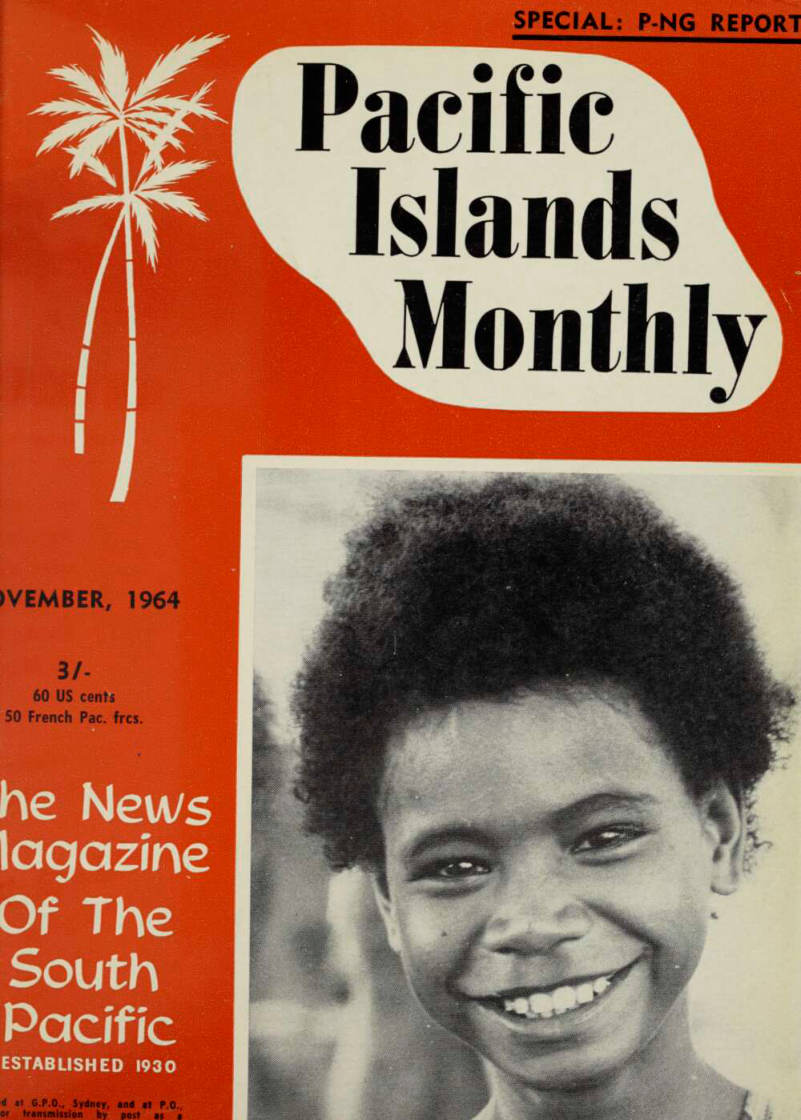 1
1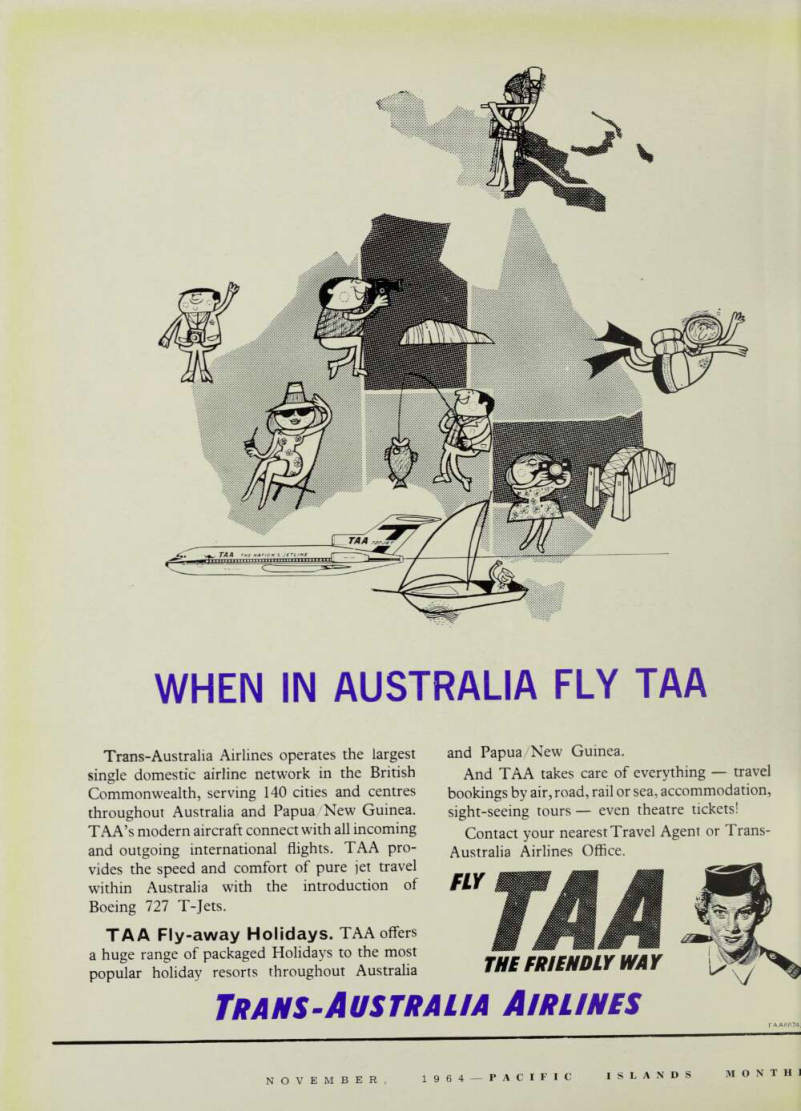 2
2 3
3 4
4 5
5 6
6 7
7 8
8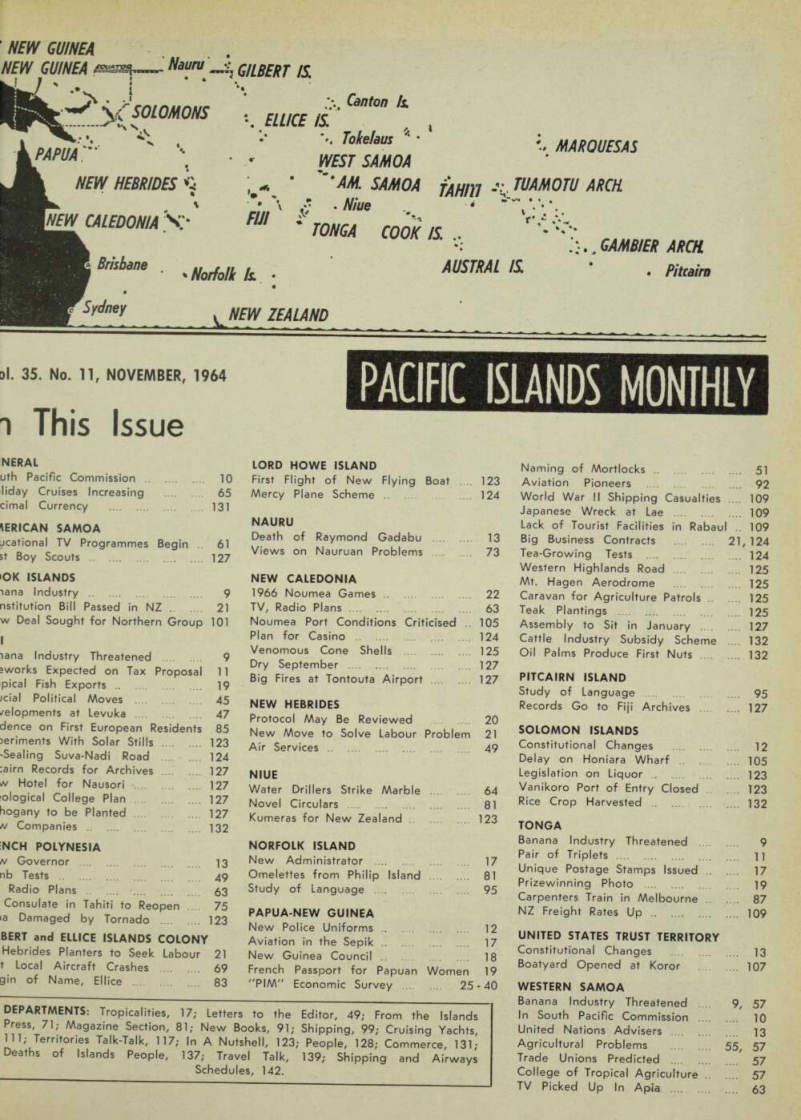 9
9 10
10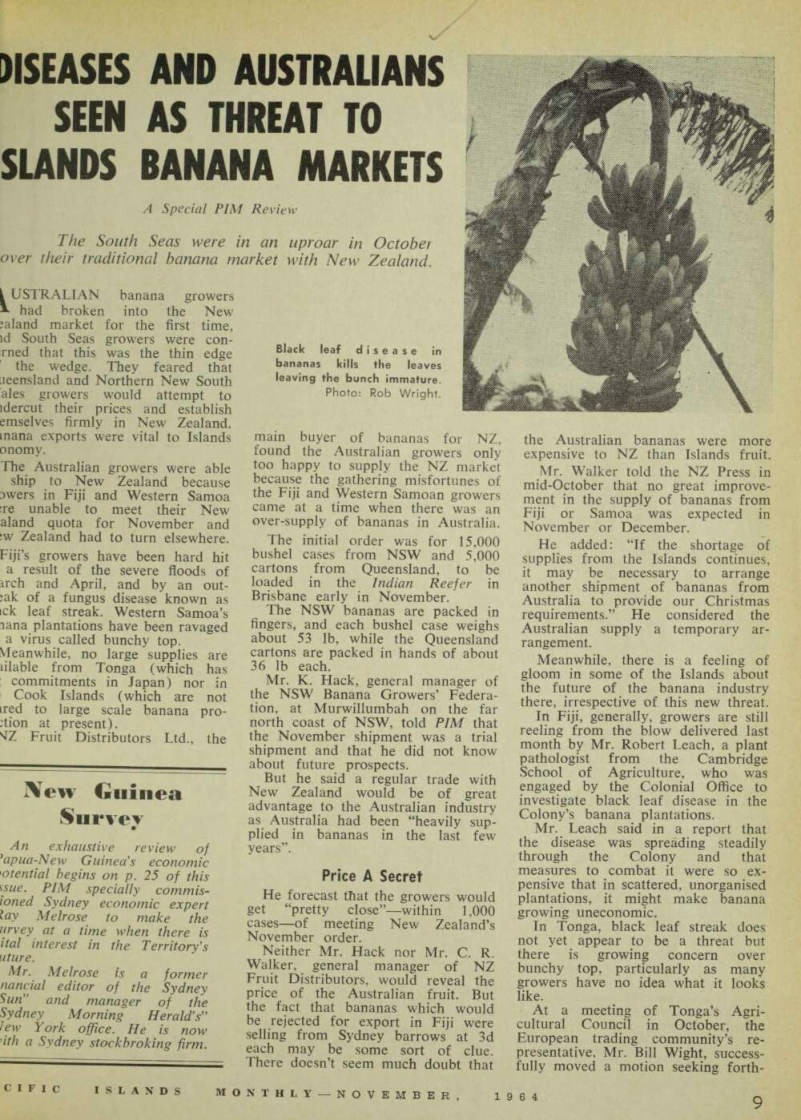 11
11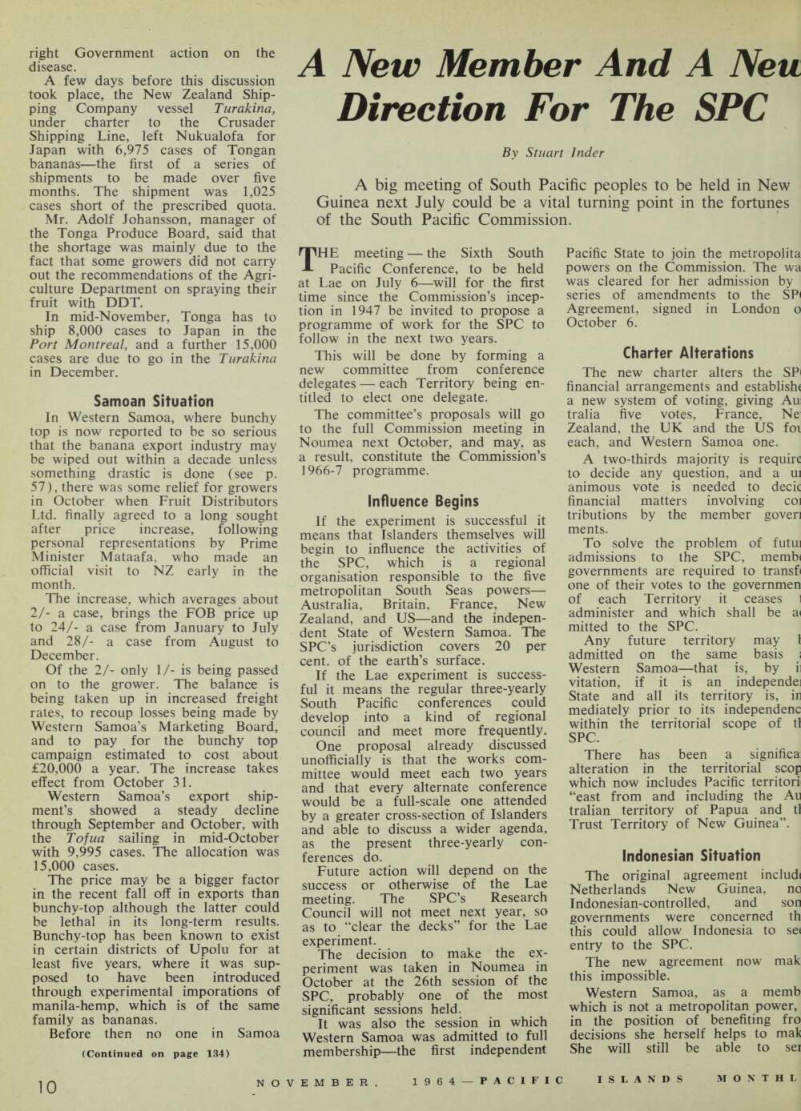 12
12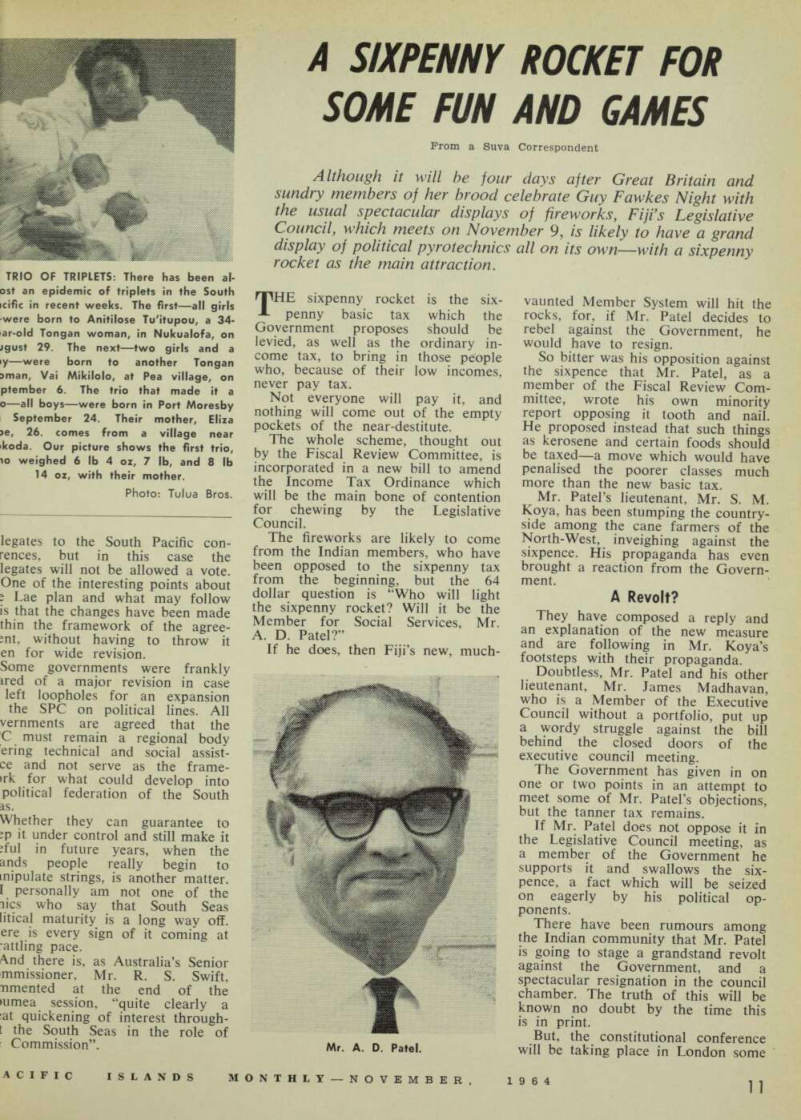 13
13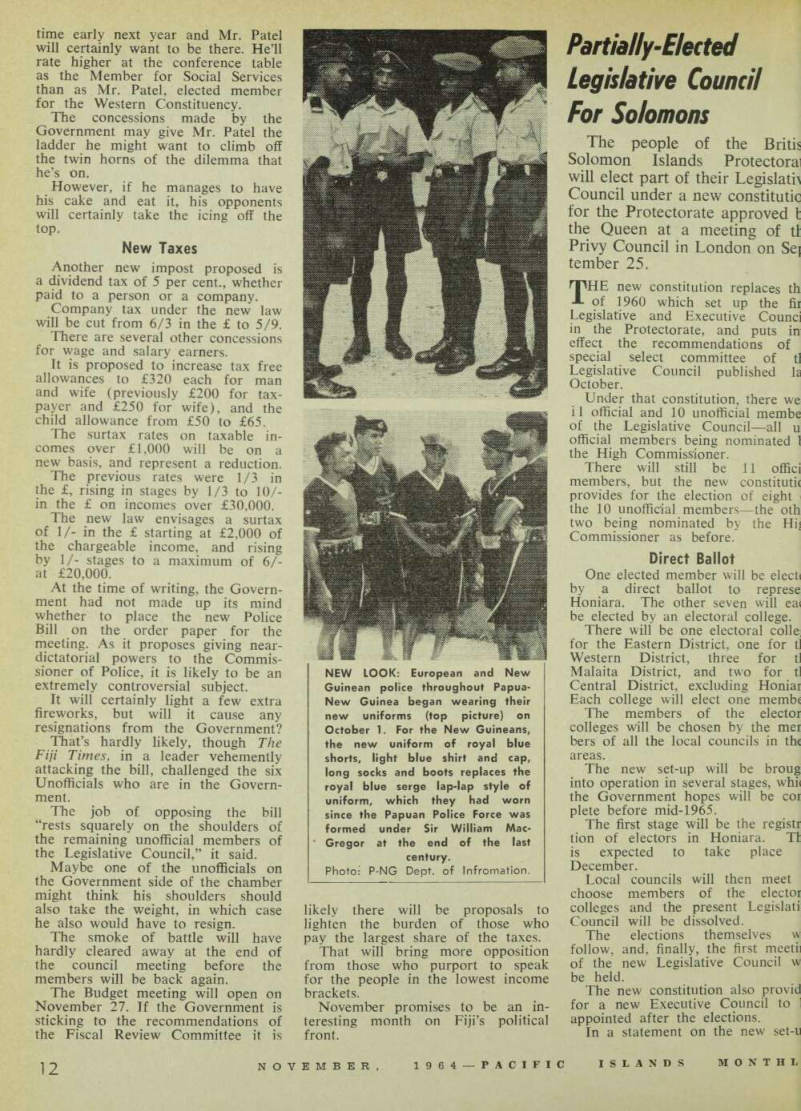 14
14 15
15 16
16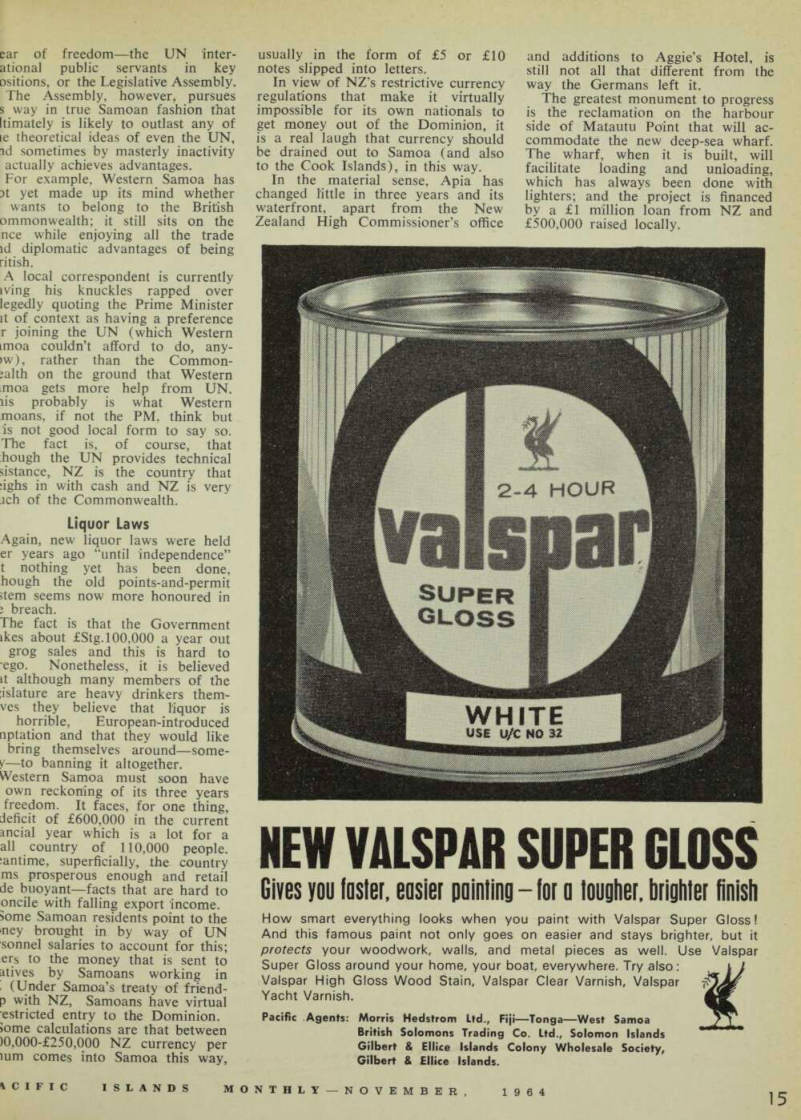 17
17 18
18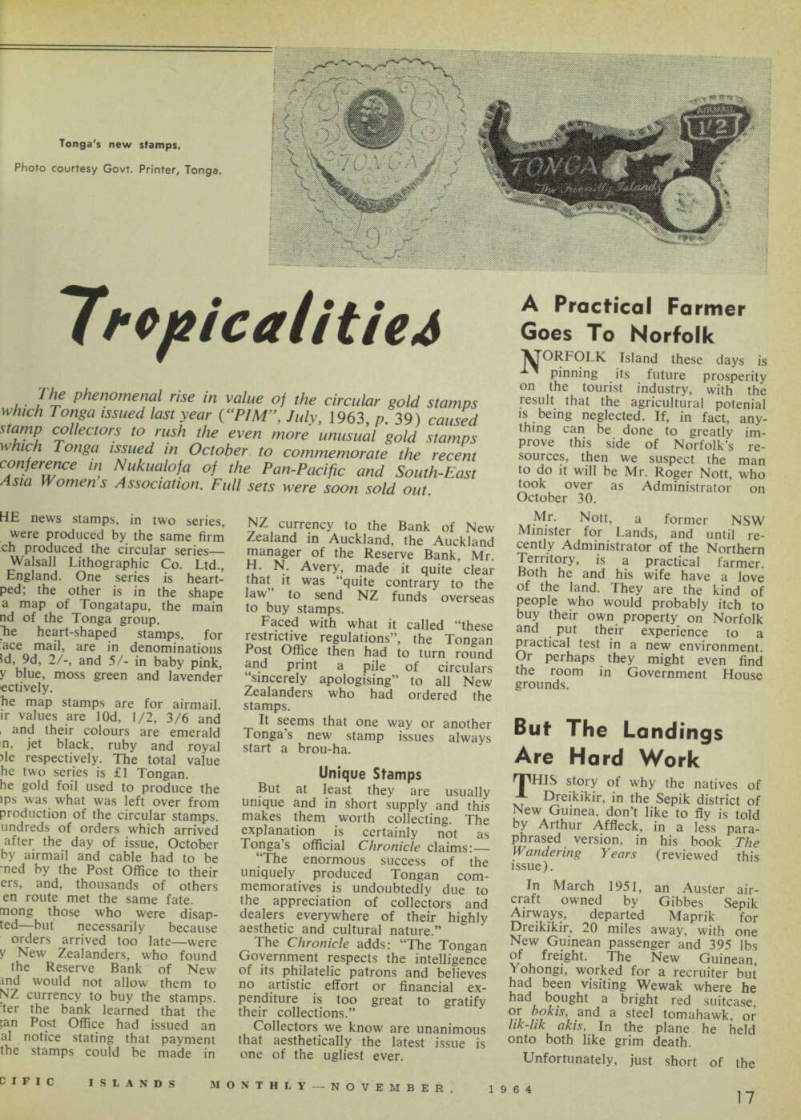 19
19 20
20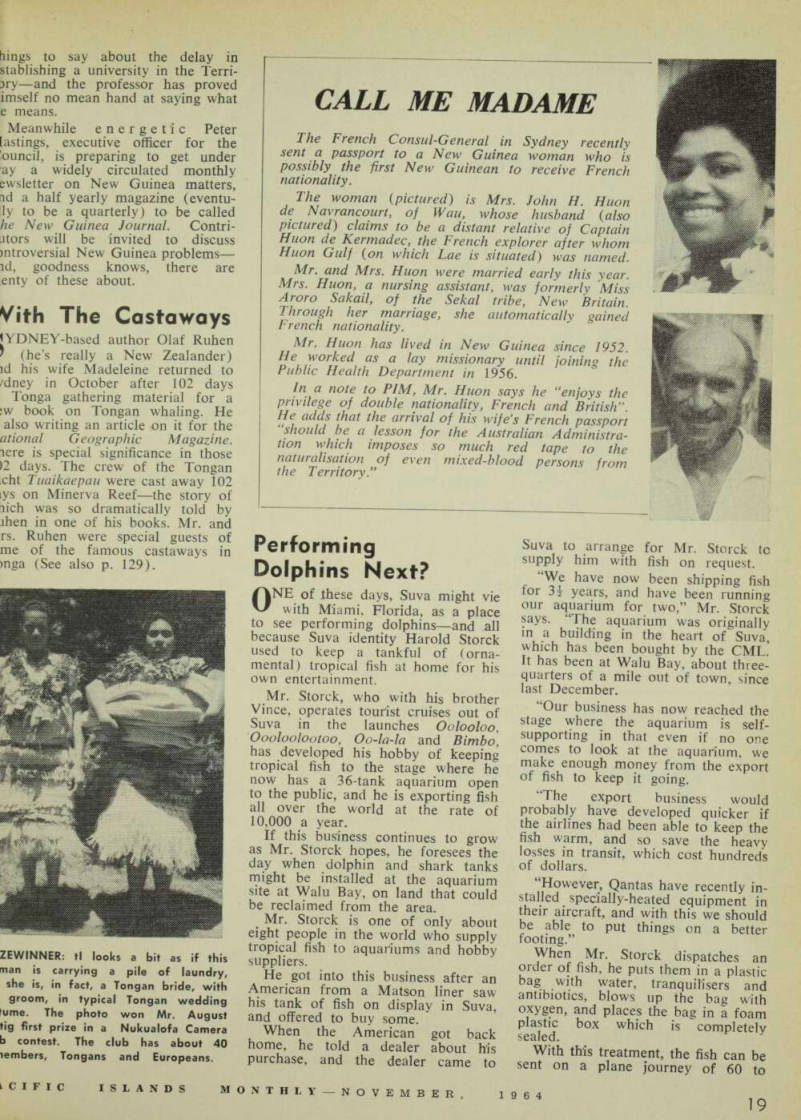 21
21 22
22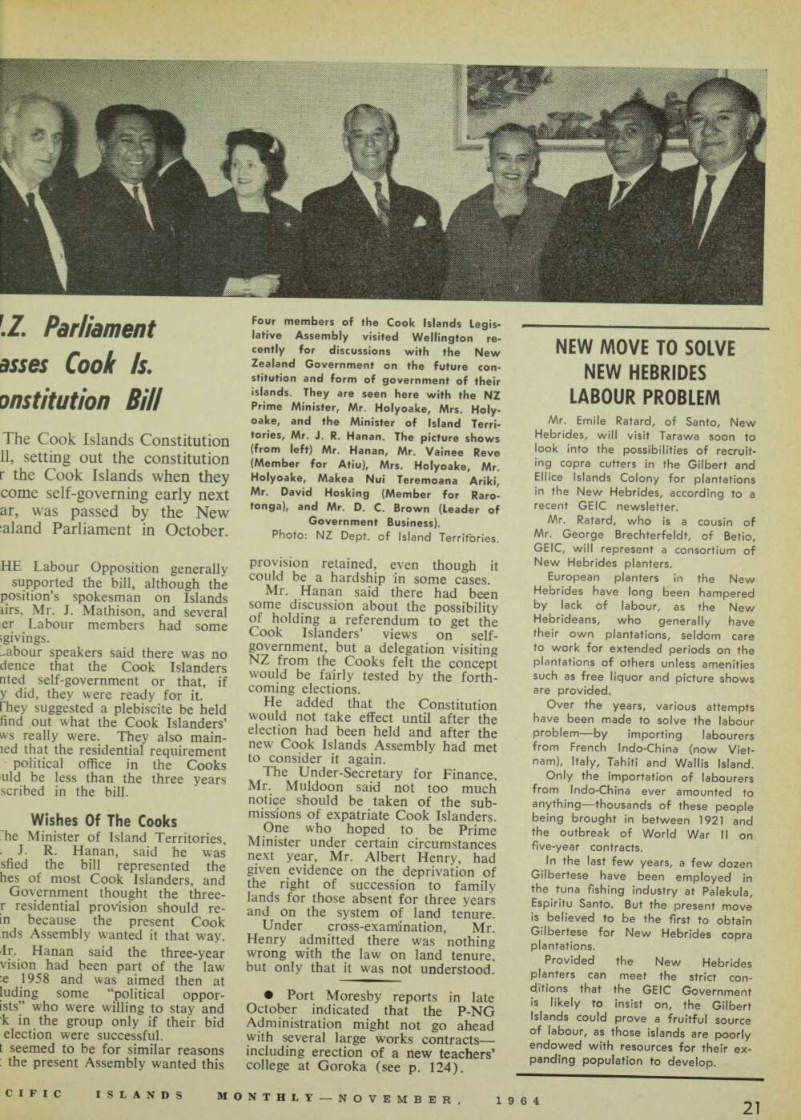 23
23 24
24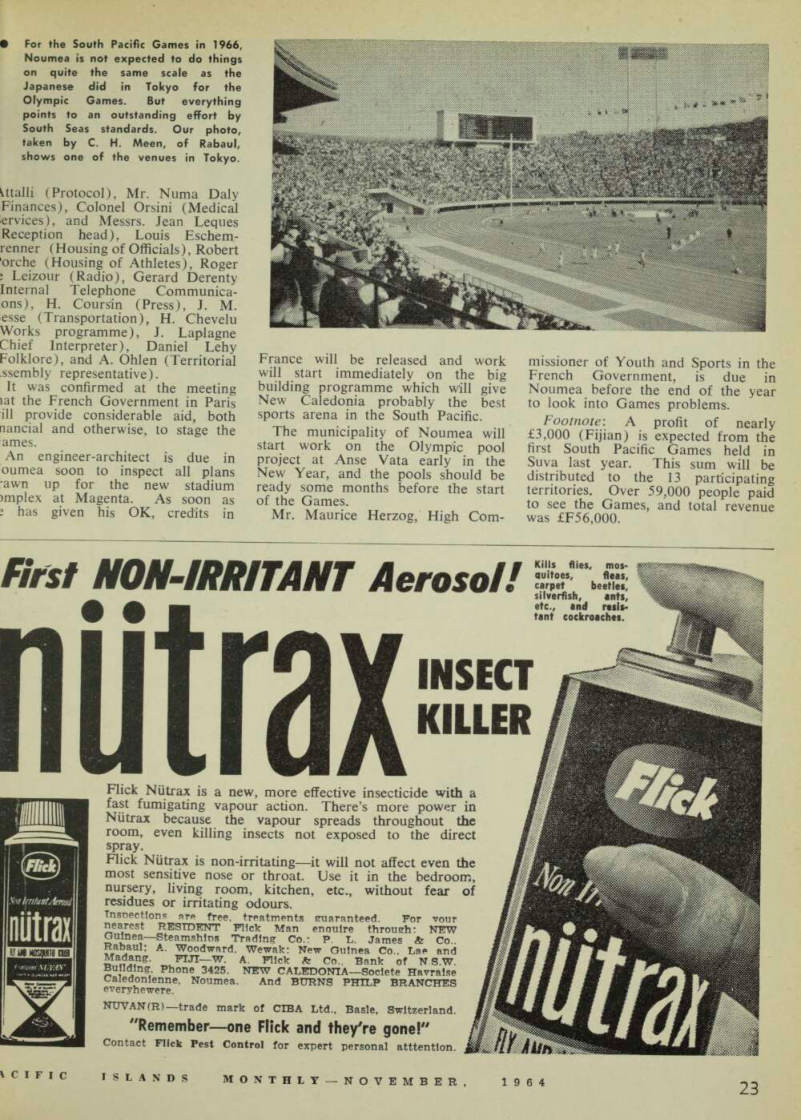 25
25 26
26 27
27 28
28 29
29 30
30 31
31 32
32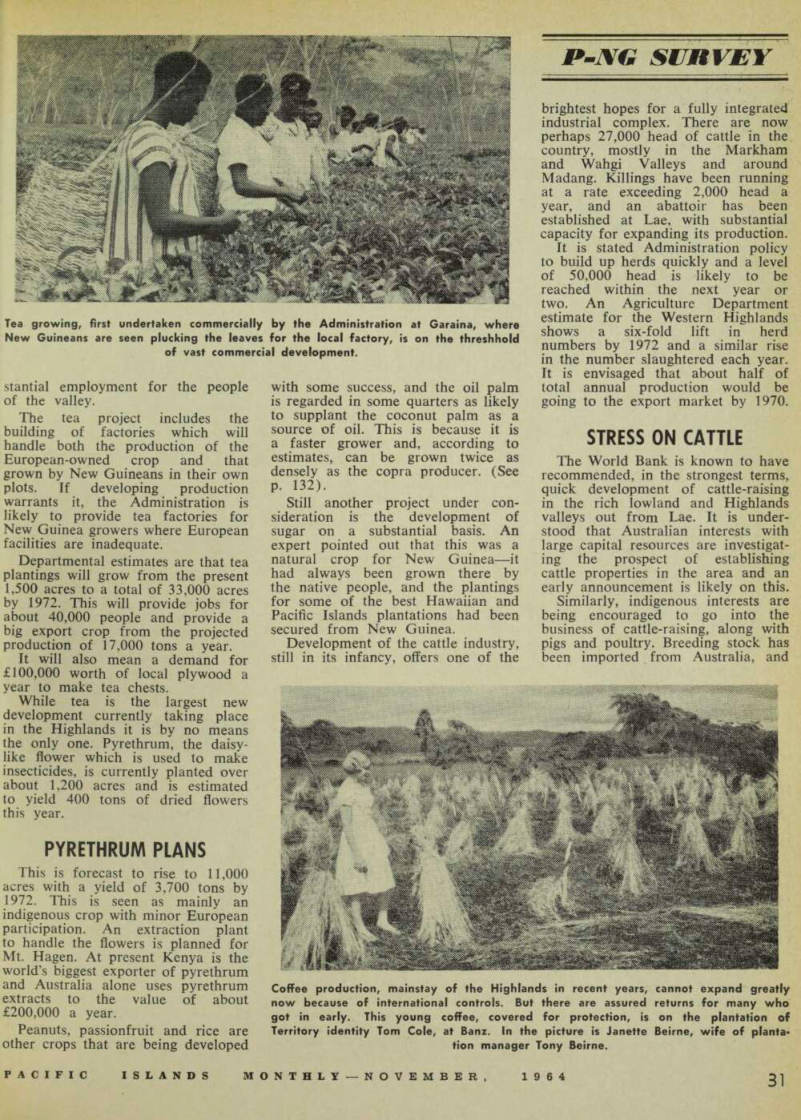 33
33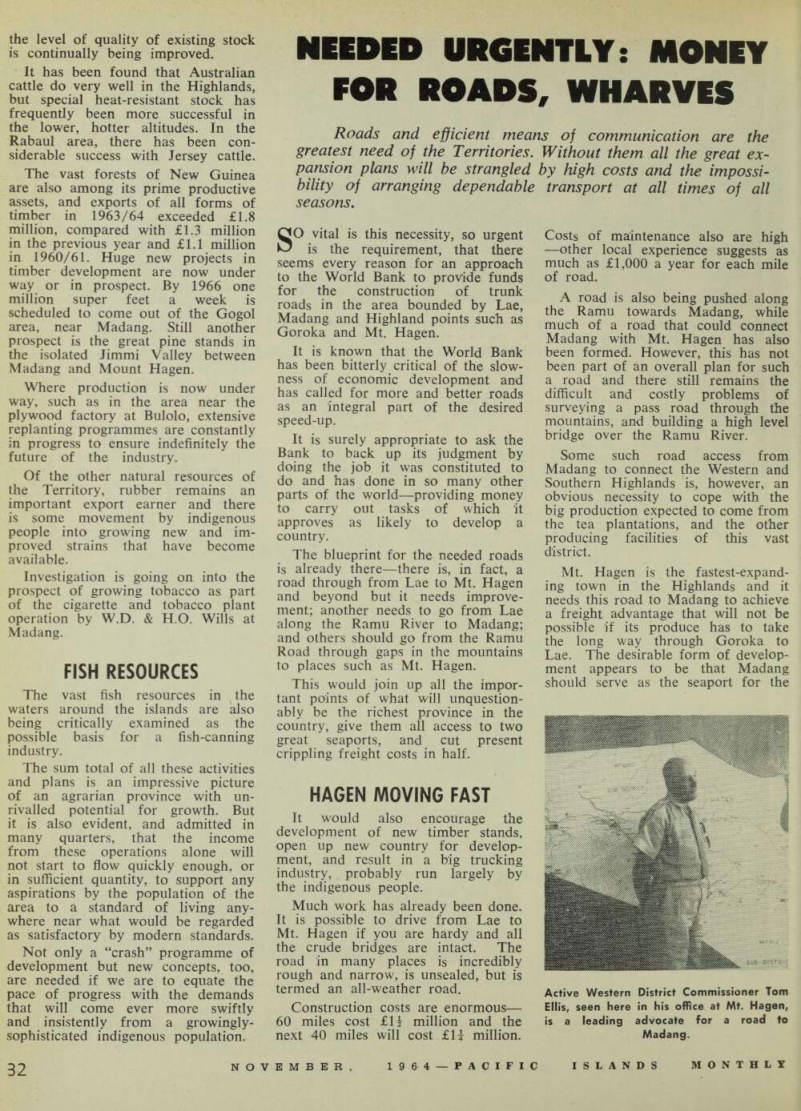 34
34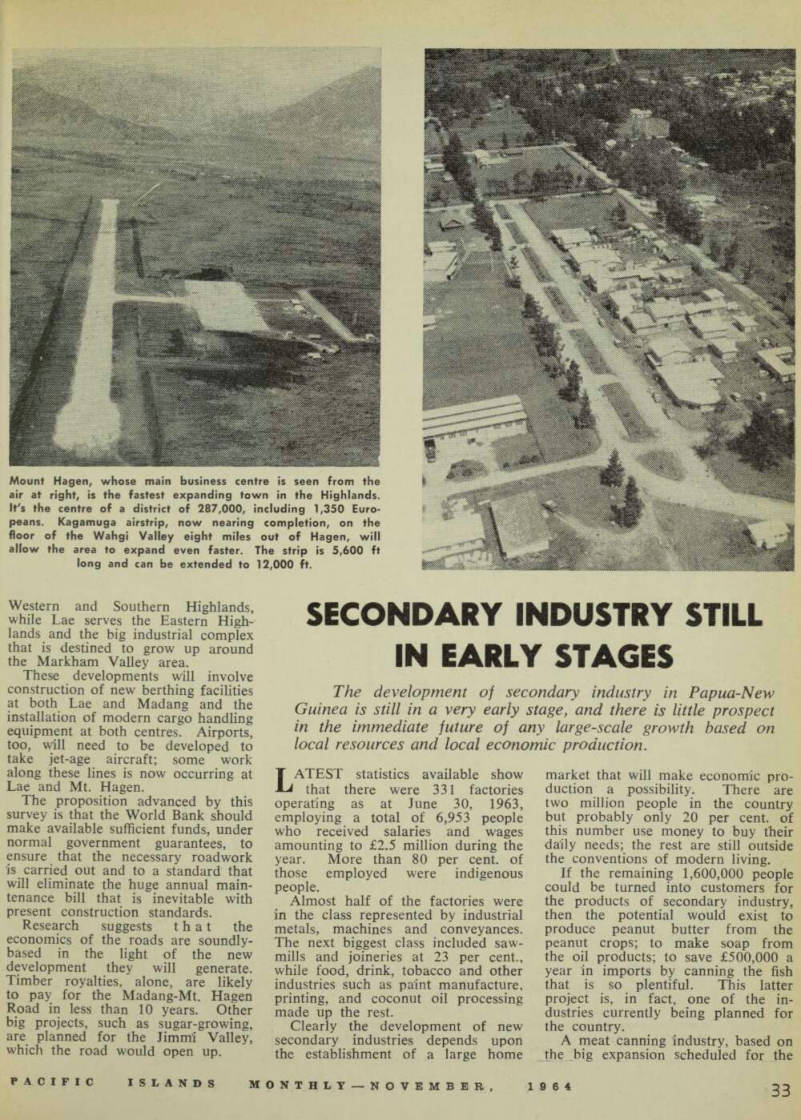 35
35 36
36 37
37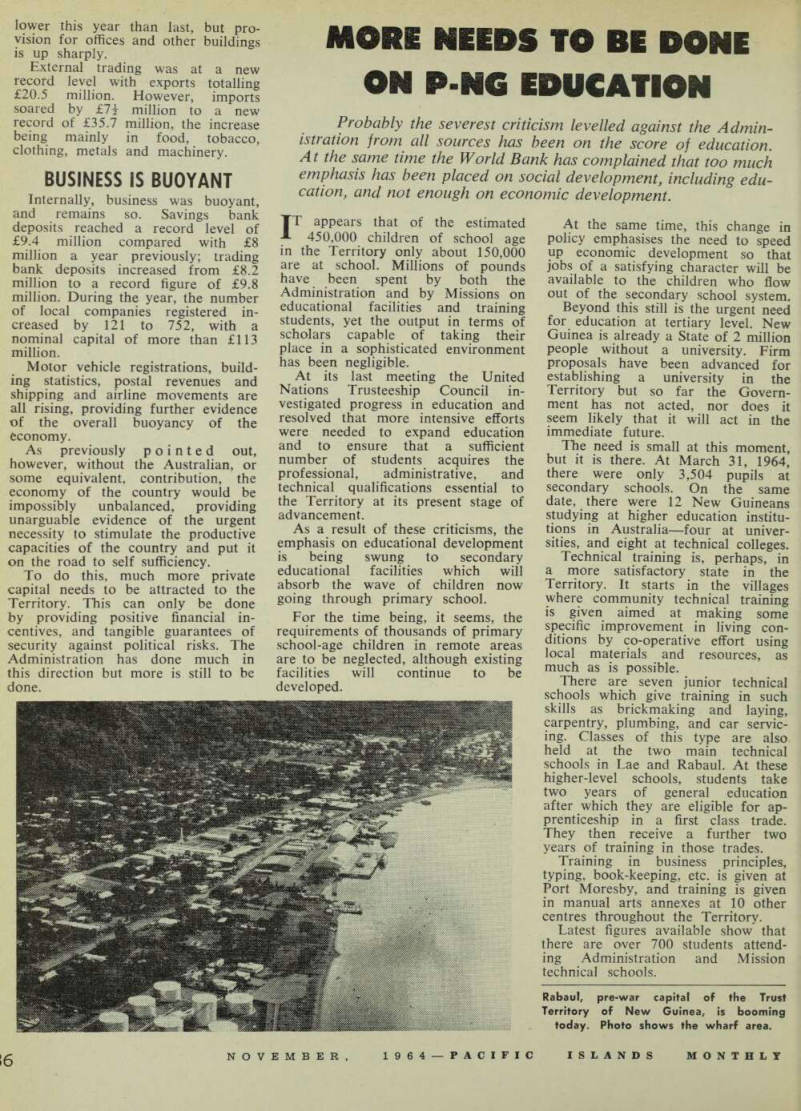 38
38 39
39 40
40 41
41 42
42 43
43 44
44 45
45 46
46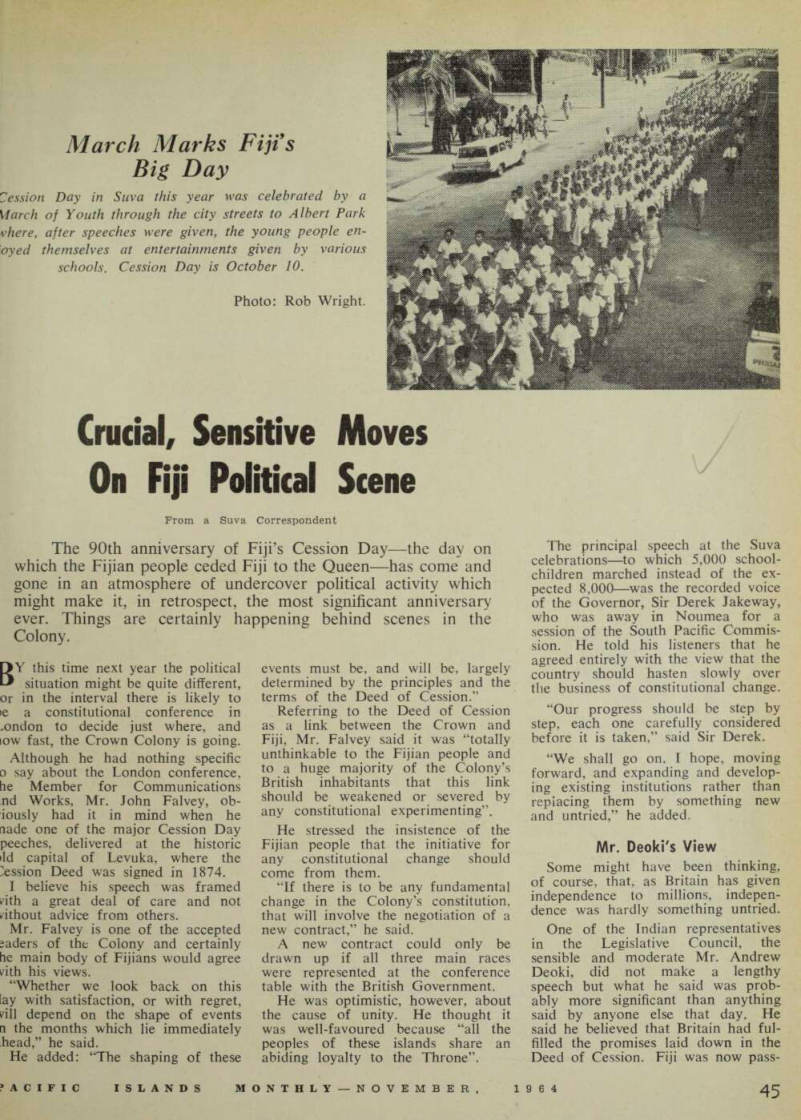 47
47 48
48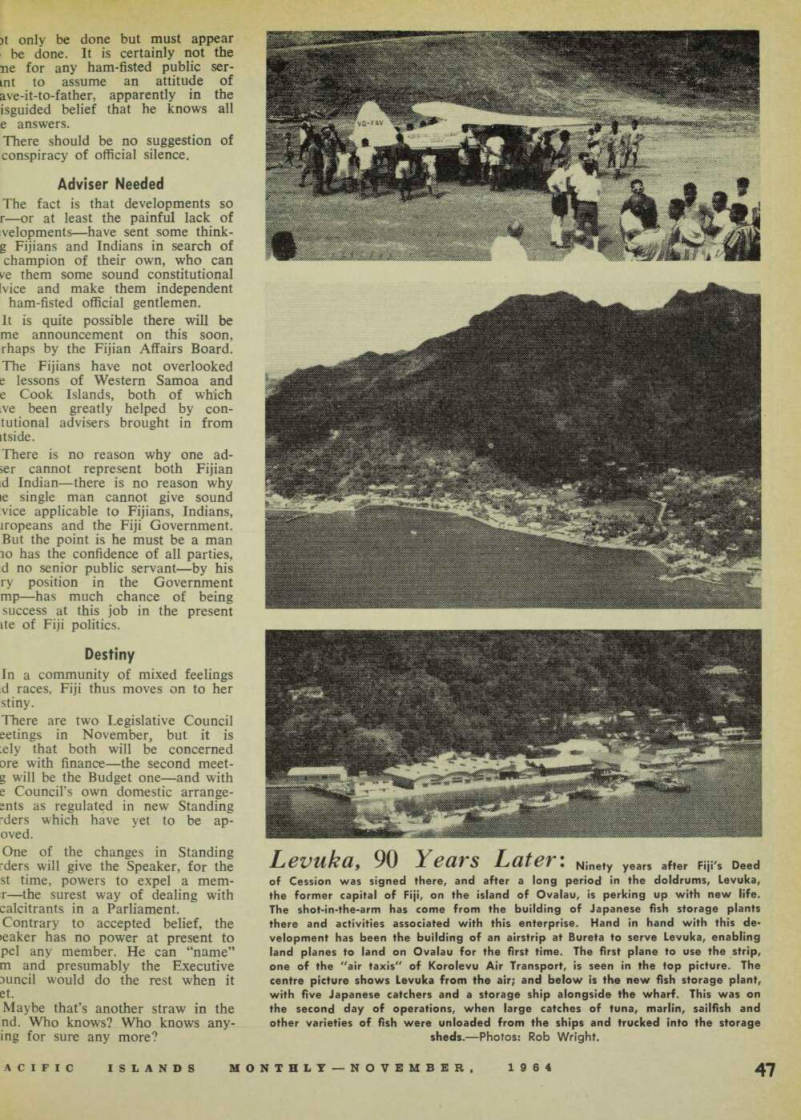 49
49 50
50 51
51 52
52 53
53 54
54 55
55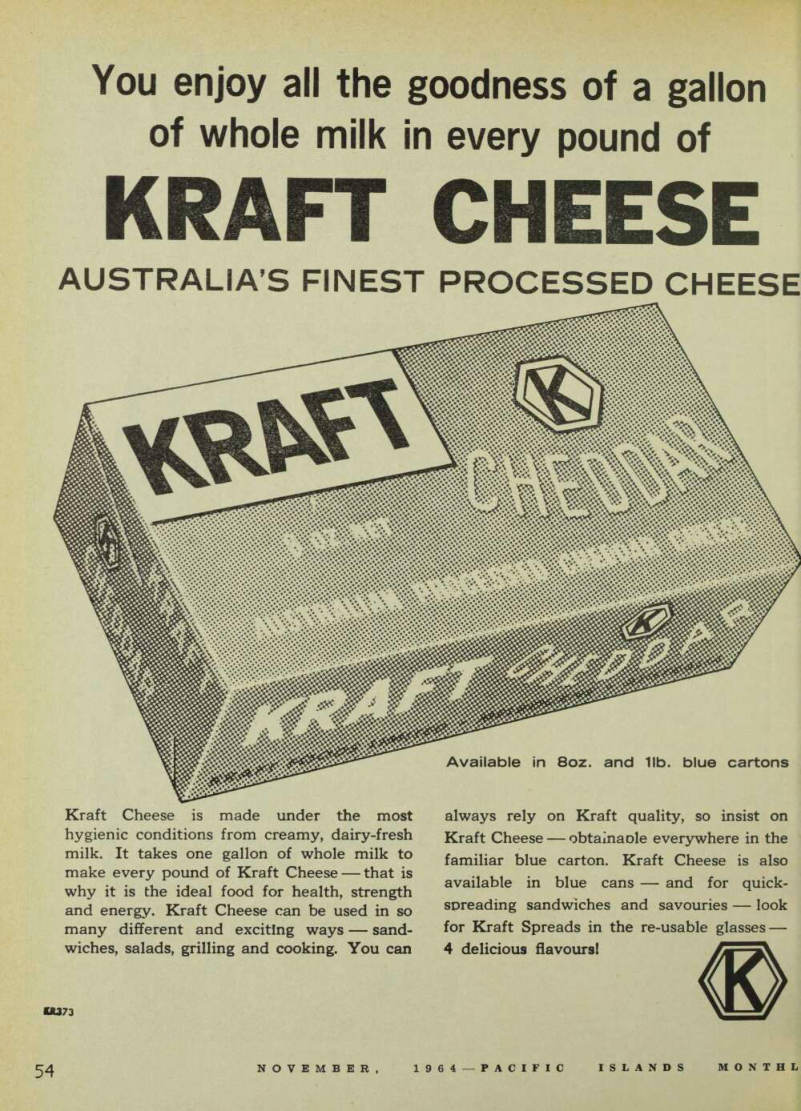 56
56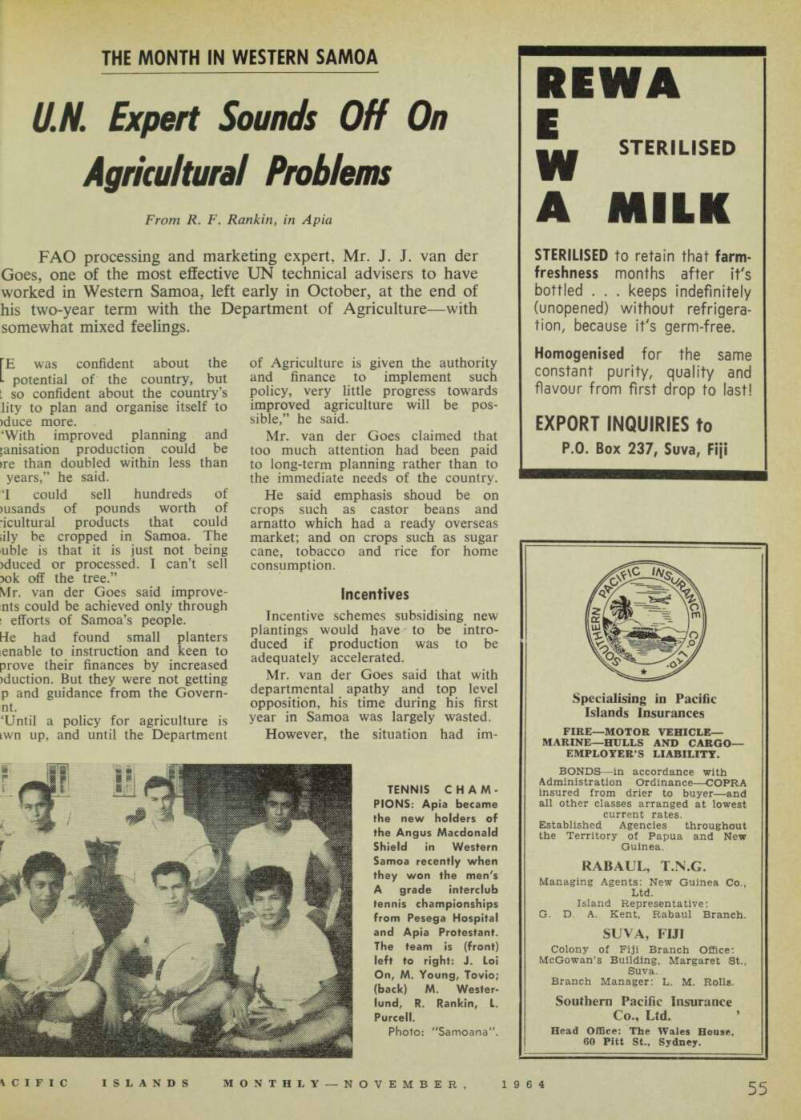 57
57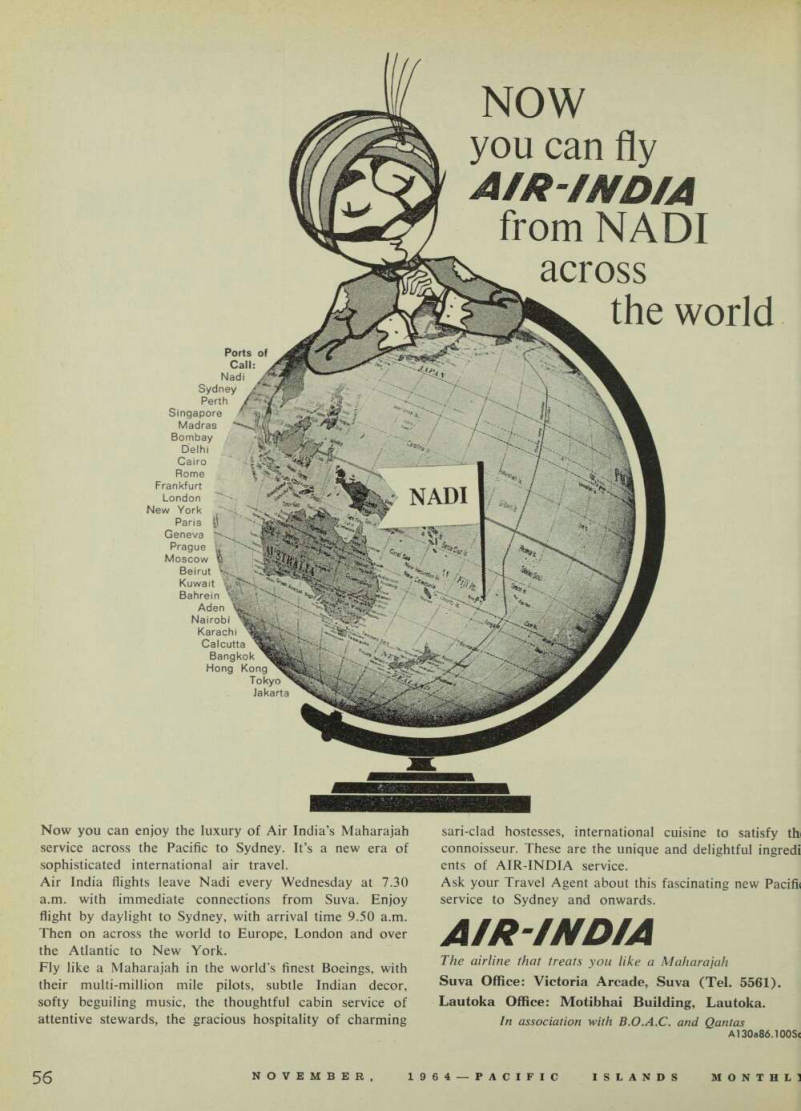 58
58 59
59 60
60 61
61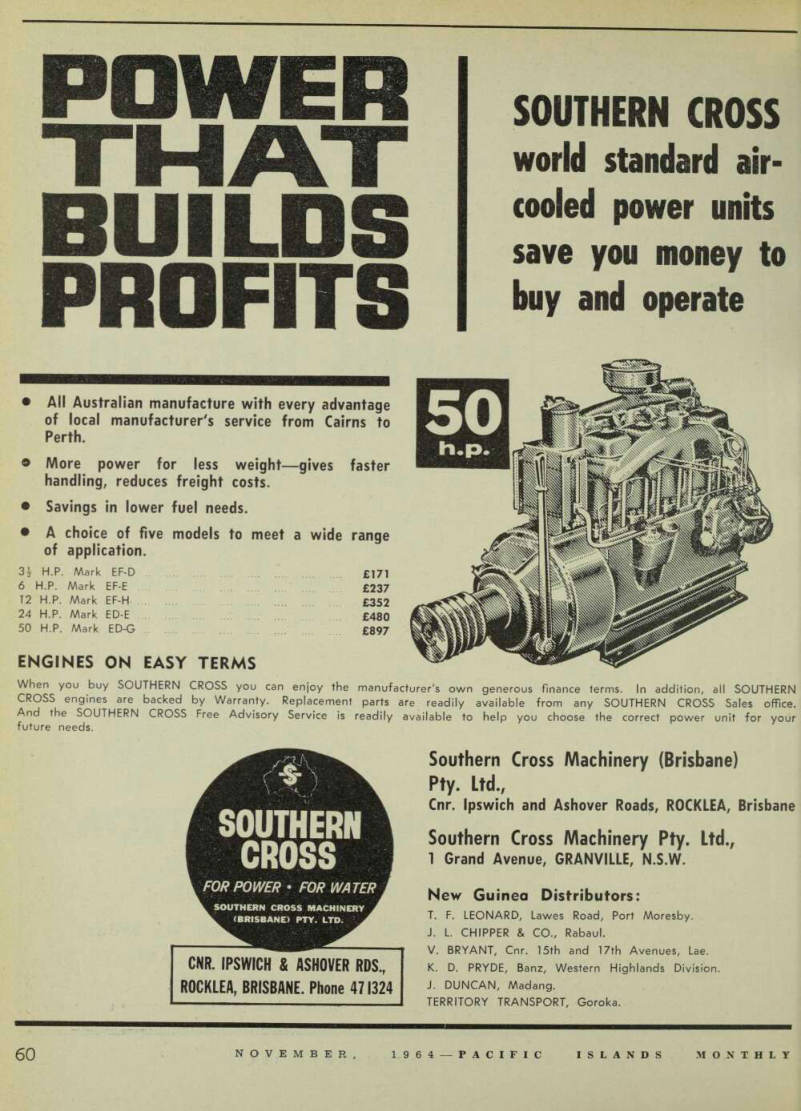 62
62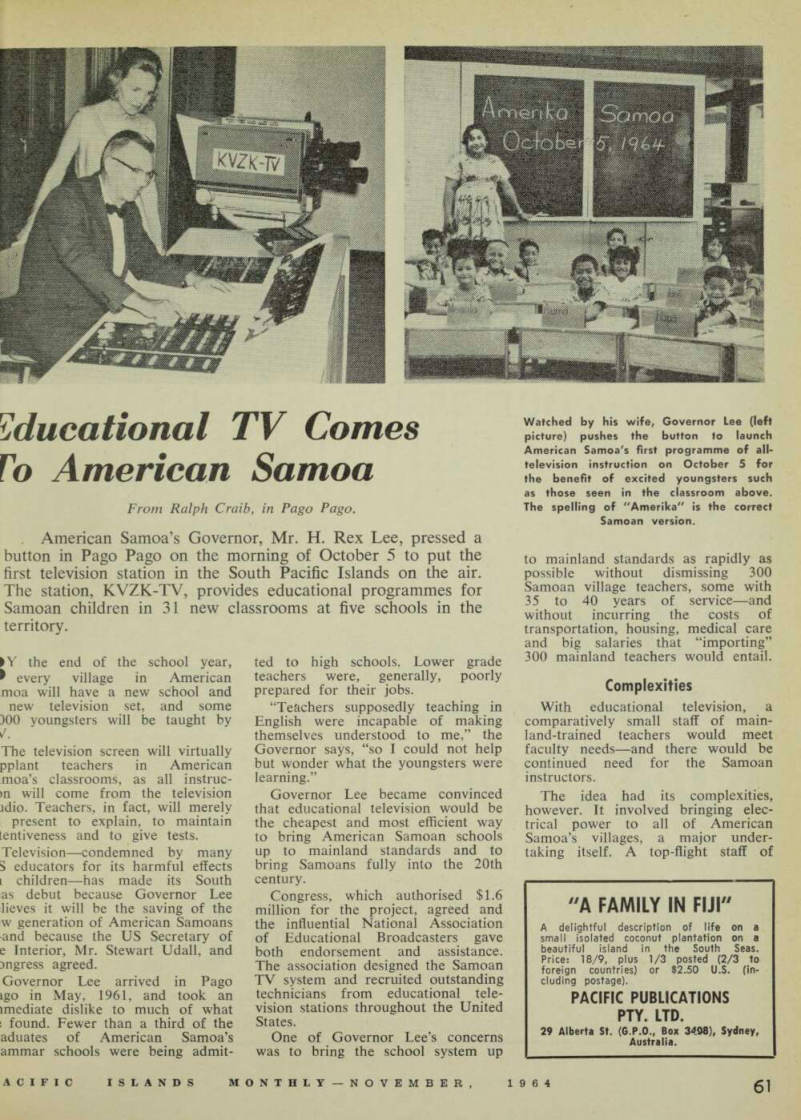 63
63 64
64 65
65 66
66 67
67 68
68 69
69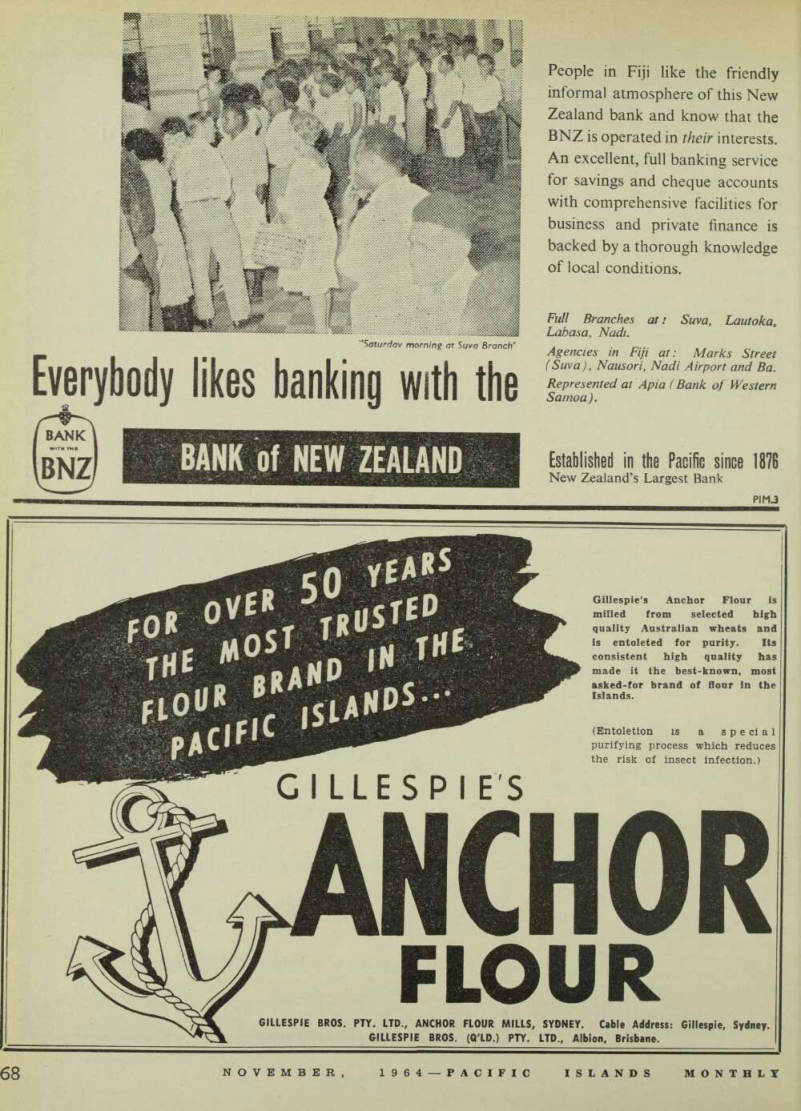 70
70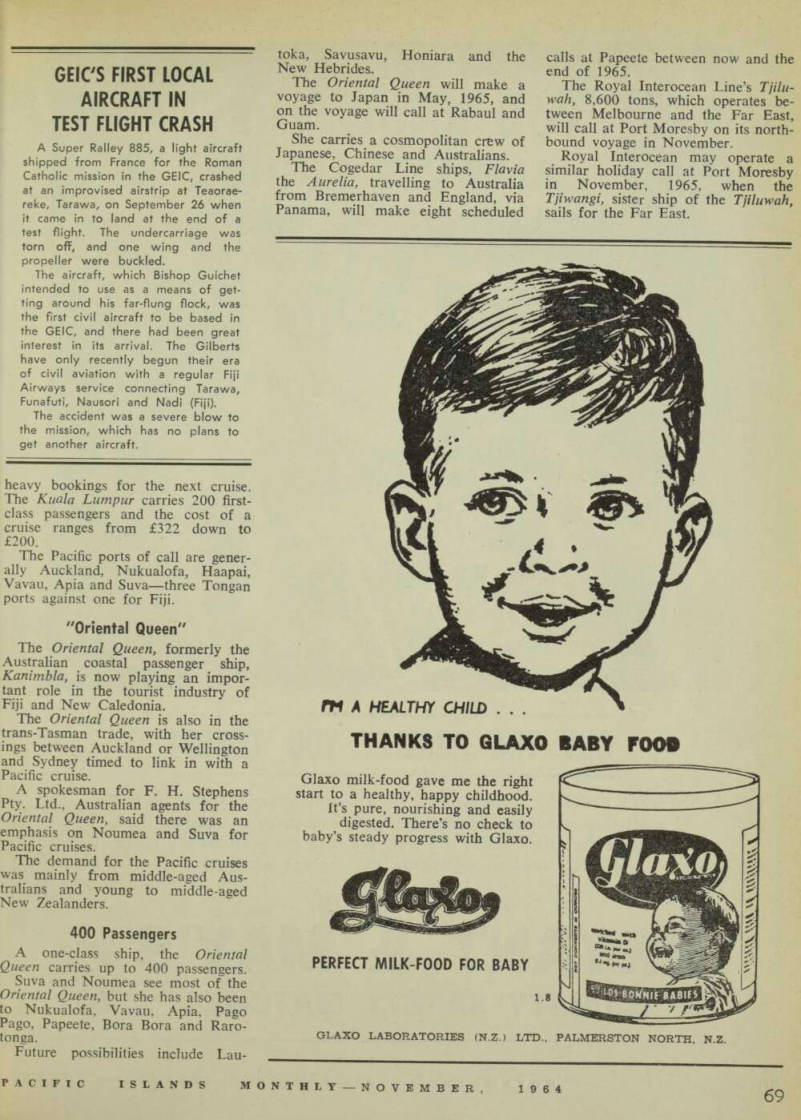 71
71 72
72 73
73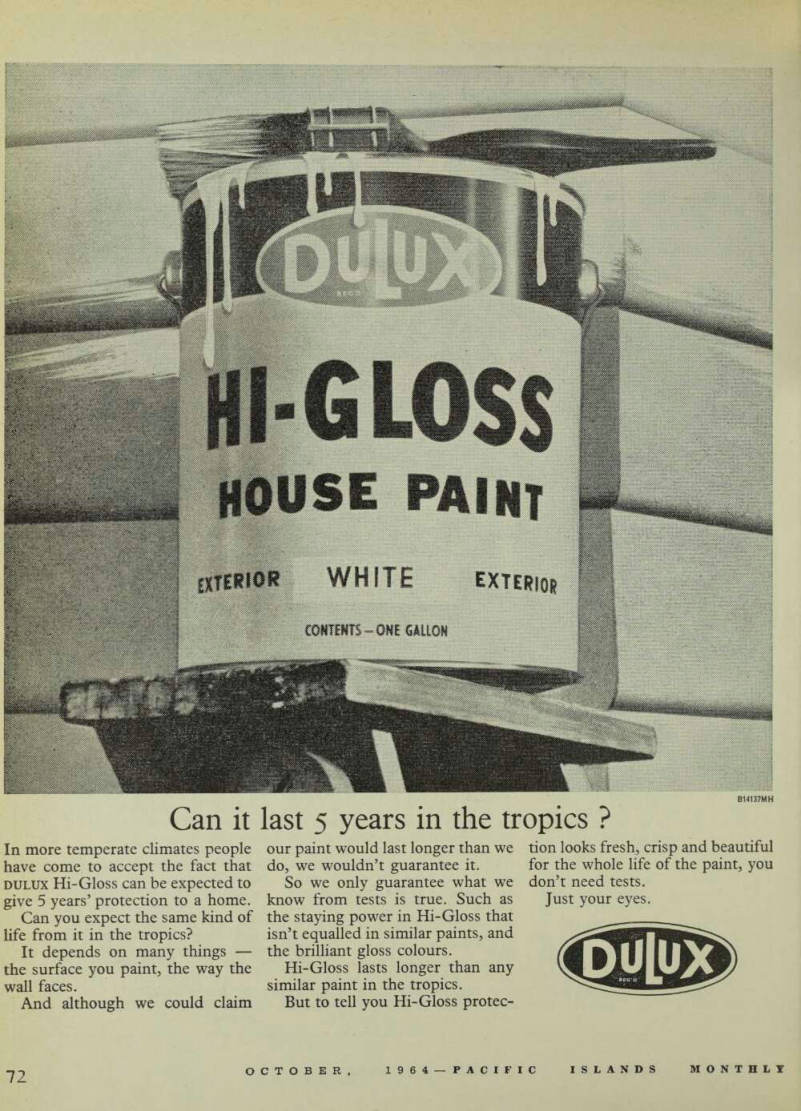 74
74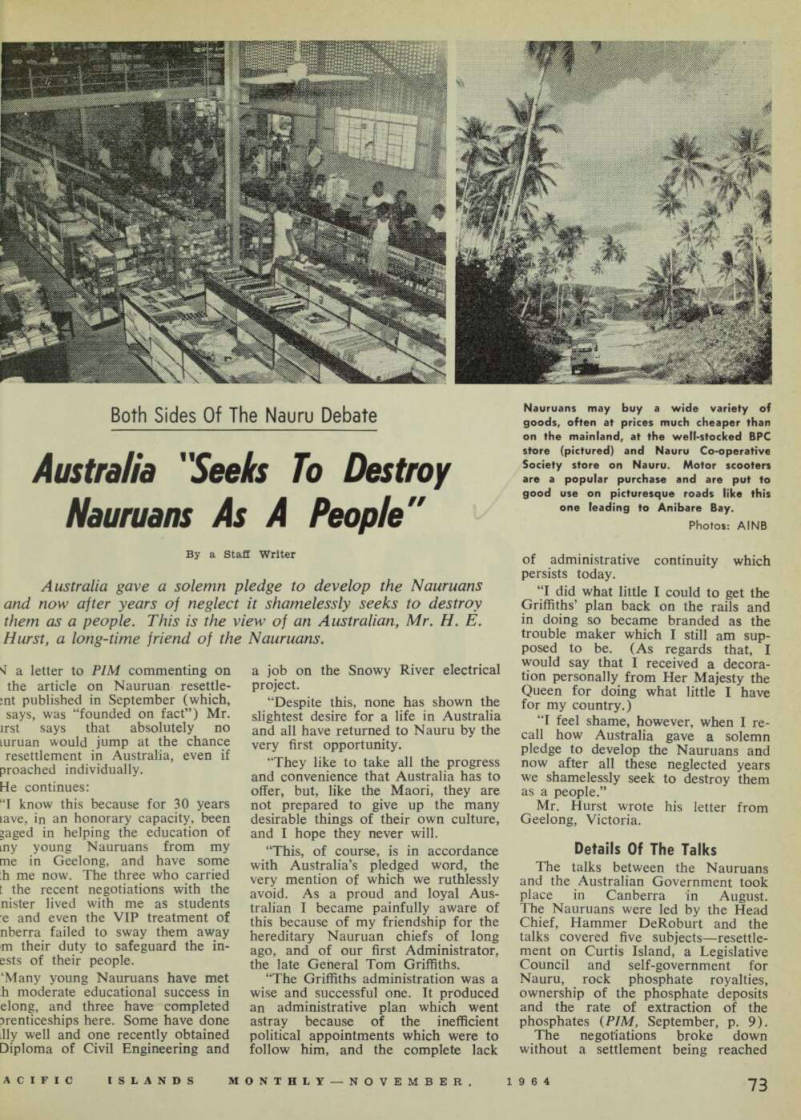 75
75 76
76 77
77 78
78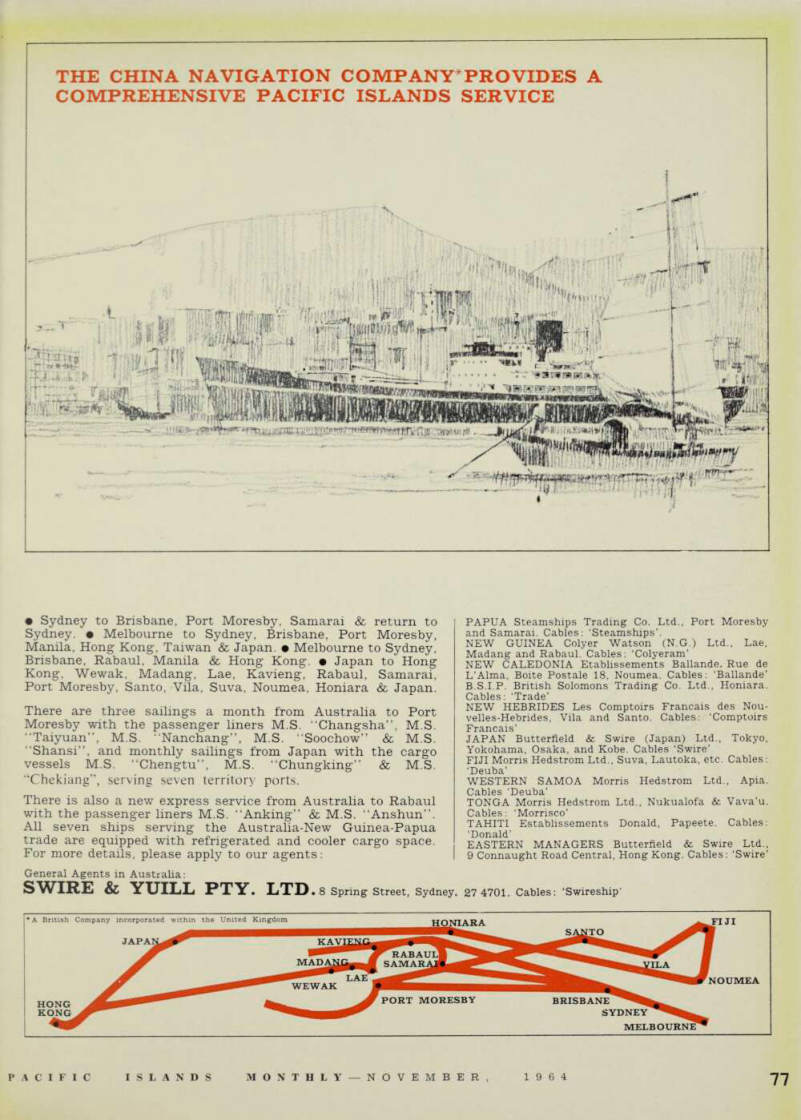 79
79 80
80 81
81 82
82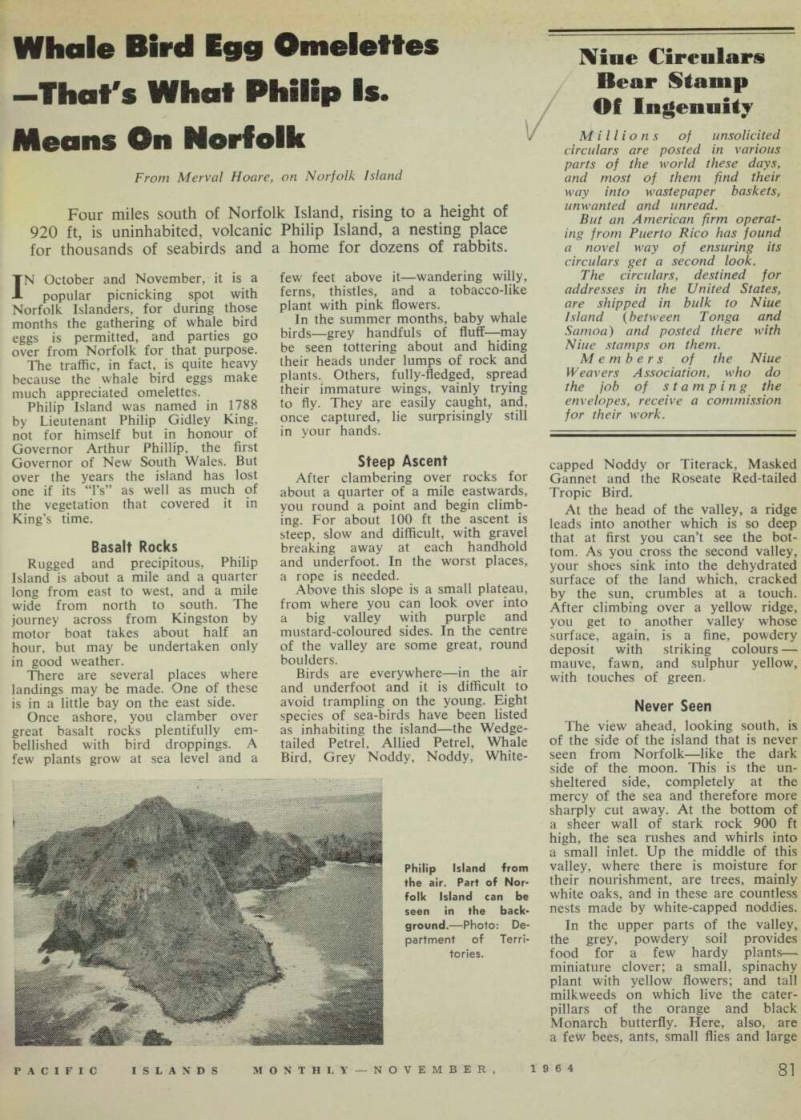 83
83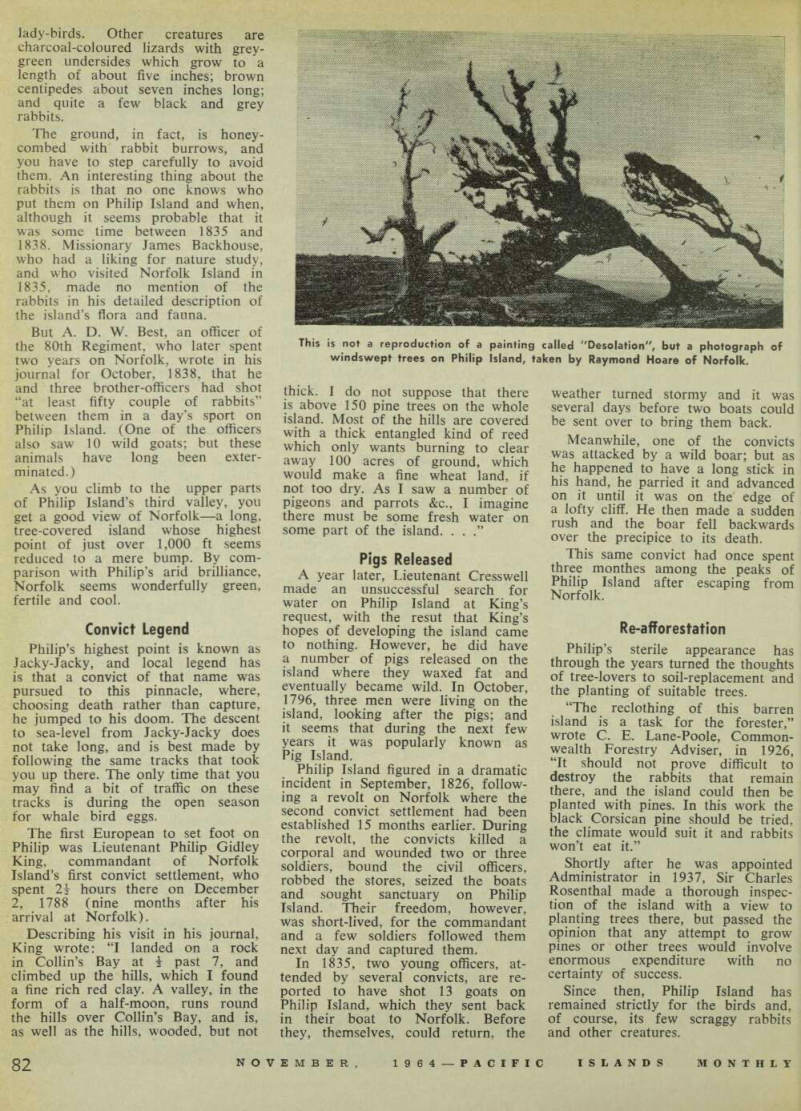 84
84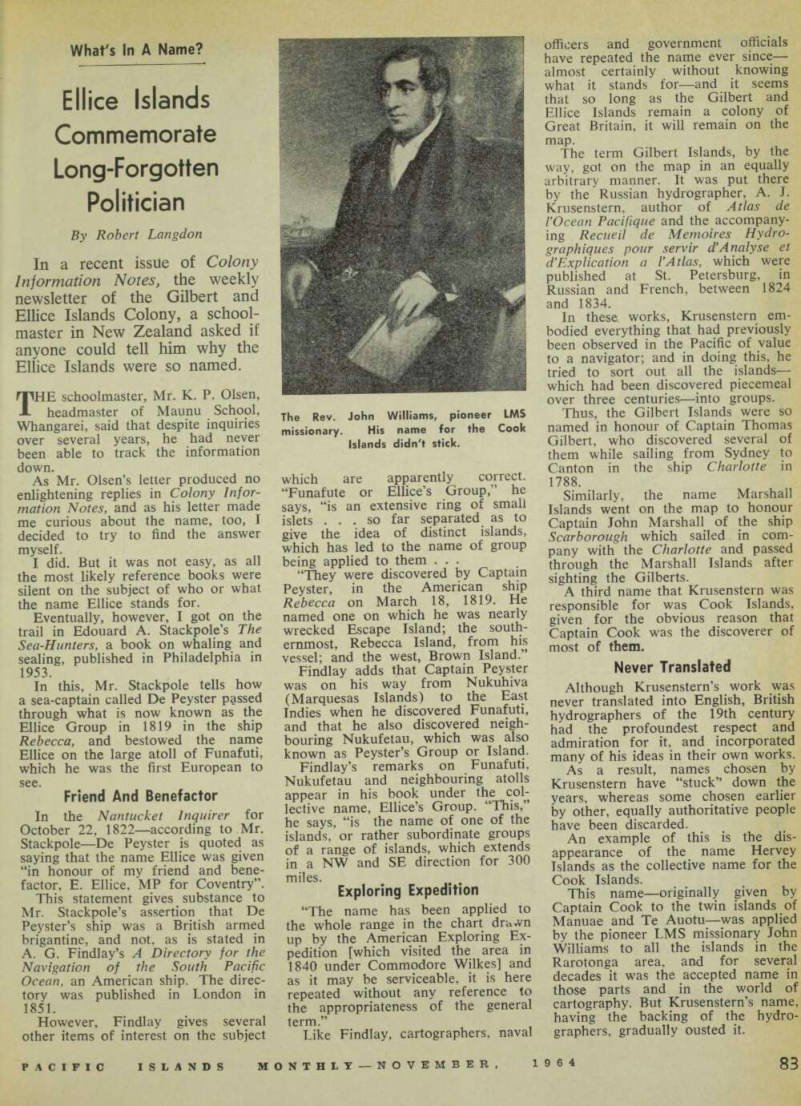 85
85 86
86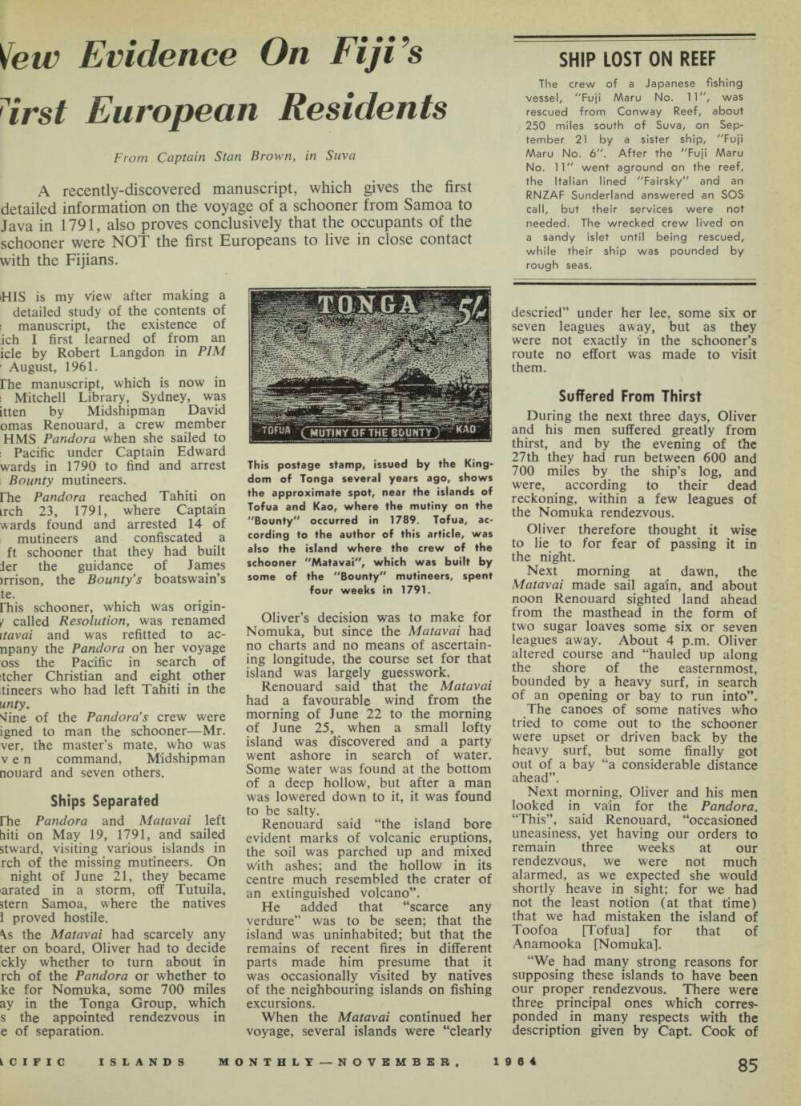 87
87 88
88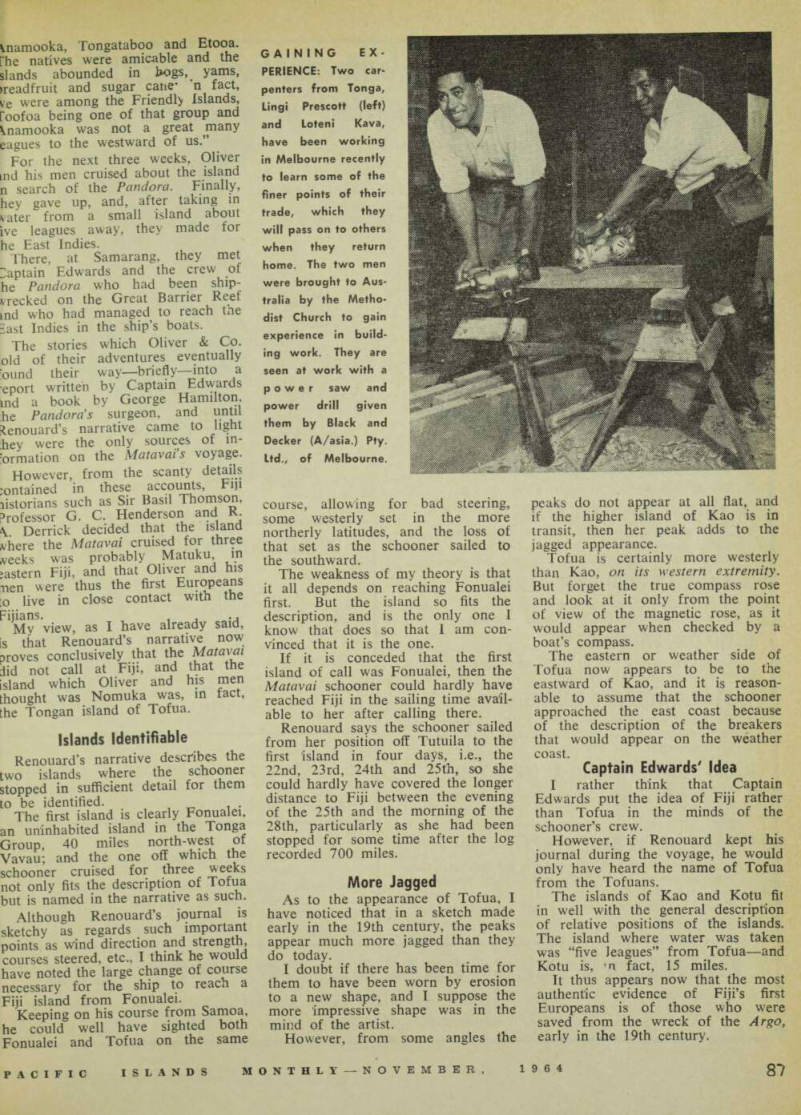 89
89 90
90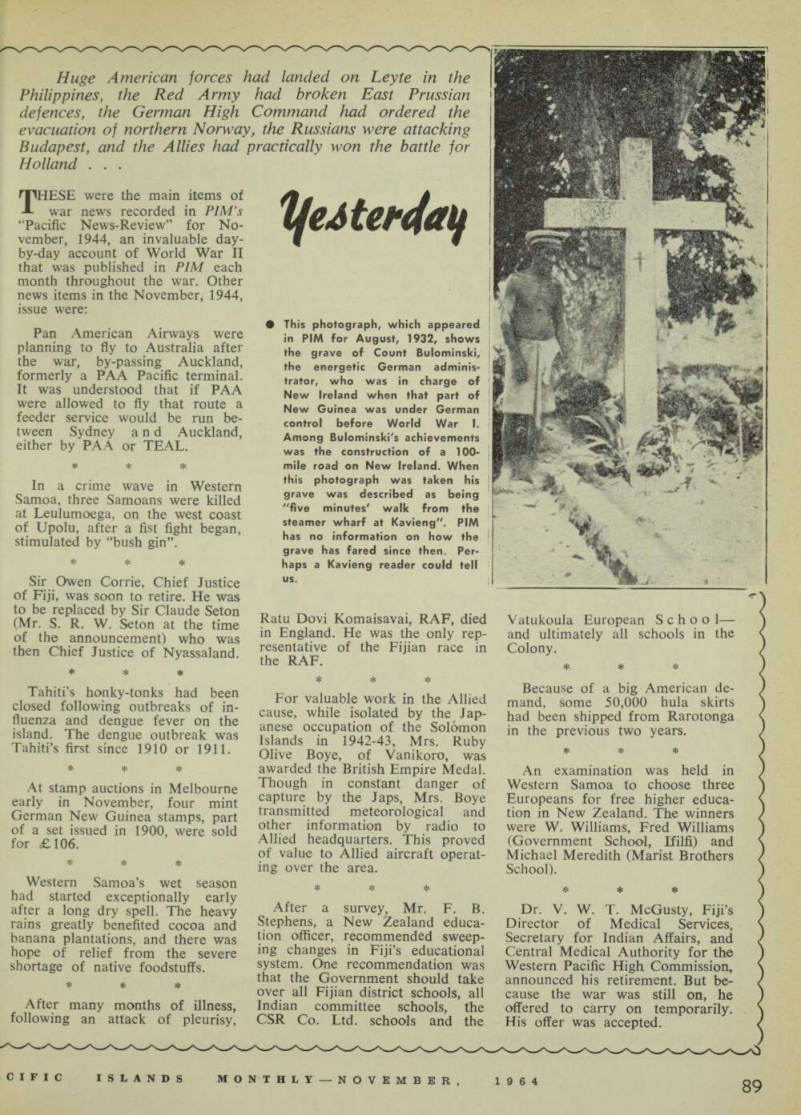 91
91 92
92 93
93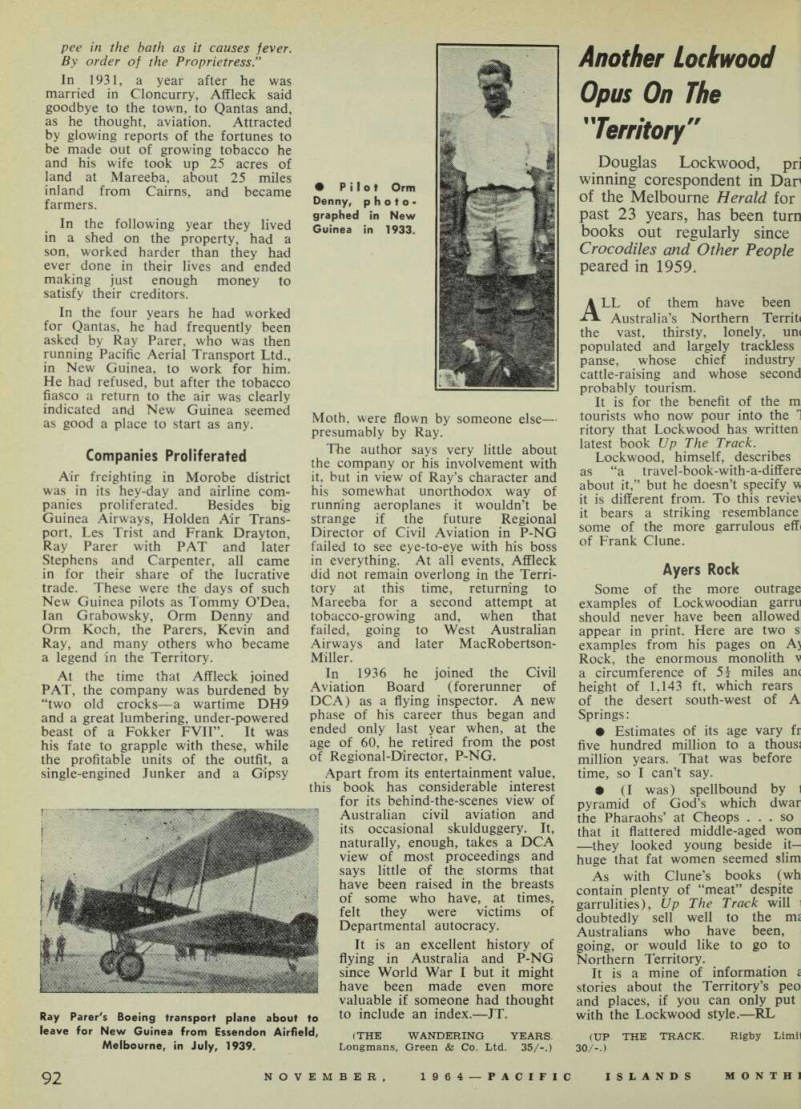 94
94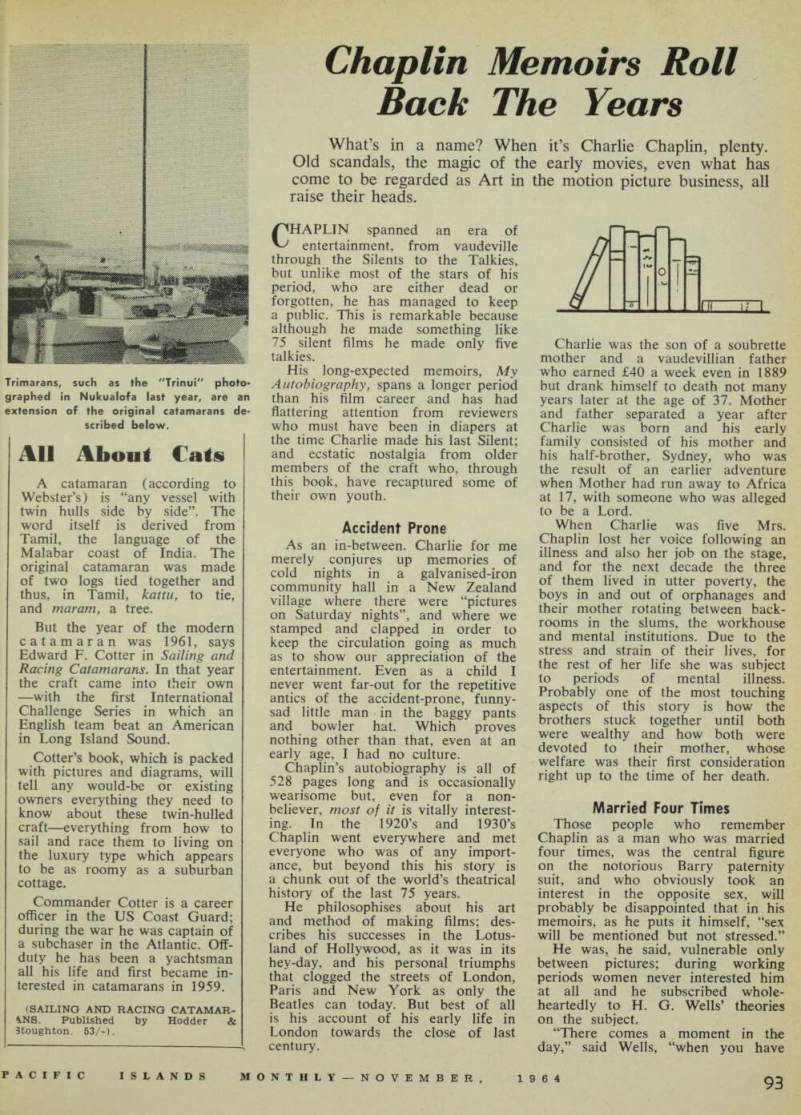 95
95 96
96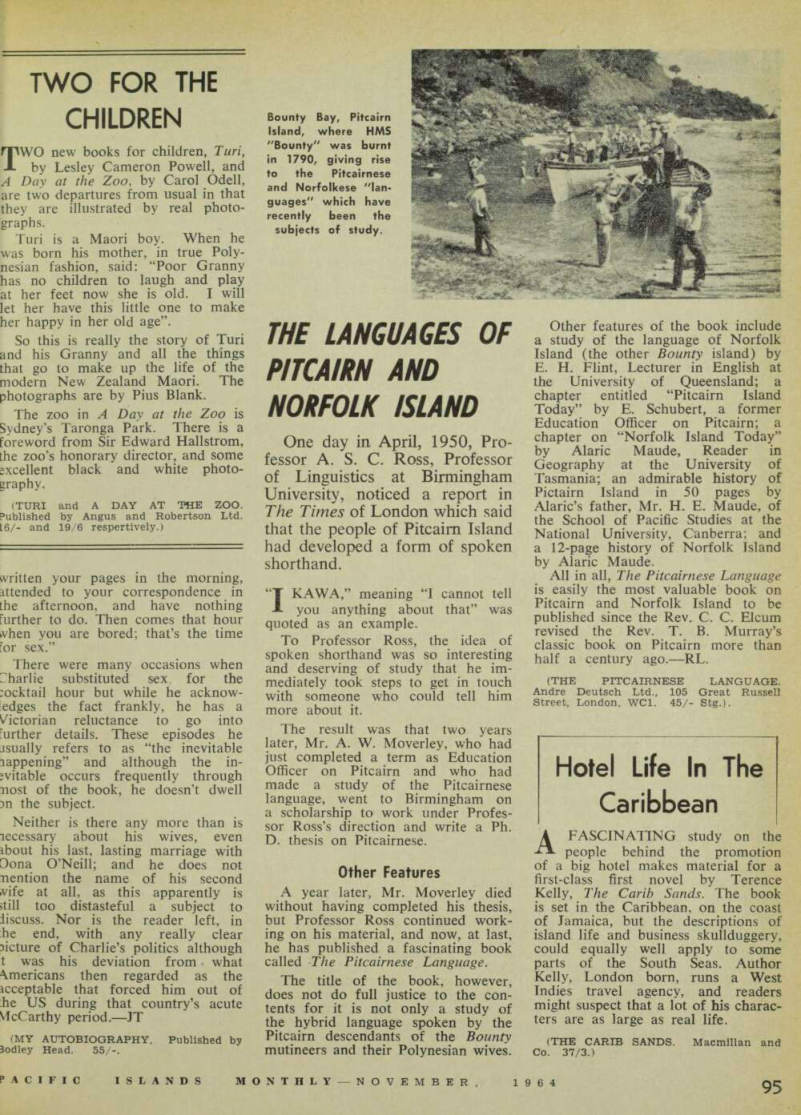 97
97 98
98 99
99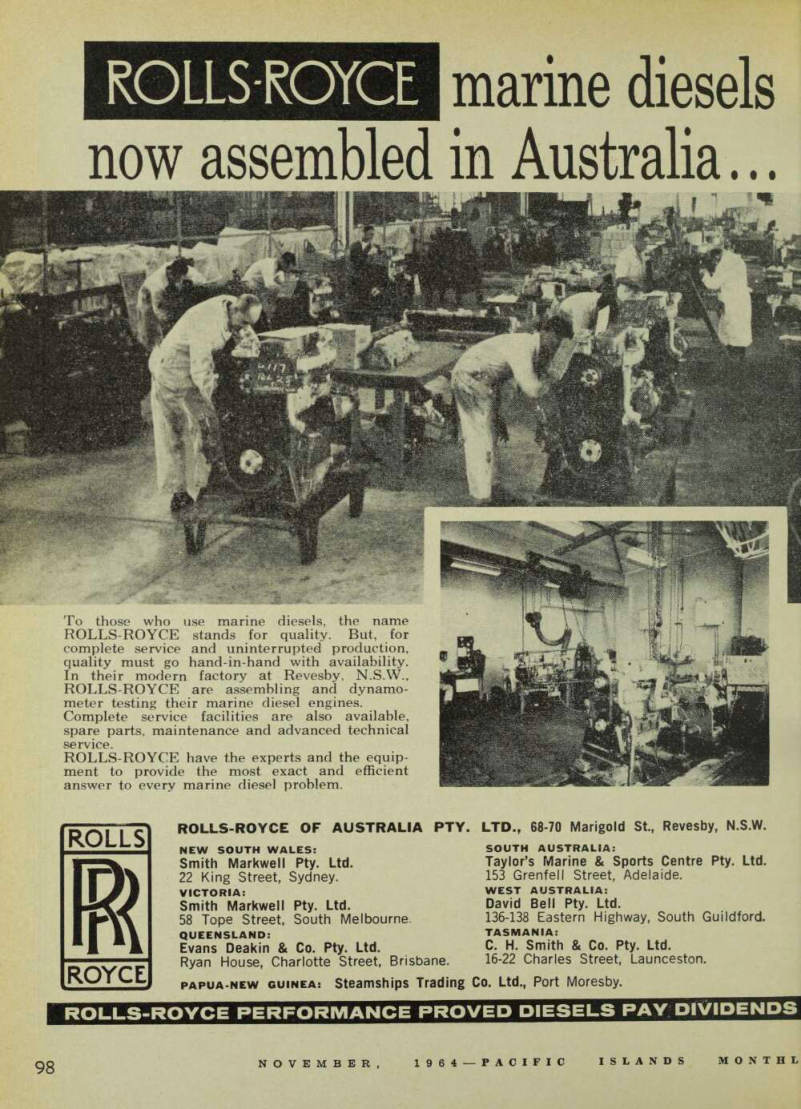 100
100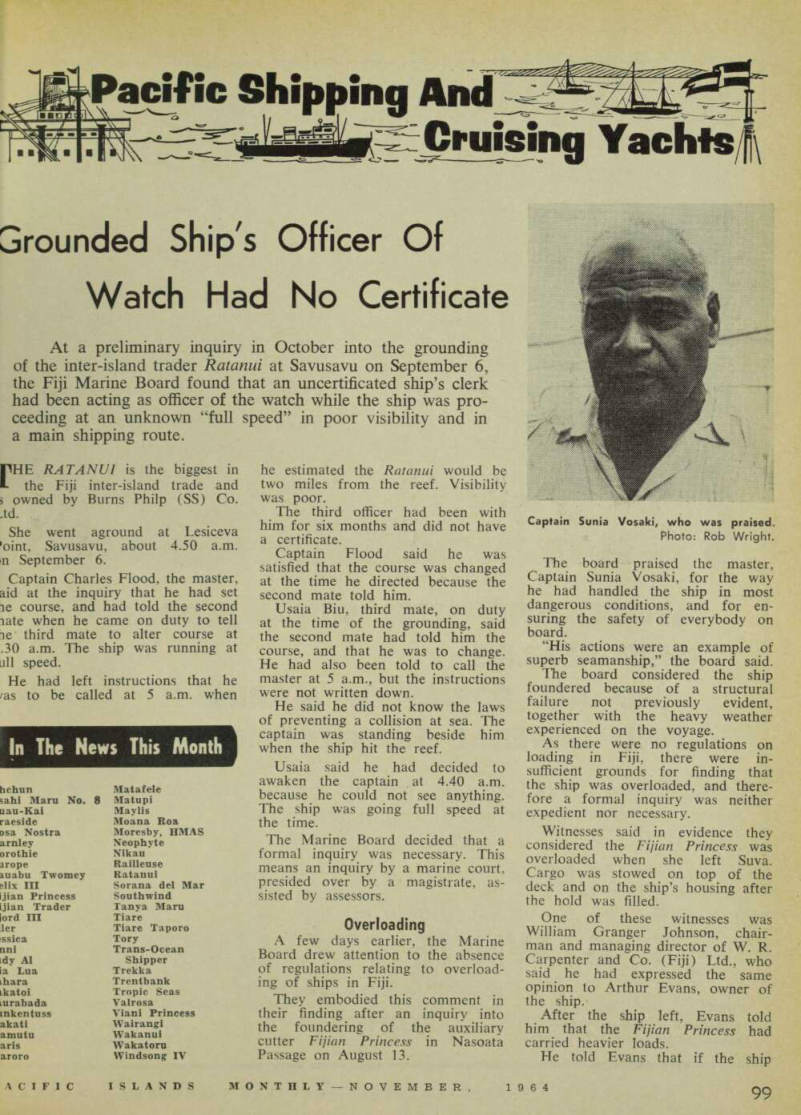 101
101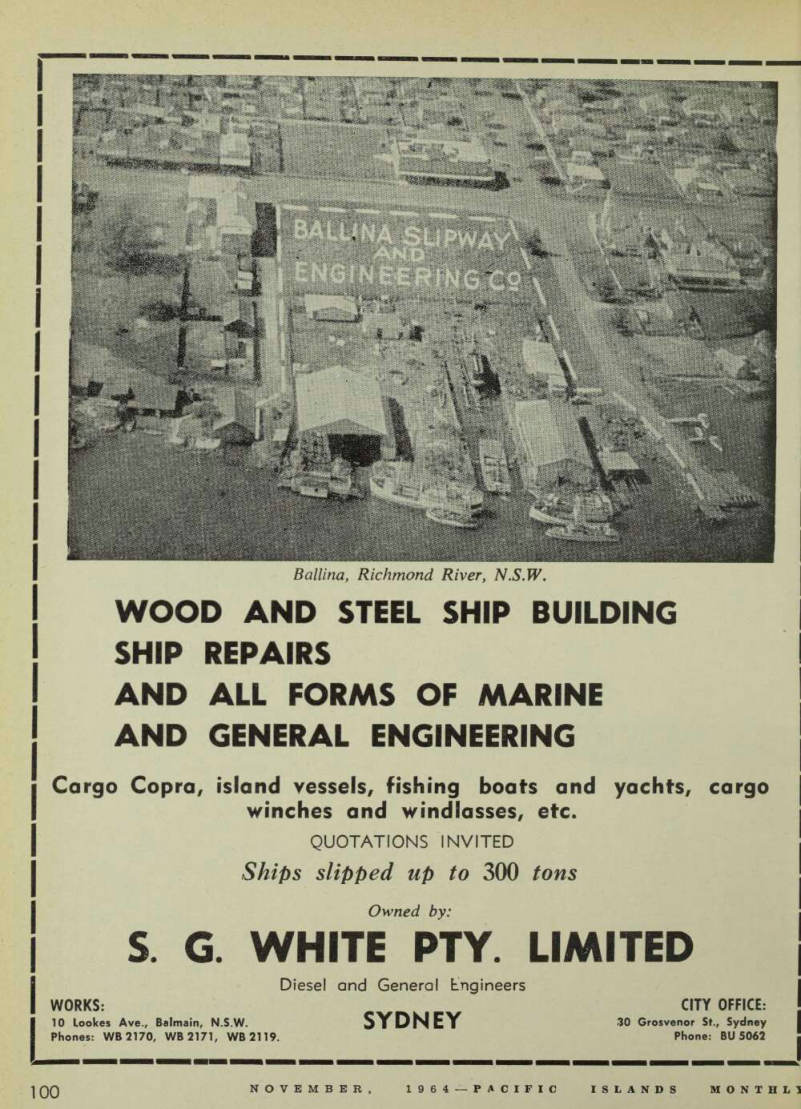 102
102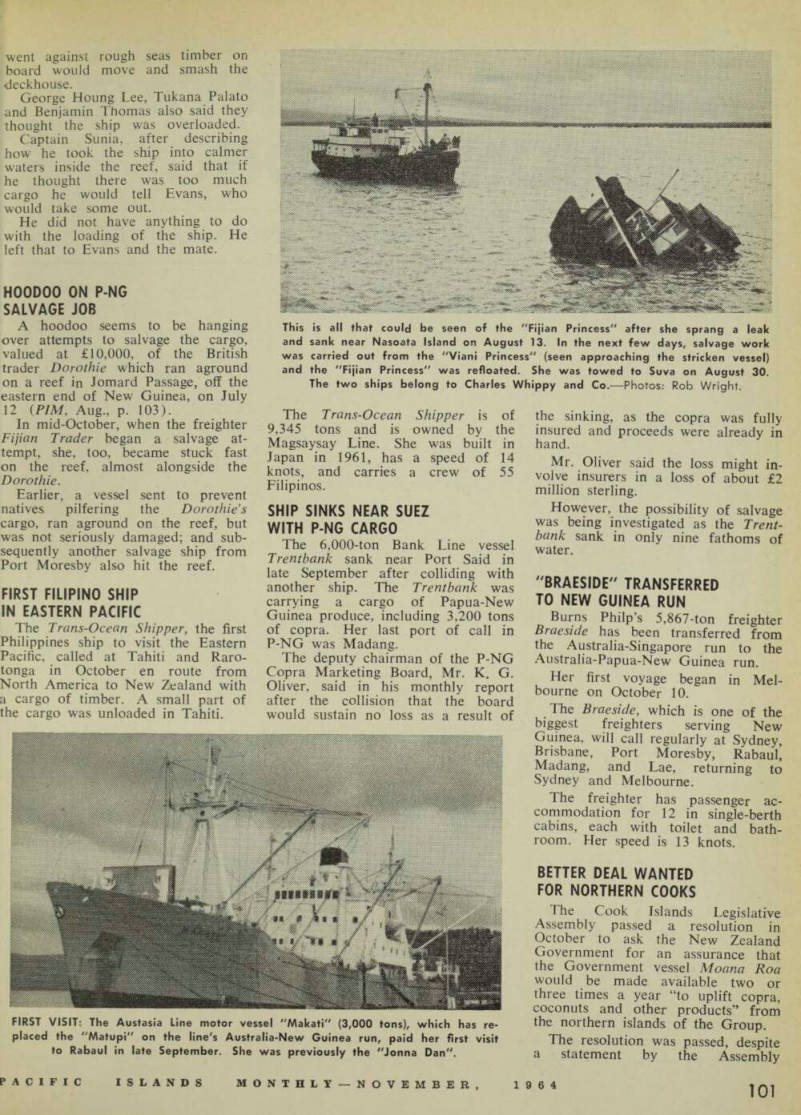 103
103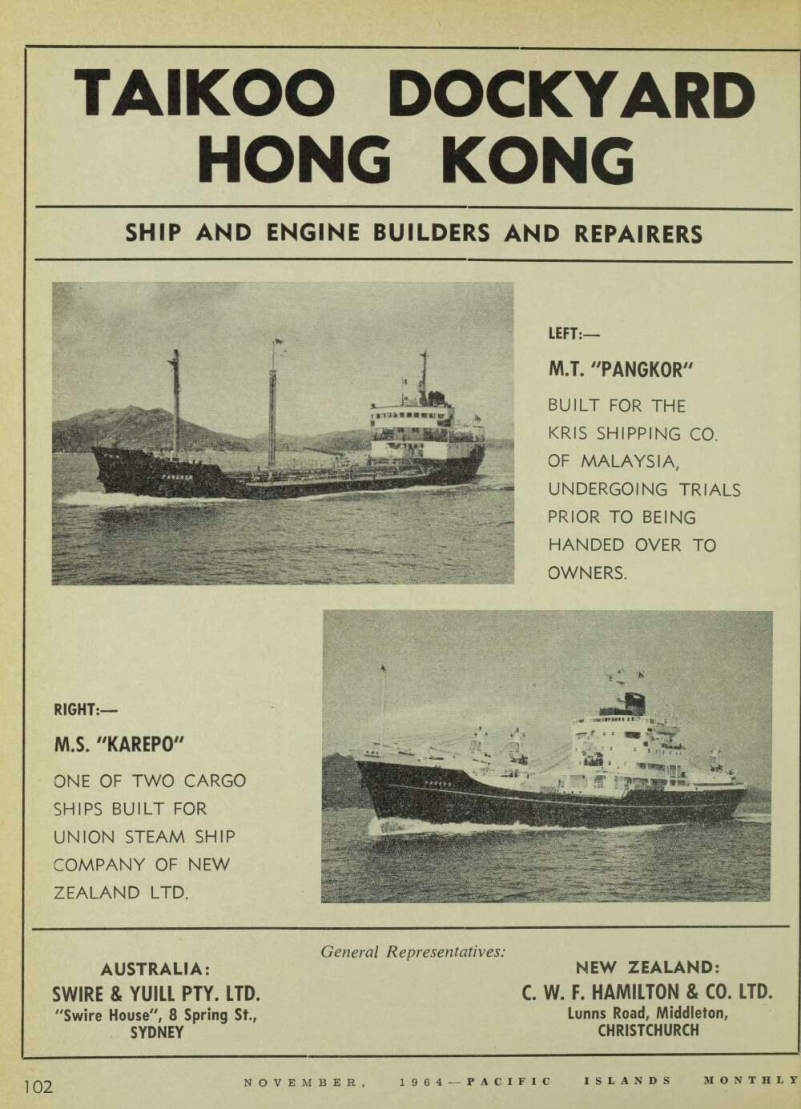 104
104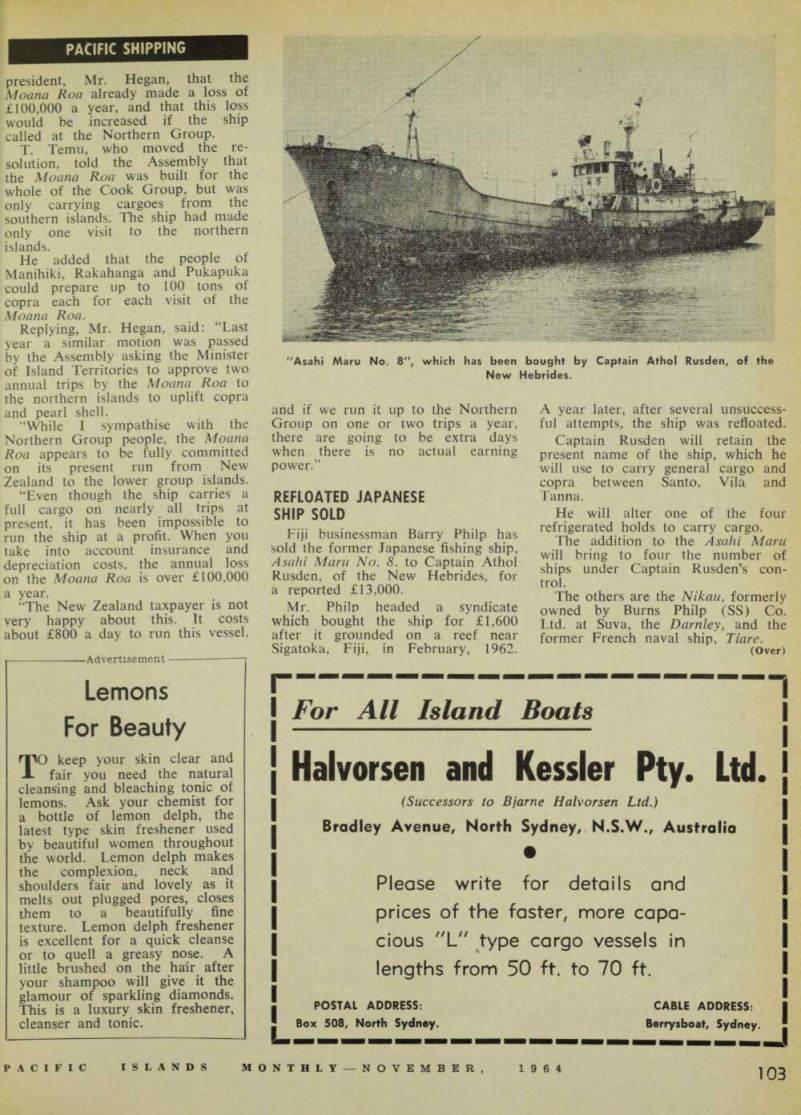 105
105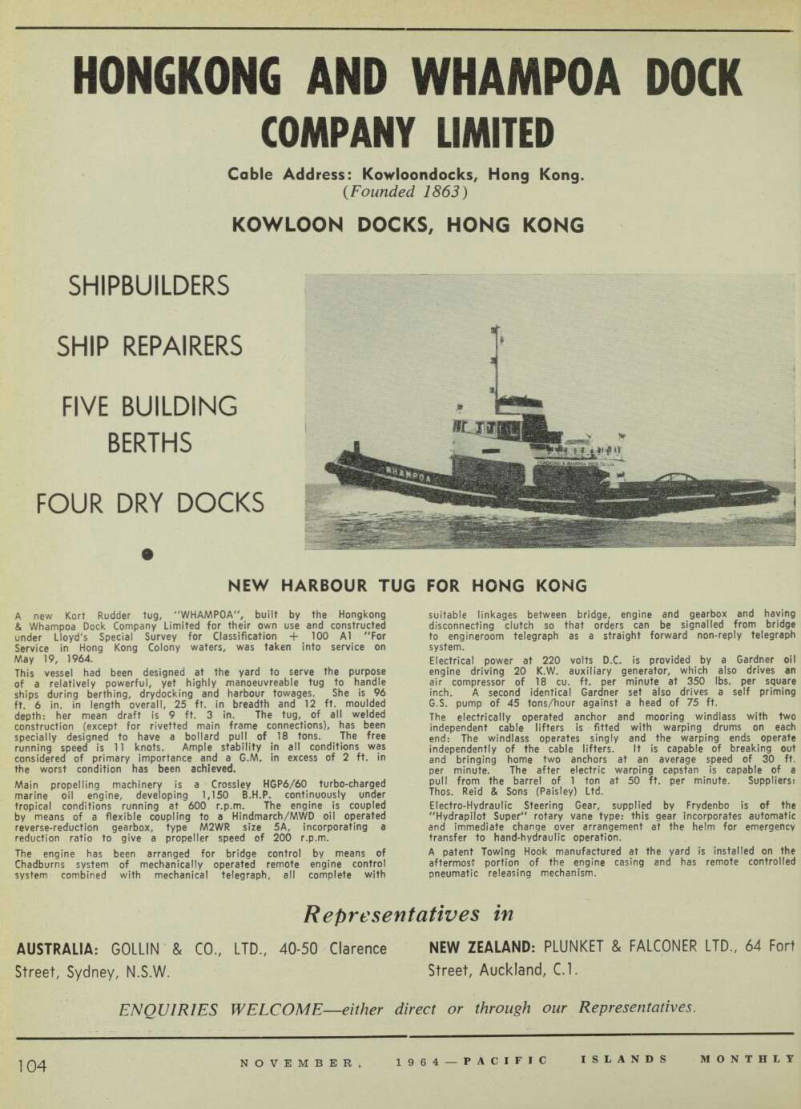 106
106 107
107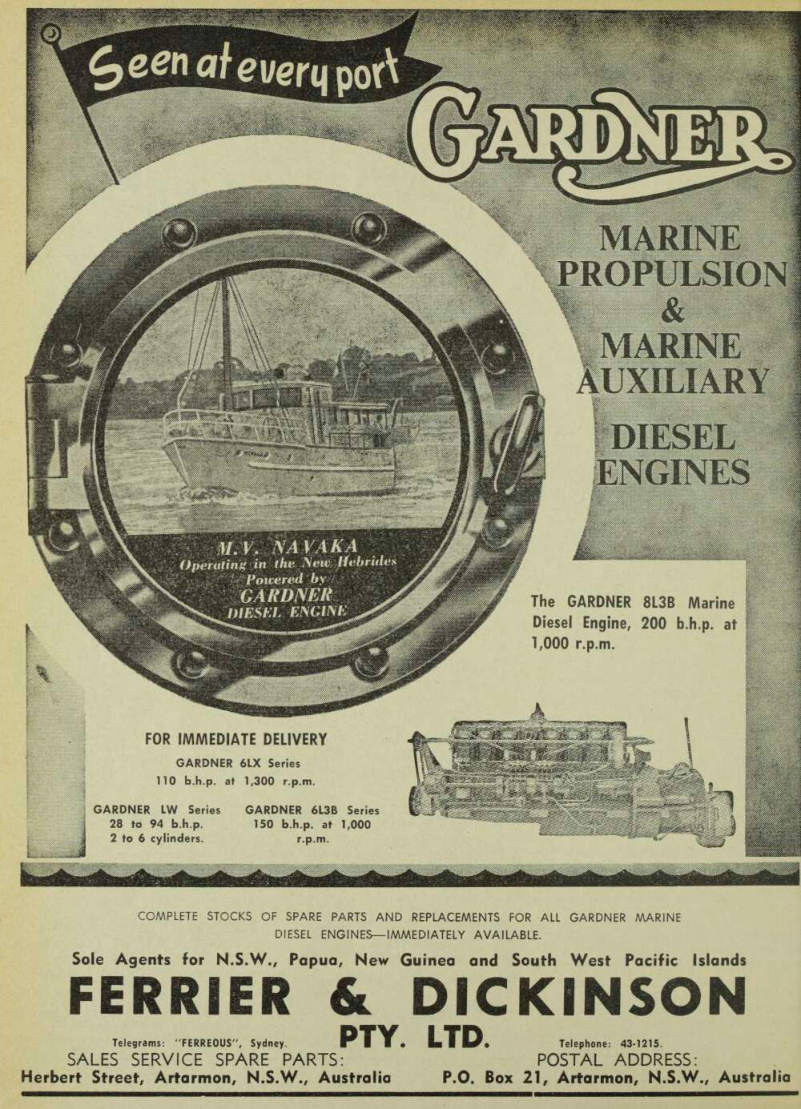 108
108 109
109 110
110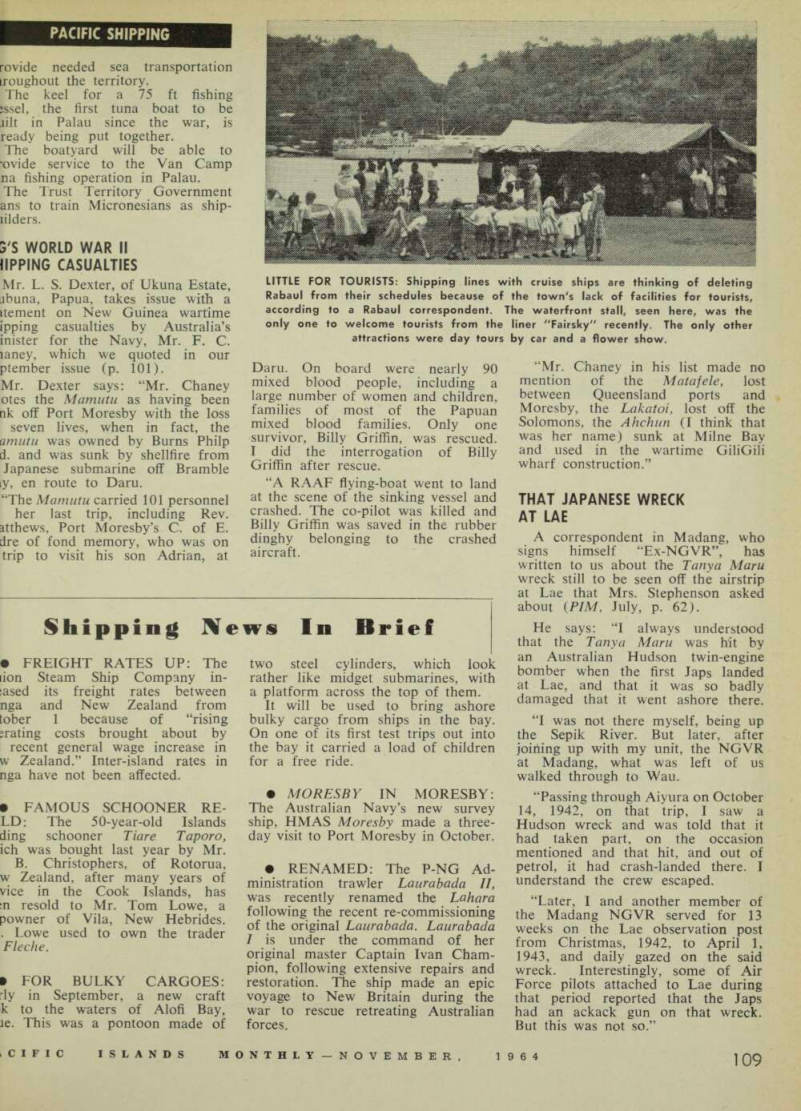 111
111 112
112 113
113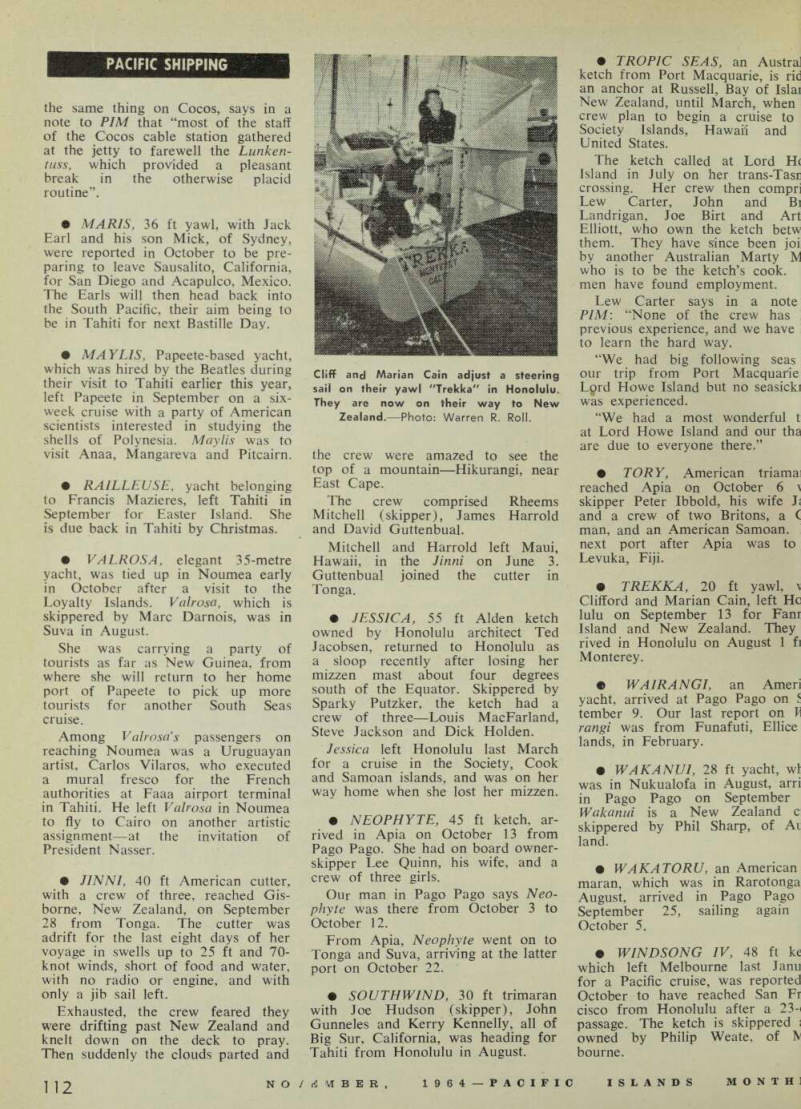 114
114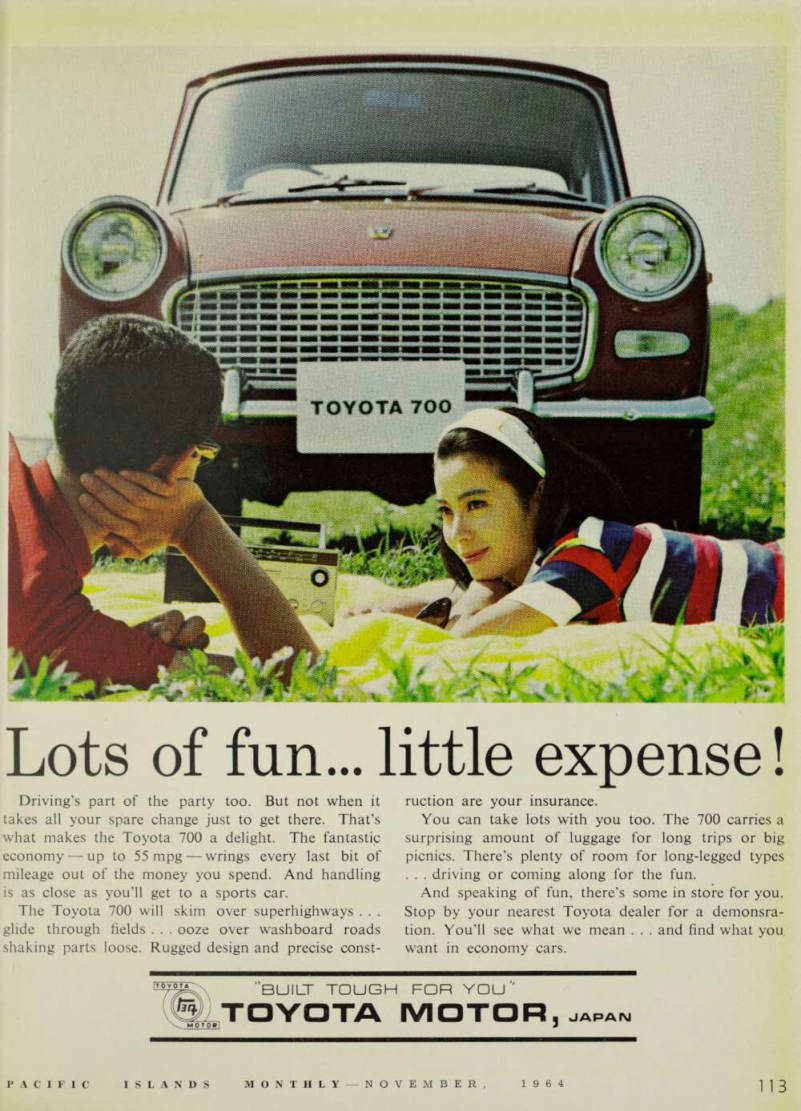 115
115 116
116 117
117 118
118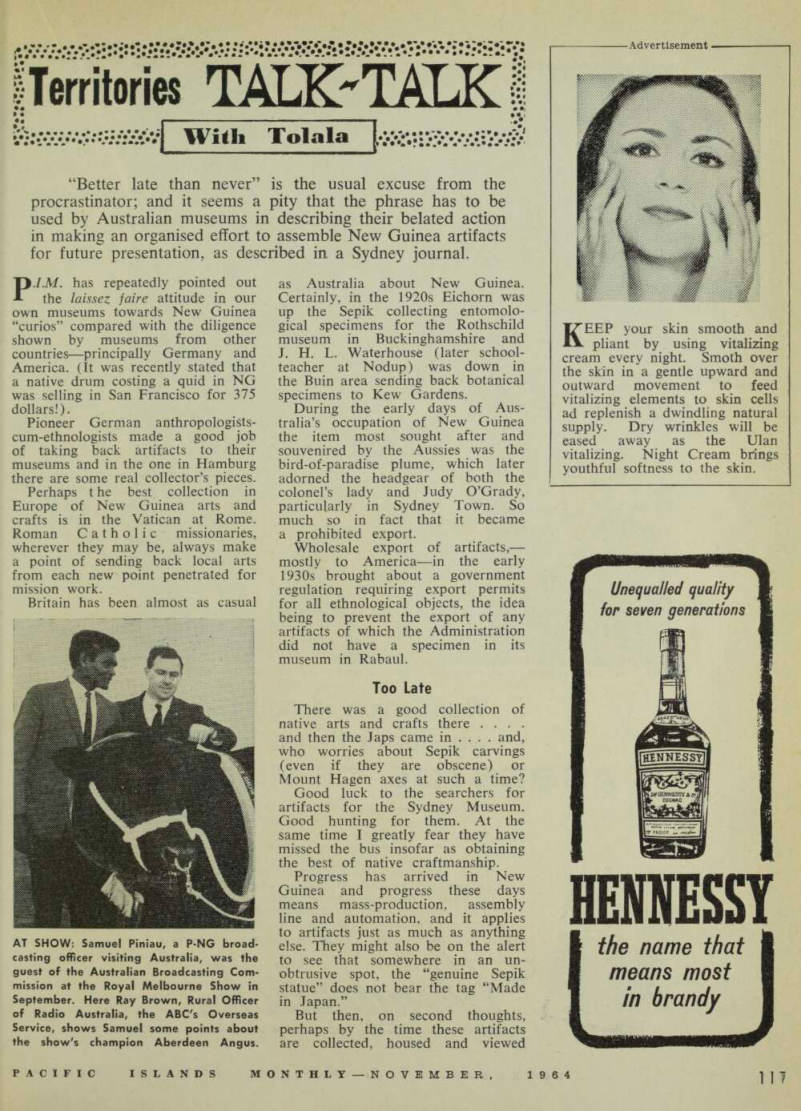 119
119 120
120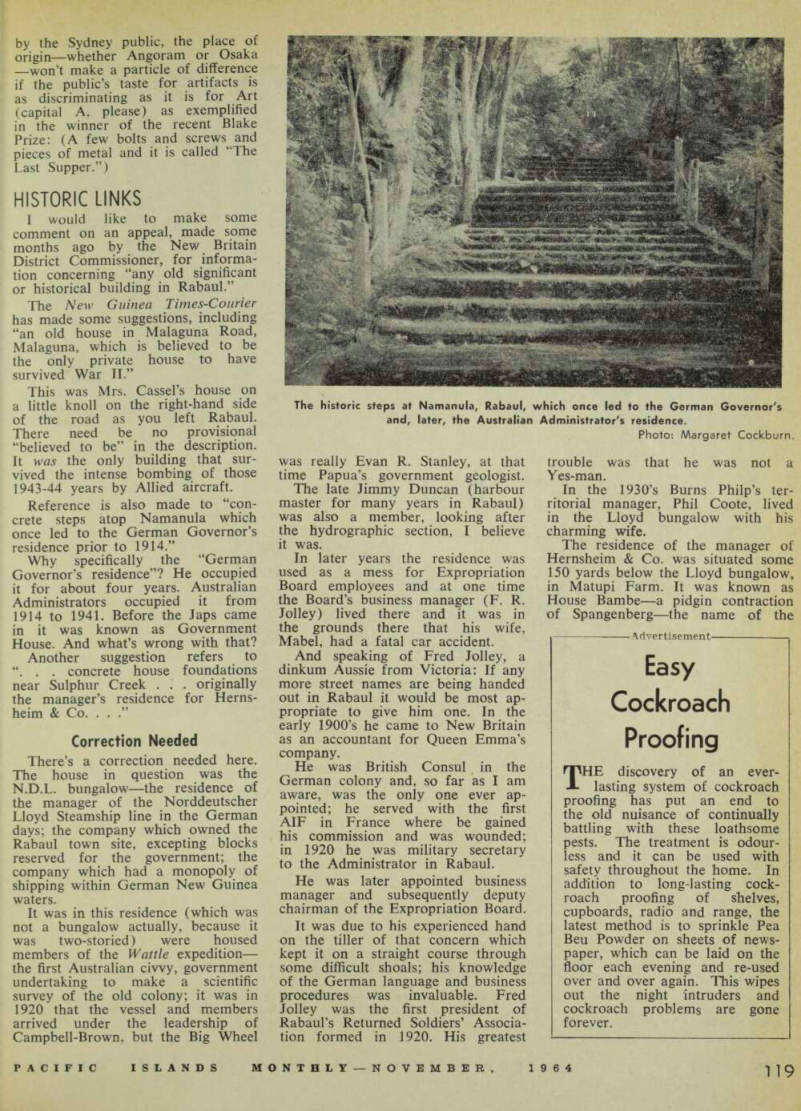 121
121 122
122 123
123 124
124 125
125 126
126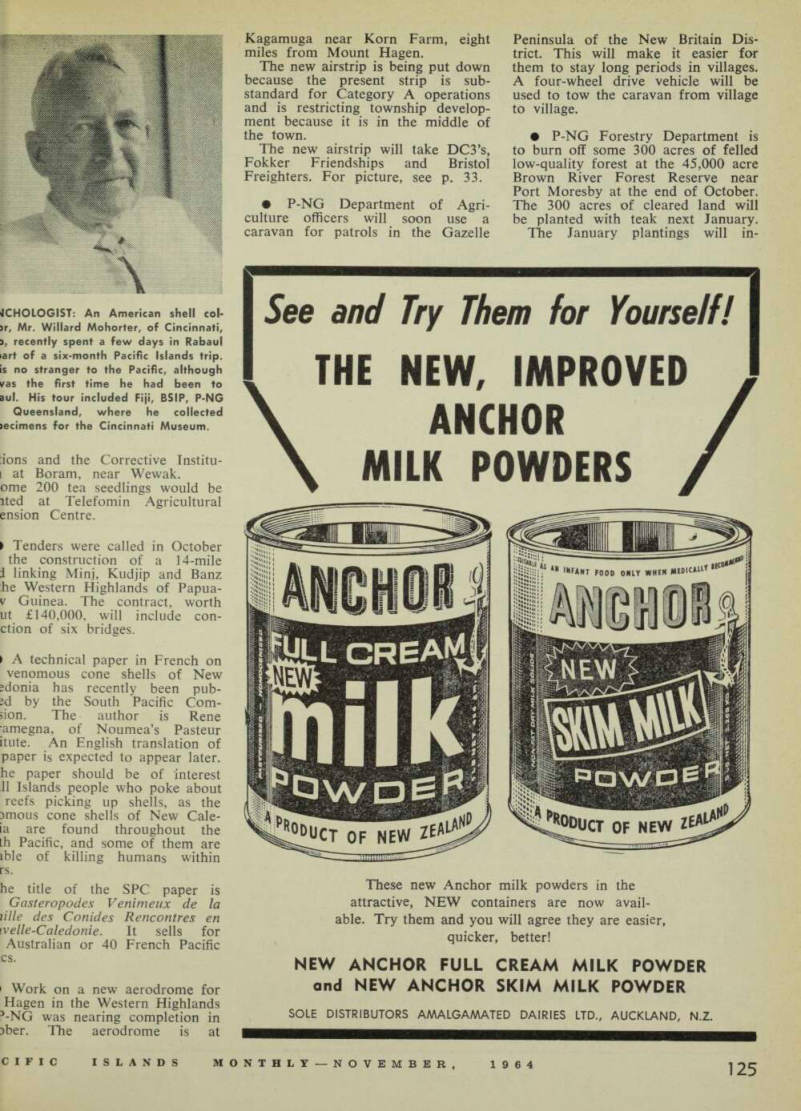 127
127 128
128 129
129 130
130 131
131 132
132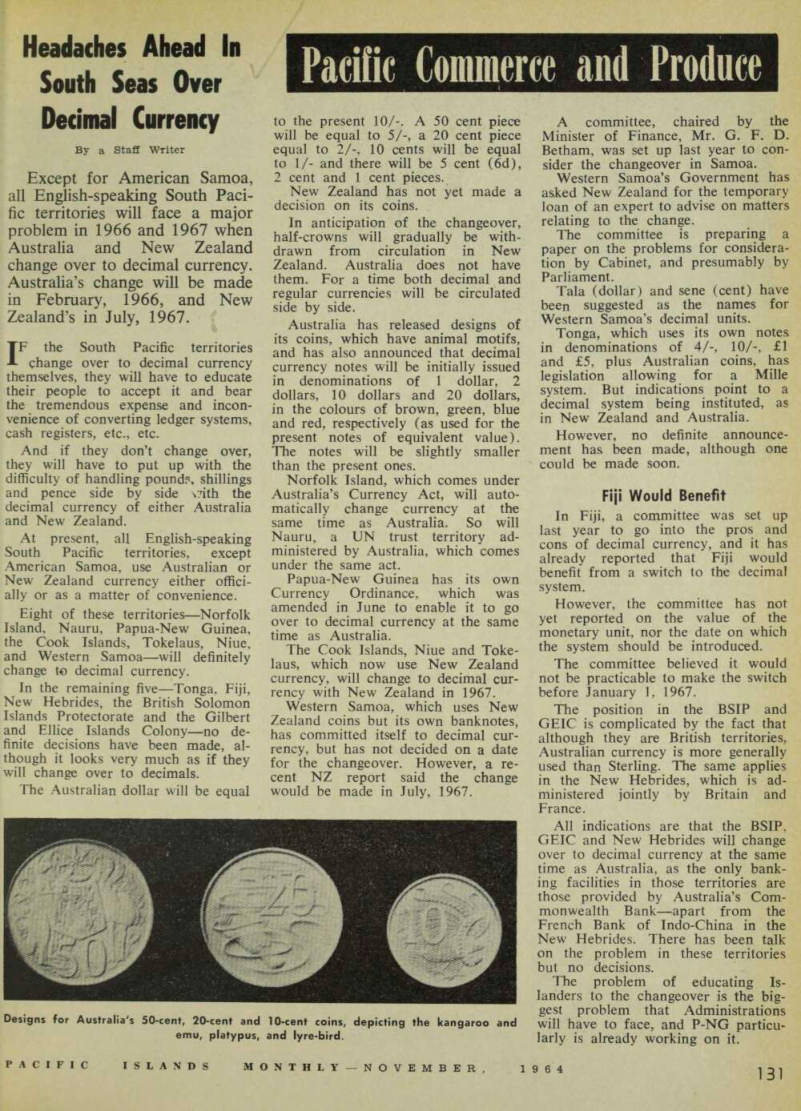 133
133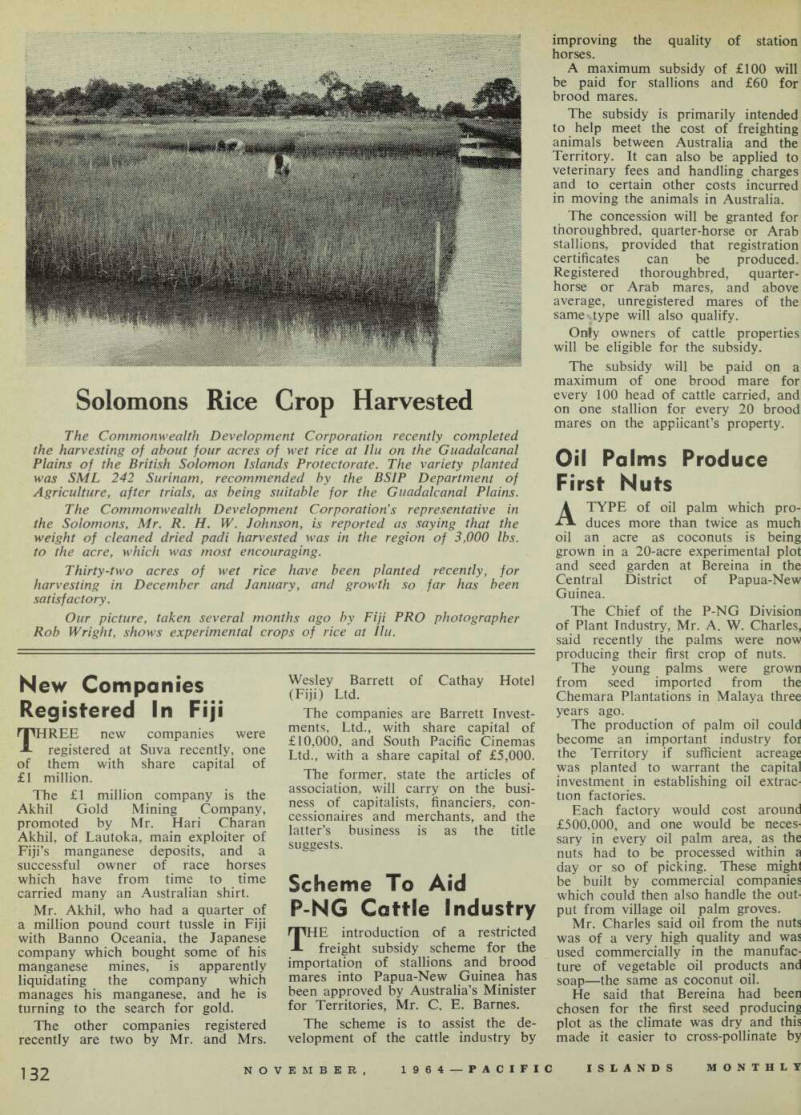 134
134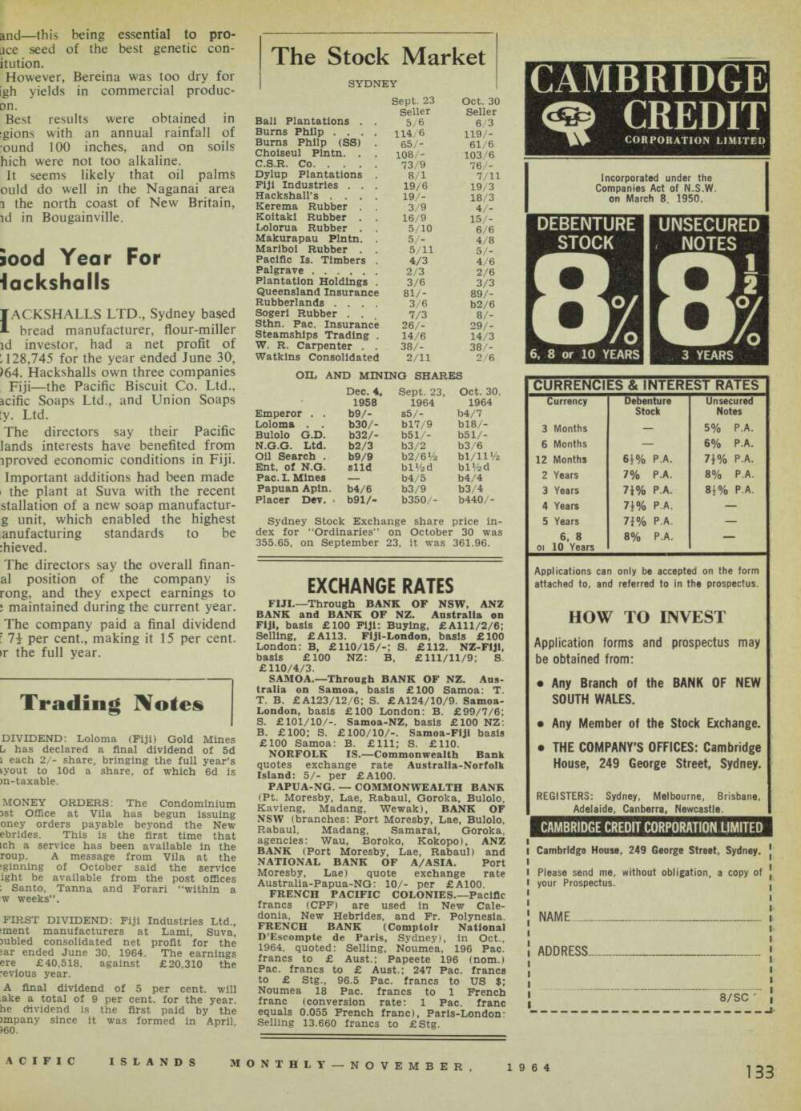 135
135 136
136 137
137 138
138 139
139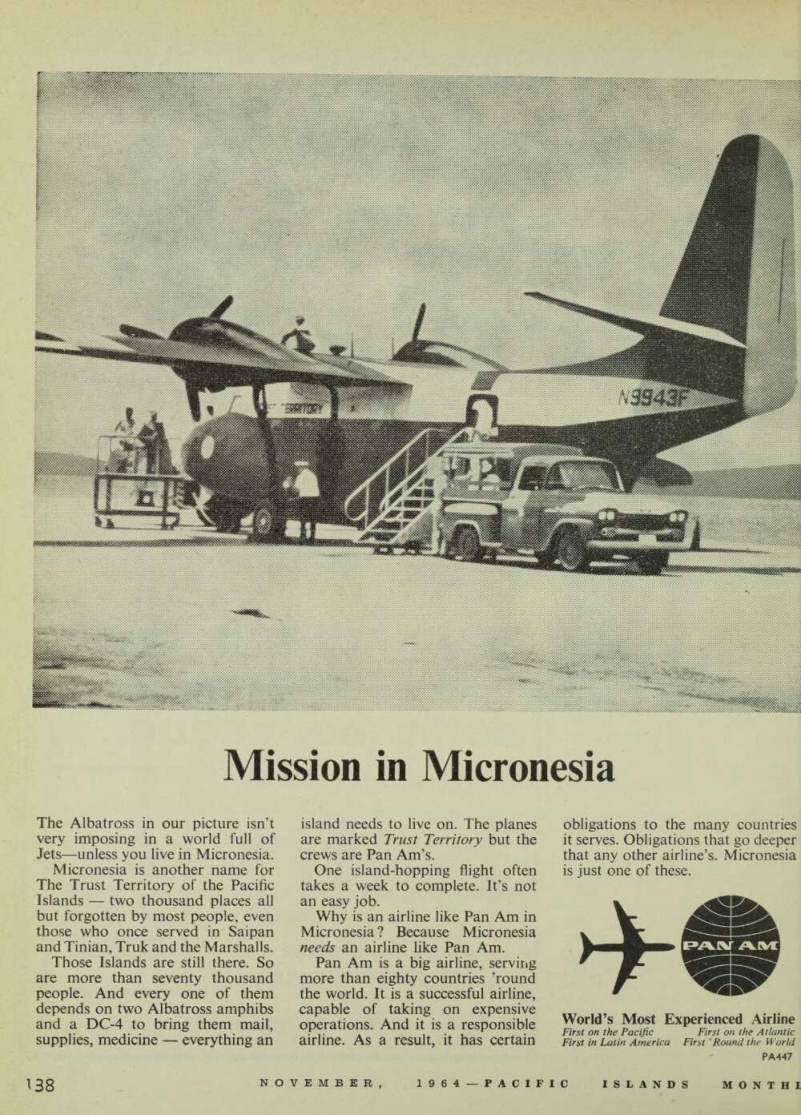 140
140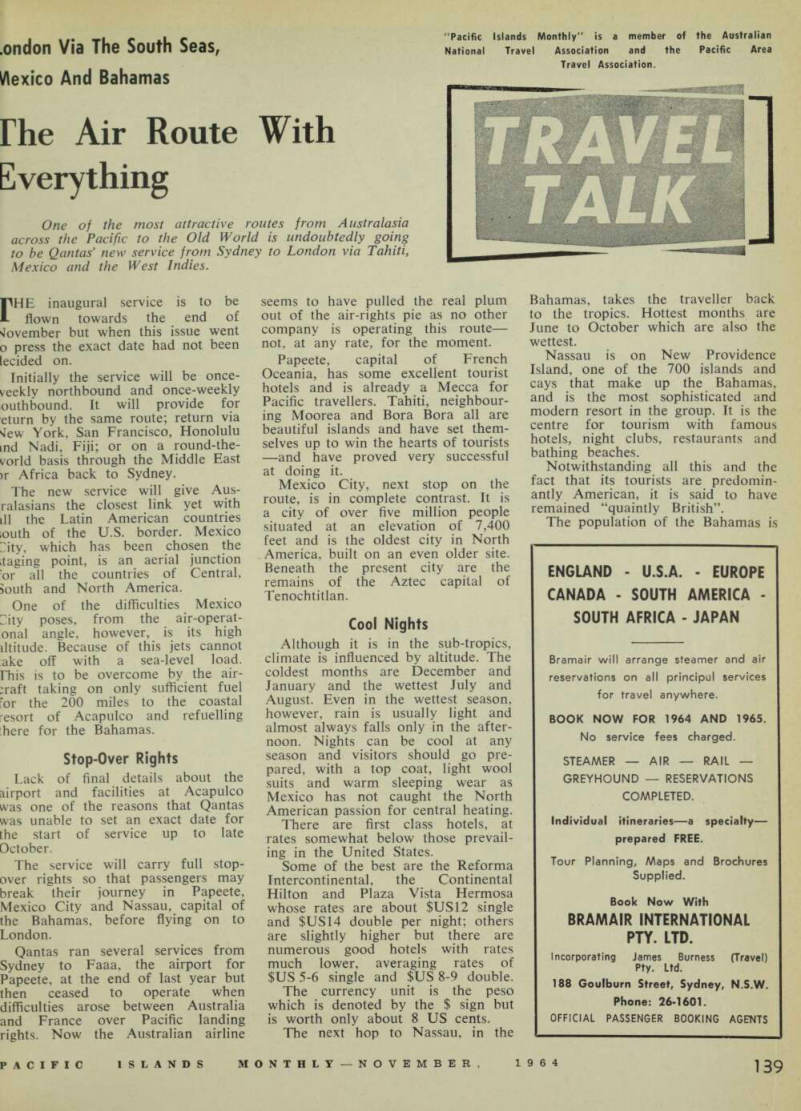 141
141 142
142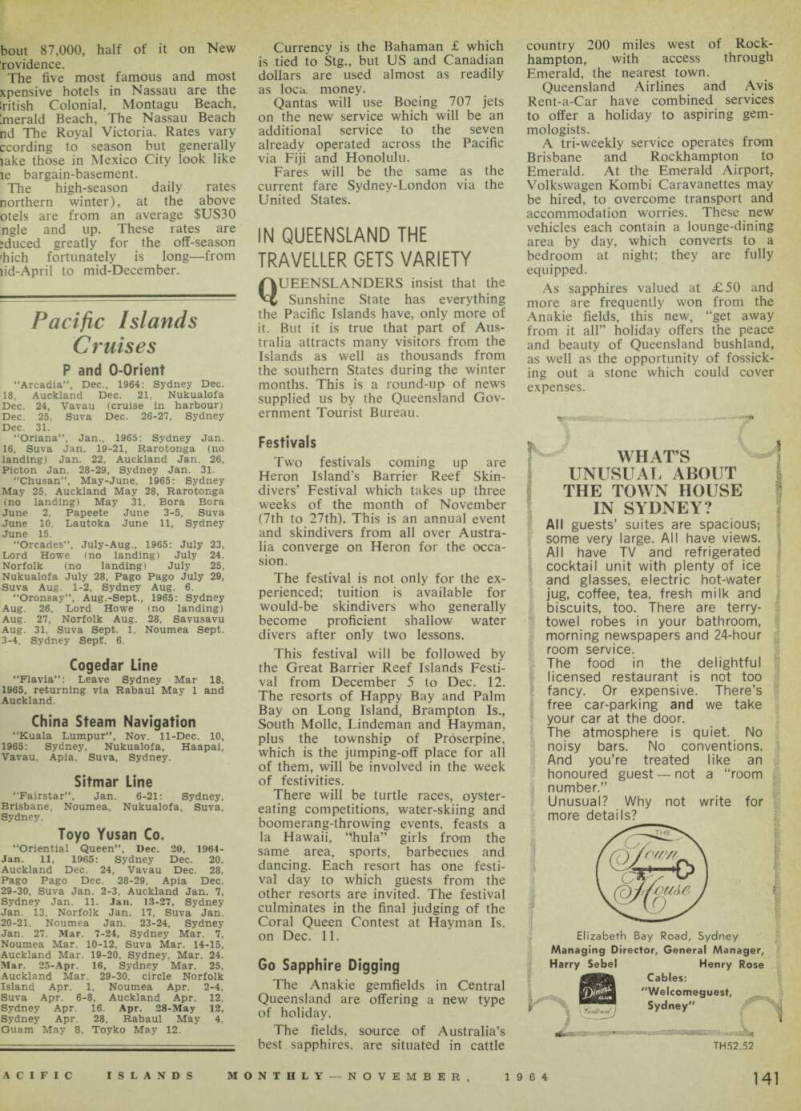 143
143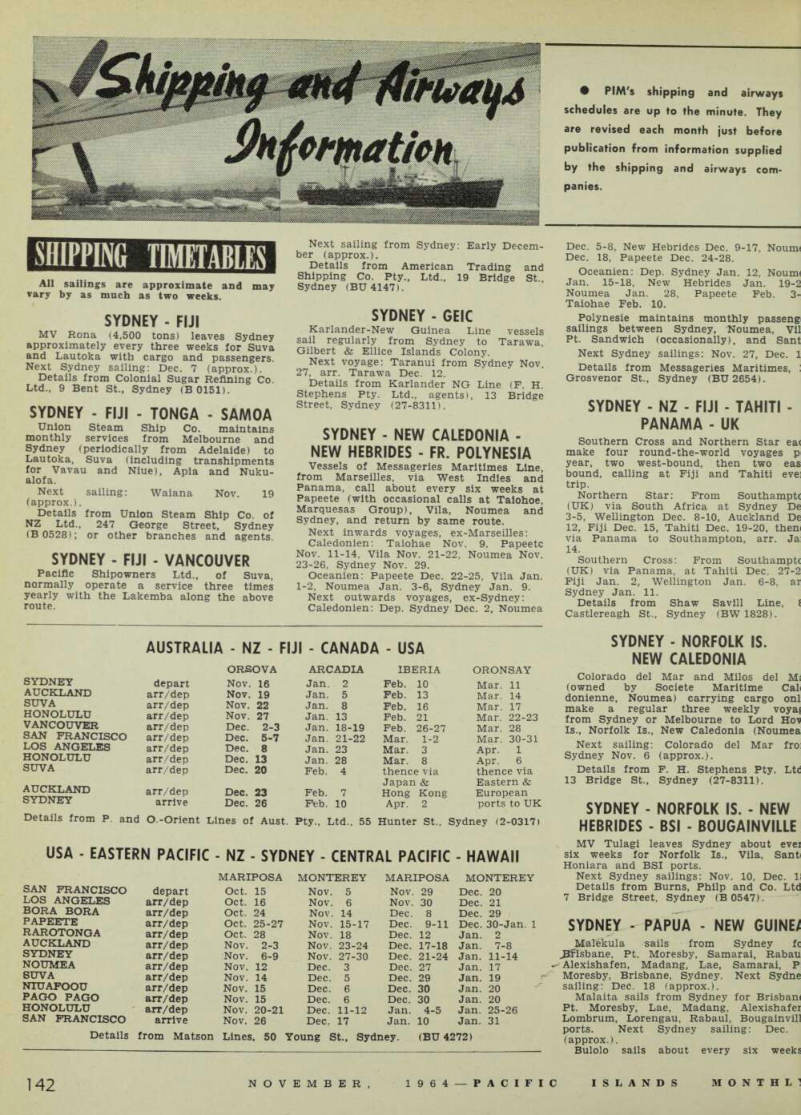 144
144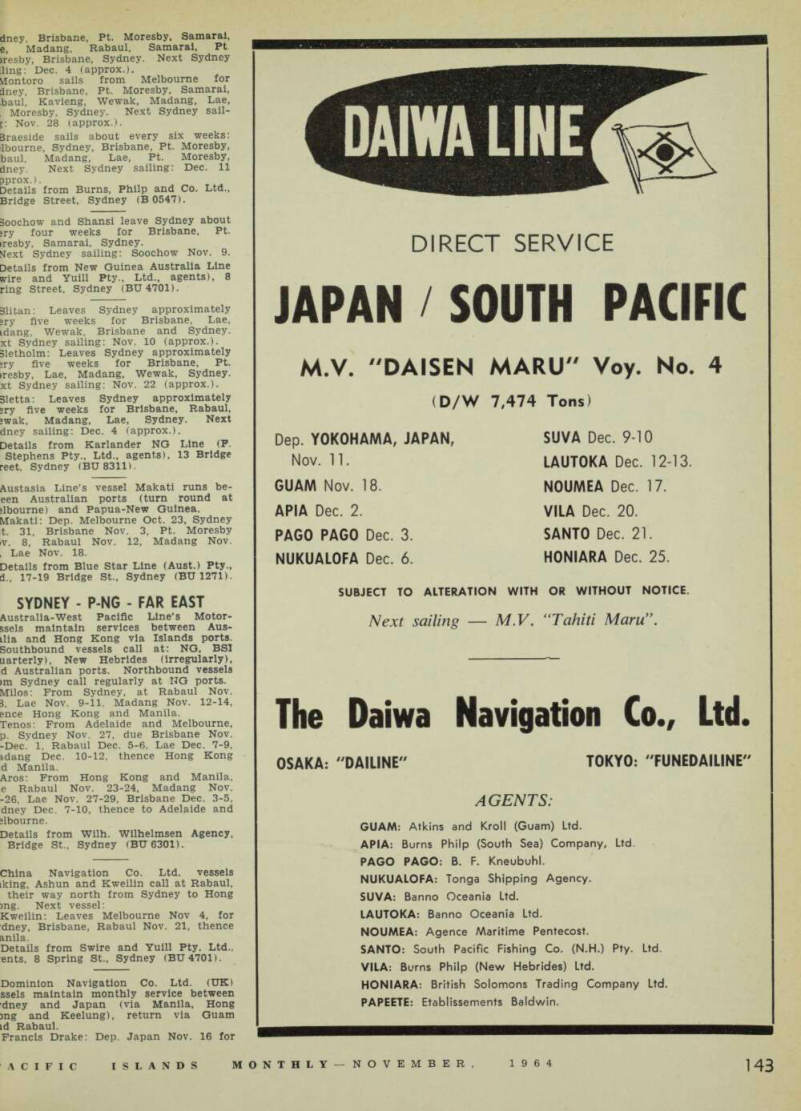 145
145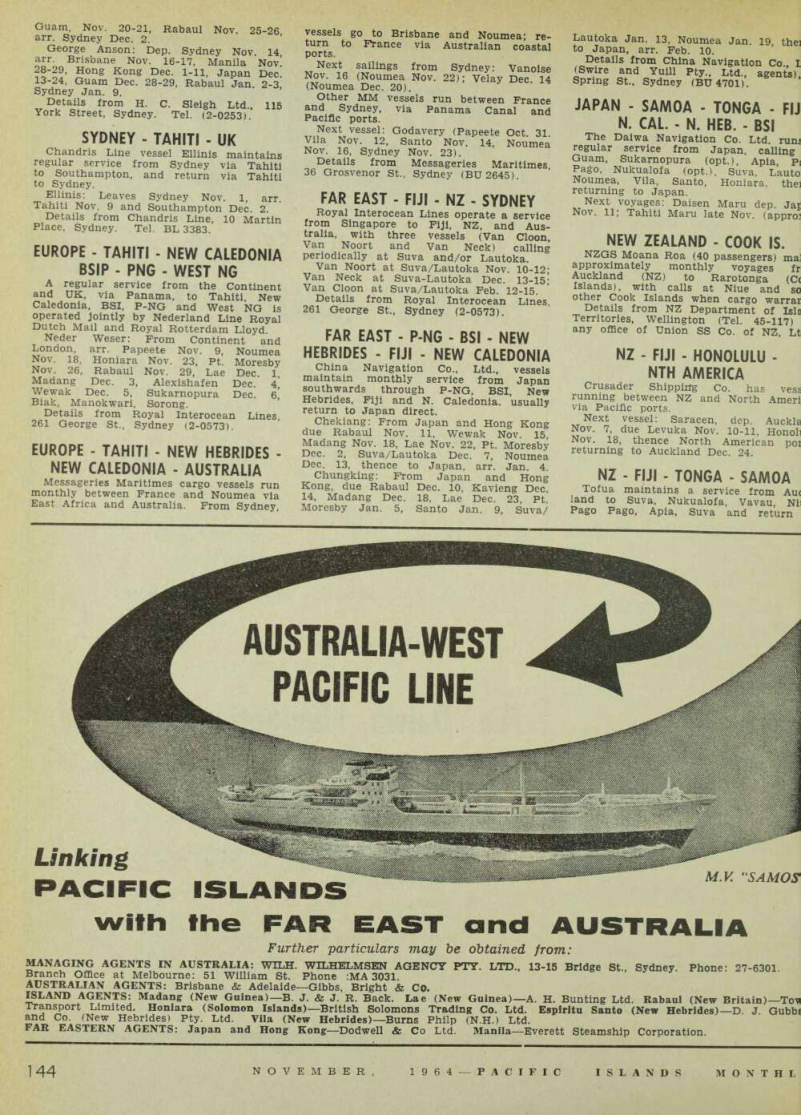 146
146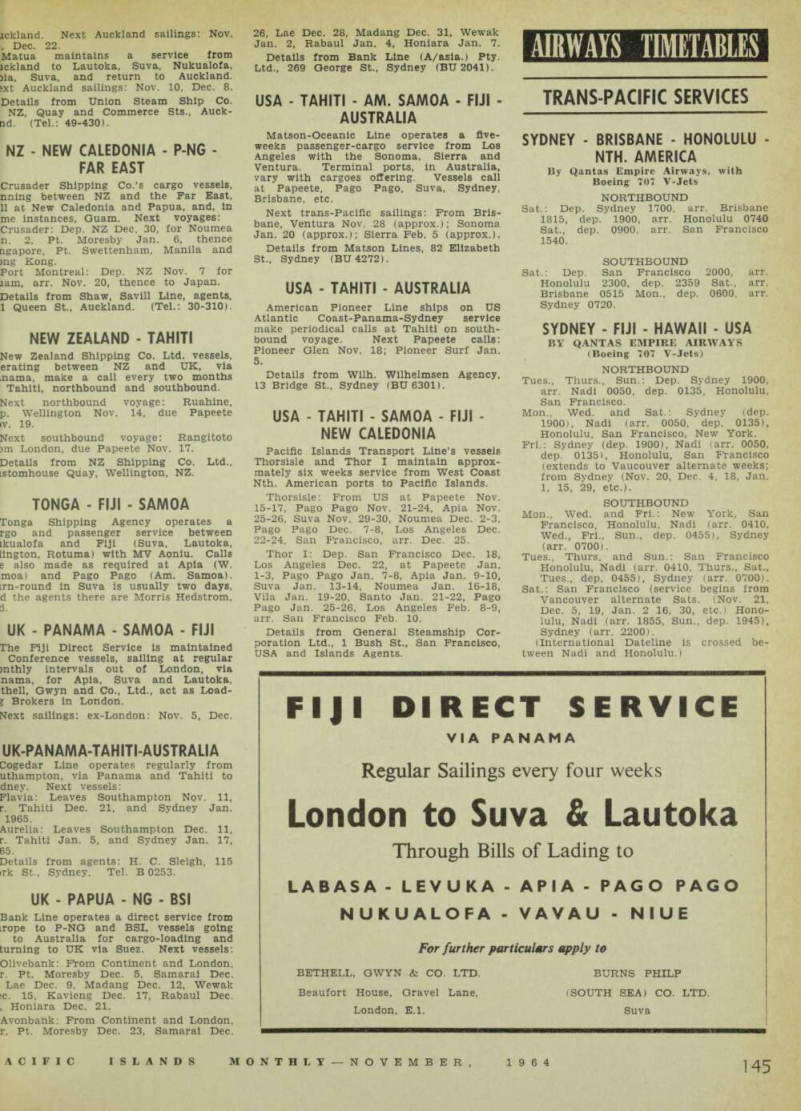 147
147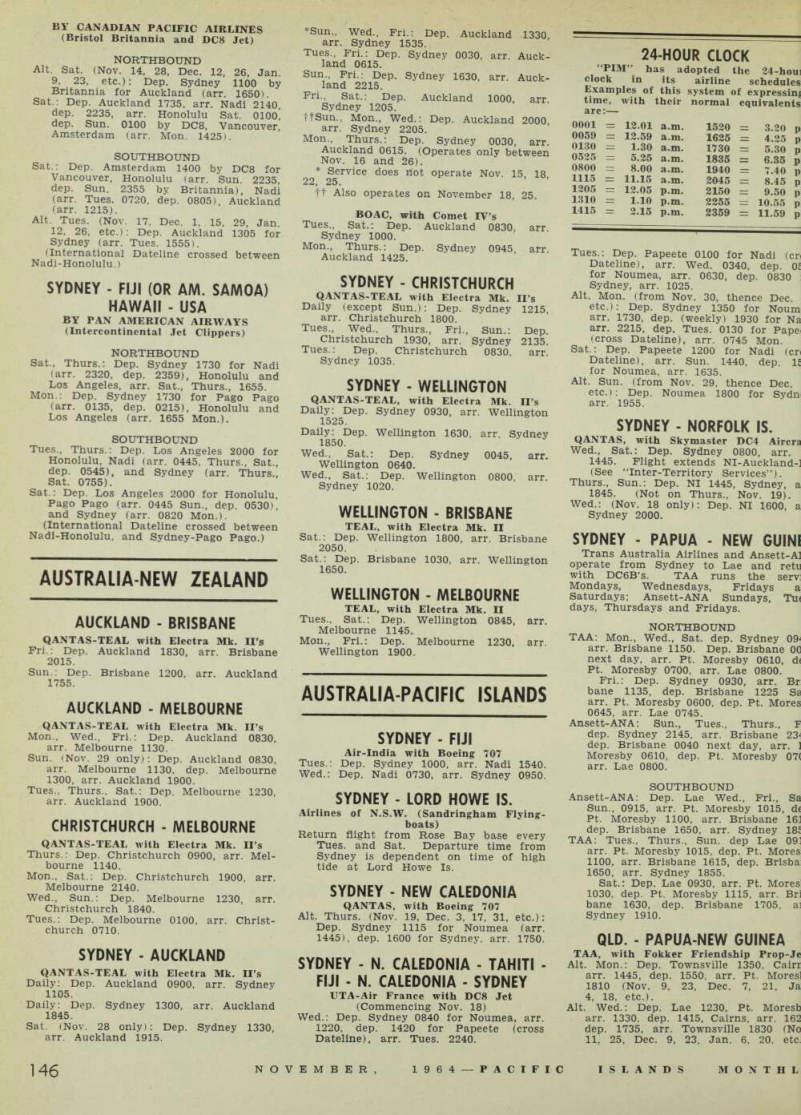 148
148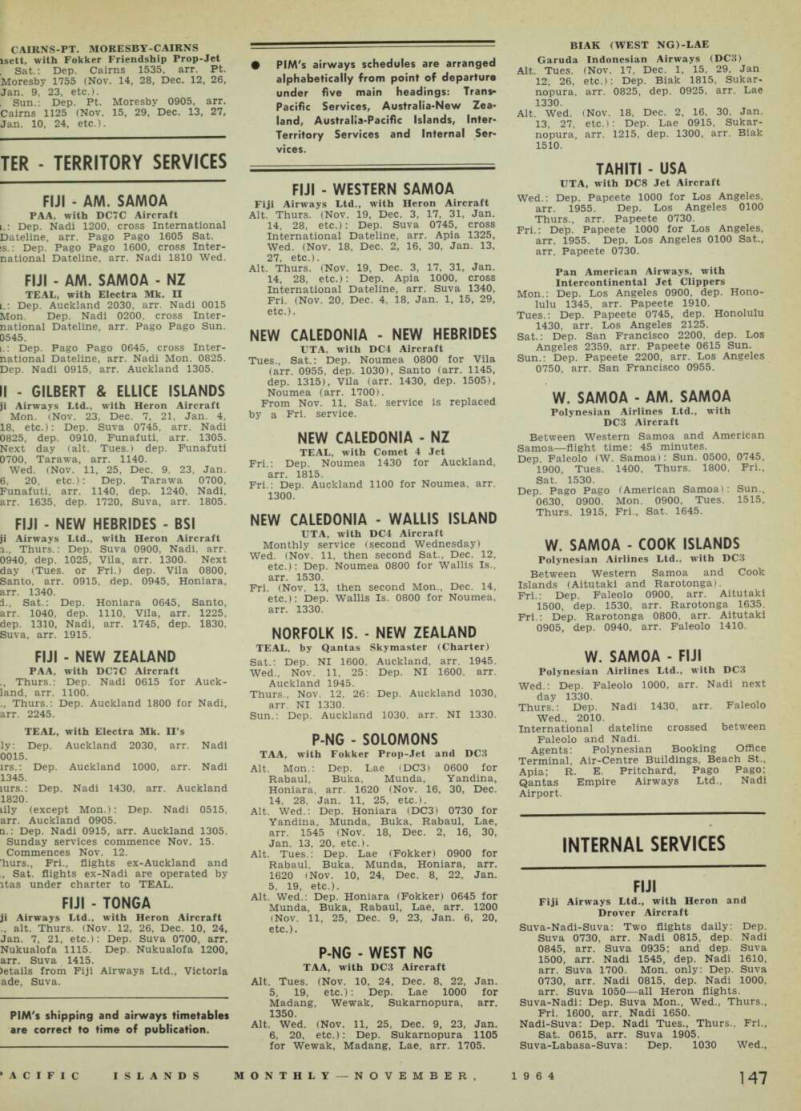 149
149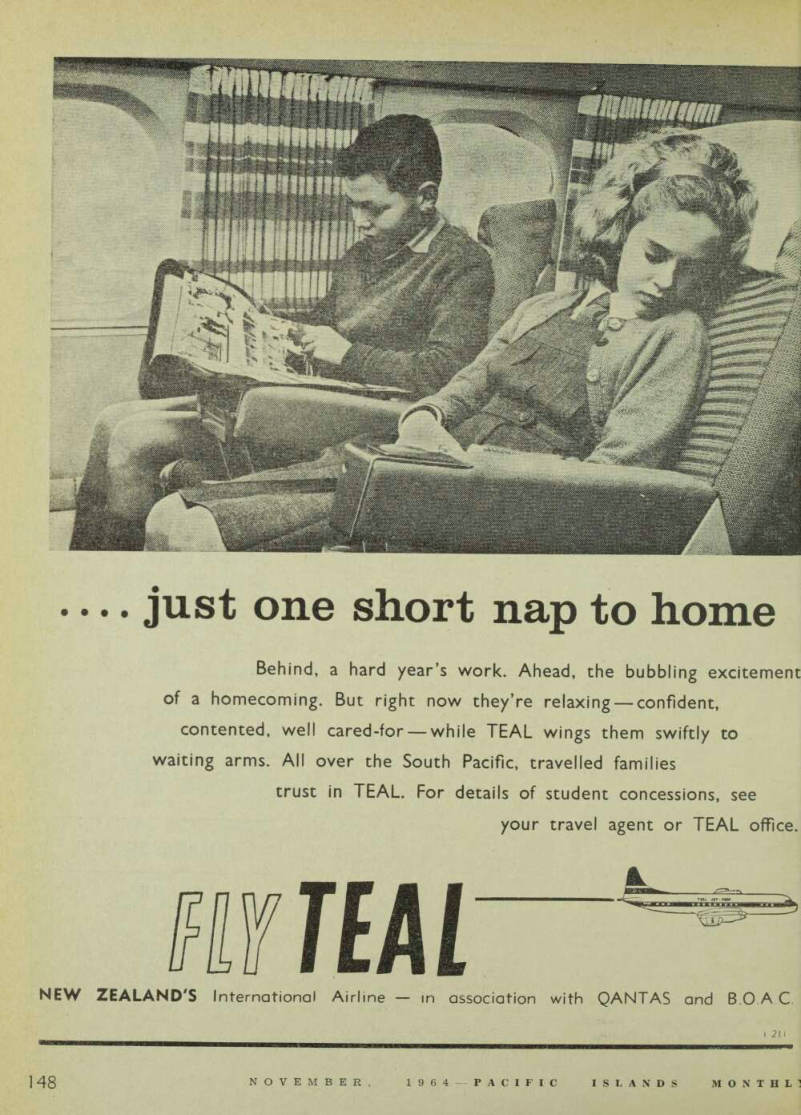 150
150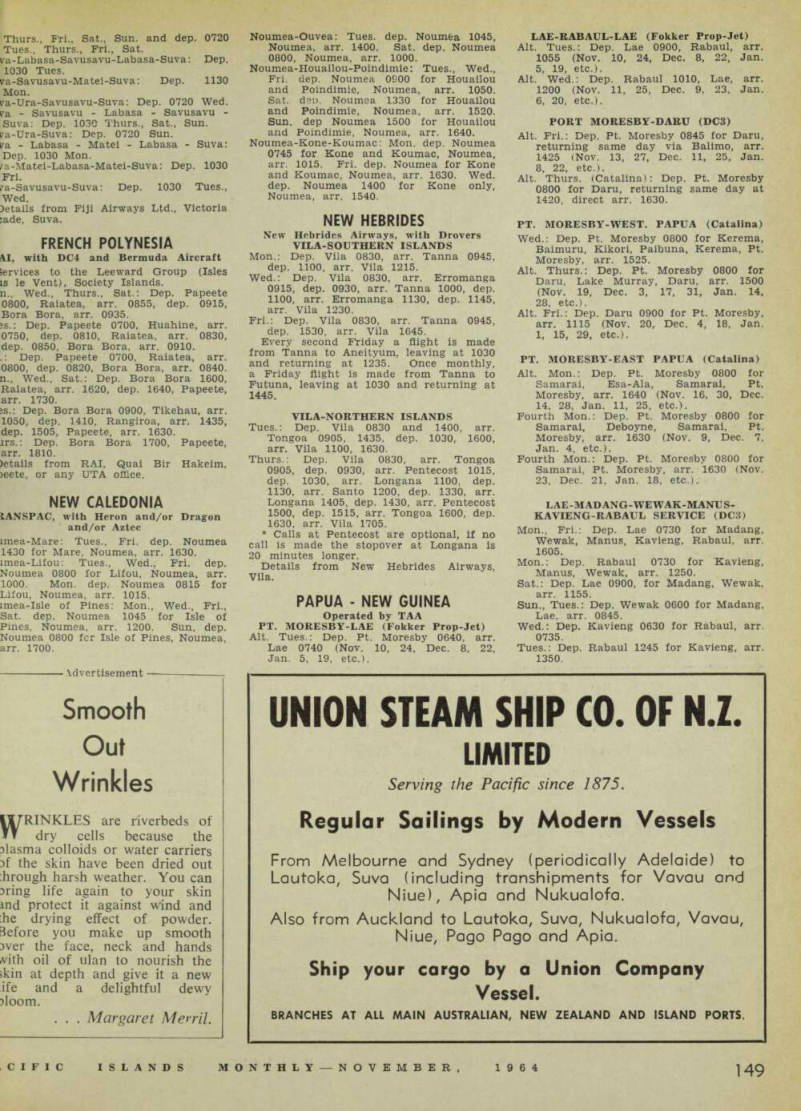 151
151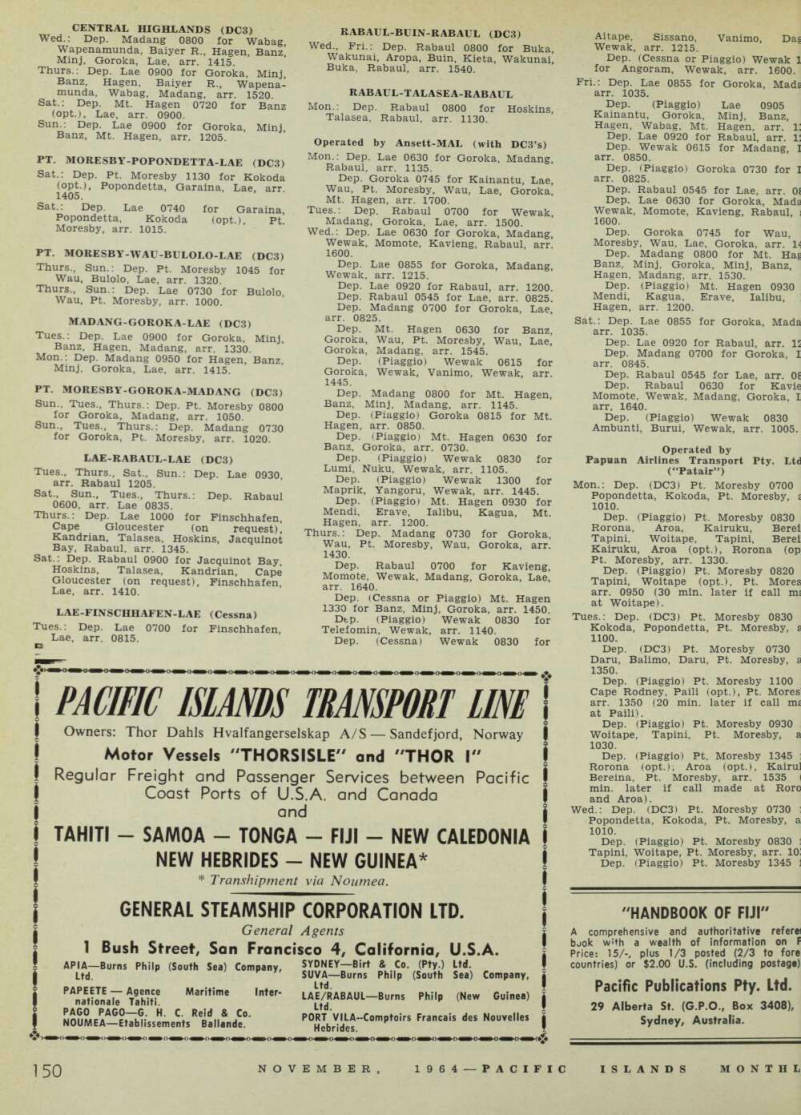 152
152 153
153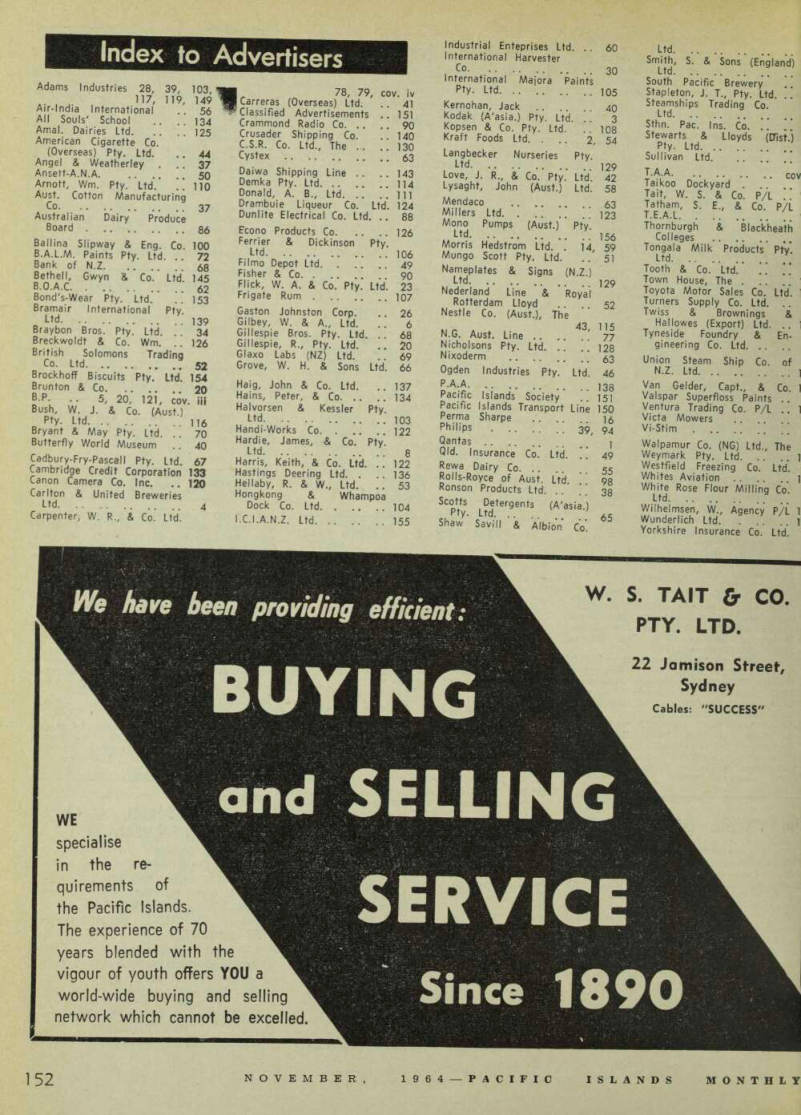 154
154 155
155 156
156 157
157 158
158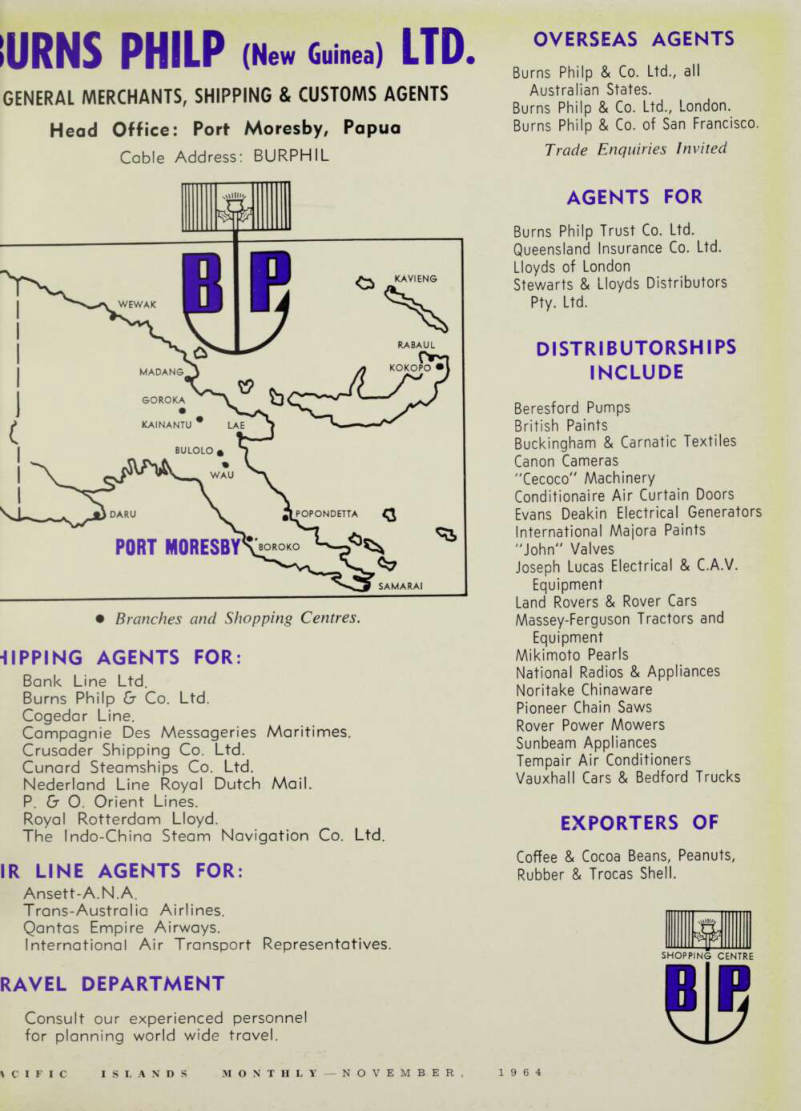 159
159 160
160