
Monthly
Pacific Islands Monthly
December, 1963
Vol. 34. No. 5.
'he New/s Magazine Of The South Pacific
Established 1930
gistered at G.P.0., Sydney, and at P.O va, for transmission by post as a Newspaper.
THE COVER: Papua-New Guinea's famous Department of Native Affairs—the depart ment which directs patrol officers—has been under administrative attack lately.
There are some who say it has done its job and it should be absorbed into other agencies of Government. Its supporters, fortunately, are just as vocal. Meanwhile the work of the patrols still goes on.
Advertisements & other items, pp. 2-6 (1 item)
When In Australia Fly Taa
V,
TAA
Trans-Australia Airlines operates the largest single domestic airline in the British Commonwealth, serving 140 cities and centres throughout Australia and Papua/New Guinea. TAA’s modern aircraft, connect with all incoming and outgoing International flights. In 1964, TAA will provide the faster speed and comfort of pure jet travel to Australian domestic airlines with the introduction of Boeing 727 T-Jets.
TAA Fly-Away Holidays. TAA offers a huge range of packaged Fly-Away Holidays to the most popular holiday resorts throughout Australia and Papua/New Guinea.
And TAA takes care of everything travel bookings by air, road, rail or sea, accommodation, sight-seeing tours even theatre tickets!
Contact your nearest Travel Agent or Trans- Australian Airlines Office.
FLY
TAA
THE FRIENDLY WAY
Trans-Austraua Airlines
TAA449I/ 63
/ft *//tret,.
i m
Kerosene LANTERNS
• • ‘ * -v r . j*• •■ .
Robert Gillespie’s bring to the Pacific Islands Coleman’s lightweight lanterns. These popular brand-name lanterns maintain a steady, dependable light in high winds and torrential rains. Triple nickel-plated with brass founts. Two models available: No. 237—up to 500 c.p.; No. 249—up to 300 c.p. .. . both tested to 200 lb. pressure. Quick to light . . . just preheat with methylated spirits. No need to repump each time lantern is lit . . . the positive shut-off valve keeps pressure in the fount.
Representatives for the Pacific Islands: L Cel Easily serviced and spare parts readily available.
ROBERT GILLESPIE PTY. LTD. ROBERT GILLESPIE (N.G.) LTD. PEARCE & CO., LTD. 22 Young St., Sydney Rabaul, Port Moresby Suva 334 Queen St., Brisbane Lae, Madang Cable: "Robergill".
■■ ■ II i I v;K mm m mmmm* m £
EXP
Timbrock can be fixed easily and quickly by one man Always White-ant Proofed
J I’M.MH
n
FOR LINING WALLS
THE BUILDER’S BOARD
TIMBROCK, a dark hardboard made from quality Australian hardwood. Large range of sheet sizes, from 6' to 12' lengths in 4' and 4' 6" widths. Standard or oil-tempered boards in natural and paint-primed (Readi-cote) surfaces, in textured and smooth finishes. Ask for a free brochure.
Made by CSR BUILDING MATERIALS
Division of the Colonial Sugar Refining Co. Ltd.
AVAILABLE AT LEADING
ISLAND MERCHANTS
DIRGES/
X\th H w teifei
BUILDING
MATERIALS
The Philips light-weight electric iron HA 2751. It is not the heaviness that does the job, but the constancy of the heat. And that’s what you get from this very good electric iron. It has an automatic temperature selector, pilot lamp and reliable thermostat.
To do even more with an electric iron, you can choose the Philips light-weight steam-or-dry iron HA 2752.
Two irons in one. Automatic increase of steam pressure when ironing heavy fabrics. Practical shape.
Go to your Philips dealer and ask him about it.
PHILIPS
household
appliances
needed in
every home!
HAVE YOU
NOTICED
HOW MUCH
BETTER
GILBEY’S
f GIN
IS!
GILBEY’S
GIN
with others?
So why mix with others?
Monthly
Pacific Islands
A product of Pacific Publications Pty. Ltd., 29 Alberta St., Sydney.
Publisher: R. W. ROBSON.
Editors:
Judy Tudor Stuart Inder
Manager; SELWYN HUGHES.
Telephones; Ma9197, Aaa 7101,
Aaa 4369.
G.P.O. Box 3408, Sydney.
Telegraphic Address: PACPUB, Sydney.
Annual Subscription Rates:
(Aust. currency; includes surface postage) Pacific Is.—P.-N.G., Fiji, Samoa, Norfolk, Nauru, 8.5.1., Cook Is., Tonga, G.&E.
Grp., Niue, New Hebrides, and Br. Pacific Is £1 4 0 French Pacific Territories .£l7O Australia and N.Z £1 10 0 U.K., British Commonwealth and Foreign (40/- Stg.) £2 10 0 U.S.A. and U.S. Pacific Territories ($7.00 U.S.) £3 13 Single Copies (postage extra) 2 6
Branch Office In Papua-Ng
Pacific Publications (NG) Ltd., Theatre Building, Fourth St., LAE. Tel.: 2577.
Miss Pat Robertson, AAanager,
Branch Offices In Fiji:
Suva: Fiji Times Building, 20 Gordon St.
Tel.: 5601.
Lautoka: Fiji Times Office, Vidilo St.
Tel.: 420.
Representative In N.Z.:
J. D. Whitcombe, P.O. Box 5179, Auckland. Tel.: 70409.
Representative In Hawaii:
C. C. Spencer, 203 Yap Bldg., 3463 Waialae Ave., Honolulu. Tel.: 775538.
Representative In U.S.A.:
R. G, Craib, Box 1455, San Francisco 1, California. Tel.: Mission 8-1075.
Representatives In U.K.:
S. R. Warman, 73 Cheapside, London, E.C.2. Tel.: City 2355.
H. A. Mackenzie, 4A Bloomsbury Square, London, W.C.I. Tel.: Holborn 3779.
MELBOURNE OFFICE: Newspaper House, 247 Collins St. Tel.: 63.7053.
AGENTS: All main trading firms and stores in the Pacific Islands.
Pacific Publications Pty. Ltd. is the Australian agent for THE FIJI TIMES.
In This Issue
General
Rapid South Seas Political Develop ments 7 Mr. C. R. Lambert Retires 17 US Family Dreams of Islands Holiday 25 Leper Man Will be Remembered ... 31 Oxford Records Project 52 COMPAC Cable Opens 55 Bitter Naval Lessons of Pacific War .. 87 Andrew Sharp's New Book 89
American Samoa
Mountain Tramway Planned 115 Operators for New Hotel 129
Cook Islands
Full Internal Self-government by 1965 33 Government Secretary Change .. 13, 35 Understanding the Polynesian Mind . 49 Sir Leon Gotz and the Students ... 53 Manihiki Castaways Recover from Ordeal 63 Budget Estimates 113
Fiji And Rotuma
Development Plan Opens "New Frontier" 12 Budget, A Record 12 Archibald Re-elected to Council ... 15 Election Issue Over Banana Imports 15 The Man Who Started Gaol Bakery . 19 Death of Father Gustav Griffon, SM 25 Plans for Talks on Political Future ... 54 US Navy Caught Up With Treacherous Chief 77 Radio "Ham" Is Busy Ambassador . 81 Has Anyone Heard of a Fiji Rose? . 97 Drift in Boat 103 Many More Visitors 112 Family Planning Campaign 112 Fiji-lndian Ordered from Australia . 118 Review of Salaries 119
Merchants Want Return to FOB System 123 Further Steps on Decimal Currency . 124
French Polynesia
New Tahiti Flight 9 Two Political Parties Banned 13 Ex-Queen's Memoirs To Be Published 83 £2| m. Papeete Port Plan 95
Gilbert And Ellice Islands Colony
Meeting of First Advisory Council ... 8 Fanning Island Cable Station to Close 55 Bird Survey in Phoenix Islands 105 Long Drought Broken 113
Nauru
Wider Powers for Council 8
New Caledonia
Lenormand Banned from Polynesia 13 Repatriation of Vietnamese 20,112 Wartime Explosion 83
New Hebrides
Serious Hurricane Damage 10 Repatriation of Vietnamese 20,112 Why Not Some UK Flag-Waving Too? 57 Fears of French Dominion 67 Work on Vila Wharf 101 First Archaeological Survey 113 Interpretation Equipment for Advisory Council 115
Niue
Budget Estimates 113
Norfolk Island
New Powers for Council 8 Sample Fish Exports Begin 129 New Hotel to Open 134
Papua-New Guinea
PIR Recruiting Drive 9 Controversial Bills at Final Legco 10 Nominations for House of Assembly 10
DEPARTMENTS: Tropicalities, 15; From the Islands Press, 72; Magazine Section, 77; Yesterday, 80; This Month's New Reading, 87; Territories Talk-Talk, 109; In a Nutshell, 112; People, 117; Deaths of Islands People, 120; Pacific Com merce and Produce, 123; Travel Talk, 133; Shipping, Airways Schedules, 135.
Visiting Surgical Team 12 Baby Show Winners 17 Death of Fanny Corkin 25 Help Comes to Offshore Islands ... 29 Early Episode in Papua Goldmine ... 85 Rabaul Radio q 5 Progress on Kieta Wharf IQ3 Baby Born in Plane IQ9 Sealing Work on Madang Airstrip ... 112 First Motor Cycle Police 112 Recruiting of Teachers 113 Sealed Runway for Lae 113 Plant Disease in Maize Cobs 113 Study of Religions 113 SDA Hospital at Sopas 115 Tenders for Administrative College .. 115 New Buildings in Port Moresby ... 115 Price Control and Hasty Laws Under Rre 123 Wire Factory To Be Built 123 Further Steps on Decimal Currency .. 124 To Display at Osaka Fair 129 Dispute Over Payment of Export Sub
sidy 129
Solomon Islands
New WPHC Announced 7 Elected Legco Likely in 1965 41 First Islanders to Become Bishops ... 41 Money in Crocodile Skins 47 Calling the Cattle Home 51 Steady Building Progress 61 Passages Charted IQI Yaws Virtually Eliminated 112
Tokelaus
Budget Estimates 113
Tonga
Acting Governor of Fiji Visits Queen Salote 7 Hotel Plans for Nukualofa 19
West New Guinea
European Missionaries Given Full Co operation 112 Transfer Now Complete 121
Western Samoa
Raftsman Arrives from Peru 11,105 Law Against Adultery for MP's 13
Advertisements & other items, p. 8 (1 item)
Dunlite
POWER
PLANTS
LIGHTING
PLANTS
ALTERNATORS
GENERATORS
BATTERY
CHARGERS
ELECTRIC
MOTORS
POWER
PACKS
HI-RATE
BATTERY CHARGER
• For operation from your 240 V. lighting plant or mains supply • For 6 and 12 volt batteries • Simple to operate • Charges at trickle, normal or high rate • Portable £25 packed F. 0.8.
Prices for other sizes on application.
Special units to order.
BELT DRIVEN
ALTERNATORS
2 KVA
4 KVA
6 KVA
10 KVA
12 KVA
18 KVA
£Bl 4 0 £lOO 16 0 £164 10 0 £196 14 0 £l9B 16 0 £217 14 0
There is a specialised
DUNLITE
UNIT FOR EVERY
PLANTATION NEED
a Model illustrated
42 KVA
available with manual, press button, automatic control or mains failure starting.
POWER PLANTS
—AC & DC-
SINGLE & 3-
PHASE—FROM 1
TO 60 KVA.
Dunlite plants are supplied to the Administration of the Territory of Papua and New Guinea.
For over 30 years Dunlite has been the recognised name in lighting and power plants. A Dunlite plant is the most economical way to operate all your equipment—all your household appliances, power tools, plantation equipment, coffee machinery. Every Dunlite plant is fully guaranteed, expertly designed, conservatively rated and robustly constructed for longer life and greater efficiency. In all AC and DC plants the compact, single unit construction ensures better all-round economy and trouble free operation—with safer working because there is no danger from exposed wires, belts or moving parts. Furthermore, the Dunlite plant can be maintained by unskilled labour, and every unit is fully run-in, tropic proofed and thoroughly load tested.
Packed, delivered free main Pacific Ports.
DUNLITE ELECTRICAL COMPANY LIMITED
Frome St. (formerly Tavistock St.) Adelaide Cables "Dunliteco", Adelaide.
Rural Services Pty. Ltd., 65 Ipswich Rd., Woolloongabba, Brisbane.
Distributed Steamships Trading Co. Ltd., Port Moresby.
N.N.G. Trading Company, Lae. by New Britain Electrical Co., Rabaul.
Colyer Watson (N.G.) Ltd., Goroka.
Changes In South Seas
Speedy And Far-Reaching
Political Scene
The spotlight on South Seas events in November was on political moves. Important changes in Papua-New Guinea and the Cook Islands were the main developments during a period when there was greater political movement throughout the South Seas than at any time before.
THE overall picture was one of a South Pacific which was advanc ing at a surprising speed.
Besides New Guinea and the Cooks there were developments in the Solomons, the Gilbert and Ellice Islands, French Polynesia, Fiji, Nauru and Norfolk Island.
Papua-New Guinea in November saw the end of a political era. The P-NG Legislative Council, which was Established in November, 1951, sat for the last time. Early next year there will be general elections on a common roll and 54 members out of 64 will be elected. The Administrator for the first time will not be presi dent. Details of the final Council meeting are on page 10.
A White Paper released in Honiara proposed that the first steps be taken next year to elect for the first time, sight of the ten unofficial members of the BSIP Legislative Council.
Plans for a common roll there are especially significant in a Territory which has no experience of direct elections even for local government (see p. 41).
The Gilbert and Ellice Islands Colony in September inaugurated its first Advisory Council (photographs p. 8) and it was announced on Tarawa on November 1 that an Exe cutive Council would be created from January 1 next. Britain is obviously now building up both these territories speedily, politically and economically.
Cooks 7 Plans In the Cook Islands in November the Legislative Assembly accepted a report proposing that the Cooks be given full internal self-government by 1965, with a Cabinet and Chief Minister, and with the Queen as Head of State. New Zealand would be rep resented by a Commissioner who would have no powers to over-rule the Assembly.
As the New Zealand Government announced that it, too, accepted the report, the Cooks Assembly elected
Mr. D. C. Brown as first Leader of Government business. A secret ballot resulted in 11 votes for him and 10 for Ngatupuna Matepi, the only other nomination (see p. 33).
Fiji’s political future may be wrapped up in a conference to be called in London in 1964 or 1965, and in November there was a report (p. 54) that work to this end was now going on.
Both Nauru and Norfolk Island (p. 8) have been given different powers as a result of amendments granted by the Australian Government, in each case at the instigation of the Island councils.
In Tahiti two French Polynesian political parties were outlawed in November by a decree signed by President de Gaulle.
The two parties had 15 members in the 30-member Territorial Assembly (see p. 13).
Courtesy Call On
THE QUEEN: Queen Salote of Tonga on October 24 received a courtesy call from the Acting Governor of Fiji, Mr. P. D.
Macdonald (left). Also
photographed here
at the Palace are Ratu Edward Cako bau, who accom panied Mr. Mac donald, and Second Lieut. E. Nailatikau, Mr. Macdonald's ADC (right), who is a son of Ratu Edward. Re cently he received his commission in the FMF. The new Gov ernor of Fiji, Mr.
Jakeway, will arrive in Fiji in January.— Photo: Rob Wright.
Announced
New Wphc
The new High Commissioner for the Western Pacific is Mr.
Robert Sidney Foster, CMC, at present Deputy Governor of Nyasaland.
Mr. Foster, whose appoint ment was announced on Novem ber 1, succeeds Sir David Trench, KCMG, who is to be Governor of Hong Kong.
No date has yet been an nounced for Mr. Foster’s arrival in Honiara, headquarters of the Western Pacific High Com mission. The WPHC is respon sible for British interests in the New Hebrides, the BSIP and the
Geic.
The new High Commissioner is 50, married with no children.
He joined the Colonial Service in 1956 as a cadet in Northern Rhodesia and became a District Officer there in 1958. He was appointed secretary of the Ministry of Native Affairs in Northern Rhodesia in 1960 before been appointed Chief Secretary of Nyasaland in 1961 During the war he was an officer with the Northern Rhodesia Regiment.
Mr. Foster’s recreations in clude tennis and fishing.
Historic Meeting
Of First GEIC Advisory Council
The striking new building at right, of concrete with a traditional thatched roof, is the chamber for the Gilbert and Ellice Islands’ newly constituted Advisory Council. It overlooks the lagoon at Bairiki, Tarawa. Below are the members of the first Council: (Back row) —Mr. Reuben K. Uatioa (Official Member: Broadcasting officer), Mr. Tebau Tiba (Unofficial Member; stevedore), Mr. Henry Schutz (Un official; company director), Mr. Henry Naisali (Official; executive officer), Mr. Moeafu Moti (Unofficial; school teacher), Mr. Kirabuke Maio (Un official; store manager), Mr. Ruka Kaburoro (Unofficial; missionary), Mr.
Paseflka Falani (Unofficial; retired civil servant). (Front row) —Mr. R.
G. Roberts (Official; Senior Assistant Secretary), Mr. E. H. G. Blacklock (Unofficial; missionary), Mr. A.
Angeloni (Ex officio; Assistant Resident Commissioner), Mr. Tebao Awerika (Unofficial; magistrate), Mr. V. J.
Andersen (President: Resident Com missioner), Mr. Kiboboua Batiku (Un official; store manager). Dr. R. K.
Bowman (Official; Chief Medical Officer), Mr. Kaobunang lete (Un official; clerk). Absent from the picture is Mr. Tobinabina Kirimaua (Unofficial; missionary).
Wider Powers For
Nauru Council
THE Nauru Local Government Council Ordinance was amended recently to give the council much wider powers. The amendment was approved by Australia’s Minister for Territories, Mr. Hasluck, and was agreed to by the council.
The amended ordinance made it unnecessary for the council to ob tain the Administrator’s approval— as was previously needed—in a num ber of important matters. These in clude: • Budgeting for the year, or spending money outside the Esti mates. • Engaging in business, carrying out works, or providing public or social services. • Making rules. (However, any rule the council makes will be sub ject to disallowance by the Adminis trator within a specified time.) The amendment to the ordinance also expands the council’s advisory powers to enable it to advise the Ad ministrator on any matter affecting the peace, order and good govern ment of the territory.
New Powers For Norfolk Soon
Federal Parliament has made amendments to the Norfolk Island Act which open the way for the Norfolk Island Council to be recon stituted.
FURTHER legislation will establish a council of eight blectftd mem bers, plus the Administrator, able to give advice on all matters, including the preparation of the budget. The Administrator, as a council member, will be required to give reasons to the Minister if he disagrees with council decisions.
The moves follow the Island’s de cision not to take on the responsi bilities and functions of Local Government.
Norfolk people have consistently supported the council in its agitation for the changes and seem satisfied with the new powers. “Living stan
dards have never been higher,” a correspondent reports, and the tourist trade is booming.
Varzin Land Appeal: The
Australian High Court was expected in late November to hear an applica tion for leave to appeal in what has become known as the Varzin Land Case, Rabaul. The Varzin case has put into dispute the recognition of some New Guinea land titles, and great importance is attached to it.
If leave to appeal is granted it is un likely that the High Court will hear the matter before February.
Competition
New Airways Competition For Tahiti
Airline competition using Tahiti as a tourist draw card warmed up a bit more in November when Aus tralia’s international airline Qantas inaugurated a weekly Boeing 707 service Sydney-Nadi-Papeete and re turn.
THIS means that there are now three international airlines flying into Tahiti—Qantas, UTA (formerly TAI) and TEAL. A fourth, Pan American Airways, will be flying there soon.
The inaugural flight of Qantas was on Friday, November 22, leaving Sydney at 8 p.m. and arriving in Papeete at 8.30 a.m. the same day (the International Date Line having been crossed).
On the return service the 707 leaves Tahiti 22 hours later, arriving in Sydney at 12.30 p.m. on the Sun day.
The new service has been under negotiation by Qantas for some years but ran into difficulties because of bilateral agreements.
Even now the service is by provi sional arrangement and what the future holds for it will depend on many things.
Qantas is aiming at a South Pacific crossing to Mexico, and then on to London. Tahiti is thus a vital link.
Pan American Airways is getting into the Tahiti service by taking over the Dollar interests of South Pacific Airlines, which operates to Tahiti from Honolulu. PanAm plans to use 707 s on the new service.
SPAL has authority to operate be tween Hawaii - Christmas Island - Tahiti - American Samoa - Western Samoa-Fiji.
French Name Change The French airline TAI (Trans ports Aeriens Intercontinentaux) has merged with UAT (Union Aeromari time de Transports) and has changed Its name to UTA (Union de Trans ports Aeriens). In Australia the com pany will be known as UTA-Air France.
Airlines of NSW, which operates a flying boat service from Sydney to Lord Howe Island, has still not bought another aircraft to replace the Sandringham lost in a storm on the island in July. Officials inspected two Sandringhams in South America, but they were in need of repairs and now the company is hoping to secure the release of an RNZAF Sunderland.
P-Ng Army Men On The Move
P-NG's Pacific Islands Regiment in October-November made a successful 1,200 miles "show the flag" tour of New Britain and New Ireland, as part of a big recruiting drive. The PIR is being strengthened, in line with a policy of building up P-NG defences. Below, the men march through Rabaul. Above, other PIR men embark on an RAAF Hercules at Port Moresby for movement to Vanimo, near the WNG border. The signpost is at Vanimo.-Photos: C. H. Meen and RAAF.
A Bang And A Whimper Mark
The End Of A Political Era
From a Port Moresby Correspondent Papua-New Guinea ended a political era in November with both a bang and a whimper. The Legislative Council was prorogued to make way for a largely-elected House of Assembly next year, and the emotional display which marked the last hour of the sitting was in contrast to the earlier up and-at-em approach of many of the honourable members.
THE attacks were natural enough: The Administration had chosen this last council to put through a number of controversial bills.
And so, no doubt, was the emo tion. Island councils are more often than not debating societies rather than legislatures, and not even the move a few years ago from the old Red Cross Hall down on the beach to the present grand chambers with air conditioning and headphone inter
preting services ever really changed the easy atmosphere of the P-NG Council. By next year, with 64 mem bers, 54 of them elected, the old ways will surely go.
“Today is the end of a chapter,” said Dr. John Gunther, the House leader.
In the verbal back-slapping which folowed there were special tributes for the doctor (“a true leader of the House,” said Mr. Ron Slaughter); for the Administrator, Sir Donald Cleland, who sat as president for the last time because the House next year will elect its own Speaker; and for Mr. B. Fairfax-Ross, the Council’s senior nominated member, and best debater by far, who announced that he wouldn’t be standing for election.
Everybody agreed that the Council wouldn’t be the same without “Fax”.
Public Service But all that was at the end. At the beginning, most controversial of the bills was the Public Service Bill, which lays down the future develop ment of the Territory’s Public Ser vice.
The main argument was: Would there be two separate divisions, one for natives and one for Europeans, or would there be one division with separate pay scales?
The whole subject has been a hot one for more than 12 months, with the Public Service Association fight ing some fierce battles within and without its ranks.
Finally the Association decided it wanted a divided Public Service—a Territorial one organised on local conditions, assisted by an expatriate one. After convincing the Govern ment that this was what it should set up, the public servants then changed their minds. A divided Public Service
would cause racial problems, they said. They wanted a single service.
The Government took the view that a single service, with differing rates of pay for locals and others, would be just as racially divided any how, and pushed ahead with its bill for a Public Service with two divi sions.
In November, the elected members went in for attack. The result: The Government backed down and an nounced it would set up one service, with separate pay scales.
Furthermore, th e members ex tracted an important undertaking that separate legislation would be intro duced for a scheme to compensate expatriate public servants who were replaced by natives as the Territory advanced.
Local Government The Local Government Bill gen erated almost as much heat, and almost as much confusion. Mr. lan Downs, who never loses an oppor tunity to tell the Administration that it has a mania for grabbing cash and wasting it as soon as it gets it, had a field day.
The bill creates multi-racial local government councils with wide taxing powers. The bill’s opponents said the taxing powers were far too wide.
Councils could tax pigs, goats “and other animals”, such things as bicycles “and other vehicles”, land
(without saying how), and there was a blanket provision which seemed to mean that councils could tax just about anything else they wanted (ineluding probably copra and cocoa as Mr. Fairfax-Ross pointed out).
The Government was so tax happy, fumed Mr. Downs, that it was willing to give local government powers given to “no central government in the world outside of a dictatorship”.
TL r . i- j .
The Government replied that there ivere at east six safeguards which would allow Greater Authority to cane the wrists of councils that got too big for their boots-a view which the elected members treated with the derision it deserved. c ii The Government finally saw the light to the extent of accepting amendments in three important particulars, including the method of taxing land, but would not remove the blanket tax provisions.
Only some of the Legco members at that final setting will live to fight it another day.
In t^e m i xe d bag of adjournment speeches there was a proposal by Mr. j G hn stuntz for the establishment of an economic advisory committee, composed of non-officials, who would advise on economic development; a suggestion by Ruben Taureka that P-NG design its own flag; a plan by Mr. Fairfax-Ross for a city to be B and a commen t y statements which k Minist er for Territories. Mr. Has , , , . , j. > uck > was supposed to have made during conversations in the Tern ory recently about the future of the De partment of Native Affairs. Mr.
P said he did not think a very 7 - , , , useful purpose had bee y th® Minister denying something whic suggested that a number of other people must be liars”.
House of Assembly
Nominations Open: NG House of Assembly
NEW GUINEA politicians with bones through their noses are going to get a pleasant surprise when elected to the P-NG House of As sembly next year—the money’s not bad.
Elected members are to get £950 a year, plus £5/5/- a day travelling allowance and attendance money for the sittings; plus cost of travelling within their electorates on electoral business twice a year; plus £25 a year postage and telephone allow ance; plus free insurance during air travel on parliamentary business.
Elected members of the Adminis trator’s Council and those selected as Parliamentary under-secretaries will do even better—they get a remunera tion of £1,300 a year.
At the other end of the scale are the official members—they rate only £l5O a year, plus “travelling allow ance in accordance with Public Ser vice Regulations”.
Nominations for the House opened on November 25 and will close on January 6. Polling will be conducted between February 15-March 18, and the new House will meet towards the end of May or early June, 1964.
Hurricane Damage In
The New Hebrides
SEVERAL islands in the New Hebrides suffered serious damage when they were struck by very high winds from Novem ber 17 to 19.
All islands are in the central sector of the group—Tongoa, Tongariki, Epi, Male k u 1 a (southern side) Pentecost (eastern side), Efate and Tanna.
About 80 per cent, of the buildings in the stricken areas are said to be seriously damaged or destroyed; and damage to coconut palms is expected to affect copra produc tion for several years.
Forari, site of a manganese mine on the eastern side of Efate, suffered heavily in the hurricane, with damage to wharves and tug boats estimated at £50,000,
Raft Voyager Still Plans
To Head For Australia
After a voyage of 7,450 miles from Peru to Western Samoa in 130 days raftsman William Willis, aged 70, still plans to continue on to Australia. He says he will head for Botany Bay.
BUT just when he sets out on this leg depends on medical advice, for Willis in late November was pre paring to leave Apia by air for America for surgical treatment of a hernia suffered during the voyage from Peru.
Willis and his raft left Peru on July 4 and arrived in Western Samoa at 7 p.m. on November 11 (see p. 105 for details). He planned to reach Australia non-stop and carried a visa to land.
His arrival caused a great sensation in Samoa. Local newsmen were bom barded with requests for news stories; the local newspapers sold out; and Willis received offers from all over the world for his story.
He said he would make no deci sions till he got to Australia.
But he gave details to some local people, including Messrs. Vernon MacKenzie and Eric Smith.
He told them he realised 500 miles from Peru that the rudders on his raft were too light and wouldn’t take the shock of the seas.
He attempted to turn about so he could rebuild the rudders on land, but heavy winds drove him away, to the Galapagos and across the Equator.
He made running repairs as best he could, sometimes with seas breaking 10 or 20 feet above him.
But the possibility of reaching Aus tralia, he said, “became more and more dim”. Because he was unable to steer he often drifted helpless.
He planned finally to make repairs in Fiji, but the weather worsened and he was driven back by westerly winds. Finally he set course for Apia when he realised he was about 200 miles away from Samoa.
When he arrived only six miles from Apia he said he told the first people he saw “to broadcast the news, to call up the Prime Minister at once and whoever might be interested because I was worried about my wife getting the news that I was alive”. • The photographs, by "Samoana", show Willis as he was when he arrived, and his raft on the beach at Puipa'a.
Five-Year Development
Plan For Fiji Opens
Up A New Frontier'
Fiji hopes to spend £F15,000,000 in a five year develop ment programme between 1964-68, the Acting Governor, Mr.
P. D. Macdonald, told the Budget session of the Fiji Legislative Council in November. Describing the plan as a (< new frontier” for Fiji, Mr. Macdonald said agriculture was to be transformed throughout the Colony from a subsistence level to one of a cash economy.
HE said the Fijians could not cling to the methods of the past. The time had arrived when they had to contract into the Western economic system, even at the expense of an adjustment of their traditional way of life.
“There must, I suggest, be an open ing up of more economic opportunity to the Fijian people on an indi vidualist basis. Indeed, I believe that has already begun to be appreciated.” he said.
In the five year plan Fiji plans to spend roughly two thirds as much as it has in the past 19 years. The plan is both social and economic.
The distribution of the spending will be as follows, with the figures in brackets showing expenditure for the 19 years from 1945 to 1963.
Planning, surveys and census, £250,000 (£357,041); communica tions, £3,000,000 (£11,163,892); economic, £6,500,000 (£2,313,952); social, £3,500,000 (£5,277,788); mis cellaneous, £1,750,000 (£4,194,681).
The programme of economic de velopment calls for: • A cocoa industry of £5,000,000 to £7,000,00 by planting up to 40,000 acres in the next 10 years, particu larly in the Wainibuka, southern Vanua Levu and Taveuni areas; • A doubling of copra production to 80,000 tons, accompanied by im provements in copra quality. By the end of September 569 applications for subsidy had been received, and 538 had been approved); • Increased efforts to reduce food imports wherever that seemed likely to be successful, examples of which were an increase in the cultivation of rice, potatoes, and the introduction of sheep farming; e An increase in the production of local staple crops to keep pace
with mounting demand and to reduce the cost of living; • An improvement in quality and increases in banana production pro vided additional markets could be found; • More effective and less waste ful internal marketing arrangements; and • Experiments to be initiated for other crops which looked as though they might have potential.
Mr. Macdonald said Fiji could sup port its growing population under conditions of political and economic stability only if an imaginative, far sighted development plan was vigorously prosecuted.
Mr. Macdonald sounded a note of warning in his otherwise generally optimistic address about economic de velopment. As land settlement and development went ahead it would be come increasingly necessary to make use of areas with less fertile soils.
Mr. Macdonald recently made an extensive tour of the Colony, and told the council of what he described as the “beginnings of an agricultural revolution” of which city dwellers, and those who lived in the towns and townships were not fully aware.
Finance for the plan is expected to come from local revenue, from loans, and from CD&W grants.
The Government expects to contri bute £2i million from local revenue, to receive £6i million in loans, £250,000 from miscellaneous sources and £2f million from CD&W Funds between 1964 and 1966. The Colonial Development Welfare Act expires in 1966.
Biggest single item in the plan is for a new hospital for Lautoka at a cost of £1,100,000. There has been much agitation for this hospital for years.
Medical Team In Ng: Heading
the eighteenth surgical team to visit Papua-New Guinea is Mr. C.
J. Officer-Brown, surgeon from the Alfred Hospital, Melbourne, seen here (right) with his wife. A Burmese Colombo Plan scholarship holder, Dr. Michael Mullerworth (left) is accompanying the team as an observer. The team is a thoracic surgical team, and consists of 13 in all.
Fiji Budget
A Record
Fiji’s Budget for 1964 is a record £12,634,696, an increase of £718,666 on the amount approved for 1963.
The spending for next year is made up of £9,413,938 in the recurrent budget and £3,220,758 in the capital budget.
ONCE again education is at the head of the list with £1,403,195 for next year, followed by annually recurrent works at £1,363,995, “mis cellaneous”, £1,162,090 and medical, £1,040,643.
The record spending does not in volve any increase in taxation. The Acting Financial Secretary, Mr. R.
M. Major, expects a surplus of £386,052 in the recurrent budget and a balanced capital budget.
The budget, although “stayput” in many ways, provides for the start of a five-year (1964-68) development plan, involving expenditure of up to £15,000,000 (see this page).
As usual the main revenue will come from Customs and excise duty.
Mr. Major estimated that this will yield £4,435,000 (£4,245,000 in 1963). Income tax is expected to re turn £2,350,000 (£1,980,000 in 1962) and death and gift duties £220,000 (£85,000 last year). Mr. Major de scribed the revenue expected from death duties this year as a windfall, not likely to recur.
Mr. Major painted a fairly bright picture for 1964, but at the same time he urged the need for restraint.
He rightly pointed out that Fiji was enjoying a boom because of an ex cellent sugar crop.
They're Honourable
Members Now
In future, Western Samoa’s mem bers of Parliament will be able to in iulge in extra-marital sexual activities inly at the risk of losing their seats n Parliament.
PRIME Minister Fiame Mataafa successfully put through a notion to this effect in November.
He incorporated in the Electoral Bill dauses providing for the vacating of i seat by any member who has ;exual intercourse with any person )ther than his spouse by a valid mar iage; or if, while he is a member, he s guilty of “conduct unbecoming a nember of Parliament”.
The debate to the motion provided he most entertaining listening at tfulinuu for a long time.
One member said that from now m he, for one, would be “a changed nan”.
Another, Pila’e, took the typical dewpoint when he said he didn’t mow of any country where there vas a law against adultery for mem >ers of Parliament and none against lepartmental heads, public servants md the public generally. He added: Let he among you who is without in cast the first stone.”
New Cooks Appointment: Mr. M. L.
Hegan (above) in November was ap pointed Secretary to the Government of the Cook Islands and Deputy Resident Commissioner, in succession to Mr. L. K.
Pitt. He is at present Acting Assistant Secretary for Island Territories in Welling ton. Mr. Hegan joined the Department in 1939. He was seven years with the Western Samoa Government, and then Chief Clerk in the Cooks from 1952-59.
He is married with three children. See also p. 35.
Two Political
Parties Banned
In Tahiti
A decree signed by President de Gaulle outlawed two political
parties in French Polynesia early
in November. The two parties are the Rassemblement Demo
cratiques des Populations
Tahitiennes (RDPT) and the Pupu Tiama Maohi headed by Mr. Jean-Baptiste Ceran-Jerusa
lemy.
THE RDPT, which is usually de scribed as Leftist, had 14 seats in the 30-member Territorial As sembly and the other party had one.
The banning of the two parties followed the circulation in Tahiti of petitions protesting against the “in vasion” of the island by French troops who will prepare the way for nuclear tests at Mururoa Atoll, some 750 miles away.
When the Territorial Assembly met on November 15, Mr. Ceran- Jerusalemy attempted to get the As sembly to discuss the ban on the two political parties, but this move was defeated by an overwhelming majority.
The general feeling was that the Assembly was not competent to dis cuss the matter.
President de Gaulle’s decree ban ning the two parties was made under a law of January 10, 1936, which stipulates that “all associations or groups whose aim is to assault the integrity of the national territory shall be dissolved by decree.”
The law also forbids such associa tions or groups to reconstitute them selves, either directly or indirectly, by for example, changing their names.
The RDPT (meaning Democratic Rally of the Tahitian People) was founded in 1947 by Pouvanaa a Oopa, who was banished from French Polynesia in 1959 for his anti-French activities.
The RDPT, which was anti-cap italist and anti-colonialist, campaigned for the independence of French Polynesia before the de Gaulle referendum of September, 1958, which gave French colonies through out the world the chance to obtain independence simply by voting for it.
In this referendum, 36 per cent, of the people of French Polynesia voted for independence—a result
which was greeted by Pouvanaa and his followers with riots and attempted arson.
After a long delay, Pouvanaa was tried and sentenced to eight years’ de tention and 15 years’ banishment from French Polynesia, and was de ported to France late in 1959.
Since then, political affairs in Tahiti have generally been quiet, and almost nothing has been heard of the independence movement.
When members of the Territorial Assembly were asked earlier this year to affirm their desire to see French Polynesia remain an integral part of France, all 15 members of the RDPT and the other banned party voted in favour of the resolution.
Despite the ban on the two parties, the members in the Territorial As sembly have retained their seats, Lenormand Banned In Noumea in November it was announced that Governor Grimald of Tahiti had signed an order forbid ding Mr. Maurice Lenormand, New Caledonia’s Deputy, to land in or pass through French Polynesia. No reason was given.
Mr. Lenormand, who frequently passes through Tahiti en route to France on parliamentary business, protested against the action to the president of the Chamber of Deputies in Paris. The New Caledonia Assembly also wired the Territorial Assembly in Papeete to join with New Caledonia in protest.
Each December
Annual Index To
Pim To Appear
PlM's annual index, which has ap peared in the past in the issue for each July, will be published in December from next year.
To make the change, an index for the five months from August to December this year is published in this issue.
PlM's annual index has always previously appeared each July be cause the first issue of PIM was pub lished in August, 1930, and it has hitherto been the practice to end each volume (12 issues) in the follow ing July.
However, from next year, each volume will run from January to December. So this issue (No. 5) is the last in Volume 34.
Advertisements & other items, p. 16 (2 items)
14
DECEMBER. 1963 PACIFIC ISLANDS MONTHLI
Morris
HEDSTROM
LIMITED
HEAD OFFICE: SUVA, FIJI
LONDON OFFICE
Morris Hedstrom Limited Barclay's Bank Buildings, 73 Cheapside,
LONDON, E.C.2.
AUSTRALIAN REPRESENTATIVE
Morris Hedstrom (Aust.) Pty. Limited Wales House, 27 O'Connell Street,
SYDNEY
REGISTERED CABLE ADDRESS:
DEUMBA—SUVA, MORRISHED—LEVUKA, MORSTROM
SYDNEY, SUVAMARK—LONDON, MORRISCO
NUKUALOFA, DEUBA—APIA, CODES: ALL
For Friendly Service and complete satisfaction it's Morris Hedstrom Ltd. in General Merchants
Produce Buyers
Importers and Exporters
Ship Owners
j Plantation Owners Commission and Insurance Agents
AGENTS & DISTRIBUTORS FOR;
Adhesive Tapes, Ltd.
Bush Radios, Ltd.
Bowater—Scott Corporation, Ltd.
China Navigation Co.
John Dewar Cr Sons, Ltd. Electrolux Limited.
Evinrude Outboard Motors.
Ford Motor Co.
General Electric Co. Ltd.
Goodyear Tyre Gr Rubber Co.
Guinness Exports, Ltd.
Medley, Thomas Gr Co. Ltd.
Imperial Chemical Industries, Ltd.
Matson Navigation Company.
Mobil Oil Australia Pty. Ltd.
Max Factor Gr Co. Inc.
Parker Pen Company.
Ransomes, Simms Gr Jefferies, Ltd.
Rootes, Ltd.
Smiths English Clocks, Ltd.
Tanqueray Gordon Gr Co. Ltd.
Taubmans, Ltd.
Yorkshire Imperial Metals Ltd.
Morris Hedstrom Limited are
LLOYD'S AGENTS
in Fiji and Samoa
FIJI SAMOA TONGA
Topicalities
“National unity”, is one of those phrases which gets bandied about in the South Pacific as elsewhere.
There has to be integration, unity, co-operation, if any big Island group is to advance—we all know that.
1%/TOST of us do not seriously feel IT A that town rivalries Port Moresby, v. Rabaul, Suva v. the Great Northwest, the Highlands v. the Coast amount to anything more than nere honest competition, and cer ainly nothing likely to endanger ‘national unity”.
But there are some people in New Tuinea who believe that district ivalries there have become so bitter hat they do endanger national unity —or more correctly, they are likely 0 prevent the development of lational unity in the much-fragmented 3 -NG society. They say the situation s in fact serious.
It has developed more swiftly as 1 result of the forthcoming elections, vhen New Guinea will for the first ime have a common roll. Now that Jectioneering has begun, the Port Moresby Administration appears to >e under severe attack for “taking verything and giving nothing”.
The recent inquiries throughout "Jew Guinea by the commission in stigating the needs of higher edu ction in the Territory were blasted >y the same kind of rivalry whenever he matter was raised of a site for a miversity. Most NG people were is violently opposed to having it put m the Port Moresby site as were *ort Moresby people to having it put inywhere else.
From what we hear, this particular acet of their report has given the ommissioners some unhappy noments and it is by no means cer ain that their report will recommend hat a university be established in •ort Moresby.
But there isn’t any doubt that the eport will recommend that a uni ersity be established in the Territory nd we rather suspect that it will Iso throw overboard the routine kind >f thinking on universities and suggest hat P-NG establish a completely free iody (not a university college) able o attract some academic brains on he teaching side. Brains, apparently, an be attracted to new universities if heir owners feel they will have a free
hand to try out their own methods.
Scientifically speaking, New Guinea is certainly not devoid of interest for academics looking for ready-made laboratories, and a careful choice of faculties could attract some interest ing people.
A New Guinea university would set standards lower than required on the mainland, but the commissioners have made it clear enough in their public statements that they don’t think this is a bad thing, because uni versity standards differ, and New Guinea can expect to take extra ordinary measures to meet an extra ordinary situation.
The report, when it is released in January, should make quite an impact on the academic world. Its effect on the New Guinea world we are not so bold as to attempt to calculate.
One Politician Who
Can Prove It
IT was ironic that planter Frederick Archibald of Savusavu, Fiji, should have been removed from the Fiji Legislative Council in August.
Mr. Archibald was the only member of the 38-man council to have a certificate to say he was sane.
Mr. Archibald’s difficulties, which have been something of a public talk ing point for some months, started on April 7, when he was declared elected for the Northern seat, after defeating Mr. Harold Gibson, of Labasa, by 17 votes. Mr. Gibson had held the constituency since 1937 except for one break of three years just after the war, when Mr. Archibald held it.
In May a court action was brought against Mr. Archibald, by Labasa in terests, on the ground that Mr. Archi bald had not been eligible for elec tion, being of unsound mind. This petition was rejected on technical grounds.
In August another move was made, this time by the Government, to dis qualify him.
In court nobody disputed that Mr.
Archibald had been in the Suva Men-
tal Hospital for a few days in 1959 and for six weeks in 1960, and had been allowed to leave, on trial. It was agreed that it was not until June this year that he asked for (and was given) a formal discharge certificate, and this was after his election.
Judgment was made against Mr, Archibald who was disqualified from office. The Attorney-General told the court: “In view of the unfortunate and distressing nature of the case I don’t propose to ask for costs.”
Many people in Fiji considered the case would have been a lot less un fortunate and distressing if the Gov ernment had kept its own nose out of it.
But you can’t keep a good man down over a few technicalities. In November Mr. Archibald again stood for the by-election caused by his own disqualification, and this time got 399 votes to Mr. Gibson’s 301.
And this time he quite definitely had that documentary proof that he was entitled to be there.
Vote 1: Bananas
Australia went to the polls on November 30, with Fiji bananas one of the major election issues. To be sure, not all Australian electors either knew or cared whether Fiji bananas were allowed into Australia, but up in the banana-bending areas of the New South Wales north coast they certainly did.
Labour had spread it around that if the Liberals got back they would
Planter Frederick Archibald, with docu mentary proof! -Photo: Stan Whippy.
it in those large, ripe, sound Fiji ananas and so starve all the north aast farmers to death.
The Libs fought back, and in the rocess had a few things to say which, e wager, they wouldn’t have been ime to say to Fiji Development ommissioner Rogers, who has been ressing for permission to send in ime of the bananas that the Aus alian law says he is entitled to send.
The Minister for Primary Industry, [r. C. F. Adermann, told a north >ast street meeting that he couldn't iderstand what all the fuss was Dout, as there had been no Fiji manas since the war (which isn’t fite true, because PlM’s staff and ime of the Sydney columnists en yed four cases of them recently— jry nice, too); that there was no celihood of any imports, and there id been “no inquiry from Fiji” about iports. He himself was for ‘TOO per mt. protection.”
While the Minister was thus going i record up north, Ratu Penaia anilau, visiting Deputy Secretary T Fijian Affairs, who wasn’t an elec an candidate, was telling Pressmen Sydney that Fiji hoped to export manas to Australia, and that the xleral Government “seems quite in rested in buying bananas from Fiji.”
Oh, wicked, wicked politics!
sky Lambert Bows Out
THE Federal elections affected - Islands development in various her little ways, even before the suits were announced. There was, r instance, no announcement in No imber about the successor to Mr. . R. (Esky) Lambert as Secretary the Department of Territories, though Esky himself left his big anberra office, overlooking the
slowly-filling Canberra Lake, for the last time on November 11.
There was a great deal of interest in who would be named, biggest bets being on the outsiders, of whom Dr, John Gunther was one (those who pooh-poohed him as a starter said he would probably want to finish his big job in New Guinea now it had got to such an interesting political stage, with high-ranking plums there yet to be plucked).
Anyway, it seemed certain the name of the Mystery Man wouldn’t be announced until after the elections, and meanwhile everybody was wish ing Esky Lambert a happy retire ment, which he deserves.
Even we think he deserves it, and we’ve said some critical things about Esky over the years (only in print, of course).
Esky Lambert became the first permanent Secretary of the Depart ment of Territories when it was formed in 1951, and in the whole 13 years that have followed he says he’s been “swimming against the tide’..
“Because of the swiftness of events, the work in this department has taxed the ingenuity of all of us,” he told us a couple of days before his re tirement. “It’s been hard work, bristling with problems.”
During those 13 years Esky has worked with the one Minister, Mr.
Hasluck, but he says it was never true —as some of his critics claimed— that Esky made many of the bullets that the Minister fired. ‘There has been no autocracy here,” he says. “All policy decisions are the responsibility of the Minister, and he’s not the man to approve of decisions that he doesn’t want.”
We agree with him there.
“Also,” adds Esky, “We’ve always been careful in the department to give proper regard to both sides of every question when we refer it to the Minister. When there have been differences of opinion these have been disclosed to the territories so they have the opportunity to say what they think. (Over)
You Must Have Been A Beautiful
BABY: Otherwise, how else would you be among the winners of the New Britain Women's Club annual baby show in Rabaul? From left to right here, with their proud mothers, are Daryl O'Donnell (winner of the under six months section), Judith Ann Bowden (one-two years), Patricia Reynolds and Julie Middleton (joint win ners of the six-12 months section). On the right is Judith Ann Bowden taking an extra bow for having won the title of Grand Champion Baby.
“But personal criticism has never worried me.”
Esky has found his two biggest problems have been the framing of policies—especially as everything has been moving so rapidly and the de partment has always been under ex treme pressure—and the training of staff to keep pace with developments.
He is referring particularly to terri ;orial staffs, especially in New Guinea.
Training and gearing up have re quired much more effort than people realise, he says.
Esky Lambert, who is 65, started with the Commonwealth Public Ser vice in 1915, in the Taxation Depart ment, and went through a whole lot of departments and jobs before join ing Territories. One suspects his real love was his work for the Australian outback, when he was responsible for Farm reconstruction after the De pression, and with regional develop ment.
He found time in earlier days to play a lot of sport—captaining an all-Australian team of baseballers at one time, and he also played first grade cricket with a Sydney team. He has no special plans for his retire ment.
And how did he get the name Esky? We asked him that.
“Just about the first day I ever went to school the teacher gave us a lesson about Eskimos,” he explained.
Eskimos,’ said the teacher, ‘are swarthy, thick-set, short-necked people just like that boy there — :ome out in front of the class Lam bert.’
“And it was Esky ever after.”
He's The Man Who
Started It All
APIM reader, Mr. Norman B.
Casey, MBE, of Carabella Street, Kirribilli, New South Wales, was more than ordinarily interested in our story on p. 71 ot the September issue about the bakery at Suva Gaol. And with good reason. He was the man who started it. Mr. Casey was a member of Fiji Legislative Council For nine years. He will be 82 next April.
Mr. Casey writes: “The Suva Gaol Bakery was con ceived and inaugurated by me in 1920 while I was Superintendent of Prisons, Fiji.
“The bakery was actually built by unskilled prison labour under the per sonal supervision of the late Mr. Wil liam P. Marr, who was a European overseer at the Gaol at that time— he being a skilled bricklayer. He ac tually built the oven with his own hands.
“The question then arose: how was I to produce bread? Luckily I had at that time a life-sentence prisoner who had been chef at the Grand Pacific Hotel, Suva. He had some little knowledge of bread baking.
“Difficulties were overcome by trial and error, and with the advice and assistance of the late Mr. John Her rick, who was a retired master baker.
“In the first instance, flour was given free by the late Mr. Malcolm Brodie, who was manager of the Paci fic Biscuit Company. It was with this flour that the unskilled prisoners were taught and trained to bake bread, which as far as I am aware continues to this day.”
Some More Plans For
A Nukualofa Hotel
FOR years now, the Kingdom of Tonga has been toying with the idea of erecting a modern tourist hotel at Nukualofa to replace ancient and ugly Beach House, the capital’s only hotel. At one time the residence of a Chief Justice of Tonga, Beach House, with its additions and an nexes, is now leased by Fiji Airways, mainly to provide accommodation for their transit air passengers.
The latest contender in the Nukua lofa hotel-building field is the inde fatigable Mr. Barry Philp, of Fiji, who in November took time out from his Tradewinds Bay project along the Korotoga coast of Viti Levu, to fly to Nukualofa to put up to Prince Tungi a proposition for a joint Tonga Government-Philp Associates luxury hotel.
In addition to the drawing-board plans, Mr. Philp had an eye-catching scale model made to show the Ton gan Premier just how the seafront hotel would look to the hoped-for American tourists.
Cross-shaped, the four wings con verge on a central lounge; and scat tered in the grounds are six Tongan style thatched-roof bungalows (along the lines of the “modernised” bures of Fiji’s luxury resorts). These days one of the tourist-attracting gimmicks m the hotel business is the name most favoured for this one is “The Dateline” (Tonga’s western boundary
Esky Lambert.
being very close to the 180th paral lel of longitude).
Mr. Barry Philp, a Tasmanian— who had a varied career as a radio and sound technician, theatrical agent, and manufacturing chemist be fore he went to Fiji in the early 1950 s to establish Deuba Hotel (The Beachcomber) on Queens Road— probably has the drive and the “know-how” to make any .Nukualofa hotel proposition go with a swing and a profit.
For a number of years he ran the old Mocambo Hotel at Nadi air port; then he built a luxury home at Korotoga, now sold and being rapidly
converted into Reef Lodge Hotel, due for opening for its first party of NZ tourists on January 9.
Mr. Philp is now located at Trade winds Bay, farther along the same coast, at ludu, Nadroga, where he has assembled his concrete-block making and timber-turning machinery in readiness for the job of building his new resort.
A feature of the proposed accom modation will be new-style, two storey bure bungalows, with high pitched thatched roofs, It was strongly rumoured in North west Fiji in mid-November that Mr.
Philp had sold the Tradewinds Bay
property but the busy Mr. Philp, be fore he left for Tonga, paused only long enough to remove his habitual cigar and comment that it was “just a rumour”.
Repatriated Vietnamese
Find The Truth "Too Cruel"
MOST of the Vietnamese who have been repatriated to North (Com munist) Vietnam from New Caledonia and the New Hebrides this year are not finding life at home as agreeable as it was in the South Pacific, judging from the gloomy letters that filter back to relatives still in Vila, Santo and Noumea.
One such letter, written by a young man now in Haiphong to his fiancee in Vila recently, said that the truth about life in North Vietnam was “too cruel”.
The young man said that when he arrived home in the Eastern Queen, he and his companions were housed in long sheds, where everyone was brainwashed from early morning until late at night on what a good country North Vietnam was.
Of the money they had banked in the New Hebrides, they were allowed <£3 a month. To post a letter cost d day’s wages.
Food was pretty well limited to brown rice, green vegetables and 250 grams of meat a month. Medicines— even aspirin were unprocurable; hospitals put two sick people in each bed; babies were limited to one tin of milk a month; and petrol was limited to about 2i pints a month.
On the other hand, four bicycles could be bartered for a house.
The news about the bicycles has resulted in a rush on these vehicles in Vila. Early in November, one Vila business house had orders for 350 of them, but could supply only 280. As for tyres, they were being rationed at the rate of six per customer.
Strangely, few of the Vietnamese still awaiting repatriation seem to be deterred from returning to their home land by the gloomy news bulletins their friends send them.
Abc Studios On Schedule:
Work on the new ABC studios at Port Moresby should be completed at the end of December, two months ahead of schedule. The contractors, D. C. Watkins Ltd., of Port Moresby, say the original contract time was extended because of major design changes made early in the building, and work has been ahead at all stages.
Advertisements & other items, pp. 17-26 (3 items)
15
* A C I F I C ISLANDS MONTHLY DECEMBER, 1963
Johnson/S^Wax
For you
... the
world’s
best
and most
beautiful
protection
for
floors and
furniture
JOHNSONS
hard#® In tropical and sub-tropical climates you need the extra-quality that Johnson’s put into all their products.
Johnson’s, world leaders in wax polishes (and lots of other things, too), make the right polish for your home, business or factory.
Johnson’s Durosil Liquid Wax in the familiar blue tin. Durosil Liquid Wax with super-silicone for a long-lasting water and dust repellent shine, the only kind of polish that cleans as it waxes. Also available in paste form.
Johnson’s se f-shining floor polish—“ Stride.”
Just spread Stride on a clean floor and it shines itself. Mud and marks wipe away with water and back comes that shine again!
Johnson’s “Pledge”—the aerosol furniture polish.
Don’t just dust your furniture, spray Pledge, then dust and get real wax beauty instantly. Pledge removes grubby finger marks and smears —it’s good for everything around the house.
Johnson’s Service Products save money for shops, offices, clubs, factories, hospitals and public buildings.
Johnson’s has a full range of cleaning and maintenance products specially developed for these applications.
They’re all designed for heavy duty service and to save labour, the biggest part of the cost of building cleaning and maintenance.
JOHNSON/S^WAX
39 MENTMORE AVENUE, ROSEBERY, N.S.W.
(Advertisement) •
Warm Weather
Make-up
To look your prettiest on brilliant summer days take extra care in the application of makeup. to prevent it from looking caked and greasy. Before beginning your make-up, cool and tone your complexion with delph lemon freshener, patting gently with cotton wool until the skin is clean, clear and refined. An important point—the hotter the day the lighter should be your make-up. Heavily applied foundation and powder means a greasy and caked makeup. Use a film of petal smooth oil of ulan as a powder base as this will encourage a matt appearance. If you use rouge apply it lightly; too much rouge means a florid complexion when you get overwarm. Then powder lightly. ... Margaret Merril.
I I m ■ 9^l
for
your light and power requirements;
The illustrated Braybon diesel set has sufficient capacity to operate all domestic appliances within the requirements of the average household, plus portable power tools including 9" electric saw, as well as electric motors fitted to pumps, shearing heads, etc., up to i HP capacitor start 1425 RPM.
Equipped with,the Lister diesel engine, the Braybon self contained Diesel plant is designed for long life and maximum efficiency and economy.
Plants of Braybon manufacture have been built and in service for 30 years and are recognised as being of the highest standard and construction. Out units are operating in the Antarctic Region for the Australian Government as well as throughout Australia, the Pacific Islands and the Far East. Plants are available up to 100 KVA capacity.
FOR FURTHER INFORMATION PLEASE WRITE
DISTRIBUTED BY
TUTT BRYANT
(PACIFIC) LTD
COLYER WATSON (N. G. ) LTD
MANUFACTURERS
BRAYBON BROS. PTY. LTD. 2 7-33 WASHINGTON ST., SYDNEY, AUSTRALIA
TELEGRAMS: "BRAYBONIAN", SYDNEY
POWDER BEFORE
HOU PAYING
When you return from your holiday your home will be absolutely cockroach-free if you powder the floors before you go away. Pea Beu non-poisonous, odourless cockroach powder should be used because cockroaches will roam around in it unsuspectingly and be wiped out.
DIESEL ENGINES
2—Lister 40 H.P. 4 cylinder, hand starting 1,100 r.p.m. Engines. Complete with Radiators. Good Secondhand Running Condition. £3OO each F. 0.8. Sydney.
Also quantity of new and reconditioned spares to suit the above.
Includes Fuel Pump, Cylinder Heads, Valves, etc. £4OO.
Thos. W. Ward (Australia)
Pty. ltd.
27 Unwins Bridge Road, ST.
PETERS, N.S.W.
Telephone: 51-3705.
PRESBYTERIAN AND METHODIST SCHOOLS' ASSOCIATION
THORNBURGH
AND
BLACKHEATH COLLEGES
CHARTERS TOWERS, NORTH QUEENSLAND
For BOYS AND GIRLS from GRADE 3-UNIVERSITY-MATRICULATION
Courses available:-/M.ADEMIC, COMMERCIAL, INDUSTRIAL, HOME SCIENCE.
MUSIC and ART OF SPEECH taught.
Excellent sporting facilities, swimming pool, good climate.
First term commences on Tuesday, 28th January, 1964.
BURSARIES ARE AVAILABLE.
Prospectus from the Principal, G E. Thomson, 8.C0m., or Secretary, City Mutual Bigs. 90 Queen Street, Brisbane, Queensland.
KINKELDER Spraying Equipment
Produced by Leading European Specialists in Plant Protection There is a model for
PLANTATION,
EVERY BUDGET and
Most makes of Tractors With the "KINKELDER" LOW VOLUME mist blowing system you can SAVE UP TO 40% on your Spraying Costs— Write for free brochure describing this system to: Sole Distributors for Pacific Islands —
KERR BROTHERS PTY. LIMITED
4 O'Connell Street, Sydney P.O. Box 3838, G.P.0., Sydney. Cable Address: "Carefulness".
All over the world SO much more to
enjoy
SMOKING PLEASURE
Post this
coupon now
for
miniature
portfolio
of
LYSAGHT
HOME PLANS
1 w ’ it E
STEEL
fm m aw.
Hi
LYSAGHT
HOME PLANS
SERVICE
r pi/ John Lysaght (Aust.) Limited, Port Line Building, 50 Young St., Sydney, N.S.W.
Please send me, without cost or obligation, the new Lysaght Portfolio of Low Cost Home Plans.
Each one of these aicmtect created Lysaght plans offers interesting variations on the world-wide trend towards lower-pitched rooflines . . . and is ideally suited to the streamlined ‘new look’ of steel sheet.
Whichever plan you choose, there is no substitute for Lysaght Steel Sheet. No other roofing material is as strong a Lysaght root is fireproof and weatherproof, with durability ensured by a protective heavy zinc coating ol at least 1.75 ozs. per sq. ft. Costs less than most other roofing materials . . . needs little maintenance.
Authorised Steel Sheet distributors: Rams Philp (New Guinea) Ltd., Port Moresby, Rabaul, Samarai, Madang, Goroka, Wewak, Kavieni Lae. New Guinea Co. Ltd., Rabaul, Madang, Kavieng, Lae. Colyer Watson (New Guinea) Ltd., Rabaul, Madang, Goroka. Steamship Address Trading Co. Ltd., Port Moresby , Samarai. Rabaul Metal Industries Ltd.. Rabaul. □5O
STEAMSHIPS TRADING COMPANY LTD.
General Merchants, Wholesalers and Retailers, Shipowners, Shipping, Customs, Insurance Agents, Stevedores, Sawmillers Shipwrights and Engineers, Aerated Water Manufacturers, Cold Stores, Rubber, Coconut and Cocoa Planters.
HEAD OFFICE: PORT MORESBY, PAPUA
BRANCHES IN:
MADANG POPONDETTA LAE RABAUL
SAMARA! GOROKA MOUNT HAGEN
COLYER WATSON (NEW GUINEA) LIMITED
a wholly owned subsidiary
REPRESENTING:
SHIPPING:
The China Navigation Co.
The Karlander Line Ltd.
AIRWAYS:
Ansett-A.N.A.
Trans-Australia Airways Ansett-M.A.L.
INSURANCE:
National Mutual Life Association of Australasia Harvey Trinder (N.G.) Ltd. (Insurances at Lloyd's of London)
AUTOMOTIVE & MACHINERY DIVISION:
Armstrong-Holland Pty. Ltd.
British Seagull Co. Ltd, Carrier Air Conditioning Pty. Ltd.
Crossley Brothers Ltd.
Deutz Plant & Equipment (Aust.) Pty. Ltd.
International Harvester Co. of (Aust.) Pty. Ltd.
Mono Pumps (Aust.) Pty. Ltd.
Outboard Marine International Prince Motors Ltd.
Rootes Ltd. (Export Division) Villiers Engineering Co. Ltd.
Willys-Overland Export Corp.
SHIPYARD & ENGINEERING DIVISION:
Beaufort (Air-Sea) Equipment Ltd.
Hong Kong Steel Ropes Ltd.
Matthews Fire Alarm Pty. Ltd.
Orange Steel Tank Co. Pty. Ltd.
Rolls-Royce of Australia Ltd.
Sidney Williams & Co. (Pty.) Ltd.
FREEZER & COLD STORE:
Farbwerke Hoeghst A.G.
J. C. Hutton Pty. Ltd.
International Canners Pty. Ltd.
Peters-Arctic Sales Division
MERCHANDISE DIVISION:
A.R.C. Engineering (N.S.W.) Pty. Ltd.
Braemar Engineering Co. (Old.) Pty.
Burnie Board & Timbers Pty. Ltd.
Butterick Patterns Cottees Ltd.
C.S.R. Building Materials Cyclax (Australia) Pty. Ltd.
Cyclone Co. of Aust. Ltd.
Dorf Taps Pty. Ltd.
Dylon International Ltd.
Email Ltd.
E. Sachs & Co. Ltd.
Eterna (S.A.) Fesq & Co. Ltd. (Red Mill Rum) G. Gramp & Sons Ltd.
Gillespie Bros. Pty. Ltd.
Glenloth Wines Ltd.
Hanimex Pty. Ltd.
Harrison Crosfleld (A.N.Z.) Ltd.
Henry H. York & Co. Pty. Ltd.
James Buchanan & Co. Ltd.
J. J. Cash & Sons Pty. Ltd.
John Lysaght (Aust.) Ltd.
Julius Marlow Pty. Ltd.
Lightburn & Co. Ltd.
Mildara Winery Ltd.
Minnesota Mining & Manufacturing (Aust.) Pty. Ltd.
Mobil Oil Australia Ltd.
N.V. Appleton Pty. Ltd.
Oliver Sports Goods Ltd.
Phoenix Biscuit Co. Pty. Ltd.
Pope Products Ltd.
Swift & Co. Ltd. (Heatane Gas) Taubmans Exports Pty. Ltd.
Turnbull Distributors Pty. Ltd.
Vogue Patterns W. D. & H. O. Wills (Aust.) Ltd.
William Green & Sons (Grenson) Ltd.
William Rhodes Ltd.
Wunderlich Ltd.
AERATED WATER FACTORY:
Jusfrute Ltd.
COFFEE & COCOA MACHINERY:
E. H. Bentall & Co. Ltd.
SYDNEY BRISBANE LONDON
BUYING ENQUIRIES : Ne,son & Robertson Pty. Ltd., Nelson & Robertson Pty. Ltd., Whiteaway, Bickley & Bell Ltd., 197 Clarence Street, Sydney. Stanley Street, South Brisbane. 4-7 Chiswell St., London, E.C.I.
WKm ■ § 0 m , wm. i V m
17
ACIFIC ISLANDS MONTHLY— DECEMBER, 1963
They Made Their
Islands Better Places
There have been many warm tributes to two Islands residents who died recently after spending their long lifetimes each brightening their own small islands in the South Seas —one on Samarai, Papua, the other on Rotuma, north of the Fiji Group.
MRS. Fanny Louisa Corkin was 75 when she died, and for 56 years she had lived on handkerchief sized Samarai (you can walk around it in 20 minutes). Father Gustave Griffon SM, died at the age of 79, in Suva, but for 40 years he had lived on Rotuma.
Fanny Corkin was, as Milne Bay old hand, John D, Wilkinson, said, “an institution even more than a per son”.
She was one of the famous Inmans. Back in 1892, when Burns Philp started the first regular shipping service between Australia and Samarai, Captain Inman was the master of the Myrtle.
The captain liked the place so much that in 1907 he brought his wife and family—four girls and a boy— to settle there. Of the girls, two, Fanny and Ollie, married—both in Samarai, and their children were born there. Captain Inman died after World War I, and his wife in 1934.
Part of the Scene Fanny was so much a part of the Samarai scene that it has taken some time for her frends to realise she has really gone—just as they couldn’t get used to the idea that she had really retired from work in 1961.
She had bustled about the drapery counter at BP’s for 30 years and then for some years had been with A. H.
Bunting’s.
She called most people by their first names, and at times it was amusing to see some solemn, grey headed visitor referred to as “young so-and-so”. But they would straighten up, more often than not, and look younger. Her energy was remarkable, although she suffered from diabetes for many years.
Maudie, her sister, is still in Samarai. And Fanny herself now lies in the family plot at nearby Rogeia, alongside her father and mother, her sister Nita and brother Jimmy.
Father Griffon was a Frenchman, who made his profession as a Marist in 1907 and was ordained in 1909
—a year before he volunteered for Fiji. He was a mathematician and engineer, and soon he becaame a builder—learning the finer points of the trade from the gifted architect and builder, Father Bourdier.
When Father Griffon arrived at Rotuma, some 240 miles north-west of Fiji, in 1913, the church at the Sumi Mission Station was a small inadequate timber building. His first task, then, was to build a new church, but before this could be done, it was necessary to install a saw-mill and to train the local people as builders, carpenters and joiners. Bearing in
mind the infrequent and irregular visits from overseas ships to the island at this time, and that the road which now runs around the island had not yet been built, the erection of a church in timber and concrete was a remarkable task.
Most of the building materials had to be brought from Fiji and then carried in small punts for nine miles along the coast to the Sumi Catholic Mission. The people of the district were divided into two groups so that on alternate days up to one hundred men worked on the church, while the second group provided the food
and worked in the food plantations.
The church, which was completed in 1923, is not merely a memorial to the combined efforts of the people under the direction of their beloved priest, but is an oustanding example of Rotuman skill and workmanship.
As a reward for their faith and sacrifice, the church was consecrated by the late Bishop Nicolas in 1923 and still has the distinction of being the only Catholic church in the Vicariate of Fiji which is consecrated.
Many other Rotuma buildings followed, the most oustanding of which was a magnificent two-storey school built in concrete and com pleted in 1934.
Father Griffon also installed electric plants and a variety of electrical equipment. He was re sponsible for a new type of building in Rotuma—a building made from a mixture of lime, sand and volcanic clay—which many people have copied and have thus been able to build for themselves and their families cheap and comfortable homes. He was the first person on the island to have a car—a 1928 T model Ford— the parts of which arrived in crates and were assembled by himself and his workmen. As late as 1950, he was proud of the fact that his car was still running, even though, by that time, there was not much of the original car still remaining!
Secondary Education
As a result of his keen interest in education he sent numerous boys and girls to Fiji for secondary studies at a time when secondary education was still in its infancy in the Colony.
His sense of justice and his courage were only matched by his great generosity and hospitality. There must be many people throughout the Pacific and even beyond, who are grateful to him for the warm wel come which he extended to them when they visited this remote island of the South Pacific.
His was a magnanimous soul. He could see beyond the trivial and un important things in life and fix his sights on the greater issues. There was nothing mean, narrow or petty in his character. He was constantly striving not only for the spiritual welfare of his people but for their material welfare as well.
After his death (for his last six years he was cared for by the Sisters of Compassion at their Suva nursing home), a large contingent of Rotumans travelled the 150 miles from Vatukoula to Suva during the night to be present at his funeral and Solemn Requiem Mass.
Advertisements & other items, pp. 27-28 (2 items)
25
PACIFIC ISLANDS MONTHL Y DECEMBER, 1963
Stops
GW) TID
w rut: coxfixc v , t: f !„• < > ,Tta«rfj
"GLAD TIDINGS"
This interesting and informative free monthly periodical deals with matters of topical interest, with a special appeal to readers of the Bible.
Storekeepers throughout the Pacific are invited to apply to the address below for quantities of this publication for free distribution.
Individual, and personal copies are also available jree on request to:
"BIBLE MISSION"
P.O. Box 40. Seven Hills, N.S W.
Australia
RUST-ANODE
Stops
from eating away
valuable assets . .
a 5^ "RUST-ANODE" is a metal coat applied to steel surfaces by brushing, spraying or dipping, leaving a coat of 95 per cent, pure zinc which is strongly adherent, rustproof and ageproof.
It is for this reason that "Rust-Anode" is referred to as "Cold galvanising" since it gives an equivalent type of coating.
The extraordinary rust-inhibitive properties of "Rust-Anode” are shown by test to be superior to the more expensive methods of coating steel.
AVAILABLE FROM
J. WILDRIDGE & SINCLAIR PTY. LTD.
2 Brennan St., Alexandria, Sydney, N.S.W., Australia.
BRITISH SOLOMONS TRADING CO. LTD.
P.O. BOX 94, HONIARA. GIZO. AUKI.
GUADALCANAL. WESTERN SOLOMONS. MALAITA.
Wholesale and Retail Merchants, Shipowners, Airline,
Shipping, Customs and Insurance Agents. Importers and Exporters of all Island Commodities and Produce.
CABLES: "TRADE"
OVERSEAS AGENTS:
m
AUSTRALIA:
D. A. Gubbay Pty. Ltd., 149 Castlereagh Street,
SYDNEY.
JAPAN:
Mitsui & Co., P.O. Box 822,
TOKYO.
SAN FRANCISCO:
Mitsui & Co., 465 California Street,
SAN FRANCISCO 4.
LONDON:
Morris Hedstrom,
73 Cheapside,
LONDON, E.C.2.
INTERNATIONAL AIR TRANSPORT ASSOCIATION REPRESENTATIVES FOR:
Qantas T.A.A. Ansett-A.N.A. Fiji Airways T.A.I.
AGENTS FOR THE FOLLOWING:
Austin Motor Export Corp. Ltd. Shaw Savill & Albion Co. Ltd, Bank Line Ltd.
Shell Oil Co.
British Solomons Forestry Co. Ltd.
Kauri Timber Co. Ltd.
British Phosphate Commission.
Messageries Maritime.
Honda Scooters and Motorcycles.
General Steamships Co.
Philips Electrical Co.
Royal Interocean Lines.
Canon Cameras.
Johnson Outboard Motors. 8.5.1. P. Copra Board.
China Navigation Co. Ltd.
Burns Philp & Co. Ltd.
Australia West Pacific Line.
Time and Life International.
Karlander Line (Gizo).
P.O. Orient Line.
Daiwa Line.
Holland Australia Line Mikimoto Pearls.
Toshiba Radios, etc.
Tarax Soft Drinks.
B.M.C. (Aust.).
Martell Brandy.
Sony Radios, etc.
Noritake China.
First NON-IRRITANT Aerosol!
niitrax
Kills flies, mosauitoes, fleas, carpet beetles, silverfish, ants, etc., and resistant cockroaches.
INSECT
KILLER
HOSQUUO
m Flick Niitrax is a new, more effective insecticide with a fast fumigating vapour action. There’s more power in Niitrax because the vapour spreads throughout the room, even killing insects not exposed to the direct spray.
Flick Niitrax is non-irritating—it will not affect even the most sensitive nose or throat. Use it in the bedroom, nursery, living room, kitchen, etc., without fear of residues or irritating odours.
Contact Flick Pest Control for expert personal atttention.
Inspections are free, treatments guaranteed. For your nearest RESIDENT Flick Man enquire through; NEW Guinea—Steamships Trading Co.: P- L. James & Co., Rabaul; A. Woodward, Wewak; New Guinea Co., Lae and Madang. FIJI —W. A. Flick & Co., Bank of N.S.W.
Building, Phone 3425. NEW CALEDONIA —Societe Havraise Caledonienne, Noumea. And BURNS PHILP BRANCHES everyhewere.
NUVAN(R) —trade mark of CIBA Ltd., Basle, Switzerland.
"Remember—one Flick and they're gone!"
i
Sam (And Family) Dream
Of The South Pacific
Would anybody in the Islands like an exchange holiday with this family in Windsor, Connecticut, USA?
Sam and Shirley Pasco and their daughters Mindy 6 (left), and Amy 5, are hopeful that somebody will make the swap, preferably during June, July, August or September, so they’ve written to PIM about it.
Writes Mr. Pasco: “Perhaps your readers would be interested in knowing that the lure and charm of Polynesia also has its effect on this part of the world, some 7,000 miles away.
Some time ago a Polynesian restaurant featuring ‘authentic South Sea Island foods' opened in West Hartford, Connecticut.
“During a visit there, sitting amidst the coconut palms, I couldn’t help but feel I was as close to Polynesia as I could ever get.
“I could afford the transportation costs to the South Pacific but the daily living expenses might prove too costly. Then a thought came to me. There must be families or individuals in Tahiti, Raro tonga and other islands who would like to see this part of the world, but who share my financial concern?”
Mr Pasco’s plan: He would like his family to be able to stay with a family in the South Pacific for two months. In return he offers the host family a holiday in his seven room, two-storey home in Windsor.
Sam Pasco says he is a 36-year-old advertising agent (with his own small agency ) and part-time musician, playing clarinet and saxophone with a local dance orchestra. He belongs to professional, advertising and music organisations, and is a past president of a Kiwanis Club (service club).
He says his family is “respectable, friendly, well-liked and well known”, and that any family staying with him will be certain to enjoy the holiday.
Sam and his family can be contacted direct at Sam Pasco Advertising, 742 Asylum Avenue, Hartford, Connecticut.
Advertisements & other items, p. 30 (1 item)
/Vociv&D
Kill WEEDS
in Copra-
Bananas-
Rice with
1 M ‘Typical weed growth on Mr. W. Yanke’s Banana Plantation, Apia, Western Samoa”
/VOCIV&D
Further information about Lane's weedkillers, fungicides, insecticides, fertilizers and disinfectants can be obtained from Mr. A. H. Cates (Telephone Suva 4867), from W. R. Carpenter and Company (Fiji) Limited or by writing directly to Lane's Pty. Limited, P.O. Box 59, Bankstown, N.S.W., Australia. All are at your service.
W. R. CARPENTER & CO. (FIJI) LTD Rodwell Rd., Suva, G.P.O. Box 299 Telephone: SUVA 3801 Nede St., Lautoka Telephone: LAUTOKA 7
NG Offshore
Help Comes To NG Offshore Islands
The two tiny P-NG “forgotten islands” of Wuvulu and Aua, lying within an easy distance of Indonesian New Guinea, are at last being given a helping hand as a result of agita tion on their behalf.
THE islands are 140 miles north of Wewak and about the same distance from Kota Baru (formerly Hollandia). They are peopled by Micronesians, who have the tradition of having come to them from the West.
Bougainville planter and wartime coastwatcher Paul Mason told the P NG Legislative Council not long ago that their proximity to Indonesian territory meant they could become a security risk and they should be bet ter looked after by the P-NG Ad ministration.
He advocated that an airstrip be built on Wuvulu.
Earlier the native people them selves had been asking for more medical attention, school teachers, water tanks, radio sets—more atten tion generally.
They have no means of properly marketing their copra and most of the coconuts lie rotting on the ground, and they are unable to ob tain a sufficiency of trade goods and tools to work their gardens.
Welfare work amongst the women is another of their urgent needs.
A Little For The Few Though there is a European-owned plantation on the island it is the Ad ministration’s duty, so the natives claim, to attend to their needs. They make the point that when so much is being given to so many natives on the mainland of New Guinea, the Administration can surely spare a little for the few! There are 360 natives on Wuvulu and 240 natives on Aua—something over 600 in all.
They are light-skinned and straight haired Micronesians, a sensitive and intelligent people.
The natives say that in German times, and in the pre-war Administra tion of New Guinea, they were well looked after as to health, trade goods and means of selling their produce— copra and trocas shell.
An important part of their philo sophy was the fact that all the Euro peans—both Administration and
others—took a keen and kindly in terest in their welfare, but postwar all this changed and they feel badly neglected when they hear of all the other glamorous projects that are be ing sponsored for mainland natives.
The prevalence of malaria on the island has also done much to under mine their health and morale.
Three of these people, now work ing in Rabaul, have, since early this year been pleading their cause with the Administration. In January they put their case to Sir Donald Cleland and since then have interviewed many other officials. They asked for prompt action as they felt that they have lost so much time that they need all the help they can get to catch up on education and on health,
Mr. Fred Archer, of Rabaul, and Siarua, are two people who have been speaking up on behalf of the neglected Wuvulu people. Lower picture shows Mr. Archer when he managed the Wuvulu plantation in 1927, with Siarua on the right. Top is Siarua as he is today. He now lives in Rabaul.
otherwise they will not be in the race with other native communities. Re cently these three people—Timio Manner, Siarua Bitawai and Giwa Arni—wrote a letter to the South Pacific Post in Port Moresby, point ing out, “We have been a very sad people for a long time.”
Assisting them in their crusade has been Mr. Fred Archer, Buka and Bougainville planter, now retired and living in Rabaul. Formerly he was some years in the Manus and Wes tern Islands areas, and spent two years managing Wuvulu Island be fore the war. He has employed Wu vulu Islanders for years, and now his former employees and their families number 16, whose names appear in the Wuvulu Village Books.
As a result of the agitation, the islanders have now been promised a visiting medical officer, and a patrol officer will be stationed there for several months. It’s a start, and the islanders say they now hope for even better things.
Advertisements & other items, pp. 31-32 (1 item)
Beaulitul hair styles are now be-
Beaulitul hair styles are now being made to look more attractive with the “Peek-in” Glow of beauty.
The rich delightful translucence you see when looking into the depths of amber or a precious stone—it is not a glitter—not a shimmer or polish, but something far more beautiful. It is a glow that enables you to look into the hair and see its loveliness at depth.
It leaves the hair silkily soft, yet more manageable more youthful, cleaner and radiant and your hair gleams with rich glowing highlights and deep down natural beauty. It imparts a rich lustre that lives deeply down in the waves, to reveal the beauty of the hair and style in their fullest glory.
Discovered by Delph of London the “Peek-in” Glow shampoo clears the hair of lacquer and shellac in just one shampoo. Available from chemists and cosmetic counters, there is “Clear” suitable for all types of hair, “Creamed” for excessively dry or soft hair and “Medicated”, rich in natural oil to eliminate dandruff and promote sound scalp health. (Advertisement)
SALADA
A crisp, light, golden cracker with a slight touch of salt to bring out the full flavour of all spreads, toppings , and cheese.
CHOCOLATE
ROYALS
A shortcake biscuit base topped with marshmallow and covered with pure, dark chocolate. A milk chocolate variety also available with pink marshmallow and raspberry jam. m
FIESTA
CREAMS
Eight delicious pure fruit flavours.
Orange, Chocolate, Custard, Black Currant, Coffee, Coconut, Lemon and Vanilla. to US
JAM TRUMPS
Full flavoured pure fruit jams sandwiched between crunchy biscuits.
With novel “playing card ” symbols.
there's g
VARIETY
'tuiti @IMPW
in these new and different biscuits
BROCKHOFF
Make friends with the wonderful range of delicious biscuits from Brockhoff ... so many varieties to choose from, and all made from the most wholesome ingredients of the finest quality. Whatever the occasion, there’s a Brockhoff biscuit to please you! Here are just a few to choose from. a
f MOCKHOFF 1
ORANGE CAKES
Australia's finest biscuits baked oven-crisp by Brockhoff.
Wrapped in MX XT/ A, the most moisture-proof “Cellophane” in the world.
Look for the baker on the packet.
BROCKHOFF’S BISCUITS pty. ltd.
53-71 Huntingdale Road , BurwoodE.l3 Victoria , Australia Cables “ Brockbick ” Melbourne Telephone 28-0222 .445 Si wm
Be Remembered
Leper Man Will
A CHAIN of hospital dispensaries, strategically sited to serve sick people in the territories of the South- West Pacific, will perpetuate the name of the late secretary of the New Zea land Lepers’ Trust Board, Mr. P. J.
Twomey, who was widely known as the Leper Man.
The new secretary, Mr. D. Douglas, said in Christchurch that the first dis pensary—for the Melanesian Mission —would be built on the island of Ugi, BSIP, with funds raised by the collection of tea coupons in New Zealand.
“The appeal for tea coupons con tinues,” Mr. Douglas went on. “and by January 31 the Lepers’ Trust Board hopes that sufficient funds should be available from this source to build two additional treatment centres, one each for the Methodist and Roman Catholic Missions in the South Solomons. “It is hoped the public will continue contributing coupons as there are many projects which can be financed by this means.”
Mr. Douglas also announced re cently that over the past 30 years the Lepers’ Trust Board had raised more than £1,000,000 for leprosy relief in the South-West Pacific, and that re ports sent back by the late Mr.
Twomey on his last fact-finding mission emphasised the necessity for the board to continue and extend its work.
Advertisements & other items, pp. 33-34 (2 items)
31
PACIFIC ISLANDS MONTHL Y DECEMBER, 1963
Bish Limited
G.P.O. Box 172, Walu Bay, Cable Address: "BISHLIMITED"
Suva, Fiji Is. Suva, Fiji
ENGINEERS —SUVA
Marine, Structural & General Engineers Iron & Brass Founders
FIJI AGENTS FOR:
Southern Cross Marine & Stationary Engines Manager: C. G. Wood, A.M.I.Mar.E.
'Phone: Office 2696, Residence 5943 Works 'Phone: 3021 and 3022
A COMPREHENSIVE & PROGRESSIVE
BANKING SERVICE THROUGHOUT THE
SOUTH WEST PACIFIC
Your enquiry will be welcomed at any of the following A.N.Z, Bank Branches Port Moresby: Champion Parade. Lae*. Cnr. Coronation Drive and 7th St.
Rabaul: Mango Avenue. Suva: Victoria Parade. Lautoka: Naviti Street
A-N-Z
W
A*N*Z BANK
AUSTRALIA AND NEW ZEALAND BANK LIMITED
AUSTRALIA AND NEW ZEALAND SAVINGS BANK LIMITED
CHEQUE ACCOUNTS SAVINGS ACCOUNTS ANZ.39268
m f-
vMO
a o^ * Australia's Finest Particle Board
PYNEBOARD
FOR FURNITURE AND BUILT-INS
Pyneboard furniture does not need framework, panels simply screw and glue together to form strong rigid units . . . you’ll save on labour and material costs . . . and no board is wasted, because Pyneboard off-cuts can be glued together and used.
Pyneboard is proofed against borers and termites
AVAILABLE AT LEADING
ISLAND MERCHANTS
PII7A
BIG
Size Range means you buy the size you need.
Thicknesses: V 3", Va" . W'-
Full Internal Autonomy
For Cook Is. In 1965
The Cook Islands (population fewer than 20,000 ) will have full internal self-government in 1965. The Territory will have a fully elected Legislative Assembly, with complete legis lative autonomy, with a cabinet of five, headed by a Chief Minister.
THE Cooks will continue its association with New Zealand under a common Head of State, the Queen, and with a common citizen ship, that of New Zealand.
New Zealand will have her own representative in the Cooks, but he will have no power to overrule the Assembly.
The NZ Minister of Island Terri tories, Sir Leon Gotz, who announced New Zealand’s decision to proceed on these lines in a statement in Well ington in November, also gave this time-table for self-government: • The new constitutional pro posals will be brought into force at the next session of the NZ Parliament. • A “shadow cabinet” of five members, headed by a Leader of Government business, will be chosen by the Cook Islands Assembly im mediately, to take the place of the present Executive Committee of the Cooks. Each member of the new committee will be responsible for one or more Government departments. • The Legislative Assembly will be dissolved in February, 1965 (its life having been extended by 12 nonths). • In March, 1965, a 22-member Legislative Assembly will be elected ?y universal suffrage. • The new Assembly will meet in Vlay, 1965, and elect a Speaker and i Chief Minister. The Chief Min ster will name four of his colleagues o form a Cabinet.
Sir Leon said details of the nature )f the future relationship between the legislative Assembly of the Cook slands and the New Zealand Parlia nent would be discussed in Welling on early next year. ‘There will be frequent and close laison between the two Governments •n matters of external relations and inancial policy,” he said.
The day before Sir Leon made his nnouncement, the Legislative As embly, meeting at Rarotonga, .ppointed local businessman and assembly member, Mr. D. C. Brown, s first Leader of Government Busi-
ness. The four other members of his shadow cabinet were to be announced the following week.
The decision to elect Mr. Brown could well mean that he will be the Cooks’ first Chief Minister, or Premier. ‘The foundations have now been laid for a new system of Govern ment which has been chosen by the people of the Cook Islands,” said Sir Leon.
“The New Zealand Government has full confidence in the ability of the Islanders to continue governing themselves soundly and practically,”
Speedy Decisions
The speed with which the important decisions were taken surprised many people in New Zealand and the Cooks. As a result, the Cooks look like being a unique example of how to achieve self-government speedily and without agitation.
The latest decision follows the visit to the Cooks in late August of a special committee to report on consti tutional development.
It comprised Professor C. C.
Aikman, of Victoria University, Well ington, Professor J. W. Davidson, of the Australian National University,
Mr. D. C. Brown.
Canberra, and Mr. J. B. Wright, New Zealand High Commissioner in Samoa, Professors Aikman and Davidson were closely connected with framing the constitution of Western Samoa, which has been independent since January 1, 1962.
The three men were invited to the Cooks by the Legislative Assembly and by the New Zealand Government to report and make recommendations on future political steps for the islands.
In July last year, Sir Leon Gotz had suggested to the Assembly that it might like to consider four broad alternative courses of political de velopment complete independence; integration with New Zealand; as a member of a Polynesian Federation; and full internal self-government.
The Assembly, following Sir Leon’s address, declared in a resolution that full independence after the fashion of Western Samoa was not the goal of the Cooks; that it invited the New Zealand Government to proceed with a plan for giving the Cooks the fullest internal government while at the same time preserving for the islanders their present status as New Zealanders.
Report Accepted
The report made all the recom mendations which have now been an nounced as firm decisions by the NZ Government. The Cook islands Assembly accepted the report with only minor changes.
The report also made these points: • The position of Secretary to the Cabinet should be held by the per manent head or Secretary of the Premier’s Department of the Cooks, who should occupy the position at present held by the Secretary to the Government. This man would be the principal administrative officer of the Cooks. • The NZ official appointed to act as the Queen’s representative in the Cooks should also be the NZ Govern ment representative. He should be appointed by the NZ Governor-Gen eral and be given the title of Com missioner of the Cook Islands. Later, the functions of Queen’s represent ative and NZ representative might be separated. • There should be an Executive Council established, comprising the Commissioner and Cabinet, with sower to discuss and refer back to Cabinet but not to vary any Cabinet lecision. The Commissioner and the Premier should each have power to convene an Executive Council meet ing- • The 22 Assembly members
should comprise; Nine members from Rarotonga, including Palmerston; 3 from Aitutaki; 2 each from Man gaia and Atiu; 1 each from Mauke, Mitiaro, Pukapuka (and Nassau), Manihiki, Rakahanga and Penryhn.
Manuae might be attached to either Rarotonga or Aitutaki. ® Cook Islanders living in the Cooks for three months before an election, and British subjects not born there but living there for a year be
fore an election, should be entitled to vote. • Public servants elected to the Assembly should be able to remain with the Public Service during a transitional period. • The Assembly should have the power to repeal or amend all NZ legislation in force in the Cooks, and the powers of reservation and dis allowance at present held by the NZ Government should be eliminated. NZ Parliament might continue to legis late for the Cooks at the request or consent of the Cooks’ Government. • The Judge of the High Court should be appointed by the Executive Council. Appeals from the High Court should for the time being con tinue to be heard by the NZ Supreme Court. • Cabinet should control the Public Service through the Secretary of the Premier’s Department. The Cooks was too small to require a Public Service Commission of its own.
• The conduct of external rela tions of the Cooks should remain a responsibility of the NZ Govern ment. The report says it is unlikely that there would be many instances of basic disagreement between the two Governments about external affairs, but if there should be a dis agreement it would be ’’natural” for
the matter to be discussed directly by representatives of the two Gov ernments. • Financial grants made by NZ to the Cooks should continue to be on a three-yearly basis, and the Commissioner and Cabinet should discuss the proposals for each grant. (Over)
The Commissioner should be in formed of any major changes in the pattern of expenditure. • The NZ Parliament should be asked to set up a Parliamentary Select Committee on Cook Islands Affairs, which would meet representatives of the Cook’ Government each year.
The report says the Committee would keep itself informed of all Cook Islands’ problems and thus might be more effective than an elected Cook Islands’ representative in the NZ Par liament. The report does not rule out the suggestion that a Cook Islander be elected to the NZ Parliament. • The Cook Islands’ Constitution should not be amended by the Cooks’
Assembly without a two-thirds majority at the second and third read-
ings of the ordinance involved and the elapse of 90 days between the second and third readings.
The report discusses at some length the position of the traditional leaders in the Cooks, the Arikis, and con cludes that because their influence has waned there should be no special provisions made for them in the new Constitution.
Professor Davidson, in a minority opinion, disassociates himself from any discussion at all on the position of the Arikis.
He says the colonial past “cannot be sloughed off as painlessly as a snake sheds its skin,” and although he agrees it is not wise to accord the Ariki a special position under self government, it would “be far wiser, politically, in my opinion, to let the issue lie fallow for the present” and let time provide the answer.
The report does not touch on the economy of the Cooks apart from making the comment that the Islands’ economic development is limited and that a very high proportion of the Cooks’ budget is being provided by NZ grants.
Undoubtedly, then, the most vital parts of the new proposals hinge on the powers of the NZ Commissioner to discuss the budget.
Although he will not have authority to alter the budget, he will be in a position to influence the size of the NZ grant. The NZ Government would no doubt use this as a weapon to bring into line any Cook Islands Cabinet which was irresponsible in its spending.
ISLANDS VISITORS: Lawrence Little, who has been in Sydney for some time, took his charming sister Anita, a new arrival, to a recent social gathering of the Poly nesian Association in Sydney. Lawrence and Anita are from Lautoka, Fiji.
Telephotos.
Advertisements & other items, pp. 35-36 (1 item)
Beauty
Advertisement
Lemons That Bring
Give your complexion radiant loveliness with a special type of beauty lemon. It has remarkable properties for beautifying the complexion as it clears, refines and tones the skin to youthful loveliness. It melts out plugged pores, closing them to a beautifully fine texture and gives the skin a glorious bloom. It also helps to clear spots and to quell a greasy nose. This beauty lemon is available from chemists and toilet counters in freshener form.
Ask for Lemon Delph Freshener.
AYWUN POULTRY FARM
Buyers in Papua and New Guinea for a reliable supply of top quality day-old chicks from first class stock.
Old established hatchery, stock acclimatised to the Tropics, Day old pullets, mixed sexes if preferred also S.P.B, Meat Chicks available in quantity all the year round. Send for price list.
We are an S.P.B. franchised hatchery Aywun Poultry Farm, Anderson Street, Cairns, North Queensland, Australia.
Introducing
CORRASCOPE FILMS
in Beautiful Colour!
50 ft. (8 mm.) £Stg.2/5/- 100 ft. (16 mm.) £Stg.s/15/-
175 DIFFERENT SUBJECTS
Japan Hong Kong Philippines Veitnam Bangkok Singapore Borneo Ceylon India Teheran Greece France Italy Spain Switzerland Netherlands England U.S.A. Panama Peru Bolivia Honolulu Tahiti Fiji; Etc.
Catalogues Upon Request
FILMO DEPOT
313 Marina House, Hong Kong.
AUSTRALIA'S LEADING MARINE SPECIALISTS
SINCE 1878
* Present a New Look for 1964 *
20 K.-22 (t.-24 it. "KOPSEN" WORKBOATS
Practically any size to order • A rugged workboat superbly built especially for Island conditions. • Only the best material used. • Diesel or petrol engine installed. • 2 ton storage space. • Plus 10 passengers. • Beam approximately 8 ft., draft 2 ft. (Write for details—coupon below) / The new look 22 ft. Kopsen workboat an improved model.
FHERE ARE OVER 20 NOW IN OPERATION
NEW "TRITON" LINES FOR 1964
"TRITON”
BOAT HOOK
A newly designed boathook in alloy with a nylon covered head for easier pickups and protection for your deck. Very attractive white nylon. Lightweight, strong. Three sizes: 4 ft., 6 ft. and 8 ft. long.
"TRITON" S/S
MARLIN SPIKE
First grade stainless steel spike incorporating shackle key opener and lanyard hole. Available in a leather pouch. It replaces pliers. n
"TRITON"
MOORING CLEAT
The easy way to moor your boat. Just slip the rope loop through the hole and over the cleat top and you're fast. A newly developed design. Chrome plated finish. Modern, strong. mm
"TRITON"
PENNANT STAFFS
Lightweight alloy staffs with removable pennant holder.
Beautifully finished. Sizes to take pennants 18 in., 12 in., 10 in., 8 in. Racing flags 8 in. and 6 in.
O O
"KOPSEN"
MARINE HATCH
A waterproof hatch. Ideal for bulkheads, doors or engine covers. Four colours in Nylon Screw-in lid including waterproof lip.
ONLY 15/6 EACH.
"TRITON" CLUB
WALL PLAQUES
Now available with your class boat made to scale. Enclosed in a gold wreath. Club and boat name included.
Club shields available and models separately also.
'NORSEMAN" SWAGELESS TERMINALS
COUPON
“i I I 1 I Please post further details: — "K" Workboat ( ) "Triton" Products ( "Kopsen" Marine Hatch ( ) "Norseman" (
NAME
ADDRESS
P.I.M. 12
A new U.K. invention that makes talurite splicing obsolete. Do it yourself in s/s fork or eye models—Lloyd's approved. & CO.
PTY. LTD.
376-382 KENT ST., SYDNEY
Phone: 29-6331 (11 lines)
W. KOPSEN
Cobles: "KOPSEN" Sydney
L. K. Pitt Retires
From Cooks
Confidence in the ability of mem bers of the Cook Islands Legislative Assembly to manage their country’s affairs, when a ministerial system of government is introduced in 1965, is felt by Mr. L. K. Pitt, Secretary to the Cook Islands Government, who retired in October.
Mr. Pitt’s association with the island territories began in 1939 when he became a clerk in the Fruit Control office on Rarotonga. After service with the New Zealand Army in the Pacific, he was Treasurer to the Niue Island administration from 1944 to 1947, relieving Deputy Resi dent Commissioner on Niue in 1948 to 1949, and Treasurer to the Cook Islands Government from 1949 to 1956.
For the past seven years, as Sec retary to the Government of the Cook Islands, he has been closely associated with the territory’s constitutional development. Since 1949 he has been a member of the Cook Islands Legislative Council and its successor, the Cook Islands Legislative Assembly.
Mr. Pitt.
Makes The Hair Glow
Hair Glow
The hair takes on a delightful glow after using a new type of shampoo. It is not a glitter or a shimmer—but it enables you to look into the hair like looking into amber and you see the beauty of the hair’s colour at depth. Grandma tried to pro duce this glow by giving the hair 100 brushes a day but now the “Peek-In” glow as it is called, is achieved by just one shampoo. This new Lemon and Vinegar Shampoo by Delph, which imparts the “Peek-In”
Glow, was perfected in Europe, and is now available from our chemists and toilet counters.
Advertisements & other items, pp. 37-38 (1 item)
Queensland
INSURANCE
CO. LTD.
(Incorporated 1886 in Australia) Assets Exceed £18,000,000.
Head Office:
QUEENSLAND INSURANCE
BUILDING, 80-82 PITT STREET
SYDNEY.
Specialists in South Sea Fire, Marine & Accident Insurance Apply to:— FlJl—Branch Office, Suva: R.
Quartermaine, Manager and at
LAUTOKA BA LEVUKA
LABASA
Burns Phllp (South Sea) Co.
Limited.
NOUMEA—W. Johnston.
VILA —Burns Phllp (New Hebrides) Limited.
SANTO—Burns Philp (New Hebrides) Limited.
PAPUA & NEW GUINEA
PORT MORESBY—R. D. Kennedy,
Manager for Papua & New Guinea.
PORT MORESBY—SAMARAI—LAE
—MADANG—RABAUL—
KAVIENG.
Burns Philp (New Guinea) Limited.
Resident Officer at Rabaul: R. P. Hlley.
Resident Officer at Lae: D. J. Granter.
HONIARA (8.5.1. P.
Wm. Breckwoldt & Company.
PAGO PAGO:
Burns Phllp (South Sea) Co. Ltd, G. H. C. Reid & Co.
OTHER SOUTH SEA ISLANDS:
Burns Philp (South Sea) Co. Ltd.
Also at any of the Company's Offices in Australia or N.Z.
DURABESTOS'
NOW!
STYLES
IN
NEW
21 rr
WALLING
)L 9 K- j
Ikb
lovelier homes at lower cost
Good nowsl You can now choose Wunderlich Autoclaved "Durabestos” In four distinctive styles.
Economical to buy, inexpensive to erect and totally unaffected by white ants or weather.
ILOG CABIN for the long, spacious look in today's homes. Quickly and easily erected, immune to the elements.
2DURAWALL vertically
grooved sheets reflect sunshine and shadow in ever-changing patterns to give your home an air of distinction. 3RIBWALL gives a board and batten appearance —one fixing operation for a sheet 3' 1 Vi" wide.
Easily sheathed to timber frames —ideal for interiors or exteriors. 4W EAT H E R BOAR D traditional weatherboard styling but fireproof, so you save on insurance premiums. Lengths: B', 9' and 10'.
•• DURABESTOS" WALLING
Manufactured and supplied by Asbestos-cement Division . / 393 Free colour leaflets available on application to Wunderlich Ltd., Box 474, G.P.0., Sydney. . Office end Showroom: Cleveland Street, Redforn. 69-0366
83.CAC1
‘Nobody Made
Political Points'
Professor J. W. Davidson (above).
Professor of Pacific History at the Australian National University, Can berra, and one of the three members of the Cooks Constitutional Com mittee, said in Canberra in Novem ber: “The discussions I and my col leagues had, took place in a calm and reasonable atmosphere, with everybody interested in finding a workable solution, and nobody out to make political points. The result was that we came out with a work able solution.
“There was no basic disagreement on it when later we discussed it with the New Zealand Prime Minister, Mr.
Holyoake and the Minister for Island Territories, Sir Leon Gotz.”
Advertisements & other items, pp. 39-40 (1 item)
frigate
V * J J J- J t f J For
RUM
at its best. say
frigate
9ta 8 fended. % Overproof, underproof, in quarts, pints & 5oz. flosks. 0>y BLENDED AND BOTTLED BY JOHN WALKER AND SONS LTD. fs / *ZZ2X2Z2 2 Z /f?'yyy*y ZZ2 y
MUNGO SCOTT PTY. LTD.
Established 1894
AUSTRALIAN
oc U4
SYDNEY
AUSTRALIA
FLOUR MILLERS
SUMMER HILL, NEW SOUTH WALES
Cables & Telegraphic Address: SUPERB, Sydney
McCormick INTERNATIONAL TRACTORS
EXACTLY SUITED TO YOUR NEEDS!
(SSI
W- (3S* 8414 8275 40 H.P. 35 H.P.
MORE FOR YOUR MONEY
Both tractors have these features as regular equipment:— 10 speed gear-box 3 point linkage Engine driven hydraulics Power take-off Differential lock Adjustable wheel tracks Watertight disc brakes Hand parking brake Automatic trailer hitch Front & rear wheel weights Temperature gauge Front & rear lights De-luxe seat Remote hydraulic coupling Large capacity radiator Swinging drawbar The 8275 tractor has 5.50 x 16 4-ply front tyres and 11.00 x 28 4-ply rear tyres. The 8414 tractor has 6.00 x 16 4-ply in front and 12.00 x 28 4-ply at rear. “Vary-touch” hydraulics, with position and draft control, are a special feature of the 8414.
For further information, see your local IH Distributor today!
■■■mbhmdlSTßlßUTOßS
PAPUA: Steamships I racing Company Ltd., Port Moresby and Samarai.
SOLOMON ISLANDS: Solomon Motors Ltd,, Honiara.
NEW GUINEA: N.G.G. Trading Company, Lae, Colyer Watson (New Guinea) Ltd., Rabaul.
New Guinea Goldfields Ltd., Wau.
NEW HEBRIDES: Kerr Bros. Pty. Ltd., Sydney.
NEW CALEDONIA: Agence Automobile, Noumea.
FIJI: Niranjan's Service Station, Suva.
TAHITI: Hintze & Company, Papeete.
INTERNATIONAL HARVESTER COMPANY OF AUST. PTY. LTD., SOUTH MELBOURNE, WORKS: OANDENONG, GEELONG, PORT MELBOURNE
FtXI 14H992/FP/PIM
Background To The Cook Islands
Pfff Cook Group comprises 15 islands which are spread over 850.000 square miles of ocean, but have a total land area of only about 9 .0 /A uar f ™ iles - Population at the census in September, 1961 was 18,369 of whom 385 were Europeans.
While some of the larger islands, such as Rarotonga and Mangaia are reasonably fertile, many of the smaller ones are not, and there are no mineral resources of any significance.
Most of the Cooks were declared to be under British protection in October, 1888, and the Hervey Group the following year. New Zealand then became responsible for their administration. The Islands formally became part of the Dominion of New Zealand on June 11, 1901.
The Islands’ Legislative Council was enlarged to a Legislative As sembly in 1958, and present membership is 26, comprising 14 members elected under universal suffrage from the various islands, seven elected by the Island Councils of Aitutaki, Atiu, Mangaia and Rarotonga' one elected by European electors, and four official members. The Resident Commissioner is president.
In i 9 J^ P c ° rtS into the Cooks were valued at £NZ937,273 and exports £NZ710,563. Mam exports were citrus to New Zealand. Revenue and expenditure for 1961-62 was: Revenue £521,420, NZ grant £627 841 • expenditure £1,093,731. The NZ grant for 1963 is £BO9 000 ’ ’
Advertisements & other items, pp. 41-42 (1 item)
completely eliminated.
SHELF-
COVE RING
POWDER
A favourite haunt for cockroaches is under the paper linings of drawers and shelves.
This offers an excellent opportunity for wiping them out.
Simply sprinkle Pea Beu odourless, non-poisonous cockroach powder under the shelving paper and all cockroaches will be completely eliminated.
Specialising in Pacific
Islands Insurances
FIEE—MOTOR VEHICLE—
MARINE—HULLS AND CARGO-
EMPLOYER’S LIABILITY.
BONDS—in accordance with Administration Ordinance—COPßA insured from drier to buyer—and all other classes arranged at lowest current rates.
Established Agencies throughout the Territory of Papua and New Guinea.
RABAUL, T.N.G.
Managing Agents: New Guinea Co., Ltd.
Island Representative; G. D. A. Kent, Rabaul Branch.
SUVA, FIJI
Colony of Fiji Branch Office: McGowan’s Building, Margaret St., Suva.
Branch Manager; L. M. Rolls.
Southern Pacific Insurance
Co., Ltd.
Head Office; The Wales House, 66 Pitt St., Sydney.
LAE ; PORT MORESBY
CATERPILLAR
REGD. TRADE MARK
SALES • PARTS • SERVICE
M - :• ••• y* i /% WL V «
CATERPILLAR D 4
SERIES C TRACTOR
HASTINGS PEERING (NEW GUINEA) PTY. LTD
HD
/lr£ You a Regular Subscriber?
PACIFIC ISLANDS MONTHLY
. . . keeps you abreast of news and developments in all the Islands Territories. Recognised as THE News-Magazine of the South Seas, PIM provides a complete coverage of affairs and events, and presents their significance against the wider background of the entire Pacific scene.
Place your order with:
PACIFIC PUBLICATIONS PTY
Technipress House, 29 Alberta St., Sydney, Australia, G.P.O.
ANNUAL SEAMAIL
SUBSCRIPTION RATES:
British Pacific Islands, 24/- Aust.; Australia and New Zealand, 30/- Aust.; French Pacific Territories, 27/- Aust.; U.S.A. and U.S. Pacific Territories, $7 U.S.; Elsewhere, 50/- Aust. (40/- Stg.).
LTD.
Box 3408, Sydney
Elected Legco
In Bsip Likely
IN 1965
The British Solomon Islands
Protectorate, in 1965, is likely
to have an elected Legislative
Council, in place of the existing
fully nominated one. Proposals
for the important new move were announced in a White Paper issued in Honiara on October 22, the details of which are now open for public dis cussion.
IT is thought certain that the basic White Paper recommendations will be adopted and that the BSIP Legislative Council will be asked to endorse them at its first meeting in 1964. The Constitution will have to be amended before the new system can come into effect the following year.
The BSIP Legislative Council came into existence only in 1960. It con sists of the High Commissioner as president, 11 official members and 10 unofficial members, all nominated.
Even when the Council first came into existence there was some local criticism that some of its members should be elected.
Further Stage
The White Paper says that the Government now believes that “the time has come when consideration should be given to a further stage of constitutional advance”.
The new proposals call for a Council with: • The High Commissioner as president. • 11 official members. • 10 unofficial members, only two of whom would be nominated.
Of the remaining eight unofficial members, one member, who would represent Honiara, would be elected by universal adult suffrage on a common roll, and the other seven would be elected indirectly, by an electoral college composed of elected members of their local councils. Three mem bers would represent Malaita, two would represent the Central District and one each the Eastern and Western Districts.
The White Paper makes an intelligent and an objective survey
of what is considered to be the direction in which the BSIP will advance politically.
It says there should be no reason for the reservation of special seats in any future legislature and that a common electoral roll should be aimed for.
The dominant population, it says, are Melanesians, who are increas ing steadily and there is no threat to their dominance.
The breakdown of population (on 1963 estimates, the total is 130,000) is as follows: Melanesians . . . ••. • • 123,000 Polynesians & Micronesians 5,750 Europeans 850 Chinese 400 The Polynesian elements are generally scattered in small groups in remote islands and there is no close affinity between them in language or culture, the White Paper says.
In any case they are “in no sense a political minority”.
The Micronesians are an immigrant community, who emigrated from the GEIC because of the population
pressures there. At present they number about 750, and the number is likely to double in 1963 with further immigrants, and then to in crease steadily but slowly.
However it is the Government’s policy for them to be absorbed into the native population without any special privileges. Resettlement is being carried out in a number of different areas and some inter marriage with Melanesians is already occurring.
The White Paper says that the Chinese community is settled almost entirely in Honiara and Gizo, with small groups eleswhere, particularly in Auki and Tulagi. With few exceptions they form “a fairly com mercial community of storekeepers and small ships owners engaged in copra buying and petty trading. They rarely identify themselves closely with either the Melanesian or the European way of life in the Protectorate or in terest themselves in public or political life”.
European Vote
The European community, says the White Paper, has three main elements —official, missionary and commercial.
There are about 235 Government officials in the BSIP, the majority on short term contracts, and their numbers will diminish as local officers became qualified to take over.
It says it is open to question whether, in an overwhelmingly Christian country and with the emergence of Solomon Islander Church leaders, special (political) representation of the Church by European missionaries is appropriate.
The European commercial com munity numbers only about 110 families and individuals. It includes a number of independent plantation owners, some proprietors of private business concerns and representatives of major overseas companies in the fields of agriculture, forestry and general trading. A proportion of this community consists of aliens.
The White Paper says that although there is a Chamber of Commerce and a Plantation and Farmer’s As sociation, neither is fully representa tive, and the Primary Producers and Trade Association of Western Solomon Islands has maintained its independence.
It adds: “It is considered that there are insufficient Europeans with a personal and permanent stake in the Protectorate and an insufficient com munity of interest between those that have, to justify the reservation of special seats for Europeans in an elected legislature whether elected on a communal or common roll.
“It has, moreover, been widely demonstrated elsewhere that it is
more often in the interests of the immigrant commercial minority to avoid too close an involvement in the political life of the country.”
It adds that there could mean while be ground for the retention of nominated members representing commercial interests.
The White Paper says that the eventual aim might be to have 18 elected members and three ex-officio members, and no official members, of the Council. With the present population this would provide one elected member for every 7,000 of the total population—which is a high ratio by standards elsewhere.
At the moment, however, it is
still necessary for the Government to retain its official majority.
It says the separate representation of Honiara in the new Council is desirable because Honiara is more sophisticated, more advanced com mercially and perhaps more politically conscious than the rest of the Protectorate and so unlikely to be satisfactorily represented if sub merged in a large rural constituency.
It is an “ideal” area in which to hold the first direct elections in the
Bsip.
According to the White Paper, the best system of elections outside Honiara is for the local councils to elect representatives to form an
electoral college. Thirteen colleges, excluding Honiara, would be required for the first election. There would have to be special arrangements for the election of members to represent in the electoral college any area where there was no local council.
The size of the electoral colleges should be based, as far as is practic able, on one member for every 500 persons of total population.
The electoral college should not be restricted to electing one of its own number as a member of the Legisative Council, The White Paper concludes that the proposals fall short of the long term aim of the Government and are thus transitional, but since the BSIP people have no experience of direct elections even for the purposes of local government, the proposals in the White Paper are “a significant step forward”.
First Bishops
' The first Solomon Islanders to become Anglican bishops were due to be consecrated in All Saints Cathedral, Honiara, BSIP, on November 30. They are the Rev. Dudley Tuti, Rural Dean of Santa Ysabel (left), and the Rev. Leonard Alufurai, Rural Dean of Malaita. They will be assistants to the Bishop of Melanesia (Rt. Rev. A. T.
Hill).
Both the new bishops re ceived part of their education at Te Aute College and St.
John’s College, Auckland. The Rev. Dudley Tuti was on depu tation work in the Diocese of Christchurch last year. The Rev. Leonard Alufurai served a curacy at St. Mark’s, Remuera, in 1953.
The two bishops recently paid a visit to Australia.
Advertisements & other items, pp. 43-46 (1 item)
Quickly Curbed
PoisonsiAdds
If you suffer from Rheumatism, Sleepless Nights, Leg Pains, Backache, Lumbago, Nervousness, Headaches and Colds, Dizziness, Circles Under Eyes, Swollen Ankles, Loss of Appetite or Energy, you should know that your system is being poisoned because germs are impairing the vital process of your kidneys.
Ordinary medicines can’t help much, because you must kill the germs which cause these troubles, and blood can’t be pure till kidneys function normally.
Stop troubles by attacking cause with Cystex—the new scientific discovery which starts benefit in 2 hours. Cystex must prove entirely satisfactory and be exactly the medicine you need or money back is guaranteed. Get Cystex from your chemist or store today.
fIERYECZEMA
Quickly Curbed
Don’t let ugly, disfiguring Pimples. Eczema, Acne, Ringworm, Psoriasis. Blackheads or Itching, Cracking, Peeling, Burning Skin Troubles make life miserable and spoil your fun.
Don’t be embarrassed and feel inferior because of a bad skin.
Now every chemist has a new American Hospital Discovery called N xoderm that stops the Itch in 7 minutes, kills germs and fungus and in 24 hours begins to heal the skin clear, soft and smooth. No matter how long you have suffered or what you have tried, get Nixoderm from your chemist to-day under positive guarantee to return your money if not entirely satisfied
Mm
MUM
If you cough, wheeze, can’t breathe or sleep well due to Asthma, Catarrh or Bronchitis attacks, get MENDACO from your chemist or store today.
MENDACO works through the blood and bronchial tubes to dissolve and remove offending phlegm congestion. Then your cough is curbed, you can breathe freely, sleep like a baby, and regain natural energy.
Satisfaction or money back is guaranteed. Save this notice.
NOW!
A better kind of
PLASTIC PIPE for
WATER SYSTEMS
fPTX/niT
. . the new high standard in flexible pipe There’s no doubt about the NEW TYPE plastic pipes—they’re built to take it—built to the new Australian Standard specification K. 119—1962. And the most outstanding pipe “type” to be made under the new specification is “Type 30.” “Type 30” is not a brand name, but a GRADE of pipe brought to you by leading pipe manufacturers under their own various trade names.
These facts about “Type 30” pipe are presented for your information by Union Carbide Australia Limited, Plastics Division—suppliers to pipe manufacturers of the raw material, polyethylene.
FACT; TYPE 30 PIPE IS LIGHT AND STRONG. 100 feet of “Type 30” pipe suitable for 150 feet head weighs only 12 pounds, making it easy to carry to otherwise inaccessible locations. Light, but strong, “Type 30” pipe is built to the standards of toughness of Australian Standard K. 119 —1962, your guarantee of superior pipe quality.
FACT: TYPE 30 PIPE IS FLEXIBLE. The high degree of flexibility of “Type 30” pipe allows for easy uncoiling and recoiling, making “Type 30” pipe extremely convenient and easy for laying over difficult terrain, or for moving the pipe from one location to another.
FACT: TYPE 30 IS EASY TO JOIN. Laying is fast with “Type 30” pipe because joints are easily and quickly made with the use of simple insert fittings. Anybody can join “Type 30” pipe!
FACT; TYPE 30 PIPE IS ECONOMICAL. “Type 30” pipe is the most economical pipe obtainable for permanent installation . . . four different pressure ratings each with six different diameters insure the correct margin of safety at the least cost.
FACT: TYPE 30 WILL NOT CORRODE. "Type 30” will not be corroded by rust or salt water and is immune to the attacks of most insects; however, in common with all plastic pipe it is only moderately resistant to some termites. Areas heavily infested with termites may need soil treatment with a suitable insecticide.
FREE: A new booklet on flexible pipes. This 16page booklet will tell you why “Type 30” is the logical choice for watering systems; gives you handy hints on a variety of uses to which “Type 30” can be put; explains the methods of jointing and laying; answers all the questions you ask yourself about plastic pipe. So, whether you are planning to install “Type 30” NOW or in the future, you will find this booklet extremely useful. If you’d like a copy write to: Union Carbide Australia Limited, Plastics Division, 167 Kent Street, Sydney. ALL “Type 30” PIPE is marked “Type 30” right on the pipe itself.
Inserted for your guidance by the makers of the basic polyethylene resin that makes better pipe, film, and “squeeze** bottles.
UCS4FP
that The men and women who rely on Burns Philp Trust have a real sense of security. They know that if illness or accident upsets their plans, the Company will accept full responsibility instantly, and that major decisions will never wait for one man who could be absent or unable to act.
Burns Philp Trust will welcome the opportunity to serve you as Attorney or Trustee. Your family can count on tireless, friendly service when your Executor is Burns Philp Trust. A free, 20-page brochure, explaining why this Company should be your choice, is available from any branch of Burns Philp (South Sea) Limited, Burns Philp (New Guinea) Limited, Burns Philp (New Hebrides) Limited, or from the Trust Company’s nearest office.
DIRECTORS: James Burns Joseph Mitchell P. T. W. Black Eric Priestley Lee MANAGER; L. S. Parker
SECRETARY: E. R. Overton, F.A.S.A.
BURNS PHILP TRUST
COMPANY LIMITED
Executor • Administrator • Trustee • Attorney • Agent Head Office: 7 Bridge Street. Sydney.
Telegraphic Address: "BURNSTRCST”, Sydney. Box 543. 0.P.0 Tel.: 2-0547 Also Registered Offices at Melbourne, Brisbane, Port Moresby (Papua), and Vila (New Hebrides).
Canberra Agent: Burns Philp Trustee Company (Canberra) Ltd.
Landtrust Building, East Row, Canberra City, A.C.T.
You can Depend on CRAMMOND
cm
TRANSISTOR POWERED
TRANSCEIVER
P.M.G. approved throughout Australia Papua and New Guinea Width: 17 in.
Height: 10 in.
Depth: 11 in.
Weight: 30 lbs.
Designed and Engineered by
CRAMMOND RADIO
MNFG. CO. PTY. LTD.,
463 Vulture Street,
BRISBANE, QUEENSLAND.
Territory Distributors
AMALGAMATED ELECTRONICS LTD.
PORT MORESBY
50 TR
for
GILLESPIES
Gillespie’s Anchor Flour is milled from selected high quality Australian wheats and is entoleted for purity. Its consistent high quality has made it the best-known, most asked-for brand of flour in the Islands. (Entoletion is a special purifying process which reduces the risk of insect infection).
NCHOR
FLOUR
GILLESPIE BROS. PTY. LTD., ANCHOR FLOUR MILLS, SYDNEY Cable Address: Gillespie, Sydney.
Back To School
Mrs. Ella Savage, a well-known resident of Avarua, Rarotonga, has returned to primary school teach ing in Rarotonga after visiting Niue earlier this year. Mrs. Savage, who was born on Niue, left her home island many years ago, but her mother, Mrs. Minnie Head, who is over 80, still lives there.
Mrs. Savage also has an uncle on Niue, Mr. Allen Head, who is over 90, and many other relatives.
During her stay on Niue, Mrs.
Savage naturally took a keen in terest in the primary schools. But after 30 years in the Cook Islands, she found her knowledge of Niuean had become rather rusty, and it was about a fortnight be fore she stopped confusing it with Rarotongan.
Advertisements & other items, pp. 47-48 (1 item)
Spearhead
SAFETY MATCHES
EDWD. WATERS & SONS
Avoues aux Brevets et Marques de fabrique, 422-428 Collins Street, Melbourne, Victoria, Australia.
AVIS
L’etiquette ci-contre est la propriete et la veritable marque de fabrique de la
BRYANT & MAY
PROPRIETARY LIMITED
de 560 Church Street, Richmond, Victoria, Australie, fabricants des allumettes, et utilisee par elle pour le
ALLUMETTES
et les commercants et le public sont mis en garde par le presente centre tout contrafacon ou tout usage impropre de ladite etiquette.
Des poursuites legales seront entamees centre toute personne vendant ou offrant pour la vente des produits non-manufactures par Bryant & May Proprietary Limited et portant une contrefacon de ladite marque de fabrique ou toute imitation.
SPEARHEAD
SAFETY MATCHES
EDWD. WATERS & SONS
Patent and Trade Mark Attorneys, 422-428 Collins Street, Melbourne, Victoria, Australia.
NOTICE
IS HEREBY GIVEN that the Label shown in the margin is the sole and exclusive property and proper TRADE MARK of
BRYANT & MAY PRO-
PRIETARY LIMITED, of 360
Church Street, Richmond, Victoria, Australia, match manufacturers, used by them in respect of
MATCHES
and the Trade and Public are hereby cautioned against any infringement or improper use of the same.
Legal proceedings will be instituted against any person or persons selling or offering for sale goods, not the manufacture of the aforesaid Bryant & May Proprietary Limited, bearing any representation of the said Trade Mark or any colourable imitation thereof.
Triple-wrapped
packets
w v o *9 V 5c 50 n) * O v a V V$H \ & k »
delicious buttered
or plain
Qrnotts
FAMOUS
Biscuits
There is no Substitute for Quality K 303
BSIP Crocodile
There's Money In BSIP Crocodile Skins Right Now
From Gabrielle Lawson in Honiara A world-wide shortage of the skins of the salt water type of crocodile, which is found in the
Solomons, has resulted recently
in a 40 per cent, increase in prices paid to local hunters.
THIS may have been the reason for the arrival in Honiara on October 8 of Mr. and Mrs. G. W.
Mathews, who have recently been crocodile shooting in Northern Aus tralia.
Mr. and Mrs. Mathews arrived in the AV Torenia, a ketch of the type known as a Thursday Island pearl ing lugger, and which Mr. Mathews bought at Thursday Island for croco dile shooting.
If the Mathews do go in for crocodile hunting in the Solomons, they will find that things are not quite the same as what they have been used to.
In Australia and New Guinea, crocodiles are found mainly in the rivers; but in the Solomons most of them are found along the foreshores and coral reefs because the rivers are generally too small to supply them with food. However, some do get up the rivers, especially on Guadalcanal.
Well-known Solomon Islands identity Mr. R. Dethridge is the most experienced crocodile hunter in these waters. But it is only a sideline for him these days, not a full-time job as it was some years ago.
His method is to use a small launch built to cruise in very shallow water, towing a dinghy.
Mr. Dethridge takes three Solomon Islanders with him in the launch, and two in the dinghy with a most important piece of equipment—an axe.
Red Glow A powerful spotlight is used to locate the crocodile whose eyes re flect a brilliant red glow at night.
About 30 yards from the croco dile, the dinghy is cast off, and when the launch gets closer the engine is shut off. As the launch glides to wards the crocodile, a bullet is fired between the creature’s eyes.
The dinghy crew then go ashore, and split the crocodile s skull with the axe i ust t 0 be sure!
The procedure is quite simple to one with Mr. Dethridge’s experience, but no “kettle of fish” to the novice.
Think of all the things that could happen! The bullet could miss; the firing d 'and C with fill the launch with water; or it could even make a jump towards the shooter and land in the boat Crocodiles have certainly taken the lives of a number of people in the Solomons, particularly native children.
Among Englishmen who are be-
lieved to have been taken by croco dile is young Lord Michael Fitzroy who came out here some years ago looking for adventure and decided to take a swim while a small ship he was travelling in was anchored at West Bay in the Russell Islands, He was not seen again. jn ” n oniar R a people f° sw ™ min 8 " the B °" egl R ‘Y er >, a few ™ les up 'I 16 c ? ast from the town > without a thought of crocodiles—even though a few “ Beware of Crocs” notices have been P ut U P on the roadside.
The general feeling is that the notices are there to make the place look attractive to tourists!
Advertisements & other items, pp. 49-50 (1 item)
Morris Hedstrom
(AUST.) PTY. LTD.
We are Australian Agents for:
MORRIS HEDSTROM LTD., Fiji, Tonga,
West Samoa.
W. R. CARPENTER & CO. (FIJI) LTD., Suva.
MILLERS LTD., Fiji.
NEW GUINEA CO. LTD., Rabaul, Kavieng, Madang, Lae, ISLAND PRODUCTS LTD., Port Moresby.
G.&E.I.C. WHOLESALE SOCIETY, Tarawa.
MORRIS HEDSTROM
(AUST.) PTY. LTD.
ISLAND MERCHANTS
Wales House, 27 O'Connell St. Sydney Box No. 2512, G.P.0., Sydney. Phone: 8L5421.
Cable Address; "Morstrom", Sydney.
Bank of New Zealand, Sydney; Bank of New South Wales, Sydney
Mcr M *** '•KC 2H£ There really is nothing quite like Erinmore’s rich, satisfying flavour.
It comes from a century-old blending process SECRET to the makers of Erinmore.
Treat yourself to a tin of Erinmore today - taste the rich flavour of this cool, slow-burning tobacco!
ERINMORE
FLAKE AND MIXTURE IN VACUUM TINS
Understanding
Letters To The Editors
The Polynesian
Mind
Sir, —Without wishing to be dis courteous towards Mrs. Hebenstreit ( PIM , October), I am completely in agreement with the forthright official of the Cook Islands Administration who bluntly told her “that she could not possibly understand the Poly nesian mind”.
Cook Islanders still peevishly recall the famous article in which Mrs.
Hebenstreit [Johnny Frisbie] wrote that the local Maori population pre fer to travel to New Zealand by the high-priced Matson ships instead of the more modest Moana Roa.
Wrathful Maori critics declare that Mrs. Hebenstreit missed the major point of the whole issue—Cook Is landers can secure accommodation on the Matson ships with comparative ease. The Government-owned Moana Roa is frequently heavily booked by officials proceeding to New Zealand.
Necessity and not snobbishness, say the Cook Islanders, necessitate their travelling by the Matson ships.
Writing of the possibility of fapanese entering Rarotonga, Mrs.
Hebenstreit says: “The islanders smile for they do not fear such a thing.”
Perhaps Mrs. Hebenstreit has now the report on the debate in the -ook Islands Legislative Assembly 3n that particular matter; it appeared n the same issue of PIM.
Those Islander members were not sxactly “smiling” when they expressed ilarm that the little (16,000-acre) sland of Rarotonga would be iwamped by the newcomers. (Very ;ensibly they opted instead for de veloping their own fishing industry mder the guidance of their own ughly-trained Fisheries Officer.) P-NG Trends Mrs, Hebenstreit holds highly motional but amorphous views on acialism, but it would perhaps re tire the intervention of an ontologist 0 interpret them.
It is with some hesitation, there ore, that I suggest she should read he excellent article in October PIM 'V . Judy Tudor on Papua - New juinea. Some similarity appears to xist between certain present trends 1 the Cook Islands and P-NG.
I fear, however, that Mrs. Heben streit may declare that Judy Tudor is yet another of the “misguided” ones.
“Rare is the man,” declares Mrs.
Hebenstreit, “who can really ‘feel’ the emotions of a race other than his own.”
The rest of the world must have been wrong for all these years about Joseph Conrad, Louis Viaud Pierre Loti), Ernest Hemingway, Sir Richard Burton (the classical Arabic scholar and traveller), Benjamin Dis raeli, Rupert Brooke, Rudyard Kip ling, Lord Lugard, and the Cook Islands’ own Rev. W. W. Gill.
One could add at least another 30 names to this list without diffi culty.
Mrs. Hebenstreit—now an Ameri can citizen who lives in New Zealand —professes deep sentimental attach ments towards her “real home”, which she states is the Cook Islands.
Yet the said Mrs. Hebenstreit has written some pretty tart things about conditions in that spiritual home of hers.
Here are a few extracts from articles she published in the Auckland Star only 18 months ago. • By the time you’ve finished a few weeks in the Cooks, you’ll prob
ably be ready for a touch of luxury anyhow ... If New Zealand offers an “entertainment wilderness” to the tourist, Raro tonga is a desert. • Cook Islanders are leaving for a new life in New Zealand in ever increasing numbers. Seventeen per cent, of all Cook Islanders now live in the Dominion—an increase of 800 (21 per cent.) since this time last year . . .
Why are the Cook Islanders fleeing? The answer is mainly economic. • The biggest problem is the irre parable loss to the Cook Islands of skilled and trained workers, the people the Cooks need to help increase production and bring greater measure of economic stability to the islands ... In Rarotonga the pakeha co-worker is paid three to four times as much for the same job, [this fact] is causing the bright young people of the Cooks to desert in prodigious numbers . . .
The drain is most noticeable to day on the outlying islands where old people and young children far outnumber the few remaining providers. • The Cook Islander finds the pur suit of agriculture not only con fusing but lacking in rewards.
His only hope seems to lie in outside sources of income. • If the Cooks are not to remain permanently dependent upon largesse doled out from Welling ton—if the islanders are ever to pay their own way—agriculture and related industry must be further expanded and developed.
It appears that when Mrs. Heben streit herself says such things, every thing in the garden is bright and blooming. But when anyone else says them, it hurts “her soul which she has worked hard to keep Polynesian”.
By the way, I cannot quite forgive Mrs. Hebenstreit for misspelling the very common Cook Islands Maori word Papaa (European) throughout her PIM article. In its original sense, Papaa meant “four coverings” or “four layers”. Early Europeans in the Cook Islands were dubbed with the name owing to their numerous garments. The “Popaa” of Mrs.
Hebenstreit is not a word in Cook Islands Maori, a language with which —isn’t it a nuisance, Mrs. Heben streit?—l am reasonably familiar.
Yours, etc.,
Ronald Syme.
Rarotonga, Cook Islands.
Calling The Cattle Home Sir, —As a member of the Federal Inland Development Organisation, I thought I knew something of the far inland and its characteristics. Our organisation, as you know, is most interested in roads for defence purposes to our far north for the role of transport and troop move ments if at any time necessary.
One of the advantages of these roads, will be that they can also go through the Channel Country and used for the transport by road of cattle, both out (fat) and in (skinny).
However, I had to go to Honiara
in the British Solomon Islands to learn a trick which might be of con siderable interest to Australia and may even be used, but I have never heard of it before.
My host at Honiara was that well known character, Ken Hayes. As a good host he took me for a drive one afternoon to see his farm lands.
He asked me whether I would like to see his cattle and I informed him that as long as I could see them from the distance and also not have to walk through thick jungle to get to them, I would be most interested.
With that he sounded a horn on his car, which made a weird sound. (Over)
Almost immediately grazing cattle from up to 600 yards away raised their heads and started to move over to the car. About two toots pro duced 30 or 40 head of cattle.
It would appear to me that this invention, which he had purchased in America recently, would be a wonderful idea for our Australian cattle owners.
After an inspection of his rice fields, where he is growing quite large quantities of a rather long type of rice, and a visit to his farm, the trip ended up with moans from him that he was only getting 1,000 eggs per day from his poultry farm, so I took him back to the hotel and bought him a can of Japanese orange juice which has become his sole beverage and comfort in times of egg shortages.
Yours, etc.,
E. T. Penfold.
Sydney 'Oxford Records Project Sir, —The answer by Professor Davidson in the September PIM to your July mention of the Oxford Colonial Records Project is very welcome.
The Oxford Project provides one centre of security for British Colonial papers in danger of disappearing; that there are other such centres is all to the good. The need for co-operation in exchanging information is implicit in Professor Davidson’s letter and, indeed, his own University has written cordially about collaboration to mutual advantage.
It may be of interest that a con siderable time before news of the Oxford Project was given in PIM one of the libraries mentioned in Professor Davidson’s letter as having facilities for caring for historical records in no way inferior to Oxford had shown its approval of the Oxford Project.
Yours etc.,
John J. Tawney
Institute of Commonwealth Studies, Oxford University.
Sir Leon "Wasn't Ridiculed"
Sir, —Over the past six months, the University students of New Zealand have been attempting to publicise and assist with the problems facing New Zealand’s Island Territories. With all modesty, we can be satisfied that our efforts have been worthwhile and constructive rather than destructive.
Consequently, it is extremely disap pointing to see your September issue furthering an item of bad publicity and of doubtful truth. We would like to take this opportunity to correct
the false impression created by an article which appeared on August 7 in Wellington’s Evening Post, and to provide you with a more realistic ac count of our recent activities. [PIM quoted the Evening Post as saying that university students jeered Sir Leon Gotz at an address.] In consultation with the Depart ment of Island Territories, NZUSA arranged for each of its constituents to hold some activity which would publicise and assist with the solution of contemporary Island problems.
As the centre with most access to Government officers and policy mat ters, Victoria University of Welling ton arranged a comprehensive lecture programme for the week 5-9 August.
The second speaker was Sir Leon Gotz, Minister of Island Territories, and in the eyes of NZUSA and the Victoria University Students’ Associa tion Executive, the report of this meeting which appeared in the Even ing Post was misleading, sensational and thoroughly unsatisfactory.
It is true that the meeting opened with some talking and a little unrest, but it is thoroughly inaccurate to say that Sir Leon’s words were frequently drowned with shouting and roars of laughter.
Some points were ridiculed, and several tactless statements may have drawn comments from the audience, but Sir Leon was given an excellent hearing with no more interruption than he would experience at an average orderly political meeting, or, for that matter, in a speech to the House.
A complete unabridged tape re cording was made of Sir Leon’s speech. This has been searched by
various independent judges, without one considering that the meeting was disorderly, rowdy or impolite to Sir Le ??' D , Mr. Peter Blizzard, President of Victoria University s Student Associa- Uon, protested to a sub-editor of the Evening Post at its sensational, misleading and inaccurate report of this meetmg. He received a verbal agreement that the statement he had pre- Fu r fl W £ uld be I P rmt s d - We regret that the Evening Post did not honour this agreement. Unfortunately we have not retained a copy of this statement, and we regret that it cannot be sent to you.
Since this misrepresentation has
been repeated and conveyed widely across the Pacific through your maga zine, we would be very grateful if you could consider the value of writ ing another article, which more fairly represents the efforts of New Zea land’s University students. As you can well imagine, we are seriously concerned that adverse publicity, es pecially within the Islands them selves, could almost negate the in terest we have striven to arouse among the New Zealand public.— Yours, etc.
(Miss) Juliet Fulton
External Affairs Vice-president, NZ University Students Assoc. Inc.
Wellington, NZ.
Sir Leon Gotz.
Advertisements & other items, pp. 51-56 (3 items)
49
’ A C I F I C ISLANDS MONTHLY DECEMBER, 1963
Potatoes & Onions
8 Rowe Street, SYDNEY Phone: 254100
ROWE STREET RECORDS
VERDI
Specialising in Imported Classical Records
PRESENTS E.M.I. RECORDS
LA TRAVIATA (Joan Sutherland, etc.) mono and stereo £B/12/6
GREAT STRAUSS WALTZES (Vienna Phil.
mono and stereo £2/17/6
BARBIROLLI CONDUCTS ENGLISH STRING MUSIC
(Symphonia of London) Elgar: Introd. and Allegro; Vaughan Williams: Tallis Fantasia.
Greensleeves Fantasia. mono and stereo £2/17/6 RACHMANINOV Piano Cone. No. 3. (Ashkenasy/London 5.0.) mono and stereo £2/17/6 Mail Orders Accepted Safe Arrival Guaranteed Postage Extra Ask for your name to be included on our mailing list.
Established Cable Address:
1870 “WEYSEAS, SYDNEY "
Place yourselves in the hands of Specialists for your requirements in
FRESH FRUIT & VEGETABLES
POTATOES & ONIONS
★ We invite your inquiries
WEYMARK & SON (Overseas) Pty. Ltd.
14-18 STEAMMILL STREET, SYDNEY, N.S.W.
ALL COLOURS
I IB
WALPAMUR
QUALITY PAINTS
FOR EVERY PURPOSE
FOR EVERY SURFACE
Made in New Guinea by
THE WALPAMUR CO. (N.G.) LTD
LAWES ROAD, KONEDOBU, PORT MORESBY
Telephone: 4420 ’*»">
SELF
PLAIN AND
RAISING
FLOUR.
CU/c frfc
ESTABLISHED 1868
Agents for Fiji, Tonga and Samoa;
C. SULLIVAN (PACIFIC ISLANDS) LTD., Suva,
PHILIPS
quality products
PnIUPS
designed for
try
hJm
home, yoiir faM
Islands Guin< nd*> ;
your
Representatives in the South Pacific area: B.N.G. Trading Co. ltd,, Part Moresby, Rabaui, Lae.
British Sofotnons Trading Corporation, Honiara, British Burns Phllp (Mew Guinea) Ltd,, branches in Papua and Burns Phllp (New Hebrides) ltd., Vila and Luganvlfle.
Burns Phflp (South Sea) Co. ltd., Nuku Afofa, Vavau and Burns Philp (South Sea) Co, Ltd., Pago Pago, Eastern Sa Max Haleck, Pago Pago, Eastern Samoa, Burns Philp (South Sea) Co. ltd., Apia* Western Samoa.
Burns Philp (South Sea) Do. ltd,, Norfolk Island. k * Gomptoirs Franpais des Mouvelles Hebrides, Vita and Lug|h«i|e, Etablissemenls Ballande Noumea, ■ ■ Fiji Trading Co. ltd., Suva, Fiji Islands.
Gilbert & Etllee islands Colony Whot R. ). A. Ingram, Rarotonga, Cook Societe Franco Oceanlenno, Papeete.
British Phosphate Commbstoners, Chi A PHILIPS FOR: LAMPS • RADIO • TELEVISION • RADIOGRAMS • RECORD CHANGERS • ELECTRONIC VALVES • MEASURING APPARATUS • ELECTRIC DRY SHAVERS • HOUSE- HOLD APPLIANCES • X-RAY APPARATUS • H.F. GENERATORS • WELDING MACHINES • FLUORESCENT LAMPS • AMPLIFIERS • CINEMA EQUIPMENT • TELECOMMUNICATION EQUIPMENT* AUTOMATIC AND LINE TELEPHONY INSTALLATIONS • TAPE RECORDERS See advertisement on page 3.
\ K L Ml & oM • . . because there Is a glass and a half of pure, fresh, full-cream milk in every half pound of Cadbury’s Dairy Milk Chocolate
MD2S/2FC/9
StNCt 1974 S. E. Tatham & Co. Pty. Ltd.
414 COLLINS STREET, MELBOURNE, AUSTRALIA
Cables: “SET’ Telephone: 60-1125 Australian Buying Cr Shipping Agents for Gilbert & Ellice Islands Colony wholesale Society
Pacific Islands Agents
For many leading Australian manufacturers of
• CONFECTIONERY • BISCUITS
• CANNED MEATS • FLOUR & RICE
• MILK PRODUCTS • SOAP PRODUCTS
etc., etc.
Resident Representatives in
PAPUA and NEW GUINEA
FIJI, TONGA and SAMOA
BRITISH SOLOMON ISLANDS
GILBERT & ELLICE ISLANDS
FRENCH TERRITORIES
Associate Company
S. E. TATHAM (Fiji) LTD.
Suva and Lautoka Our watchword is SERVICE!
THE STEEL TUBE AGE
Steel tube is, almost without exception, the best way to convey things. Oil, gas, chemicals, wires, voices and water —all can be carried equally well.
Steel tube is, also, a most versatile structural medium, especially suited to humid climates with its resistance to corrosion when ends are properly sealed.
Stewarts and Lloyds are also distributors for galvanised iron, electrodes and welding equipment—John Valves and Saunders Diaphragm Valves.
STEWARTS AND LLOYDS
(DISTRIBUTORS) PTY. LIMITED
For enquiries and supplies, contact any of the following merchants: New Guinea: Burns Philp, Steamships Trading, Colyer Watson, New Guinea Co., Rabaul Metal Industries.
Fiji Agent: Burns Philp (S.S.) Co. Ltd., Suva.
LEY
YA
YARDLEY
taCf-~.SU V URDLl y 2U*~'
for
men Shower Talc, with deodorant, After Shaving Lotion, Anti-perspirant Deodorant for Men,
52
DECEMBER, 1 9 6 3 -PACIFIC ISLANDS M O N T H 1 T
On Political
Plans For Talks
Future Of Fiji
Active plans for a constitu tional revision in Fiji have not been advanced very far since August, owing to the absence of an executive head. Sir Kenneth Maddocks retired and departed early in September, and the new
Governor, Mr. Francis Jakeway,
is taking the leave due to him, and is not due in Fiji until
January.
WHILE he was in Britain in Sep tember, Ratu Penaia Ganilau (who returned to Fiji by the liner Orsova in November) had a number of conversations with Mr, J. E. Marn ham (who is the British Colonial Office official in charge of South Pacific affairs) and the constitutional position in Fiji was discussed.
Ratu Penaia said on his return that the proposition that delegates from Fiji shall meet in London in late 1964 or 1965, to discuss the form of Fiji’s future government with the Colonial Office, appears to be the basis of the plan on which the Colonial Office is working.
It is recognised, however, that much preliminary work has to be done in Fiji in 1964, so that the ideas of the several Fiji communities re garding future government may be shaped and clarified before the dele gates proceed to London.
No Weakening of Ties Ratu Penaia was one of the Fijian leaders who spoke very frankly in the Legislative Council over a year ago, and said that, while the Fijians recog nised a need for some constitutional change, they would in no circum stances accept any weakening of the tie with Britain, unless a correspond ing amount of governmental authority were handed back to the Fijians.
It was apparent that Ratu Penaia had had talks about the political out look with Mr. Marnham, but he was not prepared to discuss the situation with newspapers, at this stage.
Ratu Penaia, on his visit abroad, was accompanied by his wife and two of his children, and they were warmly greeted by friends in United States, Britain, Sydney and Auckland.
Ringing London Will Be Easy
Colourful Chapter Closes On Fanning Island
Ringing London Will Be Easy As Ringing The Man Next Door
From December 3, people in the main South Pacific centres will be able to talk by telephone with people in places as far away as Ottawa, London, Sydney or Auckland with as much ease as if they were ringing the man next door.
DECEMBER 3 is the date on which Queen Elizabeth II will officially open a new telecommunications sys tem between Sydney and London.
The opening of the system will fol low the completion recently of the last two links in the Commonwealth Pacific Cable (COMPAC) from Syd ney to Vancouver. These links are be tween Suva and Honolulu, and Hono lulu and Vancouver.
In Vancouver, the COMPAC cable is linked with a trans-Canada land line, and this, in turn, joins up with CANTAT, a submarine cable from Canada’s Atlantic coast to London.
The new telecommunications sys tem provides channels for 80 simul taneous, two-way telephone conver sations of high quality; and each channel can alternatively be used for up to 60 telegraph or teleprinter channels or for the transmission of picturegrams, or music, or voice broadcasts.
South Pacific Affects South Pacific towns linked with either Suva, Honolulu, Auckland or Sydney by radio-telephone can be hooked up to the new system. Thus, a person in Rarotonga, Cook Islands, can speak to someone in Ottawa, Canada, through Auckland.
CANTAT, the trans-Atlantic cable, has been open since November, 1961.
The first link in the COMPAC cable—from Sydney to Auckland— was opened in July, 1962; and the second link—from Auckland to Suva —was opened last December.
The completed COMPAC cable re places the first trans-Pacific cable which began operating in December, 1902.
This cable originally linked Van couver with Australia and New Zea land through relay stations at Fan ning Island, Suva and Norfolk Island.
The cable split at Suva—one section going to Southport, Queensland, via Norfolk Island; the other going from Suva to New Zealand.
The opening of the Suva-Auckland
section of COMPAC last December resulted in the closure of the Norfolk Island relay station after exactly 60 years; and now the opening of the Suva-Honolulu and Honolulu-Van couver sections of COMPAC will close the Fanning Island station.
Fanning Island is one of four iso lated atolls (the others are Palmyra, Washington and Christmas) which extend for 400 miles in a north-west to south-east direction due south of Hawaii. Palmyra, the nearest of the four to the Honolulu, is 1,070 miles away.
Fanning's Colourful History
Great Britain took possession of Fanning Island in 1888 after realising its potential as a cable relay station.
Washington and Christmas are also British possessions but Palmyra is American.
When the Fanning Island cable station was opened in 1902, quite a sizeable staff was required to man it, as each message had to be manually copied and retransmitted along the next section of cable. However, the staff was considerably reduced after an automatic regenerator system was introduced in the 1920’5.
In recent years, full staff was 11 Europeans (mainly Australians) and a few Gilbertese; but for most of this year, only six Europeans, plus the Gilbertese have manned the station.
The last six Europeans will leave Fanning by ship for Christmas Island early in January, and will fly from there to Australia.
No information was available in Sydney in November on what would become of the cable station and em ployees’ houses after the departure of the .Europeans. !But the buildings, which are owned Qable and Wireless Ltd., of Great Britain, will probably be put up for auctibn.
The buildings could be of interest to Fanning Island Plantations Ltd. (a subsidiary of Burns' Philp), which
has about 3,100 of the island’s 8,500 acres under coconuts; or some Ameri can hotel tycoon might see in them a ready-made, away-from-it-all hotel. (About a year ago, an American organisation was talking of building such a hotel on Palmyra Island, but PIM has not heard if anything came of the idea.) During Fanning Island’s 60 years as a relay station, the trans-Pacific cable service was seriously dislocated only once. This was in the first few weeks of World War I, when men
IN SYDNEY: Among visitors to the Polynesian Association's clubrooms in Sydney recently were Mr. and Mrs. Sam Dinati, of Lautoka, Fiji.
They have since returned home after a six-month holiday.
Telephotos.
from the German cruiser Nurnberg raided the island and smashed the equipment.
The island’s cable station staff sighted the Nurnberg off the atoll at 10 a.m. on September 7, 1914. As no ship was expected, and as Fanning normally had a visitor only once every three or four months in those days, her approach was awaited with some misgiving.
Misgiving turned to alarm as the Nurnberg steamed with unusual speed towards the shore, and the station staff made out that she was a war ship.
Meanwhile, in the cable office, a pre-arranged signal was ready to be
flashed to Suva and Vancouver in case an enemy approached.
Eventually, the cable superinten
dent, Mr. A. Smith, made out the warship’s colours. They were the red, white and blue of the French tri colour.
Everyone heaved a sigh of relief.
When the warship slowed down at the anchorage, and a boat was put over the side, Mr. Smith hurried away to warn his wife to prepare a suitable reception for the French officers.
Everyone else, except those on duty, made their way expectantly to the wharf. Mr. Smith was there, too, when the boat drew near.
As she did so, the muzzle of a
machine-gun appeared over the gun wale, and an order was barked out in English; “Hands up!”
Having caught everyone completely off guard, the officer in charge of the landing party told Mr. Smith that no one would be harmed so long as they did not resist.
Then he detailed some sailors to stand guard over Mr. Smith and his men while he and the others marched to the cable office. There, the cable staff on duty were also caught off guard and the Germans systematically wrecked the delicate instruments of the station.
The Cable Was Cut After all working equipment in sight had been destroyed, the Ger mans took the papers from the super intendent’s safe, cut the cables in shallow water, and hauled the se vered ends wide apart at sea.
The German officer then apologised for having to carry out such an un pleasant duty, offered to buy some fowls, admitted gloomily that the Nurnburg would probably soon be sunk, and sailed back with his party to his ship.
The cable station officers waited anxiously for the Nurnburg to disap pear; then they prepared to dig up a secret cache of spare instruments — buried for such an emergency as had occurred—that would enable them to restore communications with Van couver and Suva.
However, in less than half an hour, the Germans returned. They had learned about the cache from a docu ment taken from the superintendent’s safe! It had been put there for safety!
The Last Straw!
After unearthing and smashing the secret instruments, and also appro priating £7OO in gold that had been buried in the same place, the Ger mans sailed off again.
However, despite the Germans’ ef forts, the cable staff managed to re pair the damage within two weeks and re-establish communication with Suva. This involved diving in shark infested waters in search of the severed cable ends, raising them and using makeshift methods to rejoin them.
As soon as Suva learned what had happened, the cable repair steamer Isis was sent to Fanning from Auck land to make permanent repairs.
Meanwhile, the Nurnburg made her way from the Pacific into the Atlantic, where, on December 8, 1914, the German officer’s prophesy was fulfilled —the warship being sunk by Admiral Sturdee’s fleet in the Battle of the Falklands.
Advertisements & other items, pp. 57-58 (2 items)
Summer Beauty
Advertisement
Keep your complexion soft and beautiful without the slightest qualm of wrinkle dryness even in the hottest summer weather. All you need do is to smooth in a film of moist oil before you take to the sun being sure to give special attention round your eyes where the moist oil of ulan should be generous.
Dark glasses will give your eyes added protection and look thoroughly becoming with their new and enchanting frames.
When you come home, especially if you have been swimming, slip into a cool bath before massaging your body with oil of ulan. And finally remember, although the sun is wonderful, don’t overdo the sun-bathing.
Take to the sun gradually. . . . . Ma ” **
THE GENUINE
Australia's No. 1 portable cooler offers you: — • Exclusive 'Eskimo' insulation for permanent efficiency • Exclusive 'Drink Waiter' bottle-rack / drinks-tray • Gold-anodised food tray • Tough steel body zinc-chromate sprayed, finished in hard-wearing baked ename l • Airtight lid with permanent seal, locked firmly by handle • Handy bottle opener In Red, Blue, Green or Yellow.
For hot drinks and food anytime, anywhere . . .
MALLEYS PICNIC KETTLE. Holds enough water for 12 cups of tea. Burns any fuel twigs, paper, etc. Boils water in minutes, safely. Heats food, too. Only 14 ins. high.
FOR TRADESMEN and HANDYMEN . ..
MALLEYS
PORIABOX"
Robust multipurpose carrier box, made in 22-gauge steel, durable enamel finish. Saves time, temper and tools.
MALLEYS TOOL BOX
Rugged construction, durable enamel finish. Cantilever tray moves into lid when closed.
Holds screws, small tools, etc., securely.
Order through your usual Islands’ Agents
BUILT BETTER TO SERVE YOU BEST
SYDNEY • MELBOURNE • BRISBANE • ADELAIDE V 192
56
DECEMBER, 1963-PACIFIC ISLANDS MONTHLI
Why Not Some U.K. Flag-Waving
In The New Hebrides, Too?
By A Long-Time Resident in the New Hebrides
Having read the article in the September issue of PIM (p. 41) and Mr. D. J. Gubbay’s reply in November (p. 41) on French influence in the New Hebrides, I am unable to under stand Mr. Gubbay’s statement that the magazine has done damage to British-French amity or to Australian residents and interests in the New Hebrides.
"LWEN if one does not agree with
everything in the September
article, one must admit that a lot of the article is quite true, and it has had the effect, at least, of causing people to sit up and take a bit of notice or interest in a territory which seems to have been at the end of a back alley for many years.
I am sorry I cannot supply my name for publication, but many of us are not in the same fortunate posi tion as Mr. Gubbay, who, as the head of his own business, can speak for himself quite fearlessly. Those who are employed by the Condominium Government or either of the two
national governments, by the Mis sions or private enterprise, often find themselves in a delicate situation, as Mr. Gubbay understands very well.
Nevertheless, I would like to com ment sincerely on some of the issues raised.
WARSHIPS-. Mr. Gubbay seems to be confusing his appreciation of cock tail parties, pomp and circumstance with the fact that any visit by any warship is neither more nor less than a flag-waving opportunity.
This does not mean that we should all rise in wrath and slay the French, but rather that the British should start to pay a bit more attention to
When the French Minister for Overseas Territories, Mr. Louis Jacquinot, visited Vila recently, no one was left in doubt about what the French flag looked like.
French and New Hebridean children lined the roads waving Tricolors, and 10 girls, dressed in red, white and blue, escorted Mr. Jacquinot's car on motor scooters.
Some of the "scooterists" are seen here.-Photo: "Bulletin d'Information", French Residency, Vila.
the territory and do some flag-waving of their own.
Without this flag-waving, how is the ordinary, uneducated New Hebri dean, whose soul both governments are apparently trying to capture, go ing to decide which is the better nation and who is doing more for him?
EDUCATION : I am unable to un derstand what Mr. Gubbay finds in bad taste in the remarks made by PIM on education. The article drew attention to the expansion of educa tion facilities by the French, and the implication was: What are the British doing to meet this expansion?
It seems basic that, if you educate a man, you have more chance of hav ing him on your side later—that is when he has become an adult—than if you take a comparative stranger.
It seems natural to expect that New Hebrideans educated in Frefch schools are going to absorb more French culture than they would by going to a British mission school.
BANKING : Mr. Gubbay’s state ments on this subject also tell only half the story. It is quite true that all dollars accumulated and exported during the war were sent to Australia.
Australia undoubtedly had the benefit of the several million dollars of foreign exchange so deposited, but the agreement is that the New Heb rides can draw up to the amount of dollars sent to Australia.
In effect, therefore, if Australia benefited by $8 million foreign ex change, the New Hebrides has the right to draw against Australia’s foreign exchange credits to the tune of $8 million.
Sore Point It is a sore point with the French that this foreign exchange went to Australia, but where else could it have gone in 1942, 1943 and 1944 after all France was still occupied?
Mr. Gubbay’s statement that the Commonwealth Savings Bank has ap pointed collecting agents with no in vestment in the New Hebrides is pure poppycock. The collecting agents comprise Burns Philp, the only large British firm in the group; well-known planter and businessman Mr. R. U.
Paul, of Tanna; and several Protes tant mission stations. All named have extensive investments in the New Hebrides.
The reasons why the Common wealth Trading Bank has not moved into the New Hebrides, or, for that matter, any other trading bank, are probably known only to the banks themselves. I suggest, however, that the convertibility of local (Bank of Indo-China) francs is the major ob- Stade. (Over)
AUSTRALIA : I quite agree with Mr. Gubbay that Australia, the prin cipal beneficiary in the New Hebrides, has done precious little to help the archipelago. But who knows that the article in PIM may not stir up some Australian politician to take a bit more interest in the place?
In this case, does Mr. Gubbay con sider that the article is still damaging to British-French amity and the situa tion of Australian residents and in terests in the New Hebrides?
Mr. Gubbay will surely remember that, before the war, Australia took sufficient interest in the New Heb rides to keep a solicitor in Vila to look after its interests.
Lack of Interest This representation no longer ap plies, and one forms the opinion that, as far as Australia is concerned, the New Hebrides is something in the nature of an illegitimate child which it would be better to pension off to an orphanage and forget about.
Perhaps the PIM article and Mr.
Gubbay’s reply may do something to change this relationship, and—who knows—the four points he raises for consideration may even be studied by some public servant in a position to do something about rendering the as sistance suggested.
The suggestion that there is a feel ing within all segments of the com munity of the New Hebrides that in that Group they think neither French nor British is very good reading.
The reasons behind such thinking are, in the main, quite mercenary.
Both nationalities are well aware of the fact that they never had it so good as they have under a dual ad ministration. For that reason neither side, below administrative level at least, wants to see any change because each realises if the Group became en tirely British or entirely French controlled, the Administration would be a lot tougher than it is at present, particularly in considerations of re venue and in the application of the laws as they are written.
Mr. Gubbay says that, in substance, our plans must and should be the
same. How can they ever be the same?
While both Administrations are working towards the social and poli tical evolution of the New Hebridean to enable him to govern himself, they are going down two completely dif ferent streets to reach that goal.
The elite corps which will form the nucleus of any eventual self governing body will think British or think French in its attitude towards laws, education and reaction to countries outside the New Hebrides according to which Administration is more successful in educating it.
One cannot blame the French for their all-out drive in education, par
ticularly in trying to capture the mind of the New Hebridean and have him think like a Frenchman. There is nothing reprehensible in this.
Thinking British residents in the New Hebrides wish the British Ad ministration would do a little more along the same lines.
In effect it is, but mainly it has been through mission channels.
The result is that the scholar thinks the mission is teaching him—not the British Administration which is mak ing some of the funds available for that teaching.
• See "Fears of French Dominion", p. 67.
Advertisements & other items, pp. 59-64 (1 item)
ImbNHMk
THE
YORKSHIRE
INSURANCE
CO. LTD.
(Incorporated in England)
ALL CLASSES OF
INSURANCE
Including
Fire Accident Guarantee —Motor *— Workers Marine
PAPUA AND NEW GUINEA BRANCH
James Arcade, Cuthbertson St., Port Moresby.
Manager, K. S. Ewing.
CHIEF ISLAND REPRESENTATIVES
Port Moresby . . . E. A. James & Co.
Rabaul A.S.P. (N.G.) Ltd.
L,ae Paul Hyman Madang . . . Rabaul Trading Co. Ltd.
Manus ... Edgell & Whiteley Ltd.
Honiara, 8.5.1. P. . . E. V. Lawson, Ltd.
Suva ... Williams & Gosling Ltd.
Noumea R. Laubreaux Norfolk Island . . . Martin's Agencies Apia E. A. Coxon & Co.
ImbNHMk
Vigour Renewed
WITHOUT OPERATION
If you feel old before your time or suffer from nerves, brain and physical weakness, you will find new happiness and health in an American medical discovery which restores youthful vim and vigour quicker than gland operation. It is a simple home treatment in tablet form, discovered by an American doctor. Absolutely harmless and easy to take, but the newest and most powerful Invigorator known to science. It acts directly on your glands, nerves and vital organs, builds new, pure blood, and works so fast that you can see and feel new body power and vigour in 24 to 48 hours. Because of its natural action on glands and nerves, your power and memory often improve amazingly.
And this amazing new gland and vigour restorer, called VI- Stim, has been tested and proved by thousands In America, and is now available at all chemists here. Get Vi-Stim from your chemist to-day. Put it to the test. See the big improvement in 24 hours. Take the full bottle under the guarantee that it must make you full of vim, vigour and energy, and feel 10 to 20 years younger, or money back. wt* O • To restore
Vi-Stim v v,; !OJ ; d
US
FAM
OR £
Victoria
Bitter
Drink a beer that’s really beer Victoria Bitter. Enjoy its clean, keen, cold taste. Linger over its full-bodied sparkle and get a lift that makes you glad you’re thirsty. Victoria Bitter is a man’s drink which refreshes like nothing else can. Try it. You’ll understand, at once, why Australians and people the world over who know good beer drink “Vic”.
BREWED BY THE FAMOUS CARLTON * UNITED BREWERIES LTD., MELBOURNE.
ITS AUSTRALIA'S
INDEED THE WORLD'S BEST BEER
You enjoy the goodness of a
gallon of milk in every pound of
KRAFT PROCESSED
CHEDDAR CHEESE
AUSTRALIA’S FINEST PROCESSED CHEESE
WAFT
Available in 20z., 40z., 120 z., blue cans.
Available in Boz. blue cartons
KRAFT
vream Ghees* Spread AH in slim re-usable glasses.
Kraft Cheddar is made under the most hygienic conditions from creamy, dairy fresh milk. It takes one gallon of milk to make every pound of Kraft Processed Cheddar Cheese—that’s why it is the ideal food for health, strength and energy. Kraft Cheddar can be used in so many different and exciting ways... sandwiches, salads, grilling or cooking. Kraft Cheddar Cheese keeps its mild, consistent flavour in all temperatures.
For quick-spreading sandwiches and savouries try
KRAFT SPREADS
4 Delicious Flavours • Blue Cheese Spread • Gorgonzola Cheese Spread • Cheddar Cheese Spread • Cream Cheese Spread KR4378
ANSETTANA
GOLDEN ORCHID SERVICE
FINEST SERVICE TO THE MAINLAND
Flying to the mainland? One ticket is all you need when you fly Ansett- ANA. Just walk into any Ansett-ANA or Ansett MAL office and they’ll take care of everything. You get one ticket and it takes you from any point in Papua/New Guinea to any port on Ansett-ANA’s vast mainland system.
You’ll enjoy the luxury of big Ansett- ANA DC6B airliners three flights weekly to Brisbane and Sydney. Plus speedy prop-jet Friendship services to Cairns and Townsville.
From reservation to destination, you’re in good hands all the way when you fly Ansett-ANA . . . with extra service, extra attention, extra experience.
ANSETTANA
GOLDEN ORCHID SERVICE
Corner 4th St. and Coronation Drive, Lae. Phone 2291 Champion Parade, Port Moresby. Phone 2113
od hands-;
% & (h AC, i -„x %
'dOt/fly ANS&
m
HELLABY’S
CANNED MEATS
CROWN "
ff
” PACIFIC"
" ARROW ”
*Ro tn sm, "i,i inn CO
BSIP Builds Ap ace
Building construction in the British Solomons continues to go ahead steadily, says a Honiara correspondent, with plenty of work available. D. J. Gubbay (New Hebrides ) Pty. Ltd. is to build staff houses at the new King George VI School at Kukum.
SOUTH
■GENERATING set
m STAR
best value in Australia!
★ FULLY AUTOMATIC
SLOWEST OPERATING
COST
★ LONGER LIFE
★ FAMOUS SOUTHERN
CROSS ENGINE
. £ *1 Full range of sets available from I and It Kilowatt D.C. sets to 35 K.V.A. 3 phase A.C. Electric Power Units It's just like city power—switch on a light and your set starts; the last light to be switched off at bedtime stops the set—a big convenience feature in the SOUTHERN CROSS 2.9 K.V.A. and 6 K.V.A. Single Phase, 240 volt, AC Generating Sets. Minimum voltage drop with changing loads gives you better performance and longer life from appliances. Low operating cost is assured from the famous SOUTHERN CROSS Air-cooled Diesel Engines—the most reliable power units made. In all you get better electrical output with a SOUTHERN CROSS Generating Set. Install this essential living necessity now!
SOUTHERN CROSS
TOOWOOMBA FOUNDRY SALES PTY. LTD.
Cnr. Campbell and Ruthven Sts., Toowoomba, Qld.
SOUTHERN CROSS MACHINERY PTY. LTD.
1 Grand Ave., Granville, N.S.W.
Local Distributors: J. L. Chipper & Co., RABAUL
T. F. Leonard, PORT MORESBY.
V. Bryant, LAE.
K. D. Pryde, BANZ, Western Highlands Division.
Please send full details of your Name Address
PIM/GS34
(If for School Project—Mark X)
Recover Quickly
Manihiki Castaways
After Grim Ordeal
The three Cook Islanders who ended a nightmarish, 2,000-mile drift voyage from Rakahanga (Northern Cooks) to Erromanga (New Hebrides) on October 17, were flown home from Vila in November after only nine days in hospital.
THE men were members of the crew of the 17 ft boat Te Aroa, which was blown off course in a storm while making the 20-mile cross ing from Rakahanga to their home island of Manihiki on August 15. (PIM, Nov., p. 10).
Three other crew members died before the boat reached Erromanga on October 17, and a fourth died at Erromanga. The three survivors were taken to Vila on October 24 and admitted to the Paton Memorial Hospital.
They began their flight home by Fiji Airways on November 2, spend ing a day or so at Lautoka before going on to Samoa to pick up a plane for Rarotonga.
In Lautoka, they were admitted to the local hospital while awaiting their aircraft connection.
A Lautoka Hospital doctor who examined them found they were suffering no obvious ill effects of their ordeal, and said they had recovered surprisingly quickly. The men were then peeling from sunburn, but the main effects of the burn seemed to have worn off.
Walking Without Help
During their stay in Lautoka, they were allowed to leave the hospital for a drive through the town and its environs.
Teehu and Tupou were able to walk up the hospital ramp without assistance—in fact they helped to push Toka, who was in a wheelchair.
Toka would have walked unaided also, except for a bandage low on his left leg, and swollen feet.
Toka had never flown in a plane before his trip to Lautoka and was
The three men are Teehu Makimare, 29, married with one child; Toka Tube, 35, married with five children; and Tupou Papai, 33, married with three children. They had made a remarkable recovery after their ordeal.
very nervous before boarding the plane in Vila.
Only a handful of people went to Vila’s Bauer Airfield to see the three men off —PlM correspondent Reece Discombe and his family, and Mr. John Yaxley, of the British Office, This was in contrast to the interest shown in the three men during their stay in Paton Memorial Hospital— gifts of money, food and clothing having flowed in from both European and Melanesian well-wishers.
Nothing But Sleep
Reece Discombe says that during their first three or four days in Vila, all that the men wanted to do was sleep; but they soon picked up as a result of the attention lavished on them by the hospital staff and after receiving messages from home, In less than a week, they were teaching their fellow-patients and the hospital staff various Cook Islands songs and dances, including the famous Tamure.
Teehu, the only member of the trio who speaks English, gave a PIM representative in Lautoka an account of his and his companions’ ordeal.
He said that he and his companions were in sight of Manihiki on August 15 when the storm broke which
started their drift voyage. The storm lasted for two days.
On the morning of the 16th, the storm capsized their boat, throwing all seven men into the water. Three of them—Enoka Dean, Kita Marsters and Tom Tangimetua—were injured.
Teehu said he swam to where Kita and Tom were struggling in the water, and pulled them to the boat. They were too weak to hold on to the boat, so he put them on the sail while he went for the captain, Enoka, who was also having difficulty staying afloat. c , /Vlast snapped Meanwhile, the raging storm snapped the mast off, and when he returned to the boat with Enoka, the mast, the sail and the two men who had been on the sail were out of sight. The two men were not seen again.
Helped by Tupou, Teehu turned the boat side on to the waves and, after a terrific struggle, they managed to right it. Enoka was in a bad way and his condition deteriorated rapidly, He died early that night, The remaining four men kept his body on board until next morning when they cast it overboard during a lull in the storm, saying prayers
The three drift voy agers were vora cious eaters at Vila's Raton Memorial Hos
pital. Here Tupou
Papai "hoes into" an evening meal. — Photo: Reece Dis combe.
and singing hymns as they did so.
Teehu then took over as captain.
Teehu said the Te Aroa capsized twice more during the voyage, leaving the four survivors without food and water. Eight days after they lost all their food, they picked up a float ing coconut, which lasted them for two days.
They found another coconut about four weeks later, and that one lasted them for two and a half days. Their only other food was flying fish, which occasionally fluttered into the boat.
Teehu said he and his companions took it in turns to sleep, and sang hymns each day to keep up their morale all being Seventh-day Adventists.
According to an account that Teehu gave to Mr. Yaxley soon after he arrived in Vila, the four men who survived after the Te Aroa first capsized tried to make a sail out of what was left of their clothing. This was very difficult because the mast was beyond repair.
"Each morning when we woke up,” Teehu went on, “we picked up the flying fish which had landed on board during the night. There were usually about four or five. We also collected rain water in pieces of canvas.
“During all our time at sea we only saw land once. This was a large flat-topped island. I have no idea where it was or what it was called.
“On the same day that we saw land, and again on another day, we also saw aeroplanes, though I do not know whether they were the planes that were sent out to look for us.
“About three weeks after we capsized—it was October 17 I think— we saw land, and, luckily we were driven on to the reef. Later I was told the place was called Port Narevin on the island of Erromanga.
“The Te Aroa stuck on the reef and we got ashore as best we could.
Immediately we were on dry land I tried to get some food for the others.
I got a coconut but had nothing to cut it with. I tried with my teeth, but the nut was too hard.
“After a few hours we saw a man fishing. We went towards him but he was frightened of us. I told him not to be frightened and that we ( were his friends.
“When he saw that we would not hurt him he was not frightened and he took us to his village and gave us food and clothes. He told us his name was Peter and we stayed with him for about three days. Then we went to Dillon’s Bay on board a ship owned by a Frenchman. ‘At Dillon’s Bay we met Matthew,
who had been a Government Medical Dresser. He looked after us but un fortunately one of our party, Taia Tauraka, died. Now there were only three out of the original seven who had set out from Manihiki two months before.
“On October 23 we went on board the Air Wave which had called in at Dillon’s Bay and which was going to Vila. Mr. Field, the captain, sent a message to Vila to tell them that we were coming. The next day, early in the morning, we arrived in Vila.”
Teehu Makimare (above), who became captain of the "Te Aroa" after Enoka Dean died, reads from a Bible which survived the drift voyage in hospital at Vila. During the voyage, the Cook Islanders took turns to read chapters from the Bible. Be low, Toka Tube, who was the worst affected of the three survivors on reach ing Vila, has his pulse read by a New Hebridean nurse in Paton Memorial Hos pital.—Photos: Reece Discombe.
Advertisements & other items, pp. 66-68 (1 item)
Three Oils In One!
FOR HEAVY-DUTY, HIGH-SPEED DIESEL ENGINES -
n m m 0 % ?h\ % S Give your diesel trucks the triple benefit of Rotella lubrication.
Rotella 20W/40 Multigrade Oil combines the properties of: * A light, free-flowing oil at low temperatures. * A lubricant of ideal viscosity for short-duration, medium-duty running. * The high viscosity of a heavy oil with maximum film strength and minimum oil consumption at higher temperatures.
This one grade of oil will suit all vehicles in your fleet all year round (Rotella Multigrade adjusts itself to seasonal temperatures) and will give maximum protection against sludge, piston lacquering and piston ring sticking.
SHELL
ROTELLA
20W/40 MULTIGRADE
DIESEL OIL
CALOUNDRA
Most popular seaside resort on the North Coast. Sixty-seven miles from Brisbane, Queensland, by fast highway.
Caloundra offers seven surfing and still water beaches, excellent fishing and swimming; first class Hotel and Motel accommodation.
We offer Caloundras finest subdivision on Golden Beach Fronting Bribie Passage and only two miles from the main business centre, each allotment is high and dry and has bitumen road frontage. A planned shopping centre is included in the Estate. Telephone, electricity are available, general store is close by and a Bus Service terminates here.
Ideal fishing with safe boating and swimming right at your front door.
Available on £lOO deposit, terms over four or five years with No Interest.
Details available from the sole selling agents.
HENZELL'S AGENCY
BOX 23, CALOUNDRA,
QUEENSLAND
BABY NEEDS THIS HELP
TO KEEP HAPPY & WELL!
Unhappy babies can’t tell you what makes them cry with pain and discomfort. Even the most attentive mother sometimes is at a loss to knowhow to comfort her little one. So frequently it’s teething trouble that causes crankiness, feverishness and other distressing symptoms. You can relieve these troublesome upsets by giving your baby Fisher’s Teething Powders. Since 1876 mothers all over Australia have found Fisher’s Teething Powders the most effective and soothing aid to baby]s sore gums, digestive disturbances and intestinal upsets due to teething. The original Formula is further improved in accordance with the latest medical knowledge.
Another great virtue of Fisher’s Teething Powders is their safety. They do not contain Calomel.
Opiates, Bromides or any harmful substances. Even if the babe by mischance should eat several, they could do no harm.
By giving your baby a Fisher’s Teething Powder as needed, you not only keep the little one happy and well, but save yourself all those upsets and nervous tensions that beset a mother when her baby suffers distress. Be sure to get a supply of Fisher’s Teething Powders from your chemist or store. Only 2/6 for 20. If you have any difficulty buying Fisher’s Teething Powders, write direct to Fisher & Co., Manufacturing and Pharmaceutical, Chemists, 554 George Street, Sydney., Australia.
W. H. GROVE & SONS LTD.
Established 1896
Island Merchants
16-18 FENSHAW STREET, AUCKLAND
Telegraphic and Cable Address: “Grove", Auckland. P.O. Box 490, Auckland, New Zealand Entrust your requirements to the firm with more than 60 years' practical experience in the Island trade.
THROUGHOUT FIJI,
SOLOMON ISLANDS,
REPRESENTING MANUFACTURERS
SAMOA, TONGA, NEW HEBRIDES, NEW CALEDONIA,
SOCIETY ISLANDS, COOK ISLANDS, NIUE, PAPUA,
NEW GUINEA, ETC.
SHIPPERS OF ALL CLASSES OF NEW
AND PRODUCE SPECIALLY PREPARED
ZEALAND MANUFACTURES
FOR THE ISLAND TRADE
WE HANDLE ALL KINDS OF ISLAND PRODUCE IN FIJI as: W. H. GROVE & SONS (FIJI) LIMITED
New Hebrides
N.Z. Journalist's View
"Fears Of French Dominion" In The New Hebrides
English-speaking residents of the New Hebrides fear that the French are planning gradually to push the British and British Commonwealth interests out of the territory, according to an article in The Press, of Christ
church, New Zealand, on
October 19.
THE article was written by Robin Mitchell, a staff writer on The Press, which is a daily morning paper.
Mitchell recently visited the New Hebrides.
Mitchell said that English-speaking residents alleged that if the French continued to break the Protocol (Anglo-French condominium agree ment) “as they had done with in creasing frequency” and without overt British protests in recent years, the Protocol would “become progressively more of a dead letter and eventually France will be in undisputed control”.
“Visiting only Vila and Santo,”
Mitchell went on, “one would soon conclude that the French had the battle as good as won. Among Euro peans in the towns, French is heard almost everywhere; for although most English speakers are fluent also in French, the French seem to have little English at their command.
“Although agencies run by the Condominium Government are sup posed to be strictly non-partisan, the French influence usually predomin ates. For example, although the post office at Santo is labelled Post Office —Bureau des Pastes, at least a smat tering of French is necessary to make oneself understood there. The only decoration taking the eye is a magnifi cent full-length coloured portrait of ‘General de Gaulle, President of the Republic, Head of the Community’.”
Expressly Forbidden
Mitchell said that although the pre sence of armed troops was expressly forbidden in the Protocol, French gendarmes had been armed with sub machine guns for some time.
“French servicemen,” he added, march up and down the streets of Santo and Vila on Bastille Day (July
14) and French warships show the Tricolour up and down the islands.”
Mitchell said that both the British and French Governments had shown increased interest in the New Heb rides in recent years. But whereas the British had mainly tried to improve and supplement the “somewhat un even but fairly comprehensive facili ties provided by the missions, and particularly their educational and medical systems,” the French had gone in for “a relatively small num ber of much more ambitious pro jects.”
“If, as the cynical say, these were meant to impress the Melanesians,
they seem to have achieved their pur pose,” Mitchell said.
Mitchell went on: “English speak ing-residents complain that the French schools try to turn all the children into Frenchmen. The Mar seillaise is sung regularly, and there is unlikely to be any nonsense about showing both flags, as most English speaking mission schools do.
“In recent years a prominent Mel anesian has been sent to Paris each Bastille Day. French honours and decorations have been lavished on leading men from all over the terri tory, “Although many residents, includ
ing French-speaking ones and lead ing Melanesians regard all this as os tentatious and somewhat petty, some of the rank and file Melanesians are obviously impressed.
“Perhaps of more significance in a place where two racial communities meet, the French residents, apart from officials, mostly regard the New Hebrides as their home, and tend to look on the Melanesians as fellow nationals. Consequently, the French tend to accept the Melanesians socially as equals.
“Most residents and officials from the Commonwealth, even though pre pared to work in the territory fo r long periods in the interests of reli gion, commerce. Government or per sonal ambition, have their roots else where; and the Melanesians find them mostly aloof and sometimes condes cending.
“Because of the general backward ness of the New Hebrides and the ex treme scarcity of educated Melane sians, early self-government is un likely (unless United Nations pressure forces it).
“But the next few years could be vital in determining the general orien tation of the territory both before and after eventual independence.”
Editorial Mitchell’s article prompted an edi torial in his own paper on October 28 which stated that the British, Aus tralian and New Zealand Govern ments could not remain indifferent to apparent French ambitions in the New Hebrides.
The editorial said it was “perhaps unfortunate” that France’s partner in the condominium was Britain rather than Australia or New Zealand, which in many ways had a greater community of interest with the island territories.
“New Zealand,” the editorial added, “has a special interest in the New Hebrides and its Melanesian people, many of whom are members of churches whose missions are largely staffed by New Zealanders.
“Eventually the Melanesians of the New Hebrides must determine their own political future; and it would be unfortunate if they were to be denied the advantages of British help and ex perience during their preparation for self-government.
“New Zealand would do well to show more practical interest in the New Hebrides. A very little financial assistance for economic development would go a long way; and the slender trade links with the area could be strengthened with advantage to both sides.”
Advertisements & other items, pp. 69-73 (1 item)
MILLERS LIMITED, Suva & Lautoka, Fiji
For all your Canvas Goods Made to measure —made to last
FREE QUOTATIONS AND ADVICE
G.P.O. Box 296, Suva.
Cables: "Lumba", Suva.
' r 3
uss J
m m w & / i r m /
Choose your own golden chariot
Travel in your own car, perhaps. Or choose a comfortable coach, a suitable train, the airline you favour, the ship of your dreams.
You'll need money, here and there; it's our business to make your money available anywhere in the world. You may need information about projected tours and forward bookings: any one of a hundred reliable travel offices will provide it, free of charge.
Point is, we don’t sell trips, or tours, or accommodation. We give travellers banking service— full-time, all the time; efficient; everywhere in Australia; everywhere overseas.
With letters of introduction, letters of credit, travellers’ cheques, to provide money just when and where you need it. With safe, easy savings bank withdrawals at any one of our 800 branches and 8,000 agencies.
Ask your own travel agent about the Commonwealth Banks’ services for travellers.
Bank Commonwealth
AUSTRALIA’S MOST HELPFUL BANK
w.
I to Nylex Garden Hose and Polyethylene Water Pipe Nylex Polyethylene Building and Mulch Film <9 Nylex Vinyl Print Curtaining Nylex Furnishing Fabric 7 Nylex Floor Tiles
NYLEX
PLASTICS
for the Home, Industry
and Agriculture
You’ll find hundreds of uses for Nylex plastics in the home and on the plantation! Many industries benefit from the greater efficiency and economy of Nylex Plastics . . . and the workmanship and materials are guaranteed. See how Nylex Plastics can help you!
Nylex Garden Hose Nylex Housewares Nylex Vinyl Print Curtaining Nylex Pressure Hose Nylex Furniture Fabric Nylex Styrene Foam Insulation and Building Material Nylex Super-Vinyl Floor Tiles Nylex Toilet Seats Nylex Playmate Toys Nylex Polyethylene Water Pipe Nylex Polyethylene Building and Mulch Film
Note —the name is
NYLEX
Manufactured by
MOULDED PRODUCTS
(Australasia) Limited
Australia's largest and most experienced plastics organisation For further information write to Export Division, Nylex Products Pty. Limited, Nepean Highway, Mentone, Vic.
Attention, Essence Users!
BLUE ARK" ESSENCES WILL PRODUCE
A BETTER PRODUCT
Established 1882 Unsurpassed for— * o </> Ll •A SsLr r r ki r & -7 V u
Our
★ AERATED WATERS AND CORDIALS
★ SYRUPS
★ CONFECTIONERY
★ CAKES, BISCUITS AND PASTRY
Orders should be placed through your usual Islands' Agents
ALFRED LAWRENCE
& COMPANY PTY. LTD.,
437 Kent Street, Sydney, Australia
World-wide Suppliers of Essences
and Edible Colours / / / (rftctv 5 O!
I
HAND!
f ud!r~ m
POMPUWpefro/ IRON
Australia's best selling non-electric Iron! For reliability, ease of handling, and excellence of quality at a low price, you can't beat the HANOI 1 It's simplicity itself to operate—NO PUMPING IS REQUIRED. IT'S IMPOSSIBLE TO OVERFILL THE FUEL TANK and one filling does approximately 2 hours effortless ironing. Attractively finished in nickel plate. Spare parts always available.
The PORTABLE OUTDOORS COOKER at a sensible price!
Twin independent burners for fast cooking. Twin tanks for double capacity. Steel case, when opened, acts as triple-wind shield. Rustproof. Noisy or silent burners as required. Small or large porcelain enamel ovens also available separately. HANOl—the lowest priced QUALITY Twin Burner Portable!
Better buy HAND!! Available at leading stores or direct from manufacturers: —
HANOI WORKS .*
Compo Road, Rocklea, phone 47 2121
BRISBANE QUEENSLAND AUSTRALIA
BOAC FLIES BOTH WAYS
TO EUROPE AND THE WORLD
1 M From New Guinea, join BOAC direct Solomons, fly eastward to Britain and services at Darwin, Brisbane or Europe via the U.S.A. Join BOAC Sydney. Jet westwards to Europe and Rolls Royce 707 services at Honolulu, Britain via the Orient. From the San Francisco or Los Angeles.
For full details of BOAC Jet Services, Stopovers, Tour Facilities and Pay Later Plan, see your Travel Agent, Airline or BOAC.
ALL OVER
THE WORLD
BOAC
TAKES GOOD
CARE OF YOU
BRITISH OVERSEAS AIRWAYS CORPORATION with Air India, Qantas and Teal
A13.AU.84.855c
From the Islands Press
ONE cannot help but shudder at the doings of some land lords in the city of Suva, who, of late, have been demanding fan tastic rents for commercial premises.
Various tenants who had been previously paying rents from £4O to £5O a month have been ordered to pay £lOO to £2OO a month or vacate.
A committee should be ap pointed to investigate the situ ation.—Letter from “Bombshell Baby” in “The Fiji Times’Suva.
THE parking problem is one of the great evils in cities with heavy traffic. In Papeete, the problem is not yet serious, but it is beginning to make itself felt. —Editorial in “Le Journal de Tahiti”, Papeete.
DO the churches in Western Samoa teach kindness to all God’s creatures, including ani mals? I find it difficult to be lieve they do when I see the ghastly cruelty that daily occurs.
I have lived in many parts of the world, but nowhere have I seen such terrible sights as here.
Dogs walking quietly in the streets are, without reason, stoned on sight, stabbed with fish spears, and mutilated. Horses are thrashed and slashed with bush knives, eyes are knocked out with stones, or the horses are left tethered for long periods without protection from the sun or water to drink.
In practically every country of the world such cruelty leads to prosecution by the police. Why not here?— Letter from Alys Goodman in “Samoa Bulletin”, A pia.
A 30 FT. WHALE which was stranded on Tarawa on October 8 was in the first place suspected of being a wandering Russian submarine.— News item in the weekly Gilbert and Ellice Is lands Colony Information Notes.
IT is both objectionable and pathetic [in the Cook Islands] on Sundays, to see the drunks meandering from side to side of the main road in the village and
also to see the teenagers, com pletely at a loss as to what to do, throwing stones at any available target—rubbish tins, telephone posts, etc.—and booing, ya-hooing and generally whooping it up.
Sunday sport seems to be the answer—personally I would like to see the matches played on Sunday, with team practice on Saturday. This might not affect the older solid drinkers of bush beer, but it surely would provide either exercise or entertainment for a large majority of those who drink and/or roam the roads through lack of interests and through sheer boredom.— Letter from “Sunday Sports” in “Cook Islands News”.
I WAS amazed to see in Norfolk News, amongst other amend ments to the Liquor Ordinance, a recommendation by the Norfolk Island Council for the granting of a public hotel licence to hotels providing adequate accommoda tion for 30 or more guests.
This matter was referred to the people about eight years ago in the form of a questionnaire, which resulted in a rejection of public hotel licences. It must be only reasonable, therefore, to ex pect that no alterations in the present system should be made until the people are again given the opportunity to record their wishes at a referendum. — Letter from R. H. H. Nobbs in “Norfolk News”.
WITH only 76 square miles for its oversized mountains, rapidly increasing population and bigger homes, American Samoa is one place that ought to consider the advantages of limiting the im portation of bulky automobiles that take too much space on the highways and in the parking spaces, and require such big garages.
Before the establishment of regulations to control the prob lem of space on the streets and highways, it is best for the im porters and buyers alike to con sider the merits and advantages of a small car.— Editorial in “Samoa News”, Pago Pago.
PROBABLY every resident of Lord Howe Island at some time or other has been asked by a visitor: “What do you do with yourself ... it must be very quiet in such a small isolated place?”
Those who live here know very well that although we may escape the hurly burly of the city of Sydney, we somehow have one of our own, and if one chooses (and many do) to take an active part in this comparatively active com munity, there can be plenty to do and often not enough time to do it in.— Editorial in “Lord Howl Island Signal'”.
IN view of France’s determina tion to proceed with nuclear bomb testing in the South Pacific in which there is a real danger to the health and security of the Samoan people, we should lose no opportunity to show our dis pleasure.
There is, I believe, an honorary French Consul in Apia. This relationship should be broken off by order of our [the Western Samoan] Government. When France starts to take a reason able attitude to our protests about their forthcoming bomb tests, then perhaps we can resume friendly relations.— Letter from “Nationalist” in “Samoano”, Apia.
IT is staggering to realise that, administratively at least, Papua-New Guinea is fast catch ing up with countries which have had scores of years of develop ment, welfare, local government and constitutional advance, and from which had come, even be fore the Second World War, a nationalist unity which we have not yet begun to taste.— Editorial in “South Pacific Post”, Port Moresby.
As most of American Samoa looks like this, it's not surprising that Pago Pago's "Samoa News" is worried about the amount of space taken up
by big cars.
Advertisements & other items, pp. 74-78 (2 items)
72
DECEMBER, 1 9 6 3 - P A C I F I C ISLANDS MONTHLY
Ncmi 'JXt.
THE CHINA NAVIGATION CO. LTD
(A British Company incorporated within the United Kingdom)
I Passenger Liners:
M.S. "SHANSI"
M.S. "SOOCHOW"
M.S. "ANKING"
M.S. "ANSHUN"
Regular services between Australia, Papua and New Guinea. <><hM Regular monthly service with the modern motorships:
"CHENGTU"
"CHUNGKING"
"HERBJORN"
(Cargo only)
Connecting Japan, Hong Kong,
New Guinea, Solomon Islands, New Hebrides, New Caledonia, Fiji and Tonga, returning Japan direct.
For further particulars please apply to Agents or refer to the weekly advertisements in the “South Pacific Post”
AGENTS:
PAPUA: Steamships Trading Co. Ltd., Port Moresby, Samarai.
Cables: "Steamships".
NEW GUINEA: Colyer Watson (N.G.) Ltd., Lae, Madang, Rabaul.
Cables; "Colyeram".
KAVIENG: New Guinea Co. Ltd. WEWAK: lan A. Simpson Ltd.
NOUMEA: Etablissements Ballande Rue de L'Alma, Boite Postale 18, Noumea.
HONIARA; British Solomons Trading Co. Ltd.
VILA: Les Comotoirs Francaise des Nouvelles-Hebrides.
JAPAN: Butterfield & Swire (Japan) Ltd., Tokyo, Yokohama, Osaka, Kobe. Cables: "Swire".
FIJI: Morris Hedstrom Ltd.
SANTO: Les Comptoirs Francaise des Nouvelles-Hebrides.
APIA: Morris Hedstrom Ltd.
NUKUALOFA: Morris Hedstrom Ltd.
TAHITI: Establissements Donald.
EASTERN MANAGERS; Butterfield & Swire Ltd., 9 Connaught Road Central, Hong Kong. Cables: "Swire".
SWIRE &
General Agents in Australia
YUILI PTV. LTD.
"SWIRE HOUSE", 8 SPRING ST.,
SYDNEY.
CABLES: "SWIRESHIP". 27-4701
The management and staff of
and the many manufacturers our company represents , would like to take this opportunity to thank everybody in the South Pacific for their increased support during the past twelve months and to wish you all a Merry Christmas and a Happy and Prosperous
DEMKA
SYDNEY
1964 Shell House, 2-12 Carrington Street, Sydney Cable Address: "DEMKAY", Sydney.
...you
if we
■ SS e \ i ft i Just for a little while. The truth is we like junior passengers. We like their chatter, their appreciation and their tuck-shop appetites. We like the way they find everything new and wonderful. All over the South Pacific from Tahiti to Australia, travelled families fly TEAL—and have been doing so for years. For details of students concessions see your travel agent or TEAL office.
NEW ZEALAND'S INTERNATIONAL AIRLINE
fir Ml
IN ASSOCIATION WITH Q ANT AS AND BOAC AP97.86
GENERAL MERCHANTS AND SHIPOWNERS
SHIPPING, CUSTOMS AND FORWARDING AGENTS
Fiji:—
SUVA.
LEVUKA.
LAUTOKA.
LABASA
SAVU SAVU. TAVEUNI.
BA.
SIGATOKA.
TAVUA.
ROTUMA ISLAND.
BRANCHES
Samoa:—
APIA.
PAGO PAGO.
Tonga:—
NUKUALOFA.
HAAPAI.
VAVAU.
NORFOLK ISLAND.
NIUE ISLAND.
Agents for:—
QUEENSLAND INSURANCE CO. LTD.
BURNS PHILP TRUST CO. LTD.
SHELL COMPANY (P. 1.) LTD.
Shipping Agents for:
THE NEW ZEALAND SHIPPING CO. LTD.
(Regular First Class. One Class and Tourist Class Passenger Service from NEW ZEALAND PORTS to UNITED KINGDOM, via PANAMA.)
SHAW SAVILL & ALBION CO. LTD.
(Regular First Class. One Class and Tourist Class Passenger Services from NEW ZEALAND PORTS to the UNITED KINGDOM, via PANAMA; and via AUSTRALIAN PORTS and SOUTH
AFRICA.)
PORT LINE LTD
(One Class Passenger Service from NEW ZEALAND PORTS
to UNITED KINGDOM, via PANAMA.)
BANK LINE LIMITED
GENERAL STEAMSHIP CORPORATION LTD.
(Pacific Islands Transport Line. M.V. "Thor I" and M.V.
"Thorsisle")
BLUE STAR LINE
(Regular One Class Passenger Service to UNITED KINGDOM.)
CUNARD LINE
(General Passenger Agents for Trans-Atlantic Services, Canada and U.S.A., to and from Europe.)
COMPAGNIE DES MESSAGERIES MARITIMES
(Regular First Class and Tourist Class Passenger Services from FRENCH OCEANIA to MARSEILLES, via PANAMA.)
BRITISH INDIA STEAM NAVIGATION CO. LTD.
ROYAL INTEROCEAN LINES
(Regular cargo sailings Chinese Mainland Ports, Hong Kong and Singapore to Fiji en route to New Zealand ports.)
NEDERLAND LINE ROYAL DUTCH MAIL/ROYAL
ROTTERDAM LLOYD
(Regular sailings to U.K./Europe via Panama and Suez.
First and Tourist Class Passenger Services.)
AGENTS AND REPRESENTATIVES
FOR:—
N.V. Appelton Pty. Ltd. (Naco Sunsash
Louvres).
Ardath Tobacco Co.
Bradford Insulation Industries Pty. Ltd.
Brush International Ltd.
A. J. Caley & Sons.
Dunlop Rubber Co. Ltd.
General Motors-Holden's Ltd.
Hercules Cycle & Motor Co. Ltd.
Charles Hope Ltd. (Cold Flame Refrigerators).
Huntley & Palmers Ltd.
Joseph Lucas (Exp.) Ltd.
Massey-Ferguson (Export) Ltd.
S. Maw Son & Sons (Surgical Dressings).
McAlpine Refrigeration Ltd.
McLeay Duff & Co.
Mullard (Overseas) Ltd.
OXedar Ltd.
Robinson, Thomas & Son Pty. Ltd.
S.F. Appliances Ltd.
Slazengers (Aust.) Pty. Ltd.
Sleepmakers Pty. Ltd.
Standard Motor Co.
Stewart & Lloyds (Aust.) Pty. Ltd.
INTERNATIONAL AIR TRANSPORT ASSOCIATION REPRESENTATIVES for
QANTAS EMPIRE AIRWAYS LTD. TASMAN EMPIRE AIRWAYS LTD.
TRANSPORTS AERIENS INTERCONTINENTAL^
ALITALIA
PAN AMERICAN AIRWAYS
Code Address; "BURNSOUTH"
Magazine Section
Pacific Islands Monthly
Long Arm Of Us Navy
Finally Caught Up
With Treacherous
Fijian Chief
From Captain Stan Brown In Suva
When the USS Vincennes returned to New York on June 16, 1842, after heading a squadron on a four year voyage round the world, there were two men on board who did not enjoy the homecoming.
ONE was Charles Wilkes, the 46-year-old commodore of the squadron. The other was a Fijian chief called Veidovi (pronounced: Vein-dor-vee).
For Wilkes, the homecoming was marred by the fact that several dis gruntled officers, whom he had disciplined and sent home from the Pacific, had laid a charge against him of “murder and cruelty to natives”, which he had to answer before a courtmartial.
As for Veidovi, he lay ill and forgotten in the Vincennes’ sick bay after two long years in captivity be cause of a crime committed in Fiji eight years earlier.
The Vincennes was the flagship of a squadron of six ships which left New York on August 18, 1838.
Known as the United States Explor ing Expedition, the squadron was the first that the United States Navy ever sent to sea on a voyage of explora tion.
Ports of Cali The voyage took in Madeira, Rio de Janeiro, Tierra del Fuego, Chile, Peru, the Tuamotus, Tahiti, Samoa, New South Wales, the Antarctic, New Zealand, Fiji, Hawaii, the Columbia River, California, the Philippines, the Sulu Archipelago, Singapore and St.
Helena.
The other ships in the squadron when it left New York were the USS Porpoise, Peacock, Relief, Seagull, and Flying Fish. Of these, only the Porpoise saw the voyage through to the end.
The Peacock was wrecked at the mouth of the Columbia River (and
was replaced by USS Oregon); the Relief was sent home early in the expedition because she was too slow; the Seagull was presumably lost in a collision with an iceberg in the Antarctic; and the Flying Fish was sold in Singapore.
The ill-fated Peacock was the ship in which Veidovi spent the first part of his captivity. This followed an inquiry in Fiji by the Peacock's commander, Captain Hudson, into the murder of several American seamen several years earlier.
The inquiry revealed that the sea men were members of the crew of the American brig Charles Doggett (Captain Batchelor) which had arrived in Levuka in August, 1834.
Warring Clans
Levuka, in those days, was the gathering place in Fiji for the few white traders in the Group. They banded together partly to protect themselves against themselves and partly as protection against the many warring Fijian clans.
Although a lone trading ship could expect little help from these men, Captain Batchelor did get an offer of help from a beachcomber called Paddy Connel, who had arrived in Fiji many years earlier after serv ing a stretch in the New South Wales penal settlement.
Connel, who dressed as a native, suggested that Batchelor should sail
to Rewa, on the south-east coast of Viti Levu, where he claimed that, if suitable presents were made to the chiefs, they would allow him to take trepang from the surrounding reefs.
Batchelor agreed to this plan, and sailed his ship the 45 miles to Nuiulau, a port in Rewa, where he anchored. At Connel’s invitation many of the Rewa chiefs and commoners came aboard. They noted that there was only a small number of men in the crew yet the ship had great wealth in the form of knives, adzes and similar trade goods.
Among the visitors to the ship was the chief Qaraniqio, half-brother to the King of Rewa, a tall, fierce looking man who arrived in a huge war canoe to approve final arrange ments for the collection of trepang and to make sure he got his share of the presents.
Having seen about his presents, Qaraniqio arranged for the chief Veidovi to go with the Charles Doggett to Kadavu where trepang were said to be plentiful.
As Veidovi was vasu to the chiefs of Kadavu, he was an ideal ambassador to make arrangements on the gathering of trepang, as a vasu is a nephew of an uncle from whom no request can be denied. (Over)
Veidovi, the Fijian chief, who was arrested by the US Exploring Expedition.
However, Qaraniqio was not sincere in sending Veidovi on the trepang mission. He wanted him to cut off the ship and capture the Americans’ treasure.
But Paddy Connel overheard Qaraniqio’s plot and put Captain Batchelor on his guard.
Batchelor took further precautions when his ship reached Bulia, a small island off the north-east coast of Kadavu, and 50 miles from Rewa.
Smoke Houses Before landing members of his crew to set up smoke houses to cure the trepang, Batchelor had the chief of Bulia seized and held on board as hostage for the good be haviour of the islanders.
An arrangement was then made for the islanders to collect the trepang from the reefs for the crew to cure.
Things went so smoothly that when the chief complained that the un familiar food on board had made him ill, Captain Batchelor allowed him to go on shore.
Next morning Veidovi, who was responsible for the shore arrange ments, came off to the ship.
He told the captain that the chief was still complaining of a stomach pan and needed medicine.
Batchelor replied that he would send medicine ashore with the mate, Mr. Chitman.
This obviously annoyed Veidovi, who had asked the captain to administer the medicine himself, but his anger quickly gave way to expressions of disappointment.
Veidovi’s brief display of anger was enough to put Batchelor on his guard again, and that morning instead of landing all available men as was customary to work ashore, he kept some back to man the brig’s guns.
Curing work was, of course, slowed down, and because of the danger, Batchelor became tempted to recall his crew and clear off to another island.
However, the Bulia people kept on bringing such large hauls of trepang from the reefs that Batchelor’s cupidity overcame his concern for his men ashore.
Fijian Attack
Then, suddenly, the Fijians struck.
Within a few minutes, they clubbed the Americans ashore and set fire to their curing house.
Only one American escaped death —a man named Housman—who swam off to the ship unnoticed by the natives.
Batchelor ordered the guns to be
run out and fired, but the natives quickly took cover on the far side of the island and the shots fell among the smouldering smoke houses. However, the gunfire was sufficient to deter the natives from trying to take the ship for the time being.
At this stage, Batchelor still hoped that his crew were captives and that it would be possible to ransom them.
For this reason, he did not sail immediately, but passed a miserable and wakeful night with all on board armed and watchful in case of an attack on the ship. , , , Unabashed Veidovi, unabashed at what had already happened, came off in a canoe the next morning to reconnoitre the possibility of taking the ship.
But as the guns were manned and every man had a loaded musket handy, he contented himself with offering the bodies of the crew in exchange for some of the ship’s goods.
Batchelor finally exchanged seven bodies for one musket. The eighth body never arrived—it turned out that the man, a Negro, had already been cooked and eaten.
As Captain Batchelor now wanted to sail before the Fijians could bring reinforcements from nearby islands to attack the ship, the bodies were hastily sewn in canvas and consigned to the sea. The ship then weighed anchor and sailed for Levuka.
The story of the Charles Doggett massacre reached the ears of Commodore Wilkes, of the USS Vincennes, when the United States
Exploring Expedition called at Levuka in 1840.
Commodore Wilkes heard it from David Whippy, a leading trader and United States citizen, who said it was a matter requiring the attention of the first US ship of war to call in Fiji.
As a French warship had recently called to punish those responsible for the loss of a French ship and her crew, the traders of other nations were intent on having their own ships show their power to the Fijians, as a deterrent against any future attacks.
Paddy Connel was also at Levuka when the exploring expedition arrived.
Although Wilkes considered him to be a flagrant liar and told him so, he was able to supply enough corroborative evidence to back up Captain Batchelor’s story and to fix the guilt for the Charles Doggett affair on Veidovi.
Wilkes decided to send the USS Peacock to Rewa to try to capture Veidovi and hold him aboard for trial while the other ships of the squadron did the survey work that had brought them to Fiji, . . .
Veidovi Missing
At Rewa, the Peacock attracted many visitors, but Veidovi was not among them. So Captain Hudson decided to hold a reception on board for all the chiefs in the hope that this would bring him in.
The chiefs came—Tui Drakett, the King of Rewa, and the treacherous Qaraniqio were among them—but not Veidovi.
As the afternoon dragged on, Captain Hudson decided to keep the
A sailing canoe at Bulia, Fiji, where eight men from the American brig "Charles Doggett" were massacred in 1834. -Photo: Rob Wright.
other chiefs and the king on board as hostages and demand that Veidovi be delivered up in return for their release.
When the chiefs were told that they were prisoners, and why, they pointed out that as they were all on board, no one ashore could give orders for the taking of Veidovi.
It was then agreed that Qaraniqio should be sent ashore to get him.
Qaraniqio, who was known to hate and fear Veidovi, now had an opportunity to rid himself of a rival —and he got him aboard the Peacock by telling him that Tui Dreketi wanted to see him on the American warship. Veidovi agreed to go aboard next morning.
On board, Veidovi admitted to Captain Hudson through an interpreter that he had been involved in the attack on the Charles Daggett’s men, and that he had pinioned the arms of the mate while he was struck down.
He added that, some years earlier, he had seized the mate of a trepang ship and ransomed him to the captain for 50 whales’ teeth.
Following this confession Veidovi was put in irons and the other chiefs were allowed to go ashore, after being told that Veidovi would be taken to Amercia.
Unhappy
Veidovi was an unhappy man when the squadron finally sailed from Fiji.
Wilkes records that only one person on board was able to talk to Veidovi in his own tongue. That was Mr.
Vanderford, the master’s mate of the Vincennes, who, before joining the Navy, had spent seven years in Fiji.
Vanderford formed a liking for the huge Fijian chief and declared his intention of becoming his protector after the squadron returned to America. But this was not to be.
On March 23, 1842, soon after the ship left Singapore on her home ward journey, Vanderford died.
From then on Veidovi pined away, and soon after the Vincennes reached New York, he was admitted to the Naval Hospital. He died a few hours later.
Wilkes’ homecoming did not turn out badly after all. He was exonera ted from blame at the courtmartial, and the following year was promoted to commander.
He went on to produce a narrative of his expedition that is now the source of much knowledge of the early Pacific peonies.
Advertisements & other items, p. 80 (1 item)
Old Leaf
PLAYER’S
KING SIZE FILTER
cleaner .. . unique process seals in cleanliness fresher.. . produced right here to international standards more enjoyable . . . because the same blend of Super Grade Tobaccos that have made Player’s GOLD LEAF a top filter brand in England have been matched in local production. ijBU
KING SIZE
TNG SIZE FILTER
FOR
20 THE CLEAN CIGARETTE ... WITH THE FRESHER FLAVOUR V244-9/63
Yesterday
Twenty years ago this month, with the Allies gradually getting the upper hand in both the European and Pacific war theatres, the editor of “PIM” was en couraged to do a little prophesying.
In an editorial headed “Air Transport Will Open New Era in the Pacific Islands”, he predicted that, when peace returned, airlines would have schedules which would take people and goods “right across the Pacific in 70 hours’ flying”. {Qantas jet clippers now take 40i hours).
OTHER items in PIM of De cember, 1943, were:— Covered by an “air umbrella” and powerful units of the U.S. fleet, U.S. marines landed on Makin and Tarawa atolls in the Gilbert Islands on November 20. The Japanese resisted strongly at Tarawa and there was light resistance at Makin.
Next day, the Americans occupied Abemama, and bombed Japanese held Nauru and the Marshall Islands as a diversionary measure. * * * Major D. G. Kennedy, a former District Officer in the Solomons, had been awarded the Dis tinguished Service Order in recog notion of his gallant and dis distinguished service in the South- West Pacific, Between the time the Japanese landed in the Solomons and the arrival of the Americans, Major Kennedy (then a captain) and an “army” of 32 natives killed 170 Japanese and took 22 prisoners. * * * Mr. W. J. Hitchcock, Controller- General of the Australian War Damage Commission, and two assistants were visiting Papua to obtain first-hand information on war damage claims lodged with the Commission. * * * A journalist, who had recently visited the New Hebrides, said in a short article that the Con dominium Defence Force was one of the most truly “international” armies in the world. “Its Com mandant,” he said, “is a British subject, the son of an Australian father and a French mother. His second-in-command is a French national, educated in Australia and completely bilingual. The officers and NCO’s are other Britishers and Frenchmen. The troops are natives, recruited almost entirely from a cluster of tiny atolls known as the Small Islands,
which lie off the north-east coast of Malekula. The Small Islanders were chosen because of their robust health and the fact that they all speak the same language— an unusual circumstance in the New Hebrides.” * * * A Japanese ceremonial sword, which a party of Tongans and Fijians had captured in the Solomons, had been presented to Queen Salote by a New Zealander, Lieutenant Sid Heckler. Heckler and a party of Fijian and Tongan commandos worked their way through to the rear of the Japanese positions and cut a telephone line.
They then took cover and waited until a Japanese party of seven men, led by an officer, arrived to repair the broken line. The Jap anese were ambushed and wiped out. It was the officer’s sword which Heckler presented to Queen Salote. $ $ An eruption of the Tongan island of Niuafoou (Tin Can Island) had caused widespread damage to food crops and vegeta tion in September, but no loss of life. Mr. C. W. T. Johnson, the British Consul and Agent for Tonga, who visited Niuafoou soon after the eruption, reported that with the exception of the coconuts and an occasional mango tree, all the foliage on the island, even the grass, was brown and withered. * * * The death was announced in Brisbane at the age of 81 of Cap tain Oscar Svensen, a pioneer planter in the Solomons. He estab lished coconut plantations in the Solomons soon after the British protectorate was proclaimed there in 1893.
He Makes Friends
Radio "Ham" Denis Hampton Is a Busy Ambassador
He Makes Friends For Fiji On The Air Waves
From J. Adlington, in Suva A “ham” radio operator at
Laucala Bay, Fiji, was tuning
his shortwave receiver late one
night recently. Suddenly,
amongst the Morse, came a faint but distant call sign voiced in a rich Irish brogue.
HE replied, and for the brief period that followed a direct-voice radio link was established over the vast expanse of ocean and land that sep arates Fiji and Ireland, After the usual exchange of “ham” technicalities, a feature of this hobby, the talk turned to generalities. Soon a spate of questions and answers about life in sunny Fiji was flying through the ether until the voice faded in the distance.
As a result of this chance contact, Fiji received yet another small publicity boost from her busy am bassador of the “ham” bands, Denis Hampton—or, as he is better known,
Vr2Eh.
An enthusiastic and dedicated radio amateur for the past 31 years, this young, unassuming New Zealander had notched up over 2,000 radio con tacts before he was posted to Fiji as a member of the Royal New Zea land Air Force in April, 1962.
2,800 Contacts
A radio mechanic by trade, he spends most of his off-duty time mak ing friends around the world by means of his small radio receiver and transmitter.
“There are so many friends now,” he says wryly, “it costs me over 30/a week in stamps alone.” (Each new contact is usually confirmed with a QSL —proof of contact —card).
Since arriving at Laucala Bay, he has logged up a further 2,800 con tacts. Nearly 2,000 of these are
originals, the balance being made up of repeat or regular calls. The U.S. accounts for most of these. The rest are spread over most of the major countries of the world, including those behind the Iron Curtain.
Morse is the most efficient mode of communication between the “hams”, but direct-voice links can sometimes be effected over long distances when the atmospheric conditions are suit able.
Radio Friends Speaking of his world-wide circle of radio friends, Denis says: “They seem to get quite a kick out of making contact with a far-off tropical island, and I get asked a number of questions about deep-sea fishing, climate and the local inhabitants.”
“Some operators have only a vague idea about Fiji. So I try to tell them as much as I know regarding the Islands, the Fijians and the general way of life. They all seem to find it most interesting.”
But the contacts with Fiji do not end there. Correspondence often de velops, and requests come in for more information on Fiji. Brochures and booklets on the Colony are posted off and small gifts are sent as souvenirs.
Fiji stamps are in great demand every where.
All these contacts add up to one thing: Fiji is enjoying a lot of good publicity that costs the country noth ing.
Papering the walls of Denis’ hut
are QSL cards from places as far apart as Northern Rhodesia, Russia, the U.S., England and Australia.
They are ample evidence of a re warding pastime which, having no political or racial barriers to sur mount, brings together the individuals from the various countries in an atmosphere of harmony and purpose.
Denis provides his own QSL cards.
These have the additional purpose of serving as colourful advertisements from the country of origin, and are an added expense to his already sub stantial correspondence bill.
Denis feels that if facilities were made available for the provision of an official publicity card, suitable for QSL purposes, the scope for distri bution would be greatly enlarged.
Not Enough Publicity
A Nadi businessman returning re cently from the Sydney Trade Fair lamented the fact that insufficient was being done overseas to publicise the products and tourist attractions of Fiji.
The debate a few months ago at the United Nations on Fiji’s colonial status has proved the ignorance of the outside world on Fijian affairs.
However, it is not the fault of people like Denis that this is the case.
According to him, there are about 12 other active “ham” operators working the air regularly from with in the Colony. If they are all as enthusiatsic about Fiji as he is, then the cumulative effect from a public relations angle must be considerable.
Denis Hampton at his short wave radio transmitter at Laucala Bay, Fiji.
Advertisements & other items, p. 84 (1 item)
Resch’S
EXPORTERS .. . Catering to the South Pacific
C. SULLIVAN (EXPORT) PTY. LTD.
66 Pitt Street, Sydney (Corner of O'Connell and Pitt Streets) Telephone: 8L5071 (6 lines). Telegrams and Cables: CHASULL, Sydney.
C. SULLIVAN (Queensland) PTY. LTD. 318 Adelaide Street, Brisbane Telephone: B 4958. Telegrams and Cables: CHASULL, Brisbane.
C. SULLIVAN (N.Z.) LTD.
Windsor House, Queen Street, Auckland Telephone: 43-307. Telegrams and Cables: CHASULL, Auckland.
Offices at: London, San Francisco, Hong Kong, and at Suva and Lautoka, Fiji; Rabaul and Lae, New Guinea
BUYERS OF ISLANDS PRODUCE
fresh ...
sparkling .
cooling
RESCH’S
SPECIAL EXPORT
PILSENER
Specially brewed for tropical climates ... never affected by even the hottest temperatures . . . refreshing . . . cooling . . . invigorating.
KESCHS
SPECIAL EXPORT
PILSENER
ap.43n.HP
New Caledonia
52 Died When Arms
Exploded In Wartime
By Lew Friday
It was about 2 p.m. on Sunday, November 1, 1943.
Noumea was just waking from its after-lunch siesta, and I was walking in the Rue d’Alma when the town shook as in an earthquake.
A HOT blast of air rushed through the town, and shattered glass fell from many shop windows. About half a mile across the harbour, on the far side of the Point Doniambo nickel smelters, the greatest explosion in New Caledonia’s history had occurred.
It was a major disaster, of vital importance to the Allied war effort at the height of the Solomons’ offensive. It was so important that newspapermen could not report it at the time; and I have seen no references to it in print since.
What had happened was this: Tons of ammunition and barrels of gasoline had blown up on the wharf, 52 men had been killed, and scores had been injured.
The explosion caused many fires which did much damage, but quick action by a United States ammunition platoon and a bomb disposal platoon, Army engineers, Navy construction battalions and port personnel got the fires under control within four hours, and they were put out within eight.
Repairs to the wharves began immediately and were completed within 24 hours.
Many lives were saved through the untiring efforts of Army and Navy men. One officer—a second-lieutenant, named King—was awarded a Soldier’s Medal for heroism in
evacuating a supply of ammunition, several trucks, and other equipment amid fire and flying shrapnel, thus saving much Government property from destruction, Four ships were berthed near where the explosion occurred. Three of them got clear of the docks within 27 minutes, and the fourth ship fol lowed soon afterwards, Harbour pilots from the offices of the port director were aboard these ships less than nine minutes after the explosion, lending what assistance they could. At least one Frenchman was afterwards decorated by the Americans for the part he played in getting one ship clear, As soon as practicable, debris was searched for unexploded ammunition, and all such ammunition was loaded on trucks and taken to an area to be further inspected by bomb disposal troops.
Ammunition in various dumps around the town was inspected and any that showed signs of deteriora tion was fired. ] During the rest of the day anu throughout the night, those supervis ing salvage operations and removing debris did heroic work. Crews from the Arm y’s 353rd and 362nd Engineers participated, Plans were then drawn up to re build the damaged area, a task that
was completed late the same month.
The explosion was so severe that the recently completed concrete slab of the wharf had to be reconstructed.
The scene after the explosion, on the dock and in the water, beggared the imagination. After several days of intense work by the Allied Forces and French civilians in recovering bodies from the charred debris, 35 bodies remained unidentifiable.
A mass burial service was held at the U.S. Army cemetery off the high way out of town. It was conducted by Chaplain R. D. Driscoll, of the U.S. Navy, and Chaplain John M.
Smith, of the U.S. Army. Twenty five bodies were buried on November 2, 26 on November 3, and one on November 5.
This is a present-day view of the Point Doniambo smelters and wharf of the French Nickel Company in Noumea.
It was at the nickel company's wharf where the great wartime explosion oc curred.
Pacific Literary
Event
A de luxe edition of the previously unpublished memoirs of Queen u, last queen of Tahiti, is to be published soon, according to the Rev. Patrick O'Reilly in a preface in Ernest Salmon's book "Alexandre Salmon et sa femme Ariitaimai".
The book will be illustrated by Jacques Bouillaire. It will un doubtedly be much sought after by Pacific book collectors.
Queen Marau, who died in 1935 at the age of 74, was the wife of Tahiti's last king, Pomare V. The couple were divorced in 1877 soon after Pomare became sovereign.
After Pomare's death in 1890, the French accorded Marau a pension and the privileges of an ex-queen.
Advertisements & other items, p. 86 (1 item)
ViiWLii...
THT*
M mpm xsimm I * mm
W. H. GROVE
& SONS LTD.
Established 1896
P.O. BOX 490, AUCKLAND,
NEW ZEALAND.
ISLAND
MERCHANTS
REPRESENTING
MANUFACTURERS
THROUGHOUT THE
PACIFIC ISLANDS
In Fiji as
W. H. GROVE & SONS
(FIJI) LTD.
nTTTTT b
ViiWLii...
Shve Money. . .Jhoseaoe jowfite /
c^cs>sF>ro^
E3US-f
% Low initial cost, running costs, labour cost and fuel consumption • Strong construction, excellent design, for A dependable running in any tropical weather. M $ Easy to erect, operate and maintain. CM • Runs on oil or solid fuel, with either natural or power driven draught.
There’s a CHULA COPRA DRYER TO SUIT YOUR PLANTATION Please write for full details and the name of your nearest agent.
TYNESIDE FOUNDRY & ENGINEERING CO. LTD.
ST. PETER'S FOUNDRY, WALKER ROAD. NEWCASTLE UPON TYNE
Everyone Got Busy
When "Hole 'E Fall
Down Along Bill"
By Lance H. Wilkinson, of Samarai
The digging out of nearly 100 miners at an iron-ore mine in Germany in October and November after a broken reservoir flooded the pit was a tremendous feat in the mining world, and deserved all the acclaim and recognition it re ceived. Reading of it reminded me of a similar feat, this one in a goldmine, in Papua, in the old days. f’PHOUGH not hailed as a master- A piece of mine engineering, it was probably hailed a lot louder by the bloke we dug out.
It also happened that he was the underground manager, and although union officials today may be inclined to leave a man of that category there for good, we thought a lot of him.
Three levels were involved—No 7, No. 8 and No. 9, the last being the top. There was about 80 ft slevation between each level.
No. 7 and No. 9 had surface outlets, but not No. 8.
I was working No. 8 and Roy Vicary (at present near the top in the P-NG Agriculture Department) was looking after No. 9.
Inspection
Bill Henley used to go through he whole mine every morning, generally finishing his inspection when he rest of us had gone home for linner.
I was just entering No. 7 after linner when a wild-eyed boy came •acing out of the adit exclaiming hat “hole ’e fall down along Bill”.
We didn’t call the underground nanager Mr. in those times).
I followed the boy in and up half i dozen ladders, and on entering No. > drive from the inside I located the all.
There was a hole about eight nches square, through which the ►oy had apparently crawled. Bill was ►n the inside.
Apparently there had been two
falls simultaneously about 15 ft apart. The outer one was com pletely blocked for what turned out to be about 20 ft.
Bill wasn’t injured, but he was a bit worried, as we had been having heavy rain for weeks and the water was rising round his legs.
The timber where he was, was holding pretty well, he said. But he’d still like to get out.
I thought he understated a lot of things, and asked him how the boy got through. He said he had had to give him a bit of a shove, and I thought that was another under statement.
We brought up all the available timber and got busy. Meanwhile, I sent a runner to Roy to let him know that it was not just an ordinary fall, but that Bill was inside. He started valiantly from his end.
As all miners know, picking up old ground is harder than digging new stuff, and old ground which been timbered is a proposition which can’t be hurried.
However, hurry we did, and after 2i hours of saws, chisels, toms and booms, we were able to extract Bill in one piece.
The water had reached his knees by that time, and it would have been a poor chance for him if the small escape hole had not been left.
Bill was not medically inspected as wp had no doctors. He was back that afternoon helping Roy and myself to clear the damage.
Sing a Song
of Papaws
"Here we go round the papaw tree, the papaw tree, the papaw tree," sang Miss Ann Cameron on Radio Rabaul one night recently.
Miss Cameron, training officer for pre-schools in New Britain, was intro ducing a new session to Radio Rabaul Radio Pre-School.
The session, in English, pidgin and Tolai, uses simple songs, stories and constant repetition in an attempt to help native children learn English.
What happened to the mulberry bush?
Says Mr. H. H. Leigh, manager of the administration-owned radio station: "It's ridiculous to talk about a mul berry bush in the heart of New Guinea.
A papaw tree makes it much more realistic to the children."
Footnote: The Radio Rabaul song does not mention "a cold and frosty morning" either.—AAP-Reuter.
Advertisements & other items, pp. 87-89 (3 items)
85
MAGAZINE SECTION
•ACIFIC ISLANDS MONTHLY DECEMBER, 1963
South
The new look for an old friend
kWESBmPUAt NEW
EXPORT SPECIAL
PACIFIC BREWERY LIK\
SOUTH
PACIFIC
The Territories’ finest
LAGER
Brewed just right for your taste
Picture all your Christmas fun
with the gift
that says...
Kodak camera
(flam,
...a .. .
BROWNIE 127
CAMERA
Smartly styled. Ideal for the beginner. Takes 8 super-size snaps to every 127 film.
BROWNIE STARMITE KODAK RETINETTE
CAMERA 1A CAMERA
With compact in-built flash, A precision 35mm. camera takes 12 super-size colour or i featuring f/2.8 lens, 4 speed black-and-white snaps. I shutter and ‘bright-line’ finder.
VIEW-MASTER VIEWER
& REELS
A Stereoscopic viewer and a selection of colour reels make a wonderful gift item.
FROM KODAK DEALERS THROUGHOUT THE ISLANDS
KODAK (Australasia) PTY. LTD.
Kodak
k
IVe have been providing efficient:
I*l
«lll«
-V specialise in the requirements of the Pacific Islands.
The experience of 70 years blended with the vigour of youth offers YOU a world-wide buying and selling network which cannot be excelled
IMG
W. S. TAIT & CO.
PTY. LTD.
22 Jamison Street, Sydney Cables: "SUCCESS"
I
’ W ;WVs
SERVICE
Since 1890
The Month's New Reading
The island of Savo broods over "Ironbottom Sound", graveyard of ships, as these US des troyers manoeuvre. A photograph from "Savo".
Adventurers”
“Whalemen Adventurers”
Pacific collectors will learn with interest about a new issue of W. J. Dakin's “Whalemen Adventurers”.
This account of whaling in Australia and Southern seas, first published in 1934, revised in 1938, and long out of print, is now available in Sirius Books, which is a library of worthwhile Australian titles published by Angus and Robertson Ltd. Each title is printed simultaneously in paperback and cloth bound editions.
The welcome new edition of “Whalemen Adventurers” carries a foreword about recent whal ing conditions by Dr. R. G.
Chittleborough, senior research officer in the CSIRO’s division of fisheries. Dr. Chittleborough points out that although a variety of books on whaling have appeared since the late Professor Dakin's book was published, his is still the only one surveying the history of Australian whaling and tracing the role of whaling from the country’s colonial infancy. Dr. Chittleborough's foreword, bringing as it does, the whaling picture up to date, is a valuable addition.
(Whal E M E N Adventurers.
Sirius Books, by Angus and Robert son. 27/6 (hard cover), 17/6 (paper back.)
Bitter Naval Lessons Of
The Pacific War
It has taken us a long time to realise just how harsh were some of the lessons taught by the Japanese in the Pacific War.
Two new books, one from Britain and one from the US, this month shed light on the bitterest pills that the Allies had to swallow—realisation of their own outdated naval techniques and their appalling underestimation of Japanese naval skill.
RICHARD Hough’s The Hunting of Force Z is an account of the sinking of the pride of the British fleet, the Prince of Wales and Repulse, within a few days of the opening of the war.
This, Britain’s greatest modern naval disaster, is set against the wider background of the “battleships v. bombs” controversy between wars, revealing how the debacle was virtually inevitable as a result of decisions taken many years before.
American writer Richard New combe, in Savo, takes a close look at the chain of events which lost three heavy US cruisers and one Australian within an hour off Savo Island, in the British Solomons, in August, 1942.
This resounding defeat ac companied the first American amphibious operation of the war (in fact, since 1898) —the combined landing on Guadalcanal.
Although in many ways the authors approach their two tasks differently —the British writer is more interested in the long view of events, and Newcombe concentrates on the detail of the action itself—they are both
forced to the conclusion that the painful lessons could never have been taught if British and American naval policy between the wars had taken better note of what the Japanese were up to.
Restricted in its battleship build ing by the Washington Treaty, the Japanese put their faith in air attack, by both bomb and torpedo, to compensate for their disparity in capital ships.
Japs Believed in Aircraft As early as 1915 Isoroku Yamamoto was declaring that the most important thing of the future was a ship to carry aeroplanes, and that a torpedo plane could destroy a battleship. Few people believed him.
The Japanese secretly and tire lessly strove to perfect the first oxygen-powered torpedo between 1928 and 1933, They successfully produced a 30 ft giant with a speed of 49 knots which made every other torpedo in the world obsolete over night, and then in the next seven years trained their men to perfection in Using it. (Over)
While the RN and the US Navy placed dummy cork warheads on their practice torpedoes, the Japanese exploded real ones with a lavish disregard for their cost. While the British and Americans dropped sand bombs on target battleships the Japanese sent their old battleships to the bottom with their oxygen torpedoes.
By 1941 Yamamoto had nine air craft carriers under his command, more than any other power, and his air crews were the most ex perienced. Crews of land-based torpedo planes consistently achieved an average of 74 per cent, hits against battleships on manoeuvres.
Most Japanese destroyers and sub marines by 1941 were equipped with the diabolical “Long Lance” under water killer, and their crews were trained in night fighting. The Navy had developed powerful night marine glasses and combed the fleet for men with exceptional eyesight. They were trained in special techniques until they could distinguish targets more than four miles away even on dark nights.
Big-gun Platform
Japan had battleships, too, but looked on them as big-gun platforms needed only until the enemy fleet could be destroyed by torpedoes from destroyers, submarines or from the air. Her faith was in the destructive power of the plane.
The US Navy’s strength still lay primarily in the battleship. There were officers in Washington who believed like Yamamoto that the Pacific war would be fought mainly in the air and under the ocean but they were a small minority.
The Royal Navy was even more wedded to the battlewagon than was America, where at least there were some finer shades of compromise.
The British naval plane was not intended primarily for striking, and the carrier’s role was still to help the fleet as an auxiliary. The important duty of the aircraft was seen as spotting the fall of shells for the capital ships.
Prince of Wales and Repulse were the only two heavy units in Force Z, when that British battle fleet arrived in Singapore just before the Japanese struck in December, 1941. They arrived amid world-wide publicity, for Britain was using them as gun-boat diplomacy. The dreadnoughts were meant to instill fear into the hearts of the cocky Japanese, but it turned out that the Japanese awaited their arrival with relish.
With the invasion of Malaya in
full flood, airfield after airfield was destroyed, cutting off British air support for the battle fleet, which meanwhile had taken to sea under Admiral Sir Tom Phillips. Phillips planned a surprise raid on Japanese landing operations along the coast, but he never got within cooee of his target before he was spotted by Jap submarines and aircraft.
After that, the two big battlewagons were virtually sitting ducks as air craft, all land based, hurled torpedoes and bombs from every direction of the compass.
Within a few hours the Japanese had granted the two ships the tragic distinction of being the first capital ships ever to be sunk at sea by air craft, and Britain had lost Admiral Phillips and 840 officers and men at a crucial stage of events, “It is fruitless now,” says Richard Hough, “to calculate that the most powerful British force of the most modern torpedo bombers stationed in Malaya could have crushed the Japanese invasion and that they would have cost far less to build, and main tain over the years, than the two capital ships that went down after destroying four per cent, of the enemy.”
The torpedo lessons learned by the Allies off Malaya, and again at Midway, were partly responsible for the enormous Allied defeat at Savo one night in 1942, when 1,270 men were killed and 709 wounded. Four heavy cruisers, including HMAS Canberra, and a destroyer were sunk and the Japanese escaped unscathed.
Savo Blunders The Allied force was covering the landing at Guadalcanal but be cause of the American fear of Japanese torpedo attacks against three aircraft carriers at the scene, the carriers sailed south after 48 hours, leaving the fleet without air protec tion.
But this was only one of a long series of blunders on that operation.
In the first place, the operation was badly planned. There was remark able inefficiency in reporting enemy sightings and there were long delays in getting reports through to the right
quarters —with Australian airmen as. much to blame as anybody.
The Allied fleet was wrongly split up so that some units couldn’t be used. There were confusion and timidity. And there were instances of “lack of battle mindedness”, which in some cases was due to lack of training and experience and in others to simple funk. Japanese torpedoes and Japanese battle training did the rest.
The blow to American naval and civilian morale in the debacle was harsh. “Americans”, says New combe, “were not accustomed to defeat. . . . Other shocks awaited, to be sure, but one could hardly perceive as yet that the era of romantic war was dead. ... In one night the United States Navy had been blasted from a distant and romantic past to a harsh and violent present”.
Meanwhile, the bones of the ships that were sunk at the Battle of Savo that night, together with those that followed in the next six months of the bitter Solomons campaign— in all, 24 combatant ships from either side, together with almost as many transports, auxiliaries and motor TP boats —resulted in a new name for Savo Sound. It is Ironbottom Sound to this day.—Sl.
(The Hunting Of Force Z. Collins.
32/6. SAVO. Ure Smith Pty., Ltd. 37/6.)
Advertisements & other items, p. 89 (1 item)
87
ACIFIC ISLANDS MONTHLY DECEMBER. 1963
Using The Library
TWO new publications on library use could be of interest to Islands readers, students and librarians.
Using the Library, is a booklet directed to older school children who have the advantage of a properly organised library in which to work, but it has a great deal to offer any newcomer to a library. There is a simple explanation of the Dewey decimal system of classification, a discussion of the principles on which a library catalogue is formed, and a listing of ready reference books and hints on their uses. For anyone who wants to organise his private library, there is useful information.
For some sophisticated library users, Australian Bibliography is a larger, thoroughly useful publication which summarises bibliographical works in all subject areas, including newspapers and government publica tions.—JS.
(Using The Library And Aus
TRALIAN BIBLIOGRAPHY, both published by F. W. Cheshire, Melbourne, at 7/9 and 22/6 respectively.)
Advertisements & other items, p. 90 (1 item)
88
MAGAZINE SECTION
DECEMBER. 1 9 6 3 -PACIFIC ISLANDS MONTHLY
Andrew Sharp Hits
Back At Critics On Old Polynesia
When New Zealand scholar
Andrew Sharp published his
Ancient Voyagers in the Pacific in 1956, he put forward a theory that was virtual heresy to many people who care about how the ancient Polynesians came from wherever they came from.
THIS theory cut the ancient Poly nesians down from super- Columbuses (as many writers on the Pacific had pictured them) to almost ordinary mortals.
Sharp said that the islands of the Pacific (and Polynesia in particular) were not settled by courageous ex plorers, who, having found new islands, returned to their homelands, collected canoe-loads of colonists, and took them back to the newly-found lands.
On the contrary, he said, the islands were settled purely by accident —mainly by canoe-loads of people who were blown away from their own islands and cast up on others; sometimes by voluntary exiles who were searching for new lands; and sometimes by unwilling exiles.
Except for the part about the exiles, there was nothing new about this theory. Captain Cook had pro pounded it back in 1777. But Sharp, in his book, assembled so much data in support of his contentions that even the Polynesian Society could not find any single person learned enough to assess the whole range of his argu ments.
Anti-Sharp
Eventually, the Polynesian Society got a panel of reviewers to do the job. ( PIM, Dec.. 1962, p. 38). These experts filled 150-odd pages of the Journal of the Polynesian Society with their views, many of which were decidedly anti-Sharp. Only one ex pert said he fully accepted Sharp’s views. This was Captain Brett Hilder, well known to PIM readers for his profiles of Pacific personalities.
Meanwhile, other experts had had a dig at Sharp in books, reviews and articles; and Sharp, according to his own account, got involved in no less than 2,191 oral discussions on his book’s themes and exchanged dozens of letters with other experts.
Several million words must have
been spilled in these discussions, but Sharp maintains that he has still to hear or read an argument which “im pugns the basic contentions” of his book.
However, he has been sufficiently stung by all the argumentation to bring out another book in reply to his various critics.
This is called Ancient Voyagers in Polynesia. It is partly a rewritten ver sion of his former book, but it con tains, he says, “sufficient new material to justify the claim that it is in con siderable degree a new book” and it includes “some advances” on his pre vious views.
Generally speaking, it will not be obvious to the general reader where
the material in Sharp’s new book is new and where the views expressed are “advances” on old ones.
The first section seems to be largely a recapitulation of Sharp’s earlier arguments against the notion that the ancient Polynesian voyagers could navigate over long stretches of empty sea without instruments.
One point on which Sharp's new book differs from the former one is that there is much more emphasis on the idea that the Pacific islands were settled by exiles, both voluntary and forced.
This idea was so buried in Ancient Voyagers in the Pacific that many people, no doubt, read over or quickly forgot about it—leaving themselves with the notion that Sharp maintained that the only colonisers of Polynesia were blown-away voyagers.
Exiles The fact that Sharp does give the exiles “a go” is important for it means that he does believe that some of the ancient Polynesians went out deliberately in search of islands that they did not know existed. What he does not believe is that, the Poly nesians having found new islands—by accident—deliberately sailed home and told others about their landfalls.
Another aspect of Sharp’s new book that differs slightly from his earlier one is his attitude towards the link between Polynesia and South America. < over >
Andrew Sharp.
The two territories, it seems, must have been linked in some way in the past because of the sweet potato (called kumara or something like that on both sides of the Pacific) and be cause a cross between Old World and American cotton was found growing wild in Tahiti and Hawaii by early European visitors.
Sharp says he used to think that Polynesian voyagers, having reached America, may have pushed off again with American plants and got back to Polynesia.
But the failure of raft voyager Eric de Bisschop on both legs of his at tempt to get to America from Poly nesia and back again, despite modern geographical knowledge and naviga tional aids, has made his old idea un attractive.
Sharp says he now presumes that migrants from America brought the sweet potato to Eastern Polynesia after the Polynesians were established there—and, he infers, were absorbed by the Polynesians along with the word kumara.
Wild Cotton As for the wild cotton, Sharp says: “Perhaps the seeds were conveyed by casual migrants from America, who arrived before the Polynesians, but did not leave descendants. This could explain why the plants were growing wild.”
On the endlessly debated question of where the Polynesians came from.
Sharp plumps for the idea that they came from the west, through the waters between Buru and Yap, to eastern New Guinea and the Melane sian islands.
From there, he thinks, they spread into Polynesia by a slow succession of west-east voyages; that the Samoans were predominantly or ex clusively derived from Tonga; that the Marquesans came from eastern Savaii; and that the Eastern Poly nesians, Hawaiians and New Zealand Maoris descended from the early Marquesans.
The publication of Ancient Voyagers in Polynesia corresponds with the appearance in book form, under the title Polynesian Navigation, of the Polynesian Society’s sympo sium on Sharp’s earlier book. The symposium originally appeared in the Journal of the Polynesian Society for September and December, 1962.
In either journal or book form, the symposium—like Sharp’s books—is a “must” for everyone interested in the Polynesian problem.—RL.
(Ancient Voyagers In Polynesia.
Published by Angus and Robertson. 28/-.
POLYNESIAN NAVIGATION. Published by the Polynesian Society, PO Box 5195, Wellington, NZ. NZ 15/-.)
Advertisements & other items, pp. 91-92 (1 item)
Patrol Into Yesterday
J. K, McCarthy
My New Guinea Years Here is the enthralling story of New Guinea, as seen by a man who has been part of its history for just on forty years and watched its transition from savagery to civilisation. He led patrol after patrol into unknown parts, surviving arrow attacks, and when war came he stayed behind Japanese lines as a coastwatcher. Today, as Director of Native Affairs, he is using his vast experience to help the people achieve self-government. 260 pages: 9i in. x 6 in.: 42 historic photographs in twenty-four pages of lithographed plates: two double-spread text maps: front and back endpaper map in two colours: three part-titles line drawings: a twocolour double spread title page: well indexed: 47/6 (Australian post 1/3) Available from your usual bookseller, or from the publishers
F. W. CHESHIRE
338 Little Collins Street, Melbourne, C.l.
YOU NEED NETA
* $ m G iP
for all polythene pipe
NETA fitting suits all types and sizes of polythene pipe. You will get lifelong value from the pipe you select when NETA-fitted.
NETA made the first polythene pipe fittings.
NETA, since 1948, have made the fittings for the pipe trade, enjoying the highest reputation for quality, economy, ease of installation and lifetime service.
NETA patented no-strain principle is successfully applied to every development in plastic piping.
NETA therefore is the ideal fitting for pipes listed under the Australian Standard, Kll9.
NETA Fittings • Best grade plumbing brass • Tested to pipe burst pressure • Fit without compressing pipe • Cannot creep or slip • Free-flowing full bore • Do not leak, break, corrode.
NETA fittings are so simple ... you fit and forget.
NETA patented full-flow fittings are engineered to mould polythene pipe to the fitting. Assembly is quick, easy, foolproof.
Send for detailed colour folder.- Neta Industries Pty. Ltd., 243 Burwood Road, Hawthorn, Vic. 81 1457-58 Please send me polythene pipe fittings folder.
NAME ;
ADDRESS
P.I.M./12
Sex And Murder In Nz
Good New Zealand novelists seem to have been swamped in the last few years in the upsurge of Australian fiction writers, but New Zealander Ronald Hugh Morrieson this month strikes a telling blow for the Kiwis.
MORRIESON’S novel, The Scare crow, his first, is the re freshingest thing to have crossed the Tasman for many a year, and his next will be awaited with more than ordinary interest.
The Scarecrow is an account of how a sex fiend, with one murder to his credit, arrives in a small New Zealand town, Klynham, and of what follows. This seems a simple enough story, but Morrieson’s method of handling the plot is quite remarkable in its skill. There is macabre drama in the account, as one would expect, yet there are also a large helping of comedy, a clever look at small town life, a compassionate account of the day-to-day life of the madcap Poindexter family, and a frank survey of the frequently uproarious sex life of the town’s adolescents, and particu larly of the sex life of young Neddy Poindexter, through whose pen the story unfolds.
How the author manages to mix all this together and still produce a novel which flows smoothly to its inevitable end, is not easy to see. But he does it.
The general mood of The Scare crow is established at the beginning by Neddy Poindexter, who says that “the trouble with the Poindexters was ready cash and Athol Cudby. We had no ready cash to speak of, but
we had stacks of Athol Claude Cudby. It has long been my con tention that the constant presence of that man had a more degrading effect on our household than any other factor. Apparently while the slump v/as playing fortissimo and I was playing cowboys and Indians, we became locally celebrated for not paying the rent, chopping up partitions for fuel against the wintry blasts, boozy parties, and the girls getting into the time honoured spot of bother. Both Winifred and Constance got married the bumpy way and these things take living down in a place the size of Klynham Uncle Athol, explains Neddy, is a bludger, “a prize bludger, the soft voiced ‘thank-yuh-kindly’ hat-touching type whose answer to flood, famine and plague is a mackintosh. If Athol C. Cudby ever whipped up a bead of honest sweat in his whole life I would appreciate finding out just where and when, so I could send it to Ripley”.
Everybody comes to life in this book—Pa Poindexter, who is a junk man but prefers to call himself an antique dealer and valuer; big hearted Ma, a mixture of compassion, commonsense, blasphemy and worry about where the next meal is com ing from; pretty sister Prudence, caught between the pressures of growing up and the almost impossible task of attempting to keep pure in Klynham; Charley Dabney, the weird undertaker.
Larger than life are young Neddy and his mate, Les, who most of the time are completely confused by the sex life in the woodshed, which they refer to uncertainly as “a feel up” or a “you-know-what”.
The sex life of the Lynch Gang and other assorted Klynham adolescents is easiest the funniest part of the novel, and at the same time the part which most provides the authenticity which labels Morrieson
as a most promising writer.-
SI.
(THE SCARECROW. Angus and 2l/-.)
For Music Lovers
A booklet called Making Friends with the Symphony, by James Glen non, is designed to give music-lovers a better appreciation of what they are listening to. Historical and analytical notes of 70 symphonies from Hadyn to Shostakovich are given, as well as short biographies of the composers.
The narrative is in layman’s lan guage and is suitable for youngsters with an awakening in classical music.
It is published by Rigby Ltd., of Adelaide, South Australia, for 7/6.
Best Of The Paperbacks
These are the best of the latest release of paperbacks:
Novels: Two famous ones by Taylor Caldwell—DEAß AND GLORIOUS PHYSICIAN, the epic novel of St.
Luke, and THIS SIDE OF INNOCENCE (passion and intrigue in three generations). (Fontana;
7/6). The Way To The
LANTERN, by Audrey Erskine Lindop, a bawdy tale of the French revolution. (Fontana; 5/6). SET THIS HOUSE ON FIRE, by William Styron, about contemporary America but set mainly in Italy. (Corgi; 7/6).
NO HIGHWAY, by the late Nevil Shute. Drama on a flight across the Atlantic. (Pan; 5/6). SANDAL WOOD ISLAND, Russell Foreman’s adventure of early Fiji—the sequel to his LONG PlG—both reviewed in hard cover by PIM. (Pan; 5/6).
The Wind Cannot Read By
the author of “The World of Susie Wong”, Richard Mason. The girl in the love story this time is Japanese. (Pan; 5/6). HORN
Blower In The West Indies,
by C. S. Forester. More of the same.
Pan; 5/6). Key To The Door,
by Alan Sillitoe, starts in Notting ham and ends up in Malaya during the emergency. Raw passion. (Pan;
8/9). The Doctor Is Sick,
by Anthony Burgess. The first bit of humour among the month’s offerings, (Pan: 5/6).
Practical Help:
Making A House A Home,
by Marion Harris, LEARNING TO COOK, by Marguerite Patten,
Straight And Crooked
THINKING, by Robert H. Thouless,
The Pan Book Of Letter
WRITING, by K. Graham Thomson,
Your Emotional Problems,
by Peter Fletcher, GOOD SPEAK ING, by Mrs. A. M. Henderson, are all practical books, most of them originals, designed to straighten out problems or people. (Pan Pipers.
Learning To Cook Is 7/6, All
others 5/6.)
Something Special:
Reformation Europe,
1517-59, by G. R. Elton, is one of 12 paperbacks which will comprise the Fontana History of Europe. The books cover the period from the end of the Middle Ages to the end of World War 11. Fat, and well indexed. (Fontana Library; 12/6). LIVES OF THE POETS, by Samuel Johnson.
selected and introduced by S. C.
Roberts. Johnson’s account of the lives and the works of eminent English poets. (Fontana Library;
12/6). The Psalms: A New
Translation. From the Hebrew by a team of scholars, they are arranged for singing. Musical editions and gramophone records of many of these Psalms are also available. (Fontana;
5/6). The Path To Leader
SHIP, an analysis of the qualities which make men leaders —by one of them —in this case Field Marshal Montgomery. (Fontana; 5/6.) Murder: There are three Agatha Christie’s:
The Murder At The Vicar
Age, Murder At The Gallop
And A Murder Is Announced
—and all are fair average quality Agatha Christie fare. (Fontana; 5/6 each).
Died In The Wool, By New
Zealander Ngaio Marsh mixes murder with a New Zealand sheep station and espionage. (Fontana; 5/6.) The War: ANZIO. by Wynford Vaughan- Thomas, is an account, illustrated, of the bitter four months battle for the Italian beach-head. (Pan; 7/6).
The Wooden Horse, By Eric
Williams, the famous escape story that is now a legend. (Fontana; 5/6).
Scramble, By W-Cdr. J. R. D.
Braham, the memoirs of Britain’s most decorated fighter pilot who has the triple DSO, a triple DFC and the AFC. (Pan Illustrated; 5/6).
MY 100 CHILDREN, by Lena Kuchler-Silberman, is a documentary of how a Jewish woman in Poland rescued refugee children from hunger and disease. (Pan 5/6). AN AFFAIR OF MEN, by Errol Brathwaite, a worthwhile novel, set in wartime Bougainville. The hard
cover by this New Zealand writer was reviewed in PIM a year or two ago. (Fontana; 5/6). COVENANT WITH DEATH, by John Harris, is now something of a classic about a typical Kitchener unit and how it fared in World War I. (Pan; 7/6.) (All our copies from William Collins (Overseas) Sydney.) Australiana
Gallows On The Sand, By
Morris West. This was one of the first novels written by this world wide, best-seller author and long before he found his metier in the by-ways of Roman Catholicism, This is a story of love, life and buried Spanish gold on an island on the Great Barrier Reef, North Queens land. It was first published only in 1956, which only goes to prove how far a novelist with what it takes can travel in seven years.
Try Anything Once, By
Frank Clune. One of the first— if not the first —literary efforts of this writing-machine. In it he de scribes how he ran away from home in Woolloomooloo, Sydney, and in the course of his wanderings all over the world became a US cavalry trooper, ship’s stoker, lumberjack, clown, paper-boy, and 57 other things before he settled down as accountant and author. It was pub lished originally in 1933.
Lasseter’S Last Ride, By Lon
L. Idriess. This early model Idriess was one of his best and most popu lar. It was first published in 1931 and was reprinted over 30 times before the present paper back edi tion. Lasseter found a reef of gold in Central Australia, near the WA border, before World War I: three years later he re-located it but took incorrect bearings on the reef and again lost it. A WA Government expedition set out to find it in 1916, but was turned back by hostile natives and it was not until the De pression years that a well-equipped expedition, led by Lasseter, set out to try to re-locate it. Idriess’ book is the story of that expedition.
THE FURY, by E. V. Timms.
This is part of the Australian saga written by Timms in the decade im mediately prior to his death. This particular segment covered the Vic torian gold-rush era of the 1850’s.
(All Above In Pacific Books.
Published by Angus and Robertson Ltd.
Price, 5/6 each.)
Advertisements & other items, p. 94 (1 item)
(All Prices Unless Otherwise
STATED ARE IN AUSTRALIAN
CURRENCY.)
Worth Presenting
To The Children
Some worthwhile Christmas
offerings for the youngsters,
selected from those now flood
ing from the presses:
THE 1963-64 Australian Children’s Annual is the 6th of the series and like them is edited by Dr. T.
S. Hepworth, who is also editor of the Australian Children’s Newspaper.
As contributors he has the active assistance of some of the people responsible for the Australian Broad casting Commission’s Children’s Hour—including Jason who runs the ABC Argonauts Club. Some of the 70,000 Argonauts themselves also contribute short articles.
This is not a book for Quiz Kids —or even high-brows kids—but for all kids who like imaginative adventure stories as well as factual articles about an assortment of modern subjects that range all the way from motor racing to training seeing-eye dogs.
There are cartoons, things to do and make, plays, music and games, black and white drawings galore and colour and other photography by Frank Hurley.
Suitable for children from eight to early teens.
(Australian Children’S Annual.
Published by Angus & Robertson Ltd. 30/-.) AMELIA MUDDLE only in frequently did the right thing but had a peculiar gift for doing the very opposite. In fact, she was very much an everyday kind of a child.
Jean Chapman who writes about Amelia (in Amelia Muddle, with illustrations by Adye Adams), isn’t an everyday kind of a writer. Her small book has real charm, a sense of humour and something more than an academic knowledge of small fry.
All muddled Amelias and their mothers will get a laugh out of it. (AMELIA MUDDLE. Angus & Robert son Ltd. 13/6.) ALTHOUGH adults might spend their time trying to give a label to the illustrations in the small Bible story-book (Come to Me all of You), most children will find them interest ing without worrying whether they can be classed as “primitive” or “modern”. They are near enough to what they might draw for themselves
to illustrate some of the most cele brated of Christ’s miracles and parables. The drawing are by Reinhard Herrmann and the book was originally published in German.
(Come To Me All Of You.
Macmillan. 13/3.)
River Fugitive, By Melva
Lear, and Ship in Hiding, by George Finkel, are both adventure stories for teenagers.
River Fugitive will appeal to youngsters who like the water and especially sailing, as it is a story of a Western Australian family and their friends who find that the Swan River provides most of their fun and some extraordinary adventures as well. The
author writes with a great sense of humour and as though she enjoys life as much as her characters.
Ship in Hiding goes further afield —a Pacific island—and employs adult characters for the entertainment of a younger audience. It all begins when Group-Captain Alan Metcalfe arrived on his island to inspect a Commonwealth War Graves Com mission cemetery. He and his party soon find themselves involved in international intrigue which centres around the wreck of an old destroyer which had run aground on a neighbouring reef.—lT.
(River Fugitive. 17/6; Ship In
HIDING. 17/6. Both published by Angus and Robertson Ltd.)
Advertisements & other items, pp. 95-96 (1 item)
Lawless
The
And
The
Loins
NE w GUINEA:
The
a\m
Eiapwi
The Lawless and the Lotus PETER PINNEY Pinney is a tough traveller with a point of view of his own. This is the story of his travels from the West Indies to Tahiti, the New Hebrides, and home to Sydney. Readers who enjoyed Dust On My Shoes will find this new travel book just as fascinating. Illustrated. 355. (post Is. Bd.) New Guinea: The Last Unknown GAVIN SOUTER “History that grips the imagination of the reader like a thriller owes its appeal to either unique situations or to the skill of the writer. Gavin Souter’s New Guinea: The Last Unknown has something each way, and owes its excellence to both. , . Quite the best thing of its kind that has ever been done about New Guinea.” Pacific Islands Monthly.
Illustrated. 425. (post Is. Bd.)
AT ALL BOOKSELLERS
Published by
ANGUS & ROBERTSON
89 Castlereafh Street, Sydney
TAIKOO DOCKYARD
HONG KONG
Wl-M mmm
SHIP AND ENGINE
BUILDERS AND REPAIRERS
(DOXFORD AND SULZER LICENSEES)
SALVAGE OPERATORS
Above: M.V.
"HERVAR", one of two motor cargo vessels built for Messrs.
Bruusgaard Kiosterud Drammen, Norway.
Right: "LUNG SHAN", one of two bunkering vessels built to the order of Shell Tankers Ltd., for use in Hong Kong, supplying fuel and lubricating oils to ships at harbour moorings.
Left: M.V.
"TARAWERA",
all refrigerated motor cargo vessel built for the Union Steam Ship Co. of New Zealand Ltd. ■ i is & HM General Representatives:
AUSTRALIA: NEW ZEALAND:
SWIRE & YUILL PTY. LTD. C. W. F. HAMILTON & CO. LTD.
"Swire House", 8 Spring St., Lunns Road, Middleton,
SYDNEY CHRISTCHURCH
Pacific Shipping
Cruising Yachts
£2¾M. Papeete Port Plan
Motu Uta, the tiny, tree-clad islet in Papeete harbour, which is one of the best known plots of ground in the South Pacific, will disappear soon in the interests of progress.
rHE islet, which is about half way between Papeete’s main wharf md the pass through the reef into Papeete lagoon, will lose its indivi luality and identity when it is linked vith the reef and covered with a nass of steel and concrete as part of i £2i million plan to develop the )ort of Papeete.
The plan is due to be completed >y the end of 1966. It will make J apeete one of the best equipped )orts in the South Pacific.
Two of the main features of the )lan will be the construction of: • Two wharves, each nearly 500 t long, by linking Motu Uta with re :laimed land off Point Fare-ute (on
the northern side of the town) by means of further reclamation work. • A protective dike from Fare-ute to the extremity of the pass.
On the lagoon side of the protec tive dike, nearly 1,000 ft of wharves will be built. About 500 ft will be for the use of small vessels. The rest will be for the use of the French Navy, and will incorporate various repair facilities.
A road connecting the new wharves with the town of Papeete will pass over a bridge, about 250 ft long, to be built between Fare-ute and the reef. This bridge will be high enough for small ships to pass underneath.
In Papeete itself, the main wharf
will be replaced by one about 1,300 ft long, which will permit two big mail steamers to berth at the same time.
The haven for pleasure craft will remain where it is, but more room will be provided by creating a special wharf for fishing boats on the nor thern side of the new main wharf.
The harbour development plan also calls for: • The construction of two artifi* cial islets between the entrance to the harbour and Motu Uta to “hide the fuel dump from the eyes of tourists”. (These islets will actually be two
This aerial view of Papeete, with the islet of Motu Uta at right and the entrance to the harbour behind it, helps to illustrate the extensive nature of the £2¾ million plan for the port. A protective dike wilt be built on the reef behind Motu Uta (line of surf at right); and on the lagoon side of this dike 1,000 ft. of wharves will be built. Motu Uta will be connected with the wharves on the reef through reclama tion work, and the islet itself will become the base of other wharves. Photo: Courtesy of South Pacific Commission.
built-up shoals. At present, the shoals are awash at low tide.) 9 Extending and improving the system of beacons and buoys to per mit the movement of ships at night.
When the plan is completed, Papeete harbour will be almost un recognisable to anyone who has not visited it since reclamation work be gan north, south and west of Point Fare-ute four or five years ago.
• Bill Wilding Retires:
One of the Islands’ most colourful masters, Captain “Wild Bill” Wild ing, retired in October, a month ahead of schedule. As master of BP’s Bulolo, on the Sydney-Papua- New Guinea run, he was due to retire on the November voyage but he took ill in October with a heart attack and was unable to take the November trip.
Large and varied farewells which had been arranged all round New Guinea for Captain Wilding had to be postponed. Similar farewells within BP’s Sydney office also had to be postponed.
He was not well enough in Novem ber to supply PIM with the details of some of the highlights of his long career.
Captain Wilding is 61 now, and has been with Burns Philp since Septem ber 21, 1925. In all that time he has been visiting New Guinea off and on, but for the last 15 years he has been on the New Guinea service regularly.
It was Captain Wilding who some years ago organised the collecting of tropical fish for the Sydney Zoo.
On most voyages he has, as a free service collected and brought to Sydney, fish for the acquarium, carry ing them in special heated tanks
aboard ship. Other skippers have followed his lead.
His friends are still hopeful he will be well enough soon to make a re turn trip to New Guinea—this time as a passenger—and enjoy the post poned farewells.
Meanwhile he has taken up bowls in Sydney and has told his friends he will spend the time quietly at his Blakehurst home with his wife.
O Burns Philp Changes:
With the retirement of Captain Bill Wilding (see above). Captain N. S.
Bickle is now Senior Master with
Burns Philp. Captain Bickle, who joined BP’s in February, 1930, is master of the Burnside on the Singapore run and will remain with that ship. Captain Brett Hilder will take over the 6,600 ton Bulolo from the November voyage. It will be the first time he has served in her in any capacity. Captain Hilder’s previous command, the 3,310-ton Malaita, has already been taken over by Captain John Ealey, who started with Burns Philp in 1951, and who has been a relieving master.
• Reef Claims Another
VICTIM: Treacherous Middleton Reef, some 350 miles south-east of Brisbane, wrote “finis” to yet another ship on November 2 when the Japan ese tuna fishing boat Fuku Maru went aground there and became a total loss. However, all 26 members of the crew were saved.
The master, Captain M. Horio, said in Brisbane later that he knew the reef was there but believed he was standing far enough off to be out of danger.
But just on dusk, a very high tide and two huge waves picked the boat up and tossed it on the reef. Two other tuna boats, the Dai Maru and Katu Maru No. 16, sped to the scene in response to a radio call.
After the Dai Maru had shot a line 200 yards across the water to the grounded ship, a rowboat from the Dai Maru stood by the line 50 yards off the reef and waited to pick up the
fishermen as they swam, one by one, away from the wreck.
The Dai Maru landed them in Brisbane on November 6 where the fishermen told the Press, through an interpreter, that the men had had to swim through a school of sharks to the rowboat.
“The fishermen could see the sharks as they went into the water and started to swim,” the interpreter said. “The sharks came very close to some of the swimmers. All the time ;he sharks swam up and down, just matching.”
Exactly a week after this incident, ;he chief officer of the Japanese tuna 3oat Ebisu Maru No. 12 was Irowned and four crewmen were in
jured when a huge wave hit the ves sel off Middleton Reef.
The boat remained in the area for two days while an unsuccessful search was made for the missing officer, then made a 36-hour dash to Brisbane with the injured.
The injured men were admitted to Brisbane General Hospital soon after the Ebisu Maru berthed there on November 13.
Middleton Reef has taken a heavy toll of ships over the years. The most recent notable victim was the 13,587ton cargo ship Runic, which went aground there on February 20, 1961, and was abandoned.
• For Australia-New
GUINEA TRADE: A new motor vessel to inaugurate a direct cargo
service from Australia to Rabaul was due to leave Sydney for Rabaul on November 29.
She is the Sletta, built in Bilbao, Spain, for operation by the Karlander New Guinea Line Limited, of Lae.
After visiting Rabaul, she will call at Wewak, Madang and Lae.
Mr. H. L. Costello, shipping manager of F. H. Stephens Pty. Ltd., managing agents for the Line, said early in November that the Sletta would arrive in Australia from Liver pool on her main voyage during November with drummed cargoes for Melbourne and Sydney.
He said the ship was specially built for the New Guinea-Australia trade.
Her cargo facilities included “freezer” and “cooler” accommodation. (The Sletta has a deadweight lifting capacity of 1,850 tons and a cubic grain capacity of 2,036 tons. She is the sister ship of the Slitan, which the Karlander Line has been operating in the Islands trade for almost a year.) Mr. Costello said that under a new schedule, Slitan would provide a direct cargo service from Sydney and Brisbane to Port Moresby, then to Lae, Madang and Wewak.
“This integrated service by two sister ships of the New Guinea-owned line will give shippers a much faster turn-around service, providing for all requirements,” he said.
The Slitan, which is registered in Norway, signed on 13 Papuan seamen in Port Moresby in November. They are believed to be the first Papuan
MV "Sletta", Kar lander New Guinea Line's new ship, will provide a direct cargo service from Sydney and Brisbane to Rabaul. (See story this page.)
crew to sign on a foreign-registered vessel since the World War.
The Papuans will serve as deck hands, engine room attendants, stewards and one as bosun.
• Another Lurline: A
famous name in Pacific steamship travel—SS Lurline —will be restored to the California-Hawaii sea lanes on December 6. On that date, the 26,000-ton liner Matsonia will be re named Lurline, to become the fourth passenger ship in Matson Line’s 81year history to bear that name.
• Survey Ship Repaired:
The Royal Navy survey ship, HMS Cook, was refloated at Suva on Octo ber 27 after two weeks on the slipway for temporary repairs. About the middle of November she was still in Suva awaiting a movement order.
The Cook was badly holed in her bows when she struck a coral head off Ellington, north-east Viti Levu, on October 1. Major repairs will be carried out at an overseas port.
• For Fiji Passenger
TRADE: Mr. Tim Hurley, of Suva, has launched a 10-ton cutter for the passenger trade within Fiji. The hull of the cutter, the Malawai, was built at Kasavu, Vanua Levu, by Mr.
Eric Whippy, from timber salvaged from the Norwegian freighter, Ragna Ringdal, which was wrecked on Vatoa Reef in November, 1962.
With a high speed engine, Mr.
Hurley expects the Malawai to cruise up to 10 knots. The cutter has been fitted with 14 bunks because—Mr.
Hurley says—the time has gone when passengers pay to sleep on deck.
There is space for about 20 tons of cargo.
Mr. Hurley also owns the Adi Talei 11, a cargo cutter, and the Melanesia, a motor ship, which is engaged in the inter-island trade.
• Work On Vila Wharf:
Piledriving operations began again in Vila Harbour recently on the site proposed by Mr. Buck, of Messrs.
Wilton and Bell, London, for the new wharf. Corrugated sheets were driven nto the harbour bottom to measure he resistance of the underlying rock.
When the sheets had been driven ibout 100 ft down, the workmen had net only coral and sand.
The site, known as Site Six, is ibout 150 yards off shore, to the lorth-west of the Hotel Vailele.
• Bsip Passages Charted:
fhe BSIP Marine Department has nade a series of charts of anchorages md passages into Protectorate larbours, prepared partly from air
photographs and partly from observa tions and soundings. They include detailed charts of Ongtong Java Atoll and of the entrances to Munda and Kia. A new chart of Blackett Strait in the Western Solomons shows the entrance to a possible wharf area where it would be practicable to build a deep sea wharf for loading timber into overseas ships.
A series of charts of the passages into the Malaita anchorages, where the Malaita Council has built or intends to build wharves, has also been prepared.
• Ship Fetches A Fiver:
Captain Stan Brown, of Suva, has paid £5 for a wrecked Japanese
fishing ship, the Koyei Maru No. 2, which has been on a reef off Beqa Island since November 19, 1961.
In association with Mr. Barry Philp, who successfully refloated the Asahi Mam No. 8 from a reef off Sigatoka earlier this year, he has already made one unsuccessful attempt to get the Koyei Maru off with the aid of the Asahi Maru.
Another attempt will be made when there is an extra high tide.
“If that is unsuccessful we will not waste any more time with her,”
Captain Brown says.
“However, the Koyei Maru is mov ing about and she should come off without much trouble.”
• Long Drift In Punt: A
Fijian man and his son drifted 100 niles in 2i days without food and vater in late October on a punt on vhich they had spent a day’s fishing, fhe men are Kelemedi Vsuca, 36, and lis son Sanaila Kalakala, 15, of 'Jatovi, Tailevu, which is on the lorth-eastern side of the main island >f Viti Levu.
On October 26, they set out on the lunt for Naigani Island, six miles lorth-west of Ovalau. Their 5J- horse - •ower outboard motor broke down in the way back, and high winds and ough seas caused them to drift until hey sighted the island of Nacula, in he Yasawa Group, which is on the pposite side of Viti Levu. A quarter f a mile from Nacula, the punt cap ized and the two men had to swim dt their lives. If they had missed lacula, they would probably have rifted into the open Pacific. The next iland group westward is the New le brides.
Both men were near collapse trough the fatigue of continually aling their boat when they reached lacula. • REEF ESCAPE: The Methodist fission boat Tolai, which grounded ti a reef south of New Hanover iland on October 14, managed to get T again later that day. First reports lid no serious damage was done and a one was injured.
• Jap Ship Lost In Cooks:
he reefs of Pukapuka in the orthern Cook Group claimed lother victim on the night of ovember 10 when the Japanese hing vessel Daiese Maru was recked there in dark and stormy mditions.
The crew of 20 were brought fely ashore next morning and a lief vessel arrived in the early ternoon and stood off the wreck, le relief vessel was expected to :k up the stranded men later that y.
This was the second Japanese fish l vessel to be wrecked at Pukapuka the past six years—the Taiyo Maru ing aground there in October, 57.
• And One In The
OETIES: So many Japanese tuna ats are now operating in the cific that even keeping up with )se that get wrecked is a virtually possible task.
News of one such wreck that has ly just filtered through to PIM
occurred on July 24 when the Tenyu Mam, with a crew of 30, went aground on the reef at Mopelia (also called Mopihaa), a small atoll, at the far western end of the Society
Group.
The crew was rescued a few hours later by another Japanese tuna boat, Kibi Maru, and the wrecked ship was abandoned. A man described as the manager of Mopelia promptly went aboard and hoisted the French flag. • HOLED ON REEF: The Burns Philp motor vessel Moala was holed on the port side when she hit a reef while going into Tulagi, BSIP, about midnight on November 6.
The master tried to beach her, but she got her bow on a shelf near Sasape, and the after part of the
Kieta Wharf
Progress
Work is going ahead steadily on the building of Bougainville's first overseas wharf at Kieta. Work done so far has involved bull dozing a hill (above) to provide a flat area for two copra sheds and a cocoa shed. The wharf will be built off the bulldozed area.
It will be about 60 ft. long and 20 ft. wide, large enough to allow one hatch of a ship to be worked at one time. Bank Line ships and the "Tulagi" should be able to use the wharf. Below is Kieta's present wharf with the ship "Karu" tied up alongside.
ip sank. However, on November it was reported that most of the ater had been pumped out, that the ter end was afloat again, and that e ship was discharging cargo. It was >ped to refloat the ship that night.
• Raft Sailor Turns Up:
r illiam Willis, the 70-year-old merican raftsman, landed at Puipa’a, i miles from Apia, the afternoon of ovember 12 after drifting about 700 miles from Callao, Peru, since ly 4. Nothing had been heard from of him since a merchant ship »hted him on August 16.
Willis, who had hoped to drift non -3p from Peru to Australia, ex essed disappointment at running to Samoa, but said he looked rward to spending a few nights in e comfort of an hotel. He and his ily companions—two cats, Kiki and ussie—were fit.
Willis’ raft is called Age Un fitted. It is 33 ft long, and is made 10 tons of steel. It is the second ft that Willis has drifted in across e Pacific. The first, made of Isa and called Seven Little Sisters, ifted from Callao to Pago Pago lie years ago.
Willis said he would continue his voyage to Australia as soon as re pairs to his raft were completed and new rudders were built. This would be about the second week in December.
On his arrival in Samoan waters, Age Unlimited was flying the Stars and Stripes upside down as a distress signal. The raft had been in the grip of a heavy storm for three days.
During that time, Willis sent out an SOS, but it was not until after he arrived that he found his radio was not working.
Willis said that the rudders of his craft began to break up when he was 500 miles from Callao.
“I spent days over the side hanging on by my teeth trying to make re pairs, but it was no good,” he said.
Willis is making his voyage as a protest against the tendency to set arbitrary age limits for retirement.
“Most men of my age have 16 different kinds of heart disease, but not me”, he said.
Willis claimed that it was “absolute nonsense” to suggest that Polynesia had been settled by people who had drifted from South America.
“No family could survive the hell of such a trip and to say a whole people made the trip is ridiculous,” he said.
• For Bird Survey: The
United States vessel Tawakoni is to visit the Phoenix Islands to survey bird life in the Central Pacific.
Photographs taken by a former High Commissioner, Sir Robert Stanley, showed big concentrations of seabirds, many of them brilliantly coloured,
congregating on these low-lying islands.
Because the islands are not often visited, the birds are very tame, and the Central Pacific team from the Tawakoni expects to ring large num bers of birds and study their long range movements. The survey is being undertaken under the auspices of the United States National Museum.
• On Tourist Run; A New
cruise ship, the Kuala Lumpur, appeared on the South-West Pacific tourist run late in October. She is a 12,000-ton one-class liner, owned by the China Navigation Co., of Hong Kong.
The Kuala Lumpur, built in England in 1936, normally operates between Singapore and Jeddah.
NEW TONGAN SHIP: There were great celebrations in Nukualofa in October when the Tonga Copra Board's new ship "Niuvakai" ar rived on her delivery voyage from Holland. Queen Salote and all high Tongan Government officials went on board, where (as can be seen at right) Tongan dancers per formed before them.
Photo: Hettig.
Advertisements & other items, pp. 98-108 (1 item)
SjjMKttjgaSßwM
/L'l®.' ■-! :..\ tfl
I engineering
s r Ballina, Richmond River, N.S.W.
WOOD AND STEEL SHIP BUILDING
SHIP REPAIRS
AND ALL FORMS OF MARINE
AND GENERAL ENGINEERING
Cargo Copra, island vessels, fishing boats and yachts, cargo winches and windlasses, etc.
QUOTATIONS INVITED
Ships slipped up to 300 tons Owned by:
S. G. WHITE PTY. LIMITED
Diesel and General Engineers
WORKS: CITY OFFICE:
10 Lookes Ave., Balmain, N.S.W. SYDNEY 30 Grosvenor St., Sydney Phones: WB 2170, WB 2171, W 82119 Phone: BU 5062
Has Anyone Heard
Of A Fiji Rose ?
Captain Robert S. Allen, of Corio, Victoria, has written to us asking if we could help him find out exactly what a Fiji rose is.
Captain Allen says in a note that some months ago, while visiting France, a friend who is very interested in cartography, mentioned having heard of a special type of compass rose, called a Fijian rose, which was apparently used many years ago.
"He asked me," Captain Allen goes on "if I could find out anything about this rose on my return home.
I have searched in vain throughout the local libraries for some reference to this rose, and being a regular reader of PIAA, I though I would pass the buck to you."
CAPTAIN W. L. KENNEDY
(Established 1931)
SHIPBROKERS, BUSINESS & REAL ESTATE
32-34 Bridge Street, Sydney
Phone: BU 3797. Cables: “CAPKEN,” Sydney.
DIESEL CARGO VESSEL, 810 tons dwt., accommodation aft, one hold, two hatches, 6 winches/derricks, Lloyds Class, £22,000 Aust.
DIESEL CARGO VESSEL, 115 x 25, engine aft, good/crew accommodation, hold capacity 10,000 cu. ft., 2 holds/hatches, hydraulic winch. This vessel has been maintained in full Commonwealth Class. Owner will sell for £22,500 or consider serious offer or would bare boat charter at a reasonable rate.
CARGO KETCH, 88 x 21, twin diesel engines, one hold about 5,500 cu. ft., 2 hatches, hydraulic self-swinging winch, in Survey, £8,500.
CARGO VESSEL, 66 x 18, 100 h.p. diesel carry around 40 tons cargo, £6,500.
WORK BOAT, near new, 90 h.p. diesel 3/1 reduction gear, 4 berths, toilet, galley, 2 way radio, flush deck, £6,500.
LANDING CRAFT, with bow ramp, 66 x 19 ft. 6 in., twin diesel, £6,500. 18 ft. HALF CABIN LAUNCH, twin cylinder marine engine, near new, £525.
We shall be pleased to obtain independent Surveys of any craft we offer and subsequently arrange delivery either on ship’s deck or sea as desired.
" yy ”- 11l m sr m
M.V. NAVAKA
Operating in the Me tv Hebride Powered by /
. GARDNER .
DIESEL ENGINE
FOR IMMEDIATE DEL VERY
MARINE
PROPULSION
MARINE
AUXILIARY
DIESEL
ENGINES
ill |ii
fill
ill
l II The GARDNER BL3B Marine Diesel Engine, 200 b.h.p. at 1,000 r.p.m. . jj GARDNER 6LX Series 110 b.h.p. at 1,300 r.p.m.
GARDNER LW Series GARDNER 6L38 Series 28 to 94 b.h.p. 150 b.h.p. at 1,000 2 to 6 cylinders. r.p.m.
COMPLETE STOCKS OF SPARE PARTS AND REPLACEMENTS FOR ALL GARDNER MARINE
DIESEL ENGINES— IMMEDIATELY AVAILABLE.
Sole Agents for N.S.W., Papua, New Guinea and South West Pacific Islands
FERRIER & DICKINSON
Telegrams: "FERREOUS", Sydney. PXY• LTD* Telephone: 43-1215.
SALES SERVICE SPARE PARTS: POSTAL ADDRESS:
Herbert Street, Artarmon, N.S.W., Australia P.O. Box 21, Artarmon, N.S.W. Australia
New Painting
Manual Helps
All Boat Owners
This complete Boat Painter’s guide has been compiled after 80 years research by International Paints . . . the world’s leading manufacturers of marine paints. Designed to make boat painting more efficient and economical, this comprehensive 36-page guide deals with marine painting in detail. Not just a handbook, but a complete manual! Buy your copy of the International Boat Painter’s guide now only 4/ from leading marine suppliers and paint stores or write, enclosing money order or postal note to:—
INTERNATIONAL MAJORA
PAINTS PTY. LTD.
P.O. Box 4, Concord, N.S.W.
For All Boats
Halvorsen and Kessler Pty. Ltd.
(Successors to Bjarne Halvorsen Ltd.) Bradley Avenue, North Sydney, N.S.W., Australia • Please write for details and prices of the faster, more capacious "L" type cargo vessels in lengths from 50 ft. to 70 ft.
POSTAL ADDRESS: CABLE ADDRESS:
Box 508, North Sydney. Berrysboat, Sydney.
HONGKONG AND WHAMPOA DOCK
COMPANY LIMITED
(Founded 1863 )
KOWLOON DOCKS, HONG KONG
SHIPBUILDERS
SHIP REPAIRERS
FIVE BUILDING BERTHS
FOUR DRY DOCKS
Cable Address: Kowloondocks, Hongkong
Representatives in
AUSTRALIA NEW ZEALAND
GOLLIN & CO., LTD., PLUNKET & FALCONER LTD., 40-50 Clarence Street, 64 Fort Street, Sydney, N.S.W. Auckland, C. 1.
ENQUIRIES WELCOME
either direct or through our Representatives M.V. “Nivanga”. Twin Screw Passenger & Cargo Vessel for Government of Gilbert and Ellice Islands Colony. Delivered 1961.
WHAT YOU HAVE
BEEN WAITING FOR
MtlHiMtatl
E 50
OUTBOARD MOTOR
43 H.P. British Rating at 5,500 R.P.M.
Trolling Speed to over 35 Knots.
Fuel Economy: Range per 5 gallon Tank. at Full Speed approx. 1 Hour 20 Min. at Cruising Speed approx. 2 Hours 30 Min.
For further details write
NELSON & ROBERTSON PTY. LTD.
Plantation House, 197 Clarence Street, Sydney.
Telephone; BX 2871. Cables; IVAN Sydney.
“HIRI’S” CUMMINS
ENGINE
surveyed for
less than £100!
using less than £43
in replacement parts
after 3,000 hours'
operation
(under TP & NG Commonwealth Survey)
CUMMINS
At her first annual survey the Port Moresby-based island vessel “Hiri” needed only the following overhaul costs to her Cummins NH-220-M Diesel: Top overhaul gasket set, £l3/5/4; 6 injector cups, £29/5/-; labour (28 hours), £56/-/-.
These low maintenance costs after a year’s operation, together with the Cummins Diesel well-known fuel economy, offer further proof that Cummins engines are the best buy for any marine application. With marine ratings up to 875 b.h.p. in conventional 4cycle design and with 12 months’ or 3,600 hours’ warranty, Cummins Diesels are gaining increasing acceptance among operators of fishing craft, work boats and small cargo vessels.
Cummins “C” and “J” Series engines are manufactured by Cummins Diesel Australia at Ringwood, Victoria
CUMMINS DIESEL SALES & SERVICE
RDLLS'IOCEI
i
Australia’s Fastest Trawler?
i * m . t ii if WE DON'T KNOW... BUT WE DO KNOW:- That at speeds of better than 11 knots this vessel is operating on a fuel consumption of LESS than 3 gallons per hour!
The vessel is the all-fibreglass 44 Rayleneowned and operated by Messrs, R, &, J. Freeman of Greenwell Point, N.S.W., and powered by a Rolls-Royce “Falcon 99 engine , driving a 29" x 22" propeller through a Capitol reversereduction gear , 2:1 ratio, FOR LOW FIRST COST AND UNEQUALLED ECONOMY OF OPERATION
SPECIFY ROLLS-ROYCE POWER
FROM:
SMITH MARKWELL PTY. LTD.
22 King Street, Sydney, N.S.W.
FOR SALE
COMPOSITE CARGO LIGHTER, Length
114 ft.. Beam 23 ft. 6 inches, Draws 10 ft. 6 inches, 143 net tons. Carries 240 tons cargo. Planking 3 inch New Zealand Kauri, Twin Gleniffer Diesel Engines 160 H.P. each. Two Winches and Four Derricks. Price: £7,000.
MATT. TAYLOR & CO.
Palmer Street, Townsville, Queensland.
SHIPYARD DIVISION OF
STEAMSHIPS TRADING COMPANY LTD.
PORT MORESBY, PAPUA
ISSSBI
A view of Port Moresby showing the Company's shipyards at Paga Point (enclosed within white line).
All Classes of Ship Repairs—Slipping to 500
GENERAL ENGINEERING
STEEL FABRICATION
SHIPS' CHANDLERY
SHEET-METAL WORK
ELECTRICAL REWINDS
ENGINEERING SUPPLIES
Representing:
BEAUFORT (AIR-SEA) EQUIPMENT LTD.
HONG KONG STEEL ROPES LTD.
SIDNEY WILLIAMS & CO. (PTY.) LTD,
MATTHEWS FIRE ALARM PTY. LTD.
ORANGE STEEL TANK CO. PTY. LTD.
CROSSLEY BROTHERS LTD.
DEUTZ PLANT & EQUIPMENT AUST.
ROLLS-ROYCE OF AUST. LTD.
In The News This Month
Adi Talei U Age Unlimited Asahi Maru No. 8 Bulolo Burnside C’Est La Vie Cook Dai Maru Daiese Maru Ebisu Maru No. 12 Fjord 111 Fuku Maru Hunakai John Hanna Karu Katu Maru No. 16 Kibi Maru Kilki Koyei Maru No. 2 Kuala Lumpur Lachlan Lurline Malaita Malawai
Matsonia Melanesia Moala Monsoon Myonie Niuvakai Ragna Ringdal Runic St Ives d’Armour Sea Wind Seven Little Sisters Siga Wale Sletta Slitan Taiyo Maru Tanganui Tawakoni Tenyu Maru Tolai Tulagi Tyrant Ululani Wairongi
Advertisements & other items, pp. 105-107 (3 items)
103
PACIFIC SHIPPING
4CIFIC ISLANDS MONTHLY DECEMBER, 1963
104
DECEMBER, 1963 PACIFIC ISLANDS MONTHLT
105
PACIFIC SHIPPING
ACIFIC ISLANDS MONTHLY DECEMBER, 1963
Cruising Yachts
•St Yves D’Armour, A
French cutter, arrived at Suva on November 8 in the course of a world :ruise which started at Etel, Brittany, three years ago. On board vere the owner-skipper, M. Robert Le Saric, his wife, and their three children, Anaich, Gwenola and Yves, vho was born on board last year.
With the family were Mr. Douglas Fraser, a member of the crew, and tfr. Marcus Rindermann, who joined he cutter at Papeete as a guest.
Mr. Fraser joined the St Yves I’ Armour at Panama, and plans to eave her in Australia. The cutter yill call at the New Hebrides before ;oing on to Australia. • HUNAKAI, “Chris” Chris- Dpher’s 36 ft Block Island ketch, 'as towed into Gisborne by the □rvey ship HMNZS Lachlan on Jovember 10 after being the subject f a sea and air search for two days, he Lachlan found the ketch 65 miles
out of Gisborne. Her mainsail had gone and her engine was giving trouble.
Hunakai, which was in Fiji waters recently, arrived in NZ’s Bay of Islands on October 2 after a trip of 10 days 9 hours from Suva, in cluding two days hove-to. Her crew from Suva comprised Mr. Chris topher, his sons Corey, 14, and Dane, 11, and yachtsman Ed Larsen, who joined Hunakai in Pago.
Hunakai left Los Angeles in July, 1962, on a voyage round the world.
The crew originally included Mr.
Christopher’s wife, but she left the ketch in Suva and flew to Honololu to stay.
From Suva, Mr. Christopher’s original plan was to visit the New Hebrides, BSIP and New Guinea and go on to Indonesia. But because of the political situation in Indo nesia, he decided to have a look at New Zealand.
Mr. Christopher “felt his way” into the Bay of Islands on the night of October 2 as he had no charts of the area, and woke early next morning to find the anchor dragging
In Rabaul: The 30
ft. ketch "John Hanna", which has been making a leisurely voyage ac ross the Pacific, was in Rabaul in Novem ber. The ketch left San Pedro in May, 1962, with Klee Wing, of California, and J. Counterman, of Michigan. She has since visited most of the island groups south of the Equator.
and his vessel making fast time towards the shore.
Hunakai then began a leisurely trip down the east coast of the North Island, calling at Tutukaka and Whangarei. She was on her way to Napier when she ran into gales and heavy seas—and the search for her began. • TYRANT, 60 ft ketch-rigged yacht, arrived at Levuka early in November from Apia. On board were the New Zealand owner, Mr. J. R.
Jackson, his wife, and a crew of two Tahitians.
Mr, and Mrs. Jackson left the Bay of Islands, New Zealand, in April on their first cruise out of their home country, visiting Rurutu, in the Austral Islands, and then Tahiti.
From Tahiti, they visited the Marquesas, Gambiers and Tuamotus, returning to Tahiti before heading homewards.
On the way to Levuka, Tyrant visited Bora Bora, Rarotonga, Pago Pago and Apia. From Levuka, plans were to sail to Vanua Balavu in Lau, and then to Suva, where Mr.
Jackson’s father may join the yacht for the voyage back to New Zealand.
Mr. and Mrs. Jackson built Tyrant as a spare-time project over eight years. They cut the timber from the bush. • KILKI, 27 ft Melbourne cutter, with owner-skipper Stan Field and Clive Gartner, both of Melbourne, arrived in Pago Pago on November 3 from Tonga’s Vavau Group.
Our last news of Kilki was from Whangarei, New Zealand, in late August ( PIM, October, p. Ill) when she was about to head for Nukualofa after crossing the Tasman.
In a friendly note from Vavau, written on October 26, Stan Field has filled us in with the details of Kilki's movements since leaving Whangarei. He says: "Kilki made a 12-day passage from Whangarei to Nukualofa, arriving there on September 14. We sailed by way of the Kermadec Islands, making a two-day stopover at the NZ weather station on Raoul Island.
Actual sailing time was just under 10 days. The wind was mainly south to south-west, which gave us a free sheet ‘Sunday sail’.
"Kilki spent three weeks in and around Nukualofa, leaving there on October 9 for the Ha’apai Group.
We spent two weeks in this group, making our headquarters at Pangai, Lifuka Island.
“We arrived at Neiafu, Vavau, on October 25 for a week in this beautiful harbour. From here we head northwards to Pago Pago.
“Apart from the NZ yacht Tanganui which left Tonga for Auckland late in September, and the English trimaran Trinui, which was making ready at Nukualofa for the trip to NZ, we have not met any other cruising yachts.” • MONSOON, Herb Hope’s 47 ft San Diego-registered yacht, arrived in Pago Pago on October 9 and was still there at the beginning of November. Including Hope, she has a crew of three.
Hope apparently has drastically ] changed his plans since we last reported Monsoon's movements. \ That was in June (p. Ill) after Monsoon had narrowly escaped destruction on rocks near the New South Wales-Queensland border.
Monsoon was then heading for New Guinea and Indonesia in the course of a round-the-world voyage, after having crossed the Pacific. • ULULANI, a yacht from Hawaii, was in Pago Pago in late October and in Apia in early November. • WAIRONGI, yacht, with a crew of six, left Pago Pago for Apia on November 2. • FJORD 111, 49 ft cutter owned and skippered by Dr. George Lapin, of Long Beach, California, sailed from Papeete on October 17 for Samoa. • CEST LA VIE, 23 ft sloop, left Tahiti early in October on a trip round the world—presumably in a westward direction. Our last report of this sloop was in June when she left Honolulu for Tahiti with owner skipper Lyall Price and crewman Tu Mihi. In Tahiti, a well known local footballer, Torea, and two friends joined C’Est La Vie to see the world. • SEA WIND . Mr. and Mrs.
Malcolm Graham’s 38 ft ketch, which was in Port Moresby several months ago after a leisurely Pacific cruise, is now in the Indian Ocean. Mrs.
Graham said in a note to us from Christmas Island in November that Sea Wind had reached there in 29 days from Thursday Island —“the slowest voyage ever” because the sea was like glass and there was no wind.
Mrs. Graham spoke enthusiastically of Christmas Island hospitality and Cocos Island beauty, and added that Sea Wind was going on to Mahe in the Seychelles, where she would stay until January.
O MYONIE, 36 ft cruiser with
Captain A 1 and wife “Mike”
Gehrman, is almost within sight of home on her voyage round the world which began in Miami in November, 1961. Latest port of call is Durban, South Africa.
Myonie was in the Pacific (Tahiti, Fiji, ’ the BSIP and the US Trust Territory) for several months in 1962.
Nz Bound: "Siga
Wale", a 30-year old 30 ft. yacht, left Suva on November 4 for New Zealand despite the warnings of the Fiji Harbour Master, Captain E. L.
James, because of doubts on her sea worthiness. On board were Mr. Pat Ewins, his son, Robert, and his nephew, John Caine.
Mr. Ewins said be fore he left Suva that he was allowing himself 30 days to get to Auckland.
The "Siga Wale's"
only navigation
equipment is a com pass and she has an
open cockpit.
Photo: Stan
Whippy.
Advertisements & other items, pp. 109-110 (3 items)
107
ACIFIC ISLANDS MONTHLY DECEMBER, 1962
Marine Diesel Engines
Best yet in the 9-11 h.p. range These outstanding performers designed by Stuart Turner Ltd., England, have proved all claims for their low fuel consumption, easy hand or electric starting, and tough reliability at all times. Supplied with all standard installation equipment including propeller shaft and coupling, stern tube with bearings and propellor for fishing vessels, pleasure craft, etc. Detailed specifications available upon request.
. . . and the STUART
Marine Auxiliary Plant
For marine generating plants in 300, 500 and 700 watt capacities for battery charging or direct running without batteries, D.C. or A.C. in all usual voltages. A drive can be taken through clutch and chain to a general service or bilge pump.
Depend on STUART Service, Sales and Spare Parts from the Marine Engine Supply House of
FERRIER Cr DICKINSON PTY. LTD.
Herbert Street, Artarmon, N.S.W. Telephone: 43-1215.
Postal Address: P.O. Box 21, Artarmon, N.S.W. Cables: "FERREOUS", Sydney.
108
PACIFIC SHIPPING
DECEMBER. 1 9 6 3 -PACIFIC ISLANDS MONTHLY
Territories TALK-TALK
A year has gone by. Turning the pages of the December, 1962, PIM I noticed several photos of New Guinea’s “New Look”—the native drinker on the bar-room stool —taking ad vantage of the latest anti-discrimination tactic, the new Liquor Law which came into effect that November.
DURING the past twelve months there have been numerous head iches, suffered by the native drinkers is well as the Establishment respon ible for its introduction. All of which were correctly prophesied.
Latest developments appear to be i multi-lateral non-alignment policy idopted by hungry wives and mothers )f native toss-pots and a somewhat darming increase in the consumption )f metho., especially in Rabaul, which seems to indicate that the native Linker, torn between an acquired iking for his spot and a realisation )f the needs of his spouse, has re verted to the less expensive medium )f intoxication.
We’ll see what the situation is this ime next year; after the House of \ssembly has been in operation.
Fhe Finesse of Discrimination Super-sensitiveness is liable to ;ause a few arguments and a few mfriendly reactions about Pidgin erminology. At least, that seems to )e the case at present.
In New Guinea there has been some discussion arising over the use )f the Pidgin word Meri by he ABC when referring to European vomen in broadcasts; complaints
were received from the Rabaul Town Advisory Council, which con sidered the term offensive.
To whomever the term applied, in this particular instance, would at least be in good company.
It may be remembered by some readers that when the Queen and the Duke of Edinburgh visited Aus-
With Tolala
tralia in 1954, the P-NG delegates at Canberra stole the show at the Royal reception and received top billing by the ABC announcer and banner headlines in the press.
Of the latter the following com ment appears in Talk Talk (March, 1954): The danger of a little knowledge of Pidgin was exemplified to a de gree bordering on lese majeste when a Sydney morning paper ran the banner-heading: “Fuzzy-haired Pacific Islanders who speak only Pidgin greeted their No. 1 Mary belonga all with ‘Fine Ceremony Today’.” . . . No native refers to a white woman as a “Mary”. Even the most Socialist Government offi
cials will admit that; at least they should. ... It is safe to bet that every one of the native troops and bandsmen knew Her Majesty as “Queen”, and nothing else.
But back in 1954, when that was written, there had been no anti discriminatory legislation passed and white stocks on the Canberra-Kone dobu market had not fallen to such an all-time low as they are at present.
The Rabaul Town Advisory Coun cil was informed by District Com missioner Foldi that he expected “the Administration’s official attitude would be available before the Coun cil’s next monthly meeting.”
That, at least, is something to look forward to!
Naming The
Mortlocks From Honolulu comes another en trant in the “Mortlock-naming Stakes”. Irwin Howard, who confesses to a fascination for the Mortlocks, writes that these islands were dis covered by Le Maire and Schouten in 1616 and first named the Marqueen (Marcken) Islands, due to their simi larity of appearance to an island by that name in the Zuider Zee.
In 1643 Abel Tasman saw the
islands and recognised them from their location as the Marcken Islands of Le Maire. Mr. Howard confirms the Captain Mortlock of the Young William version in last month’s Talk Talk (p. 113); also that Morrell’s Massacre Islands are one and the same. Thank you, Mr. Howard.
So far, then, it looks like Le Maire and Schouten are in the lead to be first at the post for discovery, but Captain Mortlock gets the blue riband for naming the islands.
Any more bets?
Air-Born
Stories of babies being born in taxis while their mothers are being taken to hospital crop up in the cities quite often these days. But it's a rare occasion to read of a baby being born in a plane—as happened near Rabaul recently.
The plane, TAA's Rabaul-based Piper Aztec, landed at Tol planta tion, 65 miles south of Rabaul, where Leslie Atui, a native medical assistant, brought word that a pregnant native woman was seriously ill and should be taken to Rabaul for treatment.
Two seats of the six-seater plane were removed to make way for a stretcher bearing the woman, and she was taken aboard (picture 1).
But as the plane taxied for take off, the baby arrived (picture 2) —the birth being assisted by Leslie Atui and New Britain's Acting District Commissioner, Ted Hicks, who happened to be aboard. The woman was therefore taken off the plane again (picture 3), and she and her child were driven home. In picture 4, Leslie examines the new baby.
The pictures were taken by Sub- Inspector Max Hayes, of Rabaul Police, who happened to be on the spot.
Advertisements & other items, p. 112 (1 item)
See for Ourself...
whq MONO is qour best and
most dependable Pump Investment
EVER WONDER why it is that your Mono pump just keeps on pumping and pumping, and never packs up, even when concentrations of sand, silt, light weed, and solids in suspension are present in the line?
Well, here's the reason. Mono features only one moving part — the sturdy corrosion-proof rotor (seen at right) which turns continuously in its toughened rubber stator to create the most powerful, positive sucking action of any pump that's made.
The result? — A pump that operates continuously under all conditions, regardless of the proportion of air and water in the line. There’s a Mono Pump to suit all ship and shore applications.
G r
MP62/40R
W.A. Atkins (W.A.) Ltd.
IAS. A. G. Webster & Woolgrowers Ltd., Hobart.
J. R, Stephenson, Latrobe. N.Z. Dalhoff & King (N.Z.) Ltd.
MONO PUMPS
(AUSTRALIA) PTY. HO.
• 132 BURWOOD ROAD,
BURWOOD, VIC.
• 982 ROCKY PT. ROAD,
KOGARAH, N.S.W.
• 119 WAYMOUTH STREET,
ADELAIDE, S.A.
• 107 ELIZABETH STREET,
BRISBANE, OLD.
FIRST QUALITY
For T i
linmn
For further particulars contact:
WM. BRECKWOLDT & CO.
RABAUL—P.0. Box 222. Tel.: 2143
HONIARA—P.0. Box 136. Tel.: 84
APIA—P.0. Box 47. Tel.: 76-3R SUVA—P.0. Box 369. Tel.: 3254 New Caledonia and New Hebrides please contact
H. M. S. WRIGHT
B.P. 352. Tel.; 3506, Noumea, New Caledonia
Christmas
Wishes
It is December again.
The season of the year when we send out messages of good will to our fellow men; when we emulate the Wise Men from the East and bear gifts to those whom we love (urged on by sea sonal sales promotion, and the mass hypnosis of a weird in fluence we are pleased to term the Festive Spirit ); we struggle to maintain our own particular Status Symbol and, above all else, we Conform even if it means economic embarrassment.
We eat too much; we drink too much and we spend too much. Yet . . . “on with the dance; let Joy be unconfinedr For years now I have sent out my annual good wishes for peace and tolerance to all mankind, but somehow those inestimable qualities seem to be as far away as ever, and so, realistically, I simply wish you all a Happy Christmas and a Healthy New Year.
Advertisements & other items, pp. 113-114 (1 item)
Thanks To Glaxo Baby Food
TOLALA IN HOSPITAL
111-health continues to dog “Tolala” (Gordon Thomas). In mid-November he was again a patient at Camden Hospital, NSW.
For this reason his column is short this month. Anybody else but Gordon Thomas would not have written anything, but printing ink, not blood, runs in his veins, and none of his many friends can convince him that his readers would forgive him if he missed a deadline for once. The Editors join in wishing him his own personal happy Christmas, plus good health and a long life.
m A HEALTHY CHILD . . .
THANKS TO GLAXO BABY FOOD
Glaxo milk-food gave me the right start to a healthy, happy childhood.
It’s pure, nourishing and easily bab>
PEI
GLAXO LABORATORIES (N.Z.) LTD., PALMERSTON NORTH, N.Z. \ \ \W\Xx\W \\ \vx\ \w\y xx
VEGEMITE
Nature’s richest source of
VITALITY
so good in SO many ways
Spreads to loothly on toast and biscuits So nourishing in sandwiches Makes a delicious hot drink Enriches gravies and soups Vegemite is the only pure concentrated yeast extract, and yeast is Nature’s richest source of precious B group vitamins —the vitality vitamins.
The body cannot store up these vitamins —it needs a fresh supply daily to build healthy nerves, firm body tissues and clear skin. That’s why Vegemite should be an essential part of the family diet every day!
KR43B
Nutshell
In A Nutshell
• The fourth shipload of Viet namese to be repatriated this year to Haiphong, North Vietnam, from New Caledonia and the New Hebrides left Noumea on October 27 in the liner Eastern Queen. The number re patriated was 549, bringing the total this year to 2,204 —1,042 from the New Hebrides and 1,162 from New Caledonia. A further 550 Vietnamese are scheduled to be taken home from Santo, New Hebrides, at the end of November. • Sealing work to be carried out Madang Airport, P-NG’s busiest, will cover the end sections of the 5,150 ft runway, and the apron fronting the building area. The work will cost £50,000. • Although still troublesome on Malaita, yaws had now been virtually eliminated from the BSIP, the Protectorate’s Director of Medical Services, Dr. J. D. Macgregor, told the annual BSIP medical conference in October. He said a mass resurvey for yaws was being made on Malaita. • The first two P-NG natives to be trained as motor cycle police are at present undergoing training at the Port Moresby police station. After training they will carry despatches and other police papers, but later may help with traffic control. • European missionaries in West New Guinea were being given full co-operation by the Indonesian Gov ernment, Mr. L. E. Buck, Pacific Director of the Unevangelised Field Missions, said in Port Moresby in November, “The Indonesian Govern ment guarantees freedom of religion in its Constitution and I must say they are really sticking to it,” he said. • The number of visitors to Fiji has increased by 100 per cent, in the past five years. Between 1958 and 1962, the number of visitors in creased from about 12,000 to 18,000 and this year the number is expected to reach 24,000. • Fiji’s Director of Medical Ser vices, Dr. C. H. Gurd, has sent out a letter urging support for the Gov ernment’s family planning campaign.
It points out that family planning
advice is now available at 55 centres throughout the Colony. • P-NG’s Chief of Secondary Education, Miss B. McLachlan, left for England on November 2 to inter view applicants for Territory teaching jobs in London and other English cities. One hundred and twenty-two teachers in England had applied for jobs in P-NG to October 25. • New Zealand will spend nearly £NZ 1,475,000 on her island terri tories in the current financial year.
The estimates include £809,000 for the Cook Islands (£39,396 more than for the previous year), £323,500 for Niue, and £42,400 for the Tokelaus. • Dr. Richard Shutler, an archaeologist from the Nevada State Museum, arrived in Vila with his wife on November 9 to spend nine months making the first archaeological survey in the New Hebrides. Dr. Shutler will do his first work at Aneityum, the southernmost island in the Group, where he will dig at old village sites in the hope of finding pottery and the remains of old cooking fires, for carbon 14 date testing. Dr.
Shutler did archaeological work in New Caledonia with Professor Jean Guiart in 1952.
Aneityum, which now has a popu lation of just over 200, was the home of about 4,000 people a century or so ago, who differed in many respects from those of other islands in the New Hebrides. It is also the site of a huge boulder covered with ancient carvings not found elsewhere in the group.
Dr. Shutler hopes his researches will throw more light on the migratory movements of the past. • The airstrip at Lae, P-NG, is to have a sealed runway of 5,612 ft, with a 200-ft gravel undershoot area, it was announced in November. • A major plant disease known as American Boil Smut which attacks maize cobs has been discovered for the first time in Papua-New Guinea. • Prospects for copra production in the Gilbert and Ellice Islands Colony for 1964 are now looking better than they have for some time.
The long drought in those parts seems to have broken. • The Universities of Chicago and Washington are undertaking a joint project of study of the religions of the people of New Guinea. As part of the project a graduate
student of Chicago University, Mr.
R. Wagner, arrived in the Territory in October to spend a year doing research work for a thesis on the agricultural trends and religious customs of the Karimui people.
Another team, of five anthropologists from Washington University, is at present working in the Kainantu area. •To speed up proceedings, simultaneous interpretation equipment will be used for the first time at the seventh session of the New Hebrides Advisory Council beginning in Vila on December 3. In the past, speeches were translated after they were made either from French into English or from English into French. • A modern hospital of 45 beds has been opened by the Seventh day Adventist Mission at Sopas, in the Wabag Valley, NG.
Amazement was expressed by visitors that the cost, including three homes for European staff and others for native assistants, was only £50,000, approximated £l,OOO per bed. This will be further reduced as wards are added to complete the plan for 100 beds. • American Samoa’s Government is thinking of building a tramway from the west side of Pago Pago harbour to the top of Mt. Alava, site of the television transmitter station.
The tramway would enable supplies and equipment to be taken up more quickly to the TV station, and would give tourists a wonderful view. • Tenders for the construction of the Administrative College of Papua- New Guinea, in Port Moresby, will be called in January. The college will be built near Ward’s Strip at a cost of £650,000. • More than £300,000 will be spent by the P-NG Administration on two other buildings in the Port Moresby area next year.
Kila Police Training Depot, will be replaced by a new one at Bomana, adjacent to the Police Training College there. The new depot, to cost £282,000, will house 300 men.
It will include 10 barrack rooms and four classrooms. The Kila depot is to be retained as a barracks for police working in the Port Moresby area.
A veterinary station, costing £34,000 will be built to replace the pre-war one at Kila. The station will have two new buildings, one to be used for experiments on animals.
Advertisements & other items, pp. 115-118 (1 item)
Pacific Consultants
Consulting Engineers and Architects Vita House, 412 Lower Khyber Pass Road, Auckland, New Zealand.
Reports, Design, Supervision in the field of Civil, Mechanical and Structural Engineering. Highways, Bridges, Harbours, Quarries, Aerodromes, Soil Mechanics, Public Health, Water and Sewerage, River Control, Factories, Buildings, etc.
Principals ROBERT L. JAMES, B.Sc., M.1.C.E., A.M.I. Struct. E., M.N.Z.I.E.
J. BRUCE WALLACE, 8.E., A.M.1.C.E., M.N.Z.I.E.
J. DON DUNNING, A.M.1.C.E., A.M.I. Struct. E., A.M.1.W.E., M.N.Z.I.E.
Cables: "PASCON". 'Phone: AUCKLAND 549-995.
THE OHLf MOWER BETTER THAR LAST TEARS C
A NEW IDEA IN
GRASS CUTTING
BALANCED
MOWING
WITH REAR
GRASS CATCHER
Obtainable jrom: SUVA MOTORS LTD., Suva, Lautoka.
ISLANDS PRODUCTS LTD., Port Moresby.
NEW GUINEA CO. LTD., Rabaul, Madang, Lae, Kavieng, Kokopo.
NEDERLAND LINE ROYAL DUTCH MAIL ROYAL ROTTERDAM LLOYD
AMSTERDAM, HOLLAND ROTTERDAM, HOLLAND
Regular sailings by Fast, Modern, Cargo Vessels from
EUROPEAN PORTS and U.K. via PANAMA
to
PAPEETE, NOUMEA, HONIARA, PORT MORESBY, RABAUL
LAE and MADANG
other Ports called at subject to sufficient inducement.
Vessels are equipped with refrigerated and (deep) freezing cargo space.
Also equipped with facilities for self-loading and discharging of heavy cargo of up to 240 tons.
Most vessels are equipped with comfortable, air-conditioned, passenger accommodation.
ETS.
For further particulars apply to Agents — DONALD TAHITI, AGENCE MARITIME PENTECOST, BURNS PHILP (NEW GUINEA) LTD., Papeete. Noumea. Port Moresby and Lae.
WM. BRECKWOLDT & CO., NEW GUINEA COMPANY LTD., Honiara. Rabaul and Madang.
In the Cattle Business?
Then read about Australia's new breeds of beef cattle—
BRAHMAN-BRANGUS, BRAFORD and DROUGHTMASTERS
NORTHERN ASPECT
the leading advocate for Australian tropical cattle
PACKED WITH INTEREST FOR PROGRESSIVE CATTLEMEN
SUBSCRIBE NOW TO NORTHERN ASPECT
F To: NORTHERN ASPECT
P.O. BOX 728, TOWNSVILLE, NORTH QUEENSLAND
NORTHERN ASPECT is the North's own rural publication. Backed and financed by graziers and stud breeders.
A non-political magazine devoted to the progressive development of the North.
Enclosed 30/-. Please forward to me the next eight issues of NORTHERN ASPECT, post free.
NAME
ADDRESS
have the world’s finest!
UlKtaJKpoo^
I
MALLEYS
‘lo’ and ‘l2
SPARKLING
WITH MODERN
WORK-SAVING
FEATURES
iOlZm
• & Sealed-cold Meatkeeper Drawer keeps meat fresh twice as long!
Rust-proof copper freezer with sidehinged door. • Lightweight fullwidth crisper keeps fruit and vegetables dewy-fresh.
Practical space planning wide space between glide-out shelves plus special half-shelf that hinges half-shelf that hinges down, gives larger storage areas. • Proven ‘Tecumseh sealed unit. • Magnetic door seal. • Available with left or right-hand doors.
Adjustable feet. levelling
MODELS AVAILABLE:
610 A 9.6 cub. ft. Automatic Defrost. 61 OF 9.6 cub. ft. Flash Defrost. 612 A 11.2 cub. ft. Automatic Defrost. 612 F 11.2 cub. ft. Flash Defrost.
Contact MALLEYS LTD., P.O. Box 86, Rosebery, N.S.W., Australia 1 1 M (\ i'LA BUILT BETTER TO SERVE YOU BEST * Registered Trade Mark used by Authority and under Control of Owner
WHIRLPOOL CORPORATION. U.S.A.
Wl9l
m ■r n MU*'"'
ENAMELS
DECK PAINTS
VARNISHES
ANTI-FOULING
The BEST FRIENDS
a boat can have?
Constant research, years of experience and sheer technical “know-how” back all International Marine Paint Products!
Above or below the waterline, there’s an International Paint to protect your boat from harmful parasites, destructive growths and the corrosive action of the sea.
When you buy International Marine Products, you buy essential protection for your craft . . . used by over one-third of world shipping.
Ask for International “Tropex” or “Singapore” antifoulings . . . Interlux Marine Gloss, varnishes and deck paints . . . Lagoline Enamels. j. /■=■ Available at all Burns Philp Stores.
Wnaiw>
MARINE
MADE BY
I INTERNATIONAL MAJORA PAINTS PTY. LTD.
Phillip Street, Concord, N.S.W.
Australian unit of International Paints Ltd.—the world's foremost authority on protective coatings for marine and structural purposes
AUSTRALIA-WEST
PACIFIC LINE
Linking
PACIFIC
M.V. “SAMOS"
with the FAR EAST and AUSTRALIA
Further particulars may he obtained from: MANAGING AGENTS IN AUSTRALIA: WILH. WILHELMSEN AGENCY PTY. LTD., 13-15 Bridge St., Sydney. Phone: 27-8301.
Branch Office at Melbourne: 51 William St. Phone: MA 3031.
AUSTRALIAN AGENTS: Brisbane & Adelaide—Gibbs, Bright & Co.
ISLAND AGENTS: Madang (New Guinea) —B. J. & J. R. Back. Lae (New Guinea) —A. H. Bunting Ltd. Rabaul (New Britain)—Town Transport Limited. Honiara (Solomon Islands) —British Solomon Islands Trading Corporation. Espiritu Santo (New Hebrides) —D. J.
Gubbay and Co. (New Hebrides) Pty. Ltd. Vila (New Hebrides)—Burns Philp (N.H.) Ltd.
FAR EASTERN AGENTS: Japan and Hong Kong—Dodwell & Co. Ltd. Manila—Everett Steamship Corporation,
People
Mr. Bruce Roberts, officer in charge of the South Pacific Commission’s Literature Bureau for about 10 years, resigned in October and is currently doing a “grand tour” of Europe. Mr.
Roberts was responsible for the direc tion and development of the Bureau’s activities in the fields of literature promotion, literacy, territorial libraries and audio-visual aids.
At the SPC’s last session, a resolu tion was passed expressing regret at Mr. Roberts’ retirement and apprecia tion of what he has done for the SPC. Mr. Roberts is expected back in Sydney early in the new year, but so far he has kept his plans for the future under his hat. * * * Mr. H. Cogger played recordings of frog calls to Papuans recently to help them catch him the kind of frogs he wanted. Mr. Cogger, Curator of Reptiles at the Australian Museum, Sydney, was on a three months’ visit to P-NG, during which he collected hundreds of snakes, lizards and frogs. One of the most interesting frogs was one captured at about 10,000 ft, at Murray Pass, which laid eggs, and hatched frogs— not tadpoles, as is normal with frogs. ♦ * ♦ Father Henry Hoff, SVD, who is pilot for three Divine Word Missionary Vicariates in NG, has just logged up 10,000 flying hours.
This is equivalent to flying 40 times around the world, or flying two return trips to the moon. Another long flying Divine Word pilot in P-NG is Bishop Leo Arkfeld, SVD, Vicar Apostolic of Wewak, who has logged over 8,000 hours. ♦ * * P-NG businessman and politician, Mr. J. L. Chipper, left Rabaul on October 18 for a private, five-month study tour of Africa’s new nations.
He will investigate problems which he says he hopes Australia can avoid m the political emergence of P-NG. * * * Mr. H. W. Simmonds, whose work as an official entomologist in the South Pacific Islands has made him Famous, returned to Fiji, from a 9tnonths’ visit to Europe and Asia, by the Orsova in November. It would appear that an entomologist never really goes on holiday. Ac :ompanied by Mrs. Simmonds, the
veteran scientist (he is now 87) re visited places in England where he first studied insects, examined bugs in Malaya, and chased and caught in New Zealand a species of butterfly which he thinks has not yet been identified. Some of the rhinoceros beetle predators from Africa and elsewhere which Mr. Simmonds intro duced to the Solomons, Fiji and Samoa in the last couple of decades are now becoming established, and they yet may take control of the coconut pest in those countries. * * * Dr. T. Freeman arrived in Vila in November to replace Dr. Ron Ramm as Superintendent of the Paton Memorial Hospital. Dr. Ramm will return to Australia. Dr. Freeman was with the Papua-New Guinea Health Service until June this year.
Before that, he held hospital appoint ments in New South Wales and Queensland. * Hs * Canberra authors, Ronald and Lyndon Rose, who a few years ago lived for a time in Western Samoa, left Sydney by Pan Am in November for Naviti, in the Yasawas group of Fiji. Ronald Rose is doing colour photographs for a children’s book to be published by William Collins and his wife is gathering background in formation on Indian-Fijian relations.
A Fiji Indian, Mr. Shri Prasad, his wife, and four of their children returned to Suva in November after being ordered to leave Australia.
They went to Australia last year on a visitor’s permit and sought to stay there with members of their family.
Permission to remain was refused.
Australia’s Minister for Immigra tion, Mr. Downer, described their fight to avoid deportation as “a deliberate attempt to circumvent the Australian Government’s migration policy”. * ♦ ❖ Mr. J. C. Potts, managing director of South Pacific Sugar Mills in Fiji, has been appointed to the head office of the CSR Company in Sydney.
Mr. H. G. Nicholls remains in charge of the CSR’s Fiji affairs and chairman of South Pacific Sugar Mills. Mr.
A. S. Hermes becomes chief manager for CSR in Fiji, and managing director of SPSM.
South Pacific Sugar Mills Limited, is a wholly owned subsidiary of CSR. * * * The Rt. Rev. J. C. Vockler, Bishop in Polynesia, has returned to Fiji after a five-month visit to England,
Ireland, Canada and the United States. He says he expects consider able assistance both financially and from a staff point of view as a result of his visit. * * * Sir Alfred Savage, who is to review the salaries of civil servants in Fiji arrived in the Colony on November 11, accompanied by Lady Savage. * * sjs Councillor C. A. Stinson, Mayor of Suva for the past four years, was recently re-elected by a unanimous vote. He was unopposed. ♦ * ♦ Old New Guinea-hand Eric Feldt, now retired in Brisbane, made a brief visit to Sydney in November, where he looked up some more old hands —among them Josephine Holm, widow of Bob Gurney; Mrs. J.
G. Hardy, widow of coast watcher Bill Kyle; Mrs. Marjorie Evensen and Mrs. Alice (“Mum”) Bowring. Mrs. Bowring, who now lives at Croydon, celebrated her 81st birthday in November—and had a cake with one candle on it. She has been recovering from a recent bout pf poor health. Eric Feldt says he is healthy, and he looks it, although Mrs. Feldt is recovering from a re cent operation. While in Sydney he also ran into Mr. F. P. Archer, down From Rabaul.
Solomon Dakai, who was manager of the Solomon Islands team at the South Pacific Games in Suva in September, is a Honiara man noted for his good works—and his music. His good works were recognised by the Queen recently with the award of the MBE and his music is known to many outside the Solomons because of his
guitar-and-empty-tea-chest combination,
Solomon Dakai and his Solomon Islanders.
Photo: Stan Whippy.
Advertisements & other items, pp. 119-121 (1 item)
(^lccaninNY
n«
pov
MV w»
VVDOR>.
\am
(^lccaninNY
DDFPADFD WAY
PREPARED WAX
FLOOR POLISH
FOR UHO, FLOORS. FURNITURE. LEATHER e MOTOR CARS "Twice the shine in half the time"
Piccaninny imparts a glow of youth and beauty to floor surfaces that might otherwise soon begin to show their age. There is nothing more perfect for linoleum or natural wood floors.
Piccaninny's tough wax skin protects surfaces from tropical moisture, wear and tear—saves you hours of work and gives Twice the Shine in Half the Time!
ASK FOR
PICCANINNY
BROWN STAIN FLOOR POLISH
For Jarrah, Cedar, Stained Floors & Woodwork l Piccaninny Polishes are manufactured by
PICCANINNY MANUFACTURING CO.
254 Pittwater Road, Manly, N.S.W., Australia
iiST ON
pMBik —k M«Bk.
RECORD
ELVIS PRESLEY's new
soundtrack recording,
11 It Happened at the
World's Fair."
10 wonderful new songs; Beyond
the Bend, Relax, Take me to the Fair, They remind me too much of You, One Broken Heart for Sale, I'm Falling in Love Tonight, Cotton Candy Land, A World of our Own, How would You like to be, Happy Ending ... in mono or stereo . . . 52/6. ★★★
12-INCH LONG PLAYS
CONNIE FRANCIS Country Music 52/6 EDDIE COCHRAN Never To Be Forgotten 52/6 KITTY KALLEN My Colouring Book 52/6 NEIL SEDAKA Greatest Hits - 52/6 HANK SNOW Souvenirs 52/6 BUDDY HOLLY Reminiscing 55/- LIMBO PARTY Chubby Checker 52/6 15 GOLDEN HITS Various Artists 52/6 BUDDY HOLLY Buddy Holly Story 55/- RAY CHARLES Greatest Hits 55/-
JOHNNY O’KEEFE —On Camera 55/-
BOBBY VINTON Roses Are Red 52/6 MARTY ROBBINS Portrait of Marty 52/6 KINGSTON TRIO String Along ... - 52/6
7-INCH EXTENDED PLAYS
RAY CHARLES I Can’t Stop Loving You 1 15/9 PATSY CLINE Tra Le La Le La Triangle - - 15/9 FOUR SEASONS Sherry plus Three 15/9 ANDY STEWART Donald Where’s Your Troosers? - 15/6 CLIFF RICHARD By Special Request ' - 15/6 HELEN SHAPIRO More Hits From Helen - .. 15/6 HARRY BELAFONTE Belafonte By Request 15/6 ELVIS PRESLEY Kiss Me Quick 15/6 SHIRLEY BASSEY As Long As He Needs Me 15/6 LOUIS ARMSTRONG Mack The Knife 15/6 AL CAIOLA Solid Gold Guitar 15/6 'fc Choose from comprehensive stocks of many thousands of records including all types of music—classical, popular, jazz, country-andwestern, humorous and educational—write for free catalogue!
Nicholson’s PALINGS
416 6EDB6E ST., SYDNEY • 251641 338 EEOREi ST.. SYDNEY • 252331
LOCK UP WITH
2« nmss oOE\r,
OOP
No u J 100 No 201 » 206
for top security..
Don’t take risks when your valuable and often irreplaceable possessions are at stake. Invest in a first class padlock—
a Lockwood—for “top security”.
Up to 78,000 different key combinations
ensures that only your key will open your padlock. The shackles are of casehardened steel or all brass, and are available in various lengths. Most
Lockwood pin-tumbler padlocks can be
“master-keyed”.
MM
NIGHT LATCHES.
Sturdy, reliable mechanism. Avad able with or without smb. Nos. 100. 201 and 206 illustrated.
STREAM LATCHES.
Many popular durable finishes.
No. 211 illustrated. No. 200 rostile” also available. ‘Nar- -1'"“ cvun °er mortk
,ri ' LOCKS.
Precision, depen abUity, securit Moving part s so j brass Over 30 ai I Plications in a j
Available as
master-key’ system 307
LATCH.
iust Push door to open, pujj it to close!
Easy to install and features strong snib.
NO’s 300, 300/101 LATCH
Sturdy. Attract- CH ,v f- Can be Mi bbed from inside. 300/101 P a s exterior ‘ever handles.
PNEUMATIC CLOSER NO
401. For all doors up to 40 lbs, weight.
NO’s 403 , 404 HYDRAULIC
CLOSERS.
For all doors. Brackets and arms for every installation.
OGDEN INDUSTRIES PTY. LIMITED
Edward Street, Huntingdale, Victoria.
Largest manufacturers of cylinder locks in the Southern Hemisphere.
Deaths Of Islands People
Mr. F. W. Hennings Frederick William Hennings, for merly of Suva, who died in Sydney recently at the age of 72, was the elder son of Charles Hennings, one of the five Hennings brothers who were prominent citizens in Fiji dur ing the latter half of the 19th century.
He joined the Union Steam Ship Co. on leaving school in 1907 and served as assistant purser and purser on some of the old inter-island pas senger ships.
In 1914 he returned to Fiji as manager of The Fiji Times and one of his prized possessions was an edition of that paper printed on fine white tapa. He later transferred to the Agriculture Department, travel ling extensively among the islands as well as into the interior of the larger ones.
He saw service overseas in World War I with the 3rd Fijian Contin gent, and on his return, joined Walter Horne and Co. in Suva. However, ill-health forced him to leave Fiji in 1931 and he went into business on his own in Sydney.
In 1937, he was appointed official representative for the Fiji Publicity Board in Sydney. Many of the old publicity photographs illus trating calendars and literature on Fiji were Mr. Hennings’ work.
Mr. Hennings had a wide circle of friends among former Fiji residents living in Sydney and, privately, al ways promoted anything ‘Fijian’. His impish sense of humour showed it self in his many stories from every phase of his Islands’ life, but, un fortunately, he wrote down only a very few of them and so another store of colour from the ‘old days’ was lost.
He is survived by his son, Grant, of Auckland.
Mr. A. E. Pearce Mr. A. E. (Billy) Pearce, who lived in Fiji for more than 50 years and who was one of Suva’s most prominent businessmen, died at Suva on November 1 at the age of 81.
He was born at Clunes, Victoria, and after working on the goldfields of Victoria and Western Australia as a bookkeeper and commercial traveller, he went to Fiji in 1909 to join Henry Marks and Co. (now Morris Hed strom Ltd.).
Later he set up in business on his own as an accountant and general merchant, but he found the competi tion from the bigger firms too severe and he went back to Marks.
Eventually Mr. Pearce branched out again, joining the shipping firm of Williams and Gosling Ltd. In the middle 1920’s he started the firm of Pearce and Co., which is now a lead ing manufacturers’ agent. He was joined in this venture by Mr. L.
Lawlor, and later by Mr. L. C.
Bentley.
The partnership was dissolved in 1948, and Mr. Pearce, and his nephew, Mr. L. R. Martin, started on their own as public accountants, and taking with them Fiji Hotels, which comprised McDonald’s Hotel and the Hotel Metropole, both at Suva.
Mr. Pearce was actively connected with the Chinese community as a business adviser and was sometimes referred to as the “unofficial Chinese Consul”.
With Mr. Martin he raced several horses in New Zealand and Australia.
He always took an active interest in the welfare of old people, and some years ago offered his house at Toorak as a replacement for the Cot tage Home. He gave this property, two other houses and three acres of land to the Cottage Home Commit tee.
But as the inmates of the Cottage Home preferred to be closer to Suva Mr. Pearce bought back his gift at more than the value placed on it, and the money raised was used to build the Pearce Home, almost in the heart of the city.
He was the youngest and last sur vivor of his family. His wife died several years ago.
Theodore von Hein “Tolala” writes: I recently received news from Germany of the passing of one of New Guinea’s old-timers.
There may be a few Territorians who will remember him; he was a popu lar identity before World War I. He is Theodore von Hein, one of Hern sheim and Co.’s oldest representatives and for 10 years, prior to expropri ation, the firm’s manager for the Kavieng district.
He was 77 when he died.
After repatriation to Germany in 1921 he had his own flourishing business in Hamburg and was for some years chairman of the New Guinea Club there —a popular rendezvous for all ex-New Guinea residents. He leaves a widow, Sydney-born Mary von Hein (nee Erhard) and a daughter, Marina, who was married in Sydney a few months ago.
If my memory serves me right Mary Erhard has a sister who mar ried Eric Monkton when he used to live down Faisi way (BSI), about 1915, growing coconuts and shipping timber.
Dr. A. J. Hibell Dr. A. J. Hibell, the Fiji Assistant Director of Medical Services, col lapsed and died while working in his office on November 1. He was 42.
Dr. Hibell joined the Colonial Ser vice in 1954, and before taking up his present post in January this year, had served at Labasa and Lautoka.
He served in the RAF in World War 11, and was taken prisoner.
During the South Pacific Games in September he was medical officer for the various villages.
Dr. Hibell is survived by his widow, and a young son and daughter, who are at school in Eng land.
Dr. Edward Ellison Dr. Edward Pohau Ellison, QBE, died at Napier, New Zealand, on November 9, after a lifetime of service to Polynesians in New Zealand and its island territories.
From 1919 to 1923 he was Resi dent Medical Officer and Deputy Resident Commissioner of Niue Island. Between 1923 and 1925 he was Resident Medical Officer of the Chatham Islands, which entailed also acting as magistrate, sheriff and coroner.
From 1926 to 1927 and from 1931 to his retirement in 1946 he was Chief Medical Officer and Deputy
The late Mr. Pearce hands the keys of the Pearce Home in Suva to Lady Mad docks at the opening in March, 1961.
Mr. Pearce gave the money to build this home for old people.
Resident Commissioner of the Cook Islands.
During the latter term he founded he Cook Islands Child Welfare As sociation which, with help from the jovernment, has built 30 clinics on Rarotonga and branch associations on he outer islands.
From 1927 to 1930 Dr. Ellison was Director of the Division of Maori ■lygiene of the New Zealand Health Department.
At a tangi (Maori mourning cere nony) held at Waiohiki on Novem )er 12 the Department of Maori Affairs was represented by its Sec etary, Mr. I. M. McEwen, who is ilso Secretary for Island Territories, dr. M. L. Hegan, Acting Assistant lecretary for Island Territories, also ittended.
Mr. C. C. Chalmers Mr. Charles Clive Chalmers, a ormer Fiji barrister and solicitor, lied in hospital in Auckland on November 7 at the age of 76. He /as born at Levuka.
Mr. Chalmers, after education in 7 iji and New Zealand, set up in iractice at Lautoka, but two years ater he entered a legal firm at Auckland, before entering into iractice on his own account in that ity. While practising at Auckland e made several trips to Fiji to appear i court cases.
He was the brother of the ontroversial Mr. N. S. (“Nat”) 'halmers, who left Fiji some time go to live at Auckland.
Captain W. F. D. Hay Captain W. F. D. Hay, formerly f Fiji, died at Auckland in October fter a short illness. He went to Fiji 'ora England and worked for Burns hilp (SS) Co. Ltd. before joining le PWD marine section.
He was master of the old Degei nd did much beaconing work in Fiji r aters. He was master of that ship 'hen it grounded on a reef at Komo, au, about 30 years ago.
Captain Hay served in the mer hant navy in World War 1 and in the iji Royal Naval Volunteer Reserve i World War 11.
He left Fiji some years ago to live i New Zealand.
Mr. Keith Cecil Hodgson The death occurred in Lae General [ospital early in November of Mr. .eith Cecil Hodgson, a well-known /au man, who was managing director f O. P. Lempriere for many years, [e was 70.
Mr. Hodgson left a widow, a son Denis) and a daughter (Mrs. Derek [orrell, of Lae).
Now Complete
Wng Transfer Is
Holland and Australia in Novem ber reminded Indonesia of its “obligation to keep faith” with the people of West New Guinea.
THEY did this when the United Nations General Assembly put its final stamp of approval on the transfer of the Dutch territory.
The UN-approved accord, signed on August 15, 1962, provided for the exercise of self-determination by the inhabitants of West Irian before
the end of 1969.
Dutch delegate Schurmann told the General Assembly that this was the “most important part” of the agreement.
Mr. Lambertus Palar, for Indo nesia, replied that, given a continua tion of the close co-operation there had been so far, “the full implementation of the agreement can be carried out in a manner satis factory to all the parties concerned”.
Australian delegate Hay said Aus tralia hoped that the responsibilities of Indonesia would be successfully discharged.
Advertisements & other items, pp. 123-124 (2 items)
121
ACIFIC ISLANDS MONTHLY DECEMBER, 1963
Turners Supply Company Limited
A. B. DONALD LTD.
AUCKLAND, NEW ZEALAND
Cables and T'grams.: "KINGDOM" Auckland. P.O. Box 1509, Fruit, Grain and Produce Merchants. General Merchants. Shipowners and Island Traders
PACIFIC ISLANDS BRANCHES
General Merchants (Wholesale & Retail) & Shipowners Importers & Exporters
ETABLISSEMENIS DONALD TAHITI
QUAI DU COMMERCE, PAPEETE. Telegraphic address: "DONALD, PAPEETE"
Branches throughout the Marquesas Islands
A. B. DONALD LTD.
RAROTONGA COOK ISLANDS
Branches throughout the Cook Islands
TURNERS & GROWERS LTD.
AUCTIONEERS FRUIT & PRODUCE MERCHANTS
AUCKLAND NEW ZEALAND
WE SPECIALISE IN THE EXPORT TO THE TROPICS
OF NEW ZEALAND PRODUCE, POTATOES, ONIONS,
APPLES AND FRUITS IN SEASON
All Inquiries to our Export Organisation:
Turners Supply Company Limited
Box 1370 Cables: Auckland, N.Z. “Tusco”, Auckland.
* * « * s» « ' Put wings ||j| 3 V ■• on vour l&s *» on your %<SB I » « ««>»« car! ’i «*%**s pp
5% more
miles per gallofftrom
New Mobil Special!
wm Mobil Economy Run publicly proves Doubled Additive Here’s public proof that doubled additive means more miles between fills. New Mobil Special convinced drivers, observers and the motor trade by raising the 1962 miles per gallon average for ten leading makes by 5% in the 1963 Mobil Economy Run. (Ballarat, Victoria to Toowoomba, Queensland. 1450 miles —October 29th - November Ist.) Check the list for your car. See what you can get with good driving, and New Mobil Special.
Austin Freeway, 32.15 m.p.g. Jaguar Mk. X, 24.63 m.p.g.
Chrysler Valiant APS, 31.97 m.p.g. Mercedes 22058, 31.42 m.p.g.
Chrysler Valiant Auto., 28.41 m.p.g. Morris Major Elite, 39.78 m.p.g.
Morris Cooper, 54.19 m.p.g.
Citroen ID 19, 41.61 m.p.g.
Consul Cortina 1200, 45.52 m.p.g.
Fiat HOOD, 41.86 m.p.g.
Fiat 2300, 37.29 m.p.g.
Ford Anglia, 47.59 m.p.g.
Ford Fairlane 500, 27.83 m.p.g.
Ford Falcon 144, 37.46 m.p.g.
Fordomatic Falcon 144, 31.99 m.p.g.
Hillman Special, 39.92 m.p.g.
Holden Hydra-Matic EH 149, 31.45 m.p.g Holden EH 149, 33.95 m.p.g.
Holden EH 149, 32.40 m.p.g.
Try a test tank today!
MER63I 5.48
Morris 850, 58.83 m.p.g Nissan Cedric, 34.18 m.p.g.
Peugeot 404, 39.99 m.p.g.
Rambler Classic 6, 30.04 m.p.g Renault R4L, 50.29 m.p.g.
Renault RB, 52.34 m.p.g.
Simca AS4, 41.63 m.p.g.
Standard Vanguard, 37.34 m.p.g.
Triumph Herald 1200, 46.77 m.p.g Toyota Tiara, 37.63 m.p.g.
Vauxhall Victor, 36.46 m.p.g.
Volkswagen 1200, 48.64 m.p.g.
Volkswagen 1500, 44.23 m.p.g.
Wolseley 24/80, 32.98 m.p.g. mtrngMi
Mobil
Mobil Spec iai
Pacific Commerce and Produce
P-NG Price Control And Hasty Laws Under Fire
Hasty legislation and the re mtion of price control on food i Papua - New Guinea were riticised by the chairman of
irectors of Steamships Trading
Company Ltd., Mr. H. D. Under rood, at the company’s annual leeting in Port Moresby in lovember.
LfR. UNDERWOOD said that, al ** though merchandising continued > be the greatest contributor to his Dmpany’s profits, the retention of rice control on food items in the erritory allowed unrealistic margins, specially when the much higher ssts applicable to servicing sales ere considered, compared with lose in Australia.
“Should the local Administration ;rsist with its present margins, we lay have to reassess our merchandis ig policy in this field,” Mr. Under ood said.
In criticising hurriedly-passed legis tion in P-NG, Mr. Underwood said: fhe Prime Minister’s assurances that ustralia does not propose to leave ic Territory in haste before its work is been completed and before the erritory is able to stand on its own :onomically, have been welcomed )th by the people of Papua and ew Guinea and by investors.
"Unreasonable Pressure"
“Nevertheless, due in part to the ustralian Government’s sincere but imetimes over urgent desire to bring e Territory to independence and in irt owing to unreasonable pressure •ought to bear through the United ations, legislation is being hurried rough the Legislative Council some nes without due thought being given > its effect on the economy of the ;rritory.
“For example, a bill was recently troduced into the Legislative ouncil which contained provisions npowering certain authorities to ise money by taxing all kinds of operty, “The provisions were so drafted
that taxes could be imposed in a dis criminatory manner against one section of the community to the ad vantage of another.
“Directors [of Steamships] con sidered that the powers to be granted could be exercised to the detriment of the development of the Territory by private investment and the com pany protested strongly to the Minister for Territories against these provisions.”
Mr. Underwood said he had since been informed that some amendments would be made.
However, the company would con tinue to object to any legislation which could inhibit private enterprise from developing and creating real wealth within the Territory.
Balance sheet figures for Steam ships Trading for the year to June 30, 1963, were published in PIM in November (p. 127).
Fiji Merchants Want A
Return To The FOB System
FFiji, agitation for a reversion to the FOB method of assessing Customs duty has been gaining momentum, and the Government has agreed to consider it.
Since 1948 when the Government introduced the CIF (carriage, in surance, freight) method, merchants say they have been burdened with extra paper work and with delays in clearing cargo resulting in triple bond charges.
Commerce started to speak against the current method with one voice in September and October when Senior British Trade Commissioner in New Zealand, Mr. J. L. Reading, told the Suva Chamber of Commerce, that CIF reacted against British trade with Fiji.
He even hinted that the Board of Trade might approach the Colonial Office about the matter, adding that even with the aid of preferential tariff (25 per cent.) Britain could not compete with Japan and other countries of the Far East as long as Fiji operated the CIF system.
At the October session of the Legislative Council, Mr. J. N.
Falvey, an unofficial member, moved that the FOB system be restored.
He confessed that as a member of the Fiscal Review Committee of 1954 he had been in favour of re tention of the CIF, but now he was opposed to it.
Mr. Falvey conceded, as do local merchants, that there will be a reduc tion in public revenue under the FOB system. He said this could be made up by selected increases in a number of items.
The Government refused to accept Mr. Falvey’s motion as it stood, but the Acting Financial Secretary, Mr.
R. M. Major, gave an undertaking endorsed by the Acting Colonial Secretary, Mr. H P. Ritchie, that a reversion to the FOB system would be considered early in the New Year.
But he said the Government would still require information about in surance and freight.
Mr. C. D. Aidney, president of the Suva Chamber of Commerce, and a nominated member of the Legislative Council, said Mr. Major’s suggestion appalled him.
He agreed statistical information was important, but thought it was given more importance than neces sary.
The Comptroller of Customs, Mr.
E. J. T. Mabbs, agreed that FOB would reduce the work of his staff and the importer.
NG Wire Factory Soon
Titan Manufacturing Co. Pty., Ltd., a wholly-owned subsidiary of Broken Hill Proprietary Ltd., is to build a wire products factory at Lae, New Guinea, this year, at a cost of
SHELL CHANGES: Mr. David Croger (above) has been appointed to Port Moresby as P-NG and BSIP representative for Shell Chemical (Aust.) Pty. Ltd., in succession to Mr. W. R. Bliss, who goes to Victoria. Mr. Kevan Gosper, popular manager for the Shell Co. of Aust. in Rabaul for the last two years, is being transferred to a senior position in Mel bourne and will be succeeded by Mr.
Michael Broom, of Western Australia, who like Mr. Gosper is a prominent sportsman.
£35,000. Lae was chosen because it was felt that the centre of the Terri tory’s wire market, with the expan sion of the cattle industry in nearby areas, provided a need for fencing— and barbed-wire.
Further Steps On
Decimal Currency
FIJI and Papua-New Guinea arc taking a closer interest in decimal currency, following Australia’s de cision to adopt the system, and a recent report issued in Britain which takes that country further towards the system.
In Fiji, a committee has been appointed to consider the question of its introduction. Chairman is Mr.
C. S. de C. Reay, who is chairman of the Public Service Commission.
Statements on the possible effect the Australian decision will have on P-NG were made in the P-NG Legis lative Council in Port Moresby in November.
Mr. B. Fairfax-Ross said he under stood it was the Commonwealth Gov ernment’s intention to have the same form of currency in P-NG as on the mainland.
But he thought it was quite pos sible this policy could change, and P-NG could end with its own currency, which might be at a lower premium than the Australian currency.
Loans He believed that there should be some currency repayment clause in connection with Commonwealth guaranteed loans raised in the Terri tory which had repayment dates ex tending into the future.
It has been announced that produc tion of the first of Australia’s new decimal currency coinage will start at the beginning of next year at Mel bourne and Perth mints. First will be the bronze coins, and production of other coins—to be in cupro-nickel (75 per cent, copper and 25 per cent, nickel) —follows later, probably when the Canberra mint is commissioned late next year.
The change-over to decimal currency will be gradual, and a definite change over date in which some part of the community will first commence to operate in decimals is yet to be an nounced.
Australian banks will be the first to change over and will probably close for three or four days preceding the change-over date, during which they will close off their LSD accounts and re-open in decimal currency alone.
No organisations other than banks will be obliged to change to decimal
operation from the change-over date, and other businesses will change over at their own convenience.
The Australian Treasurer, Mr. Holt, told Federal Parliament recently that the Government had no clear idea how long the entire conversion would last but it was likely that it would be a maximum of two years. Both systems of currency would operate side by side.
The banks would require all cheques to be written in decimals.
But for the duration of the transitional period there would be supplied LSD notes and coins to anybody wanting to use them.
The new decimal coins and notes would also be issued from the change over date, the rate of issuing being determined by the public’s demand for them.
The main units of the new Aus tralian currency will be the dollar, divided into 100 cents. An earlier de cision to call the main unit the Royal was altered following objections. The three cupro-nickel coins of 20 cents, 10 cents and 5 cents will be indis tinguishable in size and weight from the present 2/-, 1/- and 6d pieces.
Bronze Coins There will be two bronze coins of 2 cents and 1 cent. The 2 cent piece is between the present shilling and sixpence in diameter and the 1 cent piece is slightly smaller than 6d.
There also will be a prestige coin, predominantly silver, with a diameter between the penny and the British half-crown. This will be equivalent to the present 5/-.
Meanwhile, in Britain, a report just issued by a special committee is an important stage forward in the intro duction of decimal currency there, although no decision for or against the scheme has been made.
The report is being studied by the British Government, which wants to test public reaction before making a decision.
Two schemes have been proposed.
The first plans that the present £ should stay as the main currency unit and that it should be divided into 100 minor units, each worth 2.4 d, which might be called “cents” or “decimal pennies”.
The second plan employs a main unit worth 10/- and under this plan the sixpence and the half-crown would be 5 and 25 cent coins.
The committee estimates that at least three years would be needed to prepare for the change and a further two years to complete it, if a de cision is made to adopt it. • The Pacific Commerce and Produce Section continues on page 129.
Papua-New Guinea Will
Display At Osaka
A N indication of New Guinea’s in terest in the Japanese market is given by the fact that Papua-New Guinea will exhibit at the Osaka Trade Fair next April.
The New Guinea display will be part of the Australian pavilion at the fair and a number of New Guinea companies are interested enough to have arranged separate stands.
Papua-New Guinea companies ex hibiting will be W. R. Carpenter, New Guinea Lumber Development Company, Colyer Watson, Cottees, Burns Philp, Nelson and Robertson, and Robert Timms Pty. Ltd.
The New Guinea section will push sales of timber, cocoa, coffee, copra and its by-products, peanuts, passion fruit and crocodile skins.
The Papua-New Guinea exhibition is being handled by the Department of Territories, Canberra, which is producing 25,000 copies of a sup porting trade booklet in colour.
It will be the first time that New Guinea has exhibited in an overseas trade fair on any scale. New Guinea exhibited for the first time anywhere overseas, at the Cologne Fine Foods fair earlier this year and as a result there were a number of inquiries about New Guinea coffee.
Dispute Over Payment Of
Export Subsidy
T>ULOLO Gold Dredging Ltd. has ** issued a writ in the Australian High Court against the Commonwealth Government, claiming payment of an export subsidy of £257,543 and un specified damages. The payments are claimed for Commonwealth-New Guinea Timbers Ltd., of which the Bulolo company has nearly a 50 per cent, interest (and the Common wealth has the rest). No date has yet been fixed for a hearing.
The company’s statement alleges that the Commonwealth failed to honour an agreement to pay export subsidies to Commonwealth New Guinea Timbers Ltd. equivalent to the Customs duty paid on plywood exported from New Guinea to Aus tralia. It claims the Commonwealth had previously admitted its obliga tions to pay subsidies on the plywood but had since denied any obligation to pay.
The writ was filed by Sydney soli citor J. G. Palmer on behalf of the Canadian company.
VISITING THE EAST: Aboard the "Milos" for a holiday and business trip to the East recently was Mr. A. L. Lambourne, general manager of the New Guinea Co.
Ltd., Rabaul. He was to attend the Canton trade fair among other things.
Photo: C. H. Meen.
Advertisements & other items, pp. 125-130 (2 items)
123
ACIFIC ISLANDS MONTHLY DECEMBER, 1963
The United
Insurance Co. Ltd.
(Inc. In New South Wales) m fig
Hi I SHI*
FIRE, MARINE AND ACCIDENT
INSURANCES EXPERTLY
ARRANGED
PAPUA AND NEW GUINEA
Branch: 18a Central Ave., Laa.
Q. V. Spurrier, Manager.
FUI
Branch: McGowan Building, Cnr. Margaret & Gumming Sts., Suva H. McVey, Manager.
YOUR NEXT
LEAVE
Modern up to the minute homes between Dee Why and Palm Beach available to Island Residents for Holidays.
Write for information to: —
J. T. STAPLETON
PTY. LTD.,
ESTATE AGENTS,
133 PITT STREET, SYDNEY.
BL 5305, BL 1737
or any of the Branch Offices located at Dee Why, Narrabeen, Mona Vale, Avalon or Palm Beach.
& 'K % r □ r c C A L :* A <r 9k f* * - , Cl
Now you can buy
this fresher, livelier tea!
Kinkara Tea is famous for its fresher, livelier flavour.
A wonderfully satisfying tea with flavour that stays fresh cup after cup. Look for this distinctive pack .. you’ll find it at all main stores. Try Kinkara Tea and you’ll always “Start the day well / with Kinkara.”
best for the Tropics!
Now that you can buy Mother’s Choice Flour, your baking will be even more successful. Mother’s Choice contains a special raising ingredient perfected for the Tropics. Use Mother’s Choice Flour for better baking.
TTtotheM Choice.
TllotJiena
Choice.
* AT/ A •
V <* MC
SELF-RAISING
FLOUR
Choose your
size from
the
Electrolux
v i A
new economy line
Full range of models Low priced Economical to run Luxuriously equipped Efficient Renowned for reliability
NEW COMPRESSOR REFRIGERATORS
For homes with electricity. These elegant models are fitted with extremely economical cooling units which compress electricity costs to the minimum.
KEROSENE REFRIGERATORS
For perfect cooling in non-electrified areas. Electrolux kerosene refrigerators are completely silent and have no moving parts to wear ou + r~ The new Electrolux economy line offers you a full range of refrigerators which caters for everybody—with both compressor models that really economises on eelctricity and kerosene models.
There's a wide range of sizes, all beautifully equipped, with plenty of space for food and large bottles. You'll find exactly what you need—in the size that you want —in the Electrolux new economy line.
Distributed by.
W. R. CARPENTER & CO. LTD
and their agents.
NEW GUINEA CO. LTD.
RABAUL, MADANG, LAE, KAVIENG, KOKOPO.
BURNS PHILP (N.H.) LTD., Vila, Santo
ISLAND PRODUCTS LTD.
PORT MORESBY.
E. V. LAWSON, Honiara
Electrolux
Kerosene
Deep Freezer
Electrolux kerosene-operated deep freezer conserves up to 100 lb. dry weight of pre-frozen packaged foods for many weeks in tropical ambient temperatures as high as 100 deg. Fahr. (38 deg. Cent.) or even higher, provided there is a drop at night. Even fresh foods (meat, game, fish, vegetables, butter, etc.) may be kept for several weeks or many times longer in C 80 than in an ordinary refrigerator.
Uses no ice or electricity. The Electrolux C 80 operates anywhere by kerosene, economically and with high efficiency.
Anywhere
in the
Tropics .
I I & i m % \ I E
NEW GUINEA CO. LTD.
Rabaul, Madang, Lae, Kavieng, Kokopo 5.C.1.E., Noumea
BURNS PHILP (N.H.) LTD.,
Vila, Santo
ISLAND PRODUCTS LTD.
Port Moresby
E. V. LAWSON LTD.,
Honiara
nestle s
IDEAL
MILK
FULL
evaporate o
Trading Notes
CARPENTER BONUS: W. R. Carpenter Holdings Ltd. is to make a l-for-4 bonus issue—its third in 12 years. Provided that “produce prices and general business in the islands continue in the present trend”, the directors expect to pay a 15 per cent, dividend on the bonus-increased capital of £6.25 million.
Fiji Industries Ltd. Profit Up:
The company, Fiji cement makers, earned a net profit for the 12 months to June 30, 1963. of £F20,301, equal to 9.1 per cent, on capital. This compares with a £F2,669 loss incurred in the first two months of the company’s trading to June 30, 1962. The latest result is after providing £F2,000 for tax and £F13,664 for depreciation.
To Operate Hotel: The Inter-
Continental Hotel Company, of New York, will be the operating company for the hotel being built by the American Samoan
Development Corporation. Inter-Con tinental is a subsidiary of the Pan American World Airways. The site of the hotel is in the Goat Island Club area of Pago Pago. t , FIF ; ST EXPORTS; Newly-formed Norfolk Island Fisheries Ltd. freighted out its first overseas samples of local fish early in November, in the MV “Tulagi”. About one ton of whole fish was processed into fillets and fish fertiliser. All the fish processed was caught from the company’s own boats.
The Stock Market
Sydney Stock Exchange share price in dex for “Ordinaries” on Nov. 25 was 348.96; on October 24, it was 342.5.
1 Sydney Sales
Prices
1 Bali Plantations . .
Oct. 24 4/10 Nov. 26 Burns Philp ...
Burns Philp (SS) . 81/6 53/- 6/6 84/- 54/6 90/- 77/3 7/9 14/- 16/9 3/3 15/6 9/- 5/- 6/3 2/- 2/9 4/- 125/- 4/6 6d 9d Choiseul Pl’ntn. . .
C.S.R. Co. . .
Dylup Plantations ! 258/- 73/- 6/11 Fiji Industries . . 14/- Hackshall’s . . , 16/- Kerema Rubber . . 3/9 Koitaki Rubber . .
Lolorua Rubber . 14/9 9/- Makurapau Plntn. 4/- Mariboi Rubber . . 5/9 Pacific Is. Timbers . 2/11 Palgrave Plantation Holdings .
Queensland Insurance 2/10 3/9 120/- Rubberlands ...
Sandy Creek ... 4/9 6d Sangara lOd Sogeri Rubber . . . 7/6 7/3 31/- 12/19 Sthn. Pac. Insurance 30/9 Steamships Trading . 13/8 W. R. Carpenter . . 35/6 38/5 Watkins Consolidated 3/3 3/3
Oil And Mining Shares
Dec. 4, Oct. 24, Nov. 25, 1958 1963 1963 Emperor . . b9/- 87/6 s7/- Loloma . . b30/- 858/- S58/- Bulolo G.D. b32/- 846/s62/- N.G.G. Ltd. b2/3 b2/6 b2/6 Oil Search . b9/9 b2/9 bl/11 Ent. of N.G. slid b2>/ 2 d bid Pac. I. Mines — b7/10 b6/- Ditto Opt. . — b6/l b3/ll Papuan Apin. b4/6 b5/b6/3 Placer Dev. b91/b222/b225/- Timor Oil . n.q. blOd b9d
Advertisements & other items, pp. 131-132 (1 item)
BURNS PHILP (New Hebrides) LTD.
REGISTERED Office: VILA, NEW HEBRIDES
Branch office at SANTO
Exporters, Importers and General Merchants
Commission, Shipping and Customs Agents
Representatives for BURNS PHILP TRUST CO. LTD., QUEENS- LAND INSURANCE CO. LTD., and LLOYD’S OF LONDON. Agents for SOCIETE DES PETROLES SHELL DES ILES FRANCAISES DU PACIFIQUE, and numerous overseas manufacturers of all classes of merchandise.
Sydney Agents: BURNS, PHILP & CO.. LTD., 7 Bridge St.
San Francisco Agents: BURNS-PHILP CO. OF SAN FRANCISCO INC., 311 California St.
London Agents: BURNS, PHILP & CO.. LTD.. 35 Crutched Friars. EC.3.
INTERNATIONAL BTD-6 CRAWLER TRACTOR
-*r f !
WM SfeP!*JU or: #■ 0
DESIGNED FOR ECONOMY-
WITH POWER TO SPARE
International BTD-6 is a general purpose crawler tractor for use on farms and plantations and is ideal for contractors and logging operators. The 4 cylinder diesel engine is designed for greatest economy
DISTRIBUTORS
with power to spare. International BTD-6 has every modern improvement to make light work of any job.
See your local IH Distributor now for further details! □ KM PAPUA: Steamships Trading Company Ltd., Port Moresby and Samarai.
SOLOMON ISLANDS: Solomon Motors Ltd., Honiara.
NEW HEBRIDES: Kerr Bros. Pty. Ltd., Sydney.
NEW GUINEA: N.G.G. Trading Company, Lae.
Colyer Watson (New Guinea) Ltd., Rabaul.
New Guinea Goldfields Ltd., Wau.
FIJI: Niranjan's Service Station, Suva.
TAHITI: Hintze & Company, Papeete.
INTERNATIONAL HARVESTER COMPANY OF AUST. PTY. LTD., SOUTH MELBOURNE. WORKS: DANDENONG, GEELONG, PORT MELBOURNE
NEW CALEDONIA:
Noumea.
Agence Automobile,
FEXII3/H9BB/FP/PIM
Produce Prices
(Unless otherwise stated, quotations are in Australian currency. Aust. £ equals approximately 16/- Stg., NZ, or W.
Samoa; 18/- Fiji; 20/- Tonga, Solomons & WPHC areas; 196 Pac. Frs.; $U52.25.)
Copra
PAPUA-NEW GUINEA:—AII production is delivered to Copra Marketing Board, controlled by six members, including three planters’ representatives; and the Board directs distribution and sales, and makes payments to the producers. Production goes mainly to (a) Unilever, in UK, (b) Australia for local consumption, (c) crushing-mill in Rabaul, and (d) Japan (surplus as available). Prices generally tally with ruling rate in Philippines, with premiums for hot-air dried.
P-NG Board’s Tentative Purchase Prices for copra delivered main ports are: Hot-Air Dried, £59/-/- per ton; FMS, £57/10/- per ton; Smoke-Dried, £56/10/- per ton.
FIJI: —No Government control —producers sell where they wish. Bulk of copra goes to crushing-mills in Suva.
Nov. 18 prices were: HAD £PS9/15/-,
Pm £Fs7/5/-.
WESTERN SAMOA:—Official Copra Board takes all production, sells same and makes payments to producers. It goes mainly to Abels Ltd., NZ crushers, and to Unilever, UK. Local price re cently was £56/12/6 Samoan, first grade.
TONGA: Sales are under Government control. Part of production goes to Europe, under arrangement with Unilever controlled by Philippines prices, and part on to open market.
SOLOMON IS.: All production marketed through official BSI Copra Board, at prices based on Philippines rate. Output goes to Unilever, UK; to Australian crushers: and the balance on to the open market. Local price in November was: Ist grade, £6O/-/-; 2nd grade, £5B/10/-; 3rd grade, £56/-/- per ton, f.0.b., BSIP ports (Honiara, Yandina and Gizo).
GILBERT AND ELLlCE:—Production marketed in Europe through official Copra Board, at prices based on Philippines rates less freight, etc. The Government subsidy to producers is: £7/15/5 per ton for Ist grade, and £3/14/7 for 2nd grade.
NEW HEBRIDES:—In the first week of November copra price on the International market was 100 French francs per 100 kilos.
COOK IS.: —Copra goes to Abels, Ltd., of Auckland, who operate the only NZ copra crushing mill. Price paid is average London price for previous three months, less handling charges. Price for third quarter, Oct.-Dec., 1963, is £NZS7/13/6 Ist grade, £NZS6/8/6 standard grade— both f.0.b., Rarotonga.
Other Produce
COCOA:—lslands prices are usually based on the rates for Ghana cocoa which on Nov. 21 was £Stg.2oB/15/- per ton, c.i.f., Sydney.
P.-N.G.; Sydney buyers on Nov. 21 re ported; Quote No. 1; In store, Rabaul, export quality £2OO-£205 per ton, or on wharf Sydney, according to quality: £220- £230; quote No. 2: Best quality, on wharf Syd., Melb., £230, in store, N.G. ports, £205 (for UK, Continent and USA shipments).
W. SAMOA:—Nominal prices quoted in Sydney, Nov. 21, were; Grade 1, £Stg.22o; grade 2, £Stg.2lo, f.0.b., Apia.
COFFEE.—P.-N.G.: November 21, good
ar Q a ni ty , A o g / ad /;, pe * lb ’ V' t 0 4/2: B gr A de ’ a 3 {, 9 t 0 4// "’ c grade > 2/9 to 3/6, C 6y « if « Overseas c.i.f. coffee prices were reported on November 19 as Kenya AA S £Stg 5 3‘33- S £Stg 6 403‘ C S £Steffi S £ B 4S 2, 349 Bueisu AA fi? tg ?nn T^ncr Q nfi t t‘ 32 A , A A A^ tg o^ 5, B £Stg 335’ B £StA k 2- A n ffn n £ ri? tg w 4 h’ f A .ttDtg.jjb b £Stg.32s, Uganda Robusta PEANUTS™ N °P Nr Wa %v £ H Stg 305 - * j P.-N.G.. Sydney agents reported Nov. 21—f.0.b., Lae; Kernels— white Spanish 1/5 lb.; Virginia bunch P.-N.G. price Is based on Singapore rate Which on Nov. 21 was; lh 194’nRH A„ c f? ot ’ 69 Straits per vanilla' Rpiwe vlntnr „ n c Co y Sydney reported Nov. 21: White and ST,re“ e la^r^ d id.rs d y a d r n d e y . PaCkS ' RICE (Aust.): Prices until May 1, 1964—P.-N.G.: Dry brown and dressed, 112 ib bags, 5 tons and over, JvfA t 0 Vitam * sed and 112 lb bags ’ 5 tons and o, - Gther Pac - Islands: !«««£* or bro^ n J etc -’ £67 / 1 0/- (any quantity), f.0.w., Sydney or Menjotirn 6 .
PEARL SHELL.—Quotations for Austrahan M.O.P. Shell on November 21 by Sydney independent shell agents were: Sound £750, D £5OO, E £3OO, EE £l9O (in store Sydney). Cook Islands: Penrhyn £NZ42S (approx.), f.0.b., Rarotonga.
TROCHUS.—Sydney buyers on Nov. 21 indicated the following quotations to Islands producers: No. 1. Papua— nominally £lOO per ton, f.0.b., Papuan ports; N.G.— £9O, c.i.f., Sydney; 8.5.1. — £95, f.0.b., Honiara. No. 2.—Papua— £llo per ton; N.G., 8.5.1.—£100 per ton.
GREEN SNAIL SHELL.—Sydney buyers quoted on Nov. 21: No. 1: £325 per ton ’ fob * Islands port. No. 2: £3OO (best quality), on wharf Sydney or £305 f.0.b., Islands port y ’ « CROCODILE SKINS.-On November 21 Sydney buyers quoted for 12 in. and over. first grade Quality as follows: P.-N.G 24/ , 6 per in ’ f -°’ b - P ’ NG P° rts > small scale (salt water)- laree scale ifresh water) ( 16/- pe* in’. bSi. *24/6 small scale) del. Sydney, PAPUAN GUM: £B2/15/- fob Islands port. islands
(g ,■ Vtor° P3/-
commercial varieties.
SHARK FINS: Suva merchants offer
mVrciafqualit?* sTdneTbuyer?qSoteT’
*£
I J Mc ...
London and US Quotations
Copra: LONDON, Nov. 21, Philippines, in bulk > $ 196 us (equal to £Stg.7o/0/10) per long ton, c.i.f., UK/Nth. European ports. Malayan, FMS, delivered weights, c.i.f. UK/Nth. European ports N.Q. NEW YORK: Nov. 21, Philippines! $lBO US per short ton, c.i.f., Pacific Coast ports. CEYLON: 955 Rupees per ton c.i.f.
Coconut Oil: LONDON Nov 21 Ceylon 1 % in bulk £Stg.loB/-/- per ton, c.i.f.!
UK/North European ports. Straits, 3V2%!
N.Q., c.i.f.
Rubber: LONDON, Nov. 20, c.i.f., RSS No. 1 Spot, 20V 2 d Stg. lb, Jan. Ship ment 20 7 /sd Stg. lb, Dec. 20V 2 d Stg lb. (£1 Australian is equal to about 2.2 US Dollars or 10V 2 Rupees.)
Advertisements & other items, pp. 133-134 (2 items)
Ventura Trading Co. Pty. Ltd.
A. B. S. WHITE & CO.
H, S. LLOYD, E. C. S. WHITE, O. B. LLOYD, J. L. KING,
K. H. WATERHOUSE, P, C. WOLFE,
MEMBERS OF THE SYDNEY STOCK EXCHANGE
16 O’Connell Street, Sydney. 181 Church Street, Parramatta.
BL 6111 635-5078
CABLES & TELEGRAMS: “WHITLOYD”, SYDNEY.
VENTURA TRADING CO. PTY. LTD.
247 GEORGE STREET, SYDNEY
Island Merchants and Buying Agents
SOLE AGENTS FOR:
• ARMSTRONG SIDDELEY DIESEL ENGINES
• AJAX LIQUID ALARM RELAYS
• NORMAN PETROL ENGINES
• DUNEDIN ENGINE TESTING EQUIPMENT
• HOLLANDIA CANNED FISH
Distributors for all plantation, farm, trade requirements and merchandise.
Highest Prices obtained for Cocoa, Coffee, Shell and other produce handled on consignment.
Write direct to our Islands Export Manager with over 35 years experience in the Islands.
CABLES: VENTURA SYDNEY
% *4 I’m not really a Duchess . . . . . . but it's nice to be treated like one!”
And that’s the way it is when you fly Qantas. Nice things happen. The smile that says “welcome” (and really means it) . . . the flattering and friendly way things are anticipated for you . . . the feeling of confidence you get when you realise that with Qantas, you fly overseas with home-travel ease. It’s a good feeling—and for good reasons.
The fine record of dependability, built up by Qantas during 43 years as the oldestestablished airline in the English-speaking world, is one. Another is the knowhow and efficiency of Qantas people, developed through standards of training and skill unsurpassed anywhere in the world. Thirdly, there is the excellence and superiority of the Qantas 707 7-Jet—the fastest and most thoroughly flight-tested aircraft in commercial service.
Today, Qantas is a world-wide organisation of over 6,500 knowledgeable people, each contributing to the feeling of comfort and dependability that invites comments like, “I’m not really a Duchess, but it’s nice to feel I’m being treated like one!” nw
43 YEARS OF DEPENDABLE SERVICE
QANTAS EMPIRE AIRWAYS LIMITED, in association with Air India, 8.0.A.0., S.A.A. and TEAL Q 89.84.23
132
DECEMBER, 1963 PACIFIC ISLANDS MONTHLT
N.Z. Southern Alps All Year
Round In Luxury
From Judy Tudor, in Christchurch The Hermitage at Mt. Cook is reputed to be the best hotel in New Zealand—and it probably is. It is certainly better than any snow fields hotel in Australia—main reason for this being that it is primarily a resort hotel and not a ski lodge.
Australian snow country hotels—even the best of them—are by way of being glorified ski-lodges.
BOTH the Australian and NZ systems have their advantages.
The Hermitage is only at 2,500 feet, and although through its picture windows it seems as though you could poke the surrounding snow-capped mountains with a stick, the ski-grounds are a 10/- single, 15/- return bus fare away at Ball Hut.
Australian snow hotels are usually right in the skiing areas, at much greater altitudes.
Real skiers, in these northern NZ snowfields, stay at places like Ball Hut, a lodge accommodating 66 in dormitories of bunks. Innerspring mattresses, blankets and cooking facilities are provided but skiers do for themselves. Charges are 12/6 per night.
There are two ski tows—one of 800 ft for beginners and intermediate skiers; and another of 600 ft for ex perienced skiers.
The ultimate for real enthusiasts is to be deposited (for £3) 12 to 18 idles up the Tasman Glacier by ski plane and ski back to base.
The Hermitage is a year-around ourist resort as popular in summer is in winter. Although the ski season hereabouts is regarded as lasting Tom June through September, the nain alpine attraction—the glaciers —remain year around.
The glaciers and what look to be he snow caps are in perpetual ice—
something left over from the last ice age. They spill down the valleys to quite low elevations, maintaining themselves through even summer heat by their own inbuilt deep-freeze.
It is estimated, for example, that the thickness of the Tasman Glacier, near Ball Hut, is 700 ft.
Accommodation at the Hermitage is in three grades. In the main build ings, single room with bath and all meals is £5/17/6 per day (slightly less per person in twin bedded room).
In adjoining Tasman and Sefton Lodges, single all-inclusive daily accommodation is 77/6 and 67/6 re spectively (slightly less for shared rooms).
Lodge patrons use the public facilities of the main hotel, which are first-class.
The Hermitage is operated by the NZ Tourist Hotel Corporation, a quasi-Govemment organisation, which is doing a great deal towards taking NZ hotels out of the Victorian era— something generally long overdue, Tourists can reach the Hermitage from Christchurch by road or air.
The Mt. Cook Co. coach operates
daily services (except Sunday) from Christchurch (209 road miles); and three times a week from Queenstown.
The Mt. Cook Airlines DC3 service operates from Christchurch to within a few miles of the Hermitage each Monday, Wednesday and Friday (and more frequently in the Christmas period). Flight time is an hour and fares are £3/4/- each way.
The small ski-planes of Mt. Cook Air Services Ltd., operate from Regat outside The Hermitage. They fly year round (weather permitting), and their specialty is cruising among the 10,000 to 12,000 ft peaks of the local ranges and landing at strategic points on the glaciers.
An hour’s flight takes customers up the Tasman Glacier past Ball Hut, Mt. Cook (12,349 ft) and Hochstetter Ice Fall and over the Main Divide to Franz Joseph and Fox Glaciers (they flow westward), returning via Mt.
Sefton and Mueller Glacier. Landings are made at places on the glaciers.
Cost is £6. Half-hour flights up the Tasman Glacier are £3.
Charter flights to Milford Sound can be arranged—but come high in price (£4O-50). Milford is better tackled from Queenstown, where the return flight is £6.
The Mt. Cook Hermitage area is a
The "Pacific Islands Monthly" is a member of the Australian National Travel Association (ANTA) and the Pacific Area Travel Association (PATA), which are pledged to promote tourist travel in their areas.
paradise for the energetic. Walks of any dimension are available for the unskilled; and rock climbing and mountaineering on the perpetually ice clad peaks test the skill of the most expert. Shooting of the pest-pro portion introduced Himalayan deer (called thar) is encouraged.
High-level huts maintained by the Mt. Cook National Park Trust are available at 12/6 a day.
For the not-so-vigorous, a combined bus and mile-long walk on the Tasman Glacier at Ball Hut is arranged from The Hermitage. This tour takes four hours and costs 30/-. Boots are necessary and can be obtained from The Hermitage. (All costs quoted are in NZ currency, which is equal to stg.).
Norfolk's New Hotel Open In December THE Kingfisher, Norfolk Island’s new 70-bed hotel—or what the proprietors call an “airtel”—will be officially opened on December 7.
The hotel is at Anson Bay on the north-west side of the island.
It has been created by renovating and altering the former cable station and the four houses of the cable station employees.
The proprietors call the hotel an “airtel” because, according to them, a hotel is a hostelry you can walk to in a day; a motel is a hotel you can motor to in a day; so a hotel that you can only fly to in a day must be an airtel.
Anyway, the Kingfisher has its own built-in duty-free shop, an ample bar, and a private beach; there will be a staff of 15 to 20; and the manager will be Mr. Max Fryer, late of Sydney’s Hampton Court Hotel, who has also had hotel experience in Europe and East Africa.
Informality will be the keynote of the hotel—and with the idea of promoting this, a smorgasbord luncheon will be provided each day so that guests can drift in when they like. The dining room can seat 130 people.
The hotel will cater particularly for clubs and conventions; it will provide hire cars for guests; and, within a year, it is expected to have its own nine-hole golf course and swimming pool. A bowling green, squash courts and tennis courts will be built later.
To make it easier for to get up and down the 300 ft cliff to the beach, the proprietors are think ing of installing a four-passenger funicular railway.
If the hotel does as well as the proprietors hope, accommodation for 90 more people will be added.
Daily tariffs, in Australian currency, are: £2/15/- per person in six-bed dormitories.
£3/3/- and £3/15/- per person for a room with bath. £4/10/- per person for suites.
In Australia, accommodation at the hotel may be booked at any travel agency or TAA office. In New Zealand, the selling agents are Inter national Hotel Reservations, Palmers ton North, and other travel agents.
A Choice of Accommodation In Fabulous Fiji WITH the airlines and travel agencies now in full cry over the delights of a visit to fabulous Fiji, the crossroads of the Pacific, it is worth pointing out to visitors that it is not necessary to stay at a luxury hotel in a luxury suite if your budget doesn’t stretch in that direction.
In Suva, for example, there is a choice of excellent accommodation at an economy price—i.e., the Hotel Metropole, £F2/5/- a day per person including meals; the Garrick Hotel, same tariff; the Melbourne Hotel, £F2 for bed and breakfast, and the Oceanic Private Hotel, £FI/5/- for bed and breakfast. The Fiji Visitors Bureau, Suva, will supply full tariff details of all hotels and accommoda tion in Fiji.
Spring for a Change
Try an Cold Spring for a Change
In an area famous for its geysers and hot springs, it’s a surprise for tourists to find that Rotorua, NZ, also produces icy cold springs where trout grow to huge size.
One of these is Taniwah Springs about six miles from the centre of Rotorua. Here, in 15 acres of bushland, dozens of crystal-clear icy springs bubble out from the earth. Rainbow, brown and brook trout share the pools and streams—and the pieces of bread thrown by tourists—with wild duck.
A special underwater viewing tank gives visitors a close-up view of some of the trout.
A Taniwah is the Maoriland version of the Loch Ness monster and one called Peke Haua was supposed to have been captured in this area.
Now, rid of all monsters, Taniwah Springs is run by the Hiscoke family who charge a modest 2/- for admission. (Children half price).
Advertisements & other items, p. 136 (1 item)
Haig
.v-ttfSSfcj, To cherish a clear, youthful complexion, areas where age signs first begin to show should be given extra rich nourishment at night.
Massage gently with Ulan vitalising Night Cream along the deeper expression lines in an upward and outward movement.
Be very careful with the delicate skin tissues around the eyes.
ENGLAND - U.S.A. - EUROPE
CANADA - SOUTH AMERICA -
SOUTH AFRICA - JAPAN
Burness will arrange steamer and air reservations on all principal services for travel anywhere.
BOOK NOW FOR 1963 AND 1964.
No service fees charged.
STEAMER AIR RAIL
GREYHOUND RESERVATIONS
COMPLETED.
Individual itineraries—a speciality—
prepared FREE.
Tour Planning, Maps and Brochures
Supplied.
Book Now With
JAMES BURNESS TRAVEL
ST. JAMES BUILDING,
107 Elizabeth Street, Sydney, N.S.W.
Phone: BW 1417
OFFICIAL PASSENGER BOOKING AGENTS
Don’t be Vague ask for
Haig
Haig'S »•»
THE
OLDEST
NAME IN
SCOTCH
WHISKY
Shipping and Airways
Information
Shipping Time-Tables
All sailings are approximate and may vary by as much as two weeks.
Sydney-Fiji
MV Rona (4,500 tons) leaves Sydney approximately every three weeks for Suva and Lautoka with cargo and passengers.
Next Sydney sailing; Dec. 30 (approx.).
Details from Colonial Sugar Refining Co.
Ltd., 9 Bent St., Sydney (B 0151).
Sydney-Fiji-Tonga-Samoa
Union Steam Ship Co. maintains monthly services from Melbourne and Syd ney (periodically from Adelaide) to Lau toka, Suva (including transhipments for Vavau and Niue), Apia and Nukualofa.
Next sailing: W a i a n a mid-Jan. (approx.).
Details from Union Steam Ship Co. of NZ Ltd., 247 George Street, Sydney (B 0528); or other branches and agents.
Sydney-Fiji-Vancouver
Pacific Shipowners Ltd., of Suva, normally operate a service three times yearly with the Lakemba along the above route.
Next sailing from Sydney: Late Feb. (approx.).
Details from American Trading and Shipping Co. Pty., Ltd., 19 Bridge St..
Sydney (8U4147).
Sydney-New Caledonia-
New Hebrides-Fr. Polynesia
Vessels of Messageries Maritimes Line, from Marseilles, via West Indies and Panama, call about every six weeks at Papeete (with occasional calls at Taiohae, Marquesas Group), Vila, Noumea and Sydney, and return by same route.
Next inwards voyages, ex-Marseilles: Oceanien: Taiohae Dec. 17, Papeete Dec. 19-22, Vila Dec. 29-30, Noumea Dec. 31-Jan. 3, arr. Sydney Jan. 6.
Tahitien: Papeete Jan. 18-21, Vila Jan. 28-29, Noumea Jan. 30-Feb. 2, arr.
Sydney Feb. 5.
Next outwards voyages, ex-Sydney: Oceanien: Dep. Sydney Jan. 8, Noumea Jan. 11-14, New Hebrides Jan. 15-21, Noumea Jan. 22, Papeete Jan. 28-Feb. 1.
Tahitien; Dep. Sydney Feb. 2, Noumea Feb. 10-13, New Hebrides Feb. 14-20, Noumea Feb. 21, Papeete Feb. 27-Mar. 2, Taiohae Mar. 5.
Polynesia maintains monthly passenger sailings between Sydney, Noumea, Vila.
Pt. Sandwich (occasionally), and Santo.
Next Sydney sailings: Dec. 20, Jan. 17, Feb. 7.
Details from Messageries Maritimes, 36 Grosvenor St., Sydney (BU 2654).
Sydney-NZ-Fiji-Tahiti
Panama-UK
Southern Cross and Northern Star each make four round-the-world voyages per year, two west-bound, then two east bound, calling at Fiji and Tahiti every trip.
Southern Cross: From Southampton (UK), via Panama, Tahiti Dec. 29-30, Fiji Jan. 4, Wellington Jan. 8-10, arr. Sydney Jan. 13, thence via South Africa to Southampton, arr. Feb. 19.
Northern Star: From Southampton (UK), via South Africa at Sydney Mar. 4-6, Wellington Mar. 9-11, Suva Mar. 15, Papeete Mar. 19-20, thence via Panama to Southampton, arr. Apr. 13.
Details from Shaw Savlll Line, 8a Castlereagh St.. Sydney (BW 1828).
Sydney-Norfolk Is.
New Caledonia
Colorado del Mar and Milos del Mar (owned by Societe Maritime Cale donienne, Noumea) carrying cargo only, make a regular three weekly voyage from Sydney or Melbourne to Lord Howe Is., Norfolk Is., New Caledonia (Noumea).
Next sailing: Colorado del Mar from Sydney Jan. 2 (approx.).
Details from F. H. Stephens Pty. Ltd., 13 Bridge St., Sydney (27-3605).
Sydney-Norfolk Is.-New
Hebrides-BSI-Bougainville
MV Tulagi leaves Sydney about every six weeks for Norfolk Is., Vila, Santo, Honiara and BSI ports, Bougainville ports.
Next Sydney sailing: Late Jan. (approx.).
Details from Burns, Phllp and Co. Ltd., 7 Bridge Street, Sydney (B 0547).
Sydney-Papua-New Guinea
Malekula sails from Sydney for Brisbane, Pt. Moresby, Lae, Madang, Alexishafen, Wewak, Rabaul, Pt. Moresby, Sydney. Next Sydney sailing: Dec. 31 (approx.).
Malaita sails from Sydney for Bris bane, Pt. Moresby, Rabaul, Lombrum, Lorengau, Madang, Lae, Samarai, Brisbane, Sydney. Next Sydney sailing: Jan. 7 (approx.).
Bulolo sails about every six weeks: Sydney, Brisbane, Pt. Moresby. Samarai.
Lae. Madang, Rabaul, Samarai. Pt.
Moresby, Brisbane, Sydney. Next Sydney sailing: Jan. 11 (approx.).
Montoro sails from Melbourne for
Sydney, Brisbane, Pt. Moresby, Samarai, Rabaul, Kavieng, Wewak, Madang, Lae, Pt. Moresby, Sydney. Next Sydney sailing: Jan. 29 (approx.).
Burnside and Braeside sail about every four weeks from Sydney for Singapore and call (if cargo induce ment offering) at Pt. Moresby (Papua) and Indonesian ports. Next Sydney sailing; Burnside Jan. 10.
Details from Burns, Phllp and Co., Ltd. 7 Bridge Street, Sydney (80547).
Soochow: Leaves Sydney about every four weeks for Brisbane, Rabaul, Kavieng, Madang, Lae, Pt. Moresby, Sydney. Next Sydney sailings: Dec. 24, Jan. 24 (approx.).
Shansi: Leaves Sydney every four weeks for Brisbane, Pt. Moresby, Samarai, Lae, Madang, Rabaul, Sydney. Next Sydney sailings: Dec. 17, Jan. 15.
Details from New Guinea Australia Line (Swire and Yuill Pty., Ltd., agents), 8 Spring St., Sydney (BU4701).
Elizabeth Boye: Leaves Sydney appproxi mately every five weeks for Honiara, Glzo, Rabaul, Lae, Sydney. Next Sydney sail ing: Jan. 2 (approx.).
Slitan: Leaves Sydney approximately every five weeks for Brisbane, Pt. Moresby, Lae, Madang, Wewak, Sydney. Next Sydney sailing: Jan. 5 (approx.).
Sletta: Leaves Sydney approximately every five weeks for Rabaul, Wewak, Madang, Lae, Sydney. Next Sydney sail ing: Jan. 3 (approx.).
Details from Karlander NG Line (P.
H. Stephens Pty., Ltd., agents), 13 Bridge St., Sydney (BU8311).
Austasia Line’s vessel Matupi runs between Australian ports (turn round at Adelaide) and Papua-New Guinea.
Matupi: Dep. Melbourne Dec. 18, Sydney Dec. 24, Brisbane Dec. 30, Pt. Moresby Jan. 4, Lae Jan. 9, Madang Jan. 11, Rabaul Jan. 14.
Details from Blue Star Line (Aust.) Pty., Ltd., 17-19 Bridge St., Sydney (BU1271).
Roggeveen: Leaves Melbourne approxi mately every six weeks for Sydney, Bris bane and Kota Baru. Next Sydney sail ing: Jan. 22, due Brisbane Jan. 24, Kota Baru Jan. 30.
Details from Royal Interocean Lines, 261 George Street, Sydney (2-0573).
Sydney - P-NG - Far East
Australia-West Pacific Line’s Motor vessels maintain services between Aus tralia and Hongkong via Islands ports.
Southbound vessels call at; NG, BSI (quarterly), New Hebrides (irregularly).
PIM's shipping and airways schedules are up to the minute. They are revised each month just before publication from information supplied by the shipping and airways com panies.
and Australian ports. Northbound vessels from Sydney call regularly at NG ports.
Milos: From Adelaide and Melbourne, dep. Sydney Dec. 31 for Brisbane Jan. 2-3, Rabaul Jan. 7-8, Lae Jan. 9-10, Madang Jan. 11-12, thence to Hong Kong.
Dep. Hong Kong Jan. 21 for Manila, Rabaul, Madang, Lae, thence Brisbane, arr. Feb. 12, Sydney, Adelaide, Melbourne.
Tenos: From Hong Kong and Manila, due Madang Dec. 28-29, Lae Dec. 30-31, Rabaul Jan. 1-2, Honiara Jan. 4-5, Vanikoro Jan. 7-9, Brisbane Jan. 13-15, Sydney Jan. 17-20, thence Adelaide and Melbourne.
Details from Wilh. Wilhelmsen Agency, 13 Bridge St., Sydney (BU 6301).
China Navigation Co. Ltd. vessels Anking and Anshun call at Pt. Moresby, Papua, on their way north from Sydney to Hong Kong. Next vessels; Anking; Dep. Sydney Dec. 20 for Bris bane Dec. 22-24, Pt. Moresby Dec. 28-29, thence Manila and Hong Kong.
Anshun: Dep. Sydney Jan. 20, for Brisbane Jan. 22-23, Pt. Moresby Jan. 27-28, thence Manila and Hong Kong.
Details from Swire and Yuill Pty. Ltd., agents, 8 Spring St., Sydney (BU 4701).
Dominion Navigation Co. Ltd. (UK) vessels maintain monthly service between Sydney and Japan (via Manila, Hongkong and Keelung), return via Guam and Rabaul.
George Anson; Dep. Sydney Dec. 28, arr. Brisbane Dec. 30, Manila Jan. 11, Hong Kong Jan. 14. Japan Jan. 30, Guam Feb. 10, Rabaul Feb. 15, Sydney Feb. 22.
Francis Drake: Dep. Sydney Feb. 5, arr. Brisbane Feb. 7, Manila Feb. 19,
Hong Kong Feb. 22, Japan Mar. 2, Guam Mar. 13, Rabaul Mar. 18, Sydney Mar. 25.
Details from H. C. Sleigh Ltd., 115 York Street, Sydney. Tel. (2-0253).
Sydney-Tahiti-Europe
Nederland Line Royal Dutch Mall’s Oranje sails irregularly from Sydney for Europe, via NZ, Papeete and Panama Canal; occasionally calls are made also at Suva.
Next northbound Tahiti call: From Sydney, at Papeete Jan. 6-7, 1964.
Next southbound Tahiti call: September 25-26, 1964.
Details from Royal Interocean Lines, 261 George St., Sydney (2-0573).
Sydney-(or NZ)-North
America
Cargo vessels operated by the Union Steam Ship Co., maintain two-monthly service across the Pacific, from Mel bourne and Sydney to Vancouver and USA ports. Occasionally calls are made at Fanning Island.
Waihemo: Dep. Sydney early Feb. (approx.) for Fiji (opt.) and Vancouver.
Details from Union Steam Ship Co of NZ Ltd., 247 George St., Sydney (B 0528); and other branches and agents.
Europe-Tahiti-New Caledonia
Bsi-P-Ng-West Ng
A regular service from the Continent and UK, via Panama, to Tahiti, New Caledonia, BSI, P-NG and West NG is operated Jointly by Nederland Line Royal Dutch Mail and Royal Rotterdam Lloyd.
Schie Lloyd (RL); From Continent and London, Papeete, Pt. Moresby Dec. 23, Rabaul Dec. 25-26, Lae Dec. 27-28, Madang Dec. 29, Kota Baru Jan. 1.
Details from Royal Interocean Lines, 261 George St., Sydney (2-0573).
Europe-Tahiti-New Hebrides-
New Caledonia-Australia
Messageries Maritimes cargo vessels run monthly between France and Noumea via East Africa and Australia. From Sydney, vessels go to Brisbane and Noumea: re turn to France via Australian coastal ports.
Next sailings from Sydney: Vosges Dec. 16 (Noumea Dec. 25); Vivarais Jan. 13 (Noumea Jan. 22).
Other MM vessels run between France and Sydney, via Panama Canal and Pacific ports.
Next vessel: Iraquaddy (Papeete July 17, Vila July 24, Noumea July 26, Australia Aug. 2).
Details from Messageries Maritimes, 36 Grosvenor St., Sydney (BU 2645).
Far East-Fiji-NZ-Sydney
Royal Interocean Lines operate a service from Singapore to Fiji, NZ, and Aus tralia, with three vessels (Van Cloon, Van Noort and Van Neck) calling periodically at Suva and/or Lautoka.
Van Neck calls at Lautoka Dec. 21, Suva Dec. 22; Van Cloon calls at Lautoka Feb. 29, Suva Mar. 1.
Details from Royal Interocean Lines, 261 George Street. Sydney (2-0573).
Far East-P-NG-BSI-New
Hebrides-Fiji-New Caledonia
China Navigation Co., Ltd., vessels maintain monthly service from Japan southwards through P-NG, BSI, New Hebrides, Fiji and N. Caledonia; usually return to Japan direct.
Chungking: From Japan and Hong Kong, due Rabaul Dec. 20, Wewak Dec. 23, Madang Dec. 27, Lae Dec. 30, Suva/ Lautoka Jan. 11, Noumea Jan. 17, thence to Japan, arr. Feb. 4.
Chengtu: From Japan and Hong Kong, due Rabaul Jan. 16, Madang Jan. 20, Lae Jan. 24, Samarai Jan. 28, Pt. Moresby Feb. 4, Suva/Lautoka Feb. 9, Noumea Feb. 16, thence to Japan, arr. Mar. 4.
Details from China Navigation Co., Ltd. (Swire and Yuill Pty., Ltd., agents), 8 Spring St., Sydney (BU4701).
New Zealand-Cook Is.
NZGS Moana Roa (40 passengers) makes approximately monthly voyages from Auckland (NZ) to Rarotonga (Cook Islands), with calls at Niue and some other Cook Islands when cargo warrants.
Details from NZ Department of Island rerritories, Wellington (Tel. 45-117), or any office of Union SS Co. of NZ, Ltd.
NZ-Fiji-Tonga-Samoa
Tofua maintains a service from Auck land to Suva, Nukualofa, Vavau, Niue, Pago Pago, Apia, Suva and return to Auckland. Next Auckland sailings: Jan.
L 4, Feb. 11.
Matua maintains a service from Auckland to Lautoka, Suva, Nukualofa, *pla, Suva, and return to Auckland. *ext Auckland sailings: Dec. 31, Jan. 30.
Details from Union Steam Ship Co. if NZ, Quay and Commerce Sts., Auck and. (Tel.: 49-430).
NZ-New Caledonia - P-NG-
Far East
Crusader Shipping Co.’s cargo vessels, unning between NZ and the Far East, all at New Caledonia and Papua, and, in ome instances, Guam. Next voyages; Port Montreal: Dep. Auckland Jan. 7 or Guam (arr. Jan. 17) and thence on 0 Japan.
Port Adelaide: Dep. Auckland Feb. 15 or Noumea Feb. 18, Pt. Moresby Feb. 2, thence Singapore, Pt. Swettenham, lanila, Hong Kong and Shanghai (if aducement).
Details from Shaw, Savill Line, agents, 01 Queen St., Auckland. (Tel. 30-310).
New Zealand-Tahiti
New Zealand Shipping Co. Ltd. vessels, peratlng between NZ and UK, via ’anama, make a call every two months t Tahiti, northbound and southbound.
Next northbound voyage: Remuera, ep. Wellington Dec. 24, due Papeete )ec. 29.
Next southbound voyage: Ruahine rom London, due Papeete Jan. 7.
Details from NZ Shipping Co. Ltd., ustomhouse Quay, Wellington, NZ.
Crusader Shipping Co. Ltd., Wellington, fZ, makes a call every two months
Australia-NZ-Fiji-Canada-USA
USA-Eastern Pacific-NZ-Sydney-Central Pacific-Hawaii
(approx.) at Papeete on north-bound voyages of its West Coast Nth. American service. Next voyage: Crusader dep.
Auckland Feb. 1 (approx.), at Papeete Feb. 7 (approx.).
Tonga-Fiji-Samoa
Tonga Shipping Agency operates a cargo and passenger service between Nukualofa and FIJI (Suva, Lautoka.
Ellington, Rotuma) with MV Aoniu. Calls are also made as required at Apia (W.
Samoa) and Pago Pago (Am. Samoa).
Turn-round in Suva is usually two days, and the Agents there are W. R. Carpenter fFIJI) Ltd.
UK-Panama-Samoa-Fiji
The FIJI Direct Service Is maintained by Conference vessels, sailing at regular monthly intervals out of London, via Panama, for Apia, Suva and Lautoka, Bethell, Gwyn and Co., Ltd., act as Load ing Brokers In London.
Next sailings, ex-London: Jan. 2, 30.
UK-Papua-NG-BSI
Bank Line operates a direct service from Europe to P-NG and BSI, vessels going on to Australia for cargo-loading and returning to UK via Suez. Next vessels: Roybank: From Continent and London,
Arcadia
Oronsay
Orcades Oriana
Sydney
depart Dec. 31 Jan. 23 Feb. 19 Mar. 6
Auckland
arr/dep Jan. 3 Jan. 26 Feb. 22 Mar. 9
Suva
arr/dep Jan. 6 Jan. 29 Feb. 25 Mar. 12
Honolulu
arr/dep Jan. 11 Feb. 3 Mar. 1 Mar. 16
Vancouver
arr/dep Jan. 16-17 Feb. 8-9 Mar. 6-7 Mar. 20-21
San Francisco
arr/dep Jan. 19-20 Feb. 11-12 Mar. 9-10 Mar. 23-24
Los Angeles
arr/dep Jan. 21 Feb. 13 Mar. 11 Mar. 25
Honolulu
arr/dep Jan. 26 Feb. 18 Mar. 16 Mar. 29
Suva
arr/dep Feb. 2 Feb. 25 Mar. 23 thence
Auckland
arr/dep Feb. 5 Feb. 28 Mar. 26 to UK*
Sydney
arrive Feb. 8 Mar. 2 Mar. 29 • Via Far East and European ports, arr. Southampton May 3.
Details from P. and O.-Orlent Lines of Aust. Pty., Ltd., 2-6 Spring St., Sydney (B 0532)
Monterey
Mariposa
Monterey
Mariposa
San Francisco
depart Dec. 19 Jan. 12 Feb. 2 Feb. 27
Los Angeles
arr/dep Dec. 20 Jan. 13 Feb. 3 Feb. 28
Bora Bora
arr/dep Dec. 28 Jan. 21 Feb. 11 Mar. 7
Papee7Te
arr/dep Dec. 29-31 Jan. 22-24 Feb. 12-14 Mar. 8-10
Rarotonga
arr/dep Jan. 1 Jan. 25 Feb. 15 Mar. 11
Auckland
arr/dep Jan. 6-7 Jan. 30-31 Feb. 20-21 Mar. 16-17
Sydney
arr/dep Jan. 10-13 Feb. 3-6 Feb. 24-27 Mar. 20-23
Noumea
arr/dep Jan. 16 Feb. 9 Mar. 1 Mar. 26
Suva
arr/dep Jan. 18 Feb. 11 Mar. 3 Mar. 28
Niuafood
arr/dep Jan. 19 Feb. 12 Mar. 4 Mar. 29
Pago Pago
arr/dep Jan. 19 Feb. 12 Mar. 4 Mar. 29
Honolulu
arr/dep Jan. 24-25 Feb. 17-18 Mar. 9-10 Apr. 3-4
San Francisco
arrive Jan. 30 Feb. 23 Mar. 15 Apr. 9 Details from Matson Lines, 50 Young St., ; Sydney. (BU 4272).
arr. Pt. Moresby Dec. 17, Samarai Dec. 18, Lae Dec. 19, Madang Dec. 21, Wewak Dec. 23, Rabaul Dec. 26, Honiara Dec. 29.
Westbank: From Continent and London, arr. Pt. Moresby Jan. 15, Samarai Jan. 17, Lae Jan. 18, Madang Jan. 20, Wewak Jan. 22, Kavieng Jan. 24, Rabaul Jan. 25, Honiara Jan. 29.
Details from Bank Line (A/asia.) Pty.
Ltd., 269 George St., Sydney (BU2041).
USA-Tahiti-Am. Samoa-Fiji-
Australia
Matson-Oceanic Line operates a five weeks passenger-cargo service from Los Angeles with the Sonoma, Sierra and Ventura. Terminal ports, in Australia, vary with cargoes offering. Vessels call at Papeete, Pago Pago, Suva, Sydney, Brisbane, etc.
Next trans-Pacific sailings: From Bris bane, Ventura Dec. 23 (approx.); Sonoma Jan. 24 (approx.).
Details from Matson Lines, 82 Elizabeth St., Sydney (8U4272).
American Pioneer Line ships on US Atlantic Coast-Panama-Sydney service make periodical calls at Tahiti on south bound voyage. Next Papeete calls: Pioneer Isle Dec. 20; Pioneer Glen Feb. 29.
Details from Wilh. Wilhelmsen Agency, 13 Bridge St., Sydney (BU 6301).
USA-Tahiti-Samoa-Fiji-
New Caledonia
Pacific Islands Transport Line’s vessels Thorsisle and Thor I maintain approxi mately six weeks service from West Coast Nth. American ports to Pacific Islands.
Thor I: Dep. San Francisco Jan. 7, Los Angeles Jan. 10, arr. Papeete Jan. 20, Pago Pago Jan. 26, Apia Jan. 30, Suva Feb. 3, Noumea Feb. 6. Dep. Noumea Feb. 8 for Vila, arr. Feb. 10, Apia (open), Pago Pago Feb. 14, Los Angeles Mar. 1, San Francisco Mar. 4.
Details from General Steamship Cor poration Ltd., 1 Bush St., San Francisco, USA and Islands Agents.
Advertisements & other items, pp. 138-140 (2 items)
2mm*' Ml
The 'Pacific's Most Modern Cargo Tieet • • • Consign refrigerated and general cargo by Crusader, for fast, efficient delivery to leading Pacific Ports.
Regular services connect
NEW ZEALAND, PACIFIC ISLANDS, NEW GUINEA,
JAPAN, SINGAPORE. MALAYA, INDONESIA,
HONG KONG. MANILA.
Apply to Managing Agents—
SHAW SAVILL & ALBION CO. LTD.
Branches and Agents throughout the Pacific. * £
SHIPPING CO. LTD.
it □ n 91191 S t M f w
2mm*' Ml
SJkRAC cm
UNION STEAM SHIP CO. OF N.Z.
LIMITED
Serving the Pacific since 1875.
Regular Sailings by Modern Vessels
From Melbourne and Sydney (periodically Adelaide) to Lautoka, Suva (including transhipments for Vavau and Niue), Apia and Nukualofa.
Also from Auckland to Lautoka, Suva, Nukualofa, Vavau, Niue, Pago Pago and Apia.
Ship your cargo by a Union Company Vessel.
BRANCHES AT ALL MAIN AUSTRALIAN, NEW ZEALAND AND ISLAND PORTS.
PACIFIC ISIANBS TRANSPORT LINE
Owners: Thor Dahls Hvalfangerselskap A/S Sandefjord, Norway Motor Vessels "THORSISLE" and "THOR I"
Regular Freight and Passenger Services between Pacific Coast Ports of U.S.A. and Canada and TAHITI - SAMOA - TONGA - FIJI - NEW CALEDONIA
NEW HEBRIDES - NEW GUINEA
GENERAL STEAMSHIP CORPORATION LTD.
General Agents 1 Bush Street, San Francisco 4, California, U.S.A.
PAPEETE Agence Maritime Inter- SYDNEY—Birt & Co. (Pty.) Ltd. nationale Tahiti. SUVA—Burns Philp (South Sea) Company, PAGO PAGO—G. H. C. Reid & Co. LAE/RABAUL— Burns Philp (New Guinea) APIA —Burns Philp (South Sea) Company, |_t(j Ltd. PORT VILA-Comptoirs Francais des Nouvelles -Etablissements Ballande. Hebrides.
137
ACIFIC ISLANDS MONTHLY DECEMBER, 1963
Airways Time-Tables
Trans Pacific Services
Australia-Fiji-Hawaii-USA
By Qantas Empire Airways
(Boeing 707 V-Jets)
Northbound
Tues., Thurs. and Sun.; Sydney (dep. 7 p.m.), Nadi (arr. 12.50 a.m., dep. 1.35 a.m.), Honolulu, San Francisco.
Mon., Wed. and Sat.: Sydney (dep. 7 p.m.), Nadi (arr. 12.50 a.m., dep. 1.35 a.m.), Honolulu, San Francisco, New York.
Fri.: Sydney (dep. 7 p.m.), Nadi (arr. 12.50 a.m., dep. 1.35 a.m.), Honolulu, San Francisco (extends to Vancouver alternate weeks; from Sydney, Dec. 20, Jan. 3, 17, 31, Feb. 14, 28, etc.).
Southbound
Mon., Wed. and Fri.: New York, San Francisco, Honolulu, Nadi (arr. 4.10 a.m., dep. 5 a.m.), Sydney (arr. 7.05 a.m.).
Tues., Thurs. and Sun.: San Francisco, Honolulu, Nadi (arr. 4.10 a.m., dep. 5 a.m.), Sydney (arr. 7.05 a.m.).
Sat.; San Francisco (service begins from Vancouver alternate Sats.: Dec. 21, Jan. 4, 18, Feb. 1, 15, 29, etc.), Hono lulu, Nadi (arr. 4.10 a.m., dep. 5 a.m.), Sydney (arr. 7.05 a.m.). (International Dateline is crossed be tween Nadi and Honolulu.)
By Canadian Pacific Airlines
(Bristol Britannia and DCS Jet)
Northbound
Alt. Sat. (Dec. 28, Jan. 11, 25, Feb. 8, 22, etc.): Dep. Sydney 11 a.m. by Britannia for Auckland (arr. 4.50 p.m.).
Weekly from Auckland, dep. 5.35 p.m. every Sat. for Nadi (arr. 9.40 p.m., dep. 10.35 p.m.), Honolulu (arr. Sat. 10 a.m., dep. Sun. 10 a.m. by DCS),
Vancouver, Amsterdam (arr. Mon. 2.25 p.m.).
Southbound
Weekly from Amsterdam, dep. 2 p.m. every Sat. by DCS for Vancouver, Honolulu (arr. Sun. 10.35 p.m., dep.
Sun. 11.55 p.m. by Britannia), Nadi (arr. Tues. 7.20 a.m., dep. 8.05 a.m.), Auckland (arr. 12.15 p.m.).
Alt. Tues. (Dec. 24, Jan. 7, 21, Feb. 4, 18, etc.): Dep. Auckland 1.05 p.m. for Sydney (arr. Tues. 3.35 p.m.). (International Dateline crossed between Nadi-Honolulu.)
Australia-Fiji (or Am. Samoa)
Hawaii-USA
By Pan American Airways
(Intercontinental Jet Clippers)
Northbound
Sat., Thurs.: Dep. Sydney 5.30 p.m. for Nadi (arr. 11.20 p.m., dep. 11.59 p.m.), Honolulu and Los Angeles, arr. Sat., Thurs., 5.15 p.m.
Mon.: Dep. Sydney 5.30 p.m. for Pago Pago (arr. 1.50 a.m., dep. 2.35 a.m.), Honolulu and Los Angeles (arr. 5.15 p.m.).
Southbound
Tues., Thurs.: Dep. Los Angeles 8 p.m. for Honolulu, Nadi (arr. 4.45 a.m., Thurs., Sat., dep. 5.30 a.m.), and Sydney (arr. Thurs., Sat. 7.45 a.m.).
Sat.: Dep. Los Angeles 8 p.m. for Honolulu, Pago Pago (arr. 4.45 a.m., dep. 5.30 a.m.), and Sydney (arr. 8.20 a.m. Mon.). (International Dateline crossed between Nadi-Honolulu, and Sydney-Pago Pago.)
Australia-New Caledonia-Fiji-
Tahiti-USA
UTA-Air France with DCS Jet Wed.: Dep. Sydney 8.40 a.m. for Noumea (arr. 12.20 p.m., dep. 2.15 p.m.), Nadi (arr. 5 p.m., dep. 5.50 p.m.), cross International Dateline, dep. Fri. and alt. Wed. 8.15 a.m., Los Angeles, arr. 6.10 p.m.). Immedi ate connection by Boeing non-stop to Paris.
Sat.: Dep. Los Angeles 1 a.m., Papeete (arr. Sat. and alt. Thurs. 7.30 a.m., dep. Mon. 8.30 a.m.), cross Inter national Dateline, Nadi (arr. Tues. 11.15 a.m., dep. 12.15 p.m.), Noumea (arr. Tues. 1.20 p.m., dep. 3.20 p.m.), Sydney (arr. Tues. 5.10 p.m.).
Australia-New Zealand
Auckland-Brisbane
QANTAS-TEAL with Electra Mk. ITs Sat.: Dep. Auckland 11 a.m., arr. Bris bane 1.20 p.m.
Sun.: Dep. Brisbane 1 p.m., arr. Auck land 6.55 p.m.
NOTE; Additional services will be operated on all sectors during December.
Contact your local Qantas office or travel agent for full details-
Auckland-Melbourne
QANTAS-TEAL with Electra Mk. ll’s Wed., Fri.: Dep. Auckland 8.30 a.m., arr. Melbourne 11.30 a.m.
Thurs., Sat.: Dep. Melbourne 12.30 p.m., arr. Auckland 7 p.m.
NOTE: Additional services will be operated on all sectors during December.
Contact your local Qantas office or travel agent for full details.
Christchurch-Melbourne
QANTAS-TEAL, with Electra Mk. ITs Thurs.: Dep. Christchurch 9 a.m., arr.
Melbourne 11.40 a.m. 3at.: Dep. Christchurch 7 p.m., arr.
Melbourne 9.40 p.m.
IVed., Sun.: Dep. Melbourne 12.30 p.m., arr. Christchurch 6.40 p.m.
NOTE: Additional services will be >perated on all sectors during December.
Contact your local Qantas office or travel igent for full details.
Sydney-Auckland
QANTAS-TEAL, with Electra Mk. ll’s.
Daily; Dep. Auckland 9 a.m., arr. Sydney 11.05 a.m.
Daily: Dep. Sydney 1 p.m., arr. Auckland 6.45 p.m.
Ldditional Wed., Fri.; Dep. Auckland 1.30 p.m., arr. Sydney 3.25 p.m. Dep.
Sydney 4.30 p.m., arr. Auckland 10.15 p.m. lun.: Dep. Auckland 10.30 a.m., arr.
Sydney 12.35 p.m. Dep. Sydney 1.30 p.m., arr. Auckland 7.15 p.m.
NOTE: Additional services will be perated on all sectors during December, lontact your local Qantas office or travel gent for full details.
BOAC, with Comet TV's. lon., Thurs.: Dep. Sydney 9.45 a.m., arr.
Auckland 2.45 p.m. ’ues., Sat.: Dep. Auckland 8.30 a.m., arr Sydney 10 a.m.
Sydney-Christchurch
QANTAS-TEAL, with Electra Mk. ll’s ’ues., Wed., Thurs., Fri., Sat.: Dep.
Sydney 12.15 p.m., arr. Christchurch 6 p.m. ’ues., Wed., Thurs., Fri., Sun.: Dep.
Christchurch 7.30 p.m., arr. Sydney 9.35 p.m.
NOTE; Additional services will be perated on all sectors during December.
Pntact your local Qantas office or travel gent for full details.
Sydney-Wellington
QANTAS-TEAL, with Electra Mk. ll’s ►ally: Dep. Sydney 9.30 a.m., arr.
Wellington 3.25 p.m. >aily: Dep. Wellington 4.30 p.m., arr.
Sydney 6.50 p.m. at.: Dep. Sydney 12.30 a.m., arr. Welling ton 6.25 a.m. Dep. Wellington 8 a.m., arr. Sydney 10.20 a.m.
NOTE: Additional services will be perated on all sectors during December, dntact your local Qantas office or travel gent for full details.
Wellington-Brisbane
TEAL, with Electra Mk. II un.; Dep. Wellington 9.15 a.m., arr.
Brisbane 12.05 p.m. at.; Dep. Brisbane 2.15 p.m,, arr.
Wellington 8.35 p.m.
Wellington-Melbourne
TEAL, with Electra Mk. II at.: Dep. Wellington 8.45 a.m., arr.
Melbourne 11.45 a.m. ri.: Dep. Melbourne 12.30 p.m., arr.
Wellington 5 p.m.
Australia-Pacific Islands
Sydney-Brisbane-Honolulu
By Qantas Empire Airways, with Boeing 707 V-Jets
Northbound
Weekly from Sydney, dep. 5 p.m. every Sat., arr. Brisbane 6.15 p.m., dep.
Brisbane 7 p.m., arr. Honolulu 7.30 a.m. Sat.
Southbound
Weekly from Honolulu, dep. 2.30 p.m. every Sat., arr. Brisbane 7.30 p.m.
Sun., dep. Brisbane 8.15 p.m., arr.
Sydney 9.35 p.m.
Sydney-Fiji-Tahiti
QANTAS, with Boeing 707 Jet
Northbound
Weekly from Sydney, dep. 8 p.m. every Fri., arr. Fiji 1.50 a.m. Sat., dep.
Fiji 2.35 a.m. Sat., arr. Tahiti 8.35 a.m. Fri.
Southbound
Weekly from Tahiti, dep. Sat. 7 a.m., arr. Fiji 9.40 a.m. Sun., dep. Fiji 10.25 a.m., arr. Sydney 12.30 p.m.
Sydney-Lord Howe Is.
Airlines of N.S.W. (Sandringham Flying boats).
Return flight from Rose Bay base every Tues. and Sat. Departure time from Sydney is dependent on time of high tide at Lord Howe Is.
Sydney-Norfolk Is.
QANTAS, with Skymaster DC4 Aircraft Fri,: Dep. Sydney 8 a.m., arr. NI 2.45 p.m. Plight extends NI-Auckland-NI. (See “Inter-Territory Services”).
Sun.: Dep. NI 2.15 p.m., Sydney arr. 6.15 p.m.
Sydney-New Caledonia
QANTAS, with Boeing 707 Jet Thurs.: Dep. Sydney 11.15 a.m., arr.
Noumea 2.45 p.m.
• PlM's airways schedules are arranged alphabetically from point of departure under five main headings: Trans pacific Services, Australia-New Zea land, Australia-Pacific Islands, Inter- Territory Services and Internal Ser vices.
Thurs.: Dep. Noumea 4 p.m., air. Sydney 5.50 p.m.
Sydney-Papua-New Guinea
Trans Australia Airlines and Ansett-ANA operate from Sydney to Lae and return with DCSB’s. TAA runs the service Mondays, Wednesdays, Fridays and Saturdays: Ansett-ANA Sundays, Tues days, Thursdays and Fridays.
Northbound
TAA: Mon., Wed., Sat. dep. Sydney 9.45 p.m., arr. Brisbane 11.50 p.m. Dep.
Brisbane 12.40 a.m. next day, arr. Pt.
Moresby 6.10 a.m., dep. Pt. Moresby 7 a.m., arr. Lae 8 a.m.
Fri.: Dep. Sydney 9.30 p.m., arr.
Brisbane 11.35 p.m., dep. Brisbane 12.25 p.m. Sat., arr. Pt. Moresby 6 a.m., dep. Pt. Moresby 6.45 a.m., arr.
Lae 7.45 a.m.
Ansett-ANA: Sun., Tues., Thurs., Fri. dep. Sydney 9.45 p.m., arr. Brisbane 11.45 p.m., dep. Brisbane 12.40 a.m. next day, arr. Pt. Moresby 6.10 a.m., dep. Pt. Moresby 7 a.m., arr. Lae 8 a.m.
Southbound
Ansett-ANA; Dep. Lae Wed., Fri., Sat., Sun., 9.15 a.m., arr. Pt. Moresby 10.15 a.m., dep. Pt. Moresby 11 a.m., arr.
Brisbane 4.10 p.m., dep. Brisbane 4.50 p.m., arr. Sydney 6.55 p.m.
TAA: Tues., Thurs., Sun. dep. Lae 9.15 a.m., arr. Pt. Moresby 10.15 a.m., dep.
Pt. Moresby 11 a.m., arr. Brisbane 4.15 p.m., dep. Brisbane 4.50 p.m., arr. Sydney 6.55 p.m.
Sat.: Dep. Lae 9.30 a.m., arr. Pt.
Moresby 10.30 a.m., dep. Pt. Moresby 11.15 a.m., arr. Brisbane 4.30 p.m., dep. Brisbane 5.05 p.m., arr. Sydney 7.10 p.m.
Qld.-Papua-New Guinea
TAA, with Fokker Friendship Prop-Jet Alt. Mon.: Dep. Townsville 12.30 p.m., Cairns arr. 1.25 p.m., dep. 2.30 p.m., arr. Pt. Moresby 4.50 p.m. (Dec. 16, 30, Jan. 13, 27, Feb. 10, 24, etc.).
Alt. Wed.: Dep. Lae 12.30 p.m., Pt.
Moresby arr. 1.30 p.m., dep. 2.15 p.m., Cairns arr. 4.35 p.m., dep. 5.35 p.m., arr. Townsville 6.30 p.m. (Dec. 25, Jan. 8, 22, Feb. 5, 19, etc.).
Cairns-Pt. Moresbt-Cairns
Ansett, with Fokker Friendship Prop-Jet Alt. Sat.: Dep. Cairns 3.35 p.m., arr. Pt.
Moresby 5.55 p.m. (Dec. 28, Jan. 11, 25. Feb. 8, 22, etc.).
Alt. Sun.; Dep. Pt. Moresby 9.05 a.m., arr. Cairns 11.25 a.m. (Dec. 29, Jan. 12, 26. Feb. 9, 23, etc.).
Inter-Territory Services
Fiji-Am. Samoa
PAA, with DC7C Aircraft Sun.; Dep. Nadi 12 noon, cross Inter national Dateline, arr. Pago Pago 4.05 p.m. Sat.
Mon.: Dep. Pago Pago 4 p.m., cross International Dateline, arr. Nadi 6.10 p.m. Tues.
Fiji-Am. Samoa-Tahiti-NZ
TEAL, with Electra Mk. 11.
Sun.: Dep. Auckland 8.30 p.m., arr. Nadi 12.15 a.m. Mon. Dep. Nadi 3.30 a.m., cross International Dateline, arr. Pago Pago Sun. 7.10 a.m., dep. 7.45 a.m., arr. Papeete Sun. 12.50 p.m.
Mon.: Dep. Papeete 7 a.m., arr. Pago Pago 10.25 a.m., dep. 11 a.m., cross Interna tional Dateline, arr. Nadi Tues. 12.40 p.m. Dep. Nadi 1.30 p.m., arr. Auck land 5.20 p.m.
Fiji-New Hebrides-BSI
Fiji Airways, Ltd., with Heron Aircraft Mon. and alternate Thurs. (Dec. 26, Jan. 9, 23, etc.): Dep. Suva 9 a.m., Nadi arr. 9.40 a.m., dep. 10.25 a.m., Vila arr. 1 p.m. Next day (Tues. or Fri.) dep. Vila 8 a.m., Santo arr. 9.15 a.m., dep. 9.45 a.m., Honiara arr. 1.40 p.m.
Wed. and alt. Sat. (Dec. 28, Jan. 11, 25, etc.): Dep. Honiara 6.45 a.m., Santo arr. 10.40 a.m., dep. 11.10 a.m., Vila arr. 12.25 p.m., dep. 1.10 p.m., Nadi arr. 5.45 p.m., dep. 6.30 p.m., Suva arr. 7.15 p.m.
Fiji-New Zealand
PAA, with DC7C Aircraft Sat., Thurs.: Dep. Nadi 6 a.m. for Auckland, arr. 10.45 a.m.
Sat., Thurs.; Dep. Auckland 5.30 p.m. for Nadi, arr. 10.15 p.m.
TEAL, with Electra Mk. ll’s.
Daily (except Mon.)*; Dep, Auckland 8.30 p.m., arr. Nadi 12.15 a.m.
Tues.; Dep. Nadi 1.30 p.m., arr. Auckland 5.20 p.m.
Thurs., Sat., Sun.; Dep. Nadi 5.45 a.m., arr. Auckland 9.35 a.m.
Wed., Fri.; Dep. Nadi 8.45 a.m., an.
Auckland 12.35 p.m. • Wed., Thurs., flights ex-Auckland, and Thurs., Fri., flights ex-Nadi are operated by Qantas under charter to TEAL.
Fiji-Tonga
Fiji Airways, Ltd., with Heron Aircraft Alt. Thurs. (Dec. 19, Jan. 2, 16, 30): Dep.
Suva 7 a.m., arr. Nukualofa 11.15 a.m- Alt. Sat. (Dec. 28, Jan. 11, 25): Dep.
Nukualofa 9.30 a.m., arr. Suva 11.4$ a.m.
Alt. Sat. (Dec. 21, Jan. 4, 18); Dep.
Suva 7 a.m., arr. Nukualofa 11.15 a.m., dep. Nukualofa 12.30 p.m., arr..
Suva 2.45 p.m.
Details from Fiji Airways, Ltd., Victoria Arcade, Suva.
Fiji-Western Samoa
Fiji Airways. Ltd., with Heron Aircraft Alt. Thurs. (Dec. 19, Jan. 2, 16, 30, Feb. 13, 27, etc.): Dep. Suva 7.45 a.m., cross International Dateline, arr. Apia 1.25 p.m., Wed. (Dec. 18, Jan. 1, 15, 29, Feb. 12, 26, etc.).
Alt. Thurs. (Dec. 19, Jan. 2, 16, 30, Feb. 13, 27, etc.): Dep. Apia 10 a.m., cross International Dateline, arr. Suva 1.40' p.m., Fri. (Dec. 20, Jan. 3, 17, 31, Feb. 14, 28, etc.).
New Caledonia-New Hebrides
UTA, with DC4 Aircraft Mon., Thurs.: Dep. Noumea 8 a.m. for Vila (arr. 9.55 a.m., dep. 10.30 a.m.), Santo (arr. 11.45 a.m., dep. 1.15 p.m.), Vila (arr. 2.30 p.m., dep. 3.05 p.m.), Noumea (arr. 5 p.m.).
New Caledonia-NZ
UTA, with DC4 Aircraft Fri.: Dep. Noumea 8.30 a.m. for Auckland, arr. 3.10 p.m.
Fri.: Dep. Auckland 5 p.m. for Noumea arr. 10 p.m.
New Caledonia-Wallis Island
UTA, with DC4 Aircraft Monthly service (second Saturday) lat. (Jan. 11, Feb. 8, etc.): Dep. Noumea 11 p.m. for Wallis Is. (arr. Sun 6.30 a.m.). i'ues. (Jan. 14, Feb. 11, etc.): Dep.
Wallis Is. 4.45 p.m., Noumea arr. 10.15 p.m.
Norfolk Is.-New Zealand
TEAL, by Qantas Skymaster (Charter) ’ri.: Dep. NI 4 p.m., Auckland, arr. 7.45 p.m.
It. Sat.: Dep. NI 2.15 p.m., arr. Auck land 6 p.m. un. and alt. Sat. (Dec. 28, Jan. 11, 25, etc.): Dep. Auckland 10 a.m., arr.
NI 1 p.m.
P-NG-Solomons
TAA, with Fokker Prop-Jet and DCS.
It. Tues.: Dep. Lae (DC3) 6 a.m. for Rabaul, Buka, Munda, Yandina, Honiara, arr. 4.20 p.m. (Dec. 17, 31, Jan. 14, 28, Feb. 8. 22, etc.).
It. Wed.: Dep. Honiara (DC3) 7.30 a.m. for Yandina, Munda, Buka, Rabaul, Lae, arr. 3.45 p.m. (Dec. 18, Jan. 1, 15, 29, Feb. 12, 26, etc.).
It. Tues.: Dep. Lae (Fokker) 9 a.m. for Rabaul, Buka, Munda, Honiara, arr. 4.20 p.m. (Dec. 24, Jan. 7, 21, Feb. 4, 18, etc.). t. Wed.: Dep. Honiara (Fokker) 6.45 a.m. for Munda. Buka, Rabaul, Lae arr. 12 noon (Dec. 25, Jan. 8, 22, Feb. 5, 19, etc.).
P-NG - West NG
TAA, with DCS Aircraft t. Tues. (Dec. 24, Jan. 7, 21, Feb. 4, 18, etc.): Dep. Lae 9 a.m. for Madang, Wewak. Kota Baru, arr. 1.35 p.m. t. Wed. (Dec. 25, Jan. 8, 22, Feb. 5, 19, etc.): Dep. Kota Baru 11.35 a.m. for Wewak, Madang, Lae, arr. 5.05 p.m.
Biak (West Ng)-Lae
Garuda Indonesian Airways (DCS). t. Tues. (Dec. 17, 31, Jan. 14, 28, Feb. 11, 25, etc.): Dep. Biak 6.15 p.m., Kota Baru, arr. 8.25 a.m., dep. 9.25 а. arr. Lae 1.30 p.m. t. Wed. (Dec. 18, Jan. 1, 15, 29, Feb. 12, 26, etc.): Dep. Lae 9.15 a.m., Kota Baru, arr. 12.15 p.m., dep. 1 p.m., arr. Biak 3.10 p.m.
Tahiti-Hawaii
UTA, with DCB Jet Aircraft :. Wed. (Dec. 25, Jan. 8, 22, Feb. 5, 19, etc.): Dep. Papeete 4 p.m. for Honolulu, arr. 9.35 p.m. :. Thurs. (Dec. 26, Jan. 9, 23, Feb. б, 20, etc.): Dep. Honolulu 11.55 p.m. for Papeete, arr. alt. Fri. 5.20 a.m. ath Pacific Airlines with Snper-G Constellation Aircraft I.: Dep. Honolulu 11.30 p.m., arr Papeete Sat. 8.30 a.m. t.: Dep. Papeete 10 p.m., arr. Honolulu Sun. 7 a.m.
Details from South Pacific Airlines, L California St., San Francisco, USA.
Tahiti-USA
UTA, with DCS Jet Aircraft . and alt. Wed. (Dec. 18, Jan. 1, 15, 29, Feb. 12, 26, etc.): Dep. Papeete
8.15 a.m. for Los Angeles, arr. 6.10 p.m.
Sat. and alt. Thurs. (Dec. 19, Jan. 2, 16, 30, Feb. 13, 27, etc.): Dep. Los Angeles 1 a.m. for Papeete, arr. 7.30 a.m.
W. Samoa-Am. Samoa
Polynesian Airlines Ltd., with DCS Aircraft Between Western Samoa and American Samoa—flight time: 45 minutes.
Dep. Faleolo (W. Samoa): Sun. 7 a.m., 3 p.m.; Mon. 9.15 a.m., 2 p.m.; Wed. 8 a.m.; Thurs. 3 p.m.; Sat. 3 p.m.
Dep. Pago Pago (American Samoa); Sun. 8.15 a.m., 4.30 p.m.; Mon. 10.30 a.m., 3.15 p.m.; Wed. 9.15 a.m.; Thurs. 4.30 p.m.; Sat. 4.30 p.m.
W. Samoa-Cook Islands
Polynesian Airlines Ltd., with DCS Between Western Samoa and Cook Islands (Aitutaki and Rarotonga).
Dep. Faleolo 8 a.m. each alternate Friday (Dec. 20, Jan. 3, 17, 31, etc.), arr. Aitutaki 2.10 p.m., dep. 2.55 p.m., arr. Rarotonga 4 p.m.
Dep. Rarotonga 7 a.m. alt. Sat. (Dec. 21, Jan, 4, 18, etc.), arr. Aitutaki 8.05 a.m., dep. Aitutaki 8.50 a.m., arr.
Apia 1.20 p.m.
Agents: Gold Star Transport Co. Ltd., Apia; R. E. Pritchard, Pago Pago.
Internal Services
Fiji
Fiji Airways, Ltd., with Heron and Drover Aircraft Suva-Nadi-Suva: Two flights daily (Wed., Fri. and Sun. morning timetables 30 mins, earlier): Dep. Suva 8 a.m., arr Nadi 8.45 a.m., dep. Nadi 9.15 a.m., arr. Suva 10.05 a.m.; and dep. Suva 3 p.m., arr. Nadi 3.45 p.m., dep. Nadi 4.10 p.m., arr. Suva 5 p.m.—all Heron flights.
Suva-Nadi: Dep. (Drover) Suva alt. Wed. 3.05 p.m., arr. Nadi 3.55 p.m. (Dec. 18, Jan. 1, 15, 29, Feb. 12, 26, etc.).
Nadi-Suva: Dep. (Drover) Nadi alt. Thurs. 6.15 a.m., arr. Suva 7.05 a.m. (Dec. 19, Jan. 2, 16, 30, Feb. 13, 27, etc.).
Suva-Labasa-Suva: Dep. 11 a.m. Wed., Thurs., Fri. and Sat.
Suva-Labasa-Savusavu-Labasa-Suva: Dep.
11 a.m. Tues.
Suva-Savusavu-Matei-Suva: Dep. 11 a.m.
Mon.
Suva-Ura-Savusavu-Suva: Dep. 7.20 a.m., Wed.
Suva - Savusavu - Labasa - Savusavu - Suva: Dep. 11 a.m. Thurs., Sat., Sun.
Suva-Ura-Suva: Dep. 7.20 a.m., Sun.
Suva-Labasa-Matei-Labasa-Suva: Dep. 11 a.m. Mon.
Suva-Matei-Labasa-Matei-Suva: Dep. 11 a.m. Fri.
Suva-Savusavu-Suva: Dep. 11 a.m., Wed.
Details from Fiji Airways, Ltd., Victoria Arcade, Suva.
French Polynesia
RAI, with DC4 Aircraft Services to the Leeward Group (Isles Sous le Vent), Society Islands.
Mon., Sat.; Dep. Papeete 8 a.m., Raiatea, arr. 8.55 a.m., dep. 9.20 a.m., Bora Bora, arr. 9.40 a.m.
Tues.; Dep. Papeete 7 a.m., Raiatea, arr.
8 a.m., dep, 8.20 a.m., Bora Bora, arr. 8.40 a.m.
Wed.: Dep. Papeete 8 a.m., Huahine, arr. 8.50 a.m., dep. 9.10 a.m., Raiatea, arr. 9.30 a.m., dep. 9.50 a.m., Bora Bora, arr. 10.10 a.m.
Thurs.; Dep. Papeete 8 a.m., Bora Bora arr. 9.10 a.m.
Fri.: Dep. Papeete 8.45 a.m., Raiatea, arr. 9.40 a.m., dep. 10.50 a.m., Bora Bora, arr. 10.25 a.m.
Mon., Fri., Sat.: Dep. Bora Bora 4 p.m., Raiatea, arr. 4.20 p.m., dep. 4.45 p.m., Papeete, arr. 5.35 p.m.
Tues.: Dep. Bora Bora 9 a.m., Rangiroa, arr. 11 a.m., dep, 3.15 p.m., Papeete, arr. 4.45 p.m.
Wed.: Dep. Bora Bora 2.45 p.m., Raiatea, arr. 3.05 p.m., dep. 3.20 p.m., Huahine, arr. 3.40 p.m., dep. 3.55 p.m., Papeete, arr. 4.45 p.m.
Thurs.: Dep. Bora Bora 5.30 p.m., Papeete, arr. 6.40 p.m.
Details from RAI, Quai Bir Hakeim, Papeete, or any UTA office.
New Caledonia
TRANSPAC, with Herons and/or Dragons Noumea-Mare: Tues. dep. Noumea 2.30 p.m. for Mare, Noumea, arr. 4.30 p.m.
Fri. dep. Noumea 2 p.m. for Mare, Noumea, arr. 4 p.m.
Noumea-Lifou; Tues., Wed., Fri. dep.
Noumea 8 a.m. for Lifou, Noumea, arr. 10 a.m. Sat. dep. Noumea 9.15 a.m. for Lifou, Noumea, arr, 10.15 a.m.
Noumea-Isle of Pines: Mon., Wed., Fri., Sat. dep. Noumea 10.30 a.m. for Isle of Pines, Noumea, arr. 11.45 a.m.
Tues., Thurs. dep. Noumea 8.15 a.m. for Isle of Pines, Noumea, arr. 9.50 a.m. Sun. dep. Noumea 8 a.m. for Isle of Pines, Noumea, arr. 5.30 p.m.
Noumea-Ouvea: Mon. dep. Noumea 1.30 p.m. for Ouvea (via Houailou), Noumea, arr. 4.30 p.m. Tues. dep.
Noumea 10.30 a.m., Noumea, arr. 2 p.m. Sat. dep. Noumea 8 a.m., Noumea, arr. 10 a.m.
Noumea-Houailou-Poindimie: Wed., Fri. dep. Noumea 1 p.m. for Houailou and Poindimie, Noumea, arr. 4.20 p.m.
Noumea-Kone-Koumac: Mon., Thurs. dep.
Noumea 1 p.m. for Kone and Koumac, Noumea, arr. 5.30 p.m.
New Hebrides
New Hebrides Airways, with Drover.
Mon., Fri.: Dep. Vila 8.30 a.m. for Tanna, arr. 9.15 a.m., dep. 3.30 p.m., arr. Vila 4.45 p.m. (Usually a flight is made from Tanna to either Aneityum, Futuna, Aniwa or Erromanga before the scheduled departure for Vila).
Tues.; Dep. Vila 8.30 a.m. for Tongoa, arr. 9.05 a.m., dep. 10 a.m., Vila, arr. 10.35 a.m. (with extension to Pentecost and Santo on demand).
Details from New Hebrides Airways, Vila.
Papua-New Guinea
Operated by TAA PT. MORESBY-LAE (Fokker Prop-Jet) Alt. Tues.: Dep. Pt. Moresby 6.40 a.m., arr. Lae 7.40 a.m. (Dec. 24, Jan. 7, 21, Feb. 4, 18, etc.).
LAE-RABAUL-LAE (Fokker Prop-Jet) Alt. Tues. Dep. Lae 9 a.m., Rabaul arr. 10.55 a.m. (Dec. 24, Jan. 7, 21, Feb 4, 18, etc.).
Alt. Wed.: Dep. Rabaul 10.10 a.m., Lae arr. 12 noon (Dec. 25, Jan. 8, 22, Feb 5, 19, etc.).
Port Moresby-Daru (Dcs)
Alt. Fri.: Dep. Pt. Moresby 8.45 a.m. for Daru, returning same day via Balimo, arr. 2.25 p.m. (Dec. 20, Jan. 3, 17, 31. Feb. 14, 28, etc.).
Pt. Moresby-West. Papua (Catalina)
Wed.: Dep. Pt. Moresby 8 a.m. for Kerema, Baimuru, Kikori, Paibuna, Kerema, Pt.
Moresby, arr. 3.25 p.m.
Alt. Thurs.: Dep. Pt. Moresby 7 a.m. for Daru, D’Albertls Junction, Lake Murray, arr. 1.25 p.m. (Dec. 19, Jan. 2, 16, 30, Feb. 13. 27, etc.).
Alt. Fri.: Dep. Lake Murray 7 a.m. for Daru, Pt. Moresby, arr. 11.40 a.m. (Dec. 20, Jan. 3, 17, 31, Feb. 14, 28, etc.).
Pt. Moresby-East Papua (Catalina)
Alt. Mon.: Dep. Pt. Moresby 8 a.m. for Samarai, Esa-Ala, Samaral, Pt.
Moresby, arr. 4.30 p.m. (Dec. 16, 30, Jan. 13, 27, Feb. 10, 24, etc.).
Fourth Mon.; Dep. Pt. Moresby 8 a.m. for Samaral, Deboyne, Samarai, Pt.
Moresby, arr. 4.30 p.m. (Jan. 5, Feb. 2, etc.).
Fourth Mon.; Dep. Pt. Moresby 8 a.m. for Samarai, Pt. Moresby, arr. 4.30 p.m. (Dec. 23, Jan. 20, etc.).
Lae-Madang-Wewak-Manus
Kavieng-Rabaul Service (Dcs)
Mon.: Dep. Lae 7.30 a.m. for Madang, Wewak, Manus, Kavieng, Rabaul, arr. 4.05 p.m.
Mon.: Dep. Rabaul 7.30 a.m. for Kavieng, Manus, Wewak, Madang, Lae, arr. 4.05 p.m.
Sun.: Dep. Lae 9 a.m., for Madang, Wewak. arr. 11.55 a.m.
Tues.: Dep. Wewak 6 a.m. for Madang.
Lae, arr. 8.45 a.m.
Wed.: Dep. Kavieng 6.30 a.m. for Rabaul, arr. 7.30 a.m.
Fri.: Dep. Lae 7.30 a.m. for Madang, Wewak, Manus, Rabaul, arr. 3.25 p.m.
Tues.: Dep. Rabaul 12.45 p.m. for Kavieng, arr. 1.45 p.m.
Wed.: Dep. Rabaul 8.10 a.m. for Manus.
Wewak, Madang, Lae, arr. 4.05 p.m.
Central Highlands (Dcs)
Wed.: Dep. Madang 0.40 a.m. for Wabag, Wapenamunda, Baiyer R., Hagen, Banz, Minj, Goroka, Lae, arr. 3.55 p.m.
Thurs.: Dep. Lae 9.40 a.m. for Goroka, Minj, Banz, Hagen, Baiyer R., Wapena munda, Wabag, Madang, arr. 4 p.m.
Sun.: Dep. Mt. Hagen 6.40 a.m. for Goroka, Lae, arr. 8.40 a.m.
Sun.: Dep. Lae 9.40 a.m. for Goroka, Minj, Banz, Mt. Hagen, arr. 12.45 p.m.
Pt. Moresby-Popondetta-Lae (Dcs)
Sat.; Dep. Pt. Moresby 11.30 a.m. for Kokoda (opt.), Popondetta, Garaina, Lae, arr. 2.05 p.m.
Sat.; Dep. Lae 7.40 a.m. for Garaina, Popondetta, Kokoda (opt.), Pt. Moresby, arr. 10.15 a.m.
Pt. Moresby-Wau-Bulolo-Lae (Dcs)
Thurs., Sun.: Dep. Pt. Moresby 10.45 a.m. for Wau, Bulolo, Lae. arr. 1.20 p.m.
Thurs., Sun.: Dep. Lae 7.30 a.m. for Bulolo.
Wau. Pt. Moresby, arr. 10 a.m.
Madang-Goroka-Lae (Dcs)
Tues.: Dep. Lae 9.40 a.m. for Goroka, Minj, Banz, Hagen, Madang, arr. 2.10 p.m.
Mon.: Dep. Madang 11.30 a.m. for Hagen.
Banz, Minj, Goroka, Lae, arr. 3.55 p.m.
Pt. Moresby-Goroka-Madang (Dcs)
Sun., Tues., Thurs.: Dep. Pt. Moresby 8 a.m. for Goroka, Madang, arr. 10.50 a.m.
Sun., Tues., Thurs.: Dep. Madang 7.30 a.m. for Goroka, Pt. Moresby, arr. 10.20 a.m.
Lae-Rabaul-Lae (Dcs)
Tues., Thurs., Sun.: Dep. Lae 9.30 a.m., arr. Rabaul 12.05 p.m.
Sun., Tues., Thurs.: Dep. Rabaul 6 a.m., arr. Lae 8.35 a.m.
Sat.: Dep. Rabaul 9 a.m. for Jacqulnot Bay, Hoskins, Talasea, Kandrlan, Cape Gloucester (on request), Pinschhafen, Lae, arr. 2.10 p.m.
Tues.: Dep. Lae 10 a.m. for Finschhafen, Kandrlan, Talasea, Hoskins, Jacquinot Bay. Rabaul, arr. 3.10 p.m.
Lae-Finschhafen-Lae (Cessna)
Thurs.: Dep. Lae 7.30 a.m. for Finsch hafen, Lae, arr. 8.45 a.m.
Rabaul-Buin-Rabaul (Dcs)
Fri. and alt. Wed. (Dec. 18, Jan. 1, 15, 29, Feb. 12, 26, etc.): Dep. Rabaul 8 a.m. for Buka, Wakunai, Aropa, Buin, Kieta, Wakunai, Buka, Rabaul, arr. 3.20 p.m.
Alt. Wed. (Dec. 18. Jan. 1, 15, 29, Feb. 12, 26, etc.): Dep. Rabaul 9.30 a.m. for Buka, Wakunai, Kieta, Buin, Wakunai, Buka, Rabaul, arr. 4.50 p.m.
Operated by Ansett-Mandated Air Lines with DCS’s (unless otherwise shown) Mon.: Dep. Lae 6.30 a.m. for Goroka, Madang, Rabaul, arr. 11.35 a.m.
Dep. Goroka 7.45 a.m. for Kainantu, Lae, Wau, Pt. Moresby, Wau. Lae, Goroka, Mt. Hagen, arr. 5 p.m.
Tues.; Dep. Rabaul 7 a.m. for Wewak, Madang, Goroka, Lae, arr. 3 p.m.
Wed.; Dep. Lae 6.30 a.m. for Goroka, Madang, Wewak, Momote, Kavieng, Rabaul, arr. 4 p.m.
Dep. Lae 8.55 a.m. for Goroka, Madang, Wewak, arr. 12.15 p.m.
Dep Lae 9.20 a.m. for Rabaul, arr. 12 noon.
Dep. Rabaul 5.45 a.m. for Lae, arr. 8.25 a.m.
Dep. Madang 7 a.m. for Goroka, Lae, arr. 8.45 a.m.
Dep. Mt. Hagen 6.30 a.m. for Banz, Goroka, Wau, Pt. Moresby, Wau, Lae, Goroka, Madang, arr. 3.45 p.m.
Dep. (Piaggio) Wewak 6.15 a.m. for Goroka, Wewak, Vanimo, Wewak, arr. 2.45 p.m.
Dep. Madang 8 a.m. for Mt. Hagen, Banz, Minj, Madang, arr. 11.45 a.m.
Dep. (Piaggio) Goroka 8.15 a.m. for Mt. Hagen, arr. 8.50 a.m.
Dep. (Piaggio) Mt. Hagen 6.30 a.m. for Banz, Goroka. arr. 7.30 a.m.
Dep. (Piaggio) Wewak 8.30 a.m. for Lumi, Nuku, Wewak, arr. 11.05 a.m.
Dep. (Piaggio) Wewak 1 p.m. for Maprik, Yangoru, Wewak, arr. 2.45 p.m.
Dep. (Piaggio) Mt. Hagen 9.30 a.m. for Mendi, Brave, lalibu, Kagua, Mt.
Hagen, arr. 12 noon.
Thurs.: Dep. Madang 7.30 a.m. for Goroka, Wau, Pt. Moresby, Wau.
Goroka, arr. 2.30 p.m.
Dep. Rabaul 7 a.m. for Kavieng, Momote, Wewak, Madang, Goroka, Lae, arr. 4.40 p.m.
Dep. (Cessna or Piaggio) Mt. Hagen 1.30 p.m. for Banz, Minj, Goroka, arr. 2.50 p.m.
Dep. (Piaggio) Wewak 8.30 a.m. fol Telefomin, Wewak. arr. 11.40 a.m.
Dep. (Cessna) Wewak 8.30 a.m. for Aitape. Sissano, Vanimo, Dagua, Wewak, arr. 12.15 p.m.
Dep. (Cessna or Piaggio) Wewak 3 p.m. for Angoram, Wewak, arr. 4 p.m.
Fri.; Dep. Lae 8.55 a.m. for Goroka, Madang, arr. 10.35 a.m.
Dep. (Piaggio) Lae 9.05 a.m. for Kainantu, Goroka, Minj, Banz, Mt.
Hagen, Wabag, Mt. Hagen, arr. 1.10 p.m.
Dep. Lae 9.20 a.m. for Rabaul, arr. 12 noon.
Dep. Wewak 6.15 a.m. for Madang, Lae, arr. 8.50 a.m.
Dep. (Piaggio) Goroka 7.30 a.m. for Lae, arr. 8.25 a.m.
Dep. Rabaul 5.45 a.m. for Lae, arr. 8.25 a.m.
Dep. Lae 6.30 a.m. for Goroka, Madang, Wewak, Momote, Kavieng, Rabaul, arr. 4 p.m.
Dep. Goroka 7.45 a.m. for Wau, Pt.
Moresby, Wau, Lae, Goroka, arr. 2.40 p.m.
Dep. Madang 8 a.m. for Mt. Hagen, Banz, Minj, Goroka, Minj, Banz, Mt.
Hagen, Madang, arr. 3.30 p.m.
Dep. (Piaggio) Mt. Hagen 9.30 a.m. for Mendi, Kagua, Brave, lalibu, Mt.
Hagen, arr. 12 noon.
Sat.; Dep. Lae 8.55 a.m. for Goroka, Madang, arr. 10.35 a.m.
Dep. Lae 9.20 a.m. for Rabaul, arr. 12 noon.
Dep. Madang 7 a.m. for Goroka, Lae, arr. 8.45 a.m.
Dep. Rabaul 5.45 a.m. for Lae, arr. 8.25 a.m.
Dep. Rabaul 6.30 a.m. for Kavieng, Momote, Wewak, Madang, Goroka, Lae, arr. 4.40 p.m.
Dep. (Piaggio) Wewak 8.30 a.m. for Ambunti, Burul, Wewak, arr. 10.05 a.m.
Papuan Airlines Transport Ltd. (“Patair”) This company maintains regular return flights from Port Moresby to Aroa, Bereina, Balimo, Cape Rodney, Daru, Embi, Gurney, Kairuku, Kokoda, Paill, Popondetta, Rorona, Tapini, and Woitape.
Advertisements & other items, pp. 141-143 (3 items)
139
1 ACIFIC ISLANDS MONTHLY DECEMBER, 1963
London to Suva & Lautoka
FIJI DIRECT SERVICE
VIA PANAMA
Regular Sailings every four weeks
London to Suva & Lautoka
Through Bills of Lading to LABASA- LEVUKA - APIA - PAGO PAGO
NUKUALOFA • VAVAU - NIUE
For further particulars apply to BETHELL, GWYN & CO. LTD. BURNS PHILP Beaufort House, Gravel Lane, (SOUTH SEA) CO. LTD.
London, E.l. Suva
Linking the PACIFIC ISLANDS with
'■ r '• I " «sl 111111
WEST INDI
AUSTRALIA and
One Class (Tourist) liners, Southern Cross (20,000 Tons) and Northern Star (24,000 Tons) air-conditioned with the latest in amenities.
For full particular s apply: —
ES, NEW ZEALAND,
SOUTH AFRICA
Around the world east or west bound via Panama and South Africa calling Fiji, Tahiti, Balboa, Curacao, Trinidad, U.K., Las Palmas, Cape Town, Durban, Fremantle, Melbourne, Sydney, New Zealand. Occasional calls, Miami (Pt. Everglades), Bermuda, Lisbon.
Fiji—Any branch or agency of Burns Phiip (South Sea Co. Ltd.) Cable Address: Burphil.
Tahiti Messageries Maritimes Papeete.
Cable Address: Messagerie Paoeete.
SHAW SAVILL LINE
141
ACIFIC ISLANDS MONTHLY DECEMBER, 1963
Pacific Air Fares
(Approximate
Only)
From Sydney
(Aust. currency) TO— Single Return £ S. d. £ s. d.
Moresby ... 48 14 0 92 5 0 Lae 60 4 0 115 5 0 Rabaul ... 70 9 0 135 15 0 Noumea ... 56 18 0 108 3 0 Honiara 92 4 0 179 5 0 Norfolk Is. . 27 10 0 52 5 0 Lord Howe . . 16 9 0 32 18 0 Nadi 85 9 0 162 8 0 Suva 91 5 0 175 0 0 Auckland . . . 54 10 0 103 11 0 Christchurch . . 54 10 0 103 11 0 Wellington . . . 54 10 0 103 11 0 Pago Pago . . . 121 4 0 278 4 0 Honolulu ... 282 12 0 536 19 0 San Francisco . 350 9 0 665 18 0 Vancouver . . , 350 9 0 665 18 0 Papeete ... 181 5 0 344 8 0
From Auckland (Nz
currency) TO- Nadi 43 0 0 81 4 0 Norfolk Is. . . . 20 15 0 39 9 0 Papeete ... 114 10 0 217 11 0 Noumea ... 45 10 0 86 19 0
From Suva
(Fiji currency) TO— Nadi 5 16 0 12 12 0 Nukualofa . . . 18 10 0 45 3 0 Apia 25 0 0 47 10 0 Honiara . . . . 67 10 0 128 5 0 Vila 30 13 0 58 5 0 Santo 39 14 0 75 9 0
From Nadi
(Fiji currency) TO — Pago Pago . . . 31 15 0 60 7 0 Noumea . . . . 35 11 0 67 11 0 Papeete ... 87 5 Pares quoted are First 0 Class. 165 16 0
Advertisements & other items, p. 145 (2 items)
143
ACIFIC ISLANDS MONTHLY DECEMBER, 1963
The Fiji Times
Classified Advertisements
Per line, 4/6; Minimum rate, 4 lines.
FOR SALE
LEETS, 26 ft. diesel general purpose jat, 2 way radio, £1,750. 32 ft. diesel orkboat £2,000. 48 ft. x 16 ft. x 3 ft. in. wooden cargo boat, diesel, lifts 23 ms, in survey, £4,750. 66 ft. diesel irgo boat, lifts 40 tons, in survey, 16,300. Steel cargo ship, diesel .lifts )0 tons, in survey, £43,000 Stg.
LEETS, Rowe’s Bldg., 235 Edward St., risbane, Queensland, Cable: “FLEETS”, risbane.
SAMOAN SONGS OF LOVE AND
ANCING”. 33-1/3 LP record containing 1 of the most melodic Samoan songs— corded in Apia. £2/10/- Samoan irrency, post paid. Samoa Records, P.O. )x 139, Apia, Western Samoa.
lIPBROKERS (AUCKLAND) LTD. Sale
id Purchase Brokers for Island .ssenger and trading craft, tugs, lighters id pleasure craft. Box 1679, Auckland, ibles: “Shipsales”. F. B. Blakey, Agent, lone 4850. Suva
)00 SOLOMON ISLANDS COVERS FOR
LLE. Various Post-marks and Denomina- >ns. Includes Postage Dues. What fers? Miss Curtis, Fauambu, Malaita, lomon Is.
ILLY FURNISHED HOUSE, consisting ree bedrooms, lounge, dining, kitchen, c., and 13 acres freehold land in good ndition. T. F. Buffett, Bumbora Road, irfolk Island. ?RUGANINI”, 51 ft. x 15 ft. 6 in. x ft. Tasmanian Hardwood Diesel Crayfish lat, which could be easily and quickly nverted for other work such as awning, longlining or Pacific Island pply. Designed by well known British )rk boat designer and built 1961 by ilson Bros., Tasmania. Very heavily nstructed, a maximum sized boat for ir length. Freon Freezer 400 cub. feet, ih tank 500 cub. feet. Powered by ercedes Benz 204/B 115 B.H.P. Marine esel. Range about 1,000 miles. Pye >ver Transceiver, Furuno Echo Sounder, lacious accommodation aft for 4, could : increased. Ketch rigged, terylene sails, fine seaboat fit for anything, cruising eed 8 knots. Lying Hobart. Apply: undell, Woodbridge, Tasmania. Price 16,000 Sterling or equivalent U.S.A. )llars or Australian Pounds.
TRADE ENQUIRIES
AIL ORDER. Whatever you might want om Hong Kong (Photographic and Cine luipment. Transistor Radios, Household jpliances, Chinese Brocades, Plastic owers, Cultured Pearls, etc.) we can PPly you. Right prices and personal re assured. Please write us for lotations. Filmo Depot Ltd., 313 Marina juse, Hong Kong. Established in Hong jng since 1936.
ANTED TO BUY—Good Quality Sea lells and Mineral Specimens from Pacific ea. Contact: South Pacific Traders, )x 127, Broadway, Sydney, Australia.
STAMPS
TOP PRICES PAID FOR ISLAND
STAMPS. Current issues, old accumulations (used or unused), covers, collections.
Seven Seas Stamps Pty. Ltd., Sterling Street. Dubbo, N.S.W., Aust.
BOOKS, MAGAZINES
ALL BOOKS AND JOURNALS ON AUS-
TRALASIA AND THE PACIFIC BOUGHT
AND SOLD. Catalogues issued and sent free on application. Correspondence invited. Berkelouw, 114 King St., Sydney.
Telephone: BW 7874.
LATEST AUSTRALIAN BOOKS! Island
customers receive individual attention.
Discounts to students, schools, libraries.
Free catalogues. Write to: The Salon Bookshop, 26 Eddy Road, Chatswood, N.S.W., Australia.
WANTED TO BUY
BOOKS RELATING TO THE
PACIFIC ISLANDS AND
AUSTRALASIA
Margaret Woodhouse,
244 Miller Street, North Sydney, New South Wales, Australia.
PHONE: 92-8272
Shop closed every Monday.
Free book-lists on request
WHITES PICTORIAL REFERENCE
OF NEW ZEALAND
A superb complete visual reference of New Zealand of over 400 pages of whole page representative aerial views of cities, towns and counties, with informative and useful text and
maps. DE LUXE PRESENTATION
BINDING ENZ7/7A.
Coloured enlargements of New Zealand views available in all sizes —send for full price list.
WHITES AVIATION LTD.
C.P.O. Box 2040, AUCKLAND,
New Zealand.
WANTED TO BUY
WANTED TO PURCHASE. Primitive native art. Carved wood masks, ancestor figures, shields, heads, drums, kap kaps, etc., authentic work, used tamberans, ceremonials, T.N.G., Pacific Islands.
Write details, prices to Museum Institute, P. 0., Box 441, Palo Alto, California, U.S.A.
POSITION WANTED
AUSTRALIAN Agriculture Diploma graduate 28 years’ experience in Australian tropical agriculture requires position in Pacific Islands area. Any reasonable position considered. Reply: A.
E. Bull, P.O. Box 323, Hamilton, Victoria, Australia.
ACCOMMODATION
FURNISHED FLATS, Cremorne, Sydney.
Water frontage, large, comfortable, two bedrooms, linen and cutlery, 10 minutes to city. Enquiries: Nelson & Robertson Pty. Ltd., G.P.O. Box 5316, Sydney, Aust.
HIRE OR BUY your Volkswagen for southern leave from Doug Elphlnstone or Bob Wilson, 254 Condamine Street, Manly Vale, Sydney, Aust. Telephone: XJ 5108.
IN THE HEART OF SUVA, opposite Carnegie Library, 259 Victoria Parade,
SOUTH PACIFIC GUEST HOUSE you
will love it. New and sparkling, luxurious beds, hot and cold water in every unit.
Tariff 30/-, includes breakfast. ’Phone: 3394, P.O. Box 100, Suva, Fiji.
The Pacific Islands Society
(Founded 1937) Visitors from the Pacific Islands to Sydney, or persons interested in Islands affairs, are invited to communicate with the Honorary Secretary of the above Society which was formed to constitute a social and cultural centre for those interested in the Pacific Islands.
Regular meetings and social gatherings, with lectures, are held at the Feminist Club Rooms, 7th Floor, 77 King St., Sydney, on the last Thursday of each month, at 8 p.m.
Address for correspondence:—
THE PACIFIC ISLANDS SOCIETY,
Box 2434, G.P.0., Sydnry.
THE FIJI TIMES
Established 1869 Published Every Morning Except Sunday, The Fiji Times is the only English Language Daily Newspaper in the Southern Pacific Islands. It is Distributed by Fiji Airways and Road Bus Services, Every Day, all over Fiji.
Details of this Effective Advertising Medium and of Shanti Dut (Hindi weekly) and Nai Lalakai (Fijian weekly) may be obtained at the Australian Office—PACIFIC PUBLICATIONS PTY. LTD., 29 Alberta Street, Sydney, and 247 Collins Street, Melbourne.
Proprietors: FIJI TIMES AND HERALD LTD. 20 Gordon St., Suva, Fiji NORTH-WEST BRANCH—VidiIo Street, Lautoka.
Index to Advertisers
Adams Industries 17, 19, 29, 33, 35, 39, 55, 134 American Cigarette Co. (Over seas) Pty. Ltd 21 Angus & Robertson .. .. 93 Ansett-A.N.A 60 A. N.Z. Bank Ltd 31 Arnott, Wm. Pty. Ltd. .. 46 Aywun Poultry Farm .. .. 33 Ballina Slipway & Eng, Co. 96 Bethell, Gwyn & Co. Ltd. 139 Bish Ltd 31 B. 71 Braybon Bros. Pty. Ltd. .. 18 Breckwoldt & Co. Wm. .. 110 British Solomon Trading Co. 26 Brockhoff's Biscuits Pty. Ltd. 30 Brunton & Co 51 B. .. 43, 76, 129, cov. iii Burness, James (Travel) Pty.
Ltd 134 Cadbury-Fry-Pascall Pty. Ltd. 52 Carlton & United Breweries Ltd 58 Carpenter, W. R., & Co. Ltd. 126, 127, cov. iv •Carreras (Overseas) Ltd. .. 48 Cheshire, F. W 89 Christadelphian Bible Mission 25 Commonwealth Bank of Aust. 68 Crammond Radio Co 44 Crusader Shipping Co. .. 136 C. Co. Ltd., The .. 2, 32 Cummins Diesel Sales & Service (Aust.) Pty. Ltd. 102 Cystex 41 Demka Pty, Ltd 74 Donald, A. 8., Ltd 121 Dunlite Electrical Co. Ltd. .. 6
Ferrier & Dickinson Pty.
Ltd 98, 107 Fiji Times & Herald Ltd. .. 143 Filmo Depot Ltd 33 Fisher & Co 66 Flick, W. A. & Co. Pty. Ltd. 26 Frigate Rum 37 Gilbey, W. & A., Ltd. .. 4 Gillespie Bros. Pty. Ltd. .. 44 Gillespie, R., Pty. Ltd. .. 1 Glaxo Labs ((NZ) Ltd. ..11l Grove, W. H. & Sons Ltd 66, 84 Haig, John & Co. Ltd. .. 134 Halvorsen & Kessler Pty. Ltd. 99 Handi-Works Co 70 Hastings, Deering Ltd. .. 40 Hellaby, R. & W., Ltd. .. 61 Hong Kong & Whampoa Dock Co. Ltd 100 Henzells Agency 65 Industrial Enterprises Ltd. . 62 International Harvester Co 38, 130 International Majora Paints Pty. Ltd 99,116 Johnson, S. C 16 Kennedy, Capt. W. L 97 Kerr Bros. Pty. Ltd 20 Kodak (A'asia.) Pty. Ltd. .. 86 Kopsen & Co. Pty. Ltd. .. 34 Kraft Foods Ltd. . .. 59,112 Lane's Pty. Ltd 28 Lawrence, Alfred, & Co. P/L 70 Love, J. R., & Co. Pty. Ltd. 125 Lysaght, John (Aust.) Pty.
Ltd 22
Mai leys Ltd 56,115 Matt Taylor & Co 105 Mendaco 41 Millers Ltd 67 Mobil Oil Aust. Ltd 122 Mono Pumps (Aust.) Pty.
Ltd no Morris Hedstrom Ltd. .. 14, 47 Moulded Products (A'asia.) Ltd 69 Mungo Scott Pty. Ltd. .. 37 Nederland Line & Royal Rotterdam Lloyd .. ..114 Nelson & Robertson Pty. Ltd. 101 Nestle Co. (Aust.), The 24, 128 Neta Industries Pty. Ltd. .. 90 N.G. Aust, Line 73 Nicholson's Pty. Ltd 118 Nixoderm 41 Northern Aspect 114 Ogden Industries Pty. Ltd. 119 Pacific Islands Society .. 143 Pacific Islands Transport Line 138 Philips 3, 51 Piccaninny Manufacturing Co, 117 Qantas 132 Old. Insurance Co. Ltd. .. 35 Robert James & Associates 113 Rowe Street Records .. .. 49 Sanitarium Health Food Co. 145 Shaw Savili & Albion Co.
Ltd 140 Shell Co. of Aust. Ltd., The 64 Smith Markwell Pty. Ltd. .. 104 South Pacific Brewery .. 85 Stapleton, J. T., Pty. Ltd. .. 124 Steamships Trading Co.
Ltd 23, 106 Sterne, T 39
Slhn. Pac. Ins. Co 39 Stewarts & Lloyds (Dist.) Pty. Ltd 54 Sullivan Ltd 82 Suttons Motors (Homebush) 144 T.A.A cov. ii Taikoo dockyard 94 Tait, W. S. & Co. P/L .. 86 Tatham, S. E., & Co. P/L .. 53
T.E.A.L 75
Thornburgh & Blackheath Colleges 20 Thos. W. Ward (Aust.) Pty.
Ltd 19 Tooth & Co. Ltd 82 Turners Supply Co. Ltd. .. 121 Tyneside Foundry & En gineering Co. Ltd 84 Union Carbide Australia Ltd. 42 Union Steam Ship Co. of N.Z. Ltd 137 United Insurance Co. Ltd., The 124 Ventura Trading Co. P/L .. 131 Victa Mowers 113 Vi-Stim 57 Walpamur Co. (NG) Ltd., The 50 Waters, Edwd. & Sons .. 45 Woodhouse, Margaret .. ..143 Weymark Pty. Ltd 49 Whites Aviation 143 White, A. B. S., & Co. .. 131 Wildridge J., & Sinclair Pty. Ltd 25 Wills, W. D. & H. 0. (Aust.) Ltd 78 Wilhelmsen, W., Agency P/L 116 Wunderlich Ltd 136 Yardley of London (Aust.) Pty. Ltd 54 Yorkshire Insurance Co. Ltd. 57
Advertisements & other items, pp. 146-147 (2 items)
Suttons Motors
HOLIDAYS IX SYDNEY?
There's always a full range of the glamorous new Holdens at Suttons Sydney's biggest Holden Dealer. a i m
112 Parramatta Road, HOMEBUSH, SYDNEY Before you visit Sydney contact us about a new or used Holden. We’ll have the vehicle ready when you arrive, and when you leave we’ll BUY BACK (at a pre-arranged price yet it’s a used car). Why not write us now and get full details.
24 energy breakfasts like this in
every packet of Weet-Bix
m m >€ ♦vs
Six
”Ol| •■‘'U.T. <r- Here is the energy food youngsters need straight
from Australia’s golden wheatfields! Toasted to
tempting crispness. Served in a second and rich in true grain flavour, they keep your energy level up for hours! Great value, too, with 24 man-sized breakfasts in each large packet...about l£d. a serving!
Serve WEET-BIX for ’suverifid
You will find big, fullcolour picture plates for your boys and girls in every packet. Watch packets, too, for special "surprise" offers.
energy!
W2B
145
ACIFIC ISLANDS MONTHLY DECEMBER, 1963
Index to Vol. 34
Aug., 1963, To Dec., 1963, Inclusive
A
American Samoa
Administration: Samoa for the Samoans, 1-29; Liquor Rules Relaxed, 2-118; Banking: 2-117; Fishing: Tuna Cannery, 3- General: New Name for “Turtle”, 1- Building Boom, 2-36; Parking Problems, 5-72; Proposed Tramway, 5-115; Industries: Coconut Processing, 2-36.
C
Companies
Burns Philp, 2-127; Bulolo Gold Dredging, 2-130; Carpenter Holdings, 4- Fiji Airways, 4-130; Kinjibi Hold ings, 1-132; Levers Pacific Timbers, 2-130, 4-119; Pacific Islands Mines, 1-9, 3-135, 4- Pacific Manufacturers, 3-75; Placer Development, 4-129; Qantas, 4-130; Southern Mining Development, 2-130; South Pacific Fishing Co., 1-132; Steam ships Trading Co., 4-127; TEAL, 4-130; Walpamur, 2-130.
Cook Islands
Administration: Assembly to Blame for Mess, 1-29; Petitions to United Nations, 2- 3-65, 3-124; Cook Islanders Open to Subversion, 2-22; Students Jeer Minister, 2-65, 5-53; New Government Secretary, 5- Self-government Details, 5-33; Agriculture: Fruit Production Increases, 2-129; Fruit Control Scheme, 4-67; NZ Grant, 5-113; Aviation: Polynesian Air lines, 4-121; Culture: Library and Museum, 2-118; Fishing: Jap Tuna Plan, 3-117; General: NZ Reporter’s Survey, 1-63; Islanders in NZ, 1-65; Drinking, 5-72; Understanding the Polynesians, 5-49.
Shipping: Manihiki Drift Drama, 2-105, 4-10, 5-63; Dangerous Boat Passage, 4-10; Telephones; Link with NZ, 2-118.
D
Deaths
Babbage, M. E., 3-133; Britten, E. H.
B. 1-129; Carter, H. G., 1-129; Chalmers, C. C., 5-121; Corkin, F. L., 5-25; Dowling, J., 4-125; Ellison, Dr. E., 5-120; Evans, H. 8., 1-129; Gerstner, Father A., 1-129; Gilson, R. P., 2-122; Griffon, G., 5-25; Hay, Capt. W. F., 5-121; Head, M. V., 1- Hennings, F. W., 5-120; Hibell, Dr. A. J., 5-120; Hodgson, K. C., 5-121; Holmes, H. A., 4-125; Howley, T. J., 3-133; Janisel, M., 1-129; Kama, N., 3-133; Kempthorne, Rt. Rev. L. S., 1-19, 1-129; Lotse, R. J., 3-133; McCoy, F. H., 4-125; McDuff, Mr. Justice, 1-19, 1-129; Magrane.
Col. J. P.. 2-125; Mao, 3-133; Pearce, A.
E., 5-120; Rennex, H. G., 2-125; Seagoe, E. A. G., 1-129; Simanu, High Chief A., 2- Smith, F. G., 2-125; Studler, Brother P., 1-129; Taylor, C. 0., 4-125; Taylor, R. E. S., 3-133; Thomson, J. C., 1-33; Twomey, P. J., 2-63, 2-125; Van Hein, Theodore, 5-120.
F
FIJI (inc. Rotuma)
Administration: UN Committee on Colonialism. 1-13, 1-51, 1-55; Governor Maddocks Leaves, 1-7, 3-8; New Governor (Jakeway), 1-7, 2-11, 3-125; Unanswered Questions on Future, 2-11; Unusual Election Sequel, 2-33; Communist Propaganda Banned, 2-118; Development Plans, 1-132,
2-130, 5-12; Momentous Decision Ahead, 4-55; Income Tax Plan, 1-121; Salary Review, 5-119; F. Archibald Re-elected to Legco, 5-15; Political Future, 5-54; New Budget, 5-12.
Agriculture: Copra Subsidy Scheme, 2- Silsoe Copra Report, 2-127, 3-30, 4- 4-61, 4-65; Bananas, 1-131, 2-129, 3- 4-127, 5-15; Sugar, 1-131, 3-57, 4- Pineapples, 3-137.
Armed Services: Laucala Bay Base, 1-23.
Banking: Bank of Baroda, 1-132.
Commerce: Exports Up, 1-132, End of Transistor War, 2-35; Trade Fair, 3-9; Men’s Socks, 3-40; SPSM Changes, 5-118; FOB System, 5-123.
Education; University Mooted, 1-49.
Fires, Accidents: Copra Meal Fire, 2-117.
Fishing: Levuka Tuna Cannery, 3-25.
General: Film Censorship, 1-31; Popula tion Figures, 2-119; Spotlight on Kadavu, 1-81; TV Plan, 2-29; Prison Bakers, 2-71, 5- Indians, 3-91; Bounty for Triplets, 3-131 Suva Building Developments, 4-54; Banaban Settlement on Rabi, 2-130; Family Planning, 5-112; Indian Family Ordered from Australia, 5-118.
History: Ancient Pottery, 3-28, 4-79; Murder of Seamen from “Charles Doggett”, 5-77.
Industries: Match Factory, 3-75; Tobacco Factory, 4-130.
Land: Poor Records, 3-29.
Mining: Mineral Search, 1-45; Gold Prospects, 1-131.
Religion: Bishop Vockler’s UK Visit, 5- Rotuma: 2-48, 2-83.
Shipping; More Visiting Ships, 1-97; “Cere” Ceremony, 3-87; Drift in Punt, 5-103.
Sport: Bowls Tournament, 3-123; Tele communications: Link with Honiara, 4-47; Ham Radio Man, 5-81; Tourism: Savusavu, 1-57; New Hotels, 4-133; Visitor Statistics, 5-112.
French Polynesia
Administration: Independence Move ment “Dead”, 2-61; Minister’s Visit, 3-11; Two Political Parties Banned, 5-13; Lenormand Banned from French Poly nesia, 5-13; Aviation: TAI, 2-119; Qantas, 3- 5-13; Honolulu-Tahiti Service, 4- Fishing: Japanese Interest, 4-119: Fires; Hotel Taaone, 3-125.
General: Lonely Rapa, 1-77; Papeete Parking Problem, 5-72; Archaeology in the Marquesas, 2-89; Mysterious Cannon, 3- Nature Man, 4-77; Nuclear Base: 1-41, 2-61, 3-11, 4-121; Religion: Protestant Church Autonomous, 3-124; Shipping: Papeete Harbour Development, 4- 5-95.
G
Gilbert & Ellice Is.
Colony
Administration: Advisory Council, 1-7, 4-8, 5-8; Census Figures, 1-70; BSIP Re settlement Problems, 3-35; Agriculture: Copra, 2-119; Aviation: Funafuti Airstrip, 2-119; General: Evolution of Gilbertese “Boti”, 4-92; Stranded Whale, 5-72; Postage: First Airmail Stamps, 2-118; Shipping: Regatta, 2-97; “Tarawa” Busy, 4-99; Tourism; Preparations, 4-134.
L
Lord Howe Island
1-8, 2-142, 4-8, 4-101, 5-72.
N
Nauru 1-9, 4-30, 5-8.
New Caledonia
Administration: Census, 1-71; “Opel go” Drinking, 1-117; Aviation: Parachut ing Tragedy, 1-117; Commerce: Trade witl New Zealand, 2-130; Economy Healthier 4-121; Fishing: Jap Tuna Plan, 2-11 4-103; General: Dead Rats, 1-117; Conui Geographus Death, 3-10; History: Nativi Revolt of 1917, 3-81; Shipping: Wartimi Wharf Explosion, 5-83; Sport: 1966 Soutl Pacific Games, 3-49; Vietnamese: Re patriation, 1-17, 3-53, 4-121, 5-20, 5-112 NEW GUINEA (see Papua-New Guinei and West New Guinea).
New Hebrides
Administration; France’s Battle fo Influence, 2-41, 4-41, 5-57, 5-67; Net French Offices, 3-69; Census Figures, 3-126 Anglo-French Relations, 4-45; Advisor Council Interpretation Service, 5-115 Agriculture: Copra, 2-51; Pineapples 2- Commerce: Chamber of Commercf 4-119; Frozen Beef Exports, 2-118, 4-4 S Self-service Store, 3-127.
Festivals: Bastille Day, 1-123; Fishing Company’s New Facilities, 1-132; General Rat Menace, 1-119; Lopevi Emptier 1-123; Tanna’s Fiery Volcano, 2--7'i Genetics-Anthropological Study, 2-121 Volcanic Activity, 3-127; Erromang Timber Possibilities, 1-71; Archaeologies Survey, 5-113; Hurricane Damage, 5-10.
Postage: New Stamps, 2-15; Shipping Ship Rammed by Whale, 3-83; Vil Wharf, 5-101; Drift Voyage to Erromangs 4-10; Vietnamese: Repatriation, 1-17, 2-6( 3- 4-121, 5-20, 5-112.
Niue
First Triplets, 2-8; Populatio Figures, 2-118; Economic Survey, 2-13( Fish Caught with Coconuts, 3-8 i Legislative Assembly Elections, 3-123: N Grant, 5-113.
Norfolk Island
Administration; Governor General Visit, 4-8, 4-101; Liquor Licences, 5-7!
New Powers for Council, 5-8; Commerci Trading Loophole Closed, 2-31; Fishinj Fish Freezing Factory, 3-135; Genera Electricity Extensions, 3-124; First Chemi!
Shop 3-137; Tourism: Kingfisher Hote 1-123, 5-134.
O
Rganisations
Polynesian Association, 2-57, 3-15, 3-25; w Guinea Country Women’s Associa n, 4-15.
P
4Cific
Agriculture: Books on Tropical Agri- Iture, 4-91; Aviation: Brisbane-Honolulu rvice, 2-119; New Airlines, New Routes, >9; Polynesian Airlines, 4-121; Qantas, lAL, Fiji Airways, 4-130; BOAC, 1-31, 13; New Developments, 5-9; Commerce: liar will Dominate Pacific, 3-135; NZ ide Mission, 3-137; Education: Islands idents in NZ, 3-126; Fishing: Complaints er Jap Tuna Fishermen, 3-25; New ue of Whaling Book, 5-87.
Seneral: Public Servants’ Conference, 19; Pacific Bibliography, 4-92; Pacific tanists, 4-92; Pacific Islands Year Book h Edition), 4-51; Oxford Colonial lords Project, 5-52; Health: Fight iinst Leprosy Continues, 5-31; History: serving Pacific History, 2-51; Dr. mpston’s Book, 2-91; New Book by drew Sharp, 5-89; Politics: Effect of laysia, 1-11; Disturbances in Indonesia, 3; Political Developments, 5-7; Sport: ith Pacific Games, 1-foll. 74, 2-7, oil. 74, 3-37, 3-45, 3-46, 3-49; Tele omunications: COMP AC Cable, 3-23, 5; Radio-Telephone Services, 3-71.
Ipua-New Guinea
Ldministration: Australian Ministers’ it, 2-19; 1963-64 Budget, 3-7; New Inea Wanted as Name, 4-36; National ity,_ 5-72; New Staff College. 5-115. igriculture and Farming: Baiyer River ry Farm, 1-119; Copra, 1-132; Beef tie, 3-35; Coffee, 1-132, 3-138; Boil ut Attack, 5-113; New Vet. Station, irmed Services: Army Roadbuilders, 3; Streamlined Army, 4-11; PIR Troops Recruiting Drive, 5-9; Aviation: Old 1 New in Aviation, 1-27; Seats at ports, 3-33; Airstrips for Misima tmed, 3-126; Madang Airport Sealing, 12; Lae Airport Sealing, 5-113; iking: Decimal Currency, 5-123. irds: Book on Birds, 4-88; Border blems: Refugees from the West, 1-5; 7 Order for Border People, 2-110ihore Islands, 5-29. roadcasting: New ABC Studios, 3-39. argo-Cult: On Buka, 3-58. ommerce: Companies Legislation J 9; Price Control Attacked, 5-123e Factory, 5-123; Shell Staff Changes’, 13; Display at Osaka Pair, 5-129. conomy: World Bank Mission Survey, L; £2sm. Budget Hand-out, 2-23. ducation: University Plan, 2-15chers Wanted, 2-17; Crash Education inees, 2-54; WNG Students, 3-33; linistration Staff College, 3-127; Radio aul, 5-85; English Teachers Apply Jobs, 5-113; Commission on Higher cation, 5-15. ishing: Trobriand Islands Pearls, 1-83; ti Turtle Caught, 2-31; Jap Interest Tuna, 3-25; Rare Shell Found, 4-9. orestry: Bougainville Timber Rights, !1; Teak, 3-124. uture: Planters’ View, 2-23. eneral: Highlands, an Eye Opener, >; Book by oiaf Ruhen, 1-88; nropologists at Work, 1-119; Tolais ose Mixed Marriages, 2-33; Leaders Australia, 2-117; US Mapping reys, 2-119; Japanese Envoy’s Visit, .1; Monkeys on Manus, 3-83; Native les Problem, 3-31; Kukukukus 4-17- Dourne Show Display, 4-9; Old Hands ring, 4-19; Book by McCarthy, 4-21; ntists in Highlands, 4-71- New * J " dge Selt) y- 4 -87: Volcanoes, .1, Offshore Islands of Wuvulu and
Aua, 5-29; Use of Pidgin for Mary, 5-109- Progs, Snakes, Collected, 5-117; Rabaul Baby Show, 5-17.
Health: Smallpox, Tuberculosis, 1-123; Malaria, 2-123; Kuru, 3-127; Hospital for Daru, 3-127; Baby Born in Plane, 5-109; Hospital at Sopus, 5-115; Visiting Medical Team, 5-12.
History: Mystery Obelisk on Kalili, 2-55- Leg Irons Found, 3-119; Souter’s Book on Exploration, 4-85; Naming of Mortlocks 4- 5-111.
Justice, Law: Land Titles, 1-17, 5-8; Registration of Company Documents 1-132.
Land: Varzin Case, 1-17, 5-8.
Legislative Council: 1964 Elections, 3-19, 5- Prospects for Elections, 3-23; Final meeting, 5-10.
Liquor: Segregated Drinking, 3-39.
Mining: Gold, 1-9; Early Mining Accident Recalled, 5-85.
Police: New Uniforms, 1-123; Native Motor Cyclists, 5-112; New Police Training- Depot, 5-115. 3 ew Poetical Party, 1-25, 2-27, Postage: New Stamps, 3-125.
Power: Sogeri Hydro-Electric Station 3- 5 liffion: Univer sity Study of Religions, ..Shipping and Navigation: Bougainville Mines, 1-99; New BP Ship, 2-95; Rabaul Wharves, 2-115, 4-97; Madang Harbour Lights, 3-105; Anchor Found in Rabaul Harbour, 3-107; Wharf to Serve Cameron Plateau, 4-99; Tenders Called for Light houses, 4-101; Kieta Wharf, 5-103.
Sport: Moresby Swimming Pools. 2-119.
Territories Talk-Talk: 1-113, 2-113, 3-61 4- 5-109.
People
Anderson, K., 2-57; Agir, D., 2-57; Anderson, F. D., 4-123; Archer, F. P., 5- 5-119; Archibald, F., 5-15.
Barrett, D., 1-125; Betham, F., 2-129; Bryant, R. R„ 2-123; Bray, M., 2-57; Bogitini, 0., 3-131; Byrne, P., 4-78; Brown, D. C., 5-33; Bowring, Mrs. Alice, 5-119.
Clancy, D., 2-122; Chapman, J., 1-127; Cowell, R., 2-121; Copas, Bishop V., 2-122; Chipper, J., 5-117.
Davidson, Prof. J. W., 5-37; Desowitz, R. S., 2-123; Dwyer, P., 2-57; Dakai, Solomon, 5-119.
Firmston-Wiliiams, G. 1., 1-125; Ferris W. G., 3-129; Glannery, J., 3-129; Forsyth, W. D., 2-59; Fox, C. E., 4-122; Freeman.
Dr. T., 5-118; Feldt, Eric, 5-119; Foster, Gairo, K., 1-127; Gosper, K., 5-123; Gold, E., 1-125; Granges, G. des, 1-127- Groves, M., 1-127.
Hargesheimer, F., 1-6; Harris, L., 1-127- Hardwick, M., 3-130; Holt, 8., 1-127- Howse, M. D„ 2-121; Hoff, Father H., 5-117; Hegan, M. L., 5-13. lore, M., 2-57.
Jakeway, F., 1-7; Jackman, H., 1-125; Jones, J., 2-123; Johnson, “Tui”, 2-79.
Kay, Dr. J, A., 1-124; Kay, D., 1-125.
Larsen, L., 2-57; Little, Laurence, 5-39; Lewis, J., 1-125; Lambert, C. R., 5-17.
Maddocks, Sir K., 1-7; McClelland, D., 1-113; Manton, D., 1-115; Mathisson, M., 1- McCarthy, D., 2-29; McKenna, M., 2- Mogeridge, J., 1-125; Moroney, A., 2-47; McEwen, J. M., 2-122; Molineaux, P.. 4-122.
Nayacakalou, Dr. R., 1-127; Nicks, R., 1-127; Nou, Vdu, 3-129.
Pitt, D., 1-127; Pitt, L. K., 5-35; Powell, M., 1-123; Pakau, N., 2-47; Phillips, G., 4- Penfold, E. T., 4-122; Friday, L., 1-127; Pascoe, Sam and Family, 5-27; Philp, Barry, 5-19.
Rex, L. R., 1-124; Ralph, P., 2-57; Russell, A., 3-13; Refshauge, J., 4-122; Roberts, Bruce, 5-117; Ramm, Dr. R„ 5- Rose, R and L., 5-118.
Sturney, Rev. J., 1-124; Strick, R. 2- Scott, M. H., 2-122; Smith, Major A. 3-129; Smith, R. C., 3-129; Simmonds, H. W., 5-117; Stinson, C. A., 5-119; Savage, E., 5-45.
Trench, Sir D., 1-15; Thorogood, Rev.
B. 1-124; Twomey, P. J., 1-124.
Vuakatagane, E., 1-125; Varasakete, Ratu M., 2-121; Vouza, 4-123.
White, Dr. H. N., 2-123; Wilding, Capt. 8., 5-97; Willis, W., 5-105; Walz, Major A., 3-129; Wagner, B. M., 3-130; Walker, I. 8., 3-131; Whonsbon-Aston, C. W ’ 3- Wright, R., 4-123.
Zander, V. f 2-57.
Pitcairn Island
Fears Over Nuclear Base, 1-45; Costly Improvements. 2-66; Anthropological Expedition, 2-121; UK Commissioner’s Visit, 2-121; New Booklet, 3-93; Popula tion Decreasing, 4-13; History in Figures, 4- Last of McCoys Dies, 4-125.
S SAMOA (see American Samoa, Western Samoa).
Ships
(See also Shipping under individual Territories) (In Rough Alphabetical Order) (Asterisk means wrecked) Aolele, 1-8, 2-103, 3-101, 4-101; Age Unlimited, 1-101. 4-103, 5-11, 5-105; Aegean, 1-103, 2-105; Andra, 1-108, 4-108- Aruligo, 2-103; Asahi Maru No. 8, 2-101 5- Astor, 2-107; Awahnee, 2-105; Akatere, 3-101; Ange-May, 3-101; Angela, 3- Ai Sokula, 3-107, 4-95; Astrea 4- Adi Talei 11, 5-101.
Ben Gunn, 1-103. 4-105; Blue Peter, 1-103; Bodmer, 3-99; Blue Lagoon, 3-105; Bulolo, 5-97; Burnside, 5-97.
Cape Leeuwin, 1-107; C’Est La Vie, 1- 5-108; Cook, 2-103, 4-11, 4-95* 5- Coral Anne, 2-101; Cythera, 2-105, 4- Colorado del Mar, 2-105; Chengtu, 2- Capricieuse, 3-109.
Daiese Maru, 5-103*; Dai Maru, 5-97; Dolphin 11, 4-99; Dida, 1-103; Dwyn Wen, 3-109, 4-108.
Ela, 2-95; Esmeralda, 2-101; Extended Adolescence, 3-109; Elizabeth Boye, 4-99; Ebisu Maru, 5-99.
Fa’asalafa, 1-8*; Falls of Clyde, 1-99* Fangailifuka, 1-101; Fjord in, 3-109, 5- Francis Drake, 1-103; Fuku Maru 5-97*.
Gitana, 1-103; George Anson, 2-115; Gona, 3-99*, 3-105; Gerard, 4-97.
Hunakai, 1-103, 2-105, 4-108, 5-107; Heather, 3-111.
Ipara, 2-105; Inaha, 4-97.
John Hanna, 1-107, 3-111, 5-107.
Komauvai, 1-97, 3-87; Kalona, 1-105; Koae, 1-105, 2-105, 4-107; Kristina, 1-105; Kwai, 3-101; Kavieng Trader, 3-107; Kilkl, 3- 5-108; Kanaloa, 4-101; Kamaiana, 4- Katu Maru, 5-97; Koyei Maru No. 2, 5-101; Kibi Maru, 5-103; Kuala Lumpur, 5- La Reta, 2-101, 4-108; Lady Pat, 3-111, 4- Lachlan, 5-107; Lobo del Mar, 1-105, 2-105, 3-109*; Lurline, 5-101.
Mareva, 1-103; Matua, 1-101; Malabar VIII, 1-105, 3-111; Moala, 5-103; Maris, 1-105, 3-111; Mary, 3-101; Manu’a Tele, 3-101; Melanesia, 5-101; Michalios, 2-95; Monsoon, 3-111, 5-108; Moresby, 2-103; Maretana, 4-101; Malaita, 5-97; Matsonia, 5- Malawai, 5-101; Myonie, 5-108.
Niuvakai, 1-95, 4-105, 5-105; Nina, 1- 4-108; Nordlys, 2-107; Nessbank, 2- Navaka, 3-85; Neaphyte, 3-111, 3- New World, 3-112; Naomi N, 4-105.
Opportunity, 1-108.
Polurrian, 1-97; Pacific Enterprise, 1-101.
SHIPS (Continued)
Ragna Ringdal, 2-95, 5-101; Rangitane, 2-101; Roblyn, 3-105; Runic, 3-97, 5-100; Rendy, 4-101.
Siren, 1-B*, 2-97; Salty, 1-107; Sari Marais, 1-107, 2-107, 3-112; Sea Wind, 1- 4-108, 5-108; Seawyf, 1-108, 2-108; Sarabande, 3-112; Siesta, 2-108; Solo, 2- Staghound, 2-108; Sta-Reta, 2-108, 4-108; Shinei Maru, 2-115; Seine Lloyd, 4- Sydney, 4-101; Sletta, 5-100; Slitan, 5- Seven Little Sisters, 5-105; St Yves D’Armour, 5-107; Siga Wale, 5-108.
Tahiti, 2-108; Te Vega, 2-107, 3-109, 4- 4-105; Ticonderoga, 2-107; Tofua, 1-101; Taveuni, 3-99; Tiare, 3-112; Toloa, 1-108; Tomako, 3-103; Trinui, 2-107, 3-112, 5- Trentbank, 2-95; Towuti, 3-103; Tungaru, 3-103; Togaran, 3-103; Tui Taveuni. 3-103; Tui Valavala, 3-103; Tanganui, 3-111, 5-108; Taranaki, 4-95; Tui, 4-97; Tolai, 5-103; Taiyo Maru, 5-103; Tenyu Maru, 5-103*; Tawakani, 5-105; Tyrant, 5-108.
Ululani, 4-108, 5-108.
Valkyrie, 1-108, 2-105; Vonu, 2-103.
Wanganella, 1-99; Walande, 3-101; Walrus, 3-112; Whakatane, 4-103; Wairongi, 5-108.
Solomon Islands
Administration: More Power for Local Councils, 1-35; Money for Development, 4- Elected Legco, 5-41; New WPHC, 5- Agriculture: Vanikoro Copra, 1-132; Aviation: Service from Fiji, 2-119; Kira Kira Airfield, 2-119; Internal Services, 3-125, 4-121; Commerce: Crocodile Skins, 5-47.
Co-operatives: Co-operative Societies, 1-119; Cocoa Co-operatives, 1-132; Education: More Primary Schools, 1-117; Grant for Training College, 2-117.
Forestry: 1-119, 2-119, 2-130, 4-119; General: Aerial Photographic Survey.
1-123; Oblong Snake on Savo, 3-83; Junior Chamber of Commerce, 3-121; Tikopia, Santa Ana Overpopulated, 3-126; Gilbertese Resettlement, 3-35, 3-125; Rare Shell Found. 3-83; Much Building, 5-61; Health: Anti-Malaria Campaign, 1-121; Honiara Drinking Water, 2-119; Yaws Virtually Eliminated, 5-112.
History: R. L. Stevenson Relic, 1-15; American Voyage of 1787, 2-81; Loss of Spanish Ship in 1595, 4-81; Mining: Prospecting Company Pulls Out, 2-130; Shipping: New Maritime Aids, 3-105; Passages Charted, 5-101; New Gizo Wharf, 3-125; Wartime Battle of Savo, 5-87; Telephones: Link with Fiji, 4-47.
South Pacific
Commission
London Conference, 1-6; Handicrafts Catalogue, 2-29; Greater Voice for Islanders, 2-57; 25th Session, 4-7; Coconut Market Inquiry, 4-7.
T TAHITI (see French Polynesia).
Tokelaus
Rhinoceros Beetle Found, 3-55; NZ Grant, 5-113.
Tonga
Administration; Parliamentary Session, 4-9; Broadcasting: Request Session, 1-72, 3-123; Station for Niuafa’ou, 3-123; Fishing: Jap Interest in Pearls, 3-124; General: First Water Reticulation System, 1-47; Minerva Reef Epic, 1-87, 2-9, 3-31; Hotel Plan That Went Awry, 2-53; Vaiola Hospital Week, 2-29; Acting Governor of Fiji Visiting, 5-7; Hotel Plans, 5-19; Shipping; Copra Board Ship, 1-95.
U
United States Trust
Territory
Survey on Development, 1-121; Accelerated Schools Programme, 1-121.
W
Wallis And Futuna
2-119.
West New Guinea
Exiles Face Problems, 2-8; Assemblj Votes Against Plebiscite, 2-8; Missionaries Allowed Freedom, 5-112; Transfer Com pleted, 5-121.
Western Samoa
Administration; Membership of SPC Proposed, 1-6; Tamasese Title, 3-130 4- Law Against Adultery for MP’s 5- Education; Critical Problems, 2-18 General: Appeal to US for Aid, 3-51 Cruelty to Animals, 5-72; Complaint a French Nuclear Bombs, 5-72; Justice Attempts to Influence Judiciary, 4-122 Newspapers: Ban Threat, 1-7, 1-13 Shipping: Deep Water Wharves, 2-105 4-97; Harbour Master Sentenced, 4-119 Willis Arrival on Age Unlimited, 5-11. ,
Key To Index
The first numeral is the number or month) of issue; the second numeral is the page number. The key to the first numerals is: 1 = August 2 = September 3 = October 4 = November 5 = December Items relating to more than one territory or to the Pacific generally are indexed under PACIFIC.
Advertisements & other items, pp. 148-149 (2 items)
146
DECEMBER 1963 PACIFIC ISLANDS MONTHL
147
1 C 1 F I c ISLANDS MONTHLY DECEMBER, 1963
Exchange Rates
Fiji. —Through Bank Of Nsw, An!
BANK and BANK OF NZ. Australia o Fiji, basis £lOO Fiji: Buying, £Alll/2/6 Selling, £AII3. Fiji-London, basis £lO London: B, £llO/15/-; S. £ll2. NZ-Fij basis £lOO NZ: B, £lll/11/9; J £llO/4/3.
SAMOA.—Through BANK OF NZ. Am tralia on Samoa, basis £lOO Samoa: 1 T. B. £AI23/12/6; S. £AI24/10/9. Samoa London, basis £lOO London: B. £99/7/( S. £lOl/10/-. Samoa-NZ, basis £lOO N 5 B. £100; S. £lOO/10/-. Samoa-Fiji bas £lOO Samoa; B. £111; S. £llO.
NORFOLK IS.—Commonwealth Ban quotes exchange rate Australia-Norfol Island: 5/- per £AIOO.
Papua-Ng. Commonwealth Ban
(Pt. Moresby, Lae, Rabaul, Goroka, Bulol Kavieng, Madang, Wewak), BANK 0 NSW (branches: Port Moresby, Lae, Bulol Rabaul, Madang, Samarai, Gorok agencies: Wau, Boroko, Kokopo), A^ BANK (Port Moresby, Lae, Rabaul) ar
National Bank Of A/Asia. Po
Moresby, Lae) quote exchange ra Australia-Papua-NG: 10/- per £AIOO.
French Pacific Colonies.—Pacii
francs (CPF) are used in New Cal donia, New Hebrides, and Fr. Polynesi FRENCH BANK (Comptoir Nation D’Escompte de Paris, Sydney), in No’ 1963, quoted: Selling, Noumea, 196 Ps francs to £ Aust.; Papeete 196 (non Pac. francs to £ Aust.; 247 Pac. fran to £ Stg., 96.5 Pac. francs to US Noumea 18 Pac. francs to 1 Fren franc (conversion rate: 1 Pac. fra equals 0.055 French franc), Paris-Londo Selling 13.711 francs to £Stg.
• Mr, Barry Kemp, an independe insurance broker, was visiting t New Hebrides from Sydney on bu ness in November. Mr. Kemp is we known in Vila, where he marri Miss Jacqueline Seagoe, daughter Mr. Geoff Seagoe, about 18 mont ago.
Advertisements & other items, pp. 150-152 (3 items)
148
DECEMBER, 19 6 3 -PACIFIC ISLANDS MONTHL
, , . p ArTT r T r PUBLICATIONS PTY LTD., 29 Alberta Street, Sydney. (Telephone: MA9197). Wholly set up and Published *"d Melbourne Publishing Co. Pty. Ltd., 29 Alberta Street. Sydney.
Now On
PACIFIC ISLANDS
YEAR BOOK
and WHO'S WHO
NOW ON
SALE
The World’s Standard Reference Book on the
Islands of the Pacific.
792 pages of comprehensive reference information on commerce, facilities, tourist data, etc. Includes new section of over 1,500 biographies of people important in the Pacific Islands world.
Five detailed, large fold-out maps and 80 sectional maps.
PRICE; 50/- per copy, plus 2/9 postage, packing, etc. (5/- to Foreign Countries), or $7.00 U.S. (including postage).
Available from the Publishers :
PACIFIC PUBLICATIONS PTY. LTD.
Technipress House, 29 Alberta St. (G.P.0., Box 3408), Sydney, Australia Or from Islands Stores and Booksellers
IRNS PHILP (New Guinea) LTD.
URNS PHILP (New Guinea) LTD.
GENERAL MERCHANTS, SHIPPING & CUSTOMS AGENTS
KAVIENS
WEWAK
RABAUL
KOKOPO
MADANG
GOROKA
KAINANTU LAE
BULOLO «
ISA •
WAU
DARU
)KO -Vv *
SAMARAI
M3>
PORT MORESB
BOROKO
AGENTS FOR:
Burns Phi Ip (South Seas) Co. Ltd.
Burns Philp (New Hebrides) Ltd.
Burns Philp Trust Co. Ltd.
Queensland Insurance Co. Ltd.
The Shell Co. of Australia Ltd.
Lloyds of London Stewarts & Lloyds (Distributors) Pty. Ltd.
Australian Agents: Burns, Philp & Co. Ltd. (All States) London Agents: Burns, Philp & Co. Ltd., London, E.C.3.
San Francisco Agents: Burns Philp Co. of San Francisco
EXPORTERS OF:
ad Office: PORT MORESBY, PAPUA.
INCHES:
Papua New Guinea
ROKO
RU
PONDETTA
RT MORESBY
SAARAI
BULOLO
GOROKA
KAINANTU
KAVIENG
KOKOPO
LAE
MADANG
RABAUL
WAU
WEWAK
Telegraphic Address: "Burphil"
IRNS PHILP (New Guinea) LTD.
• THE SHOPPING CENTRES
OR SERVICE THROUGHOUT THE ISLANDS
COFFEE BEANS, COCOA
BEANS, PEANUTS, RUBBER
and TROCAS SHELL
OVERSEAS
TRADE
ENQUIRIES
INVITED
SHOPPING CENTRE
ASSOCIATED
COMPANIES:
NEW GUINEA:
New Guinea Co. Ltd., Rabaul, Madang, Lae, Kavieng.
Coconut Products Ltd., Rabaul.
PAPUA:
Island Products Ltd., Port Moresby.
FIJI:
W. R. Carpenter & Co. (Fiji) Ltd.
Morris Hedstrom Ltd., Suva.
Suva Motors Ltd., Suva.
Island industries Ltd., Suva.
I f Established 1914
GENERAL MERCHANT
Forty-eight years of Development and Service in the Pacific Wholesalers and Retailers.
Buyers for Island trade of all classes of merchandise from World Markets.
Buyers of Island Produce: Copra, Cocoa and Coffeebeans, etc.
Islands Agents for Austral!
European and Amerk Manufacturers includ Electrolux, Chrysler, Fo McCallum's Whisky, Vi Mowers, Enfield Engin
BUYING ENQUIRIES
LONDON: MorjJ
SYDNEY:
- % Is Hedstroowi 73 Cheapside, London, E.C.2.
Itralia) Pty. Ltd., 27 O'Con
CARP
R & CO. LIE
27 O'Connell St., Sydney, Australia Cable Address: Telephone Postal Address: "CAMOHE" BL 5421 G.P.O. Box 168, Sy
Page scans (152)
 1
1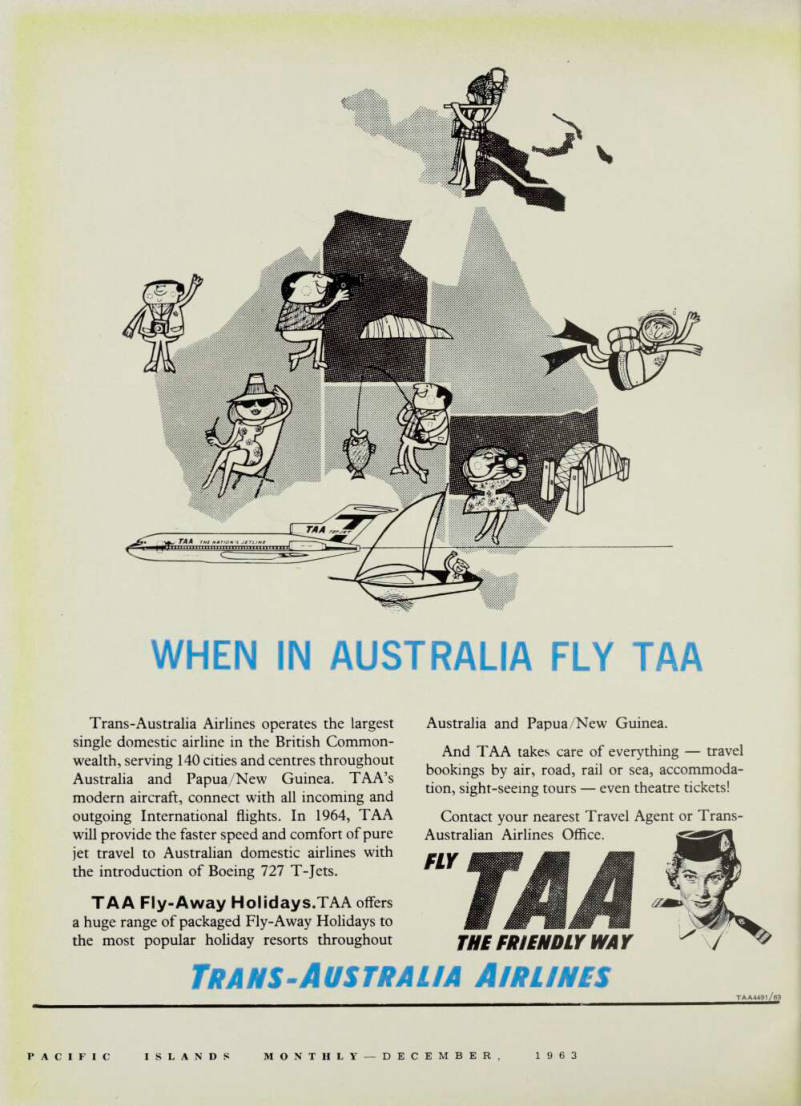 2
2 3
3 4
4 5
5 6
6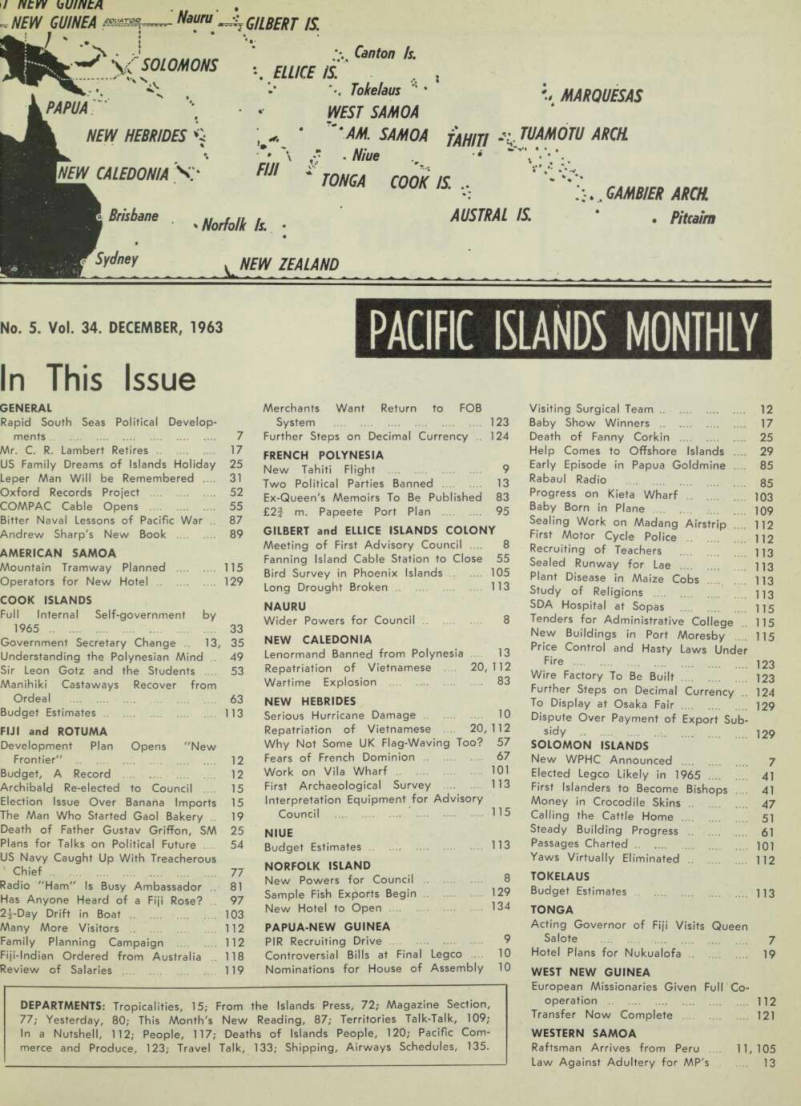 7
7 8
8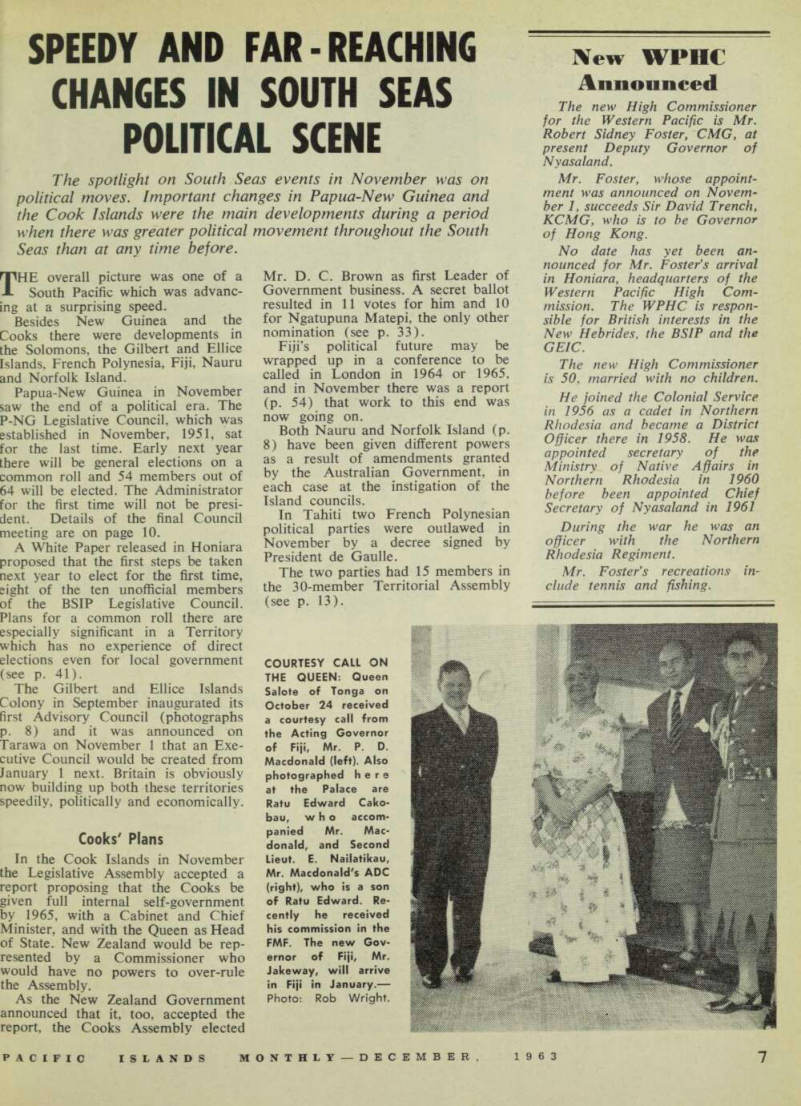 9
9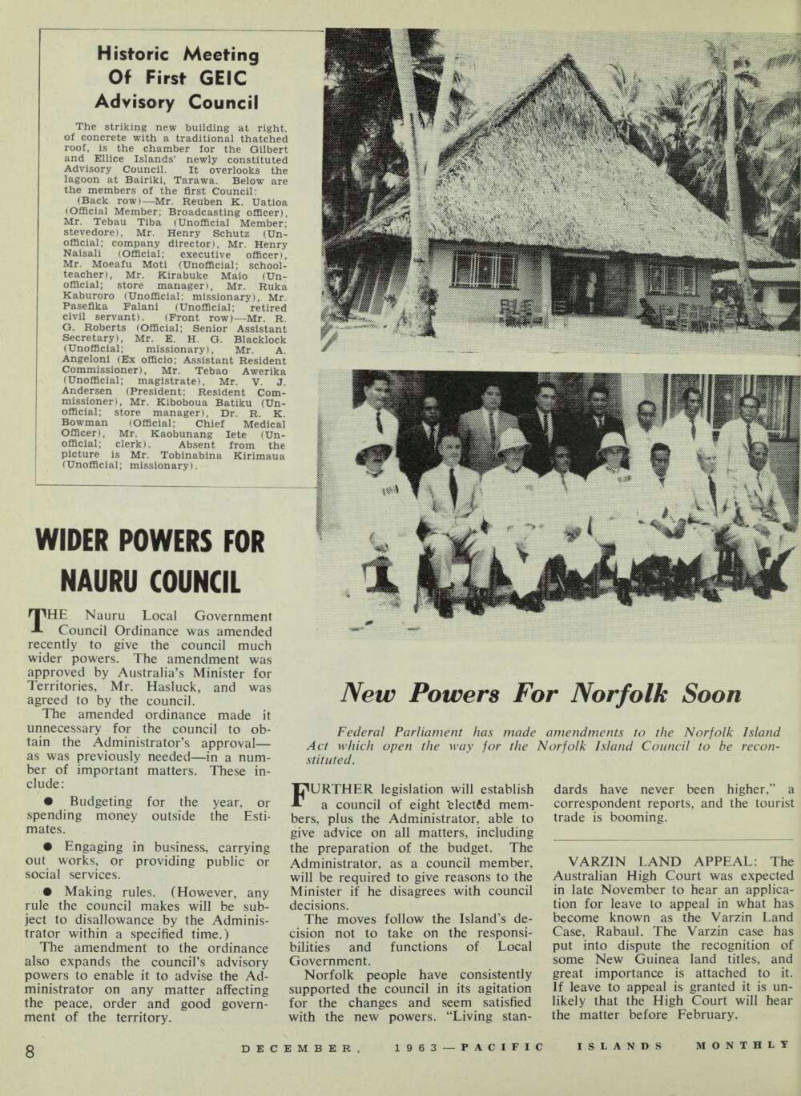 10
10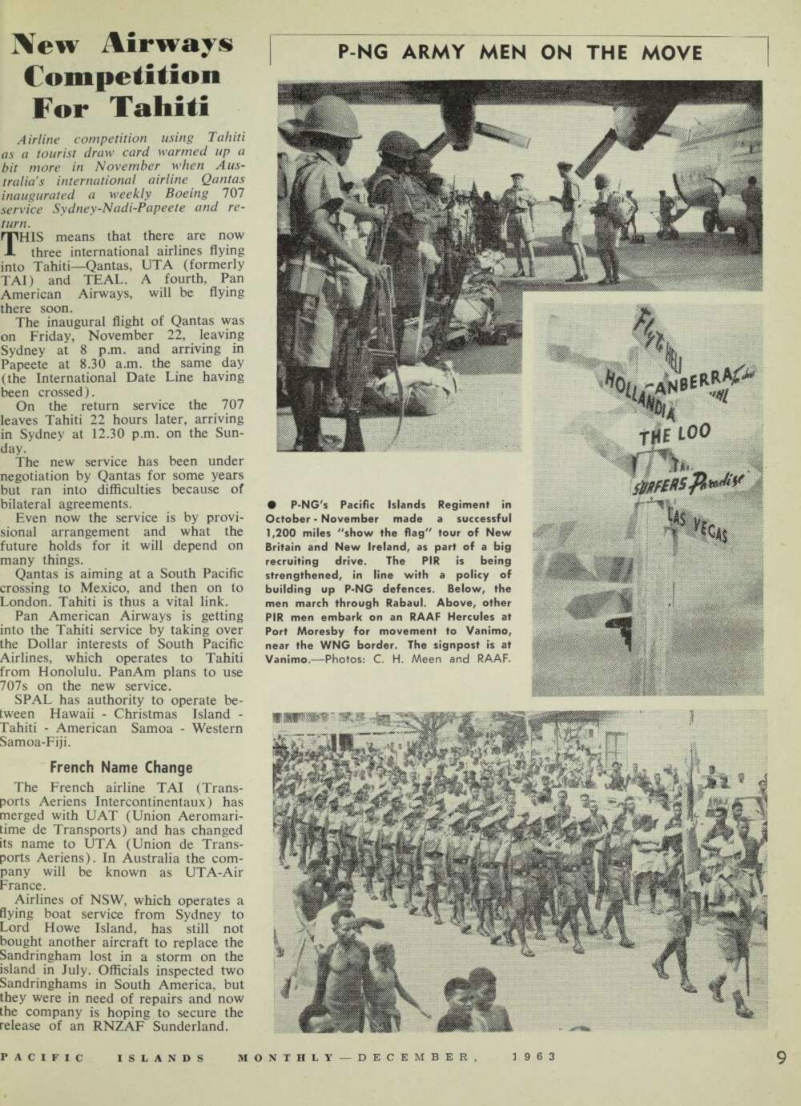 11
11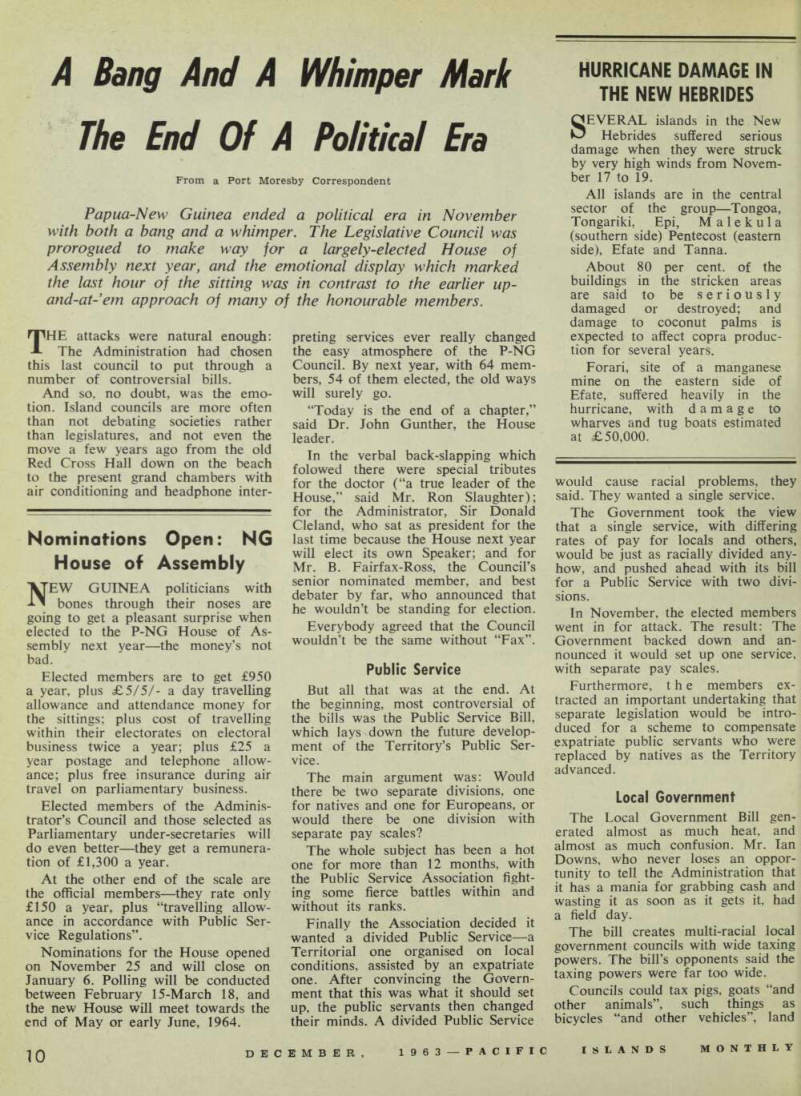 12
12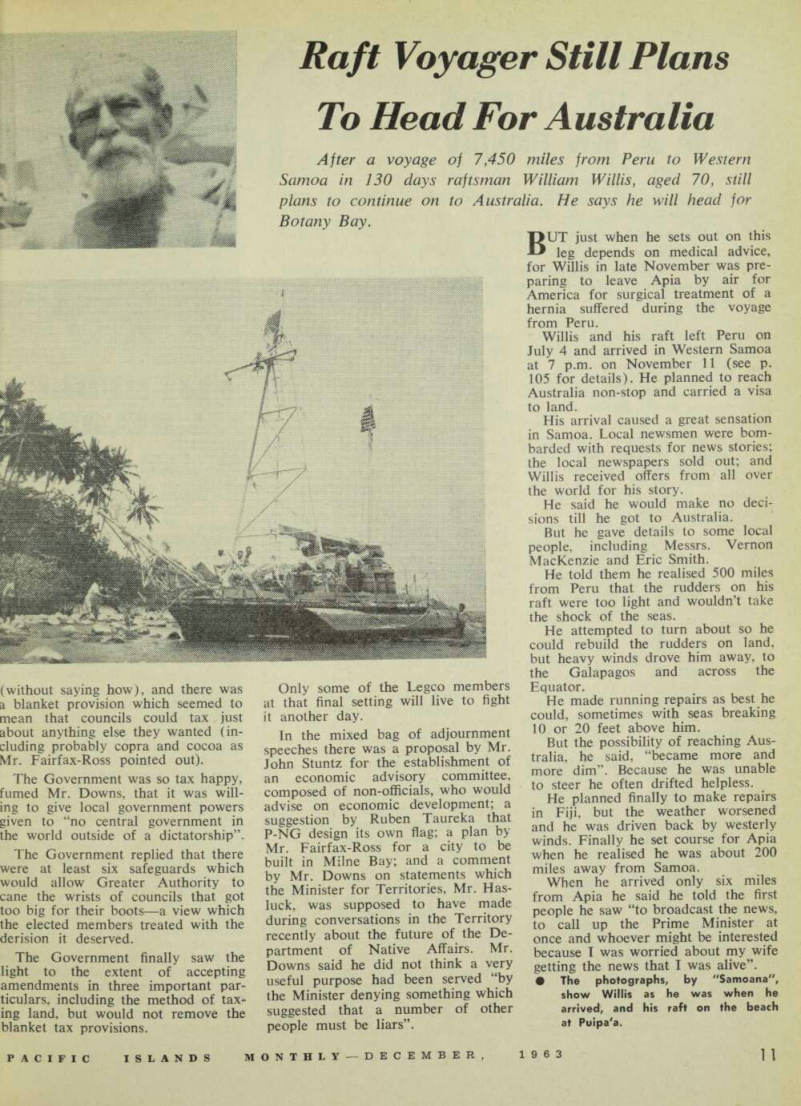 13
13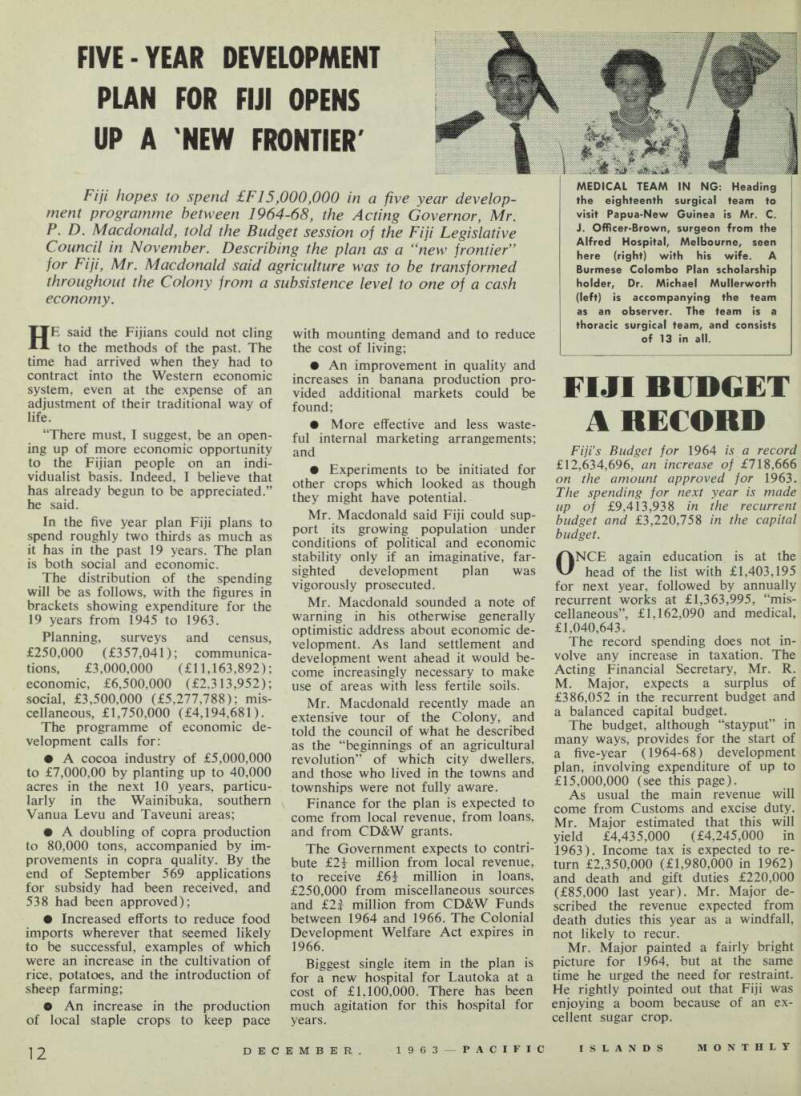 14
14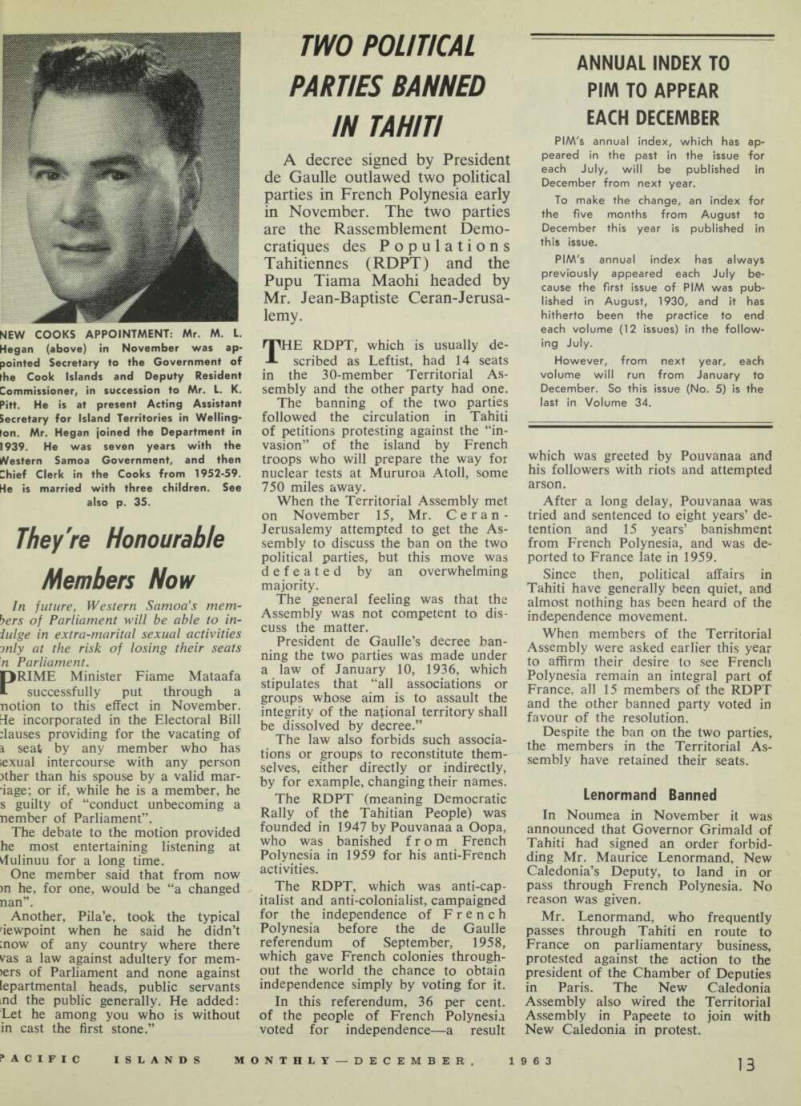 15
15 16
16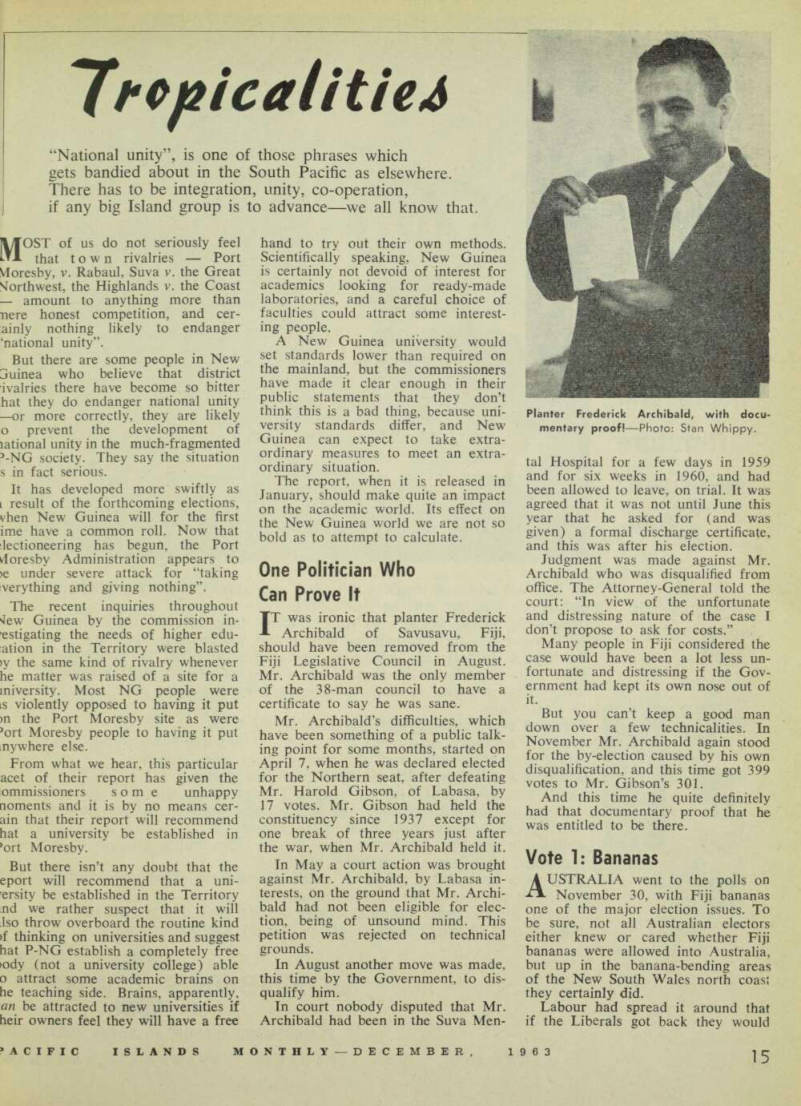 17
17 18
18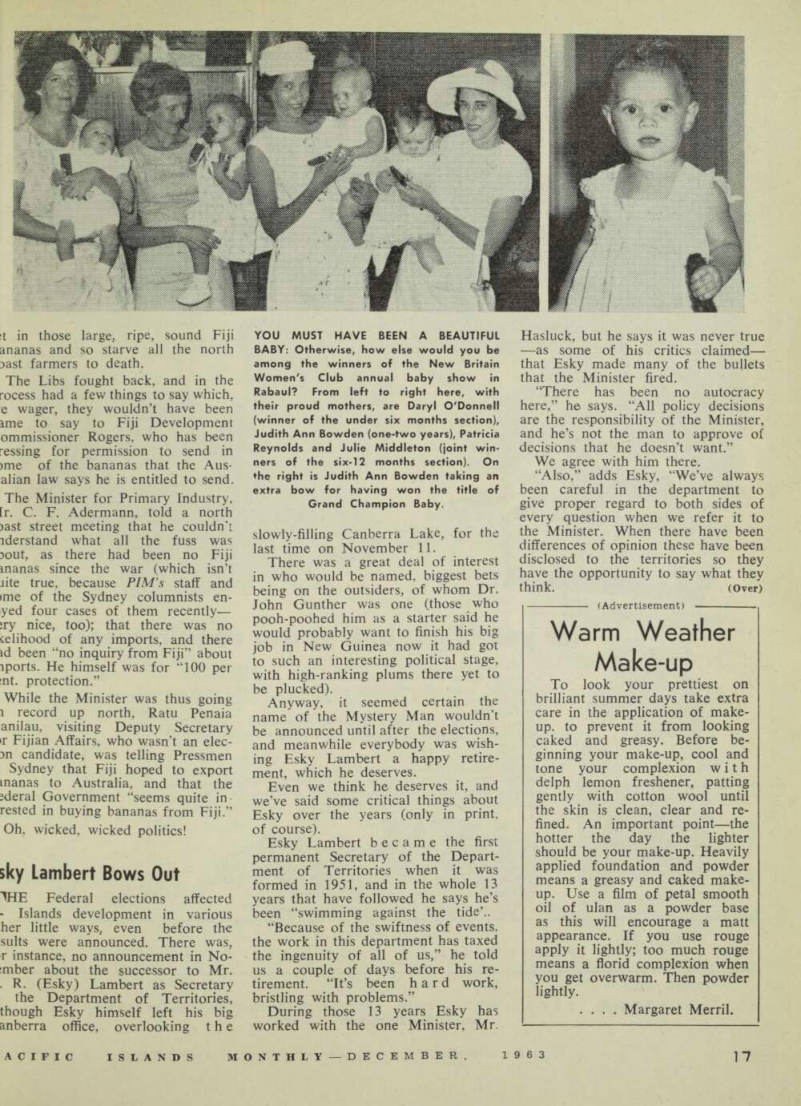 19
19 20
20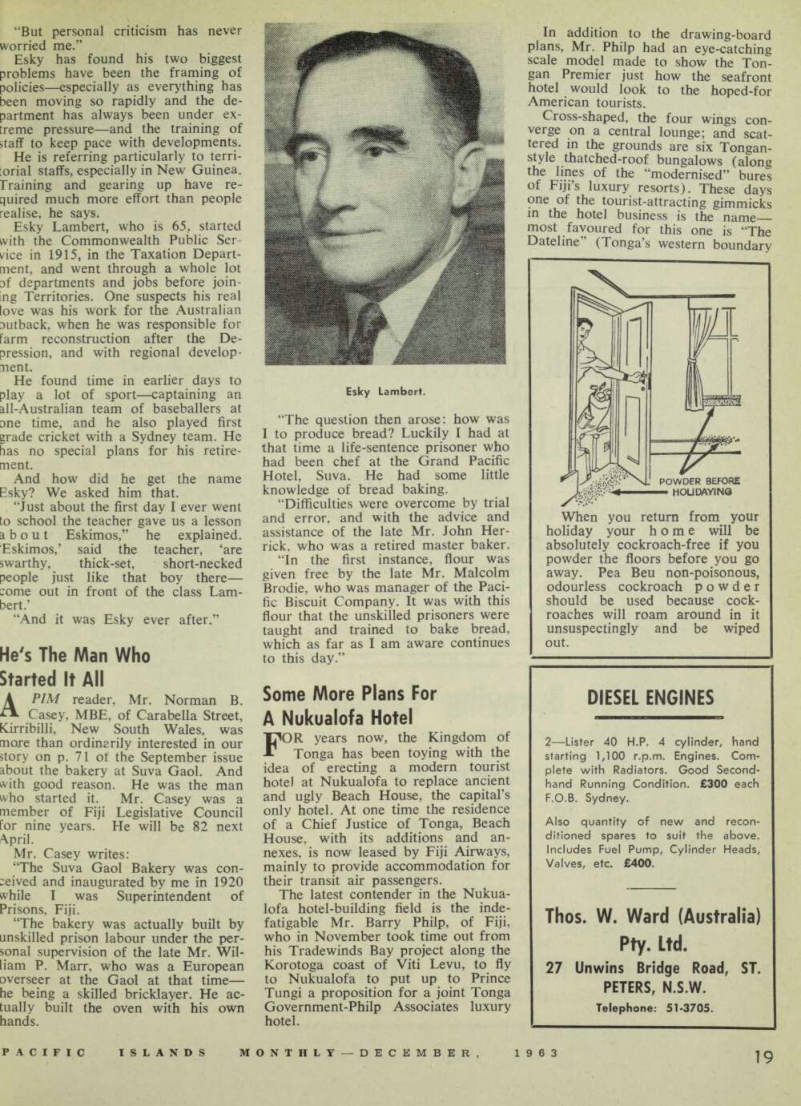 21
21 22
22 23
23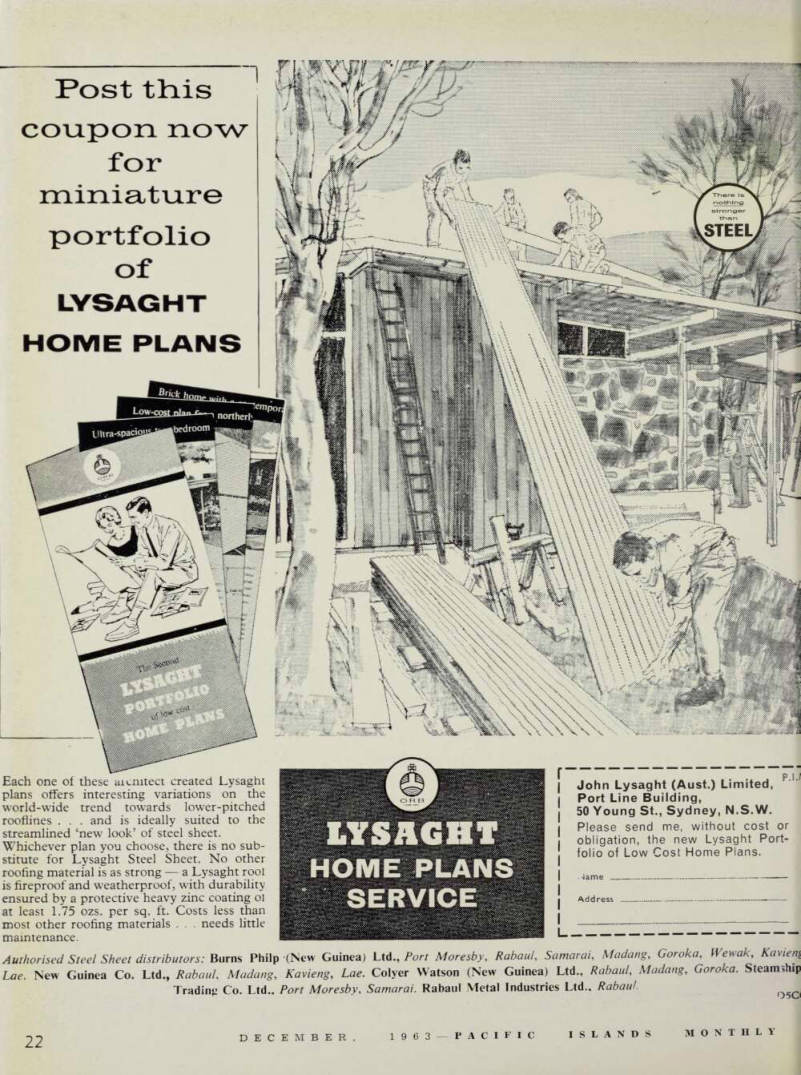 24
24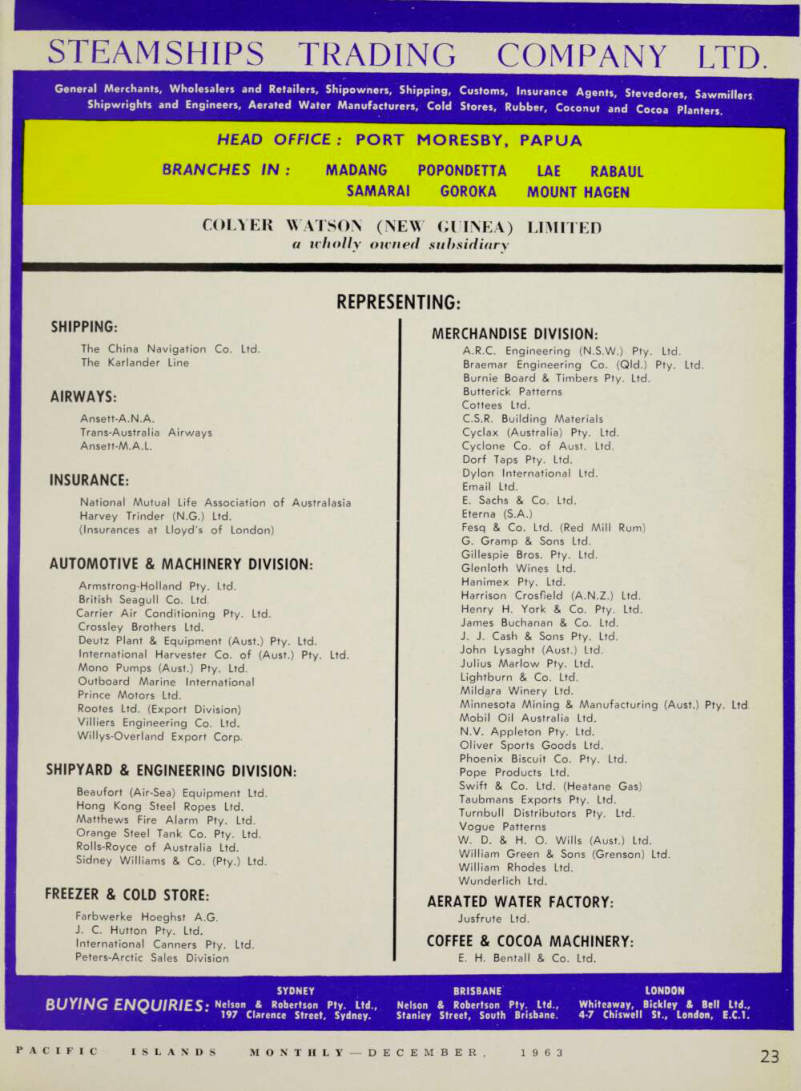 25
25 26
26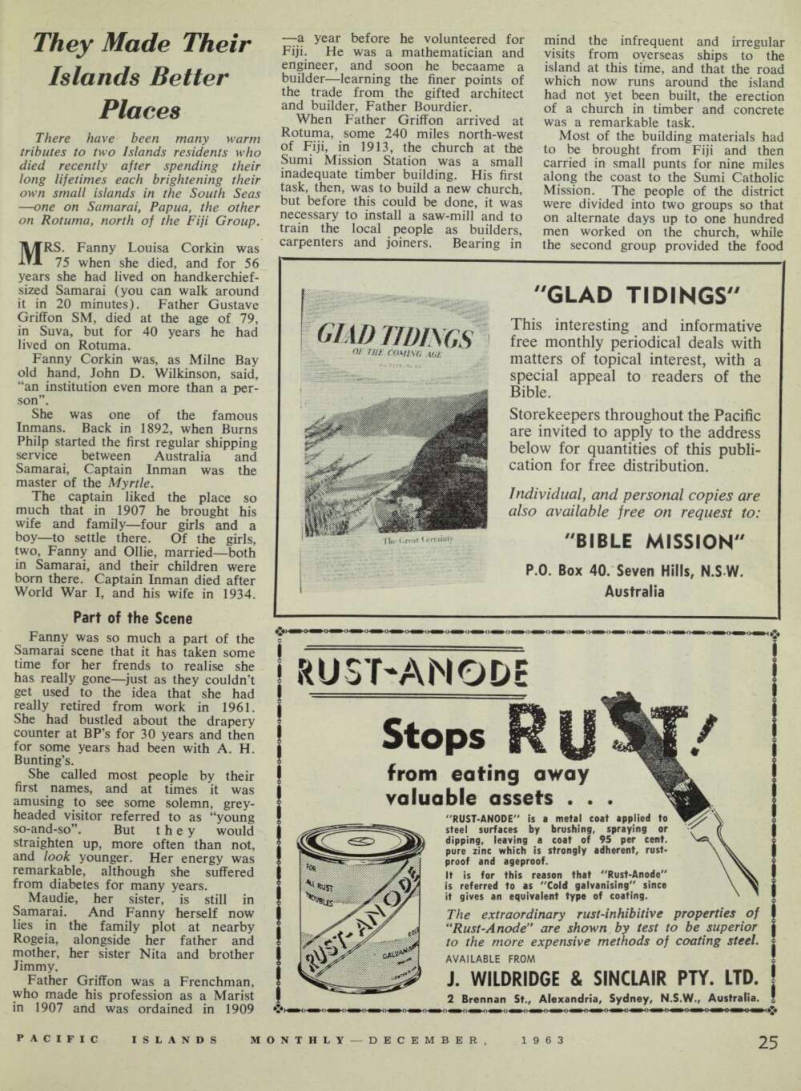 27
27 28
28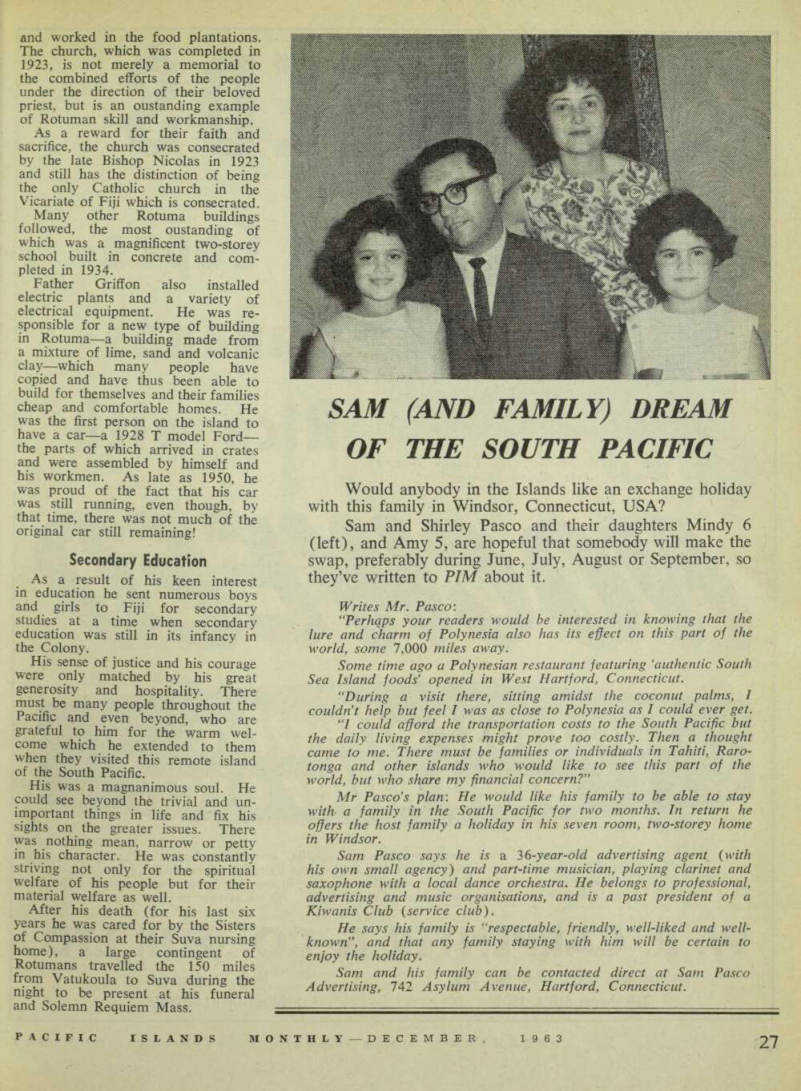 29
29 30
30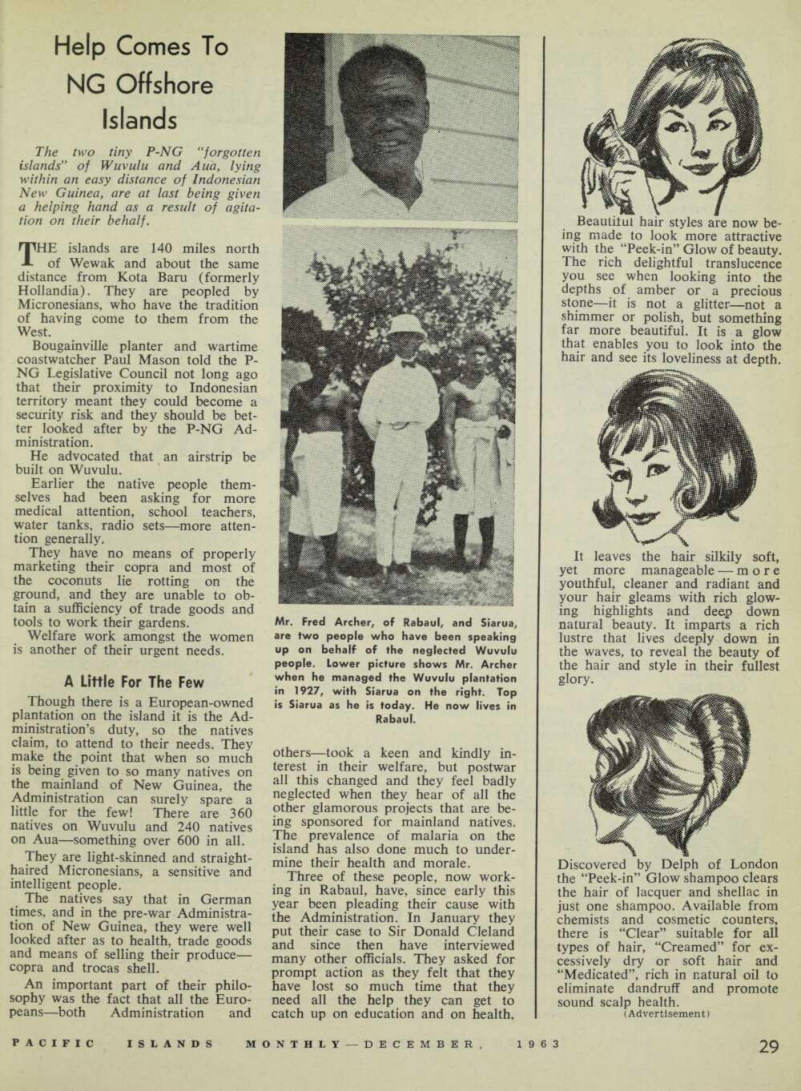 31
31 32
32 33
33 34
34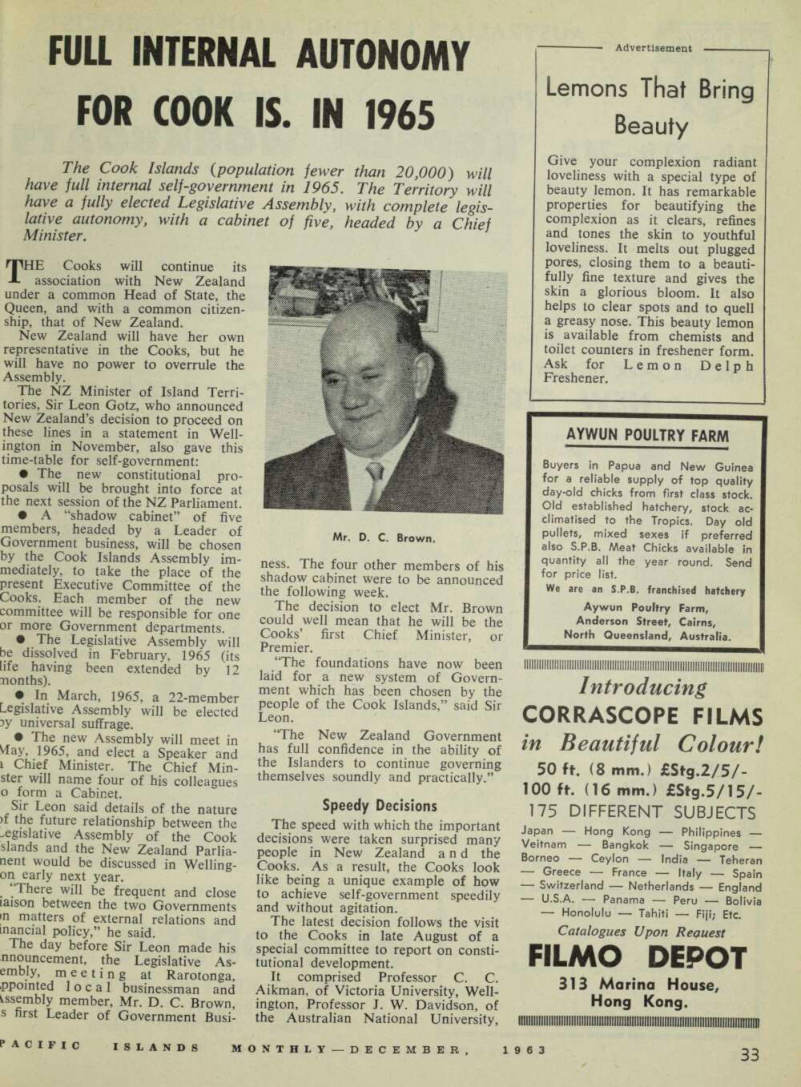 35
35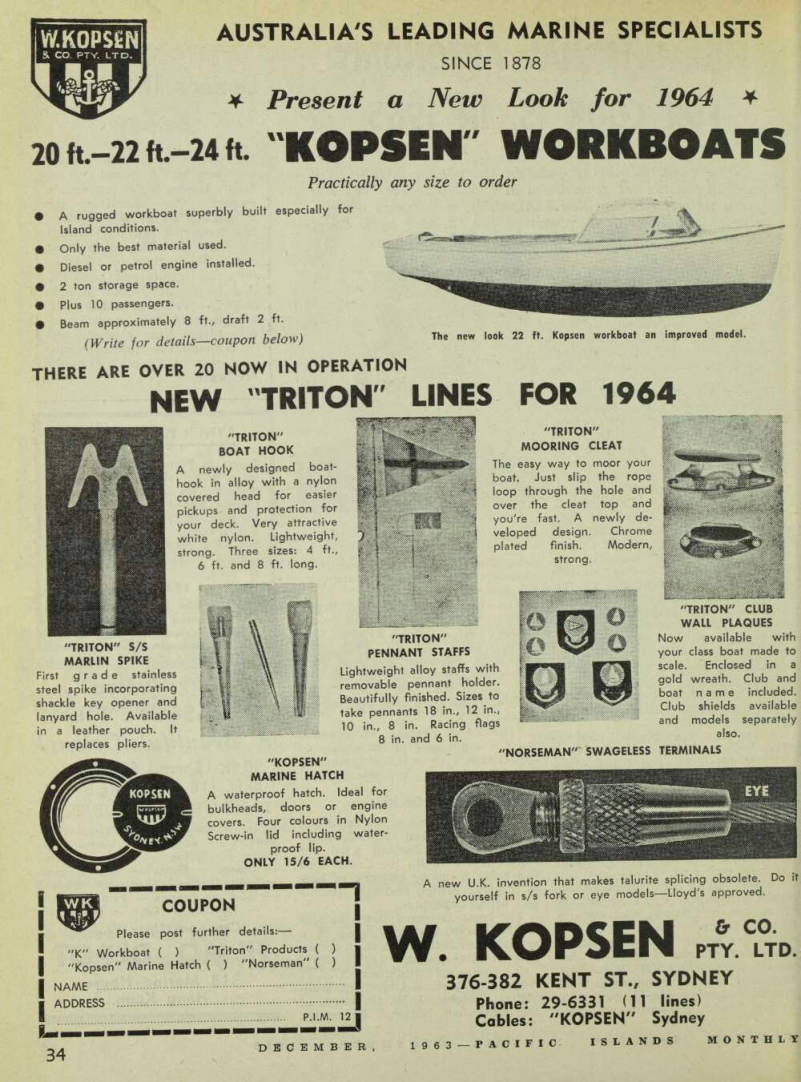 36
36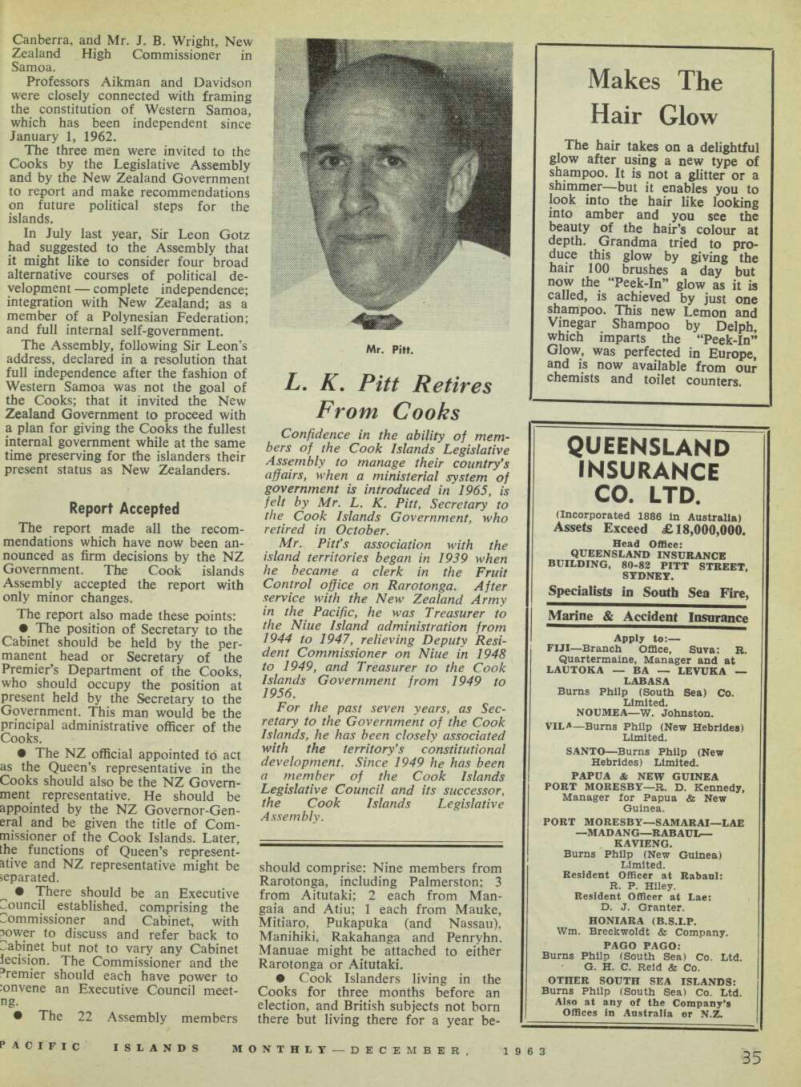 37
37 38
38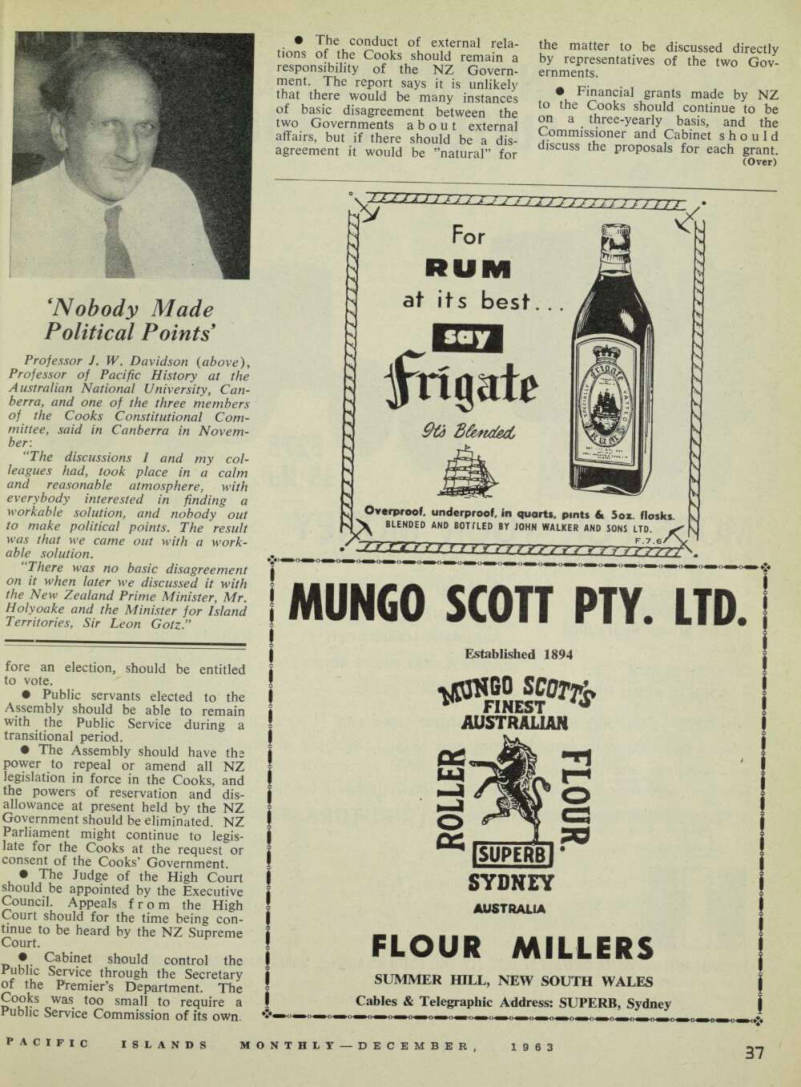 39
39 40
40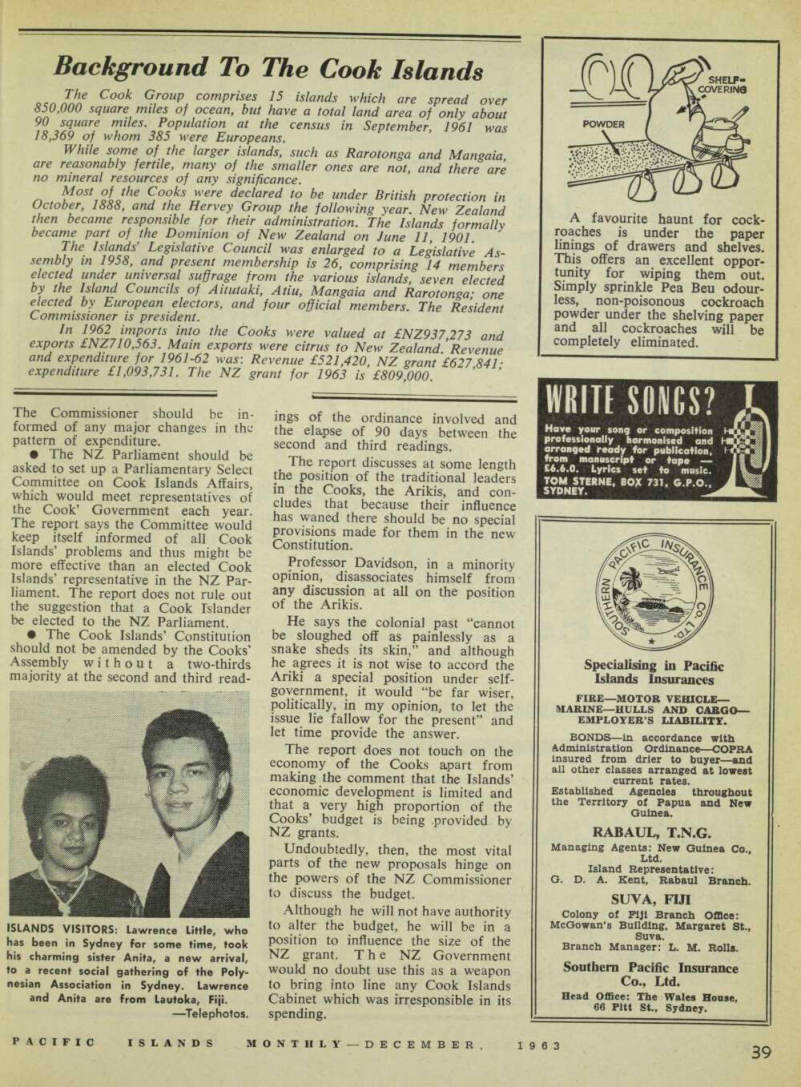 41
41 42
42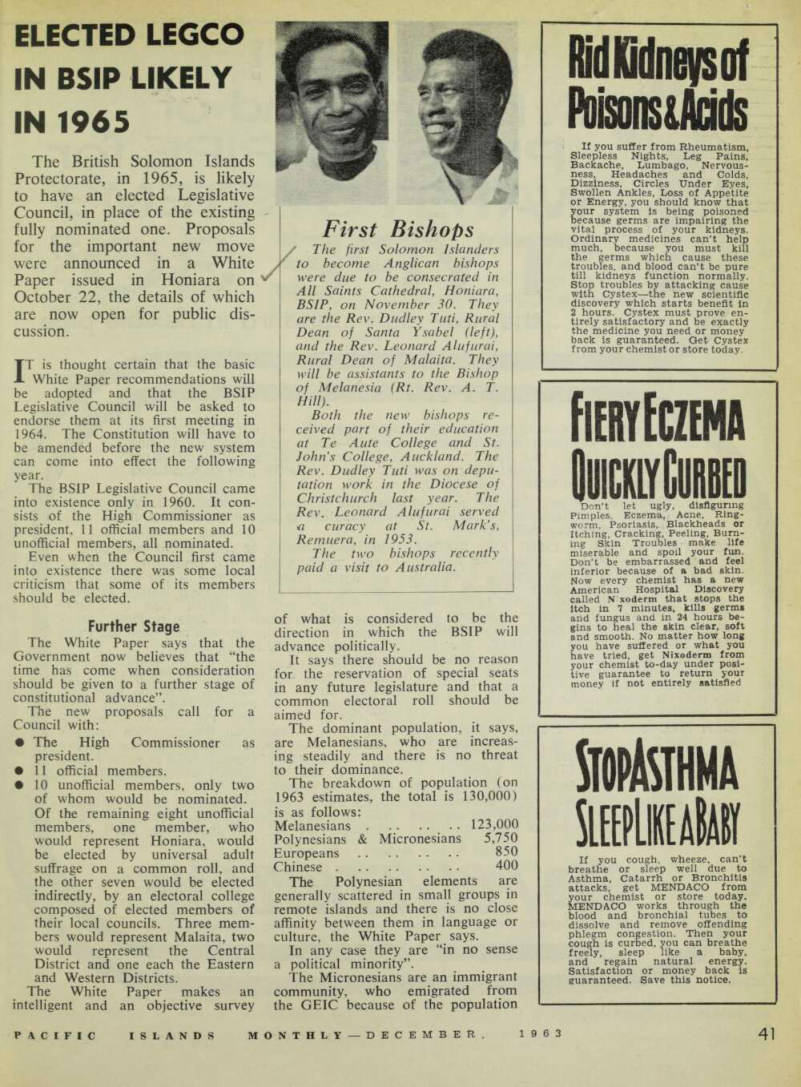 43
43 44
44 45
45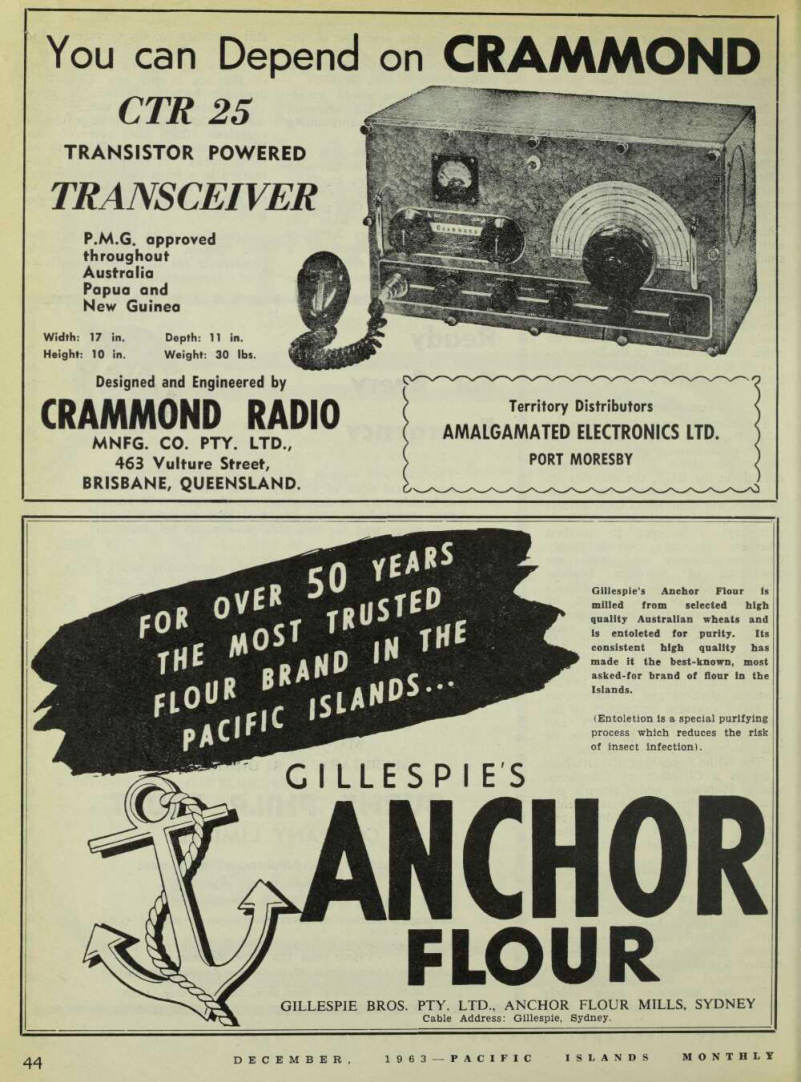 46
46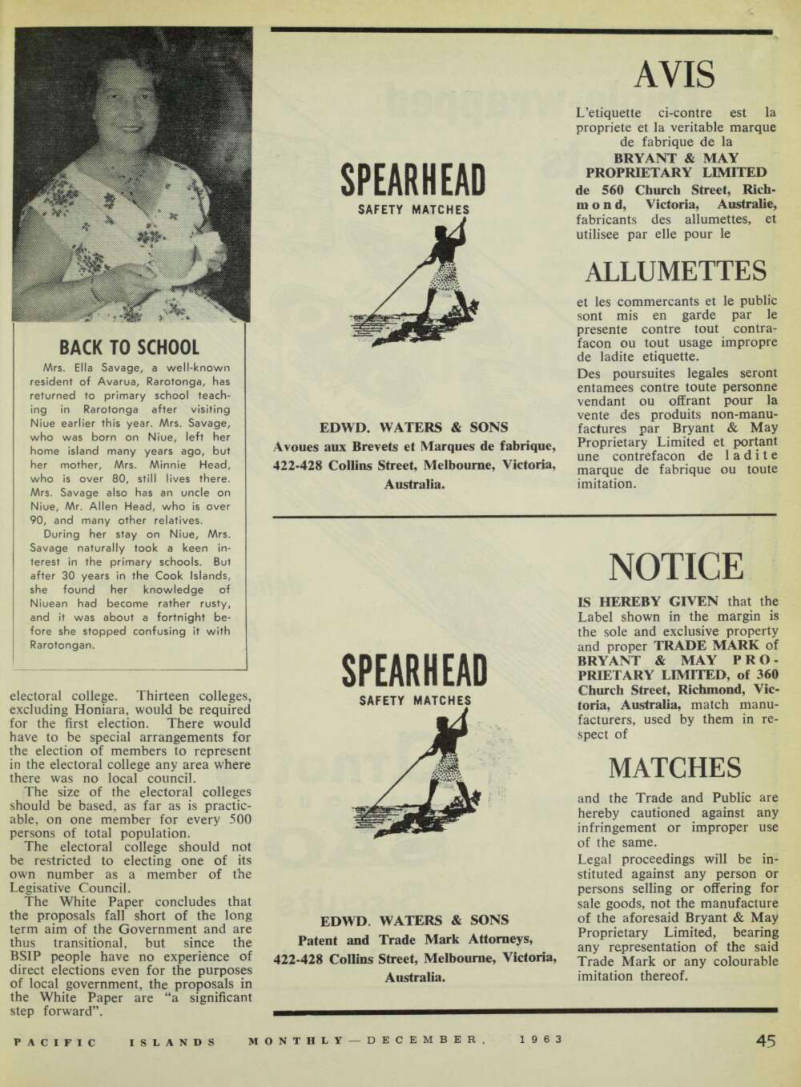 47
47 48
48 49
49 50
50 51
51 52
52 53
53 54
54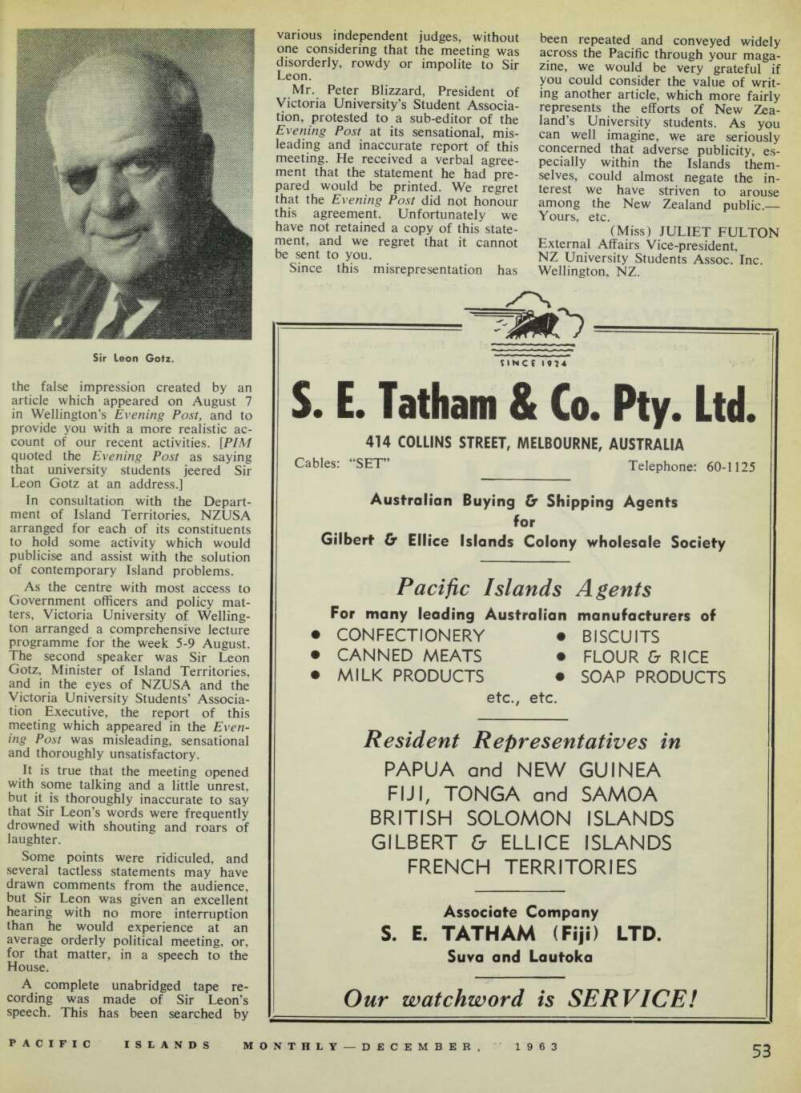 55
55 56
56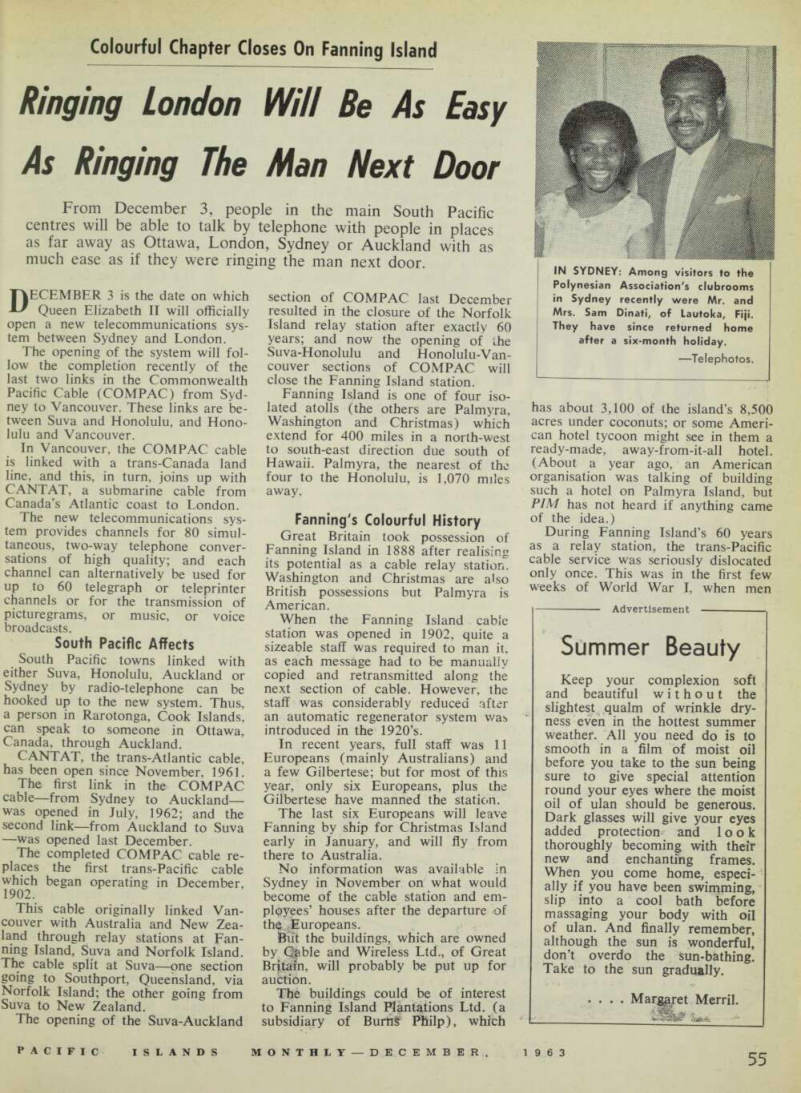 57
57 58
58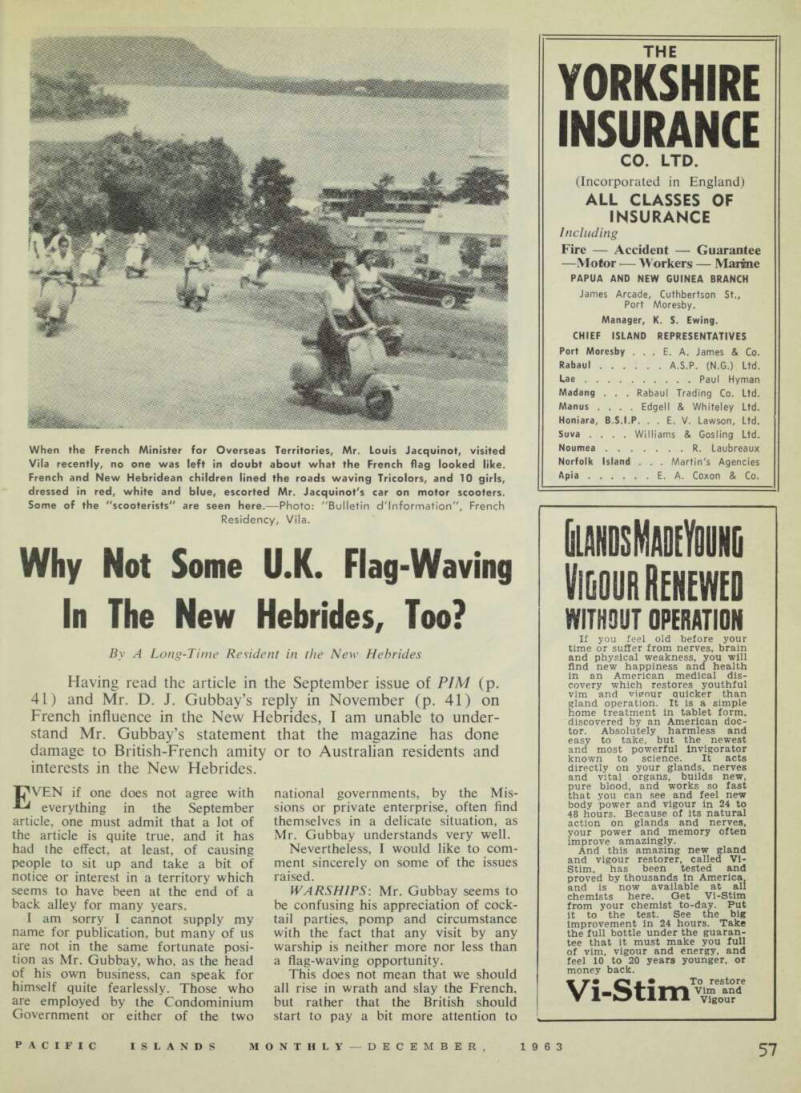 59
59 60
60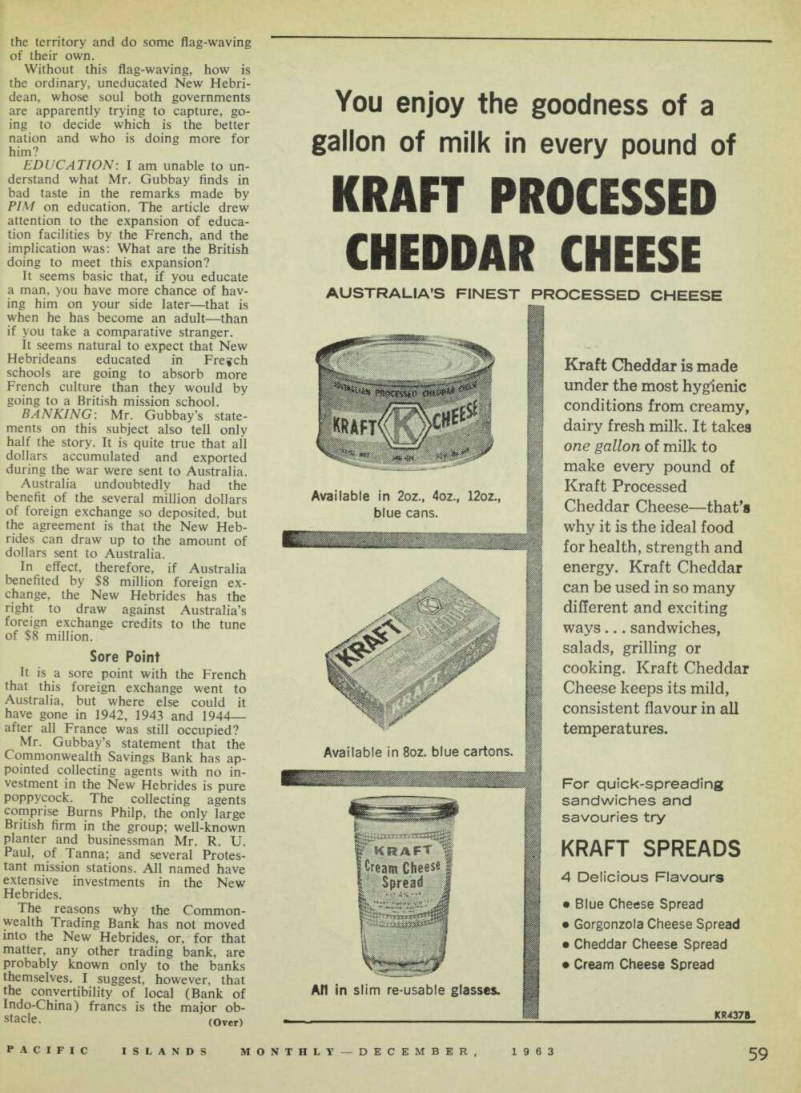 61
61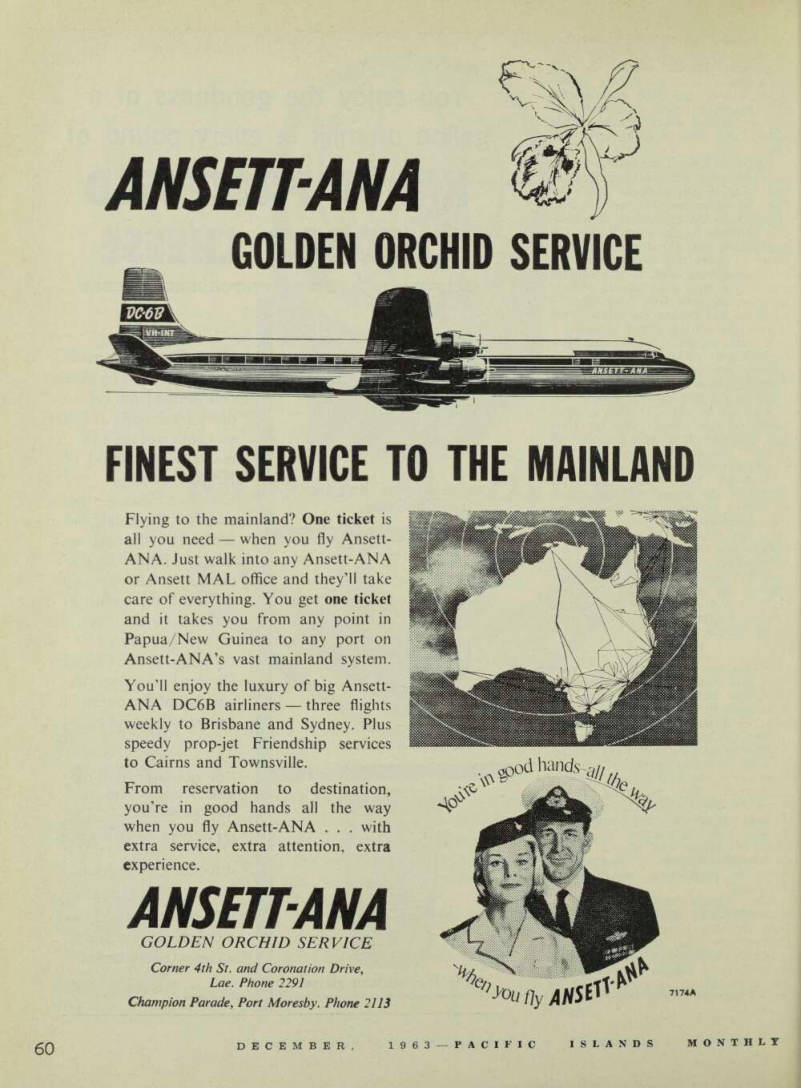 62
62 63
63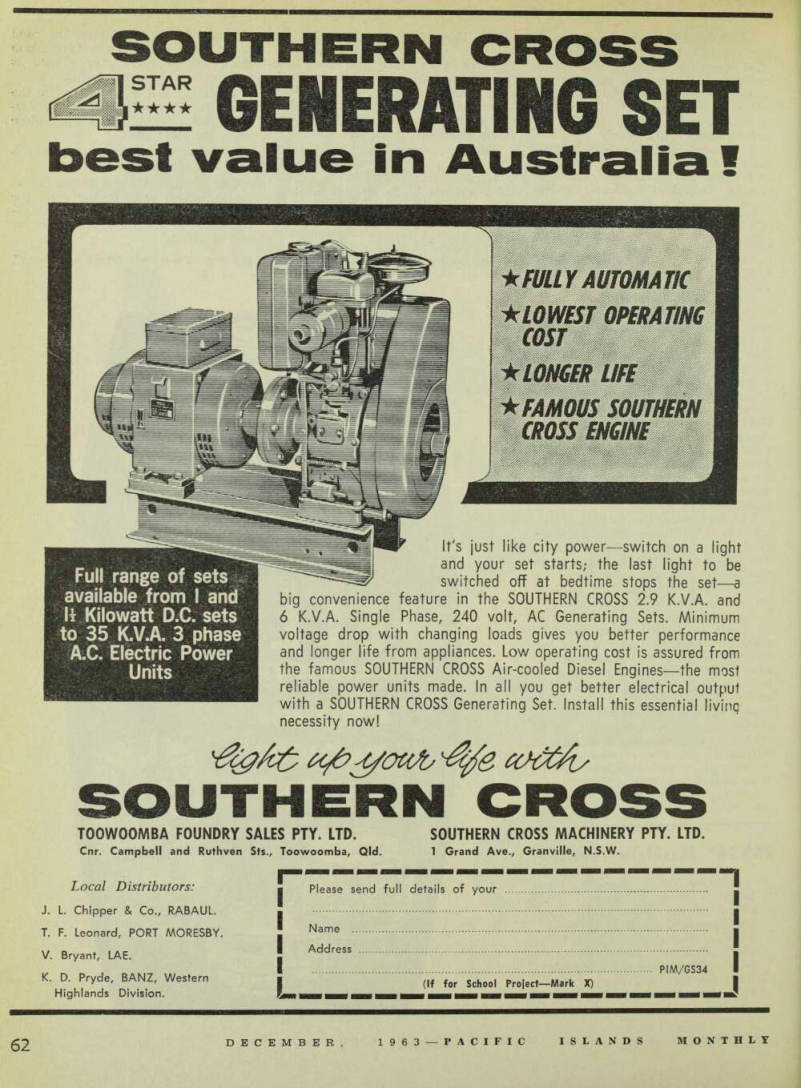 64
64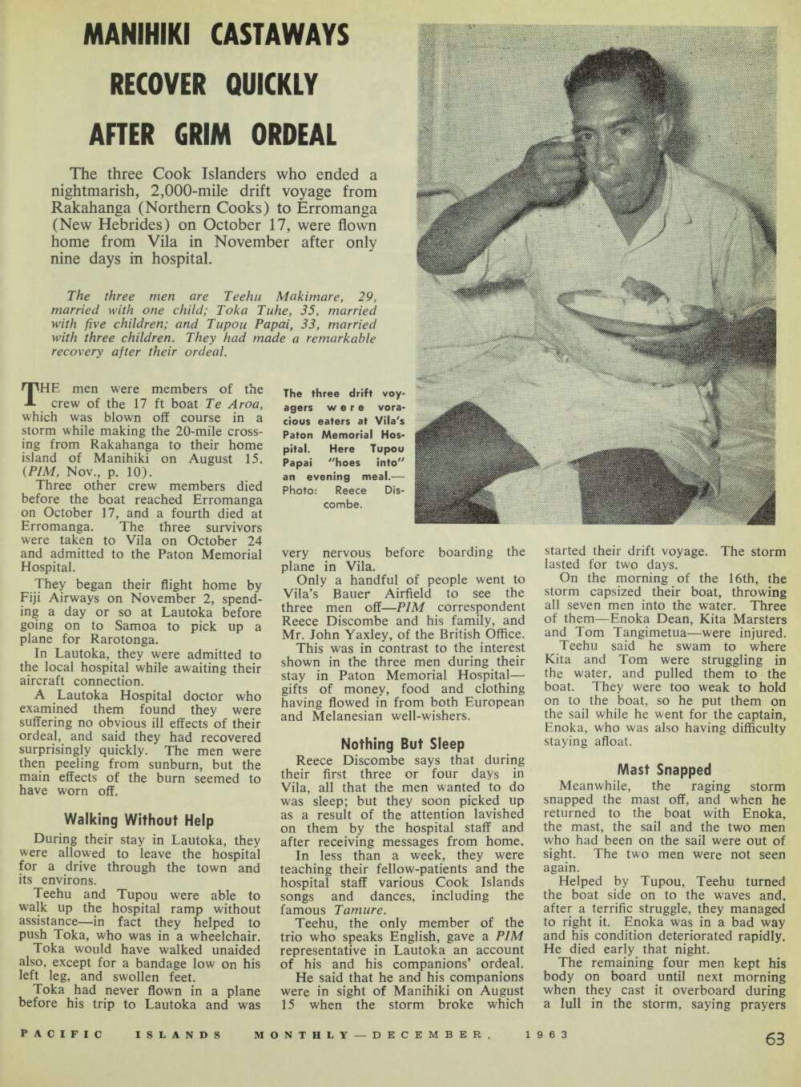 65
65 66
66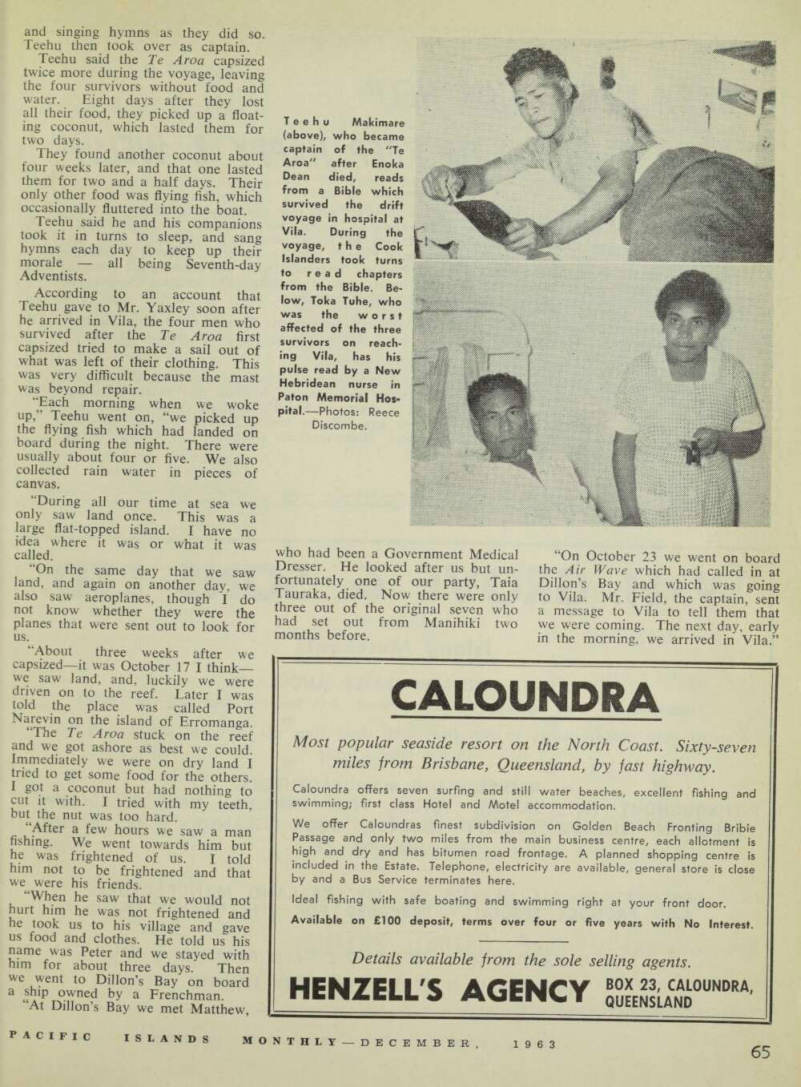 67
67 68
68 69
69 70
70 71
71 72
72 73
73 74
74 75
75 76
76 77
77 78
78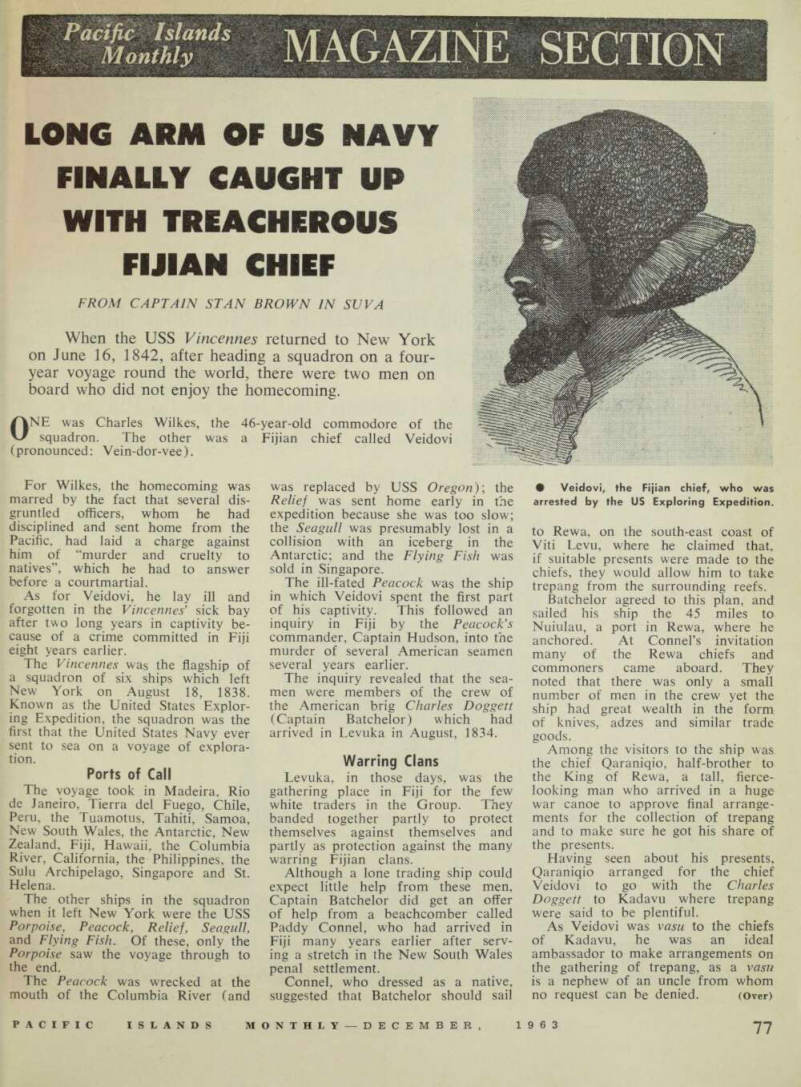 79
79 80
80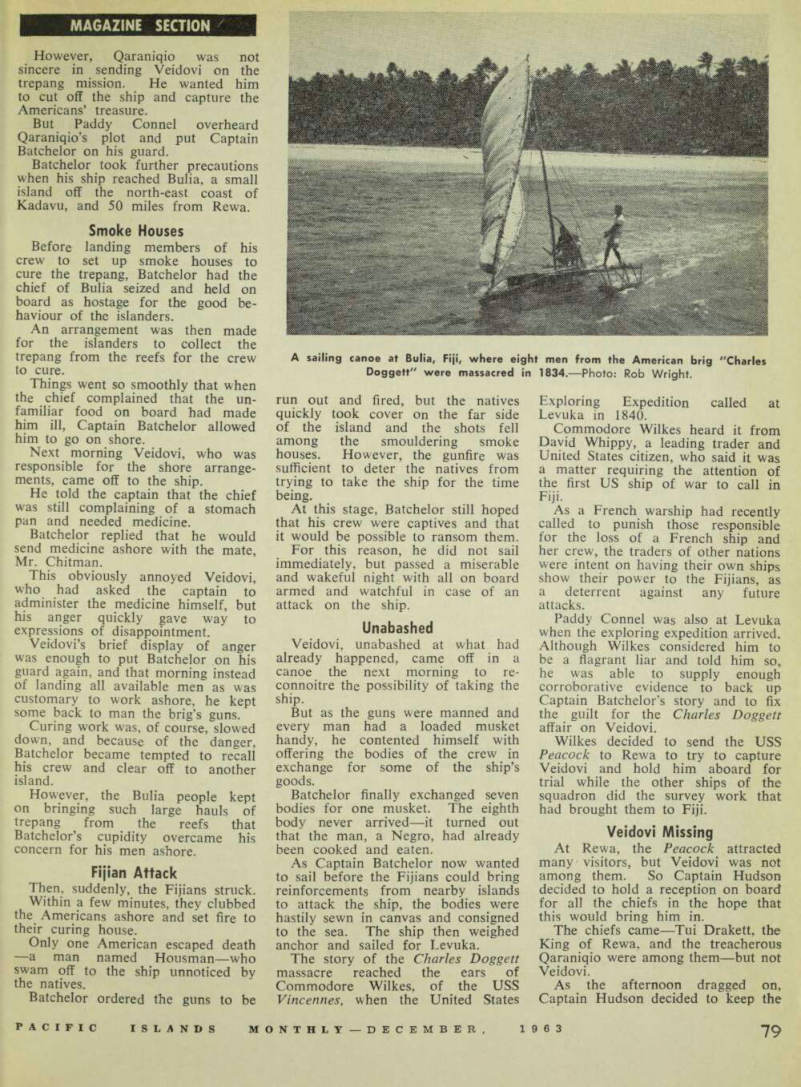 81
81 82
82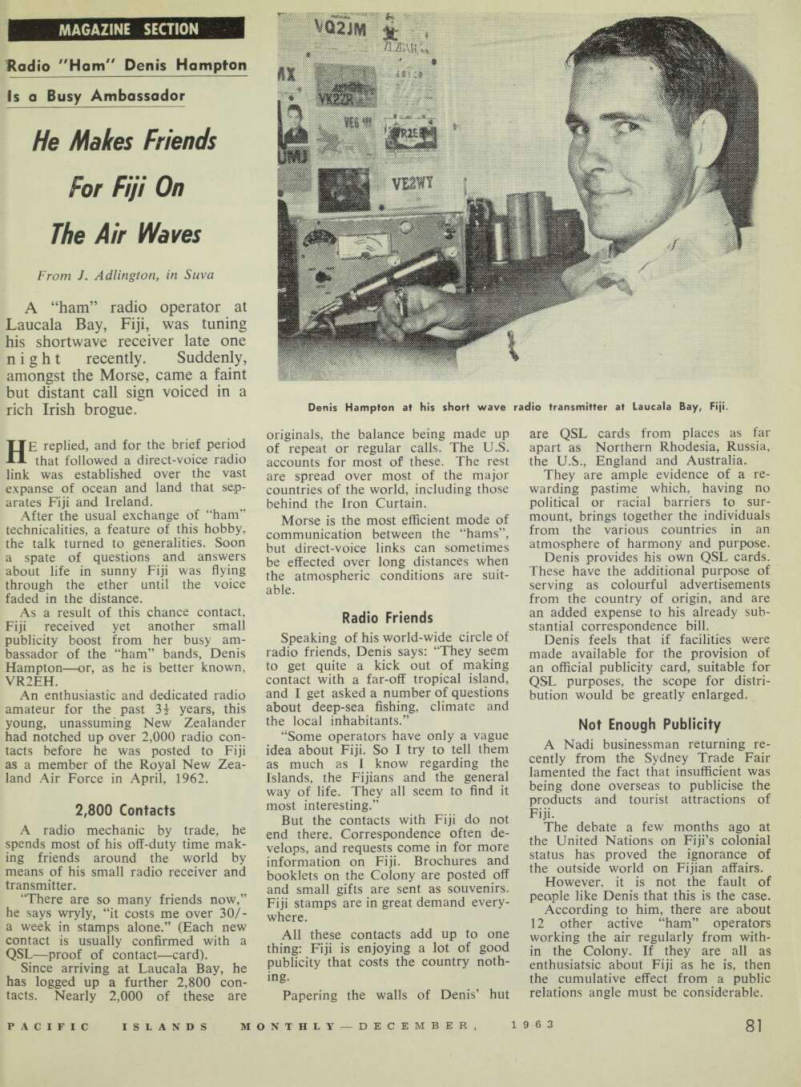 83
83 84
84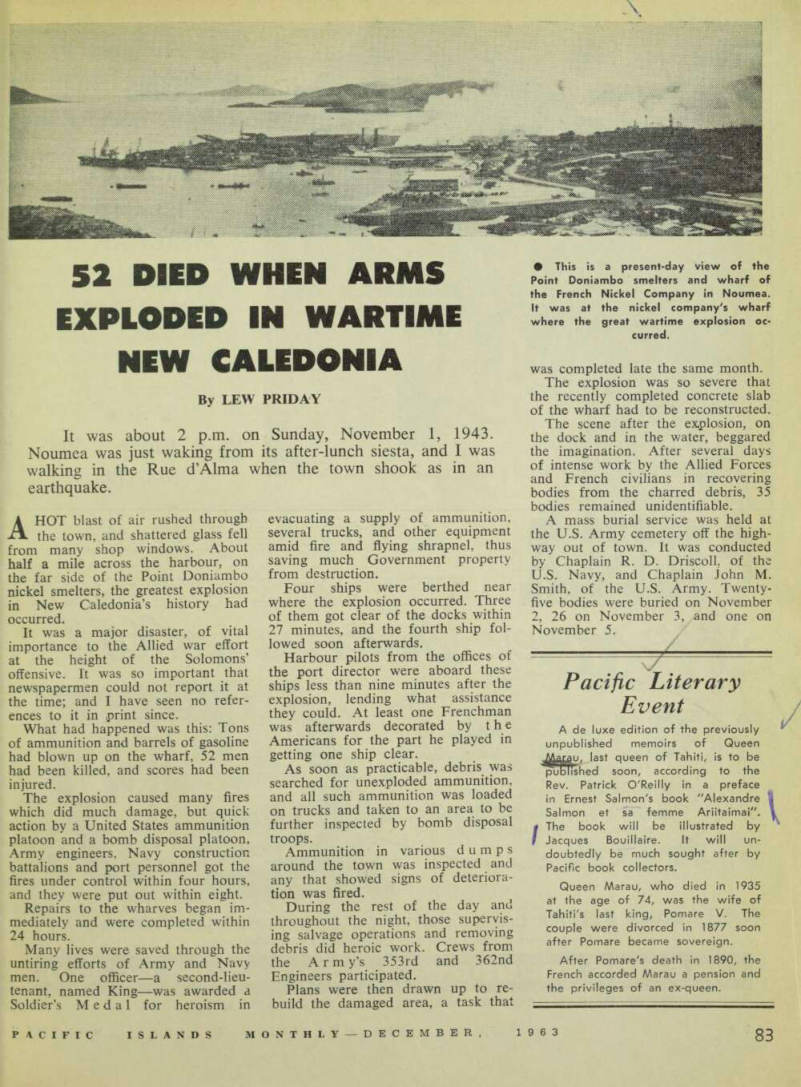 85
85 86
86 87
87 88
88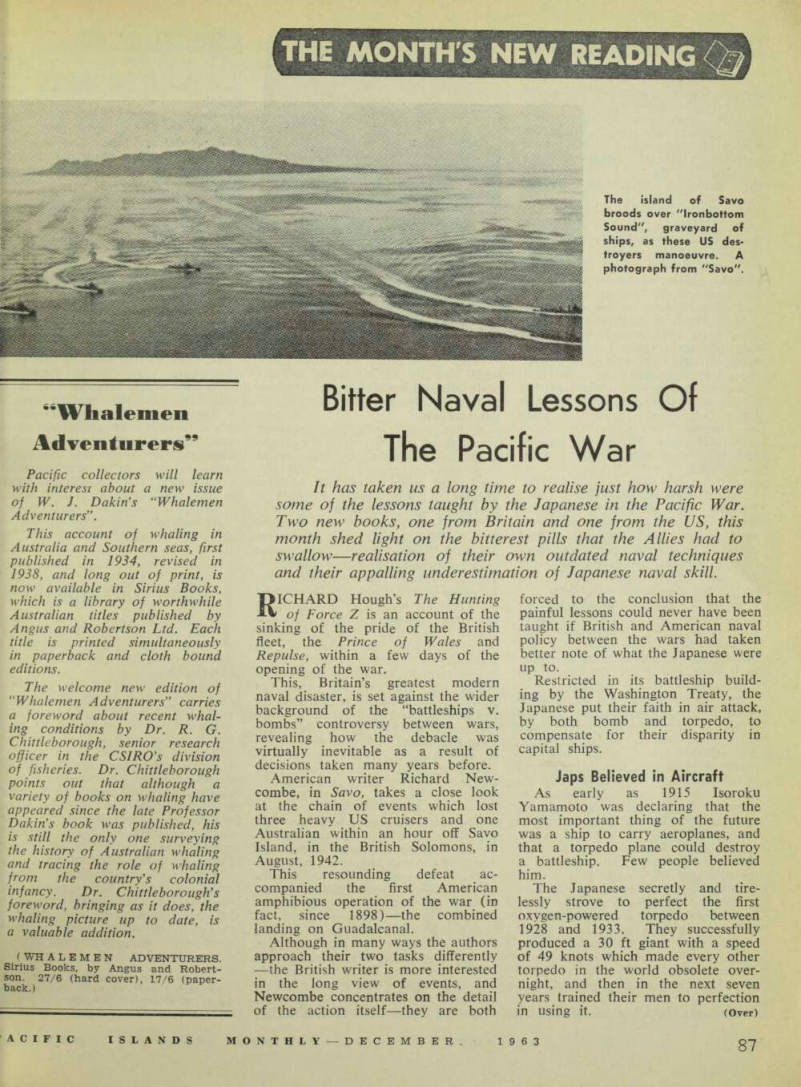 89
89 90
90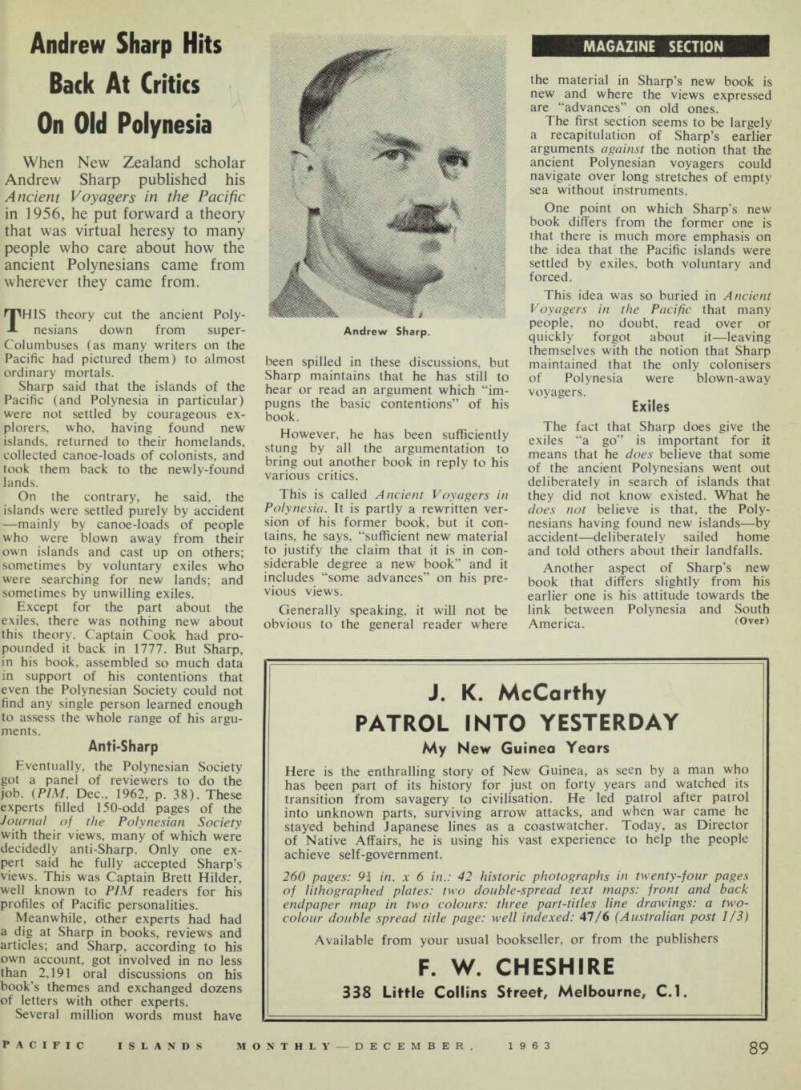 91
91 92
92 93
93 94
94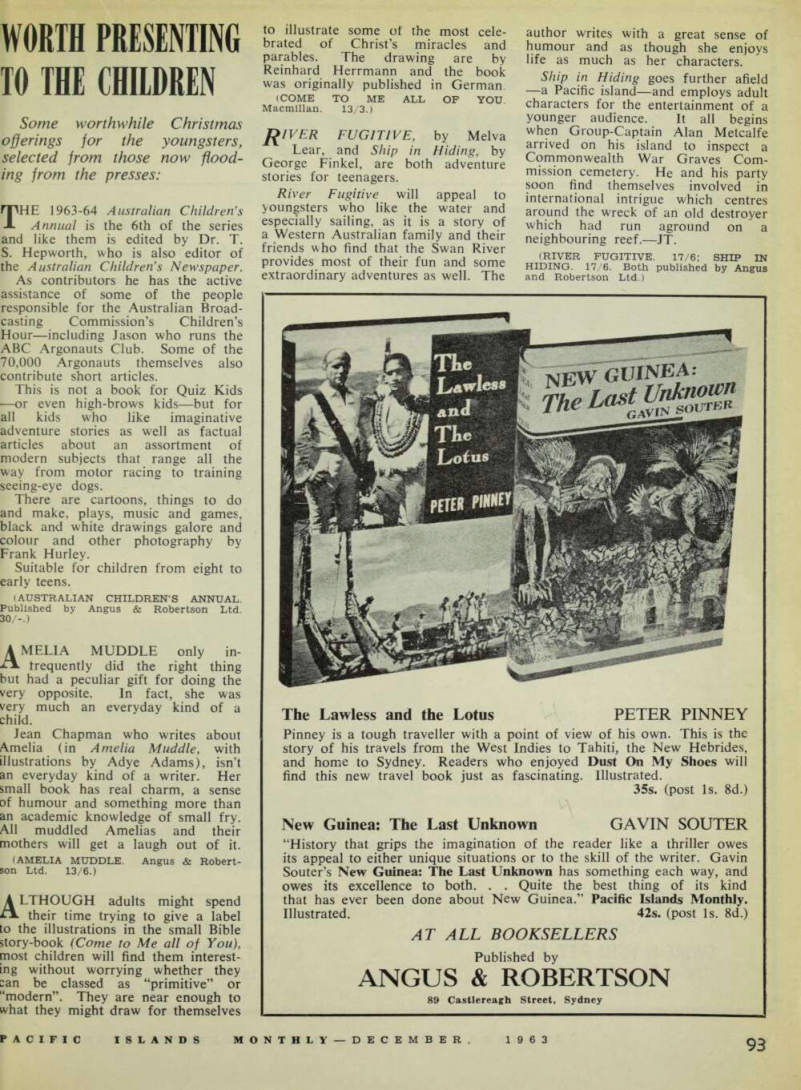 95
95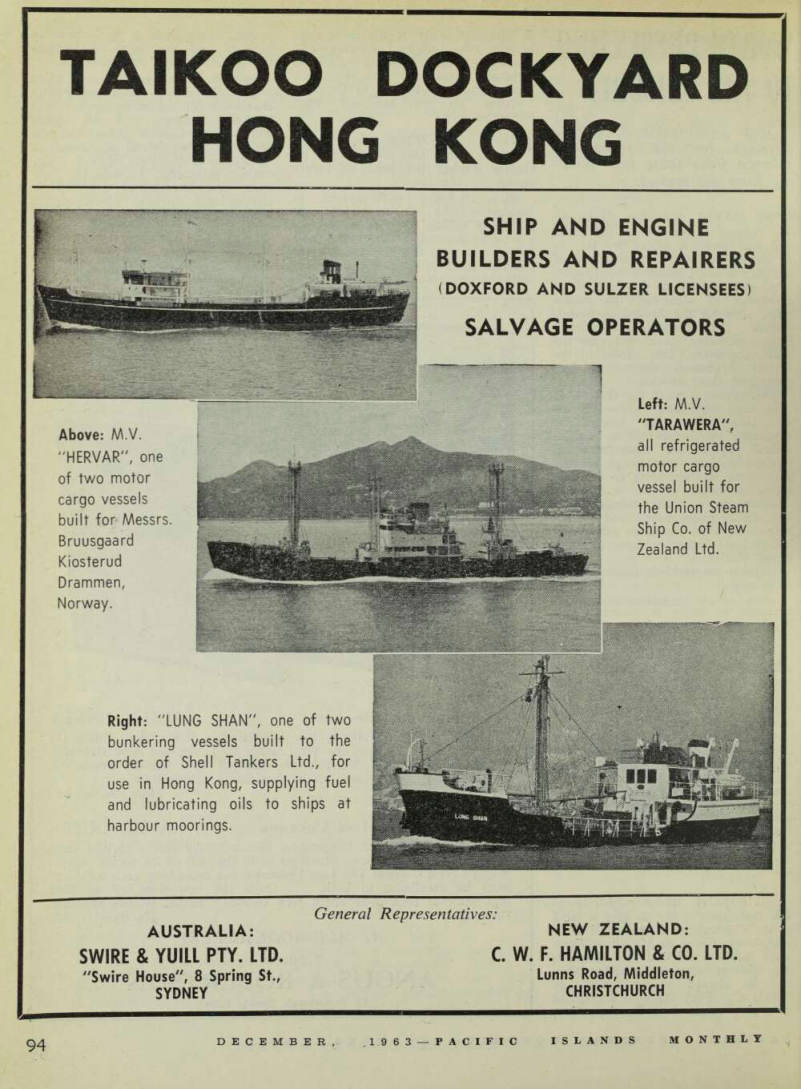 96
96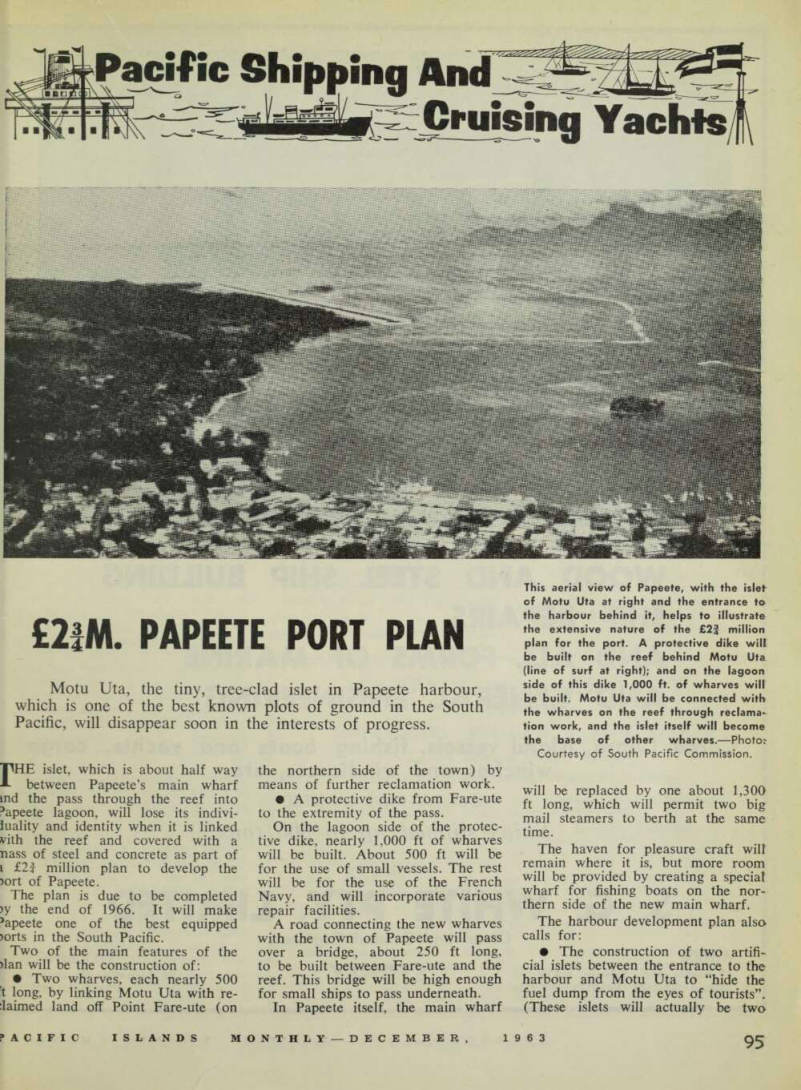 97
97 98
98 99
99 100
100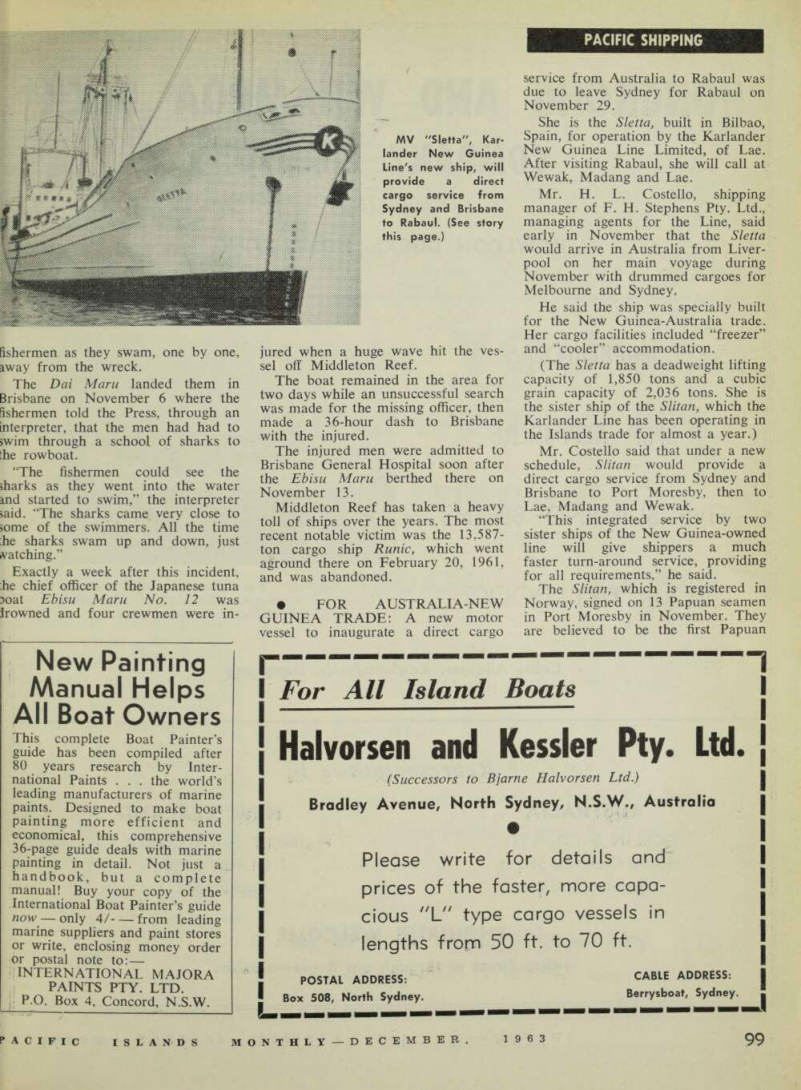 101
101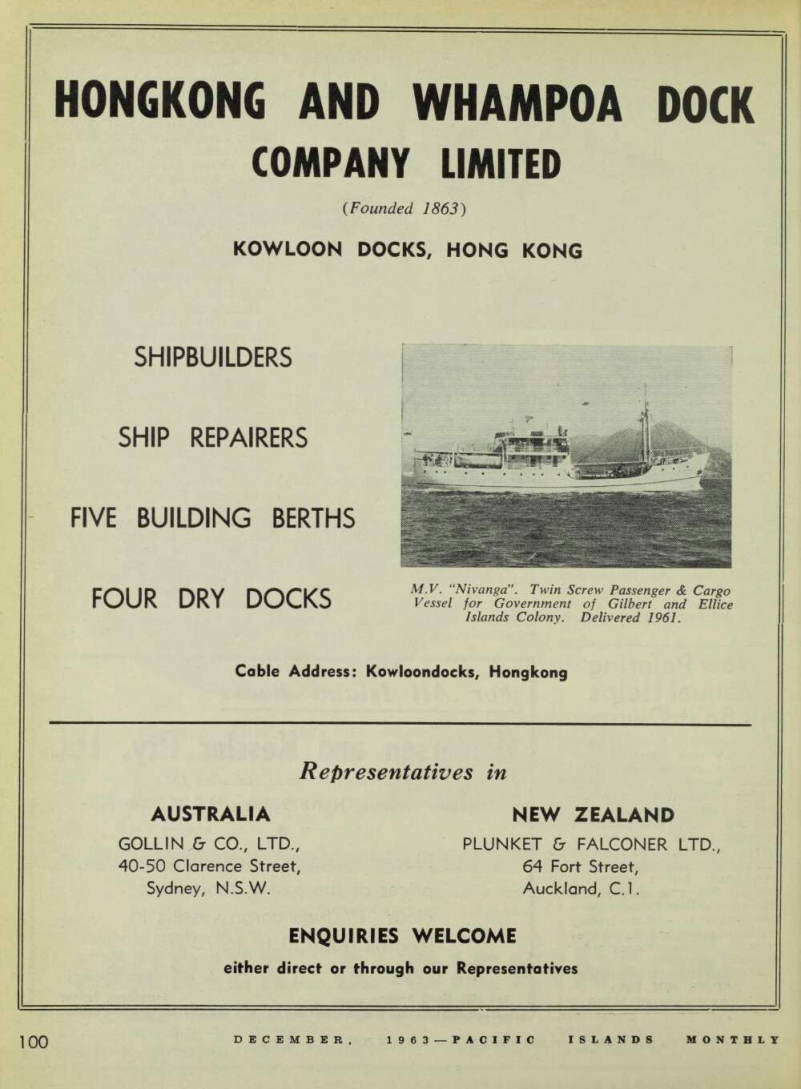 102
102 103
103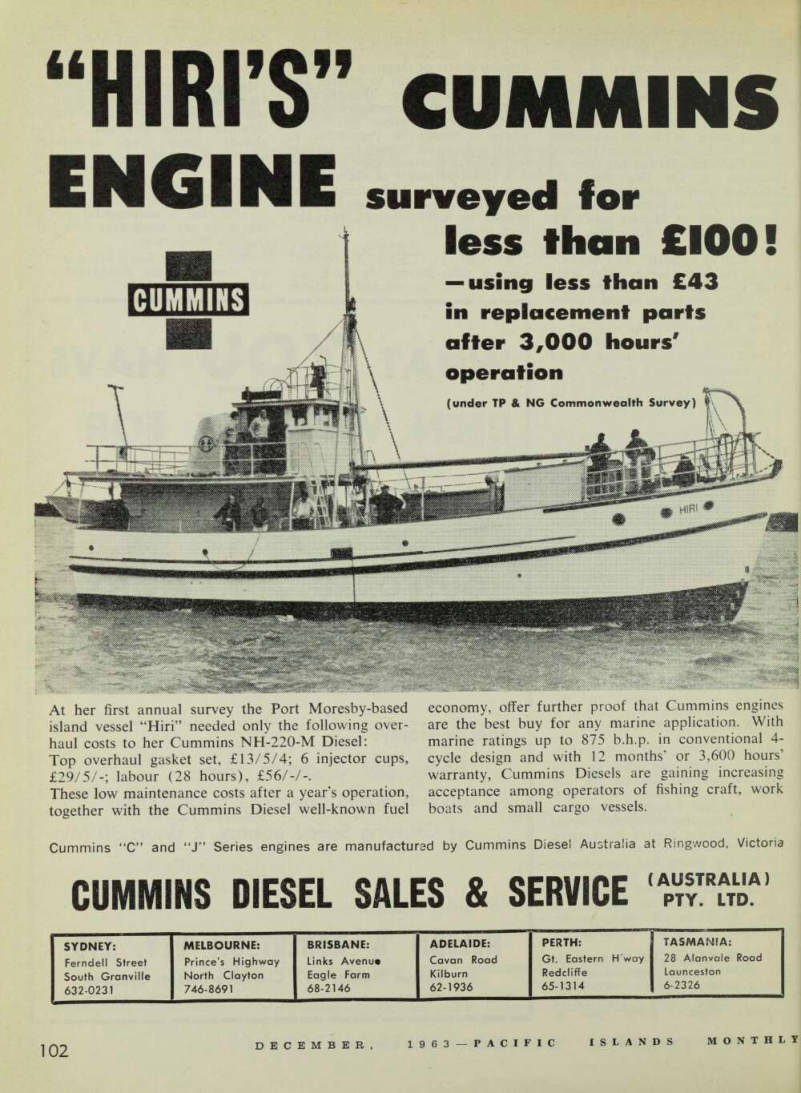 104
104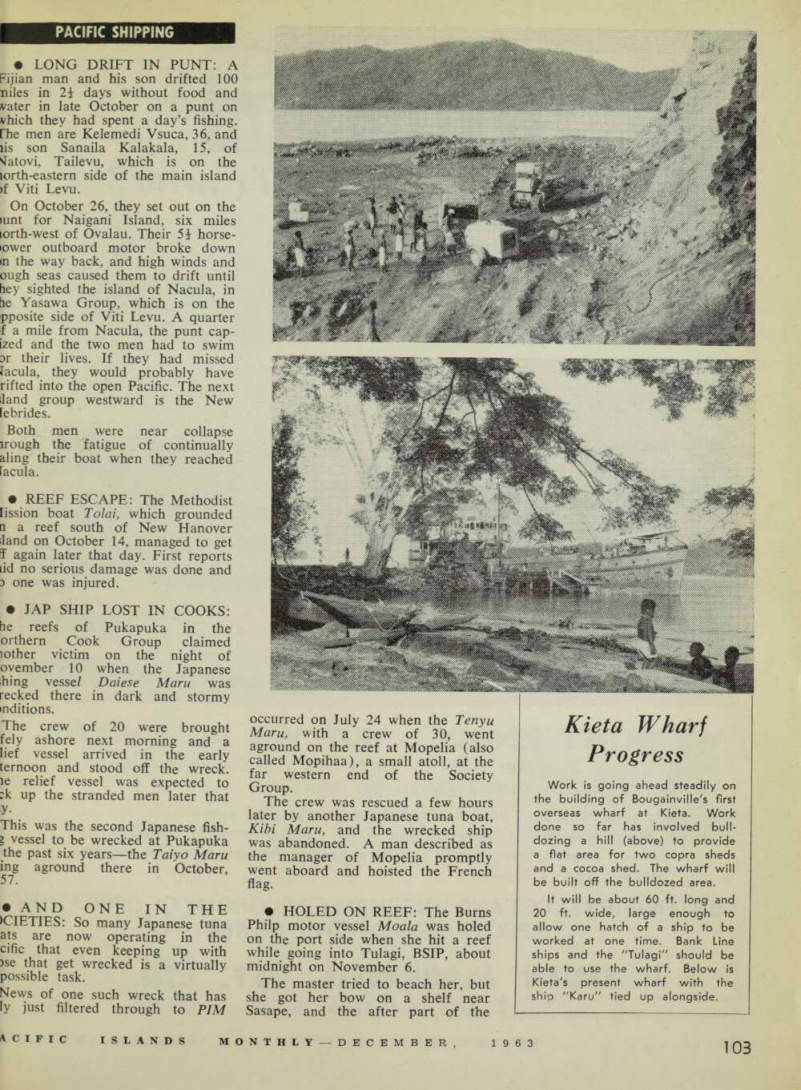 105
105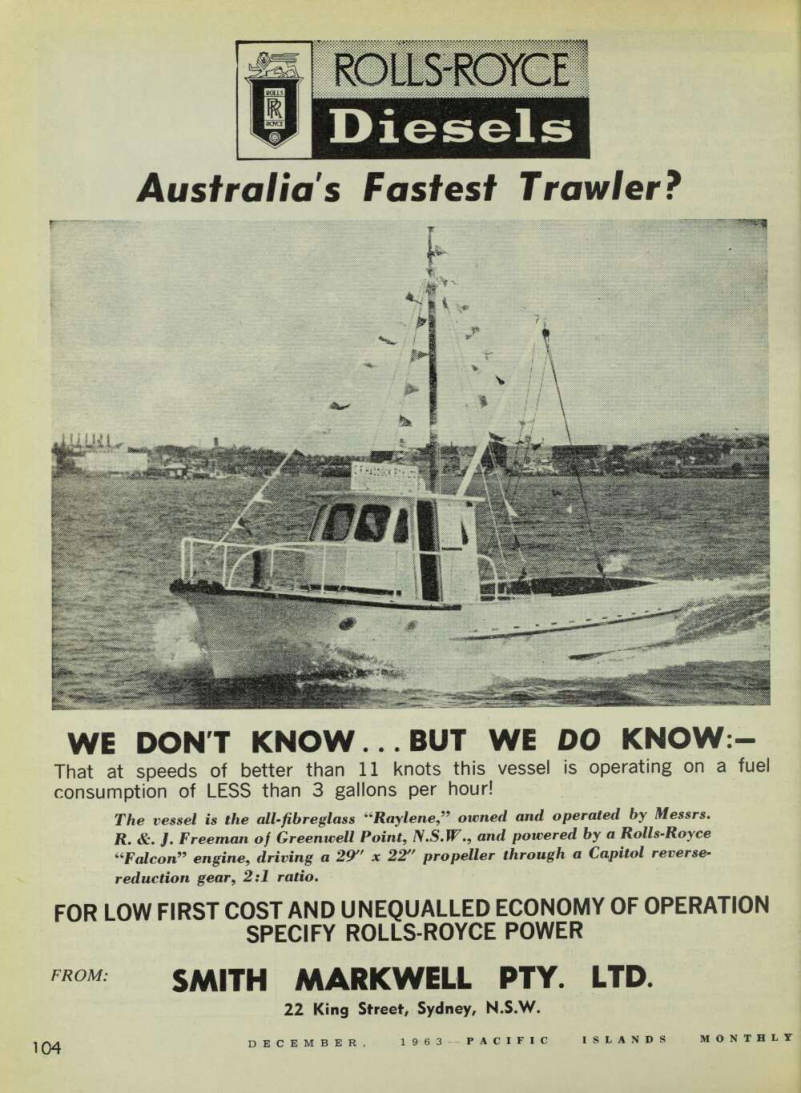 106
106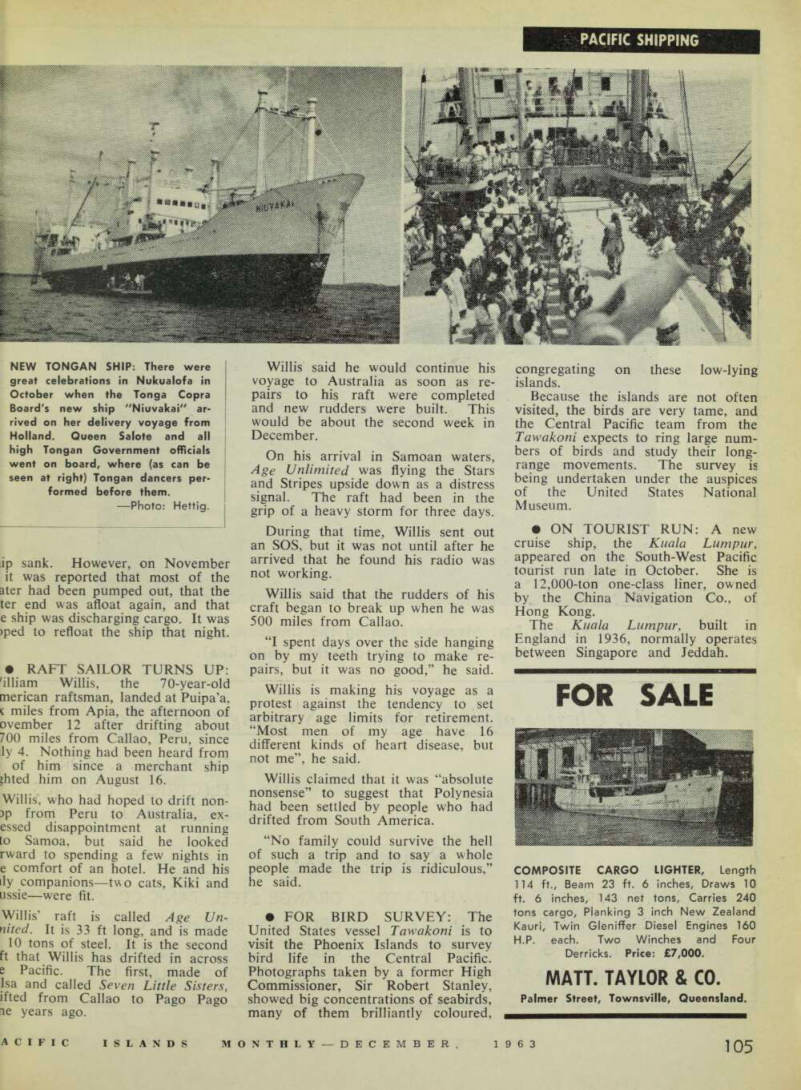 107
107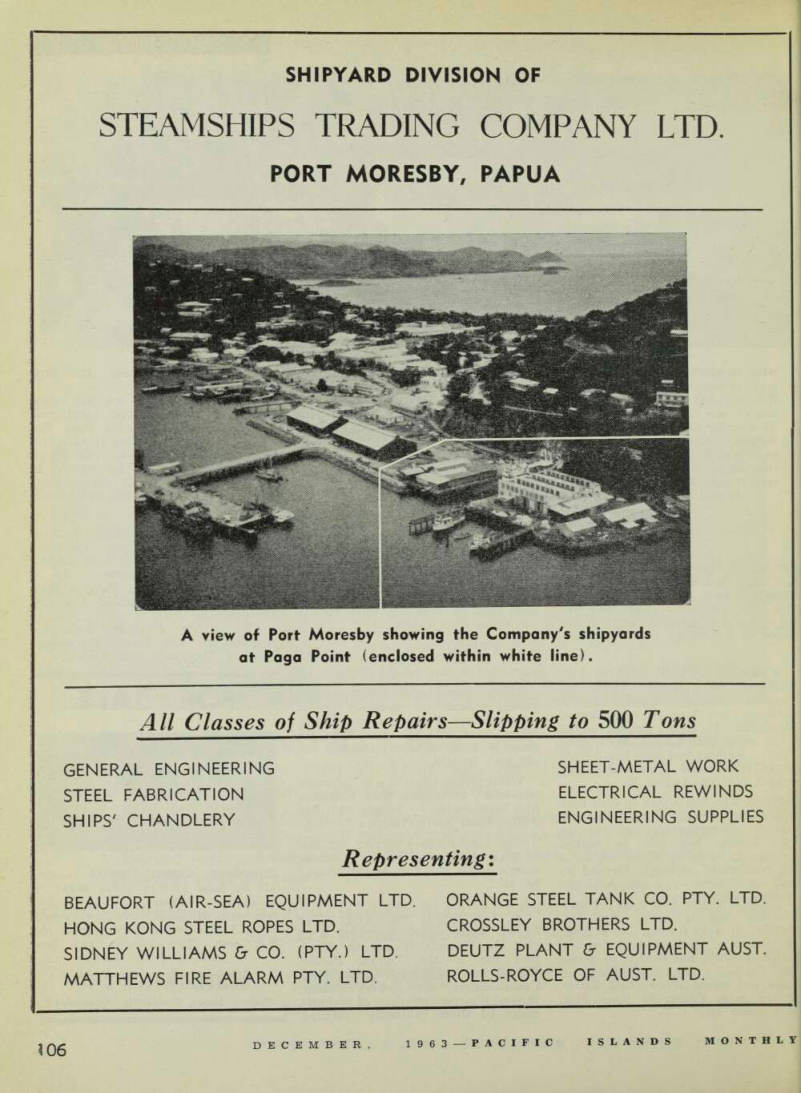 108
108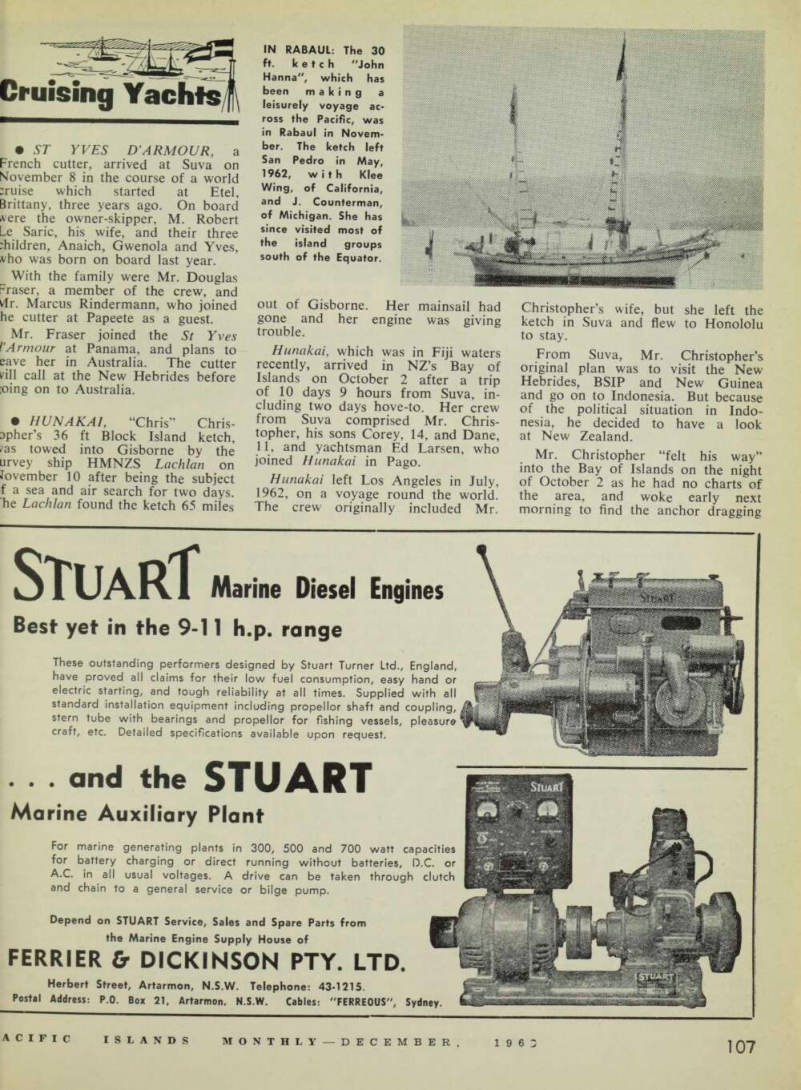 109
109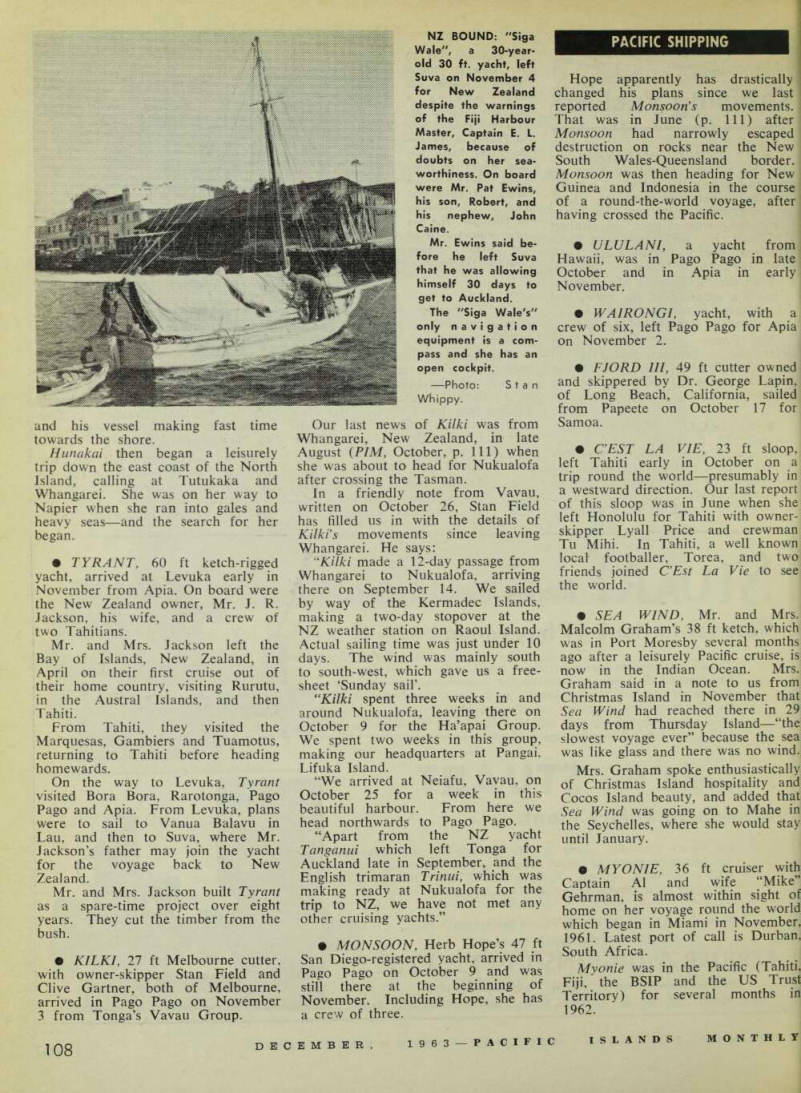 110
110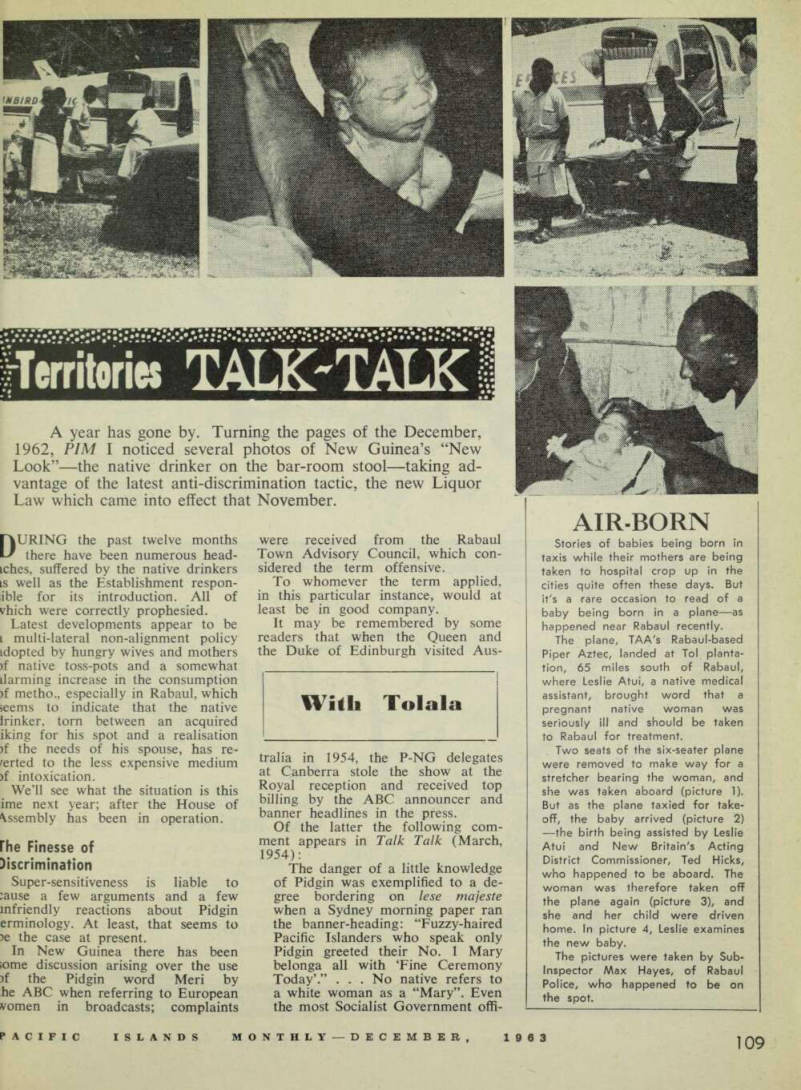 111
111 112
112 113
113 114
114 115
115 116
116 117
117 118
118 119
119 120
120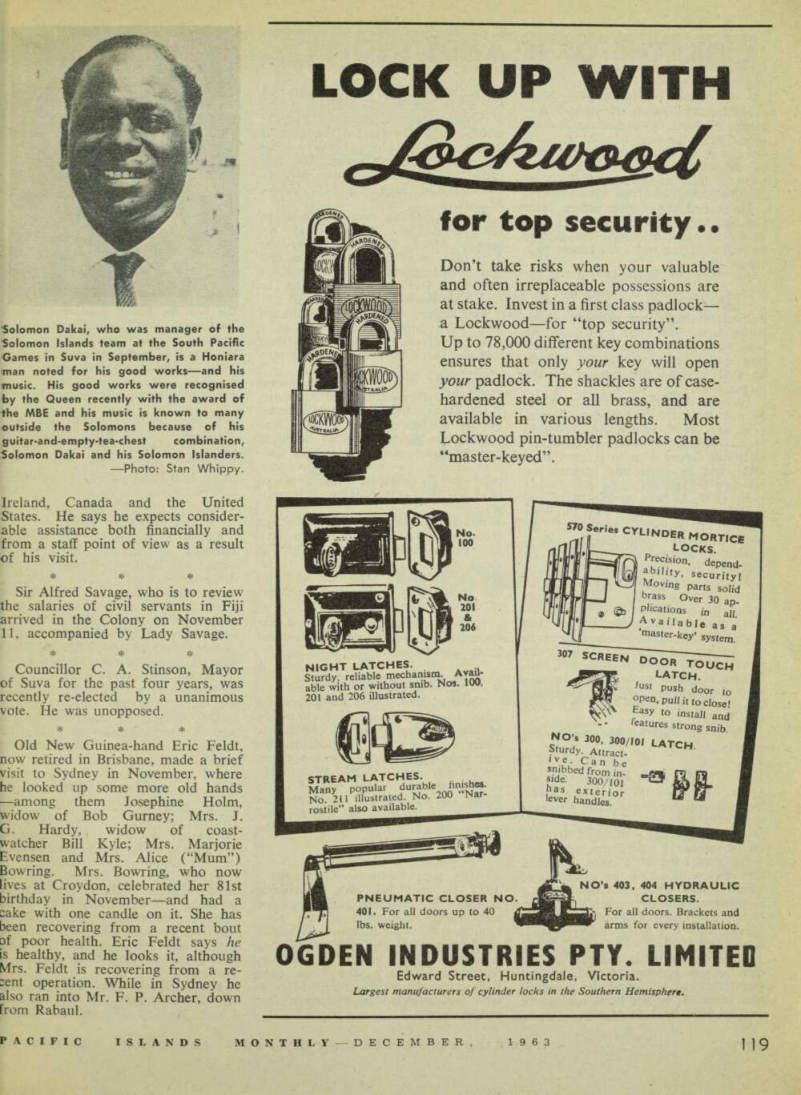 121
121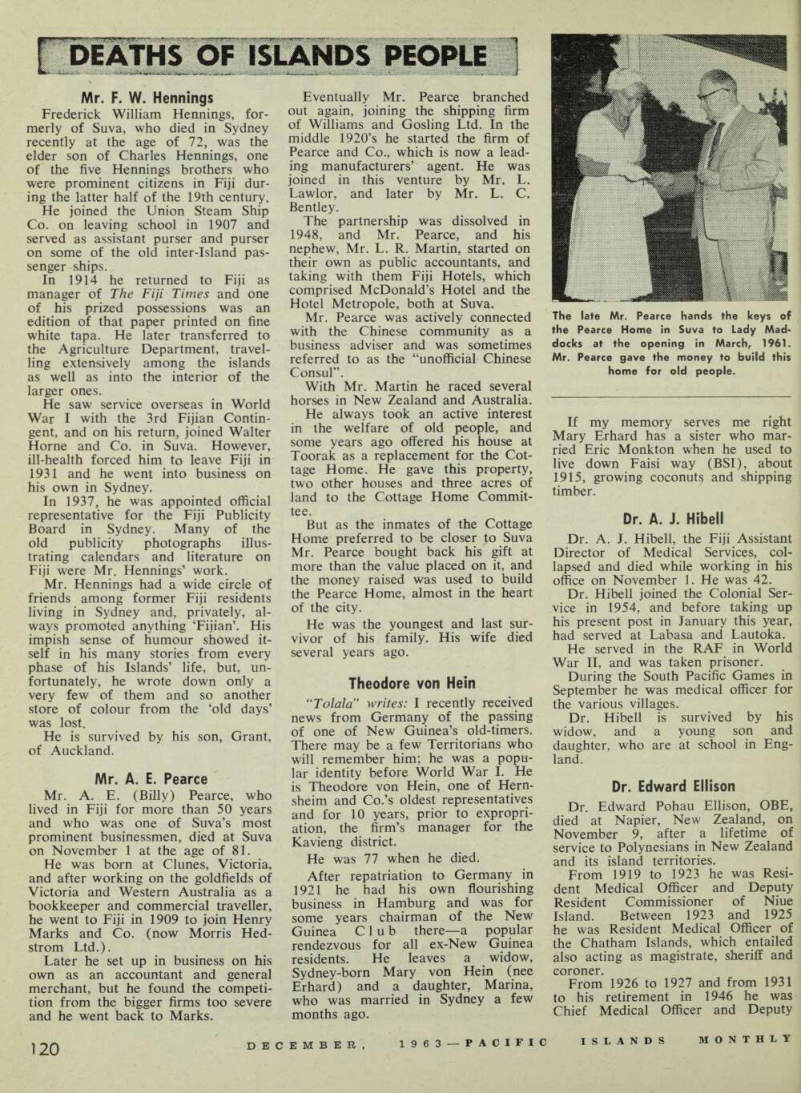 122
122 123
123 124
124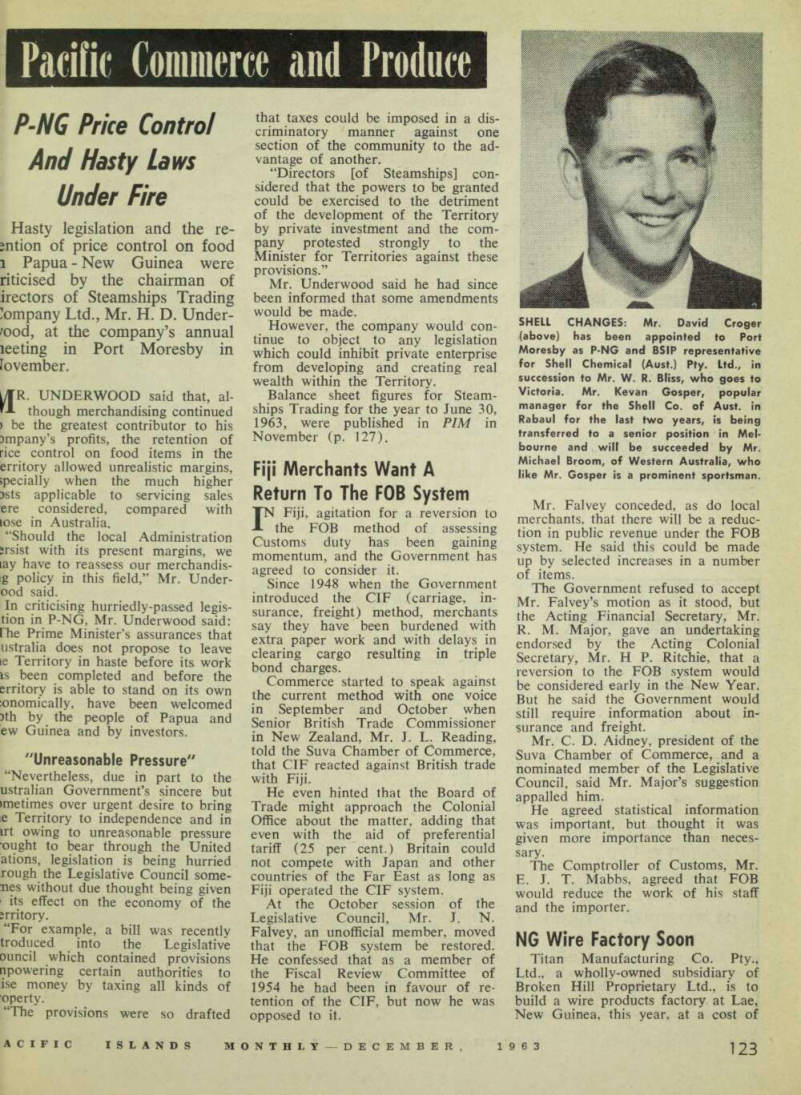 125
125 126
126 127
127 128
128 129
129 130
130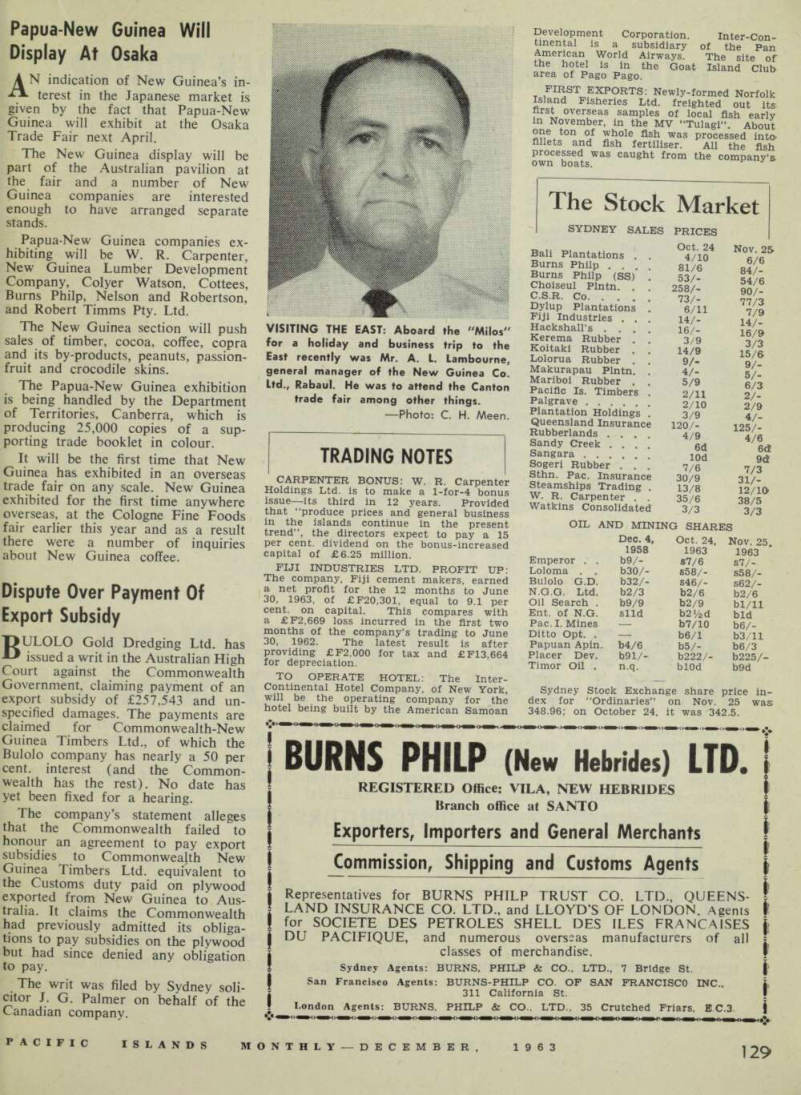 131
131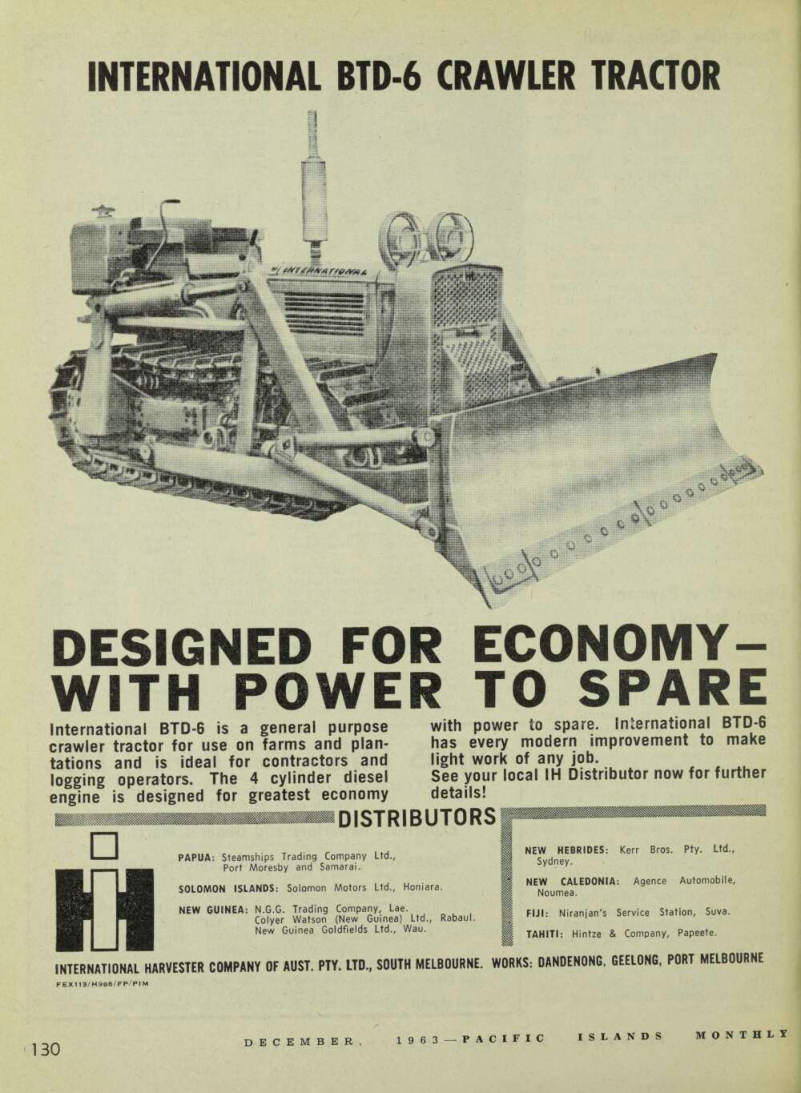 132
132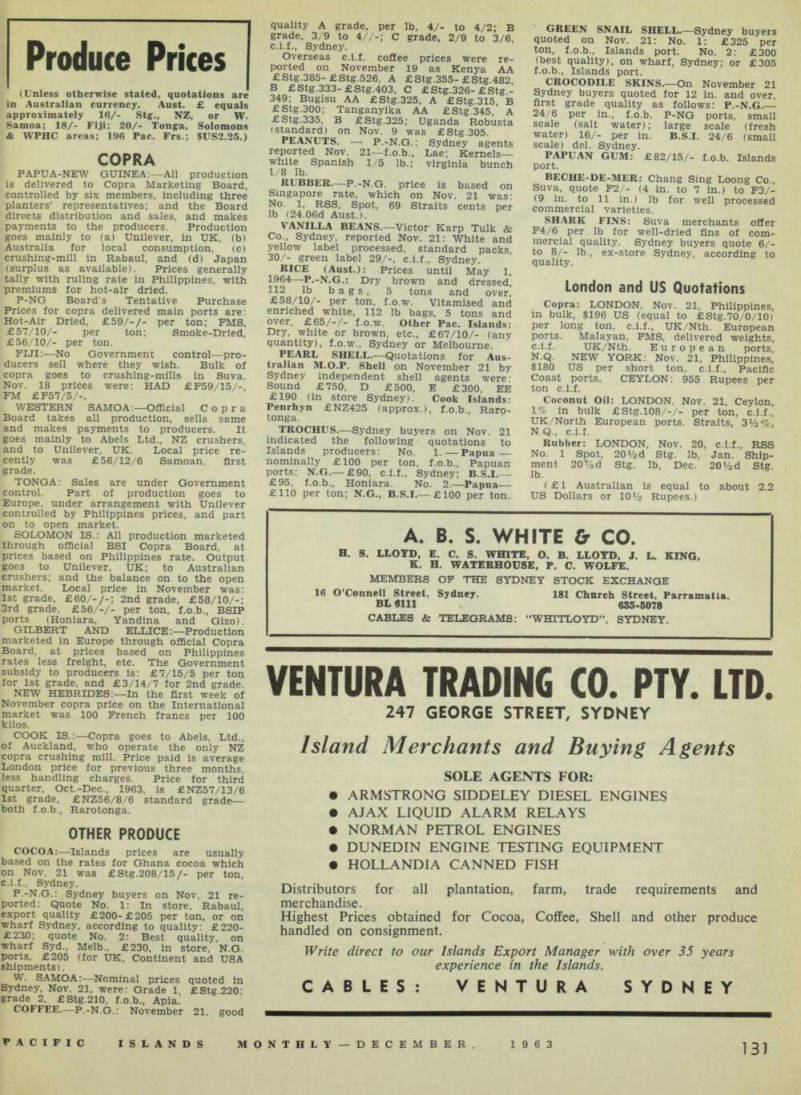 133
133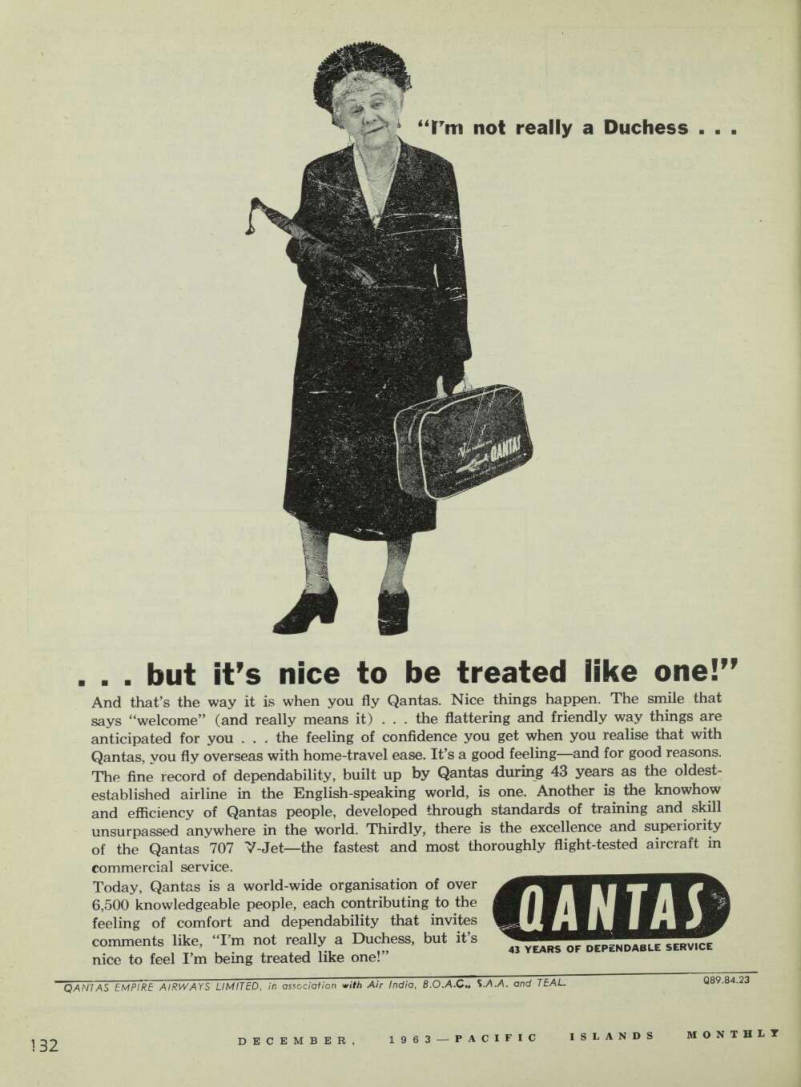 134
134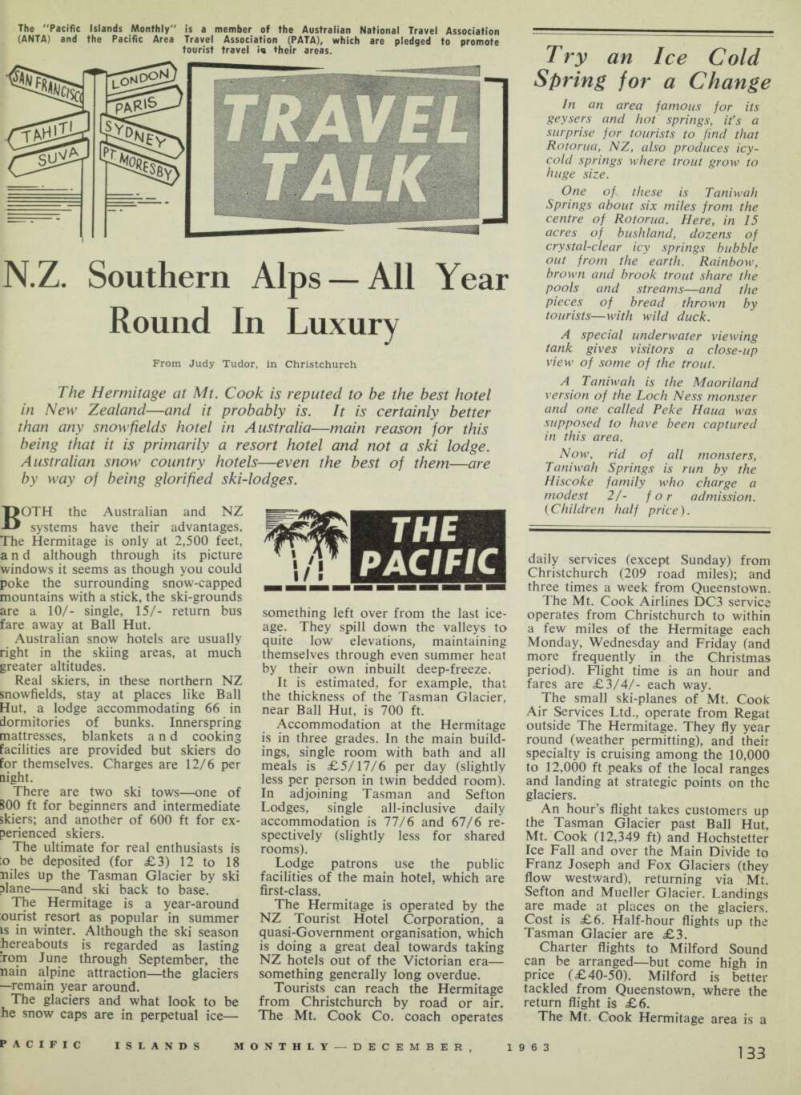 135
135 136
136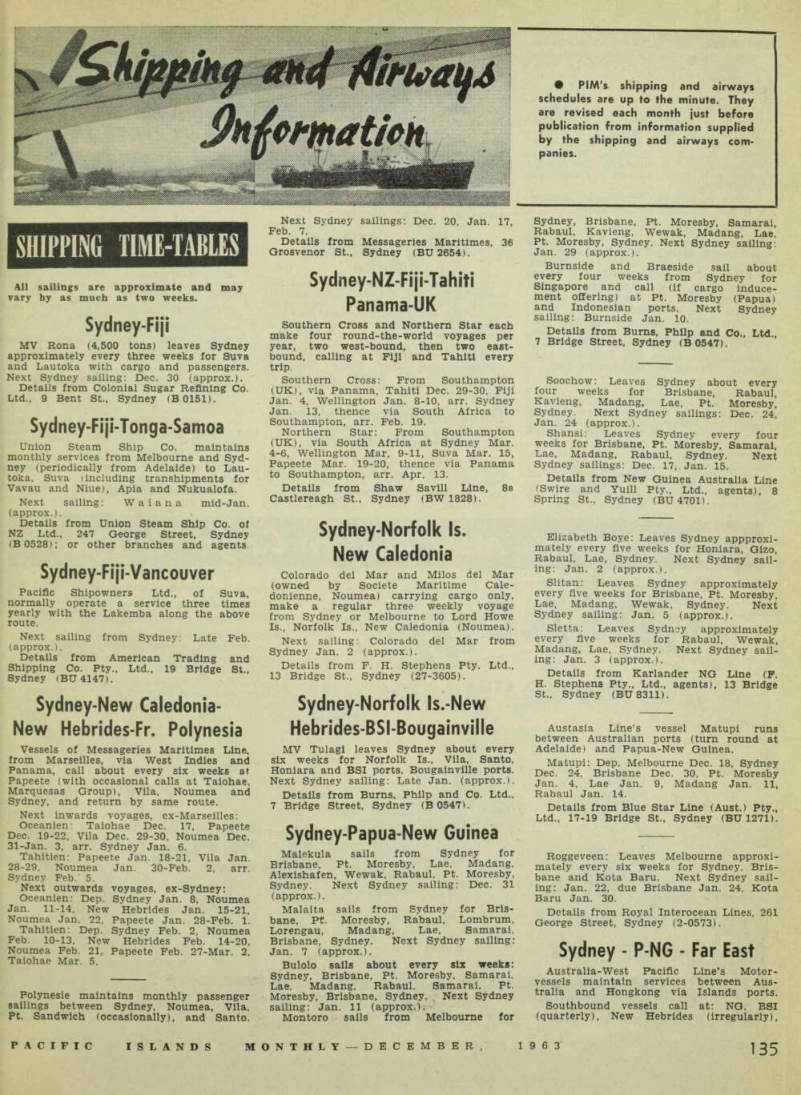 137
137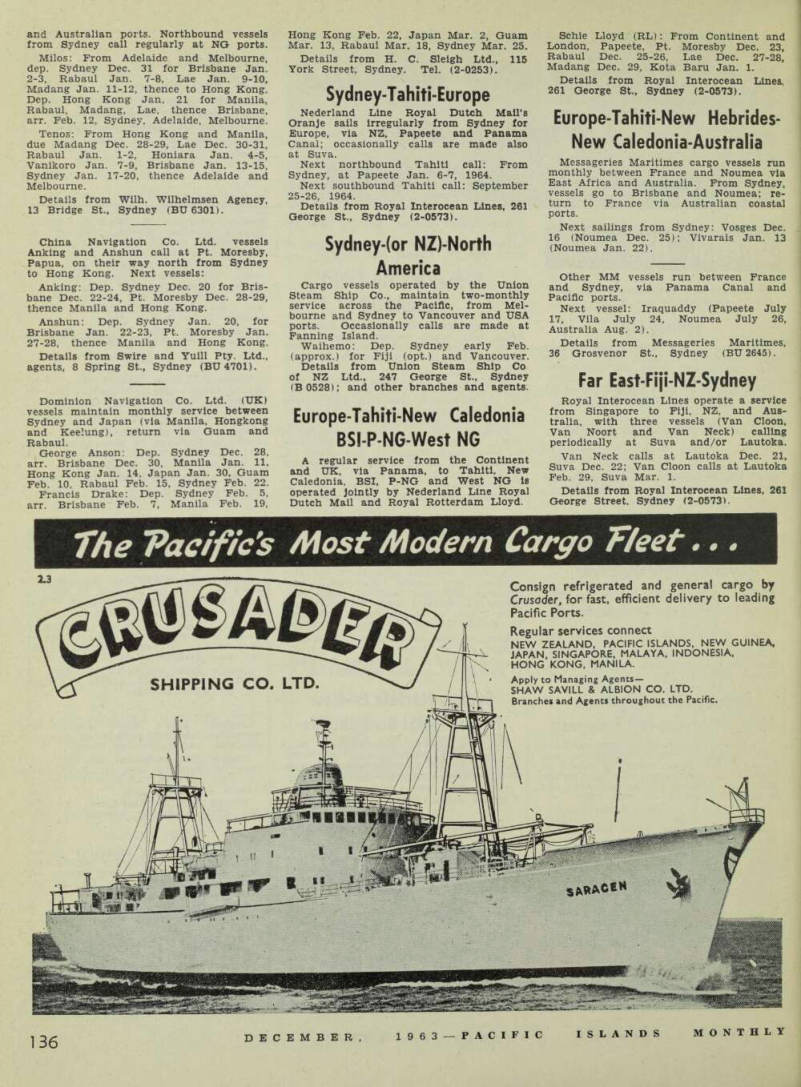 138
138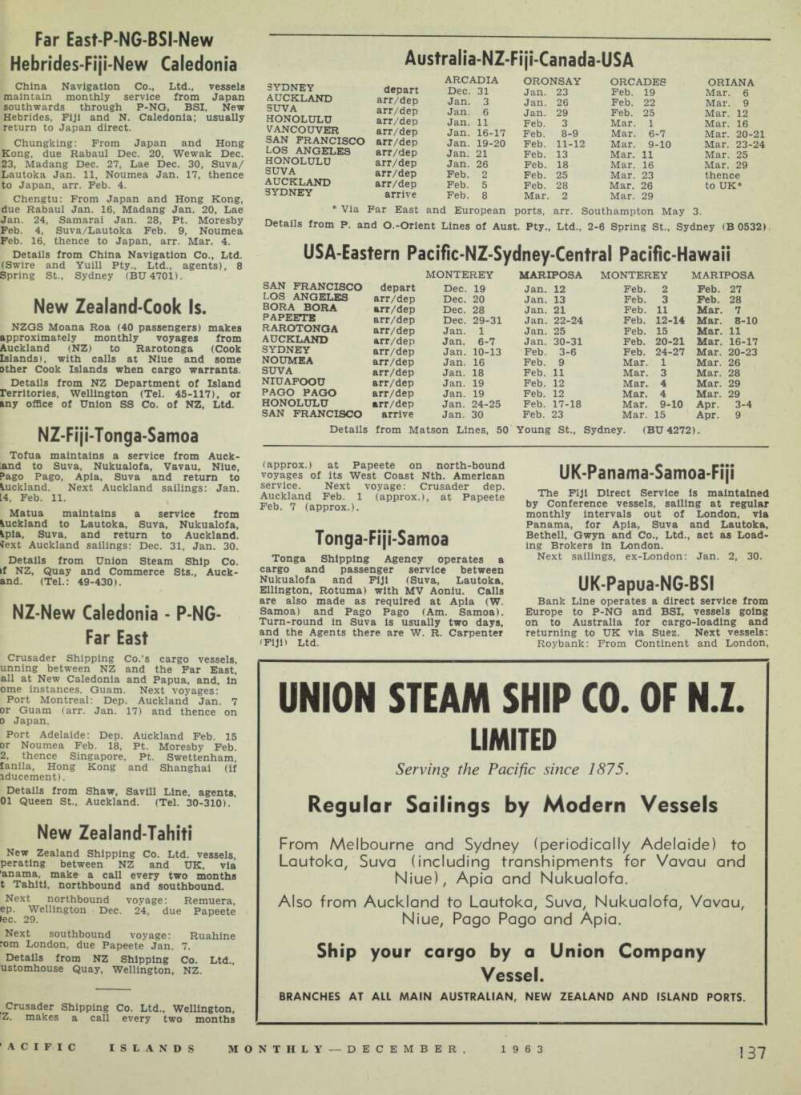 139
139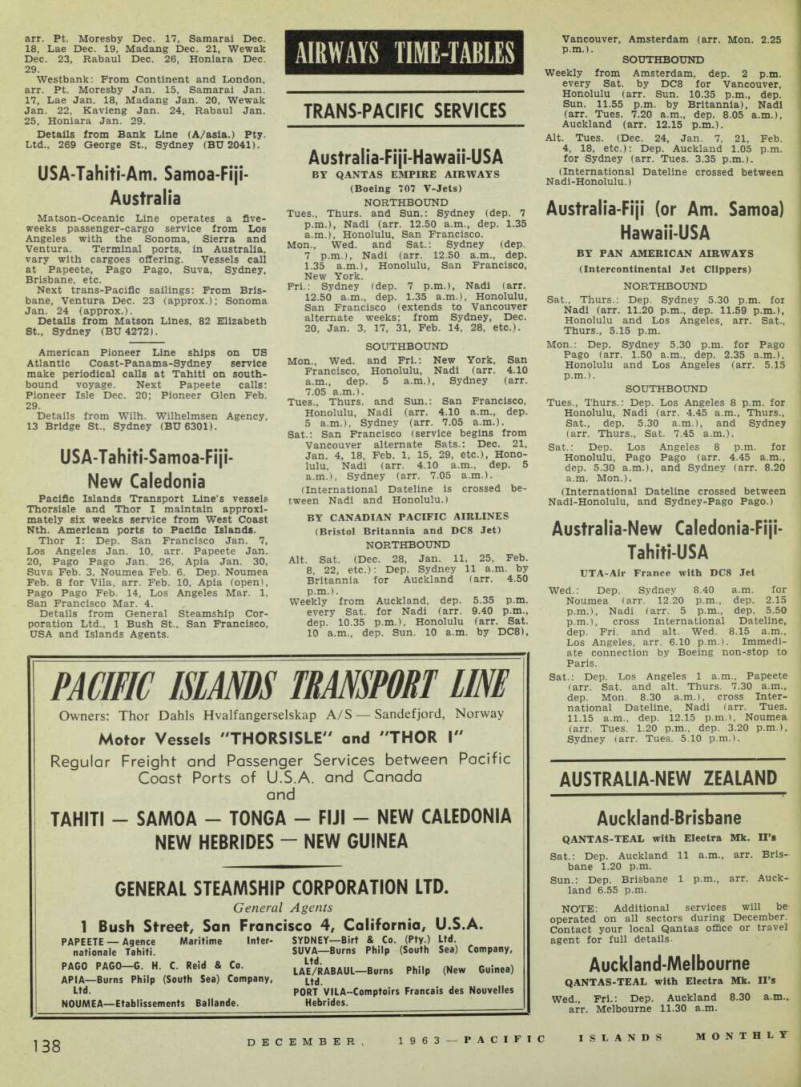 140
140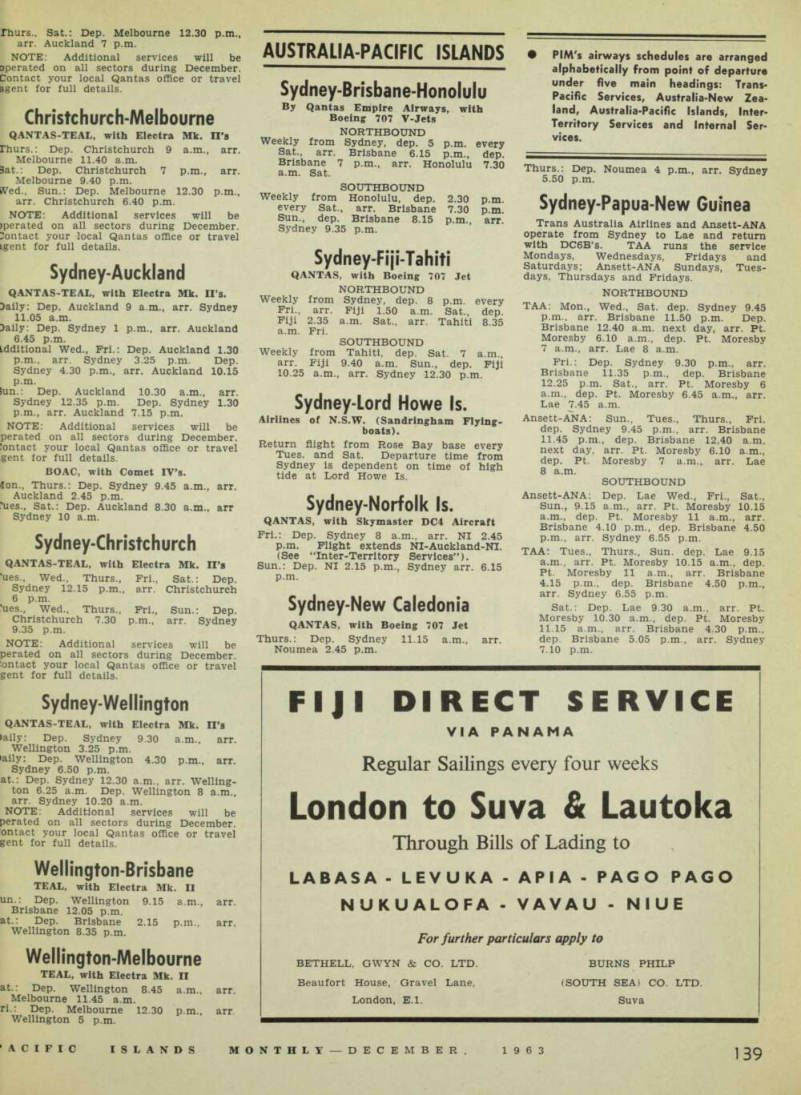 141
141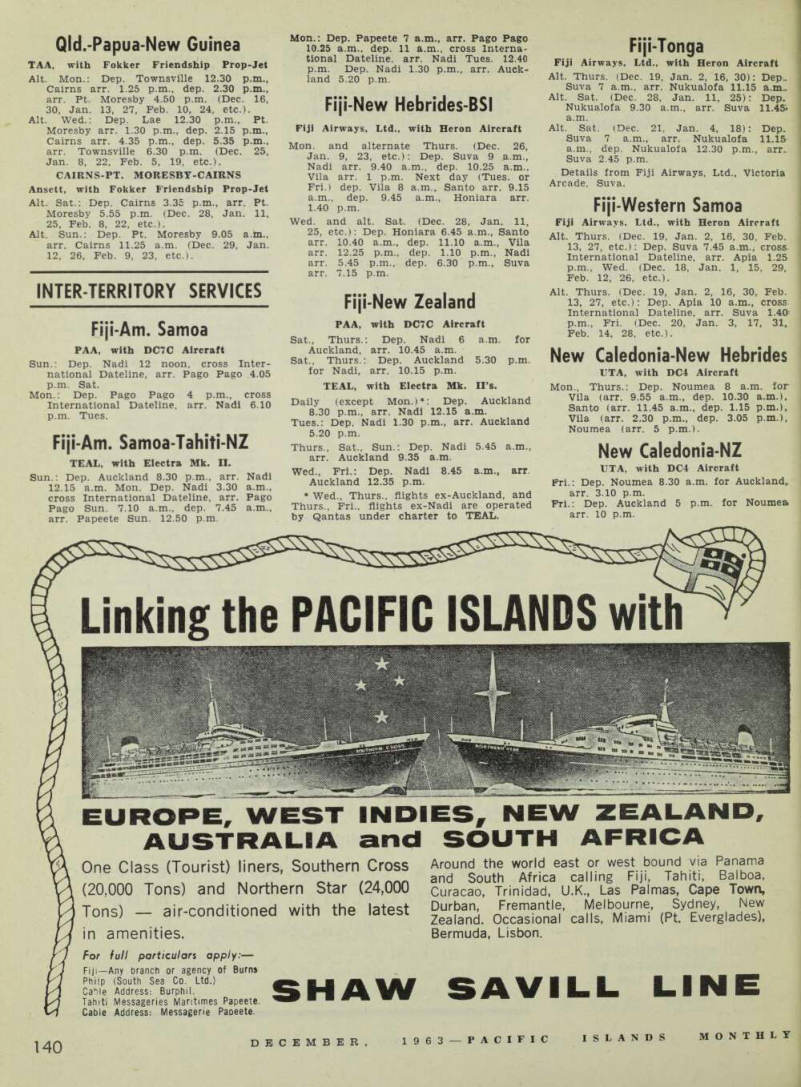 142
142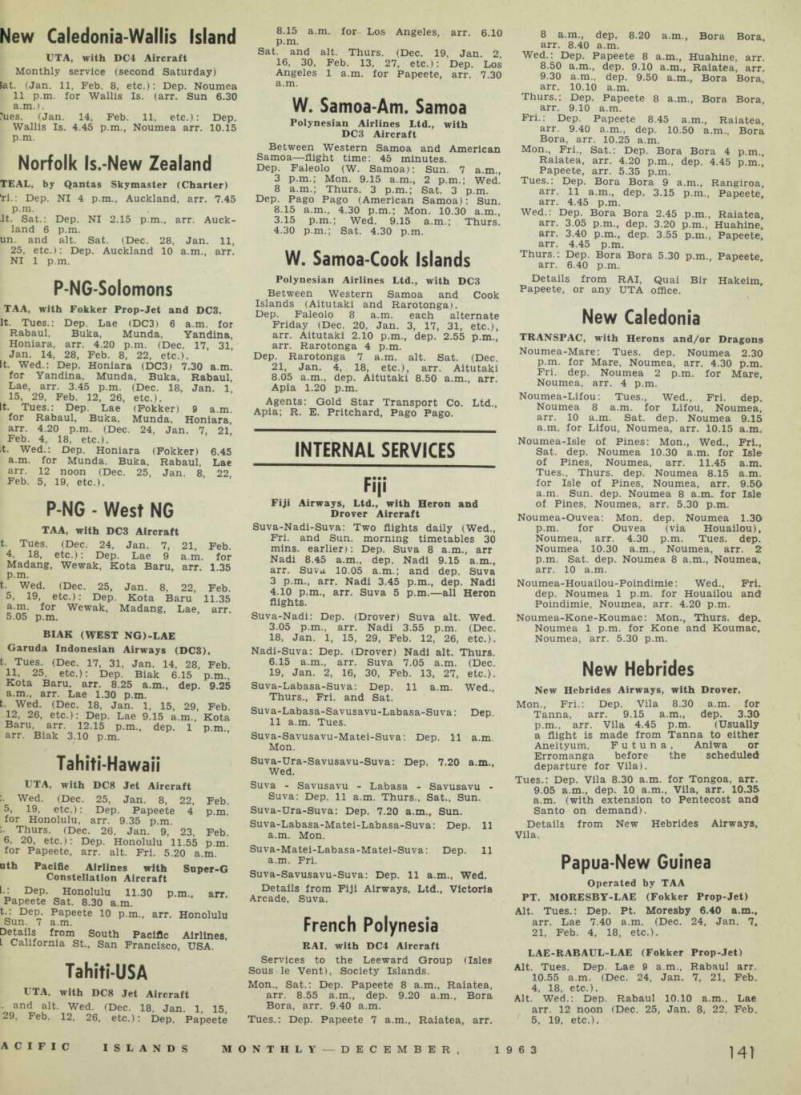 143
143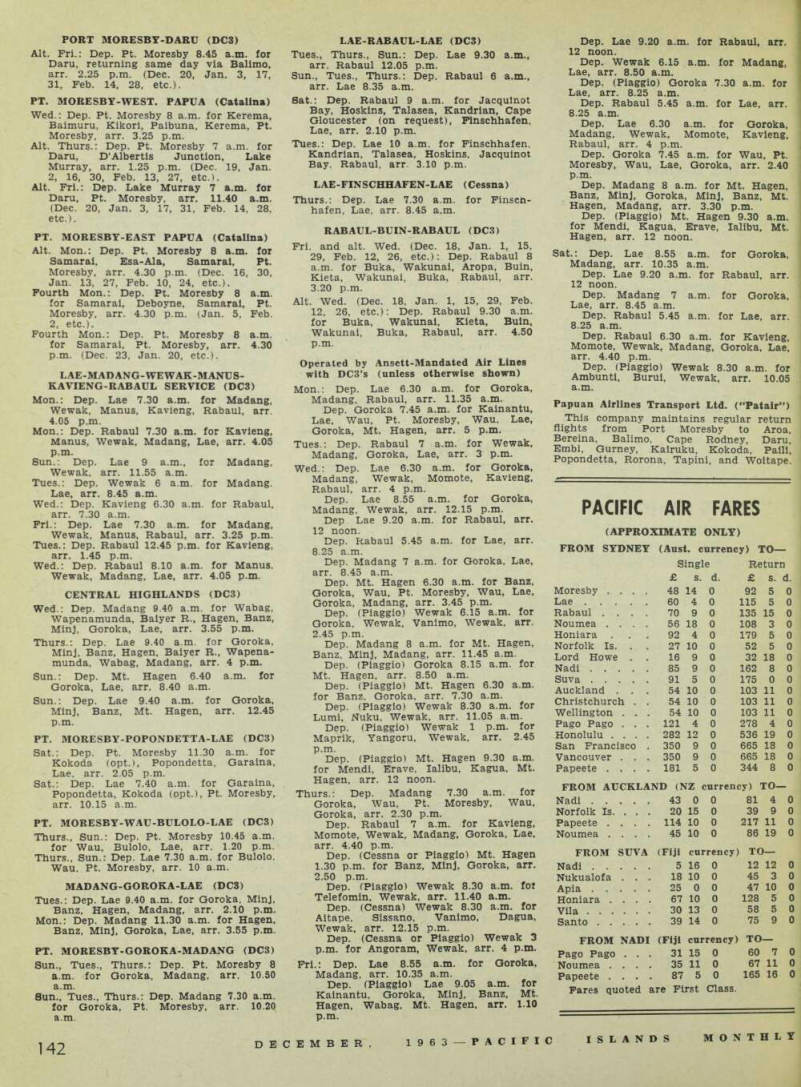 144
144 145
145 146
146 147
147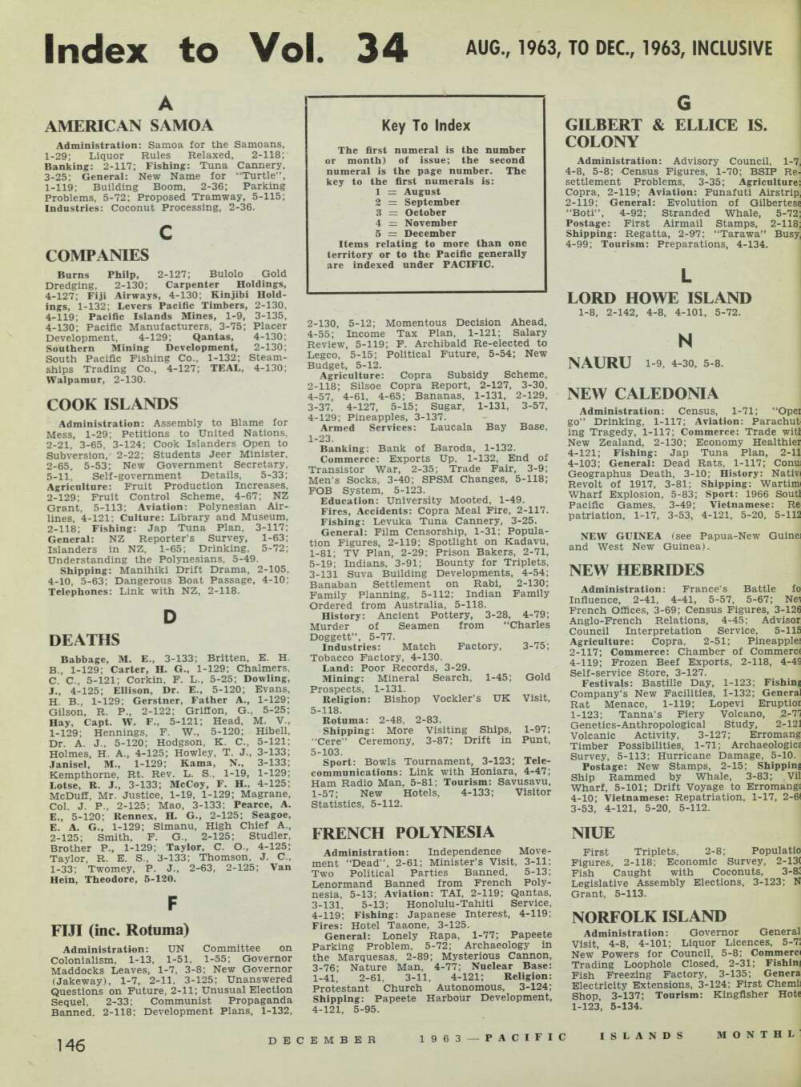 148
148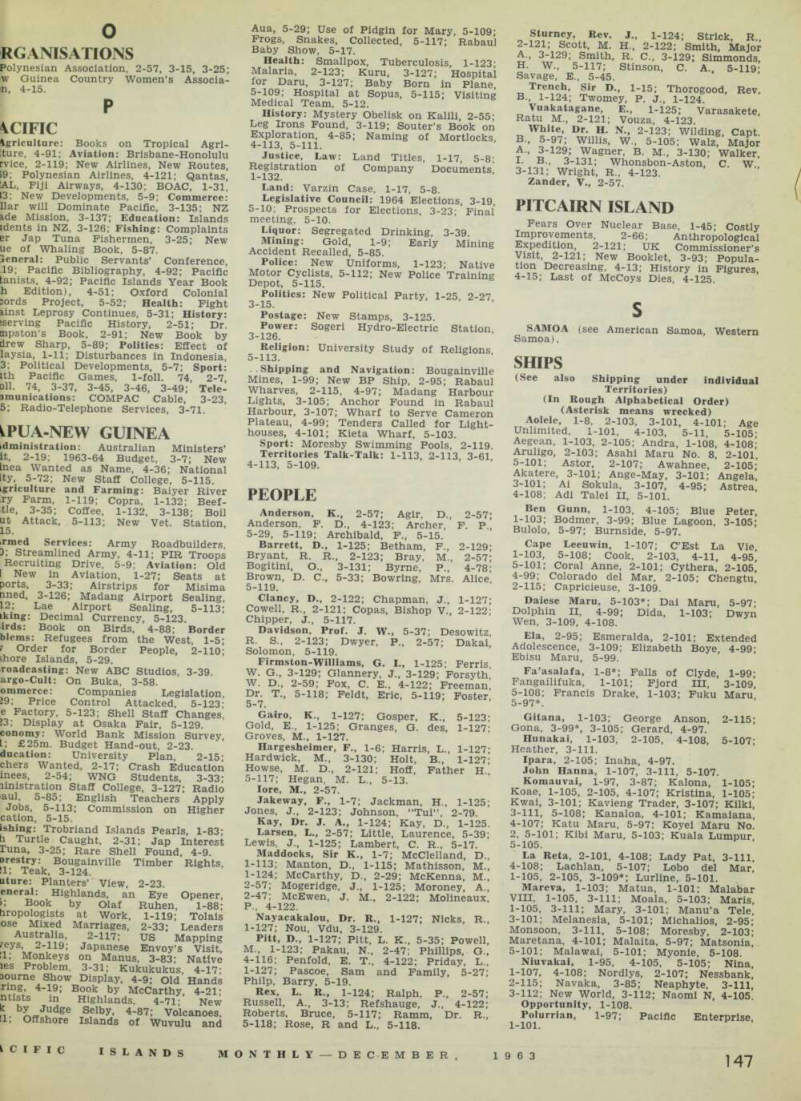 149
149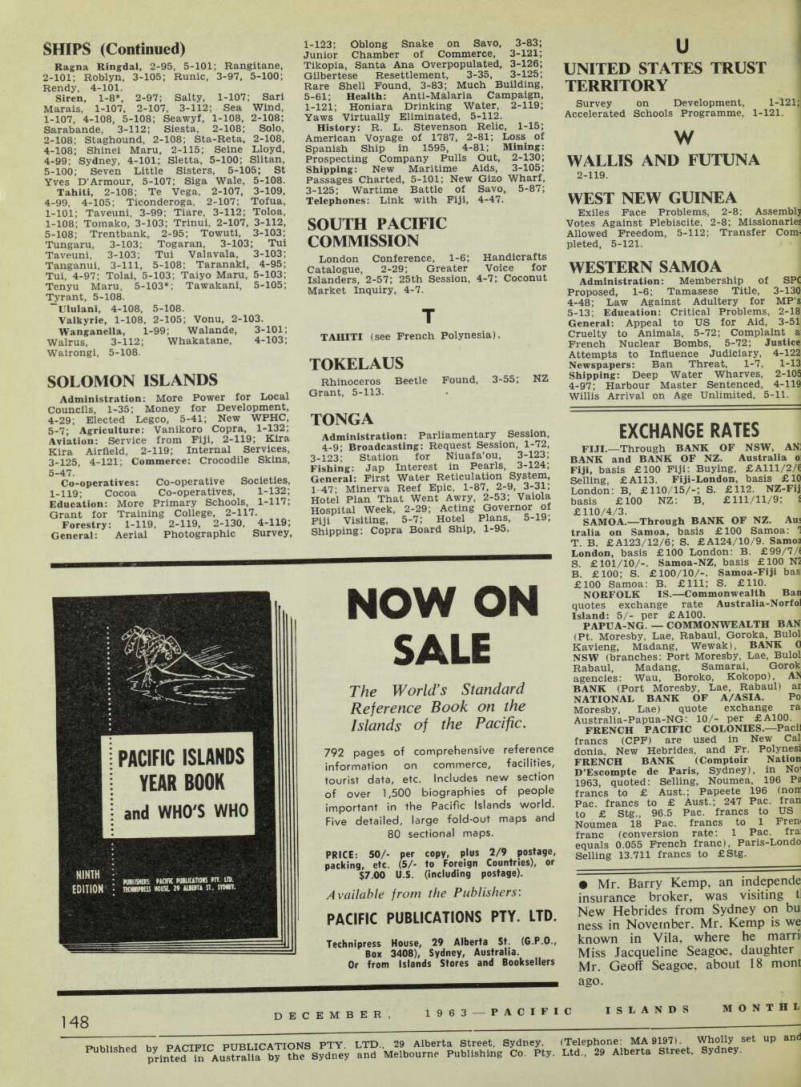 150
150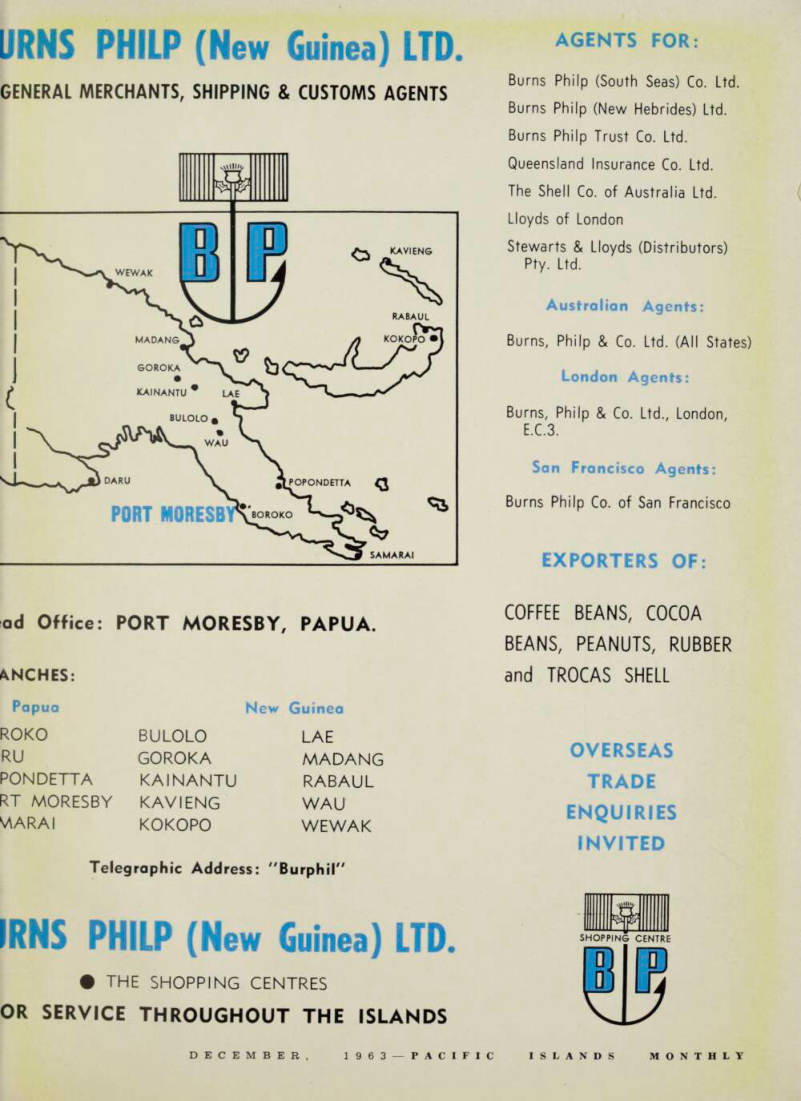 151
151 152
152