Pacific
Islands Monthly
February, 1961
Vol. Xxxi. No. 7.
The News Magazine Of The South Pacific
Established 1930
ired at G.P.0., Sydney, for Permission by post as a newspaper.
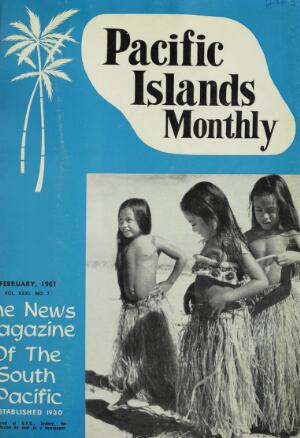
THE COVER: From their earliest years Tahitian youngsters have a lot of fun in joining their elders in traditional hula dancing.
They'll probably find themselves doing more and more of it now that Tahiti is gaining more and more tourists.
Advertisements & other items, pp. 2-4 (2 items)
Pacific Islands Month I, Y February, 1961
TAA operates
Top Australian Airline
THE SUNBIRD SERVICE
to 44 places in Papua, New Guinea and the neighbouring Islands. fly TAA the friendly wa y
PLENTY OF HOT WATER
• • • without waiting
Coleman automatic oil water heaters *
SUPER PERFORMANCE
Modal 163 A-30 gal.
MASTER
Modal 143-20 gal Modal 166-30 gal.
Check these Important
Advantages...
LOW COST
Burns a minimum of fuel for a maximum or efficiency.
LOTS OF HOT WATER
75 gallons of hot water the first hour from a 30-gallon tank.
RAPID RECOVERY
Heats up to 1½ times its size per hour. No other type of conventional water heating equipment can compare in performance.
COMPLETELY AUTOMATIC
Just set the thermostat at the desired temperature. The fuel is then automatically metered into the burner at exactly the right rate to maintain that temperature.
SUPER PERFORMANCE MASTER
Model 163 A—30 gal. Model 165—20 gal.
Model 166—30 gal.
Representatives for the Pacific Islands:
RT GILLESPIE PTY. LTD. ROBERT GILLESPIE (N.G.) LTD. PEARCE & CO. LTD. 22 Young Street, Sydney Lae, Madang, Rabaul, Port Moresby Suva for Fiji Islands
PACIFIC ISLANDS MONTHlY FEBRUARY 1961
G.B.HARIs
special service
at NO EXTRA Charge!
& Your suits or slacks can be tailored within six hours of your placing the order. Your entire satisfaction is guaranteed.
When passing through or visiting Suva and Lautoka, call at G. B. Hari's for your selection from their wide range of materials.
Mail orders promptly attended.
Send for samples and self-measurement charts. ‘•tv £1 O o a
G. B. HARI & COMPANY LTD
G.P.O. Box 170. Renwick Rd., Suva, Fiji Phone: 4039
CABLES: "NIVAS", SUVA
G.P.O. Box 20. Naviti St. (Opp. The Market) Lautoka, Fiji Phone: 666
Pacific Islands Monthly
Publisher;
R. W. Robson.
Editors;
Y Tudor Stuart Inder
Manager:
Selwyn Hughes.
IONES: General Business, Editorial, Advertising, Subscriptions;
9197-8, Ma 7101, Ma 4369.
.P.O. Box 3408, Sydney,
tered Address for Telegrams, ams. Cables: "Pacpub", Sydney.
Nual Subscription Rates;
Judes surface postage except where stated) ;ific Is. —Papua-N.G., Samoa, Norfolk, j, B.S.I., Cook Is., 3, G.&E. Grp., Niue, Hebrides, and other s acific Islands . .. £1 4 0 Pacific Territories (N.
Ionia, Fr. Polynesia); Dutch N.G £1 7 0 ralia and N.Z. . £110 0 ;., British Common 11 h Countries, and gn (40/- Stg.) . .. £2 10 0 .A. and U.S. Pacific ories ($6.00 U.S.) . £2 12 6 Copies (postage extra) 2 6
Branch Office, Papua
New Guinea
Publications (New Guinea) Ltd., Building, Fourth St., LAE, New Guinea. Tel.; Lae 2577. ss Pat Robertson, Manager.
Iranch Office In Fiji:
nes Building, Gordon St., Suva
Tepresentative In N.Z.:
Whitcombe, P.O. Box 5179, Auckland. Tel.: 22.570.
Epresentative In U.K.;
Ashburn, 13 Rood Lane, London, 3. Tel.: Mincing Lane 8633.
JRNE OFFICE: Newspaper House, )llins St., Melbourne, Victoria.
Tel.: 63.7053. : All main trading firms and res in the Pacific Islands
Rimes Agency In Australia
Publications Pty., Ltd., is the an agent for THE FIJI TIMES
Contents
No. 7. Vol. XXXI.
February, 1961
People 5
Fiji's Many Problems 17 What do the Fijians Really Want? 18 Copra Lowest Since 1948 18 New Guinea Election Nominations 19 Two South Pacific Games? 20 P-NG Man Gaoled for Sedition 20 Oil Search Will Carry On 21 Solomon's First Legco 21 W. Samoan Elections 21 Death of Lord Dunrossil 22 Norfolk Wants Her Own Laws 22 The Viets Arrive "Home" 23
Commentary 25
The Editors' Mailbag 26 TERRITORIES' TALK-TALK, with Tolala 29 Indian Gesture Towards Better Race Relations 33 In Search of Pacific Shells 35
Rigo Out of the Back Blocks 37 P-NG Labour Mission's Report 41
Sydneysider At Home Base 45
Mystery of Cross of St. Louis 49 Memorial to Harold Gatty 52 Tonga Advances the Time 53 Report from Tahiti 55 A Scheme for Moresby Motels 61 Tom Neale and his Island 63 P-NG Expro Board: Final Part 65 Battle of P-NG Blankets 71
Magazine Section 75-100
News of Pacific Shipping 101
Pacific Report (Index, P. 17) 117
Obituaries 143
Travel Talk 145
Shipping, Airways Timetables 149 Commerce and Produce 157
Advertisements & other items, pp. 5-6 (3 items)
A Product of Pacific Publications Pty. ltd., 29 Alberta Street, Sydney
4
FEBRUARY, 1961 PACIFIC ISLANDS MONTHLI
Typhoon
NEW ROTARY
MOTOR MOWING
Here is Ransomes Typhoon—the new rotary that takes the hard work out of mowing—the versatile machine that tackles every grasscutting job from the smoother stretches to the rougher, overgrown areas. The Typhoon gives fast, effortless motor mowing at minimum cost. In all ways it is a winner.
Ransomes 18"
Typhoon
LOOK
A 'TYPHOON' OF FEATURES
Choice of 2-stroke or 4-stroke engine.
Shrouded cutters for maximum safety.
Variable height of cut from I" to 2½f".
Inset wheels allow cutting close to trees, walls, etc.
One control for easy handling.
cook!
NEW AIR-FLO CUTTERS
Look at these blades—tip-tilted at each end to cause an up-draught of air to lift grass. This ensures a cleaner, easier cut than any rotary mower yet.
ansomes
Write for illustrated folder of this outstanding new machine and for particulars of other Ransomes Mowers —the largest range in the World.
RANSOMES SIMS & JEFFERIES LTD., IPSWICH, ENGLAND.
4 FEBRUARY. 1961—PACIFIC ISLANDS MONTHLY
People
i Brisbane in late January en :e from the BSIP, from where he just retired as Western Pacific h Commissioner, Sir John Gutch the Press that he would like to the BSIP remain a protectorate another 15 or 20 years. However, added, the cry for self-govern it would probably occur before i. Sir John and Lady Gutch were ;heir way back to England. Later t called in at Sydney, where they dayed, without publicity, at lon Beach, with Mr. and Mrs.
I. A. Eden, and later went to the 3 Mountains.
ew Guinea’s best known priest, tier James Dwyer, has been isfered from the Catholic Mission Rabaul to Australia’s Northern ritory. He has been a vocal, id, member of the P-NG Legis ve Council since its inauguration .951, and has had interests in a e field of community work, mg those who paid a tribute to outstanding work of popular her Dwyer when the unexpected s of his transfer was announced January, was the Administrator, ?adier D. M. Cleland, who said t all sections of the Territory 'etted Father Dwyer’s departure.
[?] the Matson liner "Mariposa", made [?] er call at Rarotonga in January, Captain [?] Russell welcomed aboard "Miss Raro tonga" (June Taringer).
P-NG’s first university student John Nautera, 20, who last year be came the first P-NG native t matriculate. He has now bee awarded a four-year scholarship fc agriculture at Sydney Universit He is the son of a native store keeper on Yule Island.
Tonga’s world-ranked light-heavj weight, Jolhnny Halafihi (he’s ranke number seven) told his fans i January that he may bring h: English wife and their daughter \ settle permanently in New Zealan He arrived in Auckland from Lon don in late January for a series i NZ fights.
A Labour member of Australia] Federal Parliament. Mr. C. K. Jones who last year toured P-NG witli
Recently returned to NZ after relinquishin command of RNZAF station at Laucala Bay- Group Captain A. A. N. Breckon. He is show here with his wife and two sons aboard to "Orcades".
Photo: C. L. Cher
The South Pacific's only active astronomer Mr. Frank Bateson, has moved out of Raro tonga—lock, stock and telescopes—to settle in New Zealand. Mr. Bateson's observatory at Avatiu, Rarotonga, sponsored by overseas observatories, has been one of the sights of Rarotonga for a good many post-war years His "after-hours" work in the study of variable stars has brought him recognition on an international level in the astronomical world.
tarty of Labour politicians to v up party policy towards the ■itory for Australia’s forthcom general election, had something ay about New Guinea industry luncheon in Newcastle in early •uary. He said all Commonwealth ernments had been reluctant to ir the growth of New Guinea stries that might compete with ralian industries. Governments not want to encourage peanuts assionfruit, and didn’t want to urage moves to grow sugar on a large scale in the Terri ie NZ Minister of Island Terri s has written a letter of com iation to Mrs. G. W. A. Parks, of the former Resident Agent auke Island, Cooks, for her out iing work as the island’s dis nurse during her stay on the d. Her work in the field of c health was the subject of a al letter by the people to the ster.
k in Noumea from the 1961 c Area Travel Association rence in Honolulu in January, l’s official representative in Caledonia, M. Jean Brock, said onference was a big success, here had been some surprise e attitude of Tahitian repre iives who said they would not ahiti’s dues for PATA publicity The trouble, it appears, t Tahiti ppinion is divided on desirability of encouraging fcs there. Some think tourism ;ached the maximum and that »lands have “had” the high re tourist business. Others things may settle down when s film unit leaves, and the ny gets back to normal. * * * ion zoology student Michael 24, in January retired to an h village to write a book about cent adventures in Australia ew Guinea. Part of it will con - report of his search for a frog 18 in. long”, sometimes it the headwaters of Jimmi He didn’t find a specimen on
[?] the recent passengers leaving Fiji [?] the "Orcades" for NZ were Mr. and [?] enis Oldham. Mr. Oldham, an architect, recently completed his contract with Larsen and Associates, Suva.
Photo: C. L. Cheng
his recent trip, but he intends to g back next year and “tear the plat apart, rock by rock” until he finds i * * * The Netherlands Ministry of Hon Affairs announced at The Hague i January that the NNG Attorne; General, Mr. G. W. van Meyenfelc had resigned. It gave no reason f the resignation, but it followed £ investigation by Mr. van Meyenfel on reports that a Dutch official hs committed “cruelties” against nativ in the Baliem Valley. The Hoe Affairs Office said Mr. van Meyei feldt had recommended that i legal action need be taken again the official, “provided certain a ministrative measures were taken
The Cook Islands’ Chief Medii Officer, Dr. E. Simpson, in Janua described the condition of housi on Rarotonga as “extremely alan ing”. He had made a survey of but two of the villages on Rarotor in December and found 35 in ev( 100 were sub-standard, and ma were unfit to be used as homes all. One village possessed no 1 than 74 per cent, of unsatisfach homes. One householder had e mitted that 30 people slept in ! place each night. * * ♦ The Rev. Father Ernest Sabat of the Sacred Heart Order, who 1 compiled a Gilbertese-Frer dictionary during his 48 years si vice in the Gilbert and Ellice Islan and has also written a history the Catholic Mission in that Colo: was recently presented with the j signia of Honorary Member of \ Order of the British Empire the Resident Commissioner, I Bernacchi. * * * The Australian newspapers January 14 carried a report fn USA that famous American wri|
Papuan Forestry field assistant James Merava 19, left Port Moresby in January for a [?] months course at the Fiji Forestry Train [?] School. He Is the first P-NG native to st [?] forestry overseas. Here, shortly before [?] departure, he studies a survey map, with [?] assistance of Regional Forest Officer in Pap [?] Mr. E. C. G. Gray.
P-NG Official Ph [?]
jst Hemingway was undergoing tment in the Mayo Clinic, in lester, Minnesota. That day received a letter dated Janu -11, written from the Mayo ic, Rochester, Minn., by Father ; Bodnar, who was a popular ionary in the Highlands area of Guinea for many years Father 5 reported that the Mayo ex > were patching him up success tor a new parish in Texas; and he added: “Ernest Hemingway his wife are here, only a few is from me. He seems to be a kind gentleman. Since he is feeling too good, I do not talk im very often.”
and Mrs. Lloyd Hurrell, of New Guinea, have just spent i months caravanning holiday istern Australian States with five children, two of whom re down here at school. They re i to the Territory on February day after nominations closed le forthcoming P-NG Legis- Council elections, leaving Mr. 11 unopposed in the NG al electorate. made his debut as a MLC at >ctober, 1960, session of the ative Council. As he said him it the time, he was charged presenting the views of the ' who had elected him—so he ited them, in a maiden speech shook the new Council ber’s foundations. His future should be interesting.
Papuan James Merava was leaving Port [?] in January to study in Fiji (see opposite) a Fijian Visitors Bureau [?] officer, Manu Tupou, was leaving Fiji [?] ly at the University of Hawaii. He [?] o other applicants from Fiji were [?] a scholarship by the university. One others was young union secretary James [?], who was a key figure in the Suva riots of 1959.
Photo: Stinsons
s. Tom Manning, Associate’s ipion of the Honiara Golf Club, ; golfing news when she became irst person to hole-in-one on hniara Golf Course. She accom -5d the feat over the fourth hole 7 yards. Mrs. Manning is the of the BSIP Comptroller of and Telecommunications, and lad something of a spectacular ig career. She has been Asso champion for the past two
Commission of Inquiry into ji sugar industry, which will vital bearing on the Colony’s money earner, was arousing interest in Fiji in February, nan of the Commission, Sir m Trustram Eve, was due to in mid-February and the hearings to begin in early • His two assistants, Mr.
I. Bennett, a London chartered tant, and Mr. Ivison S. ley, of the Colonial Office, iomg preliminary interviews urs in early February. Sugar > are also being brought from and Australia to appear at luiry, and Mr. B. D. Laksh
[?] Year was heralded at the stroke of [?] at the Korolevu Beach Hotel, Fiji, [?] big function there in January, by [?] phanie Clark, who made this pretty picture.
Photo: Stinsons
an Indian member of the lative Council has been attend n Australian sugar industry in to gather background. ale aie American Samoa’s Governor Coleman was visiting Wash n in early February, back home were asking, Who will be Gov ? Because of the recent US cal changes the position of rnor of American Samoa re -3 confirmation, and two names >eing hawked around as pos opponents—that of David K. :, a member of the Hawaii ative and Major Eric Scanlan, s US Air Force. Major Scanlan part-Samoan, who is retiring military service after a bright r, and who has shown some ;st in Samoan politics.
ing a visit to the islands of iviti in February, the Governor i, Sir Kenneth Maddocks, and Maddocks, saw the famous calling ceremony at Naikasi. the top of a towering cliff watched as a ceremonially •d member of the Manukuira chanted at the empty surface i sea. One after the other the s rose to the surface and in autes ten turtles had appeared, was described officially “as a kable response to the calling”. ♦ * ♦ tier Marion Ganey’s famous union movement in Fiji was ised recently through an can film unit which completed days of shooting a colour ibout the movement. The film ed its initial screening in Fiji auary.
[?] ouisa Hosking, daughter of Mr. W. [?] , of the Rarotonga Agriculture Depart ment with her bridesmaids just prior to her [?] in Auckland in January to Mr. George [?] Mr. Cowan will shortly become the [?] ok Islander to complete the professional [?] tion in land surveying. Also in the [?] are Miss Alice Hosking (left), Miss [?] erendsen and Barbara Pemberton, the [?] irl. Photo: D. C. Berry
Advertisements & other items, pp. 7-18 (11 items)
5
CIFIC ISLANDS MONTHLY FEBRUARY, 1961
tarnation
v\aXq^
ud Yn'iik ,
Ao .wr i *6 Here’s the easiest way to give your family lots of pure, fresh milk every day. Stock up with Carnation!
Carnation is pure, fresh cow’s milk reduced to extra creaminess. It needs only li times its own volume of water to bring it back to normal-strength, high-grade milk.
Carnation Milk is canned just as it comes from the cow. Nothing is added only some of the water is removed.
For your protection Carnation is pasteurised and sterilised after the cans have been sealed.
Unopened, it keeps indefinitely.
In handy 6 oz. or economy Hi oz. cans, 48 to the carton.
(arnation Milk
from contented cows .
J K * M
!ilk IN ITS MOST CONVENIENT FORM
W'flr. ■Jt
PARKE-DAVIS
(AMOQUIN —.
Effective Single Dose Treatment for
MALARIA
SPECIALLY FLAVOURED TABLETS AVAILABLE FOR
CHILDREN
Adult Dose —2 Tablets to be taken on the same day of every week.
CHILDREN:
Infants and Toddlers—Up to 2 years of age—y 2 tablet (50 mgm) of INFANT FORMULA CAMOQUIN, as a single weekly dose. -From 3 to 4 years—l tablet (100 mgm) of INFANT FORMULA CAMOQUIN, as a single weekly dose.
Older Children —7 to 10 years—l ADULT FORMULA Tablet as a single weekly dose. —ll to 16 years—lV2 ADULT FORMULA Tablets as a single weekly dose. —Over 16 years—2 ADULT FORMULA Tablets as a single weekly dose.
IMPORTANT;— CAMOQUIN should be taken immediately after or during a full meal.
Obtainable from all chemists and suppliers of
PARKE-DAVIS products
PARKE, DAVIS & CO., SYDNEY
5
% ji| f
LINOLEUM
fe'^Sail.'Sat m **o m II •?
VINYL TILES
nvrr ns£
f * -’if. L 4v !^^v^'
wo V •k
let Peerless
* SOLVE ALL
YOUR FLOOR CARE PROBLEMS!
«p P><i 0 ■■■'"•• Bring that brilliant new look hi * ‘ your floors with expert flooring and top quality products.
Write for FREE advice
THE PEERLESS
FLOOR TREA
ADVISORY! S
58 Addison Road. sk k Vs; a to Nf
MARRICKVIttE, N.S.W;
Phone: LM 0311 ' m Use Peerinish with Duraglo Liquid Floor Polish
OR VINYL TILES —Use
’eerless Chex and Shine Vax-Free Floor Polish ml ~isk LtU ..
FOR LINOLEUM —Use FOR WOOD FLOORS Use FOR RUBBER Peerless Stripping Emul- Peerless Penetrating and less Chex and finish with sion, Linoseel and Duraglo Surface Seals then Duraglo Liquid Floor Polish Liquid Floor Polish
SPECIALTY TREATMENT FOR ALL FLOORS
CHEX
Wot iMhxrid
Duraglo
■HBt
floor 1
OTS
BBS
Duraglo
The leading liquid floor polish the easy way to gleaming floors.
LWTL
SHINE
Just pour and ea d on your floor sur- — NO
RUBBING, NO
BUFFING.
HW Strips built-up wax and is perfect for all heavy duty cleaning jobs.
COCOA &
COFFEE
GROWERS
with the MARINO
The ONE Revolutionary
advance in 50 years
4 TO 8 TIMES FASTER
THAN OLD METHODS
All insect and fungus pests are quickly destroyed by the Blowamist its powerful distribution by air of micronized chemical particles ensures penetration of the killing agent right into the smallest fold or crevice. The Chemical preparation stays on the leaves and stems there is no "run off" this is a definite advantage over liquid sprays.
For hormone weed control the Blowamist is way ahead.
Large areas can be covered in an amazingly short time.
In Queensland, results obtained by Blowamist users have been truly remarkable. Misting is unquestionably the modern method of pest control.
The Blowamist weighs only 32 lbs. and it offers complete and easy control for the operator. i If you prefer to dust instead of mist, Marino Products Pty.
Ltd. have desgined an outstanding Dusting Attachment fof use with the Blowamist or it can be supplied ready to use as a duster. Capacities up to 4 lbs. per minute are available
MARINO “MOWALL
The ONE BIG
MOWER ...
Featuring 4-cycle, 3 H.P. American engine.
F The Mowall will keep all tropical growths in check.
The tougher the work, the better job it does. Slashes down 1 inch thick, 6 feet tall weeds.
Principal Ports
£92 / o'o (Dusting attachment at small extra cost)
MARINO PRODUCTS
Pty. Ltd.
BAMBIL STREET, BULIMBA, BRISBANE
Distributors in New Guinea and Papua — PAPUA: Steamship Trading Co. Ltd., Pt. Moresby & Samarai.
RABAUL, MADANG & GOROKA: Colyer Watson (N.G.) Ltd.
LAE & WAU; New Guinea Goldfields Ltd.
NP*' SB*
YOUR FAMILY
NEEDS VITAMIN Bl
EVERY DAY!
Get Vitamin Bl in many different
ways, with delicious:
VEGEMITE
SPREADS so SMOOTHLY on toast SO NOURISHING in sandwiches Every member of the family needs Vitamin Bi every day for
VITALITY.
Vegemite is the only pure concentrated yeast extract, and yeast is the richest known natural source of Vitamin B 2 the vitality vitamin.
But remember! The body cannot store up Vitamin Bj it needs a fresh supply daily. So enjoy Vegemite every day— for Vitality. % DELICIOUS on biscuits ENRICHES gravies KR3
You name the job...
L ISO does it!
No matter what the season or the task, Landmaster L 150 will make light work of the toughest jobs you can give it. Landmaster's
rugged 4 h.p, engine will
work at any angle and deliver power continuously under all climatic conditions.
GET DETAILS OF LANDMASTER Ll5O
AND GARDENMASTER SBO THE
LANDMASTER MACHINE FOR THE HOME GARDEN
NEW GUINEA DISTRIBUTORS:
llimo Farm Products, Port Moresby.
ISLAND DISTRIBUTION
from Company's Plant, Ballarat, Victoria. id Completely automatic single or twin unit seeder plants the Finest grasses and coarser seed, e.g. peas and corn.
WEEDING
MULCHING
CULTIVATING
From the roughest tilling to the finest seed bed preparation. Can adjusted from 7V2" up to 44" cultivation.
PUMPING
Super efficient self-prim ing pump will lift 6,000 gallons per hour. More than enough for your every need m 36" Cutter Bar makes quick work for crop cutting, rough grass cutting, etc. 1 Fit tines or hoe blades and other static tools to the Landmaster Tool Bar for thorough harrowing. isaA-:
msnssm
All-purpose carting up to 7 cwts. capacity.
Strong angle iron frame.
LANDMASTER LISO & GARDENMASTER S
Produced in Ballarat. Victoria, by
FIRTH CLEVELAND 5
LANDMASTER DIVISION
So
MAIL THIS COUPON NOW!
Please forward me, completely free and without obligation, details of the Landmaster LTSO and Gardenmaster SBO.
NAME
ADDRESS ,
8311
Give Dad a man-sized
breakfast
tM m
PJM
S' m R Serve this
3 BISCUIT
BREAKFAST
Make this “Be Kind To Husbands’* Month! Pamper your man with THREE of his favourite Weet-Bix Whole Wheat Biscuits every morning.
Being 100% whole wheat, fortified with added Vitamin Bi and enriched with pure malt, Weet-Bix will send him off to work fit for the hardest morning. It’s the THIRD golden-brown Weet-Bix biscuit that makes it such a man-sized breakfast that every man enjoys ! Sold by grocers everywhere.
WEET-BIX
CHOOSE ONE OF THESE
POWERFUL l-H TRACTORS
a
ESsaS
B-250
BTD-6
Here’s real pulling power—built into a tractor less than 9 feet long! This International BTD-6 has a cold starting, economical 50.5 h.p. diesel engine, with an exceptional drawbar pull of 10,250 lb. The ruggedly built transmission is designed to give troublefree service for long periods.
The BTD-6 is ideal for land j clearing, road making, or foi farming in wet or rugged con- j ditions.
The B-250 is one of the most versatile tractors ever. It can be used on all sorts of jobs from hauling trailers to cultivating sugar cane crops, or mowing plantation, public parks or aerodromes. There is a vast range of Australian built matched equipment for the B-250, that will be useful on many applications, including high wheel equipment to give crop clearance of nearly 2 ft. The B-250 is a powerful 30 h.p. diesel tractor with 3-point linkage and a hydraulic lifting system for front and rear attached equipment. It has a rear mounted power take-off and “differential lock” which gives greater grip in hard going.
DISTRIBUTORS:
DUTCH NEW GUINEA: H. Englebert n.v., Hollandia.
SOLOMON ISLANDS: Mr. K. H. Dalrymple Hay, Honiara. NEW CALEDONIA; Agence Automobile, Noumea. TAHITI: Hintze & Company, Papeete.
NEW HEBRIDES; Kerr Bros. Limited, Sydney.
FIJI: Niranjan's Service Station, Suva. PAPUA AND NEW GUINEA: Steamships Trading Company Limited, Port Moresby and Samarai.
Dealers; New Guinea Goldfields Ltd., Wau and Lae. Rabaul Trading Co. Ltd., Rabaul. 9
INTERNATIONAL
B HARVESTER
International Harvester Company of Australia Pty. Ltd. District Sales Offices in Capital Cities of Australia. Works : Dandenong, Geelong and Port Melbourne, Victoria.
P.1.M.225.F.P
WHERE YOU
WANT IT!
2KVA
ELECTRIC START
DIESEL SET
£325 F. 0.8., Sydney - *o ►
1,500 WATT DIESEL SET
£249/10/- F. 0.8., Sydney All plants illustrated are 240 volt single phase A.C. current suitable for lighting and power for domestic requirements. Write for pamphlets.
1,000 WATT
"MINOR"
£146/10/- F. 0.8., Sydney
1,500 WATT "MAJOR'
£166/10/- F. 0.8., Sydney
BRAYBON BROS.
PTY. LTD.
27-33 Washington Street, Sydney. Telephone: MA 6853 XSTRIBUTORS: Tutt Bryant (N.G.) Ltd.
Port Moresby and Rabaul.
jiim* *» & *$ m lii mm llHfitlft w i^iljjfe •$• *<&•s ** ?n> »8!g|l \\W ;iseq Q A a 0) |!| I asAui °l ixafl
\ K M L oM , . . because there is a glass and a half of pure, fresh, full-cream milk in every half pound of Cadbury’s Dairy Milk Chocolate
AL\ m r r H
MANUFACTURED
TO WITHSTAND AL
TROPICAL
CONDITIONS
Gloss-Masta is specially manufactured to stand up to the rigorous tropical climates. It dries overnight with a brilliant, luxurious, porcelain-like finish that looks and wears like baked enamel. In fact Gloss-Masta sets a new standard of exceptional brilliance . . . the more you wash it the better it looks. Gloss-Masta completely withstands boiling water, steam, grease and all cooking fumes.
So very easy to use . . . Gloss-Masta comes to you in the world's greatest colour range . . . ask for your Gloss-Masta colour card at the nearest British Paints Limited depot or store.
Bf ilish ted Paints Limi
RK'&r** 7 ’ C^A
COLOURS
0!
one coat
covers any
colourl
MAXIMUM RESISTANCE TO MOULD AND FUNGUS.
AND LOOKS AND WEARS LIKE
BAKED ENAMEL
IMPORTANT: For maximum protection against fungus and mould growth always treat new or previously painted surfaces with British Paints Limited's anti-mould solution.
Enquiries are invited from storekeepers to act as authorised agents for British Paints quality products.
Write to British Paints Limited, Box 43, P. 0., Bankstown, N.S.W., Australia.
BRITISH PAINTS LIMITED
Gloss-mast/
BRILLIANT GLOSS ENAMEL
SOLD AND RECOMMENDED BY:
Burns Philp (New Guinea) Limited: Port Moresby.
Burns Philp (New Guinea) Limited: Samarai.
Burns Philp (New Guinea) Limited: Wau.
Burns Philp (New Guinea) Limited: Bulolo.
Burns Philp (New Guinea) Limited: Lae.
Burns Philp (New Guinea) Limited: Madang.
Burns Philp (New Guinea) Limited: Goroka.
Burns Philp (New Guinea) Limited: Wewak.
Burns Philp (New Guinea) Limited: Kavieng.
Burns Philp (New Guinea) Limited: Rabaul.
Burns Philp (New Guinea) Limited: Kokopo.
Burns Philp (New Guinea) Limited: Daru.
Burns Philp (New Guinea) Limited: Kainantu.
Steamships Trading Company: Port Moresby.
Kam Hong: Lae.
Scotts New Guinea: Lae.
Tang Mow: Wewak.
Laurie Chan: Rabaul.
Wong You: Buka Passage-Bougainville.
7
CIFIC ISLANDS MONTHLY FEBRUARY, 1961
9
IFIC ISLANDS MONTHLY FEBRUARY, 1961
10
FEBRUARY, 1961-PACIFIC ISLANDS MON T H L
11
1 F I C ISLANDS MONTHLY FEBRUARY. 1961
12
FEBRUARY. 1961 PACIFIC ISLANDS MONTHL
13
F I C ISLANDS MONTHLY FEBRUARY. 1961
14
FEBRUARY, 1961 PACIFIC ISLANDS MONTHL
15
I Fic ISLANDS MONTHLY FEBRUARY, 1961
16
FEBRUARY, 1861 PACIFIC ISLANDS MONTHL
Big Increase In
Harrassed Fiji And Its Many Problems
Unemployment
From a Staff Correspondent The economic-racial-politico situation in Fiji is not static, iwly and with considerable evidence of pain, it is growing d developing. But it is largely an unguided development. No e knows where Fiji is going from here.
RING the past few weeks, the tuation has been affected by lajor and minor factors, plain ,11 to see. They could mean , or little. Here are some of —not necessarily in order of *tancB * The cane-crushing season is L, and CSR Co. has laid off hundreds of mill-workers than usual. Because of the ■led strike of growers, the g season was much shorter usual. is, into this pool of unemployed porkers—more than usual and less money than usual —has a large body of semi-skilled :ers, from Lautoka. The new are built, and the builders are ig other work. In the present of the Colony’s economy, there iw jobs for them.
Politically "Quiet"
anuary in Fiji was politically The cane-farmers had noth > say about the closing of the mills on the due date (Jan. r planting is going on, but, ling to some, not in the ity necessary to ensure a full uota next year. 1960-61 crush, as anticipated, bort of quota by about 60,000 ■the balance for shipment be ade up from the 1959 surplus, ause of unemployment, both is and Fijians in the North ire offering to work for much lan the basic 1/9 an hour paid le PWD and some trading t of the building trade is paid ii per hour and some un ilous employers are paying less than this. se are the people who cause nployees to adopt the go-slow which is a feature of so many mtracts,
fter the Inquiry, What?
Government has the remedy, s established a more-or-less vage for its PWD workers. Why ■t a basic wage for the whole 7? rhe economics of the sugar
industry are being examined by British experts, to see whether the CSR Co. should —or can—pay more, or less, for cane and for labour.
The outcome of this official in quiry is vital to Fiji’s future. It could mean a new and perhaps happier relationship between the company and the thousands of people who depend on the sugar industry for a livelihood. Equally, it could mean the withdrawal from Fiji of the CSR Company.
It is an open secret that the com pany, with its immense ramifica tions, is not enthusiastic now about its investment in Fiji.
The world’s consumption of sugar
And a Photo
To Prove It
With a fish like that, Fijian Suliano Koroi and his wife Florrie ought to be SMILING!
It's a jack crevally, known by the Fijian name of saqa, one of Fiji's more common fish, but they do not often run to the size of this 97¾ Ib fisher man's dream. Suliano and Florrie caught it at 6 o'clock one morning in January, after fish ing all night from a boat in Suva's main passage. It was a live bait on an 80 Ib nylon hand-held line, and it took 35 minutes to boat. The photograph was taken by Rob Wright, who, as a noted fisherman himself, could be excused if he were envious.
is huge, and increasing. But sugar is sold in an intensively competitive market, wherein low-wage producers have a great advantage.
Every man of vision in Fiji wants better living conditions there for all classes. But if the price of the Colony’s chief product is governed by factors far outside the Colony’s control, so that the return from sales does not permit a fair return to the four classes concerned (grower, mill-worker, producer and marketer), a number of unpleasant possibilities arise.
How is the return to be divided?
The official inquiry is expected to provide the answer, or data on which an answer can be based. But what happens if one or other of the classes concerned will not accept the answer?
Mr. Lakshman
• Mr. B. D. Lakshman, MLC, chief spokesman for the mill workers’ organisations in Fiji has been in Australia, and in consulta tion not only with Australian trade union leaders, but also with some of the chief officers of the CSR.
Mr. Lakshman, in the past couple of years, has shown some sense of public responsibility, and breadth of vision; and, if another crisis should develop in the sugar industry, he probably will try to induce mill workers and miscellaneous workers generally to face realities and avoid extreme action.
But the stark fact is that a labourer, seeking a means to provide food for a family, is just as likely to be one-eyed in relation to national economics as a company director faced with a cut in legiti mate profit rates.
And, in the field of Fiji’s national economics, the outlook is very grim.
Mr. Lakshman’s labourers. Mr.
Potts’ company directors and Mr.
Patel’s cane-growers are facing the
(Continued on p. 147)
Mr. I. S. Wheatley and Mr. C. J. M. Bennett, two of the three members of the Commission of Inquiry into Fiji's sugar industry.
Photo: Rob Wright
same blank wall of incontrovertible fact. A succession of unimaginative, routine-serving Governors has failed to make adequate provision for population growth and land un availability, so that there now simply is not enough employment to take care of the oncoming workers, let alone the now surplus workers from sugar mills and completed public works.
What Of The Fijians? • Three representative Fiji- Indians, led by Ratu Mara, most highly-respected of the younger Fijian chiefs, have gone to India, as guests of the Indian Govern ment, to examine Indian culture, in stitutions, outlook on life.
This kind of thing could lead Fiji a long way, to a happy destiny.
Here is a lovely country, rich in natural resources. Here is one of the more gifted races of Islanders.
Hence came a small community of Europeans, to introduce Western customs and outlook. And here has been established a vigorous branch of the Aryan-Indo race, with per manent root in Islands life.
Whether these things were wise, or good, or bad, is now beside the question.
Here now are three strong com munities, each dominant in its own field. United, they can establish a strong, healthy, happy nation in the South Pacific. Divided, they surely will fall. • The attitude of the Fijians to the Burns Report—which represents a far-reaching official effort to deal adequately with Fiji’s problems—is dealt with in a special article on page 18.
Pacific Report
Turn to these inside pages
for more highlights of the
month’s news: Roncador Reef Claims Another Victim—117. French Minister to Visit Tahiti: Advice on Pago Pago; Suwarrow Copra white anted—117; Cooks’ Authors Call Home; Malaytown Shanties In vestigated—119.
West Samoan Newspapers’ Court Action—121. PIR Will be Per manent; W. Samoan Independence a Step Nearer—121; A Wire Across the Pacific —122; P-NG’s New Hospitals; Cooks’ Pilot Medical Project—123; They’re Seeing Submarines Again; Tonga Can’t Dynamite Its Whales—125; P-NG Native Elections—131. US Samoa Doesn’t Want to Unite— 131; New Caledonian Shortages Overcome; New Hebrides Makes Tourist Bid; This is What a Tidal Wave Can Do; Suva Plans New Civic Centre: Airlift of Chorus Girls—133.
New Hotel Idea for Port Moresby —134. Tourist Ideas for Raro tonga—134. Noumea’s Haircuts Go Up; Island Ball a Flop—135; Kuru Quarantine Breaks Down— 136; New Cook Islands Com missioner; Ansett Talks Business With TEAL—137; Suva Airport Debate; Stone Throwing—138.
Advertisements & other items, p. 19 (1 item)
17
I F I C ISLANDS MONTHLY --FEBRUARY, 1961
Really Want?
What Do The Fijians Really Want?
From a Staff Correspondent From the recent Legco discussions on the Burns Report, and from the Budget meetings, there have emerged several facts, some trends of thought, and several conclusions which are clear to a close observer.
IHAVE heard no worth-while comments upon any of them, either verbally or in published articles; and this merely adds weight to my belief that in Fiji there are few sincerely interested in the Colony’s future, except in a strictly narrow economic sense, and that entirely personal.
The task of adjusting Fiji’s future to present-day conditions—a most unenviable one—would appear to belong entirely to the Government whatever its shape may be.
My conclusions lead to the defeat ing thought—that the Fijian race, as a whole, does not want to be brought up to the educational and economic level of its competitors.
This is a bitter concept of an otherwise most estimable race; but no other answer can be deduced from recent statements by its leaders.
Admittedly, with the exception of possibly three, the Fijian leaders, by reason of their education and pre sent environment far from koro (village) life, show that they are, and have been, influenced by Euro
pean colleagues and by Europe ways of life.
This must be accepted as inev able; and, after all, their traini was designed to do just this: It f( lows that, perhaps, they do not ] fleet the exact attitude of the gn majority of Fijians, although it claimed that the Burns Report, particular, was very thoroughly e plained to the villages by the roll and bulls.
Puzzle: Find Public Opinion
On the other hand, any stal ments made by Fijian leaders the recent Legco meetings shoi have had the approval of the Cou cil of Chiefs. So what was sale and also what was left unsaid t implied—must be taken as the co sidered opinion of the Fijian peop Never before have Fijian lead< been so forthright, and so unanii ous.
The Burns Report, insofar as applied to Fijian welfare, thoroughly scorned.
This attitude of denial of co] monsense in the Report leads i evitably to the conclusion that t Fijian is not to be led by the no by either his leaders or by the Gc ernment, into a race for survival the modern world.
In other words, the Fijian at tude is: “I am not going to char: my ways overnight. In fact, I i not sure that I will change the at all. Why should I get all worri about economic survival? I c always get three meals a day an how.
“Meanwhile, leave me alone. I £ not very susceptible to change ove night.”
There is much to be deplored’ this stand, from a European stan point; equally much to back it fre the Polynesian side. For the Fiji way of life has much to commend But if, by his refusal to civic responsibility, education a: coaching in the modern battle t everyday living, and for bett health conditions, the Fijian is I( behind by his better-equipped cor petitors, he will be doing a di service both to himself and to t] Government which has so consis ently shielded him over the yean Now, has his “shielding” pofl paid off?
(Continued on p. 141)
Young Leaders With Rigid Views The drift of the younger Fiiians to the towns, at least in Viti Levu,
makes the problem of Fijian sur vival most urgent.
It has driven a great hole in the Fijian system of koro community life; to a great extent it has under mined the authority of the rokos and bulis; and it has presented to the Fijian leaders the picture of its young men as common labourers, and its young girls as house servants and/or nurses.
Are the Fijians content with such a fate?
It is rather surprising to find the younger Fijian leaders, fresh from a world education, so rigid in then views about any changes in the “Fijian way of life”.
Quoting Rusiate Nayacakalou, who is studying for a doctorate of philosopy at London University: “Outside observers have repeatedly pointed out that the Fijian way of life has a stifling effect on economic progress. Nevertheless it is still very much a value amonq the Fijians to preserve their so-called way of life or culture”
Rusiate then went on to explain this could be interpreted to mean anything from “manners of the land” to a “ceremony of exchange of wealth”.
This well-equipped Fijian then referred to a Burns Commission suggestion as “something like the Highland Games”.
If this is the spirit in which such an educated man takes a well-meant reference, it can only be concluded that the adherence of the Fijian race to outmoded methods of life is likely to be the worst obstacle to be encountered by any Government attempting to “uplift” the Fijians into modern life. Rusiate being the example, how much influence have the older chiefs on the younger ones such as Mara or Ganilau?
Perhaps this reluctance to “com pete” is not so surprising. Life at subsistence level for many years is not the best preparation for a rapid emergence into the harsh com petitive world of today.
Nor is it the treatment which en courages the Fijian to believe the best of the efforts of his would-be helpers.
The induction of the Fijian into competitive economics cannot be accomplished in one year or even 10. In 20 years, with expert help to the younger generation, it is per fectly possible but it will call for an over-all planning capacity which is not at present evident in the Colony.
It would appear that the Fijians react badly to the Government’s appearance of haste; so that a “ca’ canny” policy, carefully admin istered, may be the answer.
The Indian and His Loyalties
Also plain was the Fijian pre occupation—possibly through ill advised “bogey-man” stories in the Press and in certain business circles —with the possibility of Indian domination of Fiji.
This, when referred to in Legco, provoked an interjection: “We are not afraid of domination —we will not allow it.”
A revealing remark to those who have watched the recent deteriora tion of Fijian-Indian relations with some alarm. And perhaps a revela tion also to those misguided per sons who, in recent months, have actively helped in this racial dis harmony by various statements at meetings and at gatherings of servicemen.
This bogey of Indian domination of Fiji, either politically, economic ally or socially, is an empty threat; and could almost be called utter nonsense.
The continual outcry of “land hungry Indians”, “politically-am bitious Indians” is just a political stunt in Fiji. It appears almost ludicrous, when we study the pre sent complete vista of a Colony com pletely ruled, in every way, by Euro peans in Government and “big business”.
To expect the puny efforts of a few demagogues, a few half-baked politicians with no unified support, a few sincere leaders with no fol lowing, and a community split deeply into many jealous sections, to upset this array of strength is completely unrealistic thinking.
Self-Government
Granted that Fiji will soon have some measure of self-government, any experienced observer of present day Fiji must agree that, no matter what happens, while the present business interests hold sway the custody of the purse-strings will determine the destiny of the Colony.
Not in many years, or even in many generations could Indian interests sway this destiny.
And, if force were attempted, it could only be of nuisance value by hooligan elements —since it is cer tain that 99 per cent, of the Indians in Fiji are extremely loyal to the British Crown, in spite of the harsh things said about them.
The small element of Indian mal contents can* and will be, disposed of quickly should such measure be come advisable.
Truly, this Indian bogeyman, when thought is given to him, is a creature only of pallid proportions, a typical fallacy of vision, which needs only the breath of common sense to disperse his pretentious appearance.
Copra - Lowest
Since 1948
At the beginning of January the c.i.f. price of copra, UK/ European ports was, at £Stg.s9/10/-, the lowest since 1948 but from that point the price rose steadily and finished the month at £Stg.63/3/2.
This gave an average for the month of £Stg.6l/5/- and in terms of the Papua-New Guinea Marketing Board’s contract with Unilever (Raw Materials) Ltd. this price will be applied to February shipments..
The tentative main ports pur chase price will remain un changed at £AS4/10/- for Hot Air grade, £AS3 for FMS and £AS2 for smoke.
P-NG produced 105,152 tons of copra in 1960 —46,651 tons of Hot Air grade; 39,038 tons of FMS and 19,463 of smoke grade. The low percentage of smoke grade is considered very satisfactory, —From the Monthly Report of the Chairman of PNGCMB.
Advertisements & other items, p. 20 (1 item)
18
FEBRUARY, 1961 PACIFIC ISLANDS MONTH L!
108 Natives Will Contest
First P-NG Election
When nominations closed for the Papua-New Guinea actions to be held March 18, it was obvious that while native f ndidates had offered themselves in enthusiastic numbers, me Europeans who had seemed likely starters had had cond thoughts.
►SING date for nominations r as February 7 and this was le list of candidates after that
W Guinea Highlands
'.TO RATE : Mr. lan Downs jposed); and 40 native can es.
W Guinea Coastal
'TORATE : Mr. Lloyd Hurrell ig European member, un led); seven natives,
W Britain Electorate:
Don Barrett (sitting member); T. L. Chipper; 12 natives.
W Guinea Islands
'TO RATE: Mr. W. Meehan; Paul Mason; 25 natives.
Stern Papua Elec
iTE: Mr. Craig Kirke (sitting ier); Mr. R. Slaughter; 13 es.
Stern Papua Elec
TEE: Mr. J. R. Stuntz (un >ed); 11 natives., s makes nine European can es for six European seats and lative candidates for the six e seats.
Native Candidates
tive candidates of special in ; include John Guise (Eastern a) ; Willie Gavera and Marua a Rarua (who was formerly a nated member of the Council); for Western Papua; Simogun (formerly nominated) and Salum (both for NG Coastal) ; s Boralamit and Epinery mr (New Britain); Anton ei, Boski Tom and Paliau Maloat Islands) and Kondom, for the highlands.
The Party
e European candidates are ed between United Progress r candidates and anti-party dates, and that is probably the electorate will vote also, ;ome Territorians have yet e convinced that a political of any sort is necessary at present stage of political opment. e party was founded by Messrs.
Barrett, R. F. Bunting and
Simogun Peta after the last Legislative Council meeting in October. The candidates who are standing as Party candidates are Messrs. Downs, Barrett, Meehan, Slaughter and Stuntz. The others are independents, if not actually anti-party.
Mr. Kirke, sitting member, and an independent in this election, said that while there is a permanent
Administration majority in the Legislative Council the existence of a party meant only that there would be a split in the unofficial minority—that is, if members of the party voted on party-political lines.
He could see nothing new in the party’s platform and in his view, non-official members of the next Legco must continue to be in dependent and co-operate with each other as they had done in the past.
Mr. lan Downs let off a counter blast in reply. He said that the UPP was not premature, but overdue and that Mr. Kirke would, in three years time, wish that he had joined it.
The UPP’s main concern was the future of the Territory and its development along non-racial lines.
The fact that the party attracted such natives as Simogun Peta and
(Continued on p. 140)
Willie Gavera was justification ; itself.
Late Moves In the last month Mr. Ron a Kokopo planter, who ha signified his intention of standii against Mr. D. Barrett, the UP candidate, withdrew and Mr. J. ] Chipper has taken his place.
The Eastern Papuan electoral which didn’t appear to have candidate at all up to beginning ( February had a late nomination ( Mr. J. R. Stuntz, of Samarai, t the UPP party.
On March 18, European electoi who are in the mood (and in th Territory voting is not compulsor and in the past only a minorit have exercised the privilege) wi vote in the normal way. For th natives, election of their six can didates will be more complicate< In January, 36 natives went bad
school in Port Moresby when msion Service lecturers hi nted them how it was to be ;, so that they in turn could jack to their districts and ex i the process to their people.
This is the Theory
iis is the procedure for the re people, based on an “electoral ge” of 364 Papuan and New iea representatives who will their votes on behalf of nearly 00 people. these 364, 220 representatives be appointed by the 39 Native 1 Government Councils in the itory, and the other 144 will be nated by the 33 other electoral ps who were listed in a special of the P-NG Government tte in January. Generally, electoral groups, while they not yet formed Local Govern- Councils, are regarded as meed”. e 364 members of the electoral ?e, for practical voting pur ;, will be split up into six 3ral colleges, one each for the ‘lectorates—which means that me electorates, the number of [dates will be just about equal ie number of voters, the Highlands Electorate, for pie, there is likely to be about nembers of that particular )ral college, while at the same no less than 40 candidates offered themselves to the )rate. yone who knows anything - New Guinea natives and the mts they have to undergo to any sort of simple choice, understand something of the ilties that will face those 50 5, representing different sec ond patterns of thought and ;ies, over the whole vast ands area, trying to pick one out of 40 who will also repre widely different patterns of ht and loyalties. •ee days before March 18, the sparate electoral colleges will in Goroka, Lae, Kavieng, jl. Port Moresby and Samarai lively to have the system ex id to them, talk, and be ssed by candidates “if con d necessary”.
March 18, the college mem vill cast their votes. In places 'tew Britain, it will probably normal ballot papers, as most ? members of that college will resumed to be able to read ames of the candidates, places like the Highlands, the >d of voting has not yet been id on. That is being left to judgment of the returning , Mr. M. E. Ford, he New Guinea natives have introduced to our form of ;racy, a start has to be made /here —but there are a lot of
people who wonder if the com plicated electoral college system is going to prove any easier for these people to digest than a straight out system of universal suffrage— even if the candidates had to be represented by symbols and the voters had to use thumb prints.
Many people in New Guinea, are agreed, however, that it should be a lot of fun, while official Australia is taking it more seriously and was sending Mr. R.
Maslyn Williams, of the News and Information Bureau, in Sydney, to NG with a camera team in early February.
The team will stay in the High lands area, right through till after the elections, getting the High landers first brush with Democracy down on film for the benefit of the United Nations Trusteeship Council—among others.
This group of 15 native leaders from the Mt. Hagen area (shown
Civilisation, Here We Come
Well, thank Heaven they left them alone from the neck up! If they’ve Europeanised the Sikhs of India from the neck down, and left them only their magnificent beards and turbans, who are we to complain if they hand out the same treatment to the Western Highlanders of New Guinea? (New Guinea's getting to be so like
India, so the experts say).
This group of 15 native leaders from the Mt. Hagen area (shown here with Administrator Cleland) were in Port Moresby in January seeing how things are done in the Big Smoke. They were shown places like the hydro-electric installations, the Legislative Council chambers and the hospital. (And they were probably impressed, too).
Recently these people sold the Administration enough land, seven miles from Mt. Hagen, to build a 10,000 ft jet strip-although what that has to do with their visit to Port Moresby we wouldn’t know.
Most members of the group are coffee planters in their own right, and several of them are going into the road haulage business.
Advertisements & other items, p. 21 (1 item)
19
I F I C ISLANDS MONTHLY FEBRUARY 1961
Two South
They May Have
Pacific Games
By a Staff Reporter
There may be some hopping,
skipping and jumping in the
South Pacific soon if thz or
ganisers of two rival Pacific
Games don’t get together to see
what each plans to do. mHE would-be rivals are the X organisers of the proposed South Pacific Games and the Pan Pacific Games.
The South Pacific Games were proposed in Rabaul in 1959 at the fourth South Pacific Conference, which was organised by the South Pacific Commission. Delegates to the conference came from the six member nations of the South Pacific Commission, including the United States Trust Territory of the Pacific, and American Samoa.
The 21st Session of the South Pacific Commission in Noumea last October agreed to organise a con ference of Pacific Territories who might be interested in getting such a Games started. This conference will be held in Noumea in March.
Delegates will come from all parts of the South Pacific.
The Pan Pacific Games are to be held in Honolulu in July-August, and the organisers would like them to be held regularly every two years.
The SPC Games presumably would also be held regularly when they get started.
Wants Support
The leading light behind the Pan Pacific Games in Honolulu is Mrs.
E. Fullard-Leo, of Honolulu, a sportswriter on the Honolulu Ad vertiser, and a member of the family which owns Palmyra, in the Line Islands. She is on the Board of Gov ernors of the US Amateur Athletic Union, and secretary-treasurer of the Hawaiian association.
Mrs. Fullard-Leo was in Australia in January attending the Pan Pacific and South-east Asiq Women’s Con
(Continued on p. 147)
ference. While in Australia she took the opportunity to enlist some sup port for her Pan Pacific Games.
She saw, among others, Sir Harold Alderson, chairman of the Aus tralian Olympic Federation.
A meeting was held in Sydney during January, attended by Aus tralian officials and Mrs. Fullard- Leo. At the meeting, Mr. Eric Holford, who had met Mrs. Fullard- Leo in Honolulu, when taking the Australian rowing team to the Rome Olympics, was appointed liaison officer between the various interested bodies.
However, it is doubtful if Aus tralia would send an official team to the Pan Pacific Games, as the facilities would not be up to inter national standard.
Training Ground
Mrs. Fullard-Leo had hoped the Australians would make use of her Games to limber up for the British Empire Games in Perth in 1962 and, of course, the Olympic Games in Japan in 1964.
Mrs. Fullard-Leo said that accord ing to the constitution written by her, the Games would be open to countries bordering the Pacific be tween longitude 70 degrees west and 11 R rtPOTPPC pp cf, Which means Fijian athletes might find themselves face to face with an Alaskan, not to mention a South Korean, Chilian, Filipino, Aus tralian and an inscrutable oriental from Taiwan.
Things being what they are to day (the Russians are entering horses in the British Grand National) there is every likelihood of someone rolling up from Kam chatka (Russia), which also hap pens to come into the area covered by the Hawaii-organised Pan Pacific Games. , , .
Hawaii, surprisingly, has no sports
stadium but Mrs. Fullard-Leo said that the US Army forces in Hawaii would provide facilities for the Games.
Every Two Years She hopes that her Games will be held every two years, and that this will stimulate the Hawaiians into building a stadium or two.
A feature of the Games will be native canoe races, as well as the more traditional international sports, such as swimming and run ning.
Mrs. Fullard-Leo said she had raised the idea of the Games at the annual convention of the Amateur Athletic Union in Las Vegas last November, and Pacific coast dele gates had been very enthusiastic.
When members of the SPC dis cussed their South Pacific Games at their session in October they did not know of Mrs. Fullard-Leo’s plans, but no doubt the matter will be mentioned at the special March meeting.
P-Ng Man Gaoled
For Sedition
A young Papua-New Guinea Co-operatives officer who allegedl, told natives at a series of meetings that they ought to overthroi the Europeans and get immediate self-government was sentenced t two months gaol in February for having used seditious words.
SENTENCE was passed by the P-NG Chief Justice, Mr. Justice Mann, in Port Moresby on Feb ruary 1. Cooper, 24, a product of one of Melbourne’s best schools, and with an Arts degree at the Mel bourne University, had already been in custody two months awaiting trial.
An appeal against the sentei was lodged to the High Court February.
The case aroused wide interest P-NG. Cooper had pleaded ] guilty.
Cooper joined the Administrat: as a Co-operatives clerk in 1958, signed last October 14 and \ arrested in Sydney on November He was returned to New Guinea trial.
The seditious words were allegei uttered at three lunch hour me ings with a group of natives Madang last September. Accordi to crown evidence Cooper had asl the group to tell all the nat people to seize control in Madan He had suggested they break ii stores for guns and liquor and tl they destroy Madang airstrip, a send all white people home. Rus and China would help the native "No Offence"
Cooper’s defence counsel, Mr.
Staunton, submitted that under t laws of New Guinea no offence h been committed.
In convicting Cooper, Mr. Just: Mann said he was taking into co sideration the “rashness of yout in giving Cooper a light senten He wouldn’t give him a suspend sentence, because what had to
(Continued on p. 141)
Brian Leonard Cooper.
The Best Village
To build up local colour along Fiji's Queen's Road, which links Suva with Nadi airport, the Fiji Visitors Bureau sponsors a model village contest. A cheque for £200 goes to the best kept village. This year's winner was Naevuevu village, on the Sigatoka coast, whose women are shown here bearing coconut platters of food as they prepare lunch for their official visitors during the prize giving ceremony in January. Photo: Rob Wright
taken into account was what might have happened had Cooper not been reported.
He thought Cooper did not really expect to see an immediate armed uprising, but his intent was to start a movement which could cause the utmost embarrassment to the Ad ministration at a time when inter national attention was critically focused on the situation of prim itive people.
Cooper appeared to have been driven against his own interests by “fanatical zeal”, and mainly by in ternal pressures of his own tempera ment, said the Chief Justice.
Highlights
Here were some of the main points of the trial: • There was evidence that Cooper, in gaol in Port Moresby in Jan uary, had watched a number of Pacific Islands Regiment troops be ing marched to gaol following a riot in which they were involved, and had shouted out to police, “Remember South Africa, you dirty Fascists!” • A Commonwealth Security Officer, formerly working in the Territory, Mr. K. A. Donovan, told the court that he had interviewed Cooper in Wewak in 1958 and he had been quite satisfied with Cooper’s loyalty. o Patrol Officer Peter John Wright said Cooper had told him on occasions he would like the natives to rise up and throw the white man out of New Guinea.
"Exploiting"
o Wright also said that Cooper had told him the Government and Europeans generally were exploiting the natives. On another occasion Cooper had kept turning to Radio Peking despite his objections, and Wright had suggested to him that he should go to Russia if he felt
the way he did. Cooper had said he “might do that”. • A native Co-operatives assist ant, Keri Keri Hohora, said Cooper told him last March that it would be good to have a Communist Gov ernment in the Territory as the Communists all worked together and everyone got the same pay. • Under cross-examination, Keri Keri admitted that he himself be lieved he could get into trouble and be punished by the Administration for talking about self-government. • A leading native planter, Stahl Salum, of Madang, said Cooper had once told him, “All missionaries tell lies. There is no God. They are lying to you to get money to put' up churches.” Stahl gave detailed evid ence on what Cooper had allegedly said to the three meetings about overthrowing the whites.
Stahl said he had had a meeting with others to discuss Cooper’s talk, and they had decided not to spread it otherwise “big trouble would come up”.
Cooper, in his own defence, said that all the Crown witnesses must either have told untruths or had misunderstood his statements. He denied he ever urged natives to com mit an unlawful act or use any un lawful means to obtain a political end. He had not used the words in the terms set out in the charge.
He denied he was, or ever had been, a Communist. He was, he said, an atheist and he had pro-Com munist sympathies.
He suggested that the natives who had testified against him might have been trying to get him out of the way in case he found out who stole £2OO from the Co operatives trade store in Madang.
Other money had been lost in a rice milling account.
Three Methods
Cooper said he had outlined to the native meeting three methods by which natives could obtain self government.
One was to sit down and do noth ing and Australia would give them independence in 20 to 30 years.
A second way to seize power would be to seize the police, loot the stores, and burn aircraft but this was a violent method and it was no good.
He said the outside world would simply think of them as a lot of savages.
He said he had advocated to the group a third method of achieving self-government which was by or ganisation, and the planning of trade unions and political parties.
He had told them that they would have the moral support of the African countries in this.
Advertisements & other items, p. 22 (1 item)
20
FEBRUARY, 1961 PACIFIC ISLANDS MONTHL
"Carry On"
Oil Search Will "Carry On"
i, announcement at the begin i of February that Oil Search carry on the search for oil in ua with an 80 per cent, interest 1 PC, while the big partners in * will retain a 20 per cent, in st, was some relief to Papuan lents —but did not entirely put n out of their misery.
JCE 1938, the Australasian Petroleum Company and its as sociate, Island Exploration Co.
Ltd., have spent £34,000,000 on search for oil in Papua—most of nee the end of the war. 1 this money flowing in to aa, which is poor in natural re ces and is responsible for only it 25 per cent, of the combined G Territory’s export income, has ed this half of the Territory mously. le big partners in APC, until February announcement, were Standard-Vacuum groups and ish Petroleum. They held 85 per . of the shares. Oil Search, an ;ralian company, held the rest.
Increased Holdings
1 Search Ltd. will now increase holding to 80 per cent., by a zt transfer of shares from the others (although how this is to inanced is not clear). 1 Search will also take over the 3tion, management and control ;he two exploration companies will nominate three of the five itors on their boards. 1 these decisions were reached irinciple at a meeting of the e partners in London in Jan ’, and speculation as to the re of the company has been in Papua since it was known the last well at lehi, drilled , depth of 10,000 ft, had pro d plenty of gas but no trace of the time of the announcement, Search Ltd. had about £A1,000,000 land to finance its share of re oil prospecting. Now, until company can reorganise itself ?r the new conditions, all drill has ceased, field personnel have l reduced to a minimum, surplus pment and installations will be ised of, and the company is con ng with its geological advisers, yer and MacNaughton, of Dallas, is about its forward plans, the meantime although the big ners of APC, and the big ey they represent, have gone or going from Papua, many people, Tts and otherwise, still maintain there is oil in Papua, ley probably are right—but doesn’t help matters if no one find it.
Some Shattering News
From The Solomons
From a Special Correspondent in Honiara Any report of the successful opening, and conclusion, of the first Legislative Council in the history of the Solomons should, no doubt, be sheathed in all sorts of words like “colourful”, “moving”, “historic”, “vital step towards self-government”, etc.
AND no doubt the meeting held at the BSI Training College at nearby Kukum, accompanied as it was with the honour guards and ceremonial parades one would have wished, does deserve all those tributes. -Silt for the man-in-the-street, if Honiara has such a fellow, this higher vision became blurred by one shattering piece of news which came out of Kukum early in the piece—that is, import duty on beer has been raised by 50 per cent!
The new budget increases it from 4/6 to 6/9 per gallon, which means a bottle of beer goes up 6d (to 4/6) and a can goes up 3d (to 2/3). Beer
isn’t sold by the glass here.
It hasn’t been much use the Financial Secretary pointing out that duties on copper nails, building materials, sheathing for ships, and kerosene-operated domestic deep freezers, have been reduced some what.
Needs The Money The Protectorate needs the money, it seems. The UK will be handing out more than £570,000 to the BSIP this year, which will be about half the Protectorate’s budget, and the locals are expected to help all they can.
Besides the beer, there is also now a small export duty on timber.
After this news, the rest of Legco was just routine.
The High Commissioner, Sir John Gutch, reported that the BSIP was making progress generally, except that the 1961-64 Development Plan had not yet been approved by the Secretary of State, which was “dis appointing”.
Agriculture, co-operatives, the building programme, Local Gov ernment Councils, are all doing well enough.
Liquor Permits
Sir John said the BSIP is simply aiming at keeping services main tained at their minimum require ments, and then spending a little bit extra for a “reasonable measure of expansion”.
There is no money to spare, as usual. The drop in copra revenue made things a bit tighter than had been expected.
(Continued an p. 139)
Here is the scene at the inaugural meeting of the BSIP's first Legislative Council.
iring the session it was revealed the BSIP hopes to get rid of liquor system this year. The ernment does not want discrim-
ination against drinkers. (Already the permit system has been liberalised, and it is not hard for Melanesians to drink beer now.) A Melanesian member, Bugotu, told the Council that discrimination on the basis of colour could cause tensions. He said either beer im ports should be stopped, or every body should drink beer.
The Rev. L Alafurai later suc cessfully moved for earlier liquor closing hours, “so that people would not be roaming around the streets”.
The Government used its majority to block one move aimed at get ting children’s travelling expenses to and from the Protectorate as an allowable yearly tax deduction, ha
stead of once every two years, as at present.
Mr. C. R. Reece said it was not too much to expect parents to want to see their children each year.
The voting was 11-10, which just happens to be the official and non official composition of the Council.
Fiji Floods
Unusually high tides around the Suva area in January were responsible for the flooding of the Queen's Road, in the Lami area.
Here, a car makes its way through one of the flooded spots.
Photo: Rob Wright
Fiji's Korolevu Beach Hotel ushered in the New Year with a "Shipwreck Party", which brought big crowds. Here are two shipwrecked "tourists"—hotel manager Bill Clark and Mr.
J. Beresford.
Photo: Stinsons
West Samoa
Elections
A late report from West Samoa as this edition of “PIM” went to press gave provisional results for European candidates at the general elections for the West Samoa Legislative As sembly in February. Eight candidates contested five seats.
The five elected were Messrs.
G. F. D. Betham, F. C. F.
Kelson, P. Plowman, H. J. Keil (all sitting members) and Mr.
A. M. Gurau.
Defeated were Messrs. T. M.
Allen, W. Betham and P. L. M.
Morgan. . , A final recount was to be made.
Advertisements & other items, p. 23 (1 item)
21
CIFIC ISLANDS MONTHLY FEBRUARY, 1961
"Shortened Life
New Guinea Visit "Shortened Life of Gov.-General"
From Our Canberra Correspondent The interest of the late
Governor-General, Viscount
Dunrossil, in Australia’s island territories directly shortened his life.
THE decline in his health before his death from heart failure in his sleep at Yarralumla, Can berra, on February 3, began with an attack of dysentery contracted in Papua-New Guinea last October.
Lord Dunrossil had already been feeling the strain of an all-States tour when he arrived in Port Moresby.
That meant the infection hit him harder than it might otherwise have done.
Severely Affected
He was so severely affected by the illness in Papua-New Guinea that at one stage it was doubtful whether he would be able to go through with the main ceremony of his visit, the opening of the Territory Legislative Council.
Alternative arrangements were made for the Chief Justice, Mr.
Justice Mann, to perform the open ing if necessary.
But the Governor-General in sisted on going through with it him self.
Pictures of the ceremony show that he was under strain, and con trast with his relaxed attitude at earlier Territory functions.
Was the Territory programme too heavy for him?
Perhaps it was overmuch to ask a man of 67 to go into the tropics from a cool Canberra spring and undertake a crowded, rushed pro gramme.
In addition to the Legislative Council opening and the normal arrival and departure functions, the Governor-General had to: Open the Lae Show, inspect troops and police, attend a crowded recep tion, visit the Bomana War Cemetery and meet native hospital patients.
A few weeks before he went to the Territory, the Governor-General was advised by his doctor to take things quietly, to trim his official programme wherever possible.
Inquiring Mind
But such was his inquiring mind, his anxiety to know Australia and her Territories, that he insisted on keeping to as much of his planned itinerary as possible.
Before he returned to Australia
(Continued on p. 139)
MAIDEN VOYAGE. About the same time one big crowd in Noumea was farewelling a ship (see opposite), this crowd in Suva was welcoming another. The visitor was the P & O-Orient's 42,000 ton, 804 ft "Oriana", built at cost of £A17,500,000. The "Oriana" received a rowdy welcome in all her Australian ports and in San Francisco when she completed her first Pacific voyage. She will be on the England-Australia-South Pacific run in future.
Photo: Rob Wright
he told how he was looking forward to another, more detailed visit to the Territory this year.
The Governor-General had made careful preparation for his visit to Papua-New Guinea.
From the time he arrived in Aus tralia he was a regular reader of a Territory newspaper.
He read it carefully—it was one of the half-dozen newspapers he studied before breakfast—because he wanted to know what Territory people were thinking.
And he wanted to get the un official viewpoint on Territory problems as well as the official version put before him by his ad visers.
Lord Dunrossil spent only a few days in the Territory.
But he will be remembered there
for his natural dignity, his freed( from starchy formality, and for 1 warm, ready smile.
The real Dunrossil showed throu at a function in Port Moresby, wh he held out his hand to a nev paperman.
The reporter explained that was from the mainland, in Papu New Guinea for the Governor-Ge eral’s tour.
The Governor - General’s e y twinkled. “But you might be a go fellow for all that,” he quipped.
His relations with journalists—t result of a long Parliamentary 1 and 10 years as Speaker of t House of Commons—were good.
Soon after he returned frc Papua-New Guinea he was the gui of Canberra journalists at th annual dinner.
Strenuous Tour
After such a strenuous tour, could reasonably have been expect to retire early.
But he stayed far into the nig] chatting informally and all t time seeking further informati about Australia.
When he was laid to rest in Ca berra, the young city he had quiet come to love and regard as his Ai tralian home, the official mounu included one from Papua-N( Guinea.
It was the Chief Justice, who h so nearly had to substitute for hi on that day in Port Moresby wh the illness which weakened hi began.
Said the Moderator-General the Presbyterian Church, the I Rev. Dr. Alan Watson, at I memorial service: “In fulfilling his duty, he did n forget his own humanity, or t' humanity of others.”
Norfolk Wants Its
Own Laws
Norfolk Island Council is unhappy about the Minister for Territory’s refection of its proposals for “a greater share of democracy”.
IT still thinks that Norfolk citizens should have the power to make their own laws, and have con trol of the budget.
“The time has come,” said the council at a meeting in January, “when an intelligent and responsible public can no longer be denied their basic rights.”
It said the form of government proposed by the council last year, and now rejected by the Minister, was the only form of government “that will work in harmony with the Administrator and avoid the feeling that he is not representing the wishes of the people”.
Norfolk Island Council put forward its plans for democracy after it had been elected last year.
That election was a first step in local government for Norfolk, but Canberra presumably got something of a shock when it found that Norfolk’s choice of representatives didn’t intend to take their powers quietly.
Right from the start they made it clear that the ordinance under which the council was established wasn’t nearly wide enough, and they
wanted a greater say in just aboi everything.
Apart from making their ow laws (to be approved by Commor wealth Parliament) they wanted reconstructed council of six or eigh with the Administrator as ex-offici chairman, “to operate like a mar aging director and a board ( directors”.
No Changes
Mr. Hasluck gave a lengthy repl in December.
In a nutshell, what he said ws that he expected the council t keep going as it was, and try oi the system it already had befoi peering over into green fields. I At its meeting in January, th council made it clear that it didn intend to take the Minister’s rejec tion lying down.
It requested “early replies” froi Mr. Hasluck on such questions a
these: J
Does the Minister hold with th principle that the will of the peopl is the basis of the authority of gov ernment?
(Continued on p. 142)
Does the Minister realise tl Norfolk Island had self-governmt 40 years before Australia?
Does the Minister consider t people of Norfolk Island are i primitive to produce competent re resentatives?
Norfolkers, meanwhile, are not as one with the council. There plenty of local opposition, and ev something of the old spirit mutiny.
Wrote “Mutineer”, in a letter the editor of the Administrate] weekly news-sheet in Januai “Council’s reply to the Minis! was unpardonably rude and I ca: help wondering how much long Norfolkers will tolerate such goir on.”
“Mutineer” said he wouldn’t agi with the council that there h been a lengthy economic declii “Some Norfolkers can remember t time when, as children, we we afraid to display our underwei branded ‘Gillespies’ across t seat!”
Advertisements & other items, p. 24 (1 item)
22
FEBRUARY, 1961 PACIFIC ISLANDS MONTHLI
Flags, Speeches, Greet
Home - Going Viets
The first contingent of New Caledonia’s Vietnamese received a official welcome when they arrived “home” in North (Com list) Vietnam in January. They had left Noumea in late Decem-
EIR ship, the Eastern Queen, vas greeted in the port of laiphong by the Prime Minister orth Vietnam, and other senior hers of the Government. Re ; received in Noumea said the ts of the wharf area when the 2m Queen arrived were gged and a huge crowd saw 568 repatriates come ashore, ere was a procession to the centre, where there was an al reception for the repatriates, ere were some tearful family ions, which were broadcast by Morth Vietnam radio, my Viets picked up the broad in New Caledonia and New ides. This helped to brighten morale of the remaining Viet 3se in the Islands, who had not very sure of the welcome ting them. >st of the repatriates have never “home”. They were born in Islands. lile the Viets were going re in North Vietnam, details being finalised for a second nent from Noumea, ere wasn’t long to wait, oking considerably less im
maculate than when she first arrived in Noumea in December, the Eastern Queen, which is a British liner under charter, glided back into Noumea harbour on January 28. The following day the second contingent started to embark. All
538 were aboard by 11 a.m., and out the ship went on her second journey to Haiphong.
The crowd on the wharf, estimated at 4,000, was one of the biggest ever seen on Noumea’s wharf. All races were present, but Viets were in the majority.
"You'll Be Sorry!"
Some of the crowd came to gloat, and to shout “You’ll be sorry!”, but most came to wish the Viets bon voyage.
This departure was more gay than the first one, probably because of the heartening news of the earlier official reception at the other end.
Youth again dominated in the contingent, and a very big pro portion of them were tradesmen.
(Continued on p. 142)
[?] en the British vessel "Eastern Queen", under charter, left Noumea in January with the [?] ond contingent of Vietnamese to go to Communist Vietnam, there were 4,000 people to [?] the ship off. It was one of the biggest wharf crowds ever in Noumea. The pretty lass at right was one of the passengers, headed for a home she had never seen.
Photos: Fred Dunn
Before the departure there was a run on local shops as the Viets bought up wood-working tools to take with them.
PlM’s Noumea’s correspondent, Fred Dunn, said that despite a wide search he had not been able to find any Viets in Noumea who had
received first hand news of tl reception from members of the fir contingent. He said presumab there was a censorship operating North Vietnam.
Took It With Them
Few of the outgoing Viets availi themselves of local bank faciliti to transfer their capital to th( new country. They took it wi: them in goods, or else handed to members of the Vietnamese del gation, some of whom are a companying these voyages.
There is to be a third voyage the Eastern Queen in early Marc and then the ship will make t) trips from the New Hebrides, o: from Vila and one from Sam These will take the first Viets frc New Hebrides.
It is expected that after the N< Hebrides trips the programme vi be reviewed. Some people in N< Caledonia believe that by this tii some Viets still on the waiting 1 may have changed their min about being repatriated, depend! on what reports, if any, that th get from their friends.
Meanwhile one immediate resi of the departure of the t contingents of more than 1,0 from Noumea, has been a lifti of pressure on school accommod tion. One report says that soi class rooms planned to be built v. now no longer be required for tl year.
Presumably, too, there will be 1( Vietnamese at the head of sch( prize lists at the end of the yei Viets generally have been very go scholars.
The Background To The Repatriation
The Vietnamese at present being repatriated from New Caledonia and the New Hebrides originated in French Indo-China before the war.
They came to the two territories under an indentured labour scheme, but their repatriation was held up because of the war and they were allowed to remain as free citizens. .
Last year the French administration took a survey of their numbers in the two Territories and gave the Viets the choice of being repatriated to North (Communist) or South Vietnam or to remaining in New Caledonia or New Hebrides. The repatriation scheme followed several in April, 1960, revealed that there were 4,300 Viets in New Caledonia and 2,320 in the New Hebrides.
In New Caledonia about 3,550 of the total asked to be repatriated to North Vietnam, about 270 to South Vietnam and 480 wished to re main in New Caledonia. In the New Hebrides 2,030 wanted to be repatriated in North Vietnam, about 30 to South Vietnam, and about 260 Most ed of° the™ Vietnamese available for repatriation are young people. Of the total of Viets in New Caledonia, about 2,390 were found to be under the age of 21.
Advertisements & other items, pp. 25-26 (3 items)
23
DIFIC ISLANDS MONTHLY FEBRUARY, 1961
24
FEBRUARY, 1961 PACIFIC ISLANDS MONTHLI
Morris Hedstrom Ltd
oZ Of □ (Artist's impression of Morris Hedstrom's modern new store in Thomson Street, Suva.;
General Merchants, Produce Buyers, Importers and
Exporters, Ship Owners, Plantation Owners, Commission
and Insurance Agents.
HEAD OFFICE :: SUVA, FIJI
AUSTRALIAN REPRESENTATIVE:
Morris Hedstrom (Aust.) Pty. Limited, Wales House, 27 O'Connell Street,
SYDNEY
REGISTERED CABLE ADDRESS;
LONDON OFFICE:
Morris Hedstrom Limited, Barclay's Bank Buildings,
73 Cheapside,
LONDON, E.C.2.
Deuba —Suva, Morrished—Levuka, Morstrom—Sydney, Suvamark—London, Morrisco —Nukualofa, Deuba —Apia.
CODES: All.
SOLE AGENTS FOR:
A. B. Bahco Primus Products British Drug Houses Ltd.
China Navigation Co. ‘Chula’ Copra Dryers Electrolux Limited Ford Motor Co.
General Electric Co., Ltd.
Goodyear Tyre & Rubber Co.
Morris Hedstrom Limited are LLOYD’S AGENTS in Fiji and Samoa For Friendly Service and Complete Satisfaction ifs Morris Hedstrom Limited in
FIJI - SAMOA - TONGA
Imperial Chemical Industries Ltd.
Matson Navigation Company Max Factor & Co., Inc.
Pacific Islands Transport Line Ransomes Sims & Jefferies Ltd.
Rootes Ltd.
Vacuum Oil Co. Pty. Ltd.
Yorkshire Imperial Metals
Commentary
stralia Must Get
c The Fence
I Australian economist, Sir Douglas Copland, proposed in January that Australia and the lerlands should get together and i the whole island of New lea over to the UN as one trust tory. ; said Australia and the Nether s would have joint responsibility the trust, together with two r trustees from South East , who would be nominated by UN. le proposal wasn’t received with h interest, which is not surpris anybody really believes that two ;rs working together can help Imitive country to progress they Id go and take a long look at New Hebrides, where 50 years Condominium system haven’t sved anything. tiat four countries, plus the e of UN, would do with a ical hotspot like the two New leas is too horrible even to con date. is true that the Dutch will be >y to get their share of New tea off their hands. And it is true that, when the time comes, ralia has every intention of get rid of hers. ,t by “getting rid of”, neither try means “throwing away”, ey can’t throw their territories % for they are already too ly committed. e political developments which have sponsored there these last months now make it impossible :hem to do anything else but . up their territories and hand . back to the natives, e time has passed when either on of the big island can be ed over to anybody else with he natives being consulted. And . the vocal members of the e population would ask for in new Councils is “independ ’, despite the unhappy fact not one of them at the moment any idea of the meaning of vord. t that’s the way of the world, e only doubtful quantity in the Guinea question today is In sia. e insists she wants Dutch New ea. The only way to get it ti is now left open to her is ?ht for it. is would be utter stupidity, but mid hardly be the first time dity had started a war, and Russia’s help, Indonesia is ibly stupid enough to try it. lat the Australian Government
has got to do now—what it should have done at least 12 months ago when behind-the-scenes diplomatic pressure began to be applied with some force by the Dutch—is declare where it stands so Indonesia is left in no doubt. • Australia should publicly sub scribe to the Dutch viewpoint that the present co-operation between P-NG and NNG in the adminis trative field should be widened to a full-fledged, financial, economic and military co-operation. • Australia should make perfectly clear internationally whether it will or will not militarily back the Dutch if their position in NNG is attacked by a third party, • Australia should make it per fectly clear within Australia what the guiding principles for the future are to be, so that there will be no misunderstanding among political parties, trade unions and the public generally on where Australia stands. ☆ ☆ ☆
After the Danube and
Taj Mahal—What?
SOMETHING like a crystal ball with built-in electronic com puter would be a help in cal culating the number of tourists who are, at any given time, drift ing about other people’s countries, spending money.
But people and organisations do make calculations along these lines and one of the answers to one of the questions is that 50,000,000 people became tourists at some time during 1959.
In a world population of 2,000 million, that is one in 40 people, which still leaves room for improve ment, particularly in the Pacific.
The European tourist is a poor bet as a potential Pacific customer, his lust for foreign travel being easily satisfied by crossing the nearest frontier or the English Channel.
It is on America that most Pacific tourist hopes turn, and the Americans have always had Hawaii and the West Indies—so much easier to get to, so much better equipped. But there must be a good time coming, and not only from the direction of America.
A large proportion of those 50 million tourists are persistent globe trotters not just “once only” types, and having done the sights and cathedrals of Europe; the temples of Bangkok; seen the Taj Mahal by moonlight; the midnight sun from North Cape; the Danube when it’s blue; taken in the winter sports at St. Moritz; cine-shot lions in Africa —what is there left?
The Pacific.
What are we doing about it?
Scattered through this issue of PIM there are descriptions of numerous embryo tourist schemes, most of them still in the talking stage. Whether they blossom and bear fruit depends on the amount of effort behind them from there on.
Fiji, fortunately placed at a Pacific crossroads, has her tourist industry well in hand. Tahiti is getting into the same happy position. New Caledonia has done a lot of organisational work but hasn’t developed any great tourist trade, yet.
Papua-New Guinea has indulged in a great deal of wishful thinking about a tourist industry and done least of all about it; and now little
Death of Lord
Dunrossil
Australia and her Territories in February mourned the death of the Gov. - General, Lord Dunrossil, while in office. Only last October he had visited P-NG, and planned to make an other visit this year.
While in NG he took ill (see p. 22). In this
photograph Lord
Dunrossil is shown at Lae's Show Ball, receiving a Lae debutante, Miss Wendy Harrison.
New Hebrides, is also bent in getting into the picture and has set the wheels turning.
Four months ago, a tourist as sociation was formed in Port Moresby, but little more seems to have been done in organisation, as yet. They are talking tourist hotels there too, but so far without any hard, cash backing.
The New Hebrides, on the other hand, which is in some respects, the most unlikely of tourist centres, already has its hotel site picked, £50,000 in hand and some very forward-looking plans, including a gambling casino.
The development of a tourist in dustry needs much private and public capital and faith, and above all, some idea of where the country itself is going. Possibly P-NG’s off-and-on thoughts about tourism can be attributed to the fact that a lot of its European residents are doubtful where the Territory is going.
But whatever any Territory, any where, does about it, there is one sure thing—the growth of travel and tourism will continue to be one of the phenomena of the post-war world.
It was for this reason that PIM began, experimentally, a travel sec tion in January. It is designed as a two-way service—to help sell Pacific tourism to our readers in America, Australasia and elsewhere; and to tell our Pacific readers, who are the most frequent and ac complished holiday-takers in the world, about some of the avenues now open to them abroad.
We hope, particularly, that Pacific territories which are interested in developing a tourist industry, will take advantage of this new section.
Tourist's Eye
View
More accurately, perhaps, it is a rear-end view, but anyway what the gentle man's TV camera sees is meant among other things to whet the appetite of would-be tourists in Europe for the sights of Vila. The cameraman was a member of a French TV film unit which recently shot the highlights of Vila and the New Hebrides.
Photo: Reece Discombe.
Advertisements & other items, p. 27 (1 item)
25
5 I F I C ISLANDS MONTHLY FEBRUARY, 1961
The Editors' Mailbag
No Nuts on
The Coconuts
There comes a time (or so it seems) when we’ve all got to make sacrifices for Art, but some make them more reluctantly than others.
During the month we received this broadside from Lema Low, now of Norfolk Island, once of Fiji and Pago Pago: “I could not believe my eyes when we opened the PIM and the new cover appeared! And I can assure you that it will be a long time be fore we become accustomed to the change. We loved the old cover, with the two graceful palms, lovingly en twined, and the row of palms in the background. The two skimpy little palms on the new cover haven’t even got any coconuts on them! Even the little wide-eyed girl on the De cember cover (she looks like a Rotu man) seems rather scared of what the postman will bring!”
Well, there’s some who liked it and some who didn’t—and amongst the latter you can count a number of people in this office.
If it makes Mrs. Low feel any better, we can assure her that the instructions that went to the artist were that he should reproduce, in miniature, in the left, top corner of the new cover, an exact replica of the old “lovingly entwined” coco nut trees.
We don’t pretend to know what does on in an artist’s mind, but what came back in that top, left hand corner was two stiff, white weeds. Repeated return trips to the artist at least induced the palms to entwine, to have leaves on their
fronds, and segments in their sten More we couldn’t do, and aft taking expert opinion, we have be convinced that no one, with val reason, could expect an artist’s ir pression of a coconut palm to lo like a coconut palm—and that t. white weeds on PI M’s cover real are 1961 coconuts, if you tell you self often enough that they are. (1 wonder copra has come down wi such a thud).
We hate to think what’s going happen this month when Mrs. 1a opens her PIM and finds that t whole thing has turned blue. I revolutionary, of course, and may even horrible, but no one can s that we haven’t noticed these “win of change” blowing over the Pacif or aren’t even trying to keep i with the Joneses.
No PArt's in
The Family
In a short, five-line letter, IV Richard Seddon, Executive Offic for Social Development, Soul Pacific Commission, Noumea, poir out that he is not a descendant the late “Dick” Seddon, one-tir Prime Minister of New Zealand.
The only thing that the late Di and the present Richard have common is that New Zealand w the birthplace of both.
In January PIM, in commenti] on the reappointment of Mr. Seddi to the SPC for a further five yea: we said that he was a grandson the once-famous Dick. It was just misplaced, editorial association ideas, for which we now apologise,
The Coastwatcher Mixture
As Before
The Reader’s Digest, Febnia issue of the Australian editio repeats its old story by John Hers that it published back in 1944 (fro the New Yorker) about Lieutena John Kennedy and his PT bo that was run down by a Ji destroyer.
Not a line of it had been alter from the original; the san mysterious, non-existent Lt. Winco of the New Zealand Army is sa to have rescued him—which mig] teach Australia’s Mr. Reg Evar now of Sydney, who really did tl rescue job, not to be so silent : future.
PIM gave the full story of tl rescue of the man who is no President Kennedy in the Janua issue. The subject had been kick( around, and various clues offere in every issue of PIM from la October on. The hare was original
running in October by PlM’s dand man, J. P. Shortall. ; the end of the article in the ;ralian edition of the February lex’s Digest there is a small note to say that “as this issue i to press” the Sydney Daily graph discovered a Mr, Reg is who “claims” to have been one to have rescued Lieutenant nedy. ho sent a canoe for Lieutenant nedy isn’t any longer in doubt; “discovered” Mr. Reg Evans is trendy another matter, •mmander Eric Feldt, of the itwatchers, told PIM in Novem (p. 27) that Reg Evans was the ted man, and in the same th Mr. Evans contacted us. was weeks before the Daily graph had anything to say on matter. cidentally in early February, Australian representative of Christian Science Monitor, on, contacted PIM for a follow ■tory on Mr. Evans, as he did hink Evans’ account was known merica. me magazine of February 10, that on the new President’s in the White House there is coconut shell on which Navy t. Jack Kennedy had scratched a age asking for rescue after his iiad been rammed,” etc. Evans ’t say anything about a coconut note, but if there was one, it s that Kennedy had a pretty sense of history, even then, if jmembered to get it back during ew hours he subsequently spent Evans at the latter’s post, banker member of a group of rican businessmen currently ng Australia appeared on a iey TV station the other night ing a “Kennedy pin”—part of lesign of which is a PT boat. So, way and another it seems that, ►ugh President Kennedy might forgotten who sent that canoe him, he certainly hasn’t for m the incident.
vard, Democracy!
r hat’s all this blurb from Radio ralia about Queen Malietoa of «rn Samoa visiting Sydney,”
writes an irate New Zealander. “Is she calling herself queen these days —and if so, of what? Or is it just another sample of Radio Australia ABC ignorance of the Islands? In matters of pronunciation of well known Islands place-names they put over the most awful blues. The ‘Queen’ touch sounds like the Syd ney Sundays papers—and they’ll all have Queen Salote of Tonga on their backs if they don’t watch out.”
Our trans-Tasman friend will be pleased to note that the wife of High Chief Malietoa was down on the list of delegates to the Pan Pacific Women’s Conference in Canberra as just plain “Mrs”. The ABC (which, in spite of what he says, usually knows better), the other radio and TV stations and the newspapers were, however, all in full cry after the “Queen” of Western Samoa. One or two of them perhaps got it right—one paper in fact did print a firm disclaimer from an embarrassed Mrs. Malietoa that she was a “Queen”, However, although Australians are supposed to hate pretentious ness worse than sin, they are all suckers for royal titles. No Islander ever appears in print here below the rank of “Princess”, and it is only fair to say that if the wives of West Samoa’s other two High Chiefs had come to Australia, they also would have been promoted, and, without fear or favour, called Queen Tamasese and Queen Mataafa.
Ownership of
Casandy Estate
Mr. A. Andy Andersen, of Casandy Estate, Goroka, New Guinea, writes: In your January issue, you have an article (“Petition to Wind up NG Coffee Enterprise”, page 45), which mentions my name and my estate in connection with a pro moter, namely, Mr. Frank Austin O’Sullivan.
I should like to make it clear that I had my property up for sale and that Mr. O’Sullivan merely took an option on the place to buy it. I have no other connection with Mr.
O’Sullivan or the defunct New Guinea Coffee Estates Ltd.
At the time he purchased the option, he told me he was the leader of a large organisation in London which was liquidating its holdings there in order to buy up large coffee plantations here in New Guinea. In the option paper, he gave me his address as 341 Queen Street, Bris bane. Later, when I wrote to him, protesting about certain advertising in the Sunday Telegraph, the letter was returned to me marked, “not known”.
Last June, while I was in Sydney, I consulted a solicitor, but we could not locate Mr. O’Sullivan.
I request that you make it known that Casandy Estate is a legitimate plantation producing coffee and is in no way to be construed as being part of New Guinea Coffee Estates Ltd.
Have You Seen Any
I. molucca Lately?
Mrs. Eva Standen, who with her husband Harrie, has completed 25 years now at the Bamu River Mission (“The Mission in the Mud”) in Western Papua, tells us that a couple of months ago a local native shot an Ibis with a Commonwealth Scientific and Industrial Research Organisation tag on its leg.
They returned the tag to the CSIRO, and received an enthusiastic reply, although it has been the second band returned to them from those parts within a month.
CSIRO scientists say that the Bamu River bird and the other (from Kukipi), reveal hitherto un suspected movements of species that breed in Australia. This particular White Ibis ranges from the Moluccas through New Guinea to Australia (except the SW of WA and Tas mania) . The bird itself is closely related, if not identical, with the Sacred Ibis of Egypt—T. aethiopica. (The one found in the Bamu River areas is called Threskiornis molucca) .
The Bamu bird was shot in No vember —one year and 11 months after it was banded as a nestling at Reedy Lake, Kerang, Victoria.
That was no monster—that was a crane-fly. Sometimes it's called a "daddy long legs". The monster (see left) was on our January cover. It had been photographed quite unconsciously by Rev. Father Mike Bodnar, who thought he was getting a picture of the New Guinea town of Goroka from a nearby hill. The monster somehow got stuck on the lens and appeared on the negative. Opinion was divided, in New Guinea and America, as to whether the monster was a mosquito or a wasp. However. Dr John Simons, a biologist with the Zoology Dept, of the Sydney University, passed the cover around the staff room at a moring tea break in Januar y, whereupon the monster was firmly identified.
Explained Dr. Simons: "It is not a wasp because it has only one pair of wings, whereas wasps and most other insects have two pair. In the group of insects which have only one pair (and this includes the true flies, mosquitoes and midges) the second pair of wings are modified to form structures called halteres, which resemble small, knobbed stalks sticking out from the side of the thorax behind the wings. The halteres which are clearly visible in the photograph, act as small gyroscopes. If they are removed or damaged the insect is incapable of stable flight".
Dr. Simons adds that other points which prove it to be a crane-fly rather than a mosquito are its long legs (four of which have been broken short), the absence of a proboscis, and the pattern of the veins in the wings. You get the picture?
Advertisements & other items, pp. 28-30 (3 items)
26
FEBRUARY, 1961 PACIFIC ISLANDS MONTHLj
27
) 1 F I C ISLANDS MONTHLY FEBRUARY, 1961
Goldcoaster
No other
dirink
does so much
for
you
GOLDCOASER
Free Booklet
of recipes on
every bottle Try these exciting new “ Goldcoaster” drinks tonight!
"GOLDCOASTER" COLLINS
The juice of ½ a lemon, 1 teaspoon sugar, 1½ ozs. "Goldcoaster"; Shake with ice, pour unstrained into a tali Collins glass. Fill up with soda, garnish with lemon slice and cherry.
CUBA LIBRE
Put 2 or 3 ice cubes in a long glass; add 1 oz. of "Goldcoaster" followed by several drops of lime or lemon cordial; stir or shake, then fill up with "Coke" or "Pepsi."
LIGHT GOLDEN RUM . . . THE TYPE
AMERICANS DRINK TO BEAT THE HEAT
It’s the coolest drink under the sun! Pure, mellow “Goldcoaster,” the pale golden Rum that’s as light as it looks but what a lift! Sip it chilled on the rocks, as a tall drink with Ginger Ale or in one of the exciting mixes you’ll find in the free recipe booklet on every bottle. Get ready! ... the first refreshing sip will tell you why this Summer the smartest, coolest people are all enjoying “Goldcoaster!”
Enjoy it... cool, gold ' A £
GOLDCOASTER
(PUREST GOLDEN RUM)
FOR A QUICK. REFRESHING LIFT. THERE’S NOTHING LIKE A ’’GOLDCOASTER”
A PRODUCT OF COMMONWEALTH DISTILLERIES PTY, LTD., 1-3 O’CONNELL ST., SYDNEY. 205.GC.86 28 FEBRUARY 1961 — PACIFIC ISLANDS MONTHLY
Territories TALK-TALK
With Tolala
Is it mere coincidence that natives of Papua and New inea pick on New Year time to stage what has been »hemistically termed “demonstrations”?
PIR malcontents “broke out their barracks” on January 1961; the Rabaul “strike”, some 3,000 employees—house its and what-have-you—failed ort for duty on the morning uiary 3, 1929. And a carefully id, but abortive, massacre at ig during the Germans days ffieduled for a day or so fol the New Year, i inclined to the opinion that phisticated native, accustomed ways and weaknesses of his master, realises that the days liately following the Christmas 'Jew Year festivities, when irers are rife and white re are slow, is the best period ich to launch offensives, d be. The native is nothing a realist.
)baul
3" more than probable that a r of the present-day European its of the Territory have heard of the events which lace in Rabaul on January 3, is triggered off by a New Ire chooner master working for :elanesian Company, by the of Sumasuma, assisted to no degree by Sgt.-Major Rami, Police, a native from the nd. r objective was £1 a month Both these lads were receiv )re than that sum in their ist jobs, but they were work r the masses of house-boys, laundry-boys and ordinary ;rs in the town. . Reed, in his The Making Of i New Guinea (published in has this to say about the a of the most recent de ments in the system of native r ... . has been the first z stirring of group conscious- The most remarkable mani tion of this embryonic trend in event which took place in ul. . . On the morning of ary 3, 1929, European resid were astounded to wake and not a single labourer in the ; more than 3,000 workers deserted in a body to a on station a few miles away.
. . . The whole thing had been planned and carried out so effici ently that no inkling of it had reached white ears, this was the most disconcerting fact of all, showing the Europeans how little they knew of the forces behind native behaviour and how easily the whole structure of the com pound society might be imperilled.
Thus the comments of an Ameri can sociologist with a keen, discern ing eye.
An inquiry followed, naturally, of which Brig.-General Tom Griffiths was Commissioner. The result was that both ring-leaders were “de ported” and the cause described as coming from an agitating negro sea man from an American freighter, together with Sumasuma and Rami.
The Commissioner commended the actions of Mr. John Walstab. who was Acting Government Secretary at the time, Mr. W. B. Ball, Acting- Inspector of Police and Rev. J. H.
Margetts for their handling of the situation.
And that was that.
Trimming
Sail What is really more disturbing to my mind in connection with current Territorial affairs is the natural reaction of company em ployers in reducing their native staff, which affects the labourer, and the decline in copra prices, which affects all producers.
How many of the native em ployees, plus the native producers are “hep”, au fait, or understand the economical potentialities of these changes?
Most natives have the idea that fluctuating prices are controlled locally. Do they understand the in tricacies of world markets, of de mand and supply? Few. And I can not see the situation improving. The solution?
One suggestion is to give them their independence now and let them fight out the problems of in creased wage demands and lowering world prices of their staple primary products.
As in Tonga, let them appoint Europeans as heads of departments and see then how they get on in this ever-changing modern world.
They would realise what a fairy god-mother they have had protect ing them from a hard and bitter world. That would be learning in dependence the hard way and the wisdom of adopting a standard of living commensurate with the country’s economy.
Not yet ready for self-govern ment? . . . No? . . . Then what did they do in the centuries before the white man came? (Over)
They managed well enough “] Guinea fashion”. But, of course insist they adopt our methods.
And are those methods of our altogether fool-proof and perfe We are beginning to wonder selves.
Consistency
—A Jewel Usually Government departm are more or less consistent v using proper names. Howeve: noticed an exception to this rule other day when sorting out s philatelic “covers” from Guinea.
Some of the post-marks ' “Papua and New Guinea”, ot were merely “Papua-New Guir and I have one which shows “P N.G.”
Officially, the country is know the Territory of Papua and Guinea, And the ampersand is Actually I do not remember 1 ing seen a post-mark with the T tory’s correct name. Perhaps, in stream-lining, initial-using age should condense the name
Panga!
I am quite aware there are greater issues at stake tha: uniformity of post-marks. Still Care in small matters is not t neglected!
And talking of vagaries in postal world: Old residents wffi member the days back in the when the Australian stamp, c printed “N.W.Pacific Islands” in use in the T.N.G.
N.W?. . . Northwest from \ point? What are we doing the: the South Pacific Commis crowd?. . . . Magnetic variatio: less than 40 years?
An Anniversary
Again
It happens to be January 23 day as I pick up my Talk Talk to write. A date I shall never fo It takes me back 19 years gods! how the time flies); the of the Japanese landing in Ral Nearly every resident in the 1 had taken shelter in Refuge G (the entrance to which was in grounds of Judge Phillip’s housi Namanula.) There were two exceptions; Bn of Motor Transport and J. O. Sn They slept (?) in Brown’s bungi and were awakened rudely by a patrol.
The Gully contained a medle races: European, Chinese, m and natives. The actual landing brought home to all of us w after hearing machine-gun from the Namanula Road and zooming of Zeros, Rogers Warden’s despatch-rider—arrive the Gully badly wounded. He 1 died.
At daylight a white-flag p was organised to surrender the l
at the safety of the occupants e Gully be assured, aroved to be a wise step, for vilians from the Gully (with ixception of the wounded •s) were brought down under i escort to the sports ground i they remained until late loon when they were trans l to the Kuomintang Hall. \ they slept the night, j events of that day are still in my memory; The pummel received from an enthusiastic rivate; the degrading tour in a iry truck around the town, to r with Brown, Smith and Heck, ison. ;n the walk from the Gully to aorts ground under escort; the leans’ eviction from the grand so that natives might have ;hade while we stood in the the “co-prosperity” policy was •ce already); the “frisking” of ersons; the long, hot, hungry mtil the evening when we were d into the Kuomintang Hall, he night made hideous by the of the Asiatic women as the s raped them. y are not pleasant memories. . . such is war. fication k to keep the record straight the two nostalgic photos January, p. 34). The lady i sitting beside Harold Page Sir Walter McNicoll (two please) in the top one is not Page but Mrs. Jean Woods, s now Mrs. Jean Scott.
ding
ntices
ening to a news review session the ABC network the other ’ was somewhat surprised to an official of an oil company NG make the statement that (the oil company) were the
first people to introduce the native apprenticeship scheme in the Terri tory.
He was referring to the post-war period.
I realised he was only one of many who have the idea that noth ing was ever done for the native before the Second World War.
I have distinct recollections of several Rabaul industries back in the ’2o’s taking on native apprentices and being subsidised by the Ad ministration to the extent of pro viding rations for them.
Harry Hamilton, who took over the Rabaul printing works from the Government; Gilbert Renton, who was at that time running a tin smith and plumbing business was another.
Ah Tam’s ship-building concern was also one and Adams & Cooper, motor mechanics and engineers, another.
And that was nearly 40 years ago.
Later on I read in PIM (January, p. 135) all about the lag in Rabaul over private employers not support ing the present system under exist ing conditions and I was not sur prised.
It was in the late ’2o’s that the TNG Administration started its own technical school at Malaguna.
In that same decade there was an Administration School of Domestic Science, where cook-boys were trained by a competent Euro pean women teacher in the gentle art of cake-making and other culinary mysteries.
Fair go! Credit should be given where credit is due and it does not all go to the post-war period by any means.
And, remember insofar as TNG was concerned, it all came from in ternal revenue. No £I4M out of an Australian cornucopia.
That Economic
Survey
From what I have read of the economic mission’s survey on P-NG conditions, the aspects which please me most are the remarks advising the P-NG Workers’ Association not
to confine their thinking according to Australian methods and practice and for the Administration not to overplay its role of “fairy god mother” to natives in guarding their interests when employed by Euro peans.
If the guardians of native wel fare can use a local yard-stick, in stead of endeavouring to “Aus tralianise” the natives, something progressive will be accomplished towards native education.
The need to “think native” is as important now as it was 50 to 60 years ago when the first European educationalists tried to plumb the depths of native intelligence.
Experience has taught us (or, at least, it should have by now) that military leaders must have some thing more than a knowledge of the Field Service Pocket Book to be successful in handling native troops and that self-appointed lecturers to natives in political science are a dangerous addition to the Territory’s community of expatriate Australians.
An Incipient
Danger
Whatever the final result of the Cooper sedition case, one part of the evidence reminded me of the danger of discussing abstract sub jects and the expounding of theories to natives by a beginner using the Pidgin language as an intermediary.
There is often a vast difference between what a European intends to convey by words and the inter pretation placed upon such message by the native listener.
Often the most innocent remark uttered by a European new-chum is twisted and turned by the native into what the native thinks the white man meant to say.
Newly-arrived Europeans, especi ally those holding positions of in struction to natives, should avoid advancing abstract theories political or economical—until they have a full grasp of a language and can be sure their meaning cannot be misinterpreted.
I can see many a pit-fall for some of these “crash” educationalists if they don’t watch their step.
Advertisements & other items, pp. 31-32 (3 items)
29
FIC ISLANDS MONTHLY FEBRUARY. 1961
Old Territorians Fight For
Better Pensions
The 10th annual meetina of the Papua-New Guinea Returned Officers’ Association met at History House, Sydney, on January 20 and elected the following officers: President, J. T. Bensted; Deputy President, L. C. Roberts Secretary-Tree surer, H. W. Evans: Committee, M. W. Rich, E. W.
Oakley, E. Britten, C. Schuler and H. Downing.
Mr. Evans took over the Secretary-Treasurer job that Mr. Ward Oakley, well-known pre-war District Officer in Madang, had held for ten years.
Ex-officers of the old Public Service of Papua, the old Public Service of New Guinea and the newer Public Service of Papua and New Guinea are eligible for membership of the association, whose object, briefly, is to promote the interests of retired Territory public servants.
This it has already managed to do, by throwing its weight behind moves to have pension rates reconsidered. Inflation has made the lot of all people on pensions exceedingly difficult, and what seemed like a generous pension 20 years ago is sometimes scarcely enough to live on today.
The Commonwealth Government has been persuaded to make some adjustment to P-NG pensions, but with inflation still going on, this is a matter that needs to be kept continually under review.
The Retired Officers’ Association operates from Sydney but expublic servants now living elsewhere are eligible to join—and will help the good work along if they do. Annual subscription is a modest 10/-.
All correspondence should be addressed to Mr. H. W. Evans, 3 Musgrave Street, Turramurra, NSW.
For
only
1% of total its cost you can make home your 15 cooler
WITH
ALUMINIUM
FOIL
SISALATION
AMOTHiR
PRODUCT
SISALKRAFT DISTRIBUTORS PTY, LTD.
MUNGO SCOTT PTY. LTD
Established 1894
AUSTRALIAN
cc UJ CC msm
SYDNEY
AUSTRALIA
FLOUR MILLERS
SUMMER HILL, NEW SOUTH WALES
Cables & Telegraphic Address: SUPERB, Sydney
30
FEBRUARY, 1961 PACIFIC ISLANDS MONTH
The Cans With
The Kick
'nglish-made cider, in 2/is, imported and sold as a t drink turned out to be some ig more exciting in Rabaul zntly when Europeans re ted that they felt slightly nk after drinking it. here was nothing on the cans say that it was alcoholic — tough most cider can be con >red to be so—and it was sed through Customs on that is. nalyses showed that it con ted between five and eight cent, proof spirit—and was mptly withdrawn from sale police pending duty re issment by Customs.
Advertisements & other items, pp. 33-34 (3 items)
31
I F I C ISLANDS MONTHLY FEBRUARY. 1961
Position Wanted
Position required on plantation anywhere in Territory.
Experienced in all aspects of Cocoa and Copra production and Small Ships, etc.
Or would be interested in an investment or lease.
J. G. HENDERSON, 25 Anne Crescent, North Brighton, Melbourne, Aust.
PROVEN TO BE THE. . .
Four Best Performers with Speed
and Sea Worthiness.••
38 - ft. '’COMMANDER'
37*6"x 12’x 2*9” with twin Chrysler 177 HP speed 27MPH Sleeps six in comfort. This boat is offered with custom modification in arrangement where the full balance and basic hull strength scheme are not affected. y
16-ft.’SERENA’
'.6’x 6'beam, sleeps two. This miniature cruiser is a practical type of hull for rugged all around use. Ideal ski boat with AoHP outboard motor.
21-ftr.’SPORT-CRUISER
21 x 6 beam. This express cruiser is equipped with two berths, toilet, ice box sink and galley, with Chrysler 177 HP speed 35MPH. as
15 -ft.’SKIBOAT’
ls’x6’6 , ’beam.This outboard runabout has an extremely roomy cockpit for water ski equipment and cruising gear Powered by outboard motors from IoHP to 75HP.
Manufactured by :
SCIENTIFIC SERVICE CO., LTD.
4A7, Alexandra House, Hong Kong, P. O. Bo 923
32
FEBRUARY, 1961 PACIFIC ISLANDS MONTH
Fiji Relations
[?]an Gesture Towards Better Fiji Relations
By a Special Writer
i interesting and significant
mt in Fiji in February was
eparture from Fiji for India four man delegation, to tour as the guests of the Govern of India. 1 four men selected for the nission are Ratu K. K. T. tfara, the R.R. Deoki, Mr.
Tlkaram and M. Abdul f. Ratu Mara is to be the ■ of the delegation, s is the outcome of a plan some time ago by the former i Commissioner in Fiji, Mr. . Bhasin who, in his three residence in Fiji, has done a deal to bring together the s of the Fijian and Indian unities.
Bhasin takes the same view ost experienced observers of : in Fiji—he feels that the only o ensure the future security s valuable Colony is to en r,e the Fijian and Indian s to co-operate in future gov nt and development. He put e proposition to the Govern of India that a delegation Fiji should visit India as 3 guests and so perhaps gain
ter understanding of India’s
k on Indian immigration and as settlement.
Bhasin had proposed that the
delegation comprise two Indians and two Fijians: but other Fijians nom inated could not get away at this particular time.
"Man of Vision"
Mr. Bhasin was delighted when, after consultation with the Gov ernor of Fiji, Ratu Mara accepted the invitation, because this young
Fijian now is ranked among the leading men of vision and education in the Colony.
Because of industrial and political events in 1959-1960, there has been a certain strain in the relationship between Fijians and Indians in re cent months, and this is an em barrassment to the Government which is trying to get on with de velopments calculated to take care of Fiji’s economic and political problems.
[?] his departure from Suva, the former Commissioner for India in Fiji, Mr. K. D. Bhasin, [?] ed many functions in his honour. Here, the president of the Fiji Youth Club, Mr. [?] shotam, presents a gift to Mr. Bhasin, who was patron of the club. Also in the picture is Mr. Eric Stinson.
Photo: Stinsons
Fiji's new Commissioner for the Government of India, Mr. J. K. Ganju, in January presented his credentials to the Governor of Fiji, Sir Kenneth Maddocks. He arrived in the "Monterey".
Mr. Ganju, 46, will live in Suva with his wife and three children. He was educated in England and later taught law at Lucknow University. Mr. Ganju has served in diplomatic posts in Burma, Persia and Mexico.
Photo: Rob Wright
Advertisements & other items, pp. 35-36 (3 items)
33
I F I C ISLANDS MONTHLY FEBRUARY, 1961
Face Spots
■ (Advertisement)
The quickest and easiest way to remedy these little skin blemishes and pimples is to dab them over with lemon delph and then, before powdering or making up, see that they are protected against possible infection and the entry of acne germs by smoothing on your oil of ulan. This, in itself, is mildly antiseptic and covers the area with a protective film. You will be delighted to see how quickly your skin will clear using this method.
Margaret Merril.
QUIRK’S
Famous for Lighting Plants for over 50 Years
offer you:
LIGHT & POWER PLANTS
to suit every requirement
Guaranteed Compact Reliable Economical Illustrated is Portable 240 V A.C. Plant. 2,000 watts using VILLIERS Air Cooled Petrol Engine.
PRICE £lB5/-/- F. 0.8. SYDNEY
Similar sets from £95.
Battery charging Sets from £45.
Diesel operated A/C Plants, single or three phase from £365.
Wind Driven Generating Sets in all D.C. voltages, prices from £135/-/-.
BATTERIES, PUMPS, ELECTRICAL APPLIANCES
Agents Wanted for All Equipment
QUIRK'S VICTORY LIGHT CO.
19 Rosebery Ave., Rosebery, Sydney, N.S.W., Australia Telegrams: QUIRKLITE, Sydney.
LVA
34
FEBRUARY, 1961 PACIFIC ISLANDS MONTH
They're Searching
For Shells
rom a Special Correspondent most people, sea shell col g is a pleasant and a not
ions hobby which serves
>mbat island boredom or
f the universal yen to collect
iful objects.
to a group of American sts in Philadelphia, the study e marine mollusks of the il Pacific is an important, ange research project to in man’s knowledge of oceano 7, marine geology and oceanic es. e 1839, when the famous list, Titian Peale, began ex ? the Pacific for marine shells, :ademy of Natural Sciences of elphia has been specialising ; study and classification of ’ a period of 149 years, ny scientists have described new species of shells and 3d a research collection of 5 million specimens. 955, a special research pro le was begun under the joint es of the Natural Science ation of Philadelphia, ling the effort to survey and raph the marine shells of the and Pacific Oceans is Dr. R. • Abbott, conchologist on the ny staff. ributing scientists include utstanding men as Dr. A. W.
Powell, of the Auckland In and Museum, Dr. William
J. Clench, of Harvard University.
Dr. Harald A. Rehder, of the Smithsonian Institution, and Dr.
Tadashige Habe, of Japan. \
Fifteen Expeditions
Fifteen expeditions have been undertaken in the last six years, usually in co-operation with local fisheries and biological stations, to such places as the Palau Islands, Dutch New Guinea, New Caledonia, Western Samoa, Zanzibar and Madagascar.
Other expeditions are planned for such conchologically little-known places as the Marquesas, Tonga, Cook Islands, Borneo, Andaman Islands, Seychelles, and the Red Sea.
Specimens of even the common sea shells are greatly needed from many other areas to facilitate the research work.
The core of the programme is a new scientific journal, Indo-Pacific Mollusca, which is a series of mono graphs of the sea shells of the Indian and tropical Pacific areas.
Emphasis is placed on identification, classification, biology and geo graphical distribution of the marine shells.
Coloured photographs, descrip tions, distributional maps, and natural history information accompany each species.
The research will be published over many years with each family or genus issued separately.
To date, the Conch shells (Strom bus) and Vase shells ( Vasum ) have been published in Volume 1, Nos. 1 and 2.
The journal is sold at cost of manufacture —55.00 per hundred pages, and is available either in loose-leaf form or as stapled pamphlets. A sturdy post-binder for the copies is available at manu facturing costs—s4.2s.
Non-profit Body
The Academy is a private, scientific, non-profit organisation.
An odd thing about this journal is that in rare instances, subscrip tions to it may be paid for in shell specimens! They have to be fresh collected and accompanied by in formation on where they were col lected. However, subscribers located in conchologically little-known areas have an advantage here. In practice, wanted shells are purchased from a special but limited fund and trans ferred to the journal accounts.
All specimens sent to the Academy are catalogued and added to the research collections for the use of future students of zoology and oceanography. Shell gifts of even the common species are most wel come. As time permits, limited identifications are made for corre spondents. Anybody in the South Pacific who wants more information can get it by writing to Dr. R.
Tucker Abbott, Academy of Natural Sciences, 19th & The Parkway, Philadelphia 3, Pa., USA.
[?] pies of the new scientific journal, "Indo-Pacific Mollusca".
Advertisements & other items, pp. 37-38 (3 items)
35
IFIC ISLANDS MONTHLY FEBRUARY, 1961
Yorkshire
WESLEY COLLEGE
Paerata, N.Z.
A Boarding School for Boys,
Forms 111 to VI.
ROLL: 160 TO 180 BOARDERS.
COURSES: Academic, General, Agricultural.
Boys are prepared for the following Examinations: School Certificate, University Entrance, Junior University Scholarship.
The College is set in beautiful surroundings, 28 miles south of Auckland, with a farm of 400 acres attached, providing a source of revenue and an excellent training ground for Agricultural students. The school is well-equippea, with modern classrooms, excellent hostel facilities, firstclass playing-fields. All staff are residential.
Fees; £73/6/8 per Term, plus "extras".
Write for Prospectus and Enrolment Forms to The Principal, Wesley College, P.O. Box 58, Pukekohe, New Zealand.
THE
YORKSHIRE
INSURANCE
CO. LTD.
(Incorporated in England)
ALL CLASSES OF
INSURANCE
Including
Fire Accident Guarantee Motor Workers Marine
PAPUA AND NEW GUINEA BRANCH
James Arcade, Cuthbertson St., Port Moresby.
Manager, 0. S. Pudney.
CHIEF ISLAND REPRESENTATIVES
Port Moresby . . . E. A. James & Co.
Rabaul A.S.P. (N.G.) Ltd.
Lae Paul Hyman Madang Roy Macgregor Manus ... Edgell & Whiteley Ltd.
Honiara, 8.5.1. P. . . E. V. Lawson, Ltd.
Suva Williams & Gosling Ltd.
Noumea R. Laubreaux Norfolk Island A. E. Martin Apia E. A. Coxon & Co.
FLY ONE JETLINE
A AT A
mmm mum tmm 0 ANT A
AROUND
THE WORLD
tiuim
AUSTRALIA'S ROUND-THE-WORLD AIRLINE
Q 50.74.119
February, 1961 Pacific Islands Monthl
Itself On The Map
New Guinea's Kandrian Puts Itself On The Map
Kandrian, on the western end of New Britain, is putting itself on the map with a new 4,200 ft all-weather airstrip. It was expected to be opened early in the new year. Supervision has been in the hands of Mr. Ken Ranger, of the PWD, and ADO Campbell Fleay, but the most notable fact of the operation is that almost the entire work has been done by local natives, using very little else but picks and shovels, axes and coconut baskets balanced on their heads. A small tractor and trailer and a roller have been the only mechanical equipment used, and all the work of removing giant trees, including the roots, levelling and filling has been done by hand labour. The photos, from top, show native workers removing the old flying-boat mooring buoy from Kandrian; grass planted on the strip; the tractor and roller—the only heavy equipment used; and a giant clam shell found during construction and estimated to be about 30,000 years old.
Photos: Gordon Bladen
Papua’s Rigo Comes
Out Of The Back-Blocks
From a Special Correspondent
Things have been happening
down at Rigo lately, and from being a back-block area now it
suddenly finds itself literally at
the back door of Port Moresby, r[E key to this almost overnight transformation is the re-opening and reconstruction of the old wartime track from Port Moresby to Rigo, which, for a good weather run, puts the district no more than a 2 1 hour road trip out of Moresby.
Previously, sea travel has been the only means of transport, Rigo at times could be a very long way from Moresby and few travellers could count on less than a day for a one-way trip. Now trucks move daily over the road, despite occasional bad patches in wet weather,
Papuans Awakening
Not the least surprising result has been a rapid awakening on the part of the Rigo Papuans to the new opportunity for cash cropping.
Nobody has yet been able to tally all the market garden produce trucked out of the Rigo area, but a fairly solid estimate is that the
n is now supplying around 70 cent, of the requirements of Moresby’s Koki market, lagers who formerly drowsed the sleepy hours after they put in subsistence food gardens, low up and hard at it cultivat ommercial sized holdings, le, some produce used to go by ship before the road was It, but it wasn’t a service that ied right to their villages. And •ing will always be important that way, especially for move of the big stuff, sre’s another big change at and that is the transfer of the Ugo station to a new site at ila, about 12 or 15 miles in- The old station had no for expansion, and it was a long way from the inland e.
Important Bridge
v that a bridge has been built the Kemp Welch River (it is argest single span bridge in i-New Guinea, and it was illy opened in December), the will be pushed out into what strictly foot travel country, dy survey work has been done le first over-the-river roads. j new Kwikila station is in country, and already it has w District Office and staff s. The Papuans got in first their own club house or com ;y centre, which opened last mber, but by Christmas the >eans of the district had their lub opened at the station, and gives a social centre for the scattered Europeans of the ■ club was built by voluntary r and subscriptions from club iers, ire is another type of club has become very popular and active in the Rigo sub-district the past year. These are the
village women’s clubs, which, as elsewhere in the Territory, have given a great lift to the life of the womenfolk in the villages.
Impressive Influence
The European plantations in the area have of course always been the backbone of the sub-district, and if someone could tally all the copra and rubber which have been shipped out since the first properties came into production in the early years of this century, it would be an impressive total.
Now the trend is to plant up new areas, and the first com mercial block of plantation cocoa is just coming into bearing, with others to follow shortly.
Locally milled timber is in demand for the new buildings at Kwikila, and there’s a market in Port Moresby for any output above local needs.
As for the future, there is a lot of good agricultural land awaiting development, and there are a lot of villages coming under the influence of Agricultural Extension Division activities which in time can con tribute such crops as copra and coffee to the Territory’s export shipments.
All in all, things are moving down at Rigo.
Mrs. Mary Wardrop, of Poligolo Plantation, Rigo District, conducts a regular weekly clinic for wives and children of plantation employees.
Since she started the clinic there has been a marked fall in the incidence of sickness among the children.
Her work ensures that serious cases go promptly to hospital.
Photo: K. Vellacott-Jones
Advertisements & other items, pp. 39-42 (3 items)
37
IFIC ISLANDS MONTHLY FEBRUARY, 1961
Elbow Softening
Introducing
CORRASCOPE FILMS
in Beautiful Colour!
50 ft. (Bmm.) £Stg. 2.5 100 ft. (16mm.) £Stg. 5.15
80 DIFFERENT SUBJECTS
Japan Hong Kong Macao Formosa Bali Bangkok Angkor Malaya Singapore India Suez Riviera Paris Rome Venice Spain Coronation England Switzerland, etc.
Catalogues Upon Request
FILMO DEPOT
313 Marina House, Hong Kong
(Advertisement)
Elbow Softening
It is so easy to improve the elbows should they have that “crinkled” crepe paper look.
This shows that they are in need of a rich vitamin oil, so work in ulan night cream regularly before retiring. When making up, do not forget your elbows when applying your youth retaining film of oil of ulan; apply liberally on the elbows and work well in. You should see an immediate improvement. Your chemist will have oil of ulan.
Margaret Merril.
The Pacific Islands Society
(Founded 1937) Visitors from the Pacific Islands to Sydney, or persons interested in Islands affairs, are invited to communicate with the Honorary Secretary of the above Society which was formed to constitute a social and cultural centre for those interested in the Pacific Islands.
Regular meetings and social gatherings, with lectures, are held at the Feminist Club Rooms, 7th Floor, 77 King St., Sydney, on the last Thursday of each month, at 8 p.m.
Address for correspondence:—
THE PACIFIC ISLANDS SOCIETY,
Box 2434, G.P.0., Sydney.
Consider the difference
between luxury
cruising with Matson
by sea”
or om
% I LOS ANGELES!
Fhawaml J
iSamoa!
[RAROTONGA]
In a world of changing values, "luxury" is a word too freely used. Where can you now find its true meaning? At sea on a Matson ship. These all First Class, yacht-like ships limit the luxury to 340 passengers each sailing. They sail every three weeks from Sydney and Auckland to San Francisco and Los Angeles. Space will not permit us to tell you all the things which distinguish Luxury Cruising with Matson from "just going by sea," but we most strongly advise you to find out more about this incomparable lifetime adventure by asking any A/latson Office listed before making your plans.
SEA/AIR ITINERARIES
with benefit of Round Trip fare saving are easy to arrange. Matson ships link with all Pacific air services.
FARES
include accommodation and meals between embarkation and destination on Matson Lines.
y]sYDNEYj^fr
HAWAII TO CALIFORNIA
There's a 4-ship service between Honolulu and San Francisco or Los
Angeles LURLINE, MATSONIA,
MARIPOSA and MONTEREY provide a sailing every 5 or 6 d^ys. 1 : V rr* A.
I - t i, m
MATSON LINES
Contact: SYDNEY: 82 Elizabeth Street. FIJI: Morris Hedstrom Ltd., Suva. AUCKLAND: 73 Queen Street. SAMOA: B. F.
Kneubuhl, Pago Pago. TAHITI; Etablissements Baldwin, Papeete. * Golden Gate Voyages at 25% fare reduction. 1257/64
A TRADITION OF LUXURY
IZ
The UNITED
Insurance Co. Ltd.
(Int. in New South Wales) sas«
FIRE, MARINE AND ACCIDENT
INSURANCES EXPERTLY
ARRANGED
PAPUA AND NEW GUINEA
Branch: 18a Central Ave., Lae.
Q. V. Spurrier, Manager.
FIJI
Branch: McGowan Building, Thomson Street, Suva.
C. H. Cornish, Manager.
INTERESTED IN THE DEVELOPMENT
OF NATIVE PEOPLES?
If so, read "Hands Off Pidgin English!" by Robert A. Hall, Professor of Linguistics at Cornell University, U.S.A. Professor Hall's book shows that "Pidgin English" is necessary as a lingua franca in the fields of native education, mass communication and health training.
Price 10/-, plus 6d posted within British Commonwealth, 1/- elsewhere ($1.50 U.S. including postage).
Pacific Publications Pty. Ltd., Technipress House, 29 Alberta St., Sydney (G.P.O. Box 340 B).
Furnished
Serviced
Suites
In Sydney
Kanimbla Hall, 19-20 Tusculum St..
Potts Point, 5 minutes city, next Kings Cross, modern, 9 floors, harbour views, restaurant. 8.C., furn. serviced suites with separate Lounge, Bed and Bath Rms. and Kitchenettes. Refrig., H.W.. from £2/16/- daily for 2. from £3/16/for 3. Under new management.
Write or Phone: PL 4141 (9 lines); after hours. FL 4140. Telegrams: ‘‘Kanlmblahair’, Sydney.
So Typical Lawnmower Engine with vertical drive shaft.
many
Standard Engine with & horizontal drive shaft.
uses
Briggs&Stratton
MILWAUKC t.WIS.U-S.A.
for 4-stroke
engines!
The big name in engine power is Briggs & Stratton, the engine that is used all over the world by manufacturers of self-powered equipment. If you demand reliability, efficiency and performance, look for Briggs & Stratton 4-stroke power. Here is power at its best — the power you’ll find now in high-quality Australian-made products.
Insist that a Briggs & Stratton engine powers the equipment you buy. Efficient and speedy service is available throughout the Commonwealth.
LAWNMOWERS Q
COMPRESSORS Q
PUMPING UNITS Q
GENERATOR AND LIGHTING SETS [
GRAIN AUGERS [
ROTARY SLASHERS [
CROP SPRAYING EQUIPMENT [
PORTABLE POST HOLE DIGGERS [
SHEEP SHEARING PLANT [
WELDING SETS
CONCRETE MIXERS Q
FIRE FIGHTING EQUIPMENT [
WASHING MACHINES [
INBOARD MARINE ENGINES [_
POWER FLOATS
BUILDING HOISTS [
ROTARY ROLLERS [
PORTABLE SAWS [_
HAY BALERS [_
FIXED SAWS AND MOST OTHER
SELF-POWERED OR PORTABLE
EQUIPMENT I — l
CAIL
A division of © <s* Call Perkins Steel & Engineering for full details of the 51 Briggs & Stratton Engines available, from 1 to 9 h.p.
Australian National Industries
PERKINS STEEL & ENGINEERING PTY. LTD.
(Sole Australian Distributor for Briggs & Stratton Engines) 16 Parramatta Road, Lidcombe, N.S.W. YX 2951 Capel & Queensberry Sts., North Melbourne, Vic. FY 2231 112 Montague Road, South Brisbane, Qld. 4-4141 138 Port Road, Alberton, Adelaide, S.A. J 2831 265-267 Great Eastern H’way, Rivervale, Perth, W.A. 3316 95 Salamanca Place, Hobart, Tas. 2-5566 WRITE FOR THE NAME OF YOUR NEAREST DEALER 9540
38
FEBRUARY, 196 1 PACIFIC ISLANDS MONTHL
Right Round Savaii
You Can Now Drive Right Round Savaii
A road around Savaii, West Samoa, was officially opened by the West Samoan Prime Minister, Fiame Mataafa, in January.
The road is 110 miles around, and the last section, from Gataivai to Taga, took 18 months to complete.
Savaii now has its road ahead of the other main island Upolu, on which Apia is situated. Upolu has the largest population, but Savaii is the larger of the two main islands.
Advertisements & other items, pp. 41-42 (2 items)
39
'IF I C ISLANDS MONTHLY FEBRUARY, 1961
40
FEBRUARY, 1961 PACIFIC ISLANDS MONTHL
Of NG Wage Problem
P ublic Service Is 'Crux' Of NG Wage Problem
Concurrently with Papua-New Guinea’s New Year labour >ubles (see January “PIM”), the Tripartite Mission on ibour Matters in P-NG issued a report which turned out to a far more sober and sensible document than we are used getting from hit-and-run experts who visit the Territory.
S members of the Tripartite lission, as they called them 3lves, were drawn from Aus n employers’ organisations, the J and the Australian Depart of Labour and National Ser nbers of the mission were: A. M. Simpson, past-president, iated Chambers of Manufac and Adelaide Chamber of lerce; A. L. Blake, treasurer and president of the Australian 3il of Employers’ Federations; A. E. Monk, president of the alian Council of Trade Unions; W. P. Evans, vice-president alian Council of Trade Unions, general secretary of the Fed l Engine Drivers’ and Fire- Association; and H. A. Bland, secretary to the tment of Labour and National mission was accompanied by T . B. Wilson, of the Department
of Labour and National Service; Mr. N. Thompson, of the Depart me n t of Territories, and Mr.
F. D. C. Caterson, chairman of the P-NG Native Employment Board.
The mission was in the Territory be tween September 27 and October 15.
Main Points
Some of the most important points the mission made in its report were: • Attitudes of mind of the bulk of Europeans in the Territory did not appear to have adjusted to the increasing tempo of change; ® It would be unwise to under estimate the importance of main taining the morale and confidence of the European entrepreneur, planter and agriculturalist since the speedy development of the Terri tory is heavily dependent on outside capital; • Investors must be given some confidence that any investments they make which can be shown to be important to the economic ad vancement of the Territory shall “not be in peril” (some evidence was found of withdrawal of and defer ring of investments); • The whole problem of economic development of the Territory re quires urgent examination.
The principal matter that engaged the Board’s attention was the emergence of employer and em ployee organisations, in an in dustrial relations sense.
Of employers’ organisations they had this to say: It is true that some of the employer organisations became involved in the recent proceeding of the Native Employ ment Board and ultimately were in a position which bore some resemblance to processes of collective bargaining. . . .
However, we detected a sense of frustrated resignation that causes members of these organisations to believe that, in due course, the Administration will, and taking scant heed of what they may think, decide what if any machinery is required for handling industrial relations.
Generally speaking they see themselves as the prospective sacrifices to pressures originating outside the Territory and only occasionally did it appear that individuals felt that they might influence the course of developments and believe possible that a set of circumstances could be fashioned in which there would be a place for Europeans working in co-operative partner ship acceptable to the indigenes and the Europeans alike.
On the employees’ side, the mission found to exist, beside the Public Service Association, a Papua and New Guinea Workers’ Associa tion, and various welfare organisa tions. The Workers’ Association they found was the only one re sembling an embryo trade union.
"Appropriate Unionism"
No objective observer, reports the mission, could conclude that trade Unionism in the Australian pattern, would necessarily be appropriate for the Territory. And for numerous reasons that it sets out—one of them being that few P-NG natives have any idea of what trade union ism means—the mission feels that nothing should be done at present to force the growth of trade unionism.
The natives should, instead, be encouraged to develop the sort of institutions that appeal to them, or fit in with their pattern of culture.
Nor should Europeans be dis couraged from joining these associa tions as their interest would en courage co-operative participating in the political, social and economic development of the Territory.
The problem that kept recurring most during the mission’s investi gations in the Territory was a wages policy most appropriate to the Territory.
Crux of Problem The native workers were mostly on the inquiring end over that—but not just because they couldn’t see why a native truck driver should be paid less than a European truck driver; but more often because they couldn’t see why a native in the Public Service should be paid so very much more than a native em ployed somewhere else.
The mission seemed to see the P-NG Public Service as the crux of the wages problem of the Terri-
[?] Guinea labour mission visited this [?] tory at Goroka during its fact finding [?] the Territory surveying working conditions.
One question which members of the mission heard frequently from native workers: Why should native members of the public service be paid more than natives employed elsewhere?
The natives, the mission found, were very much interested in more money.
and it urged that the whole 7 structure of the PS be re ined from the viewpoint that, ately, it will be almost entirely tive Public Service.
J mission believed that all >ers of the PS should be paid ame salary for the same job, that ex-patriate employees d be paid, in addition, com tory allowances that would at them to the Territory “pend lativisation”. 5 mission seems to see nothing good in what it mistakenly the “indentured system”, ienture is a term that has out of use in P-NG since 1945. es now work under “agree ’, from which all the old penal is of the indenture system have dropped to the extent that the employer must still as all his old obligations the em i can get out of most of his). reason that the mission did ike contract (or agreement) ', however, is because it felt n-over of labour every two does not make for efficiency
7 industry.
with that opinion few could ee. he same time, the mission saw obstacles to the smooth work the negotiated wage (i.e., the r week that now applies for led labour in Lae, Rabaul and Moresby), under present Terri ircumstances.
Same Old Problem mission makes the point that ages policy facing the Terri fy is not new—it has been in other places progressing Is self-government—and the act to keep in mind is that in P-NG must be related to ipacity of the Territory to i them. the present time, the Aus taxpayer is subsidising the
Territory—but at some stage the Territory itself must become “economically viable in a compet itive world”.
The mission, in the course of its report makes numerous observa tions—a few of which are based on a not very extensive knowledge of the Territory but most of which are penetrating and shrewd.
One of these concerned the lenient attitude of Administration labour in spectors when confronted with “em ployment by native entrepreneurs”.
“After all,” they say in their re port, “if we believe we should en sure that there be respect for the rights of native employees, the sooner native employers are treated like European employers the better.”
[?] rs of the mission saw some obstacles [?] smooth working of a negotiated wage [?] applies only to workers in the main [?] What about agricultural workers, such [?] his native shearer in the Highlands?
Advertisements & other items, pp. 43-44 (3 items)
41
IFIC ISLANDS MONTHLY FEBRUARY, 1961
42
FEBRUARY. 1961-PACIFIC ISLANDS MONTHI
Ijqeryoufike &/
Wt)
SINCE 1924
★ Columbine Caramels ★ Macßobertson's Confectionery ★ Lifeguard Condensed Milk ★ Keidon Canned Meat ★ Preservene Soap Products ★ Mac's Lilydale Cider ★ Twisties Cheese Krackle Snaps ★ Wing Lee Chinese Foods Available at all Leading Stores throughout the Pacific Export Agents for Pacific Islands: S. E. TATHAM & CO. PTY. LTD.
Phone: 60-1125 41 4 COLLINS STREET, MELBOURNE Cables: "Set", Melbourne ★ Buyers and Shippers ★ Pacific Island Traders
eh
Ijqeryoufike &/
How refreshing to sit at ease with a glass of sparkling cool K.B. Lager . . . truly "lager as you like it" ... truly the favourite of men and women everywhere!
Tooth's
Lcage
IREWED AND BOILED OOTh & CO LIMITED
Hollandia Will Train
More Seamen
A second group of 12 P-NG natives will train at the Hollandia Nautical School in 1961 under an arrange ment between NNG and P-NG.
Their training will begin in April and take ten months.
The school conducts a course for trainee seamen and marine engine operators. The training is mainly practical.
The first P-NG students to do the course were sent to Hollandia last year, and completed it at the end of the year.
They have just joined the crews of P-NG coastal ships.
Advertisements & other items, pp. 45-46 (3 items)
43
FIC ISLANDS MONTHLY FEBRUARY, 1961
Academy Drive Yourself
TRAVEL
TROEBLE FREE
IN SYDNEY
RENT A CAR
FROM A MODERN FLEET OF VEHICLES
Take Advantage of
• DELIVERY ON ARRIVAL.
• COMPREHENSIVE SERVICE.
• FULL INSURANCE.
• MODERATE CHARGES.
• COLLECTION ON DEPARTURE.
Academy Drive Yourself
Pty. Ltd.
110 Pacific Highway, North Sydney
PHONE: XB 2693.
PROUDS for COMPASSES
The famous Sestrel-AAoore range of compasses for yachts and small ships. Including the Sestrel "Minor" for tiller steering craft and the Sestrel "Junior" for small boats and launches.
PRICES: Sestrel-Moore £44; Sestrel-Major £4O/10/-; Sestrel-Minor £2B/10/-; Sestrel-Junior £B/2/6.
for SEXTANTS
Sestrel Sextants are world renowned for trouble free operation and accuracy at all times. Available from stock.
Write for details of prices.
for BELL CLOCKS
• PRICES
The famous Schatz Bell Clocks striking full and half-hours for watch keeping—in 4 in. and 6 in. dial sizes. Plain or steering wheel designs in brass or chrome finish and Barometers are available to match.
PROUDS (OVERSEAS) PTY. LTD
35 Pitt Street, Sydney, N.S.W. BU 3260.
mm
WEBSTER'S
WORK
WONDERS Will
ARROWROOT
, . . and for even brighter taste, top off Webster’s Milk Arrowroot biscuits with your own spreads or borrow c ideas . . .
The only glucose-
enriched milk arrowroot biscuit.
“Hello people! I’m a WEBSTER’S Milk Arrowroot biscuit . . . full of hea and flavour and glucose-enriched. I’m good fun, too; even butter, jam or hoi combines with me to give you a bright and exciting taste: and to be really g try me with butter and honey, sprinkled with nuts. Or two of me, stuck gether with chocolate icing ... or try my special party-dress for kiddl honey or jam sprinkled with hundreds and thousands. Webster’s MI ARROWROOT . . . ask for me by name or look for my pack at your sto Webster’s MILK ARROWROOT ... my manufacturers guarantee my qual . . . and oh yes ... I taste better.”
MILK ARROWROOT BISCUIT
If quality Is important to you, insist on Webster’s quality-first biscuits from DAVID WEBSTER & S
4 PTY. LIMITED, BRISBANE, QUEENSLAND.
44
FEBRUARY, 1961 PACIFIC ISLANDS MONTH
Sydneysider
At Home Base
Recent visitors to Sydney were these baby turtles from Manus Island, New Guinea, that arrived in the care of Captain Bill Wilding of the "Bulolo". Captain Wilding always carries some form of fauna to zoos and sanctuaries when his ship goes south.
Photo: M. R. Hayes
Got To He In It
To Win It
ike Asian flu, the newspaper ipetition is likely to break at any time in epidemic m. Right nou> Sydney readers the four dailies may win ithing from a modest £5,000 i more satisfying £55,000 for ing TV shows or filling in le simple-seeming crossword zle.
'reasurewords, the brainchild newspaper opponents John rfax & Sons Pty. Ltd. and isolidated Press (an unholy on if you like), offers £55,000 I/-, a coupon and the solu i to a set of X-word puzzles. to be outdone, the inde dent “Mirror” offers £30,000 the correct solution to rorwords. he “Sun” has had a £5,000 ipetition about something or er, and the “Daily Tele ph” has a £lO,OOO “Telechoice” test. A list of 30 TV shows ffered and the customer has r iame the top 10 in order of ularity. nly four of the shows are from ABC National station, the from the two commercial ions in which the news ers have heavy investments. • would be quite interesting, r efore, and a horrid waste of 000, if one of the ABC shows le top of the poll. (Not that likely, popular taste being it it is). he order of the popularity will be worked out by iac, Sydney University’s ironic computer. My, my, wonders of this scientific
Life With The
Other Half
There is a grey carpet in the foyer, patterned with strange devices. To the left is the expresso coffee bar. The patrons sit in tiers of chairs behind men steadily figuring at small desks.
Beyond stretches 65 feet or so of polished wood floor, 120 feet wide. At the end of this huge air-conditioned hall is a battery of strange, many-horned objects, twisting and turning like a giant milking machine in convulsions. And above everything else is the continuous clatter of hard rubber hitting on hard wood.
WHAT is it? A ten-pin bowling alley of course Old stuff in America but not a year old in Australia Australians are such suckers for sport in any form it might have been taken as read that this new one would have taken on, but the success of the first venture has confounded alike the optimists and the few critics who condemned it as Yankee nonsense; who said Australians wouldn’t go for that indoor stuff' or contemptuously wrote the game off as “skittles-only more exfirst 10-pin bowling alley was built at Hurstville a
prosperous densely-populated
middle-class suburb on the city’s south side It was completed in 1960 and has been open for business, 9 a.m. to midnight seven days a week ever s i nce ’
At popular periods—such as Saturday night or Sunday mornings— those addicts who know the drill make their bookings long in advance or have a permanent booking Even so there is often a two or three hour wait for a lane.
Australia came late to the bowl ing alley business and thus inherited all the refinements—including the air-conditioning, the soft grey carpet patterned with bowling pins and spots of expresso coffee and ice cream; the electronic devices that set up the pins and return your bowls to you down a subterranean . . ®ut, according to the small book tet that you can buy for 6d at the counter, not always so and tbe Americans did some hard pioneering in the past.
It’s Grown Up
And Respectable
7 7- ——; Up to the 1930 s, 10-pin bowling was considered not quite respect able and was usually confined to men addicts, bowling in some old basement. In the ’3o’s, due to “some far-sighted manufacturers” and the efforts of a few pioneer females, the game took on the aura of a family sport.
Specially constructed buildings began to appear on suburban lots, furnished in much the same way
as today’s bowling alley, but with out the automation.
In those days the motive power was supplied by pinboys, who worked in the pits behind the pins, and set them up for the customers.
But after Pearl Harbour, the supply of pinboys ran out almost overnight, and 10-pin bowling took the count for the duration.
Pinboys were slow to return to the industry after the end of the war and it was not until 1952 that there was a major breakthrough—with the invention of the Automatic Pinspotter by the American Machine & Foundry Co. The day of the pin boy was over for good; and for the
investors in 10-pin alleys, joy was unconfined.
It is this same revolutionary machinery that is now installed in Australian bowling alleys and with it, 10-pin bowling becomes the most automatic, effortless sport in this life.
There is no walking about or use less effort. All you have to do is stand there and hurl large, heavy balls (10 to 16 lb in weight accord ing to your choice) down 62 ft 10i in. of polished wood, 41 in. wide “lane”, and try to knock over the 10 pins arranged triangle fashion at the end of it.
The automatic machine which
comes down from above like fairy in the pantomime, will hi set up the pins for you in the f place, and after your first bowl i remove all the pins and then place any you did not skittle in exact places that your first b left them.
After the second bowl, an an matic gate will sweep all the maining pins into a pit behin and that is the end of the f of the 10 “frames” for which paid your five bob.
While the machine is setting the next ten pins, your ball is turning to you underneath the fl and pops up on a rack beside just as you are ready to comme on your second “frame”.
Now you begin to see why it’ game suited equally to gra: mothers and tiny tots.
Happy Players
Make Happy Shareholders
How long will the craze last? O Australians have taken up a si they never entirely abandon although the boom period may p One of the sights of Sydney w] flying over it at night was the pat work of illuminated night-ter courts. People still play night ten but not in so many numbers as the boom years immediately a; the war.
Sport has now gone indoors night—to squash courts, many which have been established in movie theatres that received coup de grace from television i late hotel closing; and, as we h seen, to 10-pin bowling.
Whatever happens to this sort bowling in the future, the cr period is sure to last long enougl return sharehoders their original vestment and handsome profits side.
It is a better proposition than other post-war amusement impo] tion from the US—the drivt theatre which has suffered al with more orthodox movie theat The Hurstville alley cost ab £55,000 to set up, apart fi the automatic machinery. T machinery belongs to the par American company which receive percentage rake-off from the mo the patron pays.
A second bowling alley went i operation in Sydney recently s there is one in Melbourne near completion, and there are in planned or in course of constr tion —to the delight of enthusias A Five Nights A Weaker One such told me one recent S urday night that he plays on average five nights per week i on Sunday mornings, and that th are hundreds like him.
He looked the average, dehydra type of Australian who could ■
1 50 but was probaby no more 5. But at the other end of le, mother and the youngsters jre in full force, too. Like it i the book, it’s fun for the Family. of the patrons belong to der 40 brigade, with a high ;ion in their teens. It’s a well d crowd, sitting watching the or taking their turn at the There is no skylarking—the the thing. And no scream ds —there’s a nursery for s our five-times-a-week-once day friend who put me right question that apparently is iy every mug onlooker: “What get out of it?” first thing that strikes most -still with that old side-show f skittles as an image at the r the mind—is that it is silly 5/- for the privilege of trying ;k down 10 pins and yet get ;e if you should succeed in said our friend, licking an im after an hour-long game our friends, “thousands of pay money to play on a golf course and they don’t a prize. Ten-pin bowling’s Brent. You can play on your rying to better your last 3r you can bring along a f friends. It’s more fun with 99 ng by the fun the friends aving—in a very quiet way. -y fun goes these days—l say he was dead right. screening in England of a >n film about Norfolk Island )ught numbers of enquiries [ish people interested in set- Norfolk. The film was made siting TV team last year.
Advertisements & other items, pp. 47-48 (3 items)
45
IFIC ISLANDS MONTHLY FEBRUARY, 1961
46
FEBRUARY, 1961 PACIFIC ISLANDS MONTHI
Turners Supply Company Limited
FOR OVER
FOR OVER 50 YEARS
tough, reliable S. & L.
PIPES and FITTINGS have been specially made for gas, water, steam, etc.
STEEL MERCHANTS and
DISTRIBUTORS also of
GALVANISED IRON
plain or corrugated
ELECTRODES and WELD-
ING EQUIPMENT JOHN
VALVES and SAUNDERS
VALVES (specially suited for difficult fluids).
50 YEARS
STEWARTS AND LLOYDS
(DISTRIBUTORS) PTY. LIMITED
Agent-, tor New Guinea Territory Agents: Burns Philp (N.G.) Ltd. Burns Philp (S.S.) Co. Ltd., Suva
TURNERS & GROWERS LTD.
AUCTIONEERS FRUIT & PRODUCE MERCHANTS
AUCKLAND NEW ZEALAND
WE SPECIALISE IN THE EXPORT TO THE TROPICS OF NEW ZEALAND PRODUCE, POTATOES , ONIONS,
APPLES AND FRUITS IN SEASON
All Inquiries to our Export Organisation:
Turners Supply Company Limited
Box 1370, Cables; Auckland, N.Z. “Tusco”, Auckland.
Keep The Open Door"
Netherlands "Wants To Keep The Open Door"
The Netherlands Minister of Foreign Affairs, Dr. J. m. Luns. said in January that the Nether lands was always willing to subject its policy in Netherlands New Cruinea “to the continual scrutiny and judgment of the United Nations”.
Dr. Luns was speaking in Parlia ment on the subject of the Nether lands relations with Indonesia.
He said the severing of diplomatic relations by Indonesia in 1960 made it clear that Indonesia didn’t want to keep the way open for better re lations with the Netherlands. How
ever the Netherlands Government had always kept the door opened for better relations with Indonesia.
Meanwhile in NNG, elections are progressing for the Territory’s first council, which will begin operating m April. Early figures show an at tendance of 69 per cent, of eligible voters. . The commander of French naval th . e . Pacific, Rear-Admiral Martinet, visited Canberra in late January, on his first visit since he assumed command. He held dis cussions with members of the Aus trahan Naval Board and other senior officers. His visit coincided with the arrival of the French frigate Francis Garmer, which spent three weeks in Sydney undergoing a refit
Stahl Salum
In The News
ahl Salum, of the Madang r ict, New Guinea, was in the ? twice in January. Once use he was one of the chief esses in the case against mer P-NG Co-operative vr, B. L. Cooper, who was ged with sedition and ared in the Port Moresby erne Court. And twice be ’ he was appointed to the t Copra Marketing Board, first native to receive such ppointment. len he is not hitting the lines, Stahl Salum man one of the largest native Nations in NG. It was l .ed up pre-war by his rr, who was a Paramount li.
Advertisements & other items, pp. 49-50 (3 items)
47
FIC ISLANDS MONTHLY FEBRUARY. 1961
YOUR Worry
EXECUTORSHIP
Need never be
Th e When an Executor takes charge, results are all that count. That is why the wisest course is to secure a professional Executor’s services from the start. If you accepted or imposed this heavy burden, now is the time to re-consider the position. If you agree that every effort should be made to protect the beneficiaries under the Will, you will not hesitate to propose a change.
Transferring all responsibility to Burns Philp Trust Company Limited is the most practical way to ensure this lasting protection. A free 20-page booklet will give you all the facts about the Company’s services.
Ask for your complimentary copy at any branch of Burns Philp (South Sea) Limited, Burns Philp (New Guinea) Limited, or Burns Philp (New Hebrides) Limited. Or you can write to the Trust Company’s nearest office.
DIRECTORS: James Burns Joseph Mitchell P. T. W. Black Eric Priestley Lee MANAGER: L. S. Parker
SECRETARY; E. R. Overton, F.A.S.A.
BURNS PHILP TRUST COMPANY
LIMITED
Executor • Trustee • Attorney Custodian Trustee • Administrator Head Office: 7 Bridge Street, Sydney.
Telegraphic Address: “BURNSTRUST”, Sydney. Box 543, G.P.O.
Also Registered Offices at Melbourne, Brisbane Port Moresby (Papua), and Vila (New Hebrides).
SCIENTIFIC
CROP
DRYING
METHODS
PAY
Growers all over the world are proving that it pays to install warm air crop drying equipment developed by Woods of Colchester.
If you harvest and market crops like cocoa, coffee, tea, cereals or rubber write to us— and see how Woods can help you.
WOODS REPRESENTATION IS WORLD WIDE.
Write in the first place to our Head Office cW)
WOODS,
CROP DRYING PLANT
WOODS OF COLCHESTER LTD.,
WOODS
wo^
WOODS
wood: Makes you independent of the weather.
Dries crops faster, stops deterioration.
Maintains consistent quality, cuts wastage.
Cuts labour costs.
AGRICULTURAL DIVISION. DEPT. C. 4, COLCHESTER, ESSEX, ENGLAND
CRC 12
February, 1961 Pacific Islands Montbl
[?]Ie Mystery Of The
Captain Peter Dillon the first man to discover the fate of La Perouse? Some doubts are raised in this article.
[?]Ross Of St. Louis
By R. A. Langdon
TER the French navigator La 3 erouse sailed from Botany Bay n his ships Boussole and Astro in March, 1788, no white man saw him again; and nearly 40 > passed before the mystery of iisappearance was solved.
Irish seaman, Capt. Peter n, has always been given the t for being the first to learn La Perouse’s ships were sed at Vanikoro. t there is evidence to suggest he was beaten to it. lile doing some research on ’erouse recently I came across em which suggests that Dillon
may have been anticipated by the captain of an English whaler.
The item, reprinted from a French paper called Constitutionel, was published in the Asiatic Journal for October, 1825. This was eight months before Dillon collected his first relics of the La Perouse ex pedition ‘ The ltem reac *s: — “Admiral Manby, of the English Royal Navy, has recently arrived in Paris with the news, which is strongly supported by presumptive evidence, that the place where the intrepid Peyrouse with his brave
crew perished 40 years back is now known.
“An English whale ship has dis covered a long and low island sur rounded with innumerable rocks be tween New Caledonia and New Guinea, at nearly equal distance from those islands.
“When the inhabitants came on board, they perceived that one of the chiefs had, as an ornament, a Cross of St. Louis hanging from his ear.
“Other natives had swords upon which was marked the word Paris, and some medals of Louis XVI were seen in other hands.
“When they were asked how they became possessed of those articles, one of their chiefs, of about 50 years of age, answered that when he was a boy, a large vessel was wrecked in a violent tempest upon a coral reef, and that all the men that were in her perished.
“The sea cast upon the shore of their island several chests in which was found the Cross of St. Louis, along with many other things.”
The Asiatic Journal went on to say that during a voyage around the world which Admiral Manby had made, he had seen several medals of the same sort which La Perouse had distributed among the natives of California,
It All Fits In
The article added that the Cross of St. Louis was then on its way to Europe and was to be “placed in the hands of Admiral Manby”.
Regarding this item, it is interest ing to note that: • The location of the island— about half-way between New Cale
Many relics from La Perouse's "Astrolabe" are now in Vila, New Hebrides, from where recent expeditions have set out on successful searches. Above is an anchor, at left lead ballast, a cannon-ball and a piece of timber, all of which were presented to the Vila Cultural Centre last year. A contingent of Australian Army Sappers was present during the presentation ceremony.
Photos: Reece Discombe
donia and New Guinea—fits that < Vanikoro fairly accurately. • The description of the island s “long and low” and “surrounde with innumerable rocks” accon roughly with that of Vanikoro. • The articles which the peop in the whale ship saw were simils to those that Capt. Dillon and othe: afterwards discovered. • The chief’s story of the fate ( the European ship tallies close! with that told to Capt. Dillon, Other evidence that Dillon m£ have been anticipated is containe in Dillon’s own Narrative . . . ; ascertain the actual fate of 1 Perouse’s Expedition, published i London in 1829.
Dillon first stumbled on relics < La Perouse when he visited tl island of Tikopia in May, 1826.
He had been prompted to call i that island out of curiosity to si if two seamen—a Lascar called J( and a Prussian called Mart: Bushart —were still living thei (Dillon had landed them there : 1813 after an affray in Fiji).
While at Tikopia, Dillon obtaim from the natives a sword guard ar other articles of European orig: which he suspected might have b longed to the La Perouse expeditio Bushart told him that the nativ had got the articles from the nearl island of Vanikoro.
Bushart also said (and this is tl point) that about 20 months prev ously, a whaler had whaled nes Tikopia for a month before sailii to England, and that a secor whaler had come about 10 montl previously.
In the case of the first whale Bushart said that he “went c board and remained with her uni she sailed for England”.
And in the case of the second, 1 said that he went on board ar remained about 20 minutes, whe she set sail and stood to the wes ward”—i.e., in the direction i Vanikoro.
After learning other detai] Dillon sailed to Vanikoro to invest gate Bushart’s story further. But 1 was becalmed off that island f( several days, and he sailed to Ca cutta without learning anythir more.
Dillon Rewarded
In September, 1827, howeve Dillon returned to Vanikoro in specially-chartered ship, and the: collected a great number of reli( and sufficient information to pi the question of La Perouse’s fal beyond doubt.
In Paris a year or so later, he w£ handsomely rewarded bytheFrenc Government for his discoveries an was made a Chevalier of the Legio of Honor.
Meanwhile, what had happens to the Cross of St. Louis that ws supposed to be on its way to Europ for Admiral Manby? Did it eve reach him, and did he learn any thing further about its discovery?
story, unfortunately, seems to lent on those points, e only other information I have able to gather about Admiral ay’s statement is in Capt. ont d’Urville’s Voyage de la ztte Astrolabe, which was pub i in Paris in 1830. rrville, who visited Vanikoro ly after Dillon and collected er relics of La Perouse, was in ce preparing for a voyage to Pacific when Admiral Manby’s naent was published in the ch newspapers. d'Urville's Instructions d'Urville had been specifically jcted, among other things, to to ascertain the fate of La ise, he wrote to Manby asking i could call and see him —in tope of learning further details le whaler’s discovery, nby was out of town when file’s letter arrived, and when ventually got it, he replied y that he knew nothing more what he had already stated, tere was no point in d’Urville ig to see him. rville was rather put out by eply, and he concluded angrily Manby’s story was just a cock mil yarn. ; d'Urville seems scarcely to been justified in jumping to conclusion. nby, an Admiral, would hardly been the sort of person who I have given a story to the )apers that he did not believe true. is probably too much to hope is late stage that any papers ever come to light that will r some light on Manby’s Tious statement. But you never :hey ever do, it could well be Capt. Dillon will be deprived e honour of being the first to I the fate of La Perouse. even more fascinating pos y is that the papers might re at long last, what happened to 'erouse’s men who were not
drowned or killed by the natives at Vamkoro.
When Dillon visited Vanikoro, he learned that the survivors of one of La Perouse’s ships (there were no survivors from the other) had built a two-masted ship from the wreckage of their vessel, in which sai^ a way.
This vessel was never seen again, an( its fate has not been elucidated to this day.
In all probability it was wrecked on some other island in the then uncharted seas around Vanikoro; and it might have been from that island that Admiral Manby’s whaler got his Cross of St. Louis.
Anyway, there is little doubt that there was at least one Cross of St.
Louis in La Perouse’s ships, as La Perouse, himself, was made a
Chevalier of St. Louis on May 24, 1777. J As for Admiral Manby, the Dictionary of National Biography says that he was born about 1766 and died in 1834.
He sailed to the Pacific with Capt. Vancouver in 1790 and finished the voyage as an acting lieutenant. (This accounts for his statement that he had seen several Louis XVI medals which LaPerouse distributed in California).
After a voyage to the Arctic in 1808, Manby’s health broke and he lived the rest of his life in Nor folk.
He was promoted to the rank of Rear-Admiral on May 27, 1825—i.e , shortly before the visit to Paris de scribed in the Asiatic Journal article.
Advertisements & other items, pp. 51-52 (3 items)
49
IFIC ISLANDS MONTHLY FEBRUARY, 1961
50
FEBRUARY, 1961 PACIFIC ISLANDS MONTHLI
Personality
GI IV ■Jf Gilbey’s Gin is one of those travelled people you will meet everywhere ... a true international, the same in all lands, not least Australia.
Gilbey’s Gin is an accommodating spirit, happy to be consumed in many ways.
It can be drunk with water and with bitters, with lime juice or ginger ale, with tonic water or that popular newcomer, bitter lemon, and in a host of cocktails, chief of them the ever-popular Martini, not forgetting the new Gilbey’s and Dubonnet.
In mixed drinks Gilbey’s Gin is supreme whether you are an old timer from Out East thirsting for a Singapore Sling or a hostess meditating what to serve
PERSONALITY
OF THE
MONTH
at a young people’s party when heavy drinks and potent drinks are definitely out.
To lace a fruit cup, a very discreet quantity of Gilbey’s will provide a beverage to please everyone, harmless yet sophisticated, refreshing as a breeze off the sea on a summer night.
Everywhere young people are coming to recognize a hostess who doesn’t believe in the “do it yourself” system for her guests, who is willing to go to just that little extra trouble with a good mixed drink.
The basis of the best mixed drinks of the world, for tycoons or for teenagers, is Gilbey’s Gin.
Try it yourself ... we know you’ll agree.
GILBEY’S LIMITED
The Navy
The Family Joins The Navy
Australian naval ships in nuary began holding a series “Family Days” as part of eir celebrations for their 50th niversary; 1961 is anniversary ir.
Families of naval men are be -7 invited aboard destroyers, gates and the aircraft carrier i IAS “Melbourne” to see the Ips go through their “paces” sea. The “paces” include apon demonstrations, high e transfers at sea, diving dis :ys, and exhibition flying from » carrier.
Advertisements & other items, p. 53 (2 items)
51
I F I C ISLANDS MONTHLY FEBRUARY, 1961
Triple
IS&HE
tf.st£B
N
TRIPLE
SEALED
for the
TROPICS
The superior quality of Fountain Self-Raising Flour is maintained from the mill to your kitchen by the special 3-individual wrapping-for-the-tropics packs. 2 lb. packets or 2 lb. and 7 lb. tins.
FOUNTAIN Self-Raising FLOUR
Fountain Self-Raising Flour is a FIRST
PRIZE WINNER at the ROYAL EASTER
SHOW, SYDNEY.
Try this Prize-Winning Recipe for Scones 3 cups Fountain Self-Raising Flour 1 teaspoon of salt 1 teaspoon of butter, f pint of milk Sift flour three times with salt added. Rub in butter with fingertips. Mix with a knife. Knead well and bake for 15 minutes in a moderate oven.
W. C. DOUGLASS LIMITED, FOVEAUX STREET, SYDNEY, AUSTRALIA.
Harold Gatty
Home Town Remembers Harold Gatty
By a Staff Writer
The townspeople of the late Harold Gatty’s, Australian birthplace are erecting a monument to the man “who contributed so much to the safety of aerial travel, yet has not received due recognition in his own country”.
fTTHE monument is being erected A in Campbell Town, Tasmania, and takes the form of a 20 ft steel column on which is a globe showing the route he and Wiley Post took in the first flight around the world. On the top of the globe is a replica of their aircraft, Winnie Mae.
The memorial itself has been com pleted, and it will shortly be erected on a grassy site, close to the main Hobart-Launceston road, and with in a few hundred yards of where Gatty was born in 1903.
Gatty died in Fiji in August, 1957.
The committee handling the memorial fund hopes also to estab lish a Harold Gatty scholarship for children of the district.
The idea of the memorial was initiated by a Hobart estate agent, Mr. Gordon Cashmore. During his flying training under the Empire Training Scheme in World War 11, Mr. Cashmore visited the U.S. and was amazed at hearing of the great contribution Harold Gatty had made to air navigation, and of learning
of the high esteem in which he \ held by Americans.
Cambell Town Moves Following Gatty’s death, ] Cashmore wrote to a Tasman: newspaper, enclosing a donation 2 suggesting that a fund be oper at Campbell Town to honour Gal The idea was taken up by 1 Campbell Town Council, and w the assistance of Mr. Cashmore 2 Mr. Angus Wilson a fund was open which soon raised £2OO. The Gi eminent gave a further grant £2OO.
The Hobart Technical Coll undertook to design and constr the memorial free except for 1 cost of materials.
They recently finished it a handed it over to the memorial co mittee in Campbell Town, wh consists of the Warden a Councillors and Messrs. Cashm and Wilson.
The globe is eight feet in diame and built of copper tubing arrant in longitude and latitude lines. 1 land masses are cut out of cop] sheet and attached to the tubes The model of the Winnie Mae si mounting the globe is three f long and built of timber, fibre gl and resin.
Scholarship Plan
Campbell Town Council Clerk, 1 K. J. Worsley, told PIM in Janui that the cost of the work to d had been £206, and that a local c( tractor had agreed to erect 1 memorial free on a small triangu block overlooking the school grou: He said he understood that \ school children would maintain 1
The late Harold Gatty (above) will [?] remembered in his home town, Campbell To [?] Tasmania, with a monument comprising [?] aircraft and globe on the top of a 20 [?] steel column. The detail of the globe and [?] base of the monument is reproduced at [?]
with the idea of making it a park. r. Worsley added: t is hoped that with the balance he money a yearly scholarship be endowed with which it will ible to perpetually honour the Harold Gatty’s name. ’he fund is still open and any ler contributions received will evoted towards fencing and iming the general surroundings of area, to make it really worthy le memory of a man who conited so much for the safety of il travel but has yet not re- ?d due recognition in his own itry.” hat the Campbell Town people i to say about the prophet who no honour in his own country f course true. Campbell Town’s lorial is a much needed tribute. le general Australian public has heard of Harold Gatty, and few le know of his career.
Wiley Post Fliqht
1 , , ie achievement which first won worid fame was his flight with y Post in 1931. Gatty was Post s ?ator when the two flew from York to New York in the then Lomenal time of eight days. r the two wrote a book, Around World Tv Finhf Dnv<t .tty served for f period in the Air Corps and later worked for American Airways in the South Tc where he secured for PAA right to place a trans-Pacific g-boat terminal in Auckland.
In World War II he served in both the U.S. and Australian air forces and gained a Distinguished Flying Cross.
In this period he gave play to one of his ruling passions—the art of navigation—and produced the Raft Book, as a guide to the many ways in which an ordinary person lost at sea might navigate to safety and sustain life. The U.S. Govern ment bought tens of thousands of copies for distribution among servicemen. Because of wartime printing difficulties, Gatty set up his own printing house.
He and his wife made their home in Fiji after the war, where Gatty formed a company to introduce the tuna canning industry to the South Pacific. It failed, in 1951, he established Fiji Air ways, which was a wonderful suc cess. Upon his death it was bought by Qantas, and it is now an import ant British flag carrier, which has just begun international operations in that area. It is owned by three Governments.
After his dea th another of his books was pub i ishe d, Nature Is Your Guide ' .. . - UTn/r ~r w The publisher of ■ Robson, in writing an obituary patty , m •? 57 ’ hp Movable brilliant, pig headed, lovapie, argumentive. hos;PjtaWe man, whom xt was a delight to know.
“His mind at 50 was like that oi an eager youth of 20. He may nave died at a early age, but no one could ever say that he lived in vain .
Advertisements & other items, p. 54 (2 items)
52
FEBRUARY, 1961 PACIFIC ISLANDS MONTHL
Do You Require a Business or
(Advertisement)
A Beauty Hint
Give your skin a delightful bloom to last through the harshness of summer. It’s the simple trick, for a tired skin, damp a cloth in the cold water from your frig, and smooth it over your face and neck or better still cool your bottle of lemon delph and use this. Feel the skin relish the toning, and the lemon delph refining action.
Now to nourish and to hold the bloom, smooth on your oil of ulan and keep it there always under your make-up to protect against the weather and to give the skin that dewy look.
Margaret Merril.
Do You Require a Business or
Investment in Australia ?
• Maybe a house, home unit, or property in the Country. • Holiday accommodation arranged in New South Wales and Queensland. • A modern self drive car can be placed at your disposal for a moderate charge. • Just name it. Our trained staff will be only too happy to help you.
Island Clients specially catered for. It is our pleasure to serve you.
R. T. RALPH & COMPANY
(Proprietor resident in New Guinea for 15 years.) Business Consultants, Real Estate and General Agents. 330 Pacific Highway, Crows Nest, N.S.W., Australia Telephones: JF 1452, JF 1630 Cable Address: "RALCOAUS"
Country In The World"
Tonga Now The "Most Advanced Country In The World"
For the residents of Tonga, 1961 will be just 40 minutes shorter han last year.
Clocks were advanced by that amount at midnight on December tl and Tonga now takes precedence over New Zealand’s Chatham slands as the most advanced country in the world —in terms of itandard time.
The Chathams are 12 hours and 45 minutes ahead of Greenwich tfean Time. Tonga is now 13 hours ahead.
The change to an even hour is in conformity with world-wide rends, though many countries still adopt a half-hour standard.
It is not clear why Tonga has chosen to adopt the standard if 13 hours rather than 12 hours, as the latter conforms much more losely with her true longitude time.
The 180th meridian lies about 270 miles to the west of Nukualofa yhile the 165th meridian of West longitude lies about 580 miles to he east.
But having adopted standard time for 165 degrees West longitude, tonga should correctly be on Western date, the same as Samoa— hat is, a day behind neighbouring Fiji.
To make such a change would have meant having two December Ist’s and that would possibly involve certain legal problems.
The time change will mainly be of interest in the field of inter lational communications.
It will also reduce the possibility of the Fiji Times remaining the first newspaper to be published in the world each day”, if as eems probable, Tonga one day has a real daily newspaper in place f its present typed news-sheet.
The possibility of the Chathams having such a newspaper seems light indeed.—JPS.
Advertisements & other items, pp. 55-56 (3 items)
53
CIFIC ISLANDS MONTHLY FEBRUARY, 1961
Mthna
If you cough, wheeze, can’t breathe or sleep well due to Asthma, Catarrh or Bronchitis attacks, get MENDACO from your chemist or store today MENDACO works through the blood and bronchial tubes to dissolve and remove offending phlegm congestion. Then your cough Is curbed, you can breathe freely, sleep like a baby, and regain natural energy. Satisfaction or money back Is guaranteed. Save this notice.
RidtQdneysot
Poisons&Adds
If you suffer from Rheumatism Sleepless Nights, Leg Pains Backache, Lumbago, Nervousness, Headaches and Colds Dizziness, Circles Under Eyes, Swollen Ankles, Loss of Appetite or Energy, you should know that your system is being poisoned because germs are impairing the vital process of your kidneys.
Ordinary medicines can’t help much, because you must kill the germs which cause these troubles, and blood can’t be pure till kidneys function normally Stop troubles by attacking cause with Cystex—the new scientific discovery which starts benefit in 2 hours. Cystex must prove entirely satisfactory and be exactly the medicine you need or money back is guaranteed. Get Cystex from your chemist or store today
Fiery Eczema
Quickly Curbed
Don’t let ugly, disfiguring Pimples, Eczema, Acne, Ringworm. Psoriasis, Blackheads or Itching, Cracking, Peeling, Burning Skin Troubles make life miserable and spoil your fim.
Don’t be embarrassed and feel inferior because of a bad skin.
Now every chemist has a new American Hospital Discovery called Nixoderm that stops the itch in 7 minutes, kills germs and fungus and in 24 hours begins to heal the skin clear, soft and smooth. No matter how long you have suffered or what you have tried, get Nixoderm from your chemist to-day under positive guarantee to return your money if not entirely satisfied
AUSTRALIA-WEST PACIFIC LINE
-_l|
M.V. “MILOS
Linking PACIFIC ISLANDS
with
the FAR EAST and AUSTRALIA
Further particulars may be obtained from : MANAGING AGENTS IN AUSTRALIA: WILH. WILHELMSEN AGENCY PTY. LTD., 13-15 Bridge St., Sydney. Phone: 27-6031.
Branch Office at Melbourne: 51 William St. Phone: MA 3031.
AUSTRALIAN AGENTS: Brisbane & Adelaide: Gibbs, Bright & Co.
ISLAND AGENTS: Madang (New Guinea) —Strachan & Strachan. Lae (New Guinea) —A. H. Bunting Ltd. Rabaul (New Britain) —Town Transport Limited. Honiara (Solomon Islands)—British Solomon Islands Trading Corporation. Espiritu Santo (New Hebrides) —D. J. Gubbay and Co. (New Hebrides) Pty. Ltd. Vila (New Hebrides)—Burns Philp (N.G.) Ltd FAR EASTERN AGENTS: Dodwell & Co. Ltd., Manila. Hong Kong & Japan.
0$ & £ £ o * A <o IP o Over 60 Years Experience as
SHIP OWNERS - ISLAND MERCHANTS -
IMPORTERS & EXPORTERS
Cocoa Beans, Coffee, Trocas Shell and All Island Produce Sold On World Markets At Best Prices.
Merchandise Purchased For Clients From AH Parts Of The World At Best Factory & Wholesale Prices.
Original invoices supplied—Quotations on request.
SOLE AGENTS FOR:
Skandia Diesel Engines.
Archimedes Outboard Motors.
Aster Canned Fish.
El Trust Shot Guns.
Avrika Axes.
New Hudson Bicycles.
DISTRIBUTORS OF:
Trade Blankets.
Bush Knives.
Cotton Piece Goods.
Rayon Piece Goods.
Copra Sacks.
And All Trade Requirements.
Take Advantage of Our Branch Office: NELSON & ROBERTSON PTY. LIMITED, Stanley Street, South Brisbane—Cables: “Ivan”, Brisbane. or oar N.G. Representatives RABAUL TRADING CO. LIMITED, Rabaul and Lae, New Guinea—Cables: “Ivan”. Rabaul; “Ivan”, Lae.
NELSON and ROBERTSON PTY. LTD.
PLANTATION HOUSE, 197 CLARENCE ST., SYDNEY. BOX 5316 G.P.O.
Cables: “Ivan”, Sydney.
54
FEBRUARY, 1961 PACIFIC ISLANDS MONTHL
[?]-Paris Style
[?]fe On A Desert Isle [?]-Paris Style
ihiti News Round-up from Beryl Sawyer.
How well could an average man, city bred and reared, to the comforts of modern city life, react to a solitary ence on a tropical desert island?
QUES ANTOINE and Robert jamine, founders of France’s Dp “gimmick” radio station, De Number One, are in Tahiti id out. st they selected an uninhabited t island in the Tetiaroa group, ct a willing “victim” had to be ;ed in Pans. sre were scores of applicants measured up to the radio m’s conditions—male, aged 15 years, single or divorced, em d in a fairly well paid job, villing to take off for parts un n at a moment’s notice, with of luggage, but no food, to or 30 days the life of Robinson >e on a deserted tropical island rench Polynesia with only a
’or companionship,
s winner, Jacques Talleric, 36,
arrived at Papeete-Faaa airport on January 18 looking much the same as any other Frenchman after the long flight from Paris. He had on a crumpled sports jacket and slacks, soft felt hat, plus an air of resigned weariness.
He watched the rain pouring down on the asphalt outside, and lit another cigarette from the butt of the first. , , His two well-travelled suitcases contained, not the usual tourist camera equipment and natty sports clothes but a selection of fish hooks, fishing lines, a rifle, miscellaneous tools and a bundle of worn clothes and sneakers. ...
As “an average city dwelling Frenchman of average means Talleric is employed by the Lesieur oil factory.
Unattached, tired of the humdrum of crowded city living, this product of modern society armed with only tools enough to construct a basic shelter, and fishing equipment which should supply his daily sustenance, is at present living alone with a two-year-old dog Kazan on his re mote desert island.
His only contact with civilisation is a radio transmitter, with which he sends daily reports on his ex periences to Paris.
How will a modern Robinson Crusoe react to a solitary existence of primitive peace on a tropical desert isle —especially during the
rainy season?
I’ll keep you posted in next month’s PIM!
A TAHITIAN fisherman, Roland, and his vahine, Celine, from the island of Tikehau, set off one day at dawn for a four-hour fishing trip aboard their tiny 15 hp out board engined skiff.
Toward mid-day, they were struck by a rainstorm, the seas roughened and all sight of land was lost.
Their sole food supplies consisted of a can of puna puaatoro (corned beef), a can of meat paste, and eight firi-firi —twisted fried dough cakes. On board also was a gallon of fresh water in a metal drum, an axe, a knife, a fish spear and a bowl.
At dusk, they cut the engine to conserve fuel, and decided to drift in the hope of seeing land by dawn.
But the rain and rough seas con tinued and they were hopelessly lost.
Food and drinking water were rationed. (Over)
MGM make-up man Keester Sweeney in Papeete in January, prepares leading lady Tarita, 19, for the cameras. Tarita plays the part of Fletcher Christian's vahine —Christian in the film be ing Marlon Brando. In the photo at left, Tarita is the one in the bikini. How bikinis fit in with Marlon's fancy period-dress we don't know, although the fans probably won't care.
5 food supply lasted six days water ran out on the eighth >? they began to drink small iities of sea water, which only ised their thirst, the 13th day, Roland speared T which they ate for three but they became too weak tch other fish. their 24th day at sea, de ted and emaciated, they were id upon the shore of Scilly, they were found by copra ition workers. four weeks in Scilly, the aer Valtere arrived with a load \ giant turtles en route to te. Safely in Papeete, they are awaiting transport back to au. ir estimated drift during 24 it sea—400 miles. The Pacific not always merit its name.
30Defr0Y De Noaillat,
)irector of the French Gov rnment tourist office in announces that permission ?en granted for the sale and truction of the Royal Tahitian on the black sand beach al a, about three miles east of ;e. nC Aj by American —Adolph Rempp of “Adolph’s nzer —the hotel will be man y Luigi Rigler, also an Ameri s for a complete face-lift of )tel include the construction olynesian style bungalows and ble rooms.
Plans also approved this month include the construction, by a Franco-American corporation headed by Bob Frazier, of a 30bungalow hotel situated five miles east of Papeete, at Marau Beach near Lafayette.
Construction by the same group of the Hotel Bora Bora at Nunue four miles from the village of Vaitape on Bora Bora, will be com pleted by June 15.
Eighteen units, a bar-restaurant pier -, yacht anchorage will be available at rates from $26-$3O per day single (American plan, with meals) and $36-$4O per day double me hotel will be serviced by a weekly Reseau Aerien Interinsulaire flying-boat from Papeete-Faaa.
Newly opened at Taravao, 30 miles
east of Papeete in January, a 12bungalow hotel adjoining the de luxe restaurant Faretea, financed by a French-owned travel agency, Tahiti Tours. . This beachside hotel is the first m the Peninsula area and will open up to tourists an unspoiled wilder ness of unexcelled beauty, with waterfalls, mountain streams and black sand beaches. r ANSPORTATION to the outer islands of French Polynesia is normally made by trading schooner, it’s a far cry from the comfort and service expected by a majority of American tourists to the islands.
Schooner travel provides a multi-
of discomforts which are as the trademark of the South trading vessel as her frayed rusty chainplates, and fre ly malodorous cargo. in an effort to provide a t treat under the best possible :ions, the French flying-boat e RAI announced in January 'ial two-day flight to the atoll tangiroa, Tuamotu Islands,
i the four-engined, twin-deck
-boat Frigate Bird which was rly owned by Sir Gordon
Nobody Interested
excursion was planned to in a native feast, fishing party, nlimited music and entertain-
ment for an inclusive price of 8,500 francs—about £42/10/-.
But the tourist response was slight, in spite of hotels being jammed with visitors from the United States, Australia and New Zealand. So it was cancelled.
Tourists to Tahiti come generally from a high income bracket, so it was not a question of cost.
Could it be that once installed in a hotel, with U-Drive car at their disposal and most—if not all—the comforts of home, that they have neither the courage nor the initiative to explore further afield?
AT last, Marlon Brando’s leading lady has been selected jointly by Mutiny On the Bounty director Sir Carol Reed and pro ducer Aaron Rosenberg.
She is Tarita Teriitaia, 19, a dancer from Bora Bora and a mem ber of the film’s 72-women dance team.
Tarita, a pure-blooded Tahitian, has been awarded a seven-year Hollywood contract and is under going intensive coaching for her part as Maimiti —Fletcher Christian’s vahine.
MGM is, of course, very much in evidence at Tahiti now. and Frank Fay, a local artist and potter has con fessed himself solely responsible for painting signs in the streets of Papeete, MGM Go Home!
Fay, a French national born in France of American parentage, claims that an increase in the cost
of living in Tahiti, plus an upset in Tahitian economy, is directly due to the MGM “invasion” of Tahiti since last November.
During the 14-16 week filming schedule, some 4,000 Tahitians will have been employed in set construc tion, as extras, drivers, dancers and musicians.
Just a Million!
The MGM budget for filming in Tahiti, Bora Bora and Moorea is set at $1 million.
No action has as yet been taken against Frank Fay although French law could possibly charge him on two counts—defacing the public highways and promoting publicity in a foreign language.
A French decree insists that all publicity in French territories be in French language with, if necessary a translation underneath in smaller lettering.
One evidence of a current boom in spending in Papeete: Tahitian boys and girls proudly riding their brand new scooters and motor bicycles through the crowded streets of downtown Papeete.
[?] t the golden sands of Tahiti, but [?] den sands of Fiji, Tahiti has no [?] ht on South Pacific beaches. Rob [?] took this at Korolevu in December.
A First Hand Look
These three young Australians made a thorough investigation of TEAL routes in the South Pacific before they established themselves as the airline's information counsellors in Sydney's new Chevron- Hilton Hotel. The photograph was taken at Papeete's new airport at Faaa. The travel advisors are Freda Tisbury (left), Mary Heien and (hiding her light behind Miss Heien) Miss Jane Brailey.
Advertisements & other items, pp. 57-58 (3 items)
55
1F I C ISLANDS MONTHLY FEBRUARY. 1961
56
FEBRUARY, 1961 PACIFIC ISLANDS MONTHL
Colonial
B R
N So T E ?>e‘ d¥> vOjv®
MUt**
: CORNED • S , B » Roofer' of iff «
BRONTE'' & "COLONIAL'' BRAND
SPECIALLY PACKED FOR THE PACIFIC ISLANDS
CORNED BEEF CORNED MUTTON SHEEP TONGU
CORNED BEEF with CEREAL ROAST MUTTON OX TONGUE
MINCED BEEF LOAF CURRIED MUTTON
ROAST BEEF
CURRIED BEEF
Available in 12-0 z .% 16-oz. and 2-lb. cans.
Products of THE COLONIAL WHOLESALE MEAT CO. PTY. LTD.
Canning Factory:
STATE ABATTOIRS, HOMEBUSH, SYDNEY
N S W., AUSTRALIA
TELEPHONE: 76-0397. CABLES: "WOOLMILL", SYDNEY.
R. M. L. Gladney
Retires
Mr. R. M. L. Gladney, known thousands of American ser ?emen who served at, or passed rough, Penrhyn atoll during e war years, and also later to milar servicemen and to yusands of TEAL Coral Route ssengers passing through tutaki, has retired from Cook ands government service.
Ie was Resident Agent at \h the above islands.
Mr. Gladney, a Canadian, first nt to the Cooks in 1933 and Tried into a prominent Cook mds family. ie served first with the Agri tural Department and in re \t years has been Secretary to ■ Health Department. A very ■n fisherman, Mr. Gladney > amply demonstrated that Cook Islands have a great rist potential in the game ling sphere. )ue to poor health, Mr.
'dney has now decided to live New Zealand.
Advertisements & other items, pp. 59-62 (5 items)
57
F 1 C ISLANDS MONTHLY FEBRUARY, 1961
Marine Diesel Engines
INSTALL
I H S
Ranging in power from 12* to 200 s.h.p. Thornycroft marine diesel engines are produced by a firm widely experienced in the construction of pleasure and commercial craft of all types in wood, metal and glass fibre, and in the design and manufacture of propellers. This unique and comprehensive knowledge ensures a correct and reliable power installation to provide the most efficient and economical performance of your boat.
RJD2
RTR4
RTR6
RNR6
RKRN6
RKRN6S
2 cylinders 12*/16 s.h.p. @ 1,500/1,800 r.p.m. 4 cylinders— 30/42 s.h.p. @ 1,750/2,100 r.p.m. 6 cylinders— 55/65 s.h.p. @ 2,100/2,250 r.p.m. 6 cylinders— 76/90 s.h.p. @ 1,500/1,600 r.p.m. 6 cylinders— 125/145 s.h.p. @ 1,600/1,750 r.p.m. 6 cylinders— 160/200 s.h.p. @ 1,600/1,750 r.p.m.
Write for details of complete range of specifications for individual engines.
THORNYCROFT (A«st.) PTY. LTD.
Box 2622, G.P.0., Sydney. FF 4224.
Cables; "THORNMOTOR", Sydney.
Spend only a short time training ...
be secure, well-paid and successful
for the rest of your life
Success .. . that magic word which to you holds all the glamour of the unknown future . . . how is it to be won? Business training can be the road along which lies Position . . . Prestige . . . Security ... in a word SUCCESS. To fit yourself for your career, adequate training is necessary because business today, in all its avenues, is just as much the subject for systematized study as other professions.
The Hemingway Robertson Institute, the most successful and experienced business training organisation in the southern hemisphere, has since 1897 been preparing young men and women for better positions in business.
To H.R.l.—Please send me informative literature FREE! f
ifif/icfif/ Kobertson Institute
H.R.I. Successful Career Training Includes: Accountancy Secretaryship Cost Accountancy and Factory Organisation Banker's Institute Examinations Local Government Bookkeeping (all grades) Farm, Station Bookkeeping Effective Correspondence Commercial Shorthand (Pitman's) Business Fundamentals Advertising Selling and Sales Management Ticket and Showcard Writing Business Administration Merchandising Management All Business Subjects.
Consulting Accountants - - - Professional Tutors
126 BANK HOUSE. BANK PLACE, MELBOURNE
126 BARRACK HOUSE, 16 BARRACK ST„ SYDNEY Offices all capital cities, Geelong, Neivcastle & L’ceston Name... Age Address.
Interested in. 126/8222
DUNLOPJ Much more for your money
DUNLOP B 5
CAR TYRES
The exclusive, scientifically staggered tooth design ensures longer, even tyre wear and gives better grip on all surfaces.
DUNLOP
WINTERTREAD TYRES
Designed to give dry-weather traction on wet, greasy highways.
It’s dry-charged!
DUNLOP
BATTERY
The lowest-priced top-grade battery. New, long life permic separators. Its life and guarantee do not begin until installed in your vehicle.
TOUGH,
LONG WEARING
DUNLOP
TRUCK TYRES
All Dunlop truck tyres have the exclusive Vultanic Tread to give slow, even wear under the toughest conditions. For miles more service choose from this Dunlop range . . . Dunlop Lug, Highway, Roadster and Roadtrak Major. For your ute there are Highway and Roadtrak Major Light Truck Tyres.
Today you’ll use a (dbnlop) product
(Advertisement)
Soak Out
Wrinkles
The secret of smoothing out wrinkles is to simply saturate the skin with moist oil. Smoothe it on layer upon layer. You will be amazed how much the skin will absorb until the furrows are swelled out with moisture.
Have this saturation treatment once or twice a week and make sure you use this oil under your make-up every day. This will enable the moist oil of ulan to protect against further wrinkle dryness besides eradicating any damage already done. Your cosmetic counter will have oil of ulan.
Margaret Merril.
PENTA MD 1 the latest in
rm m .y>y ■ »* ?
Special price to Pacific Islands:
HAND START MODEL £257
ELECTRIC START MODEL £286
small marine diesels;
rated 5 hp, for boats
18ft. to 25ft.
Rated conservatively at 5 BHP, it provides power equivalent to any 10 HP petrol engine and is installed in boats from 18 ft. to 25 ft. long; works for hours on 1 gallon of Diesel fuel, starts easily and runs with quietness and precision; has built-in Reverse and 2/1 Reduction gear. Suitable for commercial or fishing boats, auxiliary in yachts or as a fine safe power unit in the small family cabin boat, it saves its cost in fuel alone over a short period of use. Available with hand start only or with electric starter and generator
and with propeller.
PENTA OUTBOARD MOTORS
for reliable service
under tropical
conditions
Only a Penta will stand Tropical atmosphere and provide continuous operation over many years.
Penta Outboards are not racing boat engines.
They are the solid, reliable power unit for work or pleasure boats that are used under all conditions, and with their large propellers and propulsive efficiency they get there in fast time and in absolute safety. Penta are made by the famous Electrolux Corp. and are backed by years of research and experience. Penta horsepower ratings are dynamometer tested Brake horsepower.
Special price to Pacific Islands: 6 HP £llO, 12 HP £l6O, 25 HP £225.
ASK FOR BROCHURES.
Australia's leading hands in power and sail requirements
W. KOPSEN & CO. PTY.
SHIP CHANDLERS SINCE 1878
376-382 Kent Street, Sydney. Phone 8X6331
MORLASTIC
Adhesive and Sealer
A new Synthetic creamy solution which will glue, bind or seal anything; a very quick glue for timber joints, no catalyst or hardener required.
Ideal for impregnating canvas or any textile to make a waterproof bonded cover on cabin tops or decks; an excellent repair material for holes or leaks. Brush coating alone will correct small leaks, and leave a permanent flexible coating.
Not affected by sun or water. A most useful material for stop gap building operations of all kinds. Just brush on straight from the tin.
PRICE: Pints 12/-, Quarts 22/-, Gallon 41/-, 1 Gallon 76/-.
LTD
58
FEBRUARY. 1981-PACIFIC ISLANDS MONTH L,
59
IFIC ISLANDS MONTHLY FEBRUARY. 1961
60
FEBRUARY. 1961-PACIFIC ISLANDS MONTHL
Wants To Build
[?] Tels In Moresby
By a Staff Reporter
n ambitious plan to tap the
uched tourist potential of P with a chain of motels and -yourself cars is being in
haled by Mr. Noel Maloney,
man of the newly formed j Tourist and Travel Asso m who is spending some hs in Australia.
G has no motels at the oment, but Mr. Maloney said fdney in January that one ■ motel organisation in Aus had expressed interest in the le. plan is for tourists to be to the Territory by Ansett or TAA, stay overnight at a in Port Moresby, then set out ive-yourself cars to cover the and scenery round about, m there the tourists could fly e, stay at another motel and ip a drive-yourself car for the ;ly run to Bulolo. Or else set *om Lae for Goroka, staying ght at a motel at Kainantu, len later on to Mount Hagen, ing to Goroka. 3 they could leave the hire id fly back to Moresby or on to ig or Rabaul, and arrange r trips.
Winter Travel season for this travel scheme extend over Australia’s colder s, May to November, said Mr. ey. whole plan would be offered rists as a “package deal” with r air travel, hire car and motel modation included, aid the motels would have to dern, two room or four room air conditioned, with refrig > and hot water jugs and •s.
Each suite should have a servant Mr. Maloney said cost of the publicity which would be required JL 6 *' the tourists moving north could be met by “everyone who benefits”. This included the motel operators, the Administration, busi ness people and primary producers Anyone in business in the Terri tory would benefit from an influx of tourists, he said.
In five or six years a properly organised tourist industry in the Territory could make that area a mecca for tourists from Australia. . A t present the man in the street in Australia was extremely ignorant of what kind of country the Terri tory was. Day-to-day newspaper reports did not put it into per spective.
Mr. Maloney said that something that would appeal to the average tourist was the fact that two or more people could share the cost of hiring a car or staying at a motel. /
Wide interests
Mr. Maloney himself has been in the Territory since 1948, when he started business as a customs and shipping agent on his deferred pay of £250 from the RAAF.
He later began coastal trading with a boat, was the Territory’s first licensed auctioneer, and then started some trade stores. he opened Maloney’s Building in one of Port Moresby’s mam streets, and these days he also has interests in real estate.
Mr. Noel Maloney.
Advertisements & other items, pp. 63-64 (2 items)
61
IFIC ISLANDS MONTHLY FEBRUARY, 1961
Pacific Publications Pty. Ltd
PACIFIC ISLANDS
YEAR BOOK
By R. W. ROBSON
EIGHTH
cmnmiH publishers. PAcmc pubucadons pit., ltd. tUIIIUNH nCHKIPRESS HOUSE 29 ALBERTA ST., SYDNEY.
OBTAIN
YOUR COPY
NOW!
PACIFIC ISLANDS
YEAR BOOK
Bth Edn.
Price: 37/6
(Add postage, packing, etc.
British Commonwealth, 2/3; Foreign, 4/-) when ordering din (in U.S. currency, $5.00, including postage).
The "Pacific Islands Year Book" provides authentic information relating to Administrations, Geography, History, Industries, Trade and Commerce (full statistics and lists of main Trading Firms) of the Pacific Islands. Also included are many maps and indices plus many Special Sections, such as: Communications; Notable Developments in the 1940-59 period; Islands Port Facilities; Chronology of the Pacific War (1941-45); etc.
Available from leading booksellers in Australia and New Zealand and at the main Pacific Islands stores and booksellers, as well as from the publishers
PACIFIC PUBLICATIONS PTY. LTD
Technipress House, 29 Alberta St., Sydney (Box 3408, G.P.0., Sydney, N.S.W., Australia.)
NEW Simplex
12 VOLT 200 W
• Powered by "Simplex" air cooled, petrol motor. • English "Lucas" Generator. • Simple charging of your 2, 6 or 12 volt batteries. Will charge one 12 volt battery, two 6 volt batteries or six 2 volt batteries. • Light, easy to carry tubular frame.
Hardman & Hail
161 Missenden Road, Newtown, N.S.W., Aust.
Phones: LA 3597, LA 5973.
Cables: "Simplexeng", Sydney.
BATTERY
CHARGINC
SET
50 TR
FOR
GILLESPIES
Gillespie’s Anchor Floor 1 milled from selected hlgl quality Australian wheats an Is entoleted for purity. It consistent high quality ha made It the best-known, mos asked-for brand of floor In th Islands. (Entoletion is a special purifyin process which reduces the rls of insect infection).
NCHOR
FLOUR
GILLESPIE BROS. PTY. LTD., ANCHOR FLOUR MILLS, SYDNEY Cable Address: Gillespie. Sydney. j
That Man
And His
Island
Av. Tom Neale, of Rarotonga,
ad in January that you just
Idn’t get away from it all.
From J. P. Shortall, in Auckland •M made the headlines because he happened to be lonehanding it on Suwarrow atoll, Northern ts, since the mother-of-pearl [ diving team was withdrawn November. wording to the world Press on, Tom—no surname was i “because he wished to remain lymous”—was found wandering : naked round “Stravenof id”, 600 miles east of Samoa by licopter pilot from USS Glacier, S. Navy icebreaker which was d for the Antarctic last No )er. e helicopter flew back to the and took aboard Captain D. W. ter, commanding officer of ier, and the ship’s surgeon, to nd check up on the castaway.
An Old Hand
ere is no reason to suppose Mr. Neale told the unexpected irs what appeared in the news rs, because if anyone knows ,rrow’s recent history it is Tom ;, and the newspaper versions hopelessly inaccurate, one account Tom had been on .sland for 21 years and only yachts had dropped in up to irrival of the Glacier visitors, had -first gone to the island ipervise guano mining opera tor the Government, this story fact, Mr. Neale was on Anchor islet, Suwarrow, from October, to June, 1954, and for part of Lime a team of shell divers was stationed there, was again there as Govern overseer with another team over a two-months period >6. was not there again until April r ear when he landed irom the Tahiti. He preceded another r , team on this occasion by days. i divers were withdrawn on nber 6, so he could not have without company for more three weeks at the time of the pter visit. had been considered unwise le diving team to remain on iow-lying atoll through the
hurricane season, but evidently Mr.
Neale obtained permission to re main on his own.
Glad To Have Him The Administration is probably glad to have a reliable person stationed there to discourage shell poaching by stray vessels that may drop in from time to time.
Tom and his cats received a good deal of publicity following a visit in 1956 to the atoll by the American yacht Mandalay, skippered by James Rockefeller, who wrote illustrated articles and included a great deal about Tom in a subsequent book, Man On His Island.
Tom is certainly something of a
sun worshipper. He was caught with more than his pants down when the helicopter dropped in, so the Glacier pilot could be excused for presum ing him to be a castaway from some shipwreck.
He apparently has a good garden with plenty of foodstuff and also poultry and eggs—and all he wants is to be left alone and in peace.
But just to prove that even the most isolated island is not off the track these days, an American yacht was lying in Suwarrow lagoon several years ago, en route from Tahiti to Samoa, when in blew a similar U.S. Navy helicopter from a ship somewhere below the horizon.
Those helicopters certainly get around!
Advertisements & other items, pp. 65-66 (3 items)
63
CIFIC ISLANDS MONTHLY FEBRUARY. 1061
m
HELLABY’S
CROWN BRAND
.vv v : . '-. canned meats
R. &W HELLABLTD.
AUCKLAND
mil
mnyic
AUTOMATIC
PHOTOGRAPHY
Completely automatic exposure control with filter compensation does away with all exposure worries and makes photo technical knowledge unnecessary. Black and white or color with the fully automatic ROLLEI-MAGIC requires simply: a glance, a click for a perfect ROLLEI picture. Nothing could be easier or quicker.
Every problem is solved for you. No guessing about sharpness or composition. The future picture is seen on the super clear focusing screen with bright corners, clear and full of color. It is sharp and in full size just as it will appear finally as it is automatically photographed by
ROLLEI-MAGIC.
Jut
AUTOMATIC
P R OJ ECTOR
The new ROLLEI PROJECTOR for all sizes of slides, from miniature to 6x6 cm image size.
Further ROLLEI programs: ROLLEI- FLEX T • 3.5 F • 2.8 F TELE-ROLLEI-
FLEX • ROLLEI RENTA PRISM
ROLLEI MICRO ATTACHMENT
Visit your photo dealer, he will gladly advise you. •Rollei manic
Qollei
YOU SEE WHAT YOU GET
FRANKE & HEIDECKE . BRAUNSCHWEIG ■ GERMANY
at
T \vetv
stay
v P m ** m* m * • K \W Delightfully situated in magn cent grounds overlooking Suv beautiful harbour, the Gra Pacific Hotel is the social cent of Fiji.
Specially designed for t tropics. Excellent cuisine, i tentive service by trained Indi waiters and servants. lari Singles £2/15/- to £3/15/ Doubles £7/10/- to £B/10/ Telephones in every room.
Hotel completely modernised.
Under the Management of
CATHAY HOTELS LTD., Singapo
Cables: GRANPACIF SUVA
64
FEBRUARY, 1961 PACIFIC ISLANDS MONTHL
ispossessed New Guinea Germans Were
Worse Off Than Even They Knew
most of the white residents of Papua-New Guinea iy, the name of the Expropriation Board doesn’t mean a thing. ! yet 40 years ago it was an administering body in > Guinea which in some respects had greater powers than Administration itself. In this, the concluding of two ies specially written for ‘TIM”, Gordon Thomas — “Tolala” — Us some events of that early, unprecedented staking, which in many ways laid the dations for Australian tropical experience.
By Gordon Thomas
With between 250 and 300 German plantations to be brought under Expro Board control at the end of World War I, plus all the assets of the big German trading com panies, and a team of mostly untried Australian ex-servicemen to do it the task that was still ahead of us in 1920 was not easy.
was not made any easier, in ne way, when in May, 1921, mstralian Civil Administration over the Government of New ea from the Australian military, had in turn taken it over from Germans. der the edicts of the newly ed Mandates Commission of league of Nations, native wel policy became the chief con ation. In this, the new Admin uon clashed with the Board, e main work was to safeguard lerman assets, and at the same put everything on an economic ere had been little trouble the Military Administrator ;adier-General Tom Griffiths) as a professional soldier, sciated the position, e new Civil Administrator was aer Brigadier-General, Evan Visdom, also a keen military but also a one-time politician astern Australia, and he arrived time when relations between Administration and Board were what tense, because of a hous jroblem.
i Board and Administration
e board’s staff in Rabaul was asing at an abnormal rate and nmodation was required; but j of the commercial bungalows occupied by Government ils and they took a dim view ;ing turfed out of their homes he sake of board employees, suggestion in the right quarter i South that the activities of board were being prejudiced ? to a house shortage, etc., etc., ;ht about an easing of the ion.
Yet at no time was there an open breach between those two Government concerns. The junior officers of both services mixed well in pub and club life and friendly rivalry
existed in the somewhat restricted sporting world, Tennis and cricket were only in their infancy in early ’2l; there was no cinema and very few motor cars;
This group doesn't look altogether happy—and for good reason. They are Germans who have felt the effects of the Expro Board, and are awaiting repatriation to Germany. The photograph was taken in the Botanic Gardens, Rabaul, in 1921. Among the group are Mesdames Hoff and Fehr, and Messrs. Eidelbach, Keitel, Fehr and Kramer.
electric light, so the popular reation after office hours in aaul was a pub-crawl, or a visit the fan-tan schools in China n. >n official levels, relations were lewhat different, t one period when the board was iping the bottom of the financial rel to meet current commit its, owing to a hold-up of ship g and delay in payment for copra !S, the Administration presented account to the Board for some 3 of thousands of pounds. It rep mted unpaid rents and licence ; on trading stations throughout Territory which had been nmulating for years. But pay it had to be made forthwith— ;lse! hese trading stations represented man assets that must be pre yed, so the board was in a spot, uddenly, someone had a brain e and remembered that the NDL irf in Rabaul had been re asoned by the military in 1914 so much a day (I forget the )unt but it was certainly not nuts) and nothing had ever been i! he contra account tendered by board far exceeded that re ed from the Administration, it round went to the Board! is not surprising that the ne Minister’s Department gave a pathetic ear to the board’s de ids in the early days of its rations. he expropriation and repatria of the German residents eared to be of more importance a the routine task of governing old-time German colony, whose ient economy and future de pment was practically in the ds of the board, ative welfare was not a high rity in those early days of the gue of Nations before it was )erly functioning and while still bling around for policies and ex ;s to enforce the ideals that r on underlined the needs of the ve peoples.
RSA Is Formed ith the increased arrival of 'd staff—all of them returned iers—it was only natural a ich of the Returned Soldiers’ jciation (as it was then called) ild be formed, and this was done i rally in early 1921, with Fred ey as president, and F. V. nders as secretary. I forget the :r officers, but I do remember ; “Nobby” Clark and Jack Gil e were amongst them, and I appointed publicity officer, t the initial meeting a big wail recorded from the married men mse they were not permitted to g their wives to the Territory. :om the very first the board had alated that its employees could be accompanied by their wives. 3 was a characteristic edict of as, the chairman.
TcP^ in f years he had been Island Inspector for Burns, Philp he never tolerated married men havl™.lves. lves plantations.
They would spend too much time, he claimed, in the bungalows and Vh g p iV SiJ?t 6 ifi^ ndiVided attention 10 me plantation. .
Very Vocal
Pinf . But the selected staff of BP plantations was slightly different to a. hundred or so Dissrers for
“ «Teen°= fflS
The RSA meeting was very vocal on this point and, as publicity officer, I was instructed to get busy
and start an agitation for the policy to be revised.
I did so by sending a report of the meeting, in suitable language, to the association’s official organ in Sydney.
This apparently caught the eye of the p r i me Minister, the inimitable “Billy” Hughes, who immediately put machinery into operation— much to the disgust of Lucas.
T , h J dld re i lor . t ' but I encountered its 3-fter-effects
&&,%SStfSS ffi
***%“&& .“gfS&S
showed, without doubt, that the campaign of the Diggers had been successful. Later, in 1921, many im
patient couples were re-united and the RSA felt it had had its first victory over autocratic bureaucracy.
Appeals By Germans
Bv the beeinnine of 1922 th P Board had less properly organised. It had taken over the big stores in Rabaul and in the outports; many of the German planters and their families had arrived in Rabaul where they were domiciled for the most part in the local hotels, receiving sustenance.
Other Germans had filed appeals against their expropriation and their cases were listed for hearing by a Special Tribunal, appointed for that purpose.
Protests were lodged by the Germans against various edicts of the Australian Government, amongst
them the price to be paid for a full bearing coconut palm on the estates as taken over by the board; the amount of the sustenance ’ paid whilst awaiting transportation to Gei ™£iny and the value of the per-
Sermlnv' 1^
a full was
eventually nrif-d2? ifi/m YbP
Snance at £1 a da and the value of personal possessions^other
than clothing wa<f Sri
m Clotnmg) was fixed at £25.
XA . t r Worse lo Come Appeal cases lasted for months, Tension was rife in many cases. It is not to be wondered at if in some cases open hostility was not ex pressed towards the board by these de-possessed old German settlers Unfortunately for them the worst
was to come—of which they hai no premonition.
But history records that whe: they arrived in Germany, armei with their lists of assets to be col lected from the German Govern ment, which had been credited fo these assets on a gold basis in th Reparations Account, these one time plantation owners were com pensated by their own Govemmen in the current paper money whic' had become so inflated that it re quired millions of marks to purchas a packet of cigarettes!
I heard of one repatriated plante who stated the proceeds from hi plantation had provided him wit] a good dinner—without oountini the wine!
Some of the appeal cases wer successful. The map of Europe hai been changed. Persons who ha been staunch Germans (even hold ing Government positions) sudden! realised they were Poles or Czecho Slovaks and as such were not classei as ex-enemy nationals.
Getting Into Stride
By the middle of 1923 the boan had become bureaucraticall; stream-lined, and the paper war wa in full swing.
Systems, which at the start hai been somewhat slap-happy, hai been tightened up.
The headquarters of the board i] Rabaul now occupied the first floo of the big New Guinea Compan' store building, which in late' years became W. R. Carpenter’ store (and was burned down in th middle ’Thirties although their pre sent store occupies the same site) Here were assembled an army o desks, filing cabinets and typists fo the half-dozen odd sections of th board’s activities: the executivi officers in private cubicles, whili outside were ranged the paper littered desks of the various sections accounts, stores, plantations, ship ping and insurance.
In separate buildings nearby wen the workshops, medical and nativi labour sections.
All the time, data was being col lated for statistics and the compila tion of catalogues for the eventua sale by tender of the properties.
Parenthetically, let me add, thai at one period Lever Brothers toyec with the idea of making a bid fo] all the properties en bloc, and I was deputed to accompany George Fulton, their Island Inspector, tc “have a look” at plantations in the Kavieng and Witu areas. For vari ous reasons the deal fell through.] Tenders Called For The first tenders were called for in 1926 when certain township allotments and plantations were offered.
Every encouragement was given the ex-servicemen to tender; special terms were laid down for them, and the Big Firms showed a decided
ingness to finance those re led men who were known to n, and had had plantation ex ence. onsequently many one-time rd employees now became ters —in name at least—of pro ves they had previously been laging. And some of them have e well as a result of their early rd experience, plus careful man nent and business acumen, here come to mind such names Dyson Hore-Lacy, Harold Cold 1, Jock Mac Lean, Fred Archer, bur Cresswell, Bill Middleton, ny” Edgell, Norman Whiteley, MacGregor, Claude Rouse, k Gilmore and there must be srs whom my ageing memory not recall off-hand, nd then there are those whom Japs took away on their last age in the Montevideo Maru; old rd hands, some established, srs working towards that end: L. (“Nobby”) Clark, who had a O/C Workshops and later be le a member of the Legislative incil and president of the State SAILA; Dick Moore, “Birdie” on, Tom Garrett, Noel O’Dwyer, 7 Allen, Col McKellar, Frank [nders, Bill Box, Latham Hamil , Lou Carson and others.
Changes In the Board <y the time the first properties e put up for tender there had n many changes in the board’s sonnel. ucas, as chairman; Jolley, as his >uty, and Cliff Judd, as business nager, had all resigned. J. T. ner, as finance member, had ided over his duties (and was
later to become Public Service Com missioner in Canberra).
Colonel Peck occupied the box seat as chairman for some time, to be succeeded later by J. C. Archer (O/C Auditors at one time) as custodian. “Clarrie” Archer is now Administrator of the Northern Ter ritory. Edwin McCarthy, who was also chief of the Knights of the Green Ink (Auditors) for a while is now a Knight in the true sense of the word, and Australia’s Am bassador at The Hague.
Many of those old board person alities have gone to their long rest now: Lucas, Jolley, Pinner, Judd and Peck. A. V. Chisholm, for some years board secretary and later one of the Big Six at Edie Creek gold fields, has also passed on.
In Retrospect
And now ... 40 years after the board was first created there re mains one lone personality in Rabaul that handles the reins of the one-time flourishing organisa tion—Arthur Richards, who started his board career as manager of Arawa plantation down in Bougain ville in the early days of 1921.
“Richie” has seen many changes.
Looking back, after all these years, one cannot but realise what a stupendous and unprecedented task the board was faced with in the early days of its formation: the in ternational legal technicalities, the domestic sociological problems and the economical structure.
There were no precedents to act as guidance for the formation of policy; replacement for the experi enced German executives, planters skippers and storemen were con fined to Australian ex-servicemen, most of whom had had no tropical experience, nor knowledge of hand ling native labour; and, beneath the surface—sometimes not too thinly veiled—there was an antagonism to this new regime, this post-war Government instrument organised to deprive the old Colonial Germans of the assets which they had built up through hard work for many years.
But these same Diggers made good, and I do not think any other race of men could have accom plished the same task with the same success.
Admittedly mistakes were made; there was vacillation on a political level at times; there was bureau cratic arrogance to hide official ignorance and, amongst the em ployees, there was the occasional “dud” whose dishonesty was dis covered and the “necessary action taken”.
But, by and large, they were a good mob who did a good job.
Their memorial stands in coconut plantations throughout the Terri tory, whose production was main tained during that difficult transi tion period when the Aussie Digger proved the value of his natural adaptability and initiative.
Headquarters of the old Expro Board with all its ramifications was on the first floor of this building, which had formerly been owned by the New Guinea Company, and which later was W. R. Carpenter's store.
At left is Brigadier-General Wisdom, a keen military man who nevertheless gave the Board some headaches when he took over from the military occupation as Civil Administrator in NG.
Advertisements & other items, pp. 67-72 (4 items)
65
’ I F I C ISLANDS MONTHLY FEBRUARY
This extra heavily galvanized
sheet lasts longer, costs far less
the long run!
QRfi In the tropics it is expensive to gamble with unproven building materials. That is why Lysaght RED ORB Steel Sheet, proved superior with its extra heavy zinc coating of 1.75 ozs. or 2 ozs. to the square foot (in accordance with Australian Standard Specifications), must be the logical choice for all your new building projects.
After all, it is the zinc coating that protects the underlying steel sheet and an inferior sheet with a lighter coating must have a shorter life must cost you more in the long run.
In addition, Lysaght RED ORB Steel Sheet is made especially rigid for roofing purposes, is completely weatherproof, fireproof and vermin proof. It can be erected quickly and easily by unskilled labour and can be re-used time and time again. Available throughout the Territory.
Trade Enquiries:
JOHN LYSAGHT (AUSTRALIA) PTY. LTD.
Head Office: 50 Young Street Sydney, N.S.W.
‘fom §
to ms 11l M •;
immmsßm
ALSO AVAILABLE:
Lysaght BLUE ORB Corrugated Steel Sheet, carrying the same heavy galvanized coating as Lysaght RED ORB Corrugated Steel Sheet but made more ductile and especially suitable for the construction of rainwater tanks and where curving is necessary.
Lysaght QUEEN’S HEAD Flat Steel Sheet, also heavily zinc coated for maximum service under tropical conditions and essential for forming guttering, downpipes and general rainwater goods.
SHIPWRIGHTS AND SAILMAKERS
ENGINEERS AND BOILERMAKERS
MOTOR DEALERS AND MECHANICS
HARDWARE MERCHANTS
JOINERY AND FURNITURE MANUFACTURERS
TIMBER MERCHANTS
BUILDING CONTRACTORS
PLUMBERS
No job is too big nor too small for us to tackle
A KEEN PRICE AND FIRST-CLASS WORKMANSHIP
GUARANTEED
Sole Distributors for: —
Vauxhall Cars Bedford Trucks Chevrolet Cars Rover Cars Land Rovers Frigidaire Refrigerators Johnson Outboard Motors Firestone Tyres Vesta Batteries Coseley Prefab. Buildings Allis Chalmers Tractors Priestman Excavators "Coles" Diesel Electric Cranes Galion Graders Taylor "Jumbo" Cranes Broomwade Compressors Ruston & Hornsby Engines Hoover Appliances Belling Electric Stoves B.A.L.M. Paints G.E.C. Radios S.K.F. Ball Bearings
MILLERS LIMITED, Suva & Lautoka, Fiji
G.P.O. Box 296, Suva Cables: “LUMBA”, Suva
THE BEST DRINK
Satisfies the most discriminating!
C J- Lager Products of perfect fermentation!
CARLTON BREWERY (FIJI) LTD.
SUVA, FIJI
TOORALAC
FULL CR
POWDERED MILK
OJUI3
I* & fO** V-" ✓ inquiries direct or through our Sales Promotional Representative* for the Pacific Islands:
DEMKA PTY. LIMITED
2-12 Carrington St., Sydney, New South Wales, Aust.
f "My Dairyman
lives in Australia . . .
yet I'm never without
supplies of
PURE FULL CREAM
MILK!"
My friends and family enjoy my cooking ... I always use TOORALAC Full Cream Powdered Milk ! It’s so de-
liciously creamy, always fresh-
tasting, and I make it as I need it. Made in Australia from pure, pasteurised country milk, Tooralac is economical, with full milk values . . delicious for cooking and drinking!
Available in 12-oz., 3-lb. and 28-lb. tin*.
Manufactured by BRITISH UNITED DAIRIES PTY. LTD. 141 OSBORNE ST., SOUTH YARRA, VICTORIA, AUSTRALIA
Cables: “HANDBURY”, MELBOURNE
mm fi
CROVE
PI A mi
W. H. GROVE
& SONS LTD.
Established 1896.
P.O. BOX 490, AUCKLAND,
NEW ZEALAND.
ISLAND
MERCHANTS
REPRESENTING
MANUFACTURERS
THROUGHOUT THE
PACIFIC ISLANDS
In Fiji as:
W. H. GROVE & SONS
(FIJI) LTD.
67
CIFIC ISLANDS MONTHLY FEBRUARY, 1961
69
ICIFIC ISLANDS M O N T H L Y - P E B R U A R Y .
[?] Ttle Of The P-Ng
Tbade Blanket
By a Staff Writer
>o Papua-New Guinea natives J bigger, woolier, stronger, more ensive blankets? Probably not, but eems that they are going to get n just the same. It is believed that new specifications for so-called de” blankets, which will be Jtted shortly, will bump the price blankets for native labour, ex e, from about the present 10/- to ■ or more each.
I IE size of the blankets will be increased from the present 48 in. x 72 in. to 60 in. x 80 in.; instead of being made from 50 cent, wool they will be made n 100 per cent, wool and will e a very high tensile strength, his last requirement has Mr.
A. Cook, of the Belgian Chamber Commerce in Australia, baffled, sees it as an attempt to “freeze ’ Belgium blanket manufac jrs from their portion of the FG trade which they have en- Jd for the last 30 years, he new specifications, he be es, will suit an Australian mill he expense of the Belgians, who it is not worth while to alter ir machinery to produce the ti-tensile blanket.
The reason why the P-NG Administration wants a blanket that has very little nap but enough strength to swing a Tarzan through , is not known - The Belgium mills say they are happy to produce a blanket to meet all the new requirements except the high tensile strength, for a price of 30/-. But, they fear that, although their price might be 15/- lower than Jie nearest Australian price they will lose the trade.
Nparlv I net Out iNeany lost uut The all-wool Belgian blanket has a lot of “nap” and feels like a blanket; while the high-tensile blanket feels and looks like a piece of flannel.
Some years ago, the Belgian mills nearly lost out on the P-NG trade when the Department of Territories rejected their tender (although it was the lowest) on the grounds that
if the blankets were exported to Australia they would be liable to heavy duty, The Belgians successfully appealed to the Minister, by pointing out that the Department specified de livery to P-NG, and thus no Aus tralian duty could be considered applicable.
On a per capita population basis, Belgium is one of Australia’s best customers for wool. And at present Belgium’s unhappy economic posi tion at home, following gigantic losses in the Congo, makes her apt to see these things darkly, It seems likely that the P-NG Administration (for which read the Department of Territories) is not trying to make things tough specific ally for Belgium but is aiming at another supplier—Japan, According to the last trade figures available—those for 1958-59—P-NG imported blankets worth £82,062
Guinea Highlands natives, including a [?] e boy and one bushman with his grass [?] feathers", gather outside the serving [?] ow of a native trade store at Mt. Hagen. [?] they be paying a great deal more soon for [?] ets? The nights get cold in the Highlands.
year. Of this amount Australia ibuted £36,333 worth; Belgium ; and Japan £33,836.
Blanket Values
1956-57, the total value of ets imported was £94,357, with alia having a £54,923 slice of ike, Belgium £6,435, and Japan, 0. In 1957-58, the total was 7, wit h Australia’s share 4, Belgium’s £5,935 and Japan’s 8. will be seen, therefore, that igh Belgium’s share of the has remained more or less mt over those three years, has encroached on Australia’s quite effectively, old “trade blanket”, com y issue to contract native ', hasn’t changed much in a of generations and seems illy to have filled the bill.
work conditions, their greatest use seems to be serape fashion, for misty or wet mornings, when the blanket’s drab colour blends beautifully with a dark skin and a doleful, dawn expression.
With normal use, and even without “high tensile strength” thev seemed to last out the first period of pre-war indenture or post-war contract.
Probably the new specifications were" that 1 things are getting better all the time, e?e g n for NG contract labour. ’
Prfr h 6W years ,- ag0 ’ remember, British seamen lived like pigs in
g g ’
Employers Meet Costs ** 1 „ The cost of better blankets will, °\ course ’ have to be met by em ployers, of whom the Administration 15 T tbe biggest in P-NG.
Latest figures show that 18,000 natives including police, were em- Pi 0 ?®?* by , the Administration, so that if each blanket is to cost 30/- Zme an added C ° St ° f
thSb»er
makes S he ,.S? mmOnWo i? ltl ? ?)n e n s n f . wlll P ay a bout of and 1 P-NG payers the rest.’ X "
Advertisements & other items, pp. 73-74 (2 items)
71
CIFIC ISLANDS MONTHLY FEBRUARY, 1961
BURNS PHILP (New Hebrides) LTD.
Registered Office: VILA, NEW HEBRIDES Branch office at SANTO
Exporters, Importers and General Merchants
Commission, Shipping and Customs Agents
Representatives for BURNS PHILP TRUST CO. LTD., QUEENS- LAND INSURANCE CO. LTD., and LLOYD’S OF LONDON, Agents for SOCIETE DES PETROLES SHELL DES ILES FRANCAISES DU PACIFIQUE, and numerous overseas manufacturers of all classes of merchandise.
Sydney Agents: BURNS PHILP & CO., LTD , 7 Bridge St.
San Francisco Agents: BURNS-PHILP CO. OF SAN FRANCISCO INC., 215 Market St.
London Agents: BURNS. PHILP & CO., LTD.. 35 Crutched Friars, E.C.3.
HAIRCUTTING is easy and fun with
BOSCLIP ELECTRIC HAIR CLIPPERS
and length measuring Snap-on Plastic Combs that automatically measures length of hair to be cut thereby prevent
gapping.
THINK of these advantages :
• Well trimmed hair all the time • Eliminates waiting in the Barber Shop • Perfect for mens' shorter hair styles • You will save £££ with every hair cut • Bosclip is perfectly balanced, trouble free and shock proof, safe at all times • Spare parts always available, made in Australia.
Did you realise that a family of four spend at least £l7 per year on hair cuts and yet for less than this amount a complete hair cutting set may be purchased.
Join the ranks of thousands of elated customers that are proud to possess such a machine.
Why aren't you one of the many who have enjoyed the pleasure of saving money and being well groomed with so little effort and having well trimmed hair at all times.
Australian distributors-WISS U.S.A. SCISSORS, BARBERS COMBS, ETC.
BOSELEY CLIPPER CO. PTY. LTD.
Phone:; LA 4765
45-47 MEEKS ROAD, MARRICKVILLE .
P.O. Box 152, Marnckville
Everyone wants a
and there is a Parker for everyone!
PARKER ‘sl’
lie ecA/etel UU* tie
There’s a style and finish, a size, a colour to meet your personal preference in the world-famous Parker range:— Parker ‘sl’ Judged a world style leader in international competition. From 135/-. Pencils and Ballpoints to match.
Parker ‘6l’ Capillary Pen. Fills itself by itself. Virtually leak-proof and shock-proof. No moving parts to wear out. £9/2/6 to £l7/17/6. Matching pencils for every model.
Parker ‘l7’ Pens. Simple press-filling action. From 38/9 to 90/-.
Parker T-Ball Jotter Ballpoints. With exclusive textured ball to grip the paper and write a smooth unbroken line. Giant refill lasts up to 5 times longer than ordinary refills. Jewellery finish —5 colours, 32/6.
Look for the famous Parker Arrow —your guarantee of quality.
Distributors and Repair Service Station : Brown & Dureau Limited, James Arcade, Port Moresby.
PARKER ‘6l’
PARKER ‘l7’ STANDARD
PARKER T-BALL JOTTER
PRODUCTS OF CD THE PARKER PEN
£
MAKERS OF THE WORLD’S MOST WANTED
COMPANY
PENS
P62.86NG.855c
in Ships
Down to School in Ships
No need to remain land based hile studying now. You can •uise the South Pacific in a :atson liner while taking any le of eight university lecture turses.
The scheme will be available hen Monterey sails from San ’ancisco in June or her six 3eks round trip to Australia a Islands ports. The courses e designed for school teachers id college students but any ssenger may participate, ibjects offered include history, ychology, comparative litera re and international relations, lere will be four lecturing ofessors aboard.
In March the former British )opship Dunera, 12,615 tons, U be sailing from a UK port her first cruise as a full-time ating school in which UK ildren will learn their sgraphy through visits to eign places. each cruise will last about 3 weeks and will accommodate 3Ut 800 students. Each dent will pay from £2B to , which will include the cost shore trips, study fees, etc. ?he student groups will come m schools all over the UK i each group will be escorted an adult who will pay a ;htly higher fee for better ommodation. The chilren I live in dormitories.
Tiis venture is being or used by the British India npany, owners of the ship, imilar cruises could be profit y organised from Australia 1 New Zealand perhaps?
Advertisements & other items, pp. 75-76 (3 items)
73
IFIC ISLANDS MONTHLY FEBRUARY. 1961
Morris Hedstrom
(AUST.) PTY. LTD.
We are Australian Agents for:
MORRIS HEDSTROM LTD., Fiji, Tonga,
West Samoa.
W. R. CARPENTER (FIJI) & CO. LTD., Suva.
MILLERS LTD., Fiji.
NEW GUINEA CO. LTD., Rabaul, Kavieng, Madang, Lae.
ISLAND PRODUCTS LTD., Port Moresby.
MANDATED AIRLINES LTD., Lae.
8.5.1. TRADING CORPORATION, Honiara,
Guadalcanal.
G.&E.I.C. WHOLESALE SOCIETY, Tarawa.
MORRIS HEDSTROM
(AUST.! PTY. LTD.
ISLAND MERCHANTS
Wales House, 27 O'Connell St., Sydney Box No. 2512, G.P.0., Sydney. Phone: BL 5421 Cable Address: "Morstrom", Sydney Bank of New Zealand, Sydney; Bank of New South Wales, Sydney.
2~ss*.
Z •Will For a lifetime of hard wear in al types of weather insist on only Genuine WARDEN proofed Duck The protection of your property is assured because WARDEN is guaranteed waterproof, rotproof and colourfast.
Your guarantee is branded on the selvedge.
Manufactured by
BRADFORD COTTON
MILLS LIMITED
February, 1961-Pacific Islands Monthli
Magazine Section
Pacific Islands Monthly
The Rich Island of Kar Kar
There’S No Place
More Desirable
Yauwiga, one eyed, one med, former New Guinea astwatcher (he lost the e and the arm in a bomb plosion) keeps the kind pets which one would pect of a native New linean with such a repu ;ion for toughness that mwiga has.
He keeps cassowaries.
Cassowaries are fierce, ngerous birds if they de le to attack, with feet of mendous power which 5y can use to disembowel attacker.
Yauwiga, who these days £s at Kreer village, near ?wak, in New Guinea’s sik, buys these birds en they are young chicks i raises them as pets.
Jot long ago Yauwiga mght two of his pets to Sepik Show, where he y proudly displayed m. They arrived with ir legs tied, and it was 'ery careful operation in ding them with uwiga taking as much e as anybody. For he )ws very well that casso ries are not exactly pre table pets.
By S. M. Pasley
Except that it has a couple of dangerous volcanos, liable to erupt at any time, there is no more desirable island in the archipelagos which constitute New Guinea Territory than Kar Kar, off the north mainland coast, and 35 miles from Madang.
IT is oval in shape, mountainous, densely wooded, and about 54 miles round. There is a 5,000 feet mount at the southern end, and a smaller peak at the northern end, and a 2,000 feet “saddle” or plateau between. Most of the area is of extraordinary fertility.
There are around 12,000 light skinned natives on Kar Kar, and the population is steadily increas ing. Although the agricultural potential of the big island has not been developed, it presumably is the policy of the Administration to reserve the whole area for the natives.
Dampier, who discovered the island a couple of centuries ago, described the people as savage and dangerous. Lutheran missionaries made a settlement there early in the German occupation in New Guinea, but were driven out. Four or five were killed. Later, several areas were taken up by German planters, but for some time plant ing there was a very precarious undertaking. The planters were in constant danger of attack.
Native Attack
The late George Eidelbach, who died in Rabaul in 1958, used to tell of an attack on his mate, the late Paul (or “Kar Kar”) Schmidt, at a time when Eidelbach was away in Madang. They were at the time developing Marangis Plantation.
Schmidt and his labourers were attacked, and Schmidt was thrown down a deep gully and severely in jured. He was eventually rescued by some of his workers and reached Madang. They later returned with some German officials and native police on a punitive expedition, and, according to Eidelbach, quite a number of natives were shot or
captured.
This had a salutary effect—from then on the Europeans were left alone.
It is worth the two or three hours’ climb to reach the lip of the crater, a magnificent sight. It is nearly circular in shape, and about three miles in diameter. The walls are sheer cliffs on all sides, dropping away to the bottom, 1,500 or 2,000 feet below. The floor of the crater seems fairly level, looking down, but it is lightly timbered and heavily strewn with huge boulders and old lava beds. In the centre rises a cone over 1,000 feet high, and from this cone there is generally a wisp of smoke and steam, for this is the still active part of the volcano. (Over)
The late Paul ("Kar Kar") Schmidt grew cotton on Kar Kar Island in the early days. This old photograph shows the young Schmidt with some of it.
Kar Kar has two other notable craters. One is Kavilo Harbour, at the south end of the island; and is a large circular bay with a narrow entrance. The other is at Kurum Mission station, on the south east side. This is small, rising at its edges about 60 feet from surround ing levels, and is about 200 yards in diameter. It is full of a par ticularly brass-throated breed of frog, whose constant chorus, day and night, causes extreme irritation to newcomers.
From the beach to the lips of the crater, all around the island, the soil is wonderful. It is mostly rich black volcanic loam, very deep and extraordinarily prolific. No where else in these islands in there such a variety of big and better bananas. Taro and most other tropical vegetables grow quickly and easily to huge size. Natives can clear and plant a garden almost anywhere. Coconut palms there surpass those of any other part of the Territory. Some planta tions bear up to two tons per hectare per year, which is “tops”.
Enormous Trees The virgin land —which is, of course, the great part of the island —is very heavily timbered with a variety of good millable hardwoods.
These trees grow to enormous size and would cut many thousands of feet of good timber.
There are also great numbers of
beautiful softwoods, including the valuable breadfruit and inevitable galip—the nuts of the latter are most highly prized by both natives and Europeans as a first-class table nut. Hibiscus, crotons and all other shrubs and flowers climatically suitable grow in profusion.
The natives generally are a healthy and sturdy people, light brown in colour and, prior to World War 11, cheerful and co-operative.
They then numbered about 9,000 — now about 12,000. Once dangerous, between the wars they became friendly and quiet; but they retained many strange customs and super stitions which are a source of concern to Administration and Mis sions. Especially marriage customs.
It was the custom for a man to exchange a sister for a wife. Or, more accurately, a man gave his daughters in exchange for wives for his sons.
Thus, if a boy had three sisters and no brothers, he could get three wives; and if a family consisted of, say, three sons and one daughter, only one son could marry.
This, of course, led to a lot of trouble, apart from polygamy, as many women, having borne one or two sons, hoped to have daughters: and if another son came along, he was not wanted, and did not live.
Government and Missions both tried hard to stamp out these customs, but with little success up to 1940.
Besides killing male infants,
these people had a strange learn: towards suicide. It was fail common for one of them—me frequently a woman after ] domestic quarrel to go into t bush and commit suicide by han ing.
Sorcery (“poison”) was rampai and was practised by the c men with little difficulty. It is ve seldom they will admit such thing as natural death. Even in death from some well known illne the native believes that t deceased was killed by some de or other evil, brought about by sorcerer or by the spirit of soi departed man.
The practice of sorcery w punished by law, and there ha been many prosecutions and co victions on Kar Kar.
One plantation manager was co fronted by 14 of his labourers fre a certain village, and told that th were in great trouble because th had been mixed up in a disgustij piece of sorcery. A youth ag about 12 years had died. I father and uncle exhumed his bo some weeks after burial; and h accused these young men, ai several others working on anoth plantation, of having caused 1 death. This of course was hoi denied. However, the two c parties persisted. They cut off o of the arms of the dead lad, ma a great stew of taro and ri(
(Continued on p. 99)
And What
Offers?
The most miserable looking bloke at this wedding (New Guinea Eastern Highlands style) is obviously the one on the right. He's the brother of the groom (taking a complacent view of things, centre) and has to pay in pigs and shells. The bride, taking a deliberately couldn't-care-less pose, far left, looks more than capable of making her new husband savvy when she gets him alone. A careful ac counting is kept of the bride-price on the counting stick held by the bridegroom - the first section of nine bamboo sticks equals the nine live pigs. The placard was added by the photographer who is Fr. M. Bodnar.
d squeezed some fluid from the m into the pot. They then allenged the young men to eat is stew, stating that if they were locent nothing would happen, t if they were guilty they would o die. rhe young men partook of this w, and none died. The matter s reported and a patrol officer s sent to investigate. Fortun :ly he had a sound knowledge of tives; and took the two elderly itlemen off to Madang for a etch in gaol. An inexperienced cer would have gaoled all the mg men as well, because they o took part in “sorcery”. [Tie use of real poison was not heard of. On one occasion a dical officer exhumed the bodies two labourers who had died in ange circumstances. He found ces of poison, which eventually 3 traced: and it was found that tain natives had extracted this son from the spine of a rare i, and had put it in the food the deceased.
Tie Administration has refused let the natives sell any more d because they say they haven’t 'Ugh. However, the late George rray (pre-war Director of •iculture) stated that cocoa Id be grown almost to the top the crater. He also thought t Ar a b ica coffee could be grown the top, starting above what he ed the banana line—that is
where the bananas ceased to grow 900 to 1,000 feet above sea level Very few villages or gardens are established more than a mile in land. There are thousands of acres of good land available.
Lots of Cocoa Kar Kar is now producing a lot of cocoa and copra from established plantations, and a good deal of copra from village groves; and these are being increased. Cattle and horses do well on the island and there are thousands of pigs Nature, after providing such a surfeit of growth and wealth on this island, evened up the score by also providing a great variety of snakes. These are very numerous, mostly of the coconut or carpet variety, and harmless except as egg
and chicken stealers. There are lot! of large pythons and constrictor! and a few, though very few, viper! or adders.
The disposition of the native! seems to have changed in the lasi few years. Some of them worked But money did not mean anything because nature had provided all their needs, and a mild pleasant climate in which to enjoy them Now, however, with Government sponsored co-operatives, they are becoming more money-conscious The people seem to have lost their spontaneous friendliness and have adopted a sullen and surly attitude towards others.
Rich Kar Kar is an island few New Guinea people seem to know much about it. But it should be visited more often.
Advertisements & other items, pp. 77-78 (2 items)
75
FIC ISLANDS MONTHLY— FEBRUARY, 1961
February, 1961 Pacific Islands Monthl
A Family Affair
This Shark Catch Was A Family Affair
DOUG ASKEW tells a fish story It was some years ago, certainly, but the memory of that >hark I caught is with me yet. And why wouldn’t it be? It was >uch an unusual catch, apart from the fact that I deserve some hanks for all the trouble I saved those people on the Sydney )eaches. I mean, if I hadn’t caught this huge Noah’s Ark in he New Hebrides, who knows but she may have decided to ake a summer cruise down to Bondi and scare the living day ights out of a lot of bikini-clad citizens!
IT all happened back in 1934 on a nice calm Sunday morning, when the old Makamho was anchored off Aoba Island in the New Hebrides. By that year the Makaviho was no longer the pride of BP’s fleet, and she had been relegated to the task of picking up copra and shell around the New Hebrides outports, and brinerine it to Vila, where she connected with the Morinda from Sydney. She was, in fact, just a floating trade store.
When she left Vila every six weeks, part of her rations were half-a dozen live sheep from Erromanga, which were kept aft and butchered as required on the way around.
On this particular Sunday morn ing I was leaning idly over the rail when the Chinese cook came along and hurled a bloodstained sheep skin over the side. This evoked little interest beyond the natural thoughts of roast mutton and chops as a change of diet.
Then I saw this huge shape appear from the depths.
Some Quick Action
Without stopping to think I grabbed a long bamboo pole with a hook lashed to the end and smartly hauled the sheepskin back on board.
It was a sort of reflex action which no doubt peeved the shark.
While the Chinaman’s eyes stuck out like a crabs I sighted a great big shark-hook attached to a length of heavy chain hanging in the rigging! I have never seen a hook like it before or since—must have been two feet long and hand forged.
It was the daddy of all hooks, and just ready to hand at the right moment!
I passed it through the sheepskin and tossed the lot back over the side, and blow me down, the shark was practically sitting up waiting for it. Without hesitation, it swallowed the lot. And the battle was on!
Big and all as this monstrous shark was, it didn’t have Buckley’s
chance of getting away from such a magnificent hook plus chain and swivel, mads fast to a stout manila rope.
By this time everyone on board was in the act, and as the line went out to its limit we would all grab hold and haul it back in again, and then off it would go once more!
This went on all that hot Sunday morning. Finally the shark gave up the struggle and we pulled it in to the side of the Makamho.
The problem then was to get it on board and this was solved by the First Mate, Gordon Howe (who is now a Torres Strait pilot I believe) casually sliding down a rope and standing on the shark while he arranged a bowline round its great tail!
What a Monster
The rest was easy—we bent the line round the winch and up it came. Not one of us had ever seen such a monster I guess! We stood around while the boat’s crew cut it open. Out tumbled a tremendous liver followed by an avalanche of young sharks, about two feet long, and all very much alive —42 of them!
We threw one over the side and it promptly swam away. So the crew took the others for kai. After tak ing pictures, the body was swung over the side and cut loose. It must have been really ravenous that shark because there was nothing else in its stomach.
It was a pity that we couldn’t weigh it. But perhaps some one mathematically inclined could figure it out. Length 17 ft 2 in. by 11 ft 6 in. girth—plus the family.
Here's the author with proof of that far-off shark catch! You can see the chain at the end of the giant hook.
Territorian
He's A Veteran
Tex” Roberts, of New
nea, is a veteran Territorian, :ng been there off and on e 1916. 3 was born at Prestatyn, in Wales, on March 31, 1887, and christened Edward. He trained telegraphist in the early days idio, and worked in Morse code le port of Liverpool. He came ustralia and settled in Brisbane, Post Office telegraphist. When broke out in 1914 he went to as a wireless operator, serving in the troopship Anaeas of the Funnel Line. In 1916 he Jd the Navy as wireless operator,
(Continued on p. 97)
A Brett Hilder Profile
and was first stationed at Woodlark Island. This station, with a mast about 340 feet high, relayed the traffic between Rabaul and Towns ville. He was later sent to the ex- German station at Bitapaka, near Rabaul.
In 1920 Tex resigned and went into the motor engineering firm of Adams and Cooper in Rabaul.
Soon after this he started a car hire service there. He tells the story about the day he was engaged to drive Lord and Lady Forster around during their vice-regal tour of the territory. Poor Tex was dressed up in starched whites, after being briefed in the necessary protocol. All went well until the dignity and solemnity of the occasion was shattered by the joy ful voice of “Tiger Lil”, who had just recognised Tex in his un accustomed attire.
About 1923 Tex and the Cooper of Adams & Cooper began clearing and planting some land in the Bainings with coconuts.
In 1926 he set out with a party, which included “Blue” Allen, from Salamaua to look for gold. They reached Edie Creek after 13 days, and had some success. So for the next 10 years Tex was in the gold fields area, prospecting and occasionally recruiting, and having many adventures in the rough country. He was the first to find gold on the Schilling River, 20 miles in from Wewak.
In 1936 he took up 300 hectares for a copra plantation on the coast
outh of Rabaul. His property ms named “Talilis”, and it is next o Induna.
He filled in his time cutting ralnut logs from about 10 miles of tie neighbouring coast, and these 'ere cut into flitches and shipped ut from Induna. Tex saw the 337 eruption at Rabaul from a ife distance to windward.
Upon the arrival of the Japanese irces in 1942 he took off down the last, luckily avoided the Tol lassacre by going inland, and then lent three months at Drina planta on awaiting rescue. He was nally picked up by the Laurabada, ider Ivan Champion.
Returning to New Britain after te war, Tex was married in 1948 the Kunai Methodist Church at abaul. This church fell down the iry next day. The bride was Rita eorgina, nee Brain, the widow of German planter, Peter Uechtritz. 10 owned Sum Sum plantation. 3r son, by her first marriage, is ibert Harold Roberts, an agri- Itural officer in Queensland.
Tex and his wife have now made eir home in Sydney, living at arrawee, and he makes occasional sits to New Guinea to look after 3 plantation interests.
Advertisements & other items, p. 79 (1 item)
77
C I F I C ISLANDS MONTHLY FEBRUARY. 1961
Missionary Pioneer
In A Double Pickle
That doughty missionary pioneer, Rev. John Williams, 125 years ago, had a unique experience with a leak in a ship, his famous “Messenger of Peace”.
HE built the little sailing vessel himself, in Rarotonga; and, by use of it, he introduced Christi anity into many islands of Polynesia.
After a happy meeting with old King Malietoa Tavita, Williams sailed away from Samoa, for Vavau; and on November 11, 1832, the Messenger sprang a leak.
Out on the ocean, they pumped and they searched, but they could not find the leak. But they kept afloat by continuous pumping and got to Vavau.
They took their gear out of the ship, and raised the cabin floor, and inspected the inside; and native divers examined the outside. But eventually they had to leave for Nukualofa, still leaking and pump ing.
John Williams has told how that night he lay sleepless in his bunk and “in my mind I went over every plank and every seam, and every bulk-end in the vessel, from stem to stern-post, from keel to deck, and I cannot think that anything could possibly have given away.”
Mystery Solved
In Nukualofa, two English cap tains took over, heaved down the Messenger, and solved the mystery.
In one place, two augur holes had been bored, for one bolt. One hole had been left unplugged, and the Messenger had sailed thousands of miles before the water eventually crept past the mud and the crushed coral which had filled the hole.
With paeans of joy, they put the ship back on her even keel, and tidied up.
Within a few hours, to their horror, they discovered the little ship half full of water. They just managed to get her to a shallow place, before she sank. They then discovered that the carpenter had drilled the muck out of the hole, with an augur, hut had neglected to plug it up.
It took them a fortnight to raise the shin and make her ready for sea. “All our tea, sugar, salt and biscuits.” records the missionary, “which had been placed in the cabin, were pickled together.”
Williams was afterwards murdered and eaten by New Hebrides savages.
His son and his grandson suc cessively filled the office of British Consul in Samoa in the turbulent days between 1865 and 1885.
Big Jamboree
All Together At The Big Jamboree
When 15,000 Boy Scouts camped at a big jamboree at Lansdowne near Sydney the first week in January, the South Pacific was well represented.
AMONG the 3,000 tents pitched around the 400-acre jamboree city were those housing 90 scouts from Papua-New Guinea, 26 from Nauru, 11 from the New Hebrides, seven from Fiji, six from Nether lands New Guinea and four from Ocean Island.
Several of the groups gave colourful displays, particularly the New Guinea men, who put on tableaus and dances.
A further flavour of the Sout Pacific was Instilled with the vis: to the jamboree of West Samoa Prime Minister, Flame Mataafj who was a guest of the big. 296 man New Zealand contingent Mataafa addressed them in Samoal Fijian scout Adriu Kaubale, sta of the Shell documentary Two Me of Fiji, which has had a wide dis tribution in Australia and Ne] Zealand, was included in the Fij
There is no doubt at all that these Papuan scouts were having a lot [?] fun in publicly performing this drum dance at the big Sydney jambore [?] in January.
ingent, and he received a lion’s e of Press and radio publicity, iring the jamboree, the film ch tells the story of how two ns fare when they leave their group to work in Suva) was i a national screening on TV, Kaubale was interviewed at the of it. e Fijian contingent brought own yaqona suppiy with them, e Fijians were a great hit and had so many offers to swap es with fellow scouts that they In’t cope. They decided to put all their swapping until one al day near the end of the jam mi the air the Lansdowne camp d like an army division under is. the jamboree opened, camp ; stocked up with 100,000 loaves read, 200,000 eggs, 10 tons of cake, two-and-a-half tons of nd 15,000 gallons of ice cream, pparently that was only a drop le ocean. Nobody was game ve the final figures, well as the South Pacific cou nts, scouting groups came to ey from as far off as Cambodia, nd, Great Britain, Hongkong, i, Malaya, North Borneo, tan, the Philippines, Sarawak Thailand. ring the week of the jamboree, couts produced their own eight daily tabloid newspaper.
[?] and's representative at the jamboree, Ben Hoek, made friends with the Netherlands New Guinea contin ent, and played his guitar (left). Norfolk Island's contingent were a happy noisy band as they arrived at [?] ey's Kingsford Smith Airport on their way to the jamboree. They proudly showed their flag. Below, [?] bers of the Fijian contingent get a cheer as they pass the saluting base in Sydney's Martin Place, during [?] ty march by all members of the world jamboree. Taking the salute was Sydney's Lord Mayor Jensen.
Advertisements & other items, pp. 80-81 (2 items)
February. 1961 Pacific Islands Monthli
79
MFIC ISLANDS MONTHLY FEBRUARY, 1961
Do You
Remember ?
German raiders in the Pacific (some of them had just knocked the stuffing out of Nauru), the serious short
age of shipping for copra, and
the building up of Polynesian
defence bases, were the main topics of news in the South Pacific 20 years ago. Here are some extracts from “PIM”
of February, 1941:
Pro-de Gaulle New Caledonia found itself with a nickel problem which was happily solved. With the collapse of France the colony’s market there was cut off, but there was one very eager buyer—Japan.
New Caledonia was reluctant to sell, although she needed the money.
Finally Governor Sautot reported that the US, and British countries, including Australia, would take the nickel and New Caledonia’s com mercial balance “would be com pletely secured”. * * * Said a report from Papeete: Everything is running very smoothly here under present conditions. All elements sympathetic to the Vichy Government have been eliminated. « * * A lot of ill-feeling had been stirred up in Tonga when a judge sentenced C. S. Ramsay, of Tin Can Island fame, to six months imprisonment for the theft of a puppy. The puppy had wandered away from its native owner, and when it appeared at Ramsay’s home he fed and cared for it.
There were allegations that Ramsay didn’t get a fair hearing. * * * Mormon missionaries were being mysteriously withdrawn from French Oceania and Tonga, and no reasons given, according to a report from Papeete. * * * In Pago Pago, building of a new naval and submarine base was proceeding “very rapidly”. About two million dollars were being spent, although America of course had not yet come into the war. A corres pondent reported, “As a result of this great expenditure on defence, trade is booming in American Samoa and the depressed condition of the copra industry has been forgotten”. * * * Details were being awaited around the Pacific of the results of the Pacific Copra Conference held in Sydney in January. It was ex pected a new plan for handling and shipping South Pacific copra would shortly be given approval by various governments. ♦ * * Included in the New Year Honours List announced in January was an MBE to Mr. R. H. Garvey, assistant to the Resident Com missioner, New Hebrides.
Radio Broadcasting
Why, Why, Why, Ask New Guineans
Problems Of Film Censorship And
In driving on with its hurried programme of “crash training” New Guinea natives for early self-government, the P-NG Administration has run into some queer entanglements—and not the least of these is the regulation under which films must he censored by P-NG officials before being shown to full-blooded natives.
IN the Territory, there are two classes of cinemas—those at tended by Europeans, Asians and Euronesians (persons of mixed blood), and those conducted ex clusively for the native Melanesians.
The latter are under censorship.
Natives generally do not attend the other cinemas—but, if they do, the film to be shown must have the OK of the censorship.
Cinema proprietors now are in sisting that well-dressed and well behaved Melanesians should be ad mitted to all cinemas, and that the censorship already imposed in Aus tralia is sufficient for Papua and New Guinea. There now are four non-native cinemas in Port Moresby, and more planned elsewhere; and it is clear that, if the embargo against Melanesians continues, there will not be enough non-native cinema-goers to justify this ex pansion.
The matter is “under considera tion” by Administration. In view of Canberra’s current “crash train ing” policy, there is little doubt about the result.
Judging by the lurid posters in front of theatres in Asian countries and in some Pacific Islands centres, Western films which would not be tolerated in Australia are regularly shown to native peoples (primitive and otherwise) in other countries.
So, presumably, P-NG natives can not be kept indefinitely in a screened-off chamber.
Anyway, why censor films for natives, when female tourists from Australia and New Zealand, pin headed and generously-buttocked, are now permitted to stroll through Suva and Noumea and Port Moresby and Rabaul, attired in costumes that are only one degree above Bikini level?
More Native Broadcasts
The growing sophistication of P-NG natives is emphasised in a recent article by Alan Ramsey, Reuter correspondent in Port Moresby, describing the growth of the broadcasting services provided for natives.
He says that, where four or five years ago only a few talks on elementary subjects were broadcast to natives, now services of local and international news are beamed out to them three times a day.
Native programmes are broadca three hours each day, except Sui days.
Four Europeans and 12 nativ on the staff of 9PA’s “native broai casts section” do most of the tran fating and broadcasting.
The article does not explain he the language problems are ove come—problems apparent in tl fact that the 13 million natives u between 500 and 600 languages— is the world’s most multi-lingu Territory.
It is merely stated that the broai casts are in English, Pidgin ai Motu, and the “listening audienc is estimated at 26,000.
Probably, it is good policy to u the natives’ eagerness to get rad service to induce them to seek better knowledge of English. T) absence of a lingua franca has be( —and still is—the Number Oi headache of the P-NG Administn tion. An audience of 26,000 (11 p cent, of the population) does n indicate rapid progress.
Some Curly Questions
Mr. Roger Wilson, of the Broa< casting Service, told the writer thi the most popular service amor natives was “Your Questioi Answered”. In the beginning, tl questions were very simple—“Whi Makes the Wind Blow?”, and “W 1 Does the Moon Get Larger ar Smaller?” were typical. But no the section receives such questioi as these: • Why are Australian aborigine and Papuans and New Guineas more backward than America negroes? © Why is it that white people ai more civilised and have a betti background of knowledge tha black and brown-skinned people? • Why doesn’t the United Natioi contribute towards the cost of di velopina Papua-New Guinea? • What are the necessary stej to self-government?
“We try to answer every questio that has general appeal,” explalne Mr. Wilson. “We go to the be* available authority and tape th answer in his own words.
“Many of ihe questions, throug their simple frankness and reason ing are difficult to answer. Man affect Australian government policy and cannot be answered ovc the air. But we do our best.”
Advertisements & other items, pp. 82-86 (4 items)
80
FEBRUARY, 1961 PACIFIC ISLANDS MONTHL
81
CIFIC ISLANDS MONTHLY FEBRUARY, 1961
He China Navigation Co. Ltd.
(A British Company incorporated within the United Kingdom ) Passenger Liners:
M.S. "SINKIANG"
AA.S. "SHANSI"
M.S. "SOOCHOW"
Regular services between Australia, Papua-New Guinea and Solomon Islands. legular monthly service with he modern motorships:
XHENGTU"
"CHEFOO"
"CHEKIANG"
largo only) onnecting Japan, Hong Kong, lew Guinea, Solomon Islands, New lebrides, New Caledonia, Fiji and onga, returning Japan direct.
A . v y-. \ \ ■M or further particulars please apply to Agents or refer to the weekly advertisements in the “South Pacific Post
AGENTS:
APUA: Steamships Trading Co. Ltd., Pert Moresby, Samarai.
Cables; "Steamships".
EW GUINEA; Colyer Watson (N.G.) Ltd., Lae, Madang, Rabaul.
Cables: "Colyeram", OUMEA; Etablissements Ballande, Rue de L'Alma, Boite Postale 18, Noumea.
ONIARA; British Islands Trading Corporation.
I LA: Les Comptoirs Francaise des Nouvelles-Hebrides.
General Agents JAPAN; Butterfield & Swire (Japan) Ltd., Tokyo, Yokohama, Osaka, Kobe. Cables: "Swire".
FIJI: Morris Hedstrom Ltd.
SANTO: Les Comptoirs Francaise des Nouvelles-Hebrides.
APIA: Morris Hedstrom Ltd.
NUKUALOFA: Morris Hedstrom Ltd.
TAHITI: Etablissements Donald.
EASTERN MANAGERS: Butterfield & Swire Ltd., 9 Connaught Road Central, Hong Kong. Cables: "Swire". in Australia m 6 BRIDGE STREET, SYDNEY.
WIRE & YU ILL PTY. LTD. cables; " swireship "
Bringing
you
the best
of the world's products .
11
BUCK
Whlte 'y. i*n wNc'ciiv* l^'
“BIA
WHITt
CK& Cl * 1 BlfHo °' u ,ckV o old scotch whis* whisky oiS'**^***^
BLACK & WHITE
SCOTCH WHISKY
if
PRODUCTS
REFRIGERATORS
WASHING MACHINES
LAWN MOWERS
B
ROBERT GILLESPIE PI
ROBERT GILLESPIE (N.G.) LTD.
LAE, MADANG, RABAUL,
• JAMES BUCHANAN & CO. LTD. Black & White Whisky. • COLEMAN Lanterns, Stoves, Irons, Water Heaters, Room Conditioners. • JOHN FISCHLE & SONS. "Sunnyside" Canned Fruits and Juices. • F. W. GREEN & CO. PTY. LTD. "Storm Line" Louvres. • MASSE. Car and Homelighting Batteries. • NAMCO FURNITURE PTY. LTD. Tubular Steel Household Furniture, Office Equipment and Aluminium Windows. • POPE PRODUCTS LTD. Electrical Refrigerators, Washing Machines, Mowers, Garden Equipment. • R. J. REYNOLDS TOBACCO COMPANY. Camel, Winston & Salem Cigarettes, Prince Albert & Carter Hall Tobaccos. • LAWLER & SONS PTY. LTD. Lotusland and Simmons Matresses and Bedding. • SIMPSON BROS. LTD. Food Products. • TOOTH & CO. LTD. Pilsener, KB, & DA Beers.
Gitlapm'
fiffiSmm
22 Young Street, SYDNEY Phone; BU 2221. Cables: "Robergill". 334 Queen Street, BRISBANE, Q'LD. Phone; 2 7778. Cables; "Robergill"
ROBERT GILLESPIE (FIJI) LTD.
BY
Victoria Parade, SUVA, FIJI
BURNS PHILP (SOUTH SEA) CO. LTD.
GENERAL MERCHANTS AND SHIPOWNERS
SHIPPING, CUSTOMS AND FORWARDING AGENTS
Fiji:—
SUVA.
LEVUKA.
LAUTOKA.
LABASA.
SAVU SAVU.
BA.
SIGATOKA.
TAVUA.
ROTUMA ISLAND.
TAVEUNI.
Agents for:—
BRANCHES
Samoa:—
APIA.
PAGO PAGO.
Tonga:—
NUKUALOFA.
HAAPAI.
VAVAU.
NORFOLK ISLAND.
NIUE ISLAND.
AGENTS AND REPRESENTATIVES
QUEENSLAND INSURANCE CO. LTD.
BURNS PHILP TRUST CO. LTD.
SHELL COMPANY (P. 1.) LTD.
Shipping Agents for:
THE NEW ZEALAND SHIPPING CO. LTD.
(Regular First Class. One Class and Tourist Class Passenger Services from NEW ZEALAND PORTS to UNITED KINGDOM, via PANAMA.)
SHAW SAVILL & ALBION CO. LTD.
(Regular First Class. One Class and Tourist Class Passenger Services from NEW ZEALAND PORTS to the UNITED KINGDOM, via PANAMA; and via AUSTRALIAN PORTS and SOUTH
AFRICA.)
PORT LINE LTD.
(One Class Passenger Service from NEW ZEALAND PORTS
to UNITED KINGDOM, via PANAMA.)
BANK LINE LIMITED
GENERAL STEAMSHIP CORPORATION LTD.
(Pacific Islands Transport Line. M.V. "Thor I" and M.V.
"Thorsisle".)
BLUE STAR LINE
(Regular One Class Passenger Service to UNITED KINGDOM.)
CUNARD LINE
(General Passenger Agents for Trans-Atlantic Services, Canada and U.S.A., to and from Europe.)
COMPAGNIE DES MESSAGERIES MARITIMES
(Regular First Class and Tourist Class Passenger Services from FRENCH OCEANIA to MARSEILLES, via PANAMA.)
BRITISH INDIA STEAM NAVIGATION CO. LTD.
ROYAL INTEROCEAN LINES
(Regular sailings to U.K./EUROPE, via PANAMA and SUEZ.
First Class, Tourist Class and One Class Passenger Services.)
FOR:-
N.V. Appelton Pty. Ltd. (Naco Sunsash
Louvres).
Ardath Tobacco Co.
Bradford Insulation Industries Pty. Ltd.
Brush International Ltd.
A. J. Caley & Sons.
Dunlop Rubber Co. Ltd.
General Motors-Holden's Ltd.
Hercules Cycle & Motor Co. Ltd.
Charles Hope Ltd. (Cold Flame Refrigerators).
Huntley & Palmers Ltd.
Joseph Lucas (Exp.) Ltd.
Massey-Ferguson (Export) Ltd.
S. Maw Son & Sons (Surgical Dressings).
McAlpine Refrigeration Ltd.
McLeay Duff & Co.
Mu-Hard (Overseas) Ltd.
O'Cedar Ltd.
Robinson, Thomas & Son Pty. Ltd.
S.F. Appliances Ltd.
Slazengers (Aust.) Pty. Ltd.
Sleepmakers Pty. Ltd.
Standard Motor Co.
Stewart & Lloyds (Aust.) Pty. Ltd.
INTERNATIONAL AIR TRANSPORT ASSOCIATION REPRESENTATIVES for
QANTAS EMPIRE AIRWAYS LTD. :: TASMAN EMPIRE AIRWAYS LTD.
TRANSPORTS AERIENS INTERCONTINENTAL^
REGISTERED OFFICE; SUVA. FIJI
February, 196 1 Pacific Islands Monthli
The Death-Defying Japanese
The Month's New Reading
With Judy Tudor
The Death-Defying Japanese —and Singapore
What makes a “war crime?” One may be permitted to /onder and to ask after reading Singapore—The Japanese Version by Masanobu Tsuji, now a member of Japan’s Upper louse but who was, during the Pacific war, Colonel Tsuji, ’hief of Operations and Planning.
Eut.-General Yamashita,
general officer commanding the Japanese forces in Malaya and japore, was executed as a war final in Manila after hostilities, mel Tsuji, however, who planned campaign and was in Borneo he time of Japan’s military col e in 1945, was instructed to appear” and preserve himself his country’s reconstruction, tfis he did, wandering around D-China in disguise, for some s until cleared of all charges, hether you consider Japan’s at : on Singapore—or her attack 3 earl Harbour, for that matter— justified must colour your lion as to just how culpable was mel Tsuji, the planning officer, irding to the Colonel, of course, attack on Malaya and Singa : was entirely logical, once you pt the premise that Japan fid have been in the war at all. i one on the Allied side of the e is likely to adopt the Tsuji ication, which is couched in the lest terms anyhow. Although m had, he says, regarded war “inevitable”, because America Britain had denied Japan vital dies including petroleum, after China “incident”, it was Hitler’s ck on Russia in mid-1941, that e Japan really serious about the ness. le Japanese began to feel then it was a case of having to be ; to win it; that if they delayed long, they might miss out ;ether. (r some time, however, the War Is of Japan could not make up r minds whether to make war Russia through Manchuria; or in all their faith on a south is thrust.
Liberating SE Asia ; history has now recorded, and lone of us down here in this of the world are ever likely irget, the ultimate decision was the southern adventure, which, lentally, allowed Japan to hang idditional halo around its own I —the “liberation of the count
less oppressed millions in Asia”.
The main reason why Colonel Tsuji has written this book at all seems to be in order to refute Winston Churchill’s claim made in Hinge of Fate, that the onslaught by Japan on British and American forces in the Pacific and South East Asia had been long prepared, and that the Japanese troops who took part in the Malayan campaign were well-trained jungle troops.
Tsuji proves—to his own satis faction, anyhow—that their’s was a war without long preparation; that not until a few months before had the southwards thrust (as against the northern drive into Russia) been decided upon. And that the Japanese troops, far from being jungle-tested, had never seen a tropical jungle, but had, instead, (Over)
been trained in the sub-arctic con ditions of Manchuria.
Nonetheless, in spite of what he says about this aspect of affairs, it is clear from what he records else where in the book, that as far back as September, 1940, the Japanese High Command had decided not to “include America and Britain out” in the war they knew was coming.
This was in retaliation for the freezing of Japanese funds in the US, and the ban on the export of scrap metal to Japan following the worsening of relations with the Allies when Japanese troops moved into Indo-China after the collapse of France.
And, in early 1941, some thought
to jungle warfare was being given in the setting-up of a special unit on Formosa, to which Tsuji was appointed as officer in charge of the Research Department.
In this job his chief study was Malaya—the military geography of it; and the equipment, tactics and supplies that would be necessary to carry out a campaign there.
The Impregnable Fortress
In this assignment he was helped considerably by a Major Asaeda, who specialised in cloak-and-dagger jobs and at one time, disguising himself as a coolie, infiltrated through Thailand into Malaya and
was able to bring back valuable ir formation.
Even at this early stage, the Jap anese were well aware that the £1 millions that had been spent lavish] on the “impregnable” fortress c Singapore had provided armamer only for the seaward-facing side c the island, leaving the rear defence; facing the Straits of Jahore, con spicuously absent.
The author is scathing in hi criticism of this defect—and wit] reason: and even more so for th feeling of complacency that the pro paganda about the “bastion of th East” engendered in British force in Malaya and the British publi at home.
At no time was it Tsuji’s plai to make a frontal attack on Singa pore in the face of its fixed guns; it was always his plan to thrusi down the Malay peninsula and nil Singapore off from behind.
Two days after Hitler started hi! war with Russia, Tsuji was appointee an assistant member of the Head quarters General Staff and in Sep tember of that year of 1941, the Japanese began in earnest their preparations for a war to the south.
In that month also Tsuji was appointed a staff officer to the forces in Indo-China, where one of his first jobs was preparing the aero dromes to accommodate the planes that would cover the planned Jap anese landings at Singora, in Thai land, and at Kota Bharu, over the border in Malaya, Where the Vichy French were;
in giving permission to con these airstrips, the Japanese : ahead and built them, anyhow, by early December, 1941, the ding Divisions were ready for arkation at Samah and Hainan id, while the headquarters staff equally ready at Saigon. The ings took place, as planned, on mber 8, and the rest is history, le 70 days between the Japanese ing and the final collapse of apore is one of the decisive aaigns of military history and fact that, 35 years later, the nese lost all they had gained not alter it, bat was the reason for the sh defeat? Tsuji attributes it, in to criminal British complac and faith in the Singapore ess, in part to Japanese rior planning: but most of all he patriotic fervour and self fice of front line Japanese ;rs and men.
The Dream Plan Tsuji’s reckoning, Britain had rior forces all along the line, pt in the air, yet in 10 short is, by one means or another, the nese —riding down the well d roads of Malaya on battalions cycles or fighting in the rubber tations —were able to push the monwealth forces the whole ;h of the peninsula, over the sway into Singapore, cut off water supply and end the Daign. is book is not without its sense le oriental ridiculous. While the Daign was still in the planning i, Tsuji had a dream and when roke he went to some pains to pret its symbolism, e upshot of this was that he nised a “death defying volunteer i” that would disguise them s as Thai troops for the land at Singora, where they would over some genuine troops (by ;ry), who would be put at the of a column which would head he Malayan border, e British Army border guards, I unable to distinguish genuine from Japanese, would swallow pock-and-bull story they would up and let them through, th this manoeuvre in view, a uniform was acquired and copies made. Then came the rise landing at Singora that 5d out to be such a surprise even the Japanese clerk in the ulate, who was supposed to been there to welcome them arrange the bribery and cor on was still in bed asleep, aji and a small party had to :h to the Consulate and knock up—by which time the military police and the army on the alert and the Japanese n plan of bloodlessly penefrat the Malayan border had to be doned.
Stgapore The Japanese
lON. Published by Ure Smith. alian price, 35/-.)
Taught Australians
How To Crawl
According to “Skindiving in Australia” (reviewed below) Australians of 60 years ago were able to see a remarkable swimmer and diver in action.
He was Alick Wickham, “a native lad from the Solomons”.
In Sydney he raced against white swimmers and beat them all; and in Melbourne he was asked to give a demonstration dive into the Yarra from a 100 ft tower.
When he arrived, he found the tower had been built on a 105 ft cliff —but he dived all the same, for the benefit of the 60,000 spectators, lost three layers of swim suits as he hit the water, and created a 205 ft 9 in. record for high diving that lasted 37 years.
It is believed to have been Wickham who introduced the crawl to Australian swimming and with it he beat all comers.
But on one occasion he adopted even more unorthodox means— he submerged and ran along the bottom. “Scientifically, it makes no sense”, says the author, “but Pacific natives are believed to be able to do it just the same”.
What we’d like to know is what happened to Alick. Pre sumably he went back to the BSIP, where Wickham is still a name connected with the early days there.
It's Fun Down Below
People write, and publish, books about any mortal thing under the sun—and under the sea—these days, so it was pretty inevitable that someone should eventually come up with one for the estimated 100,000 skin-divers in the Australian midst.
OKINDIVING in Australia is written by an Englishman with a French name—Edward Du Cros —but it tells you how to do it, where to do it, and who does it, complete with diagrams and photographs and a history of the sport at home and abroad.
Skindiving is skindiving only be cause it doesn’t require a helmet and a diving suit and some men on a tender above to pump air down to you. The equipment can, how ever vary from the simple—your bare skin plus goggles and flippers —up to haversack-type compressed air bottles and even a kind of midget submarine to ride (strictly for the kind of people who, pn land, use motorised golf buggies, I should imagine).
The French appear to have been the first to have any sort of yen to walk along the sea bed for fun probably because they had the warm
and frequently calm Mediterranean conveniently at the back door.
Underwater sport filtered slowly through to Australia, although most coastal Australians are, by nature, amphibious. Spear fishing, under water photography and underwater adventure generally has really caught on in Australia only in the last dozen years.
All States in Australia now have at least one skindiving club or organisation and most of them are willing to take the novice into membership. There are also numer ous places where equipment can be bought and gas cylinders re plenished.
You will find a list of these organisations set out in the book—as well as instructions on how to catch fish, take photographs, frighten sharks and explore wrecks.
(Skindiving In Australia. Pub
lished by Angus and Robertson Ltd. Aus tralian price, 25/-.)
Advertisements & other items, p. 87 (1 item)
85
CIFIC ISLANDS MONTHLY FEBRUARY, 1961
You Cant Always
Do It Yourself
Why do people have children? First there is the nine-months dis comfort of having them; followed by the first year or so of getting used to them, followed hy the two-to-five hellion stage when life for Mum and Dad can he sheer misery.
AFTER this, when the children come into head-on collision with school and the outside world, there is a somewhat halcyon period when they are apt to seem almost civilised, but this leads inevitably to the teens when Mum and Dad again begin to wonder if they are matur ing vipers or changelings in the bosom.
Why then do people have children?
Even the theorists don’t have all the answer, although they say it’s compounded of deep human urges, spiritual needs and the pattern of our culture that revolves around the family. Totted up and compared with the coldly logical disadvantages, the best thing to do is to lay it all at the door of illogical human cussedness, and leave it at that.
But even in this day, when we appear to be brewing up something tasty on world dimensions for the next generation, it is obvious that people do still want children, and it is for these (generally), and for the small proportion who have dif ficulty about it (in particular), that Children for the Childless (edited by Morris Fishbein, MD, and J.
Stallworthy, FRCS, FRCOG) has been produced.
It has long been a standing joke that the world is composed partly of people who have children and don’t want them, and partly of people who want children and don’t have them.
But according to the editors it’s no 50-50 deal. About 90 per cent, of couples have no difficulty what ever in becoming parents. Ten per cent. —often for no obvious reason— do have difficulty and as the apparently unobtainable drives most
humans to extremes, this minority is the most vociferous.
Human sterility is, of course, as old as man himself. The Bible abounds with “barren” women who were generally held in contempt.
And up until quite recent years it was still believed that it was the woman at fault in all childless marriages.
What is comparatively new is the effort of childless couples who de sire children to do something about it —and that is mostly what this book is about. In this aspect, it is a pretty clinical account of what goes on in a sterility-clinic, gynae cologist’s surgery or a hospital, and as such is calculated to make all but the most ardent and determined prospective parents think twice.
Which perhaps is a good thing.
According to the authors, the reasons that some women have for wanting a child aren’t, in their opinion, valid. The invalid reasons include wanting a baby because other women have them; to patch up a shaky marriage; or make a husband face up to his obligations.
According to these experts, a baby won’t save a shaky marriage—it will just end in a third human be ing miserable; nor will it make an irresponsible or we a k-m ind e d husband assume responsibilities.
Apart from telling you how to try to have a baby even if it kills you, some of the writers of the articles in this book take excursions into Malthus’ theory of over-popula tion, birth control, artificial insem ination, and Mendel’s theories on dominant and recessive genes.
(Children For The Childless.
Published by Wm. Heinemann Ltd. Aus tralian price, 15/6.)
Some More of Mr
Mr. Caldwell
Whether you think Erskine Caldwell is better in short hursts or not, that’s what you get in two new hooks of his short and shorter stories, published re cently.
One advantage in this aspect of his writing is that he moves about somewhat and there is an occasional change from the oversexed females and the corn cobs and cotton of the De pressed South. Such as ex cursions into Czechoslovakia and New England.
Either you like Caldwell’s stories or you don’t. But there are sufficient millions amongst the former category to make him a rich man. It was not always so, as he indicates in an auto biography which he has also produced recently and which sounds as though it could be far more entertaining than his usual accounts of tumbling in the Deep Southern corn.
(We Are The Living, Aus
tralian price, 18/9; WHEN YOU THINK OF ME, Australian price, 17/-. Published by Heine-\ mann).
Junior Department
Some Specials In The
° j gp°d-class books published for children these days fascinate adults almost as much as the youngsters for whom they most unusual children’s books are published s Work (1913) Ltd. Some of these are of Continental origin have been translated into English; and all of them are beauti fully illustrated, frequently in a most unusual way.
The only fault parents are likely to find with them is the price, which is not cheap. However, nothing could be more appropriate for a special-occasion gift for children in the three to seven years bracket than any of the batch that have come in this month from this publisher.
THE POINTED BRUSH, by Patricia Miles Martin, is the story of small Chinese boy, the only one of six brothers who could read and write, who was able to save Elder Uncle when mere brute strength had failed. The illustrations in this book are beautiful and unusual. (Australian price, 13/3).
HENRIETTA CHUFFERTRAIN. a story in verse by James Kruss, translated by Marion Koenig, with illustrations that are original and amusing. Would be appreciated by the three to four age group. (Australian price, 10/9).
CLEAN CLARENCE, by Pricilla and Otto Friedrich. The story of a pig who refused to get into the trough and eat with his brothers and sisters but stood off with his snout turned up in disgust. Clarence was the despair of Farmer Jones but he finally ended up as a trained pet with a blue ribbon around his neck. Coloured drawings help to tell the story. (Australian price 13/3).
LOST BEAR, by Ann Durrell. The Very Back of Beyond is where the lost animals go, and usually are pretty happy. But Little Brown Bear has other things on his mind. This book is illustrated by real photographs, in colour and black and white, of toy animals—taken by Desmond Russell. (Australian price, 15/6).
THE “I CAN READ” BOOKS —Youngsters during their first year or two at primary school shouldn’t have much difficulty in reading these books for themselves. The stories are amusing, the illustrations are clever and help out, and the words used are simple and within the vocabulary of most seven-year-olds. The three that we have are numbers four, five and six of the series: JULIUS, the story of a young gorilla who went all the way to America from Africa to become the star turn in a circus, and loved it. SAMMY THE SEAL, who lives in the zoo and should be happy there but yearns to see the out side world. And LAST ONE HOME IS A GREEN PIG, about a duck and a monkey who challenge each other to a race and use their wits, legs and some strange conveyances during it. (Australian price, 12/each).
In The Wild South Coast Mountains
ARTHUR UPFIELD fans who admire this author’s painless way of presenting Australian
background. Srtll probably do a
double-take when they read his intpst mvsterv Bony and the Kelly latest mybLciof, y Gansr - The locale for this story will seem completely un-Australian to overseas readers who are more used to his sleuth, Napoleon Bonaparte, going through his paces in the arid twk outoac .
Nonethless, the country ne a cribes in this book the seawa fall of the mountains just sout Sydney—are far more typical oi tne Australia most Australians wiow than any part of “Out West . inose who know this particular area well can almost pick the Cork Valley oi thp book Author Upfield. Of course, now lives in that area himself, just
as, in his youth, he lived in the Outback.
But you couldn’t say that Up- Trahans rese mblance to thenSo£stronger resemoiance to tne moon shme-makmg McCoys of the wild Kentucky mountains.
Running sly-grog, it’s called in Australia, but whether there’s the fortune to be made out of it that Upfield would have us believe is doubtful. w , Bony, the part-aboriginal Detective-Inspector, became in terested the inhabitants of Cork Valley when an excise officer dis appeared. He joins the Kelly gang disguised as a horse-thief and spud digger and a good time is had by a p before the curtain is rung down with a solution, (bony and the kelly gang. pUb lished by Heinemann. Australian price, IV-.)
Advertisements & other items, pp. 89-90 (3 items)
87
MFIC ISLANDS MONTHLY FEBRUARY,
88
FEBRUARY, 1961 PACIFIC ISLANDS MONTHL
Berec
“My Dairyman lives in Australia
. . . but I have no worries about
PURE FULL CREAM MILK!"
TOORALAC
FULL CREAM
POWDERED
MILK
MANUFACTURED BY
BRITISH UNITED DAIRIES PTY. LTD.
141 Osborne Street, South Yarra, Victoria, Australia.
Cable Address: "Handbury" Melbourne.
Enquiries direct or through our Sales Promotional Representatives for the Pacific Islands: Tooralac Full Cream Powdered Milk is my choice, because it tastes so fresh and creamy . . made from pure, pasteurised country milk in one of Australia’s richest dairying districts.
I use it in tea, coffee, and in all my cooking . . . with wonderful results.
Tooralac Full Cream Powdered Milk is all the dairy I need !
Available in 12-oz., 3-lb. and 28-lb. tins.
DIMKA PTY. LIMITED
2-12 CARRINGTON ST., SYDNEY, NEW SOUTH WALES, AUST. w \ V r */ j cut** rau
POWOt**?
MU*
OJUIS
BEREC
radio batteries with longer life —they save you mon
TRADE MARK
ACTORY REPRESENTATIVES:— DEMKA AGENCIES PTY LTD SHELL HOUSE 2-12 CARRINGTON ST SYDNEY
Chemical Warfare
At Red Bend
Maybe it’s the post-war migration programme or a sub-conscious >s desire for elbow room—even if taken only vicariously—but jss our crystal-ball has got its wires completely crossed, we are or a boom in the novel with the Australian background.
HEN this reviewer was going through the teen-age period when reading becomes almost isease, a large part of the con porary literature had an African :ground. But where are those raphies of Smuts and Botha Cecil Rhodes today? Or the ies of the voortrekkers; or the of the Rand, the diamonds and ’s of Kimberley: the novels it strong, silent agricultural :h Africans and Rhodesians and itiful English girls? here are they? Gone. Read, dis ci ed, unfashionable. Anything is likely to come out of Africa y will be mixed up with culture- I, and race relations, and •theid. Deadly dull and no fun 11. it since Africa has become a e from which the nicest people their shrinking skirts, publishers i been quick to leap in and pre- Australia as just the place to :he vacuum. id we say publishers advisedly; e have always been Australian ers, but until the last decade of them have ever managed to other than a local publisher or cal audience. mes are changing—no month passes without one Australian ;1 or story, published in Eng , making its bid for public ur. Most are excellent, but ther Australia will ever have old glamour of Africa is ibtf u 1. We have no rogue bants or rampaging lions; our really wild life being confined rocodiles in the North, sharks Bondi beach and, perhaps, on-driven motorists on our iways. lis month’s piece of Australia the United Kingdom is The i Dusters, by Geoff Taylor, who a couple of other successful ds to his credit, although not :ralian-backgrounded. lis is not such a gripping or written novel as The Green k, which was reviewed here last ith but the author combines t of the ingredients—migrant lers, assorted band of small air t operators and authentic back ind—to make it acceptable and prehensible to overseas as well Deal readers. It would also make excellent movie script.
'op dusters or aerial spreaders phosphate are a well enough
known adjunct to modern agricul ture but what these boys had to spray was a swarm of grasshoppers which formed, millions strong, some where up in the dry north-west and in their own good time began to
move on the lush greenness of the irrigated holdings at Red Bend, along the River Murray, where it forms the border between NSW and Victoria.
The emergency raggle-taggle air force that is hurriedly got together to deal with the menace included all sorts from the perennial Wing Commander type, through the ex- Luftwaffe fighter pilot to the in cipient dipsomaniac. Together they make quite a team, and by delving back into their assorted pasts and histories, the author is able to take in a lot of the world not strictly Australian—a device which the late Nevil Shute also made pay hand some dividends.
As well as aviation, the novel also
contains a couple of love stori and a denouement that would ha thrown any but the most mode heroine into two loops and a ti spin, (THE CROP DUSTERS. Published Peter Davies Ltd. Australian price, 20/
The Wild Irish
WHEN Elizabeth O’Connor—re name Barbara McNamara wrote her first book, Steak F Breakfast, it was autobiographic and became an Australian bes seller. Her second book is set the same Gulf Country of Northe] Australia, but is a novel whic while giving more scope to tl accomplished writer, could have p' a novice through the hoops.
Most people have an autobiograpl somewhere within them; O’Connoi The Irishman, passes the tests ar proves that she has also got at lea one novel.
This is the story of Micha Doolan, growing to manhood in tl 1920’s in a decaying mining tow in the Gulf Country, his own inru conflicts the reflection of the larg« conflicts of the changing times ar how they affected his family.
Michael’s childhood was domir ated by his father, Big Paddy Doola: the teamster, and the tensions E generated within his own famil and outside of it. When Big Paddy living as a teamster was threatene by the advent of motor transpor he at first fought madly againj it and then went to the coast t sell his team.
He does not return and this ha a profound effect on the youngste who, unlike his mother, Jenny, wh loves Big Paddy but does not under stand him, and his brother Will wh hates him, both loves and is e\ rapport with his wild father.
Apart from its main purpose as I novel—to describe the sometime pathetic and sometimes amusini lives of this Irish family—the bool also tells the story of the settler in that grim tract of country soutl of the Gulf of Carpentaria. Thi author now lives nearer civilisatioi on the Atherton Tablelands behinc Cairns, but her memory and fond ness for the country that providet Steak For Breakfast is still quit( apparent. (THE IRISHMAN. Published by Angus and Robertson Ltd. Australian price, 22/6.J
It’s Roses And
Old Lace
AMONG the autobiographies this month is one by a female rebel (see opposite) and a much quieter one by successful. 75-year-j old novelist Frances Parkinsoq Keyes.
Even the title of it —Roses in De\ comber —has a flavour of pot pourriJ
■polished antique furniture, ana ly New England houses. Not Frances guerilla warfare in the atains of Java; nor could you :ine her, under any circum ;es, being walked naked through streets by Japanese guards. ances was born in 1885, at the ersity of Virginia, where her r, John Henry Wheeler, was of the Greek department. Her er had been a young widow at ime Wheeler married her, and Wheeler himself died when ces was a few years old, she ied again. In those days, >ugh it was considered decent a widow to remarry once, to twice was not quite the thing, eccentric to say the least. ances’ mother, according to fashion of the times, was not jletely conventional in many js, and not only did she have * husbands but she had other imonial difficulties as well, and .ined flirtatious until nearly 90. ances, however, had a very er upbringing and when, in her ;, she fell in love with Henry er Keyes, who was 30 years her ir, she was, according to the oved tactics of the time, whisked o Europe in order to get over e cure failed, and at 18 she led Keyes who subsequently ne Governor of New Hamp , and then served three terms le United States Senate. was while they were living in aington that she began her ng career which has totalled, ill, 21 novels, the associate rship of Good Housekeeping izine, the editorship of the mal History Magazine and 3rous religious works. Mrs. s is now a Roman Catholic — oigh she appears not to have born one and was married in Congregational Church, e speaks four languages tly, has spent a great deal of in Europe and has been able luck the best from both the dean and Continental ways of As far as this story is con ;d, except for some foresight and there, it covers mostly first 18 years of her life up her marriage. abounds in names of cousins, >, relatives and friends which mean something to Americans know the social history of New and, but a great deal of it is aprehensible to an Australian can know nothing of it. netheless, it is a restful sort >ok, as it tells in a quiet sort of ler, something of the social ;s of the privileged class of dean at home and abroad at :urn of this century.
SES IN DECEMBER. Published by Davies Ltd. Australian price,
Advertisements & other items, pp. 91-92 (2 items)
89
CIFIC ISLANDS MONTHLY FEBRUARY. 1961
Ijmiu'ai
CHIP BATH HEATERS
MODEL "A" (Down-draught type) Gives you steaming hot water in abundance, at low cost. Easy to install and operate. Solidly constructed to give a lifetime of dependable service. Available in galvanised or chrome-plated finish. With or without stand.
For added convenience you can convert your Malleys Model "A"
Chip Bath Heater to kerosene burning simply by putti n g a Malleys Kero-heat in place usual draught c Adaptor of the down*
"INSTANTA"
(Up-draught type)
Gives peak performance from either high or low pressure water supply.
Up-draught principle with in-built
grate and ash tray to facilitate cleaning. Solid construction, first-grade materials. Available in galvanised or chrome-plated finish. With or without shower.
Islands Agents. usual through Order your
iJMIU'AI
ADELAIDE
BRISBANE
MELBOURNE
SYDNEY
M 156
Enjoy!
foS- -1I I a
COLUMBINES
the glucose rich caramel that gives quick energy
SOLE PACIFIC AGENTS
S. E. TATHAM & CO. PTY. LTD. 414 Collins St., Melbourne
The View From The Other Side
As Kipling said, woman—once she has taken the bit be tween her teeth and bolted—can prove more deadly than the male, although most are still disposed (and a good thing, too) to stay quietly at home having babies and not-so-quietly wash ing dishes.
THE rebel female we are concerned with in Revolt In Paradise (Paradis b in this case meaning Bali and not, for once, a Pacific island), is called K’tut Tantri and, at a later stage of her career, Surabaya Sue.
She was probably born with an English name, as her parents were from the Isle of Man, but this she shed early in her lively career.
When still a young girl she went with her mother to America and by 1932 was a naturalised citizen
9K.S£S*“
"or a smntnal thou/h shl
Ay by°fr e ighter ef forthwhh Indi6S ' JtshLld be made clear from the outset that this is a book that no
fn D bi? iSa
could possibly find to his liking.
Ktut went to the Indies as no or H 1 I n^l tourist and once there and settled m, she identified herself with the Indonesians and their cause .
The Dutch are the villains of her piece, and worse, in some respects, than the Japanese, who merely provided an interlude.
If K’tut were not so one-eyed about this alleged Dutch villainy she might be more convincing, if less of a woman. On only one occasion does she appear to have taken any notice of a Dutchman in the 15 years of her residence in Indonesia, and that was when one told her that the war with Japan would last only three months, She believed him and refused evacuation to Australia. The war, of course, lasted three years, Q oes "Not Done" pro- P° rtion of stuffed-shirts and the
1932 vtotage,lh^mfcr^Ame 0 ”-
about‘same 6 “at“of’ Iny
“ CO mes to his notice.
K’tut has a peculiar talent for do ing no t-done thing and for get in hair and she began ear i y j n her Bali career when, after / ep eatedly being warned off, s h e headed for the interior in her car, determined to settle down just where the petrol gave out.
Fortuitously, the petrol-tank ran (Over)
mtside the gate of a Rajah’s e, she went inside and was ;ed by the Rajah and his y—just like that, time went on she was given a name—K’tut Tantri which s fourth-born child; was in ;ed in a new religion, learned 7 and Balinese, wore Balinese ne and dyed her hair black se her natural red hair was, in reserved only for demons and es, and in any event did not with Balinese clothes.
The Gossip Started t Rajah had a charming son, 3 Anak Agung Nura, and it t long before gossip was cir ng about him and K’tut; rly, when she later built and . hotel on the beach it was ired amongst the European ition that it was really a ;1. believed that these rumours leliberately set afloat by Dutch Is —although most people who 1 a small tropical community tell her differently. ;n the Japanese invaded Java 2 most Indonesians believed, st, that through them they be liberated from the Dutch. were soon disillusioned, gh of course the Japanese in of the Indies did lead, ;h some strange by-ways, to te independence.
Japs invaded Bali before and K’tut escaped from there abaya, where she was for some jefore the Japs arrived, a while they treated her well, entually persuaded themselves he was an American spy. In she was beaten, starved and ated, and on one occasion to walk naked down a in Bali carrying a sign in saying; “The Yankee Mata it was Lady Godiva. and not Sari, all over again. The Japs )t reckoned on Balinese sense desty, and when they saw tvas happening they fled in and slammed doors and ps shut, leaving the Japs, now foolish and losing face fast, ig the street with the naked, woman.
Still Hung On
after the Japanese war K’tut had not had enough )k to the Javanese hills with
ias fighting for Indonesian
adence. She became associ vith the present President no, indulged in espionage and ast for the “freedom radio s” (and thus earned the nick )f Surabaya Sue), ly, it was decided that it be K’tut who would attempt ?ak through the Dutch le to tell Indonesia’s story to side world—the outside world, case, being Australia.
This was not without good reason Most Australians will remember the immediate post-war years when the wharfies were calling our inter national policy by declaring black the vessels of those nations that didn’t please them. This was evidently interpreted by K’tut and her mates as being support from Australians as a whole—a belief that was bolstered by the fact that the Government of the day allowed her to land without a passport. (In her book she gives Australia, with India, top marks for having helped the cause of Indonesian in dependence most).
According to K’tut, her visit to Australia caused snowballing sensa tions of no mean order (received
jubilantly by the trade unions, cursed by the “reactionary press” and offered 100,000 guilders by the spokesman for a group of Dutch businessmen if she would go away and forget Indonesia), although your Australian reviewer cannot now recall the visit at all.
One practical result of it was the Indonesian Medical Aid Society and a considerable amount of money to relieve distress and want.
What Happened To Her What happened to K’tut after her Australian adventure, except that she went back to America, neither the author nor her publishers say.
What she tells in this book merely proves, of course, what we said in
leginning—there are more ways , woman to make her mark on svorld than by washing dishes having babies.
VOLT IN PARADISE. Published by Heinemann Ltd. Australian price.
Old Something
pain
INAGERS of the less jphisticated sort will like eoffrey Household’s Spanish an adventure story of the sh coast near Asturias, on the )f Biscay. s is the first book Household wrote —it was published first 36—and since then he has i to adult novels, of which ; Male, published in 1939, first his name well known, isehold has been a man of I careers; banker in Rumania, ia shipper in Spain, and 1 other things in the United ;, Spanish America and the lent. ing the war he was an gence officer in the Middle All of this provides good round material for adventure Spanish Cave is set in pre itionary Spain, but the date t show. Dick Garland, 15. with his brother, a railway or, in Asturias, and with his nen and other Spanish friends le to clear up the ancient ry of why, from time to time, were without a trace sunk off ave of the Angels, in calm er. le exploring the labyrinths of nd cave, Dick and his friends :hat it was inhabited by a
:hing”, whose identity they
only guess at. Some said it a plesiosaur—a prehistoric hitherto believed to have ixtinct. ther it was a plesiosaur—and •e is a Monster in Loch Ness, ot a plesiosaur in Asturias— ther kind of “something”, the nakes for a lot of suspenseful ure m its telling.
SPANISH CAVE. Published by Head. Australian price, 13/3.)
-it-Yourself
fould Help
H some books it would be a 'eat kindness on the part of le publishers if a leaflet of tions —as in a model aero kit or a new vacuum cleaner enclosed. indness for busy book re ». that is; if you happen to the declining minority who nsure, it no doubt would be tely fascinating to take time rapple with a book like Three Minikoi, by Kjeld Abell.
Maybe it wouldn’t be such a frus trating book—even lacking the do it-yourself instructions—if one could read it in the original Danish; it’s likely that Danish doesn’t translate so well into English.
And even allowing for these natural drawbacks, it still does have its moments—although not sufficient of them to “get in” a working book reviewer who, after a hard day at the office, is absolutely guaranteed to be lacking in the sense of iev possessed by this writer.
Kjeld Abell went on a visit to China, by slow boat, seven years after the Communistic experiment began. He is accompanied on the boat trip by his girl-friend (real) and three ghosts who, while he is
being impressed by the recreated Chinese empire, turn into something that is symbolic of the prejudices and fears of Western Europeans.
The ghosts were Bella, Virginia and Archie, who had been passengers on the vessel on her maiden voyage 20 years before. However, they had prankishly tried to go ashore by row boat to one of the small islands off Ceylon, and had got drowned. It was their ghostly habit thereafter to board the vessel off the island on leg of the journey that took tbe ship on to China and back.
There is a lesson in this book for all of us. (It says so on the jacket). (THREE FROM MINIKOI. Published by Seeker & Warburg Ltd. Australian price (Over)
Advertisements & other items, pp. 93-98 (5 items)
91
MFIC ISLANDS MONTHLY FEBRUARY,
Books Fob Everyone
We search the world successfully for rare and out-of-print books.
A FAMILY ALBUM (Duke of Windsor), with 53 photographs, £l/11/6. Post 1/6.
QUEST IN PARADISE (Attenborough), 43 photos, s/hand colour, £l/7/-.
Post 2/-.
ADVISE & CONSENT (Allen Drury), An American Best-Seller, £l/6/-. Post 1/9.
AUSTRALIA & THE SOUTH SEAS (Lohse), His travels in Australia, N.G., Fiji, Samoa & Hawaii, illust., £l/17/3. Post 2/-.
HAWAII—a novel of the Islands & their golden people (James Michener), £ 1/17/3. Post 2/6.
EXODUS —A novel of Israel (Leon Uris), £l/7/6. Post 1/6.
WITH LOVE —The Autobiography of Maurice Chevalier, illust., £l/17/3.
Post 1/6.
AUSTRALIAN INSECTS (J. Child)—An introduction for young biologists and collectors, illust., 7/6.
Also new and secondhand Books on Australia, Art. Natural History. Gardening. Orchids, Biographies, and General Literature. Lists free.
We ar- Specialists in Microscopes, Prismatic Binoculars and Day and Night Astronomical Telescopes, Magnifiers. Compasses. Barometers, etc.
N. H. SEWARD PTY. LTD.
457 Bourke Street, Melbourne, Australia. MU 6129.
EXPORTERS. . . Catering to the South Pacific
C. SULLIVAN (EXPORT) PTY. LTD.
66 Pitt Street, Sydney (Corner of O’Connell and Pitt Streets) Telephone: 8L5071 (6 lines). Telegrams & Cables: CHASULL, Sydney.
C. SULLIVAN (Queensland) PTY. LTD. 318 Adelaide Street, Brisbane Telephone: B 4958. Telegrams & Cables: CHASULL, Brisbane.
C. SULLIVAN (N.Z.) LTD.
20-22 Swanson Street, Auckland Telephone: 43-307. Telegrams & Cables: CHASULL, Auckland.
Offices at: London, San Francisco, Hong Kong, and at Suva and Lautoka, Fiji; Rabaul and Lae, New Guinea
BUYERS OF ISLANDS PRODUCE
Attention, Essence Users!
BLUE ARK" ESSENCES WILL PRODUCI
A BETTER PRODUCT !
Established 1882 * 1 ff * <P O A tL It r v °UR * Unsurpassed for—
★ AERATED WATERS AND CORDIALS
★ SYRUPS
★ CONFECTIONERY
★ CAKES, BISCUITS AND PASTRY
Orders should be placed through your usual Islands' Agents
ALFRED LAWRENCE
& COMPANY PTY. LTD.,
437 Kent Street, Sydney, Australia World-wide Suppliers of Essences and Edible Colours
THE
Cuts fine lawn and jungle growth
with equal ease!
• Automatic Height Adjustor • Foldaway Handle • Safety Ring Guard • 3.6 H.P. Victa Engine Obtainable from: SUVA MOTORS LTD., Suva, Lautoka.
ISLAND PRODUCTS LTD., Port Moresby.
NEW GUINEA CO. LTD., Rabaul, Madang, Lae, Kavieng, Kokopo. i
when theres no power
£u>e Comtfoi£cUr&/ Wcdtt
Qouidijy pArfducts
PmPl£Wpefn/ IRON
Vi. 0 Australia's best selling non-electric Iron! For reliability, ease of handling, and excellence of quality at a low price, you can't beat the HANOI! It's simplicity itself to operate—NO PUMPING IS REQUIRED. IT'S IMPOSSIBLE TO OVERFILL THE FUEL TANK and one filling does approximately 2 hours effortless ironing. Attractively finished in nickel plate. Spare parts always available.
The PORTABLE OUTDOORS COOKER at a sensible price! • Twin independent burners for fast cooking. Twin tanks for dou capacity. Steel case, when opened, acts as triple-wind shield. Ri • proof. Noisy or silent burners as required. Small or large porcel enamel ovens a’so available separately. HANOI —the lowest pri • QUALITY Twin Burner Portable!
Better buy HANDI! Available at leading stores or direct from manufacturers: —
nrrrm
Compo Road, Rocklea, Phone 47 212
V+Y-M BRISBANE QUEENSLAND AUSTRALIA
NEDERLAND LINE ROYAL DUTCH MAH ROYAL ROTTERDAM LLOYD
AMSTERDAM, HOLLAND ROTTERDAM, HOLLAND
Regular Sailings by Fast, Modern Cargo-Vessels
Between
MADANG, LAE, RABAUL, PORT MORESBY
and HONIARA (8.5.1.)
and SOUTH and NORTH EUROPEAN PORTS, including U.K. and vice versa, either direct or with transhipment in owner's option.
Vessels are equipped with refrigerated and (deep) freezing cargo space.
Also equipped with facilities for self-loading and discharging of heavy cargo of up to 240 tons.
For further particulars apply to the Agent : BURNS PHILP (NEW GUINEA) LTD. WM. BRECKWOLDT & CO. NEW GUINEA COMPANY LIMITED Port Moresby and Lae Honiara Rabaul and Madang
cn rr» Which hardboard gives better nail finish? .7 9A
looks like
an inside Job!
A happy man business transacted successfully. No wonder he is happy, the job was so easy: he had help from inside.
A friendly, efficient staff is waiting to help you, inside your branch of the Commonwealth Savings Bank.
Next time you are near your branch, call in and discuss the types of accounts you may open, and the many services available to you.
Become another satisfied customer. Get help and advice —from inside
COiVfMONWEALTH
BANK
58.126.82
93
F * C ISLANDS MONTHLY FEBRUARY. 1961
94
FEBRUARY, 1961-PACIFIC ISLANDS MONTH
95
FIC ISLANDS MONTHLY FEBRUARY, 1961
What’s New in Paper Back
Wm. Heinemann & Co., Pi
lishers, have introduced a r series of paper-backs each ( signed to fit us more easily i; the scientific age we live in.
Originally they were published
the United States as part of a fr approach to the teaching and sti of physics, and as they are writ in English, and not in the langu of science (which is mathematii they are well-suited for the layn as well as the student.
The first five books in the Scie Study Series cover a large fi from soap bubbles to neutrons, i although reading them won’t t you into a nuclear physicist, it r allow you to understand what important men of our times
talking about.
This—remember?—is the age which there are no more front and no worlds to conquer ex< those of science, SOAP BUBBLES and the Forces w Mould Them: This is probably the ea of the five books to start with, as it written as far back as 1889, for a juv audience, by Sir Charles Vernon I one of the foremost mathematicians scientists of his day.
Most people have blown soap bubbh some time or other, and haven’t botl to think that the bubbles’ behaviour in any way phenomenal or puzzling.
It will probably come as a shock, reading this book, to realise that in bubble you are in contact with man the basic principles of pressures, 1 skins, electrical conduction and jets.
C. V. Boys was a human sort of scie and a pretty good bubble-blower in own right. He shows you how can get quite a few variations on old theme—like blowing one bubble i another, attaching •‘hem to rings threads, etc.
How Old Is The Earth? Ever
man became a reasoning animal, he been interested in the earth and moon and the stars and the sun. each age there have been people who concerned about the earth we live on its age, and each generation has d« a new theory or modified an older o In our own nuclear age, new and accurate methods have been dc based on the radioactivity of the and experiments linked to the known life of various elements.
Dr. Patrick M. Hurley who writes book was born in Hongkong but we: school and university in Canada. I: lifetime he has—amongst other thi carried on research in radioacf prospected for gold and advised th Navy on anti-submarine warfare underwater ballistics.
MAGNETS The Education ol Physicist. This subject, dealing witl of the many influences one bit of n can exert on another, has been the study of Professor Francis Bitter, a professor of Physics, his resea have been spread over a large I from studies of the magnetic behs of atoms to the defence against ma( mines during the war. This book story of the Professor’s own life science, and reads less like a text boo some of the others in the series.
Echoes Of Bats And Men. I
nguage of echoes is one that some limals understood before man. Bats ive long been known to have some sort inbuilt echo-sounding devices, but Dr. onald R. Griffin has also studied trpoises, beetles and migratory birds in s researches into sonar and radar.
Working simultaneously in biology and lysics has allowed him to come up with me useful conclusions, most of which ,ve very practical applications.
THE NEUTRON STORY is told by maid J. Hughes, who worked on the e-Hiroshima atom bomb project in nerica and thus helped father the clear age. This is a biography of the utron, its chain-reacting history and ange behaviour that has not only made ssible the atom bomb, but radio active iterials for medicine and industry, ship ipulsion and the generation of electric iver. But the neutron is not the imate; some day, the author thinks, ,n may stumble on this and write the initive account of matter. When that le comes, the neutron will be one of the ry’s great chapters.
The Science Study Series. Pub
led by Wm. Heinemann Ltd. Each the books is priced at 5/9 Australian, 1 all except “Soap Bubbles” has an ex—rare in a paper-backed book.) ■AT, by Val Gielgud. This is, in a y, a murder story but concerned more h the murderer and what made him h, than in clues and detection. On fourth page. Charles Trent knocks out pipe and says: “I don’t want to waste r time or the country’s money. 1 ed Evelyn Cavendish”.
NREASONABLE DOUBT, by Elizabeth rars. When Alistair Dirke and his ! went for a holiday to the South of nee they were asked to undertake a .11 job for a friend and there they mixed up with another couple and mately the French police. Back in land they were disposed to put it out their minds—until they received an nymous and mysterious message.
He Memoirs Of Field-Marshal
VTGOMERY. This book was reviewed his section when it was first published Wm. Collins Ltd. in 1958. As Lord ee said at that time, these Memoirs s the stamp of Montgomery on every ;. Need more be said? Viscount tgomery was never a mild-mannered and he doesn’t write like one.
ILOUR SCHEME, by Ngaio Marsh. author returns to the land of her i for this one, and has her victim ' to a turn in one of the boiling mud s of New Zealand thermal district. /as first published in 1943.
IE LAST SQUADRON, by Gerd Gaiser. lovel translated from the original nan to tell the story of the last s of a fighter squadron defending the erland in a desperate rear-guard lUNDER IN THE DUST, by Alan Le . who writes cowboy sagas for those want them. Hero Tom Cloud tries tart up a ranch in Lower California ich is, at any rate, a change from s or Wyoming—but has a tough time rustlers. His cowboys are Mexicans ich is also different but also another lem.
Ur Frightened People, By E.
t Robertson. A story about Malaya ; n °t about the Emergency. Bubonic ie breaks out on the old freighter igst the 500 Chinese on her lower i and, for various reasons of their own, of the Europeans on board decide to )ff her and walk.
Appointment With Death By
Agatha Christie. This is one of her Middle Eastern numbers, the background for which Agatha, no doubt, absorbed when on a digging expedition with her archaeologist husband. Hercule Poirot somehow got himself there, too.
MINUTE FOR MURDER, by Nicholas Blake, who has a dazzling blonde poisoned and the Director of a Government Depart ment stabbed—all in the interests of high treason, human relations, suspense and a good thriller-mystery.
DRIVIN’ WOMAN, by Elizabeth Chevalier. A full blooded story of two sisters at one of the dramatic periods of American history—the post-Civil war. A story of “love adventure, big business and gambling’’ plus a Virginia heiress and a riverboat gambler.
THE YELLOW TURBAN, by Charlotte Jay. Brooke was the second man to be sent to Karachi to trace the whereabouts of Roy Findlay. He woke one night to find the corpse of number-one in bed with him. Quite a jolt. (Our copies from Wm. Collins (Over seas) Ltd. All Fontana books, and all A3/9 except “Memoirs of Field-Marshal Montgomery” and “Drivin’ Woman”, which are 7/6.)
Advertisements & other items, pp. 98-102 (6 items)
96
FEBRUARY, 1961-PACIFIC ISLANDS MONTH
HUder Profile
97
HUder Profile (Continued from p. 77)
CIFIC ISLANDS MONTHLY FEBRUARY, 1961
if yooffM
YOOUiM
eoivw
gjPEN IA
RTfXPOST SPECIAL
m/Tfo#
WAYS
gndyc<///nc»ce I tfe difference
• To Islands Cordial-makers . . . Pastrycooks . . . Confectioners . . . Canners . .
FOLLOW THE EXAMPLE OF
AUSTRALIA'S LEADING FOOD PROCESSORS
WHO FOR 30 YEARS HAVE CONSISTENTLY USED
GOLD BADGE
FINE QUALITY
BADGE
BRAND
AND
LTD.
CO
ESSENCES and EDIBLE COLOURS
Samples are available for manufacturers We are Flavouring Specialists producing highly concentrated soluble essences for the foo< industries and invite your enquiries, either direct or through your usual buying channels.
KEITH HARRIS & CO. LTD.
Sefton Road, Thornleigh, N.S.W.
Cables: Kehar, Sydney 1015 Ann Street, Valley N. 1., Qld Cables: Keharbris, Brisbane
W. H. GROVE & SONS LTD.
Established 1896.
Island Merchants
16-18 FANSHAWE STREET, AUCKLAND
Telegraphic and Cable Address: “Grove”, Auckland. P.O. Box 490, Auckland, New Zealand Entrust your requirements to the firm with more than 60 years' practical experience in the Island trade.
REPRESENTING MANUFACTURERS
THROUGHOUT FIJI, SAMOA, TONGA, NEW HEBRIDES, NEW CALEDONIA, SOLOMON ISLANDS, SOCIETY ISLANDS, COOK ISLANDS, NIUE, PAPUA,
NEW GUINEA, ETC.
SHIPPERS OF ALL CLASSES OF NEW ZEALAND MANUFACTURES AND PRODUCTS SPECIALLY PREPARED FOR THE ISLAND TRADE WE HANDLE ALL KINDS OF ISLAND PRODUCE IN FIJI as: W. H. GROVE & SONS (FIJI) LIMITED
Better
have
Gin
A n OH
Better still, have a'
GORDON’S”
u s> ■J \ m
Cor
»N Lf >Na Ifs Gordon’s for choice with men and women everywhere who appreciate a better gin because Gordon’s* has that full smoothness and fine, distinctive flavour that only perfect distilling can achieve.
*ASK FOR IT BY NAME
GORDON’S STANDS SUPREME
IMPORTED FROM LONDON, ENGLAND
T ■ * Ballina, Richmond River, N.S.W.
WOOD AND STEEL SHIP BUILDING,
SHIP REPAIRS
AND ALL FORMS OF MARINE
AND GENERAL ENGINEERING
Cargo, Copra, island vessels, fishing boats and yachts, cargo winches and windlasses, etc.
QUOTATIONS INVITED
Ships slipped up to 300 tons Owned by:
S. G. WHITE PTY.
Diesel and General Engineers
WORKS:
10 Lookes Ave., Balmain, N.S.W.
Phones; WB 2170, W 82171, W 82119.
SYDNEY
LIMITED
CITY OFFICE:
30 Grosvenor St., Sydney.
Phone: BU 5062.
98
FEBRUARY". 1961 PACIFIC ISLANDS MONTHLI
he Story Of Kar Kar
99
CIFIC ISLANDS MONTHLY FEBRUARY, 1961
he Story Of Kar Kar (Continued from p. 76)
100
FEBRUARY, 1961 PACIFIC ISLANDS MONTHLI
In The News This Month
rgo tu E wahnee afje irgitte Basse ounty orrachita harles H. Gilbert orinthic hekiang ardigan Bay ara Mia aiko aisei obiri xplorer itheach Ban iesta ree Flight ascoyne rlacier eneral Grant ay Lady orizon is land Queen ►ylta ylami aren Margrethe oana Boa aui Pomare iranda [arie Celine lanu Rere
Marinero Nikau Nivanga Ninikoria Northern Star Nanette Norla Paluma Paraita Phoenix Rotui Rosanna Rebel Spencer F. Baird Stranger Shokalsky Santa Teretia II St. Bride’s Bay Stormalong Solo Stardust Sea Wyfe Tiare Taporo Taveuni Tiare Maori Tahoe Te Vega Ventura Vectis Wairangi Wanderer Yanawai Zarja
Pacific Shipping And Cruising Yachts
The world’s oceans, including the Pacific, are the scene of a reat deal of scientific activity these days. Some of the specialised hips are engaged in rocket or satellite tracking, some are investigat ig the mineral potential, some are studying fishery resources, others re interested in what happens to the by-products of nuclear ex losions when they fall into the sea, others are interested in ocean urrents or the chemical constituents of the oceans. A number of lese ships have appeared in the South Pacific lately.
CHE Russian non-magnetic schooner Zarja, which is carry ing out a variety of research ork in addition to her primary task I measuring the earth’s magnetism, ift Wellington, NZ, on January 8 )r the Chatham Islands, Val arasio, Rapa Island, Honolulu, okyo, and Vladivostock, where her Dyage commenced some months ?o.
She came south by way of Hong ang, the Philippines, Indonesia, arwin and Sydney. As she now sails astward across the far South acific she is sending weather tessages back to New Zealand.
Another much larger Russian re jarch ship, Shokalsky, the nature f her work less well known, and F which no details appear in the ;andard reference books, dropped i to Suva.
She appeared to be specially
juipped for radar tracking—and
robably was connected with some ussian operation which was evid itly in hand in the central Pacific i mid-January when American
sources reported three tracking ships heading for the area west of the Line Islands near that used for earlier Russian rocket firings.
A report that this ship was “miss ing” a day after she sailed from
Suva on December 24 seems to hav( stemmed from a rumour that some one had requested an air search This was denied by the RNZAF, bui they indicated that they were show ing an interest in her movement* and knew where she was.
Next to appear was the Americar Scripps Institution of Oceanography vessel Argo, 1,360 tons displacement which called at Hobart and Well ington in January. This was th( vessel which was to have called a 1 Suva last year when westbound foi the Indian Ocean.
From Wellington she was to mak( a slant southeast of New Zealanc then head up to Tahiti and back tc her home base at San Diego, Cali fornia.
At Wellington her master, Cap tain Laurence E. Davis, came ashore ill and was replaced. Known as the Monsoon Expedition, this was the longest cruise by the largest vesse: ever despatched by Scripps. It in volved general oceanographic work.
It commenced last August 23 anc was to end about March 1.
In addition to Argo, Scripps have had their Stranger operating in the South China Sea for nearly twc years, Horizon has recently beer studying the Peru Current in the eastern South Pacific, and Spencei F. Baird is operating in the Carib-
These two research vessels were among those busy in the South Pacific in January. They are the "Argo" and "Horizon", of the Scripps Institute of Oceanography.
Photos: Scripps
Recent visitors to Noumea—the British frigates "Cardigan Bay" and "St. Bride's Bay". The two vessels were in harbour five days, and the Navy men made a first class impression with their good behaviour. Photo: Fred Dunn
>an. All these vessels have called ; South Pacific ports in the past.
The US Fish and Wildlife’s harles H. Gilbert returned to onolulu in December from her ith cruise—to Fanning, Christmas, apeete, Rangiroa, and most of the ain islands in the Marquesas. The )ject was mainly to blood-type ,na in a study of the separate tuna amilies” in the Pacific, a method checking on migration character tics of this valuable commercial :ean fish. The Island calls were to Ilect small baitfish for the tuna >hing operations.
The cruise has indicated that the na colonies found in French jlynesian waters have no connec m with those found round the awaiian Islands and therefore tat fishing activities in one of ese two areas would not effect ;h densities in the other area.
By similar methods there is proof at North Pacific tuna do migrate itween eastern and western areas.
In the Tasman Sea, in January, e Royal Australian Navy’s frigate ascoyne, with a group of CSIRO ientists aboard, was carrying out ean-mass studies to determine e borderline along which Antarctic id sub-tropical waters meet. Best >hing possibilities usually exist ong such borderlines.
To the uninitiated, all sea water ay seem alike but in fact there no grealt mixing between the ajor water-bodies of the ocean id they can each be identified by lemical and temperature differ ices.
• A Lump Near Tonga: A
lip of another kind, the U.S. avy’s icebreaker Glacier, southl and for the Antarctic by way of aw Zealand—one of whose heli pters looked in on Tom Neale at iwarrow in November—seems to ive made an interesting discovery 0 miles southeast of Tongatapu. here the existing navigational larts show 4,000 fathoms—24,ooo
ft of water— Glacier’s electronic sounding gear found a mere 50 ft.
This is an area of underwater volcanic activity and it is possible that a major eruption has taken place there comparatively recently.
There was, for example, the re port of a vast area of pumice in the area extending 900 miles northeast ward from a point about 150 miles from Auckland made by the master of the liner Corinthic in January last year.
The shoal is well off ordinary shipping tracks between main Pacific ports.
If it rises from surrounding depths of 4,000 fathoms it represents a pretty considerable undersea moun
[?] harles H. Gilbert", the US Fish & Wildlife [?] rvice's Honolulu-based research vessel which [?] de her 50th cruise in December. The 188- [?] craft makes voyages as far south as Tahiti.
Photo: US F & WL
n and could well become another Icon Island of eroding pumice, netimes above and sometimes be [ the surface as alternate volcanic ivity and sea action play their :t.
► Jets For Reef Work: In
cember we mentioned new types ships now coming to the fore— ; Cushioncraft/Hovercraft type, i the hydrofoil.
The same month, Mr. S. G.
Bryan, Resident Agent of Mani i Island in the Cooks —where ire are no wharves and all cargo 5 to be boated through a shallow f passage between ship and shore vas in the South Island of New iland looking at another type of ft which is certain soon to fill aluable place in the Islands.
This is the water-jet nropelled >al-draught vessel, developed by . C. W. F. Hamilton and now in •duction in New Zealand and irseas. The secret of the mil ton jet is the highly efficient ign of the water pump which lws water in and projects it out tin in such a way that it pro es tremendous push and man ivrability to the boat.
There are no propellor blades to fer damage and this type of craft i operate in a few inches of water.
To very large units suitable for ps have yet been produced, but re is no reason why they could
not be should the demand arise. The present main Islands application would seem to be for cargo lighters and pleasure craft. • BP RESHUFFLE: There were reports in January that Burns Philp (South Sea) Co. of Suva might soon transfer one of Fiji’s largest and best-known vessels, the 434-ton, 23-year-old Yanawai, to the New Hebrides area, where pre sumably there is more work avail able for her than in Fiji waters.
It was also reported that the 248-
ton, 51-year-old former New Zea land coaster Nikau, which BP’s acquired in July, 1956, and trans ferred to the New Hebrides after an initial period in Fiji waters, was for sale. • NOW SHE HAS A NAME: The Gilbert and Ellice Islands Govern ment’s new ship, now on order in Hongkong and due for delivery be fore the end of the year, is to be named Nivanga.
Similar to the handsome Nini koria, but with more passenger
commodation, the new ship is esumably being built by the same rd —Hongkong & Whampoa Dock I.
Ninikoria, built 1958, is a steel ssel of 288 tons gross, powered th a pair of those popular 144 p, BL3 Gardners. She had the >tinction of being cut in half and igthened by 8 ft 9 ins. after dergoing her delivery trials. • FOR BRAVERY: For jumping the rescue of a young girl who d fallen overboard from the -tholic Mission vessel Santa retia II on the night of October 1959, the Resident Commissioner the Gilbert and Ellice Islands, '. M. L. Bernacchi, recently pre ited the Certificate and Insignia the Queen’s Commendation for ave Conduct to Te. Tiaon Nabuti, crew member of the vessel. The 3ident took place some miles off liana Island while the ship was der way.
• Those Banno Ships:
cording to English shipping irnals, the Banno organisation of aka paid SUS3OO,OOO each for the o 3,805-ton, war-time-built log ic supply vessels now named liko and Daisei (see last month) tich will soon enter the company’s uth Pacific services. The sub [iary Hongkong company regis 1 :- Jd as owners, is given as Oceania
.vigation Company.
» Sold To Denmark: Aus
ilasian Petroleum Com p a n y’s 11-known Port Moresby-registered puan Explorer, built in Holland 1952 as Hanne Sven, has been d to Basse & Co. of Copenhagen, nmark, and renamed Choky. °IM has no information as to lether the ship is remaining in e Pacific or returning to Euro an waters. This 507-ton modern
steel vessel was purchased by APC about 1953 and renamed. Over the past two years the company has been steadily disposing of its New Guinea-based vessels.
The Basse company of Denmark is not entirely unknown in the South Pacific. The Anchor Company of Nelson, NZ, purchased one of their vessels, Birgitte Basse in 1954 and she called at Papeete on her delivery voyage. • SAME SHIP: Last July we reported that Societe Tahitienne de Navigation of Papeete had purchased the small Hawaiian inter-island vessel Island Queen for use in the French Polynesia trade.
We now learn that this ex-sub chaser has been renamed Rotui and is operating between Papeete and the Australs
• Longliner For Pago
PAGO: The Van Camp Company which operates the tuna cannery at Pago Pago has purchased a Jap anese tuna longliner to be based and registered there for use as a vessel for the training of Samoans.
Up to now practically all fish canned has been supplied by Jap anese and Korean vessels, The training craft was due to arrive by January and was to be named Atu E —the call made by Samoans when they sight a school of bonito.
Our Pago Pago despatch does not indicate the size of the vessel, which is assumed to be second-hand and to have possessed a Japanese name.
The new owners organised a com petition to select a Samoan name, and it was won by Toavalue Leau and Leta Faiivae, who chose the
AROTONGA: A recent visitor in Rarotonga is the 85-ft Latter Day [?][?] ints' Mission vessel "Paraita". The passengers included Elder [?] hn Longden who is the supervisor of the LDS Polynesian Missions, [?] d Joseph R. Reeder, who has become the first president of the Rarotongan Mission, which is now a separate mission.
Photo: R. D. Moore
SUVA: The wharf at Suva, like so many other South Pacific wharves, always appears to have either a feast or a famine of shipping. Over the Christmas-New Year period the wharf was very busy. Here in the background is the cruise ship "Rangitane", behind her, out-of sight, is the "Matua", while busy smallships take up all the foreground.
Photo: Rob Wright
le name. They share the prize of :ases of canned tuna. he ship will fly the American
Joy It A Again: The 70-Ton
;el Joyita, much in the news since », may again put to sea as a local ;ist cruise vessel, according to 'iji report. She has been lying ;he beach at Ovalau Island, just ;h of Levuka, since she was 3d there in January, 1960, after inding on Vatuvula reef near :ogai in the previous November, one-time motor yacht has suf d a series of mishaps since she t missing and was found with her passengers and crew in a jrlogged condition in October ember, 1955.
MORE BANANAS: Although and Territories Department’s na Roa is still using dunnage the stowage of bananas—when carries them—the Union Com -7 has successfully landed banana oes in New Zealand without se, which is designed to improve nation but takes up a lot of able space and involves a lot of i loading and discharging time, seems probable that all future ina cargoes coming in per Union pany ships will be without dun-
For Treasure Hunters;
>ne who feels that he is in a ion to put his finger on any lining gold bullion from the iral Grant wreck at the Auck- Islands far south of New Zea is now free to make applica
tion to the New Zealand Govern ment for search rights.
The lease held by the last wishful thinkers has now expired.
All that is known with reasonable certainty is that the ship is com pletely broken up and scattered and that the sea is rarely calm in those southern latitudes.
Two rival expeditions, one organ ised in Auckland and the other by an Australian in the UK in 1954-55, both met trouble of one kind or another and never went near the islands.
No one who has made a close study of the situation holds the slightest hope of any expedition proving a financial success, but un doubtedly others will “give it a go”
in the future.
• Save That Diary: Mrs.
G. B. Beaver, of 139 Onewa Road, Northcote, Auckland, possesses a collection of papers which could be of great historical interest to Fiji and other Islands areas. They were written by her father, Captain Alexander Barrack, and cover the story of 30 years of his eventful life up to the time of his death in 1888.
His association with the Islands commenced in 1851 and he settled in Fiji in 1869 at Savusavu, bringing with him from Sydney what is thought to have been the first steam launch to be seen in that group. Ho became a leading cotton planter and figure in Fiji where his descendants are well known today.
[?] schooner "Tahoe" has finally returned to [?] ey after four years of Islands cruising, [?] page 113 for details. Here is the "Tahoe" [?] e South Pacific with Fred Sheppard (left) [?] Reg Blake. Sheppard left the yacht in [?] land some time ago to return to Canada.
• New Life For Levuka;
With increased copra buying activity on the part of Japanese in terests in Fiji, the port of Levuka on Ovalau, abandoned by overseas shipping in post-war years since virtually all copra has been crushed in Suva, may take on a new lease of life.
Recently (as reported in Jan.
PIM ) the China Navigation vessel Chekiang loaded 400 tons of copra there, the first shipment of what is now expected to be regular con signments from that port.
• The Matson Switch: Last
month we reported that the present Matson-Oceanic Company war-time built C-2 freighters on the trans pacific run would soon be replaced.
In January, Ventura was probably on her last trans-Pacific run.
Soon the larger C-3 type vessels, now in use on the Pacific Coast-
Hawaii service, and all bearing th prefix Hawaiian, will take over.
These are ships of about 8,00 gross tons, a speed of about 17 knoti and a cargo capacity of about 12,50 tons deadweight. They carry 1 passengers The C-2 ships will b sold or scrapped.
• Away From Hurricanes
Captain Hugh Williams took hi 135-ton Dobiri south to Auckland i: January, for refit. Also getting awa from the Cooks for the hurrican season was the Donald 173-to; schooner Tiare Taporo, which wen to Papeete.
Only the Taveuni remains, an therefore transport between t h Cooks is severely restricted, an some islands may not see a shi; from six to seven months.
January to March, which als happen to be the hottest months o the year, are the hurricane seaso: in the Cooks, although fortunate!
The two-masted schooner "Tiare Maori", which caught fire in Papeete in January, seen her (left) at Rarotonga with the "Taveuni" (mer [?] tioned below). "Tiare Maori" recently ha [?] undergone a thorough overhaul in dry dock An underwater diving expert said in January that refloating would present difficulties because of the extent of the damage. See opposite page for details.
re has not been a hurricane there ce 1946.
Jevertheless, onshore roofs are r ays made secure every year me are tied down with wire e); dangerous trees are removed I emergency organisations such nedical squads, repair gangs, etc., sh up on their tactics. .Iso during the hurricane season the Cooks most Government de tments work shorter hours—the usually lasting from 7.30 a.m.noon and from 1 p.m to 3 p.m.
Destroyed By Fire: The
-masted wooden staysail schooner re Maori —ex Henrietta, ex E. W. ipps, ex Serena, ex Aurora —one the last true schooner-rigged >els still trading in the South ific, caught fire off the Fareute ways in Papeete on January 4 was sunk in six fathoms by the er pumped aboard to extinguish blaze. he schooner had been in Papeete many months following a seri engine breakdown and await the slipway which she had just Le off at the time of the fire. The se of the fire has not been re ;ed. launch owned by the MGM film ; engaged in the Bounty film ;d as fire-boat with her water ips. his schooner, currently regist l as a yacht at Nassau, Bahamas, e to the Cook Islands trade at end of 1956, having been pur sed by her owner-master, Walter ohnson, Jr., from the film com- V, which shot Around the World Eighty Days. There she appeared the paddle steamer Henrietta, r much disguised from her true Jarance. ie was built in California in and at one stage, just prior nd after World War 11, she he ed to the Scripps Institution of mography. She was originally
built for Mr Cliff Durant of Durant T ir ßu^ e ’and r Lew?s er ston? g « ? IrVing sivelv n dLeS St succesrp J ’ T t o xt , , me u.S. Navy put her to work as a weather ship during the war.
Of 169 tons yacht measurement and 121 tons gross, this staysail schooner has been listed as for sale for some time past. The registered owners South Pacific Trading Co.
Ltd. of Vancouver, BC, advertised itiLaf £ f the T lr , sh ° re facil “ hyn Island a few months ago.
V een mainly en- Panppt-p 1 w, 11 m K d^ un i s frc T] Papeete to Rarotonga, but she paid
a visit to Auckland in Mav iq«V7 v. The vessel is understood to hive been insured and presumably the insurers will now decide whether she can be economically salvaged, Otherwise she will probably hav6 b il br i? ke J l up to avoid °hstruct lng the harbour,
• Moan A Roa’S Command-
Mr. R. A. Fraser, who took com mand of the Moana Roa on January }, 6 following the sudden death on the bridge of Captain John Hare ( See p. 105) is a Scot.
He has been with the NZ Island Territories Department’s shipping section since he went to NZ with
Wellington Harbour Board pilot inch some years ago.
Hr. Tony Thomson, son of ptain Andy Thomson, of Raro iga, now becomes chief officer in >ana Roa.
► New Guinea Survey: The
lN began work in January on the gest peace-time survey pro imme undertaken in New Guinea, e survey vessel HMAS Paluma 1 operate continuously in the New inea area for some years, return ' to Sydney only for an annual It. during the first year the Paluma 1 work mainly in the Port resby-China Strait area, i’here has been no surveying in sv Guinea waters for 13 years. ( ' GOING EAST: NZ Island Terri les Department’s 1,215-ton, 33r-old Maui Pomare, laid off the )k Islands run late last year, and which tenders closed on De iber 31, was reported sold to a
agkong shipbroking and charter
company in January and was ex ted to head for there in February March to commence a new life, is believed that the ship will not scrapped but will be based in ■mosa. Other details were not im diately available.
ews of Cruising Yachts
TE 36-ft schooner Tahoe, which was last mentioned in PlM’s columns in November, has illy returned to Sydney after r years of Islands cruising, ner Reg Blake had something dligent to say to The Sydney ming Herald on Islands cruis generally. He also mentioned t he had met and married a pear-old Tongan girl, who would rtly join him in Sydney. He has ided to give up cruising and ;le.
He added: “The biggest problem confronting one on an extended cruise is the problem of crew. The cruise is only as good as the crew you sail with.
“In the four years we had more than 20 different Europeans and six natives as crew, yet few were easy to live with in cramped quarters, week after week.
“I have no regrets; I think it was all well worth while.
“But it’s wrong to get the idea that you could go to Tahiti and
pick bananas and coconuts from the
trees. You’ll find they cost 6d each.
“I saw a great change within
three years at Tahiti as a result
of commercialisation.
“If anyone wants to find romance
and natural beauty there, go soon
or it will be too late.” • THE TASMAN RACE: As expected, not all the yachts which initially entered for this event crossed the starting line at Auckland on January 28.
The New Zealand yachts CARA MIA,
Rosanna, Vectis, And Wairangi Had
withdrawn for various reasons by mid- January, but an American yacht which had just cruised down through the Islands, Dr. R. C. Griffith’s 53-ft cutter AWAHNEE, which arrived at Auckland from Tonga on Christmas Eve, had been accepted as a late entry—making a total of 15 entries as of January 20.
With the above alterations the list of entries is as given in last month’s “PIM”.
Those which have been seen in the Islands are AWAHNEE, BOUNTY, and FITHEACH BAN—but yachtsmen in at least one other yacht have cruised the Islands in other yachts in the past—the Halvorsens and Terry Hammond in
Norla.
As this section of “PIM” went to Press on February 6, the first yachts had just reached Sydney. NOLA was declared provisional winner, although line honours went to the Sydney cutter SOLO.
• Sentence Reduced: Dr. Earle
Reynolds who sailed his 50-ft ketch PHOENIX into the forbidden Marshall Islands American nuclear test zone in
[?] recent visitor to Wewak, New Guinea, was the 600-ton Dutch vessel "Sungei-Bila". One of her crew members was charged with murder following the death of the chief officer.
Photo: D. W. Hawksley
July, 1953, has had his two-year gaol sentence reduced to six months probation by the US Court of Appeals at San Francisco.
The earlier sentence was suspended pending the appeal and Dr. Reynolds, under bail of about £5OO, and his family have been living aboard the yacht at Hiroshima, Japan, since last June. Dr.
Reynolds has had a teaching appointment at a school there.
Most people in the Islands will recall the PHOENIX cruise which commenced from Hiroshima in 1954.
Aboard then were Dr. and Mrs. Reynolds, daughter Jessica, 9, and son Ted, 15, and three Japanese university students, Niichi Mikami, Motosada Fushima, and Mitsugl Suemitsn.
Fushima and Suemitsu had returned to their studies in Japan and were not aboard at the time of the incident which received world wide publicity.
• Wanderer Ex Gracie S, The
67-year-old schooner which American actor Sterling Hayden sailed to Tahiti and into the headlines in 1959, has been sold to Joe Price, of Bartlesville, Oklahoma, and will soon appear in the Islands again under the command of Omer Darr, former owner-master of the big steel schooner-yacht TE VEGA, now in the Caribbean but well remembered in the Pacific—if only as featuring in the Cinerama film, “South Seas Adventure”.
WANDERER was to sail from Sausulito, California, for Pitcairn, Mangareva, the Tuamotus, Tahiti, and Noumea with cost sharing crew members, each of whom was putting up about SUSI,9OO for the four months’ round trip. • STORMALONG, 43-ft San Diego schooner with Will and Bess Hungerford aboard, is at present in the Hawaiian Islands and planning to head south for
French Polynesia within the next monl or two. • MIRANDA, 50-ft motor cruiser i Wellington, NZ, made a fast seven d: run across to Sydney, arriving the December 26. With owner W. Edmunc's* was Mr. L. Tattersfied (formerly of CA, Nadi), W. McQueen, J. Morgan, Granger, A. H. Campbell, and R. Kyle.
This craft should not be confused wii the Wellington 33-ft ketch of the san name which cruised to Tahiti and tl Cooks in 1957-58, with John O’Donnell i command. • NANETTE, 28-ft ketch of Whangan with C. Capon lonehandling, which clean her home port December 22, arrived i Lord Howe Island on January 5, en rou to Australia. Future plans unknown. • FIESTA, 72-ft schooner of Panam arrived Honolulu, January 13. Aboai were owners Martin and Ann Vitous< and children Georgina 10, Clinton 3, Ter 1 and a guest, Nina Lucas, of Tahiti.
FIESTA left Papeete December 8 wii stops at Huahine, Bora Bora, Christmi and Fanning Island.
FIESTA is to remain in Honolulu for year and return to Fanning Island for proposed scientific programme to be bas* there. • MARIE CELINE: Owned by Mr. \ Williams, who was first-mate on the la: cruise of Irving Johnson’s YANKEI departed Papeete, Tahiti, January 4 f< Honolulu via Moorea. The yacht ws sailed by a hired crew, the owner havir left for Djakarta by plane a few weel previously. • KYLAMI: Left Papeete for Honolul in December with the owners, Mr. an Mrs. Ted Mangles and their 13 year ol son aboard. They have been cruising 1 Polynesia for the previous 11 months. • AAFJE: Owned and skippered by M and Mrs. Robert Gaylord left Bora Bora o December 26 for Honolulu. The yacht, 58-foot staysail schooner, is a former D pilot boat, and before the last war hi the headlines on one occasion when i was seized by a charter party and murder committed on board. • FREE FLIGHT, 34-ft ketch, owne and skippered by Ron Linderman, lei Papeete for Honolulu and the US Pacifl coast early in January.
The "Fiesta", Panama-registered, although s[?] has never been in that area. She is own[?] by an American and is now back in Honolu[?] See below.
KAREN MARGRETHE, of San Diego, , owned by Fred and Virginia Daven , left French Polynesia for Fiji or ja late December. They had with i their year old daughter, Circe, yacht is a 38 ft, double ended ketch in Scandinavia. The Davenports members of the Coronado Yacht Club the Seven Seas Cruising Association.
BORRACHITA, of Santa Cruz, Cal., owned and skippered by Ed Dreis, Bora Bora for Fiji in November. Stan Dillard, a Canadian, sailed as crew, yacht was built by Ed Dreis, and is -ft. fibreglass cutter. He hopes to 11 a new diesel engine in Fiji and continue cruising westward.
REBEL, Auckland yacht owned by Smith and his wife, left Papeete for lulu in November and planned to e in Canadian and US waters after time in the Hawaiian group.
STARDUST, the US converted nile which has been in and out of news for the last couple of years, y left Papeete for Honolulu early lecember with a charter party of leans aboard. The party was a ig and diving company and they ted to spend some time in the lotus and the Marquesas to film •water diving scenes. The ship is ted to have had quite a lot of le with French officials in Tahiti.
SEA WYFE, of Seattle, US, 38-ft ner built and sailed by the owner, Ashford, has been cruising in esia since July, especially the ird Islands and Tahiti. In Papeete nuary he was still undecided whether >uld go on to New Zealand or return iwaii.
HANU RERE, 38-ft schooner from ort Beach, US, arrived Papeete via larquesas in December. Aboard were ■s Wesley and Louise Herr and their ■ son, crew member Jim Bell and iptain of GAY LADY who had joined acht in the Marquesas. iAY LADY, 32-ft cutter from raia arrived Papeete January 2 from larquesas skippered by Phil de Vita his wife Helen who had left the Rere. (The captain of GAY LADY joined the crew of MANU RERE— bove).
IARINERO, owned by Floyd Christen ed his wife Doris, was in Papeete nuary. With them is their year >n Keith, and they expect to be in te until April, awaiting the birth elr second child. They will then
continue their cruise to the Cook Islands, Tonga, Fiji and Australia. The Christen sons left their home port San Diego on April 17, 1960, and have been in French Polynesian waters since June.
It is Mr. Christenson who has supplied most of the Papeete yacht news in this issue, and in a letter from there on January 10, he takes to task previous correspondents in “PlM’s” Cruising Yacht Section for incorrect spelling of yachts’ names. The trouble is, of course, that most of our correspondents are better yachtsmen than they are spellers, and even when their spelling is OK, thel»handwriting is usually terrible. We’re thinking of starting a fund for supplying sea-going typewriters to cruising yachts men.
Hot Jazz
[?]disabled Jap fishing [?] "Toyo Maru No. [?] which recently [?]t some time in [?]ul awaiting engine [?]rs. She attracted [?] of attention from [?]es as she played [?] jazz over her [?]ifier system. [?]res sat on the BP [?] wharf for some [?] to listen to the Jazz.
Photo: M. R. Hayes
Advertisements & other items, pp. 104-106 (1 item)
Cargo Vessels
Only MOfle/ Shafting
Gives You All These Advantages
CORROSION-RESISTANT. .NON-RUSTING
and 72 to 105% STRONGER . . 42% STIFFER . . OVER 85% TOUGHER ... 57% HARDER .. . than shafting of other materials.
In your boat, you want a propeller shaft on which you can always depend—no other shafting offers such an outstanding combination of properties as Monel.* So ... If you're building a new boat or replacing a shaft, make sure your new shaft is just as safe and dependable as possible by specifying MONEL.
Further information about Monel propeller shafting will gladly be forwarded by.
WRIGHT & COMPANY PTY. LTD., 81 Clarence St., Sydney Sole Australian Distributors of Monel :: :: Phone: BXI2II (Six Lines) • Monel is a registered trade-mark covering a rich nickel : alloy, mined in Canada and rolled in Great Britain. :
CARGO VESSELS
Photo shows the 60 feet K Class Copra Vessel, built by us for Steamships Trading Co. Ltd. of Port Moresby, here carrying 420 bags of copra on a draft of only 5 feet 6 inches These vessels and also 40 feet Army Workboats are in regular production in our yards.
For all types of Island vessels
BJARNE HALVORSEN LTD.
John Street, North Sydney, N.S.W. Cable Address: "BERRYSBOAT". Sydney I m
• TUGS
• PUNTS
• BARGES
• LAUNCHES
• COASTERS
• PONTOONS
• WORKBOATS
One of four Dumb Barges 60 ft. long by 20 ft. beam.
Send your enquiries to:
WALKERS LIMITED
SMALL CRAFT SECTION
P.O. Box 211, Maryborough, Qld., Aust.
KERR BROTHERS PTY. LTD. FOR . . . m ★ Blaxland Chapman marine engines ★ Famous Chapman launches ★ "8.R." pumping units ★ "8.R." engineering products Engineered for heavy sustained operation, minimum up-keep, Blaxland Rae’s products are ideal for Island service.
Sole Pacific Distributors:
KERR BROTHERS PTY. LTD.,
4 O'Connell Street, Sydney Box 3838, G.P.O. CableS: "Carefulness” Sydney
SHIP-TO-SHIP
SHIP-TO-SHORE
INTER-ISLAND
RADIO-COMMUNICATION
is an Essential BE SURE WITH THE FINEST EQUIPMENT AVAILABLE
CRAMMONDS "CTR 20
n Latest in the Crammond range is that 50 watt CTR 20, the most powerful radio telephone manufactured. It is designed and built specially for the Fishing Industry. Available in 24 volt D.C., 240 volt A.C.
CRAMMOND
RADIO
Manufacturing Co. Pty., Ltd.,
101 WICKHAM ST., VALLEY,
QUEENSLAND
TERRITORY DISTRIBUTORS:
AMALGAMATED ELECTRONICS LTD.
PORT MORESBY
NEW BRITAIN ELECTRONICS RABAUL NEW GUINEA ELECTRONICS LAE
We have been providing efficient:
WE specialise in the requirements of the Pacific Islands.
The experience of 70 years blended with the vigour of youth offers YOU a world-wide buying and selling network which cannot be excelled.
ING
W. S. TAIT & CO.
PTY. LTD.
8 Spring Street, Sydney Cables: "SUCCESS"
SELLI
£L<
SERVICE
Since 1890
Capt. John Hare
Sudden Death Of
Captain John William Hare, ister of New Zealand Island rritories Department’s new Moana >a, was found dead, slumped over b radar screen, on the bridge of > ship an hour after the vessel d cleared Auckland for Rarotonga January 16.
Phe ship put back and sailed ain the following day, with the •mer chief officer, Mr. R. A. aser, in command.
Captain Hare had assumed com md of Maui Pomare several years d on the retirement of Captain Boulton. He had been chief icer in that ship for some years, earlier he had served as Second ’icer in the well known cable p Iris during and after World ir I when that ship was based Suva. He served with the RAN World War II, afterwards bring : a vehicular ferry across the sman to Auckland where he re ined. le went to the UK last year to :e command of the new ship, Mr. iser taking command of Maui mare for the closing voyages, ptain Hare was aged 62. He is vived by his wife and a married
Advertisements & other items, pp. 107-108 (2 items)
105
i C I F I C ISLANDS MONTHLY FEBRUARY. 1961
If you buy tyres
Specialists in Building all Kinds of Vessels
Up to 300 feet in Length
Since the War over 270 vessels and small ships have been built for: Singapore, Thailand, B. N.
Borneo, Brunei, Solomon Islands, Korea, United States of America, Malaya, Indonesia, Sarawak, Vietnam, Australia, Marshall Islands. « M: ’ r cffirf m mm
Ferry "PULAU AMAN"
Malaya. Seats 460 launched February, 1959, for Penang, passengers, 32 cars. Voith-Schneider propulsion.
CHEOY LEE SHIPYARD
KOWLOON, HONG KONG
REPRESENTATIVE IN AUSTRALIA
F. H. Stephens (Vic.) Pty. Ltd., off 544 Flinders Cable Address: "CHEOYLEE", Hongkong. Street, Melbourne C.l, Victoria, Australia.
If you buy tyres
You cannot buy BETTER QUALITY than
HARDIE
... the BEST TYRE for miles Prices are keenly competitive and the range includes passenger, truck, tractor, grader and industrial tyres in all wanted sixes.
Write for details!
Sole distributors throughout the Pacific Islands:
KERR BROS. PTY. LTD.
4 O’CONNELL STREET, SYDNEY
P O. Box 3838, G.P.0., Sydney. Cable Address: "Carefulness”.
TAIKOO DOCKYARD
HONG KONG
•r *: s mm , Above: AA.V.
"HERVAR", one of two motor cargo vessels built for Messrs.
Bruusgaard Kiosterud Drammen, Norway. * Right: "LUNG SHAN", one of two bunkering vessels built to the order of Shell Tankers Ltd., for use in Hong Kong, supplying fuel and lubricating oils to ships at harbour moorings.
SHIP AND ENGINE
BUILDERS AND REPAIRERS
(DOXFORD AND SULZER LICENCEES)
SALVAGE OPERATORS
Left: M.V.
"TARAWERA",
all refrigerated motor cargo vessel built for the Union Steam Ship Co. of New Zealand Ltd. isnm
ill
811 General Representatives :
AUSTRALIA:
SWIRE & YUILL PTY. LTD.
6 Bridge Street,
SYDNEY
NEW ZEALAND:
C. W. F. HAMILTON & CO., LTD.
Lunns Road, Middleton,
CHRISTCHURCH
Those Funny Funnels
Modern ship-funnels are like modem musical compositions—not everyone likes them. This goes for the new Orient Line flagship Oriana which made her maiden appearance in the Pacific in January.
Many feel that the two odd-shaped funnels on this fine ship very much detract from her appearance. (See phoio on news pages).
The justification is that these chimney-pot designs efficiently project smuts upwards and well clear of the open passenger decks.
But passengers who have travelled in other modern vessels— mostlv foreign—with comparatively low, attractively streamlined funnels which slope down aft, have had no complaints on the score ° f S Oriona's after funnel does not carry exhaust gases and could profitably have been eliminated from the point of view of appearances There is no denying that a streamlined attractively shaped funnel suggests speed and can sell passenger tickets, as certain Italian owned ships amongst the most attractive looking on the world’s sealanes— seem to have demonstrated in recent years. *n nrtis+s drawing of the new Canberra shows a somewhat more unolrtmsive arrangement of side-by-side funnels for that ship. A Smilar artist’s impression of the Northen Star indicates two tall and decided "controversial funnels in line fore and aft.-J. P. Shortall.
Advertisements & other items, pp. 109-112 (3 items)
107
ICIFIC ISLANDS MONTHLY FEBRUARY. 1961
Ferrier & Dickinson Pty. Ltd.
Marine Propulsion
DIESEL ENGINES
The Popular CJunce in the Islands for over 20 Years E Illustrated
THE GARDNER 6LX MARINE
DIESEL ENGINE
HEAVY DUTY RATING
no B.H.P. at 1,300 R.P.M. with Reversing and Reduction Gears.
Fuel Consumption .330 Ibs/B.H.P. hour.
ECONOMICAL RELIABLE SERVICE
L.W. MARINE SERIES 6L.X. MARINE SERIES
28, 42, 56, 70 and 84 B.H.P. * 110 B.H.P. at 1,300 R.P.M. at 1,300 R.P.M. 127 B.H.P. at 1,500 R.P.M. 13 MARINE SERIES-56, 76, 95, 114 and 152 B.H.P. at 900 R.P.M. 6L38 MARINE SERIES-150 B.H.P. Max. at 1,000 R.P.M.
BL3B MARINE SERIES-200 B.H.P. Max. at 1,000 R.P.M.
All fitted with Reversing Gearbox and available with Reduction Gearboxes
SALES SERVICE SPARE PARTS
Sole Agents for Papua, New Guinea and South West Pacific Islands
FERRIER & DICKINSON PTY. LTD.
POSTAL ADDRESS: P.O. Box 21, Artarmon, N.S.W., Australia Telegrams: "FERREOUS" Sydney. Telephone: 43.1215
HERBERT ST., ARTARMON, N.S.W., AUSTRALIA
Established CaMe Address:
1870 “WEYSEAS, SYDNEY”
Place yourselves in the hands of Specialists for your requirements in
FRESH FRUIT & VEGETABLES
POTATOES & ONIONS
★ We invite your enquiries WEYMARK & SON (Overseas) Pty. Ltd.
14-18 STEAMMILL STREET, SYDNEY, N.S.W.
PHOENIX SHIPBUILDING &
ENGINEERING Co. Pty. Ltd.
Shipbuilders & Repairers in Steel
& Wood
BUILDING CAPACITY UP TO 150' LENGTH. FOUR SLIPWAYS OF UP TO 700 TONS , Marine Cr General Engineering Gr Steel Fabrication
WOODS POINT, DEVONPORT, TASMANIA
PLAIN AND
SELF RAISING
FLOUR.
dsJc fob <€#/
ESTABLISHED 1868
Agents for Fiji, Tonga and Samoa: C. SULLIVAN (PACIFIC ISLANDS) LTD., Suva, Fiji
A. B. DONALD LTD.
AUCKLAND, NEW ZEALAND
Cables and T'grams.: ' KINGDOM" Auckland. P.O. Box 1509.
Fruit, Groin Cr Produce Merchants. General Merchants. Shipowners Cr Island Traders
PACIFIC ISLANDS BRANCHES
General Merchants (Wholesale & Retail) & Shipowners Importers & Exporters
ETABLISSEMENTS DONALD TAHITI
QUAI DU COMMERCE, PAPEETE. Telegraphic address: "DONALD, PAPEETE"
Branches throughout the Marquesas Islands.
A. B. DONALD LTD.
RAROTONGA COOK ISLANDS
Branches throughout the Cook Islands.
109
7 I F I C ISLANDS MONTHLY FEBRUARY. 1961
Using Live
Bait
An unwise method of fishing —dangling the legs over the side of a canoe—was demonstrated in December off Amanave village, Tutuila, when a 35-year old fisherman was attacked by a barracuda.
It gripped him above the knee and dragged him into the water.
Other fishermen hurried to his aid. but the injured man suffered further lacerations to an arm before he was hauled out of the water.
50 Years Of
The RAN
The Royal Australian Navy is 50 years old this year, and it in tends to mark the occasion right throughout the year by the most extensive celebrations.
Overseas countries will also >end ships to take part. At least f our navies are likely to have varships in Australia during übilee year.
One gimmick that the Navy las planned is a competition for choolchildren, with the prize a ea cruise in an Australian war hip. That one shows real magination.
The RAN was officially estab ished on July 10, 1911.
Advertisements & other items, pp. 113-118 (6 items)
111
CIFIC ISLANDS MONTHLY FEBRUARY, 1961
Shipments
FOR ALL CATTLE
■ b: ' ip - T mm T * m mm V % 11 *> iSfe
THE NEW M.V. "SLEVIK"
Specially fitted in accordance with Australian Government Regulations
CONTACT
F. H. STEPHENS PTY. LTD.
176-182 Day Street, Sydney, Australia
PHONE: BM 660] (25 LINES)
STEAMSHIPS TRADING COMPANY LTD
PORT MORESBY, SAMARAI and POPONDETTA
Wholesale & Retail Merchants, Shipowners, Planters, Sawmiilers, Slipway Proprietors, Engineer: Shipping, Customs and Insurance Agents
MANAGING AGENTS for:
COCOALANDS LTD.
MARIBOI RUBBER LTD.
RUBBERLANDS LTD.
KEREMA RUBBER LTD.
ARMSTRONG-HOLLAND PTY. LTD.
Earth Moving and Logging Equipment.
FOWLER ENGINEERING PTY. LTD.
Transportation and Material Handling Equipment.
WILLYS-OVERLAND EXPORT CORPORATION
Jeep Vehicles.
HILLMAN, HUMBER AND SUNBEAM CARS
AGENCIES:
NEW GUINEA-AUSTRALIA LINE
CHINA NAVIGATION CO. LTD.
LOLORUA RUBBER ESTATES LTD.
HARVEY TRINDER (N.G.) LTD.
SOLE DISTRIBUTORS for:
INTERNATIONAL HARVESTER CO. OF AUST. LTI
International Motor Trucks.
International Industrial Tractors and Equipment McCormick-International Farm Tractors Equipment.
Australian Agents : NELSON & ROBERTSON PTY. LTD., 197 Clarence St., Sydney and Stanley St., South Brisbane
¥ wm m
Now!
Your
soft drinks can
capture the flavour
of fresh fruit
choose from the House of Bush range of true-to-the-fruit flavours, made with the finest oils, extracts and juices.
The large Bush range includes Lemon, Orange, Lime, Mandarin and Pineapple fruit flavours, plus many other essences. For full information, contact: * v
W. J. BUSH & CO.
(AUSTRALIA) PTY. LTD.
129 Parramatta Rd., Five Dock
ISLAND REPRESENTATIVES:
DEMKA PTY. LTD.
2-12 Carrington St., Sydney
for
UNDERWEIGHT CHILD
PARKE-DAYIS
paUDac
DELICIOUS ORANGE-FLAVOURED
VITAMIN SYRUP FOR CHILDREN
One teaspoonful each day supplies nine important vitamins to promote healthy growth and improve the appetite.
Get Paladac from Your Chemist
m A HEALTHY CHILD . . .
THANKS TO GLAXO BABY FOOD
Glaxo milk-food gave me the right •tart to a healthy, happy childhood.
It's pure, nourishing and easily digested. There's no check to baby's steady progress with Glaxu.
PERFECT MILK-FOOD FOR BABIES
GLAXO LABORATORIES (N.Z.) LTD., PALMERSTON NORTH, N.Z
All over the world Smart people —
START the day right
with a Kiwi Shine
From New York to Timbuctoo— From Birmingham to Hawaii— From London to Papua Smart people shine daily with Kiwi.
Kiwi puts a gleam on your - shoes that lasts all day.
"They’re well worn, but they’ve worn well, thanks to
KIWI”
8156 m /
ORCHIDS
For New Guinea and Pacific
Islands Tropical Climate
• Will flourish in open sunlight. • No bush house required. • Easy to grow. • Excellent for the beginner. © Flowering size. • Will flower in short time.
VANDAS
VANDAS
Joaquim Joaquim var. Douglas Foetida x Sumatrana Madame Dinger Marguerite Maron Amy Rose Tetraploid Fawn to pink Mauve to purple White, pink spots Dark purple Cooperii Rose Marie Teres Van Deun Josephine Rosalia Dark magenta Pale rose Rose White to magenta White and purple Rose pink.
ARACHNES
Maggie Oei Moschifera Maingayii Ishbel
ARACHNES
Spider shaped // // // //
All 6/- to £4
ARACHNES
Maroon spots Brown and green Pink Pink
EACH
Send for free and complete price list, and mention this advt.
KIRKWOODS ORCHIDS,
342 Sheridan Street, Cairns North, North Queensland, Australia.
beer in
handy cans
11 m m s
FOSTER’S LAGER
VICTORIA BITTER
Enjoy the convenience of beer in cans. HANDY CANS are ideal for all occasions, especially out-of-doors, because they’re light to carry, compact, and unbreakable. HANDY CANS are quick to chill, too, and retain all the world famous flavour of Foster’s Lager and Victoria Bitter. You’ll like them.
Distributed throughout the Pacific Islands by: — Burns Philp & Co. Ltd., W. R. Carpenter tr Co. Ltd., Morris, Hedstrom Ltd., Nelson Cr Robertson Pty. Ltd., Steamships Trading Co. Ltd.
112
FEBRUARY, 1961 PACIFIC ISLANDS MONTHLI
114
FEBRUARY, 1961 PACIFIC ISLANDS MONTHL.
115
3 I F I C ISLANDS MONTHLY FEBRUARY, 1061
116
FEBRUARY, 1961 PACIFIC ISLANDS MONTHL
Pacific Report
The month’s round-up of news and pictures of people and events, from PIM correspondents in the South Pacific.
ncador Claims
lother Victim
mother wreck in January was led to the list of disasters on the amous Roncador Reef, in the IP, roughly three-quarters the y from Malaita to Lord Howe ind (also known as Ontong r a). lie 150 ft Japanese tuna vessel nkaichi Maru, with 27 men •ard, struck the reef about 9.15 i. on January 7, but the Japanese yernment did not request assist le until three days later. A sister p was able to rescue all but four sing men, but heavy seas pre yed small local ships from tak part in the search. . TAA DC3, which arrived in liara on January 11 on the mal flight from Lae, took part a search for the missing men, it saw nothing but some wreck in the area. : did not see anything of two er ships and the tuna mother p which were believed to be rating with the ill-fated vessel.
nch Minister
Visit Tahiti
i a message to the people of nch Polynesia on New Year’s r, French State Minister Mon ir R. Lecourt announced he ild make a personal visit to liti prior to a special July Paris ference of representatives of ific territories. he conference will be patterned that of July, 1960, and will be i so as to unite more closely the ulations of French colonies with mother country. [. Lecourt announced an in ised programme of financial aid ;he colonies and an increase in lit investments.
Meanwhile, a Papeete conf ident reports that the budget French Polynesia has been roved by a majority vote of the ritorial Assembly to the amount >ver 697 million French Pacific ics. f this sum, over 50 million will aised by direct taxation and 423
million by indirect taxation includ ing import taxes.
Biggest foreseen expenditures in clude social services, 238 millions; loans, allocations and contributions, 131 millions; community and other expenditures, 42 million and admin istrative services, 38 million francs.
To See Pago Pago,
Note This!
All travellers passing through American Samoa must now possess current smallpox vaccination cer tificates if they wish to step ashore for a look around Pago Pago while their ship is in port.
Failure to comply with this re quirement could be a source of dis appointment to round-trippers in the Union Company’s Islands vessels or in other ships.
Until recently such a certificate was only required for persons who intended to remain in American Samoa.
Suwarrow Copra
White-Anted
Reports from the coconut-grow ing areas of the Cook Islands seem to indicate that that Group has produced something really tasty for the Australian termite or “white ant” and has thus improved the breed since it was imported (or so it is alleged) from Australia many years ago in a load of soil.
Since the discovery of modern insecticides and more knowledge of the natural habits of the pest, white-ant damage in Australia has lost a great deal of its terrors.
However, in the Cooks these ter ra it e s are considered by one authority to be a menace to coconut palms “in some ways more formid able than the Rhinoceros beetle.”
The pest is now known to be present in palms at Suwarrow, Pukapuka, Nassau, and Palmerston, in the Cook Islands, according to
B. B. Given, the expert who has sntly carried out a study of in t parasites infesting various pro :e crops in this group, a a published summary of his lings in connection with the nites, which have been known to Jst Suwarrow since the beginning ;his century. Mr. Given says that uld this species spread through the nut-growing areas of the dfic, the problem of control or dication would be formidable. or years the termites have ctively killed the copra industry Suwarrow, but copra represents sole export of the other atolls itioned and a spread to the Is of Manihiki and Penrhyn Id mean a serious loss of earn -3 to the people there and to the aomy of the Group generally. [r. Given says that this particular ues of termite is very large and lot a mound builder. It attacks ig plant tissue and does not con its attention to coconut palms. ifestations usually begin with winged forms which are ilarly dispersed from established nies. The plant tissues are in ed both above and below ground
level, and a mature colony may ex tend from five or six feet below the surface to 80 feet or more up a palm trunk.
Mr. Given says that it is doubtful whether any palms over six years of age on Suwarrow are free. In extreme cases even young palms will collapse and fall on windless days.
The drop in yield on infested palms is considerable though it is almost incredible that heavily in fested palms should appear as healthy as they do.
He says that it is imperative that every precaution be taken to ensure that no chance is given these ter mites to spread to other areas.
Malaytown Shanties
Being "Investigated"
Rabaul’s Council of Social Ser vices has condemned the “shanty town” in which the majority of the town’s mixed race people live and has recommended to the Adminis tration that it “do everything it can to have this community pro perly housed”.
The Administrator of P-NG said on January 20 that he had the re port before him and that it was now receiving “immediate and full investigation”.
This is not before time. People and organisations have been saying the hard things about Malaytown,
Its area is called, for years and investigations have got nowhere dously. abaul’s Council of Social Ser s is a voluntary body to which i organisations as Rotary, Red ss, Apex and others, belong. council is composed of sub mittees which pick an out iding problem, study it to get the facts. One of these sub mittees has recently been en ?d, under the chairmanship of T. Daw, the Department of ive Affairs’ welfare officer in aul, on the problem of Malay a’s sub-standard dwellings, and report is obviously the result, ae report said that the sub mittee had visited 16 houses in aytown in which 89 people, about of them children, were living, re were no toilet facilities in of the houses visited and all onal bathing seemed to be done a “bucket and a pannikin”, le only water available was water caught in drums, and in dry season, residents had to buy ;r from contractors at 4/- per al. drum, omething about Malaytown and Kombiu Society appeared in
;mber PIM, p. 65).
Permanent Even
f's "A Blot"
: can be taken from me,” said adier D. M. Cleland, Admin tor of Papua and New Guinea, January 16, “that the Pacific ids Regiment will continue and develop.” 1 wa s making an official reply resolution passed by the Kokopo sory Council, New Britain, that Regiment was “a blot” on Army pline, bad publicity for New
COn JanuaJ-v ? b «n Sac f ked ‘ tSoos 7 nf thP 3 ptr h* i?° natlvea Tauramn f at Ut u° f in a More ? b y’
LpfThPv a l 6g(3d J^ y gr u lev l fnn na by i ab Co o nstabTha?S to PT^f?°? al P “ NG Ja ™] cleland s statement con- <<r ’ . . ...
I regret extremely that a re sponsible body such as the Advisory Council should take on itself the right to make the comments it did.
Regarding the pir there is a confU “TbP °rni t ? c mk f n f DTD nplpp rdb ff SLJr? 6 and th c RPNGC are totally different and must not be confused. Both have oV.^ ir f£ >arts S? play . m the Territory and they will continue to do so.
Any suggestion that the Regi ment will not be continued is based com Pletely on false premises. The incident which occurred on January 3 was extremely unfortunate. It in volved only a small body of the Regiment itself and the public well * nows that the culprits have been dealt with sternly and effectively, and without delay.”
D M iai c
Takes W. SdlDOan
■ j j ..
Independence Nearer
The Prime Minister of Western Samoa, the Hon. Fiame Mataafa, returned to Apia on January 2 after representing his country y at the meeting of the General Assembly of the United Nations in New York
when Western Samoa independence was under discussion.
High Chief Mataafa, in his address to the General Assembly, expressed the views of the people of the Territory and, as a result, the General Assembly has formulated the questions to be asked at the plebiscite which will be held in W.
Samoa, in May of this year under United Nations supervision, and which on this one occasion, will be under universal franchise.
The voters will be asked: (1) Do you agree with the Constitution, as adopted by the Constitutional Convention? and (2) Do you agree that on January
1, 1962, Western Samoa should be come an Independent State on the basis of that Constitution?
There can be little doubt (see PIM, January, p. 17) that both ques tions will be answered in the affirmative by an overwhelming majority of the Samoan people, though many of the untitled Samoans may have objections to those clauses of the Constitution as adopted, which restrict voting rights in future parliamentary elec tions to the matais (chiefs), There can be no doubt that for, the present at least, there is no strong tendency amongst the Samoans to alter the matai system and
abolish the privileges of the chieJ though the future may enforce gradual modification of the syste in accordance with democratic pru ciples.
It is well known, however, th the Prime Minister himself harbou modern and liberal views in tl matter.
The Hon. Fiame Mataafa on h arrival at Apia wharf was welcorm by the Hon. Fautua, Tamasese ar Malietoa, by Cabinet Ministers, tl High Commissioner, Heads of D< partments and a large crowd. At cocktail party in the evening at tl Casino Hotel the Prime Minist was officially welcomed by the Ho Tamasese, who paid tribute to tl important service Hon. Fian Mataafa had rendered to tl Samoan people at UN hsadquartei
A Wire Across
The Pacific
A section of the 8,700 nautic mile cable that will link Austral and New Zealand with Canada wi be completed by July, 1961. Th first section is between Sydney ari Auckland, and work at both tern inals is already in hand.
Cost of the entire cable will I over £22i million and this will t borne by the Governments ( Britain, Canada, New Zealand an Australia. It will have 335 sut merged amplifiers along its route.
Two UK firms. Standard Tele phones and Cables Ltd., and Sut marine Cables Ltd., have won cor tracts for the job. Raw material will be supplied by Australia an Canada.
The Pacific cable will connec via Canada, with UK over a simila cable to be laid this year across th Atlantic.
When complete, the Pacific cabl will have 80 telephone channel! public telegraph, phototelegraph an
Prime Minister Fiame Mataafa.
: circuits, plus leased private [its for telecommunications ser i of all kinds and for broadcast ramme channels.
S Gets More
i Hospitals
stralian Territories Minister Hasluck, in January, signed papers for the start of a new 000 general hospital for Lae, Guinea. The new building will •porate the present European ital—which was built only a years ago, and which will tually be used for sisters’ ters, training school and native lanwhile other hospital work Ding ahead in the Territory, mg’s new hospital will be ready pril, and Wewak’s new hospital be completed in August.
\ Medical Project
hs Good Results
e project to defeat the filariasis se problem in the Cook Islands owing good results in its initial is. u was selected a year or so to be the first island in the 3 for attention. e entire population was ex ed and, except for very young is, has been receiving monthly doses of the drug Hetrazan. the initial survey of the situa it was found that 70 per cent, le population over 20 years of :ave positive blood findings and ir cent, under 18 years of age lad micro-filaria in their blood recent survey has shown that
[?]s a real event in Lae in 1956 when [?]wn got the hospital it had been waiting [?]r 10 years. The only hospital the town [?]as one of rusted tin and tar paper left [?] by the Army. These photographs, [?] just before the hospital was opened, [?] the main building and native staff [?]rs. Now, a contract has been signed [?] further new building worth £600,000, [?] will become the hospital proper. The [?]gs above will be used for quarters and training school. See report below.
adult infection has been reduced , mere 2.6 per cent., and the rate those under 18 years to only per cent. owever, the treatment will have ontinue for at least another year »re the result can be expected to >me permanent. s it is not possible to completely ite this island from other in ed islanders arriving, the treat it and its effectiveness are some ,t complicated. will be necessary for all new vals, or Atiu residents who go y on visits to infected islands, to e under Hetrazan treatment n for a time to ensure that they not reintroduce the mosquito le disease after the main project Dmpleted. re treatment is not in any way iful or objectionable, but a good of medical supervision will be Ived in seeing that infected new /als do in fact receive the treat t. new drug with the trade name Vlel-W has also been recently essfully tried for the first time le Pacific at Atiu. iven by injection it kills the t worms in the bloodstream :h are the cause of the more meed elephantiasis manifesta s. lis drug was first used to attack )ing sickness in Africa, is intended to extend the pro by stages to all the islands of Cook Group. is unlikely that the disease i ever be eradicated by ordinary luito control methods, fective control methods, such as erial dusting or spraying, would >eyond the financial means of s islands.
Rarotonga Has
Another "First"
Inter-island communications in the Cook Islands through transistor transmitters are possible. Late in November a transistor transmitter with a portable aerial was used from Mangaia in a two-way contact with Rarotonga, 110 miles away.
Although signals were not strong, the occasion had some historic significance as it was a transistor transmission “first” in the group.
With the development of new transistors capable of more powerful operation as transmitters, it is likely that all present communications gear in outer islands will be re placed.
Only a few days later at the agri cultural show at Rarotonga the local station, ZKIZA set up a studio to demonstrate radio broadcasting.
Tape recordings were played but were not being broadcast.
On the next stand the Rarotonga Radio Club had on display a minute transistor transmitter, small enough to fit inside a matchbox.
The two were combined, and the small transmitter was fed from a tape and picked up on all receivers on display, and on a number of portable transistor receivers about the grounds.
The club’s miniature transmitter thus became a. real broadcasting station for the day—almost certainly the smallest transmitter in the world ever to broadcast a radio pro gramme.
They Can't Dynamite
Their Whales Any More
Tonga has taken a closer look at local whaling activities, and as a result Tongans are going to use a lot less dynamite in catching their whales in future.
Tonga has had a whaling industry for many years, but it has never been really organised.
Local inhabitants have used sail and oar-propelled whale boats equipped with hand harpoons and lances.
They haven’t worried about the finer items of equipment such as harpoon guns, explosive harpoon heads or air compressors to help in the recovery of the carcasses.
The design of the local boats still follows that of the whalers com monly in use in the 19th century.
Two years ago the Tongan Gov ernment took a look at all this activity and became alarmed at what was becoming a rather ex-
DEPARTURE. Colonel R. W. Foubister recently relinquished command of the Fiji Military Forces and returned to New Zealand on retirement. Here are Colonel and Mrs. Foubister and some of the many friends who saw them off. From left, Mrs. Foubister, the Mayor of Suva, Mr. Charles Stinson, the Deputy Mayor, Mr. Bruce Lawlor, Mrs. Stinson with her son lan, Colonel Foubister, and Mrs. W. Walkinshaw.
Photo: C. L. Cheng
pensive misuse of dynamite by whalers, who were attempting to increase their yearly yield. The Government set up a Whaling Licences Committee in October, 1958, to control the issue of licences to whalers.
The committee was “to bring some control to the indiscriminate killing of hump back whales”, and “prevent the haphazard dynamiting of whales” and “insist that certain equipment be carried by the whalers and that stand-by boats are always within easy reach”.
For the 1960 season a limited number of licences were allocated to each of Tonga’s provinces, and the committee carefully selected the applicants.
Tongatapu was given five licences (the biggest holder was given a
quota of 20 whales and one man was given a quota of five); Haapai was given eight licences, each with five whales, and Vavau four licences, with eight whales each, The total whales caught in 1960 was 53, 36 of them in the Tongatapu district.
A recent Tongan Government statement says that these new self-imposed restrictions (Tonga is not a signatory to any international whaling agreement) should finally provide an adequate safeguard against indiscriminate killing of whales. (Tongans kill their whales mostly to supply meat for the locals. Only a small amount of blubber is occasionally processed into crude oil).
Separate Mormon Mission
In Cooks Now
The Latter Day Saints (Mormo Church of the United States 1 now established a separate bran of its overseas missions in the Co Islands, which since 1954, when t first Mormon missionaries came that territory, has been under t jurisdiction of the Samoan Missi( President Joseph R. Reeder, w served in Tahiti from 1934 to 1£ and from 1958 until now, has be appointed to take charge. He v, officially installed at a ceremony Avatiu, Rarotonga, conducted Elder John Longden, Assistant the Council of the Twelve Apostl At the 1956 census there were 1 Mormon followers in the Cooks a total population of 16,680.
NZ Helps
Samoan Education
As another gesture of goodwill Western Samoa, now hea d i r towards independence, New Zealai has provided three married teach couples to staff three model distri schools.
Houses for the teachers have bei built at the expense of the NZ Go ernment, and the salaries of t] teachers will also be paid for by tl Dominion.
The schools will be used as mod* to promote modern educational d velopment in Western Samoa.
The three couples are Mr. ai Mrs. G. W. Walters, who will go Poutasi District school; Mr. ai Mrs. D. A. Olliver, who will go Palauli District school; and Mr. ar Mrs. G. L. Buxton, who will be i Fagamalo District school.
W. Samoa Gets
Direct UK Ship
The refrigerated motor sh Amalric, of the Crusader Line, new ship of 8,000 tons, built : Western Germany, called recent at Apia, Western Samoa, on h( maiden voyage from Englar through the Panama Canal. Ap: was her first port of call, where 3f tons of general cargo was discharge The Amalric has a speed of ] knots. She is the second ship of tl direct line, following the Mysti which called at Apia a few montl ago. The new direct line should t of material benefit to Wester Samoan importers, as direct shii ment represents an appreciable sa\ ing in time and cost and the tram shipment at Suva is cut out.
Honiara Up In The
Air Over Aviation
Honiara people were still up i the air about their latest aviatio developments in January.
A correspondent reported the
e getting discouraged locally ause of the non-appearance of A A Fokker Friendship in Janu and the non-appearance of any ouncement that Fiji Airways ild begin regular flights with ons between Fiji, the New •rides and the Solomons.
AA had announced in December t Friendships would make their at in P-NG on January 17 on Lae-Honiara service. he Friendship, a popular pas ser aircraft in Australia, would e been the first turbo-prop air t to operate internally in P-NG the BSIP. It was to include a ;ess service. schedule was announced. How ', three days before the flight due to arrive at Honiara it was celled and no explanations given, Honiara people felt they were ig to have to stick to their DC3’s a long time. P-NG also did not the Fokker, but they didn’t seem yorry as much. ji Airways made a proving it to Honiara in December, but e was still no announcement it a regular service by early ruary. Although BSIP people I’t know it, this was because Fiji yays had decided not to start service until navigational aids 3 made satisfactory in the New rides. ne BSIP government chartered eron from Fiji in December, and n in late January, to bring in onnel from Fiji and the New rides. lid PI M’s Honiara correspondent: th the setting up by the South ific Commission of a Fisheries ining School at Tulagi, and with already established SPC Litera- Production Centre at Honiara, Boat Building School at Auki, need for an air-link to Fiji is ntial.”
Automation for P-NG S
rOSt Offices
fw ,. , , .
Two automatic postmarking machines went into operation at Port Moresby and Konedobu post offices, in Papua, at end of January.
Each machine can do the work cfcirv> P° st 7 iarkers —that is wbfrh^PATY^ 0 uw 1 o 6l i?S eS f a mi P ute > Jn lot ° f envel °P es m any machines language.
One hundred letters a minute seems a lot of letters in any man’s language for that matter, but that is what the official statement says, If these two Port Moresby machines don t run hot or fly apart
at letters per minute under tropical conditions, then other post offices in P-NG can expect to have machines of their own in due course. urn ■ .
lOnga Will Operate A
c* *• c
Broad Casting Station Soon
Swift progress in January was being made on Tonga’s new broad casting station, which has now been allocated a call sign—ZCO on a frequency of 1020 kilocycles.’
For the last couple of months the Tonga Government has been looking at various imported samples of transistor radio receivers, with the object of importing them in
[?]RED. Recently retired from Burns Philp [?]after 31 years with the firm, Mr. A. E. [?]lingham has taken up cane, bee and [?]ry farming. He is at Vuna Point, Nadi, Fiji.
so that they can be passed on rongans on a low profit margin, ongans are not likely to com n about that step, although it the local stores think about night be another matter, iropean personnel for the station now beginning to arrive in ga and others are due. [ready in Tonga, in January, was H. J. Chapman, who is to be ion engineer. Mr. Chapman, 45, New Zealander, who has been i the NZ Broadcasting Service e 1934. He is on secondment to ga. ne station manager, Mr. Ronald Haggett, and the programme ctor, Mr. Ross MacDonald, are i due to arrive in February from Zealand. They also are on ndment from the NZ Broad ing Service. r. HaggeVt, 43, an Englishman, ed the NZ Broadcasting Service 947, and Mr. MacDonald, 39, a Zealander, has been with the dee since 1948. He is a keen ician.
Police Change
ir Uniforms
) the relief of all, no doubt, ees are no longer to be worn by )’s and constables of the Solomon ids Police Force. They will, ever, continue to wear black lals —to which nobody has any ctions. :her changes approved in the mons’ uniform are for sub
inspectors. Future uniform consists of a beret, a khaki bush jacket and khaki drill belt, khaki shorts and stockings (the stockings with blue wiS sh0 K S iV The T will wear Sam Browne belts only on fo A?lal 1 2r < v^?f 10 - ns ’TD at • Meanwhile, in Papua-New Guinea, there has been a change in the °/f Y- arderB ir ? Cor " re^i ve Institutions (gaols, to you). fv. T^6 is B l n b d^ r P-NG s Constabulary, except that the piping on jumpers and lapr a P®. 3S m aroon and the cap badge 18 different. • * lip m °st important difference is that the warders are now wearing maroon berets, which give them the appearance of Army commandos.
See the photograph.
r I j • / f* x
New Caledonia S Got
T L * //L r • #/ I Hat DBS rTdncaiS An attack on the low g ra de of French spoken in New Caledonia has beeil m ade by a writer in the roneoed sheet of the Public School Teachers’Association. Results of ex aminations in primary schools at the end of 1960 were “near catas trophic”, according to the writer (less than 40 per cent, passed). They were due mostly to failures in French language and French com position.
The New Caledonian child is said to suffer from a disadvantage; in France, when a child presents him self at school, it is assumed that he already has a useful knowledge
[?]w sight in P-NG —maroon berets which are [?] of the new uniform for warders of P-NG [?] The berets remind many people of [?]"red devils"—the berets worn by British [?]d Australian commandos. See below.
Photo: M. R. Hayes
Over the years the standard of French spoken has been greatly lowered—being now a bas Francais due mainly to the fact that the New Caledonian has always found it necessary to lower his speaking standard so as to be understood by the coloured labour with which he has always been in contact.
Teachers find it difficult to get over the fact that, out of school hours, the child reverts to bad grammatical French common in his own environment.
New Guinea Ex-Servicemen
Worry About The Future
The Rabaul sub-branch of the Returned Soldiers’ League, at its annual general meeting in Rabaul in January, passed two resolutions expressing concern should the Fed eral Government hand the Terri tory back to the natives.
Fears were expressed that should this happen the natives may not accept responsibility for safeguard ing ex-servicemen’s jobs and in vestments in the Territory.
The two resolutions, which were
forwarded to the State Branc asked the Federal Govemme what steps were being taken guarantee soldier settlers’ inves ments against loss, and what ste were being taken by the Fedei Government to cover ex-servicemi landholders and jobholders agair possible adverse circumstances ari ing from a change in the Ten tory’s status.
BSIP Regulations
Make Too Much Work
New Customs Regulations intr duced in the BSIP last year ha received a “very poor response according to a correspondent, w] says that the main public complai is that they make too much pap work for all concerned.
The staff of the Customs Depar ment has had to be substantially i] creased to handle the extra wor and the BSIP Chamber of Cor merce has repeatedly made cor plaints about some aspects of t] regulations.
Recently appointed chairman the Chamber (in place of Mr. E.
Lawson) is Mr. E. A. Evans. N« vice-chairman is Mr. W. Quan, ai secretary is Mrs. M. Falconer.
They'll Hatch You
Some Americans
In a Rabaul Native Affairs cou] in January, stood a basket of sma green daubed eggs which, accordii to native superstition, could hate out into a squad of Americj soldiers.
The eggs were submitted as evil ence at a hearing which led to native named Tolangoran beii sentenced to three months goal £ spreading rumours dangerous to la and order.
Tolangoran was arrested follow ing a visit by police and Nati 1 Affairs officers to gloomy Wato Island, seven miles off the Ne Britain north coast, near Rabaul.
The party was in search of native gaol escapee named Tandj Tandy, who was serving a thn months sentence for tax evasio was believed to have crossed I canoe to Watom Island.
Investigating officers on the islar were told that Tandy and Tolai goran had been instrumental in ax ministering mystic rites to tl Watom natives.
Magic charms had been dii tributed and the eggs had been pr< duced, a spell cast over them ar given to the natives as a “mear of producing American troops shou] they be required”.
The officers were unable to fir Tandy, who is wanted for questior ing in connection with other supei stitious native disturbances.
According to Police Superir tendent J. Carroll, of Rabar Watom Island has long been potential trouble spot and breedir
ound for native unrest.
“They can see a pinnace coming r miles from the island’s high aks and when police get there erything is peaceful and the mblemakers are kept in the sh”, he said.
stive Election
ocedure in P-NG
:n P-NG, in January, arrange nts were proceeding for the elec n of the first natives to the pua-New Guinea Legislative uncil. election day is March 18, when total of 364 P-NG native repre itatives will cast their votes on mlf of nearly half a million icrs. l total of 220 representatives will appointed by the 39 Native Local vernment Councils in the Terri er, and 144 representatives will be ninated by 33 special electoral ups, ’he electoral groups cover ad iced natives in areas where there no Native Local Government mcils, but where preliminary •k for the formation of Councils ; started. fative Local Government Council resentatives and electoral group resentatives to vote in the elec is will be appointed at special ive meetings. Areas with a ater population will have a ater number of representatives. *wo or three days before the :tion on March 18 all native rep mtatives will attend a conference their electorates, here they will hold discussions mg themselves, and will be ressed by Legislative Council didates. n election day the represent es will cast their votes for the didates. or the elections there will be e than 285,000 natives covered Local Government Councils and e than 208,000 covered by elec .l groups. i January, 36 specially instructed ves were travelling around the ous electoral groups explaining election procedure to natives, giving details of the operation he Legislative Council, i the Native Local Government ncil areas, election procedure is ady familiar to the natives, be >e of their own Council elec s.
erican Samoa Doesn't
nt To Unite
tie of American Samoa’s district ernors, High Chief Tuitele, said Honolulu in January that ;rican Samoa “would never e” with an independent West toa. 3 said American Samoans ted no part of the fighting and tbbling that went on among the lation of West Samoa. He said
squabbling had asked for t nr Y e , ars ag 9- „f „ Wa A S m 5£ wai J .Pacific Area Travel Confererice. His remarks were ren a I ° n olulu newspaper.
Sam oans f-fV an *? ng other things, that u the two Samoas umted, American Smnoan chiefs would be outranked and there would be disruptive land cla i™f- ... „ Tuitele said he was a Coleman man •
This last comment is a reference to moves going on inside American Samoa and in Hawaii to have David Trask, of Hawaii, nominated as Governor of American Samoa in place of Mr. Peter Coleman.
Governor Coleman got his support from the Eisennower admimstia tion, and in the usual way of Amsri can politics, some people think there ought to be a change of governor ship in American Samoa following President Kennedy’s election.
David Trask’s brother, Bernard, lives in American Samoa,
iin and Potatoes
me Together
'lew Caledonia in the last week January received two items that re much needed—rain and Aus lian potatoes. [Tie rain, which was widespread, >ke a long drought, which had *n especially serious on the west ist. The rain brought with it some the hottest and stickiest days in w Caledonia for years. [Tie potatoes arrived aboard the lynesie. There had been a great irtage in Noumea, and housewives ;cended “like wolves” when 700 js from the first shipment were ced on sale.
w Hebrides Makes
i for Tourists
l company called Societe Hoteliere ifate (SHEF) has been formed the New Hebrides with a capital 10 million Pac. fcs. (£A50,000), luding the value of a 30-acre block land, with the object of build a tourist hotel near Port Vila. legotiations between the new ipany and an Australian motel ipany are also in progress and the outcome of these is favour e, the capital may be raised to equivalent of £ABO,OOO. t is proposed to build a “Poly ian village” type hotel on a site the lagoon of Erakor, two miles m Vila. It will consist of taurant, bar, dance floor, as well sleeping accommodation. Enter iment will include water sports, f and war dances performed by 11 tribes. One of the principal at stions is expected to be the in poration of the New Hebrides b, with a casino-type gambling nee, in the grounds of the hotel, er plans are for a swimming pool I a 10-pin American bowling alley.
HEF is working in close partner p with Coraltours of Sydney, ich company will have the job assuring a flow of tourists to the v Hebrides. It is expected that proposed Fiji Airways air rice, Fiji-BSIP via New Hebrides, ich will fill the missing link be e e n New Guinea and the omons on the one hand, and the v Hebrides and beyond, on the er, will also feed in tourists from main North America-Austra a air routes.
'he promoters point out that the
New Hebrides has a lot of unique things to offer tourists—the unusual Condominium form of Government itself; the famous Big Nambas natives of Malekula, and the equally extraordinary Pentecost natives whose 100-ft dives from bush towers, while tied by the leg with bush vines, have been pretty well publicised by now all over the world. t
Suva Plans a Big
New Civic Centre
The Suva City Council was asked last month to approve in principle a long-term plan for a new civic centre, to cost between £300,000 and £500,000.
It would incorporate a new town hall, council chambers, various offices, an auditorium, a restaurant an information centre, a sea baths, aquarium, art and exhibition galleries.
The centre is planned for ground between Suva’s present Cable and Wireless building and the Boys’
Grammar School Hostel. One side of it will face Victoria Parade, and another on a new road to be built along the seafront on a reclaimed area.
Suva’s Mayor, Cr. C. Stinson, told
the council that it could provide a 15-year building programme for the entire centre.
The council would possibly have enough money in hand to start on the first stage of construction by the end of this year.
Stage 1 would be a new two storey building containing accommodation for offices and the council chambers.
The architects’ sketch below gives a view of the fine new centre from the Suva harbour, showing the town hall, a restaurant in the centre and the council chambers.
Air-lift of Chorus
Girls for Noumea
As a sort of coals to Newcastle gesture, the Sydney Tivoli revue company took the Plaisirs de Paris to Noumea in February.
A company of 30, including eight chorus girls, went over by air while scenery, costumes and technicians travelled by ship. The stage of the town’s most modem cinema was enlarged for the show, special sketches in French were written and patrons professed themselves satis fied to pay 30/- each for seats.
It was the first time a revue com pany of this nature had visited Noumea from Australia.
A Korolevu For
Port Moresby?
An American travel agent, M James Walton, of All Worl Tours, San Diego, Calif., wg back in Port Moresby in early Fel ruary on a second visit. He is tryir to interest a group of local busines; men in financing a tourist hot project.
Our report is that although tl interest is there alright, so far the) have been no promises of solid cas!
However, Mr. Walton is still hopefi He says he could raise the money i the States but wants local peop in it.
The kind of hotel planned is tl Fiji-Korolevu Beach type—detache bungalows in native materials bi with all mod. cons. Several sit have been suggested—but the firs Idlers’ Bay (“away to billy-oh pa Hanuabada, the Tatana causewg and Vabakori”), has been scrubbe< another selection, 12 miles out c the Laloki River has been looke at; but the piece of Crown lar that Mr. Walton fancies for his pi is on a saddle of Tuaguba Hill, fro: which there are magnificent vie\ over Port Moresby.
Mr. Walton says that the Admii istration is interested in his schen and will give him what help it ca Steamships Trading Company hi planned a big hotel on the sectic opposite the Hotel Papua since bi fore the war; last year it wi rumoured that Ansett-ANA wou go into the scheme to help ST complete the project. But nothir more has been heard of it.
{Editorial Note : The Plai
in Port Moresby to build a slap-i tourist hotel is on Ela Beach, eve if some of the messy-looking buil( ing already there have to be move to do it.]
All The Joys Of
Rarotonga
PlM’s Auckland man, Jim Shorta! couldn’t agree more with new N Island Territories Minister F. L. j Gotz, when he said ( PIM , Jan., ] 16) that tourist trade for Rarotong should be promoted because the] was “great potential”.
Shortall reports: There is no more attractive islan than Rarotonga, whether in natun beauty, in climate —it is only just ir side the tropics—in sporting fact ities from mountaineering to yacht ing, tennis, cricket, football c golfing.
It has what many other tourist promoted places have not got— delightful sandy sea-beach wit shady picnic grounds within eas access of the main township.
Above all, too, it has a warm hearted, friendly population and n racial bickering.
What it has not got at present and perhaps does not need—is mud
irist accommodation. What really wanted are passenger shipping mections which would let tourists ye perhaps a week at the island.
Jndoubtedly hundreds of New danders alone would go north on ind trips in the winter months, h only a couple of days at Raro iga, if they could obtain berths a suitable ship.
Jany feel that the Government’s v Moana Roa should have been ligned to carry a hundred pas igers instead of 40. ind if it really is impossible to ry passengers at a profit under w Zealand conditions, then the p should have been manned lost entirely with Cook Islanders Cook Islands rates of pay. 7here are Cook Islanders in New hand who have been waiting for irs to take a trip home as soon they could be assured of a round i booking. rhere is no indication that the v ship will cater for more than rery few such passengers, if any. e will always be overbooked in ' direction at least, and usually both directions on present in ations. lowever the south-bound calls by i Matson liners will present some lortunities. It will be possible at les for tourists—a very few—to north in Moana Roa and pick up ; Mariposa or Monterey for the urn voyage after a short stay at i island.
Vhat is now wanted is for the v Minister to persuade one of the ier passenger shipping lines that lorth-bound call at Rarotonga— route to Papeete and Panama — aid be worth while, not only in >senger revenues between New hand and Rarotonga, but, much re important, as an added attrac a on the New Zealand-UK route.
Jatson have found a call of eral hours off Rarotonga—with
no harbour dues involved—to be de cidedly worth while from both points of view. Regular north-bound calls would benefit both the shipping lines and bring tourist money to Rarotonga.
It would greatly boost the existing curio industries there and encourage new ones. Adequate accommodation for tourists, not of the super-duper variety but good enough for the average New Zealand or Australian tourist, would soon be found.
No one envisages Rarotonga as a dine-and-dance type of tourist re sort, but as a place for a quiet holi day on a beautiful island with a near-perfect winter climate.
Nobody Turned Up
For The Big Ball
A hospital ball which fell flat was described as “shameful” in January- The ball was a New Year festivity for Norfolk Island, an event which has usually been regarded as one of Norfolk’s most important and enjoyable social functions of the year.
Describing this year’s “dismal failure”, the Administration’s official weekly news-sheet, Norfolk News, said the ball attracted only a small attendance and “was
notable for a marked absence o representative and leading citizens’
The band did not arrive, and th few expectant dancers sat around ii desultory fashion waiting for some thing to happen. Finally at a lat hour, volunteer pianists came to th rescue so a start could be made.
Norfolk News pointed out that th ball was arranged by the Hospita Board to give residents “a painles opportunity of supporting th hospital” and also to give an oppor tunity for the community t celebrate the New Year together.
It adds, “Most communities wouli be ashamed of the miserable effor made on New Year’s Eve, and thi paper suggests that Norfolk Islam and all its citizens should be too’
Kuru Quarantine
Breaks Down
A Papua-New Guinea Adminis tration scheme to isolate the myster disease, kuru, to an 884 square mil quarantine area in central Guinea is breaking down.
An informed source said in earl February, that scores of native were leaving the area and driftin back to the Territory’s majo centres.
Many already have gained employ ment in the main Eastern Highland towns of Goroka and Kainantu. Th Administrator, Brigadier D. N.
Cleland, said on February 6 h would have the matter investigate immediately.
He said that without usini force, it was extremely hard t police such a scheme.
There is no apparent known cur for kuru and the victims die with in six months of contracting th disease. In May last year the Ad ministration announced that to check the spread of kuru, whicl appears to occur only in the Fori region of the Eastern Highlands quarantine restrictions would b brought into force.
Announcing the details, thi Assistant Administrator, Dr. J. T Gunther said statistics indicatet that kuru had killed half the womei and one-tenth of the men in th( Fore area.
In some villages the men out numbered the women by more thai two to one and many had left t( seek employment in other districts.
“This leads to the possibility o: kuru spreading throughout Papus and New Guinea,” he said.
To prevent this, the Minister fo] Territories, Mr. Hasluck, had agreed that the Fore people should be re strained in their tribal area.
About 30,000 natives of the Fort tribe are involved.
Many tribesmen who held re sponsible positions with the Admin istration in all parts of the Terri tory were sent home. They included policemen, clerks, soldiers and plantation workers.
An officer of the Department oi
ve Affairs said recently; ‘But scheme hasn’t worked out. The ; men have found that job open in their own district are ex lely limited. In the last two or e months, scores have just :ed out of the quarantine area, re is virtually nothing to stop ti and unless they actually have i they are hard to trace.” eanwhile, details of a “mercy ect” to aid the Fore people have to be announced.
Gunther announced last year vould make these details avail “in the near future”, le project, reportedly will give Fore people all the amenities ivilisation that are found out their quarantine reserve, senior Administration officer at that time that schools, roads, »itals and good houses would be Agriculture would be developed nable the Fore people to have and crops, and that just be e these people are afflicted with i they should not be barred from progress afforded the rest of the ve people.
ks Commissioners
ew and Old
e Cook Islands new Resident missioner, Mr. O. Dare, reached )tonga on the Moana Roa in lary. He replaces Mr. G. 11 who retired in December, so travelling on the Moana as official guests were Sir John Lady Collins, Australian High mission in NZ, and Mr, ener-Clausen, Danish Charge ffaires.
The party was met by the Deputy Resident Commissioner Mr.
L. K. Pitt, walked through a guard of honour formed by students and were challenged in the traditional Maori manner with a ceremonial spear on the steps of the Admini stration building.
In welcoming Mr. Dare, Mr. Pitt said he was bringing “relative youth, great energy and a very active mind” to the position and “we feel sure under your leadership these islands will forge ahead”.
Mr. Dare in reply said he and his wife had great pleasure in re turning to the Cooks after their pleasant stay in 1954-56.
He said he had some firm con victions about the Cooks. One was that in time the people would be able to stand on their own feet completely. There were oppor tunities in industry and agriculture.
Mr. Nevill had left Rarotonga on the Moana Roa on Christmas Eve.
He had been nine years in the Cooks.
He said that in those years many old grievances had been remedied and the two races, Maori and European, were now in much closer harmony.
Mr. Nevill was given the OBE in the New Year Honours List.
Ansett and TEAL
"Talking Business"
Speculation in January about Ansett-ANA taking over the Syd nev-Norfolk Island service from Qantas was followed by a newspaper story that Ansett-ANA was also
[?] a farewell function to the retiring Resident Commissioner, Mr. G. Nevill, in Rarotonga, Mrs. Mary McQuarrie, signs the official visitor's book. Mr. Nevill is standing.
Photo: R. D. Moore
contemplating “buying out” Tasman Empire Airways—and this was just as smartly followed by a denial by the Australian Minister for Civil Aviation that anything of the sort, so far as the trans-Tasman service was concerned, was likely or pos- Talks between the Australian and New Zealand Governments on the possibility of NZ acquiring Australia’s interest in TEAL will begin end of February. The possibility of allowing its jealously guarded TEAL to fall into private hands—and Australian private hands, to boot — seems remote.
The Sydney-Norfolk Island service may be a different matter. Qantas now receives a subsidy for running this service, but at the same time is forced to retain Skymaster aircraft in its fleet for this service alone. Some difficulties are foreseen on this score, as PIM has reported several times in the past.
If this service were taken over by a private company there may be some difficulties with TEAL because as matters now stand, Qantas on reaching Norfolk Island, becomes TEAL (or goes under charter to TEAL) and continues on to Auckland and back to Norfolk, before becoming Qantas once more for the Nl-Sydney part of the journey.
A storm blew up in Washington in February when South Pacific Airlines, which is at present operating a service between Honolulu and Papeete, protested vigorously to the US Civil Aeronautics Board on what it said was a secret agreement between CAB and Qantas that the latter should have landing rights in Tahiti on its US-Sydney service.
SPA said that if the agreement were honoured it would amount to a giveaway of traffic which SPA had developed, unsubsidised, at a cost of $2 million.
Qantas, in Sydney, would not comment on the complaint “while the hearing before CAB was still going on”.
Wallimn thp
•■cinvmy me
Lsncl ROV6T HoiTIG
Tapini, in the Goilala sub-district of Papua, has had a tractor, a motor cycle and two bicycles for some time. By now it has probably got a Land-Rover as well, The vehicle was bought on the coast, dismantled and most of the parts flown in to Tapini, piece by piece. The body was cut in two and airlifted to Tapini, where it was welded together again but the chassis of tubular steel defeated the experts because it could not be so easily cut and put together again, Aircraft big enough to carry the whole chassis cannot land safely on Tapini’s airstrip, so eventually a team of natives set off carrying it the 40 miles from the coast over 8,000 ft rugged mountains to district headquarters.
They were expected to do the job in eight days and they were due in Tapini with that last piece of Land- Rover on Sunday, February 5. Every one at the station was expected to turn out to give them a welcome. p m an J r nn n uar rro dnu Lon uver Ciii/a'c Aimnrt JUV<li Miipun Some eyebrows with long memories shot up in Suva late January at an unexpected protest from Mr. W. G. (Tui) Johnson against the proposed airport at Suva Point, to replace the one right out at Nausori.
At least, the protest was obviously unexpected by Suva’s Mayor, Mr.
Charles Stinson, who also happens
to be chairman of the Suva Region Airport Committee inquiring ir the project.
Voicing his surprise at Mr. Job son’s attitude, his objection that t airport would “blight” the pea and tranquility of the residents Muanikau Ward and devalue tin properties, Mr. Stinson said: “As far as I recollect, the lai companies of Suva were in favo of an international airport at Su when it was suggested some yes ago.” (Mr. Johnson is managi director of W. R, Carpenter a Co. (Fiji) Ltd.) “There seems to have been no sn gestion of noise objection then, 3 that would have been an inti national airport carrying bigg planes and built in much closer 1 cause it was to have been sited the land, instead of reclamation our proposed aiiport will be.”
Mr. Stinson claimed that Mr. Job son would suffer less noise from a craft using the proposed airpi than he suffers now from RNZj planes using Laucala Bay.
“Where Mr. Johnson’s house aircraft landing in Laucala Bay almost directly overhead,” said I Stinson.
With this observation, Mr. Johns would no doubt agree. He stated his letter of protest to the Suva C Council, that the people of Muai kau, while appreciative of t ] RNZAF, would bless the time wb flying operations “cease by nig and by day at Laucala Bay”.
“Once an airfield is established
ROUND THE WORLD. When it was realised by the Navy of Uruguay that no Uruguayan had ever sailed a yacht around the world, it decided to send the 35 ton naval yacht "Alferez Le Navio Campora" on a world cruise. The yacht was in Suva in January, with the next stop the New Hebrides. Here are the crew members, all naval officers, as guests of the Suva Rotary Club in January. From left, Lt. Jorge Nader, Mr. A. J. Black (of the Suva Club), Lt. Carlos Costa, Mr. L. R. Martin, (president of Suva Rotary) and Sub-Lt. Jose Firpo.
Photo: Stinsons
anikau, it must be expanded and eloped,” prophesied Mr. Johnson. 3 ractice night landings and take would be certain and it is ally certain that in time regular 3-offs for Samoa, Tonga and jr islands as well as for Nadi will nade during the night and early rs of the morning, n the site’s claim to economy convenience, Mr. Johnson wrote: thout wishing to impugn any s motives, I suggest economy be mostly for aircraft operators the relatively few people using airfield every day.” ist how much ear-shattering the ients of Muanikau are likely to jrience will be tested in March, n soil, site and noise surveys are je carried out by two experts i Australia. r. Stinson thinks the noise will much diminished through the esition of right-hand circuits in d of left-hand circuits which Id mean no aircraft would cross any land, but would take off the sea and approach from direction. ’he RNZAF today with their hand circuits fly over the whole Suva Peninsula. Therefore, it ly contention there will be far noise than there is at present.” . one final comment on Mr. ison’s letter, which is to be re -3d to the Suva Regional Airport imittee, Mr. Stinson disagreed . Mr. Johnson’s argument that elds were usually sited away i densely-populated areas be le they were a plague to the flation nearby. t is simply that other cities have the good fortune we have in i to be able to build one so lenient to the city,” said Mr. son.
Rarotonga Shows How
Since the formation of the Rarotonga Amateur Players about 12 months ago, six plays have been presented as readings, but the recent presentation of a live play, “Castle in the Air", at Rarotonga's Empire Theatre, was regarded as an ambitious undertaking. Previously full-scale productions were considered to be impossible because of the lack of equipment, including lighting and props. However, every body agreed that this presentation was a success (with special credit to Mr. L. Bailey) and that more amateur theatricals could be expected in the future. Above, in a scene from the play, are local players Gale Hanson, Barry Burnett (hidden), Judy Say well and Beverley Holland. Photo: R . D. Moore
Advertisements & other items, pp. 119-120 (2 items)
117
CIFIC ISLANDS MONTHLY FEBRUARY, 1961
Re Ve Lite
diamond hard
diamond bright
paint with Taubmans
RE VE LITE
ENAMEL
chip-proof U scuff-proof Msteam-proof s
Revelite Full-Gloss for gleam on woodwork and walls . . . toughest, most durable Full-Gloss Enamel. Amongst ourselves at Taubmans we call Revelite the paint for perfectionists. It flows over any wall or woodwork which has a smooth surface. It doesn’t curtain. New surfaces, or non-smooth surfaces, require an undercoat. Particularly in Revelite Full-Gloss the finished effect is superb— diamond-hard and diamond-bright. Scrubbable. Steam-proof. That’s why Full-Gloss comes into its own for kitchen and bathroom.
Revelite "Glistening White". “Glistening White” is the whitest white paint ever made. So white it seems fluorescent under electric light.
A diamond-hard, diamond-bright white that won’t “yellow”—even in a steamy bathroom or where sun streams through a window. Chip-proof.
Scuff-proof. Steam-proof. Scrubbable.
Revelite Semi-Gloss. Here again . . . diamond-hard washability ... for living rooms, bedrooms and halls—for a lustre or subdued gloss.
Revelite Flat. Exquisite is the word for this “flat” which brings out utmost beauty in Taubmans wonderful Spectrocolors. Perfect colour match between all 3 Taubmans finishes.
TAUBMANS -
Revelite
ANOTHER TAUBMANS PAINT IN
TBBO4D
Authors Calling
Home
According to “Cook Islands Vews”, Johnny Frisbie, daughter )f the late Robert Dean Frisbie, he American writer, and now Mrs. Carl Hebenstreit, of Hono ulu, intended to visit the Cooks n January. Main purpose of her nsit was to see her maternal irandmother, Tala, of Puka mka, and to complete a lictionary-phrase book for the bishop Museum in Honolulu.
The “News” also had word of Ir. Tom and Mrs. Lydia Davis, tow living at Elizabethtown, Kentucky, USA. Dr. Tom, a nedical officer in Cl before the ~)avis family sailed their yacht .cross the Pacific to the US a ew years ago, has since been loing research there.
At present he is visiting Eng and, France and Sweden and us current hobby is sports-car acing.
Tom and Lydia Davis have to heir credit, three sons (John, he eldest, now going to college, tm, born in Rarotonga, and lobby aged six . born about the ime of the yachting adventure), wo Pekinese dogs and two books. ’he first of the books, “Doctor o the Islands”, had some in eresting things to say about zedical practice in the Cooks nd caused a few pained com lents from certain quarters then it was published.
Advertisements & other items, pp. 121-122 (2 items)
119
C I F I C ISLANDS MONTHLY FEBRUARY. 1961
unnmcj
215 CLARENCE STREET, SYDNEY
Tel.: 29-6449, 25-2000, 25-3000.
Box 4774, G.P.0., Sydney Telegraphic 'Manntrader, Sydney'
SOLE DISTRIBUTORS FOR
GORDON WHARTON & CO., MANUFACTURING JEWELLERS
j. m
unnmcj
& February 7, 1961 Dear Miss Blank, Knowing that you appreciate value . . . and the niceties of life ... we take the liberty of telling you about exclusive jewellery that costs far less than you expect to pay.
Engagement rings, eternity rings, brooches, ear-rings — whatever you require in whatever design you desire—can be purchased from stock or ‘tailor-made’ for you.
We ask you to take this jewellery to any jeweller for price comparison. We assure you that our prices will prove to be one-quarter to one-third less than you would pay elsewhere for the same quality.
The reason is this: Gordon Wharton & Co. itself owns and operates mines producing precious stones, and has world-wide affiliations with other gem producers. Hence the stones pass through fewer hands and substantial savings are effected.
May we remind you that every item is really quality: something you’ll be proud and delighted to own. Another reminder: old fashioned settings can be re-styled to modern designs. Terms may be arranged.
This is a personal invitation to contact us. We, on our part, guarantee you complete satisfaction.
Sincerely,
J. MANNING.
HERE’S A QUIRK I
SOLUTION TiIOUR
HOT PACKS
16-oz. Vegetables & Steak. 16-oz. Steak & Kidney Pudding. 16-oz. Irish Stew. 16-oz. Vegetables & Sausages. 8-oz. Irish Stew. 8-oz. Vegetables & Steak. 8-oz. Vegetables & Sausages.
COLD MEATS
12-oz. Trim (Pork & Beef). 12-oz. Camp Pie. 12-oz. Corned Beef W/C 12-oz. Taper Corned Beef. 6-lb. Taper Corned Beef W/C. 6-lb. Taper Corned Beef. 12-oz. Taper Corned Beef W/C. 12-oz. Al-Tayib Halal Corned Mutton. 12-oz. Al-Tayib Halal Curried Mutton. 16-oz. 16-oz. 16-oz. 16-oz. 16-oz. 16-oz. 16-oz. 16-oz. 16-oz. 16-oz. 29-oz. 29-oz. 29-oz. 29-oz. 29- 30-
CANNED FRUITS
Peaches.
Pears.
Apricots.
Grapes.
Two Fruits.
Cherries.
Loganberries.
Gooseberries.
Raspberries.
Solid Pack Apple.
Peaches.
Pears.
Apricots.
Two Fruits.
Grapes.
Crushed Apples.
FRUIT JUICES
16-oz. 30-oz. 16-oz. 30-oz. 16-oz. 30-oz. 16-oz. 30-oz.
"Berri"
"Berri"
"Berri"
"Berri"
"Berri"
"Berri"
"Berri"
"Berri"
Tomato Juice.
Tomato Juice.
Orange Juice.
Orange Juice.
Grapefruit Juice.
Grapefruit Juice.
Apricot Nectar.
Apricot Nectar.
MARGARINE
56-lb. 56-lb. boxes Cake Margarine, boxes Pastry Margarine.
DRIPPING
SAUSAGES
16-oz. Beef Sausages. 16-oz. Oxford Sausages. 16-oz. Cambridge Sausages. 16-oz. Pork Sausages. 8-oz. Vienna Sausages. 4-oz. Vienna Sausages. 8-oz. Frankfurters.
"RIVERMEDE" BUTTER
56-lb. boxes Bulk Butter. 1-lb. pats Butter. £-lb. Pats Butter. 12-oz. tins Butter. 16-oz. tins Butter. 16-oz. Tins Dripping. 37-lb. Tins Dripping.
TONGUES
12-oz. 12-oz. 12-oz. 12-oz. 2-lb.
Sheep Tongues.
Lamb Tongues.
Calves' Tongues.
Lunch Tongues.
Ox Tongues.
PEEK FREANS BISCUITS
In 4-lb Tins and 8-oz Packets.
Caramel Crunch, Cheddar Crackers, Digestive Ovals, Ginger Slice, Honey Snaps, Lattice, Vita Wheat, Wafers, Dairy Milk Arrowroot, Wheat Crunch, Dainty Creams, Mocha Creams, Custard Creams, Coquette Creams, Petite Creams.
AGENCIES: EASTERN TASMANIAN
FISHERMAN'S CO-OP. SOCIETY, Tasmania.
(Flair Canned Fish). TONGALA MILK COMPANY, Victoria. ("Jersey Cow" and "Mont Blanc" Condensed Milk). PORT
HUON FRUITGROWERS CO-OP. ASSOCIATION
LTD., Tasmania. ("Huoncry" Canned Fruit
and Jams). PEEK FP.EAN (AUST.) PTY.
LTD. (Biscuit Manufacturers).
CONDENSED MILK
14-oz. Sweetened Condensed Milk.
Unsweetened Evaporated Milk. 12-oz. Chocream. 8-oz. Reduced Cream. 14-oz. Natural Milk. 7-oz. Tubes Sweetened Condensed Milk
CANNED FISH
12-oz. Flair Fish Cutlets.
MUSHROOMS
8-oz. Sliced Mushrooms.
HOT NEWS
Economical, convenient 8-oz. cans are now available in the Pacific Islands.
Choose your favourite dish from Irish Stew, Vegetables and Steak, Vegetables and Sausages. &
WANCLISS
& CO. AUST. PTY. LTD.
RIVERSTONE MEAT CO. PTY. ITD.
Imperial" House, 255-257 George Street
Sydney, N.S.W.
REDBANK MEAT WORKS PTY. LTD
154-206 Stanley Street South Brisbane, Queensland
[?]. Samoan Newspapers
Go To Court
The disputes that in De ember and January were go ig on between Western Samoa’s co weekly newspapers, were sted to end up in court on larch 9 when Samoa News apers Ltd. and its managing iitor, Mr. R. F. Rankin bring dt for alleged libel against the amoa Printing and Publishing o.
The total amount involved is 34,000.
The Samoa Printing and Pub shin g Co., publishes the ?amoa Bulletin”. Samoa News ipers Ltd. is a comparative ewcomer to the field and began iblishing the weekly news iper “Samoana” in 1960.
The libel allegations were mnected with letters published the “Samoa Bulletin”.
Advertisements & other items, pp. 123-126 (4 items)
121
CIFIC ISLANDS MONTHLY FEBRUARY, 1961
Pacific Islands
Are )on a Regular Subscriber ?
MONTHLY
. keeps you abreast of news and developments in all the islands Territories.
Recognised as THE News-Magazine of the South Seas, PIM provides a complete coverage of affairs and events, and presents their significance against the wider background of the entire Pacific scene.
In addition, there are articles dealing with Islands people, agriculture, shipping, aviation, education, social progress, and a host of other items. PIAA's complete picture coverage includes many exclusive and unusual shots. Packed with topical articles of interest for all, PIM offers you many hours of entertaining and informative reading.
Make sure of receiving regular copies now. Complete the order form hereunder and send with your remittance to: —
PACIFIC PUBLICATIONS PTY. LTD.
G.P.O. Box 3408, Sydney, Australia
ORDER FORM
Please enrol me as a subscriber to PiM for one year, for which I enclose the sum of commencing with issue.
NAME .
ADDRESS
(Block letters please)
ANNUAL SEAMAIL SUBSCRIPTION RATES;
Paoua-NG Fiji, Samoa, Cook Is., Tonga, 8.5.1., New Hebrides, and other British South Pacific Territories 24/- (or Air Delivery to P.-N.G. and Fiji, 42/-); French Pacific Is., and Dutch N G 27/-- Australia and New Zealand, 30/- (N.Z. subs may be remitted through J D Whitcombe P.O. Box 5179, Auckland); U.K., British Commonwealth or Foreign, 50/-; U.S.A. and U.S. Territories, $6.00 U.S.
TAKE A CLOSER LOOK !
yr/ \ r ? y X X If you are looking for a new export market take a close look at New Guinea. Others have and have been enthusiastic with the potential. Enthusiastic, too, with the results they have achieved by placing their distribution in the hands of Colyer Watson. We at Colyer Watson specialise in selling top class merchandise specialise, too, in marketing coffee, cocoa and shell throughout the world.
Distributors of:
Humber, Hillman and Sunbeam Cars. Commer Trucks; Willys Jeeps and Trucks. V.B.W. Tools. Coventry-Victor Engines.
Bentall Coffee Machinery. Mowall Mowers. Blowamist Mister- Dusters. British Ropes Ltd. Rental Soaps. Primus Appliances.
Vaughan Radio-Telephones. Sherwin-Williams Paints. Killrust Paints. Nordex Hardboard. Ushers Green Stripe Scotch Whisky.
Agents for:
The China Navigation Co. Ltd. New Guinea Australia Line.
The Hong Kong New Guinea Line. Lombard Insurance Co. Ltd.
Union Assurance Society Ltd.
COLYER WATSON ( e &) LTD.
RABAUL • MADANG • GOROKA • LAE
GENERAL MERCHANTS
PLANTATION PROPRIETORS
SHIP OWNERS
ASSOCIATED WITH:
Colyer Watson Pty. Ltd., Sydney, Melbourne, Brisbane, Fremantle Colyer Watson & Co. Ltd., Wellington, Auckland, Christchurch
PENFOLDS
FIRE
AND
BURGLAR
PROOF
SAFE
Protects your hard earned cash and
valuable books
Outside Measurements 24 x 18 x 18 30 x 22 x 22 36 x 24 x 24 42 x 26 x 24 48 x 26 x 24 50 x 30 x 30 ★ ★ ★ Fitted with Automatic Duplex Locking Gear.
Corners are bent, not welded, giving great strength.
Hardest Broken Hill Pty. Ltd. steel manufacture.
CASING EXTRA.
W.CPENFOLD
PRINTERS.STATIONERS
SYSTEM ATI STS
84L-88 PITT STREET. SYDNEY
s o 9 6 0 0 0
TRIPLE-WRAPPED
MOISTURE-PROOF
PACKETS
% * m 0 *
tuo»Jrj
«9 sy i o ftr m * *~* 0 1 r ' * ★ 0 * * m
WHEN NOT IN USE,
KEEP IN A CLOSED
TIN TO MAINTAIN
CRISP FRESHNESS
Qrnott's
Biscuits
There is no Substitute for Quality
X/EXMA/5
122
FEBRUARY, 1961 PACIFIC ISLANDS MONTHLI
123
IF I C ISLANDS MONTHLY-F E B R U A R Y . 1961
They're Seeing Submarines Again
„ , Some European residents of the Gazelle Peninsula area of New ritam believe that agitators—possibly inspired by a white man are irring up trouble in the Bainings area, where natives are falling for le American submarine J ’ fever that was gripping other NB natives month or so ago.
Father J. Hoehne, of the Vunapope Catholic Mission near Kokovo >ld the local Town Advisory Council in mid-January that bands of ative agitators were creating false rumour and panic amongst sections F natives, some of whom had been led to believe that 12 US war shivs 2d anchored in the area. y Other reports had it that some natives were expecting a US .HU! *• TJ 01 them t 0 * r - I ™9 e "'V', f tow the Council that suddenly natives would disappear om their villages into the Earning Mountains, then would reappear the villages threatening and scaring the rest of the people and llmg them their days were numbered.
Mr. Frank Wilson, a Kokovo planter, told the Advisory Council acting that the trouble went even deeper than Fr. Hoehne thought id that he believed it was possible that a European was behind it. He •heved that the unrest was controlled and created to a set plan.
Moresby a few days after the Kokopo TAG meeting, the ■NG Administrator said that there would be an immediate investiga on into the alleged native unrest in New Britain (See also v 130 ) ' y ‘
Advertisements & other items, pp. 127-134 (7 items)
125
D I F I C ISLANDS MONTHLY FEBRUARY. 1961
Yard Ley
Love the fragrance of
YARDtrT
I yardley a 0> t!
April Violets Skin Perfume.
Lavender Perfume.
Red Roses Talc.
Lavender Hand Soap. ‘Bond Street’ Perfume.
'Bond Street’ Skir Perfume.
YARDLEY • LONDON • SYDNEY • PARIS • NEW YORK
Climl iMa/tifl
w tt
for
must
is
tropical baking
£ Aunt Mary’s Baking Powder is always fresh and maintains its full strength. It never deteriorates in its airtight container, that’s why your cakes and pastries will have an extra lightness and stay fresh longer when you use Aunt Mary's Baking Powder. You also cook with the important, and in the tropics, the vital advantage of adding the rising agent when you do your mixing—that is the right time—the best time for sure results.
You’re in for a wonderful treat when you try Aunt Mary’s Tomato Sauce, Tomato Juice, Jellies, Custard, Baked Beans, Spaghetti, Lemon Butter and Canned Soup.
(C '3* I=2 w / \ f
Fresh Foods
The C 80 will conserve up to 100 lb. dry weight of pre-frozen packaged food*.
Even fresh foods may be kept for several weeks or many times longer in the CBO than in an ordinary refrigerator.
Cold Drinks
Up to 80 bottles can be stored in the four wire baskets supplied with the C 80; beer and all kinds of soft drinks are rapidly and economically cooled even in places where there is no electricity available.
The C 80 cooling unit carries a 5-year guarantee; the chest and other part* arc guaranteed for one year.
KEROSENE-
OPERATED
The C 80 is the first cooler in the world to operate without electricity or blocks of ice. Economic in use pays for itself in a short time.
ELECTROLUX
W. R. CARPENTER & CO. LTD., The Wales House, 27 O'Connell St., Sydney. BL 5421 lectfT lux AGENTS: New Guinea Co. Ltd., Rabaul, Madang, Lae, Kavieng, Kokopo. Island Products Ltd., Port Moresby. 5.C.1.E., Moumea. 8.5.1. P. Trading Corporation, Honiara, Gizo. Burns Philp (NH) Ltd., Vila, Santo. F. J. R.
Simmonds, Norfolk Island.
A Swedish quality product
comp
fete j^ood
Service Always send your grocery order to;
McILRATH'S
Sydney's leading export grocery and provision store
FOR QUALITY, PRICE AND SERVICE
202 Pitt Street, Sydney, Australia Cable Address: “ROTUNDA”, Sydney Our efficient Island order staff specialise in attention to every order —large or small —and your requirements have the same personal attention, as if you shopped in person.
We stock and supply a complete selection of quality groceries and provisions at competitive prices—together with leading brands of Australian ales, wines, spirits, tobacco and cigarettes at competitive “in bond ” prices.
Wheat, bran, pollard, laying mash, poultry pellets, potatoes and onions also available.
ALL PRICES F. 0.8. SYDNEY—NO BUYING COMMISSION OR ADDITIONAL CHARGE FOR ORDINARY CASES OR PACKING.
Special Order Forms Post Free on Request
If it s a
BETTER RUM
you're wanting..
a* I** 1 ** Overproof, underproof, in •/* quarts, pints and 5 oz. flasks ur6t9(f6Cf
Warnock Bros. Limited
AUCKLAND, N.Z.
Manufacturers of well known brands of Laundry Soap
"KIA ORA" AND NATURU"
Also: "Foam" Soap Powder Detergent "Electric" Pumice Sand Soap Obtainable from Auckland and Island Merchants
Going places?
Your trip will be much happier if you know that every detail has been settled in advance but there is no need to do it yourself. Much time and trouble can be saved by letting the Bank of New South Wales Travel Department assist you.
What the “Wales” Travel Department offers you Whether your journey is in Australia or overseas, the “Wales’ will gladly plan itineraries, make transport bookings and hotel reservations, arrange travel finance, and, for trips overseas, advise on passport, visa, and taxation clearance procedure.
Travel finance The modern way to carry money safely is by Bank of New South Wales Travellers’ Cheques, which arc readily accepted by all banlu and by principal tourist bureaux, transport offices, hotels, restaurants and stores.
FIRST AND LARGEST TRADING BANK OPERATING IN AUSTRALIA.
NEW ZEALAND. FIJI, PAPUA AND NEW GUINEA These services are available through all branches of the
BANK OF
NEW SOUTH WALES
, IMOOIFOIATID IN NBW BOCTB WtLM WITS LIMIT ID LIABILITY) M447c
Most regular travellers fly
ANSETT-ANA
... every time For helpful , cheerful , reliable service ring Ansett-ANA or any Travel Agent 2300
127
C I F I C ISLANDS MONTHLY FEBRUARY, 1961
129
CIFIC ISLANDS MONTHLY FEBRUARY. 1961
130
FEBRUARY, 1961 PACIFIC ISLANDS MONTHL
131
C I F I C ISLANDS MONTHLY FEBRUARY. 1961
132
FEBRUARY, 1961 PACIFIC ISLANDS MONTHL
Tidal Wave Can Do
Warning : This Is What A
boulder “ as rolled 200 yards inland, steel parking meter n?n d %Zi Z? nt t °? er ,lu i h with the ground, and all the branches °J+ a V^ e Vf- an tation up to a height of about ten feet were stripped at Hilo, Hawaii when the seismic sea wave which originated in Chile swept the Pacific last May. rnnr£^h^%!fjr e s ° me .°fthe effects mentioned in a survey of damage made by Scnpps Institution of Oceanography, and recently published.
Although the population was warned of the wave’s approach in TiJ 1 ? *° r T e ople *° reach high ground, many ignored the sirens and 60 Uves were lost in the down-town area of the city where approxi mately two square miles was devastated. survey showed that the average elevation reached by the wave after striking the Hilo foreshore was 16 ft above the normal sea level at the time.
The wave came ashore as a sheer tumbling wall of water ten feet high and it carried inland for up to three-quarters of a mile at a speed of about 20 miles an hour.
The wave was probably the largest of the century in almost every area of the eastern Pacific.
Due to the configuration of the coastline and sea bottom in the area, Hilo is particularly susceptible to damage and has in fact suffered repeated damage from these tsunamis in the past.
Advertisements & other items, pp. 135-136 (3 items)
133
CIFIC ISLANDS MONTHLY FEBRUARY, 1961
134
FEBRUARY. 1961 PACIFIC ISLANDS MONTHLI
Sparklets syphons
When there’s a Sparklets Syphon on hand thirsts need never go unquenched. A Sparklets Syphon makes all the pure, fresh soda you could want in a moment. All you do is fill the syphon with cold water, screw on a Sparklets bulb, twist. . . and up comes another syphonful of crisp, clean soda. Nothing could be simpler or more sensible.
A Sparklets Syphon makes a wonderful present. It’s not only useful: t is good to look at and there’s a fine range of colours.
THE BRITISH OXYGEN COMPANY LTD
SPARKLETS WORKS • LONDON Nl7 • ENGLAND
They Won't Stick
Their Chins Out
Noumea is likely soon to “pre ent the appearance of a warded Castro-type revolu ionary centre”, says a corres )ondent.
The revolution has started wer the price of haircuts and haves, which have just been increased to 80 francs (8/-) for i haircut and 60 francs (6/-) or a shave.
Some irate citizens have said hey will cut their own hair, and 'o without a shave.
The barbering art in Noumea s mostly in the hands of the T iets and Javanese and some • Id-time Noumeans are sighing or the good old days before the mr when barbers were Japanese ■nd a haircut was five francs.
Advertisements & other items, pp. 137-139 (3 items)
135
CIFIC ISLANDS MONTHLY FEBRUARY, 1961
Philips
Refrigeration
We Carry Spare Parts for
"PRESTCOLD" and "McALPINE"
REFRIGERATORS
ALSO AVAILABLE ARCTON FRIGEN
AND DUPONT REFRIGERANTS
Consult Us For Your Problems
BURNS PHILP (South Sea) COMPANY LTD.
SUVA, FIJI
PHILIPS
PHILIPS
designed for
your
Representatives in the South Pacific area British Solomon Islands Trading Cotp. Honiara Burns Philp (New Guinea) Ltd., Sarnarat Ritm* Phtlo iNew Hebrides) Ltd., Vila ana Luga bHIS Philp (loath IS) CO. Eas 2La
ssswsi r
Etablissements Ballande, Noumea New Caledonia.
Fiji Trading Co. Ltd., Suva, Rarotonga Wholesalers Rarotongo.
Robert Gillespie (New Guinea) ltd., R. r Soclete Franco Oceamenne, P°P e ®. te ' 'v r o '.
Nigimij N.V., Hollandia, Fak-Fak, Merauka, Sorong
cts
try
ay.
Sol stands, pal, 111 A
home,. y@G
i Him
Manokwarl, BJak, Seroel. r i \TTTLJr"
Spp also advertisement
a HE
KAL| AN PROCE
CHE®
KRAFT
Australia’s finest processed cheese
KRAFT CHEDDAR
AVAILABLE IN 2 OZ., 4 OZ., 12 OZ.
BLUE CANS, AND 8 OZ. BLUE CARTONS U KR.2
YOUR NEXT
LEAVE
Modern up to the minute homes between Dee Why and Palm Beach available to Island Residents for Holidays.
Write for information to:—
J. T. STAPLETON
PTY. LTD.,
ESTATE AGENTS ,
133 PITT STREET, SYDNEY.
BL 5305, BL 1737
or any of the Branch Offices located at Dee Why, Narrabeen, Mona Vale, Avalon or Palm Beach.
Ins Wound
Vigour Renewed
WITHOUT OPERATION
If you feel old before your time or euffer from nervei, brain and physical weakness, you will And new happiness and health In an American medical discovery which restores youthful vim and vigour quicker than gland operation. It Is a simple home treatment In tablet form, discovered by an American doctor. Absolutely harmless and easy to take, but the newest and most powerful Invlgorator known to science. It acts directly on your glands, nerves and vital organs, builds new. pure blood, and works so fast that you can see and feel new body power and vigour In 24 to 48 hours. Because of Its natural action on glands and nerves, your power and memary often improve amaslngly.
And this amazing new aland and vigour restorer, called VI- Stlm. has been tested and proved by thousands In America and Is now available at all chemists here. Get Vl-Btlm from your chemist to-day. Put It to the test. See the big Improvement In 34 hours. Taka the full bottle under the guarantee that it must make you full of vim, vigour and energy, and feel 10 to 30 years younger, or money back.
To restore , Vim and
I Vigear
Vl-Stim
137
CIFIC ISLANDS MONTHLY FEBRUARY,
Fight, Boys!
Get Out There And
Apia’s weekly “Samoa Bul letin” in January started a campaign against stone throw ing in West Samoa.
It said “this most revolting and dangerous habit” was all too prevalent in Samoa. Sometimes stones were hurled at drivers of vehicles, and in one recent case a driver, hit by a stone, had had the presence of mind to apply the brakes before he lapsed into unconsciousness.
Said the “Bulletin”: “Stone throwing is a most cowardly method of attack ... it is our hope that the law, by imposing the most severe sentences possible on those found guilty of stone throwing, will support our campaign to eliminate this deadly practice from the com munity.
“If grown men have a dif ference —get out. and fight it out, with your fists, like men!
“Do not wait for your quarry on a dark night and hurl a rock at him. Such conduct brings nothing but shame for the village concerned and the country as a whole.”
Advertisements & other items, pp. 140-144 (6 items)
138
FEBRUARY, 1961 PACIFIC ISLANDS MONTH
BSIP Legco
139
Death of G-G (Continued from p. 22)
CIFIC ISLANDS MONTHLY FEBRUARY, 196 1
BSIP Legco (Continued from p. 21)
NG Elections
140
NG Elections (Continued from p. 19)
FEBRUARY, 1961 PACIFIC ISLANDS MONTHL
t&c/u&O&cC
LOCK UP WITH
i 1 Tral»A
for top security..
Don’t take risks when your valuable and often irreplaceable possessions are at stake. Invest in a first class padlock—
a Lockwood—for “top security”.
Up to 78,000 different key combinations
ensures that only your key will open your padlock. The shackles are of casehardened steel or all brass, and are available in various lengths. Most
Lockwood pin-tumbler padlocks can be
“master-keyed”.
] night latches.
Sturdy, reliable mechanism. Available with or without snib. Nos. 100. 201 and 206 illustrated.
STREAM LATCHES.
Many popular No. 211 illustrated. No. 200 Narrostile" also available. 570S. r i.. cyL , NDERMo(( T| Cf
" LOCKS.
Precision, dependf r blI ! t y* security! parts solid brass Over 30 applications in ajj . Av ailabU as a master-key’ system.
DOOR TOUCH
LATCH.
Just push door to open, pui] it to close!
Easy to install and features strong snib.
NO', 300, 300/101 LATCH
Sturdy. Attract- H 1 v .®• Can be stubbed from insme. 300/101 bas exterior lever handles.
PNEUMATIC CLOSER NO.
401. For all doors up to 40 lbs. weight.
NO’s 403 . 404 HYDRAULIC
CLOSERS.
For all doors. Brackets and arms for every installation.
OGDEN INDUSTRIES PTY. LIMITED
Edward Street, Huntingdale, Victoria.
Largest manufacturers of cylinder locks in the Southern Hemisphere.
17/fVni ttvport
141
17/fVni ttvport (Continued from p. 18)
Sedition Trial (Continued from p. 20)
IFIC ISLANDS MONTHLY FEBRUARY, 1961
Viets Go Home
142
Viets Go Home (Continued from p. 23)
Norfolk Laws (Continued from p. 22)
FEBRUARY, 1961 PACIFIC ISLANDS MONTHL
Deaths Of Islands People
Eric Douglas Robinson ? death occurred suddenly in *y on February 5, of Eric [as Robinson, better known in Guinea as Sepik Robbie. He 14. was down in Sydney from the :ory on leave when his death red.
“Wobbie” Robinson —he could pronounce his “R’s” —he went j in the early 20’s and spent time up to the mid-1920’s in linville as what was known as a lik-lik Doctor —a tean Medical Assistant. He transferred to District Services patrol officer and in the late , by then an Assistant District t, he was posted to the Sepik sras “Wobbie” who in the pro of becoming “Sepik Robbie”, opened up the Sepik, and put irst mark of civilisation on •am and Ambunti which had >usly been regarded by young o 1 officers as “punishment ns”. remained there, a Sepik in on, until the late 1930’s when tired to Sydney and bought ictoria Hotel at Kings Cross, •st wife died during this period vhen the Pacific War broke re sold the hotel and went again, to join the Coast ers.
Captain E. D. Robinson he in Bougainville and New n, and won the MC. His ts during this phase of his are set out in some detail in 'eldt’s The Coast Watchers. k Robbie married again and the war bought a ship, the 7ai. It was his intention to
base it on Madang and to go trad ing along the coast and up the Sepik River, but he came into collision with Territories Minister Eddie Ward’s nationalisation of private New Guinea shipping; the scheme fell through and he sold the vessel to CPL Ltd. of Bougain ville.
Robbie set himself up as a trader at Angoram, however, and carried on business there for sometime.
Then he again “retired”, taking a job as an Administration clerk at Angoram to keep himself busy. More recently he has been living at Mt.
Hagen, and working for the Ad ministration, Sepik Robbie was born in Doncaster, UK. Of him Eric Feldt has this to say in Coast Watchers-.
“He had fair hair, now ‘gwey’, blue, innocent eyes and the expression of a child who has not yet seen any evil in the world—a paragon of all the forgivable vices”.
He was a man who fitted more easily into the old New Guinea than the new, but he leaves scores of friends of the older brigade to whom he was the symbol of an era.
Mrs. F. E. Eekhoff The death occurred in Cairns, North Queensland, in January of Mrs. F. E. Eekhoff, well known resident of Lae before and after the last war.
She was the wife of Mr. H. G.
Eekhoff who went to the Territory in 1921 for the Expro Board. When Guinea Airways established their base at Lae, the Eekhoffs started a store there, and they returned to the town after World War II and re-established their business.
They finally sold this and retired in Lae but went to live at Cairns some years ago as they felt that Australia had many social service benefits for elderly people that were entirely lacking in the Territory.
Mrs. Eekhoff is survived by her husband Harry, by her son Gordon Eekhoff and her daughter Mrs. A.
R. Priebe, all of North Queensland.
Mr. Edward Jenyns
The death occurred over the Christmas period, at Greenslopes Repatriation Hospital, Brisbane, of Mr. Edward (“Ted”) Jenyns, formerly a well known between-wars resident of the Morobe and Madang districts of New Guinea. He had been ill for a long time.
He was an ex-World War I, New Guinea Expropriation Board original, and arrived in the Territory in 1921 and thereafter was stationed in the Madang area for some time. He was married there in 1923 When World War II broke out,
he was in Lae and a major and second-in-command of the NGVR in Lae. He sold his property there after the war and had been living in retirement in Queensland — during these latter years, in poor health.
Mrs. Wynifred Wager
The death occurred in Sydney, NSW, on January 30, of Mrs.
Wynifred Wager, 77, wife of Mr.
Christopher Wager, now of Queens land, but formerly of Fiji.
Mr. Wager is an Englishman who went to Fiji about 1904 for the Eastern Extension Cable Com pany; he later joined the police force and finally took up cane farm ing. Mrs. Wager was Miss Wynifred Rock, an Australian, who went to Fiji in 1911 on a visit.
She met Mr. Wager there and they were married the same year.
Six children were born of the marriage and the Wagers left Fiji for Australia in 1924.
Although it is over 30 years since they lived there, both retained an enthusiastic interest in the Colony.
Some of Mr. Wager’s reminiscences have appeared in PIM from time to time.
Mrs. Wager is survived by her husband, one son, four daughters and 20 grandchildren.
Mr. Kati Heather A leading personality of the Cook Islands, Mr. Kati Heather, of Arorangi, Rarotonga, died there on January 9, aged 65. A member of the Islands Council since 1956, a deacon of the LMS Church, and a member of various public bodies, he was also a keen sportsman. He is survived by his wife and five children.
Mr. W. E. Wilson Mr. William E. Wilson, legal officer to the Department of Island Territories, Wellington, and a former attorney-general to Western Samoa, died suddenly in Welling ton on December 15. He was preparing to leave for Rarotonga to take a relieving position as Judge of the High Court there. A Master of Laws, he was aged 56.
Mrs. E. L. Eggers Mrs. Elizabeth Lovell Eggers, who recently died in New Zealand at the age of 92, was born at Niue Island in 1868, the daughter of Mr. and Mrs. Henry Head. Mr. Head was then Deputy Commissioner of Niue.
Mrs. Eggers was educated in England, and on returning to New Zealand was married in 1895 to William Farquhar Eggers—who died in 1939 they settled in Wellington Mrs. Eggers had a distinguished record in social work in her Church. This included rais ing the funds for the maternity wing of a hospital in India which bears her name.
She is survived by five children.
[?]te "Sepik" Robbie, as Brett Hilder saw him.
Advertisements & other items, pp. 145-146 (3 items)
143
IFIC ISLANDS MONTHLY FEBRUARY 1961
144
FEBRUARY, 1961 PACIFIC ISLANDS MONTH L
Liai
w ¥„ r.
I'smooths out travel in the South Pacifu
with 800 m.p.h. PRESSURISED AIRLINERS
Rounding the rough edges off South Pacific neighbours.” This has been TEAL’s purpose i travel. Shrinking distance, stretching time. the South Pacific. It still is! Your TEAL offic Turning widely separate peoples into “near or agent is on the spot to serve you.
New Zealand's International Airline
SERVING THE SOUTH PACIFIC
mi
AUCKLAND • WELLINGTON
• CHRISTCHURCH • SYDNEY • MELBOURNE • BRISBANE • FIJI • NORFOLK ISLAND • TAHI
AP56.97.1005C
travel talk
some ideas for those who want to travel and for those who just dream about it
Do you want to see Papua-New Guinea? There are de iils here on how to get there, how much it will cost, and what J see when you do arrive. And for Islanders planning their olidays abroad, there is some help—and some warning—about ’hat to expect on overseas airlines.
I Pacific
ng P-NG—How Much ; it Cost? ;E cheapest way—and most comfortable in many respects— to see something of Papua and Guinea is to take a round trip me of the Burns Philp or the Guinea-Australia Line vessels, i BP’s Bulolo, the first-class mum fare Sydney-back-to-Syd calling at Brisbane, Port ssby, Samarai, Lae, Madang, brum (Manus) and Rabaul, is ; on one of the NG-A Line sis it is £125, calling at most of same ports as the BP ship ex- Lombrum but with the addition lavieng and sometimes Wewak. le NG-A vessels are about half gross tonnage of Bulolo and only a fraction of the number mssengers, but some seasoned itory travellers prefer the ler vessels, mostly because they m foreign articles with a foreign ; and they say the service is :r; the BP vessels have Aus an crew, including stewards, has two other passenger-carry imaller vessels on the Australia service, but for obvious reasons larger Bulolo is preferred by round-trippers). the vessels mentioned above about a month to make the d trip—give or take a few days, rding to weather, cargo to be id, etc.—and as the cost of d goes these days, it can be that the price range, £125represents something of a travel ain. e biggest disadvantage in round sea travel to Papua and New tea is that as all these vessels mimarily cargo vessels, it is im ble to nail them down to a and fast schedule, and for any who has to make his travel 5 long in advance, or keep to tht schedule, this can be dif r those who have limited time ho must keep to fixed itineraries,
air travel to the Territory is the only alternative.
Both Sydney-New Guinea airline operators, TAA and Ansett-ANA. are offering conducted tours this year, and as described in the January PIM, the inclusive cost of a TAA, 14 days, Sydney back to Sydney tour, including accommodation £261/14/-. groUnd transport ’ ls These tours cover the mainland only and if you are the type who likes to go under your own steam there are alternatives—although mnrp pynpncivp . p , .
It is possible to get a Sydneyback-to-Sydney air ticket for £144/9/-, which will allow you to travel to Port Moresby and Lae by trunk line service and then on by local service to Madang, Wewak, Manus, Kavieng, Rabaul and back to Lae, where you join up with the Sydney service again.
If you wish to visit the Highlands between the Lae and Madang leg
of the journey, it can be done at a small extra cost. You may, of course, break your journey at any of those points—all of them, with the excep tion of Manus, have hotels.
If you like flying just for flying’s sake, or if you wish to see odd and fascinating places, the possibilities in the Territory are endless—the only drawback to this being that the odder and more remote the place, the less likelihood there is of there being a hotel there.
However, if you are a special visitor, or have some special reason for wanting to visit any particular place, arrangements can usually be made, once you are in the Terri tory.
But once you depart from the round-ticket basis of flying in the' Territory, the cost goes up and bears no relation to the type of aircraft you will use.
As an example of this, the fare by Mandated Airlines DC3 freighter from Madang to Wewak, a distance of about 200 miles, is £lO. (However, this same company will carry you from Wewak to Lae, via Madang and Goroka, and allow you to break your journey at both intermediate stops, for about £20.)
A Little Each Way
For those who like a little each way, it is possible to fly to Port Moresby and then pick up a ship for the voyage Port Moresby back to Port Moresby, returning to Australia by air. The cost of the return air fare Sydney-Port Moresby is £92/5/, and the minimum fare (for two or three berth cabin) on Bulolo, Port Moresby round the group and back to Port Moresby, is £7O.
This part of the voyage should take approximately two weeks, and in some ports such as Lae or Madang, there are opportunities for
day air trips to the New Guinea Highlands.
By combining air and plane travel you have more control over the time the whole expedition would take, as it would be possible to leave the flight from Sydney to Port Moresby until the vessel was actu ally approaching Port Moresby.
There are now 17 licensed hotels in the Territory as follows: HOTEL MORESBY, Port Moresby. Bed and breakfast, £l/11/6; full tariff, £3 per day.
PAPUA HOTEL, Port Moresby. From £3/15/- to £4/3/- full tariff, per day.
BOROKO HOTEL, Port Moresby. From £3/8/- to £5/10/- full tariff, per day.
ROUNA HOTEL, about 20 miles up in the ranges behind Port Moresby. From £2/15/- per day. full tariff.
HOTEL CECIL, Lae. From £3/10/- per day, full tariff.
PINE LODGE HOTEL, Bulolo, Morobe District. Bed and breakfast, £2/5/- per day; full tariff, £4/4/- per day.
WAU HOTEL, Wau, Morobe District.
From £3/3/- per day, full tariff.
KAINANTU HOTEL, Eastern Highlands.
Pull tariff £3/10/- per day.
GOROKA HOTEL. Goroka, Eastern Highlands. Bed and breakfast from £2/10/-; full tariff from £3/5/- to £3/15/- per day.
Mt. Hagen Hotel, Mt. Hagen,
Western Highlands. Bed and breakfast, £2/10/-; full tariff £3/15/- per day.
MADANG HOTEL, Madang, New Guinea. Full tariff £3 to £3/15/- per day.
Wewak Point Hotel, Wewak, New
Guinea. Bed and breakfast from 33/-; full tariff from £3 per day.
MAPRIK HOTEL, Sepik District, NG.
Pull tariff, £3 per day.
ENGLAND’S HOTEL, Angoram, Sepik River. Bed and breakfast, 38/-; full tariff 58/- per day.
KAVIENG HOTEL. Kavieng, New Ireland. (Latest tariff not available).
HOTEL ASCOT, Rabaul. New Britain.
Full tariff from £2/15/- to £4 per day.
Cosmopolitan Hotel. Rabaul, New
Britain. Full tariff from £2/10/- to £3 per day. (All quotation in Aust. currency, £AI = 16/- Stg.; US = $2.25.)
Touring Abroad
Other Peopled Airways
Even if you go to Europe by
sea, the chances are that some
time during your visit you’ll be
using airlines and airlines in
Europe differ in a few funda
mental details from those we
know down here in the South
Pacific.
begin with, flying in Europe on the whole costs more than domestic services do in Aus tralia, although there are some cheaper “package deals” if you know where to look for them.
For example, for some reason best known to Europeans, night flights come cheaper than day-time flights; and there are also excursion-rate tickets that are valid for several
veeks and represent a big saving on the normal rates.
“Normal rates” in Europe usually mean what we down here call “tourist class”. If you want to go first class you should say so when asking for your ticket, otherwise you’ll probably find yourself travelling tourist.
Tourist class means high-density seating arrangements—three seats on one side of the aisle and two on the other; and if you are travelling British European Airways, it means that half the seats will be backwards-facing and half forward-facing.
Where Legs Meet It appears that some people actually like being pulled through the air backwards, even apart from the fact that these seats are sup posed to be safer in a crash landing.
However, it’s inevitable that the front-facing and back-facing seats meet somewhere, and if you happen to be unlucky enough to get any one of these 10 seats, you are going to spend a miserable journey with your knees touching your opposite number and your eyes, every time you look up from your magazine or book, or from chewing your lunch or dinner, peering deep into those of the him or the her opposite.
All of this can be hell, so watch out.
Which brings us to the most disillusioning part of European air travel for those who have been brought up in the more civilised style of Down Under.
Except for first class air travel, no seat tickets are issued, and the best seats therefore go to the best runners or those who have no scruples about using their boots and their elbows.
If you are pregnant, infirm, o or have small children you cs complain to the ground hostess ai she will arrange to give you a he£ start at the top of the queu otherwise you are on your own.
An added hazard in this depar ment is the fact that in Europ the aircraft don’t often come rig] in near the terminal buildings h anchor way out on the tarmac.
Passengers are brought in fro
There is scenery for all in Papua-New Guinea, and New Guinea residents themselves aren't aware of many of the sights. These falls are within a couple of miles of the District Office at Lorengau, Manus, and are an ideal picnic spot. You can canoe yourself to the foot of them. Round trippers by sea could visit them.
aircraft or taken out to them in s, and the first person into a isn’t always the first one out. So ire—don’t get yourself wedged a bad position in the bus. Get aisle seat, near a door, if ble. iiere loading is done straight the terminal into the plane, it ausing to see people forming up leir queues or manoeuvring for ion for a good getaway—until yourself get caught up in the end of something and find self with the worst seat in the you are travelling in a party, may care to divide it in two— lalf to carry the bits and pieces take its time; the other half Hop into the plane and bag the !
Go Foreign
is method of loading planes, ugh infuriating in its way, does, >urse, get back at the pest we down in this part of the world: person who has to be called imes over the public address m before he can be persuaded ike his seat and then makes ostentatious entrance when thing is set for take-off short heeling away the steps, st British people in the UK ling an air trip to the Con t naturally think of British pean Airways. There is utely nothing wrong with BEA ipt its infernal backward facing ), but give the airlines of the ■ countries a try, too. you are going to Spain, try a Airlines going out and BEA ag back; if to Germany, lansa going out and BEA com •ack or Air France for France, air for Switzerland, or SAS for dinavia. these national airlines, plus ti KLM, Belgium’s Sabena and s, shuttle about all over pe and beyond, and are all ally excellent airservice-wise. fc each has a distinct personality ts own, too, and can be inteed to supply some little nal facet to delight the Her who likes to collect the
and the interesting.
example, on Iberia you will panish food and a small booklet states the experience and 3ncy of the air crew which has safety in its hands—and then, i extra assurance, commits you e care of the Blessed Virgin, fch the Spaniards, religion is or Sundays only, but as much t of every day life as breakfast lunch.
Do You Eat Mutton? sse remarks on the over-all lence of airlines generally r rnP man .y Asian airlines, as The Indian Airlines Corpora
tion, which runs the internal air services in India and down to Ceylon, conducts its business with the painstaking efficiency that Indians give to most things they have inherited from us.
Their service on and off the ground is excellent—but don’t be surprised if the booking clerk asks you before departure if you “eat mutton”. It seems to be his way of finding out whether you are a vegetarian or not.
And for airsick customers they provide cardboard cylinders, like the containers that are used for posting maps.
No one buys air-travel in the expectation of being sick—but if it has to be, it is a matter of opinion whether it is easier to perform the feat in a paper bag or a cardboard cylinder.
Still Fast
Longest Way Round Is
Mr. Alex Applebaum was taking some of his own travel medicine in February-March—that is, flying off in one direction in order to get to somewhere in the opposite direction. It all comes under these round the-world air tickets.
Mr Applebaum used to be TEAL’s PRO in Australia and as such had a lot of friends in the South Pacific. Now he is District Manager, South Pacific, for Swissair.
All the Swissair representatives are meeting in Zurich this month and Mr Applebaum is taking his wife and daughter for the ride.
They left Sydney by Cathay Pacific Airlines on February 7 for Hongkong, where they’ll pick up a Swissair plane via Bangkok and the Middle East to Zurich. They expected to be back again in Sydney bV A%er this year Swissair wilt introduce Convair jets (the fastest) to their Hongkong-Zurich service, when you’ll be able to leave Hongkong at 5.30 p.m. and be in Zurich at 6 a.m. next morning, local time (If you don’t like to move so fast, you can t still break your journey at Bangkok, Bombay. Karachi, Cairo or Beirut).
Swissair are now using Caravelles on their European services and DCS’s and Caravelles on their Zurich-New York and Zurich-South Amer Alfoough t( this company’s routes don’t come nearer Australia than Bangkok and Hongkong, they maintain an office in Sydney, with Mr.
Applebaum in charge, and evidently find it profitable.
Advertisements & other items, pp. 147-150 (5 items)
145
IFIC ISLANDS MONTHLY FEBRUARY, 1961
146
FEBRUARY. 1961 PACIFIC ISLANDS MONTH Lj
England - U.S.A. - Europe
CANADA - SOUTH AMERICA -
JAPAN
Burness will arrange steamer and air reservations on all principal services for travel anywhere.
BOOK NOW FOR 1961
No service fees charged To see AMERICA travel GREYHOUND To see EUROPE travel LINJEBUSS
STEAMER AIR RAIL
GREYHOUND LINJEBUSS
RESERVATIONS COMPLETED
Itineraries Prepared Free Tour Planning, Maps and Brochures
Supplied
Book Now With
JAMES BURNESS TRAVEL
Direction: John Rigg
ST. JAMES BUILDING,
107 Elizabeth Street, Sydney, N.S.W.
Phone BW 1417
OFFICIAL PASSENGER BOOKING AGENTS
PHILIPS
...to bring you all that’s best in home entertainment
The best in Radios
Every Philips Radio is the acknowledged leader in its class. From the moment you buy a Philips Radio you begin to appreciate its exceptional advantages.
Its powerful, impressive performance ... its astonishingly clear, world-wide reception ... its accurate short-wave tuning system - all these are yours to enjoy right from the start.
The best in Tape Recorders
Your family’s home entertainment is incomplete without a tape recorder. And no tape recorder offers so many advanced features, such up-to-date styling, such outstanding value as a Philips Tape Recorder.
Easy to operate, wonderfully true-to-life in performance, Philips Tape Recorders provide entertainment and education for the whole family. Trust Philips to give you the finest value plus world-famous dependability.
Ask for Philips monaural or stereo records. The finest classical and modem music, superbly recorded.
PHILIPS
PHILIPS
3 MAKERS OF THE WORLD’S MOST TRUSTED RADIOS Names of Philip' Agents/Distributors can be found on page 135.
Fiji's Future
147
Fiji's Future (ContEnued from p. 18)
S. Pacific Games (Continued from p. 20)
I FI C ISLANDS MONTHLY FEBRUARY. 1961
148
FEBRUARY, 1961 PACIFIC ISLANDS MONTHL
Shipping Time-Tables
Iydney-Papua-N. Guinea
sailings are approximate and may vary by as much as two weeks. r Montoro sails from Melbourne for ey. Brisbane, Port Moresby, Samarai, ul, Kavieng, Wewak, Madang, Lae, Moresby. Next Sydney sailings: Mar. day 25 (approx.). ’ Malekula sails from Sydney for ane, Port Moresby, Samarai, Lae, ul, Wewak, Alexishafen, Madang, Lae, ey. Last Sydney sailing: Feb. 14.
Sydney sailings: Mar. 22 (omits rai), May 4 (approx.).
Malaita sails from Sydney. Bris- Port Moresby, Samarai, Rabaul, rum, Lorengau, Madang, Lae, Samarai, ane, Sydney. Last Sydney sailing: 21. Next Sydney sailing: Apr. 3 ox.).
Bulolo sails about every six weeks: ;y, Brisbane, Port Moresby, Samarai, Madang, Lombrum, Rabaul. Next ey sailings: Mar. 14, Apr. 21 ox.), ails from Burns, Philp and Co., Ltd , idge Street, Sydney.
Shansi: Leaves Melbourne for Sydney, ane, Port Moresby, Samarai, Lae, ng, Wewak, Kavieng, Rabaul, Port ;by, Sydney. Last Sydney sailing: 22. Next Sydney sailing: Apr. 15 ox.). ails from New Guinea Australia Line e and Yuill Pty., Ltd., agents), 6 e St.. Sydney.
Elizabeth Boye: Leaves Sydney ximately every five weeks for Port ;by, Lae, Madang, Rabaul. Next iy sailing: Mar. 17 (approx.).
Slevik: Leaves Sydney monthly for Howe Is., Pt. Moresby, Lae. Next ;y sailings: Feb. 24, Mar. 27 ox.). ails from Karlander (NG) Line (F. ephens Pty., Ltd., agents!. 176 Day ydney. s Malacca and Matupi maintain a ir service between Australian ports round at Adelaide), Papua-New a, and Borneo. acca: Dep. Adelaide Mar. 3, Mel e Mar. 5-10, Sydney Mar. 12-15, me Mar. 17-18, Pt. Moresby Mar. abaul Mar. 28, Lae Apr. 1, Madang 3, thence Sandakan and Borneo arr. Labuan Apr. 28 for turn-round uthwards voyage direct to Australian upi: Dep. Adelaide Apr. 15, Mel e Apr. 17-22, Sydney Apr. 24-27, me Apr. 29-30, Pt. Moresby May 5, il May 10, Lae May 14. Madang 16, thence Borneo and Sarawak arr. Labuan June 17 for turn on southwards voyage direct to ilan ports. ills from Blue Star Line (Aust.) Pty., [agents), 17-19 Bridge St., Sydney.
pdney - Papoa-NG - BSI
Sinkiang: Leaves Sydney for Bris- Port Moresby. Samarai, Honiara, il, Madang. Lae, Port Moresby,
Sydney. Next Sydney sailings: Feb. 25, Apr. 25 (approx.).
MV Soochow: Leaves Melbourne for Sydney, Brisbane, Pt. Moresby, Samarai, Honiara, Rabaul, Madang, Lae, Port Moresby, Sydney. Next Sydney sailings: Mar. 8, May 5 (approx.).
Details from New Guinea Australia Line (Swire and Yuill Pty., Ltd., agents), 6 Bridge St., Sydney.
Sydney-Netherlands NG
Three weeks service by MV’s Sigll, Silln doeng, Sibigo and Sinabang carrying pas sengers and cargo from East Australian ports to Hollandia. Biak and Sorong, NNG (with call at Manokwari alternate trips), thence Borneo, Bangkok, Singapore, thence Australia direct. Next Sydney sailings: Sigli Mar. 7, Silindoeng Mar. 31.
Details from Royal Interocean Lines, 255 George St.. Sydney.
Netherlands NG—Papua-NG
The Dutch KPM Line operates MV Arfak (70 tons) from Hollandia, NNG. on the sth of each month (approx.) to Wewak, Madang and Lae, in P-NG; and MV Karossa (2,000 tons) from Merauke (south coast of NNG) about every six weeks to Port Moresby (P-NG), Sorong (NNG). Dill (Portuguese Timor), and Singapore.
UK-Papua-NG-BSI
Bank Line (Andrew Weir & Co. Ltd.) operates a direct service from Europe to Papua-New Guinea and British Solomon Is., vessels going on to Australia for cargo loading and returning to UK via Suez.
Loading brokers in London are Bethell, Gwyn and Co. Ltd. Burns Philp (NG) Ltd., act as agents in P-NG, and BSI Trading Corporation in the Solomons.
Avonbank: From UK, due Pt. Moresby
Australia-NZ-Fiji-Canada-USA
Mar. 3, Samarai Mar. 4, Lae Mar. 6, Madang Mar. 9, Rabaul Mar. 10, Kavieng (if inducement), Honiara Mar. 15.
Carronbank: Dep. London Mar. 6, due Pt. Moresby Apr. 10, Samarai Apr. 12.
Lae Apr. 14, Madang Apr. 17, Rabaul Apr. 19, Kavieng (if inducement), Honiara Apr. 22.
Details from The Bank Line (A/asia.) Pty. Ltd., 269 George St., Sydney.
Europe-Tahiti-Noumea-BSI-
Papua-NG-Netherlands NG
A direct service from the Continent and London, via Panama Canal to Tahiti, New Caledonia, BSI, Papua-New Guinea and Netherlands New Guinea is operated jointly by Nederlands Line Royal Dutch Mail and Royal Rotterdam Lloyd.
Langkoeas (RL): From Continent, dep.
London Feb. 20, Papeete Mar. 21, Noumea Mar. 30, Honiara Apr. 3, Pt. Moresby Apr. 7, Rabaul Apr. 10, Lae Apr. 13, Madang Apr. 16, Hollandia Apr. 19, Biak Apr. 24, Manokwari Apr. 27, Sorong Apr. 30; thence Europe, via Singapore.
Neder Waal (NL): From Continent, dep. London Mar. 20, due Papeete Apr. 15, Noumea Apr. 23, Honiara Apr. 27, Pt. Moresby Apr. 30, Rabaul May 3, Lae May 6, Madang May 10, Hollandia May 13. Biak May 18, Maoiokwari May 21, Sorong May 24; thence Europe via Singapore.
Details from Royal Interocean Lines, 255 George St., Sydney.
NZ-Papua-N. Guinea
Vessels of Crusader Shipping Co. (London), running between New Zealand and Japan, now call at Pt. Moresby (Papua) and Rabaul (New Guinea) on their northbound run.
MV Crusader opened the service late December, 1960, calling at Pt. Moresby and Rabaul. She was followed by MV Turakina in February.
Details from Shaw, Savill Line, manag ing agents, Queen St., Auckland, NZ.
Far East-Sth. West. & Central
Pacific
The Australia-West Pacific Line MV’s Aros, Citos, Delos, Milos, Samos and Tenos maintain services between Japam and Australian ports. Southbound vessels call at: Hongkong, Manila, Sandakan, NG ports, BSI ports (quarterly), New Hebrides (irregularly), Brisbane, Sydney, Melbourne and Adelaide; northbound
vessels from Sydney call at Manila and Hongkong.
Tenos: Arr. Sydney, on first voyage, Feb. 15; loading in southern Australian ports until Mar. 9, when dep. Sydney for Brisbane and Japan direct.
Milos: On southbound voyage, due Madang Mar. 1, Lae Mar. 2-4, Rabaul Mar. 5-6, Honiara Mar. 8-10, Vanikoro Mar. 12-13, Santo Mar. 14-15, Vila Mar. 16, Brisbane Mar. 19-22, Sydney Mar. 24; dep. Sydney Mar. 28 for loading at southern Australian ports.
Samos: After docking in mid-Feb. in Yokohama, dep. Japan (Kobe) Mar. 3 direct to Sydney, arr. Mar. 15; loading at southern Australian ports late Mar./ early Apr.
Citos: After docking, dep. Hongkong Mar. 12 for Sandakan Mar. 15-19, Lae Mar. 26-28, Brisbane Apr. 1-5, Sydney Apr. 7.
Delos: Working Australian ports late Feb./early Mar., dep. Sydney Mar. 18 for Brisbane Mar. 20-22. Lae Mar. 26-27, Madang (opt.), Rabaul Mar. 28-29, thence Manila, Hongkong and Japan.
Arcs: Dep. Japan (Kobe), Mar. 19 for Hongkong, Nth. Borneo ports, Rabaul Apr. 10-11, Lae Apr. 13-15, thence Aus tralian ports.
Details from Wilh. Wilhelmsen Agency Pty., Ltd., 30 Pitt St., Sydney, and Islands Agents.
The China Navigation Co., Ltd., vessels Chefoo, Chekiang and Chengtu maintain a 5 to 6 weeks’ service from Japan to Hong kong thence southwards through P-NQ ports, BSI, New Hebrides, Fiji and New Caledonia: usually return to Japan direct.
Chekiang: From Japan and Hongkong, due Madang Feb. 24, Lae Feb. 26. Rabaul Mar. 1, Pt. Moresby Mar. 7, Townsville Mar. 9, Suva/Lautoka Mar. 12, Santo Mar. 14, Noumea Mar. 23, thence direct to Japan, arr. Apr. 11.
Chengtu: Dep. Japan Mar. 13, via Hongkong, Madang Mar. 29, Lae Apr. 1, Kavieng Apr. 4, Rabaul Apr. 6, Pt. Moresby Apr. 11, Honiara Apr. 13, Santo Apr. 16, Suva/Lautoka Apr. 19, Noumea Apr. 26, thence via Townsville and Hongkong to Japan, arr. May 20.
Chefoo: Dep. Japan Mar. 31, via Hong kong, Madang Apr. 16, Lae Apr. 19, Kavieng Apr. 22, Rabaul Apr. 24, Pt.
Moresby May 3, Honiara May 5, Santo May 8, Suva/Lautoka May 11, Noumea May 18, thence direct to Japan, arr.
June 9.
Details from China Navigation Co.. Ltd (Swire and Yuill Pty.. Ltd., agents), 6 Bridge St., Sydney.
Sydney-New Hebrides-BSI-
Bougainville, Etc.
MV Tulagi makes a round trip Norfc Is., Vila. Santo, Honiara and BSI por Bougainville ports, leaving Sydney abo once every six weeks. Next Sydney sa ings: Mar. 27, May 5 (approx.).
Details from Burns. Philp and Co., Bridge Street, Sydney.
Sydney-New Caledonia-
New Hebrides-Tahiti
Vessels of Messageries Maritimes Lii from Marseilles, via West Indies a: Panama, call about every six weeks Papeete, Vila, Noumea and Sydney, a: return by same route.
Next Sydney sailings: Caledonien Ms 21 (Noumea Mar. 24-27, Vila Mar. 2 Apr. 5, Papeete Apr. 11-16). Tahiti May 1 (Noumea May 4-7, Vila May 8-: Papeete May 22-27).
Next inwards voyages, ex-Marseilles Caledonien: Papeete Feb. 27-Mar. 3, V: Mar. 10-11, Noumea Mar. 12-16, Sydn Mar. 19. Tahitien: Papeete Apr. 6-: Vila Apr. 17-18, Noumea Apr. 19-J Sydney Apr. 26.
MV Polynesie (Messageries Marltimt maintains about monthly passenger sa ings between Sydney, Noumea and N( Hebrides (Vila and Santo). Next Sydn sailings: Mar. 3, Mar. 31.
Details from Sydney agents: Messageri Maritimes. 36 Grosvenor Street. Sydney
Europe-Sydney-Noumea
Fast cargo vessels of Messageries Mai times Line maintain a regular montt service between Dunkirk (France) a: Noumea (New Caledonia), via French Ea Africa, Ceylon and Australian ports. Ea has accommodation for 6 to 12 passenge: Prom Sydney, vessels go to Brisbane ai Noumea; then return to France via An tralian coastal ports.
Next sailings from Sydney for Noume Ventoux Mar. 10; Vosges Apr. 7.
Details from Sydney Agents: Messageri Maritimes, 36 Grosvenor Street, Sydney.
N. Zealand-Fiji-Tonga-Samoa
MV Tofua maintains a service fro Auckland to Suva, Nukualofa, Vava Niue, Pago Pago. Apia, Suva and retui to Auckland. Next Auckland sailings, Ma 21, Apr. 18.
MV Matua maintains a service fro Auckland to Lautoka, Suva, Nukualof Apia, Suva, Lyttelton, Wellington and r turn to Auckland. Next Auckland sailing Mar. 9, Apr. 6.
Details from all offices of Union Stea Ship Co. of NZ.
Sydney-Pacific Ports-
Panama-UK
Shaw Savill’s one-class all-passengi liner Southern Cross makes four roun( the-world voyages per year, two wesi oound, then two east-bound, calling I Fiji and Tahiti every trip.
Next voyage: Dep. Southhampton Feb. 21 via Panama, Papeete Mar. 24-25, Suv Mar. 30, Wellington Apr. 3-5, Sydney Ap: 8-10, thence via Sth. Africa to Southamp ton, arr. May 15.
Details from Shaw Savlll Line, 8a Castlj reagh St., Sydney.
Sailings of
P. &
O. and Orient Line Passenger Ships
Orcades
Oriana
Iberia
Oriana
Sydney
depart Mar. 24 May 8 May 12 June 14
Auckland
arr/dep Mar. 27 May 11 May 15 June 17
Suva
arr/dep Mar. 30 May 14 May 18 June 20
Honolulu
arr/dep Apr. 4 May 18 thence June 24
Vancouver
arr/dep Apr. 9-10 May 22-23 to June 28-29
San Francisco
arr/dep Apr. 12-13 May 25-26 Japan July 1-2
Los Angeles
arr/dep Apr. 14 May 27 and July 3
Honolulu
arr/dep Apr. 19 May 31 Par thence
Suva
arr/dep thence Japan June 6 East UK
Auckland
arr/dep and June 9 Ports via
Sydney
arrive Par East June 11 June 26 Panama Details from agents: P. and O -Orient Lines of Aust. Pty.. Ltd., 2-6 Spring St.. Sydney.
New Zealand-Cook Is.
GS Moana Roa (40 passengers) makes jximately monthly voyages from land (NZ) to Rarotonga (Cook ds), with calls at Niue and some ■ Cook Islands when cargo warrants. iails from NZ Government Department iland Territories, Wellington, or any of the Union SS Co. of NZ, Ltd.
I. America-Tahiti-Central
Pacific-NG
:ific Islands Transport Line’s vessels sisle and Thor I maintain a regular ;e from Pacific Coast North American , with sailings every alternate month, ports depend on cargoes offering, jrsisle: Dep. San Francisco Mar. 10, Angeles Mar. 11-14, Papeete Mar.
Pago Pago Apr. 1-4. Apia Apr. 5-6, Apr. 9-10, Noumea Apr. 12-14, sville Apr. 18-21, Apia (open), Pago Apr. 28-May 2, Los Angeles May San Francisco May 19-20. >r I: Dep. San Francisco Apr. 24, Lngeles Apr. 25-27, Papeete May 7-10, Pago May 14-17, Apia May 18-20, May 23-24, Noumea May 26-29. ira June 2-3, Rabaul June 5-7. Apia i), Pago Pago June 14-17, Los es June 29-July 1, San Francisco 2-3. ails from General Steamships Cor ion Ltd., 432 California St.. San :isco, USA, and Islands Agents.
IS-Tahiti-Pago Pago-Fiji-
Australia
tson-Oceanic Line of San Francisco tes a regular five-weeks passenger service from Los Angeles with the ira. Sierra, Sonoma and Alameda erly C3-type Hawaiian vessels), ern terminal ports, in Australia, with cargoes offering. Vessels call apeete, Pago Pago, Suva, Sydney, me and other Australian ports ding on cargoes. t Brisbane sailings: Sonoma Mar. ierra late Apr. erlcan Pioneer Line has eight ships eer Gem, Isle, Glen, Reef, Cove, Star, Gulf) on Australia - Panama -US tic Coast service with calls at te on southbound voyage. Sailings x. every 3 weeks.
Sydney-Fiji-Vancouver
iflc Shipowners, Ltd., of Suva (sub y of W. R. Carpenter and Co.) te a service three times yearly with ),000 ton, 98-passenger vessel Lakemba the above route. Accommodation tirely first class, two-berth cabins, calls at Suva, Lautoka and Honolulu.
Sydney sailing: Apr. 20 (approx.). ails from American Trading and ing Co. Pty., Ltd.. 19 Bridge St.. >y-
Sydney-Fiji
Rona (4,500 tons) leaves Sydney ximately every three weeks for Suva jautoka, with cargo and passengers class accommodation for eight).
Sydney sailings: Feb. 23, Mar. 17 ox.). ails from Colonial Sugar Refining Co 9 Bent St., Sydney.
Sydney-(or NZ)-North
Amprira
Miiici Iva
Cargo vessels Waihemo and Waltomo, and others. operated by the Union Steam Ship Company of NZ. Ltd., maintain a monthly service across the Pacific, from Sydney to Vancouver and USA ports. via Suva, Lautoka. Nukualofa and Apia, as cargoes offer. Occasional calls are made at Fanning Island. They have limited passenger accommodation.
Waitomo, after docking at Vancouver, will re-enter service in mid-March for voyage to Australia, via US and Island ports; due Sydney early May.
Next Sydney sailing: Waiana: Mar. 3.
The Waitemata, from NZ ports, makes 3-4 trips yearly to Vancouver (via Rarotonga and Papeete).
UK-Panama-Samoa-Fiji
The Fiji Direct service is maintained by Conference vessels, sailing at regular monthly intervals out of London via Fa “ a “ a - for A P| a - Su T va an <* Lautoka.
Bothell, Gwyn and Co., Ltd., act as Load- London, and Burns Philp (South Sea) Co., Ltd., are agents in Fiji, Car S° for transhipment at Suva for Tonga * s h an dled onwards by the Union Steam Ship Co. of NZ Ltd.
Sailing dates from London for 1961 (subject to alteration without notice) are as follows; Mar. 16, Apr. 27, June 8. .. r . . , , .
U.S.A.-Tallltl-COOk IS.'N.Z.
C J c ... C U ••
sydnGy"Fl[l“S3nio3"H3W3ll
Matson Line’s Mariposa and Monterey make round passenger trips from US
Pacific Coast ports to New Zealand and Australia, via Pacific Islands ports.
Mariposa: From USA, at Papeete Feb. 28-Mar. 2, Rarotonga Mar. 4, Auckland Mar. 8-9, Sydney Mar. 12-15, Auckland Mar. 18, Suva Mar. 21, Pago Pago Mar. 22, Honolulu Mar. 27-28, San Francisco Apr. 2.
Monterey: Dep. San Francisco Mar. 19, Los Angeles Mar. 20. Papeete Mar. 28-30, Rarotonga Apr. 1, Auckland Apr. 5-6, Sydney Apr. 9-12, Auckland Apr. 15, Suva Apr. 18. Pago Pago Apr. 19, Honolulu Apr. 24-25, San Francisco Apr. 30.
Details from Matson Lines. Berger House, 82 Elizabeth Street, Sydney.
Far East-Fiji-NZ
Royal Interocean Lines operate a service from the Far East (Singapore) to Fiji, NZ, and Australia, with three vessels call ing periodically at Suva and/or Lautoka.
They are Van Cloon, Van Nort, and Van Neck. Next call at Fiji; Van Nort Lautoka Mar. 18, Suva Mar. 19.
Details from Royal Interocean Lines, 255 George Street, Sydney.
Sydney-Tahiti-Europe
The Nederland Line Royal Dutch Mail’s MV Johan van Oldenbarnevelt and MV Oranje sail irregularly from Sydney for Europe, via NZ, Tahiti and Panama Canal, giving Sydney-Papeete connection in east bound direction only.
Next inwards call at Papeete: Oranje Mar. 21-22.
Next outwards Sydney sailing; Johan van Oldenbarnevelt May 17 (Suva May 27. Papeete May 31-June 1).
Details from Royal Interocean Lines, 255 George St., Sydney.
The Italian Sitmar Line (Panama flag) MV’s Fairsea, Castel Felice and Fairsky sail from Sydney for Europe, via NZ, Papeete and Panama at irregular intervals, with eastbound calls two or three times yearly at Tahiti.
Details from Navcot Aust. Pty., Ltd.. 58 Margaret St., Sydney.
NZ-Tahiti-UK
New Zealand Shipping Co. Ltd. vessels, operating between NZ and the United Kingdom, via Panama, mainly Rangitane (21,867 tons) and Ruahine (17,851 tons), now make an approximate two-monthly call at Papeete, Tahiti, on both north bound and southbound voyages.
Next northbound vessel: Ruahine, dep.
Auckland Mar. 8.
Details from NZ Shipping Co. Ltd., 30 Quay St., Auckland, NZ.
Tonga-Fiji Shipping Service
The Tonga Shipping Agency, as agents for the Tonga Copra Board, operates a regular monthly cargo and passenger service between Nukualofa and Fiji (Suva and Lautoka) with MV Aoniu, 500 tons gross. Calls are made, as required at Haapai, Vavau, Niuatoputapu and Niuafoou; also occasionally at Apia, Western Samoa. Turn-round in Suva is usually two days, and the Agents there are W. R. Carpenter and Co. (Fiji) Ltd.
Next scheduled departure dates from Nukualofa are: Mar. 25 (Suva Apr. 4-5, Apia Apr. 12-13), Apr. 22 (Suva 24-25, Lautoka Apr. 26, Apia Apr. 28).
Advertisements & other items, pp. 151-153 (4 items)
149
D I F I C ISLANDS MONTHLY FEBRUARY, 1961
Pacific Islands Transport Line
Owners: Thor Dahls Hvalfangerselskap A/S Sandefjord, Norway Motor Vessels "THORSISLE" and "THOR I"
Regular Freight and Passenger Service between Pacific Coast Ports of U.S.A. and Canada and TAHITI - SAMOA - TONGA - FIJI - NEW CALEDONIA
NEW HEBRIDES - NEW GUINEA
GENERAL STEAMSHIP CORPORATION LTD.
General Agents 432 California Street, San Francisco 4, California, U.S.A.
PAPEETE —Etablissements Donald Tahiti. SUVA —Burns Philp (South Sea) Company, PAGO PAGO—G. H. C. Reid & Co. Ltd.
APIA —Burns Philp (South Sea) Company, LAE/RABAUL —Burns Philp (New Guinea) Ltd. Ltd.
NOUMEA —Etablissements Ballande. PORT VILA —Comptoirs Francais des Nouvelles SYDNEY—Birt & Co. (Pty.) Ltd. Hebrides.
FIJI DIRECT SERVICE
VIA PANAMA
Regular Sailings every four weeks
London to Suva & Lautoka
Through Bills of Lading to
LABASA - LEVUKA - APIA - PAGO PAGO
NUKUALOFA - VAVAU - NIUE
For further particulars apply to BETHELL, GWYN & CO. LTD. BURNS PHILP 138 Leadenhall Street (south SEA) CO. ltd.
London E.C.3 Suva
S.S. SOUTHERN CROSS
r
EUROPE, WEST INDIES,
NEW ZEALAND, AUSTRALIA
AND SOUTH AFRICA
The 20,000 tons all Tourist Class liner s.s. SOUTHERN CROSS emphasises the modern trend in travel with the latest in amenities: • Every cabin air-conditioned • Two swimming pools ® Unencumbered sports decks • Children's play rooms and deck • Spacious lounges • Airconditioned Dining Rooms • Orchestra • Cinema Theatre • Stabilisers.
For full particulars apply FIJI Any branch or agency of Burns Phllp (South Sea Co. Ltd.).
Cable Address: Burphil. TAHITI Etablissements Donald Tahiti.
Papeete. Cable Address: Donald. Papeete.
150
FEBRUARY, 1961 PACIFIC ISLANDS MONTHL
151
DIFIC ISLANDS MONTHLY FEBRUARY, 1961
Airways Time-Tables
Transpacific Services
1. Australia (or NZ)-Fiji-
Hawaii-N. America
(First and Economy Classes)
By Qantas Empire Airways
(Boeing 707 Jets)
Northbound
Tues. and Thurs.: Sydney (dep. 7 p.m.), Nadi (arr. 1.05 a.m., dep. 1.50 a.m.), Honolulu, San Francisco.
Wed. and Sat.: Sydney (dep. 7 p.m.), Nadi (arr. 1.05 a.m., dep. 1.50 a.m.). Hono lulu, San Francisco, New York, London.
Fri.; Sydney (dep. 7 p.m.), Nadi (arr. 1.05 a.m., dep. 1.50 a.m.), Honolulu, San Francisco, extending to Vanvouver.
Sun. (commencing Mar. 5): Sydney (dep. 7 p.m.), Nadi (arr. 1.05 a.m., dep. 1.50 a.m.), Honolulu, San Francisco.
Southbound
Mon. and Fri.: London, New York, San Francisco, Honolulu, Nadi (arr. 5.45 a.m., dep. 6.30 a.m.), Sydney (arr. 9 a.m.).
Tues. and Thurs.: San Francisco, Honolulu, Nadi (arr. 5.45 a.m., dep. 6.30 a.m.), Sydney (arr. 9 a.m.).
Sat.: Vancouver. San Francisco, Honolulu, Nadi (arr. 5.45 a.m., dep. 6.30 a.m.), Sydney (arr. 9 a.m.).
Sun. (commencing Mar. 5): Dep. San Francisco, Honolulu, Nadi (arr. 5.45 a.m., dep. 6.30 a.m.), Sydney (arr. 9 a.m.). (International Dateline is crossed be tween Nadi and Honolulu.) Qantas Super-Constellation aircraft, under charter to TEAL, from Melbourne and Auckland, connect at Nadi on Wednes day and Friday with Qantas northbound flights, and on Thursday and Saturday with southbound flights (see Table 17).
TEAL Douglas DC6 aircraft from Auck land, New Zealand, connect with Qantas northbound flights at Nadi on Tuesday and Thursday (from Auckland) and Saturday (from Christchurch) and at Nadi on Wednesday (to Auckland) and Monday (to Christchurch) -for southbound flights.
By Pan American Airways
(With Intercontinental Jet Clippers*) Tues., Thurs. and Sun.: Dep. Sydney 5 p.m. for Nadi (arr. 10.50 p.m., dep. 11.59 p.m.), Honolulu and Los Angeles (arr.
Tues., Thurs. and Sun. 4.35 p.m.). Con nections at Honolulu for San Francisco, Portland and Seattle.
Tues., Fri. and Sun.: Dep. Los Angeles 8.30 p.m. for Honolulu, Nadi (arr. 5.20 a.m.
Thurs., Sun. and Tues., dep. 6.30 a.m.) and Sydney (arr. 8.45 a.m., Thurs., Sun. and Tues.). (International Dateline is crossed be tween Nadi and Honolulu.) * Pan American DC7C is used on connecting services Auckland, Nadi, Tafuna (American Samoa), and Honolulu (see table 20).
By Canadian Pacific Airlines
(With Super DC-6B Aircraft) Every Fri.: Sydney (dep. 2 p.m.), Auck land, Nadi (arr. Sat. 3 am., dep. 4 a.m.), Honolulu, Vancouver, (thence by Britannia aircraft on to Amsterdam, arr. Mon 11.35 a.m.).
Every Sat.; Dep. Amsterdam (by Britannia)
at 11 p.m. for Vancouver (dep. by D 6B 12 noon Sun.), Honolulu, Nj (arr. Wed. 6.30 a.m., dep. 7.30 a.m Auckland, Sydney (arr. Wed. 5 p.m.). iNote: Crosses International Dateline route.»
Sectional Services In
Pacific
2. Sydney-New Guinea
Trans Australia Airlines and Ansett-AI operate from Sydney to Lae and retn with DC6B’s. TAA runs the serv: Saturdays, Mondays, Wednesdays; Anse ANA Tuesdays, Thursdays, Fridays.
Northbound
First and Tourist Classes Sat. and Mon. (TAA) Dep. Arr.
Sydney, 9.45 p.m. Brisbane, 11.45 p.
Sun., Tues. Sun., Tues.
Dep. Arr.
Brisbane, 12.45 a.m. Pt. Moresby, 6.15 a.
Dep. Arr.
Pt. Moresby, 7 a.m. Lae, 8 a.
First and Tourist Classes Tues., Thurs., and Fri. (A/ANA) Dep. Arr.
Sydney, 9.45 p.m. Brisbane, 11.45 p.
Wed., Fri., Sat. Wed., Fri., Sat.
Dep. Arr.
Brisbane, 12.45 a.m. Pt. Moresby, 6 a.
Dep. Arr.
Pt. Moresby, 6.45 a.m. Lae, 7.45 a.
First and Tourist Classes Wed. (TAA) Dep. Arr.
Sydney. 8.20 p.m. Brisbane. 10.20 p..
Wed. Thurs.
Dep. Arr.
Brisbane, 11.20 p.m. Townsville. 2.15 a.i Thurs.
Dep. Arr.
Townsville, 3.15 a.m. Pt. Moresby, 6.15 a.i Dep. Arr Pt. Moresby. 7 a.m. Lae, 8 a.i
Southbound
First and Tourist Classes Tues., Thurs., and Sun. (TAA) Dep. Arr.
Lae, 9.30 a.m. Pt. Moresby, 10.30 a.i Dep. Arr.
Pt. Moresby, 11.30 a.m. Brisbane, 4.45 p.r Dep. Arr.
Brisbane, 5.30 p.m. Sydney, 7.35 p.r First and Tourist Classes Wed. and Sat. (A/ANA) Dep. Arr.
Lae. 9.30 a.m. Pt. Moresby, 10.30 a.t Dep. Arr.
Pt. Moresby, 11.30 a.m. Brisbane, 4.45 p.r Dep. Arr.
Brisbane. 5.30 p.m. Sydney, 7.35 p.n First and Tourist Classes
Fri. (A/Ana)
Dep. Arr.
Lae, 9.30 a.m. Pt. Moresby, 10.30 a.n Dep. Arr.
Pt. Moresby. 11.30 a.m. Townsville, 2.15 p.n Dep. Arr.
Townsville, 2.55 p.m. Brisbane. 5.40 p.n Dep. Arr.
Brisbane, 6.25 p.m. Sydney, 8.30 p.n
2A. Qld.-New Guinea
Cairns-Pt. Moresby-Townsville
TAA, with Fokker Friendship (First Class Only) Alt. Mon.: Dep. Cairns 3.10 p.m., arr. Pt Moresby 5.30 p.m. (Mar. 6, 20, Apr. 3 17, etc.).
fed.: Dep. Pt. Moresby 2.15 p.m., Cairns 4.45 p.m., dep. 5.30 p.m., Townville 6.30 p.m. (Mar. 8, 22, . 5, 19, etc.).
Irns-Pt. Moresby-Brisbane
\/ANA, with DC4 Airfreighter (Air Cargo Only) lon. (Mar. 13, 27, Apr. 10, 24, ): Dep. Cairns 6.30 a.m., arrive Port esby 9.25 a.m. Dep. Port Moresby 10 a.m. (same day), arr. Brisbane .m.
P-NG Internal Services
Operated by TAA
It Moresby-Baimuru-Kikori
(DH Otter) Port Moresby, Yule Is., Kerema, nuru, Kikori, returning same day Baimuru, Kerema, Yule Is. iurs.: Port Moresby, Ihu, Baimuru, ori; returning via Baimuru, Ihu the e day (Mar. 9, 23, Apr. 6, 20, etc.).
Ort Moresby-Daru (Dcs)
ilmuru: Alt. Thurs., returning same via Balimo (Mar. 9, 23, Apr. 6, etc.). (DH Otter) erema, Baimuru: Alt. Wed. Mar. 5, 29, Apr. 12, 26, etc.), returning Fri. (Mar. 3, 17, 31, Apr. 14, 28, i.
Moresby-Samarai (Dh Otter)
loresby, Abau, Samarai each Mon., irting Port Moresby 8.15 a.m., re dng same day. ed.: Port Moresby. Samarai. depart- Port Moresby 8.15 a.m., returning e day (Mar. 8, 22, Apr. 5, 19, etc.), it.: Port Moresby, Samarai, depart- Port Moresby 8.15 a.m., returning e day (Mar. 4, 18, Apr. 1, 15, 29, i. ,t.; Port Moresby, Samarai, Esa’ala. irting Port Moresby 8.15 a.m., re img same day (Mar. 11, 25, Apr. 8, etc.).
Ie-Madang-Wewak-Manus
Ieng-Rabaul Service (Dcs)
Dep. Lae 6.30 a.m., Madang arr. a.m. Wewak, Manus, Kavieng, aul, arr. 3.45 p.m.
Dep. Rabaul 6.30 a.m., Kavieng ius, Wewak, Awar (on request), [ang, Lae, arr. 3.55 p.m.
Dep. Lae 6.30 a.m., Madang, r, Wewak, Manus, Kavieng, RabauJ, 4.05 p.m.
Dep. Rabaul 6.30 a.m. Kavieng, ius, Wewak, Awar (on request), lang, Lae, arr. 3.55 p.m.
Tral Highlands (Dh Otter)
ae (7.45 a.m.) to Wabag, calling at of; Goroka, Nondugl, Minj, Banz, Hagen, Baiyer River, Wapena a, Wabag. Arrival back at Lae mds on stops made.
Wer Highlands (Dh Otter)
Lae (7.30 a.m.) to Goroka, calling my of Aiyura, Kaiapit, Kainantu, ap, Goroka, Arena. Arrival back at depends on stops made.
JLOLO-WAU (DCS and DH Otter) Wed.: DC3 dep. Lae 8.30 a.m., i arr. 9.10 a.m., dep. 9.45 am., >lo arr. 10 a.m., dep. 10.15 a.m., arr. 10.45 a.m. ►H Otter dep. Lae 7.30 a.m., Wau 8.10 a.m., dep. 8.25 a.m., Bulolo 8.40 a.m., dep. 8.55 a.m., Lae 9.25 a.m.
Pt. Moresby-Wau-Bulolo (Dcs)
Wed., Sun.: Dep. Pt. Moresby 7.20 am., arr. Bulolo 8.30 a.m.
Wed., Sun.: Dep. Bulolo 8.50 a.m., arr. Wau 9.05 a.m., dep. Wau 9.35 a.m., arr.
Pt. Moresby 10.40 a.m.
Madang-Goroka-Madang (Dcs)
Mon., Thurs.: Dep. Madang 12 noon, via Mt. Hagen, Banz and Minj, Goroka arr. 3 p.m., dep. 3.20 p.m., Madang arr. 3.55 p.m.
Madang-Lae (Dcs)
Sun.: Dep. Madang 7 a.m., arr. Lae 8.05 a.m
Pt. Moresby-Mt. Hagen-Madang
(Dcs)
Tues. and Fri.: Dep. Pt. Moresby 7.30 a.m. via Goroka, Minj, and Banz, arr. Mt.
Hagen 11.50 a.m., dep. for Madang (direct or via airfields as required) 12.20 p.m.
Sun.: Dep. Pt. Moresby 12 noon, Kainantu arr. 1.40 p.m., dep. 2 p.m. Goroka arr. 2.25 p.m., dep. 2.55 p.m., Madang arr. 3.30 p.m.
Madang-Pt. Moresby (Dcs)
Fri. and Sun.: Dep. Madang 7.30 a.m., Goroka 7.35 a.m., dep. 8 am., Port Moresby arr. 10.20 a.m.
Tues.: Dep. Madang 7 a.m., Goroka arr. 7.35 a.m., dep. 8 a.m., Kainantu arr. 8.25 a.m., dep. 8.45 a.m., Pt. Moresby arr. 10.25 a.m.
Rabaul-Pt. Moresby (Dcs)
Sat.: Dep. Rabaul 7.30 a.m., arr. Pt.
Moresby 10.45 a.m.
Sun.: Dep. Pt. Moresby 7.15 a.m., arr.
Rabaul 10.30 a.m.
Lae-Rabaul-Lae (Dcs)
Mon.: Dep. Lae 6 a.m., Rabaul arr. 8.40 a.m.
Tues., Fri.: Dep. Rabaul 5.45 a.m., Finsch hafen 8.10 a.m., arrive Lae 8.45 a.m.
Tues.: Dep. Rabaul 1.05 a.m., Lae arr. 3.45 a.m.
Tues., Wed.*, Fri.: Dep. Lae 10 a.m., Finschhafen 11 a.m., Rabaul arr. 1.15 p.m.
Thurs., Sat.: Dep. Lae 10 a.m., arr. Rabaul 12.30 p.m.
Wed., Thurs. and Sun.; Dep. Rabaul 5.45 a.m., direct to Lae, arr. 8.15 a.m.
Alt. Fri. (Mar. 3, 17, 31, Apr. 7, 21, etc.): Dep. Rabaul 6.40 a.m., Hoskins 8 a.m., Lae arr. 9.45 a.m.
Alt. Wed. (Mar. 8, 22. Apr. 5, 19, etc.): Dep. Lae 6 a.m., Hoskins 8 a.m., Rabaul arr. 9.05 a.m.
Alt. Wed. (Mar. 8, 22, Apr. 5, 19, etc.): Dep. Lae 6 a.m., Jacquinot Bay 825 a.m., Rabaul arr. 9.20 a.m.
Alt. Thurs. (Mar. 9, 23, Apr. 6, 20, etc.): Dep. Rabaul 12.30 p.m., Jacquinot Bay 1.40 p.m., Lae arr. 3.50 p.m. * Calls Hoskins before Rabaul, on re quest, on Wed.
Rabaul-Buin-Rabaul (Dcs)
Mon.: Dep. Rabaul 6.30 a.m., Buka, Wakanai, Aropa, Buin arr. 10.30 a.m., dep. 11 a.m., Aropa, Wakanai, Buka, Rabaul arr. 3 p.m.
Alt. Thurs.: Dep. Rabaul 6.30 a.m., Buka.
Wakanai, Aropa, Buin, arr. 10.30 a.m., dep. 11 a.m., Aropa, Wakanai, Buka.
Rabaul arr. 3 p.m. (Mar. 2, 16, 30, Apr. 14, 28, etc.).
Services By Mandated Airlines
(Scheduled flights with DCS Aircraft) Mon.; Depart Lae 7 a.m. for Goroka, Madang. Wewak, Madang, Rabaul— remaining overnight.
Dep. Lae 7.30 a.m. for Goroka, Wau, Pt. Moresby, Wau, Goroka, Lae.
Tues.; Depart Rabaul 7 a.m. for Madang, Wewak, Madang, Goroka, Lae.
Wed.: Depart Lae 7 a.m. for Goroka, Madang, Boram, Momote, Kavieng, Rabaul.
Dep. Lae 7 a.m. for Goroka, Wau, Pt.
Moresby, Wau, Goroka, Lae.
Dep. Madang 8 a.m. for Minj, Banz, Mt. Hagen, Madang.
Thurs.: Depart Rabaul 7 a.m. for Kavieng, Manus, Wewak, Madang, Goroka, Lae.
Dep. Madang 7 a.m. for Goroka, Wau, Pt. Moresby, Wau, Goroka, Madang.
Fri.: Dep. Lae 7 a.m. for Goroka, Madang, Wewak, Momote, Kavieng, Rabaul.
Dep. Lae 7 a.m. for Goroka, Wau, Pt.
Moresby, Wau, Goroka, Lae.
Dep. Madang 7 a.m. for Minj, Banz, Mt. Hagen, Madang.
Sat.: Dep. Rabaul 7 a.m. for Kavieng. Momote, Wewak, Madang, Goroka, Lae.
3A. P-NG - Netherlands NG
LAE-HOLLANDIA (Neth. New Guinea) TAA, with DCS aircraft Dep. Lae 9 a.m. alt. Sat. (Mar. 11, 25, Apr. 8, 22, etc.), calls at Madang and Wewak, and arr. Hollandia 1.30 p.m.
Dep. Hollandia 10 a.m. alt. Sun. (Mar. 12, 26, Apr. 9, 23, etc.) and with calls at Wewak and Madang, arr. Lae 3.50 p.m.
Biak (Nng)-Lae
Netherlands New Guinea Airlines, with DCS aircraft De Kroonduif NV (Netherlands New Guinea Airlines) maintains a fortnightly service between Biak, Hollandia and Lae with Dakota DC3 aircraft. It connects with KLM’s DCS service to Europe (see table 4). The airline is a private company operated with the assistance of the Dutch Government.
Dep. Biak, alt. Sun. 7 a.m., Hollandia arr. 9.05 a.m., dep. 9.35 a.m.. Lae arr. 1.25 p.m. (Mar. 5, 19, Apr. 2, 16, 30, etc.), Dep. Lae, alt. Mon. 6 a.m., arr. Hollandia 9 a.m., dep. 9.45 a.m., arr. Biak 11.55 a.m. (Mar. 6, 20, Apr. 3, 17, May 1, etc.).
Nng Internal Services
Netherlands New Guinea Airlines DCS aircraft link Biak with Hollandia, Lae (see above), Sorong, Merauke, Tenah Merah, Kaimana, Manokwari, Noemfoer, Kebar, Wamena, Ransiki and Genjem; Twin Pioneer to Seroei; and Beaver to Steenkool. Fakfak. Kaimana, Temlnabuan Sorong, Ajamaroe, Napan, Wisselmeren.
Kokonao, Wasior and Inawatan.
4. Aust.-Netherlands NG
KLM Roval Dutch Airlines (DCS Service) A weekly service between Sydney (dep.
Mon. 8.15 a.m.) and Holland with calls at Biak, NNG (arr. Mon. 1.25 p.m., dep. 2.10 p.m.), Manila (Philippines) and Amsterdam (arr. Tues. 10.50 a.m.). Dep.
Amsterdam Fri. 10.50 a.m., via Manila and Biak (arr. Sat. 9.55 p.m.) for Sydney (arr. Sun. 7 a.m.).
DC7 aircraft dep. Biak Mon. 2.30 p.m. and Thurs. 9.45 a.m. for Japan en route to Amsterdam (arr. Tues. 9.15 p.m. and Fri. 4.30 p.m.). Dep. Amsterdam Thurs. and Sun. 7.30 p.m. for Japan and Biak (arr. 10.30 p.m. Sat and Tues.).
5. N. Guinea-Solomons
TAA, with DCS Aircraft Mon.; Dep. Lae 6 a.m. for Rabaul, Bi Munda, Yandina, Honiara, arr. 5 i same day.
Tues.: Dep. Honiara 7 a.m. for Yand; Munda, Buka, Rabaul, Lae, arr, 5 j same day.
Alt. Tues. (Mar. 7, 21, Apr. 4. 18): I Lae 6 p.m. for Rabaul, Munda, Honij arr. 3 p.m. (Wed.).
Alt. Wed. (Mar. 8, 22, Apr. 5, 19): I Honiara 7 p.m., for Munda, Rab Lae, arr. 2.05 p.m. (Thurs.).
6. Sydney-Noumea
Qantas, with Electra International Fortnightly service, every alt. Fri., v First (sleeper-chairs) and Ecom classes.
Dep. Sydney alt. Fri. (Mar. 3, 17, Apr. 14. 28, etc.) 9.15 a.m., j Noumea 2 p.m. same day.
Dep. Noumea same day (alt. Fri.) ; p.m., arr. Sydney Fri. 6.30 p.m.
7. Paris-Sydney-Noumea-Fi
Fr. Polynesia-USA
TAI, with DCS jet and DC7C aircral Dep. Paris by DCB every Mon. for Ath< Teheran, Karachi, Bangkok, Saif Darwin, Sydney (arr. Wed. 7.05 a, dep. 8.05 a.m.), Noumea (arr. 1! p.m.).
Dep. Noumea by DC7C every Wed. 4 p.m. for Nadi (arr. 8.30 p.m., dep. £ p.m.), Papeete (arr. Wed. 7 a.m., c Thurs. 10 p.m.), Honolulu, Los Ange Dep. Los Angeles by DC7C on return fli Sat. 2 p.m. for Honolulu, Pape arr. Sun. 8.30 a.m., dep. Tues. 1! a.m.), Nadi (arr. Wed. 6.15 a.m., c 7.30 a.m.), Noumea (arr. Wed. ! a.m.).
Dep Noumea by DCS every Thurs. 8.30 a for Sydney (arr. 10.10 a.m., c 11.10 p.m.) for Darwin, Saigon, Ba: kok, Karachi, Teheran, Athens ) Paris (arr. Fri. 12 noon). (Note; Crosses International Dateline tween Nadi, Fiji, and Papeete, Frei Polynesia.)
8. Sydney-Lord Howe Is.
Ansett Flying Boat Services Pty. Ltd with Sandringham Flyingboats Regular return flight from Rose Bay b each Tuesday and Saturday (with ex flight Thursday as required).
9. Sydney-Norfolk Is.
Qantas, with Skymaster DC4 aircraft Alt. Sat. (Mar. 11, 25, Apr. 8, 22, etc Dep. Sydney 8 a.m., arr. NI 2.45 p.i dep. NI next day, alt. Sun. (Mar. 26, Apr. 9, 23. etc.) 2.45 p.m., ; Sydney, arr. 6.45 p.m. (Flight exter NI-Auckland-NI. (See table 12 beloi
10. New Caledonia-New
Hebrides
TAI with DC4 aircraft Tues. and Thurs.: Dep. Tontouta (N. Ca at 7 a.m., arr. Vila 8.55 a.m., d( Vila 9.30 a.m., arr. Santo 10.45 a.i dep. 12.15 p.m., arr. Vila 1.30 p.m., di Vila 2.05 p.m.. arr. Tontouta 4 p m
11. N. Caledonia-Wallis Is
TAI with DC4 aircraft Monthly, from Noumea on Mar. 12, A] 9, May 14, etc.
Noumea, Sun., 6.30 a.m., arr. Wallis 2 p.m.; dep. Wallis Is. Mon. 12 n, arr. Noumea 5.30 p.m. same day.
!. Norfolk ls.-Auckland
, by Qantas Skymaster (Charter) at. (Mar. 11, 25, Apr. 8, 22, etc.), i. Norfolk 4 p.m., arr. Auckland p.m., Ret. next day. Sun. (Mar. 26, Apr. 9, 22, etc.), dep. Auckland 0 a.m., arr. Norfolk 1.30 p.m.
13. Auckland-Sydney
with Jet-Prop. Lockheed Electras and Douglas DC6 Aircraft Sun. (Jet): Dep. Auckland 8.30 arr. Sydney 10.55 p.m.
Sat. (Jet); Dep. Sydney 1.30 pm., Auckland 7 25 p.m. except Monday (DC6): Dep. kland 8.30 a.m., arr. Sydney 12.15 except Wed. and Sat. (DC6): Dep. ney 1.30 p.m., arr. Auckland 8.20 Sat. (DC6): Dep. Sydney 11.30 p.m., Auckland 6.20 a.m., Thurs., Sun.
I . Sydney-Christchurch
with Jet-Prop. Lockheed Electras Thurs., Fri.: Dep. Sydney 12.30 p.m., Christchurch 6.30 p.m.
Fri., Sat.: Dep. Christchurch 9 arr. Sydney 11.25 a.m.
Christchurch-Melbourne
with Jet-Prop. Lockheed Electra Dep. Christchurch 8.30 a.m., arr. bourne 11.30 a.m.
Dep. Melbourne 12.30 p.m., arr. •istchurch 7 p.m.
16. Sydney-Wellington
AL, with Douglas DC6 Aircraft Dep. Sydney 8.30 a.m., arr. Welling -3.35 p.m.
Dep. Wellington 5 p.m., arr. Sydney 1 p.m.
17. Melbourne-NZ-Fiji
with Super Constellation chartered from Qantas Fri.: Dep. Melbourne 10 a.m., arr. :kland 6 p.m., dep. Auckland 7 i., arr. Nadi 12.15 a.m., Thurs., Sat. urn, same route, Thurs. and Sat. meets at Nadi with Qantas Boeing t service from Sydney to USA.)
18. Auckland-Fiji
AL, with Douglas DC6 Aircraft nd Qantas Super Constellations Thurs.: Dep. Auckland 4.30 p.m., . Nadi 9.45 p.m.
Fri.*; Dep. Auckland 7 p.m., arr. ii 12.15 a.m.
Fri.: Dep. Nadi 9.30 a.m., arr. :kland 2.45 p.m. Sat.*: Dep. Nadi 7 a.m., arr. Auck d 12.15 p.m. sd. and Fri. flights ex-Auckland, and and Sat. flights ex-Nadi are :ed by Qantas under charter to
19. Christchurch-Fiji
EAL, with Douglas DC6 Aircraft Dep. Christchurch 1.15 p.m., arr. ckland 3.30 p.m., dep. Auckland 4.30 a., arr. Nadi 9.45 p.m.
Mon.: Dep. Nadi 9.30 am., arr. Auckland 2.45 p.m., dep. Auckland 3.45 p.m., arr.
Christchurch 6 p.m.
20. NZ-Fiji-Am. Samoa-
Hawaii
PAA, with DC7C Aircraft Dep. Auckland 5.30 p.m., Sun. and Thurs., arr. Nadi 10.15 p.m.; dep. Nadi Mon. only 12 noon, crosses International Dateline, arr. Tafuna (American Samoa) 4.05 p.m., Sun., dep. Tafuna 5 p.m., arr. Honolulu 5 a.m. Mon.
Dep. Honolulu 12.15 a.m. Tues., arr. Tafuna 8 a.m. Tues.; dep. Tafuna 8.45 a.m., crosses International Dateline, arr. Nadi 10.50 am. Wed.; dep. Nadi 6.45 a.m.
Sun., Thurs., arr. Auckland 11.35 a.m.
21. Fiji-Tahiti
TEAL, with DC6 aircraft Sat.: Dep. Nadi 11.59 p.m., crosses Inter national Dateline, arr. Papeete Sat. 10.25 a.m.
Sun. Dep. Papeete 1 a.m., crosses Inter national Dateline, arr. Nadi Mon. 7.45 a.m.
22. Fiji Internal Airways
Fiji Airways, Ltd., with Heron and Drover Aircraft and Beaver Amphibian Suva-Nadi-Suva: Two flights daily (dep.
Suva 8 a.m., arr. Nadi 8.45 a.m., dep.
Nadi 9.15 a.m., arr. Suva 10.05 a.m.; and dep. Suva 3 p.m., arr. Nadi 3.45 p.m., dep. Nadi 4.10 p.m., arr. Suva 5 p.m.).
Suva-Labasa-Suva: One flight daily, except Sun.
Suva-Labasa-Suva (via Matei, Taveunl): One flight—Mon.
Suva-Labasa-Suva (via Savusavu): One flight—Thurs., Sat., Sun.
Suva-Savusavu-Suva; One flight—Mon.
Suva-Ura (Taveuni)-Suva; One flight Wed., Sun.
Suva-Matei-Suva: One flight—Sat.
Suva - Savusavu - Labasa - Savusavu - Matei-Suva; One flight—Tues.
Suva - Matei - Labasa - Matei - Savusavu - Suva: One flight—Fri.
Suva-Levuka-Suva: Return flights Tues. and Thurs.
Suva-Kadavu-Suva: Return flights alter nate Fri. afternoons (Mar. 3, 17, 31, Apr. 14, 28. etc.) and alternate Mon. mornings (Mar. 6, 20, Apr. 3, 17, May 1, etc.).
Details from Fiji Airways, Ltd., Victoria Arcade, Suva.
22A. Fiji-Tonga
Fiji Airways, Ltd., with Heron aircraft Dep. Nausori (Suva) 7 a.m. alternate Thurs. (Mar. 9. 23, Apr. 6, 20. May 4), arr. Fua’amotu (outside Nukualofa on Tongatapu) 11 a.m.
Dep. Fua’amotu on return flight alternate Sat. (Mar. 11, 25, Apr. 8, 22, May 6, etc.), arr. Nausori (Suva) 11.45 a.m.
Details from Fiji Airways, Ltd., Victoria Arcade, Suva.
23. Hawaii-Tahiti
South Pacific Air Lines, of Honolulu, with Super-G Constellation aircraft Weekly service by American airline, South Pacific Air Lines, from Honolulu to Faaa International Airport, Papeete.
Fri.: Dep. Honolulu 10 p.m., arr. Papeete Sat. 7.30 a.m.
Sat.: Dep. Papeete 10 p.m., arr. Honolulu Sun 7.30 a.m.
Details from South Pacific Air Lines, Rue Collette, Papeete, Tahiti, or Head Office, 311 California St.. San Francisco.
Usa.
24. N. Caledonia-Loyalty Is.
Internal Service
TRANSPAC, with Herons and Rapides Noumea-Mare: Tues. (dep. Noumea 2 p.m., arr. Mare 4 p.m.) and Thurs. (dep.
Noumea 8 a.m., arr. Mare 10 a.m.).
Noumea-Ouvea: Wed., Thurs. and Sat. (dep. Noumea 8 a.m., dep. Ouvea 10.30 a.m.).
Noumea-Lifou: Tues., Wed., Sat., (dep Noumea 8 a.m., dep. Lifou 10 a.m.), Thurs. (dep. Noumea 11 a.m., dep. Lifou 1 p.m.).
Noumea-Kounie (Isle of Pines): Mon., Wed-, Sat. (dep. Noumea 10.30 am., dep Kounie, noon).
Noumea-Koumac: Mon., Sat. (dep. Noumea 1 p.m., dep. Koumac 4 p.m.); Wed. (dep. Noumea 2 p.m., dep. Koumac 5 p.m.). Note: On this flight a call will be made at Plaine des Gaiacs if re quired.
25. Micronesia
Trans Ocean Airways Using Grumman Albatross twin-motored amphibious flyingboats, TOA operates a service throughout the Trust Territory of Micronesia (Caroline, Marshall and Mariana groups) on behalf of the US Government.
Details from Trans Ocean Airways Agana, Guam.
Pacific Air Fares
(Approximate Only)
[NOTE: Exchange rates for equivalent of Australian currency in other Territories: Aust. £1 equals approximately 16/- Stg., NZ, or West Samoa; 18/- Fiji; 20/- Tonga, Solomons and WPHC areas; 196 Pac Frs.; 5U52.25.]
Fares quoted are First Class. Cheaper Economy Class fares are available to some ports.
From Sydney (Aust.
currency) ' TO— Single Return Table £ s. d. £ s. d.
No.
Moresby . 48 14 0 92 5 0 2 Lae . . . 59 13 0 112 19 0 2 Rabaul . . 69 18 0 130 9 0 2. 3 Noumea . . 56 18 0 102 8 0 6, 7 Honiara . 91 14 0 169 13 0 2. 5 Norfolk Is. 27 10 0 49 10 0 9 Lord Howe 16 9 0 32 18 0 8 Nadi . . . 85 9 0 153 17 0 1, 7 Suva . . . 92 0 0 167 0 0 1-22 Auckland . 53 15 0 96 15 0 13 Christchurch . 53 15 0 96 15 0 14 Wellington 53 15 0 96 15 0 16 Honolulu . 282 12 0 508 14 0 1, 7 San Francisco 350 9 0 630 17 0 1 Vancouver 350 9 0 630 17 0 1
Papeete .
181 5 0 326 5 0 1-21, , 7 Biak . . . . • 103 15 0 186 15 0 4
From Auckland (Nz
currency) TO- Nadi . . . 41 7 0 74 9 0 18 Nonolk is. 19 15 0 35 11 0 12 Papeete . 114 10 0 206 2 0 18-: 21
From
SUVA (Fiji currency) TO— Nadi . . . 5 16 0 11 12 0 22 Nukualofa 18 10 0 34 0 0 22a Papeete . 74 10 0 134 2 0 7. 21
From
NADI (Fiji currency) TO— Noumea . , 32 13 0 58 16 0 7 Papeete 87 0 5 157 1 0 7, 21
Advertisements & other items, pp. 155-158 (4 items)
153
I F I C ISLANDS MONTHLY FEBRUARY,
154
FEBRUARY, 1961 PACIFIC ISLANDS MONTHL
Holiday
on
your
way
to U.K.
Stop-over at your choice of Eastern and Continental cities en route.
II -o =5 nun* i nun in
NO EXTRA AIR FARE!
Whether you fly West by fast, smooth BOAC Comet from Sydney, or East by magnificent BOAC Boeing 707 from Honolulu, you fly the all-British Airline and have a wide choice of interesting stop-overs. Break your journey wherever you wish, as long as you wish in Eastern or Continental cities en route at no extra air fare. Enjoy, too, the superb luxury of BOAC jet travel . . . Luxury or economy services.
For bookings and information consult vour BOAC Trave Agent , or Qantas Empire Airways Ltd. * c m
WORLD LEADER IN JET TRAVEL
BRITISH OVERSEAS AIRWAYS CORPORATION IN ASSOCIATION WITH
AIR-INDIA, QANTAS AND TEAL.
A2c.84
ELECTROLUX
\fr % o^r
... the refrigerator
with a difference ...
ELECTROLUX
the universal
refrigerator
for every
household need.
MODEL L5l
• A convenient full-width frozen storage section. • Trays with easy release handles for ice cubes, ice cream, frozen desserts. • Rustless food shelves with special provision for upright bottle storage. • Vitalises to keep fruit and vegetables fresh and dewy crisp. • Glacier blue porcelain enamel lining with oven-baked enamel exterior in Cream or Polar White. • A special compartment in the door for butter or cheese . . . racks for eggs and for bottles. Chrome plated cover strips protect the front edges of these racks. • The cabinet interior is illuminated with an electric light which comes on and goes off automatically when the cabinet door is opened or shut. The light can be connected to a 6v. or 12v. battery ... to your own homelighting plant ... or to a town supply.
Motorless, ever-silent freezing unit has no moving parts and is guaranteed
for FIVE (5) YEARS.
See your local Electrolux agent now: NEW GUINEA CO. LTD., Rabaul, Madang, Lae, Kavieng, Kokopo. ISLAND PRODUCTS LTD., Port Moresby. 5.C.1.E., Noumea. 8.5.1. P. TRADING CORP., Honiara, Giro. BURNS PHILP (N.H.) LTD., Vila, Santo. F. J. R. SIMMONDS, Norfolk Island
W. R. CARPENTER & CO. LTD.
THE WALES HOUSE, 27 O'CONNELL STREET, SYDNEY, NSW PHONE 8L5421
155
/ I F I C ISLANDS MONTHLY FEBRUARY
Pacific Commerce and Produce
Misima Should Again Produce Gold
prospects of re-establishing
joldmining industry on
la Island the big moun ts island eastward of the and of Papua appear to
ry good.
chairman of Pacific Islands ines Ltd., Mr. G. W. Noe, in January circular to share s reviewing the activities of impany in its first 12 months d operations, up to December, says: “The Board considers he Misima property has de d into a valuable asset which, d with the company’s low lisation, will be of distinct t to shareholders”.
Ifields have been worked on a with more or less success least 70 years; and Cuthbert’s nown mine in tunnelling and
,ing operations, made huge
i in the years immediately World War 11.
Misima goldfield was aned during the war and »f the workings collapsed; and the mining men went back the war they could not pick e lodes again, and decided to abandon all operations.
"More There Yet" e three or four years ago a group of mining engineers, ire convinced that there is more rich gold in Misima than las been taken out, decided large-scale examination of land, with a view to resum ining operations. , consequence, Pacific Islands Ltd. was formed in Sydney gistered in Papua; and, dur -3 past year, the company has 1 out underground explora plant installation and the iction of roads. The chairman ‘three new lode discoveries nade in the last quarter of ar, bringing the total of gold ? lodes known to exist in the ay’s areas to 20”. truction of access roads has fed steadily, and a new house iropean staff was built near ot plant. interesting development is .t the company’s request, the istration has made a survey otential air-strip on Misima, ble site has been located, and
if the air-strip is built, communica tion between the mainland and Misima by air will greatly assist the operations of the company.
The tone of the chairman’s report
is decidedly encouraging.
Austral Malay Tin's Interest
Early in February, Pacific Island Mines Ltd. issued 910 £5 shares to Austral Malay Tin Ltd. The shares
have recently been quoted on Syd
ney Stock Exchange at £6/15/- to £7.
Paid capital is now £49,148, com
prising 9,828 fully paid shares and
330 shares paid to 6d.
Enterprise of NG Still
After Oil Permit
Even though the last application for an oil-seeking permit, along the north coast of New Guinea, was refused because the company was unable to satisfy the Ad ministration that it had the necessary financial resources, Enterprise of NG Gold and Petroleum Development NL is selling some of its assets to make another application.
Mr. W. L. Moss, chairman, told share holders at the annual meeting in Mel bourne on February 3 that MV “Tiare” had been sold and the sale of MV “Henrietta” was being negotiated.
The company was about £2,500 short of the £15,000 needed to obtain a Govern ment oil permit, he said, but at least £20,000 would be necessary to make a start with safety.
Last year to August 31, the company incurred a loss of £9,735, operations being mainly confined to mining on gold lease No. 13, near Wau. A recovery of 365 oz of gold and 282 Vi oz of silver from 1,000 tons of ore treated realised £5.803. Gold subsidy for the year to June 30 was £1,550.
Fiji's New Cement
Works Under Way
Fiji Industries Ltd. commenced erection of units of its new cement works this month, at the site off Queen’s Rd., outside Suva.
The area had been cleared, graded and drained and foundations for the kiln and mills installed by late January. Con struction of roads and a jetty are well in hand.
Machinery and plant were purchased in Australia at a favourable price and care has been taken to prepare it to meet Fiji’s climatic conditions.
The company has secured the services of an outstanding Australian cement
chemist, who has been appointed manager in Fiji.
Directors, in a recent interim report, stated that the demand for cement in Fiji should be maintained at a satis factory rate, assuring a ready market for the company’s products.
The issue of 486,724 stock units of 10/- (Fijian) each was fully subscribed for last year by Fiji and Australian share holders.
Experienced and hard-headed business organisations behind Fiji Industries include CSR, W. R. Carpenter, Burns Philp (South Sea), Development Finance Corporation, and Dickson Primer.
Makurapau Estates Listed
On Sydney 'Change
Latest of the New Guinea coconut plantation floats, Makurapau Estates Ltd., was given listing on Sydney Stock Ex change in January.
The company was formed in November last year to acquire Makurapau, one of the best known and best run estates in Kokopo area, New Britain, NG, owned by Mr. Ted Fulton. Its capital is 560,000 shares of 5/- each—over half of which were taken up by Territory residents.
Makurapau shares were expected to open on Sydney ’Change at a premium, but there were sellers at 5/- (who thus showed a loss to the extent of their brokerage).
In early February, the shares were quoted at: buyer 4/5, seller 4/8. While the drop in copra prices and reports of over-production in the world cocoa market no doubt are factors causing Australian investors to show a lack of interest, Territory people who know Makurapau consider them a good buy and anticipate that the directors’ expecta tion of regular 10 per cent, dividends will be realised.
Ni Whaling Shareholders Get
Dividend—No Takeover
In an unexpected move, directors of Norfolk Island and Byron Bay Whaling Co. Ltd. declared an interim dividend of 10 per cent, on January 26 —and spiked the direct takeover bid for the company by Whale Industries Ltd. Whale In dustries then withdrew their offer of one Whale 5/- share for every two NI 5/shares and/or notes, which had earlier been rejected by NI Whaling directors as “inadequate”.
There was a sharp exchange of opinion between both companies’ directors over the development Whale Industries claimed that one condition of their bid was that no dividend be declared between the date of offer, January 20, and its closing date. February 6. NI Whaling directors denied that the dividend move was surprising, adding that it was “amply foreshadowed both in their annual report and at the December 29 annual meeting”.
Whale Industries do not intend to make any other offer, said their chairman, Mr.
R. Crichton-Brown.
Prospects for NI Whaling’s future are
good, according to the directors—they expect to increase the company’s earnings by as much as 50 per cent. Their earlier decision to omit a dividend for the year ended October 31, 1960, was because of continued dependence on bank accommo modation. When declaring the 10 per cent. div. in January, they said the company “has now succeeded in arrang ing its finances to enable the payment”.
Carpenter's To Double
Capital—To £lO Million
One of the two “Big Firms” of the Pacific, W. R. Carpenter Holdings Ltd., which owns a string of subsidiary com panies operating stores, shipping, copra milling, planting, etc, mainly in P-NG and Fiji, proposes to double nominal capital, from £5 million to £lO million.
A meeting of shareholders will be held on February 24 to confirm the in crease. Present paid capital is £2,789,443.
The holding company was formed in 1957 which gave WRC shareholders an effective one-for-one bonus issue. Since then the dividend rate has been pushed up from liy 4 per cent, to 13% per cent, and was very solidly covered last year, taking just over a third of the £1 million profit.
By its sale of Mandated Airlines Ltd. and associate smaller air concerns in New Guinea to Ansett Transport Industries Ltd. for 200,000 Ansett shares and £450,000 cash in January, Carpenter Holdings became the largest single share holder in Ansett/ANA. It already had huge shareholdings in several other lead ing Australian companies, including paper merchant and flour miller, Dalton Bros.
Holdings Ltd., Commercial and General
Acceptance Ltd. and Associated Securities Ltd.
Response to Second NG
Loan "Disappointing"
Although the P-NG First Territory Loan of £lOO,OOO, in 1959-60 financial year, was over-subscribed in three months, the second Loan, opened in November, has lagged. Of the target of £450,000, only £lOO,OOO had been subscribed by mid- January.
To boost the sale of £lO bonds and savings certificates of £l, £5, £lO, £5O and £lOO both the P-NG Administrator, Brigadier D. M. Cleland, and the Treasurer. Mr. H. H. Reeve, gave resi dents and natives pep-talks over the radio on January 21 and 24.
Finance Director Reeve described the results to the end of December as “rather disappointing” and hinted that unless the loan were filled “the Territory’s vital works programme could be materially affected”.
Pearl Culture at
Thursday Is.
A new Australian-Japanese company will soon start pearl culture at Thursday Island, according to a Tokyo report early in February.
Mr. Oakeharu Muto, grandson of the famous Kokichi Mikimoto, who established the industry in Japan, heads the Japanese interests, while Australian Pearling Pty.
Ltd. is the other partner.
Japan will supply technicians and equipment, and Australia would erect
buildings at TI and supply mother pearl from Torres Strait and other ai The company would divide the pr equally.
NGG Ltd. Splits Its
Mining and Trading
As from February 1, the tra activities of New Guinea Goldfields ] as distinct from its mining operat] have been taken over by a subsidl NGG Trading Company, with Mr. R, Curtis as manager.
The timber section of the business] the freight service, however, will coni under the control of NGG Ltd.
NGG’s January mining report sh( that 699 oz. fine gold and 1,261 oz s were won from 4.001 tons of ore tre at Golden Ridges mill. Golden Ri alluvials yielded 84 oz bullion; tributes, 58 oz. The sawmill prod 206,721 su. ft of timber.
Union SS Co. Had
A Good Year
Union Steam Ship Co. of New Zeal which runs the “Matua” and “To between Auckland and the Islands trans-Pacific cargo vessels as well Dominion shipping, more than dm profit in 1959-60.
Result for the year to Septembe: rose from £NZ377,170 to £NZ79t Previous year’s profit fell £NZ664,839.
Dividend on ordinary capital, all o' by the P and O group, is steady at ( per cent.
Profit remained after provl £ NZ5.697 more for depreciation £ NZ1.239,168 and £NZ180.876 more tax of £ NZ424.374.
Fleet replacement reserve reel £ NZ300.000 against nil the previous ;
Advertisements & other items, pp. 159-160 (1 item)
Clarence Degenhardt & Co.
Stock & Share Brokers
C. HUMPHREYS J. W. DUNCAN
MEMBERS OF THE SYDNEY STOCK EXCHANGE
Mercantile Mutual Building, 117 Pitt Street, Sydney.
Telephones: BW 1751 (5 lines), BL 3327 (3 lines) Telegrams: WARDANKO, Sydney. Cable Address: OGIANI, Sydney
PRING, DEAN & CO.
H. H. Dean, V. J. Berner, W. L. Hunt, J. A. Hudson Members of the Sydney Stock Exchange
STOCK AND SHARE BROKERS
Level 9, Kindersley House, 20 O’Connell Street, and 33 Bligh Street, Sydney.
Telephones; BW 4011, BW 5505 (6 lines).
Telegrams Address: Pring Stock Exchange, Sydney. Cable Address; Linwar, Sydney.
VENTURA TRADING CO. PTY. LTD.
247 GEORGE STREET, SYDNEY
Island Merchants and Buying Agents
SOLE AGENTS FOR:
• ARMSTRONG SIDDELEY DIESEL ENGINES
• AJAX LIQUID ALARM RELAYS
O NORMAN PETROL ENGINES
• DUNEDIN ENGINE TESTING EQUIPMENT
• HOLLA NDIA CANNED FISH
Distributors for all plantation, farm, trade requirements and merchandise.
Highest Prices obtained for Cocoa, Coffee, Shell and other produce handled on consignment.
Write direct to our Islands Export Manager with over 35 years experience in the Islands.
CABLES: VENTURA SYDNEY
Economic Outlook
Australian stock markets generally.
Sydney Stock Exchange in partic have made encouraging gains with panded turnovers during the past weeks. “Ordinaries” index for Sy moved out of the 280’s and by Febr 9 was touching 294.64.
One influence that brought a of confidence to the market the rise and heavy trading in CSR s —the investing public appari anticipating a coming share issue and splitting of the £2O units into ] manageable (for the small investor) units, though the company has not made any announcement about I proposals. ’Change has not been swayed to great extent by the persistent att on the Menzies Government by a sei of the Australian press (notably, “SMH” group), which has been vocifen condemning its economic policies I planning —or lack of them.
Devaluation of the Australian £, imposition of import licensing, etc., i been thrust forward as measures combat the decline in the nation’s ii national reserves, but the Prime Min has not risen to the bait.
Some commentators believe that n ing really has gone radically wrong j Australia’s economy, except the Gov ment has perhaps moved a little strongly to curb the trend of expan Business is in for a period of si credit-squeezing, as a result of the I
t’s anti-inflationary budget, but the half of the year might see the reserves arrested, as imports drop exports begin to rise.
Sydney Sales Prices
Jan. 9, '61 Feb. 8. 61 antations . 13/- 13/iy a Phllp ... 85/- 86/- Phllp (SS) . . 60/- 55/- £75 £78 15/- Plantations 10/- 9/8 lustries . . . 13/- 13/all’s ... 12/- 12/9 rimber . . . 19/6 18/6 Rubber . . . 9/3 7/9 20/- 19/9 11/1 9/6 pau ... — 4/6 9/- 9/4 Is. Whaling . 6/9 5/6 lotes (5/-) .. 7/- 5/6 Is. Timbers . 6/- 6/6 Ion Holdings . 5/8 5/2 and Insurance 92/- 88/ands ... 6/- 5/9 »ac. Insurance 19/6 24/lips Trading . 45/- 47/arpenter Hold. 25/9 30/- Dil 4/10 7/1
Dil And Mining Shares
Fiji
July 9. ’58 Jan. 9, ’61 Feb. 8, 61 r . . b5/9 b4/s5/- • • • — b40/b40/-
Papua-New
Gu1Nea
. . . b35/b49/6 b57/6 Ltd. bl/9% bl/11 b2/rch . b2/6 b2/3 b2/4 N.Q. b7d b3d s3d .lines — b95/bl25/- Apin. b9d b2/b2/6
p t . b6Vad
b3d b4d Dev. b86/6 bll7/sl40/- Dreek o4d s4d blV 2 d
Advertisements & other items, p. 160 (1 item)
158
FEBRUARY, 1961 PACIFIC ISLANDS MONTH
Exchange Rates
-Through BANK OF NSW, ANZ md BANK OF NZ. Australia on sis £lOO Fiji: Buying, £Alll/2/6; £ All 3. Fijl-London, basis £lOO B. £llO/15/-; S. £ll2. NZ-Fljl. 100 NZ: B. £lll/11/9; S. £llO/4/3 A.—Through BANK OF NZ. Ans on Samoa, basis £lOO Samoa £ A123/12/6; S. £124/10/9. Samoa basis £lOO London: B. £O9/7/6; /10/-. Samoa-NZ, basis £lOO NZ I; S. £lOO/10/-. Samoa-Fljl, basis imoa; B. £111; S. £llO.
OLK IS.—Commonwealth Bank exchange rate Australia - Norfolk 5/- per £ AlOO.
\ - Ng.—Commonwealth Bank
resby, Lae, Rabaul, Qoroka, Bulolo , Madang, Wewak), BANK OF NSW ;s: Port Moresby, Lae, Bulolo.
Madang, Samarai. Goroka; Wau, Boroko, Kokopo), ANZ (Port Moresby, Lae, Rabaul) and
Al Bank Of A/Asia. (Port
, Lae) quote exchange rate a-Papua-NG: 10/- per £AIOO.
Ch Pacific Colonies.—Pacific
francs are used in New Cale- New Hebrides, and Fr. Polynesia.
I BANK (Comptoir National pte de Paris) in Sydney Feb., 1961, Selling. Noumea. 196 Pac. francs st.; Papeete 196 (nom.) Pac. francs ust.; 246 Pac. francs to £ Stg.; ac. francs to US $; Noumea. 18 ncs to 1 French heavy franc (con rate; 1 Pac. franc equals 0.055 ■anc). Paris-London: Selling, 13.731 •ancs to £Stg.
Islands Produce
(Unless otherwise stated, quotations are in Australian currency. Aust. £ equals approximately 16/- Stg., NZ, or W Samoa; 18/- Fiji; 20/- Tonga, Solomons & WPHC areas; 196 Pac. Frs.; SUS 2 25.)
Copra
The British Ministry of Food 9-years Contract, which governed Copra prices in Papua and New Guinea, Fiji, Western Samoa. Solomon Islands, and Gilbert and Ellice Colony (and. to some extent, in Tonga and Cook Islands) expired on De cember 31. 1957; since when each Terri tory has made its own arrangements for collection and marketing of copra.
PAPUA - NEW GUINEA:—AII production is delivered to Copra Marketing Board, controlled by six members, including three planters’ representatives; and the Board directs distribution and sales, and makes payments to the producers. Production goes mainly to (a) Unilever (30,000 tons under contract covering 1961), (b) Aus tralia (30,000 tons for local consumption), (c) crushing-mill in Rabaul (40,000 tons), and (d) Japan (300 tons per month or more if available). Prices generally ar ranged in accordance with ruling rate in Philippines market, with premiums for hot-air dried.
From January 1, 1961, P-NG Copra Board’s Tentative Purchase Prices, for copra delivered main ports: Hot-Air Dried £AS4/10/- per ton; FMS, £AS3 per ton; Smoke-Dried, £AS2 per ton.
FIJI:—No Government control —producers sell where they wish. Bulk of copra goes to crushing-mills in Suva. On Feb. 6 prices were: HAD £FSS/5/-, FM £PS2/15/-.
WESTERN SAMOA:—Official Copra Board takes all production, sells same and makes payments to producers. In 1961, 3,500-4,000 tons will go to Abels Ltd., NZ crushers, and about 6,000 tons to Unilever, UK, out of an estimated 15,000 tons pro duction, under this year’s contracts.
Prices last year were: Hot-Air Dried, £867/13/8 per ton. Sun-Dried No. 1, £ 565/3/8, Sun-Dried No. 2. £B6l/13/8.
The new 1961 prices have not been made public yet.
TONGA:—Sales are under Government control. Part of production goes to Europe, under arrangement with Unilever con trolled by Philippines prices, and part on to open market SOLOMON IS.;—All production marketed through official BSI Copra Board, at prices based on Philippines rates. Of the Protectorate’s 1961 output (about 20,000 tons). 14,000 tons will go to Unilever, UK; 4,000 tons to Australian crushers; and the balance sold on the open market.
Local price (which is partly financed from reserves) for February; Ist grade, £A6O; 2nd grade, £ASB/10/-; 3rd grade, £AS6 per ton, f.0.b., BSIP ports.
GILBERT AND ELLlCE:—Production marketed in Europe through official Copra Board, at prices based on Philippines rates, less “stabilisation fund” charges.
E SAMOA: —Producers receive 7 cents lb. ($U5156.8 or £A7O/4/6 approx, per long ton). Periodic bonus. If average proceeds exrPP rt onvt bnving price and expenses NEW HEBRIDES: —On Jan. 3, 1961, rate had declined to £A3S (7,000 Pac. francs), per ton delivered Vila/Santo but was ex pected to rise shortly. French price on Feb. 3. 1961. was 86 heavy francs per metric ton, c.i.f., Marseilles.
COOK IS.: —Subject to the copra contract provisions between Cook Is. shippers and Abels, Ltd., of Auckland, who operate the only NZ copra crushing mill the price paid is average London price for previous three months, less
handling charges. Price fixed for first quarter of 1961: £NZS6/0/2 Ist grade, £ NZS4/15/2 standard grade—both f.0.b., Rarotonga.
TOKELAUS: Price is based on the average London price for the month prior to shipment to Auckland crushers.
Other Produce
COCOA;—lslands prices are based on the rate for Ghana cocoa which on Feb. 9 had dropped to £Stg.l73 per ton c.1.f., Sydney.
W. SAMOA:—Nominal price quoted in Sydney on Feb. 10; £SI9O, f.0.b., Apia, grade 1; £SIBS, grade 2.
P.N.G.: Feb. 10—Quote No. 1; £220 (best quality). Quote No. 2: £2OO (top grade). Quote No. 3: £l9O (medium quality).
COFFEE.—P.-N.G.: Feb. 10, good quality A grade, per lb, 4/1; B grade, 4/-; C grade. 4/- c.i.f., Sydney.
Overseas coffee prices were reported on Feb. 10 as: Tanganyika A £Stg.3so per ton, B £Stg.34o, Undergradings £Stg.26s; Kenya A £Stg.3Bo, B £Stg.34o.
Undergradings £Stg.3lo; Uganda Robusta Stg.l4s.
PEANUTS: P.-N.G.: Feb. 9, Kernels.
White Spanish 1/7 lb del. buyer’s store; Red Spanish, 1/4; Virginia Bunch, 1/9.
In Shell, 1/- lb.
RUBBER:—P.-N.G. price is based on Singapore rate, which on Feb. 9 was; No. 1 RSS, Spot, 79 Vi Straits cents per lb (27.64 d Aust.).
VANILLA BEANS: Victor Karp. Tulk Co., Sydney, report: White and yellow label, processed, standard packs 52/9; green label, 50/9, c.i.f., Sydney.
RICE (Aust.): Prices as from May 1960—P.-N.G.: Dry brown and dressed, 112 lb bags, 5 tons and over, £56/10/per ton, f.0.w.; under 5 tons £57 per ton. Vitamised and enriched white, 112 lb bags. 5 tons and over, £63 per ton, f.0.w.; under 5 tons, £63/10/- per ton.
Other Pac. Islands: Dry, brown, etc.. £66 per ton f.0.w.. Sydney or Melbourne PEARL SHELL.—Quotations for Aus tralian M.O.P. Shell on Feb. 10 by Sydney Independent shell agents were Sound £ A 825, D £ASSO, E £A3OO, EE £AI9O (in store Sydney). Cook Islands: Penrhyn £NZSOO (approx.), f.0.b., Raro tonga.
TROCHUS: Quote No. I.—Papua-N.G £l6O per ton, c.i.f., Sydney; 8.5.1. £l6O per ton, c.i.f., Sydney. Quote No. 2: Papua-NG, 8.5.1.—£150 per ton.
GREEN SNAIL SHELL.—StiII in short supply—£46o-£470 per ton.
CROCODILE SKINS: 12 in srd over small-scale, first quality: P.-N.G.—l2/per in.; 8.5.1.—15/- per in.
PAPUAN GUM: £BO per ton delivered buyer’s store, Sydney.
BECHE-DE-MER: Chang Sing Loong Co.
Suva, quote F 2- to F 4- lb for well processed commercial varieties.
London and US Quotations
Copra: LONDON, Feb. 8. Philippines, in bulk, $lB3 US per long ton, c.i.f., UK/ Nth. European ports. Malayan, FMS, delivered weights c.i.f. UK/Nth. Furonean ports, £Stg.6s/10/- per long ton. NEW YORK: Feb. 8, Philippines $175 US per short ton, c.i.f. Pacific Coast ports.
CEYLON: 935 Rupees per ton, c.i.f. (£1 Australian is equal to about 2.25 US Dollars; £1 Aust equals approx. 10 Va Rupees).
Coconut Oil: LONDON, Feb. 8. Ceylon. 1%, in bulk, £Stg.lo2 per ton, c.i.f., UK/ North European ports. Straits. 3%, £ Stg 95 c.i.f.
Rubber; LONDON, Feb. 9, c.i.f., RSS No. 1. Spot, 24Vsd Stg. per lb.; RSS Apr./June 24%d Stg. lb.; Feb. shipment 23Vad Stg. 11b.
Advertisements & other items, p. 161 (1 item)
159
FIC ISLANDS MONTHLY FEBRUARY. 1961
Index to Advertised
Academy Drive Yourself ... 43 Adams Industries 33, 37, 52, 59 Angliss, W„ & Co 120 Ansett-A.N.A. . . 132 Arnott, Wm. . .124 Aust. Nat. Ind. . 40 Ballina Slipway . 100 Bank of N.S.W. . 115 Berec 88 Bethel I, Gwyn . 149 Blaxland-Rae . .103 8.0.A.C 154 Bosley Clipper Co. 71 Bradford Cotton Mills Ltd. . . 74 Braybon Bros. . .13 British Dairies 70, 88 British Paints . .16 Brunton & Co. .110 Bush, W. J. . .112 Burness . . . .146 B. . . 47, 71, 84, 135 Cadbury ... 15 Carlton Breweries 68, 116 Carpenter Ltd. . 128, 156, cov. iv Carnation Milk Co. 5 C'wealth. Bank . 96 C'weaith.
CTistilleries . . 28 Cheoy Lee . . .105 Colgate . . . .164 Colonial Meat . . 56 Colyer Watson . 122 Crammond Co. . 104 C. 95 Cystex 53 Degenhardt, C. . 157 Donald Ltd. . .110 Douglas, W., Co. 51 Dunlop Rubber . 58 Filmo Depot . . 37 Firth Cleveland . 10 Franke & Heidecke 64 Frigate Rum . . 130 Gardner Eng. . . 108 Gilbey, W. & A. . 50 Gillespie Bros. . 62 Gillespie, R. .1, 82, 83 Glaxo Lab. . .114 Gordon's Gin . . 99 G.P.H. (Suva) . . 64 Grove Ltd. . 70, 98 Halvorsen, B. . . 102 Handi-Works Co. . 94 Hardman & Hall . 62 Hari, G. B. . .2 Harris, K 98 Hastings Diesels . 162 Hellaby Ltd. . . 63 Hemingway Robert son Institute . 58 Henderson, J. G. . 31 1.C.1 163 International Harvester ... 12 Kanimbla Hall . 39 Kerr Bros. . . . 105 Kirkwoods Tropical Orchids ... 131 Kiwi Polish ... 131 Kopsen & Co. . . 60 Kraft Food Co. 9, 136 Lawrence, A. . . 92
Lysaght, J. . . ] Matson . . .
Mcllrath's . . I
Mac. Robertson Mai leys Ltd. .
Manning, J. .
Marino Products Mendaco . . 1 Millers Ltd. . J M. H. Ltd. . 2 Mungo Scott .
Nelson & Robertson .
N. Co. . . .
N.G. Aust. Line Nile Products .
Nixoderm . ..
Ogden Industrie!
Pacific Islands Transport Lin Parke Davis < Parker Pen Co.
Penfold, W. C.
Pepco Products Philips ... 13 Phoenix Ship C( P. I. Society .
Piccaninny Wax Pring Dean .
Prouds . . .j Qantas . . . .
Qld. Insurance Quirk's Victory Light Co. .
Ralph, R. . .
Ransomes, Sims Jeffries Ltd.
Sanitarium . .
Scientific Servio Co Seward Ltd. . .
Shaw Savili .
Sisalcraft . .
Sparklets . .
S. P. Brewery Stapleton, J. .
Steamships Tr.
Stephens, F. H.
Stewarts Lloyd Sthn. Pac. Ins.
Sullivan Ltd. .
T. . . .
Taikoo Dockyan Tait, W. S. .
Tatham, S. E.
Taubman's Ltd.
T.E.A.L. . . .
Thornycroft Co.
Ti Hock & Co.
Tooth & Co. .
Turners Supply I United Insurance Ventura . . 1 Vi eta Mowers .
Vi-Stim . . .
Walkers Ltd. .
Warnock Bros.
Webster, D. .
Wesley College Weymark P/L Whites Aviation Wilhelmsen, W.
Woods of Colchester Wright & Co.
Yardley . . j
Yorkshire Ins. I
Advertisements & other items, pp. 162-168 (7 items)
160
FEBRUARY, 1961 PACIFIC ISLANDS MONTH
PICCANINNY "Pi(-a-lyptus
atSli ■■ Hi : n ■$ Concentrated Germicide A Cc (Or ms e a*t
yoe
* r. ?°Oms
Australia's
Best Selling
GERM
KILLER
now conies to you! it
PICCANINNY "Pi(-a-lyptus
Fresh as a new day Piccaninny’s new disinfectant brings ‘Hospital-clean’ protection to your home. Every time you clean use Piccaninny Pic-a-lyptus. Australia’s most popular germ-killer, is now available to you in the large economy priced bottle.
Powerful, safe and fragrant.
AT ALL ISLAND STORES
Made by Piccaninny Manufacturing Company, Manly, N.S.W., Australia.
PIC-A-LYPTUS ... a disinfectant* and deodorant
161
I F I C ISLANDS MONTHLY FEBRUARY. 1961
The Fiji Times
assified Advertisements
• line, 4/-; Minimum rate, 4 lines.
TRADE ENQUIRIES
KONG EXPORTING HOUSE holding
important exclusive agencies and ng all Hongkong and Japan products to appoint Agents. Free samples ;d. Interested parties write direct »., Box 13202, Hong Kong.
& JOHNSON YOUNG CO., P.O. Box
long Kong. Cable address: “Cisij”.
Kong Manufacturers’ Representa- Inquiries cordially solicited. Prices dication. Samples available.
IT CONSUMER GOODS; apparel, ar, foodstuffs. Import Islands ts. Please apply: Mercantile Trading .O. Box 131, Hong Kong. Cable: corny.
FOR SALE
'S. 28 ft. carvel workboat, built tardwood planking, coppered, 14 h.p. accommodation, sails, etc. £1,450. diesel trawler, built 1957, echo r, 2 way radio, etc. £4,500. Fleets, loor, Rowe’s Building, Edward St., Q’ld., Aust. Cable: “Fleets”. Bris.
ACCOMMODATION
FURNISHED FLATS, Cremorne, Sydney.
Water frontage, large, comfortable, two bedrooms, linen and cutlery, 10 minutes to city. Enquiries: Nelson & Robertson Pty. Ltd., 0.P.0. Box 5316, Sydney, Aust.
DRIVE YOURSELF CARS
FIJI HIRE - DRIVE LTD. Modern cars accommodating 5. 6 and 9 passengers.
Minimum formalities. Rates include insurance and free mileage plan. Aircraft and ships met. Queen’s Road, Walu Bay, Suva (P.O. Box 299). Cables: “Hiredrlve”.
Suva. Also at Lautoka.
PENFRIENDS WANTED
FIJI —“The Crossroads of the Pacific”.
Headquarters, World’s leading Society (Est. 1933) providing world-wide correspondents interested in British Colonies and Pacific Islands study and friendly exchange of ideas and hobbles as Philately, Conchology, etc. Write for specimen copy Club journal “Island Life” and application form, to Secretary, South Sea Island Correspondence Club.
Natuvu, Fiji Is.
EDUCATIONAL
SYDNEY, North Shore, full secretarial training, Pitman’s Shorthand, short courses. Lindfield Secretarial Training Centre, 12 Milray St., Lindfield, N.S.W., Australia.
BOOKS, MAGAZINES
U.L BOOKS AND JOURNALS ON AUS-
TRALASIA AND THE PACIFIC BOUGHT
AND SOLD. Catalogues issued and sent free on application. Correspondence invited. Berkelouw, 114 King St.. Sydney.
Telephone: BW 1874.
“PACIFIC ISLANDS YEAR BOOK”. See
advertisement on page 61 for full details of this world famous work of reference.
A must for all who have interests in the Pacific Islands. Pacific Publications Pty.
Ltd., Box 3408, G.P.0., Sydney, Aust.
CAR HIRE IN ENGLAND
1959/61 Cars, 8/25 h.p. to drive yourself, from £3B per month (May/ Sept.) including comprehensive insurance and A.A. membership. Delivered to docks or airport.
Martins Selfdrive, 49/50 High St., Winchester, England.
QUEENSLAND
INSURANCE
CO. LTD.
(Incorporated 1886 in Australia) Assets Exceed £13,000,000 Head Office:
QUEENSLAND INSURANCE
BUILDING, 80-82 PITT STREET,
SYDNEY.
Specialists in South Sea Fire, Marine & Accident Insurance Apply to;— FlJl.—Branch Office: J. P. Drury, Manager.
Burns Philp (South Sea) Co. Ltd.
NOUMEA.—W. Johnston.
VILA. —Burns Philp (N.H.) Ltd.
SANTO. —Burns Philp (N.H.) Ltd.
NEW GUINEA.— Manager for the Territory of Papua and New Guinea. R. D. Kennedy.
PORT MORESBY —SAMARAI —LAE
—MADANG—KAVIENG— RABAUL.
Burns Philp (New Guinea) Ltd.
Resident Officer at Rabaul: K. Johnson.
Resident Officer at Lae: D. J. Granter.
HONIARA (8.5.1. P.)
Wm. Breckwoldt & Company.
PAGO PAGO.
Burns Philp (South Sea) Co. Ltd.
G. H. C. Reid & Co.
OTHER SOUTH SEA ISLANDS
Burns Philp (South Sea) Co. Ltd- Also to any of the Company’s Offices in Australia or N.Z.
*'9 m Specialising in Pacific Islands Insurances.
lE—MOTOR VEHICLE—MARINE
—HULLS AND CARGO-
EMPLOYER’S LIABILITY.
BONDS —in accordance with ministration Ordinance —COPRA ured from drier to buyer—and other classes arranged at lowest current rates. ;ablished Agencies throughout ! Territory of Papua and New Guinea.
RABAUL, T.N.G.
naging Agents: New Guinea Co., Ltd.
Island Representative; D. A. Kent, Rabaul Branch.
SUVA, FIJI.
Colony of Fiji Branch Office: Gowan’s Building, Margaret St., Suva.
Branch Manager: L. M. Rolls.
Southern Pacific Insurance
Co., Ltd.
lead Office: The Wales House, 66 Pitt St., Sydney.
THE FIJI TIMES
Established 1869 Published Every Morning Except Sunday, The Fiji Times is the only English Language Daily Newspaper m the South Pacific Islands. It is Distributed by Fiji Airways and Road Bus Services, Every Day, Details of this Effective Advertisi "B l^ i “™„^ i^^c a LTI> U Fiji Times’ Australian Office PACIFIC PUBLICATIONS PTY. LIU..
Technipress House, 29 Alberta St., Sydney, and Newspaper House, Collins St., Melbourne.
Proprietors: FIJI TIMES AND HERALD LTD. 20 Gordon Sf., Suva, Fiji
CATERPILLAR
r*'« \ >* -iC’ when, where and the way you need it! . . . No. you'll not need mechanical service on Cat Diesel Tractors very often, but. when you do, service is close by. Give us a call, and our factory-trained serviceman will be there in short order, equipped with labour-and-money-saving tools to •ut your down time to a minimum. He'll carry the Caterpillar spare parts you need for a perfect repair job, too. And these parts have the precision fit and fitness of ones that came on your Caterpillar Diesel Tractor.
Full information & prices from
HASTINGS DEERING
(NEW GUINEA) PTY. LIMITED
Milford Haven Road, Lae, New Guinea Box No. 61 Telephone: Lae 2487
CATERPILLAR
Caterpillar and Cat are Registered Trademarks of Caterpillar Tractor Co.. U.SA HD425 Port Moresby, Papua Box No. 138 Telephone: Kone 4328
m V.
TES'
raiviortJ V & OS
TARGET SHOOTING IS GOOD SPORT!
On the inside of each new ICI .22 Rimfire Cartridge pack there is a practice target.
Your retailer also has free five-bull practice targets. Ask for them each time you buy .22 Rimfires your perfect partner for good shooting.
The new colourful packs in the ICI range contain the same high-quality .22 Rimfire Cartridges famous the world over for consistent accuracy and excellent performance.
SPORTING CARTRIDGES
Manufactured hy
IMPERIAL CHEMICAL AUSTRALIA & JjjW ZEALAND LTPj_ mm.
STOP BAD BREATH
•“ COLGATE
WHILE YOU
Fight Tooth Decay All Day!
sJ s-
JUST ONE BRUSHING
WITH COLGATE
STOPS BAD BREATH INSTANTLY
FIGHTS TOOTH DECAY ALL DAY
KEEPS TEETH SPARKLING WHITE
Colgate Dental Cream
CLEANS YOUR BREATH
while it
CLEANS YOUR TEETH
Use Colgate Dental Cream to stop bad breath and fight tooth decay. Colgate’s active, penetrating foam gets into hidden crevices between your teeth, removing decaying food particles, the cause of much bad breath and tooth decay.
Protect your teeth the Colgate way.
To stop bad breath, to fight tooth decay, to keep your teeth sparkling white, brush your teeth with Colgate.
Children love its extra minty flavour.
You will love it too.
FOR
WHITE
TEETH
AND
gjira FRESH BREATH .. . MORE
PEOPLE BUY COLGATE
* THAN ANY OTHER DENTAL
CREAM IN THE WORLD! J
9
WIOI
URNS PHILP
LTD.
NERAL MERCHANTS
INERAL SHIPPING
CUSTOMS AGENTS
Agents for: ns Philp (South Sea) Co. Ltd. ns Philp (New Hebrides) Ltd. ns Philp Trust Co. Ltd. jensland Insurance Co. Ltd. i Shell Co. of Australia Ltd. of London warts & Lloyds (Distributors) >ty. Ltd.
Australian Agents: ns, Philp & Co. Ltd. (All States) London Agents ns, Philp & Co. Ltd., London, C. 3.
Son Francisco Agents: ns Philp Co. of San Francisco
EXPORTERS OF:
FFEE BEANS, COCOA
PEANUTS, RUBBER
J TROCAS SHELL
OVERSEAS
TRADE
ENQUIRIES
INVITED
GUINEA)
For service throughout the Islands
HEAD OFFICE:
PORT MORESBY
BRANCHES: ,
i Port Moresby / \ Kainantu / \ Samarai / \ Madang / \ Kovieng / \ Kokopo / \ Wewak / \ Goroka /
\ Rabaul / r'v
\ Bulolo / \ Daru /
\\ Wau
ttK ml *• »ULo Lo
Tf6 RTIUSER
<?o °o BP
ELECTRICAL
GOODS
tractors
AMD
machinery "lOr.
STATIONERY
Sty **S
FLOOR COVERINGS
Sugar
URNS PHILP (NEW GUINEA) LTD.
i Cl
p M
APITAL £10,000,000
ASSOCIATED
COMPANIES:
NEW GUINEA:
New Guinea Co. Ltd., Rabaul, Madang, Lae, Kavieng.
Mandated Airlines Ltd., Lae.
Coconut Products Ltd., Rabaul.
PAPUA:
Island Products Ltd., Port Moresby.
FIJI:
W. R. Carpenter & Co. (Fiji) Ltd.
Morris Hedstrom Ltd., Suva.
Suva Motors Ltd., Suva.
Island Industries Ltd., Suva.
GENERAL MERCHANT!
Forty-six years of Development and Service in the Pacific Wholesalers and Retailers.
Buyers for Island trade of all classes of merchandise from World Markets.
Buyers of Island Produce: Copra, Cocoa and Coffeebeans, etc.
Islands Agents for Australia European and Americc Manufacturers includin Electrolux, Chrysler, For McCallum's Whisky, Vic Mowers, Enfield Engines
BUYING ENQUIRIES
LONDON: Morris Hedstrom Ltd., 73 Cheapside, London, E.C.2.
SYDNEY: Morris Hedstrom (Australia) Pty. Ltd., 27 O'Conm St., Sydney.
CARPENTER & CO. LTD
27 O'Connell St., Sydney, Australia Cable Address:
"CAMOHE"
Telephone: BL 5421 Postal Address: G.P.O. Box 168, Sydn«
162
FEBRUARY. 1961 PACIFIC ISLANDS MONTHL
163
I F I C ISLANDS MONTHLY FEBRUARY, 1961
164
FEBRUARY, 1961 PACIFIC ISLANDS MONTHL
Published by PACIFIC PUBLICATIONS PTY. LTD., 29 Alberta Street. Sydney. (Telephone: MA9197). Wholly set up and printed In Australia by the Sydney and Melbourne Publishing Co. Pty. Ltd., 29 Alberta Street. Sydney.
Page scans (168)
 1
1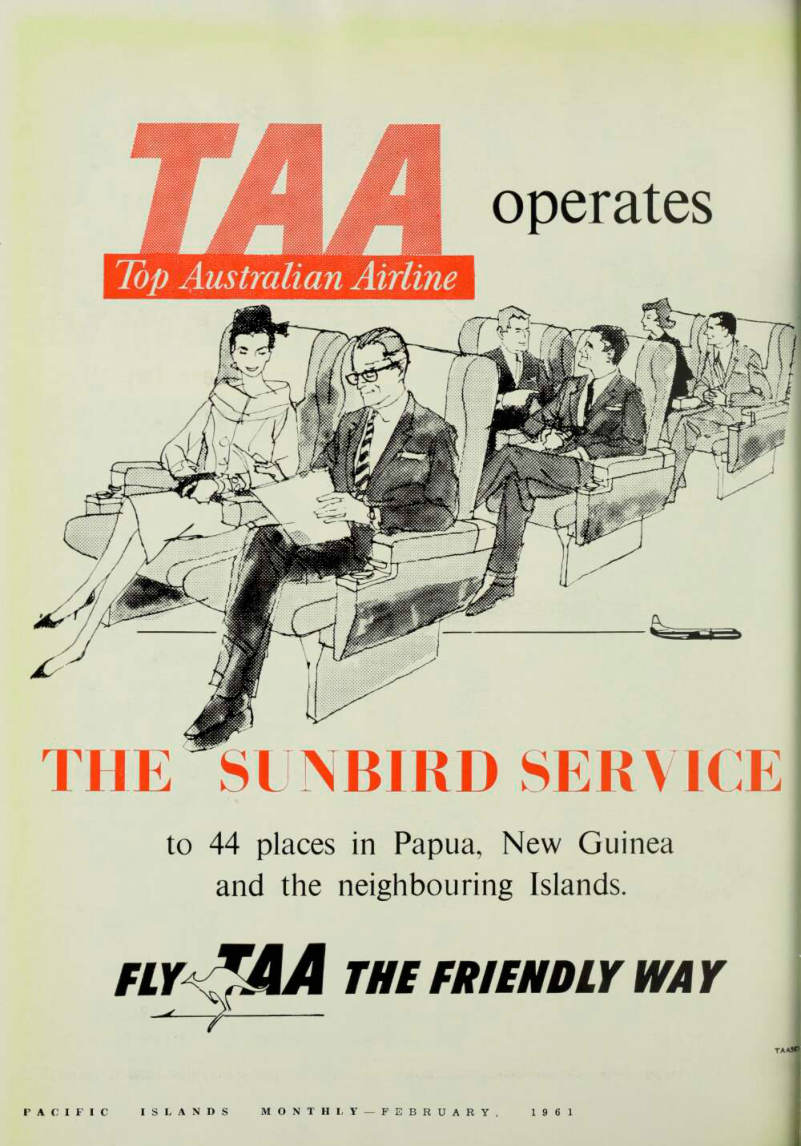 2
2 3
3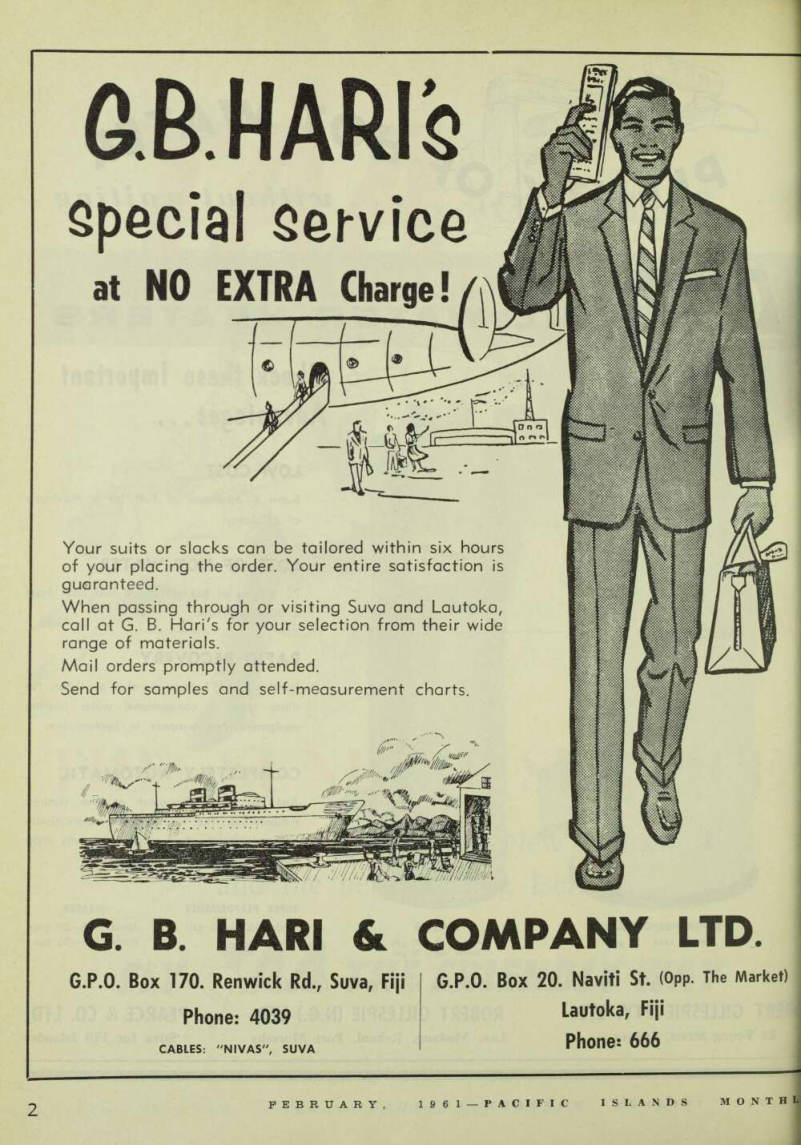 4
4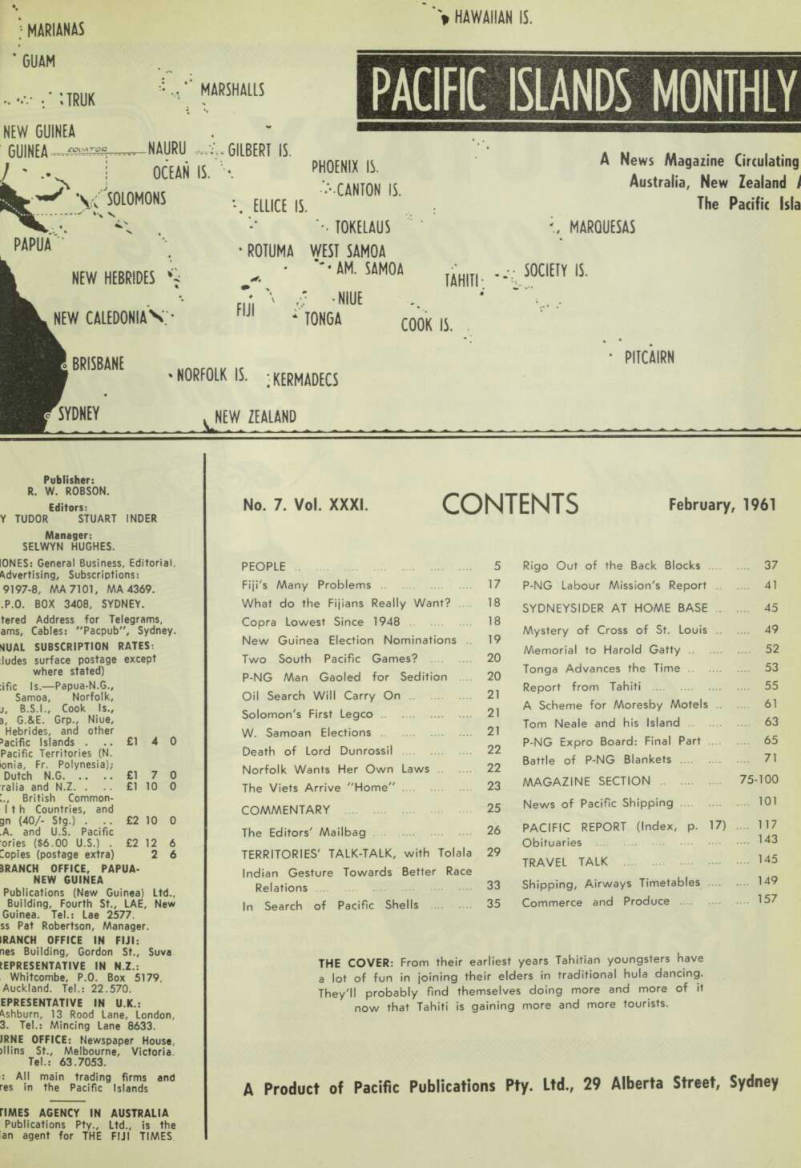 5
5 6
6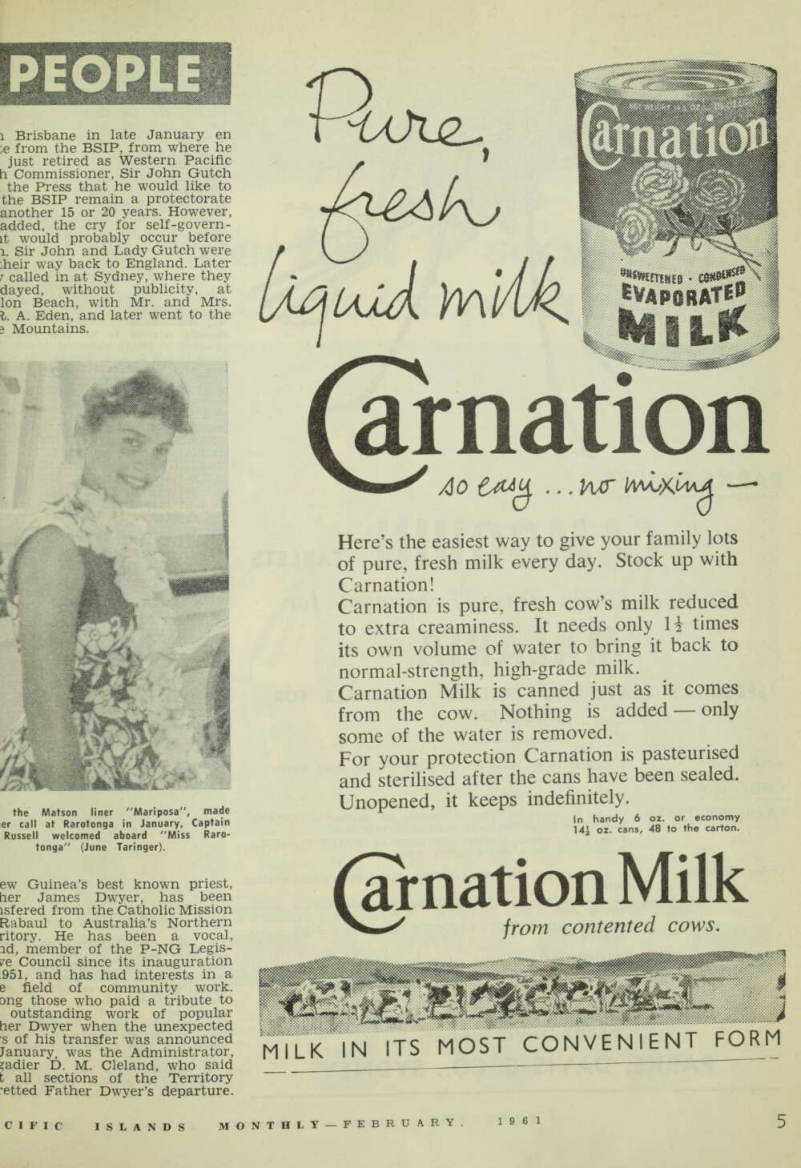 7
7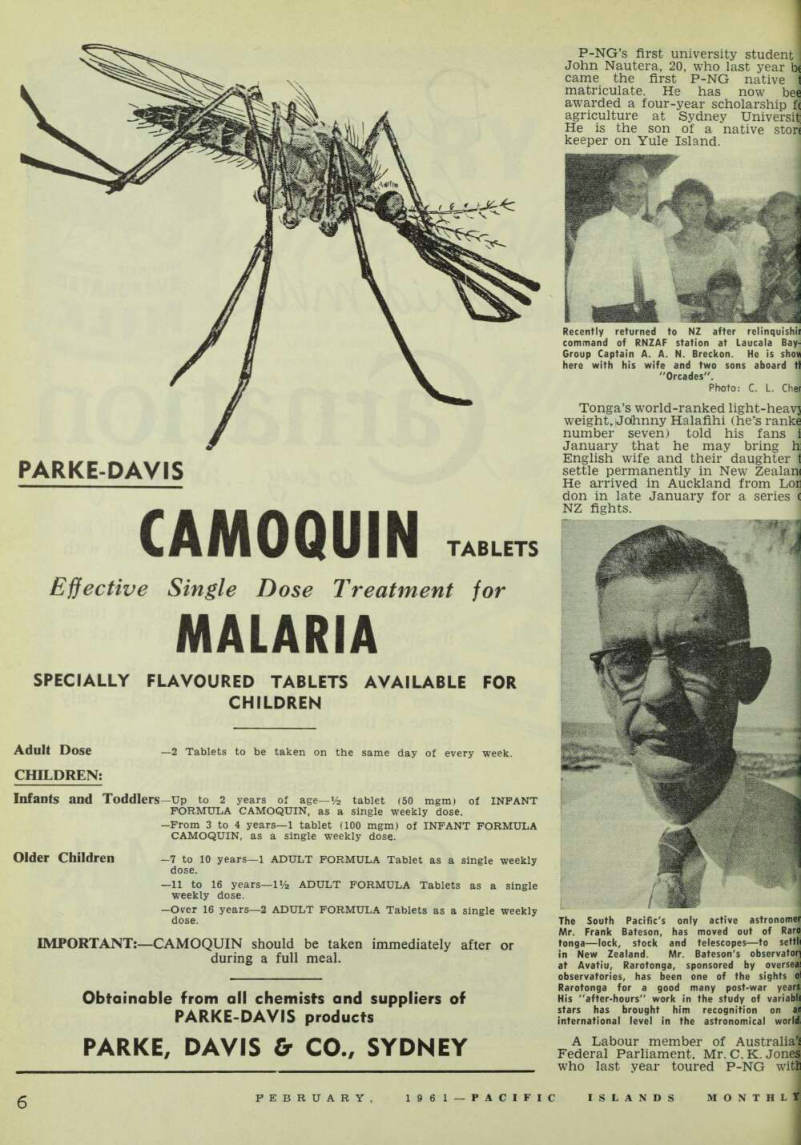 8
8 9
9 10
10 11
11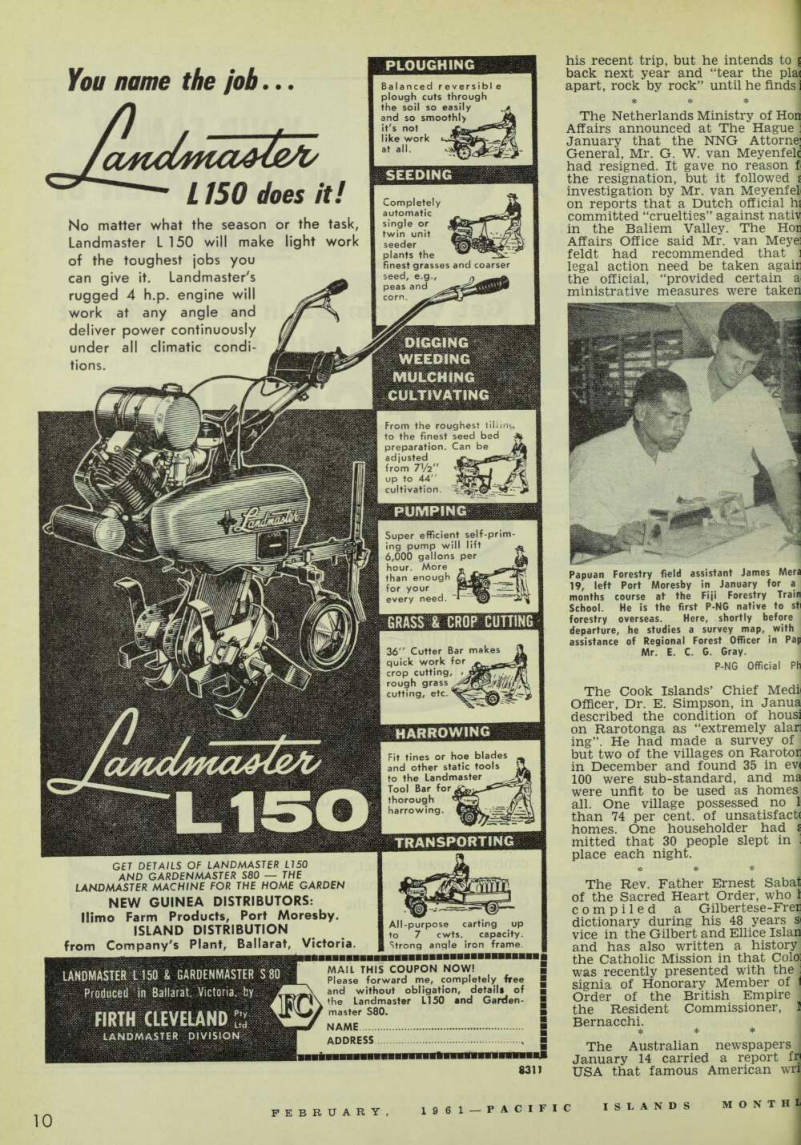 12
12 13
13 14
14 15
15 16
16 17
17 18
18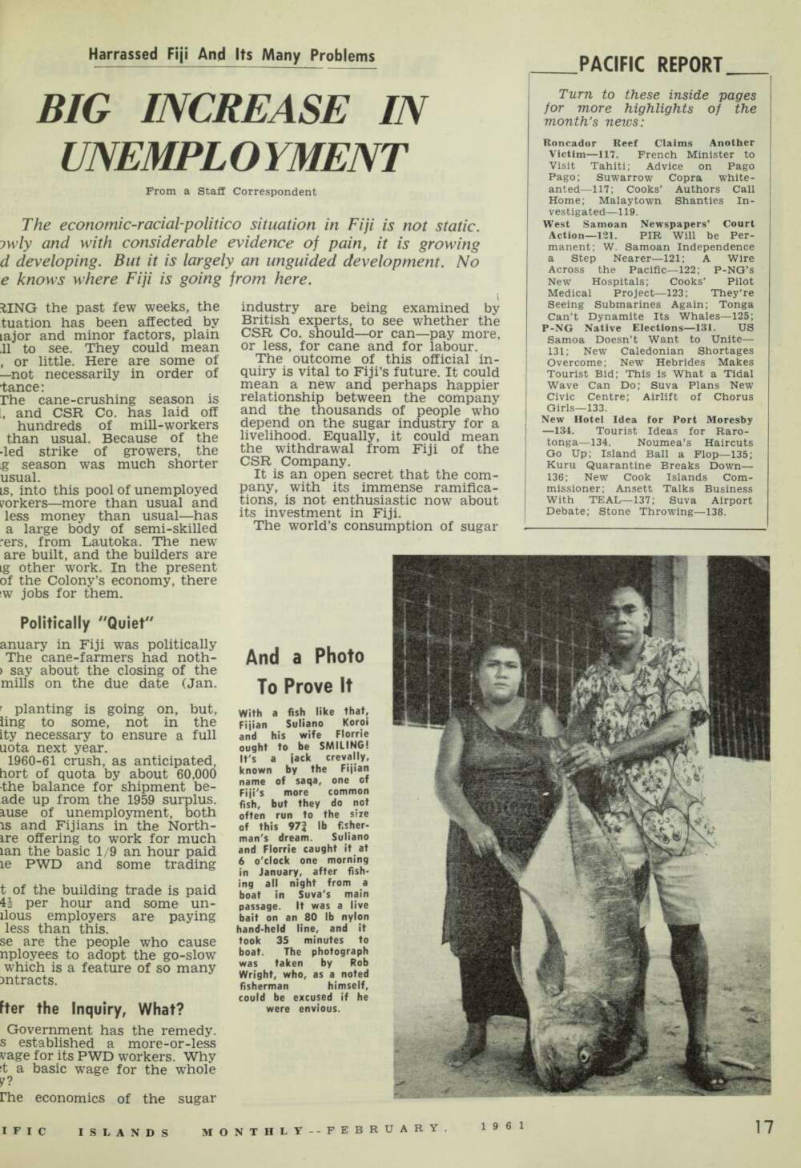 19
19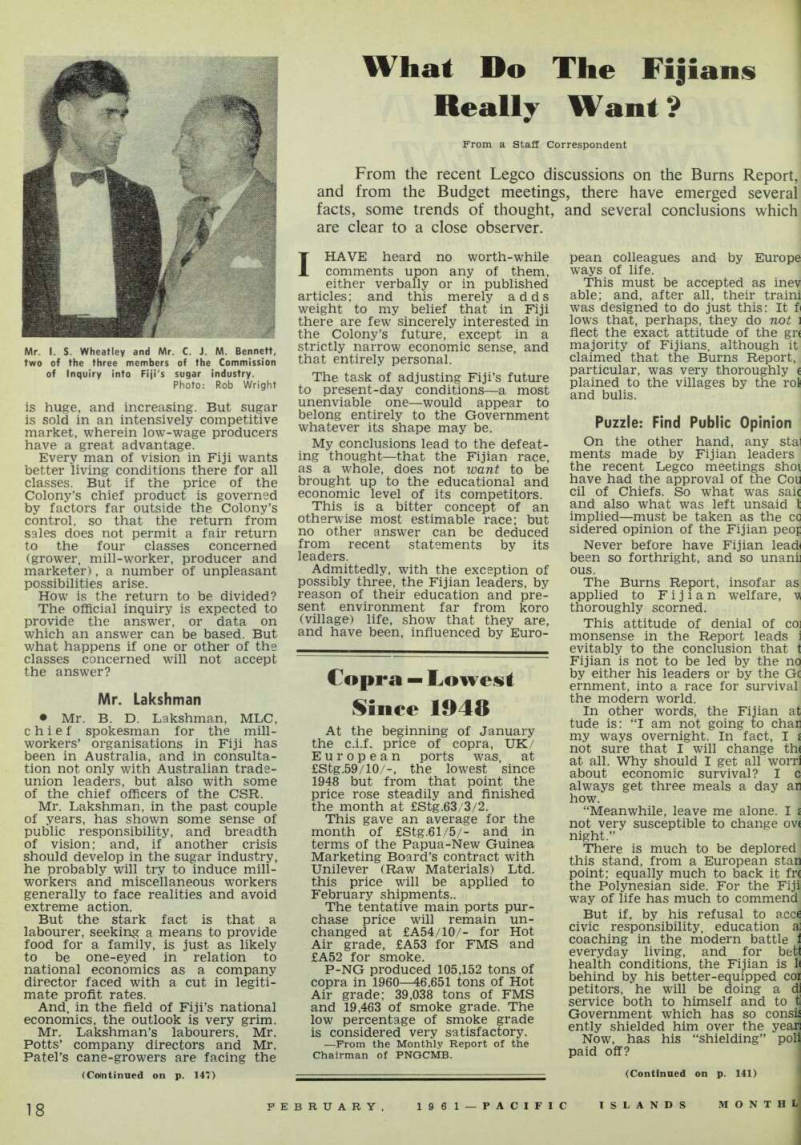 20
20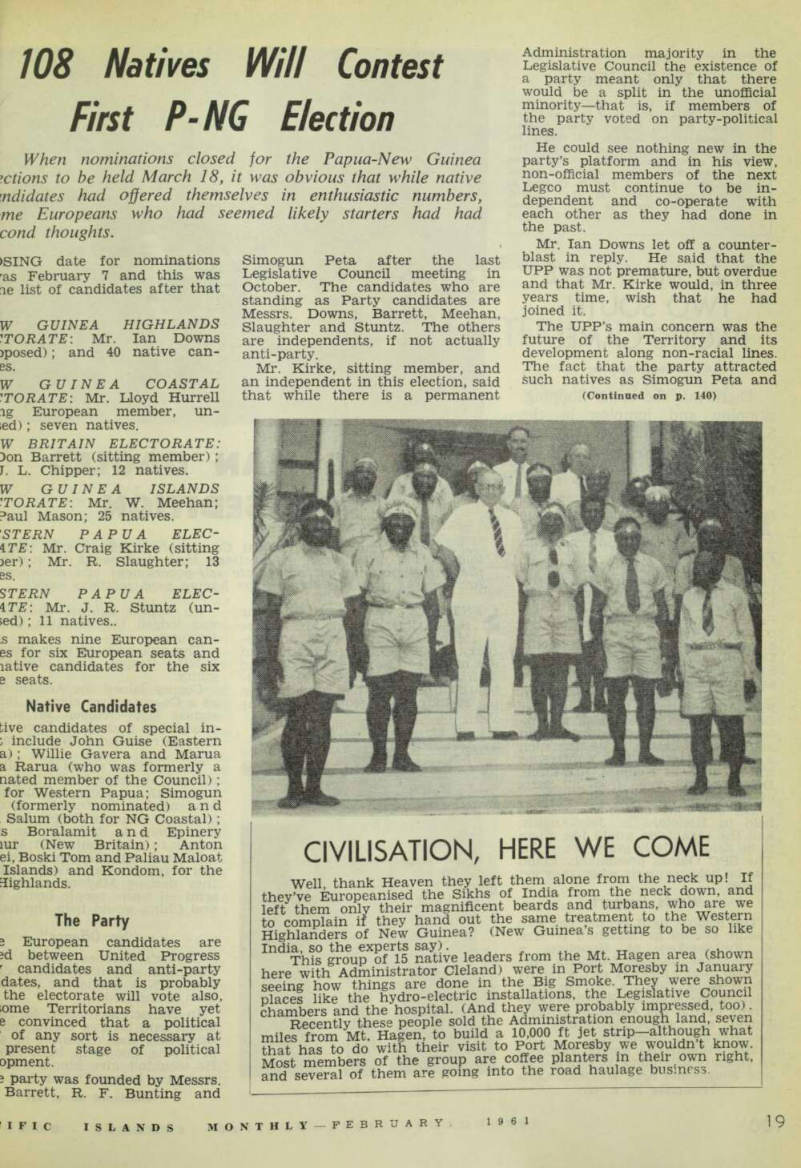 21
21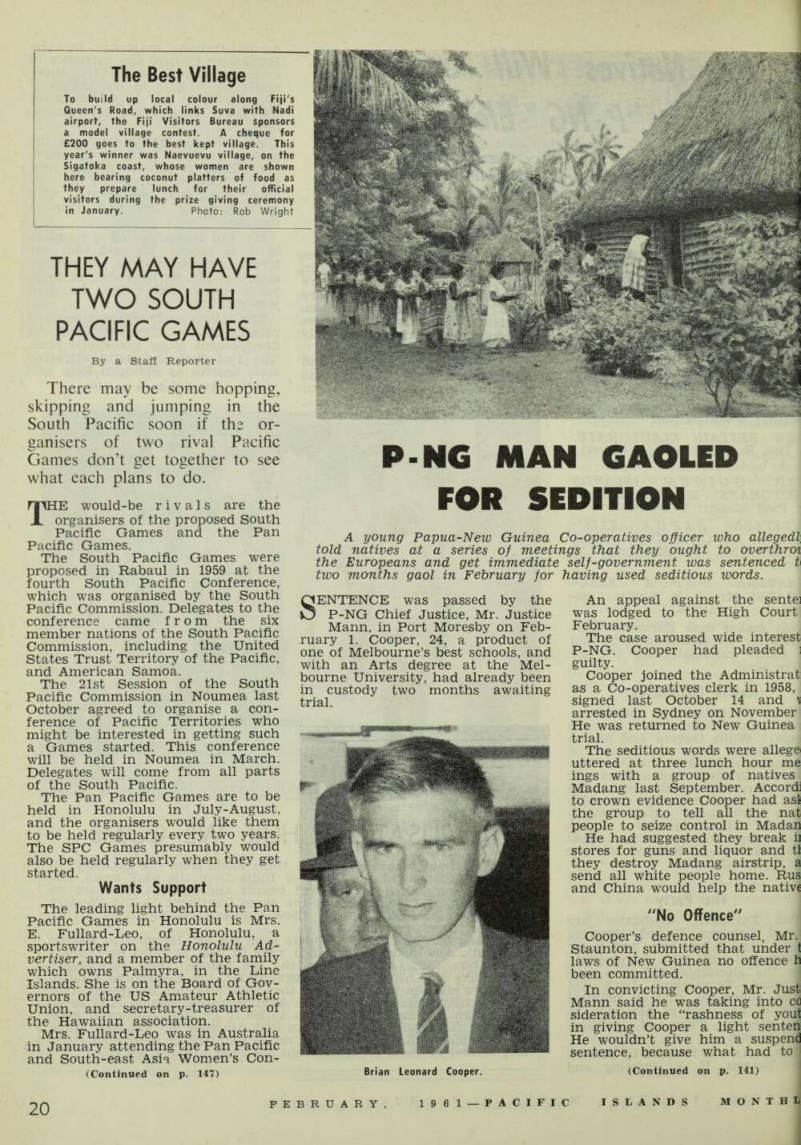 22
22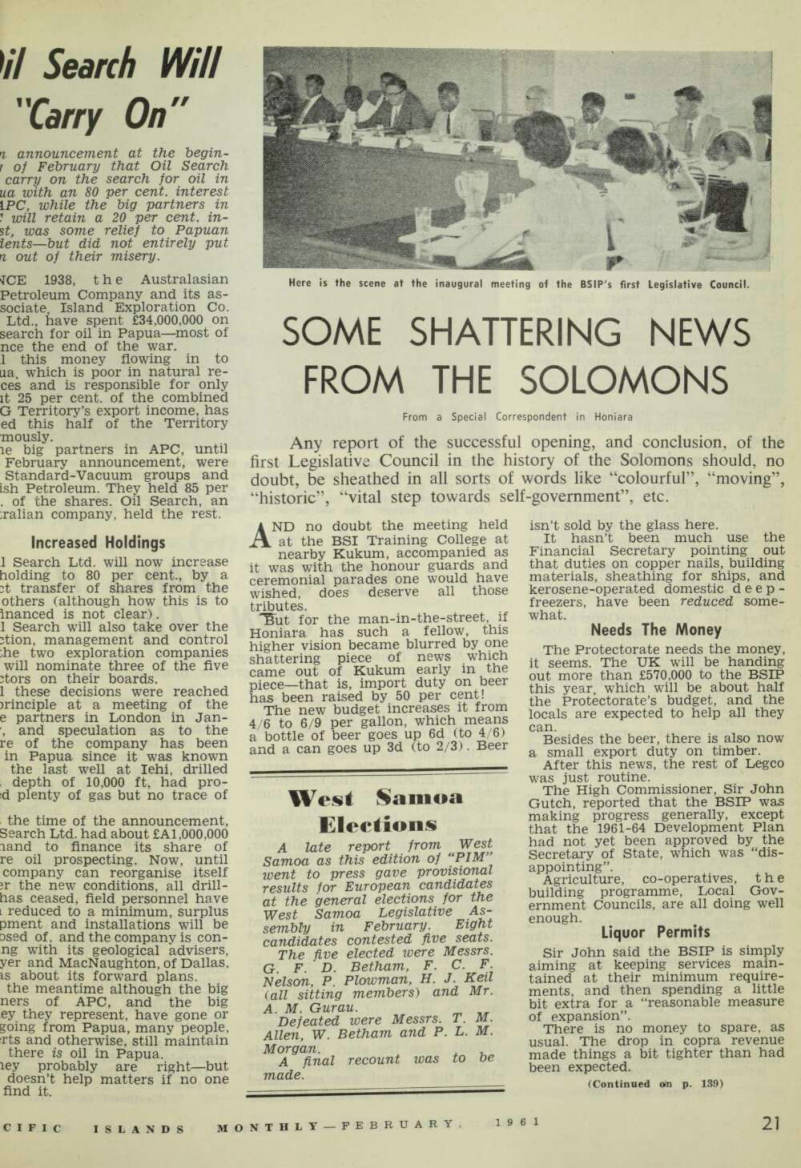 23
23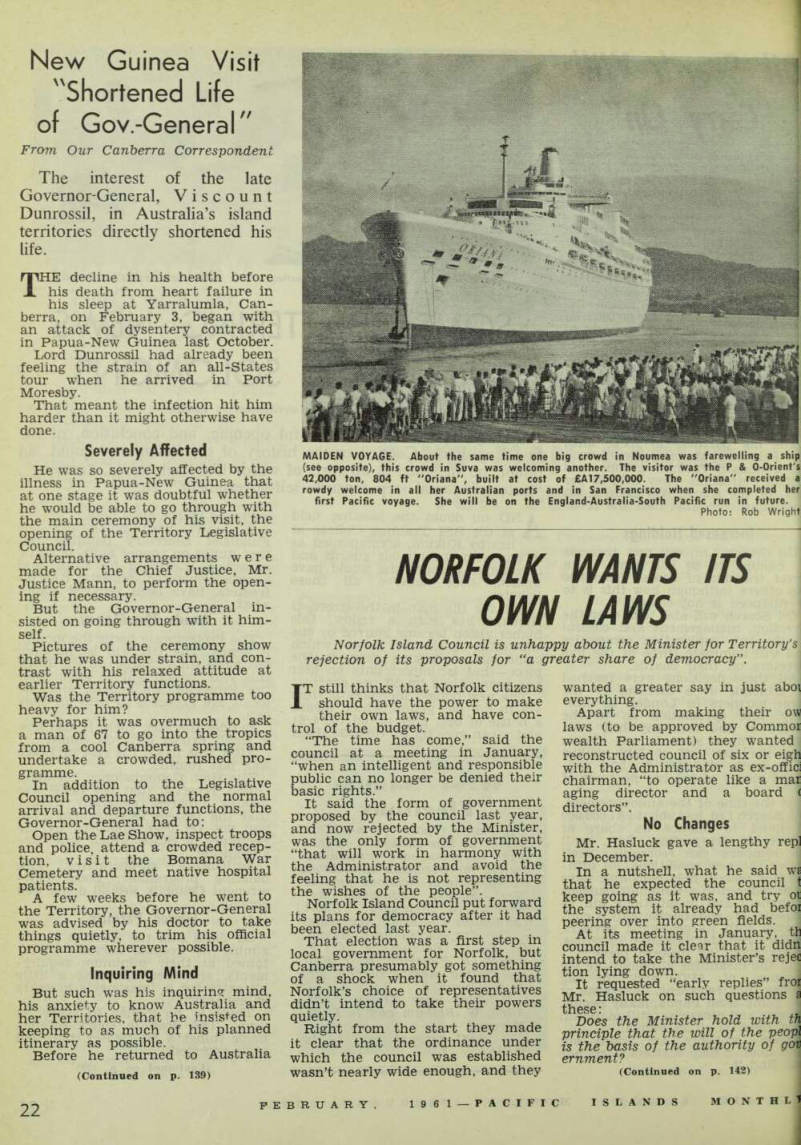 24
24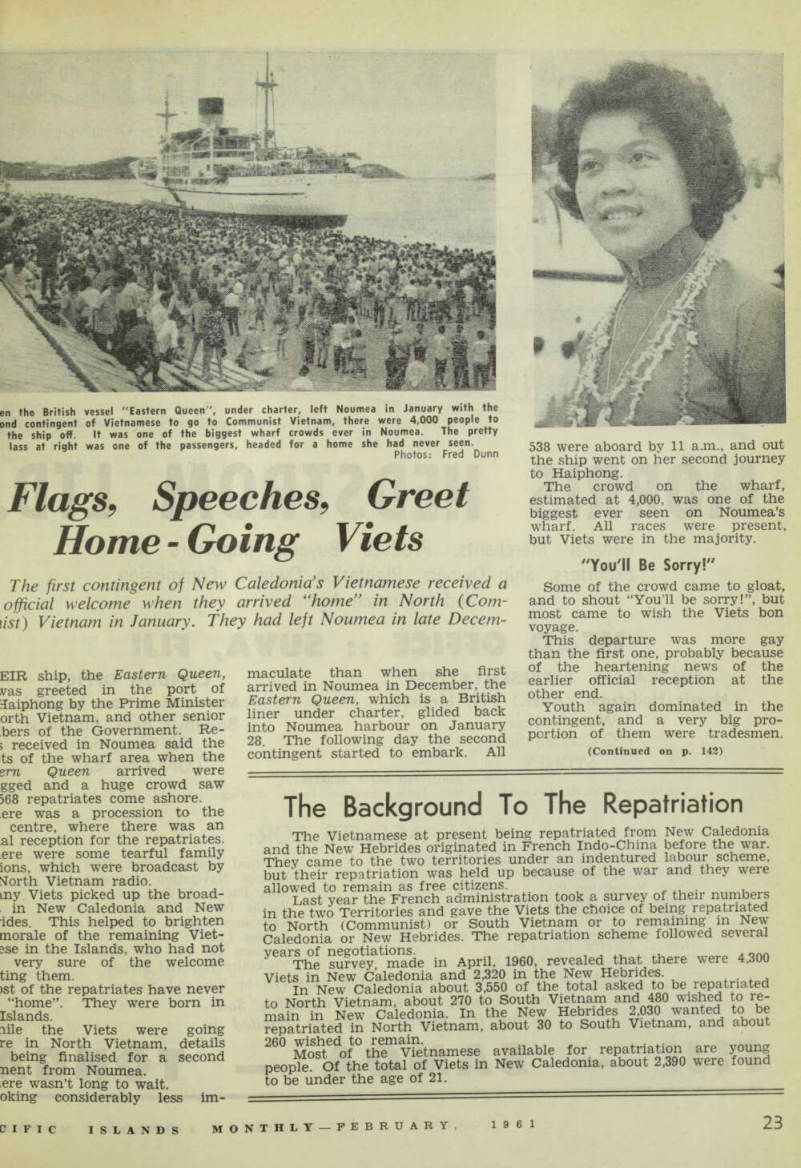 25
25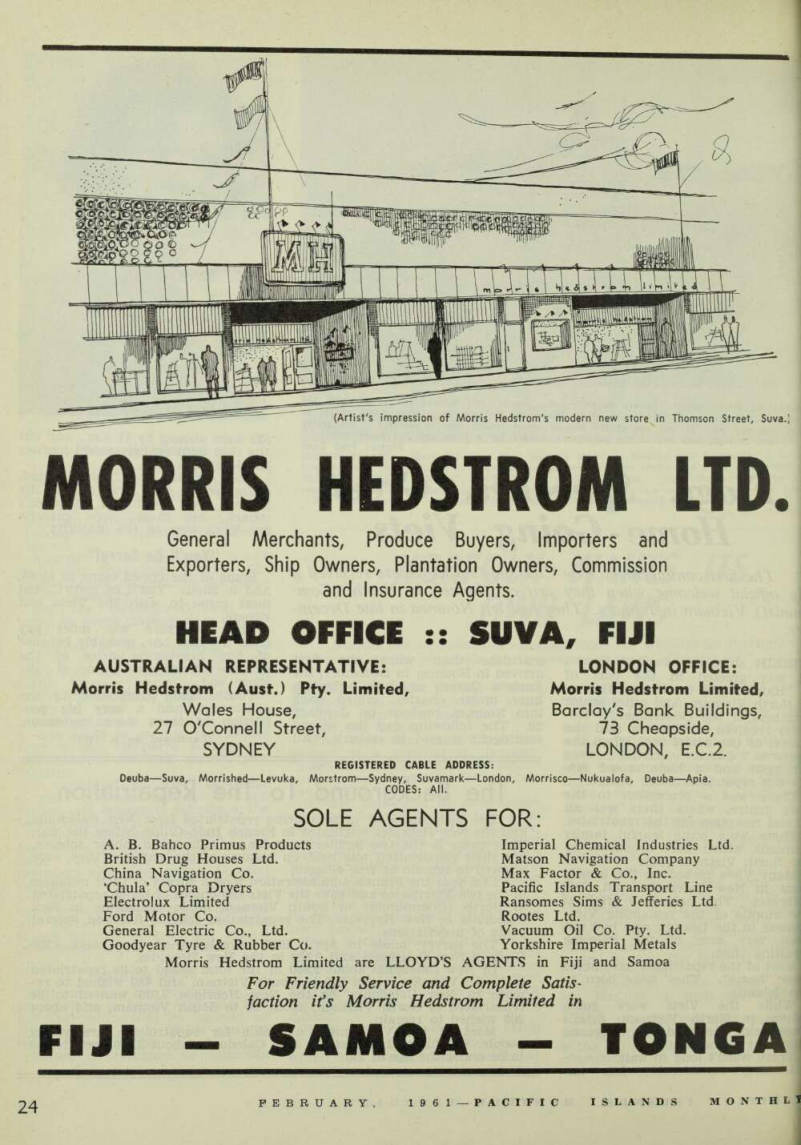 26
26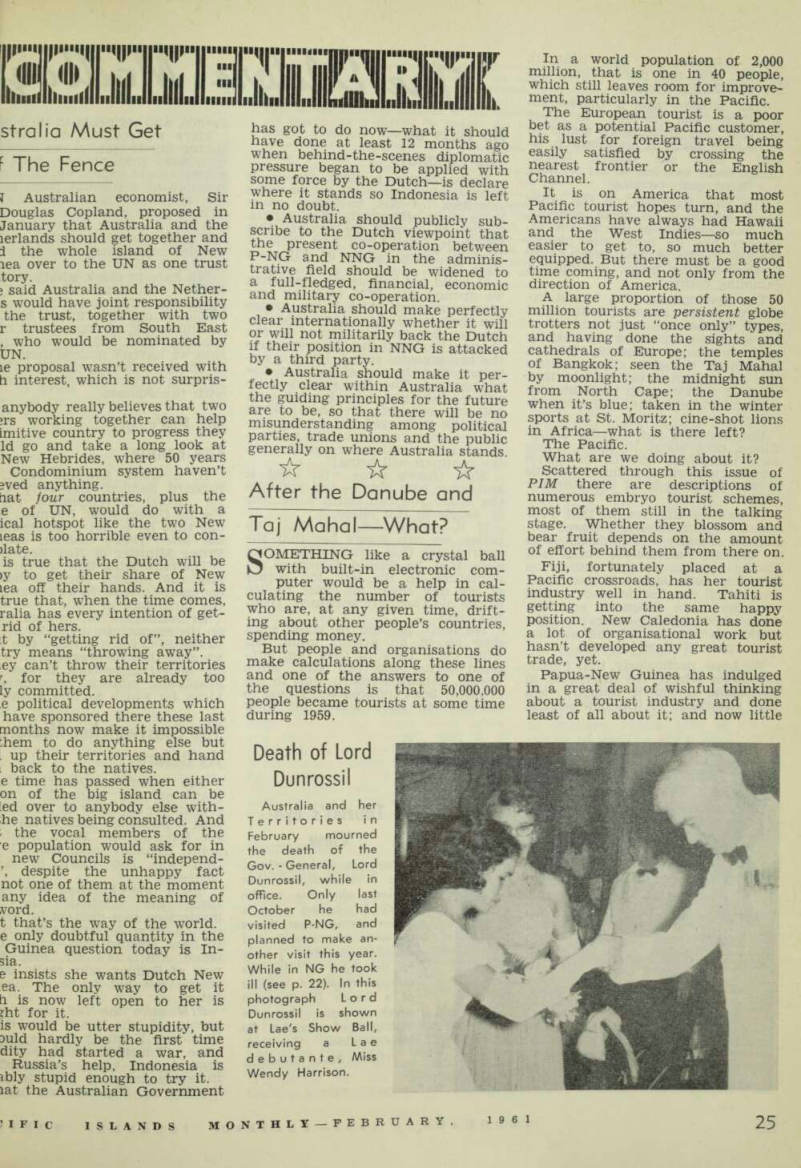 27
27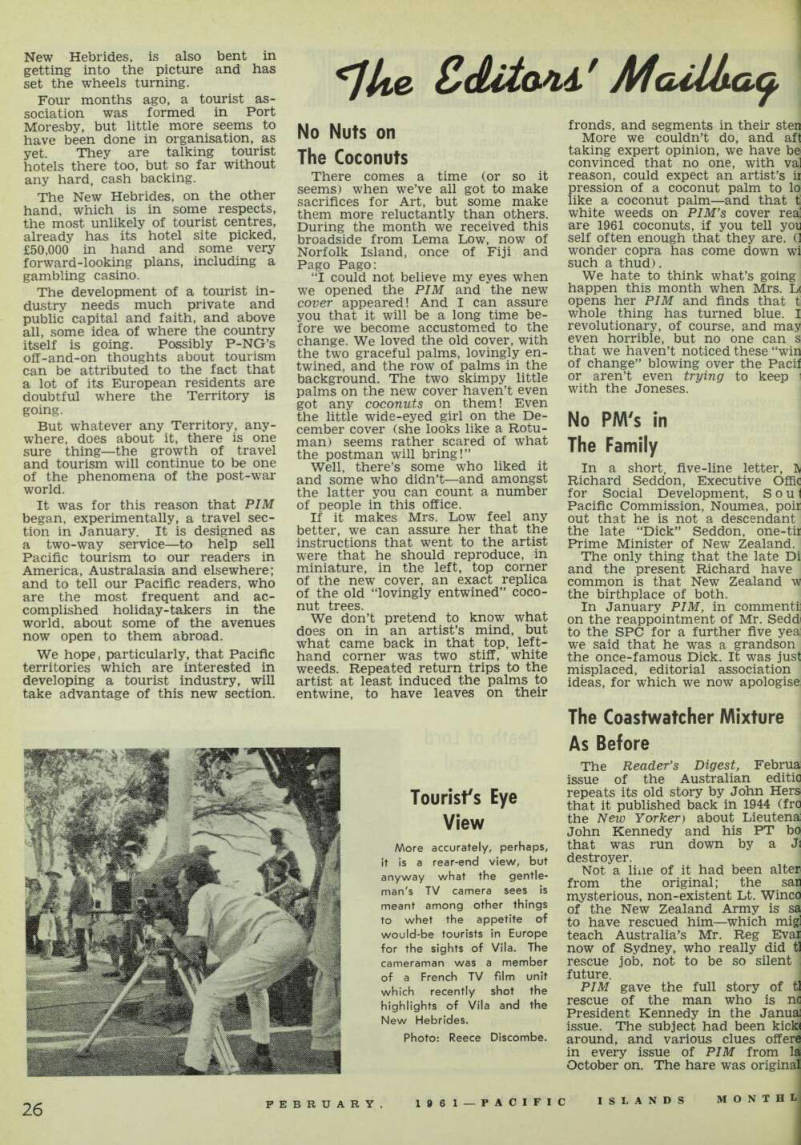 28
28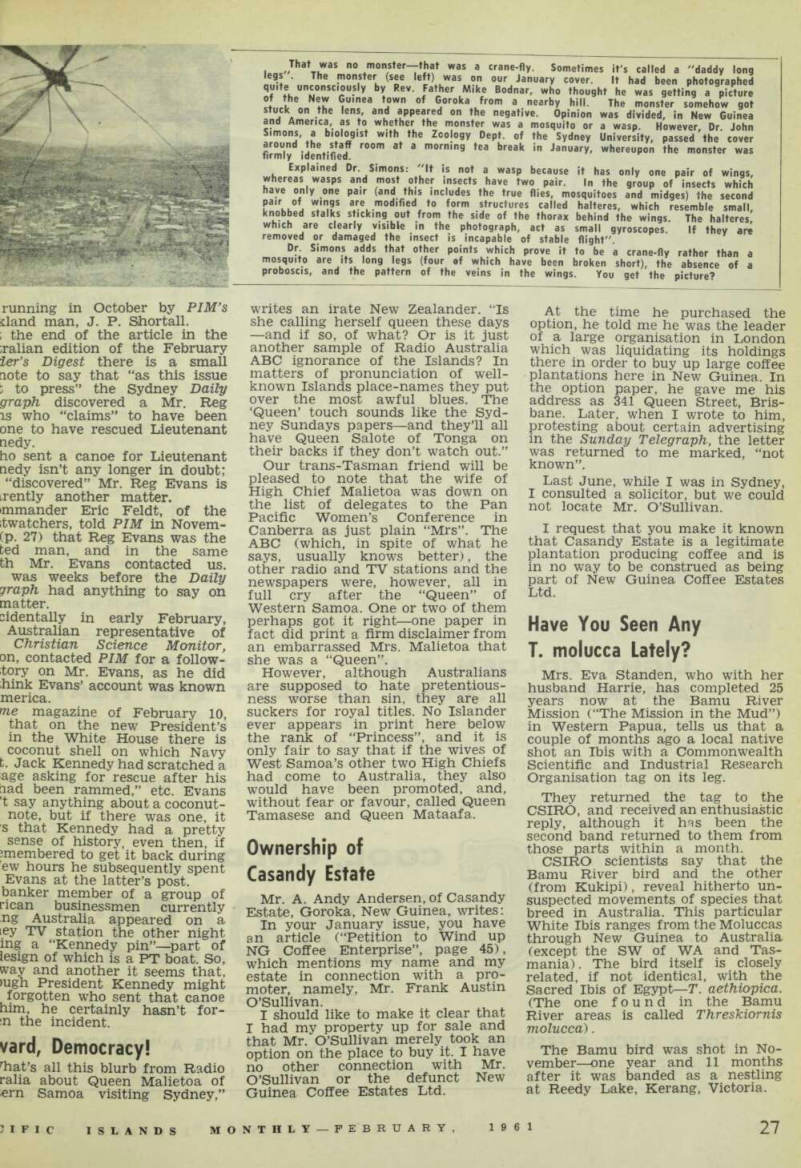 29
29 30
30 31
31 32
32 33
33 34
34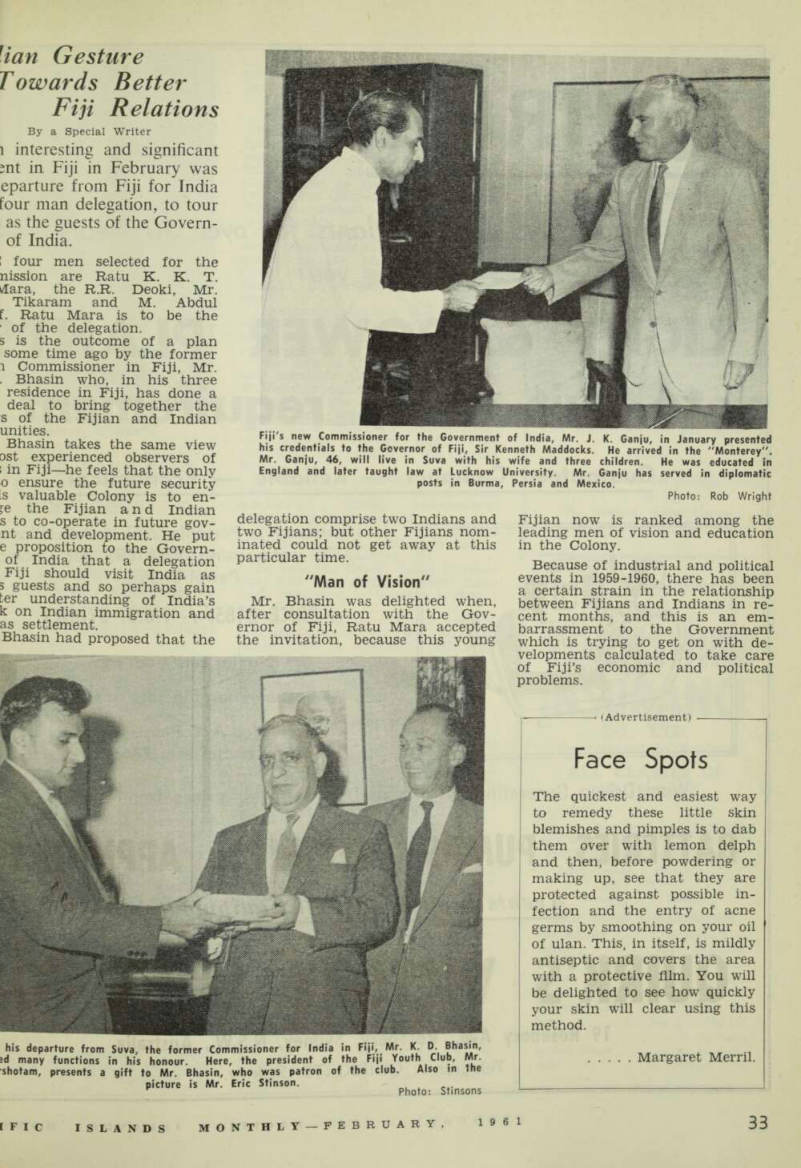 35
35 36
36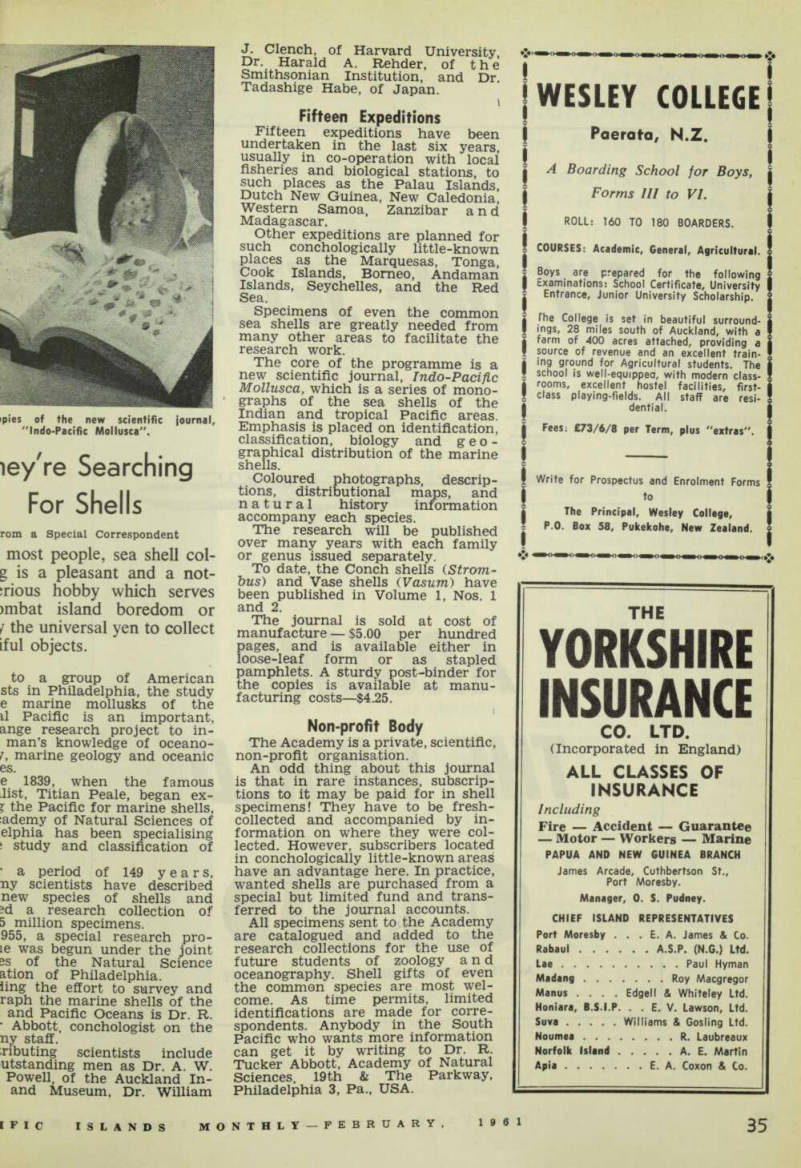 37
37 38
38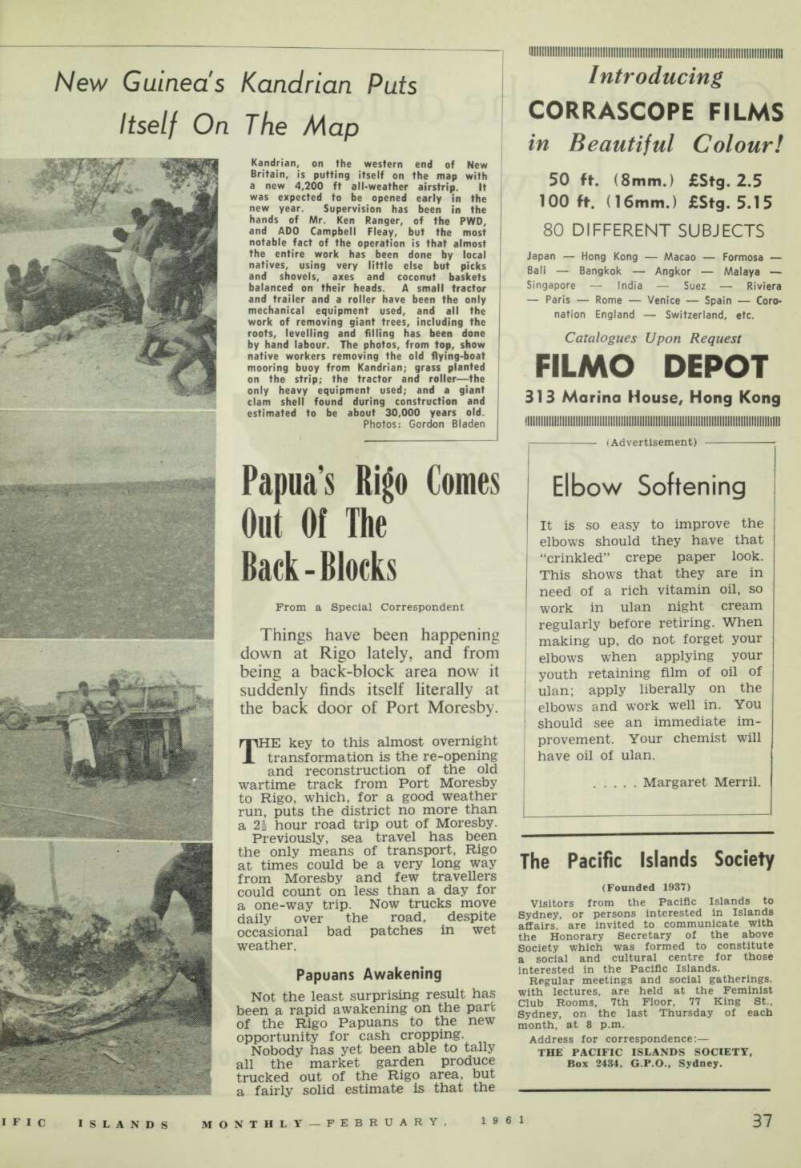 39
39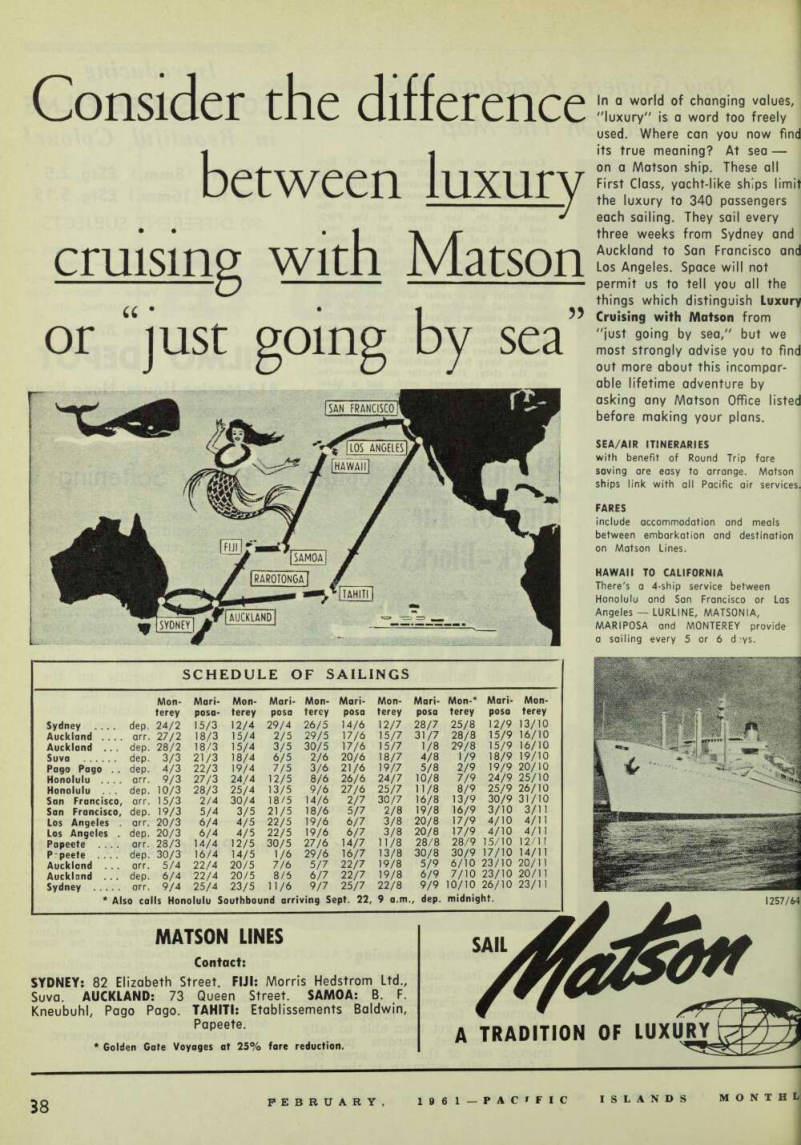 40
40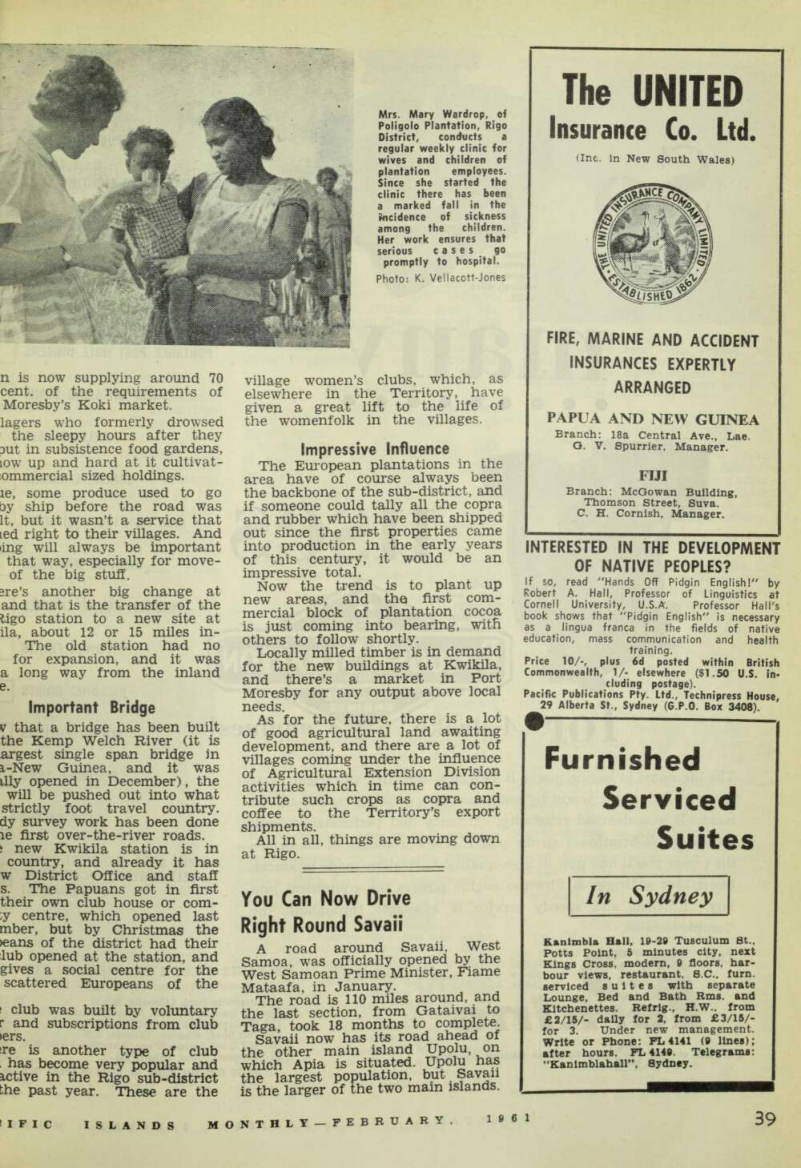 41
41 42
42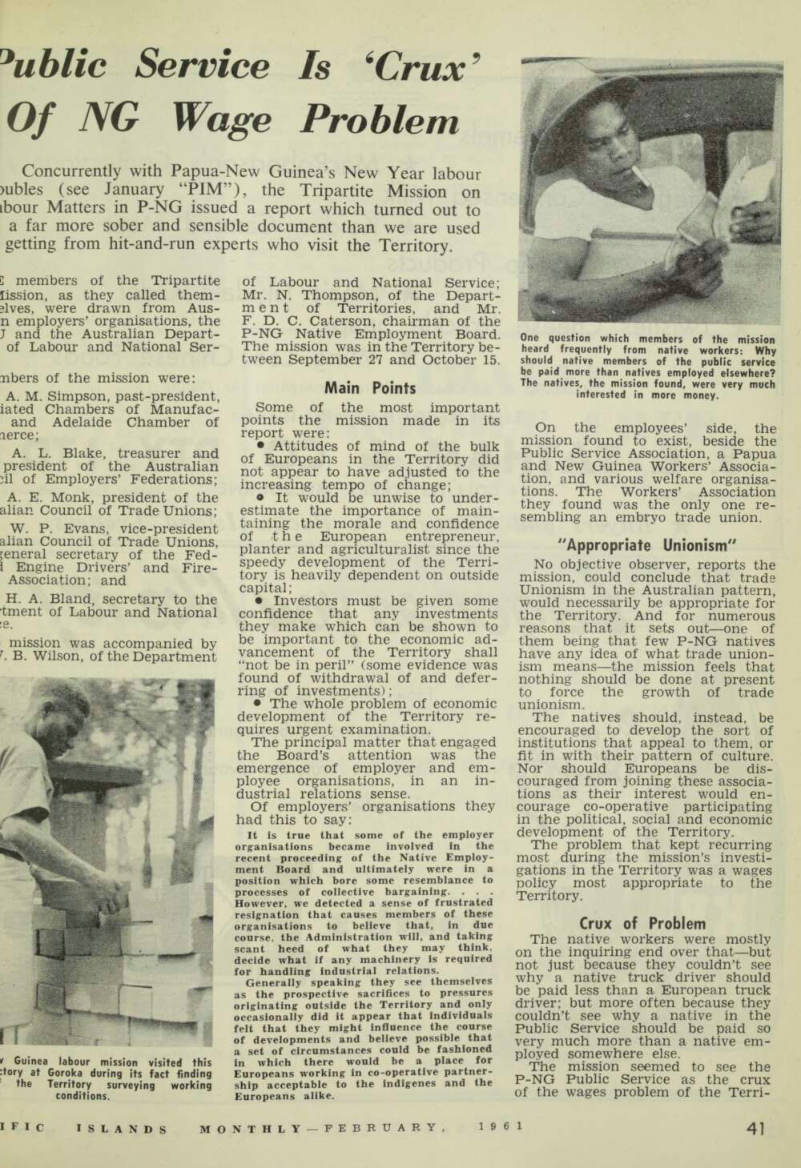 43
43 44
44 45
45 46
46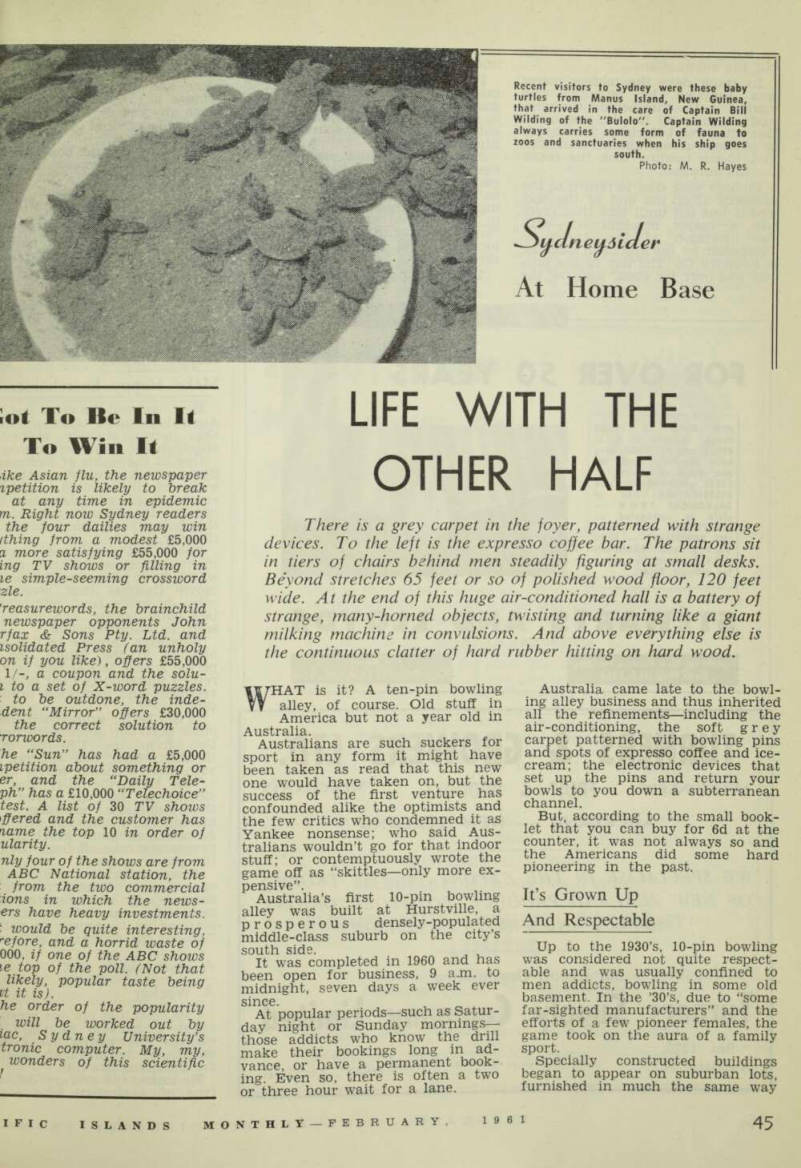 47
47 48
48 49
49 50
50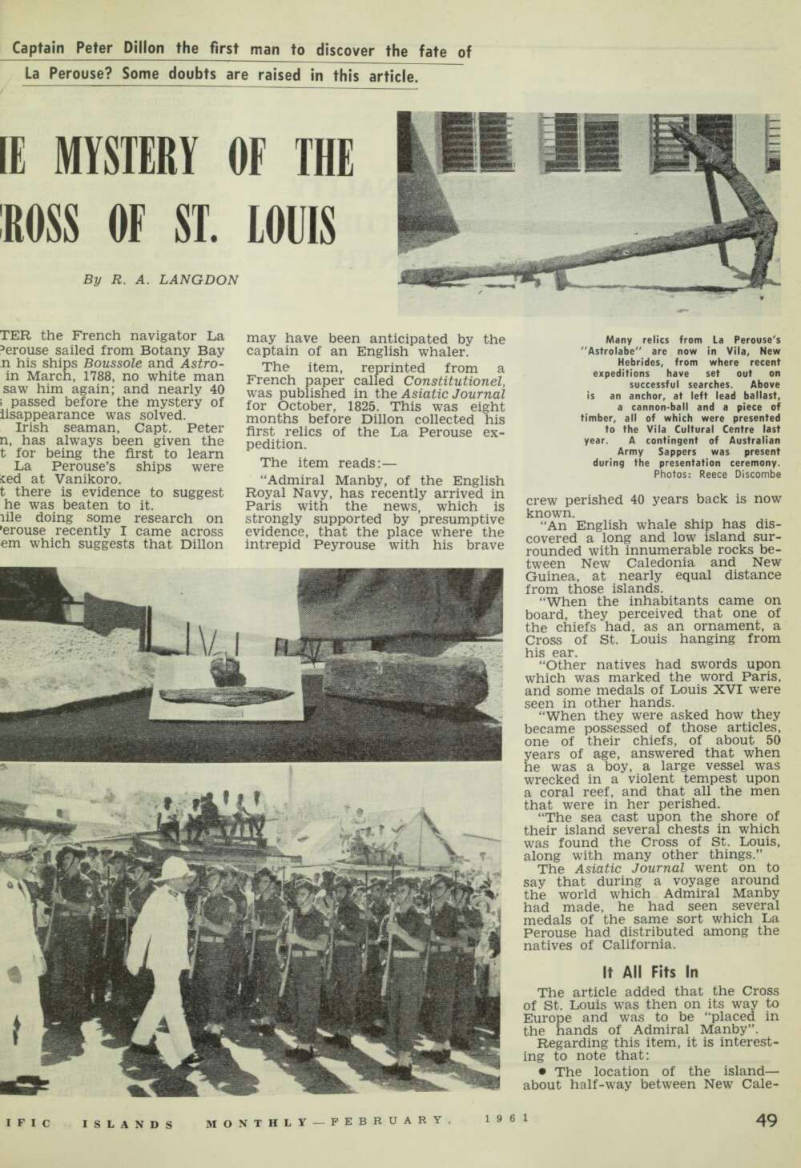 51
51 52
52 53
53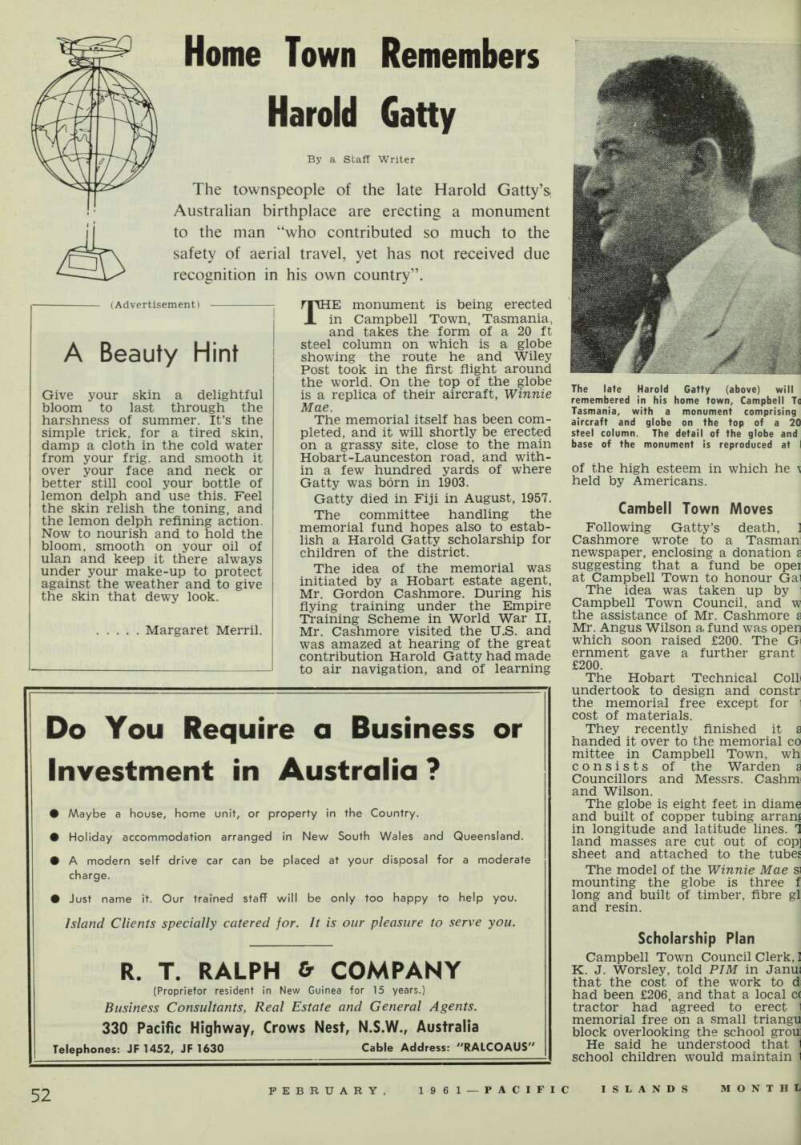 54
54 55
55 56
56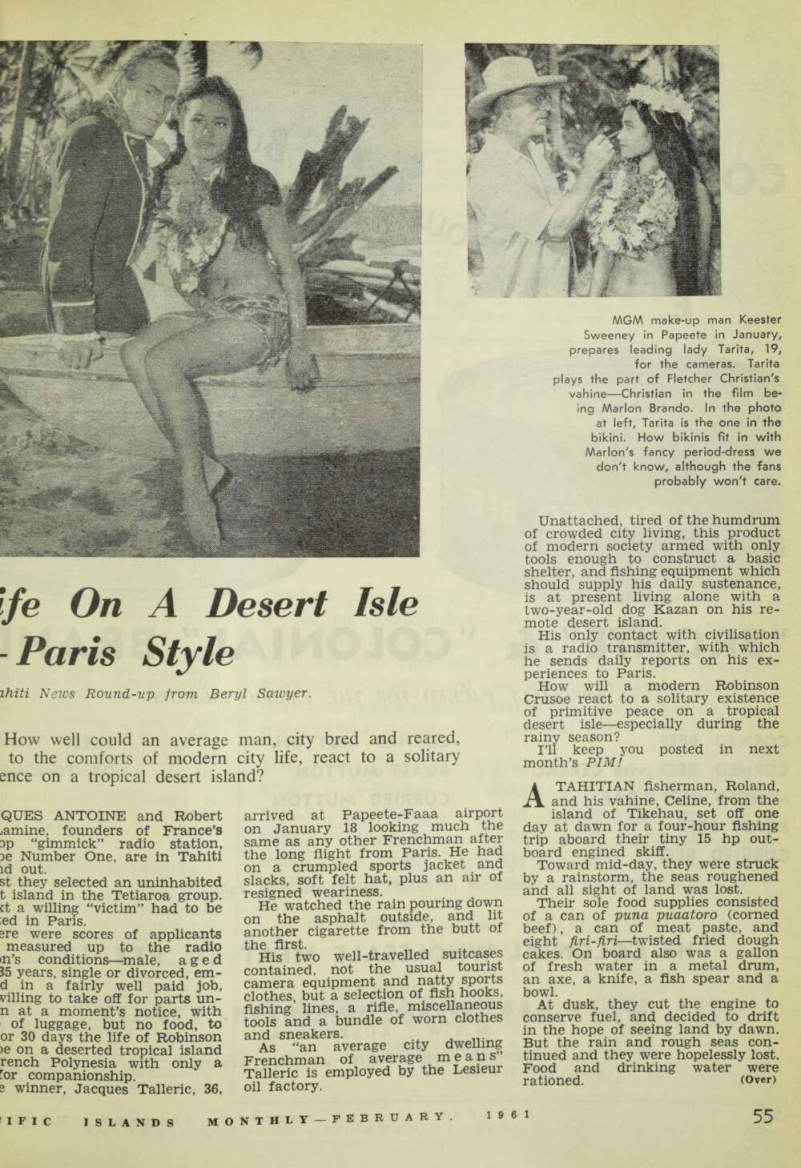 57
57 58
58 59
59 60
60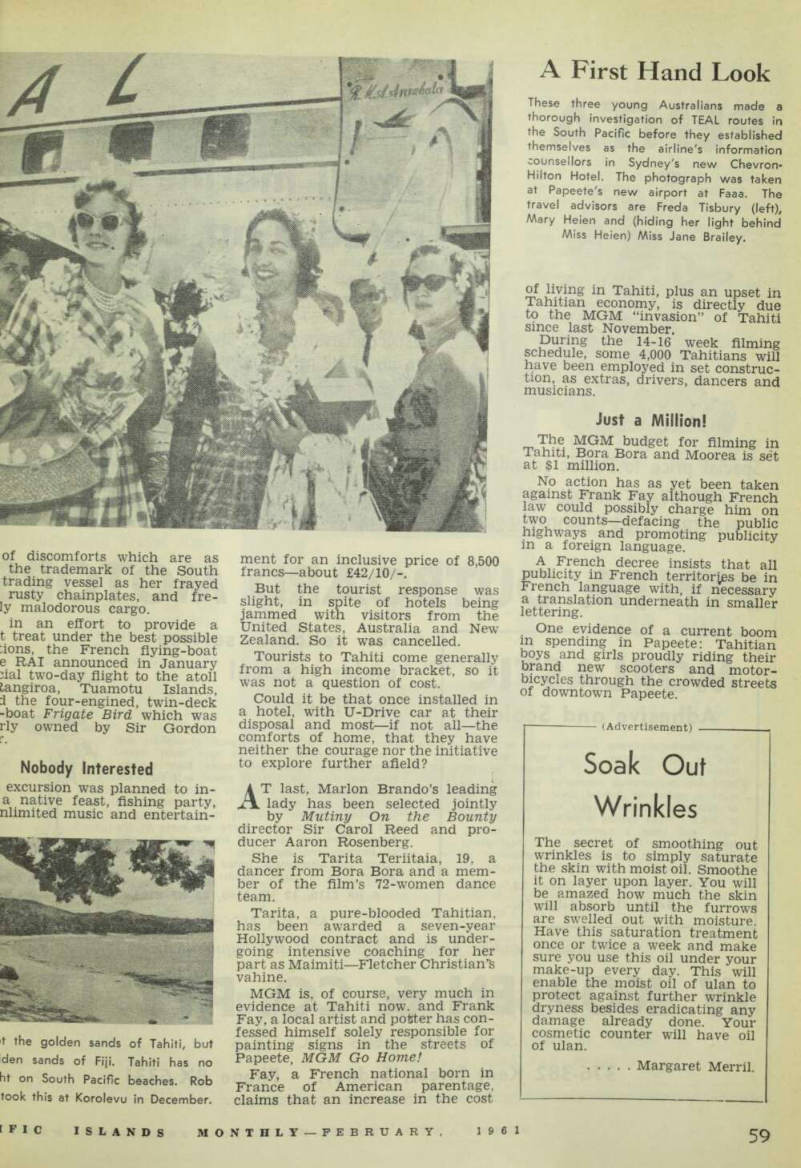 61
61 62
62 63
63 64
64 65
65 66
66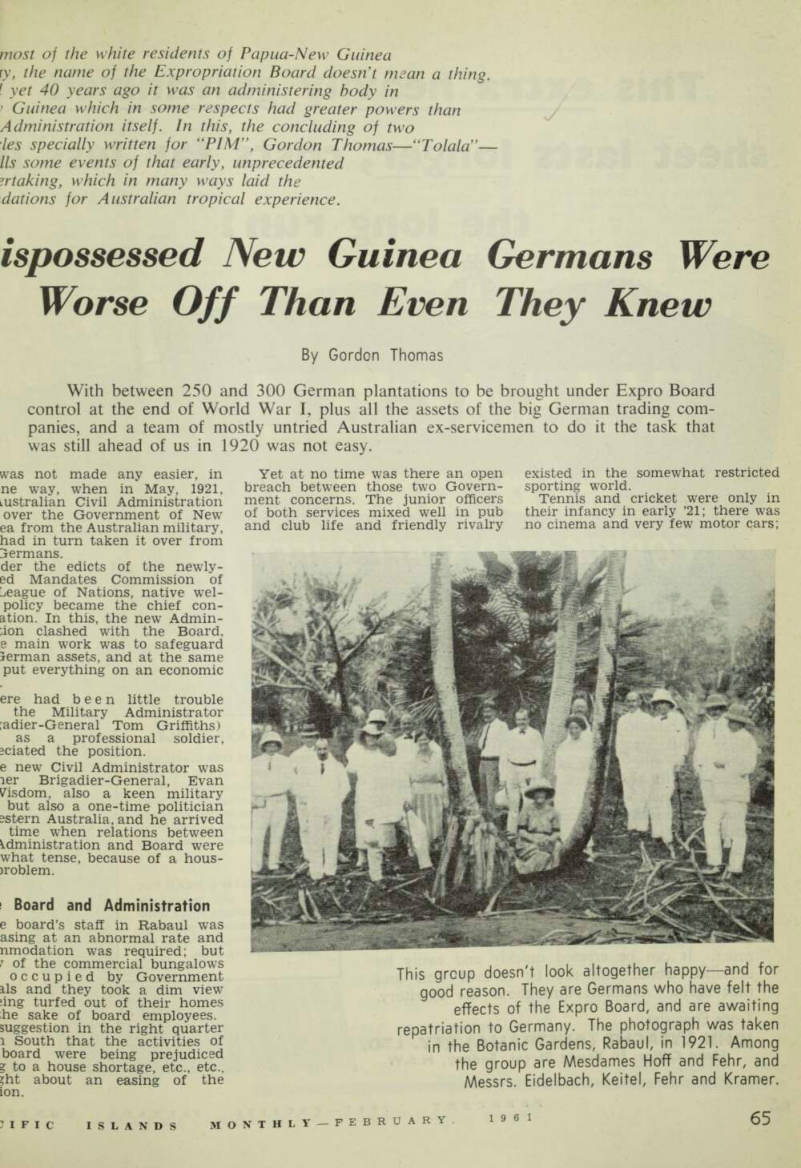 67
67 68
68 69
69 70
70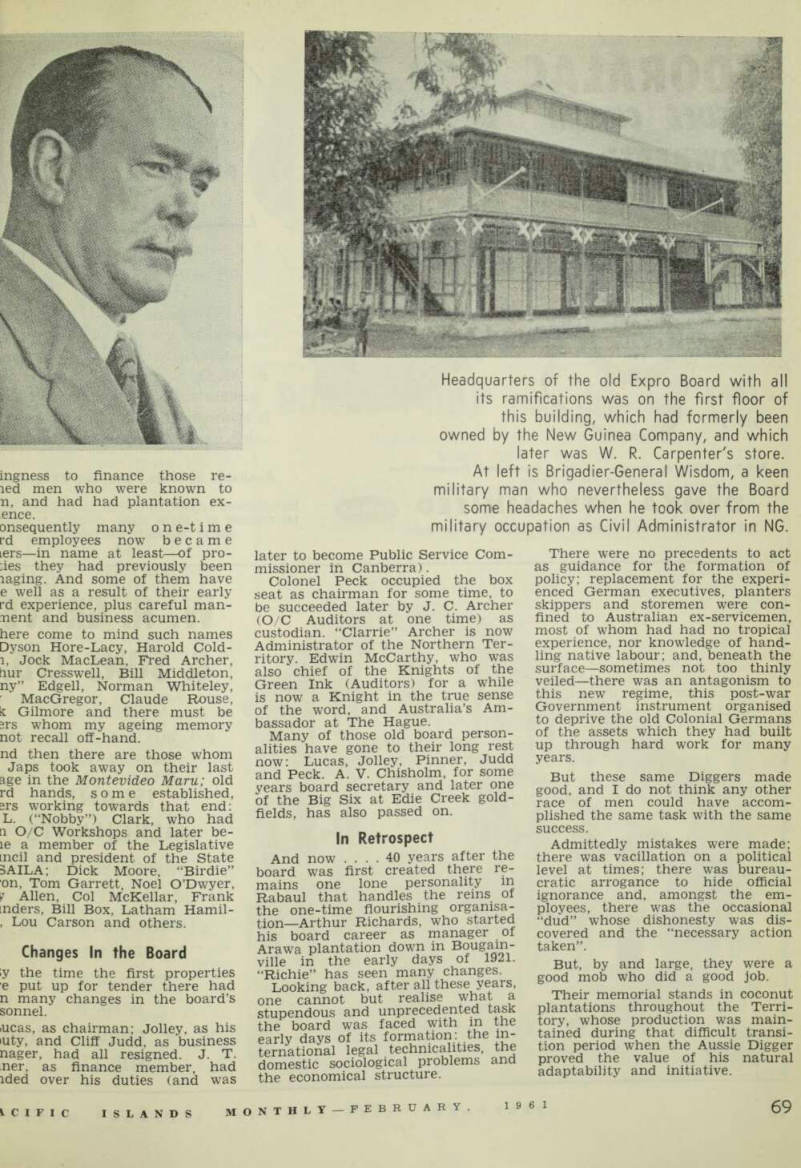 71
71 72
72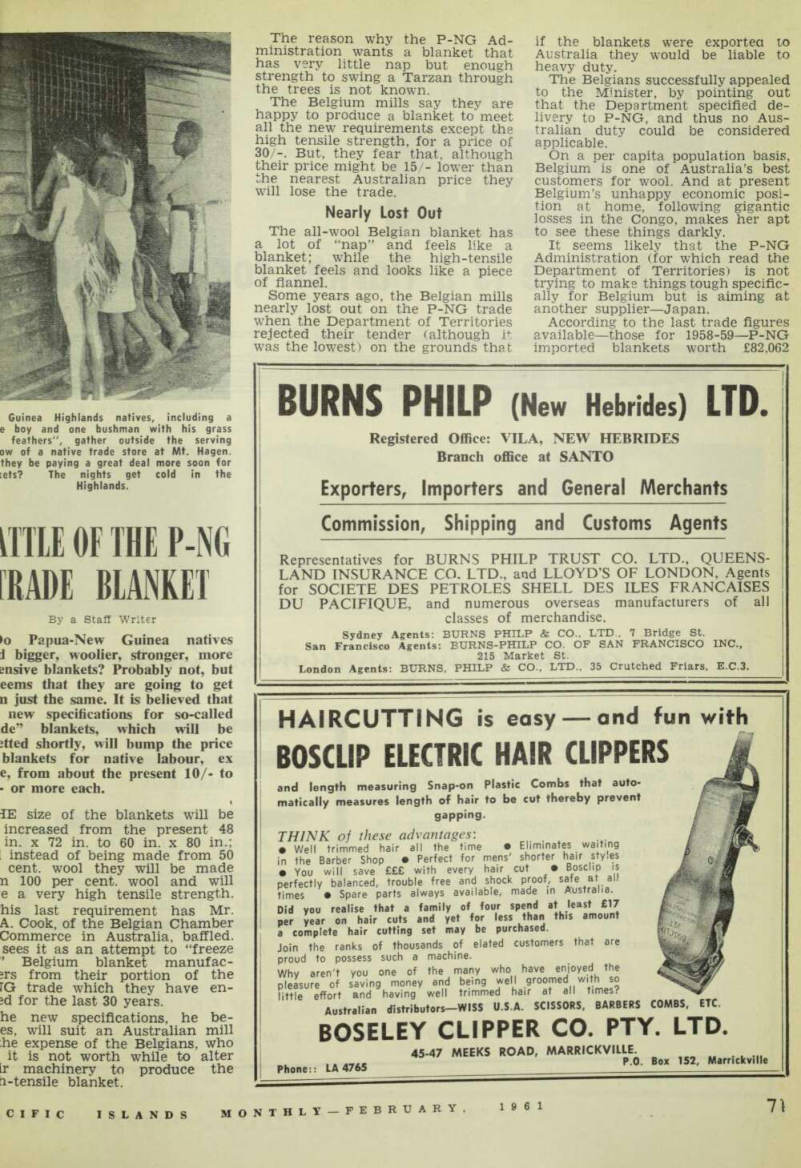 73
73 74
74 75
75 76
76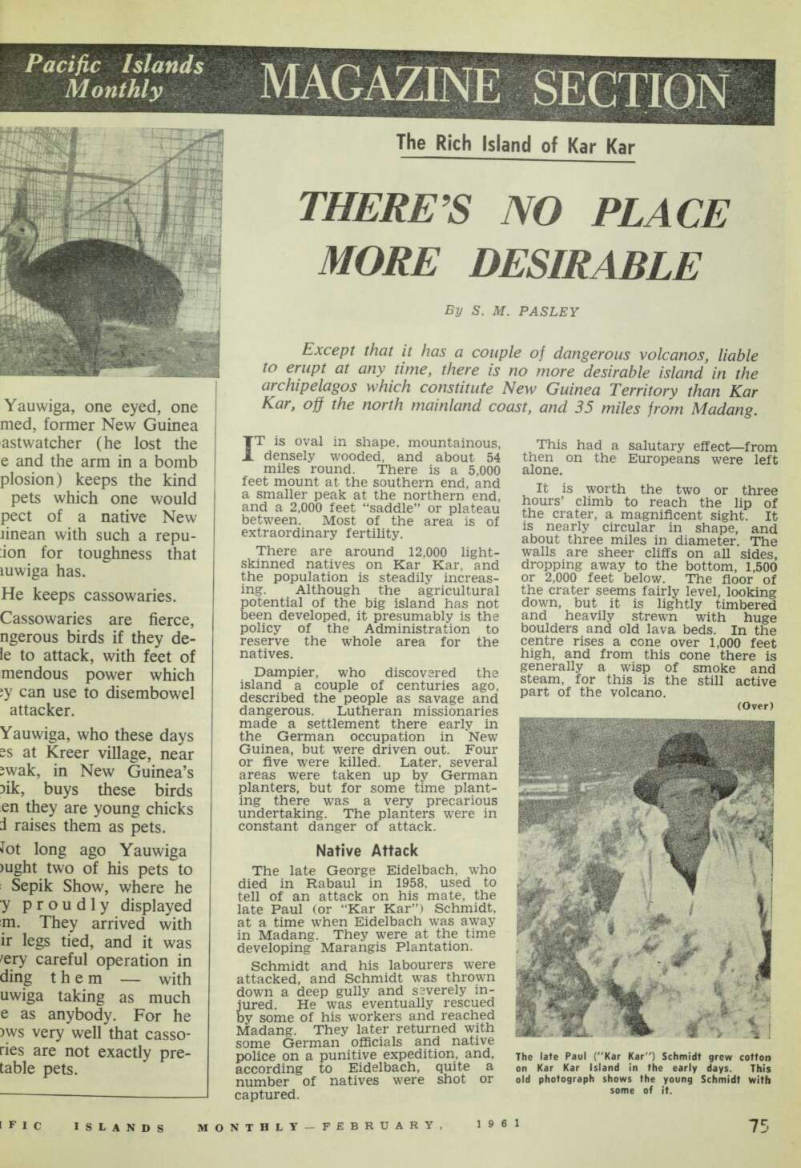 77
77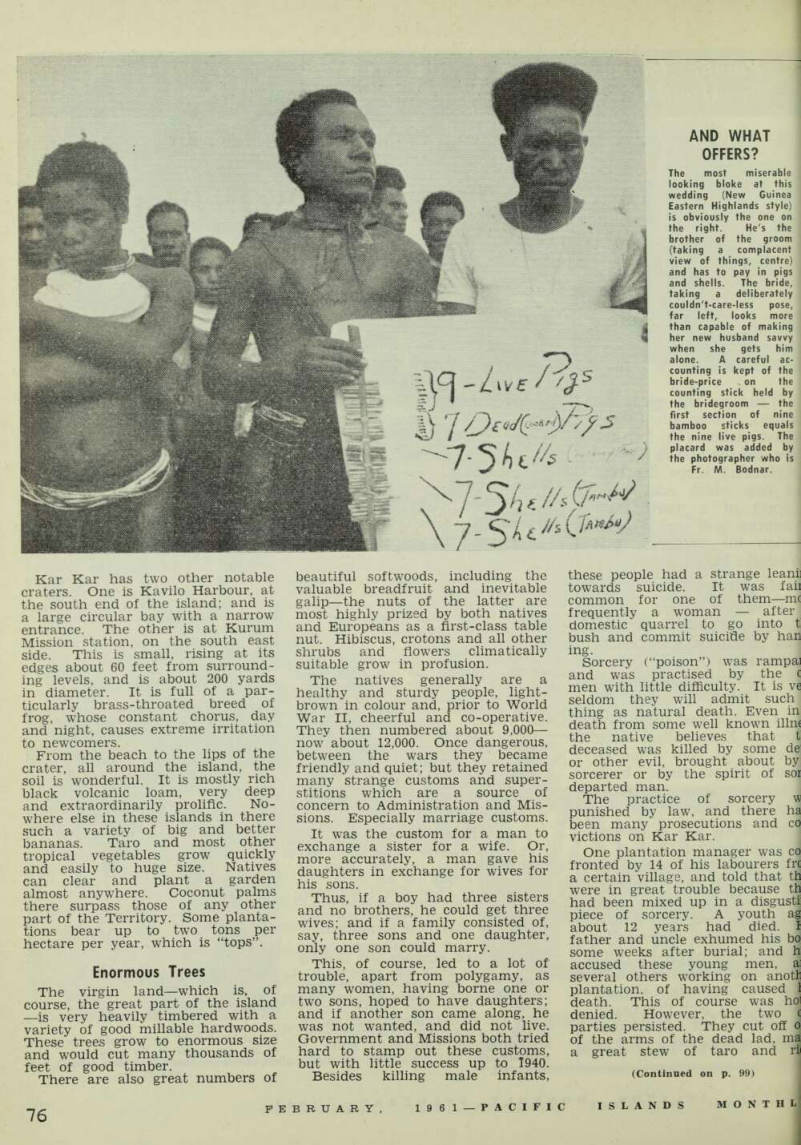 78
78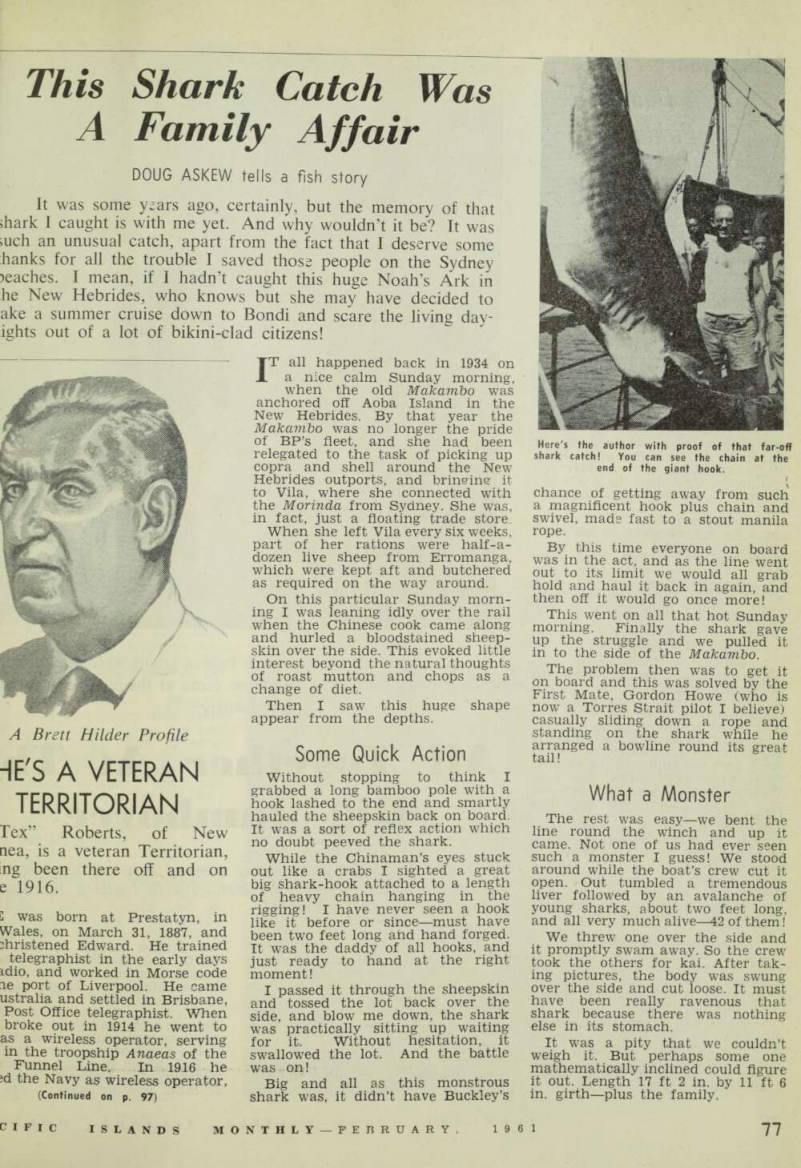 79
79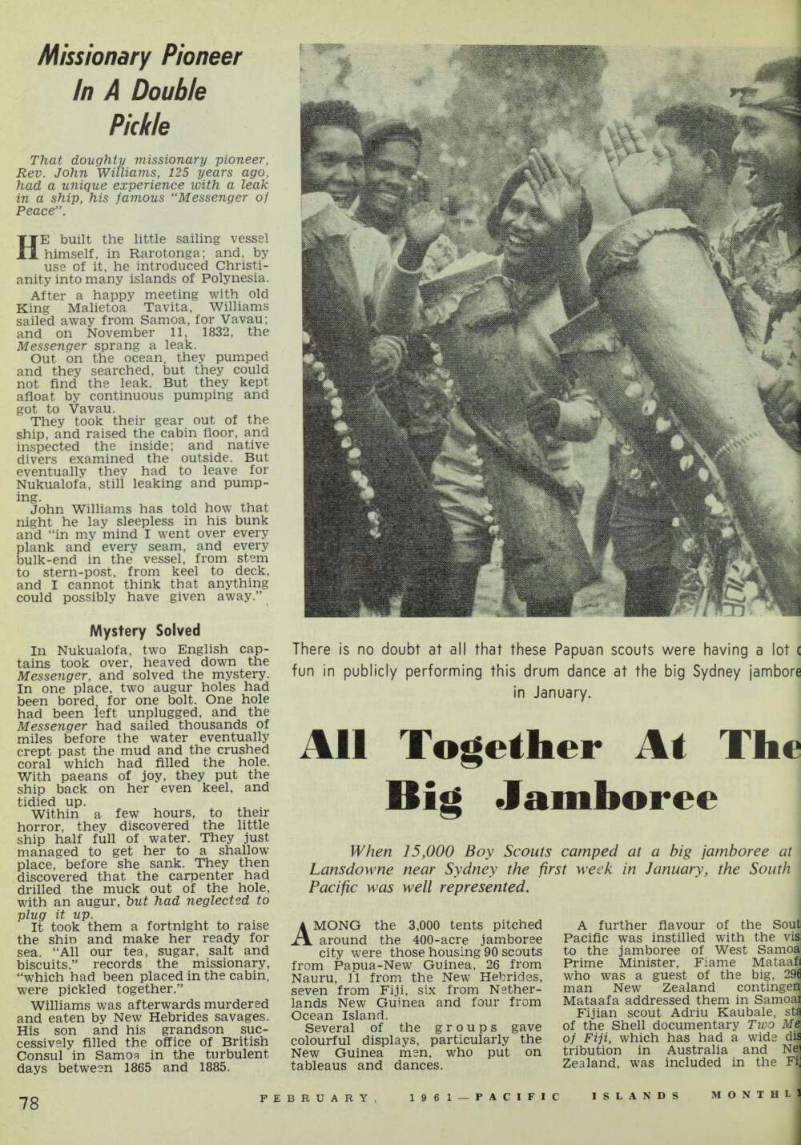 80
80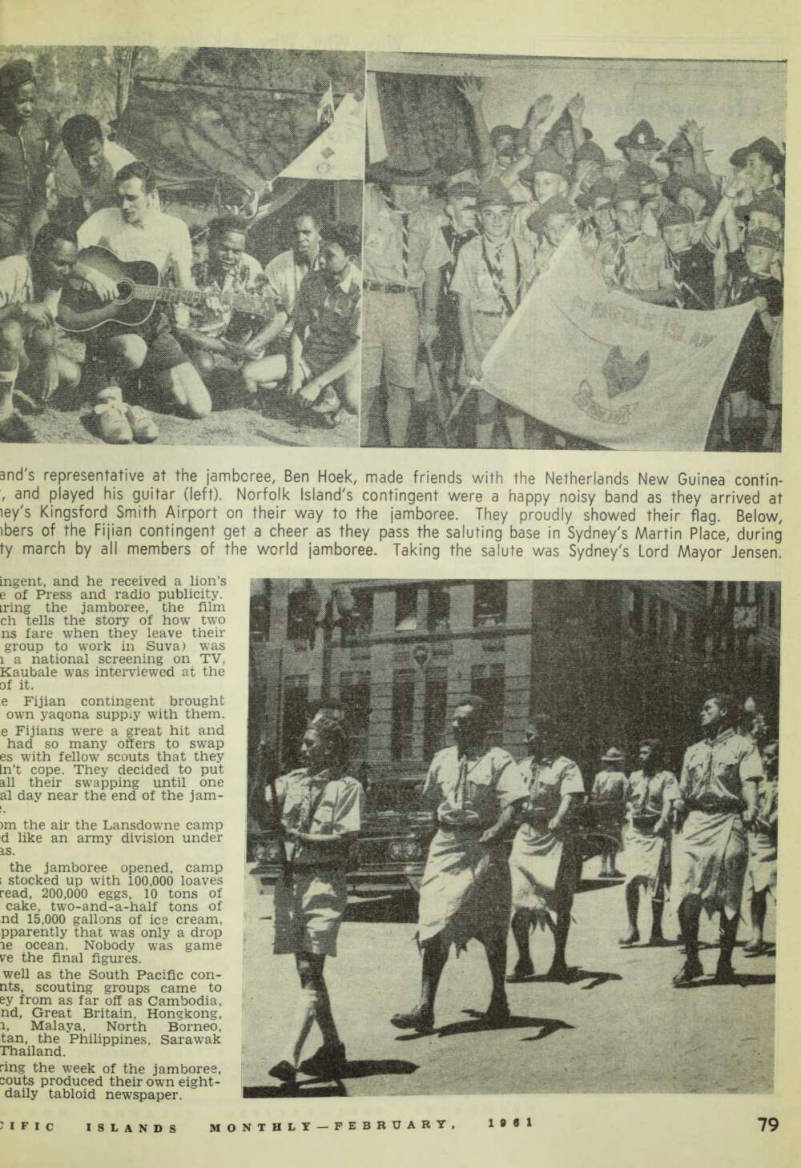 81
81 82
82 83
83 84
84 85
85 86
86 87
87 88
88 89
89 90
90 91
91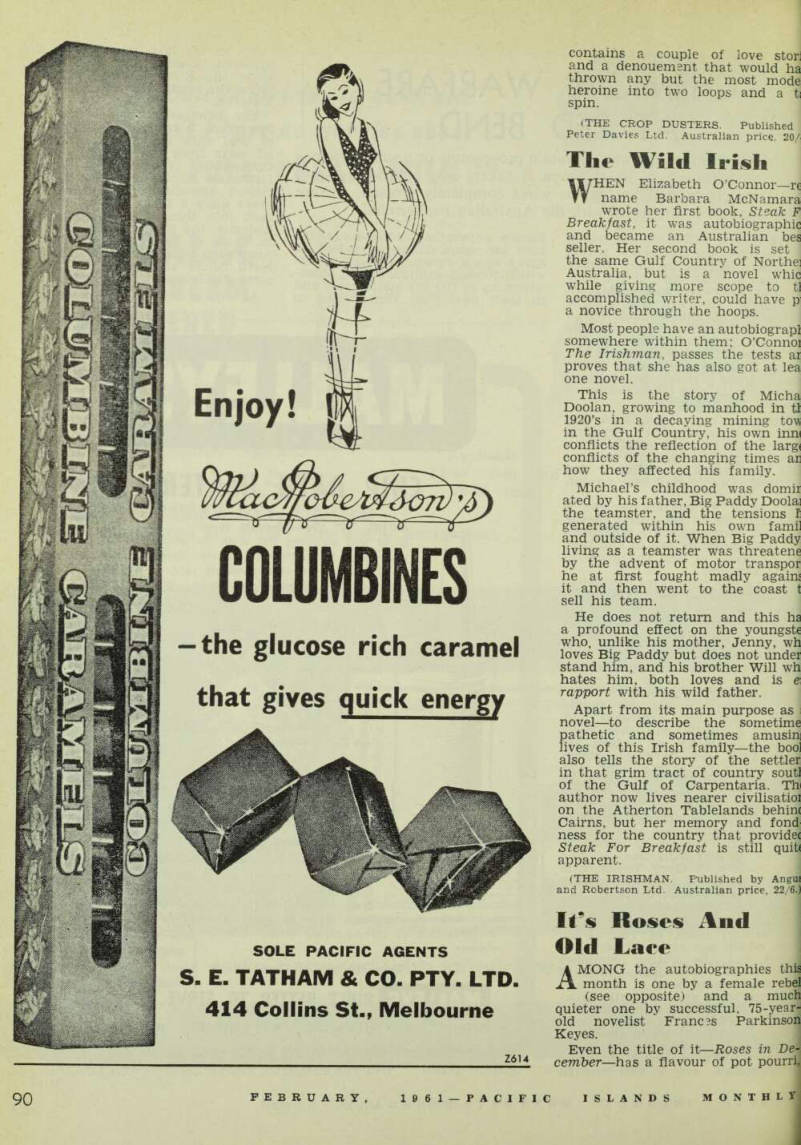 92
92 93
93 94
94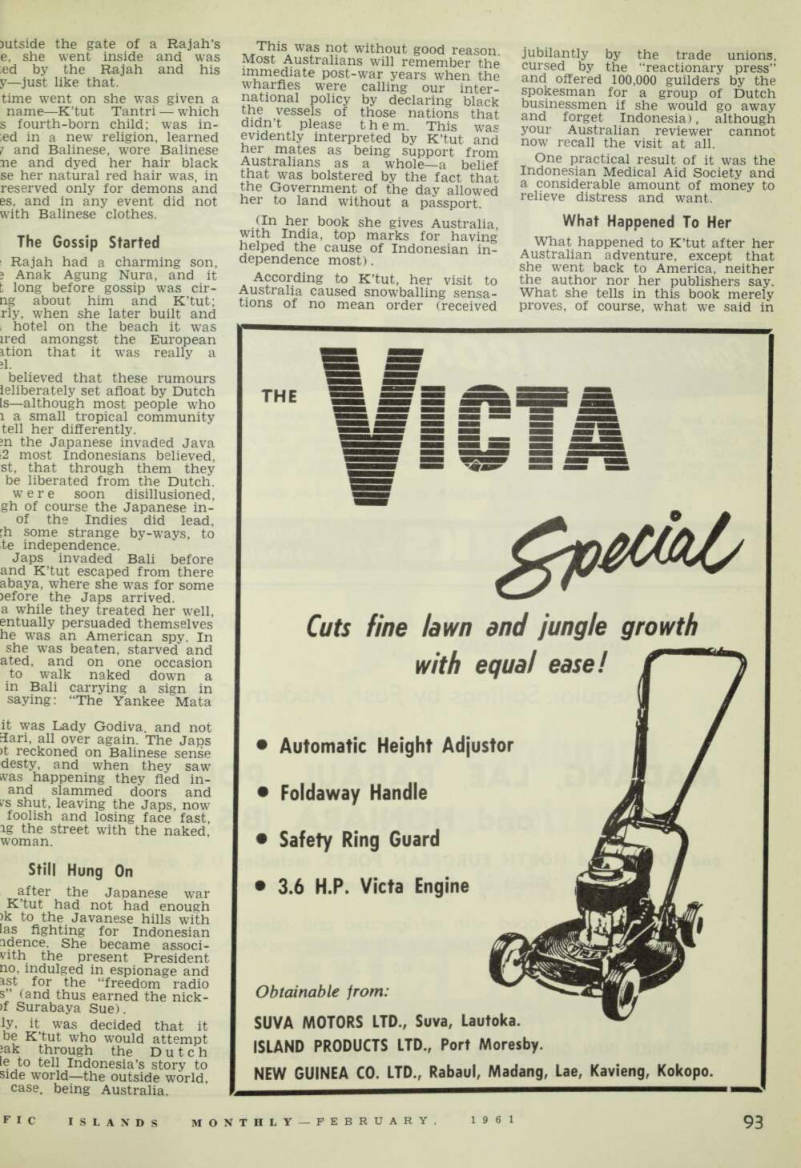 95
95 96
96 97
97 98
98 99
99 100
100 101
101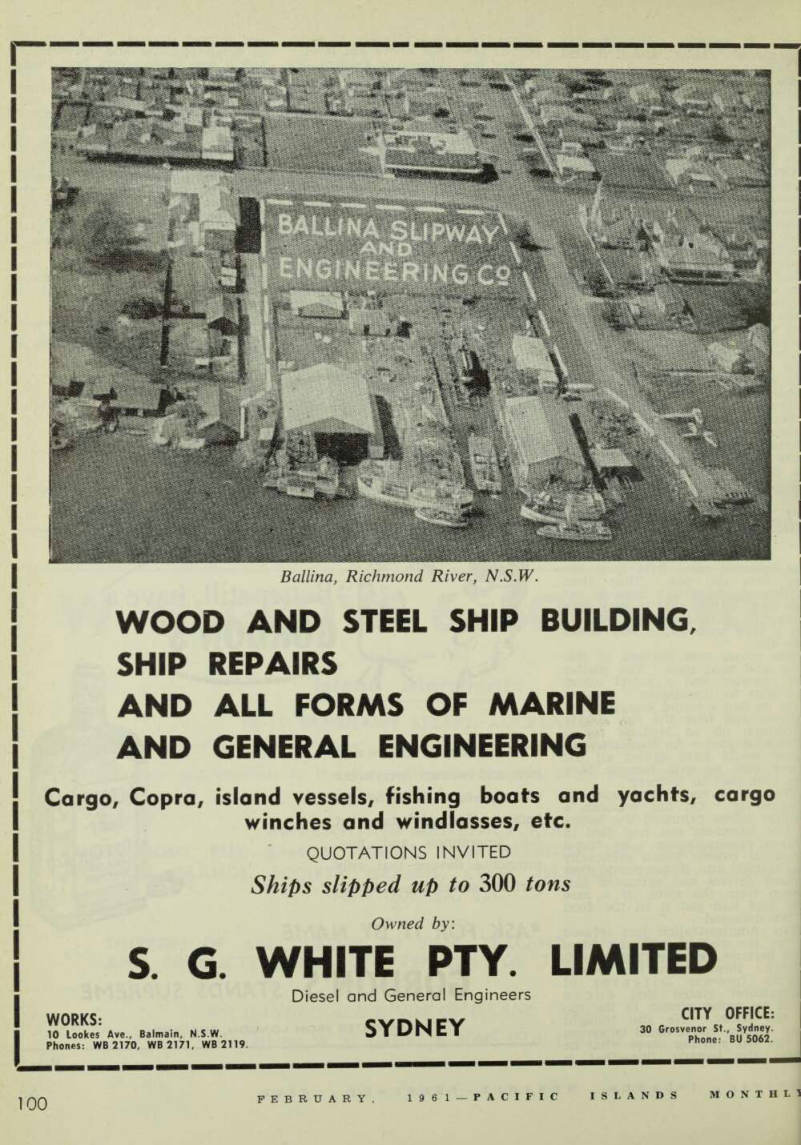 102
102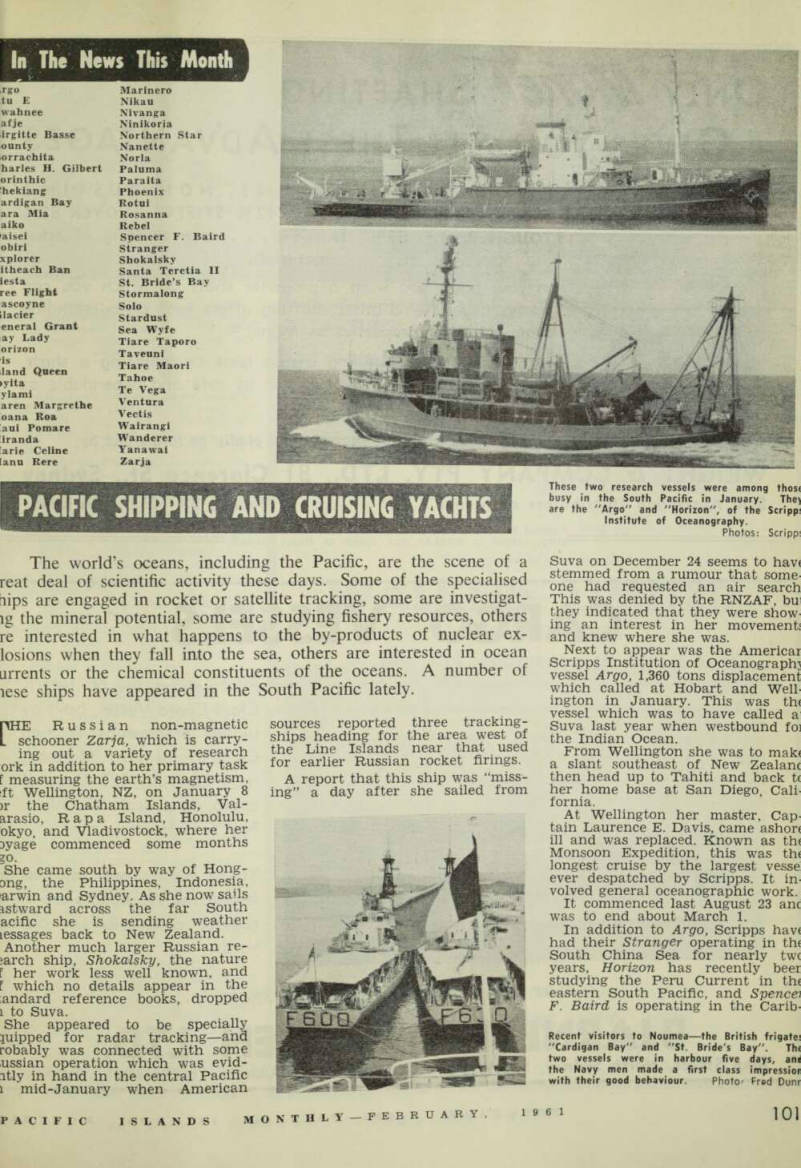 103
103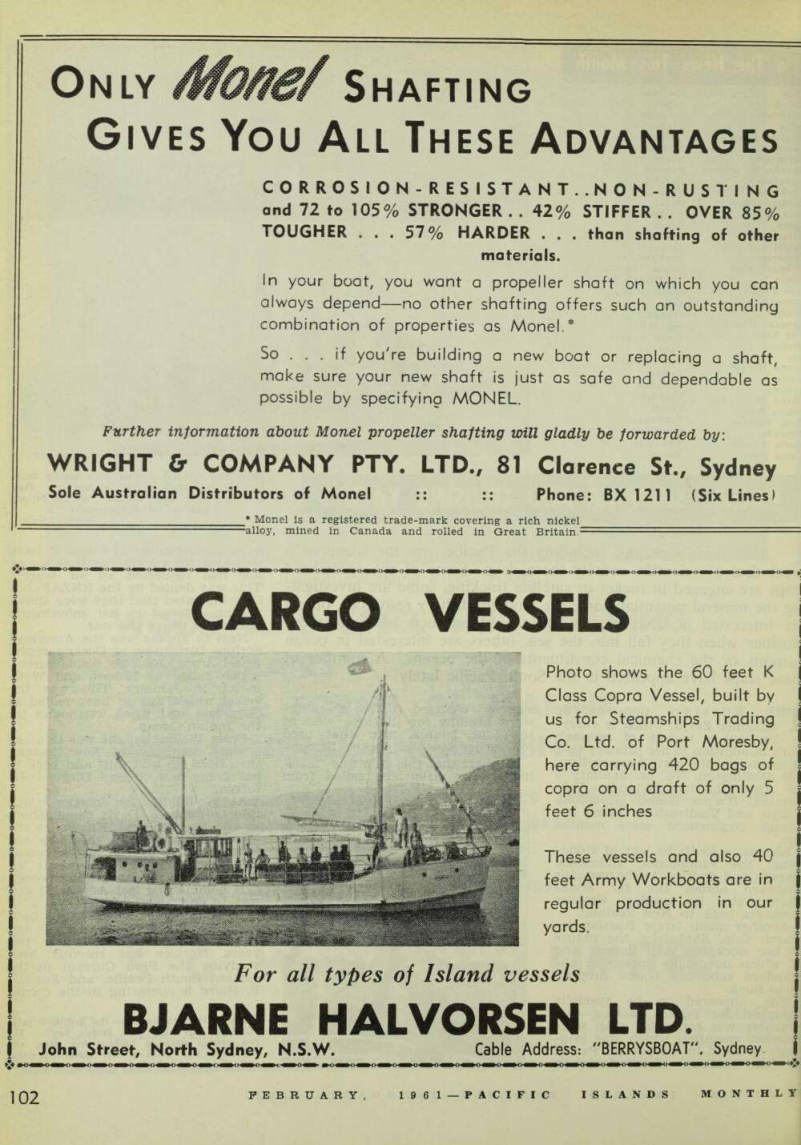 104
104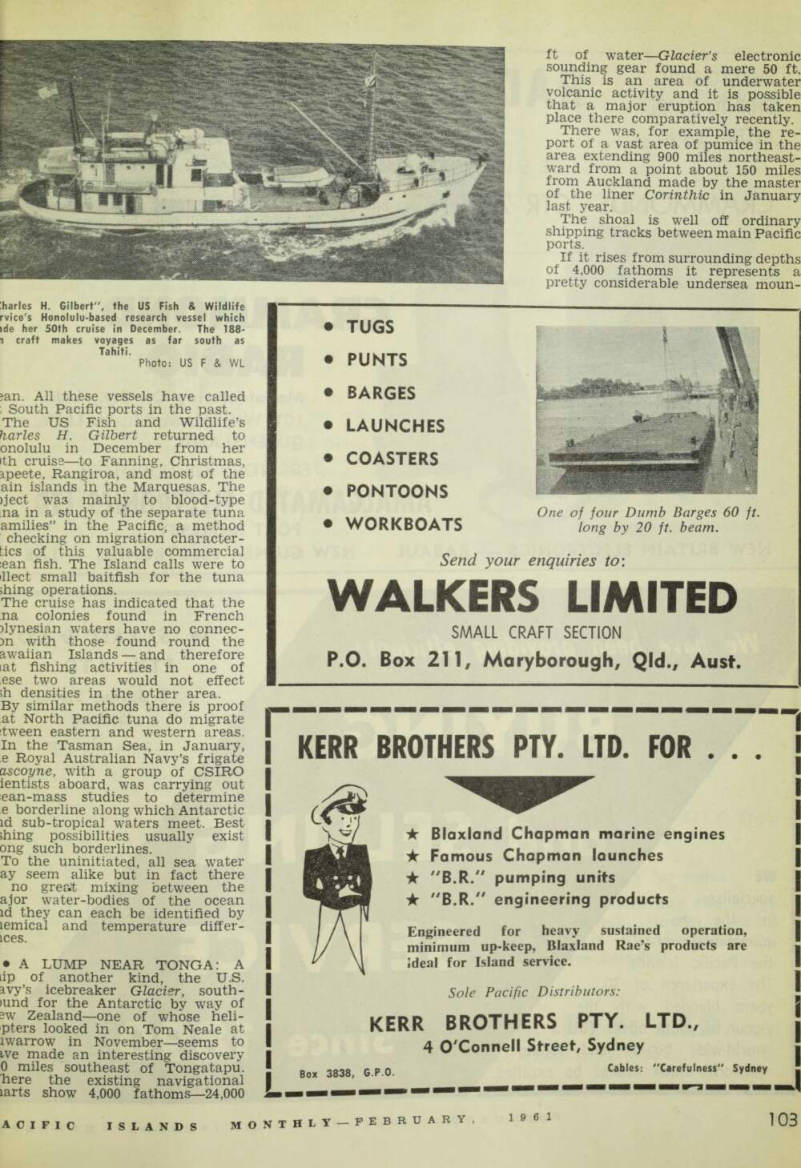 105
105 106
106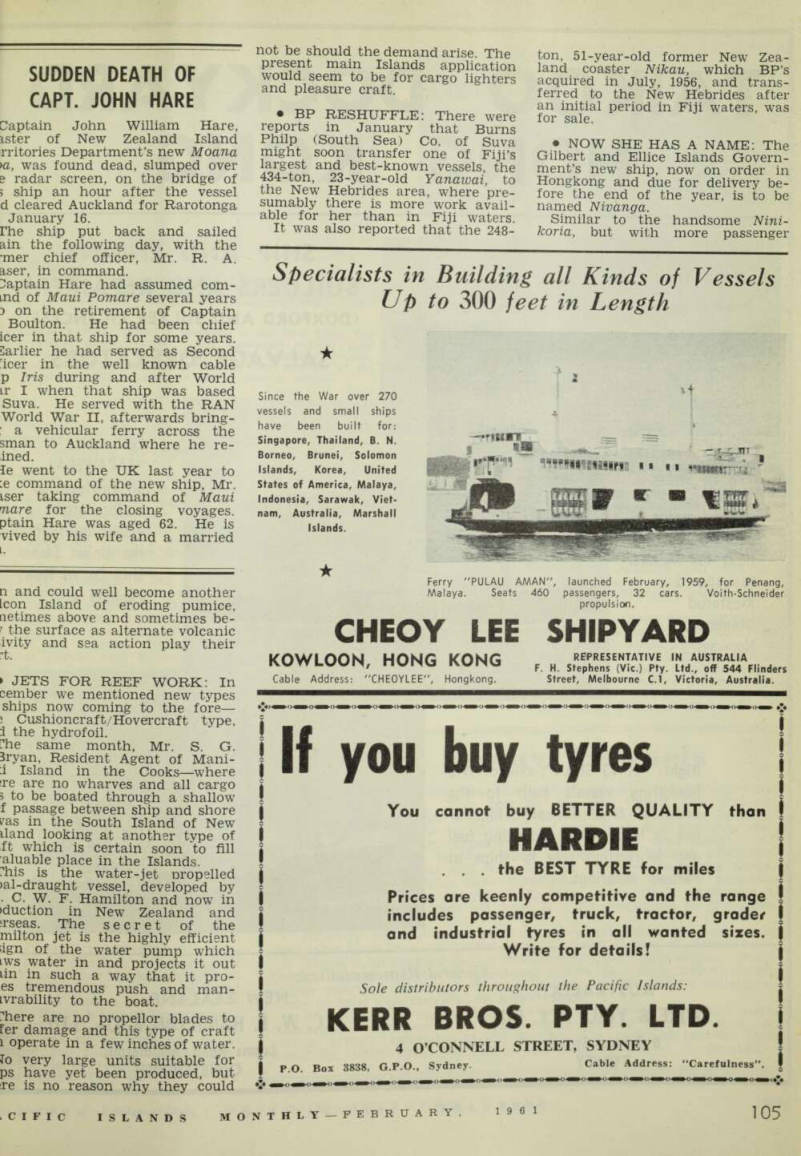 107
107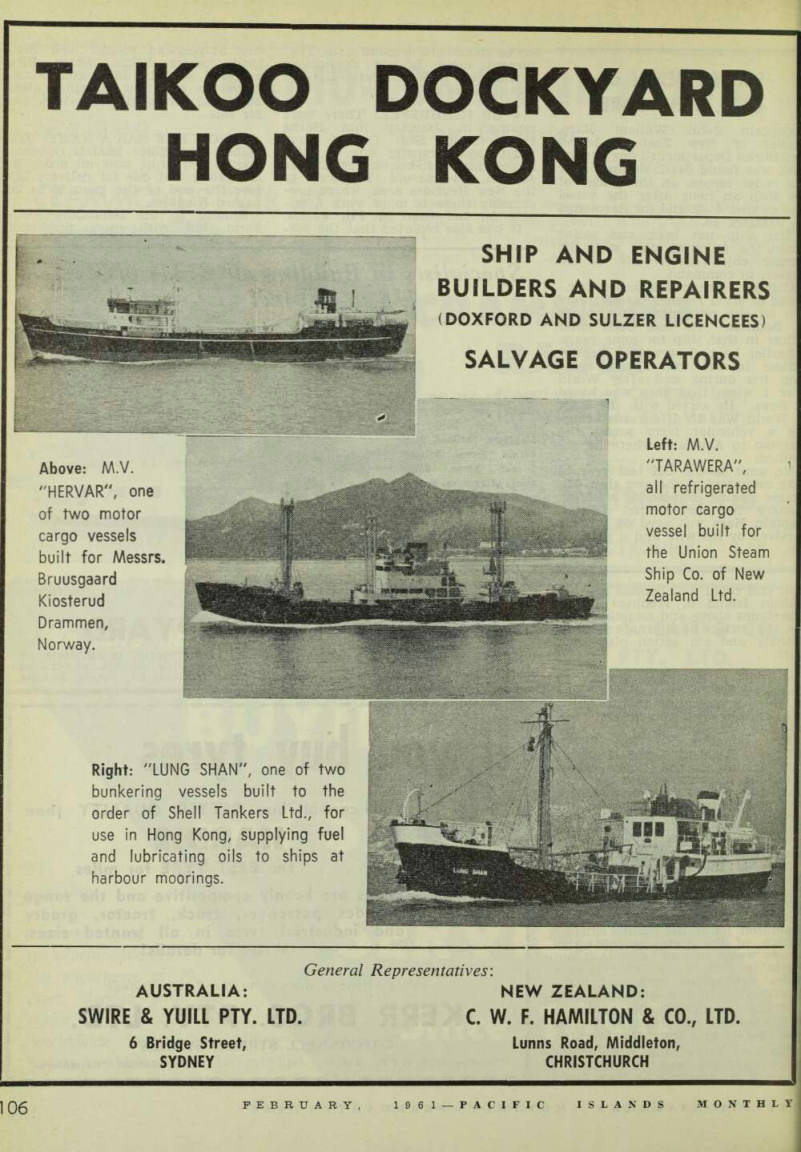 108
108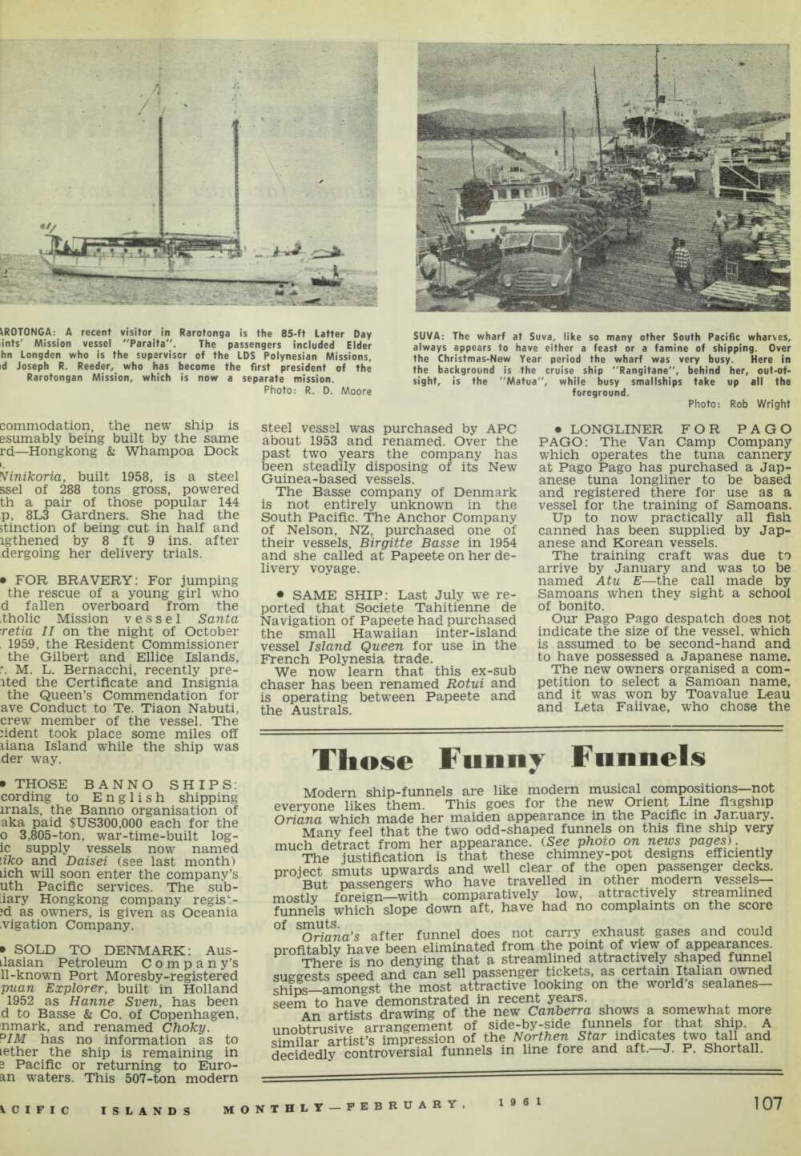 109
109 110
110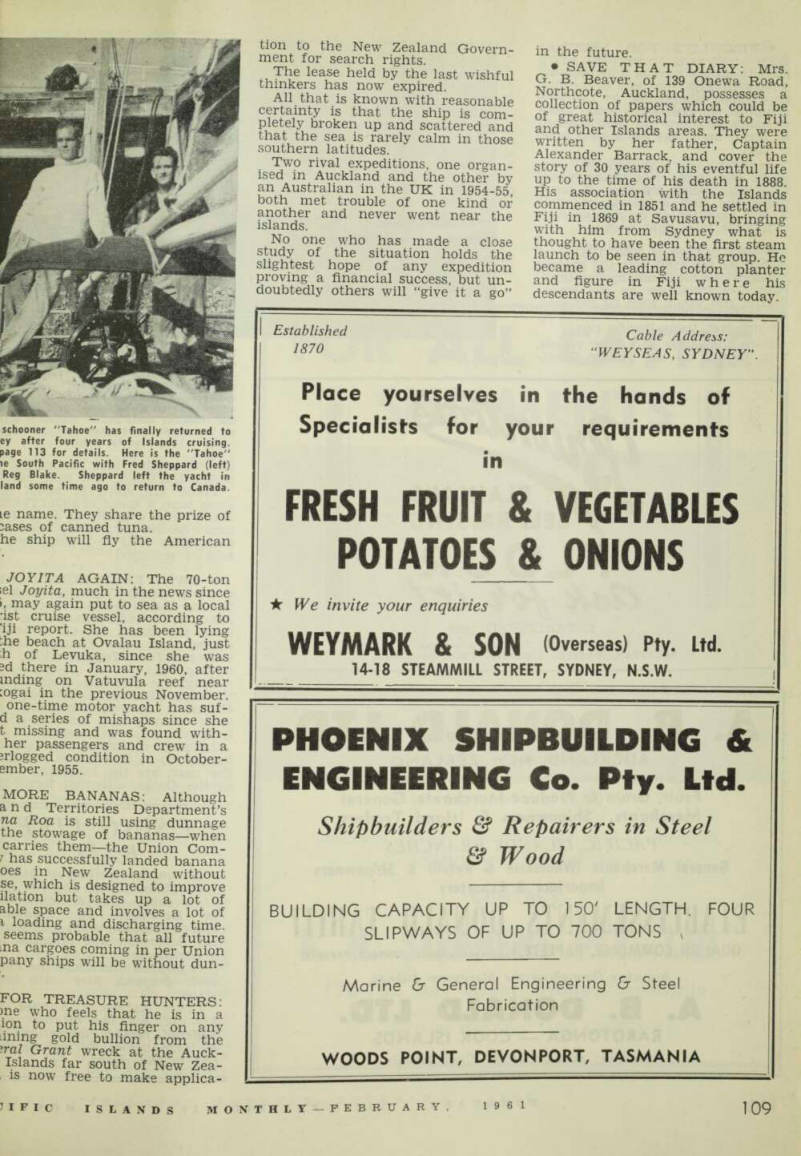 111
111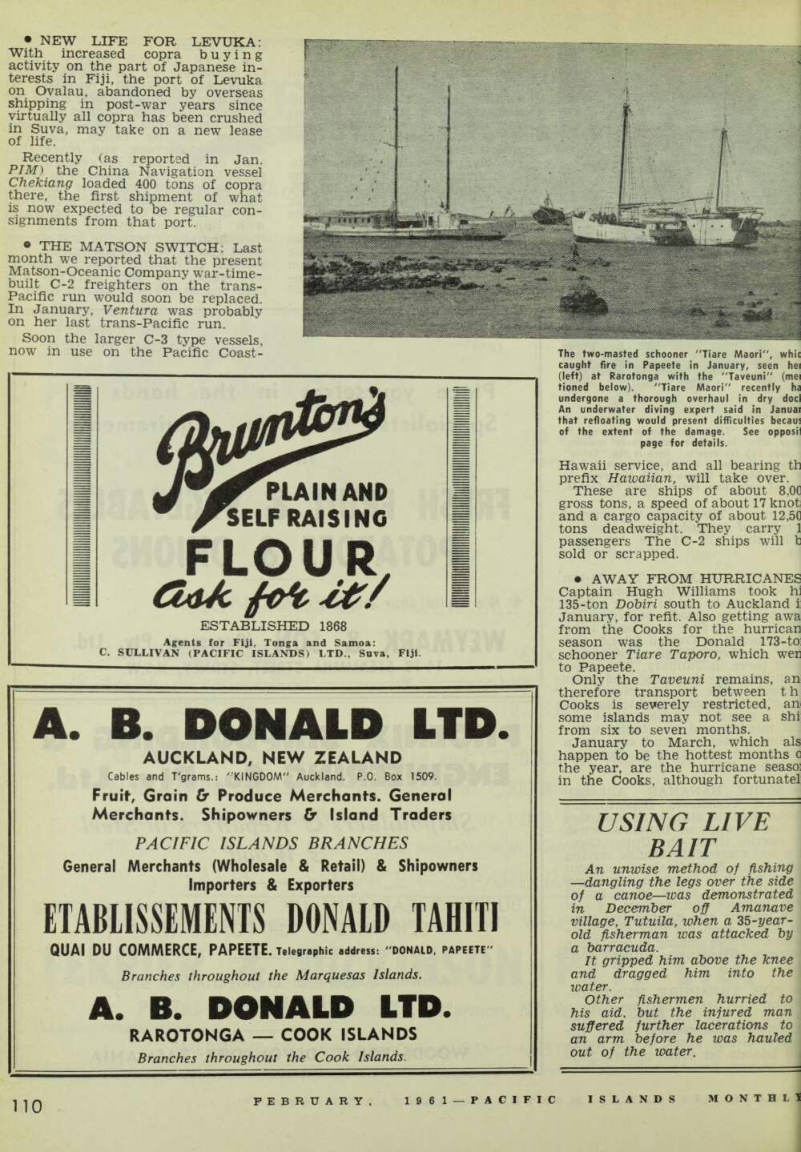 112
112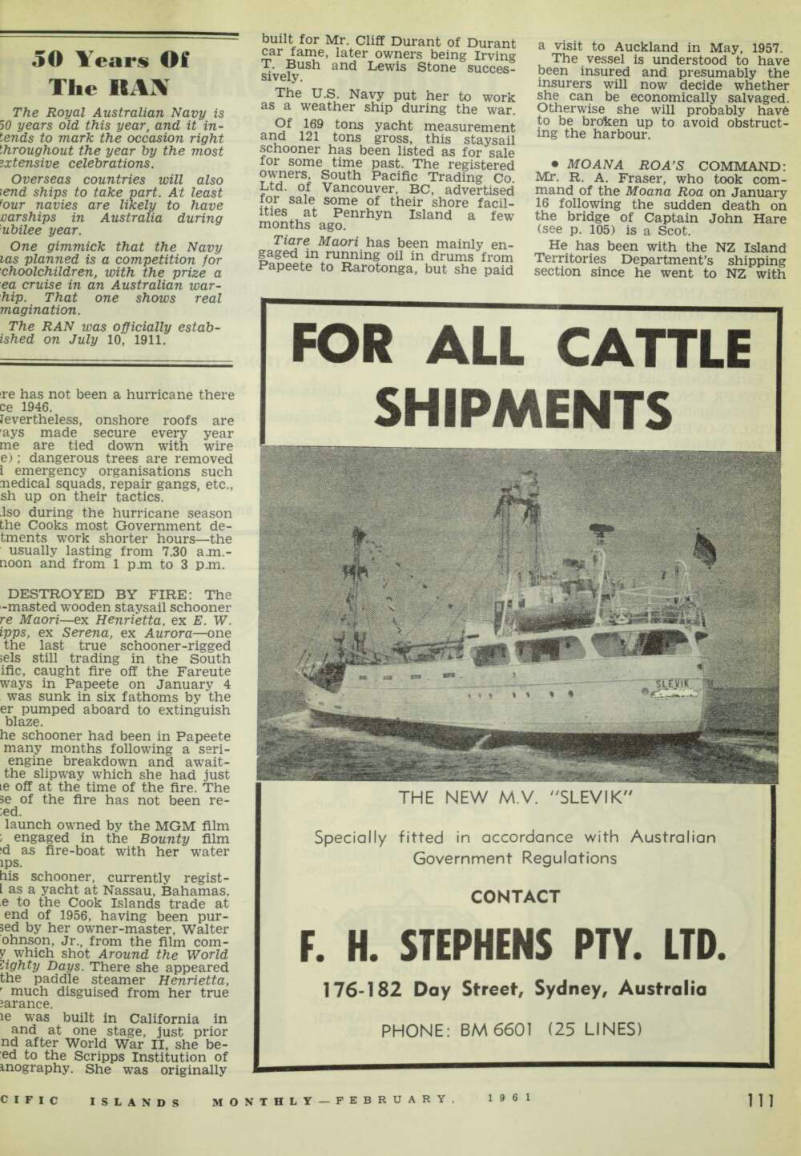 113
113 114
114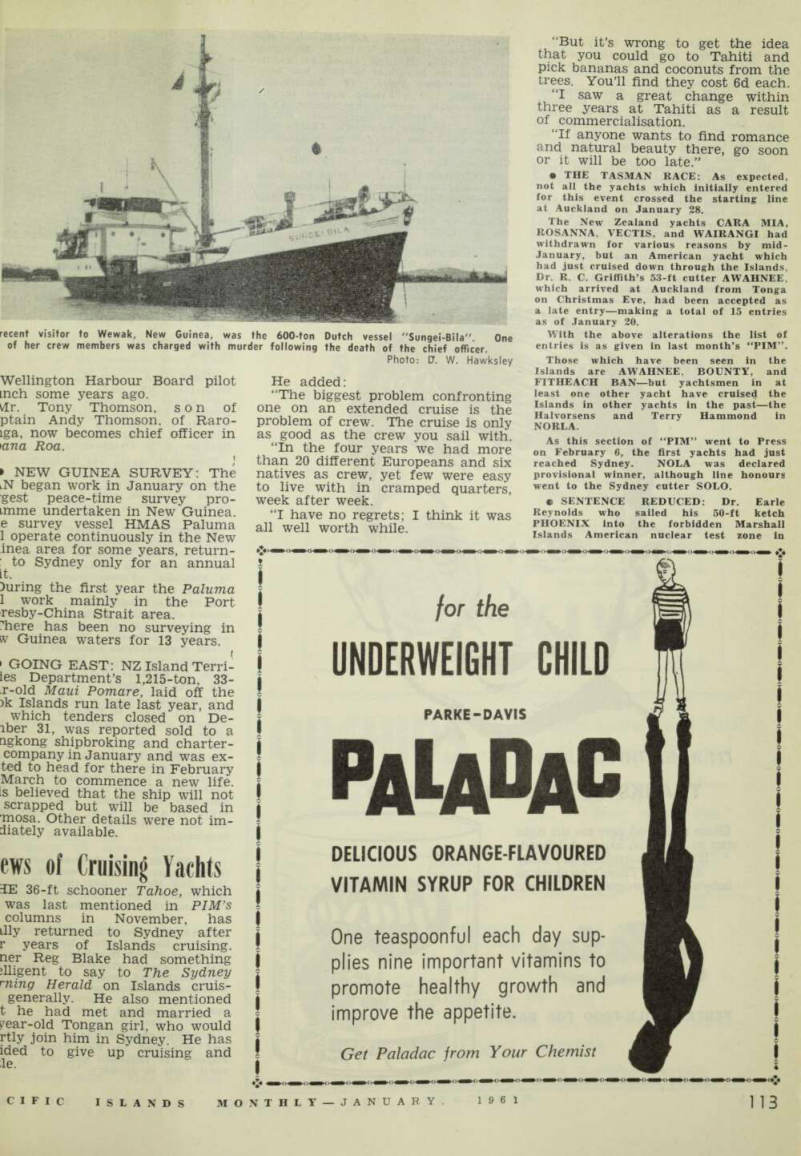 115
115 116
116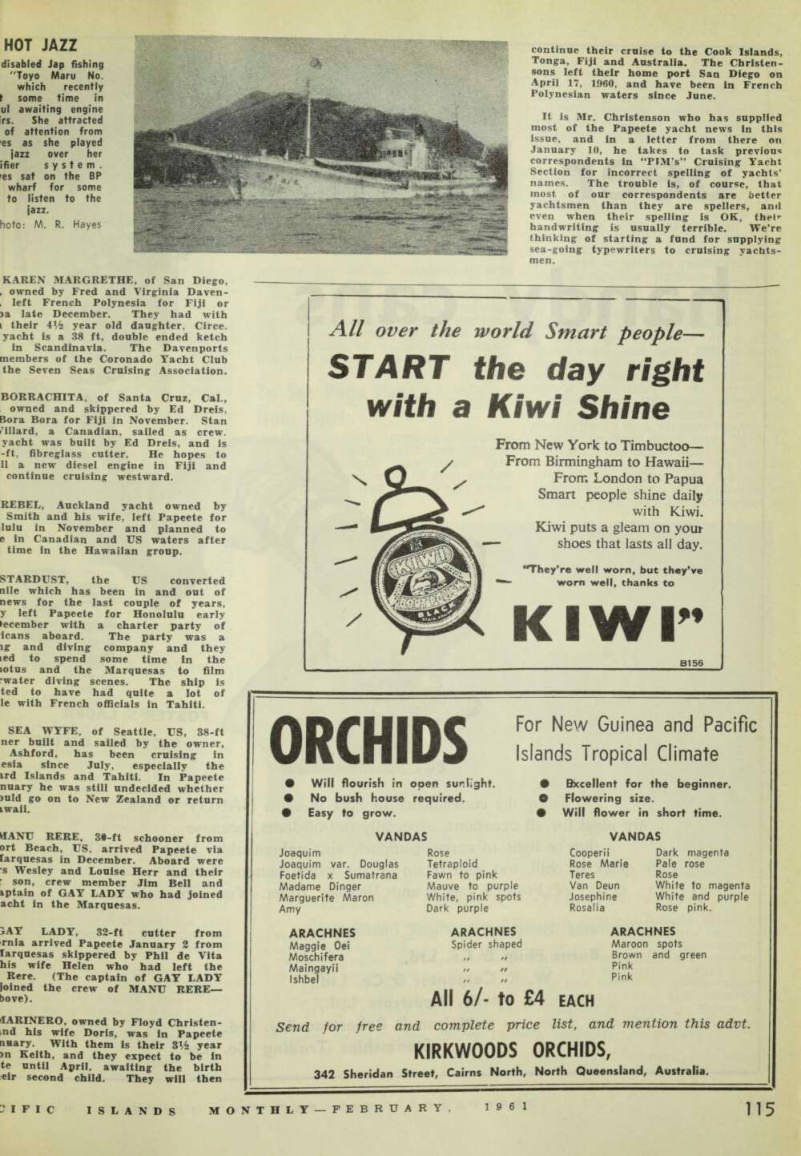 117
117 118
118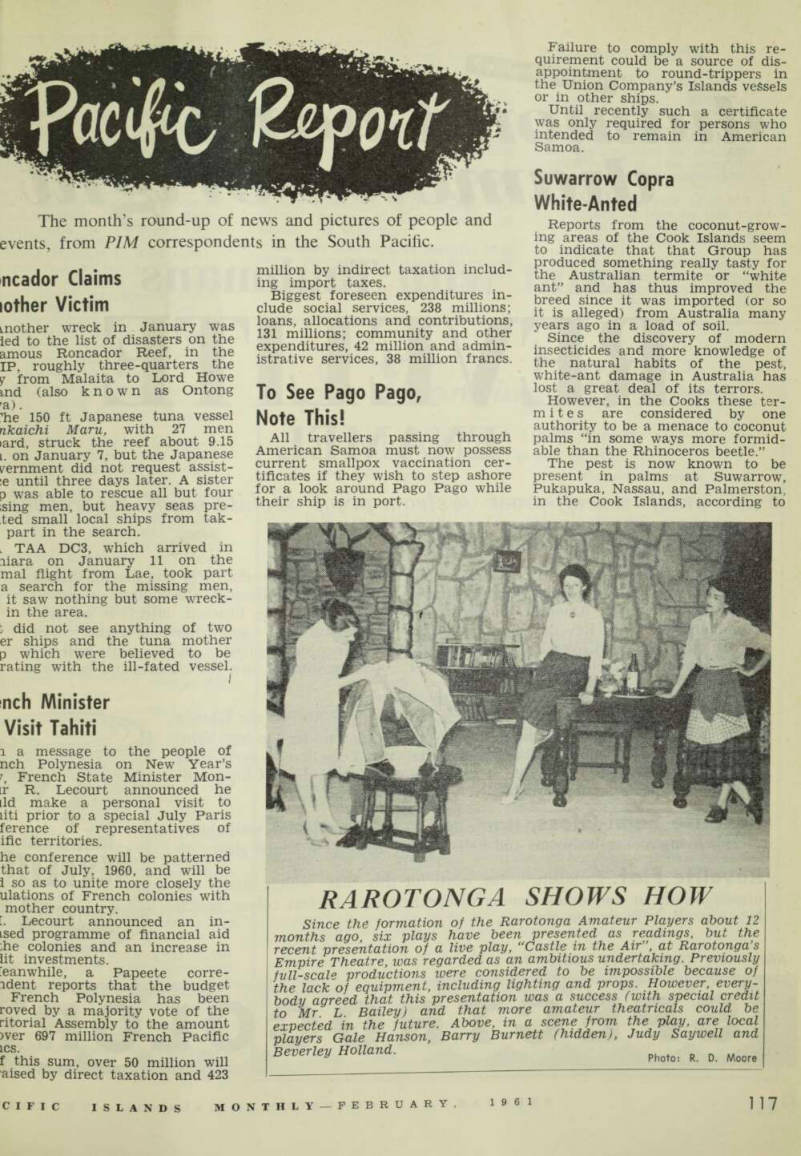 119
119 120
120 121
121 122
122 123
123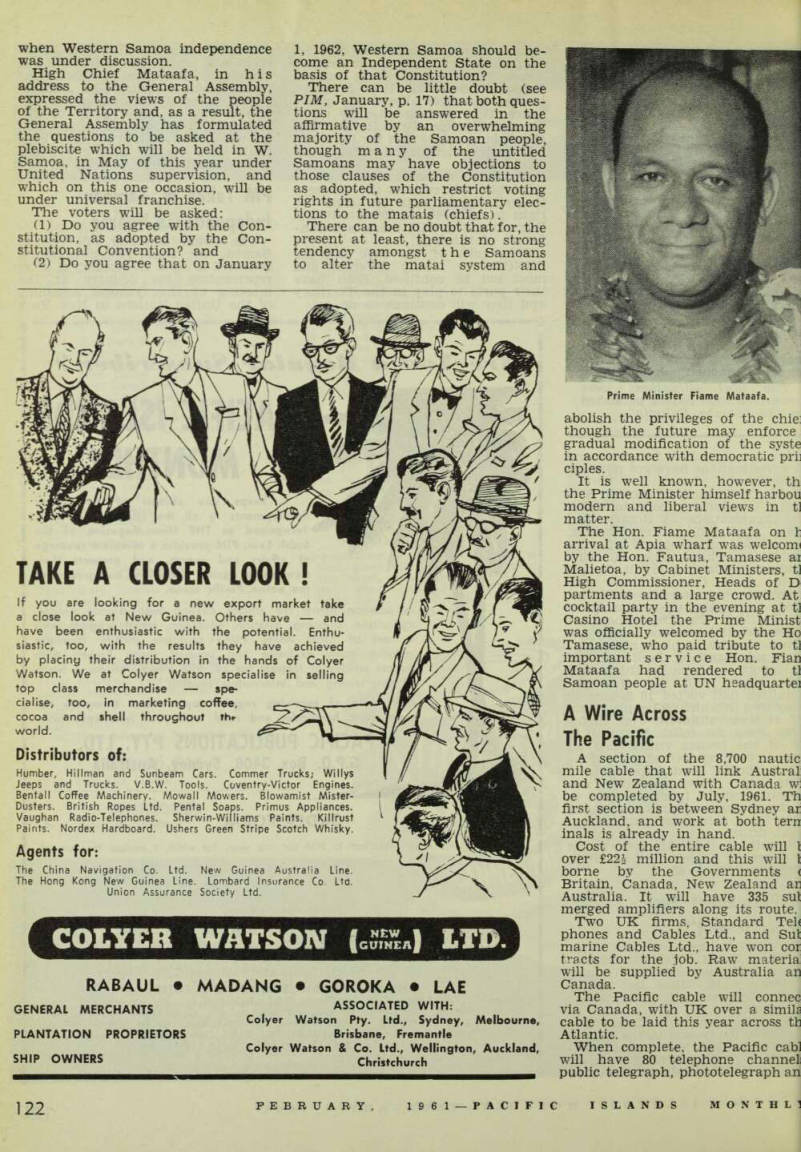 124
124 125
125 126
126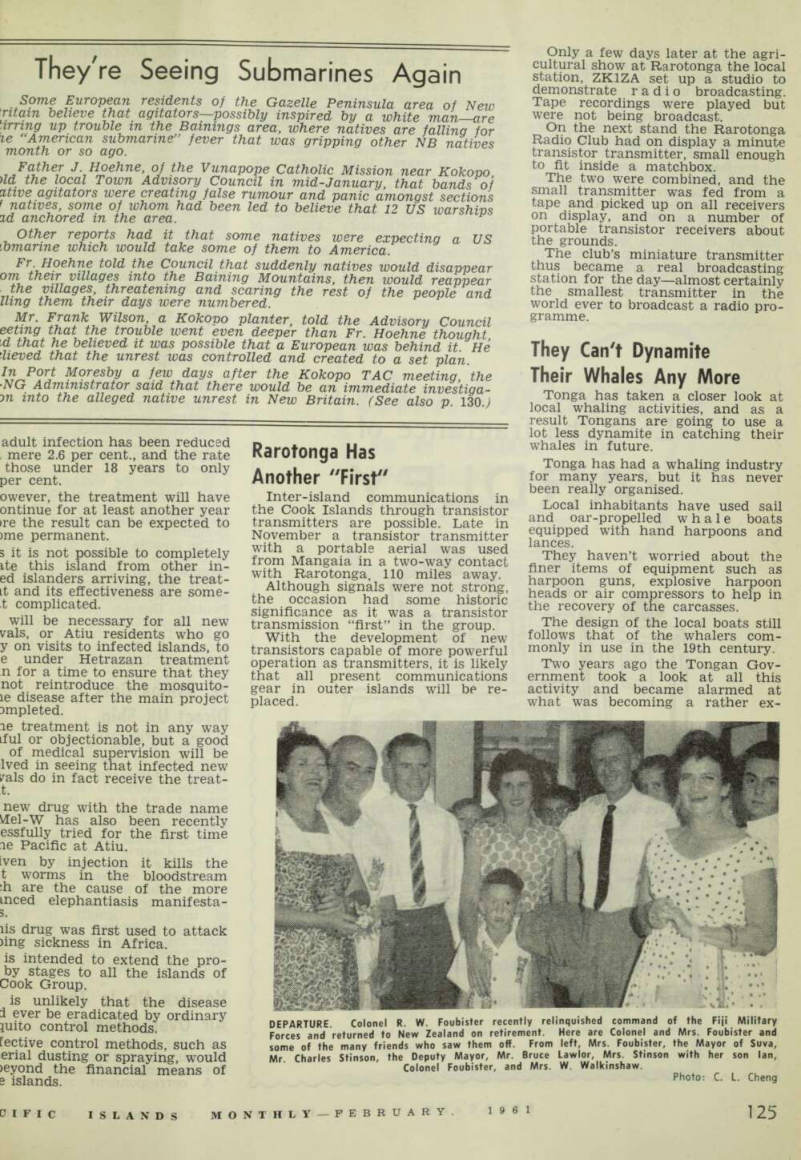 127
127 128
128 129
129 130
130 131
131 132
132 133
133 134
134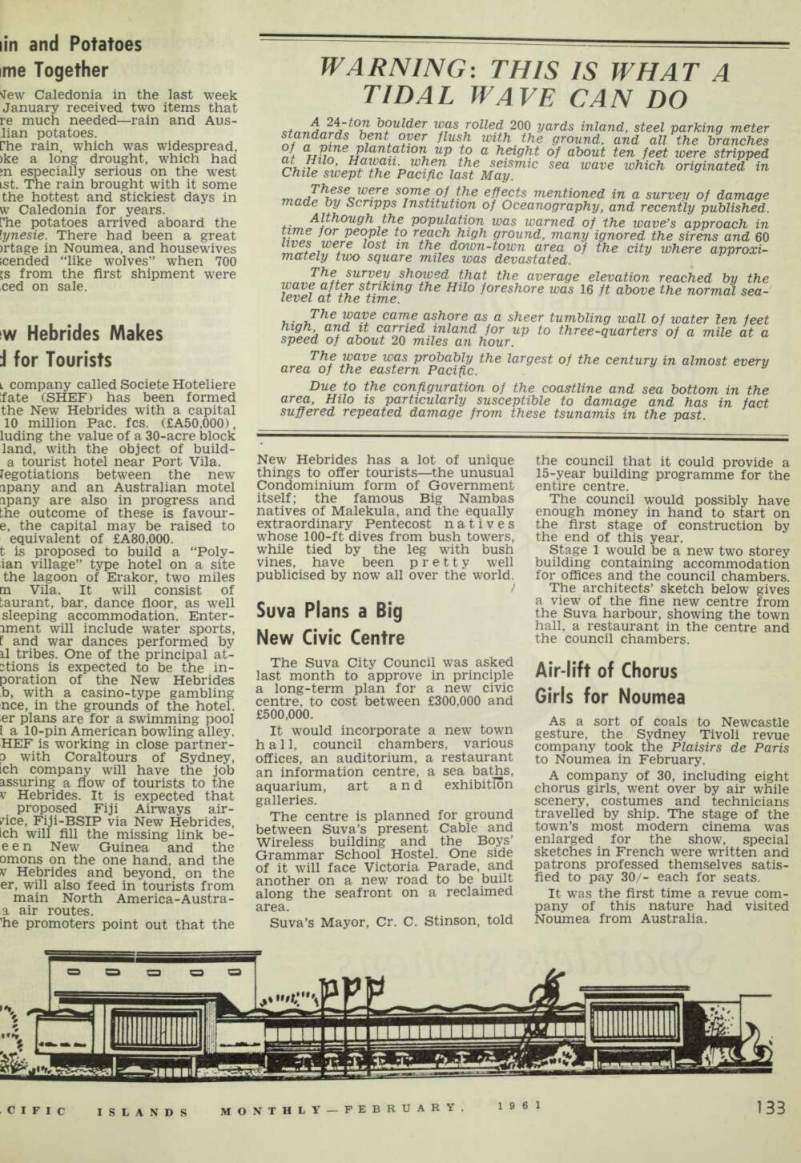 135
135 136
136 137
137 138
138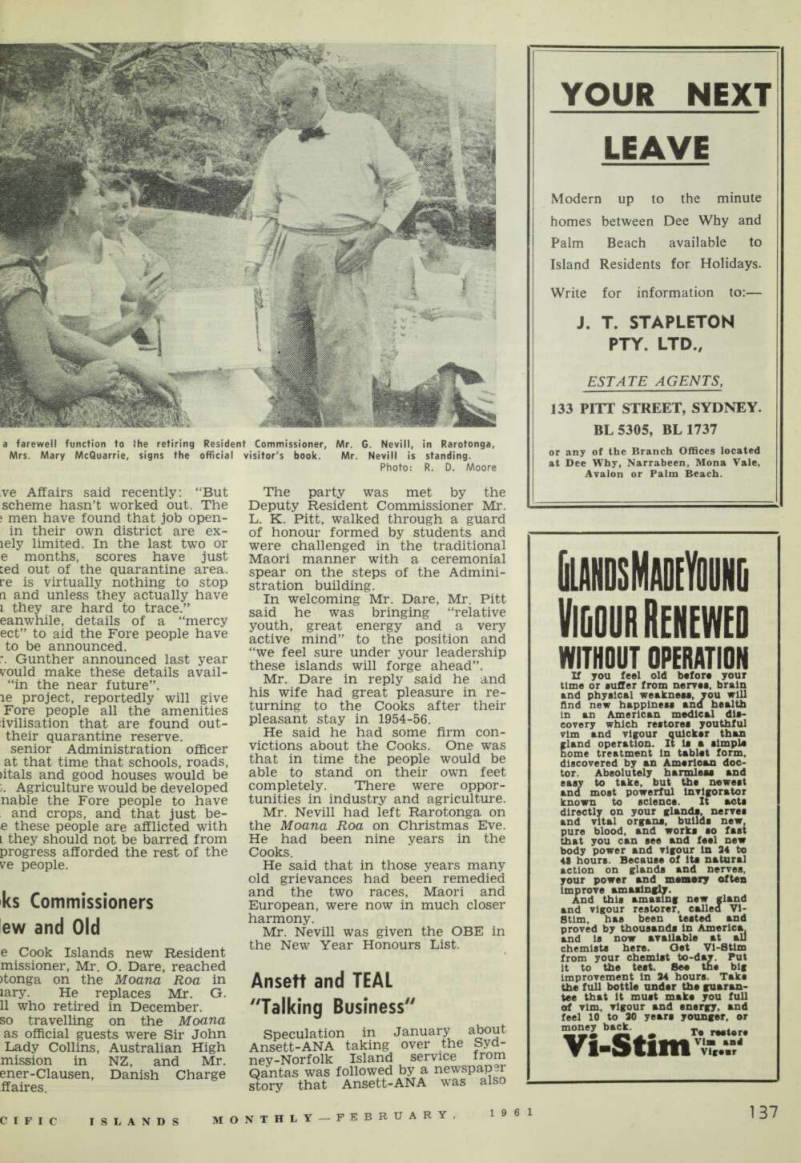 139
139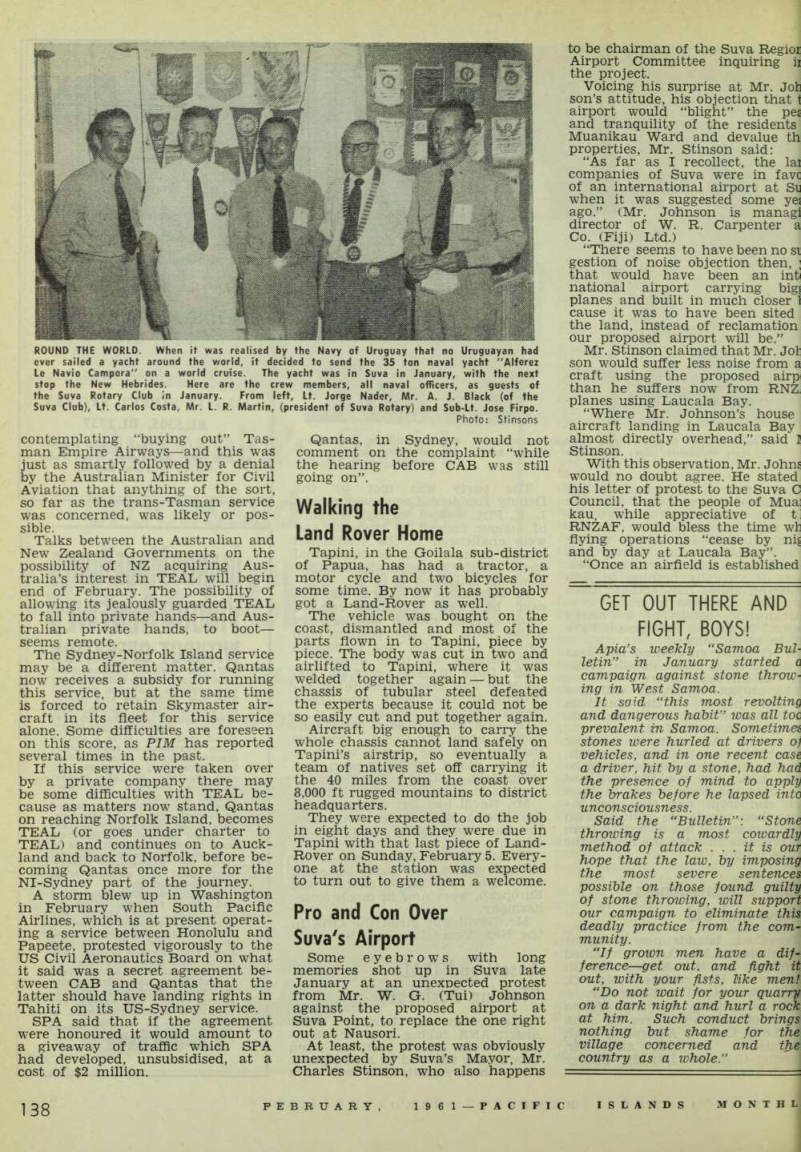 140
140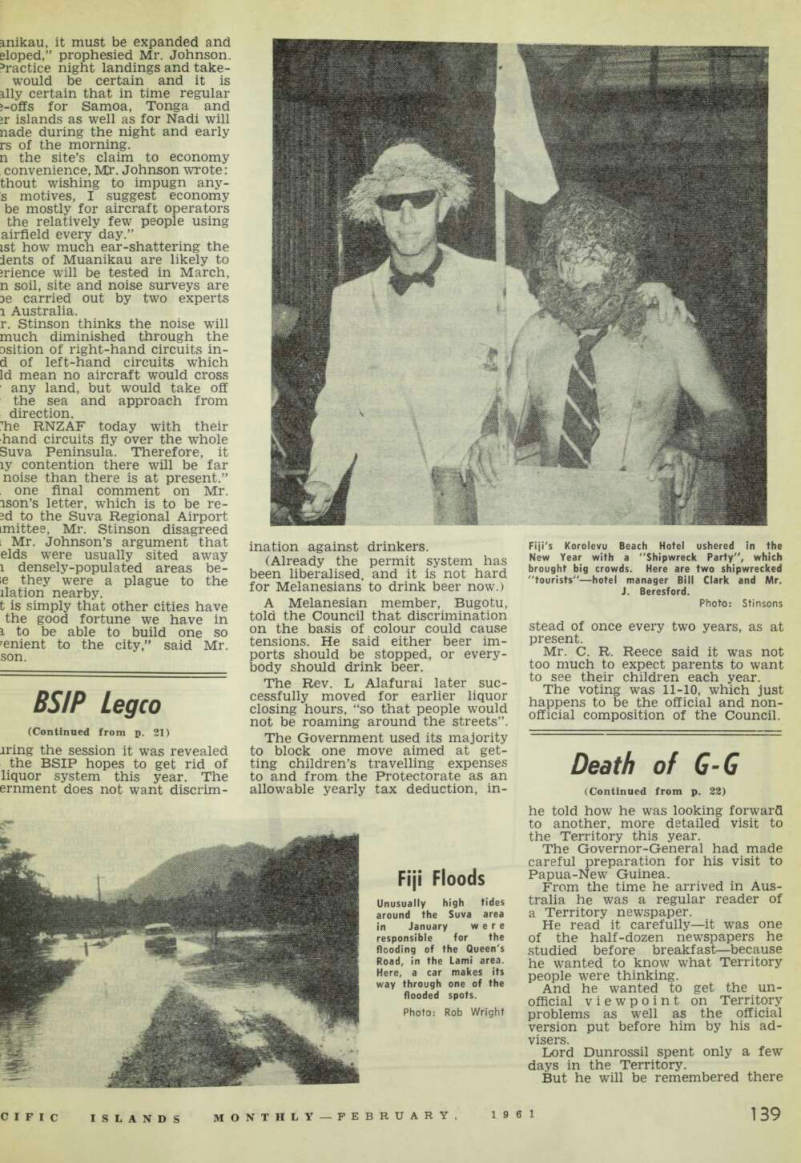 141
141 142
142 143
143 144
144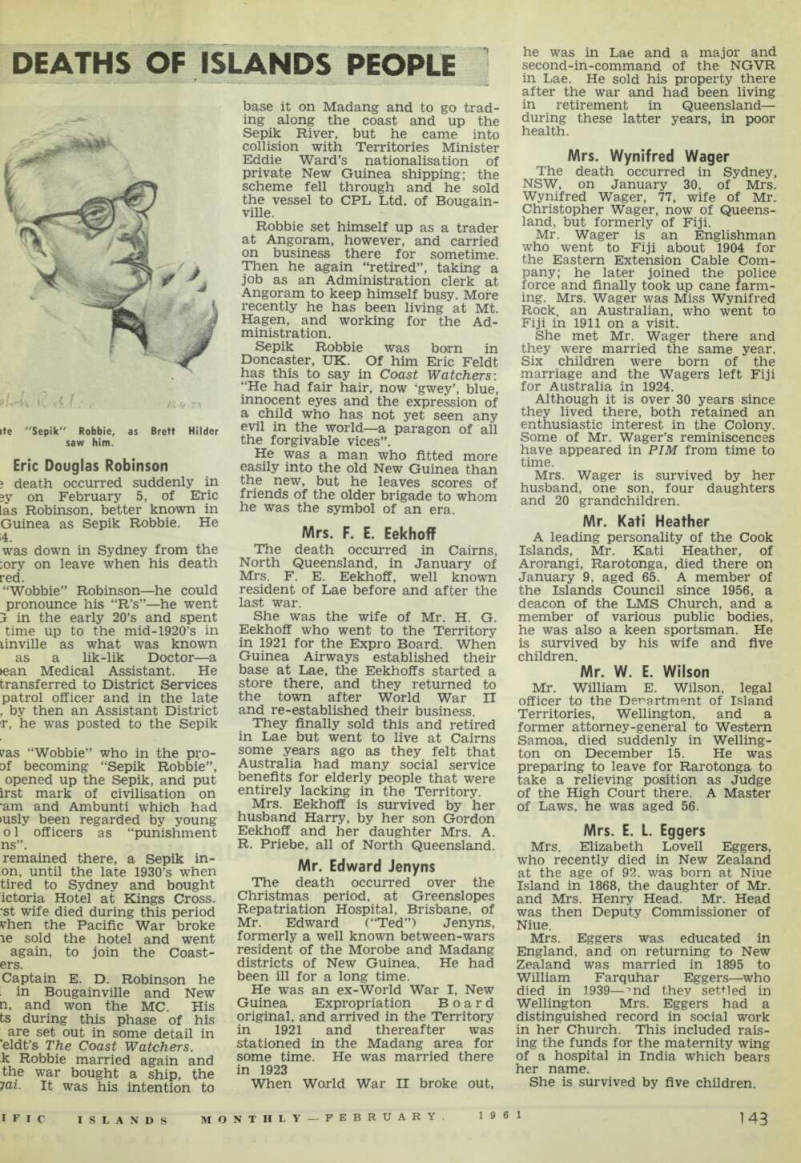 145
145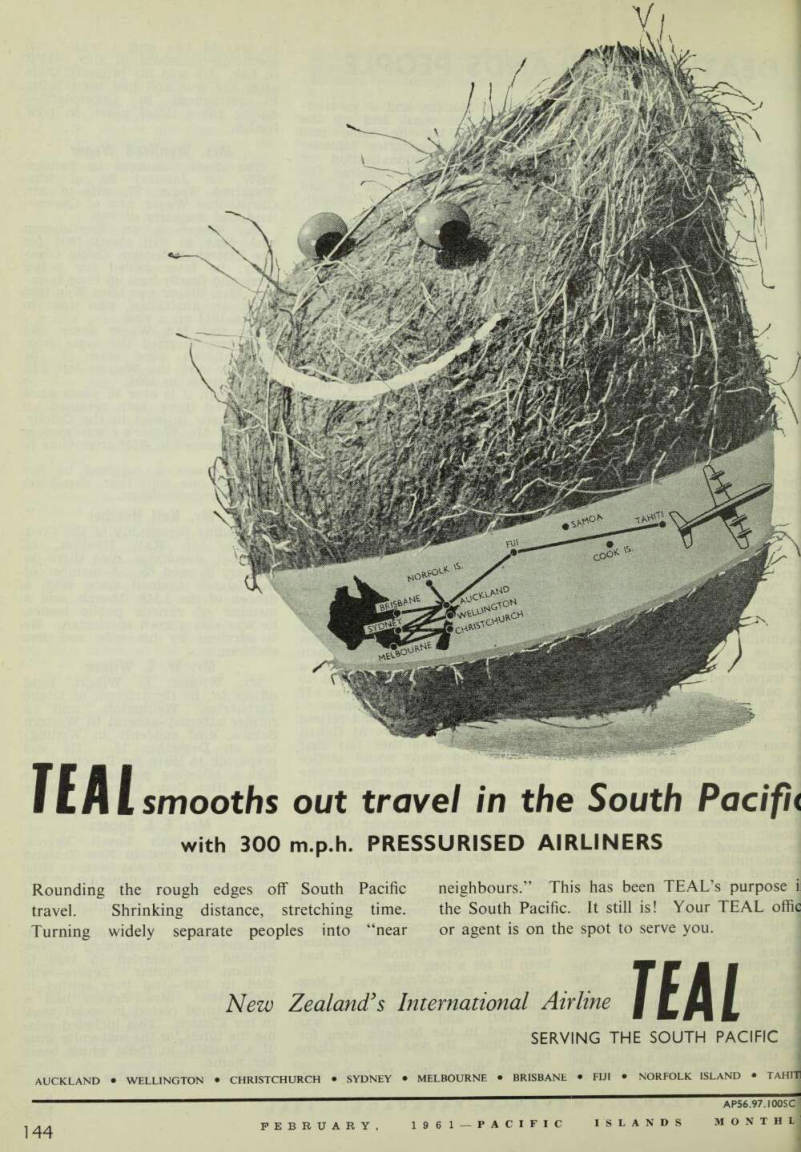 146
146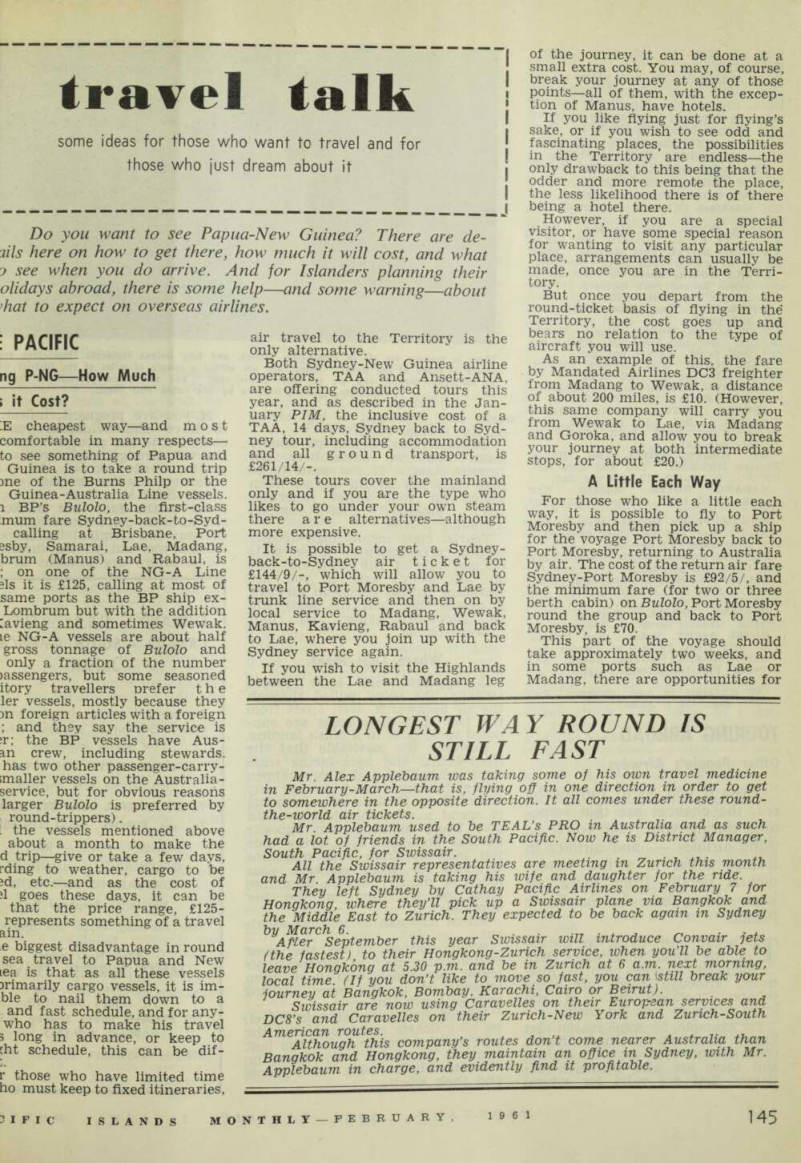 147
147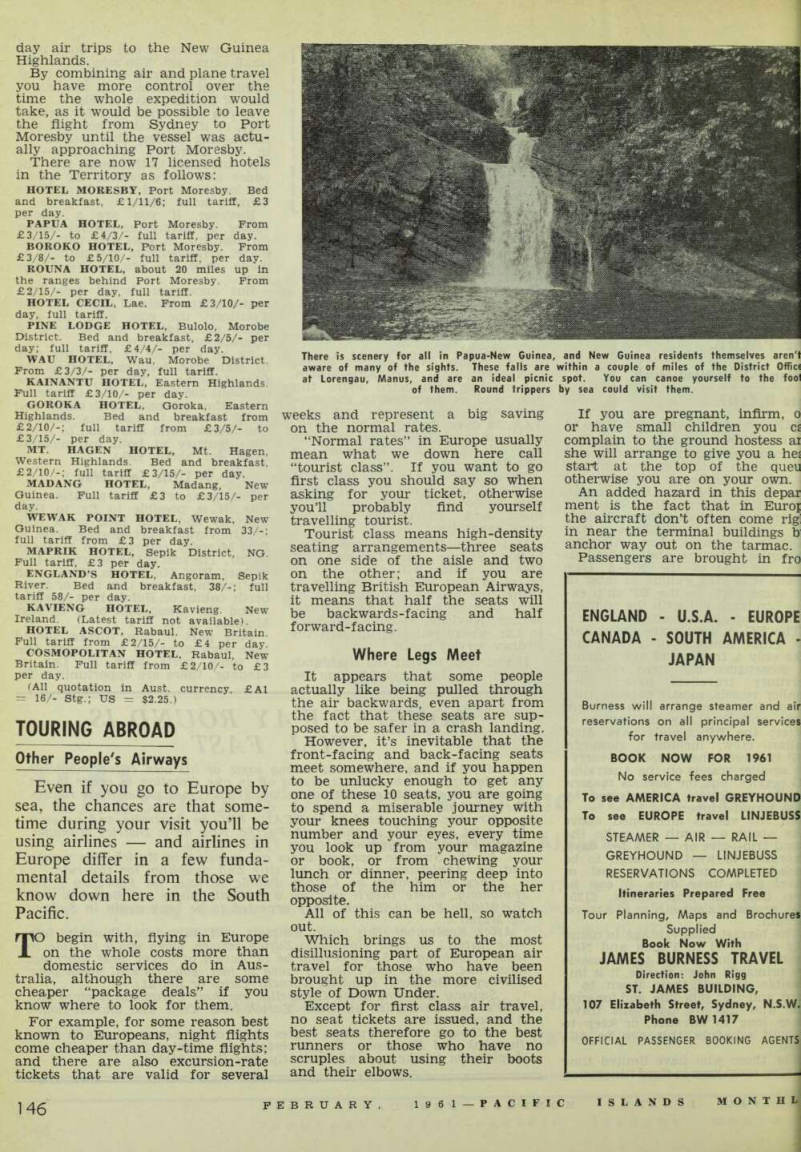 148
148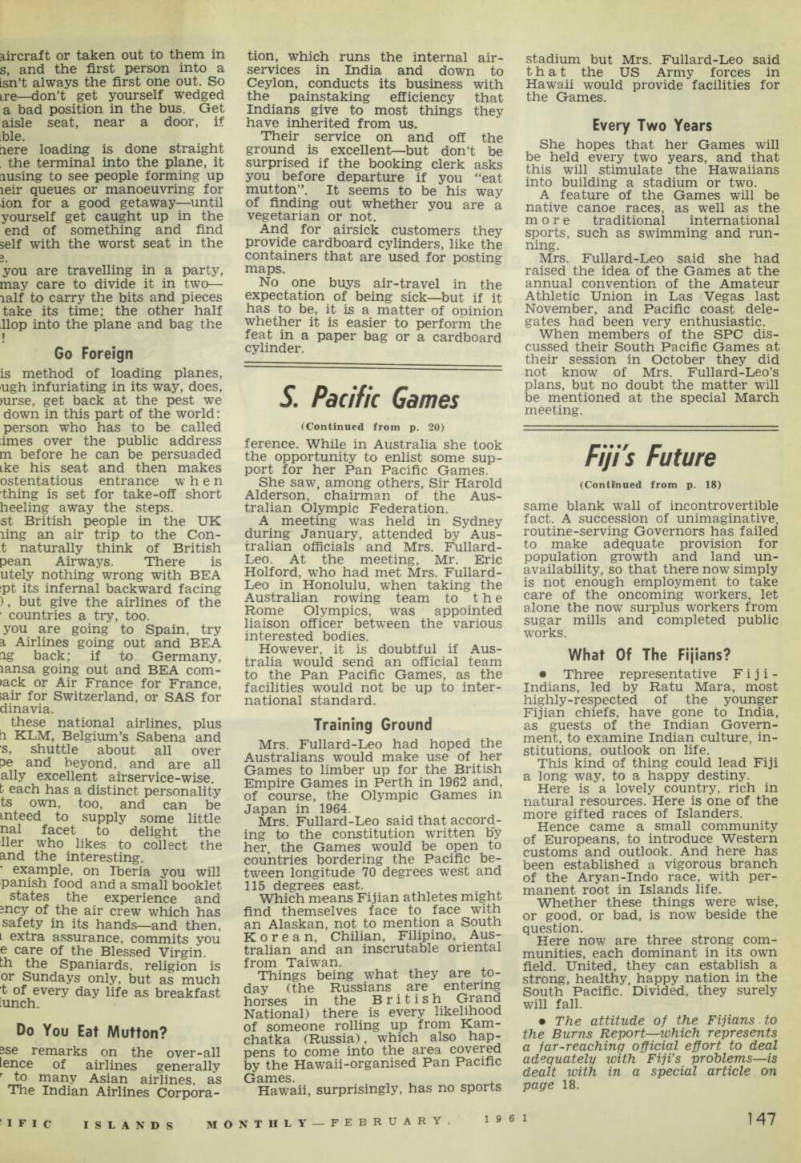 149
149 150
150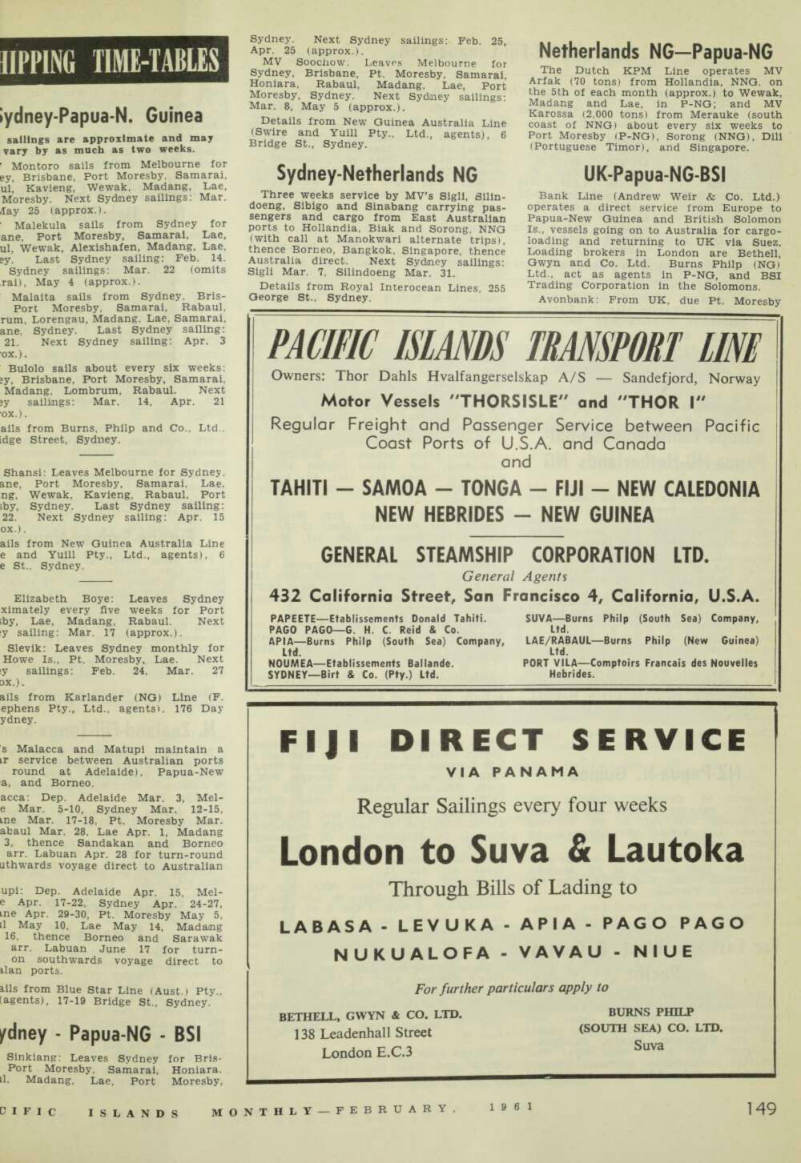 151
151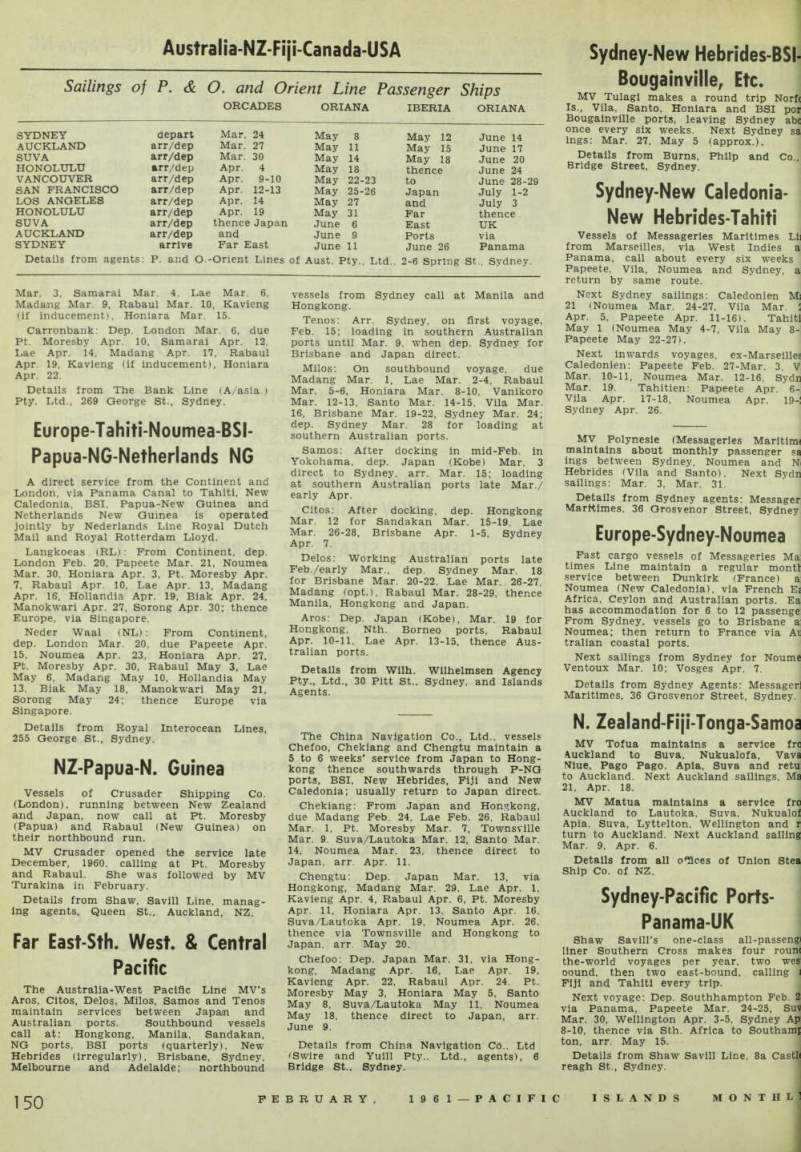 152
152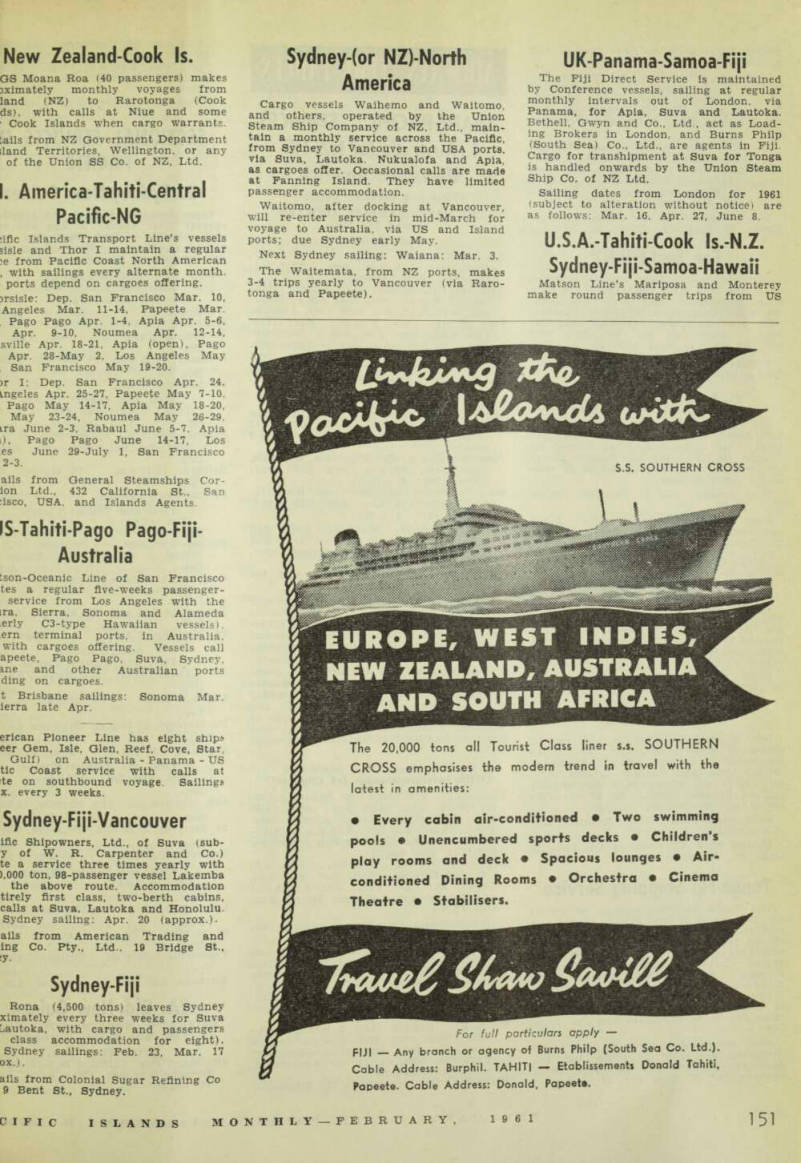 153
153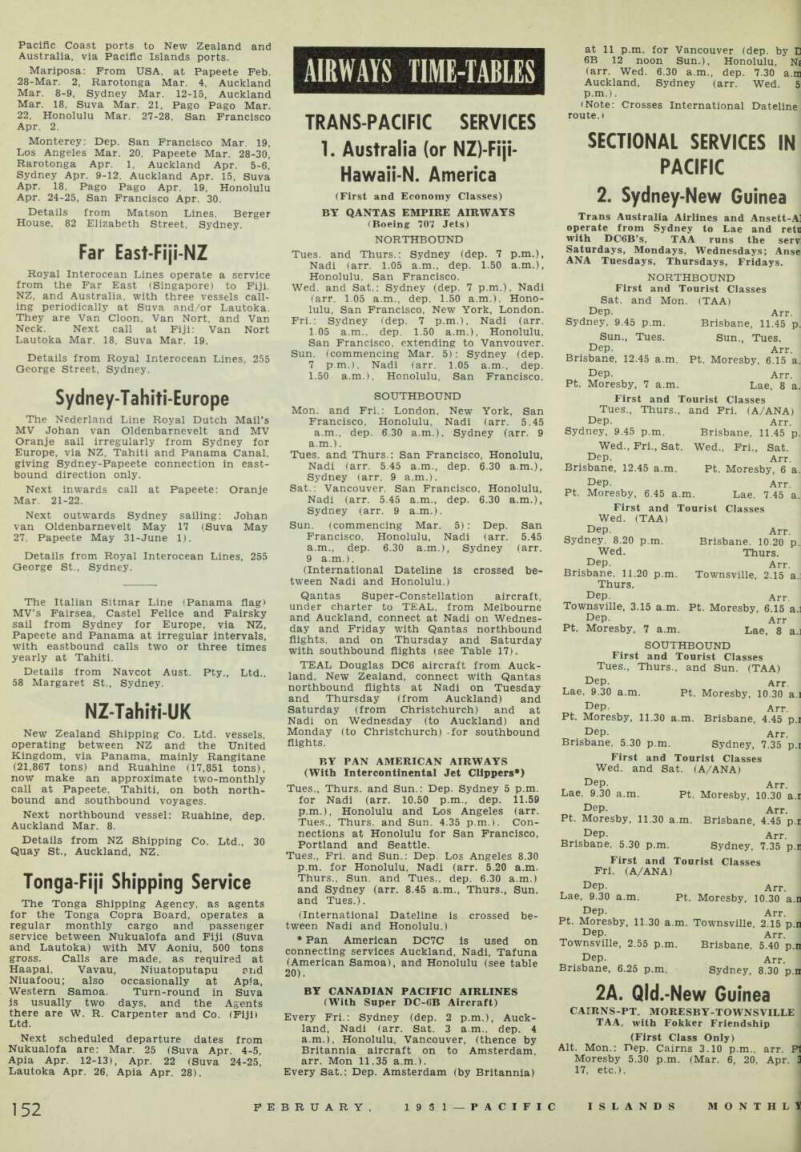 154
154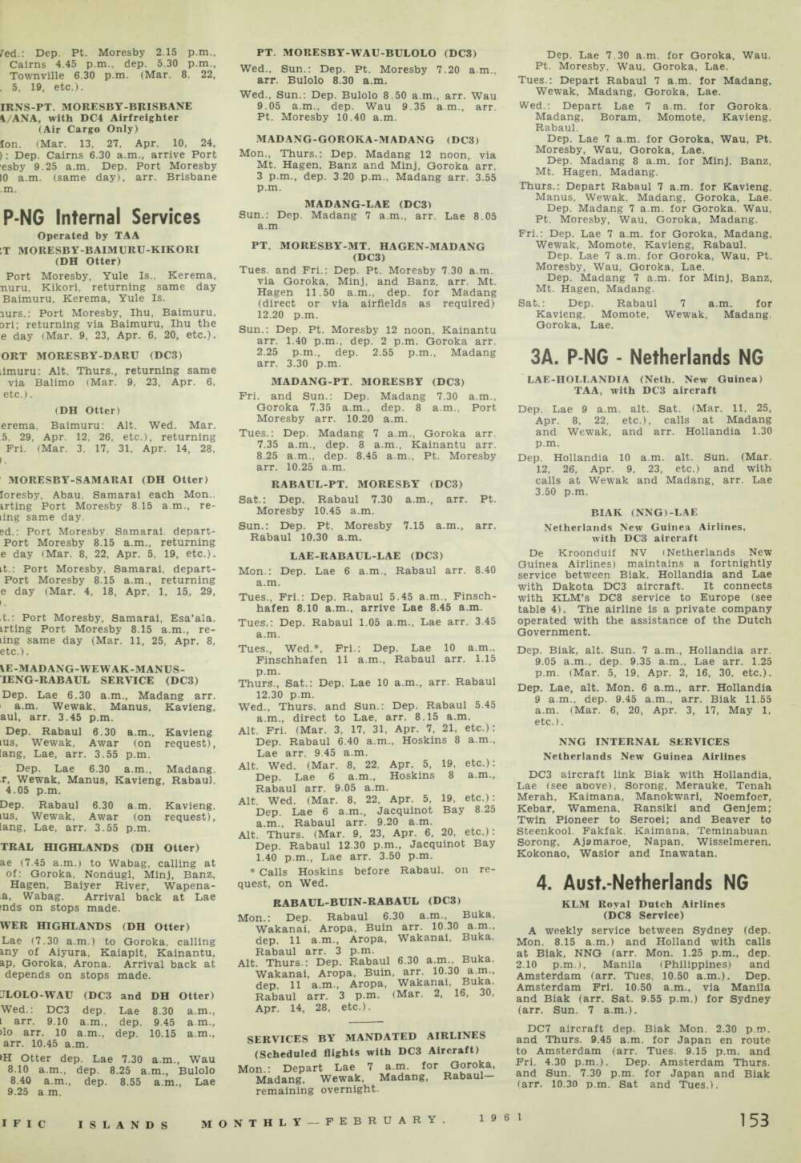 155
155 156
156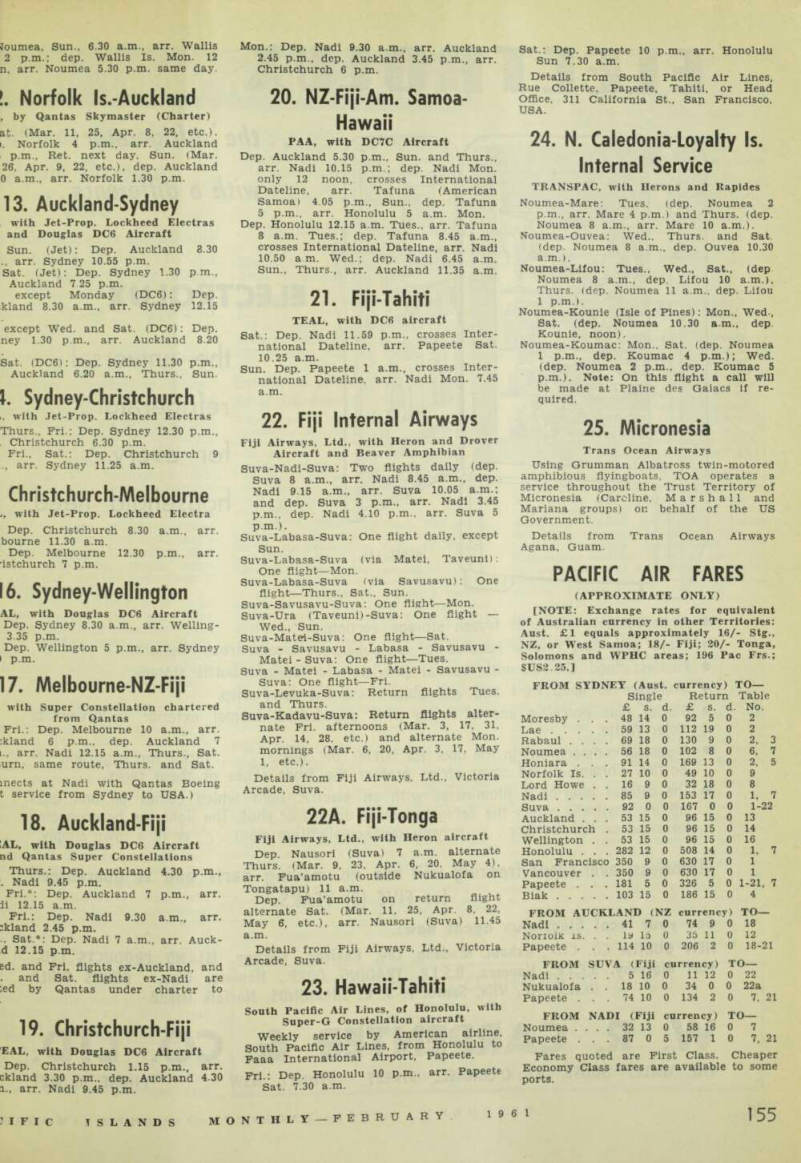 157
157 158
158 159
159 160
160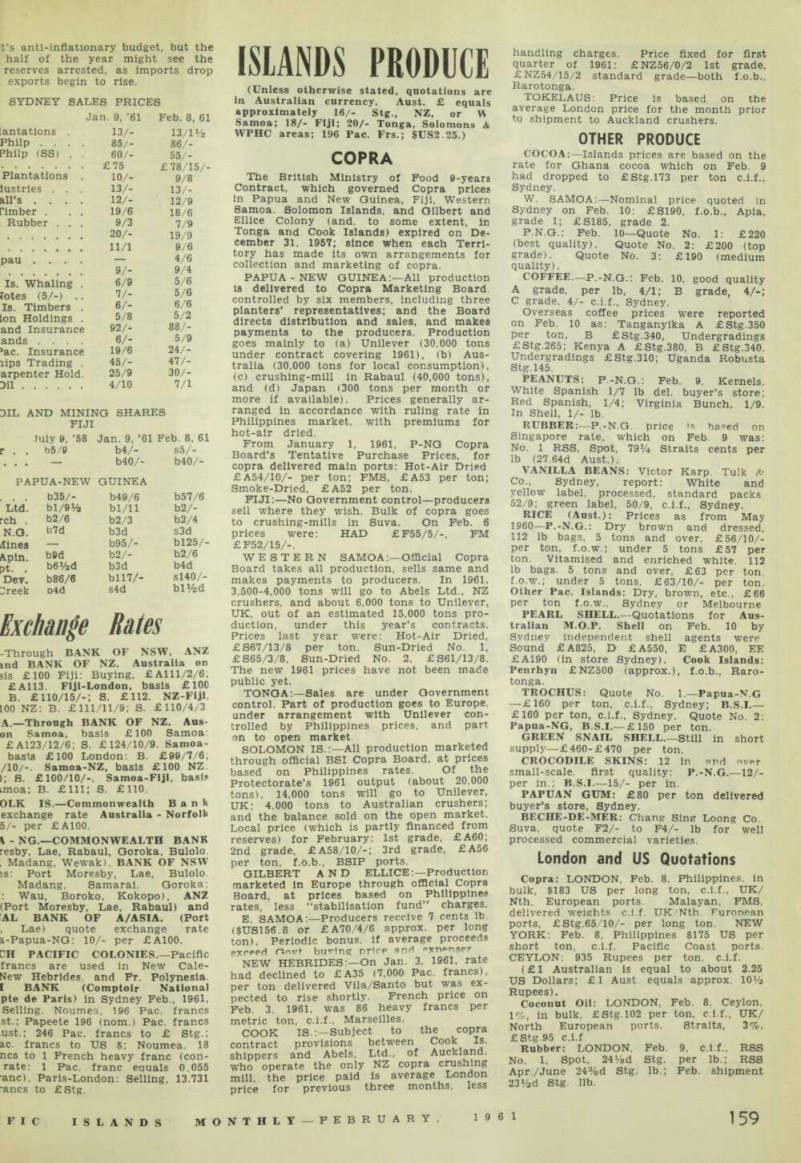 161
161 162
162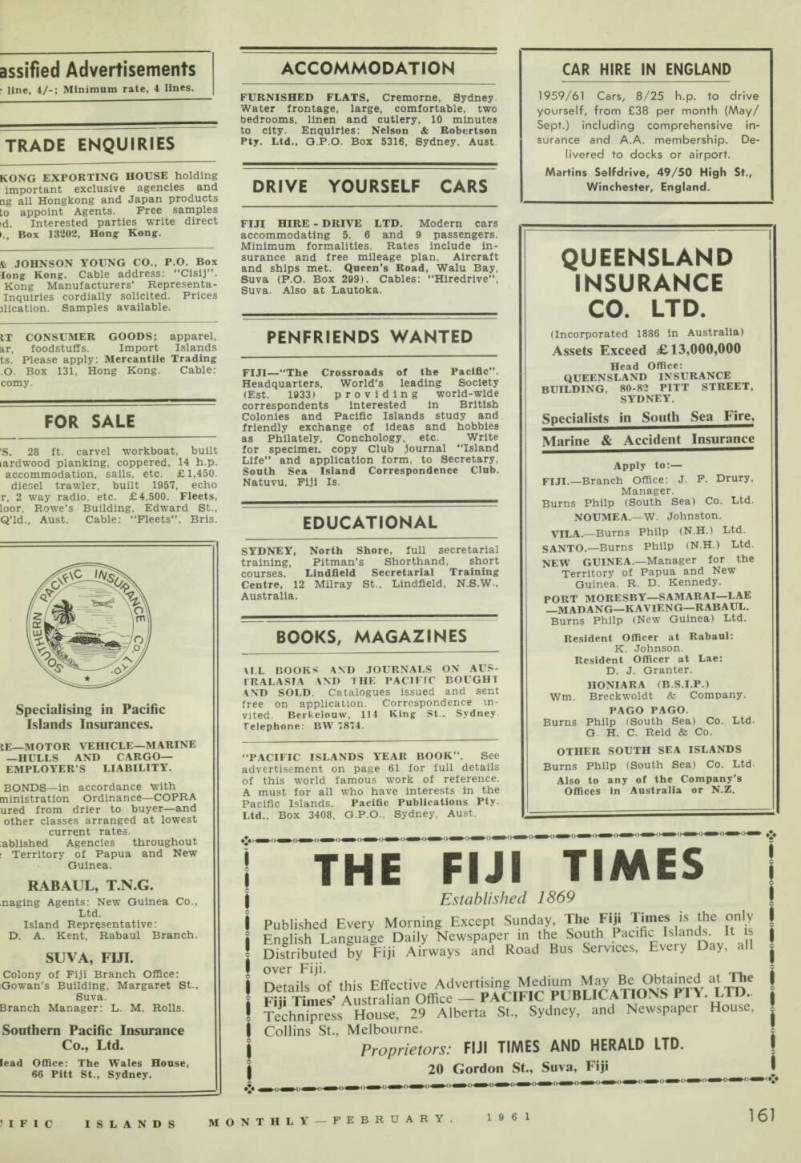 163
163 164
164 165
165 166
166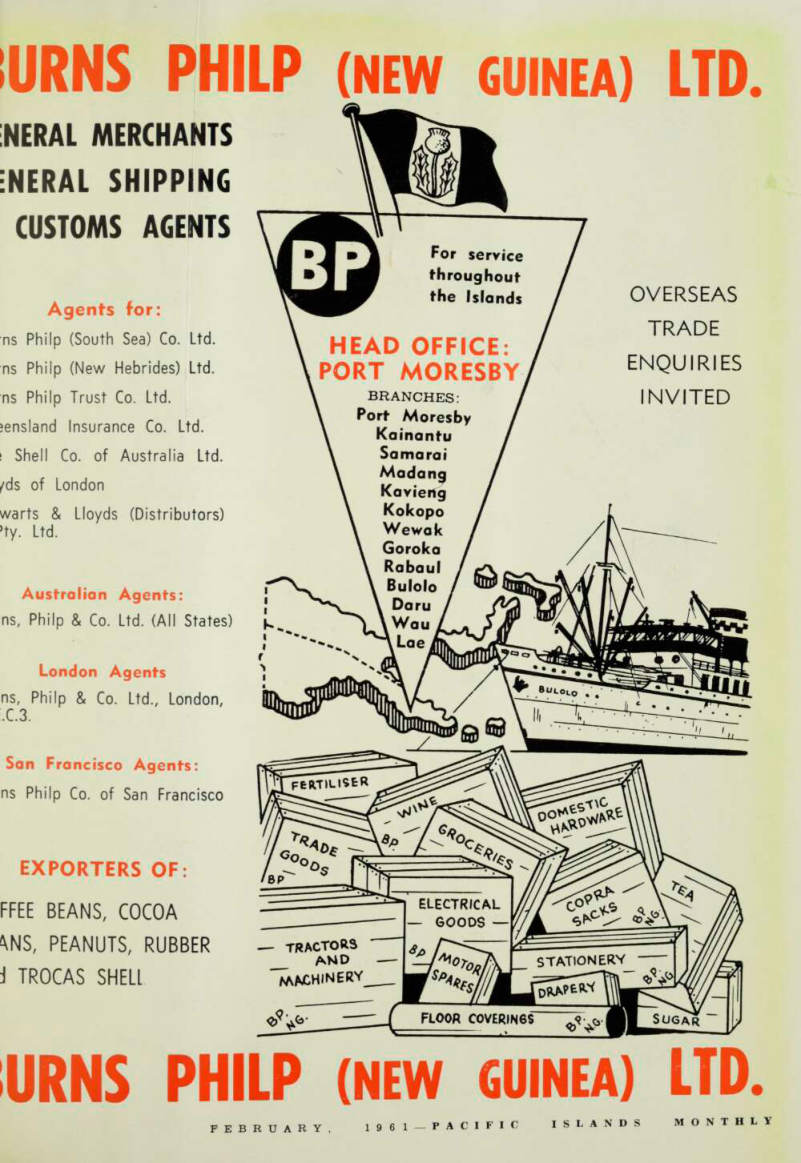 167
167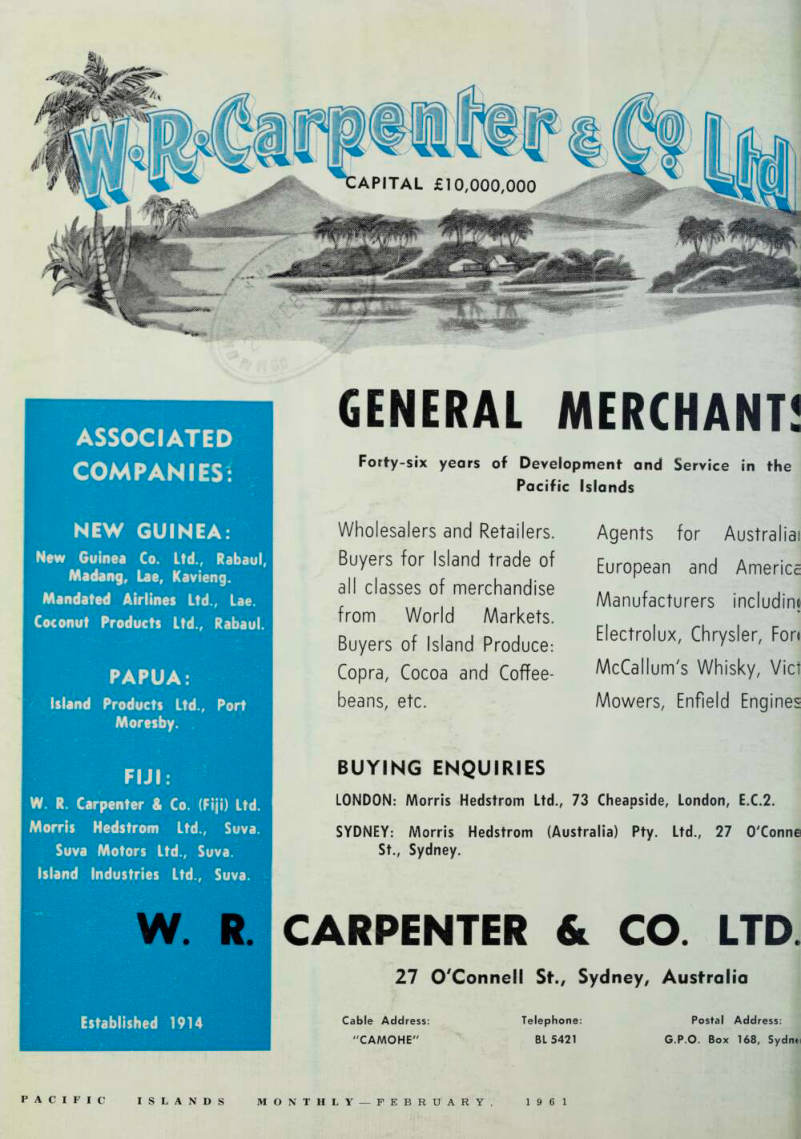 168
168