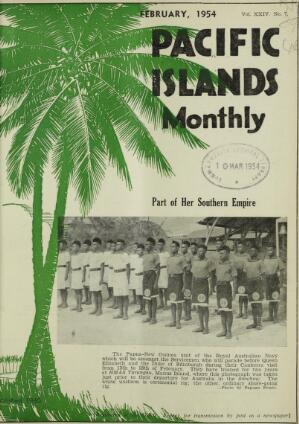
Pacific
Islands
MOnthly
February, 1954
Vol. XXIV. No. 7.
Part of Her Southern Empire
Wished 1930.
ooxfaev for transmission by post as a newspaper J
THe Papua-New Guinea unit of the Royal Australian Navy which will be amongst the Servicemen who will parade before Queen Elizabeth.and the Duke of Edinburgh during their Canberra visit fron 13th to 18th of February. They have trained for two years at HMAS Tarangau, Manus Island, where this photograph was taken just Prior to their departure for Australia in the Soochow. The white uniform is ceremonial rig; the other, ordinary shore-going ri g —Photo by Papuan Prints.
Advertisements & other items, pp. 2-6 (6 items)
Pacific Islands Ivi Ont N I V __
PACIFIC ISLANDS IVI ONT n i v
n UXVTHLY FEBRUARY, 1954
Islands Air Services
"By QANTAS is th ONLY way to
enjoy Tropical Travel"
FL Y (JaMD
ISLANDS AIR SERVICES
Travel in the Tropics is timesaving and a pleasure when you fly by QANTAS^—Australia’s Overseas Airline with 33 years of flying experience.
Over 50 points in the S.W. Pacific Area are linked with Australia by fast, regular QANTAS services shown below.
I
NORFOLK ISLAND
SERVICE
Sydney • Norfolk Island •
Sydney.
SUVA SERVICE
Sydney • Brisbane • Noumea • Suva • Noumea •
Sydney.
NEW HEBRIDES
SERVICE
Sydney • Brisbane • Noumea • Vila • Espiri+u Santo • Vila • Noumea • Sydney.
TROBRIAND SERVICE
Port Moresby • Samarai • Esa'ala • Rabaul • Samarai • Port Moresby.
BOUGAINVILLE
SERVICE
Rabaul • Buka • Kieta • Buin • Kieta • Buka • Rabaul.
PAPUA WEST SERVICE
Port Moresby • Yule Island • Kerema • Wana • Kikori • Lake Kutubu • Daru • Kikori • Wana • Kerema • Yule Island • Port Moresby.
SOLOMONS SERVICE
Lae • Finschhafen • Rabaul • Buka • Vella Lavella • Yandina • Honiara • Yandina • Vella Lavella • Buka • Rabaul • Finschhafen • Lae.
BISMARCK WEST
SERVICE
Lae • Madang • Wewak • Manus Island • Kavieng • Rabaul • Madang • Lae.
BISMARCK EAST
SERVICE
Lae • Finschhafen • Rabaul • Kavieng • Manus Island • Kavieng • Rabaul • Lae.
"GOLDFIELD'S"
SERVICE
Lae • Bulolo • Wau • Lae.
N.G. HIGHLANDS
SERVICE
Lae • Nadzab • Kaiapit • Arena • Kainantu • Bena Bena • Goroka • Nondugl • Banz • Minj • Mt. Hagen • Ogelbeng • Baiyer River • Wabamunda • Wabag and return.
NEW BRITAIN SERVICE
Rabaul • Jacquinot Bay • Moewe Harbour • Talasea • Rabaul (alternatively fortnightly) • Rabaul • Talasea • Moewe Harbour • Jacquinot Bay • Rabaul.
HOLLANDIA SERVICE
Lae • Madang 0 Wewak • Hollandia and return.
Qantas Empire Airways Ltd. (Inc. in Q'land) In assoc, with 8.0.A.C. and TEAL I u s t r a I i as Overse Airline PI6
Coleman
, m ■m v Wi m pf y ■ v m
if Jp ...
"M j Available for petrol or kerosene in capacities of 200, 300 and 500 C.P.
Coleman Lanterns burn steadily and safely regardless of the weather. Their globes are proof against the shocks of cold rain and they floodlight a 100 foot area with light so bright a newspaper can be read 50 feet away.
Coleman Lanterns are safe, because it is impossible to fill them while burning and they cannot spill if overturned.
Representatives for the Pacific Islands:
54a PITT STREET
SYDNEY
ROBERT GILLESPIE PITl™
PEARCE & CO. LTD.
SUVA
FOR FIJI ISLANDS
i m Perhaps a Plymouth— or a bottle of Pepsi, Whatever you want, wherever you are, we'd be glad *0 help you. Cw stands tor service.
M Oi'Sj//...
AGENTS FOR:
New Guinea Australia Line of the China Navigation Co. Ltd.
Lombard Insurance Company Ltd.
Union Assurance Society Ltd.
Ausf. T. & G. Mutual Life Society Ltd.
New Britain Shipping & Docking Co. Ltd.
Qanfas Empire Airways Ltd.
COLYER WflTSOltf (o&J LTD.
• RABAUL • MADANG • KAVIENG • LAE
COLYER WATSON PTY Rented
Sydney Melb« U r». p ‘ u COLYER WATSON & CO. LTD., !_ . risbone. Wellington, Auckland, Christchurch. tu
1
ACIFIC ISLANDS MONTHLY FEBRUARY. 1954
Ssss
SHIHPPING TIME-TABLES
here now are comparatively few ship- If lines running on regular time-tables the Pacific Islands. The following time les are only approximately correct — y are subject to much alteration at rt notice: —
Sydney-Papua-N. Guinea
[V Bulolo, modern liner, sails about
ry six weeks: Sydney-Brisbane-Moresby
laral - Lae - Madang - Manus - Rabaul naral-Moresby-Brlsbane-Sydney. ast sailing February 9.
IV Malekula sailed from Sydney on iuary 30 for Samarai, Rabaul, Manus, wak, Madang, Lae, Samarai and return Sydney. Next sailing about mid-March. )etaiis from Burns PhUp «K Co. Ltd., 7 Idge Street, Sydney. £V Soochow and MV Shansi, modem DO tons vessels, leave every six sks approximately (making a three-
Bkly service): Sydney-Brlsbane-Port
iresby - Madang - Rabaul - Pt. Moresby, iney. Next sailing Shansi, February Last sailing Soochow, February 9. end of March, Sinkiang which was hdrawn for refit some months ago, 1 resume in this service. Sinkiang will lude Melbourne in her itinerary, ving from that port March 19, from iney March 25.
Details from New Guinea Australia Line . S. Yuill & Co., Ltd., agents), 6 Bridge . Sydney.
. Zealand-Fiji-Samoa-Tonga
Motor vessels Tofua and Matua. from !W Zealand, serve Suva (Fiji), Nukua a and Vavau (Tonga), Niue Is., Pago go (American Samoa), Apia moa). Tofua leaves Auckland for any
SSSS
plements Tofua’s schedule in Islands, calling at ports as directed by owners.
Tofua’s next voyages are scheduled to leave Auckland February 15 and March 15. f Matua will leave Auckland on her next voyage March 6. «; “; C °: k ± The NZ Government s old motor Maui Pomare is scheduled to leave Auckland every month for Rarotonga and other Islands in the Lower Cooks, subject to requirements of trade. This vessel carries
2 months.
Full details on application to NZ Government Department of Island Terrl tories in Wellington, or to any office of the Union S 3 Co. of NZ Ltd which Company acts as Agent for this vessel at some ports.
Sydney-New UdM»
Pakoiil
Kabatll, LtC.
Malalta makes a round trio at MV Malalta makes a rouna trip ai about 8-weeks intervals from Sydney to
Lord Howe-Norfolk Is.-New Hebrides Ports - BSI ports - Bougainville - uaoaui - Samaral-Sydney.
Last sailing from Sydney February 9.
Details from Burns Phllp <& Co., ?
Bridge Street, Sydney.
Sydney-N. Caledonia-Tahiti
Vessels of Messageries Maritimes Line, coming from Marseilles, via West Indies
and Panama, call about every six weeks at Papeete, Vila (New Hebrides) Noumea and Sydney, and return by same route. Details from Messagerles Mari nes. Luxurious new liners Caledonien and Tahitien recently added to this service.
Small motor-ships Polynesian (Messa gerles Maritimes) and Neo Hebridais (H.
C. Sleigh, Ltd.) maintain fairly regular service between Noumea and Sydney.
N. America-Fiji-Hebrides, etc.
Norwegian motor vessel Thorslsle carry ng cargo and passengers maintains a regu lar service between North American porta and Frencn Oceania, Samoa, pm jncw Caledonia and New Hebrides.
Last sailing from San Francisco Jan 8, Papeete, Jan. 23, Nukualofa, Jan. 29.
Suva, Feb. 5, Lutoka, Feb. 9, Vila, Feb.
Noumea, Feb. 16. Apia, Feb. 22 (Dates approx, only).
Details from General Steamships Cor poration Ltd., 432 California St., San Francisco, U.S.A.
3
» A C I F I C ISLANDS MONTHLY FEBRUARY, 1954
q\RE ct SE$.
LONDON - SUVA
\V vu v h
C
PANAMA
For Sailings and Further Particulars Apply To:—
BETHELL, GWYN & CO. LTD.,
138 LEADENHALL ST.,
LONDON, E.C.3.
BURNS PHILP (SOUTH SEA)
CO. LTD.,
SUVA, FIJI
New Guinea Australia Line
Regular Three Weekly Service to
PORT MORESBY, SAMARA!, LAE, MADANG, KAVIENG,
AND RABAUL, VIA BRISBANE
WITH THE MODERN MOTORSHIPS
“SOOCHOW” “SHANSI”
Agents for PAPUA:
STEAMSHIPS TRADING CO. LTD.
Agents for NEW GUINEA:
COLYER WATSON (NEW GUINEA) LTD.
General Agents: G. S. YUILL & CO. PTY. LTD.
6 BRIDGE ST., SYDNEY
Telephones: BW 2731 BU 6313 (Freight only) Cable Address: “YUnX”
PACIFIC ISLANDS TRANSPORT LINE
Owners: Thor Dahls Hvalfangerselskap A/S Sandefjord, Norway
- M.V. "THORSISLE" -
Regular Freight and Passenger Service between Pacific Coast Ports of U.S.A. and Canada and
TAHITI SAMOA FIJI NEW CALEDONIA
NEW HEBRIDES
GENERAL STEAMSHIP CORPORATION, LTD.
General Agents 432 California Street, San Francisco 4, Calif., U.S.A. mA-lLrt*?!T nt! D ° na " i T,>hl,l *PIA-Morri. Hedstrom Ltd.
PORT 'v’T r Ltd NOUMEA—Etablissements Ballande . OBT VlLA—Comptoirs Francais des Nouvelles Hebrides
WILLIAM FARRER PTY. LTD,
(formerly Jacketts Pty. Ltd.) Flour Millers
1 BERESFORD RD., STRATHFIELD, N.S.W.
Cable Address: “Butterfly”
IFTOigir
i FINEST
SHARPS
m
•FIG TREE” BRAND
Fiji Representatives: OCEANIA AOENCIEsTcO P.O. Box 284, Suva.
Airways Time-Tables
Trans-Pacific Services
1. Australia (or NZ)-Fiji-
Hawaii-N. America
By Pan-American Airways
With Strato Clippers, using Sleeperettes and Berths Tues. and Frl.—Sydney - Nadi (Fiji) canton Is.-Honolulu-S. Franclsco-Seattle- Portland.
Tues. and Sat.—Return via same route. * Tues. and Pri.—Auckland - Nadi (Fiji) * Thurs. and Mon.—Nadi (Fiji)-Auckland. * Connecting with Strato Clipper at Nadi.
By British Commonwealth Pacific
Airlines (Bcpa)
(DC-6 All-Sleeper Service) Wed. and Sat.—Sydney-Nadl (FIJI)-Canton Is.-Honolulu-S. Francisco-Vancouver.
Mon. and first Thur.—Dep. southwards, same route. On second or alternate Thursday, flight commences at S.
Francisco.
Tues.—Dept. Auckland-Nadl-Canton-Hono lulu-S. Francisco-Vancouver.
Frl.—Dep. Vancouver and S. Francisco alternatively; thence same route tc Auckland.
By Canadian Pacific Airlines
(Cpal)
(With Super DC-6B Aircraft) Every Tuesday—Sydney - Auckland - Nadi (Fiji) - Honolulu - Vancouver.
Every Friday return by same route.
Sectional Services In
Pacific
2. Sydney-New Guinea
Service by Qantas Empire Airways
Northwards
Tuesdays and Saturdays (Skymasters) Depart: Arrive: Sydney, 7.30 pm Brisbane, 10.15 pm Brisbane, 11.40 pm Moresby, 6.30 am (Wed., Sun.) Moresby, 7.30 am Lae, 8.45 am Connecting services north of Lae by Drover to Bulolo and Wau.
Sundays and alt. Wednesdays (Sandringhams) Depart: Arrive: Sydney, 7.30 pm Brisbane, 10.50 pm Brisbane, 12.20 am Cairns, 6.35 am (Mon. and Alt. Thur.) Cairns, 8.05 am Moresby, 11.55 am (Night stop) Moresby,* 8.30 am Samaral, 10.30 am (Tue.) Samaral, 11.00 am Esa’ala, 11.40 pm (Alt. weeks) Esa’ala, 11.55 pm Rabaul, 2.55 pm The alt. Wednesday Sandringham from Sydney terminates at Port Moresby, a connection north to Lae on the following day at 9.00 am being by D.C.3.
• The Sunday Sandringham from Sydney .rrives Moresby Monday and after a night top then goes on to Rabaul via Samaral. tc., on Tuesday.
Southwards
Sundays and Wednesdays (Skymaster) Depart: Arrive: ,ae, 10.25 am Moresby, 11.40 am loresby, 12.40 pm Brisbane, 7.15 pm (risbane, 8.45 pm Sydney, 11.30 pm Connecting service from Wau by Drover, drives Lae 9.35 am Saturday.
Thursdays (Sandringham) Depart: Arrive: •abaul, 5.30 am Samarai, 8.45 am lamaral, 9.15 am Moresby, 11.15 am loresby, 12.15 pm Cairns, 3.40 pm (Night stop) aims, 8.30 am Brisbane, 2.15 pm (Pri.) irisbane, 3.45 pm Sydney, 7.0 pm Alt. Saturdays (Sandringham) Depart: Arrive; loresby, 6 am Cairns, 9.25 am aims, 10.55 am Brisbane, 4.40 pm irisbane, 6.10 pm Sydney, 9.30 pm A connection from Lae, with a DC3, > pick up Saturday Sandringham, arrives i Moresby on Friday at 8.20 am.
3. N. Guinea Internal
Services
Operated by Qantas AE—HOLLANDIA (Dutch New Guinea)
(Dcs)
very 4th Monday (Feb. 22, Mar. 22, etc.), ►eparts Lae 8 am, calls at Madang and Wewak, and arrives at Hollandia 1.5 pm. Every 4th Tuesday (Feb. 23, Mar. 23, etc.), departs Hollandia at 9 am, and, with calls at Wewak and Madang, arrives Lae at 3.5 pm.
Lae-Manus (Dcs)
Every Wednesday. iep. Lae, 10.45 am; Finschhafen, Rabaul, Kavieng, Manus (5.45 pm) leturns Saturdays (dep. 8 am), via Kavieng and Rabaul; optional call at Finschhafen; arr. Lae. 2.45 pm.
MORESBY-DARU (Sandringham) la Yule Is., Kerema, Wana (optional), Kikorl, L. Kutubu. —Every alternate Friday, returning same day (Feb. 19, Mar. 5, 19, etc.).
Rabaul-Moewe Harbour
(Sandringham) It. Wed. —Rabaul-Jacquinot Bay-Moewe Harbour-Talasea-Rabaul —Feb. 24, Mar. 10, 24, etc.).
N.B.—The direction of operation changes r ith each service, i.e., each alternate srvlce operates Rabaul-Talasea-Moewe arbour-Jacquinot Bay-Rabaul.
New Brit Ain-Bougainville
(Sandringham) It. Wed.—Rabaul - Buka - Kieta - Buin —Feb. 17, Mar. 3, 17, etc.).
It. Wed. (same day) Buin-Kieta-Buka- Rabaul.
Lae-Mad Ang-Wewak-Manus
Kavieng-Rabaul General
Service
(Dcs)
[on., Thur. Dep. Lae 6.30 am, Madang arr. 7.35 am Wewak, Manus Is., Kavieng, Rabaul arr. 3.35 pm. he. only Dep. Rabaul 8.00 am, direct Madang arr. 11.00 am, Lae arr. 12.35 pm.
Central Highlands
(Dcs)
ridays.—Lae (8.30 am) to Wabag, calling at any of; Nadzab, Kiaipit. Arena, Kainantu, Bena Bena, Goroka, Nondugl, Banz, Minj, Mt. Hagen, Baiyer R., Wabag. Return to Lae arriving 6 pm.
Lae-Bulolo-Wau (Drover)
p. Lae. —Tues. 3 pm.—Mon. & Sat. 7.30 am. p. Wau.—Tues. 4.30 pm—Mon. 9.00 am —Wed. 12.35 pm. Direct to Lae in 35 minutes.
Lae-Finschhafen (Drover)
ery 4th Tuesday, leaving Lae 1 pm, returning same day (Feb. 23, Mar. 23, etc.).
Madang-Goroka (Dcs)
days.—Depart Madang 8.25 am, arrive Joroka 9.00 am. returning same day; lepart Goroka 9.30 am, arrive Madang 0. am.
Services By Mandated Airlines
Vlth headquarters at Lae, this company is regular services for passengers light and mails to all New Guinea tlements.
4. Aust.-Dutch N. Guinea
By KLM Royal Dutch Airlines.
I weekly service with Constellations ween Sydney and Amsterdam with a 1 at Biak. DNG, and Manila. Philippines. )C3 aircraft link Biak with Hollandia, •ong, Merauke and Tannah Merah.
5. N. Guinea-Solomons
By Qantas with DCS 3 Flights Every Four Weeks, n. (March 1,8, 15, 29, etc.), Lae (dep. 6 am) Finschhafen Rabaul Buka Vellalavella Yandina Honiara, BSI (arriving 4.30 pm). s. (Feb. 16, Mar. 2,9, 16, 30, etc.), loniara (dep. 7 am) Yandina Vellalavella Buka Rabaul Finschhafen Lae (arriving 3.30 pm).
6. In Jo-China-Brisbane-
N. Caledonia
By Air France. Monthly. istellation aircraft dep. Saigon, Feb. 6 and every 28 days thereafter for Darwm-Bnsbane-Noumea, and return, itrahan agents; Messageries Maritimes.
7. Sydney-Lord Howe Is.
Ansett Flying-boat Service, with Sandringhams and Hythes. light services per month, return same r
8. Sydney-Norfolk Is.
By Qantas, with Skymasters. ernate Thursdays (Feb. 25, Mar. 11, 15, etc.), returning same day.
9. Sydney-New Hebrides
By Qantas. with Sandringham (Weekly Flying Boat Service) »art: Arrive: Iney, Mon. 7.30 pm Brisbane, 10.50 pm sbane. 12.20 am Noumea, 7.00 am imea, 8.30 am Vila, 11.05 am 1. 12.35 pm Santo, 1.50 pm (Night stop) ito, 6.00 am i Wed.) Vila, 7.15 am i, 8.15 am Noumea, 10.55 am mea, 1.00 pm Sydney, 8.40 pm
10. Sydney-Noumea-Suva
7 Qantas with Sandringham Flying Boats—Weekly.
Depart: Arrive: d n e y , Thur. 7.30 pm Brisbane, 10.50 pm
Brisbane, 12.20 am (Prl.) Noumea, 7.00 am Noumea, 8.30 am Suva, 3.00 pm Suva, Sat. 6.30 am Noumea, 11.00 am Noumea, 1.00 pm Sydney, 8.40 pro
11. Auckland-Norfolk I*.
By NZ National Airways, with DC3’§ Sundays—From Auckland double service returning same day.
12. Sydney-Auckland
Tasman E. Airways, with Solents Tue., Thur., Sun.—Dept Sydney 12 mid night, arr. 8.30 am following day.
Thur., Sat.—Dept. Sydney 8.30 am, arr. 5 pm.
Dep. Auckland 8.30 am, arr 1.30 pm Mon., Tue., Wed., Thur., Fri.
13. Sydney-Wellington
Tasman E. Airways, with Solents Dep. Sydney 10.30 pm Mon., Tue., Wed., Thur., Fri. Arr. 7.30 am following day.
Dep. Wellington 10.30 am Tue., Wed., Thur., Fri., Sat., arriving 3.45 pm.
14. Melbourne-Christchurch
Tasman E. Airways, with DC4 Skymaster Thurs.—Dep. Melb., 10.25 pm; arr. Ch’ch.. 8.15 am next day.
Fri.—Dep. Ch’ch.. 11 am; arr. Melb.. 5.36 pm.
15. New Zealand-Fiji
See Also Table 18.
Tasman Empire Airways, Ltd., with Solents.
Dep. Auckland —February 23, 27, March 2, 13, 16. 23, 27, 30.
Return to Auckland on February 22, 24, March 1,8, 15, 22 ,25, 29.) Depart Arrive Auckland, 9.30 am Suva, 4.30 pm Suva. 9.00 am Auckland, 4.15 pm
16. Fiji-Western Samoa
See Also Table 18.
Tasman Empire Airways, Ltd., with Solents.
Dep. Auckland, Feb. 27, Mar. 3, 17, 28.
Depart Arrive Auck.. 9.30 am Sat. Suva, 4.45 pm Sat.
Suva, 6.00 am Sun. Apia, 11.05 am Sat.
Apia, 1.30 pm Sat. Suva 4.35 pm Sun.
Suva, 9.00 am Mon. Auck., 4.15 pm Mon.
17. New Zealand-Chatham It
19 ®^‘ 54 season, Solents will man flights to the Chatham is. as follow land C hi \n AprU , B - De Parture from AucH i a^ d 8 - 39 am> de P- Wellington 7.30 an arr. Chathams 10.30 am. Dep. 2 30 on same day for Auckland. P
18. New Zealand-Tahiti
Tasman Empire Airways, Ltd., with Solents Service. Auckland-Suva-Apla w k i- papeete ’ 15 °P erated with Solert Flying-Boats once every two weeks. Det Auckland. Tuesday. 9.30 am. Arr. Suv pm. Dep. Suva (Wednesday) 9.C am, cross International Date Line- An Apia pm Tuesday. Dep. Apia 2.C am Wednesday. Arr. Aitutaki 7.30 am Dep. Aitutaki 8.30 am. Arr. Papeete pm. Return by same route every ah Friday, leaving Papeete 7.30 am.
The next flights leave Aucklam February 16. March 2, 16, 30.
19. Fiji-Tonga
Tasman E. Airways with Solents.
Dep. Suva February 10, March 23.
Depart Arrive Auckland. 9.30 am Suva. 4.45 pn (Tuesday) (Tuesdav) Suva ’ I -00 am Nukualofa, 10.20 an (Wednesday) (Wednesday) NU fw a i° fa, J 2 00 pm Suva, 4.10 pn c!nlY e Q n nn day) (Wednesday) Su 9 '°f am Auckland, 4.15 pn (Thursday) (Thursday)
20. Micronesia
Civilian services, based on Guam using 2-engined amphibious Catalinas, run re-! gularly to Koror (Palau), Yap (Wesli Carolines), Truk (Central Carolines)!
Ponape (E. Carolines), Majuro (Marshalls]: and Saipan (Marianas). Details fronn Trans-Ocean Airlines, Guam, via Honoluluj
21. Fiji Interna] Airways
By Fiji Airways, with twin-engine de Havlland Rapides Suva to Nadi & Lautoka* and return;: Mornings— Daily except Thursday. After noons—Daily except Monday.
Suva-Labasa; Daily.
Labasa-Suva: Daily.
Nadi & Lautoka to Labasa: Pridav? (direct).
Labasa to Nadi & Lautoka: Wednesday? (direct).
Suva-Savusavu: Mon., Thur., Sat.
Suva-Taveuni; Tues., via Labasa; Thur.,, via Savusavu; Mon., Wed. (direct).
Nadi-Taveuni: Mon.; via Nausori. Tue.*. via Nausari and Labasa, Thur., via* Nausori and Savusavu. * No call on Sundays.
Advertisements & other items, pp. 7-10 (3 items)
To All Six Cohtihtnts
8.0.A.C. Takes Good Care of You
Speedbird Services
AUSTRALIA, INDONESIA,
MALAYA, BURMA, THAILAND,
HONG KONG, JAPAN, CEYLON,
INDIA, PAKISTAN, MIDDLE
EAST, AFRICA, EUROPE, GREAT
BRITAIN, U.S.A., CANADA,
CENTRAL & SOUTH AMERICA,
BERMUDA.
See your Travel Agent for complete trip-planning help—no charge!
FIY BRITISH-
TO All SIX COHTIHtNTS
Wherever you fly it costs no more for 8.0.A.C. traditional service and experience , . . for the unrivalled skill of flying and ground staffs . . . friendly, courteous attention . . . smooth efficiency.
Speedbird services link with 51 countries on all 6 continents —and you can travel on one ticket all the way.
Four-engined Speedbird airl,ners are fully pressurized for smooth above-the-weather flying.
Complimentary meals and mealtime drinks. No tips. No extras.
FOR POST HASTE WITHOUT WASTE—USE OVERSEAS AIR MAIL
8.0.A.C. LEADS WITH THE COMET!
BRITISH OVERSEAS AIRWAYS CORPORATION WITH QANTAS, TEAL AND S.A.A.
A42/PIM
There's so much to do
NEW ZEALAND
Imagine a holiday in this land of breathtaking beauty! X At any time of the year there’s so much to do ... V watching geysers play in wondrous thermal regions . . . fishing in placid lake or swift-running stream or spectacular big-game waters . . . climbing in the* towering Southern Alps . . . deer shooting in virgin forest . . . slaloming on perfect ski runs . . . swimming and boating in fascinating fiordlands!
gives you so
much more time
Air travel will save you days in which to play, let you see so much more of this scenic wonderland.
And it’s so much more comfortable.
NAC
> c Linking all principal New Zealand cities and extending to Norfolk Island. Offices and Agents throughout New Zealand, Australia and the South-West Pacific.
cIAL A N D
RATIONAL
AI*W A T I
CORPOKATI#
fiLfIIDSMADEYOINQ
Vigour Renewed
WITHOUT OPERATION
If you feel old before your time or Buffer from nerves, brain and physical weakness, you will find new happiness and health In an American medical discovery which restores youthful vim and vigour quicker than gland operation. It is a simple home treatment in tablet form, discovered by an American doctor. Absolutely harmless and easy to take, but the newest and most powerful invigorator known to science. It acts directly on your glands, nerves and vital organs, builds new, pure blood, and works so fast that you can see and feel new body power and vigour in 24 to 48 hours. Because of its natural action on glands and nerves, your power and memory often Improve amazingly.
And this amazing new gland and vigour restorer, called VI- Stim, has been tested and proved by thousands in America and is now available at all chemists here. Get Vl-Stim from your chemist to-day. Put it to the test. See the big improvement in 24 hours. Take the full bottle under the guarantee that it must make you full of vim, vigour and energy, and feel 10 to 20 years younger, or money back.
To restore , Vim and I Vigour
Vi-Stlm
ppuce up on
SIWO
/7j v JJ~ •
J/our ffcm*
SPRUSO LIQUID, SPRUSO LIQUIDSHEEN, and SPRUSO
CRYSTALLISED SHEEN.
SPRUSO is the best selling Hairdressing in Australia TRADERS: write for samples.
SPRUSO COMPANY, Redfern, New South Wales, Australia.
130 years
is a long time
The knowledge and experi-
ence gained, during the years since 1823, in the distillation and blending of the finest Scotch Whiskies is presented sumer of today in the form
of SCOTTISH CREAM
SCOTCH WHISKY.
the fact that Scotch Whisky is different and superior to all other whiskies, because it is a blend of the product of ™ an V Scotch Distilleries, the secrets of distillation being, in most cases, handed down from father to son for generations. The blending of these whiskies is entrusted only to men of many years' experience.)
Scottish
SCOTCH WHISKY
(Since 1823) Sole Distributors in Australia and South Pacific Islands;
AUSTRALIAN, MERCANTILE, LAND &
FINANCE COY. LTD.
3SA Tor* Street, Sydney to the discriminating con- (The man who knows whisky is aware of
FINEST
5C8.82
PACIFIC ISLANDS
AIR PHOTOGRAPHS
Norfolk Is., Lord Howe, Noumea, Suva, Lautoka, Nukualofa, Apia, Aitutaki, Rarotonga, Papeete, Moorea, Kermadecs. Also Rabaul, Port Moresby, Lae.
Size 10 by 8 inches—7/6 (N.Z.) ea.. plus 1/- pack & post. Enquiries invited for colour or larger sizes.
WHITES AVIATION LTD.
P.O, Box 2040, Auckland, New Zealand.
6
FEBRUARY, 1954 PACIFIC ISLANDS MONTHL
7
ICIFIC ISLANDS MONTHLY— FEBRUARY, 1954
Pearling Industry
History of Torres St.
In January PIM, on pages 93-4, WHM tells the interesting story of the origin of the now famous pearling industry of Torres Strait.
His story carried the history to 1871. Here is a further instal ment—an account of what hap pened in the years immediately following 1871. , S was to be expected, there was L very keen rivalry between the gangs of shellers; and one of icir methods of keeping a good ,tch to themselves was the hoisting a yellow flag when an opposition aft appeared. One such incident ncerns a rival captain who, bowl g up to inquire why the quarantine ig was flying, was informed that aallpox had broken out “ten en already dead, 15 others not ipected to live!” The solicitous :ipper cleared out straightaway, id the men “not expected to live” illected a ton of shell before dark!
When the first band of L.M.S. mis onaries landed in the Strait in 71, Captain Banner (whom they id previously known in Lifu as saring a good reputation) aided tern by lending a whaleboat and •oviding them with useful infor ation about the Islands and New uinea.
approximate Airways Fares
Hie following figures ate not guaranteed curate, but they are approximately rrect. Details should be obtained from e Air Company named in the Table, iless otherwise indicated, figures are in istrallan currency.
TWELVE months later, the Government Resident at Somerset reported that the Captain had dipd on Tnhr 99 at Warrior Island. Since this happened, he wrote, the Island has been a perfeet pandemonium. The Kanakas appear to have taken possession of the large quantity of rum and other spirits landed from the Pakeha and, while maddened with drink, to have plundered the station and distributed the trade amongst the natives of the island. The only two Europeans there had lost all control over the men, and it will be well if nothing more serious occurs before the rum is all finished.”
When I was in the Strait thirty years ago, old hands amongst the Tu-Tu men (then living at Yam Island) still recounted with deeply
reminiscent trimmings the big junketing that followed the demise of r I T ? a^ a ii n Ba 2 na -”
The Sydney firm with which he was connected sent up a tombstone to mar k his grave. High tides caused it to collapse some time later; and islanders found its broken sections just the right thing for sharpening their sheath knives. But portions of it were carried away by native friends of the old captain, and placed on one of their own graves at Stephen Island, That was where I last saw the remains of the monument to the man who inaugurated the Torres Strait pearling era with its adven ture, romance, and tragedy, and who although perhaps he didn’t know it may be accounted one of the colonisers to whom the British race owes so much.
Jprom Sydney To—
Mngie iresby . £46 11 0 tteturn £83 16 0 Table wo. 2. 2a. e .. 55 7 0 99 13 0 2, 3 haul .. 64 10 0 116 19 0 2, 3 tniara,
Bsi ..
80 7 0 144 13 0 5 la, y Hebrides 51 9 0 92 13 0 9 tumea, tJC . . 43 3 0 77 14 0 10. 9, 6 irfolk Ir 25 0 0 *5 0 0 8 Howe . 12 8 6 24 17 0 7 a d 1 . 60 10 0 108 18 0 u v a [Fiji) . 64 2 0 115 5 0 ckland 47 5 0 85 1 0 12 ellington . 47 5 0 85 1 0 13 irlstch. (from delb.) . 52 18 0 95 5 0 -nolulu . 225 9 0 405 16 0 1 Fran’co 279 1 0 502 5 0 mcouver 279 1 0 502 5 0 1 ipeete (via Suva direct) . 129 18 0 233 17 0 18
"Rom Auckland
(NZ Currency) TO:
Tf. Is. .
Single £15 12 0 Return £28 2 0 Table No. 11 ji . . . 35 15 0 i 64 7 0 1 16 moa . . 47 2 0 84 16 0 16 tutaki . 67 11 0 121 12 0 18 .peete 82 10 0 148 10 0 18
Advertisements & other items, pp. 11-12 (2 items)
9
ACIFIC ISLANDS MONTHLY— FEBRUARY, 1954
Bunge
(AUSTRALIA)
PTY.
LTD.
MELBOURNE (HEAD OFFICE), SYDNEY, ADELAIDE, PERTH, BRISBANE,
TOWNSVILLE, ROCKHAMPTON.
IMPORTERS and EXPORTERS
OF FOODSTUFFS, TEXTILES, COPRA SACKS,
HARDWARE, CHEMICALS, ETC.
MILLERS and EXPORTERS
Heritage Brand
of these famous brands
WILLOW TREE BRAND
FLOUR, SHARPS AND WHOLEMEAL
Mills at Warwick (Qld.), Albury and Murrumburrah (N.S.W.), and Ballarat (Vic.), with a combined capacity of over 3 million bushels of wheat per year.
BUNGE
Address Islands enquiries to:-
PTY,
LTD.
Cables: "Bungeco”, Sydney.
(AUSTRALIA)
45 Market St.,
Sydney.
ACCndATE IKI • London, Liverpool, Manchester, Brussels, 1 C nWU3C3 ,IN * Antwerp, Amsterdam, Rotterdam, Enschede, Paris, Hamburg, Bremen, Frankfurt, Rome, Genoa, Milan, Stockholm, Zurich, Copenhagen, Vienna, Buenos Aires, Montevideo, Porto Allegre, Rio de Janeiro, Sao Paulo, Santiago, Lima, New York, Washington, San Francisco, Los Angeles, Montreal, Mexico City, Brazzaville, Douala, Leopoldville, Elizabethville, Casablanca, Addis Ababa, Telaviv, Aden, Calcutta, Bombay, Singapore, Hong Kong, Djakarta, Medan, Tokyo, Osaka, Manila, Wellington, Auckland, Christchurch.
ALSO REPRESENTED IN: drid ’ ü ßarcea ’ Llsb ° n -, c * pe S’
Johannesburg, Durban, Port Elizabeth, Teheran. Saigon, Karachi, Chittagong, Bangkok, Oslo, Stavanger, Bogota, Alexandria, Cairo, Rangoon, Colombo, Nairobi, Port Louis, Behreln, Bagdad, Basrah, Beyrouth, Nicosa, Kingston, Port of Spain, Helsinki, Gotenborg, Istanbul, Athens, Valetta, Medellin, etc.
3 PEDIGREE MODELS THAT HAVE
THE FIELD “SOWN-UP”
2 h.p. “BANTAM” tills, trims, mows, cuts with the aid of various attachments.
A MA •
Designed by the
Australian inventor of
Rotary Tillage.
6 h.p. “GEM” Mark 111 with unique performance features. 9.6 h.p. “GEM” Mark IV—24” or 30” cutting widths, single or dual wheels.
ROTARY HOES o(
T«e
MARK
HUSKY
m i Write for full details to:
DANGAR, GEDYE
& MALLOCH LTD.
10-14 Young St. (nr. Circular Quay), Sydney P.O. Box 509. ’Phone: BU 5095.
Cables: “Dangars”, Sydney.
Index To Advertisers
. & N.Z. Bank 62. 95 . & R. Ltd. . 62
.M.L. & F. . .8
chun Co. 39, 127 kta-Vite ... 93 luminium Ltd. 126 pex. Eng. . . 24 rdath Co. Ltd. 54 rmstrong & Springhall . . 82 rnott, Wm. . . 83 spaxadrene . 27 spro ... 66 ssoc. Tr. Jnls. 65 aker, W., Jno. 85 ank NSW . . 125 ank of NZ . 58 arnes Milling 134 ethell, Gwyn . 3 .G.E. ... 128 Leri, O. . . . 12Y ilson’s Pty. . 147 laxland-Rae . 104 lundell Spence 110
.O.A.C. . .5
aston Batteries 91 arthwicks Ltd. 90 raybon Bros. . 37 reckwoldt, W. 29 reden, W. S. 11l ristol-Myers 35 runton & Co. 143 ryant Bros. . 140 ange Pty. 9, 124 anting, A. H. . 46 arroughs Ltd. 52 way Motors . 94 P. 11, 57, 81, 148 line’s Studios 59 aims Ship. Co. 103 irpenter 92, c. iv larmosan . . 139 ae Engines . 109 assified . . . 150 )lgate 71. 100, 143 denial Meat . 68 dyer Watson . 2 >oke Bros. . . 97 irdial Factory For Sale . . 151 ■ammond Co. . 96 rstex ... 93 angar, G. &M. 10 arling, J. Ltd. 57 anald Ltd. . . 58 auglass, W. C. 129 anlop Rubber 137 Iwood, Jack . 150 ■skine Stamps 133 ;. Donald . . 142 irrer, Wm. . . 4 :rrier & Dickin son 11l ord Sherington 105 ranke and Heidecke . . 59 rigate Rum . 83 arrett, D. M. 152 arrick Hotel 147 ilbey, W. & A. 54 illespie Bros. 69 illespie, R. 1, 51, 67, 89, 120, 146 illette, Ltd. . 56 oodall & Co. . 65 ordon’s Gin . 101 rahame Books 90 ■P.H. (Suva) . 12 rove Ltd. 38, 124 aig Whisky . 29 andi Works 43, 113 arvey Trinder 114 alvorsen, B. . 107 alvorsens . .312 ardman Hall . 34 art’s Agencies 115 awleys Ltd. . 106 einz & Co. . . 49 . & R. . . .23 ellaby, R. &W. 31 ercules Co. . 55
Holbrooks Ltd. 42 Holman Bros. . 61 Hygeia Co. . . 94 Is. Industries . 132 Is. Transport . 116 Jackson, B. W. 145 Johnson’s Wax 44 Kalso-Seal . . 144 Karp, Tulk Co. 120 Kasper Refrig. 87 Kennedy, Capt. 108 Kerr Bros. . . 30 Kerry, M. Pty. 33 Kiwi Polish . . 98 Kolynos Inc. . 60 Kopsen & Co. 102 Lillis & Co. . . 88 Macintyre, T. 117 Mcllrath’s Ltd. 26 McTaggart’s 112 Mendaco . . . 145 Millers Ltd. . . 137 Morgan Vernex 116 M. H. Ltd. 22, 136 Mungo Scott . 149 Needham & Co. 98 Nelson & Robert son . 34, 103, 135 NG Aust. Line . 3 Nile Products . 138 Nirex ... 64 Nixoderm ... 49 Nordman, O. . 70
Nznac ... 6
P. I. Line ... 4 Papuan Prints . 89 Penfold, W. C. 142 Penny, J. IR. . 38 Price, J. Farren 40 Qantas , . cov. ii Qld. Insurance 41 Qld. Milling . . 30 Quirk’s Co. . . 32 Ransomes Co. . 101 Reckitt’s Blue . 69 Reed, W. E. . . 131 Refrig. Inst. Co. 50 Riverstone Co. 118 Rohu, Sil . . . 61 Seppelt & Sons 72 Seward Ltd. . . 119 Shell Co. . . . 121 Smith, Sons & Rees Ltd. . . 45
S.M.P. Co. . . 86
Spartan Faints 99 Spruso Co. . . 7 S. Ltd. . . 108 Stewarts-Lloyds 66 Sthn. Pac. Ins. 33 Sullivan Ltd. . 53 Suva Motors . 141 Tait, W. S. . . 85 Taylor & Co. . 37 Taylor Woodrow l3O T. . cov. iii Thornycroft Co. 115 Tilley Lamps . 63 Tillock & Co. . 122 Tongan Photos . 67 Tooheys Ltd. . 84 Tooth & Co. . 41 Turners Supply 50 Tusculum ... 86 Tyneside Eng. . 47 Typewriter Eff. 42 United Radio 97 Vacuum Oil Co. 28 Valiant Rum . 119 Ventura . 70, 152 Vi-Stim ... 7 Vincent’s APC . 25 Warnock Bros. . 46 Westfield Meats 48 Whites Av’tn. . 8 Wills, Ltd. . . 36 Wise Bros. . . 45 Wright & Co. . 107 Wright, N. R. 104 Wrigley’s ... 123 Wunderlich Co. 123 Yorkshire Ins. . 53
Advertisements & other items, p. 13 (1 item)
Burns Philp Trust
HANDS
THAT NEVER LEAVE
THE WHEEL
THIS
EXECUTOR
IS NEVER
“OUT OF TOWN”
Apart from other obvious handicaps, a private Executor cannot be in more than one place at any given time. But when Bums Philp Trust Company Limited handles an Estate, administration is never delayed by one man’s absence. It makes no difference where the assets are located; the Company’s officers are right on the job all the time.
This co-ordinated management is of great value to the beneficaries. Other practical gains are clearly explained in the Company’s 20-page booklet, “Hands That Never Leave The Wheel”.
You will also discover the advantage of appointing the Company as your Attorney.
Complimentary copies of this booklet are available at any branch of Bums Philp (South Sea) Company, Bums Philp (New Guinea) Limited, Burns Philp (New Hebrides) Limited, or from this Company’s head office.
James Burns.
P. T. W. Black.
DIRECTORS:
MANAGER: L. S. Parker.
Joseph Mitchell.
Eric Priestley Lee.
SECRETARY: E. R. Overton, F.A.S.A.
Burns Philp Trust
COMPANY LIMITED
Executor • Trustee • Attorney
Head Office: 7 Bridge Street, Sydney.
Telegraphic Address: “Burnstrust” Box 543, G.P.O.
Also Registered Offices at Melbourne, Brisbane, Port Moresby {Papua), and Vila (New Hebrides).
In This Issue:
Editorials: Fiji’s Major Problem Shifts from Indian to Fijian: Have You Forgotten, Uncle Sam? ' .. 13, 14 Australia Confident of 10% Rise In Copra Price 15 W. Samoan and British Tariff —No Abolition—Yet 15 Orient Co.’s Successful Pacific Experiment 15 Australian To Be Tongan Judge 15 Queen Meets Australian Terri tories Delegates in Canberra 16 £5 Million a Year Industry in NG Ply Mill 17 19 Native Scholars Arrive In Australia 18 Do You Remember? Extracts From PIM of 20 Years Ago 18 Still Going the Rounds—Fiji Legco. Plea For Population Inquiry 19 Britain and the New Hebrides 20
Territories Talk-Talk 21
Papuan Coconut Still Not Wanted 25 Asia and the South Pacific ... 27
Australia and the Japanese Pearling War 31 Mana and Atu Are Regarded Seriously 35 The Genius of the Late Sir Walter Carpenter 39 Future of NG Goldfield .. .. 43 Low Price For NG Peanuts— Kingaroy Nuts Swamp Market 45 Native Papuan Ordained As Priest 51 Mr. Wilberforce Clint on War path 55 The Travels of Niue Murderers 56 DC 6 on Trans-Tasman Service 59 Dutch NG’s Economic Future 62 Phenomenal Fish-Catching Off Samoa—Japs Show Us How and Put Pago Cannery Into Operation 63 Phenomenal Prices For NG Cocoa Beans And What Buyers Look For In Your Cocoa 70
Magazine Section:
Topicalities, 73; Mclnerney, 75; The Queen Came to the Realm of Dakuwangga, 76; South Pacific Cooking, 80.
Pacific Nature Notes 82
News From Tonga 85 News From Mangaia, Cook Is. 96 For Pacific Radio Amateurs .. 97 Rejuvenating the Cook Is. Pearl ing Industry iqo News of the Smallships .. .. 103 Only One Crop and Lack of Labour Officials Comment
On Bsip H 4
No Relief Yet For Papua’s Rubber Planters 117 Raluanas Come Into The Fold 119 Higher and Higher Cost Of Living In Fiji 129 Current News From Our Cor respondents in P-NG 121 Savoie Adds To His Fleet .. .. 135 OBITUARY: Sir Walter Car penter, 39; Capt. D. H. Cam bridge, Mr. V. Ngatae; Mr.
Alex Wilson; Mr. A. F. Small; Major J. M. Cauty; Mr. M. C.
Brazey; Rev. Fr. L. Verbays- Mr. M. Wright, Jnr.; Mrs. Iris Thomas 136-137 Make the Fijian an Individu alist-Suggested Solution To Indian Problem 139 More Gilbertese Despite Tough Conditions 141 Teaching the Islands To Grow Their Own Rice 143 Captain Williams Tells a Story 149 Moribund Pidgin Is Mutilated English, says Reader 151
Advertisements & other items, p. 14 (1 item)
tpers rSt\ CU '^
at
stay
. . Si«SN
■ f» I)V£ p ea mu° Unds - Ua ' ed ■fs f/?e S ° C ' a/ c
Pi# **°tel
ff eci *l!y
Z°Pics. y c designer
tpers rSt\ CU '^
jooi 40/ °d S L, tra 'ned ’ day. 40/ - a * r. *e Seri , . «r o^o os ' e am *??*
CoZ
"ot; fe°°
6e or re s«:
Pacific Islands Monthly
The Newspaper-Magazine of the South Seas Distributed in AUSTRALIA, NEW ZEALAND and the following PACIFIC ISLANDS:
kustralian Territories: Papua. Norfolk Is.
Cocos Is.
Lust. Trustee Territories: New Guinea.
Nauru. tritish Protectorates: Solomon Is. Tonga.
British Crown Colonies: Fiji. Gilbert & Ellice.
N.Z. Territories: Cook Is. Niue.
N.Z. Trust Territory. W. Samoa.
French Territories: N. Caledonia. French Oceania.
Anglo-French Condominium; New Hebrides.
U.S. Territories: E. Samoa. Hawaii. .
U.S. Trust Territory: Micronesia (Caroline, Marshall and Mariana).
Dutch Territory; W. New Guinea.
\ Product of Pacific Publications Pty. Ltd., Tecbnipress House, 29 Alberta Street, Sydney. (29 Alberta Street is 10 yards from the intersection of Goulburn Street and Wentworth Avenue.)
Contributions:
-rticles, Stories, and Photographs dealing rith Pacific Islands subjects are invited and will be paid for on publication.
Subscription Rates:
a Australia and New Zealand and Australian, NZ, and British Pacific Islands . .. £ 1 4 0 ew Caledonia, Tahiti .. .. £l7 0 Isewhere .. .. 3Vz US Dollars £1 10 0
TELEPHONES: General Business, Editorial, Advertising, Subscriptions: MA 9197, MA 9198.
G.P.O. Box 3408, Sydney.
Registered Address for Telegrams, Radio grams, and Cables: “Pacpub,” Sydney.
Editor and Publisher: R. W. ROBSON.
Assistant Editor: JUDY TUDOR.
Business Manager: SELWYN HUGHES.
Representative In Polynesia:
J. P. Shortall, Room 3, Ist Floor, 22 Swanson St., Auckland, N.Z. (P.O. Box 5179 Wellesley St., Auckland.) Tel.: 43.307.
Representative In London, U.K.;
J. T. Wallis, 13 Rood Lane, London, E.C.3., England.
MELBOURNE OFFICE: Newspaper House, 247 Collins St.—Tel.: Cent. 2053.
AGENTS: All main trading firms and stores in the Pacific Islands.
Vol. XXIV. No. 7.
February, 1954
PRICE: 2/- Per Copy.
Fiji’S Major Problem Shifts
From Indian To Fijian
[THE Indian population of Fiji L keeps on growing; Indian influence extends and becomes tronger; the British rulers express n ever livelier concern for the iture of the Fijian race, already utnumbered and threatened by le Indian community; but no ractical plan for the future just overnment of Fiji has appeared.
On nnnthpr nnp-p nf thic i«np iere is an artFcll who is n old rpsidpnt nf Fiii nnd n lOUghtful observer He has desribed a grave weakness of the resent set-up in Fiii namelv the immunity system under which the ative Fijians are deprived of all litiative and political power but e does not suggest how the obvious 3 medy is to be attained This erhaps, is the most important ictor in the problem of Fiji
SniifiPQi 6
.cause m a political sense they do
VuoTr.' fJrS?
XL ahe Clidv of thPm F.T
3rn^ established hi TfiT that
lev now dominate the economv h Sf ! y rich Cofonv- and that thev re af actor imnortantas l the i?ians f in all the
IturS Of Fiii It k?hew waS
time to think of them in Snv her Y
[ner relationship.
We feel sure that that is the lew of the very small section of
the British Colonial Office that knows anything about Fiji. Prob ably, the chief concern now of high officialdom is to find an ad ministrative policy which will give practical effect to Britain’s solemn obligation to protect the land rights and social privileges of the indigen ous people, while giving the Indians a voice in Government. That is not ea sy. In fact > calls for a
whfch^hltherto
the P which hitherto has § ulded the Brltlsh ad m™stration. rmwA-r nv,Qno-P Vmc Lppn inHinafoH 'JTHAT change has been indicated 1 by some of the more thought ful old residents of Fiji. In 80 man y plain words, it calls for a far-reaching change in the Fijians’ system of life. As soon as possible, the y , mus s abandon the ancient feudal system of absolute rule by their herditary chiefs, hulls, or headmen, over their communities, a nd change to the Western or democratic system, under which there is self-government in local and national affairs—the system now f oll l ? w ® d ll by ?£ ltl P 1 > . and soon to be fol i OW( r d ] he Indians.
In other wo y ds ’ J[T Btead of merely “protecting” the Fijians, the British must teach the . FlJlans how to meet the Indians m government on equal terms : Already, in Fiji, the Europeans and the Indians are in charge, as communities, of their own local
—each European and each Indian, in some form or other, has a voice. machinery*of *the Fijians, are cared for by the Native Department, through the native headmen—the individual Fijian has no voice what ever, Sooner or later, the Indians will exercise greater administrative power through the national govern ment, whatever form it takes; and ft follows, as a matter of course, that if the Fijian is to have future security as against the Indian, he must meet the Indian on at least eqUal , te t rms in the national ad " ministration.
While present conditions remain ? 1J i an has n 0 ho P e , of tjj a L If the Indians were now to attain a governmental 'voice, the only way in which the Fijians could get pro tection would be by the creation by the British of some special legal machinery, which would give the non-voting Fijian certain powers and privileges over the voting Indians. How long would that last? \\TE do not for one moment argue W that the present Fijian com munal system is a bad system. Actually, as demonstrated over the last century, it is a very good system, so long as the men in charge of the communities are wise and just—and most of them are. So far as administrative efficiency and individual happiness are concerned, it probably is a better system than that of the West. Most of the political evils of
Australia, for example, would disappear overnight, if the one-manone-vote method of government were wiped out, and small communities placed in charge of wise and trained men with autocratic powers.
The present Fijian system is bad only in relation to the political set-up in Fiji. The Fijians must be trained to meet the other races in self-government; and they cannot do that unless their political organisation can stand alongside that of the Europeans and Indians.
Acceptance of the fact that the Ration to (a) prepare for the ?,w when the Indian P communitv S
take its shS-e TWeste
and (b) simultaneouslv
Fijians prep|? themselves
accept the same resnon?ihliitv t 0
tn responsibility.
Failure to do this simply will
create a certainty of grave conflict, sooner or later.
The Fijian, in intelligence, and in adaptableness to changing con ditions, is fully the equal of Euro pean or Indian. He can be trained quickly in citizenship responsibility.
In all European colonies where the native people out-number the Europeans—especially in Asia and Africa —the Europeans now are on their way out. There is nothing to suggest that that rule will not apply in Fiji.
While the British are in Fiji, they can take care of the Fijian.
They will be wise to train the Fijian to take care of himself, in the field of government as well as in other important fields, when the Westerners move out. In that task, they probably will get support and valuable help from the more thoughtful men of the Asiatic communities and especially the educated Fijian-born Indians.
Have You Forgotten, Uncle Sam?
THE United States—and probably a few other countries—was surprised at the howl of in dignation which arose from Aus tralia when it was suggested that selected Japanese should assist the teams of Americans who propose to re-survey the tropical waters north of Australia. The plan has been dropped. If the survey is made, Americans and/or Aus tralians will do the job.
Australia’s protest was not based on security reasons. Australia knows that, in the long years be fore 1941, every reef and rock in the Southwest Pacific was charted by the Japs, as part of their plan for seizing and settling all these South Pacific countries.
Australia’s angry refusal to have anything to do with Japs, in the connection suggested, was based oh sentiment—on her still vivid memories of what Australians suffered at the hands of this people. How can Australians forget the cruelty and beastliness with which their soldiers and civilians were treated by this sub-human species in Malaya, Burma, Borneo, East Indies, New Guinea? In ali the annals of warfare, there has been nothing more horrible than the torture and massacre of our people by the Japs in the Pacific Islands and Indonesia.
Eight years have passed since the Japan which plotted our destruction was battered into abject, shameful surrender in Tokio Bay; but we who were so close to the Pacific War, still are sickened by the memories of what happened to men and women we knew, caught by these Asiatic gentlemen at Tol and Tarawa, Buna and Amboina and Borneo.
We know that the Communist menace of the Cold War is as great as the Jap menace of the Pacific War, and that it is important to our security that Japan, if possible, be lined up with the Western Powers against Red Asia. American strategy is quite correct. Inter national politics makes strange bedfellows.
But please. Uncle Sam, don’t ask us to accept Japanese as friends and comrades, yet awhile. Why, among them there may be some of the human swine recently re leased from Manus. Have you al ready forgotten, Uncle Sam, that the evidence written down in the long months of Australia’s trials of Jap war criminals at Manus is probably the foulest story of human treachery and cruelty ever re corded?
More Shipping Between
P-Ng And The East
REGULAR calls will be made, be ginning March, at P-NG ports by the Australian Oriental Line ships Shansha and Taiyuan. The ships’ southern terminal nort will be Melbourne; the northern ter minal Hong-kong, where easy arrangements have been made for trans-shipment to the UK.
The ships will call at two Terri tory ports, but only on the south bound journey. They will call, as W tit at Sydney, Mlanila and Japan.
With this new service, the Terri tortes will have a double link with Melbourne without trans-shipment at Sydney: Sinkiang, of the New Guinea-Australia line, will termin ate its run in Melbourne, beginning end of March.
Agents are shown on page 3.
January 23
RELATIVES and friends of New Guinea men who were lost in New Guinea during and after the fall of Rabaul, in 1942, met at Sydney Cenotaph at 8 a.m. on Jan uary 23.
Wreaths were placed on the monument by the New Guinea Women’s Club of Sydney and the NG Ex-Servicemen’s Club and by others.
The attendance was somewhat smaller than in other years.
Bsip Advisory Council
Honiara, Feb. 11.
THE formal opening of the first 1954 meeting of the Solomon Islands Advisory Council took place on Thursday, February 11.
At the parade preceding the ceremony, the High Commissioner (Sir Robert Stanley) presented the Colonial Police Medal to the Super intendent of Police (Mr. E. J. H.
Colchester-Wemyss).
More New Year Honors
A NUMBER of names of Fiji in- 1 terest were included in the Colonial Section of New Year 3 Honours List. Mr. J. D. Rankine was made a KCMG-Sir John was born in Fiji and during the war served in the Colony as an Assistant Colonial Secretary. He is now British Resident, Zanzibar. Mr. J. L.
Brown, formerly Director of Public j Works in Fiji and now Director of • Public Works in Cyprus, was! awarded the CBE.
Mr. C. E. Leembruggen, a former member of the staff of the Customs j Department in Fiji and now Deputy S Comptroller of Customs and Excise i in Nigeria, was awarded the OBE.
Another Step towards New
Wharves for Suva
MESSRS. Wilton and Bell, Lon don consulting engineers, have been asked to prepare contract drawings and other documents for ; the new dock system at Walu Bay, j Suva, which will replace the pre sent earthquake and hurricane dam aged structure, and make of Suva j a much better port.
The new wharf scheme calls for] covered storage sheds, cold storage and administrative buildings. There will be berths for four ocean-going vessels which will allow them to approach and leave in the line of i the prevailing wind.
Estimated cost of the whole operation is £2 h million. It will take about 4 years to build.
10 Per Cent. More
For Copra This Year
Australia Is Confident
Sydney, Feb. 9.
Discussions between the British Ministry of Food and the various British Adminis trations in the South Pacific, con cerning the 1954 price of copra mder the MOF contract, are still joing on. A decision should be •cached at any time.
Australia is so confident that here will be a 10 per cent, increase, is from January 1, that it has fixed ;he price to Australian crushers at 199 Aust. per ton for hot-air and lun-dried, and £9B per ton for imoked —an increase of £8 per ton.
This is based on Minister Has uck’s belief that the new MOF ;opra price will rise by 10 per cent, rom £65 Stg. f.o.b. Territory ports o £7l/10/- Stg. It has been agreed hat, if that is not the new price or 1954, adjustments will be made rith the crushers accordingly.
Planters generally may expect he higher price in 1954. The world’s copra quotation remains irm, at a figure around £9O Stg. •i-f- European ports—which is in xcess of £7l/10/- Stg. f.o.b. Pacific iorts (which is the highest figure o which copra may go, in 1954, inder the MOF 9-years contract).
The copra prices reported in Lon on on January 29 were, per ton, cif luropean port: Straits £94/10/-Stg.; ffiihppines, 247 US dollars; Indo esion, 99 guilders per 100 kilos— rise of about 3 per cent, in 6 reeks.
Concubines
In Ex-Sultan With
Reported New Home in Tahiti
rry , . PAPEETE, Jan. 30. [T 18 reported here, with some authority, that the Government of France has decided to give the ecently-deposed Sultan of Morocco sylum in Tahiti; and that a home 1 bemg prepared immediately for— The ex-Sultan.
Three wives.
Two sons.
Unspecified number of daughters 20 concubines.
The party is to be flown from Launtius to Sydney by Qantas; and hience by TEAL, via Auckland nd Suva, to Papeete. * * * The PIM on February 9 checked ith Qantas in Sydney. The officials lere sighed ecstatically over what icy seemed to regard as a luscious ookmg; but said regretfully that ley had no record of it at all
Australian To Be
Tongan Judge
TONGA will soon have a new Judge of the Supreme Court— Mr. David Hunter, a Sydney barrister, and the first Australian born person to hold the position, although Mr. Raynar Hyne was almost an Australian.
Negotiations have been going on for months. Mr. Hunter was finally appointed on February 9, after some weeks waiting for documents.
The new Justice, with Mrs. Hunter, will leave shortly for Tonga. His term is for three years with an option of renewal.
The new judge is a son of Mr.
Percy Hunter, well-known business man and journalist, now retired.
Usually Tongan legal positions are filled from the legal branch of the Colonial Service. In the case of Mr. Ragnar Hyne, now Chief Justice of Fiji, who was born in Norway but educated in Australia, entry to the Colonial Service was via the teaching profession—after serving with the First AIF he went to Tonga in 1920 as Director of Education. He was called to the bar in Queensland in 1924 and thereafter, in the legal branch of the Service, served in Tonga, BSIP, Sierra Leone and Gold Coast before being appointed to Fiji in late 1952.
No Abolition in March,
W. Samoa And British
Tariff
No Abolition in March, But—
THE report published in the November and December PIM, that the New Zealand-Western Samoa governments have agreed to the adolition, in March, of the British Preferential Tariff, is denied by the Western Samoan Government.
It says that the matter has been under official discussion for a long time, and it has been agreed that the way now is clear for abolition: but abolition has not yet been decided upon. A further official inquiry is proceeding.
This statement arrived as this issue is going to press—it will be published in full in March.
On the known facts, abolition seems likely.
Our report that the Tariff would be abolished in March came from a semi-official quarter at United Nations headquarters. If it is in correct, and embarrassment is thereby caused, officialdom has only itself to blame. Although dis cussions on this important matter have been going on for at least a year, not a word has been pub lished by either the NZ or Western Samoa Governments to indicate what is proposed, and why.
Pacific Experiment
Orient Co.’s Successful Pacific Experiment
AN indication of the success of the first of three test services across the Pacific by the Orient liners (See PIM for January) was the announcement that there would be an additional two services at the end of the year—making five for 1954.
Oronsay (28,000 tons) will leave Sydney on November 19, and her sister ship Orcades will leave on December 17. They will follow the same itinerary, calling at Auckland, Suva, Honolulu, Vancouver and San Francisco.
Unless there is some unforeseen slump in the demand for trans pacific passages, it is expected that the Orient Co. will announce still more services on the same run, in 1955.
Oronsay was due to return to Sydney from the first trip on Feb ruary 8. She will leave on the second trip on May 21, and Orion will leave on the third on Sep tember 17.
New Roads In N. Guinea
P. Moresby, Feb. 2.
THE Minister for Territories (Mr.
Hasluck) says there has been greater development on road building in the Territory during the past two years than in any com parable period. On his present tour he has travelled over new roads built in the Highlands, and the Madang area by the District Ser vices and Native Affairs Depart ment, with the co-operation of native communities. These included suspension and conventional span bridges. Mr. Hasluck said new roads were important agents of civilisation, and valuable in opening up the country for general admin istration.
Pan American
Chief
U Mr. A. J. McMahon, of Wellington, has taken up an appointment at the Rarotonga Post Office in suc cession to Mr. Ken Holt.
Mr. William J.
M uII a hey, who recently has been appointed Pan American World Airways Director for the Central and South Pacific with HQ at Honolulu.
Advertisements & other items, p. 17 (1 item)
15
ACIFIC ISLANDS MONTHLY FEBRUARY, 19 54
Queen Meets Territorians
At Canberra
Formal Ceremony Under Grey Skies
From Our Special Reporter
Canberra, Feb. 15.
rE functions attending the Queen’s reception of the Territorians actually began on Friday, the 12th, when all the Delegates gathered for a rehearsal of the Territories function. That evening, Territories Secretary Lam bert entertained all the Delegates at a reception.
On the Saturday, a few Terri tories’ delegates went to the official welcome at Civic Centre and got their first glimpse of the Queen and Duke; but, due to muddle, no place was reserved for them offici ally.
So far, this was entirely a Can berra set-up. But this, Monday morning, the Territorians came into their own.
The Territorians were in four groups, representing Northern Ter ritory, Norfolk Island, Papua-New Guinea and Nauru, and delegates were presented in that order. Papua and New Guinea were represented as follows: Special Delegation of 12—9 Euro peans, 2 Natives, 1 Chinese.
From the Australian Navy at Manus—2 officers and 20 native seamen.
P-NG Volunteer Rifles—l officer and 12 other ranks.
Pacific Islands Regiment 3 officers, 100 native soldiers and a Pipe Band of 28.
Papuan officer, 20 native police and the Police Band.
New Guinea Delegation
t Administrator. BRIGADIER CLE
Land. And Mrs. Cleland.
Representing- Papua
Bishop P. N. W. Strong
Mrs, Myra Humphries
Mr. E. A. James, Mlc
Mr. E. J. Frame.
Representing New Guinea
Mrs. Doris Booth. Mlc
Mr. D. Barrett, Mlc
Mr. James Leahy.
Mr. Paul Mason.
Native Representatives
Mr. Simogun, Mlc
Mr. Willie Gavera.
Representing the Chinese Community
Mr. Gabriel Achun.
Norfolk Is. Delegation
Brigadier C. H. B. Norman (Ad
ministrator) and MRS. NORMAN
Mr. H. S. Christian.
Mr. P. Adams.
Nauru Delegation
Mr. J. K. Lawrence (Acting Ad
ministrator) and MRS. LAWRENCE
Mr. Raymond Gad Abu
Mr. Austin Bernicke.
PREPARATIONS for “Territories Day” began early this morn ing. The various Delegations and Services parties were drawn up on the lawns before Govern ment House; and at 10.35 a.m. the Minister for Territories (Mr. Paul Hasluck) escorted Her Majesty, the Duke, and the Royal Party onto the dais.
At the Queen’s left were seated the Federal Ministers and their wives;, at her right, the Diplomatic Corps. The Territorians were seated behind the dais.
Although the delegates were pre sented without their wives, some wives were present on this occasion as onlookers, seated behind dele gates. They will not attend any other functions: and some delegates may not attend the ball for this reason. Their wives have had to make their own accommodation arrangements.
Accompanied by Major Bishop, of the Pacific Islands Regiment, the Queen and Duke inspected the P-NG Police and Servicemen, who made a very fine show —their bear ing, appearance and drill were
Guardsman-perfect.
When the Royal Party returned to the dais, the delegates had fm’med a queue, and the presenta tions began. The Queen only occasionally spoke to a delegate but the Duke frequently—which caused frequent hold-ups between the Queen and Duke.
The P-NG people were presented m this order; Brigadier and Mrs.
Cleland, Mr. Barrett, Mrs. Booth, Mr. James, Mr. Simogun, Bishop Strong, Mr. Frame, Mrs. Humphries, Mr. Leahy, Mr. Mason, Mr. Achun, and Mr. Gavera.
Mr. C. R. Lambert, Permanent Head of the Department of Terri tories, and Mrs. Lambert, were also presented.
The Duke talked at length to Paul Mason, and spoke also to Simogun; but, judging by the( Duke’s ex pression, the latter conversation was not very enlightening. Simogun speaks only pidgin.
WHILE the Administrator of NT, Mr. Wise, gave an address of loyalty, the microphone did not function and what he said could only be guessed at—but, whatever was, it was exceedingly brief.
The first few words of the Queen’s reply were also lost.
Mr. Hasluck then presented to Her Majesty an album of 50 photo graphs, and maps of the Terri tories richly bound and inscribed, and contained in a case of beautiful wood, with handles of Bulolo gold.
The table on which it rested was
made of selected NG timbers, with, a map of the Territory, in inlaid wood, on top. This could not be accepted as a Royal gift and it remained behind on the dais after an equerry had borne off the album.
The only cheers to shatter the dignified silence then came from the NG troops. The Queen then moved off to Government House.
The Queen wore a grey shantung frock, with matching gloves and hat—they all toned with the sodden morning.
Reporters then descended on the Territorians—and particularly on Mrs. Doris Booth, whom women re porters evidently regarded as “top feature material.” Mrs. Booth said she was still walking on air: The Queen had spoken to her.
Generally, it was a stiff and very formal occasion, but the Territorians seemed content.
IN the afternoon, a 3-hours’ down pour stopped just before the Queen arrived in her magnificent Coronation gown to open Parliament.
Mr. James, Mr. Barrett, Mrs.
Booth and Mr. Simogun were ad mitted to the Senate for the event.
Mr. Simogun arrived after the Queen, but apparently was allowed in as an act of grace.
Later, all four had official seats for the review of 4,500 troops. The weather was a sartorial disaster for i most of those present.
The review of the troops was the most stirring spectacle of the day. ' A marvellous reception of the New I Guinea troops was given by the j crowd, obviously pleasing to the smiling Mr. Hasluck, who stood in ! the rain to watch.
All the members of the Dele-1 gation will attend other official i functions tomorrow and Wednes day—and all of the P-NG repre- i sentatives will see the presentation of Colours at Duntroon, and attend the Garden Party at Government House on Wednesday afternoon.
The Native Police Band played i at the Territorial function at j Government House this morning.
It is booked for a full programme i of engagements in Sydney prior to j leaving Australia for the Terri- j tory. The Police Band probably, will travel aboard HMAS Australia when it escorts the Royal Yacht!
Gothic to Cairns in March.
The Australia will sail for Manus j and the Papua and New Guinea i Naval Contingent will travel on her.
The Department has planned a full recreation programme for all 1 Territory native people in Canberra for the Queen’s Visit. This includes a cricket match, special picture shows, swimming parties, visits to one of the largest sheep stations in the district, etc. The YMCA at Canberra has set aside its Club Rooms for their exclusive use dur ing • the evenings. (More on p. 142.)
£5 Million-A-Year
Industry
CNGT Mill Opened at Bulolo
[THE plyw r ood factory at Bulolo, L owned jointly by Bulolo Gold Dredging, Ltd., and the Aus alian Government, was officially lened, on January 26, by the [mister for Territories, Mr. Paul asluck.
The mill is now in production id it is expected that the first lipment of ply will be made tp te United States in March. Daily itput of the mill will be about i tons of 3 16 in. plywood in four fferent sizes. It will add £5 illion, to the annual overseas [ports of the Territory.
American experts say that the ywood is better than any pro iced in America and Canada (cause it has the minimum of lots in the wood, very little grain id the logs are of even cylindrical easurement —the trees that pro de them going up 90 feet before ,ey branch.
For these reasons Bulolo will oduce a high grade ply with the inimum of wastage.
Everyone is pleased with the ilolo mill—except a few dis untled Australian manufacturers plywood and some Labour liticians who imagine that it is threat to Australian industry.
Provision is made for a certain lount of Bulolo’s production to made available to Australia if juired, but the bulk of production to go to North America where it 11 earn dollars.
Here are some facts and figures out the new undertaking; ► The mill was built at a total cost £1,340,000.
I The company, Commonwealth-New inea Timbers, Limited, has an horised canital of £2,000,000, and led capital of £1,500,000. Half the res, plus one, are held by the Com awealth Government, and the other f, less one, by Bulolo Gold Dredging, lited. i Board of Directors: Mr. F. H. vitt, Mr. G. Gummow (Commonwealth rt.), Mr. A. W. Austin, Mr. L. W. gstrand (BGD, Ltd.), i Chairman of the Board of Directors, L. W. Austin; General Manager of company, Mr. L. W. Bergstrand. (Mr. gstrand, who is also General Manager Bulolo Gold Dredging, Limited, joined staff of that company in 1931 and i been associated with it ever since), i The mill, covering an area of four es, was designed by an American firm Engineers and Contractors, In porated. of Tacoma—who have built 25 wood plants. As a result the mill has ry proved and known device for chanisation of plywood processing, is, it is hoped, will offset the high our costs in the Territory.
Although plywood production is expected to occupy the mill for the present, it is probable that in the future wall-board and wood-pulp for high grade writing paper will also be manufactured.
The new undertaking has given the Bulolo valley a new lease of life. Five senior technical men sent from BGD to the United States last year to study the latest production methods are key per sonnel now the mill is in produc tion. Gradually, as the gold-mining part of BGD’s activities diminish, men will be transfered to plywood production.
Although pioneering and develop ment in Papua New Guinea has largely been left to the “small man” to whom most public sympathy goes large-scale de velopment of the type undertaken by CNGT is the only method likely to get quick results and in our time. It is the answer to the thousands who are wont to say that “They should do something about developing New Guinea.” Reduced to £SD it means an outlay of millions instead of hundreds or thousands.
Mumeng Bridge Opened,
Too
During his visit to Morobe for the opening of the plywood mill, Mr. Hasluck also opened a bridge across the Mumeng Creek on the Lae-Wau road. The bridging of the Mumeng is a vital link in the success of the plywood venture. All ply is to be freighted out by road in a fleet of 7-ton trucks to ware houses at Lae on the coast.
Mumeng crossing has been a nightmare to drivers on the Wau- Labu road for years. It is a swiftly running mountain torrent that crosses the road just below the
Mumeng Hotel; it is dangerous at any time and a death-trap after I dill.
• The plant will be operating 24 hours a day, five days a week, with 155 Euro peans and a similar number of native assistants. • CNGT has a timber permit over 40,000 acres compris ing mainly hoop and klinki pine, and expects to use 12,000,000 superfeet of logs a year for its plywood operations.
This will clear about 500 acres yearly. • A perpetual forest is to be estab lished through re-
planting of logged-out areas by the Ad ministration Forestry Department thus establishing a 50-years cycle.
First postwar plantings by the Forestry Department have already reached a height of 20 feet in three years, and pines in a small pre-war test plot have grown to 80 feet in 11 years. (This compares with an average growth of a little over a foot a year in cold climate pine forests).
The giant plywood mill before the outside sheathing had been put on.
They Are After Fiji’S
Tax-Dodgers
Suva, Feb. 1.
AN old administrative difficulty in Fiji, the dodging of income tax by well-to-do Asiatics, is likely to be dealt with in the near future. The Acting Commissioner of Inland Revenue (Mr. W. J.
Drysdale) has announced that the tax net is being widened to rope in all defaulters. He said that few Indian cane-farmers send in in come tax returns, but this happy state was coming to an end. H? added, cryptically, that no racial pot had any call to describe any kettle as black in the matter of dodging, where possible.
Noumea-Loyalties Air
Service
CAPTAIN E. Savoie, of Noumea, in Auckland in February, refer ring to the air service to be estab lished by M. Sylvestre Leconte, with an aircraft purchased in Australia (January PIM) said that he under stood the service would operate to Chepenehe (north-western Lifu, Loyalty Islands). An airfield is be ing prepared there. This service would probably be additional to services within New Caledonia. if Recent appointments to the Gilbert & Ellice Islands Administra tion staff include Assistant Marine Superintendent Eland, who with his wife is to leave London for the Colony in mid-February, and a Mr.
Rose as Mechanical Engineer, who left England by air in December. if Mr. Glendining Anstice, son of the Rev. A. Anstice, a retired Baptist Minister in Auckland, has been appointed principal of the Suva Boys’ Grammar School. He left for Fiji with his wife and two children by air in mid-January.
Advertisements & other items, p. 19 (1 item)
17
ICIFIC ISLANDS MONTHLY— FEBRUARY, 1954
19 Native Scholars Arrive In Australia
Emphasis on Poverty of New Guinea’s Native Education Machinery
NO time was lost by the Papua and New Guinea Education Department in announcing 19 of the names of the 20 New Guinea natives who, under a scholarship scheme, are to go to secondary schools in Australia for two years. The names were an nounced on January 23, and the “students” were on their way South by air on February 2. Except three, all will attend Queensland schools. Three (from Kwato) go to Victoria.
The plan has been sharply criticised—not because it lacks merit in itself, but because (a) it is completely ill-timed, and (b) these young natives should be trained in their own Territories, and not subjected to the innumer able social influences which must affect their training in Australia.
IT was pointed out in January PIM that Papua-New Guinea’s sporadic, piecemeal attempts at native education may be ex cellent in themselves, but they only emphasise the Territory’s lack of an overall plan of native education.
The Minister in charge says that Australia’s first duty is to raise the standard of native life and win the goodwill of the natives. How can this be done when the ad ministering authority is shut off from the 1| million natives by the harrier of language? Except for the Pidgin speakers, and the few coastal natives who understand English, there is no means of com munication whatever between the mass of the Territory’s primitive peoples, and the Administration.
In other Territories, the Govern ment learns and uses the native languages. That is impossible in New Guinea, because there are scores and scores of completely different languages.
The only alternative, therefore, is to start with the village children, and teach simple English to the natives. That calls for big institutions, in Papua and New Guinea, where natives can be trained to teach village schools, That, in turn, requires a large staff specially trained to train the native school-teachers.
Since civil administration was resumed, Australia has spent at least £40,000,000 on the “develop ment” of Papua and New Guinea Native education should have first priority—otherwise, all this talk about native welfare is so much eye-wash for the Trusteeship Council—but after the lapse of eight years, and the expenditure of
so huge a sum, there not only are no institutions for the training of teachers on a worth-while scale, but no sign of an over-all plan of native education.
IF the idea of awarding scholar ships to a few selected natives had been integrated with such a plan, the idea could have been praised. As it is—well, here are the names of the scholarship-holders:
From Sogeri
Gomea Varoka, 15, Central District.
Berareia Bwanoan, 15, Misima.
Nega Mark, 15, Milne Bay.
Jack Baure. 14, Central District.
Andrew Tiraka, 15, Milne Bay.
Gavera Rea, 14, Hanuabada, Port Moresby.
David Lawrence, 15, Hanuabada, Pdf Moresby.
Banian Pilikesa, 15, Milne Bay.
Bate Alasina, 15, Milne Bay.
From Misima
Sanoi Sanoi, 15, Milne Bay.
From Xavieng
Israel Langau, 13, New Ireland.
Konda Aisol, 15, New Ireland.
Pasangan Sialis, 12, New Ireland.
Abraham Jacob, 15, New Ireland.
From Daru
Patrick Samson, 15, Daru.
From Keravat
Robin Vuaina, 13, New Britain.
From Kwato Mission
Titus Tiso, 15, Milne Bay.
Miss Maria Sioni, 13, Milne Bay.
Miss Dalai Maniana, 17, Milne Bay.
The 20th student comes from Bougain ville—he :s already at school in Australia.
If Mr. Ralph Albrecht, accompanied:
by his wife and two children, left Sydney on the Bulolo on February 9 to take up the managership of
Mackay Kerry Pty. Ltd.’s new
branch at Lae, New Guinea.
Do You Remember ?
From PIM oj 20 Years ago.
THE year 1934 was not proving any better than 1933 for the planting fraternity in the Pacific Islands. But gold mining was en joying a boom and Territories where gold was found were still balancing their budgets. The others had got almost beyond despair. Here are some other extracts from our issue of the PIM of February, 1934.
Although the copra market had crashed and showed no signs of reviving, gold was going to the economic rescue of New Guinea. We reported that in the year ending December 31, 1933, Bulolo Gold Dredging had recovered £683,000 worth of gold; and New Guinea Goldfields £157,000 for the same period. (The amount per ounce received for this gold was about one-third the present price). * * * Plans were being made for a conference in Canberra of all the Administrators of Australia’s Pacific Territories New Guinea, Papua, Norfolk Island and Nauru.
First item on the agenda was a dis cussion on the “amalgamation of the Territories.”
New Guinea’s first slip way was opened in Rabaul by W T . R. Carpenter & Co. -f * * Fiji Airways, Ltd., were “disappointed with their 10 months’ operations in the Colony”. They had not received the support* hoped for from either the public or the Government and were therefore disinclined to continue after March, 1934.
It was said that it would be years before Fiji would be air-minded enough to support a decent air-service. (For once prophets seem to have been right.
Fiji’s present successful internal air service is just a little over two years old.) * * * The New Guinea Planters’ Assn, started a movement for an investigation into the “ramifications of Unilever, Ltd. ... in view of the control, exercised by this company and its associate companies over the world’s vegetable oil products, which is directly instrumental in maintaining the price of the products below cost of production.”
TOUGH DAYS: We reported that om January 29, “500 natives of both sexes? and a small number of Europeans,, assembled on the hillside near Port!
Moresby gaol to witness the execution ofl Stephen, a native sergeant of the Papuani Armed Constabulary, who had committed! a grave assault on a European child agedl five.” * * * “Development work is still going on at) the Tavua goldfield in Northern Viti Levui where Mr. E. G. Theodore has been thea first to bring in Australian capital. Thea ground has been proved to a depth ofl 50 feet and assays have given three ounces? to the ton.” * * * Editorially we said that Australia’s? fiscal policy seemed to be under the con-trol of lunatics—and quoted Fiji bananas? to prove it. Special duties imposed om Fiji bananas amounted to 3/6; import i duty a further 2/-. Fiji exporters werea suggesting that Fiji retaliate as some; other countries had done, and pointed out) that, while Fiji took £380,000 worth ofl Australian goods per annum, Australia* bought only £43,000 worth of goods from* Fiji, * * * Such Goings On Dept. (from our - Fashion Notes): “The vogue for less? clothes is world wide. Even the sternen sex follows it with reckless abandon . . . .
On Continental beaches men sport scarlet 1 shirts and brown slacks, their berets ? matching their vivid shirts!” * * * Guinea Airways were calling at over 30 <1 aerodromes in Papua and New Guinea all but three of them on the New Guinea * side. Some of these landing strips have a long returned to the jungle and have been i forgotten; some are still in use. They were: Bubuai, Bapi, Bulolo, Bulwa, , Gabanziz, Garina, Juni, Kajabit, Kidjura, , Kokoda, Kabuna, Mt. Hagen, Marilinan, , Menyamya, Marawassa, Nadzab, Port 1 Moresby, Purari, Ramu, Salamaua, San- gan, Sunshine, Surprise Creek, Upper V/atut, Wagau, Wahgi, Wampit, Warona, .
Wau and Zenag.
Still Going The
Rounds!
Fiji Legco Plea For Population Inquiry
London, Jan. 12.
rHE resolution of the Fiji Legis lative Council of December, 1952, namely— “ That this Council urges that a com ission of enquiry from the United King im be appointed forthwith to enquire to and advise as to what steps should taken to ensure that this Colony will it suffer from overpopulation to the triment of the standard of living of I races in the Colony.” is been under consideration dur :g 1953 by the Pacific Islands Sub roup of the Commonwealth ouncil of the Conservative Party.
The Sub-Group, at meetings held i November 6 and December 3 icommended that a Commission Inquiry be appointed, and arned against a Commission “with irrow and irrelevant terms of ference which ignore the racial •oblem.”
It was decided that the following irther considerations be sent on, ong with the recommendation: Migration: To what extent, if at 1, can Fiji’s problem be solved, iving regard to the rights of its habitants and the views of other tvernments that might be con rned, by encouraging migration other parts of the Common- Balth where the pressure of popu tion is less.
Voluntary Limitation of Birth 2te: How far can the present ex ssive increase in population be Lecked by (a) voluntary co ►eration of the younger genera )n of both races, and (b) legisla )n, to raise the marriage age?
Land Tenure: Might not further nstitutional developments neces :ate modification of the present stem of land tenure, to allow dian cultivators to acquire longer ases of freehold title in agri- Itural land? If so, can adequate feguards be framed to regulate e alienation of rights in land to m-cultivators?
Development: Is the development present envisaged under CD and A likely to prove adequate to the :eds of a swollen population, and mid it be advisable to invite the orld Bank to survey the resources the Colony and make recom endations?
Editorial Note: It Is Per
lent to wonder why the Fiji quest, a whole year after it was ade, should be wandering around e halls and by-ways of the •itish Conservative Party. It also ay be pertinent to note that the wspapers of February 8 reported, part of a pending re-shuffle of r Winston Churchill’s Cabinet,
the probable removal of Mr.
Lyttleton from the office of Secretary of State for the Colonies.
The suggestion was that Mr.
Lyttleton and others had outlived their usefulness.
Farewell to New Zealand
Delegates from New Zealand’s Island Territories who attended the Royal Visit to New Zealand as representatives of their Territories—Western Samoa, the Tokelaus, the Cooks and Niue.
They saw the Queen and the Duke of Edinburgh on four occasions first at Putaruru where the Royal Party passed while the delegates were travelling by their own bus; then at Rotorua; and again twice at Wellington. At the Royal garden party at Wellington, leaders of the delegations were officially presented to the Queen, who also spoke to some other members during the course of the party. They were greatly impressed by Her Majesty’s natural, friendly and un affected manner.
Probably their visit to the Fox glacier took top place in the list of “sights”.
Five members of the party Malietoa Tanumafili II, Makea Nui Teremoana Ariki, Jane Tararo Ariki, and Sergeant Tohovaka, with a guide, made the effort to ascend the glacier and considered themselves amply rewarded.
On January 18, the delegates were finally farewelled from Auckland at a kava ceremony given by the Mayor, Mr.
J. H. Luxford, well-known as a former
magistrate in W. Samoa.
These photographs were taken at that function.
TOP (left to right), front row: Mr.
Don Read of Island Territories Depart ment. who conducted the party through out their New Zealand tour: Makea Nui Teremoana Ariki, leader of the Cook Islands delegation: Mrs. Malama Head, leader of the Niue delegation; Miss Jane Tararo Ariki representing Mauke, Atiu and Mitiaro Islands; the official chauffeur.
Back row: Mr. Piri Maoate representing Rarotonga: Gatoloai Peseta S. Sio of Savaii; Mr. Tihau Napara representing Cook Islands Northern Group; Sergeant Tohovaka of Niue; Mr. Tuaivi Mose of Aitutaki; Peato of Tokelau; Tulele Masoe of Upolu; Tangi Trego Ariki of Mangaia; Mr. Jacob Helg of Apia: Lilomaiava To’omata of Upolo; and Matai’a Europa of Upolu. (Malletoa Tanumafili II, Mataafa Mulinuu and Talamaivao are missing from photo.) LOWER: Malietoa Tanumafili II has just been presented with a bowl of kava by the bearer who is stepping back.
Nearer, and watching, is the Mayor, Mr.
Luxfoid. with Makeau Nui Teremoana Ariki, in white, next to him.
Advertisements & other items, p. 21 (1 item)
19
ACIFIC ISLANDS MONTHLY FEBRUARY, 1954
Britain And New Hebrides
Depressing Story of An Unhappy Political Experiment
THE report that Britain is prepar ing to abandon, to France, her administrative responsibilities in the New Hebrides Condominium, published in the January PIM, caused a considerable stir in Aus tralia.
The Foreign Office, and the Colonial Office, London, denied that any such plan was in contempla tion; Canberra said it knew noth ing of it; and finally Britain’s High Commissioner for the Western Pacific, Sir Robert Stanley, an nounced that “the report is with out foundation.”
I| is acknowledged, however, that and French High Com missioners for the Western Pacific, and’ the British and French Re sident Commissioners in the New Hebrides, will meet formally in Honiara (BSD early in March. The report published by the PIM came from a reliable source. Whether or not it is premature, it can be taken as a fact that Britain’s future con nection with the New Hebrides is under official consideration.
BRITAIN’S readiness to abandon her administrative obligations in the New Hebrides —thus putting an end to the 50-years-old Condominium and leaving the valu able archipelago entirely to France —is quite logical. These Islands are of no strategic, political or economic use to Britain. They are merely an irritating source of endless cost.
Seventy years ago, when Germany was urgently seeking colonies and showing the liveliest interest in any unattached lands, Britain and France grabbed simultaneously at and jointly held the New Hebrides.
They kept the Germans out, but created an awkward little problem of their own, which they solved eventually (1906) by forming a Condominium Government.
In the field of Islands adminis tration, the Condominium has been a joke for 50 years. It has become famous as “the Pandemonium Gov ernment.” It should have been wiped out in 1920, after World War I removed the German colonial threat, but neither of the two jealous nations would give way.
IN the beginning there were many British planters and traders . . The French section of the jomt Government went to great lengths to assist and encourage the French nationals, especially in pro viding the latter with plenty of in dentured Asiatic labour. But the British Government never at any time assisted British nationals and in time most of the British dropped out. A certain number stayed and obtained French nationality—and the essential labour by which their continued residence become possible
Decade by decade, the New Hebrides economy became more French. To-day the only British in stitutions there, apart from a thin sprinkling of depressed Colonial Office officials, are Burns Philp & Co. Ltd. and the Presbyterian Mission both Australian. Three quarters of the 300-400 British there are Australians.
Britain’s share in the New Hebrides, and her Solomon Islands, were offered to Australia in 1949-50; and rejected by Canberra on the ground that Australia already has all the Islands expense and trouble she can cope with in Papua and New Guinea. France doubtless could make effective use of New Hebrides, run in administrative combination with New Caledonia.
THERE is only one reason why Britain’s withdrawal from NH should be opposed by Australia —but that reason is paramount. It is Asia.
In East and South-east Asia there are more than 1,000,000,000 quick breeding people, the majority of them actually hungry. In the South Pacific, including Australia and New Zealand, there are lands which could feed Asia’s surplus population and which are held by only 10,000,000 whites.
Natural laws operate to-day as they have done for 10,000 years. If we European communities are to re main established and free in the South Pacific, we must have protec tion against overcrowded Asia especially against the new Asia which has taken shape in the last quarter-century. That protection can come from only two directions —Western Europe and North America.
The Lord helps those who help themselves. We can expect no assistance from overseas unless we put in our own defence organisa tion. The events of 1941-45 showed that our outer defences must be built up in the chain of archi pelagoes which lie like a natural barrier between Australia and Asia —the archipelagoes of Indonesia, New Guinea, New Britain, New Ire land, the Solomon Islands, the New Hebrides, and New Caledonia.
It is this consideration which in duces Australia to spend up to £8,000,000 per annum in Papua and New Guinea. We contend that it would be sound tactics for Australia to extend that defence organisation eastwards from the New Guinea area, across Solomons and New Hebrides.
Of course, it would be expensive.
But would it not be more logical, and more realistic, to spend the money in trying to ensure our own safety, rather than in the hopeless task of cultivating Asian goodwill,
by giving away millions through the: Colombo Plan?
A score of Colombo Plans will not, alter Nature’s fundamental laws. If' ever we lose the protection of Western Europe and/or North America, nothing will prevent the; swamping and probable extermina-J tion of all European communities, in the South Pacific by countless; millions of Asiatics. These Colombo : Plan idealists should read the: history of what Asiatics did to help 4 less Europeans, on various in the last century—the Indians Mutiny, for example, and th e* Chinese Boxer rebellion, and the* Japs’ performances in the Islands! they overwhelmed in 1941-43.
If Australia thinks its future is: secure here, in the shadow of Asia,; then let it forget New Hebrides— which never has been much more* than a frustration and an adminis-i trative joke, anyway. But if Aus-| tralians are impressed with thef; logic that lies in Asia’s over-popu4 lation, Asia’s hunger, and th e* under-populated South Pacific’s! helplessness, they should see to it; that the Solomons, as well as the* New Hebrides, become part of what-l ever structure of defence Australia), is capable of building.—R.W.R.
Of Vital Concern To BP’s
THE only British institution vitally concerned in any change in New Hebrides status is Burns Philp & Co. Ltd.
This Co. has large investments in NH, and it conducts a regular ship] ping service through the group. If France took over, the French prob ably would force the BP stores and shipping out of NH, just as they forced them out of Wallis and Futuna Islands, several years ago. I In such matters, the French are* ruthless. No Australian concerns!: maintain trading or shipping estab lishments in Noumea, for example,; although Noumea is the only non- British port within a few hundred! miles of Australia.
Fifty years ago, the late Sir James : Burns formally presented, to thejs new Commonwealth Government ofll Australia, rights to about 100.000 k acres of valuable land in Newh Hebrides—the idea, of course, beingfc that this should be made available]* to British planters. Australia still]! holds those rights—but regards them with indifference, be# cause nothing has been done aboutW them. If they go by default theyfj probably will enrich some long# sighted Frenchmen, who have beenii watching them for many years.
The 600-tons motorship Viriah owned by New Guinea Industrieag Ltd., en route from Brisbane to Laeis and Madang with oil products, de# veloped trouble in her pipe systen® and put into Cairns for repairs lateie in January. She resumed her voyage s three days later.
Territories Talk-Talk
By Tolala
F reports in Sydney evening papers can be taken as correct, it seems odds-on that “forced labour” in -NG will be a political platform lank of the ALP in the forthcom ig Federal elections. And so, once gain, poor old P-NG becomes a elitical chopping-block.
The press reports that the NSW entral Executive of the Federal xecutive of the ALP appointed a act-finding” committee on “allega ons of forced labour on govern ent projects in P-NG.” One of le Central Executive is a Mr. G. ’Donnell, one-time ADO, “who re gned in 1952 after 15 years in the ;rvice after clashing with the Ad inistration on treatment of itives.” The Committee is “con rring with former Territories inister Ward, Australian Board of ifsions and other missionary )dies.”
So there is every indication of isty hustings in the offing which ill do the Territory no good and ily increase the sectional antagon n up there. * * * Amongst the many and various
government hand-outs coming over the air from the ABC recently (on the twelfth anniversary of the Fall of Rabaul, to be exact) was the announcement of a week-end tour of Minister Hasluck to P-NG for the purpose (so it stated) of speed ing up the production of beef cattle and rice for the consumption of the local native population and then, incidentally, reference was made of the Minister attending the opening of the big ply-mill at Buloio on January 26.
Presumably the listening public, following such an announcement, is to visualise the Minister person ally hastening the breeding of stock and the planting of rice in order to make P-NG self-supporting and so justify the week-end jaunt, which would become a charge to Native Affairs account. The Speed Age must have added many thousands of pounds to Administration Travel ling Expenses. * * * “The Hill,” not far from Rabaul, has been the centre of considerable controversy, conflict and court action, ending in “calaboose” for one party and a nolle prosequi for another. But, from what an old timer tells me (and he keeps his ear well to the ground) the matter is not ended yet.
The Hill, by the way, translated into the Blanche Bay dialect, is Raluana. There have been several features of the Raluana incident
that need clarifying. Iron curtain tactics in such matters only lead to serious misunderstandings.
Latest development, according to the SP Post, tells that Administrator Cleland has adopted strong-arm tactics with the Raluana folk and told them it was his job to put them in the Council, “like it or not.”
Somehow, I don’t think they will like it. * * * American anthropologist Margaret Mead figured in Sydney newspapers last month when she reviewed pre sent conditions with those existing 25 years ago, when gathering material for her Growing Up In- New Guinea, a book which has be come a classic of its kind.
Many people in Australia, read ing her remarks about the speed with which the Manus folk have progressed, according to Western standards, are liable to apply her remarks to New Guinea natives as a whole and raise their eyebrows at recent incidents in the Telefomin and Kukukuku countries. Manus, of course, was one of the most sophisticated areas of T-NG even 25 years ago, so little wonder at the “speed” they have shown after having made contact with Yanks, Jap prisoners, Service personnel and the gentleman known as Paliau.
I would like to see Beatrice Blackwood, Oxford anthropologist, who studied the Kukukuku tribe back in the early thirties, make a return trip and give us her com parative observations. * * * Sea communication with P-NG, Australia and the East seems to be on the increase, and a welcome step, too. Australia does not want to neglect this trade route. It would not surprise me if the NDL steam ers are ploughing through these seas in the not-distant future. * * * The general outcry against Jap anese being included in the ANZUS survey of NG was only natural, and for a few days public feeling ran high on the subject. I don’t think the Japs have very much left to learn about the coastlines of New Guinea or New Britain, and par ticularly the Manus area. Japanese hydrographers were by no means idle during the 3 h years of the Nippon occupation of our Territory and for many years before the war Japanese nationals, engaged in shell-fishing, Recruiting and ordinary freighting, in territorial waters, were always acknowledged as being well versed on their inter-island voyages.
What the late Captain Komine didn’t know about NG waters was nobody’s business. His own planta tion at Pipitalai, which afterwards became the property of Nagahama, formed a part of the famous Manus base.
The greatest danger, in my opinion, of carrying out the sugges tion would have been the impression made upon the natives when they
Buloio Passengers
Mrs. R. Frame, who with her husband, returned to Port Moresby recently on the Buloio, after three months leave in the NSW Blue Mountains.
Mr. and Mrs. N. F. Maloney and their two children who also travelled back to Moresby on the Buloio, after almost a year in the UK and on the Continent. —Photos by Papuan Prints.
iw Japanese engaged in this work, de by side with ANZUS personnel, he “turning the other cheek”
Dlicy is not readily understood by rown Brother and, before we knew here we were, the rumour could isily have been started by some iterprising agitator that Japan as making a check-up before iquiring a new property! * * * “Twenty Kanaka police bands .en from Port Moresby arrived in /dney. . . .” Thus the SMH on its ont page one day last month. Tut, it! Scarcely a tactful appellation t fellow-students in our Aus alian Secondary Schools, even tough it may be etymologically ►rrect! * * * And, while on the important sub ct of secondary education for NG itives: Don Barrett, MLC for NG lands, seems to have a justifiable mplaint that the Administration ithheld a UN Trustee Council port dealing with this subject. It >pears that Mr. J. H. Jones (NG ecial representative and one ne DDS), in answer to a ques- Dn by the Syrian representative, id NG indigenous children had )t yet reached the stage for condary education; and, when ady, it would be provided in the ‘rritory. Mr. Barrett believes the lange of policy was the result of trong representation by mission ies from the Kwato Mission.”
Ee should have described the rep sentation as Abel, not Strong.) To me, this proposed colour co ucation scheme is a very risky isiness, from the sociological pect. Time will tell; but the inion of the Australian parents those attending schools with NG idents should be obtained. * * * It was only natural that P-NG id native welfare should come up r discussion at the congress of the istralian and New Zealand Assn, r the Advancement of Science.
Professor of Geography O. H. K.
Spate plugged for the extension of European plantations and native geared economy in the Territory.
“Forced European development,” he envisaged as “leading to a Second Kenya.” . . . Anthropologist Stanner criticised mission teaching as sub ordinating native cultures; and Prof.
Elkin thought many years would elapse before full-bloods of NT be came assimilated, adding: “If we are honest we may have to admit that we are not sure whether we want them to be assimilated.” And the Professor has got something there which could apply to P-NG “if we are honest,” and not pro pounding policies for the edifica tion of the UN critics. * * . * A new film star arising in Lon don is Diane Cilento, daughter of T-NG’s one-time PMO, Sir Raphael Cilento. Press blurbs say she was born in NG, but as she is only 21 now that would mean 1932 as her birth year. If my memory serves me aright, Sir Raphael and Dr.
Phyllis (his so-capable wife who is well remembered especially in Rabaul Chinatown, for her child welfare work) left the Territory circa 1928. Still, if Diane wants to claim NG as her birth-place, I don’t suppose anyone will have objection. * * * ■ Critics criticised section; UN Trusteeship Council delegates, who visited P-NG last year and were free with criticism of local condi tions, have themselves come in for some outspoken criticism from the Moresby branch of the Australian Ass’c’n. for UN, which complains of rudeness, and lack of tact on the part of delegates. Special exception is taken to the remarks of the Dominican member.
I am not at all surprised—it is time P-NG locals stood up for them selves. For years, planters and commercial enterprises have been accused by L of N and UNO of be ing tyrants and exploiters of natives, and Government officials of not
A group of native Administration employees who were presented with Long Service [?]dals at a ceremony in Hanuabada. near Port Moresby, on January 19. From the [?]t (departments in parenthesis); Heni-Heni (Gov. Printer), Mara-Hekura (P & T. [?]lesman), Gavara-Lohia (Postal Services), Lohia-Gabe (Marine), Kabua-Gairo [?]upreme Court), Nogo-Ru (Gov. Secretary), Morea-Hila (Agriculture), Gaba-Boe (Gov. Stores), Bodu-Mea (Medical Services).
adequately safeguarding native in terests.
Administration officials always re main mute and tactful (an attitude, no doubt, prescribed by Canberra) but non-officials certainly do the Territory good by challenging UN representatives’ attitude towards dwellers in Trust territories.
For years, now, I have wanted to tell these unqualified critics of NG to jump into the Lakes —first Geneva and now Success —and until more people do this Australia will always be bounced by these folk who are handing out pompous criticisms in order to hold their jobs. * * ♦ Lae is anxious that the RPC parade ground at Malahang should be resumed as an historical site.
Another site, with greater historical interest, is Proclamation Square in Rabaul, where the ceremony of tak ing over German New Guinea by the Australians in September, 1914, was carried out. It was also the scene of the public flogging admin istered to the German civilians in volved in the flogging and ill-treat ment of the Australian missionary, Rev. W. H. Cox, during the first days of War I. It is block 21 on the current Rabaul town plan. * * * Bits and Pieces: Old-time T-NG resident Willy Dupain and his charming wife were in Sydney last month at the Australia—he now is
BP Manager at Cairns. . . , Edwina Hordern, of Bowral, is engaged to marry Peter Bailleu, of Victoria. He is a step-son of Harold (3LO) Cold ham, a popular T-NG old-timer. . ..
Hon Camilla Wedgwood, of the SOPA, has been elected a member of the Social Scientific Research Council of Australia the only woman member. . . . Passed to his rest in Moresby is Lionel P. B.
Armitt, one of Papua’s oldest and best-known residents. By his mag azine articles in US and Britain he put Papua on the map. He arrived in Papua about 1898. . . .
U Mr. R. M. Taylor, for m e r ly, Financial Secretary in the Gov ernment of Fiji, who was trans ferred to Northern Rhodesia in 1952, has been seconded to the post of] Secretary of Transport in the new Central African Federal Govern ment.
Mr. A. L. Baker, Establishment Officer in the Fiji Secretariat,* accompanied by his wife and family, left Suva in late January on over seas leave. During his leave Mr.
Baker will attend a conference ofl Establishment at the Colonial Office in London.
Advertisements & other items, pp. 23-25 (3 items)
21
fcCIFIC ISLANDS MONTHLY— FEBRUARY. 1954
Morris Hedstrom Limited
General Merchants, Importers and Exporters,
Shipowners, Plantation Owners,
Commission and Insurance Agents
HEAD OFFICE
SUVA, FIJI
Established 1868 Registered Cable Addresses : Deuba Suva Morrished . . Levuka Morstrom . . Sydney Suvamark . . London Morrisco . . Nukualofa Deuba Apia Telephones : Suva . . 32 (8 lines) Sydney . 8X2677 and BX 2678
SERVICE IN THE SOUTH PACIFIC
TERRITORIES
'J'HROUGH our Large Establishments in Suva and our Numerous Branches, we distribute a wide and comprehensive range of General Merchandise and provide almost every kind of service. Our departments and associated businesses include:
DRAPERY
MOTOR SALES
AND SERVICE
TOBACCO
TIMBER AND
BUILDING
GROCERY
CONFECTIONERY
HARDWARE
ELECTRICAL
LIQUORS
DRUGS
Branches Throughout Fiji, Samoa and Tonga
There is a Branch or Agent of Morris Hedstrom Limited in every Town in ths Three Territories. We are Sole Agents in these Territories for British Drug Houses Ltd.
"Chula" Copra Dryers.
Electrolux Ltd.
Ford Motor Co.
General Electric Co. Ltd.
Goodyear Tyre £r Rubber Co.
B. A. Hjorth & Co. (Primus Products).
Imperial Chemical Industries Ltd.
International Harvester Export Co.
Matson Navigation Company.
Max Factor and Co. Inc.
Pacific Islands Transport Line.
Ransomes, Sims & Jefferies Ltd.
Vacuum Oil Co. Pty. Ltd.
Yorkshire Copper Works Ltd.
Morris Hedstrom Limited are LLOYD’S AGENTS in Fiji and Samoa.
IN AUSTRALIA:
Morris Hedstrom Limited
(Incorporated in Fiji.) Asbestos House, 65 York Street, SYDNEY
IN GREAT BRITAIN:
Morris Hedstrom Limited,
Barclay's Bank Buildings, 73 Cheapside, LONDON, E.C.2
fa ly/fERCHANTS, Accoun-
tants, Secretaries,
** Bankers and Business Managers ... all hold responsible positions with commensurate salaries.
You, too, can enhance your prospects in tfre ever-ex- panding commercial field, which yields abundant re- turns to those with adequate qualifications. Since 1897, the Hemingway Robertson Institute has been preparing ambitious men and women for all business positions, from 2 junior to senior executive.
Our tuition is practical— authoritative up-to-date wa time-saving .. . and certain in its successful results. ■A' Fill in and post coupon below yfa - further information and d literature unll he sent free. |p H.R.I. Career
Training Covers:
Accountancy and Commerce- Accountancy, Secretaryship % Cost Accountancy Bankers’ Institute Exams.
Insurance Examinations Local Government Exams. ■»"" Bookkeeping (all grades) Effective Correspondence Psychology % Industrial Psychology
K 8 Economics, Money & Exchange
All Business Subjects Distribution- -222 Selling and Sales Management Wfa Marketing and Advertising P Retail Practice and Selling » Ig* Wholesale Softgoods Selling gg} Ticket and Showcard Writing Hardware Distributors’ Course fa Business Adminstration— S' Business Administration Merchandising Management Foremanship and Industrial Man’g t g Under H.R.I.
You Make No Experiment ■ I Name : . Age Address 1 i Interested in.
Hemingway Robertson
Institute
\ (and Owned bv HemmQw.iv A Sorv.'.n. ltd I Accountants .. . Professional Tutors
* 126 BANK HOUSE,
BANK PLACE, MELBOURNE
Offices in all Capital Cities, Newcastle and Launceston.
23
ACIFIC ISLANDS MONTHLY FEBRUARY, 1954
Returning to the Cook Is.
Left to right; Mr. and Mrs. R. V. Kay—Mr. Kay has been appointed Judge of the High Court and Native Land Court of the Cook Islands and has taken up his appoint ment. Mr. and Mrs. Jim Ingram returned to Rarotonga after vacation in New Zealand.
Advertisements & other items, p. 26 (1 item)
Manufacturers’ Representatives
COPRA PRODUCERS AMD
wish to announce, for the first time, that we have developed a machine capable of splitting and removing the meat from 10,000 coconuts in 8 hours, by merely pushing a button—so simple a child can operate it.
Machine stands only 30 in. high, 30 in. wide, and 48 in. long; no gears or cams to wear ou . Coconuts are fed into a hopper and roll out of a shoot. The machine is completely covered no mechanism in sight, and hands never come in contact with the coconut in splitting process. Operated by 3 ph. gas (petrol) engine.
Added attachments:— • Husks may be torn off the coconut. • Nut shell may be removed, leaving the kernel in one piece. • Brown on kernel may be removed, ready for shredding. invite Manufacturers Representatives and Agents, throughout the Copra World to write us for further information. This machine is priced to sell.
To insure holding open territory telegraph:
APEX ENGINEERING
440 SOUTH VICTORY BLVD., BURBANK, CALIFORNIA, U.S.A.
Soap
Papuan Coconut Still
Not Wanted
“Frozen” Stocks Go Into Soap
THE damage done to the coconut industry in Papua-New Guinea by the Australian typhoid scare n August last year cannot be
accurately assessed.
For six months sales have been it a standstill and before they can 'eturn to anything like normal un precedented measures will have to pe taken to restore public confid ence in the product—even if given i clean bill by the Health Author ties.
At the moment there is an in surmountable prejudice in favour of ZJeylon desiccated coconut.
Although the exact figures are not available, an enormous quantity of Slew Guinea coconut must have peen seized under the direction of he Commonwealth and State health mthorities soon after the first yphoid germ was detected in Can- A spokesman for the NSW De partment of Public Health told PIM :hat at least 230 tons had been placed under seizure in that State.
U 1 of it was packaged, desiccated :oconut.
Ironically, no typhoid germ was bund in the samples examined 'in sfSW. The coconut was condemned pecause it contained organisms vhich were of intestinal origin. A ot of it was unequivocally pro lounced “dirty.”
After a long delay, the NSW De partment gave permission for the :oconut to be pressed, the oil and •esidue to be used for purposes pther than foodstuffs. In this way, mporters have been able to cut some of their losses. The Depart nent insisted that the pressing hould be done under its own super vision.
About 86 tons of two brands of icconut have already been treated, he oil being used for soap making md the residue fed to stock. At east 150 tons of another brand lave still to be treated.
Permission will have to come from he Commonwealth Department of 3ealth before shipments to Aus ralia can be renewed. One importer laid that, following a thorough in pection of NG mills and alterations hat have been made for a greater neasure of hygiene, he had called or a sample shipment. This would pe submitted to the Department or analysis.
But even if the coconut were de :lared fit for human consumption, here would remain the difficult task if selling it in the face of a strong prejudice. The importer said the tiain abstacle to be overcome in any idling campaign would be the big vholesalers who had kpst a lot of noney at the time of the typhoid
scare. These would be extremely wary of NG coconut for a long time.
Source Of Infection Not
Found
A correspondent in NG reports that despite lengthy investigations no solution has yet been found as to why the Territory’s coconut is contaminated.
All investigations made so far in the Territory have amounted to negative findings, although it was thought the situation would have been resolved by Christmas. Rats and flies have been blamed; but apparently they are only the carriers. The original source of in fection is elsewhere.
Another bacteriologist may be sent to the Territory to help in the matter. tf Mr. and Mrs. Ken McFarlane and Miss D. Kearsley and Mrs. E. C. D.
Scherrer arrived at Suva on Feb ruary 2 in the Oronsay. Mr.
McFarlane, a former resident of Suva, has been working in Canada.
Miss Kearsley is returning from leave. Mrs. Scherrer was formerly Miss Joyce Kearsley, of Suva—Her husband, Col. Scherrer, is serving with the United States forces in Korea.
Advertisements & other items, p. 27 (1 item)
Vincents
mm & $ •.v. ■ 325 25 Si*; £
Take
Vincent's
A.P.C
with Confidence
tor SUMMER HEADACHE. FATIGUE.
Nervous Depression, Nerve Pains!
Enjoy summer fun! Thrill to the call of the surf and the sand! Live life to the full —carefree and full of confidence!
Vincent’s a.p.c Powders and Tablets will lift you to bright, smiling alertness.
Get Vincent’s now and feel better and brighter in a few minutes!
VINCENTS
V
FOR SAFETYS
N8D.13 sa\y v! n gen ts_
SAFEST & BEST
and Frequency Polygons
P-Ng Public Servants
Must Like Poetry
And Means, Medians, Modes and Frequency Polygons
A COMPETITIVE examination will be held in Papua-New Guinea in November this year for appointment or transfer to the Second Division of the Territory public service as clerk.
The subjects for the examination are English, which includes essay writing, precis writing, clear think ing and writing, analysis, and appreciation of verse; Government administration, which covers every thing from the function of the Australian Governor-General down to the Advisory Councils of the Territory, the history of the Terri tory and financial administration.
Arithmetic, from vulgar and decimal fractions to logarithms and graphs plus statistics (“statistical data, correlation, mean, median, mode, variability and standard deviation, histrogram, frequency polygon, weighted means, cost of living index numbers”). Economic history of the Territory, which in cludes natural resources, popula
tion, scope, primary Industries, land policy, secondary industries, trans port—and much more. Economics Accounting. a 9^ ndid ates must pass in English, Arithmetic and Government ad rmmstration and one other subject Clerks in the P-NG Public Service have gone up in our estimation although we have won dered why appreciation of verse is insisted upon.
H A new radio beacon, on the highest point on Norfolk Island came into operation in early January.
Willie Gavera , chairman of the Hanuabada Village Council who has been included in the party from Papua - New Guinea which is in Canberra to meet the Queen and Duke of Edinburgh.
Advertisements & other items, p. 28 (1 item)
Mcilrath’S Pty. Ltd.
McILRATH’S For Groceries & Provisions
202 PITT STREET, SYDNEY At Money Saving Prices Choice PEACHES (whole), 30 oz. cans 28/6 doz. (usual price, 39 - doz.) case lots (24 cans) ... 27 - dn 7 Dessert GRAPES, 16 oz., 11/9 doz : 30 oz. cans, 20/6 doz. (usually, 23 and 39/-doz.); case lots, 10/9 doz. & 18 6 doz Sliced QUINCES, 16 oz., 16/6 doz.; 30 oz. cans, 23/6 doz. (usually, 22 and 34/6 doz.); case lots, 15/3 & 22/- doz Cnoice large Dessert PLUMS, 29 oz. cans, 16 6 doz. (usual price, 31/doz.); case lots (30 cans) .. 15 n n7 Mcllrath’s “Rosa” JELLY CRYSTALS', t, 4 °l Z / l2 popular flavours) .! 10/- doz Mcllrath’s “Rosa” CUSTARD POWDER, 16 oz. ctns. (made from best in- ’ gredients—none better) 29 6 dn 7 New Season’s DATES (shipment iust arrived) 1/9 lb New Season’s Dessert PRUNES, 7 lb tins (usual price, 21/- tin) .. .15/- tin.
MIXED VEGETABLES Carrots
Potatoes, Green Peas, 16 oz. cans’ 10/- doz. (usual price, 22 6 doz) • case lots (48 cans) ’ r d n7 “1.X.L.” Peeled TOMATOES, 28 oz! cans, 22/6 doz. (usual price, 35/doz.); case lots (24 cans) Choice Sliced BEETROOT, 16 oz. cans 11/9 doz. (usual price, 19/6 doz) •’ case lots (48 cans) “Mountain Maid” BRAISED BEEF
WITH FRESH VEGETABLES, 16
ort - / C j ns ’ 18/- doz. (usual price, 30/- doz.); case lots (48 cans) ASPARAGUS SOUP, 16 oz. cans 14/doz. (usual price, 21/- doz.); case lots (48 tins) 12/6 doz Rich TOMATO SOUP, 16 oz. cans, 15/6 doz. (usual price, 22/- doz.); case lots (48 tins) .. . 21/- doz. 10/6 doz. 17/6 doz. 14 - doz.
Ha^s r, Xsf also Cr feadtog e, brands ai (Wt >I Scotch )W^^lsky eS W 0f and in bond prices. lcn wni SKy, Rum, Gin, Brandy and Liqueurs available at competitive Comprehensive Export Price Lists now available nno f , subject to Stocks and Market fluctuation S-no Additional rt yOUr .« COpy to ' day - All prices fo b - Sydney, and When placing your orders, remember our SERViri or f* inar y ca ses and packing, such as kitchenware, hardware, clothing medifaT^SnnUaf A ? T^ WIU purchase at lowest rates any other goods for the service. g ’ meaica l supplies, etc., that you may require and charge you nothing extra
202 Pitt St., Sydney, Australia.
Cable Address; “Rotunda”, Sydney.
McILRATH’S PTY. LTD.
Asia And The South Pacific
Fears Expressed About Intentions of India
A STUDY of political, social and commercial developments in 1953 indicates that the Asiatic countries which increasingly menace the future security of South Pacific (European) countries, in their order nf importance, are: • JAPAN, which is returning with growing urgency to its demand that room shall be made in the South Pacific lands for its huge surplus population. • HINDUSTANI, which is be lieved by some to be deliberately plotting against the British in the lands fronting the Indian Ocean and some parts of the Pacific, so as to provide a place for surplus Indian population. • CHINA, which is now working secretly through some Indo- Pacific Chinese communities for the spreading of Communism and the ultimate overthrow of the Western European authority. • INDONESIA, which is in a con dition of politico-economic col lapse, and may thereby open the way to the establishment of Communism.
The Philippines are so seriously >enetrated by politico-economic cor ruption that that country is almost ;omparable with Indonesia. But Philippines are under the domination )f the United States, which will not permit Communism to over-run Philippines as in Indonesia, where here is no dominant power.
In the above analysis, the new md surprising factor is Hindustani, >r India. We never have been mder any misapprehension about Japan—that country, if opportunity )ffers, will surely return to the South Pacific, and as surely will :nslave or exterminate the European nopulations. The events of 1940-45 showed us what to expect. The \siatic can no more change his lature than the leopard can rid nimself of his spots.
JAPAN, already, is on the job.
Japan is pleading with the victors of World War II for a ittle understanding and help in the atal problem of providing for an 30-millions population that grows )y more than one million each year. \ group of Tokio business men is 'eported to have announced that it vill pay Australia and Netherlands some £3,000,000,000 for the island continent of New Guinea. Another >roup has said that Australia and Netherlands must be forced to open New Guinea to Asiatic immigration.
Without navy, army or air force, Japan is no more a threat to our security at present than is Indo nesia, which insists periodically [whenever the political situation sets sticky) that “Dutch New Guinea must and shall be Indo nesian.” But we dare not forget the hreat. If anything happens to keep
Britain and United States deeply engaged elsewhere, Japan within a year could build enough armaments to challenge Australia, which then would be the South Pacific s only guardian.
IT is with Hindustani that this 1 survey is primarily concerned— our fellow member ;n the British Commonwealth of Nations. Suspicion of Hindustani’s good faith is growing, and not without reason. It is
th? g Hiridni? C pncoiira ’
BHtis?eSments f n ?helndo-PaSfic
vf™ 2 mlv be nushed P out and Indians tag their P pface ’
The London Daily Express, in a series of startling disclosures in January, made the following charges- India’s High Commissioner in East Africa, a Mr. Pant, was recalled after the Governor-General of Kenya, Sir Lawrence Baring, had protested to Delhi, alleging that Mr.
Pant was responsible for much of the propaganda carried out by Indians among Africans, wherein the Africans were urged to follow India’s example and liberate themselves from the British. The Daily Express says: “Delhi radio broadcasts daily in
African dialects, exaggerating every incident of African defiance or dis obedience. Indian merchants are financing the African opposition Press, and even the Mau Mau.”
This is in line with what is known about growing anti-European senti ment among the large Indian com munities in British East Africa generally, in Madagascar, in Natal, and in Mauritius.
Conditions in Mauritius are of significance to us in the South Pacific. There is a parallel between the sugar-producing island of Mauritius and the sugar-growing island of Fiji, where there now is a predominantly Indian population.
According to Mr. Ssfton Delmer. a special correspondent sent by the Daily Express to Mauritius, half the population of Mauritius are Hindus, who are dominated by the “Indian led and Indian-financed Labour Party.”
He says the latter is “one of the most sinister Marxist machines out side the Iron Curtain,” and alleges it is working for Indian domination cf the colony and a Marxist Socialis e revolution in its economic and social set-up.”
Mr. Delmer says:—“lf Indian plans are allowed to go unchecked in Mauritius it will encourage and help their take-over ambitions in many other parts of the Colonial Empire where large groups of Indian immigrants are among the inhab itants.”
(Continued on Page 133)
Labour officials whom Mr. Delmer nterviewed denied Communist ympathies but the correspondent asserts: “Like Jagan’s party in British Guiana they are fighting nth every weapon the order for iidding Communist and subversive iterature “Even if, as seems likely, they lave no connection with Moscow md Peking, everything they say ind do is helping Communism.”
The Daily Express editorially lays: Britain should now demand he withdrawal of India’s High Commissioner in Mauritius, Mr. *.nand Sahay, who among other ictivities, told the Daily Worker, ‘Jagan is the most intelligent and •esponsible man in the whole of West Indies politics.”
There is no evidence whatever of my similar situation in Fiji. Present ndications are that, if there are inti-British tendencies there, they ire kept in check by an intelligent lection of the Fiji-born Indians, and Dy the small Moslem element. But, if . Hindustani continues to drift iway from its Commonwealth Dbligations, developments like those in Mauritius are possible in Fiji.
Many little incidents of the past year or two have given the im pression that Hindustani, under Prime Minister Nehru, is not a de pendable partner of Britain, no more than is Eire. If World War 111 should come along, it is probable that Hindustani will be officially neutral, with a strong leaning to wards Red China.
Hindustani has a population pro blem just as acute as that of Japan and China, and is as eager as they to see the Europeans out of the Indo- Pacific region.
These Asiatic countries, instead of exercising the God-given faculty of reason, and limiting their birth rate, prefer the animal method of unrestricted breeding, with the animal concomitant of swarming over into other lands, and extermin ating the populations already estab lished there.
CHINA, of course, is in a different category. China is behind the Iron Curtain, under Russian .domination and, while the Cold War lasts, China is at least our potential enemy. She is allied with Communist nations in a determin ation to destroy the structure of Western civilisation.
Should that structure disappear, the Reds would immediately move into Africa, Australia and the South Pacific countries, and establish their own regime; and in our case we should disappear under a flood of Asiatics, giving mouth service to Communism, but actuated only by the desire to establish themselves in new, empty countries.
The Chinese, like the Hindus, already have strong implantations
in the Indo-Pacific region—notably in Malaya, Indonesia, New Guinea and Tahiti. Generally, they are silent communities, and politically inactive —that is especially the case in New Guinea, Fiji and Tahiti. But there appear to be channels of com munication open between Red China and most of these Indo-Pacific com munities; and, if Red China should enter World War 111 besides Russia, these communities would call for a lot of attention.
IT Mr. Sutherland, manager of Cable & Wireless, at Fanning Island, completed his term in December and departed per Wairuna. His successor, Mr. Guthrie, arrived by the same vessel from Australia.
II Mr. J. E. Brundell, British Dis trict Officer at Canton Island, with his wife and daughter, left the Island per Kia Kia in January, en route to New Zealand, via Tarawa, on pre-resignation leave.
U Latu and Atele, two Samoan boys, recently have achieved some success in Sydney as radio and nightclub entertainers. They arrived in Syd ney in January and their presenta tions of Samoan songs were so popular with Australian audiences that they recently “cut” their first recording—two compositions by Mrs.
Rstzlaff, a member of the well known Nelson family, of Western Samoa. Mrs. Retzlaff (known pro fessionally as Billie Nelson) was ex pected in Sydney on February 18.
Advertisements & other items, pp. 29-30 (1 item)
Actually In 3 Seconds
ASTHMATICS BREATHE HAPPILY
For quick relief use ASPAXADRENE against Asthma, Hay Fever, Nasal Catarrh, Bronchitis, Migraine, Loss of Voice, Polypi, Influenza, Antrum, Sinus, Coughs, Colds, Sore Throat, etc.
Guaranteed to be free from Atropine, Ephedrine, Cocaine, Morphine, Pituitary, Scopalamine, Papaverine, or any other opium drug; does not interfere with any other treatment, so can be used in conjunction with doctor’s injections, tablets, medicines, vaccines (oral or otherwise). At night, a few puffs; and everybody sleeps all night—the patient, the whole family, and the doctor.
Obtainable at Chemists (T. W. Johnston & Co., Pt. Moresby, Papua, Swann & Co., Suva, and others) or Island Stores.
ASPAXADRENE LIQUID, 13/6 (COMPLETE WITH ATOMISER, 28/6).
NEW POCKET ATOMISER, 14/6.
I SECOND
2 SECONDS
3 SECONDS
A. H. GRUNDALL, Box 58, Prahran, Victoria, Aust.
SAVE REAL MONEY
- LONGER ENGINE LIFE
FEWER REPAIRS
Mobiloil
FIGHTS NOT ONE BUT EVERY CAUSE OF ENGINE WEAR m its the greatest oil ever made! _y ACU U M OIL COMPANY PT Y. LTD. (Inc. in Aust). MSJIO
[?]he New Rabaul
Mr. F. C. Moore, Superintendent Police, GEIC, left England for arawa in December, returning om furlough.
A branch of the Australia and New Zealand Bank has been opened In Lautoka, Fiji, under the man agement of Mr. N. H. Scott.
These three fine new permanent buildings have recently been opened in Rabaul, [?]ew Guinea. From top to bottom: Colyer Watson (NG), Ltd.’s, new premises (see [?]M for January); the new establishment of the New Guinea Company, Ltd.; and [?]e new shop of Besswicks, Ltd., which was opened just before Christmas. —Photos by C. H. Meen.
Advertisements & other items, p. 31 (2 items)
29
ACIFIC ISLANDS MONTHLY FEBRUARY, 1954
Wm. Breckwoldt & Co
Don’t be Vague
Ask for
SSTi
mb
HAIG’S
•iINOID SCOTCH WHISKY
GOLD LABEL
John Haig l Co. Ltp^= Xadf a 7C*jf Su
Diinuit* MARKINCH. SCOTLAND^
Obtainable through your
LOCAL STOREKEEPER
WM. BRECKWOLDT & CO
F.O. Box 22, Millett Bldg.,
RABAUL. SUVA.
Cable address: BREWO.
Representing throughout Pacific Islands:
Breckwoldt & Co., Hamburg, Germany, Brewo-Export, 5.r.1., Milano, Italy.
Konishi Cr Co. Ltd., Osaka, Japan.
India & East Asia Export Co. S.A., Antwerp,
Belgium.
SOLE AGENTS THROUGHOUT PACIFIC ISLANDS FOR:
BECKS “Key” Brand Beer. FEUERHAND Hurricane BREWO Brand Perlon Fish- PETROMAX Pressure Lamps. Lanterns. mg Lines.
BREWO Brand Briar Tobacco Pipes.
Enquiries Invited.
TAIFUN Bicycles.
“TWO LIONS” Brand Knives.
Enquiries Invited.
Lanterns.
OLYMPIA Typewriters.
HMG Diesel Marine Engines.
Some Polynesian Delegates
Not Presented To Queen
Delegates from the island Territories of Western Samoa, the Tokelaus, Cook Islands and Niue were grateful to the New Zea lad Government for its hospitality to them during their tour of New Zealand at the time of the Royal Visit. But, although no public statement was made, it is known that they were displeased in regard to the major reason for their visit —to represent their people in paying respects to the Queen.
For reasons best known to the New Zealand Government, only six of the 17 representatives were offici ally presented to Her Majesty. A few others, presumably at the re quest of the Queen, were presented to her during the course of a garden party at Wellington. Others were not presented officially or unofficially. If there was a reason for this it was not explained to the delegates—and they were not amused. Their feelings were supported by members who
mi.b. een . officially presented.
Their view is that as some of the members who were not presented were representing the people of certain islands or districts of their respective Territories, these islands or w& lstr f£ ts were hereby slighted.
Why the entire party could not be presented—it would have taken. not clear another ten minutes—is
Administrator On Leave
Port Moresby, Feb 2
THE Chief Judge, Mr. Justice Phillips, is Acting Administrator during the absence of the Ad ministrator (Brigadier Cleland) on recreation leave. Brigadier Cleland is leading the Territory Delegation to Canberra for the Royal Visit He
takes recreation leave, following the Canberra ceremonies. He will return about April 28.
H Mr, Jack Cowan, who has operated a stevedoring business on the Papeete waterfront for the 20 years since settling in Tahiti from the Cook Islands, has now become a naturalised French citizen.
Advertisements & other items, p. 32 (1 item)
Kerr Bros. S:
p.o. Box sm G.P.0., s,d„„. 255 a George Street, Sydney.
ISLAND MERCHANTS AND BUYING AGENTS SINCE 1895 Cocoa Be ans. Copra Coffee and all Island Produce sold on commission.
All merchandise purchased at best wholesale prices.
AGENTS FOE:
SH ssss?" - d L — -1 . D „d s B.dX”' s ’ and Ush,,ne p “" ts - Stenor IndustHes Pty. Ltd.. Garage Equipment.
N. E Edmonds, “S”-Eotor Ventilators. :od n H l gE e F" r Hol t s. nd W ' mnS Co ' L ‘ d - T " b ’ iUr S, “> T “ k Stand.
Anders and Co., Barford “Atom" Garden Tractor and Tillage Equipment.
DISTEIBUTOES FOE: Etc " Etc “ Etc * , Ha f vester Co. (Chicago and Australia). 111 Electric Co., Arc Welding Equipment. Etc., Etc., Etc.
SEAFOAM
DOMINION
SILVER SPRAY
TOPIC (Gluten Rich)
Flours
MILLED FROM PRIME SELECTED QUEENSLAND WHEATS.
Q LITY ENSURED BY CAREFUL BLENDING AND TESTING IN OUR MODERN
LABORATORY.
ENTOLETED FOR PURITY AND KEEPING QUALITY.
FLOUR, MEALS AND SHARPS IN ALL PACKS, INC. TINS AND DRUMS.
THEJjUEENSLAND CO-OPERATIVE MILLING ASSOC. LTD., Sth. Brisbane.
earling War
Australia And The apanese
Skirmishing on Eve of New Season
r appears from recent Canberra announcements, that the Jap pearling-luggers and mother ip will be back this year in irth Australian waters under the ence system set up last September the Pearl Fisheries Act. At that ne Australia declared sovereignty er the “Continental Shelf” which, far as north Australian waters e concerned, stretches about 300 les off-shore. rhe season lasts from about April November.
Io fish for pearlshell in this area eryone—and that includes Aus ilians—must have a licence, or Australia says. The Japanese e disputing Australia’s right to e Continental Shelf and will take e case to the International Court. , the present moment Australia id Japan are exchanging “notes” id “preliminary documents” and ing through all the motions at gh diplomatic level although it expected that the International >urt will not get down to cases r anything up to two years.
In the meantime, Australia says at she has agreed to the matter ing to the Court if Japan will serve a provisional pearling reement acceptable to Australia.
Australian MOP interests believe at the reappearance of the panese in north Australian iters to fish for pearlshell is due American pressure on the Aus alian Government; they believe, so, that an American firm was hind the Jap pearling fleet of 25 so small ships and a mother ip which collected at least 1,000 ns of shell in northern waters st season.
This is what they say happened; nerica informed the Australian svernment that if more MOP ire not forthcoming from Aus alian waters, American button ctories would switch over entirely plastic buttons. This would timately force the Australian ell industry out of existence, nerica suggested that a Jap fleet, eked by American money, collect ell for American button manu cturers only—only the second iss or broken shell being retained Japan. [THAT actually happened was ▼ that the shell the Japanese fished, plus the regular Aus alian production, plus shell from e half-dozen other parts of the Drld where it is produced, over ipplied the market—particularly ,e American market —and de
pressed the price.
The American firm that was behind the Japanese enterprise not only had sufficient to supply American manufacturers, which was the point on which they applied their pressure on Canberra, but had, also, sufficient to sell to UK and Continental consumers— that is, Jap-fished Australian shell was being sold by Americans to the UK and the Continent.
The Japanese made 1,500,000 dollars out of their part of the proceedings That is what most of the pearl shell interests in Australia believe; and it does not please them.
Since the war, and the withdrawal of the Jap divers, who realists admit made the North Australian pearling industry, costs of pearling with the inefficient
labour now available has made the industry uneconomic unless fan tastically high prices are received for shell. Pearling masters in the north now simply cannot compete with the Japanese on a cost basis.
It is estimated that the men em ployed on the Jap fleet received about £2O or £25 per month for the duration of the season; for this they lived in most primitive con ditions and worked unlimited hours. No Australian government w ° ul J ™ U thelr which the Japanese work on their luggers. A few - Japanese the area should be worked by Aus tralians, under Australian <con ditions of available labour mostly islanders, (Next Page)
rhis would not oversupply the MOP narket and would therefore keep ;he price high and still economic :or Australian operators.
This is the traditional Australian ipproach to any industry cost >rocedure: If they cannot pro luce it economically themselves, hen the obvious solution is to pass egislation to make it impossible or anyone else to produce it at all. rhis is a dead-end attitude and oust sooner or later end in iisaster, particularly in such an ndustry as pearling where virtually iverything produced is exported.
Bring Back The Japs.
They Say
As an alternative, the realists [who are in the majority), say bring back the Jap pearl divers, inder a system of indenture, to /ork for Australians.” And, al hough this would bring the usual lowl of protest from people in the
>outh, particularly from returned
ervicemen who, with all due espect to them, know nothing -bout the pearling industry, it is, n fact, the only sane solution.
There is scarcely a pearling aaster in northern waters who /ould not welcome back the Japs nth open arms; and morally, what 3 the difference between Aus ralians, in their own waters, em iloying Japanese to produce shell, ,nd Americans employing Japs to [o the same thing?
The difference as far as Australia /as concerned in the last season /as the 1,500,000 dollars which /ere lost to the country.
Objection to any plan to re produce Jap pearldivers would ertainly come from the Queens and Government which, since the /ar, has made a great effort to rain and finance Torres Strait slanders to run their own luggers. >ome of these luggers are doing n efficient job. A great many of hem are not. There would be no eason why the efficient should not ontinue their operations. In a ompetitive industry the inefficient, -s is right, would soon be weeded iut.
It is unlikely that even if the nternational Court upholds Aus ralia’s claim to the Continental >helf, that Australia will be able o efficiently police the vast area if water it involves in the north, (articularly against the wily Japs vho respect other peoples’ rules nly when they are at the wrong end if a gun. None of us like Japs, iut let us face it: There are some hings they can do better than we. *earl diving is one of them,' and Lshing is another.
The clever thing for Australia o do is to use Japanese know-how or the benefit of Australia. But /ill it? The whole conduct of the >earl-shell industry since the end if the war indicates political neptitude and muddled thinking.
The chances are that north Aus tralia is now in for a long period of squabbling over the pearling grounds for, unless Australia em ploys a whole fleet of inspection vessels, the odds are very much in favour of the Japs.
IN PASSING: One of the few reparations Australia received from Japan was the secret of producing “culture pearls.” We know that experiments have been going on in northern waters but so far as we know Australia has not produced any results. Nor have there been any progress reports.
Advertisements & other items, pp. 33-34 (1 item)
For Quality and Flavour
be sure its
MEATS
famous in the Pacific
for over 50 years
P U AKATORO
APINGA TIKAI
IE
PISUPO LOLOLO
TELE
R&W HELLABY LTD
AUCKLAND
NEW ZEALAND
BULAMAKAU
VI NA KA SARA
PUAATORO
NUMERA HOE
Electricity generated FREE from the wind!
by QUIRK'S “WINDLITE” ()
You need have no worry about installing a costly motor to generate electricity for your home. Quirk’s Windlite harnesses the wind—the oldest and cheapest form of power—to bring the benefits of electricity to the most isolated homes. It takes only the lightest breeze to operate the Windlite Generator, which provides efficient, economical electricity for home lighting and for operating all electrical home appliances. The secret lies in its perfectly balanced three-blade propeller, which automatically feathers when the wind velocity increases, thus reducing strain on tower, and maintaining continuous charging rate.
Draw all the electricity you need direct from the generator while the plant is charging, and from the batteries when the wind is low.
QUIRK S WINDLITE costs nothing to run—needs no attention whatever, apart from a yearly change of oil.
Aerofoil section Propeller Blades for maximum power. .
Grease-packed ball bearings on all rotating parts ensure long life and freedom from maintenance worries. You can depend on Quirk’s-Australia’s Home Lighting Specialists for over 50 years—to supply all your power and light requirements. Their staff of specially trained engineers is at your service to assist and advise you in all matters connected with home lighting and power plants.
Two models available: 1.000w a 11 capacity for 32 and 50 volt lighting systems. 1,500 watt capacity for 32, 50, and 110 volt lighting systems.
Model M Traditiorfnl Cabinet.
Model G Conventional Modern Cabinet.
Operate a QUIRK’S 3-Speed Microgroove ’gram from your “Windlite” power plant . . ■ Any of these beautiful modern, triple-wave radiograms can be operated from 32, 50, 110, volt home lighting plants. Make your selection of the model you require, then write to Quirk’s for full details. From the three radiograms illustrated, you can choose a model to match the furnishing, style and colour scheme of your home. Simply provide a sample of wood to be matched, and Quirk’s will supply the cabinet of your chpice in that colour.
Also available: Portable, mantel and table radios. Radio chassis and speakers to fit any home cabinet can be supplied.
Model S Standard Lift-un Lid Cabinet.
QUIRK’S VICTORY LIGHT COMPANY
The Low Voltage Specialists
229 CASTL EREAGH STREET, SYDNEY. 'PHONE: M 3114. 4 .
Poet’S Imagery
Shall I burst all links of habit — there to wander far away, On from island unto island at the gateway of the day?
Larger constellations burning, mellow moons and happy skies, Breadths of tropic shade and palms in cluster, knots of Paradise Droops the heavy-blossom’d bower, hangs the heavy-fruited tree — Summer isles of Eden lying in dark purple. spheres of sea. —By Tennyson (who never even saw the Islands), in Locksley Hall.
Mr. W. A. Milne, assistant-Super intendent of Police in Fiji, has been transferred to a similar position in Kenya.
U Sir Alport and Lady Barker, of Fiji, recently visited Norfolk Island for a short visit. Sir Alport’s sister, Mrs. E. Moltke, is a resident of the island.
ft Following the death of his father (Sir Walter Carpenter), Mr. R. B.
Carpenter has been appointed Chairman of Messrs. W. R. Car penter & Co. Ltd.
fl Among Islanders who have been present at Royal functions in Syd ney during the visit of the Queen are Mr. and Mrs. Basil Hicks and Mr. and Mrs. M. J. Bernhardt, of the Solomon Islands. Mr. Hicks was present at the Investiture on Feb ruary 6, and received the MBE from Her Majesty.
Probably the last time this Pagan ceremony will be performed in a village on the outskirts of Port Moresby: When Peter-Vagi, an old Hanuabadan, died early in Jaunary, his two wives went through the age-old Papuan ritual of bedecking themselves for several months of mourning. Wearing ropes of the dead man’s hair around their necks, and native-made string bags containing feathers, they have blackened their faces with burnt coconut. Peter-Vagi who was over 90 at the time of his death, was one of the few old-timers who re fused to conform to Christianity. But
he was a village councillor for some years and well respected by his people. —Photo by Papuan Prints.
Advertisements & other items, pp. 35-36 (1 item)
Ihackay Kerry Pty. Ltd.
m i -1 Specialising in Pacific Island Insurances.
FIRE—MOTOR VEHICLE—MARINE
—HULLS AND CARGO-
EMPLOYER’S LIABILITY.
BONDS—in accordance with Administration Ordinances —COPRA insured from drier to buyer—and all other classes arranged at lowest current rates.
Established Agencies throughout the Territory of Papua and New Guinea.
RABAUL, T.N.G.
Managing Agents: New Guinea Co., Ltd.
Island Representative; Q. D. A. Kent, Rabaul Branch
SUVA. FIJI
Colony of Fiji Branch Office: W. R. Carpenter & Co. (FIJI), Ltd- Bldg., Suva.
Branch Manager; R. W. Connolly.
Southern Pacific Insurance
CO., LTD,
Head Office: 60 Hunter St., Sydney.
IHACKAY KERRY PTY. LTD.
215 CLARENCE STREET, SYDNEY, N.S.W.
Papua-New Guinea Branch: Lae, N.G.
ISLAND MERCHANTS, TRADERS
and SHIPPING AGENTS
For
* BUILDING REQUISITES
• CEMENT
ROOFING IRON
FOODSTUFFS
COPRA SACKS, ETC.
Also ... Guaranteed Highest Prices for all Island Produce • COCOA • COFFEE • PEANUTS • TROCUS SHELL
• GREEN SNAIL.
NELSON AND ROBERTSON PTY. LTD.
Announce
that they are re-established in RABAUL on their pre-war site opposite the Cricket Ground, and will be pleased to receive enquiries from
NEW GUINEA STOREKEEPERS, TRADERS, PLANTERS,
MISSIONS, ETC.
for their requirements of any description which can be purchased for them in Australia or any part of the World at best factory and wholesale prices as they are represented in all parts of the World.
Address correspondence to our Trading Company:
RABAUL HOTEL LIMITED
Cable and Telegraphic Address: “IVAN”, RABAUL.
SIMPLEX
LIGHTING SETS
J.A.P, ENGINES
2/S Model, 1| HP., 4stroke, air-cooled £39/17/6. 4/3 HP., 4-stroke, aircooled. £75.
J.A.P. Spares stocked.
SIMPLEX
CENTRIFUGAL GOVERNORS
For the accurate speed control of internal combustion engines Flyweight type, precision built Can be mounted either vertical or horizontal position. Can be !^ pl L e 1 w i th Vee belt pulleys and belts to your specification.
Price . . . £B/10/-, plus Sales Tax.
All spares available. 32 Volt, 1500 watt 32 Volt, 1000 watt
300 WATT,
J.A.P. II HP. air-cooled, 4-stroke petrol engine. Vee belt coupled to D.C. Generator. Battery start. Complete self-contai n e d set.
Easily portable. A sturdy reliable unit.
Weight 76 lb.
PRICE £75
Also available: 32-volt, same price.
HARDMAN & HALL
WICO MAGNETOS
For original or replacement equipment on engines. Clockwise rotation, all coupling.
Prices: 4 Cyl., £ll/13/8.
Twin, £lO/6/8. Single Cyl. £lO/15/6. 6i in. Flywheel type, £6/17/6.
Vertical, £22/5/-.
All prices plus Sales Tax in Australia £255 £165 12
VOLT
O
161 MISSENDEN ROAD, NEWTOWN,
SYDNEY, AUSTRALIA.
[?]Egarded Seriously
[?]Lana And Aida
[?]RE
[7E were astonished, recently, by y the character of a brochure re ceived from an English pub her (The Omega Press), entitled lesearch in Fiji, Tonga and imoa,” by George and Helen indwith.
It would appear that these writers who spent some time in the South icific Islands in 1951-52—believe miracles and accept as scientific cts “the controlled use of Mana,”
Jian fire-walking, the power of le Atua, the authenticity of the atib of the Fiji-Indians, and other tings customarily regarded as part the mysticism of uneducated jople.
There is a very amusing section, herein Mr. Sandwith describes at ngth a bitter and merciless ruggle in 1951 between a Fijian izard, working through an old ijian chief, and a Tongan Atua itone idol), which Mr. Sandwith imself “activated.” But Mr. Sand ith does not think it amusing— is seriously presented as a contri ition to scientific knowledge.
Mr. and Mrs. Sandwith claim to ave had a great deal of trouble ith Mana —it seemed to attach it ilf to various things and houses, id at times the unfortunate Sand iths found themselves completely [hausted —their vitality could not and up to the persistent attacks : the malevolent spirits. (This riter, at certain times in Fiji and amoa, has suffered similar exhaus on, but always attributed it to the imate, combined maybe with a ttle unwise mixture of chilled averages).
It is a pity that the investigators id not visit New Guinea in the onsoonal season. It probably would ave convinced them of the terrify ig potency of Papuan witchcraft.
Anyone who wants to read a irrago of nonsense, seriously pre :nted in excellent English as a ;ientific treatise, should send 4/6 > the Omega Press, in Reigate, urrey.
NB; This is written on February Auckland’s birthday. To-day, as irt of Auckland’s festival, 20 Fijian rewalkers from Beqa are putting a one of their performances—they roll, unharmed, across a pit of hite-hot stones. The method of reparing their feet to resist intense eat for a short time is a tribal ;cret —something to do with herbal •eatment. But the Sandwiths say lat it is pure Mana.
Important decisions on Public /orks Priorities and work to be ndertaken in the Cook Islands are spected to be made at Wellington uring February. Mr. Ryan, of the üblic Works Department, travelled mth per January Maui Pomare to ttend the conference.
Little Benefit to W. Samoa
While English and Australian cocoa buyers were offering £4OO to £420 Stg. per ton, FOB Apia, for W. Samoa cocoa during January, the American market continued to hold back, believing that the pre sent sellers’ boom is only temporary and that prices will soon level off at a much lower figure.
Unfortunately, most planters and shippers of Samoan cocoa had com mitments at much lower prices than those recently offering, and were unable to benefit during the present off-season.
W. Samoa shipped 3,700 tons in 1953, an all-time record, and in 1954 the indications are that the figure will be well over 4,000 tons as large areas are coming into bearing.
Advertisements & other items, pp. 37-38 (2 items)
35
ACIFIC ISLANDS MONTHLY FEBRUARY, 1954
■ .*«
/ <9 si * \ o o \ Clean your teeth with IPANA directly after eating . . . that’s the surest way to prevent tooth decay and gum troubles! Cool, refreshing IPANA has extra cleansing power . . . keeps your teeth sparkling white...your whole mouth fresh and wholesome. Use IPANA always!
A PRODUCT OF
BRISTOL-MYERS
BM2-53
.because
its VACUUM P A6KCD
'^K u A lt S yn m Cjs O % H Ca
St AW
GtH
Wi St H E
FlA^ e
FINE
VACUUM PACKED, your Capstan tine cut Tobacco is always fresh in the new Vacuum Sealed Tin.
TO ?m N ' T^ IST A COIN - The patented sealed lid is easily opened by merely inserting a , com and twisting. ~,
CAPSTAN
HAKE FINE CUT & NAVY CUT —FRAGRANT VIRBINIA
TOBACCO
New Ireland
Rsl
[ A son was born recently at Hospital, Rabaul, to Mr. md Mrs. J. Savage, of Malaguna load, Rabaul. [ Mr. V. J. Cornage, who had rep resented Dewar & Sons Ltd., in the South Pacific countries for 40 years, ’etired in December. He was enter ;ained by a large gathering of trade nterests in Sydney, and given some valuable presents.
Members of the Kavieng Sub-Branch of the RSSAILA met on January 3, for their annual general meeting.
This photograph of members was taken on that occasion.
Back Row: Kim
Chan, J. Swanson.
D Macpherson, J.
White, W. Mee - [?]an, I. King, P.
R. K. Murray, W.
Dolby, L. Keogh, [?] Underwood, R.
Morris.
Front Row: P.
Jensen, W. Lindsay (secretary), T. Per kins (treasurer), S.
Weston. B. C. Batt (president), E. Hitch sock, B. Maloney, W.
A. Lussick.
Advertisements & other items, p. 39 (1 item)
Braybon Bros., Pty., Ltd.
Allen Taylor & Co. Ltd.
COMMERCIAL ROAD, ROZELLE, SYDNEY.
Sawmillers and Wholesale Suppliers of Hardwoods for Constructional Purposes GIRDERS . . . PILES . . . POLES . . . SLEEPERS, Etc.' Exporting to the Pacific Islands Since 1893.
DON’T Be Without Normal 240 Volt A.G. Power!
1,500 WATT DIESEL DRIVEN GENERATING
SET, COMPLETE READY TO RUN
£260 F.O.W. SYDNEY.
For all Household Appliances, Drills & Grinders, Lighting, Film Projectors and for Driving Electric Motors up to 1 /3 horsepower —Starting on full load. Compact Gr Portable.
A Braybon Quality Product
WE HAVE A GENERATING SET TO SUIT
YOUR REQUIREMENTS
Send Your Enquiries & Electrical Problems To:
BRAYBON BROS., PTY., LTD.
27-33 WASHINGTON ST., SYDNEY
Electrical & Mechanical Engineers, Manufacturers & Contractors.
Distributors of all types of Electrical Machinery.
Own And Run
Ng Planters Now
Their Own Ship
THE 450-ton motor vessel Polur rian is doing excellent work now in bringing supplies for admin istration, missions and plantations from Rabaul to Buka and Bougain ville.
The ship loads Islands produce for her return trip to Rabaul and always carries a full load of over 4,000 bags of copra from the various plantations. She main tains a regular schedule and is popular and dependable.
Before the advent of the ship two years ago the district depended upon the Government-owned ship ping service which was irregular, and very unsatisfactory and with constantly rising freights.
Some of the Bougainville plant ers, under the leadership of Mr.
Pred Archer and Mr. James Joyes, organised and formed a com pany that brought the Polurrian out from England at the end of 1950. The company owns its own wharf and sheds in Rabaul.
The com p a n y’s Bougainville shareholders purchased recently all interests that had been held by the
former English owners of the vessel in the form of vendor’s shares.
Passenger and freight rates on the Polurrian have been lower than the rates charged by the Govern ment-owned vessels.
fl Mareko Mareko has been selecte< as the first recipient of the Did Brown Scholarship, which provide funds for the education of a Mani hiki (Cook Is.) boy in New Zealand Mareko goes to the Timaru Bovs High School. *
Advertisements & other items, p. 40 (1 item)
& Sons Ltd.
A SYDNEY CHEMIST
will supply Oil your PERSONAL REQUIREMENTS
PATENT MEDICINES, MEDICINES ON PRESCRIPTION,
SURGICAL GOODS, PHOTOGRAPHIC GOODS, COSMETICS,
FOUNTAIN PENS, BIRO PENS, PENCILS, SUN-GLASSES,
OPTICAL REPAIRS. ANYTHING which you could possibly expect to be stocked by a Pharmacy.
Goods sent Airfreight or Ship.
Write to:—J. Rex Penny, M.P.S., Ph.C., Box 40, P.O. Crow’s Nest,
SYDNEY, N.S.W.
PI MM grove
BCtIOINCS
■ m ■Hi I
W. H. GROVE
& SONS LTD.
Established 1896
P.O. BOX 490, AUCKLAND,
NEW ZEALAND.
ISLAND
MERCHANTS
REPRESENTING
ENGLISH
MANUFACTURERS
THROUGHOUT THE
PACIFIC ISLANDS
In Fiji as:
W. H. GROVE & SONS
(FIJI) LTD.
Office and Sample Room: Bank of New South Wales Chambers, Suva, Fiji.
The Genius Of The Late
Sir Walter Carpenter
How A Powerful Group of South Pacific Companies Was Established
By R. W. Robson
A CCORDING to the records, Sn* \ Walter Randolph Carpenter was 76 when he died, and a sick lan But to those who knew him rell he was never old or sick —he etained always the qualities of ynamic youth. He was a trader efore he wore long pants; he or anised and registered J. B. Car enter & Son before he was 21; he ras still the active Chairman of tie Carpenter group of companies rhen he died.
He got more fun out of directing large and growing organisation, nd playing the money market, than nyone I have ever known. The scret of successful finance, of ourse, is to see and assess the larket trends before anyone else, n that, he was truly remarkable [e would sit in that little office of is on the western side of O’Connell itreet, and doodle by the hour on is blotting pad—half calculations, alf whorls and symbols—and then lake up his mind. He was nearly Iways right; but the joy of success [id not lie in the money he made.
Valter Carpenter was right again— hat was what mattered.
From boyhood, he was trained in he quick analysis of the conditions yhich govern markets; and, of ourse, because of his environment, le became a specialist in handling ropical produce. He was a shrewd md successful young Islands trader
before World War I and, when that war gave New Guinea into Aus tralia’s care, he saw his big oppor tunity.
WALTER, and his father before him (the famous Captain Carpenter). had had many opportunities of learning the trad ing technique of the South Pacific’s most successful firm, Burns Philp & Co. Ltd.; and when W. R. Car penter & Co. Ltd. began to operate in what was later the Mandated Territory, as BP’s liveliest com petitors, it was BP methods which made it so formidable so soon. Car penters went immediately as copra buyers and traders into a field that was wide open; and in spite of the
steady opposition of the experienced BP men, they had phenomenal sue-
Coss.
This success created Walter Car penter’s first real problem: How to finance a big and growing turn over. That he solved it was the first outstanding proof of his quality.
He was helped, of course, by the way in which copra “skyrocketed”
Sir Walter Carpenter.
i the ’Twenties. He easily could ave been ruined by what happened l 1929-30, for in those early days 5 must have been carrying a lot : borrowed money. ■Rnt tv-ip cwinfT-hnrk from the S? of the ’Twenties bringing the ep?ession he and 6 starVaUon'Ticel .r copra had been foreseen by The oss - he had his anchors down in rm 'ground, and he rode out the orm without damage. In fact, he -ofited by it. Many properties, ading and planting concerns, colpsed financially, and Carpenters ithered them into the WRC organation.
N the beginning with capital small, thfCarp B ente W r trade con- « S l S h e ere of on” P co y uW y at 6 f profit t u P nassed and P more mital became available Walter’s a P n became^lear—nameiv control
industries andlinking them to-
‘ther so tLrone fed the omer The trading stores bought the irvrrT and sold essentiaf goods ck to the d nlanter Profit on copra ? nrofiton goods'for the Co Then le Co beean to get control antations—sometimes by purchase, metimes by financing the planter. here were now three profits—on te copra, on the goods supplied, on ie operation of the plantation. He tablished his own insurance commy and got a fourth profit.
Once the Depression was past,
Walter’s tireless mind turned to transport. Every activity of his Co. had to pay for sea-carriage, in some form or other. The next logical step, therefore, was to own and operate ships. The Co. ran its own small boats along the New Guinea coasts, but by 1934 it had acquired two elderly motor-ships which it named the Salamaua and the Rabaul, for carrying its copra over seas, and bringing back the goods for its Islands stores. That was the beginning of the Carpenter line ot modern motor-ships, now known in most Pacific ports, Ships could not carry goods and passengers between the sea and the Morobe goldfield, however—that was °« of
“tors ?hem suddenly
appeared in New Guinea a couple of little to run between Lae and Wau in the Carpenter interests.
So was established Mandated Air ways, stm operating in New Guinea.
A few yew* later > Carpenter air ways interests tendered for and captured from Guinea Airways the contract for running the air-mails between Sydney and New Guinea; 1 wit^nDanta^ 86^6^17 merged with Qantas.
A ND so it went on—copra buying and selling, plantations, trade stores, ships, air services, and various subsidiaries, all linked to gether, each feeding the other, and
constantly growing; Carpenters were an increasing force in Islands trade.
Walter’s brothers—Jack and Bill, notably—became associated with the Co. early in its history, and the Co. also was (and still is) magnific ently served by managers like Bert Perriman and Jack Sedgers. Two of Walter’s sons, R.B. (“Ranji”) and C.H. (“Wick”), grew up beside him as his loyal and exceedingly com petent lieutenants. To-day they are the men in charge.
“The Boss” was rarely seen in public or in the Islands; but he was always there in his little room, scribbling figures on his tortured pad and planning each develop mental step. In the beginning, there were croakers a-plenty, who fore saw Walter’s downfall; but when the Depression only brought him greater strength, and the Carpenter dividend continued and grew, Car penter shares slowly and steadily entered the gilt-edged field.
Of course, the Co. had its critics and its implacable enemies—success in a highly competitive field usually produces a crop. The Carpenters were tough traders, and there was no coddling of staff in the Islands.
Those who stuck it mostly went on to reap solid rewards; but many found the going too hard, and dropped out, to become vociferous Carpenterphobes. Walter himself, like most folk with a quick brain and dominating character, was not easy to live with, at headquarters.
But the staff men who survived
never had reason to complain of lack of kindness or generosity.
AN important development was seen before World War 11. Car penters now were getting the production profit, the trading profit, and the transport profit. But still Walter was not happy. Why could they not share in the end profit
m^ ufacturin S and distribution?' The first step was taken at Pond New Britain. By the middf Thirties, a Carpenter mill the was producing desiccated cocom from Carpenter plantations’ copr On my last visit there, in 1940, be fore the place was torn to piece by the Japs, some new and ingeni ous appliances were working c
oconut husks, and bales of coir fibre ly beside the sacks of desiccated oconut, awaiting shipment.
Walter, sometime, had noticea hat. although Canada consumed oconut oil and meal, there was no opra mill in Canada. So oefore 7orld War II broke out, Walter was i Vancouver at the official opening f a crushing mill, for the establish lent of which he was personally re ponsible. .
The story of the mills is a long tory— but to-day, in Suva and in Labaul, there are large crushing lills, producing coconut oil and leal in bulk, both owned and perated by Carpenter interests.
Carpenters thus get some of the nd profit on their copra; and, by stablishing these secondary indus ries they have enriched the conomy of both Territories. r SAW this immense organisation, L and all these inter-locking in dustries, come into existence ver the last 30 years. Enormous apital, of course, was needed —and t was provided, and still the Car tenter family retained control. How jas it done? Only God and Walter Carpenter knew. I never ceased to .dmire the man’s financial genius, le never failed his colleagues, and Lis backers. . , , . , Naturally, with his knowledge of tig finance, Walter Carpenter was ntensely interested in government, t was through that that I fi r st met iim 24 years ago. He believed that he solution of Australia’s then Lnancial troubles lay in the depre iation of the Australian £. Most leople shuddered in horror at the dea that there should be any dif erence between the Australian £ md Sterling. His understanding f international finance, and his ogic, convinced me, and I helped iim many times in the compilation >f newspaper articles, advocating [evaluation. As everyone knows, it ame in 1933.
LONG before World War 11, WRC foresaw the effect of Socialist trends on Aus ralian economy trends that ,re so apparent now. He believed hat, if anything ever happens to listurb the oversea markets for Australia’s chief products, there will ie a grave collapse in Australian conomy, and that Socialist pol ticians then will ruthlessly despoil ich men and rich companies.
So, little by little, all of the Car >enter interests which could be re lieved from Australia, were widely tased overseas —the newer enter >rises were never even brought to Australia. The parent company, mce so big and flourishing and pro itable, remains in Australia, of ;ourse, but it now is little more han a holding Company; a good leal of its original capital has been eturned to the shareholders. That vas Walter Carpenter’s last big job; md it represents the comment of lis financial genius upon the future )f Australia.
Walter Carpenter belongs, as of right, to a remarkable company o outstanding British men whose genius, foresight and industry established great trading and industrial organisations in the South Pacific.
They are the late Sir James Burns (founder of the Burns Philp group) : ‘he late Sir Carpenter (founder Of the Carpenter group), the late Sir Maynard Hedfitrom (founder of Morris Hedstrom Ltd.) ; Captain A. S. Fitch (founder of Steamships Trading Co. Ltd., of Pnmia’l thp IntP O F Nelson.
ESSIfpV nf O F Lsnn & Co Ltd founder of O F. Nelson & co. Lta., of Western Samoa, directors of the Grove and Donald companies of New Zealand, which have established branches throughout Polynesia.
end of its gold bearing country, went inteJ partnership with the Australian Govern -t ment in a very large timber industry* based on the famous Bulolo pines. NGG£ Ltd., also have established a large timbeie plant; but the authorities seem deter-mined that NGG, Ltd., shall not get any substantial share of the available forests —they are reserved for BGD. NGG, Ltd., appears to have no future in New Guineas timber.
However, while the gold lasts, an* under the present competent, cautious) and conservative management, it is likeljr] that NGG, Ltd., will be a small but steady dividend payer for some years.
Advertisements & other items, pp. 41-46 (3 items)
Gabriel Achun & Co. Ltd.
BIOGRAPHICAL DETAILS OF
LATE SIR WALTER
CARPENTER
Born: Singapore, IS??, son of Captain J. B. Carpenter.
Educated in Sydney.
Manager of J. B. Carpenter & Son, in nearl shell industry, Thursday Island, in 1899. Mayor of TI for two vears.
Established V. R. Carpenter & Co., Ltd., in 1914.
Knighted in 1936, in recognition of his gifts to charity.
Removed his home to Vancouver in 1940, and became a Canadian citizen.
Died on February 1, in Sydney, after a series of heart attacks. He came from Vancouver in November to Sydney, to recuperate after illness.
Survived by his widow, Lady Carpenter, two sons and three daughters.
a n 4 o
- IT'S TIME YOU HAD A
Sole Agents jor Papua & New Guinea
GABRIEL ACHUN & CO. LTD.
P.O. Box 96 Malaguna Road, Rabaul
Telegrams: “GABRIEL ACHIBST,” RABAUL.
J. FARREN PRICE
109 Elizabeth St., Sydney
THE WATCH SPECIALIST
NIVADA
WHITE STAR
CAMY
VYMO
ELECTION
WATCHES
SUPER MARINE
Sg?
LONGINES
GRUEN
RELIDE
FELCA
OLYMP
WATCHES
Announces the appointment of
MACKAY KERRY P T y. L
ID
as Pacific Islands Distributors for his
range of famous watches Address Your Inquiries to:
MACKAY KERRY PTY. LTD.
Islands Merchants & Traders
215 CLARENCE ST., SYDNEY.
Cables: “MARNIKAY,” Sydney Q^UO ew Guinea Branch: Lae, New Guinea
QUEENSLAND
INSURANCE
CO. LTD.
(Incorporated 1886 In Australia).
Assets Exceed £7,000,000
Head Office:
QUEENSLAND INSURANCE
BUILDING, 80-82 PITT STREET.
SYDNEY.
SpeciaUsts^Jn^^^
Marine & Accident Insurances Apply to:— FIJI. —Branch Office: J. F. Drury, Manager.
Burns Phllp (South Sea) Co., Ltd.
VlLA.—Burns Phllp (N.H.), Ltd.
Comptoirs Francais Des Nouvellca Hebrides.
NOUMEA.—L. & W. Johnston.
NEW GUlNEA.—Manager for the Territory of Papua and New Guinea, W. A. Anderson.
Resident officer at Lae, B. Bembrlck.
PORT MORESBY—SAMARAI—LAE
—MADANG—RABAUL.
Burns Philp (New Guinea), Ltd.
PAGO PAGO.
Burns Phllp (South Sea) Co., Ltd.
G. H. C. Reid & Co.
OTHER SOUTH SEA ISLANDS.
Burns Philp (South Sea) Co., Ltd.
Also to any of the Company’s Offices in Australia or N.Z.
* ■ _i tUirst. thar •~ -> ■; jb«: K 8.70
tOOIH’S
brew
E D AND
bottled
SAUCES
. , . Tomato . , . Tomato . . . Mustard . . .
Fruit . . . Vat 2 . . . Anchovy . . . Worcestershire
WATERLOO.
N.S.W.
VINEGAR , . . Pure Malt PICKLES . . . Gherkins . . . Mustard . . . Cocktail Onions (Coloured and White) . . . Olives (Stuffed and Plain) JELLY CRYSTALS . . . Holbrooks . . . Whites FLAVOURING ESSENCES . . . Vanilla . . . Lemon
PURE FRUIT JAMS
CANNED GOODS . . . Spaghetti . . . Baked Beans . . .
Soups Stocked by ALL good grocers
A “Host” of Good
Things
TYPEWRITERS
EVERY MAKE Repaired, Sold, Bought, Exchanged
WE OFFER UNPARALLELED SERVICE TO THE ISLANDS
CONSUL
If it’s about a typewriter—consign your typewriter and enquiries to us.
WE REPAIR Ever 7 known make of typewriter sundry repairs, overhauling, re-conditioning or complete re-fits. OUR CHEMICAL CLEANING DEPT, is especially equipped for efficient treatment of typewriters from tropical areas.
OUR REPAIR FACTORY is the best equipped in the Southern Hemisphere—Our “Know How” backed by 30 years of practical experience and kept up to the minute by Overseas visits to the plants of the world’s typewriter manufacturers places us in a position to offer the FINEST attention your typewriter can receive. NO JOB TOO SMALL, NONE TOO LARGE OR TOO DIFFICULT, Our charges are very reasonable our work is guaranteed. Service and replacements to all typewriters.
WE SELL ALL THE LEADING MAKES of the finest reconditioned typewriters both portable and desk models. All carry two years guarantee at prices from £2O. We are sole agents for the world famous “Consul” portable office typewriter. This machine has all the features of a full office machine, is built for heavy duty typing and will do all the work that any larger machine will do. Price £39/15/- FOB Sydney.
Supplied in a carrying case and most suitable for tropical conditions.
WE BUY AND EXCHANGE All typewriters in any condition.
TYPEWRITER EFFICIENCY SERVICE
7th Floor, 310 George St., SYDNEY,
’Phones: 8L3164 BW 7060. Established 30 years.
Opp. Wynyard)
Cable Address:
‘Typeserv,” Sydney,
FUTURE OF NEW GUINEA
GOLDFIELDS LTD.
IN their annual report, the Directors of New Guinea Goldfields, Ltd., express the hope that they will pay a dividend during the current financial year.
The company, in the year ended September 30 last, made a profit of £37,373 —about the same as last year.
After years of heavy struggling, the company appears to be entering a period of small, regular profits. It has completed the construction of its cyanide treatment mills (cost £87,000) which strengthens revenue.
There is nothing about NGG, Ltd., to excite the speculator. The year’s profit (£37,000) is only 3}fc per cent, on the total subscribed capital of £950,000; and there is nothing to indicate that profits will rise substantially. NGG’s neighbour, Bulolo Gold Dredging, Ltd., seeing the
HOME COOKING
while you're
CAMPING
m u~ m <S/\ V. /«■ n Take all the comforts of home-cooking with you on your next camping, boating or caravan trip ! With the new Handi Stovette and Oven you’ll bake cakes, roast joints, cook anything as easily and as efficiently as you would at home. Note the special features incorporated in the Handi Stovette and Oven: • SAFE, twin Kerosene burners • Noisy, Silent or Regulating burners, as required • Large HEAT RESISTING POLISHED STEEL oven • Oven complete with browning tray, wire tray, 12" x 10" baking dish, built-in dial thermometer • Stovette can be easily dissembled and packed into oven (as shown above) The oven then becomes a carrying case • Spare parts always available.
Obtainable from all Leading Retailers —or direct from
HANDI WORKS PTY. LTD.
Compo Road, Rocklea, Brisbane, Queensland
DAMPNESS AND HUMIDITY CAN
RUIN YOUR FLOORS!
* By Appointmenl Suppliers of Wax Polishes to His Lpte Majesty King George VI ... and there are no other wax polishes in the world that can beautify and protect lino and floors as thoroughly as Johnson’s.
REMEMBER! Johnson’s Wax contains a greater percentage of genuine Brazilian Carnauba Wax, yet the cost per oz. is cheaper than most other wax polishes sold.
■Johnsons
WAX
° n T £nts , pouNo *N E ''* Johnson*
iOHNfCW
WAX:
Johnsons eauhp •511’; ? Cleans i ALL PRODUCTS OF S. C. JOHNSON & SON PTY. LTD.
Established 1886 WORLD'S LARGEST AND ONLY WORLD-WIDE MAKERS OF WAX POLISHES
THERE MUST BE A REASON!
Island Distributors ex Sydney Burns, Philp & Co. Ltd. Morris, Hedstrom (Aust.) Pty. Ltd.
Nelson & Robertson Pty. Ltd.
Maurice Pelletier Pty. Ltd.
P. E. Scrivener & Co. Ltd.
C. Sullivan (Export) Pty, Ltd.
W. S. Tait & Co. Pty. Ltd.
Tallerman & Co.
W. R. Carpenter & Co. Ltd.
Colyer Watson (N.G.) Ltd.
Fiji Trading Co. Pty. Ltd.
Robert Gillespie Pty. Ltd, International Trading Co.
Kerr Bros. Pty. Ltd.
J. C. Merrillees Pty. Ltd.
41
ACIFIC ISLANDS MONTHLY FEBRUARY, 1954
42
FEBRUARY, 1954 PACIFIC ISLANDS MONTHLT
Interesting
Fiji-Indian School Annual Is Interesting
C° far -the Government of Fiji has only?; LJ partially undertaken the task ofl« providing secondary education inn that growing Colony; and the schools! that it has provided are generally onn racial lines. There is a Boys’ and an Girls’ Grammer School for Europeans) and part-Europeans; the Queen Victoria); and Kadavulevu Schools for Fijian Boys„e and the Adi Cakabau Intermediate fon< Fijian Girls; and the Natabua Secondary?' School for Indians.
As a result, the different tend to provide private secondary schoolssJ for themselves; and, among the three on< four Indian institutions there now isgi prominent the ambitious and active Shrrh Vivekananda High School, of Nadi, whichfi was established as a result of the pioneeri work of Swami Avinashananda. He cameo, to Fiji from India in 1937, on behalf ofl< the Ramakrishna Mission.
The Vivekananda School has com menced the publication of an Annual, andb we have a copy of the 1954 issue, wellll printed and containing 100 pages. Iti gives some interesting sidelights onr Indian education in Fiji. It is mostly inc English, but there are large sections inn Hindu and Fijian. The published articles*; generally express a moderate Fiji-Indian r. viewpoint; there are many moral G precepts, based on Hindu religion; and it ii is apparent that the School generally * seeks to maintain a strong culture -o' relationship with India. Anyone trying g to see the future of Fiji should examine this excellent little book. Some of thee answers may be there.
Campbell—P assey Wedding
TpHE marriage of Mr. Rex Campbell to « J- Miss Anne Passey, of Griffith, NSW, at Lingatu in the Russell Group, < BSIP, took place at the residence of Mr. ,1 and Mrs. L. C. Thomas. Ilua, on Dec- ember 13.
The ceremony was performed by the e Rev. Fr. Garrity; the bride was attended b by Miss Etta Palmer and the best man □ was Mr. Brian Cullen. The bride was g, given away by Mr. L. C. Thomas, managing - director of Lever’s Pacific 01 Plantations.
The bride wore a ballerina-length frock A of white Broderie Anglaise with pearl I trimmings and matching mittens. Her t tulle veil was held by a Juliette cap of the same material. She wore a locket, an heirloom belonging to her father, which arrived on her wedding day.
The guests were received by Mrs. L. C.
Thomas, who wore a grey shark skin n ensemble with matching straw hat.
The bride and groom, after being pre- sented with frangipanni leis, sailed on n the gaily decorated “Monokai” to spend b their honeymoon at Ufa.
Low Price for NG Peanuts
Kingaroy Nuts Swamp Market
INSTEAD of rising, as expected, L the price of New Guinea pea nuts in shell had dropped by nid-January to 1/- lb, delivered hto store, Sydney. 4 At the end of the month there yas no sign of a recovery, even hough it was the so-called off season for Kingaroy peanuts when territory nuts could normally be sxpected to bring about 1/8 lb. Top irice in the last twelve months was ,/lli —brought in early 1953.
The main factor in the price fall las been the announcement, by the Queensland Peanut Board, that it las increased the acreage for April £ay harvesting by no less than 300 >er cent. Contributing factors have leen the prejudice of Australian myers against the Territory nuts, md the late release of quantities if Kingaroy nuts which were held iver by the growers from last sea on.
Trebling the current Queensland leanut acreage is expected to yield 2,000 tons. Crops from Darwin and he NSW North Coast will probably ncrease the total yield to 25,000 ons, enough to satisfy Australia’s equirements of nuts in shell for his year. Queensland growers are
already contracting to sell at lOd lb, into store, Brisbane.
If the Australian crop is suc cessful, importers will be hard pressed to find a market for any considerable quantity of the Terri tory nuts in shell. Besides compet ing in a market that will be fully supplied, they will have to overcome
the ingrained prejudice of buyers who have come to expect that about 75 per cent, of Territory nuts will be unattractive and undersized.
Although importers report some improvement in the appearance of nuts coming from the Gazelle Pen insula, New Britain (where almost all the growers are natives), the
bulk of NG nuts is still dirty and unacceptable in a fully-supplied market.
One big importer, Robert Gillespie Pty. Ltd., has stated that the best course open to NG growers is to shell their crops and consign the kernels for which there is always a ready sale for processing. In expensive hand, or power-operated, shelling machines are now avail able, and consignment of the kernels only would mean an appreciable saving in freight which costs £l5 per ton for nuts in shell.
The company said that NG nuts in shell would have to be clean and large to compete on the Australian market.
Less Red Tape For
Importers
Importers have described as a step In the right direction, the new method of obtaining approval for the entry of peanut shipments which operated from January 1. From that date, the Health Department in Sydney was given authority to approve of shipments on the appli cation of the importers. Importers say that the new procedure saves much valuable time.
Previously, they had to obtain approval from Canberra.
IT Mrs. J. N. Hall, together with her daughter and son-in-law, Mr. and Mrs. Rutger, returned from Hawaii to live in Tahiti in January.
Four new Government Officers from the United Kingdom arrived in Honiara, BSIP, in December.
They are Mr. C. J. Hadley, a new Forestry Officer, who will be posted to Vanikoro; Dr. R. Bevan, a new Medical Officer; and Mr. R. M.
Thompson and Mr. Pudsey-Dawson, Government Geologists, who will assist the Senior Geologist (Mr.
J. C. Grover) in the geological sun vey of the Protectorate which ii now in progress.
H Dr. Andre Tourneux, Papeete surgeon and radiologist, dee parted suddenly on Tahitien in Dee cember, on receiving advice from France that his mother was seri-i ously ill.
Advertisements & other items, pp. 47-48 (1 item)
“Purity”
WISE BROS. PTY. LTD.
10 MARTIN PLACE, SYDNEY.
Flour
“TURTLE”
Sharps Agents:
PEARCE & CO., SUVA, FIJI.
ENGINES & GENERAL SPAKE PARTS.
★ Authorised Service Agents for Engine Overhauls & Reconditions. ★ Genuine Spare Parts Service covering all models. ★ Technical Data & Spare parts booklets available jree upon request.
VILLIERS engines form the power unit on more industrial, agricultural and auxiliary equipment in the low H.P. petrol field than any other make.
Contact your Asrcnt or
THE VILLIERS DIVISION (Ground Floor).
SMITH, SONS & REES LTD.
30-32 Wentworth Avenue, Sydney, N.S.W., Australia.
Cable Address: “Speedomet,” Sydney.
Warnock Bros. Limited
AUCKLAND, NX
Manufacturers of well known
brands of Laundry Soap
"KIA ORA” AND “WATURU”
★ Obtainable from Auckland and Island Merchants
A.
H.
BUNTING LTD.,
SAMARAI PAPUA
Branches at: ORO BAY AND POPONDETTA.
SOLE AGENTS IN PAPUA/NEW GUINEA FORT
SAMARAI AGENTS FOR:
Vacuum Oil Co. Pty., Ltd.
South British Insurance Co.
National Mutual Life Association Polarizers (U.K.), Ltd.—Polaroid Sun Glasses.* C.S.A. Industries, Eng.—Dual Freeze Refrigerators.
Webley & Scott, Ltd.—Shot Guns, Air Pistols, etc.
E. K. Cole, Ltd., London.—“Ekco” Radio Receivers.
“GetulaNylon Monofilament Fish Lines.
Davison Paints, Ltd.. N.S.W.—Paint for Tropical! Con-c ditions. * Trade mark patented In U.S.A.. Great Britain, and other eountrleeae
REGULAR SUPPLIES OF EASTERN GOODS
WHOLESALE & RETAIL MERCHANTS IMPORTERS PLANTERS
Cook Is. Visitors
Recent arrivals in New Zealand from he Cook Islands included (left to right): Hr. and Mrs. H. S. Moreland on three nonths’ vacation to New Zealand; Mr.
I. Bennett, Islands Inspector for A. B. )onald & Co., met Mr. Tony Thomson, Idest son of Captain Andy Thomson and late of Charlotte Donald, who went to
Wellington to sit for his Master’s ticket; Mr. and Mrs. James Coombs on vacation.
Mr. Coombs, a former British submarine commander, is Resident Agent at Penrhyn.
A Windmill Water Supply
for Aitutaki
AITUTAKI in the Cooks Islands has a serious fresh-water pro blem. Although the island has in annual rainfall of about 77 nches, there are long spells of dry leather. Domestic tanks, the only resh water storage suitable for irinking, are the only means of itoring drinking water.
Travelling through New Zealand is a member of the Cooks delega tion attending the Royal Visit, Mr.
Duaivi Mose, Island Councillor, loted the many windmills operat ng pumps in various parts of the :ountry. He is convinced that a pw of these would be the answer.
Water from the ground is some what brakish at Aitutaki, but it vould be quite suitable for washing imposes. Pumped to a storage ank on elevated ground, such wind nill pumps could, at very low cost md maintenance, provide water or the whole island, and could be iiped to village taps. Aitutaki has ilenty of steady wind.
Water from roof catchments could hen be reserved exclusively for
irinking purposes.
Consecration of Bishop
in BSIP
rHE Consecration of the Rev.
A. T. Hill as Bishop of Mel anesia will take place in the British Solomon Islands Protec torate in May, 1954.
The Archbishop of New Zealand (The Very Rev. R. Owen) will be the Chief Consecrator, and the Bishop of Dunedin, NZ, will assist.
Ihe Bishop of New Guinea will also
be present.
The exact place and date of the 3onsecration have not yet been an nounced.
In January, two bags of mail were stolen in Fiji and were later found floating in the sea behind the Suva baths by two Fijian children The bags and been opened and money and registered packets taken from them. The bags of mail were from Vunisea, Kadavu.
Islands residents returning from NZ recently, included (left to right): Mr. and Mrs.
J. M. McEwen and sons, bound for Niue where Mr. McEwen has just been appointed Resident Commissioner in succession to the late Mr. C. H. W. Larsen; the Rev. Brother Patrick Managreve homeward bound for Rotuma, on leave from his studies at Auck land University; Mr. and Mrs. R. Marlow and children returned to Suva from leave in New Zealand.
LOWER: Mr. E. R. Moyle of A. B. Donald & Co’s. Rarotonga shipping department arrived in Auckland on vacation; Mr. Manukuo, at school in New Zealand, returned to Niue for the holidays; the Rev. William Etueni Moungaloa. L.Th.. returned to Tonga after four years of study at Leigh Theological College, Sydney; Miss Ann Scott was bound for Suva.
Advertisements & other items, pp. 49-51 (1 item)
Copra Producers!
Mmmm
Do you want to
Produce higher grade Copra?
Ensure constant Production?
Reduce Costs?
We can show you how to do all these things. Write to us for full details of the range of “Chula”
Copra Dryers and other coconut processing machinery.
If you grow Rubber . . . we will be pleased to explain how the latest Huttenbach Rubber Machinery can help you to improve quality and increase output. Write to
TYNESIDE FOUNDRY & ENGINEERING CO LTD.
Patentees and Sole Manufacturers. Established 1898.
Elswick • Newcastle upon Tyne • England Cables: “Foundry, Newcastle-on-Tyne." Codes: ABC sth and 6th Editions.
Agents: Papua: The B.N.G. Trading Co. Ltd. Port Moresby, New Guinea: Burns Philp (New Guinea) Ltd. Rabaul, Lae, Madang and Kavleng.
Fiji, Samoa, Tonga: Morris Hedstrom, Ltd. Suva, Fiji.
Look for this
m %
CORNED
-f(W autmudee o/(2uu&fy
'SALISBURY" canned meats, SPECIALLY PACKED for the PACIFIC ISLANDS are
the popular choice, ALWAYS.
CORNED BEEF
CORNED MUTTON
STEAK & KIDNEY PUDDING
SHEEP TONGUES
OX TONGUES
Also "WESTFIELD" Brand
MEATREAT
SANDWICH PASTES
LAMB & GREEN PEAS
CORNED BEEF
CORNED BEEF WITH CEREAL
KEGGED MEATS
CORNED MUTTON
CORNED MUTTON WITH CEREAL
DRIPPING AND LARD
WESTFIELD FREEZING CO. LTD
Postal Address: Private Bag, C.P.0., Auckland, N.Z.
Cable Address: Filalora, Auckland.
PIMPLES
MW Don't let ugly, disfiguring Pimples, Eczemx, Acne, Ringworm, Psoriasis, Blackheads or Itching. Cracking, Peeling, Burning Skin Troubles make life miserable and spoil your fun.
Don’t be embarrassed and feel inferior because of a bad skin.
Now every chemist has a new American Hospital Discovery called Nixoderm that stops the Itch in 7 minutes, kills germs and fungus and In 24 hours begins to heal the skin clear, soft and smooth. No matter how long you have suffered or what you have tried, get Nixoderm from your chemist to-day under positive guarantee to heal your skin satisfactorily or money back.
Red Magic
The can't-be-copied flavour of Heinz Tomato Sauce makes a magical difference to stews, gravies and countless other dishes. It s made from Heinz famous "Aristocrat" tomatoes.
Buy today! & £7 sZ/ ssz
£ Tomato Sauce
H. J. HEINZ CO. PTY. LTD.
479 Bourke Street, Sydney.
Occupants Walked Out
Fiji, like the rest of the world, suffers from an acute shortage of trained stenographers. In an en deavour to overcome this the Fiji Education Department has opened a school in Suva where classes for aspiring stenographers will be held each morning. In the afternoons the students will be required to assist in the Government offices.
During the period of training each student will be paid £lOO per annum.
The Rev. S. G. C. Cowled, QBE, Chairman of the Methodist Mission in Fiji, has gone to Malaya to pay a brief visit to the Ist Battalion.
He served as Chaplain with the Ist Battalion in the Solomons during the Pacific war.
In this car a man and his wife plunged over the cliffs near the Rouna Hotel, about 30 miles out of Port Moresby, at 1.30 a.m. on December 19. Neither was seriously hurt, but this is what the car looked like after its 200-ft. plunge. The couple were Mr. and Mrs. G. Bugg. —Photo by Papuan Prints.
Advertisements & other items, p. 52 (1 item)
Coldstream Refrigerators
TURNERS & GROWERS LTD.
AUCTIONEERS FRUIT & PRODUCE MERCHANTS
AUCKLAND NEW ZEALAND
WE SPECIALISE IN THE EXPORT TO THE TROPICS
OF NEW ZEALAND PRODUCE, POTATOES, ONIONS,
APPLES AND FRUITS IN SEASON
All Inquiries to our Export Organisation:
Turners Supply Company Limited
Box 1370, Cables: Auckland, N.Z. “Tusco,” Auckland
Coldstream Refrigerators
N.S.W. Representatives : Refrigerator Installation and Service Co. Pty. Ltd. 8 Bridge Road, Glebe, Sydney.
Cables and Telegrams “Colstrim,” Sydney. attention.
Ordained Priest
Native Papuan
A New Era in P-NG
By Renata Cochrane
TO-DAY, in Mainohana village, Julian Efi became a priest, the first Papuan ever to be ordained in his own country.
Sixteen years before, he had left for St. Mary's Seminary, at Vuna pope Mission, near Rabaul. “At first, when I started, I didn’t understand what it was all about,” he said. “But as the years went on —well, things seemed to get clear. Botany and physics and history I found easy; but dogma and philosophy, they were hard; and I think we all had difficulty with Latin to begin with.”
Julian’s studies were interrupted by the Japanese invasion in 1942.
With his fellow-students, he was forced to labour side by side with Australian prisoners-of-war. Later, he was interned in company with all the members of Vunapope Mission.
By the end of the war, there was not a single building left at the
Mission. There was no question of re-opening the seminary. Then Bishop Wade, of the Solomon Islands, came to the rescue. He bought an Army camp at Torokina, in his own diocese, and founded a new seminary, where Julian was able to finish his studies. Then he returned to Papua to report to his superior, Bishop Andre Sorin, MSC, of the Catholic Mission, Yule Island. Broad shouldered and self assured, quiet and with a ready smile, he held himself in readiness for his great day.
“I don’t know where the Bishop will send me,” he said. “All the Fathers here are Missionaries of the Sacred Heart, but the Pope prefers that the clergy of a country should be taken from its own people. So if I wish to remain a secular priest, I can do so.” He spoke decisively, well knowing that he represented the beginning of the Church in Papua.
FOR this reason, the Bishop had decided that the ordination should take place at the village of Mainohana, the natural meeting-place of the Mekeo, Roro and Waima people, inhabiting the coastal plain across from Yule Island. Julian
is a Mekeo, like the only other Papuan priest, Father Louis Vangeke, MBC; but Father Louis was ordained in Madagascar, and the Papuan people had never seen an ordination.
So, on this Sunday morning, Julian’s people got up long before drawn to attend Mass and hurry along the paths through the kunal grass and along the creeks in their canoes, so that, for once in their unhurried lives, they might be in good time. Mothers carried their babies in net bags slung from their foreheads. Grave Mekeo men, their carefully-combed frizzy hair clipped like a round, full wig, walked with their heads held high. Some were
The Ordination of Julian Efi,
naked except for a breech clout and a collection of ornamental belts and armlets; but most came in shirts and blue or scarlet ramis.
Roro girls, tatooed from head to foot in delicate, sooty, geometric patterns swayed their hips and set their fine, yellow-dyed grass skirts swinging. Round their necks hung massive necklaces of dogs’ teeth, plaques of gold-lip pearl shell, finely-worked ornaments of tortoise shell —all their portable wealth for the prospective husbands to see and admire.
The crowd grew denser as they neared Mainohana Mission Station.
Schoolboys dressed uniformly in blue ramis marched in; a troop of Scouts; young men with their faces intricately painted all over in traditional designs of many colours; old women with shaven heads and no adornment, naked piccaninnies.
All the people—Julian’s people— came hurrying in for the ordination.
ABOUT 4,000 of them gathered in the open space near the newly erected Mission buildings. The unfinished church was too small to house them, so the village people had built a sanctuary out of doors, high up on a platform. They used the traditional design of a Papuan house, a pointed arch rising un interrupted from floor to roof tree.
Delicate young coconut fronds out lined the entrance, indicating a chief’s house. The walls were of local bamboo, tied with vines.
The front of the altar was hung with a native fishing net, the centre decorated with a design of flaming bird-of-paradise plumes. Grass skirts hung on the walls, and mats woven by the women from dried sago leaves carpeted the floor.
It was the Bishop’s wish that this should be a feast for Julian’s people, that they should under stand that this was the beginning of the Church in Papua. Even the embroidery on Julian’s new white chasuble caught the theme—a bird of-paradise escaping from a broken net, with taro leaves in the back ground to symbolise the Mekeb countryside.
“Laqueus contritus est et nos liberati sumus.” —“Our soul was freed as a bird from the snare of the trappers: the snare was broken and we were delivered.”
PRESENTLY the procession came walking under the arches of swaying coconut fronds. The brown-skinned schoolchildren led the way, followed by the Sisters in their white habits and pale blue veils. Then came the Papuan Little Sisters in grey, with a demure white collar: then the laymen, builders, boatmen and farmers of the Mission; the Brothers, European and Papuan, dressed alike in black soutanes and starched white lace; and lastly the Fathers —all those who could pos sibly leave their stations for a little while.
From the steps of the sanctuary,
the Bishop in his robes spoke to the people in the Roro language: “God, who is all powerful, created man. Man, by sin, cut himself off from God. God sent His Son, Jesus Christ, to stand between Himself and man. He is therefore the only true priest. But, just before He died, Jesus Christ gave to the Apostles the power to stand before
God as priests. And though we are only men, we who are ordained are priests in Jesus Christ. And so, by His power, Julian also will become a priest.”
The Bishop asked the people if they knew of anything which might prevent Julian from becoming a priest. No one spoke. He turned to Julian, reminded him of the duties he will have to undertake.
Beautifully and meticulously, the ceremony continued. Julian prostrated himself before the altar, while the Waima, Roro and Mekeo people, accustomed to Latin, took up the responses of the Litany of the Saints. Julian rose and knelt before the Bishop. In silence, in the fierce hot sunlight of the tropic morning, the Bishop laid his hands on Julian’s head, asking the Holy Spirit to come down on him and make him a priest forever.
Sweat ran down the faces of the attentive native people. No one stirred. In the front row, a woman with a shaven head wept quietly.
She is one of Julian’s sisters. * * * The crowd jostles and pushes round the Mission House. The sun beats down on eager, painted faces.
From shining brown skins comes a smell of coconut oil, slightly rancid in the hot sun. The red and yellow
flowers around the top-knots of the young women begin to wilt. Suddenly, there is silence. Father Julian in his white chasuble, the bird-of-paradise escaping from the broken net of paganism, comes out to his people to give them his first
blessing.
The Under Secretary of State for the Colonies, Lord Munster, who at tended the Finance Ministers’ Con ference in Sydney, had brief in formal talks with the Governor of Fiji when he passed through Nadi, on his return to the UK via America, in late January.
Advertisements & other items, pp. 53-56 (1 item)
Robert Gillespie Pty.Ltd.
All classes of merchandise purchased for Islands clients, throughout the South-west Pacific.
Islands produce sold on Australian and overseas markets on a commission basis.
s4a PITT ST. SYDNEY
CABLE ADDRESS *ROBERG I LL* SYDNEY PHONE 8U2221
/l/euMatrflfa. Ktu/f
BURROUGHS SEHATIC
brings unmatched accounting efficiency to ALL types of business! h m BnfT°“ m Sensimafic's "Mechanical brain"
Revolutionary new principle . . . This “Sense Plate” directs the Sensimatic through any four separate accounting operations in any combination. Just a turn of the knob selects any job! (Any number of “Sense Plates” can be used in a single machine.) Unlimited in application! Now—with a single Burroughs Sensimatic Accounting Machine—small offices can mechanise all their accounting work. Large offices can eliminate peak loads by instantly switching several Sensimatics to one job. They can make changes in accounting systems without machine replacements.
Because of its amazing job flexibility and figuring capacity (the machine that can produce 2 to 19 separate totals!) Burroughs Sensimatic can do the work of larger, more complex accounting machines.
Yet the cost is surprisingly low!
See the Sensimatic range of five models, series 100, 200, 300, 400, 500—call the Burroughs man to arrange a demonstration now.
WHEREVER THERE'S BUSINESS THERE'S
Burroughs
Offices throughout Australia, New Zealand and Fiji ADDING • CALCULATING • ACCOUNTING • STATISTICAL • CASH MACHINES and SUPPLIES
THE
YORKSHIRE
INSURANCE
CO. LTD.
(Incorporated in England)
ALL CLASSES OF
INSURANCE
Including Fire—Accident—Guarantee —Motor—Workers—Marine Island Representatives: PORT MORESBY . . E. A. James RABAUL G. B. Black LAE . New Guinea Industries Ltd.
MADANQ . . . . R. Maegregor MANUS . . Edgell & Whiteley Ltd.
HONIARA, 8.5.1. P. . E. V. Lawson SUVA . Williams & Gosling Ltd.
NOUMEA . . . . Y. Mortensen
NORFOLK ISLAND . A. E. Martin
C. Sullivan (Export) Pty. Ltd.
HEAD OFFICE
379 KENT STREET, SYDNEY, N.S.W.
Telegrams and Cables: “CHASULL,” Sydney. Telephone: 8X6381 (6 lines).
And at Melbourne. Victoria —Brisbane, Queensland.
Associated Companies : C. SULLIVAN (PACIFIC ISLANDS) LTD., Suva, Fiji.
C. SULLIVAN INC., 230 California Street, San Francisco, U.S.A.
Over 30 Years' Pacific Island Experience
Expert Buying Service
Original Invoices Furnished Overseas Indents Arranged BEST PRICES FOR COPRA. COCOA, SHELLS AND GENERAL ISLAND PRODUCE
TIPPED CIGARETTES
Manufactured by ARDATH TOBACCO CO., LTD. (LONDON, LEEDS & DUBLIN)
cfon'f j&f ce//
(jDf
eey" eeH
(jIIJBEYS
W. & A. GILBEY LIMITED
Cnr. Pyrmont Street and Pyrmont Bridge Road, Pyrmont, N.S.W.
CN/1450 3
Mr. Wilberforce Cunt
On The Warpath
AN Anglican missionary, the Rev.
A. Clint, giving his testimony before a Convention of the Aus tralian Workers’ Union in Brisbane recently, said that Mau Mau type of terrorism could break out soon in Papua-New Guinea.
He said that the “minor, paltry methods of the whites and the ex ploitation of the native Papuans” had reached such a pitch that Aus tralia might find terror striking to the north of her shores. Further, the natives were finding their efforts to establish agricultural and trad ing co-operatives hampered at every turn; land that had belonged to their tribes for centuries was taken from them by the Crown and the white man’s laws were denying them the use of it. * * * We think we have heard of the Rev. Mr. Clint before. If we re member aright, he was for a short time stationed at Anglican Missions in the North-Eastern Division of Papua. More recently, he has been in the Bathurst district of NSW where he took it upon himself to make frequent utterances about the iniquity of the European in P-NG — particularly as it related to depriv ing the natives of land. He has been fighting actively against soldier settlement in P-NG, and other enterprises.
He now appears to be at the Lockhart River mission, up in northern Australia.
Mr. Clint is typical of a certain type of missionary who has emerged since the war, and who feels that not only is it incumbent upon him to convert the heathen to Christi anity, but also to stand between him and the evil machinations of all non-mission Europeans.
If P-NG ever develops any type of Mau-Mauism (and this is, of course, possible) a large proportion of the blame will be attributable to such men as Mr. Flint whose rabid sectionalism and misguided feeling of “dedication” has done more to stir up racial feeling and distrust be tween natives and Europeans and European institutions than any other factor.
The cry of exploitation from the theorists, trade-unionists and other reformers with an axe to grind, is old stuff now. It usually slides off the backs of wicked planters and traders with accustomed ease. But such utterances still make the head lines, and for this reason, we fancy, are used deliberately by missionaries who desire a little publicity for their own purposes.
Mr. Clint and his ilk, of course, go further than the castigation of “vested interests” in the Territory and impertinently accused the Ad ministration of falling down on the job of protecting the interests of
those people whom they are there to protect—the natives.
This deliberate rms-use of publicity for the sake of cheap sensational ism has done a great deal of harm to missions. If they continue to play politics in a country such as P-NG, it could lead to disaster for them, as well as for the Territory.
Hawaiian music fans—and there are many in the Islands—will learn with regret of the recent death of Sol K. Hoopi, one of the most popular exponents of this music. He was Hawaiian born; his full name was Sol K. Hoopi Kaaiai, but he dropped the final surname on com mencing professional performances in 1923. He died while in Seattle, USA, aged 48.
Samoan Trainee Nurses
for US
FOUR Eastern Samoan girls, Repeka Isara, Sinira Talatonu, Ofeira Tuliau and Rufo Suiaunoa, will shortly leave Pago Pago for a three-years training course at the Kaiser Foundation School of Nurs ing, Oakland, Cal.
All the girls are graduates of the High School of American Samoa and are daughters of Samoan Faifeaus (missionaries).
With the exception of transporta tion charges and books for the first year, all other expenses are paid by the Foundation.
Advertisements & other items, pp. 57-58 (2 items)
55
PACIFIC ISLANDS MONT H 1 ! FEBRUARY, 1954
Hercules
as a bulldozer!
K.
THE HERCULES CYCLE
A MOTOR CO. LTD..
BIRMINGHAM. ENGLAND
THE
FINEST BICYCLE
BUILT TO-DAY
SOLD
ALL LEADING DEALERS
«AS/»«4aa
Successful men
use Gillette
e> 1 f t 4 K Ci r> They know that a good appearance is all important. So they’re always careful to be perfectly shaved. They understand value too. So the blade they choose is Blue Gillette, sharpest in the world, and, because it lasts so long, the most economical.
G \
Blue Gillette Blades
The Travels of The Niue
Murderers
FOLLOWING the December an nouncement that the Governor- General of New Zealand had ordered a stay of execution in the case of the three Niueans found guilty of the murder of the Resident Commissioner, Mr. C. H. W. Larsen, in August, 1953, the prisoners were temporarily sent to Apia, Samoa.
Prior to the application for an appeal to the Privy Council being granted, the prisoners were flown from Auckland to Niue. A land plane which had the prisoners aboard was unable to make a land ing at Tonga due to bad weather and had to divert to Nausori, Fiji, in December. The prisoners were there immediately transferred to a RNZAF flying boat and flown back to Tonga and there trans-shipped to Tofua, which took them to Niue.
As there are no suitable prison facilities for holding the men there for any period, they were again placed aboard the Tofua, in January, and transferred to Apia orison, where, presumably, they will now remain pending the appeal.
Pelope Shoal is Still
There
From Our Own Correspondent
Honiara, Dec. 31.
ATTEMPTS were made on De cember 10 and 12 to demolish Pelope Shoal, which is an obstruction to shipping at Point Cruz, Honiara, by exploding salvaged under-water demolition bombs.
The operation was carried out by 2 Aust. Bomb Disposal Section personnel and despite careful plan ning and preparation, the attempts were not successful.
On December 10 the three large bombs which had been placed in position failed to explode. Ropes were placed round them and they were hauled to the surface after the primers had gone off without detonating the bombs. It was found that owing to exposure to weather during the post-war years the bombs were useless.
At the second attempt, another set of bombs duly exploded, but could not shift the coral rock of the shoal. Great credit is due to the Bomb Disposal Section for their conscientious hard work on a dif ficult and dangerous task.
The bombs used were salvaged in the Western Solomons..
Australia’s national debt on June 30. 1953 totalled £3,431,862,459, or £389 per head of population. Of this, £3,019,046,845 is held in Australia, £352,873,093 in London and £59,942,519 in New York. The total debt in terest bill for 1953 was £100,383,455.
Included in the above are State debts totalling £1,543,647,463.
In New Zealand from the Islands
Miss Martha Lam, of Apia (right), was met by a friend, Miss Dulcie Turner; Mr.
Rasul Buksh cf the mobile police, Lauloka, on holiday: Miss Misipeka, Mr.
Charlie Misipeka and Miss Mohetu from Niue.
Hawaii —Years Ahead
THE extent of commercial pro gress in the Hawaiian Islands — and more particularly on Oahu —is scarcely realised by residents of the much less developed South Pacific Groups. With about the same area as Fiji, and twice the population, the Territory has just opened its third television station in Honolulu—and its ninth broad casting station.
While places like Auckland and Sydney are still years away from a television service, Hawaii now has at least 25,000 television receivers in use.
Paintings
Exhibition of Hilder Paintings
AN exhibition of watercolours by Brett Hilder will be opened at the Woodford Hotel, Honiara, BSIP, on March 11.
There will be 16 landscapes of the Solomons area, and 16 Solomon Islander portraits.
New Fiji Health Stamps will be on sale in the Colony for 3 months from April 1.
Speaking in Brisbane recently at the Australian Workers’ Union Annual State Delegate meeting, Mr.
Bruce, MHR, said that the Bulolo plywood factory, established by “a Canadian Company with Common
wealth Government backing,” could i close every timber mill in Australia., The Company, he said, did not have-e one penny invested in Australia and t would pay no taxation. (51 per cent. of the profit will go to the Aus- tralian Government, which does not 3 seem a bad return for its invest- ment and the benefit of Bulolo Gold i Dredging’s know-how).
Hebrides Sail-fish
A sail-fish caught off Vila, New Hebrides, by Mr. R. Delaveuve and Mr.
Bouvier, The catch—the first of its kind thereabouts—was made while trolling from a small launch. —Photo by Fung Kuei.
Advertisements & other items, pp. 59-60 (1 item)
Darling's
BURNS PHILP (New Hebrides) LTD.
Registered Office: VILA, NEW HEBRIDES.
Branch Office at SANTO.
Exporters, Importers and General Merchants,
Commission, Shipping and Customs Agents.
Representatives for BURNS PHILP TRUST CO. LTD., QUEENS- LAND INSURANCE CO. LTD., and LLOYD’S OP LONDON. Agents for SOCIETE DES PETROLES SHELL DES ILES FRANCAISES DU PACIFIQUE, and numerous overseas manufacturers of all classes of merchandise.
Sydney Agents: BURNS, PHILP & CO., LTD.. 7 Bridge St.
San Francisco Agents: BURNS-PHILP CO. OF SAN FRANCISCO INC., 215 Market St.
London Agents: BURNS, PHILP & CO., LTD., 35 Crutched Friars, E.C.3.
Darling's
ECLIPSE
ItlTiTTr
FLOUR
for , Strength am! Quality MMm wM
Good Baking begins with Good Flour
The quality and strength of Darlings “Eclipse” Flour have made it known throughout the world, and is first choice for good baking. Also available are Darling’s Sharps and Darling Wheatmeal.
Combined Flour Output: 888,000 lbs. per 24 hours.
Combined Silo Capacity: 1,000,000 bushels.
JOHN DARLING AND SON
Pty. Ltd.
Millers of Fine Flour 31 Macquarie Place. Sydney 44 King Street, Melbourne
A. B. DONALD
LTD.
AUCKLAND, NEW ZEALAND
ISLAND TRADERS AND GENERAL
MERCHANTS
P.O. Box 1509. Cables and Telegrams: “Kingdom,” Auckland.
• .V- ■’?« vw’./ii*’, v. •' ■'A;,,-,. -/ : •fc V - -
THE BANK OF NEW ZEALAND
'PROVIDES WORLD-WIDE FACILITIES
Helpful, friendly and confidential service in all matters concerning local and overseas transactions
BANK OF NEW ZEALAND
Established 1861 — The 1 Dominion’s Largest Banking Business.
Bank of New Zealand Branches in the Pacific Islands are located at Suva, Lautoka and Labasa, Fiji, and Apia, Samoa. Also Agencies at Nausori and at Marks Street, Suva.
Trans-Tasman
[?]DC6 Planes On The Trans-Tasman Service —“Soon”
ALTHOUGH no official announce ment has been made since the top-level conference on the *uture of TEAL. BCPA and QANTAS jver four months ago in New Zea and, it appears that Australia has maintained “constant discussions adth New Zealand” on reorganisa ;ion of these services. ■ During a recent agitation bv Rose Bay (Sydney) citizens for the re moval of the city’s flving-boat base tom what is a first-class residential fuburb, the Australian Minister for 3ivil Aviation said that as soon as jlans for reorganisation were com pete, DC6 planes, using Mascot, vould replace the flying-boats on he TEAL trans-Tasman service ‘by !tages.” At the same time Qantas vill take over BCPA trans-Pacific services, he said.
When this reorganisation took >lace, it would leave only a few lying-boats at Rose Bay for ser ies to Lord Howe Island, Noumea, itc. This would lessen the flying - K>at nuisance, as far as residents rf Rose Bay, Double Bay, etc., were :oncerned. , Residents of Rose Bay have been igitating for the removal of the >ase ever since it was established here “temporarily” about 20 years igo. A new flying-boat base was to )e established at Botany Bay near he Mascot airport, but now the Minister for Civil Aviation says that his would cost too much —about £1 million—and that flying-boats are >ecoming obsolete, anyway. (Although they are slow, some ections of the air-travelling public itill prefer them to land planes, [he Sandringham services from few Guinea to Sydney are very >opular in suite of the long time hey take to do the journey in com jarison with Skymasters).
Built by Bishop Elect
New Melanesian Chapel Built by Bishop Elect
A NEW chapel was consecrated by c\ Bishop S. G. Caulton, at Pawa mission station, on Ungi Island, BSI, on January 3.
The Mission shin Southern Cross nade a tour of Melanesian Mission stations gathering teachers and school pupils and assembling them it Pawa for the event.
The chapel is constructed on the Tamework of a Strand hut, raised I feet above a concrete basement md with a broad verandah en-
Jircling it.
The interior is beautifully finished n plaited bamboo. Credit for the 3Uilding goes to the Rev. A. T. Hill,
until recently headmaster of the Pawa School, and to his workers.
At the time of the dedication, Mr.
Hill was on leave in Australia prior to his consecration as new Bishop of Melanesia in succession to Bishop Caulton.
Following the dedication service in the morning, the 1,000 people pre sent were entertained with dancing and a feast; a Nativity Play was presented by the school pupils that evening, a very fine performance being given under the direction of the Rev. Mr. Rawcliffe.— G.H.H.
MV Aros, of the Australian-West Pacific Line, whose service between Sydney and Japan and Hongkong is already well known in New Guinea, called at Honiara, BSIP, early in December. She is expected to make a second call there about mid-March.
Governor Petitbon Returns
Governor petitbon, of French Oceania, was expected back at Papeete from France by air on February 17.
The Governor, who left on furlough some months ago, delayed his return due to the illness of his mother in France.
Nothing makes you more tolerant of a neighbour’s noisy party than being there. —Franklin P. Jones.
Advertisements & other items, pp. 61-62 (1 item)
mrrttrnfiix.
We specialise In
COPYING AND ENLARGING FROM OLD
PHOTOGRAPHS AND COLOURING IN
NATURAL COLOURS.
Mail orders solicited.
CAINE’S STUDIOS, SUVA
P.O. Box 8, Suva, Fiji. (Estb. 1904). ’Phone: 68.
TkzTmmnt
tum-fitu
mrrttrnfiix.
|_gaaJias/j
pni-LEICORD
■*< N IB ■sP «£
GSM
FRSNKE t HEIDECKE
braunschweig/germany
DESTROY
92% OF DENTAL DECAY GERMS!
CLEAN
YOUR TEETH TO NEW WHITENESS!
SWEETEN
-YOUR BREATH INSTANTLY!
KOLYNOS DENTAL CREAM
92% of DENTAL DECAY GERMS DESTROYED!
Tests by famous North American and European Universities prove that one brushing with Kolynos Dental Cream destroys up to 92% of dental decay bacteria in the mouth.
SWEETENS BREATH INSTANTLY! Kolynos
sweetens breath at a stroke. Keeps your whole mouth clean and fresh for hours. Kolynos cleans and polishes with every stroke of your toothbrush.
Your teeth sparkle with new whiteness.
Plus! Anti-Enzyme Action!
GREATER PROTECTION FROM DENTAL DECAY ACIDS
COOK
FOG
yauow
CANTON
a £ wm m It sounds almost too good to be true—but years of research have proved it! Now those enzymes which turn starches and sugars into dental decay acids can be stopped!
Now! Kolynos Dental Cream contains a special antienzyme ingredient which protects your teeth from these acids.
This wonderful new kind of protection is effective from the first moment you start brushing your teeth after a meal.
Those acids don’t have a chance to get started on their destructive work!
utoKOLYNOS
DENTAL CREAM
Bulolo Travellers in January
Among Territorians who returned home on the January “Buflolo” were left) Mr. and Mrs. Bob Bunting and their two children. Mr. Bunting has been attending the two-years course at the School of Pacific Administration in
Sydney; he has now been posted to Finschhafen, NG. At right is Mr. Hobart Spiller, of Menapo Plantation, and his son and daughter-in-law, Mr. and Mrs, B. Spiller. They have been abroad for 11 months. —Photos by Papuan Prints.
Less Kauri From Vanikoro
DURING the last two years, timber production at Vanikoro (Southern Solomons) has de clined considerably. Within the last five months less than 23,000 ft per week has been obtained —this in spite of employment of 120 native labourers, and 14 Europeans (including five part-Fijians).
The machinery comprises 3 D.B Tractors, 3 timber trucks, stone crushing machinery for road work, 2 Diesel haulers, 2 steam winch haulers, and floating stock to the value of £B,OOO or more.
The motor vessel Atchino, from Santo (New Hebrides) called at Vanikoro in October and landed 60 cases gelignite, and fuel oil.
Advertisements & other items, p. 63 (1 item)
Holman Bros.
OUR HANDS MAKE GOOD ARM S.”
For your Fishing and Shooting Wants Consult Us.
Llthgow .22 Cal. Repeating Rifle .. .. £l6 19 « l Post Llthgow .22 Cal. Single Shot £8 19 6 [ Extra (Prices Subject to Change Without Notice.) SI L ROH U, 143 ELIZABETH STREET, SYDNEY
HOLMAN BROS.
(AUST.) PTY. LTD.
ANNOUNCE THAT
NEW GUINEA GOLDFIELDS LIMITED,
OF WAU, T.N.G.
have been appointed representatives for all
HOLMAN
Machinery, including Rock Drilling Equipment, Pneumatic Tools, Air Compressors, and Allied Equipment, for
NEW GUINEA, PAPUA, NEW BRITAIN
and Adjoining Areas HOLMAN BROS. (AUST.) PTY. LTD., 360 Collins Street, Melbourne.
Economic Future
Dutch N. Guinea’s Economic Future
ACCORDING to leading Dutch newspapers, measures will be taken soon in Netherlands New Guinea to lower the cost of living.
The Governor, Dr. Jan van Baal (who is at present in The Hague) has held conferences on import and excise duties, price pegging, and wages.
Dr. van Baal stated that the high cost of living in Netherlands New Guinea is appalling. He said “some thing must be done in this respect and I can assure you that the best part of my stay at present is being given to this problem.” Workers in the Territory should be able to make a decent living. Only thus could something be built up in the area.
Dr. van Baal said he was be wildered by the rapidly growing in terest in New Guinea. This was welcomed, but he warned against over-estimating the Territory. There are possibilities, he stated, but not all can be seen at once.
New Guinea is not a romantic country full of promises—instead, it is a challenge. It would not do to put millions in to New Guinea straight away. We must make a start on a modest scale which is economically warranted.
We should not make the mistake of seeing the Papuan simply as a wood-cutter or water-bearer. We must find a way in which he can become a part of the programme and, at the same time, maintain his independence.
Dr. van Baal discussed oppor tunities for the European industrial
ists in New Guinea. In his opinion,, they will mainly be occupied withj mining, forestry, sago-growing andl fishing. The chances for planters! are there, but less apparent. Hei does not wish to encourage pro posals in which the Government has; to supply all the capital and bear all the risks.
Advertisements & other items, p. 64 (1 item)
S-flirt
NEW BRANCH - LAUTOKA, FIJI
A branch of A.N.Z. BANK will be opened on Thursday, I Ith February, 1954, for the transaction of banking business in Naviti Street, Lautoka, Fiji, under the management of
Mr. N. H. SCOTT.
v 7
AUSTRALIA
AND NEW ZEALAND
BANK LIMITED
in which are merged Bank of Australasia (Established 1835) The Union Bank of Australia Ltd. (Established 1837)
A. R. L. WILTSHIRE, GENERAL MANAGER
■ ' ' ANZ 108.6
/# ft
S-flirt
mi 9 a.
HI
Best-Sellers of the Month
A SINGLE PILGRIM, by Norman Lewis.—A remarkable new novel telling the exciting story of a man caught in the storm of nationalism that seeks to remove English domination. 15/6 (post 9d».
THE TIME OF INDIFFERENCE, by Alberto Moravia.—The first English translation of an early novel by the author of The Woman of Rome. 15/6 (post 9d)*.
THE STUBBORN HEART, by Frank G. Slaughter.—His latest novel, a fast-moving, action-packed story, well interwoven with romance. 15/6 (post 9d).
A SUNSET TOUCH, by Howard Spring.—A new novel, 15/6 (post 9d).
FAR FROM THE CUSTOMARY SKIES, by Warren Eyster.— A novel of the Pacific War. 15/6 (post 9d).
HORNBLOWER AND THE ATROPOS’, by C. S. Forester.— 15/6 (post 9d).
THE CRUEL SEA, by Nicholas Monsarrat.—l6/- (post lid).
TALES OF THE SOUTH PACIFIC, by James A. Michener.— 15/- (post 9d).
SELECTED NOVELS OF W. SOMERSET MAUGHAM.—
3 volumes each containing 3 novels. Each, 18/9 (post lid).
For these, or any books you would like, write in now . . .
Phenomenal Fish-Catching Off
Samoa
Japs Show Us How- Pago Cannery In Operation
IN January, Pago Pago, American Samoa, had more fresh fish available for local consumption than ever before in its history. It retailed at 20 cents a pound, which is less than half the price charged . there for the cheapest fresh meat.
Even more imnortant, it seems cer tain now that the local cannery, -which was set up about five years " ago and has never canned a fish, will at last have some raw material to work on. , Reason for this change on the fisheries front is the arrival in Pago of a flotilla of half a dozen Japanese vessels and a mother-ship. They are owned by the American fishing , companv. Van Camp, but are operated on a pay-by-results basis, by Japanese who use a long-line fishing technique that gets results.
About 150 Samoans will be em ployed in the shore-based part of the industry; Mr. Paul J. Hendrick, with five other Americans, is already in Pago in charge of opera tions.
The mother ship is North Star; the fishing vessels Takuyo Maru, Daijin. Maru, Shinko Maru, Kiyo Maru, Kyuei Maru, and Kotoku Maru. Two of them fished on their wav south to Pago from Japan, and arrived in Eastern Samoa with lh tons of marlin and about eight tons of tuna. To show it was no acci dent, while waiting for serious operations to begin, the ships go out off American Samoa and regularly bring in large hauls of fish, includ
ing tuna.
The early success of Japanese methods in bringing in the elusive tuna is naturally causing broad grins in Pago, and all over the Eastern Pacific men are asking what it is the Japs have that the expensive South Seas Marine Pro ducts of Fiji did not.
The answer obviously is know how.
SSMP was set up with head quarters in Fiji, about 1948. It had
a solid backing of American capital, expensive American equipment, in cluding special tuna clippers, and a spotting plane. The cannery in Pago was part of the plan;—lt was to process for the American market, tuna caught by specially trained Fijians in the specially equipped tuna clippers. Earnings by the British end of the outfit were to help balance our dollar deficit.
South Seas Marine Products can not be blamed for what happened
The first of the Japanese fishing boats to arrive in Pago Pago—in early January.
She is the first Jap vessel to visit Pago since the raising of the American flag in 1900. —Photo by Pan American Prints.
next. Apparently the tuna in those waters refused to fall for the methods adopted nearer the US mainland, and the specialised pole fishing from the clippers around
Fiji achieved precisely nothing. The cannery in Pago never got a tuna and finally the whole concern was wound up and the clippers and other equipment sold.
Advertisements & other items, pp. 65-66 (1 item)
Viol*
LAMPS
HIGH.
AND
P plate W
DOMESTIC IRONS
Why tie yourself down with wires or flexes ? If you buy a TILLEY Domestic Iron, you are independent of £*4gs and if you feel inclined can do your ironing OUT of DOORS ! It’s a beautiful iron, finished in cream enamel and chromium with black heat-resisting handle.
Finger-tip heat control to enable you to iron your daintiest garment or heaviest cloth. Burns 4 hours on i-pint of Kerosene. Left- or .' right- handed thumb rest !
MODEL D.N. 250.
V*. * vJ
ALL TILLEY PRODUCTS
BURN Ordinary Kerosene!
*lf you have any difficulty in obtaining TILLEY Lamps, please contact our Representatives (addresses below) for illustrated Leaflet and name of your nearest Stockist.
For brilliant, economical lighting in the home, the discriminating buyer has only one choice —TILLEY Table Lamps ! The Table Lamp illustrated is beautifully finished in cream and polished brass and gives a brilliant, reliable 300 candle-power light for 12 hours on only li pints of Kerosene.
A lamp to do justice to the loveliest home.
REPRESENTATIVES;
AUSTRALIA & NEW GUINEA:
T. H. BENTLEY Pty. LTD.
123-125 William St., MELBOURNE. C.l
FIJI:
Mr. K. WITHERINGTON
2 Burns Philp Buildings, SUVA
.o
SHIP
THE
GOODS
Loading “AMPOL KEROSINE” on board the M.M. Vessel Tdhitienat Sydney, November, 1953 Sole Exporters of all "Ampol" Products:
NIREX PTY. LTD.
545 GEORGE STREET, SYDNEY
Cables: “Nlrex, Sydney.”
Exclusive Distributors for E.F.0.: MORGAN-VERNEX CIE, PAPEETE, TAHITI, E.F.O.
Distributors Throughout Western Samoa: GOLD STAR TRANSPORT CO. LTD., APIA.
Fish From 60 Fathoms Amaze Pago Pago
Despatch From James F. Mckenney.
Pago Pago, Jan. 26.
PAGO PAGO, American Samoa, is in the fish business —in a big way, with big fish. Every inch of refrigeration space on shore is filled with fish, Black Marlin monsters up to, and over 1000 lbs. each; Malu, Bonita, Sail-fish.
The seven Japanese fishing vessels in the harbour are carrying from eight to twenty tons each of sleek, fat, gleaming yellow-tail 200-lbs tuna.
These vessels dash into the har bour, fill up with several tons more ice, then clear off again to catch more tuna. All are anxiously await ing the arrival ,of the mother-ship, to-day, so that they may disgorge their bursting holds into her vast refrigerated chambers, and be off again for more.
The Samoans do not believe it.
Never have they seen such large fish nor so many. Neither has the writer, in his 33 years in the Islands.
Some years ago when Nea Steven son, of Suva, took her Fiji maid to Sydney for the first time and intro
duced her to a giraffe at the Zoo, the maid’s reaction was; “Sa sega ni rawa.” (It isn’t possible. It can’t be done).
That is the reaction here, and these good people really believe that these fish have been brought from Japan—they call them “the Jap anese fish.”
They were all caught within sight of Tutuila —some within sight of Pago Pago—but . ... at from the sixty to eighty fathoms level , a depth never before explored, and
never expected to contain such large quantities of edible fish.
LET us go back to late last year when two high executives from the well known American pack ing house—Van Camp—arrived to check over the canning plant here and make recommendations to their firm. Within a month of their re turn to the States a leafee was signed: Government of American Samoa, lessor; Van Camps, lessee.
This was something out of the blue; Santa Claus in disguise; some thing never dreamed of by the local Government nor by the large num ber of also impoverished Samoans in this area. Here was an industry —the first of its kind—work in sight, money to spend, cheap fish for food and for all.
At that time nothing was known about the supply of fish, or its
■source. The canning people don’t talk much.
Early this month a team of five Americans arrived to begin the arduous job of getting ready, for production, a canning plant that had been idle for years. Seemingly still quite unconcerned about the supply of fish, they did say that a contract had been signed with a Japanese fishing Co. to supply tuna, A mother-ship, The North Star, was to arrive middle January, and the Jap fleet about the same time.
The relative duties of the ships were that the mother-ship—practically all refrigerated space below—would meet the fishing fleet at sea, take over the tuna catch and supply ice for a further six days’ fishing, about twenty tons each ship.
When Van Camp were asked how far out the fishermen might have to go, they replied that in some State side canneries Tuna were fished as far as 1,000 miles from the base.
No one knew that, deep in these local virgin waters, there lurked more fish than even the Jap fisher men had ever encountered any where. They were amazed at the quantity and the ease with which they could be caught. .
This is January 26. The mother ship is due to-day. Last week the first of the Jap fishermen arrived.
A strange looking vessel. High pro truding prow, 1o w waist, little superstructure, every inch of below
deck space for the storage of fish.
Where the crew of 30 slept appeared a mystery; may-be with their be loved fish.
AFTER usual customs and health formalities it was expected that the ship would call for water, fresh vegetables, food, etc.; but the
call was for ice—tons of ice. Four tons were supplied forthwith.
During the operation of stowing this ice, it was disclosed what lay below. Eight tons of Tuna, caught while approaching this island: the answer to a fisherman’s prayer.
The cannery contract calls for
Tuna only; the ice was to preserve this fish until the mother-ship arrived. But, while catching Tuna, they incidentally catch Marlin, Bonita, Walu, Sail-fish, and many others. The immediate concern of the master of the vessel was the dis posal of this surplus catch at some profit to themselves.
Governor Lowe quickly and wisely convened a meeting of his Depart mental heads and decided that, for price control mainly, and for the preservation of the large quantities, the Government would purchase all fish, surplus to Cannery, and hold it in cold storage, and thus main tain a steady and reasonably cheap supply to merchants and public in general.
ALL local fishermen, of varying degrees of prowess in both catching and letting the big ones get away, had by this time gravitated to the dock. The hatch containing the surplus fish was opened.
Holy Mackerel, what a sight! An almost audible silence. Heads turned to one another and returned to stare, goggle-eyed, at these deep sea monsters. Secretary Lee Draney glanced at Attorney-General Bill Hedman, as much as to say, “Don’t look now, but do you see what I see?” Dr. Alec Earle shuddered and shaded his eyes, but was quickly re assured by Ed. Davis’ remark, “Take it easy, Alec, it’s true.” Phil Mosher, a fisherman of some class, but who had been a guest of Levuka-ite Jim Sword the night before, just moved quietly away.
The unloading began. Fish up to 500 lbs were easily man-handled; but soon an ancient winch and sling had to be brought into action.
Amidst grunts, Jap jargon and protests from the winch, up came a 9001bs Black Marlin; later, the top-weight, a l,oBolbs. Marlin. These weights are authentic.
That was the first fishing vessel.
Since then, the others have come in at intervals, each with its mixed load of fish, each with its estimated tonnage—the top being around 20 tons. One disgorged 47 Marlin, all
heavy fish.
If only Sir Maynard or E. G.
Theodore could have seen this!
They always believed that these Islands waters held big fish, if only they could be caught.
THE Japanese technique is simple.
No poles, no coloured surface bait, no nets. A large number of glass ball floats, about one foot diameter, enmeshed in rope netting to prevent breakage. These are strung together, at intervals, by a fairly heavy rope, thus making what could be termed the master-line.
Each glass float is fitted with a socket, to carry a bamboo pole with flag attached. Between each ball on the master-line the real fishing gear is attached —sixty to eighty to one hundred fathoms of stout line, with barbless hooks, each baited
with something special brought from Japan. It is a fish almost like our small garfish—about one foot long, about one inch diameter, all packed like sardines in hundreds of small flat cases. This may be the secret of their success. No other bait has been tried—so far.
The endless master-line is paid out with marked rapidity by these craftsmen. The lines are baited with remarkable speed, and then all relax and wait. But not for long.
A flag begins to show signs of Mon day morning tremens. The nearest line is pounched upon, a fish secured, the line rebaited and re set; and so it goes on. Average, six tons of Tuna a day for each
fishing craft, and they are only ex perimenting !
Governor Lowe expressed a desire to see this technique put into action and so last Saturday his barge was prepared for sea. His party con
(Continued on Page 86)
sisted of some of the leading—well -—ex-experts. An accompanying 50ft launch carried five Jap fishermen and a portion of their stock-in trade.
Through an interpreter, the Japs were quite willing to catch fish within the harbour limits but it was suggested that they proceed outside the entrance. Through binoculars the writer personally watched the proceedings.
Some time was taken to prepare and bait the line, which was in the water for no more than one hour.
Result, ten fish—but what fish' Great fat streamlined 180 to 2001bs Tuna. Yet this ton of delicate sea food was not supposed to be there.
The wonderful and unexpected result is that the Cannery seems an assued success. The Samoans will learn how to catch these tons of sea-meat and so fill a large gap in their, at present, unbalanced diet.
All is well at Pago Pago.
Advertisements & other items, pp. 67-70 (1 item)
Premo” Canadian Sawmill
BOOKS! BOOKS! BOOKS!
TECHNICAL AND TRADE
AUTOMOTIVE, ELECTRICAL, ENGINEERING
MOTOR’S Auto Repair Manual on all models of American Cars, 1935 to 1953 inclusive, and . . . MOTOR’S Truck and Tractor Manual.
ALSO SERVICING GUIDE TO BRITISH MOTOR VEHICLES.
Write for our Book Lists & Pamphlets.
ASSOCIATED TRADE JOURNALS Company Pty. Limited
Frazer House, 42 Bridge Street, Sydney, N.S.W.
PREMO” CANADIAN SAWMILL
42" CARRIAGE OPENING WITH TOP SAW UNIT A
"LOGS TO BOARDS”
Full details and specifications on application.
Consult us for your requirements in woodworking and machine tools, engineers supplies, steam packings, jointings, etc.
GOODALL & CO. PTY. LTD., 301-305 Kent Street, Sydney Queensland Branch: 43 Bowen Street, Brisbane.
(110 Stewarts and Lloyds (Australia) Pty. Ltd.
Manufacturers of "S&L" PIPES and FITTINGS for GAS, WATER, STEAM and other purposes.
AND Distributors of:
GALVANISED IRON; BOLTS and NUTS; ELECTRODES
and WELDING EQUIPMENT.
Stewarts and Lloyds (Australia) Pty. Ltd.
Fiji Agents:
BURNS PHILP (S.S.) Co. Ltd., SUVA
Agents for New Guinea Territory:
BURNS PHILP (N.G.) Ltd.
TROPIC TROUBLES
Quickhf ifi eld to
ASP*O
acts
SOOJO
ASPRO
does not harm
NEARTor
STOMACH
Most tropic troubles have an element of irritability about them.
For that reason 'ASPRO' is the desirable form of relief. 'ASPRO,' in addition to its swift effectiveness, acts in a SOOTH- ING manner, so that you immediately feel calmed and serene. There are no unpleasant after-effects. Take 'ASPRO' with you wherever you go and be ready. You can tear off several tablets from the sanitape strip and carry them hygienically in pocket or handbag.
ASPRO
RCC . TRADE MARK
V The Purity of ASPRO'
HEADACHES
IRRITABILITY
HEAT ENERVATION
The purity of ‘ASPRO’ conforms to the standards laid down by the British Pharmacopoeia—a guiding authority of the Medical Profession.
EUIVIATISNI
and FLU
TJiciuAao (Furdad
ART POSTCARDS OF TONGA
Per Dozen (Including a Tin-Caa Mail Cover), Postage Paid; 6/- (or one US Dollar).
TONGAN PHOTOS BUREAU,
Nukualofa, Tonga
I I
THE 100 o/o WATERPROOF
WATCH THAT WINDS ITSELF
Sunshine ... water... sunshine ... shocks and jars due to sport and games ... all this does not disturb in the least your Mido Multifort Superautomatic.
An it’s a fashionable watch too* sturdy but beautiful in its lines* perfectly styled.
Mido has been offering for twenty years the largest assortment in 100°/o waterproof selfwinding watches. 4 n
MULTI FORT
FIRST NAME IN SELFWINDING.WATCHES
O 100% WATERPROOF
0 SHOCK-PROTECTED
© ANTIMAGNETIC
O SELFWIN DING
Distributed by: —
ROBERT GILLESPIE PTY. LTD, SYDNEY.
SAMOA: S. V. Mackenzie & Co, Through:—SUVA: T. C. Widdowson & Mayne .
COOK IS.: United Island Traders . . . TONGA: P. Bhagwan AND NEW GUINEA: Robert Gillespie New Guinea, Ltd.
Ltd.
PAPUA
r i / m ■ hi "I! m \ |M» % *» s f'J i m % 1 i *
N ETT
12 ozs
i nto the
Brontetin
Sheep's Tongues, Braised Steak and Onions, Boiled and Roast Beef, Beef Steak Pudding, Mutton and Peas, Steak and Onions, Chili Con Came, Curried Mutton, Curried Beef, Irish Stew available in 12 oz. and 16 oz. cans. Also Corned Beef in 12 oz., 16 oz., and 6 lb. packs.
Products of THE COLONIAL WHOLESALE MEAT CO. PTY., LTD.
Canning Factory: State Abattoirs, Homebush, Sydney, N.S.W., Australia.
Phone: UM 8436. Cables; Woolmill, Sydney, Australia.
Weddings
Two Moresby Weddings
The duty-free concession on the entry into Australia of goods purchased from the Commonwealth
Disposals Commission in Papua and New Guinea has been extended until December 31, 1954.
Mr. and Mrs. R.
Wilde (bride formerly Miss Pat Gorris) leaving the Roman Catholic Church, Port Moresby, after their wedding on Decem ber 29.
Mr. and Mrs. G.
Robertson, after their wedding at the Catholic Church on December 30. They will reside at Aird Hills near Kikori> where Mr. Robertson is with NG Borneo Mangrove Bark Co. —Photos by Papuan Prints.
Advertisements & other items, p. 71 (1 item)
Nchor
To keep clothes really white always use a little Reckitt’s
GILLESPIES
Gillespie’s Anchor Flour is milled from selected high quality Australian wheats and is enfolded for purity. Its? consistent high quality has made it the best-known, most asked-for brand of flour in the Islands. (Entolelion is a special new purifying process which reduces the risk of insect infestation).
NCHOR
FLOUR
GILLESPIE BROS. PTY. LTD.. ANCHOR FLOUR MILLS. SYDN g EY 7
Phenomenal Prices For
NG Cocoa-beans But Buyers Still Say “Poor Quality”
IF there had been more and better New Guinea cocoa-beans on the Australian market in the last few weeks, they would have been snapped up at a price not far below that for West African beans. As it was the price quoted for NG beans at the end of January was £465 a ton, ex wharf, Sydney. The De'cember price was £320 to £330.
The reason for the big jump in price was that the perennial world shortage of beans was accentuated by reports that the Accra crop was smaller this year. It is now known of swollen-shoot disease, but to sea that this is not due to a flare-up sonal difficulties.
The shortage skyrocketed the price of Accra beans in Sydney to £537 towards the end of January, and there followed a corresponding rise in the price of NG beans.
The world demand for cocoa beans has been estimated at one million tons a year. Production is said to be something less than 700,000 tons.
The New Guinea crop was 616 tons in 1952-53. Average production from Accra is about 400,000 tons a year.
The current world shortage has also been accentuated by Germany’s
purchase of 50,000 tons last y6ar.
She had not bought beans for some years previously.
Although there were signs of trade resistance to the high price of Accra beans, one of the leading Sydney manufacturers said on January 27 that he thought the Australian chocolate trade would be in difficulties for some years be cause of the shortage and wildly in flated price of the beans.
He said there would be a strong temptation for some manufacturers to use substitutes.
The acreage under cocoa is steadily
increasing in New Guinea and Aus tralian importers and users report that the quality of the beans is steadily improving. However, the quality has not nearly reached the stage of being readily acceptable, and buyers have been taking de livery on the condition that they may .reject some, or all, of the beans within one week.
Principal faults of cocoa beans from the point of view of processors are mould, bad fermentation and immaturity.
One of the large Sydney chocolate factories recently co-operated in
tests on a quantity of NG beans and reported that of nine lots, two were “good” and seven were “poor.”
One “good” lot was 5 per cent, unfermented and had a slight foreign aroma, probably from copra.
The other was 6, per cent, unfer mented and 3 per cent, mouldy.
The main fault in the poor lots was bad fermentation. One lot was reported to have 35 per cent, un fermented beans.
Doubts have been expressed at both the manufacturing and grow ing ends of the cocoa industry as to whether these phenomenal prices are a good thing. As cocoa and cocoa products are commodities which the average consumer takes or leaves according to the state of his finances, it is feared that high cost of raw materials will force manufacturers to price their goods out of a market.
Already the price of some choco late lines has risen in Australia.
Advertisements & other items, p. 72 (1 item)
Island Merchants
TAHITI
To Shipmosters and Visitors
When calling at Tahiti, and seeking SHIPS' SUPPLIES and
FRESH PROVISIONS, see—
OSCAR G. NORDMAN
Supply Agent for Messageries Maritimes, Union S.S. Co. of N.Z. Ltd., Matson-Oceanic Line, United States Line, General S.S. Corp., Etc.
We supply General Service Act as Shipping Agents Address all inquiries to the Tourist Bureau
OSCAR G. NORDMAN, ship Chandler
PAPEETE, TAHITI.
Wire before your arrival to “OCEANIC, PAPEETE”—Our registered cable address.
VENTURA TRADING CO. PTY. LTD.
26 BRIDGE STREET, SYDNEY.
ISLAND MERCHANTS
• All Classes of Merchandise Purchased at Lowest Wholesale Prices. • Original Invoices Supplied to Island Clients. • Island Produce Sold on Commission. • Suppliers of "Goodyear" Tyres, Batteries and Automotive Products. • Island Distributors for Armstrong- Siddeley Diesel Engines. Mercedes- Benz Diesel Marine Engines.
We invite your inquiries for goods of all description—Prompt and careful attention given to all orders and inquiries.
CABLES:—"VENTURA" SYDNEY.
What Makes Bad Cocoa
WHEN buyers are inspecting your cocoa, they cut the beans longi tudinally and look for these bad features: — • GRUBBY: That is, any sign, how ever slight, of insect attack. Insect attack does not, as a rule, affect flavour of finished product; importance lies in the fact that heavily infested beans represent a menace to the storing establishment. • MOULDY: Beans should show no signs of mould inside; any percentage over five per cent, will have an adverse effect on flavour of the finished product. • UNFERMENTED: If beans are not sufficiently fermented they are grey to black in colour (in the case of Forastero): or almost white (in the case of Criollo).
Forastero shows a mottled appearance on face of bean. • SHRIVELLED: A shrivelled bean is thin and flat—roasting and kibbling gives little or no nib (small crushed pieces). • GERMINATED: In a germinated bean the radicle protrudes through bottom of bean or is missing entirely. Is not lower in quality than a good bean but it can be readily infested because the radicle, in falling out, leaves an entry hole. • PARTLY FERMENTED; A partly fer mented bean is intermediate in character between unfermented and good—it shows colour partly black or violet, tight in shell. Cheesy when cut. Affects flavour if high percentage is included. • IMMATURE; Immature beans need no description. New Guinea shipments al ways have a percentage included.
Some Further Pointers;
• Absence of mould shows that drying conditions were good. • Partly fermented beans are evidence that fermentation was conducted for insufficient period. • Con siderable variation in size is not liked by manufacturers because smaller beans tend to be over roasted. • Shell per centage obtained by removing shells and weighing shows Accra averages 12 per cent.; it is undesirable for NG beans to exceed this percentage.
Advertisements & other items, pp. 73-74 (1 item)
Doctors Prove Palmolive
can bring YOU...
in 14 days!
You too CAN LOOK
for these improvements
IN 14 DAYS
Y Y Y Y Y
PA LM.Of.
IYB
\ Regular and Economy Bath Sizes Not just a promise
but a proved plan!
THIS IS ALL YOU DO!
Wash your face with Palmolive soap. Then for 60 seconds massage your clean face with Palmolive’s soft lovely lather. Rinse!
Do this twice a day for l 4 days. This cleansing massage will bring your skin Palmolive’s beautifying and lasting effect.
PALMOLIVE...
BY FAR THE BIGGEST SELLING
TOILET SOAP IN AUSTRALIA
T2T
A PRODUCT OF THE HOUSE OF SEPPELT
EST. 1851
IK? T
vet
Unexcelled
V
cJdoyalhj Iddaintained
Seppelts —the sherry people of Australia —are famous for their Extra Dry Solero. mm Seppelts Wines ore a» from all retail stores throughout >the Pacific Islands Wholesale supplies through ■ ■ ■ :}i
Tropocalities
Magazine Section
Presenting The South Seas
To The World
THE BBC feature, ‘This is Fiji, and Tonga,” broadcast during the Queen’s visit to the Pacific, was written and narrated by Phillip Snow, a former administrative officer in Fiji. Heard in the session were Ratu Sir Lala Sukuna, Secre tary for Fijian Affairs, Sir Harry Luke, former Governor of Fiji, and Corporal N. Lalabalavu, a member of the Fijian Force in Malaya.
The second part of the pro gramme, dealing with Tonga, in cluded an extract from Queen Salote’s message to her people, broadcast while she was in London, and descriptions of her palace at Nukualofa. J. S. Neill, one-time British Agent and Consul in Tonga, spoke of its government, and a New Zealand anthropologist ex plained Fijian and Tongan racial origins. Music from both countries was heard, ending with the Tongan national anthem. — H.E.L.P.
Cheaper By The Hundred
EDWIN GOLD, of Mangaia, re ports that Cook Islands ship owners who quote a special cheap rate to organised tere parties, who are forever on the move from island to island, are being diddled.
They’re finding that whenever a tere party comes aboard there are no regular-rate passengers. The full-rate passengers are slipping in as members of the tere party, which is allowed up to 100 persons at the contract rate.
How to tell a legitimate fere tripper from full-rate customer is just one more of the Cook Islands ship-owners’ many worries.
Fijians Firewalk In
Auckland
CHIEF attraction of Auckland’s annual Birthday Carnival this January-February was three performances by a party of 20 Fijian firewalkers from the little island of Beqa.
Due to a succession of mis fortunes, the firewalkers almost found themselves without their specially imported stones to walk on. First the January hurricane scare caused the launch bound for Suva with the rocks to put back to Beqa. Then the USS Co. ship Karamu, for the same reason, fled from Suva before her normal load ing was completed—leaving the stones behind. They were loaded on the next available ship, which went
first to Lyttelton. There they were duly trans-shipped to a ferry steamer for Wellington to be railed on to Auckland by an express train instead of the normal goods train.
Here an unexpected snag was met in the form of a Watersiders’ picnic —but by special appeal they were discharged and despatched to Auckland with no time to spare.
Finally the two tons of stones were loaded on a motor truck for despatch to the Fair ground—and the truck broke down en route, finally being towed there by another truck just in time to heat them up for the first performance.
And there was no doubt about the stones being very, very red hot when the Beqa men, who arrived by specially .chartered TEAL aircraft, eventually stepped onto them.
So hot in fact that the public round the fire-pit were glad to try the free bowls of kava dispensed by Paula Tabaki, a (male) member of TEAL’S Suva office staff, nearby.
Gill Hemming Again
WHEN Captain Dibbern arrived in Auckland late January with his yacht Te Rapunga to enter the Auckland-Hobart race, PIM’S Auckland correspondent went down to make the acquaintance of the
skipper who has done considerable cruising in the Eastern Pacific.
Down in the cabin, a young woman with pencil and notebook, busily cross-examining Dibbern and his attractive all-girl crew, pricked up her ears when PIM was men tioned —and with good reason. She was Gill Hemming—Mrs. Maurice Shadbolt since last November 21— who lived with her parents at Kolube Plantation, New Ireland, until the Japs drove her and her mother out. Her father was one of that little band of New Ireland planters whose fate was never clearly established.
Gill is now a special writer on the staff of the Auckland Weekly News —having graduated to Auck land some time ago from the Syd new Sun staff. Her husband is an Auckland journalist. Her mother, well-known to pre-war New Guinea people, now lives at Pine Street, Manly.
For a while in pre-war days PlM’s Auckland man served in New Guinea coasters which ran. amongst other places, to Kolube.
Grimble’S G & E Story
For Films
ANOTHER film may be shot in Fiji shortly. At the end of January, two men from Strato Films, of London, which is in Sir Henry Korda’s group, visited the Colony on a preliminary survey for making a film based on Sir Arthur Grimble’s book Pattern of Islands.
Sir Arthur’s book was interesting reading but old residents of the Gilbert and Ellice Islands consid ered it a much exaggerated account of the life of a young Colonial Ser vice official in that Colony—and of the Colony itself. (Oven
Even as written, however, it will probably not be as exciting and “glamorous” as the film men will like. One may therefore expect a few cases of apoplexy amongst re tired members of the Colonial Ser vice if and when the film version of Pattern of Islands is made and released sometime in the future.
The Low Down On Germs
“T ORD LISTER was not a very ±J important person at first. He was a Englishman.” This alarming statement was made by Alisi, a young Fijian schoolgirl from a remote village, in a social studies examination paper at the end of the year. But Alisi’s trouble was largely with the vagaries of the English language. She had both Lord Lister and Louis Pasteur very well summed up.
“One day,” she wrote, “Lord Lister heard that Louis Pasteur has found out the germs and how to cure them.
Louis Pasteur said by heating and cooling those germs can’t stand it.
And thought of boiling everything for operation. He boiled them. The first person operate alive. By that time Lord Lister was in a very high standard.”
Which was perfectly true, and the small Alisi netted 42 marks out of a possible 50 for the whole paper.—S.
Printer’S World Record?
WE nominate the printer and publisher of the Papua and New Guinea Government Gazette for unusual behaviour. The issue dated Port Moresby, January 28, was in our hands before Feb ruary was two days old.
Publishers of Gazettes through out the world are notorious for de lay in production of their compila tions—probably the result of dilatory methods in Government Depart ments. There are one or two Ad ministrations in the Pacific Islands whose Gazette usually appears 2 years behind the official date of publication. Even in Sydney and Canberra, the depressing little official newspapers are generally three or four weeks late.
But the Port Moresby printer for some reason (which probably will be found in Government House methods) has gradually shortened the gap until to-day there is no de lay at all. Probably a world record.
Stand Back, Archangelsky!
OUR Tahiti correspondent thought he was on safe ground when in July PIM (p. 70) he described Alexandre Archangelsky as “believed to be the oldest European resident of Tahiti to-day.”
Seeing this recently, another Tahiti veteran, Monsieur Henri Grand, after comparing notes with Archangelsky stepped smartly into our correspondent’s office and let it be known that not only was he senior to the old Alaskan, but, at 83, is still actively engaged in man
aging his own Papeete business.
Monsieur Grand, indeed, having arrived in Papeete in 1885, sounds like a man who could tell a tale or two. Before World War I he was manager for Societe Commercial de 1 Oceanic, French Oceania affiliate of the famous Deutsch Handels Plantagen Gasselschaft which con trolled the lion’s share of Pacific business in those days.
City Limits
PALMYRA Island might be the last place that possible future tourists would expect to find a Honolulu cop pacing his beat.
Yet Otto Hornung, retired Honolulu commercial photographer, who looks after the atoll for the Fullard Leo family is just that—and not by accident.
For Palmyra, 900 miles south of the Hawaiian capital—together with the Pearl and Hermes Reefs, 1,100 miles to the north-west—is, admin istratively, an integral part of Hono lulu city, under the direct control of Mayor Wilson and subject to the city bylaws. Hornung is an offici ally appointed reserve policeman, fully empowered to arrest the non existent population and control the island’s non-existent traffic.
HO MAN is the massive restaurateur of Honiara-in-the-Solomons who kept the settlement alive during the hungry post-war years after the Americans had left. He was born in the village of Sing Tong, in the Yan Ping district of Kwang-tung Province of Imperial China in 1900. He came to the British Solomons in 1933, and has been there ever since.
During the Japanese occupation he retired to the southern island of San Cristobal, for health reasons. Since Michener wrote him up in “Return to Paradise”, his restaurant has fallen into third place in Honiara, but he has hopes of reviving business by getting a hotel licence. May his massive shadow never grow less,—BRETT HILDER.
Fish—Whole or in Part
Thid strange object is and said to be a whole fish-not just a part. It is belieyed to be a sun fish although judging by its end-on view (left), jet-fish might be a better name. It appears that the mouth of the fish is always open and as the photograph show, it looks like a jet aero engine. The fish was eaught by Mr. W.
Reid and we would like to hrar from readers who have met up with anything of the same sort in other parts of the Pacific. Photo by Fung Kuei.
One Minute Quiz
1. The right side of a shiv is called “starboard.” From what is this term derived? 2. W/ien s/ie was 18, the parents of Armandme Lucile Aurore Dupin arranged her marriage with a M.
Dudevo/nt. By what other name was she better known?
(Answers on Page 85)
1 The Viking ships which before 900 AD had crossed the Atlantic, carried 30 to 40 warriors using oars and sail. The warriors’ shields hung: °n the bulwarks (like saucepan-lids In a row), and on the right side of the vessel was a “styrbord” or heavy steering-oar. Now the right side of a shin is called starboard. 3. George Sand, 19th century French novelist who. after nine years of marriage left her family and went to Paris to earn a living by writing, and to
live as she pleased. She often dressed as a man and, in a period when writers were expected to be flamboyant and spectacular, she became a legend. Al though she produced a prodigious number of novels, she is remembered less for these than for her countless “platonic friendships” and love affairs. Chopin was her companion for many years.
H Master Cyril Chan, formerly a student at the Sacred Heart Mission school in Rabaul, and now at a school conducted by the Sacred Heart Fathers at Burradoo, NSW. passed the NSW Leaving Examina tion with honours in Greek, Latin and French. He is a member of a well-known Chinese family. (The Chinese language is no longer taught in Administration schools in New Guinea.)
Owed To A Tropical
Night
By "A Passing Mosquito "
The glittering moon, a brilliant star; The chirping of the Cicada; And mirrored in the silent pool, Old Jimmy, and his bush-beer school.
The thundering surf upon the reef, A sound that tells of long-past grief; And rolling on into the night, The snarling of a canine fight.
The music of the soft guitar— A lovely sound that’s heard afar That nothing in the world can mar— The honking of a V 8 car!
The murmur of a tiny brook; No need to read that restful book.
A sound far-reaching and so tireless— Your friend’s turned on his blasted wireless!
The Uke with all its rythmic strains, Stirring blood within your veins— Words preserved with long-told c&rc — Benny Goodman takes the air!
The so-clear, yet so-fragrant breeze, Is sighing in the stately trees— No clash and clang of gears and cogs— An uproar from a million dogs!
The age-old dancelof fine tradtions— No need here for new additions.
The happy pair just smile and shrug— And gaily jive the jitterbug!
The lovely girl, and age-old song: Here there can be nothing wrong.
She, smiling shows her pearly teeth— And breaks into “Beyond the Reef”!
You wonder where the hell we are, And why we stay in lands so far.
You wonder why we linger longer— Then why not come to Rarotonga!
If Mr. and Mrs. Bruce McCaig went to Auckland on short leave in De cember-January. Mr. McCaig is an Administrative Officer in the Gilbert & Ellice. Prior to her marriage last July, Mrs. McCaig was matron of the Tarawa hospital, having gone there after short periods in Tonga and Fiji in the course of a working tour of the world.
Mcinerney
By Peter England
(NOTE: Dr. Mclnerney, New Guinea's famed and loved flying doctor, was killed when his plane crashed into Vanimo harbour, near the Dutch border, in March, 1953.) TO-DAY we buried Mclnerney— John Valiant d’Artagnan Pim pernel Icarus Mclnerney. He had a little of each. And he died flying “too near the sun,” the sun of adventure, of dangerous living, of the full life, of looking Death in the face—and laughing.
He died as he would have wished, suddenly; and doing what he loved best, flying. He was a good flier.
If he took risks they were calcu lated risks, as a hunting man will take a stiff fence rather than go around through the gate. Mclnerney always rode straight ahead. What, do you want to live for ever? We owe God a death—he that dies this year is quit for the next. Death plays with loaded dice; but I know that Mclnerney laughed as he paid. . .
We stood on the airstrip at Wewak as the Dragon touched down.
All Wewak Europeans, Chinese, natives. The motors stopped, some body opened the door, and a squad of native “doctor-boys” sprang for ward.
The door was narrow, and the coffin a little difficult to get out.
They loaded him on to a truck, a battered old Army truck. They covered him with flowers, hibiscus, frangipanni, crotons, cannas, zinnias, big wreaths, little wreaths, crosses, sprays, and tiny bunches of New Guinea violets tied with frayed bits of string.
A long line of jeeps, and an odd car, moved in behind the truck, and we followed slowly to the cemetery.
X, who was driving me, one of Mclnerney’s oldest friends, blew his nose violently. The jeep in front slowed down and he nearly bumped it. He said: “Why the hell doesn’t that bastard keep moving!”
We reached the cemetery and pulled off the road and got out.
Somebody called; “Come on, you’re one of the pall-bearers.”
We carried him from the truck and rested him for a while on a few sticks of four-by-two, over the open grave. The Bishop started to read the burial service—a flying bishop burying a flying doctor, a mate burying a mate. There was moss on the sides of the grave. The prayers went on.
McINERNEY. I first met him during the war. In the Ramu valley. On one occasion I came home from a patrol with a hole through the back of my neck. We met Mac. a day out from the camp.
He was very annoyed—he hadn’t had any casualties for a couple of days, and had borrowed a Bren gun and was just starting out on a patrol of his own. To fill in time between
fighting, and swearing at the odd casualties, he climbed all the highest peaks in the Bismarck Range.
The prayers went on. There were eight pall-bearers, four on each side of the grave. Stretched across, under the coffin, were four pieces of new rope. The one at the foot was out of line.
Mclnerney. We had a few days together in Brisbane, once. On leave. We confided to one another our domestic troubles. I had a few at the time. Mclnerney always had them. He was what is sometimes called a “man’s man,’’ which meant that women would always fall for him, and rue it. We had one tremendous night out.
We took hold of the ropes. The two end pall-bearers had to adjust theirs—l knew the darn thing was out of line. The doctor-boys pulled the timbers away and we lowered him gently into the grave.
The prayers went on. The coffin was a plain box, wider at the head than at the trade lap-lap. I could see the heads of four small brass screws on each Slde - McINERNEY. I lost sight of him for a while. Later in the war he joined a parachute unit which, much to his annoyance, never got out of Australia. Then, in 1947, he came back to Wewak as DMO.
He learned to fly, and bought a plane. Live dangerously, live danger-
ously. He gave all his knowledge, all his skill, to the ingrate, scarce human people of New Guinea.
The prayers went on. There was a strong smell of camphor. Pro sently, they would fill the grave up with earth, and tamp it down, and outline it with coral rocks. But Mclnerney wouldn’t be there be cause he was flying—flying higher than he ever flew before, Last Sunday, at half-past eleven, I pinned a note to the steering wheel of his jeep in the empty hangar, asking him to fly me to Marienberg when he got back. But he didn’t fly with me to Marien berg, because last Sunday, at half past eleven, he did a vertical turn over Vanimo harbour, and side slipped to a crash in the sea.
The prayers were finished. The Bishop threw a handful of earth down on to the coffin. A bugle blew the “Last Post.” * * * This afternoon the B ishop flew me in to Marienberg. We took off in the duster and rose easily an( j s t ea( iiiy into the north-west breeze. Then he went into a smooth, steep, 180-degrees turn. He said: “That’s what Mac did, but he did it too low to the ground.”
Then he put the control stick between his knees, took off his white helmet, replaced it with a rather dirty baseball cap, and pulled a prayer-book out of the glove-box.
Pim Crossquiz No. 48
Solution on Page 85.
Across
I. —what is the northern terminus to the Panama Canal? 4.—which is the largest of the Inner Hebrides? 8 What is the London residence of the Archbishop of Canterbury? 11. —What famous motor-car manufac turer was the first Englishman to be killed while flying?
12. —What was Henry VIII often called? 13. —What is the most briliant star? 15. —At which US Uni versity was Einstein a professor? 16. —What is a feeling of weariness? 17—who was the 27th President of the USA? 18. —What is the term for Americans of Japanese origin? 20.—What is the river of central England? 22 —W hat famous philosopher lived 500 years, BC?
Down
1. who wrote “The Ancient Mariner”? 2. What monkey - like animal is fox faced? 3. what lace is made with a single thread? 5. What is used in play
ing two-up? . , . .
6. —On which island is New York built? 7. what famous Duke lived 1769-1852?
9 what battle took place in 1066? 10— What material is obtained from a camel-like animal? 14.—where do trans-Atlantic planes land in Newfoundland? 19 _Who sold his birthright to his brother? 20. To what did Disney give the name “Little Toot”? r , . 21. —What is the native word for food in Hawaii?
of Dakuwangga
The Queen Came to the Realm of Dakuwangga
By Frank Exon.
WHEN Gothic picked up the leading marks that guided her safely through the reef passage into Suva harbour, she passed into the realm of Daku wangga who, in the words of Her Britannic Majesty’s own passport, “afforded her every assistance and protection of which she may stand in need.”
A mile to port, perched -on the reef, sits the rusted skeleton of an old sailing ship which had come from the ocean bed especially to see the Queen. Two months previously, this wreck somehow contrived to have herself violently erupted from the depths where she had lain for years. Once free, she travelled shorewards in style, on the back of the giant wave that swept all before it after Fiji’s recent earthquake.
The experts are still arguing as to the origin of that earthquake; but none of their theories explains satisfactorily the macabre emer gence from the sea-bed of this barnacled old ship; or her triumphant ride to the reef from which chosen eminence no power, neither God nor man, -is likely to dislodge her until the end of time.
So, realising it was all beyond the ken of the scientists, I went to the people who have known the land and the sea and its mysteries the longest—to the unscientific, un lettered Fijians. They told me about the Shark God Dakuwangga, and their theory is the most satisfying yet.
IT seems that Dakuwangga, who might be described . as the equivalent of our Davy Jones, and who is the keeper of the seas and the final arbiter in any matters relating thereto, has been doing things just as spectacular right through Fiji’s history. He is the Shark God and is so real an entity to the Fijians, that not one of that mariner race would dream of hav ing a bowl of yangona or a bite to eat in local waters without first flipping over a libation to him.
For Dakuwangga is unpredictable.
Relatively trivial things upset him and are likely to start something titanic without any warning. From
the legends, it appears that the last time he got really tough was beyond living memory; but there was a curious resemblance between his tantrums then—and their effects—and those of Fiji’s recent
happenings.
Anne Gittins, in her South Sea Legends, tells how Dakuwangga, on occasion, had been challenged by a lesser god in his own domain right at the reef entrance to Suva harbour, which he guarded. There ensued a battle out there in the passage that shook the world; the sea boiled and finally erupted; the earth groaned as it echoed the roars of the combatants and the gigantic waves set up by this homeric brawl spread destruction on all the low-lying lands from Kandavu to the Rewa delta. Had we white folk been here in those days we should, of course, have mistaken the affair for an earth quake—and argued as to whether it was of tectonic or volcanic origin!
Very well; but why has Daku wangga not been heard of in a big way since we established ourselves in Fiji, until this year of the Royal visit? And what provoked him to such great lengths on this last occasion? Here again the Fijians have the partial answer and from it we can piece the rest of the story together.
FIFTY years ago the mighty Dakuwangga—the once omni potent keeper of the Suva reef passage—was subdued, not by one of his own kind but by an under hand, undersea manoeuvre of the white man; and has lain quiescent and humiliated, as impotent as a broken-backed walu, ever since.
For in 1902, Dakuwangga was bound—inadvertently it is true, but effectively—with our deepsea cables, laid through the reef passage and across the unsuspecting Shark God while he slept; and he has sulked and smouldered and planned his revenge ever since.
The other day he broke his bonds as the result of information supplied, at a price, by one who hated him —and who shared his bed down there in the womb of the world. You have guessed aright. It was our sailing ship. Let me intro duce her.
In the winter of 1926 there came sailing through the entrance into the lovely harbour beyond, as pretty a sight as the old shellbacks on the beachfront had seen for many a day. She was a three master —square rigged on all —and she took that tricky reef opening
that was Dakuwangga’s special chastener for conceited ships as if it were as innocuous as a paper hoop. Under the drive of her taut canvas she surged confidently through the passage with contempt m her cold northern heart for Sf.Si Wa o gga " for a ny other South Seas deity. For she was Finnish and made obeisance only to Nordic gods, and sparingly at trlclL.
Was she not the proud Hulda Thorden of 2,400 tons gross, come from Sydney in record time with her holds full of good Newcastle coal? Why should she pay tribute to a barbaric Shark God who should have been relegated to limbo long ago?
She didn’t; and Dakuwangga never forgave her. She did not know then what was in store for her—that she had made her last voyage and was to lie forever at anchor in a steamy tropic port serving smudgy little steamers with their filthy coal ration—stripped and naked to the gaze of heathen in this stagnant backwater.
Hulda never forgot her prideful past and never conformed. Even when they changed her to British registry and re-christened her Woodhurn she remained a rebel.
She was always a nuisance and her owners gladly dispensed with her in 1938—when the diesel age caught up with the local inter island shipping. They arranged for her to be towed outside the reef and there consigned to the vasty deep where, it was thought, the arms of Dakuwangga would keep her out of mischief for ever and ever.
BUT not Hulda Thorden, now Woodhurn. She was a law unto herself; she would select her own resting place and go when and where she liked, not when and where her owners planned. She took her plunge prematurely and unexpectedly and nearly took the hearse and the mourners with her.
Hurriedly the towline was cut and down and down she zigzaged into those cool translucent depths —away from the sun she had loved and the sou’east trades from which her great and lovely strength had been drawn, down to “the great grey level plains of ooze where the shell burred cables creep.” And un erringly—out of the whole vast Pacific —she chose for her resting place the one spot where she had no business to be —close, but not
too close, to the enmeshed but still dangerous Dakuwangga.
Normally, when one consigns a ship to Davy Jones and writes her obituary, that is the end of her.
But Hulda had one of those un conquerable souls. She remembered the sunshine and the clean winds and hated death down there in the dark: and then and there planned a resurrection even if it meant selling her soul to the devil —or the Dakuwangga.
It took her 15 long years to humble her pride sufficiently to put her impossible proposition to Daku wangga.
Briefly, in return for a free passage to the surface in time for the Queen’s visit and a permanent place in the sun for her old and aching bones (and if he were a worthwhile god he could surely arrange that) she would whisper a secret which, aided by his own efforts, would assuredly free him from his bonds that gripped him as firmly as did the mud that filled her bowels.
Dakuwangga came to terms and more than kept his word. That is why on a peaceful spring day in 1953, after those titanic convulsions that the experts mistook for an earthquake, the Shark God broke his bonds and Hulda reappeared from the ocean bed and rode triumphantly shoreward on a tidal wave—tsunami if you like —balancing as adroitly on the crest of it as did the huge rocks spewed up with her. The reef intercepted that mad ride, of course, but her determination was such that she and the rocks clawed their way well clear of its seaward rim.
And there Hulda and her hench men still sit basking in the sun she had dreamed of and longed for for 15 years. More than that, she had a grandstand view of the Queen’s ship.
AS for Dakuwangga, he made a most thorough job of bursting his fetters. Of the two cables that held him he tore a length of 20 miles from one; and he set sliding a submarine avalanche that buried some 70 miles of the other.
But what really puzzles the cable ship Stanley Angwin, which came to fix the cables, was a two-mile length recovered some 50 miles out —with its end inexplicably and in extricably tangled with an almost new ship’s hawser.
Dakuwangga himself has resumed business off the reef and advises that he is perfectly willing, as of old, to take on all comers, any weight, any time. Every now and then, when he thinks of his wrongs and the Stanley Angwin’s grapnels which bit deep into him, he roars with rage and hits the world such a clout that Fiji trembles and its nervous citizens look at each other with a wild surmise.
It only remains' to let you into
the secret of Hulda’s abracadabra the whispering taunt that roused Dakuwangga from his half century of apathy and gave him the strength needed for that final mighty convulsion. She simply told him what she had kept to herself for years- that the cables that bound him were not the unbreak able fetters he thought they were.
For she herself—frail and aged and feminine as she was—had easily sliced through one of them as 15 vears before, she had settled into the ultimate ooze which man, in his ignorance, had thought would hold her for ever.
This Month’S New Reading
Book Reviews:
Post-Mortem for Greece,
Crete
THE second volume of the official Army history of Australia in World War II was published at the end of January. Called Greece, Crete and Syria, it is by Gavin Long, who was also responsible for the first volume in the series, To Benghazi.
Five other volumes are yet to come on the Australian Army’s part in the Second World War. The 4th, sth and 6th volumes will deal with the campaigns against the Japanese.
These post-mortems, published so long after the events, have the full flavour of ancient history. Perhaps it is as well. The dull, still-re membered agony of those dark days reduced to facts from the perspec tive of 13 years later, becomes not a matter of emotion, heroism or
Conducted by the Assistant Editor.
patriotic purpose but a calm appraisal of the moves, the reasons, the mistakes of two disastrous cam paigns in that period of too-little and-too-late.
The blunders of modern, total war come into the realm of the the stupendous; there are no small blunders. And those in Greece and Crete cost the British 32,000 casu alties—the bulk of them POW—and all their arms and equipment.
Mr. Long suggests that the fatal decision to withdraw the British from North Africa, where they should have remained to consoli date that position, for the brief and costly adventures in Greece and Crete, was due to Mr. Churchill’s autocratic nature and his determin ation to establish a Balkan front, come what may. Australia and New Zealand, who supplied—and lost—the bulk of the fighting units in the two campaigns, in those days of 1940-41, were prone, says Mr.
Long, to allow matters of grand
strategy to rest unreservedly in the hands of the UK leaders.
In addition, records of consulta tions between the Greek and British military, show now that the cam paign there was begun in a state of misundertsanding and mistrust on the part of Greece.
But at all events, the Greek cam paign was no long-drawn-out agony.
It was short—just 16 days between the time the Germans launched their attack and when the British troops were evacuated.
The scene then passed to the island of Crete which the British higher staff had failed entirely to prepare for defence. Australian and New Zealand troops evacuated there after bitter fighting in Greece were psychologically—and in the matter of arms—totally unprepared for the fact that in three weeks they were again trying to beat off the over whelming might of a fully-prepared Germany. This campaign also amounted to a mere matter of days.
The campaigns in Greece and Crete, perhaps achieved one object —German losses were heavy, and in Crete alone amounted to 4,000 killed and 2,600 wounded —all highly trained troops. It is believed that these heavy losses caused Hitler to review his plan for a similar aerial invasion of Cyprus.
This volume also contains an account of the Syrian campaign.
This was a victory, but doubt is now cast on whether it was necessary.
It is inferred that had it been undertaken at a later stage when the Germans were fully extended in Russia, Syria could have been picked off, almost at will, with larger forces of troops than were then available.
After the fighting ceased and the Australians, who had taken the brunt of it, were resting in Pales tine, there came the old complaints of their lack of discipline from the French and from the British. Aus tralians shrugged off most of the complaints but it did not make for good relations.
The Australians were accused of stealing Vichy officers’ wedding rings and depriving prisoners of their water bottles.
Such pin-pricks, too, make up total war. (Published by the Australian War Memorial, Canberra. Obtainable at all Australian booksellers. Australian price, 25/-.)
Louise —Snuggling and
Smuggling
IN a thoroughly nice, refined way (of course), most people are in terested in smuggling, and although Smugglers’ Paradise will not help you much in getting that camphor-wood chest or extra bottle
of whisky through the Customs, you may be interested in how it is done in International circles.
This is the Big Time. Since the end of World War ll—an era of credit restrictions, dollar restric tions, currency controls, prohibited this and prohibited that —it has been a world peculiarly suited to smuggling on a large scale. Even at that, you say, is there enough material for a book?
We would not have thought so, ourselves, but this is written by a Mr. Anthony Were, who makes of it a very personal narrative, indeed.
Apart from the various smuggling rackets that it covers in the UK and all the Continent and North Africa, there is, for variation, a detailed description of the sex life of the creme de la creme of smuggling society. Even in these uninhibited days, it is still unusual for the biographer, as it were, to give one, for free, such a large chunk of his own sex life, but if half of what Mr. Were writes is true, then he, too, is a bloke-and-a half.
Above all, there is Louise, who after five years in the French Re sistance found the life of a social butterfly, to which she had been born, singularly tame. She there fore teamed up with a smuggler in a middling big way.
Mr. Were and Louise were soon en rapport— and Louise’s technique: La La! And likewise, whee!
Arm-chair adventurers (male) who have a yen to know what it is to make love with a house-broke tigress are strongly recommended to a course of Mr. Were. They will then know all.
Even if strictly true, a book of this sort cannot escape a flavour of bombast. However, Were has a gift of getting his odd characters on paper in a way that makes them human beings, if odd. One does not expect the international racketeer to be pint sized, suburban; and the characters are, therefore, satisfy ingly larger-than-life.
Good entertainment, even though it cannot truly come within the category of a useful contribution to human knowledge. (Published by Martin, Seeker & War burg, Ltd.; Australian price, 13/3.)
Murder with Emotion
SOME of our cleverer writers make a fetish of taking a number of indigestible ingredients and fashioning them into a story which the reader can manage to swallow even if it lies somewhat heavily on the stomach.
Edith Pargeter has done some thing of this sort with Most Loving Mere Folly.
A potter and her painter husband live compatible lives for 10 years in a village on the outskirts of Lon don, when their tranquility is shat tered by husband being brought home from a drinking jag by the
22-years-old mechanic from the local garage.
Suspiria, the wife, is 36 but the mechanic, Dennis and she fall in love and become lovers. They know they will “never change.” There remains artist husband.
Suspiria, believing that what she does with herself is for her to de cide, thinks that husband will also regard it as “one of those things” and co-operate in finding a solution to the three-cornered problem. But husband is more touched on his masculine dignity than Suspiria had imagined, stubbornly refuses to dis cuss the situation and commences to drink himself into a permanent state of intoxication.
Meantime Dennis, experiencing more of the conventional misgiv ings than either of the others, none theless does what he is told and be fore the situation has time to re solve itself further, husband is found dead, in his studio. Poisoned.
He could have taken the poison accidentally. Or deliberately. It could have been administered by Suspiria. Or by Dennis. Or by both in collaboration. Yet none of these possibilities completely fits the circumstances. Finally Suspiria is arrested and tried for murder, and, due to her strength of purpose, her clear-sighted anticipation of events, she is acquitted. Thereupon commences the private hell of the two lovers.
Considering Suspiria’s mental at tiude, the circumstances which forced these two ill-a ssor t e d creatures to bow to the convention of marriage are unconvincing. But marry they did, and settled down in Suspiria’s house. Dennis returned to his job at the garage; Suspiria, unsuccessfully, to her pots.
She was a cultured woman, an artist, Dennis, sensitive but the product of a lower-class large family living in a council house, subject to all the pressures and prejudices of the stratum of society into which he was born. They were pursued by a relentless publicity and torn by doubts; at no time did they discuss, freely, how the husband had met his death therefore, although never put into words, each enter tained some corroding suspicion of the other.
It is this play and tug of emotion that takes up the greater part of the novel. In the end—one problem is solved; the other, unresolved.
Police court cases served up in the metropolitan daily papers are proof that it is by no means im probable for youth and maturity to indulge in promiscuous love pass ages. In common-sense, of course, Dennis and Suspiria would have parted after a brief encounter; or even if caught up in the police pro ceedings that occupy the middle stages of their story, made a com plete break to pastures new after Suspiria was freed. But if you accept the material circumstances as laid down by Miss Pargeter, then
the emotional stresses and strains and the reactions of her characters will have a ring of truth and sincerity.
In fact nothing about this book makes common-sense. In common sense there was no need for any of the basic structure on which the story is hung—but if you can accept the basic structure as feasible, then the rest of the story is credible Within that limit, the dissection of emotions is skilfully done. (Published by William Heinemann, Ltd.
Australian price, 15/6.)
Plain Boiled Potatoes
THIS is a different dish—good in gredients and a very flat re sult.
If there were no readers of the sweet-simple story, with its measure of disasters but with virtue triumphant in the end, then obvi ously publishers would not print them. However, one wonders what place, exactly, there is in this over booked world for such stories as Kathleen Foyle’s Dancing Town.
Set in Northern Ireland, in the last years of last century and the early years of this, it would be much more fitting for the novel readers of that era.
It is well written, in a literary sense, but there is no depth to it.
The ingredients for a full-blooded story are there: the poverty of a mill-town, the autocratic but just mill owner whose obligations he feels, end with giving them sufficient to keep their souls within their bodies; the missionising zeal of the young doctor and the young priest; tantalising and destroying attract ion of the beautiful gypsy girl. But the result is stodgy British cooking where there should be a French cuisine.
The significant parts of the story are skipped over quickly, as though to put them out of sight. This, of course, is probably a fair summing up of life itself in that late-Victoria. early-Edward period. But it is un satisfying to the average reader of novels in 1954.
Some women might find it helps to pass an idle hour. Or your teen age daughter might like it—if teen age daughters read such things these days—which we doubt. (Published by Peter Davies, Ltd.; Aus tralian price, 15/6.) The annual general meeting of the Pacific Islands Society will be held in the Feminist Club rooms in Sydney on the evening of Feb ruary 25. This organisation is now many years old, and it regularly holds social gatherings where former residents of the Pacific Islands meet each other, and hear addresses. Colour films of Indonesia were shown by Mr. M. Sellev at the January meeting. The Society’s president is Major C. A. Swinbourne (Telephone XJ 3205), and he is happy to see Islands visitors at the monthly meetings.
All Journeys Have An Ending...
By “Amel”
THE trouble was that we had been travelling in a Stratocruiser.
And when one goes flying in a Stratocruiser. purring smoothly along at 25,000 feet, up above flossy pink clouds, eating steak dinners with all the fixings, drinking delici ous wines, gazing blearily at a beautiful hostess and wondering whether one is heading for Nadi or Heaven, one is apt to forget the existence of such things as the MV Samoa.
But the MV Samoa had not for gotten us. There she was, the grim reality of her 35 tons of devilry waiting for us with steam up, at the Apia wharf, Western Samoa, to take us back to Pago Pago, Eastern Samoa.
It was 6 p.m., and the other passengers, numbering about 40, were already on board, the majority scattered about the deck munching quantities of food and staring at us
reproachfully.
We could not understand why they were stuffing themselves in this fashion, until we heard them losing it all in the stillness of the night.
Their philosophy apparently was;
“ Tis better to have eaten and lost, than never to have eaten . , .
' People in all walks of life travel on the MV (for motor vessel) Samoa, because usually it is the only means of transport between Eastern and Western Samoa. The distance between the two territories is only 80 miles, but it can seem like 800.
If you are very lucky, you may get a bunk in a cabin with five other passengers. But if your luck is out, you sleep on the deck, with a hard board for a mattress, your suitcase for a pillow, and the stars to cover you. And while the seas wash over you, and the wind screams around you, and the groans of the dead and dying rise above the shriek of the storm, you can ponder over your past life, and think of all those stories about the Romantic South Seas.
Cabin passengers on Samoa are jumbled haphazardly into the two available cabins, irrespective of sex, social position, race or creed. For 11 hours, they are classed simply as “human beings.” A prim spinster may find herself the only female in a cabin filled with men. A cynical bachelor may be at the mercy of a bevy of chattering females. LMS missionaries, Catholic priests, SDA Pastors,, Mormon Elders and atheists together share a cabin and the common woe of travel on the Samoa and for 11 hours out of their lives, they share a common thought: “How soon will this torture end?”
Many wealthy, important and in fluential people come from the United States to Pago Pago, Ameri can Samoa—people who are accus tomed to the best and most luxuri ous in travel comfort. To them, the last stage of their journey must surely be a great shock. Samoa is definitely not in the Coronia class.
No lovely stewardess smooths your brow when you are seasick, or brings you a tray of dainty food to tempt your failing appetite.
There is no bathroom, but there is (whisper it!) a “convenience,” a boxjike contraption attached to the stern, of which those who are in dire need may avail themselves. But the need must be very dire indeed, and it is also imperative that one be heavily insured and have made a will quite recently.
To reach this “convenience” on a dark and stormy night—supposing you have managed to get out of the cabin or up from your hard bed on deck —you feel your way cauti ously along the rail, which is draped at intervals with wretched figures like illustrations from The Ancient Mariner. Past the after-cabin your objective is in sight, but to attain it, you have to cross what seems like an acre of deck littered with inanimate forms. Hoping they are sound sleepers, you step from one body to the next until the goal is reached, then, standing unsteadily on someone’s hip, you wrench the door open and plunge inside, taking care not to dive, head first, into the raging seas below. It is an ad venture, but one to be avoided if possible.
OF course, when travelling on Samoa a Ipt depends on the weather. When Captain Bill Steffany told us it would be a rough trip, we believed him. We put our basket of food under the bunk and forgot it for 11 hours. Outside Apia harbour we ran into a first-class gale Samoa lurched from side to side with a wicked roll. Wind, rain, seas, thunder and lightning en veloped us. Waves swept across the cabin floor. Deck passengers crept into the cabin for shelter, and dur ing the wild night a cold hand came out of the darkness and touched my face. I sat up and swung my feet over the edge of the bunk and put them smack onto a recumbent Samoan.
The Samoa would dive down to the bottom of the sea like a sound ing whale, and, it seemed years later, decided to shake the Pacific off her back and come up for air.
But all journeys have an ending, and at dawn, Samoa glided into the fiord-like peace of Pago Pago har
bour. The sound of roosters crow ing and dogs barking that drifted across the water was to us the sweetest music in the world.
Hawaii Drought Busters
FOLLOWING a protracted and severe drought in the Hawaiian Islands —in common with large areas of the South Pacific —through last year, the Board of Agriculture and Forestry there is seriously look ing into the question of rain-mak ing. Some time ago a Drought Study Committee established by Governor King gave the agricultural authorities permission and made available funds for them to “seed” clouds over the main drought areas.
However, the Board of Agriculture is well aware of the legal tangles in which US mainland rainmakers have found themselves. Individuals and State Governments there have brought actions —which are still be ing fought out in the courts— against cloud-seeders for stealing other peoples’ clouds and rain or for actually provoking droughts in neighbouring areas.
Meteorologists have made it clear that cloud-seeding is not something that may be approached hap hazardly though it is now well established that under suitable con ditions, and with suitable types of clouds overhead, it is possible to cause rain to fall by seeding the clouds from an aircraft with in expensive materials such as common salt and other chemicals, or by smoke projectors on the ground.
Wide-scale use is being made of the discovery over certain farming areas of California. Experiments are also being made along the same lines to dissipate hurricanes in their early stages and some success has been claimed, especially with the more localised but no less violent tornadoes of the Gulf of Mexico.
A new Post Office at Yandina, in the Russell Islands, BSIP, was officially opened by the Protectorate Postmaster (Mr. T. H. Manning) on January 2. The Police Station at Yandina was also formally opened on January 2 by the Superintendent, Police and Prisons (Mr. E. J. H.
Colchester- Wemyss, CPM). A de tachment of police under a Euro pean police officer (Inspector J. L.
Holland) has been stationed in the Russell Islands for some months, pending the completion of the new station building.
Making The Best Use
Of Fresh Meat
(Extracts from talk broadcast from
ZJV by the Nutrition Section of the
South Pacific Health Service).
TV/TEAT is one of the most prized foods in the world. Nearly every nation likes to eat meat and because of this great demand, it is expensive and the average family cannot afford to include it in its meals every day.
The consumption of meat varies con siderably throughout the world. Accord ing to the returns of the Food and Agri cultural Organisation of the United Nations, Argentina produces enough meat for every one of its people to obtain over 10 oz a day, if they can afford it. Aus tralia, New Zealand and some of the other South American countries are the next largest meat producers and could provide their people with 1 to 9 oz a day.
The other countries of the world have much less, the lowest amounts ieing one-sixth to half an ounce in South East Asia and parts of the Far East.
All lean meats provide body building proteins, iron and some of the vitamins necessary for good health. Liver and other organs are even richer in iron and vitamins than the so-called better cuts of meat The cheapest grades and cuts of meat, such as brisket and stewing steak, though fairly lean and not so tender, are as equally nutritious as the higher priced steaks and roasts. These cuts can taste just as well if prepared and cooked the right way. The chief difference is that cheaper meat takes more time in cooking and more skill in seasoning.
Cuts of meat differ in tenderness according to the age, fatness and part of the animal from which they are taken.
The part of the animal which gets the most exercise has more tough muscle.
The tender cuts of beef come from the rib and loin and make up about a quarter of the carcass. The less tender and less expensive cuts are the shoulder, flank, round, rump, neck brisket and shank.
In plump young lamb and pork all cuts are tender, while the rib and loin of veal are generally more tender than the rest of the carcass. The cheaper cuts of lamb, pork and veal—that is shoulder, breast and shank—make good chops, roasts, pot roasts and stews.
When buying meat, choose with care and thrift and always bear in mind how it is going to be cooked. This is im portant because meat cooked the wrong way can be tough and tasteless.
Bought meat should be unwrapped as soon as possible because the wrapping paper tends to draw r out the juices. Wipe with a damp cloth, place on a dry plate and coyer loosely with waxed paper or plastic and store in the coolest place possible. A slight drying of the cut surface will retard the growth of bacteria.
Use minced meat, whether it is cooked •r raw, as promptly as possible as it spoils more quickly than whole pieces.
After cooking, allow the meat to cool uncovered and then cover tightly to prevent the drying of the surfaces.
Meat nies, stews, soups and savoury sauces which have been thickened with flour or potatoes should be used as promptly as possible as they go bad very quickly.
There are many and various ways of cooking meat. To boil fresh meats, cut off any superfluous fat and weigh the joint. If over 4 lb allow the following cooking times, but if lighter than 4 lb allow proportionately less. For a thin piece, such as ribs of mutton, allow 15 minutes to the pound and 15 minutes over, but if the piece is thick, like a leg of mutton or round of beef, 20 minutes to the pound and 20 minutes over is the correct length of time to allow.
Pork and veal require 25 minutes to the pound and 25 minutes over. .If necessary, tie the meat in shape. Place the meat in boiling water sufficient to cover, bring to boiling point and skim.
Let it boil for five minutes to harden the outside, then allow to simmer during the rest of the time. Seasoning should be added when half cooked.
Serve boiled mutton with white, parsley, onion or caper sauce, boiled rabbit with onion sauce, and boiled fowl with egg sauce. A small fowl or rabbit will cook in three quarters of an hour; large ones will take from IVz hours to 2 hours according to their age. A rabbit should he soaked in salted water for one hour before cooking.
Heavily salted meat should be soaked overnight in cold water and then placed in fresh cold water and brought very slowly to boiling point. The water should be poured off and fresh boiling water poured on. The meat should then be simmered very slowly until tender. Allow 30-35 minutes to every pound according to the thickness of the piece.
Skim frequently when simmering and when tender serve with cooked carrot, turnip, dumplings and greens.
Boiled salt pork should be skinned and sprinkled with bread raspings. Boiled ham is cooked in the same way. If ham is to be eaten cold, allow it to cool in the cooking water. This makes the ham more mellow and juicy. When taken out of the water, remove the skin and cover with bread raspings or glaze. meat is a good hot weather food.
There are several ways of serving it, but one of the most delicious and less well-known is with a glaze. This is merely a strong, well-flavoured gelatine mixture. It can be made by adding gelatine to a stock, or by evaporating stock to form a jelly. When the mixture begins to thicken it is poured oyer the cold meat or the meat may be placed in a mould and the glaze mixture poured round it.
Meat Glaze
Place 2 quarts of good stock (white) in a clean pan with 1 or 2 pints of cold water and reduce. Skim well during re duction. As liquid decreases in bulk change into smaller pans. As liquid thickens care must be taken to prevent burning. When reduced to a consistency of treacle pour into jars and seal. Use as required.
Quickly Made Meat Glaze
1 gill brown stock. *4 oz gelatine. 1 teaspoon Marmite, Vegemite or Bovril if liked.
Melt the gelatine in the stock, add flavouring, use when cool.
Meat Loaf
IVz cups stale breadcrumbs.
Vz cup milk. 2 eggs beaten or 2 dried eggs recon stituted. 3 cups fresh meat minced. 2 apples, peeled, cored and chopped (if available).
Vz teaspoon salt.
Dash of pepper.
Little thyme.
'Mix together breadcrumbs, milk and eggs and allow to stand Vz hour. Mix together meat, apples, and onion, stir in seasonings and soaked crumbs and pack into a loaf tin. Bake in a moderately hot oven for about 35 minutes. This quantity will give a fair sized loaf which should serve about eight people. It may be served hot with gravy or sauce, or sliced cold with gravy or tomato sauce or sliced with salad.
Recipe Corner
D EADERS are invited to send in -Tv recipes using Pacific Islands In gredients or ingredients readily ob tainable in the Islands. Ten shillings will be paid for each one used.
Norfolk Island Pilau
Take one dozen bananas or more and mash same; add an equal quantity of flour, to which has been added 3 to 3 teaspoons of baking-powder.
Grate 3 coconuts or more, extract the coconut cream; turn cream into the dish with the mashed bananas and flour (sugar may be added if desired) and stir thoroughly.
Pour mixture into a greased baking dish, sprinkle with sugar and desiccated coconut and bake in a moderate oven.
Cinnamon may be mixed with sugar and used instead of the desiccated coco nut. —“Old Trader,” BSIP.
Ice Cream Pudding
2 cups of hot milk. 2 tablespoons of butter. 2 tablespoons of sugar. 2 tablespoons of flour. 1 egg.
Pinch of salt.
Vz teaspoon vanilla.
V. hile the milk is heating, cream the butter and sugar well. Add the beaten egg and the flour alternately. Gradually add the hot milk stirring all the time.
Return to the fire and stir until the mixture thickens. Remove from fire, add vanilla, pour into serving dish. Chill.
Delicious served with fruit.
Mrs. N. L. P. (Apia).
Advertisements & other items, pp. 83-84 (1 item)
Burns Philp (New Guinea) Limited
General Merchants, Shipping, Customs
HEAD OFFICE: PORT MORESBY, PAPUA.
Code Address: Burphil.
Bentley’s Complete Phrase Code.
Branches
NEW GUINEA: PAPUA:
Rabaul (Kavieng, Kokopo) Port Moresby Lae (Wau, Bulolo) Samarai Madang ' Associated Pacific Island Companies Burns Philp (South Sea) Co. Ltd. Burns Philp (New Hebrides) Ltd.
Australian Agents: Burns, Philp & Co, Ltd.
ALL STATES
London Agents: Burns, Philp & Co. Ltd., London House, 35 Crutched Friars, E.C.3.
San Francisco Agents: Burns Philp Coy. of San Francisco Inc., 510 Matson Bldg.
LLOYD'S AGENTS
Agents for: THE SHELL COMPANY OF AUSTRALIA LIMITED
Representatives for:
QUEENSLAND INSURANCE CO. LTD. BURNS PHILP TRUST CO, LTD.
BUYERS AND EXPORTERS OF ALL TERRITORY PRODUCE, TROCAS,
GREEN SNAIL SHELL
Distributors of: Motor Vehicles, Tractors and Machinery for: Copra, Desiccated Coconut, Rubber, Coffee, Rice, Cocoa, Peanu
Production, Sawmilling and General Farming
Lighter touch ...
Greater speed .
Quieter action..
The Imperial 65 is a new typewriter— featuring ribbon feed driven by the movement of the carriage, improved ribbon lift mechanism and typebars, and completely re-designed keylever action. These, plus the 92 character keyboard with its extra signs and fractions, make the Imperial 65 the typewriter for modern business needs.
Made by Imperial Typewriters Ltd., Leicester, England, and sold and serviced by Armstrong & Springhall Ltd.
England’s
Great NEW Typewriter
dmutma
ADDING MACHINES . ACCOUNTING MACHINES
ADDRESSOGRAPH MACHINES . CALCULATING
MACHINES & SUPPLIES . FILING SYSTEMS . POSTAL
FRANKING MACHINES . STEEL OFFICE FURNITURE
TIME RECORDERS . TYPEWRITERS & SUPPLIES
Victoria Parade SUVA and twelve Branches in New Zealand
Pacific Nature Notes
By “Raimanu.”
Snakes In The Eastern Pacific: An
interesting note has come in from a reader in Samoa. Mr. D. V. Lee, of Vaipouli Boys’ School, Fagamalo, Savai’i. He writes: “The photograph is of a 4 ft. snake, the largest found of several caught about the school compound. It would appear that Savai’i has many of this type, possibly more than has the other island. Upolu. Although not venomous,this specimen was very active, and struck at my daughter who went too close, puncturing her skin with its teeth. It is
interesting to note that when climbing a tree a snake—this type anyway—does not coil itself around a limb, but moves in a series of U’s with only the tip of its tail around the branch. It can therefore re lease itself almost immediately from a branch whenever inclined. It felt so inclined as soon as I left to put away my camera, and I was thus prevented from preserving the finest specimen I have so far seen.”
Mr. Lee’s letter opens up the question on snakes generally in the islands. As with mammals and birds, so with the reptiles, the general rule seems to apply, that as you go further east, and so further away from the big land masses, the variety of fauna decreases. Indo nesia has the king cobra of Asia, at least as far as Sumatra, Java and Borneo.
By the time you get to New Guinea the cobra has disappeared, though the death-adder is found; and the pythons continue on into the Solomons and New Hebrides, with some other smaller species as well.
But once you pass on east to Fiji and the rest of the Islands, venomous snakes seem unknown. Here in Fiji, snakes are still found, though apparently less easily
The Western Samoan Snake.
where the mongoose occurs. But none appear to be really dangerous. Derrick writes of having seen native children handling a full-grown specimen with impunity.
Even before the advent of the mongoose there seems to have been some difference of opinion as to how plentiful these reptiles were in Fiji. William Lockerby in Western Vuna Levu in 1808, had an unenviable experience when, with a com panion. he was benighted in thick forest.
“Our distressful situation,” he wrote, ‘‘was made still more intolerable by the immense number of the largest kind of snakes we disturbed and which kept hissing about us.” In fairness to Lockerby it ought to be mentioned that he appears to have taken nothing more intoxicating than breadfruit during the afternoon.
By contrast we note that Mrs. Gordon Gumming, in extensive travelling in Fiji in 1875-1877, saw only two snakes, and both were probably the harmless “dadakulathi” of the shore.
Personally, in three years on one of the Lau Islands, where there are no mongoose, I saw only two, a black one of some four feet long which had been killed; and a smaller one of a light brown colour, which was in the top of a coconut tree. However, the people of Moala assured me that there are many there, especially in their yam gardens.
But to get back to our Samoan snake.
It is evidently the tree-climbing type.
There are plenty of tree snakes in North Queensland, even within a few miles of Townsville. Troops from the south who
camped there during the war well re member them. They seem to have a very wide distribution, and some interesting facts are related concerning them.
In Borneo, for example, is a snake which flies. At least, it takes flying leaps from tree to tree, supporting itself in mid-air by drawing up the belly till it nearly touches the backbone, the body thus flattened giving it support from the air. It resembles a split bamboo in flight.
But from the Amazon area of South America comes another story quite as good. It is said of the tree-snakes there, that if one happens to fall when travelling through the branches, it will coil its body and tail like a watch-spring and land safely on the spiral, so breaking its fall. Now, I’ve seen a few tree-snakes, but I have yet to see one behave like that. Perhaps another reader can tell us if our Pacific Island specimens have learnt the trick? fl Dr. Pierre Cassiau, appointed in January as Chief of the Service of Hygiene, lost no time in instituting a “Cleaner Papeete” drive in Tahiti.
Strict measures are being taken to
ensure clean public premises,
restaurants, etc. The doctor has personally attended the market early each morning to carry out a close inspection of footstuffs before they are released for sale to the public. He is a son of the late Dr.
Fernand Cassiau, once Mayor of Papeete, and health inspector dur ing World War I.
Advertisements & other items, pp. 85-86 (1 item)
6jbBuJ
n* uuev\/ Minn
Qrnotts flu tUM Biscuits
There is no Substitute for Quality.
We wish to announce that Arnott's famous Cabin Biscuits are again available for the Island Trade.
These biscuits are of the same quality as the Cabin Biscuits supplied to the Royal Australian Navy.
Packed in hermetically sealed tins in cartons containing approximately 30 lbs. nett weight of biscuits.
WILLIAM ARNOTT PTY. LIMITED,
HOMEBUSH, N.S.W.
/ r.‘- • .
I m 7* : // 'k vm li .' ?i. mk *mSm f \M 'i M
MMGI
If m - ■'
EXPORT
TOOHEYS
PIISENER
News From Tonga
Both Protestant and Catholic members of the community are renewing acquaint ance with two popular priests who have recently returned to Tonga.
His Lordship Bishop Blanc, who re tired in 1952 after 30 years service in Tonga has come back from his native Father E. Tremblay who spent 20 years to the Ha’apai group where he was instru mental in building the boys’ college, has come from Canada and America for a year’s working holiday. * * * Mr. Hank van der Moeln of the -Government Experimental Farm in Vava’u has gone to Nuku’alofa to supervise Agriculture Department activities during the absence of Director Pym Straatsman who will holiday in Holland. * * * The Misses Silia and Meleane Piukala, of Vava’u, shared honours recently at a feast held in celebration of their 21st birthdays. Some 200 Tongan and Euro pean friends met in the Piukala home in Pangai village for good food and an afternoon of singing and dancing. Miss Silia Piukala is just back from Nuku’alofa where she was a member of the graduat ing class of Queen Salote College.
If Police Inspector Ron Clammer, who has been stationed for some time at Sohano, in the Bougainville area of New Guinea, has been pro
moted Acting Superintendent of
Police in Rabaul.
Advertisements & other items, p. 87 (3 items)
Solution to Crossquiz from page 75
page 75
Answers to One Minute Quiz
from page 74
W. S. Tait & Co. Pty. Ltd.
VETERINARY
INSTRUMENTS
For Sheep and Cattle can be Supplied Immediately
EARMARKERS.
SPEYING INSTRUMENTS.
BULLRINGS. FIREBRANDS.
EMASCULATORS.
W. JNO. BAKER
PTY. LTD.
3 Hunter St., Sydney, N.S.W.
ESTABLISHED IN 1890.
The Ancient House with the Youthful Vigor W. S. Tait & Co. Pty. Ltd.
8 SPRING STREET, SYDNEY. N.S.W.
General Importers and Exporters
INDENT AGENTS—BUYING AND SELLING AGENTS—' with over 6° years experience of the requirements of the South Sea Islands and in P their produce at best prices.
Cotton and Rayon Textiles— we specialise in Island designs.
Associate Company: W. S. TAIT (HONGKONG) CO.
All enquiries through Sydney Office.
We Live to Serve and Serve to Live !
Rabaul First To See
“Long Line” Methods
IT is obvious that the Jap long line method does get results, even with Tuna. There is nothing particularly secret about their methods. Anyone in doubt
should apply for the court records of the trial of Captain Kimio Ohyama, his crew and his ship, Sumiyoshi Mam, at Rabaul last April. During the trial the captain explained fully the methods they used in fishing with long lines.
This Jap ship which was caught fishing illegally i n Territorial waters was a seven-days’ wonder in New Guinea and Australia. How
ever far from being resentful of tne Japs who were held some time m custody in Rabaul, local people (who, heaven knows, suffered more at the hands of the Japs during the war than almost anyone else) were intrigued at their ship and their methods.
Over 20 men lived aboard the small ship in the most primitive and uncomfortable conditions, but
the ship’s large refrigerator space was full of fish.
Briefly, their method was to use literally miles of line suspended on glass floats; smaller lines carrying baited hooks trailed from the mam line. When arrested, it had taken 14 h hours for the crew to wind in the main line. „ . . .
It was freely said in Rabaul, at that time, that the Japs should not be fined but asked to stay around to catch fish for the local market.
It was said also, that more had been learned about successful fish catching methods from the evid ence given by the Captain and crew, than from the expensive fish eries survey that had been con ducted by the Australian Govern ment some time previously—and which, to our knowledge, has not put one more fish into New Guinea larders to this day.
THERE were more red faces in North Australia this year when Jap pearl shell fishers, working again with small ships and a large mother ship, collected more shell in a month than Torres Strait crews had done in the whole of the previ ous season. This Jap enterprise led to Australia declaring jurisdiction over the whole Continental shelf. (See “Australia and the Jap Pearl ing War” elsewhere).
Fish in Australia is a luxury food.
It might be a very good thing if some Japanese fishing boats were invited to supply the local rharket; or if some tie-up were arranged be tween Australian capital and Jap industry on the lines of the Van Camp enterprise in Pago.
But the mere suggestion would, of course, bring screams of anguish from every fisherman in the Com monwealth —just as there were screams of anguish a few years ago when one of the South Seas Marine Products’ clippers fished experi mentally in NSW waters for a few months.
They were, we were assured on that occasion, taking the bread and butter out of the mouths of long suffering Australians, and making fat profits for American million aires*
Recently on vacation in New Zealand from the South Pacific, were (left to right): Mr. and Mrs. R. H. F. Newtek
and daughter, from Apia, where Mr.
Newick is Headmaster, Apia primary school; Mr. George Williams of Niue,
met by members of his family at Auck land: Mr. A. Jacobsen, PWD Overseer at Niue, met by his son Stan.
Advertisements & other items, pp. 88-90 (3 items)
Phenomenal Fish-Catching
86
FEBRUARY, 1954—PACIFIC ISLANDS MONTHLY
Off Samoa (Continued from Page 67)
Riverside
Stay at TUSCULUM in Sydney
<■ ii from” the . d^ ht ul gardens. Tusculum is only five minutes ISLAND fnr u SoCial f cer l tres ?! the City - U 18 renowned among Double f ° r ts^ c °mf° r t. restful atmosphere, and personal service, facil/ties ”n each servlced flats and flatettes - latest American cooking TUSCULUM PRIVATE HOTEL, 3 Manning Street, Pott’s Point. Write or cable for reservations.
Managing Agents: T. Elliott and Co., 8 Bayswater Rd., Kings Cross.
RIVERSIDE
BRAND
All Types of Canned Meats
Packed To Order
Address All Inquiries to: —
SYDNEY MEAT PRESERVING CO. (LTD.)
(ESTABLISHED 1870)
Parramatta Road, Auburn, N.S.W.—P.O. Box 40, Auburn ’Phone: UX 6611. Cable Address: “Meatwalk,” Sydney.
ICE-CREAM MAKING UNITS
FOR THE ISLANDS
KASPER Ice Cream Making Machines, specially designed for tropical conditions, feature new stainless steel welded surfaces and chrome-plated fittings. They’ll last a lifetime. For appearance, for convenience and dependability, for low operating costs, and for profit-making power, Kasper Units stand supreme in the Islands today. © o bB “ Kasper ” units for the Islands are made in 8- Hole Models (illustrated) or 4-Hole Models.
ISLANDS STOREKEEPERS AND TRADERS! Increase your sales and turnover DURING THE WARMER MONTHS of these modern Ice Cream Making f specially insulated for the tropics and sdf-contamed n frigerator unit and electric motors (to suit your local power supply;.
Contact us direct for full particulars
KASPER REFRIGERATORS PTY. LTD.
77 Railway Parade/ Erskineville, N.S.W., Australia
Telephone: LA 1326
Tke fimt fiumlu food
fe ri »5 $ j> §* The very heart of the Wheat Grain in its most delicious, easily digested -form. Nourishing, vitamin-rich Wheatola the ideal food for infants, invalids and growing children.
The most delicious fruit cake ever baked.
Rich with the choicest ingredients, "Big Sister" Fruit Cake, packed to stay fresh longer. Sealed in moisture-proof cellophane to preserve its full fruity flavour. in 3 lb and 6 lb. cartons Packed to stay sweet and fresh the choicest raisins, sultanas, currants, citrus peels and red cherries. Big Sister Fruit Mix for cakes, puddings, pies, tarts and desserts. In 12 oz. packets.
& Ic&fo
PR/ZE • REC/PE PRODUCTS
MADE BY ULUS & CO. LIMITED
SYDNEY, AUSTRALIA
e> yP &
88
FEBRUARY, 1954 PACIFIC ISLANDS MONTHL O
Gosney Double Wedding
II The Bronze Medal of the Royal Humane Society was awarded to Taringa Tamaka, of Mauke, Cook Is., early January, as a sequel to an accident which occurred aboard the Island vessel Charlotte Donald in December, 1952. An Aitutaki boy named Mareko, struck on the head by the ship’s boom, fell overside into deep water. Though there was strong current running and a con siderable risk that blood from Mareko’s head-wound would attract sharks, Tamaka dived in and saved the boy’s life. The two were scarcely hauled clear of the water before sharks appeared.
There was a double wedding at St. John’s Church, Port Moresby, on December 26, when Miss June Gosney married Mr. George Harrison, and Miss Sheila Gosney married Mr. Ronald Powell.
The photo shows the double bridal party (left to right): Mr. J. Pinney (best man), Miss Elizabeth Britton (bridesmaid). Mr. and Mrs, George Harrison, Mr. and Mrs. Roland Powell, Miss June Scott (bridesmaid), Mr. Harley Lake (bestman).
And in the front row: Flower girl Carla Dock, page-boy David Gosney, page-boy Jimmie Hurren, flower girl Jennifer Wenkie.
The Gosney sisters were given away by their father, Mr. K. Gosney who is Mess Superintendent at DCA Aviat Club. The family cames from Southport, England, and has been in the Territory only a few years. A large reception was held at Aviat Club where Mrs. Gosney received the guests. —Photo by Papuan Prints.
Advertisements & other items, p. 91 (1 item)
Agents^|
j ķ
n
cu, nea
♦ sn «
AGENTS^|
\v>s o o' 9> 9 C O cfc 0 r* 9 CO rO^ P> o y |M*S r* v)^ 9> *P t 9 o
News from Mangaia,
Cook Is.
jV/TANGAIA, Cook Islands, was provided with the diversion of two “tere” parties, one from Aitutaki and the other from Mauke, arriving at the island almost simultaneously in December. Their visit was marred by a round of influenza, probably introduced by labourers back from Makatea, and the death of the son of a Mauke chief, who was buried in land belonging to the Royal Family of Mangaia.
Next scheduled visit to Mangaia is by the Atiu people late in 1954—by which time it is hoped that the taro will have grown again and the livestock bred in sufficient quantities to provide once more the lavish hospitality expected.
Four days intensive toil by all on Mangaia late in November in shipping twelve thousand cases of pineapples, had an unhappy sequel.
Bad weather delayed the loading, re sulting in the over-ripening of the fruit by the time it reached Auckland. Instead of the exnected 19/- per case, growers had to accept 8/6—though even this amount was not expected under the circumstances.
A visitor from overseas—and a some what outspoken critic of the Administra tion—was silenced recently at this Cook Island outpost. Emphatic that the Atua koro reef passage could be readily deepened to aid boat work, he was promptly presented with explosives and a gang of labourers and told to fire away.
For two days, explosions reveberated from Atau-koro to the central settlement, and then stopped— permanently. An in spection showed no discernible changes to the soundings and the useful result was simply nil.
In 1951 the Royal New Zealand Navy tried a depth charge in this pass, which did no more than chip blocks off the edge of the reef.
A cantilever system—quite uneconomic) —seems the only solution to the reefl problem at Mangaia and other sucbd “bad passage’’ reefs. tl Dr. Welch, newly appointed Assist-v ant Medical Officer for the Cookrf Islands, arrived at Rarotonga dur ing December.
Advertisements & other items, p. 92 (1 item)
Books
CURTAIN OF FEAR, by Dennis Wheatley. Here is another story of modern international intrigue. The state of things depicted as having gone on behind the iron curtain is no exaggeration. 15/6, Reg. Post, 1/8.
THE ART OF BEING HAPPILY
MARRIED, by Andre Maurois. This book, based on a radio play, is the life-story of a married couple, showing the right and wrong way to behave, without sounding professional or dogmatic about it. 10/9, Reg. Post. 1/6.
SYDNEY OBSERVED, by Bernard Hesling. Illustrated by the author 10/6, Reg. Post, 1/4.
• FOR EVERY TASTE
JIVARO, by Bertrand Flornoy. A remarkable voyage of three young Frenchmen, into the remote regions of the Upper Amazon, in search of a primitive head-hunting tribe, the Jivaro. 18/9, Reg. Post, 1/10.
THE RETURN OF LANNY BUDD, by
Upton Sinclair. The story concerns the growth of the Russian menace after hostilities have ceased and takes Lanny once again to the trouble spot of Europe. 18/9, Reg. Post, 2/-.
BLUE TROUT AND BLACK
TRUFFLES, by Joseph Wechsberg.
An entertaining gastronomic autobiography, packed with delightful reminiscences of the world of fine food and good wine. 22/6, Reg. Post, 1/8.
GRAHAME BOOK COMPANY
39-49 Martin Place, Sydney, N.S.W.
Protect its attractive exterior against nature's destructive forces with Borthwicks "AB" paint, specially fortified for tropical weather resistance.
You'll find lasting satisfaction in its color permanency and mellow, even weathering.
BORTHWICKS
HIGH
GRADE
w 4
OWL
i REINFORCED HOUSE PAINT CONDITIONED FOR THE TROPICS Morris Hedstrom (Ausl.) Pty. Ltd. Agents for
BORTHWICKS PTY. CO., SYDNEY
Suppliers to Defence Specifications.
New Church For Mission
This new Catholic Mission church at Avuavu, near Honiara, BSIP, replaces the old church which stood there for 14 years of war and peace until it was given the final coup de grace in the near-hurricane which destroyed the whole station in 1952.
This new church has not been built on the same site as the old church, but has gone up in a new clearing in the jungle surrounding the mission station. Some iron and timber which was salvaged after the storm, plus native material, three tons of cement and a great deal of individual effort has gone into its con struction. The church is 26 feet wide and 84 feet long. A special feature of its architecture is 2 successful compro mise between native and European design.
It has a colonnade of reinforced concrete pillars all round the building. The spaces between them are filled in, at the bottom, with concrete sections and the upper part left open as windows.
Coconut Plantations
Mechanisation
For
San Francisco, Jan. 26.
IT will interest copra producers in the South Pacific Islands to know that the Apex Engineer ing Company, of 440 South Victory Boulevard, Burbank, California, USA, is now manufacturing the coconut-splitting machine to which reference recently was made in PIM, and that a large number of these machines have been sent to Mr. Rey, in Tahiti.
The Co. reports that it is now de veloping a number of other machines designed for the processing of coco nuts. The view is taken that in this coconut-planting industry, as in so many others, the high cost of labour is forcing the employer to wards mechanisation. The Co. says it is looking for agents to handle its machines in the South Pacific.
Reports about the efficiency of the new coconut splitting machine are being awaited with interest by coconut-growing interests. (See advt.)
Sale
Rare Old Books For
A RETIRED veteran of the South Pacific Islands, Mr. J. D. Whit combe, of 7 Philomel Crescent, Bayswater, Auckland, NZ, informs us that he is prepared to sell, for £5l/16 - (NZ or Sterling) the fol lowing old and rare books connected with the history of Tonga; Mariner’s Tonga (Ist edition), 1817. Perfect condition. Ist and 2nd vol. Large size.
South Sea Bubbles. By the Earl and the Doctor. (Earl of Pembroke and Dr. Kingsley).
Diversions of a Prime Minister.
By Basil Thompson.
Tongan Society. By E. W. Gifford.
Tales and Poems of Tonga. By E. E. V. Callocott.
Archaeology of Tonga. By W. C.
McKern.
History and Geography of Tonga.
By A. H. Wood.
Holy Tonga. By The Vagabond.
Dictionary of Tonga. (Tongan, French and English). By Bishop Blanc, 1890. Also bound with it is an English and Tongan Vocabulary; Tongan and English Vocabulary; and Tongan Grammar, by Rev.
Shirley W. Baker, 1897. fl Mr. F. N. M. Pusinelli and family and Mr. P. G. Roberts returned to the Gilberts in December after leave in New Zealand.
Advertisements & other items, pp. 93-94 (1 item)
BOSTON, the Battery of Quality
Like RED EX, BOSTON is relatively new,
but they are both MIGHTY PRODUCTS.
M REDeX TRIAL COMPETITOR, KEITH JONES, well-known 2. Litre Riley Driver, who lost only 114 points, says: From I ° a^ n ro t D ° e Springs we travelled at night and the the power we were using for auxiliary lighting. The ammeter showea n continuous discharge of 5 amps for 12 hours, out tne isobtuii Battery never wavered. Now I know why the Ambulance Fleets fit Bostons. They give a marvellous performance.
WHY ARE BOSTON BATTERIES BEST?
1. They are fitted with AMPLEX Separators. 2 They a re fitted with BESCO Plates. 3. Unrivalled craftsmanship goes into their manufacture.
Distributors:
BUNGE (AUST.) PTY. LTD.
45 MARKET ST., SYDNEY
11l
TheSSa
ELECTROLUX
Just What You’ve
Wanted . . ,
Built-in wall-to-wall
Ice-making tr Frozen
Storage Compart-
ment clear across
the top.
CAPACITY: 7.1 cu. ft.
SHELF AREA: 13 sq. ft. • Redesigned Interior gives easier access. • Removable rust - proof grid-type shelves. • One-piece porcelain interior lining glistening white and food-acid resistant. • Easy-release Ice trays. • Exterior In gleaming oven - baked cream enamel. • Lower running cost with a new freezing unit designed for even greater efficiency. • Kerosene or electrically operated. It can be easily converted from one medium to another. • Precision-built freezing unit with no moving parts, trouble - free and guaranteed for five (5) years.
EARLY DELIVERY.
Ask your local Electrolux agent for further particulars now.
PAPUA:
ISLAND PRODUCTS
LTD., Port Moresby.
T.NG.:
NEW GUINEA CO. LTD.
—Or write to the Distributors:
BUILT FOR
EFFICIENCY
ite . m m ■ • if. ■ Model LT 701
ELECTROLUX IS ALWAYS SILENT
W. R. CARPENTER & CO. LTD.
16 O'CONNELL STREET, SYDNEY.
“Bulolo” Passengers
Passengers on the December “Bulolo” to P-NG ports from Australia included heft to right): Father Joseph Heinemaus, a Dutchman, who joins the Catholic Mission at Wewak. Mr. C. Doran who has joined the new branch of the Bank of NSW, at Samarai. Mr. Basil Ferguson who will manage the Samarai branch until Mr. Max Hebden arrives to take over. —Photos by Papuan Prints.
Hawaii Sugar Crop Sold
in US
FINAL figures for Hawaii’s sugar crop for 1953 totalled 1,100,000 tons. Due to drought in the main sugar-beet producing areas in the United States, the entire crop, plus a carry-over from 1952 of
34,000 tons, has been sold there.
The severe Hawaii drought ot 1953, though causing an increased yield for that year, is expected to nave an adverse effect in the long run and the total yield for 1954 is likely to he lower. Hawaii’s sugar industry topped the million-ton mark last year for the first time in 20 years.
Mr. J. J. Bruen, who has been Director of Public Works in Fiji since May, 1950, is to retire in, March from the Colonial Engineer ing Service. Mr. Bruen is at pre sent on leave in the United King dom, and he will not return to Fiji before he retires. Before coming to Fiji, Mr. Bruen had served for 20 years in British Guiana.
Advertisements & other items, pp. 95-96 (3 items)
Aktavite
If Back Aches
Try A Kidney
Houseoeaninc
Are you embarrassed and bothered by too frequent elimination (Turing the day and night? These symptoms, as well as Bladder Irritation, Backache, Swollen Ankles, Leg Pains. Nervousness, Dizziness, Lumbago, Interrupted Sleep, Circles Under the Eyes and a generally rundown feeling, are usually due to germ-caused kidney and bladder troubles. The very first dose of Cystex, the scientifically compounded medicine, goes right to work overcoming these troubles in 3 ways. 1. Quickly kills germs causing troubles. 2. Gets rid of poisonous acids. 3. Strengthens and reinvigorates the kidneys and bladder. Get Cystex from your chemist to-day under the guarantee of complete satisfaction or money back.
-five, palatable vitemin supplement W all "the, femity fop le&?> than 4' pep daq pep peteCn Each average dose (two teaspoonfuls) contains : $ i % I imM Vitamin A ... 2000 International Units Vitamin B t 300 International Units Vitamin C ... 300 International Units Vitamin D 1000 International Units Combined with calcium and phosphorus in tasty chocolate-malt flavoured granules.
AKTA-VITE can betaken
0 Mixed with hot or chilled milk to make a delicious drink. 0 Sprinkled on (not cooked with) cereals, desserts, fruit dishes, junkets, etc. 0 Sprinkled on icecream. 0 As a sandwich filling 0 Direct from the jar.
AKTAVITE
TRADE MARK
NUTRITIVE FOOD TONIC
Ethical Division NICHOLAS PROPRIETARY I
BRISBANE ADELAIDE
MELBOURNE SYDNEY
SLSrttS? immeS“ It°U
Too Many Dead-Heads in P-NG, Says Visitor
A MELBOURNE visitor to Papua- New Guinea who passed through Brisbane on . the Bulolo in De cember said that he was “appalled” at the little progress made in New Guinea. His five weeks’ visit to the Islands was his biggest disappoint ment in a world tour.
He said he saw good road equip ment lying idle, while cars were be ing wrecked on roads full of pot holes. Wharves were in poor con dition, and it took from one to four years to build a house because of a shortage of materials..
In his opinion there were too many deadheads in the New Guinea administration. He felt that unless Australians woke up they would lose the Territory.
Mr. H. Willet, of the New Guinea Department of Works, who also re turned on the Bulolo, said the Ad ministration had limited materials and money.
The Administration had to over come many obstacles. He thought it was doing a good job with the money and materials available.
U Mr. I. Stourton, CMG, OBE, 'Deputy Inspector-General, Colonial Police Forces, paid an official visit to Fiji during December. He was accorded a Fijian reception, with presentation of tambua by Fijian police units at Nasova Police Depot.
A training school for pearl divers
Islan°d soo^om£l.soo hafffi
SLSrttS? immeS“ It°U
proposed to levy a charge of £1 per ton on all shell fished, as well as S‘ Isla " ds ’*»
Annual rents on Crown land in Papua became due on January 1.
Individual rents range from 1/- per year paid by one lessee for a small area at Daru, in Western Papua, to £250 for the site of the former Gov ernment Printing office in Port Moresby. In all, the Treasurer benefits to the extent of £12,127 per annum from rents on Crown land in Papua.
Own your OWN
A Self Contained Sanitary System
Approved by the N.S.W. Board of Health.
THE HYGEIA DISSOLVENATOR
Established 1927.
No Water Supply Required
The Sewage matter is chemically transformed Into a sterile solution which is absorbed by the surrounding soil.
NO FLIES—NO GERMS—NO
SMELLS—NO EMPTYING-
AUTOMATIC.
Any handy man can install.
Correspondence Invited.
HYGEIA SANITARY CO. PTY. LTD.
26-30 BRIDGE STREET, SYDNEY, N.S.W.
Phone: BU 2521 Cables: “Berbl,” Sydney • t- •w & ** *
MAKE THE MOST OF YOUR LEAVE!
Own your OWN
CAR
for the duration of your stay. We buy it back when you leave!
Own your own car to come and go as you please, where you please, when you please.
Write and tell us the type of car you’d like and we’ll have a good used model lined up for your arrival. All our used cars are covered by a mechanical guarantee and N.R.M.A.
Certificate. We can save you £’s. A low deposit is all we ask, and we buy it back even though the purchase price is not fully paid up. Tell us what you need. We do the rest! It’s cheaper than a hire car.
Write for particulars to ARTHUR O’CONNOR, Sales Manager
BROADWAY MOTORS (N.S.W.) Pty. Ltd.
184-200 BROADWAY, SYDNEY, N.S.W.
Cook Islands Residents In and Out of NZ
agriculture experience in Indonesia. Mr.
W. Allison, head teacher at Avarua
School, Rarotonga, returned after fur lough in New Zealand.
These Islands residents were travellers to or from Auckland, NZ, recently: Mr.
S R. Evans, of Aitutaki, paid a visit to relatives in New Zealand. Mr. John Kadler, recently of Aitutaki and formerly resident for a period in Tahiti, came to settle in New Zealand. Mrs. D. E. Dive went to live on Rarotonga. Mr. G.
Ulberg came to Auckland from Apia.
Mr. W. Lefehre, of Holland, took up an appointment as Agricultural Officer in the Cook Islands, after 20 years tropical
Weddings in Moresby
Mr. and Mrs. K. Sloane who were married at the Catholic Church, Port Moresby, on December 34. The bride was formerly Miss Fredrickson.
Mr. and Mrs. D. Mlnnigan who also were married in Port Moresby on December 24.—Photos by Papuan Prints.
Advertisements & other items, pp. 97-98 (1 item)
Bank Limited
400 CHEQUES SIGNED
EVERY MINUTE
During working hours, all over Australia and New Zealand, customers of A.N.Z. Bank are signing cheques at the rate of over 400 a minute. This great traffic in cheques is another indication of the growth and popularity of A.N.Z. Bank—with over 750 branches and agencies to serve you throughout Australia and New Zealand and in Fiji, Papua and London.
A-N-Z
W
AUSTRALIA
AND NEW ZEALAND
BANK LIMITED
in which are merged an k of Australasia The Union Bank of Australia Ltd. [Established 1835) (Establ.shed 1837) Agents throughout the world.
ANZ. 103. 12
TRANSCEIVERS
» CRAMMONDS
SERVICE & DEPENDABILITY
The FAMOUS
CTR 8
Range 500 miles This receiver is for operation from a 12 volt battery. It is completely Tropic Proofed and guaranteed 12 months. It can be supplied with 1 to 4 fixed frequencies for Transmitting. <*:• m Communication is essential no matter how far or how near you are. The Crammond Transceivers are ideal for use for inter-island communication . . . ship to shore stations . . . bush-fire control. They’re specially constructed to suit your every need throughout the Pacific. 0 a 0 » m « •m
The FAMOUS
CTR 10
PORTABLE
Range 100 miles This is the ideal Portable model which operates from a 12 volt battery. It’s simple to operate and is complete with aerial equipment. Constructed to withstand most adverse conditions.
WRITE YOUR ENQUIRY NOW FOR SPECIAL DETAILS
e'linA GUARANTEED 12 MONTHS
CRAM MOND^
MANUFACTURING CO. PTY. LTD.
No. 8-10 Queen Street, Brisbane.
For Pacific Radio Amateurs
Deducted By Ex Zk-1-Ac/Vr-2-Ak.
Lddress notes to P.O. Box 5179, Wellesley Street, Auckland, N.Z.) ISLANDS HAMS: Let your Pacific
nghbours know you’re active by
lecking in on your favourite band ith a CQ at 0100/0700/ 1900 z. Use f a known time will help you—
id them.
We regret to record the death of a inner popular Islands Ham, Bob Hanley- K-I-BC, together with his wife and »n, in the disastrous Christmas Eve lilway crash into the Tangiwai River, Z. The Hanleys had returned to New ealand some time ago on completion f a tour of duty at Rarotonga Radio.
From Aitutaki comes word that Bob »nes-ZK-l-BD has been replaced in the üblic Works position by Tony Aldridge, Iready well known there as former K-l-AM, who has been back in New ealand for several years. ZK-l-BD goes ff the air to return to NZ.
No sign yet of N. R. Ashwell who is lomentarily expected to appear with a K-l call, QTH Rarotonga Radio.
Ron Berry, former ZK-l-BA and back i New Zealand for some time past, has ow been posted to Apia and should soon ppear as ZM6.
Doug-ZK-l-AB, back from a business our round all the Cook Islands Northern ■roup radio stations, has been heard ctive on 7/14 mc/s since returning. Ron IK-I-BE is also active, as is the Pacific’s Host active 80-metre man, Doug-ZK-1-BG.
While Floyd on Pitcairn fails to appear n the air, an active pirate has been aaking good use of the VR6AC call-sign n 7 mc/s CW. Location unknown but uspected somewhere south of the W/K •order.
Way north on Fanning, Phil-VR3C, hough confining his activities to 14 cm/s •hone contacts with friends in VK/VR2/- CB/KH6, reported late December that toy Baty, an ex-VK?, would soon join he Cable staff and appear with a VR3 •all. There were rumours that he was ilready active late January. This should >e good news for the DX men.
From Tahiti, Joseph Bourne-FOSAB reports on the FOSs. He himself works 7 mc/s CV.I on Friday evenings, 14 mc/s almost every night, and 21 mc/s Saturday afternoons. FOSAC is frequently heard in the evenings on 14 mc/s phone and CW. Roland—FGBAD down on lonely Rap?, is very active on 7/14/21 mc/s, phone and CW. On the latter band he is using a cubical quad antenna with excellent results. The two maintain a sked on this
band on Saturday afternoons and Sunday evenings. Roland expects to return to Papeete from Rapa in August.
FOBAG and FOBAH, only other licensed Hams, are seldom heard. FOBAI, normally W7FNK, has long since departed and that call is withdrawn. (Over)
Some Pacific radio Hams (left to right): Stan—VR2AS. Fiji’s veteran and QSL [?]ager Jack VR2AC at Nadi; Pat Senior —ZM6AA, reported returning to ZL; Floyd [?]VR6AC on Pitcairn —the man the DXers are clamoring for and the pirates are abusing!
Jo reports that 21 mc/s conditions have been suitable for ZL and W contacts for one or two hours in the afternoons frequently. Conditions on 14 mc/s limited to ZL/VK/W contacts; on 7 mc/s conditions good for CW contacts.
Moving westward, Stan Mayne-VR2AS lists the latest VR2 additions: 2CX-Barry Spring-Rice, C/- F.M.F. (Radar Station); 2CV —Noel Fincham, Aerodio, Nadi; 2CY Don Allen, C/- C. & W., Suva. With 2CY, 2BZ and 2AS all within 10 yards of one another at Suva Point, something of a QRM cell has developed. A roster system is working smoothly.
The Royal Visit to Fiji was a big Ham event there, with 2AS operating the portable station out on the pilot boat.
At the wharf 2CX managed another portable. Along the Royal route 2CT came into operation, and 2BZ at Albert Park looking after the trickiest set-up of the lot, with a close watch to be kept on three mikes from a hide-out at the official platform. At the official ball 2AS and an announcer were concealed in a bamboo pylon within a few feet of the Royal Visitors. All in all, the radio communciations, under control of Keith Broadbridge-VR2CS, chief technician of the local broadcast station, were a great success. All gear used was professional equipment, the outside Hams merely operating it.
On the Lautoka side W*yn—2CG, with his excellent mobile car rig, was called in to assist. Royal Tour Organiser Mr.
Sykes and Police Inspector Halstead de pended upon his equipment and services for mobile communications there.
Stan, in a brief late message reports at his Zepp came down in the January ow, but his ground-plane survived, kere were gale force wirids in Suva, irri Hogg’s ground-plane and folded pole came down. Stan kept his monies running—the town power re ained on—but in spite of that dampness lied his VFO filament tranny. The ystal rig is still on the air—and a new fht-weight quick-lowering rotary will on be tried—something that can be ■opped readily whenever a blow comes ong.
Stan reports that an unnamed ST2 am. a former G4/VQ3/VQ4/VQS, recently ild him, during a QSO, that he expects ion to come to Fiji as a staff member ►r International Aeradio, the English rganisation providing radio facilities at Iji’s smaller airfields.
Before Christmas we wrote to ZL3JA to mfirm or deny the many rumours of is projected ZM7-Tokelau expedition. Up t late in January no reply had been Helved, nor have we further news of (7FNK/FOBAI reputedly to appear as a R 3.
Eric—-BERS-195 reports that FWBAB is drien Montjoie—on Wallis.
Jock—ZL3GX reports from Frank astick-VR4AE —only active VR4—that r. Gerald Hoult-VR4AB may possibly »on appear on 14,030 CW (crystal) from lunda. Frank, technician at the Honiara overnment communications station, puts good 14 mc/s phone signal into ZL rith his p/p 807’s and folded dipole.
QST” says that Frank is going to give be 14 mc/s CW boys a better chance this ear.
The yacht COONGOOLA dropped in to LUckland in January, on the last stages f a round-the-world trip, bound Brisbane ia Lord Howe. Aboard was ZL-l-OE as kipper and VK4OA as engineer-radio perator. Doug—VK4oA has done a certain mount of hamming during the cruise, nt electrical and mechanical noise aboard loes not make it a pleasure. Doug ilanned to do some 7 mc/s work on the rans-Tasman when the yacht departed January 36. She was due Brisbane February 6.
Another mobile liable to be heard well n the Islands at times is SMBBZU, ►perator in the Swedish ship MIRRA
Jooka.
From New Guinea we hear that Arnold
Some more Pacific radio Hams (left to right): N. R. Ashwell will soon appear a ZK-1; Bill, formerly ZK2AA, now
to ZL soon; E. Hickford now at Niue replacing ZK2AA, should soon appear on the air.
ZL-l-BA; Jean-FK8AB with his Noumea set-up; Ray-KS6AB represents Hamdom at Pago Pago; Arnold—ZM6AC will return
—VK9BI has been transferred to Mo: bourne Airport—so THAT one comes © the list. On 3.5 mc/s CW VK9W3J recent arrival at Momote, Admiralties has been nutting an excellent signal inr ZL—mainly working skeds. Sergeant G. Anear, RAAF, is an ex-VKs—and working 7/14 mc/s as well.
Honolulu reports that Yamashiro-c KBtfAQ, on Canton, will be showing h with some high-powered 7 mc/s phone.
BiII—ZK2AA, back in New Zealand, msi now be heard as ZL-l-BA on 7 mc/s CV and possibly on other bands.
Pat—ZM6AA at Apia, was rumoured ♦ be returning to ZL in the near futun according to z late-January repou ZL2AAB, now at Apia, has not yet be©! heard on with a ZM6 call.
Advertisements & other items, pp. 99-102 (2 items)
Urd Radio Eouipmeni!
ATTENTION
AM Musical and
Radio Dealers . . .
COOKE BROS.
(Q’LAND PTY. LTD.)
(Completely owned and controlled by Queensland Interests) Est. 25 Years.
SUPPLIERS TO THE
TRADE ONLY
Capitol Records—Peter Pan Radios —Hohner Accordions—Borsinl Piano Accordions —Social Piano Accordions —Cookslea Portable Gramophones—Cookslea Mandolin Banjos —Violins—AßC Sapphire Needles— Songster Gramo and Pick Up- Nylon Radiogram Needles. Hawaiian and Hill Billy Guitars. A complete range of instrument strings and all accessories.
COOKE BROS. (Q’LD.)
PTY., LTD.
454 George St., Brisbane.
URD RADIO EOUIPMENI!
-fa Communication Networks! ★ Short Wave Listeners! ★ Radio Amateurs!
Just a few of ihe lines stocked by URD Dry Batteries Accumulators Condensers Valves Electric Fans Domestic Appliances Transformers Record Changers Radio Receivers Loudspeakers Tape Recorders Transmitting Equipment.
We are familiar with tropical require ments Let us advise you!
united radio distridutors pty. ltd.
Showrooms: 175 Phillip St., Sydney Telegrams & Cables: URD. Sydney. Mail io Box 3456. G.P.0., Sydney A s m r / i\ PS
The shine that -4
keeps
leather
ALIVE
£ Ck\ * \ Water-resistant Kiwi gives your shoes more than just temporary protect,©;..
Kiwi goes deep down into the leather. It softens.
It nourishes. Kiwi imparts a lasting glow that’s the true sign of real shoe “health”. All colors.
KIWI
SHOE POLISH
The Polish others try to be “Just as good as ”
Brown • Black • Ox Blood • Mahogany • Dark Tan • Light Tan • Tan • Blue • Red • Neutral m V 468
NEEDHAM & CO. PTY. LTD
307-309 QUEEN STREET, BRISBANE, AUSTRALIA.
G.P.O. Box SOB. Cable Address: “BRUCECO,” Brisbane.
IMPORTERS - EXPORTERS
MANUFACTURERS' REPRESENTATIVES
Distributors for Leading Australian and Overseas Manufacturers.
Sole Agents : Papua-New Guinea and Solomon Islands for — Docke & Co., Bremen (Cardock Bush Knives, Hatchets, Axes, etc., including All Trade Lines).
“Geo” Spanish Shot Guns.
Dominion Flour and Wheatmeal.
Sunnyside Canned Fruit.
Palm Brilliantine.
Specialising in Piecegoods and Ashby Bicycles.
Webster’s Biscuits.
“Can’t Tear ’Em” Sanforized Drill Shorts, and Trousers.
Faultless Shirts. Pyjamas.
Northgate Axe and Hammer Handles.
Inner Spring Mattresses, Pillows, etc. squito Nets for Native Issue.
TRADE ENQUIRIES INVITED—ALL TYPES OF MERCHANDISE SUPPLIED.
OVERSEAS INDENTS ARRANGED
J
*Skd
SB I ■Jr*. rny
Stands
That
?aint
Ml To Dp
HARDSX
In
Conditions
nl ITVI UUiw
cmum
This
Every gallon assures purity and durability.
Specially prepared for exterior painting in the Islands.
Start on Spartan, and you’re sure of a great finish.
SPARTAN
Spartan
PAINTS
PAINTS PTY. LIMITED,
Cnr. Kavanagh & Ireland Streets,
SOUTH MELBOURNE, VICTORIA. AUSTRALIA
next me ru
bring m
mum//
o» '4 m
( EVERY MAN SEEMS TO /
AVO/P ME L/KE
'A G/RL w/rw
TWO LEFT FEET WT «
YOUR FOOTWORK'S ]
ALL R/G//T, PEGGYI
BUT YOU NEED To\
\ LEARN THE
[ NEAP WORK FROM
\ YOUR PENT/ST- Y
I THE FACTS ABOC/n
r 9*
-',)N BAP BREA
VtQC,y sees HE/? DCHTtST
YrosroPSAi t VI
I RECOMMEND COLGATE PENTAE
fCREAM. BRUSH/NC TEETH R/6HT K
Vaftereat/ng w/wcolgates 4
MAKES YOUR MOUTH FEEtA
£ fA CLEANER LOWER mFT
l/i 2 C/KESyOPA
CLEAN FRESH \C 3
ALL h
& > < if Tests Published in Authoritative Dental Literature Show That Brushing Teeth Right After Eating with
COLGATE DENTAL
CREAM STOPS TOOTH
DECAY BEST
Most thoroughly proved and accepted home method of oral hygiene known today.
Yes, and 2 years’ research showed the Colgate way stopped more decay for more people than ever before reported in dentifrice history! No other dentifrice offers such proof the most conclusive proof ever reported for a dentifrice of any type.
AMERICA’S LARGEST. AUSTRALIA’S LARGEST,
THE WORLD'S LARGEST SELLING DENTAL CREAM
USE COLGATE DENTAL CREAM
yS TO CLEAN YOUR BREATH
%/ WHILE YOU CLEAN YOUR TEETH j
V' AND HELP STOP TOOTH
DECAY BEST
Buy the Big
Family
Economy Size
and SAVE 1/5
98
FEBRUARY, 1 954 PACIFIC ISLANDS M O N T H L II
Rejuvenating The Coo[?]
Is. Pearling Industry
Mr. Tihau Napara. Island)
Councillor for Manihiki, whri attended the Royal Visit tt New Zealand as representative foo the Cook Islands Northern Groufli said that the marked decline ii MOP shell output from ManihiMi for the year ending last March— as shown in the latest Cook Islandb annual report—was entirely due tJ a year of unfavourable weather foo diving. Constant winds and rougl? water greatly interfered with operae tions.
Commenting on exploratory diw ing that was carried out as Suwarrow last year by Manihiki divers, Mr. Napara said he is conr vinced that there is good shell ill that lagoon and that further, wel; supervised work should be donn there. He believes that the diverse without serious supervision, madb little attempt to explore the lagooic thoroughly. What shell they goo was of a good and heavy grade anox gave every indication that them must be plenty more of it there.
Referring to attempts to propa-r gate MOP shell in other lagoonsx Mr. Napara said that a trial haox been made in transferring shell fronn Manihiki to nearby Rakahanga, ano also to Pukapuka, but not much: care had been taken.
He feels that the Administrationc could make some serious efforts ini this direction by properly equipping! a vessel with suitable circulating-? water tanks in which to transfers the pearlshell. It would be even*: better to fit out a vessel to transfeis the much better quality Torress Strait shell from that region to ther Cooks, as was done by Levens Brothers 50 years ago.
Mr. Napara considers that ther present system of licensing machine diving operations should be altered.b The few licenses available should}.! be issued on a rotational systemm and not granted to the same holders-: year after year. Financial assist-r ance should be given to othens syndicates of divers to allow themm to purchase diving equipment.
BSIP Red Cross Richer
by £215
THE Solomon Islands Branch of the British Red Cross Society held a very successful fete in oniara on December 5.
Stallholders were Mrs. J. P. W. jgie (Sewing), Mrs. O. G. Chap an (Old Clothes), Mrs. R. A. very (Cakes), Miss Stanley (Pro uce), Mrs. T. H. Manning lowers), and Mrs. R. J. Minnitt Afternoon Tea).
Sideshows were energetically run r Mrs. Goodman, Mr. E. V. Lawson, j j. B. Twomey, Mr. I. V. G. ackay, Mr. W. G. Elliot and the aff of the Commonwealth Bank, jorts events were conducted by Dr.
F. Payne.
Much hard work by all concerned suited in an excellent display of alls and considerable enthusiasm rev both stalls and sideshows. The te was well attended by Europeans, hinese and natives and made a ital net profit of £215.
A pig, presented by Mr. G. H. [uper, realised £l4.
Various articles were raffled dur ig the afternoon. Probably the lost excited member of the large ■owd was a Western native who won jr a one-shilling ticket in a raffle, D orange silk shawl heavily em roidered in magenta, purple, saf :on and shocking pink.
U Rev. Norman Cruttwell returned to the Menapi Anglican Mission, NE Papua, in December, after seven months’ leave in England. He was accompanied by his mother. Mr.
Cruttwell has been in Papua since 1946, and—apart from mission ac tivities—has become * a noted botanist.
II Mr. and MMs. Otto Sundin who, 18 months ago, retired to Welling ton, NZ, after many years in Tonga, are journeying to Sweden, Mr.
Sundin’s native land, in April. They will stay there with a son who left Tonga in about 1932 and has since made a name for himself as an engineer in Sweden.
Advertisements & other items, pp. 103-104 (1 item)
Gordons
<K
ansomcs
LIGHT STEEL PLOUGHS
Famous
ALL OVER THE WORLD
Ransomes ploughs are built to give a lifetime of good service. The Cub, illustrated, is a popular plough for cotton and sugar cane cultivation, and has exceptional clearance under the beam. 8 in. or 10 in. cut.
Write for illustrated literature of this and other types.
Agents: Morris Hedstrom Ltd., Sava. Lautoka and Ba.
RANSOMES SIMS & JEFFERIES LTD., IPSWICH, ENGLAND.
By Appointment Qin Distillers to the late King George VI Tanqueray, Gordon & Co. Ltd.
&tvco
Gordons
St&fUlS
KOPSEN MARINE EQUIPMENT
PENTA MARINE ENGINES
PENTA OUTBOARD
MOTORS
PENTA OUTBOARD MOTORS
made for use in tropical waters.
Propellor and all underwater gear are made of bronze. Made in 2 h.p, heavy duty, 4 h.p. and 12 h.p. Penta are the finest outboards made in the world.
SWEDISH QUALITY PENTA
ENGINE illustrated is the 4 cylinder engine with electric starter and generator,;instrument panel and reverse gear.
Export price, £3OO. si, , •» - ** * > ai if I KOPSEN MOTOR LAUNCHES. 14 ft. 18 ft and 22 ft Half cabin or open. Sea-worthy, ideal for fishing or ’cruising Delivery 6 weeks. Also ply wood or planked dinghies. Ask for leaflet penta MARINE DIESELS for fishing and trade vessels. Illustrated is the 86 h.p. model VDC6, supplied complete with 2 1 reduction gear, fresh water cooling, electric starting. Export price, £1,409.
N
FOLDAWAY ONE UNIT
TABLE AND SEATS. No
legs, seat four 20 stone men. Ideal for home or camping. Price, £l3/8/7.
SIMPLEX MARINE
ENGINES. Australia’s finest engines for small craft. 3 h.p., 5 h.p., 12 h.p. and 20 h.p., 4 cycle heavy duty with reverse gear. Most suitable for tropical conditions.
KAYE
STORM LAN-
TERNS. 300
C.P. Wind proof and rain proof. Double t i e mantles.
Pyrex globes.
For use inside or out. Supplied complete with reflector.
CRACAJAC AIR GUNS. The popular boy’s gun. Positive action good range, attractive appearance. Uses slugs, pellets or darts. Retail price, 47/3 Sydney.
Shipchandlery, Fishing Tackle, Engine Equipment, Hardware and Sporting Goods .
Catalogue available.
W. KOPSEN & CO. PTY. LTD. - 380 Kent Street, Sydney Tel.: BX 6331 (11 lines). Cables: “Kopsen, Sydney.”
News Of The Small-Ships
Getting Around:— Peter
hrockmorton, of Honolulu, who lade himself known to ship-owners 11 the way from Tahiti to New aledonia last year (see PIM, July, 153) seeking business for his ship roking and repairing organisation, as been places since then.
After completing a survey of raft for sale in English waters hich were suitable for Pacific slands trade, and visiting Eire and ranee, Mr. Throckmorton was in ew York in December homeward Dund for Honolulu. This year his usiness travels will take him to adonesia for some months. The ddress, he says, is still Box 59,
jTaimanalo, Honolulu.
' Old Timbers Still Wanted:
[-Last year, after we had written f Captain Ostenfeld’s fascinating ible, surfaced with tiny inlays of mber from old and interesting recks, this master of the USS Co.’s •ans-Pacific freighter Waihemo, re gived two further valuable contri utions. One was a piece of timber rom Captain Cook’s Endeavour, snt by a Milford Sounds, NZ, re ident; and the other a piece from Itcairn Island—an ancient frag lentment of the Bounty. The table op still has plenty of room for arther rare additions.
Point Of No Return:—In
Auckland, in January, was Percy Edwards, of Tahiti, for nearly 30 years manager of the 40,000-acre sheep station which occupies most of Easter Island. He was the last Englishman to speak to the German officers of Von Spec’s Paci fl c Squadron in 1914. When the Ger man squadron called at Easter, Edmunds knew nothing of the out break of World War I. He supplied the vessels with fresh meat and, in due course they departed, shortly to defeat Admiral Cradock off Coronel, and themselves to be de stroyed by Admiral Sturdee’s squadron off the Falklands. Easter Island was undoubtedly the last port of call made by the German squadron.
Hurricane Warnings:
With another hurricane season in full swing, and several alerts already issued, we list again the existing voice weather broadcasts of interest to mariners: French Oceania, the Cook Islands, Tonga and the Gilbert and Ellice have no regular weather broadcasts on voice, though if a hurricane is in their areas, shipping is warned at the usual radio schedule times in use in these Groups.
Fiji weather is broadcast from Suva PO on 6300 kc/s at 0230 and 2130 GMT. from Suva broadcast station ZJV/ZJV3 on 930 3980 kc/s at 0000 GMT and 0907 GMT and
from Nadi on 7530 kc/s at 0915
Gmt.
Suva Cable and Wireless station VPD also will supply weather in formation on request at the usual 0400/2300 GMT schedules on 5887.5 —ships on 6280 kc/s.
Vila, as reported elsewhere, now gives a weather broadcast on 6900 kc/s at 2115 GMT for the New
Hebrides area. Noumea broadcast station on 3275 6030 kc/s broad casts weather information in French at 0830 GMT and possible at other times.
Port Moresby broadcast station 9PA VLT6 on 1250/6130 kc/s broad casts weather for the whole Solo mons-Coral Sea-New Guinea area at 0225/0855 1230 2200 GMT Mon day to Friday, 0225 0855 2155 GMT Saturday, and at 0855 GMT only on Sunday.
For this same area, Brisbane short-wave broadcast station also gives an area forecast and summary at 0815 GMT on 4917.5/9660 kl s daily except Sunday. All Islands stations’ mentioned give frequent broadcasts—at hourly or even half hourly intervals once a hurricane alert has been issued for their par ticular area.
KAVIENG WHARF;—Work com menced in January on wharf facil ities at New Ireland’s main port, Kavieng, which will provide berth age for one large overseas vessel and two coasters. Total cost of the wharf will be in the vicinity of £75,000.
For Kavieng Co-Operative:
—Skippered by Mr. George Wyeth with Messrs. Max Mathews and Allen Duke as crew, the 45-foot auxiliary craft Ninisa called at Samarai, January 10, on delivery voyage from Cairns to Kavieng, New
Ireland. She has been purchased by the native co-operative society there for copra carrying.
MIENA FOR SALE:—Captain J. W. Richmond’s staunch little Tasmanian-built ketch Miena, which tramps about Solomons-New Guinea waters, is reported to be for sale.
Of 109 gross tons, Miena foun her way to the Islands as a militaii supply craft during the Pacific was Captain Richmond, who operated! navigation school in Auckland an later in Sydney, purchased her whe. she was disposed of at the end < hostilities, and has since operate: out of Honiara, ranging north 1
Lae and eastward to Suva on vari ous jobs. „ Built by W. Wilson, of Port Cvgnet, in 1935, she is 91 ft x 23.5 ft, with a draught of 7.6 ft and is an ideal craft for the Islands.
Apia Harbourmaster;—To
relieve Captain Jones while on vacation, Captain F. W. Allen, of Auckland, left Auckland for Apia per Tofua in mid-January.
Another Newcomer: —I N
mid-January a firm in the Islands was reported to be investigating the possible purchase of the New Zea land coaster Hokitika, currently lying idle in Auckland. Present owners were not prepared to confirm rumours that the interested party was Captain E. Savoie, of Noumea, who has already purchased several vessels from New Zealand during the past few years. Hokitika, ex Waipu, has a cargo capacity of about 160 tons. Built in Dunedin, NZ, in 1916, she is 101 ft x 23.1 ft x 6.8 ft and is a twin-screw, steel motor vessel. She has in recent years been engaged on the cement trade from Whangarei to Auckland.
She has been replaced in this ser vice by the recently purchased Dutch-built Sumatra.
LONG TOW: Commanded by Lieut. Commander Morrison, RAN, the 500-ton salvage-tug Sprightly left Manus, January 20, with a 1,500ton oil barge in tow, bound for Sydney.
Co-Operatives Are Buying
SHIPS: —Native co-operative so cieties at New Britain and New Ireland appear to be in the market for small-craft at the present time.
Three craft have recently gone to New Ireland and one to New Britain from Australia, all of under 50 feet.
Slight Mistake:—Four
Chinese seamen of a visiting ship were arrested for smuggling goods ashore at Madang, NG, after one of their number made the fatal error of trying to sell a smuggled watch to a man on the wharf. The man happened to be Mr. T. Clark, Collector of Customs! Result: Watch confiscated; £2O fine.
LIGHT WANTED;—Mariners in New Guinea waters are pressing for the establishment of a light at the entrance to Hornbill Channel, be tween D’Entrecasteaux Island and the Eastern Papua mainland —an important waterway much used by local shipping.
Interesting Visitor:
Wongala —better remembered as the polar expedition ship Wyatt Earp— was in the news early January when the 34-years-old Norwegian-built 400-tonner went aground on Coco nut Island, midway between Cape York and Daru, New Guinea, with a cargo of explosives aboard. Now owned by a Sydney syndicate, Won gala was under charter to an oil company at the time and was de livering explosives to New Guinea.
She came off the reef without damage.
N. Hebrides Weather Re-
PORTS:—A recent Notice to Mariners reports that Vila-YJX on 6,900 kc/s now broadcasts voice weather bulletins for the New Hebrides area at 2115 GMT daily.
Following a hurricane alert the station will give bulletins every half-hour. ttvt jZe IN TOWN:—Lieut.-Commander G. R. Woods, naval liaison officer for Suva and an honorary aide to the Governor of Fiji, was in Auckland on sick leave during January.
Blow At P. Moresby:—Some
smallcraft parted their moorings
s-k tsisstnngm
moderate hurricane hit Port
Moresby in the early hours of January 4. The hurricane centre crossed Cape York Peninsula from the westward then moved down midway between Australia and New Caledonia, gradually filling after crossing Lord Howe Island and eventually dissipating as it finally crossed the South Island of New aland in the latitude of Hokitika.
SCARE IN COOKS:—A hurricane warning was issued in the Cook Islands late in December when a minor hurricane developed near
TJe^ikeWo
Rarotonea B However*V eventu
a w&ms- s.sr
ON LEAVE:—Mr. R, D. Mathe
son, mate of Vila Star, flew home to Auckland on leave in January, his place being taken until Feb ruary by Mr. Goddard, lately mate of Holmburn, who flew to Sydney to join the ship.
Vega May Move;—Mr. Cor
nelius Crane’s big steel auxiliary yacht Vega, dismasted near Tahiti late in 1951, and idle in Papeete since then, may go to sea again.
An insurance settlement has apparently now been made. Pacific Micronesian Lines of Guam were reported some time ago to be in terested in the vessel as an addition to their fleet operating in the American Trust Territory.
When dismasted, the big yacht was inaugurating a passenger ser vice between Tahiti and Honolulu for a company registered in Papeete. f YANDINA;—A Solomon Islands report indicates that Yandina is to be declared an official BSI port of entry. Fairymead Sugar Co. has been pressing for some time for this to facilitate working of over seas vessels.
AI SOKULA: —Rumours that W. R. Carpenter & Co.’s Fiji trader, Ai Sokula, 556 GT former Japanese steam tug, was to be sold, was denied by the company in January. Tend ers have now been called locally for conversion of the vessel to oil burn ing.
Meanwhile she is being renamed Oliver Mac, and the name Ai Sokula will be transferred to another ship,
said to be of about the same ton nage, which was expected at Suva from Singapore late January. De tails of this ship were unavailable as we go to press.
The transfer of names seems likely to cause all sorts of head scratching and dire predictions amongst old salts —and the Fijian chiefs who permitted the name to be used in the first place.
KOMAIWAI: —W. R. Carpenter’s 140-ton Komowai, lately withdrawn from the Fiji inter-island trade, is reported as likely to be transferred to the firm’s New Guinea runs.
Le Phoque Renamed:— This
ship, which Morris Hedstrom & Co., Suva, recently purchased from Noumea, is to be named Adi Keva and will be in the Fiji service by February. Unofficial re ports indicated that the company might institute a regular Suva-Apia service with the 261 GT Altair, at present in the Fiji trade. The com pany would run its own trans-ship ment cargo to Apia, thus saving lengthy delays on cargoes from the UK which occur under the existing shipping arrangements.
Tuvalu And Tungaru:—
Tuvalu arrived in Suva for refit in January, commanded by Captain Vic Ward—beating the hurricane to port by a narrow margin. On her return in a few weeks, the GEIC’s other similar inter-island vessel, Tungaru, will come south from the Gilberts for similar refit.
Nukalau Misnamed: By
error, South Pacific Shipping Co.’s new wooden 400-ton Italian-built vessel, which arrived at Suva in mid-January, has had her name mis-spelt Nukalau —i nst e a d of Nukulau, correct spelling of the name of the little island near Suva.
As spellings cannot lightly be altered once registered, it seems that
Nukalau will have to follow in the Jootsteps of Scott, correct name Scot, which was acquired from New Zealand by one of the owners of Nukalau a year or more ago, and mis-registered in Suva through error of the owner.
Late in January, Nukalau’s future was very much in doubt. Lengthy delays in delivery from Cyprus had caused the company considerable expense and an uncomfortable passage out due to having missed the favourable winds along the route. Drawing 14 feet loaded, the vessel is considered unsuitable for use in the Fiji inter-island trade.
A number of possible services are being considered, as was also the sale of the vessel.
Crew for the delivery voyage were British Jews who, disappointed with conditions in Israel, were emigrating to Australia or New Zealand. They journeyed to Auck land from Suva per Vasu and Tofua.
KURIMARAU: —This former WPHC flag-ship, stripped of all moveable gear and now lying for sale at Ballina, NSW, is said to have a price-tag of £12,000 on her— which seems reasonable considering that the 288-ton motor-ship had a very extensive and expensive refit In Suva two years ago.
BSIP SHlPYARD:—Conditions are reported as far from happy at the BSIP Government ship-repair workshops which are hampered by inadequate equipment and untrained staff. Mr. E. Horton, who has been
associated with the shipping side of WPHC affairs for a good many years, recently tendered his resig nation, and returned to Fiji from Honiara.
PERSONAL:—On arrival of the LMS vessel John Williams in Suva late January, Captain Stanton Page came ashore and was to go to New Zealand on furlough. Mr. Bottom, chief officer, takes the command temporarily. The ship was to do a
Samoa voyage in February. The London Missionary Society is saidi to be perturbed at the high ano increasing cost of ship maintenance —and John Williams VI, 419 GT is a large vessel to maintain.
Inspire Refits.— Mr. Hugm
Williams’ Brixham trawler Inspire arrived in Auckland for refit and to avoid the hurricane season in the Cooks, on January 24. The passage took 14 days from Rarotonga. Im
addition to Chief Engineer Les Livingstone, she carried a crew of five Islanders and five passage workers. Skipper and engineer re ported that they have recently acquired an 8-acre farm on Raro tonga and are hoping to swallow the anchor. Inspire, with twin 40- HP Rustons, is for sale at £B,OOO.
Following repairs in Papeete a year ago the hull is said to be in first class condition. If unsold, it is likely that Inspire may be chartered, or alternatively a skipper and en gineer hired to operate her in the Cooks. Carrying 40 tons below decks, she is well suited, to Cook Islands Lower Group trade.
No Help To Mariners From
Cl: —Mr. Williams emphasised that, though the Administration is anxi ous that the present small-craft continue to operate in the Group, there is no co-operation whatever in providing navigational aids or harbour improvements at Raro tonga. Equipment for a lighthouse for Maina islet on Aitutaki reef has been lying there for many months.
At Avarua Passage, Rarotonga, there is no dredging of the narrow harbour or provision for better berthage or moorings. One local craft, out of action, has for months been blocking the main fairway in which she is moored with a network fo lines. Laying-up moorings could Easily be provided at Ngatangiia
Harbour. At present, should a sud den blow come up at Avarua, it would be impossible for another craft to make the open sea in a hurry.
One particular rock in Avatiu Harbour and another in Avarua which badly need removing, remain there in spite of intermittent pro mises of removal.
At Aitutaki the Americans estab lished two buoyed moorings during the war. One carried away years ago. The other chain parted in 1952. This mooring was of tremend ous aid to Island shipping. All that is wanted is a new piece of heavy chain. Local men could readily shackle it under water to the moor ing. The buoy Is still serviceable.
But the Administration will not
provide the funds for even this facility.
Unless some services are provided in this way the Administration may find before long that they will have to operate the inter-island services themselves.
Samoans For Us Navy
The United States Navy will shortly despatch a seven-man re cruiting team to Pago Pago to select 100 Samoans under a new plan to recommence recruiting in Eastern Samoa. The team will com prise two officers, one of them a doctor, and five enlisted men.
Recruits must be single. They will first be given an intelligence test, then the usual medical ex amination. (Over)
A recent photograph taken in Pago Pago, American Samoa, of the ketch “Swains” over which there was some trouble about ownership a year ago.
Formerly named “Alsirat”, the ketch now belongs to Mr. Elai Jennings of Swain’s Island.
Since she changed her name, “Swains” has had a narrow escape from the reef at Apia, Western Samoa. She was got off after she was holed and partly flooded. She was patched up and has now returned to Pago. —Photo by Pan American Prints.
Sydney Wharfies Walk 2
OFF: —ln mid-January, wha r ft labourers refused to load the islandb motor ship Maria Del Mar becauses they claimed the hold was in as
“filthy condition.”
The Maria Del Mar had just com pleted a voyage from Noumea.
Vasu Chased By Hurri
CANE;—Tasman Steamships’ Vasu a Auckland bound from Suva after as
charter-voyage to Fanning, played)
tag with the hurricane which moved)
south after narrowly missing Fiji!
Vasu made various large changes? of course but the hurricane kept!' pace to the westward, giving th© little 300-tonner a very rough time.e
However, she arrived safely in portt*
January 24 without damage. Cap-'
tain Ross reported that throughout the entire charter-voyage the weather was generally poor, withl poor visibility and frequent head) winds.
News of Cruising Yachts
• Ever since Heyerdahl made hissi planned drift from Peru to the Tuamotu,u in 1947, drifting: has become a popular) pastime. One expedition in which as former Nadi meteoroligist is a leadings, light, is at present drifting across thesi Atlantic.
Another Pacific drifter is making plans< as reported in a recent PIM, to drift fromtr Honolulu to nowhere in particular.
We now hear from London that as farmer-ex-naval lieutenant, John Gwyther,!
RNVR, Fellow of the Royal Geographically Society, of Alton, Hampshire, will shortly? head for Tahiti, there to launch himselft! in a canoe hewn from a coconut log, too try to drift to New Zealand—in further! support of Heyerdahl’s westward-migrationn theory.
Possibly a tender-craft of some kindb will accomnany the canoe, as Gwythen* would seem over optimistic in hoping thath he will be accompanied in his canoe by?an Admiralty surgeon, an oceanographer!? from Cambridge, and a meteorologist, imr his total party of about six—as reported!* from London. Tender-craft are accom— ( panying both of the other driftings, operations mentioned earlier—as reported!) in recent PlM’s. • PAMPERO, with lone-hander Ronaldbi Johnson in command, arrived at BSI, December 38 from Sydney, after as not uninteresting voyage. A two-womapn crew signed on in Sydney proved “in--< compatible” and the decision was made,,.? when 400 miles at sea, to offload samesi with all despatch, at the nearest point onm the mainland.
Johnson put to sea again November 26,,a but met light winds. Some days later,.! rolling in a calm, there was almostig another unsolved mystery of the sea andbi Johnson’s unorthodox nautical career wasa. almost terminated when a blow on tliesi head from a swinging boom hurled himm into the cockpit, instead of overboard.
Temporarily paralyzed on one side, andbi convinced for a fearful five minutes that? his neck was broken, the skipper lay inni a very unskipperly pose—and fully ex pecting to hold that pose until he starved b to death.
However, feeling gradually returned and though badly shaken and bruised he was able to carry on. By the time the yacht, after striking further calms in the vicinity of the Solomons, nosed into the nearest port, Yandina, her owner was back to normal.
As Yandina was then not a port of entry the yacht was promptly thumbed on to Honiara. This passage proved the most tiresome of all with three days of calms and currents, and islets and reefs on all sides. The auxiliary motor was not working, so the yacht had frequently to be towed out of danger by the dinghy.
Skipper Johnson was ready for some well earned rest by the time he eventually made port. His next port is not stated. • TOHU-BOHU, a twin-hulled cata maran-type yacht, with the accom modation built up between the hulls, may be seen in the Pacific this year and next if the plans of her four French owners are successful. She is to make a round the-world voyage from Marne. It will be recalled that a somewhat similar type yacht named KAIMILOA was sailed from Honolulu to France in the 1930’5, by Eric de Bisschop and Joseph Tatibouet, two Frenchmen who had been wrecked in the Hawaiian Islands in the course of a cruise in a Chinese junk, FUO PO 11.
De Bisschop, now resident in French Oceania, later became associated in the famous and unresolved affair of the junk yacht CHENG HO. Owners of the TOHU BOHU are not yet known. She is less than 30 feet in hull-length. o V.Qien an American ex-navy man, R. K. Smith of Los Angeles, now resident in Wellington, NZ, let it be known that
he was seeking volunteers to help sail a yacht down to New Zealand this year, he was deluged with inquiries in January. (See January PIM). The volunteers have to pay their own fares to America.
The yacht is a 34-foot ketch named NAITAMBA—which seems to suggest that Mr. Smith knows something about Fiji.
Plans are that NAITAMBA get clear
through the Islands before next hurricane season. • TE RAPUNGA, Captain George Dibbern’s 32-foot veteran ketch, reached Wellington, NZ, January 7 from Hobart— with her mizzen - mast snapped off.
Dibbern and his two-women crew had encountered the fringes of a depression.
The Auckland sloop GESTURE, bound
for Sydney, was also dismasted by the same blow, further north. TE RAPUNGA plans to enter the Trans-Tasman Race from Auckland to Hobart, commencing January 30, but up to late January race officials had not OK'd her. • GESTURE, mentioned above, was passed by the New Guinea trader VIRIA 100 miles north of Sydney, January 10, making for Newcastle under jury rig.
GESTURE reported all well and no assistance required. A competitor in the 1952 Trans-Tasman race, this yacht is a 30-foot sloop. Her cruising plans are not known. • ONRUST of Holland, with owner Dirk Tober and two others aboard, was to return to New Zealand after having taken part in the Sydney-Hobart race in January. Some New Zealand coastwise cruising is planned. Tober and his yacht will be remembered in the Islands. He arrived in Auckland from Holland a year ago. • FLAMINGO, another Auckland back yard-built yacht recently mentioned here, suffered damage in heavy weather during the Sydney - Hobart race. Warren McCarthy spoke afterwards of selling the yacht in Sydney, if possible, and pur chasing a larger one in which to continue a planned world cruise. • Remember VIATOR, owned by Harry Close and his wife of the Pacific Coast of the States, which has made two cruises to the South Pacific, the last two
years ago? Crew-member George Eggle ston, former Reader’s Digest and Life staffer, has just written a book on the latest cruise—with the usual American-type title: “Tahiti, Voyage
Through Paradise” with 100 pages of photographs. It deals with the Cook Islands as well as Tahiti. • BEATRIX, unorthodox whale-backed steel 36-footer of Holland, with Mr. and
rs. J. S. Leyen and friends aboard, eared Papeete December 15 for Bora >ra and Nukualofa. • KONA, bound for New Zealand, made ipeete Christmas Day, having cleared onolulu mid-October and called at tenga and Makemo in the Tnamotu. ml Blackford and Robert Houtz are rners, with Stuart Johnson as crew.
DNA is a 12-ton 39-footer with 14-feet jam, built in San Pedro, 1933. • One of those not-infrequent yachting amas developed in Papeete December , when the 50-foot American schooner ENTURER left port without too many rmalities, presumably bound for Hono lu. Owners Bob Burke and John Grant id that day notified the authorities that Monsieur Paul Farge would be joining e crew. M. Farge arrived two years ■o in the little French yacht KURUN, Inch sailed on to continue her voyage ound the world with her owner, Mimelin.
VENTURER sailed at night, and in the orning light it was discovered that iere also had gone the wife and two tildren of a man who came to Tahiti his own yacht in December, 1950, from mama. He and his wife are British bjects, and have been popular residents Tahiti. Since trouble developed be reen them, he had been given temporary istody of the children, pending divorce oceedings. • SEARCH, said to be a luxurious otor-sailer, owned by James Mc mnaughey who has property in the lea District of Tahiti, is reported en ute to that Island from an American irt. SEARCH formerly belonged to Mr. ivid Chapman, industrial designer, of
E Usa.
• COONGOOLA, Brisbane 74-foot twin rew motor-sailer, arrived at Auckland, .nuary 5, and departed again on the th on the last lap of her circum ivigation of the world. She called briefly Rarotonga, Nukualofa and Raoul Island ter leaving Tahiti. A call was to be ade at Lord Howe on the home run.
COONGOOLA is of particular interest Fiji in that she is a larger version of [KING AHOY which now belongs to the sventh Day Adventist Mission there, iptain Frewen who took VIKING AHOY Fiji to assist in filming BLUE LAGOON me years ago, purchased her from Mr.
H. Griffiths, owner of COONGOOLA. »th craft are fitted with Southern Cross esels, which Mr. Griffiths’ Toowoomba >undry manufactures. COONGOOLA ade a voyage to South Africa two years ;o. The crew are largely employees of le Foundry. • MARINER, with Jim Robinson and eorge Karl of Seattle aboard, which we st reported heading Islandwards and in >wer California waters, was to make a ill at Pitcairn after a lengthy stay in le Galapagos, which she was to clear te November. Destination is Sydney. • The Royal Suva Yacht Club pro ded an escort of yachts into Suva on »e occasion of the Royal Visit to Fiji, •ecember 17. The Club presented a ttyal Address to Her Majesty the Queen, he Duke of Edinburgh, a keen yachts an, regretted that, due to the heavy shedule of engagements, he would not
be able to visit the Club but he sent his private secretary, Lieutenant-Com mander Michael Parker, RN, to convey his good wishes. Next day the Club was honoured by a visit from Vice-Admiral E. M. C. Abel Smith, CV, CVO. Flag Officer, Royal Yachts. • Mr. Des Ashton, who has been a student at the Mosman School of Ad ministration. Sydney, returned to Rabaul in December-January in his Tasmanian built yacht LAHARA. It will be recalled that Mr. Ashton, with companions, made a cruise to Auckland a year ago. • KERERU of Auckland, with owner Ray Johnson and three companions, which cruised to Norfolk Island in December, and is one of the few to lie in Emily Bay, late in January was reported pre paring to head on for Noumea.
• WANDERER 111, Eric and Susan Hiscock, continuing her world cruise, arrived at Sydney, January 33, from a northern New Zealand port.
Advertisements & other items, pp. 105-114 (1 item)
Archimedes
CAIRNS
SHIPBUILDING GO,
(Capt. A. Hansen) Specialising in Islands Work Boats and Cargo Vessels.
Register of Good Secondhand Boats.
Deliveries Arranged.
Recently completed: 65ft. Pearler. 72ft. Refrigerated Fishing Vessel.
Address: P. O. Box 577, Cairns, Nth. Queensland.
NOW AVAILABLE FOR
SKANDIA
Full Diesel Marine and Stationary Engines
Range from 5 HP.—45O HP.
World renowned for dependable service and economical running. Instant starting and running on lowest grade fuel oil.
Most competitive prices
ARCHIMEDES
The Aristoerot of Outboard Motors The World’s most popular and reliable outboards. No other outboard motor approaches Archimedes for quality of materials and craftsmanship.
Power Range 2 HP., SHP., 10-12 HP.
Our prompt attention to your requirements assured.
NELSON & ROBERTSON PTY. LTD.
12 SPRING STREET, SYDNEY, AUSTRALIA
... , „ . . . .. , Cable Address: Application for Sub-Agencies invited. -
IVAN”, SYDNEY.
BLAXLAND - CHAPMAN
MARINE ENGINES • WONDER LAUNCHES • PUMPING UNITS
• ENGINEERING PRODUCTS
■ Whatever-! your require-merits in thise field—you can i be SURE of 1 Blaxland Rae 9 Products. .
Contact the 9 Sole Pacific o Distributors.
KERR BROS. PTY
LTD.
255 a GEORGE STREET, SYDNEY, N.S.W.
Box 3838, G.P.O.
Cables: "Carefulness”, Sydney.
NORMAN R. WRIGHT & SONS
DESIGNED AND BUILT WOODEN VESSELS UP TO 225 TONS.
MacLaren King, 68 ft.
Mission Boat (shown at right).
Captain Heath, 150 tons.
Pilot Lauhch.
Leisha, 90 tons.
Cargo Boat.
Simbang, 82 ft.
Mission Boat.
Stradbroke, 91 ft.
Pleasure Boat.
Mirimar, 97 ft.
Passenger Launch.
High Speed Launches.
Pleasure Boats.
Sailing Yachts.
Luggers.
Fishing Launches.
AGENTS FOR
MORRIS MARINE ENGINES SHIP CHANDLERS GOOD SECOND-HAND VESSELS FOR SALE NORMAN R. WRIGHT Desisn: norman .T wrtottt .. .. Construction; WRIGHT Design;
RONALD T. WRIGHT .. ,
NORMAN J. WRIGHT .. ..
!. (N.A.), A.M.1.N.A., Naval Architect.
Over 44 Years of Achievement and Experience. 12-26 QUAY STREET, BULIMBA, BRISBANE—'PHONE XL 2771 Ships Large or Small. are “Wright” or Wrong.
Have them Designed and Built by NORMAN R. WRIGHT & SONS.
Established 1909
I .
l iviaP /
l I i i t i 5 t t l
SA COST
SAVE WEIGHT!
And save on the long service you get from a smart, hardwearing, economy-priced FORDITE Suit Case or Attache in glossy, grained, weatherproof fibre.
OBTAINABLE AT LEADING STORES
MADE BY
FORD SHERINGTON LIMITED, SYDNEY
(Wholesale only)
LOW OPERATING WEIGHT!
ii
ZEPHYR
Jl
Coventry VICTOR
Air-Cooled Diesel
ADI—3 to 5 H.p. AD2—4 to 7 h.p.
Totally enclosed Overhead Valve Gear, Rockers and Push Rods Easily Accessible.
Wide Range of Speeds (800 to 2,000 r.p.m.) A complete Marine Auxiliary 2
Coventry VICTOR
GENERATING & BATTERY
CHARGING SETS
1 K.W. to 4i K.W. Copocities Hawleys can supply a complete range of A.C, and D.C.
Generating Sets of from 1 to 4 h kilowatts Capacity, for D.C. or A.C. Supply. Powered by Air or Water Cooled Coventry- Victor Engines.
HAWLEYS pty. Ltd
52 BOWEN STREET, BRISBANE
Diesel Engines (Marine and Stationary), Lighting Plants, Pumps, Industrial Woodworking and Metal Working Machinery.
The
"ZEPHYR"
Only
250 lbs
WEIGHT
:iiyK
Pressure Lubrication to all bearings by Gear* Type Oil Pump.
Bearings of Large Diameter and of Ample Size..
Coventry VICTOR
complete
MARINE AUXILIARY
We make up any complete Marine Auxiliary set to suit any engine room layout or particular requirements. Low overall heights under 26 in., easily installed in any engine room.
Sets embody engine, generator and/or general service and air compressors, all mounted on a common bedplate.
Write to Hawleys for full details!
Sole Distributors for the Territory of NEW
GUINEA
GOLYER WATSON
(NEW GUINEA) LTD.
Rabaul, Madang, Kavieng, Lae.
BJARNE
HALVORSEN
LIMITED
Specialists in Island vessels.
All kinds of boat-building and repairing.
New and used boats and engines for sale.
Quotations and estimates free Australian Distributors for Gray Marine Engines and Spare Parts
JOHN STREET, BERRY’S BAY,
NORTH SYDNEY, N.S.W.
/MOfiiBL shafts a/t/e longer service
Monel* shafts are renowned for their rugged strength, stiffness and freedom from whip. These characteristics are very important since a good, stiff shaft reduces vibration, transmits more power to propeller and thereby increases speed and efficiency. Of still greater importance is the fact that Monel retains these properties indefinitely, because Monel cannot rust and is not corroded by fresh or salt water. That is why a Monel shaft, stronger than others when new, is still in perfect condition after years of continuous service.
Further information on Monel propeller shafting
WRIGHT & COMPANY PTY. LTD.,
Sole Australian Distributors of Monel :: :: will gladly he forwarded hy\
81 Clarence St., Sydney.
Phone: BX 1211 (Six Lines) •Monel alloy, is a mined Bolstered trade-mark covering a rich nickel fn ranada and rolled in Great Britain,
CAPTAIN W. L. KENNEDY
(Established 1931).
SHIPBROKERS, BUSINESS & REAL ESTATE
63 Pitt Street, Sydney.
Phone: 8W6461. Cables: “CAPKEN,” Sydney.
LISTING:
DIESEL MOTOR CARGO VESSEL-167 ft. x 30 ft. x 10 ft. 6 in., engines aft, deadweight approx. 800 tons, 520 H.P. H.D. diesel, special survey 1953 £35 000 Sterling. 50% cash against satisfactory guarantees.
MODERN DIESEL CARGO—Deadweight approx. 440 tons, can do up to 11 knots, large hatch, built 1947, delivery near North Australia. £33,500 Sterling.
SEAGOING AUXILIARY.—4O H.P. diesel, coppered, full set sails, well fitted, suitable converted to cargo or trading. £4,500. good order, x ® in- ’ H.P. diesel, control from bridge, 3 cabins, well fitted, suitable seagoing cruising or party work. £5,000. if° 100 * FT ' V * )RKBOAT - —3O H.P. Lister diesel, engine, hull good order.
WE ARE ALSO AGENTS FOR MOST MAKES OF MARINE DIESELS.
Inquiries Invited.
Through our Business and Real Estate Branch, we can offer a wide variety of Sydney properties. All Island inquiries promptly and satisfactorily attended to.
STEAMSHIPS TRADING COMPANY LTD.
PORT MORESBY AND SAMARAI PAPUA
Wholesole & Retail Merchants, Shipowners, Planters, Sawmillers, Engineers, Slip Proprietors, Shipping, Customs and Insurance Agents.
MANAGING AGENTS for:
SAWMILLERS & TRADERS LTD.
COCOALANDS LTD.
ACME BAKERY COMPANY.
MARIBOI RUBBER LTD.
RUBBERLANDS LTD.
KEREMA RUBBER PLANTATIONS LTD.
CORAL SEA INSURANCE CO. LTD.
DISTRIBUTORS
ARMSTRONG-HOLLAND PTY., LTD.
Earth Moving and Logging Equipment.
WILLYS-OVERLAND EXPORT CORPORATION.
Jeep cars, etc.
HILLMAN MOTOR CARS.
AGENCIES:
NEW GUINEA AUSTRALIA LINE OF THE CHINA
NAVIGATION CO. LTD.
ROYAL INTEROCEAN LINE.
KOKE BAGU PTY., LTD.
LOLORUA RUBBER ESTATES LTD.
HARVEY TRINDER (N.S.W.) PTY., LTD (In-
surances effected at Lloyd’s.)
IN PAPUA for:
INTERNATIONAL HARVESTER CO. OP AUST. LTD.
International Trucks, McCormick-Deering Farming Machinery, Defender Refrigerators.
SYDNEY AGENTS: NELSON & ROBERTSON PTY. LTD., 12 SPRING STREET.
CUE.
"FISHERMAN SIX"
6 HP MARINE ENGINE
“Fisherman 6”, with Reverse Gear, The “Fisherman Six’ is undoubtedly the most
popular marine engine of
5/6 HP with professional fishermen and pleasure-boat men alike.
The fact that it is used by 90 per cent, of Australian fishermen is
testimonial enough.
Famous for solid construction, amazing fuel economy, low idling speed, ease of maintenance, the “Fisherman Six” engine is available in four models—direct drive, one-way clutch, reverse gear, or with reverse and reduction gear. Other CLAE models to suit boats to 35 ft.
Write or cable for catalogue .
C.L.A.E. ENGINE PTY. LTD.
31-35 Hoskins Avenue, Bankstown, NSW Telephone: UY 3445 Islands Distributors: Papua-New Guinea.—Steamships Trading Co. Ltd., Port Moresby.
Fiji.— Burns Philp (South Sea) Co. Ltd., Suva, Levuka, Lautoka.
"Precision Built Since 1918.
PAINT IT WITH
PAMMEL
unique enamelised paint
tor tropical conditions
M€L Pammel was first made in England by Blundell Spence 75 years ago. Blundell Spence are makers of the famous B & S Super Prepared Paint already so wellknown. Pammel is famous everywhere for its amazing protection of exteriors, and now it is specially made for tropical conditions by Blundell Spence (Australia).
Pammel is by far the most easily applied enamelised paint for exteriors and interiors —dries with an intensely hard tile-like gloss. Pammel is washable and resists heat and steam. Companion product of Pammel is PAMMATT Pammatt is an interior matt finish, and dries with a rich velvety finish so desirable in artistic interiors. Pammatt flows evenly from the brush, and has excellent spreading and obliterating properties. Pammatt like Pammel is washable, durable, and economical.
ASK FOR PAMMEL AND PAMMATT
FROM YOUR LOCAL STOREKEEPER
OR WRITE FOR DETAILS AND
COLOUR CARDS TO THE
hunciu-s
pammatt
Agent for Pacific Islands:
KERR BROS. Pty. Ltd.
255 a GEORGE STREET, SYDNEY, N.S.W.
B. &S. BLUNDELL B. &S.
WYNNE S. BREDEN [g
PHOENIX SHIPYARDS - NEWCASTLE, N.S.W.
770 cu. ft. in . . .
Hold.
SHIPWRIGHTS, BOAT BUILDERS, MARINE ENGINEERS.
Builders of Island Vessels up to 150 tons gross. 40 ft. Workboats of 180 Bag Capacity and Other Commercial Craft. Complete and Ready for Sea. (“A Good Boat is a Lasting Asset and not a Liability”) Ocean-Going Aux Ketch. 350 cu. ft. in Aft. Cabin 25 ton gross. 60 HP. Diesel.
Speed 8 h Knots.
This and other types of vessels always under construction.
FERRIER & DICKINSON
LIMITED
SALES
SERVICE
AND
SPARE PARTS
170 PARRAMATTA ROAD,
CAMPERDOWN,
SYDNEY.
CABLES; PHONES:
“Ferreous, Sydney.” LA 3701-2.
MARINE AND STATIONARY
ENGINES
24 to 150 BHP UW & L 3 Series £ m i Many Sizes in Stock Others Early Delivery
Now building—for Delivery in 4 Months.
WOODEN GENERAL PURPOSE FISHING OR
CARGO VESSEL
Designed by Arthur Swinfield, A.M.I.N.A.
Length 0.A., 55 ft. Moulded depth, 7 ft. 9 in. approx.
Beam (overplank), 17 ft. Draught, 5 ft. 6 in. approx.
Keel, 12 x 12 Iron bark. Planking, 11 in. Sp. Gum.
Very heavy construction—Copper fastened throughout. Can be fitted out to suit client.
Full particulars, price, etc., from:
McTAGGART BROS.
Shipyard, Ullodulla, (N.S.W.) Phone: Ulladulla 39 or 71.
*• The ideal Island boati
designed and built for i
rugged use!
SS Check these important features r.j
LARS HALVORSENS SONS PTY. LTD.
BUILDING YARD: Waterview St., Ryde, N.S.W. Phone: WY 3248 BOAT SHED: Bobbin Head, JJ 2489 (Telegrams: "Halvorsens Sydney")
BUILDERS OF HALYORSEN BOATS
• Built of finest materials. • AIII fastenings are non-ferrous. • Coppens sheathed bottom. • Large hatches.s • Hatch covers to protect cargo.c • Complete with sails. • Optionalr power plants available.
Write today for further details„2i specifications and price.
LHAP.X.
Record Banana Exports
BOTH Western Samoa and Fiji made record exports of bananas to New Zealand in 1953. Samoa sent 252,685 cases— four times the amount of the previous year and well ahead of the previous record year of 1940 when 225,885 cases were despatched, Fiji last year consigned over 383,000 cases. Record month was February with 20,592 cases. The year.’s total exceeded by 100,000 cases the previous record of 1915.
Advertisements & other items, pp. 115-116 (2 items)
113
ACIFIG ISLANDS MONTHLY FEBRUARY, 1954
Twiff as Bright
a$ electric IWIH - /
mil—ll—
WM
The Stormproof
rm
KERO-PET LANTERN
I
AVAILABLE IN EITHER KEROSENE OR PETROL
BURNING MODELS
No matter where you are . . . reading peacefully at home, enjoying a camping or fishing trip or working late around the farm . • • /our Handi Kero-Pet Lantern will give you brilliant 300 Candle Power lighting! . . . , This beautifully finished portable lantern is absolutely Stormproof. It is pressure operated and equipped with an incandescent mantle protected by heat resisting Pyrex.
One filling of Kerosene or Petrol will give you approximately 12 hours of brilliant lighting.
Ask to see the Handi Lantern at your local store.
HANOI pumpless petrol IRON
Easy to operate, absolutely safe. No pumping required. Australias favourite non-electric iron for over 20 years. re parts for Handi products are always available. If your store P cannot supply, write direct to manufacturers.
HANDI WORKS PTY. ““
:ompo Road, Rocklea, Brisbane.
LTD.
Queensland
Insurance
We will study your business and prepare a policy to meet your particular needs a special policy—not a general one for everybody—but one specially for you.
HARVEY TRINDER
(NS.) LIMITED
Port Rood, PORT MORESBY Box 104 P.O. Port Moresby Agents in all main towns Insurances effected at Lloyds of London.
talk it over
us Insurance Brokers
Only One Crop; and Lack
Lack of Labour High Official’s Comment On BSI Economy
THE problems of the Solomonsa economic future were brieflvj referred to in a broadcast on< January 28 from Honiara by Sirl Geoffrey Clay. He is Agricultural Adviser to the British Secretary ole State for the Colonies, and in thei last seven years he has personally! visited and examined agricultural industries in every British countryy except Fiji, Mauritius and thei Falklands.
His main impressions of his brielc visit, while flying over the archi-i pelago, were the emptiness; thei grandeur and wonder of the up-c heavals which produce the volcanioi cores of most of the Islands; thei luxuriance of the tropical growth! induced by a continuation of soil! and rainfall; and the reliance; everywhere on coconuts and copras production as the basis of the Pro-( tectorate’s economy.
Overall, he said, one could note escape the prime importance of thei problem created by the scarcity oh the labour supply available, note only for the reopening and main-i tenance of existing plantations, buti for the extension and diversification! of production.
Against this background (limited) labour supply) the experiments be ing carried out in the use otc arsenical and hormone sprays im weed control, and re-establishmenti of a low ground cover, and the im-i portance of restocking with cattlel as a means of reducing the , highl cost of brushing, are of great im-i portance.
So, also, is the research work omi control of amblypelta —the pest re-; sponsible for nutfall —which in many;: areas is so severe as to render thei reopening of the old plantations; uneconomic. He was glad to know# that this research—interrupted the resignation of Dr. Phillips— will be resumed with the arrival oftc his successor, Mr. Brown, in Ma p, or June.
No time should be lost in trying§i to establish, by well-organisecfo; trials, the possibilities of tree crops alternative to copra, oftc which cocoa would appear to be oneei of the most promising.
The objective of planters shouldbJ be the production of high produce, and he was pleased to hearu this policy expressed at the Copras- Board meeting which he had thattc day attended. He hoped that inni any campaign for the expansion oftc kiln-dried copra, financial assist ance, where necessary, would beec forthcoming to both natives andbi Europeans. (Next Page) (a
Hopelessness Of The BSI
Outlook
EDITORIAL NOTE: The British Solomons are a large, fertile and fruitful archipelago. They can grow almost any tropical product, and there is a market for most of the things they could grow. Yet, as this skilled and experienced British visitor remarked, this is a country of appalling emptiness, its feeble economy centred upon the one poorly-established industry, coco nuts.
What is wrong? What does it lack? As we have pointed out, again and again, there can be no develop ment in this Cinderella Territory until there are (a) a labour supply and (b) inducements for investors.
There are not enough natives in the huge archipelago (only 100,000) to provide indigenous labour; and the stupid policies of the British Colonial Office have scared off what ever enterprise was inclined in re cent years to take an interest in development.
A British Colonial Office plan to really encourage European enter prise on a big scale (a sine qua non being the introduction of suitable labour from overseas) might achieve something; but there is no prospect of anything like that. There are too many post-war idealists in the picture, Who insist that the archi pelago must be preserved for the natives (although the native popu
lation is small, and almost wholly confined to Malaita); there is no security of tenure for new settlers, because Britain may soon return to Socialist control, and it was a Socialist Government which gave the Protectorate its coup de grace after the last War; and, even if such a plan were* introduced successfully, it would benefit not Britain, but Australia. The present slender economy of BSI is about 80 per cent.
Australian —is now, and always has been. BSI should, of course, have been taken over by Australia after
the War.
In the opinion of this journal, the only practicable plan that has been offered for the solution of BSI troubles is the transfer of Fiji-born Indian agriculturalists and traders, from Fiji (where there are too many of them) to the Solomons (where there is room for a million small settlers) But the high panjandrums of the Colonial Office will not even comment upon it.
The same panjandrums, a year ago, were asked urgently by the Legislative Council of Fiji to make
an official Inquiry into Fiji’s popu lation problem—but they have done nothing at all. That is sufficient comment upon Colonial Office policy in the South Pacific.
Advertisements & other items, p. 117 (1 item)
Hart’S Pacific Agencies
Island Merchants, Importers, Exporters P.O. Box 1416. 27 Queen Street, Auckland, C. 1., New Zealand.
Shippers of all First Class New Zealand Products for Island Traders and Merchants.
Trade enquiries invited. Original Invoices Supplied.
Current prices for Island Produce.
Cables “HARTSEAS, AUCKLAND.”
WORLD
RJ2 20 H.P.
Marine Diesel Engine with red. gear.
Enquiries Two well proven Island tested units.
Excellent service and spares facilities avail able.
WIDE
Installation equipment available to owner’s requirements.
STUART
Complete Diesel Generating Sets 500-1500 watts, 24-110 volts.
THORNYCROFT (Aust.) Pt/. Ltd. ? 2 f- 6 - p -°- Cables “Thornmotor,” Sydney.
Complaints About
Shipping In The Cooks
VARIOUS people writing and arriving in NZ from the Cook Islands have protested at the shipping freight rates being charged by the owner of a vessel which has recently commenced operations within the Group. They have noted that the rates charged are twice those charged by the Maui Pomare, the New Zealand Government vessel.
What these critics seem to have overlooked, however, is that the Maui Pomare is a heavily sub sidised vessel, operating at con siderable loss and great expense to the New Zealand taxpayers. The vessel under criticism is not sub sidised in any way, and. up to now, has operated at considerable loss.
If the people on the outer Cook Islands want better shipping con nections, as they certainly do, it seems clear that they have before them two alternatives: Either they pay higher freight rates to non government ships; or they urge the government to subsidise these vessels.
Aids to the operation of ships in the Cook Islands are almost non-existent. There is not one harbour in the group where a ship master can relax knowing that his vessel is safe; there are no docking facilities: indifferent engine-repair facilities; almost no navigation lights. Under these circumstances it is certainly not unreasonable that
freights considerably higher thaix those applying to the New Zealanr coastal trade, should be chargee in those waters.
Insurance rates are naturalll. very high, and qualified men rightll expect higher rates of pay tha:i in the coastal trade where genera conditions of food and leave an
far better.-
Jps.
Advertisements & other items, p. 118 (1 item)
Commission Import Export
SERVING ALL PARTS OF FIJI.
Carrying Passengers and Cargo Steam Tug: "Al SOKULA"
Motor Vessels; "KOMAIWAI," "TOVATA" (t/s) All equipped with Radio telephone. Operating to time-tables published in the Press and announced from ZJV Broadcasting Station.
“Ai Sokula” is equipped for deep sea towing and carries line rocket gear and towing wires. Available for emergency service.
ISLAND TRANSPORT LIMITED.
Managing Agents: W. R. CARPENTER Cr CO, (Fiji) LTD.
SUVA, FIJI.
Telephone: 114—4 lines. P.O. Box 299.
MORGAN YERNEX CIE
PAPEETE, E.F.O.
Commission Import Export
REPRESENTANT ET AGENTS EXCLUSIFS POUR LES E.F.O. de NIREX PTY. LTD., Australie— WAßßEN COY., U S A —HAAS BROS, US A THE ENFIELD CYCLES CO., England— JOHN McINTOSH Cr SONS, England— CARLSBERG BRYGGERIERNE, Denmark— PEß LUSTUCRU, France— lTßACO, Suisse Beurre "Waratah"
Petrole "Ampol"
Savon "Waratah"
Margarine "Meadow-Lea"
Confiserie Mclntosh, chocolat "Caley"
Refrigerateurs "Quicfrez"
Motocyclettes "Royal Enfield"
Bombes Insecticides "Eston"
MONTRES: “Itra” “Sicura,”
Conserve "Trupak"
Biere Carlsberg Pates aux oeufs frais Old Bell's Scotch Whisky
For Papua’s
No Relief Yet For Papua’s Rubber Planters
CHREE developments have
occurred in recent weeks which might help Papuan rubber lanters. They are the repeal of tie American law which required libber goods manufacturers to use proportion of synthetic rubber in tieir products; the lifting of the jnerican embargo on the supply f rubber to all Communistic ountries (except Red China, where tie ban still operates) and the rrival in the Territory of an Aus ralian Government representative D investigate the cost of rubber roduction, presumably to enable tie Government to decide whether r not the 2d per pound duty on 'apuan rubber shall be lifted.
There have, as yet, been no im lediate, beneficial effects from the svo developments at the American nd. Papuan rubber, first quality, ras still selling at 1/9 lb, delivered lydney, end of January.
And there certainly have been no esults from the cost investigator’s rip to the Territory. It can be xpected, in fact, that the investi ator will take some time to com lete his task, and before he gets ound to making the inevitable Titten report to Canberra, the costs ie is looking at may have jumped me way or the other.
Planters remember the investiga ion that was made by another ex ert some years ago. Between the ime the investigations were made nd the report written, the price of übber had jumped by about 300 er cent; by the time the report r as published, it had slumped again.
Planters’ can hope that the pre ent investigation is not going to •e another 2-years’ job.
The investigator arrived in Port loresby on January 22.
What Papuan planters do not mderstand is the reason for the in estigator’s trip, when the cost of übber production is firmly enough stablished to show that ruling narket prices are too low T to cover t. The planters are impatient of my delay in the Government’s de cision on the 2d per pound duty.
Earlier, it was thought that a ?ariff Board Inquiry would be neces ary before the duty could be lifted, mt it seems now that the Govern nent can legislate for the abolition •f the duty. Even though the Aus ralian Government felt itself justi ied in seeking GATT’S approval or the lifting of the duty (which vas approved months ago) it has leen fit to make still another cost nvestigation before it takes the de
rive step.
It is thought that pressure on the jovernment from rubber manufac turers (who want duty removed rom all rubber imports, whatever
their source) may have some bearing on the delay.
Air Freight On Seeds
. . x Some long-term assistance to the Papuan rubber industry has been given recently by the Administration which has undertaken to pay the air freight from Malaya on planting material from high-yielding rubber trees. Transport charges increased the cost of this by about 50 per cent.
However, Papua is unlikely to benefit by these better type rubber trees for at least 10 years—the time the trees take to come into bearing. And in that time there could, of course, be no Papuan rubber industry to bother about.
Optimism In Malaya
i n Malaya, in January, there was a belief that rubber prices might rise in the first months of this year. This optimism was based on prospects of America being in the market for increased supplies of natural rubber. The chiefs of the big us rubber companies, Goodyear and Firestone, had both stated that 1954 should be a year of greater production of motor tyres, It i s hoped, also, that the recent visit of US Vice-President Nixon to Malaya may do some good at pol itical level. One way to help keep Communism out of this part of Asia is for the US to provide a market for its chief product. Depression amongst rubber workers now would give the green light to Red agitators.
Advertisements & other items, pp. 119-120 (1 item)
Made
mS P ■
TO
LAST
In the tropics you need a paint that lasts ... a paint to give enduring protection against torrential rain and blistering sun. Make sure of that protection for your home or property by insisting on “Horse Shoe K.M.
Paint ./I the paint that’s made to last. . , Ask to see the wide range of attractive colours available in handy-sized tins or 5 gallon drums.
MINT
9 “Horse Shoe” Brand Products are distributed in Fiji by
W R. CARPENTER
C 0.., (FIJI) TO.
Sole Manufacturers Thomas Macmtyre & Co., Ltd.. Glasgow. Scotland
* I
Take your choice • .
from this list of quality canned foods . . . tasty hot meals and cold meats ready for any occasion. Stock up with
Imperial, the Friendly Foods.
HOT PACKS
16-02. Braised Beef Steak Stew. 16-oz. Steak and Kidney Pudding. 16-02. Sausages and Vegetables. 16-02. Steak and Tomato. 16-02. Irish Stew. 16-02. Beef Steak Pudding. ★
COLD MEATS
12-02. Trim (Pork and Beef), 12-02. Meatreat. 12-02. Hampe. 12-02. Camp Pie. 12-02. Corned Beef W/C. 12-02. Taper Corned Beef. 6-lb. Taper Corned Beef W/C. 6-lb. Taper Corned Beef. ★
CONDENSED MILK
(4-02. Sweetened Condensed Milk. 12-02. Unsweetened Evaporated Milk. ★
CANNED FISH
8-02. Flair Fish Cutlets. (2-02. Flair Fish Cutlets. ★ (6-02. Tins Dripping. ★
SWEET PUDDINGS
(2-02. Chocolate Pudding.
TOMATO PRODUCTS
8-02. Tomato Soup. 16-02. Tomato Soup. 10-02. Tomato Sauce. 13-02, Tomato Sauce. 28-02. Peeled Tomatoes. ★
SAUSAGES
16-02. Beef Sausages. 16-02. Oxford Sausages. 16-02. Cambridge Sausages. 16-02. Pork Sausages. 10-02. Vienna Sausages. ★
TONGUES
12-02. Sheep Tongues. 12-02. Lamb Tongues. 12-02. Calves' Tongues. 12-02. Lunch Tongues. 2-lb. Ox Tongues. ★
MARGARINE
56-lb. boxes Cake Margarine. 56-lb. boxes Pastry Margarine. ★
"RIVERMEDE" BUTTER
56-lb. boxes Bulk Butter. 16-02. pats Butter. £-lb. pats Butter. 12-02. tins Butter. 16-02. tins Butter.
AGENCIES
CANNED FRUITS
16-02. Grapes. 30-02. Peaches. 30-02. Pears. 30-02. Apricots. 16-02. Raspberries. 30-02. Raspberries. 16-02. Loganberries. 30-02. Loganberries. 16-02. Gooseberries. 30-02. Gooseberries. 16-02. Cherries. 16-02. Fruit Cocktail. ★
CANNED JAMS
12-02. & 24-02. Gooseberry. 12-02. & 24-02. Blackcurrant. 12-02. & 24-02. Loganberry. 12-02. & 24-02. Plum. 12-02. & 24-02. Raspberry. 12-02. & 24-02. Apple Jelly. 12-02. & 24-02. Quince. 24-02. Quince Jelly. 12-02. & 24-02. Marmalade. 12-02. & 24-02. Sweet Orange. 12-02. & 24-ox. Strawberry. 24-02. Redcurrant Jelly- Fish Canneries of Tasmania Pty. Ltd., Tasmania.
"Flair" Canned Fish.
Gartside Products Pty. Ltd., Victoria.
"Gartside" Canned Vegetables.
Tongala Milk Company, Victoria.
"Jersey Cow" and "Mont Blanc"
Condensed Milk.
Mildura Co-op. Fruit Co. Ltd., N.S.W.
"Mildura" Canned Orange and Grapefruit Juices.
Port Huon Fruitgrowers' Co-op. Association Ltd., Tasmania.
"Huoncry" Canned Fruits and Jams.
Maize Products Ltd., N.S.W.
"Kream" Cornflour.
"Acme" Starch.
"Cameo" Custard Powder.
Peek Frean (Aust.) Pty. Ltd., Biscuit Manufacturers.
RIVERSTONE MEAT CO. PTY. LTD.
5-7 O'CONNELL STREET. STDNET
Fold
Raluanas Come Into the Fold
CHE Raluana trouble appears to have been settled by the P-NG Administrator, and the Ralu nas, during a visit of the former ) Rabaul in January.
The Raluana natives of the ;abaul district, it will be remem ered, refused to join the Adminis •ation’s Village Council programme Ithough all the other natives in lis area had fallen into line.
The Raluanas refusal led to the cuffle at a village in May, 1953, hen District Officer McCarthy was ddressing them. Mr. McCarthy 'as assaulted by a teacher-boy amed Tuvi and Tuvi was subse uently tried and given a few lonths’ gaol.
The Village Council system was Iways described as a voluntary one ut when the Raluanas refused to onform like the other Tolais natives of the Gazelle Peninsula rea), levied their own taxes and id what they wished with them, tie rest of the natives became dis ontented. So, in spite of its voluntarv” nature, the Raluanas rere told that if they did not join f their own free will, the Adminis ration would issue a proclamation orcing them to join.
But in spite of this threat, the
Administration held its hand for eight months. During the Adminis trator’s visit to Rabaul in January it must have been decided to bring up the big guns and tell the Ralu anas to get into the Council move ment, or else. At this point, how ever, the Raluanas seem to have, in effect, remarked mildly that they thought that joining a Council was a very good idea.
Neither the big guns nor the proclamation appear now to be necessary.
IT Mrs. Norman left Norfolk Island late in January and was followed in February by the Administrator, Brigadier H. B. Norman, who with other delegates, will attend the Territories functions in Canberra between February 13-18.
Export
Ng’S 1953 Copra
An All Time High
ACCORDING to Rabaul repre sentative Don Barrett, MLC (who passed South for the Royal functions in Canberra in mid-February), New Guinea, in the year ending December 31 last, ex ported 93,000 tons of copra—an all time high.
A quick calculation shows that this industry brought no less than £5,000,000 Aust. to New Guinea planting interests —of which the P-NG Government’s share was at least £500,000.
At this rate, the 1954 increase of 10 per cent, in the MOF price will add another £500,000 to the Territory’s income.
Advertisements & other items, p. 121 (1 item)
Valiant
NEW AND RARE BOOKS
CORAL GARDENS AND THEIR MAGIC (B. Malinowski). A study of the methods of tilling the soil and of agricultural rites in the Trobriand Islands, 1935, maps, illust., 2 vols., fine copy. £5/-/-, post 4/-.
ROYAL VISIT TO AUSTRALIA.—OfficiaI Commemorative Volume, illust. in B / w *nd colour, to be published as soon as Royal Tour is completed. Orders booked, 18/6.
£3/16/-; SEXUAL
post 1/-.
KINSEY REPORTS: SEXUAL BEHAVIOR IN THE HUMAN FEMALE, BEHAVIOR IN THE HUMAN MALE, £3/11/8, post, 2 /- each.
Free lists of Australiana and Pacific items, new and secondhand. Thousands of books in stock. Also Microscopes from £2 to £l5O. Surveying instruments, Binoculars.
Magnifiers, etc. Lists on application. Write for our lists of Affairs, etc.; also famous King Penguin senes.
Aust. MU 6129.
Penguin titles: Biography.
Crime, Fiction, Plays, Travel, World N. H. SEWARD PTY. LTD., 457 Bourke St., Melbourne,
X A good rum should be Fully Matured in the Wood, Pleasantly Aromatic and, of course.
Smooth on the Palate
Valiant
PURE
MM Is a very good nun indeed, as one sip will tell you
High And Higher Hcl In
Fiji
Suva, Jan. 25.
'FUJI has two cost-of-living indices, -T for Europeans and for Indians.
There is none for the Fijians—be cause, in the official view, all Fijians live in communal villages where changes in the cost of necessities are not readily felt.
This is one of Fiji’s minor in justices, if only because thousands of Fijian urban workers belong to neither index.
As both indices have gone to new peaks since New Year, a moderate Increase in pay is required for a limited number of workers, includ ing Public Works and CSR Co. em ployees. An increase for all civil servants has been a certainty for some time; and that, in due course, means increases in many places out side the service. Finally, electricity charges have been increased at Suva, so that prices of locally-made products may rise, just as the prices of most imports go up with great persistence.
There is some agitation in Suva for the reimposition of price con trol on market charges for many locally-grown foodstuffs. Both Stiva and Lautoka town authorities have pointed out that price-control is outside their jurisdiction. Lautoka council has asked the local Chamber of Commerce to look into things
with the idea of possible representa tions to the Government.
When price control was abolished In 1950 the Government promised that if there were any exploitation of the public, back would go con trol. Since then there have been repeated wails from sections of the public; and there has now been a sharp increase in 4 the agitation be
cause of the high charges by vendoic at the public markets for local pro' duce which cannot be called scaro' by any standard.
The marriage took place in Mels bourne in December of Miss Rose; mary Helen Thomas to Mr. Alista;i Davidson, son of Mr. and Mrs. O L. Davidson of Lautoka, Fiji.
Advertisements & other items, p. 122 (2 items)
120
FEBRUARY, 1954 PACIFIC ISLANDS MONTHLII
Victor Karp, Tulk & Co.
350 George Street,
SYDNEY, N.S.W., AUSTRALIA.
EXPORTERS AND
MANUFACTURERS' AGENTS
Specialising in: Foodstuffs of all descriptions, Wheaten Products, Semolina, etc., Potatoes, Onions, Dried Peas, Jam, Canned Fruits, Canned Vegetables, Dairy Products, Wines, Cordials and Liqueurs.
ENQUIRIES INVITED
Cables: “ VTCTORKARP ” SYDNEY.
masse
Uattery
Buy a Masse battery and enjoy carefree motoring. There’s no better battery made than Masse.
Sturdy, husky plates, supercol separators, hard rubber containers, all made in the Masse factory ensure you. the utmost in battery life.
You can recommend Masse with complete confidence.
SERVICE STATION
Masse Batteries are Tigers for Work
AGENTS FOR NEW GUINEA AND PAPUA :
ROBERT GILLESPIE (*) LTD. SLT
In Papua-New Guinea
Current News Items From Our Correspondents In Papua-New Guinea
More Room, New Syllabus
For European Children
European schools in Papua-New Guinea will have a revised syllabus [or 1954 which will be adapted from those now in use in NSW and Queensland.
The Territory, in many ways, is jetter off with its schools than many Australian States. It is estimated that here about one teacher is used [or every 25 pupils. The figure in Australia is sometimes one teacher t 0 40—generally regarded as far too
high. , •
I Last year, the Lae Advisory Coun cil complained that the school was overcrowded and that it needed two new class-rooms. The two new class-rooms are expected to be opened early in the new school pear. The Lae school has three teachers.
Another Plane Crash
A Mandated Airlines Dragon was smashed about at Wewak on January 8, when it ran off the strip during take-off. Pilots Norman Lather and Bill Englebeck and a native passenger suffered bruises.
The aircraft was badly damaged about the wings and undercarriage and will need extensive repairs.
Most of the accidents at Wewak are caused by running off the strip, which is rough at the take-off end. (Mr. W. J. Mort, of the P-NG Civil Aviation Dept., said in Brisbane, where he arrived on leave recently, that the Department has tightened flying regulations in New Guinea to reduce small plane accidents. He said that there had been more than 12 small plane accidents in New Guinea in the last two years, and that all small planes, including Austers, now had to carry radio and were grounded in bad weather.
Searching for small planes lost in New Guinea, he said, had been very fostly).
Losuia Now Off Air-Route
The alighting area at Losuia, in the Trobriands, Papua, will not be used again as a regular alighting irea for flying-boats. It will be used only in emergencies.
The area is outside the reef and is regarded as too choppy most of the time to be satisfactory.
Sandringhams used to call there regularly.
DCA intend to maintain the area with marker buoys in case it is wanted during emergencies.
Rsl Affairs In Moresby
May Escape From Doldrums
The Port Moresby branch of the RSSAILA elected new office-bearers at its annual general meeting on
January 12.
The meeting this year was notable
for the big attendance of members in comparison with last year when only a few attended to take an in terest in the League. There has not been the interest in RSL affairs that one would normally expect in a town the size of Moresby.
The new president is Mr. W.
Watkins, who is the Crown Law Officer at Port Moresby. New vice presidents are the Director of Education, Mr. W. C. Groves, and the Commonwealth Department of Works construction manager, Mr.
Tom Brockington.
Mr. Vince Sanders was re-elected secretary.
The offices of Treasurer and committee were left vacant until a later meeting in February. The re tiring treasurer, Mr. Kidney, was in Australia, and it was felt the RSL could not elect a committee with out first hearing a treasurer’s re port.
The retiring President, Mr. Fred Edwards (who has since relinquished his position as acting manager of 9PA, and has returned to the ABC in Perth) made a verbal report on the year’s activities. He said activities had been covered in de tail in monthly reports during the year.
There was some criticism by
members that there was no written x report or a treasurer’s report, but J the meeting decided to accept the 6 verbal report from Mr. Edwards.
Before being farewelled, Mr. .
Edward was handed a certificate ; making him a life member of the ;
Rsl.
Big Rice Plantings In The I
Markham
About 1,000 acres of rice will be £ planted in the Markham Valley in x 1954. This is estimated to yield I roughly 1,000 tons.
In the Mekeo district of Papua, . natives are planting more than 100 ( acres this year. It will be cultivated i by family groups, replacing the £ former system of production by T . rural progress societies.
Kavieng Wharf
Work has begun on Kavieng’s new i overseas wharf. In January the £ contractors, Modern Constructions g Pty. Ltd., of Ipswich, Queensland,, began pile-driving.
The wharf contract is worth :67,000, but materials are on the Ite, and the Department of Works milt the approaches some time ago.
A year ago only the 2 “legs” of he “U” shaped wharf (one leg ihorter than the other) were in )lace. This state of affairs has •emained to impose berthing pro jlems for Masters of ships of all >ut small coastal vessels.
More Zebus For P-Ng
Cattle Breeding
The 22 cattle which were air-lifted rom Pakistan to Port Moresby in December, 1952, and which have >een held in special quarantine here since, will be released shortly [or breeding experiments in the territory.
Six Zebu cattle are being pur hased from the United States for similar experiments, but will spend heir term of quarantine in Aus tralia before being shipped to P-NG.
Although European breeds of jattle are doing very well in the lill and mountain country of P-NG, t is believed that in the hotter joastal regions, a Zebu-European ;ross will be more suitable. The long range plan, of course, is to nake P-NG independent of im ported meat supplies. That is a long way off yet. As each beast ,n the Territory at present repre sents an outlay of about £lOO in jold cash, eating local beef can still se classed as a millionaire’s hobby.
Feeding Moresby
The problem of feeding Port Moresby—the largest concentration Df European population in the Ter ritory—has recently been taking up he attention of the Administration.
Moresby is unfortunate from this point of view, as it is in the rain shadow of the Owen Stanley moun
tains and is the most arid spot in the Territory.
With a very small rainfall, fresh vegetable supplies have always been a problem. A considerable quantity of vegetables and fruit is brought in by air from the NG Highland's and Wau, but it is dear and supply never meets demand.
A survey has been made of suit
able market-garden land on the Laloki River, out of Moresby, and it is hoped that blocks will soon be made available to private in dividuals by the Administration. At the same time, natives outside the dry zone are being encouraged to grow produce for the town.
Port Moresby requires, as well as vegetables, about 9,000 pounds of
fresh meat per week—that is for about 18 beasts to be killed each week. This would require a local herd of about 6,000 cattle —many times the whole present cattle popu altion of the Territory.
It is believed that the southern coastal plains of Papua, including the trans-Fly area, are the most suitable cattle areas. There are one million acres of land in this area, surplus to native requirements, suit able for the purpose. This area would support 66,000 head of cattle.
If this number were run, a canning works and fertiliser factory near Port Moresby would be feasible.
Until these long-range plans come to fruition, of course, most of Moresby’s meals will continue to be ex-freezer—when they are not ex can.
Two Weeks At Wau For
Public Servants
The P-NG Administration will lease six fully-furnished holiday bungalows at Wau, New Guinea, for public servants’ between-leaves holidays.
The bungalows will allow local public servants to have the option of two weeks’ local leave at Wau— the two weeks to be deducted from the three months’ overseas leave they receive after every 21 months’ service.
The bungalows will rent for about £3/10/- per week, including the ser vices of a native servant.
With an elevation of 3,500 feet, Wau has a very pleasant climate.
Most European fruits and vegetables do well there; local milk is avail able, the days are warm and the nights pleasantly cool. If the local leave idea “takes,” the Administra tion will erect additional bungalows.
The experiment w T ill be watched with considerable interest; a great
many Territorians are wedded to. the idea of the three months leave South; and no substitutes will do. .
They Want A Papuan Flag I
The Milne Bay District Advisory Council has come int® the dis-e cussion over a Papuan flag.
Some time ago, the Port Moresby; Town Advisory Council suggesteo
iat the old pre-war flag of Papua ‘ flown again. The Milne Bay ;ople, at their January meeting, freed that the Papuan flag idea as a good one, but said the flag ould now embrace both territories.
They suggested a flag based on ie Australian Blue Ensign,
Ew Cadet Patrol Officers
Arrive
Nineteen new Cadet Patrol Officers ■rived in the Territory during inuary. They then began a six eeks’ induction course at Port oresby before being sent to widely fferent parts of Papua and New uinea, where they will get their ore practical training.
Until recently, cadets did a pre ninary course at the School of icific Administration, Sydney, but is felt these days that the initial Auction course is better at Port oresby. [ MEN Y AMY A NATIVES ON
Warpath
Nineteen natives who were in ilved in fighting in the Menyamya ■ea last December have been intenced to short terms of gaol, tiey were charged with riotous be tviour and assault.
In January, 11 more were await g trial on charges of murder and itempted murder.
Patrol officers arrested the 30 itives following a report that eight id been killed in fighting in the ienyamya area. The patrol who ent looking for the culprits found ie number killed to be 16, includ ig women and children.
Patrols will continue looking for ;her culprits; the Administration hopeful that some of the natives, )w in gaol, will when released, help ith some advice on how to pacify ie rest of their people.
Medical Benefits Scheme
Has Problems
The Papua-New Guinea Admin tration is considering a compre ensive medical benefits scheme for ie Territory.
A lot of hard work has been put ito it by some Administration ficials in the last couple of years, at the Administration and Can jrra cannot agree on how it should i handled.
In January, the Public Service ssociation of the Territory, with eadquarters at Port Moresby, was idressed on the problem of the iheme by the Director of Health, r. John Gunther. The Association as now decided to see if it can in the scheme itself, with the Ad
linistration’s support.
The plan on which the Associa on is working, is that Adminis ation officials will be compulsory embers and anyone else outside ie Public Service, voluntary. A
igular subscription would give
members a complete medical and
hospital coverage, even, it is hoped to the extent of providing cost of a fare to Australia for special treatment, if this is prescribed.
One difficulty concerns private practitioners and government Medical Officers, the latter in the Territory being in the majority.
What, for instance, would happen if a private practitioner decided that a patient should be sent to Australia, and the Health Department thought adequate treatment was available in the Territory?
The Flu Reached The
Highlands
Local quarantine restrictions were lifted on January 21. They were imposed in November to try to pre vent the then prevailing coastal influenza epidemic from reaching Highland and other remote areas.
Movement of personnel into these areas was not made without special precautions. The precautions were not successful in keeping the flu out of any of the areas intended; but
(Continued on Page 128)
(Continued from Page 125) they may have gone some way to preventing a large number of native deaths.
One of the first restricted areas to get the epidemic was Telefomin.
The attacks on Patrol Officers Szarka and Harris occurred about the same time as the restrictions were announced, but they could not be applied in that Sepik outpost as large numbers of men had to be flown in and out.
Plantation Labourers In
Fight
One native was killed and two seriously wounded when fighting occurred among natives on planta tions in the Kairuku Sub-District of Papua on January 22 after a native woman had been abducted.
The trouble started when an Abau native working on Kenosia Plantation abduc ed a local Kuni girl. He was then killed with toma hawks and spears, allegedly by Kuni natives from the plantation labour line.
Three plantations subsequently became involved in fighting until stopped by Europeans from local plantations.
Assistant District Officer H. C.
Gaywood, arrived at Kenosia from the Kairuka District Office on January 23, and reported that the situation was quiet again.
Following an investigation, three Kuni natives were charged with murder, one Musa labourer with at
tempted murder, seven Abau natives were charged with abduction, and six Musas with rioting.
In his report, ADO Gaywood com mended the prompt action taken at personal risk by the European staff of the Kanosia, Doa and Lolorua plantations, and said this had pre vented many casualties.
370 Go Home
The 370 natives who were evacu ated from Long Island in May last year, have been permitted to return to their old homes.
The evacuation followed an erup tion in a crater-lake on Long Island and the natives were sent to Saidor, on the mainlapd.
It is considered now, by the vucj canologists, that it is unlikely th;r the volcano on Long Island wi r ever be a danger to the islande:s who have asked to return home rn peatedly since their evacuation appears that the soil is richer oo Long Island, that they had t abandon large herds of pigs there-e and that anyway, they like it bettd than Saidor.
Composition Of Legislative
Council
The select committee set up la* November to investigate the corxr position of the Legislative Couno finished its work at the end c January and handed a copy of ii
There was a full attendance of Samaraui residents when District Com missioner, M. J.
Healy, opened the Samarai Branch of the Bank of New South Wales on January 7. The Bank of New South Wales first opened in Samarai in 1913 and served the com munity until the threatened Jap in vasion in 1942. This photo, by Sub - Inspector F. G.
Hoeter, shows the new premises.
eport to the Administrator, Brig hter D. M. Cleland, before he left or Australia in February.
He will be away several months n leave and will not make any nnouncement on the report until e returns in time for the next meet ig of the Legislative Council, about lay. . „ The committee sat in Po r t loresby and Rabaul and dealt with irge numbers of recommendations rom Advisory Councils and other rganisations.
Mangrove Bark Industry
Gets Going
The Territory’s new mangrove ark industry hopes to begin pro luction' by the middle of the year, ccording to the company’s man ger, Mr. C. R. Fisher.
An evaporator has already been nstalled at the works at Aird Hills, tear Kikori, and a boiler is to be nstalled there shortly.
The product from the mangrove s called cutch and is used for tan iing and dyeing. There is a sale or it in America and Japan, and he company, the New Guinea Jorneo Mangrove Company, intends o send it in that direction.
Madang Wants Permanent
Do’S
Madang people are taking a dim lew of the process of moving Dis rict Commissioners about.
The January meeting of the Town Advisory Council carried a resolu ion which viewed with concern the wactice of appointing temporary DC’s. It said the practice was a iisadvantage to the district, and igainst its progress.
The resolution asked that the Administration consider appointing lermanent DC’s and ADO’s at Madang.
There have been seven appoint nents as DC to Madang in the last ieven years. Present man is Mr.
V. B. Giles. (A few months ago, Mr. Elliott-Smith, formerly of the Papuan side, was appointed to Madang, but he has now gone on to Wewak to take the place of Mr.
A T. Temperley, who is on leave n Australia).
Papua’S Helicopter Pilot
An Australian, Robert Wilson, was presented with his helicopter ‘wings” at Port Moresby on Jan uary 29, thus creating some kind 3f a record.
DCA officials in the Territory, who passed Wilson, don’t know what the record is, but they think perhaps he’s the first Australian within the Australian Territories to be granted permission to com mercially operate a helicopter.
Wilson, who has had other flying experience, is employed by Bahamas Helicopters, who are carrying out a contract for APC. They are using three Bell machines, which are stationed at Everill Junction, in the west.
Until Wilson was put on, and trained by Bahamas’ chief pilot,
“Sandy” Wheeler, all the pilots were American.
It’s understood that Bahamas intend to retain a few more Australians. nr a rfttpr TTOTTTPPFn m , L ' UA illjK The Territory Dept, of Civil Aviation took delivery of a new Territory* for some new Anson will enable them to make more surveys, similar to that of the Baiyer River area last year.
This was the first of a new system
of aerial surveys, made as a com bined effort with DCA and District Services as the leading partners, The DCA men look for airfield sites, and have a general look at * he country while District Services inspects native populations and movements and seeks out patrol routes The'new Anson has a number of It is also fitted with Distance Measuring Equipment—a fairly re cent navigational aid which, it is
loped, will shortly be installed in ome of the main Territory centres.
’Rans-Busu Timber In June
In February, the company which 5 operating the big Trans-Busu imber lease, outside of Lae, had lalf-way completed a log-span ridge across the Busu.
The company, the Victorian firm f Murdoch and Murphy, hopes to iave the mill in operation by June, of the mill will start s soon as the bridge is finished.
Territory demands will have riority; this is a good thing for he Territory, which is still short f timber.
Police Officers Win Case
After a five-day trial, which reated a great deal of interest hroujhout the Territory, Sub-In pector Colin Evans was acquitted f a perjury charge on February 4.
Immediately after the acquittal, he Crown decided not to proceed nth a similar charge against Sub nspector Ernest Young.
Beth officers were members of he Criminal Investigation Branch dien, in December, they gave evid nce at the trial of a Port Moresby nan, John Mumford, who was harged with indecent assault on a lative woman.
Mumford alleged that Young and Evans had assaulted him while Uestioning him. The officers denied his.
The day that Mr. Justice Bignold vas to give his judgment in the ase, the Crown notified the Court hat it had fresh evidence, based in allegations of a native police unstable, Coro, that he had seen Gva-is assaulting Mumford at the :ib.
Mumford was acquitted, and both •fficers committed for trial on sharges of perjury and suspended fom duty.
Evans’ trial began in the Supreme Uourt at Port Moresby on January 18, and Evans pleaded not guilty. He lenied the assault and said that evidence by the police constable 3oro was a lie.
Mr. Justice Kelly’s judgment took ibout 11 hours to read. He said he lid not feel disposed to accept some 3f the evidence as sufficient cor roboration to prove assault.
The suspension of Evans and SToung was lifted the following day.
Another Legal Eagle For
Rabaul
t Mr. Warner Shand, a District Commissioner in the P-NG Service, has resigned to put up his shingle in Rabaul as a barrister and solicitor.
Mr. Shand, who is somewhat older than the usual law student, has spent his own time—and particularly his last long leave —in qualifying.
Territorians feel that he has earned any success that comes his way and wish him well.
In recent months he was posted to Rabaul to relieve DC McCarthy
whom it was thought was due for leave. However, Mr. McCarthy has remained in Rabaul.
Other Resignations
Other recent resignations from the P-NG service are ADO Reg Boyan and ADO Ken Jones. Mr.
Boyan was assistant Registrar of Co- Operative Assns. in the Territory and it is understood that he is going to Western Samoa to a similar sort of job.
Mr. Jones has bought a plantation in the Kokopo area.
Tough Native Survives
A native was rescued by the lighthouse vessel Wallach off the South coast of New Britain in mid- January. He was the sole survivor of a party of seven natives who were in a canoe which was badly damaged in a storm while they were on a voyage between Kitava in the Trobriands to Egum Atoll, about 50 miles to the S.E. They had begun th Afte°r y ?he had been in the damaged canoe for three days alone he decided to swim for
the land. He took some pieces of wood from the canoe and some of his personal belongings. He says he was in the sea for five days before being picked up.
When rescued he had on his small raft four bush knives, his lime pot and a small bag on his arm. He was still wearing a rami.
Telefomin Murder Suspects
At the end of January, 24 suspects were being held at Telefomin in connection with the inquiries into the Harris and Szarka murders last November.
The last eight were captured in mid-January after word had been received that they were in a village eight hours’ walk west .of the Gov eminent station Sepik District DC, Mr. S. Elliott- Smith, said that further investiga tions would continue until the task of locating the murderers of the two young patrol officers was corn plete.
To N/L Osdb
Ance—New One Coming Up
Some amendments to the present
P-NG Native Labour Ordinance came into force on January 21. (These amendments should not be confused with the proposed new NL Ordinance which, after receiving suggestions from employers in the Territory, is still doing the rounds somewhere between Canberra and Moresby).
The amendments were approved at the May, 1953, meeting of the P-NG Legislative Council and most people had forgotten about them.
It is believed that they received the Governor-General’s approval last July and since then have been de layed in Moresby.
The amendments provide for some alteration in the agreement form to be used by employers, to medical examination procedure,
holidays, accommodation, equip ment issues and place of paying off
time-expired labour
Better Aircraft Controt,
A new system of keeping check on the flight progress of aircraft ™aybe instit uted in Papua and New An official from the Department of Civil Aviation in Melbourne, Mr.
W. J. Barclay, was visiting the Ter ritory end of January to see whether the system can be installed at the main air centres at Port Moresby Lae and Madang y ’
The system is the same one operating at Sydney’s Kingsford- Smith airport, and overseas, and enables control officers to see where aircraft are in relation to each other
Their movements are recorded ok a panel.
Housing For Teachers
Both the Bulolo and Madanix k* anches of the Territory Parents, and Citizens’ Association wanr adequate housing for school teachx ers.
The Bulolo branch has complaineo? that accommodation for teachers ax Bulolo is “deplorable.” The Terri-i tory recently had a batch of new teachers from Australia, and an-x other party will arrive later in thei year. Many teachers are boardeo 1 ky townspeople in the Territory Public servants in Papua anoj New Guinea are to be allowed to: retire at 55.
During his visit in late January fu op *£ the Bulol ° plywood factory the Minister for Territories, Mri Hasluck, said the principle of thej lower retiring age (at present 60)0 had been approved.
He said officers were examining, amendments to the ordinance. One ol the matters to be worked outx was the difference in superannua-j limit contributions for the altereo the absence of any details! about the increased payments, most? public servants have been busilw workmg out their own figures. Somej of the older ones have declared thatfj it will mean a. few lump-sum pay-mems an strained budgets, if they? are to retire with their full pensiom St 00.
Advertisements & other items, pp. 123-124 (1 item)
Only Shell gives a complete 4 >va y service
•a Va More motorists use Shell than any other brand of petrol. There is a very good reason for that ! It Is Shell's unbeatable quality. Your car gives the very most of which it is capable when Shell is in the tank.
Power — mileage — startability — everything ! Shell Dealers everywhere are at your service.
SHELL MOTOR SPIRIT
More motorists use Shell than any other brand of petrol. There must be a good reason for this . .
AND . . . it’s Shell’s unbeatable quality.
SHELL X-100 MOTOR OIL
The only motor oil in the world that arrests acid action and reduces engine wear by up to 50%.
sSSa
YOU CAN BE SURE
S H ELL UBRI CATION
A complete inspection and greasing service with Shell Retinax A, the only lithiumbase, aviation quality, multi purpose grease available to the motoring public in Australia.
SHELL TOURING SERVICE
The most comprehensive touring information readily available to you with accurate FREE road maps.
OF SHELL
The Shell Co. of Aust. Ltd. (Inc. in Gt. Britain),
Features that make
better home baking
in the tropics certain
t, % IL ikSf
MARYS.
m
BAKING
ALWAYS FRESH
CAKES KEEP LONGER
AIRTIGHT CONTAINER
CONSTANT FULL STRENGTH
To give your cakes and pastries extra freshness and lightness you must be confident that the ingredients you use are fresh.
That’s why you can be sure of first-rate results with Aunt Mary’s Cream of Tartar Baking Powder. It never deteriorates and is always dependable. You also cook with the added advantage of adding the rising agent when you do your mixing—that is the right time—the best time for sure results.
(hint Waiijl
Cream of Tartar
BAKING POWDER
ALWAYS ASK FOR AUNT MARY'S
ABC’s New Manager
Mr. H. S. Sibary, formerly Federal I Programme Executive, and now ABC C manager for Papua-New Guinea, took up q his duties there early in January. Mrs.
Sibary will leave Sydney to join him in n February. The third member of the 9 family, 13-year-old John, will remain at 1 Barker College. Mr. Sibary was born in n England, was educated at Ardingly 7 College, Sussex, and the Royal Military j College, Sandhurst. Commissioned to the 9 Norfolk Regiment, he later transferred to o the Indian Army and saw service in n Palestine and Syria during World War I, ,1 and afterwards in India. He retired with n the rank of Captain. In 1923 he settled b in Australia, making a career in farming g and in business. He became associated b with broadcasting in 1929, first as a announcer for the AWA station at the 9 All-Australian Exhibition in Melbourne, ,s and then as manager for 6PR, Perth. He 9 joined the ABC as Studio Supervisor in n Melbourne in 1937, and by 1939, trans ferred to head office in Sydney where he 9 became Federal Programme Executive.
Advertisements & other items, pp. 124-128 (4 items)
122
FEBRUARY. 1954 PACIFIC ISLANDS MONTHL YY
JuncL^vlicJ^
p \m
Streamlined
Beauty for YOUR KITCHEN
In old homes or new, enjoy the advantages of a Wunderlich "Wunderbrite" Stainless Steel Sink now.
Available 4', 4’6", 5’ and 6’ long, the latter also with a double bow!.
Ask your local Hardware Merchant, Phone MX 2411, or write to Wunderlich Limited, Box 474, G.P.0., Sydney, for illustrated leaflet and prices.
JuncL^vlicJ^
COMBINATION SINK & DRAINER
m m m w /
MARCHING IS EXTRA FUN
*' ...when you chew Wrigleys Spearmint Chewing Gum.
Luscious! Refreshing! Healthful Spearmint adds extra dazzle to your smile. At work or leisure Spearmint brings pleasure m *c *4,
Perfectly balanced
BAKER’S FLOUR
specially milled for Pacific Islands requirements in our own FLOUR MILLS. Combined capacity of over 3 million bushels of wheat per annum at Albury and Warwick Murrumburrah
(N.S.W.)
Heritage Brand
BUNGE (AUSTRALIA)
(Qld.) and Ballarat (Victoria) 45 Market Street,
LTD. SYDNEY.
Cable Address: “Bungeco, Sydney.’
W. H. GROVE & SONS LTD.
Established 1896.
Island Merchants
16-18 FANSHAWE ST., AUCKLAND.
Telegraphic and Cable Address: “Grove,” Auckland. P.O. Box 490, Auckland, New Zealand.
Entrust your requirements to the firm with more than 55 years practical experience in the Island trade.
REPRESENTING ENGLISH MANUFACTURERS
THROUGHOUT FIJI, SAMOA, TONGA, NEW HEBRIDES, NEW CALEDONIA, SOLOMON ISLANDS, SOCIETY ISLANDS, COOK ISLANDS, NIUE, ETC.
SHIPPERS OF ALL CLASSES OF NEW ZEALAND MANUFACTURES AND PRODUCTS SPECIALLY PREPARED FOR THE ISLAND TRADE WE HANDLE ALL KINDS OF ISLAND PRODUCE .
IN FIJI as : W. H. GROVE & SONS (FIJI) LIMITED.
Office and Sample Room: Bank of New South Wales Chambers, Suva, Fiji.
Throughout
the
South-West Pacific
The development of the South-West Pacific Area has been fostered by the Bank of New South Wales since 1817. Today, comprehensive banking, travel and trade introduction services are provided in Australia, New Zealand Fiji, Papua and New Guinea by over 800 branches and agencies of the Bank. Residents of, and visitors to the Islands are invited to avail themselves of the “Wales” complete banking service at the following Os * I points:—
FIJI
PAPUA
NEW GUINEA
Branches—Suva, Lautoka, Ba.
Agencies—Laucala Bay Airport, Nadi Airport, Nadi Township, Raki Raki, Tavua, Vatukoula.
Branch—Port Moresby.
Branches —Bulolo, Lae, Madang, Rabaul.
Agencies—Kokopo, Wau. of New South IF ale*
Consult and use
Suva Branch
BANK OF
NEW SOUTH WALES
Head Office—Sydney, Australia. mw7arw , _. r , Fir FIRST AND LARGEST COMMERCIAL BANK IN THE SOUTH-WEST PACIFIC.
FIES (incorporated in New South Wales with limited liability.)
out rodents
with
aluminium rat guards
N< OW is the time to protect your coconut trees by install ling 2S Aluminium Rat Guardsa These Aluminium Strips can be placeo around trees at convenient heights from the ground to prevent attacks on coconuts by rats.
These guards are easy to install, do not involve much cost or labour! are a deterrent to the rat population and can save valuable coconut crops from destruction.
Further details about Aluminium Rat Guards can be obtained frorrr
our Agents;
mmmm win mm
(Incorporated in Canada) Principal British Commonwealth Distributor of Aluminium Ocean House, 34 Martin Place, Sydney, N.S.W.
An ALUMINIUM
LIMITED Company Cook Islands: A. B. DONALD LTD., Raratonga, Cook Islandsel French Oceania: ETABLISSEMENTS DONALD TAHITI, Papeetee Tahiti.' New Caledonia and New Hebrides: AGENCE ALMA, Noumea* New Caledonia.
Territory of Papua—New Guinea—BUßNS PHILP (NEW GUINEA) LIMITED. Port Moresby.
■SALES AGENTS:
New Zealand: RICHARDSON, McCABE & CO. LTD., Wellington.
Auckland, Christchurch.
Fiji, Western Samoa and Tonga; MORRIS HEDSTROM LIMITED, "Suva, Fiji.
LONDON • MONTREAL • CALCUTTA • SYDNEY • KARACHI
125
ACIFIC ISLANDS MONTHLY FEBRUARY. 1954
126
FEBRUARY, 1954 PACIFIC ISLANDS MONTHL
Smallships in the News
(See Page 103)
Dr. Ratu R. A. R. Dovi is to be ansferred this year from the ritish Solomon Islands Protect rate to Fiji. Ratu Dovi, who is the lungest son of the late Ratu Jone [adraiwiwi and brother of Ratu ir Lala Sukuna, has been serving ith the Western Pacific High Com lission since 1946 as a Medical fficer in the Solomon Islands.
flMr. G. R. Jordan left Fiji in the Oronsay to make his home in Auck land after over 50 years in the Colony. He joined the Government service in 1908 as Inspector of Im migrants and later became Revenue Officer and Leases Inspector. Since his retirement from the G9vern ment service he has been living at Ba.
Top: South Pacific Shipping Co’s, vessel “Nukalau” reached Suva from Cyprus. [?]wer: “Coongoola”. Brisbane motor-sailer, and her crew at Auckland, on the last ages of a round-the-world west-bound voyage.
Advertisements & other items, pp. 129-134 (1 item)
Aerated Waters
SUPPLIERS OF
EVERY KIND OF
Australian
English
Continental
American
|y| AGHINERY
|y| ACHINE TOOLS
ARINE ENGINES
ETC.
AGENTS FOR
• ‘HAMBURG’ Coffee Pulper. • ‘HANSA-M’ Hullers, Polishers, Separators, Graders. • ‘COLOFEX’ Rice Hullers. • ‘KOWA’ Peanut Husking Machinery.
• ‘EMATO’ and ‘WOOD-
HOUSE & MITCHELL’
Machine Tools, Lathes, etc. • ‘CHASE’ Electric Motors. • ‘JYOTI’ Hurricane Lanterns. • ‘PREMIER’ Paints. • ‘METRIC’ Swiss Watches. • TLTIS’ Axes. • ‘DARLTON’ Pressure Spray Guns. • ‘PERLON’ Fishing Lines.
• ‘MANURHIN PP’
(Walther) Pistols.
0. BIERI & CO.
PTV. LTD.
3 YORK ST., SYDNEY,
AUSTRALIA.
G.P.O. Box 5197.
Merchants, Importers, Manufacturers Representatives, & Buying Agents.
HYGIENIC HIGH-CLASS • HEALTHFUL
AERATED WATERS
Manufactured by the
RABAUL CORDIAL FACTORY
Malaguna Road, RABAUL, HEW BRITAIH
OUTSTATION ORDERS WILL RECEIVE SPECIAL ATTENTION.
Proprietors: GABRIEL ACHUN & CO. LTD.
Telegrams; “GABRIEL ACHUN,” RABAUL.
WITH
ELECTRIC FANS
The electric fans illustrated below are both sturdily constructed and well finished. The 8” diam. rubber-bladed fan (at left) is suitable for any part of the house, has a neat, clean, tidy appearance and is finished in iridescent green Will fit on either wall or table. The larger 13” table fan with guard (at right) has a totally enclosed oscillating mechanism with a tipping device to prevent damage to the motor should the oscillating arc be obstructed. Three speed regulation—attractively finished in bronze. Both these fans carry 12 months B.G.E. guarantee and will operate on A.C. or D.C. current, 110 and 240 volts.
G.E.C. 8” rubber-bladed bracket or table fan.
MS a n V 12" table fan with guard.
Gen&uii SieetCc.
104-114 Clarence Street, Sydney, N.S.W.
REPRESENTING THE GENERAL ELECTRIC COMPANY OF ENGLAND
For
LIGHTER,
FLUFFIER
OTHER
FAMOUS
FOUNTAIN
PRODUCTS
■w mm IS w Mato 2'bs vor co/i Cs breakfast FOUNTAIN food products are famous throughout the South Pacific for their consistent quality and suitability of packing for tropical conditions.
You are assured satisfaction when you specify FOUNTAIN brand.
Trade inquiries are welcome and all orders are promptly des patched.
lOUMTAIM
FRjyr
W. C. DOUGLASS LTD.
BOX 512 G.P.0.,
SYDNEY, AUSTRALIA
ro
UIVTAIIV
FOUNTAIN
in m Estate House, Mauritius ms mm Office Building. Trinidad Jos Market. Nigeria, West Africa
Best in Every Way ...
Economy
Adaptability
Ease of Erection Ease of Transport
ARGON
‘Arcon’ structures are designed and manufactured to specifications that ensure that the finished building is capable of fulfilling your most exacting local requirements. They are easily transported and quickly erected by unskilled labour. Already they are giving good service in seventy-five different countries. Why not ask your local Representative for fuller details ?
STBVCTUBES
TAYLOR WOODROW (Building Exports) LTD.
LONDON • ENGLAND
Write to your local Representative: Fiji Trading Co. Ltd., Victoria Parade, Suva, or Utility Buildings Pty. Ltd., St. James Building, 107-109 Elizabeth Street, Sydney, N.S.W.
TXI
William E. Reed
(Est. 1913)
145 a GEORGE ST V CIRCULAR QUAY, SYDNEY.
Extends to Island commercial interests a cordial invitation to avail themselves of the reliable prompt and courteous services of an old
established organisation.
BUYING DEPARTMENT
Our highly specialised buying service ensures promptnessand to our clients. All orders executed on best wholesale basis and un the personal supervision of the Proprietor. Quotations and expert advice on technical problems readily available.
ISLAND PRODUCE
Sold on the open market to the highest bidder. We obtain the highest possible prices.
MARINE
We are well equipped to deal with all enquiries regarding the purchase Tf any Type or class of vessel for service in the Island trade We art as consultants to purchasers and can send us both technically and commercially to bona P“ rc J r as ” s ar , °„d you rr ons obtalned for either sea delivery or cradled and loaded for shipping.
NEW VESSELS
Australia. Insurances with Lloyd s effected.
TTVDRO -ELECTRIC EQUIPMENT
The Drees Hydro-Electric Units manufactured in Germany are the for South Pacific Areas.
WRITE OR CALL IN WHEN SOUTH
e Phones: BU 3505 (3 lines).
Cables: "Wilreed, Sydney . ■
Improved New
“DELANA” MARGARINE
Is an Island Product for Everyone
MANUFACTURED BY
ISLAND INDUSTRIES LIMITED
Delano has a delightful dairy product flavour.
The price has been reduced and now Delana is really economical. • New improved Delana is sold in i l-b. pats and in 1 lb. waxed punnets like a butter dish, which keeps it in beautiful condition in hot weather. •
EXPORT ENQUIRIES WELCOMED
ISLAND INDUSTRIES UNITED
P.O. BOX 299 SUVA, FIJI
1
New Factor Promised In
Islands’ Oil Supply
AMPOL interests— based in Aus tralia—announce that, withri the production of oil inn Western Australia, they expect too be able to distribute oil products especially motor-fuel—in the Pacifico islands at a competitive price; andfc are made accordingly./ They already have commenced £ the shipment of Ampol kerosene too the Islands, and they report that! ing S ” ra(^e * s “ con stantly expand- - If this development occurs, thee trade may tend to follow the best l distribution service; and in this a respect the old-established com- panics have a big initial advantage...; The Australian company, however, ,• thinks that, as the result of the 9 West Australian development, it f can cope with this.
Search In Papua
Meanwhile, the Australian Pet- roleum Co. has returned with r vigour to its search for oil in Papua £ —interrupted several months by a t. broken drill at the 2J-miles-deep c Omati bore. Operations in the bore s have been resumed; another bore 9 is being put down two miles away; and preparations for another drill- ing are being made on a site at j Kuru, 25 miles northwest of Kikori.
Advertisements & other items, pp. 135-136 (2 items)
Uia and the South Pacific
133
PACIFIC ISLANDS MONTHLY FEBRUARY, 1954
Uia and the South Pacific (Continued from Page 27)
Stamps
AND ALL PHILATELIC REQUIREMENTS
STAMPS
British Empire and Foreign—Mint and Used —Current and Obsolete. Large variety always in stock, and new issues constantly arriving. All prices are competitive.
NEW ISSUE SERVICE
Mint and used new issues of British Empire countries, including latest printing varieties of perforation and shade, also mint of certain Foreign countries, can be supplied against prepaid standing orders at concession rates. Send for full particulars and application form.
WANT-LIST SERVICE
Send list of your requirements, and we shall do our best to supply them. Naturally we cannot have every stamp “*“55: but if you will give us a firm order we shall try to procure any others for you at the best possible prices.
ALBUMS, CATALOGUES, ACCESSORIES
A representative selection is always in stock.
Catalogues consist of latest editions of Gibbons, Scott, Yvert & Tellier, Commonwealth Stamp Co., Australian Commonwealth Specialists’, Pirn’s New Zealand Specialists.
Handbooks include Cummins’ “Australian Commonwealth Postage Stamps”, Phillips & Hang’s “How to Arrange and Write-up a Stamp Collection”.
Subscriptions accepted for st \mp Perlodicals-Australian Stamp Monthly, Gibbons’ Stamp Monthly and others.
Accessories include the following—Albums, Album Leaves, Gibbons’ Guide, Hinges, Perforation Gauges. Titles of Countries (gummed), Transparent Envelopes Trays!
Transparent Interleaving Sheets, Tweezers, Watermar y Price list willingly sent on request.
►UYING
We are always in the market to buy stamps particularty uMd Pacific Islands, whether on or off paper. Offers are mviueu
ERSKINE STAMP SERVICE
p.O. Box 9, Beecroft, N.S.W., Australia.
From Barnes Milling Limited
comes the perfect
O NWE ALT//
W O o ou RtS - ' Mi tc.tß* B/ 1 '
* iWVm
■* 11 ■ \^ G m\\,L Rt^ S *V:
COMMONWEALTH
FLOUR!
Milled from selected, hard Queensland Wheat, Commonwealth Flour is carefully blended, to give High Protein Content (12% min.), Strength, Yield and Consistency.
BARNES MILLING LIMITED
344 Stanley Street, South Brisbane, Queensland Manufacturers also of Bakers Wheatmeal Flour and “ Marvel ” Gluten-rich Flour.
Of Indian
What Is Purpose
Activities In Fiji?
From Our Own Correspondent
Suva, Jan. 25.
THE new Commissioner for thr Government of India in Fiji (Dr. N. V. Rajkumar) arouseoe comment when he said to an Indianj audience at Ba: “These and similar developments in India you should try to understand and appreciated and, if possible, copy, in so far au they affect your way of life here.
I would particularly request yoiui fellow-citizens here—Fijians of inr digenous origin—to come and havo\ a look at what we are doing. They? and we have many things in com-i mon.”
People here naturally ask: Whatx is this Indian Mission here for?' Six years ago, when the first?
Indian Commissioner arrived, thei Government of Fiji—knowing there-: was European and Fijian opposi-i tion to such a post being created)! here—stated specifically and em-i phatically that the Commissionene was to concern himself solely withl Indian transients in Fiji—that isa Indians from India who might visit!
Fiji or live here temporarily.
As such transients have beera virtually non-existent since the wan it appeared that the Commissioner’s' job would be a sinecure.
BUT the Indian Commissioner’s' office at Suva now has beem built up into the Indian equiva lent of the British Council, completes; with a small library and reading room; and Dr. Rajkumar has statedb that it is intended to operate ae mobile library and cinema in thee outlying districts.
All the non-Indian that was created by the flag-flyingg and jubilation attending the observ ance of India’s Independence Dayy (it has faded out in recent years) ( has been now revived by an an nouncement that Republic of Indiae Day (January 26) is to be celebratedb with a public flag-hoisting ceremonyy at the Commissioner’s office (frees sweets for children) and a “Culturalh Show” at the Suva Town Hall.
This hardly squares with thes original stated purpose of the Com mission; nor do the Commissioner’s a' speeches, which are not addressed b to transients (if any) but to thes Fiji-born Indians.
Shortly after the Commissioner!! made his appeal to Fijians to goo and learn what India is doing, an n Indian weekly published a venom ous article, the basis of which was a that the Indians were the champions a ; of the Fijians against the Euro- -i peans—a line that has been fol—. lowed in Indian propaganda amongg the natives in East Africa.
Advertisements & other items, p. 136 (1 item)
134
FEBRUARY, 1954 PACIFIC ISLANDS MONTHL YY
Savoie Adds to Fleet
CAPTAIN Emile Savoie, well j known Noumea ship-owner, added to his fleet in February r hen he purchased in New Zealand le coasters Hokitika and Holm urn, renaming them respectively 'olorado Del Mar and Jacques Del tar. (See Smallships’ section, this isue).
Several months ago he disposed f the Estrella Del Mar (ex Hau %ru) to a Brisbane sand-and tiingle firm.
Colorado Del Mar, ex Hokitika x Waipu, with a cargo capacity of bout 160 tons, is a twin screw steel lotor vessel, built 1916. Measur ig 101’ x 23’ x 6.8’, she was fitted rith her present Crossley motors in 936. She will be engaged on the foumea-Loyalties trade, in which he Monique recently went missing rith all hands. She has recently een employed in the Whangarei- Luckland cement trade for the ispden Shipping Co.
Jacques Del Mar, ex Holmhurn, x Port Whangarei, ex Marion 'leigh, ex Mars, ex Marie Kothe, x Newston, ex Favorita Dona Cata- Ina has had a varied career, as her Ist of names well indicate. Also I twin-screw steel motor vessel, of 12 GT, 265 nett, she was launched a Germany in 1906 and has re ently been employed by the Holm Shipping Co. in the Chathams— Campbell Island —Raoul Island rade and on the New Zealand oast. Measuring 145.3’ x 29.7’ x 1.9’, she will enter the Sydney •Joumea-Wallis Island trade, to other with Captain Savoie’s other essel, Maria Del Mar.
Crews were brought down from he Islands for both vessels. Re »orted sale prices were respectively 12,000 and £6,500 Sterling.
Our Correspondent’S
Notes From Wau, Ng
"pHE Administrator, Brigadier D. M.
Cleland, visited Wau on January 34, accompanied by Mr. Paul Hasluck, Minister for Territories, Mr. J. Howse, 4P, and Mr. R. K. Downey. The District Commissioner, Lae, Mr. H. L. R. Niall md Asst. District Officer Mr. H. P. Seale vere also in the party which travelled ip from Lae by road and visited White fc Baker’s property at Gabensis and also Wr. M. J. Leahy at Zenag, en route.
Mr. S. H. Yeoman, Assistant District Officer, Wau, and Mrs. Yeoman enter tained the party at a buffet dinner in »rder they might meet some local residents.
On January 36, Mr. Hasluck performed the opening ceremony of the Common wealth New Guinea Timbers, Ltd., Ply Mill at Bulolo. This opening was attended by over 400 people including many visitors from Lae and Wau, who were able to inspect the Production of
plywood—from the huge logs entering the mill to the finished sheet of plywood.
The Lutheran Mission New Guinea, in February, held its annual conference at the Katherine Lehmann School. Wau. The Superintendent, Dr. John Kuder, has welcomed over 160 missionaries from the Morobe, Madang and Central Highlands Districts of New Guinea.
A very successful swimming carnival was held at Wau on January 39, and visitors from Bulolo and Lae competed in the various events.
At the annual meeting of the Wau Sub- Branch of the RSS & AILA, Mr. N.
Owers was elected president; Mr. A.
Stephens secretary, and Mr. M. Infante, treasurer, for the ensuing year. Mr.
George W’hittaker, State president for New Guinea, was present at the largely
attended meeting, and addressed the mem bers. At the conclusion members of the Ladies’ Auxiliary provided supper.
Lord Nuffield, who was a passenger in the Oronsay when she passed through Fiji in January, has pro mised £l,OOO to assist in the build ing of the nave of the Church of England Holy Trinity Cathedral in Suva. A gift of £5,000, made on a previous visit, did much to enable the present Eastern portion of the Cathedral to be built. When he was in Suva, Lord Nuffield expressed his pleasure at the progress that had been made. The Cathedral authorities hope to begin work on the foundations of the nave this year. The estimated cost is £lO,OOO.
Advertisements & other items, p. 137 (1 item)
Nelson And Robertson Pty. Ltd.
Established 1895.
P.O. Box 982, G.P.0., Sydney.
Address: 12 SPRING STREET, SYDNEY
ISLANDS MERCHANTS, IMPORTERS
AND EXPORTERS
Merchandise purchased for Clients from any part of the World at best factory and wholesale prices.
Cocoa Beans, Coffee Beans, Trocas Shell and all Island produce sold on commission.
Representing throughout the Pacific Islands.
GENERAL MERCHANDISE
E. WHITEAWAY & CO.,
England.
KUNST & ALBERS, Germany.
AGIMER & COMPANY, Italy.
INCOVER COMPANY, Italy.
CALVERT & COMPANY,
Sweden.
KANEMATSU & CO., Japan.
SKANDIA DIESEL ENGINES.
ARCHIMEDES OUTBOARD
ENGINES.
FAMOUS EL TRUST SHOT
GUNS.
NANDR QUALITY PRODUCTS.
ASTER CANNED FISH.
SOUTH BRISBANE. Cables: “Ivan”, Brisbane.
New Guinea Buying & Trading Branch: I'f)TELf )TEL LIMITED> Park Street, RABAUL. Cables: Ivan , Rabaul.
Deaths Of Islands People
See deaths of Sir W. Carpenter, p. 39; Mr. S. A. Greenland and Mr.
H. A. Markham, p. 142.)
Capt. D. H. Cambridge
Captain D. H. Cambridge, former master of the Polynesian schooners Tiare Taporo and Tagua, and owner master of the extraordinary, now wrecked ketch Taipi, died at Mani hiki atoll, Northern Cooks, on January 12.
Captain Cambridge’s last sea-go ing task, we believe, was as master of A. B. Donald & Co.’s Cook Islands motor vessel Charlotte Donald on a voyage to New Zealand two years ago. Since then he has been living quietly at Manihiki.
The story of the wanderings of Captain Cambridge and his famous
Taipi in the Cook Islands has been told at some length in past PlM’s.
On numerous occasions he was re ported lost at sea, only to turn up at last with half his cargo used as ship-stores and he and his crew reduced to drinking the water from dry coconuts, a supply of which he always carried in the bottom of the hold to keep the cargo clear of bilge water.
Captain Cambridge, was, we be lieve, born in New Zealand, where he was well known, in sail and steam. He was in his seventies at the time of his death.
Mr. Vaevae Ngatae
Mr. Vaevae Ngatae, prominent member of a well-known Rarotonga
family, died there recently at ttl early age of forty years, from in fluenza complications. He leaves widow and young family.
Greatly esteemed by Maori am Pakeha alike, Mr. Ngatae spent hr youth at Puka Puka, later acquire property in Rarotonga, where he be< came an important exporter o Islands produce.
In 1948, when the Cook Island Progressive Association was badlii directed by some of its advisers, MI Ngatae, through his peaceful ann friendly nature, was a powerful steadying influence. He saw thl Association as means of unifying thri Cook Islands planters and of aidino the agricultural development of thd Group.
Mr. Alex Wilson
Mr. Alexander Wilson, who was Administrator of Norfolk Island foo seven years—retiring early in 1955 —died in Victoria on January 26< aged 63.
Mr. Wilson, a farmer in Victoria had a brief political career. HI entered the Commonwealth Parliae ment in 1940 as a Country Part;! man, but in 1941 he joined witi) the Labour Party to defeat thr Country Party Government. HI soon afterwards retired and, abouo 1945, he was appointed Adminr istrator of NI. News of his untimely death was received in NI with man;r expressions of regret, and the flag? were flown half-mast.
Mr. A. F. Small
Mr. Arthur Frederick Small dieo? in his sleep on January 12, afteis a long illness, aged 67. He was s son of the late Rev. A. J. and Mrs:' Small, of Suva, and was born on< the beautiful and historic island ole Viwa, where his father was s Methodist missionary. He received? his later education at Newingtorn College, Sydney, and returned ini 1903 to Fiji, when his father was/ appointed to the new Mission!
Station in Suva.
Mr. Small joined the Bank oic New Zealand, and in 1910 he wasi transferred to Sydney. After ser vice in World War I he returned); to Suva in 1919, and became theaj Bank’s accountant there. He married) Miss Ethel Bond, of Auckland, and) later he was the Bank’s managen? at Levuka and Apia (Samoa). Hissi later service before retirement inn 1947 was in New Zealand. He ieavess? a widow, two sisters (Mrs. J. J.. 1 McHugh, of Suva, and Mrs. R. B.c Gosnell, of Ashburton) and as brother, Mr. A. W. Small, a retiredb Civil Servant in NZ.
Major J. M. Cauty
The death occurred recently inn Fiji of Major J. M. Cauty, of Waini--. vesi, Tailevu. He was a New Zea— lander and went to Fiji during thee Second World War to assist in thee, training of Fijian Commandos. Hee settled in the Colony at the endb of the war.
He had a distinguished record inn the First World War.
Mrs. Stella Ramsamu
Vlrs. Stella Ramsamu died in Suva ;ently. She was associated with rious charitable organisations in ji, and was well known and liked roughout the Colony. She is sur ged by three daughters and two ns.
Mr. N. C. Blazey
Alter a long illness, Mr. N. Claude azey died in Port Moresby on >xing Day.
An electrical engineer with the immonwealth Dept, of Works, he ined the Pt. Moresby office in fvember, 1950. He was 56.
With his wife and daughter he japed from Burma at the time the Japanese invasion and went England.
Ie Rev. Fr. John Verbays,
SM.
On the eve of his return to Fiji ter his first vacation in France ice joining the Catholic mission ere in 1936. Father Verbays. SM. sd suddenly last Christmas Eve, ed 45. He had served at Nabala, levu, Naiserelagi and Loreto. He ;t Fiji last May.
Mr. M. Wright, Jnr.
The accidental death of Mr. Mait ad Wright, Jnr., occurred at his irents’ home in Suva on Jan iry 29.
He was electrocuted while work ing on his car with an electric drill which had been plugged into a light socket and not earthed.
Mrs. Iris Thomas
The death, after a long illness, occurred on Norfolk Island in early January of Mrs. Iris Thomas. She was the proprietress of Hillcrest guest house and a charming hostess to many visitors to the island.
She was, as well, extremely popular amongst the Island folk She is survived by her husband, Mr. Clem Thomas.
The six MOP shell machine-diving licenses allocated to the Manihiki lagoon, Cook Is., were assigned for 1954 season to Messrs. Abela Williams, Ben Ellis, Philip Woonton, Pepe Macate, Tarackt and Allan Brown.
Advertisements & other items, pp. 138-140 (4 items)
136
FEBRUARY, 1954 PACIFIC ISLANDS M O N T H. L
Inquiries Are Invited
Concerning the Distribution and
Sale of All Typ es of
Merchandise in the
Pacific Islands
WE ARE AUSTRALIAN AGENTS FOR —
MILLERS LTD., Fiji.
8.5.1. P. GOVERNMENT TRADE SCHEME, Honiara.
G. & E.I.C. WHOLESALE SOCIETY, Tarawa.
MAX HALECK, Pago Pago, American Samoa.
Original Invoices Supplied. Quotations on Request. ★
MORRIS HEDSTROM LIMITED
(Incorporated in Fiji)
ISLAND MERCHANTS
Asbestos House, 65 York St., Sydney.
Box No. 2530. G.P.0., Sydney. Cable Address: “MOBSTBOM.” Sydney
BANKERS: BANK OP NEW ZEALAND, SYDNEY,
MILLERS LTD.
SUVA and LAUTOKA, FIJI.
Every Branch of Engineeand B
Construction
Sawmillers and Timber Merchants; Shipwrights and Sailmakers; Joinery and Furniture Manufacturers; Upholsterers; Plumbers; Electricians; Hardware Merchants; Motor Dealers.
Agencies : Chevrolet, Bedford, Vauxhall, Nash Motors. Land Rovers and Rover Cars.
Firestone Tyres. Prigidaire Refrigerators. G.E.C. Radio Sets. Pnestman Excavators. British Australian Lead Manufacturers Pty. Ltd. At Assurance Co. Ltd. ■■ 1 There is no need to send to Australia or New Zealand for Repairs or Replacements. We can give you a sound Quotation and guarantee First-Class Workmanship.
Cfuidt THESE 3
ryt
THESE MAJOR
IMPROVEMENTS TO THE
WORLD’S BEST BALL
NEWLY DEVELOPED PAINT that keeps your ‘6s’ glossy-white longer than any other ball.
NEW COVER, factory and ‘course’ tested to give you longer service yet retain that exclusive resilience that makes ‘6s’ the world’s longest distance ball. m I '
OU T
Vn NEW TREAD, responds like a shot to every stroke, giving you greater speed off the clubhead, even greater distance and accuracy right to the flag.
DUNLOP
ive
yourself o
chance
champ lo7l * nn oiiddcq AUSTRALIA LIMITED
NILE ATHLETIC AND T SHIRTS
Available m all sizes (men and boys), in white, navy and a large range or bright, attractive colours. 6 8
NILE SLEEKS & TRUNKS
Masculine comfort calls for the "freedom fit” of Nile sleeks and trunks, rashioned from the finest Egyptian yarns, Nile underwear withstands constant laundering . . . gives lasting satisfaction.
LADIES’ BRIEFS AND SINGLETS
Nile offers a particularly fine range of ladies’ and children’s cotton and rayon cotton briefs, pantees and singlets.
BUY
NIL 6
NILE HANDKERCHIEFS
Nile products include a beautifully varied range of ladies’ and men’s handkerchiefs, including printed bandana in assorted designs and colours.
PRODUCTS
FROM YOUR
PURE II MEN FINISH
SHEETS
To«e\» -S
SYDNEY AGENT
Pioneer Distributors Ply. Ltd., 134 Broodway, Sydn*y.
NILE SHEETS, PILLOW CASES AND TOWELS
An attractive range of Erin-Art sheets and pillow cases in all sizes; tea towels and brightly coloured bungalow cloths are offered by Nile. Furthermore, there are cotton prints suitable for lap laps or cotton frocks, as well as ail sizes and colours in Nile jacquard towels, Nile beach towels and bath towels. NL2A-5?
137
ACIFIC ISLANDS MONTHLY— FEBRUARY. 1954
138
FEBRUARY, 1954 PACIFIC ISLANDS MONTHL
Make The Fijian An Individualist!
One Suggested Solution of Indian Population Problem
Written For Pacific Islands Monthly by “Y”
IHERE seems little hope of a solution of the Fijian-Indian problem, based upon anything far produced in the writings of r. Amie Ragg, Mr. Pratap, and tiers. Mr. Ragg and Mr. Pratap t forward impressive arguments t they are so obviously partisan at they more or less cancel each tier out, as extremists.
Even putting the blame upon the ■itish Government for allowing ch a position to develop, although rfectly justified, is getting no lere. The problem is here and list be faced—although the pro sm is not so urgent as Mr. Ragg mid have us believe.
There is one angle to the aua:r at has not been approached, ex pt obliquely; but to my mind it uld well be the crux of the whole lestion. That is the utter incom ,tibility of the present system of jian communal life with the leds of a modern world.
The whole pattern of Fijian life a denial of thrift. The Fijian nnot reap the rewards of industry id husbandry, simply because he not allowed to.
It often has been alleged that itives of South Seas Islands have sen exploited. If that is so, they e not being exploited by the large ading companies—not to-day, at ly rate. Prices fixed for the Dlony’s produce are sound, and do )t favour the European or Indian relation to the indigenous Fijian, e has equal opportunity and he is the land “frozen” for him by overnment. If there is exploita- Dn, then it must be laid at the >or of his Chiefs.
T is often quoted by old-timers in the group that the Fijian people are the victims of a gantic confidence-trick, perps ated by the Chiefs and connived ; by the British Government; and hen that statement is analysed i unpleasant grain of truth >pears. Certainly, when the Chiefs iy, “Gimme!” they get.
Ratu Sir Lala Sukuna said, not so ng ago, that if a Fijian were dis wered who possessed £l,OOO the imediate reaction among his kind ould be the devising of ways and leans of taking it away from him. his would be done legally, of >urse, per the medium of “Fijian istom.” So what incentive has the •dinary Fijian to toil or spin?
The ordinary Fijian, living in his yro, and having access to good )pra-producing stands and any nount of fertile, untilled soils, orks just sufficiently to get by. fhen his Chief comes along with periodical “Gimme,” he works a *ifle harder, until the request is itisfied, and then falls back into
the enough-for-today attitude.
He loves to see his children obtaining the benefits of education and so, when the school fees are due, there is some extra work; but he will not consistently toil and build because he would not be allowed to keep the rewards of his industry; and that, in any language, forbids progress. He does not plant, he does not clear and he certainly does not till new soil.
ALL of which leads to what we are beginning to call the Fijian Land Problem. If all the work able, fertile soil of Fiji were sub ject to intelligent cultivation, the dire prophecies of Mr. Amie Ragg anent food production would be nullified.
Strangely enough, the good price being obtained for copra has not been a benefit to the native pro ducer. He now gets what he re quires with less effort, and so his land goes back instead of onwards.
Most Fijian copra sections are masses of tangled undergrowth, covering fallen trees, rotting logs and piles of old coconut husks. In
many of them, it is impossble to gather even a fair percentage of the nuts which fall; those unfound turn to vara or rot in the jungle of undergrowth.
The remarks of the Governor, re ported in your December issue, make it appear that Government is becoming aware, rather be latedly, of this fact. The suggested appointment of Development Officers would add to an already sadly top heavy Civil List; but could be of some benefit if wisely selected and efficiently supervised.
En passant, this question of super
vision affects nearly all Governme departments. Far too many tf executives are housed in Suva, a£ show a disinclination to leave tM city to attend to what is, after s their duty.
SOME years ago, Captain Gn came under fire in certs, circles for his trenchant crit:f ism of the Fijian as a laboo prospect. In my opinion the goo Captain erred on the side of len [ ency.
The Fijian, not an unintelligea fellow by any standards, is the pm duct of his social system and tf “what’s yours is ours” aspect hi turned him into an unreliable au untrustworthy person. His loyah is directed to two places, his Chir and his Mission, with the Chir leading handily. We are all tf prone to judge the mass of tf Fijian people by the standards s by our “show-window” exhibits, tf soldiers, footballers, etc.
If the Fijians would show tf same industry towards the cultiw tion of their lands as they shor towards the cultivation of ther soldiers, there would be no need ft champions such as Mr. Amie Rajs to fight for them.
Mr. Ragg is honest and sinceie and I have nothing but admiratid for the fight he is putting up; bet he must be sure that the cause ] is championing is worthy of tf effort.
I HAVE little liking for t M Indians. In the main they as arrogant and disloyal, and as dishonest insofar as their evasid; of taxation is concerned. Yet thri do have the saving graces of i:i dustry and thrift. To send the3j away, as Mr. Ragg suggests, worn do the Colony’s economy irrepas able harm.
In any case, to deny a man H own country, or the country of hi birth, would be a direct negation .
Mr. Ragg’s own principles; and tit Indians are now, to an overwhelmJ ing extent, Fiji-born. Far bettf: would it be to give the ordinal Fijian a greater stake in his ow: country and allow him the benefit of the industry which he can shoo To do this, however, would mess the radical re-arrangement of tlf whole structure of Fijian life.
Britain guaranteed the retentioi and preservation of the Fijian wsv of life; but, as she has departed so far from the “intention” of tKf original Deed of Cession, a furthrf departure could be excused, if were obviously for the benefit the race itself. After all the finf principle of good government the greatest good of the greatee: number.
It would mean a curtailment » the powers of the Chiefs, and tluri is a snag which would have to I closely watched. Government man even be working in that directioi slowly, as evidenced by the fact thsrf the two senior Leg. Co. Fijian menn;
•s at present are not of chiefly ik. ?he whole problem is like a bogey ,n in a box, with everyone afraid open the box. The longer the ;ey remains in the box the *rier he will become. s erhaps, if they were to place the i upon a table in Leg. Co., and ik the European and Indian mbers on each side, then recall ; Fijian war-party from Malaya confront him, the bogeyman ght prove to be quite a docile low after all.
Advertisements & other items, pp. 141-142 (3 items)
139
ACIFIC ISLANDS MONTHLY FEBRUARY,
natural.. «•
The Pacific Islands Society
(Founded 1937).
Visitors from the Pacific Islands to Sydney, or persons interested in Islands affairs, are invited to communicate with the Honorary Secretary of the above Society which was formed to constitute a social and cultural centre for those interested in the Pacific Islands.
Regular meetings and social gatherings, with lectures, are held at the Feminist Club Rooms, 7th Floor, 77 King St., Sydney, on the fourth Thursday of each month, at 8 p.m.
Address for correspondence;
THE PACIFIC ISLANDS SOCIETY,
Box 3434, G.P.0., Sydney. (The President may be contacted by telephone at XJ 3205.)
* r *sh
natural.. «•
e\N For a complexion that doesn’t look made-up . . . for the perfect powder foundation and skin protector use greaseless Charmosan Vanishing Cream.
Misty, light Charmosan Vanishing Stm? smooth 0 anf’protects It against winter winds, hot summer sun and dryness . . . It keeps your skin soft, supple and exquisitely clear_ always.
charmosan
Installations throughout
every State in Australia assure you
EFFICIENT
VENTILATION with
VENTILATION EQUIPMENT
If you have ventilation or air moving worries in your premises you can’t do better than write to Airspeed. Airspeed manufacture Australia’s largest range of propeller fans, and installations throughout all States of Australia speak for the efficiency of these units. There is a unit to meet every requirement from the quiet Air Circulator in a wide range of models to the efficient round or square frame Exhauster. Write to-day for full details of models and performance.
FREE! THE AIRSPEED ADVISORY SERVICE
To provide advice on specific ventilation problems Airspeed offer a free-of-cost-and-obligation advisory service. Send details of your problems to the following address for prompt recommendations.
BRYANT BROS. PTY. LTD,
Herbert Street, St. Leonards, N.S.W., Australia.
Branches in —Melbourne : Brisbane : Adelaide : Perth.
140
FEBRUARY, 1954 PACIFIC ISLANDS MONTHLJ
[?]Ore Gilbertese
[?]Spite
[?]Ugh Conditions
Dshop Museum Press An
» nounces “Ethnobotahy of the Gilbert Islands” by Dr. Kath ne Luomala, a 129-page summary information about the plants and ;ir uses in the sixteen atolls Of j Gilberts, and in particular in biteuea, in the drought-ridden ithern half. rhe study shows the fierce uggle for existence the people ge, especially in the drier islands, provide themselves with food im a ground so sparsely supplied th humus that some British ad nistrative officers bring in bags soil from Fiji for their gardens. ie Gilbertese themselves live linly on coconuts, fresh and Dked coconut toddy, pandanus lit (which is prepared in many lys) and babai, a coarse-textured :o which has so much prestige at it is harvested only for irn rtant ceremonial occasions. Islands Ter as to how much breadfruit, payas, and pumpkins are added their vegetable supply.
Despite the hardships of living, e population of 29,000, on the 114 nare miles of the Gilberts, con mes to increase, and over-popu non is a problem, which out .gration to previously uninhabited oils in the Phoenix and Line lands has scarcely begun to help.
[?]eed To Familiarise
[?]atives [?] r ith Modern Commerce
REPORT on an economic L survey made in 1952-53 for the South Pacific Commission in ji, Eastern and Western Samoa, tpua-New Guinea, Dutch New uinea and New Caledonia by Mr.
D. Stace, economist on the staff the Reserve Bank of New ;aland, has been published.
Lack of understanding by most icific Islanders of a money onomy, and insufficient attention ► economic development of the ‘ea, were the outstanding features vealed by the survey. Lack of chnical and agricultural educa
tion was very evident, and called for correction.
Mr, Stace is strongly in favour of fostering native co-operative societies, which give the people practical experience and training in providing and making use of credit facilities. This lack of credit facilities for the native populations is regarded by the Commission as a major problem.
Co-operatives reward the in dustry of individuals more directly than the normal village custom.
Participation of the Islanders in commercial activities was impor tant, in Mr. Stace’s view. He has recommended that trading banks should be urged to employ natives in clerical and skilled capacities,
and that banking facilities be ex tended to Islanders wherever possible. if Lt.-Col. A. H. Stafford, OBE, ED, and Mrs. Stafford left Suva in the Oronsay on February 2 to make their home in the United Kingdom.
Mrs. Stafford was Miss Doreen Rennie, a member of one of the oldest European families in Fiji.
She is one of the Colony’s leading artists. Col. Stafford has been in Fiji since 1923 and has always been connected with the Fiji Defence Forces. When he retired in January he held the post of Chief of Staff.
He was awarded the OBE in 1946 as a result of his war service.
Advertisements & other items, p. 143 (2 items)
141
ACIFIC ISLANDS MONTHLY FEBRUARY,
ķ
late News
Queen And The
Territorial
Another Meeting at Cairns
A second Delegation of 28 repre sentatives of the native people, the ■Chinese community and people of mixed race will fly to Cairns in March, to be present during the ■Queen’s Visit to that city. These Delegates will be accompanied to Cairns by the Director of District Services, Mr. A. A. Roberts, and Mr. R. Brennan, of the Public Service Commission Department.
Death Of Mr. S. A.
Greenland
A WELL-KNOWN retired public servant of Papua, Mr. Stanley Arthur Greenland, died on Feb ruary 12 in St. Luke’s Hospital, Syd ney, aged 71, from lung cancer.
Mr. Greenland was a well educated Englishman who joined the Papuan service early in the century, and served until the ’Thirties under Sir Hubert Murray, mostly in the Native Affairs De partment, where he was Chief In spector when he retired. He had lived for many years in Macleay Street, Potts Point, Sydney, and he is survived by his wife.
There was a private cremation o February 15. Mr. J. T. Bensteas on behalf of the Retired Office- Association of Papua and Nel Guinea, attended the ceremony.
Markham
Death Of Mr. H. A.
ONE of the most famous Solomons Islands old-time:9 Mr. Harold Aubrey Markhan died in Lidcombe Hospital, Sydnei on February 8. He was advance in -years, and had been ill a loir time.
Mr. Markham, for many yean owned Segi, on Maravo Lagoon, oic of the show places of the Solomon' and he was a notable host. Til war rolled over Segi in 1943, and I was wiped out. Mr. Markham db not return to BSl—he served a tern as administrative officer at Christmn Island, and then retired to liiJ with his daughter, Lily, in Sydnei
Hurricane
Samoa Felt January Hurricane
JANUARY’S near-miss Fiji hunr cane, born in the region of tIJ Tokelaus, gave Western Samer a buffeting before it moved off the south-west.
Commencing on January 10, raiif wind and heavy seas, associate with the depression, continued duu ing the following week, delayhri loading of the Matua, causing somi damage to lighters, and forcing tIJ Waitomo to remain at sea unto conditions moderated on January I Heavy seas broke across Upolul north-coast road, and some floo«o ing took place in the Apia ares-: due to the heavy rain.
Small craft at the Apia jetty we:o forced to seek shelter behini Mulinu’u Point.
Plantations were buffeted by hea T £ wind squalls but no major damage seems to have been done anywhene
New Catholic Bishop in Samoa
Samoa
FOLLOWING the retirement through advanced years, of Mod] Rev. Bishop Darnand, Father John Dieter, SM, has beee appointed Bishop of Gerafi am Vicar Apostolic of Samoa. Fathri Dieter, now 50 years of age, hid been stationed in Western Samon since 1936. Advice of his appoinn ment was given to him by tH: Apostolic Delegate while he was m cently in Sydney.
Mr. Matt Laurir, who has beoo Fiji manager for BCPA for tlum years, has been transferred Honolulu as the Company’s senitir representative.
Advertisements & other items, p. 144 (2 items)
142
FEBRUARY. 1954 PACIFIC ISLANDS MONTHLJ
Plantation Account Forms
ETABUSSEMENTS DONALD TAHITI
HEAD OFFICE—QUAI DU COMMERCE—PAPEETE.
Telegraphic Address: “DONALD. PAPEETE.”
General Merchants (Wholesale Cr Retail) Cr Shipowners
Importers & Exporters
Branches Throughout the Marquesas Islands ASSOCIATE HOUSES: A. B. Donald. Ltd., Auckland, N.Z.; A. B. Donald, Ltd., Rarotonga, Cook Is.; Dominion Fruit Co., Suva, Fiji.
Lloyd’s Agents. Booking and Handling Agents for Tasman Empire Airways, Ltd.
Agents and Distributors for :
FRANCE: Hennessy Cognacs: Marie Brlzard & Roger Liqueurs; Charles Heidsieck Champagnes; Gruber Beer.
NEW ZEALAND; Vacuum Oil Co. (N.Z.), Ltd., Petroleum Products.
SWEDEN: Hjorth Vfe Co.. Primus Stoves; Elektrolux Refrigerators & Motors.
GERMANY: Breckwoldt & Co., Hamburg; Beck’s Beer, Bremen.
U.S.A.: General Steamship Corp.; Radio Corp. of America; Brown & Williamson. Ltd.; Cigarettes: Lucky Strike, Wings; Champion Spark Plug Co.; Steelcote Paints & Lacquers; Remington Rand Inc.
ENGLAND: Reckitt & Colman (Overseas), Ltd.; Hercules Bicycles; The Bank Line, Ltd.
Sydney Agents: BURNS. PHILP & CO., LTD. San Francisco Agents: BURNS- PHILP CO. OF SAN FRANCISCO, INC. London Agents: BURNS, PHILP & CO..
LTD. Agents in France: HARTH & CIE, PARIS; A. BICKART, MARSEILLES.
PLANTATION ACCOUNT FORMS
The sale of these has helped every Plantation Owner to reconcile his figures.
MAY WE SEND YOU SAMPLES OF:
Distribution of Labour Sheets Plantation Return Sheets Monthly Store Return Sheets Plantation Stock & Issues Record Sheets—4o/- per pad of 50 sheets.
Plantation Monthly Report Sheets —45/- per pad of 50 sheets. 32/6 per pad of 50 sheets ®W.C * Phone BL 3211
PRINTERS. STATIONERS, SYSTEHATISTS
88 PITT ST., SYDNEY.
Teaching The Islands To
Grow Their Own Rice
A South Pacific Commission Project
WE possibilities of expanding rice , production in selected South Pacific territories are now being amined by Mr. R. Watson, an ex rt of many years’ experience in :e production and marketing in irma and East Africa. His services ;re made available to the South icific Commission for the purpose the Food and Agricultural Organ ition.
Mr. Watson, who arrived in
Noumea early in December, carried out investigations in New Caledonia and Fiji, and left Suva on January 16 for Papua and New Guinea to continue his survey there. He will also visit Netherlands New Guinea, the Solomon Islands and the New Hebrides.
In each territory Mr. Watson is studying rice production and potential rice-growing areas, with a view to recommending action for
Young rice, soon after transplanting, [?]wing at St. Louis Mission, near umea.
Mr. Watson (left) discusses wet land
rice cultivation with Dr. Alex Kroon, who is in charge of the Commission’s economic development programme.
creasing production. His invest!- ,tions are expected to take about ur months.
This survey has been arranged by e South Pacific Commission beuse it considers rice production the area can be expanded to ake a more significant contribum to needs that are growing, as ;e becomes more popularly icepted in the region as a staple ;m of diet.
With the exception of Fiji, rice oduction in South Pacific terriries is negligible, as figures in the companying table show. They w“e?eal that imports totalling «ded. At uuu per ton, rice mere
fore costs the South Pacific £2l millions Australian per annum.
In some of the territories Mr.
Watson will visit, steps are already being taken to expand production— for example, the Mekeo scheme in Papua and New Guinea; the Nim boran development project in Netherlands New Guinea; and the investigations being carried out by the Fiji Department of Agriculture.
In none of these territories is further development limited by lack of land. While technological pro blems are a limiting factor, these might be solved in the South Pacific by the application of new te ° hnl9UeS “ "" wneie.
SPORTS AND LOCAL PRODUCTION OF RICE IN SOUTH PACIFIC
Territories
Note: Figures given are latest available for each territory.
Imports Production Quantity Quantity
Territory
Year (Tons) Year (Tons) merican Samoa 1951 100 — — iji 1952 993 1950 18,250 rench Oceania 1952 1,524 — — ilbert & Ellice 1950 548 — — ew Caledonia 1952 2,688 1952 27 ew Hebrides 1952 2,073 — — ew Guinea 1952 7,386 1953 300 apua 1953 3,908 1951 184 Dlomon Islands 1950 1,359 — — restern Samoa 1952 650 — — “therlands New Guinea . 1952 6,043 1952 300
Advertisements & other items, pp. 145-146 (2 items)
143
ACIFIC ISLANDS MONTHLY FEBRUARY, 1954
Flour.
=» $“«/ i
KEEP FRESHER!
shake Cashmere over th body, you. And cool)
FEEL SMOOTHER!
First, Bathe. Then Bouquet Talcum all How fresh It leaves Divinely cool.
Pamper the sensitive spots with extra Cashmere Bouquet Talcum. Its silken sheet of protection insures you against chafing.
STAY DAINTIER! It's an inexpensive luxury to use Cashmere Bouquet Talcum lavishly and often. Giver Four person the rogrra.ice men love.
Cashmere
Bouquet
Talcum
with the fragrance men love
CASHMERE BOUQUET COSMETICS INCL3DI
FACE POWDER, POWDER BASE, LIPSTICK,
ROUGE, CAKE MAKE-UP t BEAUTY CRMMI
r Cll/ lot
PLAIN AND
SELF RAISING
FLOUR.
euk to*. 4#/
ESTABLISHED 1868
Agents for Fiji, Tonga and Samoa: C. SULLIVAN (PACIFIC ISLANDS) LTD., Suva. HP
FOR PEELING
CEILINGS
NO MORE WASHING DOWN
There’s no longer any need tor tedious washing down when you start a painting job.
Any surface can be prepared just by painting over with KALSO-SEAL, the amazing new plastic sealer. mu iinn
NO MORE PEELING . . .
Kalso-Seal binds down old flaking paint or kalsomine, forms a new plastic surface which stops peeling better than any other preparation yet discovered. It’s the ideal sealer for tropical conditions.
BINDS DOWN DEAD
WATERPAINT AND KALSOMINE
cI£AP
KEEPS NEW PAINT FRESH
SPECIALLY MADE FOR THE
PACIFIC AREA
u*» ui , . . means made far Pacific conditions KALSO-SEAL IS UNCONDITIONALLY GUARANTEED WHEN USED ACCORDING TO DIRECTIONS Send for free illustrated pamphlet Trade inquiries invited to: DURALEX PAINTS, 740 VICTORIA ROAD, RYDE, N.S.W
?hf Austeahan
Hances For Historians
Papua’s Lonely Graves
A man who should have some in resting material for the new Papua id New Guinea Historical Society Mr. S. H. Chance, now of Bris ine, but formerly, and for many lars, in the Papuan Service. He ys he would like to know how to in the Society, and we suggest at he simply write to the secretary i Port Moresby.
Mr. Chance writes: “In my many years in both New uinea and Papua it was my hobby delve into old records, books and aps to try to find the origin of ace names. For instance, Murray oad, Daru, named for whom?
'here is the Clyde River? And ho was Bevan of Port Bevan?
“Tolala writes interestingly of nely graves. The Anglican Parson ho wrote ‘An outpost in Papua’ :11s of a burial ‘way down the Pen isula’ that juts into the sea to the ast of Cape Nelson Station (Tuf).
Tien I was there in 1922 the buried uropean had already been for- Dtten! The graves at Buna and ima could well be investigated; and len there is the burial place of an id Cairns prospector above the rira River Crossing on the way to Vhitten’s Fly’; I carved' the cross lyself.”
fl Mr. Ivan Champion, a prominent Departmental head of the Papua and New Guinea Administration, has been awarded the Lewis Gold Medal of the Royal Geographical Society of Australia, for “land ex ploration in Papua and New Guinea” —recognition of his achieve ments of about 25 years ago.
Well-known natives who were in eluded in the Territories delega meet Queen Elizabeth II
SS rfm
I S rr^ er Simogun, BEM > °l Papua, “ a yj lond Gadabu, Head mel . oi Nauru; ana Austin Bermcke, a native medical prac titioner in Nauru, Mr. Raymond John Deland, BSc, eldest son of Dr. and Mrs, C. M.
Deland, now of Adelaide (formerly of New Guinea) has been awarded a Research Fellowship in Meteor ology at the University of Penn fylvama, USA where he will take
?hf Austeahan
scientific station on Macquarie Island, where he bad been official Meteorologist tor a year.
Advertisements & other items, pp. 147-148 (1 item)
Asthma
Don’t let coughing sneezing, wheezing attacks of Asthma and Bronchitis poison your system, sap your energy, ruin your health and weaken your heart.
Mendaco, a famous new American scientific medicine, starts immediately to circulate through the blood, quickly curbing the attacks. The very first day the thick phlegm is dissolved, thus giving free easy breathing and letting you sleep the night through in peace and comfort. Get Mendaco from your chemist or store to-day under guarantee to stop your Asthma coughing and to give you free easy breathing the first day or money back.
F
B. WENTWORTH JACKSON
A.S.T.C., F. 1.0., (Syd.)
Optometrist and Optician
Now has a Fully Equipped Consulting Room and Workshop in the
LIBRARY INSTITUTE, DOUGLAS ST., PORT MORESBY,
PAPUA
Have your present prescription recorded in case of loss or damage to your glasses ’Phone: Mor. 446. Postal Address; Box 151, P. 0., Pt. Moresby Telegraphic Address: “WENTJACK, PT. MORESBY
WIMBLEDON
MOWER
Cuts clean
Cuts fast .
Cuts all
Grasses
The old shove-and-drag-back mowing action ruins the grass and wears you out. Save energy with the new Pope Wimbledon—the mower that runs easily . . . cuts clean without bruising . . . cuts fast with smooth evenness. . . cuts all kinds of grass perfectly. Once over and the lawn's cut fine.
Baked enamel finish with chromium plating gives all weather protection. Rubber tyres . . . lightweight tubular handle cannot work loose . . . cutting edges are carbon steel . . . self-adjusting ball bearings. Available 5 or 7 blades, full width 14" cut.
Representatives for the Pacific Islands:
ROBERT GILLESPIE PTY. LTD.
54a PITT STREET, SYDNEY.
Store Teeth Are The
Answer
A reader, AJS, of Auckland, NiP was intrigued by our article o Kauffman, the Pacific’s most recei Nature man (PIM, December, 19538 He was particularly interested i the fact that (according to tM article), Mr. Kauffman had visit© Suva to “have himself made demr ally fit for the rest of his lifes AJS goes on to ask how Kauffmas achieved this—he wants the recipq He writes further: “When, in 1945, I found myses on the sand of Nassau, 300-acn surf-bound isle of the Northen Cooks, to assist in relieving thre - NZ-ers who had been there a lom while, this was the story related:!
“The two younger men (who has been there 18 months) had has toothache; the third Coastwatchei (a hardy World War I type, witf dentures) had done his best witf a pair of pliers to remove the offeno ing molars —but had merely brokes them off. So the three isolate NZ-ers radioed for a pair o dentists’ forceps. Sure enough then were forceps among the supplier from NZ that came along with thl relief-men. But these forceps neve were used on Nassau.
“Kauffman, aged only 30, and witf. a Continental upbringing, may haw a mouthful of sound teeth to tatof to his lonely isle. Most youm Australians and NZers have teett adorned with fillings which soon© or later need more fillings, am finally extractions.
“If Kauffman remains “dentalli fit” by sticking to his diet of homei grown fruits and vegetables he wit be an interesting experiment in ho T c to keep away from the dentist.” ' The only way we know of becorrrr ing “dentally fit for life” is to haw every tooth pulled out, be fittes: with an upper and lower set o dentures, and have several pain of same on hand for emergencies And we presume that the writ©] meant just that when he wrott about Mr. Kauffman’s visit to Suva dentist.
Possibly as sequel to publicity re: garding the illicit liquor situatioo in and around Apia, the W. Samoajs police became very active in Januam and a large numer of offenders appeared before Chief Judge C. O Marsack charged with the unlawful manufacture of intoxicating bevens ages. Most of the free-lance brewens were fined £lO to £l5, though om* female was sent to a month’s imm prisonraent on two charges of thrl same nature.
H Sister Joyce Walker, of thrl: Methodist Overseas Mission, i spending long leave in Brisbanen after lenethy service in the Ners Guinea Highlands (Mendi Valleys 160 miles southwest of Madang). .
[?]estern Samoan Education
the fine new buildings of Samoa lege which was opened near Apia last [?]ober to provide higher education for Samoa’s brightest youngsters. Com [?]e cost of the college will be £130,000, [?]ch was all provided from Reparation [?]ates profits.
Hawaiian Radio for Yachtsmen
Yachtsmen
he following: information is of par ilar interest to radio-equipped yachts 1 smallcraft heading: for the Hawaiian mds. lutual Telephone Co. advises that the >rmation contained in present Inter ional lists is incorrect. Kahuku lio, Oahu, maintains a continuous ;ch for voice-calls on 2134 kc/s, reply on 2530 kc/s. This is the main imercial traffic channel, he US Coastguard maintains con »ous watch on the International dis ss voice-channel of 2182 kc/s from ee stations in the group—Honolulu, auea Pt. (Kauai), and Upolu Pt. iwaii). This is a purely emergency ,nnel, but yachts equipped with 2182 s and a traffic-frequency other than 1 kc/s, might call the Coastguard on 2 and ask them to request Kahuku to en on any specified frequency. Kahuku 1, of course, use 2530 kc/s.
A Fishing Experience off
Pitcairn Is.
LONE or with one companion in l a small canoe on the open sea, fishing with a line sometimes to 200 fathoms long, would be a ique experience for many. But at is the way the Pitcairn anders obtain their fish. Usually a Thursday the men will go out their strong little craft, one or o in each canoe. tn this way Freddy and Len, ther and son, were fishing on mrsday, October 22, southward of e island. Some distance away, st within earshot, was Christie, sy with his line and hooks.
Suddenly, with a crunching sound id a bump that startled father id son, a gaping hole was torn in eir canoe near the bow. A shark id attacked the boat. As they Dod terror-stricken, water rushed through a hole bigger than a an’s head. The canoe was sink g, while the monster lay in the iter.
But the shark disappeared as the en turned their canoe over and t on top of it. Christie heard ieir shouts but took no notice till sn put his hat on the end of his ng fishing spear and waved it. He ok them in tow back to Bounty
Ay.—Myrtle L. Ward.
Advertisements & other items, pp. 149-150 (3 items)
147
ACIFIC ISLANDS MONTHLY FEBRUARY, 1954
Armofil
PAINTS OR SPRAYS ON
ALL SURFACES
A FADELESS ANTI-FUNGUS AND ANTI-CORROSIVE
SURFACE.
Obtain Through:
ROBERT GILLESPIE’S and W. R. CARPENTER’S
BILSON'S PTY. LTD.,
3 Castlereogh Street, SYDNEY.
THE G4RRICK HOTEL
SUVA, FIJI
it
lB U|li
n * A— This well-known Hotel is centrally situated in S« va s business quarter :: Modern accommodation provides comfort in all climatic conditions :: Only the best of Beers, Spirits and Wines is served.
Telephone: 80. VINCE COSTELLO. Proonetor.
BURNS PUP (SOUTH SEA) CO. LTD
Registered Office: SUVA, Fiji.
Code Address: “BURNSOUTH”
GENERAL MERCHANTS AND SHIPOWNERS
BRANCHES:
F* • •
iji:—
Suva.
Levuka.
Lautoka Labasa.
Samoa
Apia.
Pago Pago.
Tonga:-
Nukualofa.
Haapai.
Vavau.
Ba.
Sigatoka.
Tavua.
Rotuma Island.
Norfolk Island. Niu« Island.
Agents for:— Queensland Insurance Co. Ltd. • Burns Philp Trust Go. Ltd.
• Shell Company (P. 1,) Ltd.
ALSO AGENTS AND REPRESENTATIVES FOR:
Ardath Tobacco Co.
Associated British Oil Engines (Exp.) Ltd.
Dunlop Rubber Co. Ltd.
Ferguson Tractors (Exp.) Ltd.
Hercules Cycle Gr Motor Co. Ltd.
A. J. Caley Gr Sons (Confectionery) .
Charles Hope Ltd.-Cold Flame Refrigerators.
Huntley Gr Palmers Ltd. (Biscuits) .
International Harvester Co.
Jantzen (Aust.) Pty. Ltd.
Joseph Lucas (Exp.) Ltd.
McAlpine Refrigeration Ltd.
McLeay Duff Gr Co. (Whisky).
S. Maw Son Gr Sons (Surgical Dressings) .
Mullard (Overseas) Ltd. (Radios).
O'Cedar Ltd. (Oils Gr Mops).
Reckitt Gr Colman Ltd.
S.F. Appliances Ltd.
Slazengers (Aust.) Pty. Ltd.
Standard Motor Co.
Stewarts Gr Lloyds (Aust.) Pty.
Ltd.
Shipping, Customs and Forwarding Agents
Shipping Agents for
THE NEW ZEALAND SHIPPING CO.
LTD.
(Regular First Class. One Class and Tourist Class Passenger Services from NEW ZEALAND
PORTS to UNITED KINGDOM, via PANAMA).
SHAW SAVILL & ALBION CO. LTD.
(Regular First Class, One Class and Tourist Class Passenger Services from NEW ZEALAND PORTS to the UNITED KINGDOM, via PANAMA; and
via AUSTRALIAN PORTS and SOUTH AFRICA).
PORT LINE LTD.
(One Class Passenger Services from NEW ZEA-
LAND PORTS TO UNITED KINGDOM, via
PANAMA).
COMPAGNIE DES MESSAGERIES
MARITIME S
(Regular First Class and Tourist Class Passenger Services from FRENCH OCEANIA to MAR-
SEILLES, via PANAMA).
BANK LINE LIMITED
BRITISH INDIA STEAM NAVIGATION
CO. LTD.
Also INTERNATIONAL AIR TRANSPORT ASSOCIATION REPRESENTATIVES for
QANTAS EMPIRE AIRWAYS LTD.
TASMAN EMPIRE AIRWAYS LTD.
BRITISH COMMONWEALTH PACIFIC AIRLINES
Agents Throughout the World.
148
FEBRUARY, 1954 PACIFIC ISLANDS MONTH!
A Story
Captain Williams Tells A Story
By Kathleen Newick
is true to say of Apia, as of other Island capitals, turn a corner and find a man with a •y to tell. One such man is )tain F. J. Williams, Burns Ip’s genial marine superintendent, lost 40 years spent under Capri ti rest lightly on him.
'.e was born in Brooklyn, New k, and the sea claimed him le he was still a restless school i May, 1917, the 24-year-old Fred liams left Newcastle, New South les, as mate of the 4-masted US loner Manila. July 8 found lila, with her cargo of coal for Naval Station at Pearl Harbour, deg. 02 min. West and 6 deg. nin. North. She was carrying sails in a heavy sea when a ■rigged ship was sighted, jured by rain and haze. shell across Manila’s rigging ounced the stranger’s inten s. Manila’s captain gave orders abandon ship. His Imperial esty’s Auxiliary Cruiser Seeadler, command of Captain Felix von kner, had secured another, and l, victim. Already aboard See r were the crews of the Ameri ships R. C. Slade and A. B. nson, which had shared Manila’s readier was a 1,500 tons steel t ship. In the Atlantic from beginning of January to the end March, 1917, she had sunk 11 lels, destroying 40,000 tons of >ping. On July 29, Mopeha (or >eha) an uninhabited islet in outlying Societies, was sighted. idler anchored on the lee side, e to the breakers. Manila’s iter, Captain Southerd, formerly haler, realised that the slightest t of wind would pile up the ship, Count von Luckner trusted un *ly to the steady trade winds, t 9 o’clock one morning, while Count was ashore, the wind 1 out. Then a light puff came from westward and Seeadler ng broadside on the reef. She never to leave. his methodical log of Manila’s last voyage, Captain Williams records his first, and exceed y unfavourable, impressions of outh Sea island. Mopeha had i captured by an insect army cockroaches, mosquitoes, ants —the worst curse of all—fleas, ef was obtainable only in the ;rs of the lagoon, n August 23, the largest of idler’s boats left Mopeha carry von Luckner and five of his It was well-armed with a nine-gun, rifles, pistols and d-grenades. During the week ng September 8, the Germans Mopeha picked up a wireless
message which announced the cap ture of the ship off Fiji. On Sep tember 9, Lutece, a 120-tons fore and-aft schooner, was seized as she stood in for Mopeha and at sun set Lieutenant Kling, Seeadler’s executive officer, and the 60 re maining Germans sailed out of the lagoon in their prize.
Kling left with the castaways a lifeboat, canvas, rope and pro visions, after ordering his men to smash a few planks and ribs of the boat in order to give Lutece a good start. A set of tools was left on the island for the repair work. Cap
tain Williams says of Kling: “He was a gentleman.”
Williams took part in the life boat’s nightmare journey towards Bora Bora, 150 miles distant, beat ing against the trade winds. Bitter gales threatened to swamp the 18-ft boat. The crew bailed and pulled on the oars alternately for 20 hours at a stretch. Then the heart breaking decision to return to Mopeha had to be made. The six men. aboard, Captain Southerd, Williams, three Polynesian sailors from Lutece and her owner, Miller, were lifted ashore, close to death.
Those are ten days which Captain Williams would like to forget.
A few days later a second crew was chosen to try to reach Pago Pago in American Samoa, eleven hundred miles away. Of the first ship’s company only Williams was well enough to make the second at tempt. The other members of the party were Captain Smith of Slade, his second mate and a Norwegian AB from Manila. They left Mopeha on September 26th and made land fall at Pago Pago on October 6, travelling with the trade winds’ blessing. Ironically, the four men were placed under arrest until Governor Poyer received confirma tion of their story.
Captain Williams remained in Samoa as master of the US Gov ernment ship Manua when his three shipmates returned to America.
The islands had set their seal on him.
Captain Williams
Advertisements & other items, pp. 151-152 (3 items)
149
CIFIC ISLANDS MONTHLY FEBRUARY, 1954
Mungo Scott Pty. Ltd.
Established 1894
VtOSMJfWft
AUSTRALIAN
SYDNEY
AUSTRALIA
FLOUR MILLERS
SUMMER HILL, NEW SOUTH WALES
Cable & Telegraphic Address: SUPERB, Sydney
Classified Advertisements
WANTED TO PURCHASE
COPRA PLANTATlON.—Advertiser wishes to purchase a copra plantation in New Guinea, as a going concern. Send price and full particulars to: Box 2693, G.P.0., Sydney.
GUEST HOUSE or similar.—Middle - aged English couple, seeking semi-retlremerft within next 12 months, desire purchase Guest House, or any proposition giving small income with easy life; sub-tropics, Norfolk Island or similar climate. R.M.G., 151 Sea St.. Herne Bay, Kent, England.
PERSONAL
DON’T BE LONELY.—Men and women all over Australia are finding happiness through my Friendship & Matrimonial Correspondence Club. Someone wants to be YOUR friend. Select and confidential.
Write to-day. No obligation. Locker P, Dorothy Pope Friendship Club (regd.), Box 182, Haymarket P. 0., Sydney, N.S.W.
ACCOMMODATION
TO LET for Islands visitors, a comfon able 3-bedroom home at Leura, BM Mountains. Well equipped throughout, s mod. cons., hot & cold water, larfi verandah, telephone. £lO/10/- per wees; Write: Mrs. W> H. Harris, C/- Box 340 J G.P.0., Sydney, or phone JM 5351.
DR. AND MRS. H, L. ZIELE, New Zee landers, wish to announce they ha\e opened their home, centrally situated peaceful surroundings at Double Bay, fl Pacific Islands and Interstate guests, fi bed and breakfast. Laundry facilitiei adjacent to excellent restaurants Double Bay; 10 minutes from Citi Under the personal supervision of Mil Ziele, 37 Manning Rd., Double Bbr Sydney. Phone: PM 2761, IF you are planning to settle in Nrt Zealand, and intend to buy properh consult Stacey & Wass, Ltd., Real Estssc Agents, F.R.E.1.N.Z., 138 Queen Streie Auckland, New Zealand, who can ofß you a wide selection.
TO LET.—Cottage in choice North Shot suburb will be available for six month from April 12, while owner is abrosc Inquiries to “Ess”, C/- Box 3408, G.P.*.' Sydney.
NORFOLK ISLAND, “Burnt Pine” Rtf Estate Agency. Cable Address: “Adagf Norfolk Island”. Properties for sale peaceful surroundings and beautiil; climate of Norfolk Island. All enquire promptly attended to.
ETTALONG.—Visit beautiful Ettalong . your next holidays; 2 hrs. from Sydnn Cottages For Sale or To Let; modern rates. R. Lundie, L.E.A., Ettalong Beaus N.S.W. ’Phone; Woy Woy 259.
STOP, when in Sydney, at the Fren-i Pension beautifully situated in Douu> Bay, within walking distance of i Cross: 10 minutes to the city.
ENJOY the large pleasant rooms, convenience of having both breakfast s dinner, the cosmopolitan atmosphere a an opportunity to speak French as w as English.
W RITE or phone for reservations Mrs. M. Laigle, 6 South Ave., Dour Bay, Sydney. Telephone: PB 3549.
BOOKS
ANY NEW BOOK (English), which ise; print now, posted to you in a few dafc I also find rare and out-of-print boot to order. Large Pacific clientele. Wn Philip R. Boulton, Bookseller, Westbuc Wilts, England.
DRIVE YOURSELF CARR
IN SYDNEY. —Drive yourself—all Holde cheapest rates, N.R.M.A. road servsn Make the most of your leave. Sydb (late Wentworth) Driw Yourself, Wentworth Ave., or 196 Elizabeth St., CD MA 9204 (after hours, FM3113).
DRIVE YOURSELF CARS.—At your i
vice in Brisbane. Lloyd-De Laurier I Ltd., Rowes Cafe Lane, Edward Brisbane, Queensland. Phone: B3£ Enquiries invited.
FOR SALE
MODERN WATERFRONT HOME, Sydney
Harbour, cream brick Swedish style, twostorey, two bedrooms, toilet, bathroom & shower, large built-in wardrobes; powder room, toilets (2); large lounge, sundeck, dining room; maid’s room, with toilet and shower; modern kitchen & pantry; carpeted, Venetian blinds, basement, laundry & hotwater system; boatshed with dance room, bedroom, toilet & shower; swimming pool 60 ft. x 30 ft.; land 60 ft. x 180 ft.; garages; tiled roof; moorings. We recommend inspection at £15,000 Australian. Capt. W. Kennedy, Shipbrokers & Real Estate, 63 Pitt Street, Sydney. BW 6461. Cables: “Capken,”
Sydney.
FREEHOLD PLANTATION.—2,6OO acres;
400 bearing nuts; pre-war output 160 tons yearly; necessary buildings erected.
Situated near Bougainville, New Guinea.
Further particulars from: “Jaycee”, C/- Box 3408, G.P.0., Sydney.
GUEST HOUSE at Forster, lovely North Coast resort (NSW), 55 minutes by plane from Sydney. Fishermen’s paradise, golfing, bowls, surf, shops, pictures, next to post office, unlimited water (hot and cold), septic system, refrig.; accommodates 30. Price; £8,500 —shows £1,500 clear under management; will finance freehold on £4,500. Write; J. Guy, Box 40, Forster, N.S.W., or ’phone Forster 17.
“WHERE THE TRADE WINDS BLOW,”
by R. W. Robson and Judy Tudor.—A collection of tales and sketches of the Pacific Islands, by PIM writers, R. W.
Robson and Judy Tudor; well bound and profusely illustrated. 175 pages. Price: 7/6 (8/3 posted or $l.OO U.S. currency).
From booksellers in the Islands or direct from the publishers, Pacific Publications Pty., Ltd., P.O. Box 3408, Sydney.
TENDERS
TERRITORY OF PAPUA AND NEW
GUINEA. —Tenders are invited for the cash purchase of one or more of the undermentioned vessels — (a) M.V. “Matoka”, 85 ft. wooden ship, copper sheathed, tonnage 112 gross, 50 net, powered by one Ruston OPM engine of 204 N.H.P. and one BV2 H.F. National Auxiliary. (b) M.V. “Duali”, 120 ft. welded steel ship, tonnage 195 gross, 89 net, powered by two 120 B.H.P. Fairbanks Morse engines and one 42 H.P. Southern Cross' and one BV2 H.P. National Auxiliaries. (c) M.V. “Kelaua”, 125 ft. wooden ship, zinc anneal sheathing, tonnage 308 gross, 139 net, powered by two 204 B.H.P. Ruston OFM engines and one 42 H.P. Southern Cross and one 10 H.P. Ruston Hornsby Auxiliaries.
Vessels will be offered in condition as at time of sale, but information regarding date of last survey and overhaul may be obtained from Manager, Papua and New Guinea Government Shipping Service, Rabaul. P.-N.G.
Tenders, enclosed in a sealed envelope marked “Tender—Papua and New Guinea Government Shipping Service”, should reach the Secretary, Department of Territories, Canberra, A.C.T., by 12 noon on March- 1, 1954.
Neither the highest, nor any tender will necessarily be accepted and tenders are invited for use of the vessel/s in the Territory of Papua and New Guinea or elsewhere.
Position Wanted
ISLANDS STORE
Married man, 38 (Aust. Ex- R.A.N., working wife, no children), wide experience, sales promotion, merchandising, advertising and display, competent showcard and ticketwriter, excellent references, can leave Sydney early date.
Write: C.C.G., c/- Box 3408, G.P.0.,
Sydney.
Smoking got you down?
Here’s an easy, safe way to conquer smoking before Smoking Habit conquers you.
STOP SMOKING
Success Guaranteed
Women STOP as well as Men.
My Anti-Smoking discovery Banishes all craving. Acts like magic, improves appetite, feel 1000 times better in health.
Save money, be pounds in pocket.
Genuine Testimonials galore.
WRITE FOR FREE BOOKLET
Send for FREE BOOKLET. “How To Stop Smoking,” with Special Application Form. Enclose name and address and 2 stamps for postage.
JACK ELWOOD, Dept.
Box 2444, G.P.0., Sydney, N.S.W.
FREE
BOOKLET
TELLS
HOW
150
FEBRUARY, 1954 PACIFIC ISLANDS MONTB
Mutilated English
Moribund Pidgin is Mutilated English
Letter to the Editor V September’s issue of PIM, Mr. Harry Dawkins contributed a very interest ing: article in defence of this moribund Sgin, and as I read It, Mr. Dawkins deavoured to prove that Pidgin, being conglomeration of words from diverse irces can live and expand, even to such extent as to become a universal iguage. He contends, to prove his esis, that all the great modern iguages, particularly English, are igins. English he describes as a eco-Latin-Teutonic Pidgin. [ am not really interested in the fate Pidgin as much as in his dialectics, lich I shall attempt to confute, fhe first point is that Pidgin must be rather large collection of words derived •m many outside sources. J. J. irray’s “Book of Pidgin English” is >re or less accepted as a standard thority. This book contains 1,760 words Pidgin. Of these 1,560 are grossly dilated English words; 330 are native rds for trees, plants, fish and animals, ligenous in New Guinea, and about 10 • Malay and German. The average live can, some with difficulty, under nd the English pronounciation of these 60 words. f these facts be accepted, then the leal conclusion is that Pidgin is just dn English less its syntax, but still a Igin language in as much as English elf is a “Greco-Latin-Teutonic Pidgin.” vould like to show that English is not Pidgin. dr. Dawkins states that somewhere in ! dim and distant past, there sprang in India a basic foundation language, is Centum language was divided into Itic, Teutonic,- Hellenic and Italic. The >ple of the first two were undoubtedly ; more virile as they travelled further d chose tougher, colder countries, reloped a fluent expressive speech sely related to that mother tongue »m India. This speech, perpetuated the present day may be heard in the mric-Welsh and Breton; Goedelic-Irish d Manx; and Gaelic in the Stornaways. »m the Teutonic arose the rich, mellow glish of the Tudors, of Shakespeare, the Bible and of Churchill. Some rds were added by the Normans (whose iguage was more closely joined to the etonic than the French), and later ne French, during the time of the ench-loving Stuarts.
L.atin and Greek, the classical languages, re laboriously built-up, artificial iguages, developed by scholars to whom e written word was a fetish. Their rfect conjunctions and declensions, an omination to all schoolboys, has been fried through the ages by priests and Molars but even in the time of the ghty Roman Empire, it never became e language of' even Italy itself.
Now, my contention is that English and elsh are living virile languages, not ad classical languages and that indreds of Welsh words are the same those that were used in that mother ngue in India. Dictionaries are a
modern innovation, compiled by gents like Dr. Johnson who was a profound Greek and Latin scholar, but whose knowledge of the Celtic and Teutonic tongues took a very secondary place, and therefore it was quite natural for him to assume that nearly all English words were derived from Classical sources.
Borrow was a great student of languages, but even he could blunder occasionally. As Mr. Dawkins quotes— the word “Cymraeg” which Borrow stated was derived from Cape “Comorin” in India. “Cymry” was Celtic which first became a household word in Wales during the fighting under Cunedda as late as 400 AD and meant, and still means, “Comrade.”
The English of England, and America and South Africa and Australia is a pure, but enriched language spoken by millions, but a few doddering thousands here in the SW Pacific are trying to foist on a defenceless people 1,500 horribly mutilated but English words, because we prefer to say to the house-boy “Go-go-go-go-go”, instead of "Go two miles”, or some idiot thinks he has found a new Esperanto because he can make himself understood to a Frenchman in the New Hebrides.
If he went to Paris he would find that practically every shop-assistant spoke English.
When Mr. Dawkins comes to Madang we will find a quiet corner in the Club and argue in Pidgin.
I am, etc.,
Dafydd Ap Rhys.
Madang, NG.
October 1, 1953. fl Ml'. Lewis Jones, MA, Dip. Ed., accompanied by his wife, has arrived in Suva to take up duty as Director of Education. He joined the Colonial Service in 1930, and served in the RAF 1939-44, reaching the rank of Squadron-leader. He is 44.
There is Money in Shells
THOUGH it is well-known that mother-of-pearl, trochus and green-snail shells are worth good money, it is perhaps less well known that there is still an ex cellent market in the United States for all kinds of other, small orna mental shells from the Islands.
A number of people are making good money as a side-line in ex porting packages of such shells to curio dealers.
Shells picked up above the high water mark are usually sun-bleached and are of no value, but occasion ally after a storm, many small varieties of attractive shells are washed up from the reef and are suitable for export, after boiling.
Market value depends on attractive ness of markings. Even quite small shells are known to be bringing 1/- or 1/6 each.
American contacts are a closely guarded secret and it is up to the prospective exporter to find his own outlet there. But markets cer tainly do exist at the present time.
II Sir Geoffrey Clay, KCMG, OBE, MC, agricultural adviser to the Secretary of State for the Colonies, after visiting the British Solomon Islands Protectorate, was expected to spend a month in Fiji in January- February. His visit to Fiji is linked with the Colony’s application for a considerable grant from the De velopment Fund for the establish ment of a greatly extended rice in dustry.
A Japanese fishing vessel was given permission in early February to enter Rabaul Harbour to obtain medical aid for a crew member suf
fering from suspected appendicitis.
Advertisements & other items, p. 153 (2 items)
151
ACIFIC ISLANDS MONTHLY FEBRUARY, 1954
For Sale
AERATED WATERS FACTORY
!n a Progressive and Expanding New South Wales Country Town.
Modern Machinery, Fully Stocked Bottles, Cases and Trucks.
Home Available, if necessary.
Turnover £9,000 per annum.
Apply to "CORDIAL-MAKER," BOX 3408, G.P.O. SYDNEY
Islands Produce
(Unless otherwise stated, quotations are In Australian currency)
Copra
(The following are based on the MOF contract prices for 1953 in the Territories named.) PAPUA-NEW GUINEA.—Copra Market ing Board rates; Main ports, Hot air, £7O per ton; FMS, £69/5/-; Smoked, £66/10/ —at main ports (except Kokopo, where rates are 17/6 less). Sydney crushers will pay. in 1954: Plantatiofi Hot-air; £99, FMS £99 Smoked, £9B; these prices are only tentative as an agreement has not yet been finalised.
FIJI.—At Suva and Levuka, 1954; Plantation grade (60 points and over) £F7O/15/6 per ton; FMS (45-57 */ 2 points) £F7O/10/-.
W. SAMOA.—MOP contract is £Stg.6s per ton, f.0.b., Western Samoa; producers receive about £lO less.
BSl.—Prices based on MOP contract of £Stg.6s, per ton, f.o.b. Rates to pro ducers are: £A62/3/4 per ton, delivered Honiara; £A63/3/4, delivered Tulagi or Yandina; £A62/18/4, delivered Gizo.
COCOA.—lslands prices are usually based on rate for Accra cocoa (W.
Africa), quotation (from Colyer Watson Ltd., Sydney) for which on February 10 was £ Stg.4ls (£ASIB/9/- approx.) c.i.f., ton, Cont. ports.
N.G. — £465 approx, per ton, in store, Sydney.
Samoa. —Sydney agents in February quoted Samoa cocoa at £Stg.4oo (£ASOO approx.) f.o.b. per ton, first grade. (Samoan currency equals Stg.).
COFFEE.—P.-N.G. Overseas market in creases have brought Territories coffee to 6/- per lb. All supplies assured of quick sale.
New Caledonia.—Crop mainly ex ported to France. Recent quotation was 398 Metrop. francs per kilo (£ASI3 approx, per long ton).
RUBBER, —This market weakened over the past month. Papua-New Guinea. —price based on Singapore .figure which fluctuates from day to day. Quotation on February 8 was 27-1/6. Aust. lb.
Singapore rate February 8 No. 1 grade RSS (sellers) spot 54 3 / B c. lb. c.i.f. (approx. 24-2/3d Aust. lb.).
VANILLA BEANS.—Sydney nominal quotations (by Victor Karp, Tulk & Co.): Tahiti. —Crop finished. New season ex pected to commence about July. Nominal price, 62/- c.i.f., Sydney.
RICE. —Price for 1954. Papua - N.G.— Dry brown £9O per ton Dressed £96 per ton. Other Pacific Is., except NZ de pendencies, £96 per ton.
PEARL SHELL.—Prices fixed between Torres Strait producers and Otto Gerdau Co. (USA) for • 1954; AA/A/B grades, 85c lb. (£ABSO approx, per long ton); C, 80c lb. (£ A 800); D, 55c lb. (£ASSO); E, 40c lb. (£A400); EE, 30c lb. (£A3OO) all c.i.f., New York. No change from
last season. Manihikl.— £NZ292 (£A2> c.i.f., Auckland. Rarotonga.— £NS (£ A287/10/-) f.0.b., Auckland.
Trochus Shell.—N.G.: £290 Per
ex-wharf less rejects with few sales owing to heavy sales from Andara Islands and later Singapore. Falls i NG price can be expected. Fiji, £H per ton f.0.b., Suva.
GREEN SNAIL SHELL.—Market fae steady in Sydney at present. N.G., £3t per ton less rejects. N.H., £205 per free ex-wharf. 8.5.1., No. 1 grade £1 £l9O, Spotted £BO both per ton wharf.
PEANUTS.—P.-N.G.: Quality of n still poor. Market depressed at 1/3 lb. (nuts and shell).
London Prices
LONDON, January 2£ Copra, c.i.f., Continental Ports, tom New Hebrides . .. 95,000 Metrop. fra* (£ A122/12/- appm Tahiti 96;000 Metrop. fras (£ A123/12/- appm PM Straits, Jan.-Feb. . .. £Stg.94/]\ (£ AllB/2/6 appm Philippines, bulk USs£ (£ AlO9/8/- appm Coconut Oil, c.i.f., ton:— FM Straits, 3%% drums . £Stg.l33/:' (£ A166/17/6 appm Ceylon, bulk £Stg.l3s/;\ (£ A169/7/6 appm Copra, per 50 kilos, c.i.f., North O tinental Ports: — Accra, Jan.-March £Stg.l6/!\ (£ A332/10/- approx, per long tod
Islands Mining Sharf
Fiji
Aug., 1939, , Jan. 4 Feb.
Emperor . b9/ll bl6/6 bl7/— Loloma . .
S25/6 S27/6 s26/—
Papua-New
Guinea
Bulolo G.D. . bl24/b66/6 b67/— Mandated All. b3/8 blOd blOd N.G.G. Ltd. . bl/10 b2/l b2/2 1 A I: Oil Search . .
S3/11 b20/9 b21/9C Orlomo Oil . . b5/blO/6 blO/68 Papuan Apin. b4/ll b6/b8/3 Placer Dev. . b68/6 b310/b300/\( Sandy Creek . . bI/5 b3d b3d
Exchange Rates
FlJl.—Through BANK OF NSW, A BANK and BANK OF NZ, Australia on I basis £lOO Fiji: Buying, £Alll/2/6; SellTI; £ All 3. Fiji-London, basis £lOO Lontbr B. £llO/12/6; S. £ll2. NZ-Fljl, basis £1 NZ: B. £lll/11/9; S. £llO/4/3.
SAMOA.— Through BANK OF Australia on Samoa, basis £lOO Sane
B. £ A123/12/6; 8. £Ai24/10/9. Sam
London, basis £lOO London: £lOO/7/6; 8. £lOl/10/-. Samoa basis £lOO NZ: B. £100; 8. £lOO/11 Samoa-Fiji, basis £lOO Samoa: B. £ S. £llO.
Papua-Ng.—Commonwealth Ba
(Port Moresby, Lae, Rabaul, Kavid Madang), BANK OF NSW (branches: Moresby, Lae, Bulolo, Rabaul, Madsi Samarai; agency: Wau) and ANZ BA (Port Moresby) quote exchange i Australia-Papua-NG: 10/- per £lOO.
Bsi.—Commonwealth Bank (Bras
at Honiara) quotes exchange rate A tralla-BSI: 10/- per £lOO.
FR. PACIFIC COLONIES.—Pacific frae most valuable of the three franc groi in French Union, are used in New CD donla, New Hebrides, and Fr. Oceasf FRENCH BANK (Comptolr Natitl D’Escompte de Paris) in Sydney quu (nominally): 140 Pac. fr. to £Aust.; ; Pac. fr. to £stg.; 64 Pac. fr. to US $1
Advertisements & other items, pp. 154-156 (3 items)
Published by PACIFIC PUBLICATIONS PTY. LTD., 29 Alberta Street, Sydney 9 Street 'svdnev
printed in Australia by the Sydney and Melbourne Publishing Co. Pty. Ltd., 29 Alberta Street, Sydney.
Consign Your Shell
Purchasers at Full Market Prices on Assay Value of
GOLD, SILVER
and PLATINUM
Also Platinum Group Metals
Some of Our Services'.
ASSAYERS & ANALYSTS.—Assays
of Bullion, Ores, etc. Analyses of Metals, Minerals, Alloys, etc.
SCIENTIFIC AND INDUSTRIAL
METALLURGISTS,—Our range of precious metal manufactures covers all industries—Gold and Silversmiths, Electrical Trades, Dental Profession, Glass Silverers, Electro- Platers, etc., etc.
REFlNERS.—Purchasers and Refiners of Bullion, Scrap, Mining By-Products, and Trade Residues of every description carrying Precious Metals.
GARRETT, DAVIDSON &
MATTHEY PTY., LTD.,
824 George St., Sydney. Works: Surry Hills & Chippendale, N.S.W.
Oflicial Assayers to Bank of N.S.W.
Gazetted Agents of Commonwealth Bank, under the Gold Regulations of the National Security Act.
Consign Your Shell
To
VENTURA TRADING CO. PTY. LTD.
26 BRIDGE STREET, SYDNEY
We con offer highest prices for all types of Shell and Island Produce, and invite your inquiry.
Cables: “VENTURA,” Sydney.
a telephone
r &
is a business
asset
but you can
do more by
iersonal contact
f
TASMAN EMPIRE AIRWAYS LIMITED
If you live along the Coral Route in Australia, New Zealand, Fiji, Samoa, Cook Islands, Tahiti—you’ll do better business by visiting your nearest associates.
TEAL provides regular, comfortable transport with Solent flying boats.
Enquiries and reservations at TEAL offices or Travel Agents at all TEAL route points. (See below). association with QANTAS and 8.0.A..C
MELBOURNE
SUVA (FIJI)
AUCKLAND
• CHRISTCHURCH
APIA (SAMOA)
TONGA AITUTAKI (COOK ISLANDS)
PAPEETE (TAHITI)
—O
M
GENERAL MERCHANTS
•- U *~.J
Capital £1,000,000
ESTABLISHED 1914
GENERAL MERCHANTS
and
PROVIDORES
TRADE THROUGHOUT THE PACIFIC
OVER THIRTY-FIVE YEARS OF PACIFIC ISLANDS DEVELOPMENT AND SERVICE
BUYERS AND EXPORTERS OF ALL KINDS
OF ISLAND PRODUCE, COPRA, COCOA,
M.O.P. SHELL, TROCAS SHELL, ETC.
AGENTS FOR AUSTRALIAN, EUROPEAN
AND AMERICAN MANUFACTURERS.
DISTRIBUTORS OF EVERY DESCRIPTION
OF MERCHANDISE.
Through our Sydney office, branches and agents, we distribute a wide and comprehensive range of general merchandise.
W. R. CARPENTER & CO. LTD.
Head Office: 16 O'CONNELL STREET, SYDNEY, N.S.W.
Cable Address: Telephone: Postal Address: “CAMOHE.” BW 4421. G.P.0., BOX 168, Sydney.
In London : W. R. Carpenter & Co. (London) Ltd., 13 Rood Lane, London, E.C.3.
ASSOCIATED COMPANIES THROUGHOUT THE PACIFIC:
IN NEW GUINEA: IN PAPUA: IN FIJI: New Guinea Company Limited, Island Products Ltd., W. R. Carpenter Co. (Fiji) Rabaul, Lae, Madang, Kavieng. Port Moresby. Ltd., Suva.
Page scans (156)
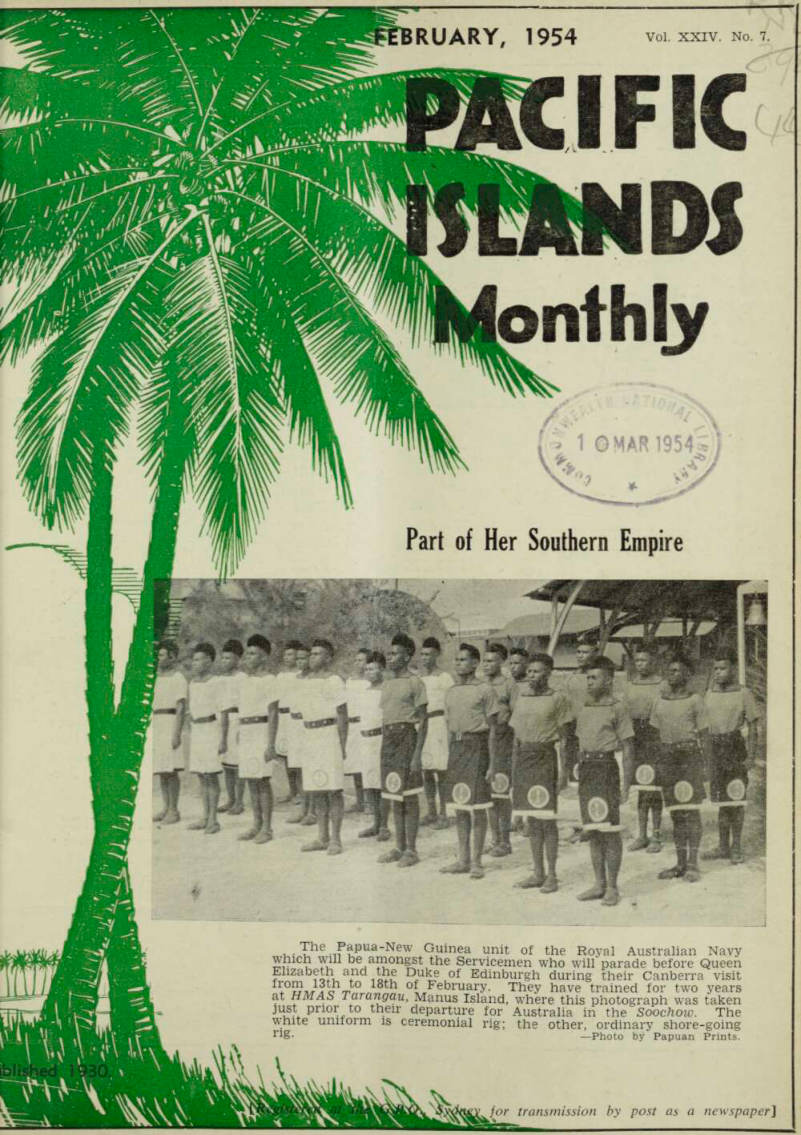 1
1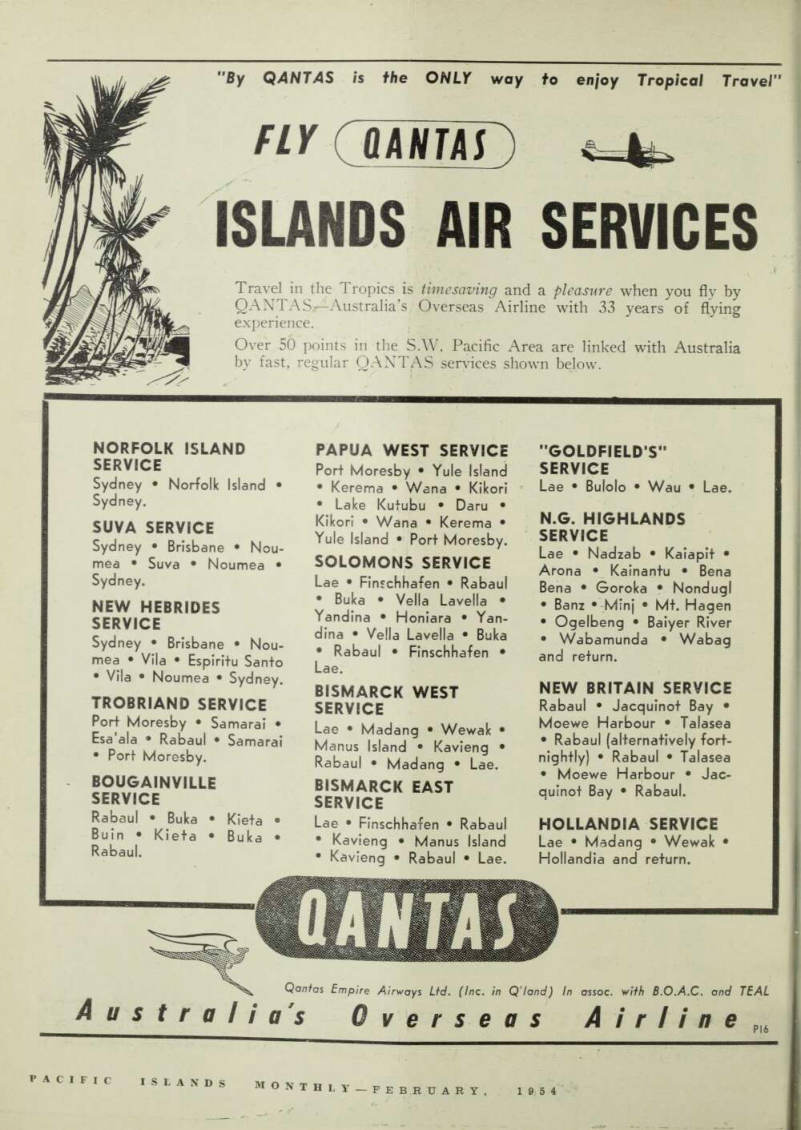 2
2 3
3 4
4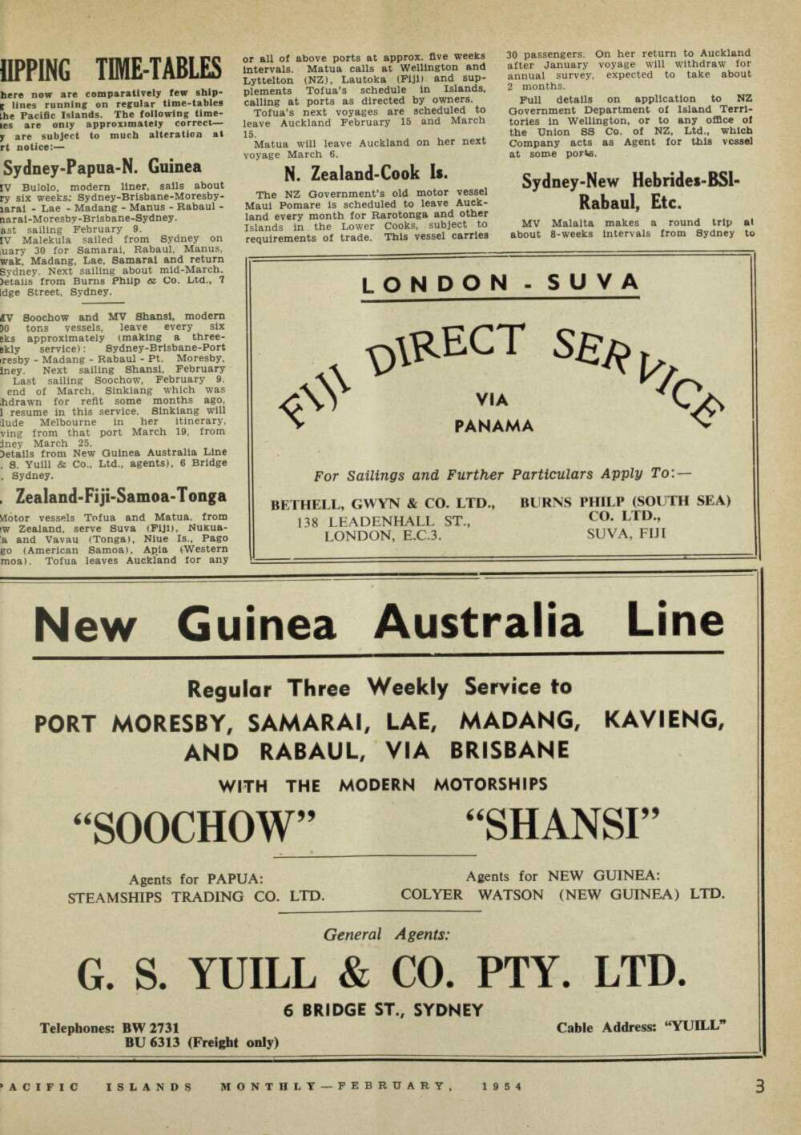 5
5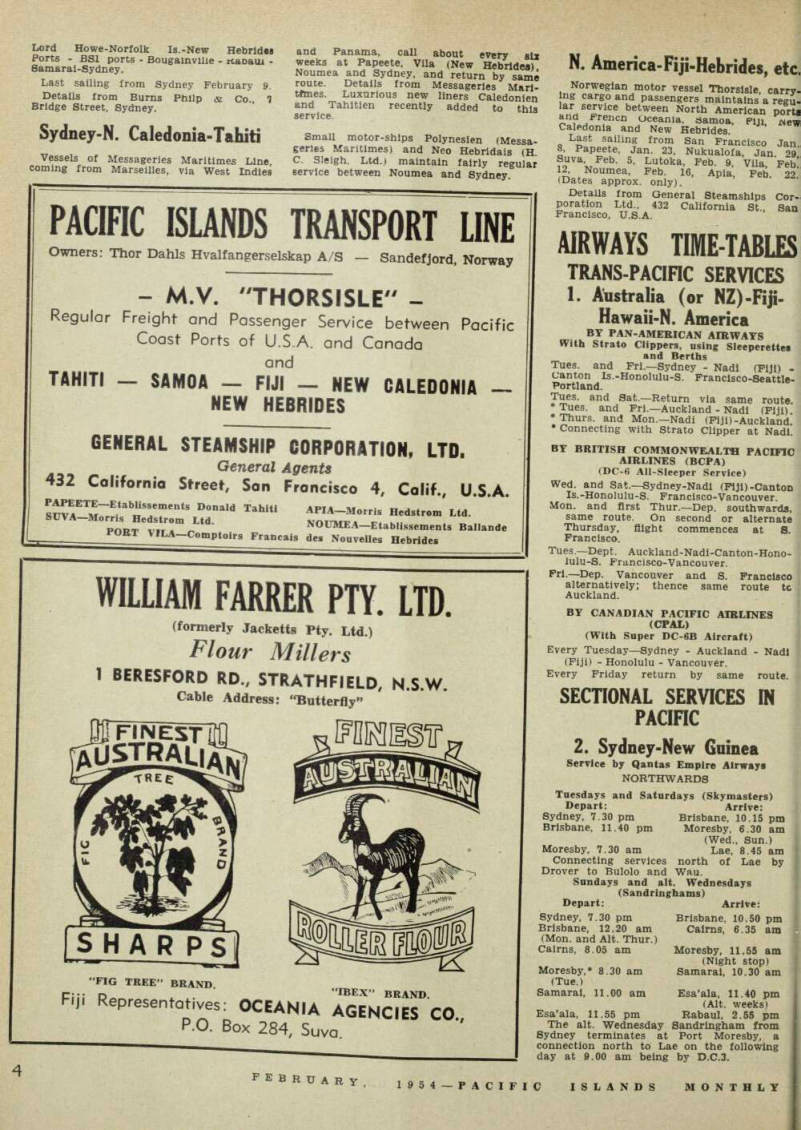 6
6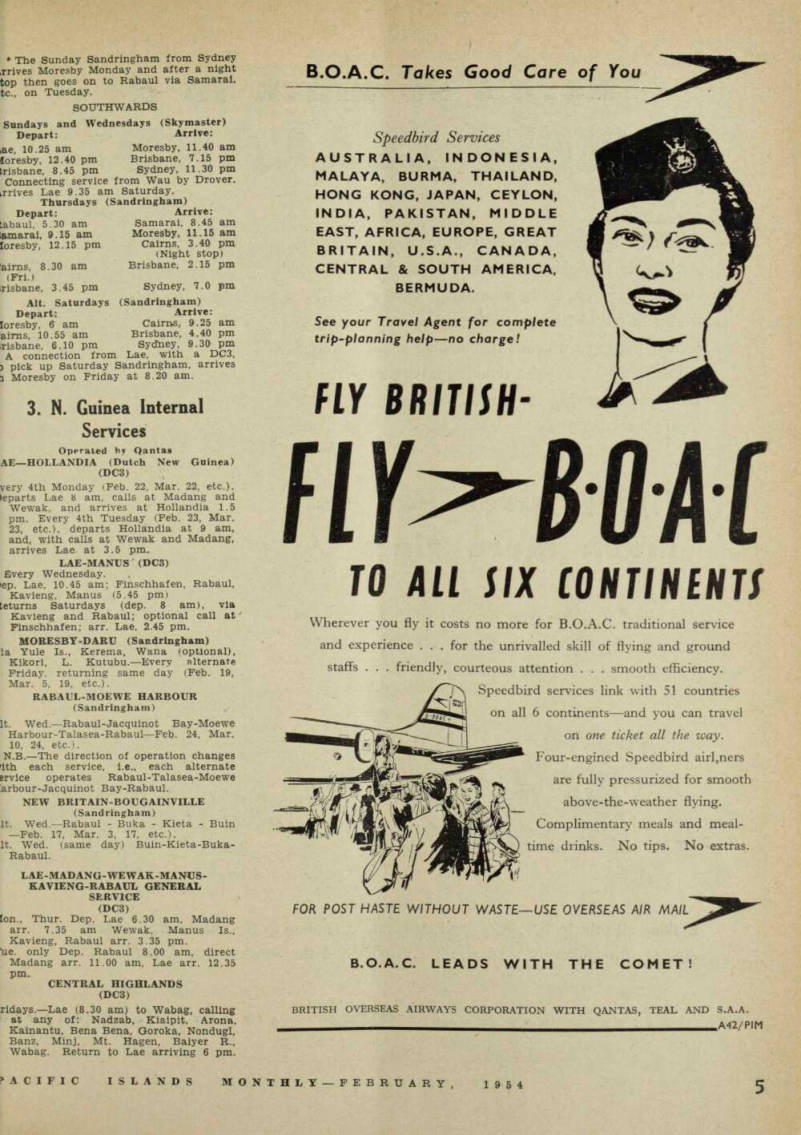 7
7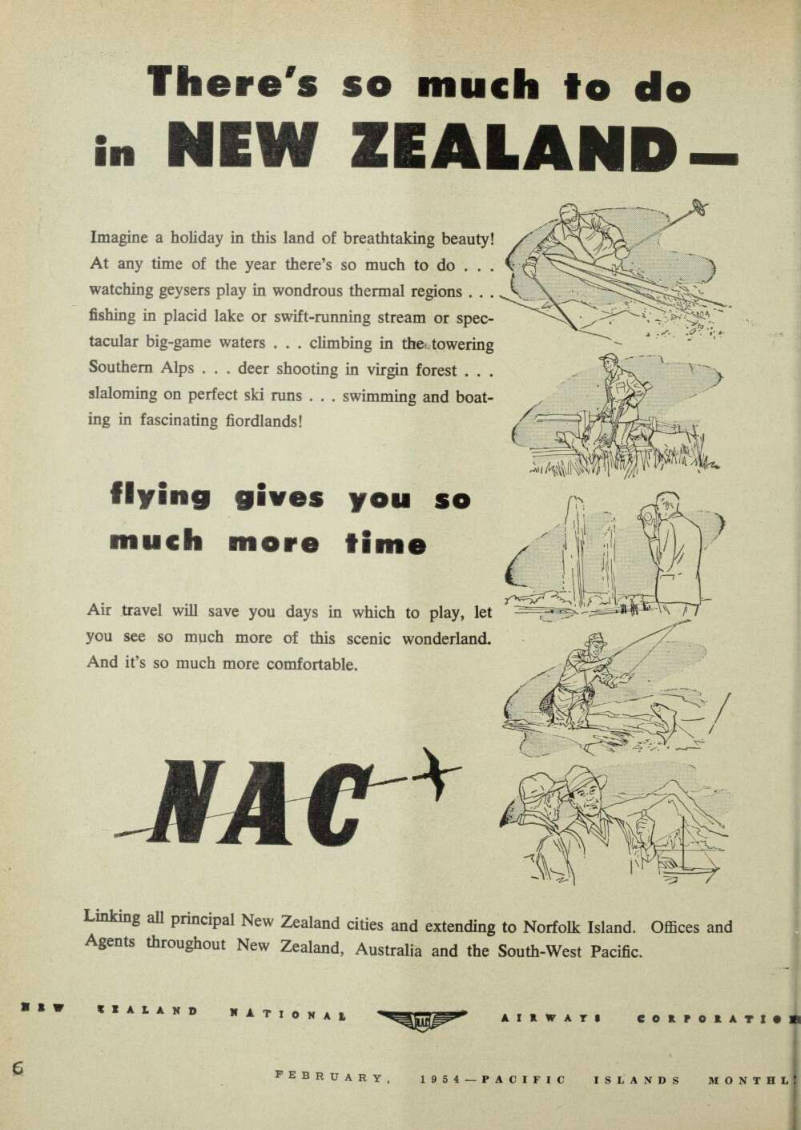 8
8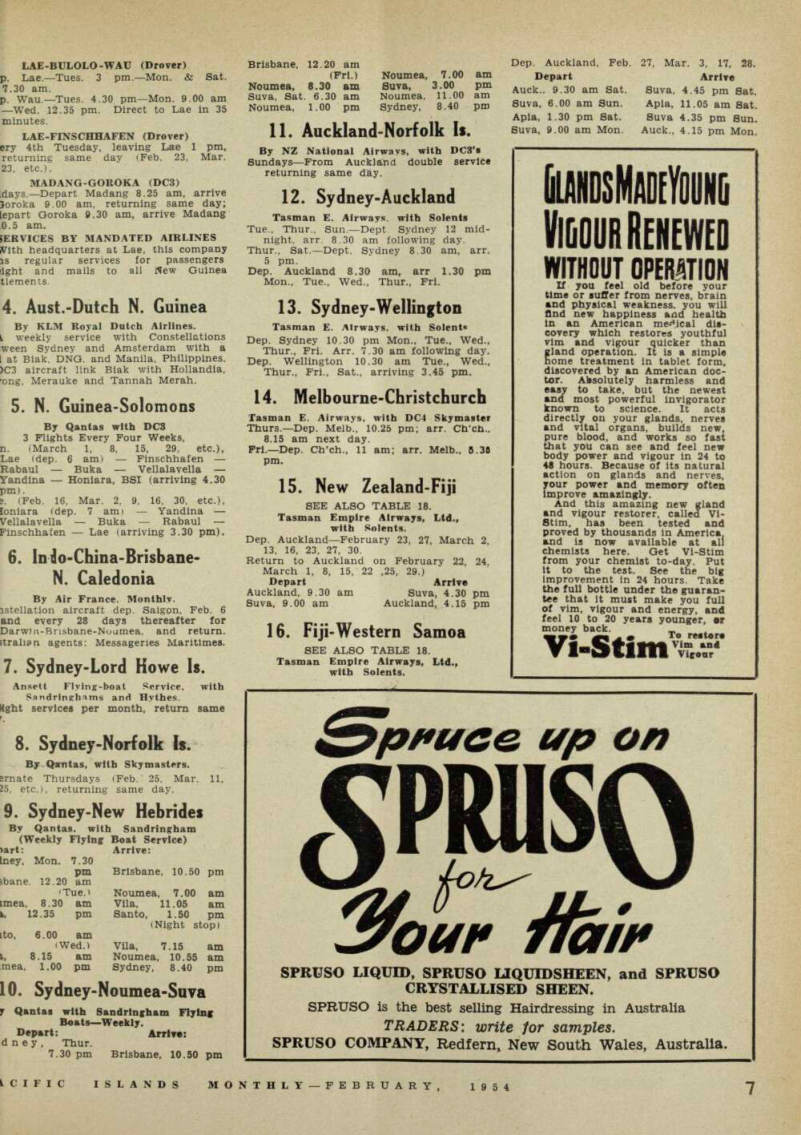 9
9 10
10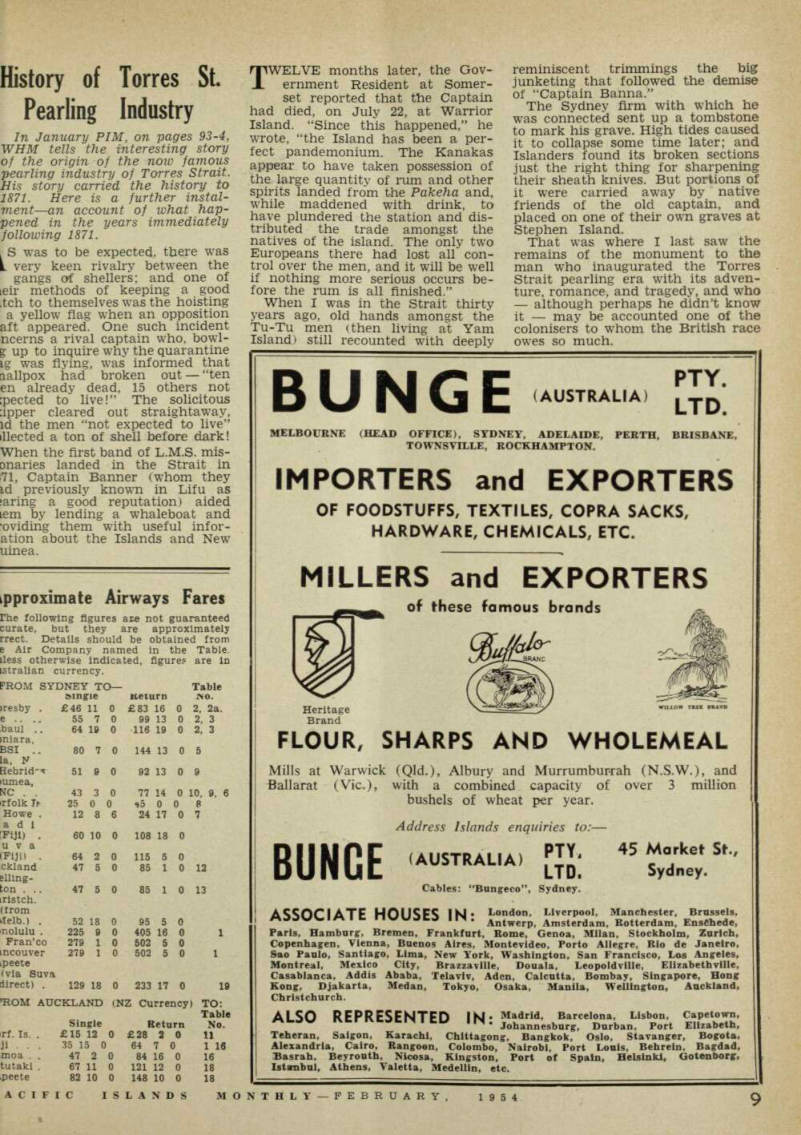 11
11 12
12 13
13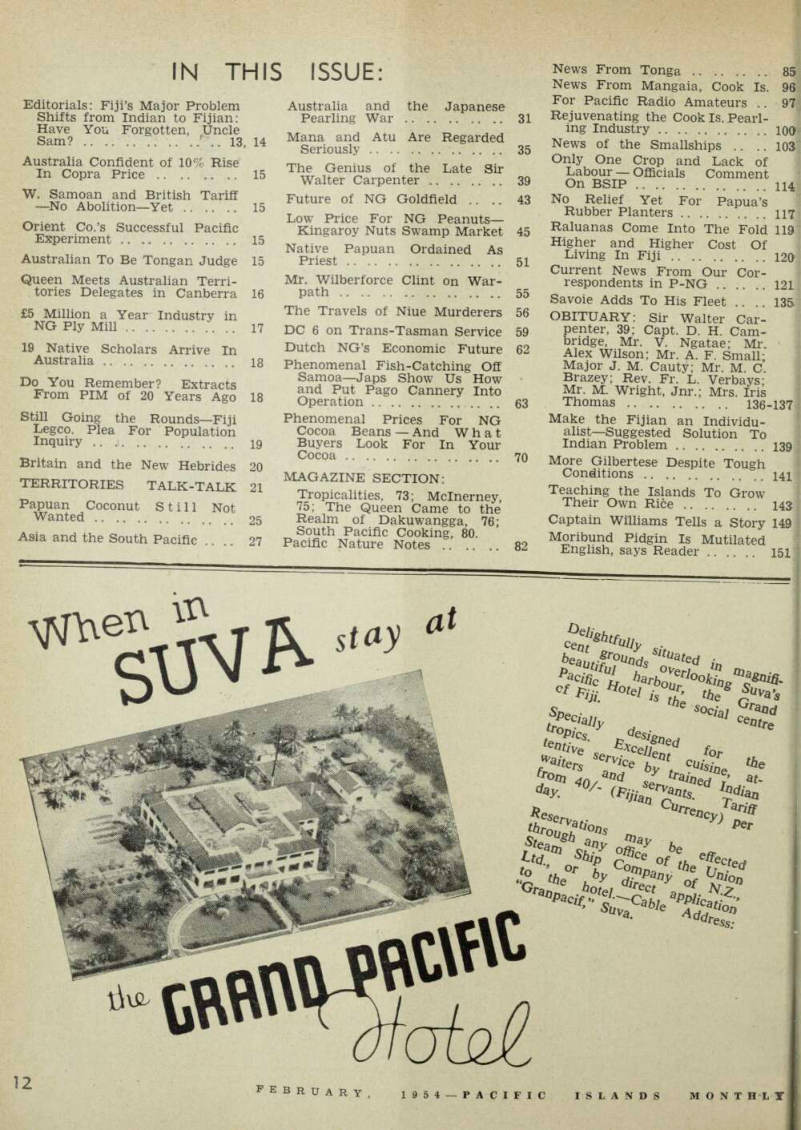 14
14 15
15 16
16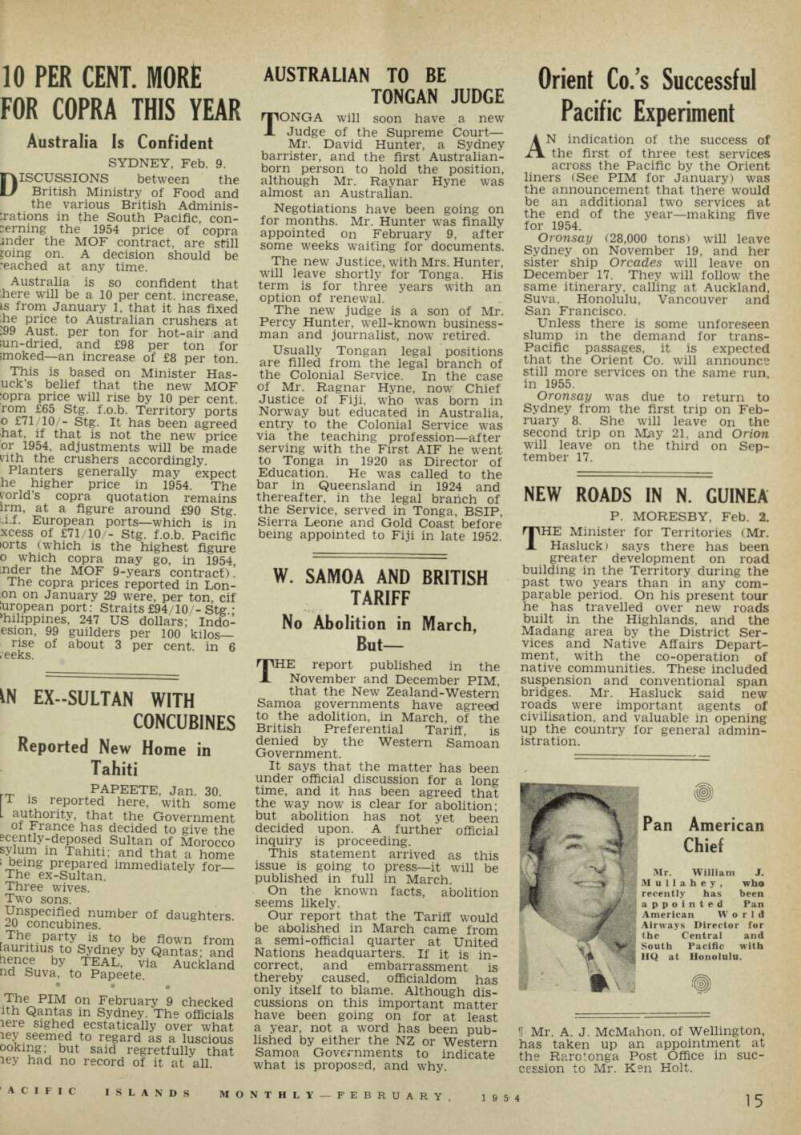 17
17 18
18 19
19 20
20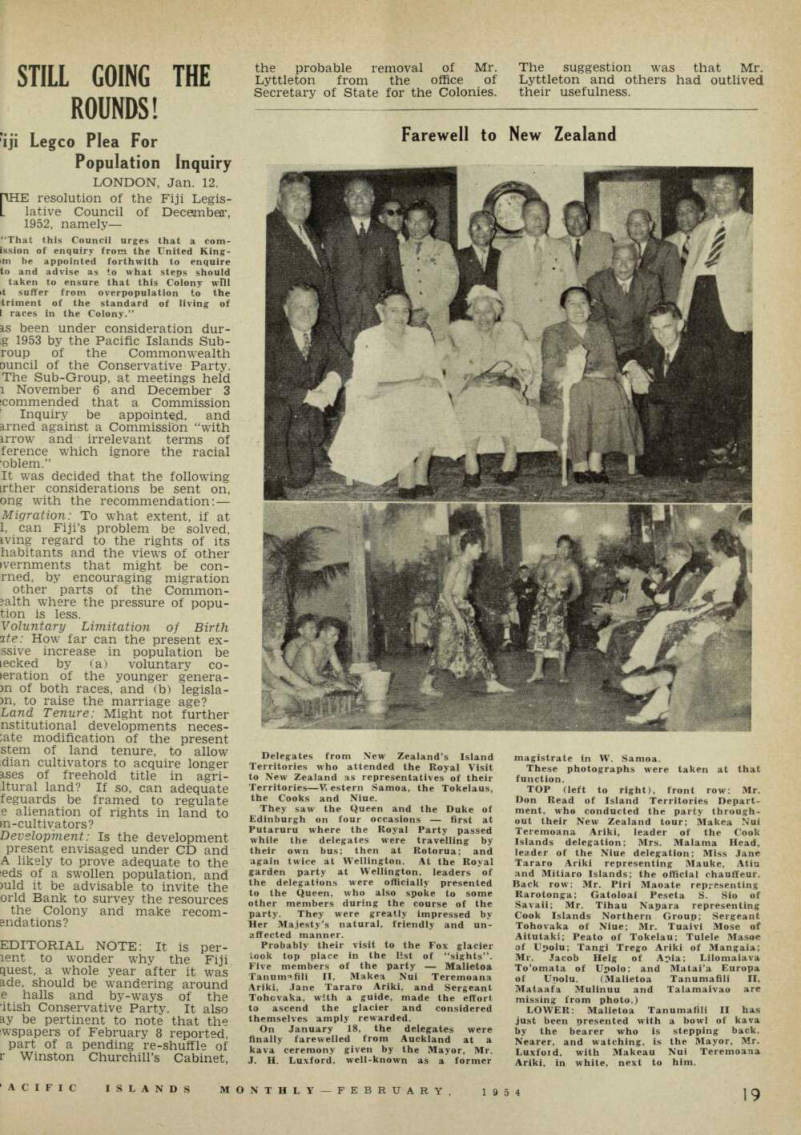 21
21 22
22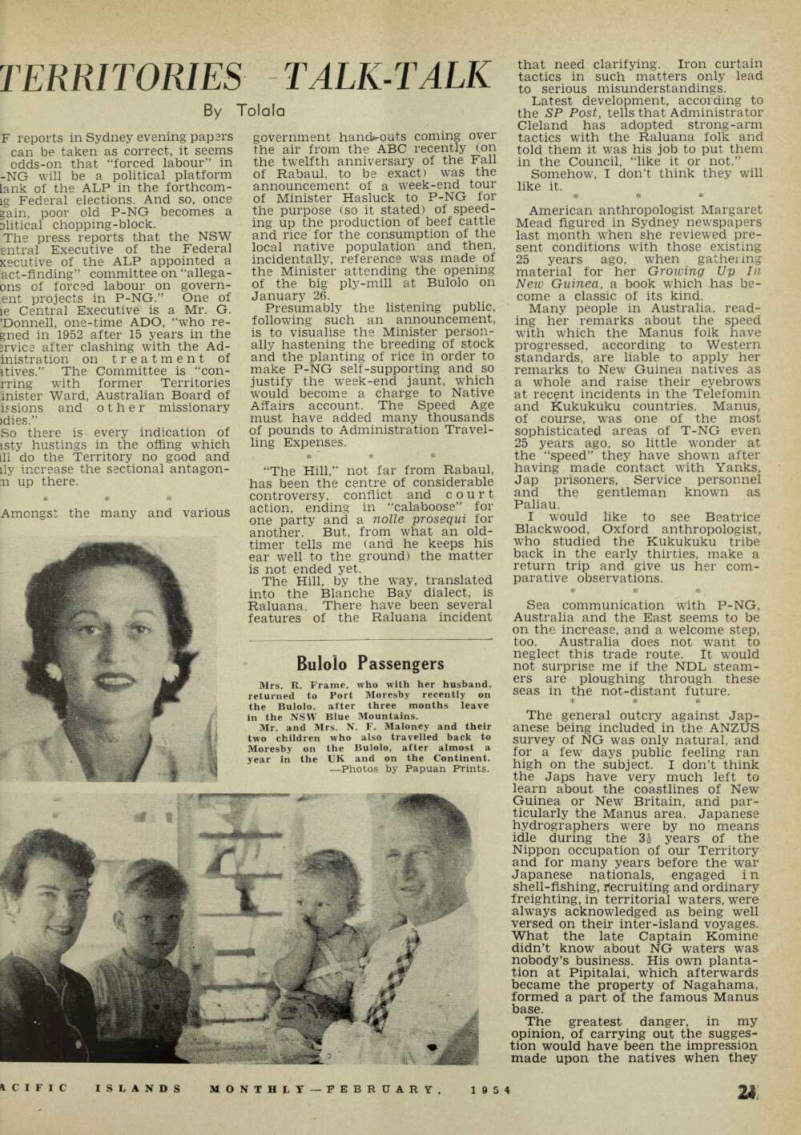 23
23 24
24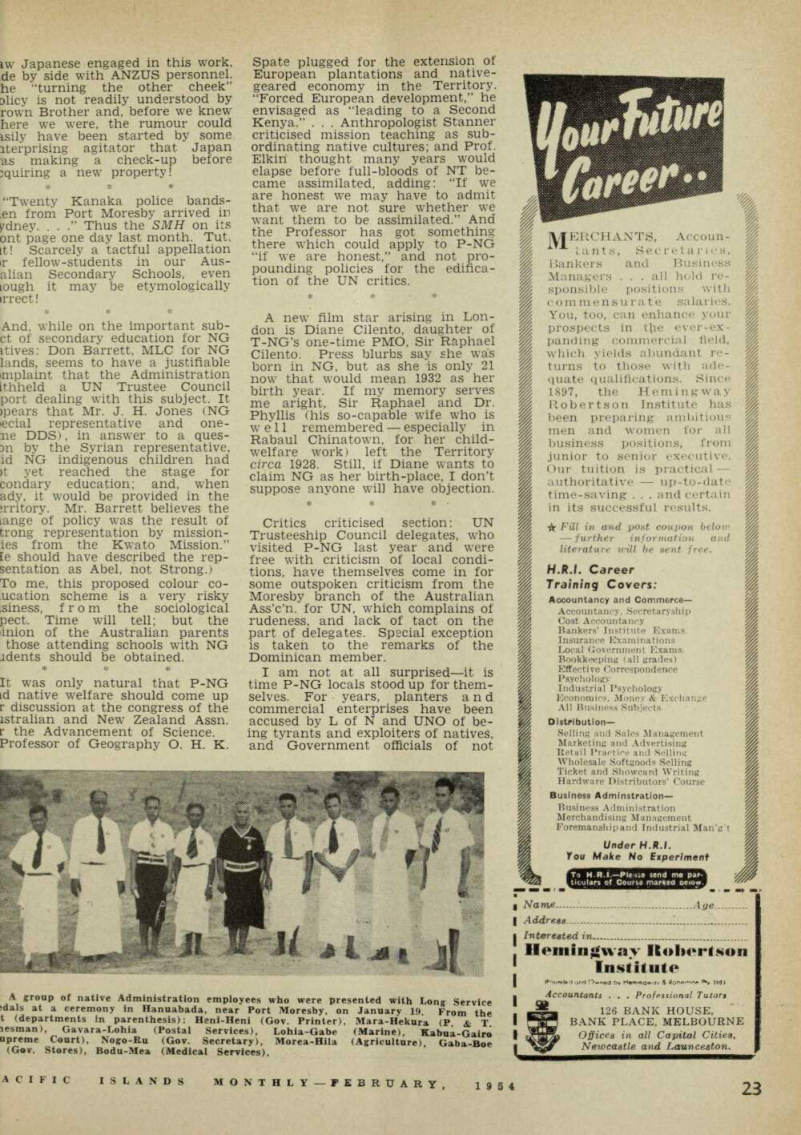 25
25 26
26 27
27 28
28 29
29 30
30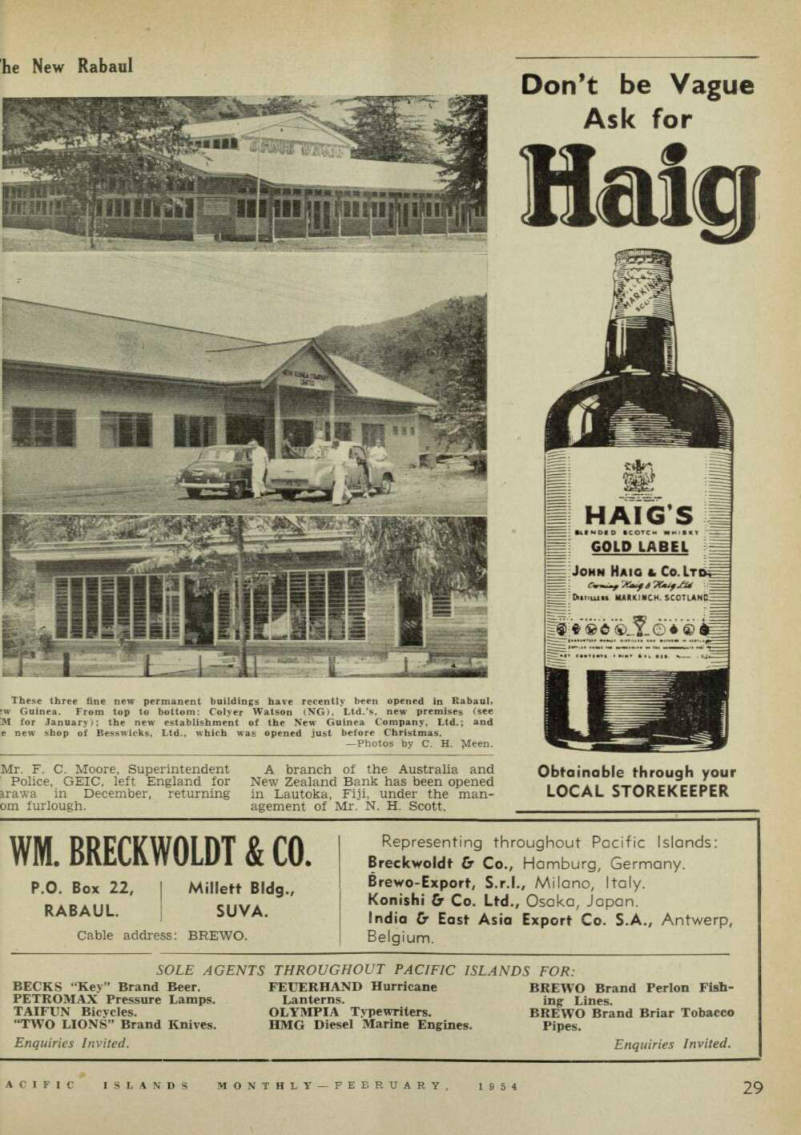 31
31 32
32 33
33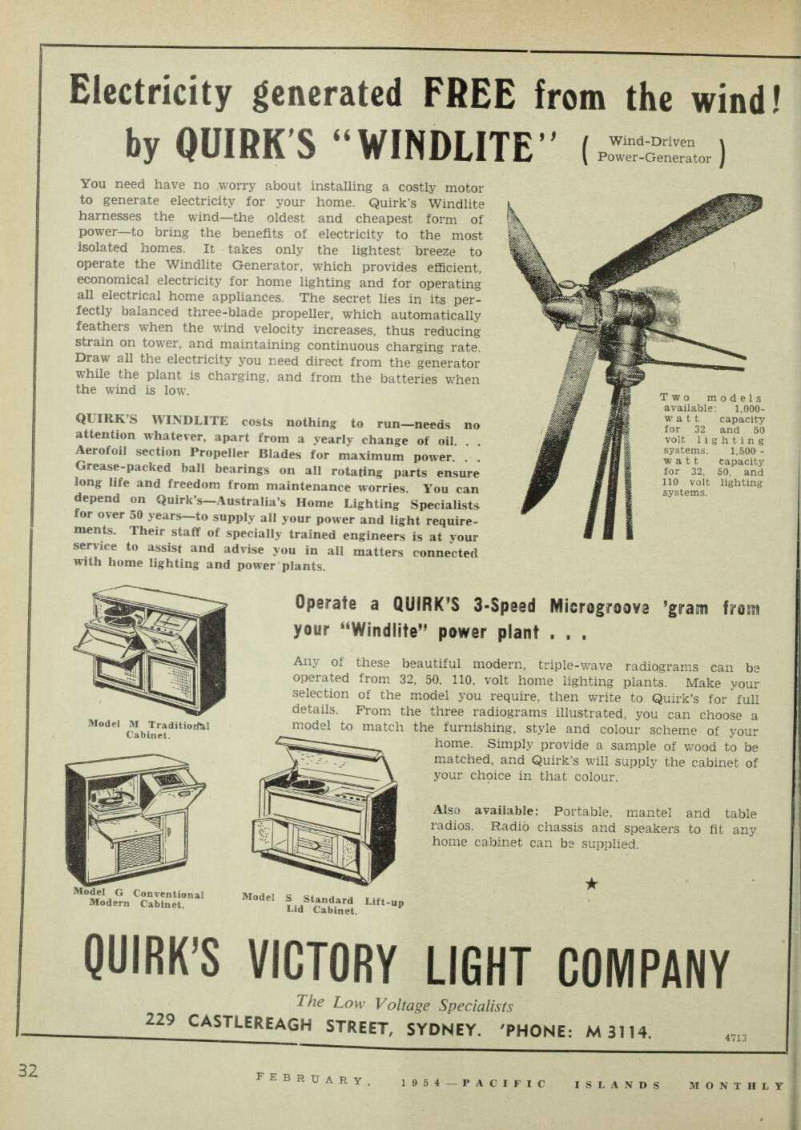 34
34 35
35 36
36 37
37 38
38 39
39 40
40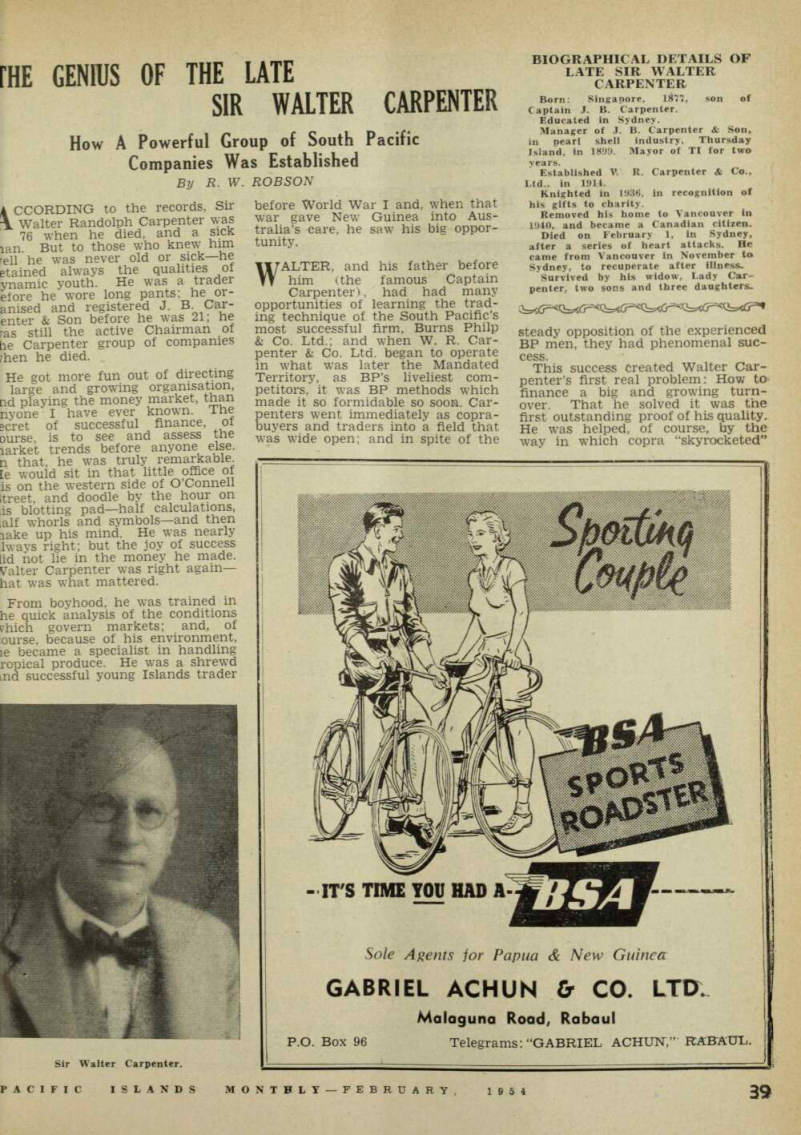 41
41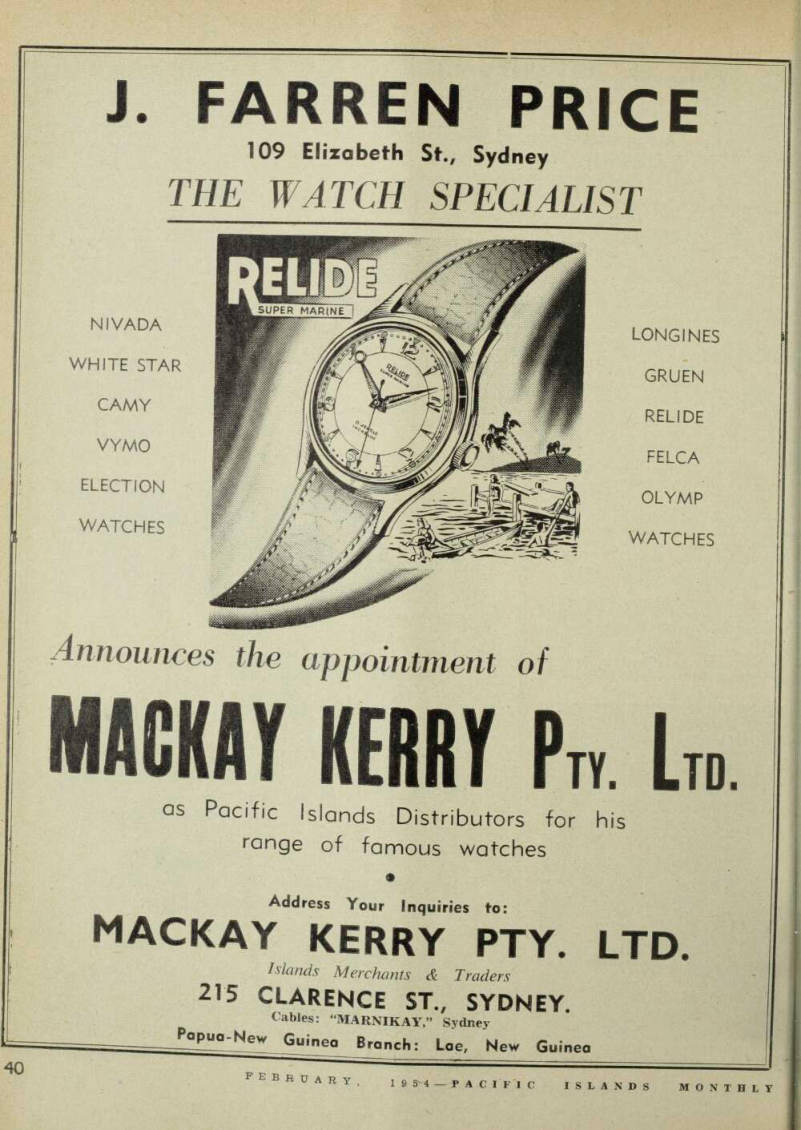 42
42 43
43 44
44 45
45 46
46 47
47 48
48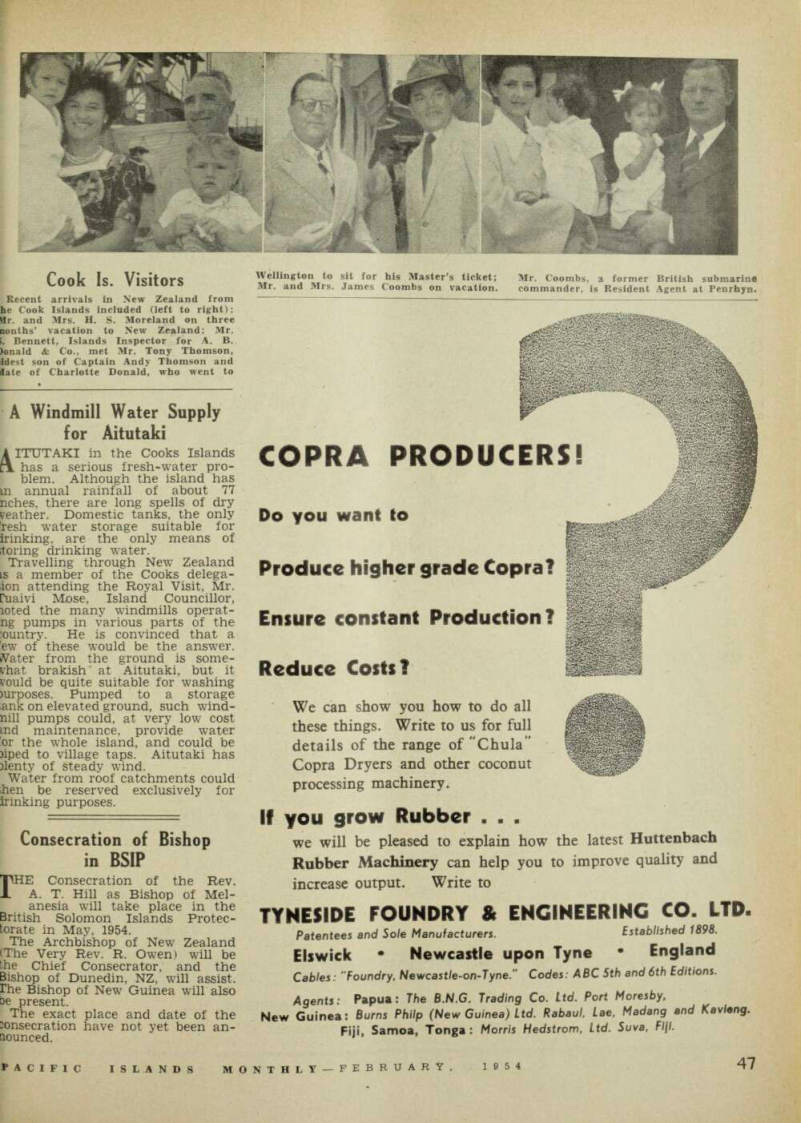 49
49 50
50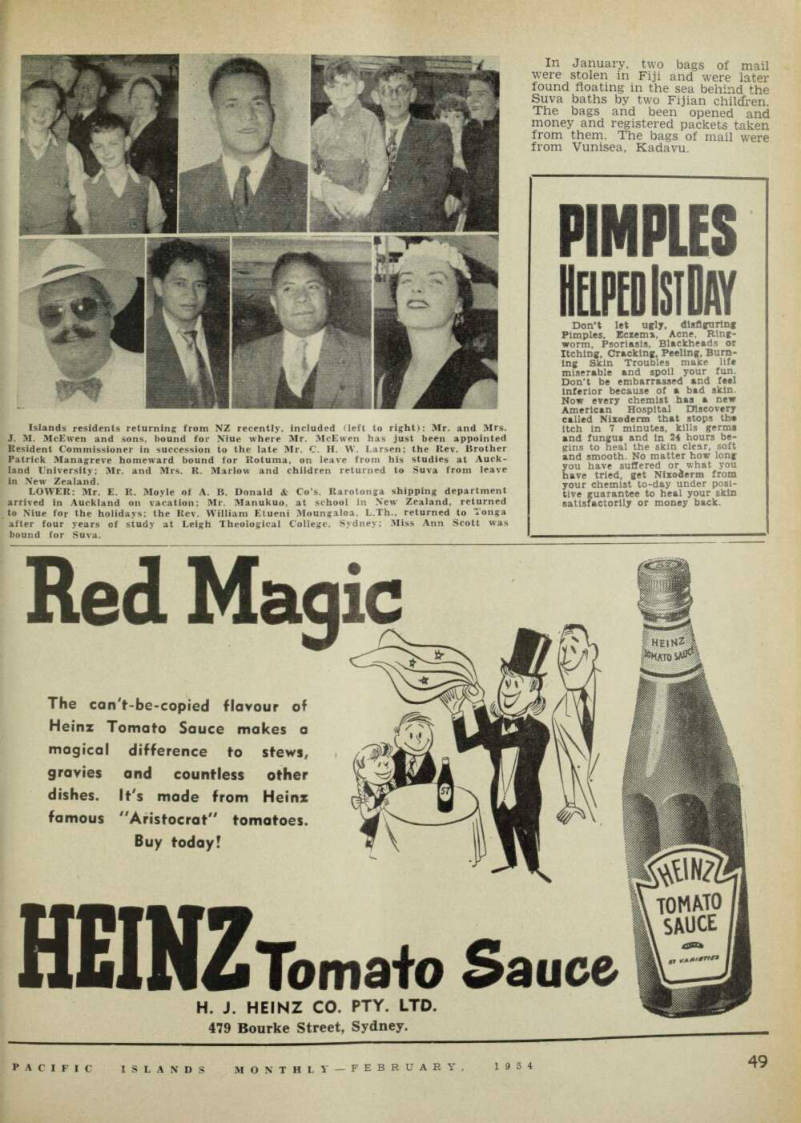 51
51 52
52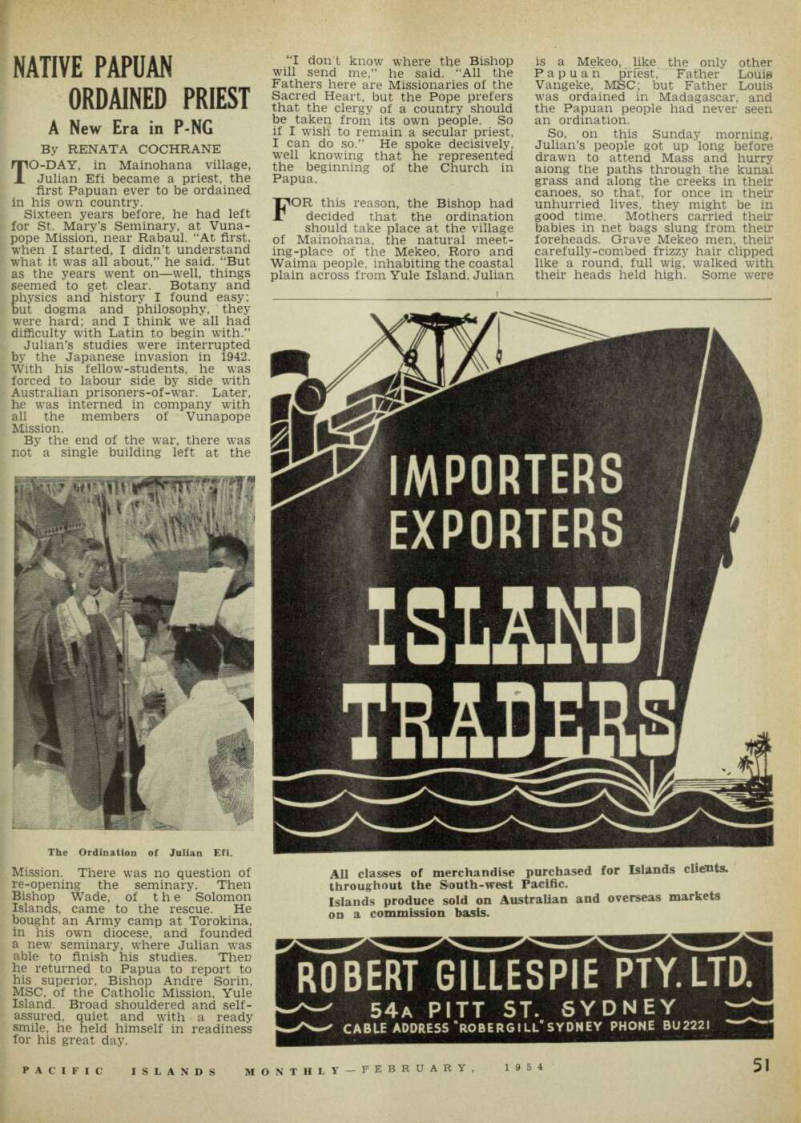 53
53 54
54 55
55 56
56 57
57 58
58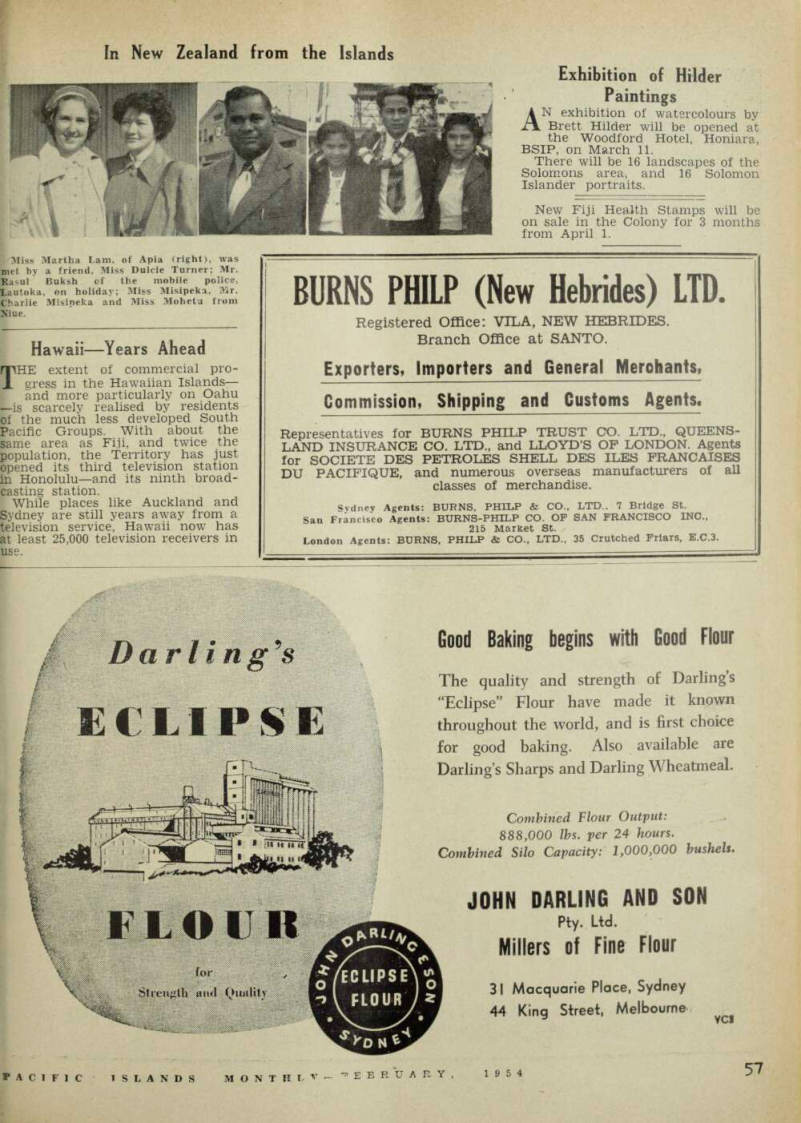 59
59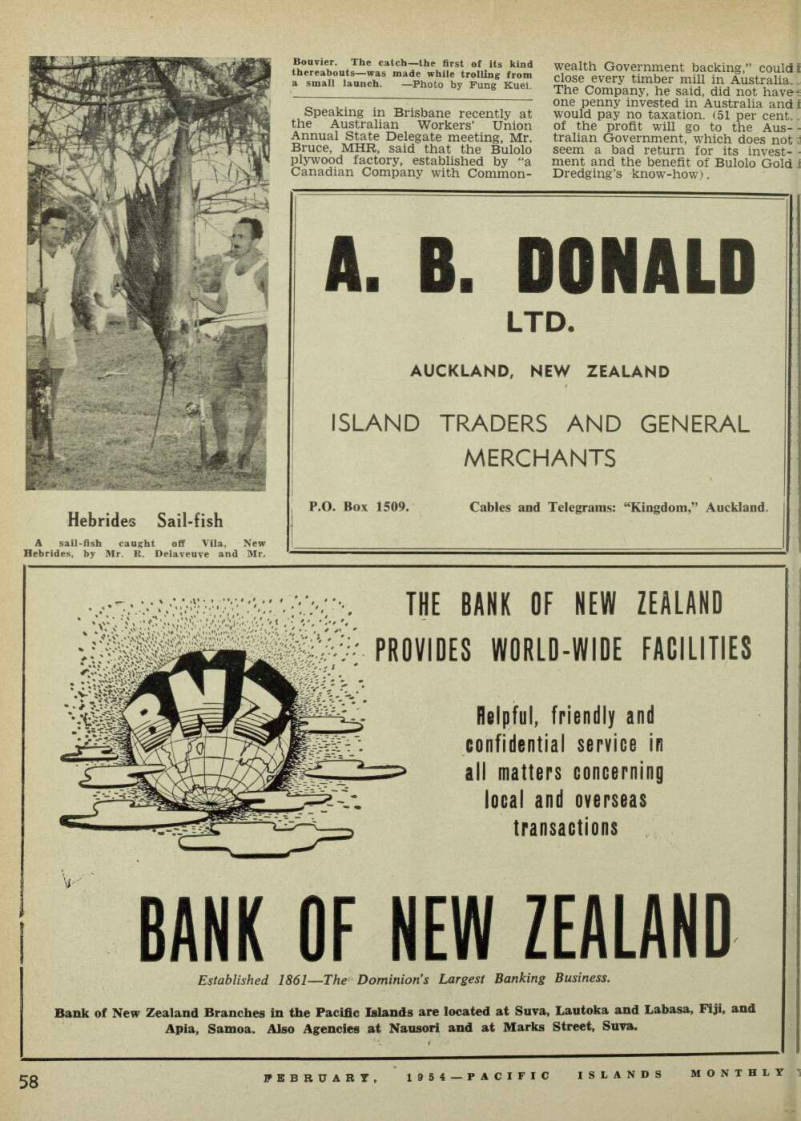 60
60 61
61 62
62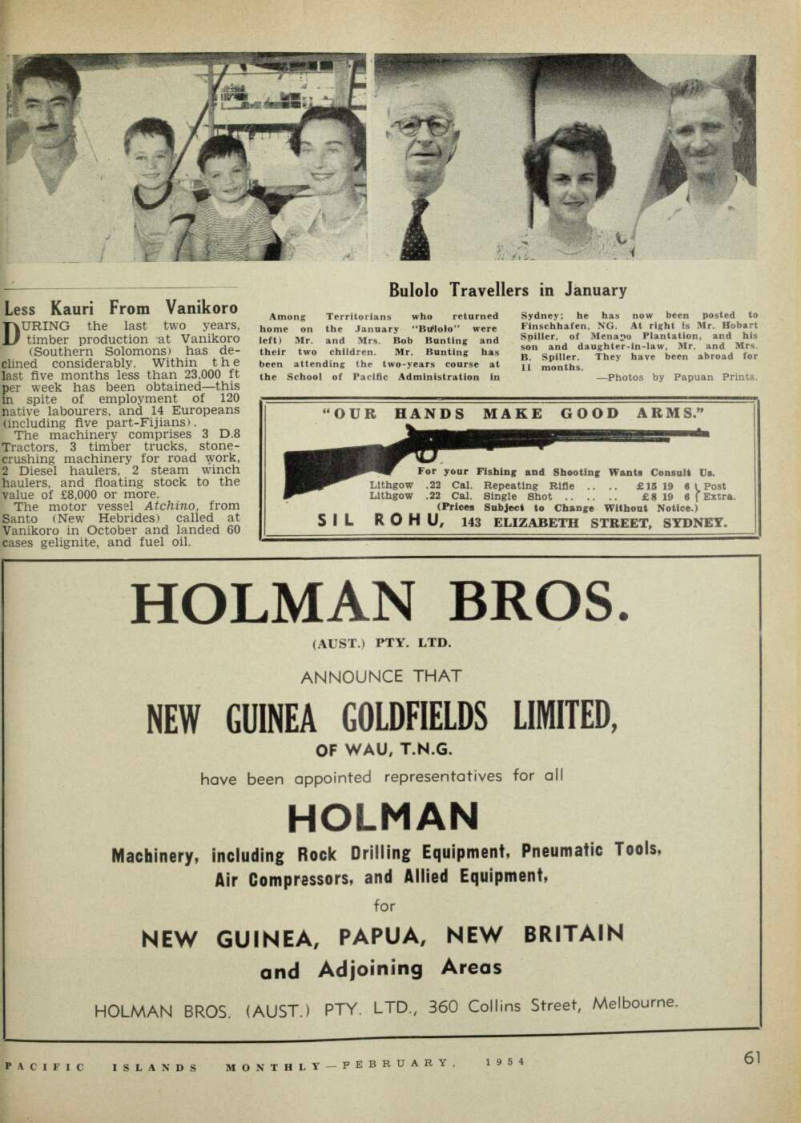 63
63 64
64 65
65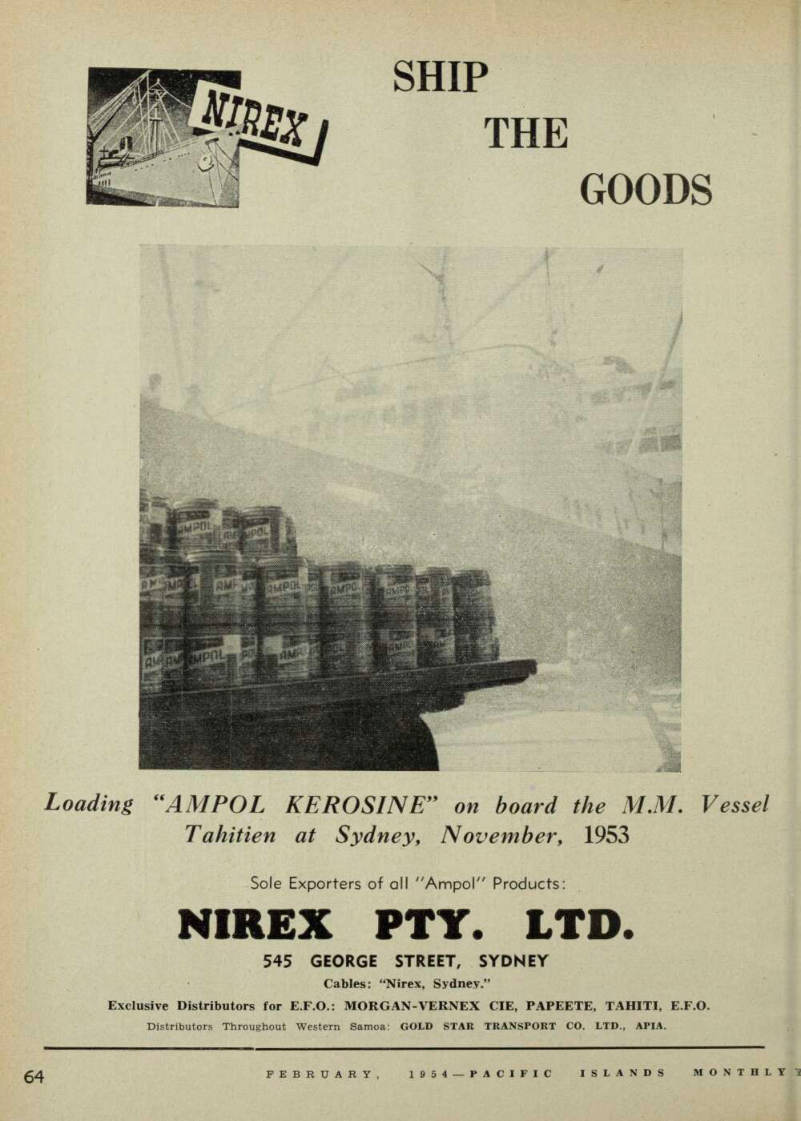 66
66 67
67 68
68 69
69 70
70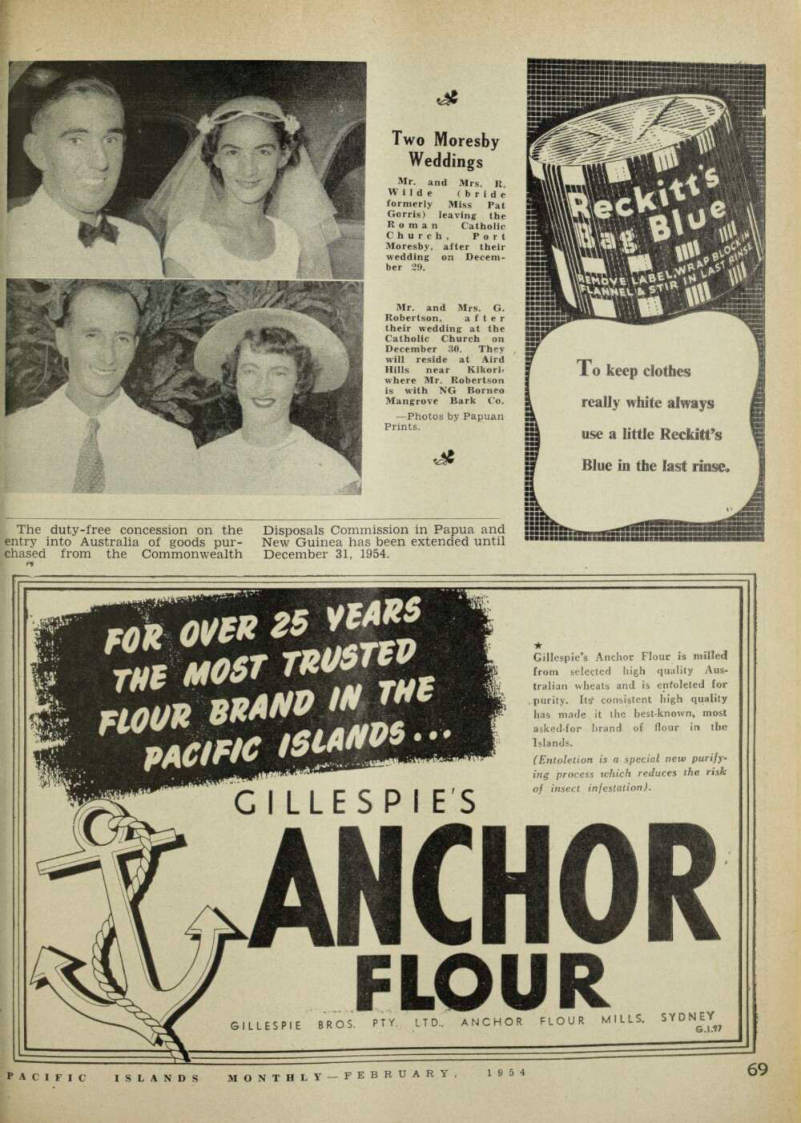 71
71 72
72 73
73 74
74 75
75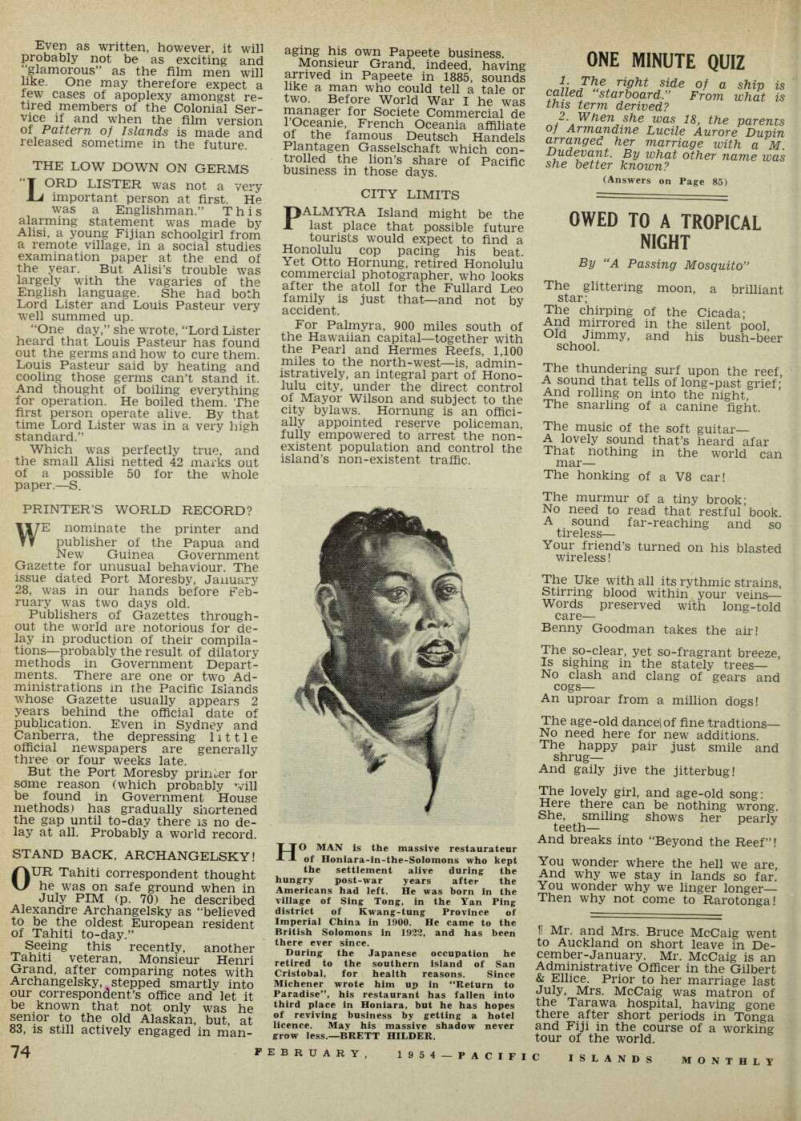 76
76 77
77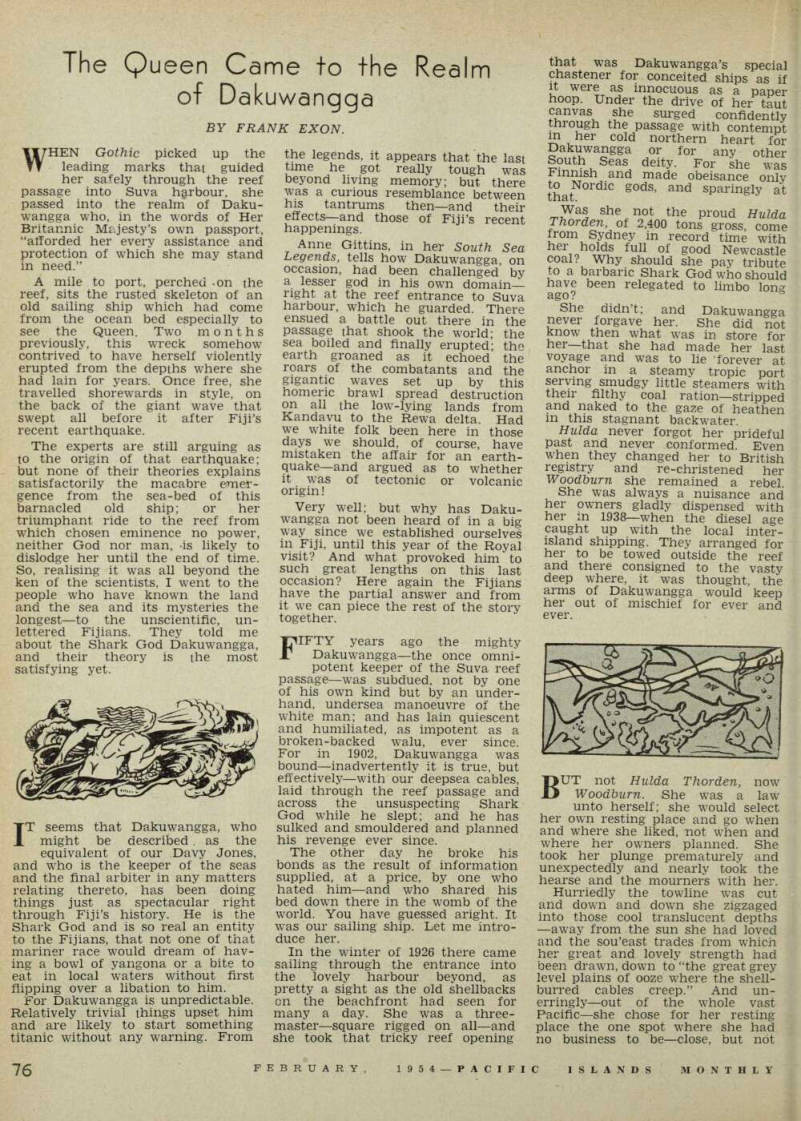 78
78 79
79 80
80 81
81 82
82 83
83 84
84 85
85 86
86 87
87 88
88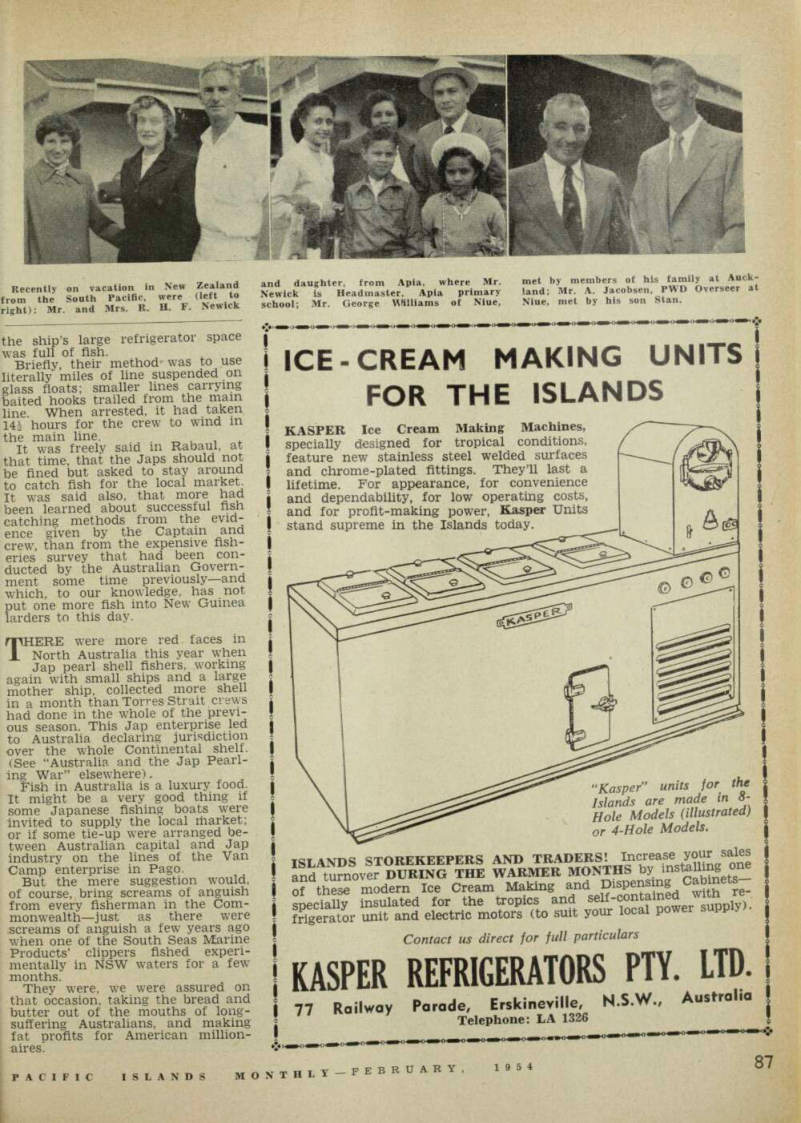 89
89 90
90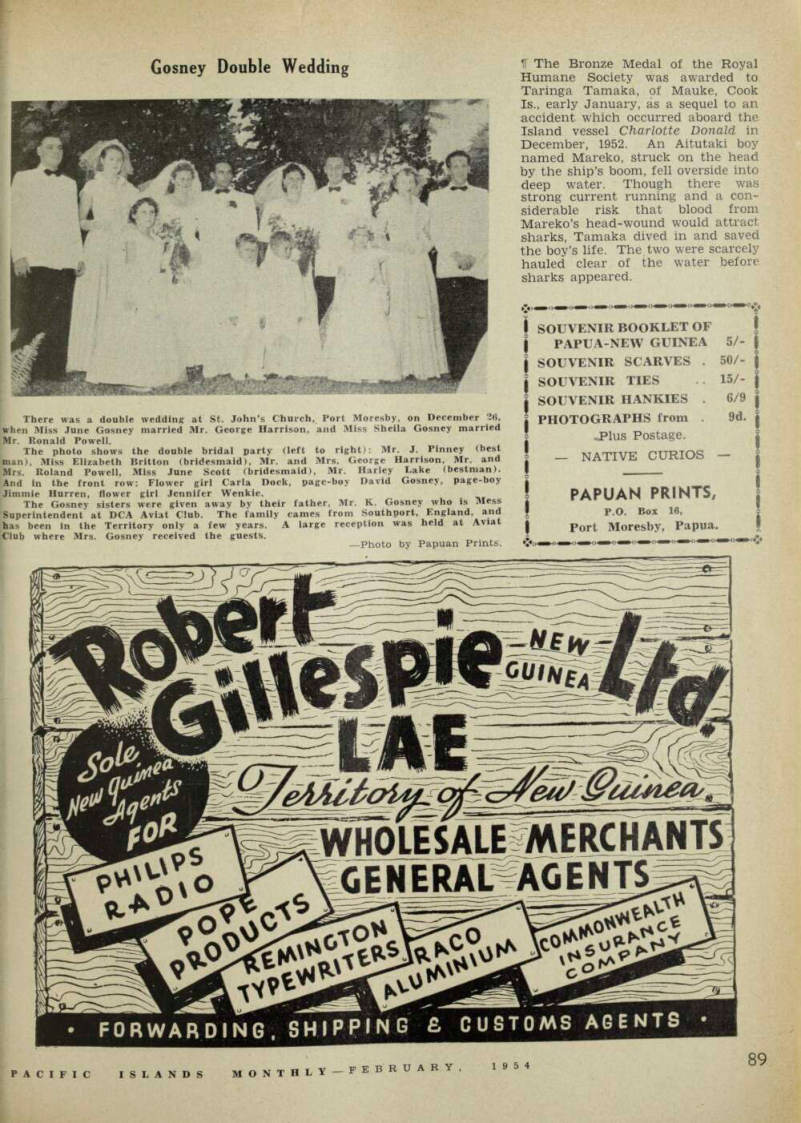 91
91 92
92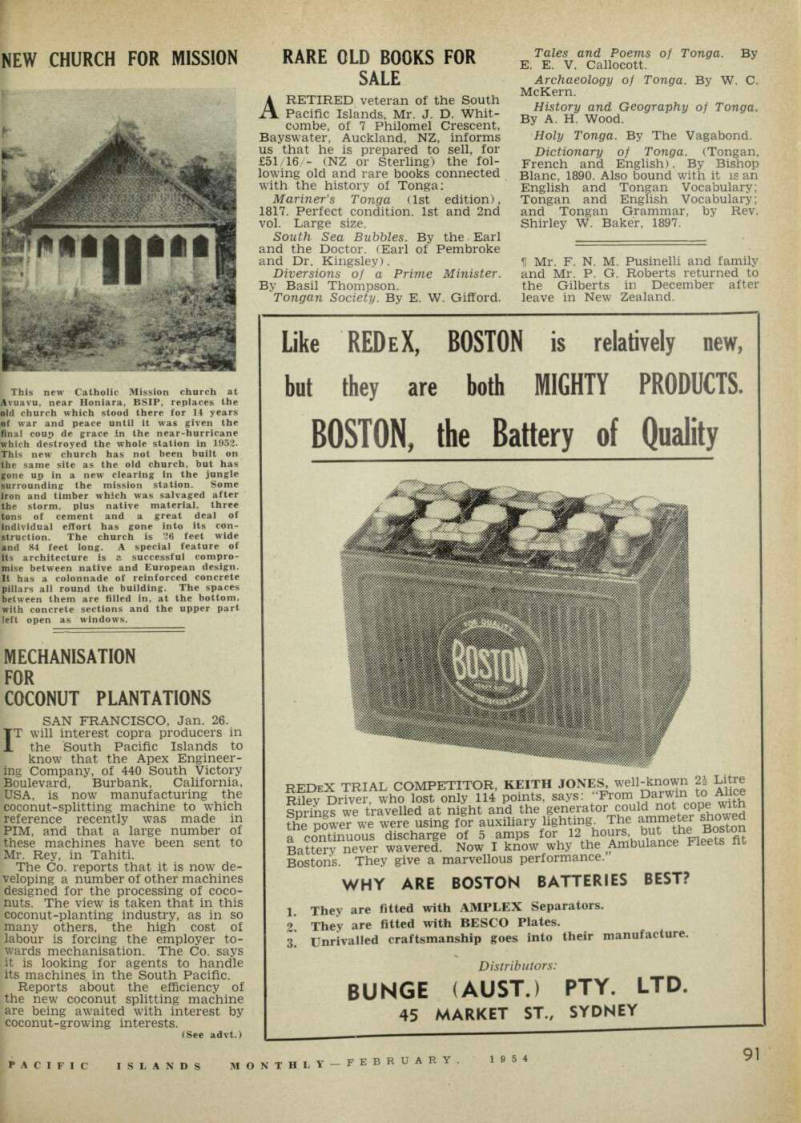 93
93 94
94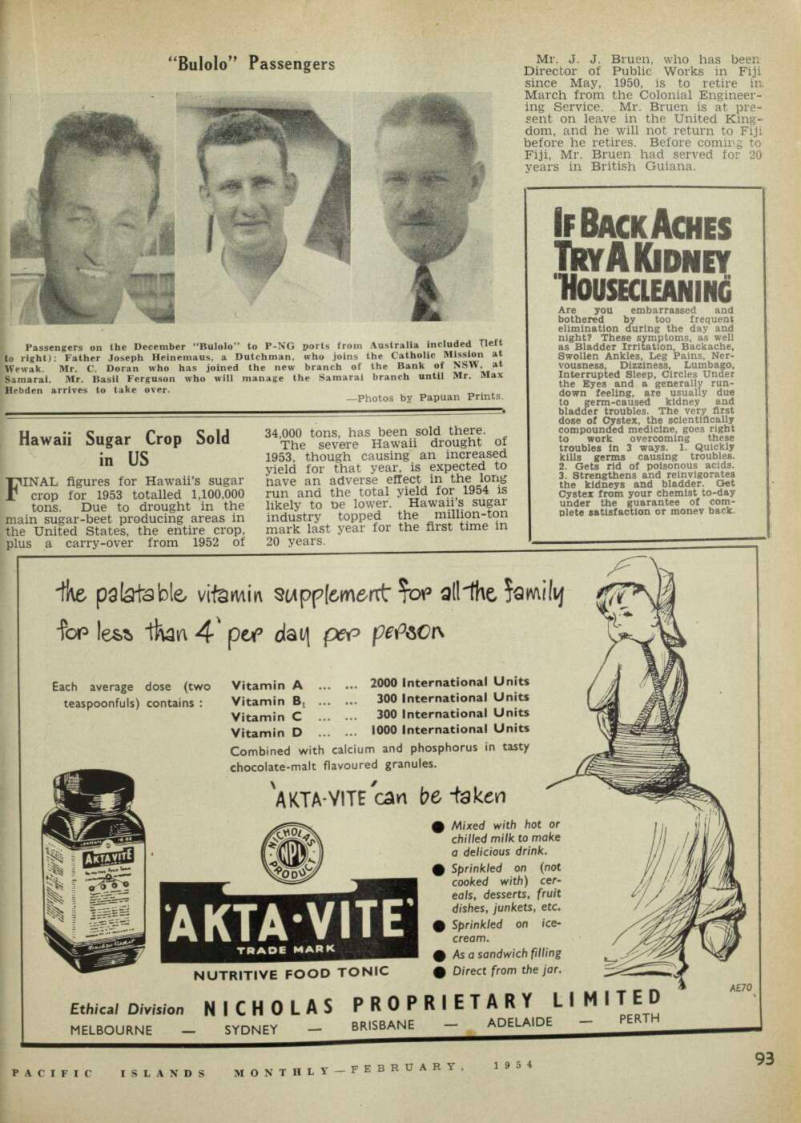 95
95 96
96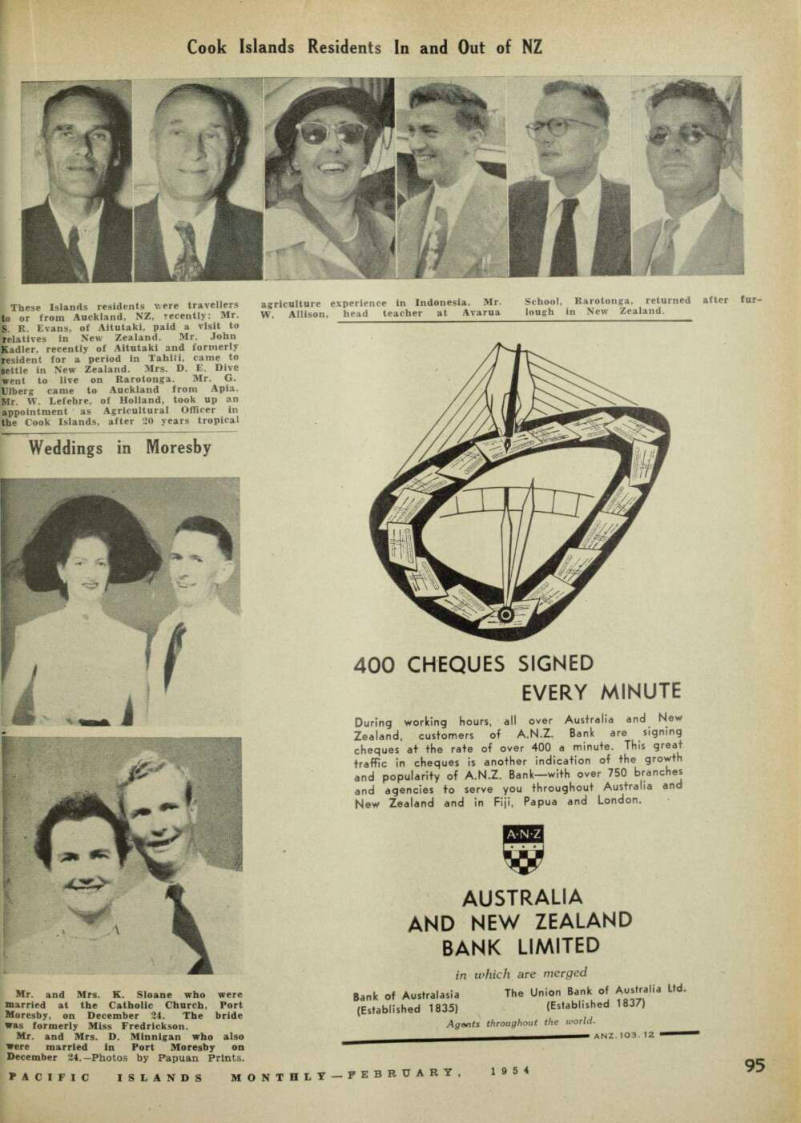 97
97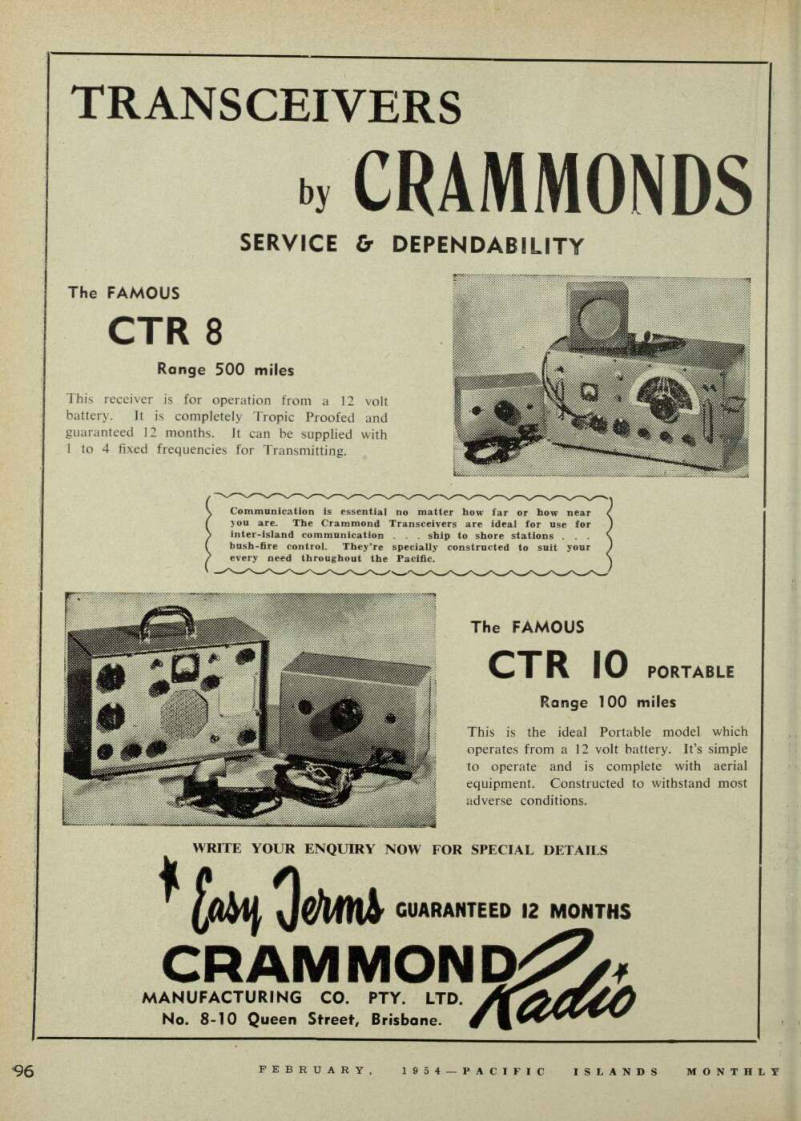 98
98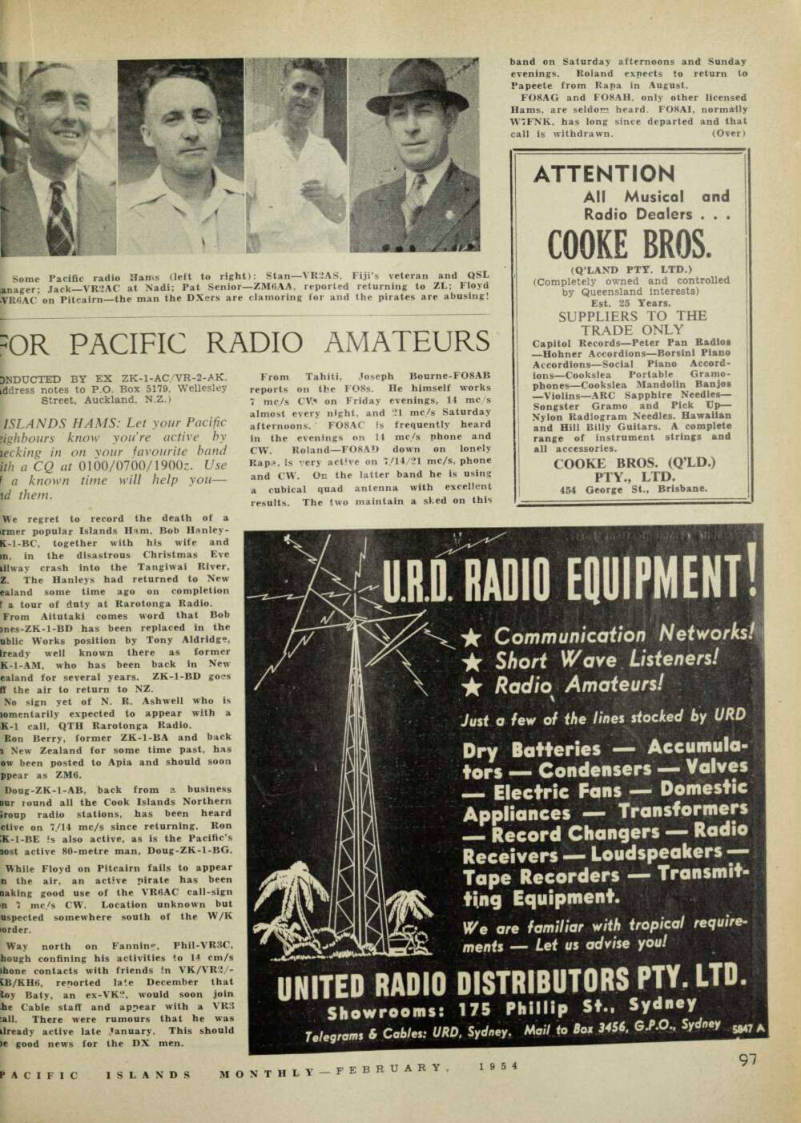 99
99 100
100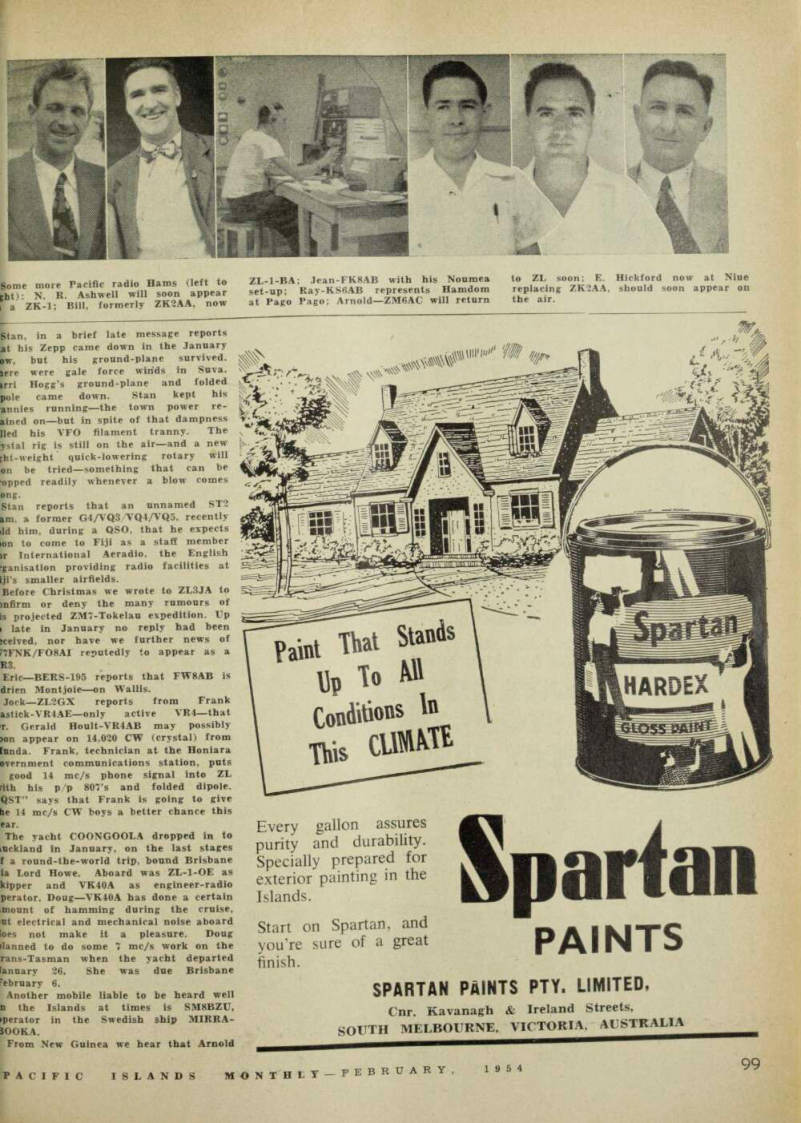 101
101 102
102 103
103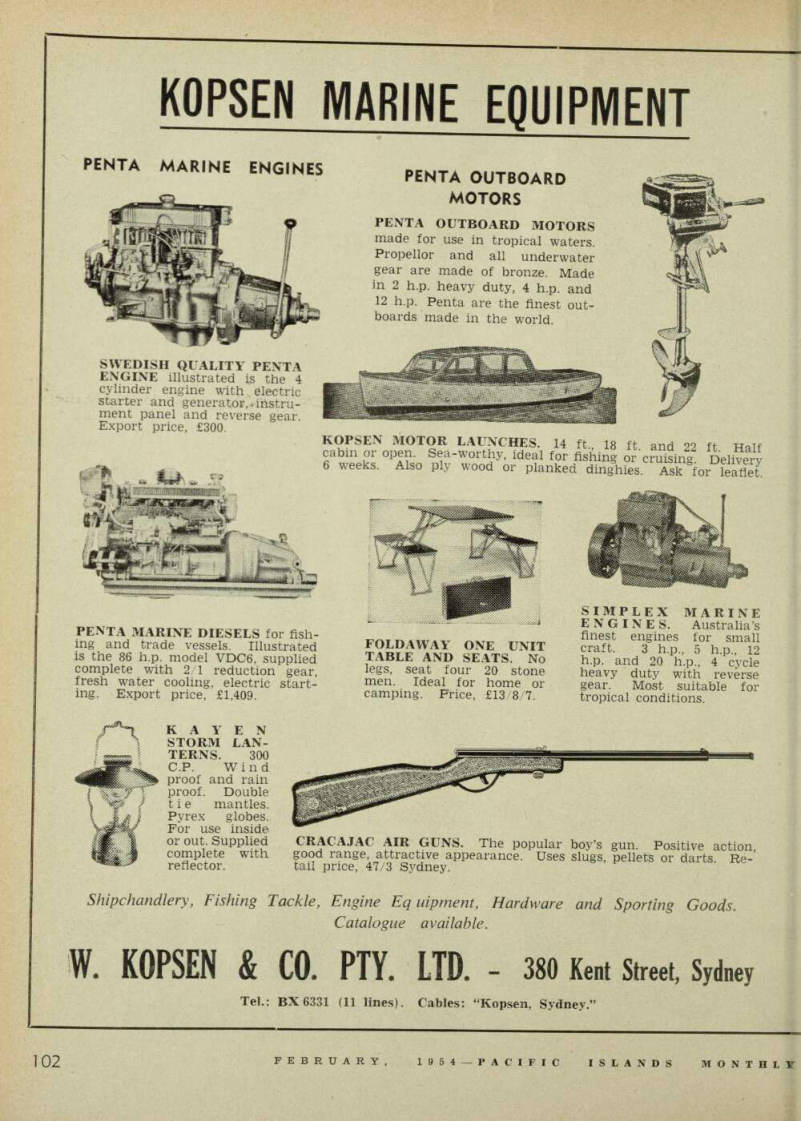 104
104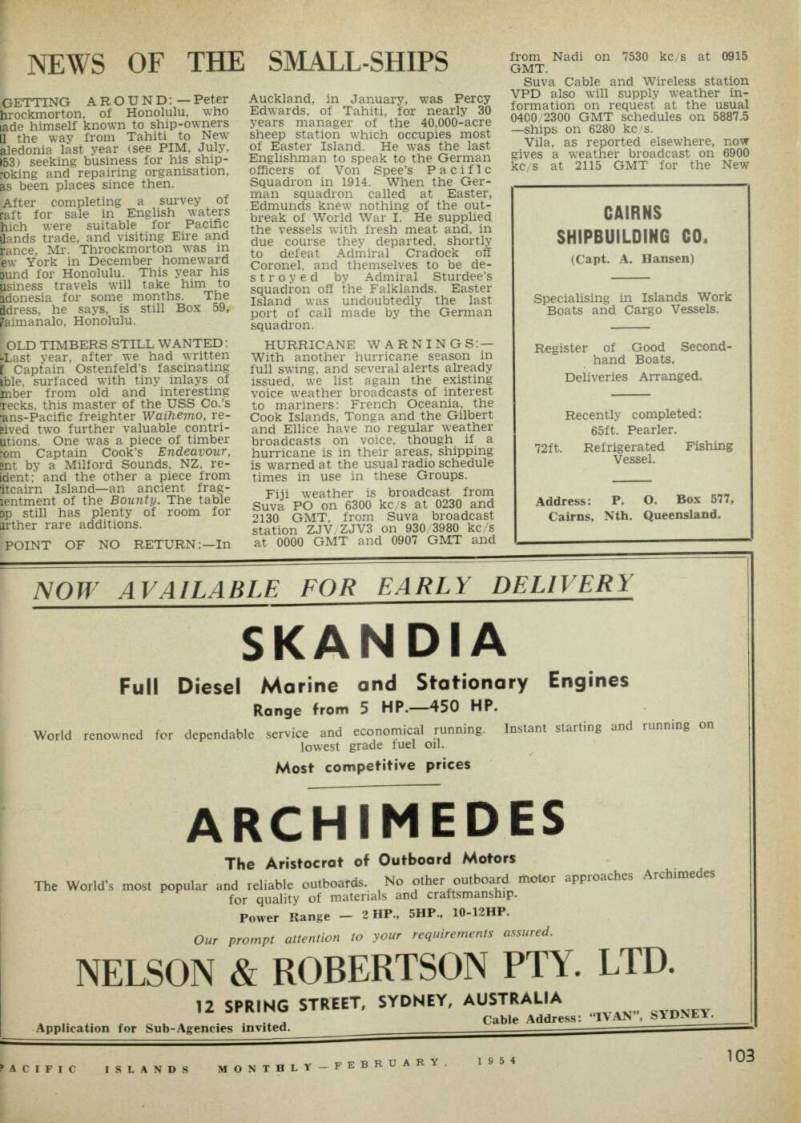 105
105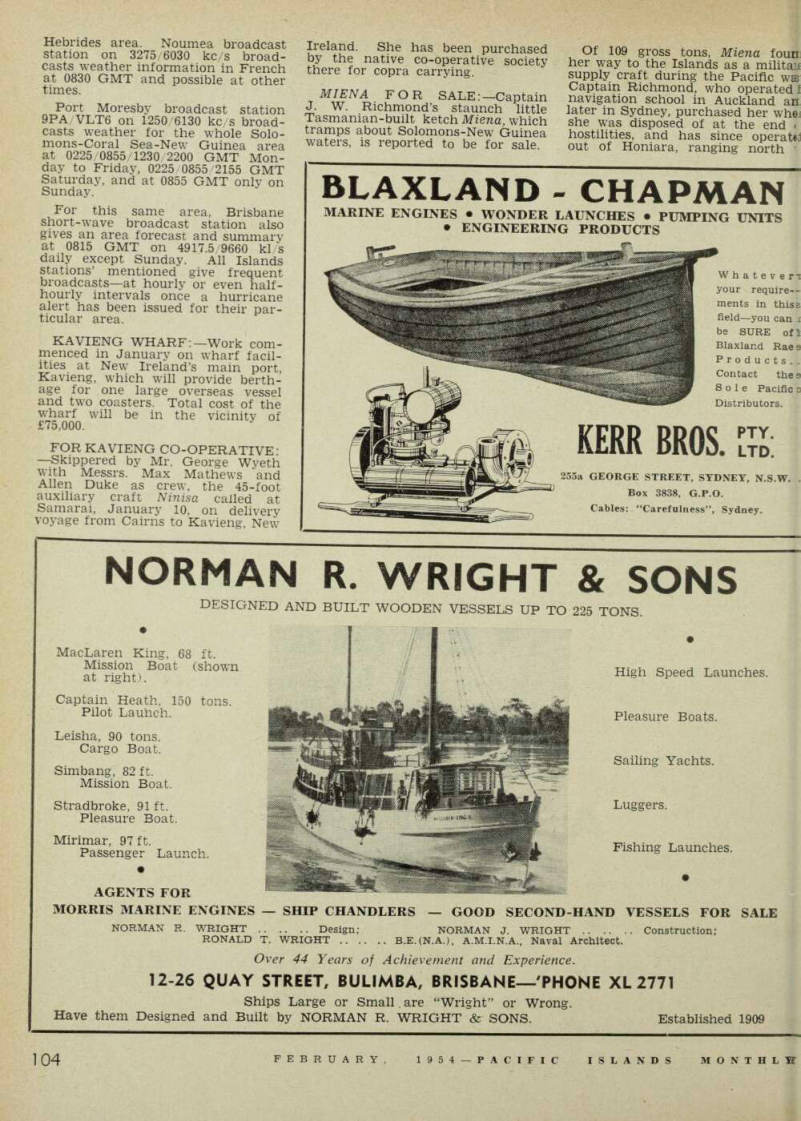 106
106 107
107 108
108 109
109 110
110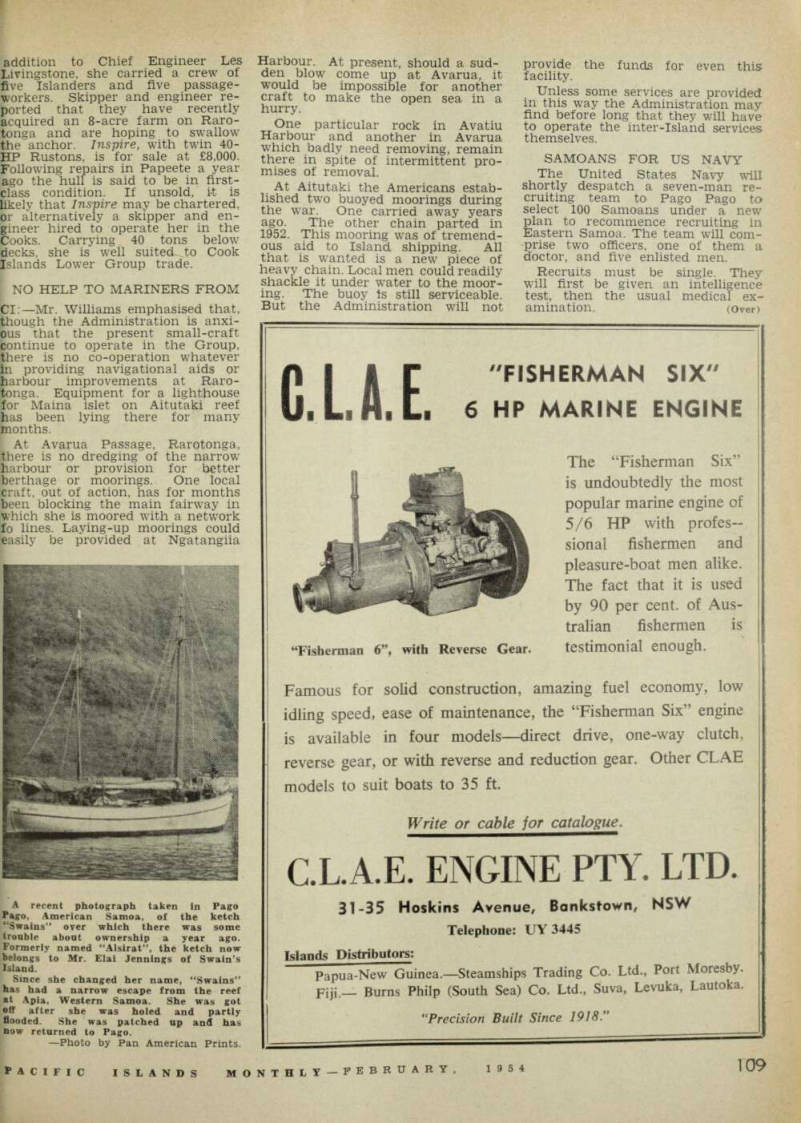 111
111 112
112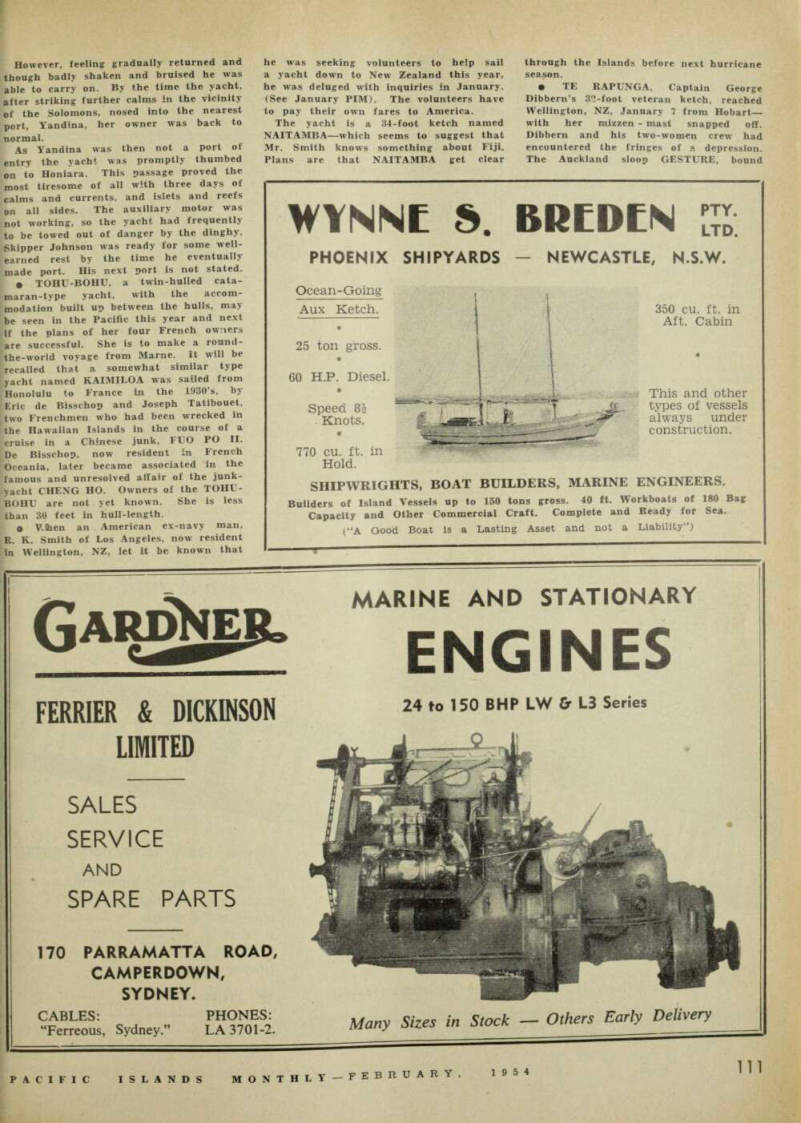 113
113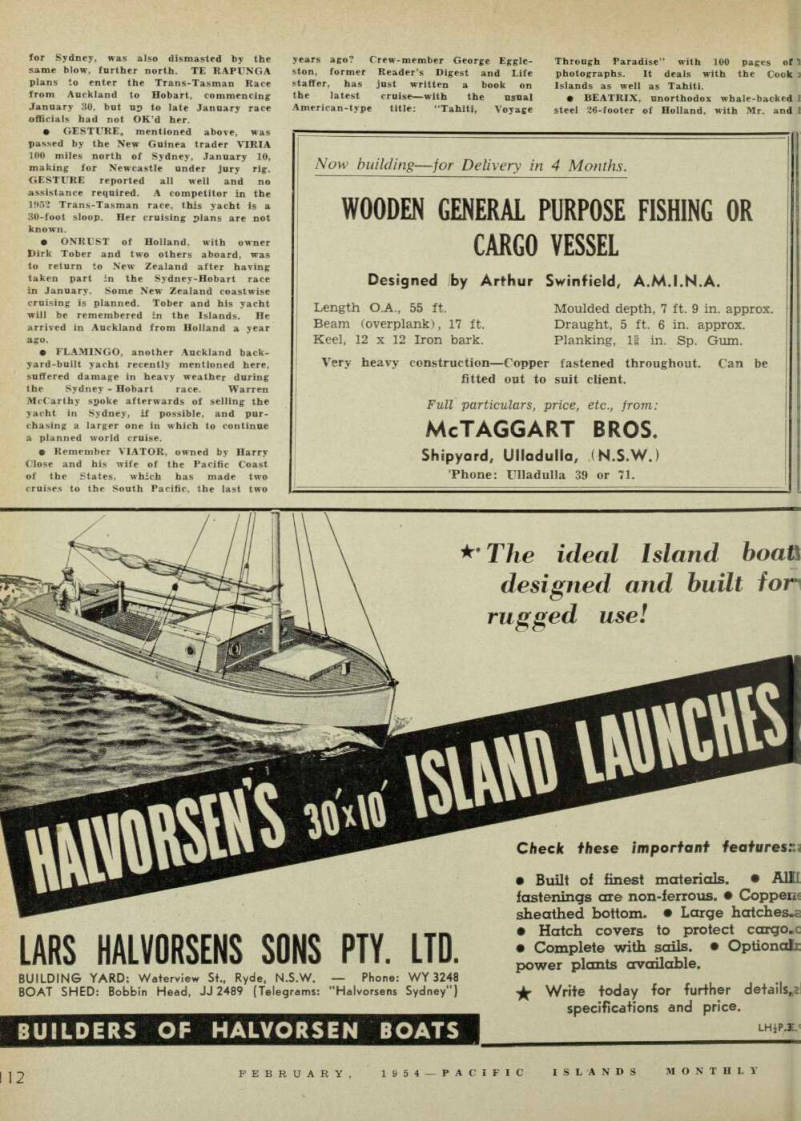 114
114 115
115 116
116 117
117 118
118 119
119 120
120 121
121 122
122 123
123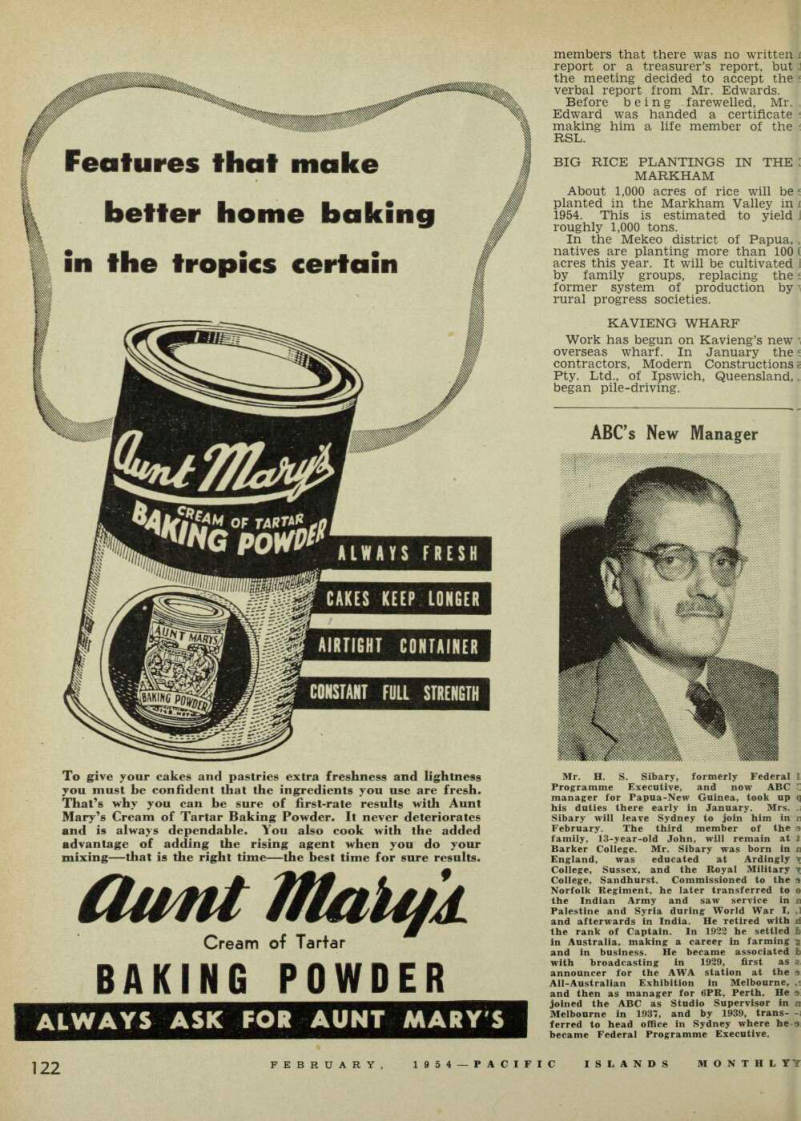 124
124 125
125 126
126 127
127 128
128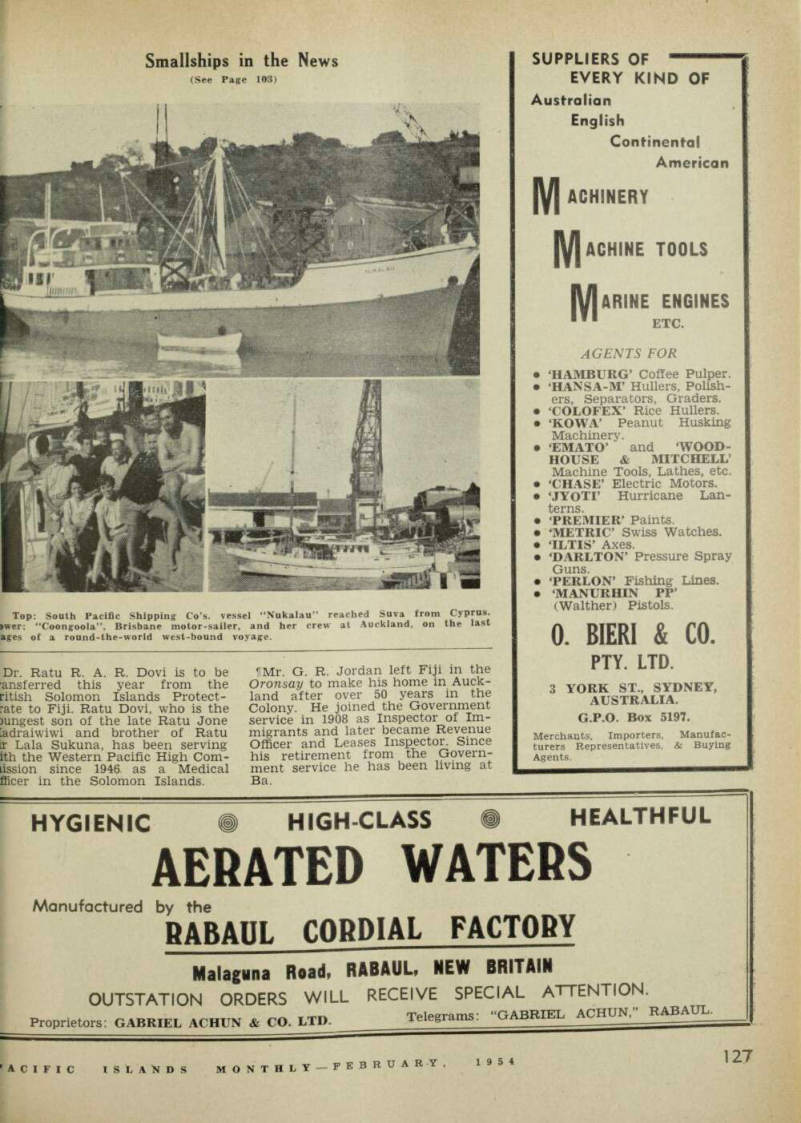 129
129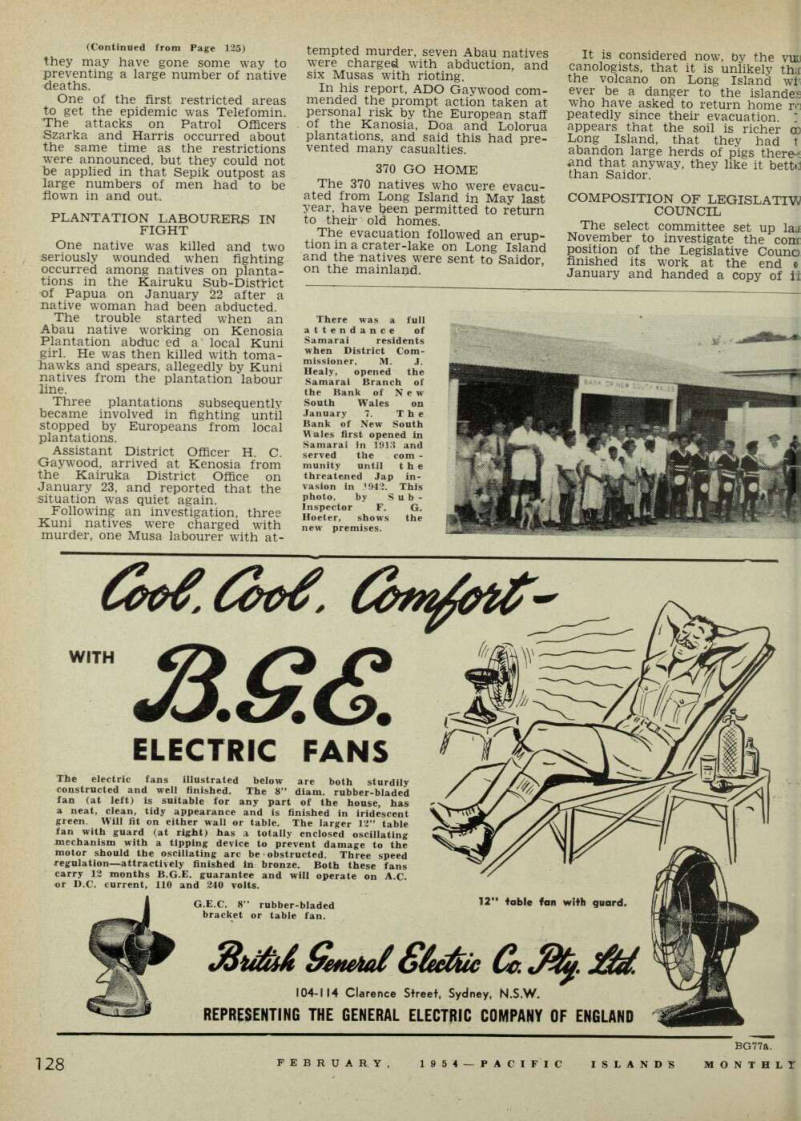 130
130 131
131 132
132 133
133 134
134 135
135 136
136 137
137 138
138 139
139 140
140 141
141 142
142 143
143 144
144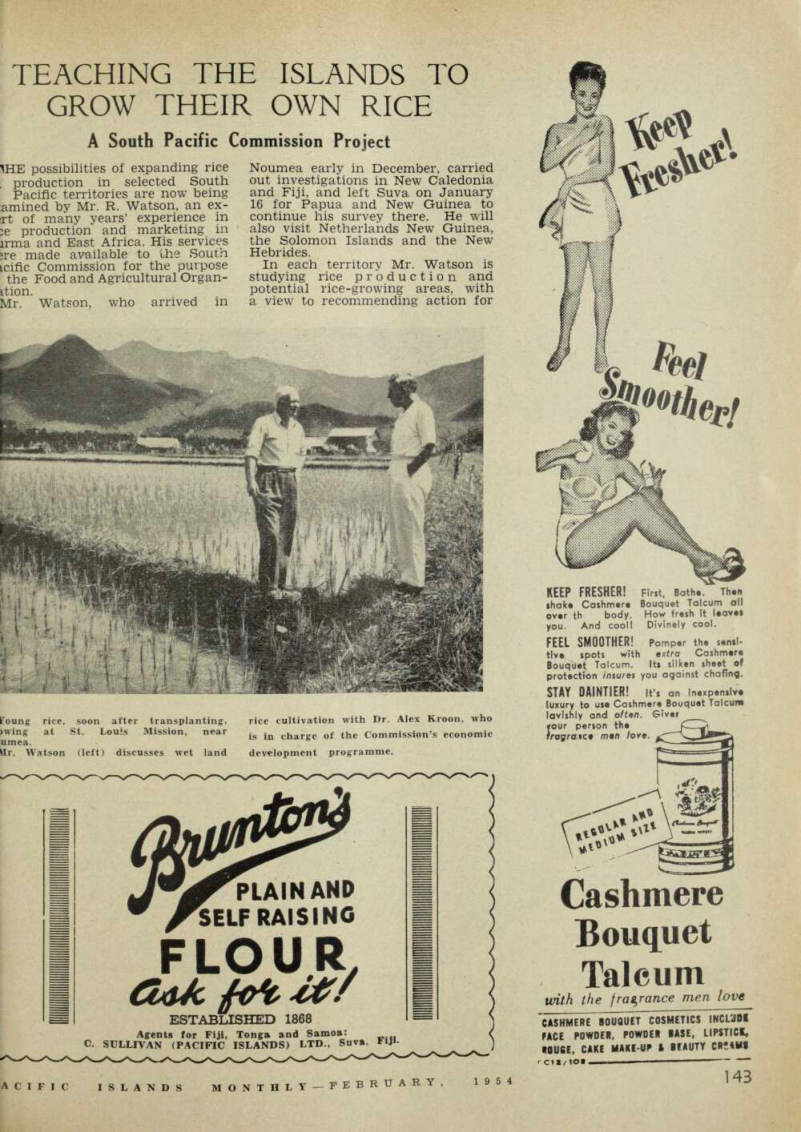 145
145 146
146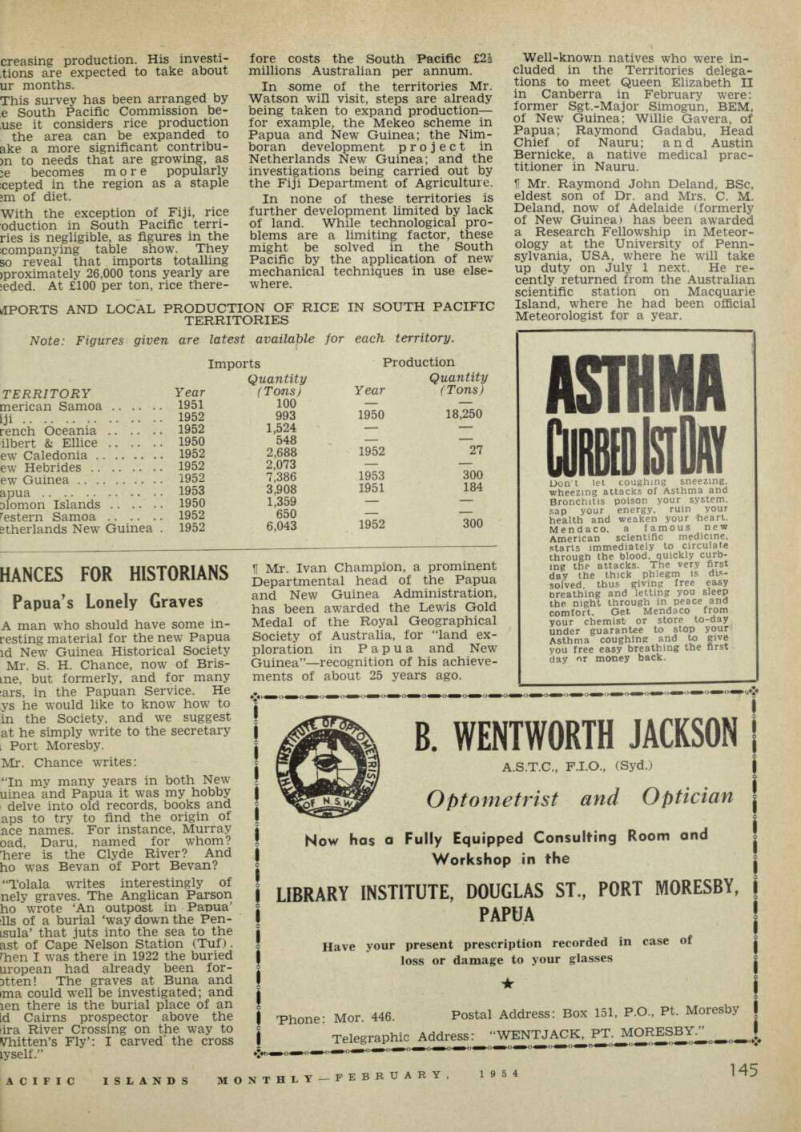 147
147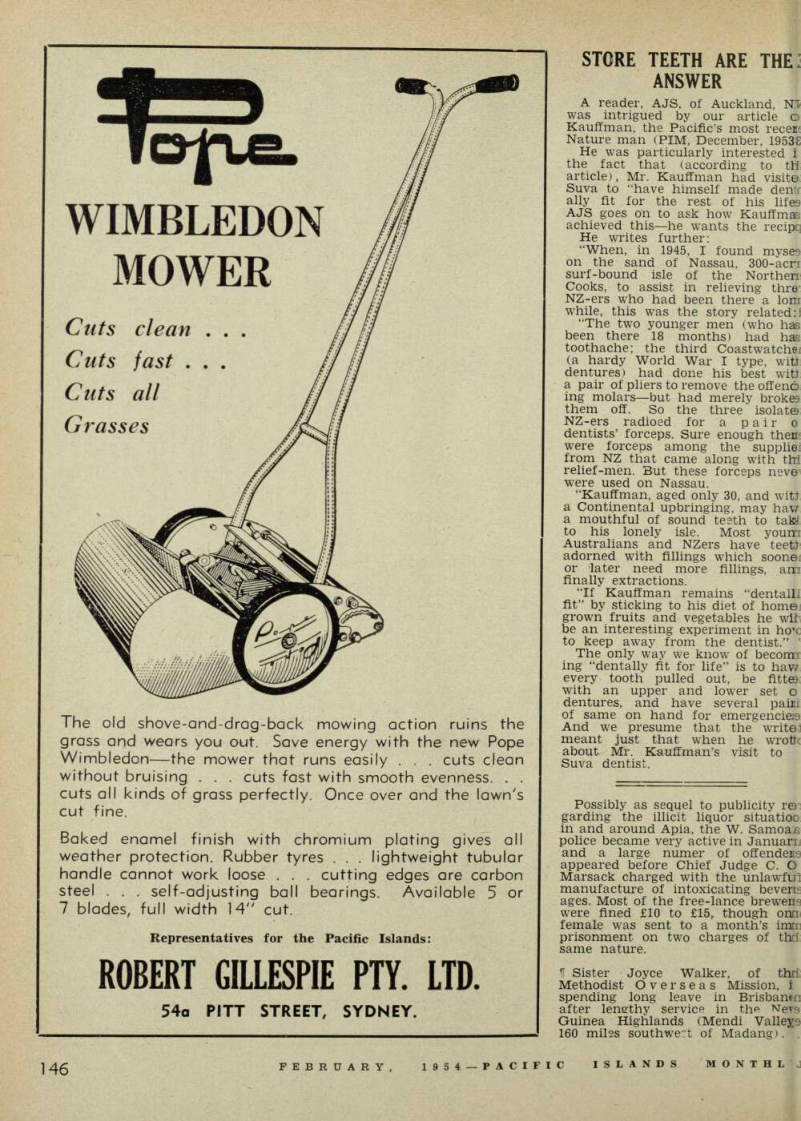 148
148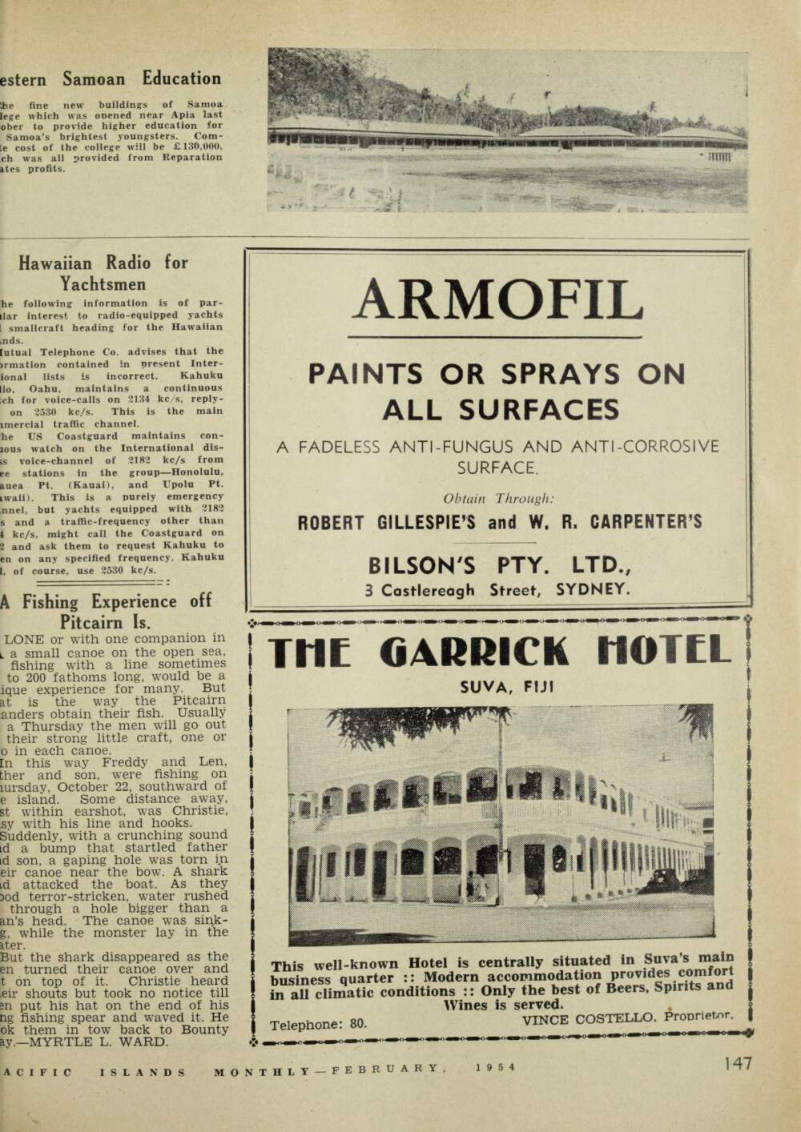 149
149 150
150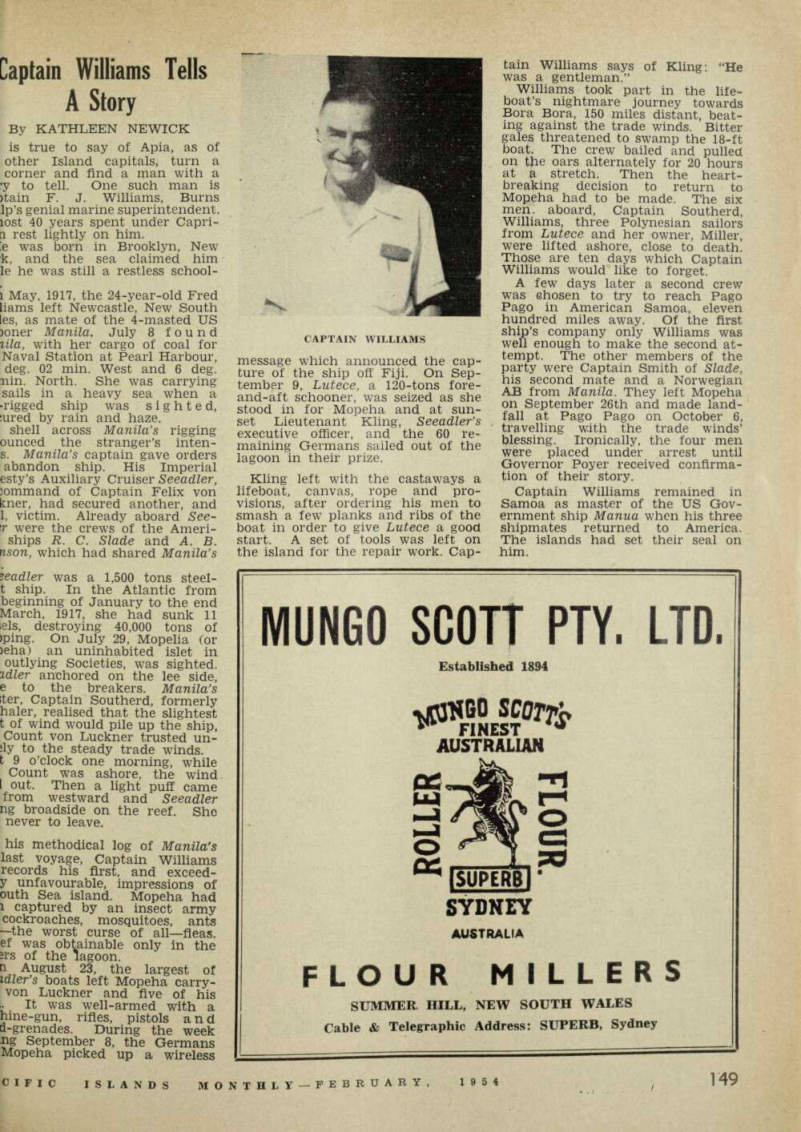 151
151 152
152 153
153 154
154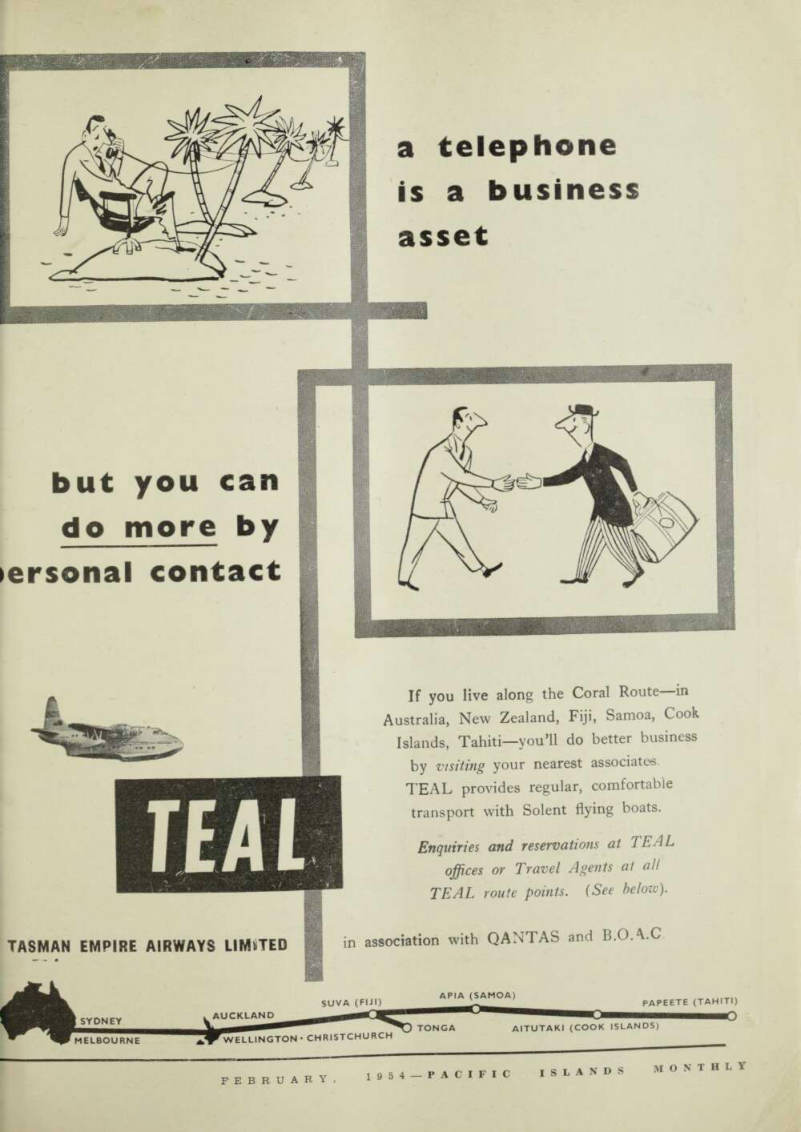 155
155 156
156