Islands
Pacific
Monthly
Vol. X. No. 2.
September 15, 1939
[Registered at the /or. transmission by post as a newspaper.]
8 d
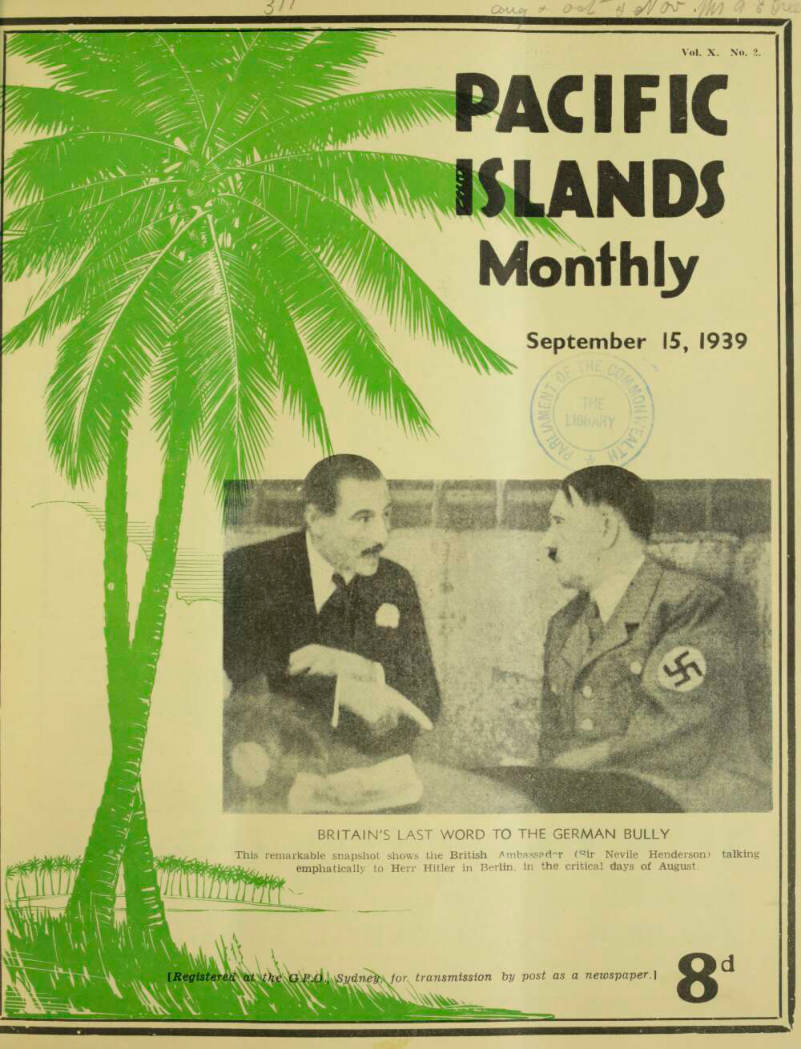
BRITAIN'S LAST WORD TO THE GERMAN BULLY This remarkable snapshot shows the British (Sir Nevile Henderson) talking emphatically to Herr Hitler in Berlin, In the critical days of August.
Advertisements & other items, p. 2 (2 items)
Pacific Islands Mont hi y—S eptember 15, 1939
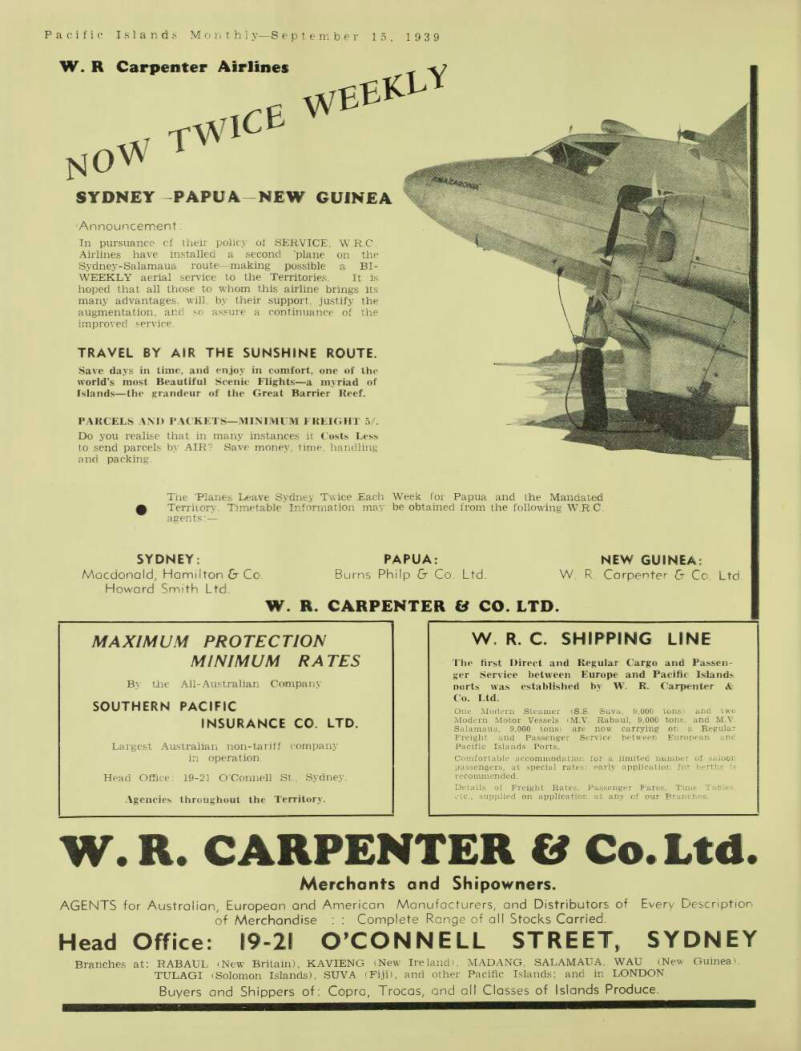
W. R. Carpenter & Co. Ltd.
W. R Carpenter Airlines
N 0^ r
ICB
WEE^
SYDNEY -PAPUA—NEW GUINEA
Announcement In pursuance cf their policy ol SERVICE. W.R.C.
Airlines have installed a second plane on the Sydney-Salamaua route—making possible a BI- WEEKLY aerial service to the Territories. It is hoped that all those to whom this airline brings its many advantages, will by their support, justify the augmentation, and so assure a continuance of the improved service.
TRAVEL BY AIR THE SUNSHINE ROUTE.
Save days in time, and enjoy in comfort, one of the world’s most Beautiful Scenic Flights—a myriad of Islands —the grandeur of the Great Barrier Reef.
PARCELS AND PACKETS—MINIMUM FREIGHT 5/.
Do you realise that in many instances it Costs Less to send parcels by AIR? Save money, time, handling and packing.
The Planes Leave Sydney Twice Each Week for Papua and the Mandated Territory. Timetable Information may be obtained from the following W.R.C. agents:—
SYDNEY:
Macdonald, Hamilton £r Co.
Howard Smith Ltd
PAPUA:
Burns Philp & Co Ltd.
Ltd
NEW GUINEA:
Carpenter & Co.
W. R. CARPENTER & CO. LTD.
W. R. C. SHIPPING LINE
The first Direct and Regular Cargo and Passenger Service between Europe and Pacific Islands norts was established by W. R. Carpenter & Co. Ltd.
One Modern Steamer tS.S Suva, 9,000 tons] and iwc Modern Motor Vessels (M.V. Rabaul, 9,000 tons, and M.V.
Salamaua, 9.000 tons I are now carrying on a Regular Freight and Passenger Service between European and Pacific Islands Ports.
Comfortable accommodation for a limited number of saloon passengers, at special rates: early application for berths is recommended.
Details of Freight Rates. Passenger Fares, Time Tables, etc., supplied on application at any of our Branches.
MAXIMUM PROTECTION
MINIMUM RA TES
By the All-Australian Company
SOUTHERN PACIFIC
INSURANCE CO. LTD.
Largest Australian non-tariff company in operation Head Office: 19-21 O'Connell St.. Sydney.
Agencies throughout the Territory.
W. R. CARPENTER & Co. Ltd.
Merchants and Shipowners.
AGENTS for Australian, European and American Manufacturers, and Distributors of Every Description of Merchandise Complete Range of all Stocks Carried
Head Office: 19-21 O’CONNELL STREET, SYDNEY
Branches at: RABAUL (New Britain), KAVIENG (New Ireland), MADANG. SALAMAUA WAU (New Guinea).
TULAGI <Solomon Islands), SUVA (Fiji), and other Pacific Islands; and in LONDON Buyers and Shippers of: Copra, Trocas, and all Classes of Islands Produce.
Pacific Islands Travellers
Per “Niagara” To Suva, Fiji: Messrs.
Bailey, Sheedy, Buxton, Benjamin, Davis, Kestever, Nelson, Patel. Mesdames Beattie, Parks, Buxton, Benjamin, Patel, Whysall.
Misses Milne, Haby, Yonge.
Per “Monowat’ From Suva, Fiji; Messrs.
Nicholson, Stewart, Eisenmenger, Henderson, Martin, Waddy. Mesdames Eisenmenger, Hen derson, May, Pennefather, Waddy, Levy. Nich olson. Misses Nicholson, Benstead, May.
Per “Bulolo” For N.G. & Papua:
Messrs. Archibald, Mather, Francis, Wood, Horne, Rodd, Moody, Merchant, McMillan, Pen fold, Preece, Johnston, Cruickshank, Primrose, Bunting, Stewart, Laurie-Rhodes, Dwyer, Gaz zard, Macgregor (2), Pincombe, Strong, Law, Mobbs, Tully, Fleming, Boyce, Bridges, Kiesey, Burns, Millard, Griggs, Vandenbergh, Norman, Rawnsley Lambdon, Bingeman, Mclntyre, Topal, Kennedy, Corlass, Maggs, Simcocks, Kirsten, Black, Gay, Reid, Fitton, Chambers, Haughton, Rundnagel, Richardson, Leslie, de Martini, Ire land, Bradley, Ryan, Sir G. Shirtcliffe, Rev.
Gordon, Rev. Brookes. Mesdames Arblaster, Mor gan, Paul, Rodd, Moody, Budd, Bradley. Mc- Millan, Townsend, Penfold, Arthur, Dobinson, Primrose, Schubach, Evans, McLennon, Ssllen, Drayson, Skinner, Harper, Gazzard, Coleman,
Veitch, Strong, Turner, Walshe, Wright, Mobbs, Fleming, Kiesey, Burns, Millard, Weaver, Rey nolds. Bridges, Griggs, Vandenbergh, Jones, Rawnsley, Forman, Evans, Brookes, Gordon, Murray, Sandow, Johnston, Kennedy, Chapman, Moore, Sergeyeff, Matron Davis, Lady Shirt cliffe. Misses Cooper, Taylor, Higgins, Arthur.
Bull, Newell, Low. Carmichael, Somerville, Aiken, Sterling, Gallagher, Turner, Primrose, Whelan. Pitty, Green, Wilson, Millard (2» Weaver, Bridges. Reynolds, Jenkinson, Nettle john, Dalziell, Stevens, Cox, Broadley, Dobinson.
Per “Macdhui”* From Papua & N.G.:
Messrs. Abbott. Ashton, Bevan, Brown, Bown.
Bachegger, Buik, Burden, Burfoot, Castle, Clay ton, Cook, Coomber, Cowley, Dean (3), Dene Ford, Grunter, Hallam, Hargraves, Hayes, Her ring, Horan, Keary, Kirschner, Knee, Maguire.
Mayne, Miller. Peters, Price, Prosper, Read, Robson Wayne. Rose, Selwood, Shorter, Smith (2). Spag nola, Sprang, Talty, Thompson, Twist, Winter ford, Whale. Mesdames Clayton,. Cook, Dean (2».
Dixon, Ford, Giblin, Gray, Hallam, Hosking, Kimpton. Moffatt, Moore, Niebuke, Scheps, Tubb, Smith, Tink, Twist. Tyson, Wayne. Misses Busby, Charles, Flemnig, Hayes, Kimpton (2).
Kirby. Meagher (2), Meredeth, Milson, Niebuke, Parson, Preston.
Per “Macdhui" For Papua & N.G.:
Messrs. Peacock, Rae, Gemmell, Haupton, Shana han, Moore, Sutton, Cameron, Bundy, Dishon, Haigh, Campbell (2), Cadden, Evans, Feldt, Stewart, Bannister, McCarthy, O’Donnell, Rye, Whitehouse, Bronner, Adams, Wallin, Russell, Byrne, Melrose, McMahon, Ryan, Robertson, Neilsen, Ranie, Dutton, Long, Robertson, Mc- Leod, Ormond, Freyberg, Schuler, Siemers, Ison, Hansen, Wright, Chambers, Clarke, Thompson, Howard, Drewe, McLeod, Michell, Scullard, Ince, Butler, Abbott, Cox, Neale, Wright, Anderson, Martin, Hafermann, Christian, Grant. Mes dames Sutton, Cameron, Targett, Bundy, Cad den, Campbell (2), Evans, Feldt, Heinicke, Terry, Wiles, Olson, Field, Bennett, Bronner, Byrne, Russell, Fitton, Ryan, Ranie, Ray, Parry, Sullivan, Ormond, Chambers, Clarke.
Thompson. Misses Hayes, Kirby, Niebuhr, Colt heart. McKearnan, Hanlon, Blanchard, Elliott, Swift, Inkster, Rev. Sisters Helene, Tarsitiev.
Per “Maetsuycker” To Pt. Moresby.
PAPUA: Messrs. Bradley. Jackson, Wills.
Per “Nellore” Prom Rabaul, N.G.:
Messrs. Bayne, Bignell, McFadyen, Froggatt, Brown, Carpenter, Honold, Burness, Coldham; Major Ayris. Mesdames Carpenter, Willmott, Stehr. Misses Young, Martin, Miller.
(Continued On Page 76)
PER AIRLINER TO N.G. & PAPUA: Messrs.
Richardson, Haling.
Per Airliner From N.G. & Papua:
Messrs. Preston, Bald. Smith. Mrs. Jones.
PER AIRLINER TO N.G. & PAPUA; Messrs.
Kingsford-Smith. Royal.
Per Airliner From N.G. & Papua:
Messrs. Edw r ards, Haling, Birnie, Janke, Cor bett, Wright, Butcher, Parnell. Collins, Shop pee.
PER AIRLINER TO N.G. & PAPUA: Messrs.
Pauley, Shepherd, Modden, Herron. Campbell.
Per Airliner Prom N.G. & Papua;
Messrs. Burke, Corlett, Whittle, Moore. Miss Smith.
PER AIRLINER TO N.G. & PAPUA: Messrs.
Townsend, Wilde, Captain Bye. Mrs. Laws.
Per Airliner From N.G. & Papua;
Messrs. Pratt, Herron, Upton, Thompson. Meek, Kaye. Miss Forster.
PER AIRLINER TO N.G. & PAPUA: Mr.
Hinks. Mesdames Hamilton, Jenyns.
Per Airliner From N.G. & Papua:
Messrs. Preece, Shepherd, Burns. Hodder, Kingsford-Smith.
PER AIRLINER TO N.G. & PAPUA: Messrs.
Parkes, Bond, Zofiman, Jensen, Jordan, Colonel Walstab. Mesdames Mitchell, Hamilton.
Per Airliner From N.G. & Papua;
Messrs. Shea, Pincombe, Skelly. Good. Rev.
Father Breen. Mesdames Schubach, Evans, Standen, Stark. Bliss and infant. Miss Mullins.
PER AIRLINER TO N.G. & PAPUA: Messrs.
Kaye (2), Heading, Smith, Birnie.
Per "Morinda” For Lord Howe &
NORFOLK IS.: Messrs. Dalziel, Hannay, Woods, Legge, Utick, Roberts, Cowie, Wunder, Harkness, Bardsley, Bailey, Berry, Gibbons (2), Christian, Allsop. Mesdames Horniman. Utick.
Harkness, Christian, Allsop, Cowie. Misses Ahl ston, Russell, Holdworth, Bosh, Hart. Graham, Cook, Clapham, Green. Smith, Ison, Driver, Farmer, Meade, Harding.
Per “Morinda" From Lord Howe &
NORFOLK IS.: Messrs. Wills, Sabine, Bards ley, Berry, Hanney, Jones, Lucas, Martin. Nel son, Utick, Wunder. Mesdames Cunningham, Panse, Martin, Utick, Webster. Misses Ison, Smith, Menzies, Bamford, Bush, Clapham, Cooke, Graham, Hart, Hines.
PER “MALAITA’’ FROM 8.5.1. & N.G. PORTS: Messrs. Bone, Brind, Davis, Fleming. French, Gage, Gierisch, Gorman, Green, Helm, Holl ins, Hutchins, Lauchlan, Lierstein, Long, Maple toft, Murphy, Murnin, Paul, Potter, Rowley, Waterhouse, Young, Keith. Mesdames Bern hardt, Bone, French, Gierisch, Hyne, Jenkins, Johnson, Mapletoft, Murphy, Stock, Water house. Misses Cohen, Fey, Lawrence, Moore, Morris, Saltmarsh, Smith, Taylor, Templer, Wilding.
Hon. C. J. J, T. Barton, Colonial Sec retary of Fiji, left Suva with his family by the August “Aorangi” to spend leave in England. His place is being filled during his absence by Mr. J. Craig, Financial Secretary and Colonial Treasurer.
Advertisements & other items, p. 3 (2 items)
1
Pacific Islands Monthl y—S eptember 15, 1939
Pacific Islands, New Zealand & Australia
THE
KPM
SOUTH
PACIFIC
LINE
it
Links the East with the South
Pacific Islands, New Zealand & Australia
KPM
SOUTH PACIFIC LINE
Royal Packet Navigation Co.
Ltd., Paketvaart House, 255 George Street, Sydney. (N. V. Koninklijke Faketvaart MaatschappiJ—lncorporated in the Netherlands).
The track routes of the K.P.M.-South Pacific Line new motor vessel "Maetsuycker" and the well-known passenger steamer "Tasman" are each as follows: "MAET- SUYCKER": Saigon, Singapore, Batavia, Samarang, Sourabaya, Port Moresby, Samarai, Salamaua, Rabaul, Auckland, Wellington, Sydney, Port Moresby, Sourabaya, Samarang, Batavia, Singapore, Saigon. "TASMAN": Saigon, Singapore, Batavia, Samarang, Sourabaya, Port Moresby, Port Vila, Noumea, Auckland, Wellington, Sydney, Port Moresby, Sourabaya, Samarang, Batavia, Singapore, Saigon.
Saigon, Diethelm & Co.: Port Moresby and Samarai, Steamships Trading Co. Ltd.: Rabaul and Salamaua. W. R.
Carpenter & Co. Ltd.: Port Vila. Oubbay Freres: Noumea, Carlo Leoni; Auckland, Russell & Somers Ltd.: Wellington, Johnston Sc Co. Ltd.
Advertisers
Page.
Amalgamated Wire less (A/sia) Ltd. 30 Angus & Coote Ltd. 15 Arnott’s Biscuits . 38 Atkins, Ltd., W. . 45 “Ausoline” ... 62 Baker Ltd., W. Jno. 47
B.A.L.M. Ltd. ... 46
Bank of N.S.W. . . 69 Berger’s Paints . . 40 “Bernly” Guest House 72 “Bidomak” ... 23 Blau (Aust.) Robt. 54 Broomfields Ltd. . 62 Brown & Co. Ltd.
G 10 Brunton’s Flour . 37 Burns, Philp & Co., Ltd 2 B.P. Magazine . . 47
B.P. (S.S.) Co. . . 61
Burns Philp Trust Co. Ltd 69 Buzacott-Wolseley . 43 Carlton & United Breweries, Ltd. . 27 Carpenter, Ltd., W. R. . . . cov. 2 Chapman & Sherack 58 Chivers & Sons Ltd. 34 “Cinnamolia” Pre parations ... 28 Coleman Lamp & Stove Co. . . 31, 65 Colonial Sugar Re fining Co. Ltd. . . 53 Coral Starch ... 35 Cosmolpolitan Hotel 76 Crossle, Duff & Macintosh, Ltd. . 63 “Cystex” 58 Danks & Son, Ltd. 65 Dewar’s Whisky . . 49 Diesel Engineering College 64 Doan’s Pills ... 62 Donaghy & Sons Ltd 70 Donald, Ltd., A. B. 50
Page.
Eaton, Ltd., J. W. 41 Electrolux Refrigerators . . 26 Eno’s Fruit Salt . 70 Excelsior Supply Co. Ltd 28 Fairbanks - Morse, Ltd 75 Fletcher & Sons . . 42 Foster Clark Ltd. . 57 Fryer, A. C 74 Garden Vatle Pro ducts, Ltd. ... 70 Garrett & Davidson 63 Gillespie’s Flour 35 Gowing Bros. Ltd. 19 Grace Bros. Ltd. . 48 Grand Pacific Hotel 51 Grove & Son, W. H. 32 Guinea Airways, Ltd cov. 3 Guinness’ Stout . . 44 Hardy’s Indigestion Remedy ... 18 Harvey, C. S. . . 67 Holbrook’s, Ltd. . . 37 Horlick’s Malted Milk 17 Horne, W. & Co. . 50 Hotel Moresby . . 76
1.C.1.A.N.Z. Ltd. . . 60
Intercontinental Airways ... 13 Jones & Co. Ltd. H. 14 King’s School, The . 24 Kodak (A/sia) Pty.
Ltd 12 Kolynos Dental Cream 29 Kopsen & Co. Ltd. 22 Kork-N-Seal, Ltd. . 34 Koyong Boarding School 38 Lapstone Hotel . . 72 Levenson’s Radio . 66 Lloyd & Co. Ltd. , 11 Lustre Hosiery, Ltd 55
Macdonald Hamilton & Co 19 “Majora” Speed Enamel ... 56 Mcllrath's, Ltd. . . 16 Maxw'ell Porter Ltd. 41 “Meridan” School . 13 Merrillees & Co. . 71 Miller & Co. Pty.
Ltd 74 Morris, Hedstrom, Ltd 52 Motor Tractors Pty.
Ltd 61 Nelson & Robertson, Ltd 63 Nestles Milk ... 39
Newlands Bros. Ltd. 25 Newmarket Saddlery 60 Noyes Bros. Ltd. . 46 Pabst Canned Beer 16 Pacific Is. Club . .76 Papua Hotel, The . 76 Pike Bros. Ltd. . . 73 Positions Wanted 56-68 Prescott Ltd. ... 36 Property For Sale . 71 Prouds Ltd 11 Ransome, Sims & Jeffries Ltd. ... 52 Reed, William E. . 20 Riverstone Meat Co. 18
Rohu, Sil . . • .60 Royal Packet Co. . 1 Schwabach, A.F.W. 68 Scott’s Emulsion . 9 Scott, Ltd., J. . .68 Slade’s Radio . . 67 Smyth Pty. Ltd., J. H 68 Springwood, L. Col. 54 Steamships Trading Co. Ltd 42 Sterling Varnish Co. 9 St. Ignatius College 73 ‘ Sunripe” Cigarettes 47 Sullivan Ltd., C. . 35 Swallow & Ariell . 36 Taylor & Co., A. . 74
“Tenax” Soap . . 71 Tillock & Co. Ltd. 56 Toohiey’s Ltd. ... 20 Tooth & Co. . cov. 4 Vincent’s A.P.C. . . 33 Warburton, Franki, Ltd 59 West, Harry ... 76 Weymark & Son . 34 Wills Ltd., W.D. & H.O 33 Wright & Co. Ltd.
E 41 Wunderlich, Ltd. . . 41 Yorkshire Insurance Co 74
Contents
Pacific Islands Travellers 1, 76 How Long will this Hitler War Last? 3 Islands Trade Boom Expected ... 5 Amalgamation Committee’s Report . 5 Treatment of Germans in Pacific . 5 Effect of War on New Guinea .. 5 Tonga's Queer Finances 6 Defence of Islands Territories ... 6 Pacific Shipping Affected by War .. 7 “Papuan Chief” on Reef 7 Copra Market Disorganised 7 Fiji’s Trade Figures 8 Fire Destroys Big Rabaul Store ... 8 Trans-Pacific Airmail Inaugurated . 9 Tropicalities 11 About Islands People 13 Japanese Scared by H.M.S. “Achilles” 17 Death of Mr. T. Andrew, of Samoa . 18 Sidelights in Papua and N. Guinea 19, 57 Japanese in Hawaii 24 New Electoral Law in Samoa 29 Wau’s Great Gold Discovery 30 Discontent and Hopelessness in Man dated Territory of New Guinea . 33 Papua’s Balanced Budget 43 Old Diary Describes Samoa of 150 Years Ago 44
New Timber Enterprises in N.G. .. 47 Late Mr. T. S. Adams, of Tahiti .. 48 Memories of the Yodda Goldfield (Papua) 49 Tongan Finance Minister Resigns .. 50 New U.S. Bases in North Pacific .. 51 Archaic Liquor Law in Samoa ... 52 Gold Mines of Papua Ltd. Close Down 53 Adventurous Life of Mrs. W. E. Giblin 55 The Philippines—U.S.A. or Japan? .. 58 Bishop Doucere’s 50 Years of Mission Work in New Hebrides 59 Tributes to Late Father Kirschbaum 60 Natives as Medical Men 61 Eager Search for Oil in Melanesia . 62 Islands Mining News 63 Early Explorers in Morobe, T.N.G. .. 65 Short Wave Radio Programmes ... 67 Copra and Rubber Quotations ... 68 Islands Produce Prices 69 South Seas Exchange Rates 70 “Gus” Nelsson Passes On 71 Carpenter & Co.’s Annual Report .. 72 The Salamaua-Wau Road 73 Shipping Services in the Pacific .. 74
Advertisements & other items, p. 4 (1 item)
Burns, Philp & Co. Ltd.
GENERAL
MERCHANTS
mu m:
ill
in in
Ml I
SHIPOWNERS
TOURIST AGENTS
Head Office: 7 Bridge Street, Sydney—Australia Code Address: "Burphil"
BUYERS OF ALL CLASSES OF ISLAND PRODUCE Regular Steamer Services from Australia to New Guinea Papua Solomon Is.—Lord Howe Is. —Norfolk Is.—New Hebrides —Java and Singapore
Pacific Islands Monthly
[Registered at the G.P.0., Sydney, for transmission by post as a newspaper .] Published Once Each Month and Circulated in Australia and New Zealand and in the following Pacific Territories and Islands Groups:
Australian Territory of Papua.
Mandated Territory (Australia) of New Guinea, Bismarck Archipelago and Northern Solomon Islands.
Australian Territory of Norfolk Island.
New Zealand Territory of Cook Islands.
Mandated Territory (New Zealand) of Samoa.
British Colony of Fiji.
British Solomon Islands Protectorate.
British Protectorate of Tongan Islands.
Mandated Territory of Nauru.
British Crown Colony of Gilbert and Ellice Islands. , British and French Condominium of New Hebrides.
French Colony of New Caledonia.
French Colony of Oceania (Tahiti, etc.).
American Territory of Eastern Samoa.
American Territory of Hawaiian Islands.
American Territory of Guam.
Mandated Territory (Japan) of Marshall, Caroline and Mariana Islands.
Owned and Produced by Pacific Publications Pty. Ltd., Union House, 247 George Street, Sydney.
TKT i-’PHOMTr ( Managing Director .. BW 5037 i Business and Editorial MA 7101
P O. Box 3408 R
Registered Address of Telegrams, Radiograms, and Cables: •‘Pacpub”, Sydney.
Contributions.
Articles, Stories, and Photographs dealing with Pacific Islands subjects are Invited and will be paid for on publication at usual rates.
Subscription Bates.
Per Annum, within British Empire, Prepaid, Post Free 8/- Pcr Annum, elsewhere, prepaid, Post Free . 10/- Single Copies Bd.
Editor and Publisher:
R. W. Robson, P.R.G.S.
Assisted by Selwyn Hughes.
Advertising Manager: L. W. Bailey.
Advertising Office and Printing-House: 29 Alberta St., Sydney.
Advertising rates furnished on application.
Colours, etc by Arrangement.
Process Blocks made at Advertiser’s expense when required. Screen 90.
Changes of Advertising Copy should reach this Office by Ist of each month, otherwise previous advertisement may be repeated.
IN LONDON, the Pacific Islands Monthly is on sale at the Bookstall, Australia House, The Strand, London.
Agents.
The following are authorised to receive sub scriptions for the Pacific Islands Monthly;— Islands Branches of Burns, Philp & Co., Ltd., and Burns Philp (South Sea) Co., Ltd.
Islands Branches of W. R. Carpenter & Co., Ltd.
Islands Branches of Morris, Hedstrom, Ltd.
G. Thomas & Co., Rabaul, New Guinea.
T. A. Olsson, Wau, New Guinea.
Whitten Bros., Ltd., Samarai, Papua.
Steamships Trading Co., Papua. All Branches.
B.N.G. Trading Co., Ltd., Port Moresby.
J. Muir, Suva, Fiji.
N. C. Mackenzie-Hunt, Wainunu, Bua, Fiji.
Islands Branches and Representatives of W. H.
Grove & Spns, Ltd., Auckland, New Zealand.
Cook Islands Trading Co., Rarotonga, Cook Is.
A. C. Rowland, Papeete, Tahiti.
Representative in London: W. C. HARVEY, Coronation House, 4 Lloyds Avenue, Loudon, E.C.3, from whom may be obtained copies of Pacific Islands Monthly, Pacific Islands Year Book, advertising schedules, etc.
Vol. X. No. 2.
September 15, 1939.
Prir#> f Bd ' Per c °Py rntc Prepaid: 8/- p.a.
fqfd i« stronger
HOW LONG WILL THIS HITLER WAR LAST?
A MONTH ago, after years of argu ments, excursions and alarms, Britain and France were prepared to fight Germany, Italy and Japan; and it was expected that Russia would support the democracies. To-day.
Britain and France are at war with Germany; Russia has made a friendly Pact with Germany; and Italy and Japan are neutral. It is one of the most rapid and astonishing inter national re-alignments in history.
It seems that Hitler, having decided to attack Poland, had to choose be tween a war in which Italy and Japan would be his allies, and in which, with Russia as a possible enemy, he would be cut off from es sential supplies; or a war in which Germany would fight alone, but with Russia’s unlimited resources in food stuffs, oil and materials available to her. He chose the latter course and, to the amazement of the world, made a Pact with Russia, the nation he had abused and threatened for 15 years. The Berlin-Rome-Tokio Axis —in fact, the Nazi regime itself— was based on hostility to the Com munist republic.
A war between the democracies and a German-Italian-Japanese combina tion would have dislocated world commerce and demoralised inter national relationships. We in the Pacific would have met perils and terrors, innumerable and indescrib
able. But the present war, if it does not spread to other nations, will not greatly disturb present-day condi tions. In fact, it may permit much freer trade than we have known for some years.
IT would be lunacy to under estimate the task before the Allies, however. Hitler calculates that, by the time winter closes down, Poland will be broken and conquered: that Russia will leave his eastern frontier alone; and that his armies can hold the Siegfried Line (or West Wall) against France and Britain, in definitely. Already, the Poles have lost the eastern half of their country, in which are their essential coal mines and metal industries.
The Franco-German frontier (Bel gium to Switzerland) is less than half the length of the 1914-18 western front. There, the Maginot Line (French) confronts the Siegfried Line (German) and both are considered impregnable. Perhaps either may be broken—but at an inconceivable cost of men and munitions. We can ex pect heavy fighting, but no decision, on the western front.
The Allies are completely dominant on the sea. German merchant ships have disappeared—not a ton of sea borne goods can reach Germany, through the North Sea. But Ger many can get essential supplies through the Baltic, from Scandin
avia; from Russia, across her eastern frontier; and from Hungary, Rou mania; Jugoslavia and Italy. In that
fqfd i« stronger
Lnan 111 When war commenced, over 40 large German submarines already were at sea; and. up to this date, they llave sunk 14 Allied ships, aggre- Siting over 84,000 tons, it is hoped t,hat this condition will not last long; Alll . ed n . avies are „ hl * nta , l ,B dow " the submarines, methodically, and witil a new and deadl Y technique.
Britain and France were so well prepared that they had reached, two days after war broke out, a stage which they had not reached two years after the outbreak of war in 1914. This aroused an optimistic be lief that this war will soon be over.
But consider the facts. Germany, a nation now of 80,000,000 people, “l °“ Imes-strong or fence aAd d saw fice d ’ hei^are ana sacrmce - °P en t 0 her are > as enumerated > sources of abundant “WJJJf-„ n J he Allies have great airr ! ies and navies, magnificently equipped. But how can they deal a crippling blow to Germany, provided Germany is content to fight on her own frontiers? Unless the German morale cracks, or unless there is pro duced some new and devastating weapon or technique, Germany, for years, can repel the strongest forces that the Allies can bring against her.
DESPITE the lessons of the Spanish and Sino-Japanese wars, it was thought that air fleets would be a major factor in this new European war, and that the great cities of each country would be mercilessly bombed immediately hostilities commenced.
Instead, ten days have passed with out either Germany, France or Britain dropping one bomb upon the other’s undefended territory. There apparently is a general understanding that each will hold off unnecessary bombing of civilians, as long as the other does. Great aerial operations and air battles are inevitable: but there is nothing yet to show that aeroplanes will materially affect the course of this war.
ALL this, apparently, indicates that the German leaders planned their moves, for a long way ahead, with thoroughness. We are inclined to congratulate ourselves because Italy is neutral. May it not be that Germany is so confident that she can handle whatever military situation may arise that she insisted on Italian neutrality? Which is more valuable to Germany—a peaceful, in dustrious Italy, supplying food and munitions to Germany, or a dis tracted, war-torn Italy, taking fright ful punishment upon her exposed coasts from the dominant Anglo- French fleets?
The Allies would be fools, indeed, if they imagine that Italy is neutral because she loves them. Italy will be found ranged beside Germany, con fidently anticipating her reward, if the day ever should come when Hitler can present peace terms to the Allies.
THEREFORE, let there be no il lusions. There can be no victory for the Allies without a long war of attrition—a war in which every ounce of material and spiritual strength will be demanded. With Poland al most eliminated, and Russia held in a Pact, Germany’s long frontiers ap pear to be completely protected, ex cept for the 200 miles covered by the Siegfried Line. There she will stand, her foot upon the necks of Poland and Czecho-Slovakia; and she will bargain with the Allies, and release upon the world a terrific flood of pro paganda.
The Allies have a plan, no doubt; but it is difficult to see what they can do, except prepare for long years of war conditions, of ceaseless ham mering at the western front, and of endless propaganda, designed to show that the war is directed against Hitler and Nazi-ism, and not against the German people. The most remark able thing, to date, is the complete, unanimous belief of the British and French people in the justice of their cause, and the quiet, grim way in which they have marched to war.
Without a murmur, they have under taken the job of destroying Hitlerism, and putting an end finally to faith lessness and duplicity in international
relations. For years, civilisation has been living uneasily in the shadow of war. The democracies should have ended it in 1918. This time, they will make no mistake. But there has been not one word of hatred against the German people; not once have we heard the term “Hun” used. Contrast that with 1914!
We cannot guess how or when the Allies will be successful; but at pre sent it appears certain that the war cannot end until Hitlerism has been destroyed. Then, the nations can sit down at a conference table, deal with past and present international injus tices, and make a new and a safer world, based on the sanctity of treaties and mutual trust in men’s promises. There can be no such thing so long as so foul a growth as Nazi-ism can shape international re lationships, (GERMANY, having over-run Poland. * will stand and bargain. Failing in that, she may direct, in the sum mer of 1940, some terrific blows against Britain and France, hoping thus to weaken their “will to war”.
After that—assuming she fails again —we may look for some weakening in the morale of the German people. By then, they may be ready to listen to the Allies’ assurances that the des truction of Hitlerism will mean a peace conference and no punitive terms for Germany.
The Allies must recognise that the 1919 creation (the Versailles Treaty) of their mad-headed politicians was responsible for the Hitler monstrosity; and that they (the Allies) now are paying, in this war, the price of that post-war crime. The pity of it is that it is the blameless lads of this generation who are bleeding and suf fering. instead of the old Lloyd Georges, and Clemenceaus and Billy Hugheses who were responsible for the 1919 lunacy at Versailles. ♦ * * AND what of Japan? It is there that we find the most extra ordinary development of this strange war. A month ago, all British and French communities in the Pacific and Indian Oceans were preparing to fight the Japanese. There seemed no escape from it. The more deeply Britain became involved in Europe, the greater became the Japanese pressure upon British interests in the north-west Pacific. The Japanese, no less than we, believed that, when Britain went to war with Germany, Japan would have her way with our trade and our territories in south east Asia and the Pacific. We were ready to fight: and we had no il lusions about what we were faced with.
That was on August 2L Within 24 hours, the miracle happened. If the Russo-German Pact surprised Britain, it simply stunned Japan. She had had some understanding with Ger many—that is perfectly clear, be cause when the Pact between Ger many and Japan’s ancient, hereditary
and implacable foe was announced, Japan said frankly that she had been “betrayed”. Immediately thereafter, Japan’s militaristic, pro-Nazi Govern ment resigned. A more moderate Ad ministration took charge, and an nounced a re-arrangement of foreign relations, including a more friendly attitude towards Britain.
Japan now is isolated, and keenly is watching world developments, so that her own interests may be advanced.
She definitely is neutral—much more so than Italy—but she will play for her own hand, “in glorious isolation”.
Let it not be thought that the possi bility of Japanese aggression is gone from the Pacific. The imminent dan ger is gone, for the moment, but the menace remains. Japan must ex pand, or perish.
BUT there now is a God-given op portunity to re-establish friendly relations with Japan, and British statesmen dare not neglect it. In stead of fighting Japan, it now should be possible to meet her in confer ence, recognise frankly her vital national needs, and agree that pro vision for her trade and territorial requirements shall be part of the permanent international settlement for which the Allies now are fighting.
We may not forget the brutality of Japan’s attack on China, nor the nature of her 1939 campaign against Britain. But neither can we forget that Japan is an over-crowded, proud and aggressive nation of 90,000,000 people, who must be fed partly from overseas, and that therefore Japan must have overseas markets and larger territories.
The Allies now are fighting in a cause entirely just. They are fight ing for the destruction of Hitlerism— which means freedom to re-arrange international affairs upon a sounder basis and with better guarantees than hitherto have been possible. That re arrangement must provide for the vital needs of all nations, including Japan, Italy and Germany herself.
This may be humanity’s last chance to establish world conditions upon a basis of sanity and justice. The alternatives are too awful to contem plate. One is a Pacific-wide war of extermination, between Europeans and Asiatics. A little wisdom and tolerance, now, on the part of Euro peans and Japanese, may perman ently remove the possibility of that horror.
Here in the Pacific, in the most unexpected manner, we have been removed from the immediate shadow of war. Few realise how terribly close was the holocaust. The least we can do, now, is to use the provi dentially-given opportunity to review the whole situation, and seek a way to permanent peace.
Otherwise, we merely shall move from a crisis in Europe to a crisis in the Pacific. Thousands of educated Japanese believe an Anglo-Japanese war is inevitable. A month ago it seemed inevitable. It is not, now.
Advertisements & other items, p. 6 (1 item)
4
September 15, 193 9—P acific Islands Monthly
Trade Boom"
Expected
Probable Effect on Pacific
AT the moment of going to press the commercial outlook for the Pacific territories is reassuring.
The war, contrary to expectations held a few weeks ago, has not dislocated our sea-borne trade and there is free ship ment of goods to all parts of the world.
This will remain the case, so long as Japan and Italy are neutral.
Commodity values are rising rapidly.
On September 14, for example, Sydney trochus shell prices had risen by £4/10/per ton and holders were not selling at £BO. As explained elsewhere, the copra market is nominal, but the undertone is confident —it is believed that as soon as the market is re-established copra will rise sharply.
As soon as war broke out, the value of gold began to rise. This has correspond ingly raised the value of shares of all Islands gold-mining companies.
There is a healthy undertone in other commodities, such as coffee, rubber, etc.
Shrewd judges in Australia anticipate a boom. This belief is reflected in rapidly rising share values on the Stock Ex changes.
No Amalgamation
Committee in Favour of Some Co-ordination of Services
THE nature of the report, submitted to the Australian Government by the Committee which considered the pos sible amalgamation of the Mandated Ter ritory of New Guinea and the Australian territory of Papua, was disclosed on Sep tember 12. The summaries which the daily newspapers published—as is usual in connection with Islands affairs —were garbled.
The Committee, as was expected, re jected the idea of amalgamation because so many difficulties now exist owing to differences in laws, in administrative methods and conditions and in widely different financial conditions, and because it is impossible, anyway, to reconcile the Mandate conditions with Papuan condi tions.
The report says that of all the sites submitted for New Guinea administration headquarters, as an alternative to Rabaul, Lae has the strongest claims. It has no harbour, but has a good anchorage; and it has all other necessary facilities, and none of the disadvantages possessed bv Madang (country low, flat and swampy), Salamaua (too low, and necessary to re claim swamp), Wau and Upper Ramu (building and living costs high owing to absence of communications), Bita Paka and Tavui (to be considered only as residential centres, if capital remains at Rabaul).
The Committee was unanimous on the following points; That general amalgamation is neither desirable nor practicable; that a feder ated system (namely, a Governor with authority over both territories, and the two temtories retaining practically sep arate administrations) had no advantage*
that a unified service would have no out standing advantage, and whatever minor advantages it might have would be can celled because of the difficulties such a system would create.
A majority of the Committee (Messrs.
Eggleston and Townsend) were of the opinion that some amalgamation of tech nical services would be worthy of consid eration; Mr. Murray was against this view.
The Committee considered that greater co-ordination of the two Administrations, with advantage to both and to Australia, was possible and could be secured by regu lar conferences between the Admini trators on a voluntary basis.
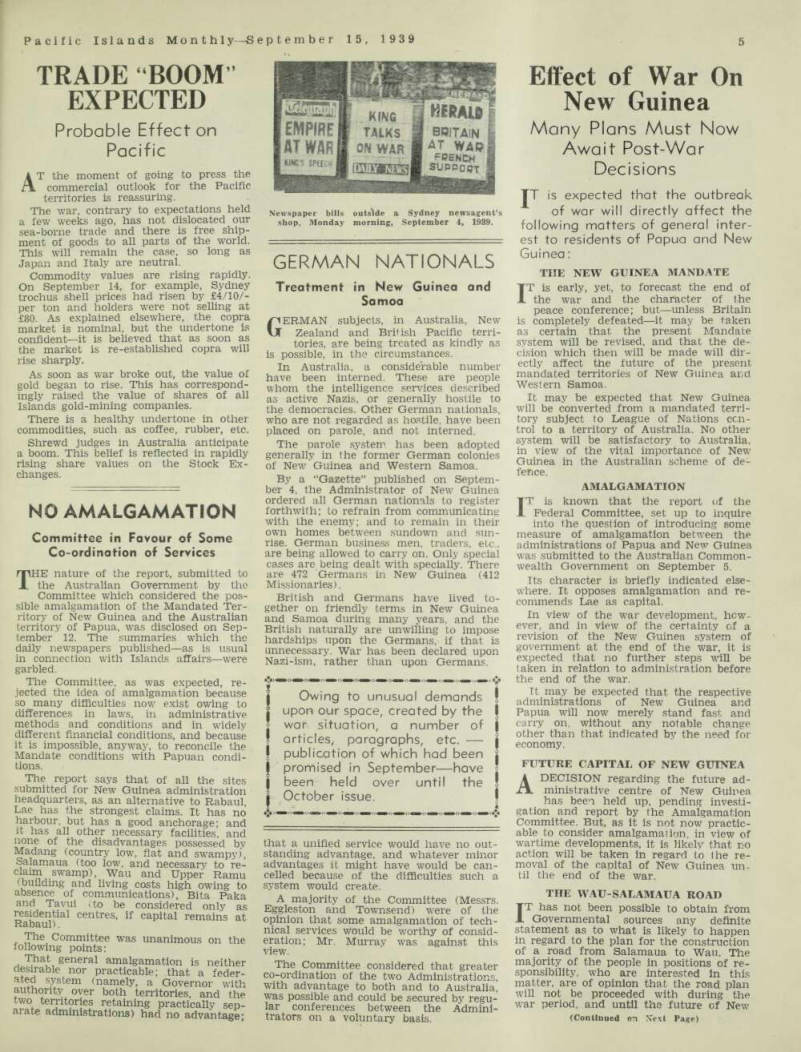
Newspaper bills outside a Sydney newsagent’s shop, Monday morning, September 4, 1939.
German Nationals
Treatment in New Guinea and Samoa
GERMAN subjects, in Australia, New Zealand and Brirish Pacific terri tories, are being treated as kindly as is possible, in the circumstances.
In Australia, a considerable number have been interned. These are people whom the intelligence services described as active Nazis, or generally hostile to the democracies. Other German nationals, who are not regarded as hostile, have been placed on parole, and not interned.
The parole system, has been adopted generally in the former German colonies of New Guinea and Western Samoa.
By a “Gazette” published on Septem ber 4. the Administrator of New Guinea ordered all German nationals to register forthwith; to refrain from communicating with the enemy; and to remain in their own homes between sundown and sun rise. German business men, traders, etc., are being allowed to carry on. Only special cases are being dealt with specially. There are 472 Germans in New Guinea (412 Missionaries).
British and Germans have lived to gether on friendly terms in New Guinea and Samoa during many years, and the British naturally are unwilling to impose hardships upon the Germans, if that is unnecessary. War has been declared upon Nazi-ism, rather than upon Germans.
New Guinea
Effect of War On
Many Plans Must Now Await Post-War Decisions
JT is expected that the outbreak
of war will directly affect the
following matters of general inter
est to residents of Papua and New
Guinea:
The New Guinea Mandate
IT is early, yet, to forecast the end of the war and the character of the peace conference; but—unless Britain is completely defeated—it may be taken as certain that the present Mandate system will be revised, and that the de cision which then will be made will dir ectly affect the future of the present mandated territories of New Guinea and Western Samoa.
It may be expected that New Guinea will be converted from a mandated terri tory subject to League of Nations con trol to a territory of Australia. No other system will be satisfactory to Australia, in view of the vital importance of New Guinea in the Australian scheme of de fence.
Amalgamation
IT is known that the report of the Federal Committee, set up to inquire into the question of introducing some measure of amalgamation between the administrations of Papua and New Guinea was submitted to the Australian Common wealth Government on September 5.
Its character is briefly indicated else where. It opposes amalgamation and re commends Lae as capital.
In view of the war development, how ever, and in view of the certainty of a revision of the New Guinea system of government at the end of the war, it is expected that no further steps will be taken in relation to administration before the end of the war.
It may be expected that the respective administrations of New Guinea and Papua will now merely stand fast and carry on. without any notable change other than that indicated by the need for economy.
Future Capital Of New Guinea
A DECISION regarding the future ad ministrative centre of New Guinea has been held up, pending investi gation and report by the Amalgamation Committee. But, as it is not now practic able to consider amalgamation, in view of wartime developments, it is likely that no action will be taken in regard to the re moval of the capital of New Guinea un til the end of the war.
The Wau-Salamaua Road
IT has not been possible to obtain from Governmental sources any definite statement as to what is likely to happen in regard to the plan for the construction of a road from Salamaua to Wau. The majority of the people in positions of re sponsibility, who are interested in this matter, are of opinion that the road plan will not be proceeded with during the war period, and until the future of New
(Continued on Next Page)
Guinea is seen more clearly than is pos sible to-day. (See article Page 73.)
Communications Generally
ALL shipping services are being main tained; but of course the N.D.L. ser vice, between Hong Kong and New Guinea, has been cut out.
The twice-a-week Carpenter airmail service between the territories and Sydney is being continued as usual. It was be lieved. in August, that the service would be reduced to once-a-week, each way; but since the outbreak of war the pas senger traffic by aeroplane between the territories and Australia has increased considerably, and, for the present, it is unlikely that there will be any reduction in the service.
Advertisements & other items, p. 7 (2 items)
5
Pacific Islands Monthl y—S eptember 15, 1939
Owing to unusual demands
upon our space, created by the war situation, a number of articles, paragraphs, etc. — publication of which had been promised in September—have been held over until the October issue.
Freights
Higher Fares and Freights
IN consequence of greatly increased costs caused by the war—especially insurance against war risks —all ship ping fares and freights affecting the Pacific Territories have been raised, or probably will be raised immediately.
Fares and freights affecting the Cen tral and Eastern Pacific Territories serv ed by the Union S.S. Co. Ltd., and other British companies, were raised by one third on September 13.
The American companies’ rates have not been altered, but a rise is expected.
The question of raising the fares and freight rates on the Burns, Philp vessel* (serving Papua, New Guinea. Solomon Is lands, New Hebrides, etc.) is under dis cussion between the Commonwealth Gov ernment and the directors of the firm.
The firm is paying war risk insurance at the rate of £2 per £lOO of the ship’s value every 91 days—equal to 8 per cent, per annum.
Fares and freights on all inter-island ships (including those in the Western Pacific, operated by Burns Philp and Co. and W. R. Carpenter and Co.) have been raised 20 per cent.
Mad Finance!
Country Earns £54,000, But Govt. Demands £67,000
From a Special Correspondent
Nukualofa, Aug. 4.
THE Queen’s speech at the opening of the 1939 Session of the Tongan Par liament on August 1, indicates that no alleviation of the heavy taxation imposed during more prosperous times can be looked for.
The estimated expenditure for the year to June 30, 1940. is the colossal sum (for a small community) of £80,167, of which £67,789 is to be raised by taxation and £12,656 appropriated from accumulated surplus. These are the figures to be sub mitted for passing by Parliament, and with the Government’s majority of offi cials and nominated members already assured, no doubt they will go through, as they have done for so many years, irrespective either of equity or justice.
With copra (the only product apart from a few cases, of bananas) bringing in at current rates a total income to the natives of about £50.000 per annum, and about £4,000 from bananas, whence does the Government expect to get its £67,789 of estimated revenue? What sort of mad or callous finance is it that budgets for more than the country produces?
New Papuan Cathedral To Be Opened In October
Under the supervision of Mr.
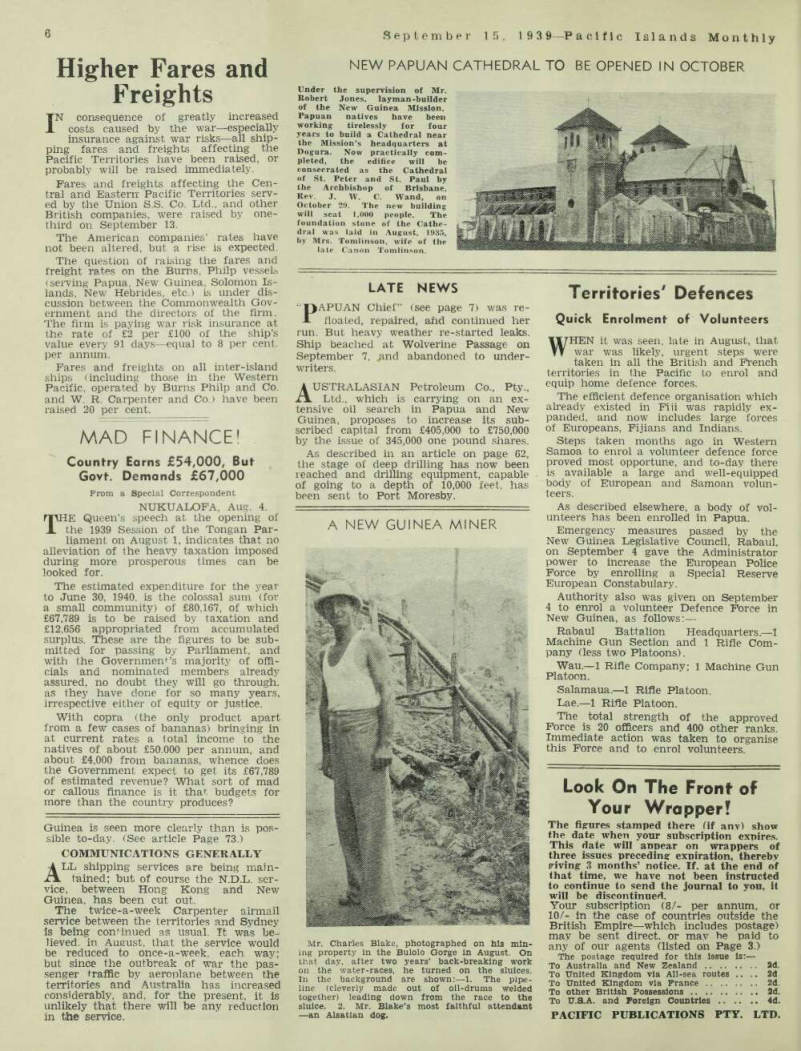
Robert Jones, layman-builder of the New Guinea Mission, Papuan natives have been working tirelessly for four years to build a Cathedral near the Mission’s headquarters at Dogura. Now practically com pleted, the edifice will be consecrated as the Cathedral of St. Peter and St. Paul by the Archbishop of Brisbane, Rev. J. W. C. Wand, on October 29. The new building will seat 1,000 people. The foundation stone of the Cathe dral was laid in August, 1935, by Mrs. Tomlinson, wife of the late Canon Tomlinson.
Late News
■|3APUAN Chief’* (see page 7) was re- A floated, repaired, afid continued her run. But heavy weather re-started leaks.
Ship beached at Wolverine Passage on September 7, .and abandoned to under writers.
Australasian Petroleum co., Pty., Ltd., which is carrying on an ex tensive oil search in Papua and New Guinea, proposes to increase its sub scribed capital from £405,000 to £750,000 by the issue of 345,000 one pound shares.
As described in an article on page 62, the stage of deep drilling has now been reached and drilling equipment, capable of going to a depth of 10,000 feet, has been sent to Port Moresby.
A New Guinea Miner
Mr. Charles Blake, photographed on his min ing property in the Bulolo Gorge in August. On that day, after two years’ back-breaking work on the water-races, he turned on the sluices.
In the background are shown: —1. The pipe line (cleverly made out of oil-drums welded together) leading down from the race to the sluice. 2. Mr. Blake’s most faithful attendant —an Alsatian dog.
Territories' Defences
Quick Enrolment of Volunteers
WHEN it was seen, late in August, that war was likely, urgent steps were taken in all the British and French territories in the Pacific to enrol and equip home defence forces.
The efficient defence organisation which already existed in Fiii was rapidly ex panded, and now includes large forces of Europeans, Fijians and Indians.
Steps taken months ago in Western Samoa to enrol a volunteer defence force proved most opportune, and to-day there is available a large and well-equipped body of European and Samoan volun teers.
As described elsewhere, a body of vol unteers has been enrolled in Papua.
Emergency measures passed by the New Guinea Legislative Council, Rabaul, on September 4 gave the Administrator power to increase the European Police Force by enrolling a Special Reserve European Constabulary.
Authority also was given on September 4 to enrol a volunteer Defence Force in New Guinea, as follows: Rabaul Battalion Headquarters.—l Machine Gun Section and 1 Rifle Com pany (less two Platoons).
Wau.—l Rifle Company; l Machine Gun Platoon.
Salamaua.—l Rifle Platoon.
Lae.—l Rifle Platoon.
The total strength of the approved Force is 20 officers and 400 other ranks.
Immediate action was taken to organise this Force and to enrol volunteers.
Advertisements & other items, p. 8 (1 item)
Your Wrapper!
Look On The Front of
The figures stamped there (if any) show the date when your subscription expires.
This date will anpear on wrappers of three issues preceding: expiration, thereby (riving: 3 months’ notice. If. at the end of that time, we have not been instructed to continue to send the journal to you, it will be discontinued.
Your subscription (8/- per annum, or 10/- in the case of countries outside the British Empire—which includes postage) may be sent direct, or may be paid to any of our agents (listed on Page 3.) The postage required for this issue Is:— To Australia and New Zealand 2d.
To United Kingdom via All-sea routes ... 2d To United Kingdom via Prance 2d.
To other British Possessions 2d.
To U.3.A. and Foreign Countries 4d.
PACIFIC PUBLICATIONS PTY. LTD.
Pacific Ships
Widespread Effect of War
r;E numerous shipping services which maintain contact with the Pacific territories have been sharply affected by the outbreak of war.
All British shipping services came under Admiralty control at midnight on August 26, and a week later, on September 3, when war broke out, all movements of British and French shipping became secret—that is to say, it is an offence to publish anything which might indicate to the enemy the position of an Allies ship.
In the past, the shipping timetables re presented an important section of the "Pacific Islands Monthly”—it has been our practice to publish timetables three and four months ahead. This was done without making any charge to the ship ping companies—it was recognised as in formation of considerable value to Pacific Islands residents.
Under war conditions, it is, of course, impossible to publish the timetables; but, as soon as the war is over, they will be restored. In the meantime we are allowed to publish only the fact—as will be seen from a perusal of our pages—that certain territories are regularly serviced by cer tain shipping lines.
Generous Action By Neutrals
We were advised by the Censor that we could publish the timetables of Dutch (K.P.M.) and American (Matson) ship ping lines. We asked the managers of the respective lines whether they had any objection to this publication. In each case, the managers of those neutral com panies asked us not to publish the time tables—not that they feared any attacks on their shipping by hostile submarines, but because they did not wish the British and French shipping companies to feel that they, as neutrals, were taking advan tage of British and French difficulties at this time.
Accordingly, we have not published the Dutch or American timetables and unless we receive a request to the contrary, they also will be withheld from publication un til the end of the war.
Submarines In Pacific
THERE is plenty of evidence to show that German submarines had been at sea for several days prior to the de claration of war; and, as Germany had between 40 and 50 submarines, ranging
from 500 to 750 tons, it is believed that at least a couple of score of these com merce-destroyers were at large in the oceans of the world. It was known, early in September, that several were operating in the North and South Atlantic, and it is . suspected that some got round into the Indian Ocean and the North Pacific.
It is known that at least two British ships have been sunk by German sub marines in the neighbourhood of the Philippine Islands.
So far, no shipping casualties have been reported in the South Pacific, but there apparently is some possibility of an attack. The utmost possible precautions are being taken by all British and French naval authorities in the Pacific.
Four German merchant vessels were in South Pacific ports and waters when war broke out; and, apparently, they all received sufficient warning to allow them to make a dash for safer places. Their fate is not known.
The “Friderun”
There was much interest in New Guinea concerning the fate of the “Friderun” — the N.D.L. steamer which for years has maintained a service between Hong Kong and New Guinea. The “Friderun” was due at Madang (on the north coast of New Guinea) on August 25, but she did not appear at that time; and at present, owing to the absence of shipping infor mation, no one in Sydney knows where she is. It is presumed that, when war broke out, she was somewhere between south-east Asia and Australia, and it is possible that she sought internment in a Dutch East Indies or Japanese port.
Death Of High
Chief Tanaa, Of
Samoa
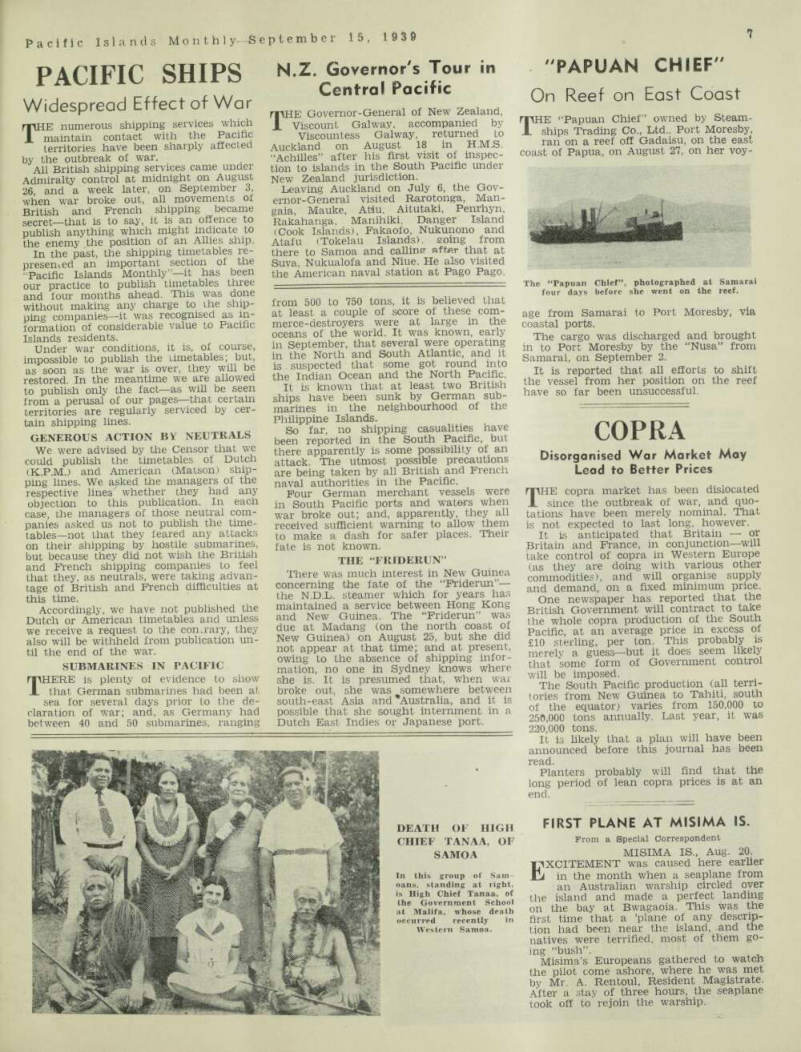
In this group of Sam oans. standing at right, is High Chief Tanaa, of the Government School at Malifa, whose death occurred recently in Western Samoa.
N.Z. Governor's Tour in Central Pacific
Central Pacific
THE Governor-General of New Zealand, Viscount Galway, accompanied by Viscountess Galway, returned to Auckland on August 18 in H.M.S.
“Achilles” after his first visit of inspec tion to islands in the South Pacific under New Zealand jurisdiction.
Leaving Auckland on July 6, the Gov ernor-General visited Rarotonga, Man gaia, Mauke, Atiu. Aitutaki, Penrhyn, Rakahanga, Manihiki, Danger Island (Cook Islands), Fakaofo, Nukunono and Atafu (Tokelau Islands), eoing from there to Samoa and calling after that at Suva, Nukualofa and Niue. He also visited the American naval station at Pago Pago.
"Papuan Chief"
On Reef on East Coast
T he “ Pa P uan chief ” owned by steam - A ships Trading Co., Ltd.. Port Moresby, ran on a ree f Gadaisu, on the east coast of Papua, on August 27, on her voy-
age f rom Samarai to Port Moresby, via coastal ports.
The cargo was discharged and brought in p ort M ores by by the “Nusa” from samarai, on September 2. n is reported that all efforts to shift
The “Papuan Chief”, photographed at Samarai four days before she went on the reef.
Copra
Disorganised War Market May Lead to Better Prices
The copra market has been dislocated since the outbreak of war, and quo tations have been merely nominal. That is not expected to last long, however.
It is anticipated that Britain — or Britain and France, in conjunction—will take control of copra in Western Europe (as they are doing with various other commodities), and will organise supply and demand, on a fixed minimum price.
One newspaper has reported that the British Government will contract to take the whole copra production of the South Pacific, at an average price in excess of £10 sterling, per ton. This probably is merely a guess—but it does seem likely that some form of Government control will be imposed.
The South Pacific production (all terri tories from New Guinea to Tahiti, south of the equator) varies from 150,000 to 250,000 tons annually. Last year, it was 220,000 tons.
It is likely that a plan will have been announced before this journal has been read.
Planters probably will find that the long period of lean copra prices is at an end.
First Plane At Misima Is.
From a Special Correspondent
Misima Is., Aug. 20.
IjiXCITEMENT was caused here earlier j in the month when a seaplane from an Australian warship circled over the island and made a perfect landing on the bay at Bwagaoia. This was the first time that a ’plane of any descrip tion had been near the island, and the natives were terrified, most of them go ing “bush”.
Misima’s Europeans gathered to watch the pilot come ashore, where he was met by Mr A. Rentoul, Resident Magistrate.
After a stay of three hours, the seaplane took off to rejoin the warship.
Advertisements & other items, p. 9 (1 item)
7
Pacific Islands Mon t h 1 y—S ep tem b e r 15, 1939
Fiji's Trade
Increased Gold :: Reduced Banana Crop
THE trade of the Colony of Fiji, for the six months ended June 30 was as follows. The figures for the same six months of 1938 are given, for comparison;
The pricipal changes are accounted for by the fall in the value of copra; the heavy reduction in banana production caused by the rain-storms of March and April; and the steady increase in gold production.
Mrs. Allen Innes. one of the pioneers of the Morobe goldfield in New Guinea, returned to Sydney in September, after a holiday visit to America.
1939. 1938. £ £ Imports 796,417 864,890 Exports Exports in detail — 873,010 874,041 Sugar, tons 25,806 31,121 ,, value £260,700 £287,9*76 Copra, tons 13,383 15,263 „ value £96.660 £140,278 Bananas, bunches . . . . 2,756 9,420 „ cases .. 25,921 70,351 ,, value £12,541 £35,678 Molasses, value £9,194 £7,857 Gold, oz 52,606 44,518 ,. value £430,757 £343,324 Trochus, tons 108 52 „ value £5,032 £3,602
Fire Destroys Big Rabaul Store
AT 2 a.m. on Wednesday, August 23, flames were seen in the upper storey of Messrs. W. R. Carpenter and Co.’s large store in Rabaul; and, within a few hours, the place was completely destroyed.
A fire brigade, comprising native police, using water brought in hoses from the nearby water-front, could do little to check the flames. Various adjoining buildings, the destruction of which seemed inevitable, were saved, however, by their good work.
Carpenter’s store probably was the largest building in Rabaul. It was origin ally the New Guinea Company’s store, when Rabaul was a German colony; and, after the occupation, it was purchased by Carpenter’s for £15,000 and considerably enlarged and improved. The ground floor was a very extensive general store, divided into departments, while the upper floor was partly general store and partly offices.
Tenants who had suites of offices in the building included the Expropriation Board; Mr. Cromie (solicitor); Mr.
Costelloe (accountant); and Mr. Mac Lean (dentist). These gentlemen lost every thing.
At the back of the store were two im portant departments the freezing chamber which is the distributing point for a large portion of the fresh food con
sumed in Rabaul, and a bakery, which was operated by Mrs. L. Brodie under arrangement with Messrs. W. R. Carpen ter & Co. Both the freezer and the bakery were destroyed.
All the other buildings surrounding the main store were saved. These included the timber sheds, the hardware store, the engineering workshops, and the single storey office building, adjoining the store.
The dressmaking shop of Miss Howsen, and the Rabaul Beauty Parlour, were saved.
Among the property destroyed were the records of the Expropriation Board. It is believed that duplicates of most of these exist in Canberra, but the loss of the documents will cause great inconvenience.
The damage is estimated at over £70,000 and most of it is covered by in surance. The loss to the firm will be heavy, however—not only directly, but indirectly, owing to dislocation of busi ness.
The managing director in New Guinea, Mr. W. H. Carpenter, had left Rabaul only a few days before the occurrence; but the local manager, Mr. Gordon Higgs, took the situation in hand with great vigor, and within two or three days he had established a skeleton organisation to carry on in the remaining buildings. The firm was able to continue to supply bulk and plantation lines, but it obviously was not possible to continue the retail busi ness, and it wa? decided not to make any attempt to re-establish the retail store until instructions to that effect came from Sydney. The rebuilding of the cold store was re-commenced within a few days.
Future Of Retail Store
The question of re-establishing the re tail store was under consideration by the directors of W. R. Carpenter and Co., Ltd., in Sydney last week, but no de cision was reached. Present indications are that the firm will carry on whole sale distribution from Rabaul and will continue to operate the freezer and the various departments which were not destroyed by the fire; but that no re building programme of any dimensions will be undertaken, and no attempt made for the present to re-establish the re tail store.
It is a remarkable coincidence that the large general store of Messrs. Burns, Philp & Co., Ltd., in Rabaul, only a few yards south of the Carpenter store, was totally destroyed by fire only 18 months ago. The new B.P. store, a spacious build ing planned on modern lines, was opened recently.
Mademoiselle Renee Hamon, a Paris journalist, who returned to France a short time ago after a visit to the French Col onies in the Pacific, has written a new travel book dealing with the islands of Tahiti, Tuamotus, and Marquesas. It will be published bv Flammarion in October.
Another volume by her entitled “Gauguin, Hermit of the Pacific” is now in the press.
It is reported that Mile. Hamon will re turn to Papeete at an early date with a cinema unit to make a Tahitian film.
Mr. William Ernest Clarence Robinson, of Suva, Fiji, married Miss Marjorie Daysh Horne, of New Zealand, at Suva Holy Trinity Pro-Cathedral in August. The bride formerly was on the staff of the Colonial War Memorial Hospital, in Suva.
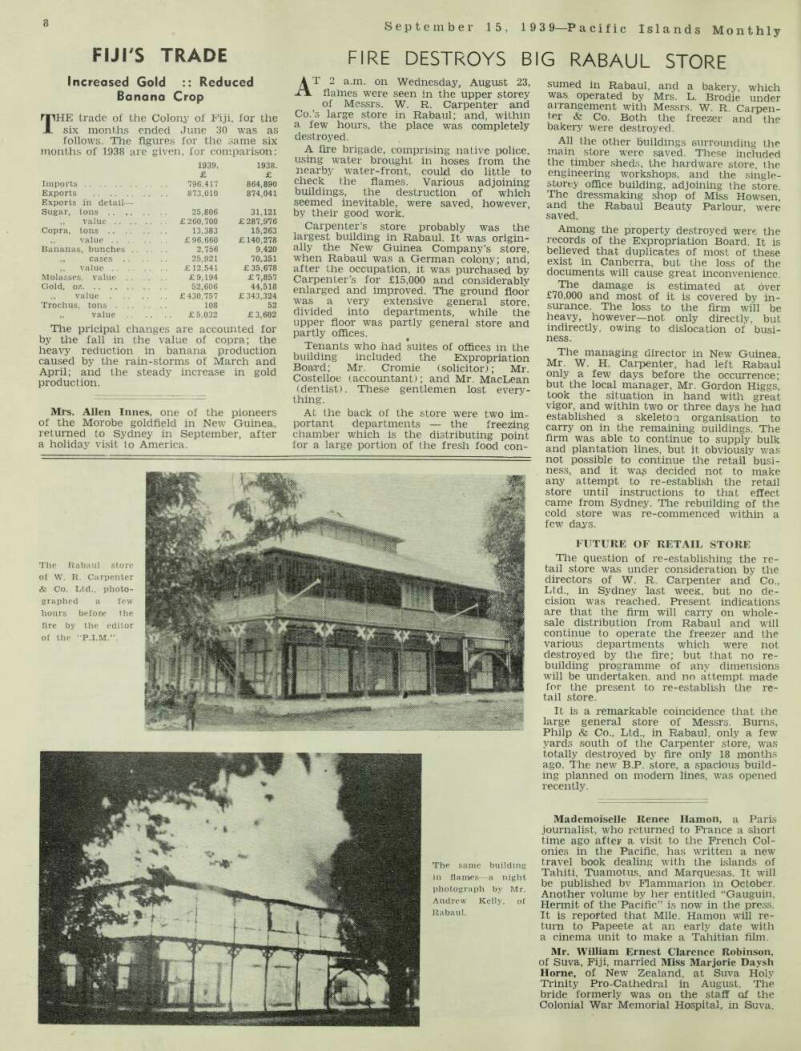
The Rabaul store of W. R. Carpenter & Co. Ltd., photo graphed a few hours before the fire by the editor of the “P.I.M.”.
The same building in flames-a night photograph by Mr.
Andrew Kelly, of Rabaul.
Advertisements & other items, p. 10 (1 item)
8
September 15, 193 9—P acific Islands Monthly
Trans-Pacific Airmail Inaugurated
But Plans for British Section Dislocated by Outbreak of War
THE first complete step in the inaugu ration of the South Pacific airmail service (Australia-North America) was taken on August 30, when the new British seaplane “Aotearoa” (22 tons, wing-span 114 feet), which had been flown from England by Imperial Airways, met at Auckland, N.Z., the new Ameri can Boeing seaplane “Californian Clipper” <42 tons, wing-span 152 feet), which had been flown from the United States by Pan American Airways.
It appeared that the two great national corporations would co-operate in pro viding the new trans-Pacific service imperial Airways to supply the link be tween Sydney-Auckland, and Pan Ameri can Airways to immediately commence running Auckland - Noumea - Hawaii-
U.S.A.
But. four days later, on September 3, war broke out; and the future is obscure.
It is expected that Pan American Air ways immediately will inaugurate a fort nightly service between San Francisco and Auckland, via Honolulu, Canton Is-
The large English company—lm perial Airways—have announced that they have obtained from the French Government authority to use Noumea as an aerial base for their trans-Pacific aerial service, Sydney-New Zealand-Fiji, and thence to Canada, which is now being organised.—“Bulletin du Com merce”, 26/8/1939.
land and Noumea; but, since the out break of war, and the necessary rear rangement of shipping and airmail ser vices, British intentions regarding the opening of the Sydney-Auckland service have not been disclosed. It originally was intended to open the service about the end of September.
The first three flights of the Pan American seaplane will be largely experi mental. After that, it will begin to carry mails, cargo and passengers (up to 70 or 80). Passengers will be accommodated over-night at Honolulu (ordinary hotels), Canton Island (special hotel, now being built of materials brought from Hawaii, and staffed by Chamorros from Guam) and Noumea (ordinary hotels).
The “Aotearoa” flew from England to Sydney without incident, and, on August 28. from Sydney to Auckland in 7 hours 48 minutes—making 12 days from Eng land.
The “Californian Clipper” flew 8,000 miles, from San Francisco to Auckland, without incident, except that she was held up for one day (August 29) at Canton Island, owing to the non-receipt from Suva (Fiji) of expected weather re ports.
She left Noumea at 7.58 a.m. on August 30 and made a survey cruise around Norfolk Island, and settled down beside the “Aotearoa”, in Auckland har bour, at 2.20 p.m. The first to greet the American officers and their 23 passengers (mostly officials) were Captain Burgess and the officers of the British seaplane; and Mr. Harold Gatty, the P.A.A. repre sentative in Auckland—who, for four years, has fought stubbornly, in the face
of much discouragement and many diffi culties, for the inauguration of this ser vice.
The “Californian Clipper” left Auck land for Noumea on September 4, circling Suva twice en route, and returned safely across the Pacific.
The “Aotearoa”, during the week ended September 11, made a survey flight from Auckland to Suva, and returned to Auck land,
Nouville Airport
MUCH activity took place at Nouville — the old notorious He de Nou, in Noumea Harbour—in late July and early August when the New Caledonian authori ties learned definitely that Pan American Airways would send a flying-boat south to New Zealand late in August, and the building programme was accelerated.
The old military wharf has been re modelled and lengthened and the wooden piles replaced by concrete pylons.
Did Suva Fail?
P.A.A. Flight from Noumea to Auckland
From Our Own Correspondent SUVA, Sept. 8.
WHEN the Pan American Airways fly ing-boat “Californian Clipper” flew from San Francisco to Auckland at the end of August, she was held up in Canton Is. for one whole day, owing, it was reported, to the absence of weather reports from Sua. One statement was that Suva’s failure to send out these weather reports had proved embarrassing to Pan American Airways and thrown the whole meteorological service out of gear.
Criticism of Amalgamated Wireless, Ltd., and of the Fiji Government was pub lished in New Zealand newspapers.
The lack of data complained of was the fault of neither the Fiji Government nor of Amalgamated Wireless (A/sia>, Limited.
Pan American Airways, it appears, originally asked the Fiji Government for weather reports covering the whole of the Western Pacific, which the Fiji Govern ment was quite unable to supply. But the Fiji Government did arrange to provide the fullest information about weather conditions in Fiji and Rotuma. This in formation was made available to Pan
American Airways at the times when it was indicated that such information was required.
Moreover the weather reports requested by Noumea were transmitted from Suva to Noumea by Amalgamated Wireless within a few minutes of the receipt of the request. The time schedule between Suva and Canton Island, in which weather reports are given, was adhered to completely, and there were no com plaints.
On September 3, when the Pan Ameri can Airways clipper flew from Auckland to Noumea, she was deflected slightly from the direct course and made a couple of circles over Suva. The Clipper gave a special salute over the mast of the radio station in Suva, and this was accepted as an indication that the master of the Clipper was grateful for the weather in formation which the radio station had sent that day.
From Suva on to Noumea, the A.W.A. station in Suva was in continuous com munication with the Clipper and the radio operator on the Clipper stated that he could not have wished for better ser vice or more cordial co-operation.
Pan American Airways’ Auckland office reports:— No meteorological details were re ceived from Fiji between 2 p.m. on Sat urday (August 26) and 9 a.m. on August 27; while Rotuma Island, which lay half-way between Canton Island and Noumea, was silent from Friday morning August 2o until tne morning of August 27. Consequently, the flying-boat, which was to fly from Canton Island to Noumea on August 27, did not leave Canton Island until Monday, August 28.
Advertisements & other items, pp. 11-12 (2 items)
9
Pacific Islands Monthl y—S eptember 15, 1939
Scott’S
ti ttie time
Start NOW to protect
your chest and lungs
and to build up resistance to infection, BE-
FORE grave winter ail-
ments develop.
That "chesty" cough, if neglected, may easily lead to bronchitis, 'flu, pneumonia and other serious lung troubles.
It is a sign of dangerous weakness in the whole body, and particularly in chest and lungs.
It is the amazing THOROUGHNESS with which it acts that has made Scott's Emulsion famous as the finest of all body-building and protective tonics. With Scott's, the throat is quickly soothed and that troublesome cough quickly disappears. But, more important still, the general strength fitness and resistance to infection are built up, so that the system is made absolutely SAFE against those infections of the chest and lungs to which it is now dangerously exposed.
SCOTT’S
Emulsion
All * pro Anw j i
CHEMISTS AND
PER
BOTTLE
FLAT OIL
FINISH
WATERPROOF
DRIES IN HALF HOUR
Write for a colour Card ...
STERLING VARNISH
Dries in half an hour on plaster walls, ceilings, cement, fibre, wood & iron.
Also Excellent as an Undercoat for lacquers, paints & enamels 12/- per gallon
HIGHLY DURABLE
CO., Alexandria, N.S.W.
4 v i
did YOU 7
KNOW
Germany 5 tieivs English Listen on the stations: that broadcasts sessions 1,1 •very dayfor them
WKlSlif
and 7.10 a.m. ]Q.6'i metres 10 p.ni., Political change—history itself is moving to-day at express speed. Hear history in the making—direct—as clearly as your own local stations, with "Ultimate" Champion Radio. For 12 years "Ultimate" oversea reception has set an unapproachable standard.
"Surge" is entirely eliminated, giving crystal-clear, uninterrupted reception.
No complicated tuning—a child can operate an "Ultimate". /)J/> sa.m nj Q 5 p.m . , l( J 12 midmgm am
DJU
—lO P m midnight. m /9.74 metre and 12
JUST RELEASED
New 1.4 Volt Dual-Wave Portable
WORLD RECEPTION
Low Battery Consumption—Lasts 200 Hours of Operation—Fully Enclosed.
ONLY 23 GUINEAS.
CUP THIS
COUPON
TO-DAY !
Log Chart giving positive identification of more than 400 overseas stations, and I details of "Ultimate" Champion Radio.
U 2.20 r y n/
NAME
ADDRESS
u
Ti MrAVnE
m GEORGE BROWN & CO.. LTD.. 267 Clarence St.. Sydney
Grand Pacific Hotel
Additions Proposed in Suva
IT was announced in August that the owners of the Grand Pacific Hotel in Suva (the Union Steamship Co. of N.Z., Ltd.) had decided to build, on tne south side of the hotel, a new 2-storey annexe which would provide modern ac commodation for 45 additional guests, in suites of rooms, rooms with private baths and an additional lounge. The rooms would face either towards Albert Park or towards the sea, and there would be ver andahs and balconies all round. Each room or suite would have hot and cold water.
The hotel manager, Mr. C. Brown and his staff, had expressed their delight at the introduction of the additional and more modem accommodation: but, now it is feared that there may be some de lay in the building operations owing to the outbreak of war.
Mr. A. J. (“Jock”) Marshall, of St.
Paul’s College. Sydney University, and Miss Joy Wood, of Mosman, Sydney, an nounced their engagement in early Sep tember. Mr. Marshall is well-known in the Western Pacific as an explorer and zoologist .and has carried out scientific research work both in New Guinea and in the New Hebrides. Two of his published books deal with Melanesia—“ The Black Musketeers” and “The Men and Birds of Paradise”. He is now working on a new book dealing with his adventures as a member of the Austrian-Spitzbergen Ex pedition which went to the North Pole regions in 1937.
Tropicalities
IT was Easter, and we of the outlying parts of uncivilisation were all dossing at the guest house.
This morning we were discussing Mac’s seeming immunity from mosquito bites. We were scrambling around in various stages of undress, scraping faces, bathing, raid ing aspirin bottles—you know how it is— when Mac went for his “swim”.
The cooks were busy making beds, col lecting “calicos”, etc., when Mac’s cook noting his master’s absence—enlightened us with a twinkle in his eyes: “Along night, master b’long me, him he drunk too much—him he no savee time allgeter mosquito kai-kai along him.
Orright—behind along middle night-all geter mosquito, him he drunk too much — him he can’t savee kai-kai along master b’long me. No gammon. Ha! Ha! Ha!” * * * THERE are now 202 people on Pitcairn Island, Which has an area of only two square miles. When the popula tion reached 194. in 1856, it was considered too large for the island, and the people were removed to Norfolk Island. But 40 of them returned, and the population again commenced to grow, until to-day, as stated, it is now over 200. Something will have to be done about it soon. People from Pitcairn, in recent years, have ex amined two islands a few hundred miles away from Pitcairn—namely, Elizabeth (or Henderson) Island, and Ducie Island.
Both are high and well wooded and ap pear to be generally suitable for settle ment, except that in both cases there is a lack of permanent water, which becomes acute in dry seasons. * * * OP all the bright and embroidered stories of life in New Guinea, one likes best the story of Mrs. W. E. Giblin and her house-boy. It is necessary to empha sise that Mrs. Giblin (who has just left Wau to live in Sydney) is a gentle lady.
She has been a war nurse, and carved a plantation out of the jungle, and oper ated a mining claim on Edie Creek; but she never has been otherwise than sweet and womanly. In Wau, she had a house boy whose head was solid wood. No matter what the task, this unfortunate “coon” would get it wrong way first or up side down, and he was lazy. Friends told Mrs. Giblin what to say to him; but she shuddered, and struggled on, trying with kindness and patience to make him “house-boy true”.
But there came the inevitable end.
Visitors whom Mrs. Giblin delighted to honour coughed and gurgled over coffee; and deduction and analysis proved that the boy had put Epsom salts into the coffee pot. The boy seemed non-repentant; and the Giblin patience broke.
“You —”, she cried, bitterly, using the words which had been recommended to her*The boy leaped like a stung mus tang. Mrs. Giblin furiously repeated the phrase, which cast sanguinary doubt upon his ancestry.
“O me sorry too much missus”, whimp ered the boy.
Thereafter, he was a reformed char acter. Wau people with a sense of humour loved to hear Mrs. Giblin—albeit coyly— whipping him along with the “Beebee ’ phrase, while the boy leaped with enthus iasm into his housework.
Actually, this is not a funny story, but
a plain statement of fact. Hard-boiled Australian miners use the startling term as a final bitter curse upon their lagging labourers; and the labourers react to it as if it were a whip. They do not know what it means; but they do know that it represents the last word, the end of all patience, and that right behind it there usually is something worse than langu age. * * ♦ WHEN discussing the Public Service Re organisation Report, at a recent meeting of the British Solomon Is lands Protectorate Advisory Council, the Bishop of Melanesia (Dr. Baddeley) said: “If the future is black so far as the copra market is concerned —and we have little in the way of subsidiary industries— that may result in diminishing white population in these islands, and a conse quent fall in customs revenue. From what source then will there come an income to maintain necessary native welfare ser vices?”
In this connection, it is interesting to note that the male white population at the present time is only, approximately, 40 more than in 1909, and this increase is accounted for by an addition of 23 to the Government service, and extended mission activities. However, to counter balance this, there are now some 200 aliens, mostly Chinese, as against 1 alien in 1909. * * * IT happened on one of the out-stations of the 8.5.1. Protectorate during the crisis period of 1938. A sophisticated native of Malaita moved about amongst his primitive mountain brethren offering small Union Jacks, at £1 per head, which, he guaranteed, would be an effective pro tection against the Japanese troops in their forthcoming invasion, especially for the native women. (A Malaitaman hedges his women round with all kinds of elabor ate taboos, and will do anything to pre serve them inviolate.) The slick salesman
actually got rid of a few of his flags be fore the matter became known to the local Government Officer, who arrested him. At the trial, the “boy” put up the naive defence that he really believed in the protective function of the Union Jack.
Exasperated at his cheek, the D.O. looked hard at the culprit, and said: “Yes, it’s true the Union Jack protects people who live under the King’s Government, but you don’t really believe you are the King himself, do you?”
“No, master”, replied the accused. “I am not the King. I’m only a poor native”— almost bursting into tears with affected humility.
“Only a poor native, eh!” replied the D.O. “Good, then I’m going to put you where a lot of other poor natives like you are being cared for by the Govern ment. The sentence is six months.”
“Thank you, master”, replied the “poor native”.
“Solomon”.
UNDER a regime which, as Field - Marshal Goering (Hitler’s stand-in No. 1) boasts, prefers guns to butter, Nazi Germany nowadays has little use for art in any form, and in recent months a “kultur” clean-up has resulted in the “expulsion” of many modern paintings from the various Art Galleries. Among a large batch of pictures declared “deca dent” was “In Tahiti” by Gauguin, the celebrated French artist who lived for a number of years in French Oceania.
Auctioned at the Fischer Gallery in Lucerne, Switzerland, it brought £2,380.
Altogether 125 modern canvases were offered for sale, but the results were dis appointing and prices did not come up to expectation. Those unsold were sent back to Germany. * * » THE four days’ visit of the Governor- General of New Zealand (Lord Gal way) to Western Samoa at the end of July was an unqualified success. The warm, spontaneous welcome given the Vice-Regal party was not only a mani festation of the famed Samoan hospital ity, but coming after weary months of in ternal political bickering the visit offered the Samoan people an opportunity of openly demonstrating their loyalty to the British Empire. Even the Mau chiefs wore red, white and blue ribbons on their Mau uniforms. The only adverse com ment made in Apia on the visit con cerned : Someone had blundered in decorating the entrance gate to Malifa Government School. A large Japanese flag, which completely swamped the very small Union Jacks surrounding it, greeted the official party as it made its way into the school grounds.
The action of two European members of the Legislative Council in not attend ing the official dinner and ball at Gov ernment House, Vailima, after having re ceived invitations.
It is proposed to send the ova of trout from Rotorua district. New Zealand, to Suva. It is believed that the numerous streams of Fiji can be stocked up with trout.
The Catholic Mission at Milne Bay, Eastern Papua, opened a new church at Ladava on August 20. Built of native material, with a wooden floor, it was de signed by Father Bryson and constructed by Mission natives, under the supervision of Brother Vogt.
Advertisements & other items, pp. 13-14 (2 items)
11
Pacific Islands Monthl y—S eptember 15, 1939
LLOYD & CO. Pty. Ltd., Sydney
A CATALOGUE OF
SURPRISES
We are always interested in finding something so different to the things we usually see or wear, and in Prouds Catalogue there are no end of out-of-the-ordinary gifts which cannot fail to delight.
A SMART NEW WESTCLOX
TRAVALARM. Sliding roll shutter completely protects front for travelling—single key winds both time and alarm spring—luminous dial— non-breakable crystal—hinged back forms easel 35/-.
THE CHRISTY SPORTS KNIFE,
superior steel blade extends to three lengths and locks. A neat useful Pocket Knife, can be instantly opened and closed with one hand.
All Stainless Steel. 8/6; with Gold Plated handle 17/6.
ON PARLE FRANCAIS
PROUDS PTY. LTD.
Cnr. King and Pitt Streets,
SYDNEY.
SPECIALLY SELECTED
Expertly blended For Flavour Taste and Economy.
Freshness Sealed in every packet.
ASK
FOR
IT oo a \° V MS* m * V
LLOYD & CO. Pty. Ltd., Sydney
Famous for Tea & Coffee for 50 Years.
r m m
Capture the Action!
Capture the Colour!!
MOVIES at
SNAPSHOT cost
A LL that you most enjoy takes on ** new zest in movies you make your-
self. And with Cine-Kodak these movies
are easy to make . . . cost little more • than snapshots . . . give you “pictures”
to be treasured for a lifetime.
Cine-Kodak Eight Models from £ll/19/6
Call for a demonstration or write for new catalogue.
OF ALL CINE-KODAK DEALERS and
KODAK (a/asia) PTY. LTD*
379 GEORGE STREET, SYDNEY
And at Newcastle or Ks>slsJk
KODAK FILM
FOR EXTRA QUALITY.
Kodak Film is based on fifty years’ experience with Island and Tropical needs. Its EXTRA QUALITY means
SNAPSHOTS YOU’LL BE PROUD
OF.
For the pictures that are hard to get, load with Kodak Verichrome or lightning-fast Kodak Super Sensitive Panchromatic—they’re the films
that GET THE PICTURE.
y M. Ivu. -p* -
About Islands People
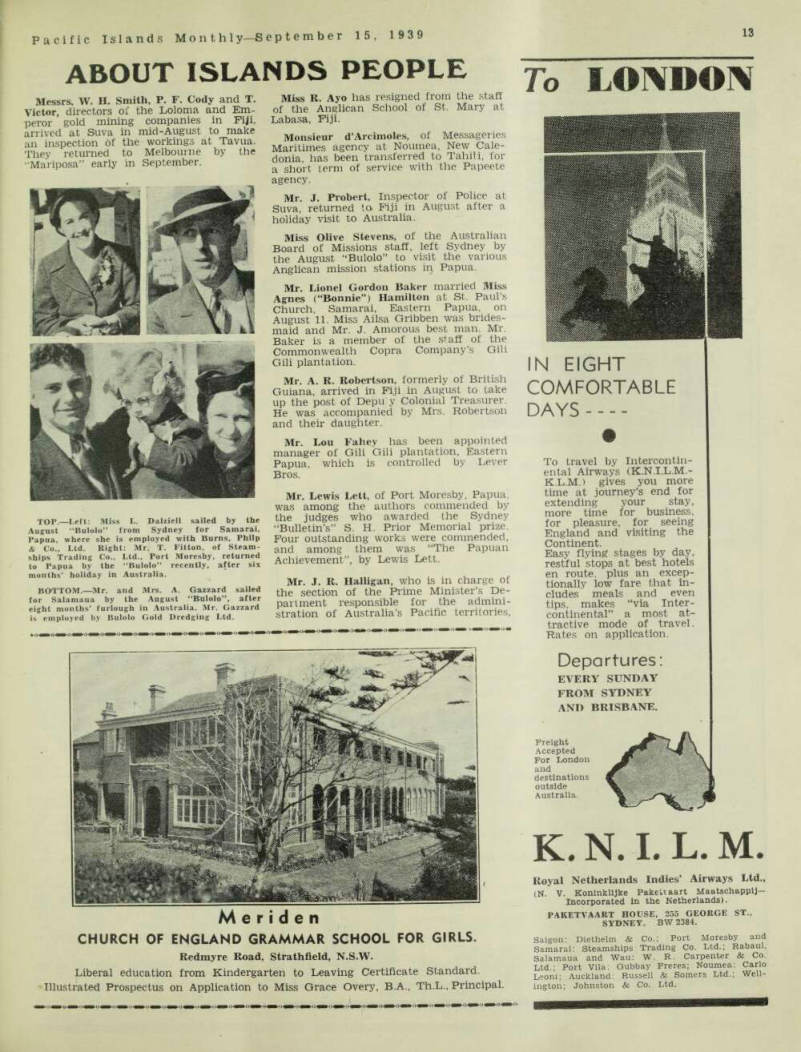
Messrs. W. H. Smith, P. F. Cody and T.
Victor, directors of the Loloma and Em peror gold mining companies in Fiji, arrived at Suva in mid-August to make an inspection of the workings at Tavua.
They returned to Melbourne by the “Mariposa” early in September.
Miss R. Ayo has resigned from the staff of the Anglican School of St. Mary at Labasa, Fiji.
Monsieur d’Arcimoles, of Messageries Maritimes agency at Noumea, New Cale donia, has been transferred to Tahiti, for a short term of service with the Papeete agency.
Mr. J. Probert, Inspector of Police at Suva, returned to Fiji in August after a holiday visit to Australia.
Miss Olive Stevens, of the Australian Board of Missions staff, left Sydney by the August “Bulolo” to visit the various Anglican mission stations irj Papua.
Mr. Lionel Gordon Baker married Miss Agnes (“Bonnie”) Hamilton at St. Paul’s Church, Samarai, Eastern Papua, on August 11. Miss Ailsa Gribben was brides maid and Mr. J. Amorous best man. Mr.
Baker is a member of the staff of the Commonwealth Copra Company’s Gili Gili plantation.
Mr. A. R. Robertson, formerly of British Guiana, arrived in Fiji in August to take up the post of Depu y Colonial Treasurer.
He was accompanied by Mrs. Robertson and their daughter.
Mr. Lou Fahev has been appointed manager of Gili Gili plantation. Eastern Papua, which is controlled by Lever Bros.
Mr. Lewis Lett, of Port Moresby. Papua, was among the authors commended by the judges who awarded the Sydney "Bulletin’s” S. H. Prior Memorial prize.
Four outstanding works were commended, and among them was “The Papuan Achievement”, by Lewis Lett.
Mr. J. R. Halligan, who is in charge of the section of the Prime Minister’s De partment responsible for the admini stration of Australia’s Pacific territories,
TOP. —Left: Miss L. Dalziell sailed by the August “Bulolo” from Sydney for Samarai.
Papua, where she is employed with Burns, Philp & Co., Ltd. Right: Mr. T. Fitton, of Steam ships Trading Co., Ltd., Port Moresby, returned to Papua by the “Bulolo” recently, after six months’ holiday in Australia.
BOTTOM. —Mr. and Mrs. A. Gazzard sailed for Salamaua by the August “Bulolo”, after eight months’ furlough in Australia. Mr. Gazzard is employed by Bulolo Gold Dredging Ltd.
returned to Australia from Europe at the end of August. He was present in Geneva when the Mandates Commission received the annual report of the Administrator of New Guinea. Mr. Halligan said that the report was very carefully examined but that no criticism was tendered.
Mr. Norman Goodall, Foreign Secretary in England of the London Missionary Society, is at present visiting L.M.S. Mis sion stations in Central Pacific. He is ex pected to return to Sydney early in Octo ber, and intends to leave in the middle of that month with Mr. H. L. Hurst, L.M.S. secretary in Sydney, on a visit to Papua.
Mr. R. Ginn arrived in New Zealand from Fiji by the “Monowai” in mid- August to marry Miss B. C. Duff, of Wellington, who formerly was a member of the nursing staff of the Colonial War Memorial Hospital at Suva.
Mr. R. H. Brown, manager of the Apia branch of Burns Philp (S.S.) Co., Ltd., arrived in New Zealand on furlough in mid-August. He was accompanied by his wife, Mrs. Nellie Brown, who is well known in Tonga where she lived for some years with her father the late Judge Skeen, Chief Justice of Tonga. After a month’s stay in Auckland, Mr. and Mrs Brown will cross to Sydney to spend a short holiday in Australia.
Mr. W. S. Marchant, 0.8. E., formerly Deputy Provincial Commissioner in Tan ganyika, East Africa, will arrive in Tulagi, British Solomon Islands, early in November to take up the position of Resident Commissioner in succession to Mr. F. N. Ashley, who left the Protector ate in April on long leave prior to re tirement. A meeting of the 8.5.1. Ad visory Council will take place shortly after Mr. Marchant’s arrival.
Mrs. W. Caldwell, wife of Mr. W. Cald well of the Fiji Colonial Service and daughter of Captain W. Wilson, a very old and esteemed resident of Levuka, Fiji, died on September 3. Mrs. Caldwell was taken ill while on a return trip from abroad with her husband, and on arrival in Australia was admitted to a private hospital in Sydney, where she died. She left four daughters.
Miss Amy Thompson, of the Melanesian Mission, will sail from Sydney for the Solomons by the next “Malaita” after furlough in England. It is expected that she will later proceed to Arawe, New Britain, where she was stationed prior to going on leave.
Mr. M. Toder, formerly secretary to the Government Hospital at Apia, returned to New Zealand from Western Samoa in August, after completing his term of service with the Administration.
TOP—Left: Mr. C. F. Cowley, who is an Assist ant Resident Magistrate in Eastern Papua, ar rived in Sydney by the August “Macdhui” on short furlough. Right: Mrs. R. Moffatt, of Eastern Papua, reached Sydney by the last “Macdhui” and went on to Melbourne to spend three months’ holiday. In their ketch “Gitana”, she and her husband in June went to the rescue of the South African yacht “Lands End” which ran on a reef near Sudest Island, Eastern Papua; and they took the crew to Misima Island.
SECOND ROW.—Mr. and Mrs. Vernon Rice departed from Sydney for Fiji by the “Monterey” recently, after spending several weeks’ holiday in Australia. He is agent for the Shell Oil Company at Lautoka.
BOTTOM.—Left: Mrs. H. J. Tink returned to Sydney from New Guinea by the last “Macdhui” after several months’ holiday at Kimadan Estates, near Kavieng, New Ireland. Right: Mr.
R. Wayne, Interpreter at the Supreme Court, Rabaul, New Guinea, arrived in Sydney by the "Macdhui” recently for three months’ holiday.
He was accompanied by Mrs. Wayne and their daughter, Janet.
Mr. J. H. L. Waterhouse, who has had 30 years experience of Melanesian people,
Iz At
ministration? native sSiool at Nodup, near Rabaul, arrived in Sydney by the last “Malaita” on long leave. His health has not been good, and he is now due for an extensive medical overhaul. For the last 10 years Mr. Waterhouse has devoted himself to the study of what is known as the Blanche Bay language, spoken by over 30,000 natives in New Britain, and by several thousands in New Ireland, and recently he compiled the “New Guinea
Language Book—Blanche Bay Dialect”.
This is a monumen J al work, of great value to the Administration, insomuch that it provides officials with a means of getting a working knowledge of a dialect that is used in some form or other over a large area of the Territory. Mr. Water house has collected and classified many hundreds of words and phrases in com mon use.
Mr. N. Heffernan, of Mt. Kasi, Vanua Levu, Fiji, recently married Miss Alice Simpson, at Kuladrusi, Savu Savu East.
Advertisements & other items, pp. 15-18 (2 items)
K. N. I. L. M.
To LONDON
IN EIGHT
COMFORTABLE
DAYS
To travel by Intercontinental Airways (K.N.1.L.M.- K.L.M.) gives you more time at journey’s end for extending your stay, more time for business, for pleasure, for seeing England and visiting the Continent.
Easy flying stages by day, restful stops at best hotels en route, plus an exceptionally low fare that includes meals and even tips, makes “via Intercontinental” a most attractive mode of travel.
Rates on application.
Departures:
EVERY SUNDAY
FROM SYDNEY
AND BRISBANE.
K. N. I. L. M.
Royal Netherlands Indies’ Airways Ltd., (N. V. Konlnklljke Paketvaart Maatschappij— Incorporated in the Netherlands).
PAKETVAART HOUSE, 255 GEORGE ST..
SYDNEY. BW 2384.
Saigon: Diethelm & Co.; Port Moresby and Samarai: Steamships Trading Co. Ltd.; Rabaul, Salamaua and Wau: W. R. Carpenter & Co.
Ltd.; Port Vila: Gubbay Freres; Noumea: Carlo Leoni; Auckland: Russell & Somers Ltd.; Wellington; Johnston & Co. Ltd.
Freight Accepted For London and destinations outside Australia.
w.
"to r Vi ' i
Meriden
CHURCH OF ENGLAND GRAMMAR SCHOOL FOR GIRLS.
Redmyre Road, Strathfield, N.S.W.
Liberal education from Kindergarten to Leaving Certificate Standard.
Illustrated Prospectus on Application to Miss Grace Overy, 8.A., Th. L.. Principal.
SOME FAMOUS
PRODUCTS
“First in Quality”
DELICIOUS CANNED FOODS JAMS SOUPS SAUCES, ETC IXL JAMS. —All kinds, 120 z., 240 z. and 51b. tins.
IXL JAMS (in 11b. Jars). —Lemon Shred, Orange Shred, Marmalade, etc.
IXL CANNED FRUITS. —Peaches, Pears and Apricots, etc., 16oz. and 30oz. tins.
IXL SPECIAL FRUITS. —Gooseberries, Strawberries, Loganberries, Blackberries, Blackcurrants, Cherries, Grapes, Greengages, Golden Drops, Quinces, etc.
IXL CANNED TOMATOES.—I6oz. and 30oz. tins.
IXL GREEN PEAS.—IOoz. and 16oz. tins.
IXL TOMATO SAUCE.—4oz., lOoz. and 20oz. bottles.
IXL WORCESTERSHIRE SAUCE (OR RELISH).—
50z., lOoz. and 20oz. bottles.
IXL BAKED BEANS (with TOMATO SAUCE).—
50z., lOoz. and 16oz. tins.
IXL CURRIED BAKED BEANS.—Soz., lOoz. and 16 oz. tins.
IXL SPAGHETTI (in Tomato Sauce with Cheese). — 40z., Boz. and 16oz. tins.
IXL CURRIED SPAGHETTI.—4oz., Boz. and 16oz. tins.
IXL ASPARAGUS.—SpeciaIIy selected and highly recommended; lOioz., 14ioz. and 30oz. tins.
IXL DESSERT PASSION FRUIT.—4oz., 12oz. and
320 z. tins.
IXL DESSERT PINEAPPLES.—I6oz. and 30oz. tins.
IXL FRUIT COCKTAIL.—I6oz. and 30oz. tins.
IXL SPECIAL DICED FRUIT SALAD— 16oz. and 30oz. tins.
IXL TROPICAL FRUIT SALAD,—I6oz. and 30oz, tins.
Obtainable from all Leading Island Storekeepers.
I XL
IT’S WORTH A LOT
TO KNOW THE
QUALITY IS
ALWAYS THERE.
H. JONES & CO. PTY, LTD., HOBART & SYDNEY.
SURPRISE
GIFTS FOR
MOTHER
1 (L/C. V 1584 —A Butter Dish Toast 10 /°* Rack Combination, and a Butter Knife, all of gleaming Silverplate The dish is a pretty shell pattern, while the glass inset is designed to match. #0
12/6 VI774.—WONDERFUL VALUE.
* Silverplated Strainer, Sugar Pongs, Jam Spoon. Butter Knife and Sugar Spoon. All to match and in i suitable Gift Case.
D □ □ Vl6s7.—Six Afternoon Tea Spoons in the superb Rundle pattern. Heavily Silverplated, and of heirloom quality course.
HOW TO BUY XMAS GIFTS
First of all. the only gift that really serves its purpose is the one that lasts—the present which carries memories of the giver throughout the years of its usefulness.
Secondly, you’re showing good judgment in giving “something from your jeweller”—since only jewellers’ gifts have that maximum appeal which is apparent even in the boxes in which your present is sent.
Thirdly, in an Angus & Coote Gift you’re making your money go its very farthest—for every penny spent you’re getting the fullest pos-
sible return in reliable, guaranteed quality.
Thrilling Rings for those who
Ladies or Gentlemen’s Dress Pen Knife.
will announce
Christmas.
it' I
£] Q Vl7oo.—Delightful 18ct.
Gold Ring, which features a glorious Solitaire Diamond in a setting of Pure Platinum. Six more Diamonds in the dainty shoulders. You may have a White or Yellow Gold Ring, as you prefer.
With larger Diamonds, £l5.
Set with Brilliant
Fiery
Diamonds.
ic /_ V 339. —GOLD-FILL-
-1 **' * ED Pen Knife that’s richly engraved. It has a sharp, stainless steel blade, manicure file and shackle. Measures 2 I U inches long. Another style, V 338, is also available in Goldfilled quality for 10/6.
These are both useful and smart. £2O Vl7ll - 18ct - White or Yellow Gold Ring, with a large and fiery Solitaire Diamond.
Six more Diamonds in these lovely carved shoulders, Setting is Platinum, of course.
iH'Mf
75 / V 142. —A perfect pet of a Ladies’ Watch. It’s a reliable Jewelex movement, and it’s in a 9'ct. Solid Gold Case, value. Complete with moire ribbon open-link Gold-filled Band is availso that it’s outstanding band for 75/-. A pretty able for 12/6 extra. 37/5 Vlso7.—Delightful Tray of hard Silverplate. Measures 12 inches across, and has a smart, embossed edge. A tray is a gift favored by tradition. China and Crystal look their best on silver, 42/_ V642.—Rich and lustrous “Princess’’ Pearls, appropri- ' *ately known as “Nature’s Rivals”. This refined necklet 15 inches long, and it features a smart jewelled clasp.
Comes in a distinctive Gift Case.
LOVERS’ KNOT
70 BROOCH
that’s studded with Diamonds. The mount is 15ct. Yellow Gold, and the bow sparkles with seven bright Diamonds, set in Platinum.
For the Young Brother. 10/6 V 33 - — The latest American, “Swank”
' * Key Chain of good, Gold-filled quality, with strong Stainless Steel Key Ring. This !« a really smart piece of work, and it’s safe. 21 m iM 51 35 /_ Vl4s.—This is the good “Jewelex” Watch.
' At 35/- a Chrome Case & Solid Leather Band is supplied, while for 3/6 extra you may have a cool. Chrome open Link Band. Both Case and Movement are warranted to give at least 10 years’ service. All necessary adjustment and regulation is free during the first 12 months. 37/6 V26 -— Thi s’ Ladies’ Watch is remarkably good value. It ' * has a jewelled movement, and the smartest of Chrome cases. Open Link Band is also of Chrome. This timepiece is warranted to give at least 5 years’ service, and it will be adjusted and regulated free of charge during the first twelve months. si S —> ■ ■■■mi MJ Vl4l. —Gentleman’s excellent “Jewelex” movement in a stylish Chrome Case. Luminous dial. This watch comes with a stylish Leather band. For 3/6 extra a Chrome Band will be fitted. Warranted 10 years, free adjustment and regulation during the first 12 months. 23/6 V 197 Sleeve Links in 9ct.
' * Solid Gold. These are Angus & Coote’s newest design. They are sent in a very smart Gift Case. Engraving initials, two on each link, 2/- pair extra.
The watch for the Tropics is the “Indestructible” (waterproof, shockproof, dustproof). With case and band entirely of stainless steel it is only £5. 75 / THE SET. V1483.—A generous gift, ' and a thrill to receive. The Tea Pot, Sugar Basin and Milk Jug are all in the popular “Chubby” shape, and they stand on the most delightful, ball feet.
All are of gleaming Silverplate of good,
ANGUS & COOTE Pty. Ltd
500 GEORGE STREET, SYDNEY.
McILRATH’S
FOR
Quality—Price—Service
I.X.L. Best Asstd. Jams. 12oz. <6 doz.) .. 6 9 doz. 36 - case Ideal Unsweetened Milk, 6oz. or 12oz 19 4 case Finest Pearl Barley 2£d lb. 23 doz.
Capital Breakfast Biscuits, 12oz 5d pkt. 4 9 doz.
Arnott’s Club Cheese Biscuits, Boz 9£d pkt.
Best Boiled Lollies, 141 b.. including tins 6d lb.
Rosa Seeded Raisins, 16oz B'd pkt. 8 3 doz.
Excello Dripak Prunes, 16oz B£d tin 8 - doz.
I.X.L. Peeled Grapefruit, 16oz 1 - tin 11 9 doz.
Rosa Best Western Honey, 21b 1 4 tin 15 9 doz.
Rosa Plain Oatmeal, 51b 1/4 2 bag 16/- doz.
Rosa Rolled Oats, 21b 7£d pkt. 7/3 doz.
Cerebos Table Salt, 21b 1/6 jar 17/6 doz.
St. George Fancy Asstd. Meats. 7oz 9/9 doz.
I.X.L. Tomato Sauce. lOoz B£d bot. 8/3 doz.
Cerebos Blanc Mange Powders, loz 2|d pkt. 2/3 doz.
Foster Clark’s Tapioca Custard pkt. 2/3 doz.
Asstd. Toilet Soap. 4oz 2d cake 1/11 doz.
Rosa Pure Household Soap, large .. .. 7id bar 7/- doz.
Dandy Maize Starch, 51b. parcels 7d lb.
All Prices f.o.b. Sydney. Cases and Packing Free.
Write for detailed Export Price List.
McILRATH’S Pty.Ltd.
EXPORT DEPARTMENT.
202-204 PITT STREET, SYDNEY, AUSTRALIA
PABST CANNED BEER
Brewed in one of the world’s largest and most modern breweries, PABST comes to you
in genuine “KEGLINED” NON-REFILLABLE CANS.
PABST EXPORT BEER—A Light Lager Beer.
PABST OLD TANKARD ALE—An English Type stronger and heavier than Export.
Packed in Cartons containing 24 x 12 oz. cans and sold throughout the Pacific; but in case of any difficulty in obtaining supplies, write to:
BOX 1861 K, G.P.0., SYDNEY.
"NO LIGHT CAN STEAL ITS FLAVOUR"
14
September 15, 193 9—P acific Islands Monthly
On Ocean Island
A happy family on Ocean Island, Central Pacific.
Back: Nei Baukin (wife of Quarter-Master Sargeant Maiu, of the Ocean Island Police) and Nei Vaomua (wife of Lance Corporal Akeimo).
Front: Nei Atanikai and Nei Miliama. —Photo: Tokamaen Maiu.
Cost Of Water Scheme For
Ft. Moresby
Prom Our Own Corresponded
Port Moresby, Aug. 29.
REPLYING to questions in the Legis lative Council regarding a water supply for Port Moresby, the Dir ector of Public Works, (Hon. A. P. Lyons) stated that the Administration was in communication with the Federal Govern ment on the matter. Suggestions have been made that £27,500 of the capital expendi ture of £45,250 —the estimated cost of the scheme to provide water both for civilians and the Defence Garrison —should be pro vided by Papua and the balance by the Defence Department.
It has been further suggested that this Territory should borrow the £27,500 from the Commonwealth; and that the annual charges of the scheme, excluding interest, should be shared equally by the Papua Government and Defence Department.
Native Fighting In N.G.
t FIFTEEN natives were killed in inter tribal fighting, on the south-west coast of New Britain, about the middle of August.
A police patrol, under Patrol Officer T.
Milligan, restored order, and brief mes sages subsequently received from him through his pedal radio set reported that the trouble was confined to a small area, and that no Europeans were involved or threatened.
Advertisements & other items, p. 18 (1 item)
16
September 15, 193 9—P acific Islands Monthly
Alert Japanese
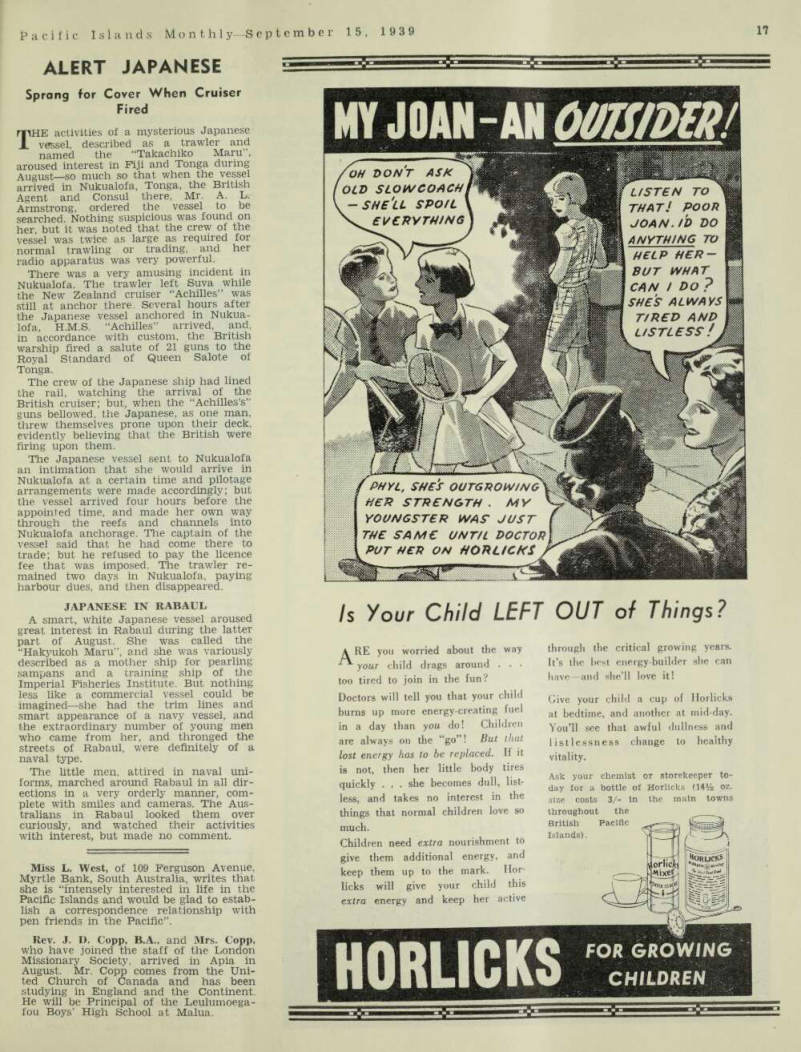
Sprang for Cover When Cruiser Fired
THE activities of a mysterious Japanese vessel, described as a trawler and named the “Takachiko Maru”, aroused interest in Fiji and Tonga during August—so much so that when the vessel arrived in Nukualofa, Tonga, the British Agent and Consul there, Mr. A. L.
Armstrong, ordered the vessel to be searched. Nothing suspicious was found on her, but it was noted that the crew of the vessel was twice as large as required for normal trawling or trading, and her radio apparatus was very powerful.
There was a very amusing incident in Nukualofa. The trawler left Suva while the New Zealand cruiser “Achilles” was still at anchor there. Several hours after the Japanese vessel anchored in Nukua lofa, H.M.S. “Achilles” arrived, and, in accordance with custom, the British warship fired a salute of 21 guns to the Royal Standard of Queen Salote of Tonga.
The crew of the Japanese ship had lined the rail, watching the arrival of the British cruiser; but, when the “Achilles’s” guns bellowed, the Japanese, as one man, threw themselves prone upon their deck, evidently believing that the British were firing upon them.
The Japanese vessel sent to Nukualofa an intimation that she would arrive in Nukualofa at a certain time and pilotage arrangements were made accordingly; but the vessel arrived four hours before the appointed time, and made her own way through the reefs and channels into Nukualofa anchorage. The captain of the vessel said that he had come there to trade; but he refused to pay the licence fee that was imposed. The trawler re mained two days in Nukualofa, paying harbour dues, and then disappeared.
Japanese In Rabaul
A smart, white Japanese vessel aroused great interest in Rabaul during the latter part of August. She was called the “Hakyukoh Maru”, and she was variously described as a mother ship for pearling sampans and a training ship of the Imperial Fisheries Institute. But nothing less like a commercial vessel could be imagined—she had the trim lines and smart appearance of a navy vessel, and the extraordinary number of young men who came from her, and thronged the streets of Rabaul, were definitely of a naval type.
The little men, attired in naval uni forms, marched around Rabaul in all dir ections in a very orderly manner, com plete with smiles and cameras. The Aus tralians in Rabaul looked them over curiously, and watched their activities with interest, but made no comment.
Miss L. West, of 109 Ferguson Avenue, Myrtle Bank, South Australia, writes that she is “intensely interested in life in the Pacific Islands and would be glad to estab lish a correspondence relationship with pen friends in the Pacific”.
Rev. J. D. Copp, 8.A., and Mrs. Copp, who have joined the staff of the London Missionary Society, arrived in Apia in August. Mr. Copp comes from the Uni ted Church of Canada and has been studying in England and the Continent.
He will be Principal of the Leulumoega fou Boys’ High School at Malua.
Advertisements & other items, p. 19 (2 items)
17
Pacific Islands Monthl y—S eptember 15, 1939
My Joan
$ >
'OH DONT ASK
OLD SLOWCOACH
- she'll SPOIL
V EVERYTHING
LISTEN TO
THATJ POOn
JOAN. ID DO
ANYTHING TO
HELP HER-
BUT WHAT
CAN / DO ?
SHES ALWAYS
TIRED AND
LISTLESS ! A
a* * I < ■ x
PHYL, SHES OUTGROWING I
HER STRENGTH . MY
YOUNGSTER WAS JUST
THE SAME UNTIL DOCTOR
PUT HER ON HORLICKS >
Is Vour Child LEFT OUT of Things?
A RE you worried about the way your child drags around . . . too tired to join in the fun?
Doctors will tell you that your child burns up more energy-creating fuel in a day than you do! Children are always on the “go”! But that lost energy has to be replaced. If it is not, then her little body tires quickly . . . she becomes dull, listless, and takes no interest in the things that normal children love so much.
Children need extra nourishment to give them additional energy, and keep them up to the mark. Horlicks will give your child this extra energy and keep her active through the critical growing years.
It’s the best energy-builder she can have—and she’ll love it!
Give your child a cup of Horlicks at bedtime, and another at mid-day.
You’ll see that awful dullness and lisllessness change to healthy vitality.
Ask your chemist or storekeeper today for a bottle of Horlicks (14% oz. size costs 3/- in the main towns throughout the British Pacific Islands).
Jorlicfc
ftixeip
American Beer Again
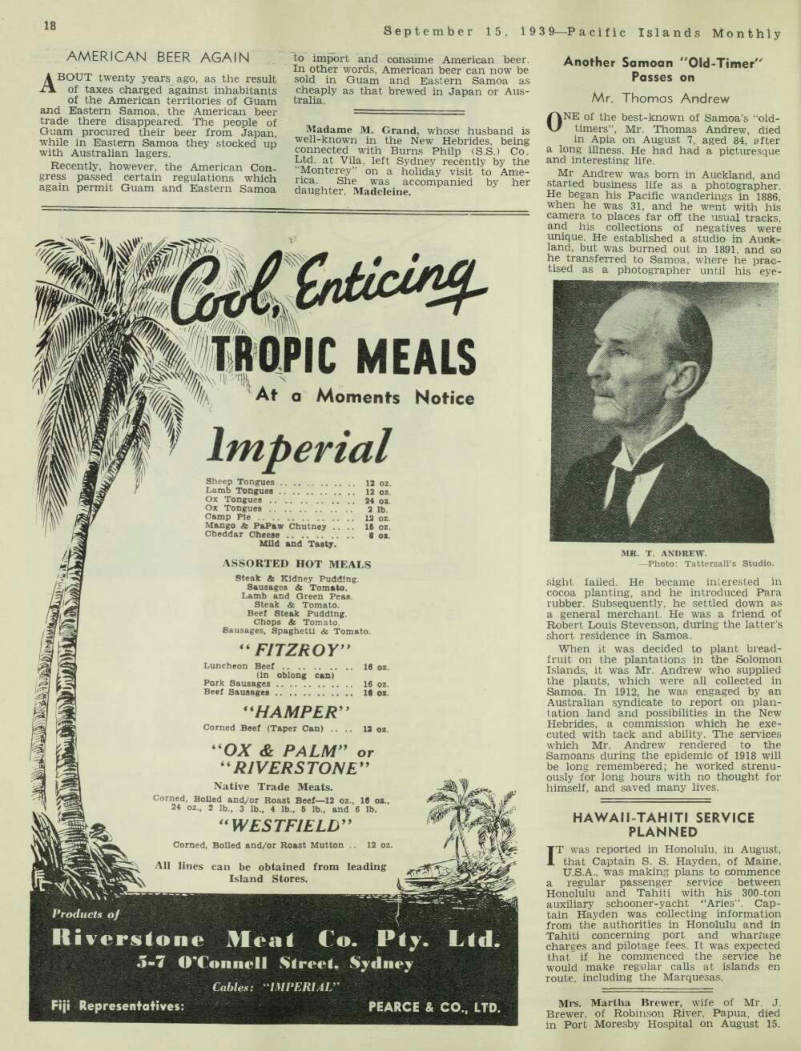
ABOUT twenty years ago, as the result of taxes charged against inhabitants of the American territories of Guam and Eastern Samoa, the American beer trade there disappeared. The people of Guam procured their beer from Japan, while in Eastern Samoa they stocked up with Australian lagers.
Recently, however, the American Con gress passed certain regulations which again permit Guam and Eastern Samoa
to import and consume American beer.
In other words, American beer can now be sold in Guam and Eastern Samoa as cheaply as that brewed in Japan or Aus tralia.
Madame M. Grand, whose husband is well-known in the New Hebrides, being connected with Burns Philp (S.S.) Co.
Ltd. at Vila, left Sydney recently by the “Monterey” on a holiday visit to Ame rica. She was accompanied by her daughter, Madeleine.
Another Samoan “Old-Timer"'
Passes on Mr. Thomas Andrew
ONE of the best-known of Samoa’s “old timers”, Mr. Thomas Andrew, died in Apia on August 7, aged 84, after a long illness. He had had a picturesque and interesting life.
Mr Andrew was bom in Auckland, and started business life as a photographer.
He began his Pacific wanderings in 1886, when he was 31, and he went with his camera to places far off the usual tracks, and his collections of negatives were unique. He established a studio in Auck land, but was burned out in 1891. and so he transferred to Samoa, where he prac tised as a photographer until his eye-
sight failed. He became interested in cocoa planting, and he introduced Para rubber. Subsequently, he settled down as a general merchant. He was a friend of Robert Louis Stevenson, during the latter’s short residence in Samoa.
When it was decided to plant bread fruit on the plantations in the Solomon Islands, it was Mr. Andrew who supplied the plants, which were all collected in Samoa. In 1912, he was engaged by an Australian syndicate to report on plan tation land and possibilities in the New Hebrides, a commission which he exe cuted with tack and ability. The services which Mr. Andrew rendered to the Samoans during the epidemic of 1918 will be long remembered: he worked strenu ously for long hours with no thought for himself, and saved many lives.
Mr. T. Andrew.
—Photo; Tattersall’s Studio.
Hawaii-Tahiti Service
Planned
IT was reported in Honolulu, in August, that Captain S. S. Hayden, of Maine, U.S.A., was making plans to commence a regular passenger service between Honolulu and Tahiti with his 300-ton auxiliary schooner-yacht "Aries”. Cap tain Hayden was collecting information from the authorities in Honolulu and in Tahiti concerning port and wharfage charges and pilotage fees. It was expected that if he commenced the service he would make regular calls at islands en route, including the Marquesas.
Mrs. Martha Brewer, wife of Mr. J.
Brewer, of Robinson River, Papua, died in Port Moresby Hospital on August 15.
Advertisements & other items, p. 20 (2 items)
18
September 15, 193 9—P acific Islands Monthly
( Imperial
“*jfc
TROPIC MEALS
At ° Moments Notice
( Imperial
Sheep Tongues 12 oz.
Lamb Tongues 12 oz.
Ox Tongues 24 oz.
Ox Tongues 2 lb.
Camp Pie 12 oz.
Mango & PaPaw Chutney ... 16 oz.
Cheddar Cheese 8 oz.
Mild and Tasty.
ASSORTED HOT MEALS
Steak & Kidney Pudding.
Sausages & Tomato.
Lamb and Green Peas.
Steak & Tomato.
Beef Steak Pudding.
Chops & Tomato.
Sausages, Spaghetti & Tomato.
“ FITZROY ”
Luncheon Beef 16 oz. (in oblong can) Pork Sausages 16 oz.
Beef Sausages 16 oz.
“ HAMPER ”
Corned Beef (Taper Can) ... 12 oz.
“OX & PALM” or
“ RIVERSTONE ”
Native Trade Meats.
Corned, Boiled and/or Roast Beef—l 2 oz., 16 oa., 24 oz., 2 lb., 3 lb., 4 lb., 5 lb., and 6 lb.
“ WESTFIELD ”
Corned, Boiled and/or Roast Mutton .. 12 oz.
All lines can be obtained from leading Island Stores. - L
Products of
Riverstone Meat Co. Pty. Ltd.
5-7 O'tomiell Street, Sidney
Cables: “ IMPERIAL ”
Fiji Representatives:
PEARCE & CO., LTD
New Guinea
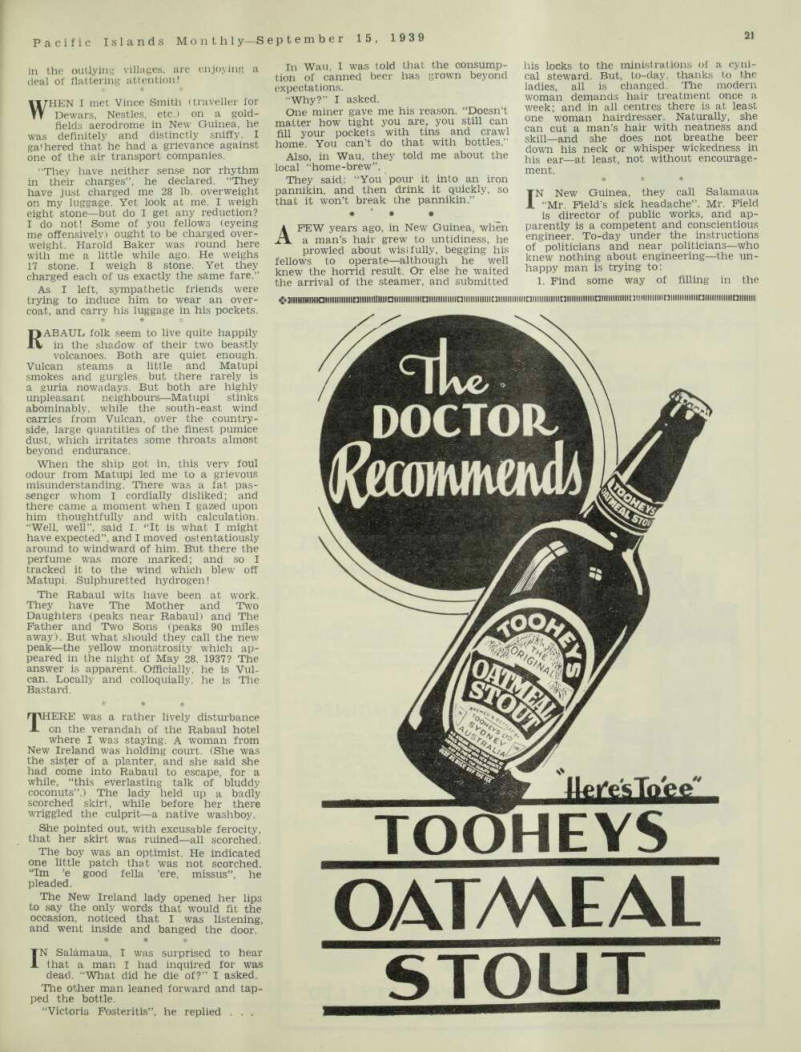
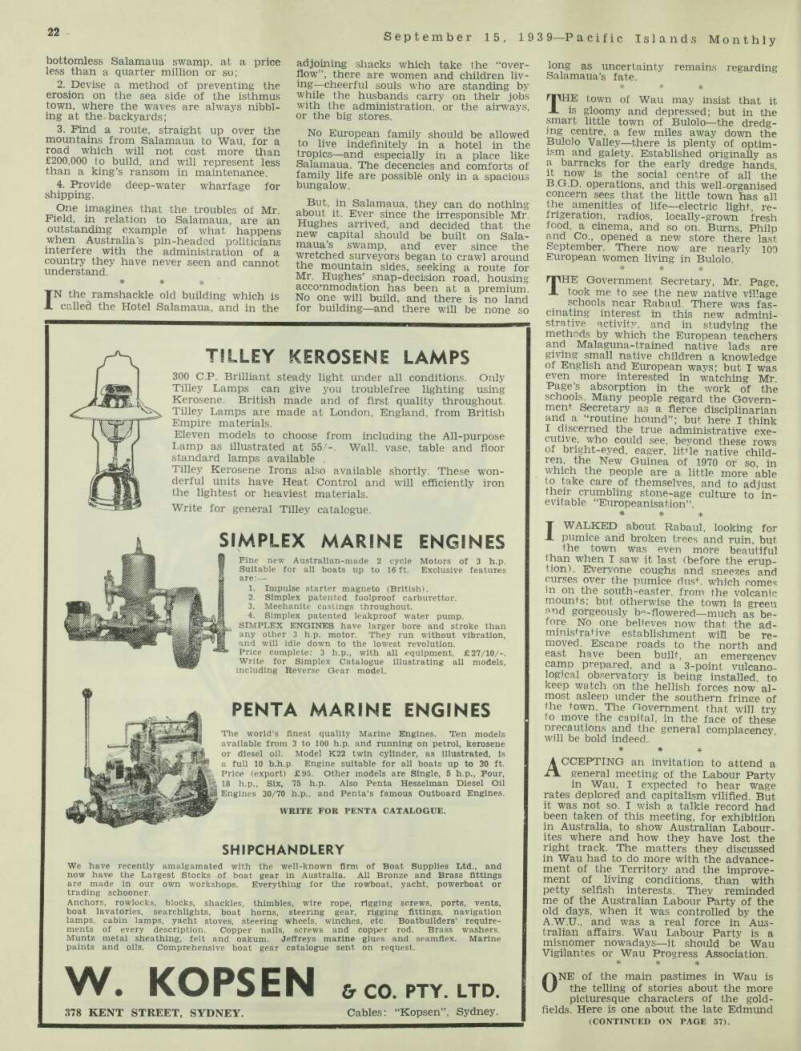
Sidelights In Papua And
By R. W. Robson, from Notes mode during o Brief Visit to the Australian Pacific Territories in August, 1939
HOW quickly the international scene changes! When we sailed north out of Caims, on the “Macdhui”, Euro pean affairs were quiet—almost placid— but every morning, when the radio bulle tin was posted, we all reacted in our sev eral ways to the news from the Far East.
“How much longer can this go on?” was the general comment, as we read of Japanese insults in Tientsin, and a cheeky move to blockade Hong Kong.
Three weeks later, back in Cairns, the news showed Europe now tensely waiting, or feverishly mobilising, while the ego centric Hitler tried to decide whether to let the balloon go up or not. The Japanese, completely disconcerted by the German-Russian Pact, were once more going into diplomatic reverse, and talk ing of a new friendship with Britain and America. But no one was taking any notice of them.
The greatest trial in the Territories is the absence of connected news. Every radio-owner picks up bits and pieces, in dicating the general trend of world affairs: but it is quite impossible, in the absence of connected and continuing news services, set out clearly in print, to understand what actually is going on. * * ♦ 1 HEARD many new Pidgin gems in New Guinea Here is the best—the contribution of Mrs. Stewart, who still directs operations at the “Top Hotel” in Wau. For the purpose of this story, please know that banus is a fence; that susu is milk; and that a goat is something new to the natives.
There had been a domestic disaster.
The household goat had eaten madame’s new brassiere, and the houseboy was try ing to convey the sad tidings.
Said the boy: “New fella dog he kaikai banus belong susu belong missus.” * * * 117 HEN the “Macdhui” entered Sala- TT maua in August, the report spread that war had broken out. Actually, the “Macdhui” was being re-painted but the great splotches of red and brown and what-not looked much like the camou flage with which merchantmen dis guised themselves in the war days.
Incidentally, what must it not cost The Firm to keep white the Great White Fleet? In Sydney. I noticed the “Macdhui”, “Merkur”, “Malaita” and “Tulagi” all lying together, all shining white, but a very blasphemous bo’s’n told me that the work of maintaining them in shining whiteness was “just nobody’s business”. Most of them prowl around among Islands wharves where tarriness is considered next to godliness, and the deadly work done by the tar is finished by the bumping lighters in the more re mote ports.
“I hope their paint bill will break their blinking hearts”, said one bo’s’n, fer vently. “and then we’ll get back to black ships.” * * * SINCE amalgamation became a live topic up here in the tropics, the folk of Papua and New Guinea have found something new to squabble about. The
“Macdhui’s” smoke-room is just like Ethel’s bar—Papua lads at one end, and the hard-boiled elect of New Guinea at the other, and occasional dirty looks be tween. The ladies, of course, always re spond to atmosphere.
“Pooh”, I overheard. “You can keep your Papuan labourers—l’m sure we can get along without them.”
Madame Papua’s answer was prompt.
“And you can keep your Kong-Kong traders—we don’t want them down here!” ♦ * • ON the “Macdhui”. I met a charming little lady, destined to break many hearts —Miss Desiree Cridland, aged 2 'h, daughter of the R.M. at Cape Nelson, Papua. It was noteworthy that when she played with other children, she displayed an imperious and forthright spirit. She gave orders —and there was the devil and all to pay if she were not at once obeyed Mrs. Cridland apologised to the other mothers. “She has been for so long accus tomed to meeting little native children that she does not know how to behave with children of her own colour. In Papua the children always, as a matter of course, give way to the white child.
and Desiree now thinks it is her right.” ♦ * * ON a cool verandah, on the top of the isle of Samarai, I was neatly and smartly served with morning tea, by a Papuan house-servant so clean and deft that I remarked upon it. “Many
people complain of incompetent house boys”, I said.
Mrs. Aumuller snorted—if so gentle a lady can be held guilty of such a thing.
“House servants are just what you make of them—it is entirely a matter of choos ing the right natives, and handling them properly. You can have admirable ser vants here, if you set about it the right way. If you have a poor servant here, look for a weak or incompetent master.” * * » IN quiet sunny waters, north of Samarai, we passed the place where the German raider “Wolf” captured the “Matunga” in 1917. One of the officers grew remini scent.
"When we were pulling out from Sydney the other day, I saw Mr. Lynch on the wharf and, though it happened over 20 years ago, the memory of his language made me laugh. Lynch was chief steward on the ‘Matunga’ and, along with the rest of the crew, he was taken a prisoner to Germany There, officers were not compelled to work, but all others had to work hard. The Germans do not re gard the chief steward as an officer, and so our friend got calloused hands on a pick and shovel or something. That was bad enough. But the part that really up set Lynch was the condition of the bo’s’n. According to the Germans, a bo’s’n is an officer, and so the ‘Matunga’ boatswain did not work, and enjoyed himself (as well as he could) in a prison camp—especially when he watched the labours of his dear old shipmate Lynch.” * * * r’.E south-east was blowing hard in Rabaul harbour, and I got Captain Michie’s permission to go up on the “Macdhui’s” bridge. “I want to see how you are going to get this ship away from that damn wharf”, I said.
They worked her away from the wharf
very ingeniously, in the teeth of the south easter—a long cable out from the stem to a heavy buoy, and then clawing up to the starboard anchor, thoughtfully dropped fifty feet out as they went in to berth. The “Macdhui” finally went out into mid-harbour stern-first, and fast, through the floating pumice—a pretty manoeuvre.
Captain Michie spoke savagely of the Government wharf and the people who built it. “Why was it put there?” he asked.
"Why couldn’t they have rebuilt the old wharf, after the 1924 fire? That was an ideal situation. We could go straight in and straight out in any weather; but the wharf at Malaguna is always awkward in south-east weather. Also, at the old wharf we could keep on working cargo in any weather, just by rigging tarpaulins At Malaguna, when it rains, we knock off ” * * * THE cedar of the Bulolo Valley, New Guinea, deservedly has a great repu tation; but not many people know that the best surfboard on the Australian coast is made of Bulolo cedar. Roy Sowerby, of B.G.D. staff, Bulolo, cut the wood and dried it, and then carved a surfboard 91 feet long, 221 inches wide and 31 inches thick, and took it to Sydney Last year George Connors, at the cham pionship meeting at Bondi, won the championship with this board; and, ac cording to Connors, it is the best board in use in Australia. * * * rERE is talkie equipment on the ‘Macdhui”, and a roomful of old films, and when the ship is lying in an Islands port, the lonely Europeans gather eagerly to hear and see the picture-show.
But the shows have their moments of embarrassment—the pictures are rather tragically dated by ladies’ hair and motor car radiators and so forth. There was one shown aboard recently in which the an nouncer stated, in a voice of happy op timism, “It is expected that this great work will be finished in 1935!”
In another, Joan Crawford appears as a flapper. “That’s making it too hot”, said one gentleman to me. “I think Joan Crawford is now fighting her third hus band!” * * « AS I walked along Port Moresby’s sunny street, admiring the lines of the new Moresby Hotel, there came from said hostelry a shattering burst of sound—a noise like that made by Abyssin ian jaguars in their death-throes. I entered the shaded lounge, and there was Manager Bayer crossing from his office in startled leaps, waving his arms, and I gathered that his demand was the equivalent of “You can’t do that there here”
Six young men, gathered thirstily around seven bottles of beer, stared at him sourly. The concert ceased. There was argument, and then they gathered up their beer, formed fours and marched out. I had seen the 13th Heavy Battery in action.
Port Moresby now is a garrison town, and increasing numbers of troops are to be stationed there. Australian taxpayers will be gratified to know that the lowest ranks of these lads receive each £2OO per annum in pay, and £l2O per annum of tropical allowance—£32o p.a. in all.
Their mess costs them 14/- per week.
They are stuck in this quiet little town with nothing to occupy their spare time, and plenty of money on their hands . . . is it any wonder that the pubs bristle when they see the troops approaching, and that certain vivacious half-caste girls,
in the outlying villages, are enjoying a deal of flattering attention! * * * WHEN I met Vince Smith (traveller for Dewars, Nestles, etc.) on a gold fields aerodrome in New Guinea, he was definitely and distinctly sniffy. I gathered that he had a grievance against one of the air transport companies.
“They have neither sense nor rhythm in their charges”, he declared. “They have just charged me 28 lb. overweight on my luggage. Yet look at me. I weigh eight stone—but do I get any reduction?
I do not! Some of you fellows (eyeing me offensively) ought to be charged over weight. Harold Baker was round here with me a little while ago. He weighs 17 stone. I weigh 8 stone. Yet they charged each of us exactly the same fare.”
As I left, sympathetic friends were trying to induce him to wear an over coat, and carry his luggage in his pockets. * * « RABAUL folk seem to live quite happily in the shadow of their two beastly volcanoes. Both are quiet enough.
Vulcan steams a little and Matupi smokes and gurgles, but there rarely is a guria nowadays. But both are highly unpleasant neighbours—Matupi stinks abominably, while the south-east wind carries from Vulcan, over the country side, large quantities of the finest pumice dust, which irritates some throats almost beyond endurance.
When the ship got in. this very foul odour from Matupi led me to a grievous misunderstanding. There was a fat pas senger whom I cordially disliked; and there came a moment when I gazed upon him thoughtfully and with calculation.
“Well, well”, said I. “It is what I might have expected”, and I moved ostentatiously around to windward of him. But there the perfume was more marked; and so I tracked it to the wind which blew off Matupi. Sulphuretted hydrogen!
The Rabaul wits have been at work.
They have The Mother and Two Daughters (peaks near Rabaul) and The Father and Two Sons (peaks 90 miles away). But what should they call the new peak—the yellow monstrosity which ap peared in the night of May 28. 1937? The answer is apparent. Officially, he is Vul can. Locally and colloquially, he is The Bastard. * * * THERE was a rather lively disturbance on the verandah of the Rabaul hotel where I was staying. A woman from New Ireland was holding court. (She was the sister of a planter, and she said she had come into Rabaul to escape, for a while, “this everlasting talk of bluddy coconuts”.) The lady held up a badly scorched skirt, while before her there wriggled the culprit—a native washboy.
She pointed out, with excusable ferocity, that her skirt was ruined—all scorched.
The boy was an optimist. He indicated one little patch that was not scorched.
“Tm ’e good fella ’ere, missus”, he pleaded.
The New Ireland lady opened her lips to say the only words that would fit the occasion, noticed that I was listening, and went inside and banged the door. * * » IN Salamaua, I was surprised to hear that a man I had inquired for was dead. “What did he die of?” I asked.
The other man leaned forward and tap ped the bottle.
“Victoria Fosteritis”, he replied . . .
In Wau, I was told that the consumption of canned beer has grown beyond
expectations.
“Why?” I asked. m?ttlr m how tight stflfcan
fllf
home. You can't do that with bottles."
Also, in Wau, they told me about the local “home-brew”.
They said: “You pour it into an iron pannikin, and then drink it quickly, so that it won’t break the pannikin. * ‘ * * AFEW years ago, in New Guinea, when a man’s hair grew to untidiness, he prowled about wisi fully, begging his fellows to operate—although he well knew the horrid result. Or else he waited the arrival of the steamer, and submitted
his locks to the ministrations of a cyni cal steward. But, to-day, thanks to the ladies, all is changed. The modern woman demands hair treatment once a
on^woman 11 hahdressfr.
S ™U man's hair ™th neatness and 0 f “ hi “°‘ r Redness in his ear at i eas t not without encourage ment. ’ * * * tjj New Guinea, they call Salamaua «j^ r Field’s sick headache”. Mr. Field is director of public works, and ap parently is a competent and conscientious engineer. To-day under the instructions politicians and near^ pohticians—who knew nothing about engineering the un happy man is trying to. 1. Find some way of filling in the
bottomless Salamaua swamp, at a price less than a quarter million or so; 2. Devise a method of preventing the erosion on the sea side of the isthmus town, where the waves are always nibbling at the backyards; 3. Find a route, straight up over the vf rom 1 ? alar ? aua Wau > for a n ? C u St more an So?,’ 000 il? mld ’ and re .P r , esen t less than a king s ransom in maintenance. 4. Provide deep-water wharfage for shipping.
One imagines that tbP trouble r»f ivrr Field in rpbHnn tn M outstanding l examnlP nf l what ’ oiiLstancung example of what happens when Australia's pin-headed politicians interfere with the administration of a haVe neVW Seen and Cannot understand. N the ramshackle old building which is called the Hotel Salamaua, and in the
adjoining shacks which take the “over flow”, there are women and children liv ing-cheerful souls who are standing by while the husbands carry on their jobs with the administration, or the airways, or the big stores.
No European family should be allowed to live indefinitely in a hotel in the tropics—and especially in a place like Salamaua. The decencies and comforts of family life are possible only in a spacious bungalow.
But, in Salamaua, they can do nothing about it. Ever since the irresponsible Mr.
Hughes arrived, and decided that the new capital should be built on Sala maua’s swamp, and ever since the wretched surveyors began to crawl around the mountain sides, seeking a route for Mr. Hughes’ snap-decision road, housing accommodation has been at a premium.
No one will build, and there is no land for building—and there will be none so
long as uncertainty remains regarding Salamaua’s fate. * * * THE town of Wau may insist that it is gloomy and depressed; but in the smart little town of Bulolo—the dredg ing centre, a few miles away down the Bulolo Valley—there is plenty of optim ism and gaiety. Established originally as a barracks for the early dredge hands, it now is the social centre of all the B.G.D. operations, and this well-organised concern sees that the little town has all the amenities of life—electric light, re frigeration, radios, locally-grown fresh food, a cinema, and so on. Burns. Philp and Co., opened a new store there last September. There now are nearly 100 European women living in Bulolo. * * * THE Government Secretary, Mr. Page, took me to see the new native village schools near Rabaul. There was fas cinating interest in this new admini strative activity, and in studying the methods by which the European teachers and Malaguna-trained native lads are giving small native children a knowledge of English and European wavs; but I was even more interested in watching Mr Page’s absorption in the work of the schools. Many people regard the Govern ment Secretary as a fierce disciplinarian and a “routine hound”; but here I think I discerned the true administrative exe cutive, who could see, beyond these rows of bright-eyed, eager, little native child ren, the New Guinea of 1970 or so, in which the people are a little more able to take care of themselves, and to adjust their crumbling stone-age culture to in evitable “Europeanisation”. * * * I WALKED about Rabaul, looking for pumice and broken trees and ruin, but the town was even more beautiful than when I saw it last (before the erup tion). Evervone coughs and sneezes and curses over the pumice dust, which comes in on the south-easter, from the volcanic mounts: but otherwise the town is green and gorgeously b Q -flowered—much as be fore No one believes now that the ad ministrative establishment will be re moved. Escape roads to the north and east have been built, an emergencv camp prepared, and a 3-point vulcano logjcal observatory is being installed, to keep watch on the hellish forces now al most asleep under the southern fringe of the town. The Government that will try to move the capital, in the face of these precautions and the general complacency will be bold indeed. ♦ * * ACCEPTING an invitation to attend a general meeting of the Labour Party in Wau, I expected to hear wage rates deplored and capitalism vilified. But it was not so. I wish a talkie record had been taken of this meeting, for exhibition in Australia, to show Australian Labour ites where and how they have lost the right track. The matters they discussed in Wau had to do more with the advance ment of the Territory and the improve ment of living conditions, than with petty selfish interests. They reminded me of the Australian Labour Party of the old days, when it was controlled by the A.W.U., and was a real force in Aus tralian affairs. Wau Labour Party is a misnomer nowadays—it should be Wau Vigilantes or Wau Progress Association. « * * ONE of the main pastimes in Wau is the telling of stories about the more picturesque characters of the gold fields. Here is one about the late Edmund
(Continued On Page 57).
Mr. Eric Ernest McGowan, formerly of Labasa, Fiji, married Miss Nina Myra Jackson, of Savu Savu, at Holy Trinity Pro-Cathedral, Suva, in August. The bride until recently was a member of the Suva staff of Brown and Joske Ltd. They will make their future home at Lakeba, in the Lau Group, where Mr. McGowan has been appointed manager of Morris. Hed strom Ltd.’s trading post.
Major E. Oughton, an English con sulting engineer, arrived in Sydney from London late in August on his way to New Caledonia to study chromite depos its for the French mining concern. So ciete la Tiebaghi. He told the Sydney newspapers that Japan is opening up considerable iron ore deposits in the French Colony—in four months recently they removed 35.000 tons and hope to take away each year more than 300,000 tons.
Coakley, a successful miner who was found to have had bank accounts all over the place, and all of them carrying large credits.
Mr. Coakley was a good Roman Catho lic, and he decided to send a very large nugget to Archbishop Mannix, to assist a certain building project. The nugget was duly despatched: and there duly came back from the Archbishop of Melbourne a letter of warm thanks. Mr. Coakley was puzzled by the fact that the letter was signed “Head”, whereas he understood the name of the Archbishop was “Mannix”.
His delighted friends explained. He had addressed his gift to “The Archbishop of Melbourne”, and, of course, it had gone to the Anglican Church, and not to the Roman Catholic prelate.
Poor Mr. Coakley became so unhappy over it that his friends feared for his health. Archbishop Head was communi cated with, the circumstances were ex plained, the gift was forthwith handed over to Archbishop Mannix, and Mr.
Coakley slept in peace. * * * DWELLERS in the Morobe goldfields towns may curse their costly aero plane transport—but the system has its compensations. For example, they all get fresh milk, every day, from Australian dairy cattle originally carried in in aero planes. Mr. J. W. Barker has established a dairy farm just outside Wau, and the air companies distribute fresh milk free of charge. The Mandated Airlines ’plane in which I travelled in the early morning up from Salamaua was en route to Wau to pick up the milk supply for “the beach”. ■* * * WEDDINGS in Wau are of frequent occurrence. Girls who arrive to fill jobs, or on holidays bent, are whisked off in matrimony literally before they can get their fingers crossed. Wau’s young men (unmarried) are rather bitter about it; and. one Sunday morning in whimsical mood, they interviewed me.
“Do you think you could do a bit of recruiting for us down South?” they asked. “You can pick them —you ought to know Territory tastes by now. Don’t forget to send along a few spares. Ship them through Carpenters, marked Tf any complaints, refer to C. E. Parker’ ” —the latter being a cruel allusion to the well known rubber stamp of the big firm’s in defatigable inspector. * * * WHEN the New Guinea Administration arranged to buck up the Treasury with a new issue of postage stamps— a time honoured device of impecunious Islands Governments—it decided to mark the achievements of aerial transport in the Territory by putting upon the stamps a picture of an aeroplane.
But the gratified purring of the staunchly British air companies turned to startled yelps when they saw the finished stamps. It was an aeroplane, all right— a large, clear ly-recognisable Junkers!
There are British and American ’planes aplenty on the field: but the unhappy wight who selected the picture for re production must choose a photograph of a German machine. The stamp issues have been withdrawn; but the cynics in Wau are still sneering about it. * * * A THIN, red-headed man whom I met on the Wau hotel verandah enter
tained mo with stories of misfortune. A sour Fate had danced upon his neck so often that he regarded his ill-luck as something really funny.
His memories of the field went back so far that I got curious about him—and then I discovered he was none other than Ernie Dover, who went into the Koranga Creek (a mile north of where Wau now stands) with Shark-Eye Park and Nettleton in August, 1922. (Park, Preston, Mat Crowe and G. Auerbach found the gold there before 1914, but were chased out by the German officials. They returned as soon as the war was over.) Dover followed Nettleton and Park in; “and”, said Ernie, “they gave me a job there to induce me to keep quiet about the gold. Sloane followed me in—he arrived with one boot on and the other round his neck. The natives then were hostile—they kept away
from us, inside their barricaded villages.”
Dover should have made several for tunes, but he still is chasing the elusive metal. That day. he had returned from
evemhins “anato”
« That old bag ’ in that room there is the Q W bi C h I carried in in 1922, when I t r{ , P t Pr QVmrk- ” trac , Shark-Eye. . .. n 1 f aS o^ d f 4 er v? lo^6o^ mi/ D that Shark-Eye Park is now I l ™® in B^ s l^ ) j ne ’ '* oe ,, Sloane, he thought, was on . a . fa ,l m - 111 Qoo. ensla^d ; while Nettleton is in England his mother anc * im a I(^y httle property .
I>ETWEEN Wau and Lae I sat in an 13 aeroplane beside a Brisbane woman, who was having her first real glimpse of up-ended New Guinea. For ten minutes, she gazed out over torn and twisted moun
!*“?• SnJ- all !r 0f , l i lcr ,?? ib !t stee ? nes !
You know , she said, if they iioned this country out. it would be as big as AfripJi ** , , if wc. ii 115 ’Plane, it was queer to see how the Baiune water- Bulolo Gold Dredging, Ltd., to feed its second power-house— made the grades and found its way down from the dam to the power-house (now being duplicated). It crept along the knifelike edges of the twisted and serrated hiiic e cages oi me twisted and serrated hills
“ th e most extraordinary way-a really clever feat in engineering —.
T N Madang, a couple of years ago, there J. was one motor-road, one motor-vehicle and one policeman. The policeman took action against the motorist, and he was properly and satisfactorily fined for running his car without a tail-light ’
Tbprp ovo
w™ Inf a of mofor S'™!
w ’ a “® a lot ot motor-vehicle*. The police test the brakes of the motor vehicles, as is lawful and proper. But there is no co-ordination. Lads who have been tested one day by one policeman a re held up, a few days later, by another policeman, for another test; and their bitter complaints are of no avail.
A T Wau, 1 asked after an old-timer,
? Wa ? te S *°
interview about New Guinea timbers, But I was told that he Was down near Salamaua and, with a few native “ ers 'l s holdout the Creeks m the foothills, at the back Of Kila, to keep going. That shows the enormous possibilities of this countrv if for the individual miner. There is gold all over this Morobe area, in sufficient quan tity to support many, many prospectors an d miners, provided always that the men are given practical help and encourage ment.
Advertisements & other items, pp. 21-26 (5 items)
19
Pacific Islands Monthl y—S eptember 15, 1939
Macdonald
Established 1868 . . .
GOWINGS
Sydney’s Leading Store
EXCLUSIVELY FOR MEN
SUIT TO MEASURE
TAILORED AND AWAITING
YOUR ARRIVAL IN SYDNEY
Write for
FREE PATTERNS
and Self Measurement Form . . .
COWING BROS. LTD.
Market and George Streets, Sydney will have your
If flying to Europe or anywhere
consult
MACDONALD
HAMILTON & CO
Air Travel Specialists Telephone B 7511 for reservations Booking Agents for
W.R.C. AIRLINES
QANTAS EMPIRE AIRWAYS LTD.
INTERCONTINENTAL
AIRWAYS (KNILM & KLM)
Also Australian National Airways Airlines of Australia Ltd, Ansett Airways Ltd, For Reservations and further particulars write to:
MACDONALD HAMILTON & CO.
CHALLIS HOUSE, 4 MARTIN PLACE, SYDNEY
Telegraphic Address: "NALDHAM, Sydney Telephone; B 751 I
25 YEARS OF SERVICE
William E. Reed
(Established 1913)
BROKER & AGENT
Union House. 247 George St., Sydney For all Plantation and Trading Requirements. Enquiries welcome.
R. M. Hardy’s
Wonderful Discovery
The greatest health tonic of the age.
Mr. R. Langworthy.
HARDY'S will banish forever all stomach
troubles. Read the following testimonials:
The Manager, R. M. Hardy & Co., Hardy’s Chambers, 5 Hunter Street, Sydney.
Dear Sir, —About twelve months ago, suffering severe gastric trouble, I consulted my doctor and was informed that I had an ulcer on the stomach. I immediately began taking medical treatment, which included a long period of rigid dieting. In spite of this treatment the trouble still persisted, and I began to despair of being cured. About three months ago a friend told me of your remedy and I decided to give it a trial.
After taking two large tins of your Indigestion and Ulcerated Stomach Remedy I found myself quite free from all signs of stomach trouble and can now eat anything I wish with perfect safety. I need not say how pleased I am with the results of your remedy.
Yours truly,
R. LANGWORTHY,
17 Paithfull Street, Richmond, Sydney, N.S.W.
HARDY'S The Much Talked About Remedy.
R. M. Hardy, Esq., Hardy’s Chambers, Sydney, N.S.W.
Dear Sir, —I have suffered with an ulcerated stomach for the last eight months—l have tried all kinds of remedies but have not had any relief. A friend of mine recommended Hardy’s Indigestion and Ulcerated Stomach Remedy, and since using same I have been able to eat substantial meals instead of soft foods, etc. I can recommend your powders to sufferers of Indigestion and Ulcerated Stomach. Thanking my friend for his recommendation to use your powders, and also thanking you as the manufacturer of these wonderful powders. I remain an ardent supporter of Hardy’s Powders.
Yours faithfully.
FRED. JOHNSTON,
42 Manildra Street, Earlwood, Sydney, N.S.W.
Mr. Fred. Johnston.
HARDY'S is a scientific discovery containing
vital mineral and vegetable ingredients.
Strengthen your nerves, blot out that depressed feeling and brain fag, by taking a course of HARDY’S. soz. tin 2/6, lOoz. tin 3/9—from all Chemists and Stores throughout Australia, New Zealand and the Pacific Islands.
JWesTo'ee
TOGHEYS
OATMEAL
STOU T
ts .»
TILLEY KEROSENE LAMPS
300 C.P. Brilliant steady light under all conditions. Only Tilley Lamps can give you troublefree lighting using Kerosene. British made and of first quality throughout.
Tilley Lamps are made at London, England, from British
Empire materials.
Eleven models to choose from including the All-purpose Lamp as illustrated at 55/-. Wall, vase, table and floor
standard lamps available .
Tilley Kerosene Irons also available shortly. These wonderful units have Heat Control and will efficiently iron the lightest or heaviest materials.
Write for general Tilley catalogue.
SIMPLEX MARINE ENGINES
Pine new Australian-made 2 cycle Motors of 3 h.i Suitable for all boats up to 16 ft. Exclusive features are:— 1. Impulse starter magneto (British). 2. Simplex patented foolproof carburettor. 3. Meehanite castings throughout. 4. Simplex patented leakproof water pump.
SIMPLEX ENGINES have larger bore and stroke than any other 3 h.p. motor. They run without vibration, and will idle down to the lowest revolution.
Price complete: 3 h.p., with all equipment, £27/10/-.
Write for Simplex Catalogue illustrating all models, including Reverse Gear model.
"I
PENTA MARINE ENGINES
The world’s finest quality Marine Engines. Ten models available from 3 to 100 h.p. and running on petrol, kerosene or diesel oil. Model K 22 twin cylinder, as illustrated, is a full 10 b.h.p. Engine suitable for all boats up to 30 ft.
Price (export) £95. Other models are Single, 5 h.p.. Four, 18 h.p., Six, 75 h.p. Also Penta Hesselman Diesel Oil Engines 30/70 h.p., and Penta’s famous Outboard Engines.
WRITE FOR PENTA CATALOGUE.
SHIFCHANDLERY
We have recently amalgamated with the well-known firm of Boat Supplies Ltd., and now have the Largest Stocks of boat gear in Australia. All Bronze and Brass fittings are made in our own workshops. Everything for the rowboat, yacht, powerboat or trading schooner.
Anchors, rowlocks, blocks, shackles, thimbles, wire rope, rigging screws, ports, vents, boat lavatories, searchlights, boat horns, steering gear, rigging fittings, navigation lamps, cabin lamps, yacht stoves, steering wheels, winches, etc. Boatbuilders’ requirements of every description. Copper nails, screws and copper rod. Brass washers.
Muntz metal sheathing, felt and oakum. Jeffreys marine glues and seamfiex. Marine paints and oils. Comprehensive boat gear catalogue sent on request.
W. KOPSEN & CO. PTY. LTD.
378 KENT STREET, SYDNEY. Cables: “Kopsen”, Sydney.
A Vital Message to Sufferers from
Scientific Control
BRAIN FAG
DEPRESSED FEELING
Lack of Confidence .. . Headaches .. . Nervous Indigestion .. . Sleeplessness .. . Listlessness .. .
Anaemia .. . Nerve pains and other similar nervous
and Constitutional weaknesses.
BIDOMAK provides a method of supplying energy to the cells of the body wherever the natural supply of vitality is insufficient to maintain the normal activity of glands and organs. It provides vital mineral elements. It is a scientific compound of certain vital mineral elements which are lacking in the average modern diet, and which include ferrum, calcium, sodium, potassium, phosphates, glycero phosphates, sucrose, as well as other necessary elements. These vital minerals quickly restore vitality and overcome the depressing after effects of Malaria and Tropical Lethargy.
Attached to the laboratories of the Douglas Drug Company are three fully-qualified chemists and a Doctor of Medicine who graduated at the Universities of Edinburgh and Glasgow.
A REFRESHING
HEALTH DRINK
A delightful health drink can be made by mixing a dose of BIDOMAK with a wineglassful or half a tumbler of ice cold water, or any aerated water.
A few drops of BIDOMAK In a tumbler of ice cold water is a delightful refreshing thirst-quencher.
SPENT POUNDS ON PRESCRIPTIONS
BIDOMAK BRINGS AMAZING RELIEF
Dear Sir, — I would like you to know the benefit I have always received through taking “Bidomak”.
I had a very bad nervous breakdown indeed. I was in a private hospital for three months, and I had to give up my business, and my husband, being a semi-invalid, you see how bad this was for us.
On arriving home from the hospital, I had a very bad pain on the top of my head like a hot heavy iron pressing down on it, and I was very depressed indeed. I was a nuisance to the whole family, so my husband induced me to try “Bidomak'’. It was the first tonic that gave the brain relief, although we had spent pounds on doctors’ prescriptions for years.
I would like you to use this testimonial, as I am sure women of my age would get wonderful relief, as I myself have done for four years now. lam 56 and have been able to run a school shop for the last three years, “Thanks to Bidomak”.
Yours ever gratefully, NAN LEITCH.
P.S.—I tell everyone of the marvellous relief “Bidomak” has given me.
AT ALL LEADING ISLAND STORES
THE KING’S SCHOOL
(PARRAMATTA)
N.S.W.
Boarding School, founded 1831.
School year begins February 7, 1940.
For further particulars apply to H. D HAKE, M.A. (Cantab.) Headmaster.
20
September 15, 193 9—P acific Islands Monthly
21
Pacific Islands Monthl y— S eptember 15, 1939
23
Pacific Islands Monthl y—S eptember 15, 1939
Japanese Are Not Americans
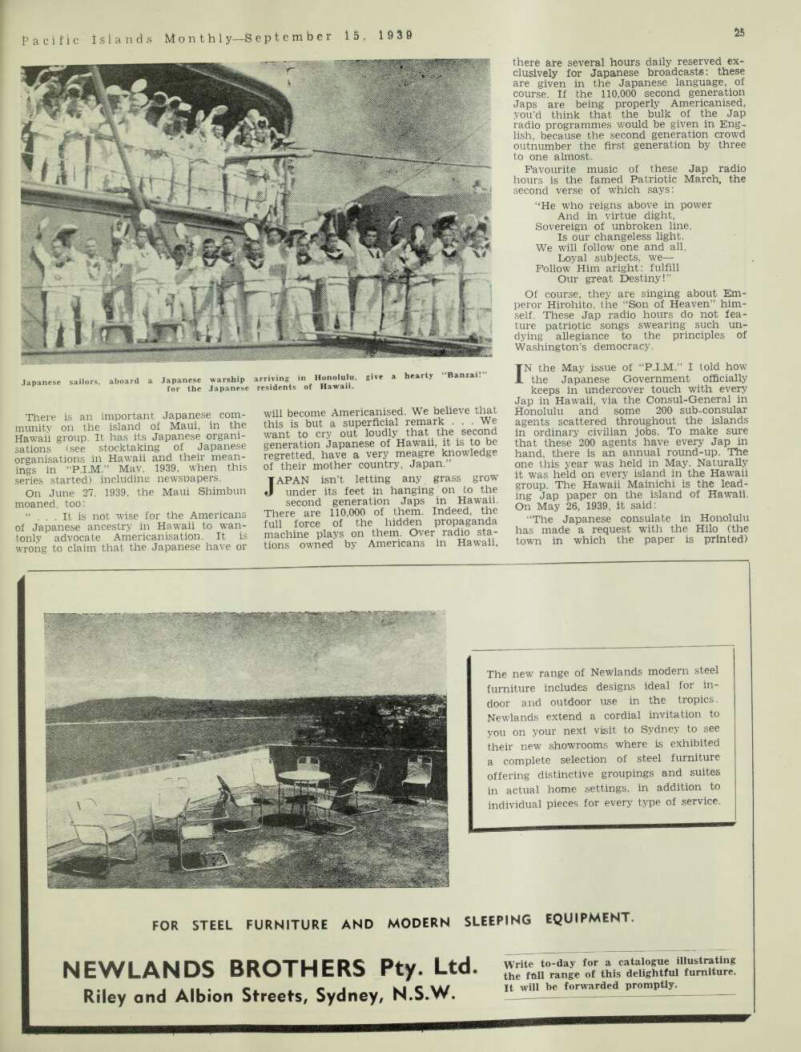
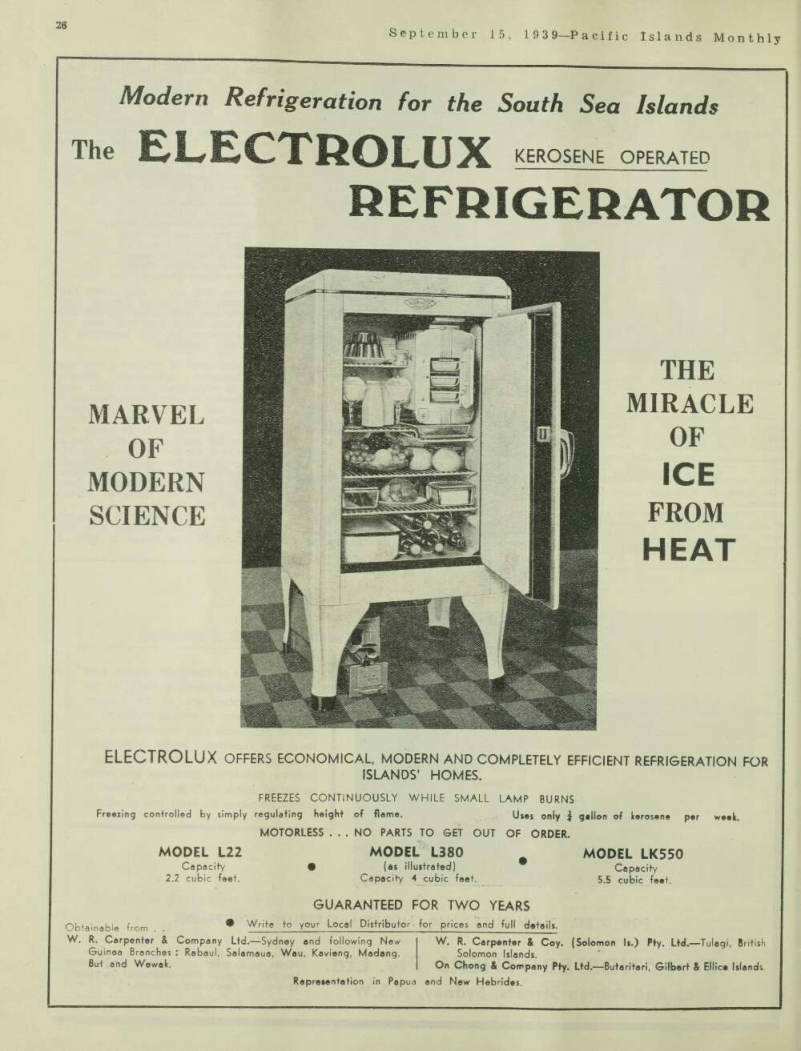
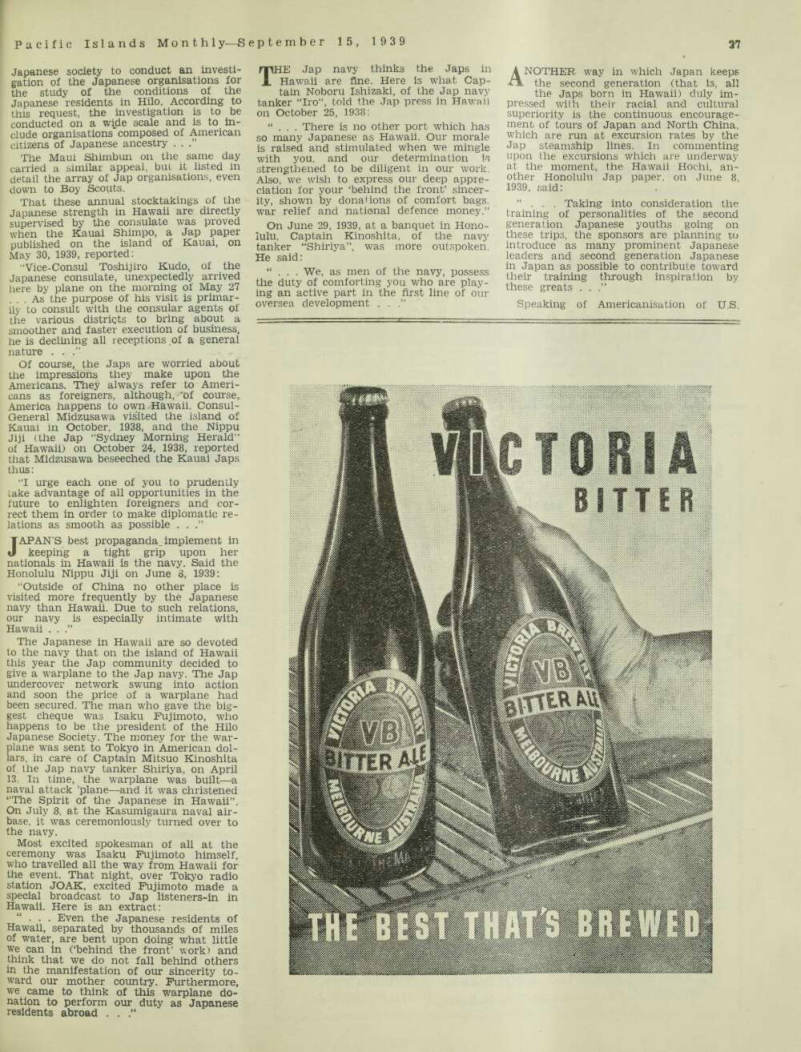
Some Lessons from the Second Generation in Hawaii (BEING NO. 5 OF SERIES OF ARTICLES DESCRIBING JAPAN’S PLANS AND
Spy Network In Pacific)
By John Williams, Of Honolulu
IN this instalment I propose to let the Japanese speak for themselves: that is, give quotations from statements of their leaders and from considered Japanese newspaper editorials, etc.
We are considering the Japanese in Hawaii because they present the best pic ture outside of Japan itself of how a Japanese community will “dig in” and. with approaching arrogance.
remain aloof from the peoples of the lands in which they settle.
They consider themselves racially superior. To-day there are more than 150,000 Japanese in Hawaii, and the first of them settled 60 years ago. Hawaii is an ideal place for anybody to mix with another race: apart from the wide assort ment of races here, there is a racial toler ance between races that is an object lesson.
If the Japs intend to mix, Hawaii is the place. Considering their number, very few have inter-married, and the ones who have are social outcasts of the Japanese community.
Those Americans responsible for bring ing the Japanese horde to Hawaii (the sugar and pineapple interests) thump the propaganda drums, that the 150,000 Japanese of to-day are being American ised, culturally and economically.
Just let us see. Look at statements pub lished in the Japanese press in Hawaii.
There are numbers of dailies and week lies. First of all, consider this: The Hawaii Shimpo oh March 25, 1939, bemoaned as follows: “The Japanese language papers on the U.S. mainland handle news of the cur rent incident (the war in China) in a very unconstrained manner. Their free dom of action is enviable to Hawaii. Of course, this is because the reading public is restricted to Japanese. Therefore they can have freedom of action.
“However, in Hawaii the Japanese language papers are read by Americans, too. When we know that every word and sentence is being read by Americans (watchful Government interpreters), we must be careful of the manner in which we write. When we write on the Japanese- American relations, we must use common sense. We must naturally refrain from hurting the feelings of the Americans . . .
Though we have something we wish to write, we try as much as possible to with hold writing it . . . There is no other alternative for us but to make the most of our lot in this manner and bear this uncomfortable situation in Hawaii.”
tv-iovo iQ an irrmnrtant lananese comin unity 6 on HmraU BTOUDIt has its Japanese organi-
atSs !see' stocktaking of Japanese
oramisations in Hawai lnd heir meanto “iM” Mav W 39. when this
series 'started) including newspapers,
On June 27, 1939, the Maui Shimbun moaned, too; “ ... It is not wise for the Americans of Japanese ancestry in Hawaii to wanwrong to^c°ata e that m tlre C Japanese have or
will become Americanised. We believe that This is but a superficial remark ... We want to cry out loudly that the second generation Japanese of Hawaii, it is to be regretted, have a very meagre knowledge of their mother country, Japan. fAPAN isn 't letting any grass grow J under its feet in hanging on to the second generation Japs in Hawaii.
There are 110,000 of Indeedl, the of h^ dd^ er pr r^ a
ownW" Scalin'* Hawaii,
there are several hours daily reserved ex clusively for Japanese broadcasts; these are given in the Japanese language, of course. If the 110,000 second generation Japs are being properly Americanised, you’d think that the bulk of the Jap radio programmes would be given in Eng lish. because the second generation crowd outnumber the first generation by three to one almost.
Favourite music of these Jap radio hours is the famed Patriotic March, the second verse of which says: “He who reigns above in power And in virtue dight, Sovereign of unbroken line, Is our changeless light.
We will follow one and all, Loyal subjects, we— Follow Him aright: fulfill Our great Destiny!”
Of course, they are singing about Em peror Hirohito, the “Son of Heaven” him self. These Jap radio hours do not fea ture patriotic songs swearing such un dying allegiance to the principles of Washington’s democracy.
IN the May issue of “P.1.M.” I told how the Japanese Government officially keeps in undercover touch with evepr Jap in Hawaii, via the Consul-General in Honolulu and some 200 sub-consular agents scattered throughout the islands in ordinary civilian jobs. To make sure that these 200 agents have every Jap in hand, there is an annual round-up. The one this year was held in May. Naturally it was held on every island in the Hawaii group. The Hawaii Mainichi is the lead ing Jap paper on the island of Hawaii.
On May 26, 1939, it said; ‘‘The Japanese consulate in Honolulu has made a request with the Hilo (the town in which the paper is printed)
Japanese sailors, aboard a Japanese warship arriving in Honolulu, give a hearty Banzai, for the Japanese residents of Hawaii.
Japanese society to conduct an investi gation of the Japanese organisations for the study of the conditions of the Japanese residents in Hilo. According to this request, the investigation is to be conducted on a wide scale and is to in clude organisations'composed of American citizens of Japanese ancestry . .
The Maui Shimbun on the same day carried a similar appeal, but it listed in detail the array of Jap organisations, even down to Boy Scouts.
That these annual stocktakings of the Japanese strength in Hawaii are directly supervised by the consulate was proved when the Kauai Shimpo, a Jap paper published on the island of Kauai, on May 30, 1939, reported: “Vice-Consul Toshijiro Kudo, of the Japanese consulate, unexpectedly arrived here by plane on the morning of May 27 ... As the purpose of his visit is primar ily to consult with the consular agents of the various districts to bring about a smoother and faster execution of business, he is declining all receptions of a general nature . .
Of course, the Japs are worried about the impressions they make upon the Americans. They always refer to Ameri cans as foreigners, although, of course, America happens to own-Hawaii. Consul- General Midzusawa visited the island of Kauai in October, 1938, and the Nippu Jiji (the Jap “Sydney Morning Herald” of Hawaii) on October 24, 1938, reported that Midzusawa beseeched the Kauai Japs thus: “I urge each one of you to prudently take advantage of all opportunities in the future to enlighten foreigners and cor rect them in order to make diplomatic re lations as smooth as possible . .
JAPAN’S best implement in keeping a tight grip upon her nationals in Hawaii is the navy. Said the Honolulu Nippu Jiji on June 8, 1939: “Outside of China no other place is visited more frequently by the Japanese navy than Hawaii. Due to such relations, our navy is especially intimate with Hawaii . . ”
The Japanese in Hawaii are so devoted to the navy that on the island of Hawaii this year the Jap community decided to give a warplane to the Jap navy. The Jap undercover network swung into action and soon the price of a warplane had been secured. The man who gave the big gest cheque was Isaku Fujimoto, who happens to be the president of the Hilo Japanese Society. The money for the war plane was sent to Tokyo in American dol lars, in care of Captain Mitsuo Kinoshita of the Jap navy tanker Shiriya, on April 13. In time, the warplane was built—a naval attack ’plane—and it was christened “The Spirit of the Japanese in Hawaii”.
On July 8, at the Kasumigaura naval air base, it was ceremoniously turned over to the navy.
Most excited spokesman of all at the ceremony was Isaku Fujimoto himself, who travelled all the way from Hawaii for the event. That night, over Tokyo radio station JOAK, excited Fujimoto made a special broadcast to Jap listeners-in in Hawaii. Here is an extract: • . • Even the Japanese residents of Hawaii, separated by thousands of miles of water, are bent upon doing what little we can in (‘behind the front’ work) and think that we do not fall behind others in the manifestation of our sincerity to ward our mother country. Furthermore, we came to think of this warplane do nation to perform our duty as Japanese residents abroad . . ”
THE Jap navy thinks the Japs in Hawaii are fine. Here is what Cap tain Noboru Ishizaki, of the Jap navy tanker “Iro“, told the Jap press in Hawaii on October 25, 1938: “ . . . There is no other port which has so many Japanese as Hawaii. Our morale is raised and stimulated when we mingle with you, and our determination is strengthened to be diligent in our work.
Also, we wish to express our deep appre ciation for your ‘behind the front’ sincer ity, shown by donations of comfort bags, war relief and national defence money.”
On June 29, 1939, at a banquet in Hono lulu. Captain Kinoshita, of the navy tanker “Shiriya”, was more outspoken.
He said: “ , . . We, as men of the navy, possess the duty of comforting you who are play ing an active part in the first line of our oversea development . . .”
ANOTHER way in which Japan keeps the second generation (that is, all the Japs born in Hawaii) duly im pressed with their racial and cultural superiority is the continuous encourage ment of tours of Japan and North China, which are run at excursion rates by the Jap steamship lines. In commenting upon the excursions which are underway at the moment, the Hawaii Hochi, an other Honolulu Jap paper, on June 8, 1939, said: “ . . . Taking into consideration the training of personalities of the second generation Japanese youths going on these trips, the sponsors are planning to introduce as many prominent Japanese leaders and second generation Japanese in Japan as possible to contribute toward their training through inspiration by these greats . .
Speaking of Americanisation of U.S.
born Japs, these excursions are sponsored by committees of Jap businessmen, some of them U.S. born. It is noteworthy that these “Americanised” Japs don’t conduct
excursion tours of the U.S. mainland to better understand the American scheme.
An outstanding Honolulu Jap, behind the Japanisation of the U.S. born Japs, is Masayoshi Uyehara, proprietor of Kewalo Inn, top Jap restaurant in Honolulu.
Lately, he returned from a tour of Japan and North China, and on June 9 he told the Jap press in Honolulu: “ . . . The whole nation (Japan) is marching toward the ideal of national co-operation for the realisation of the aim of the great Asiatic crusade ... I have returned to Hawaii greatly im pressed with Japan’s endless power and deeply inspired by the people’s sincere attitude of unanimous co-operation.” fT\HE Japanese in Hawaii are co-operat- A ing okay. Second generation Japs born in the U.S. now are being specially trained in Jap industrial schools for work in North China. The Jap langu age schools in Hawaii actually are teach ing Chinese, to equip these youths even better. It is not a hurried job. The Japs know the “crusade” in the Orient (as they now call the China Incident > is going to be a long up-hill fight.
Said the Nippu Jiji of Honolulu on February 16, 1939:
. . . The future of the employment situation in Hawaii is becoming more and more gloomy . . . mainland America is hopeless and South America is anything but satisfactory. No matter what may be said, it is the Orient, after all ...” (Next month’s instalment will reveal details, quoting precisely from Japanese sources themselves, of Japan’s new plan for the Japanisation of as much of the world as Japan can masticate.)
A Friendly Visit
Honolulu, Aug. 22.
Japan’s navy training ship, the four masted “Taisei Maru”, is visiting Haw aiian waters much to the enjoyment of the 150,000 Japanese community.
Uncle Sam, with a touch of that ap parent thoughtlessness which Japan is developing in the Orient, assigned the “Taisei Maru” to Pier 14, the warehouse on which is a skating rink.
The din of the skaters goes on until midnight.
Wisecracked a harbour official, as the ship pulled into the dock: — “The Japanese will learn something be sides seamanship during their 10 days stay alongside the rink.”
The “Taisei Maru” leaves here to-day for a prowl through the mandated islands and Australia’s outlying isles.
Advertisements & other items, pp. 26-30 (2 items)
24
September 15, 193 9 P acific Islands Monthly
Newlands Brothers Pty. Ltd.
The new range of Newlands modern steel furniture includes designs ideal for indoor and outdoor use in the tropics.
Newlands extend a cordial invitation to you on your next visit to Sydney to see their new showrooms where is exhibited a complete selection of steel furniture offering distinctive groupings and suites in actual home settings, in addition to individual pieces for every type of service.
FOR STEEL FURNITURE AND MODERN SLEEPING EQUIPMENT,
NEWLANDS BROTHERS Pty. Ltd.
Riley and Albion Streets, Sydney, N.S.W.
Write to-day for a catalogue illustrating the foil range of this delightful furniture.
It will be forwarded promptly.
Modern Refrigeration for the South Sea Islands
The ELECTROLUX KEROSENE OPERATED
REFRIGERATOR
MARVEL
OF
MODERN
SCIENCE
THE
MIRACLE
OF
ICE
FROM
HEAT
ELECTROLUX offers economical, modern and completely efficient refrigeration for
ISLANDS' HOMES.
FREEZES CONTINUOUSLY WHILE SMALL LAMP BURNS
Freezing controlled by simply regulating height of flame. Uses only $ gallon of kerosene per week.
MOTORLESS ... NO PARTS TO GET OUT OF ORDER.
MODEL L 22 MODEL L3BO
Capacity (as illustrated) 2.2 cubic feet. Capacity 4 cubic feet.
GUARANTEED FOR TWO YEARS
• Write to your Local Distributor for prices and full details.
MODEL LKSSO
Capacity 5.5 cubic feet.
Obtainable from . .
W. R. Carpenter & Company Ltd.—Sydney and following New Guinea Branches : Rabaul, Salamaua, Wau, Kavieng, Madang, But and Wewak.
W. R. Carpenter & Coy. (Solomon Is.) Pty. Ltd. —Tulagi, British Solomon Islands.
On Chong & Company Pty. Ltd.—Butaritari, Gilbert & Ellice Islands Representation in Papua and New Hebrides.
VII
BITTi n *7 § rMS
REG. TRADE MARK, 72.783.
“CINNAMOLIA”
PREPARATIONS.
No. 1 CINNAMOLIA for Dysentery, diarrhoea and other infections of the alimentary canal. 3/- per bottle.
No. 2 CINNAMOLIA INHALANT for
Coughs, colds, ’flu, catarrh and other infections of the nasal and respiratory passages. 2/- per bottle & dropper.
No. 3 CINNAMOLIA OINTMENT, for
cuts, scratches, ulcers, piles, etc. 1/6 per pot.
Obtainable at these prices at
FALKS PHARMACY
238 GEORGE ST., SYDNEY.
For Wholesale Rates to Chemists, Hospitals, Institutions, etc., apply to •'CINNAMOLIA” Preparations, 17 Murray Street, Waterloo, N.S.W.
SHEAFFER’S WORLD FAMOUS
Streamlined, Feather Touch PENS and PENCILS
9 If yon want Design, Beauty and Quality buy
a SHEAFFER
All Lifetime Pens are guaranteed for the life of the user except against loss and wilful damage.
When serviced, they are subject to a small fee for insurance, postage and handling.
Beautiful and Useful Gifts for All Occasions.
SKRIP - The
Successor to Ink makes all Pens write better. 2 oz. 1/6, 4 oz. 2/6 Plus Postage Distributors Identify the Lifetime HI Pen bv the white dot
747 LTSC AA 3T
Feather Touch Lifetime Pencil Regular Pen Lifetime Fen Pencil 9:6 2bl- -76- each 361- ea. each each The working parts of the Sheaffer Pencil are guaranteed against wear for the lifetime of the user.
When serviced they are subject to a small fee for insurance, postage and handling.
All Sheaffer regular pens are guaranteed against defects of material and workmanship.
Obtainable from Selected Jewellers and Stationers everywhere
EXCELSIOR SUPPLY CD. PTY. LTD.
HEAD OFFICE J
278 Post Office Place, 160 BROADWAY,
MELBOURNE, VIC. SYDNEY, N.S.W.
50 Victoria Street,
WELLINGTON, N.Z.
Eastern Papua
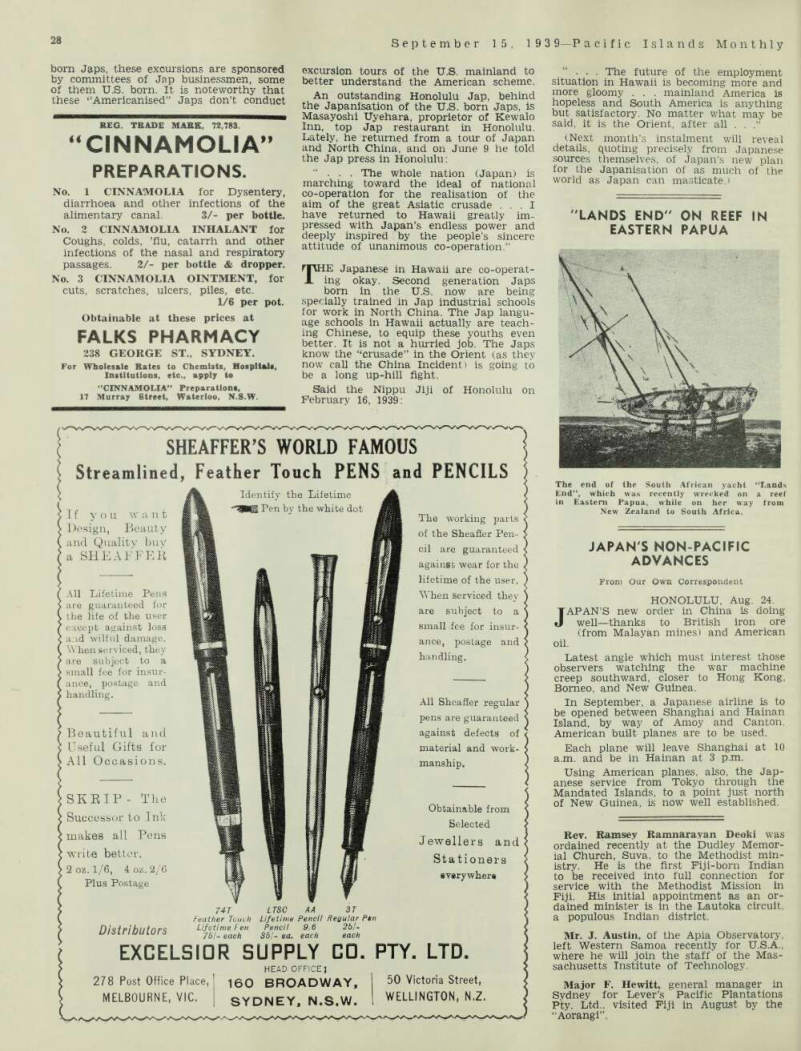
"Lands End" On Reef In
The end of the South African yacht “Lands End”, which was recently wrecked on a reef in Eastern Papua, while on her way from New Zealand to South Africa.
Japan's Non-Pacific
Advances
From Our Own Correspondent
Honolulu, Aug. 24.
JAPAN’S new order in China is doing well—thanks to British iron ore (from Malayan mines) and American oil.
Latest angle which must interest those observers watching the war machine creep southward, closer to Hong Kong, Borneo, and New Guinea.
In September, a Japanese airline is to be opened between Shanghai and Hainan Island, by way of Amoy and Canton.
American built planes are to be used.
Each plane will leave Shanghai at 10 a.m. and be in Hainan at 3 p.m.
Using American planes, also, the Jap anese service from Tokyo through the Mandated Islands, to a point just north of New Guinea, is now well established.
Rev. Ramsey Ramnarayan Deoki was ordained recently at the Dudley Memor ial Church, Suva, to the Methodist min istry. He is the first Fiji-born Indian to be received into full connection for service with the Methodist Mission in Fiji. His initial appointment as an or dained minister is in the Lautoka circuit, a populous Indian district.
Mr. J. Austin, of the Apia Observatory, left Western Samoa recently for U.S.A., where he will join the staff of the Mas sachusetts Institute of Technology.
Major F. Hewitt, general manager in Sydney for Lever’s Pacific Plantations Pty. Ltd., visited Fiji in August by the “Aorangi”
Advertisements & other items, p. 30 (1 item)
28
September 15, 193 9—P acific Islands Monthly
Government"
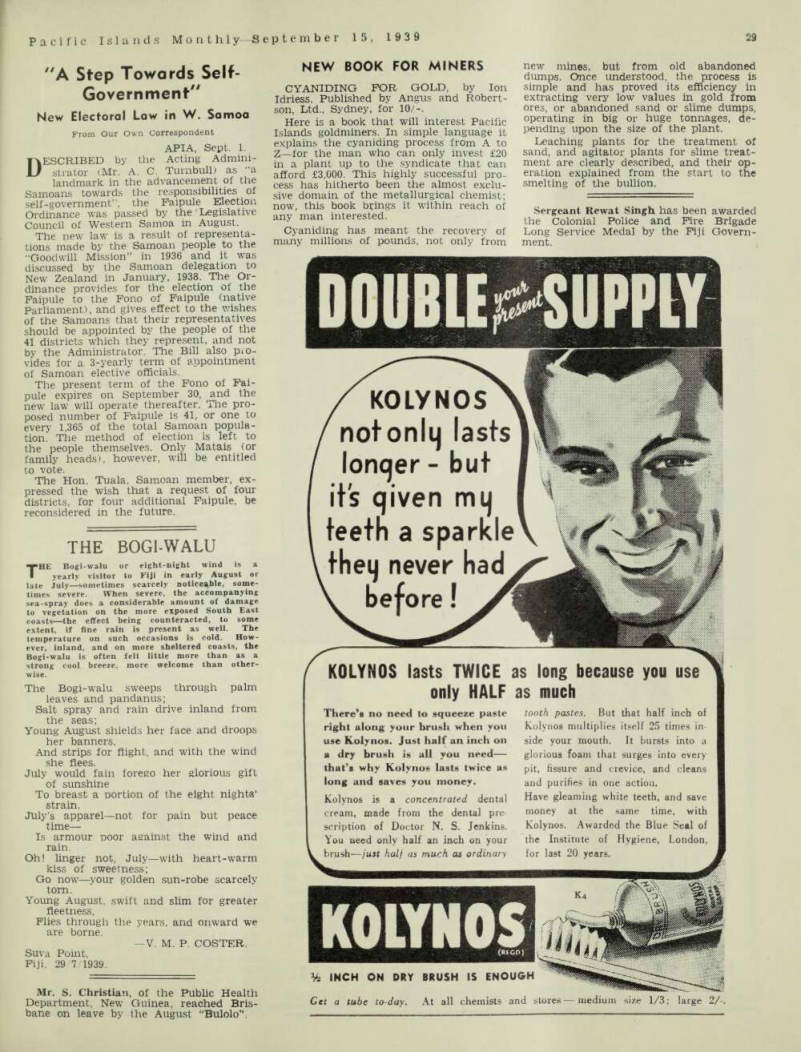
"A Step Towards Self- Government"
New Electoral Law in W. Samoa
From Our Own correspondent APIA, Sept. 1.
DESCRIBED by the Acting Admini strator (Mr. A. C. Turnbull) as “a landmark in the advancement of the Samoans towards the responsibilities of self-government”, the Faipule Election Ordinance was passed by the Legislative Council of Western Samoa in August.
The new law is a result of representa tions made by the Samoan people to the "Goodwill Mission” in 1936 and it was discussed by the Samoan delegation to New Zealand in January, 1938. The Or dinance provides for the election of the Faipule to the Fono of Faipule (native Parliament), and gives effect to the wishes of the Samoans that their representatives should be appointed by the people of the 41 districts which they represent, and not by the Administrator. The Bill also pio vides for a 3-yearly term of appointment of Samoan elective officials.
The present term of the Fono of Fai pule expires on September 30, and the new law will operate thereafter. The pro posed number of Faipule is 41, or one to every 1,365 of the total Samoan popula tion. The method of election is left to the people themselves. Only Matais (or family heads), however, will be entitled to vote.
The Hon. Tuala, Samoan member, ex pressed the wish that a request of four districts, for four additional Faipule. be reconsidered in the future.
The Bogi-Walu
or eight-night wind is a yearly visitor to Fiji in early August or late July—sometimes scarcely noticeable, some times severe. When severe, the accompanying sea-spray does a considerable amount of damage to vegetation on the more exposed South East coasts—the effect being counteracted, to some extent, if fine rain is present as well. The temperature on such occasions is cold. How ever, inland, and on more sheltered coasts, the Bogi-walu is often felt little more than as a strong cool breeze, more welcome than other wise.
The Bogi-walu sweeps through palm leaves and pandanus; Salt spray and rain drive inland from the seas; Young August shields her face and droops her banners.
And strips for flight, and with the wind she flees.
July would fain forego her glorious gift of sunshine To breast a portion of the eight nights’ strain.
July’s apparel—not for pain but peace time— Is armour poor against the wind and rain.
Oh! linger not, July—with heart-warm kiss of sweetness: Go now—your golden sun-robe scarcely tom.
Young August, swift and slim for greater fleetness, Plies through the years, and onward we are borne.
V. M. P. Coster.
Suva Point, Fiji, 29/7/1939.
Mr. S. Christian, of the Public Health Department, New Guinea, reached Bris bane on leave by the August “Bulolo”.
New Book For Miners
Cyaniding For Gold, By Lon
Idriess. Published by Angus and Robert son, Ltd., Sydney, for 10/-.
Here is a book that will interest Pacific Islands goldminers. In simple language it explains the cyaniding process from A to Z—for the man who can only invest £2O in a plant up to the syndicate that can afford £3,000. This highly successful pro cess has hitherto been the almost exclu sive domain of the metallurgical chemist: now, this book brings it within reach of any man interested.
Cyaniding has meant the recovery of many millions of pounds, not only from
new mines, but from old abandoned dumps. Once understood, the process is simple and has proved its efficiency in extracting very low values in gold from ores, or abandoned sand or slime dumps, operating in big or huge tonnages, de pending upon the size of the plant.
Leaching plants for the treatment of sand, and agitator plants for slime treat ment are clearly described, and their op eration explained from the start to the smelting of the bullion.
Sergeant Rewat Singh has been awarded the Colonial Police and Fire Brigade Long Service Medal by the Fiji Govern ment.
Advertisements & other items, p. 31 (1 item)
Double-Supply
KOLYNOS
lasts
nlij
not
o
but
lonqe
its
qiven
m 4
teeth
rkie
a
spa
theu
had
never
bef
ore
KOLYNOS lasts TWICE
only HALF There’s no need to squeeze paste right along your brush when you use Kolynos. Just half an inch on a dry brush is all you need — that’s why Kolynos lasts twice as long and saves you money.
Kolynos is a concentrated dental cream, made from the dental pre scription of Doctor N. S. Jenkins.
You need only half an inch on your brush — just half as much as ordinary as long because you use as much tooth pastes. But that half inch of Kolynos multiplies itself 25 times inside your mouth. It bursts into a glorious foam that surges into every pit, fissure and crevice, and cleans and purifies in one action.
Have gleaming white teeth, and save money at the same time, with Kolynos. Awarded the Blue Seal of the Institute of Hygiene, London, for last 20 years. m k 4 U % INCH ON DRY BRUSH IS ENOUGH I Get a tube to-day. At all chemists and stores medium size 1/3; large 2/-.
Norfolk Island Trade
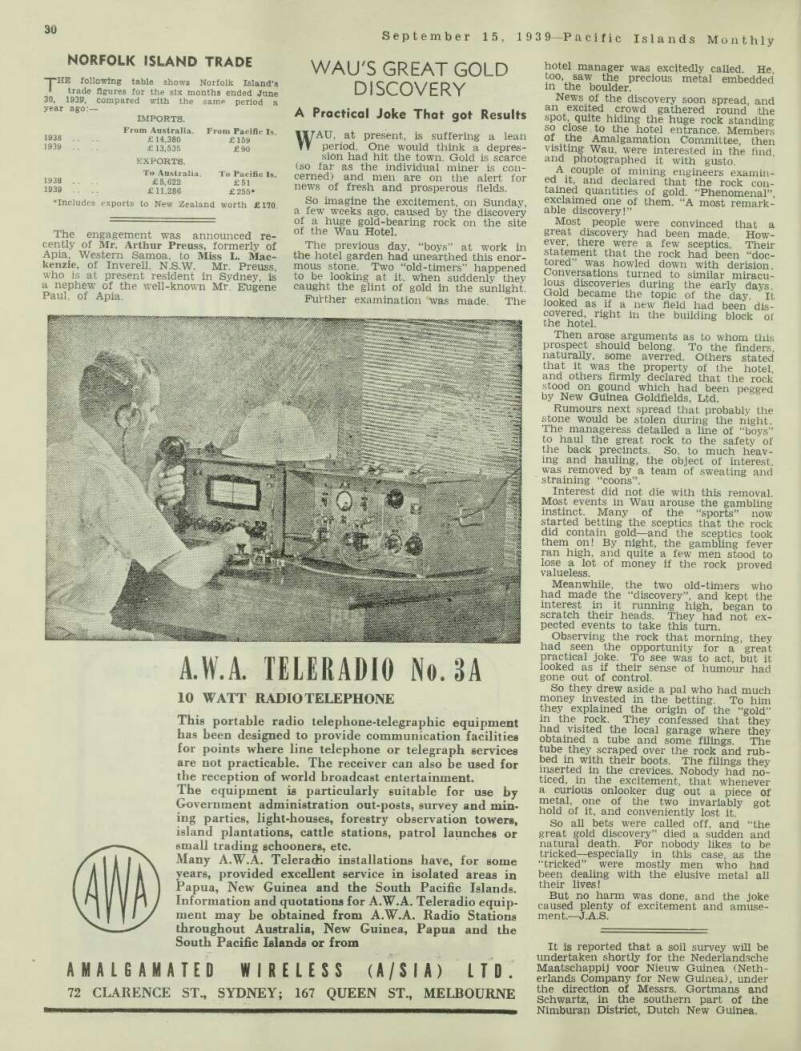
“pHE following table shows Norfolk Island’s 1 trade figures for the six months ended June 30, 1939, compared with the same period a year ago:—
The engagement was announced re cently of Mr. Arthur Preuss, formerly of Apia, Western Samoa, to Miss L. Mac kenzie, of Inverell, N.S.W. Mr. Preuss, who is at present resident in Sydney, is a nephew of the well-known Mr. Eugene Paul, of Apia.
Imports.
From Australia. From Pacific Is. 1938 . . £14,380 £159 1939 £ 13,535 £90
Exports.
To Australia.
To Pacific Is. 1938 . . £5,622 £51 1939 .. £11,286 £255* ♦Includes exports to New Zealand worth £170.
Discovery
Walts Great Gold
A Practical Joke That got Results
WAU, at present, is suffering a lean period. One would think a depres sion had hit the town. Gold is scarce (so far as the individual miner is con cerned) and men are on the alert for news of fresh and prosperous fields.
So imagine the excitement, on Sunday, a few weeks ago, caused by the discovery of a huge gold-bearing rock on the site of the Wau Hotel.
The previous day, “boys” at work in the hotel garden had unearthed this enor mous stone. Two “old-timers” happened to be looking at it, when suddenly they caught the glint of gold in the sunlight.
Further examination was made. The
hotel manager was excitedly called. He too, saw the precious metal embedded in the boulder.
News of the discovery soon spread, and an excited crowd gathered round the spot, quite hiding the huge rock standing s 2 c }£ se the hotel entrance. Members of the Amalgamation Committee, then visiting Wau, were interested in the find and photographed it with gusto.
A couple of mining engineers examin ed it, and declared that the rock con tained quantities of gold. “Phenomenal”, exclaimed one of them. “A most remark
able discovery!”
Most people were convinced that a great discovery had been made. How ever, there were a few sceptics. Their statement that the rock had been “doc tored” was howled down with derision.
Conversations turned to similar miracu lous discoveries during the early days Gold became the topic of the day. It looked as if anew field had been dis covered, right in the building block of the hotel.
Then arose arguments as to whom this prospect should belong. To the finders naturally, some averred. Others stated that it was the property of the hotel and others firmly declared that the rock stood on gound which had been pegged by New Guinea Goldfields, Ltd.
Rumours next spread that probably the stone would be stolen during the night.
The manageress detailed a line of “boys” to haul the great rock to the safety‘ of the back precincts. So, to much heav ing and hauling, the object of interest, was removed by a team of sweating and straining “coons”.
Interest did not die with this removal.
Most events in Wau arouse the gambling instinct. Many of the “sports” now started betting the sceptics that the rock did contain gold—and the sceptics took them on! By night, the gambling fever ran high, and quite a few men stood to lose a lot of money if the rock proved valueless.
Meanwhile, the two old-timers who had made the “discovery”, and kept the interest in it running high, began to scratch their heads. They had not ex pected events to take this turn.
Observing the rock that morning, they had seen the opportunity for a great practical joke. To see was to act, but it looked as if their sense of humour had gone out of control.
So they drew aside a pal who had much money invested in the betting. To him they explained the origin of the “gold” in the rock. They confessed that they had visited the local garage where they obtained a tube and some filings. The tube they scraped over the rock and rub bed in with their boots. The filings they inserted in the crevices. Nobody had no ticed, in the excitement, that whenever a curious onlooker dug out a piece of metal, one of the two invariably got hold of it, and conveniently lost it.
So all bets were called off, and “the great gold discovery” died a sudden and natural death. For nobody likes to be tricked—especially in this case, as the “tricked” were mostly men who had been dealing with the elusive metal all their lives!
But no harm was done, and the joke caused plenty of excitement and amuse
ment.-
-J.A.S.
It is reported that a soil survey will be undertaken shortly for the Nederlandsche Maatschappij voor Nieuw Guinea (Neth erlands Company for New Guinea), under the direction of Messrs. Gortmans and Schwartz, in the southern part of the Nimburan District, Dutch New Guinea.
Advertisements & other items, p. 32 (2 items)
30
September 15, 193 9 P acific Islands Monthly
A.W.A. Teleradio No. Ra
2?
S .5 v ; . ■ m * -Vn
10 WATT RADIOTELEPHONE
This portable radio telephone-telegraphic equipment has been designed to provide communication facilities for points where line telephone or telegraph services are not practicable. The receiver can also be used for the reception of world broadcast entertainment.
The equipment is particularly suitable for use by Government administration out-posts, survey and mining parties, light-houses, forestry observation towers, island plantations, cattle stations, patrol launches or small trading schooners, etc.
Many A.W.A. Teleradio installations have, for some years, provided excellent service in isolated areas in Papua, New Guinea and the South Pacific Islands.
Information and quotations for A.W.A. Teleradio equipment may be obtained from A.W.A. Radio Stations throughout Australia, New Guinea, Papua and the South Pacific Islands or from
AMALGAMATED WIRELESS (A/SIA) LTD.
72 CLARENCE ST., SYDNEY; 167 QUEEN ST., MELBOURNE
Infant Welfare Work On Ocean Island
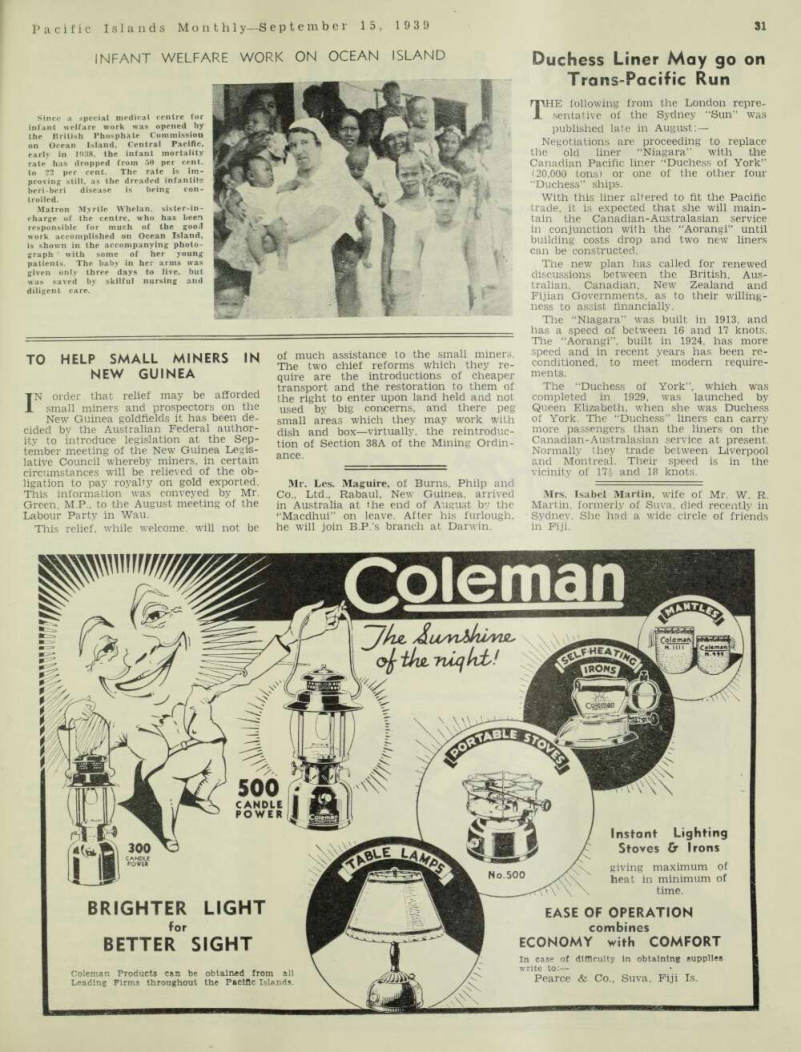
Since a special medical centre for infant welfare work was opened by the British Phosphate Commission on Ocean Island, Central Pacific, early in 1988, the infant mortality rate has dropped from 50 per cent, to 22 per cent. The rate is im proving still, as the dreaded infantile beri-beri disease is being con trolled.
Matron Myrtle Whelan, sister-in eharge of the centre, who has been responsible for much of the good work accomplished on Ocean Island, is shown in the accompanying photo graph with some of her young patients. The baby in her arms was given only three days to live, hut was saved by skilful nursing and diligent care.
To Help Small Miners In
New Guinea
IN order that relief may be afforded small miners and prospectors on the New Guinea goldfields it has been de cided by the Australian Federal author ity to introduce legislation at the Sep tember meeting of the New Guinea Legis lative Council whereby miners, in certain circumstances will be relieved of the ob ligation to pay royalty on gold exported.
This information was conveyed by Mr.
Green. M.P., to the August meeting of the Labour Party in Wau.
This relief, while welcome, will not be
of much assistance to the small miners.
The two chief reforms which they re quire are the introductions of cheaper transport and the restoration to them of the right to enter upon land held and not used by big concerns, and there peg small areas which they may work with dish and box —virtually, the reintroduc tion of Section 38A of the Mining Ordin ance.
Mr. Les. Maguire, of Burns, Philp and Co., Ltd., Rabaul, New Guinea, arrived in Australia at the end of August by the “Macdhui” on leave. After his furlough, he will join B.P.’s branch at Darwin.
Trans-Pacific Run
Duchess Liner May go on Trans-Pacific Run
THE following from the London repre sentative of the Sydney “Sun” was published late in August:— Negotiations are proceeding to replace the old liner “Niagara" with the Canadian Pacific liner “Duchess of York” (20,000 tons) or one of the other four “Duchess” ships.
With this liner altered to fit the Pacific trade, it is expected that she will main tain the Canadian-Australasian service in conjunction with the “Aorangi” until building costs drop and two new liners can be constructed.
The new plan has called for renewed discussions between the British. Aus tralian, Canadian, New Zealand and Fijian Governments, as to their willing ness to assist financially.
The “Niagara” was built in 1913, and has a speed of between 16 and 17 knots.
The “Aorangi”, built in 1924, has more speed and in recent years has been re conditioned, to meet modern require ments.
The “Duchess of York”, which was completed in 1929, was launched by Queen Elizabeth, when she was Duchess of York. The “Duchess” liners can carry more passengers than the liners on the Canadian-Australasian service at present.
Normally they trade between Liverpool and Montreal. Their speed is in the vicinity of 111 and 18 knots.
Mrs. Isabel Martin, wife of Mr. W. R.
Martin, formerly of Suva, died recently in Sydney. She had a wide circle of friends in Fiji,
Advertisements & other items, pp. 33-34 (2 items)
31
Pacific Islands Monthl y—S eptember 15, 193 9
ojfilvi
V
Au/nJ>lusyW'
Icma kb
ojfilvi
c^HgAyy^ I*o Ns st X * D 500 T
CANDLE
POWER
Instant Lighting Stoves O’ Irons ni- -300 *V=E
LdS
t* giving maximum of heat in minimum of \ time.
S 500
EASE OF OPERATION
combines
ECONOMY with COMFORT
In case of difficulty In obtaining supplies write to:— Pearce & Co., Suva, Fiji Is. m\
BRIGHTER LIGHT
for
BETTER SIGHT
Coleman Products can be obtained from all Leading Firms throughout the Pacific Islands.
W. H. GROVE & Sons Ltd.
islands Traders p o. box 490. Auckland Telegraphic and Cable Address; "Grove”, Auckland.
Shippers of all classes of New Zealand Products specially prepared for the Islands trade.
Representing Tootal Broadhurst Lee Co. Ltd., Manchester.
Rylands & Sons (Col.) Ltd,, of London and Manchester, Parbury Henty & Co. Pty. Ltd., of Sydney and Kobe.
J. Blair King, of London. World-famed Shirts.
Burrell & Co. Ltd., MMlwall London, E. 14. Oil, White Lead and all classes of Paints, including "FERROCENE”, their special Tropical Paint . . . PREVENTS CORROSION . . . made in RED
GREY, and GREEN.
Q Vo sr 111.
fry*
/ 'tm.
Photograph with Agfa Isochrom - this is a Film for all types of exposures. It enables you to get the best out of your photographs. Good definition, reproduction of the finest details, brilliant gradation, and high sensitivity. Orthochromatic with wide exposure latitude. m Fiji Agents for “Agfa” Cameras, Films, etc., Jang Hing Loong Co. Ltd., Suva.
Japanese Trade Thrust
And Japan's Point of View
Letter to the Editor IN reference to a letter appearing in your journal in July under “A Mysterious Occurrence”, in which a resident of the New Hebrides complains of the unwonted generosity of Japanese traders, it is interesting to read the fol lowing passage in “Foreigners Aren’t Fools” by Christopher Hollis, Dealing with future Japanese markets, in a chapter which gives the Japanese point of view rather than the European, he quotes a Japanese:— “Ah, but these European markets—we (the Japanese) are not really interested in them. We know that you can exclude us from them and we know that you will exclude us eventually. But there is the rest of the world, that is neither white nor yellow. The people there * are poor but there are many, and their purchasing power is bound to increase. You cannot exclude us from its markets, or can only do so at a price that will ruin you.
“Consider that world. Large parts of it you own—one or the other of you. Per haps, according to your imperial systems, you have the nominal right to impose tariffs there against us. But the natives in these countries have no wish that Japanese goods should be excluded. It is not their industry that is in competi tion with Japanese industry; it is the industry of Prance and England, Germany and America. They want only the cheap est articles—that is, the Japanese.
“Therefore, by imposing tariffs you will earn for yourselves great unpopular ity. Already you are unpopular enough and you cannot afford more unpopularity.
You will not be able to impose such tariffs against the will of the natives.
Already the more intelligent of you, such as the British in India, have recognised this, and others will have to recognise it ...”
It seems that your correspondent is not far from the truth, when he states that he should not be surprised if the osten tatious display of generosity he mentions was not for the whiteman, but for the natives, and that Japan is bent on push ing her trade throughout the South Sea Islands.
I am, etc..
Trader.
Pt. Moresby.
August 20. 1939.
A Financial Plan That
Failed
ANEW ZEALAND scheme to corner the issue of Western Samoa commemor ative stamps and to sell them to Eng land as a means of gaining sterling funds was nipped in the bud by the N.Z. Gov ernment.
One business man in Wellington had been asked to subscribe £2,000 to a syndi cate which, with £5,000 capital, would buy up most of the issue, market it among English philatelists, and sell sterling to New Zealand importers. Profits of 600 per cent, were hoped for and 15 per cent, was guaranteed.
Mr. Percy Maxwell George Harris, of Samarai, who is a nephew of Mr. E. C.
Harris, formerly Treasurer of Papua, married Miss Elizabeth Mary Murray, of Sandringham, Victoria, at St. John’s Anglican Church, Port Moresby, Papua, on August 8.
Discontent And Hopelessness
In Mandated Territory
Urgent Need for Revision of Native Labour and Commercial and Mining Conditions and for New Statement of Policy :: The Evils of "Canberra Control"
By R. W. Robson
RABAUL, August 20.
FROM one end of the Territory of New Guinea to the other, within a crowded ten days, I found grumbling and discontent. I heard the Administration charged with every offence from calculated procrastination to matricide, and I have been
presented with 304 different recipes for bringing prosperity back to New Guinea —304 being approximately the number of persons with whom I dis cussed Territory affairs.
After all this, it would be simple and easy to solve all these feverish problems by hanging Walter Ramsay McNicoll to a sour journalistic tree.
I am no apologist for W.R.M., and— since he came to the Territory with out any discernible right or title to the Administratorship—he can be held blameworthy for much; but it must be said, in all fairness, that most of the Territory’s present curses should be directed at Canberra rather than Namanula.
Canberra drove out the only Ad ministrator whom the whole Territory respected and acclaimed—namely, General Griffiths—and Canberra has created no bed of roses for the well meaning but inexperienced Sir Walter McNicoll.
Here are set out what, in my opinion, are the causes of the present unhappiness in the Mandated Terri
tory, and I thihk that this is the order of their importance:— The complete and lamentable failure of the Administrator and the Commonwealth Government to formulate any policy, either consistent or comprehensible, for the government of the Mandated Territory.
The weakness of the Adminis trator in permitting “Canberra office-boy control”, so that the decisions of the Administrator and his advisers are frequently over-ridden by petty officials and ignorant politicians in Australia— little being done, nowadays, with out reference to Canberra—and the Rabaul Administration con sequently is not held in respect by New Guinea residents.
The depression in the copra industry—revealing the failure of the Administration, during the past twenty years, to introduce other forms of agricultural enter prise, so that the planters, in a time like this, are left with all their eggs in one basket; and the Treasury has to depend largely upon the fortuitous gold industry.
The failure of the Administra tion to provide new opportunities and encouragement for the “small men” among the gold miners, so that the industry now is mostly in the hands of the big
companies, while the "small men”, whose individual enterprise and initiative have done and could do so much for the Territory, are frozen out.
At the end of this article I shall set out the kind of policy which I believe is urgently necessary if the New Guinea Administration is to be anything other than an expensive muddle. But the formulation of a real policy is not easy—there is so much dead wood to be cleared away.
Some Anomalies.
CONDITIONS in the Territory are a mass of maddening contradic tions.
Judged on personnel, here probably is the finest administrative service in the Pacific—keen and capable young Australians, clean-cut, healthy lads who are ready to go anywhere and do anything. Yet, judging by what is being accomplished, and by what appears to be the feeble and un certain purposes of the Administra tion, this is a partly useless and de finitely expensive service, top-heavy and over-staffed.
Here is a country so rich that it brings water into the mouths of every international scout that happens along—a great expanse of fertile land and the widest range of climate. This country, like Java, could carry mil lions of little peasant-producers. As it is, after 20 years of Australian rule, and, although the Administration re ceives £lOO,OOO per annum alone out of gold-royalties, there is very little real development outside the gold fields, and the Administration to-day cannot make financial ends meet.
The Big Companies.
WITHIN the Territory there are operating half a dozen rich and powerful companies, controlling mer chandising, transport, planting and mining. Their dominating purpose, of course, is profit-making. This is no new phenomenon. But in other new countries, during the last two centuries, wise Governments usually saw to it that the enterprise and driving-force of profit-making com panies were not only controlled but were woven in with governmental programmes of development and pro gress. Shrewd and capable men usually direct these New Guinea com panies, and are quite ready to give their services also to the Government.
But in New Guinea one cannot find any real co-operation between Ad ministration and companies, in the fundamental job of governing New Guinea so that it will become in creasingly a bulwark of Australia. In stead, they face each other like duel lists; they are very courteous and sweet to each other, but neither trusts the other for one moment. The re sult is that the hard-boiled, non cfficial residents of the Territory, almost without exception, snarl and sneer whenever the name of a big company is mentioned. The casual visitor goes away with the impression that pirates of the baser sort still operate in this part of the Pacific.
Which is funny enough, but not a very good thing. People of all des criptions are always drifting through here, and few look far enough under the surface to see that most of the progress and development here in the last twenty years is due directly to the operations of the big firms, and very little to the Administration.
Of course, I know the Administra tion’s petulant answer to all this:— "Have we not provided the com panies with all the facilities and pro tection they ask for? Have we not made the way very easy for them?”
And I can answer, in chorus with Territory residents, "Too right, you have!”
My point is that the Administration has failed to use the activity and energy of the companies for the per manent development and advance ment of the Territory, just as it has failed to use the providential revenues of the ephemeral gold industry for the permanent establishment of new agricultural industries.
One could go on quite a way, enumerating these contradictions.
But it can be all summed up in a sentence. In New Guinea, Australia has all the personnel, and all the material, and all the money necessary for the establishment of a flourishing tropical Empire, but because she lacks leadership and any kind of policy, conditions are static, and she is just fumbling about.
Whither?
WHAT are you trying to do here?”
I asked the question of depart mental heads, directors of commerce, field officers, miners, members of the Legislative Council. And the usual pious answer was “God knows!”
One capable and earnest man, who takes seriously his job as head of an important department, told me about the Mandate. “We do not hold this as an Australian territory, to be de veloped for the benefit of Australia” he said. “We hold it in trust for the natives, and our main responsibility is to train the natives so that they may be able to govern their country for themselves.”
I sneered, as behoves one who be lieves neither in the Versailles Treaty nor the League of Nations. “And how many hundreds of years is it going to take to train them to govern themselves and to protect their coun try against Asia?” I asked.
“Well,” he said. “There’s the Man date.”
“And there are the Japanese” I said.
He looked glumly out of his win dow. A Japanese training-ship of some sort was visiting the port, and the avenue, outside, was sprinkled o’er with parties of little yellow men, complete with smiles and cameras.
Politicians like Mr. W. M. Hughes —written down a “statesman” be cause of his aptitude in finding the right word, but as an administrator one of the most futile fumblers Australia ever has placed in a posi tion of responsibility—like to quack about “the Australian record in New Guinea”, and they quote figures from the annual report. They love to show that, when Germany surrendered the Territory, the white population, and the trade turn-over, and the natives under control, were one-tenth or one twentieth of what they are to-day.
And the fool public, and the fool
newspapers which instruct the fool public, insist that figures cannot lie.
But the facts are that all the new population, and most of the new trade are the direct result of the establishment of the gold industry. If those original tough prospectors had not fought their way into the Morobe mountains, and if British and Ameri can companies had not found un limited capital and technical genius wherewith to develop the gold dis coveries, the condition of New Guinea to-day would have been wretched and lamentable.
The Administration and Mr.
Hughes—cannot see that this for tuitous and ephemeral gold industry has no permanent value to New Guinea, unless it is used to establish new settlement and agricultural in dustries.
The rich gold revenues (royalties, license fees, a huge total of Customs duties collected off machinery, equip ment and supplies) have allowed the New Guinea public service to be doubled and trebled. And to what end? Control has been extended over considerable areas hitherto uncon trolled; Administrative machinery has been placed on the goldfield; a few roads and wharves have been
built, and a few navigation lights in stalled. The balance of the Adminis tration’s achievements comes mostly under the heading of providing equip -
merit and the amenities of life for the constantly expanding administrative service. Years of time and incrediblc sums of money have been frittered away. The manner in which both revenue and accumulated surplus have disappeared is now one of the main topics of conversation, here, HY are there no new agricultural industries? There is a Depart-
ment of Agriculture, staffed by eager, competent men, who ought to be assisting and guiding new planting enterprises. But there is little new planting. Of all the returned soldiers who were placed on the expropriated plantations in 1920-21 by the in effable Mr. Hughes, few are indepen dent. Most remain hopelessly in debt, and In many cases the plan tations are deteriorating. New plan
ters, who have come into the Terri tory and established plantations, could be counted on the fingers. Why keep these agricultural experts on the Administration staff, when there is no new land being made available, and no new planters?
There are two forestry officers in the service, and there is much tim ber, and very numerous inquiries by timber-interests from as far distant as America; but when I asked what the forestry officers were doing I was told, vaguely, “Oh, just making sur veys and calculations”.
There is an exceedingly well equipped and active Public Works De partment; and, heaven knows, this country needs roads and bridges. But, under the new financial stress, its operations almost certainly will be curtailed. It and the Lands Depart ment have been using up their energy, and large sums of money in trying to give practical effect to the plans enunciated by the impetuous Mr. Hughes, over a year ago.
THE Administration is supposed primarily to be caring for, and educating and training the natives.
Actually, its achievements under this head make a most miserable showing.
Except for a few village schools—the recent joint offspring of the Mala guna training school and of the Nodup school, conducted by the en thusiastic and self-sacrificing J. H.
L. Waterhouse—the Administration has left education mainly to the Missions. Each Mission has its own system, probably good in itself—but there is no co-ordinating authority, and not a sign of a central, domin ating purpose.
I asked a Mission teacher: “What are you educating these natives for?”
He looked vague, and a little startled, and then he said, “For the glory of God”—which was Mission like and proper.
There are quite a lot of medical officers in the Territory now, and a couple of dozen “medical assistants”, indefatigably attending to whatever native sicknesses come under their notice—the whole system being like an old woman attacking a locust swarm with a fly-spray. There must be nearly a million natives, mostly re quiring medical attention.
I could not find anywhere any evi dence of a co-ordinated native health policy. The Administration does a bit, and the Missions do a good deal more, and the employers, for their own sakes, keep their labourers clean and healthy; and the rest just lies on the knees of the age-old gods. As a matter of fact, the labour-recruiting system, bad though it may be in principle, probably does more than any other agency in cleansing the natives of the many disease due to dirt and lack of sanitation.
The magnificient work being done by the Suva Medical School, in train ing native medical practitioners, is ignored, and apparently unknown, in New Guinea.
The Native Labour System.
lASKED myself, finally: “What is this elaborate and expensive Administration really doing for the natives of New Guinea?” And I had to answer: “Mainly, providing over 40,000 indentured labourers for the gold, plantation and transport indus tries, and keeping check over them”.
There, probably, is the crux of this New Guinea problem—the native labour system.
The Territory needs about 40,000 native labourers —about half for the gold and associated industries. So large a proportion of the natives live under entirely primitive conditions that the provision of 40,000 men for the labour lines not only disturbs, but in many cases completely dislocates, the balance of native social and economic life. The Administration — very properly—is worried about it. To protect native life and institutions, it is closing considerable areas against recruiting, and insisting that time expired labourers be repatriated, al though the labourers themselves are quite willing to re-sign for another three years.
Far-reaching troubles can be traced back to the new mining industry’s insistent demand for 12,000 or 15,000 labourers.
The Administration, honest but nervous and fumbling, is trying to do its best for the natives. The em ployers are cursing, because they can not get enough labourers, even at the heavy recruiting cost of £lO per head.
They blame the Administration and howl to Canberra. Canberra nags at the Administrator, and it is pointed out that the country cannot be deve loped by private enterprise if the em ployers cannot get sufficient cheap labour. The Administration then plays its trump card—its obligations to the natives, under the Mandate.
Nevertheless, it tries to obey Can berra and please the employers.
And so they chase each other’s tails around, in a vicious circle, and get in each other’s way.
Under the drive of these circum stances, the main relationship be> tween the Administration and the natives has become one in which the Administration is practically com pelled to provide machinery for in denturing 40,000 natives, and for policing the system. At the risk of giving offence to powerful interests, I say that that system is fundamen tally wrong, and (anomalous as it may seem) it is the chief cause of the paralysis 6f administrative and developmental progress in New Guinea. The Administration is kept so busy looking after the indentured labourers, required by private enter prise, that it has little time for the education and training of the natives generally, and no time for the pro per encouragement, control and dir ection of private enterprise in the development of the country.
Territory Pessimism.
THIS absence of a policy, and of clear-cut leadership, is having a demoralising effect.
Never, in any tropical country, have I found such pessimism as exists among the non-official Europeans in the Mandated Territory—and I do not forget that Australians are notorious grumblers and non-co operators.
The few free planters are depressed because the price of copra is low, and they have had no real assistance and encouragement in growing alternative crops. The bound planters have reached a condition of “don’t care”— they see no hope of ever getting rid of their debts to the Expropriation Board and the big firms, and so they just carry on grimly, without any confidence in anything. The small traders have reason enough for gloom —they are fighting a losing battle against the Chinese, into whose hands all the small storekeeping business is passing.
Plight Of The Small Miner.
A VOLUME could be written about the lamentable condition of the
small miner—that dogged, tough in dividualist who found and opened the Morobe goldfield.
Ten years ago, there were hundreds of “little men” scattered all over the Morobe valleys, bending a primitive and inhospitable country to their gold-seeking purpose, and so taming it for the white settlers to follow— after the manner of California and Australia, New Zealand and the Transvaal. To-day, few of them are left. Nearly all the gold-bearing flats and valleys and hillsides along the Bulolo, from Wau right down to the Markham, now are held by big com panies, who operate with mills and sluices and treatment plants.
Of every “little man” I have met, in recent years, I have asked this question: “If you had an open go on company land, do you know of any place that you could peg out and turn into good money?” And, in prac tically every case, the answer was en thusiastically and blasphemously in the affirmative.
But, although they were certain that they could go immediately on to good gold, in not one case would they even indicate its locality—they all hope that some day, somehow, it will be possible for them to go back and work that undisclosed patch that is rich enough for the little man, but not rich enough for a tribute. I gathered that they would cut out their tongues before they would tell the companies where these rich patches are.
Many times, in the past, in this journal, New Guinea Goldfields, Ltd. have been described as the black beast which sits upon the neck of Wau and chokes the future out of the Morobe gold-mining industry. For
many years that stupid, blundering, mismanaged and monopolistic con cern squatted upon nearly all the gold-bearing country around Wau. kept out the little men and muddled about with the richer leases. It was one of the worst exhibitions in the checkered history of gold-mining.
And the New Guinea Administration, listening to the yappings of the titled gentlemen who controlled the con cern from the distant London board room, permitted the company to squat indefinitely on country that should have been worked for the benefit of the little men and the glory of the New Guinea Treasury. The principal muddlers now are elimin ated, and more practical men are shaping the operations of New Guinea Goldfields, Ltd., so that big-scale mining is going on in five places and tributers are being given a chance; but N.G.G. still are the bete noir of Morobe.
If the grip of the company could be removed from the lands which now it merely squats on and does not use, there would be pitofitable working places for hundreds of little men all along those flats and hillsides, from Wau Creek right down to the Bulolo power house; and the town of Wau, instead of being merely the home of a few hundred pessimistic employees of companies, would be a centre of perhaps a couple of thousand Euro peans.
New Guinea Goldfields, Ltd. is the chief sinner; but Bulolo Gold Dredg ing, Ltd.—whose extraordinary suc cess literally has put New Guinea upon the map—does not escape criticism. The little men declare that there is much rich ground around the edges of the Bulolo flats, which the dredges cannot reach, and which either should be worked, or opened up under reasonable conditions to the little men.
Despite the choking grip of the big companies, a few “small shows” are operated along the Bulolo, especially in the Gorge. Here and there, “little men” are at work in the creeks, with half a dozen boys and a box—mostly on tribute. H. T. Allen is one of the lucky ones—he has a five-years lease, and a good head of water, and he is sluicing a fortune out of blue wash, just north of Wau. In the Gorge, in addition to the valuable property owned by Mrs. Doris Booth, I noted areas being worked (mostly sluiced) by Tex Thomas, Charles Blake and Bob Day, Norman Neale, Fred (“Yukon”) Smith, and Lee and Sid Ashton. There are other “small shows” over in the Black Cat gorges -—despite terrific transport costs.
These are not “little men”—they could not get their water-races and sluicing equipment into position with out substantial capital. It is foul country—mostly perpendicular, and sliding on its bottom—and they have been washed out by floods a couple of times; yet it is so rich that, if only they are permitted a few months of uninterrupted work, they will make fortunes.
But—and note this, Rabaul and Canberra!—these men mostly are on tribute; and it is well known that if they get on to a really rich patch, and disclose good gold, the tributing company immediately kicks them out, so that it may work the ground for itself.
This limited activity by “little men” and “small shows”, in spite of handi caps like tributing charge and enor mous transport costs, indicates what would happen if there were cheaper transport and freer access to the un used, gold-bearing land.
From the national viewpoint, it is monstrously wrong that rich country should be merely squatted upon by companies, and not used; whereas, if Governments did their duty, hun dreds of European individualists, in stead of a limited number of com pany employees, could make a good living and rear their families in this comparatively pleasant climate. This beautiful Bulolo Valley could become the home of a large European popu lation; and, from such a centre, pul sating waves of colonising energy would flow out over this undeveloped and almost unknown land of New Guinea —described recently as “a second Kenya”.
That is the position that might be.
The position that actually exists is that the Morobe goldfield now is worked by two large companies, three or four small ones and a dwindling corps of individual miners, and the Morobe population comprises mostly the employees of companies, who have little interest in the country, and literally count the days from one leave to the next. The field is producing gold worth over £2,000,000 (Australian) per annum; but, as p centre of pioneering energy, it has deteriorated in a very tragic manner, compared with what it was ten years ago.
The Kind of Policy Needed
in New Guinea
WHAT should Australia do with New Guinea? Here is an out line of policy that is guided by the errors of the past, takes cognisance of the present confusion and discon tent, and seeks to envisage both the domestic and international necessi ties of the future.
Australia’s future occupation of New Guinea is based upon cer tain fundamental considerations, as follow: The country must be held by Australia, because its possession is vital to Aus tralian safety.
The protection of the natives, and their adaptation to a Europeanised world, must be the first responsibility of the occupier.
Australia’s occupation of this vast, rich country cannot be justified unless there is an organised and intelligent effort to make use of the country’s economic resources.
Development can be secured only by encouraging private enterprise, and by training and assisting the natives to make greater use of their country’s re sources.
Developmental activities require money.
Australia has not, and is not likely to have, any money to spare for this pur pose. In actual fact, through the provi dential discovery of gold. New Guinea has ample resources of her own, for the development of the country—provided always that there is reasonable economy in administration.
The administration and development of New Guinea is a job for trained men —for experts, who should be selected with great care, and then given plenary powers.
Based on these fundamental con
siderations, the policy to be followed
by Australia in the Administration of New Guinea should be somewhat as follows;
Constitutional.
The world has changed since the Mandate was given, so let the Man date be interpreted as Japan has interpreted her Mandate over the Caroline and Marshall Islands— namely, that the possession of this country is vital to Australian defence.
If this is incompatible with Aus tralia’s obligations to the moribund establishment in Geneva, let the Mandate be revised.
Administrative.
The Administrator to be a man trained in tropical administration, and his appointment to be freed en tirely from political influences. He should be given practically the authority of a dictator, within the limits of a carefully formulated policy, but would be expected to con sult regularly with his Executive Council (consisting of his senior de partmental heads and one or two non-ofßcial residents). He should be directly responsible for the efficient administration and proper develop ment of the Territory, and his ap pointment might be subject to re view, in special circumstances, by some competent, non-political auth ority. (This would remove the factor which constantly has disturbed the Territory’s political and economic balance and partly has demoralised the Territory’s senior officials— namely, control of the Administrator by Canberra officials, and persistent, frequent and irresponsible inter ference in Territory affairs by un respected politicians. Nominally, the Administrator is responsible only to the Prime Minister of Australia; actually, the latter invariably dele gates “charge of the Pacific Terri tories” to an inconspicuous Assistant Minister, who usually is so ignorant of the Territories that he can be influenced and directed by bureau cratic officials, self-seeking politicians and cunning lobbyists. It is, for ex ample, a notorious fact that prac tically every big concern operating in New Guinea and Papua has at least one “tamed politician” in or near Canberra, who will go arguing or protesting or whispering to the Assistant Minister and attendant officials whenever his firm’s interests are affected by some turn of affairs in the Territories.
Conditions in New Guinea can not be satisfactory until the Ad ministrator really is the Adminis trator, and has the authority, as well as the personal strength and courage, to tell the Canberra officials and politicians, and the commercial ear-biters and the local gentlemen who threaten to howl their grievances in the South, to go and jump in the sea.)
Administrative Service.
This should be built around an organisation of first-class, well trained, highly-paid men—but the whole service should be planned with a closer regard for financial limi tations than is now the case. At present, the service is in danger of breaking down under th’e financial weight of too many unimportant people, who enjoy all the expensive privileges of tropical employees. Un important and routine clerical and
similar duties could be performed by trained Chinese, half-castes and local Europeans, under a local instead of a special Australian contract of service.
Reform in this direction will be very difficult, however—the service has been staffed up lavishly with a com petent and deserving class of people, and it could be reduced only slowly, if injustice and hardship are to be avoided.
Natives And Native Labour.
The training, education and medi cal care of the natives should be the first responsibility of the Adminis tration.
Inevitably, one way or another, these primitive natives will be “civi lised”. Is the process to be hap hazard, as at present, or according to a defined plan? Are the natives to be trained for a particular pur pose, or merely to be “brought under control”, so that they may provide a huge labour supply for private enter prise?
At present, by far the biggest fac tor in training and “Europeanising” the natives, and providing them with a medical clean-up, is the indentured labour system, under which at least 40,000 men—mostly young primitives —are kept under fairly strict labour discipline, with no end in view other than the exploitation of their labour.
By comparison of influence, the num ber of children being trained in the schools is insignificant. Not even the most ardent commercialist will argue that that is a good system.
If there is to be a wider education system, what will be the purpose of the education and training? There can be only one—namely, to train these people to become producers on their own lands. Fifty thousand native peasants, growing their own food and producing sufficient of marketable commodities to permit them to buy the European goods to which they will have become accus tomed, would give New Guinea a far greater economic importance than all the European planters who might be induced to settle in the Territory.
But the establishment of ALL the natives in New Guinea as peasant farmers would still leave plenty of room for as many white planters as might wish to enter. Fifty thousand native peasant farmers would create immensely wider opportunities for traders, manufacturers, artisans, etc.
There should be no interference with any natural flow of New Guinea native labour to the native labour market; but all semblance of forced labour should cease, and the energies of the Administration should be diverted to the task of training the natives to become peasant farmers.
If the inevitable, growing demand for labour cannot be supplied normally by the Territory, it should be met by bringing in Asiatic labour, under a strict system of indenture and re patriation.
Economic Development Of
Territory.
The Administration’s second im portant responsibility should be the economic development of New Guinea, by the encouragement of private enterprise generally, and of Australian enterprise in particular.
Companies should be encouraged to invest in the Territory; but this does not mean that the present system (probably not .deliberate) of discour aging small individual enterprises should continue.. On the contrary, the individual should be protected against the companies—as, for ex ample, in Wau, where at present a large company has squatted for years upon big areas of gold-bearing lands, while individual miners—whose en terprise and industry are among the Territory’s greatest assets—are drift ing away. It should be the obligation of the Administration to provide ade quate labour—by importing contract labour from India or China, if neces sary, subject to repatriation guaran tees. (Continued Overleaf)
The Administration should accept, under this heading, the obligation to provide cheap transport—probably the Territory’s most vital necessity to-day.
Co-Operation With Big
Companies.
The Administration should expect and receive the co-operation of the big trading, mining, transport and
planting companies, as well as of the Mission organisations. Because the big companies necessarily are directed by clever, shrewd men, who play their own hands grimly and tenaciously, it is assumed that usually they are anti-Administration. Actually, in practically every instance, they are men of wide vision and strong patriotism: and if the Administrator were strong and courageous enough
to take them frequently into con sultation, and able enough to advance and advocate the national interest when it ran counter to sectional com mercial interests, he would receive help of almost incalculable value.
This Article—And The
New War.
This article about conditions in New Guinea was written, and in type, before the European war had broken out.
The article is a plea for con stitutional and administrative reform; but it now may be taken as certain that there ivill be no changes of far-reaching importance made during the tear period.
But , when the war is over, there probably will be vast changes in governments and territorial boundaries; and those changes almost certainly will affect the Mandated Terri tory of New Guinea.
For that reason, we decided to publish this article, now. It will accomplish little, under present conditions; but it may be of some value, in the general re organisation, later on.
Advertisements & other items, pp. 35-44 (9 items)
33
Pacific Islands Monthl y—S eptember 15, 1939
Capstans
Quick, Safe
RELIEF from
« Headache
® Tropical Fevers
® Heat Exhaustion
® Nerve & Muscular Pains
YOU should NOT suffer pain—lt Is harmful and lowers resistance to dangerous germs. Vincent’s A.P.C. is deep-seated in its action; it stimulates the nerve and muscular system causing a healthful relaxation which removes pain and exhaustion. Because Vincent’s A.P.C. has a definite therepeutic value it assists greatly in fighting off and in the actual treatment of tropical fevers, rheumatism, arthritis and sciatica.
At the first sign of headache or any other nerve pain take Vincent’s A.P.C. powders or tablets —and get positive relief WITHOUT after-effects, because Vincent’s is the balanced prescription formulated by the Medical Superintendent of Australias largest public hospital.
Vincent’s A.P.C. is the safest and best keep it handy always.
POWDERS &
lAIL E T $
1/* AND 2/*.
SINGLES 2d. *o.
FOR SAFETY'S SAKE, SAT “VINCENT’S 1
CAPSTANS
Gsm gh,
SPECIALLY
PACKED FOR
THE TROPICS
Capstan Cigarettes round airtight 50 s Medium and full strength. \ Capstan \ Navy J Cut Tobacco, made the finest Virginia leaf, j 8525 10-« from
Kork-N-Seal
FOR HOME USE
• Hand Applied Airtight Pressure Proof
FOR ALL HOME BOTTLING
—THE LITTLE CAP THAT
will Re-seal 1,000 Times
KORK-N-SEAL (Aust.) LTD.
106 COMMONWEALTH STREET,
SYDNEY. AUSTRALIA,
We ore Specialists . .
Let us have your confidence. Sixty years is our record of supplying the leading Houses throughout the World in ... .
FRESH FRUIT VEGETABLES PRODUCE
'Phones: MA 8012 (4 lines).
Cable Address: “Weymarkson”
Codes —Bentleys Private
WEYMARK & SON LTD.
FRUIT AND PRODUCE MERCHANTS
14-18 STEAMMILL STREET - - SYDNEY
cn i v
PURE
eoods
GOLD MEDAL JAMS
CANNED ENGLISH FRUITS
CUSTARD POWDER
OLD ENGLISH MARMALADE
JELLY CRYSTALS. ETC.
Obtainable from all Leading Grocery Stores Write to Department A., Chivers and Sons Ltd., Histon, Cambridge, England, for attractive Recipe Book.
PURE RICE
STARCH
Always ask far ((
CORAL BRAND
100% PURE
CORAL BRAND
RICE STARCH
& CO«*l Noted for Its
QUALITY
and
WHITENESS.
Goes Farthest and gives Lasting Finish
WILL NOT
STICK TO
EON.
Obtainable from Leading Island Stores.
Manufactured by
AUSTRALIAN RICE, LTD.
Sydney, N.B.W.
a
ANCHOR FLOUR
THE STANDARD OF QUALITY
»» m
GILLESPIE BROS. PTY. LTD
SYDNEY - AUSTRALIA
1 C.S
Wwm ß
a
Ltd
General
Merchants
and
Agents
REPRESENTING LEADING FIRMS IN THE PACIFIC ISLANDS
379 KENT STREET,
SYDNEY.
Cable Address: “Trocas”, Sydney.
Telephones: MJ 4657 (5 lines).
Buyers of all Islands’ requirements on Commission Original Invoices Furnished.
Islands Produce Sold on Shippers’ Account Liberal Advances against Consignments. 22 Years Islands Trade Experience Bankers: Bank of New South Wales. Correspondence in English, French & Germain
PRESCOTT Pty. Ltd.
SUSSEX ST., SYDNEY,
are sole wholesale agents for
PINEAPPLE BACON&HAMS
DAISY BRAND BUTTER
"315" BUTTER in TINS llb.-21b.-slb. Sixes.
LEA & PERRINS* Sauces and Most other Super-Quality Lines of the Trade, such as Cheese, Eggs. Etc.
Swallow &
LIM ITEC
PORT MELBOURNE ::
MANUFACTURERS
SINCE 1854
OP HIGH QUALITY
BISCUITS
CABIN BISCUITS
NAVY and PILOT BREAD
PACKED EXPRESSLY FOR EXPORT
IN TINS UP TO 50lbs.
Manufactured at Port Melbourne, Australia FIJI REPRESENTATIVES - - PEARCE & CO. LTD.
Ariel!
AUSTRALIA
iu #<.ekoo£
&CJU9 S
Wlustand
h ifioMuif w itk
hoF <3% Cofcl fttwts.
It is made from pure mustard and its colour and tastiness lends itself to decorative and appetising savouries.
Here is a recipe for a delicious mayonnaise dressing, which will keep indefinitely, and makes an attractive colour contrast to salads: 3 A cup Water V 2 cup Holbrooks Pure Malt Vinegar 4 tablespoons Holbrooks Mustard Sauce 2 tablespoons Flour 1 tablespoon Sugar 1 tablespoon Butter V 2 teaspoon Salt Yolks of two Eggs Dash of Cayenne Pepper Melt butter, stir in flour, then all the liquids, salt, sugar and cayenne pepper. Add the beaten yolks of eggs to the hot mixture and stir until thick.
MS-2
PRODUCING UNIFORM GOOD RESULTS SINCE 1868
ALWAYS ASK FOR IT
KOYONG . MOSS YALE
daV and boarding school and
KINDERGARTEN FOR GIRLS.
Pupils prepared for School, Music Examinations. Excellent Climate and Health Record.
Own Orchard, vegetables, poultry & dairy.
Home Lift and Individual Attention.
Boarders taken from six years old.
Prospectus on application.
MISS MEIN. Principal.
THE FAVOURITE
SCHOOL LUNCH
Usually the school lunch is a very scratchy meal, eaten just when the vigorous exercise of the playground has made a strong demand on the endurance of the child. However, with little trouble it can be improved in value and made wonderfully attractive, simply by adding buttered Milk Arrowroot Biscuits. All children love them.
CLmotik
FAMOUS
MILK
ARROWROOT
BISCUITS
C 3 ALWAYS ASK YOUR GROCER FOR ARNOTT'S !
Reliable Milk
When there are children in the family, your milk must be safe and reliable —that’s why Nestle’s Milk is your obvious choice. Coming to you in hermetically sealed tins there is no risk of souring or contamination. ‘Order a supply of Nestle’s Milk today —it will keep indefinitely
while unopened!
MU-
BRAND
m nd Ang!o-Swiss Condensed Ml®' 11,
SYDNEY
NESTLES
FULL CREAM
MILK
BEST, THEREFORE CHEAPEST
Copyright 8214
YES/
but
WHICH)
painf
rs
OF COURSE
ers
(PRfPA
RED)
/ 3(eeps on keeping
AGENTS THROUGHOUT THE ISLANDS.
Timber, Joinery
ETC.
PREPARED BUILDINGS ready for erection a speciality.
SHIP AND BOAT BUILDING.
TIMBERS specially catered for.
FIBROLITE. PLYWOODS. GALVANISED
IRON.
CONSIGNMENTS shipped
by RETURN STEAMERS
to the Islands.
John W. Eaton
PTY. LTD.
WEST CRESCENT STREET
NORTH SYDNEY
Telephones: X 84051 (6 lines.)
BITUMENOID ROOFING
MADE IN AUSTRALIA.
Bltumenoid Roofings, Dampcourse and Insulating Pelts are made from the world’s best raw materials. Warranted to stand the most rigid tests.
BITUMENOID THE BEST
Roofing, 1,2, 3-ply; Flooring, Waterproof Materials; Saturated Felt; Resilient Road Jointing; Natural Asphalt Dampcourse: 2 and 3-ply Dampcourse; 1-2 lb. Lead-core Dampcourse; Roofing Cement; Asphalt Paints; Roofing Compound.
SAMPLES AND PRICE LISTS ON APPLICATION.
MAXWELL PORTER & SON LTD.
ESTABLISHED 1888. BUILDERS’ SUPPLIES
107 KEDFERN ST., EEDFERN, SYDNEY, N.S.W. 'Phone: M 3157. Cables Bltumenoid.
Woven Wire for ail Industry
COPRA DRYING TRAYS, FLOORS, Etc.
FRUIT DRYING TRAYS, MINING SCREENS
Heavy Mosquito Gauze in Phosphor Bronze and other Metals Impervious to Salt Sea Air WIRE DOOR MATS AND GENERAL WIRE WORKS
t VRIGHT & CO. LTD.
Office and Works: 148-162 Cleveland Street. Sydney, N.S.W.
Telegraphic Address: “ Wrightmake,” Chippendale WTlif Or £ IO $ isv^
WIiNDEPIKH
JssTisssss;;!!;:;:::
IIMVIMVtMMX* 11 ■
iS4)iiu(Mn«„ lni c
DURA 7 ! L E
These asbestos cement sheets give walls a tiled appearance at less cost. See examples in oor showrooms or write for leaflet.
WUNDERLICH LTD.
Crown & Cleveland Sts., Redfern, Sydney
REMEMBER THE NAME
DUP4IIIE
STEAMSHIPS TRADING COMPANY LTD.
PORT MORESBY PAPUA SAMARAI
Chairman and Managing Director: A. S. FITCH.
Shipowners, Wholesale and Retail Merchants and Traders; Shipping, Customs and Insurance Agents; Copra and Rubber Plantation Owners.
MAIL CONTRACTORS TO COMMONWEALTH AND PAPUAN GOVERNMENTS.
AGENCIES: At Port Moresby: Coral Sea Insurance Co.; Phoenix Insurance Co ; Delta Sawmills, Ltd.; Acme Bakery Co.; Vacuum Oil Co.. Pty., Ltd At Samaral Coral Sea Insurance Co.; Delta Sawmills. Ltd.; Bankers and Traders’
Insurance Co.; National Mutual Life Insurance Co.; Kularo Shipyards- Mamal Plantations.
BRANCHES:—In Papua: Hanuabada, Slvltol, Aroma. Kokl. Hula, Ela Beach Duga Duga, Yule Island.
SYDNEY: NELSON & ROBERTSON PTY. LTD., 12 Spring St.; Melbourne, 89« Flinders Lane: London, E. Whlteaway & Co.. 7 Chlswell Street, Finsbury, London.
Cable Address: “STEAMSHIPS.” Code: Bentley’s
STEAMSHIPS TRADING COMPANY, LIMITED.
MERCHANTS, SHIPOWNERS AND PLANTERS
PORT MORESBY AND SAMARA I.
Our organisation provides every facility and efficient service as
MANAGING AGENTS AND VISITING REPRESENTATIVES OF
COCONUT AND RUBBER PLANTATIONS
Estates supervised in bearing and planting stages.
Comprehensive reports compiled and regular visits made to Estates by our competent Plantation Inspector.
WRITE, CABLE OR CALL FOR PARTICULARS:
STEAMSHIPS TRADING COMPANY LTD.
ac.
Do You Know that the Famous
YOUNGER
STOVES and
RANGES
The No. 7W "Younger" Ranger can now be supplied fitted with Legs, as per illustration. made with extended Firebox specially for long Wood fuel, are Self-Setting and, provided sufficient Flue Piping is attached, can be used almost any position? in Ask for quotation for this Range, also Illustrated Catalogue and Price List for both Single and Double Oven Stoves.
Younger Stoves are Widely Used Throughout the Pacific Islands.
G. FLETCHER & SON
50 Oxford Street, Sydney
34
September 15, 193 9—P acific Islands Monthly
36
September 15, 193 9—P acific Islands Monthly
37
Pacific Islands Mon thly—September 15, 1939
38
September 15, 19 3 9—P acific Islands Monthly
40
September 15, 193 9—P acific Islands Monthly
41
Pacific Islands Monthl y—S eptember 15, 1939
When The Tourist
STEAMER IS IN
“Yes, I’m an Inspector of Native Affairs.”
“Gee! Then these coons have ‘affairs’, too?"
Guard The North!
Letter to the Editor I HAVE sent my copy of July “P.1.M.” to a friend, drawing attention to the story of the “Wolf” and the “Ma tunga”, and to the description of Japanese activities in the Islands. I have also written to a member of the Federal Parliament drawing attention to the two articles. I think, in the public interest, those two items should be brought before each member of the Federal Ministry.
The lights up north may be described as myths; but seamen are not easily de ceived, and when an enemy strikes, he will not come to Sydney with a blare of trumpets. Having seen Frazer Island, and knowing a little of the north, I think it is time we arranged for friendly Indian troops to guard it, instead of ex pecting 250 young men to hold out against the stronger powers who already are boasting of their strength.
I am, etc.,
F. Townshend.
Mosman, N.S.W.
August 18. 1939.
Valuable South Seas
Artifacts
CANNIBALS, blackbirders, traders, whalers and sailors of the South Seas, 60 or 70 years ago, are re called by the presentation of a remark able collection of Polynesian and Melan esian curios to the Dominion Museum.
Wellington, N.Z. There are in it more than 300 weapons and articles of native craftsmanship from the whole of the Western Pacific, and the collection is of great value.
The collection was assembled by the late Mr. Gustav Kronfeld, Auckland.
South Seas islands trader, and was pre sented to the museum by his wife. Mrs.
Louisa Kronfeld,
Advertisements & other items, p. 44 (1 item)
42
September 15, 193 9—P acific Islands Monthly
Guinea?
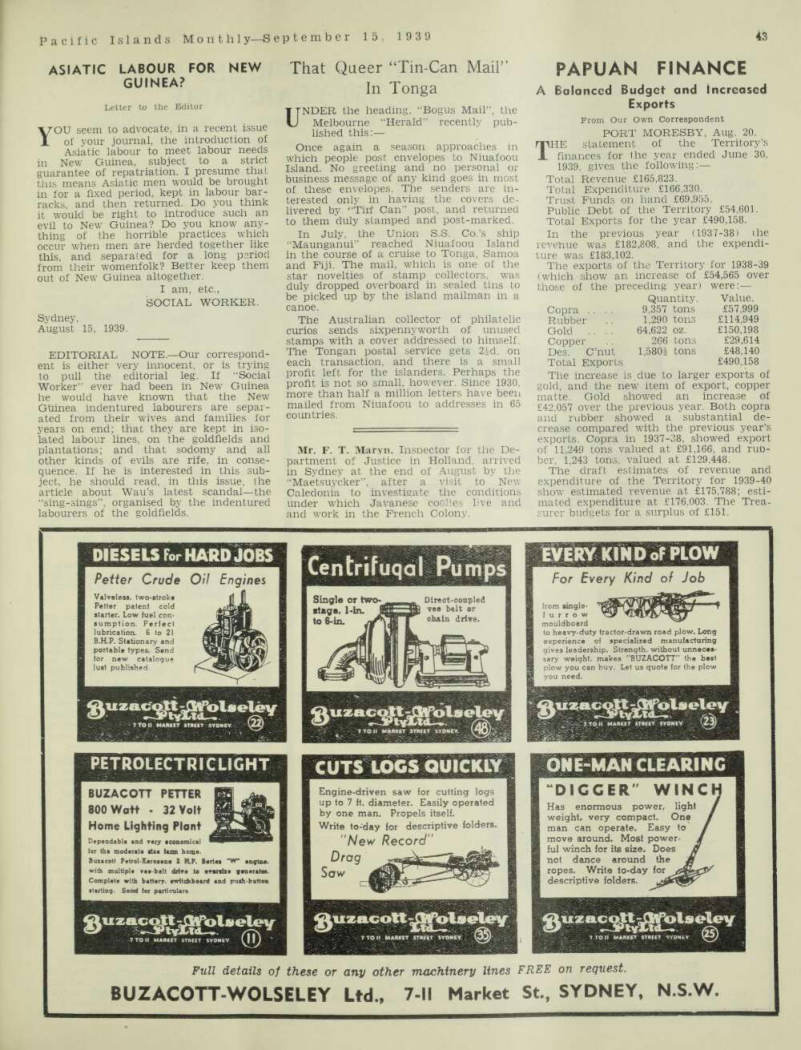
Asiatic Labour For New
Letter to the Editor YOU seem to advocate, in a recent issue of your journal, the introduction of Asiatic labour to meet labour needs in New Guinea, subject to a strict guarantee of repatriation. I presume that this means Asiatic men would be brought in for a fixed period, kept in labour bar racks. and then returned. Do you think it would be right to introduce such an evil to New Guinea? Do you know any thing of the horrible practices which occur when men are herded together like this, and separated for a long period from their womenfolk? Better keep them out of New Guinea altogether.
I am, etc.,
Social Worker.
Sydney, August 15, 1939.
EDITORIAL NOTE—Our correspond ent is either very innocent, or is trying to pull the editorial leg. If “Social Worker” ever had been in New Guinea he would have known that the New Guinea indentured labourers are separ ated from their wives and families for years on end; that they are kept in iso lated labour lines, on the goldfields and plantations: and that sodomy and all other kinds of evils are rife, in conse quence. If he is interested in this sub ject, he should read, in this issue, the article about Wau’s latest scandal —the “sing-sings”, organised by the indentured labourers of the goldfields.
In Tonga
That Queer “Tin-Can Mail”
UNDER the heading, “Bogus Mail’’, the Melbourne “Herald” recently pub lished this: — Once again a season approaches in which people post envelopes to Niuafoou Island. No greeting and no personal or business message of any kind goes in most of these envelopes. The senders are in terested only in having the covers de livered by “Tirt Can" post, and returned to them duly stamped and post-marked.
In July, the Union S.S. Co.’s ship •Maunganui” reached Niuafoou Island in the course of a cruise to Tonga, Samoa and Fiji. The mail, which is one of the star novelties of stamp collectors, was duly dropped overboard in sealed tins to be picked up by the island mailman in a canoe.
The Australian collector of philatelic curios sends sixpennyworth of unused stamps with a cover addressed to himself.
The Tongan postal service gets 2id. on each transaction, and there is a small profit left for the islanders. Perhaps the profit is not so small, however. Since 1930, more than half a million letters have been mailed from Niuafoou to addresses in 65 countries.
Mr. F. T. Maryn, Insnector for the De partment of Justice in Holland, arrived in Sydney at the end of August by the “Maetsuycker”, after a visit to New Caledonia to investigate the conditions under which Javanese coolies live and and work in the French Colony.
Papuan Finance
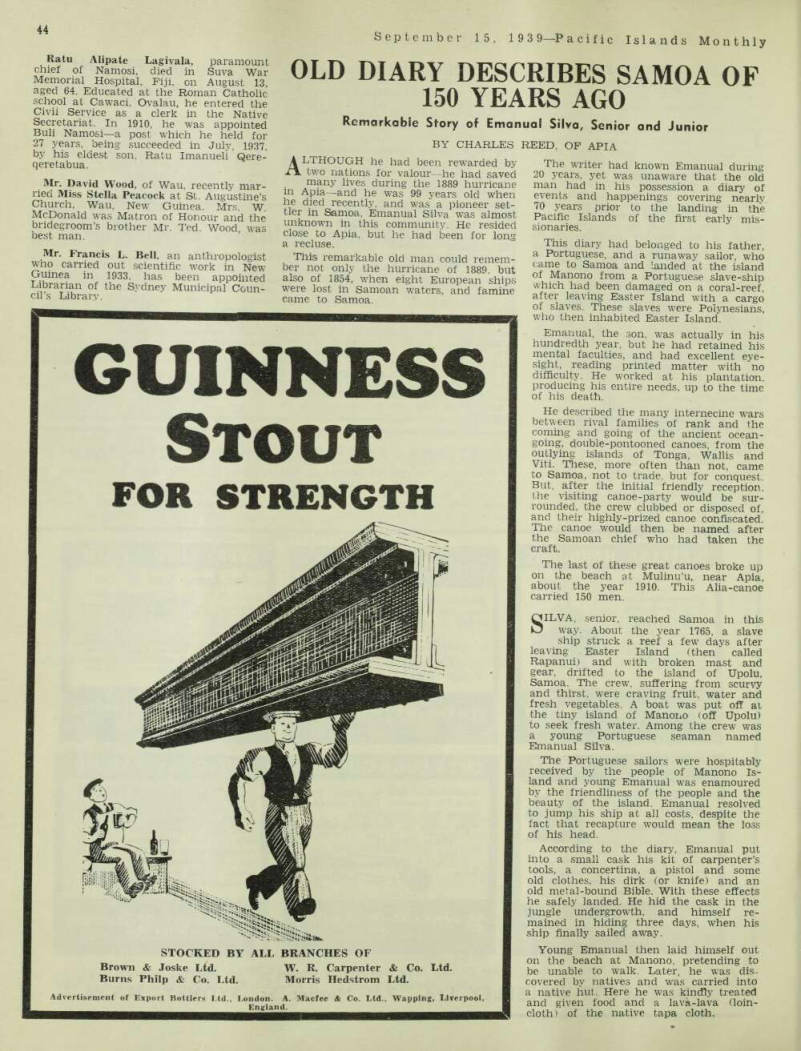
A Balanced Budget and increased Exports
From Our Own Correspondent
Port Moresby, Aug. 20.
THE statement of the Territory’s finances for the year ended June 30. 1939, gives the following:— Total Revenue £165,823.
Total Expenditure £166,330.
Trust Funds on hand £69,955.
Public Debt of the Territory £54,601.
Total Exports for the year £490,158.
In the previous year (1937-38) the revehue was £182,808, and the expendi ture was £183,102.
The exports of the Territory for 1938-39 (which show an increase of £54,565 over those of the preceding year) were:—
The increase is, due to larger exports of gold, and the new item of export, copper matte. Gold showed an increase of £42,057 over the previous year. Both copra and rubber showed a substantial de crease compared with the previous year’s exports. Copra in 1937-38, showed export of 11,249 tons valued at £91,166, and rub ber, 1,243 tons, valued at £129.448.
The draft estimates of revenue and expenditure of the Territory for 1939-40 show estimated revenue at £175,788; esti mated expenditure at £176,003. The Trea surer budgets for a surplus of £l5l.
Quantity.
Value.
Copra .. 9,357 tons £57.999 Rubber 1,290 tons £114.949 Gold .. 64,622 oz. £150,198 Copper 266 tons £29.614 Des. C’nut tons £48.140 Total Exports £490.158
Ratu Alipate Lagivala, paramount chief of Namosi, died in Suva War Memorial Hospital, Fiji, on August 13, aged 64. Educated at the Roman Catholic school at Cawaci, Ovalau, he entered the Civil Service as a clerk in the Native Secretariat. In 1910, he was appointed Buli Namosi—a post which he held for 27 years, being succeeded in July, 1937. by his eldest son. Ratu Imanueli Qere qeretabua. . P av *d Wood, of Wau, recently mar ried Miss Stella Peacock at St. Augustine’s Church, Wau. New Guinea. Mrs. W.
McDonald was Matron of Honour and the bridegroom’s brother Mr. Ted. Wood was best man.
Mr. Francis L. Bell, an anthropologist who carried out scientific work in New Guinea in 1933. has been appointed Librarian of the Sydney Municipal Coun cil’s Library.
Advertisements & other items, pp. 45-46 (1 item)
CenCniuqal rumps
DIESELS For HARD JOBS 17 I f , D EVERY KIND oF PLOW
Peiter Crude Oil Engines
Valveless, two-stroke Fetter patent cold starter. Low fuel consumption. Perfect lubrication. 6 to 21 B.H.P. Stationary and portable types. Send for new catalogue just published Single or twostage, 1-Into 8-in.
TTO II MARKET STREET SYDNEY. IZf)
For Every Kind of Job
Direot-oonpled yee belt or chain drive. mouldboard to heavy-duty tractor-drawn road plow. Long experience of specialized manufacturing gives leadership. Strength, without unnecessary weight, makes "BUZACOTT" the best plow you can buy. Let us quote for the plow you need.
L 3 PETROLECTRICLIGHT ■ CUTS LOGS QUICKLY ■ ONE-MAN CLEARING
BUZACOTT FETTER
800 Watt - 32 Volt Home Lighting Plant Dependable and very economical tor tbs moderate site farm home.
Buiacotl Petrol-Kerosene 3 HP, Series "W” engine, with multiple vec-belt drive to e-eraita generator.
Complete with battery, ewitcbbeard and pusb-buttea ■tarting. Send lor particulars L> £ Engine-driven saw for cutting logs up to 7 ft. diameter. Easily operated by one man. Propels itself.
Write to-day for descriptive folders.
"New Record"
Drag
Saw
7 TO II MARKET STREET SYDNEY.
“DIGGER" WING
Has enormous power, light weight, very compact. One man can operate. Easy to move around. Most power ful winch for its size. Does not dance around the ropes. Write to-day descriptive folders.
7TO II MARKET STREET SYDNEY \A3I
for Full details of these or any other machinery lines FREE on request.
BUZACOTT-WOLSELEY Ltd., 7-11 Market St., SYDNEY. N.S.W.
GUINNESS
Stout
FOR STRENGTH
m i SS& •m m 6 o
STOCKED BY ALL BRANCHES OF
Brown & Joske Ltd. W. R. Carpenter & Co. Ltd.
Burns Philp & Co. Ltd.
Morris Hedstrom Ltd.
Advertisement of Export Bottlers Ltd., London. A. Macfee 8t Co. Ltd.. Wapping, Liverpool, England.
150 Years Ago
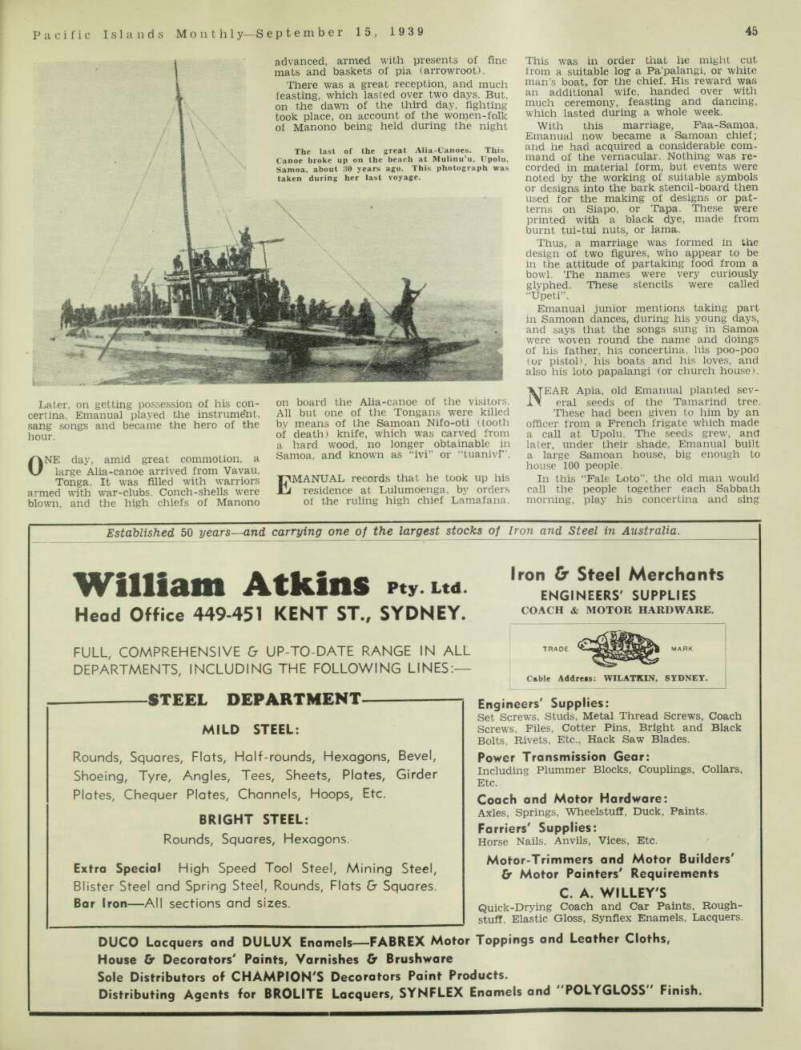
Old Diary Describes Samoa Of
Remarkable Story of Emanual Silva, Senior and Junior
By Charles Reed, Of Apia
ALTHOUGH he had been rewarded by two nations for valour—he had saved many lives during the 1889 hurricane m Apia—and he was 99 years old when he died recently, and was a pioneer set tler in Samoa, Emanual Silva was almost unknown in this community. He resided close to Apia, but he had been for long a recluse.
This remarkable old man could remem ber not only the hurricane of 1889. but also of 1854, when eight European ships were lost in Samoan waters, and famine came to Samoa.
The writer had known Emanual during 20 years, yet was unaware that the old man had in his possession a diary of events and happenings covering nearly 70 years prior to the landing in the Pacific Islands of the first early mis sionaries.
This diary had belonged to his father, a Portuguese, and a runaway sailor, who came to Samoa and landed at the island of Manono from a Portuguese slave-ship which had been damaged on a coral-reef, after leaving Easter Island with a cargo of slaves. These slaves were Polynesians, who then inhabited Easter Island.
Emanual, the son, was actually in his hundredth year, but he had retained his mental faculties, and had excellent eye sight, reading printed matter with no difficulty. He worked at his plantation, producing his entire needs, up to the time of his death.
He described the many internecine wars between rival families of rank and the coming and going of the ancient ocean going, double-pontooned canoes, from the outlying islands of Tonga, Wallis and Viti. These, more often than not, came to Samoa, not to trade, but for conquest.
But. after the initial friendly reception, the visiting canoe-party would be sur rounded, the crew clubbed or disposed of, and their highly-prized canoe confiscated.
The canoe would then be named after the Samoan chief who had taken the craft.
The last of these great canoes broke up on the beach at Mulinu’u, near Apia, about the year 1910. This Alia-canoe carried 150 men.
SILVA, senior, reached Samoa in this way. About the year 1765, a slave ship struck a reef a few days after leaving Easter Island (then called Rapanui) and with broken mast and gear, drifted to the island of Upolu, Samoa. The crew, suffering from scurvy and thirst, were craving fruit, water and fresh vegetables. A boat was put off ai the tiny island of Manono (off Upolu) to seek fresh water. Among the crew was a young Portuguese seaman named Emanual Silva.
The Portuguese sailors were hospitably received by the people of Manono Is land and young Emanual was enamoured by the friendliness of the people and the beauty of the island. Emanual resolved to jump his ship at all costs, despite the fact that recapture would mean the loss of his head.
According to the diary, Emanual put into a small cask his kit of carpenter’s tools, a concertina, a pistol and some old clothes, his dirk (or knife) and an old metal-bound Bible. With these effects he safely landed. He hid the cask in the jungle undergrowth, and himself re mained in hiding three days, when his ship finally sailed away.
Young Emanual then laid himself out on the beach at Manono, pretending to be unable to walk. Later, he was dis covered by natives and was carried into a native hut. Here he was kindly treated and given food and a lava-lava (loin cloth) of the native tapa cloth.
Later, on getting possession of his concertina’ Emanual played the instrument. sang songs and became the hero of the hour ONE day. amid great commotion, a large Alia-canoe arrived from Vavau.
Tonga It was filled with warriors armed with war-clubs Conch-shells were biown and the high chiefs of Manono
advanced, armed with presents of fine mats and baskets of pia (arrowroot).
There was a great reception, and much feasting, which lasted over two days. But. on the dawn of the third day. fighting took place, on account of the women-folk of Manono being held during the night
on board the Alia-canoe of the visitors.
All but one of the Tongans were killed by means of the Samoan Nifo-oti (tooth of death) knife, which was carved from a hard wood, no longer obtainable in Samoa, and known as “Ivl” or "tuanivf.
„ A , Tttat „.
records that he took up his Hi residence at Lulumoenga, by orders of the ruling high chief Lamafana.
This was in order that he might cut from a suitable log a Pa’palangi, or white man's boat, for the chief. His reward was an additional wife, handed over with much ceremony, feasting and dancing, which lasted during a whole week.
With this marriage, Faa-Samoa, Emanual now became a Samoan chief; and he had acquired a considerable com mand of the vernacular. Nothing was re corded in material form, but events were noted by the working of suitable symbols or designs into the bark stencil-board then used for the making of designs or pat terns on Siapo. or Tapa. These were printed with a black dye, made from burnt tui-tui nuts, or lama.
Thus, a marriage was formed in the design of two figures, who appear to be in the attitude of partaking food from a bowl. The names were very curiously glyphed. These stencils were called “Upeti”.
Emanual junior mentions taking part in Samoan dances, during his young days, and says that the songs sung in Samoa were woven round the name and doings of his father, his concertina, his poo-poo (or pistol), his boats and his loves, and also his loto papalangi (or church house).
NEAR Apia, old Emanual planted sev eral seeds of the Tamarind tree.
These had been given to him by an officer from a French frigate which made a call at Upolu. The seeds grew, and later, under their shade, Emanual built a large Samoan house, big enough to house 100 people.
In this “Fale Loto”, the old man would call the people together each Sabbath morning, play his concertina and sing
The last of the great Alia-Canoes. This Canoe broke up on the beach at Mulinu’u, Upolu, Samoa, about 30 years ago. This photograph was taken during her last voyage.
several hymns. Then he would expouad his belief in the Atua (God) and would read from his Bible for an hour, inter preting its meaning into Samoan. Young Emanuai would sit near his father and would hide his face in his hands in prayer, while several hundred Samoans would listen attentively outside the church house. The church house was al ways filled to capacity, and there was no money then known or used (and no col led ion made). The Samoans soon learned the hymns by heart and would sing them at their dances.
The great Tamarind trees can be seen to-day, close to Apia; but, with the ar rival of (he first missionaries from Tahiti, the church house of Emanuai was ordered to be destroyed by burning, and
the sailor-priest was admonished as “un orthodox”, and acting without legal right.
About this time, whalers frequently called at Samoa for water and coconuts, pigs and native arrowroot (then known as pia). This latter formed one of the main articles of diet, being cooked with fish and coconut cream. The exchange or barter was usually in the form of a poopoo (or musket) and a flask of powder or an axe.
Malietoa Vaiinupo, king of all Samoa, received orders to arrest the Portuguese, Emanuai Silva. He was charged with be ing an imposter—and la'er went into ob scurity.
MANY of the whaling ships called at Norfolk Island, then a whaling ground, and during a stay of several
days at Samoa would generally leave a runaway sailor or two behind in Samoa.
One of these men, a negro cook called “Mea-uli” (The Black) or Black Tom. made history in Samoa. He was a great pugilist, and fought on several occasions with Captain ■‘Bully” Hayes. Once, he nearly killed Hayes.
This negro afterwards owned a small drinking saloon in Apia, and Captain Hayes, always a gentleman, respected the weight of his bottles. His hotel was known as the “Parlour” and was a shanty of but one room and a kitchen. Among his customers, of that day, are noted “Snowy”.
“Bluenose”. “Lofty Pritchard”, “Adams”.
“Bully Hayes”, “Old Mac”, and several foreigners. Most of these men were handy with tools, or were good boat-builders and, for this reason, were generally well-re ceived by the Samoans, who were proud to have an expert boat-builder married into the family.
Advertisements & other items, pp. 46-48 (3 items)
44
September 15, 1939—Paciflc Islands Monthly
45
Pacific Islands Monthl y—S eptember 15, 1939
William Atkins pty.ud.
Established 50 years—and carrying one of the largest stocks of Iron and Steel in Australia.
Head Office 449-451 KENT ST., SYDNEY.
FULL, COMPREHENSIVE & UP-TO-DATE RANGE IN ALL
DEPARTMENTS, INCLUDING THE FOLLOWING LINES;—
STEEL DEPARTMENT
MILD STEEL:
Rounds, Squares, Flats, Half-rounds, Hexagons, Bevel, Shoeing, Tyre, Angles, Tees, Sheets, Plates, Girder Plates, Chequer Plates, Channels, Hoops, Etc.
BRIGHT STEEL:
Rounds, Squares, Hexagons.
Extra Special High Speed Tool Steel, Mining Steel, Blister Steel and Spring Steel, Rounds, Flats £r Squares.
Bar Iron—All sections and sizes.
Iron & Steel Merchants
ENGINEERS' SUPPLIES
COACH & MOTOR HARDWARE.
TRADE
MARK
Cable Addreas: WILATKIN, SYDNEY.
Engineers' Supplies: Set Screws, Studs, Metal Thread Screws, Coach Screws, Files, Cotter Pins, Bright and Black Bolts, Rivets, Etc., Hack Saw Blades.
Power Transmission Gear: Including Plummer Blocks, Couplings, Collars, Etc.
Coach and Motor Hardware: Axles, Springs, Wheelstuff, Duck, Paints.
Farriers' Supplies: Horse Nails. Anvils, Vices, Etc.
Motor-Trimmers and Motor Builders' fir Motor Painters' Requirements
C. A. WILLEY'S
Quick-Drying Coach and Car Paints, Roughstuff. Elastic Gloss, Synflex Enamels, Lacquers.
DUCO Lacquers and DULUX Enamels—FAßßEX Motor Toppings and Leather Cloths, House & Decorators' Paints, Varnishes & Brushware Sole Distributors of CHAMPION'S Decorators Paint Products.
Distributing Agents for BROLITE Lacquers, SYNFLEX Enamels and POLYGLOSS Finish.
J(Vu«W
Ub ,*T tUl^.
mktk
• MINING Crushing Machinery, Screens. Feeders, Rock Drills, Excavators, Diesel' and Crude Oil Engines, Hoists and Runways, Roller Bearings, etc. ii? • ELECTRICAL EQUIPMENT Parkinson Motors, Crompton Switchgear, Transformers.
Instruments, Meters, Callender Wires and Cables, Lighting Equipment, Electric Drills • STORES, FACTORIES, HOME and OFFICE Electrical Fittings. Crompton Fans, Crompton Lamps, Floodlighting, Household Electrical Appliances, Radio Receivers, and Equipment, Jos. Rodgers Cutlery fif f lateware, Cut-glasS and Perfection E.P.N.S. Ware.
s
It's CHEAPER to PAINT
than to repair!
Decay can do no damage if your home is properly protected with good paint.
Use “8.A.L.M.” Paint- “B.A.L.M.” Paint gives protection. And it wears down evenly and very slowly, lasting years longer than ordinary paint.
Decide now to save money by painting; and decide to make maximum savings by using - - - - “8.A.L.M.” Paint!
DISTRIBUTORS:
Greenwood & Laws Ltd., Rabaal and Wan.
Steamships Trading Co. Ltd., Port Moresby and Samarai.
Millers, Ltd., Suva, Fiji.
GRADE PURI
f\ I \ Tr’
p *IP Hi A Product of British Australian Lead Manufacturers Pty. Ltd,,
Stamps
New Papuan Air Mail
From Our Own Correspondent
Port Moresby, Sept. 7.
THE Papuan Government yesterday withdrew the Commemorative Jubilee air mail stamps issued last September to celebrate the declara tion of the British possession of Papua in 1888.
A new set has been issued.
The denominations of the new issue and the colours are still the same, but the design now shows two natives standing in a canoe, which they are propelling with long poles. Overhead flies a D.H. 868 aeroplane the type used for the Papuan air mail service. An oval, full face portrait of His Majesty the King is at the right hand side of the stamp, and super-imposed over a representation of native ornaments is the word ‘ Papua” at the top. At the base of the design are the words “Air Mail Postage”, and the value is shown on the left hand side.
N.G. Public Service
THE following staff movements in the New Guinea Public Service have been an nounced: —
Permanent Staff Transfers.
District Services Dept.—J. R. Black. Patrol Officer, Madang to Rabaul; W. B. Giles, Cadet, Salamaua to Wewak; C. F. Julius, Clerk, Rabaul to Salamaua; R. H. Wedd, Cadet. Sala maua to Madang; j. R. White, Cadet, Rabaul to Salamaua: J. L. Taylor, Assistant District Officer, Madang to Rabaul.
Lands Dept.—N. P. Hawke, Clerk, Rabaul to Wau.
Agriculture Dept.—B. A. O’Connor, Assistant Entomologist, Gasmata to Rabaul.
Temporary Engagements.
Government Secretary’s Dept.—Miss C. H.
Ayton (Typiste).
Lands Dept.—Miss G. Einseidel (Typiste).
Public Works Dept.—V. R. Nion (Roadmaster; A. L. G. Proud (Carpenter).
Mr. VV. T. Martin, Comptroller of Customs at Suva, Mr. C. W. T. Johnson, Assistant Colonial Secretary, Mr. A. J.
Armstrong-, District Commissioner, and Mr. J. S. Smith, Conservator of Forests, have been appointed official members of the Fiji Legislative Council.
Rev. Reginald Bartlett, 0.8. E., who was in Western Samoa as a member of the London Missionary Society s f aff in 1929- 31, has returned to Apia for further ser vice. He and his wife went to Papua for the L.M.S. in 1905, serving in the Oro kolo District for seven years.
Mr. and Mrs. W. H. Carpenter, of Rabaul. reached Sydney from New Guinea by the August “Nellore”.
Advertisements & other items, p. 48 (1 item)
46
September 15, 193 9—P acific Islands Monthly
Seeking Timber in New
Guinea Series of New Enterprises
INHERE is marked and increasing inter . est in the timber resources of New Guinea A man from the United States (Mr. R. M. Neely) was there in July, carefully investigating the possibili ties of an export trade between New Guinea and America.
It is known that important timber in terests in Australia have their eyes upon the stands of pine and cedar in and around the Bulolo Valley, and that prob ably they will seek concessions as soon as some decision is reached in relation to a road between Wau and the coast. It was ascertained in August that the fol lowing were interested in New Guinea timbers: — New Guinea Forests, Ltd., understood to be a subsidiary of Bretts, of Brisbane, is registered in Rabaul and has interests on the north coast of New Britain.
New Britain Timbers, Ltd., believed to be a subsidiary of Messrs. Gibbs Bright and Co., Ltd., are registered in New Guinea, and have interests in the Kerawat and Bainings district, at the eastern end of New Britain. They have a sawmill there and are shipping to the southern markets.
Messrs. J. Ryan and Sons, of Melbourne, have interests in the Kerawat district (New Britain). They are producing tim ber for local use, and are exporting wal nut logs.
Mr. Charles Boles, a local man, has a sawmill at Waterfall Bay, on the south ern coast of New Britain.
The New Guinea Trading Co., Ltd., registered in Rabaul, is operating on the south coast of New Britain, 80 miles from Rabaul. Plant is being installed, and shipments of lumber for south should commence shortly.
The Pacific Lumber Company, whose operations were based on Pukpuk, and whose establishment cost over £30,000, sent away a lot of lumber—B2s,ooo super feet in one shipment—but met a great deal of trouble. A large portion of their exports was condemned, and it was stated in Rabaul in August that, although plant, tramlines, etc., were all there, in good condition, active operations had ceased.
Mr. McKinnon, pioneer of Port Romilly sawmills, in Papua, was in Rabaul in August, examining the timber situation.
Timber men are keenly interested in New Guinea walnut, or lope, of which there is a fair quantity, widely scattered.
It is regarded as an excellent substitute for Queensland walnut. It is said that lope can be landed in Sydney for about 20 A per hundred feet, and can be sold there for £3 per hundred feet. The North Queensland walnut costs- twice that sum.
Mr. P. j. Hepburn has completed his term at Apia as Auditor,to the Western Samoan Administration. He has been succeeded by Mr. Martin, who arrived from New Zealand recently by the “Maui Pomare”.
Two Tongans Drowned
From Our Own Correspondent
Nukualofa, Aug. 10.
WHILE negotiating one of the passages through the reef, on the of Eua, over a very rough sea in a small sailing boat in which they had sailed from Tonga, two young men, Vili Life Tagatao lakebaU(or William Young) aiicl Tuibir lotu lost their lives. The boat) capiii&ed. and they Were swept out to sea by the strong current.
There were sonle people on th# shorf. who witnessed the accident, blip-on count Of the mountainous sea running, they were powerless to give any assi&fen£p to the two men. The latter were seen fct intervals, on the crests of the towering wayes, each clinging to a piece of the
boat, which had become a complete wreck in the relentless fury of the surf.
They were finally carried right out to sea, and disappeared.
On the following day, when the sea subsided, Tongan swimmers went out to search for the missing men, but met no success.
Many members of Young’s family have been lost in making this dangerous cross ing to Eua.
Rev. and Mrs. R. Perry have joined the London Missionary Society in Papua.
They are stationed at Urika.
Mr. Arthur Fry, Mining Inspector in the Morobe District, New Guinea, ar rived in Sydney from Salamaua by the August “Bulolo”.
Advertisements & other items, p. 49 (1 item)
B.P. Magazine
BAKER S QUALITY CUTLERY
Baker’s Standard Razor—sharpened ready for use — 3 /i in. wide blade, 11/6 each.
856—GENUINE HORSEHIDE AND COW-
HIDE RAZOR STROP. Length overall 18 '/ 2 in. Width 2 in. One side Cowhide, one side Horsehlde. Good Finish and worked up ready for use. 7/6 each.
POST FREE FO(R CASH.
r i m
150—BAKER’S STATION OR FARMER’S KNIFE,
the standard favorite of the Australian Bushman. 4 in. Stag Haft, 13/6 each. 3V 2 in., 11/6 each. 3 in,, 10/6 each.
W. JNO. BAKER 51
3 HUNTER ST., SYDNEY.
READ THE
B.P. MAGAZINE
SPRING NUMBER
Now on Sale
Short Stories - - - - - - - Pictures Travel Articles Pages for the Children Stage Latest Fashions Screen
ONE SHILLING PER COPY
ON SALE AT ALL NEWSAGENTS AND BOOKSELLERS
SMOKE
In c
“SUNRIPE” ENGLISH CIGARETTES
of any difficulty in obtaining supplies, write to: BOX 1861 K, G.P.O., SYDNEY.
Yesterday
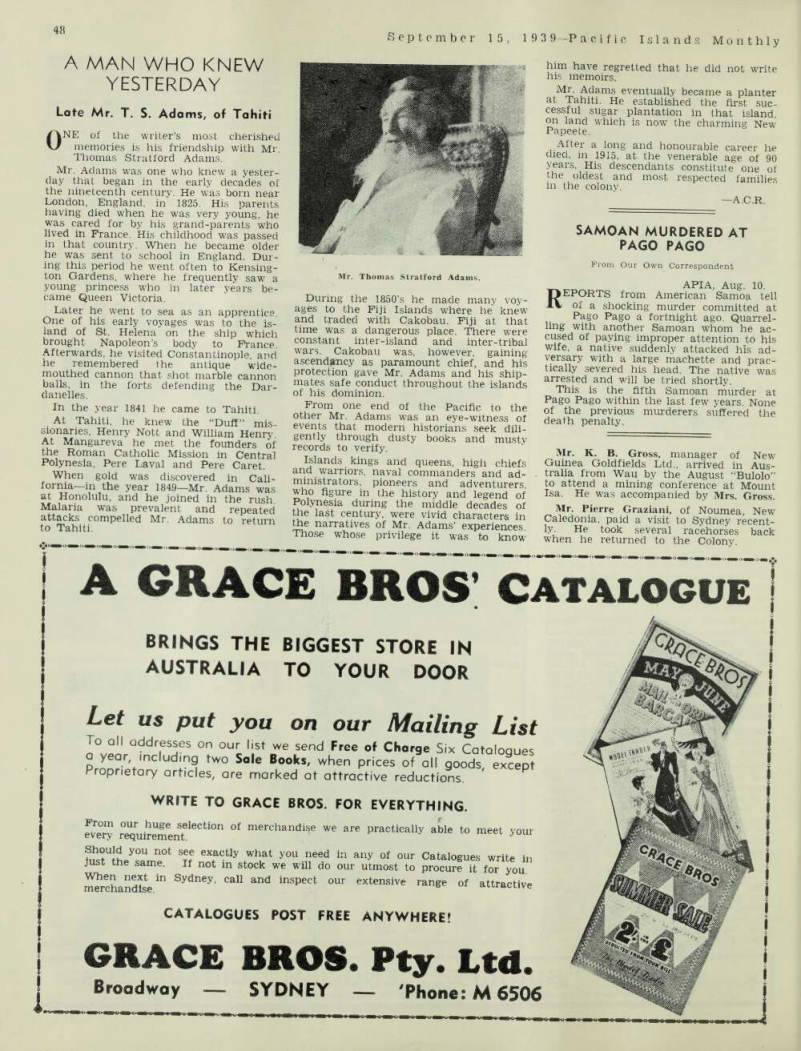
A Man Who Knew
Lote Mr. T. S. Adams, of Tahiti
ONE of the writer’s most cherished memories is his friendship with Mr.
Thomas Stratford Adams.
Mr. Adams was one who knew a yester day that began in the early decades of the nineteenth century. He was born near London, England, in 1825. His parents having died when he was very young, he was cared for by his grand-parents who lived in France. His childhood was passed in that country. When he became older he was sent to school in England. Dur ing this period he went often to Kensing ton Gardens, where he frequently saw a young princess who in later years be came Queen Victoria.
Later he went to sea as an apprentice.
One of his early voyages was to the is land of St. Helena on the ship which brought Napoleon’s body to France.
Afterwards, he visited Constantinople, and he remembered the antique wide mouthed cannon that shot marble cannon balls, in the forts defending the Dar danelles.
In the year 1841 he came to Tahiti.
At Tahiti, he knew the “Duff” mis sionaries, Henry Nott and William Henry.
At Mangareva he met the founders of the Roman Catholic Mission in Central Polynesia, Pere Laval and Pere Caret.
When gold was discovered in Cali fornia—in the year 1849—Mr. Adams was at Honolulu, and he joined in the rush Malaria was prevalent and repeated attacks compelled Mr. Adams to return to Tahiti.
During the 1850's he made many voy ages to the Fiji Islands where he knew and traded with Cakobau. Fiji at that time was a dangerous place. There were constant inter-island and inter-tribal wars. Cakobau was, however, gaining ascendancy as paramount chief, and his protection gave Mr. Adams and his ship mates safe conduct throughout the islands of his dominion.
From one end of the Pacific to the other Mr. Adams was an eye-witness of events that modern historians seek dili gently through dusty books and musty records to verify.
Islands kings and queens, higii chiefs and warriors, naval commanders and ad ministrators, pioneers and adventurers, who figure in the history and legend of Polynesia during the middle decades of the last century, were vivid characters in the narratives of Mr. Adams’ experiences Those whose privilege it was to know
him have regretted that he did not write his memoirs.
Mr. Adams eventually became a planter at Tahiti. He established the first suc cessful sugar plantation in that island on land which is now the charming New Papeete.
After a long and honourable career he died, in 1915, at the venerable age of 90 years. His descendants constitute one of the oldest and most respected families in the colony.
A.C.R.
Mr. Thomas Stratford Adams.
Samoan Murdered At
Pago Pago
From Our Own Correspondent
R___ Apia, Aug. 10.
EPORTS from American Samoa tell of a shocking murder committed at Pago Pago a fortnight ago. Quarrel ling with another Samoan whom he ac cused of paying improper attention to his wife, a native suddenly attacked his ad versary with a large machette and prac tically severed his head. The native was arrested and will be tried shortly.
This is the fifth Samoan murder at Pago Pago within the last few years. None of the previous murderers suffered the death penalty.
Mr. K. B. Gross, manager of New Guinea Goldfields Ltd., arrived in Aus tralia from Wau by the August “Bulolo” to attend a mining conference at Mount Isa. He was accompanied by Mrs. Gross.
Mr. Pierre Graziani, of Noumea, New Caledonia, paid a visit to Sydney recent ly. He took several racehorses back when he returned to the Colonv
Advertisements & other items, p. 50 (2 items)
48
September 15, 193 9—P aci f i c Islands Monthly
A Grace Bros’ Catalogue
BRINGS THE BIGGEST STORE IN
AUSTRALIA TO YOUR DOOR
Let us put you on
To Q" addresses on our list we send Free of Charge Six Catalogues a year including two Sale Books, when prices of all goods, except Proprietary articles, are marked at attractive reductions.
WRITE TO GRACE BROS. FOR EVERYTHING.
fvprv s . election of merchandise we are practically able to meet your every requirement.
Should you not see exactly what you need in any of our Catalogues write in just the same. If not in stock we will do our utmost to procme h for you merchandise m Sydney ' call and inspect our extenslve range of attractive
CATALOGUES POST FREE ANYWHERE'
GRACE BROS. Pty. Ltd.
Broadway SYDNEY 'Phone: M 6506
f * c
Old Yodda Days
Some Quaint Incidents of 40 Years Ago
THE following are extracts from the diary of an old miner written 30 years ago in Papua: “Samarai in those days • 1898-9) was a very primitive little town; its only hotel offered food and lodging of the most ele mentary kind. Meals were served in a big common dining-room, but of bed-rooms there were none, and the miners slept in an outbuilding which they shared with the poultry of the establishment—the men sleeping upon their blankets which they spread on the floor and the fowls taking the rafters overhead.
“There was plenty of work for the Magistrate on the Yodda, principally in settling disputes about water-rights, and in hearing applications of one sort or an other. However, the miners always treated him most hospitably when he visited their camps, but sometimes the hospitality was more embarrassing than gratifying.
"On one occasion the principal witness in a water-right case was absent. The As sistant Magistrate, looking for him, found him asleep in his bunk, with a pot of soup on the ground beside him. In his slumbers one foot had roamed, and he was neacefully reposing with one bare foot in his dinner.
“When he was awakened, he jumped from his bunk and. without noticing what had happened, hospitably insisted on the Magistrate staying to lunch. ‘l’ve got some good soup here’, he explained, ‘and we don’t get that every day.’
“The Magistrate, hurriedly explaining that soup disagreed with him, and that he was feeling off colour, got away from the camp as soon as he could, leaving a rather offended host.
THERE was something, of a festival in progress at the Yodda when I arrived there. The warden was ex pected on his usual visit, to look into legal rights, etc., and all the miners had col lected from the outlying camps for the occasion, and were having a very good time.
“The professional joker of the field was out on a ‘jamboree’ as usual and was fir ing off his revolver very freely, though only in . a playful manner. One morning, he had been boring holes in the store walls—aiming, as he said, at a fowl (tinned) on the shelf inside—when a miner named Augustus, who had the re putation of being the dirtiest man on the field, walked in to make purchases.
“The jester strode up to him. held his revolver close to the miner’s luxuriant beard, and fired a bullet through it, rather spoiling its beauty. Naturally, the victim seemed alarmed, but the jester, laying his hand on his shoulder, assured him it was all right, and that he was only giving it a bath. Gussie, however, did not care for this kind of valeting, and dropped his purchases, and fled as though Old Nick were at his heels.
“The Jester remained in the store, wandering about with the revolver in his hands, and could find no further victims until a newcomer arrived from the coast He greeted him by firing a bullet between his legs. The newcomer, however, had no nerves and returned the greeting with a nod, and, ordering a drink passed over the incident casually. The cheerful marks man quietened down considerably, and was
more himself when the Magistrate arrived —on this occasion accompanied by a high Church dignitary. "TT was thought that the pastoral visit A furnished a fortunate opportunity for reading the burial service in the Yodda cemetery—a melancholy little spo: where lay, side by side, the unfortunates who had given their lives in the search for gold and who had been buried one after another, without prayer of any kind, “When the matter was put before the Churchman, he readily agreed, and one morning found * us all mustered at the little enclosure that contained the remains of our departed comrades. All were there —Magistrates, storekeepers and miners— and among these stood the jester, who was not himself. The service was read in solemn silence, and we all joined in singing a hymn.
“Suddenly, the jester, who was feeling
more cheerful than is considered correct at a wholesale funeral service, stepped forward, and in a loud and hiccoughy voice proposed a vote of thanks to the officiating minister. He seemed quite be wildered when ihe usual cheers did not follow, and his request was met with stern silence—though most of us found g Tea t difficulty in maintaining it. « * NOTHER miner, named Red Bob, re ceived a shock t 0 his nerves when prospecting at Woodlark, and in a manner that somewhat recalls the ancient anecdote of the Jew who ate roast pork on the sly, and was startled by a thunder storm which he regarded as the Voice 0 f offended Heaven “ Red Bob who ha d been doing his best to earn an attack of delirium tremens, and very nea rly succeeding, left for his claim in the hope of working things off, though doubtful of the state of his nerves.
“While he was working, a very sharp earthquake shook the locality, and a dish of wash, which he had panned out and left on a flat rock, began to travel to wards him.
“Bob stared in horror at the moving dish and, turning to his mate alongside, he exclaimed: ‘That settles it! I’ve got ’em. I’m going home!’ And he stumbled off down the track to his camp.”
Rev. Father J. Deihl, who has been a Marist missionary in Western Samoa for nearly 20 years, will go on long furlough at the end of the year to visit his father in U.S.A.
Rev. R. J. Maddox, Chairman of the Samoan District of the Methodist Mis sion, returned to Apia in August with his wife, after furlough in Australia.
Advertisements & other items, pp. 51-52 (2 items)
49
Pacific Islands Mont hi y~S eptember 15, 1939
m
I
R'S OK WAR'S OS.WAjOA
AR'SOS WAft 'OKWA ft'S
AVAR'S OKWAR S OKWAR'S
SWA#* OKWA R SOS. WAR'S
’yj&mz iAl WAR'* ORWaR'S OKWAR'S
OK WAR'S OSWARW OKWAR'S S>K WAR'S
0S ■•:V Aft SOR VVaTv* "I” WfflfJlUlMi L ' a Aft SOKV-/AR' -■S'S.A'AR'S 0K W Aft'S OKWA RS OKWAR'S OKWAR'S OS WAR'S OKW A 0 • OKWAR'S OK WAR'S OK WARS 0); AVAR'S OKWAR'S OS WAR'S OKWA. ft SOKWAS SOK WAR'S OK.W.f >;S ORWAft'S OKWAR';■ OK WAR'S OS WAR'S OKW AK SOR WAR'S OS WAR'S O£W.TRW OKW3R pK WAR'S OKWAR'S 0 SWA 0 S OKWAR S OS W
OK WAft’SJ;KWAR S OKWaR'S OS
OK W ;W<' ;•• ORW AR' S OS. R' S ?i
O£W/Pa S
OK WAR
SO VOWS:
:;• OKW A K S OS WAR':
;KWaRSOK WAR'S OKWAR';
AR'SOKWAR'S
AR'S OS: WAR'S
ar'Soswar: ?;ar'-sok\valKa ;; KWA R ■ S ORWA R * S
OR WAR'S OS WAR'S
OS'WAR'S OK WAR'S
OKWAR'S ORWARS
OKW'A;
OKW
okwr 0-W' aK OKWAR'S OK WAR'S OKVVAR S OKWAR'S OKWAR
S OKWAR'S OKWAR'SOKWAR - OKWaRSO£WaR'SOKWAR'<
OR w/ AR'S OS WA RS SOK W A R.' S6KVv A* ft' SOKV/ A K' S OS. WA R' SOS WA R'S OKW A R '• OKWAR'S OK WAR'S OKW'A.R'SOKVVaR S OKWAR'S OS WAR'S OK WARS OKWAft '; OK WAR’S OKW'A RR OKWaRS OKWAR'S OS WAR'S OK WAR S OKWAR'S OKVVaR: OKWaR'S OKWAR'S OSWAR'S OS WAR'S OKW'A.R/S OKVVAR S OKWAR'SOKWAR';
OKWAR'SOKWAR'SOKWAR'SORWAR S OKWaR'S OKWAR'S OKWAR'SOKWAR';
OS WA RS OR WAR'S OKWA RS OKW •R' OS WAR'SOK WAR'S OKWAR'S OKWAft ;; OK WAR S OKW.A.R OKWA R S 0;: WA R' SOS WA R'S OK\VAR S o£W.\ft‘S OK VV a K OK WA R' S OK WA R'S- OKWA R' S OS WA R'S OK W A R' S 0 KWA
OKWAR.'SOKW'A.R'SOK'vVa
0 K WAR'S OK W A R'S- OK WA R 0 K VVA R' :*• OK WA R' S- OS. WA
OK'WAR'S OS WAR'S OS WAR
OK WAR'S OKWAR SOKW
VO
SR'S
R'SOKWAK
R'S OKWAR'S
AR'S OK WARS
R'S OKWAR'S OK. WAR'S OKWAR .
Aft'S ORVVa ft'S OKWAR'S OK WAR'S
>K W'A ft S. OKWA ft S OKW'A R'S OS WAR'S OK WAR'S OKVVaR • OKWAR'S OS WAR'S OK WAR'S OK WARS OKVVaR'SOKVVaR^K-OKWAR’SOS WAR'S OK WAR'S OSWA R‘SORWAft'S OKVVAR OKWAR'S OKWAR'S OS WAR'S OS WAR'S OKWA.ft'S OKVVA S'- OK WAR'S OKVVAR ;>
AR'S
AR/S
:ar s RS R'S
AR'S
ORVVa R S OKVVA R'S
'KWaR'SORWAR'S
OS WAR'S OS'-WAR'S
OK WAR'S OKWAR'S
OR VVA. R'S OKW A ft
- OKW'-- R‘ S OKWAR'S3SKV-/A K S
S OS WAR'S O;:.WAR'S OS.WAR'S
S OKWAR'S OKWAR'S OKWAR'S
OKWAR'S OKWAR'S OS WAR'S OKWAR'S OKWAR'S OR'vVaR SOR W A.R'S OKWAR'S
S>KWAR'SOKWAR'S OKVVAR S ORVV.vR^OKVV/vft'SOSSW'.a.R SX^KVVAft'SOEVVAft'S
OKWAR-SOS-WAR S OS WAR'S OKWAR'S 0?: WAR'SOKVVA?<:SOKVVAR SOKWAR S
R'S OS WAR'S OS WAR'S Of
R'S OS WAR'S OKWA R'S,
0 S WAR'S OKWAR'S OKW
i»K WAR'S OKWAR'S OS W
OS WAR'S OS WAR.'- w a
OKVVAR S OKVVAR
OKWaR'SOKWaR
OS WAR'S OS WAR S OKWAR'S OS WA R‘S OKW OKWA. R'S OKWA.R' S OKVVA ft K OKW'A R'S OKWA; OKWAR'S OKVVaR ;. OKWAK S OKWAR'S OS WA; AR"; r^S
A. B. DONALD LTD.
AUCKLAND
ISLAND TRADERS : GENERAL MERCHANTS
P.O. Box 1509. Cables and Telegrams: “Kingdom”, Auckland.
Branches at Rarotonga and throughout the Cook Islands At Papeete and throughout the Society, Marquesas and Paumotu Islands,
trading as "ETABLISSEMENTS DONALD, TAHITI"
At Fiji: Trading as "Dominion Fruit Co.", Suva.
Your Tropical Rit
When you visit the Pacific Islands, whether on Business or Pleasure, you need Special Equipment—Light Suits of Correct Style, which fit well and launder easily; Tunic Shirts, Silk Shirts, Light Underwear, White Shoes, etc.
WALTER HORNE & CO.. LTD., established in 1885, specialise in this Service. Skilled Tailors make your Suits from First-class material within 24 hours. Complete equipment can be supplied from our Large Stock at Reasonable, Moderate Prices.
BUY FROM THE FIRM WHICH UNDERSTANDS YOUR NEEDS AND
DRESSES YOU CORRECTLY.
WALTER HORNE & CO. LTD. carry a Pull Range of Drapery of all kinds; also Frocks, Millinery, Foundations and Lingerie, Hosiery, Shoes and Sandals, Ribbons and Laces, Household Drapery.
Lad ies' Hairdressing and Manicuring
WALTER HORNE & CO. LTD.
Drapers and Men's Wear Specialists
SUVA, FIJI.
Men resident in any of the Pacific Territories can he supplied with Suitable Clothes.
Write to us and Describe your Requirements.
Tongan Minister
Resigns Development in Impeach ment Crisis
From Our Own Correspondent
Nukualofa, Aug. 10.
THE serious tension in the political situation in Tonga, caused by the ap parent suspension of Constitutional Government during the past four months, and the undue delay in the session of the Legislative Assembly, supposed to be the result of discord in the Cabinet Mini stry, reached a crisis on July 21. when the Minister for Finance, Mr. W. G. Bagnall,
resigned. The Minister for Police, J. A.
Kaho, also retired on July 21, ha vine: passed the retiring age limit.
An extraordinary phase of these de velopments was that on July 19 the Mini ster for Police served a Bill of Impeach ment in the Legislative Assembly on the Minister for Finance, for alleged perjury in the Supreme Court, on the occasion when he gave evidence at the trial, last April, of a Tongan clerk, Uliti Balu. for the embezzlement of £1.200 in the Trea sury. Charges had been, also, laid against Mr. Bagnall by J. Mataele, M.L.A.
As it was felt that he should and could have resigned earlier, and in the absence of any apparent immediate cause for taking that step at this stage, Mr. Bagnall’s resignation, having been made a day or two after he had received notice of impeachment, and about a week before the Legislative Assembly opened, was commented upon unfavourably.
Tire retirement of the Minister for Police was very unexpected, in view of his long and honourable record of service for the State, and of the exceptional cour age and impartiality he showed in carry ing out his ministerial duties. His retire ment is considered a great loss to the Ministry.
The vacancies which resulted were filled by Akauola, Governor of Vava’u. as Acting Minister for Police, and Mr. H. L.
Nicolson, Chief Postmaster, as Acting Minister for Finance. G. H. Ulukalala. son of the late Finau Ulukalala, who was the Speaker of the Legislative Assembly till his death last year, was appointed as Acting Governor of Vava’u.
As a result, certain parts of the machine of Government, which have been idle for several months, have commenced to function again. The Privy Council met on July 24 and Cabinet on July 28. The Legislative Assembly—which, contrary to law, had not met for twelve months—was opened on August 1. To indemnify the Government from all liability or the ap parent suspension of Constitutional Gov ernment during April, May. June and July, the Privy Council passed an Indem nity Ordinance on July 31.
There is still anxiety regarding the com plications, created by differences, in cer tain matters of administration, between the British Agent and Consul (Mr. A. L.
Armstrong) and the Chief Justice of Tonga (Mr. W. H. Stuart), which culmin ated in an appeal to the High Commis sioner for the Western Pacific (Sir Harry Luke) at Suva. Fiji. In the interest of Tongan Government (in which the British Agent and Consul, under the Treaty of Protection and Agreements between Great Britain and Tonga, has certain powers to exercise) it is hoped that this undesir able condition may be soon adjusted by the High Commissioner.
Mrs. Charlotte Compain, of Tailevu Fiji, left Sydney by the September “Mari posa” for the Colony. She has been in Sydnev as the guest of Mrs. Edward Gosnell, for several months.
Mr. M. L. Bernacchi, District Commis sioner, Savu Savu. Fiji, has been trans ferred to Suva. He had been replaced by District Officer Legge.
Pastor Captain G. F. Jones, who de spite his advanced age of 75 years—4s spent in New Guinea, Solomon Islands, and the Dutch East Indies—is still tra velling about the Pacific actively engaged in Seventh Day Adventist mission work.
He was in Western Samoa early in August.
Training Fijians In Life Saving Work
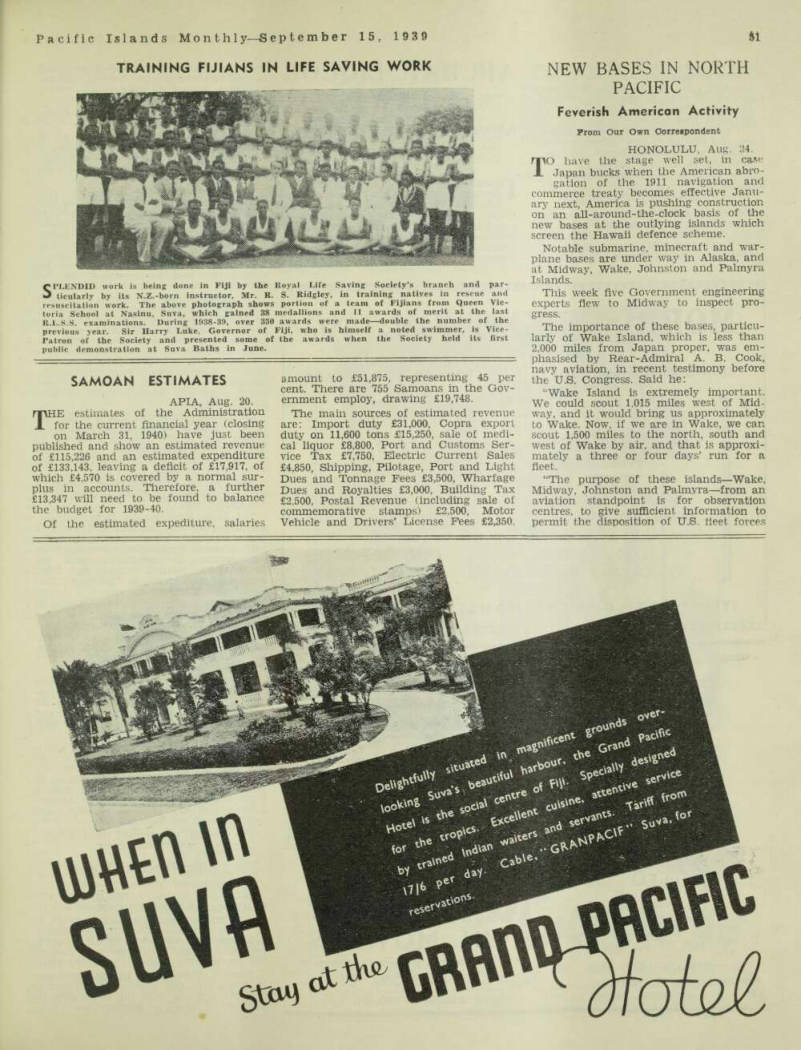
SPLENDID work is being done in Fiji by the Royal Life Saving Society’s branch and par ticularly by its N.Z.-born instructor, Mr. R. S. Ridgley, in training natives in rescue and resuscitation work. The above photograph shows portion of a team of Fijians from Queen Vic toria School at Nasinu. Suva, which gained 38 medallions and 11 awards of merit at the last R.L.S.S. examinations. During 1938-39, over 350 awards were made —double the number of the previous year. Sir Harry Luke, Governor of Fiji, who is himself a noted swimmer, is Vice- Patron of the Society and presented some of the awards when the Society held its first public demonstration at Suva Baths in June.
Samoan Estimates
Apia, Aug. 20.
r[E estimates of the Administration for the current financial year (closing on March 31, 1940) have just been published and show an estimated revenue of £115,226 and an estimated expenditure of £133,143, leaving a deficit of £17,917, of which £4,570 is covered by a normal sur plus in accounts. Therefore, a further £13,347 will need to be found to balance the budget for 1939-40.
Of the estimated expediture, salaries
amount to £51,875, representing 45 per cent. There are 755 Samoans in the Gov ernment employ, drawing £19,748.
The main sources of estimated revenue are; Import duty £31,000, Copra export duty on 11,600 tons £15,250, sale of medi cal liquor £B,BOO, Port and Customs Ser vice Tax £7,750, Electric Current Sales £4,850, Shipping, Pilotage, Port and Light Dues and Tonnage Fees £3,500, Wharfage Dues and Royalties £3,000, Building Tax £2.500, Postal Revenue (including sale of commemorative stamps) £2.500, Motor Vehicle and Drivers’ License Fees £2,350.
New Bases In North
Pacific
Feverish American Activity
Prom Our Own Correspondent
Honolulu. Aug. 24.
rpo have the stage well set, in case X Japan bucks when the American abro gation of the 1911 navigation and commerce treaty becomes effective Janu ary next, America is pushing construction on an all-around-the-clock basis of the new bases at the outlying islands which screen the Hawaii defence scheme.
Notable submarine, minecraft and war plane bases are under way in Alaska, and at Midway, Wake, Johnston and Palmyra Islands.
This week five Government engineering experts flew to Midway to inspect pro gress.
The importance of these bases, particu larly of Wake Island, which is less than 2,000 miles from Japan proper, was em phasised by Rear-Admiral A. B. Cook, navy aviation, in recent testimony before the U.S. Congress. Said he: “Wake Island is extremely important.
We could scout 1,015 miles west of Mid way, and it would bring us approximately to Wake. Now, if we are in Wake, we can scout 1,500 miles to the north, south and west of Wake by air, and that is approxi mately a three or four days’ run for a fleet.
“The purpose of these islands—Wake, Midway, Johnston and Palmyra—from an aviation standpoint is for observation centres, to give sufficient information to permit the disposition of U.S. fleet forces
in the most favourable manner along our so-called defence line . . .”
The U.S. navy has purchased the Grace Line’s liners “Santa Rita" and “Santa Inez”, which have been employed in the U.S.-South America service, and will use them as supply ships between California bases and new bases now being developed in Alaska and outlying Pacific Islands The two ships were taken in lieu of money owed to the Government by the company.
Sir Philip Goldfinch, general manager and a director of the Colonial Sugar Re fining Co.. Ltd., returned f o Sydney by the September “Mariposa" after ” in specting the Company’s large interests in Fiji.
Advertisements & other items, pp. 53-54 (1 item)
%
so*
SOW
MORRIS, HEDSTROM, ltd.,
Registered Office - - Suva, Fiji.
BRANCHES THROUGHOUT FIJI, TONGA AND SAMOA
Agents for:
LLOYD'S
JOHN LYSAGHT (Australia) PTY. LTD.
MATSON NAVIGATION COMPANY
RUSTON & HORNSBY LIMITED
IMPERIAL CHEMICAL INDUSTRIES LIMITED
NOBEL (Australasia) PTY. LTD.—EXPLOSIVES
VACUUM OIL COMPANY PROP'TY. LIMITED
FORD MOTOR COMPANY LIMITED
GOODYEAR TIRE & RUBBER EXPORT COY.
SYDNEY OFFICE: D A LT 0 N HOUSE, 115 PITT ST.
1 Th( " ma
tva£
\JcO"
tno«er
beati^s
siies.
Blade by:
RANSOMES, SIMS & JEFFERIES.
*>TD., Ipswich, England.
There Is a Ransomes Mower for every lawn—our range covers machines for all conditions, not only for ordinary lawns of all sizes, but for areas such as tennis courts, bowling greens, putting courses, etc., where a specially fine surface is essential.
Whether you require a light side-wheel machine or a petrol or electric motor mower, there is a Ransomes model which will give complete satisfaction.
LAWN MOWERS
Write for illustrated literature and all information.
MORRIS, HEDSTROM, LTD,,
Suva, Lautoka and Ba.
Archaic Liquor
Law
Move for Reform in Samoa
Prom Our Own Correspondent I APIA, Sept. 1.
T would appear that, at long last, the archaic and ridiculous liquor law of Western Samoa is to be amended.
Under present conditions, no European can purchase liquor (wdiich the Govern ment sells) without a medical order; and the order severely restricts the quantity that may be bought. Consequents, every one applies for his liquor ration; and
ihose who do not want liquor sell their rations to those who do. Natives may not purchase European liquors—and, conse quently, brew their own.
At the meeting of the Legislative Coun cil in August, Dr. Dawson moved; “That the system for the granting of permits for and the service of liquor to approved persons be revised so as to pro vide a service more compatible with the local conditions now existing.”
Dr. Dawson said that the present per mit system was first introduced by the late Sir James Allen (then Minister of External Affairs in the New Zealand Cabinet) during his visit to the Islands.
Apparently, he had been influenced by conditions in other islands—especially in the outlying Cook Islands where, on his arrival, he had been received by two European residents who were intoxicated.
Dr. Dawson said the use of alcohol is not to be condemned, but the abuse of it.
At present, anyone wanting liquor had to go to the Chief Medical Otficer for a cer tificate ihat he should receive liquor for medicinal purposes. It was a waste of time for the C.M.O. to issue a great number of permits, most of which were not used for medicinal purposes. In fact, it went very much against a doctor’s grain to issue such permits.
Dr. Dawson suggested that a committee of the Council should go fully into the matter and report, and he proposed, as members of the Committee, the Collector of Customs, the Chief Medical Officer and the Crown Solicitor.
The Acting Administrator suggested that an unofficial member should sit on the Committee.
The Hon. Namulau’ulu, Samoan mem ber. seconded the motion, and declared that a revision of the permit system was long overdue. Prohibition encouraged the manufacture of substitutes, and the Samoans had learned to make and drink a “home-brew” known as “faamafu”. This evil is now irreparable.
Realising the harm the prohibition of European liquors had done to the Samoans, he continued, the Samoan people themselves had asked the Govern ment repeatedly to bring about reform, so that their own people might be saved from the faamafu evil.
The Samoan member said that a bottle of whisky, dispensed by the Administra tion at 13/6, gave the Administration 200 per cent, profit, including duty, while the retailed price of beer allowed of at least 100 per cent, profit.
If liquid refreshments were made avail able for tourists and visitors, in a law ful way, he said, tourist ships like the “Maunganui” would leave more money in Apia, and the Treasury would benefit handsomely thereby. A revision of the pro hibition policy could do no possible harm to Europeans or Samoans.
The motion was carried unanimously.
Rifle Range at Wau
From Our Own Correspondent WAU, Sept, 1.
THE Morobe Voluntary Defence organi sation has completed a rifle range at Wan. with standard butts and mounds.
A lecture was delivered recently to pros pective riflemen in the use and care of the service rifle and in range discipline.
About a dozen teams of eight men are in process of formation, and all that is now required to start the ball rolling is a supply of rifles and ammunition.
Advertisements & other items, p. 54 (1 item)
52
September 15, 193 9—P acific Islands Monthly
Blow To Eastern
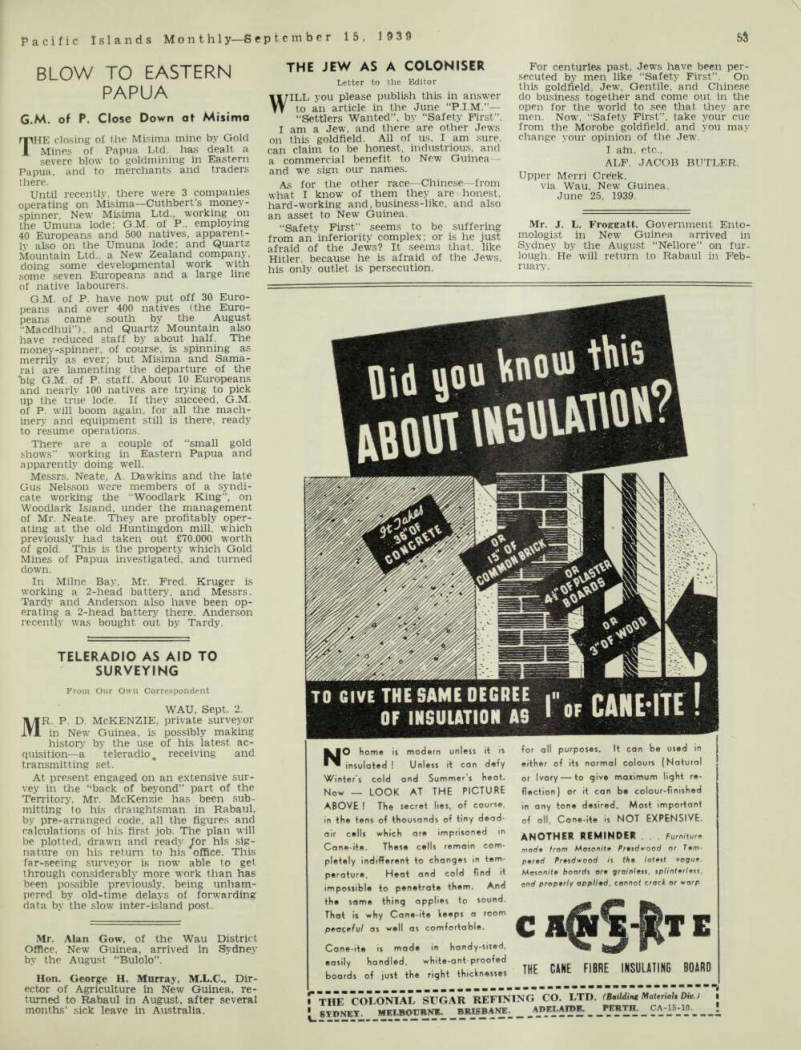
Papua
G.M. of P. Close Down of Misima
THE closing of the Misima mine by Gold Mines of Papua Ltd. has dealt a severe blow to goldmining in Eastern Papua, and to merchants and traders there.
Until recently, there were 3 companies operating on Misima—Cuthbert’s money spinner. New Misima Ltd., working on the Umuna lode; G.M. of P.. employing 40 Europeans and 500 natives, apparent ly also on the Umuna lode; and Quartz Mountain Ltd., a New Zealand company, doing some developmental work with some seven Europeans and a large line of native labourers.
G.M. of P. have now put off 30 Euro peans and over 400 natives (the Euro peans came south by the August “Macdhui”). and Quartz Mountain also have reduced staff by about half. The money-spinner, of course, is spinning as merrily as ever; but Misima and Sama ra i are lamenting the departure of the *big G.M. of P. staff. About 10 Europeans and nearly 100 natives are trying to pick up the true lode. If they succeed. G.M. of P. will boom again, for all the mach inery and equipment still is there, ready to resume operations.
There are a couple of “small gold shows” working in Eastern Papua and apparently doing well.
Messrs. Neate, A. Dawkins and the late Gus Nelsson were members of a syndi cate working the ‘ Woodlark King”, on Woodlark Island, under the management of Mr. Neate. They are profitably oper ating at the old Huntingdon mill, which previously had taken out £70.000 worth of gold. This is the property which Gold Mines of Papua investigated, and turned down.
In Milne Bay, Mr. Fred. Kruger is working a 2-head battery, and Messrs.
Tardy and Anderson also have been op erating a 2-head battery there. Anderson recently was bought out by Tardy.
Teleradio As Aid To
Surveying
From Our Own Correspondent WAU. Sept. 2.
MR. P. D. McKENZIE, private surveyor in New Guinea, is possibly making history by the use of his latest ac quisition—a teleradio receiving and transmitting set.
At present engaged on an extensive sur vey in the “back of beyond” part of the Territory, Mr. McKenzie has been sub mitting to his draughtsman in Rabaul. by pre-arranged code, all the figures and calculations of his first job. The plan will be plotted, drawn and ready his sig nature on his return to his office. This far-seeing surveyor is now able to get through considerably more work than has been possible previously, being unham pered by old-time delays of forwarding data by the slow inter-island post.
Mr. Alan Gow, of the Wau District Office. New Guinea, arrived in Sydney by the August “Bulolo”.
Hon. George H. Murray, M.L.C., Dir ector of Agriculture in New Guinea, re turned to Rabaul in August, after several months’ sick leave in Australia.
The Jew As A Coloniser
Letter to the Editor WILL you please publish this in answer to an article in the June “P.I.M.”— “Settlers Wanted”, by “Safety First”.
I am a Jew. and there are other Jews on this goldfield. All of us. I am sure, can claim to be honest, industrious, and a commercial benefit to New Guinea and we sign our names.
As for the other race—Chinese—from what I know of them they are honest, hard-working and.business-like, and also an asset to New Guinea.
“Safety First” seems to be suffering from an inferiority complex: or is he just afraid of the Jews? It seems that, like Hitler, because he is afraid of the Jews, his only outlet is persecution.
For centuries past. Jews have been per secuted by men like “Safety First”. On this goldfield. Jew, Gentile, and Chinese do business together and come out in the open for the world to see that they are men. Now, “Safety First”, take your cue from the Morobe goldfield, and you may change your opinion of the Jew.
I afn, etc.,
Alf. Jacob Butler.
Upper Merri Creek, via Wau. New Guinea.
June 25, 1939.
Mr. J. L. Froffffatt. Government Ento mologist in New Guinea arrived in Sydney by the August “Nellore” on fur lough. He will return to Rabaul in Feb ruary.
Advertisements & other items, p. 55 (2 items)
53
Pacific Islands Monthl y—S eptcmber 15, 1939
To Give The Same Degree ■■■ Pakic.Itc I
on TO GIVE THE SAME DEGREE ■■■ PAkIC.ITC I OF INSULATION AS ' 0F lit .
NO home is modern unless it is insulated ! Unless it can defy Winter's cold and Summer's heat.
Now — LOOK AT THE PICTURE
ABOVE I The secret lies, of course, in the tens of thousands of tiny deadair cells which are imprisoned in Cane-ite. These cells remain completely indifferent to changes in temperature. Heat and cold find it impossible to penetrate them. And the same thing applies to sound.
That is why Cane-ite keeps a room peaceful as well as comfortable.
Cane-ite is made in handy-sized, easily handled, white-ant-proofed boards of just the right thicknesses for all purposes. It can be used in either of its normal colours (Natural or Ivory — to give maximum light reflection) or it can be colour-finished in any tone desired. Most important of all. Cane-ite is NOT EXPENSIVE. another reminder . Furniture made from Masonite Presdwood or Tempered Presdwood is the latest vogue.
Masonite boards are grainless, splinterless, and properly applied, cannot crack or warp C E
THE CANE FIBRE INSULATING BOARD
l" THE* COLONIAL SUGAR REFINING CO. LTD. (Building Materials Div./ * stone* MELBOURNE. - P - E -I”’ - , .
Wau Asks Questions
From Our Own Correspondent WAU, Sept. 1.
WHY, why—and, again, why?
The little word with a note of inter rogation is always on the lips of Morobe-ites, and as we find little or no satisfaction is gleaned by asking questions about the Territory, in the Territory, they must be asked outside —in the Federal House. And what a nice little batch are going forward to the next merry meeting!
Here are a few: What was the total cost of the Mt.
Hagen patrol?
Out of the total cost, what amount was paid to Guinea Airways, Ltd., for fares, freights, charters, etc.?
Is it a fact that special ’planes were sent out with alcohol to the patrol party?
If no man of science was attached to the party, why not?
Is it a fact that an American million aire offered to place at the disposal of the Administration, at his own expense,
an anthropologist?
Were a number of natives taken from the patrol area to the coast to view the sea? If so, what was the cost and what benefit was derived?
Is it a fact that one miner is operating at Mt. Hagen, while no other miners arc permitted to enter that uncontrolled area?
Was the work of renovating the Ad ministrator’s schooner absolutely essen tial, and what was the cost thereof?
Is it a fact that, due to unnecessary ex penditure of public moneys, the Wau Hospital requisition for an egg-lifter (at cost of 1/-) was rejected on the ground of lack of funds?
Madame Kresser, formerly well known in Tahiti and Makatea, Fr.
Oceania, died recently at Manly, Sydney, where she had been living with her daughter, Mrs. Donaldson.
Pattern Service
CACH month we publish a Fashions design.
“ patterns of which may be purchased by our readers direct from this office, post free. To obtain a pattern, print your name and address below, giving the number of the pattern and the bust size, and send to “Pattern Department”, Pacific Islands Monthly, Box 3408 R. G.P.0.. Sydney; enclose also the price of the pattern in postal note or stamps.
It will be sent by return mall.
Name Address Pattern Number size
Mrs. Tulia Catherine Mackenzie, wife of Mr. S. V. Mackenzie, a prominent trader of Apia, Western Samoa, died re cently.
667 J. —This smart frock features the Early Victorian sleeve, designed to extend your shoulder line in accordance with Fashion’s latest decree, and the ever popular Swing skirt.
Bands of frilled lace form the trimming on both sleeve and neck line. Material required—32 In. bust: three and one-quarter yds. 36 in.; 34-36 in. bust; three and one-half yds. 36 in.; 38-40 in. bust: four yds. 36 in.; and three-eighths yd. 36 in. extra for long sleeves all sizes. Paper pat tern, 1/1.
Advertisements & other items, p. 56 (1 item)
iJurnks hr
At Bine Mountains—Springwood, N.S.W.
Springwood Ladies' College
Est. 1897. Kindergarten to Leaving Certificate. Tennis, Riding, Swimming, Team Games. Unequalled climate. Pure Jersey Milk. Senior and Junior Houses. Openair sleeping. Inclusive fees. Special vacation arrangements for Island pupils.
M. E. DURAND, Principal.
ft
iJurnks hr
4711 your ideal rcfrcsherl
■- MODS
RHINE
LAVENDER
3327
A Fragrance of
Wistful Charm r
Famous Rhine Laven der. " wafting to you the dewy sweetness of oldworld Rhenish gardens.
Representative: ' s S^ ===i A.CXA. BUILDING. CNR. KING ROBERT BLAU (AUST. ) & YORK STREETS, SYDNEY
Mrs. W. E. Giblin
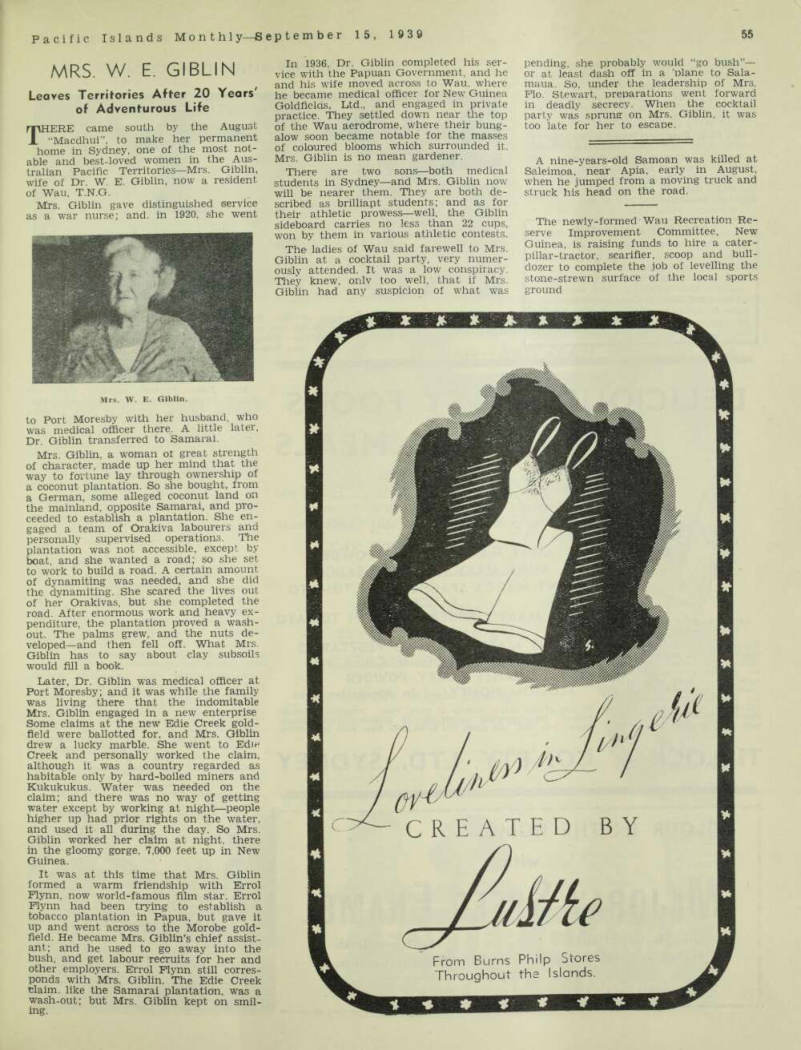
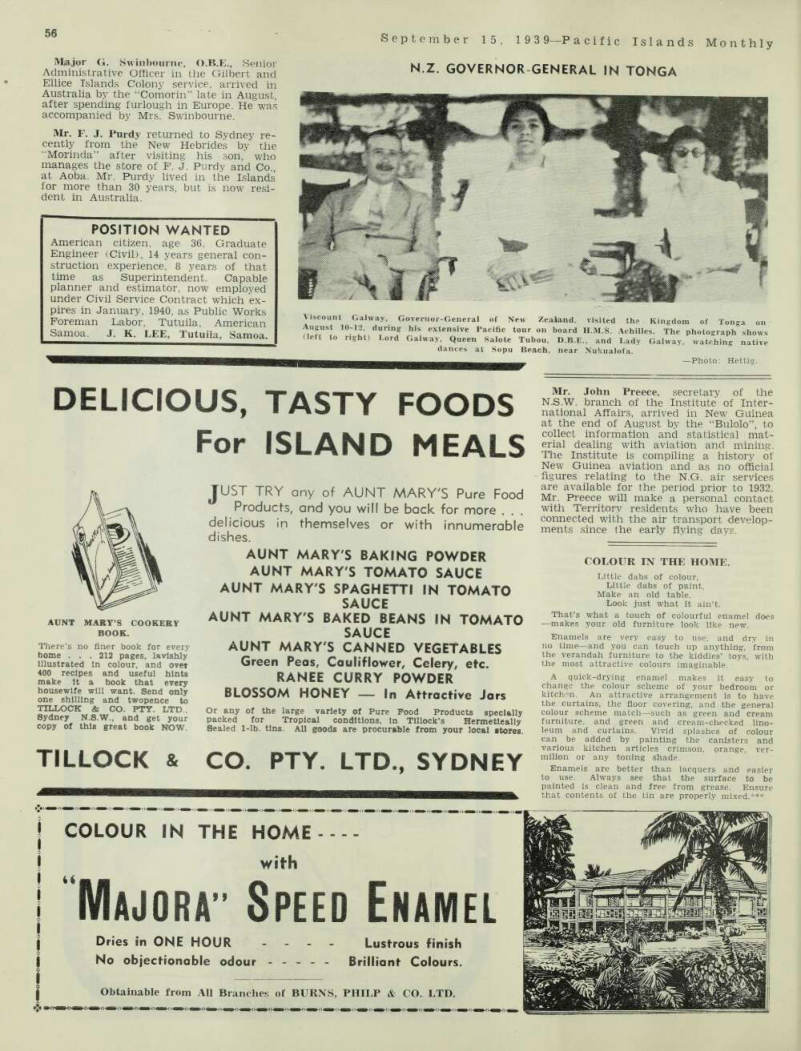
Leaves Territories After 20 Years' of Adventurous Life
rERE came south by the August •Macdhui”. to make her permanent home in Sydney, one of the most not able and best-loved women in the Aus tralian Pacific Territories —Mrs. Giblin, wife of Dr. W. E. Giblin, now a resident of Wau, T.N.G.
Mrs. Giblin gave distinguished service as a war nurse; and. in 1920, she went
to Port Moresby with her husband, who was medical officer there. A little later, Dr. Giblin transferred to Samarai.
Mrs. Giblin, a woman ot great strength of character, made up her mind that the way to fortune lay through ownership of a coconut plantation. So she bought, from a German, some alleged coconut land on the mainland, opposite Samarai, and pro ceeded to establish a plantation. She en gaged a team of Orakiva labourers and
personally supervised operations. The
plantation was not accessible, except by boat, and she wanted a road; so she set to work to build a road. A certain amount of dynamiting was needed, and she did the dynamiting. She scared the lives out of her Orakivas, but she completed the road. After enormous work and heavy ex penditure, the plantation proved a wash out. The palms grew, and the nuts de veloped—and then fell off. What Mrs.
Giblin has to say about clay subsoils would fill a book.
Later, Dr. Giblin was medical officer at Port Moresby; and it was while the family was living there that the indomitable Mrs. Giblin engaged in a new enterprise Some claims at the new Edie Creek gold field were ballotted for, and Mrs. Giblin drew a lucky marble. She went to Edie Creek and personally worked the claim, although it was a country regarded as habitable only by hard-boiled miners and Kukukukus. Water was needed on the claim; and there was no way of getting water except by working at night—people higher up had prior rights on the water, and used it all during the day. So Mrs.
Giblin worked her claim at night, there in the gloomy gorge, 7,000 feet up in New Guinea.
It was at this time that Mrs. Giblin formed a warm friendship with Errol Flynn, now world-famous film star. Errol Flynn had been trying to establish a tobacco plantation in Papua, but gave it up and went across to the Morobe gold field. He became Mrs. Giblin’s chief assist ant; and he used to go away into the bush, and get labour recruits for her and other employers. Errol Flynn still corres ponds with Mrs. Giblin. The Edie Creek claim, like the Samarai plantation, was a wash-out; but Mrs. Giblin kept on smil ing.
In 1936, Dr. Giblin completed his ser vice with the Papuan Government, and he and his wife moved across to Wau, where he became medical officer for New Guinea Goldfields, Ltd., and engaged in private practice. They settled down near the top of the Wau aerodrome, where their bung alow soon became notable for the masses of coloured blooms which surrounded it.
Mrs. Giblin is no mean gardener.
There are two sons—both medical students in Sydney—and Mrs. Giblin now will be nearer them. They are both de scribed as brilliapt students; and as for their athletic prowess—well, the Giblin sideboard carries no less than 22 cups, won by them in various athletic contests.
The ladies of Wau said farewell to Mrs.
Giblin at a cocktail party, very numer ously attended. It was a low conspiracy.
They knew, only too well, that if Mrs.
Giblin had any suspicion of what was
pending, she probably would “go bush”— or at least dash off in a ’plane to Sala maua. So, under the leadership of Mrs.
Flo. Stewart, preparations went forward in deadly secrecy. When the cocktail party was sprung on Mrs. Giblin, it was too late for her to escape.
A nine-years-old Samoan was killed at Saleimoa, near Apia, early in August, when he jumped from a moving truck and struck his head on the road.
The newly-formed Wau Recreation Re serve Improvement Committee, New Guinea, is raising funds to hire a cater pillar-tractor, scarifier, scoop and bull dozer to complete the job of levelling the stone-strewn surface of the local sports ground
Mrs. W. E. Giblin.
Major G. Swinbourne, Senior Administrative Officer in the Gilbert and Ellice Islands Colony service, arrived in Australia by the “Comorin” late in August, after spending furlough in Europe. He was accompanied by Mrs. Swinbourne.
Mr. F. J. Purdy returned to Sydney re cently from the New Hebrides by the "Morinda” after visiting his son, who manages the store of F. J. Purdy and Co., at Aoba. Mr. Purdy lived in the Islands for more than 30 years, but is now resi dent in Australia.
Mr, John Preece, secretary of the N.S.W. branch of the Institute of Inter national Affairs, arrived in New Guinea at the end of August by the “Bulolo”, to collect information and statistical mat erial dealing with aviation and mining.
The Institute is compiling a history of New Guinea aviation and as no official figures relating to the N.G. air services are available for the period prior to 1932.
Mr. Preece will make a personal contact with Territory residents who have been connected with the air transport develop ments since the early flying days.
Advertisements & other items, pp. 57-58 (2 items)
55
Pacific Islands Monthl y—S eptember 15, 1939
0'
(jyZ
B Y
CREATED
From Burns Philp Stores Throughout the Islands.
POSITION WANTED
American citizen, age 36, Graduate Engineer (Civil), 14 years general construction experience, 8 years of that time as Superintendent. Capable planner and estimator, now employed under Civil Service Contract which expires in January, 1940, as Public Works Foreman Labor. Tutuila, American Samoa. J. K. LEE, Tutuila, Samoa.
DELICIOUS, TASTY FOODS
For ISLAND MEALS
AUNT MART’S COOKERY
BOOK.
There’s no finer book for every home . . . 212 pages, lavishly illustrated In colour, and ovet 400 recipes and useful hints make It a book that every housewife will want. Send only one shilling and twopence to
TILLOCK & CO. PTY. LTD.,
Sydney N.S.W., and get your copy of this great book NOW.
JUST TRY any of AUNT MARY'S Pure Food Products, and you will be back for more . delicious in themselves or with innumerable dishes.
AUNT MARY'S BAKING POWDER
AUNT MARY'S TOMATO SAUCE
AUNT MARY'S SPAGHETTI IN TOMATO
SAUCE
AUNT MARY'S BAKED BEANS IN TOMATO
SAUCE
AUNT MARY'S CANNED VEGETABLES
Green Peas, Cauliflower, Celery, etc.
RANEE CURRY POWDER
BLOSSOM HONEY In Attractive Jars Or any of the large variety of Pure Food Products specially packed for Tropical conditions, In Tlllock’s Hermetically Sealed 1-lb. tins. All goods are procurable from your local stores.
TILLOCK & CO. PTY. LTD., SYDNEY
COLOUR IN THE HOME -
with
Majora” Speed Enamel
Dries in ONE HOUR - Lustrous finish No objectionable odour Brilliant Colours.
Obtainable from All Branches of BURNS, PHILP & CO. LTD.
N.Z. Governor General In Tonga
Viscount Galway, Governor-General of New Zealand, visited the Kingdom of Tonga on August 10-12, during his extensive Pacific tour on board H.M.S. Achilles. The photograph shows deft to right) Lord Galway, Queen Salote Tubou. D.B.E.. and Lady Galway, watching native dances at Sopu Beach, near Nukualofa. —Photo: Hettig.
Colour In The Home.
Little dabs of colour, Little dabs of paint.
Make an old table.
Look just what it ain’t.
That’s what a touch of colourful enamel does —makes your old furniture look like new.
Enamels are very easy to use, and dry in no time—and you can touch up anything, from the verandah furniture to the kiddies’ toys, with the most attractive colours imaginable.
A quick-drying enamel makes it easy to change the colour scheme of your bedroom or kitchen. An attractive arrangement is to have the curtains, the floor covering, and the general colour scheme match—such as green and cream furniture, and green and cream-checked lino leum and curtains. Vivid splashes of colour can be added by painting the canisters and various kitchen articles crimson, orange, ver milion or any toning shade.
Enamels are better than lacquers and easier to use. Always see that the surface to be painted is clean and free from grease. Ensure that contents of the tin are properly mixed.***
Advertisements & other items, pp. 59-60 (2 items)
57
SIDELIGHTS IN PAPUA AND
N. GUINEA
(Continued from Page 22.)
Pacific Islands Mon t h 1 y— S ep tem b e r 15, 1939
Foster Clarks
NO-1 HATE FRUIT!
\ V >.
THEY JUST WOULDNT
EAT FRUIT UNTIL -
I GAVE THEM
FOSTER CLARK S
CREAMY CUSTARD
and the whole family
like its Delicious Flavour
LOVELY,
MUMMY
-MORE /
THERE'S NO
CUSTARD TO
COMPARE WITH
FOSTER CLARKS
Stop meal-time fights! Give the family Foster Clark’s delicious creamy Custard on their fruit.
Mrs. Adams, of Rose P»ay— seen here with one of her sons —is among the hundreds of enthusiasts for Foster Clark’s Custard. Its reputation for flavour and nourishment is long estab lished and worldwide.
Foster Clark’s Custard is sold by all grocers, in 3 sizes and 4 flavours.
Buy a penny packet, to try it!
H6OO
FOSTER CLARKS
. IjIM,
m ...
C'U STARS I
Powder J
End Rheumatism
While You Sleep
If you suffer sharp, stabbing pains, if joints are swollen, it shows your blood is poisoned through faulty kidney action. Other symptoms of Kidney Disorders are Burning, Itching Passages, “Getting up Nights,” Backaches, Lumbago, Leg Pains, Nervousness, Dizziness, Headaches, Colds, Puffy Ankles, Circles under Eyes, Lack of Energy, Appetite, etc. Ordinary medicines can’t help much —you must kill the germs ruining health. Cystex ends these troubles by removing the cause. Get Cystex from any Chemist on Guarantee to put you right or money back. Act Now ! In 24 hours you will feel better and be completely well - in one week. The Guarantee protects you. Now in 3 sizes: 1/9, 4/-, 8/-.
GUARANTEED for Kidneys, Rheumatism, Bladder
v; C •- 9.1 1 f Here in the islands, I need a seaworthy craft, with cool, well ventilated yet roomy cabin and an absolutely reliable engine.
Thus the Chapman 16ft. Cabin Model is my choice. It is powered with a famous Chapman PUP Engine and fitted with a sturdy cabin that provides sleeping accommodation for two as well as ample storage space. Thus there's protection from the tropic sun, wind and seaspray. You, too, write for details of this craft.
CHAPMAN & SHERACK
26 Clara Street, Ersltineville, N.S.W.
ENGINE MANUFACTURERS FOR THIRTY YEARS
American Or Japanese?
Problems for the Philippines
THE United States still is “dithering” with the problem of the Philippines.
Under the Tydings-McDuffie Act, the territory is enjoying increasing independ ence, and it is due to become completely independent in 1946. But, as the Ameri cans move out, the Japanese are moving in; and the Filipinos now are inclined to prefer the devil they know, to the devil they don’t know.
The U.S. High Commissioner to the Philippines, Mr. McNutt, in a speech at Indianapolis in July, advocated retention of the U.S.A. sovereignty over the islands “to preserve peace in the Orient”. He em phasised not only that this was neces sary for the foreign policy of the U.S.A., but also for the economic preservation of the islands. Many Filipino leaders, who campaigned for independence, had changed their minds in the past two years, he said.
“Perhaps suddenly, but, they hope, not too late, many have come to realise that independence, however attractive, may merely mean a trade in sovereignties”, he added.
Five Tons Of Fiji Gold
rE Emperor and Loloma gold mines in Fiji continue to increase their monthly output says the “Fiji Times”.
The production of fine gold up to mid- August from Emperor was 113,496 ounces, equalling 3.45 tons; and from Loloma 62,649 ounces, equalling 1.90 tons. Valued in Fijian currency it amounted to £1,485,872.
in Papua
Dearer Petrol and More Taxes in Papua
AN increase in taxation was considered necessary by the Legislative Council of Papua, which met in mid-August and had before it budgetary figures re lating to the current year.
The duty on petrol was raised by 3d. per gallon, which makes the retail price, in Port Moresby and Samarai, in the vicinity of 2/- per gallon.
The only other tax imposed took the form of a re-arrangement of the method of assessing the ad valorem customs duty.
The practice in the past has been to cal culate, in Australian currency, the per centage on goods from overseas, as if sterling figures were Australian currency figures. It now has been decided that the value of all goods being imported shall first of all be converted into Australian currency, before the percentage of ad valorem customs duty is calculated.
The two new taxes will give several thousands of pounds per annum of addi tional revenue, and it was then calcu lated that this would about balance the budget. This, of course, was before the outbreak of war—there is no saying how this latter cataclysm may effect the Terri tory’s finances.
A new convent school will shortly be erected in Port Moresby, Papua, to re place the old school which recently was demolished.
Rabaul Electricity, Limited declared a dividend of 5 per cent, early in September.
Halt a Century of Mission
Work Late Monseigneur Doucere, Bishop of New Hebrides
MONSEIGNEUR Doucere, French Roman Catholic Bishop of the New Hebrides, who died recently at Vila, aged 82. was interred at Montmartre Mis sion station, five miles inland, following a Funeral Mass, in Vila Church. In spite of heavy rain, the funeral was attended by the whole Vila population, French and English, Catholic and Protestant, Though little seen of late years, ex cepting at special Church ceremonies, Bishop Doucere was much loved through out the New Hebrides, where he had lived and worked for 50 years. Before the funeral procession moved off. eulogistic speeches, touching on Bishop Doucere’s life and work, were made by Monsieur Sautot (French Resident Commissioner) and Mr. Blandy (Acting British Resident Commissioner). Don Manuel Bosch Bar rett, Spanish President of the Joint Court of the New Hebrides, was also present.
Bishop Doucere was born at Evran, North France, on April 3, 1857. Entering the priesthood as a young man. he was one of the first four Catholic missionaries chosen to launch a Mission in the New Hebrides in 1886. On his way out, how ever, he was retained at Noumea whilst his colleagues went on to the island of Malekula. Later, he was sent to relieve Father Le Forestiere, whose health had broken down through hardship while founding the first mission station at Port Sandwich, Malekula.
The Mission had met with little success and Father Doucere found himself con fronted with a heavy task. There was a shortage of supplies and equipment, and the promised material to build a mission house had not arrived. Pere Doucere lived in a rude native hut, and suffered many perils and hardships voyaging from place to place, in all weathers, in native canoes and small boats. He later returned to Noumea to place the exact state of affairs before his Bishop, Monseigneur Fraysse. He was given reinforcements, supplies, and the material to build the first mission house, which still stands at Port Sandwich.
In 1893, after four years of strenuous work, which had now planted the Mission firmly on its feet, he was again forced to return to New Caledonia on account of ill health. In 1898, he toured the New Hebrides mission stations as Bishop’s Delegate and later as Prefet Apostolique.
A central Mission was then founded at Vila, with mission schools at Mele and Montmartre. The Mission now was flourishing, and in 1904, the New Hebrides was made a separate Bishopric, with Pre fet Doucere as its first Bishop.
The rest of Monseigneur Doucere’s story is told in his book “The History of the New Hebrides Mission”, published a few years ago. Also interesting are his published “Notes Ethnologiques”, a scholarly work dealing with the origins of the native tribes among whom he worked: and his “Curiosities Linguist iques” which gives us a deeper under standing of the native mind and thought
processes.
D.
Koitaki Para Rubber Estates, Ltd., re ports that the output of dry rubber from the Papuan plantations in August was 50,787 lb.
Loss Of Aeroplane In Cook
Islands
r[IS is how H.M.S. “Achilles” lost an amphibian aircraft at Aitutaki (Cook Islands) early in July : The ship was slowly cruising in circles when the aircraft, having finished a flight over the land, came off to be taken on board.
Two men manned the aircraft. The pilot. Lieutenant Sykes, brought it down and began to taxi up to the side of the ship, while Leading Telegraphist P. Trent, sitting on the wing secured by a safety chain, got ready to hook the machine to the ship’s crane for hoisting on board.
Suddenly, just as it came alongside, the aircraft was caught by a swell ana over turned. Mr. Trent was thrown into the water and Lieutenant Sykes slipped his safety belt as the craft tipped over and
struggled clear. Bottom up, the amphibian did not sink for about half an hour, and for the whole of that time the two men made gallant efforts, disdaining the pos sible presence of sharks, f o secure sal vage lines to it. They were assisted by the crew of two seaboats, a cutter and a whaleboat, which were immediately lowered, but the fact that the machine was upside down prevented efforts to se cure it before it sank.
Two deaths occurred in Nukualofa, Tonga, in August. Mr. Fred J. Watkin, eldest son of the Rev. J. B. Watkin, who was head of the Free Church of Tonga for many years, passed away after a long illness. Mr. Samuel Stewart, at one time Assistant Manager for Messrs. D. H. &' P.
G., the big German firm, in Haapai, passed away suddenly in the Government Hospital.
Advertisements & other items, pp. 61-62 (1 item)
Delco- Light
Over 500,000 Satisfied Users
Since 1916, in over half a million homes, including hundreds throughout the Islands, DELCO-LIGHT (a product of General Motors) has proved its dependability, efficiency and economy.
Without doubt this is proof enough that you will make no mistake when you purchase a DELCO-LIGHT plant.
Model 2B12 Delco-Light generates 200 watts at 12 volts and will light eight 25 watt lamps direct from the generator—or five for 10 hours from the 105 A.H. battery, when fully charged. It will run for 16 hours on one gallon of petrol.
For complete information please write to Desk P.I. Sizes range from 200 to 6,000 watts.
PRICES OF PLANTS — IN BOND, SYDNEY. 2B12 (12 volt) — £23/15/-, with 83 A.H. battery (car type.) 2B12 (12 volt) — £26/15/-, with 105 A.H. battery, (individual cells.) 2B6 (6 volt) — £24/5/-, with 105 A.H. battery (individual cells.
Distributors:
WARBURTON, FRANKI, LTD.
307-15 KENT STREET, SYDNEY.
MELBOURNE BRISBANE
Extra Strong Saddle
Extra Low Price
75 - bare
Built by highly skilled workmen from the best available materials, the Great Western Saddle represents remarkable value at <5/-. It Is specially built to suit Island conditions with a Galvanised Tree, Copper Tacks and Brass Fillings.
These Saddles are obtainable through your regular agent.
We carry complete stock of Saddles, Collars, Whips, Rugs and Saddlery Accessories.
Write for Catalogue.
NEWMARKET SADDLERY
18 20 WILSON SI \ E WTO'S V
W. H WILLIAMS TOR: SAFER SADDLES
R.F.IA-f
22 RIM FIRES
The New
Brass Case
ensures consistency in performance.
The Dry
Lubricated
Bullets with which 'lmperials' are loaded ensure minimum wear of the rifle barrel.
ICIANZ "Imperials" are the cleanest and most reliable ammunition any rifleman can use.
Obtainable Everywhere Popular Prices In Short, Long and Long Rifle, Solid or Hollow Point.
High Velocifii
Hard Hitting
\V 0* W. %
Kirschbaum
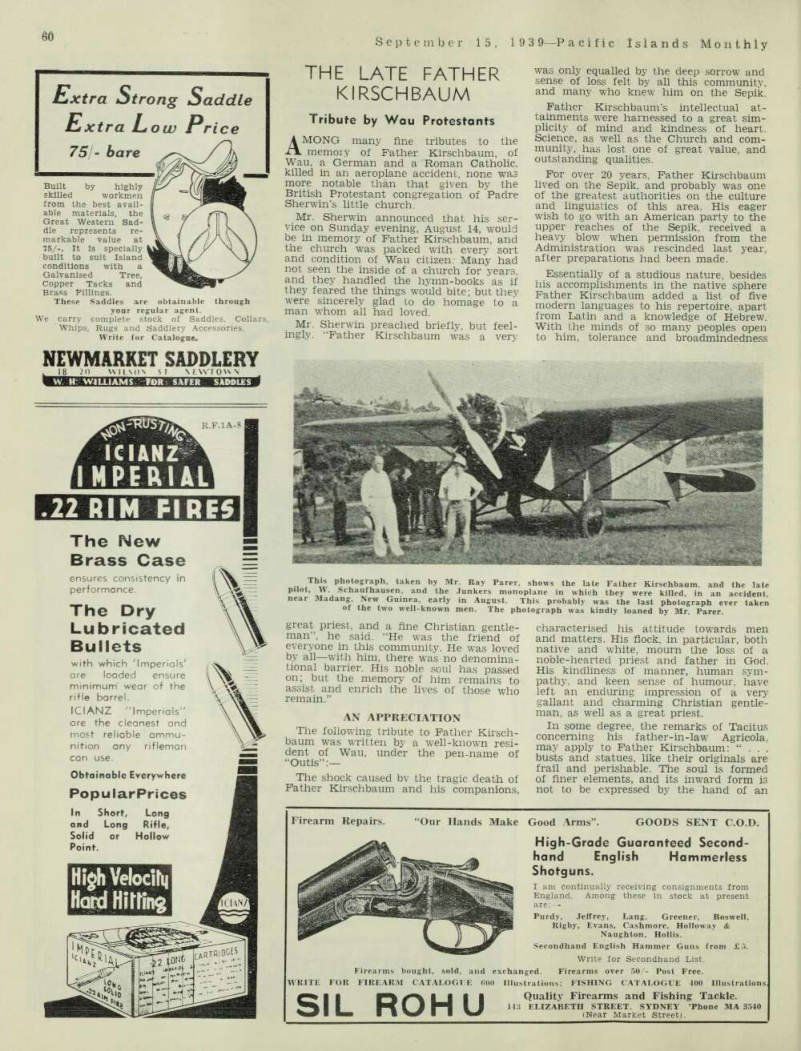
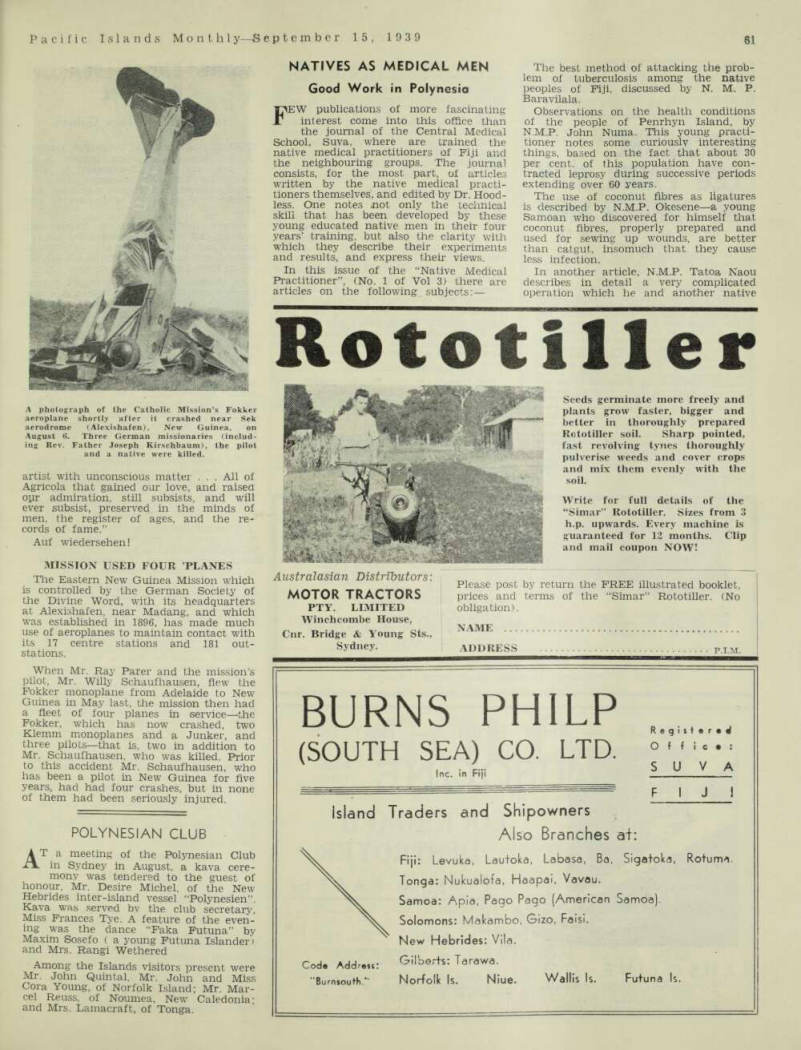
The Late Father
Tribute by Wau Protestants
AMONG many fine tributes to the memory of Father Kirschbaum, of Wau, a German and a Roman Catholic, killed in an aeroplane accident, none was more notable than that given by the British Protestant congregation of Padre Sherwin’s little church.
Mr. Sherwin announced that his ser vice on Sunday evening, August 14, would be in memory of Father Kirschbaum, and the church was packed with every sort and condition of Wau citizen. Many had not seen the inside of a church for years, and they handled the hymn-books as if they feared the things would bite; but they were sincerely glad to do homage to a man whom all had loved.
Mr. Sherwin preached briefly, but feel ingly. “Father Kirschbaum was a very
great priest, and a fine Christian gentle man”, he said. “He was the friend of everyone in this community. He was loved by all—with him, there was no denomina tional barrier. His noble soul has passed on; but the memory of him remains to assist and enrich the lives of those who remain.”
An Appreciation
The following tribute to Father Kirsch baum was written by a well-known resi dent of Wau, under the pen-name of “Outis”:— The shock caused bv the tragic death of Father Kirschbaum and his companions,
was only equalled by the deep sorrow and sense of loss felt by all this community, and many who knew him on the Sepik.
Father Kirschbaum’s intellectual at tainments were harnessed to a great sim plicity of mind and kindness of heart.
Science, as well as the Church and com munity, has lost one of great value, and outstanding qualities.
For over 20 years, Father Kirschbaum lived on the Sepik, and probably was one of the greatest authorities on the culture and linguistics of this area. His eager wish to go with an American party to the upper reaches of the Sepik. received a heavy blow when permission from the Administration was rescinded last year, after preparations had been made.
Essentially of a studious nature, besides his accomplishments in the native sphere Father Kirschbaum added a list of five modern languages to his repertoire, apart from Latin and a knowledge of Hebrew.
With the minds of so many peoples open to him, tolerance and broadmindedness
characterised his attitude towards men and matters. His flock, in particular, both native and white, mourn the loss of a noble-hearted priest and father in God.
His kindliness of manner, human sym pathy, and keen sense of humour, have left an enduring impression of a very gallant and charming Christian gentle man, as well as a great priest.
In some degree, the remarks of Tacitus concerning his father-in-law Agricola, may apply to Father Kirschbaum; “ . . , busts and statues, like their originals are frail and perishable. The soul is formed of finer elements, and its inward form is not to be expressed by the hand of an
Th is Paraph, taken by Mr. Ray Parer, shows the late Father Kirschbaum. and the late pilot, W. Schaufhausen, and the Junkers monoplane in which they were killed, in an accident, near Madang, New Guinea, early in August. This probably was the last photograph ever taken of the two well-known men. The photograph was kindly loaned by Mr Parer.
artist with unconscious matter ... All of Agricola that gained our love, and raised opr admiration, still subsists, and will ever subsist, preserved in the minds of men, the register of ages, and the re cords of fame,”
Auf wiedersehen!
Mission Used Four Planes
The Eastern New Guinea Mission which is controlled by the German Society of the Divine Word, with its headquarters at Alexishafen, near Madang, and which was established in 1896, has made much use of aeroplanes to maintain contact with its 17 centre stations and 181 out stations.
When Mr. Ray Parer and the mission’s pilot, Mr. Willy Schaufhausen, flew the Fokker monoplane from Adelaide to New Guinea in May last, the mission then had a fleet of four planes in service—the Fokker, which has now crashed, two Klemm monoplanes and a Junker, and three pilots—that is, two in addition to Mr. Schaufhausen. who was killed. Prior to this accident Mr. Schaufhausen, who has been a pilot in New Guinea for five years, had had four crashes, but in none of them had been seriously injured.
A photograph of the Catholic Mission’s Fokker aeroplane shortly after it crashed near Sek aerodrome (Alexishafen), New Guinea, on August 6. Three German missionaries (includ ing Rev. Father Joseph Kirschbaum), the pilot and a native were killed.
Advertisements & other items, p. 62 (1 item)
Sil Rohu
Firearm Repairs. “Our Hands Make Good Arms”. GOODS SENT C.O.D.
High-Grade Guaranteed Second-
hand English Hammerless
Shotguns.
I am continually receiving consignments from England. Among these in stock at present are:— Purdy, Jeffrey, Lang. Greener, Boswell, Rigby, Evans, Cashmere, Holloway & Naughton, Hollis.
Secondhand English Hammer Guns from £5.
Write for Secondhand List.
Firearms bought, sold, and exchanged. Firearms over 50/- Post Free.
WHITE FOR FIREARM CATALOGUE 000 Illustrations: FISHING CATALOGUE 400 Illustrations,
SIL ROHU
Quality Firearms and Fishing Tackle. 143 ELIZABETH STREET. SYDNEY ’Phone MA 3540 (Near Market Street).
Polynesian Club
AT a meeting of the Polynesian Club in Sydney in August, a kava cere mony was tendered to the guest of honour. Mr. Desire Michel, of the New Hebrides inter-island vessel “Polynesien”.
Kava was served by the club secretary, Miss Frances Tye. A feature of the even ing was the dance “Faka Futuna” by Maxim Sosefo ( a young Futuna Islander) and Mrs. Rangi Wethered Among the Islands visitors present were Mr. John Quintal, Mr. John and Miss Cora Young, of Norfolk Island; Mr. Mar cel Reuss, of Noumea, New Caledonia; and Mrs. Lamacraft, of Tonga.
Natives As Medical Men
Good Work in Polynesia
FEW publications of more fascinating interest come into this office than the journal of the Central Medical School, Suva, where are trained the native medical practitioners of Fiji and the neighbouring groups. The journal consists, for the most part, of articles written by the native medical practi tioners themselves, and edited by Dr. Hood less. One notes not only the technical skill that has been developed by these young educated native men in their four years’ training, but also the clarity with which they describe their experiments and results, and express their views.
In this issue of the “Native Medical Practitioner”, (No. 1 of Vol 3) there are articles on the following subjects:—
The best method of attacking the prob lem of tuberculosis among the native peoples of Fiji, discussed by N. M. P.
Baravilala.
Observations on the health conditions of the people of Penrhyn Island, by N.M.P. John Numa. This young practi tioner notes some curiously interesting things, based on the fact that about 30 per cent, of this population have con tracted leprosy during successive periods extending over 60 years.
The use of coconut fibres as ligatures is described by N.M.P. Okesene—a young Samoan who discovered for himself that coconut fibres, properly prepared and used for sewing up wounds, are better than catgut, insomuch that they cause less infection.
In another article, N.M.P. Tatoa Naou describes in detail a very complicated operation which he and another native
medical practitioner performed on a man in Ihe Ellice Islands, who was in a very bad way, as the result of Filariasis—or, in other words, an Elephantiasis growth.
Medical work in the villages in West ern Samoa is described by NJVI.P. Faatiga.
All this skill has been developed, and all this splendid medical work is being done among the native peoples of the South Seas, because of the existence in Suva of the Central Medical School — which is maintained partly by the Gov ernment of Fiji and partly by a grant from the Rockefeller Foundation.
Advertisements & other items, pp. 63-64 (2 items)
61
Pacific Islands Mont hi y—S eptember 15, 1939
Rototiller
m Seeds germinate more freely and plants grow faster, bigger and better in thoroughly prepared Rototiller soil. Sharp pointed, fast revolving tynes thoroughly pulverise weeds and cover crops and mix them evenly with the soil.
Write for full details of the “Simar” Rototiller. Sizes from 3 h.p. upwards. Every machine is guaranteed for 12 months. Clip and mail coupon NOW!
Australasian Distributors'.
MOTOR TRACTORS
PTY. LIMITED
Winchcombe House, Cnr. Bridge & Young Sts., Sydney.
Please post by return the FREE illustrated booklet, prices and terms of the “Simar” Rototiller. (No obligation).
NAME
ADDRESS p.i.m.
BURNS PHILP
(SOUTH SEA) CO. LTD.
Inc. in Fiji
Island Traders and Shipowners
Also Branches at:
Registered Office;
SUVA
FIJI
\Fiji: Levuka. Lautoka, Labasa, Ba. Sigatoka, Rotuma.
Tonga: Nukualofa, Haapal. Vavau.
Samoa: Apia, Pago Pago (American Samoa).
Solomons: Makambo, Gizo, Faisi.
New Hebrides: Vila.
Cod. Addr.it; Gilberts: Tarawa.
"Burnsouth.*' Norfolk Is. Niue. Wallis Is. Futuna Is.
BACKACHE,
LEG PAINS MAY
BE DANGER SIGN
Of Tired Kidneys How to Get
Happy Relief.
If backache and leg pains are making you miserable, don’t just complain and do nothing about them. Nature may be warning you that your kidneys need flushing out.
The kidneys are the great Alters of the blood. All day long the blood is passing through the 15 miles of kidney tubes to be strained of acids and wastes. Healthy persons should pass 3 pints a day and so get rid of more than 3 pounds of waste matter.
When the kidney tubes become clogged, bladder passages are scanty, burning and smarting. The acids and wastes that should be passed out of the body, stay in the blood and become poisonous. This condition causes nagging backaches, leg pains, loss of pep and energy, getting up nights, lumbago, swollen feet and ankles, pufflness under the eyes, rheumatic pains and dizziness.
Don’t waitl Ask your chemist for DOAN'S BACKACHE KIDNEY PILLS . . used successfully the world over by millions of people suffering with backache and other kidney disorders. They give quick relief and will help flush out the 15 miles of kidney tubes.
So be sure you get DOAN’S BACKACHE
KIDNEY PILLS.
Ship Chandlery Hardware
/Write for j
Ship Chandlery /
Cataloaue. J
Catalogue.
Special "In Bond” Prices for all Islands enquiries quoted on application.
BROOMFIELD'S LIMITED
152 SUSSEX STREET :: SYDNEY.
Cables "Boom’’, Sydney.
Large and Complete Stocks of
SHIP CHANDLERY
IRONMONGERY OF ALL KINDS. PAINTS,
WHITE LEAD AND OILS.
Sole Agents for: P. H. MUNTZ & CO.’s 3-CROWN BRAND METAL SHEATHING.
PEACOCK & BUCHANS’ ENGLISH READY-MIXED PAINTS.
IT ATTRACTS THEY EAT IT THEY DIE
USOLINE
H»oy ?ai
NEVER
KNOWN
TO FAIL !
AUSOLINE CO
314 CROWN STREET. SYDNEY
(Established 1919)
COCKROACH
DESTROYER
IT'S A PASTE
PRICES;
Mb. 5/- . . . 3lbs. 10/- Postage Extra.
Remit Cash with Order.
Obtainable also from Islands stores of:
BURNS, PHILP & Co. Ltd.
W. R. CARPENTER & Co. Ltd.
Submarine Off N.Q.
REPORTS, published about the middle of August, that a foreign submarine had been seen off the North Queens land coast, in the vicinity of Townsville, were ridiculed. It may be said, however, that the reports were not all imagination —a foreign submarine actually was seen in the vicinity of Townsville, not only by civilians, but by certain aeroplanes of the Australian defence force which were sent out on search. The incident was regarded as serious—until the completion of the Russia-German pact altered the whole international outlook.
Pen-friends in the Pacific Islands are wanted by Mr. Leonard W. Cook, 5 Clovelly Road, Acton Green, Chiswick, London, W. 4,, England.
A Returned Soldiers’ Memorial Hall on Misima Island, Eastern Papua, was offi cially opened recently by Mr. A. Rentoul, chairmap of the local branch of the
R.S.S.I.L.A.
More Eager Search
For Oil
In Papua and New Guinea
r ERE_ has been a persistent rumour in Sydney that, how Britain is at war, and it is neccessary to con serve the Empire’s resources, the oil search interests in Papua may soon an nounce the discovery of a payable oil well.
Recent inquiries, both in Papua and Sydney, fail to show any basis for the re port. The oil interests are exceedingly hopeful and active; but they do not appear yet to have located a real oil-well.
“A definite step forward in the search for oil in Papua and New Guinea has now been recorded”, said the general manager of the Australasian Petroleum Company (Mr. C. Saunders) in mid-August, an nouncing that the regional district in which the first deep test well will be lo cated has been selected. .
“In this region, several possible struc tures have been shown up as a result of aerial photography. The importance of these structures cannot, of course, be de termined by aerial observation alone, and they are, therefore, now receiving exam ination on the ground from geological field parties”, he said. ‘‘To assist in choosing the most promis ing of these structures for the first test by the drill, a seismograph party has recently arrived in Papua, together with an ad viser with many years’ experience in con ducting seismic operations in Iran.
“The drilling equipment being supplied is the most modern of its kind, capable of dealing with the most difficult struc tural conditions and, if necessary, a depth of 10.000 ft. can be reached.
“The aerial survey programme that was inaugurated last December is still con tinuing. To date, over 13.000 square miles of territory have been photographed.”
The company was formed last year with a nominal capital of £1,000,000, and acquired the special permits and properties of Oil Search, Ltd., and Oriomo Oil, Ltd., in New Guinea and Papua respectively. Shareholders are the Vacuum Oil Co., Pty., Ltd. (which is* a wholly owned subsidiary of Standard Vacuum Oil Com pany of America), D’Arcy Exploration Co., London (which is a wholly-owned subsidiary of the Anglo-Iranian Oil Company), and Nominated Holdings, Pty., Ltd., of Sydney (which is a wholly-owned subsidiary of Oriomo Oil. Ltd., and Oil Search, Ltd., whose shares are listed on the local exchanges).
The Vacuum and D’Arcy companies subscribed cash for £ 135,000 shares each, while the third partner. Nominated Holdings, received £135,000 in paid-up shares as consideration for permits and properties. Vacuum has the right to in troduce one additional shareholding company.
Directors of Australasian Petroleum Co. are Messrs. Hugh Hamilton (chairman), Wesley A.
Ince, W. J. Byrne. M. T. Lloyd, W. A. Freeman, and E. F. Griffin.
H.M.S. Fiji
ANEW British cruiser of 8,000 tons, launched several months ago in Scotland, has been named the “Fiji”.
The people of Fiji, through the “Fiji Times and Herald”, raised by public sub scription a sum which was transmitted to the Admiralty. The Admiralty purchased various articles with the Fijian donation —mostly silverware (for the mess rooms) which has been inscribed to show the Crown Colony’s interest in the ship.
Advertisements & other items, p. 64 (1 item)
62
September 15, 193 9—P acific Islands Monthly
Islands Mining
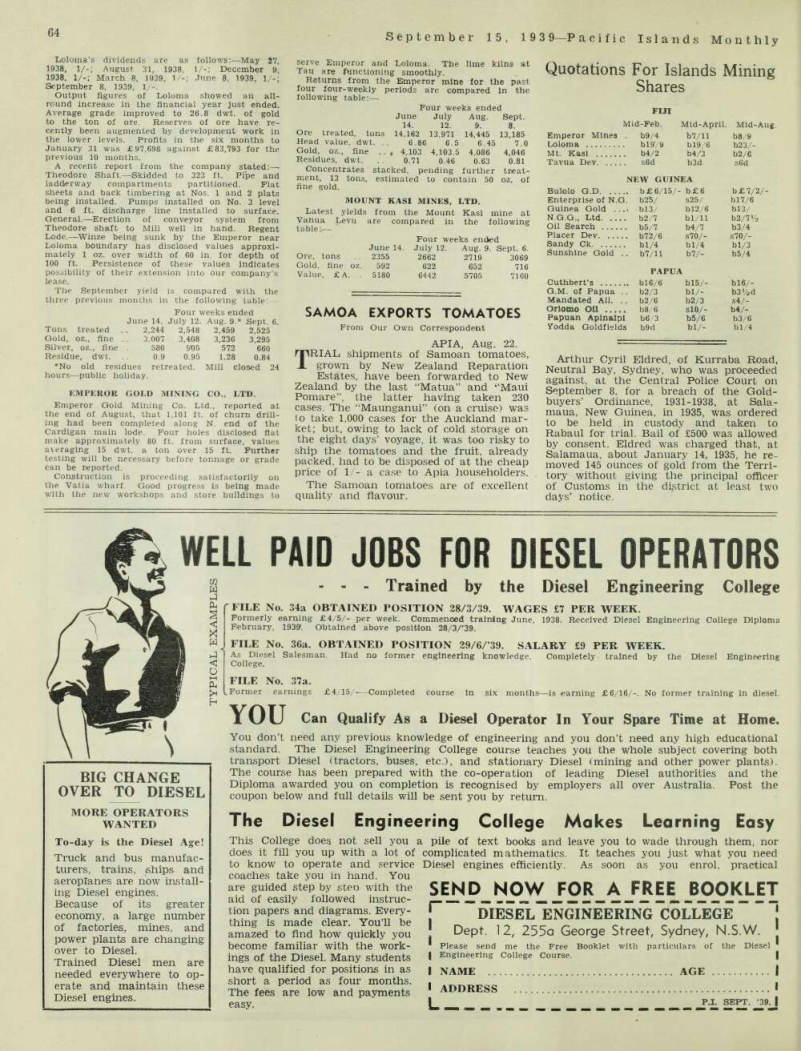
News
From Papua
Papuan Apinaifi Petroleum Co., Ltd.
Papuan apinaipi petroleum co., ltd., announced early in September that the No. 4 Oiapu Scout Bore was down to 929 ft. with continuous gas showing, the gauge pres sure at the surface being 120 lb. to the square inch. From 745 ft. onwards the core showed that the formation was becoming more car bonaceous.
Yodda Goldfields, Ltd.
Yodda Goldfields, Ltd., announced in early September that the yield for August was 98 oz. of gold.
Mandated Alluvials. N.L.
Transfer books of Mandated Alluvials. N.L., closed on September 12 in connection with the proposed payment of an interim dividend of 3d. per share, payable on September 26.
Cuthbert’S Misima Goldmine, Ltd.
Figures for the August clean-up from Cuth bert’s mine on Mislma Island. Papua, compared with the two previous yields as follows;
From New Guinea
Sunshine Gold Development, Ltd.
THE directors of Sunshine Gold Development.
Ltd., in a circular to shareholders, state that it is not possible to make a distribution from profits this year.
The surface area of the ground from which overburden has been removed is five and a half acres, and for the past three months, the direc tors point out, the company has been elevating the deeper gravels with profitable results. The No. 5 elevator, however, is working ground of comparatively low value, and it is not expected that the richer ground uncovered by deflecting the course of the Watut River will be reached until later in the year. No. 6 elevator is al ready in position to treat this ground. A pipe line over the Watut River, to sluice the terraces, has been laid, and it is expected that sluicing will be in progress during September. The sluic ing of the terraces will not require the use of elevators.
The directors believe that no further major capital expenditure on the company’s property will be requlredT for some time. The whole of the work undertaken this year has been carried out with the object of increasing production and lengthening the life of the mine.
The clean-up for August yielded 273 oz. of gold.
New Guinea Goldfields, Ltd.
A progress report Issued in August by The Mining Trust, Limited, consulting engineers to New Guinea Goldfields, Limited, compared the production and profit for May, June and July, as follows:
Enterprise Of New Guinea Gold And
Petroleum Development. N.L.
A report from Enterprise of New Guinea Gold and Petroleum Development, N.L., In mld-
August, gave the following details of opera tions: —Edie mine, faces on the three levels still in ore. South crosscut at 1,000 ft. from portal of No. 1 level passed through several makes of quartz. At 23 ft. from the main drive across a width of 21 in., following were values: Gold 8 oz. 19 dwt. 9 grs., silver 16 oz. 8 dwt. 19 grs.
Crosscut being continued, and still in mineral ised quartzitic material.
Sandy Creek Gold Sluicing, Ltd.
The mine manager of Sandy Creek Gold Sluic ing. Ltd., New Guinea, reported early in Sep tember that the last four yields compared as follows: —
From Fiji
Loloma (Fiji) Gold Mines, N.L.
THE sixth dividend from Loloma (Fiji) Gold Mines, N.L., of 1/- a share was declared payable on September 8. Share transfer books closed on August 25.
With this payment (requiring £41,250), Loloma will have returned £247,500 to shareholders, while Emperor has returned £237,500. Total distributions from these two Fijian undertakings has thus reached £485,000 —within a period of four years from the formation of Loloma com pany and the first crushing by Emperor as a public company. (Continued Overleaf)
May. June. July. Aug.
Cubic yards .. .. 13,343 21,201 24,443 26,693 Gold, oz * 153 228 279 446 Per cubic yard . . I/8V2 l/VU I/8V2 2/4 , ,2 Working cost ... 1/- 1/- /II Vi /II
June. July. Aug.
Mill treated, tons .. .. 3.010 3,107 3,326 Bullion, oz 2.793 2.998 3,354 Gold. fine, oz 770 800 842 Silver, fine oz 1.956 2.125 2,436 Estimated value £6.275 £6.525 £6.885 Value per ton of ore 41/8 42/- 41/5
May June July Edie Creek mill— Ore, tons .. 3,269 2,973 3,182 Gold, oz., fine . 803 787 903 Silver, oz., fine . 3,979 3,751 5,280 Alluvial— Gold, oz., fine .. 1,201 653 1,060 Silver, oz., fine . 1,121 1,222 1,923 Golden Ridges mill— Tons treated 1,723 2.5-95 3,116 Gold, oz., fine . . 778 999 2,002 Silver, oz., fine . 778 999 2,002 Operating profit— Edie Creek. £ *865 *765 1,185 Alluvial, £ 1,927 *699 1,578 Golden Ridges, £ 176 1,556 10.294 •Loss.
Loss on alluvial in June was due to low value of the gravel treated.
Loloma’s dividends are as follows:—May 27, 1938, 1/-; August 31, 1938, 1/-; December 9, 1938, 1/-; March 8, 1939, 1/-: June 8, 1939, 1/-; September 8, 1939, 1 Output figures of Loloma showed ah all round increase in the financial year just ended.
Average grade improved to 26.8 dwt. of gold to the ton of ore. Reserves of ore have re cently been augmented by development work in the lower levels. Profits in the six months to January 31 was £97,698 against £83,793 for the previous 10 months.
A recent report from the company stated:— Theodore Shaft.—Skidded to 323 ft. Pipe and ladderway compartments partitioned. Flat sheets and back timbering at Nos. 1 and 2 plats being installed. Pumps installed on No. 3 level and 6 ft. discharge line installed to surface.
General.—Erection of conveyor system from Theodore shaft to Mill well in hand. Regent Lode.—Winze being sunk by the Emperor near Loloma boundary has disclosed values approxi mately 1 oz. over width of 60 in. for depth of 100 ft. Persistence of these values indicates possibility of their extension into our company’s lease.
The September yield is compared with the three previous months in the following table: — Four weeks ended
Emperor Gold Mining Co., Ltd.
Emperor Gold Mining Co. Ltd., reported at the end of August, that 1,101 ft. of chum drill ing had been completed along N. end of the Cardigan main lode. Pour holes disclosed flat make approximately 80 ft. from surface, values averaging 15 dwt. a ton over 15 ft. Further testing will be necessary before tonnage or grade can be reported.
Construction is proceeding satisfactorily on the Vatia wharf. Good progress is being made with the new workshops and store buildings to
serve Emperor and Loloma. The lime kilns at Tau are functioning smoothly.
Returns from the Emperor mine for the past four four-weekly periods are compared in the following table:—
Concentrates stacked, pending further treat ment, 13 tons, estimated to contain 50 oz. of fine gold.
Mount Kasi Mines, Ltd.
Latest yields from the Mount Kasi mine at Vanua Levu are compared in the following table:— '
June 14. July 12. Aug. 9.* Sept. 6.
Tons treated .. 2,244 2,548 2,459 2,525 Gold, oz„ fine . . 3.007 3,408 3,236 3,295 Silver, oz., fine , 580 9t»5 572 660 Residue, dwt. . 0.9 0.95 1.28 0.84 •No old residues retreated. Mill closed 24 hours —public holiday.
Four weeks ended June July Aug. Sept. 14. 12. 9. 8.
Ore treated, tons 14.162 13,971 14,445 13,185 Head value, dwt. . . 6.86 6.5 6.45 7.0 Gold, oz., fine , 4,103 4,103.5 4,086 4,046 Residues, dwt. 0.71 0.46 0.63 0.81
Four weeks ended June 14. July 12. Aug. 9. Sept. 6.
Ore. tons . . 2355 2662 2719 3069 Gold, fine oz. 592 622 652 716 Value. £ A. . 5180 6442 5705 7160
Advertisements & other items, p. 65 (2 items)
63
Pacific Islands Mon t h 1 y-S epte m b e r 15, 193 9
Pumpmobil
Mining Ore
Treatment
Machinery
COMPLETE CYANIDE
PLANTS SUPPLIED
Dorr Classifiers Dorr Thickeners Dorr Agitators Oliver Filters Merril Crow© Zinc Dust Gold Precipitation Richardson Mine Fans
FANS AND AIR HEATERS
For Ventilation. Copra Drying Rooms, etc. • Enquire from
CROSSLE. DUFF AND
MACINTOSH LTD.
52 Bridge Street, SYDNEY
Pumpmobil
Self-contained Portable Pump
Output—
-15,000 gallons to \ gallon of benzine or kerosene per hour.
Pressure 601bs. to sq. inch.
AH heads up to 132 feet.
Recommended for all Mining purposes. Spares in stock.
Further particulars from:
NELSON & ROBERTSON
f r Pfv Ltd 12 s P rin £ st > riy. liu., SYDNEY.
Your Next Consignment of
• If you place your gold business in the hands of Garrett & Davidson you are assured of accuracy of assay, efficient service, and prompt payment at highest ruling rates.
Garrett & Davidson are acknowledged by the foremost gold organisations of the Southern Hemisphere as the main clearing house for precious metals.
This enviable reputation was won by sheer force of merit based on integrity of business methods, modern plant, skilled metallurgists, and meticulous attention to even the smallest consignment. So for better service and complete satisfaction, consign your gold to Garrett & Davidson.
GARRETT & DAVIDSON PTY. LTD.
ASSAYERS METALLURGISTS REFINERS
REGENT & GEORGE STREETS, SYDNEY.
Quotations For Islands Mining
Samoa Exports Tomatoes
From Our Own Correspondent
Apia, Aug. 22.
TRIAL shipments of Samoan tomatoes, grown by New Zealand Reparation Estates, have been forwarded to New Zealand by the last “Matua” and “Maui Pomare”, the latter having taken 230 cases. The “Maunganui” (on a cruise) was lo take 1,000 cases for the Auckland mar ket; but, owing to lack of cold storage on the eight days’ voyage, it was too risky to ship the tomatoes and the fruit, already packed, had to be disposed of at the cheap price of 1/- a case to Apia householders.
The Samoan tomatoes are of excellent quality and flavour.
Quotations For Islands Mining Shares
Arthur Cyril Eldred, of Kurraba Road, Neutral Bay, Sydney, who was proceeded against, at the Central Police Court on September 8, for a breach of the Gold buyers’ Ordinance, 1931-1938, at Sala maua. New Guinea, in 1935, was ordered to be held in custody and taken to Rabaul for trial. Bail of £5OO was allowed by consent. Eldred was charged that, at Salamaua, about January 14, 1935, he re moved 145 ounces of gold from the Terri tory without giving the principal officer of Customs in the district at least two days’ notice.
Fiji
Mid-Peb.
Mid-April.
Mid-Aug.
Emperor Mines . b9/4 b7/ll b8/9 Loloma blSf/9 bl9/6 b23/- Mt. Kasl b4/2 b4/3 b2/6 Tavua Dev s6d b3d s6d
New Guinea
Bulolo G.D b £ 6/15/- - b £ 6 b£7/2/- Enterprise of N.G. b25/ s25/ bl7/6 Guinea Gold ... bl3/ bl2/6 bl3/ N G.G., Ltd b2/7 bl/11 b2/7 Vi Oil Search b5/7 b4/7 b3/4 Placer Dev b72/6 s70/s70/- Sandy Ck bl/4 bl/4 bl/3 Sunshine Gold .. b7/ll b7/b5/4
Papua
Cuthbert’s , bl6/6 b!5/bl6/- G.M. of Papua .. b2/3 bl/b3Vad Mandated All. .. b2/6 b2/3 s4/- Oriomo Oil ... b8/ 6 slO/b4/- Papuan Aplnalpl b6/3 b5/6 b3/6 yodda Goldfields b9d bl/bl/4
Advertisements & other items, p. 66 (1 item)
* Well Paid Jobs For Diesel Operators
Trained by the Diesel Engineering College
BIG CHANGE
OVER TO DIESEL
MORE OPERATORS
WANTED
To-day is the Diesel Age!
Truck and bus manufacturers, trains, ships and aeroplanes are now installing Diesel engines.
Because of its greater economy, a large number of factories, mines, and power plants are changing over to Diesel.
Trained Diesel men are needed everywhere to operate and maintain these Diesel engines. r FILE No. 34a OBTAINED POSITION 28/3/39. WAGES £7 PER WEEK.
Formerly earning £4/5/- per week. Commenced training June, 1938. Received Diesel Engineering College Diploma February, 1929. Obtained above position 28/3/’39.
FILE No. 36a. OBTAINED POSITION 29/6/ 39. SALARY £9 PER WEEK.
As Diesel Salesman. Had no former engineering knowledge. Completely trained by the Diesel Engineering College.
FILE No. 37a.
.Former earnings £4/15/- —Completed course in six months—is earning £6/16/-. No former training in diesel.
YOU
Can Qualify As a Diesel Operator In Your Spare Time at Home.
You don’t need any previous knowledge of engineering and you don’t need any high educational standard. The Diesel Engineering College course teaches you the whole subject covering both transport Diesel (tractors, buses, etc.), and stationary Diesel (mining and other power plants).
The course has been prepared with the co-operation of leading Diesel authorities and the Diploma awarded you on completion is recognised by employers all over Australia. Post the coupon below and full details will be sent you by return.
The Diesel Engineering College Makes Learning Easy This College does not sell you £ does it fill you up with a lot of to know to operate and service coaches take you in hand. You are guided step by steo with the aid of easily followed instruction papers and diagrams. Everything is made clear. You’ll be amazed to find how quickly you become familiar with the workings of the Diesel. Many students have qualified for positions in as short a period as four months.
The fees are low and payments easy. l pile of text books and leave you to wade through them, nor complicated mathematics. It teaches you just what you need Diesel engines efficiently. As soon as you enrol, practical
SEND NOW FOR A FREE BOOKLET
i “7. i
DIESEL ENGINEERING COLLEGE
Dept. 12, 255 a George Street, Sydney, N.S.W. j r , * Please send me the Free Booklet with particulars of the Diesel Engineering College Course.
I NAME . .
I ADDRESS
L
AGE I
I
P.I. SEPT. '39.
Lionel Shoppee Leaves
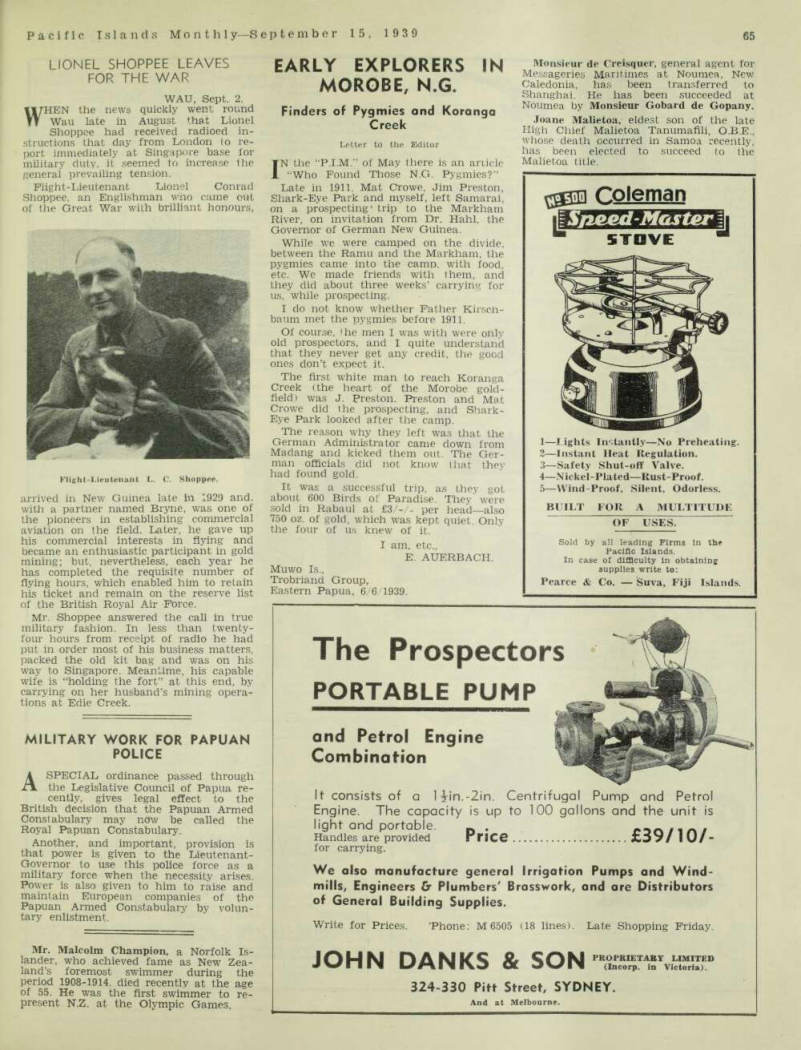
For The War
WAU, Sept. 2.
WHEN the news quickly went round Wau late in August that Lionel Shoppee had received radioed in structions that day from London to re port immediately at Singapore base for military duty, it seemed to increase the general prevailing tension.
Flight-Lieutenant Lionel Conrad Shoppee, an Englishman who came out of the Great War with brilliant honours,
arrived in New Guinea late in 1929 and. with a partner named Bryne, was one of the pioneers in establishing commercial aviation on the field. Later, he gave up his commercial interests in flying and became an enthusiastic participant in gold mining; but, nevertheless, each year he has completed the requisite number of flying hours, which enabled him to retain his ticket and remain on the reserve list of the British Royal Air Force.
Mr. Shoppee answered the call in true military fashion. In less than twenty four hours from receipt of radio he had put in order most of his business matters, packed the old kit bag and was on his way to Singapore. Meantime, his capable wife is “holding the fort” at this end, by carrying on her husband’s mining opera tions at Edie Creek.
Flight-Lieutenant L. C. Shoppee.
Military Work For Papuan
Police
A SPECIAL ordinance passed through the Legislative Council of Papua re cently, gives legal effect to the British decision that the Papuan Armed Constabulary may now be called the Royal Papuan Constabulary.
Another, and important, provision is that power is given to the Lieutenant- Governor to use this police force as a military force when the necessity arises.
Power is also given to him to raise and maintain European companies of the Papuan Armed Constabulary by volun tary enlistment.
Mr. Malcolm Champion, a Norfolk Is lander, who achieved fame as New Zea land's foremost swimmer during the period 1908-1914. died recently at the age of 55. He was the first swimmer to re present N,Z. at the Olympic Games.
Morgbe, N.G.
Early Explorers In
Finders of Pygmies and Koranga Creek
Letter to the Editor IN the “P.1.M.” of May there is an article “Who Found Those N.G. Pygmies?”
Late in 1911. Mat Crowe, Jim Preston, Shark-Eye Park and myself, left Samarai, on a prospecting * trip to the Markham River, on invitation from Dr. Hahl, the Governor of German New Guinea.
While we were camped on the divide, between the Ramu and the Markham, the pygmies came into the camp, with food, etc. We made friends with them, and they did about three weeks’ carrying for us, while prospecting.
I do not know whether Father Kirsch baum met the pygmies before 1911.
Of course, ihe men I was with were only old prospectors, and I quite understand that they never get any credit, the good ones don’t expect it.
The first white man to reach Koranga Creek (the heart of the Morobe gold field) was J. Preston. Preston and Mat Crowe did the prospecting, and Shark- Eye Park looked after the camp.
The reason why they left was that the German Administrator came down from Madang and kicked them out. The Ger man officials did not know that they had found gold.
It was a successful trip, as they got about 600 Birds of Paradise. They* were sold in Rabaul at £3/-/- per head—also 750 oz. of gold, which was kept quiet. Only the four of us knew of it.
I am, etc..
E. Auerbach.
Muwo Is., Trobriand Group, Eastern Papua, 6/6/1939.
Monsieur de Creisquer, general agent for Messageries Marltimes at Noumea, New Caledonia, has been transferred to Shanghai. He has been succeeded at Noumea by Monsieur Gobard de Gopany.
Joane Malietoa, eldest son of the late High Chief Malietoa Tanumafili, 0.8. E., whose death occurred in Samoa recently, has been elected to succeed to the Malietoa title.
Advertisements & other items, pp. 67-68 (3 items)
65
Pacific Islands Month! y—S eptember 15, 1939
The Prospectors
Poieman
STOVE
1— Lights Instantly—No Preheating. 2 Instant Heat Regulation. 3 Safety Shut-off Valve. 4 Nickel-Plated—Rust-Proof. 5 Wind-Proof, Silent, Odorless.
BUILT FOR A MULTITUDE
OF USES.
Sold by all leading Firms in the Pacific Islands.
In case of difficulty In obtaining supplies write to: Pearce & Co. Suva, Fiji Islands.
The Prospectors
PORTABLE PUMP
and Petrol Engine
Combination
It consists of a Centrifugal Pump and Petrol Engine. The capacity is up to 100 gallons and the unit is light and portable. .
Handles are provided rHC© £39/10/for carrying. i We also manufacture general Irrigation Pumps and Windmills, Engineers Cr Plumbers' Brasswork, and are Distributors of General Building Supplies.
Write for Prices. ’Phone; M 6505 (18 lines). Late Shopping Friday.
JOHN DANKS & SON (Incorp. in Victoria). 324-330 Pitt Street, SYDNEY.
And at Melbourne.
Like-a-Plash Match* and Cigarette Selling!
Machines for wall orl counter. All metal] Fool-proof. Two sizes.
Holds 18 pkts. of 6d Cigarettes. Price 32 6.
Larger size holds 241 pkts. of Cigarettes,f 37/6. Match machines, Id. slot, holds 241 pkts., 37/6.
DICE OF ALL KINDS
Head and Tails, and 6’s, 1 to 6’s, Red, or Green, Round or Square corners. %ths in. Set of 5 for 8/6. 7«ths in. Set of 5 for 11/6.
We stock all kinds of Dice and Dice Games, Under and Over 7 Game, 2/6. Crown and Anchor 10/6 set. Dice Shakers 4/6, 6/6, 8/6, 10/6.
Poker Dice Sets, 5 for 6/6, 8/6.
Crown and Anchor Dice, 1/3 and 1/6 each. Crown and Anchor Betting Cloths, 3/6.
Roulette Wheel with Betting Sheet and Rules. 8 in., 22/6 set. Roulette Wheels, 38/6, 45/6, 65/-, 84/-. Sandown Spinning Wheel, Race Game, 63/-. 84/- with Betting Cloth.
No. .I.—Sheffield made Throwing Knife in Sheath, 6/9. As illustrated.
No. 2.—Remington, U.S.A. made Hunting and Sporting Knives in Sheath, 10/6.
Leak-proof Pyrex Glass Aerial Insulators, 3/6 to 6/6.
Games for all. Snooker Sets, 27/6.
Roulette Wheels with cloth and instructions, 22/6. Bobs Balls fompositlon). IVt inch, 6/6. IVa inch 8/6. 1 3 A inch, 15/-. Indoor Bias Bowls—B Bowls with Jack composition, 13/6.
Accumulators for Auto and Radio.
Guarantee the Best possible obtainable price. Send your order. Satisfaction assured.
Write for full list of Radio valves.
We guarantee a better price for your wants. 0 Ormond British Made Highest Grade Vernier Dials, 3 inch Brown Bakelite or Metal, 8/6.
“UTILITY” Short Wave Dials World’s Best: 12/6.
No. 1 Morse Code Practice Sets, with Switch Buzzer to Light. Use as you desire. 22/6 complete.
No. 2, wdth Heavier Type Morse Key; 30/-. Pendograph Bug Key. 70/-. Adjustable Key (only), 12/6.
High Pitched Buzzers, 4/6.
48/6 Just arrived from the maker in London, “Cosmocord” De Luxe Crystal Pick-me-up, with Built-in Vol. Control, 48/6. Write for List of Pickups.
I r i i> m ini. I seea Like-a-Plash “Eliminoise” Aerial Kit for short or dual-wave sets. Aerial, Pyrex type Insulators,, transposition blocks and 200 ft. aerial coll, 22/6.
Eliminates unwanted aerial and hideous electrical noises from your dual-wave or short-wave sets. 5 Microphone units for experimenting Mesh-front metal case, as illustrated, 7/6.
Adjustable All-way Morse Key, Long or Short Tap, 12 6. Heavier P.M.G.
Type, 19/6. so* 4 Build Little Jim, the splendid set from Wireless and Hobbies. Easyway Charts and Instructions, 6d.
All Parts 32/-, Valves 13/6, Batteries 11/-. Phones 10/6 and 12/6. The set ready built—complete, £3/16/6.
CATALOGUE.
Now being compiled, ready late in September. Order your copy now, Bd. Post Free. Send for it to-day.
Limited Number Only.
Levenson’s Wonder Book of Specialities. Radio, Coin-operated Machines, Games. Jokes, Puzzles, Hobbies, crammed full of surprises from Cover to Cover.
“Llke-a-Flash" De Luxe Dual Wave 5 Valve Battery Operated Receiver.
This is one of the most powerful models in the battery set series, and the Radio Frequency stage of amplification gives the set a world range on short wave channels as well as full coverage range of Australasian ‘A” and “B” Class Broadcasters.
The set is also specially designed to give maximum service in humid climates, such as North Queensland and Pacific Island Territories.
A vital part very vulnerable to 'dampness” in ordinary receivers is the ‘‘lntermediate Frequency Section”. In this set our Engineers have fitted special Inductance tuned intermediate frequency transformers, which do not require trimmers. These units ensure correct alignment for a continuous period.
An ”8” Aero Dial calibrated in stations facilitates tuning. Valves used are: 2—lC4, I—KK2,1 —KK2, I—lK6, I—lD4.
The speaker is the latest Ampllon Permagnetic Model, capable of high fidelity reproduction. Battery equipment consists of extra heavy capacty units as follows: 1 2 Volt 100 amp. Accumulator. 3 Ever -Ready Superdyne 45 Volt “B” Batteries.
I Ever-Ready 4Vain. “C” Battery.
The outfit is housed in a beautifully veneered floor model Console Cabinet.
PRICE: £22/5/-.
Handsome Radio Cabinet. Latest • sloping front design. Overall di men - ! sion, 28 in. x 33 in. Genuine £4/4/- value, now 39/6. Freight and packing extra.
I
“LIKE-A-FLASH” 1939-40 AUTO.
RADIO SET.
Suitable for installation in any make of motor car, truck, launch, or ’plane. A single unit 4-valve Radio Receiver fitted with triple purpose valves and special High Gain Coils.
Long Range Reception guaranteed.
Highest Grade Permagnetic Magnet Speaker, lifelike. Excellent quality.
Tonal Reproduction. Lowest possible battery current consumption. Synchronous Vibrator. Six month’s Free service. Fitted to car 30/- extra.
Price: 16 guineas, cash only.
Extremely low noise level. Easily and quickly tuned to the stations you desire. Volume to please yourself.
Gramophone Pick up Heads. £6/6/-.
Goldring English Pick-up Heads.
Suit and Fit all Gramophone Tone Arms. Type 44/4 Pick-up Head with Built-in Volume Control: 19/G. Type 44/5 Pick-up Head, with Volume Control attached: 21/-. Type 33/3 Pick-up Head, with Highly Polished Nickel Finish: 18/6. Bakelite Cased Pick-up Head: IG/6.
W V • ■ eov/ & oo Play, Talk, Sing, Jobe through your Radio. Great Fun. Batteryless type Microphone for Hand Holding or Hanging. 23/6. Complete with lead, fixed in a second. Others, 12/6, 15/-, 17/6, 25/-, 28/6, 32/6. All plus 1/9 for Battery and 1/6 lor 20 ft. Cord.
Write for full detailed list.
B.G.E. Table Type Microphone. Highly recommended for Amateur or Professional use. Built-in Transformer and Battery with Volume Control incorporated.
Just plug into pickup terminals of any set. 39/6.
RADIO SERVICEMAN’S MANUAL
FOR 1939.
Just Out! Australia’s Official Radio Service Manual. Vol. 2, 1939: 10/6.
STAMPS.—Giant Packets from London, 500 assorted Stamps, 2/6 with! 1/6 Free Packet. 100 Specially Selected Stamps, 2/9, with 1/3 Free' Packet. 204 Assorted Stamps from all parts of the world, 3/9, with 3/8 Free Packet.
COLLAR© ELECTRIC 240 A.C.
GRAMOPHONE MOTOR. With turntable, auto-switch and all fittings 45/-. British made.
COMBINATION RADIO GRAMO-
PLAYER IN HANDSOME POLISHED
CABINET. Hook to set and plug into 240 volt Electric Supply. £9/10/-. Others with no Cabinet, 90/-, 95/-, 105/-. Comprising 240 A.C. Gramophone with Pick-up mounted.
CONTINENTAL ALL DIRECTION
COLLAPSIBLE FRAME AERIALS.
On Swivel Base were £9/9/-, now 63/-. Slightly Faulty. Easily fixed.
GRAMOPHONE PICK-UP HEADS
FIT AND SUIT ALL STANDARD
TONE ARMS. To be used in conjunction with your Radio Gramophone. 10/-, 12/6, 15/-.
iirnnnniHiiiiiiiii LEVENSONS RADIO iiiiiiinniiiniiiinim!
Write for Write for GAMES ’ NOVELTIES AND HOBBIES, p| n .Game, Punch 226 PITT STREET, SYDNEY ™ e s m an a d nd Leaflets Manufacturers, Importers, and Exporters. Evens Branches: Radio Cheapslde, 240 a Pitt St.,
lllTllTminiTTnmn N.S.W., AUSTRALIA. Ilinillllllinilliillllll
Cable address: “Leveradioh”. Goods forwarded V.P.P. or Sight Draft. Satisfaction and Service Guaranteed. We can supply by mail all General Merchandise at a Better Price. Quotations with pleasure. Please add freight and packing. Write for full list of interesting leaflets of Games, Hobbies, Novelties, and Electrical Goods. Write for full list of Radio Meters.
66
September 15, 193 9—P acific Islands Monthly
D,vlne Servlce
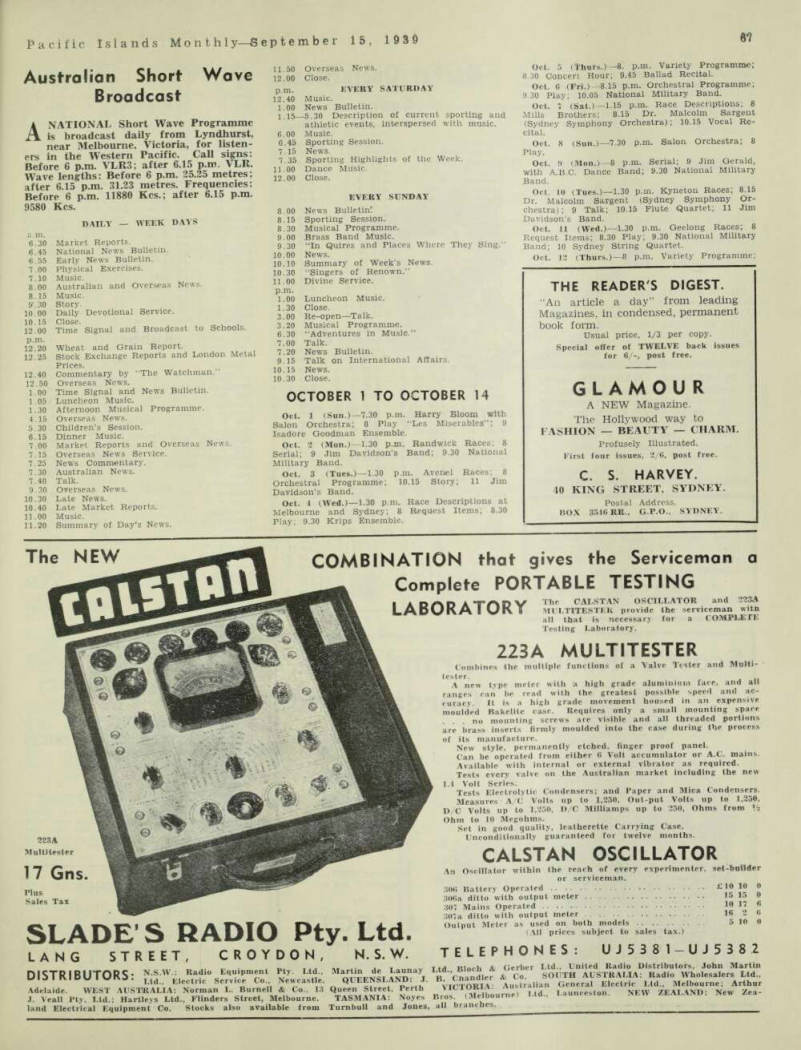
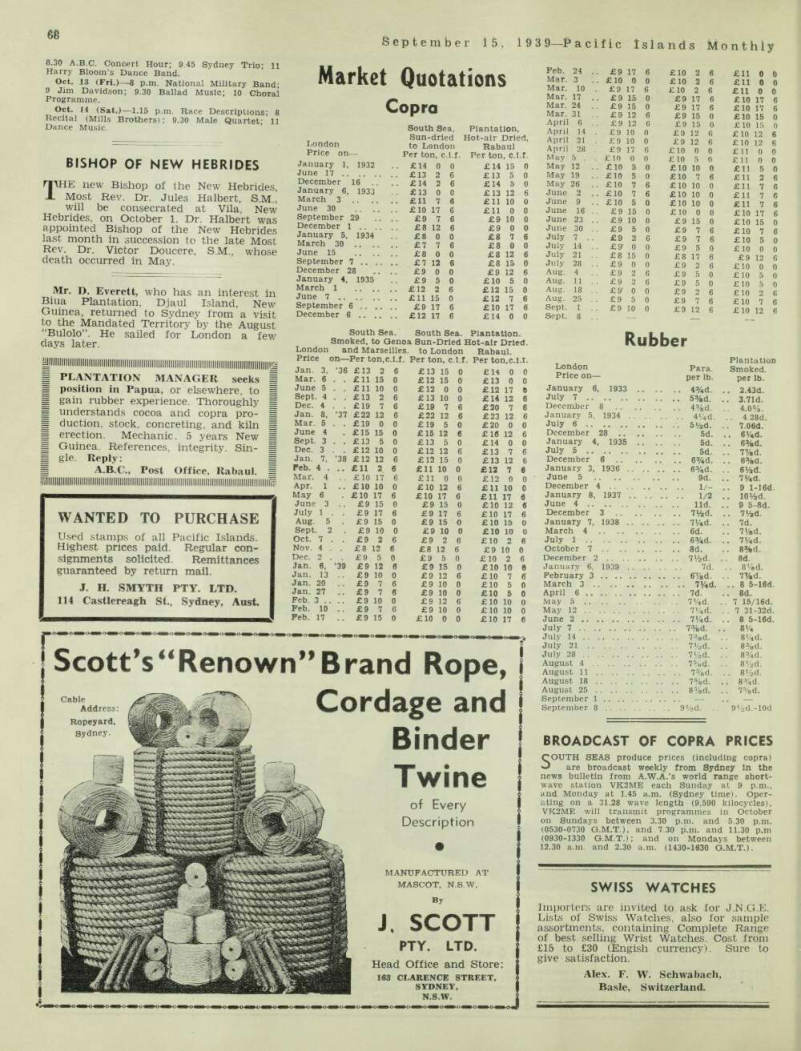
Australian Short Wave broadcast
A NATIONAL Short Wave Programme is broadcast daily from Lyndhurst, near Melbourne. Victoria, for listen ors in the Western Pacific Call signs: Before 6 p.m. VLRo, after 6.15 p.m. VLR.
Wave lengths: Before 6 p.m. 25.25 metres, after 6.15 p.m. 31.23 metres. Frequencies: Before 6 p.m. 11880 Kcs.; after 6.15 p.m. 9580 Kcs.
N*Ttv Week Days
Daili Meek
a - m - , 4 . 6.30 Market Reports. 6.45 National News Bulletin 6.55 Early News Bulletin. 7.00 Physical Exercises. 11l Australian and Overseas News. 8.15 Music. 9’. 30 Story. 10.00 Daily Devotional Service.
Time Signal and Broadeast to Schools.
IZ.M Wheat and Grain Report 12 25 Stock Exchange Reports and London Metal 12.40 Commentary by ‘‘The Watchman.” 12.50 Overseas News.
MS Luncheon 11 Music? News Bu "' ,ln Proeramraf -5 30 Children’s Session. 6.15 Dinner Music. 7.00 Market Reports and Overseas News. 7.15 Overseas News Service. 7.25 News Commentary. 7.30 Australian News. 7.40 Talk. 9.30 Overseas News. 10.30 Late News. li nn M^fsic Market Rep ° rt 11.20 Summary of Day's News.
11.50 Overseas News. 12.00 Close.
Pm. Every Saturday
12.40 Music. 1.00 News Bulletin. 1.15—5.30 Description of current sporting and athletic events, interspersed with music, 6.00 Music, 6.45 sporting Session. |'* s tlng „ lghllghts ot the week. n 00 Dance Music. 12 00 oiose. every Sunday 8.00 News Bulletin! 8.15 Sporting Session. 8-30 Musical Programme. 9.00 Brass Band Music. 9.30 “in Quires and Places Where They Sing.’ 10 00 News 10.10 Summary of Week’s News. 10.30 “Singers of Renown.”
D,vlne Servlce
i.oo Luncheon Music. . close Re-open-Talk. 3.20 ’ Jews Bulletin 7.20 News 0 ® U ‘international ARairs. 10-18 News. 10 30 Close ‘
October 1 To October 14
Oct. 1 (Sun.)—7.3o p.m. Harry Bloom with Salon Orchestra; 8 pla y Les Miserables , 9 Isadore Goodman Ensemble.
Oct. 2 (M0n.)—1.30 p.m. Randwick Races; 8 Serial; 9 Jim Davidson’s Band; 9.30 National Military Band.
Oct. 3 (Tues.) —l.3o p.m. Avenel Races; 8 Orchestral Programme; 10.15 Story; 11 Jim Davidson’s Band.
Oct 4 (Wed.)—l.3o p.m. Race Descriptions at Melbourne and Sydney; 8 Request Items; 8.30 play; 930 Kn P s Ensemble.
Oct. 5 (Thurs.)—B. p.m. Variety Programme; 8.30 Concert Hour; 9.45 Ballad Recital.
Oct. (J (Fri.)—B.ls p.m. Orchestral Programme; 9.30 Play; 10.05 National Military Band.
Oct. 7 (Sat,)—l.ls p.m. Race Descriptions; 8 Mills Brothers; 8.15 Dr. Malcolm Sargent (Sydney Symphony Orchestra); 10.15 Vocal Re cital.
Oct. 8 (Sun.)— 7.3o p.m. Salon Orchestra; 8 Play.
Oct. 9 (Mon.) —8 p.m. Serial; 9 Jim Gerald, with A.B.C. Dance Band; 9.30 National Military Band.
Oct. 10 (Tues.)—l.3o p.m. Kyneton Races; 8.15 Dr. Malcolm Sargent (Sydney Symphony Or chestra) ; 9 Talk; 10.15 Flute Quartet; 11 Jim Davidson’s Band.
Oct. 11 (Wed.)—l.3o p.m. Geelong Races; 8 Request Items; 8.30 Play; 9.30 National Military Band; 10 Sydney String Quartet.
Oct. 12 (Thurs.)—B p.m. Variety Programme;
8.30 A.B.C. Concert Hour; 9.45 Sydney Trio; 11 Harry Bloom’s Dance Band.
Oct. 13 (Fri.)—B p.m. National Military Band; 9 Jim Davidson; 9.30 Ballad Music; 10 Choral Programme.
Oct. 14 (Sat.) —1.15 p.m. Race Descriptions: 8 Recital (Mills Brothers); 9.30 Male Quartet: 11 Dance Music.
Advertisements & other items, p. 69 (2 items)
67
Pacific Islands Monthl y—S eptember 15, 193§
Slade’S Radio Pty. Ltd. :; :
THE READERS DIGEST.
“An article a day” from leading Magazines, in condensed, permanent book form.
Usual price, 1/3 per copy.
Special offer of TWELVE back Issues for 6/-, post free.
GLAMOUR
A NEW Magazine.
The Hollywood way to
FASHION BEAUTY CHARM.
Profusely Illustrated.
First four issues, 2/6, post free.
C. S. HARVEY.
I» KING STREET. SYDNEY.
Postal Address.
HOX 3516 HR., G.P.0., SYDNEY.
The N COMBINATION that gives the Serviceman a
- Complete PORTABLE TESTING
n \ , A DS\n A rr\D V The CALSTAN OSCILLATOR and 22SA LADvKA lUK I MULTITESTEK provide the with
223 A MULTITESTER
a ' al P '^i^ o WsSm ® can be operated from either G Volt accumulator or A.C. mains. jKR v*- f At ■ Available with internal or external vibrator as required. f M |9E I* t Tests every valve on the Australian market including the new \. Tests Electrolytic Condensers; and Paper and Mica Condensers.
Ml « MS*Ski W' Measures A ( Volts up to 1,25 ft, Out-put Volts up to 1,250, , M o c Volts up to 1,250, D/C Milliamps up to 250, Ohms from *2 ° h S , et t °in good B quality, leatherette Carrying Case.^
M " MHester CALSTAN OSCILLATOR
17 fine An Oscillator within the reach of every experimenter, set-builder * * V3ITD« or serviceman.
SLADE’S RADIO Pty. Ltd. :; :
LANG STREET, CROYDON, N. S. W. TELEPHONES: UJS 3 81-UJSBB 2 DISTRIBUTORS: N.S.W.: Badi. Ewlpment Ply. Ltd., Martto d. Lapnay LM.. Blo.h * Gerbei J W Ltd.. Electric Service Co Newcaste QUEENSLAND J. B. AustraUan General Electric Ltd., Melbourne; Arthur Adelaide. WEST AUSTRALIA: Norman L. Burnell & Co., 13 Queen Street. Perth MCIOKIA. ausi aunceston NFW ZEALAND• New Zea- J. Veall Pty. Ltd.; Hartleys Ltd., Flinders Street. Melbourne. TASMANIA: Noyes Bros. (Melbourne) Ltd., Launceston. NEW ZEAIAMI). land Electrical Equipment Co. Stocks also available from Turnbull and Jones, all branches.
Bishop Of New Hebrides
I'IHE new Bishop of the New Hebrides, . Most Rev. Dr. Jules Halbert, S.M., will be consecrated at Vila, New Hebrides, on October 1. Dr. Halbert was appointed Bishop of the New Hebrides last month in succession to the late Most Rev. Dr. Victor Doucere, S.M., whose death occurred in May.
Mr. D. Everett, who has an interest in Biua Plantation, Djaul Island, New Guinea, returned to Sydney from a visit to the Mandated Territory by the August “Bulolo”. He sailed for London a few days later.
Market Quotations
Copra
South Sea, Plantation, Sun-dried Hot-air Dried, London to London Rabaul Price on— Per ton, c.l.f.
Per ton, c.l.f.
January 1, , 1932 £14 0 0 £14 15 0 June 17 ., £13 2 6 £13 5 0 December 16 .. £14 2 6 £14 5 0 January 6, , 1933 £13 0 0 £13 12 6 March 3 £11 7 6 £11 10 0 June 30 £10 17 6 £11 0 0 September 29 £9 7 6 £9 10 0 December 1 .. .. £8 12 6 £9 0 0 January 5, 1934 £8 0 0 £8 7 6 March 30 £7 7 6 £8 0 0 June 15 £8 0 0 £8 12 6 September 7 .. .. £7 12 6 £8 15 0 December 28 . . £9 0 0 £9 12 6 January 4, 1935 , . £9 5 0 £10 5 0 March 1 £12 : 2 6 £12 15 0 June 7 .. £11 15 0 £12 7 6 September 6 . . . . £9 17 6 £10 17 6 December ( S .. .. £12 17 6 £14 0 0 South Sea.
South Sea.
Plantation.
Smoked, to Genoa Sun-Dried Hot-air Dried.
London and Marseilles, to London Rabaul.
Price on— -Per ton.c.l.f. Per ton, c.l.f. Per ton.c.l.l.
Jan. 3. '36 £13 2 6 £13 15 0 £14 0 0 Mar. 6 . . £11 15 0 £12 15 0 £13 0 0 June 5 . . £11 10 0 £12 0 0 £12 17 0 Sept. 4 . , £13 2 6 £13 10 0 £14 12 6 Dec. 4 . . £19 7 6 £19 7 6 £20 7 6 Jan. 8, ’37 £22 12 6 £22 12 6 £23 12 6 Mar. 5 . . £19 0 0 £19 5 0 £20 0 0 June 4 £15 15 0 £15 12 6 £16 12 6 Sept. 3 . . £13 5 0 £13 5 0 £14 0 0 Dec. 3 . . £12 10 0 £12 12 6 £13 7 6 Jan. 7. '38 £12 12 6 £12 15 0 £13 12 6 Peb. 4 . ., £11 2 6 £11 10 0 £12 7 6 Mar. 4 .. £10 17 6 £11 0 0 £12 0 0 Apr. 1 .. £10 10 0 £10 12 6 £11 10 0 May 6 £10 17 6 £10 17 6 £11 17 6 June 3 .. £9 15 0 £9 15 0 £10 12 6 July 1 . . £9 17 6 £9 17 6 £10 17 6 Aug. 5 £9 15 0 £9 15 0 £10 15 0 Sept. 2 . £9 10 0 £9 10 0 £10 10 0 Oct. 7 . , £9 2 6 £9 2 6 £10 2 6 Nov. 4 . . £8 12 6 £8 12 6 £9 10 0 Dec. 2 . . £9 5 0 £9 5 0 £10 2 6 Jan. 6, ’39 £9 12 6 £9 15 0 £10 10 6 Jan. 13 .. £9 10 0 £9 12 6 £10 7 6 Jan. 20 £9 7 6 £9 10 0 £10 5 0 Jan. 27 .. £9 7 6 £9 10 0 £10 5 0 Peb. 3 .. .. £9 10 0 £9 12 6 £10 10 0 Peb. 10 .. £9 7 6 £9 10 0 £10 10 0 Peb. 17 £9 15 0 £10 0 0 £10 17 6
Feb. 24 . . £9 17 6 £10 2 6 £11 0 0 Mar. 3 . £10 0 0 £10 2 6 £11 0 0 Mar. 10 . £9 17 6 £10 2 6 £11 0 0 Mar. 17 . . £9 15 0 £9 17 6 £10 17 6 Mar. 24 . £9 15 0 £9 17 6 £10 17 6 Mar. 31 . £9 12 6 £9 15 0 £10 15 0 April 6 . £9 12 6 £9 15 0 £10 15 0 April 14 £9 10 0 £9 12 6 £10 12 6 April 21 £9 10 0 £9 12 6 £10 12 6 April 28 £9 17 6 £10 0 0 £11 0 0 May 5 . . £10 0 0 £10 5 0 £11 0 0 May 12 . £10 5 0 £10 10 0 £11 5 0 May 19 . £10 5 0 £10 7 6 £11 2 6 May 26 . . £10 7 6 £10 10 0 £11 7 6 June 2 . . £10 7 6 £10 10 0 £11 7 6 June 9 . . £10 5 0 £10 10 0 £11 7 6 June 16 . £9 15 0 £10 0 0 £10 17 6 June 23 . £9 10 0 £9 15 0 £10 15 0 June 30 . £9 5 0 £9 7 6 £10 7 6 July 7 .. £9 2 6 £9 7 6 £10 5 0 July 14 . . £9 0 0 £9 5 0 £10 0 0 July 21 . £8 15 0 £8 17 6 £9 12 6 July 28 . . £9 0 0 £9 2 6 £10 0 0 Aug. 4 £9 2 6 £9 5 0 £10 5 0 Aug. 11 . . £9 2 6 £9 5 0 £10 5 0 Aug. 18 . £&• 0 0 £9 2 6 £10 2 6 Aug. 25 . £9 5 0 £9 7 6 £10 7 6 Sept. 1 . £9 10 0 £9 12 6 £10 12 6 Sept. 8 . — —
London
Rubber
Para.
Plantation Smoked.
Price on— per lb. per lb.
January 6, 1933 4%d. .. 2.43d.
July 7 .. 3.71d.
December 8 .. 4.0%.
January 5, 1934 4 Mid. .. 4.28d.
July 6 . . 7.06d.
December 28 . .. 6Mid.
January 4, 1935 5d. .. 6%d.
July 5 .. 7 7 /ad.
December 6 .. 6%d.
January 3, 1936 .. 6Mad.
June 5 9d. .. 7Mid.
December 4 .. 9 l-16d.
January 8, 1937 1/2 .. 10 Mad.
June 4 .. 9 5-8d.
December 3 7Mid. .. 7 Mad.
January 7, 1938 .. 7d.
March 4 6d. .. 7Mad.
July 1 6%d. .. 7 Mid, October 7 .. . 8d. .. 8%d.
December 2 . . 7 Mid. . . 8d January 6, 1939 7d. .. 8 Mad.
February 3 .. .. 6y„d. .. 7"Mad.
March 3 .. .. 7 Mid. .. 8 5-lfld.
April 6 7d. .. 8d.
May 5 7 Mid. .. 7 15/16d.
May 12 7 Mid. .. 7 31-32d.
June 2 .. 8 5-16d.
July 7 7%d. . . 8 Mi July 14 7%d. .. 8Mid.
July 21 7 Mad. .. 8%d.
July 28 7 Mid. .. 8%d.
August 4 ., .. 7%d. 8 Mad.
August 11 .. ..
August 18 . . . . 7%d. .. 8%d.
August 25 .. .. 8%d. .. 7%d.
September 1 .. ., — .. — September 8 . . . 9 Mad. .. 9V a d.-10d
Broadcast Of Copra Prices
SOUTH SEAS produce prices (including copra) are broadcast weekly from Sydney In the news bulletin from A.W.A.’s world range short wave station VK2ME each Sunday at 9 p.m., and Monday at 1.45 a.m. (Sydney time). Oper ating on a 31.28 wave length (9,590 kilocycles), VK2ME will transmit programmes in October on Sundays between 3.30 p.m. and 5.30 p.m. (0530-0730 G.M.T.), and 7.30 p.m. and 11.30 p.m (0930-1330 G.M.T.); and on Mondays between 12.30 a.m. and 2.30 a.m. (1430-1630 G.M.T.).
Advertisements & other items, p. 70 (2 items)
ScottV'Renown”Brand Rope,
PLANTATION MANAGER seeks
position in Papua, or elsewhere, to gain rubber experience. Thoroughly understands cocoa and copra production, stock, concreting, and kiln erection. Mechanic. 5 years New Guinea. References, integrity. Single. Reply: A.8.C., Post Office, Rabaul.
WANTED TO PURCHASE
Used stamps of all Pacific Islands.
Highest prices paid. Regular consignments solicited. Remittances guaranteed by return mail.
J. H. SMYTH PTY. LTD.
114 Castlereagh St., Sydney, Aust.
ScottV'Renown”Brand Rope,
Cordage and
Binder
Twine
Cable Address: Ropeyard, Sydney.
of Every
Description
MANUFACTURED AT
MASCOT, N.S.W.
By
J. SCOTT
PTY. LTD.
Head Office and Store:
163 CLARENCE STREET,
SYDNEY,
N.S.W,
Swiss Watches
Importers are invited to ask for J.N.G.E.
Lists of Swiss Watches, also for sample assortments, containing Complete Range of best selling Wrist Watches. Cost from £l5 to £3O (Engish currency). Sure to give satisfaction.
Alex. F. W. Schwabach, Basle, Switzerland.
Islands Produce
THE following quotations were obtained In Sydney in mid-September:—
Coffee
Robusta, fa q , imported from Java on firm conversion of exchange, c.i.f., prompt shipment.
Sydney: Quote No. 1: 33/-* stg. per cwt. (prompt shipment; quote No. 2: 18/3, per cwt.
Kenya, f.a.q., Immediate shipment, c.i.f., Syd ney, per cwt. Quote No. 1: Grade “B”, 63/-* (prompt shipment). Quote No. 2:f Grade “B'% 55/-; grade “C”, 51/-.
Mysore, f.a.q., c.i.f., Sydney, per cwt., No. 1 quotations; No supplies available until January- February, 1940.
Arabian (Aden) Hodeidah, f.a.q.. c.i.f., Sydney -No. 1 quotation, 77/-* stg. per cwt. No. 2 quotation, 76/- per cwt.t *Does not include War Risk. tPurely nominal, as sterling rates of ex change have been fluctuating widely.
Note: Importers of coffee from Java, etc., pay me louowaig acuationai charges: Excnange, duty i4d. lb.), primage (10 per cent.), landing costs (1/- per cwt.). Coffee from Papua and New Guinea escapes most of these charges.
Kapok
Based on Arm conversion of exchange (8 Guilders to £), the c.i.f. prices for kapok in mid-September were: Average Java, 5-5/16d. per lb., and Prime Japara, 5%d. per lb.
Cotton
London c.i.f. cotton prices during the month were:—August 18, 4.47 d. lb., September ship ment; August. 25, 4.97 d. lb., September ship ment; September 1,4.99 d. lb., October shipment; September 8, —.
Ivory Nuts
No 1 quotation: £7 per ton, f.o.b.
No. 2 quotation: £7 per ton, f.0.b., Sydney.
Quotations nominal.
Cocoa
Quote No. 1: New Guinea cocoa £2B-30 per ton.
Quote No. 2: Accra, good fermented, last quote several weeks ago, £22/10/- stg. per ton, c.i.f., Sydney.
Quote No. 3: £2B per ton (nominal).
Rice
Rangoon rice, packed in 100 lb. bags and 200 lb. sacks. Market nominal, no quotes.
Australian table rice, packed in 56 lb. bags, £2O per ton.
Mother of Pearl Shell
At the last Mother of Pearl Shell sales in London in July a smaller supply was brought forward. The demand was limited. Of 415 packages of Torres Strait shell, 125 were sold at prices ranging from 110/- per cwt. B Stout medium to 15/- per cwt. for EE rejections.
Nearly 50 packages of Black Edged Tahiti shell put up were later withdrawn. Eight packages of Black Edged Fiji fetched 20/- for small to bold and 5/- for defective and broken.
Trochus Shell
Owing to Japan’s restrictions on overseas credits, there have been no sales for some time.
The following are nominal quotations from three Sydney sources:—
Green Snail Shell
Green snail shell, quoted nominally by Sydney buyers:—Quote No. 1: £4O; No. 2: £52-£54.
Hon. O. F. Nelson, M.L.C., was unable to attend the August meeting of the Legis lative Council of Western Samoa, owing to indisposition, and leave of absence was granted accordingly.
Ven. Archdeacon A. J. Thompson, rector of Samarai, who has been spending leave in Melbourne, will return to Eastem Papua this month.
Mr. H. C. Monckton, Adviser on Native Affairs in Fiji, returned to Suva from leave by the “Monowai” in August. He was accompanied by his wife.
£ £ £ No. 1 grade .. .. 73 75 80 No. 2 grade ... 62 63 68 No. 3 grade . . .. 49 50 56'/ 2 All quotes are f.o.b., and on the Australian £
The proposed Fiji tour by Tongan foot ballers has been postponed until 1940.
Advertisements & other items, pp. 71-72 (2 items)
69
Pacific Islands Monthl y—S eptember 15, 1939
Bank Of New South Wales
C for SClnc / C driven
tence
h i
OPEN A CHEQUE ACCOUNT
A current account will enable you to make payments by cheque, thus avoiding the need of carrying large sums of money, and reducing risk of loss to a minimum.
The pass-book and cheque butts are a complete record of transactions.
The account brings you into contact with an expert organization whose duty it is to give you every assistance and advice on money matters.
It is quite simple to arrange for a banking account to be opened at any of the Bank of New South Wales’ branches.
BANK OF NEW SOUTH WALES
HONESTY
FIDELITY
iA/ken making goat WILL
Safeguard your interests. Ensure their protection and security. Avail yourself of the advantages to be derived from the appointment of this Company as your trustees, in preference to any one individual. Write to or call on any Branch of Burns, Philp & Company Limited, or Bums Philp (South Sea) Company, Limited, for the folder which fully explains these advantages.
Give careful consideration to the benefits to be gained by appointing as your Executors—
BURNS PHILP TRUST CO. LTD,
DIRECTORS
JAMES BURNS LEWIS ARMSTRONG
ROBERT JOHN NOSWORTHY JOSEPH MITCHELL
BURNS PHILP TRUST CO. LTD.
capital — it o.ooo 7 BRIDGE STREET SYDNEY, N.S.W.
THEN PICK UP WITH
nr 0® Lassitude, debility and general slackness are caused by a system which is not functioning properly. Guard yourself against indifferent health by taking a daily glass of Eno’s “Fruit Salt.”
It's Nature’s way to health, because it contains no harmful irritants.
EN6S
FRUIT SALT
Australia's Choicest Products: Green Peas French Beans Cauliflower •Si M 9 t
•*™CAPD€N VALE
N PRODUCTS LIMITED
A v '2-4 BROWN STBC-ET, N-EWTOWN
SYDN-CY. AUSTRALIA
Always . . . make sure you have at hand an ampje Reserve of these Delicious Garden Vale Ready-toserve Vegetables m
Exchange Rates
THE following exchange quotations, gathered in Sydney, show the rates existing in mid-September;—
Fiji—Through Bank Of N.S.W.
And Bank Of New Zealand
Australia on Fiji on basis of £lOO Fiji: Buying £AIII/2/6, selling £AII3.
Flji-London on basis £lOO London:—
New Caledonia—Through
French Bank
Drafts, Sydney-Noumea and Noumea-Sydney, are on basis of current rate of exchange on Paris, less % per cent, (approx.) either way. (Owing to the present unsettled state of the market, no quotations are being issued either by the Comptoir National d’Escompte de Paris Bank in Sydney or the Banque de ITndo-Chine in Noumea, New Caledonia).
Direct Telegraphic Transfer
Selling Rates
Quoted by
Bank Of New South Wales
in Australia.
Francs to £ Australia on Papeete. Australian Average for week ended 21/8/39 138.43 Francs to £ Australia on Noumea Australian Average for week ended 21/8/39 138.28 Last quotations by Bank of N.S.W. on August 25 were:—Papeete, 138.10; Noumea, 137.94.
Since then, owing to the irregularity of the market, there have been no further quotations.
New Guinea And Papua
Through Commonwealth Bank
From Australia, Port Moresby, 10/- per cent.; on Rabaul, 10/- per cent.—Other Papua and New Guinea districts, £1 per cent.
From Rabaul on London, same as Australia on London:— Buying: T.T. £AI2S equals £stg. 100.
Selling: T.T. £AI2S/10/- equals £stg. 100.
Through Bank Of N.S.W.
Australia on Papua 10/- per cent, premium each way, equivalent to commission of 10/- per cent.; Australia on Rabaul 10/- per cent, pre mium.
Papua and New Guinea on London: Same as Australia on London and vice versa.
Western Samoa—Through
Bank Of N.Z.
Exchange, Australia on Western Samoa, basis £lOO Samoa—buying. £A99/12/6; selling,
£ Aloo/2/6.
Exchange, Samoa on London, basis £ 100 in London:—
Buying. Selling. £ s. d. £ s. d Telegraphic transfer ... 110 15 0 112 0 0 On demand 110 12 6 111 17 6
Telegraphic transfer Buying.
Selling. £125 10 0 On Demand £123 10 0 125 7 6 30 days 123 5 0 125 5 0 60 days 123 0 0 125 2 6 90 days 122 15 0 125 0 0 120 days 122 10 0 124 17 6
Papuan Rubber Industry
IN view of the international situation, the Government of Papua has ap proached the Australian Government urging that a Rubber Stabilisation Fund be created to encourage the establishment and development of the rubber industry in Papua.
Rubber is one of the principal sources of revenue in Papua, and also represents one of the vital needs of Australia; and. in order that further capital may be at tracted to the Papuan industry, it is felt that something in the nature of a Gov ernment guarantee is necessary. Growers should be safeguarded against loss should the market price fall below a minimum figure. It is argued that 6d. per pound c.i.f. London would be a fair and equit able price for stabilisation, Papua now provides 10 per cent, of Australia’s rubber.
Advertisements & other items, p. 72 (2 items)
70
September 15, 193 9—3? acific Islands Monthly
Ropes,
KANGAROO BRAND
Cordage,
and Twines for every purpose
Backed by
86 years of service.
Manufactured by
M. DONAGHY AND SONS,
Pty. Ltd.,Geelong ond Sydney.
Fiji Representatives;
PEARCE AND CO.
LIMITED
P.O. BOX 237, SUVA
"Gus" Nelsson
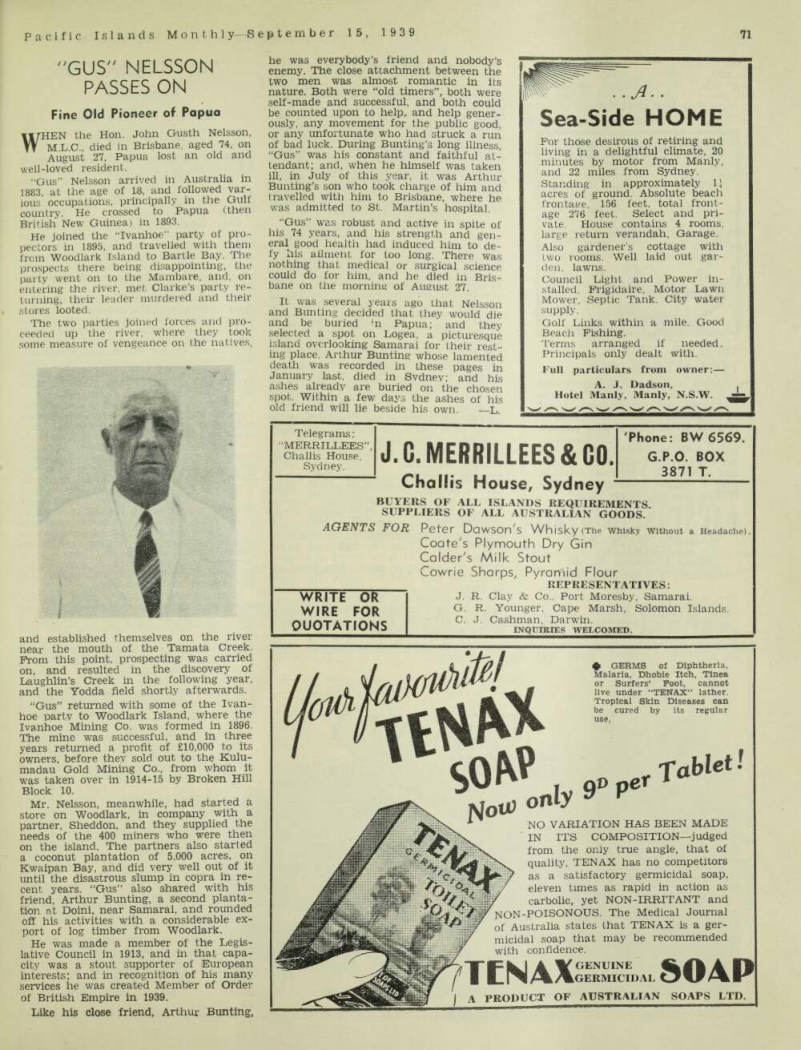
Passes On
Fine Old Pioneer of Popua
WHEN the Hon. John Gusth Nelsson, MLC., died in Brisbane, aged 74, on August 27, Papua lost an old and well-loved resident.
“Gus” Nelsson arrived in Australia in 1883, at the age of 18, and followed var ious occupations, principally in the Gulf country. He crossed to Papua (then British New Guinea) in 1893.
He joined the “Ivanhoe” party of pro peclors in 1895, and travelled with them from Woodlark Island to Bartle Bay. The prospects there being disappointing, the party went on to the Mambare, and, on entering the river, met Clarke’s party re turning, their leader murdered and their stores looted.
The two parties joined forces and pro ceeded up the river, where they took some measure of vengeance on the natives,
and established themselves on the river near the mouth of the Tamata Creek.
Prom this point, prospecting was carried on, and resulted in the discovery of Laughlin’s Creek in the following year, and the Yodda field shortly afterwards.
“Gus” returned with some of the Ivan hoe party to Woodlark Island, where the Ivanhoe Mining Co. was formed in 1896.
The mine was successful, and in three years returned a profit of £lO,OOO to its owners, before they sold out to the Kulu madau Gold Mining Co., from whom it was taken over in 1914-15 by Broken Hill Block 10.
Mr. Nelsson, meanwhile, had started a store on Woodlark, in company with a partner, Sheddon, and they supplied the needs of the 400 miners who were then on the island. The partners also started a coconut plantation of 5,000 acres, on Kwaipan Bay, and did very well out of it until the disastrous slump in copra in re cent years. “Gus” also shared with his friend, Arthur Bunting, a second planta tion at Doini, near Samarai, and rounded off his activities with a considerable ex port of log timber from Woodlark.
He was made a member of the Legis lative Council in 1913, and in that capa city was a stout supporter of European interests; and in recognition of his many services he was created Member of Order of British Empire in 1939.
Like his close friend, Arthur Bunting,
he was everybody’s friend and nobody’s enemy. The close attachment between the two men was almost romantic in its nature. Both were “old timers”, both were self-made and successful, and both could be counted upon to help,, and help gener ously, any movement for the public good, or any unfortunate who had struck a run of bad luck. During Bunting’s long illness, “Gus” was his constant and faithful at tendant; and, when he himself was taken ill, in July of this year, it was Arthur Bunting’s son who took charge of him and travelled with him to Brisbane, where he was admitted to St. Martin’s hospital.
“Gus” was robust and active in spite of his 74 years, and his strength and gen eral good health had induced him to de fy his ailment for too long. There was nothing that medical or surgical science could do for him. and he died in Bris bane on the morning of August 27.
It was several years ago that Nelsson and Bunting decided that they would die and be buried m Papua; ‘ and they selected a spot on Logea, a picturesque island overlooking Samarai for their rest ing place. Arthur Bunting whose lamented death was recorded in these pages in January last, died in Svdnev: and his ashes already are buried on the chosen spot. Within a few days the ashes of his
old friend will lie beside his own.
L.
Mr. and Mrs. George Gough, who were married in Port Moresby. Papua, on August 8, have now settled down in their new home at the Laloki River. The bride formerly was Miss Gwendoline Tremayne.
Advertisements & other items, pp. 73-74 (2 items)
71
Pacific Islands Mont hi y—S eptember 15, 1939
ufuhite!
Sea-Side HOME
For those desirous of retiring and living in a delightful climate, 20 minutes by motor from Manly, and 22 miles from Sydney.
Standing in approximately acres of ground. Absolute beach frontage, 156 feet, total frontage 276 feet. Select and private. House contains 4 rooms, large return verandah, Garage.
Also gardener’s cottage with two rooms. Well laid out garden, lawns.
Council Light and Power installed. Prigidaire, Motor Lawn Mower, Septic Tank. City water supply.
Golf Links within a mile. Good Beach Fishing.
Terms arranged if needed.
Principals only dealt with.
Full particulars from owner;— A. J. Dadson, Hotel Manly, Manly, N.S.W.
Telegrams:
‘MERRILLEES”,
Challis House, Sydney.
J.G. MERRILLEES & CO.
Chad is House, Sydney
Phone: BW 6569.
G.P.O. BOX
3871 T.
BUYERS OF ALL ISLANDS REQUIREMENTS.
SUPPLIERS OF ALL AUSTRALIAN GOODS.
AGENTS FOR Peter Dawson's Whisky (The whisky without a Headache).
Coate's Plymouth Dry Gin
Calder's Milk Stout
Cowrie Sharps, Pyramid Flour
REPRESENTATIVES :
WRITE OR
WIRE FOR
QUOTATIONS
J. R. Clay & Co.. Port Moresby. Samarai.
G. R. Younger, Cape Marsh, Solomon Islands.
C. J. Cashman, Darwin.
INQUIRIES WELCOMED.
ufuhite!
sow*
Mou)
& Al - A o /> f « GERMS of Diphtheria, Malaria, Dhoble Itch, Tinea or Surfers’ Foot, cannot live under “TENAX” lather.
Tropical Skin Diseases can be cured by its regular use.
only 9 1 ’ P er
'Table*!
NO VARIATION HAS BEEN MADE
IN ITS COMPOSITION—judged
from the only true angle, that of quality, TENAX has no competitors as a satisfactory germicidal soap, eleven times as rapid in action as carbolic, yet NON-IRRITANT and NON -POISONOUS. The Medical Journal of Australia states that TENAX is a germicidal soap that may be recommended with confidence.
GENUINE
GERMICIDAL
TENAX:
SOAP
I A PRODUCT OF AUSTRALIAN SOAPS LTD.
IN THE CRISP
MOUNTAIN AIR . . .
Situated in a Haven of Beauty and only an hour’s drive from Sydney is the world-renowned Lapstone Hotel . . . Australia’s gayest rendezvous of tourists, visitors and holiday makers.
Here is service and cuisine that compares with the world’s best—with private Crystal Pool, Golf, Tennis, and a brilliant Ballroom, together with a unique feature . . . “The Million-acre Panoramic View.”
LAPSTONE HOTEL
BLUE MOUNTAINS, N.S.W..
AUSTRALIA
Phone Glenbrook 82, 85 Rates from 17/6 per day or £5/S/ per week When in Sydney inquire at Lapstone Office, 12a MARTIN PLACE, Government Tourist Bureau, or through any Tourist Agency.
Telegrams & Cables; ‘Lapstone,” Glenbrook.
HERBERT J. PARKER Resident Manager
STAY AT
SYDNEY'S NEW GUEST HOUSE,
BERNLY
Delightfully situated at
SPRINGFIELD AVENUE, POTTS POINT
(4 mins, from City) An ideal home for visitors from the Islands and Overseas.
COMFORT .. . CONVENIENCE,
PRIVACY AND GOOD SERVICE.
100 Richly Furnished Bedrooms, many with Private Showers.
HOT & COLD WATER & TELEPHONES
IN ALL BOOMS.
BILLIARDS . . ROOF GARDEN.
CUISINE BY FIRST-CLASS CHEF.
Tariff: From 3 gns. p.w. Inclusive —or Room only if desired.
Proprietor: F. J. BERNE.
Analysis of Annual Report
Carpenters
THE annual report of Messrs. W. R.
Carpenter & Co., Ltd., was issued just as the last “P.1.M.” went to press, and we stated therein only that the company, in the year just closed, had made a net profit of £115,280, as compared with £111,372 in the previous year. The follow ing are further details, as set out in the “Sydney Morning Herald” summary of the company’s balance sheet:
During the year capital was increased by 100.000 shares paid to 5/-, and 10,000 shares paid to £1 were issued at a pre mium of £l/4/6 per share. The premium of £12,250 was used to reduce the value of investments in subsidiary companies.
A new subsidiary, W. R. Carpenter and Co. (London). Ltd., was formed, and the paid-up capital of £lO,OOO was subscribed by the present company.
Year ended June 30. 1937. 1938. 1939. £ £ £ Net profit 100,585 111,372 115,281 Dividend, p.c 9 10 10 Dividend, amount .. .. 60,615 74,000 76,250 To replacement and renewals 17,535 To volcano losses ., . 10,000 To superannuation account 3,000 2,000 2,000 To contingency account 3,000 10,000 10,000 Forward 11,265 36,638 63,669 Depreciation 11.242 8.767 18,512
Liabilities—
Capital 673,500 740,000 775,000 Premium on share issue 10,374 10,374 10,374 Reserve 200,000 200,000 200,000 Creditors 97,563 89,891 93,685 Due to subsidiaries .. . 6,725 49,400 47,721 Branch remittances — — 10,861
Assets—
Investments 393,100 497,263 527,686 Property, ships, etc. . . 347,761 373,509 387,349 Plantation advances —- 89,757 96,949 Debtors 159.131 65,089 81,801 Due by subsidiaries 9,825 14,641 30,176 Stock 101,612 125,941 104.434 Cash 47,348 3,899 12,326 Unexplred charges .. . . 7,861 5,201 11,340
"Dithering" Is
Blamed
Murders in New Guinea
Letter to the Editor ONE gathers, on reading the published report of the recent murder of Patrol Officer Elliott and two native constables, in the Wewak district, that the Administration are at a loss to account for the outrage.
They should not be. Something of the sort has been inevitable for some time; and more certainly will follow if the pre sent weak-kneed policy of pandering to native insolence and violence is not changed and some semblance of discipline and efficiency introduced.
The Elliott tragedy is undoubtedly the direct outcome of the murder of Charles Gough; and the way that affair was handled. Gouoh was killed some three years ago at Lahingi, within a few miles of Wanali (where Elliott was murdered) whilst endeavouring to apprehend a run away recruit. He had camped the nieht before with a Patrol Officer, complete with police escort.
Within an hour or so of the attack on Gough, some of Gough’s bovs overtook this individual and reported the affair. In stead of immediately returning and in vestigating, the Patrol Officer made all haste in the other direction, to the coast and Headquarters, and it was not until nearly three weeks later that a large party arrived at the scene of the at + ack—to find poor Gough’s body where it had been thrown out amongst the village refuse.
Until that time there was no evidence, apart from the statement of some panic stricken natives that he had been killed immediately. He . might have been wounded and barricaded in some native house, defending himself and waiting for the succour that never came.
I cannot state precisely what punish ment was me f ed out to the natives im plicated. But none were executed, and I don’t think any heavy sentences were im posed. I do know that the prevailing official opinion was that Gough deserved to be killed, as his Patrol Officer “friend” had advised him not to go to the village.
Contrast the above with the speed with which a large force proceeded to deal with Elliot’s murder. It will also be very inter esting to see how the culprits are dealt with.
Recruiters are anathema to the District Officer here. But he cannot expect natives to draw distinctions between recruiters and officials. A white man is a white man to them, and if they can kill one, with impunity, why not the lot? And. if things go on as they are, that is the conclusion the natives will eventually arrive at.
The writer could quote many instances of insubordination end violence by natives, which have been reported to different officials, and either ignored, or the offenders have escaped punishment through technicalities which some officials seem to delight in. Then they stand aghast when one more unfortunate (particularly when he is an official) is added to the al ready long list of those “murdered by natives”.
With a just but firm native policy this country would be safer than Sydney. The way we are heading now we will all be lucky if we are not wiped out some day.
I am etc.,
A. Chiel.
Wewak, N.G. 18/8/1939.
Salamaua-Wau
Road
T'HE plan to build a road from
Salamaua to Wau, having sur
vived attacks on grounds of politics,
finance and engineering, seems now likely to be held up, owing to the war.
The position, at the middle of August, was that the road engineers had found it impossible to obtain a practicable route through the Bitoi valley—which repre sents the shortest track between Sala maua and Wau. There was a stretch of several miles through the Bitoi gorge on the top of the ranges through which they considered it impossible to put a good road. A rough examination was then made of the country somewhat south of the Bitoi route, and it was announced, about August 20, that the road engineers considered that a route thereabouts was practicable—namely, it would follow the same track up from Salamaua and into the Bitoi gorge, but it left the Bitoi half way up the mountain and bent away to the southwards, using another series of valleys, and by this means it got over the top of the range at a height of about 6,400 feet. It is estimated that there are two or three miles which would be above the 6,000 feet level.
This route, it was emphasised, was sub ject to survey by the road engineers, but at that time it appeared practicable. It added about five miles on to the esti mated Bitoi route (making a total of about 53 miles from Salamaua to Wau) and it would cut out the Black Cat dis trict altogether—a fact that was re gretted, as there is valuable gold in the valleys around the Black Cat area.
Late in August the New Guinea Mining Association members were congratulating themselves that at last a practicable route had been found and finance pro vided (new subscriptions had been noti fied, bringing the total sum subscribed to the road loan up to £155,000) and it was then anticipated that preliminaries soon would be over, and tenders called for the rest of the work.
Since then, however, wartime conditions have supervened and it is considered im probable that the road work will be pro ceeded with during the period of the war.
M.L.C. Seeks Information
IN August, Mr. W. E. Grose, member of the New Guinea Legislative Council, gave notice that at the September meet ing of the Council he would move: That a Select Committee be appointed to inquire into and report upon all as pects of the proposal to construct a road connecting the Morobe goldfields with the coast and in particular to inquire into and report upon:— (a) 1. The most practicable and ser viceable route which the proposed road should follow, having particular regard for the interests to be served now and in the future by such a road. 2. Whether a road can be con structed along such a route for a sum approximating that authorised to be raised by Ordinance No. 44 of 1938 and, if not, what the additional amount required would be. 3. The estimated cost of maintain ing a road along such route. 4. Whether the anticipated revenue to be earned from such a road would approximate the cost of maintenance, plus interest and redemption charges; and, if not, what the annual deficit would amount to.
(b) 1. Whether a road along the route approved by the Commonwealth Govern ment can be constructed for a sum ap proximating that authorised to be raised by Ordinance No. 44 of 1938. And, if not, what is the estimated cost of construction along that route. 2. Whether the anticipated revenue, to be earned from a road along this route, would approximate the cost of maintenance, plus interest and redemp tion charges; and, if not, what the annual deficit would be. 3. The estimated cost of maintain ing a road along this route.
And that such Committee consist of
Hons. H. H. Page, H. O. Townsend, E.
Taylor, R. L. Clark, J. C. Mullaly and the mover. That such Committee have leave to send for persons, papers and records and to move from place to place. That the Committee report to the Council on the first day of the next meeting of the Council.
Motion Defeated
The motion was moved on September 4 by Mr. Grose, and seconded by Mr.
R. L. Clark.
Mr. N. P. H. Neale opposed it.
Mr. C. R. Field, Mr. H. H. Page, Mr. G.
G. Hogan and Mr. B. B. Perriman said that the motion was too late. An inquiry at an earlier stage might have been help ful; but, now, it would mean only delay.
Mr. Field emphasised the engineering difficulties still to be overcome; and Mr.
Page said the Administration still was seeking a practicable way over “the short est route”.
The motion was defeated.
Professor Arnold Heim, of the Univer sity of Zurich, who was seeking permission to make an excursion into the New Guinea interior to study the primitive people of the newly-opened valleys, ar rived in Papua bv the Aueust “Maet suycker” from Java. After visiting Rigo, he left Port Moresby for Rabaul, N.G., by the August “Macdhui”.
Mr. H. R. Surridge. Agricultural Officer in the Fiji Government Service, re turned to Suva after spending furlough abroad by the “Remuera” in mid-August.
Advertisements & other items, p. 75 (1 item)
St. Ignatius College - Rwerview, Sydney
Your Suit
ready in a
few hours
Make your selection from our patterns (gladly sent on request). Then when your steamer arrives, our representative will conduct you to our premises for a “try-on”. A few hours later, your Suit will be ready— Hand Tailored to measure.
PIKE BROTHERS
LIMITED
Queen St., Brisbane.
St. Ignatius College - Rwerview, Sydney
BOARDING and DAY SCHOOL Conducted by the Jesuit Fathers
ONE OP SYDNEY’S GREAT PUBLIC SCHOOLS.
¥>OYS prepared for Inter- ** mediate and Leaving Certificate Examinations and for Exhibitions, Scholarships and Bursaries at the University.
Boys are arranged in three divisions according to age and size. Each division has its own library, debating society, cricket and football field, tennis court.
Senior and Junior Rowing Sheds. Private Swimming Baths.
Prospectus and Further Particulars on application to the Rector,
REV. J. MEAGHER, S.J.
Telephone; JA 1106.
IIf ill I
ES S9E
JUULMJL
Fir
Shipping Services In The Pacific
(fTVHE shipping timetables which, presented in these pages, have been a feature Xof the “Pacific Islands Monthly” for nearly 10 years, may not, for obvious reasons, be published while Britain and France are at war. We regret the incon venience to Islands residents; but war-time regulations must be complied with Publication of the timetables will be resumed as soon as it is possible and prac ticable.)
Sydney-Papua-New Guinea
The motor-ships “Bulolo” and “Macdhui”, owned and operated by Burns, Philp and Co.
Ltd., 7 Bridge St., Sydney, maintain a regular service.
Papua Inter-Island Services
The M.V. “Nusa” and S.S. “Papuan Chief” (Steamships Trading Co. Ltd., Port Moresby, Papua) e and the M.V. “Lakatoi” (Burns, Philp and Co. Ltd.) carry on coastal and inter-island services.
New Guinea Inter-Island
Services
The S.S. “Maiwara" and M.V. “Muliama” (Burns, Philp and Co. Ltd) and the S.S. “Coom bar”, M.V. “Desikoko”, M.V. “Duranbah”, and S.S. “Mako” (W. R. Carpenter and Co. Ltd., 19 O’Connell St., Sydney) maintain inter-island services in the Mandated Territory,
Sydney-N.G.-Hong Kong
The M.V. “Neptuna”, owned and operated by Burns, Philp and Co., carries on a service.
Sydney-T.1.-Darwin-Singapore
The vessels “Marella” and “Merkur”, owned and operated by Burns, Philp and Co. Ltd., carry on a regular service.
Saigon-Java-South Seas-N.Z.-
Sydney
The vessels “Maetsuycker” and “Tasman”, owned and operated by the Royal Packet Navi gation Co. Ltd., 255 George St., Sydney, main tain a regular service.
Sydney-Rabaul-Hong Kong
The vessels “Nellore”, “Tanda”, and “Nan
kin”, owned and operated by the E. and A.
Steamship Co. Ltd., 37 Pitt St., Sydney, carry on a regular service.
Sydney-Solomon Islands-New
Guinea
The M.V. “Malaita”, owned and operated by Burns, Philp and Co. Ltd., maintains a regular service.
Solomon Islands Inter-Island
Service
The A.S. “Mamutu” (Burns Philp (South Sea) Co. Ltd.) operates among the islands of the Group, on a regular schedule.
Sydney-Norfolk Island-New
Hebrides
The S.S. “Morinda”. owned and operated by Burns, Philp and Co. Ltd., carries on a regular service.
New Hebrides Inter-Island
Services
The S.S. “Mirani” (Burns Philp (South Sea) Co. Ltd.) and M.V. “Polynesien” (Messageries Maritimes Co., 36 Grosvenor St., Sydney) carry on services among the islands of the Group.
Sydney-Noumea-New Hebrides -
Indochina
The vessel ‘‘Pierre Loti”, owned and oper ated by Messageries Maritimes Co., maintains a service.
Noumea-Australia
The S.S. ‘‘Neo Hebridais” (Societe Maritime et Miniere Hagen, Noumea, New Caledonia) and the ‘‘Cap Tarifa”, “Capitaine Illiaquer”, and
“Notou” (Societe Le Nickel, Noumea, New Caledonia), carry on services,
New Caledonia Inter-Island
Services
The M.V. “La Phoque” (Societe des lies Loy alty, Noumea, New Caledonia) maintains con nection with the coastal ports of New Cale donia and with the islands of the Loyalty Group.
Gilbert And Ellice Inter-Island
Services
The M.V. “Moamoa” (Burns Philp (South Sea) Co. Ltd.) and M.V. “John Bolton” (W. R. Car penter and Co. Ltd.) connect with all islands in the Group.
Sydney-N.Z.-Fiji-Samoa-Havvaii
The liners “Mariposa” and “Monterey”, owned and operated by the Matson Navigation Co., 12 Bridge St., Sydney, maintain a service.
Sydney-N.Z.-Fi Ji-Haw 111
The liners “Aorangi” and “Niagara”, owned and operated by the Union Steam Ship Co. of N.Z. Ltd., 247 George St., Sydney, maintain a service.
Fiji Inter-Island Services
The M.V. “Matafele” and M.V. “Yanawai” (Burns Philp (South Sea) Co. Ltd.) and the M.V. “Tui Cakau”, M.S. “Adi Rewa”, and M.S.
“Tui Kauvaro” (Morris, Hedstrom Ltd., Suva, Fiji) carry on services among the islands of the Group.
Central Pacific Services
The M.V. “Matua”, owned and operated by the Union Steam Ship Co. of N.Z., Ltd., main tains a service between New Zealand, Cook Is., Tonga, Samoa, and Fiji. The Co. also runs a cargo service from Sydney to Nth. America, via Fiji and Tahiti.
New Zealand-Samoa-Niue
The M.V. “Maui Pomare”, owned and oper ated by the New Zealand Government, main tains a service. Apply for details to the De partment of External Affairs, Wellington, N.Z.
Australia-Nauru-Ocean Island
Vessels are despatched fairly regularly from Australia and from New Zealand to Nauru and Ocean Island by the British Phosphate Com mission, Henty House, Little Collins St., Mel bourne.
Sydney-Noumea-Tahjti
A service between Sydney and Tahiti is main tained by Messageries Maritimes Co., passengers connecting with the M.M. liners “Eridan”, “Sa gittaire”, “Villa d’Amiens”, and “Commissaire Ramel” at Noumea (New Caledonia) per the “Pierre Loti” from Sydney (see Sydney-Noumea- New Hebrides service). The big M.M. liners carry on a service between France and New Caledonia.
French Oceania Inter-Island
Service
The small vessel “Hiro” maintains a service between Tahiti and the Leeward Group.
Samoan Inter-Island Services
The Apia customs launch connects regularly with the Matson liners “Monterey” and “Mariposa” at Pago Pago (American Samoa); and the small vessel “Tutuila” makes regular trips between the two Territories, operating Jrom Pago Pago.
Australia-Central Pacific
Mexico
The M.V. “Tulagi”, owned and operated by Burns, Philp and Co. Ltd., makes voyages from Australia to Mexico, via Fiji, Tonga, and other Central Pacific ports.
Europe.Suva-N.Z.-Sydney-New
Guinea
The M.V. “Rabaul”, M.V. “Salamaua”, and S.S.
“Suva”, owned and operated by W. R. Carpen ter and Co. Ltd., carry on services between Europe and Australia, via South Sea Islands.
U.S.A.-South Seas
A service between the Pacific coast of Ame rica and the main South Sea Islands is main tained by an American firm, using the motor ships “Thor I.” and “Velox”. Timetables can be obtained from the Australasian agents, Birt and Co. Ltd.. 4 Bridge St., Sydney, or any of their branch offices.
Japan-N.G.-Noumea-New Zealand
The M.V. “Canberra Maru’’, M.V. “Sydney Maru”, and M.V. “Tokyo Maru’’ (Osaka Shosen Kaisha Line, Osaka, Japan) and the S.S. “Nani wa Maru” and S.S. “Muko Maru” (Yamashita Kisen Kaisha Line, Osaka, Japan) maintain re gular services from Jhpan to New Zealand and Australia, via Pacific Islands ports. Timetable particulars are available on personal application to the Australasian agents, Birt and Co. Ltd., 4 Bridge St., Sydney, or any of their branch offices and agents.
Sydney-Papua-N.G. Air Service
Regular air mail services between Australia
and Papua and New Guinea are maintained by W.R.C. Airlines Ltd., 19 O’Connell St., Sydney, with De Havilland airliners. Timetable details can be obtained from any branch of the firm.
N.G. Goldfields Air Services
Aeroplane services between Salamaua and Lae (the N.G. mainland ports) and Wau and other centres on the Morobe Goldfield are conducted by Guinea Airways Ltd., Mandated Airlines Ltd., and other aerial transport companies. The aerial services are the only means of commu nication.
Wau-Port Moresby Air Service
Aeroplane services between the New Guinea goldfields (Morobe, etc.) and Port Moresby, Pa pua. are maintained by Guinea Airways Ltd., of Lae, and Mandated Airlines Ltd., of Sala maua. Schedule details available on personal application to any branch of the firms, from the pursers of the Burns, Philp mail steamers, or branches of W. R. Carpenter and Co. Ltd.
Advertisements & other items, pp. 76-78 (2 items)
Fairbanks Morse
Backed by a great name!
and Company
Manufacturers of
DIESEL ENGINES, STATIONARY, MARINE
AND DREDGE SERVICE, from 10 to 1,500 H.P.
FAIRBANKS SCALES AND WEIGHING
MACHINES
FARM ENGINES and FEED GRINDERS.
RAILROAD EQUIPMENT.
DIESEL ELECTRIC SETS, 6 to 1,200 KW„
ALTERNATING OR DIRECT CURRENT.
"FAIRDAY" WASHING MACHINES and
IRONERS.
PUMPING EQUIPMENT for EVERY SERVICE.
HOME LIGHTING SETS.
V* Fullest information and data available from
Fairbanks Morse [A/sia] Pty. Ltd.
29-33 CLARENCE ST., SYDNEY.
The Yorkshire Insurance Coy. Ltd.
ESTABLISHED IN YORK 1824
Agents and Attorneys throughout the Pacific Islands SUVA Williams & Gosling Ltd.
SALAMAUA A. Innes
KAVIENG F. V. Saunders
PAPUA
Port Moresby E. A. James Samarai P. J. Wood NEW GUINEA BRANCH : Parle St., RABAUL
Fire
Accident
Marine
Total Assets Exceed £16.500,000 J. D. HAIG, Manager
Allen Taylor & Co. Ltd.
SYDNEY
Sawmillers and Wholesale Suppliers of Hardwoods for Constructional Purposes GIRDERS . . . PILES . . . POLES . . . SLEEPERS. Etc.
EXPORTING TO PACiRC ISLANDS SINCE 1893
Cables: Tuxedo, Sydney
II
USE
FOR RELIABILITY
AND LONG SERVICE
Manufactured by: Suva Agents: Sydney Agents:
MILLER'S "ANCHOR"
BRAND ROPES AND
CORDAGES.
Manila, Sisal, New Zealand Coir and Cotton Rope of every description.
Twine. Sewing Twine, Shop Twine, Binder Twine and Fishlines, Lashings, Halters, Plough Reins, Sack Cord, Blind Lines, etc.
LENGTH STRENGTH
QUALITY GUARANTEED
JAMES MILLER & Co. Pty. Ltd.
MELBOURNE. VIC., AUST.
A. S. FAREBROTHER & CO.
And at Lautolta, P.O. Box 36. Tel. 261
P. T. TAYLOR LTD,
Huon Pine Boat Planks
Practically Borer Proof and Everlasting, also Spotted Sum Timbers—Prices Right.
As-* r 1 10 Miller St., • rryer p yrmon t t n.s.w.
THE PACIFIC ISLANDS CLUB
Visitors from the Islands to Sydney (or those interested in Islands affairs), are advised to communicate with the honorary secretary of the above Club, which has been formed to study the history, traditions, economics, and political developments of the Pacific Islands.
Next Club Gathering, Monday. Oct. 2, 8 p.m.. Hotel Carlton, Sydney.
Address for Correspondence:
THE PACIFIC ISLANDS CLUB.
Box 2434 MM.. G.P.0.. Sydney.
SYDNEY'S LEADING
SAILMAKER
AND RIGGER
Also Manufacturer of all Canvas and Rope Work ISLANDS WORK a Speciality
HARRY WEST
Balmain East, SYDNEY Tal. W 1105
COSMOPOLITAN
SAMARAI.
HOTEL
FIRST-CLASS
ACCOMMODATION
For Tourists & Commercials Electric Light, Ballroom Billiards Freezing Works, Cold Store.
Best Brands of Liquors
MODERATE TARIFF.
Fishing Trips and Launch Excursions Arranged.
WHERE TO STAY IN PORT MORESBY
HOTEL MORESBY
V m
NEAR THE
WHARF
MODERN
ACCOMMODATION
ONLY THE BEST
BRANDS OP
WINES, SPIRITS
AND BEERS
IN STOCK.
LICENSEE:
Hotel Moresby
Ltd.
The PAPUA
HOTEL
Catering specially for Tourists and Travellers. *
Licensee: Papua
First-class Accommodation.
Situated on high ground coasts, its Spacious Lounges are always Cool and comfortable . . . Cars meet all Steamers.
Hotel, Ltd.
Parties Arranged, overlooking both
75
Pacific Islands Monthl y—B eptember 15, 1939
Shipbuilding in Australia
Sir Walter Carpenter is Critical
Sir Walter Carpenter, At The
annual meeting of his firm on August 25, said some pointed things about the failure of the Australian Government to assist the local shipping industry. It appears that the firm offered to build a 10,000 tons vessel in Australia if the Gov ernment were prepared to absorb the difference in cost between building in Aus tralia and building in England. But the Government would not bite.
Said Sir Walter: “The shipping venture of this company has been in existence for six years and during that period we have not received one pound of Government cargo from England although the Government has been importing very large quantities.
“The shipping industry is looked upon as the most important any country can possess, but such does not seem to be the opinion of Australian statesmen, as this Autralian industry has been systematically ignored. All other industries, however small, are protected up to the hill. To give an instance, a wireless set casting £2 10/- in America has a protection of £B/15/- duty. The Government is inter ested in this industry.”
New Enterprises Reported
N. Guinea Air Transport
IT was reported in Wau, New Guinea, in August, that two new enterprises shortly would enter the Goldfields air transport business.
Mr. Ray Parer, who has secured some local backing, had a couple of aeroplanes in a new depot near the lower end of the Wau aerodrome, and was expected to engage in freighting at any time; and, at the same time, an energetic Brisbane woman, Mrs. Ellie Jones, who is the pro prietor of a Brisbane aeroplane charter business, operating three aeroplanes and a small ground organisation, was in Wau making some preparations to transfer the whole of her establishment from Bris bane to Morobe, with a view to entering the freighting and passenger carrying business.
It was not then expected by the larger companies that the arrival of the new comers would mean a price-cutting war; but at the same time all necessary pre cautions were being taken.
Mr. Parer had already started oper ations at the end of August, but the out break of war may have caused Mrs. Jones to revise her plans.
Advertisements & other items, pp. 78-80 (3 items)
Pacific Travellers
76
September 15, 193 9—P acific Islands Monthly
(CONTINUED FROM PAGE 1)
Published by Pacific Publications Pty., Ltd., Union House, 247 George Street, Sydney. (Telephone: BW 5037). Wholly set up and printed In Australia by the Sydney and Melbourne Publishing Co., Pty., Ltd., 29 Alberta St., Sydney. (Telephone: MA 7101).
September 15, 193 9—p acific Islands Monthly
Civilisation Jndqlm "Mb
MOUNTAIN FASTNESSES
f m
GUINEA AIRWAYS
Freight and Passenger Service
NEW GUINEA
Guinea Airways planes depart from Port Moresby for the Goldfields after the arrival of each boat. Tickets are obtainable from the Purser or Burns. Philp & Co. Ltd., Sydney or Brisbane.
AUSTRALIA
ADELAIDE to DARWIN, Three times weekly.
ADELAIDE to KANGAROO IS-
LAND, daily return service.
ADELAIDE to PT. LINCOLN.
Three times weekly, calling at Cowell and Cleve.
GUINEA AIRWAYS LINKED
WITH EXPLOITATION OF
NEW GUINEAS GOLD!
There is no rood from the coast to the Morobe Goldfields and the development of this rich area has only been made possible by aerial transport.
The air way has been the only means of transport since 1927. Guinea Airways maintain a fast regular service and have "freighted-in", without difficulty or delay, Crushing Mills, Dredges, Cyaniding Plants, Motor Vehicles, all types of machinery, thousands of passengers and all needs of the large European Community now in this section of the Mandated Territory.
Guinea Airways use 50 Aerodromes and landing grounds in New Guinea and Papua. »
L/M/ T / D
LAE - SALAMAUA
Head Office: Austral Chambers, Currie Street, Adelaide, S.A.
New Guinea Office: Lae, Mandated Territory of New Guinea BRANCH OFFICES AND AGENTS AT WAU— SALAMAUA—PORT MORESBY AND SYDNEY.
ft.
SCH
cH-i. pll* ( 9 \l s 4: 'tt v\ s C 0 1 0 "i'o’ : ',*s %% w v:s we £ 4 %) W- >w** * / 2S C 9 Cf, m ** 91* m S? iw y^/. |a u* : r* f/
WELCOME CARGO
"Lower away”— and what a welcome cargo u is! o Reseh’s Piisener—in the famous long bottle—the drink which eases the white man's burden!
Call for a bottle to-night and relish its malt and
bop flavour.
RESCH’S
LONG BOTTLE
PILSENER
in'." c*o 11 3