marine spills
p. 40 · Read in the full issue
Pacific moves to deal with marine spills
FIVE Pacific Island countries, which have all recently suffered oil spills in their waters, have decided they can not wait for a final version of a model
marine spill contingency plan.
Instead, they have taken draft plan ning guidelines prepared by the South Pacific Regional Environment Pro gramme’s Pacific Ocean Pollution Preven tion Programme (PACPOL) and drawn up their own national contingency plans.
PACPOL program manager Steve Raaymakers said Pacific Island countries received a draft template for national con
tingency plans for dealing with marine
spills in December last year, and guidelines were finalised early October.
“However, some countries wanted to move faster,” Raaymakers said. “Tuvalu has already taken the initiative to work out their national contingency plan; Fiji has just asked SPREP to review its guidelines; Van uatu’s national marine spill contingency
plan is almost completed; Samoa is about to start on its national plan; and the Cook Islands have asked SPREP staff to visit, to
help develop a Cook Islands contingency
plan.”
Raaymakers said all these countries had been motivated by recent oil spills, which made them realise the value of con tingency plans which detailed the proce dures, organisation and resources needed for any future marine spills.
“If you’ve already planned what you need to do in the unfortunate event of a marine spill, you can act much more rapid ly and decisively, and have a better chance
of limiting the damage.”
He said it was impossible to overstate how important coastal and marine environments are to every aspect of the lives of Pacific Island communities.
“The impacts of marine spills consti tute a major concern for all Pacific Island peoples. And because the ocean connects
all countries, a spill in one area can affect others, as pollutants and contaminants from a marine spill are carried elsewhere by ocean currents. It is therefore essential for Pacific Island countries to make regional arrangements to deal with marine pollution.
No single country in the region can address this problem in isolation.”
PACPOL has collaborated with inter national and regional agencies, and with the shipping and oil industries, to draw up a regional marine spill contingency plan that establishes clear procedures for regional cooperation in the event of a major spill.
Raaymakers said countries without a national marine spill contingency plan were not eligible for external assistance in the event of a spill.
“In addition, once a country has sub mitted its national plan to SPREP, it is eli gible for a grant of US$5OOO to help it put its plan into action.” ■
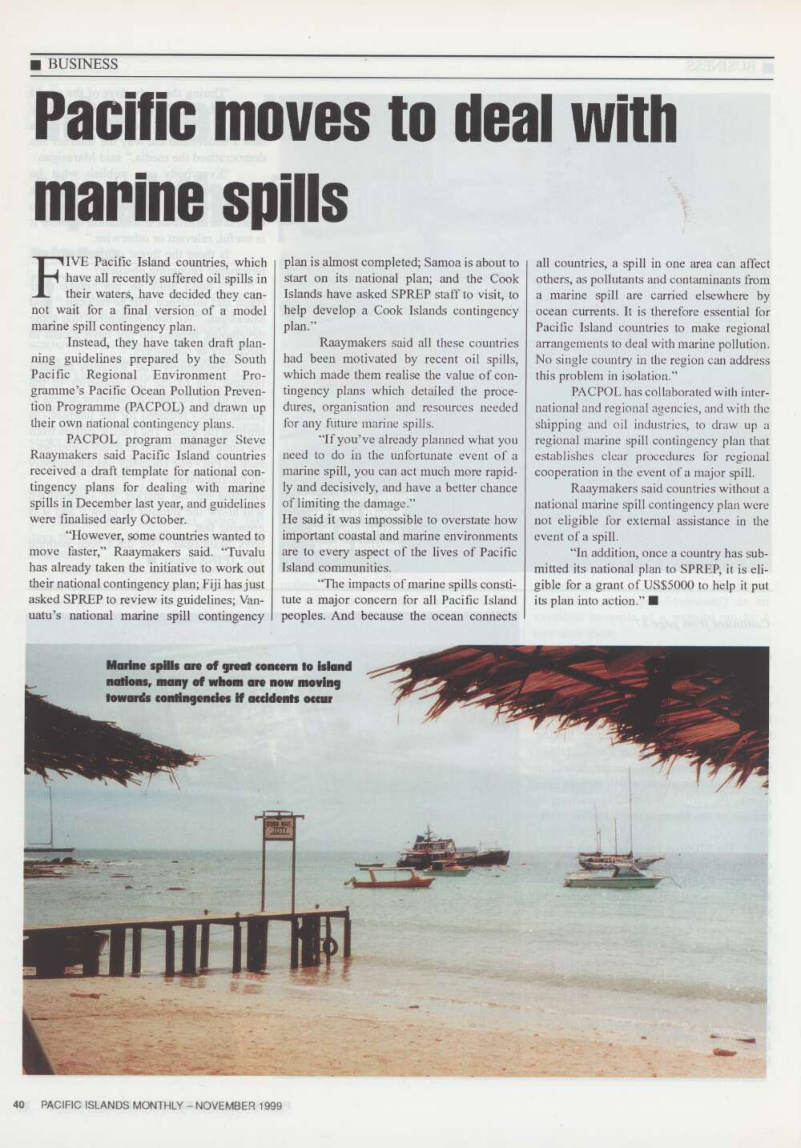
Marine spills are of great concern to island nations, many of whom are now moving towards contingencies if accidents occur