dollar research centre
p. 22 · Read in the full issue
Fiji sugar to start multi-million dollar research centre
FIJI’S biggest commercial enterprise, sugar, will be taking a step in a new direction if it can obtain funding for an independent research centre to help modernise sugar cane farming and sugar production.
Preliminary estimates on funding envisage approximately FJDSS.3 million for construction and about FJDS7OO,OOO for equipment for the centre.
The sugar cane research advisory com mittee is preparing a detailed scheme for acquiring land, constructing laboratories
and other technical infrastructure and staffing.
Committee chair and deputy chief executive of the Fiji Sugar Market ing Company, Kaliopate Tavola, says they have not completed analysis of funding options but foreign aid would be sought for establishment costs.
He says research is a crucial part of a strategic plan for sugar industry reform.
To be introduced over 20 years, the plan
proposes major change
in all aspects of Fiji’s
biggest commercial enterprise.
Growing, processing and exporting
sugar provides a livelihood for more than 22,000 farmers and 3000 mill workers.
In total, it is estimated that about one third of Fiji’s population is dependent in some way on sugar revenue, with industry earnings one of the biggest contributors to the economy.
However, unless milling and farming
standards are improved, Fiji will not be able to compete internationally.
The Sugar Commission of Fiji believes that a strategic plan adopted in 1997 was the key to the industry’s survival, pointing the way to better milling, transport, harvesting and farming.
Six industry sub-committees are imple menting the first stages of the plan.
“Research has always been important and this is recognised as we map out the future development of sugar production,” says Tavola. “Excellent work has been done in the past on creating new cane varieties
and providing farm advice.”
But Tavola said the current research cen tre - run by the Fiji Sugar Corporation - had suffered from loss of skills and shortage of funds.
In addition, he said, cane growers had no direct involvement or voice in FSC research although they contributed to its costs.
“We want the new centre to highlight
excellence, to act as a showcase for what our industry can become. At the same time, it will provide valuable practical and scientific support for the millers and growers to help them increase efficiency and output.”
“A continuing commitment to research will pay good dividends for everyone in the industry. The return on the money invested will be very high.”
The next step in the process is the com missioning of initial design and architec tural drawings.
Meanwhile, committee members have
progressed with draft legislation for the estab lishment of the centre.
Tavola says the centre’s broad objectives, as out lined in the proposed legislation, will be to boost the productivity of the sugar industry. It will work to improve the quantity and quality of sugar cane and identify ways of producing addi tional products from cane.
The centre will have a wide mandate for techni cal and scientific research and investiga tion. This will cover pro
duction, harvesting,
transport or processing of sugar. There will be concentration on preventing pest infestation, enhancing the ability of land to sustain sugar crops and protection of the environment.
A Board of Directors will represent all sectors of the industry and an advisory committee will make recommendations to the Board on research programmes and technical matters. ■
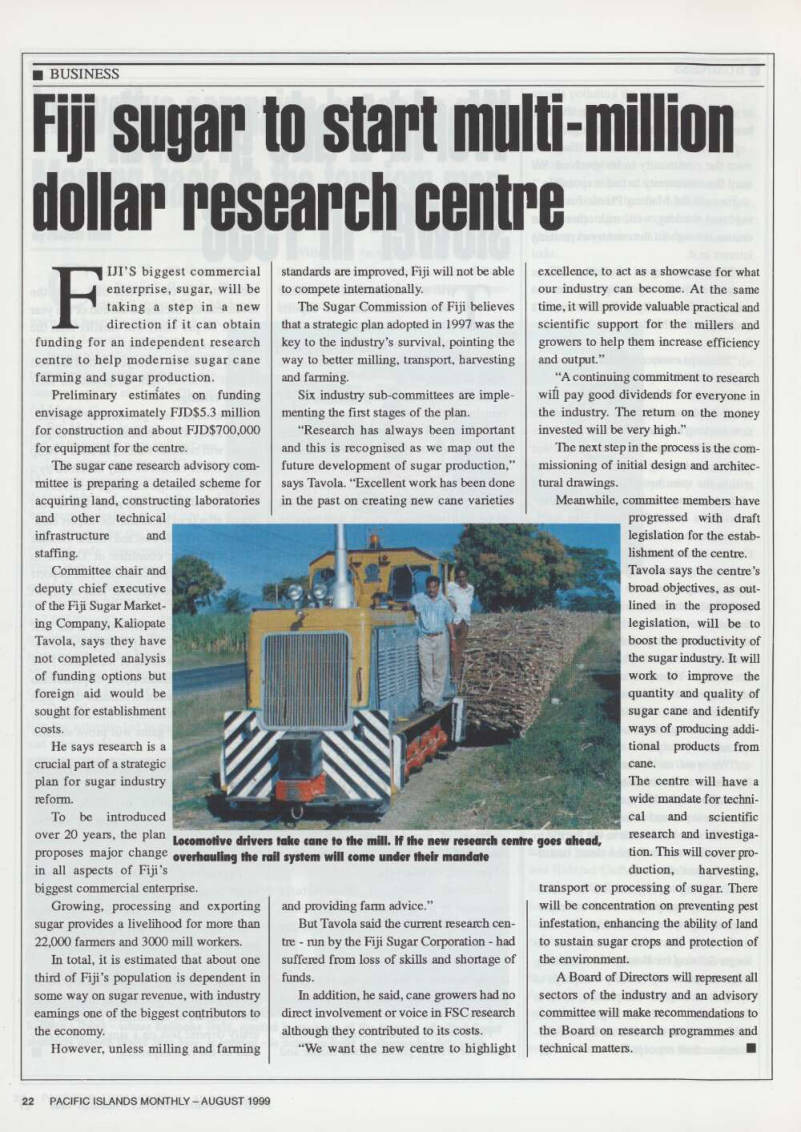
Locomotive drivers take cane to the mill. If the new research centre goes ahead, overhauling the rail system will come under their mandate