A Cultural Revolution?
pp. 46-49 · Read in the full issue
Culture
By Sophie Foster Hildebrand
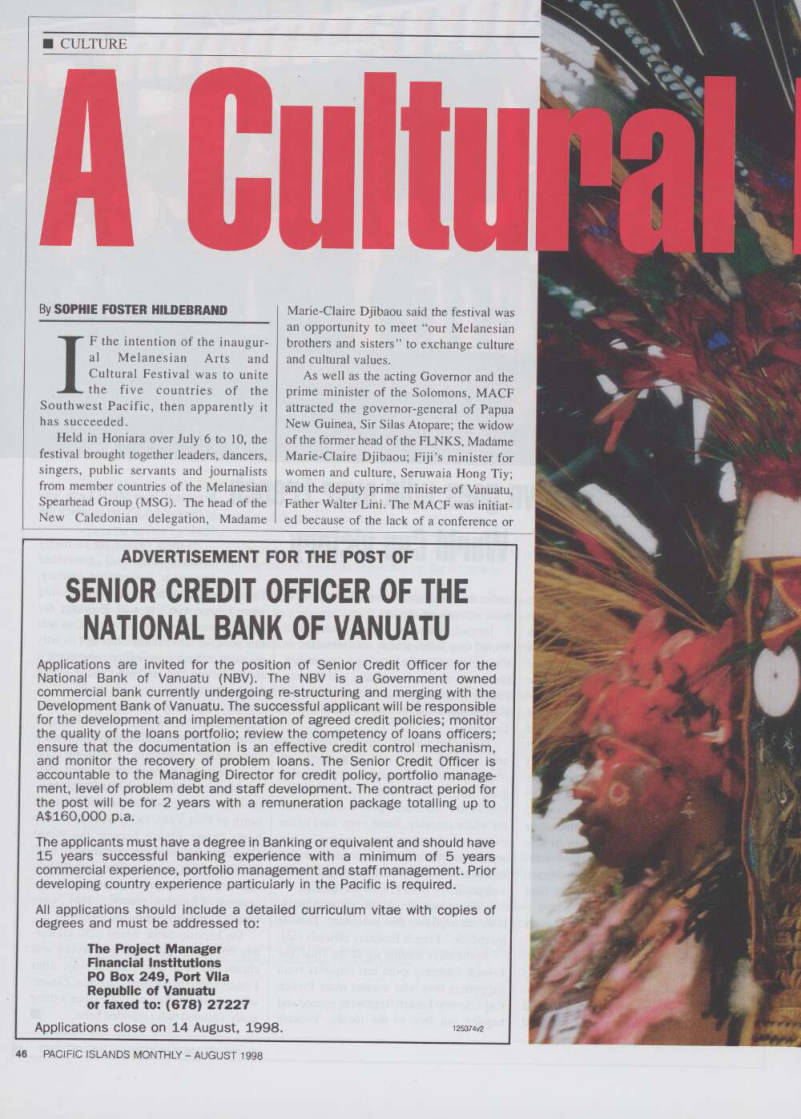
IF the intention of the inaugur al Melanesian Arts and Cultural Festival was to unite the five countries of the Southwest Pacific, then apparently it has succeeded.
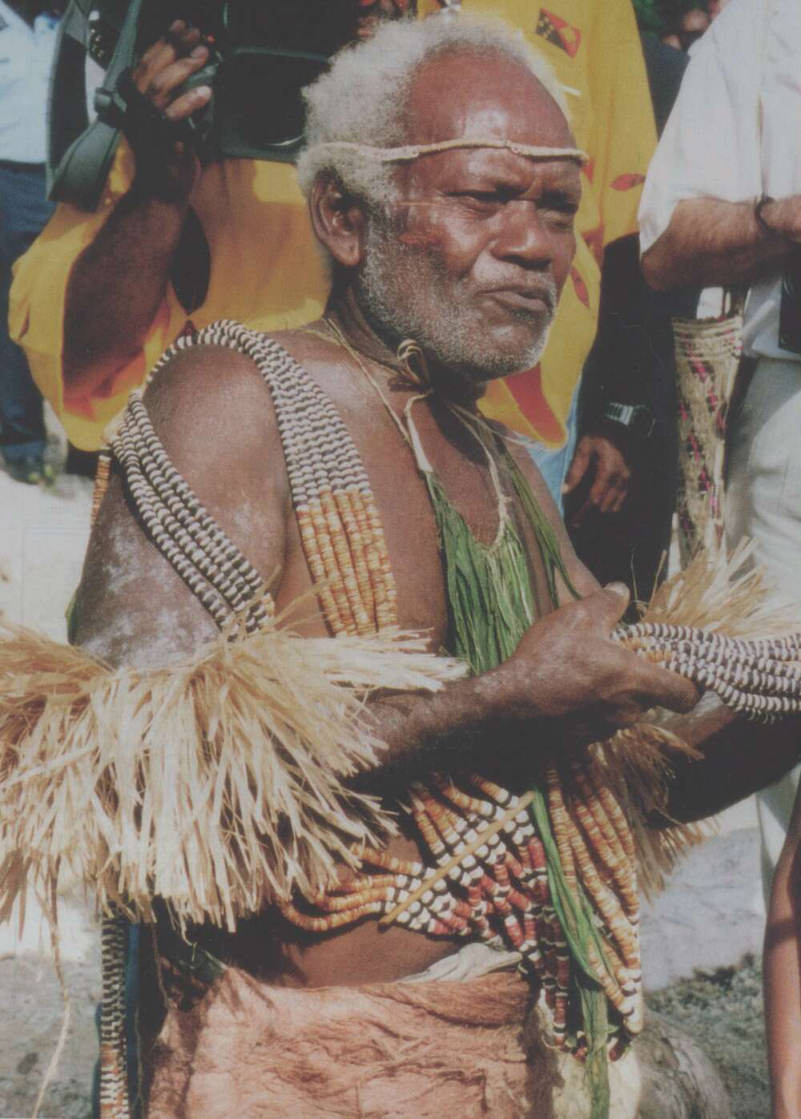
Held in Honiara over July 6 to 10, the festival brought together leaders, dancers, singers, public servants and journalists from member countries of the Melanesian Spearhead Group (MSG). The head of the New Caledonian delegation, Madame
Marie-Claire Djibaou said the festival was an opportunity to meet “our Melanesian brothers and sisters” to exchange culture and cultural values.
As well as the acting Governor and the prime minister of the Solomons, MACF attracted the governor-general of Papua New Guinea, Sir Silas Atopare; the widow of the former head of the FLNKS, Madame Marie-Claire Djibaou; Fiji’s minister for women and culture, Seruwaia Hong Tiy; and the deputy prime minister of Vanuatu, Father Walter Lini. The MACF was initiat ed because of the lack of a conference or
other facility that draws back together people in Melanesia. The South Pacific Festival of Arts was considered too broad to really build the Melanesian identity.
Encouraging the idea of “One People, Many Cultures”, as the inaugural MACE theme proposed, is of great importance to MSG leaders, who are trying to promote trade within the region, as well as more interaction on a regional level.
The event was a big boost to the Solomons economy with an influx of for eign currency, and greater demand for Solomons dollars. Over the week, partic-
ipants and supporters spent thousands on food, drinks and gifts, encouraging many small operators to sell their wares on the streets near the festival village.
The general consensus amongst leaders and participants was that the MACF should have been initiated long before now.
The week successfully allowed for the development of friendly ties between dele gates, dancers and other performers, and there were many tears as the delegations left Henderson Airport. Most of the activi ties during the week were held at the
MACF Village, which was specifically built for the festival.
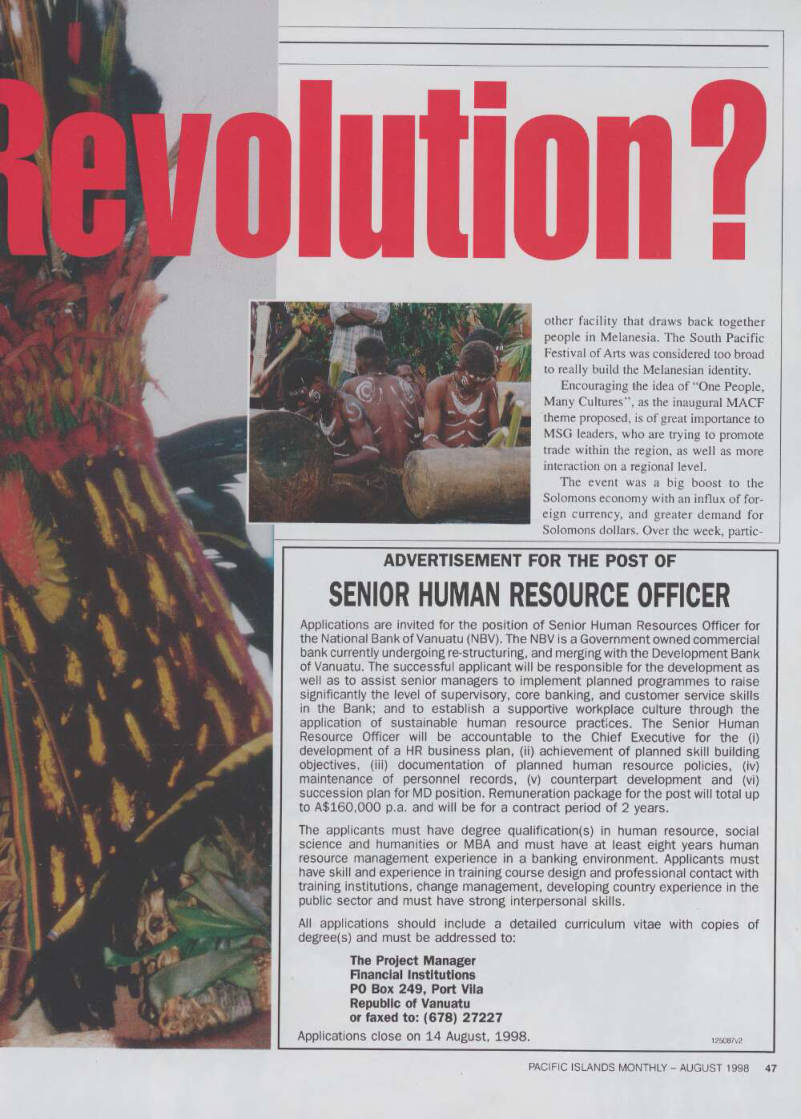
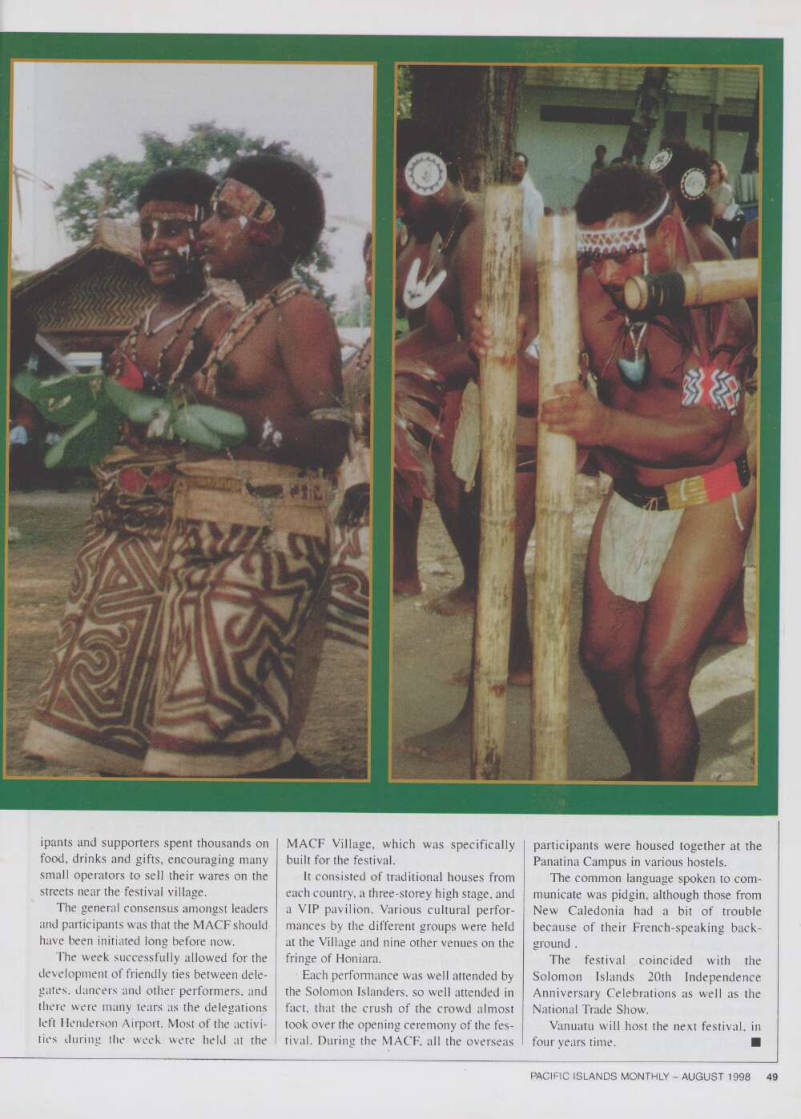
It consisted of traditional houses from each country, a three-storey high stage, and a VIP pavilion. Various cultural perfor mances by the different groups were held at the Village and nine other venues on the fringe of Honiara.
Each performance was well attended by the Solomon Islanders, so well attended in fact, that the crush of the crowd almost took over the opening ceremony of the fes tival. During the MACF. all the overseas
participants were housed together at the Panatina Campus in various hostels.
The common language spoken to com municate was pidgin, although those from New Caledonia had a bit of trouble because of their French-speaking back ground .
The festival coincided with the Solomon Islands 20th Independence Anniversary Celebrations as well as the National Trade Show.
Vanuatu will host the next festival, in four years time. ■