51 years later
pp. 11-12 · Read in the full issue
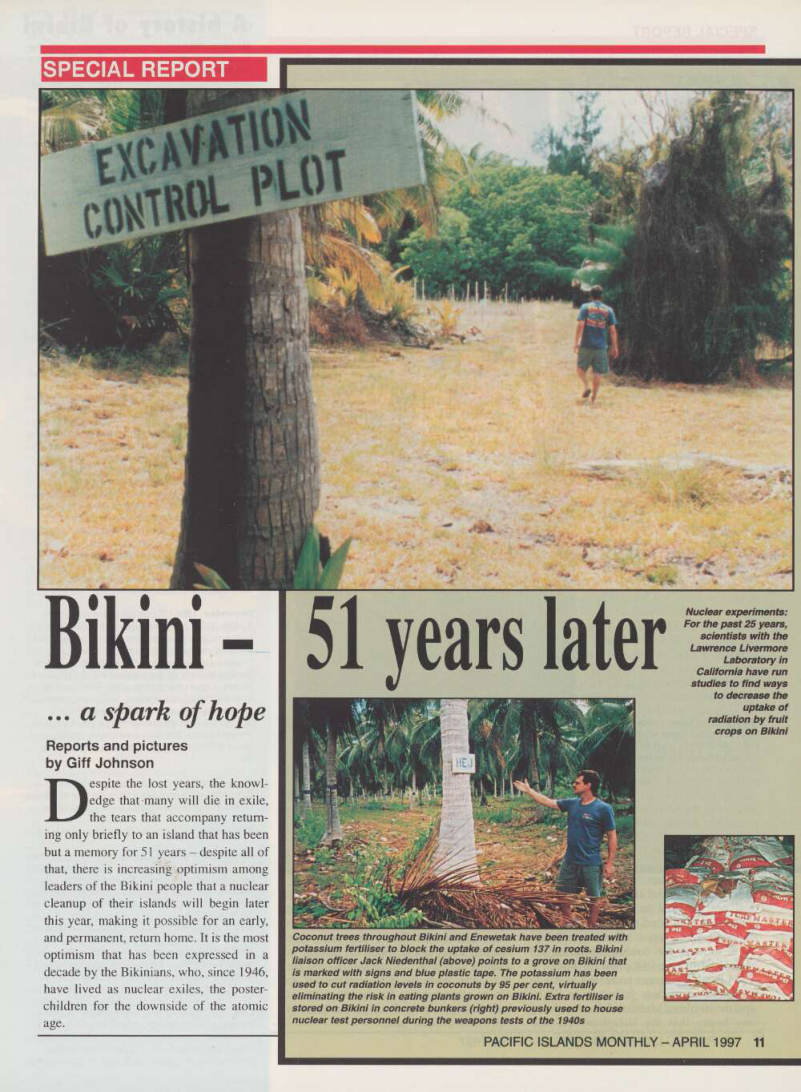
Coconut trees throughout Bikini and Enewetak have been treated with potassium fertiliser to block the uptake of cesium 137 in roots. Bikini liaison officer Jack Niedenthal (above) points to a grove on Bikini that is marked with signs and blue plastic tape. The potassium has been used to cut radiation levels in coconuts by 95 per cent, virtually eliminating the risk in eating plants grown on Bikini. Extra fertiliser is stored on Bikini in concrete bunkers (right) previously used to house nuclear test personnel during the weapons tests of the 1940s
During the last week of February, more than 80 Bikini elders - many of who had not returned to their islands since they were evacuated by the United States Navy 51 years ago - travelled to Bikini Atoll to mark the double anniversary of their departure in 1946, and the March 1, 1954 Bravo hydrogen bomb test at Bikini that spewed nuclear fallout over Bikini and the northern Marshall Islands, ending any hopes that the Bikinians had har
boured of a quick return home.
There are still obstacles to returning: the SUSIOO million trust fund provided by the United States is adequate to clean only Bikini and 1 Eneu, the two main islands,' leaving the other 21 islands in various stages of contamination; and the Bikinians want the US government to accept responsibility for the resettlement before they start a cleanup, a request at which the US may balk.
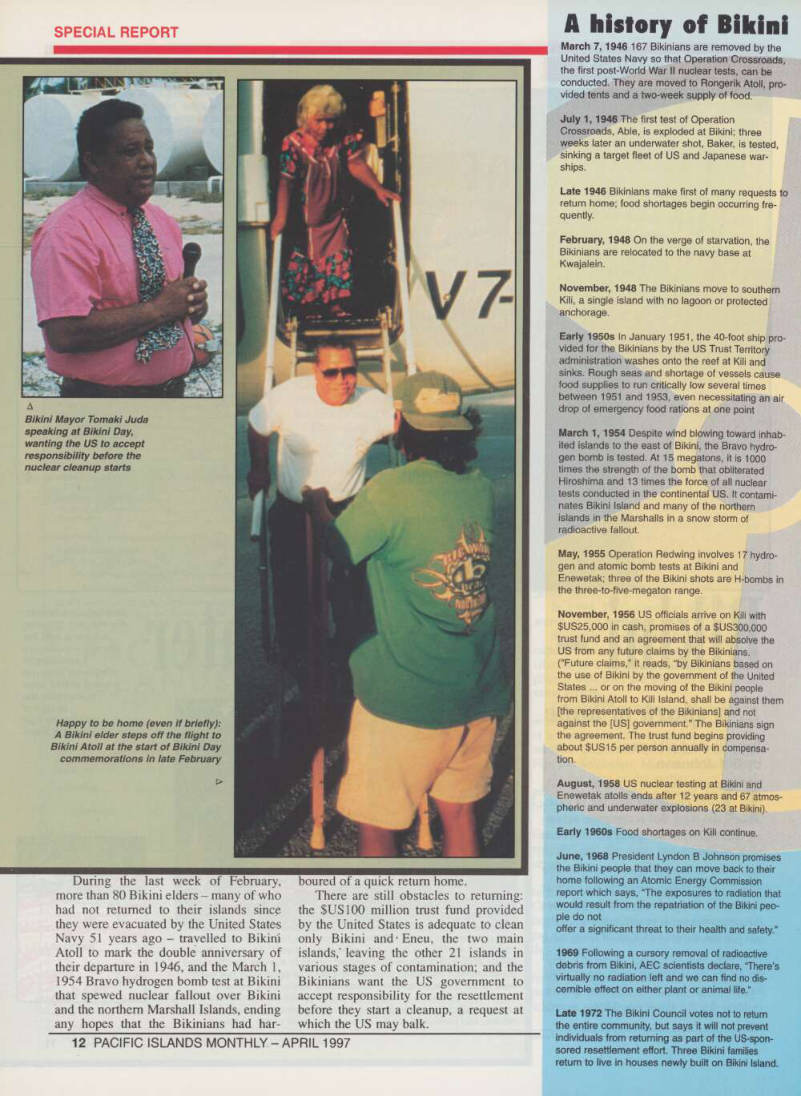
Bikini Mayor Tomaki Juda speaking at Bikini Day, wanting the US to accept responsibility before the nuclear cleanup starts
Happy to be home (even if briefly): A Bikini eider steps off the flight to Bikini Atoll at the start of Bikini Day commemorations in late February