replies
pp. 4-5 · Read in the full issue
Pina
Dear Sir,
Your article, “Tonga - PINA’s stumbling, block”, which appeared in the November issue, was misinformed in its content.
This sidebar article appeared with a longer feature on media freedom written
by Auckland-based journalist Michael
Field ... the same Field who was banned from entering Tonga to attend this year’s PINA Convention and who is still upset that PINA did not call off its conference when the Tongan authorities refused PINA’s request to let him in the country.
I’ve already shared my views with Field and this letter should not come as a sur prise to him because he, in fact, encour aged me to write it.
I normally don’t respond to articles unless they’re so inaccurate. Plus, some non-PINA-friendly people are making sure your Pacific Islands Monthly article gets wide circulation.
I hope the same forces give my letter the same coverage.
The reason why most of the world’s media associations condemned the jail ing of our two Tongan colleagues a few months back was due to PINA’s Freedom of Information Network which sent out advisories and appeals about the jailing not only to PINA members but to international media organisations. 1996 was not a miserable year for PINA, as your report stated. Despite mounting financial pressures and criti cism from media colleagues who are not active in PINA, this regional media organisation has led the fight in defence and promotion of freedom of informa tion and expression, mounted a highly successful convention, and conducted
major training programmes.
You are right in pointing out that PINA did nothing when Filokalafi ’Akau’ola was first arrested and ques tioned by the police minister (Clive Edwards) earlier this year. We had
checked with out colleagues in Tonga and had been advised that it was not a press freedom issue.
However, during a question-and answer session with the police minister at the PINA Convention, we journalists from outside Tonga found out more about the incident from Edwards himself. ’Akau’ola was indeed threatened and intimidated and, yes, PINA should have protested.
We learn from our mistakes, which is why when ’Akau’ola and his editor were jailed, PINA diversified its sources of information and responded in the way it did.
Tavake Fusimalohi has not quit PINA as your reporter stated. He resigned as executive director but he is still a PINA member.
Your report concluded with the state ment, “...PINA was struggling to survive as aid donors backed away from the
organisation.”
The only aid donor we’ve lost is The Asia Foundation, which has withdrawn from the region totally because of budget cuts in Washington and changing
American priorities.
They were gone before the Tongan sit uation.
Scores of Pacific Island organisations and projects have been hit by this, not just
Pina.
PINA this year got support from more international organisations than ever for its training programmes but total aid to the region is dropping and much bigger
organisations than PINA are affected. Talk to the South Pacific Commission.
PINA, like many other Pacific Island organisations, is currently working on ways to make up for the loss of The Asia Foundation funding for our secretariat, which has only one staff member to serve our large PINA family of members in 21 Pacific Island countries and territories.
Our executives help out by paying for their own accommodation, meals, stopovers and other costs for board meet
ings.
Next year, we’re asking that they also pay their airfares. Can you name another regional organisation with this level of personal commitment and sacrifice from its members?
Have a happy news-hunting New Year!
Monica Miller
President Pacific Islands News Association Pago Pago American Samoa
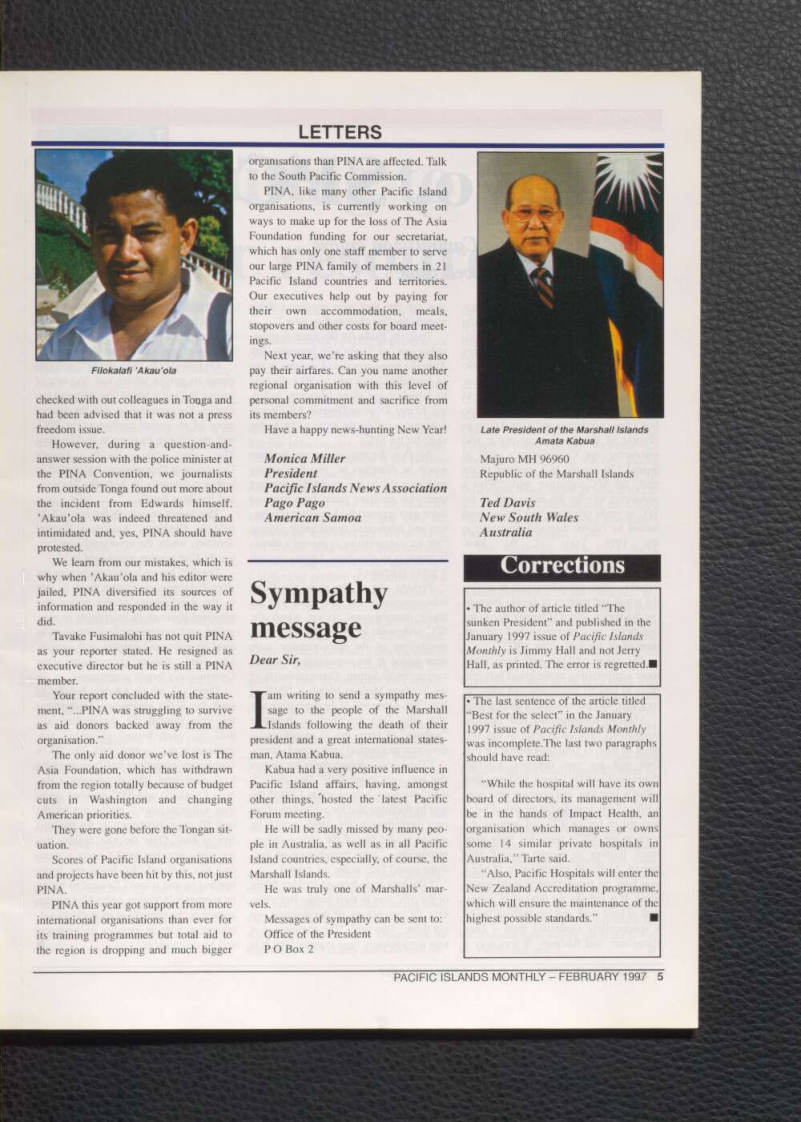
Filokalafi Akau'ola