'the Big One’
pp. 39-40 · Read in the full issue
Tag and release may help hook 'the Big One’
WHEN the big one hit, Albert Threadingham had no doubts it was a blue marlin and he knew it was a monster by the way it sent shudders through the boat.
“The bait we had on was a long leatherjacket species common in Fiji. The marlin took it, and you’d think the back of the boat fell out the way it shuddered.
It was an incredible sight. My children were so frightened they ran up the front of the boat and prayed the fish would get off.
“Every time it rolled, the water exploded white. When marlin reach about 14 feet (from the base of the bill to the fork in the tail) they stop growing in length and just expand, kind of like an
elephant. When they’re that big they
can’t leap out of the water. The one we had couldn’t jump, it just kept rolling.
“When it faced the back of the boat and opened its mouth to get free, the bait was laying across its throat the bait was 24 inches long, just lying there.”
Tales like Albert Threadingham’s encounter with “the one that got away” in 1977, and those of commercial fisher men who claim to have caught marlin of the same size, still catch the breath of Fiji gamefishermen hoping they will be the first to hang a marlin more than lOOOlbs on their wall.
For the gamefishermen, it’s not just a matter of kudos it would launch Fiji’s gamefishing infrastructure into the inter-
national limelight. Environmentalists may not greet this as good news but, ironically enough, the key to catching the “big one” and the industry’s success may lie in an environmentally sensitive prac tice now being used in gamefishing.
The tag and release system was introduced in Fiji at the Carpenters Gamefishing Tournament in October last year. It was in full swing during the
recent Pacific Islands Monthly gamefishing
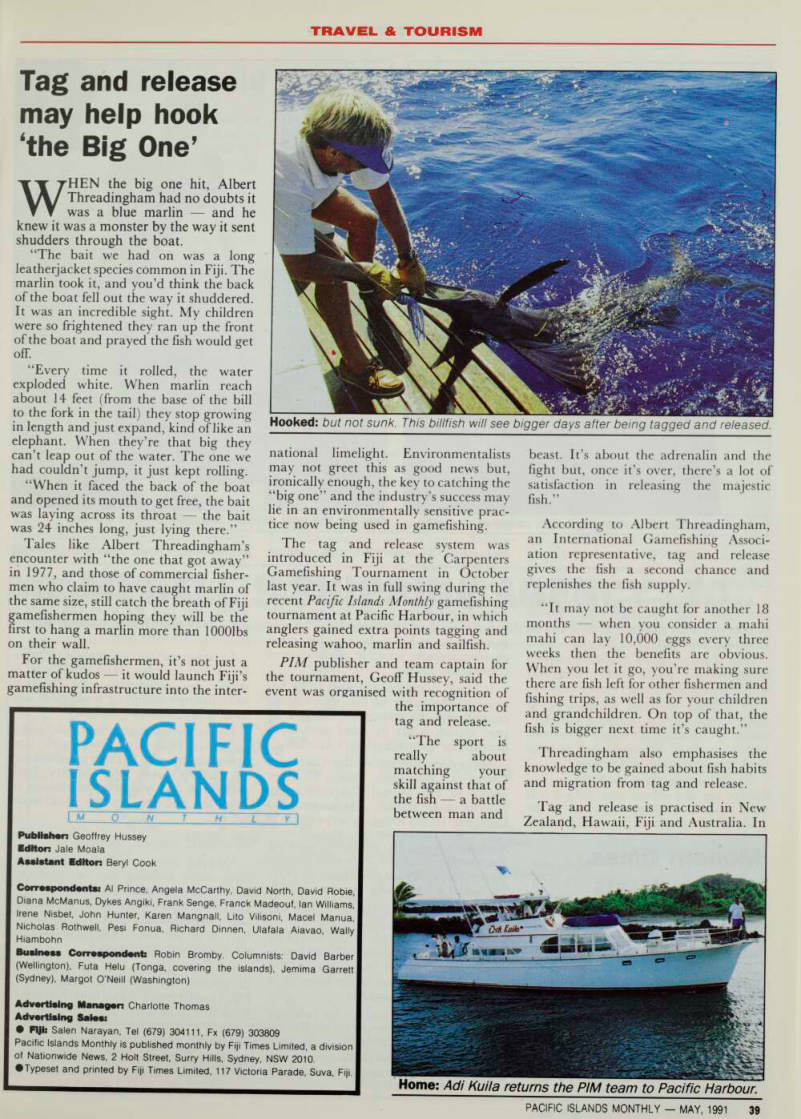
tournament at Pacific Harbour, in which anglers gained extra points tagging and releasing wahoo, marlin and sailfish.
PIM publisher and team captain for the tournament, Geoff Hussey, said the event was organised with recognition of
the importance of tag and release.
“The sport is
really about
matching your
skill against that of the fish a battle between man and
beast. It’s about the adrenalin and the fight but, once it’s over, there’s a lot of satisfaction in releasing the majestic fish.”
According to Albert Threadingham,
an International Gamefishing Associ ation representative, tag and release gives the fish a second chance and
replenishes the fish supply.
“It may not be caught for another 18 months when you consider a mahi mahi can lay 10,000 eggs every three weeks then the benefits are obvious.
When you let it go, you’re making sure there are fish left for other fishermen and fishing trips, as well as for your children and grandchildren. On top of that, the fish is bigger next time it’s caught.”
Threadingham also emphasises the knowledge to be gained about fish habits and migration from tag and release.
Tag and release is practised in New Zealand, Hawaii, Fiji and Australia. In
Hooked: but not sunk. This billfish will see bigger days after being tagged and released.
Home: Adi Kuita returns the PIM team to Pacific Harbour.
Fiji it is used for billfish only, but it is used overseas for other species such as yellowfin tuna, snapper, even stingrangs.
Australian Fisheries have issued shark and fish tags through Dr David Grobecker, who runs the Pacific Ocean Research Foundation in Hawaii.
One of the valuable discoveries which scientists have made is that some fish which are clinically dead can be revived.
In a New Zealand tournament in 1989, a rope was put around a fish’s bill, which is covered with tough abrasians, and it was towed around for half an hour until it revived and was released.
Threadingham said most fish would survive tag and release especially if it is done without hauling them out of the water on to a hot deck a quick length
and girth measurement and tagging would be enough.
Max Lane, owner of the Ocean Pacific Club (a gamefishing resort) and Max Lane Engineering (which custom-builds boats), believes research could show gamefishing in Fiji to be a viable, more environmentally sensitive alternative to commercial fishing.
It could compete internationally be cause of the range of fish that can be caught, and the favourable weather all year round, while its other attractions provide for gamefishermen’s families.
Managing director of the Carpenter Group of Companies, Dennis Cuthers, points to the annual Carpenters Fiji International Billfish Tournament at Castaway Island Resort as an example of
gamefishing and tourism working together.
“We’ve believed from the outset that Fiji has billfishing to match any in the world, and that the sport can make a significant contribution to the growth of tourism,” Cuthers said.
Lane agrees that a gamefishing indus try could employ large numbers of people in gamefishing, the back-up infrastructure including tourism, as well as in a boat-building industry.
But while statistics about fish, and a conscious effort by resorts and boat operators to offer quality gamefishing, would help launch Fiji’s industry; Lane believes it also will take the capture of “the big one” to get the momentum started. EH
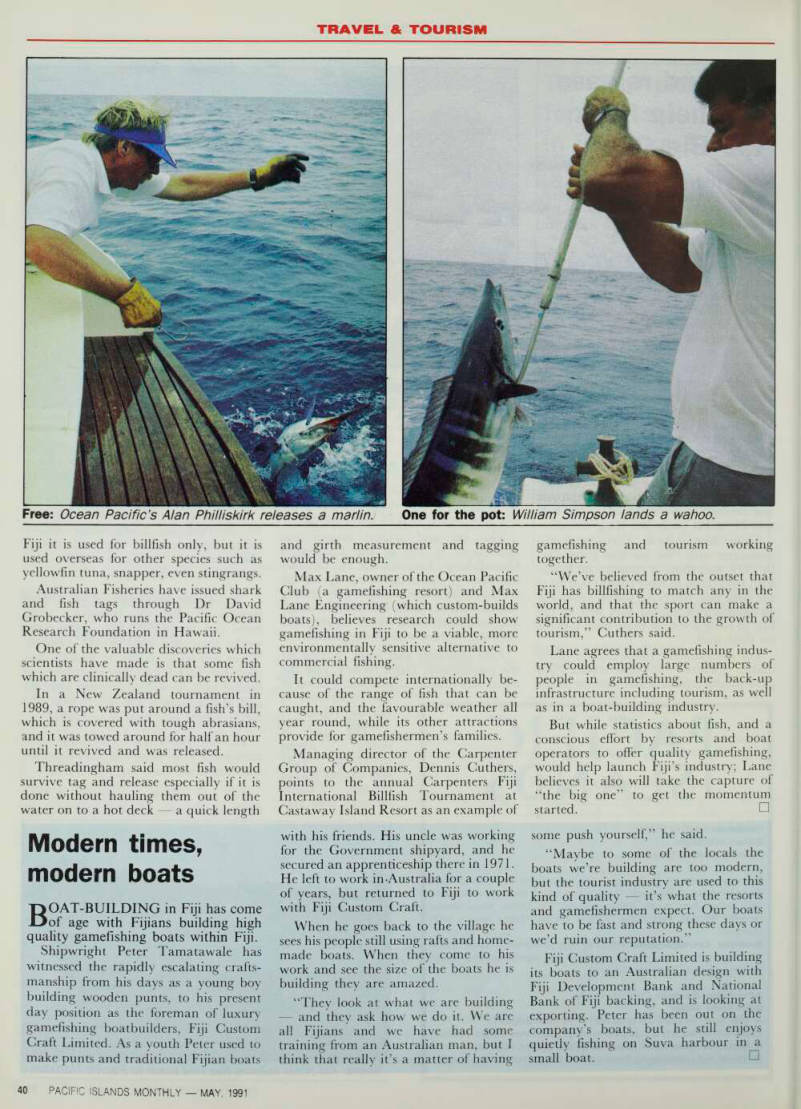
Free: Ocean Pacific’s Alan Philliskirk releases a marlin.
One for the pot: William Simpson lands a wahoo.