is better than none’
p. 35 · Read in the full issue
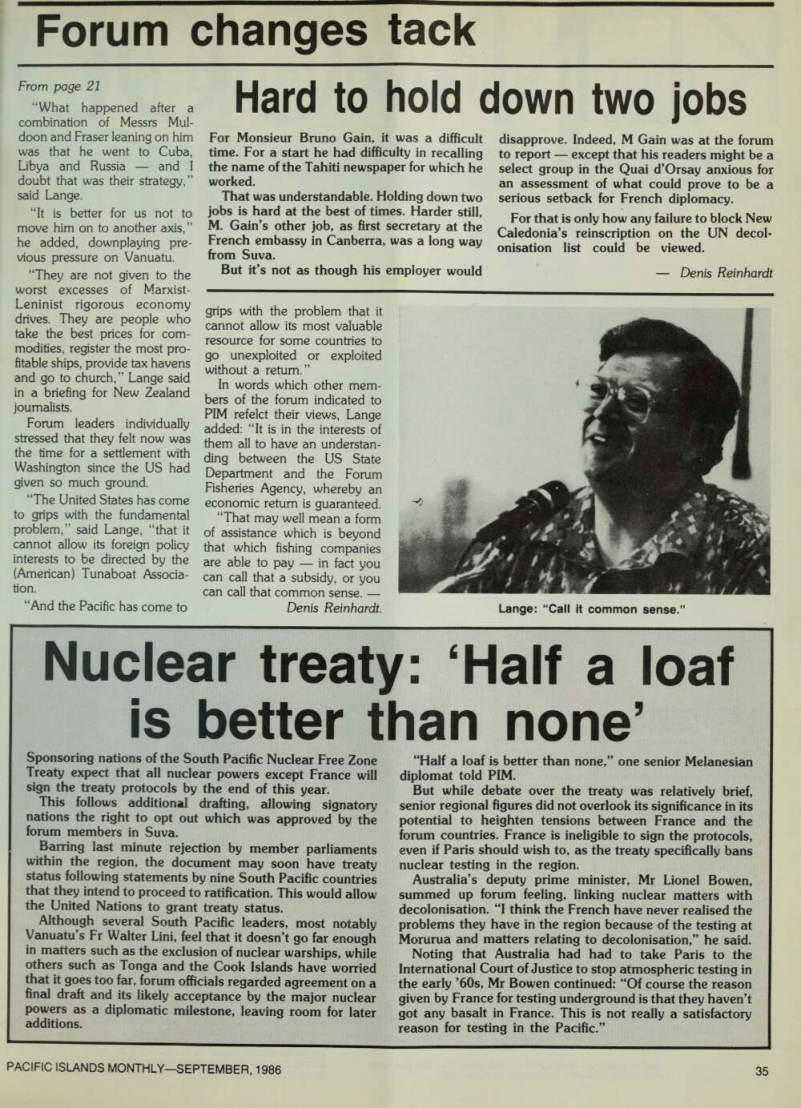
Nuclear treaty: ‘Half a loaf is better than none’
Sponsoring nations of the South Pacific Nuclear Free Zone Treaty expect that all nuclear powers except France will sign the treaty protocols by the end of this year.
This follows additional drafting, allowing signatory nations the right to opt out which was approved by the fomm members in Suva.
Barring last minute rejection by member parliaments within the region, the document may soon have treaty status following statements by nine South Pacific countries that they intend to proceed to ratification. This would allow the United Nations to grant treaty status.
Although several South Pacific leaders, most notably Vanuatu’s Fr Walter Lini, feel that it doesn’t go far enough in matters such as the exclusion of nuclear warships, while others such as Tonga and the Cook Islands have worried that it goes too far, forum officials regarded agreement on a final draft and its likely acceptance by the major nuclear powers as a diplomatic milestone, leaving room for later additions.
“Half a loaf is better than none,” one senior Melanesian diplomat told PIM.
But while debate over the treaty was relatively brief, senior regional figures did not overlook its significance in its potential! to heighten tensions between France and the forum countries. France is ineligible to sign the protocols, even if Paris should wish to, as the treaty specifically bans nuclear testing in the region.
Australia’s deputy prime minister, Mr Lionel Bowen, summed up forum feeling, linking nuclear matters with decolonisation. “I think the French have never realised the problems they have in the region because of the testing at Momma and matters relating to decolonisation,” he said.
Noting that Australia had had to take Paris to the International Court of Justice to stop atmospheric testing in the early ’6os, Mr Bowen continued: “Of course the reason given by France for testing underground is that they haven’t got any basalt in France. This is not really a satisfactory reason for testing in the Pacific.”