More Strife, Pees Peace Moves
p. 11 · Read in the full issue
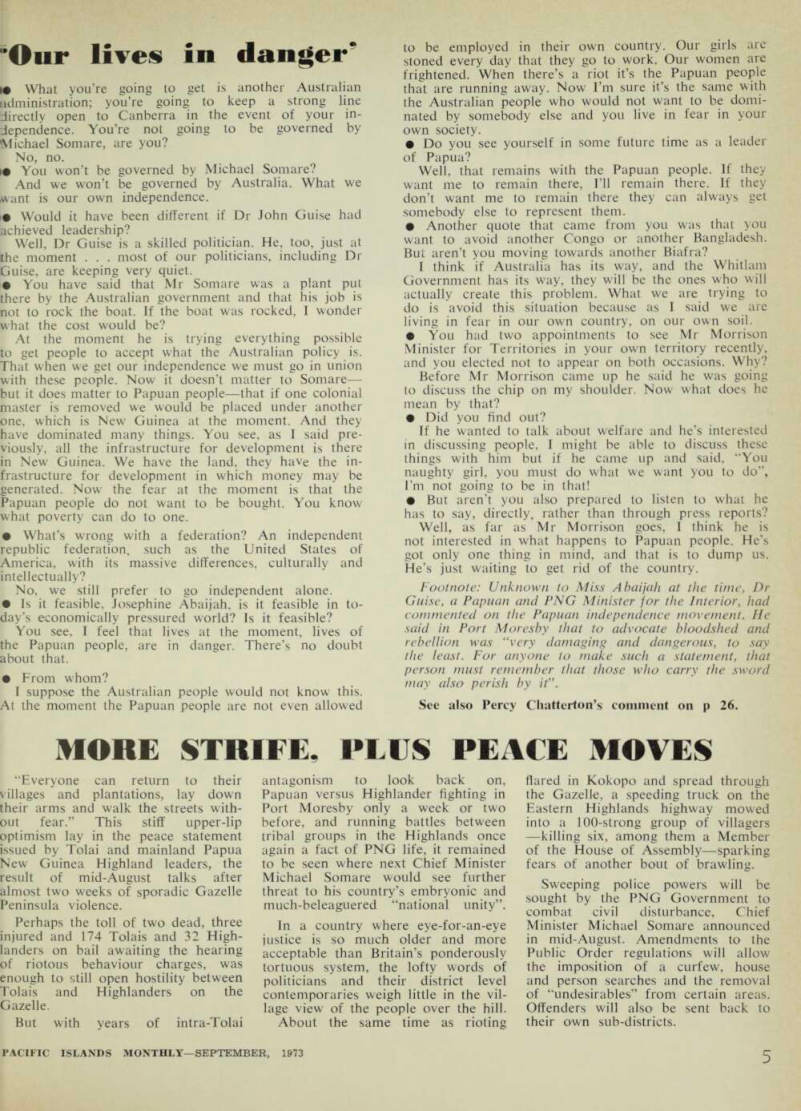
“Everyone can return to their villages and plantations, lay down their arms and walk the streets with out fear.” This stiff upper-lip optimism lay in the peace statement issued by Tolai and mainland Papua New Guinea Highland leaders, the result of mid-August talks after almost two weeks of sporadic Gazelle Peninsula violence.
Perhaps the toll of two dead, three injured and 174 Tolais and 32 High landers on bail awaiting the hearing of riotous behaviour charges, was enough to still open hostility between Tolais and Highlanders on the Gazelle.
But with years of intra-Tolai
antagonism to look back on, Papuan versus Highlander fighting in Port Moresby only a week or two before, and running battles between tribal groups in the Highlands once again a fact of PNG life, it remained to be seen where next Chief Minister Michael Somare would see further threat to his country’s embryonic and much-beleaguered “national unity”.
In a country where eye-for-an-eye justice is so much older and more acceptable than Britain’s ponderously tortuous system, the lofty words of politicians and their district level contemporaries weigh little in the vil lage view of the people over the hill.
About the same time as rioting
flared in Kokopo and spread through the Gazelle, a speeding truck on the Eastern Highlands highway mowed into a 100-strong group of villagers —killing six, among them a Member of the House of Assembly—sparking fears of another bout of brawling.
Sweeping police powers will be sought by the PNG Government to combat civil disturbance, Chief Minister Michael Somare announced in mid-August. Amendments to the Public Order regulations will allow the imposition of a curfew, house and person searches and the removal of “undesirables” from certain areas.
Offenders will also be sent back to their own sub-districts.