An old custom
pp. 22-23 · Read in the full issue
comes back
A Tolai (PNG) custom long neglected by today’s villagers is com ing back into favour — Namata — the ceremony a young man goes through before marriage. Ratongor village on the north coast and Matalau on the Nodup coast have set the pattern for a return to the old ways. The custom revolves around the bridegroom and his preparation for marriage.
Traditionally, a Tolai bridegroom was secluded from womenfolk and normal village life for several days before his wedding. He spent the time in a sacred place in the jungle with elder male relatives and friends, re turning to his village on the day of the wedding amid festivities.
Since World War II the custom has waned. Now it has returned to Mata lau and Ratongor villagers, changed slightly, but still linked to the past.
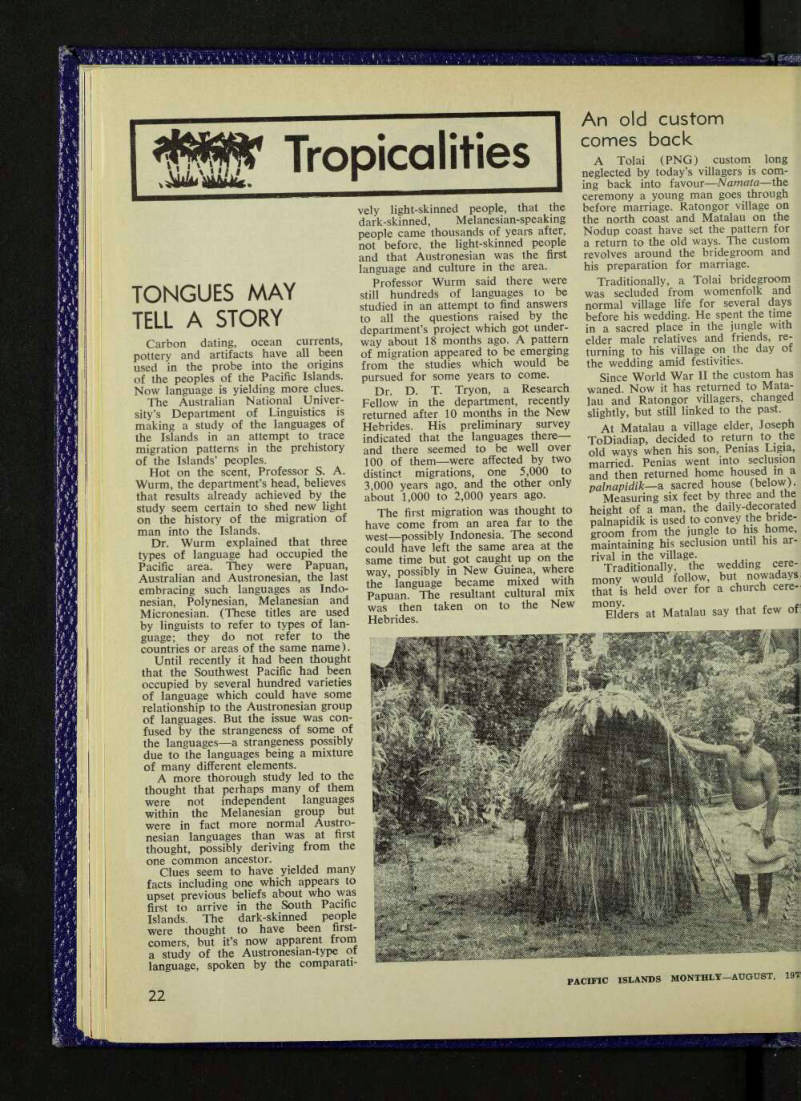
At Matalau a village elder, Joseph ToDiadiap, decided to return to the old ways when his son, Penias Ligia, married. Penias went into seclusion and then returned home housed in a nalnapidik—3. sacred house (below).
Measuring six feet by three and the height of a man, the daily-decorated palnapidik is used to convey the bride groom from the jungle to his home, maintaining his seclusion until his ar rival in the village.
Traditionally, the wedding cere mony would follow, but nowadays, that is held over for a church cere-' m Elders at Matalau say that few of:
today’s younger Tolais have ever seen a palnapidik. The last remembered at Matalau was in 1937. The palnapidik at Matalau and Ratongor, and those of the past, however, don’t last as long as the marriages they precede. Their arrival in the village with the bride groom heralds a feast, but following the wedding they are destroyed— again with accompanying festivities.
Says ToDiadiap, “I decided to do this because it seemed we were get ting too far away from the customs of our forefathers. Old customs like this one still have a part to play in our life”.
But, as Namata costs a lot, only the wealthy will be able to stage it.