War and death among
pp. 86-87 · Read in the full issue
death among the Biami
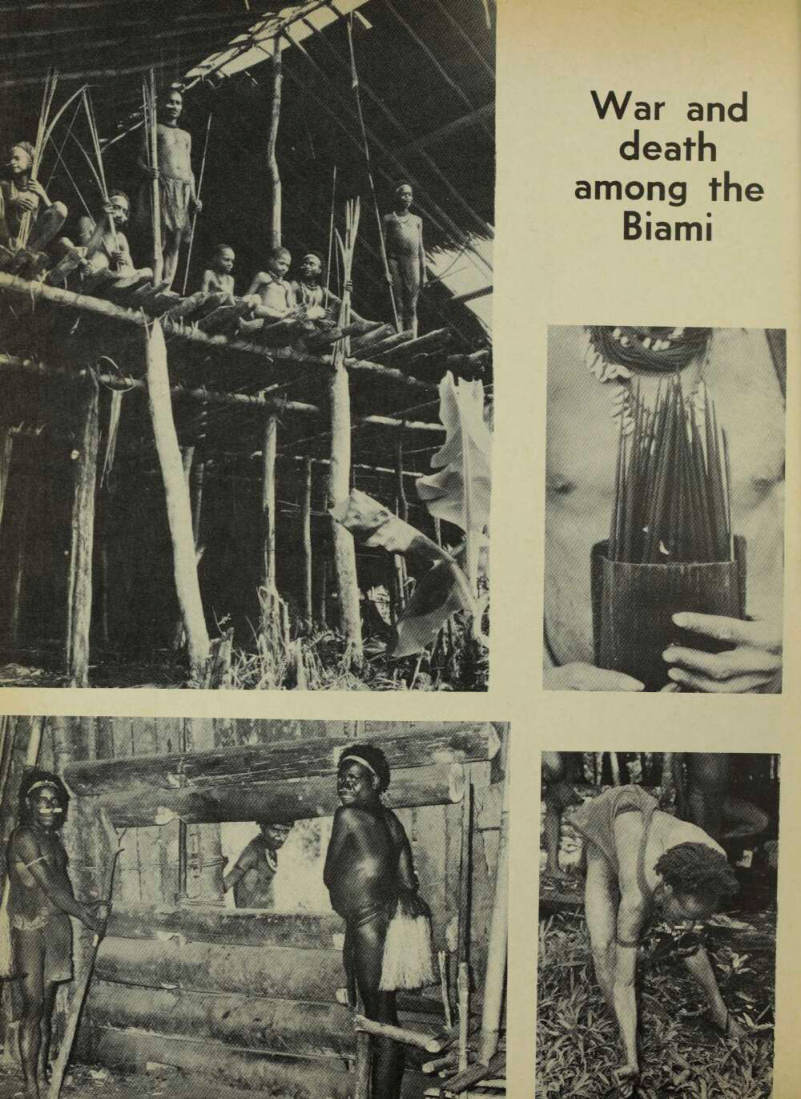
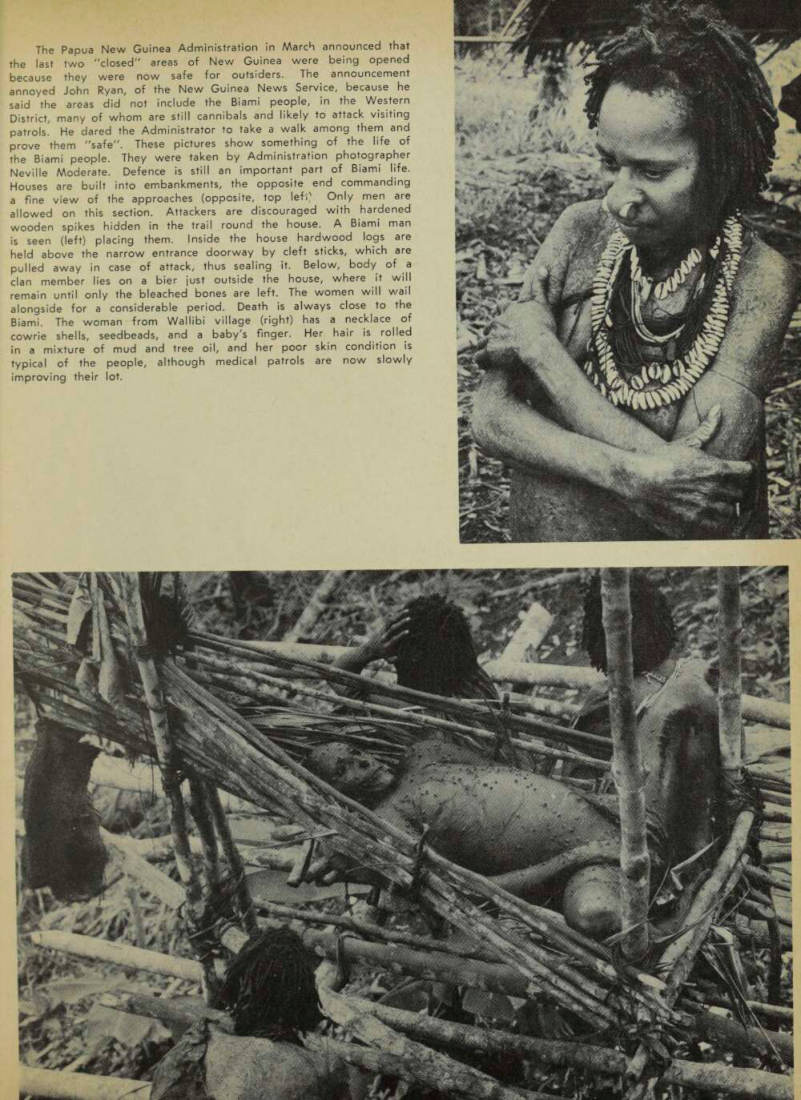
The Papua New Guinea Administration in March announced that the last two "closed" areas of New Guinea were being opened because they were now safe for outsiders. The announcement annoyed John Ryan, of the New Guinea News Service, because he said the areas did not include the Biami people, in the Western District, many of whom are still cannibals and likely to attack visiting patrols. He dared the Administrator to take a walk among them and prove them "safe". These pictures show something of the life of the Biami people. They were taken by Administration photographer Neville Moderate. Defence is still an important part of Biami life.
Houses are built into embankments, the opposite end commanding a fine view of the approaches (opposite, top left' Only men are allowed on this section. Attackers are discouraged with hardened wooden spikes hidden in the trail round the house. A Biami man is seen (left) placing them. Inside the house hardwood logs are held above the narrow entrance doorway by cleft sticks, which are pulled away in case of attack, thus sealing it. Below, body of a clan member lies on a bier just outside the house, where it will remain until only the bleached bones are left. The women will wail alongside for a considerable period. Death is always close to the Biami. The woman from Wallibi village (right) has a necklace of cowrie shells, seedbeads, and a baby's finger. Her hair is rolled in a mixture of mud and tree oil, and her poor skin condition is typical of the people, although medical patrols are now slowly improving their lot.