Bliss!
pp. 50-51 · Read in the full issue
Sheer
Ball’s Pyramid, 1,850 ft of crumbly rock rising sheer out of the sea near Lord Howe Island, has been an eye-catcher on the High Seas since Lieutenant Ball first spotted it in 1788. But in the last five years it’s become some
thing more than a nesting place
for sea birds and a landmark for sailors a haunt for rock climbers with a yen for some
thing different, and dangerous.
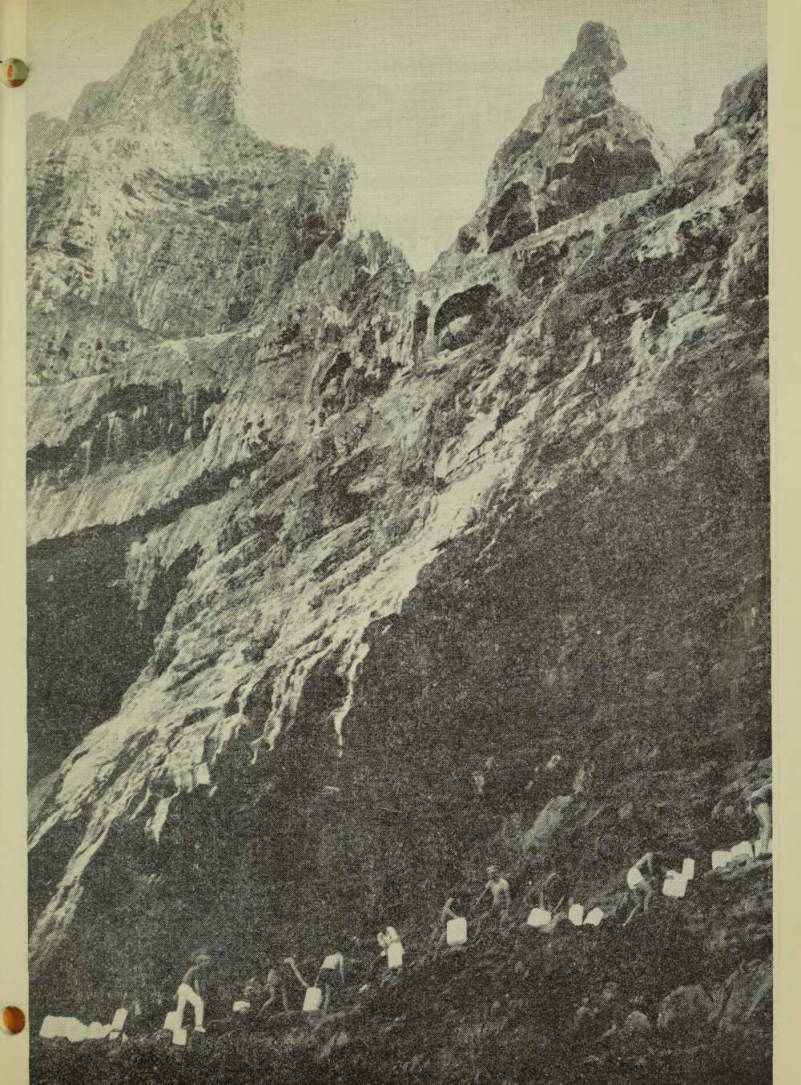
To start with the rock (see op posite page), has no landing place.
You have to swim ashore and start climbing, before reaching a rocky ledge on which to load supplies. And supplies you need, because on this rock there is no water, no provision of any kind and even few ledges on which to catch a night’s decent sleep.
Instead, climbers must hang like flies on a wall, in hammocks strung from spikes driven into the rock face.
Seven expeditions have attempted the craggy rock—the last three suc cessfully. The first success, in 1965, was by five young men; the second time, 12 climbers reached the top, including a woman; the third time, in March last year, a party of six from Sydney Rockclimbing Club reached the top by the sheer north west ridge. (Photo by Jim Smith shows the second successful climb; five gallon water containers are being passed along from base camp, the pyramid looming above).
Expeditions to the rock always begin from Lord Howe Island, some 10 miles away. One of the Islanders takes a boat across the choppy, shark-infested waters to the rock; and the climbers stay in radio contact with the island in case of emergency.
The rock repays its visitors hand somely if they are prepared to brave it. The rock is alive with sea birds, the view is magnificent, and climbers have been known to catch sharks in the water directly below, hanging on to their climbing ropes.
But don’t attempt a climb unless you’re tough. If all else fails to deter you, take heed of the eight inch centipedes which are liable to crawl into a sleeping bag at night— and bite. .