Changes in Rarotonga, too
pp. 61-63 · Read in the full issue
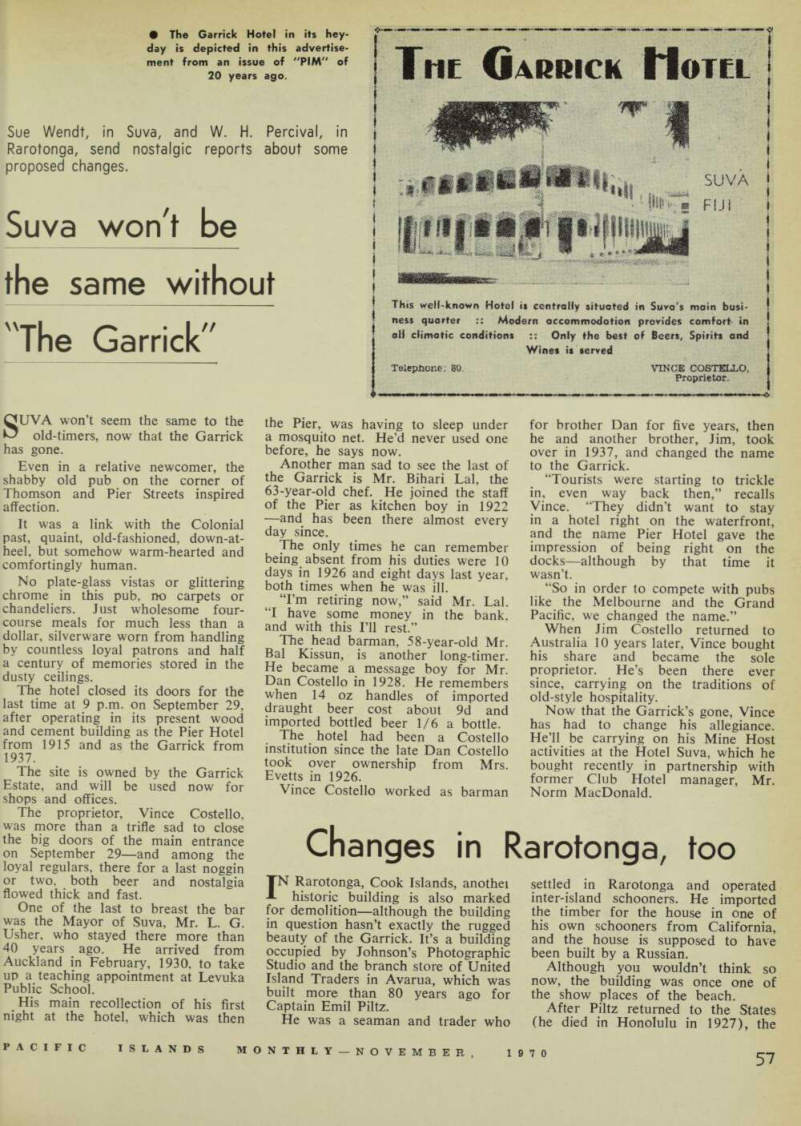
TN Rarotonga, Cook Islands, anothei historic building is also marked for demolition—although the building in question hasn’t exactly the rugged beauty of the Garrick. It’s a building occupied by Johnson’s Photographic Studio and the branch store of United Island Traders in Avarua, which was built more than 80 years ago for Captain Emil Piltz.
He was a seaman and trader who
settled in Rarotonga and operated inter-island schooners. He imported the timber for the house in one of his own schooners from California, and the house is supposed to have been built by a Russian.
Although you wouldn’t think so now, the building was once one of the show places of the beach.
After Piltz returned to the States (he died in Honolulu in 1927), the
building was used variously as a doctor’s surgery, a bakery, a barber’s shop, tea rooms, billiard rooms, a dental surgery and as the printing office of the defunct newspaper, Te Akatauira. That paper was first published in 1936 by Mr. W. H. (“Willie”) Watson and Mr. Albert Henry—the same man who is now Premier of the Cooks.
A popular series of articles in the paper contained Mr. Henry’s ideas on political development in the Cooks, and it’s probably true to say that Albert Henry started as a political leader in the pages of Akatauira.
The paper was killed in 1942 by wartime censorship; was brought to life in 1956 but died a second death the following year.
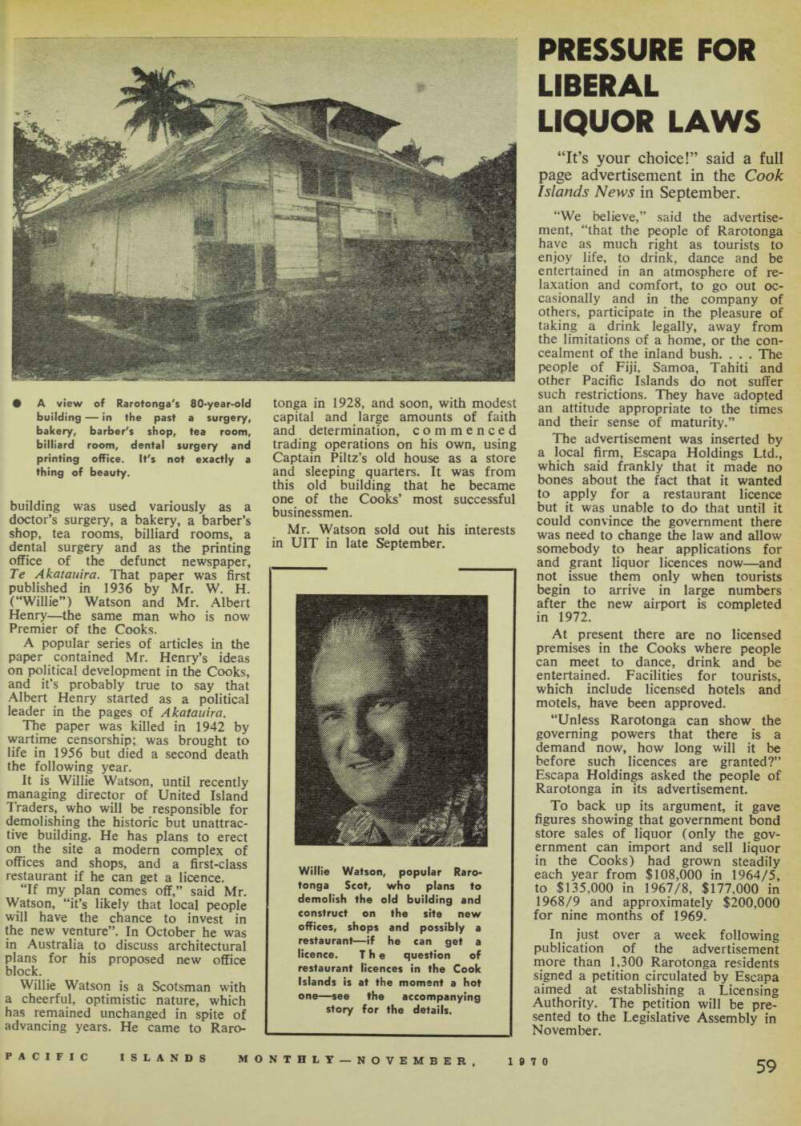
It is Willie Watson, until recently managing director of United Island Traders, who will be responsible for demolishing the historic but unattrac tive building. He has plans to erect on the site a modern complex of offices and shops, and a first-class restaurant if he can get a licence.
“If my plan comes off,” said Mr.
Watson, “it’s likely that local people will have the chance to invest in the new venture”. In October he was in Australia to discuss architectural plans for his proposed new office block.
Willie Watson is a Scotsman with a cheerful, optimistic nature, which has remained unchanged in spite of advancing years. He came to Raro
tonga in 1928, and soon, with modest capital and large amounts of faith and determination, commenced trading operations on his own, using Captain Piltz’s old house as a store and sleeping quarters. It was from this old building that he became one of the Cooks’ most successful businessmen.
Mr. Watson sold out his interests in UIT in late September.
A view of Rarotonga's 80-year-old building—in the past a surgery, bakery, barber's shop, tea room, billiard room, dental surgery and printing office. It's not exactly a thing of beauty.
Willie Watson, popular Raro tonga Scot, who plans to demolish the old building and construct on the site new offices, shops and possibly a restaurant —if he can get a licence. The question of restaurant licences in the Cook Islands is at the moment a hot one—see the accompanying story for the details.