The dancers of Kioa
pp. 39-41 · Read in the full issue
Kioa and Rabi
travel
A Regular Piaa Department
Reporting News Of South
Seas Tourism And Travel
From The Inside
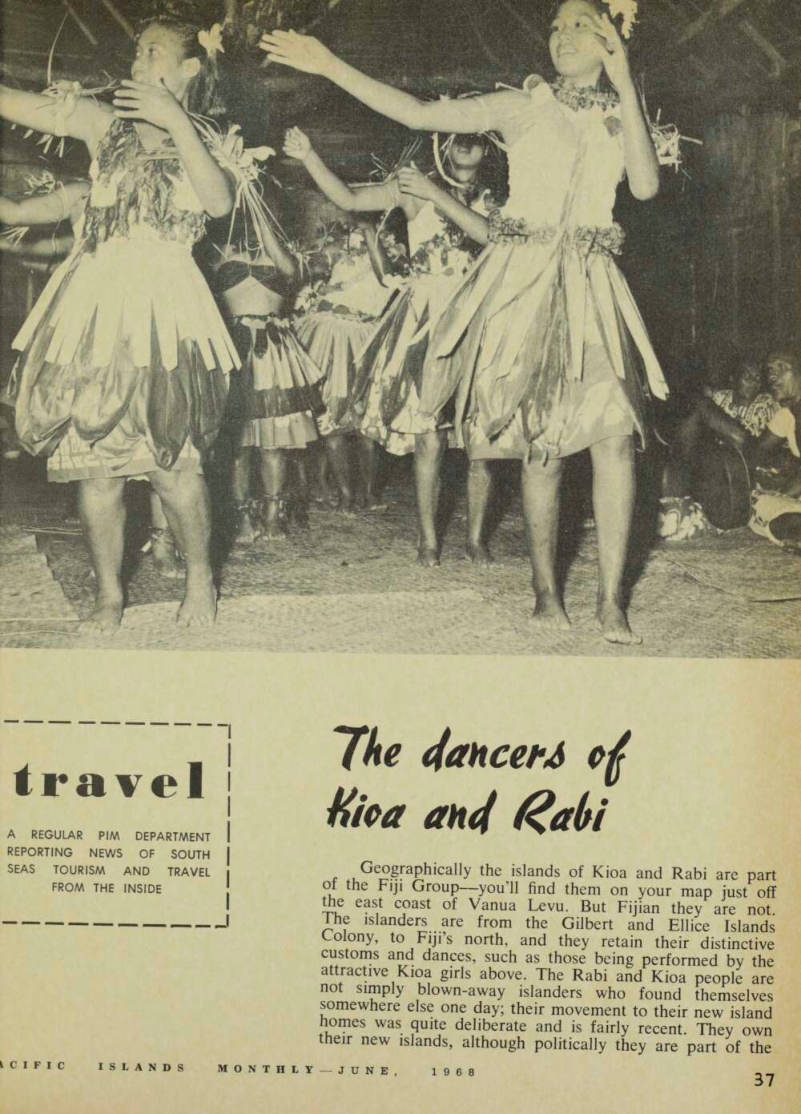
Geographically the islands of Kioa and Rabi are part of the Fiji Group—you’ll find them on your map just off he east coast of Vanua Levu. But Fijian they are not Ihe islanders are from the Gilbert and Ellice Islands Colony, to Fiji’s north, and they retain their distinctive customs and dances, such as those being performed by the attractive Kioa girls above. The Rabi and Kioa people are not simply blown-away islanders who found themselves somewhere else one day; their movement to their new island homes was quite deliberate and is fairly recent. They own their new islands, although politically they are part of the
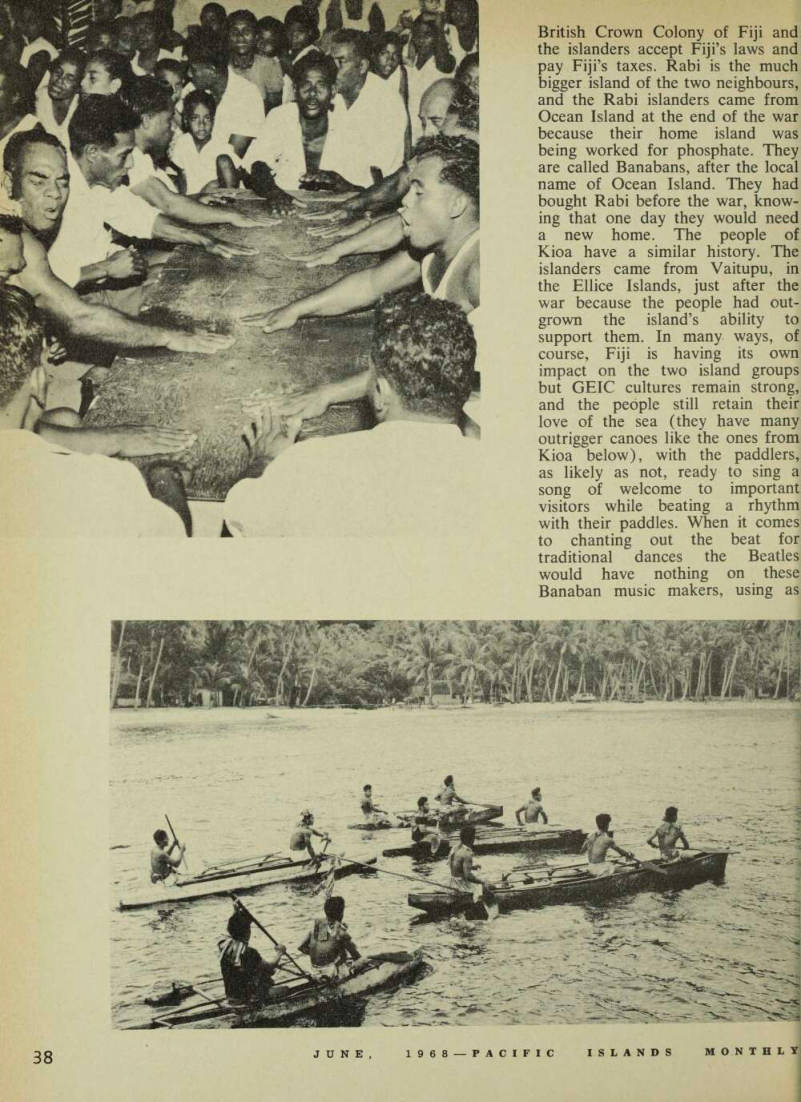
British Crown Colony of Fiji and the islanders accept Fiji’s laws and pay Fiji’s taxes. Rabi is the much bigger island of the two neighbours, and the Rabi islanders came from Ocean Island at the end of the war because their home island was being worked for phosphate. They are called Banabans, after the local name of Ocean Island. They had bought Rabi before the war, know ing that one day they would need a new home. The people of Kioa have a similar history. The islanders came from Vaitupu, in the Ellice Islands, just after the war because the people had out grown the island’s ability to support them. In many ways, of course, Fiji is having its own impact on the two island groups but GEIC cultures remain strong, and the people still retain their love of the sea (they have many outrigger canoes like the ones from Kioa below), with the paddlers, as likely as not, ready to sing a song of welcome to important visitors while beating a rhythm with their paddles. When it comes to chanting out the beat for traditional dances the Beatles would have nothing on these Banaban music makers, using as
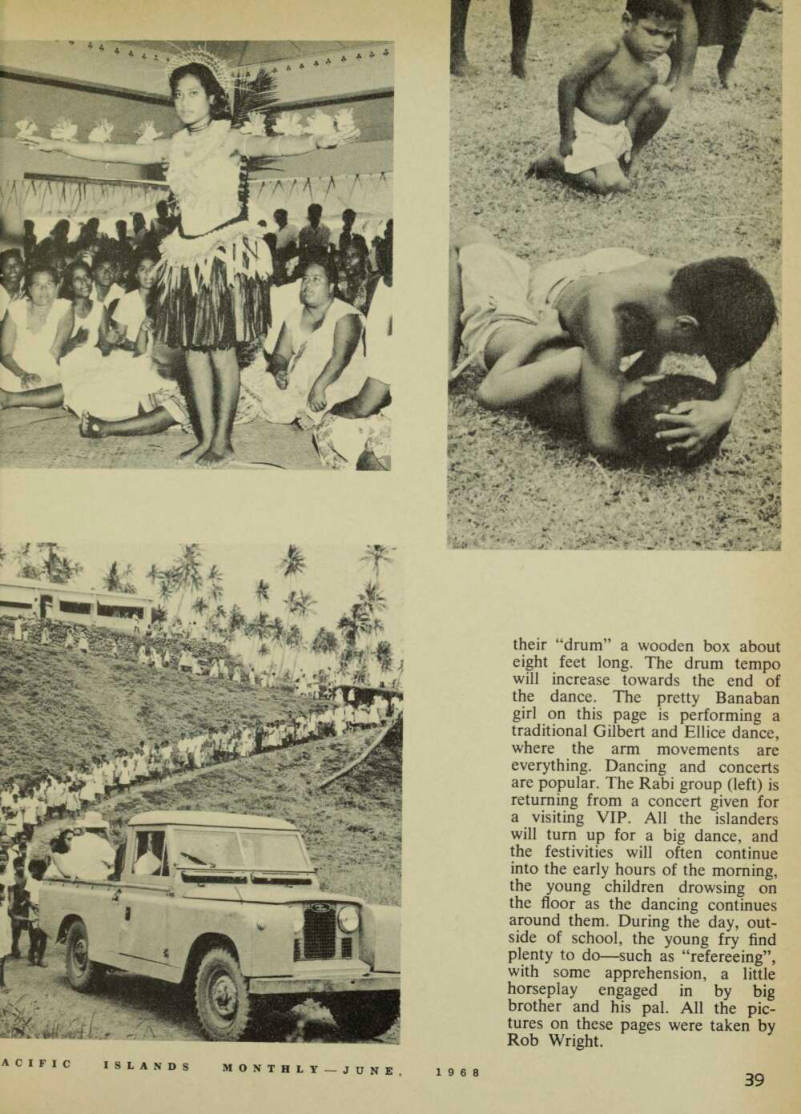
their “drum” a wooden box about eight feet long. The drum tempo will increase towards the end of the dance. The pretty Banaban girl on this page is performing a traditional Gilbert and Ellice dance, where the arm movements are
everything. Dancing and concerts
are popular. The Rabi group (left) is returning from a concert given for a visiting VIP. All the islanders will turn up for a big dance, and the festivities will often continue into the early hours of the morning, the young children drowsing on the floor as the dancing continues around them. During the day, out side of school, the young fry find plenty to do—such as “refereeing”, with some apprehension, a little
horseplay engaged in by big
brother and his pal. All the pic tures on these pages were taken by
Rob Wright.