breed' of pigs
p. 153 · Read in the full issue
The Practical Planter
There is no 'best breed' of pigs
In pigbreeding there is no best breed; it is the strain within he breed that counts, and it is the selection of breeding stock r om these proven strains that gives a solid foundation to the reeding programme.
R successful pig-raising, however, there are certain fundamental ; to be followed. Some of these given here by Mr. N. Steel, ;ipal livestock officer (pigs), of NSW Department of Agriculture, ceding stock must be well-fed il times, but must not be allowed ecome overfat. gs should be housed under con ns which permit them to resist ise and parasitic infestation, ley should be supplied with uate leafy green feed or good ity lucerne meal; in the absence ;reen feed, vitamin A and D 3 Id be included in the diet, le concentrate ration should con at least 50 per cent, grain (apart 1 grain by-products) to ensure fficient supply of vitamin E; this nin is contained in the grain germ is essential for fertility, lars and sows should be supplied good grazing paddocks which rested from stock regularly.
Mating
lars and sows should not be jd until they are at least nine ths of age. Sows should be mated he second day of the heat period, be heat period normally lasts for or three days and should recur y 20 or 21 days until the service jld. ne complete service is sufficient, if the boar is not in demand, a nd service can be allowed the day. ;rvice should take place in the of the morning and before feed >ws should be remated as soon as ible after their litter have been ned.
A young boar must not be over worked and should be used only once a fortnight for his first year of service.
A boar should not be expected to cover more than 20 sows. If there are more than 20 sows in the herd, a second boar is required, and if more than 40, a third boar should be provided.
Culling and selection
When a boar has passed four years of age, consider selecting and pur chasing a young boar as a replace ment.
A four-year-old sow should also be considered for culling and replace ment with a good quality gilt.
A boar should not be selected until he is at least six to seven months of age.
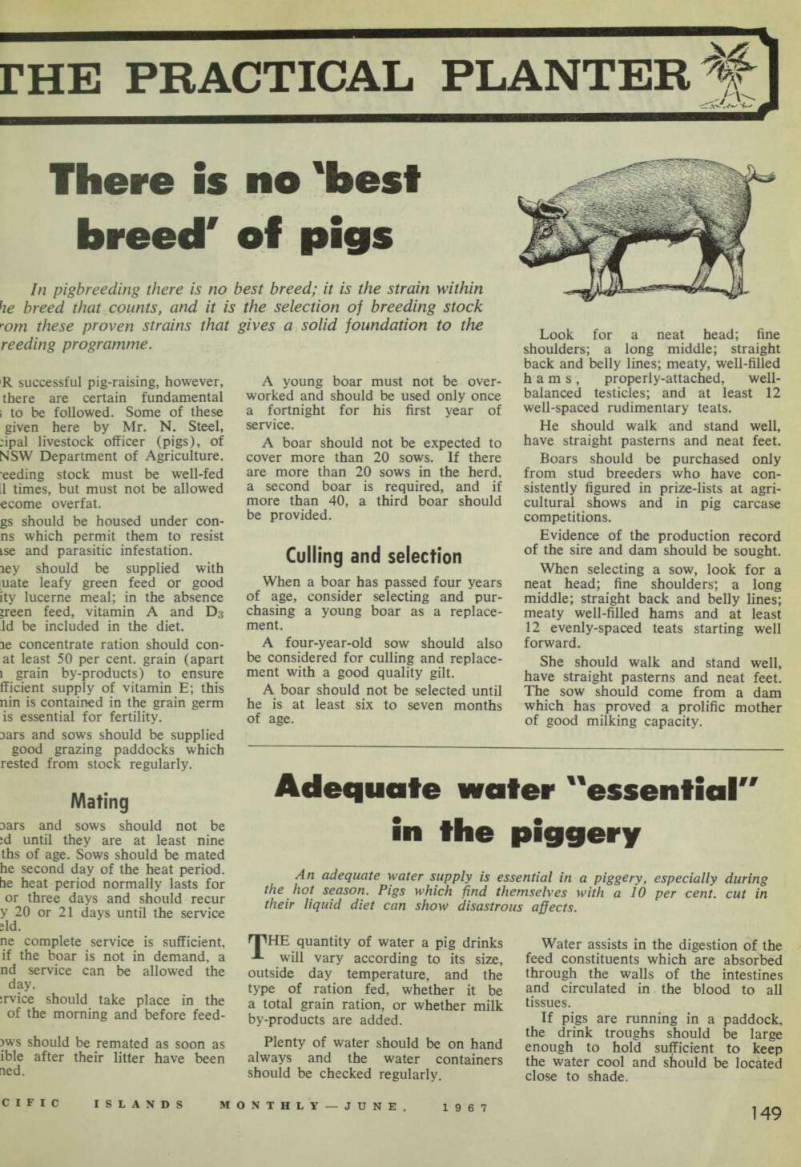
Look for a neat head; fine shoulders; a long middle; straight back and belly lines; meaty, well-filled hams, properly-attached, well balanced testicles; and at least 12 well-spaced rudimentary teats.
He should walk and stand well, have straight pasterns and neat feet.
Boars should be purchased only from stud breeders who have con sistently figured in prize-lists at agri cultural shows and in pig carcase competitions.
Evidence of the production record of the sire and dam should be sought.
When selecting a sow, look for a neat head; fine shoulders; a long middle; straight back and belly lines; meaty well-filled hams and at least 12 evenly-spaced teats starting well forward.
She should walk and stand well, have straight pasterns and neat feet.
The sow should come from a dam which has proved a prolific mother of good milking capacity.