How They Won At Noumea
pp. 35-38 · Read in the full issue
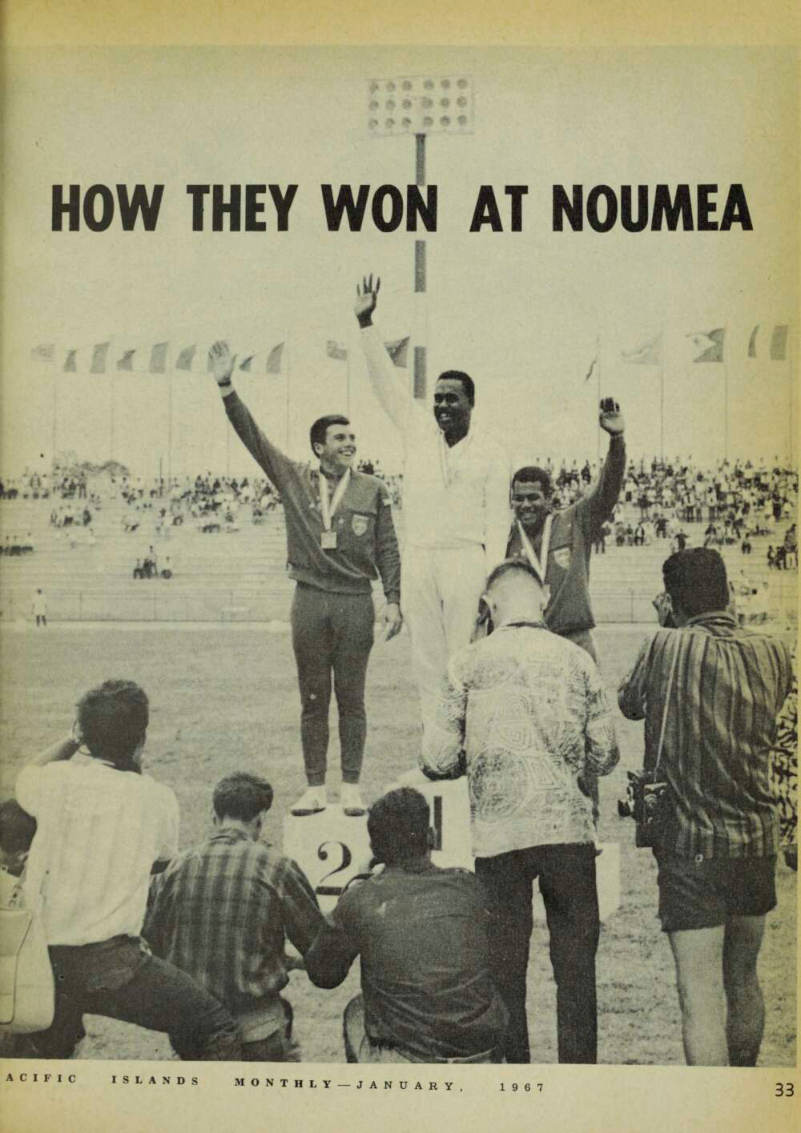
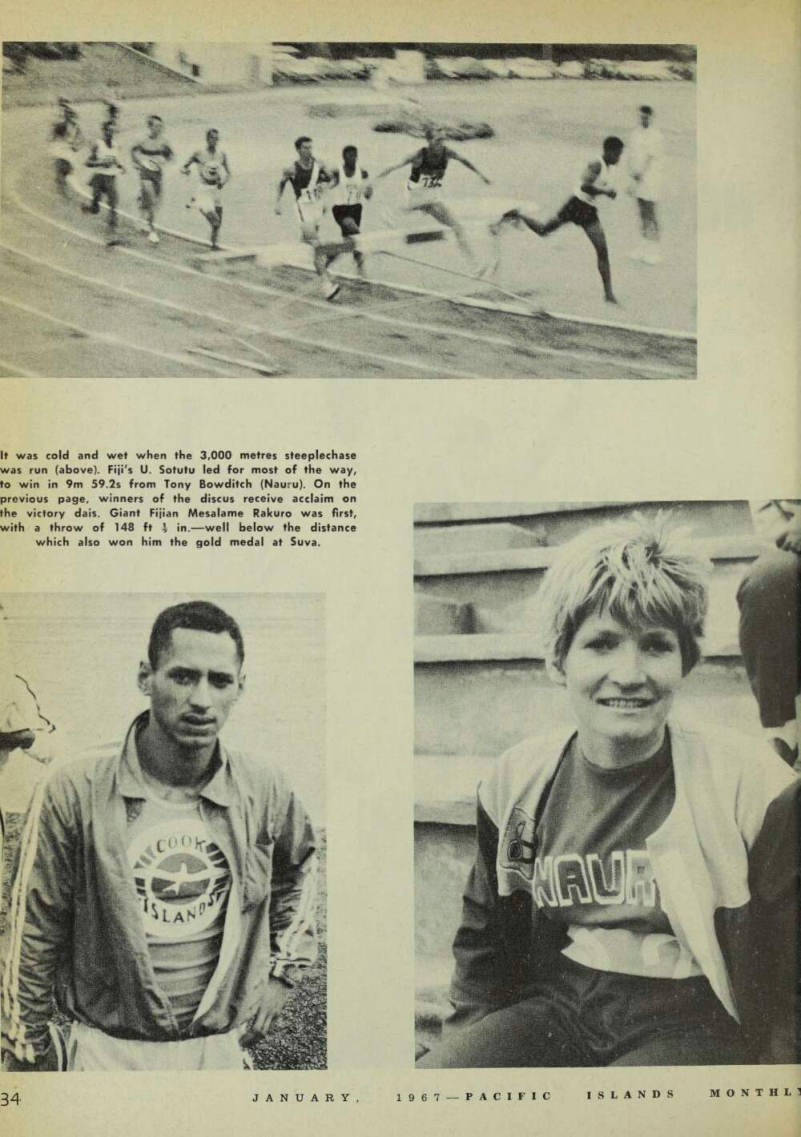
It was cold and wet when the 3,000 metres steeplechase was run (above). Fiji's U. Sotutu led for most of the way, to win in 9m 59.2s from Tony Bowditch (Nauru). On the previous page, winners of the discus receive acclaim on the victory dais. Giant Fijian Mesalame Rakuro was first, with a throw of 148 ft ½ in.—well below the distance which also won him the gold medal at Suva.
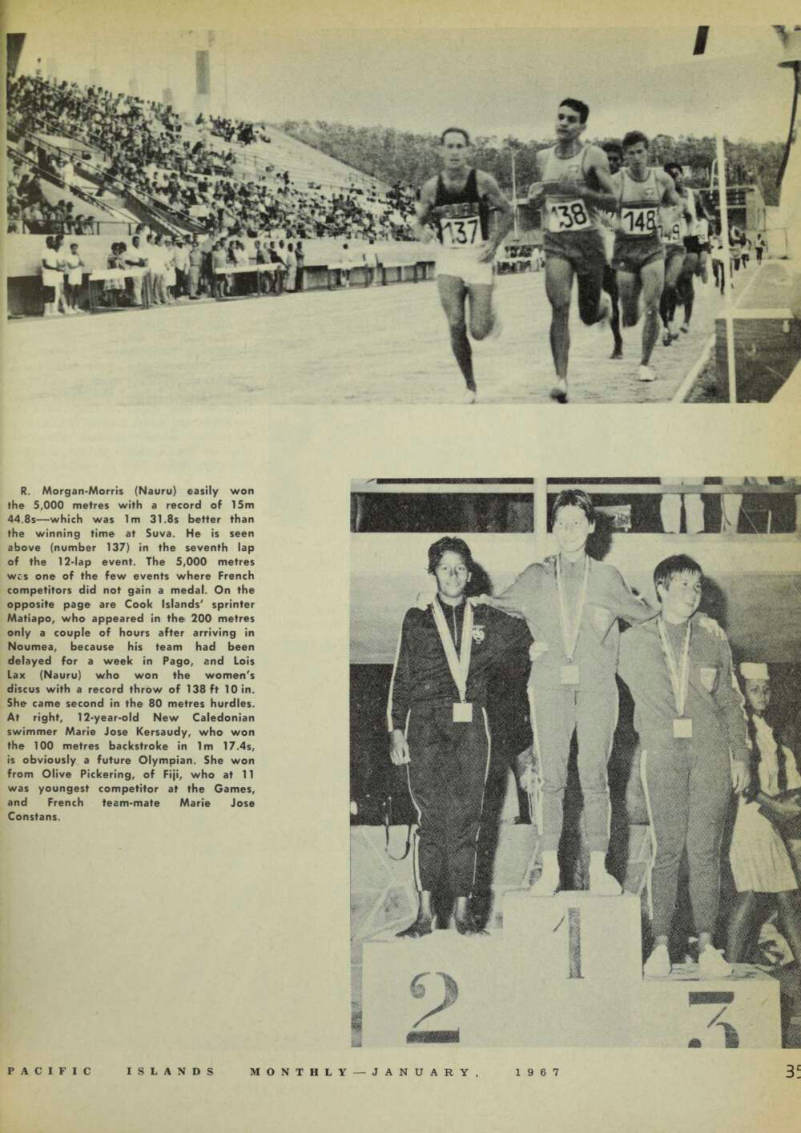
R. Morgan-Morris (Nauru) easily won the 5,000 metres with a record of 15m 44.8 s—which was 1m 31.8 s better than the winning time at Suva. He is seen above (number 137) in the seventh lap of the 12-lap event. The 5,000 metres wcs one of the few events where French competitors did not gain a medal. On the opposite page are Cook Islands' sprinter Matiapo, who appeared in the 200 metres only a couple of hours after arriving in Noumea, because his team had been delayed for a week in Pago, and Lois Lax (Nauru) who won the women's discus with a record throw of 138 ft 10 in.
She came second in the 80 metres hurdles.
At right, 12-year-old New Caledonian swimmer Marie Jose Kersaudy, who won the 100 metres backstroke in 1m 17.45, is obviously a future Olympian. She won from Olive Pickering, of Fiji, who at 11 was youngest competitor at the Games, and French team-mate Marie Jose Constans.
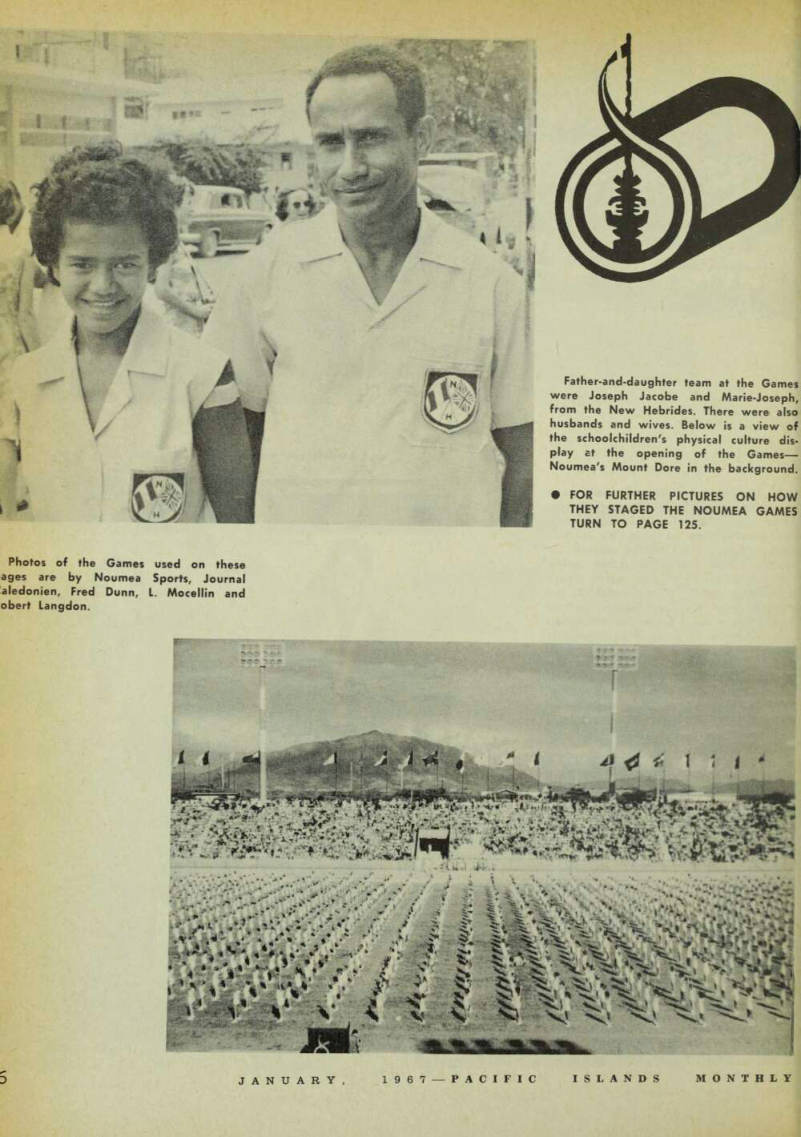
Father-and-daughter team at the Games were Joseph Jacobe and Marie-Joseph, from the New Hebrides. There were also husbands and wives. Below is a view of the schoolchildren's physical culture dis play at the opening of the Games— Noumea's Mount Dore in the background.
• For Further Pictures On How
They Staged The Noumea Games
Turn To Page 125.
Photos of the Games used on these ages are by Noumea Sports, Journal aledonien, Fred Dunn, L. Mocellin and obert Langdon.