travel
pp. 123-126 · Read in the full issue
A Regular Pim Department
Reporting News Of South
Seas Tourism And Travel
From The Inside
Melanesia, With
A Strong
French Flavour
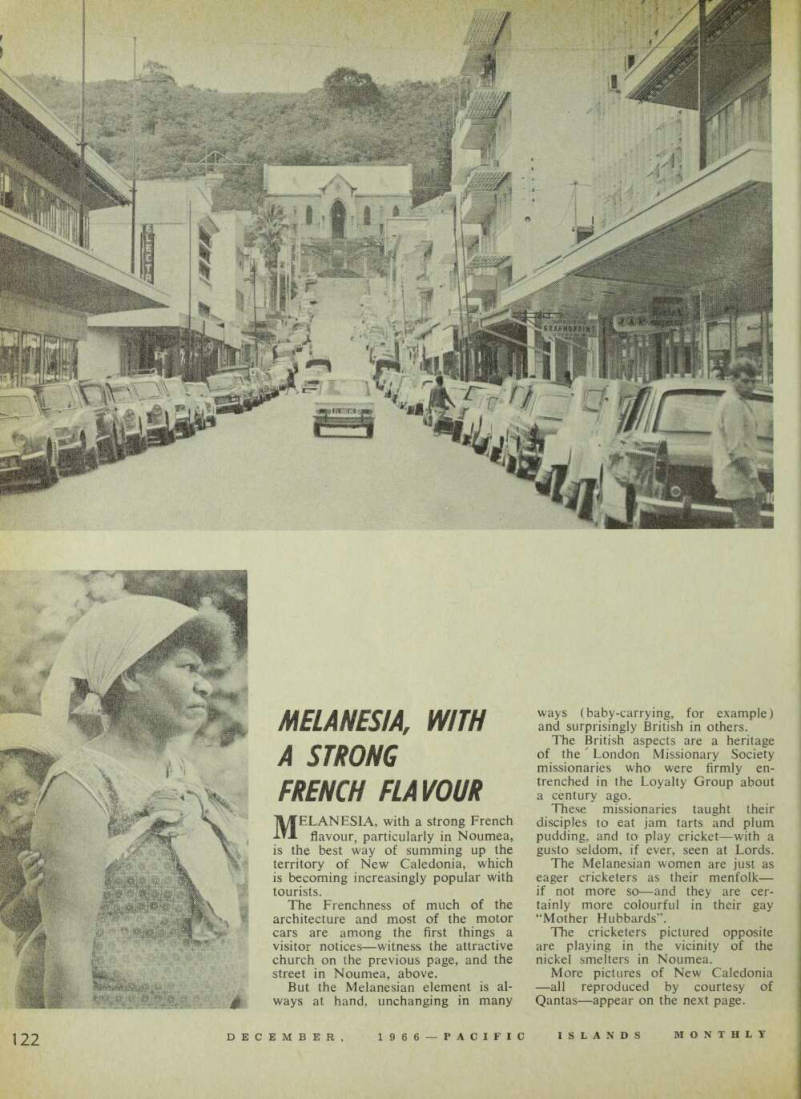
MELANESIA, with a strong French flavour, particularly in Noumea, is the best way of summing up the territory of New Caledonia, which is becoming increasingly popular with tourists.
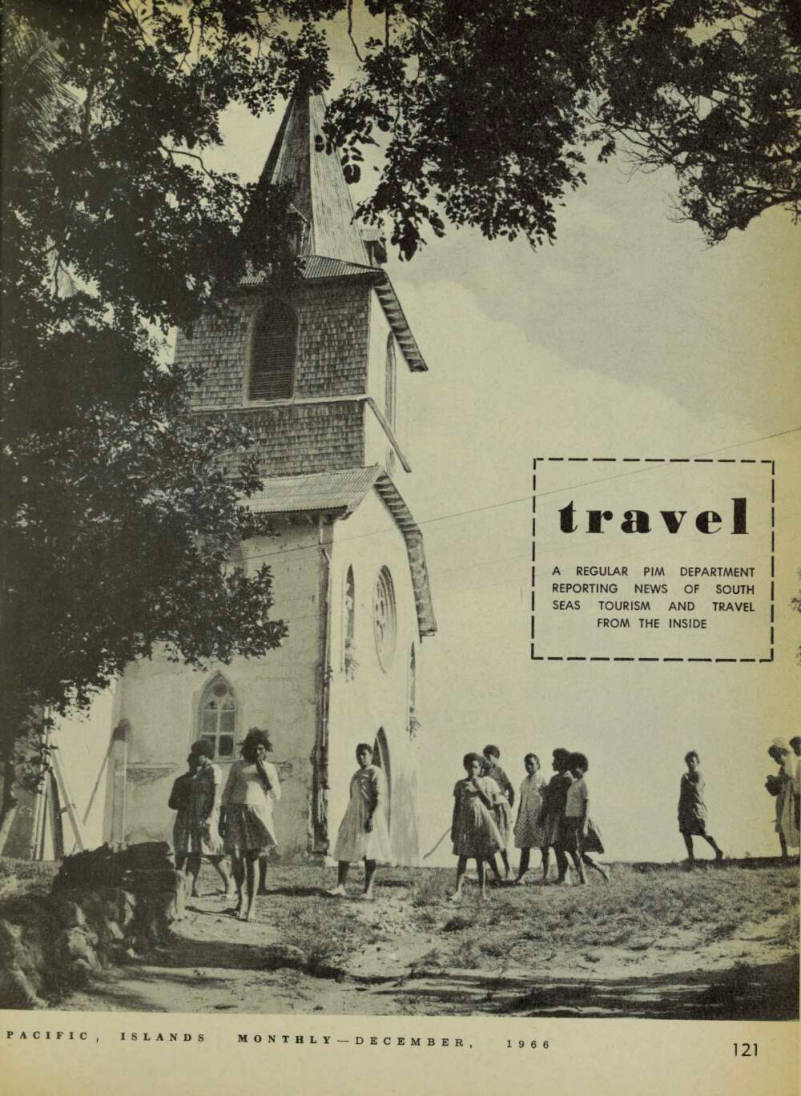
The Frenchness of much of the architecture and most of the motor cars are among the first things a visitor notices—witness the attractive church on the previous page, and the street in Noumea, above.
But the Melanesian element is al ways at hand, unchanging in many
ways (baby-carrying, for example) and surprisingly British in others.
The British aspects are a heritage of the' London Missionary Society missionaries who were firmly en trenched in the Loyalty Group about a century ago.
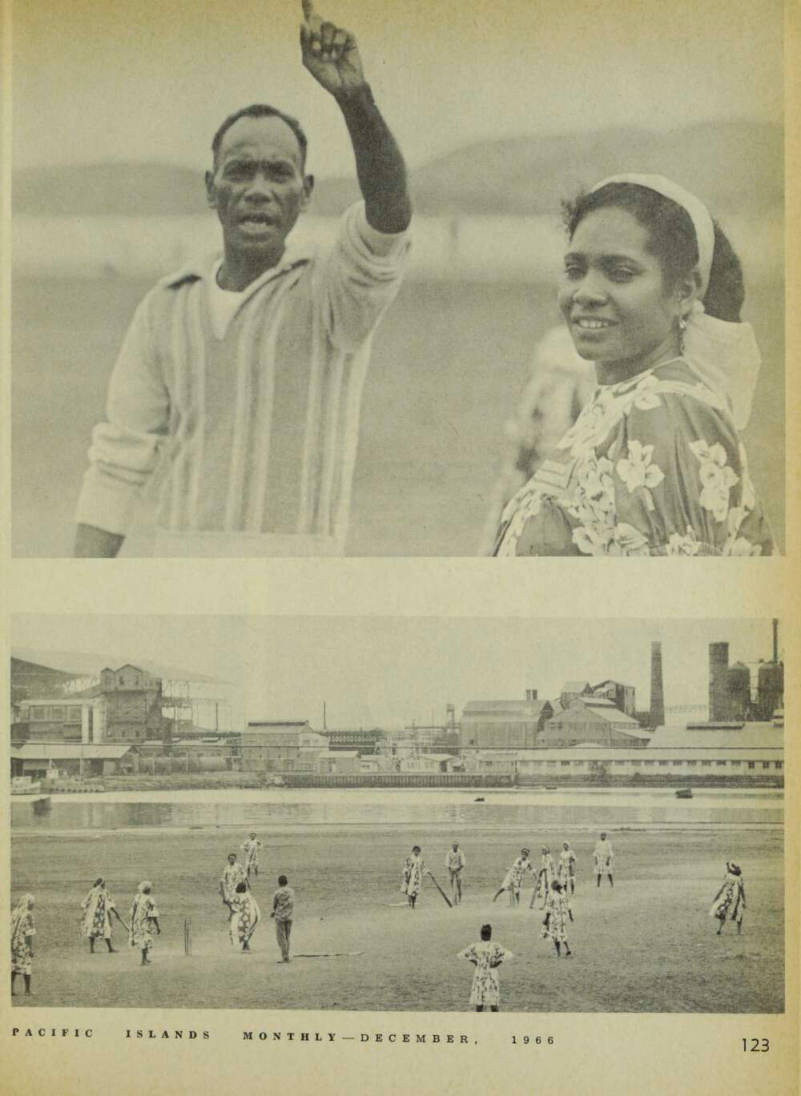
These missionaries taught their disciples to eat jam tarts and plum pudding, and to play cricket —with a gusto seldom, if ever, seen at Lords.
The Melanesian women are just as eager cricketers as their menfolk— if not more so—and they are cer tainly more colourful in their gay “Mother Hubbards”.
The cricketers pictured opposite are playing in the vicinity of the nickel smelters in Noumea.
More pictures of New Caledonia —all reproduced by courtesy of Qantas —appear on the next page.
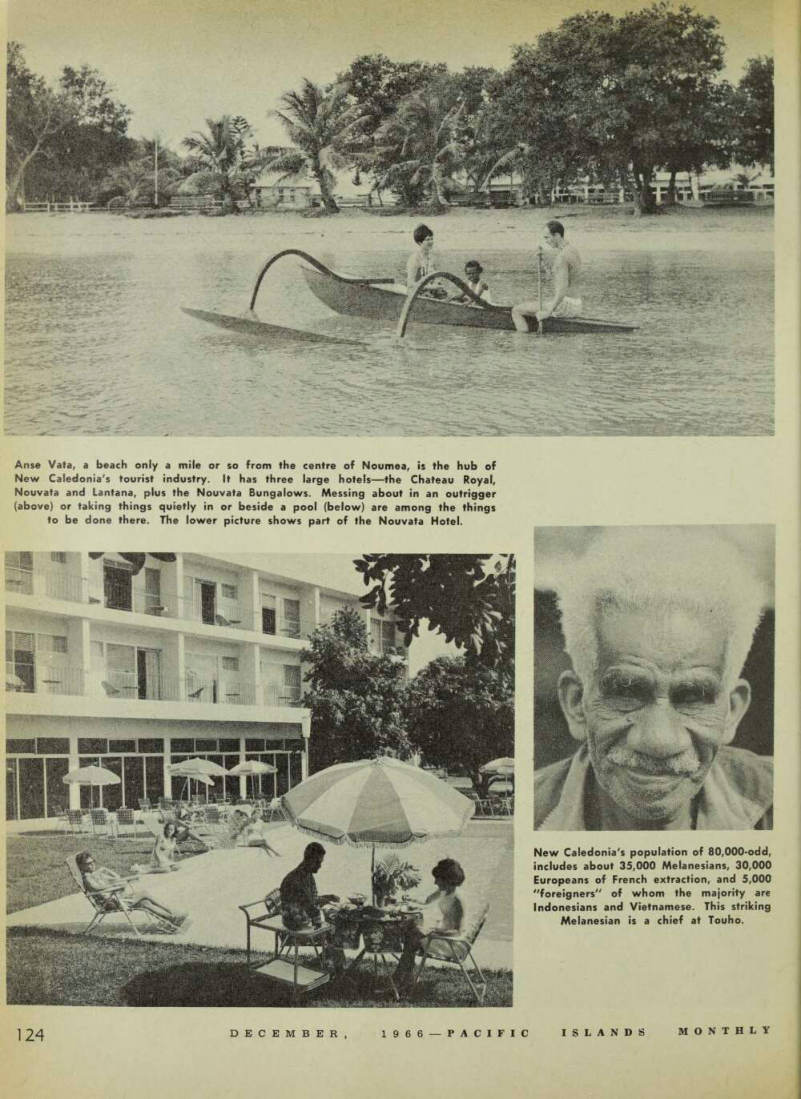
Anse Vata, a beach only a mile or so from the centre of Noumea, is the hub of New Caledonia's tourist industry. It has three large hotels—the Chateau Royal, Nouvata and Lantana, plus the Nouvata Bungalows. Messing about in an outrigger (above) or taking things quietly in or beside a pool (below) are among the things to be done there. The lower picture shows part of the Nouvata Hotel.
New Caledonia's population of 80,000-odd, includes about 35,000 Melanesians, 30,000 Europeans of French extraction, and 5,000 "foreigners" of whom the majority are Indonesians and Vietnamese. This striking Melanesian is a chief at Touho.