Gold Is Where
pp. 125-127 · Read in the full issue
You Find It
By Stuart Inder
Now that New Zealand has finally entered the jet age with the opening, a few weeks ago, of Auckland’s jet airport, the Shaky Isles will shortly begin to feel the effects of intensified tourism.
PARTICULARLY this should ap * ply along that well-worn South Pacific airtrail from America—Tahiti, Samoa, Fiji, New Zealand or New Caledonia and Sydney. The New Zealand leg of that trail will be taken by many more now there are faster ways of getting to Auckland, and more airlines to take you there.
What do you see when you get to New Zealand?
If you are a collector of tourist folders, a keen seeker after all the details of every beauty spot and every road route, then don’t waste time reading any further—go off and look up your nearest friendly travel agent, who gets paid for his enthusiasm whether or not he feels enthusiastic.
I plan to talk about only a small strip of the west coast of the South Island.
A Foreign Land
The fact that even New Zealanders regard “The Coast” as a foreign land (peopled by a fiercely independent tribe of hard-drinking, football playing, coalmining, goldmining, whitebaiting hicks) is fair indication that the place has character worth sampling.
A team of eight of us left Christ church recently for a week’s car tour of that coastal strip, and never was there a mile or a face that we regretted. With tour guides Gavin Stokes, of the NZ Government Tourist Department, and Kevin Bradford, of Air New Zealand, our route took us across the Alps at Arthurs Pass, to the Franz Josef Glacier, up the coast through Grey mouth and Westport, and back to Christchurch through the Lewis Pass.
A simple inexpensive route, which for much of the way can be duplicated by train, but most New Zealanders would consider it in the same vein as a trip to Tibet.
The Coast has people, snow, gold and sane drinking. The drinking laws on The Coast legally are the same as those in the rest of New Zealand.
But the New Zealand Government has long since given up trying to get The Coasters to follow the rest of New Zealand.
Any Coast publican who attempted to close at 6 o’clock would be run out of town on a rail. The exception is Westport, where they close at
6 ©‘clock because it amuses them, but they open again at seven. The other towns just keep right on going, There are more pubs on the West Coast than churches in Western Samoa more pubs in fact than is economically reasonable—but the pubs are a left-over from the great gold rushes of the 1860 s, when towns like Hokitika had a population of F
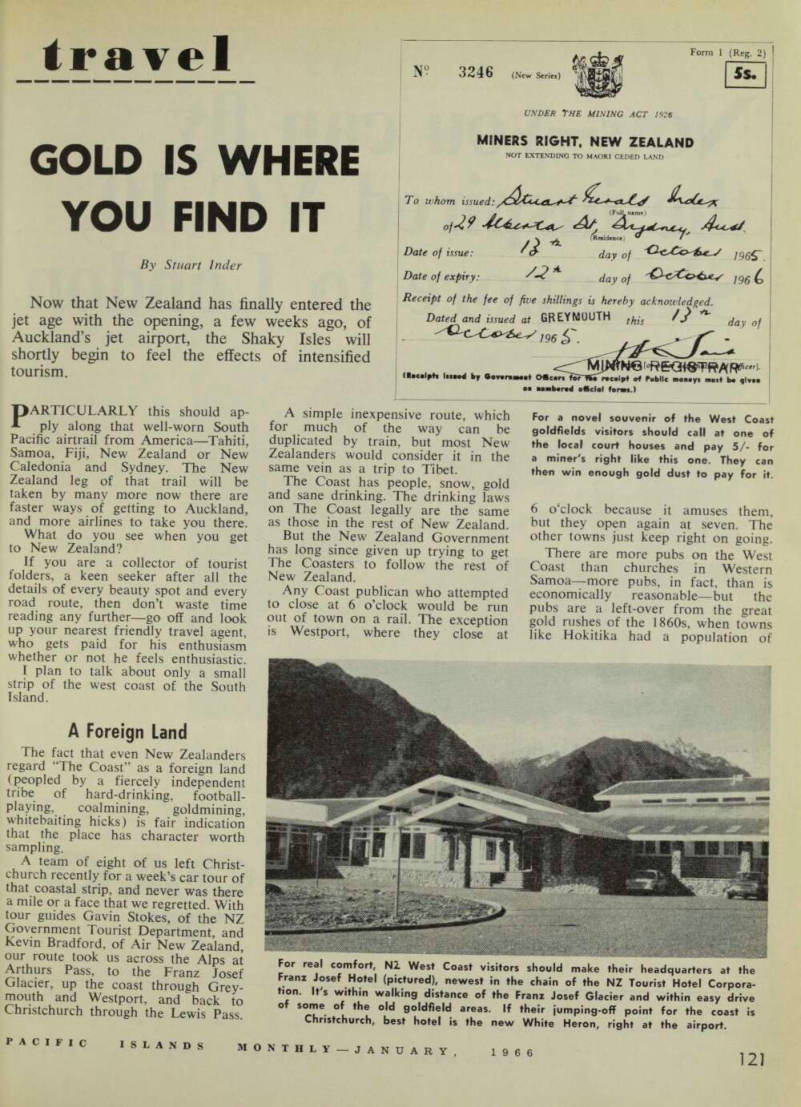
For a novel souvenir of the West Coast goldfields visitors should call at one of the local court houses and pay 5/- for a miner's right like this one. They can then win enough gold dust to pay for it.
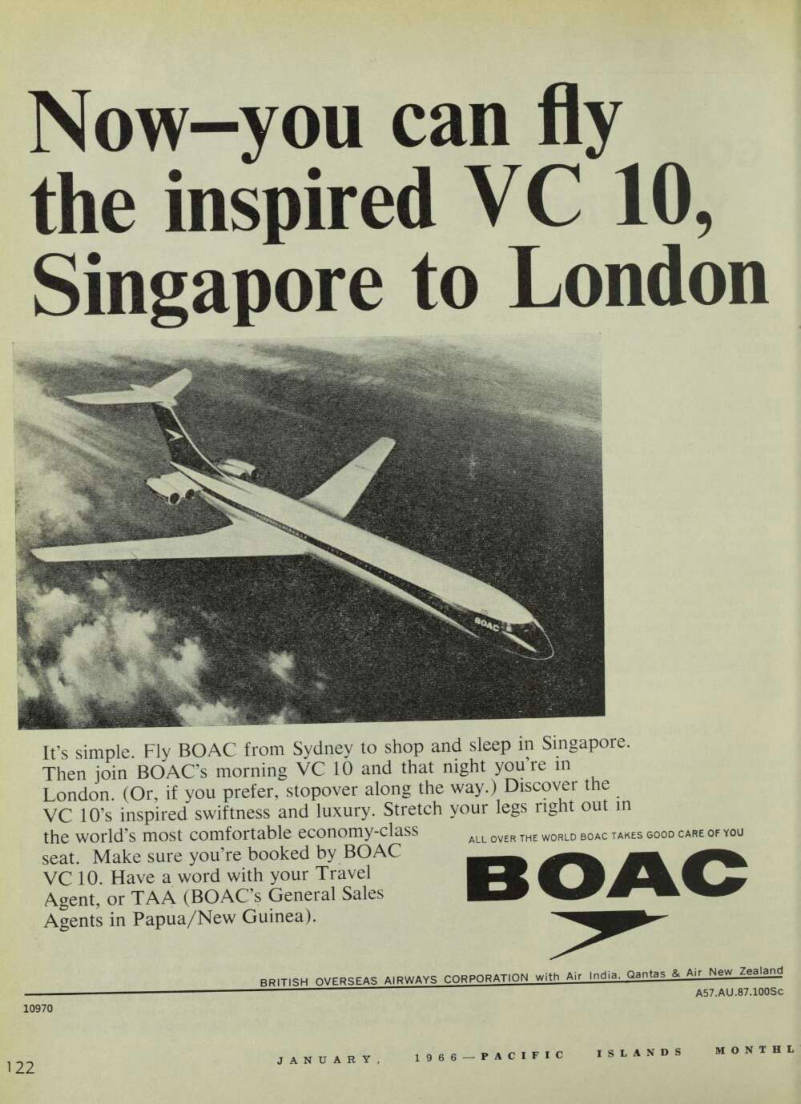
For real comfort, Ml West Coast visitors should make their headquarters at the Franz Josef Hotel (pictured), newest in the chain of the NZ Tourist Hotel Corpora tion. It's within walking distance of the Franz Josef Glacier and within easy drive of some of the old goldfield areas. If their jumping-off point for the coast is Christchurch, best hotel is the new White Heron, right at the airport.
50,000 (3.000 today), and towns that had 6,000 don’t even exist today.
The American Wild West was tame cat in comparison, and the Coasters of today still like to glory in it, and occasionally even act it out.
Although coal rather than gold makes more money for The Coast, there is a latent gold fever in the air. There is still gold in the hills and rivers and on the black sand beaches, and anybody you meet in any pub on The Coast will produce, after a few minutes’ conversation, a nugget or two, or some gold dust in a bottle, and tell you he has got more like that at home.
One day, they all tell you wist fully, the price of gold will go up, and then they will take their mining seriously and make some real money instead of washing an occasional dish.
Pre-war All Black captain Ron King, born a Coaster and now mine host at the King’s Hotel, Greymouth, is one who believes that the oc casional tourist who finds his way to the Coast should be told about the pleasures of gold panning rather than the joy’s of swimming, skiing and sight seeing (which are the at tractions the brochures concentrate on).
"Away From It All"
“You can get away from it all out there,” said Ron, who does so himself quite regularly. “You forget your worries and enjoy a day in the open air. When travellers come my way I’ll be happy to give them a dish, tell him where to get a miner’s righe and drive them out Kumara, or Goldsborough way, to wash a few dishes for the day. They can take home their gold and a suntan with it!”
Bitten with the bug after an hour’s joyful conversation with the gold wise Ron, we drove out next morning with him—in cars loaded with sandwiches and crates of beer—and camped by the side of a creek, in a ghost town overshadowed by the snow-capped Southern Alps.
There we panned for gold—and got good colours in every dish. We put the dust into small bottles, with water to make it look bigger than it was, and farewelled Ron at the end of the day feeling a smug, fit bunch of travelling men.
My miner’s right, and my gold, are back here in Sydney among the Inder family heirlooms, and I couldn’t be more proud of either.
On the West Coast, may their bars and their hearts long remain open.