Convict Days
p. 125 · Read in the full issue
Expert On Norfolk’s Convict Days
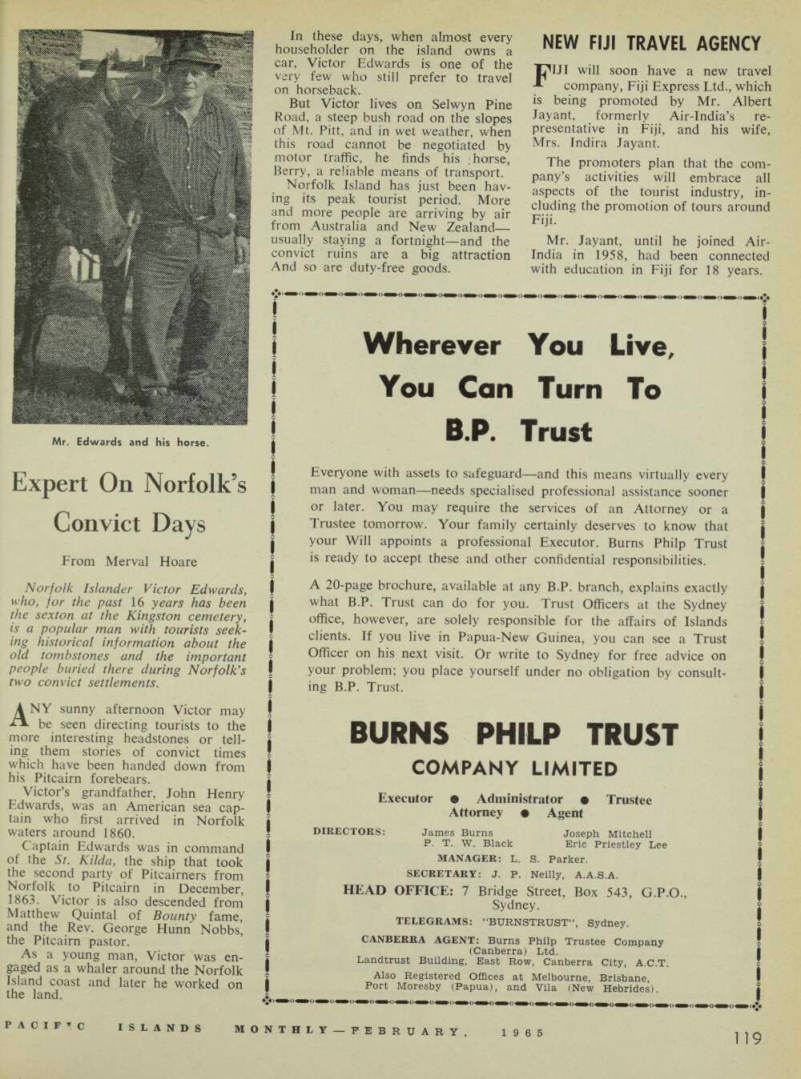
From Merval Hoare Norfolk Islander Victor Edwards, who, for the past 16 years has been the sexton at the Kingston cemetery, is a popular man with tourists seek ing historical information about the old tombstones and the important people buried there during Norfolk’s two convict settlements.
ANY sunny afternoon Victor may be seen directing tourists to the more interesting headstones or tell ing them stories of convict times which have been handed down from his Pitcairn forebears.
Victor’s grandfather, John Henry Edwards, was an American sea cap tain who first arrived in Norfolk waters around 1860.
Captain Edwards was in command of the St. Kilda, the ship that took the second party of Pitcairners from Norfolk to Pitcairn in December, 1863. Victor is also descended from Matthew Quintal of Bounty fame, and the Rev. George Hunn Nobbs, the Pitcairn pastor.
As a young man, Victor was en gaged as a whaler around the Norfolk Island coast and later he worked on the land.
In these days, when almost every householder on the island owns a car, Victor Edwards is one of the very few who still prefer to travel on horseback.
But Victor lives on Selwyn Pine Road, a steep bush road on the slopes of Mt. Pitt, and in wet weather, when this road cannot be negotiated by motor traffic, he finds his ; horse, Berry, a reliable means of transport.
Norfolk Island has just been hav ing its peak tourist period. More and more people are arriving by air from Australia and New Zealand— usually staying a fortnight—and the convict ruins are a big attraction And so are duty-free goods.
Mr. Edwards and his horse.