It's "Vote 2, Holowei"
pp. 35-37 · Read in the full issue
From a Port Moresby Correspondent Former Patrol Officer Barry Holloway is fairly typical of the Europeans who have chosen to stand against native candidates in P-NG’s ng native-dominated elections. He is standing for the Kainantu open lectorate because he believes he can help the native constituents, and \e hopes he can win. But the interesting point is he does not consider e could win a second term.
*HE people have emphasised that if elected I must teach the ng candidates the business of an Jted member,” he says. “They e told me, ‘We must have one our own people one day!’ ” )ther European candidates in the open electorates—there are 30 of m standing—have found the same ig. Native voters have told the •opeans that they want them in House because they can help ive constituents at this time.
"he problem, as Holloway and le others know very well, is that re are so many imponderables at ; election because of the inexperi e of the voters that there is no rantee that logic will prevail, or t the voters will get what they ik they want. Among other things, mistakes that have been made fixing electoral boundaries have to be revealed. iolloway, at Kainantu, is opposed five New Guineans, each repre ting an individual language group, tactics are to ask the people not their first preference vote but for ir second.
He says it is on the second prefer ences that he hopes to be elected, because the people fear the election of a man from another language group. He thinks many natives would consider he could represent them better than one of their people from a different group, Holloway, and many others at this election, will be interested to learn j ust how well the voters understand the preference system. Fortunately Holloway is second in order on the ballot paper and this may help him Trusted A 29-year-old Tasmanian with 11 years of Native Affairs service be hind him, Barry Holloway, has been at Kainantu three-and-a-half years, In that time he has established the area’s first two local Government Councils, at Agarabi and Kamono.
Watching him move among the people of Kainantu it soon becomes obvious that he is well liked and trusted. Following a meeting held at Agarabi village by one of his most formidable rival candidates, the crowd
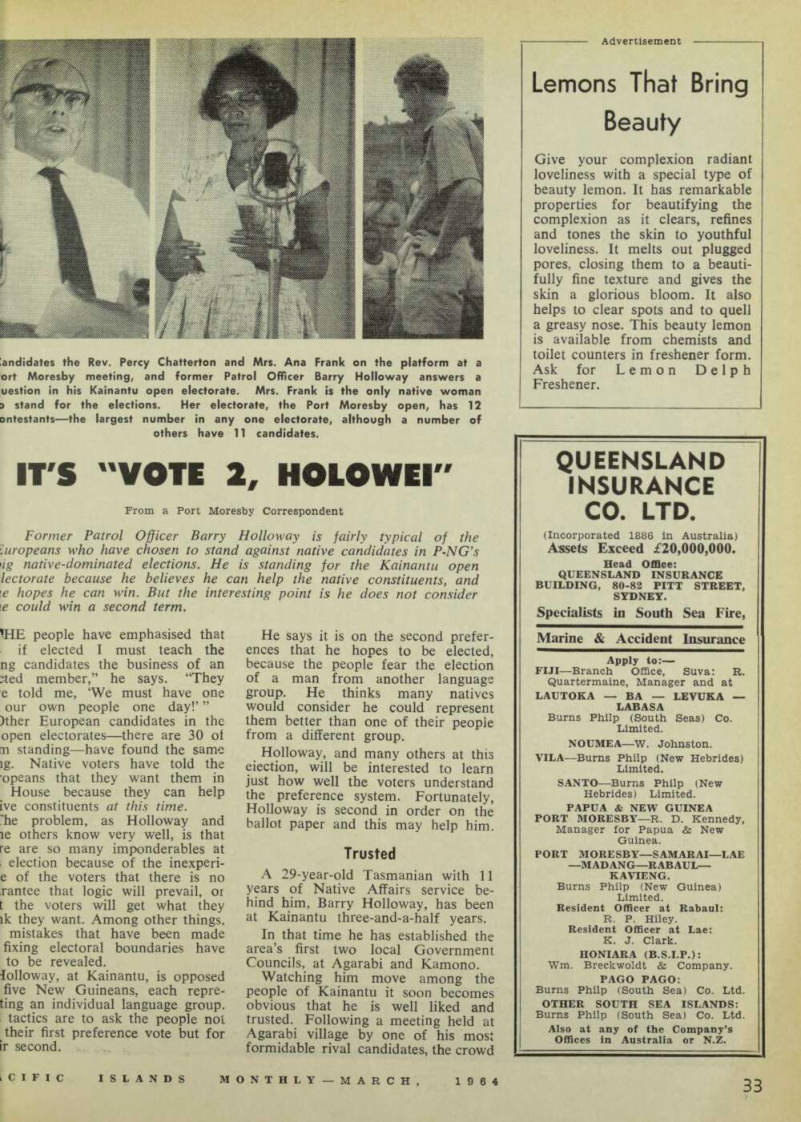
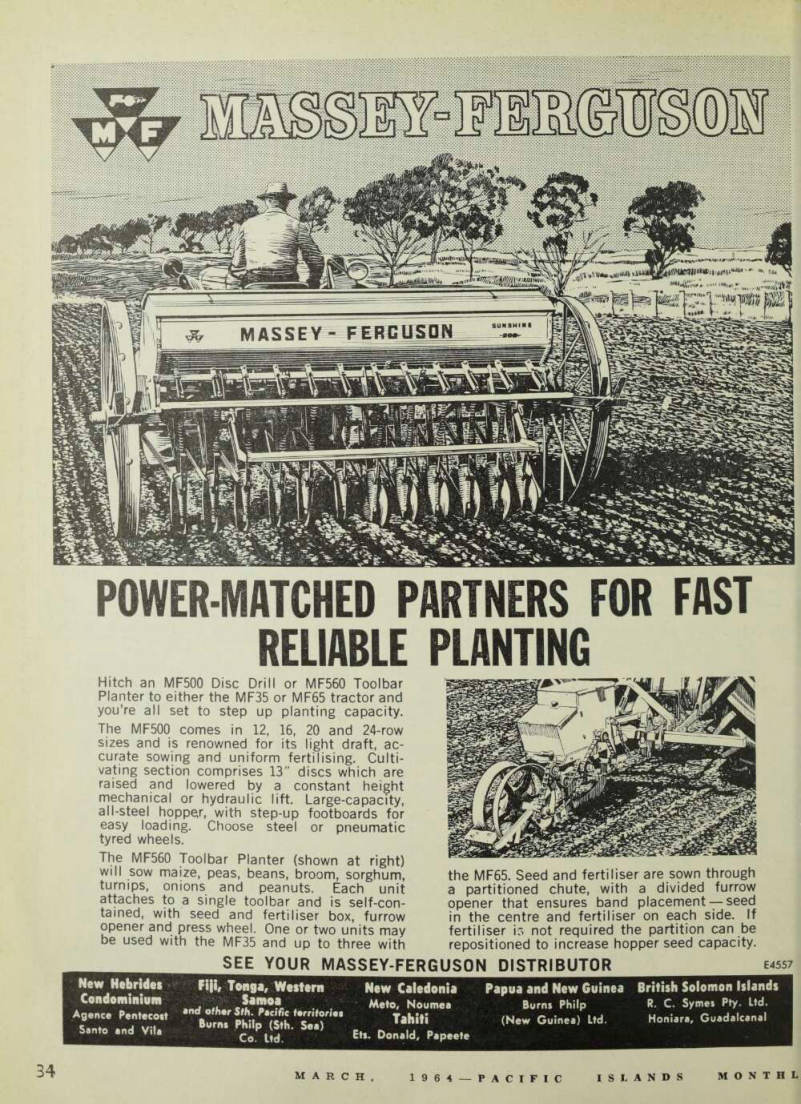
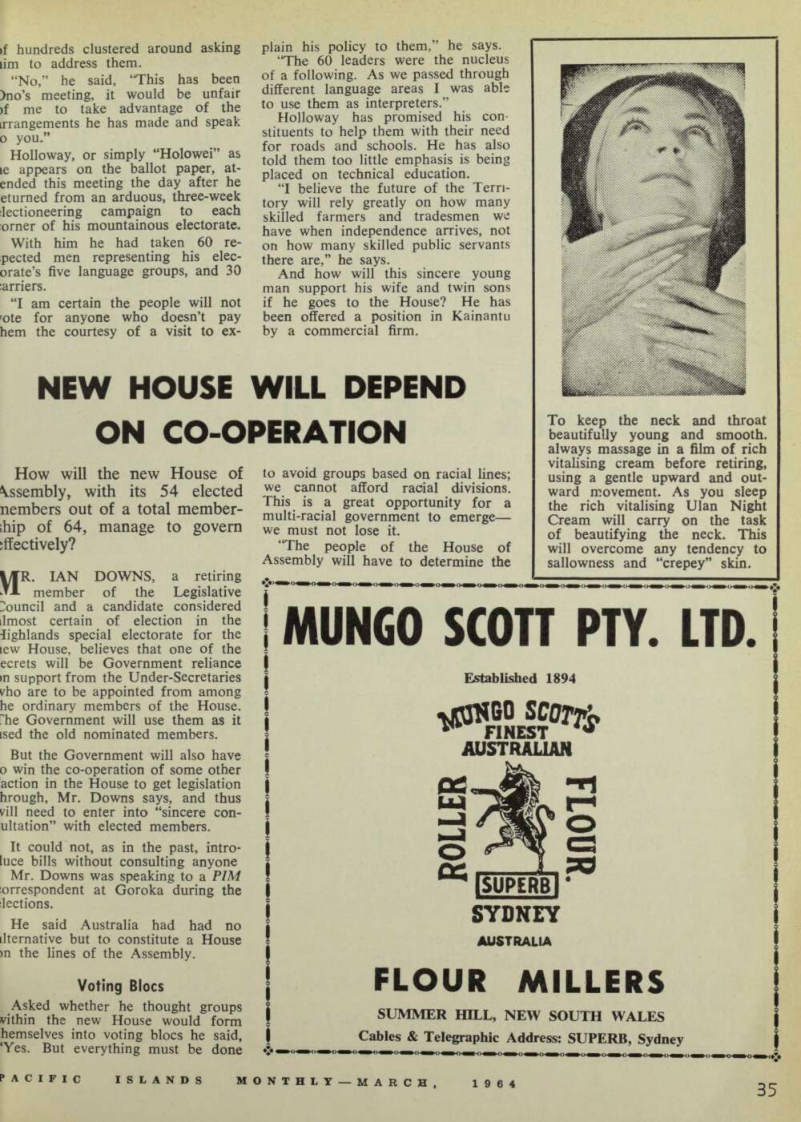
landidates the Rev. Percy Chatterton and Mrs. Ana Frank on the platform at a [?]ort Moresby meeting, and former Patrol Officer Barry Holloway answers a [?]uestion in his Kainantu open electorate. Mrs. Frank is the only native woman [?] stand for the elections. Her electorate, the Port Moresby open, has 12 [?]ontestants —the largest number in any one electorate, although a number of others have 11 candidates.
»f hundreds clustered around asking urn to address them.
“No,” he said, ‘This has been >no’s meeting, it would be unfair >f me to take advantage of the irrangements he has made and speak o you.”
Holloway, or simply “Holowei” as le appears on the ballot paper, at ended this meeting the day after he eturned from an arduous, three-week lectioneering campaign to each orner of his mountainous electorate.
With him he had taken 60 re pected men representing his elec orate’s five language groups, and 30 carriers.
“I am certain the people will not 'ote for anyone who doesn’t pay hem the courtesy of a visit to ex
plain his policy to them,” he says.
“The 60 leaders were the nucleus of a following. As we passed through different language areas I was able to use them as interpreters.”
Holloway has promised his con stituents to help them with their need for roads and schools. He has also told them too little emphasis is being placed on technical education.
“I believe the future of the Terri tory will rely greatly on how many skilled farmers and tradesmen we have when independence arrives, not on how many skilled public servants there are,” he says.
And how will this sincere young man support his wife and twin sons if he goes to the House? He has been offered a position in Kainantu by a commercial firm.