NG Offshore
pp. 31-33 · Read in the full issue
Help Comes To NG Offshore Islands
The two tiny P-NG “forgotten islands” of Wuvulu and Aua, lying within an easy distance of Indonesian New Guinea, are at last being given a helping hand as a result of agita tion on their behalf.
THE islands are 140 miles north of Wewak and about the same distance from Kota Baru (formerly Hollandia). They are peopled by Micronesians, who have the tradition of having come to them from the West.
Bougainville planter and wartime coastwatcher Paul Mason told the P NG Legislative Council not long ago that their proximity to Indonesian territory meant they could become a security risk and they should be bet ter looked after by the P-NG Ad ministration.
He advocated that an airstrip be built on Wuvulu.
Earlier the native people them selves had been asking for more medical attention, school teachers, water tanks, radio sets—more atten tion generally.
They have no means of properly marketing their copra and most of the coconuts lie rotting on the ground, and they are unable to ob tain a sufficiency of trade goods and tools to work their gardens.
Welfare work amongst the women is another of their urgent needs.
A Little For The Few Though there is a European-owned plantation on the island it is the Ad ministration’s duty, so the natives claim, to attend to their needs. They make the point that when so much is being given to so many natives on the mainland of New Guinea, the Administration can surely spare a little for the few! There are 360 natives on Wuvulu and 240 natives on Aua—something over 600 in all.
They are light-skinned and straight haired Micronesians, a sensitive and intelligent people.
The natives say that in German times, and in the pre-war Administra tion of New Guinea, they were well looked after as to health, trade goods and means of selling their produce— copra and trocas shell.
An important part of their philo sophy was the fact that all the Euro peans—both Administration and
others—took a keen and kindly in terest in their welfare, but postwar all this changed and they feel badly neglected when they hear of all the other glamorous projects that are be ing sponsored for mainland natives.
The prevalence of malaria on the island has also done much to under mine their health and morale.
Three of these people, now work ing in Rabaul, have, since early this year been pleading their cause with the Administration. In January they put their case to Sir Donald Cleland and since then have interviewed many other officials. They asked for prompt action as they felt that they have lost so much time that they need all the help they can get to catch up on education and on health,
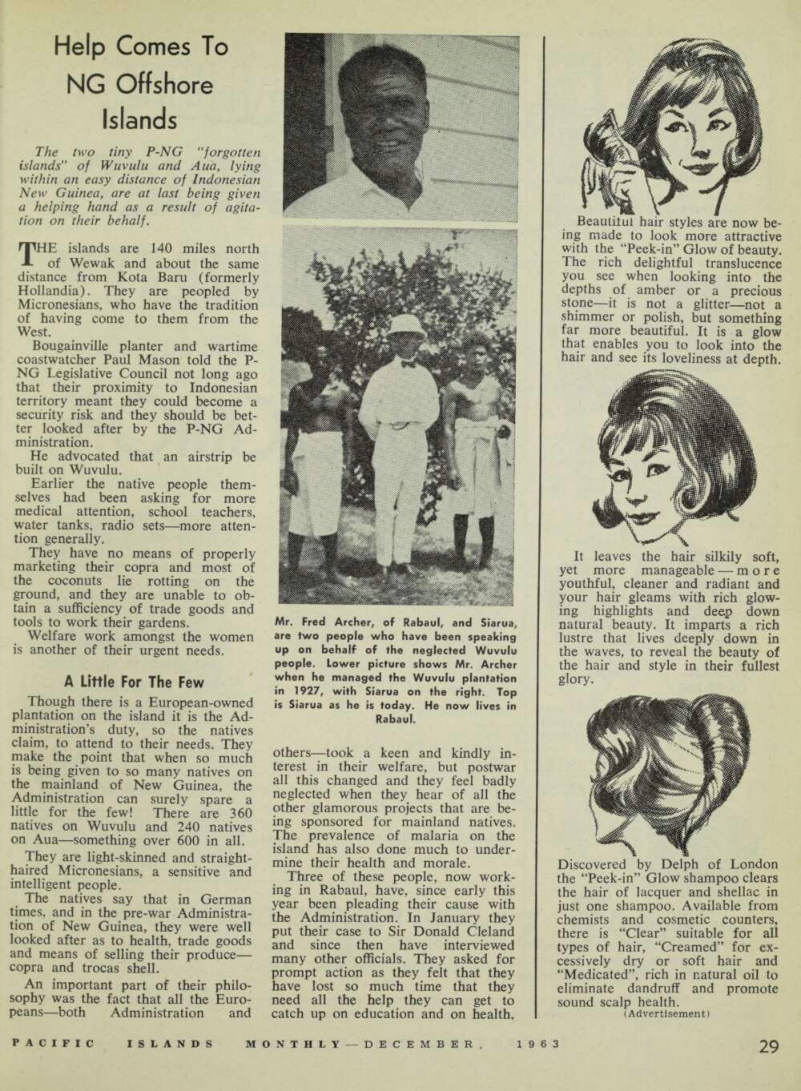
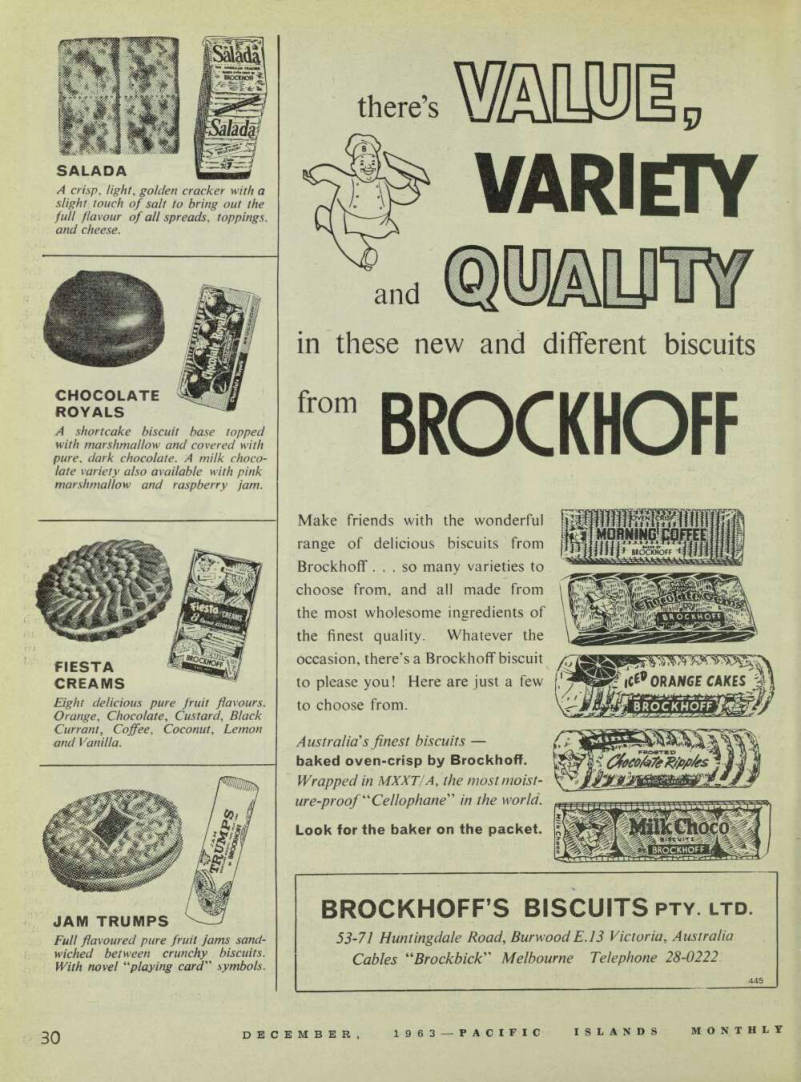
Mr. Fred Archer, of Rabaul, and Siarua, are two people who have been speaking up on behalf of the neglected Wuvulu people. Lower picture shows Mr. Archer when he managed the Wuvulu plantation in 1927, with Siarua on the right. Top is Siarua as he is today. He now lives in Rabaul.
otherwise they will not be in the race with other native communities. Re cently these three people—Timio Manner, Siarua Bitawai and Giwa Arni—wrote a letter to the South Pacific Post in Port Moresby, point ing out, “We have been a very sad people for a long time.”
Assisting them in their crusade has been Mr. Fred Archer, Buka and Bougainville planter, now retired and living in Rabaul. Formerly he was some years in the Manus and Wes tern Islands areas, and spent two years managing Wuvulu Island be fore the war. He has employed Wu vulu Islanders for years, and now his former employees and their families number 16, whose names appear in the Wuvulu Village Books.
As a result of the agitation, the islanders have now been promised a visiting medical officer, and a patrol officer will be stationed there for several months. It’s a start, and the islanders say they now hope for even better things.