The Right To Strike
pp. 21-22 · Read in the full issue
New Guinea Native Unionists Win The Right To Strike
Interlocking legislation provid
ing for trade unions amongst native workers in Papua-New Guinea and for governing in dustrial relations between em
ployers and employed was passed
at the March meeting of the P NG Legislative Council in spite of the best efforts of non-official European members to reshape it to meet Territory conditions.
THE legislation had been intro duced, with long explanations and speeches by Assistant Admini strator, Dr. John Gunther, at the last Council meeting in September, 1961, but held over so that (as he stated at the time) it could be “critically examined by the people of the Territory so that they will carefully express their views to help produce a final result best-suited to our conditions”.
The European representatives of private enterprise in the Council had obviously “critically examined” the legislation as instructed, and had a great deal to say on how best to fit it to NG conditions, but results were nil. It was passed through the Council, regardless.
Native members, however, were apparently struck dumb by the whole thing or understood the implications of the legislation so little that they made no worthwhile contribution to the debate at all. As is usual with any important legislation, the whole thing resolved upon the shoulders of the opposing forces of European members who battled it out alone.
Said Mr. Lloyd Hurrell (Member for New Guinea Coastal): “I’m very disappointed in native members of this House ... it is a bill that affects them greatly but so far this has just been a battle between us European members of the House”.
Mr. R. S. Stuntz (Eastern Papua), said that he for one did not fully understand the bill and that he was certain that there was not one native member who understood it.
Throughout the debate, non official European members tried un successfully to get the Assistant Administrator to amend the clauses that gave native unionists the right to strike.
Mr. B. E. Fairfax-Ross introduced
an amendment which would have prohibited lockouts or strikes unless the Secretary for Labour had been advised of the dispute and unless a 28-day period had passed without the dispute being referred to arbitra tion.
Dr. Gunther said that measures to counter prolonged strikes were in corporated in the bill and although the Administration had given great thought to the right-to-strike clause it had found prohibition “an extremely difficult course”.
Mr. Fairfax-Ross said that most natives wouldn’t know the difference between a strike and a riot—strikes would become riots and there would be trouble.
Other members said strikes would cause racial feeling and that there was great danger of violence be cause of the tribal nature of the natives.
Amendments to the bill to exclude rural workers mostly plantation labourers —were also defeated.
Amongst the legislation’s scores of provisions are those relating to the appointment of a Registrar, Deputy Registrar, other officers and their respective duties; for the com pulsory registration of all unions with a membership of more than 20; the removal, under certain circum stances, of a secretary or treasurer from office; and the liability of officers of unions or industrial or ganisations in the case of offences by those organisations.
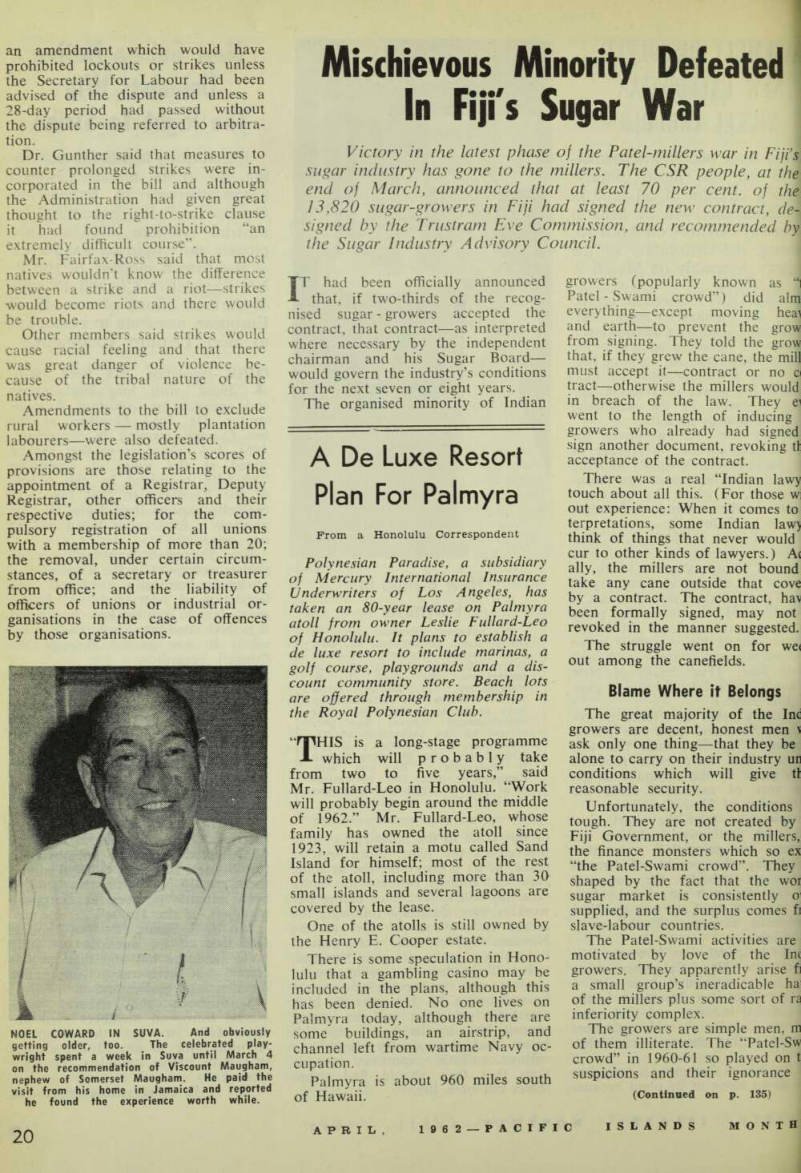
NOEL COWARD IN SUVA. And obviously getting older, too. The celebrated play wright spent a week in Suva until March 4 on the recommendation of Viscount Maugham, nephew of Somerset Maugham. He paid the visit from his home in Jamaica and reported he found the experience worth while.