Decision Causes
pp. 22-145 · Read in the full issue
Ng Storm
The method adopted by the Chair man of the Native Employment Board of Papua-New Guinea, in settling a difference of opinion between em ployees and employers, caused the first real storm in Territory labour relations in late April.
HHHE Papua and New Guinea Workers’ Assn., through its spokesman, the P-NG Public Soli citor, Mr. W. A. Lalor, was nego tiating with Burns Philp (NG) Ltd. for extension of the Urban Cash Wage agreement (£3 per week) to stevedoring operations in Rabaul and Lae.
When negotiations “broke down”
Mr. F. D. C. Caterson, Chairman of the Board, gave the decision to the association.
A spokesman for Burns Philp (NG) Ltd. said later that negotia tions broke down only because of the unbending attitude of Mr. Lalor and that demands made by him on behalf of the association were “unreason able”.
Employers apparently see the deci sion of the Chairman of the Board as the thin end of the wedge. They ask what kind of impartial treat ment can they expect, when as soon as negotiations become difficult, the decision is given to the employees.
The negotiations for extension of the rural wage had nothing to do with the agreement in respect of Port Moresby stevedores which came into operation earlier in April.
Non-official European members of the Legislative Council at the April meeting, all attacked the Administra tion’s piecemeal method of dealing with the Territory’s labour problems.
They said that the Administration’s apparent inability to plan for a wage structure that the Territory economy can afford, could land P-NG in a financial morass.
Organised Labour Gets Results The report of the Tripartite Mission on Labour, which was reported at some length in the February issue of PIM, warned on this same peril, and stated that wages scales were the crux of future development of the Terri tory.
All of the Mission’s recommenda tions seem, however, now to be for gotten.
For an infant organisation, the
(Continued on p. 143)
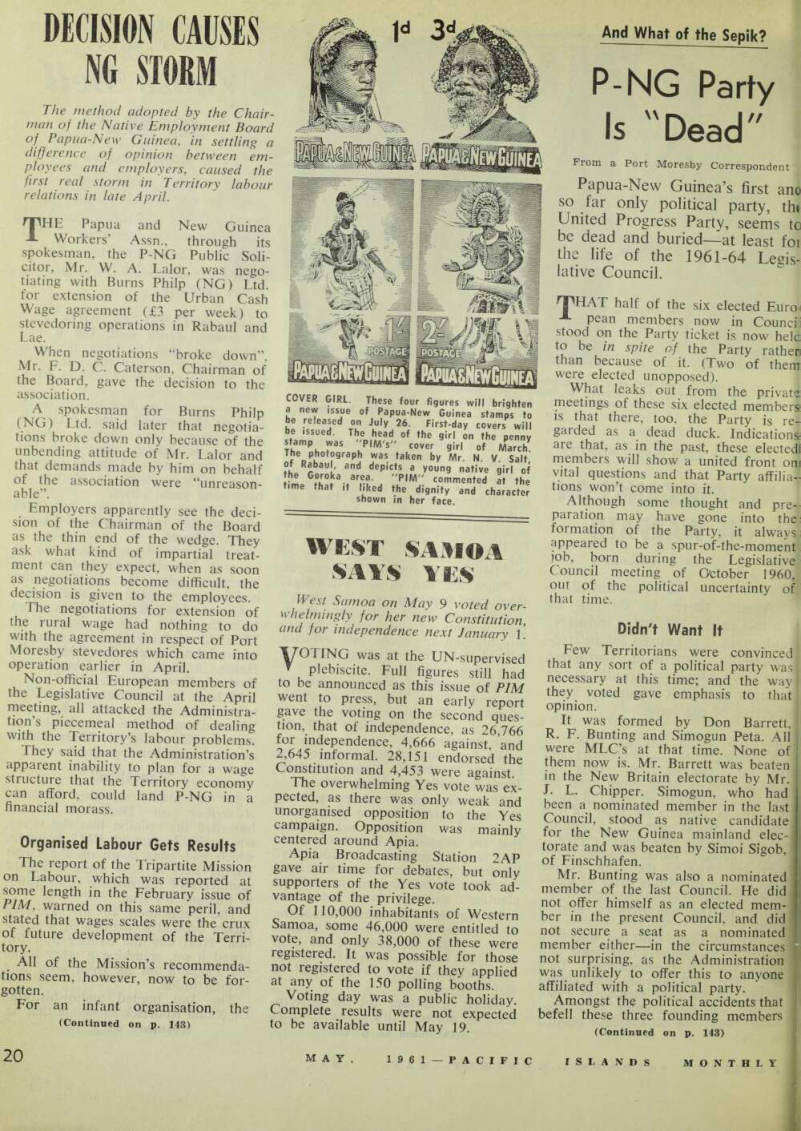
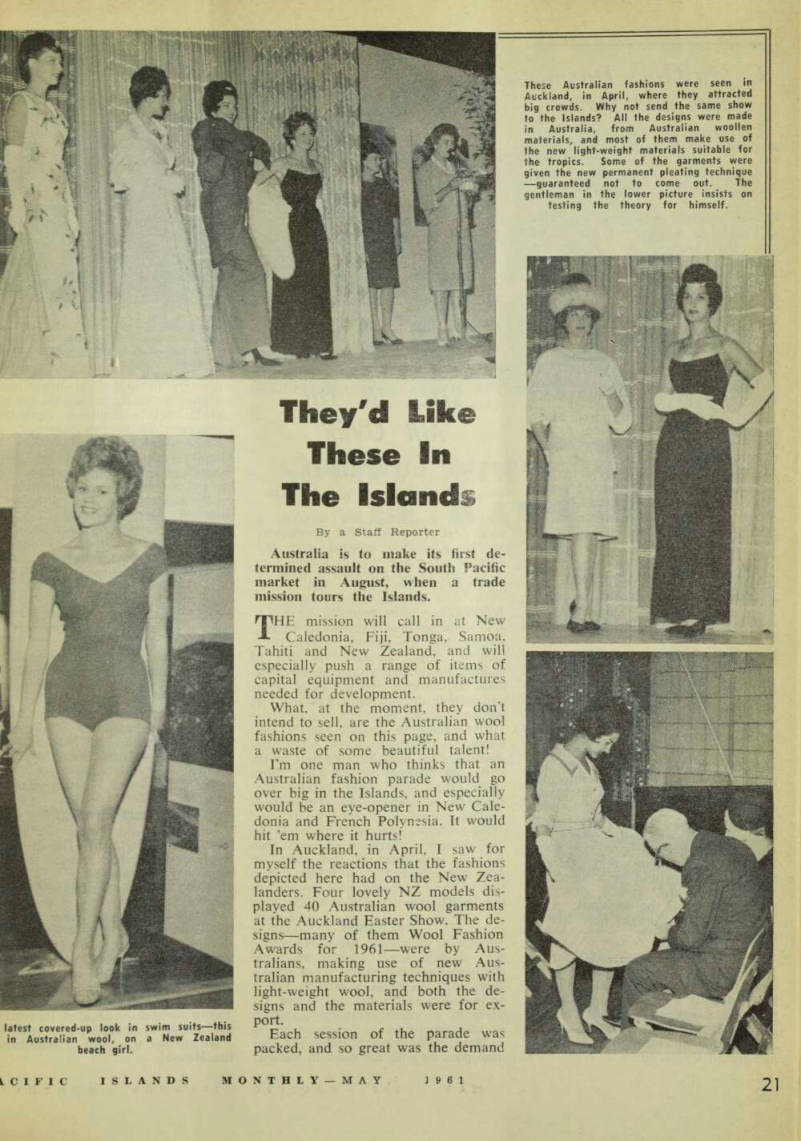
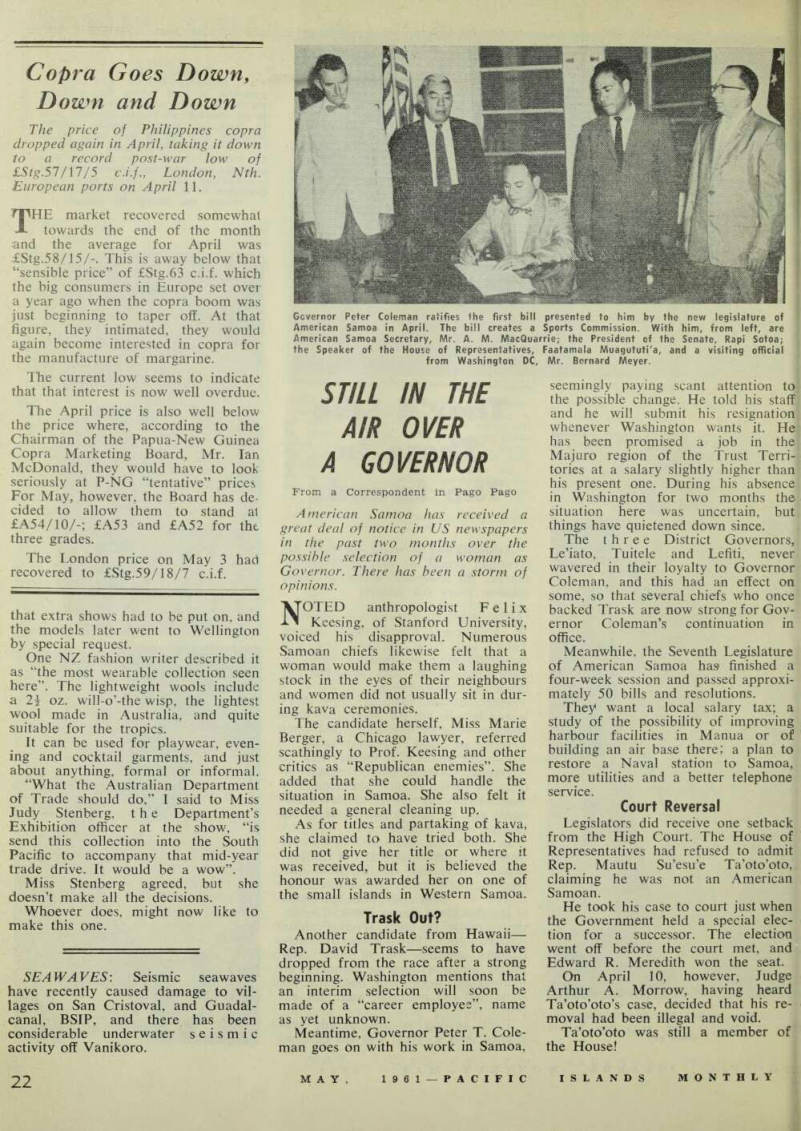
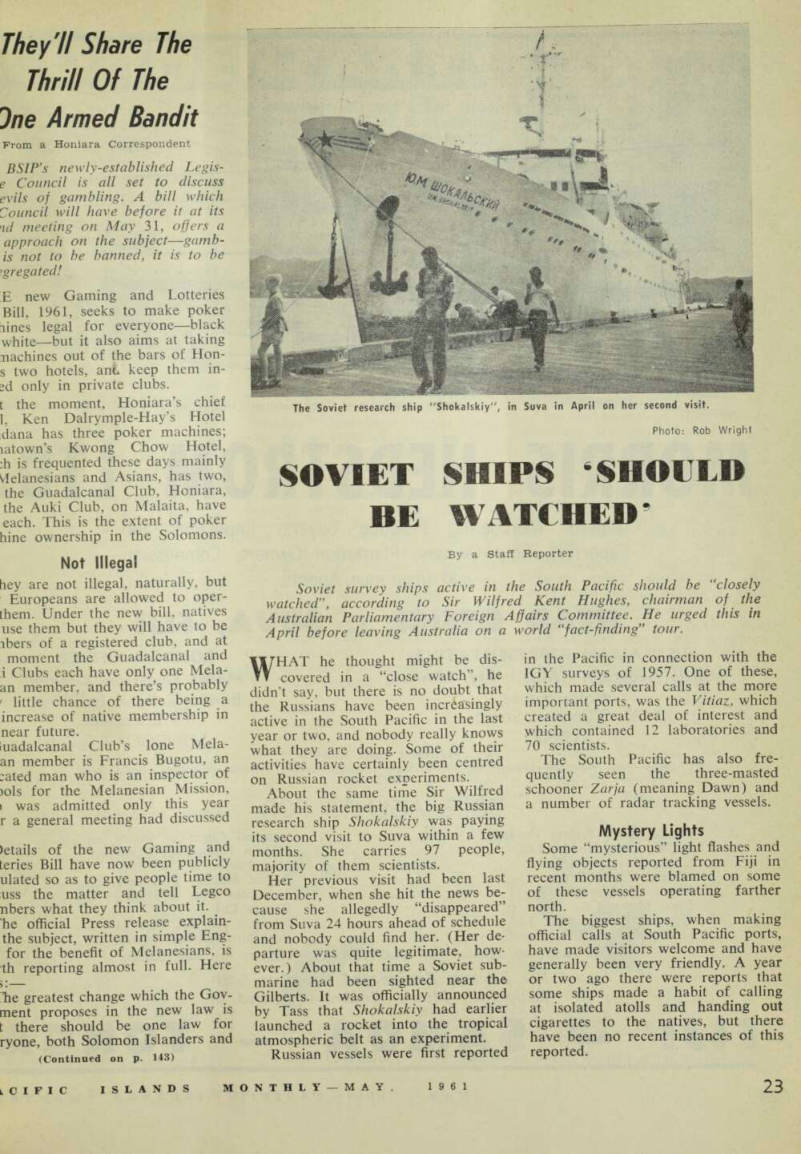
COVER GIRL. These four figures will brighten a new issue of Papua-New Guinea stamps to be released on July 26. First-day covers will be issued. The head of the girl on the penny stamp was "PIM's" cover girl of March The photograph was taken by Mr. N. V. Salt, of Rabaul, and depicts a young native girl of the Goroka area. "PIM" commented at the time that it liked the dignity and character shown in her face.
Papua-New Guinea Workers’ Associa tion is doing pretty well for itself.
Due to its efforts, a new wage agree ment giving Port Moresby waterside workers substantial pay increases came into effect on April 20.
The agreement was negotiated be tween the association and the two local stevedoring companies—Burns Philp (NG) Ltd. and Steamships Trading Co. Ltd.
Until now the rate for wharf labour has been 8/- per shift, day or night, with no penalty rates.
The new rates give a 50 per cent, boost to day shifts (12/-), with 18/for night shifts plus overtime at 2/3 an hour. Work on Sundays and holidays will be at 24/- day shift and 36/- for night shift, with overtime
at 4/6 per hour.
In all cases meals and transport will be provided.
This is the association’s second triumph this year. In January a basic wage of £3 per week for un skilled labour in Port Moresby, Rabaul and Lae came into operation due to the association’s efforts.
Although the increase in wages may be regarded as a victory for organised labour as opposed to the dumb, driven kind, the end result, of course, is going to be added costs for Territory residents as a whole.
Shipping companies in Port Moresby have already increased wharf handling charges to take care of the wage increases.