The South Pacific Says
pp. 85-101 · Read in the full issue
Goodbye To An Era
When Tasman Empire Airways' last surviving Solent ark IV flying-boat retired from the Coral Route in September, very colourful period in aviation history ended.
E 4,600 mile round-trip Coral 3-oute between Suva and Papeete vas the last regular flying-boat ce of any importance any •e in the world. Only others are w essentially local services in >te areas. lAL’s conversion from flying -3 to modern jet-prop Electra lers is being made in two ;s. ige one, which started in Sep »er. involves Super DC-6 air s flying between Nadi and ete, landing there on the partly jleted international airport at .. The second stage will take s about the end of next March, diich time development of the Faaa airport is expected to i the stage where it will be able of handling Lockheed ras. dng-boats have served both Li. and the airlines of the world rally, faithfully for a genera thus a certain adventure and nee attached to the flying-
boat’s operations passes with this now completed era in South Pacific aviation.
The change to land-based air craft could not be avoided. On the economics of operating the aircraft, it was inevitable. The flying-boat as an aircraft type has had its day.
Yet it is easy to forget that for six years from the outbreak of World War 11, TEAL’s two 5.30 flying-boats were New Zealand’s only reliable and regular contact with the outside world.
Flying-Boat History
First airline into the field of lon g-distance international air transport was the old Imperial Air ways, forerunner of BOAC. Follow ing several years of planning and experiments with earlier model sea planes, Imperial Airways in 1935 selected Short’s Empire Class flying boats as the most suitable with which to open up the longer com mercial routes.
By the outbreak of World War 11, Imperial Airways was operating a number of important routes includ ing the Kangaroo Service to Aus tralia (in partnership with Qantas), the lucrative New York-Bermuda route, and a somewhat irregular non-stop North Atlantic service to the United States.
PAA Sikorsky flying-boats were about this time pioneering several international services in the Americas and across the Pacific. In the late 30’s, the name “flying-boat” was synonymous with the larger “in ternational airliners”.
TEAL was early in the field, also, The New Zealand airline was formed in 1939; was ready for operations the following year.
With the outbreak of war, the old Empire Class flying-boat was im proved, and dressed suitably with guns and bombs.
As the Sunderland, the improved British flying-boat made countless patrols and sorties for the RAF’s Coastal Command.
Trans-Tasman in 1940 Three S.3o’s —longer range civilian version of the Empire—were ordered by the young New Zealand airline.
Two only were delivered, the third being destroyed by German bombers while still under construction in the factory. , x With these two flying-boats, TEAL in April, 1940, established its regular trans-Tasman services, which have been maintained and extended
through five generations of aircraft.
In its association with the flying boat, probably few airlines had more experience than TEAL—more than 20 years when the Coral Route boats finished last month.
The two S.3o’s were used by the company on the Auckland-Sydney services until, in 1946, they were re placed by four Tasman class Sandringhams. a still further im proved version of the Sunderland flying-boat.
Next and final flying-boat operated by TEAL was the Solent Mark IV.
Four of these joined the company’s fleet in 1949. With the arrival of the Solents TEAL’S services were extended to Fiji, and later to Tahiti.
First land-based aircraft operated by the New Zealand airline were DC-6’s, three of them being bought to replace three of the Solents in 1954. The most recent change was the re-equipment of TEAL’S fleet with jet-prop. Lockheed Electras.
They have serviced all TEAL routes
(Continued on page 99)
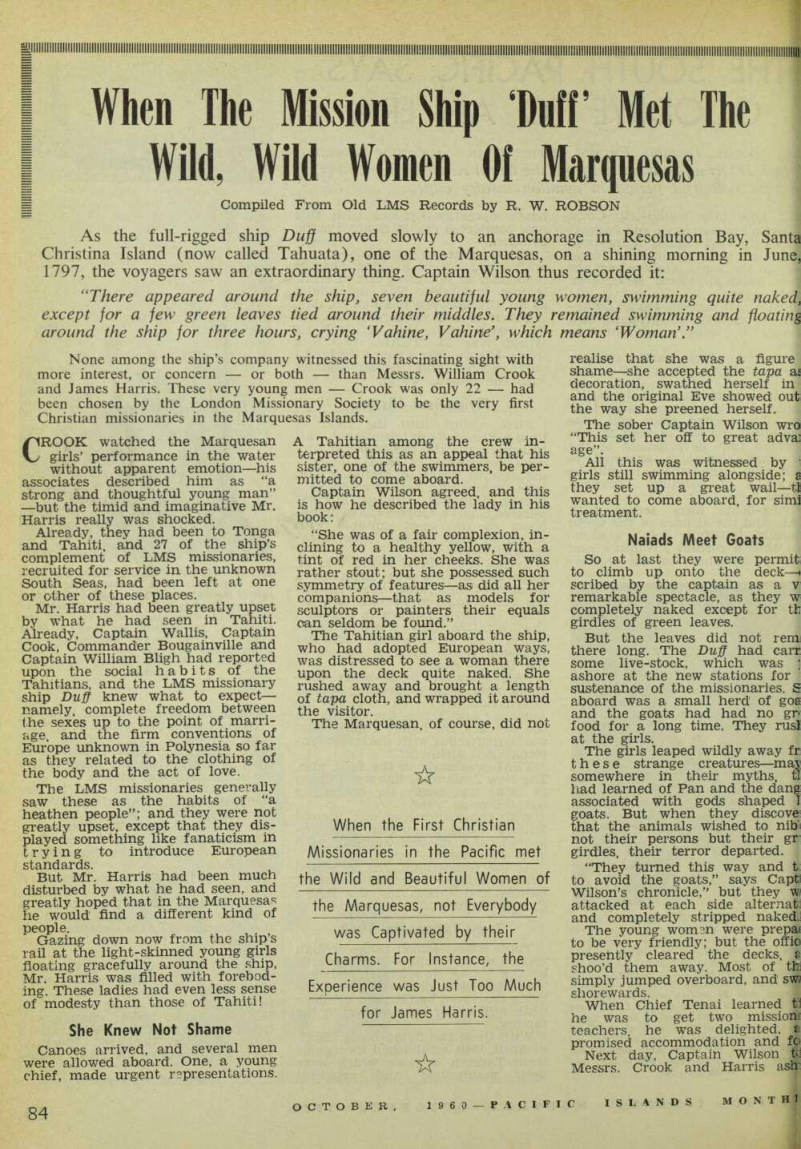
[?]IIN JOE" BOWS OUT! The final flight of [?]flying-boat on the Coral Route means [?]e South Pacific's colourful personality Joe Shephard has to change to land after one and a half years' air time on oats. "Captain Joe" is one of the most experienced flying-boat captains, [?]ore than 2¼ million miles up, and has [?]enior Route Captain on the Coral Route past seven years. "Captain Joe" is some of a legend in the Islands of the Coral Passengers write to him as "Dear Joe [?] many of his letters have simply been [?]ed to "Captain Joe, Fiji"—and they reach him, too.
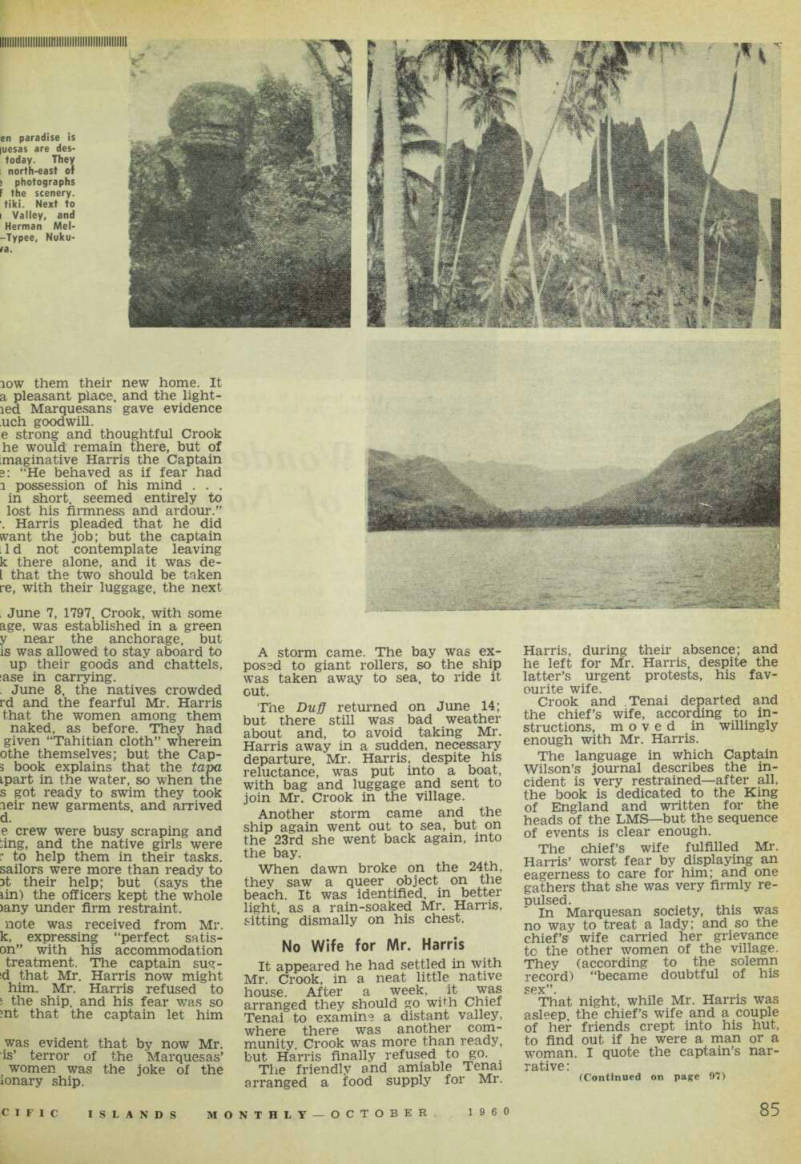
SOLENT PAYS OFF. Captain Shephard receives from Pilot Officer G. A. Danvers (right) on be half of the RNZAF an 11-foot paying-off pennant just before he took TEAL Solent "Aranui" on its final trip from Laucala Bay, Suva, on Sep tember 14. At left facing the camera is Group Captain A. A. N. Breckon, commanding officer of the RNZAF base, and next to him, holding a package, is Mr. John Wisdom, TEAL's Suva manager.
RNZAF Photo.
>t the Coral Route since early fear. ;ry change has seen progress eed, in payload, and in airline mics. TEAL’s Electras fly three as fast as the old 8.30’5; carry nearly four times as many tigers. ; change from Solent to Electra tie Coral Route will double speed—and therefore halve time—on this service. ) following table compares air types operated by TEAL:
these aircraft are four 3d. All but the jet-prop, a have been piston-engined. ; of flight crew has remained int at four for all types, but crew has increased from two ir. the late ’4o’s and ’so’s, while still seemed a prospect that -boat development might and maintain a state of parity i the constantly improving )ased aircraft, TEAL did con further flying-boats as replace for its fleet of Solents. ramp, pontoon and other ies installed at Mechanics Auckland, were actually built rough to handle the mighty ;ss flying-boat.
ying-Boat Was Stillborn
as history has recorded, the :ss project died in infancy, wen more ambitious Duchess ■boat project was stillborn, he big aircraft field, there is le aircraft manufacturer any -1 e currently developing a n version of a sea-based plane, re are several important ls for the demise of the big ■boat. land-based plane, given equal • power, can be designed for r speeds. Speed means quicker , and therefore more flights, more flights make possible economical operations, recent years, frequency has e much more important in ting passenger traffic than ere size of an aircraft. Many operators are convinced that :t sizes have just about reached optimum—certainly for the ible future—and that future pments will concentrate on and range.
The international airliners of the 1970’s seem likely to be of 100 to 150 passenger capacity, flying non-stop along the great circle routes flying at heights measured in miles rather than feet, and at speeds of 2,000 mph—well above the sound and thermal barriers.
Aircraft designers know there is a physical and financial limit to the likely sizes of take-off and land ing runways in heavily built-up areas, an argument which the die hard exponents of flying-boats claim will force the ultimate abandon ment of land strips and a reversion to sea strips.
What New Developmpent?
No one can prophesy just how the development will go, but present trends are to greater engine power and the use of rocketry and other
devices which may make possible a closer 1 approach to the HG Wellsian concept of vertical take-off.
Vertical take-off has, of course, already been achieved with the heli copter and the prototype versions of VTOL (vertical take-off and landing). Through the 1960’5, aero nautical engineers seem likely to solve the problems of the marriage of these landing and take-off tech niques with the high-flying, long ranging super-jet of tomorrow.
In the field of air cargo, the fly ing-boat’s future may not be so gloomy. Here size has more signific ance, and speed and frequency of service are not such important con siderations. Whether such a de velopment comes from advances in aviation, or marine technology, or whether it will come at all, remains to be seen.
Total Cruise engine Passenspeed power ■aft gers in mph in hp ying-boat) . 19 138 3,600 ngham ig-boat) . 30 172 4,800 IV (flying . 45 200 8,000 andplane) . 56 265 9,600 Inters nal (land 0... . 71 400 16,000