No Fireworks Bu[?]
pp. 22-149 · Read in the full issue
Plenty Of Charm
From Special Correspondents The neat, slender man wit
his carefully combed Mac
hair and his blue travellin
jacket who hurried aroun
Papua-New Guinea in six daj in September had the outsia Press waiting on its toes.
FOR some reason the Press t ticipated that the slender ma delicately-clipped words and penetrating mind would create devastating situation.
One Pressman even hurried miles from Port Moresby to Rata: to speak with the man before left. Wires flowed from Melboui and Sydney to ensure that situation was adequately covered.] But although the slender it won the praise and confidence ofl who met him, he sadly disappoiir the Australian Press. He brow down fire on no one’s head, and g fered no fire on his own.
Strong Words
The visitor was Mr. Julian Ami British Parliamentary Under-Se(* tary for Colonies, who paid a i day visit to Papua-New Guinea! his way to an inspection of Brn colonies, protectorates and depe encies in the Pacific.
The story got around that planting community was goings use strong words to him on the m
(Continued on page 146)
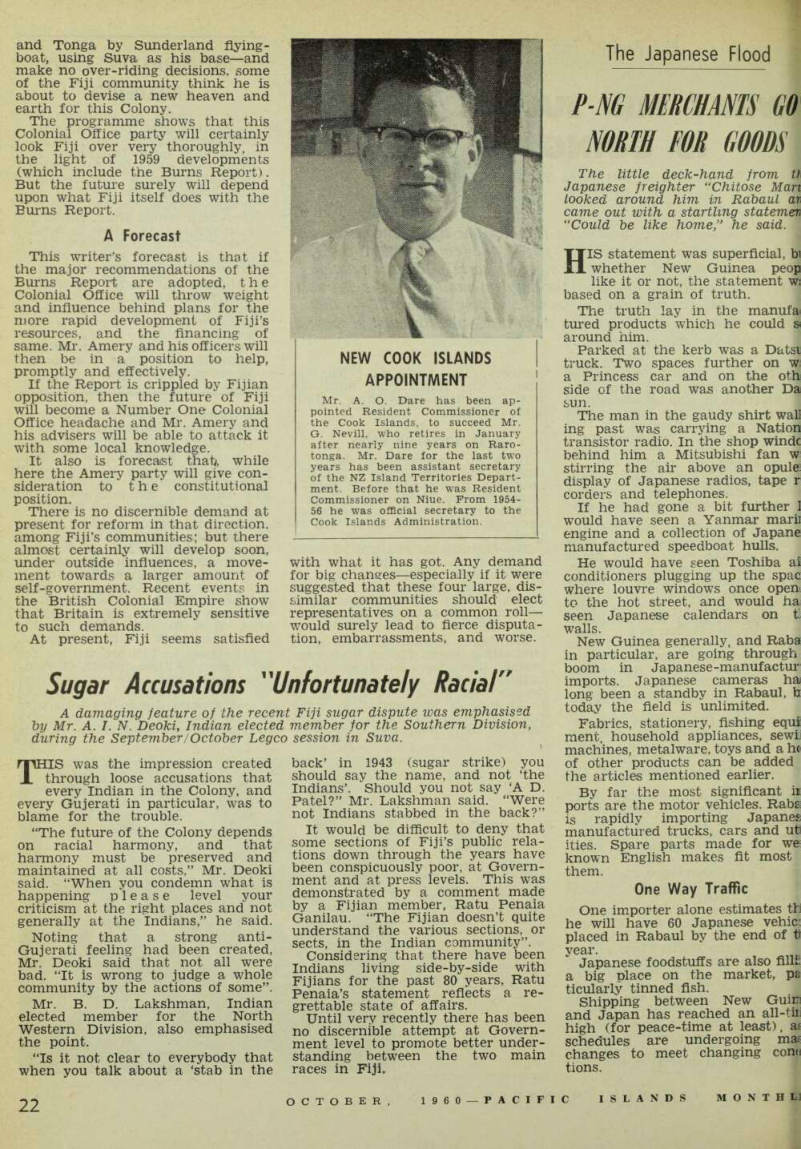
Mr. Julian Amery. For what he has had to in P-NG and the BSIP, see below.
for greater British support for . tralia in the face of intemati criticism concerning territories, story also got around that Amery could produce a good st: turn of phrase himself if he wa: to —and that he would not hes: to do so if provoked.
But Mr. Amery turned out t a man with a keen understan of problems and solutions, and an obviously sincere understan of the situation in Papua- Guinea.
He refused to be drawn on controversial issues, and obviously deeply impressed at \ Australia was doing in devela Papua-New Guinea.
He praised education, met facilities, agricultural developr and air services. (“We lai yesterday on what the pilot said an airstrip. In England we w call it a steep hill”).
But he put a bit more fin his final interview with the I before he left New Guinea ora way to the British Solomon Isis Protectorate.
Congo Lesson
Said Mr. Amery: “Australia is veloping New Guinea —and sir footing the bill, too. The mone not coming from United Nation from any other country. Su Australia more than any o: nation is in the best position determine the rate of prog
h can safely be applied in New ea. le lessons of the Congo must jlear today. Self-government at satisfactorily be given to e until they have been built • it. ; assured that many people (ciate your problem. I am im -5d at what I have s?en.” her, Mr. Amery had held three of talks in Wellington with 'rime Minister Nash and Aus n Territories Minister Hasluck.
Solomons Visit the Solomons later, Mr. Amery i places on Guadalcanal, ta and San Christoval, and many interviews. In a morn ession with members of the ta Local Government Council swered 30 searching questions le natives, including queries more rapid development in blomons, the speeding up of tion, and provision of more enced expatriate officers, a broadcast, Mr. Amery said Dught the balance of develop in the British Solomons was t right”. But to speed up de nent, communications had to tended and he had had dis n on the extension of the Fiji ys service to the Solomons and ew Hebrides. re was a shortage of good ts but he hoped soon the ons would have schoolboys :ould be trained in the UK, ilia and NZ and would come :o take over education work, said he believed that a “new r as dawning in the Pacific”, olomons had for a long time a the shadows, but he believed lat they might astonish the with their energies. (See “Commerce”, page 161)