Samoan Citizenship
pp. 25-143 · Read in the full issue
There's Confusion Over West Samoan Citizenship
Western Samoa, heading swiftly now towards full indepen dence (Independence Day tentatively marked down for January 1, 1962), was finding itself in slight political confusion in late May. It was the old problem of what comes first, chicken or egg, all over again, but with Samoan variations.
Next step towards self government of the NZ Trusteeship Territory of Western Samoa, is the setting up of the Constitutional Convention, whose duty it will he to meet and devise the constitution of the new Stat Membership will comprise the Fautua, members of the present Legislative Assembly, the high chief Afioga TuimalealVifano, three members tor each Samoan constituency in addition to the elected member of me Assembly for that constituency, and 10 European members in addition y to the five elected members of the Assembly.
ELECTION of the extra European and Samoan members is to take place on July 16 —and, in regard to the Europeans, this is the rub. Who, indeed, are the Europeans of the required “Samoan citizenship”, and who are the electors, with the same qualifications, who are to elect them?
According to the new law, it is necessary for European electors to prove they are qualified to vote, and for both the Constitutional Convention election in July, and for that of the new Legislative Assembly election that comes later this year, it is necessary to have taken Samoan Citizenship and to have forsaken all others.
It's a Non-Existent State There is confusion in the minds of many local Europeans, especially those of mixed blood, over this, and it is held by some that Europeans cannot, as yet, be compelled to adopt Samoan citizenship, as they cannot become citizens of a non-existent State The up-coming elections should therefore, they say, be held under the old regulations Under the new set-up, some citizens, through birth
or for other reasons, automatically have Samoan citizenship; others of European status must formally adopt it. It has been possible for some months, now, for Europeans to become citizens of Samoa, but only an insignificant number — about a dozen in all—have so far taken this step.
It might have made for a smoother change-over if the new State had actually been allowed to come into being before the business of citizenship was enforced. As it is, Europeans are being asked to renounce one long-held citizenship in favour of another in an in dependent State that will not, in fact, exist for at least another 18 months.
Matais Only
Samoans, too, are having their constitutional worries. Though the United Nations Trusteeship Council has insisted that voting at the Referendum, to be held in 1961, be by universal suffrage, the Samoan elections for the Constitutional Convention, as well as the elections to the Legislative Assembly, are
(Continued on page 141)
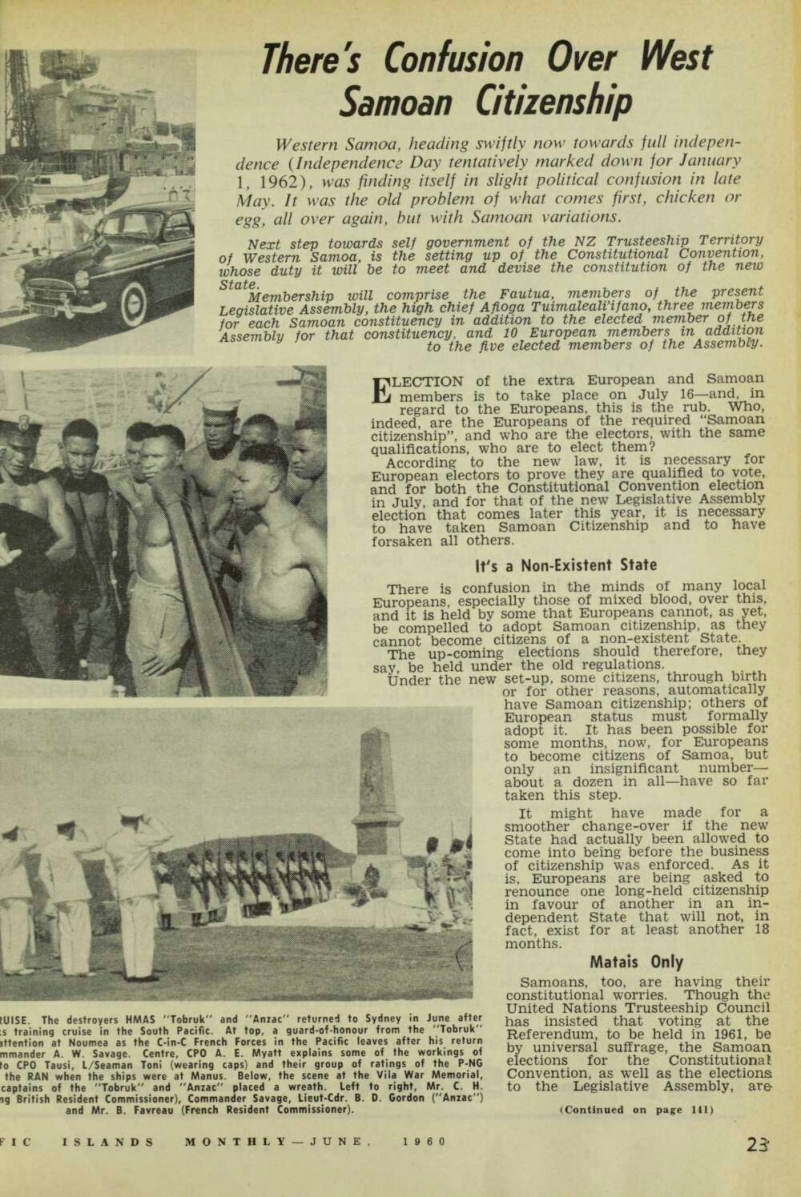
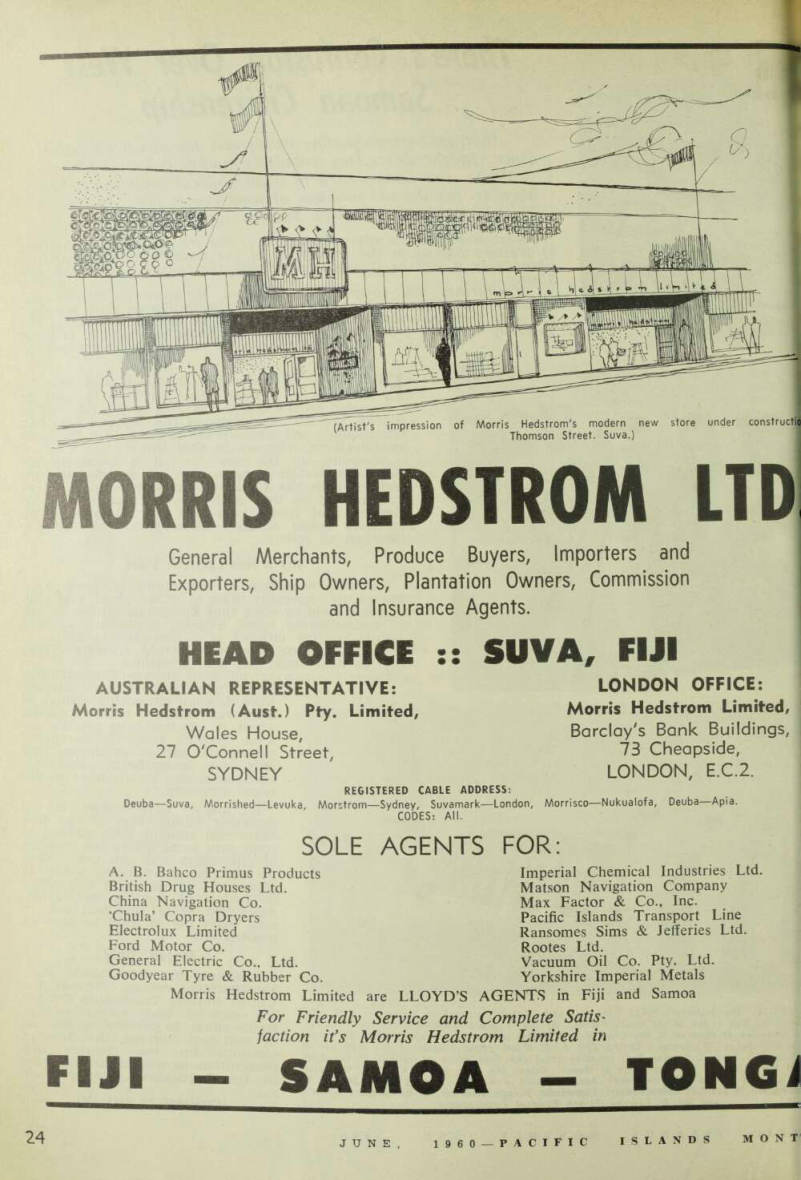
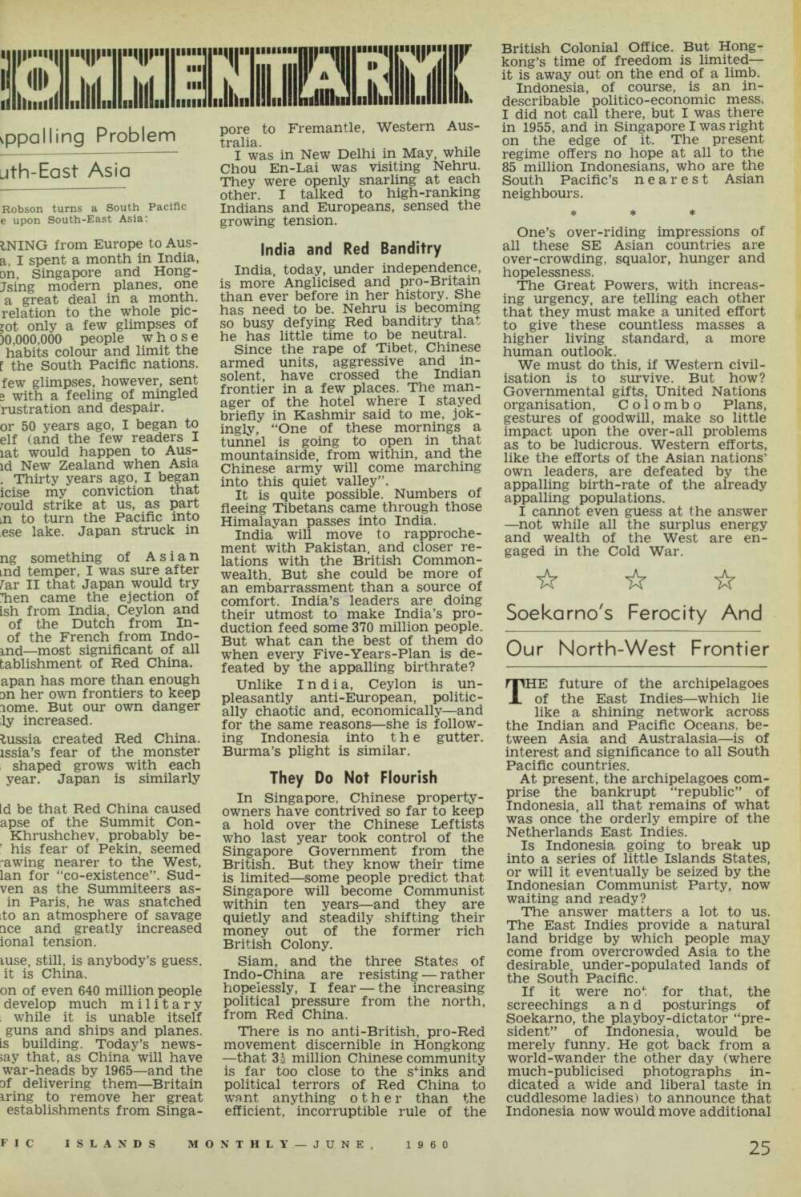
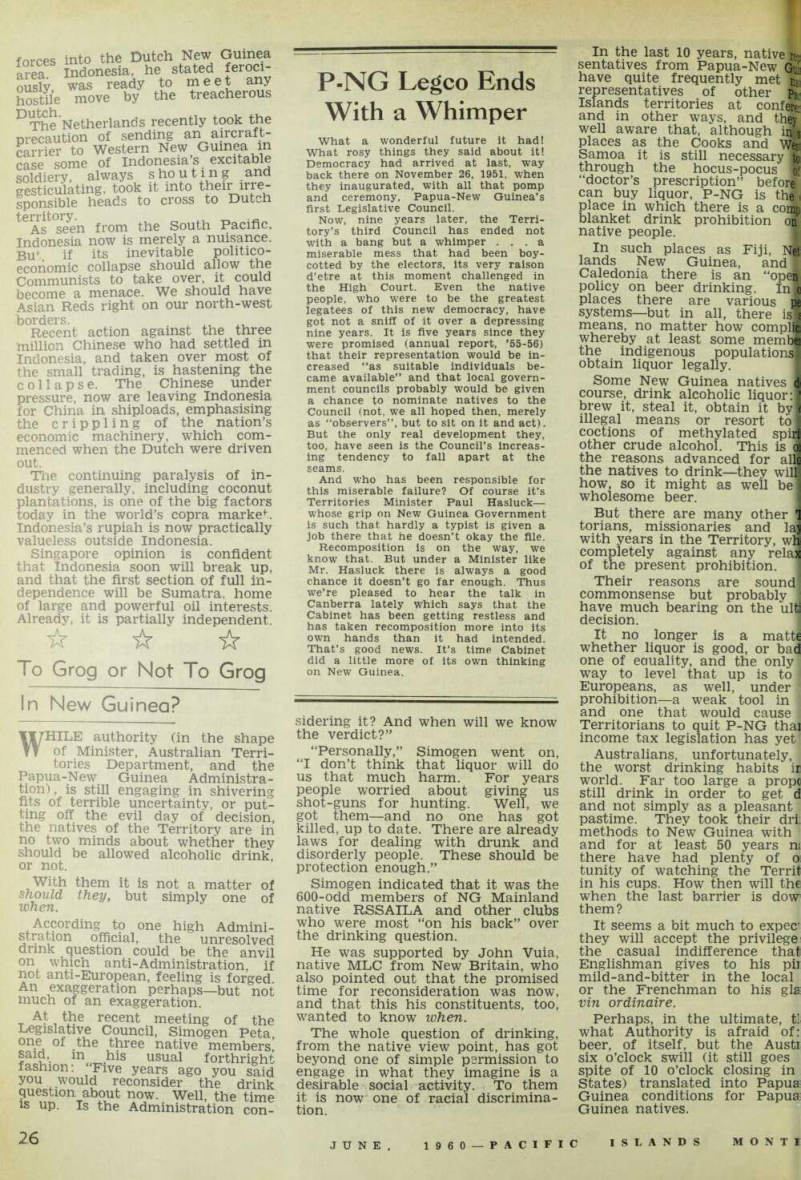
UISE. The destroyers HMAS "Tobruk" and "Anzac" returned to Sydney in June after s training cruise in the South Pacific. At top, a guard-of-honour from the "Tobruk" [?]ttention at Noumea as the C-in-C French Forces in the Pacific leaves after his return [?]mmander A. W. Savage. Centre, CPO A. E. Myatt explains some of the workings of to CPO Tausi, L/Seaman Toni (wearing caps) and their group of ratings of the P-NG the RAN when the ships were at Manus. Below, the scene at the Vila War Memorial, captains of the "Tobruk" and "Anzac" placed a wreath. Left to right, Mr. C. H. ng British Resident Commissioner), Commander Savage, Lieut-Cdr. B. D. Gordon ("Anzac") and Mr. B. Favreau (French Resident Commissioner).
again to be held with only matai (chiefs) as candidates and voters.
This excludes the majority of Samoans from expressing their preferences and exercising political rights.
It is apparent that the Samoans, or at least the 5,000 to 6,000 Samoans who are Chiefly title holders, will continue to refuse to adopt democratic principles and will disregard the repeated urgings and recommendations of New Zealand and the United Nations on this important subject.
Meanwhile the United Nations Trusteeship Council has been dis cussing West Samoa’s future.
The Council rejected an Indian bid to include in its report on Western Samoa a reference to ex pressed New Zealand intentions not to set up military bases or to station troops in the Trust Territory.
New Zealand spoke against the move, but abstained from voting.
India, the Soviet, the United Arab Republic and Burma voted for it.
In Auckland, the former High Commissioner for Western Samoa, Mr. G. R. Powles, said New Zealand had been criticised from all sides for going too fast in Samoa but Samoa probably “would end up as the tortoise in the political field”.
The tortoise would get there, while one never knew where the hare would jump next.
He said Samoa would have diffi culties and it would be necessary for the Samoan Government to take bold steps toward economic develop ment.