G. R. Powles Appointed
pp. 23-37 · Read in the full issue
To Post In India
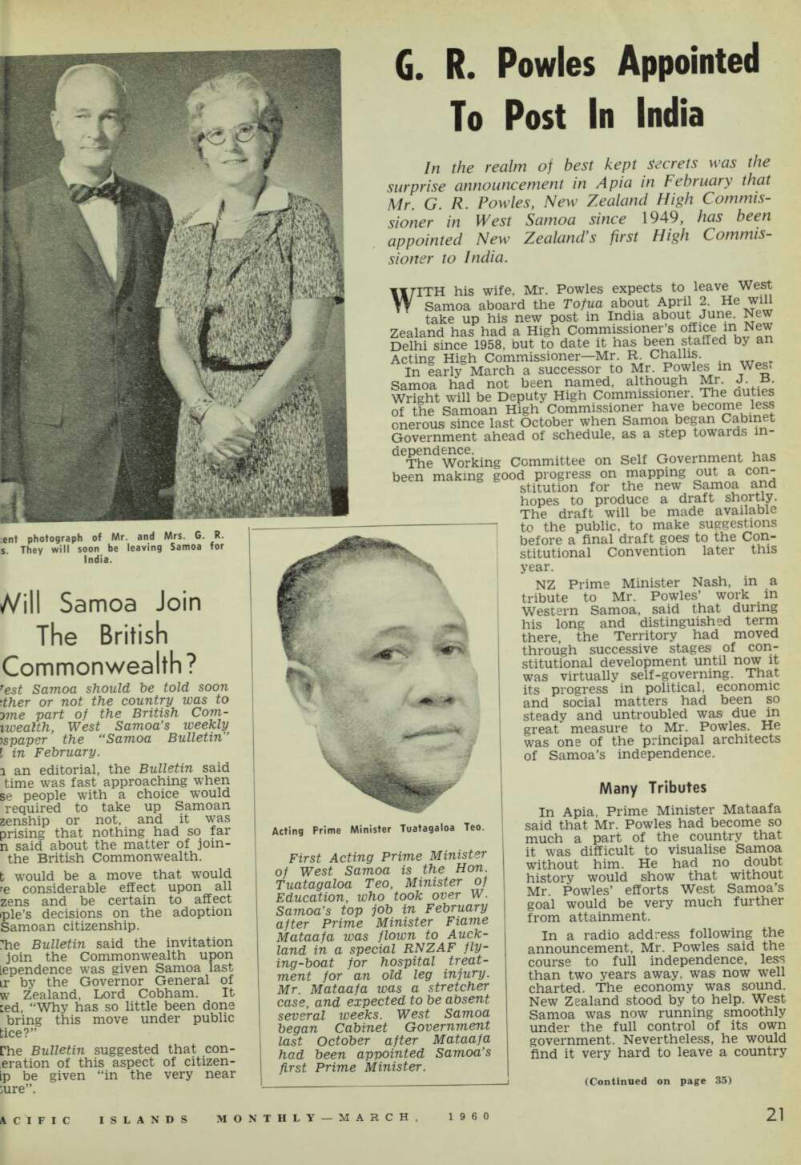
In the realm of best kept Secrets was the surprise announcement in Apia in February that Mr. G. R. Powles, New Zealand High Commis sioner in West Samoa since 1949, has been
appointed New Zealand’s first High Commis
sioner to India.
WITH his wife, Mr. Powles expects to leave West Samoa aboard the Tofua about April 2. He will take up his new post in India about June. New Zealand has had a High Commissioner’s office in New Delhi since 1958, but to date it has been staffed by an Acting High Commissioner—Mr. R. Chains.
In early March a successor to Mr. Powles in Wes.
Samoa had not been named, althpugh Mr. J. B Wright will be Deputy High Commissioner. The duties of the Samoan High Commissioner have become less onerous since last October when Samoa began Cabin t Government ahead of schedule, as a step towards m- Working Committee on Self Government has been making good progress on mapping out a con
stitution for the new Samoa and hopes to produce a draft shortly.
The draft will be made available to the public, to make suggestions before a final draft goes to the Con stitutional Convention later this year.
NZ Prime Minister Nash, in a tribute to Mr. Powles’ work in Western Samoa, said that during his long and distinguished term there, the Territory had moved through successive stages 1 of con stitutional development until now it was virtually self-governing. That its progress in political, economic and social matters had been so steady and untroubled was due in great measure to Mr. Powles. He was one of the principal architects of Samoa’s independence.
Many Tributes
In Apia, Prime Minister Mataafa said that Mr. Powles had become so much a part of the country that it was difficult to visualise Samoa without him. He had no doubt history would show that without Mr. Powles’ efforts West Samoa’s goal would be very much further from attainment.
In a radio address following the announcement, Mr. Powles said the course to full independence, less than two years away, was now well charted. The economy was sound.
New Zealand stood by to help. West Samoa was now running smoothly under the full control of its own government. Nevertheless, he would find it very hard to leave a country
(Continued on page 35)
which had been his home for so long, he added.
An Apia correspondent reports that among Europeans and Samoans there is genuine regret at losing Mr. Powles’ services before final self-government, and before the last and most important stages of the transition period had been completed. He said there was no doubt that Mr. Powles’ sincere and whole-hearted work in the cause
of independence had won him the confidence and love of the Samoan people.
Mr. Powles was a solicitor until 1940 when he became attached to the NZ Embassy in Washington. He was a colonel during the war, and joined External Affairs in 1945. He was appointed to W. Samoa in 1949 and reappointed in 1958 for a further term.