It's a pants economy on East[?] Island
pp. 82-97 · Read in the full issue
From JUDY TUDOR, Aboard the MS “Willem Ruys”. one o?the few speak the ri § ht ki " d of language, but Easter Island heaved itself out' hav £ an econom y hased on pants. When on this packet had their LnH k f sea ’ at dawn on December 1, a hundred or so Yanks out there* on 109 ? 6 by pardcular facet of travel - The island, away sands of miles from anywhere and off °7 ‘ ’f e 3 Uat f ° r J~ a blown - awa y speck thou- Islands I never expected to see myself. b aten track of shl P s was one of tbe Pacific
TT was an unscheduled pause in J. this 12-day passage across the tinn P n?‘ fl t C >,T a p ?. u ? e lor the edllica
“l" the retiring captain, who
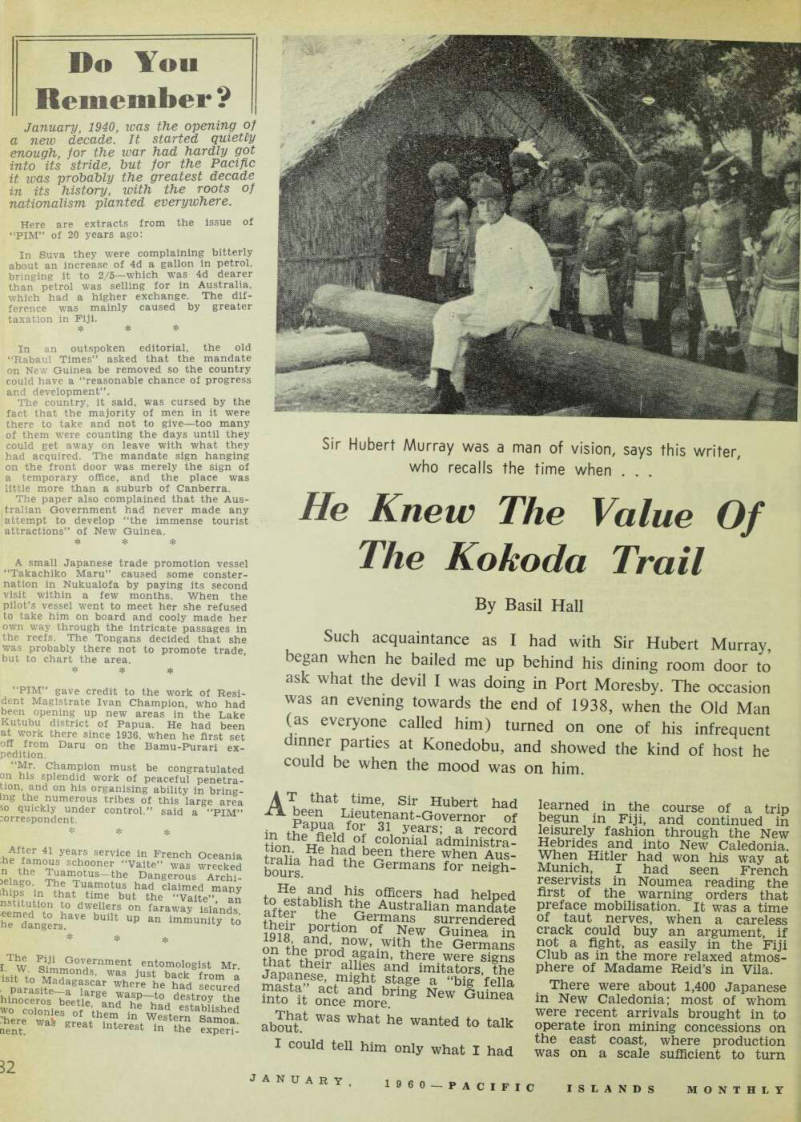
probably never expects to see it for aU fhp ei rii er ' and °? ly incidentally passengers'™' 31011 ° f Ws I'ooo-°dd 1 ' 000 -° dd The call was unscheduled for the nmre r ecma^tn 8 ’ tb° 0 ’ bUt more equal to the occasion than lng We a re 'd^i. t n in i mlnutes of anchor mg a dozen long, narrow-euttprf boats had put out from the shore each manned by a dozen men and with hS n each r of wh om was equipped with a calico flour-bag full of
SSSaSLT* “ces anl
They Were Prepared
Without any of the preliminaries
tes s-jass *s
decks and in passage ways, in a matter of minutes.
The story is that the island gets PVArT? 1 * supply shi P from Chile ? nths and is seldom visited by other vessels—certainly Wh 01 ? 6 £ f v this siz e. This seems 1 .believe, unless out there they go in for Boy Scouting in a big w ay and are prepared for anv
ity - T„ he shells wertS-t
five 1 minute™ the Carvings made in In such a meeting as this the of ng ThP B i diff * culty is eas ily disposed r a T2 de / S .l oon made it p lain Duih r,nS S $ ’ the £st S- and the m? u - der were nothing in their rJrpi Their English and our Spanish RiiL r c OS n ab T the Good Morning Buenos Dias level, but there are more ways than one of telling a the most desirable thing about him is his pants. of T snaL course, a whole lot oi snags in this kind of trading.
The islanders are mostly of the sli] built, Micronesian type, but he] and there is the huge Polynesia whose ambition to own a pair < pants and a jacket seems to increased with girth. One larg bloke, who would have looked moi at home in Samoa, held out to th bitter end for a jacket and slact and when the only taker was a pint sized American with a pint-size spare suit, the offer was turned dow flat. He toted his huge carving bac to the island.
American tourists seem to b equipped to meet most emergencies but as the majority of thes perennial globe-trotters seem to b superannuated widows of uncertai] vintage, few of them had supplie of men’s pants, shirts, and jacket* But not to be outdone, they raidei the bar for cartons of cigarette* bottles of brandy, and burrowei into suitcases for dresses that woul< have done for an afternoon strol down Fifth Avenue.
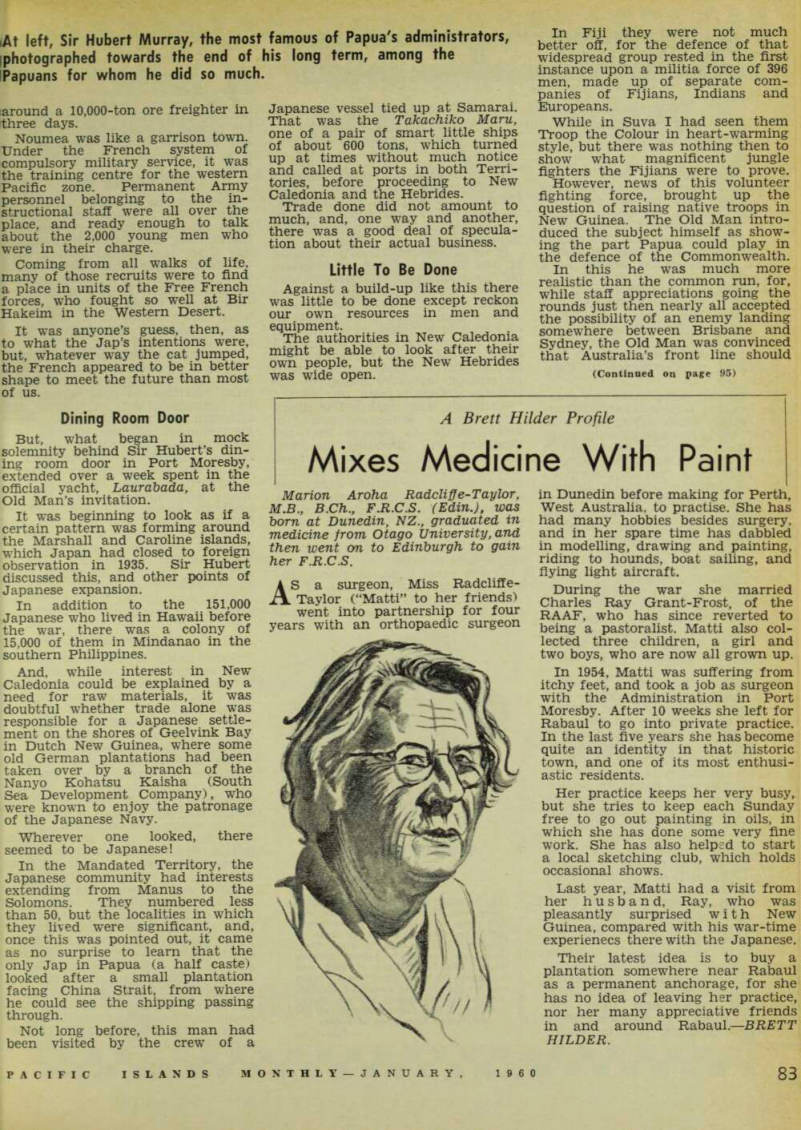
Cartons of cigarettes changed tnds for flimsy strings of small ells; trades of one bottle of brandy :ainst a small carving were Locked back (although the trader timated that he might consider re bottles); and the Fifth Avenue esses were a drug on the market, ith e r Momma Easter Islander jars slacks, jackets or shirts (at pinch), or nothing.
Not any old garment would do. mts were acceptable only after ey had been inspected for flaws id holes and measured for size.
I never have been able to swallow is business of the Poor Exploited lander. Not in my time have whole oonut plantations changed hands r a pound of salt and a bush life. But in the realms of Pacific immerce, these Easter Islanders ive a few tricks they could teach ieir brethren to the westward.
To be sure, they had struck pay rt in having a hundred or so
(Continued on page 95)
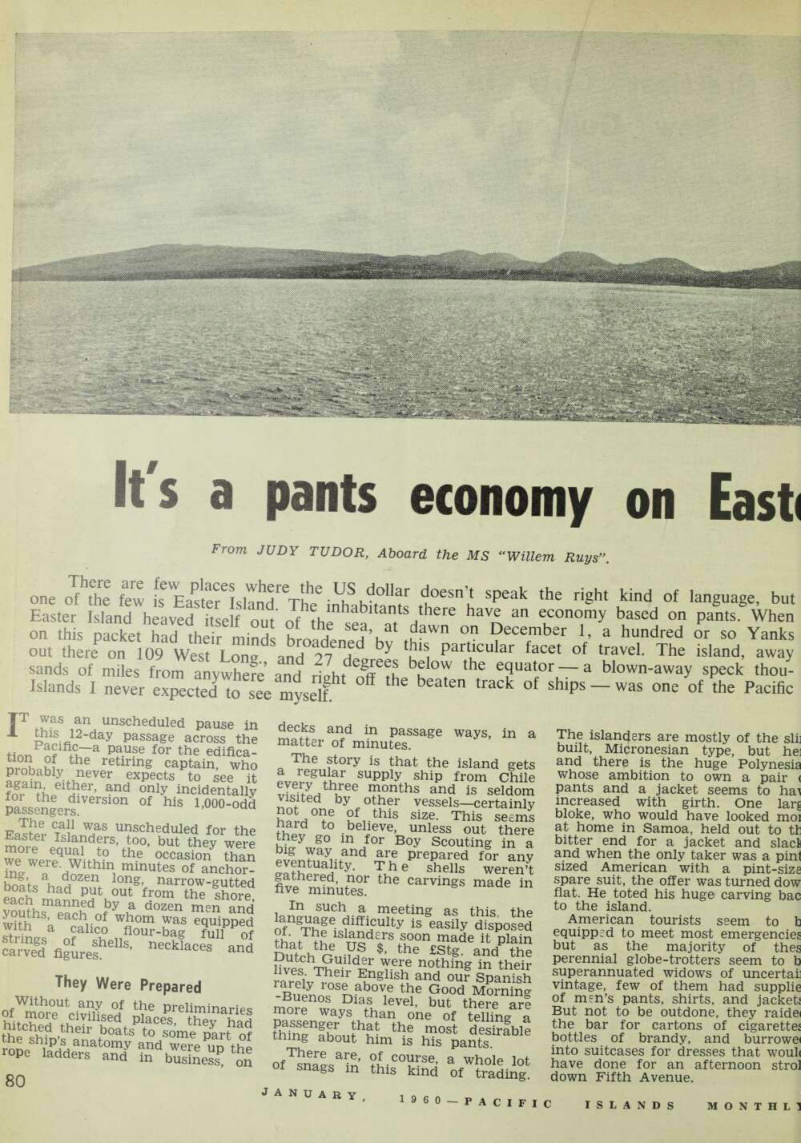
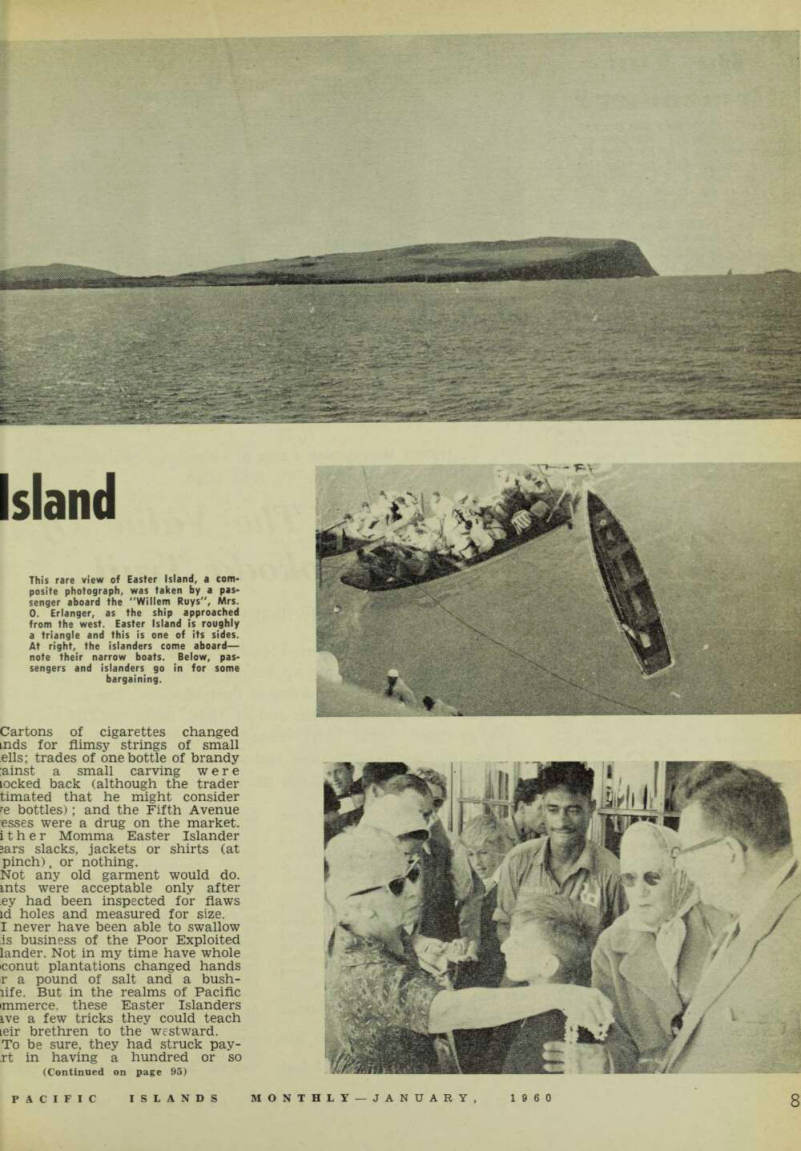
This rare view of Easter Island, a com posite photograph, was taken by a pas senger aboard the "Willem Ruys", Mrs.
O. Erlanger, as the ship approached from the west. Easter Island is roughly a triangle and this is one of its sides.
At right, the islanders come aboard— note their narrow boats. Below, pas sengers and islanders go in for some bargaining.
innocent globe-trotting Yanks cor ralled together in one spot, at the end of 10 boring days of wide and lonely ocean with nothing to spend money on but grog, the ship’s civilised shop and a hair-do. But even allowing for that windfall, the Easter Islanders’ idea of values is extraordinary.
In these days a First Class, gentleman’s suiting costs up and over £4O; a modest pair of grey slacks can’t be replaced under £7/10/-. A carton of cigarettes or a bottle of brandy are peanuts, but represent a considerable sum to most unsophisticated islanders. In this part of the Pacific they rate only a string of shells that could be picked up in places like Suva for a couple of bob.
Some of the small carvings were well done; many of the larger ones were crude. All showed the influ ence of mission school, or some form of modern instruction. None could be considered genuine “primitive art”. Probably their real value, in any of the more accessible Pacific ports, would be from 10/- to 25/-.
Green, Pleasant
Easter Island, as we saw it, was a green, pleasant place; the “village” a scattering of red-roofed houses in amongst clumps of trees. The huge Pacific rollers with nothing to stop them for thousands of miles south to Antarctica, beat continually on the shore. A road, tree-bordered in places, leads over the lowest part of the ridge and disappears. There were patches of cultivation; and on the higher grass slopes “burning off” was in progress. It could have been a chunk bitten out of the far south coast of NSW; or even a distant prospect of the Isle of Man on a summer day.
There was no sign of the airstrip that was to be in operation “by the end of 1958”, to put a new air service across the South Pacific be
tween Santiago and Sydney. (But one of the two Top Brass that came on board from a motor-boat was wearing air force uniform).
Nor, even through binoculars, were there any signs of the statues that are Easter Island’s trade mark to the world. ♦ * * Mr. Thor Heyerdahl and his buddies are still trying to settle the
larger questions of Pacific migrations and the riddle of Easter Island.
Well leave them to it; but it is easy to see how a few of the minor problems mix and mingle out here in the blue Pacific.
Out of Wellington, encouraged by the air-conditioning inside this ship and the blizzard cold of the Roaring 40’s, in which this outfit chooses to make the Pacific crossing to Callao (port of Lima) Peru, one of the best cold-germs seen this season developed on board.
At the time we hung off-and-on Easter, most of us were blowing and bronching. It’s a pair of pants to a wood carving that a few days after we departed, the same furious flu cold developed amongst our visitors, on their isolated Pacific speck.
But the trade wasn’t all the one way. Crawling on some of the carv ings when the islanders whipped them out of their calico bags were pear-shaped, brown and orange spotted bugs of the lady-bird variety.
Now, 11 days later, and one day out of Miami, a select colony of the bugs—maybe harmless, maybe not—are still flourishing up on the lido deck near the swimming pool.
Let’s hope the fussy US authorities we are due to meet tomorrow morn ing don’t get to hear about it.