[?]umour Mongering
pp. 25-144 · Read in the full issue
Back From NG Tour Minister Critical
Of P-Ng
From a Staff Writer in Canberra Dec. 21. 7as Mr. Paul Hasluck’s action ked fortnight’s visit to Papua o Guinea —his first in 12 months t were brimful of anti-Govem it activity in the Territory—a cess?
Mr. Hasluck that today, his first day back in the office after his strenuous Ministerial “-the-people tour.
Well, yes,” he said, across the at pile of work files that are legacy from the tour, and which keep him working over the holi es while other Ministers take e off (Mr. Hasluck has never n accused of being a slacker). “I ught it was most successful”, lut I got the impression that it he meant was it wasn’t a ure. He wasn’t really sure if it Id be classed as a success, in the erlative sense. /hat were some of his im ssions? he people he met on the tour, said, fell into several groups, mps such as the taxpayers’ as iations, and chambers of com :ce, had definite proposals to ke, and clear statements on imalies.
"Insecurity" Again
here were individuals with the le approach, dealing with matters general development, hen there were people who had ticular problems relating to mselves, or their areas—cotton Lae, coffee in Goroka, or perhaps sonal complaints touching nobody lut everywhere he heard the *ase ‘‘feeling of insecurity”. He nd that this covered lots of dif ent things. To many people it ant their own immediate dis isfaction over something.
But when you discarded this sort thing, you were left with the t that there is a lot of genuine ibt as to what is going to happen the Territory in the future,” said . Hasluck. “There is a real con n. A lot of it is created by the at deal of rumour there is in the Titory.”
Ie said he attempted to answer t of insecurity by saying at every )ortunity that Australia was not ng to walk out of New Guinea, e Prime Minister had already told sv Guinea that.
(Continued on page 142)
A Stone Relic of
Sepik Magic
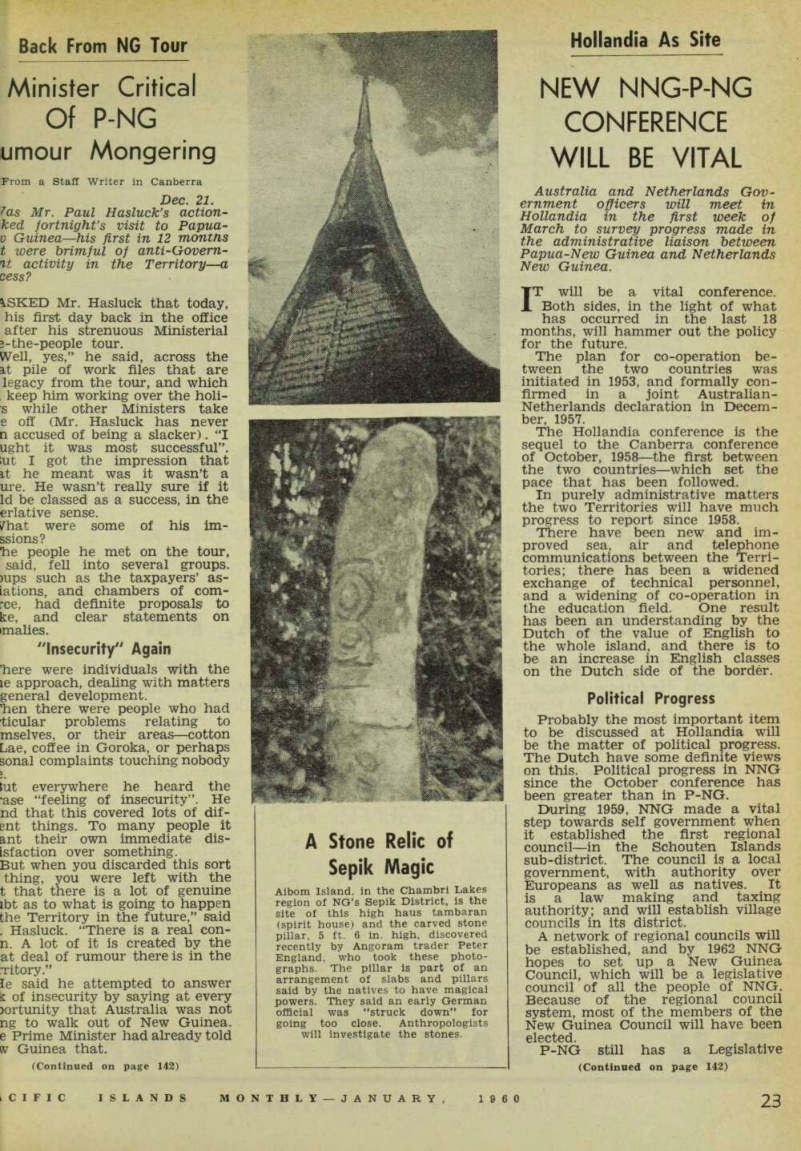
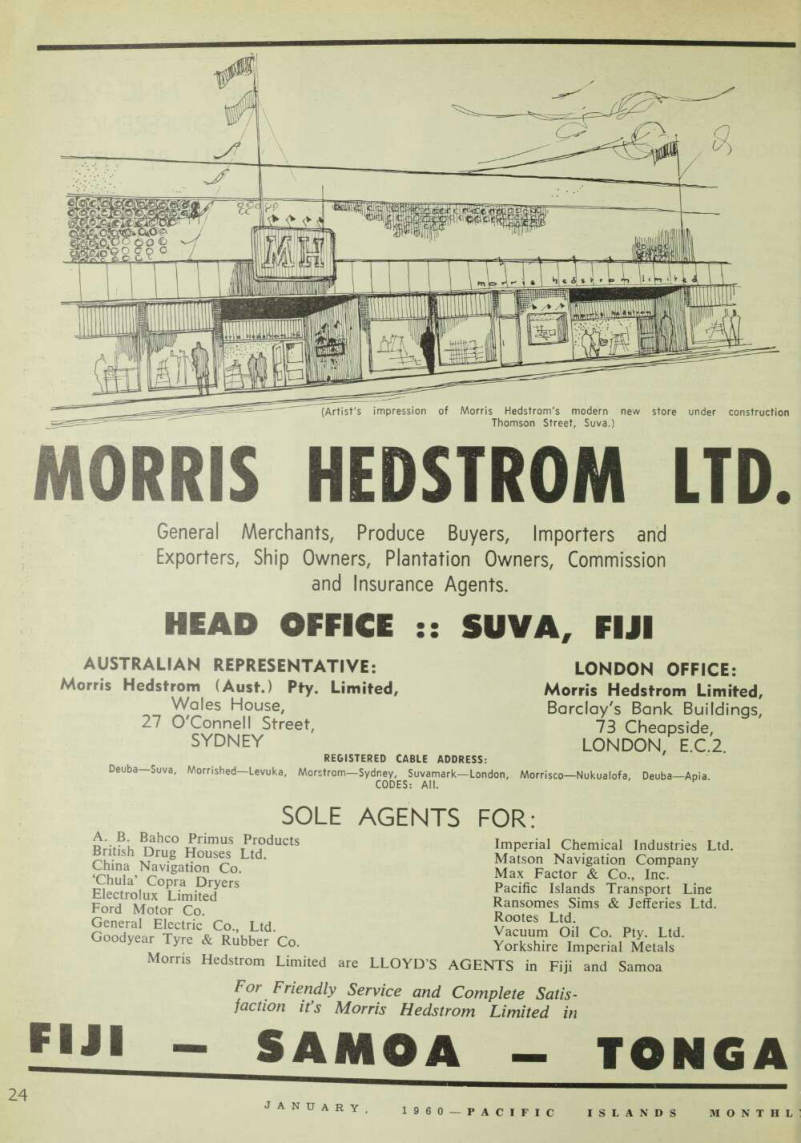
Aibom Island, in the Chambri Lakes region of NG’s Sepik District, is the site of this high haus tambaran (spirit house) and the carved stone pillar, 5 ft. 6 in. high, discovered recently by Angoram trader Peter England, who took these photo graphs. The pillar is part of an arrangement of slabs and pillars said by the natives to have magical powers. They said an early German official was “struck down” for going too close. Anthropologists will investigate the stones.
No Australian Government could walk out, said Mr. Hasluck, leaving its dead of two wars and hundreds of millions of pounds in develop ment, and still expect to remain in office. The Australian public wouldn’t stand for it.
He said the rumour mongering that had caused him most concern was the talk he had heard from Europeans, along the theme that the “natives will kick us out”.
Said Mr. Hasluck, putting down his pen and raising his voice slightly, “That’s very foolish. Stupid.
The best way of starting a row is to go looking for one. Why should we talk like that?”
Rumour mongering of all types had reached serious proportions in the Territory, he said, and it appeared to be spreading.
People had repeatedly asked him questions to which he had already given definite answers. He had said some time ago, for instance, that he would not interfere with the southern leave arrangements, but people had still asked him about “rumours that it would be changed”.
Said Mr. Hasluck, “I said to tl ‘Don’t you believe what I said?’ they believe me—but they had h these rumours. . .”
What was Mr. Hasluck goinj do about rumour mongering?
“I have plans for tackling it, : said, but he did not say what were.
Had any important decision; changes come out of his tour?
“No”, he said.
But I left his office with a fet that the answer was not mean be as decisive as it sounded.
Hasluck has a reputation for k ing decisions to himself until t ready to release them—a enough political viewpoint, altho unfortunately, at times, it cause more trouble than it’s wc
[See “Commentary”, page 25.]