He Dunas Of The
pp. 63-65 · Read in the full issue
in Fiowered Wigs
P-Ng Highlands
Fight For Fun
By Peter Shark, For Aap-
Reuter
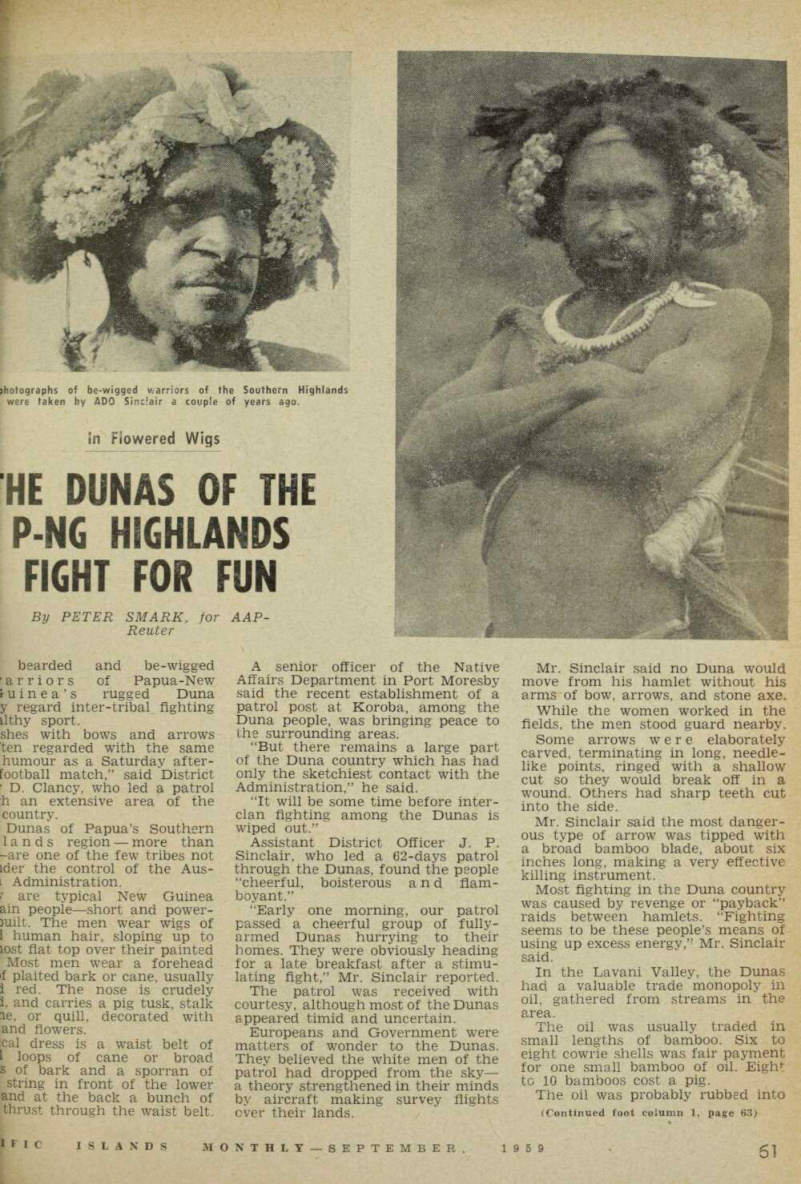
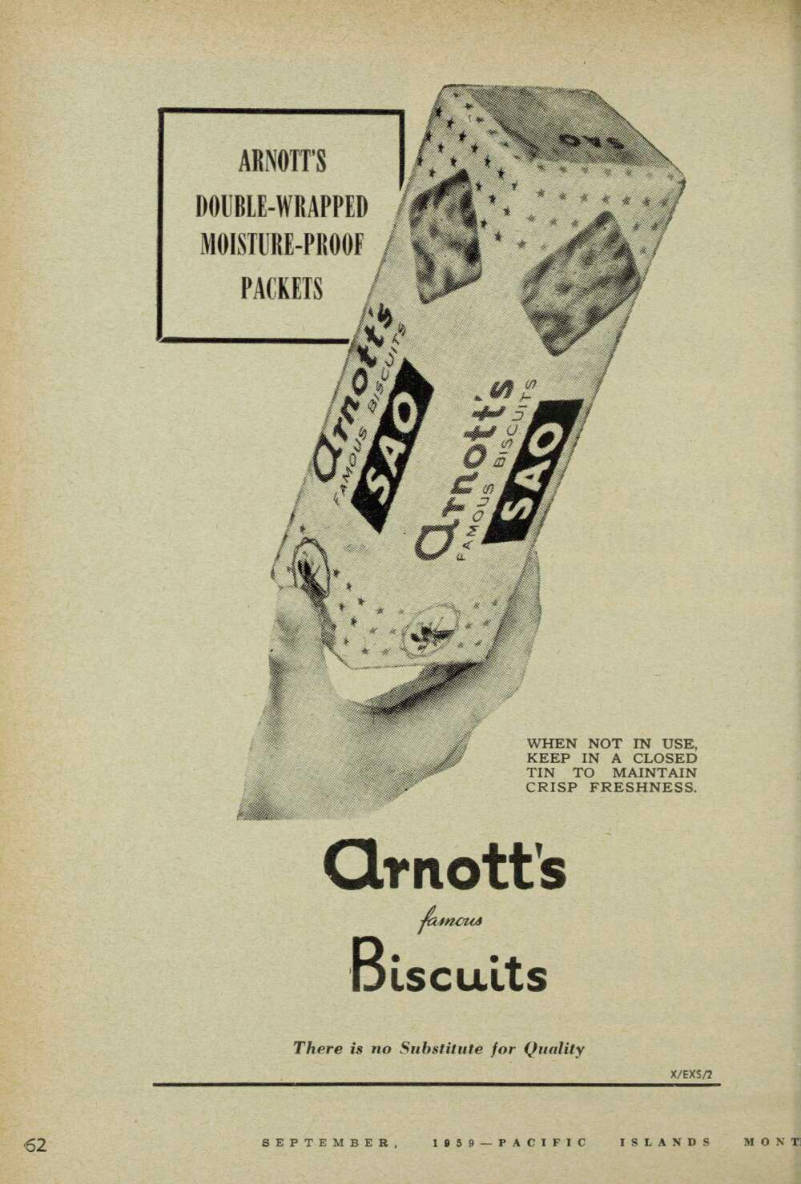
bearded and be-wigged 'arriors of Papua-New Guinea’s rugged Duna y regard inter-tribal fighting ilthy sport. shes with bows and arrows ten regarded with the same humour as a Saturday afterfootball match,” said District • D. Clancy, who led a patrol h an extensive area of the DunaTof Papua's Southern lands region-more than -are one of the few tribes not ider the control of the Aus- Guinea aln people—short and power- JUilt. The men wear wigs of I human hair, sloping up to lost flat top over their painted Most men wear a forehead f plaited bark or cane, usually i red. The nose is crudely i, and carries a pig tusk, stalk ie, or quill, decorated with and flowers. ■cal dress is a waist belt of I loops of cane or broad s of bark and a sporran of string in front of the lower and at the back a bunch of thrust through the waist belt,
A senior officer of the Native Affairs Department in Port Moresby said the recent establishment of a patrol post at Koroba, among the Duna people, was bringing peace to the surrounding areas.
“But there remains a large part of the Duna country which has had only the sketchiest contact with the Administrationhe said.
It will be some time before interwte/" am ° ng * Assistant District Officer J. P.
Sinclair, who led a 62-days patrol through the Dunas, found the people "° US and flam ' ' Early one morning, our patrol passed a cheerful group of fullyarmed Dunas hurrying to their homes. They were obviously heading for a late breakfast after a stimulating fight,” Mr. Sinclair reported.
The patrol was received with courtesy, although most of the Dunas appeared timid and uncertain.
Europeans and Government were matters of wonder to the Dunas.
They believed the white men of the patrol had dropped from the sky— a theory strengthened in their minds by aircraft making survey flights over their lands.
Mr. Sinclair said no Duna would move from his hamlet without his arms of bow, arrows, and stone axe.
While the women worked in the fields, the men stood guard nearby, Snmp arrow-? wptp Pinhnratpfv rarvpd terminating in lone- needle ]ikp ’ int rine-ed with a shallow pnt . thp ’ wn „ ld break- off in a wound. Othem had sha?p teeth cut into side Mr. Sinclair said the most danger
°USbroaPd bTa^e"about W “x
f nc S™ a ?L* makl Jr* ver v effective £1 w SSiS g y ettectlve “flg“n the Duna country
'TigMing
oplvns these means of un excess enerev P ” Mr sfnclair UP excess ener £ y ’ Mr - oincia r S£ 4. Q- . T 7. „ , Lavam Valley, the Dunas had a f Z alu s Dl P trad( r mono PolyJ- 1 0ll) g athered from streams in the ar !i a - „ . , , . be iSiLfbf 8 tn s™®; 1 . 1 len ? ths ° f bamboo Six to ht cowne shells was fair payment £ or one sr £ all ban J bo ° of 011 • El S hf: bamboos cost a pig.
The oil was probably rubbed into
(Continued foot column i, page 63)
[?]hotographs of be-wigged warriors of the Southern Highlands were taken by ADO Sinclair a couple of years ago.
skin by the natives, who took i in their appearance, some areas, men’s ear lobes pierced, to support pendants of e string, threaded with red 5 and broken shell, iividual “dudes” made lavish )f all types of bird-of-paradise es and small, bell-like flowers, in the wig. Cowrie shell was eat demand for personal adorn i as a sign of wealth.
Sinclair said the Duna people generally friendly, despite their ■ke habits. Increasing contact - administration patrols should i them the social and economic fits of peace.