The Wedding Feast
pp. 75-77 · Read in the full issue
Lasted a Week
From Fred Dunn, in Noumea If the Royal Courts of the Grand Chiefs of Mare and Lifou, in the Loyalty Islands, were in the habit of publishing Court circulars, one recently would have read that a marriage had taken place between the two dynasties.
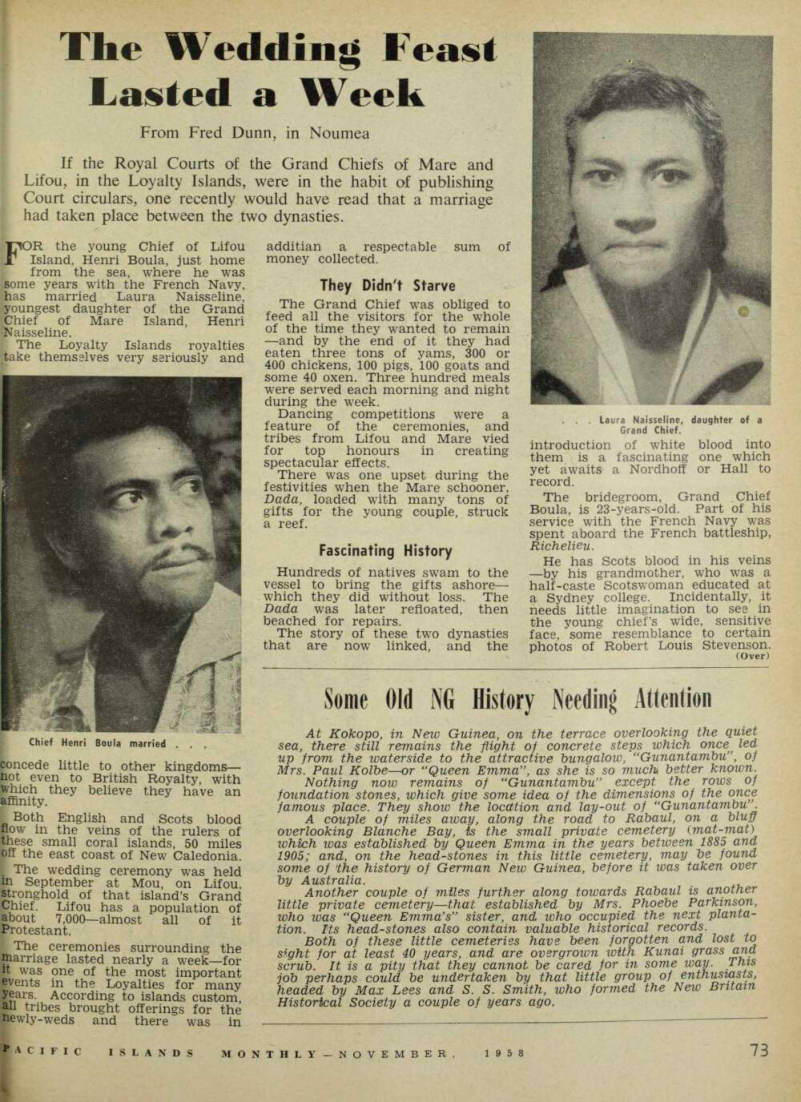
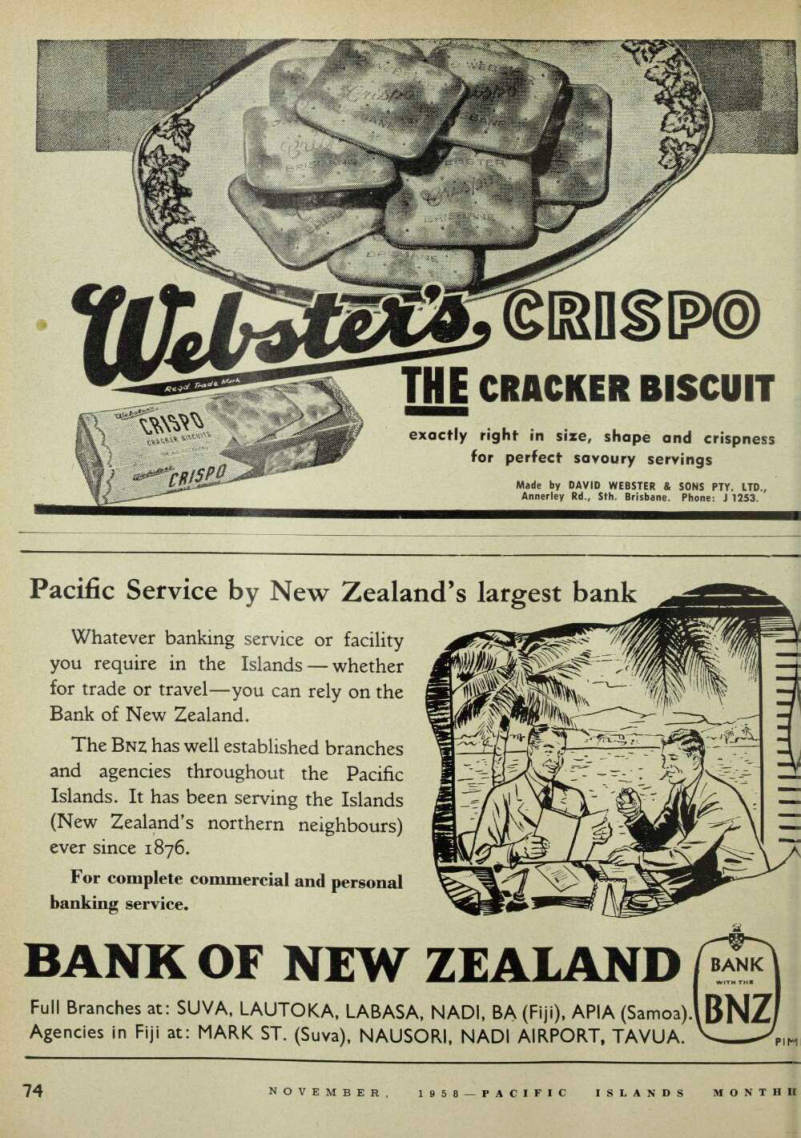
r'R the young Chief of Lifou Island, Henri Boula, just home from the sea, where he was some years with the French Navy, has married Laura Naisseline, youngest daughter of the Grand Chief of Mare Island, Henri
Naisseline.
The Loyalty Islands royalties take themselves very seriously and
concede little to other kingdoms— not even to British Royalty, with which they believe they have an affinity.
Both English and Scots blood flow in the veins of the rulers of these small coral islands, 50 miles off the east coast of New Caledonia. i The wedding ceremony was held m September at Mou, on Lifou, stronghold of that island’s Grand Chief. Lifou has a population of about 7,ooo—almost all of it Protestant.
The ceremonies surrounding the inarriage lasted nearly a week—for it was one of the most important events in the Loyalties for many years. According to islands custom, all tribes brought offerings for the newly-weds and there was in
additian a respectable sum of money collected.
They Didn't Starve
The Grand Chief was obliged to feed all the visitors for the whole of the time they wanted to remain —and by the end of it they had eaten three tons of yams, 300 or 400 chickens, 100 pigs, 100 goats and some 40 oxen. Three hundred meals were served each morning and night during the week.
Dancing competitions were a feature of the ceremonies, and tribes from Lifou and Mare vied for top honours in creating spectacular effects.
There was one upset during the festivities when the Mare schooner, Dada, loaded with many tons of gifts for the young couple, struck a reef.
Fascinating History
Hundreds of natives swam to the vessel to bring the gifts ashore — which they did without loss. The Dada was later refloated, then beached for repairs.
The story of these two dynasties that are now linked, and the
introduction of white blood into them is a fascinating one which yet awaits a Nordhoff or Hall to record.
The bridegroom, Grand Chief Boula, is 23-years-old. Part of his service with the French Navy was spent aboard the French battleship, Richelieu.
He has Scots blood in his veins —by his grandmother, who was a half-caste Scotswoman educated at a Sydney college. Incidentally, it needs little imagination to see in the young chief’s wide, sensitive face, some resemblance to certain photos of Robert Louis Stevenson. (Over)
. . . Laura Naisseline, daughter of a Grand Chief.
Chief Henri Boula married
The bride calls on both sides of the family tree for her white blood.
Certain genes of the lifestream of a Mr. Wright, of London, who married into her mother’s family a long time ago, have lound refuge in Laura.
Lives in "London"
Another relative, still living, is a half-caste white woman reputed to have had an Australian father. She lives inland at a country house she calls “London” —and it is odd to hear a native set off with the announcement that he is “going to London”.
It may well be that the recent marriage was the last of its kind in the Loyalties. With the present quick rate of native progress, the chiefly system may not survive another generation.