Goroka is Growing Up
p. 85 · Read in the full issue
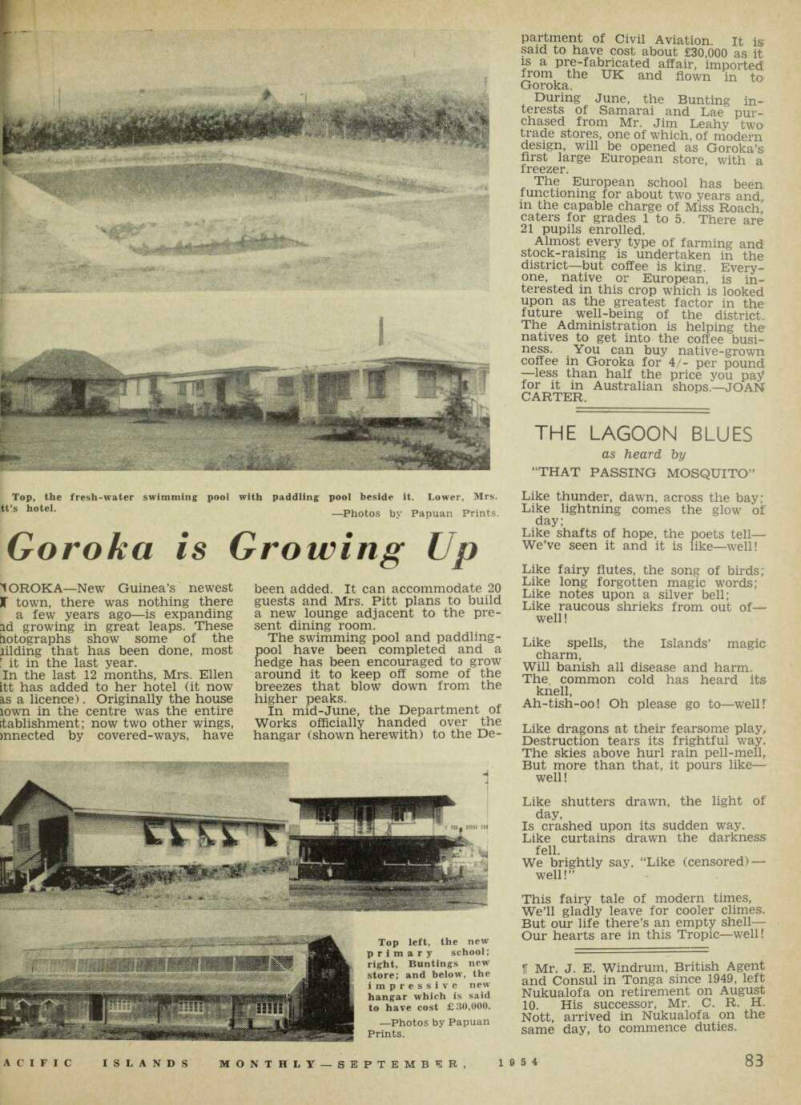
SOROKA—New Guinea’s newest JT town, there was nothing there a few years ago—is expanding id growing in great leaps. These tiotographs show some of the hiding that has been done, most : it in the last year.
In the last 12 months, Mrs. Ellen itt has added to her hotel (it now as a licence). Originally the house lown in the centre was the entire itablishment; now two other wings, mnected by covered-ways, have
been added. It can accommodate 20 guests and Mrs. Pitt plans to build a new lounge adjacent to the pre sent dining room, The swimming pool and paddling pool have been completed and a hedge has been encouraged to grow around it to keep off some of the breezes that blow down from the higher peaks.
In mid-June, the Department of Works officially handed over the hangar (shown herewith) to the De-
partment of Civil Aviation, it is said to have cost about £30,000 as it is a pre-fabricated affair, imported from the UK and flown in to Goroka.
During June, the Bunting in terests of Samarai and Lae pur chased from Mr. Jim Leahy two trade stores, one of which, of modern design, will be opened as Goroka’s first large European store, with a freezer.
The European school has been functioning for about two years and in the capable charge of Miss Roach! caters for grades 1 to 5. There are 21 pupils enrolled.
Almost every type of farming and stock-raising is undertaken in the district—but coffee is king. Every one, native or European, is in terested in this crop which is looked upon as the greatest factor in the future well-being of the district.
The Administration is helping the natives to get into the coffee busi ness. You can buy native-grown coffee in Goroka for 4/- per pound —less than half the price you pay
for it in Australian shops.-
Joan
Carter.
Top, the fresh-water swimming pool with paddling pool beside it. Lower, Mrs. it s hotel. —Photos by Papuan Prints.
Top left, the new primary school; right, Buntings new store; and below, the impressive new hangar which is said to have cost £30,000. —Photos by Papuan Prints.