Copra Market
p. 21 · Read in the full issue
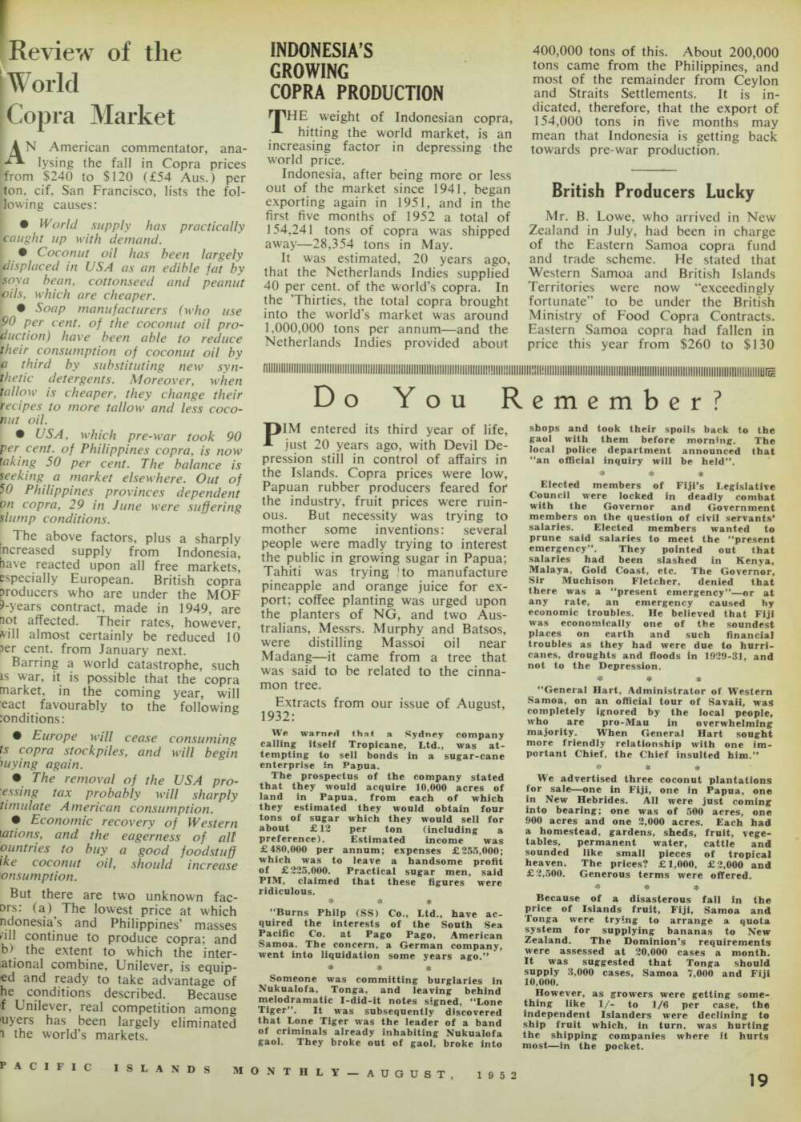
Review of the World
AN American commentator, ana lysing the fall in Copra prices [from $240 to $l2O (£54 Aus.) per jton, cif, San Francisco, lists the fol lowing causes: • World supply has practically ■ caught up with demand. ® Coconut oil has been largely displaced in USA as an edible fat by poya bean, cottonseed and peanut jails, which are cheaper. • Soap manufacturers (who use 0 per cent, of the coconut oil pro duction) have been able to reduce their consumption of coconut oil by a third by substituting new syn thetic detergents. Moreover, when fallow is cheaper, they change their recipes to more tallow and less coco put oil. • USA, which pre-war took 90 per cent, of Philippines copra, is now taking 50 per cent. The balance is seeking a market elsewhere. Out of 50 Philippines provinces dependent on copra, 29 in June were suffering slump conditions.
The above factors, plus a sharply increased supply from Indonesia, have reacted upon all free markets, Especially European. British copra producers who are under the MOF ?-years contract, made in 1949, are lot affected. Their rates, however, mil almost certainly be reduced 10 )er cent, from January next.
Barring a world catastrophe, such is war, it is possible that the copra market, in the coming year, will eact favourably to the following :onditions: • Europe will cease consuming fy copra stockpiles, and will begin mying again. • The removal of the USA pro 'essing tax probably will sharply timulate American consumption. • Economic recovery of Western lotions, and the eagerness of alt ountries to buy a good foodstuff ike coconut oil, should increase onsumption.
But there are two unknown fac ers: (a) The lowest price at which ndonesia’s and Philippines’ masses /ill continue to produce copra; and b) the extent to which the inter ational combine, Unilever, is equip ped and ready to take advantage of he conditions described. Because f Unilever, real competition among uyers has been largely eliminated i the world’s markets.