Liquor System
p. 53 · Read in the full issue
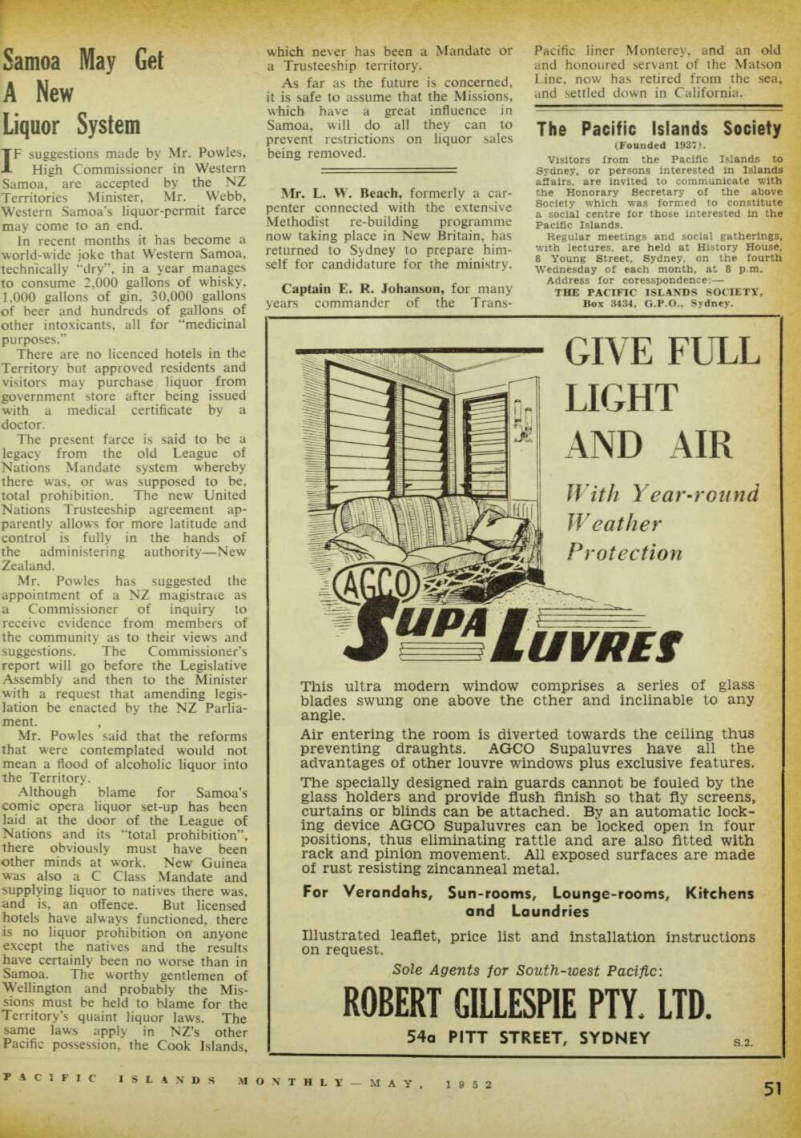
Samoa May Get A New Liquor System
1F suggestions made by Mr. Powles, High Commissioner in Western Samoa, are accepted by the NZ Territories Minister, Mr. Webb, Western Samoa’s liquor-permit farce may come to an end.
In recent months it has become a world-wide joke that Western Samoa, technically “dry”, in a year manages to consume 2,000 gallons of whisky, 1,000 gallons of gin, 30,000 gallons of beer and hundreds of gallons of other intoxicants, all for “medicinal purposes.”
There are no licenced hotels in the Territory but approved residents and visitors may purchase liquor from government store after being issued with a medical certificate by a doctor.
The present farce is said to be a legacy from the old League of Nations Mandate system whereby there was, or was supposed to be, total prohibition. The new United Nations Trusteeship agreement ap parently allows for more latitude and control is fully in the hands of the administering authority—New Zealand.
Mr. Powles has suggested the appointment of a NZ magistrate as a Commissioner of inquiry to receive evidence from members of the community as to their views and suggestions. The Commissioner’s report will go before the Legislative Assembly and then to the Minister with a request that amending legis lation be enacted by the NZ Parlia ment. , Mr. Powles said that the reforms that were contemplated would not mean a flood of alcoholic liquor into the Territory.
Although blame for Samoa’s comic opera liquor set-up has been laid at the door of the League of Nations and its “total prohibition”, there obviously must have been other minds at work. New Guinea was also a C Class Mandate and supplying liquor to natives there was, and is, an offence. But licensed hotels have always functioned, there is no liquor prohibition on anyone except the natives and the results have certainly been no worse than in Samoa. The worthy gentlemen of Wellington and probably the Mis sions must be held to blame for the Territory’s quaint liquor laws. The same laws apply in NZ’s other Pacific possession, the Cook Islands,
which never has been a Mandate or a Trusteeship territory.
As far as the future is concerned, it is safe to assume that the Missions, which have a great influence in Samoa, will do all they can to prevent restrictions on liquor sales being removed.
Mr. L. W. Beach, formerly a car penter connected with the extensive Methodist re-building programme now taking place in New Britain, has returned to Sydney to prepare him self for candidature for the ministry.
Captain E. R. Johanson, for many years commander of the Trans-
Pacific liner Monterey, and an old and honoured servant of the Matson Line, now has retired from the sea, and settled down in California.