TAHITI—Then and Now
pp. 68-69 · Read in the full issue
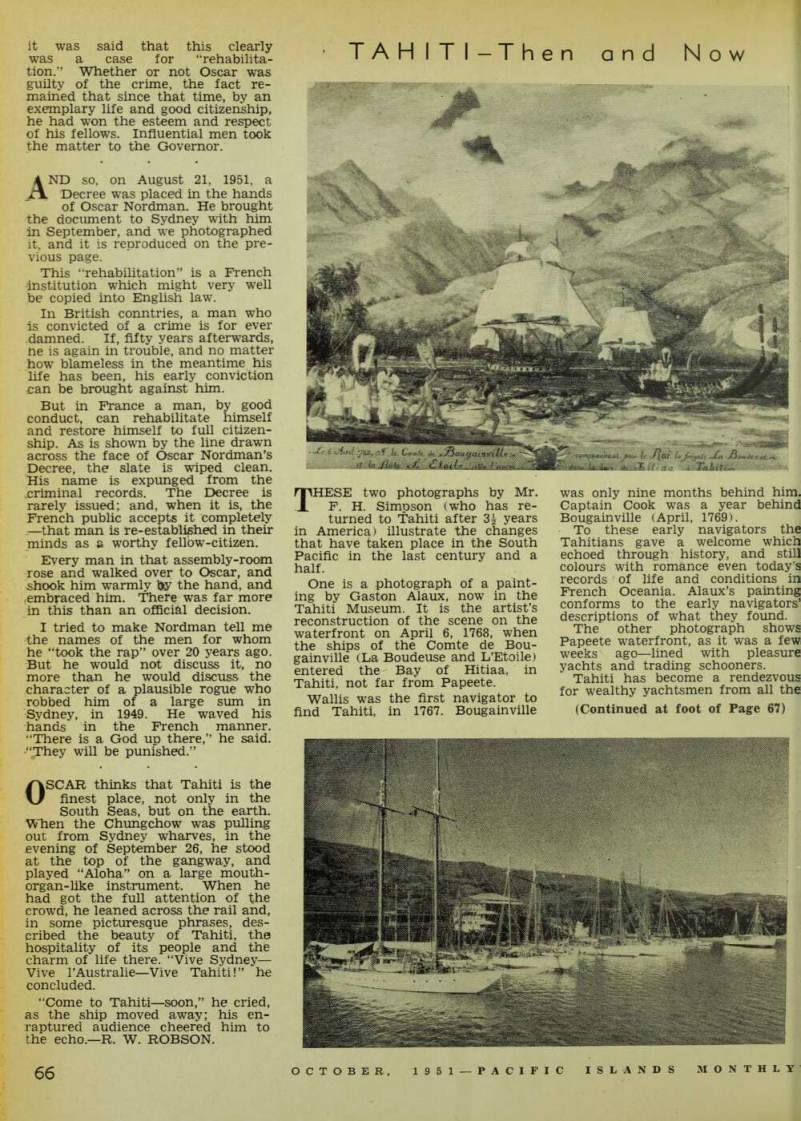
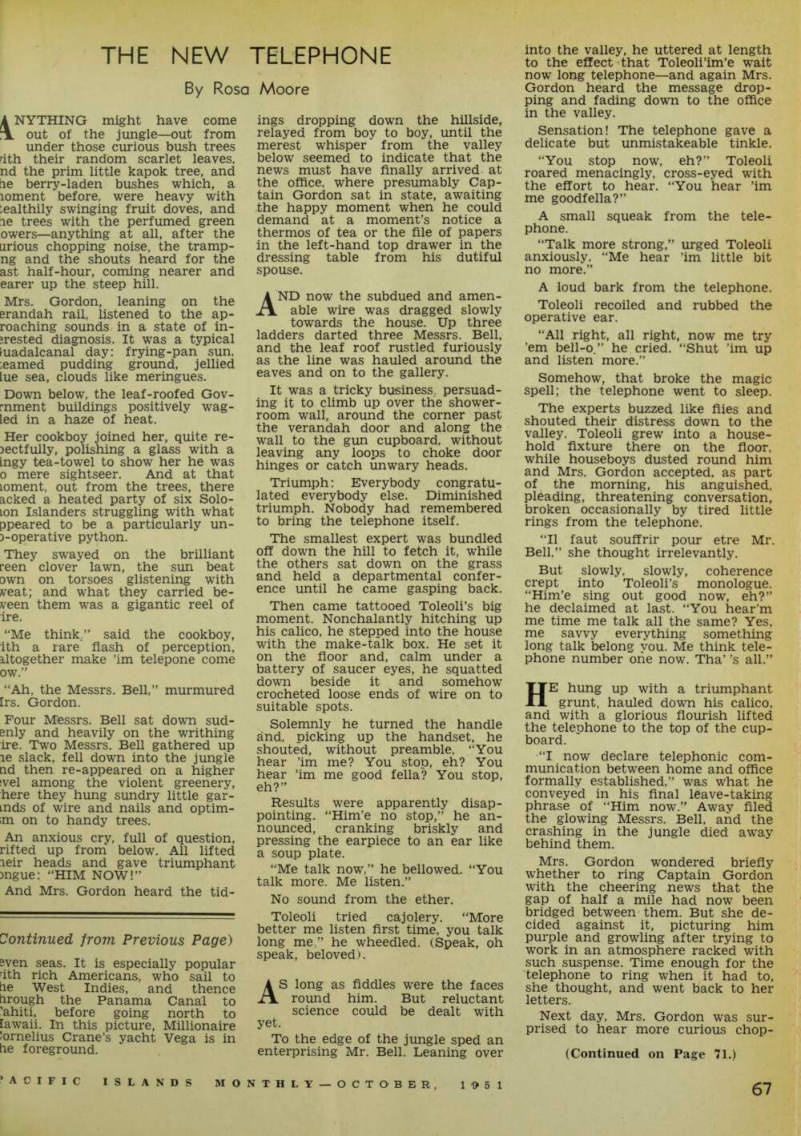
THESE two photographs by Mr.
F. H. Simpson (who has re turned to Tahiti after 3i years in America) illustrate the changes that have taken place in the South Pacific in the last century and a half.
One is a photograph of a paint ing by Gaston Alaux, now in the Tahiti Museum. It is the artist’s reconstruction of the scene on the waterfront on April 6, 1768, when the ships of the Comte de Bou gainville (La Boudeuse and L’Etoile) entered the Bay of Hitiaa, in Tahiti, not far from Papeete.
Wallis was the first navigator to find Tahiti, in 1767. Bougainville
was only nine months behind him.
Captain Cook was a year behind Bougainville (April, 1769).
To these early navigators the Tahitians gave a welcome which echoed through history, and still colours with romance even today’s records of life and conditions in French Oceania. Alaux’s painting conforms to the early navigators’ descriptions of what they found.
The other photograph shows Papeete waterfront, as it was a few weeks ago—lined with pleasure yachts and trading schooners.
Tahiti has become a rendezvous for wealthy yachtsmen from all the
(Continued at foot of Page 67)
Continued from Previous Page)
even seas. It is especially popular ith rich Americans, who sail to tie West Indies, and thence tirough the Panama Canal to ’ahiti, before going north to lawaii. In this picture, Millionaire iornelius Crane’s yacht Vega is in tie foreground.