For Hebrides
pp. 47-48 · Read in the full issue
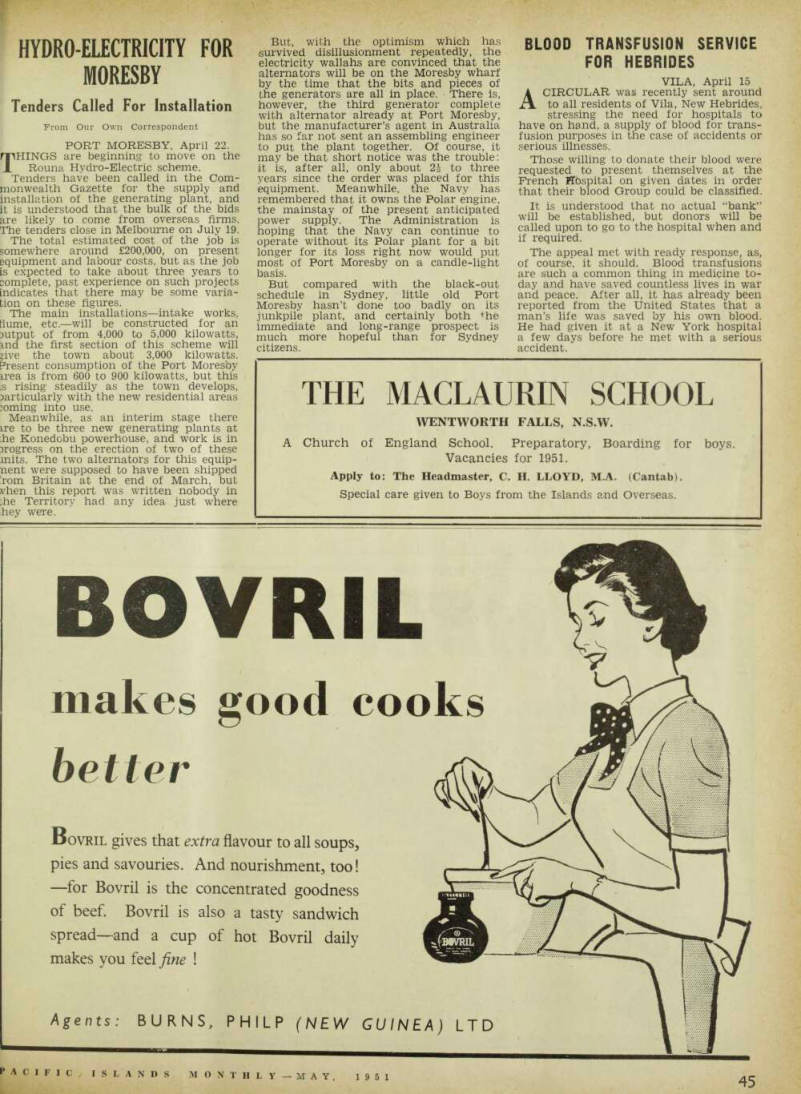
Blood Transfusion Service
VILA, April 15 A CIRCULAR was recently sent around to all residents of Vila, New Hebrides, stressing the need for hospitals to have on hand, a supply of blood for trans fusion purposes in the case of accidents or serious illnesses.
Those willing to donate their blood were requested to present themselves at the French Hbspital on given dates in order that their blood Group could be classified.
It is understood that no actual “bank” will be established, but donors will be called upon to go to the hospital when and if required.
The appeal met with ready response, as, of course* it should. Blood transfusions are such a common thing in medicine to day and have saved countless lives in war and peace. After all, it has already been reported from the United States that a man’s life was saved by his own blood.
He had given it at a New York hospital a few days before he met with a serious accident.
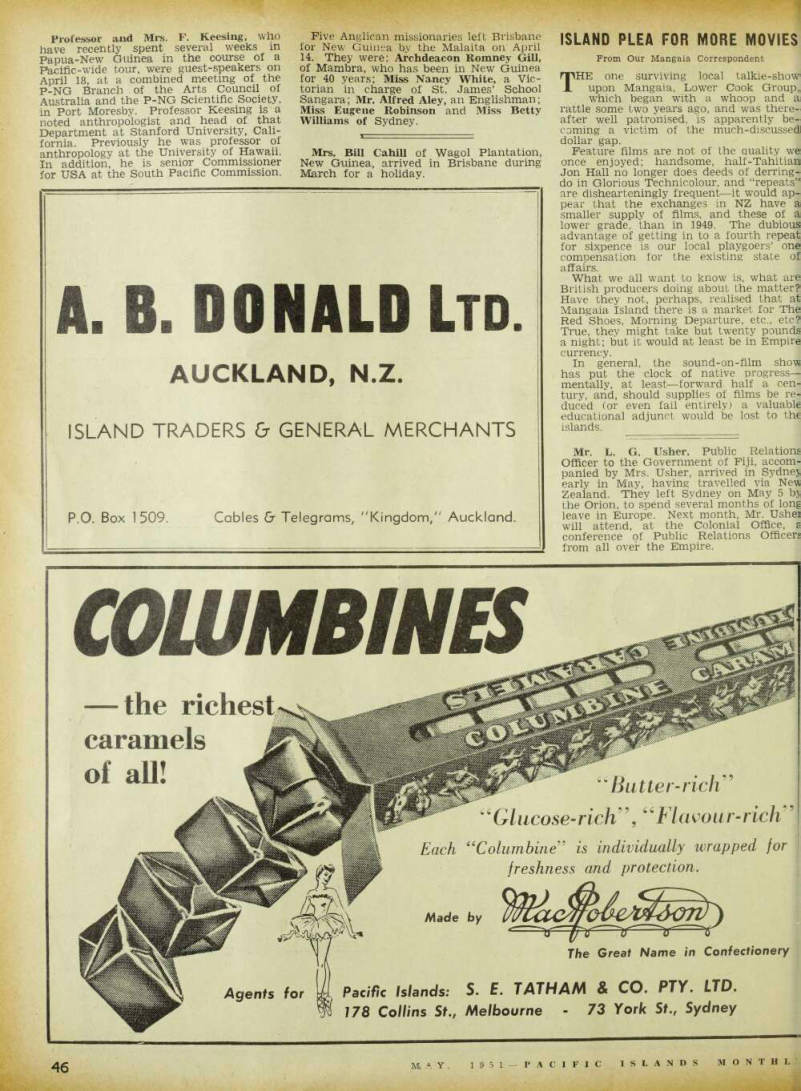
Professor and Mrs. F. Keesing, who have recently spent several weeks in Papua-New Guinea in the course of a Pacific-wide tour, were guest-speakers on April 18, at a combined meeting of the P-NG Branch of the Arts Council of Australia and the P-NG Scientific Society, in Port Moresby. Professor Keesing is a noted anthropologist and head of that Department at Stanford University, Cali fornia. Previously he .was professor of anthropology at the University of Hawaii.
In addition, he is senior Commissioner for USA at the South Pacific Commission.
Five Anglican missionaries left Brisbane for New Guinea by the Malaita on April 14. They were: Archdeacon Romney Gill, of Mambra, who has been in New r Guinea for 40 years; Miss Nancy White, a Vic torian in charge of St. James’ School Sangara; Mr. Alfred Aley, an Englishman; Miss Eugene Robinson and Miss Betty Williams of Sydney.
Mrs. Bill Cahill of Wagol Plantation, New Guinea, arrived in Brisbane during March for a holiday.