Good Copra Year In The
p. 29 · Read in the full issue
Cooks
From Our Own Correspondent
Mangaia, Cook Is.
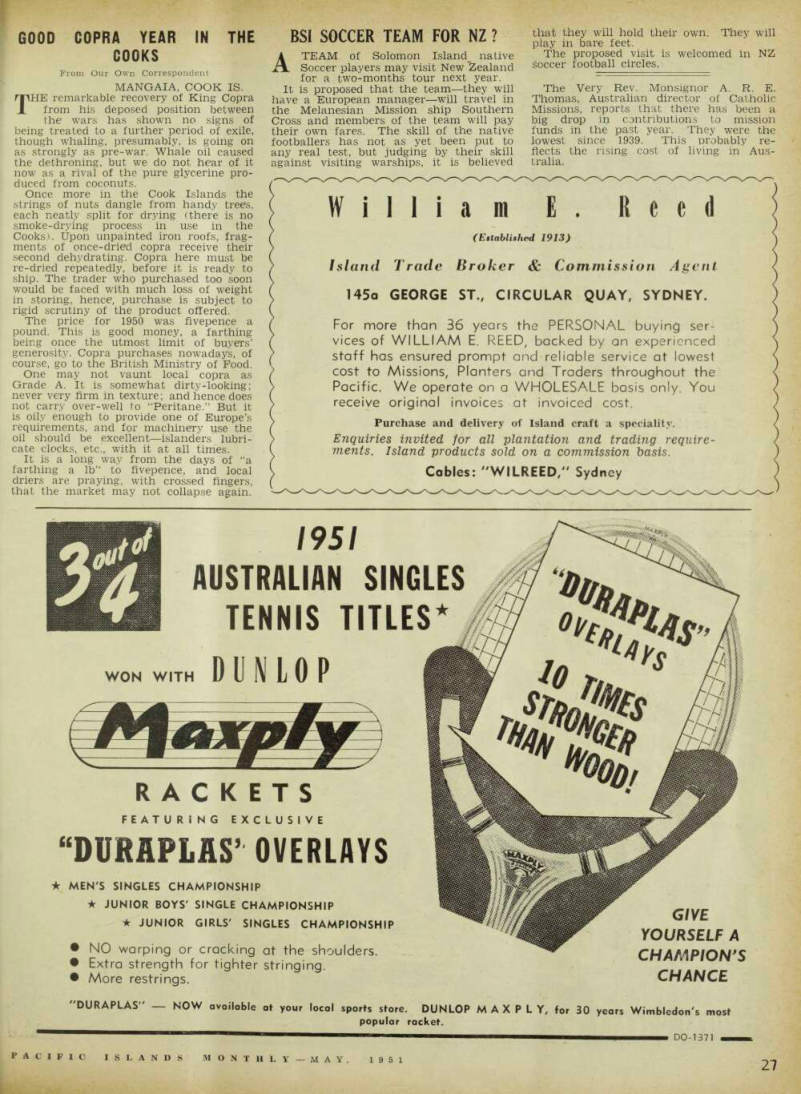
THE remarkable recovery of King Copra from his deposed position between the wars has shown no signs of being treated to a further period of exile, though whaling, presumably, is going on as strongly as pre-war. Whale oil caused the dethroning, but we do not hear of it now as a rival of the pure glycerine pro duced from coconuts.
Once more in the Cook Islands the strings of nuts dangle from handy trees, each neatly split for drying (there is no smoke-drying process in use in the Cooks). Upon unpainted iron roofs, frag ments of once-dried copra receive their second dehydrating. Copra here must be re-dried repeatedly, before it is ready to ship. The trader who purchased too soon would be faced with much loss of weight in storing, hence, purchase is subject to rigid scrutiny of the product offered.
The price for 1950 was fivepence a pound. This is good money, a farthing being once the utmost limit of buyers’ generosity. Copra purchases nowadays, of course, go to the British Ministry of Food.
One may not vaunt local copra as Grade A. It is somewhat dirty-looking; never very firm in texture; and hence does not carry over-well to “Peritane.” But it is oily enough to provide one of Europe’s requirements, and for machinery use the oil should be excellent —islanders lubri cate clocks, etc!, with it at all times.
It is a long way from the days of “a farthing a lb” to fivepence, and local driers are praying, with crossed fingers, that the market may not collapse again.