Food Supplies Threatened
p. 27 · Read in the full issue
Suva, May 16.
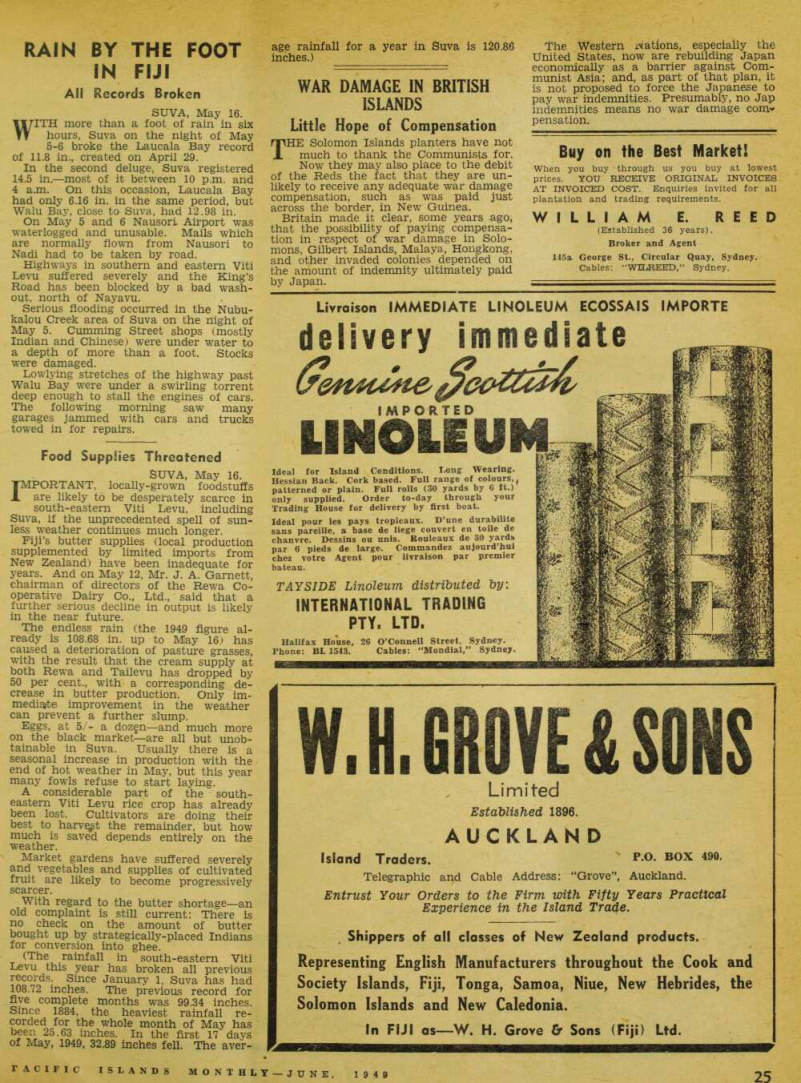
IMPORTANT, locally-grown foodstuffs are likely to be desperately scarce in south-eastern Viti Levu, including Suva, if the unprecedented spell of sun less weather continues much longer.
Fiji’s butter supplies (local production supplemented by limited imports from New Zealand) have been inadequate for years. And on May 12, Mr. J. A. Garnett, chairman of directors of the Rewa Co operative Dairy Co., Ltd., said that a further serious decline in output is likely in the near future.
The endless rain (the 1949 figure al ready is 108.68 in. up to May 16) has caused a deterioration of pasture grasses, with the result that the cream supply at both Rewa and Tailevu has dropped by 50 per cent., with a corresponding de crease in butter production. Only im mediate improvement in the weather can prevent a further slump.
Eggs, at 5/- a doz^n —and much more on the black market—are all but unob tainable in Suva. Usually there is a seasonal increase in production with the end of hot weather in May, but this year many fowls refuse to start laying.
A considerable part of the south eastern Viti Levu rice crop has already been lost. Cultivators are doing their best to the remainder, but how much is saved depends entirely on the weather.
Market gardens have suffered severely and vegetables and supplies of cultivated fruit are likely to become progressively scarcer.
With regard to the butter shortage—an old complaint is still current: There is no check on the amount of butter bought up by strategically-placed Indians for conversion into ghee. (The rainfall in south-eastern Viti Levu this year has broken all previous records. Since January 1, Suva has had 108.72 inches. The previous record for five complete months was 99.34 inches.
Since 1884, the heaviest rainfall re corded for the whole month of May has been 25.63 inches. In the first 17 days of May, 1949, 32,89 inches fell. The aver
age rainfall for a year in Suva is 120.86 inches.)