She Went For Fun!
pp. 15-17 · Read in the full issue

Rarotonga, Feb. 24.
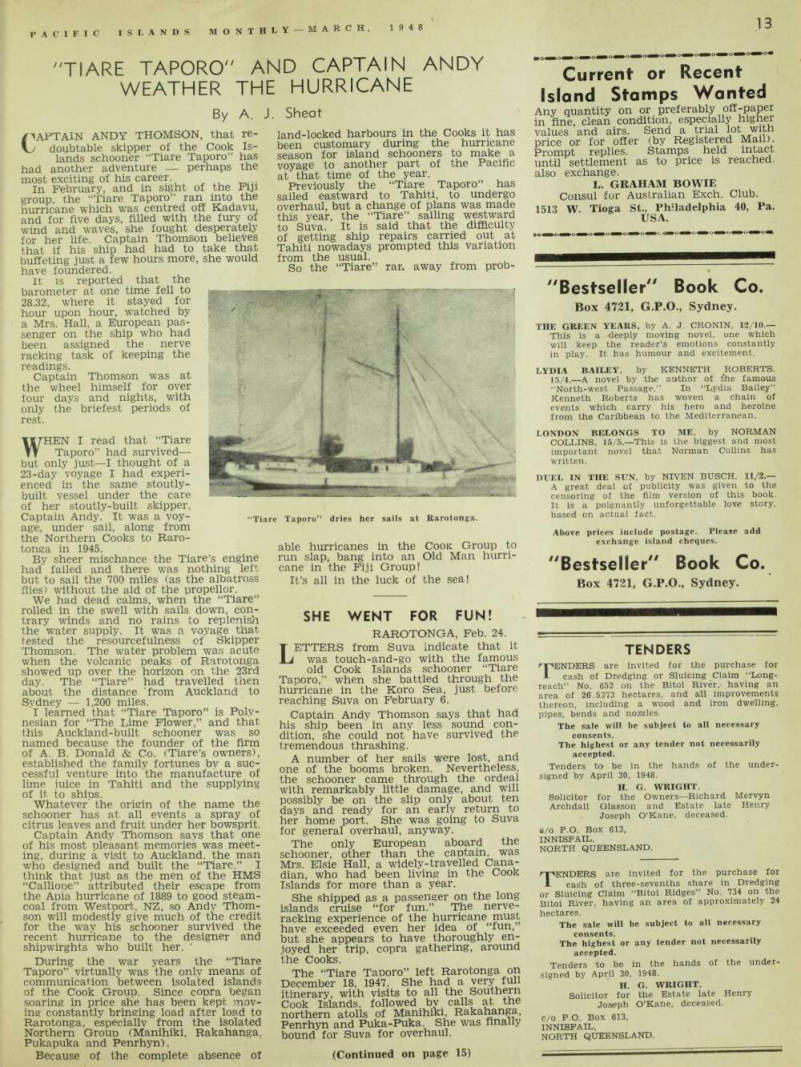
LETTERS from Suva indicate that it was touch-and-go with the famous old Cook Islands schooner “Tiare Taporo,” when she battled through the hurricane in the Koro Sea, just before reaching Suva on February 6, Captain Andy Thomson says that had his ship been in any less sound con dition, she could not have survived the tremendous thrashing.
A number of her sails were lost, and one of the booms broken. Nevertheless, the schooner came through the ordeal with remarkably little damage, and will possibly be on the slip only about ten days and ready for an early return to her home port. She was going to Suva for general overhaul, anyway.
The only European aboard the schooner, other than the captain, was Mrs. Elsie Hall, a widely-travelled Cana dian, who had been living in the Cook Islands for more than a year.
She shipped as a passenger on the long islands cruise “for fun.” The nerve racking experience of the hurricane must have exceeded even her idea of “fun, but she appears to have thoroughly en joyed her trip, copra gathering, around the Cooks.
The “Tiare Taporo” left Rarotonga on December 18, 1947. She had a very full itinerary, with visits to all the Southern Cook Islands, followed by calls at the northern atolls of Manihiki, Rakahanga, Penrhyn and Puka-Puka. She was finally bound for Suva for overhaul.
(Continued on page 15)
Concert Party’S Experience
rpHE hurricane experience must have X been particularly trying for the young Rarotongan girls, among the passen gers, who arc members of a party of Is lands entertainers, taking this opportun ity to visit Fiji to give performances of native dancing and singing.
The party of seven boys and seven girls is headed by Kaitara, a Rarotongan, who has for many years cherished the dream of taking such a party overseas.
The leading performers are Kaitara’s own daughters and, for some months before leaving, most of the party practically lived togther as one family, practising and preparing for the great adventure.
The necessary money was raised by a concerted effort of tomato-planting and working at other jobs. (Our Suva cor respondent reports that the Rarotongan party had a remarkable success in Fiji.)