Sudden Collapse of Japan
p. 35 · Read in the full issue
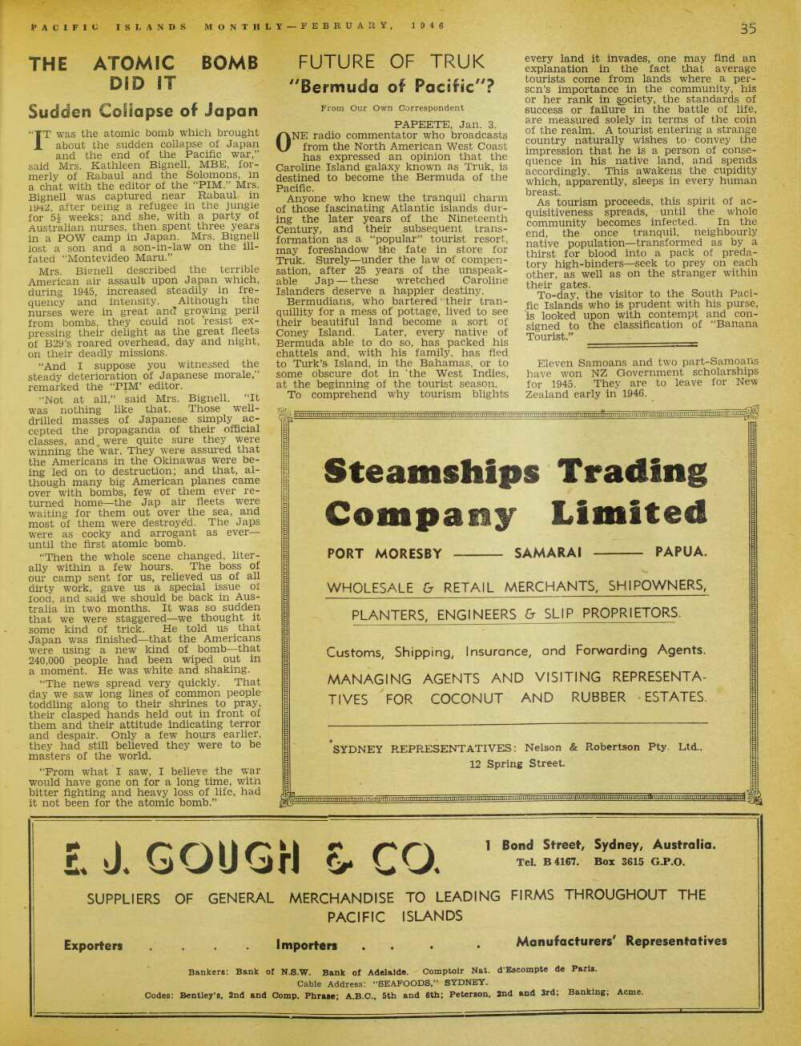
The Atomic Bomb
Did It
IT was the atomic bomb which brought about the sudden collapse of Japan and the end of the Pacific war,” said Mrs. Kathleen Bignell, MBE, for merly of Rabaul and the Solomons, in a chat with the editor of the “PIM.” Mrs.
Bignell was captured near Rabaul in 1942, after being a refugee in the jungle for 5i weeks; and she, with a party of Australian nurses, then spent three years in a POW camp in Japan. Mrs. Bignell lost a son and a son-in-law on the ill fated “Montevideo Maru.”
Mrs. Bismell described the terrible American air assault upon Japan which, during 1945, increased steadily in fre quency ana intensity. Although the nurses were in great and growing peril from bombs, they could not resist ex pressing their delight as the great fleets of B29’s roared overhead, day and night, on their deadly missions.
“And I suppose you witnessed the steady deterioration of Japanese morale,” remarked the ‘TIM’ editor.
“Not at all,” said Mrs. Bignell. “It was nothing like that. Those well drilled masses of Japanese simply ac cepted the propaganda of their official classes, and were quite sure they were winning the war. They were assured that the Americans in the Okinawas were be ing led on to destruction; and that, al though many big American planes came over with bombs, few of them ever re turned home—the Jap air fleets were waiting for them out over the sea, and most of them were destroyed. The Japs were as cocky and arrogant as ever — until the first atomic bomb.
“Then the whole scene changed, liter ally within a few hours. The boss of our camp sent for us, relieved us of all dirty work, gave us a special issue of food, and said we should be back in Aus tralia in two months. It was so sudden that we were staggered—we thought it some kind of trick. He told us that Japan was finished —that the Americans were using a new kind of bomb —that 240,000 people had been wiped out in a moment. He was white and shaking.
“The news spread very quickly. That day we saw long lines of common people toddling along to their shrines to pray, their clasped hands held out in front of them and their attitude indicating terror and despair. Only a few hours earlier, they had still believed they were to be masters of the world.
“From what I saw, I believe the war would have gone on for a long time, with bitter fighting and heavy loss of life, had it not been for the atomic bomb.”