Tahiti's Golden
p. 24 · Read in the full issue
Age
PAPEETE, March 2.
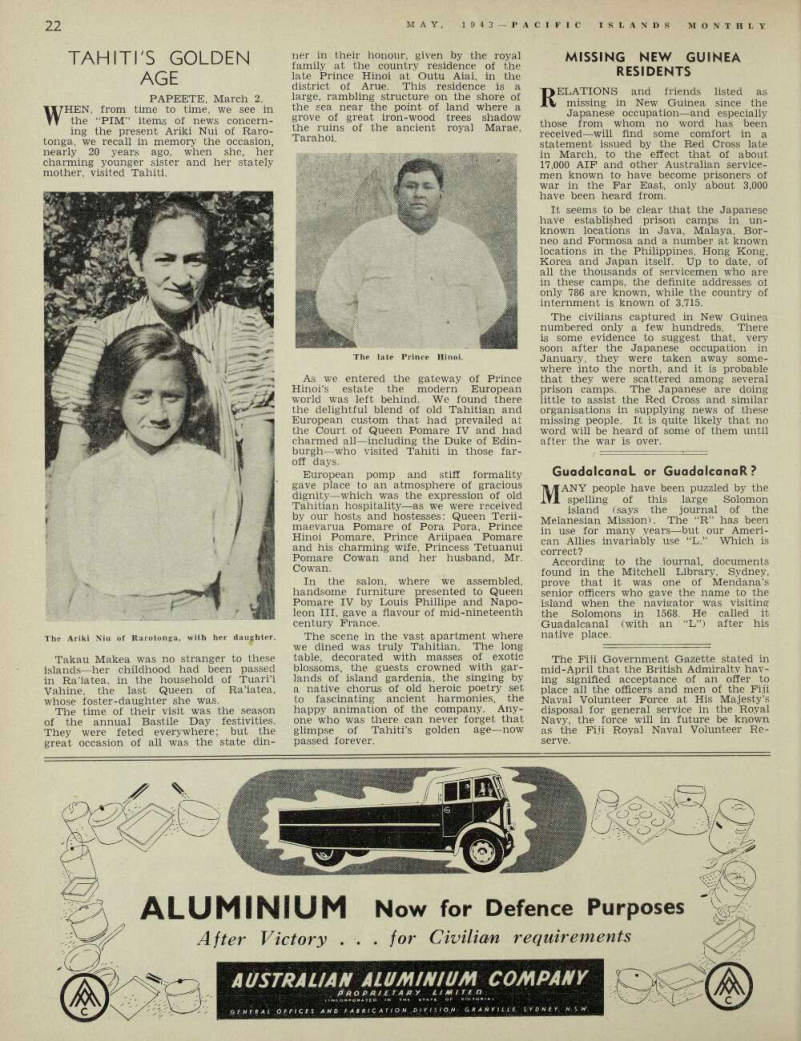
WHEN, from time to time, we see in the “PIM” items of news concern ing the present Ariki Nui of Raro tonga, we recall in memory the occasion, nearly 20 years ago, when she, her charming younger sister and her stately mother, visited Tahiti.
Takau Makea was no stranger to these islands —her childhood had been passed in Ra’iatea, in the household of Tuari’i Vahine. the last Queen of Ra’iatea, whose foster-daughter she was.
The time of their visit was the season of the annual Bastile Day festivities.
They were feted everywhere; but the great occasion of all was the state din
ner in their honour, given by the royal family at the country residence of the late Prince Hinoi at Outu Aiai, in the district of Arue. This residence is a large, rambling structure on the shore of the sea near the point of land where a grove of great iron-wood trees shadow the ruins of the ancient royal Marae, Tarahoi.
As we entered the gateway of Prince Hinoi’s estate the modern European world was left behind. We found there the delightful blend of old Tahitian and European custom that had prevailed at the Court of Queen Pomare IV and had charmed all —including the Duke of Edin burgh—who visited Tahiti in those far off days.
European pomp and stiff formality gave place to an atmosphere of gracious dignity—which was the expression of old Tahitian hospitality—as we were received by our hosts and hostesses: Queen Terii maevarua Pomare of Pora Pora, Prince Hinoi Pomare, Prince Ariipaea Pomare and his charming wife, Princess Tetuanui Pomare Cowan and her husband, Mr.
Cowan.
In the salon, where we assembled, handsome furniture presented to Queen Pomare IV by Louis Phillipe and Napo leon 111, gave a flavour of mid-nineteenth century France.
The scene in the vast apartment where we dined was truly Tahitian. The long table, decorated with masses of exotic blossoms, the guests crowned with gar lands of island gardenia, the singing by a native chorus of old heroic poetry set to fascinating ancient harmonies, the happy animation of the company. Any one who was there can never forget that glimpse of Tahiti’s golden age—now passed forever.
The Ariki Niu of Rarotonga, with her daughter.
The late Prince Hinoi.