Re-planting Rarotonga's
p. 17 · Read in the full issue
Valleys New Ariki Nui Gives a Lead
From Our Own Correspondent
Rarotonga, Dec. 10.
THE title of “Ariki Nui” of Rarotonga is a difficult one to define in our language. The present holder’s grandmother, also Makea Takau, was known as “Queen” in the days when the Cook Islands were only a protectorate of Britain, which was represented by a Resident.
However, the new Makea Takau (Mrs.
E. T. W. Love), whether “Queen” or “Chiefess” or “Ariki Nui”, is a lady of considerable energy and initiative. Within
two months of her return from New Zealand (to contest the title case in the NZ Courts) she has interested herself in every aspect of public life on the island, in addition to attending to her late father’s sadly-neglected plantations.
As vice-president of the Child Welfare Association and the Girl Guides, Makea Takau hopes to be able to do much good work among the younger people.
The Rarotonga people as a whole would do well to take their cue from the new Ariki Nui. Food and bananas must be planted and, particularly, the fertile valleys must be re-opened by the reno vation of inland roads.
At a recent meeting of the Tukuvaine people (the village in which the Makea home stands), Mrs. Love explained her plans for the planting of the large Tukuvaine valley (most of which belongs to the Ariki and her family) and invited their co-operation. If these plans are successful, it is hoped that they can be extended to other villages.
The official crowning ceremony of the new Ariki is planned for early 1942. Many
of the older chiefs have died since the crowning of the last Makea in 1923 and, quite naturally, the younger generation do not place so much store by old customs and tradition; but one thing is certain: Makea Takau will do her utmost to keep alive that quiet pride of race which is the best foundation for character in every nation.
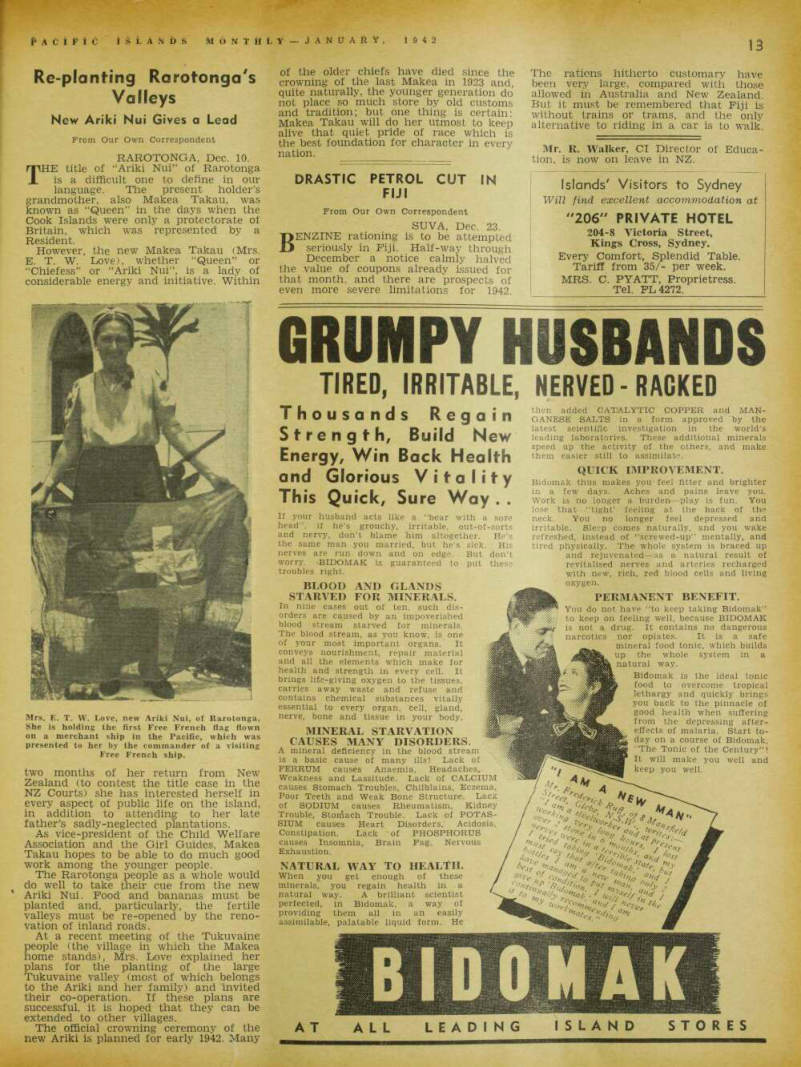
Mrs. E. T. W. Love, new Ariki Nui, of Rarotonga, She is holding the first Free French flag flown on a merchant ship in the Pacific, which was presented to her by the commander of a visiting Free French ship.