New Guinea
p. 24 · Read in the full issue
Finance
The Old Fat Surplus is Now Almost Gone
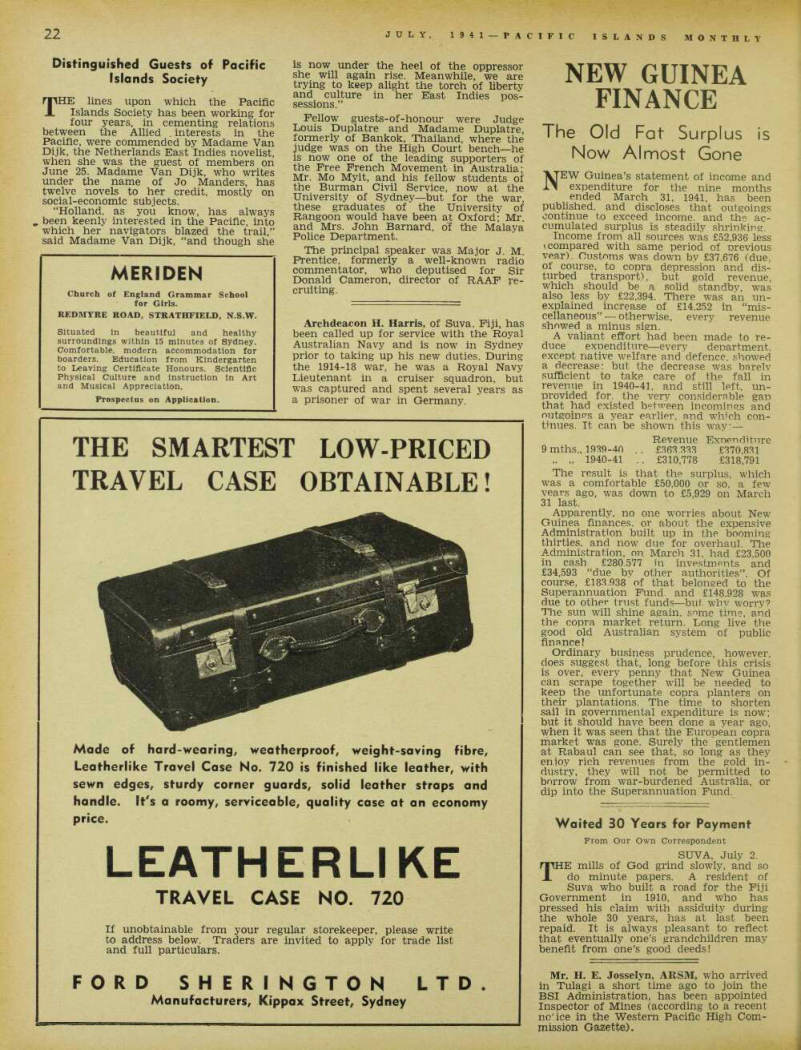
NEW Guinea’s statement of income and expenditure for the nine months ended March 31, 1941, has been published, and discloses that outgoings continue to exceed income, and the ac cumulated surplus is steadily shrinking.
Income from all sources was £52,936 less v compared with same period of nrevious vear). Customs was down by £37,676 (due, of course, to copra depression and dis turbed transport), but gold revenue, which should be a solid standbv, was also less by £22,394. There was an un explained increase of £14.252 in “mis cellaneous” otherwise, every revenue showed a minus sign.
A valiant effort had been made to re duce exnenditure—every department, except native welfare and defence, showed a decrease: but the decrease was barelv sufficient to take care of the fall in revenue in 1940-41, and still left, un provided for. the very considerable gap that had existed between incomings and outgoings a year earlier, and which con tinues. It can be shown this way:— Revenue Exnenditure 9 mths., 1939-40 . . £363.333 £370,831 „ „ 1940-41 .. £310,778 £318,791 The result is that the surplus, which was a comfortable £50,000 or so, a few vears ago, was down to £5,929 on March 31 last.
Apparently, no one worries about New Guinea finances, or about the expensive Administration built up in the booming thirties, and now due for overhaul. The Administration, on March 31. had £23,500 in cash £280.577 in investments and £34,593 “due by other authorities”. Of course, £183.938 of that belonged to the Superannuation Fund, and £148.928 was due to other trust funds—but whv worry?
The sun will shine again, some time, and the copra market return. Long live the good old Australian system of public finance!
Ordinary business prudence, however, does suggest that, long before this crisis is over, every penny that New Guinea can scrape together will be needed to keep the unfortunate copra planters on their plantations. The time to shorten sail in governmental expenditure is now; but it should have been done a year ago, when it was seen that the Euronean copra market was gone. Surely the 'gentlemen at Rabaul can see that, so long as they enjoy rich revenues from the gold in dustry, they will not be permitted to borrow from war-burdened "Australia, or dip into the Superannuation Fund,