New Guinea
p. 50 · Read in the full issue
Development of Dutch New Guinea
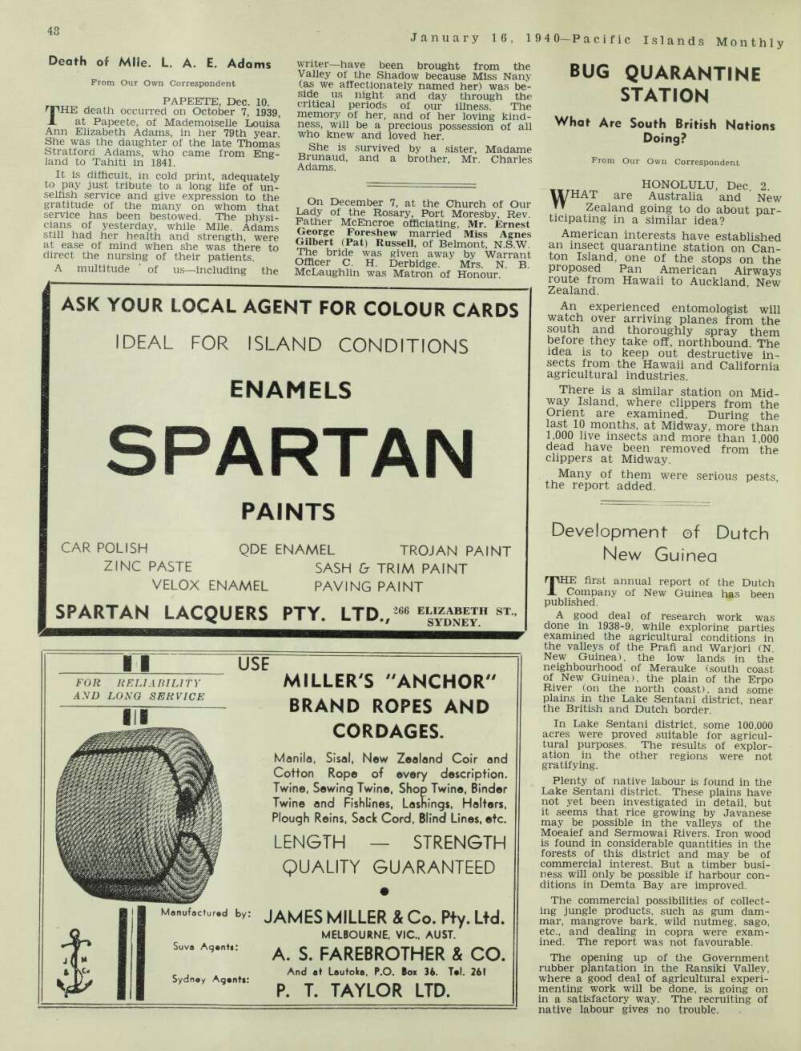
THE first annual report of the Dutch Company of New Guinea has been published.
A good deal of research work was done in 1938-9, while exploring parties examined the agricultural conditions in the valleys of the Prafi and Warjori (N New Guinea), the low lands ‘in the neighbourhood of Merauke (south coast of New Guinea), the plain of the Erpo River (on the north coast), and some plains in the Lake Sentani district, near the British and Dutch border.
In Lake Sentani district, some 100,000 acres were proved suitable for agricul tural purposes. The results of explor ation in the other regions were not gratifying.
Plenty of native labour is found in the Lake Sentani district. These plains have not yet been investigated in detail, but it seems that rice growing by Javanese may be possible in the valleys of the Moeaief and Sermowai Rivers. Iron wood is found in considerable quantities in the forests of this district and may be of commercial interest. But a timber busi ness will only be possible if harbour con ditions in Demta Bay are improved.
The commercial possibilities of collect ing jungle products, such as gum dam mar, mangrove bark, wild nutmeg, sago, etc., and dealing in copra were exam ined. The report was not favourable.
The opening up of the Government rubber plantation in the Ransiki Valley, where a good deal of agricultural experi menting work will be done, is going on in a satisfactory way. The recruiting of native labour gives no trouble.