New Bases In North
pp. 53-54 · Read in the full issue
Pacific
Feverish American Activity
Prom Our Own Correspondent
Honolulu. Aug. 24.
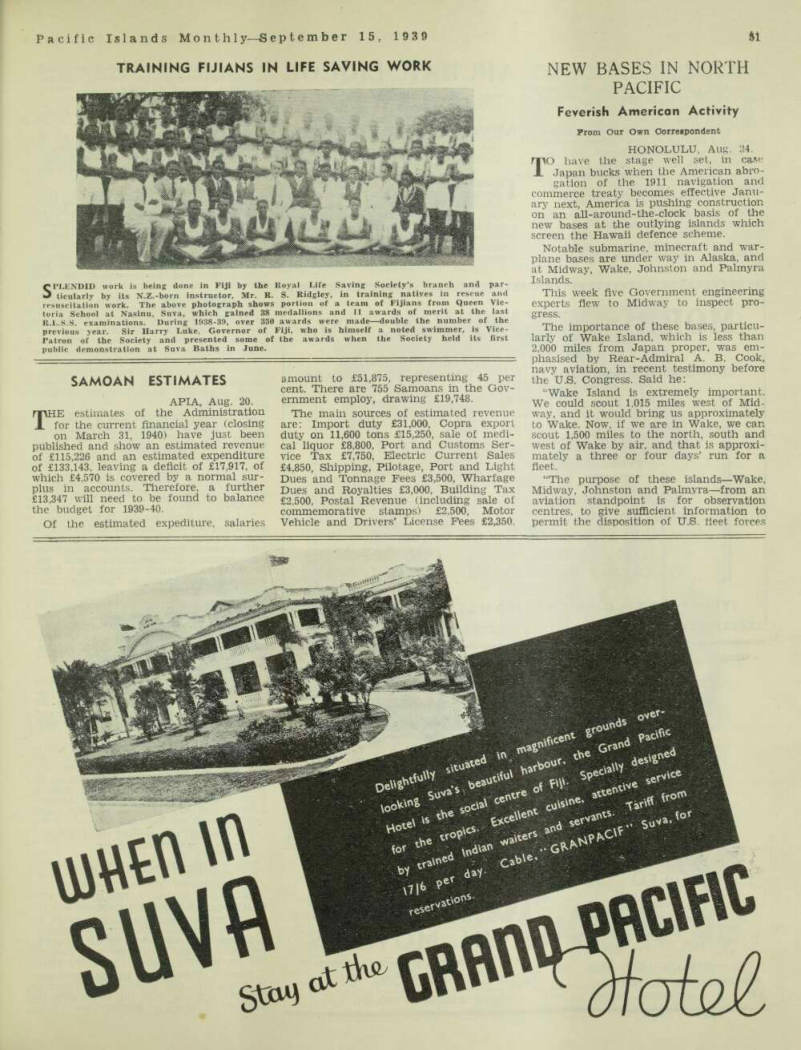
rpo have the stage well set, in case X Japan bucks when the American abro gation of the 1911 navigation and commerce treaty becomes effective Janu ary next, America is pushing construction on an all-around-the-clock basis of the new bases at the outlying islands which screen the Hawaii defence scheme.
Notable submarine, minecraft and war plane bases are under way in Alaska, and at Midway, Wake, Johnston and Palmyra Islands.
This week five Government engineering experts flew to Midway to inspect pro gress.
The importance of these bases, particu larly of Wake Island, which is less than 2,000 miles from Japan proper, was em phasised by Rear-Admiral A. B. Cook, navy aviation, in recent testimony before the U.S. Congress. Said he: “Wake Island is extremely important.
We could scout 1,015 miles west of Mid way, and it would bring us approximately to Wake. Now, if we are in Wake, we can scout 1,500 miles to the north, south and west of Wake by air, and that is approxi mately a three or four days’ run for a fleet.
“The purpose of these islands—Wake, Midway, Johnston and Palmyra—from an aviation standpoint is for observation centres, to give sufficient information to permit the disposition of U.S. fleet forces
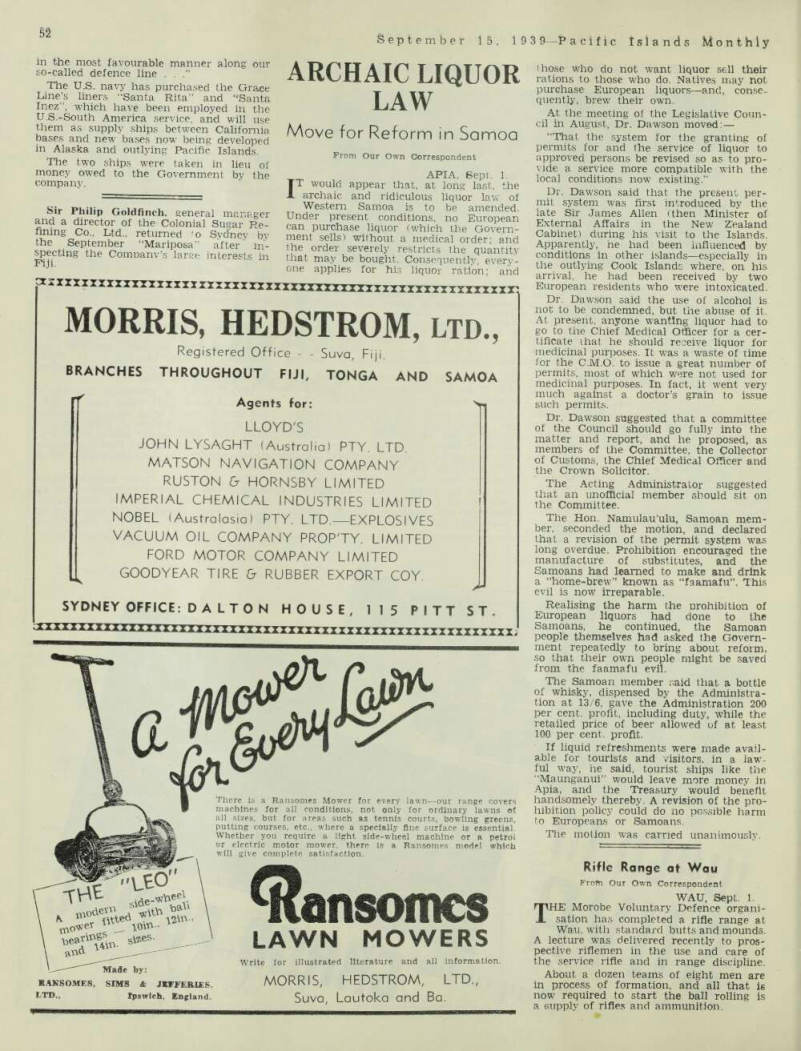
in the most favourable manner along our so-called defence line . . .”
The U.S. navy has purchased the Grace Line’s liners “Santa Rita" and “Santa Inez”, which have been employed in the U.S.-South America service, and will use them as supply ships between California bases and new bases now being developed in Alaska and outlying Pacific Islands The two ships were taken in lieu of money owed to the Government by the company.
Sir Philip Goldfinch, general manager and a director of the Colonial Sugar Re fining Co.. Ltd., returned f o Sydney by the September “Mariposa" after ” in specting the Company’s large interests in Fiji.