New Guinea?
p. 11 · Read in the full issue
New Taxation In
Nine Months' Figures Show Serious Position
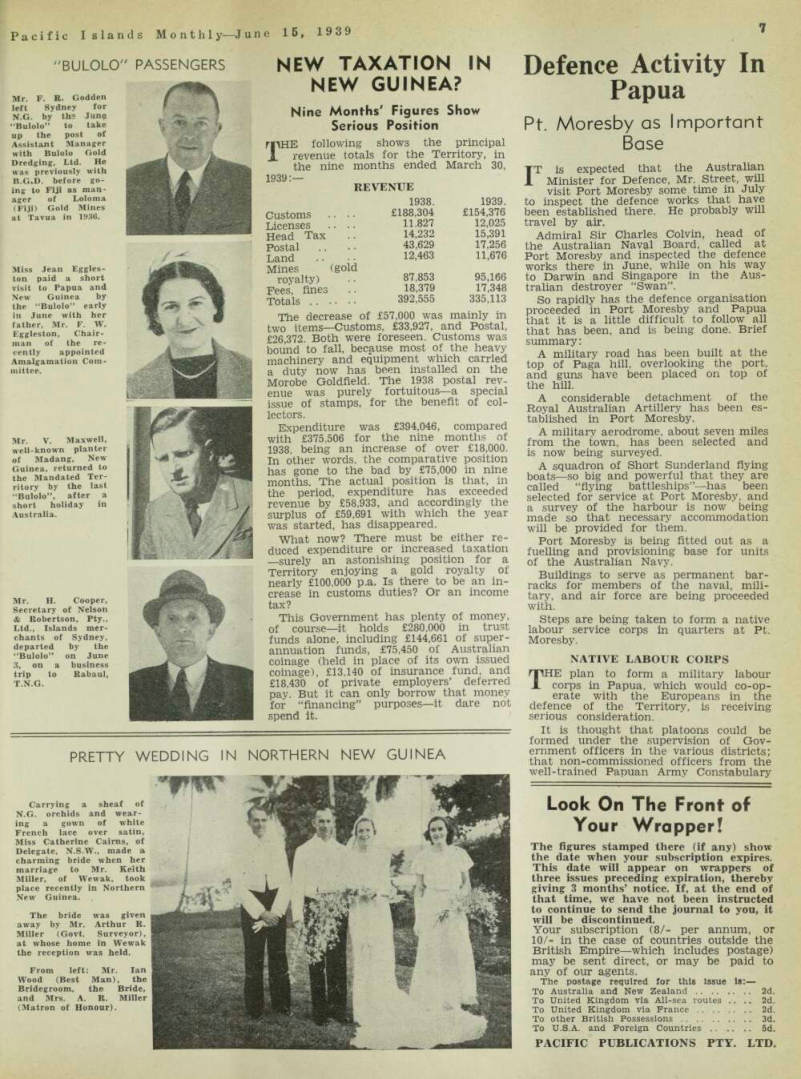
rpHE following shows the principal 1 revenue totals for the Territory, in the nine months ended March 30, 1939:
The decrease of £57,000 was mainly in two items—Customs, £33,927, and Postal, £26,372. Both were foreseen. Customs was bound to fall, because most of the heavy machinery and equipment which carried a duty now has been installed on the Morobe Goldfield. The 1938 postal rev enue was purely special issue of stamps, for the benefit of col lectors.
Expenditure was £394,046, compared with £375.506 for the nine months of 1938, being an increase of over £lB,OOO.
In other words, the comparative position has gone to the bad by £75,000 in nine months. The actual position is that, in the period, expenditure has exceeded revenue by £58,933, and accordingly the surplus of £59,691 with which the year was started, has disappeared.
What now? There must be either re duced expenditure or increased taxation —surely an astonishing position for a Territory enjoying a gold royalty of nearly £lOO,OOO p.a. Is there to be an in crease in customs duties? Or an income tax?
This Government has plenty of money, of course—it holds £280,000 in trust funds alone, including £144,661 of super annuation funds, £75,450 of Australian coinage (held in place of its own issued coinage), £13,140 of insurance fund, and £18,430 of private employers’ deferred pay. But it can only borrow that money for “financing” purposes—it dare not spend it.
Revenue
1938. 1939.
Customs .. . • £188,304 £154,376 Licenses .. .. 11.827 12,025 Head Tax 14,232 15,391 Postal 43,629 17,256 Land 12,463 11,676 Mines (gold royalty) 87,853 95,166 Fees, fines 18,379 17,348 Totals .. • • • • 392,555 335,113